
A dark asphalt driveway creates a clean, practical base, but the right border turns it into a finished part of your landscape. These asphalt driveway border ideas combine durable edging with thoughtful shapes, planting, aprons, and walkways. You can use brick to warm a traditional home, Belgian block to strengthen a classic entrance, or sleek concrete pavers to suit modern architecture. Softer treatments, including gravel beds, flowers, and low hedges, help wide areas of pavement feel more connected to the yard. Before choosing, consider vehicle traffic, drainage, snow removal, maintenance, and your home’s exterior colors. The complete driveway looks below offer useful asphalt driveway border ideas for different budgets, lot sizes, and house styles.

1. Asphalt Driveway With Red Brick Border
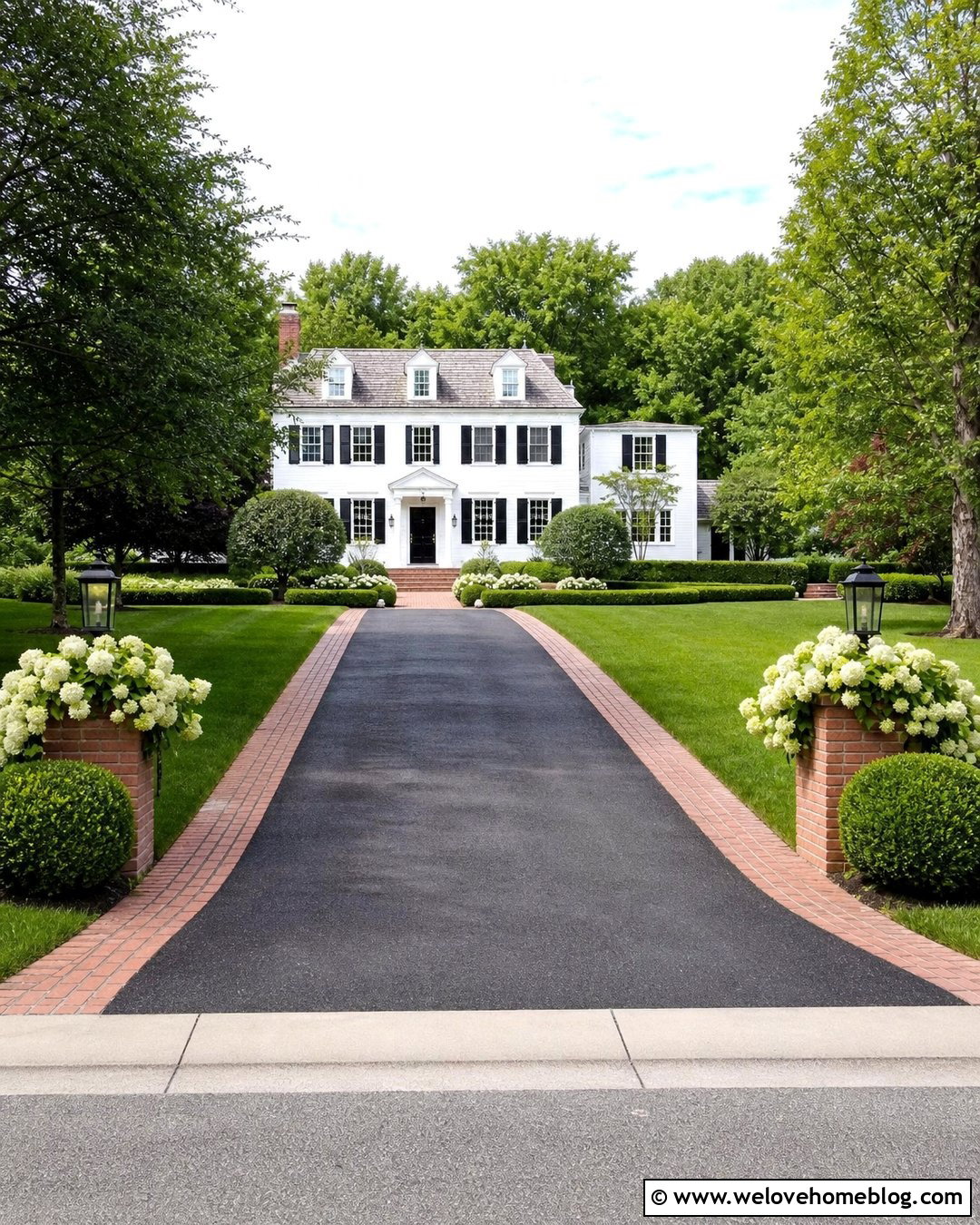
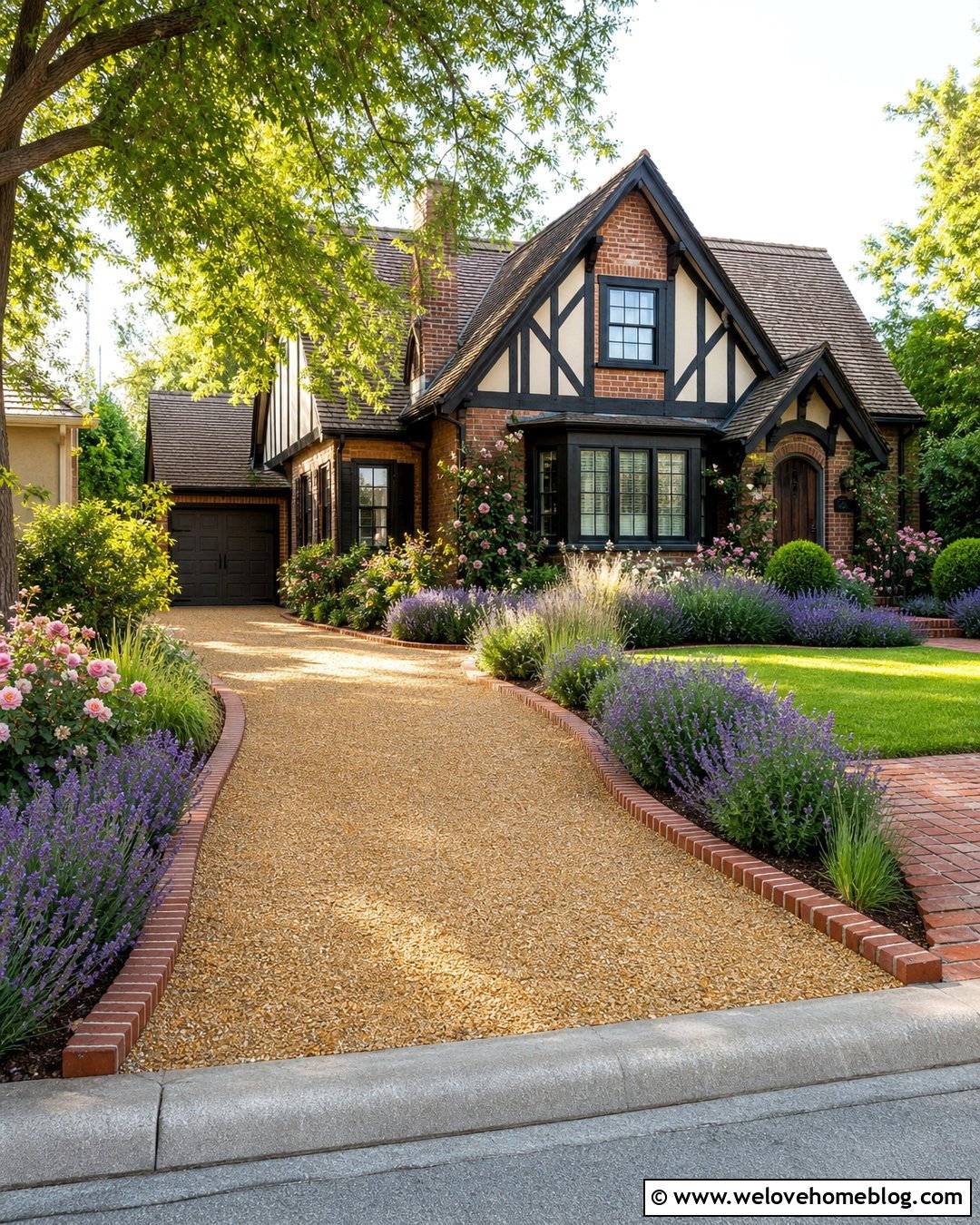
Warm red brick creates an attractive contrast against smooth black asphalt, especially beside a colonial, Cape Cod, or traditional brick home. Frame a straight driveway with one or two running-bond rows, then repeat the brick around the walkway and planting beds. This makes the entire front yard feel coordinated rather than pieced together. Set the bricks flush with the asphalt to create a smoother transition for tires, snowblowers, and lawn equipment. A compacted base and secure edge restraint help the border stay aligned under regular vehicle traffic. Finish the look with clipped boxwoods, white hydrangeas, and a simple green lawn. The combination feels established and welcoming without requiring a fully brick-paved driveway. ()
2. Asphalt Driveway With Belgian Block Border
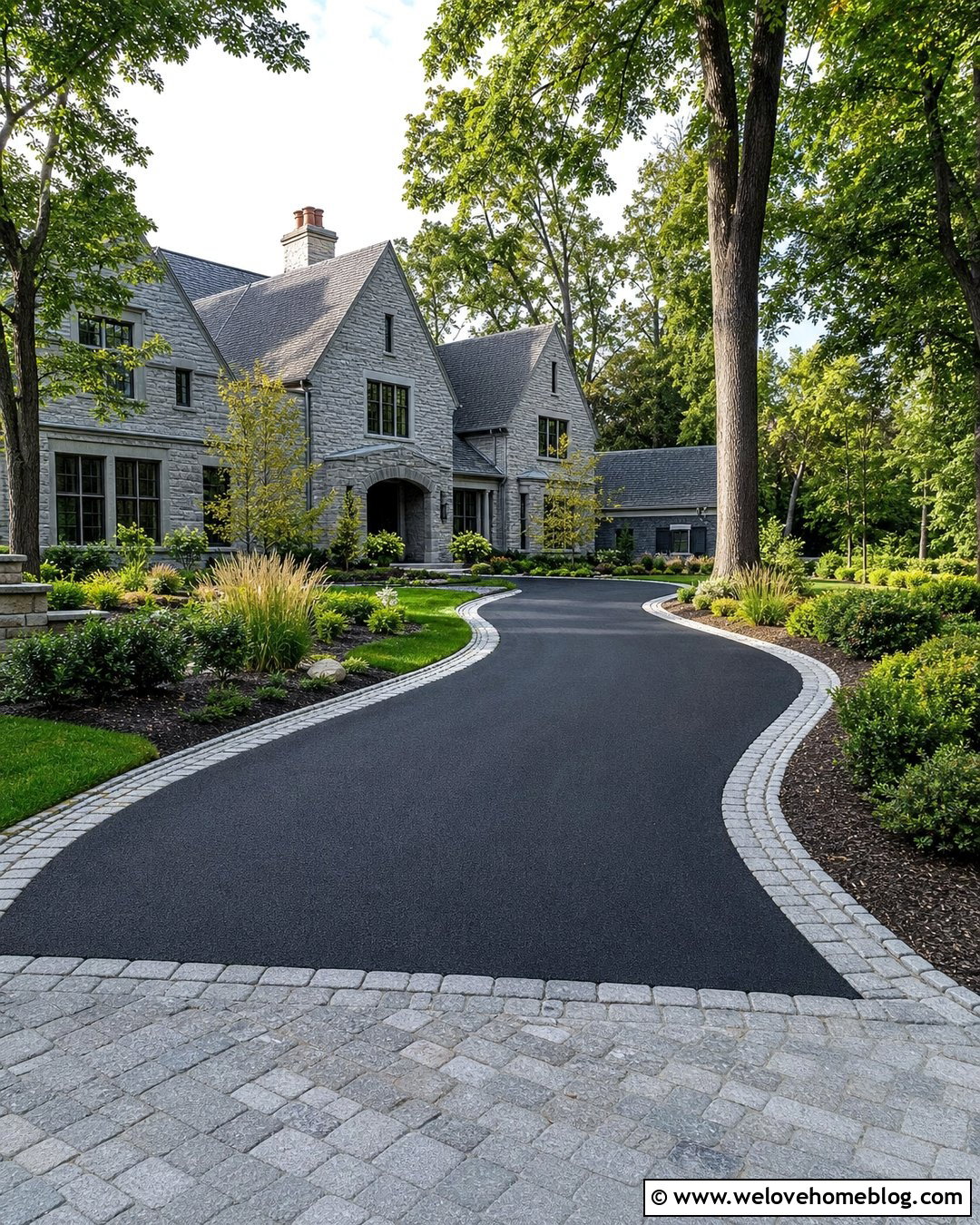
Belgian block gives an asphalt driveway a substantial stone frame that looks equally fitting beside a historic house or a newer luxury home. Use a single row of gray granite blocks along a gently curved driveway, keeping their tops close to the asphalt surface. Continue the blocks across the entrance as a decorative apron for a strong visual finish from the street. Granite tones connect naturally with stone foundations, gray siding, and slate-colored roofs. Behind the border, add broad lawn areas and layered beds of evergreens, ornamental grasses, and seasonal flowers. Properly installed blocks also provide firm lateral support along vulnerable pavement edges. A stable setting base is essential because loosely placed stones can settle, tilt, or separate over time. ()
3. Asphalt Driveway With Gray Paver Border
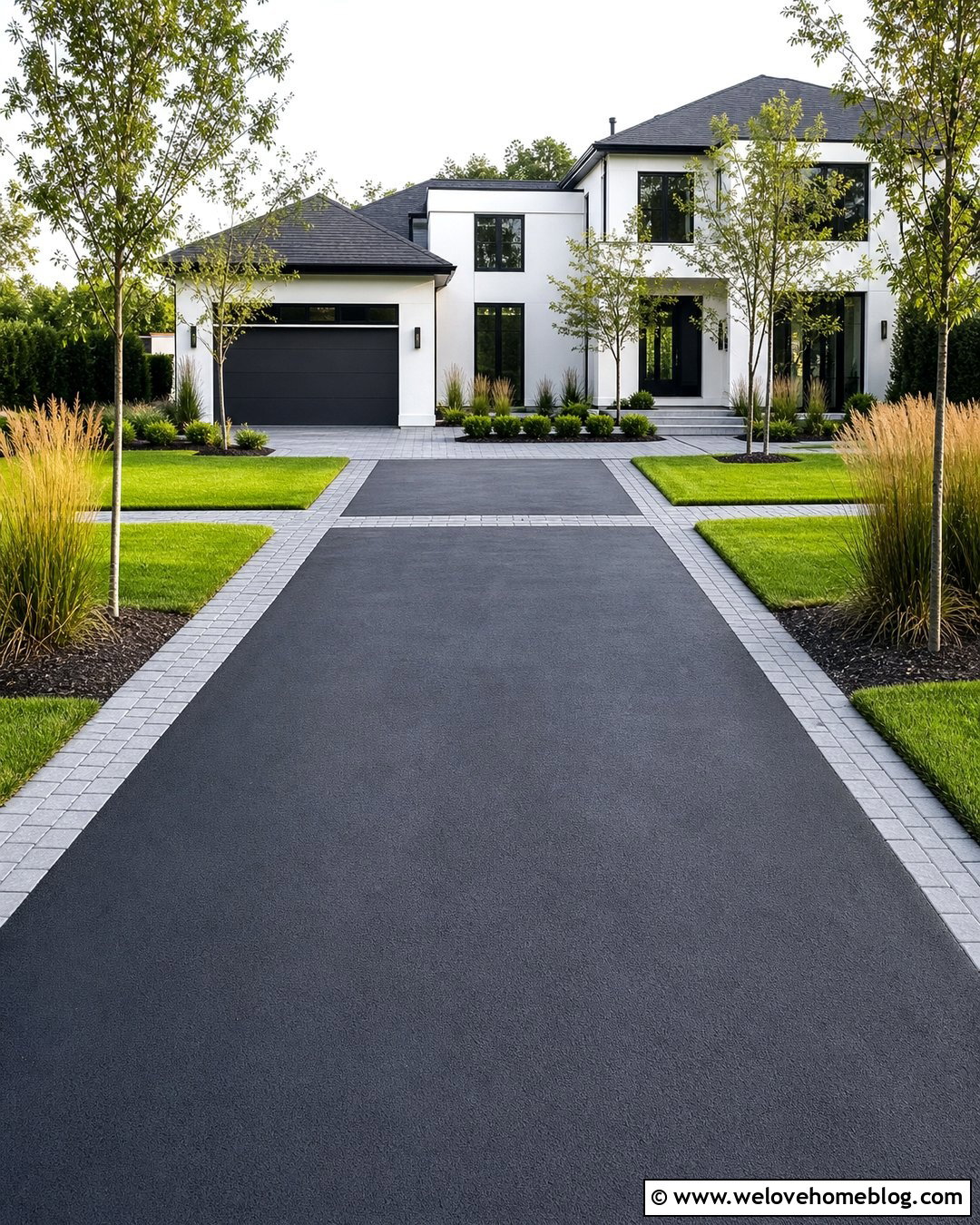
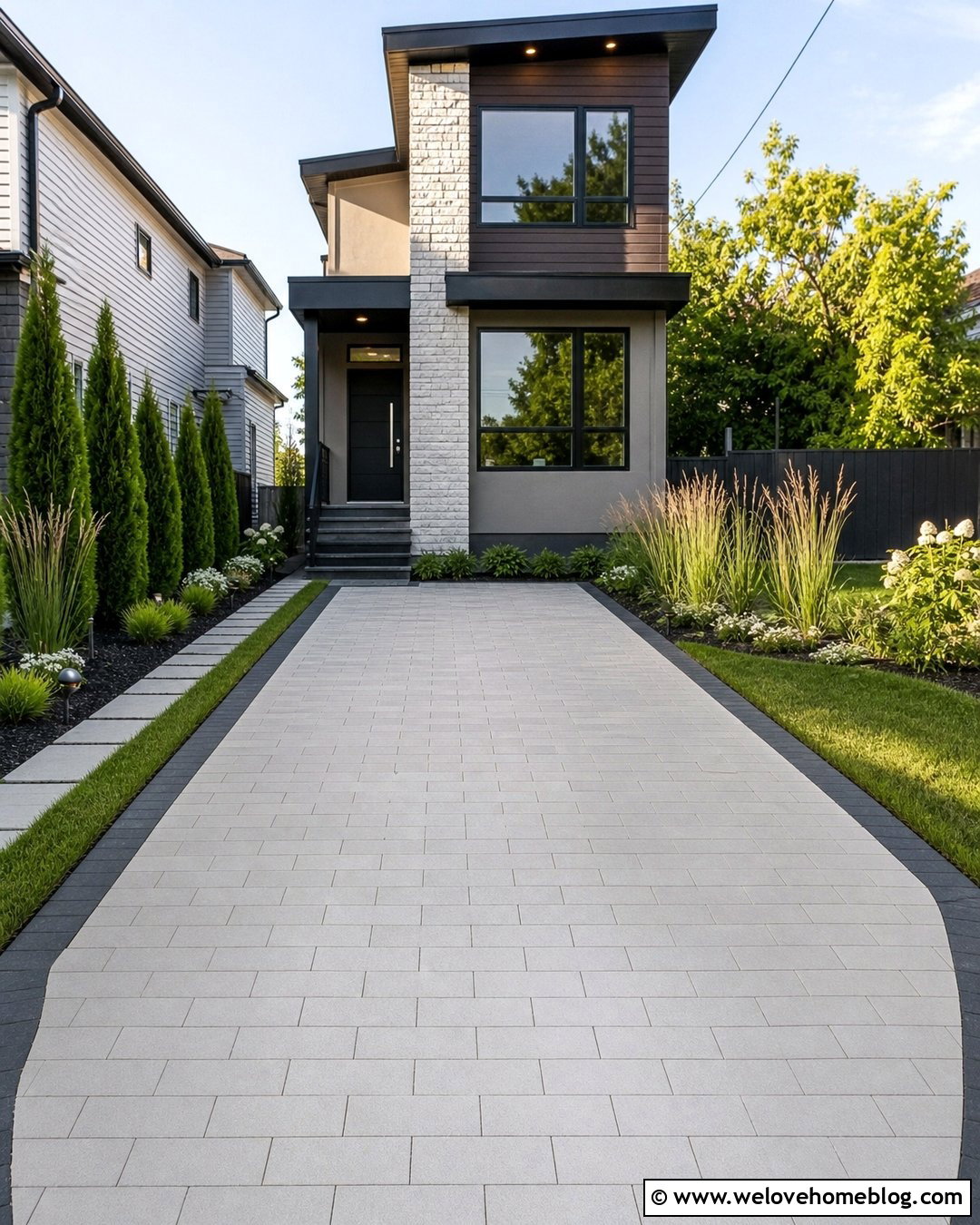
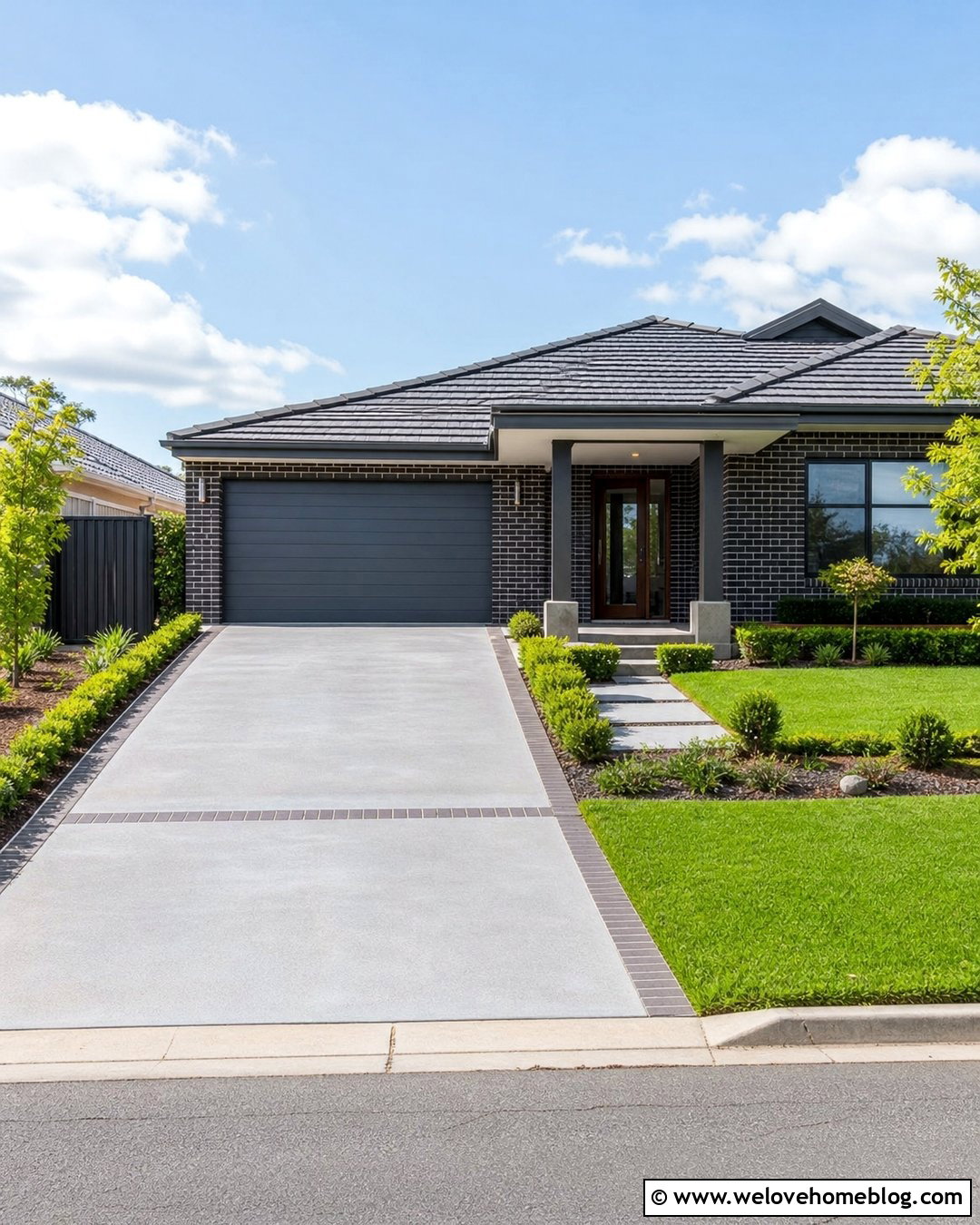
For a crisp contemporary look, surround black asphalt with rectangular concrete pavers in medium gray or charcoal. A wide two-row border works particularly well on a straight driveway leading to a modern home with white stucco, dark windows, and simple geometric landscaping. Lay the pavers in a running-bond pattern and match them to the front walkway. This repeated material creates a clear path from the curb to the entrance. Keep planting restrained with clipped grasses, low shrubs, and one or two architectural trees. Choose driveway-rated pavers rather than thin patio products where tires may cross the border. A well-compacted base, accurate alignment, and secure outer restraint will help the pavers handle traffic while maintaining a clean, even edge. ()
4. Asphalt Driveway With Stamped Concrete Border
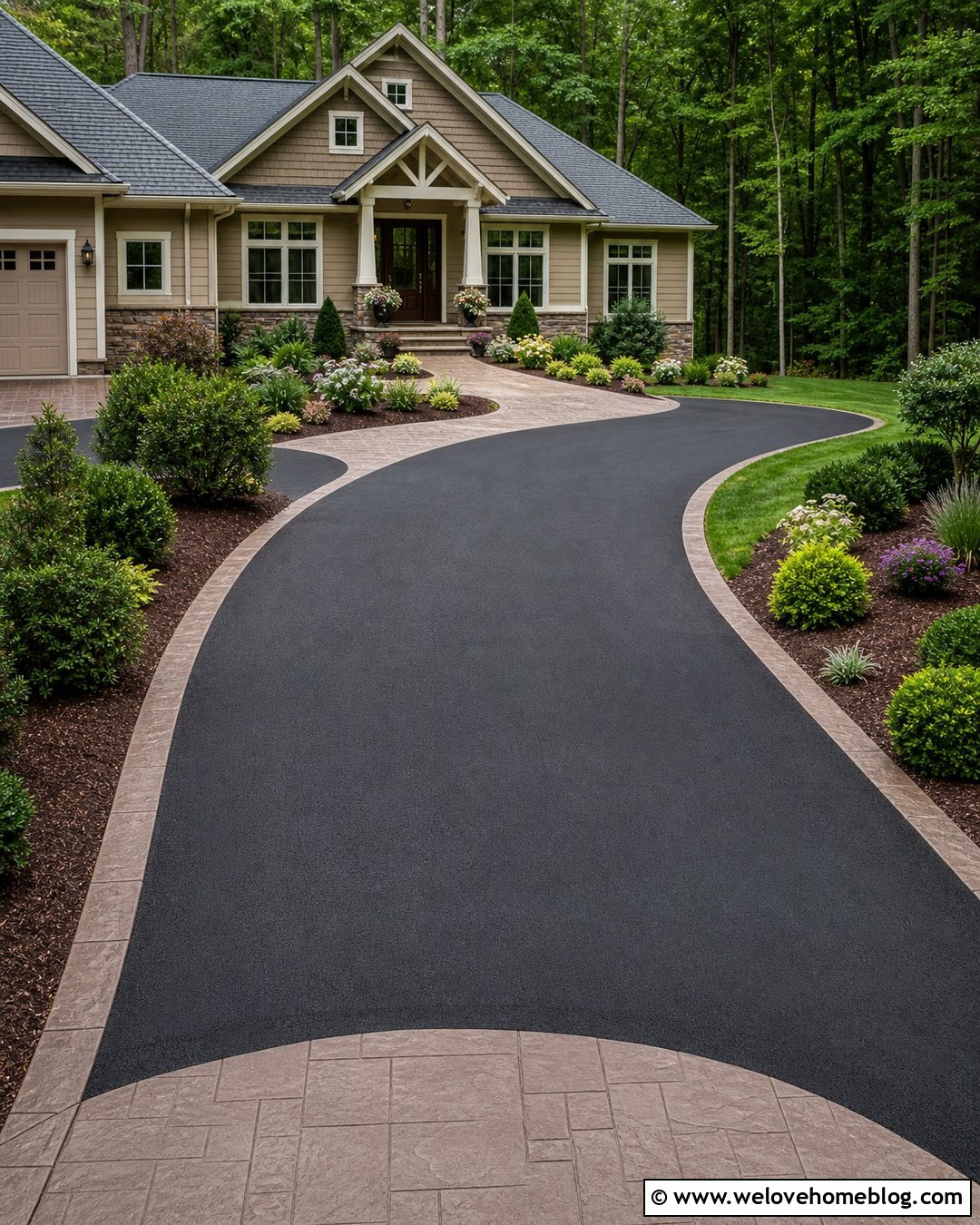
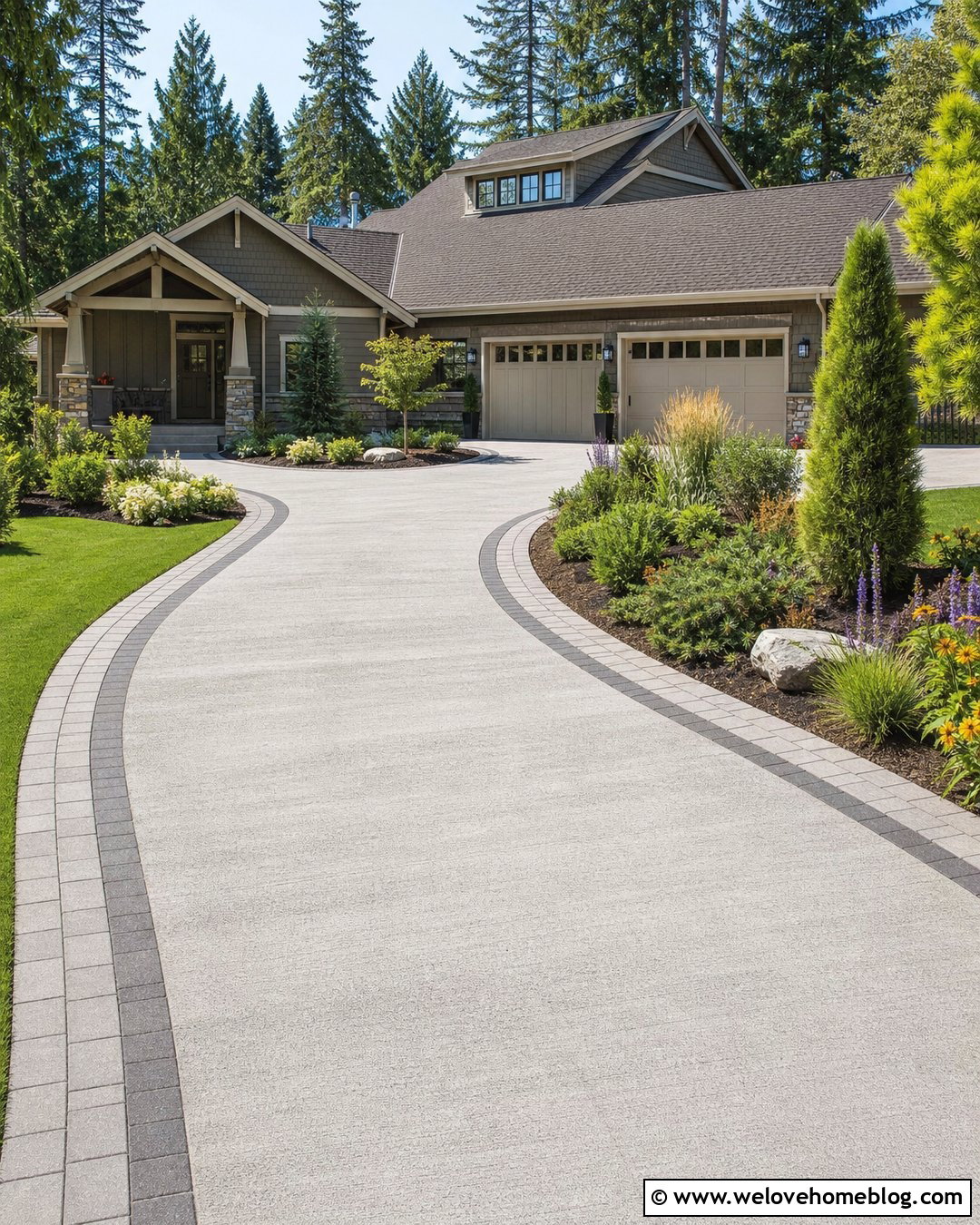
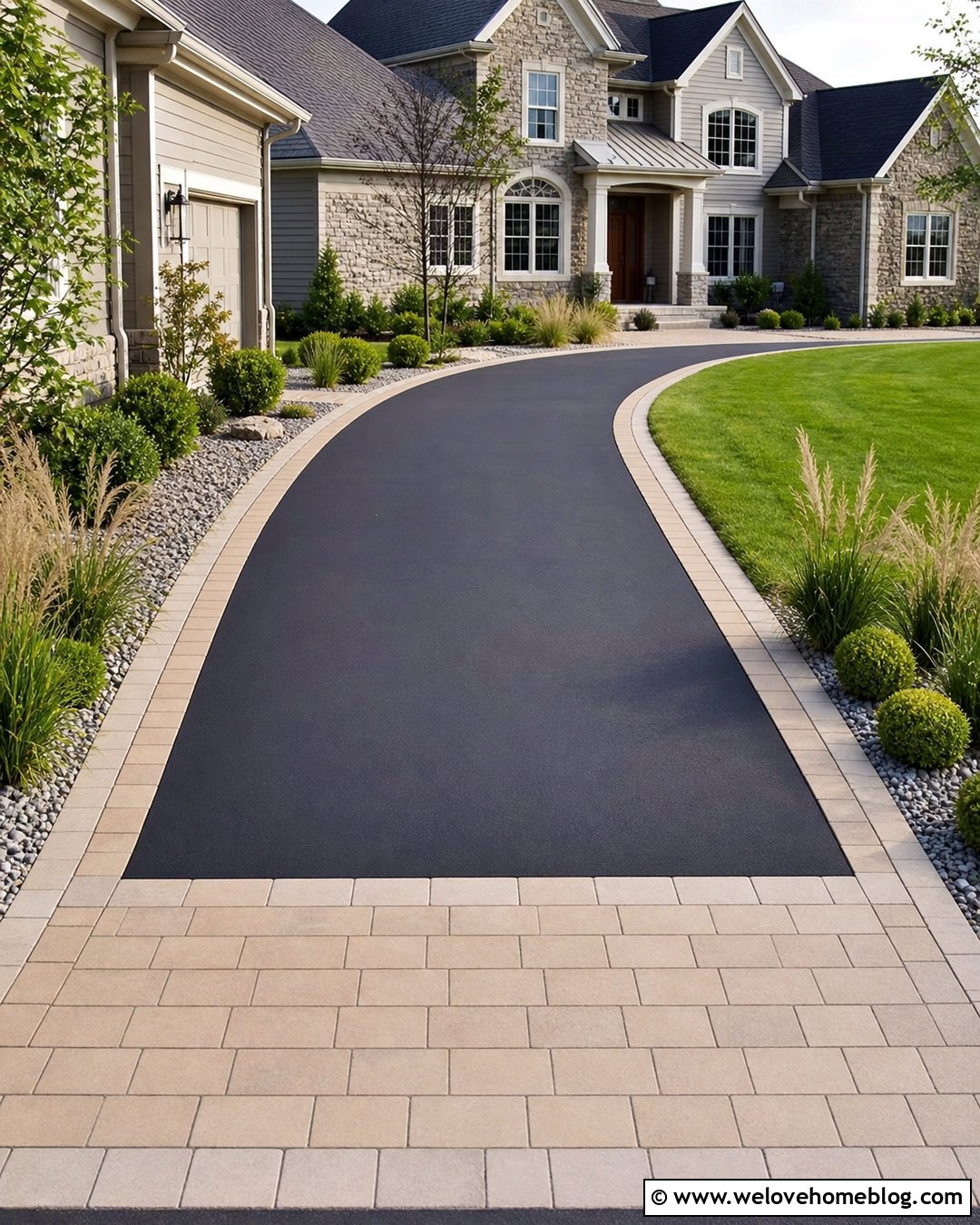
Stamped concrete can give a basic asphalt driveway a decorative frame without installing hundreds of individual units. Select a stone, slate, or brick-inspired texture that relates to the house facade. A warm taupe border, for example, can soften black asphalt beside a beige stucco or craftsman home. Use the stamped treatment along both sides and repeat it across the street entrance as an apron. Gentle curves prevent the driveway from appearing overly rigid, while mulched planting beds echo the same flowing lines. Keep the border color moderately different from the asphalt so dirt and tire marks are less noticeable. Because poured borders require careful preparation and control joints, professional installation may deliver a more consistent height, drainage slope, and finished pattern. ()
5. Asphalt Driveway With Natural Stone Border
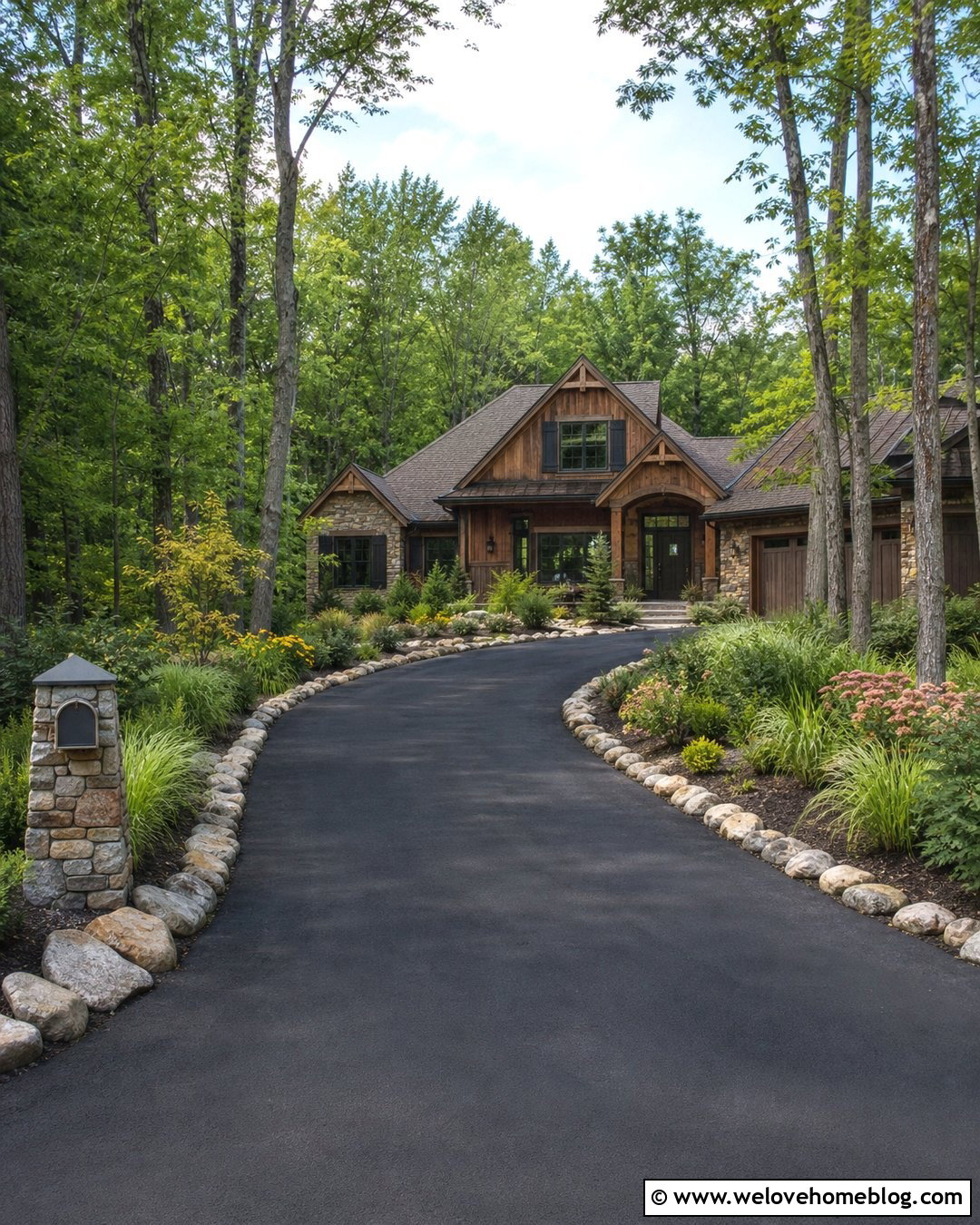
Irregular natural stone creates a relaxed transition between smooth asphalt and informal landscaping. This look suits a country house, mountain retreat, cottage, or craftsman home with wood and stone details. Follow a curved driveway with medium-size fieldstones set closely together, selecting pieces with relatively flat tops near vehicle areas. Build wide planting beds behind the stones using native grasses, flowering shrubs, and ground covers. Their layered textures make the dark pavement feel less dominant. Repeat the same stone around a nearby mailbox bed or front walkway to unify the entrance. Natural variations in size and color add character, but the border still needs a compacted foundation. Avoid placing loose, projecting rocks where tires, mower decks, or snow-removal equipment could strike them. ()
6. Asphalt Driveway With Cobblestone Border
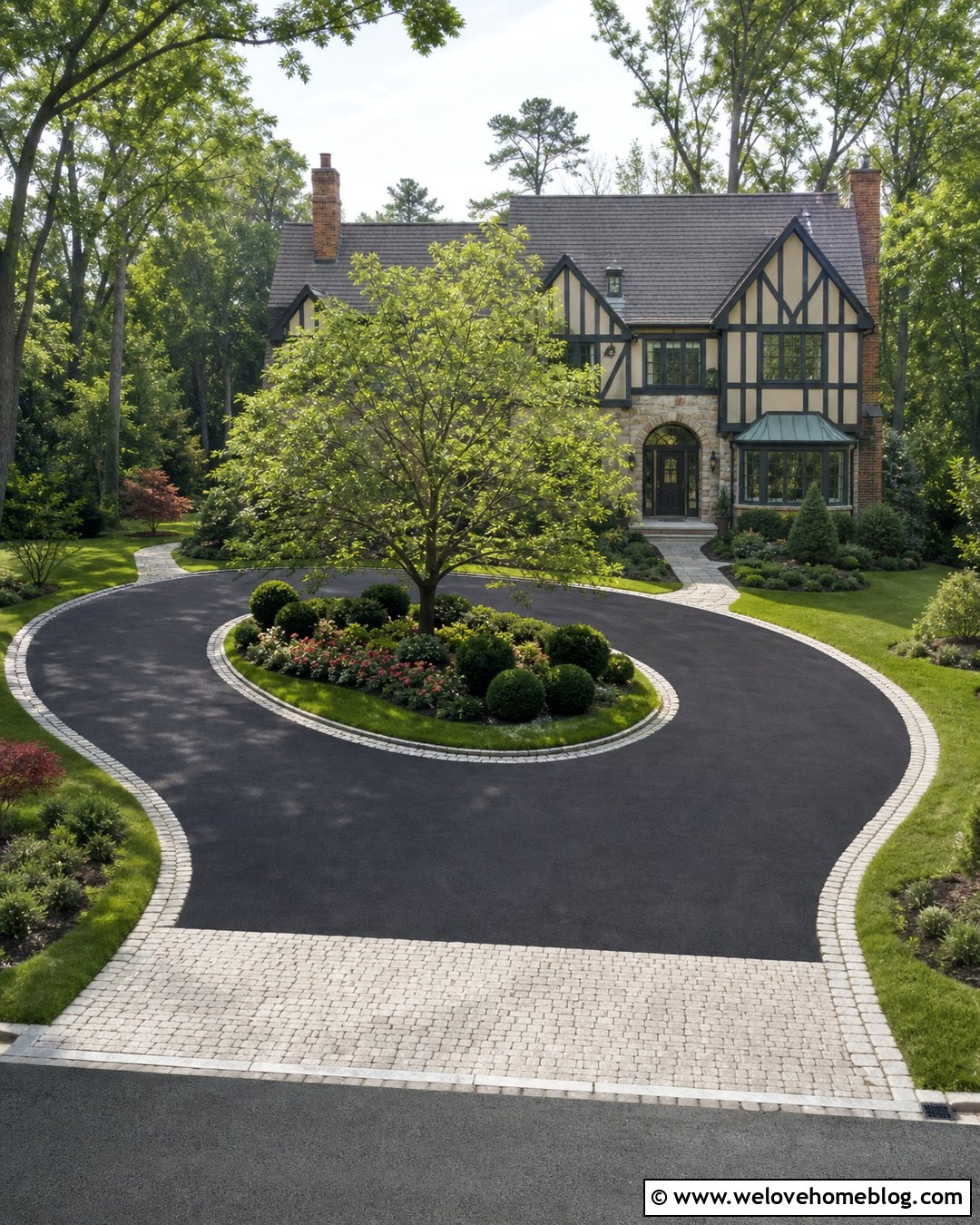
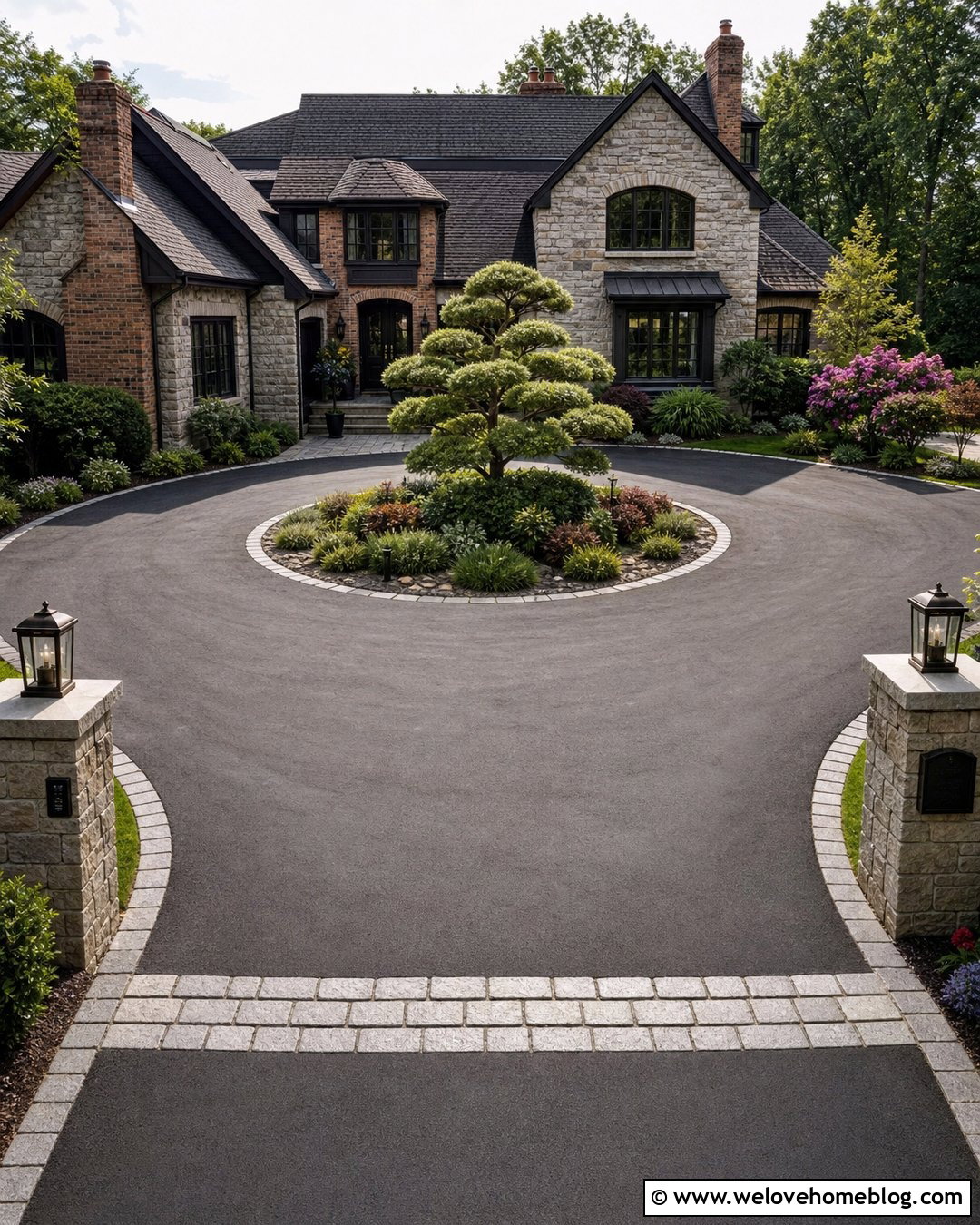
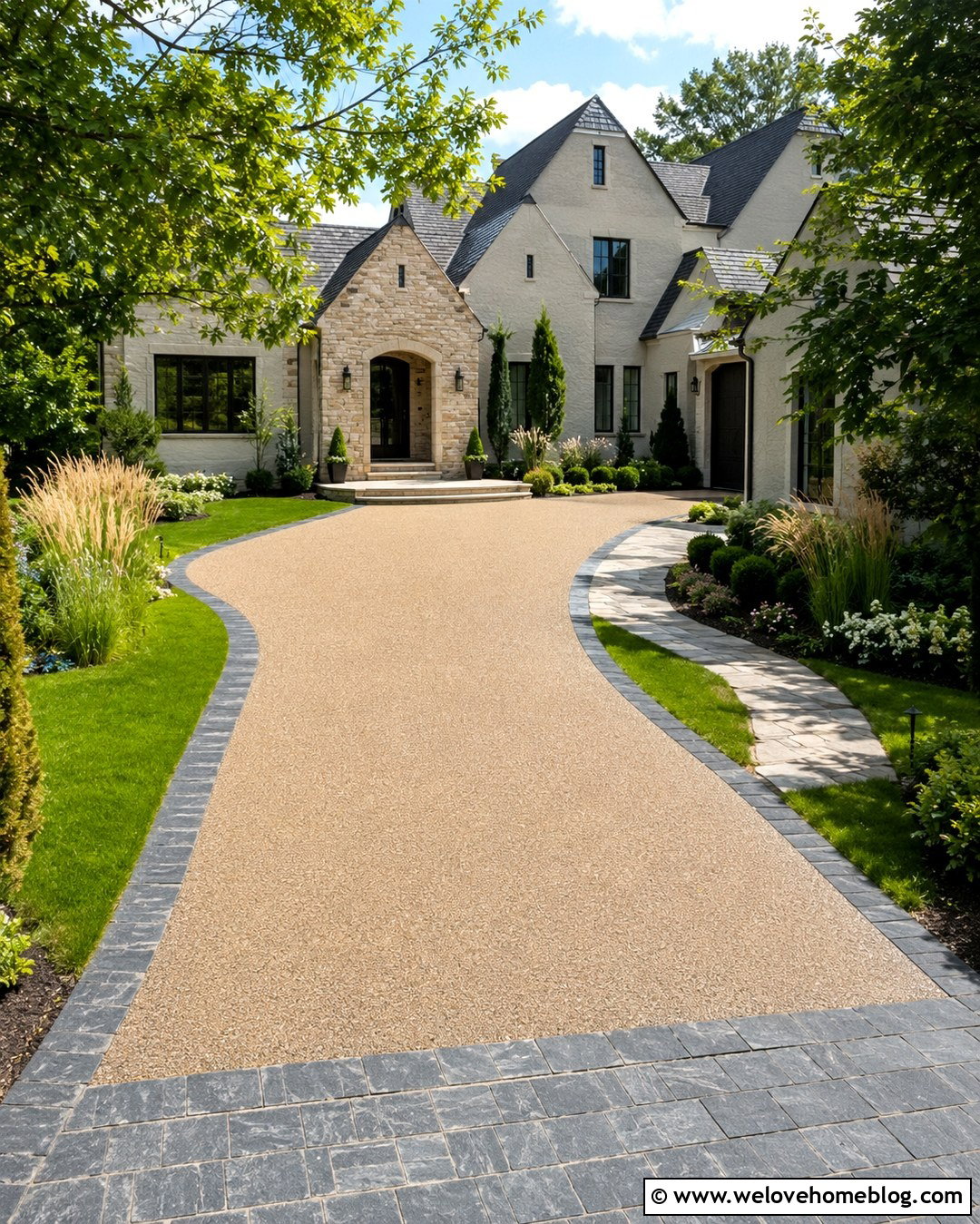
Cobblestone edging adds old-world texture to a black asphalt driveway while creating a polished edge that can withstand a busy residential setting. Line a horseshoe driveway with one broad row of rounded or rectangular cobbles, then install a matching cobblestone apron at both street entrances. Gray, brown, and muted tan stones work beautifully with a Tudor, European-inspired, or stone-front house. The circular center can hold a specimen tree surrounded by low shrubs and seasonal flowers. Keep taller plants away from the entry points so drivers maintain clear views of pedestrians and traffic. Set the cobbles consistently and close to the asphalt grade. This produces a more comfortable driving transition while allowing the textured stone to remain clearly visible from the curb. ()
7. Asphalt Driveway With Limestone Border
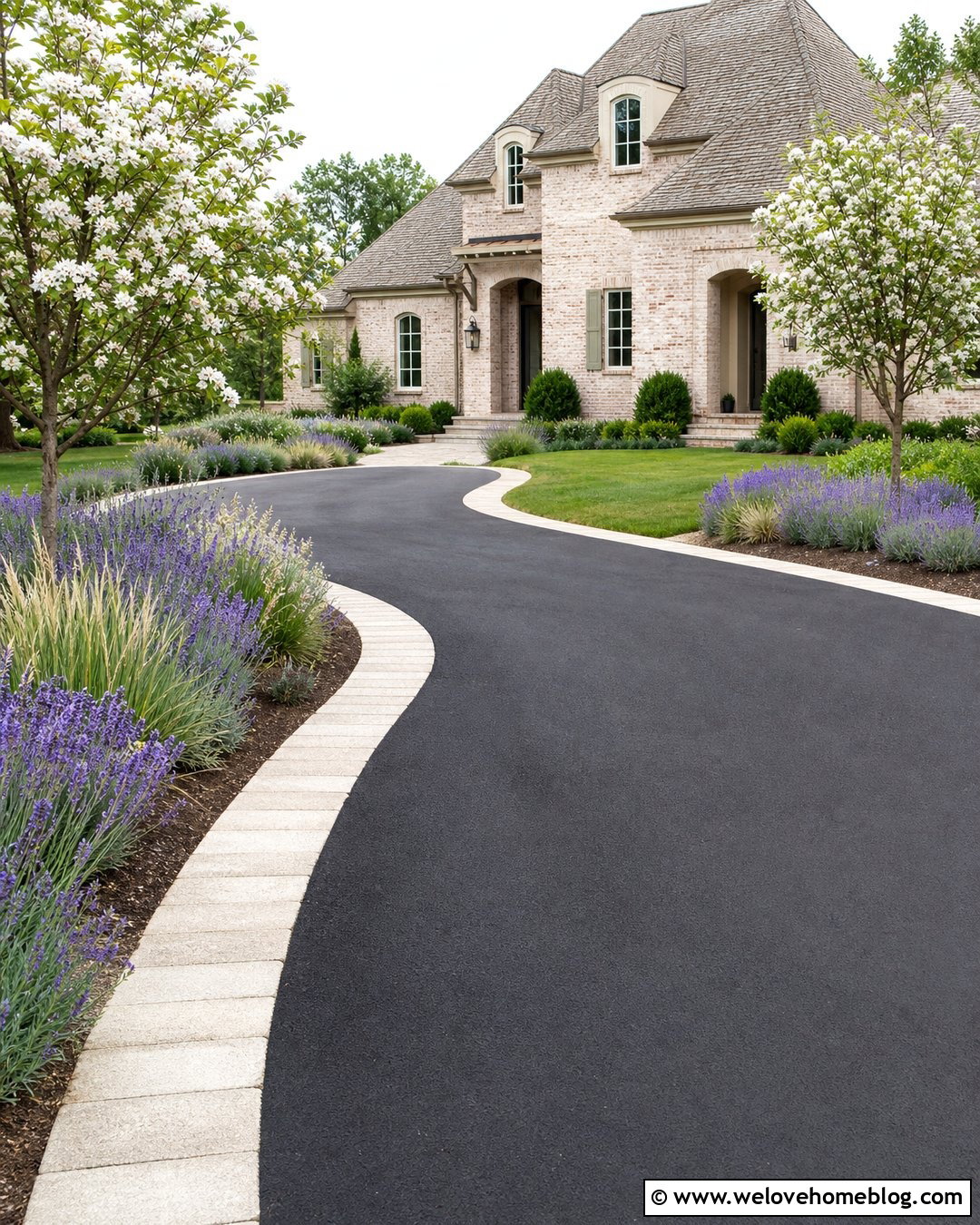
Pale limestone provides strong color contrast while keeping an asphalt driveway bright and refined. Use rectangular limestone setts around a wide, gently curved drive leading to a light brick, French country, or transitional home. Cream and buff stone tones can connect the pavement to porch columns, retaining walls, and front steps. Continue the limestone through the parking court and around a walkway for a unified hardscape plan. Soft green shrubs, lavender, catmint, and ornamental grasses balance the formal stonework. Limestone appearance and performance can vary by product, so select pieces intended for exterior paving and local weather conditions. Near tire paths, keep the border flush and firmly supported. A darker joint color may also reduce the visual impact of soil and driveway debris. ()
8. Asphalt Driveway With River Rock Border
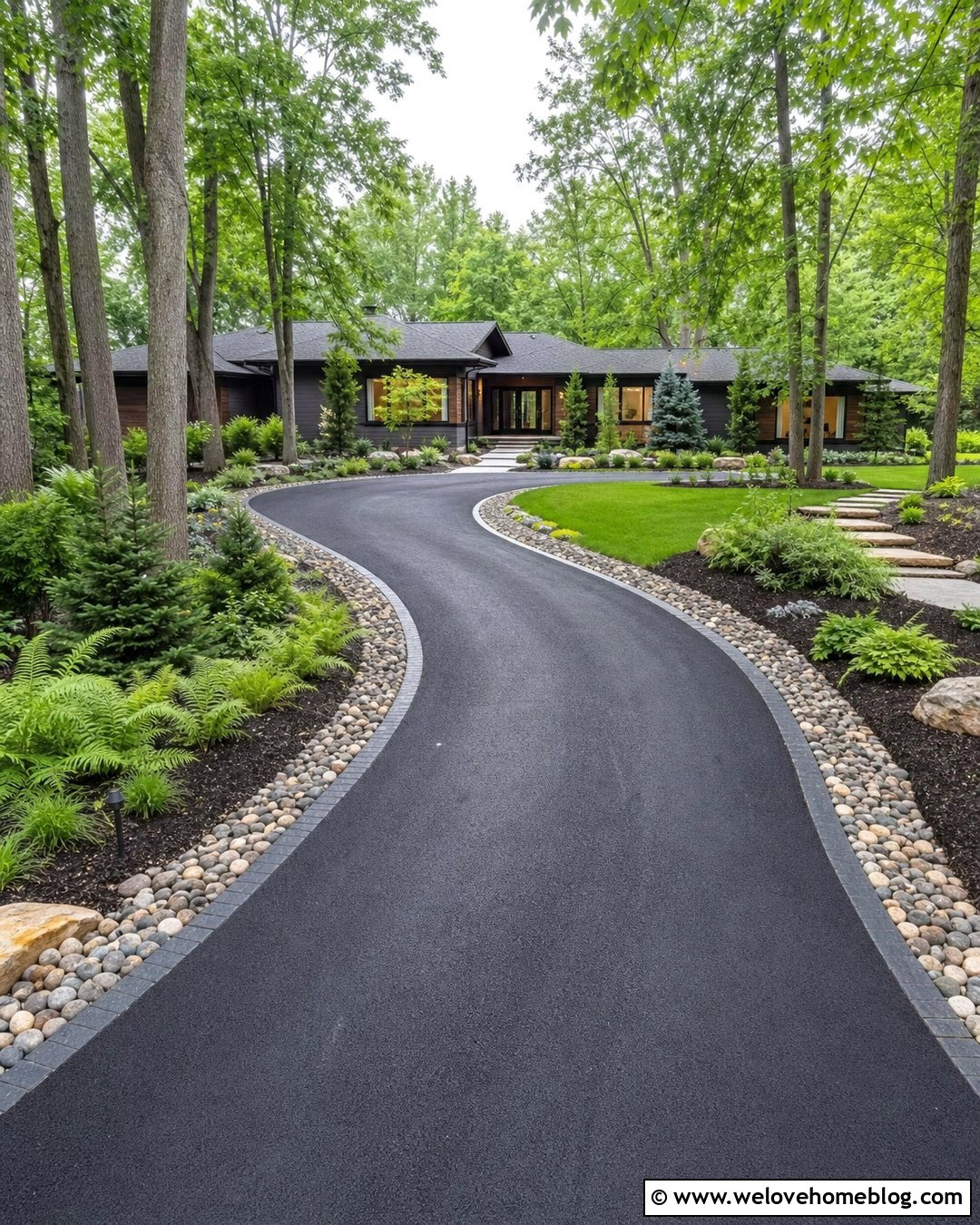
A river rock border introduces soft color and rounded texture without making the driveway look heavily constructed. Edge a curved black asphalt driveway with a shallow band of mixed gray, tan, and cream stones. Install a discreet metal or paver restraint between the asphalt and rocks to keep the border defined. A second restraint along the planting side prevents stones from spreading into mulch or lawn. This treatment works well beside a ranch home, woodland property, or casual contemporary house. Add ferns, sedges, dwarf evergreens, and a stepping-stone walkway to continue the natural theme. Because loose rock can move under tires, widen the pavement at turning points and reserve the decorative band for areas that vehicles are unlikely to cross. ()
9. Asphalt Driveway With Pea Gravel Border
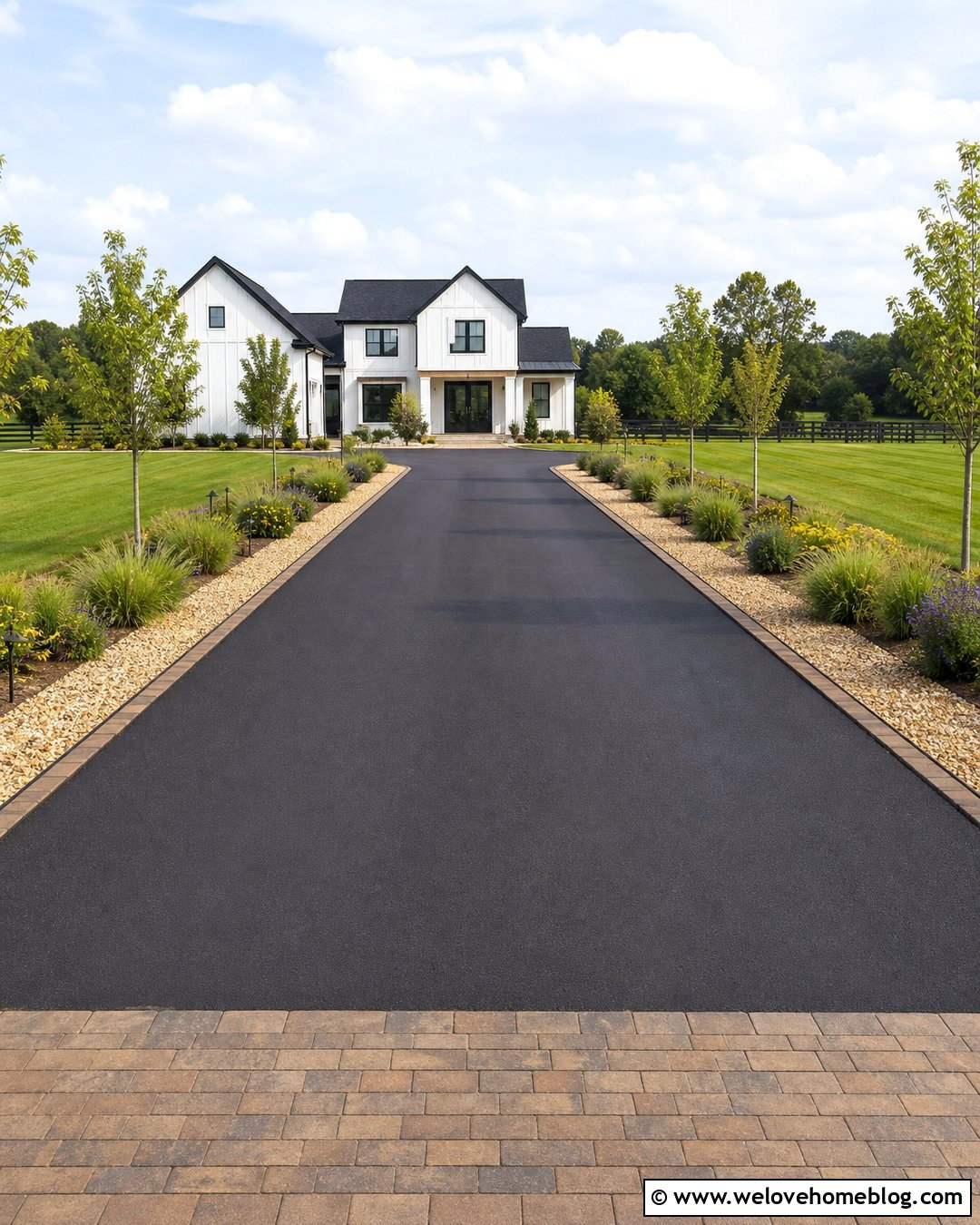
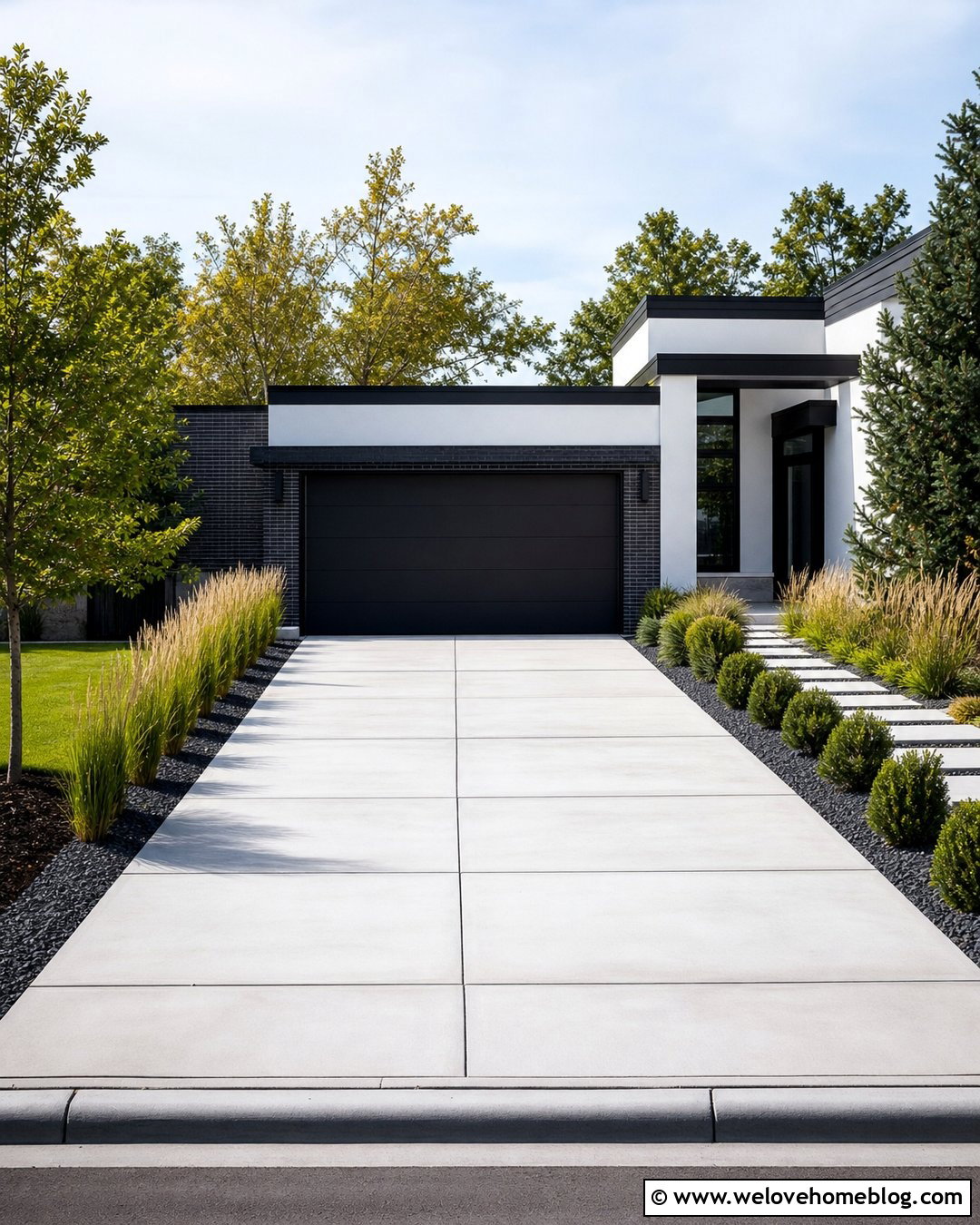
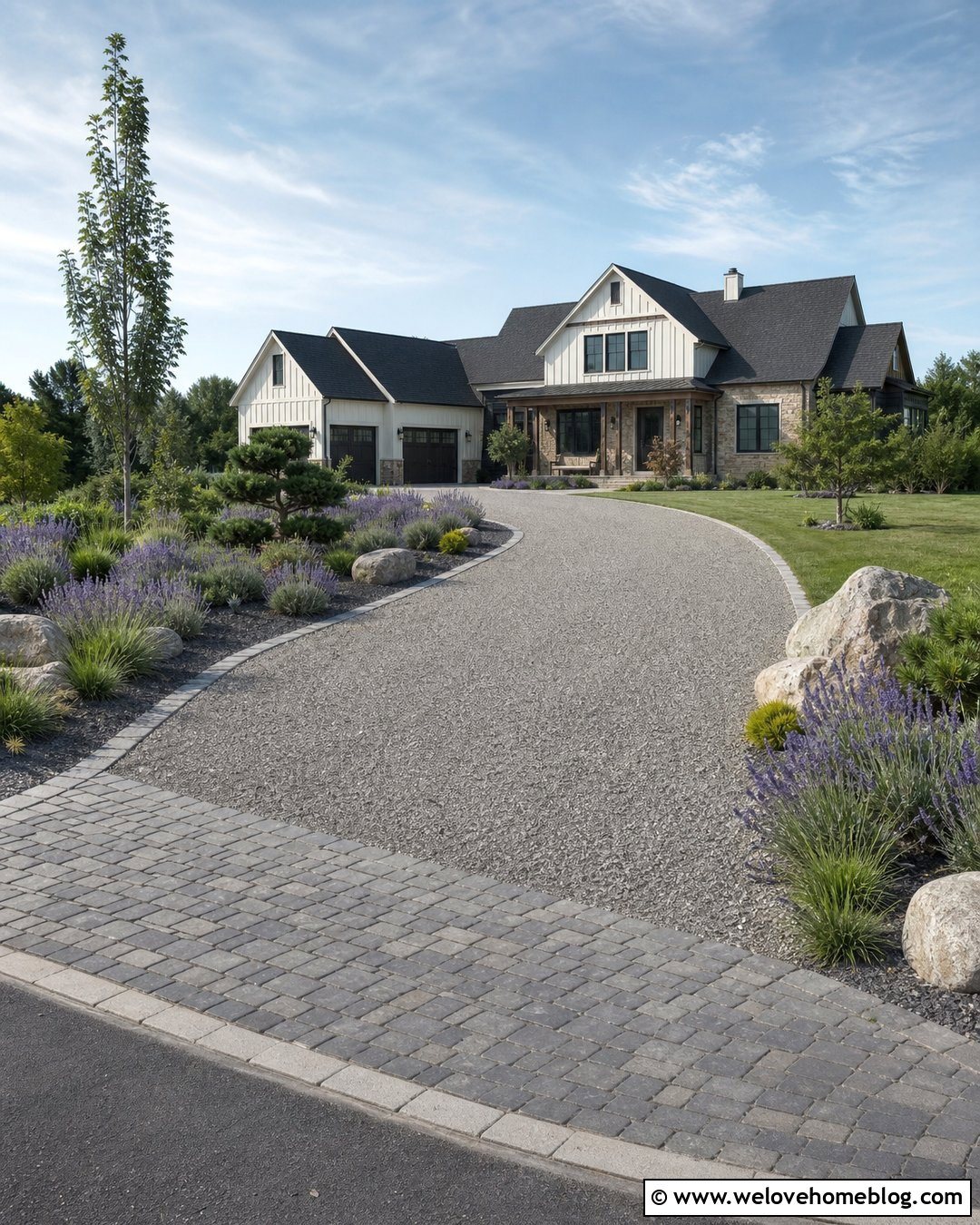
Pea gravel offers an affordable way to soften an asphalt driveway while adding a lighter band around the dark pavement. Choose warm tan gravel for a farmhouse or brown brick home, or use cool gray gravel beside modern siding. A straight driveway can feel more intentional when the gravel strips maintain a consistent width from the curb to the garage. Contain the small stones with steel edging, brick, or narrow concrete pavers. Behind the border, plant low ornamental grasses and drought-tolerant perennials in simple groups. Keep the gravel slightly below the asphalt surface so pieces are less likely to scatter across the pavement. At frequently crossed locations, replace loose gravel with a solid paver apron that provides a stable surface for turning vehicles. ()
10. Asphalt Driveway With Crushed Granite Border
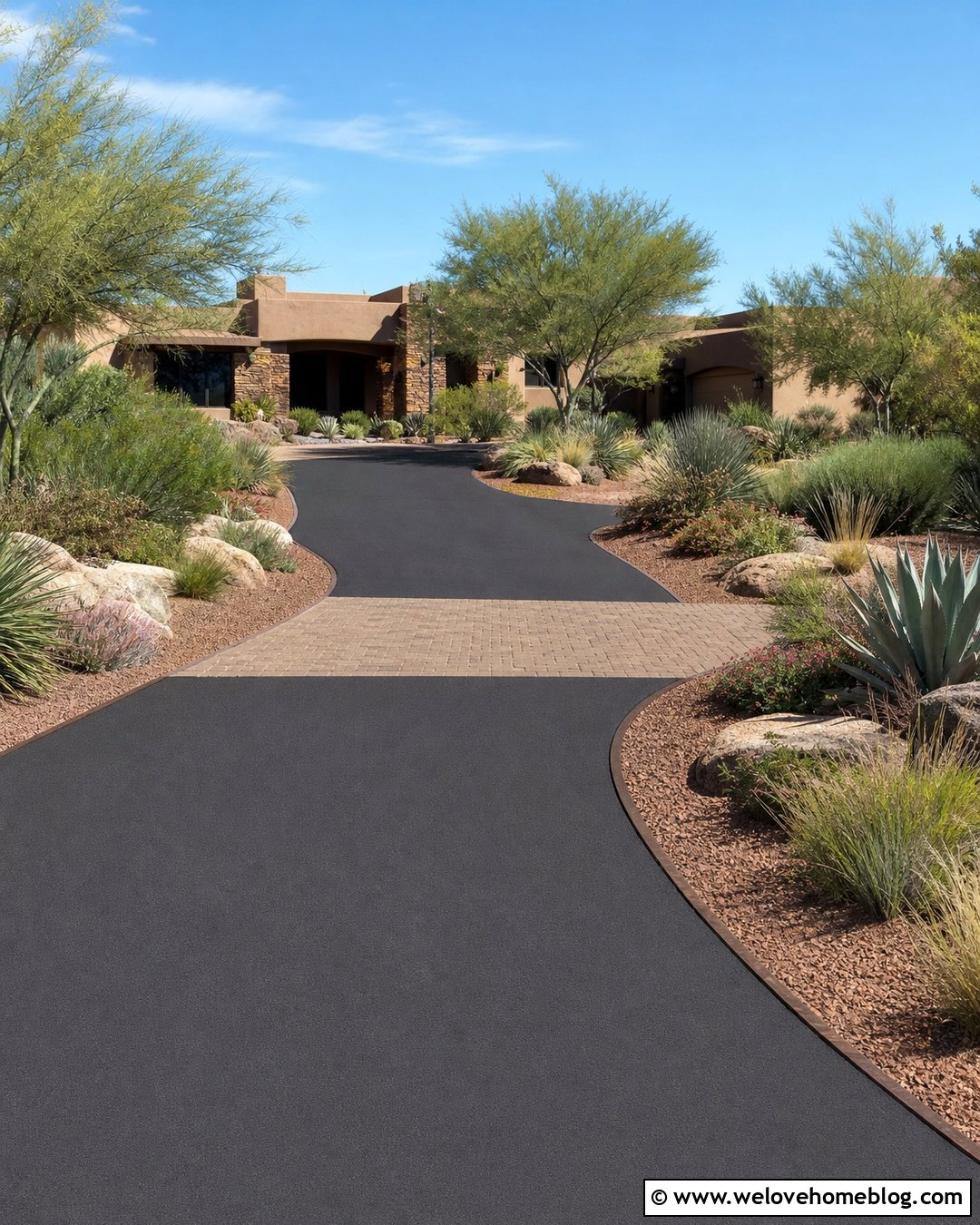
Angular crushed granite creates a tidy, natural-looking border that is less visually formal than brick or cut stone. Use reddish-brown granite beside a southwestern house or cool gray granite around a modern ranch. A broad border can follow a long curved driveway and expand near the entrance to form planted pockets. Steel edging along both sides keeps the stone band crisp and separates it from the black asphalt, lawn, or xeriscape beds. Pair the granite with yucca, agave, feather grass, boulders, or compact flowering shrubs suited to the local climate. Compact the aggregate so it appears settled rather than loose and unfinished. Where car tires routinely cross the edge, use inset concrete pavers or stone setts to reduce displacement and ongoing cleanup. ()
11. Asphalt Driveway With Corten Steel Border
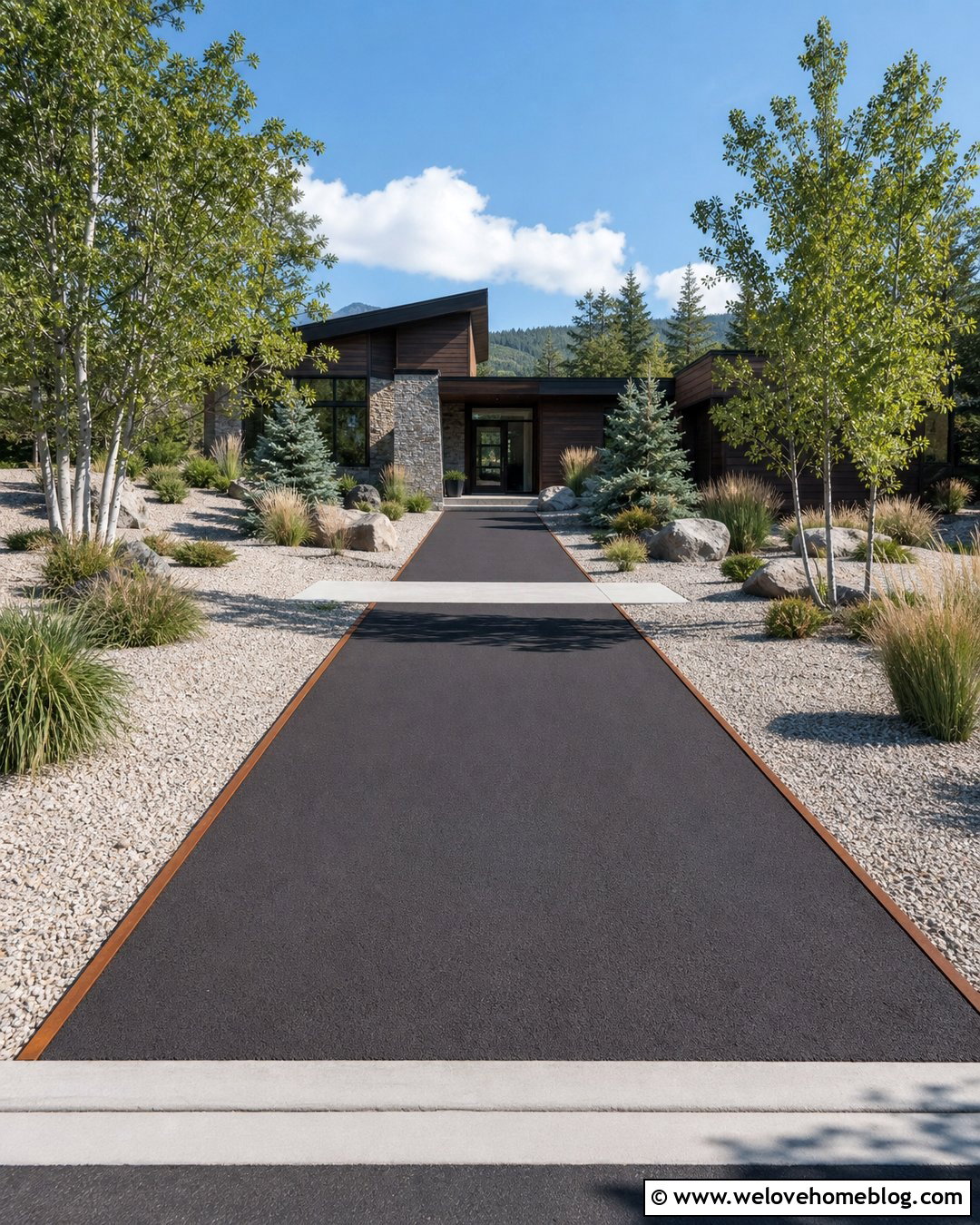
Corten steel provides a thin, modern line between an asphalt driveway and carefully arranged planting beds. Its rust-colored surface stands out against black pavement while complementing warm wood siding, weathered stone, and copper-toned grasses. Use it along a straight or subtly angled driveway leading to a contemporary home. Place the steel almost flush with the asphalt so it defines the edge without becoming a tire or tripping obstacle. Behind it, create broad gravel beds with upright grasses, low evergreens, and sculptural boulders. This border works best as a visual separator rather than a wheel-bearing curb. Select heavy-duty landscape edging with secure stakes, and discuss pavement-edge support with the installer before replacing an existing structural shoulder. The final composition should look clean, spacious, and deliberately minimal. ()
12. Asphalt Driveway With Black Metal Border
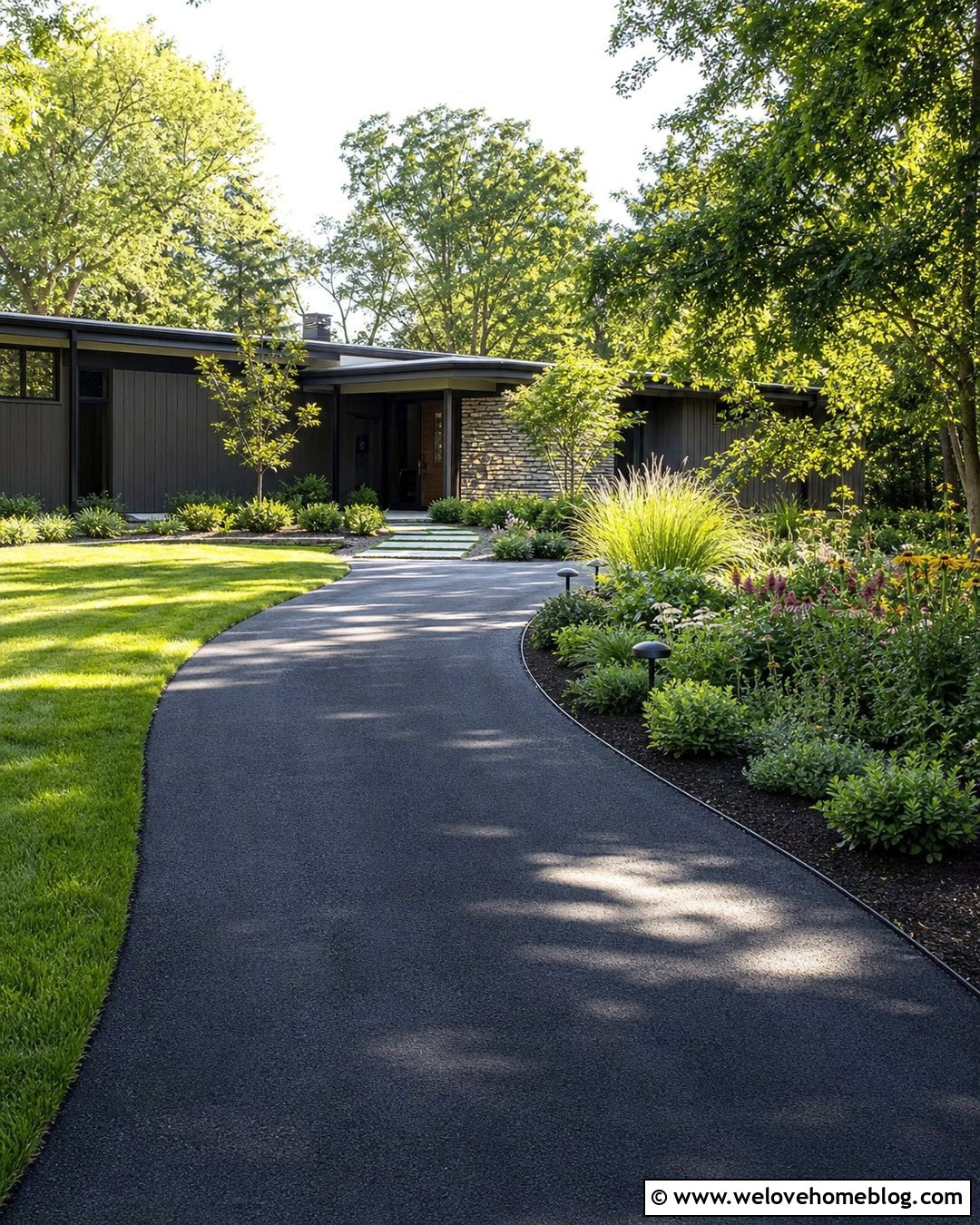
Black metal edging nearly disappears beside asphalt, making it useful when plants and architecture should receive more attention than the border itself. Follow a narrow curved driveway with a flush metal edge, then place lawn on one side and a colorful perennial bed on the other. This creates definition without adding another prominent color or masonry pattern. The treatment works especially well with a midcentury modern, contemporary ranch, or minimalist suburban home. Repeat the black finish on porch railings, light fixtures, and address markers for continuity. Use commercial-grade edging with strong anchoring, rounded or protected ends, and a height that will not interfere with tires or maintenance tools. Metal alone may not provide the same pavement support as a properly built masonry edge, so installation conditions matter. ()
13. Asphalt Driveway With Timber Border
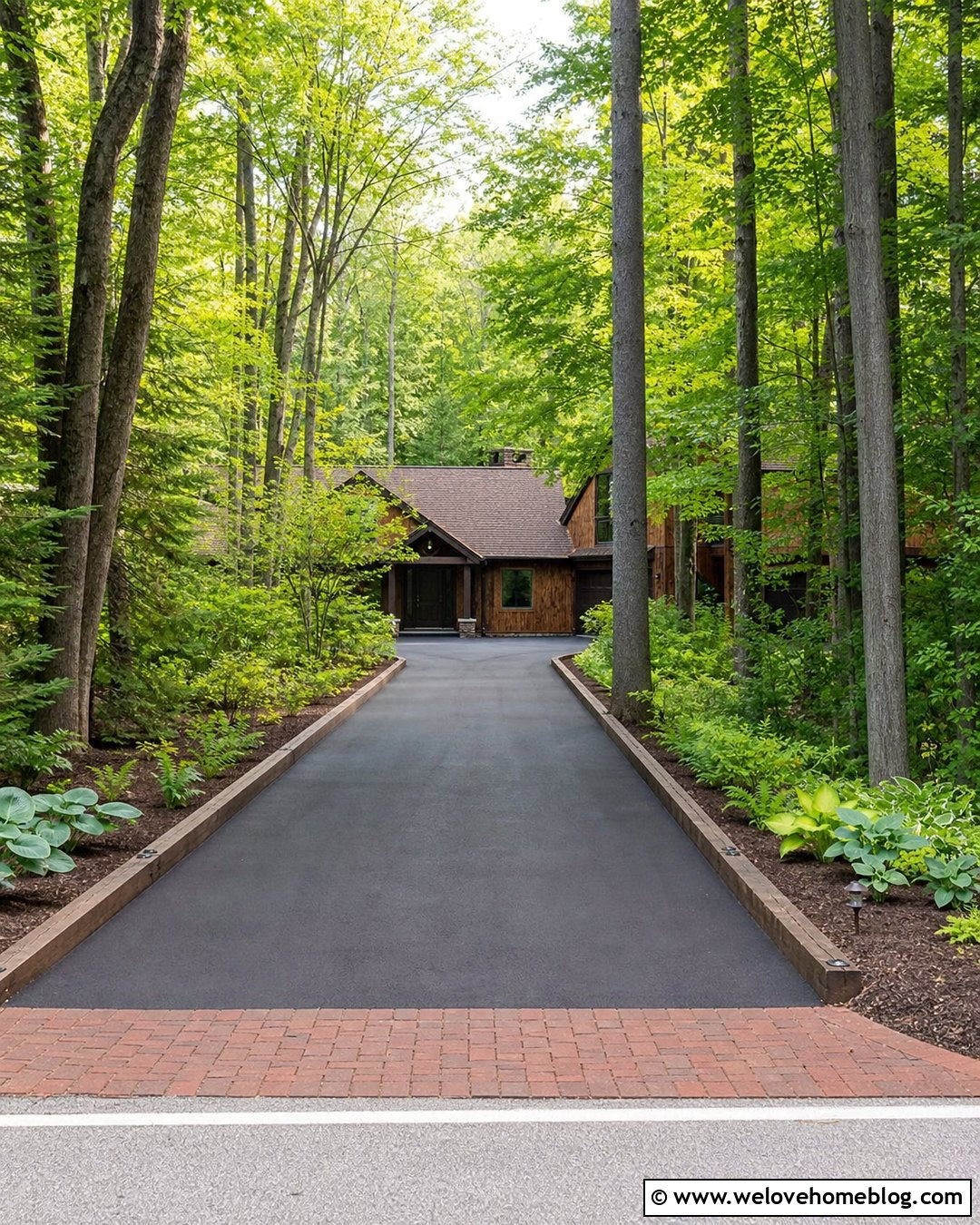
Timber edging gives an asphalt driveway a casual, rustic frame suited to cabins, wooded lots, farmhouses, and budget-conscious landscapes. Run pressure-treated landscape timbers along a straight driveway and connect them to mulched beds filled with ferns, hostas, native shrubs, or flowering ground covers. Dark brown wood blends naturally with tree trunks and woodland soil while gently contrasting with black asphalt. Anchor each timber securely and keep the upper surface close to pavement grade. Avoid using raised timbers beside tight turning areas where tires could repeatedly strike them. Wood generally needs more ongoing inspection and eventual replacement than stone, brick, or concrete, particularly in wet conditions. For a more finished entrance, pair the timber sides with a brick or stone apron that can better tolerate direct vehicle traffic. ()
14. Asphalt Driveway With Grass And Paver Border
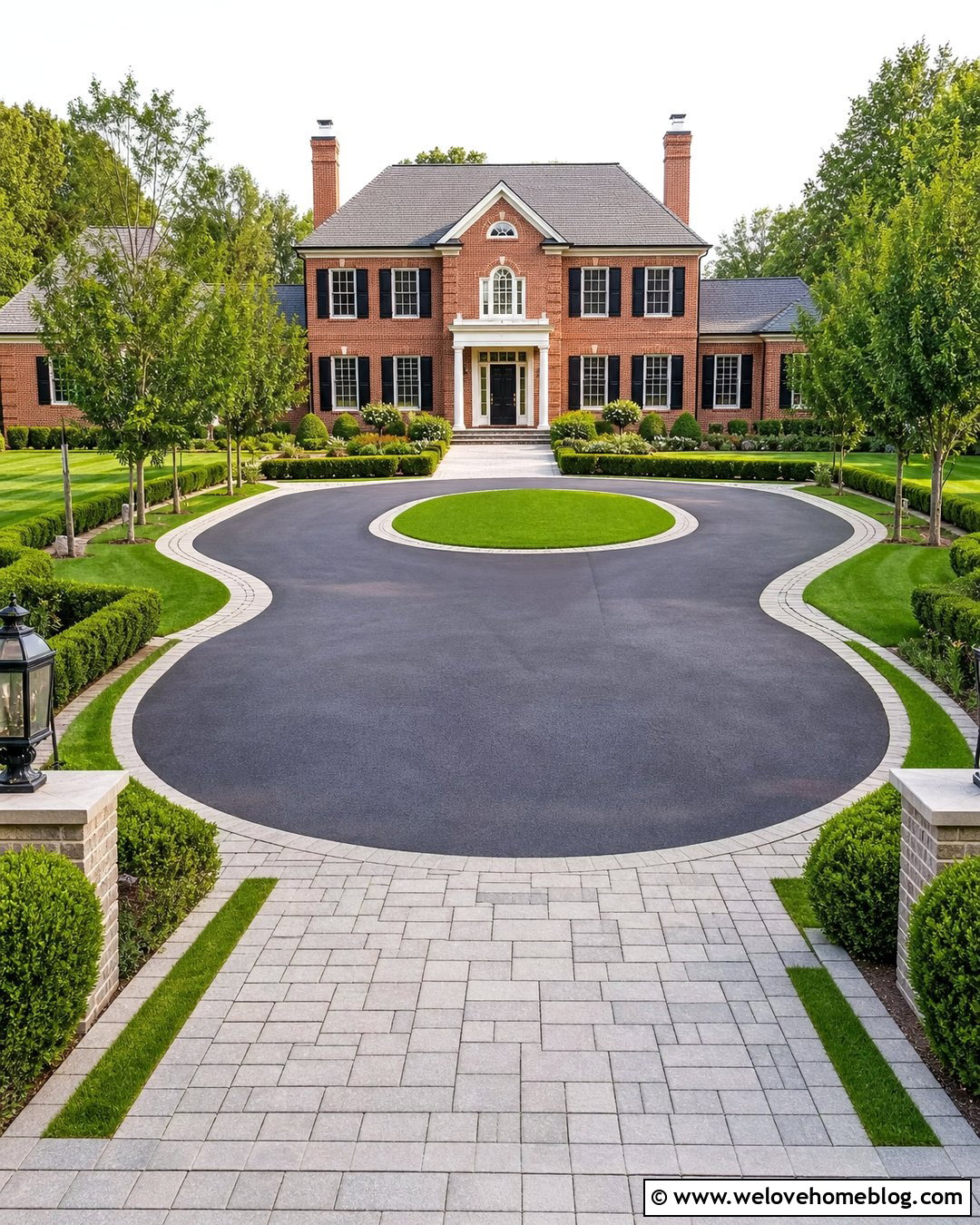
A narrow grass strip between asphalt and pavers can make a large driveway feel greener and less imposing. Start with a smooth black asphalt surface, then add a consistent ribbon of lawn framed by rectangular concrete pavers on the outside. This layered border looks especially appealing along a circular or horseshoe driveway in front of a colonial or Georgian home. Use the same pavers for the front walkway and driveway apron. The lawn strip requires accessible irrigation, regular trimming, and enough width to avoid drying out during hot weather. Keep it out of high-traffic turning zones where tires may cause ruts. In those areas, close the gap with matching pavers. Formal hedges and evenly spaced trees can reinforce the border’s balanced, symmetrical appearance. ()
15. Asphalt Driveway With Mulch Bed Border
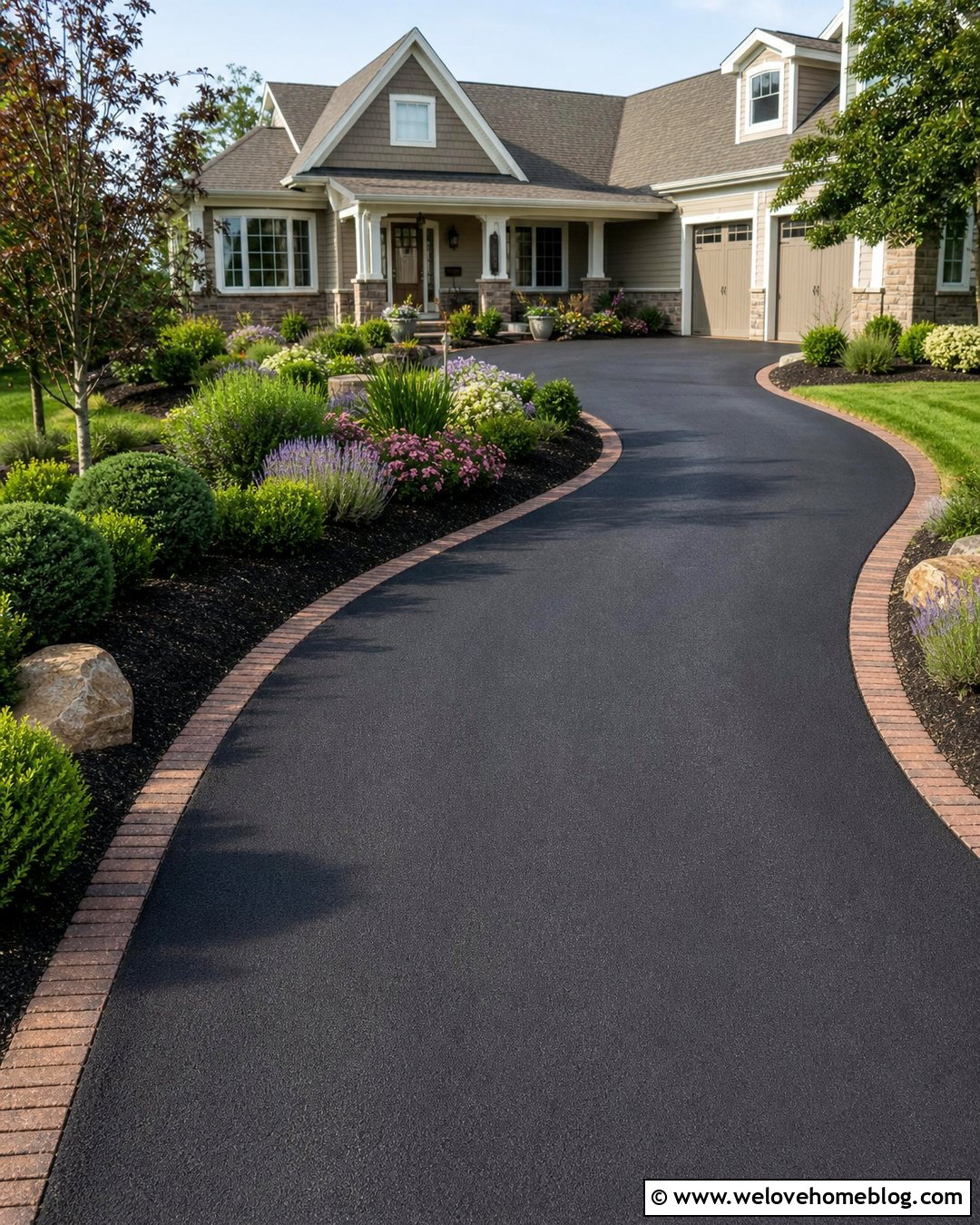
Mulched planting beds offer one of the simplest ways to visually frame an asphalt driveway, but a firm separator keeps the materials from blending together. Use a flush brick, steel, or concrete edge beside the pavement, followed by a generous dark-brown mulch bed. Shape the bed with broad curves around a suburban craftsman or ranch home. Plant compact shrubs near the driveway and position taller species farther back to preserve visibility and prevent branches from scratching vehicles. Repeating plant groups creates a cleaner result than mixing many unrelated varieties. Allow room for mature plant sizes so growth does not narrow the usable driveway. Since mulch can wash toward pavement during heavy rain, maintain suitable grading and avoid directing downspouts into the bed without a planned drainage route. ()
16. Asphalt Driveway With Low Hedge Border
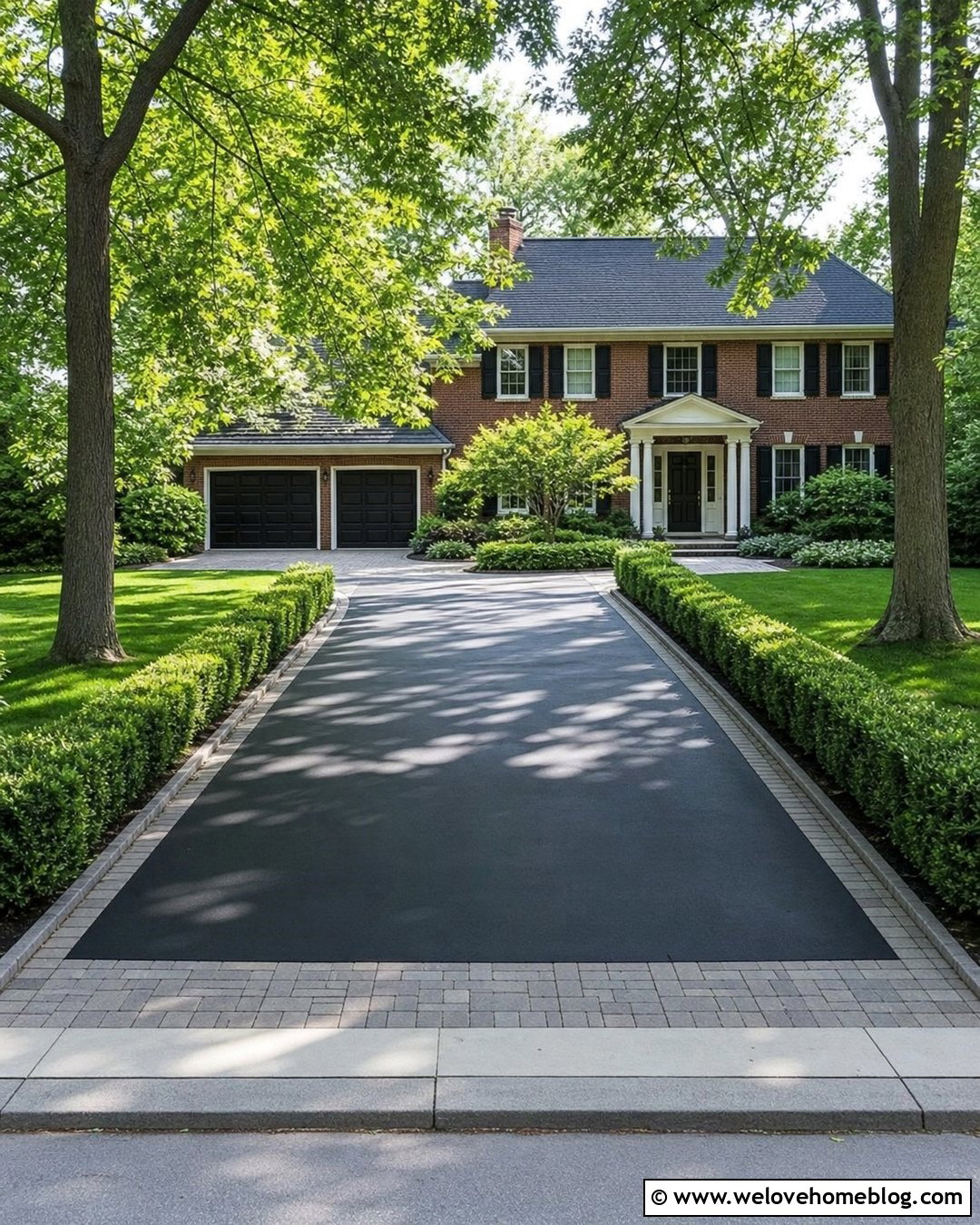
A low evergreen hedge can soften the long black line of an asphalt driveway while preserving a tailored appearance throughout the year. Frame a straight drive with a narrow brick or concrete-paver edge, then plant boxwood alternatives or another locally suitable compact shrub behind it. This complete look suits a colonial, traditional, or formal brick house. Keep the hedge low enough to maintain visibility near sidewalks and the road. Leave a comfortable setback from the pavement so mature branches do not touch vehicles or interfere with snow storage. At the garage, transition from planting to a wider paver landing that handles foot traffic and turning tires. Regular pruning is necessary, but repeating one shrub variety creates a calm, unified border that connects the driveway with foundation landscaping. ()
17. Asphalt Driveway With Flower Bed Border
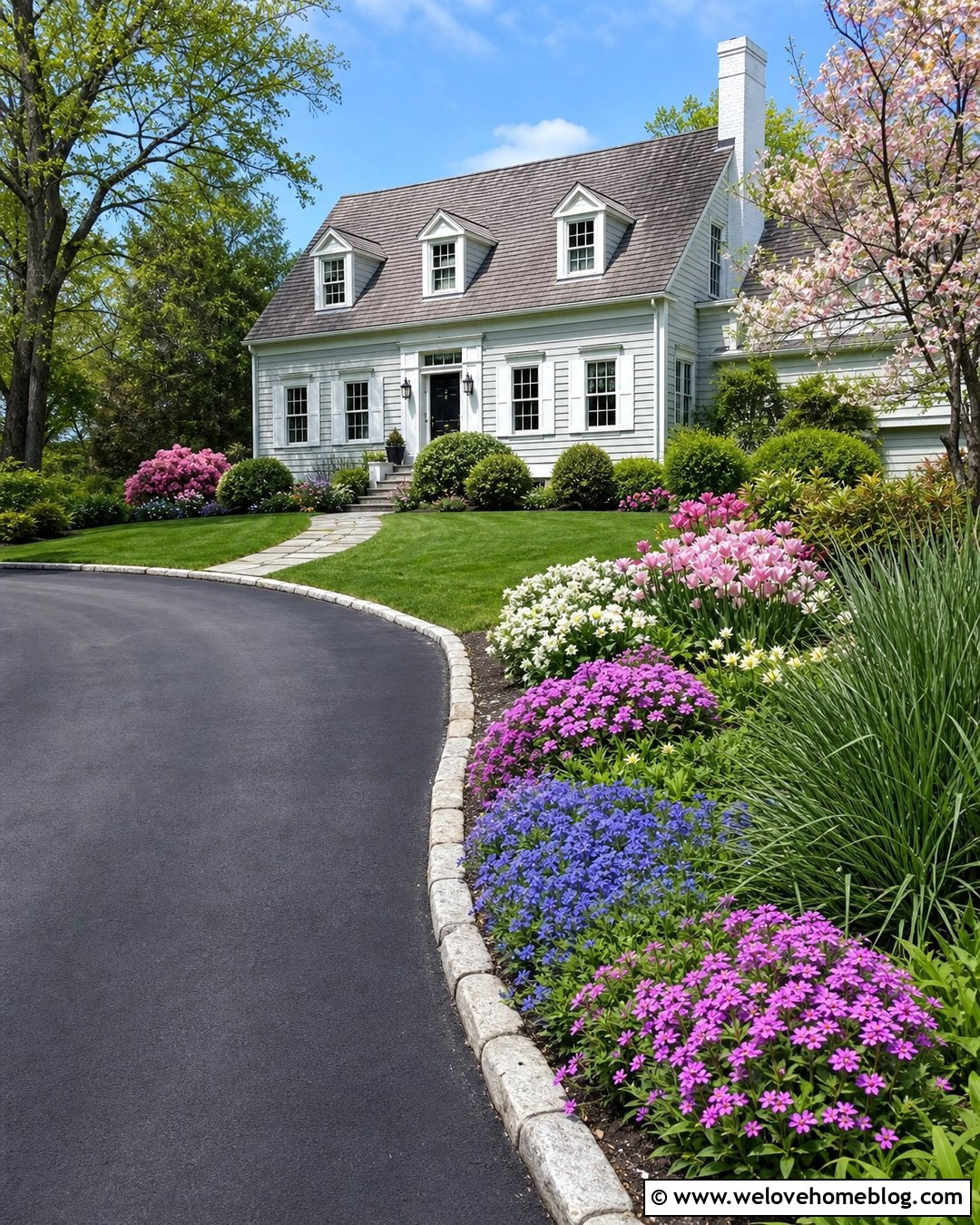
Colorful flower beds turn a practical asphalt driveway into an inviting garden approach. Begin with a narrow stone or brick edge that protects the planting soil and clearly separates it from the pavement. Behind it, arrange flowers in broad repeating groups rather than isolated single plants. Low growers belong closest to the driveway, while taller perennials and flowering shrubs can sit toward the back. A curved layout works beautifully with a cottage, Cape Cod, or craftsman home because it allows the beds to widen around trees and walkway connections. Select plants for local sunlight, soil, water, and winter conditions. Leave clear openings near the road and garage. The resulting border should provide seasonal color without reducing sightlines, crowding vehicles, or creating difficult maintenance corners. ()
18. Asphalt Driveway With Retaining Wall Border
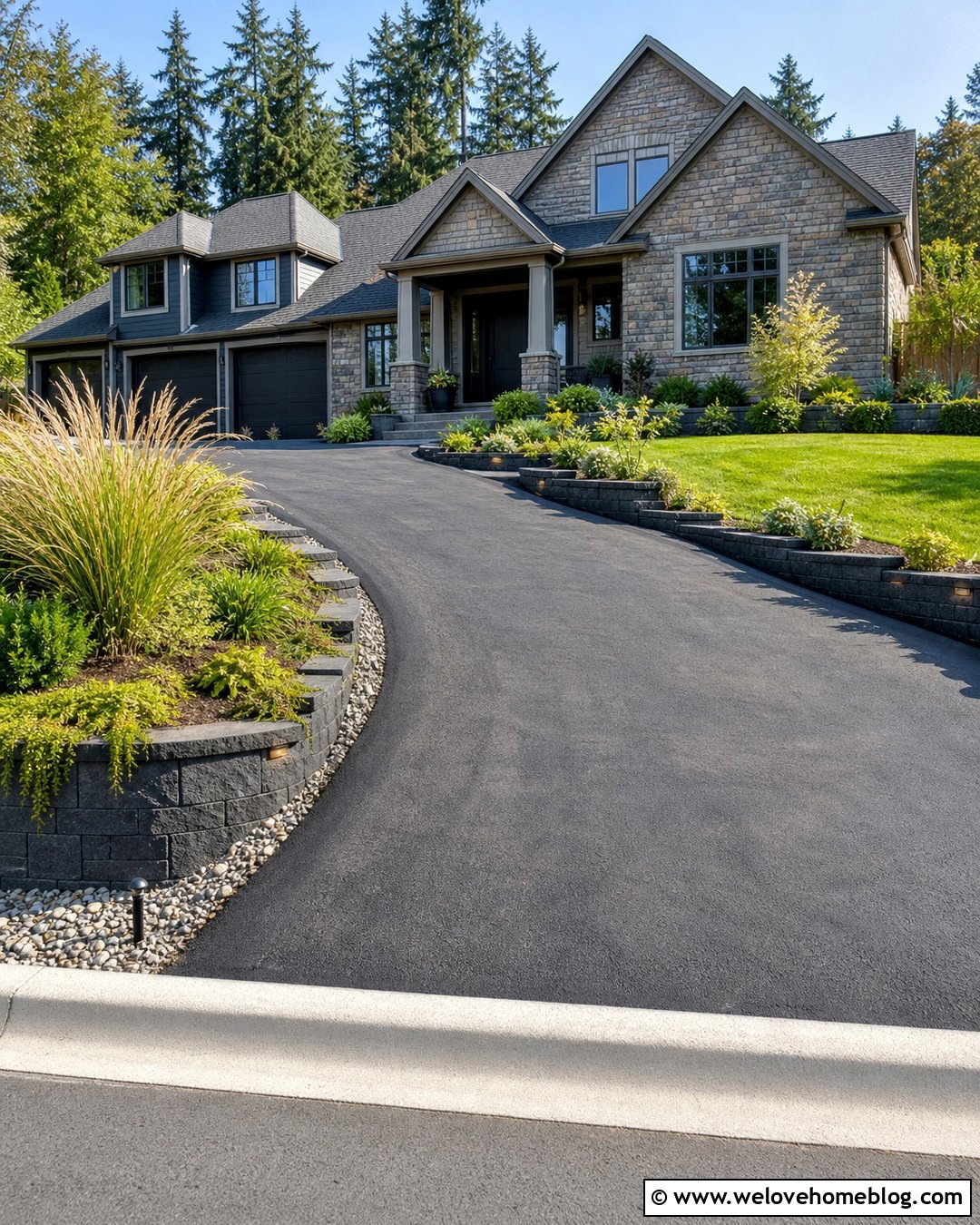
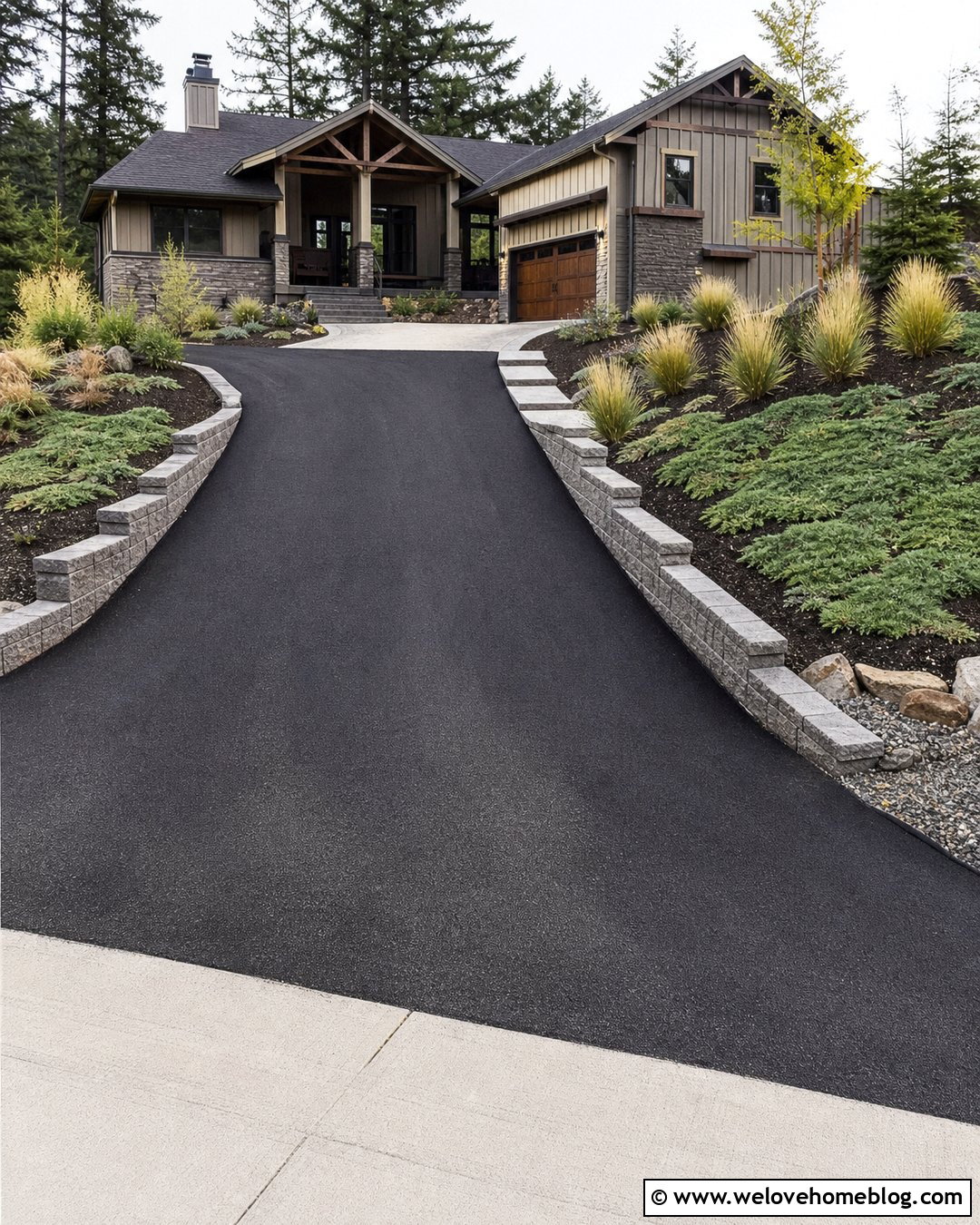
A low retaining wall can define an asphalt driveway where the surrounding yard sits above the pavement. Use concrete wall blocks, natural stone, or brick that coordinates with the house foundation. Follow a sloped, curved driveway with a wall that gradually steps down toward the street instead of ending abruptly. Plant trailing ground covers, ornamental grasses, and compact shrubs above it to soften the masonry. Include a properly designed drainage system so water and soil pressure do not damage the wall or direct runoff beneath the driveway edge. Keep the structure comfortably away from vehicle doors and turning paths. Because retaining walls carry loads beyond ordinary decorative edging, local requirements and professional design may apply. Integrated step lights can improve visibility while giving the whole entrance a polished appearance. ()
19. Asphalt Driveway With Matching Paver Apron And Border
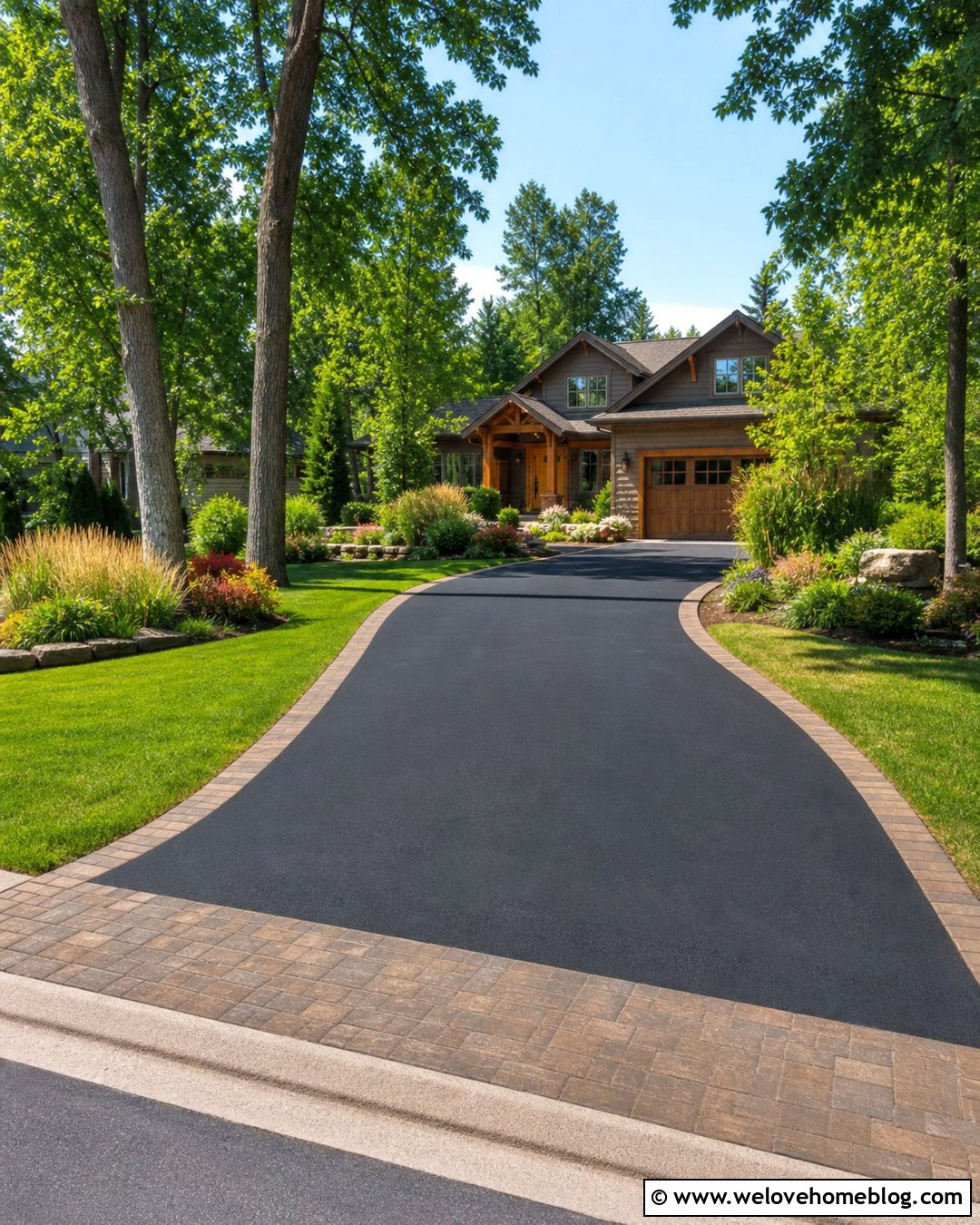
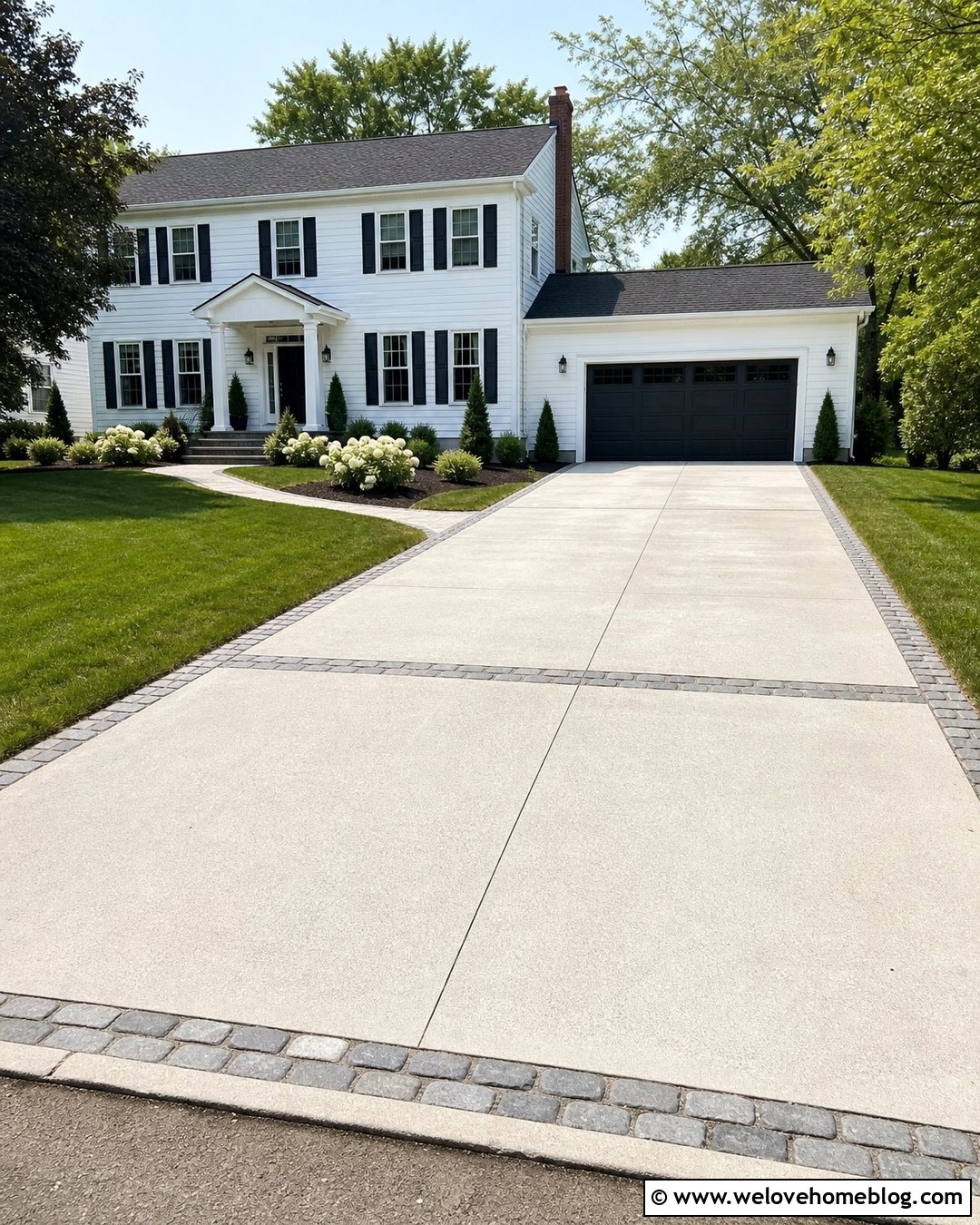
A matching paver apron and side border makes an asphalt driveway look custom without covering the entire surface in expensive masonry. Select brick, cobblestone, or concrete pavers that relate to the home’s facade. Install a broad apron at the street, then carry a narrower version along both sides of the asphalt. Repeat the pavers in front of the garage for visual balance and a strong transition between pavement and doors. This treatment works with straight, curved, and circular layouts. A craftsman home may suit warm brown pavers, while a modern house could use large charcoal units. Since tires will cross the apron frequently, use driveway-rated products over a properly prepared base. Consistent jointing and border width keep the design cohesive. ()
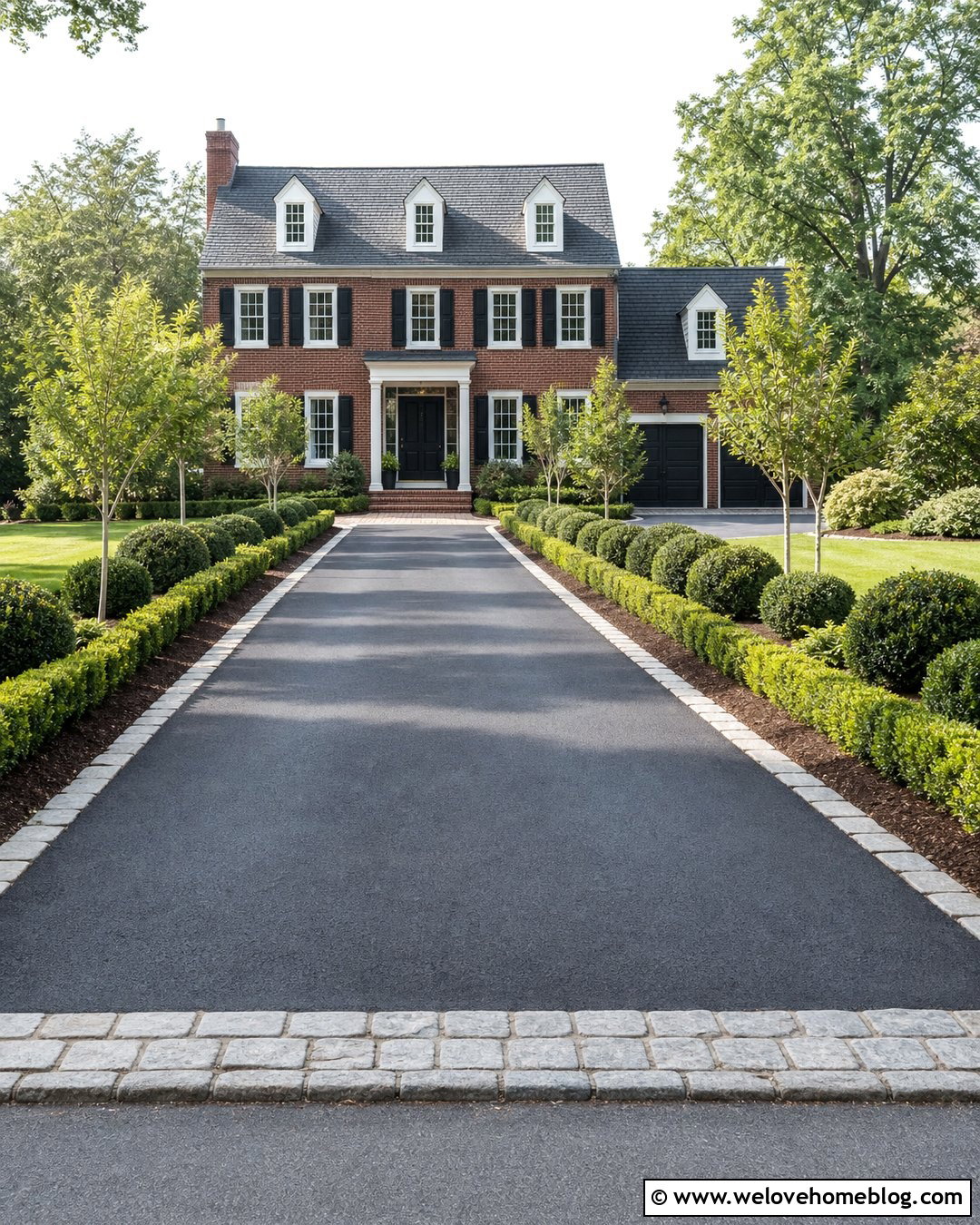
20. Asphalt Driveway With Paver And Gravel Border
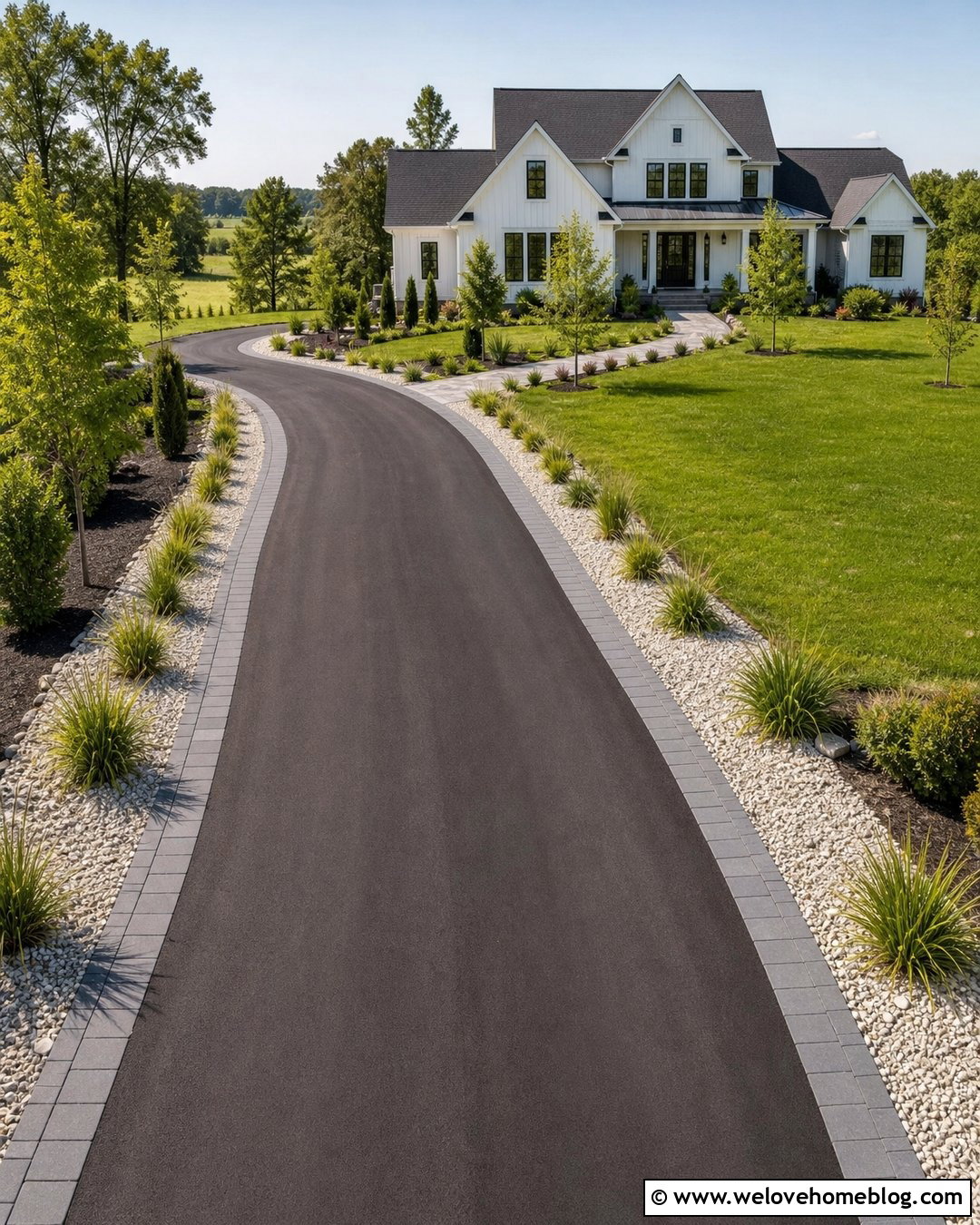
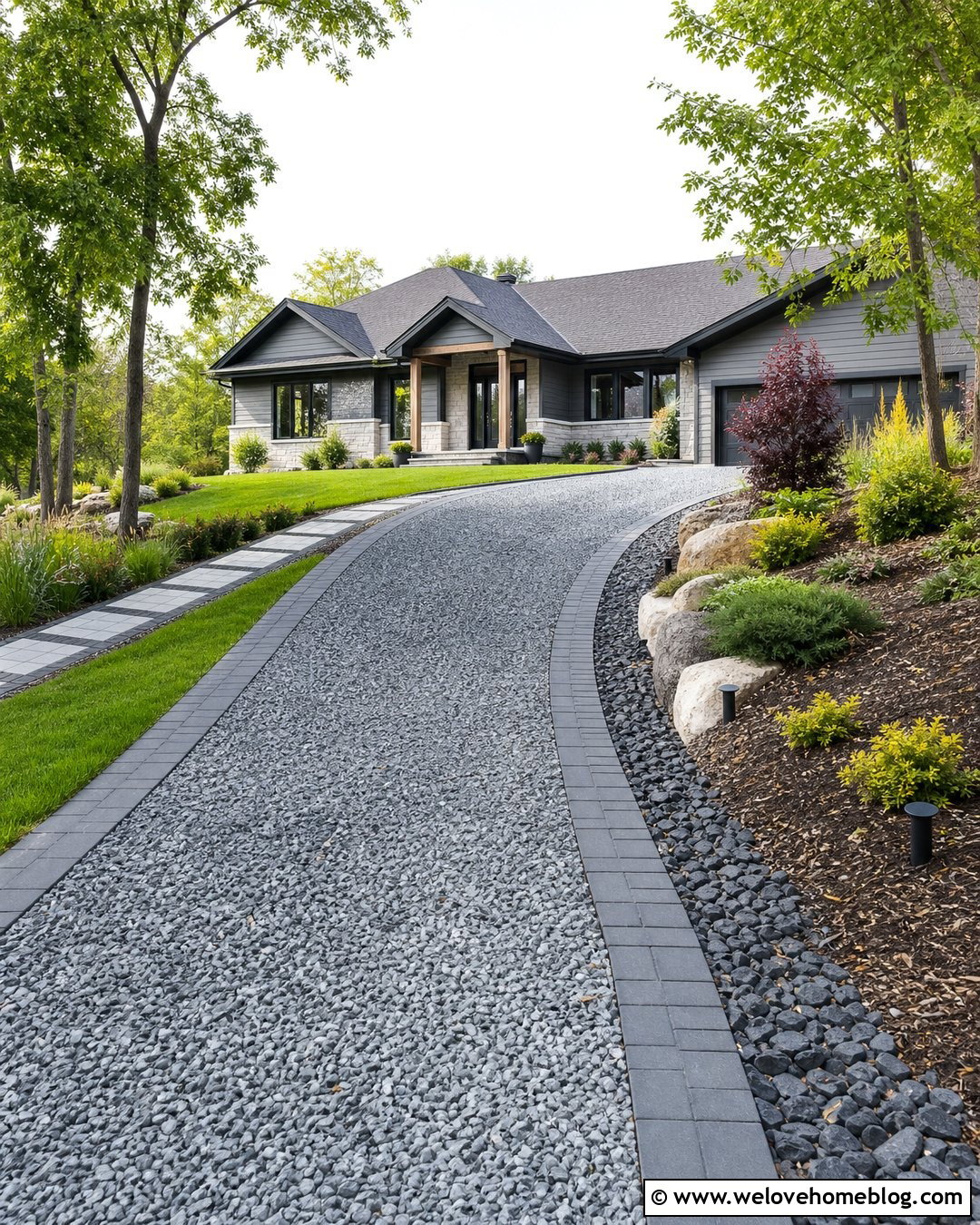
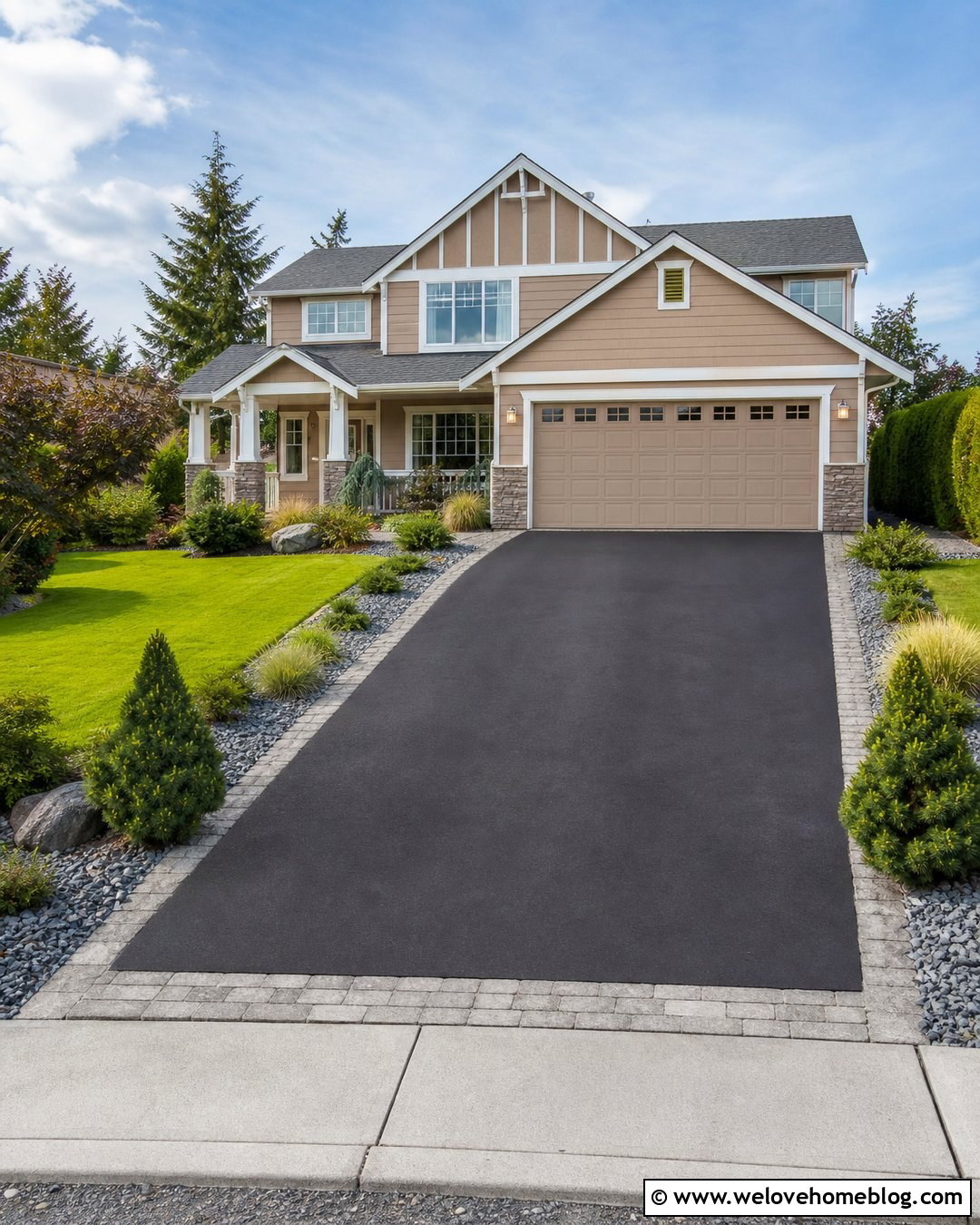
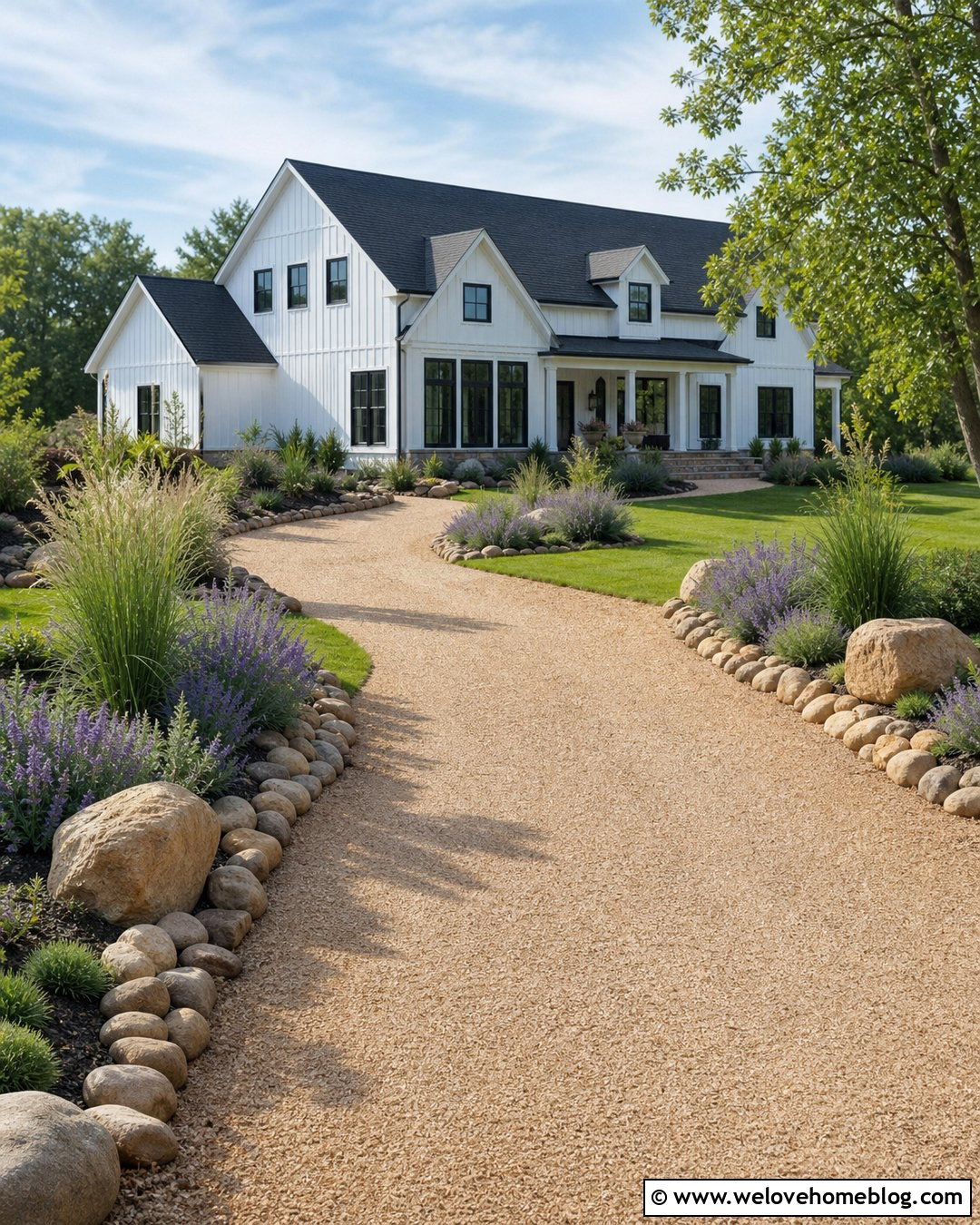
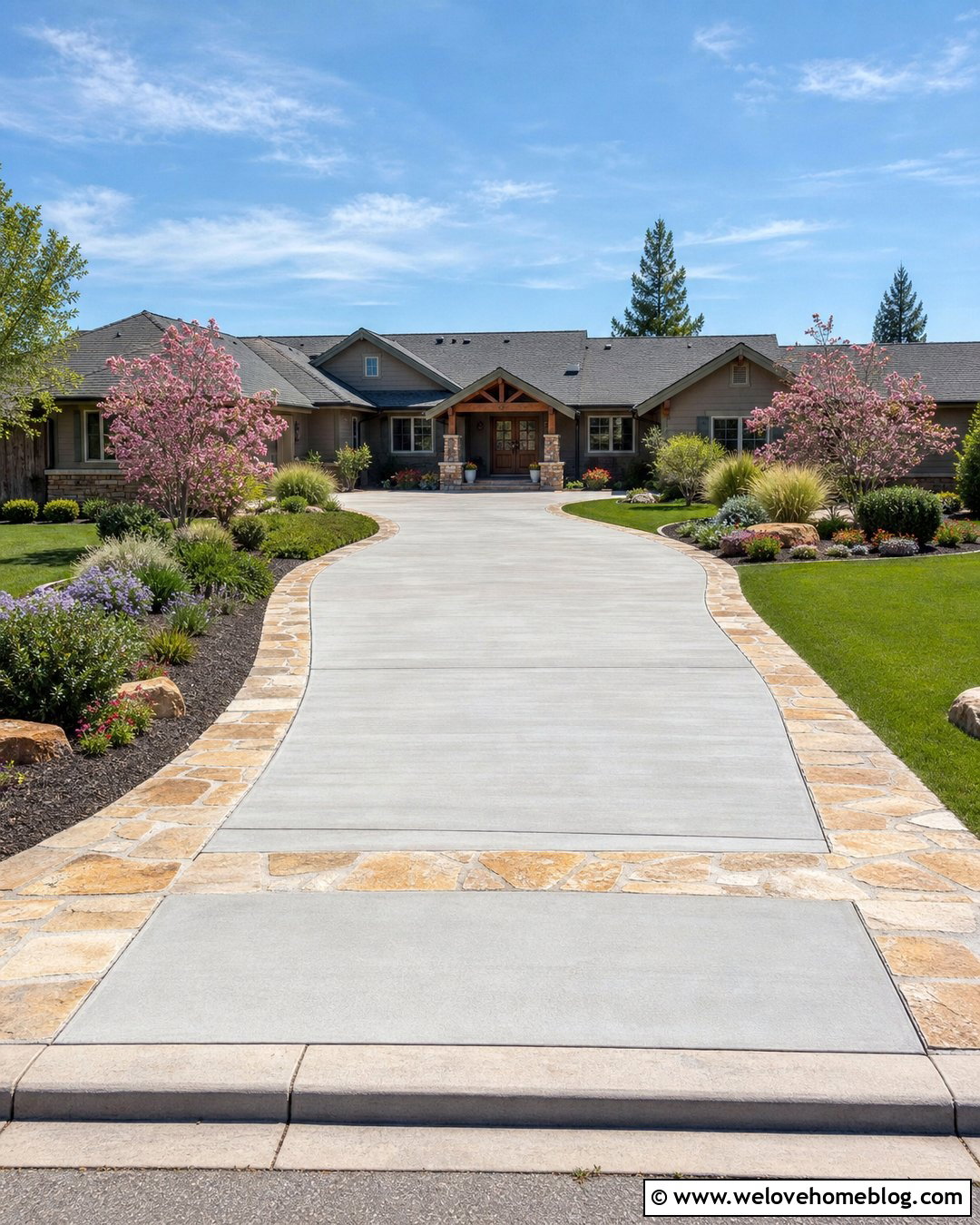
A double border combines the stability of pavers with the texture and flexibility of decorative gravel. Place one row of concrete or stone pavers directly beside the black asphalt, followed by a wider strip of pea gravel or crushed stone. This layered edge looks especially effective along a long curved driveway because the contrasting bands emphasize its shape. Use charcoal pavers with pale gray gravel for a modern home, or brown pavers with tan gravel for a farmhouse. Add spaced ornamental grasses, low shrubs, and small trees beyond the gravel. Separate each loose material with discreet restraint to maintain clean lines. At the driveway entrance and garage, widen the paver section into solid aprons so turning tires do not scatter the decorative aggregate. ()
Conclusion:
The best asphalt driveway border ideas balance appearance, edge protection, maintenance, and the architecture of the home. Brick and Belgian block create traditional character, while concrete pavers and metal edging produce cleaner modern lines. Gravel, flowers, hedges, and mulched beds can soften the broad black surface and connect it naturally to the yard. Whatever material you choose, consider the complete driveway rather than treating the border as an isolated detail. Coordinate its color with the house, repeat it in the walkway or apron, and leave enough space for vehicles and mature plants. Careful base preparation, drainage, alignment, and edge support will help the finished entrance remain attractive and functional.

Related posts:
Leave a Reply