
A driveway does much more than provide a place to park. It shapes the first impression of your property, connects the street to the house, and influences how the entire front yard feels. The best home driveway ideas combine a practical surface with a suitable layout, defined borders, attractive landscaping, and safe access. Current designs often blend paving materials, planting areas, permeable surfaces, accent bands, and lighting to make the driveway feel connected to the home rather than separate from it. () Whether you have a compact suburban lot, a large country yard, or a sloped entrance, there is a design that can improve function and curb appeal. Explore these 35 home driveway ideas to find a complete look that suits your house, climate, maintenance needs, and budget.

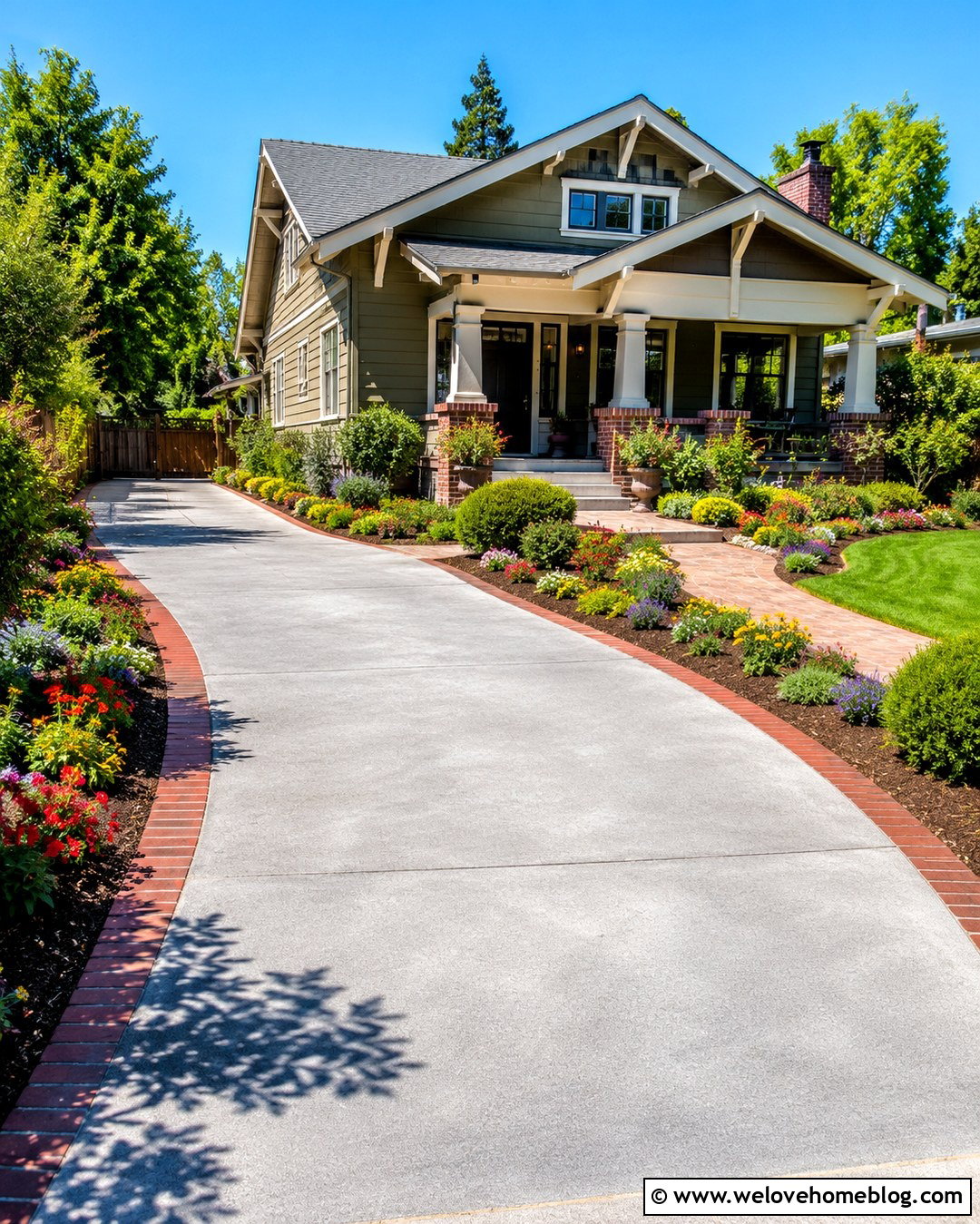
1. Straight Concrete Driveway With Brick Edging
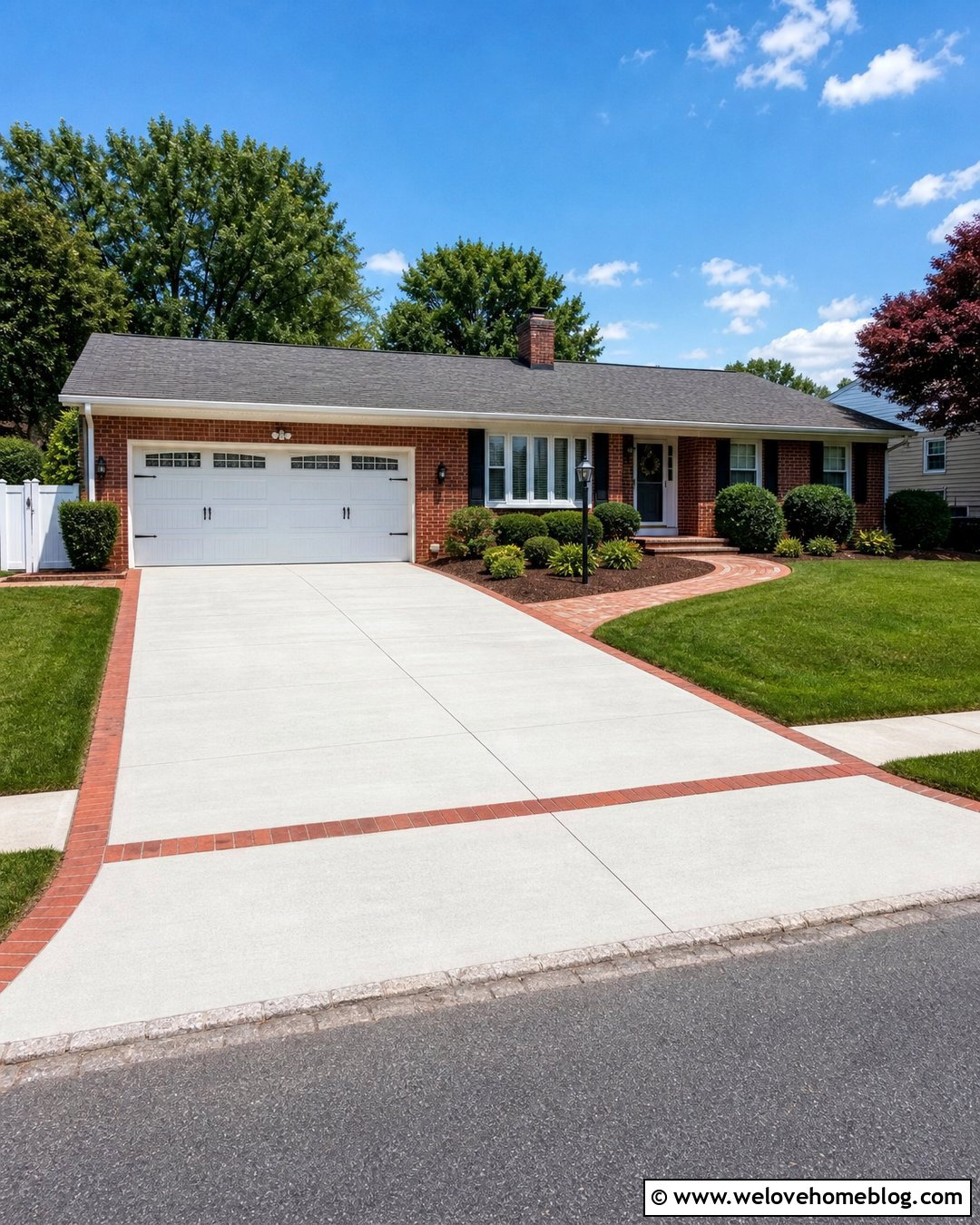
A straight concrete driveway creates a clean route from the street to the garage. It is especially practical for narrow suburban lots where every foot of front yard matters. Choose light gray poured concrete with a brushed finish for traction, then frame it with red or charcoal brick edging. The contrasting border makes the driveway look more finished and helps visually separate it from the lawn. Add low evergreen shrubs near the house, but keep the entrance open for clear visibility. A curved brick walkway branching toward the front door can soften the driveway’s straight shape. This complete design works well with ranch, colonial, and traditional homes because it is simple, durable, and easy to coordinate with existing brickwork.
2. Concrete Driveway With Paver Border
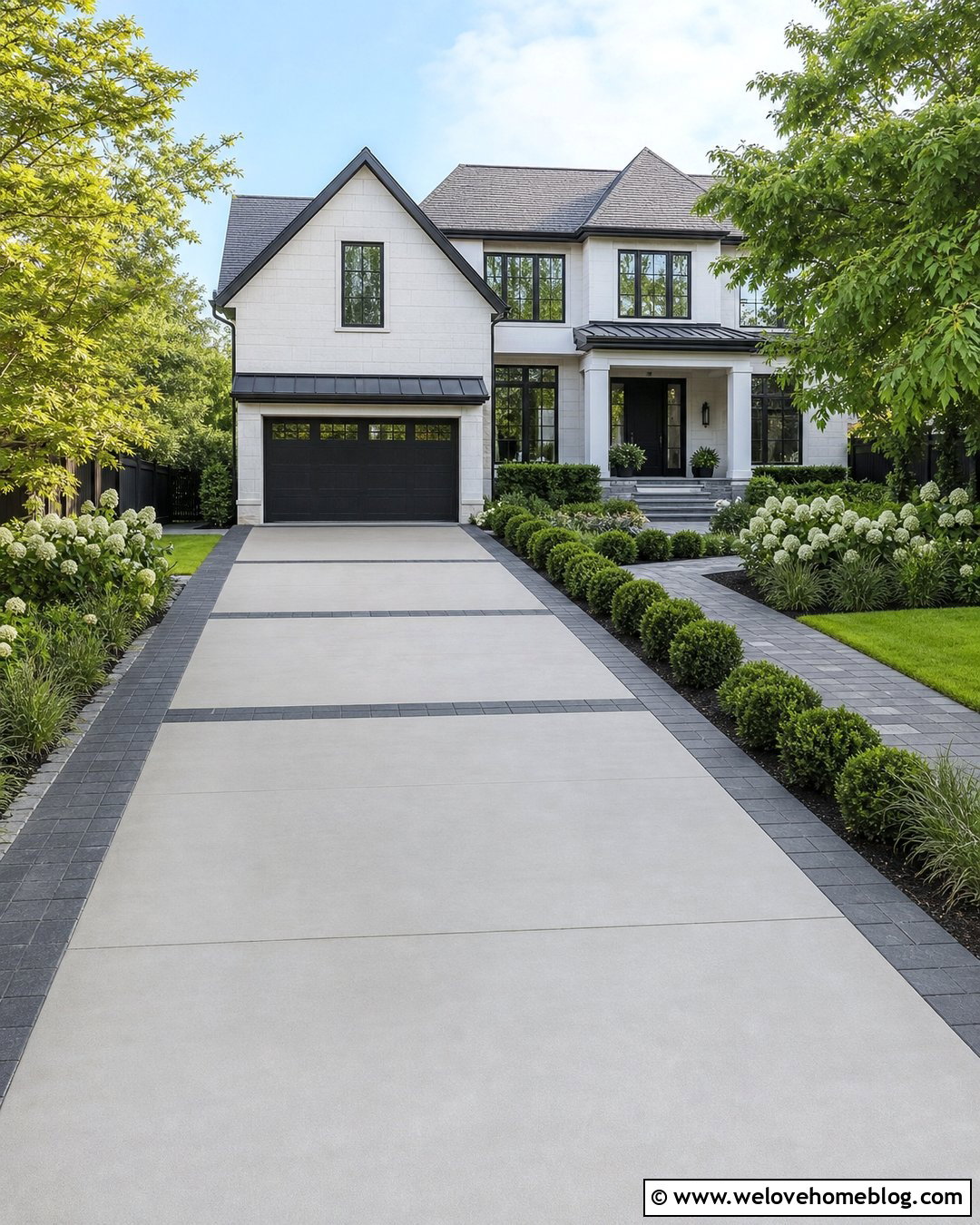
Does a plain concrete driveway feel too basic for your home? A wide paver border can add color and detail without the cost of paving the entire surface. Start with smooth or lightly brushed gray concrete and surround it with warm tan, brown, or charcoal concrete pavers. Continue the same pavers across the driveway near the garage to create an accent band. Balanced planting beds filled with boxwood, hydrangeas, and ornamental grasses will connect the hardscape to the yard. This design looks particularly polished when the paver color matches the roof, shutters, or stone veneer. It offers a practical middle ground between standard concrete and a full paver installation, making it suitable for an attractive suburban driveway upgrade.
3. Curved Stamped Concrete Driveway
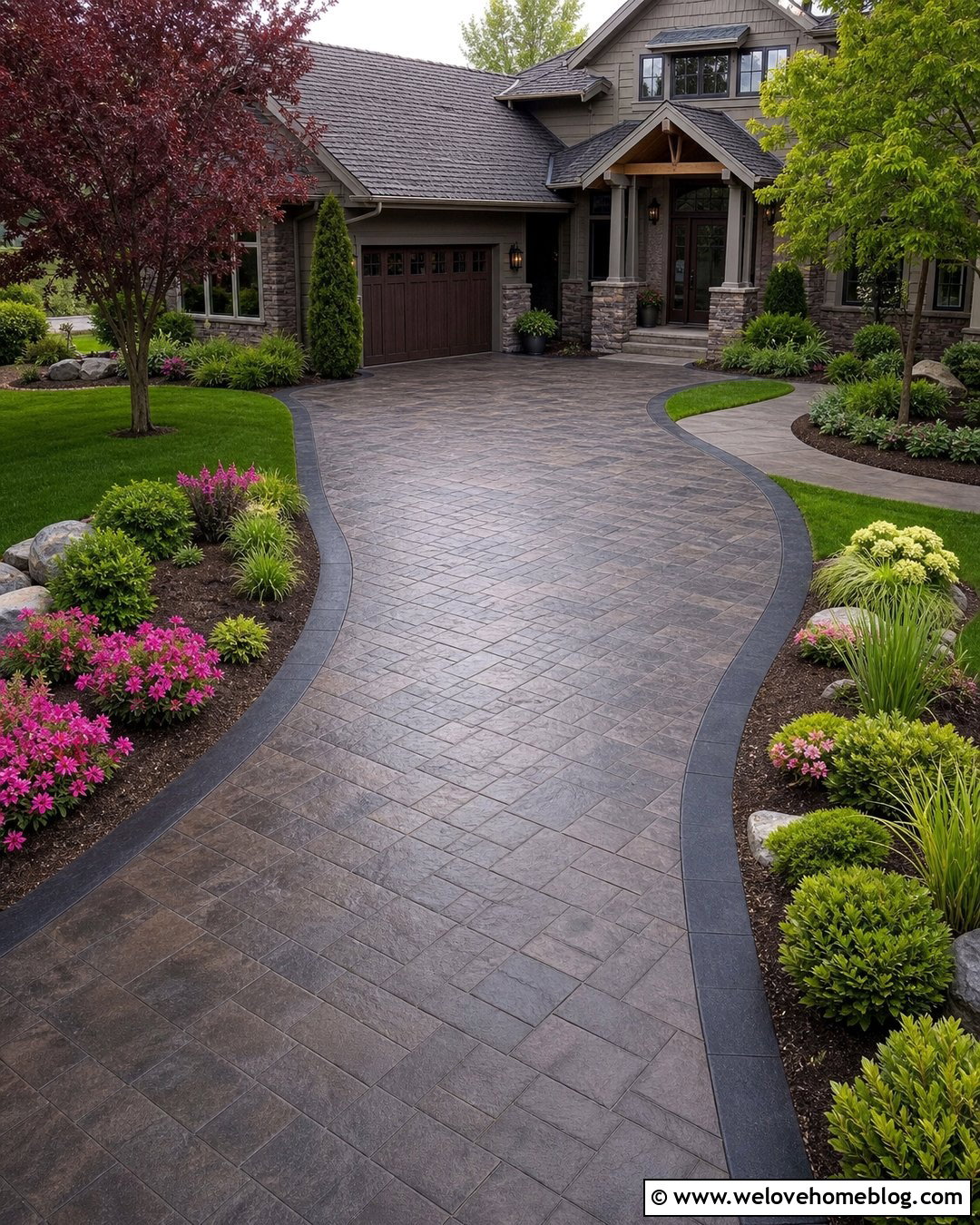
A gently curved driveway makes the approach to a home feel softer and more natural. Stamped concrete can reinforce that effect by creating the appearance of slate, flagstone, or individual pavers. Select a muted gray-brown finish rather than an overly bright color, then use a darker stamped border to define the curves. Planting beds should follow the driveway’s shape, with layered shrubs, flowering perennials, and one or two small ornamental trees. Recessed drainage can be positioned where the driveway meets the garage or crosses a low point. This complete look suits homes placed slightly away from the street, especially Craftsman, Mediterranean, and traditional houses. The curved layout also creates space for a welcoming front-yard garden without interrupting vehicle access.
4. Exposed Aggregate Driveway With Stone Borders
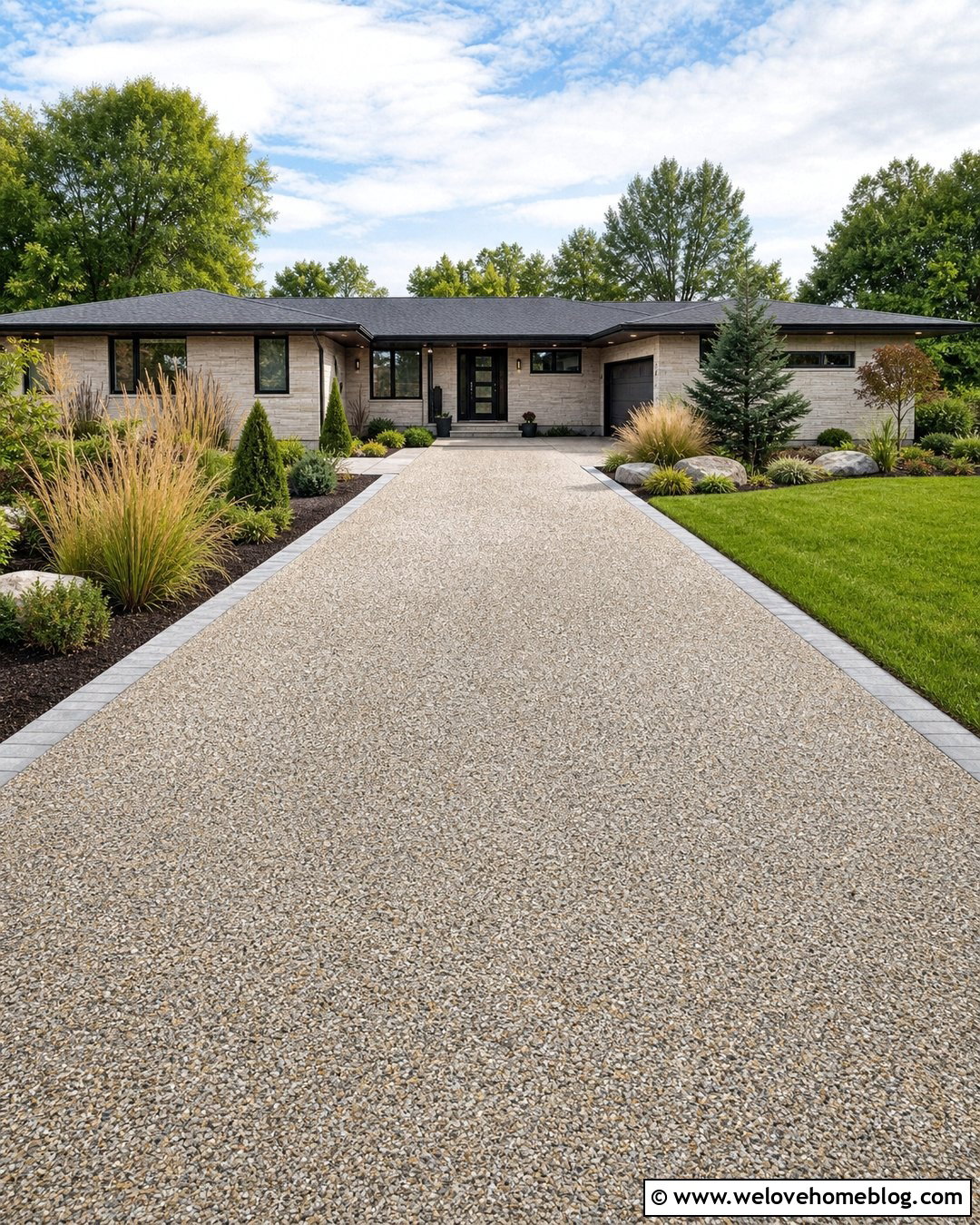
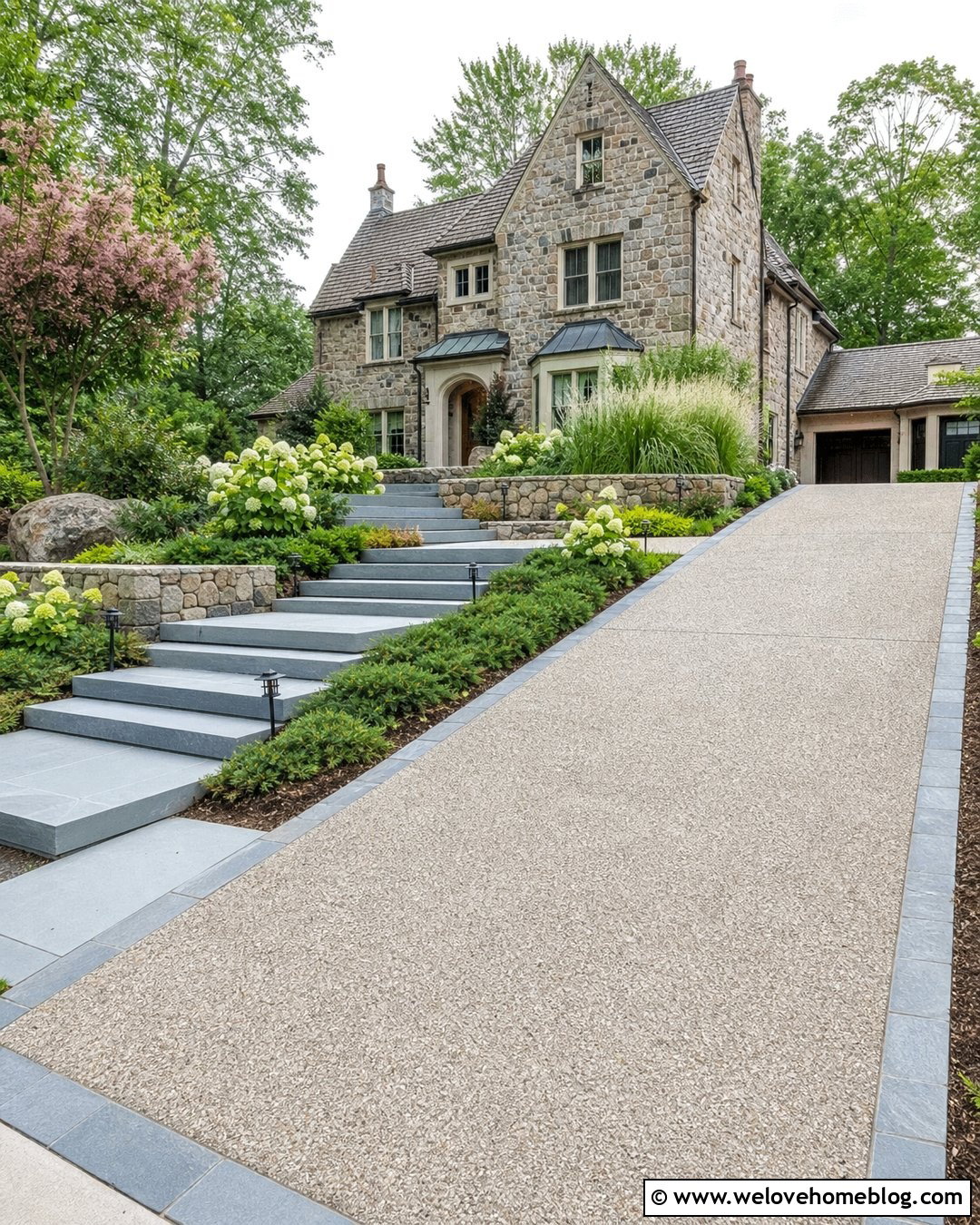
Exposed aggregate brings visible texture to a driveway while maintaining the strength and familiar appearance of concrete. Small stones in shades of gray, beige, or warm brown create a naturally varied surface that can complement stone siding and neutral brick. Use straight stone curbing along both sides to contain the edges and give the driveway a substantial finish. Near the house, connect the driveway to a matching exposed aggregate walkway. Soft grasses, compact evergreens, and broad planting beds will balance the textured surface without making the entrance look busy. Because aggregate color can vary, review a physical sample before choosing the mix. This driveway design fits midcentury ranch houses, contemporary homes, and rustic properties where natural materials already shape the exterior palette.
5. Modern Concrete Driveway With Grass Joints
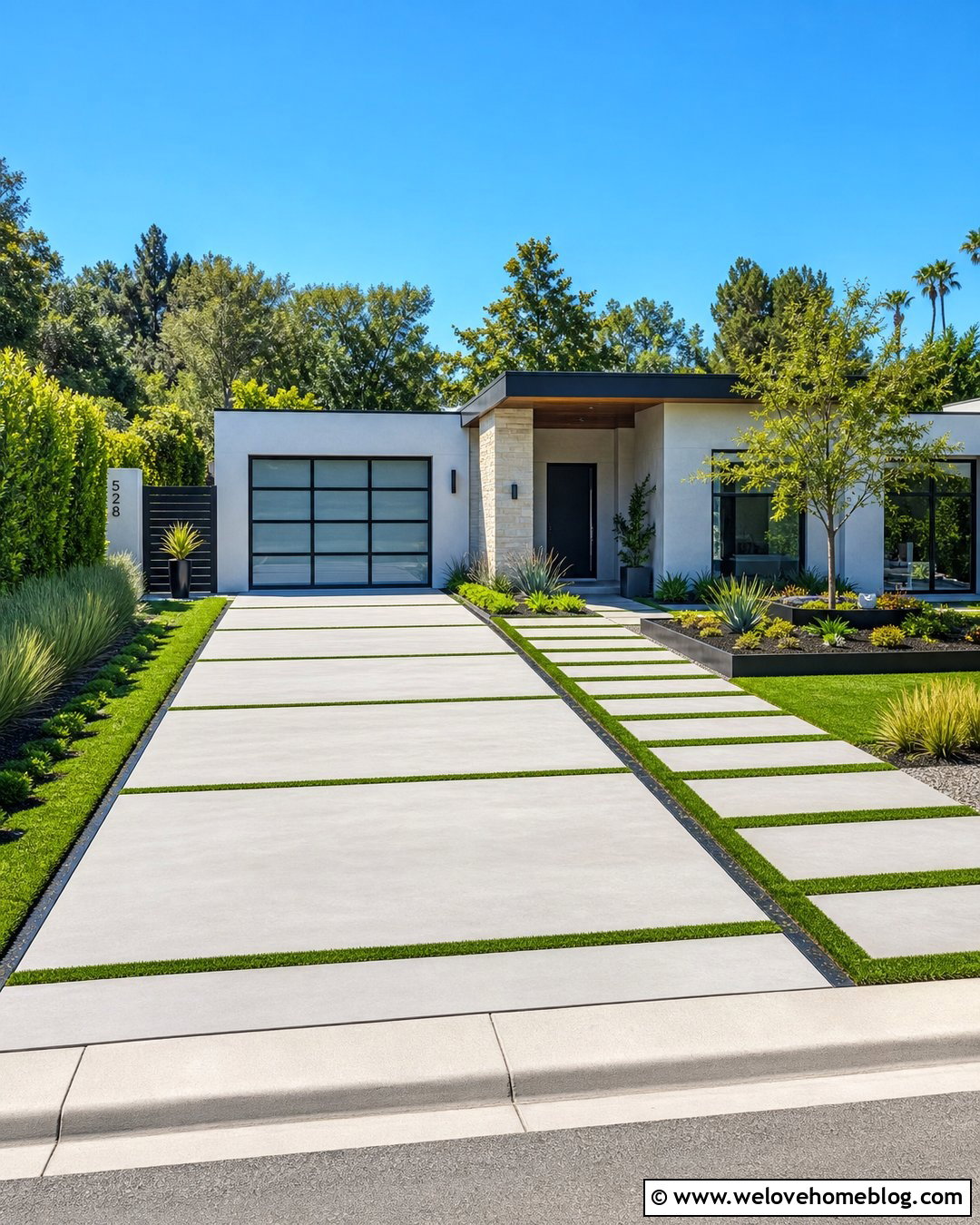
Wide concrete slabs separated by narrow grass joints can turn a practical driveway into a strong modern feature. Use large rectangular panels arranged in a straight or slightly offset layout, with crisp gaps running across or between them. Real grass creates a lush effect, while low-growing ground cover or gravel may be easier to maintain in dry climates. Pair the driveway with simple steel edging, linear planting beds, and sculptural grasses. Avoid crowded flower combinations because the clean geometry should remain the focus. A flat-roofed or modern two-story home provides an ideal backdrop, especially when the concrete tone coordinates with the facade. Proper base preparation and accurately spaced joints are important for keeping each slab aligned and visually consistent.
6. Black Asphalt Driveway With Granite Edging
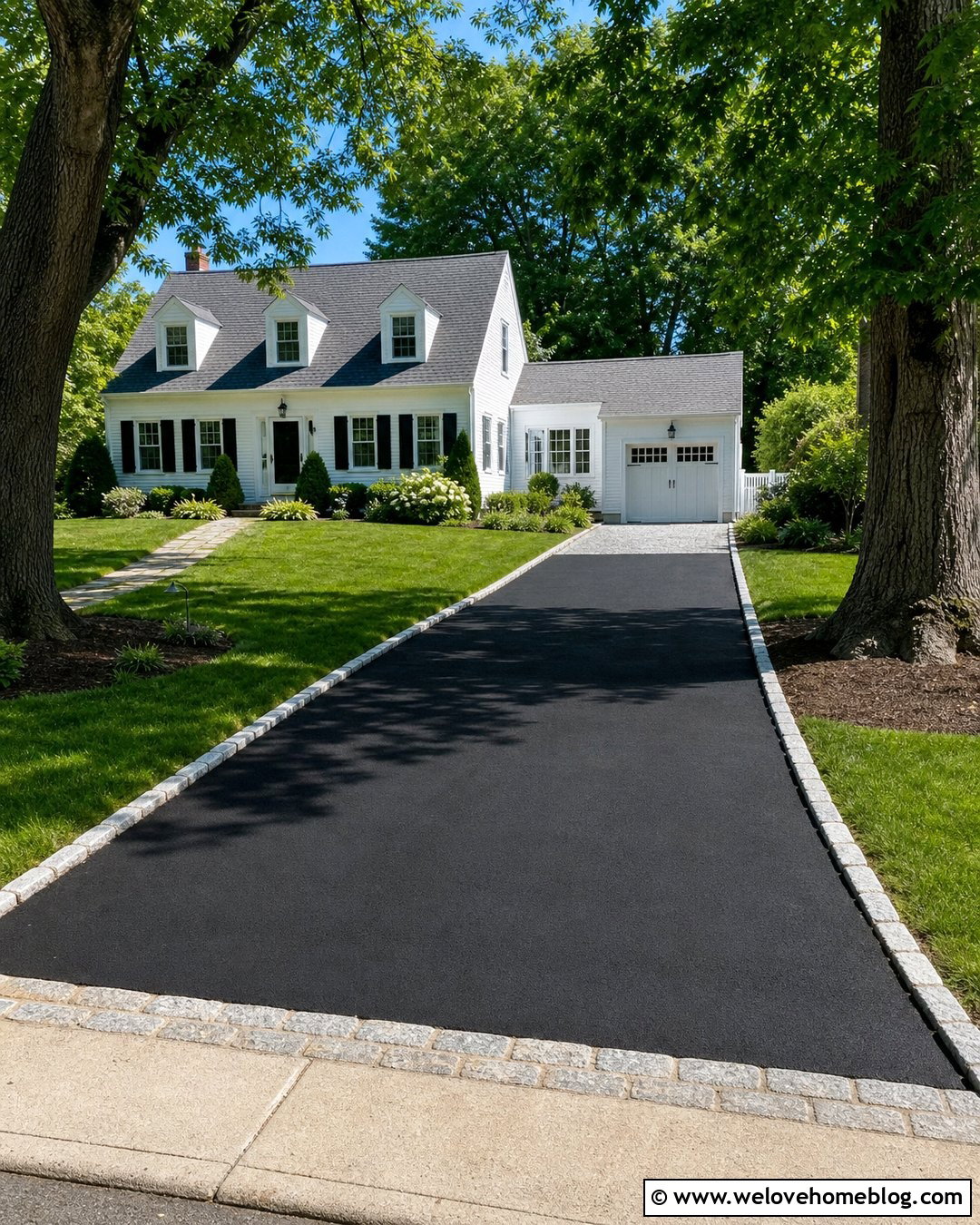
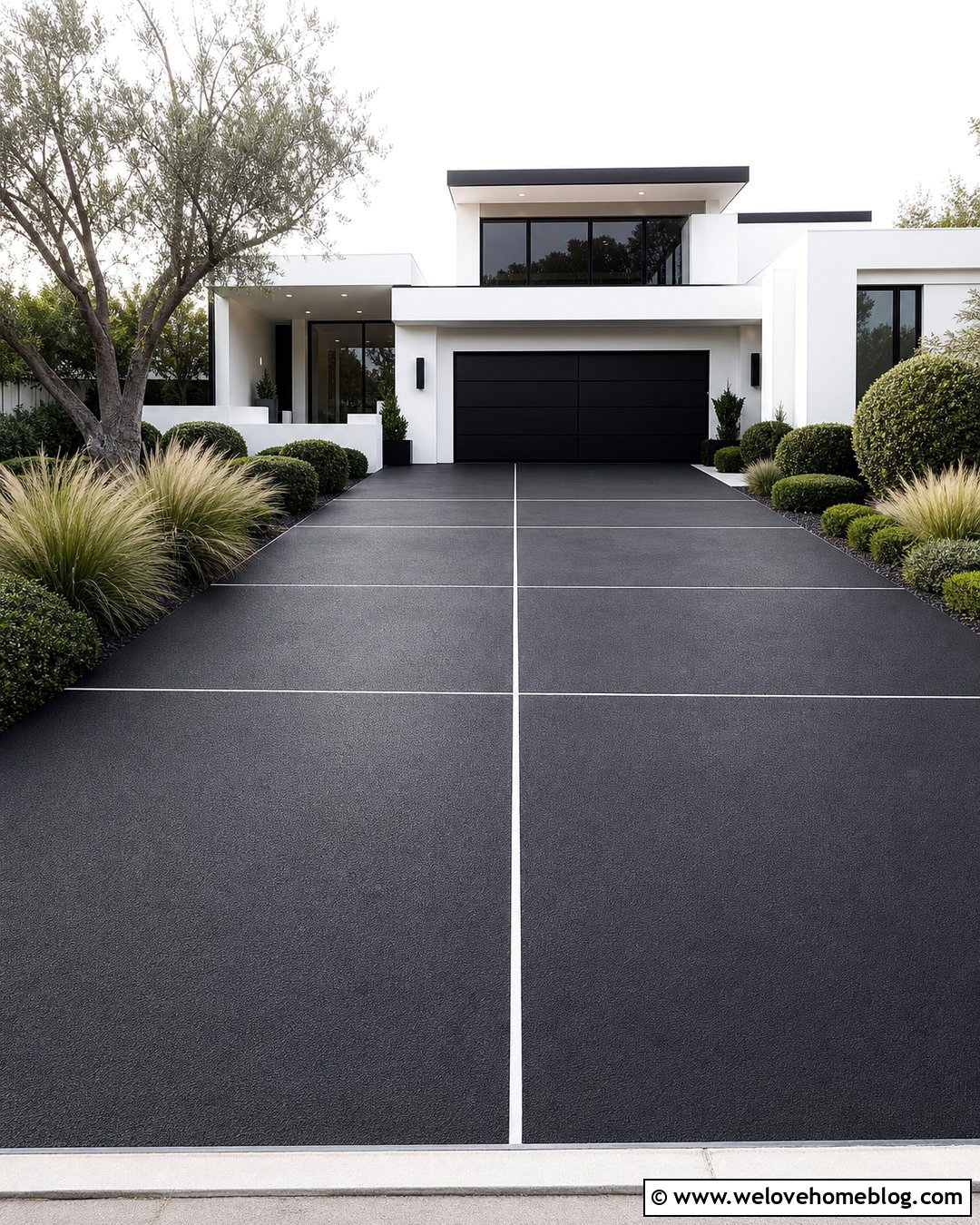
Fresh black asphalt creates a smooth, understated surface that works especially well on long driveways and properties with cold-weather architecture. Instead of leaving the edges unfinished, add a row of gray granite blocks or concrete cobbles along both sides. The pale border creates a crisp contrast and reduces the visual heaviness of the dark pavement. Follow the driveway with broad lawn areas, clusters of native shrubs, and deciduous shade trees set far enough back from vehicle clearance zones. At the garage, a granite apron can provide a more decorative transition. This complete look feels appropriate beside Cape Cod, colonial, and country homes. Regular sealing, drainage maintenance, and prompt crack repair help the dark surface retain its neat appearance over time.
7. Asphalt Driveway With Brick Entrance Apron
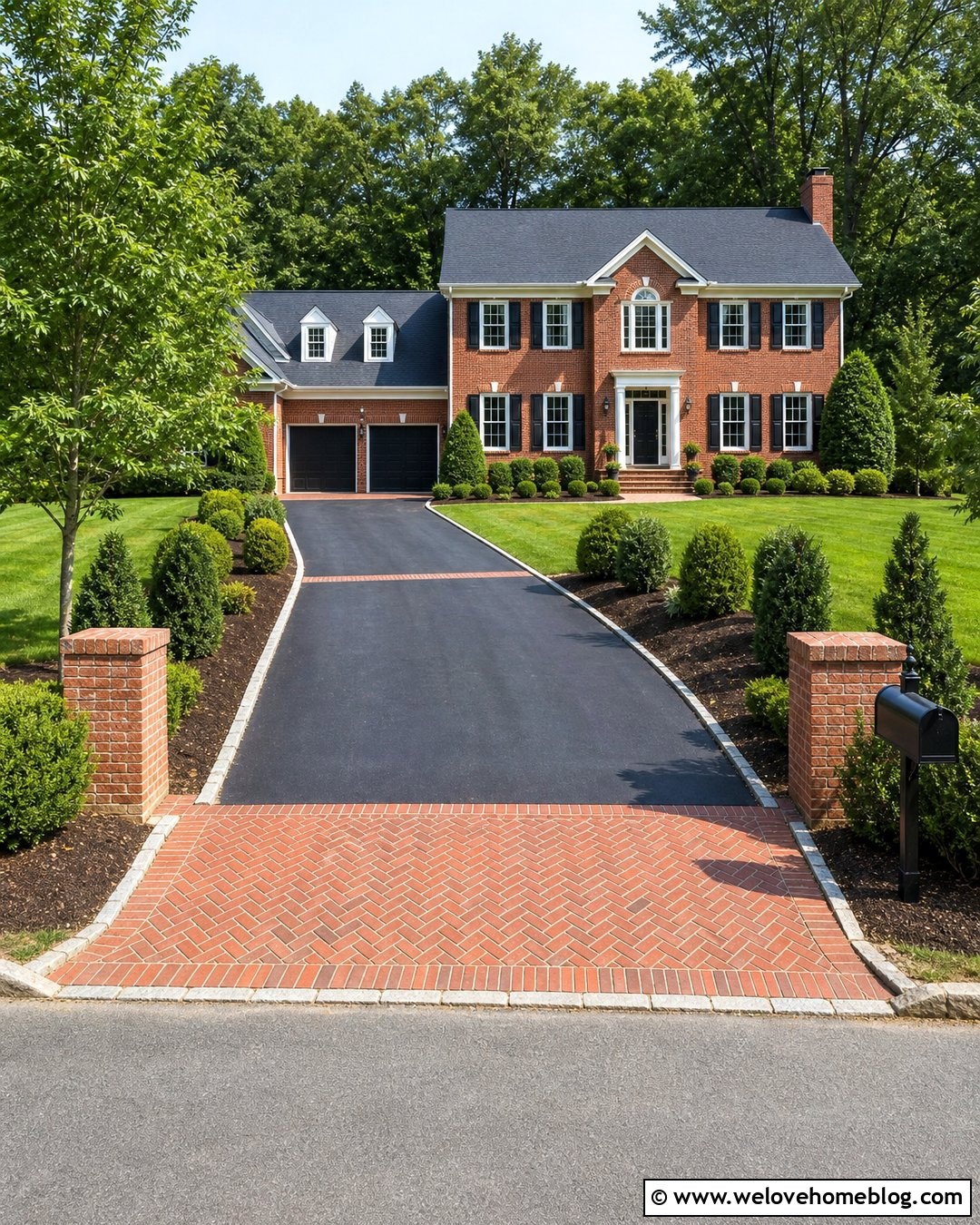
An asphalt driveway becomes more welcoming when the street entrance is marked with a brick apron. Choose black asphalt for the main driving surface, then install clay brick pavers across the first several feet in a herringbone or running-bond pattern. Repeat a narrower brick band near the garage to make the materials feel intentionally connected. Low brick pillars, a coordinated mailbox, and symmetrical planting beds can further define the entrance without creating a closed or imposing look. Use compact shrubs and low flowers near the road so drivers can see approaching traffic. This design delivers the affordability and smooth finish of asphalt while introducing traditional character where it is most noticeable. It pairs naturally with brick colonials, traditional two-story houses, and older suburban homes.
8. Pea Gravel Driveway With Cobblestone Edging
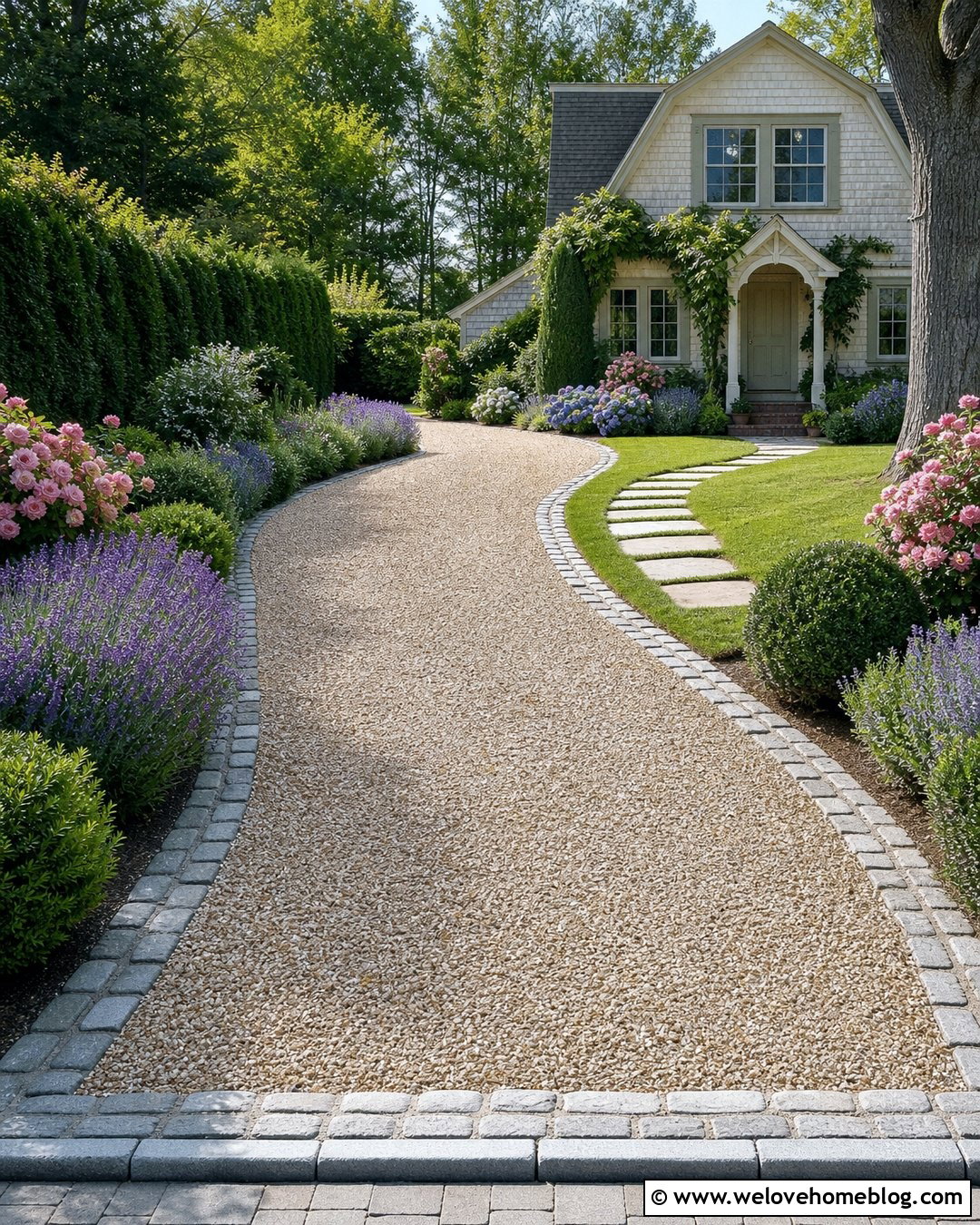
The quiet crunch of pea gravel creates a relaxed entrance that feels at home in cottage and country settings. Select compactable gravel in soft beige, gray, or mixed earth tones, and contain it with sturdy cobblestone edging. A slightly curved layout will make the surface feel integrated with the landscape rather than placed on top of it. Lavender, catmint, compact roses, and evergreen shrubs can fill the bordering beds, while a stepping-stone walkway leads guests toward the front door. The driveway base needs careful preparation so the gravel remains stable and does not mix with the soil. A defined parking area near the house also keeps the layout organized. The result is informal, welcoming, and rich in natural texture.
9. Gray Gravel Driveway With Brick Ribbon
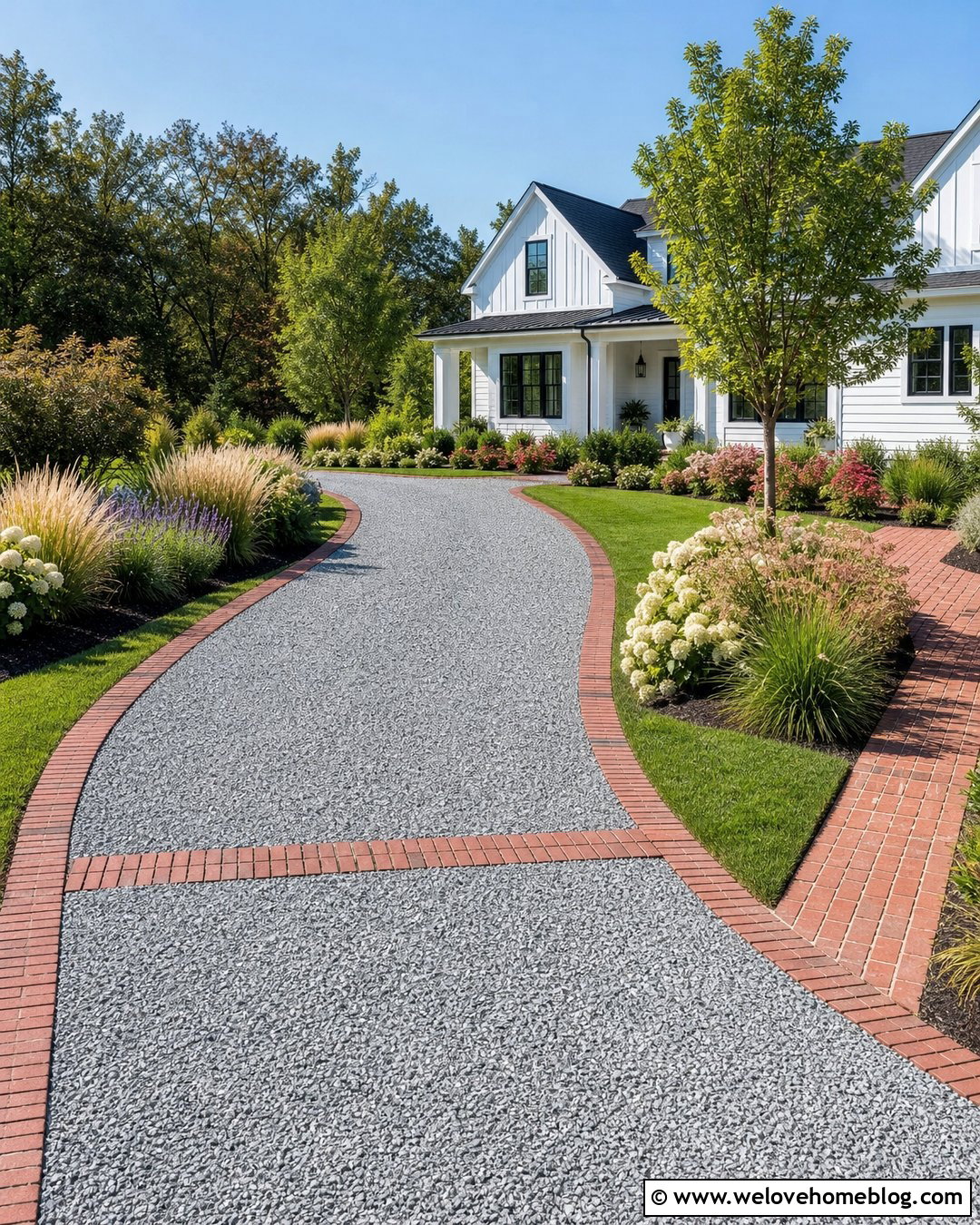
Gray crushed gravel provides a neutral surface that can be dressed up with a simple brick ribbon. Run the brick band along each edge, across the entrance, or through the center as a visual guide. This contrast works particularly well on a curved driveway leading to a white farmhouse, gray Craftsman home, or painted brick exterior. Use deep planting beds on the outside of the curve, where ornamental grasses and flowering shrubs can create movement. On the inside, maintain a clean lawn or a small specimen tree to preserve visibility. Angular crushed gravel generally settles into place more effectively than rounded decorative stone. With proper grading and a compacted base, the complete driveway can feel orderly while retaining the casual character that makes gravel appealing.
10. Decomposed Granite Driveway With Desert Landscaping
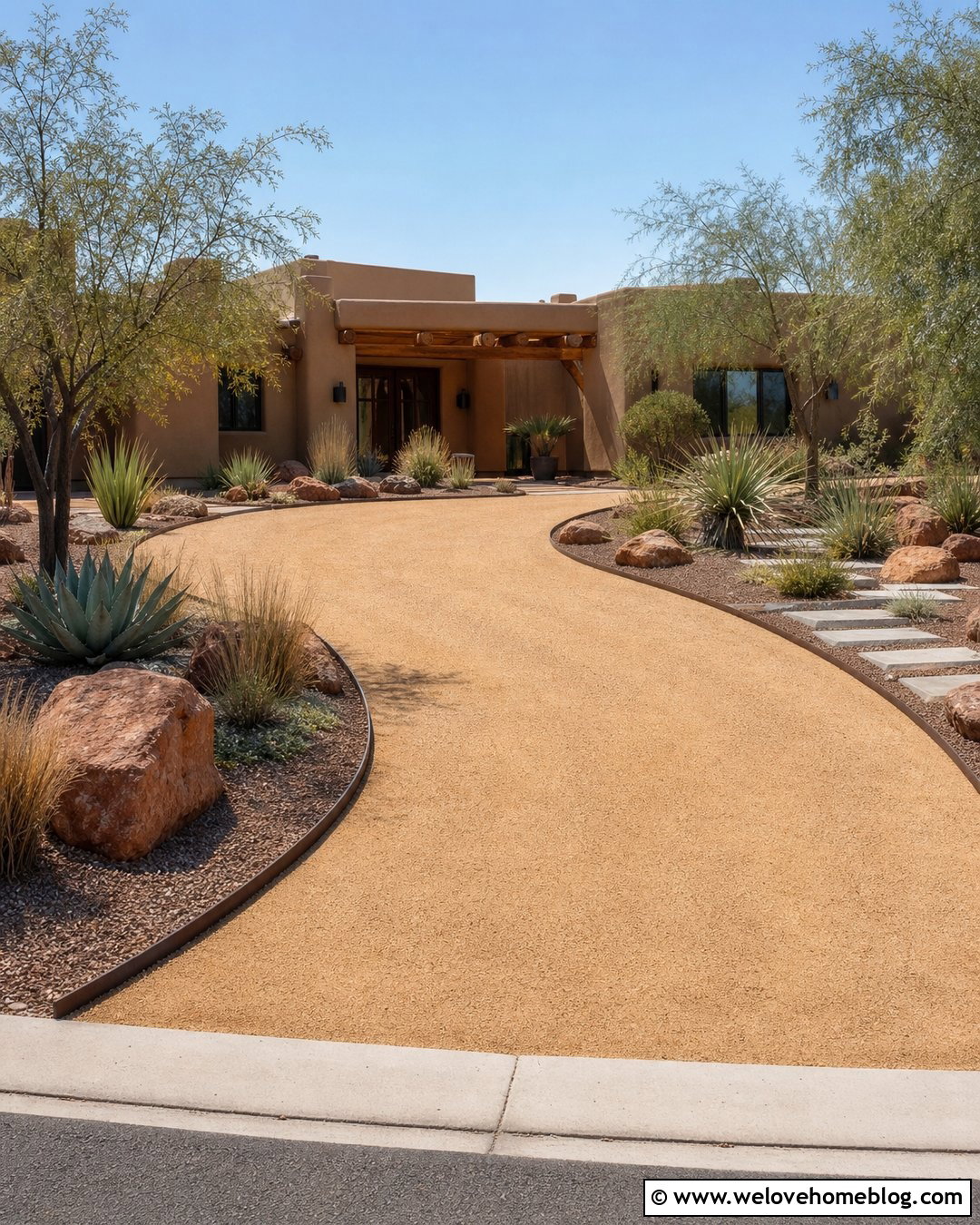
Warm decomposed granite can blend beautifully with a dry, sun-filled landscape. Choose a stabilized tan, gold, or reddish-brown surface and shape the driveway into a broad, gentle curve. Corten steel or dark metal edging provides a clean boundary while complementing the earthy color. Instead of lawn, surround the driveway with gravel mulch, boulders, agave, yucca, desert spoon, and drought-tolerant ornamental grasses. A concrete stepping-pad walkway can create a distinct route to the front entrance. Keep thorny plants away from doors, sidewalks, and areas where passengers exit vehicles. This complete design complements Southwestern, adobe, Spanish, and desert-modern homes. It also reduces the visual disconnect that can occur when a conventional green lawn is forced into an arid setting.
11. Gravel Ribbon Driveway With Grass Center
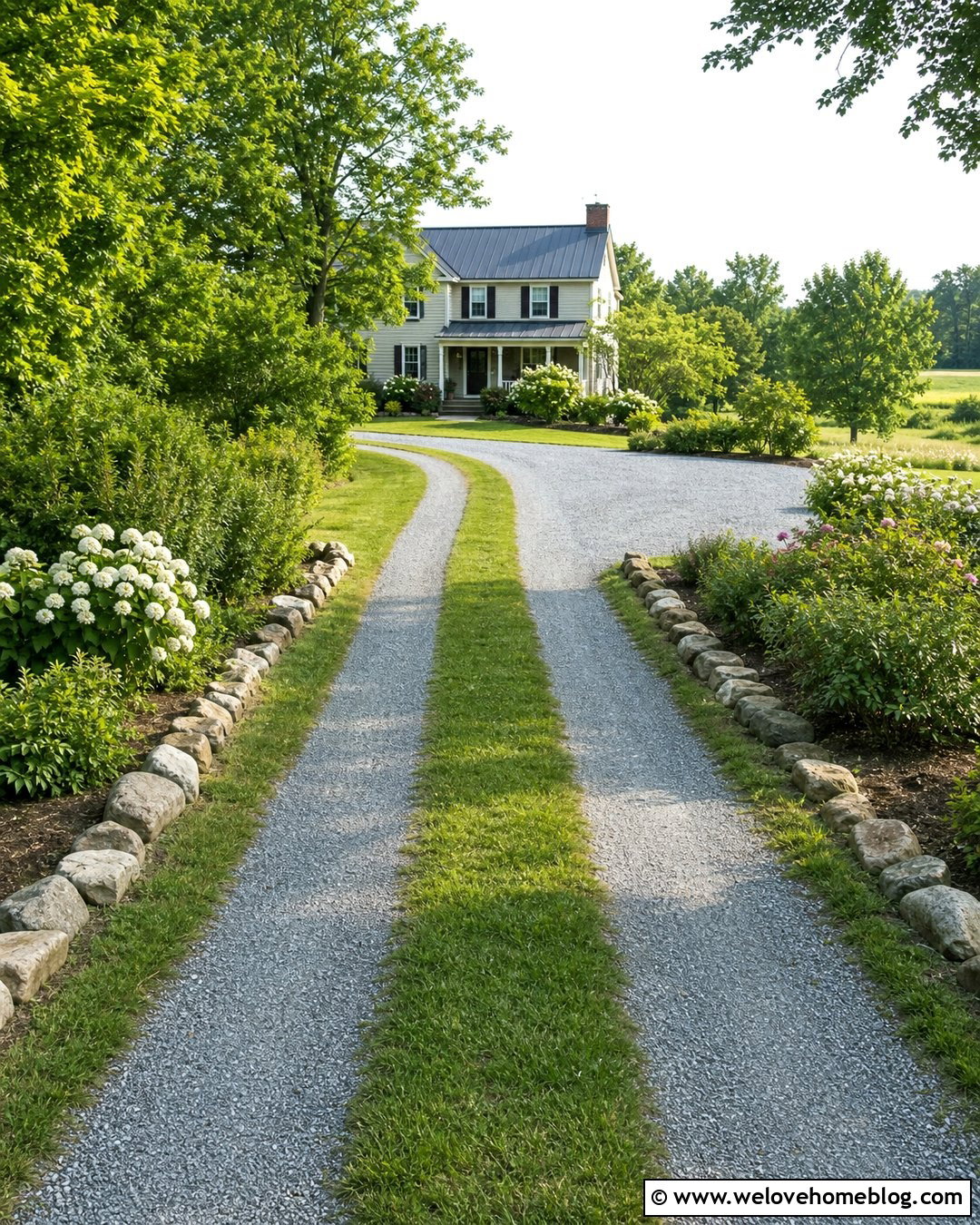
A gravel ribbon driveway uses two compacted driving tracks with a planted strip between them. The layout reduces the amount of visible hardscape and gives an older home or country property a softer appearance. Use angular gray or beige gravel for the wheel paths, with steel, stone, or brick edging to maintain clean lines. The center can contain durable grass, low ground cover, or additional gravel in a contrasting color if mowing would be difficult. Border the drive with informal hedges, flowering shrubs, and mature shade trees. Near the garage, widen the ribbons into a full parking pad for easier maneuvering. This complete driveway look is best suited to light residential use and level sites where tires can stay comfortably aligned with the tracks.
12. Brick Herringbone Driveway With Boxwood Borders
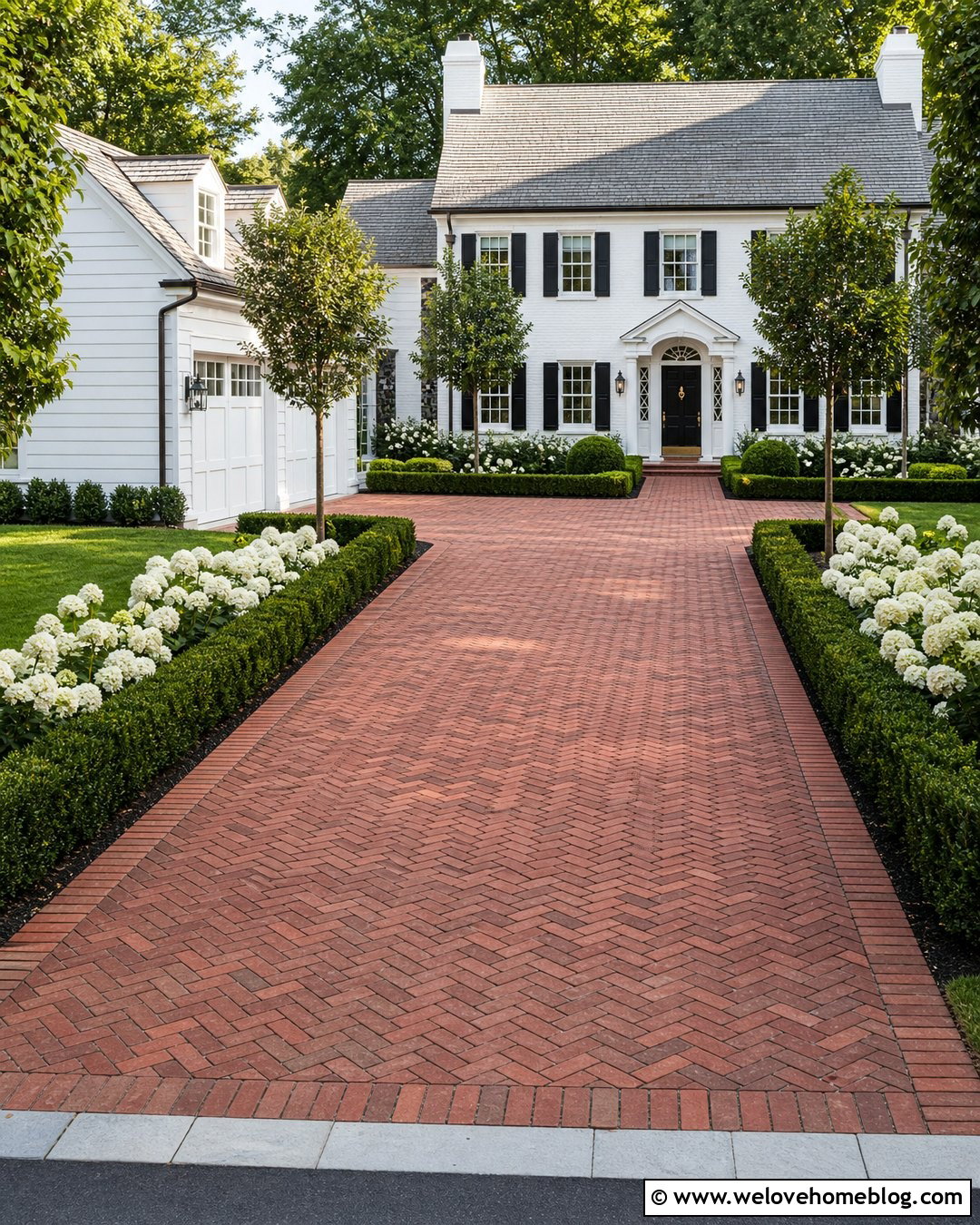
Rich clay brick laid in a herringbone pattern gives a driveway traditional detail and a strong sense of permanence. Choose red, brown, or weathered brick tones that relate to the home’s facade rather than competing with it. A straight driveway can be framed with soldier-course brick borders, while a matching walkway turns toward the front door. Neatly clipped boxwood, white flowering shrubs, and small ornamental trees create balanced landscaping on both sides. This formal combination looks especially fitting in front of colonial, Georgian, and traditional brick homes. Consider using permeable joints where local conditions and the installation system allow. Because individual pavers can be repaired or replaced, the surface can age gracefully when it is supported by a well-built base and restrained edges.
13. Charcoal Paver Driveway With Modern Landscaping
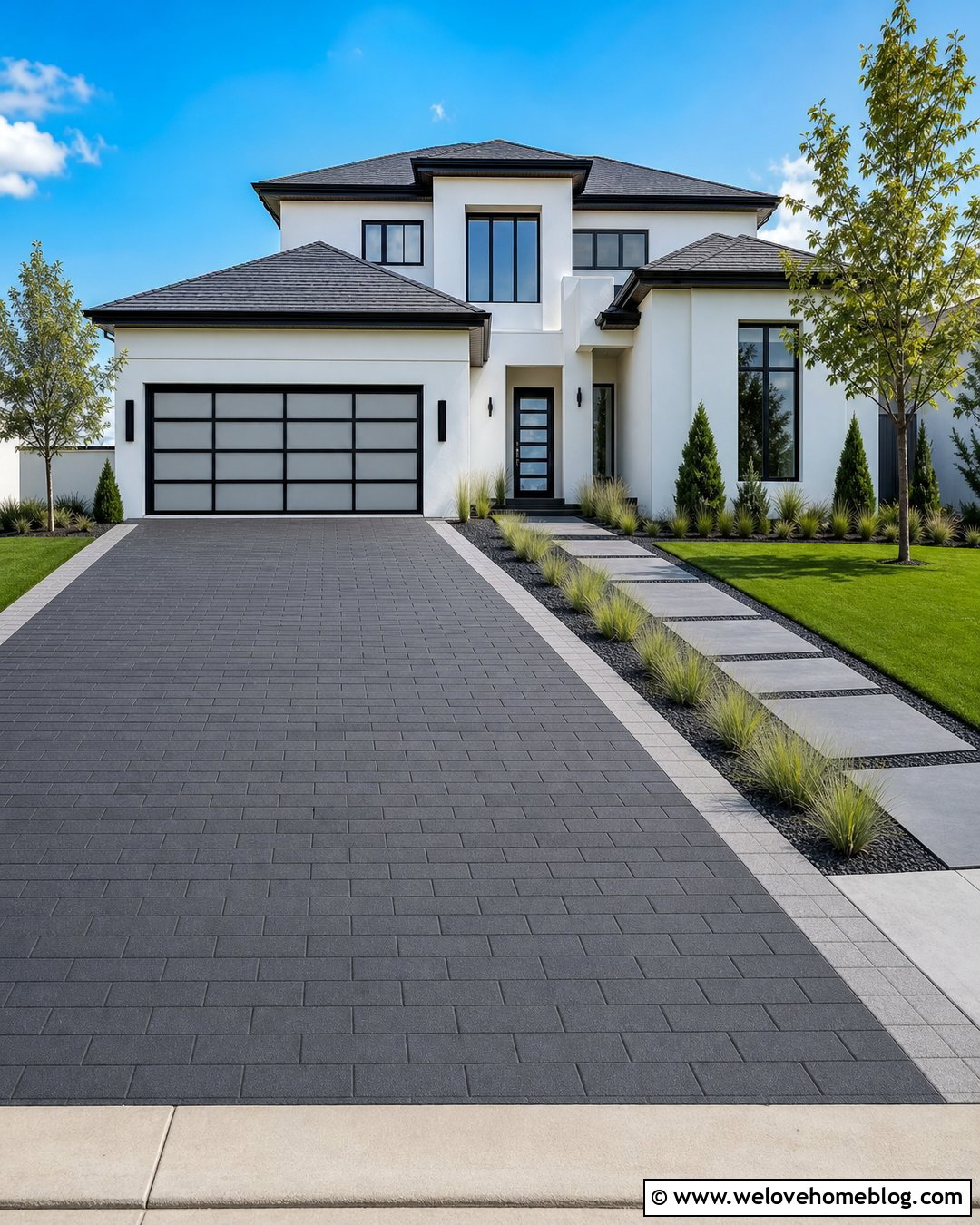
Deep charcoal pavers can ground a light-colored contemporary home and create a striking entrance from the curb. Use large rectangular units in a linear or running-bond layout rather than a small, busy pattern. A thin light-gray paver border will outline the driveway and prevent the dark surface from appearing like one uninterrupted block. Frame the approach with geometric beds containing feather reed grass, compact evergreens, and a limited selection of flowering plants. Concrete stepping pads can connect the parking area to the front door while repeating the home’s modern lines. For a cohesive result, coordinate the pavers with window frames, garage doors, or metal accents. This complete look feels clean and structured without depending on elaborate decoration or excessive landscaping.
14. Tumbled Paver Driveway With Craftsman Landscaping
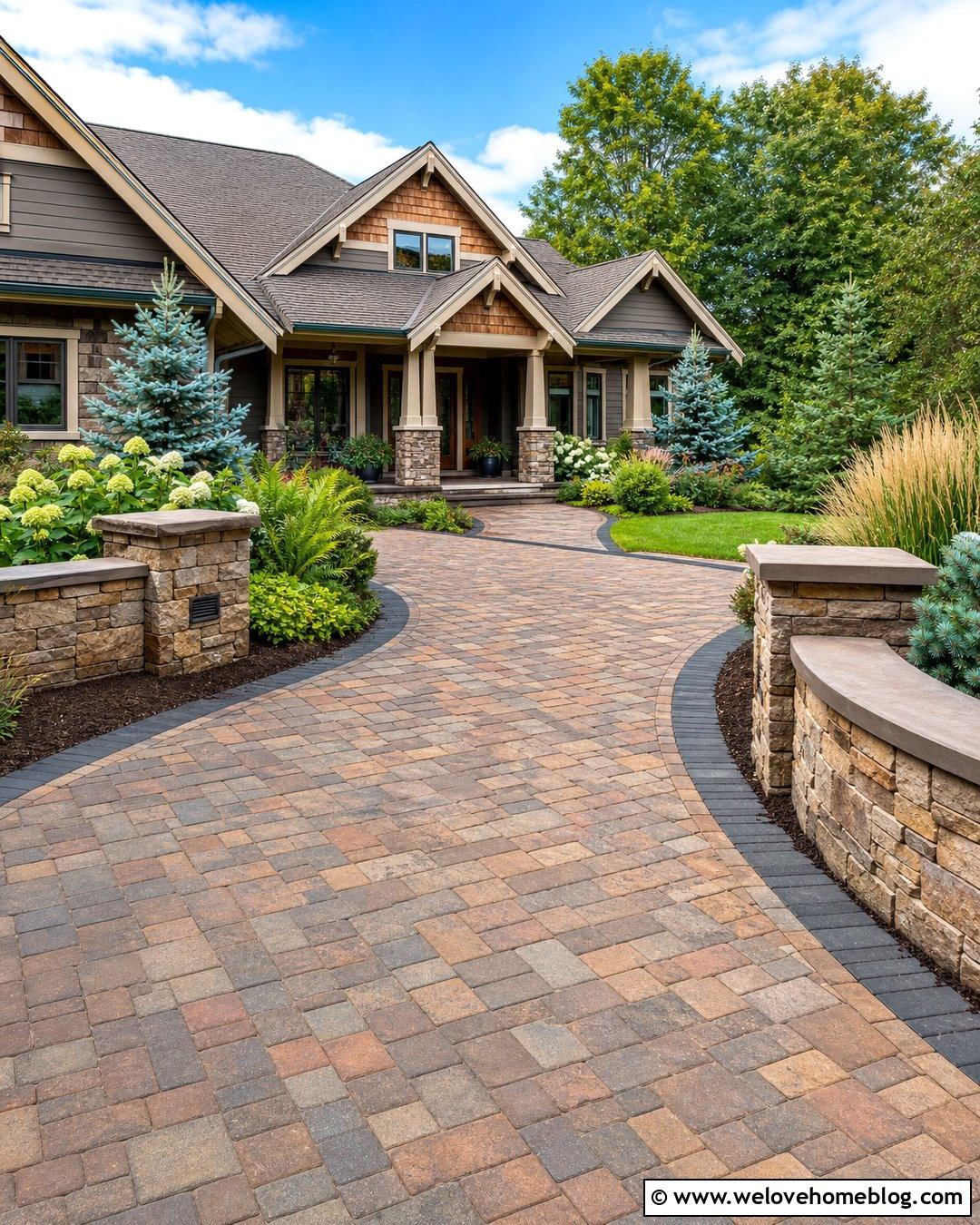
Tumbled concrete pavers have softened edges and varied tones that work naturally with a Craftsman home. Select a blend of brown, tan, charcoal, and muted red, then arrange the pavers in a modular pattern. A darker border can emphasize the driveway’s curved outline and create a clear transition to the lawn. Plant layered beds with dwarf evergreens, hydrangeas, ferns, and ornamental grasses to echo the home’s handcrafted character. If the house has stone porch columns, repeat a similar stone on low driveway pillars or retaining walls. A matching paver walkway should branch toward the porch rather than disappear into the parking area. The finished driveway will feel substantial and detailed while remaining compatible with wood trim, natural stone, and broad Craftsman rooflines.
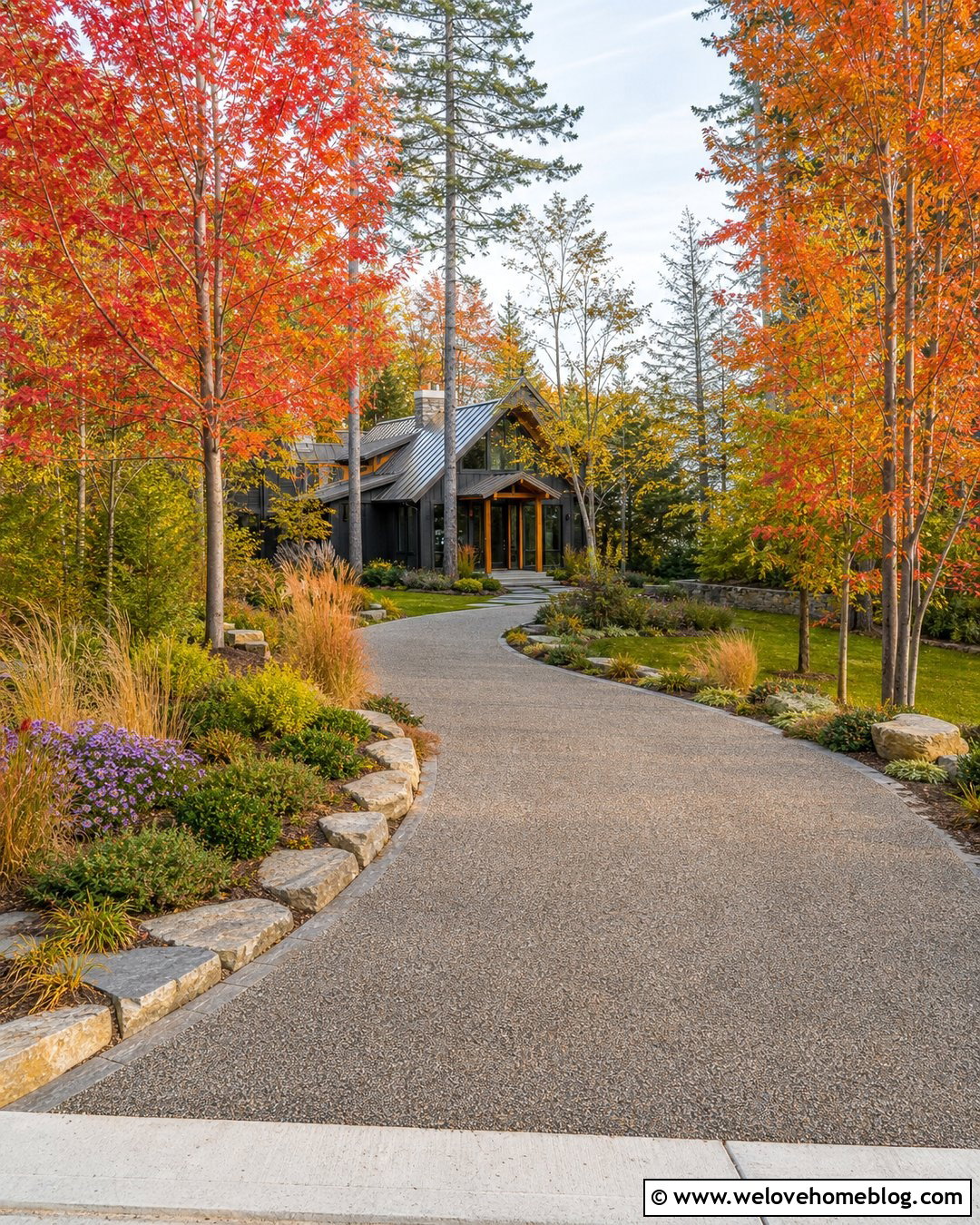
15. Permeable Paver Driveway With Rain Garden
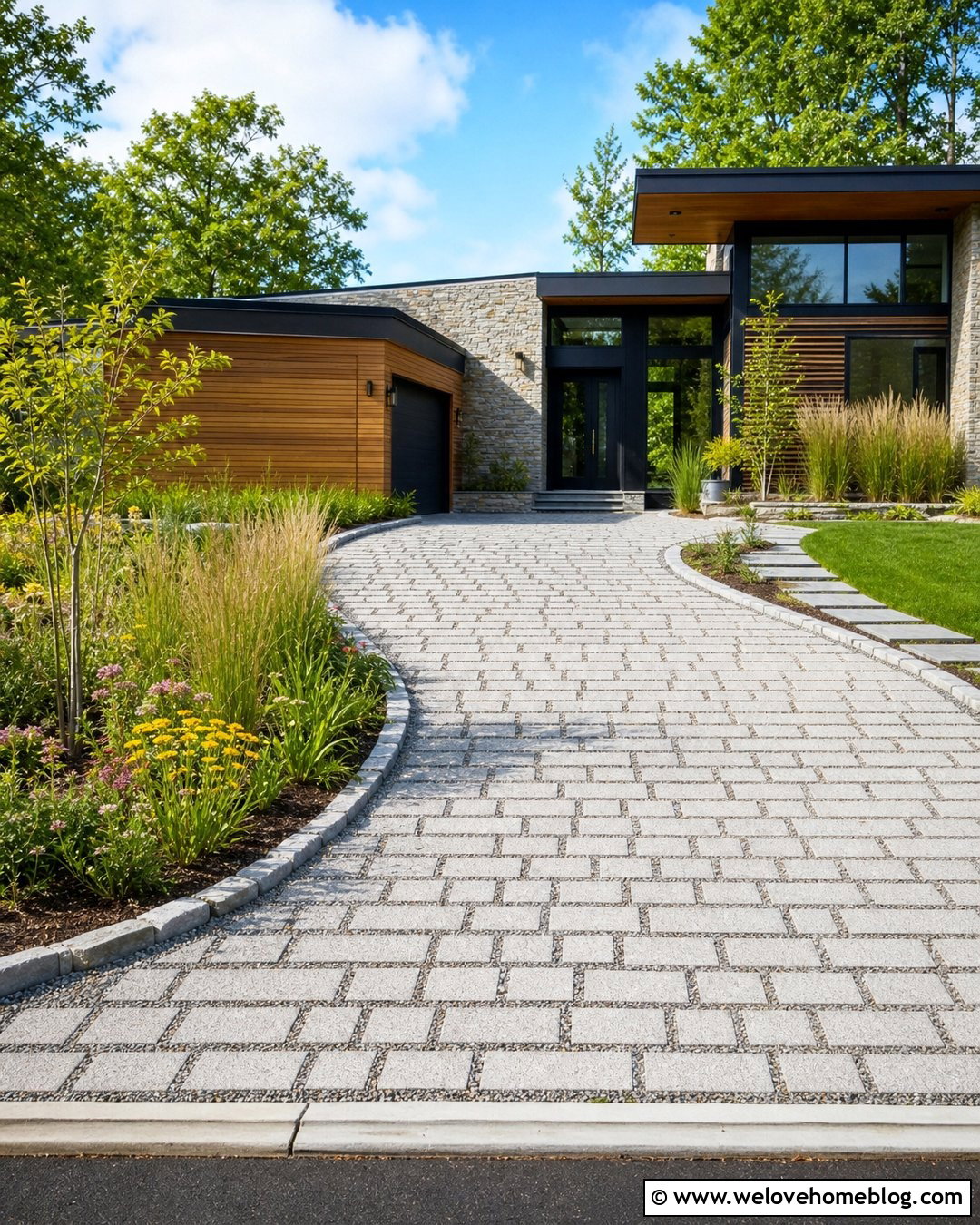
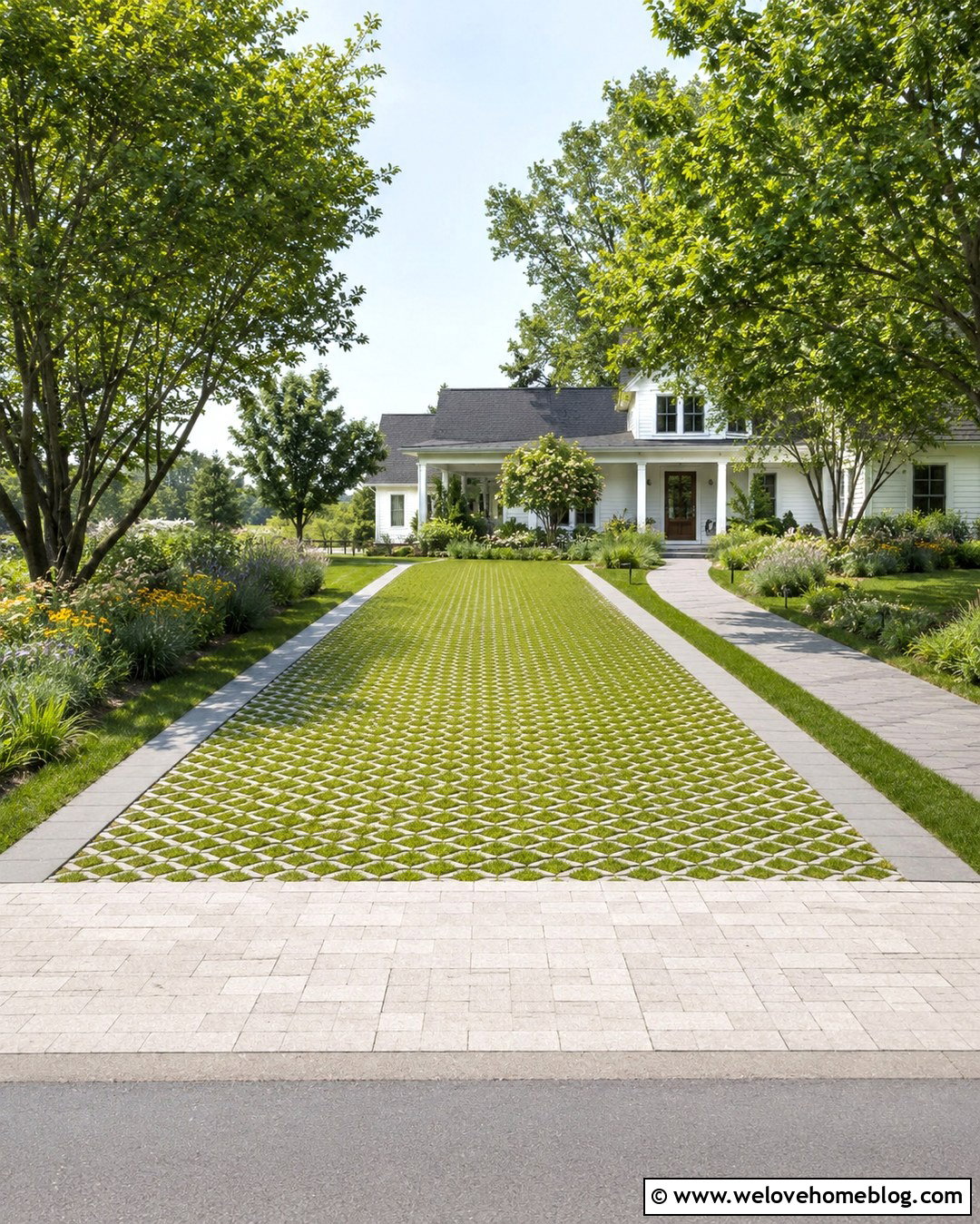
Permeable pavers can help create a driveway that feels attractive and closely connected to stormwater-conscious landscaping. Choose concrete pavers in soft gray or tan, with wider joints filled using the specified clean aggregate. Direct the driveway’s layout toward a planted rain garden positioned beside, rather than against, the house. Sedges, native grasses, and moisture-tolerant perennials can soften the basin while supporting the overall design. A stone curb or shallow transition strip will keep vehicles out of the planting area. The paver field can be straight, curved, or widened into a parking court depending on the lot. Proper soil evaluation, base construction, and overflow planning are essential because a permeable surface must function as a complete drainage system, not simply decorative paving. ()
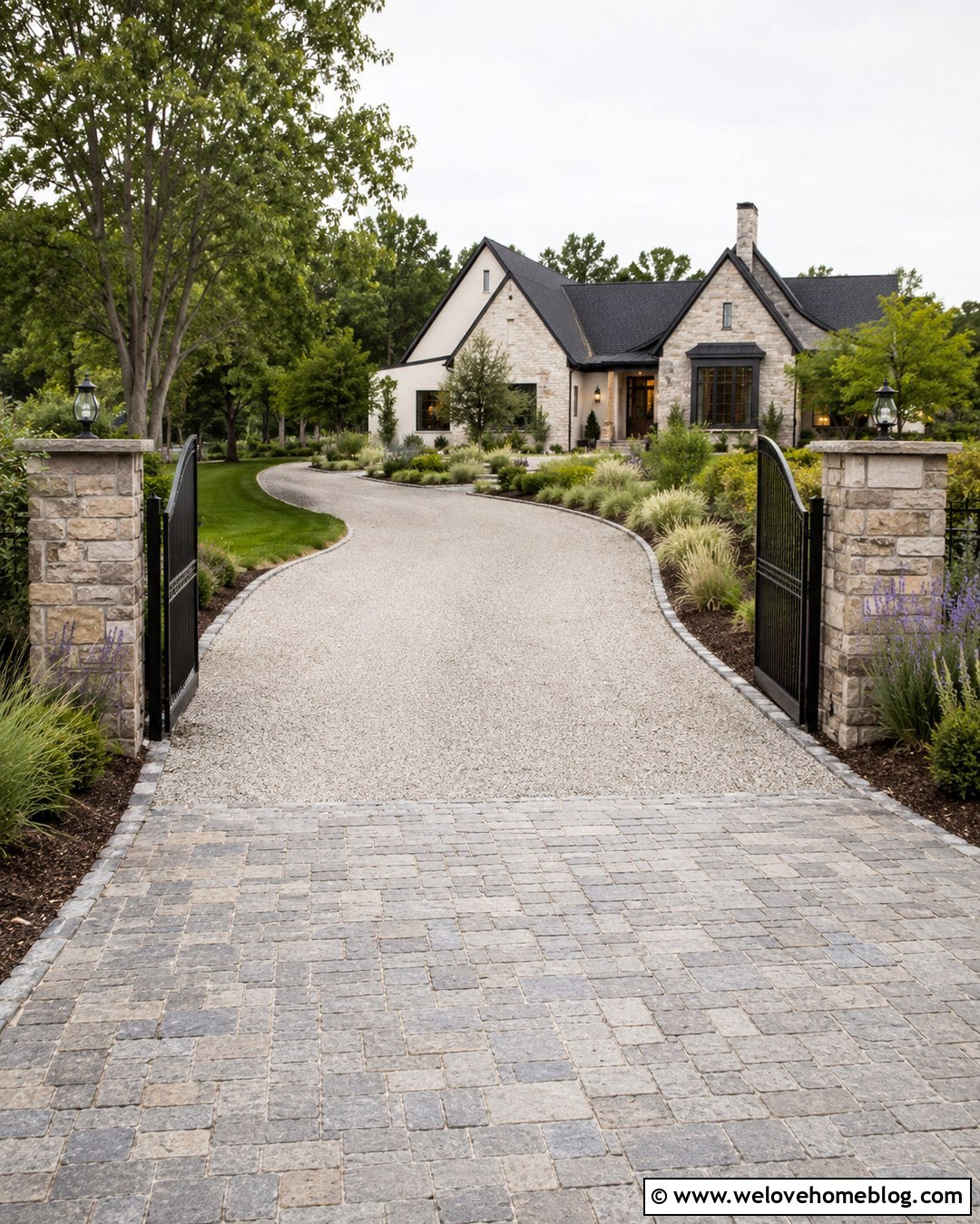
16. Cobblestone Driveway With Stone Pillars
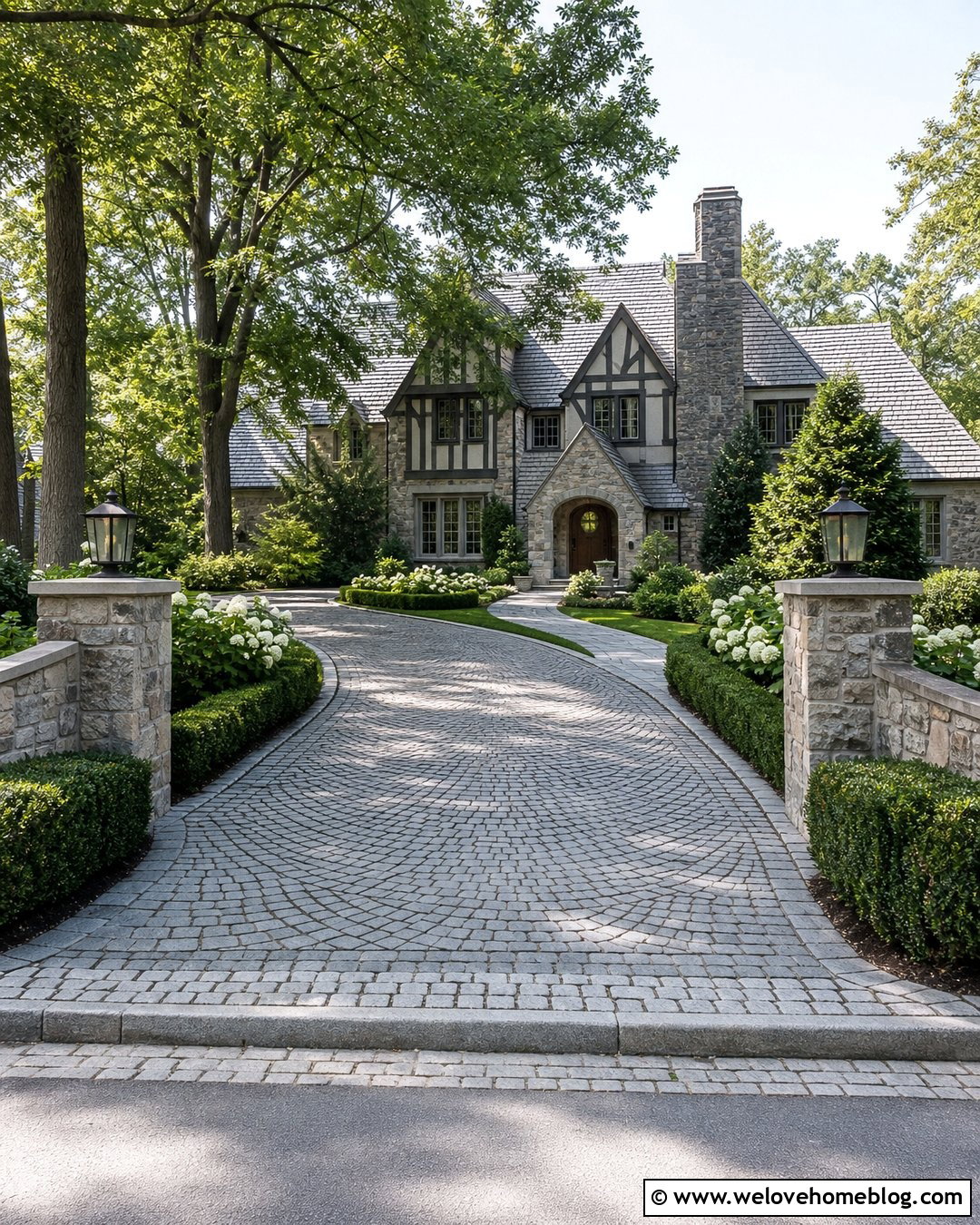
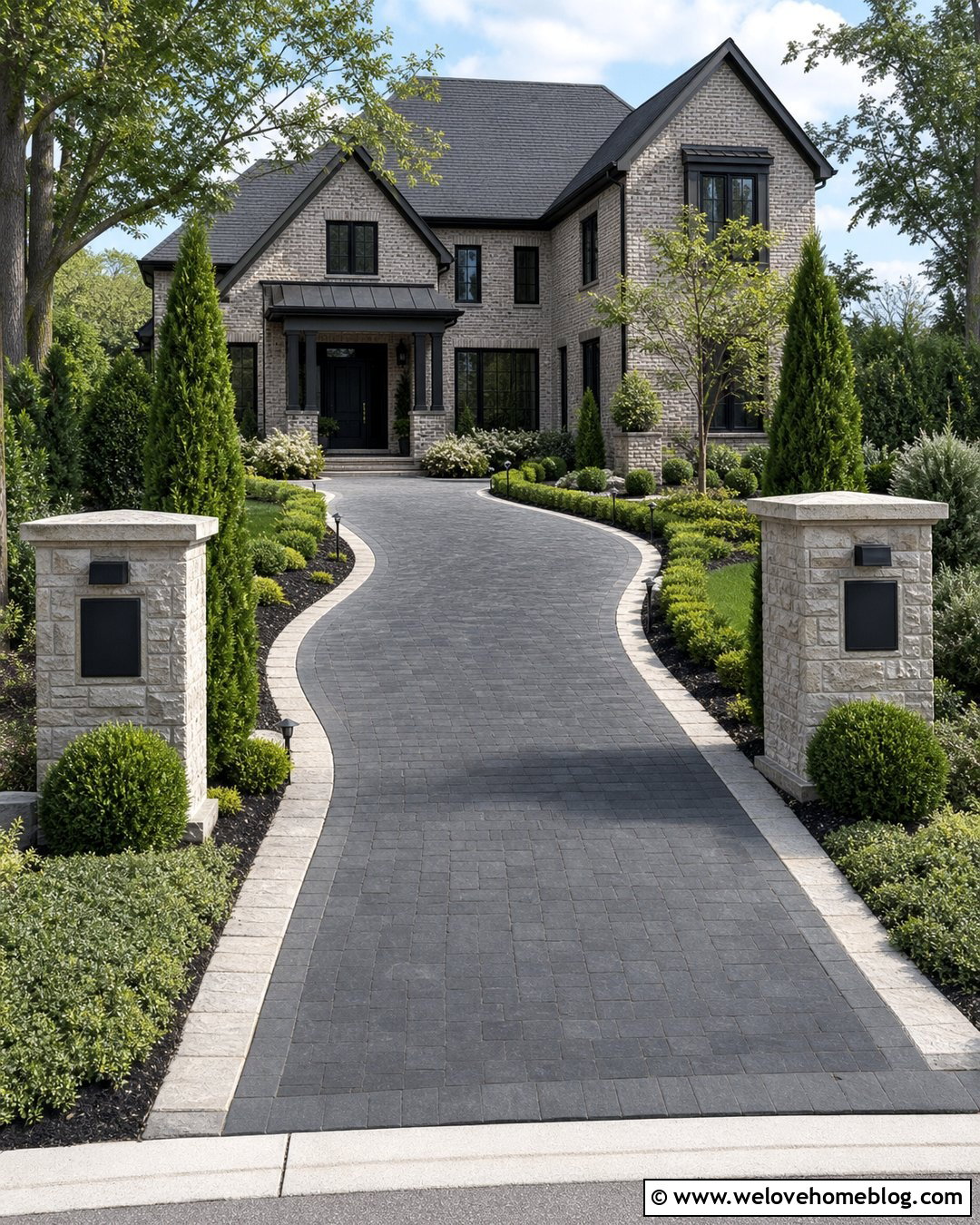
Few surfaces create as much old-world texture as a full cobblestone driveway. Use gray granite setts or weathered stone in a fan, running-bond, or gently arched pattern. At the street, substantial stone pillars can frame the opening, with low walls tapering into layered planting beds. The driveway itself may curve toward the house, allowing visitors to experience the landscaping gradually. Evergreen hedges, shade trees, and white flowering shrubs will keep the surroundings elegant without competing with the paving. Because cobblestone creates a highly textured surface, installation quality and joint consistency deserve careful attention. This complete driveway look is most suitable for Tudor, European-inspired, stone, and traditional estate homes where the architecture can support its strong historic character.
17. Resin-Bound Gravel Driveway With Steel Edging
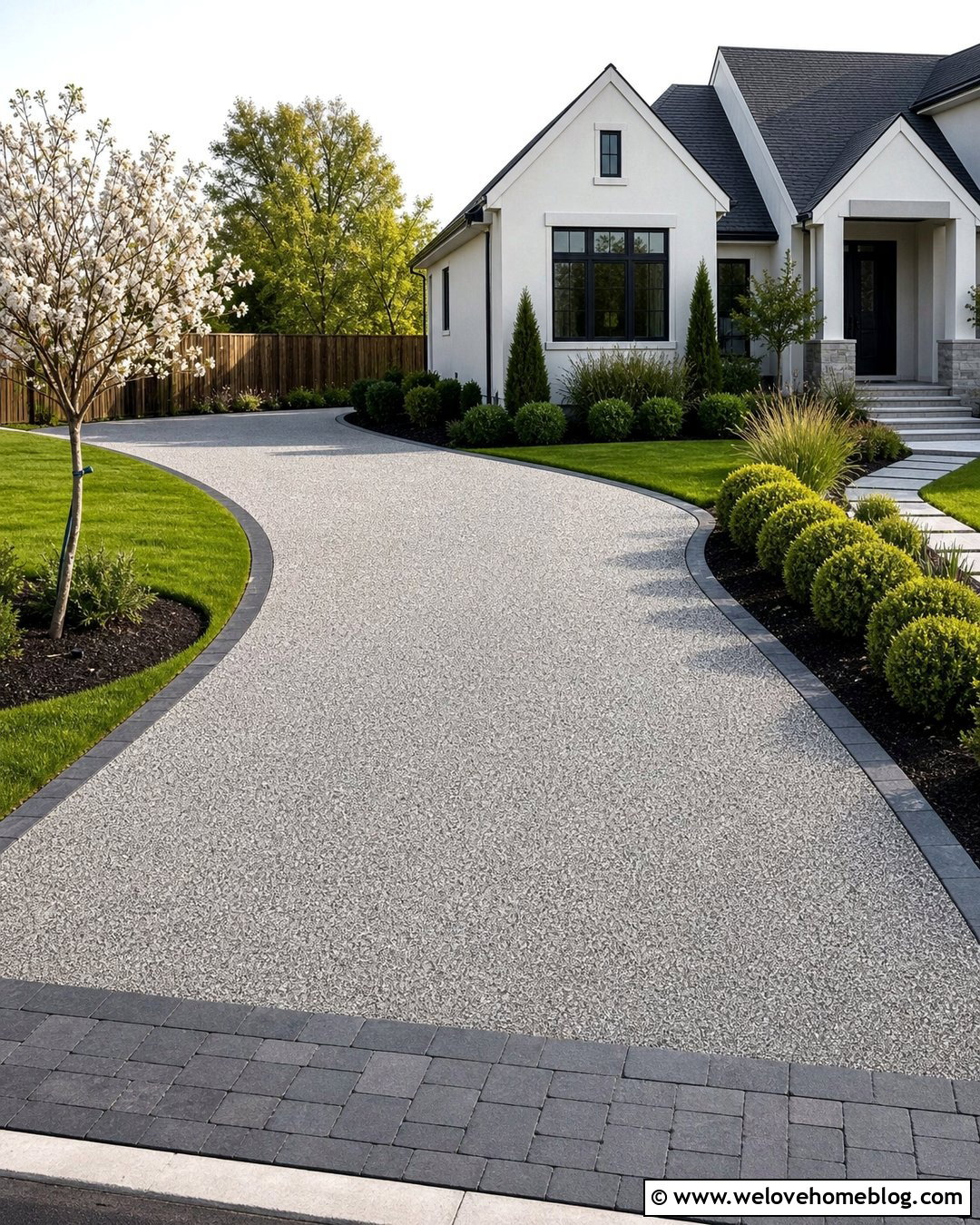
A resin-bound gravel driveway offers the visual texture of small stone with a smooth, unified appearance. Choose a blend of beige, silver, or warm gray aggregate that complements the home’s exterior. Dark steel edging can outline a straight or curved layout and create clean transitions into lawn and planting beds. Use a contrasting paver apron near the sidewalk or garage to add definition without fragmenting the design. Modern grasses, rounded shrubs, and one carefully placed ornamental tree will give the approach a polished but approachable character. The surface color should be selected in daylight because broad areas often appear lighter than small samples. This complete driveway works with modern, transitional, and renovated traditional homes where a neat gravel-like finish is desired.
18. Concrete And Gravel Driveway With Stone Bands
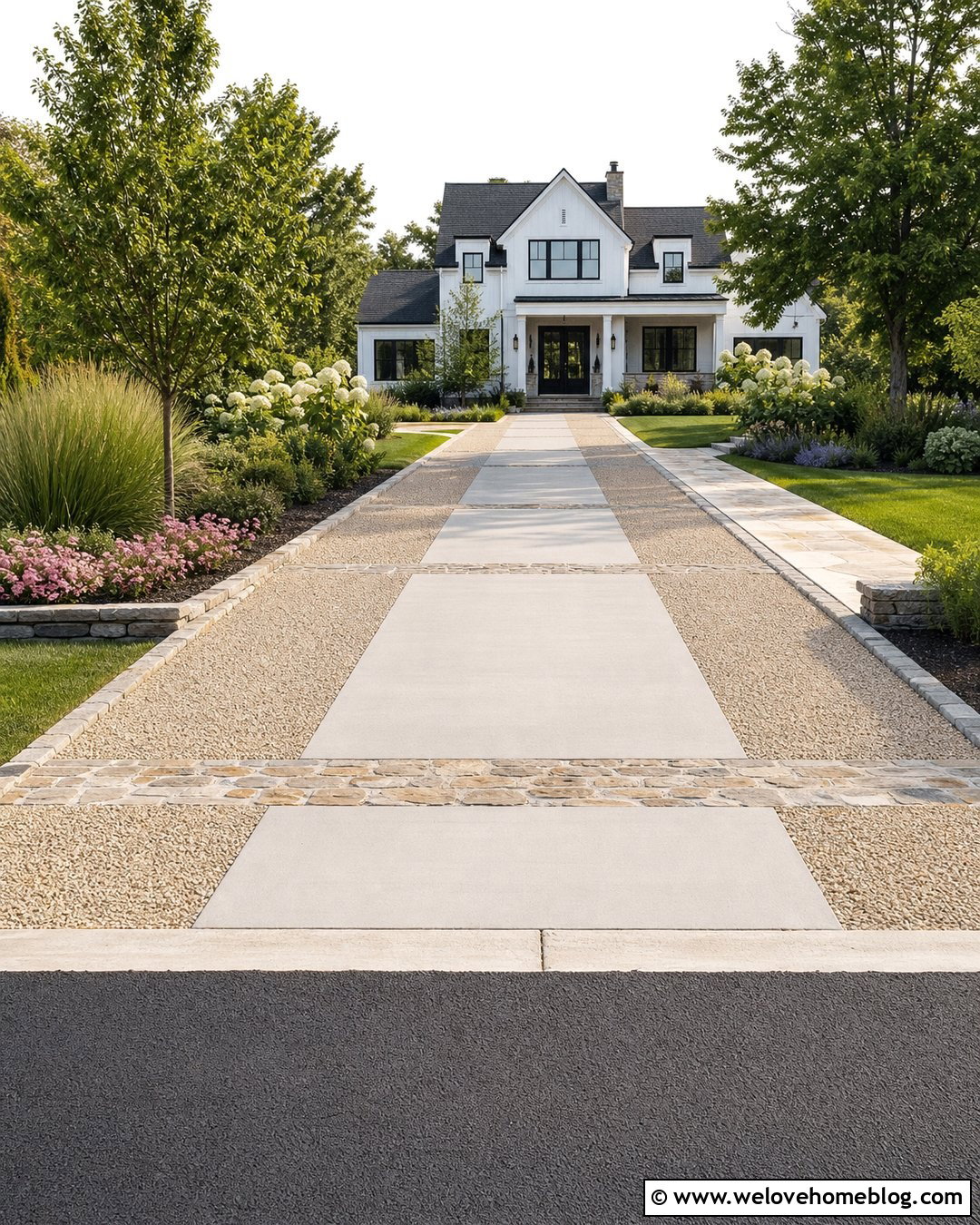
Mixing concrete and gravel can break up a wide driveway and make the surface more visually manageable. Use poured concrete for the main wheel paths or parking zones, then place compacted decorative gravel between sections. Natural stone bands can mark transitions and connect the driveway to a matching front walkway. Keep the material palette limited to two or three colors so the design does not become distracting. Along the edges, broad beds of ornamental grasses, low shrubs, and seasonal flowers will soften the geometry. This combination is particularly effective for a modern farmhouse or renovated ranch house. It also allows the most heavily traveled areas to receive a solid surface while gravel adds texture in spaces that experience less turning and braking.
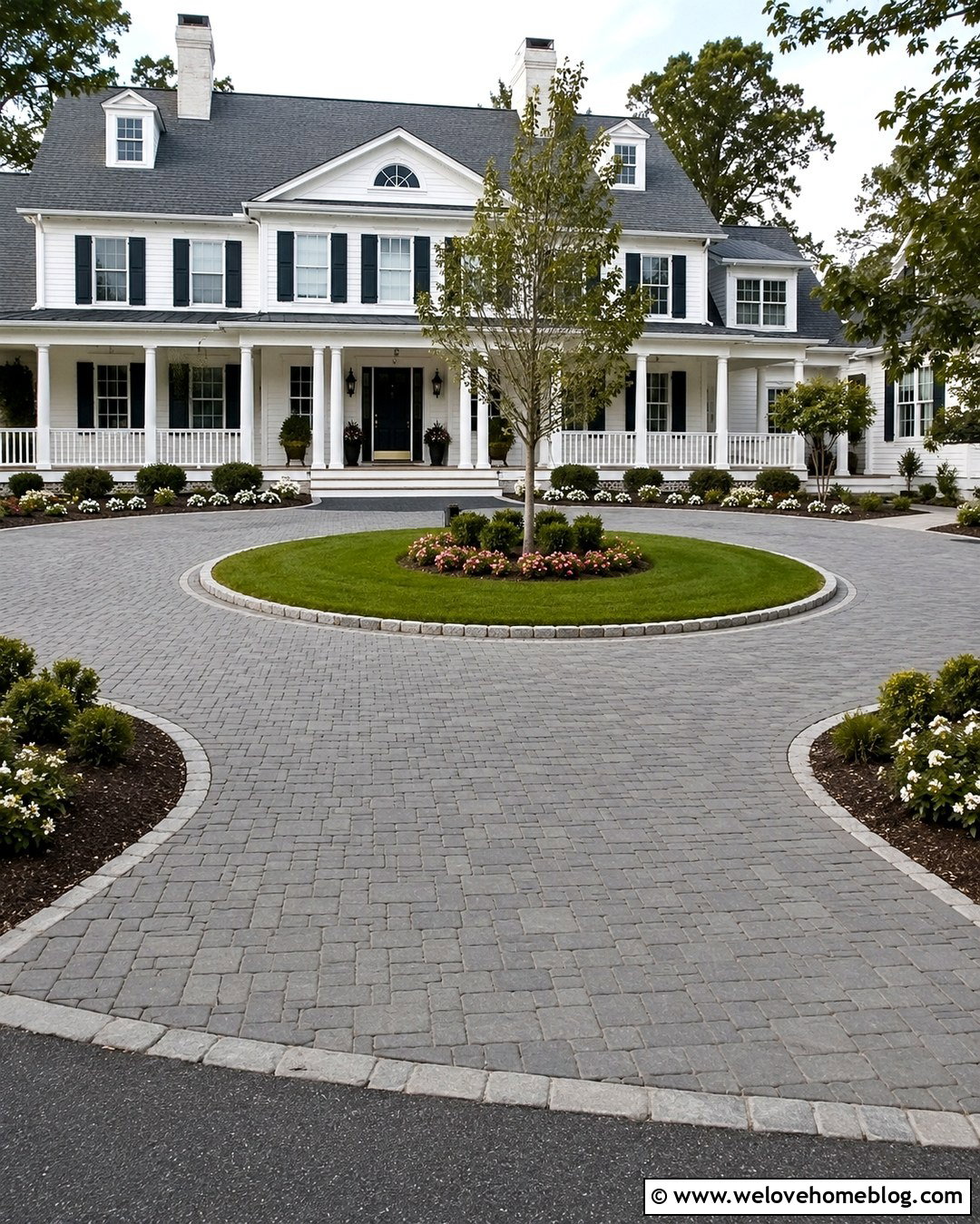
19. Circular Paver Driveway With Center Garden
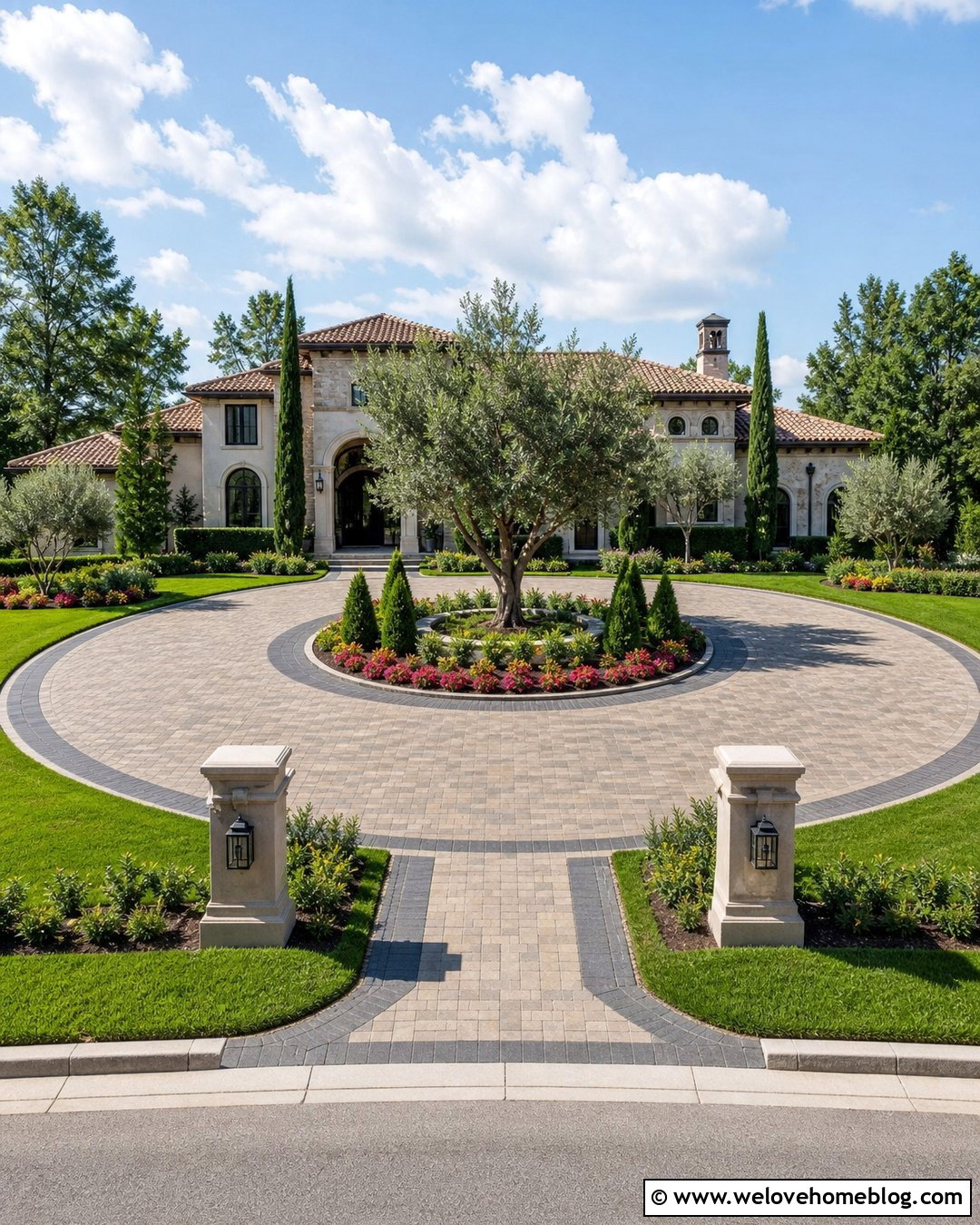
A circular driveway creates an easy arrival sequence and gives a large front yard a clear focal point. Use warm gray or tan pavers for the driving loop, then outline both edges with a darker paver course. In the center, build a generous garden island containing one ornamental tree, low evergreens, and layered flowers that remain below important sightlines. A walkway can cross the island toward the front door, but it should be wide and easy to identify. Keep enough turning space around the circle for the vehicles regularly using the property. This complete design suits colonial, Mediterranean, and estate-style homes with broad setbacks. Matching pillars or low walls at the entrance can make the layout feel connected to the architecture.
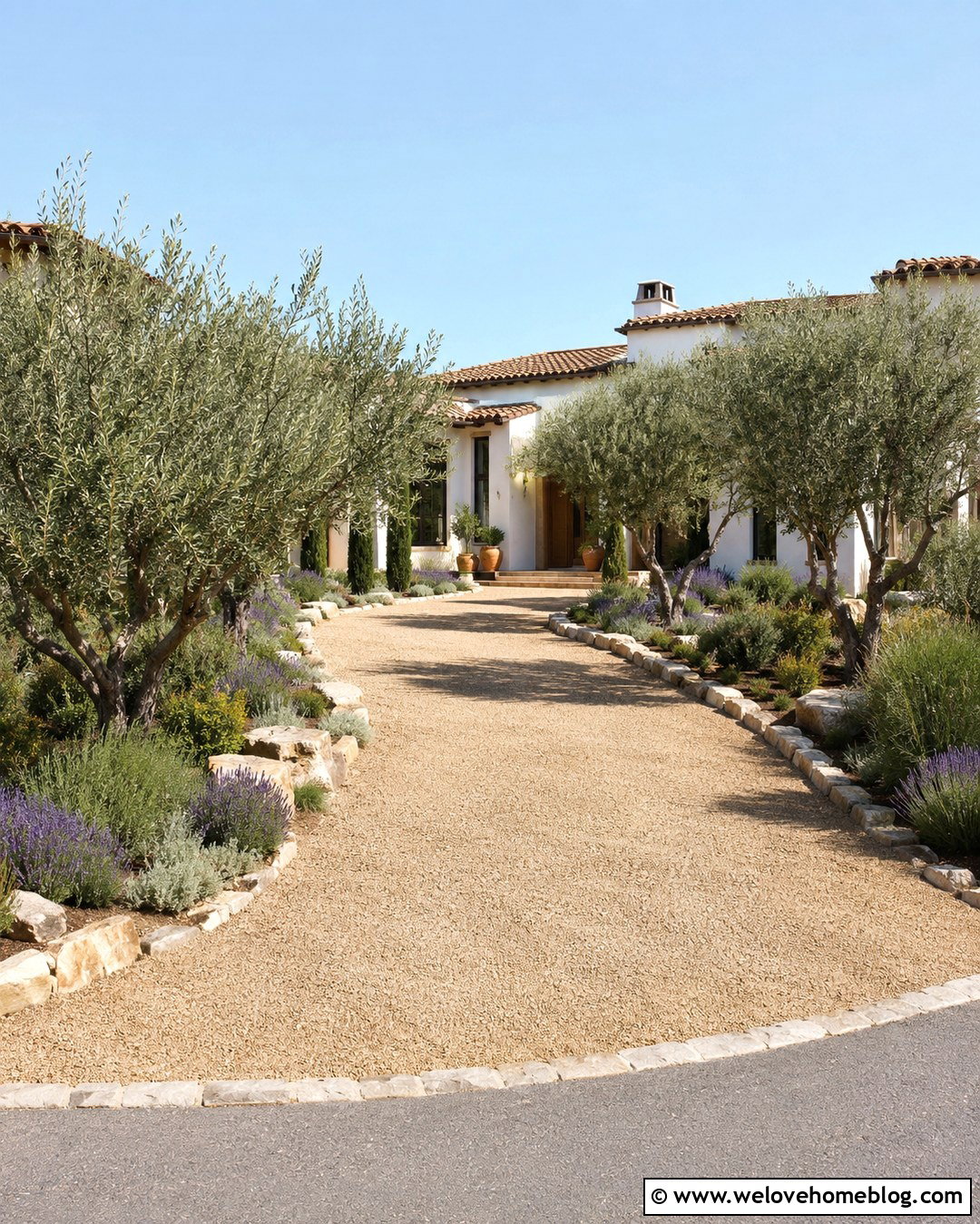
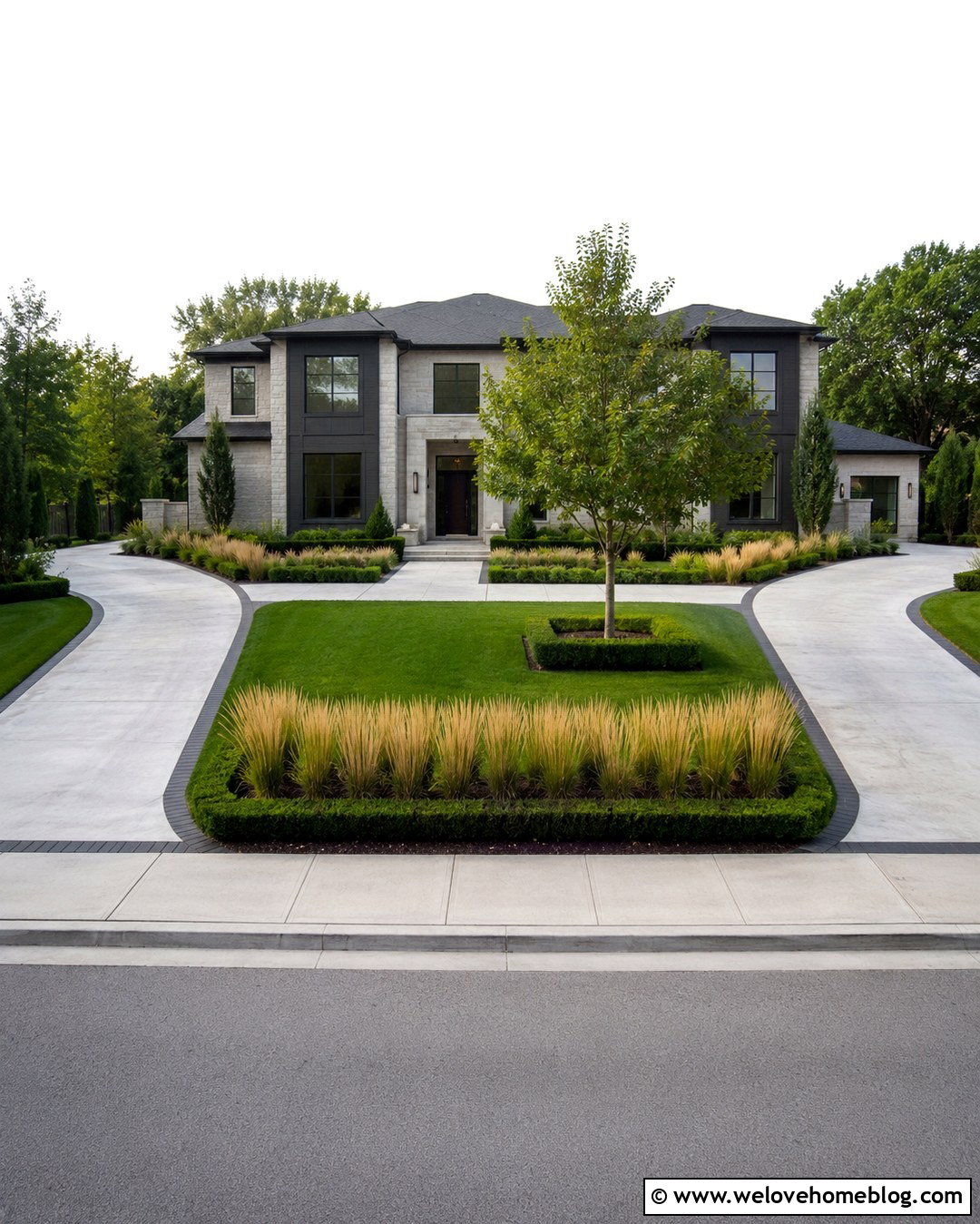
20. Horseshoe Gravel Driveway With Farmhouse Entrance
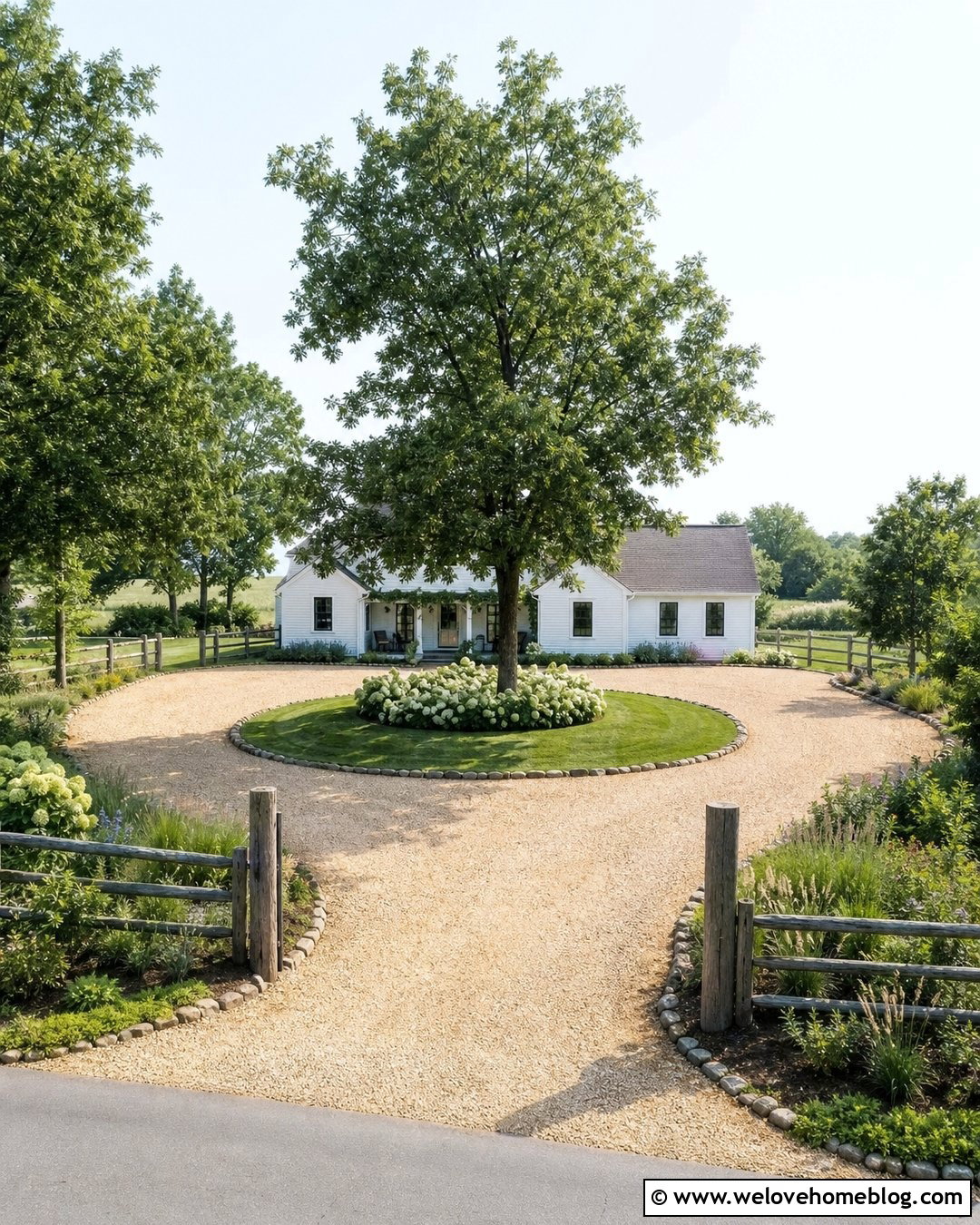
A horseshoe driveway provides separate entry and exit points while preserving a planted area in the center. Cover the drive with compacted gray or beige crushed gravel and use fieldstone edging along the curves. Simple timber posts, split-rail fencing, or low stone pillars can mark both street openings without making the entrance feel formal. Fill the center island with lawn, a mature shade tree, or a relaxed meadow-style planting. Near the house, widen the driveway into a practical parking and turning area. Hydrangeas, ornamental grasses, and native shrubs can soften the route while maintaining the open farmhouse character. This complete layout is well suited to wide country lots where a straight driveway would leave too much unused space or require inconvenient reversing.
21. Curved Driveway With Tree-Lined Landscaping
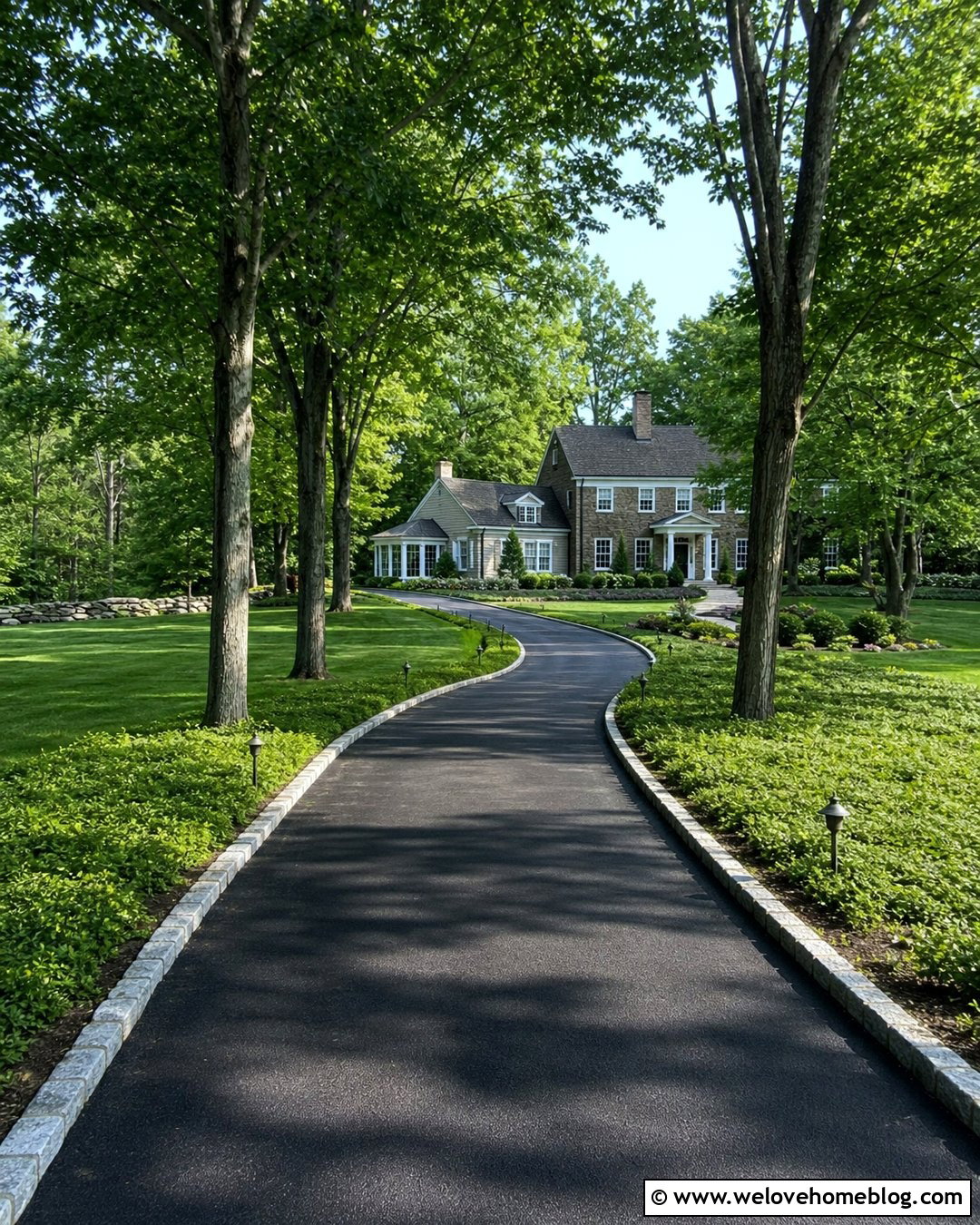
A long curved driveway becomes memorable when trees frame the approach without crowding it. Choose asphalt, concrete, or compacted gravel based on the house and maintenance needs, then add stone curbing for a consistent finished edge. Plant evenly spaced deciduous trees far enough from the pavement to accommodate mature trunks, roots, and canopies. Beneath them, use broad sweeps of ground cover or mowed grass rather than narrow, difficult planting strips. The driveway can open gradually to reveal the house, creating a more natural arrival than a direct straight route. Low path lights may follow the inside edge while remaining unobtrusive during the day. This complete design works best on deep lots where the landscape has enough room to establish proper scale.
22. Narrow Driveway With Paver Parking Strip
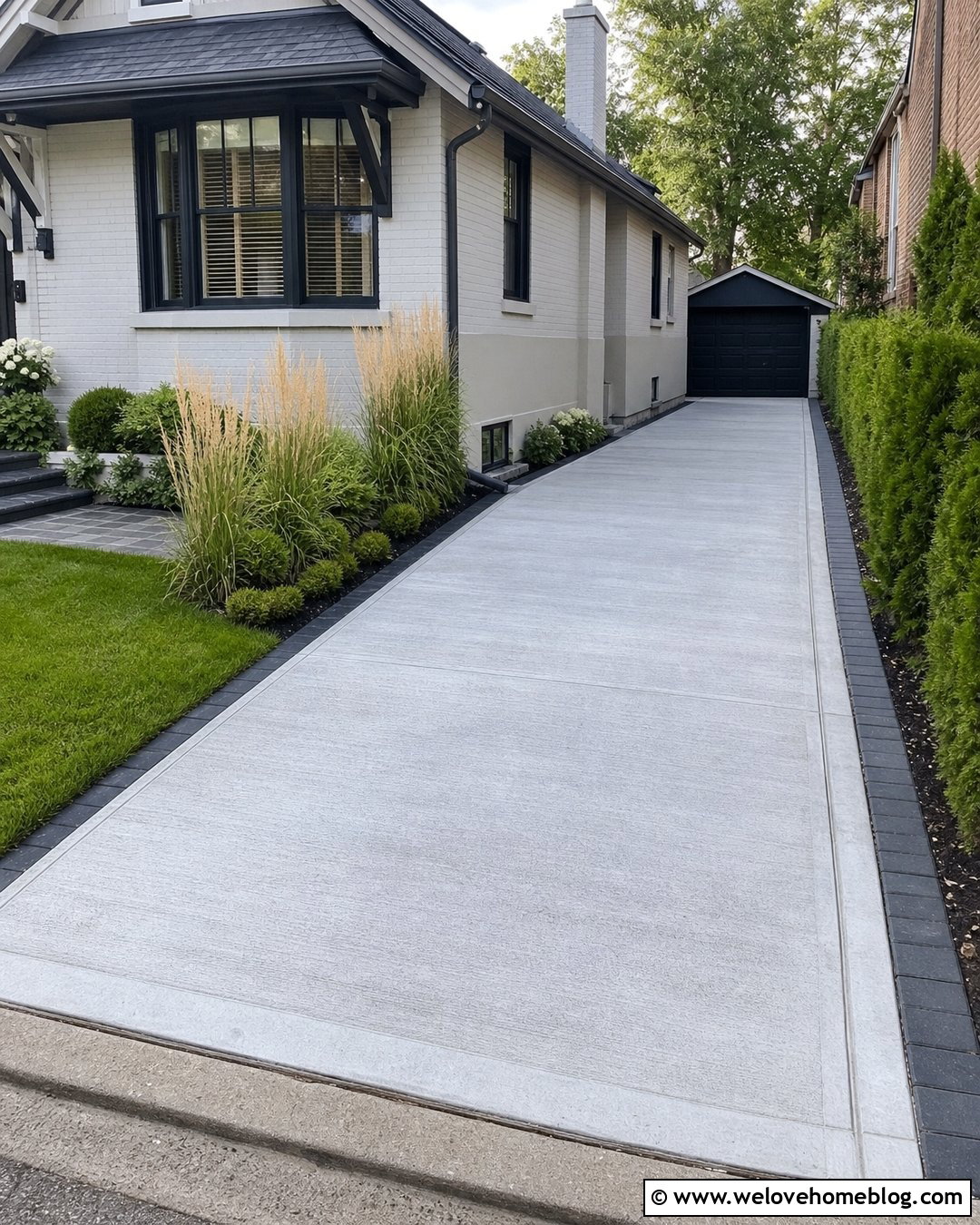
Small side yards often require a driveway that provides access without overwhelming the house. A narrow poured concrete surface can be widened visually with a slim paver strip along one side. Use that strip as a stepping area for passengers and connect it directly to the front or side walkway. On the opposite edge, install compact shrubs, upright grasses, or a narrow hedge that will not spread into vehicle space. A light concrete color helps the area feel open, while charcoal pavers add definition. Near the garage, expand the paving slightly to improve door clearance and turning room. This complete driveway arrangement suits compact bungalows, townhouses, and narrow suburban lots where every border, planting bed, and circulation route must perform more than one function.
23. Small Front Yard Driveway With Planting Pockets
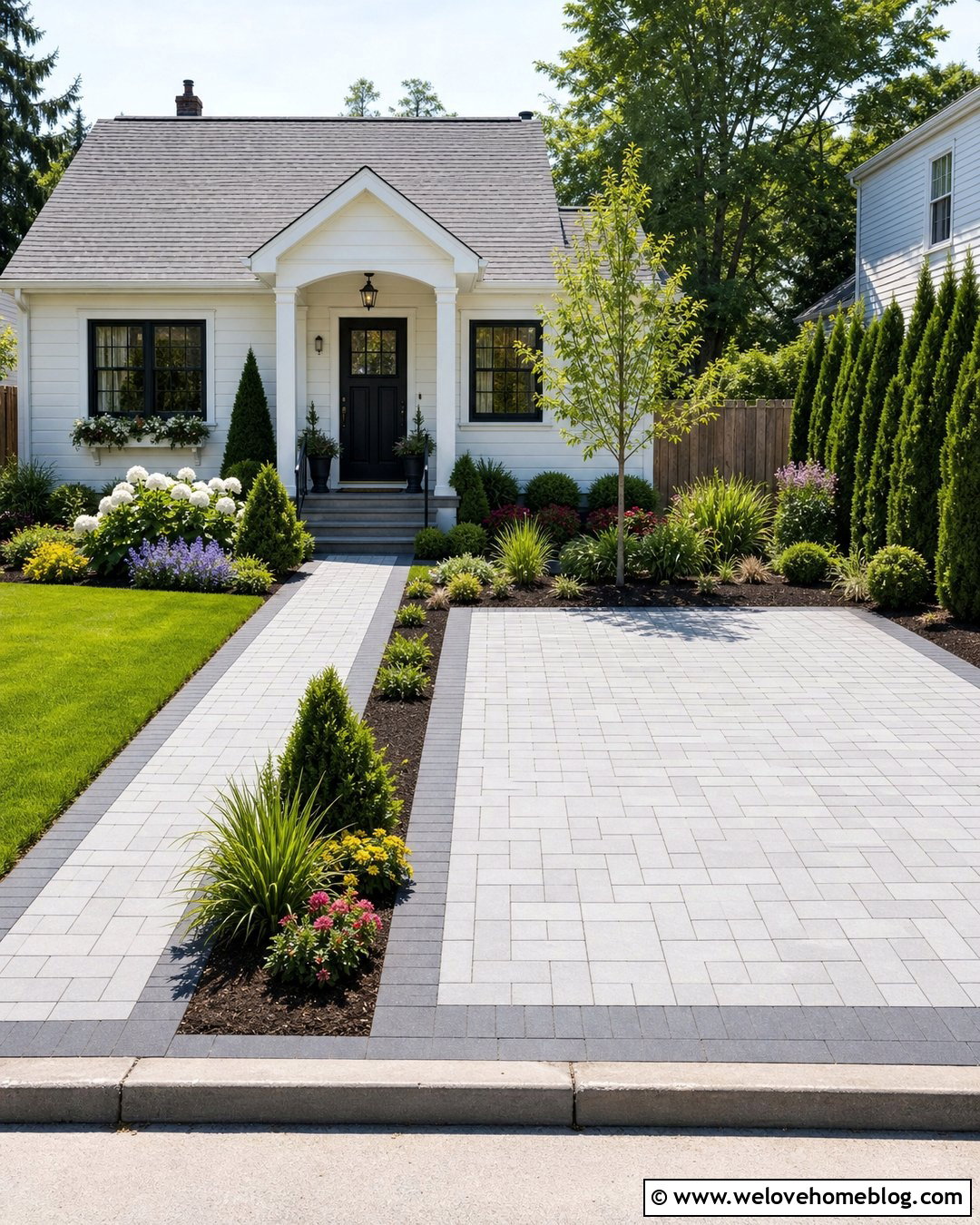
When a driveway occupies most of a small front yard, even a few planting pockets can transform the view. Use light gray concrete pavers in a simple pattern and reserve small beds near the street, front steps, and garage corners. Fill them with compact evergreens, ornamental grasses, and long-blooming perennials that will not flop onto the driving surface. A contrasting paver border can define the parking area without requiring additional space. Connect the front door with a clearly visible walkway in a different paver size or direction. Vertical elements, such as a narrow ornamental tree or wall-mounted trellis, add greenery without taking away parking. The finished layout feels intentional, practical, and balanced rather than like one oversized paved pad.
24. Wide Driveway With Central Paver Pattern
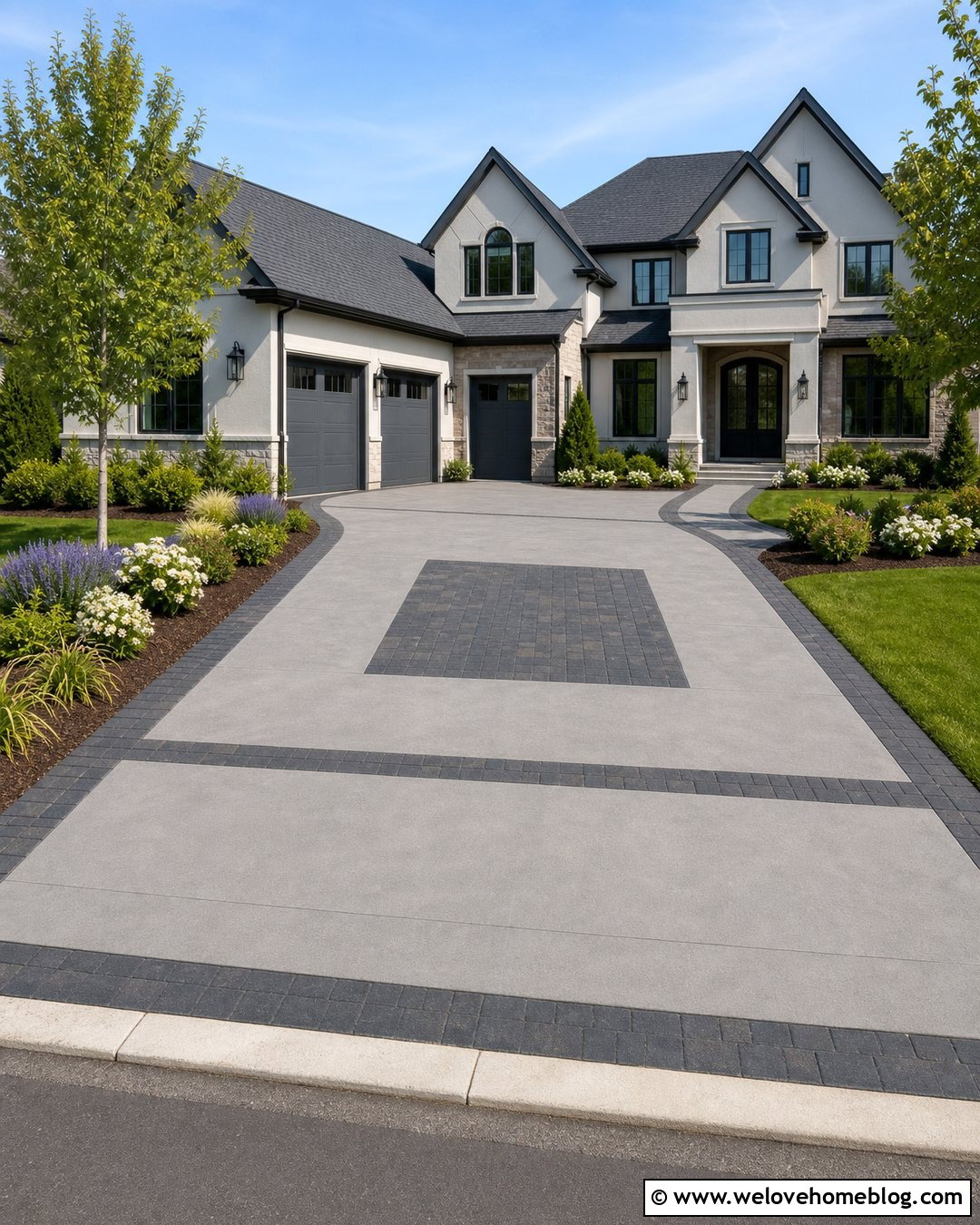
A wide driveway can easily resemble a parking lot unless the surface is divided into clear visual zones. Start with smooth gray concrete and place a broad paver panel through the center or across the approach near the garage. Repeat the pavers along the outer border to tie the composition together. Curved planting beds can soften the corners, while medium-size trees frame the house rather than blocking it. If several vehicles use the area, define parking positions through subtle changes in paving pattern instead of painted lines. A separate walkway should guide guests to the front door without forcing them through parked vehicles. This complete design gives a large suburban driveway structure, improves the arrival experience, and reduces the visual dominance of uninterrupted concrete.
25. Sloped Driveway With Retaining Walls
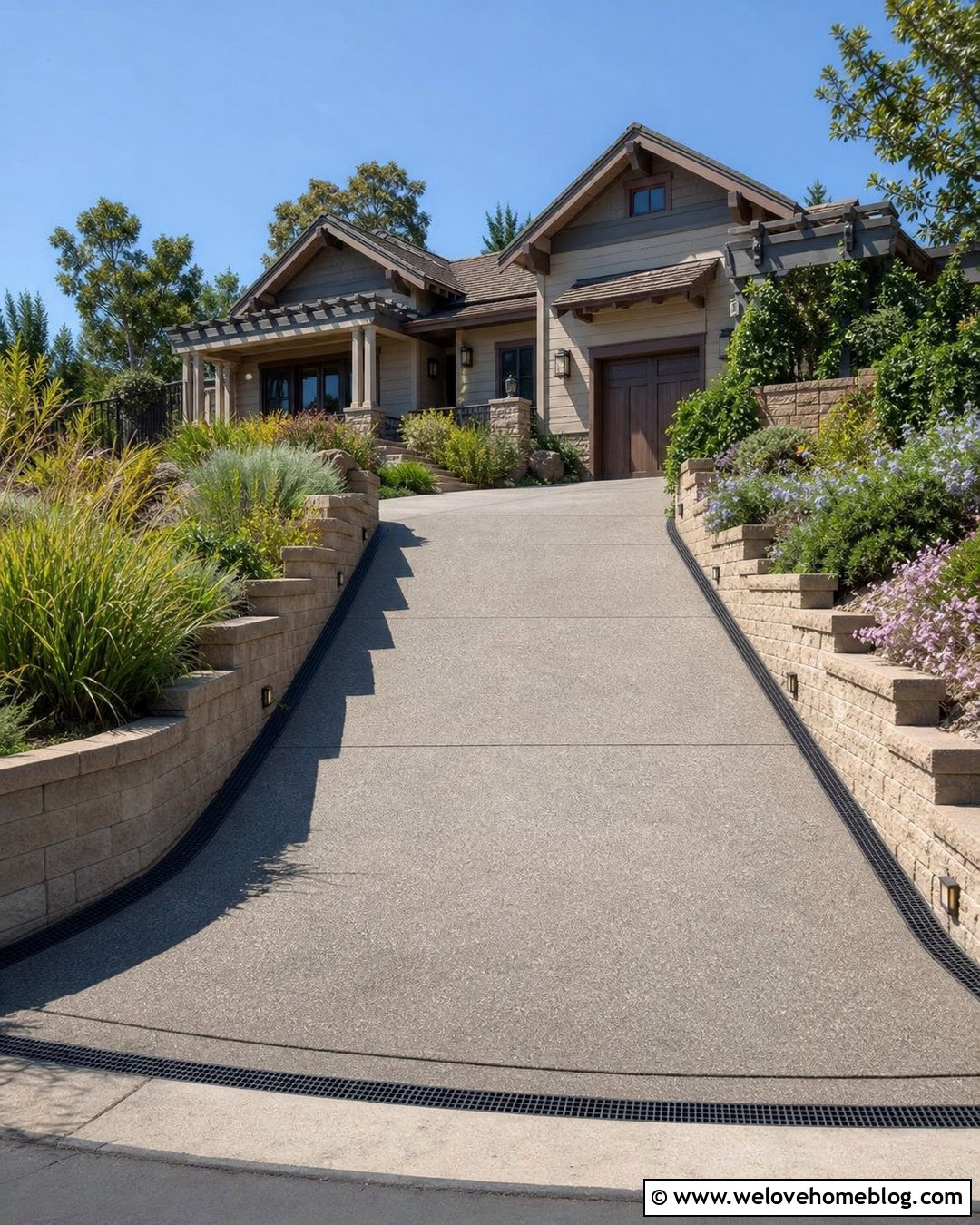
A sloped driveway needs to feel secure and integrated with the grade rather than cut abruptly through it. Choose textured concrete, pavers, or asphalt with a paver apron, then build low retaining walls where the surrounding soil rises above the pavement. Natural stone or wall blocks that match the house will make those structures feel intentional. Plant the upper beds with deep-rooted shrubs, ornamental grasses, and ground cover to soften the walls and reduce bare soil. Add surface drainage where runoff naturally collects, and direct water away from the garage and foundation through an appropriate system. Low lighting can mark changes in elevation and wall edges. A professional site plan is valuable because slope, drainage, winter conditions, and vehicle clearance must work together.
26. Farmhouse Gravel Driveway With Timber Edging
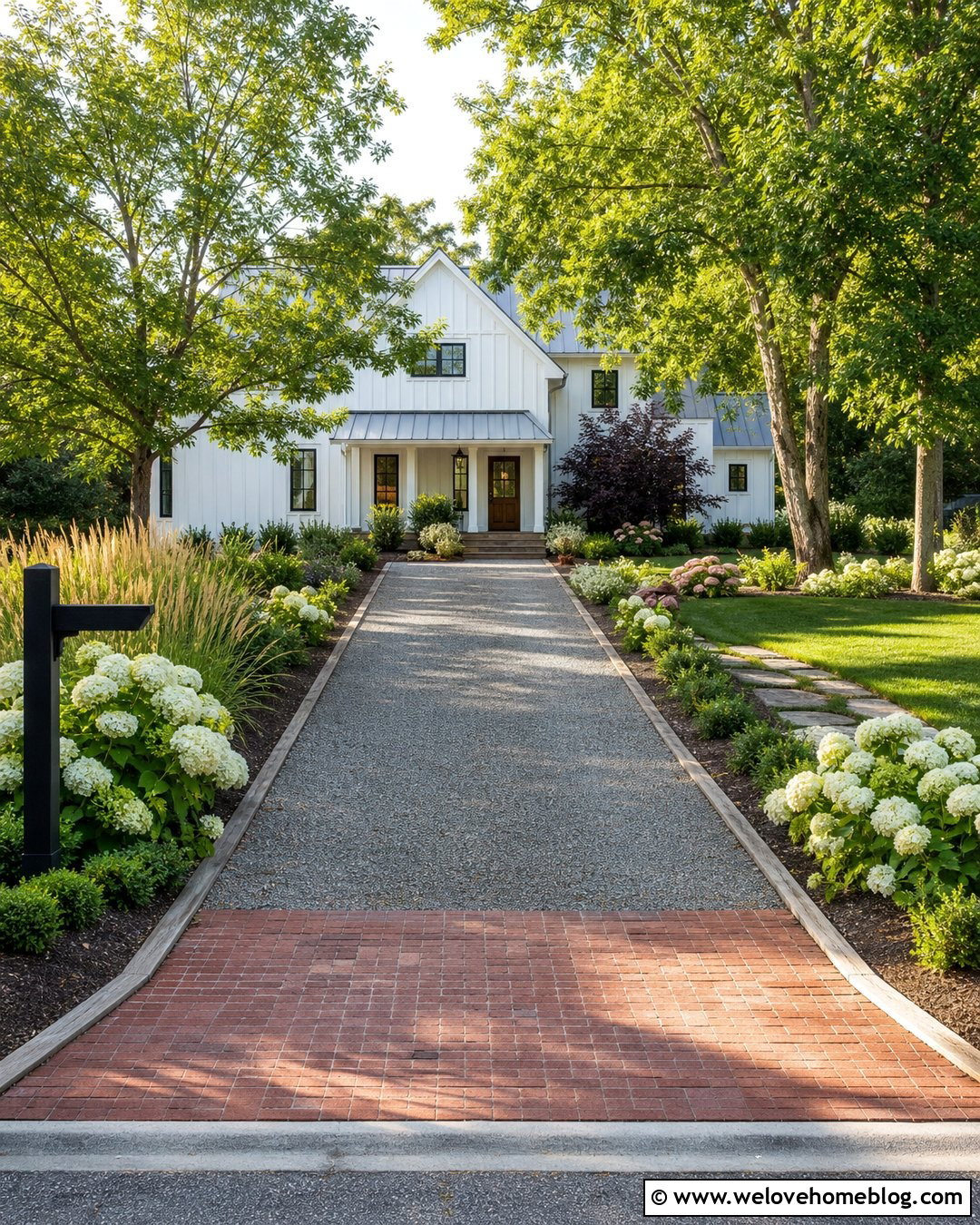
A farmhouse driveway should feel relaxed, practical, and connected to the surrounding land. Use compacted gray or warm beige gravel in a straight layout that widens near the garage or barn-inspired house. Heavy timber edging can contain the stone, while a brick or cobblestone apron adds a more finished transition at the street. Plant native grasses, hydrangeas, flowering shrubs, and a few shade trees in broad informal groups. Avoid overly formal rows unless the home has strong symmetrical architecture. A simple post-mounted address sign and black metal lights can reinforce the farmhouse palette. The complete driveway will look established rather than overly decorated, with enough structure to control the gravel and enough greenery to blend the entrance into the property.
27. Colonial Brick Driveway With Symmetrical Landscaping
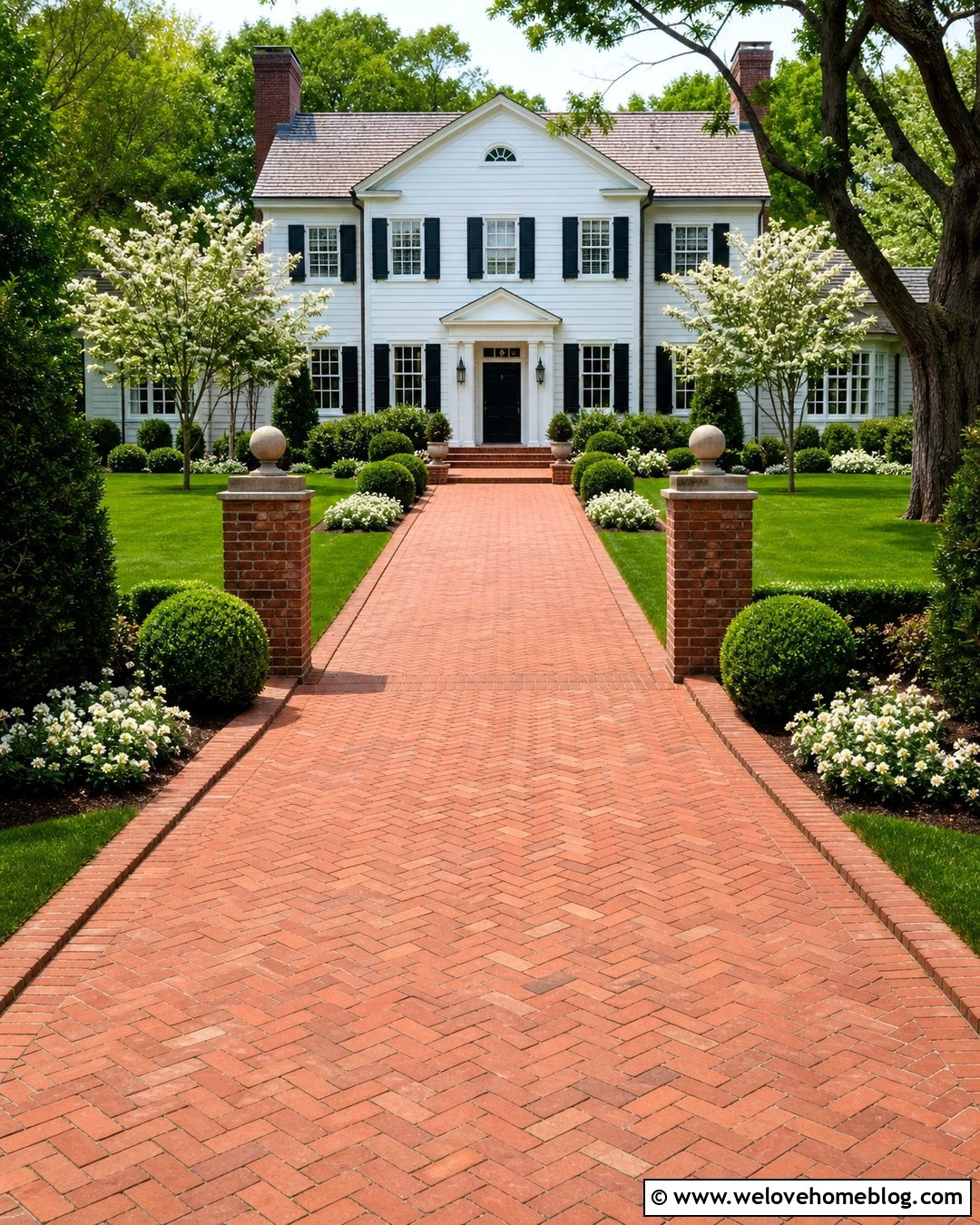
Symmetry gives a colonial driveway the orderly appearance associated with the house style. Lay red or brown clay brick in a herringbone pattern and frame it with a soldier-course border. Keep the driveway straight or use a balanced circular layout if the front yard is large enough. Matching brick pillars can mark the entrance, while pairs of boxwood, hollies, or small flowering trees repeat on both sides. A straight walkway should connect the driveway to the centered front door, ideally using the same brick. White flowers and deep green foliage will complement shutters, columns, and traditional trim. This complete design feels formal but welcoming because every surface, border, and planting group supports the architecture rather than introducing an unrelated theme.
28. Modern Driveway With Large Concrete Pavers
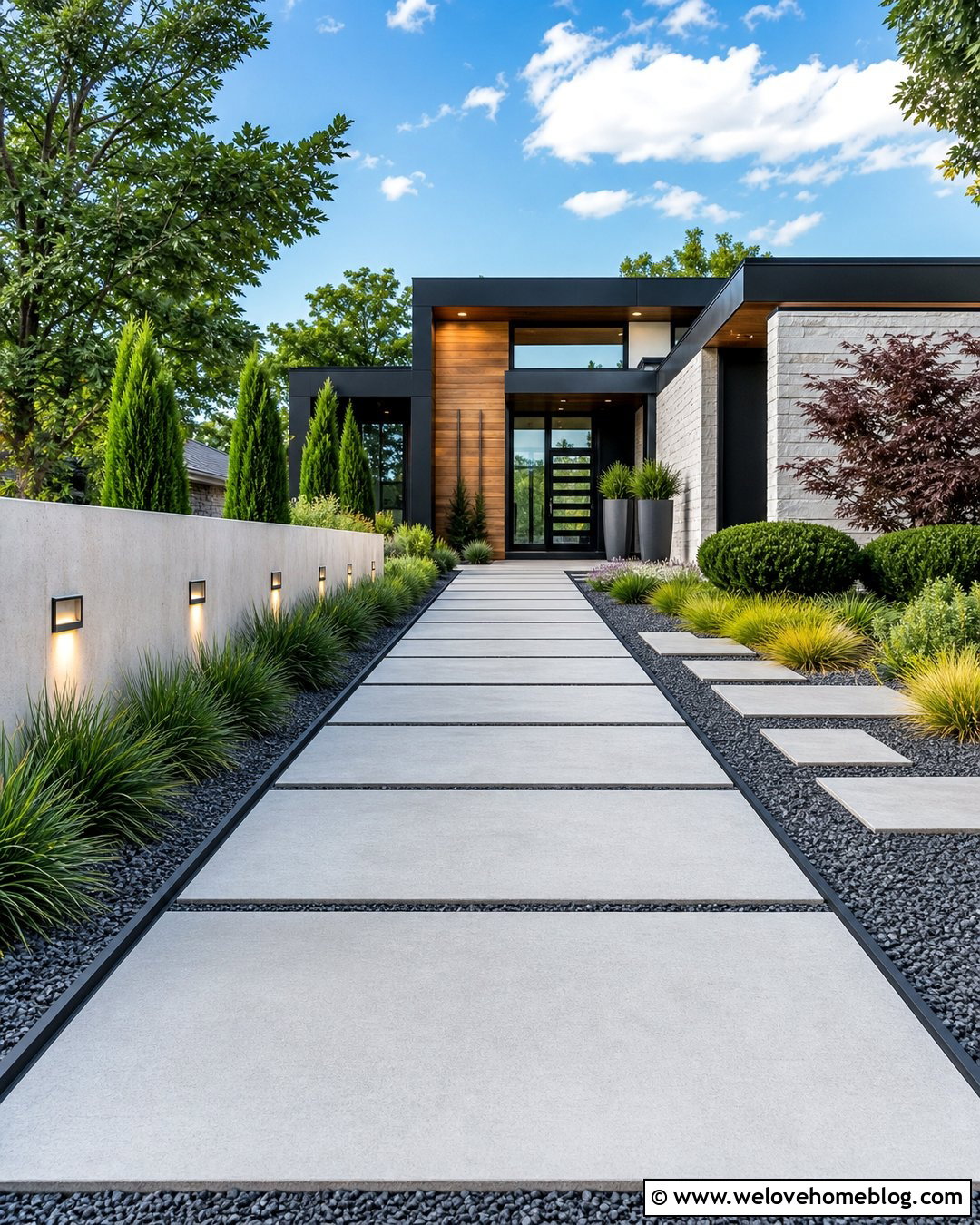
Large concrete pavers create a calm, architectural surface for a modern home. Select rectangular units in light gray or charcoal and arrange them in long linear rows that reinforce the house’s horizontal lines. Narrow gravel joints can separate the pavers and improve visual texture, while black steel edging keeps the boundaries crisp. Use low sculptural planting, such as ornamental grasses, compact agave, or clipped evergreens, depending on the climate. A broad stepping-pad walkway should continue the same geometry toward the entrance. Keep lighting simple and integrated into walls or planting beds. This complete driveway works because the paving, landscape, and facade share a restrained material palette. Careful alignment is essential since uneven joints are more noticeable in a minimal design.
29. Ranch House Driveway With Exposed Aggregate
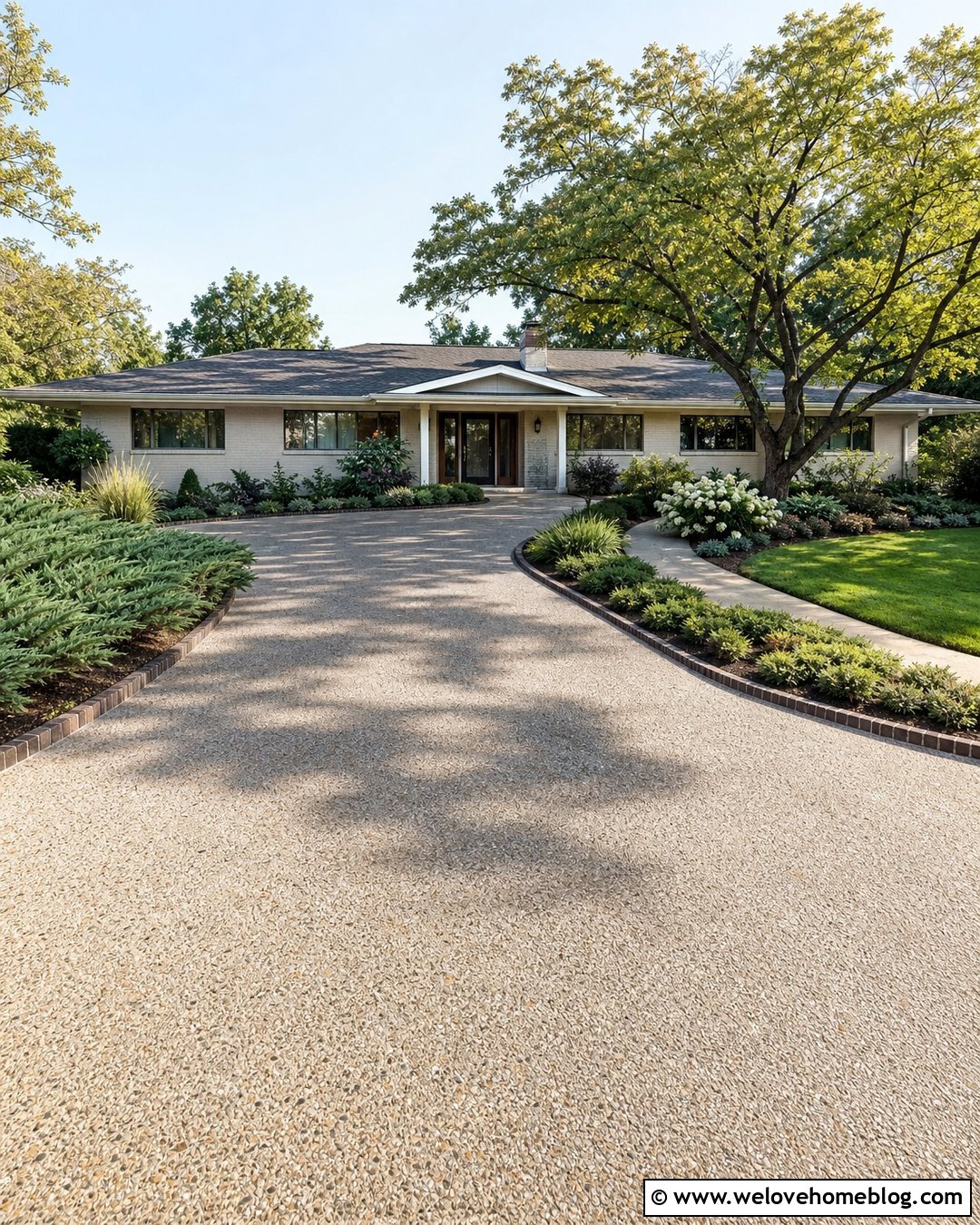
A low, wide ranch house pairs naturally with an exposed aggregate driveway that emphasizes horizontal space. Choose a warm gray or beige aggregate blend and create a gently flared entrance leading to the garage. Add dark brick or concrete curbing to define the perimeter and relate the driveway to the home’s foundation or chimney. Broad planting beds filled with ornamental grasses, low junipers, flowering shrubs, and one spreading ornamental tree will soften the front elevation. A curved walkway can branch toward the porch and help separate pedestrian movement from parking. Keep taller plants away from windows so the home retains its open character. This complete design updates a ranch exterior without forcing it into a formal or overly contemporary style.
30. Cottage Driveway With Gravel And Flower Borders
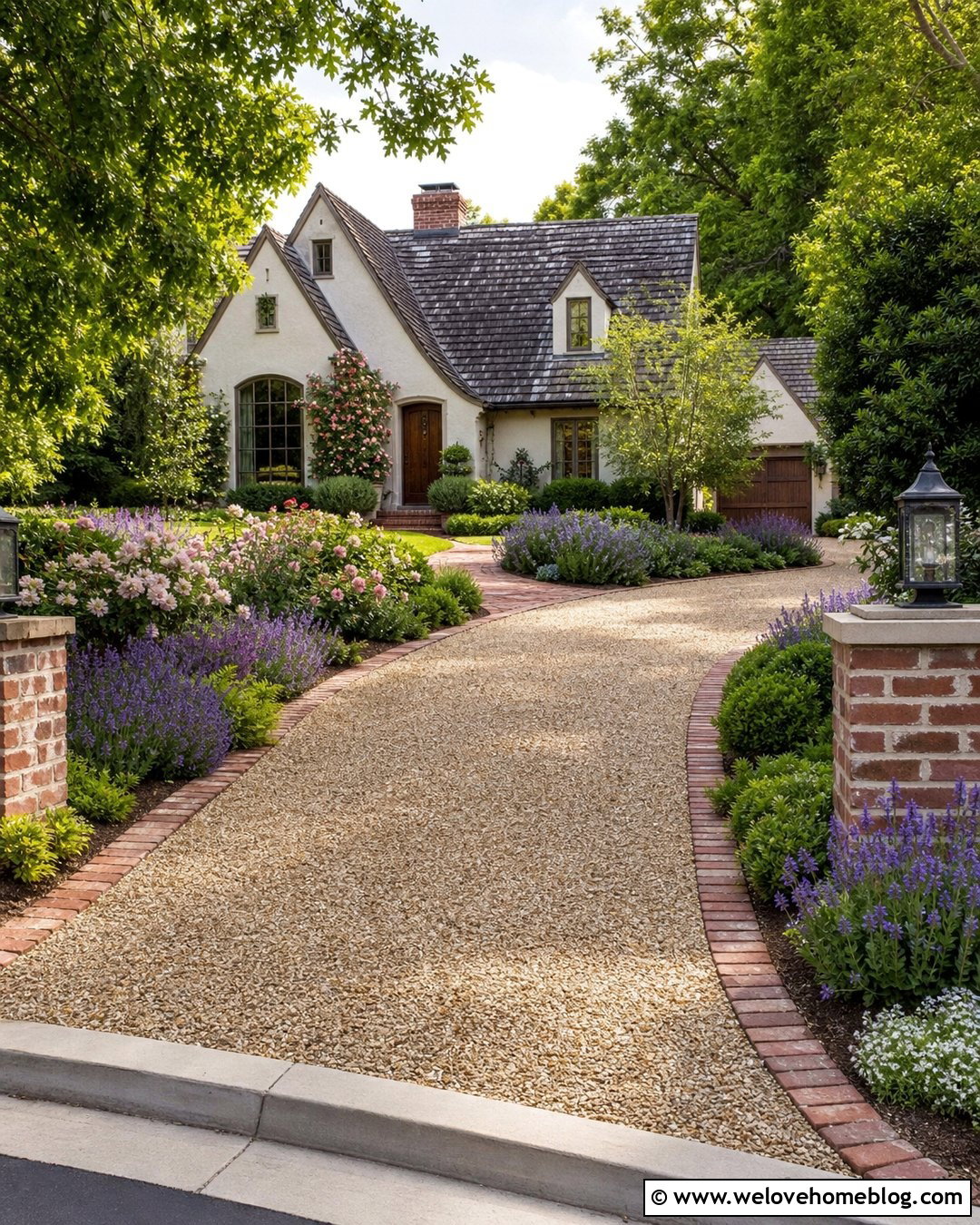
A cottage driveway can feel charming without becoming impractical or crowded. Begin with compacted pea gravel or fine crushed stone in a warm neutral color. Frame it with reclaimed brick or small cobblestones, then follow the edges with generous flower beds. Lavender, salvia, catmint, roses, and compact evergreen shrubs can provide color and structure, but plants should remain clear of car doors and sightlines. Shape the driveway with a slight curve and connect it to the front door using an informal brick walkway. Near the house, add a defined gravel parking pad to prevent the garden from narrowing the usable space. The complete look feels lush and welcoming while the strong edging and organized parking area keep the romantic planting under control.
31. Desert Driveway With Concrete And Gravel
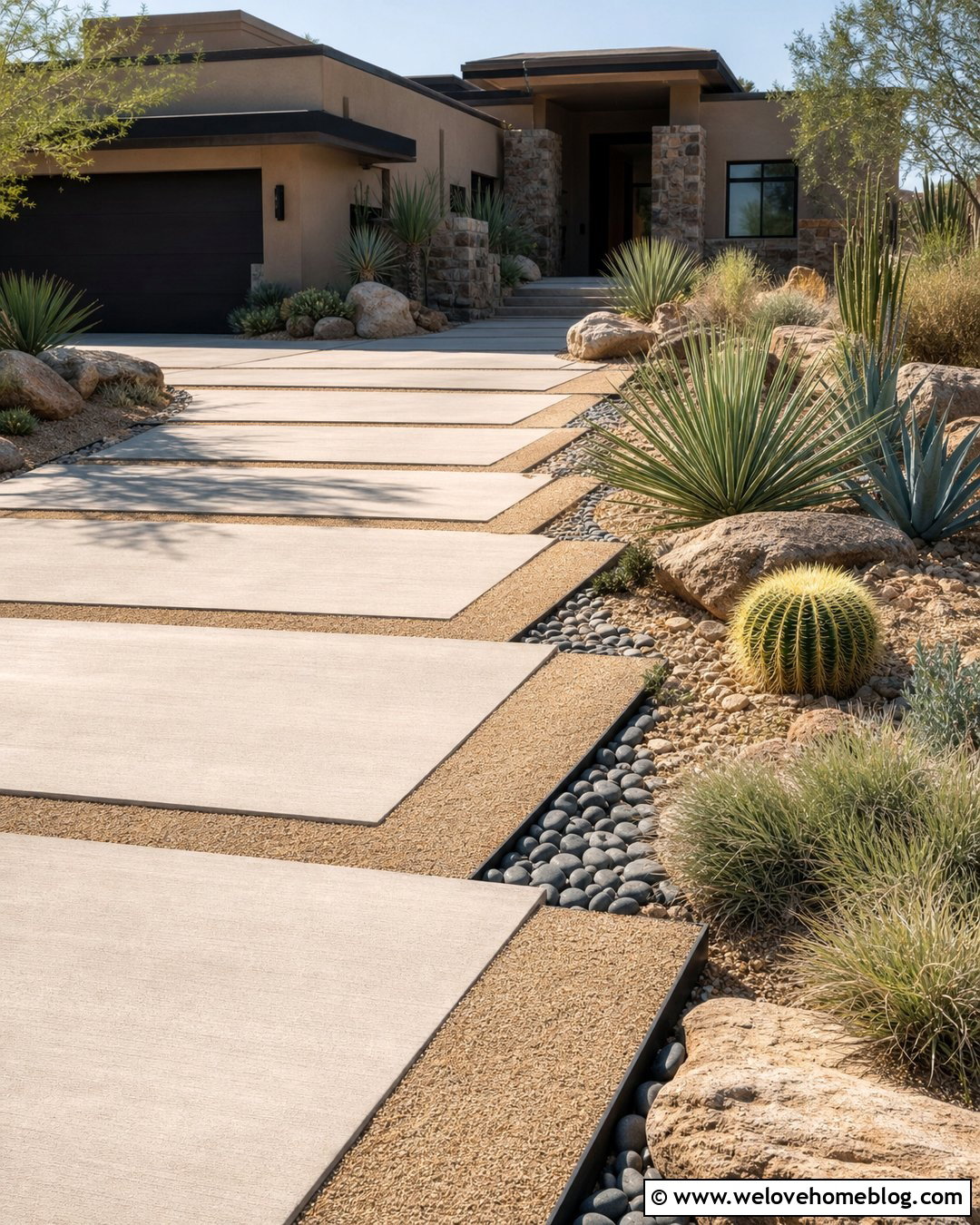
Bright sun and limited rainfall call for a driveway design that belongs in its surroundings. Use broad bands of light-colored poured concrete separated by strips of tan gravel or dark river rock. A straight or gently angled layout will complement a desert-modern house, while steel edging maintains sharp material transitions. Surround the driveway with decomposed granite, sculptural boulders, agave, yucca, barrel cactus, and soft ornamental grasses. Leave comfortable setbacks around thorny or spiny plants so passengers can exit safely. A concrete walkway can branch from the driveway and pass through the xeriscape toward the entrance. The combined pale paving and drought-tolerant landscape creates a complete front yard that feels intentional, regionally appropriate, and visually cooler than one large dark surface.
32. Woodland Driveway With Crushed Stone
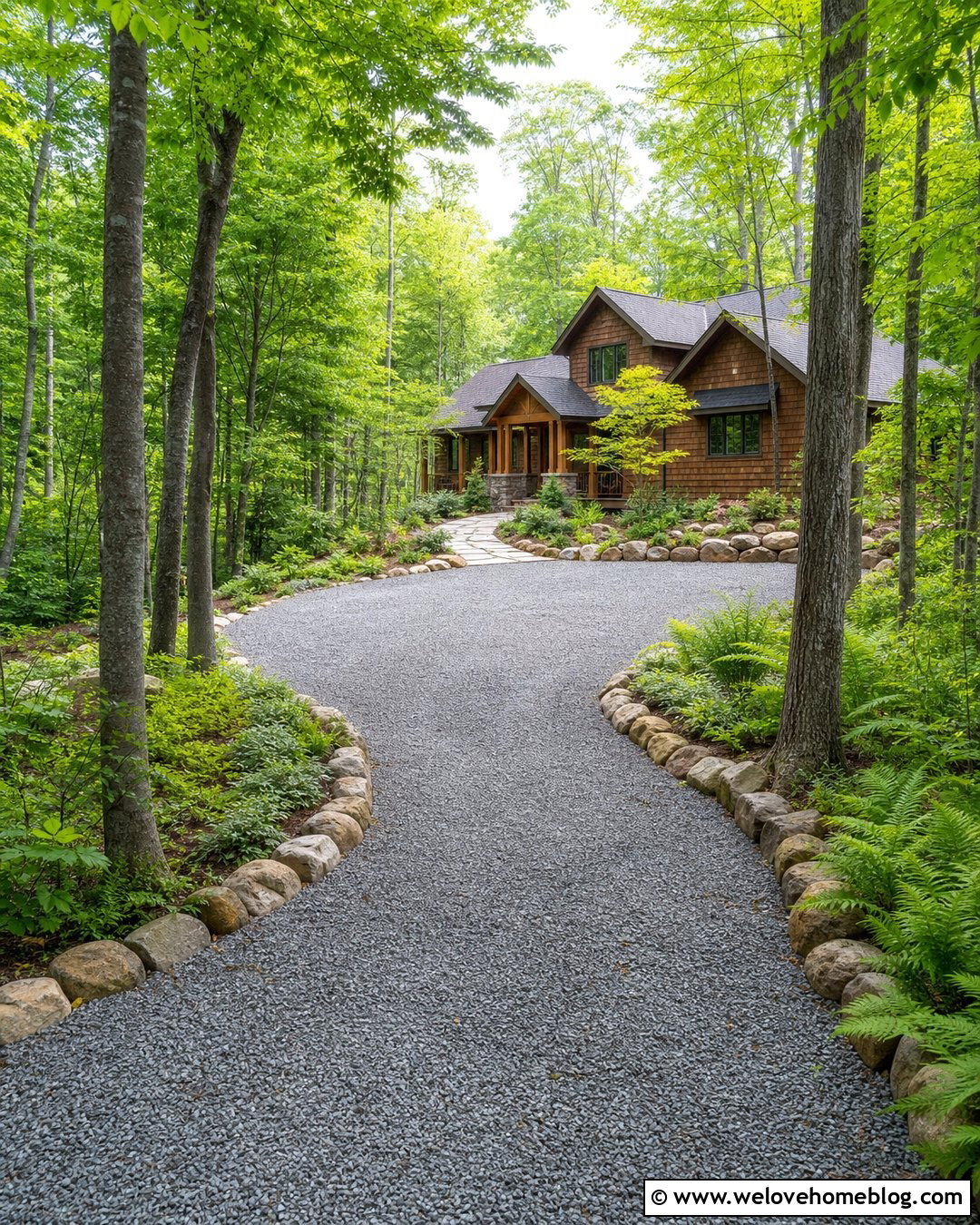
A driveway passing through mature trees should work with the woodland setting rather than competing against it. Use compacted gray crushed stone with natural fieldstone edging and shape the route around important trees where practical. Avoid placing raised borders where they could trap runoff against trunks. Ferns, woodland grasses, native shrubs, and shade-tolerant ground covers can fill the spaces between the driveway and the tree line. Near the house, widen the gravel into a clear parking court and introduce a stone walkway to the front entrance. Simple low lighting can guide the approach without creating a suburban runway effect. The finished driveway feels quiet and natural, while its defined edges and organized parking area prevent the woodland property from looking unfinished or difficult to navigate.
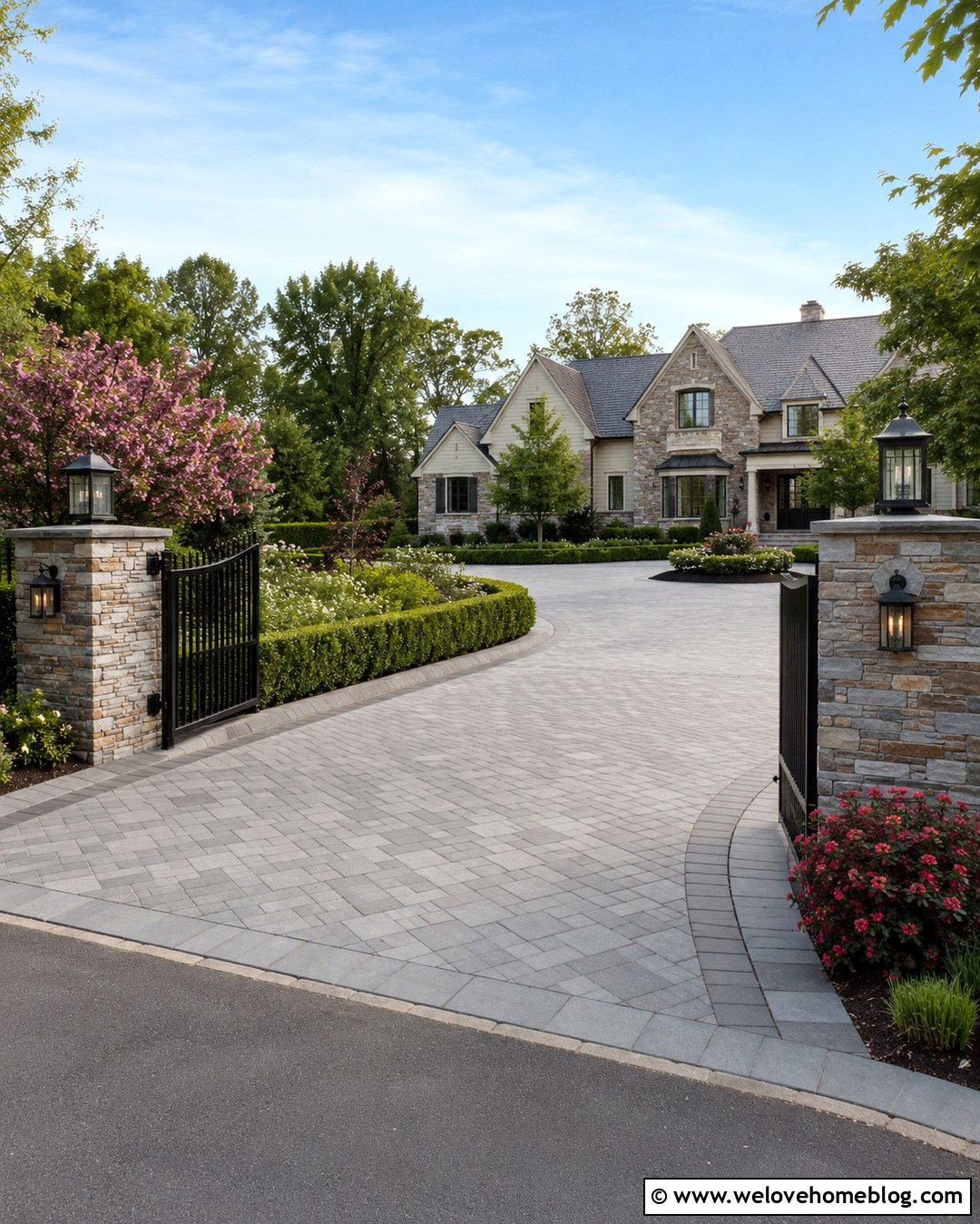
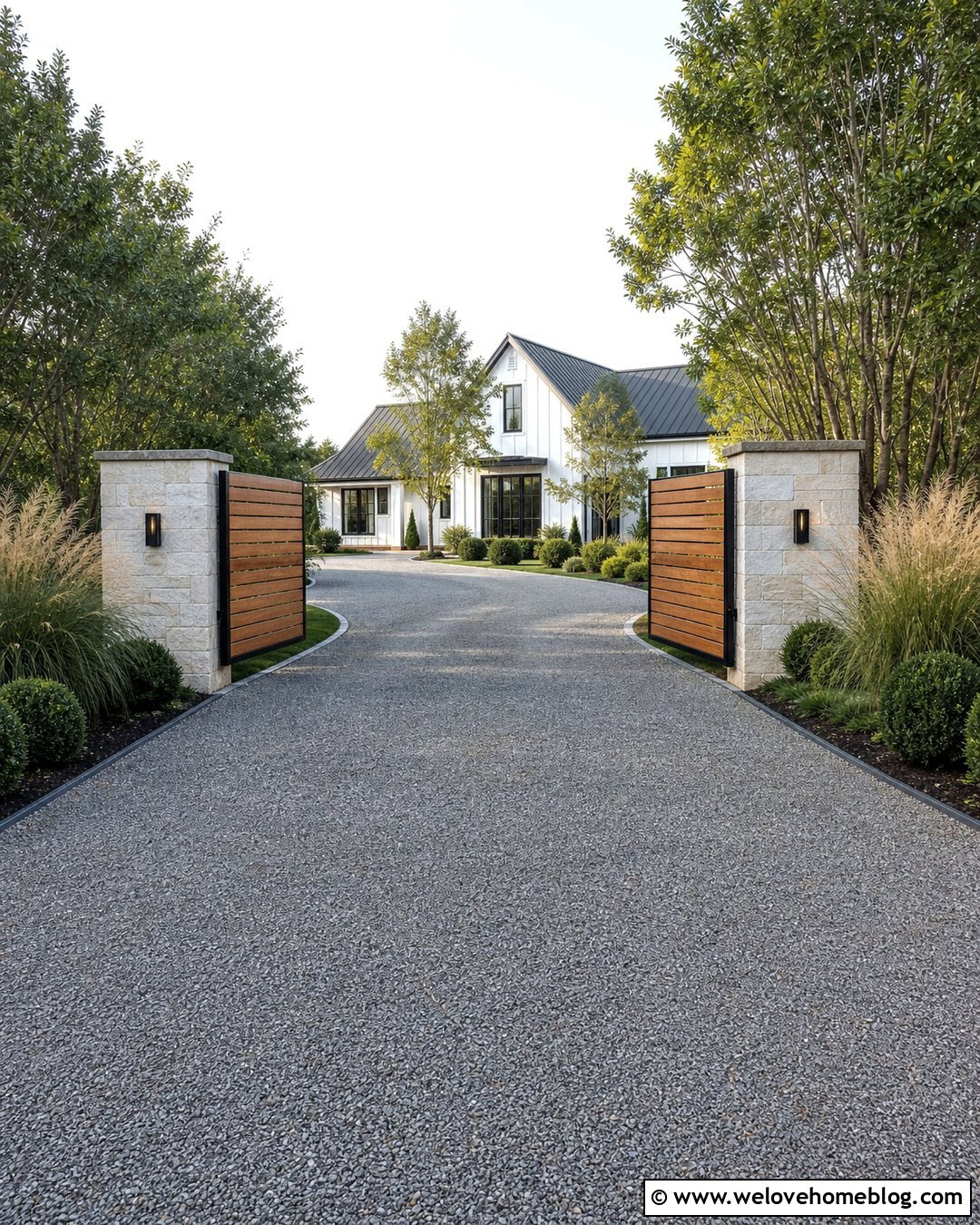
33. Gated Driveway With Stone Pillars
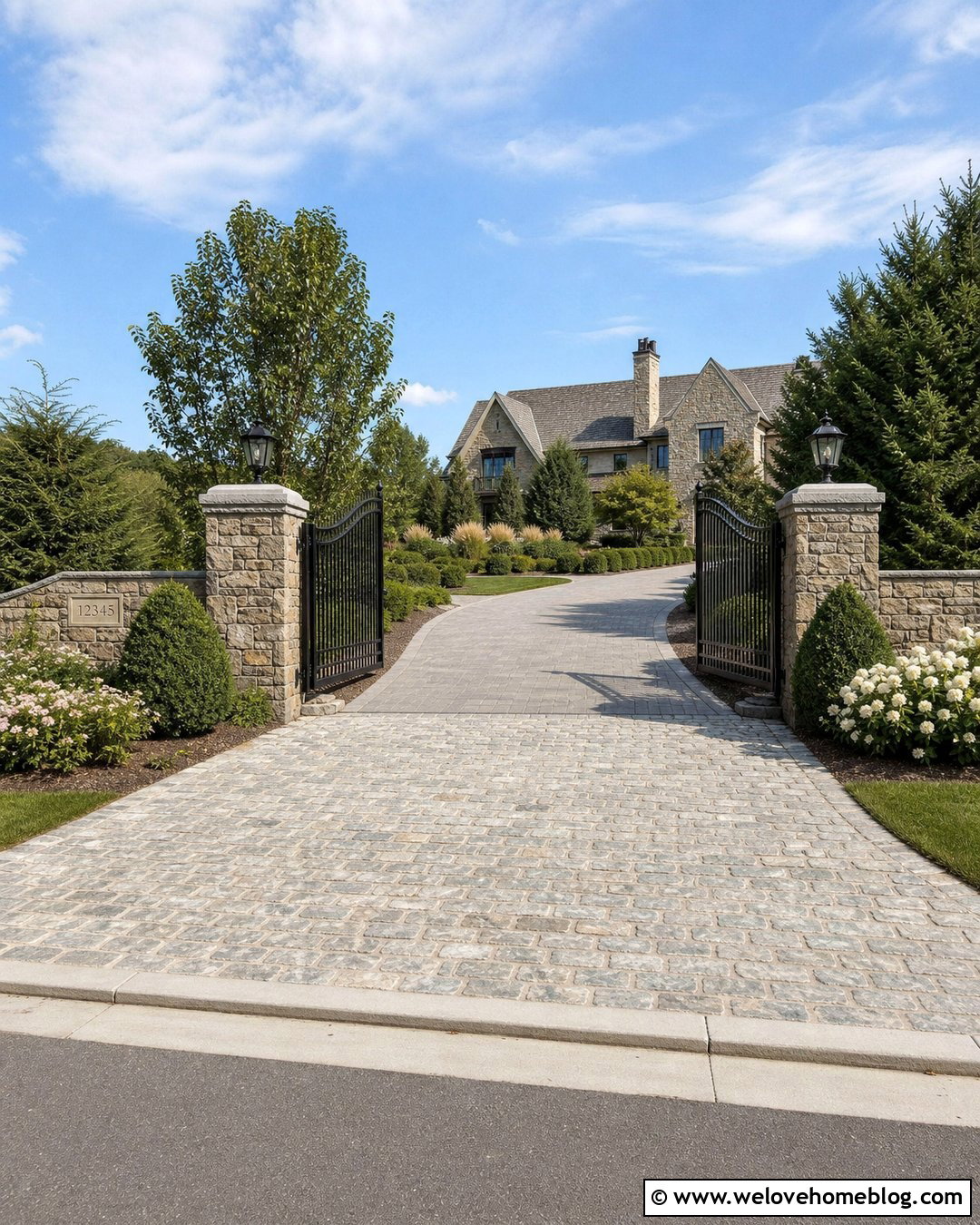
A residential gate looks most cohesive when the driveway, pillars, and landscaping are designed as one entrance. Use warm gray pavers or smooth asphalt with a cobblestone apron beneath the gate. Build substantial stone pillars that relate to the home’s facade, then position the gate far enough inside the property to provide safe vehicle clearance where required. Low walls can extend into layered beds containing clipped evergreens, flowering shrubs, and ornamental grasses. Keep plants low near the road to maintain visibility. A matching address plaque and integrated lights will finish the entrance without unnecessary decoration. Behind the gate, the driveway may run straight or curve toward the house. The result should feel welcoming and proportional, not oversized for the home or lot.
34. Driveway With Paver Borders And Low Lighting
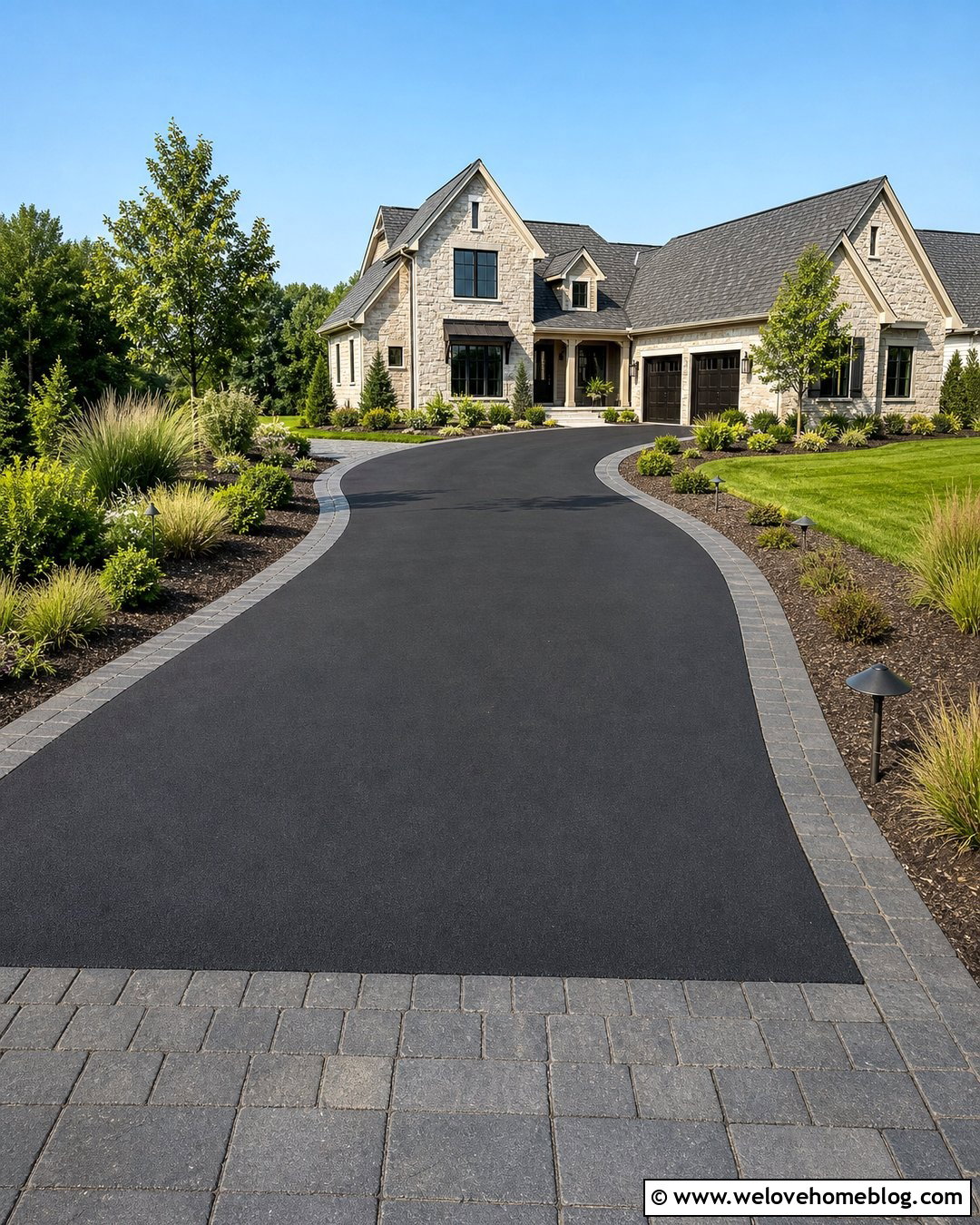
Lighting can improve the appearance and usability of a driveway when it is integrated with the full landscape. Start with black asphalt or gray poured concrete, then add a contrasting paver border along both sides. Position low shielded lights within adjacent planting beds rather than placing tall fixtures directly on the pavement edge. The border can guide the eye toward a matching paver apron and front walkway. During the day, ornamental grasses, compact shrubs, and ground cover will soften the fixtures and frame the drive. Choose a straight or gently curved layout based on the lot and house placement. This complete design provides clear definition while avoiding visual clutter. Lighting placement should support safe navigation without shining toward neighboring windows or approaching drivers.
35. Budget Driveway Refresh With Gravel Borders
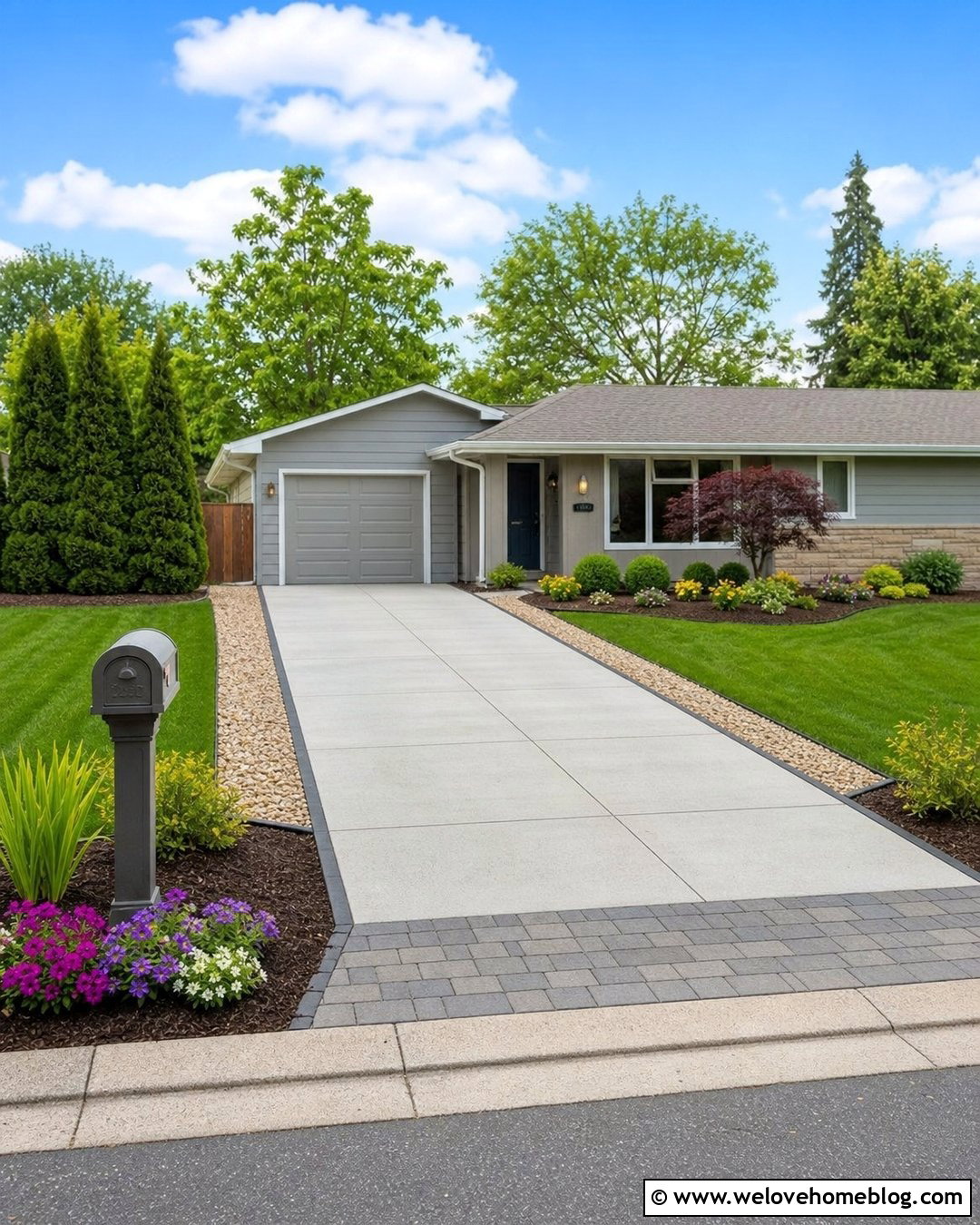
A complete driveway update does not always require replacing the main surface. Begin by cleaning existing concrete or asphalt, repairing minor damage appropriately, and sharpening the outer edges. Add narrow borders of compacted decorative gravel contained by steel, brick, or concrete edging. At the entrance, install a small paver apron or matching bands to create a stronger first impression. Refresh nearby beds with mulch, a limited selection of hardy shrubs, and low seasonal flowers. A coordinated mailbox or address marker can anchor one side without blocking visibility. Keep the layout simple so each improvement looks connected. This budget-friendly approach works best when the driveway remains structurally serviceable but needs better definition, cleaner transitions, and landscaping that relates it to the house.
Conclusion:
The most successful driveway is not chosen by surface material alone. Its shape, borders, drainage, landscaping, walkway connections, and relationship to the house all influence the finished result. Begin by considering how many vehicles use the space, how guests reach the front door, and how water moves across the property. Then select a material and color that complement the home’s architecture and fit your maintenance expectations. Defined edging and well-placed planting can make even a simple asphalt, gravel, or concrete surface feel intentional. Use these 35 home driveway ideas as starting points, then adapt the dimensions, plants, and construction details to your climate, lot, local requirements, and realistic project budget.

Related posts:


Leave a Reply