
Country driveways feel most welcoming when the surface, shape, borders, and planting work as one complete landscape. The best 20 country driveway landscaping ideas combine practical vehicle access with relaxed rural character. Gravel remains a natural fit, but brick, cobblestone, concrete, asphalt, and permeable materials can also complement farmhouse and cottage architecture. Current country driveway inspiration often features curved approaches, stone edging, wooden gates, native flowers, mature trees, and planted circular islands. () Good planning matters too. Drainage, snow removal, visibility, mature plant size, and ongoing maintenance should influence every choice. Whether you have a short suburban entrance or a long rural lane, the following complete designs offer practical and attractive 20 country driveway landscaping ideas.

1. Curved Country Gravel Driveway With Wildflower Borders
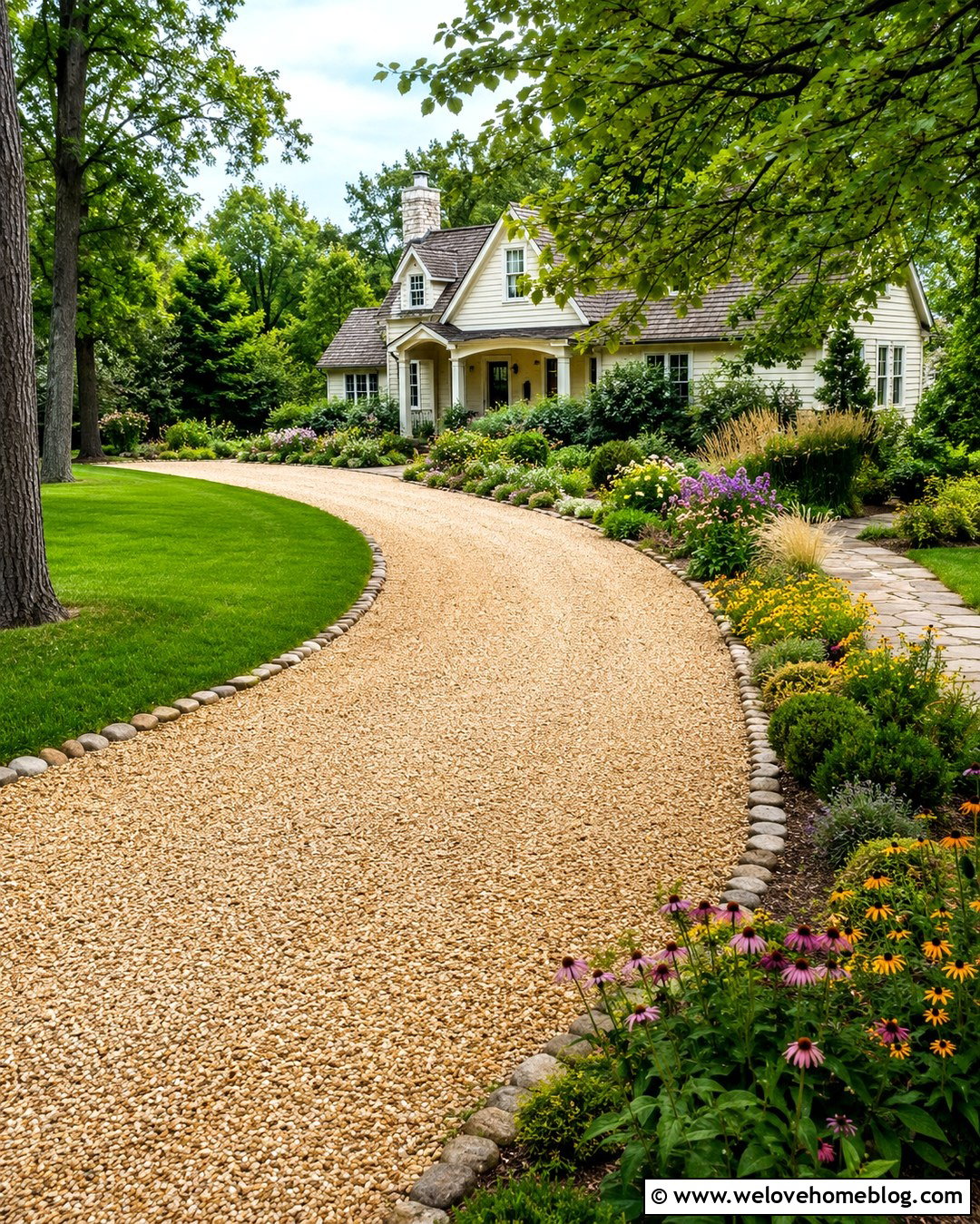
A softly curved gravel driveway creates an unhurried approach that suits a country cottage or farmhouse. Use warm buff crushed gravel over a properly compacted base, then contain it with weathered fieldstone edging. Wide planting beds can follow the curves without making the driving lane feel narrow. Fill them with native wildflowers, ornamental grasses, coneflowers, black-eyed Susans, and compact shrubs suited to your climate. Keep taller plants farther from the road entrance so drivers can see approaching traffic. Near the house, transition into cleaner foundation beds with evergreen structure and a simple stone walkway. The combination feels natural rather than overdesigned. It also provides changing color from spring through fall while preserving the open, meadow-like quality associated with country landscaping.
2. Straight Country Gravel Driveway With Split-Rail Fencing
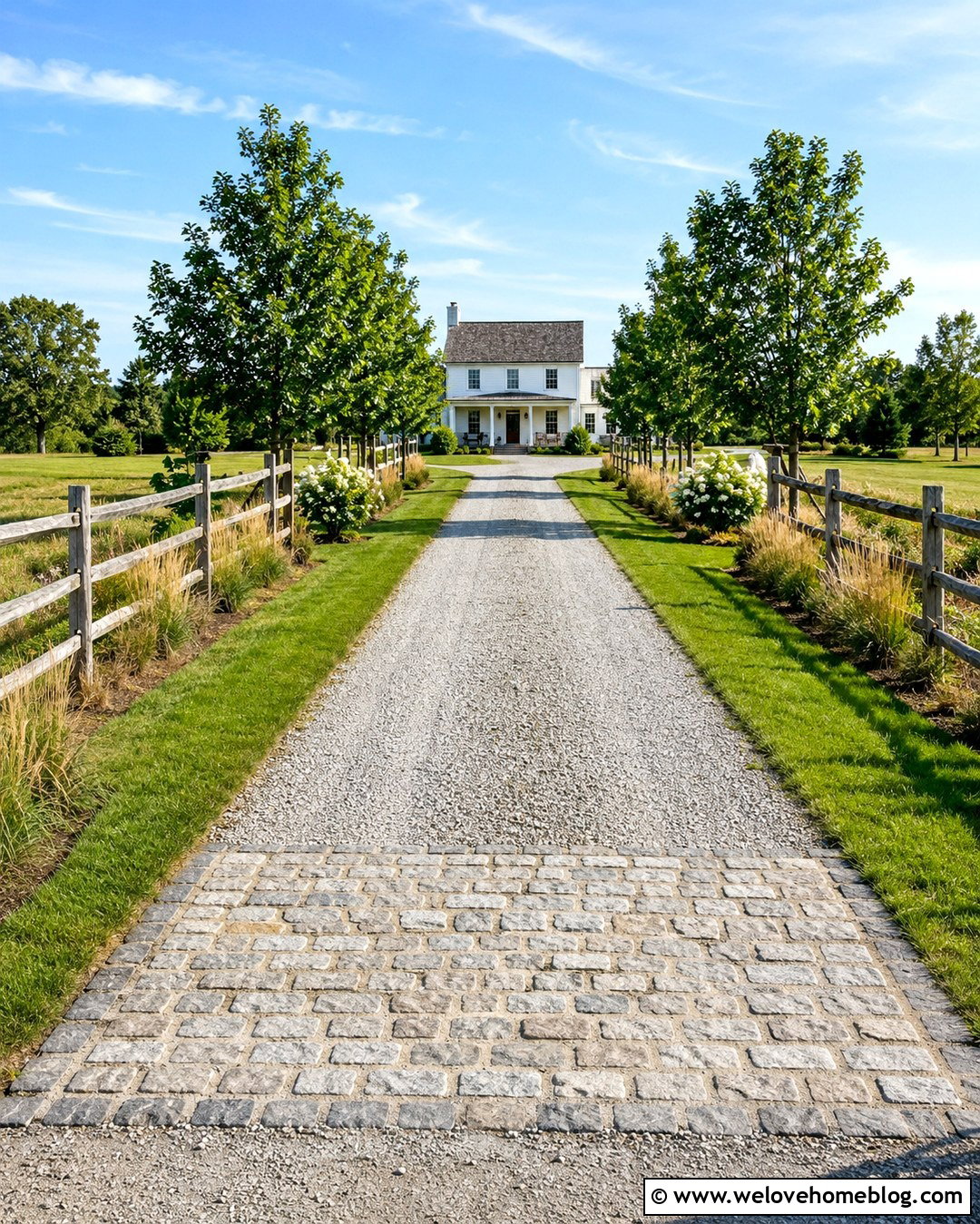
Nothing frames a long rural approach quite like split-rail fencing. Pair the fence with a straight gray crushed-stone driveway leading toward a traditional white farmhouse. Rather than planting a continuous formal border, arrange loose groups of native grasses, flowering shrubs, and small deciduous trees outside the fence. This keeps the driveway open for trailers, delivery vehicles, or farm equipment. A brick or cobblestone apron at the road can reduce gravel migration and create a more finished entrance. Leave mown grass strips between the driveway and fence for easy maintenance and better visibility. Repeating a few plants, such as panicle hydrangeas or upright junipers, will give the landscape rhythm. The completed look remains practical, spacious, and unmistakably country without becoming visually cluttered.
3. Circular Country Driveway With a Center Oak Tree
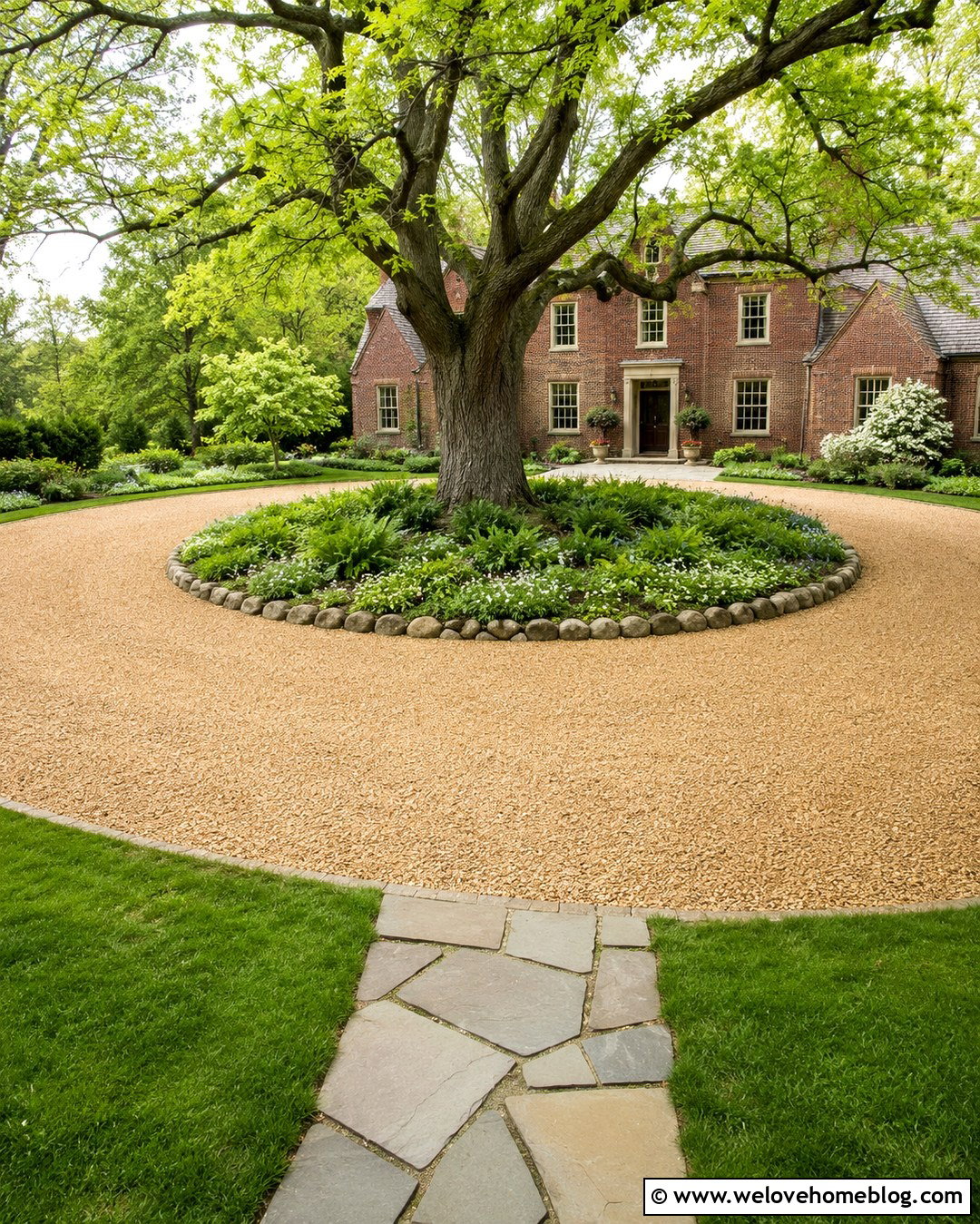
A circular pea gravel driveway becomes a memorable country feature when it wraps around one established shade tree. A mature oak is ideal where space permits, but the tree should have enough undisturbed soil for healthy roots. Create a broad central island edged with low fieldstone rather than piling soil or mulch against the trunk. Underplant the outer area with shade-tolerant ground cover, spring bulbs, ferns, and low ornamental grasses. Keep plants short around driveway intersections to maintain clear sightlines. Warm tan pea gravel complements red brick, painted clapboard, and natural stone houses. Add a separate flagstone walkway from the circular drive to the porch so guests have an obvious route. This layout offers easy turning while preserving the relaxed appearance of a country property.
4. Country Crushed-Stone Driveway With Hydrangea Beds
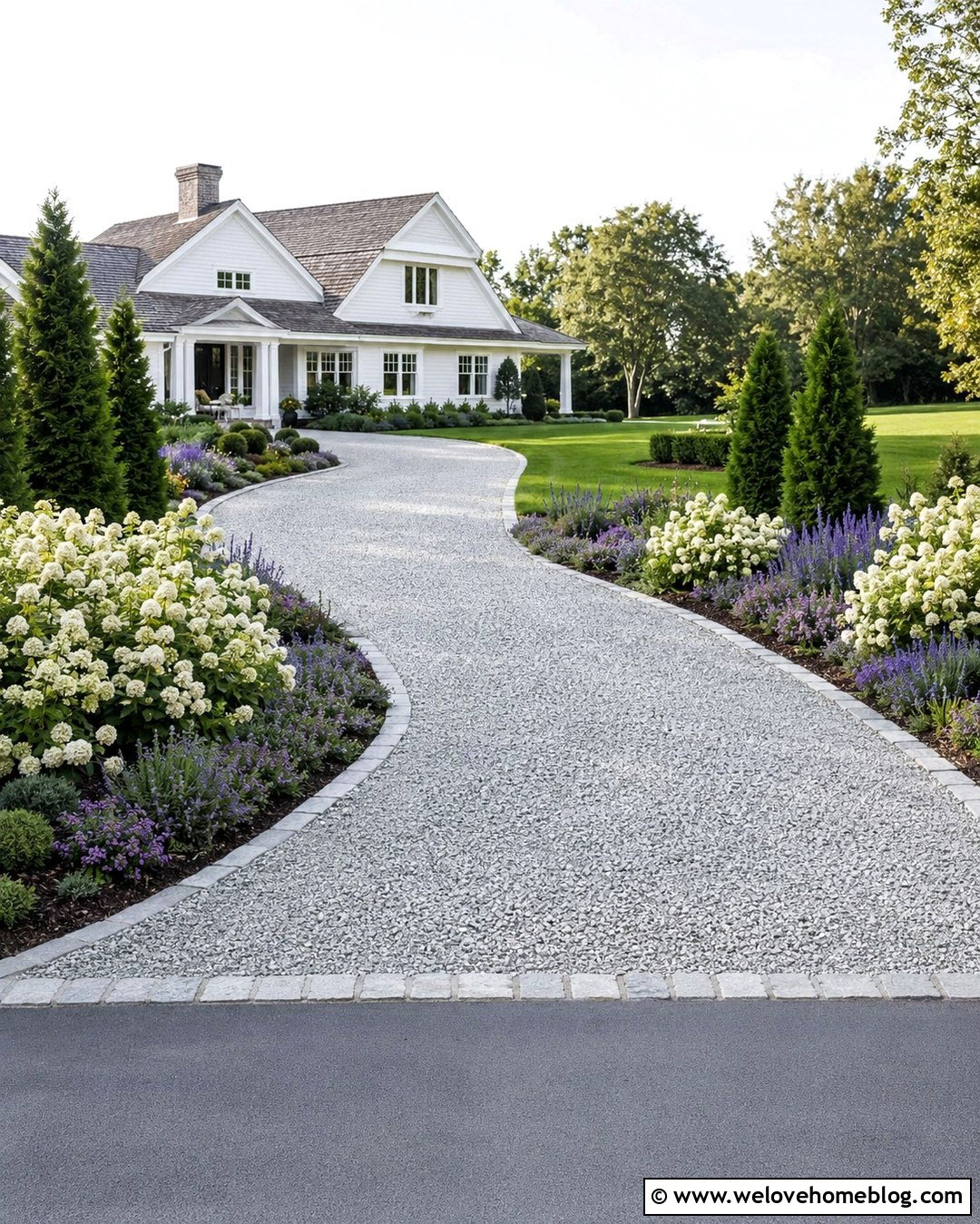
Large hydrangea beds can soften a broad driveway without hiding its edges. Start with a pale gray crushed-stone surface in a gently sweeping layout, then install flush granite or steel edging to keep gravel out of the soil. Plant panicle hydrangeas in generous groups because they tolerate more sun than many bigleaf varieties. Space them according to their mature width, leaving room for airflow and snow storage. Low catmint, salvia, or creeping thyme can fill the front of each bed, while upright evergreens provide winter structure near the house. A mown lawn strip along the opposite side keeps the composition from feeling too heavy. This complete design works especially well beside a white farmhouse, where green foliage and creamy flowers create clean, traditional country curb appeal.
5. Country Brick Driveway With Boxwood Borders
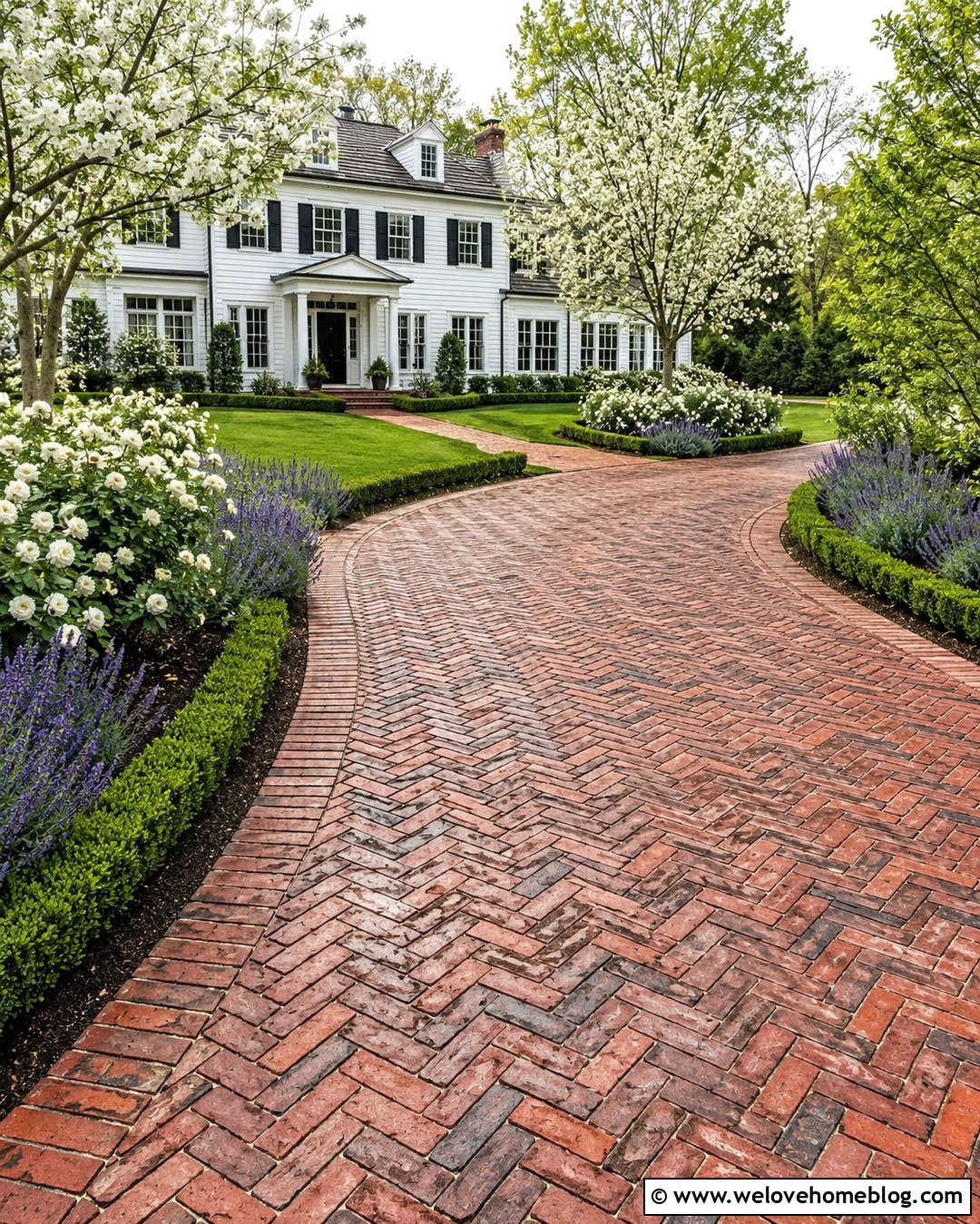
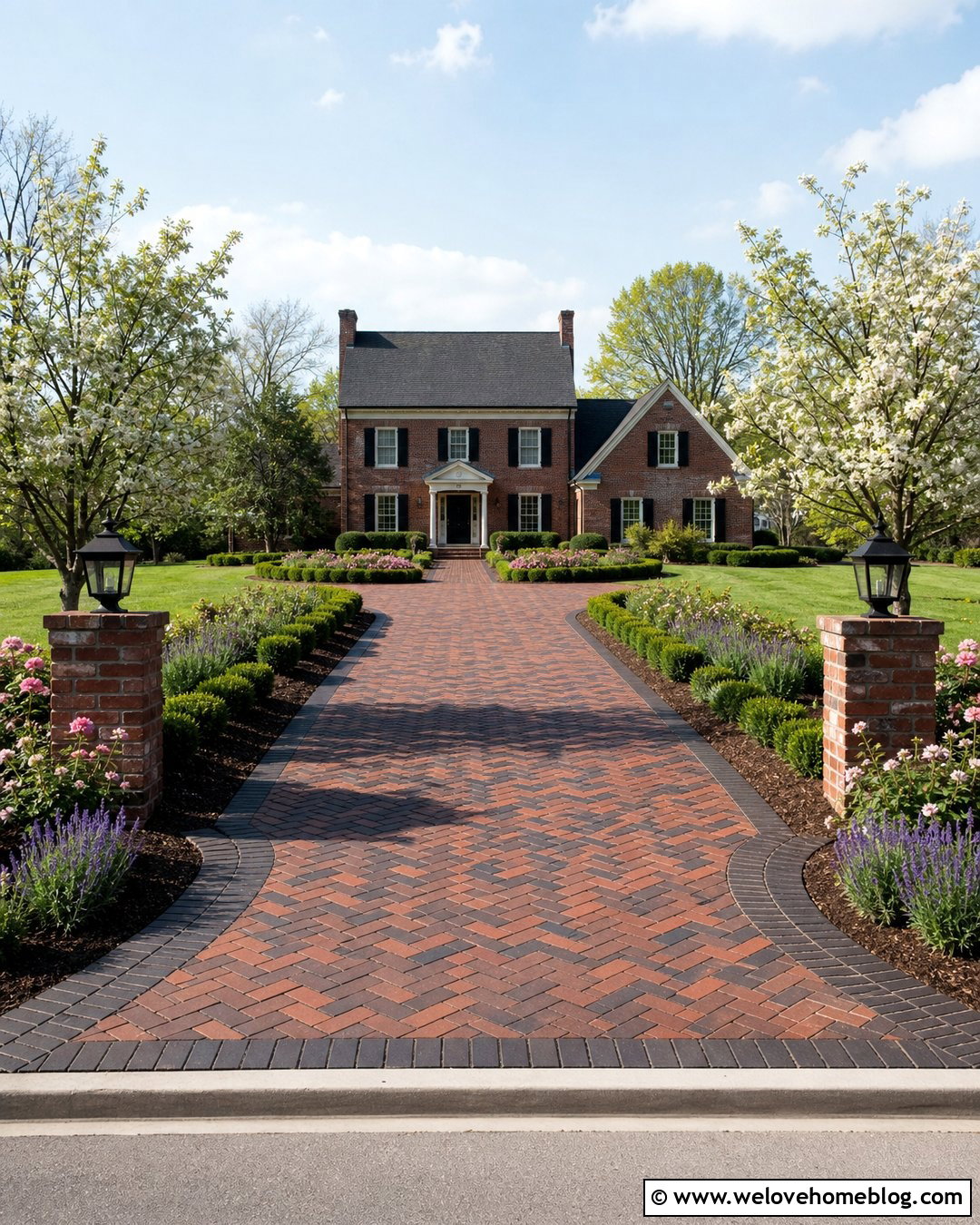
For a more formal country home, clay brick pavers provide warmth and historic character. Lay weathered red and brown bricks in a herringbone pattern, using a contrasting soldier-course border to reinforce the edges. Low boxwood hedges can trace the driveway near the house, but they should stop well before the street to protect visibility. Behind the hedge, layer white roses, lavender, salvia, and small flowering trees for a softer garden effect. Include generous openings where a walkway crosses the border, and use brick from the driveway to continue that path toward the front porch. Good drainage and a stable base help prevent uneven settlement. The finished landscape has country charm with greater structure, making it particularly suitable for Colonial, Georgian, and traditional brick farmhouses.
6. Country Asphalt Driveway With Fieldstone Edging
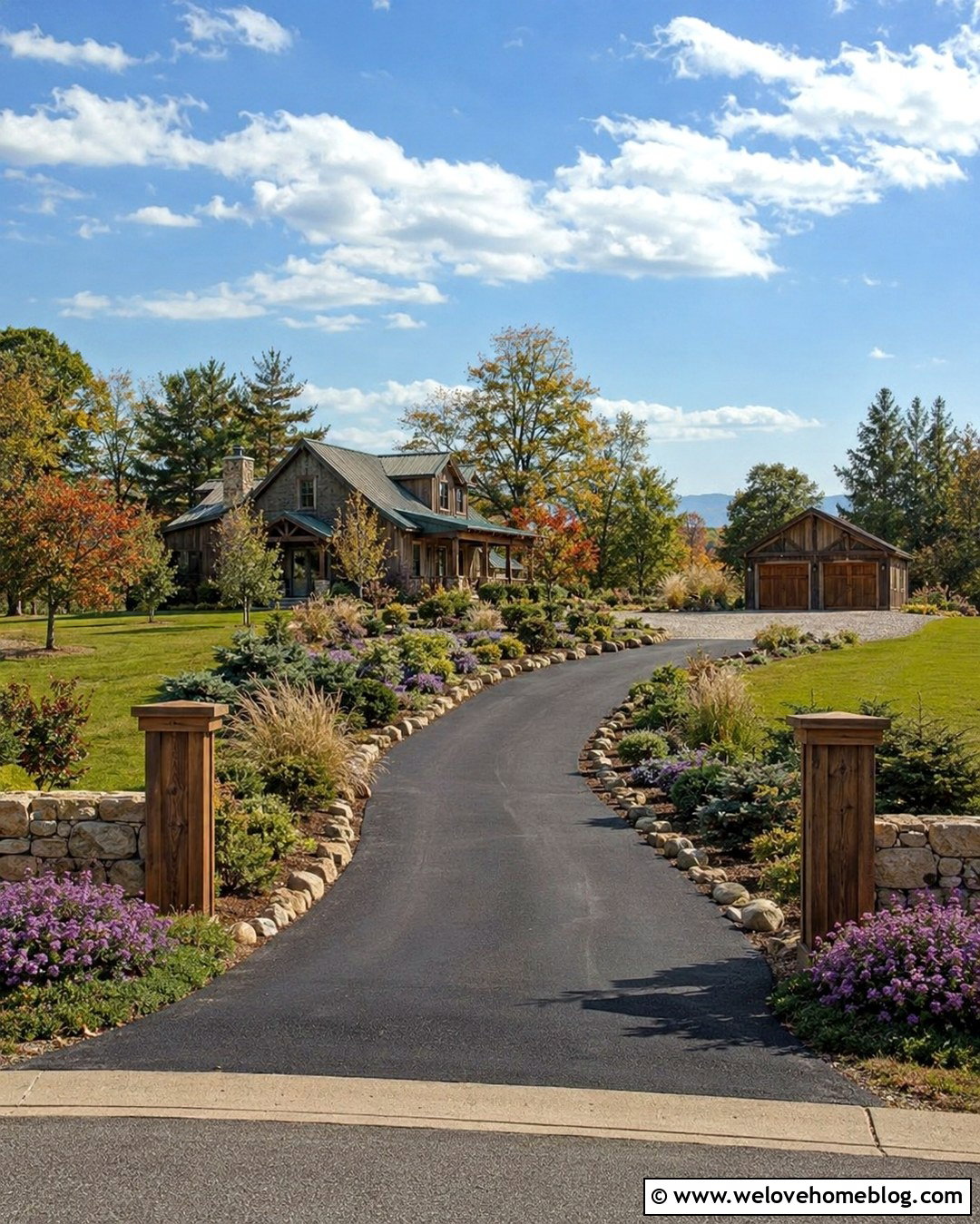
Black asphalt can look surprisingly natural when its strong edges are softened with regional stone and loose planting. Choose a gently curved driveway rather than a wide, rigid rectangle. Add a fieldstone border set close to the pavement surface so tires and snowplows are less likely to catch it. Beyond the stones, plant sweeping groups of ornamental grasses, compact viburnums, native asters, and low spreading junipers. Their relaxed shapes reduce the visual contrast between dark asphalt and green lawn. A gravel turnaround near a barn or detached garage can further break up the paved area. At the road, introduce simple timber posts or low stone markers rather than an oversized gate. This combination provides a durable driving surface while maintaining the approachable, unpolished quality of a rural landscape.
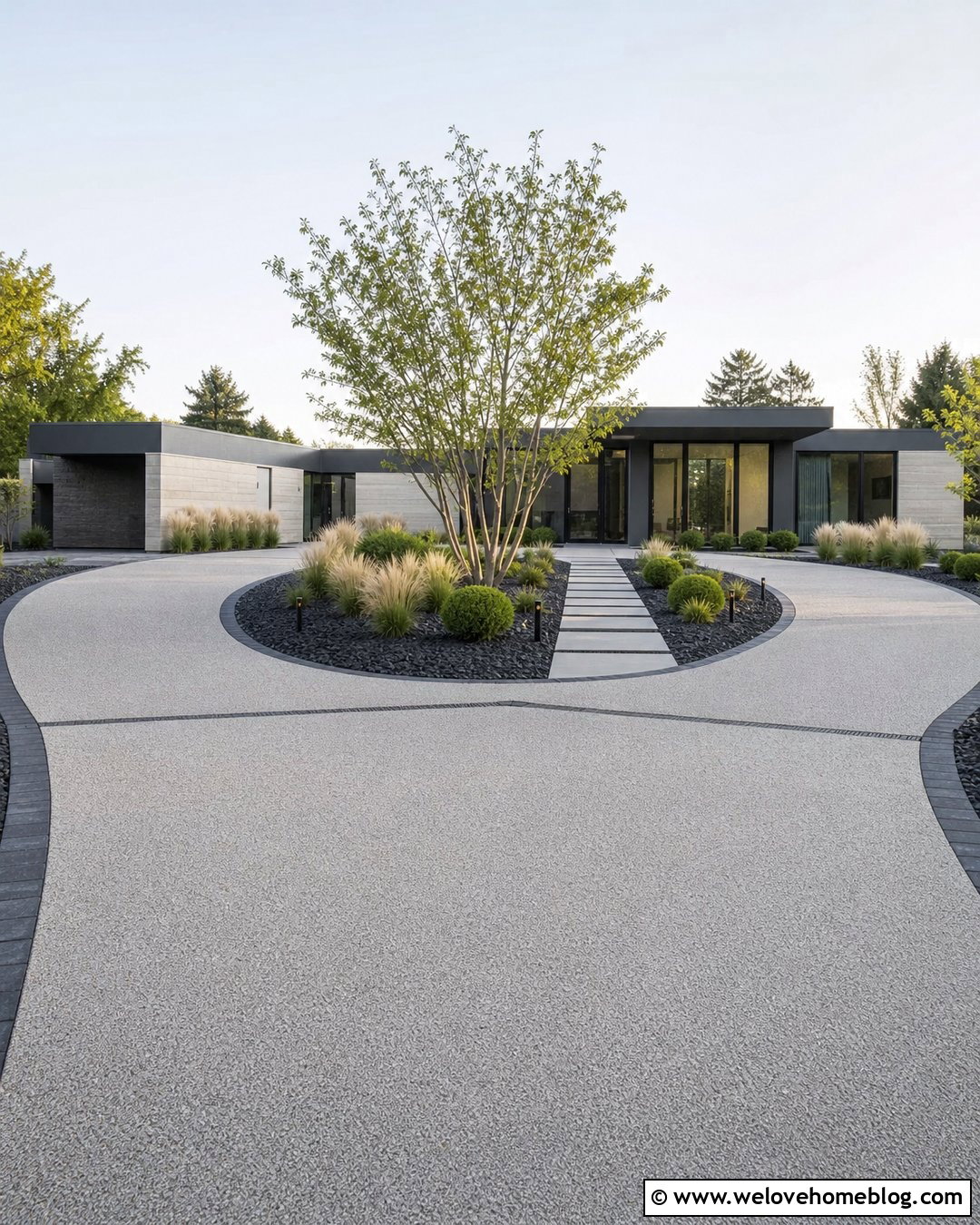
7. Country Exposed-Aggregate Driveway With Prairie Planting
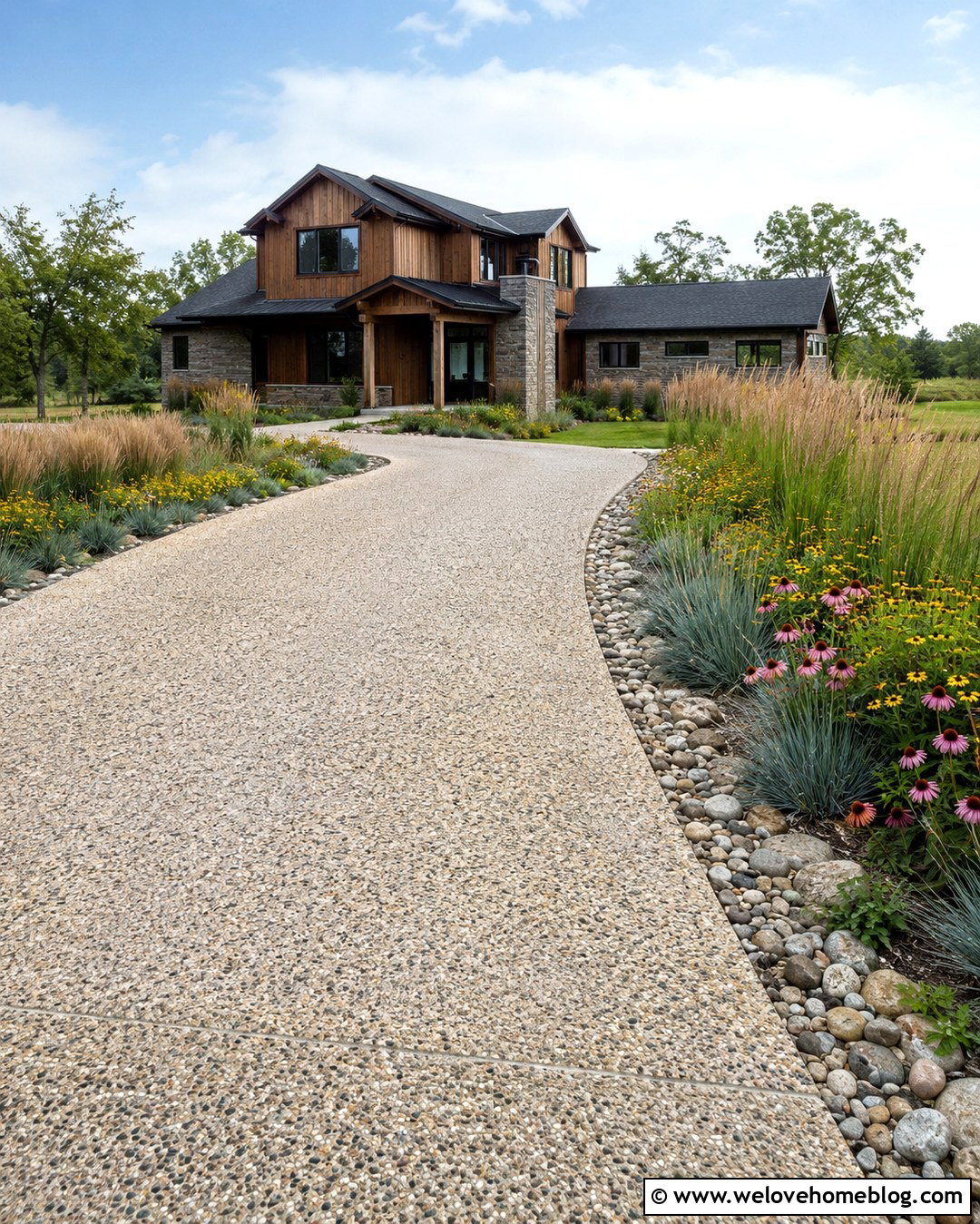
Exposed-aggregate concrete offers a textured country appearance with less loose material underfoot. Select an aggregate blend containing tan, brown, and soft gray stone to connect the driveway with the surrounding landscape. A wide curved layout works well beside a ranch house or contemporary farmhouse. Instead of traditional foundation beds, use drifts of switchgrass, little bluestem, coneflowers, coreopsis, and other climate-appropriate prairie plants. Separate the planting from the driveway with a narrow band of river rock or flush metal edging. This makes cleanup easier and gives grasses room to arch without covering the driving surface. Use lower varieties near curves and entrances. The finished driveway feels modern yet rooted in the countryside, especially when paired with timber siding, local stone, and an open lawn.
8. Country Cobblestone Driveway With Cottage Garden Borders
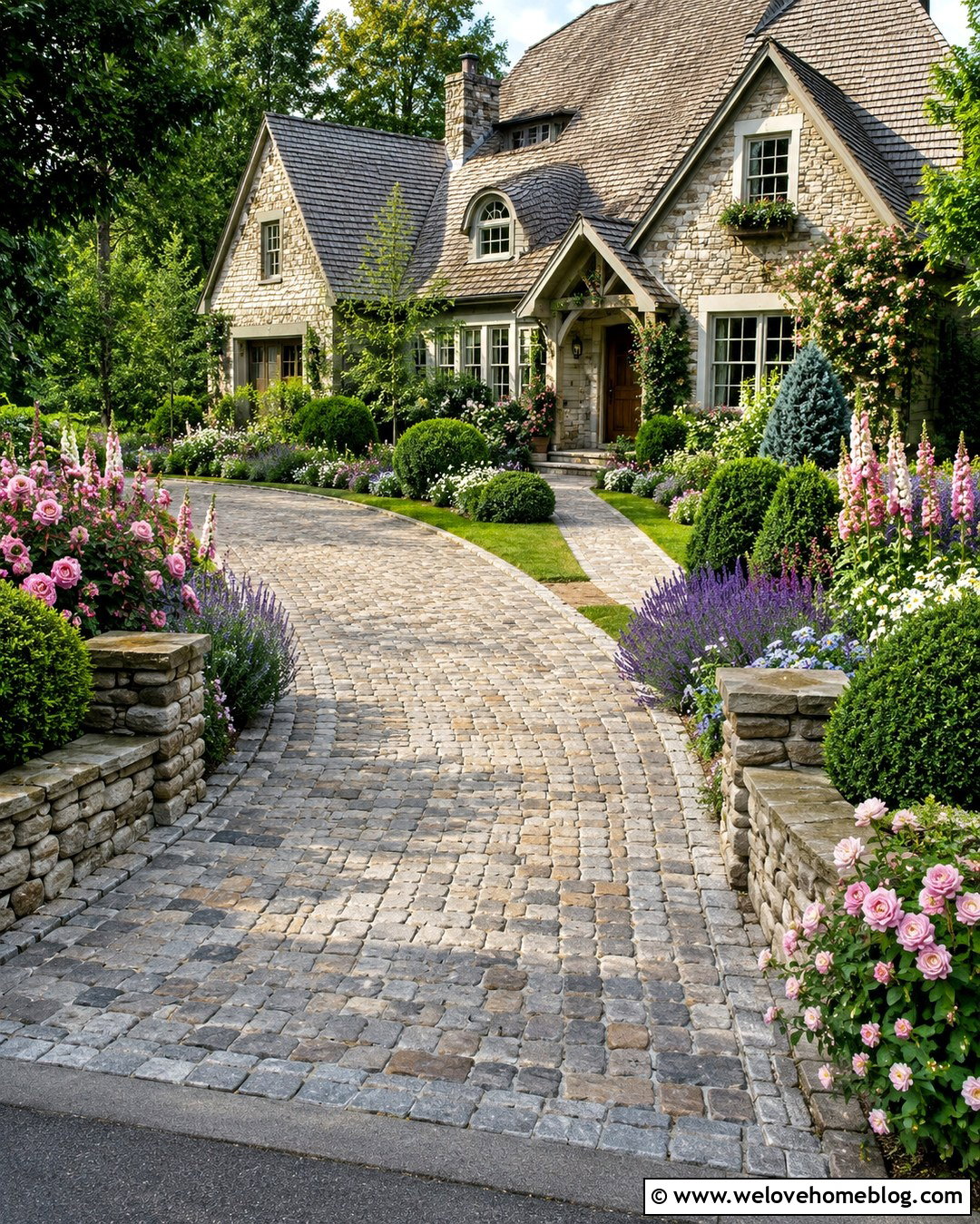
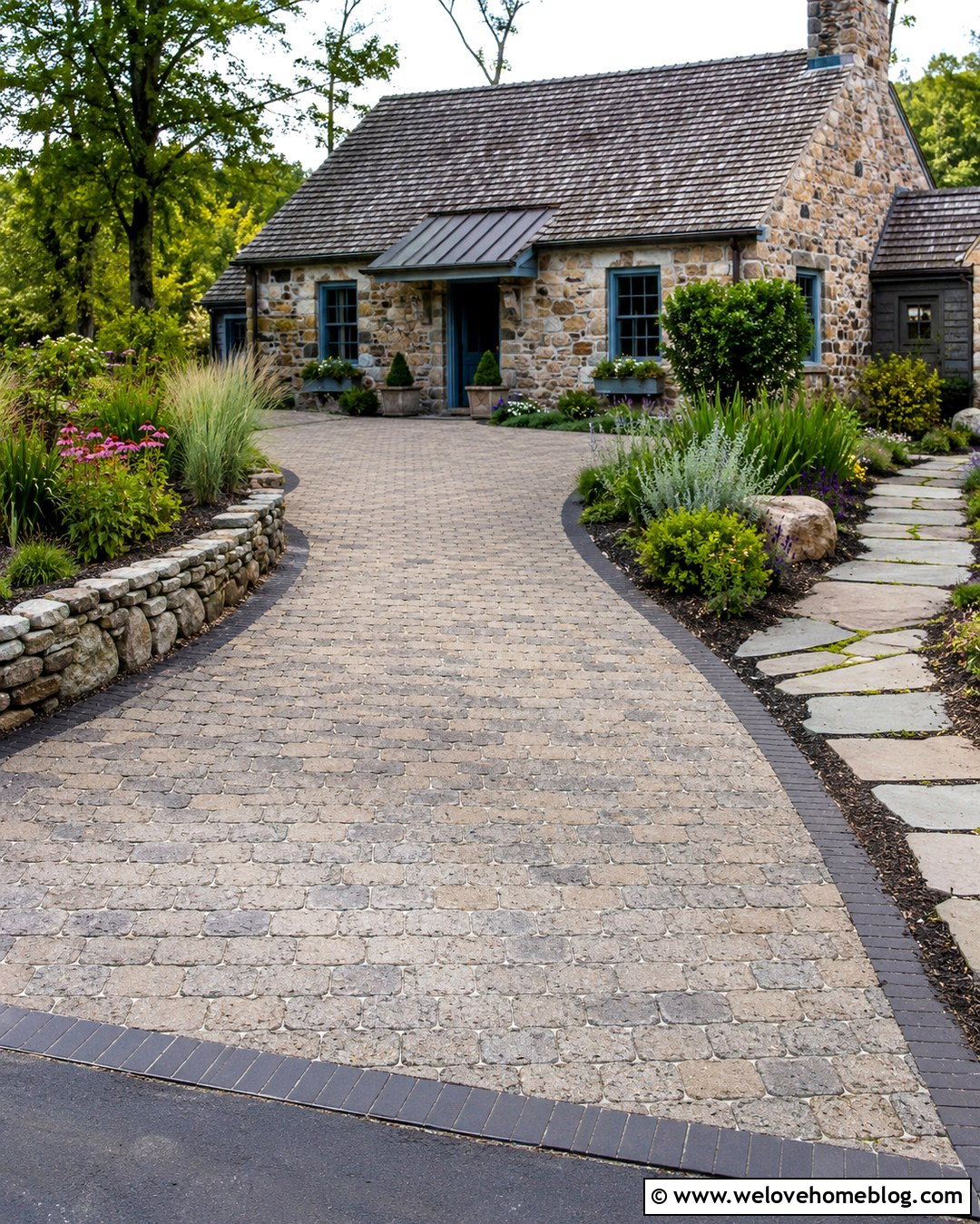
An aged cobblestone driveway can make a modest cottage feel as though it has belonged to the landscape for generations. Use rounded or reclaimed-looking gray and brown cobbles in a gently curved path, keeping the pattern simple and the joints consistent. Deep beds on both sides can hold roses, foxgloves, daisies, catmint, lavender, and clipped evergreen shrubs. Avoid placing delicate flowers where tires, runoff, or winter salt could damage them. A low stone wall behind one bed adds definition and creates a backdrop for overflowing plants. Near the porch, connect the driveway to a matching cobblestone or flagstone walkway. The balance of durable masonry and informal planting creates the essential cottage-country look: structured enough to function well, but relaxed enough to feel personal and established.
9. Country Concrete Ribbon Driveway With a Grass Center
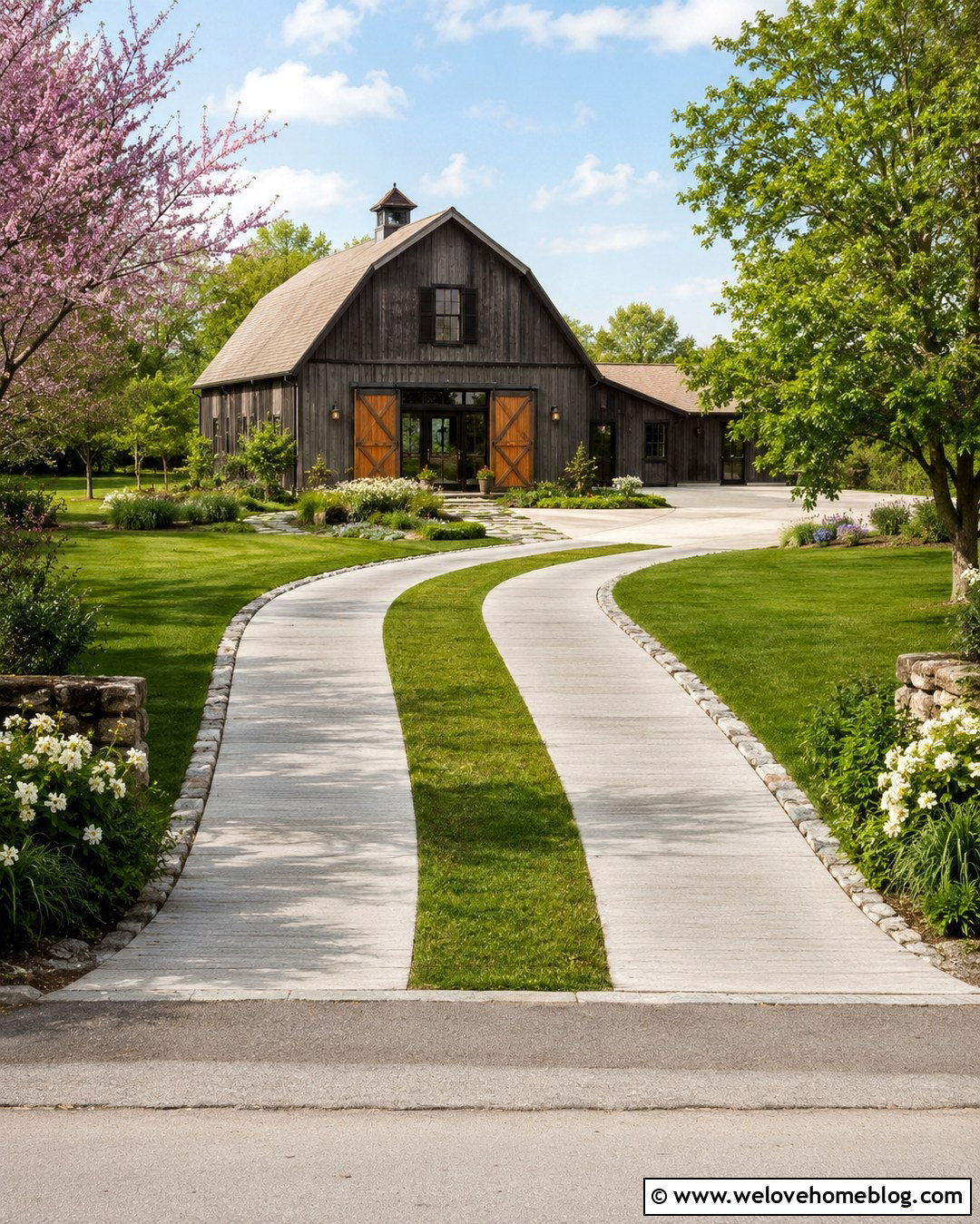
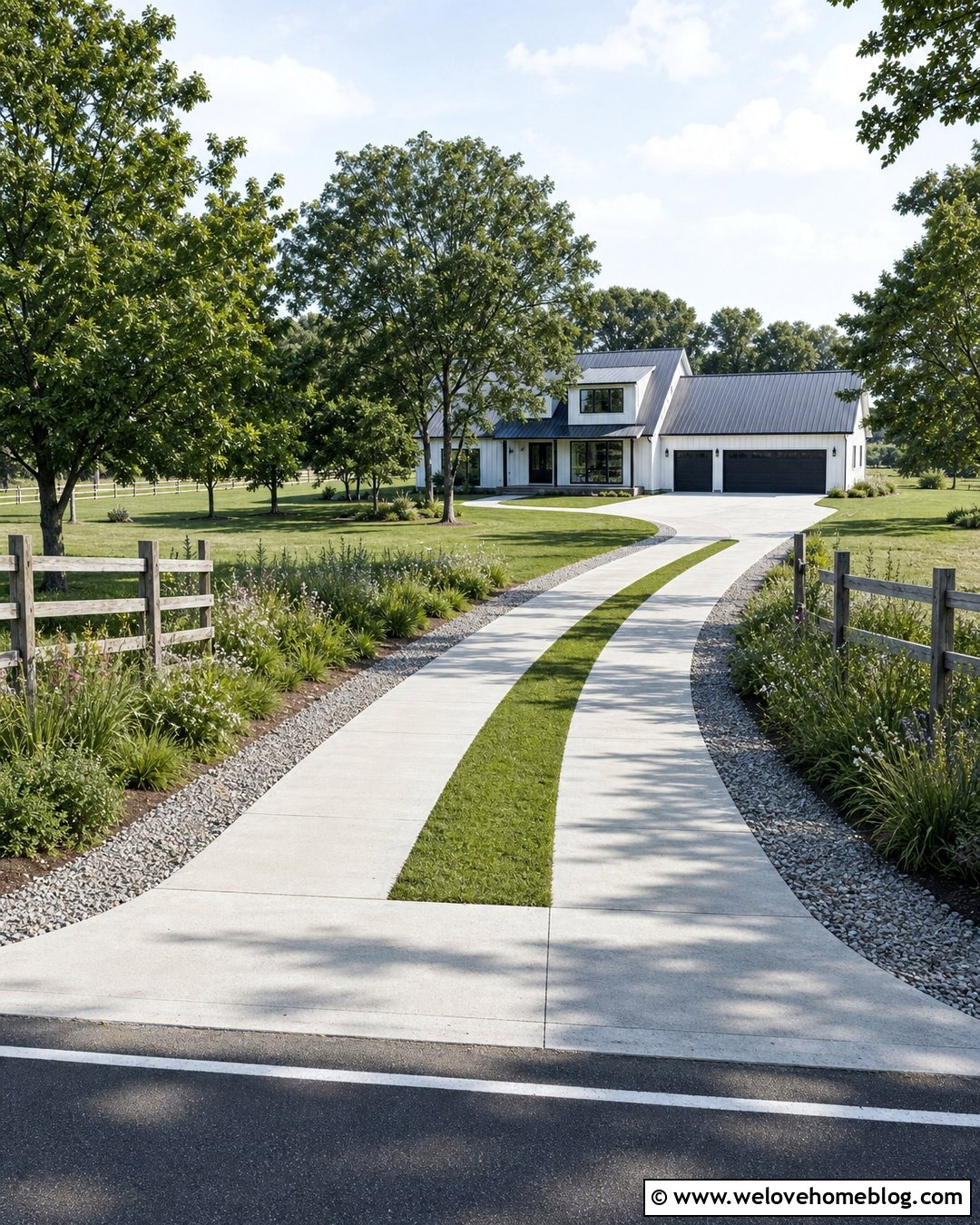
Two poured-concrete tire tracks with grass between them create a simple driveway that blends into a spacious country lawn. This layout is best for a straight or lightly curved private drive with predictable vehicle use. Use lightly broom-finished concrete ribbons wide enough for tires, and reinforce their edges with compacted soil or narrow stone bands. The center strip can contain durable turf or low-growing ground cover suited to local rainfall. Along the outside edges, repeat small flowering trees, native shrubs, and informal perennial groups rather than building continuous beds. A wider concrete parking pad near the garage provides room for turning and daily use. The grass center visually reduces the amount of hardscape, helping a ranch house, cottage, or converted barn sit more naturally within its surroundings.
10. Country Decomposed-Granite Driveway With Native Grasses
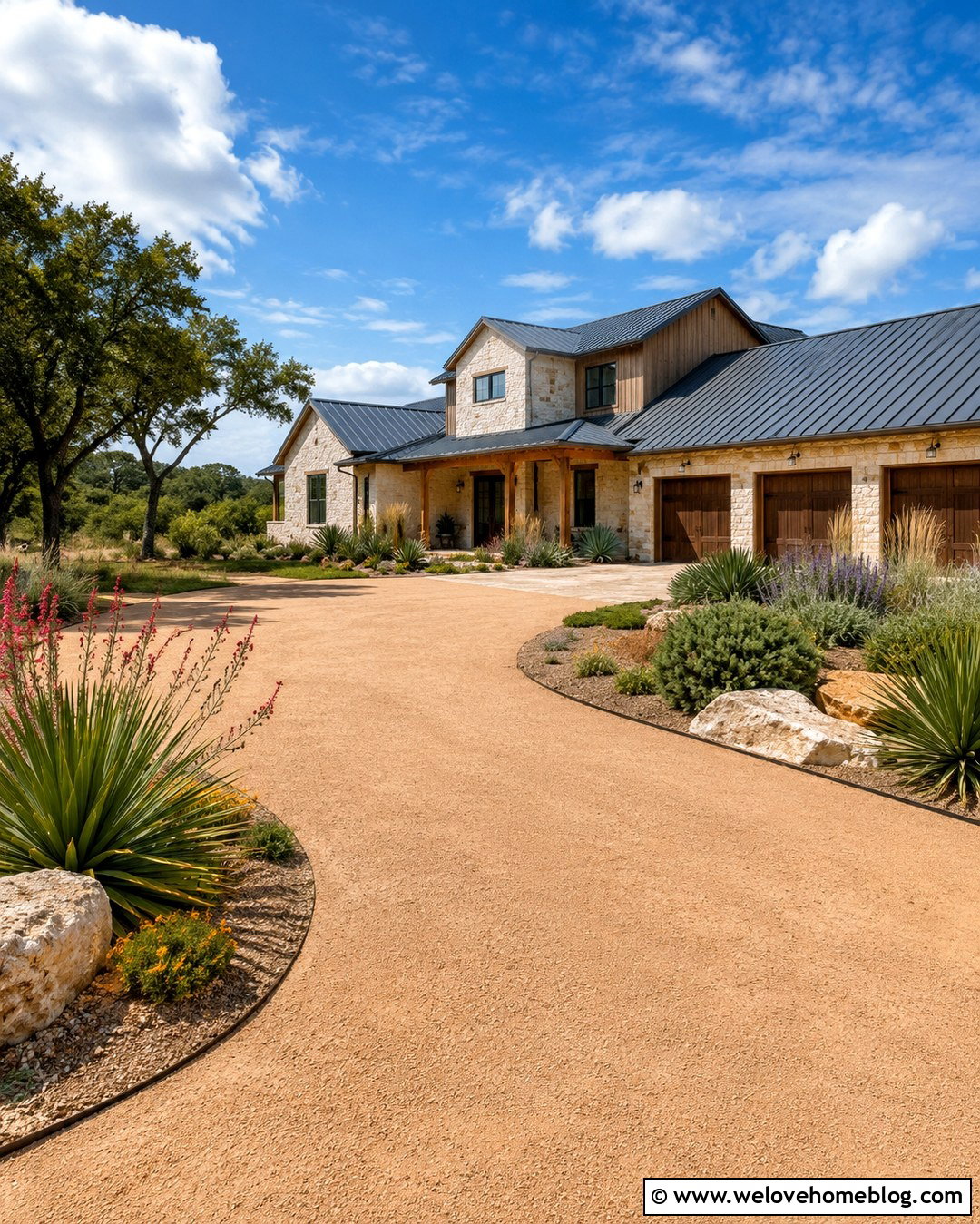
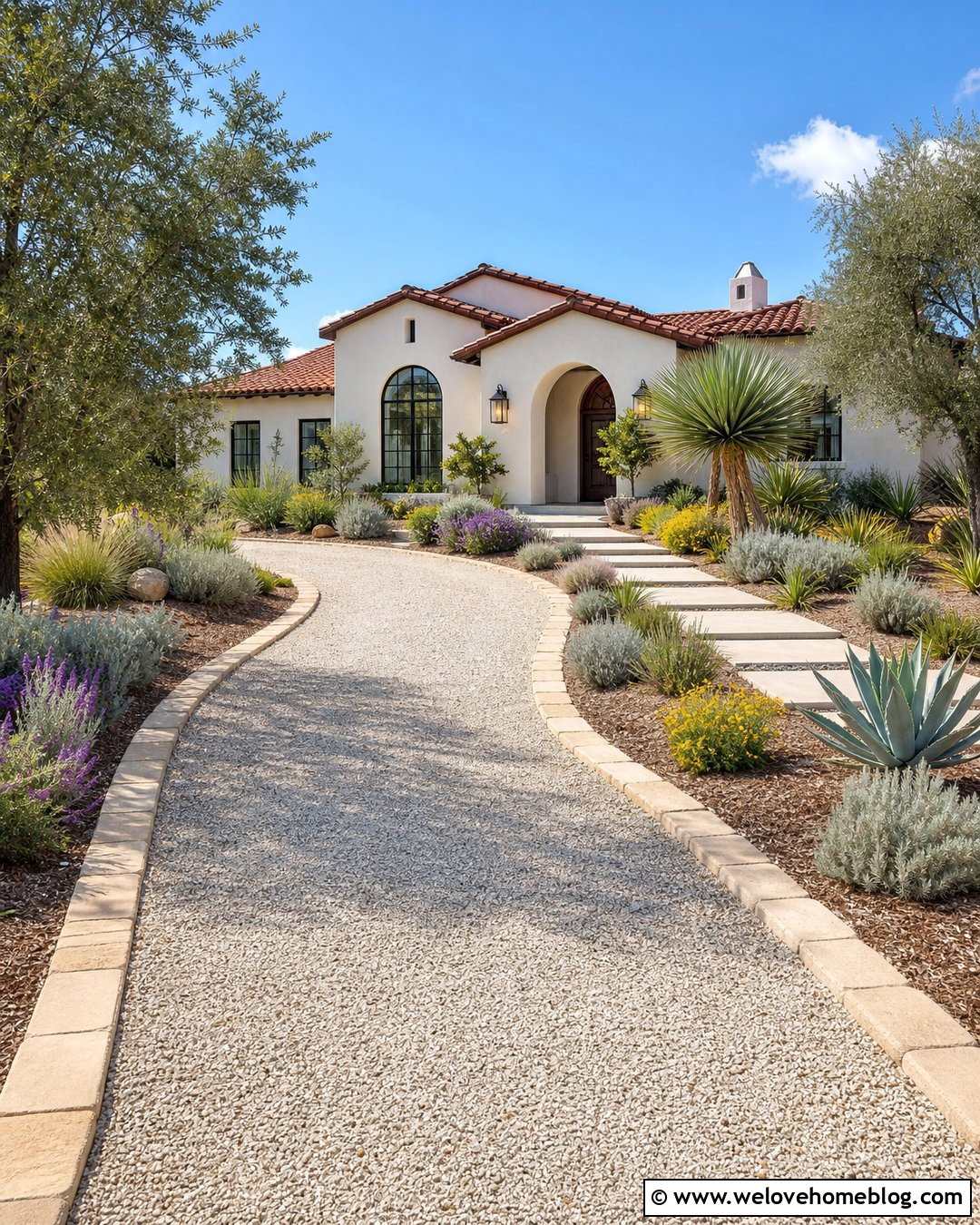
Warm-toned decomposed granite complements dry country landscapes and houses finished with stucco, timber, or limestone. Design the driveway with a broad curve and install a compacted, stabilized surface in a golden tan or muted rust color. Steel edging can hold the material neatly without drawing attention away from the landscape. On each side, arrange drought-tolerant native grasses, flowering perennials, yucca, low junipers, and weathered boulders in irregular groups. Leave open gravel pockets between plants so the beds remain airy and easy to maintain. A stone-paver apron near the garage can handle frequent turning and reduce surface displacement. This design has a rugged rural character, yet the restrained plant palette and clearly defined driveway keep it from looking unfinished or excessively wild.
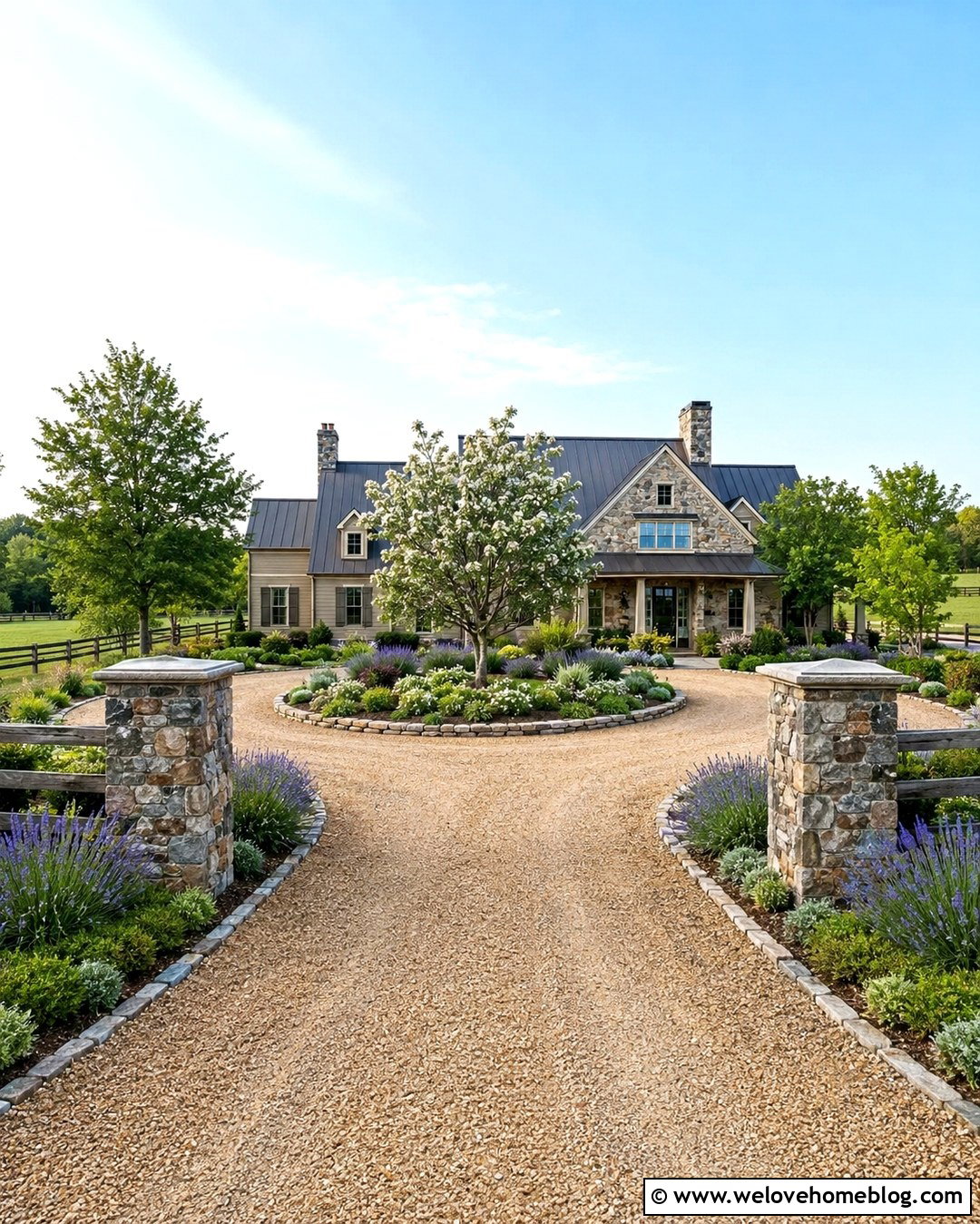
11. Country Gravel Driveway With Stone Entrance Pillars
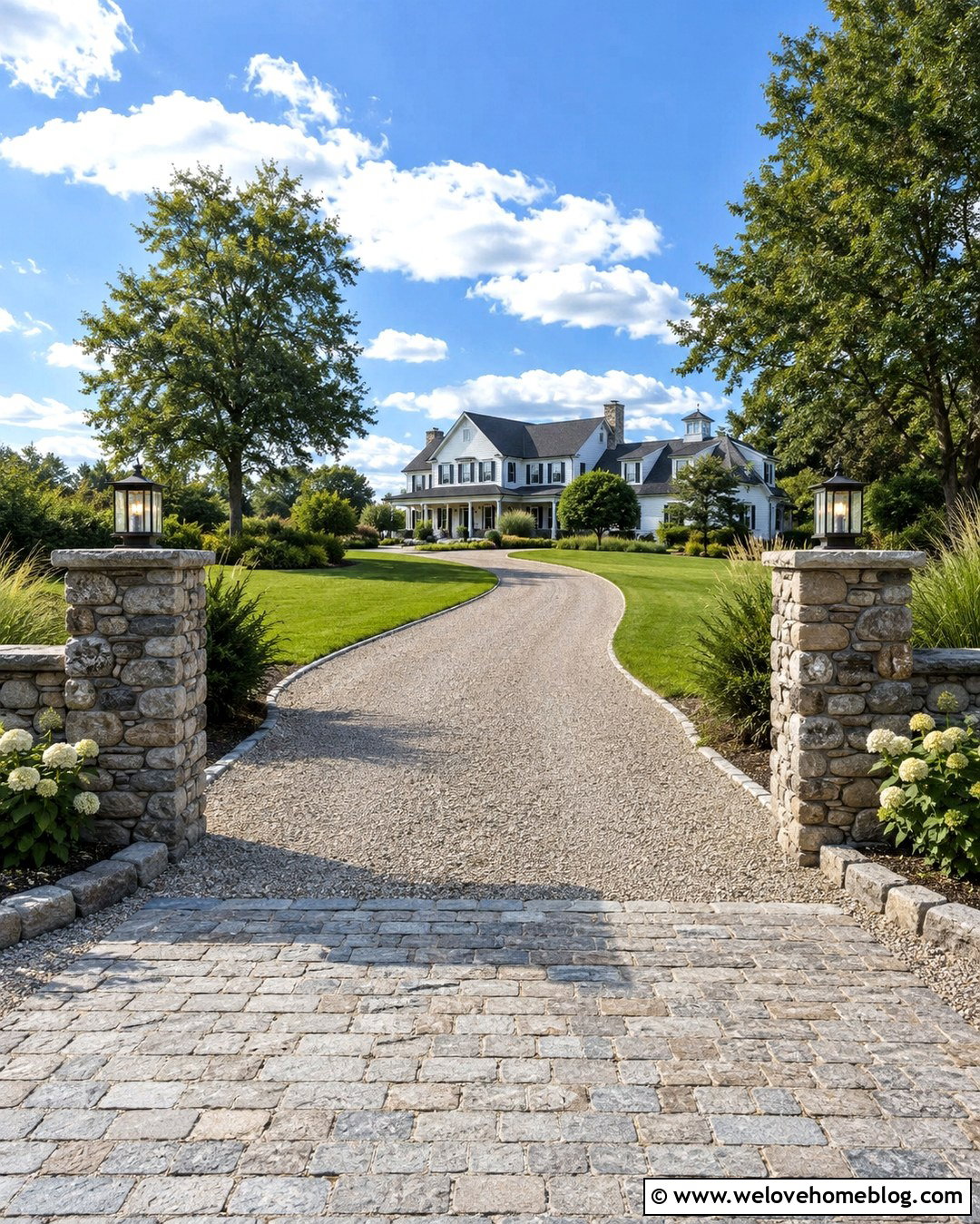
Substantial stone pillars give a country driveway a clear beginning without requiring an elaborate gate. Pair locally inspired fieldstone pillars with a warm gray gravel driveway that curves gently toward a farmhouse. Keep each pillar proportional to the entrance and position it beyond the required roadside clearance. Low lanterns or shielded fixtures can be integrated for practical illumination, while simple address numbers improve navigation. Extend short fieldstone walls from the pillars, then soften their ends with hydrangeas, ornamental grasses, evergreen shrubs, and seasonal perennials. A cobblestone apron beneath the entrance creates a stable transition from the public road to loose gravel. Repeating the pillar stone around the porch or foundation will unify the property. The result feels established, welcoming, and appropriately scaled for a country setting.
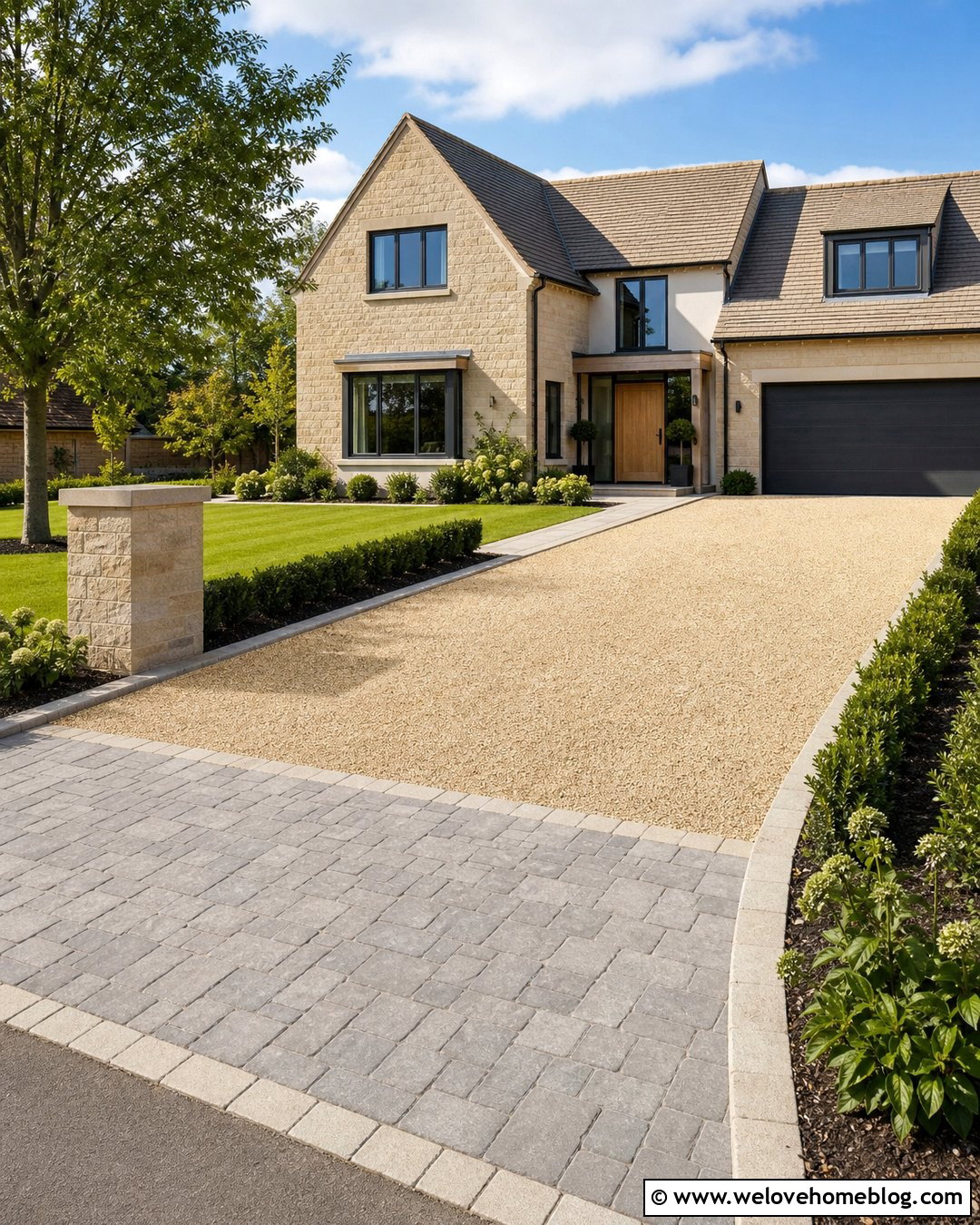
12. Country Paver Driveway With Orchard Trees
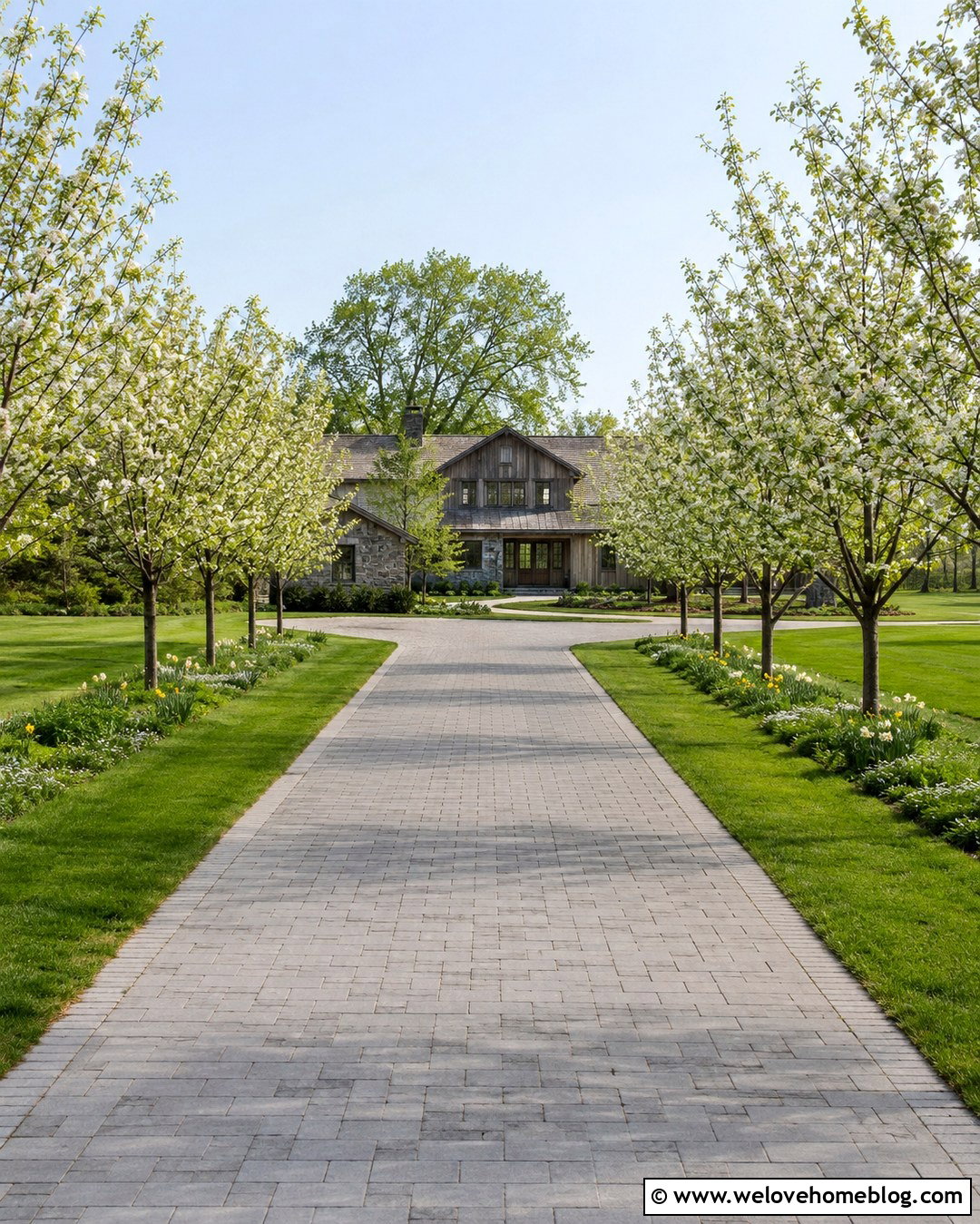
Rows of small fruit trees can turn an ordinary driveway into a productive country landscape. Use muted gray concrete pavers in a running-bond pattern for a clean surface that does not compete with the planting. A straight driveway provides orderly spacing, while broad grass strips between the pavers and trees protect roots and allow easy mowing. Choose fruit varieties suited to the region, and account for mature canopy width before planting. Beneath the trees, maintain lawn or create simple meadow strips with low flowers and spring bulbs. Avoid positioning fallen-fruit areas directly over the driveway. Near the house, widen the drive into a practical parking court edged with brick or natural stone. The finished approach has the rhythm of a small orchard while remaining comfortable for everyday traffic and property maintenance.
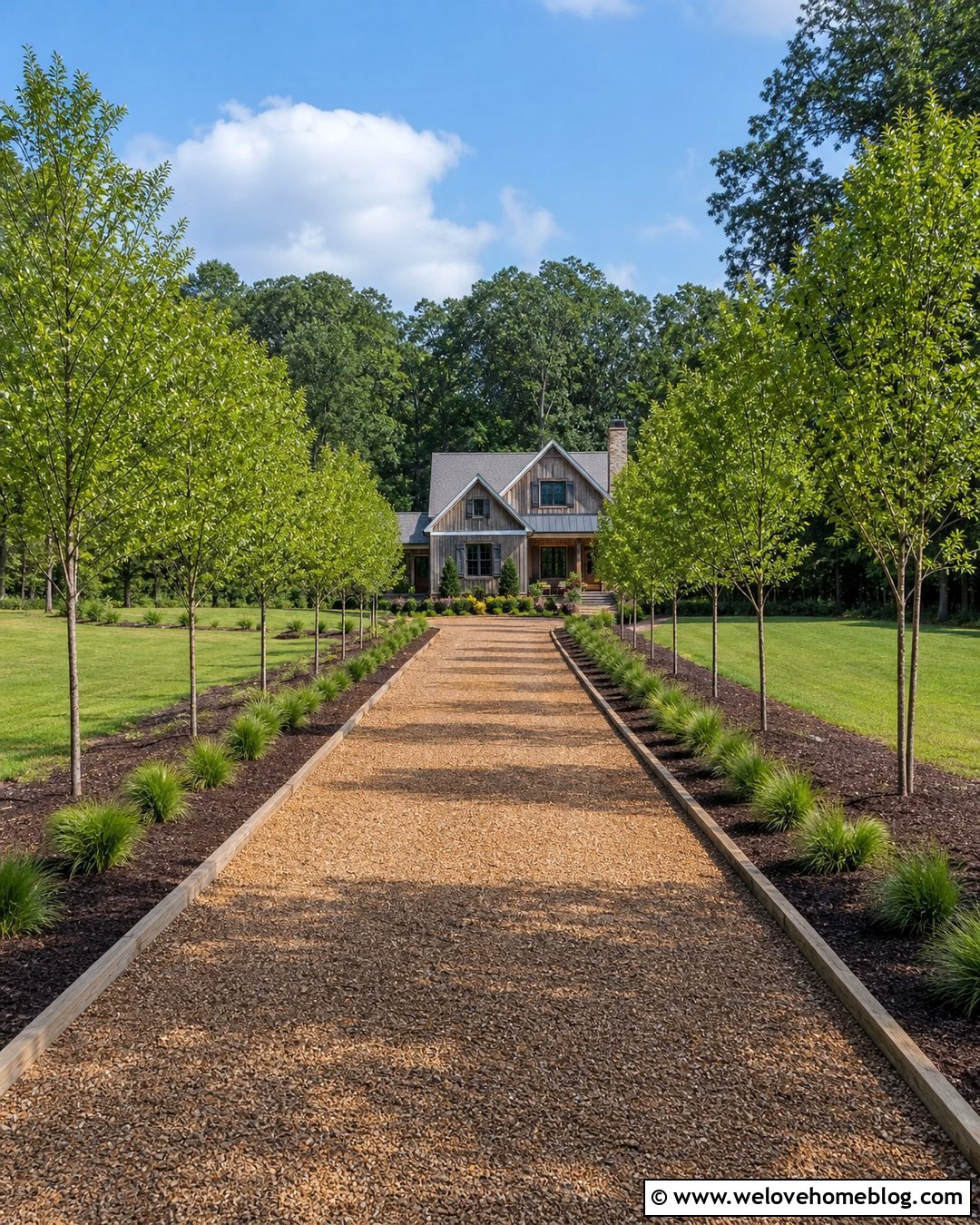
13. Long Country Gravel Driveway With Tree-Lined Landscaping
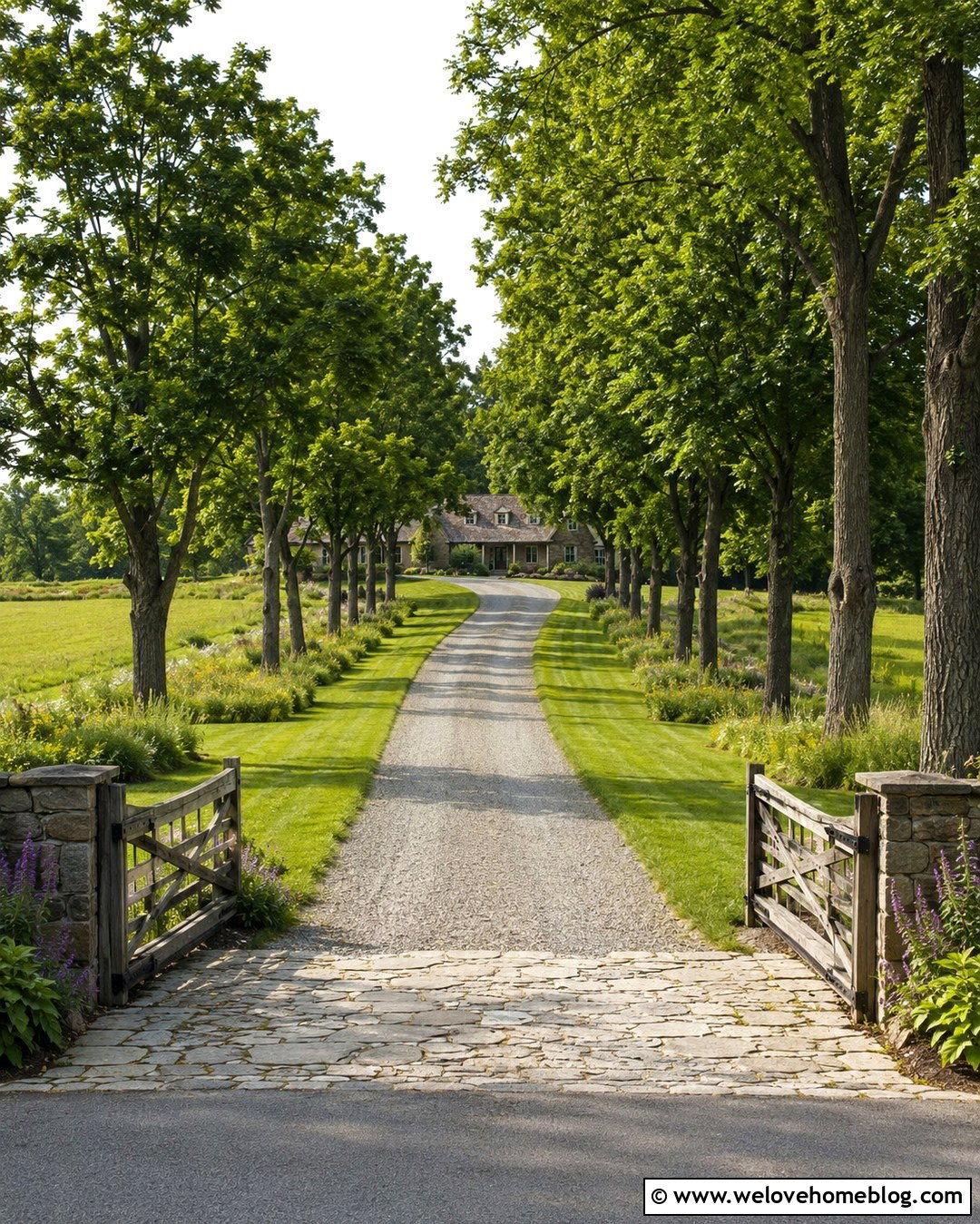
A long tree-lined driveway creates a strong sense of arrival, but thoughtful spacing keeps it from becoming cramped. Cover the gently curving drive with compacted gray gravel and edge it with narrow mown grass strips. Plant deciduous trees far enough from the surface to accommodate mature trunks, roots, and spreading branches. Depending on the region, oaks, maples, elms, or smaller flowering trees may be appropriate. Alternate them with simple meadow grass rather than filling every gap with shrubs. The open understory preserves long views and makes mowing easier. At the house, let the tree line widen into layered beds that frame the facade. A stone apron and understated timber gate can define the road entrance. This complete layout makes a distant country home feel connected, intentional, and easy to approach.
14. Horseshoe Country Driveway With a Central Garden
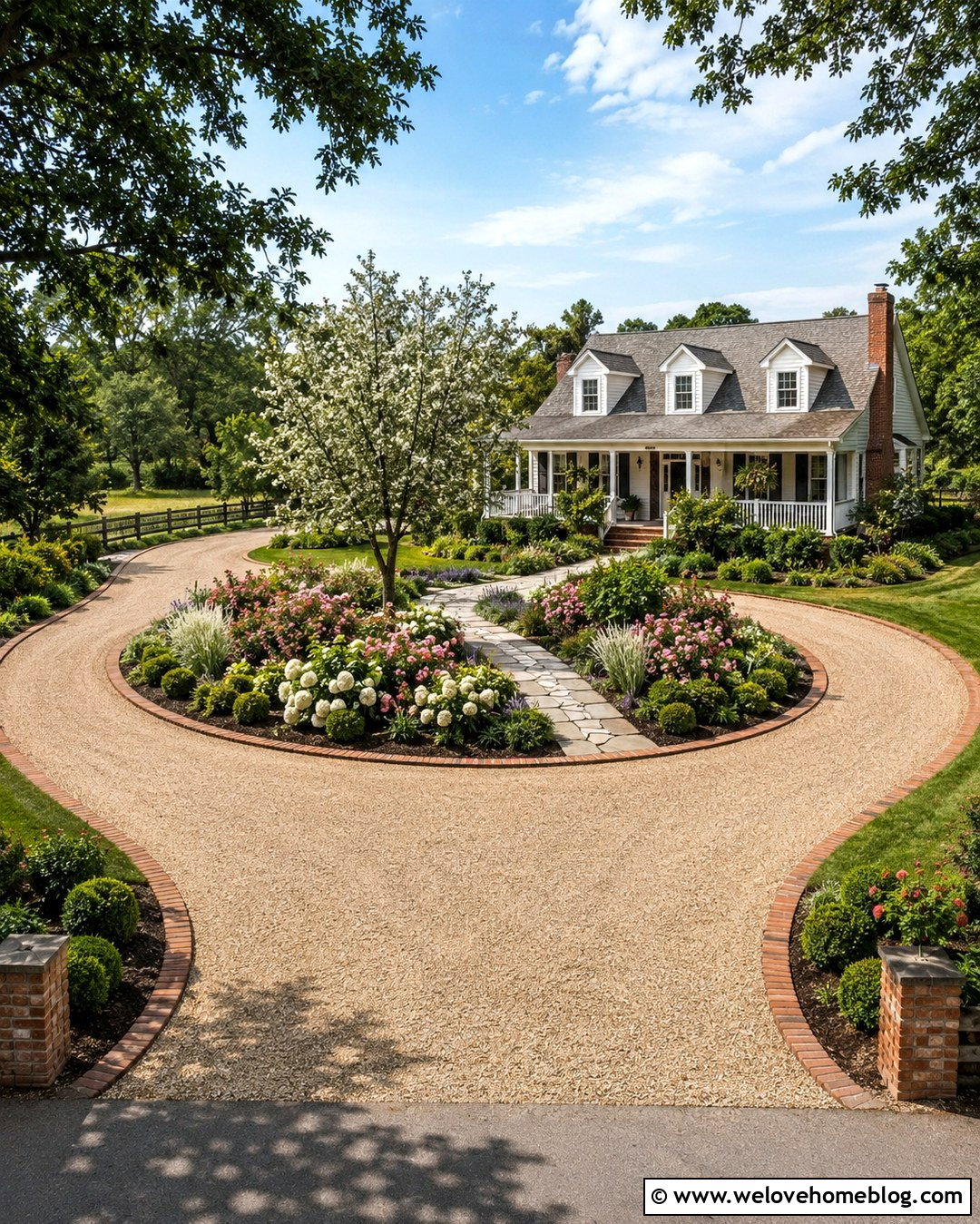
A horseshoe driveway provides two access points and eliminates difficult reversing near the house. Use beige pea gravel for the broad curved lanes, with brick edging to define the shape and contain loose stones. The central garden should be large enough to look intentional rather than like a narrow leftover strip. Anchor it with a small flowering tree, then add low hydrangeas, ornamental grasses, roses, and seasonal perennials around the perimeter. Keep plant heights low near both road entrances to protect visibility. A flagstone walkway can cross the island from the guest drop-off area to the front porch. Add discreet drainage where water naturally collects along the inner curve. This practical country layout handles visitors gracefully while turning a large front yard into an attractive, garden-centered arrival space.
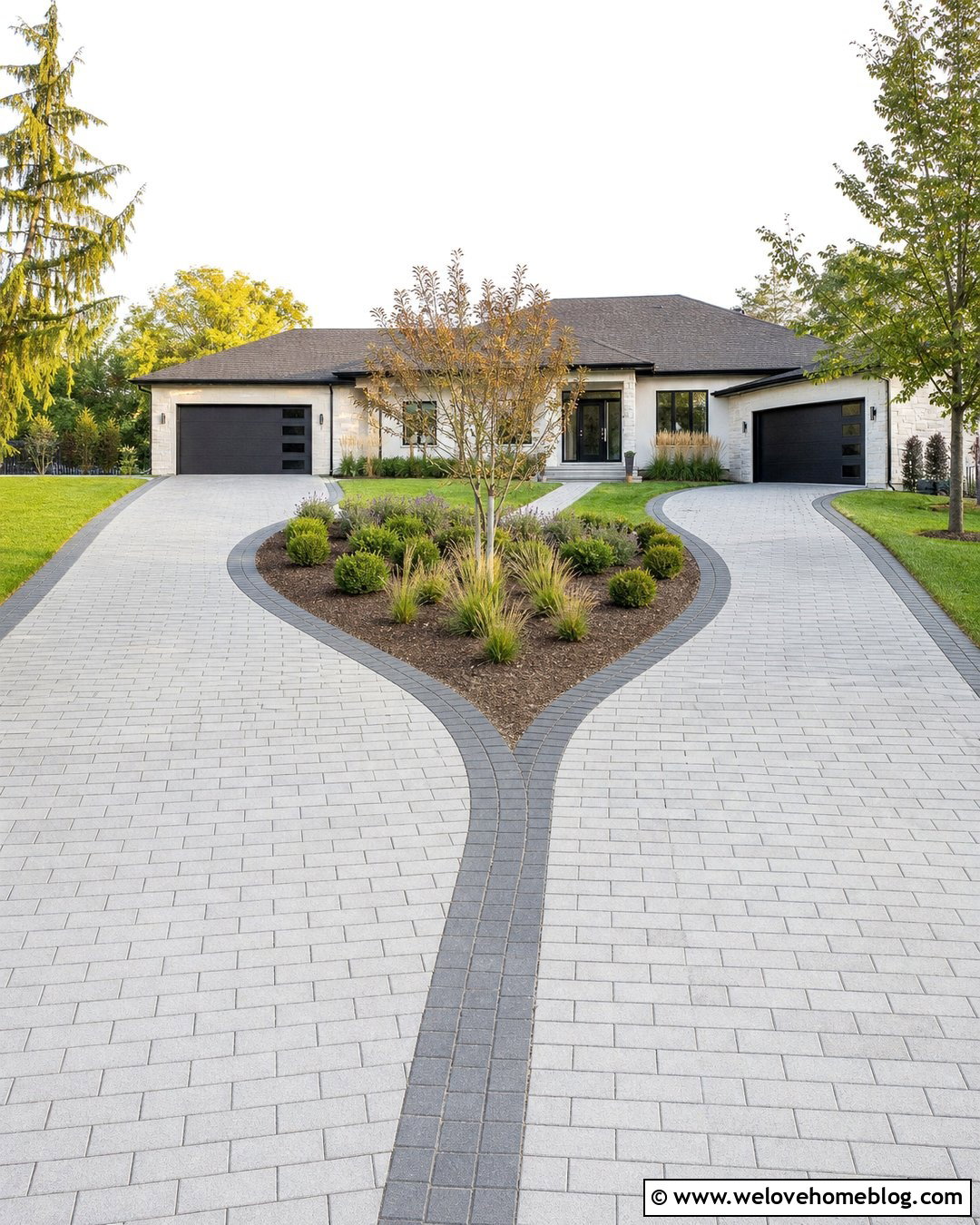
15. Sloped Country Driveway With Stone Retaining Walls
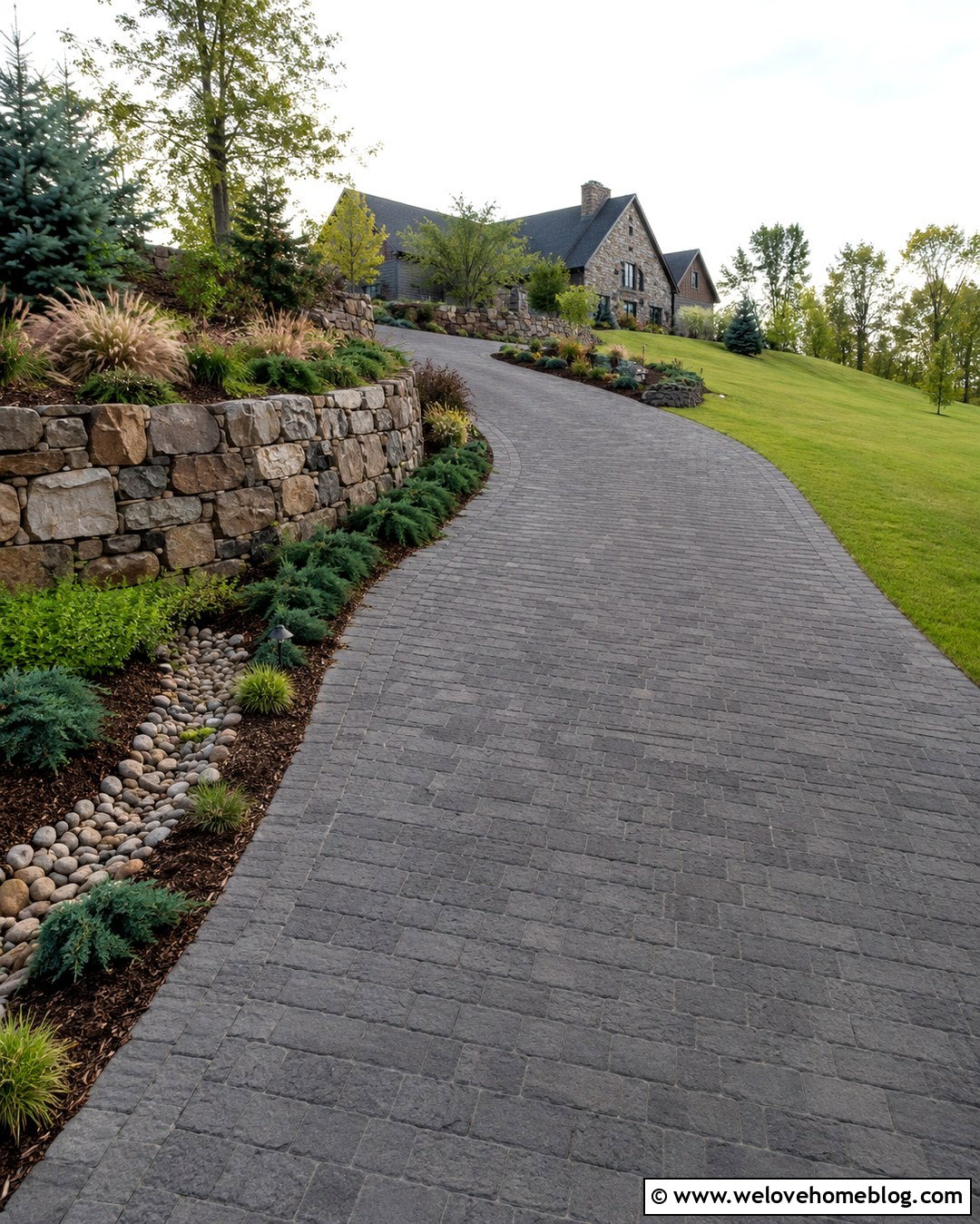
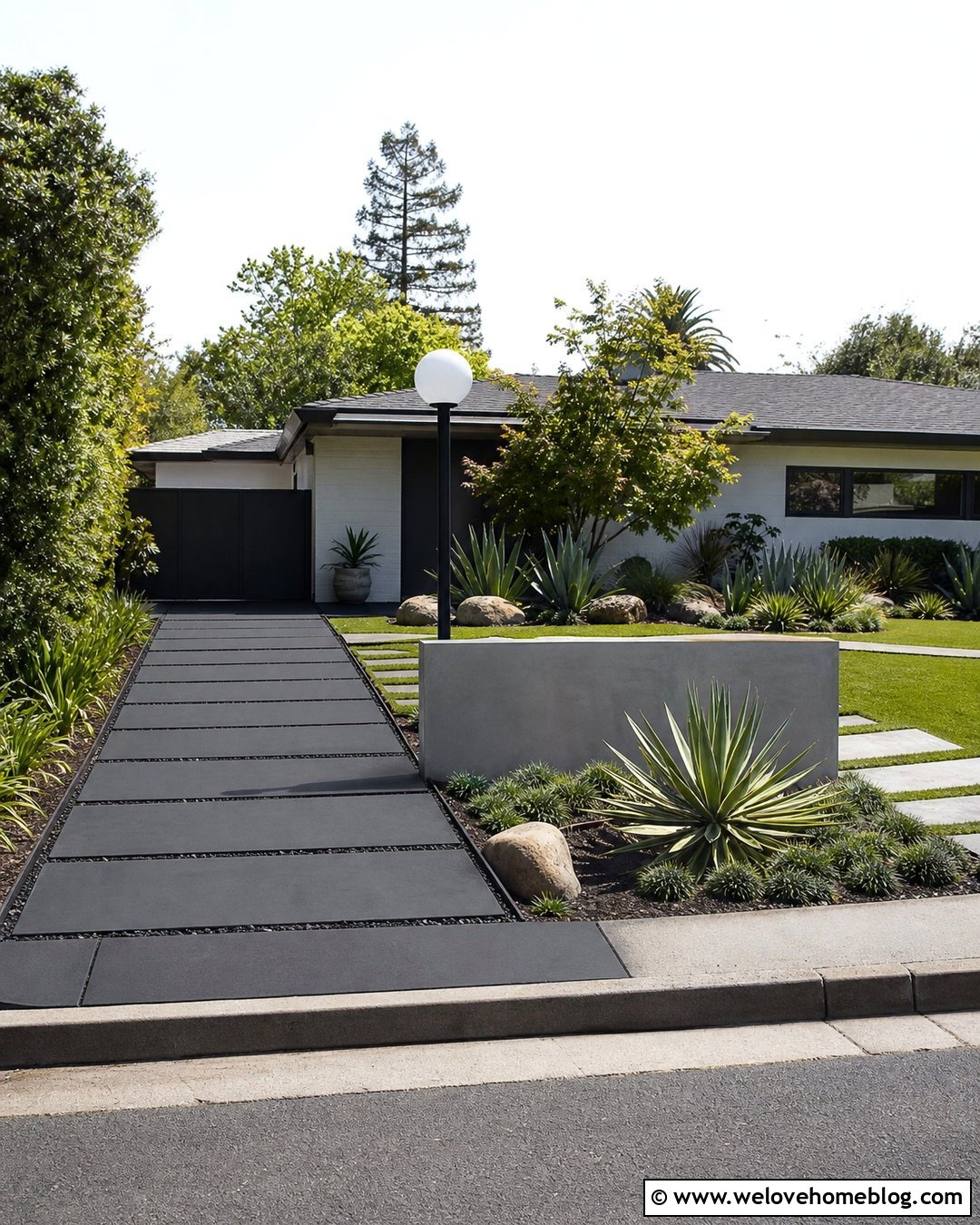
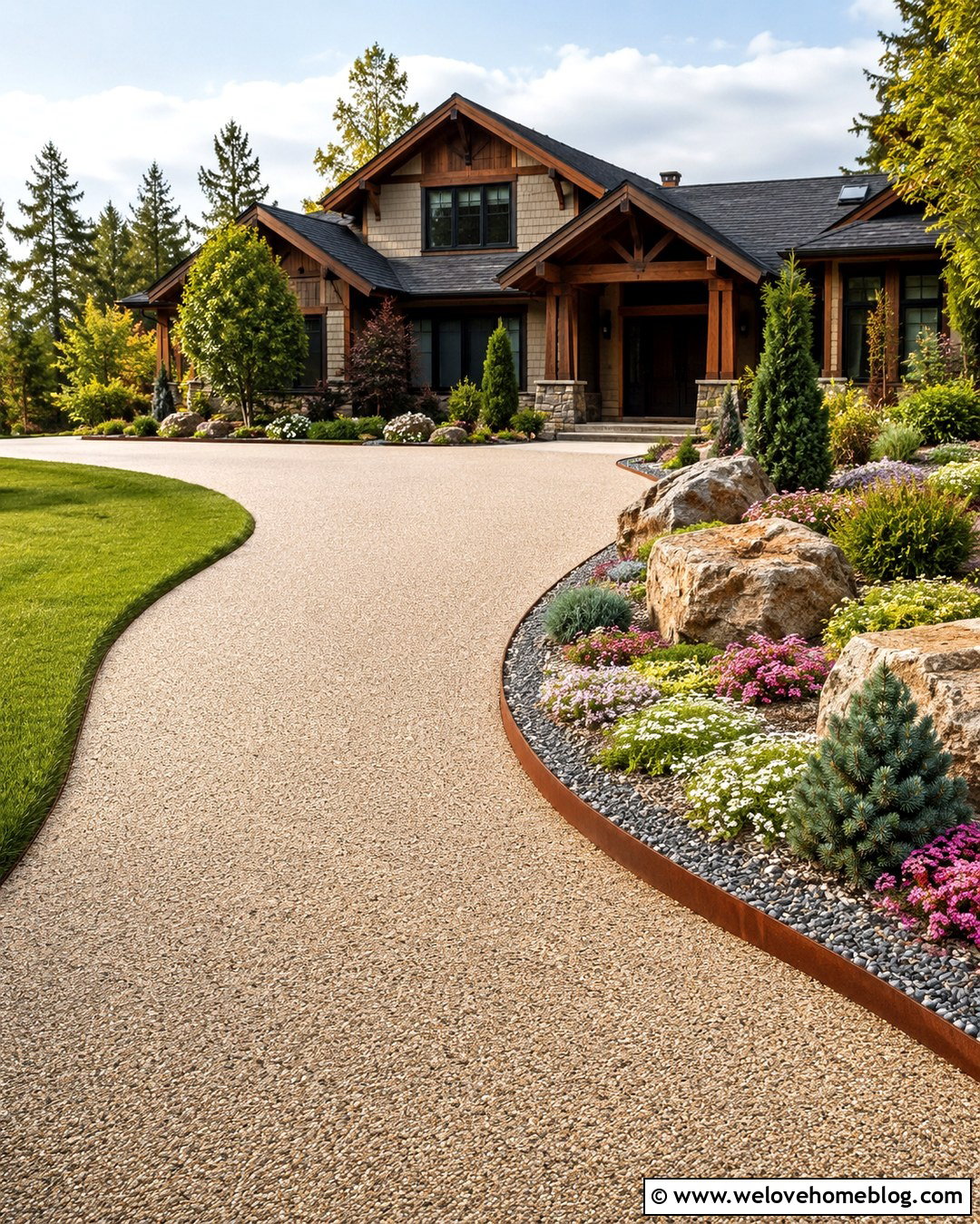
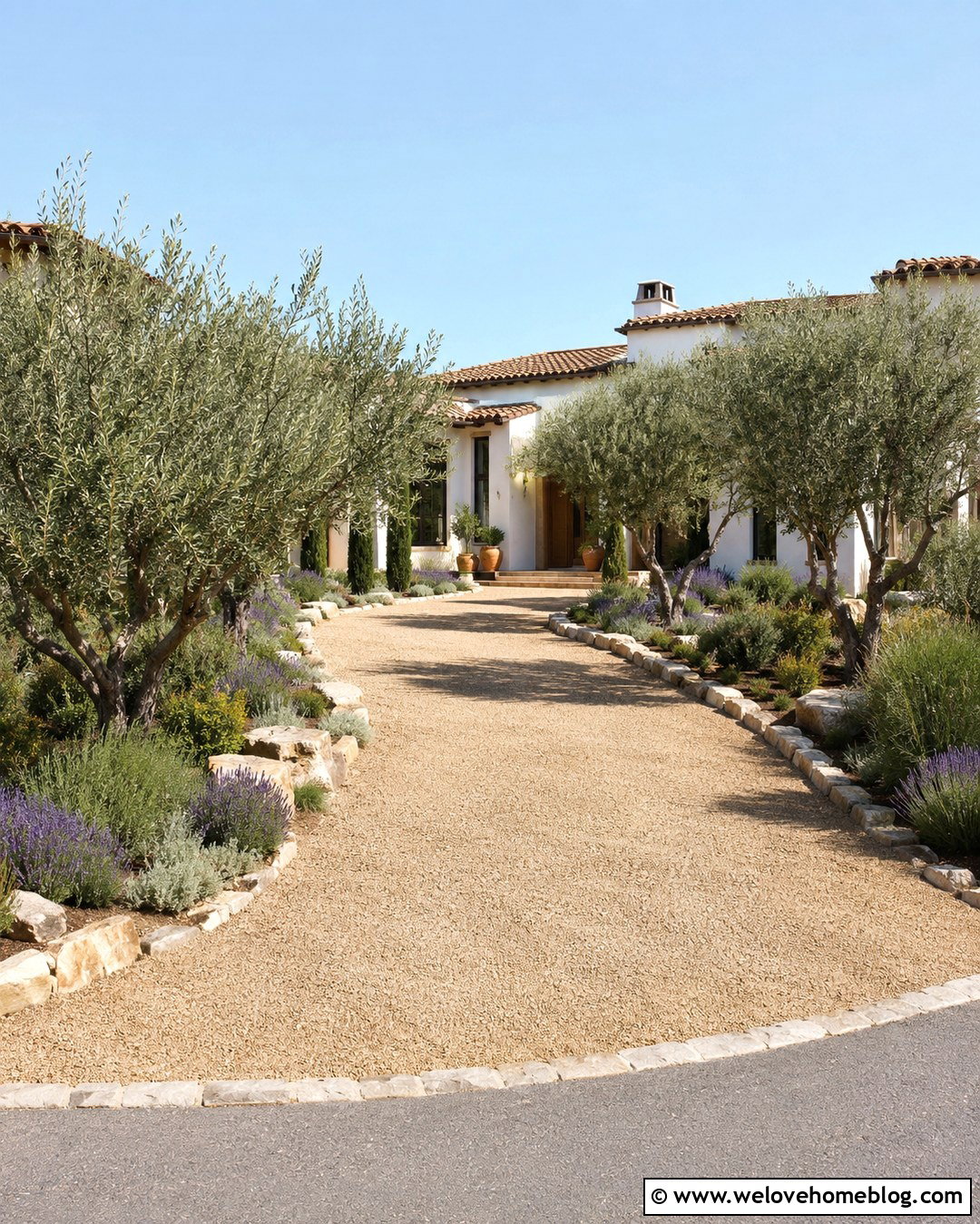
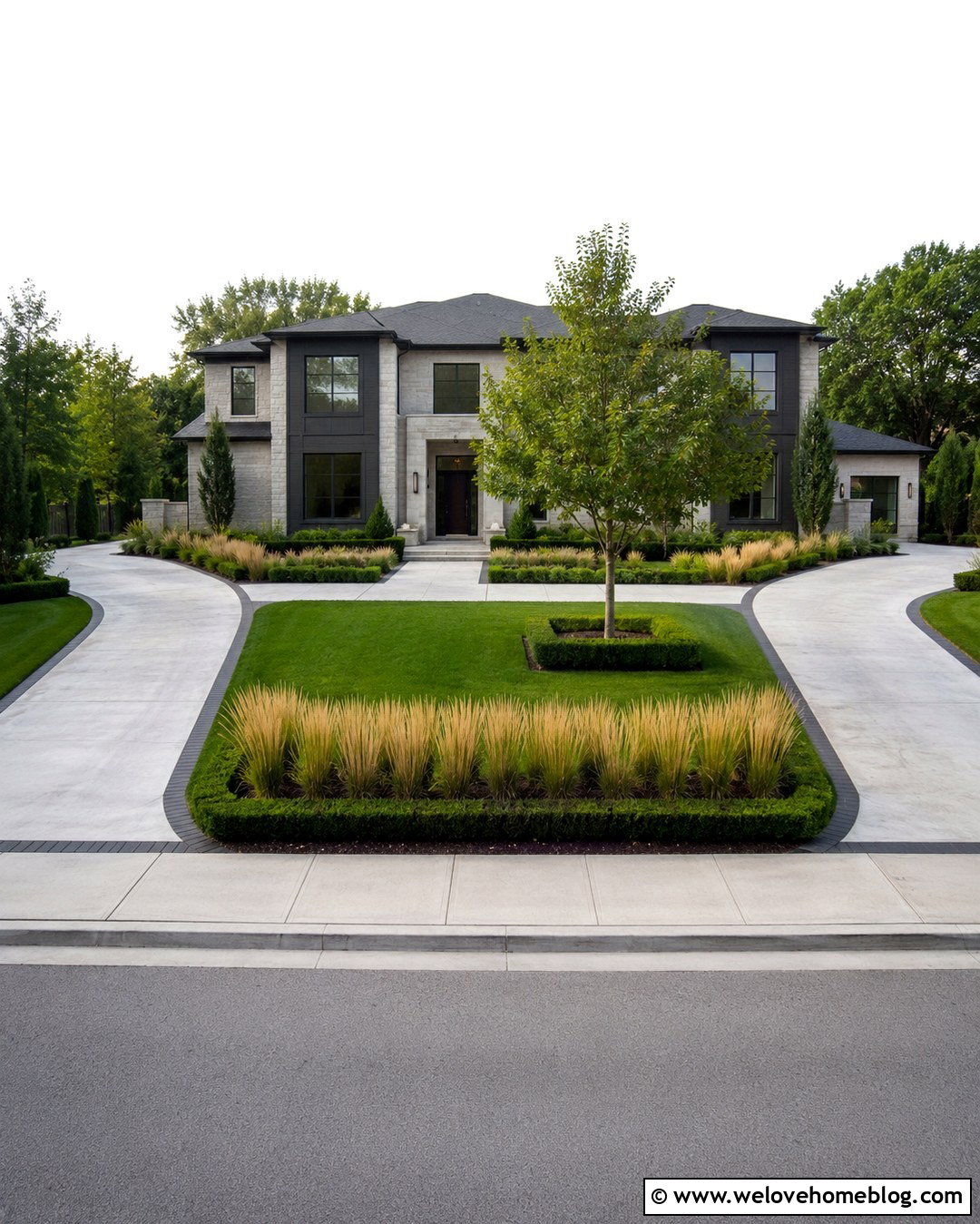
A sloping driveway can become a strong landscape feature when changes in grade are handled with natural materials. Choose textured concrete pavers or rough-finished asphalt for dependable traction, then support uphill planting beds with low dry-stacked fieldstone retaining walls. The walls should follow the driveway’s curves and step gradually with the terrain. Plant trailing ground covers, low junipers, ornamental grasses, and deep-rooted native shrubs above them. On the downhill side, use open lawn or a shallow vegetated drainage channel to direct runoff safely. Avoid large plants where they could block the driver’s view around bends. Repeating fieldstone at the entrance and house foundation ties everything together. The result feels integrated into the hillside instead of appearing carved awkwardly through it.
16. Narrow Country Driveway With Layered Shrub Borders
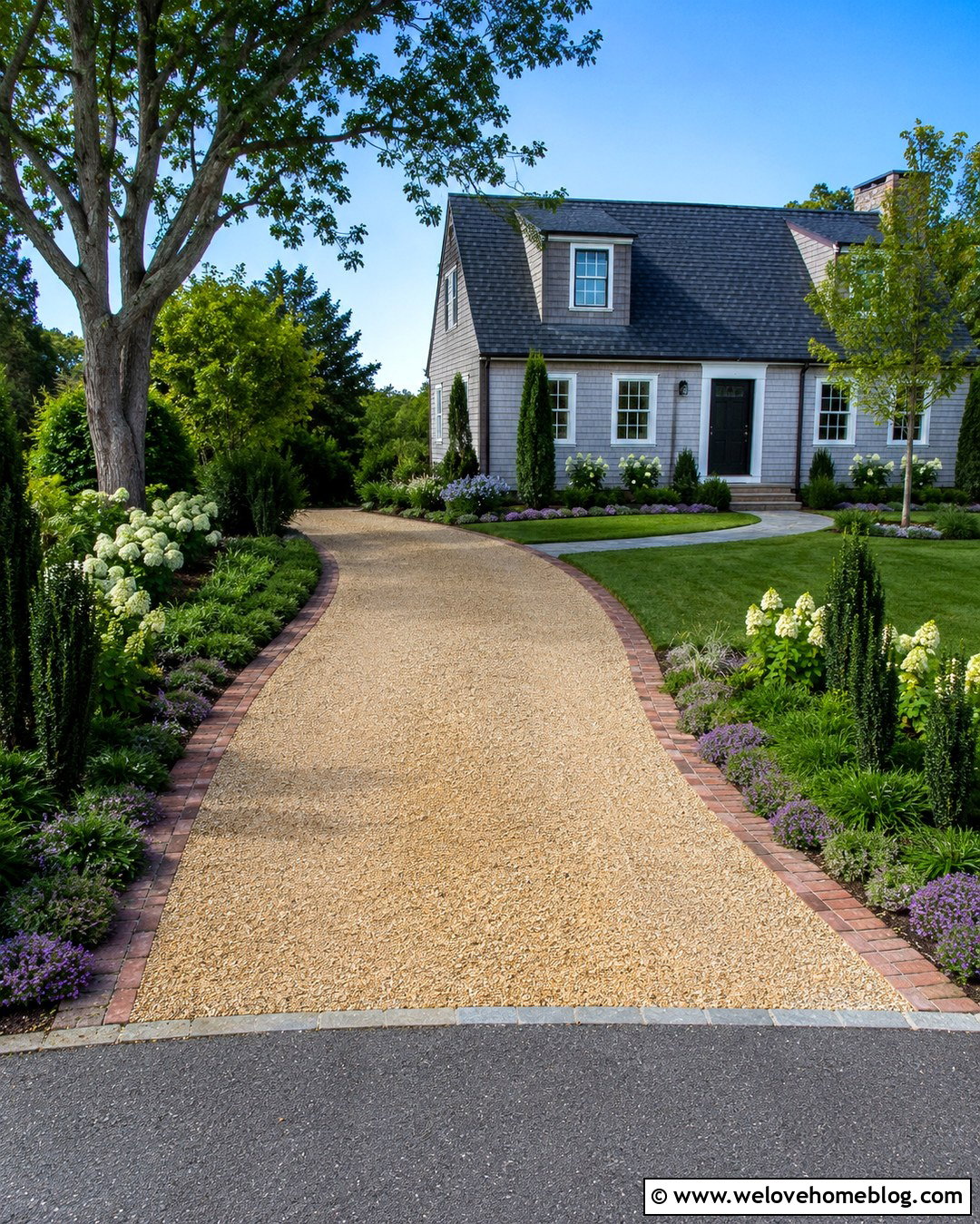
Even a narrow driveway can feel lush when the planting is carefully scaled. Use compacted buff gravel in a straight or subtly curved layout, bordered by flush brick that will not reduce usable driving width. Keep a low layer of creeping thyme, sedges, or hardy ground cover closest to the edge. Behind it, add compact flowering shrubs and occasional upright evergreens for height. Place larger trees only where their branches and roots will not crowd vehicles. Repeating the same plant groups down the driveway creates continuity without making the space busy. Near the house, open the borders into wider beds and include a clear walkway to the porch. This layered design gives a small country property abundant character while preserving clearance for guests, deliveries, garbage collection, and routine maintenance.
17. Country Driveway With Rain Garden Drainage
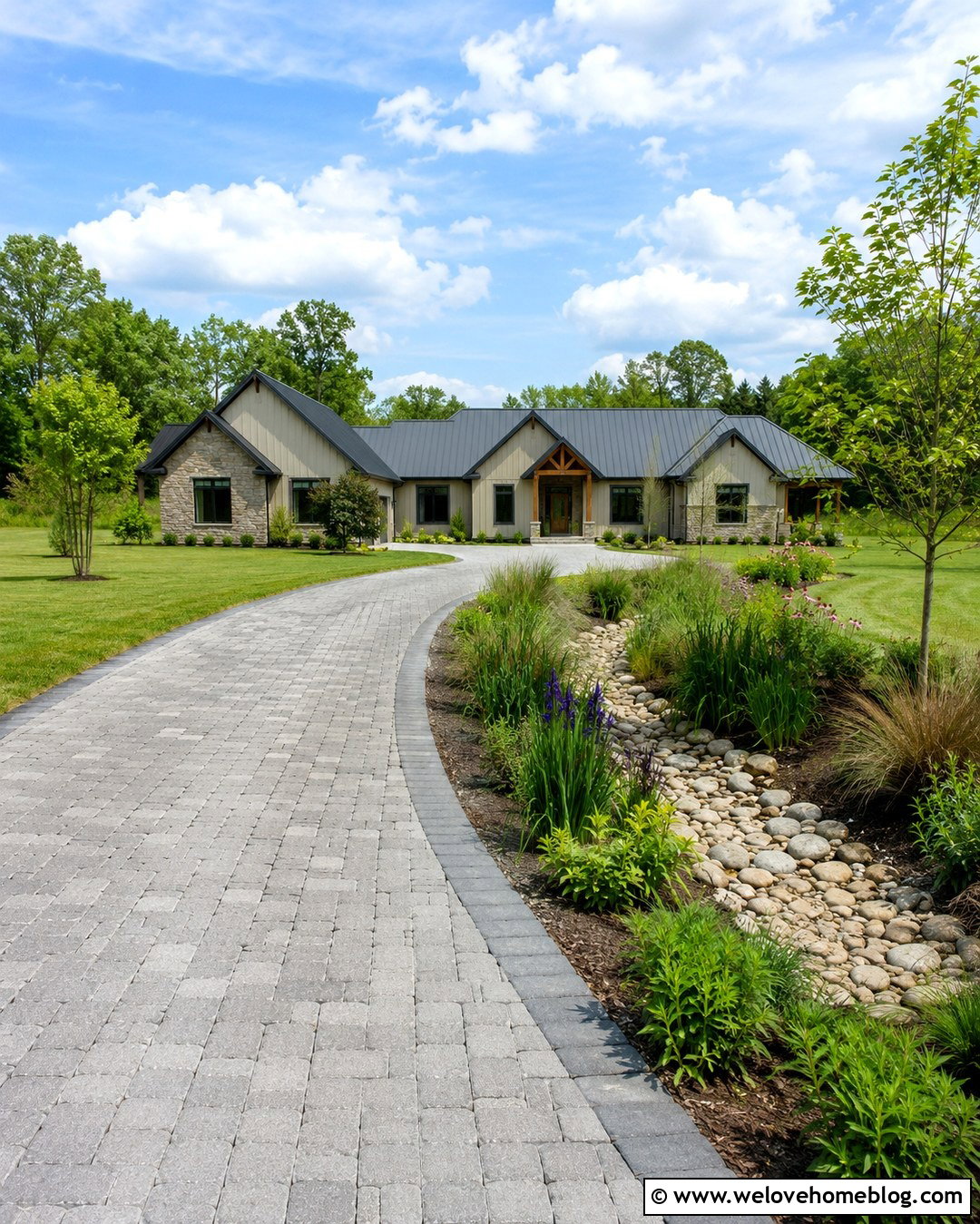
Where runoff gathers beside a driveway, a planted rain garden can provide both drainage support and country charm. Use permeable gravel or interlocking concrete pavers for the driveway, shaped with a gentle curve toward the house. Along the low side, form a shallow planted basin that receives water through carefully positioned openings in the edging. Fill it with moisture-tolerant native sedges, irises, grasses, and flowering perennials appropriate for the region. Natural river stones can reinforce the inlet and create a dry-creek appearance. Keep the basin away from foundations and confirm that overflow has a safe route. On the opposite side, use lawn and a few small trees for balance. This complete landscape turns a practical water-management area into an attractive part of the rural approach.
18. Country Driveway With a Wooden Gate and Lantern Pillars
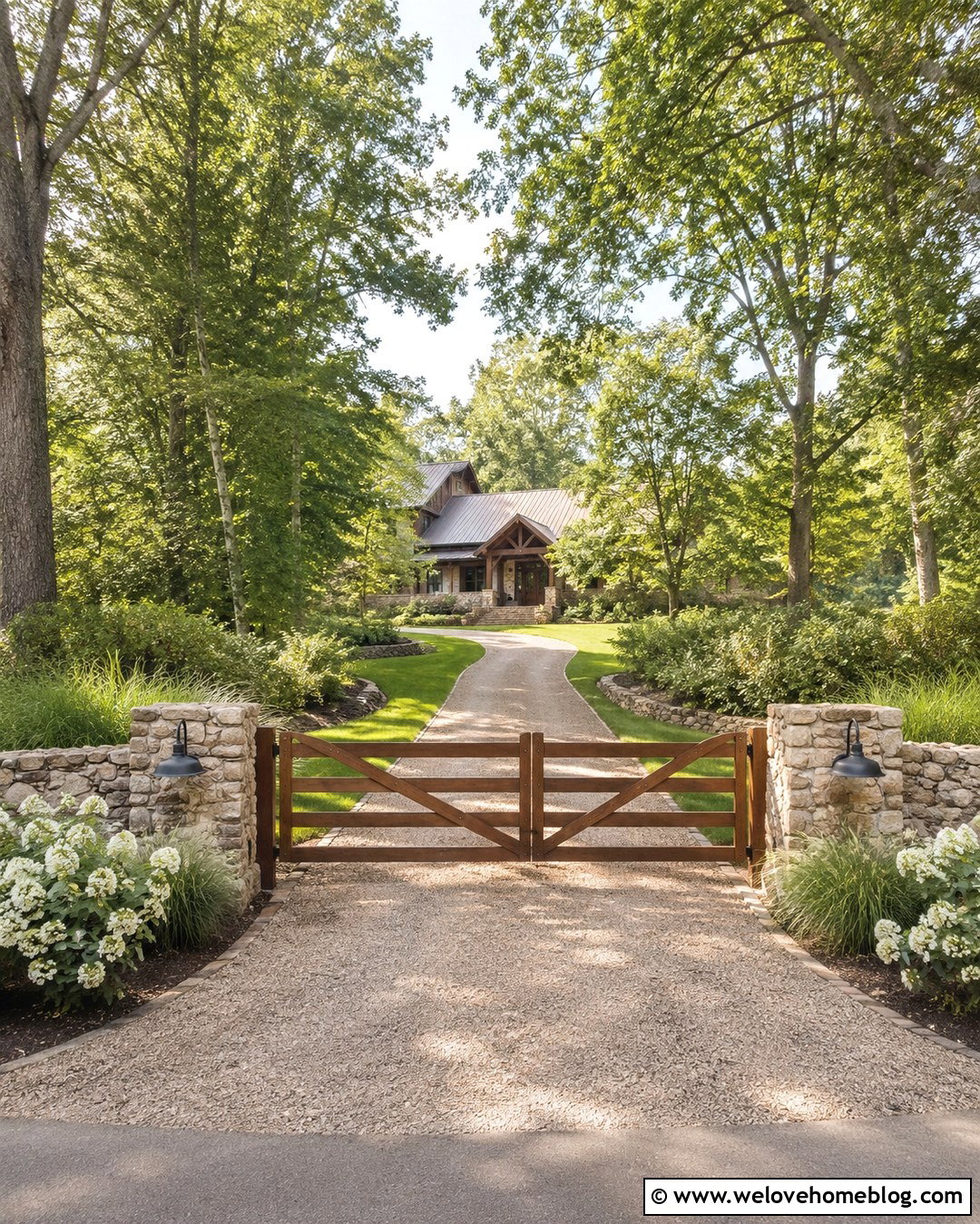
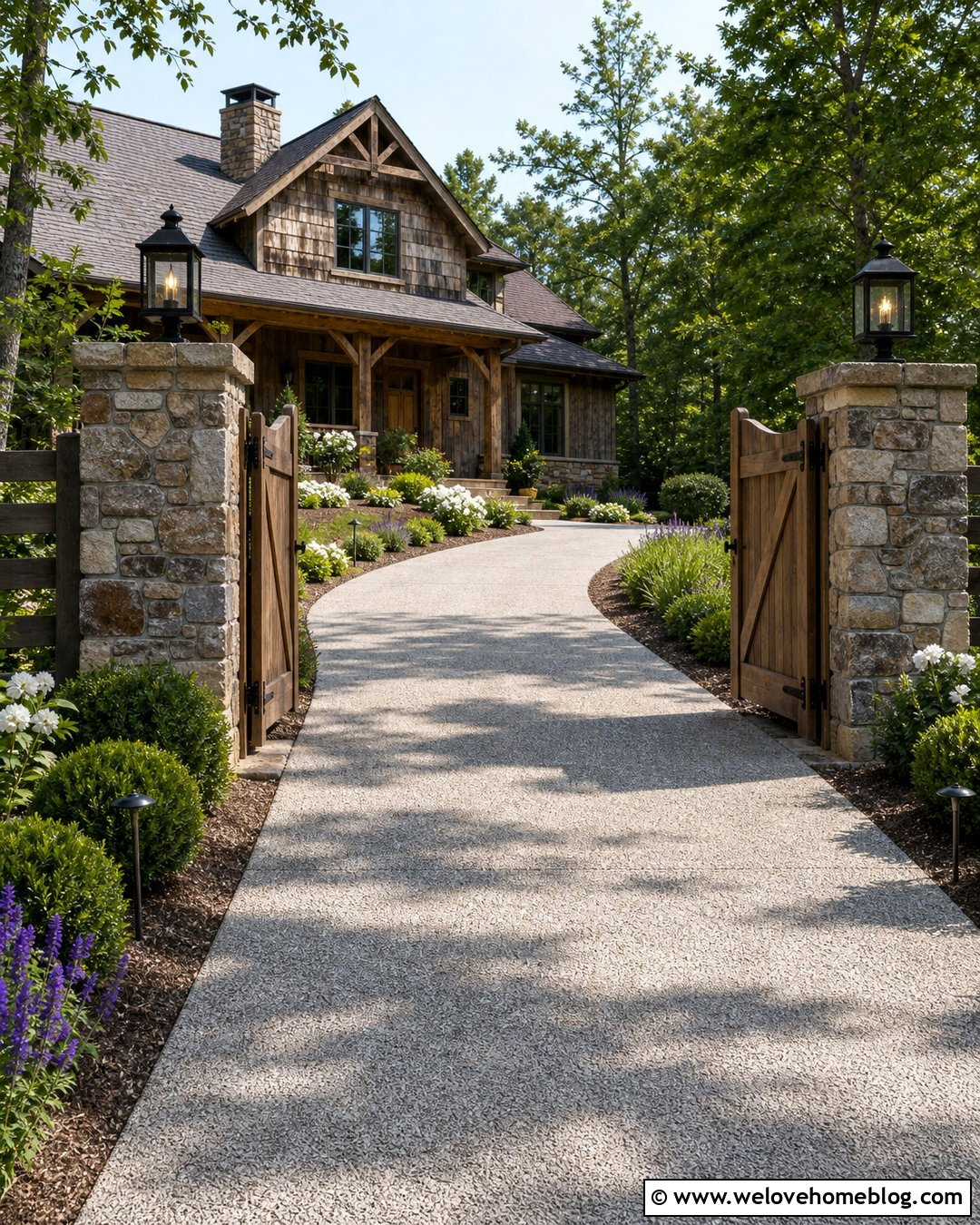
A timber field gate instantly communicates country character, especially when paired with a gravel lane and stone pillars. Choose a simple stained-wood gate with sturdy hardware and enough clearance for the driveway’s full usable width. Low fieldstone pillars can hold downward-facing lanterns and a clearly visible address marker. Continue the entrance with a curved tan gravel driveway bordered by mown grass and informal hedges. White flowering shrubs, native grasses, and a few mature shade trees can frame the approach without competing with the gate. If the gate opens manually, provide a safe pull-off area where a vehicle can wait clear of the road. Matching timber details on the farmhouse or barn will connect the entrance to the buildings and make the entire property feel thoughtfully composed.
19. Country Driveway With Evergreen Landscaping
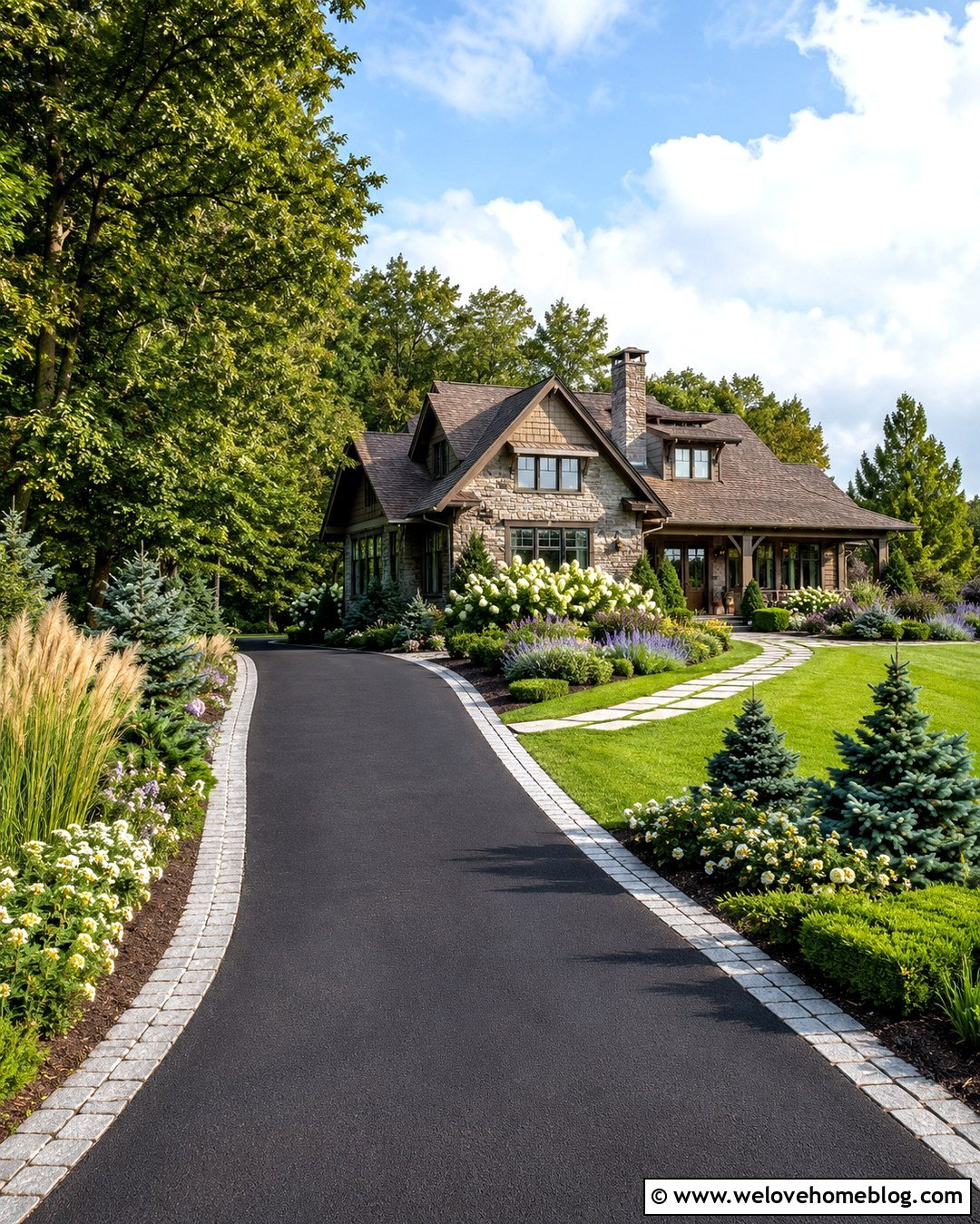
Evergreen borders keep a country driveway attractive through every season, but they look best when mixed rather than planted as a solid wall. Start with a gently sweeping black asphalt or gray paver driveway edged in cobblestone. Arrange compact junipers, inkberry holly, dwarf spruce, and other regionally suitable evergreens in staggered groups. Add deciduous hydrangeas, native grasses, and spring bulbs between them for seasonal change. Maintain clear gaps near the street, curves, walkways, and parking areas. Wider spacing also allows snow storage and prevents mature plants from scraping vehicles. On a large property, repeat evergreen clusters at intervals instead of lining the entire drive. This balanced treatment provides privacy and winter structure while retaining the open views and informal planting patterns expected in a welcoming country landscape.
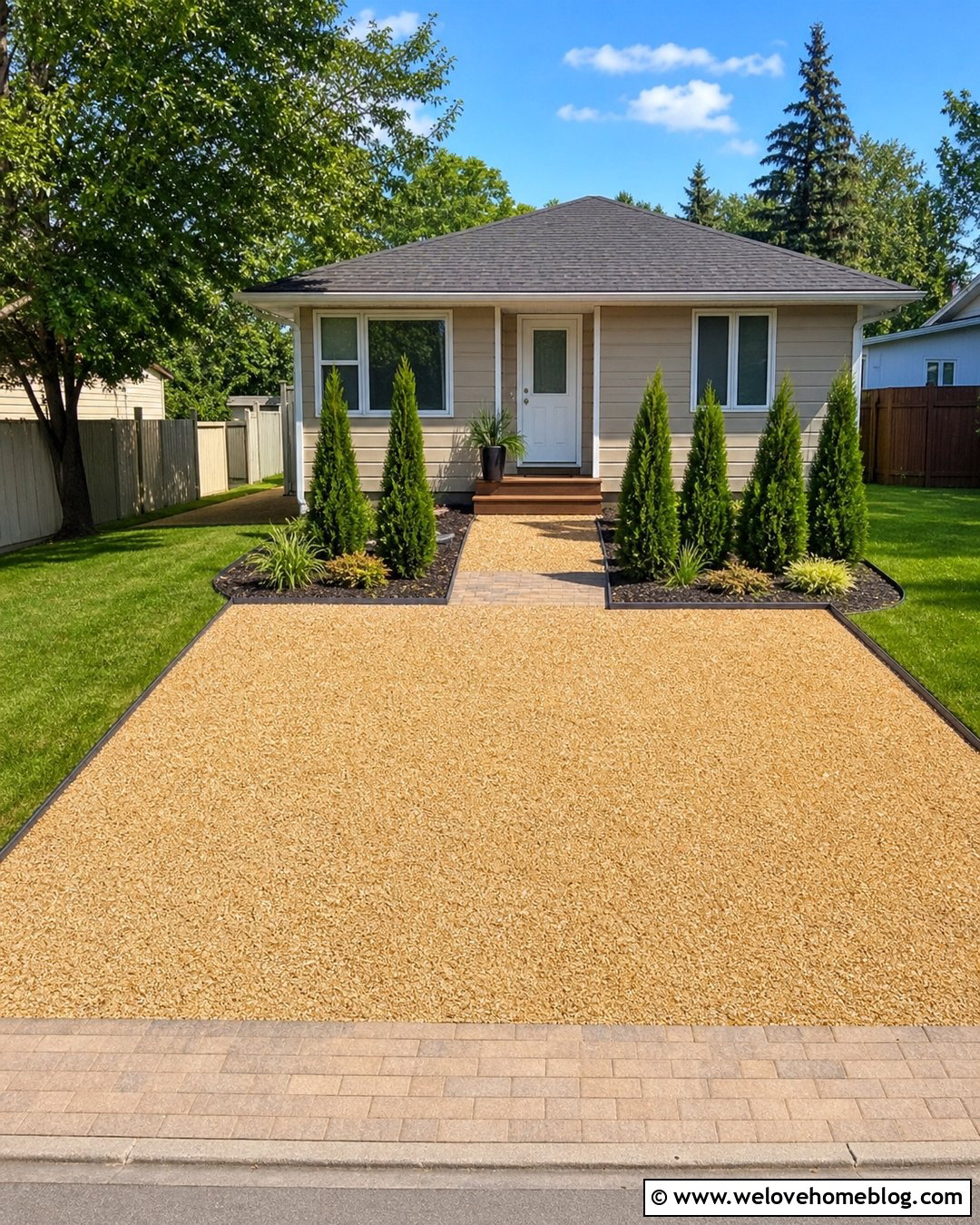
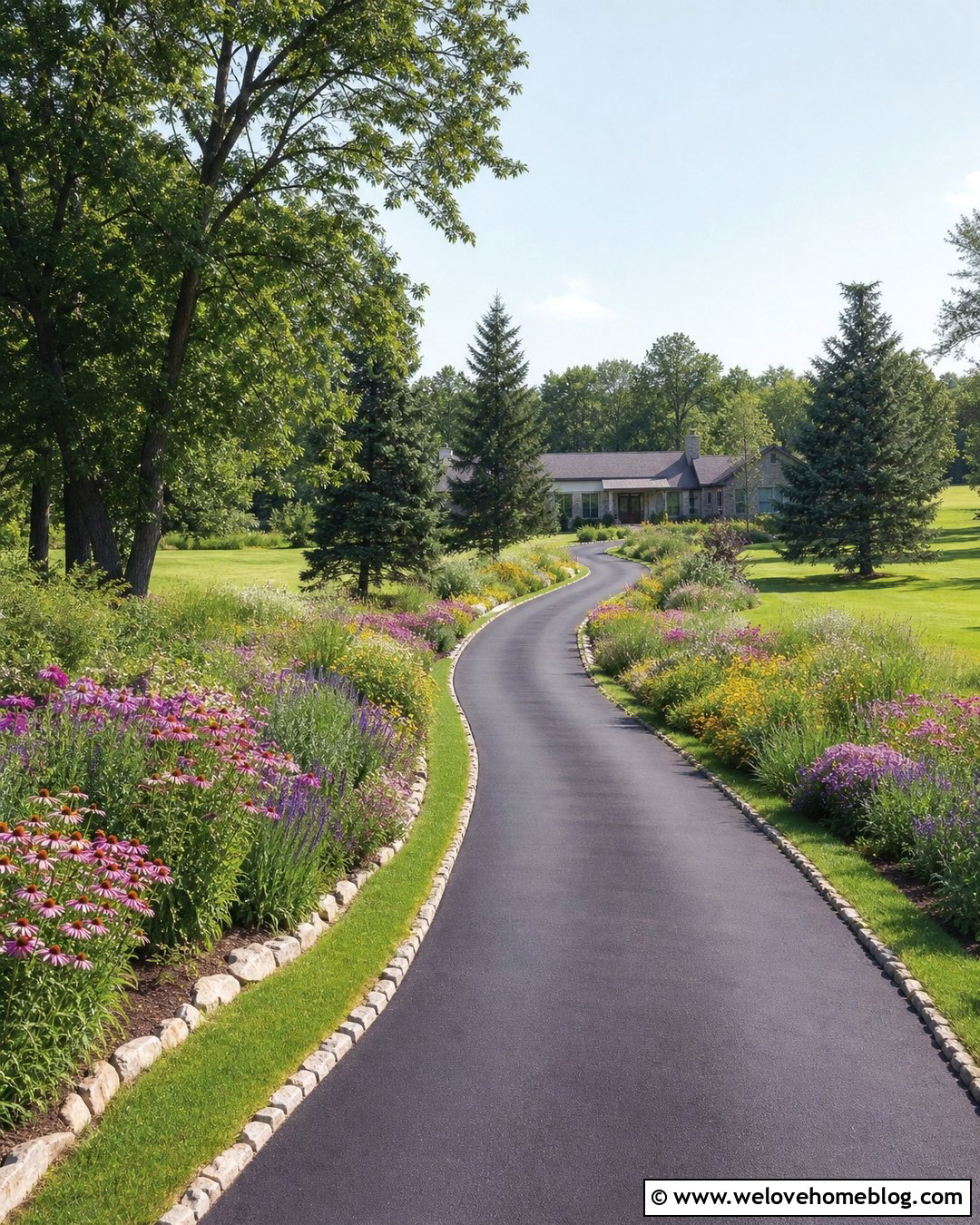
20. Country Driveway With Seasonal Flower Beds
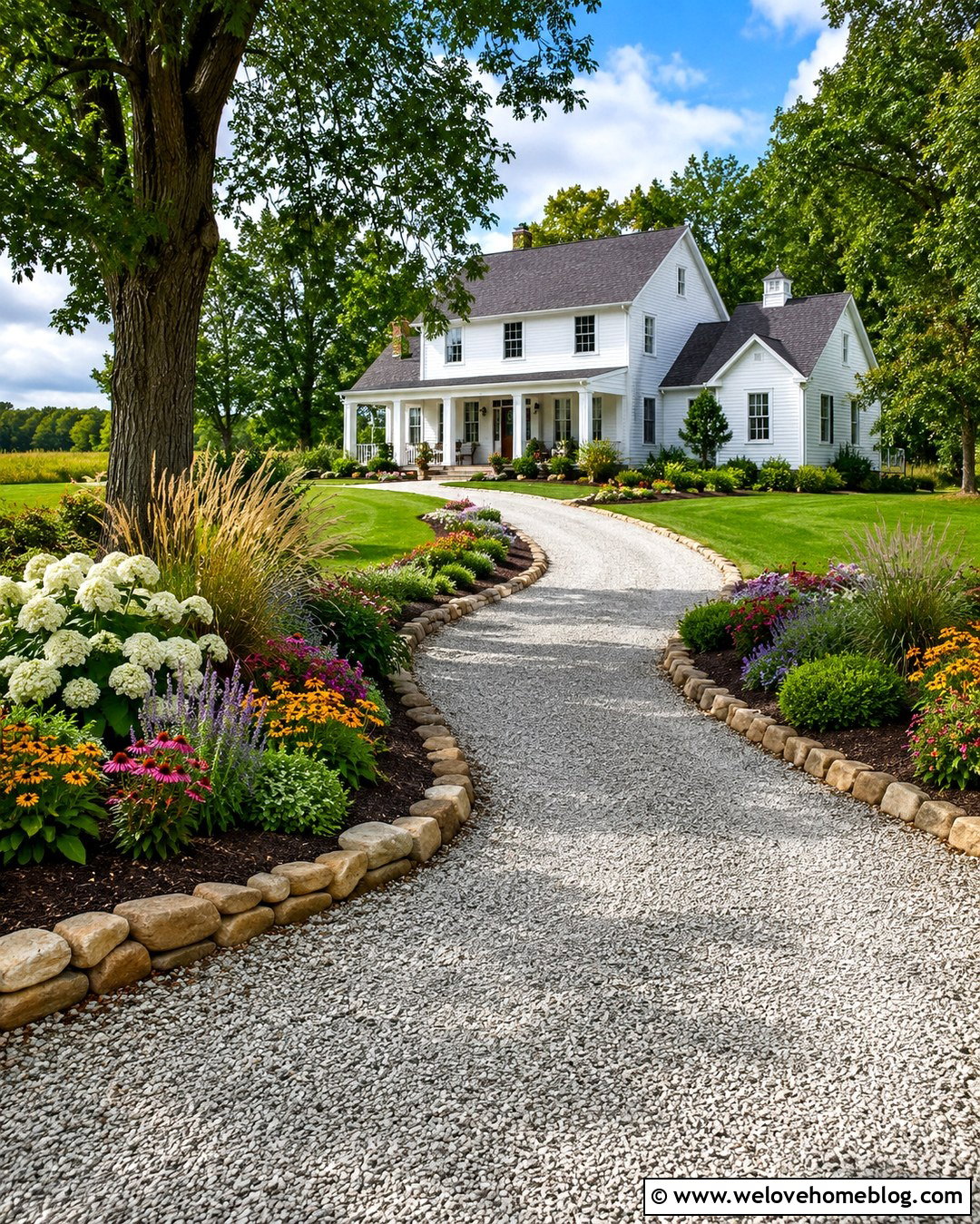
Seasonal flower beds bring color to a country entrance without requiring every part of the driveway to be heavily landscaped. Use a curved, light-gray gravel driveway with natural stone edging and broad lawn areas. Concentrate flowers in three important locations: the roadside entrance, an inside curve, and the guest parking area near the house. Build each bed around reliable shrubs and ornamental grasses, then add spring bulbs, summer perennials, and fall-flowering plants. Repeating colors will connect the separate beds visually. Select varieties that match local sunlight, soil, rainfall, and maintenance conditions. Keep plants shorter along the driveway edge and place taller flowers toward the back. This focused approach delivers strong curb appeal throughout the growing season while leaving plenty of uncluttered space for driving, mowing, and snow management.
Conclusion:
The most successful 20 country driveway landscaping ideas balance rural beauty with daily function. Start by choosing a surface and layout that suit your property, climate, traffic, and maintenance preferences. Then use edging, lawns, native plants, fences, trees, pillars, or gates to connect the driveway with the house and wider landscape. Leave enough room for mature plants, clear visibility, drainage, deliveries, and winter maintenance. You do not need to fill every open area. Country landscapes often look better with generous lawns, meadow sections, and simple repeated plant groups. Whether you prefer a wildflower-lined gravel lane or a formal brick circle, design the entire approach as one welcoming and practical composition.

Related posts:

Leave a Reply