
Flower driveway ideas can turn a practical parking area into a colorful, welcoming approach that strengthens the entire front yard. The best designs combine flowers with the driveway surface, shape, edging, entrance, and surrounding landscape. Planting should also fit the site. Consider sunlight, drainage, reflected heat, winter road salt, mature plant size, and the space needed for opening car doors. Low flowers work well near the street, while taller blooms can create fullness closer to the house. Repeating colors and plant groupings produces a more organized look than scattering unrelated flowers. Whether your driveway is asphalt, concrete, gravel, brick, or pavers, thoughtful planting can soften hard edges without reducing function. Explore these complete and practical **25 Flower Driveway Ideas**.

1. Cottage Flower Driveway With Roses
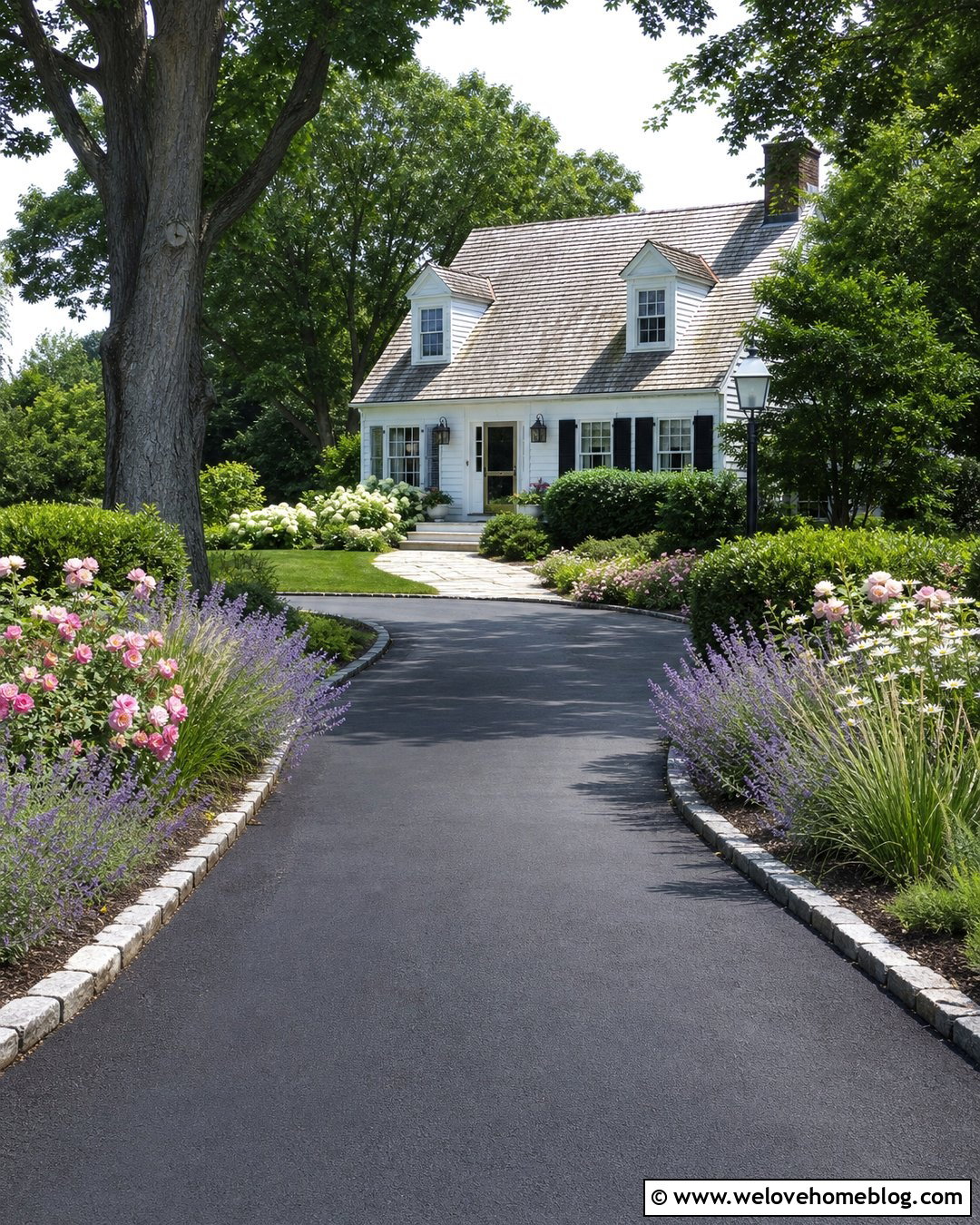
A gently curved black asphalt driveway can feel much softer when framed by a deep cottage-style flower border. Use low cobblestone edging to create a clean separation between the pavement and planting beds. Layer compact roses, purple catmint, white daisies, and soft ornamental grasses rather than placing flowers in a single straight row. Keep shorter plants beside the driveway so doors can open easily. Taller roses can sit farther back against the lawn or fence. Repeating the same flower combinations along both sides gives the abundant planting a sense of order. This complete look works especially well with Cape Cod, cottage, and traditional homes. Add a flagstone walkway near the house to connect the romantic flower beds with the front entrance.
2. Gravel Driveway With Lavender Borders
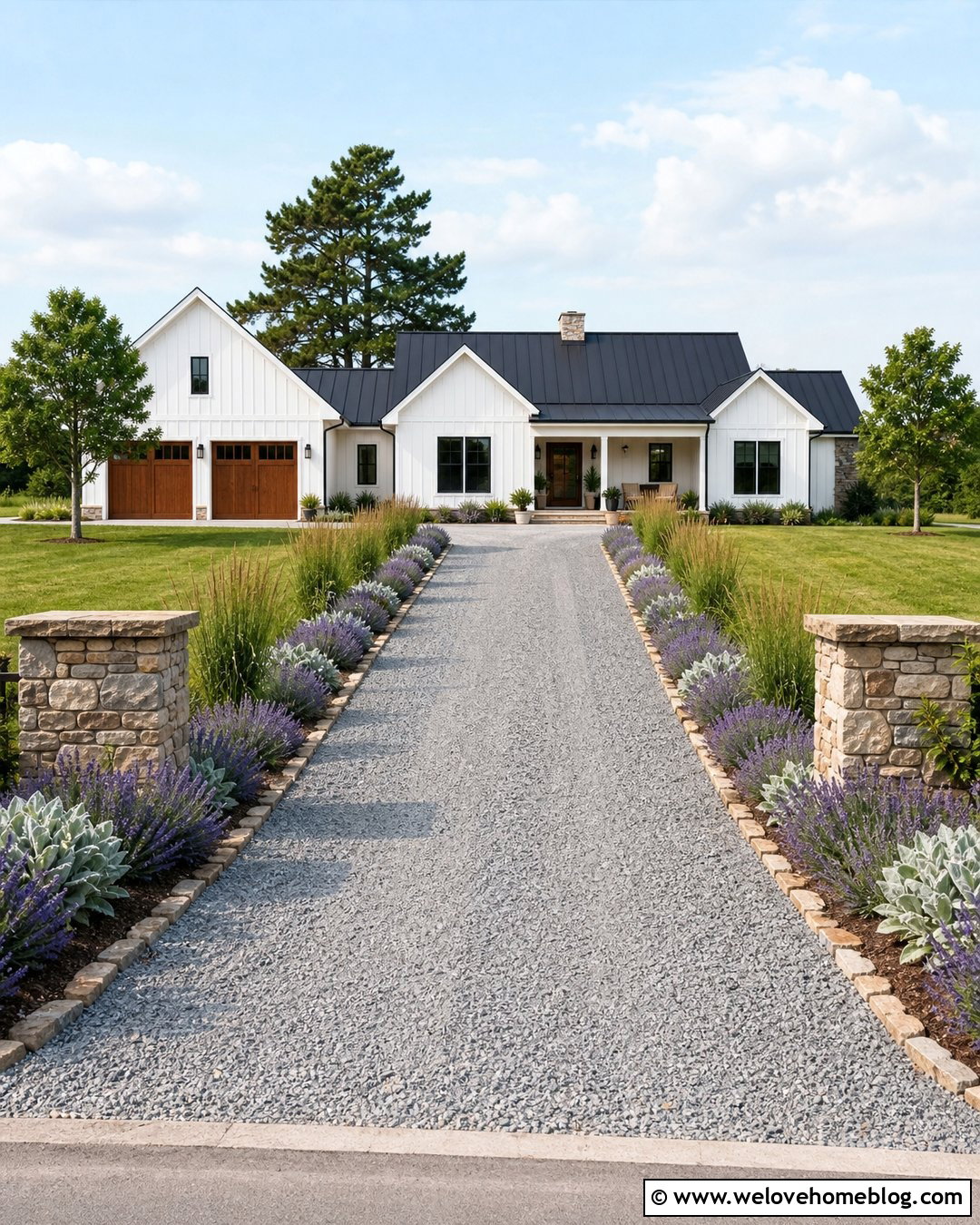
The soft texture of gravel pairs naturally with long rows of lavender. Begin with a straight or slightly curved gray gravel driveway contained by sturdy steel or stone edging. Create planting strips outside the edging and fill them with repeated lavender mounds, silver lamb’s ear, and a few upright ornamental grasses. The limited purple, silver, and green palette keeps the entrance calm instead of overly busy. Leave a narrow gravel or mulch gap between the plants and driving surface to improve access and simplify maintenance. This flower driveway design suits sunny properties with farmhouse, Mediterranean, or country architecture. At the street, widen the beds around simple stone pillars. That small change gives the entrance definition while allowing the lavender borders to guide attention toward the house.
3. Concrete Driveway With Hydrangea Beds
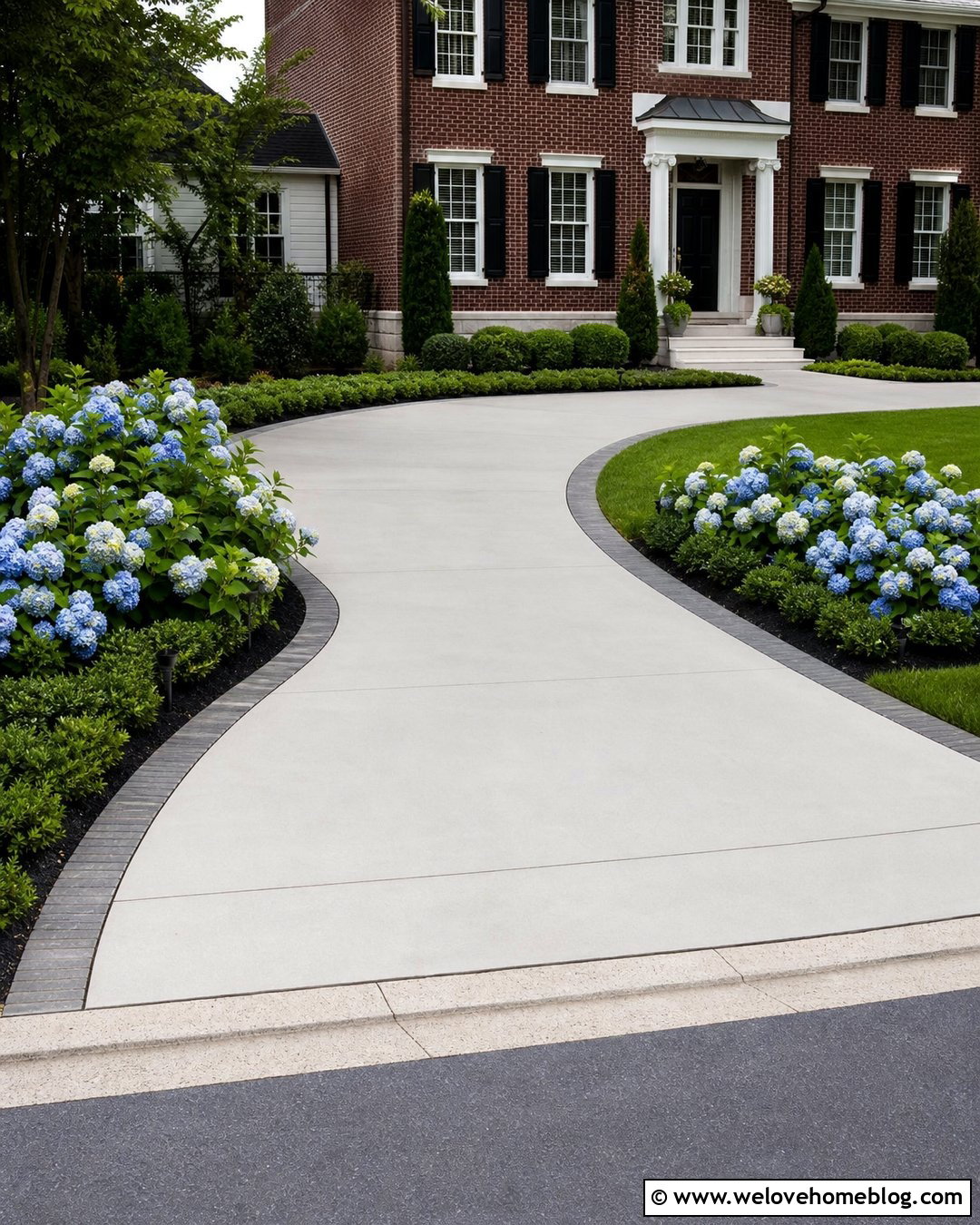
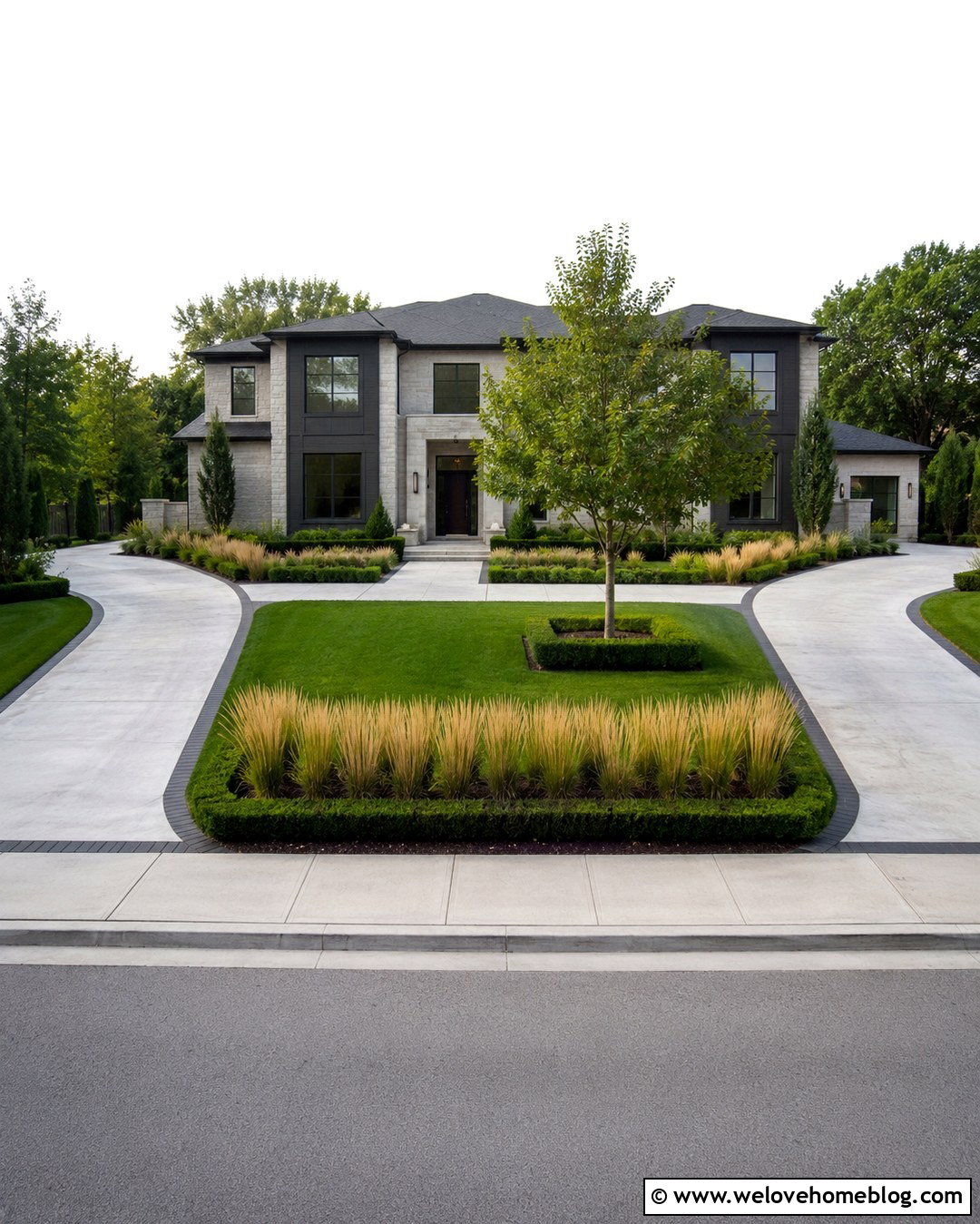
Large hydrangea beds can balance the broad, solid appearance of a light gray poured concrete driveway. Shape the beds with generous curves instead of forcing them into thin planting strips. A charcoal paver ribbon along the concrete creates a crisp boundary, while dark mulch makes blue, pink, or white hydrangea flowers stand out. Place the shrubs where their mature growth will not crowd vehicles or block views near the street. Low annuals or compact groundcover can fill the front edge of each bed. Repeat hydrangeas near the porch so the driveway landscaping connects visually with the house. This polished arrangement looks particularly attractive beside Colonial, Craftsman, and traditional brick homes. It delivers substantial flower color without requiring dozens of unrelated plant varieties.
4. Long Driveway With Native Wildflowers
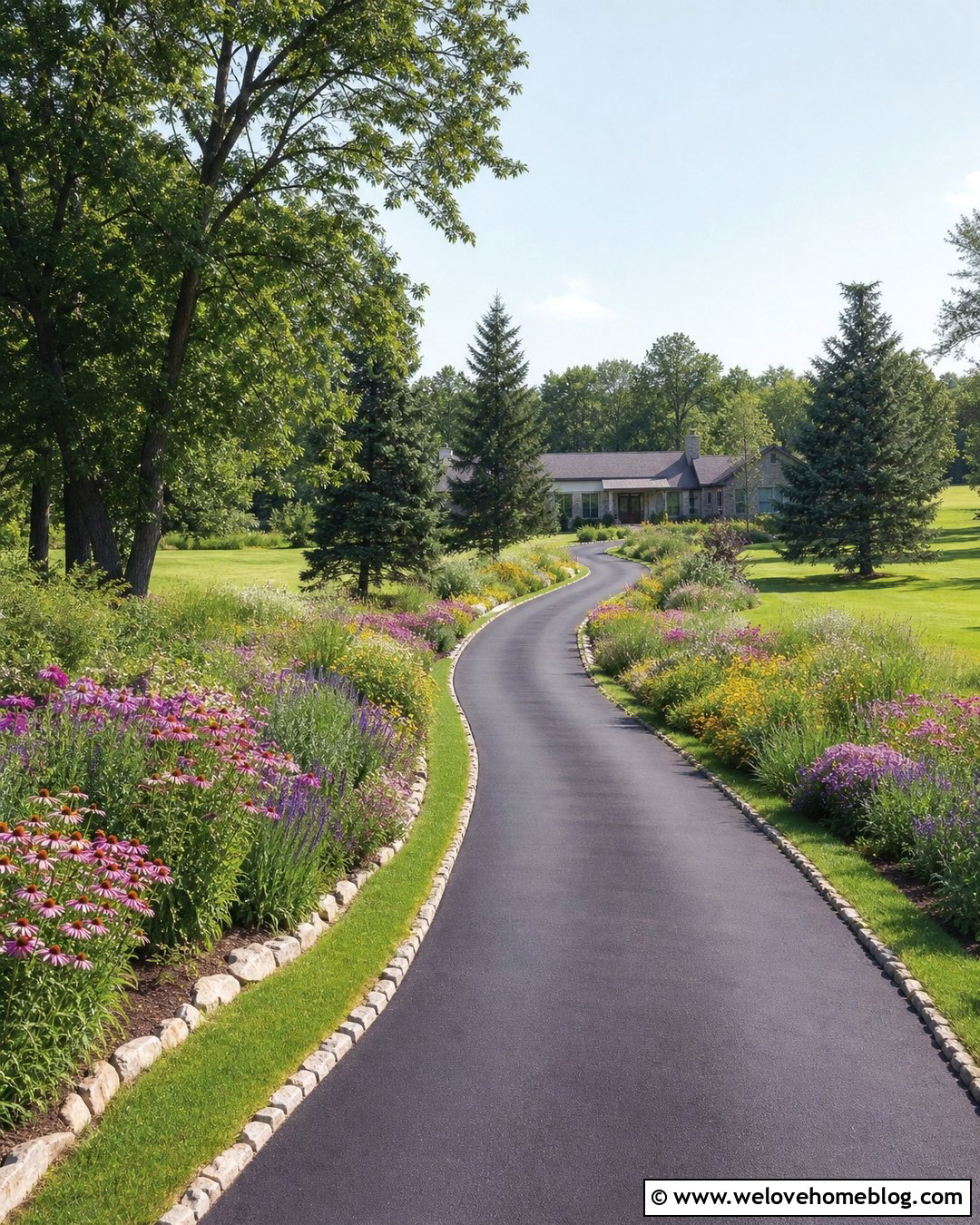
Imagine arriving home through a relaxed corridor of seasonal color. A long asphalt driveway can be bordered with wide native wildflower beds that blend into the surrounding yard. Define the pavement with a flush stone edge, then plant flowers in broad drifts rather than narrow, mixed rows. Coneflowers, asters, bee balm, coreopsis, and native grasses can create changing texture throughout the growing season when suitable for the local climate. Mow a neat strip between the beds and driveway to keep the natural planting intentional. Near the road, maintain lower growth for clear visibility. Taller flowers can appear farther along the approach. This design complements ranch homes, woodland properties, and country houses while making a long driveway feel connected to the landscape rather than simply paved through it.
5. Circular Brick Driveway With Tulip Beds
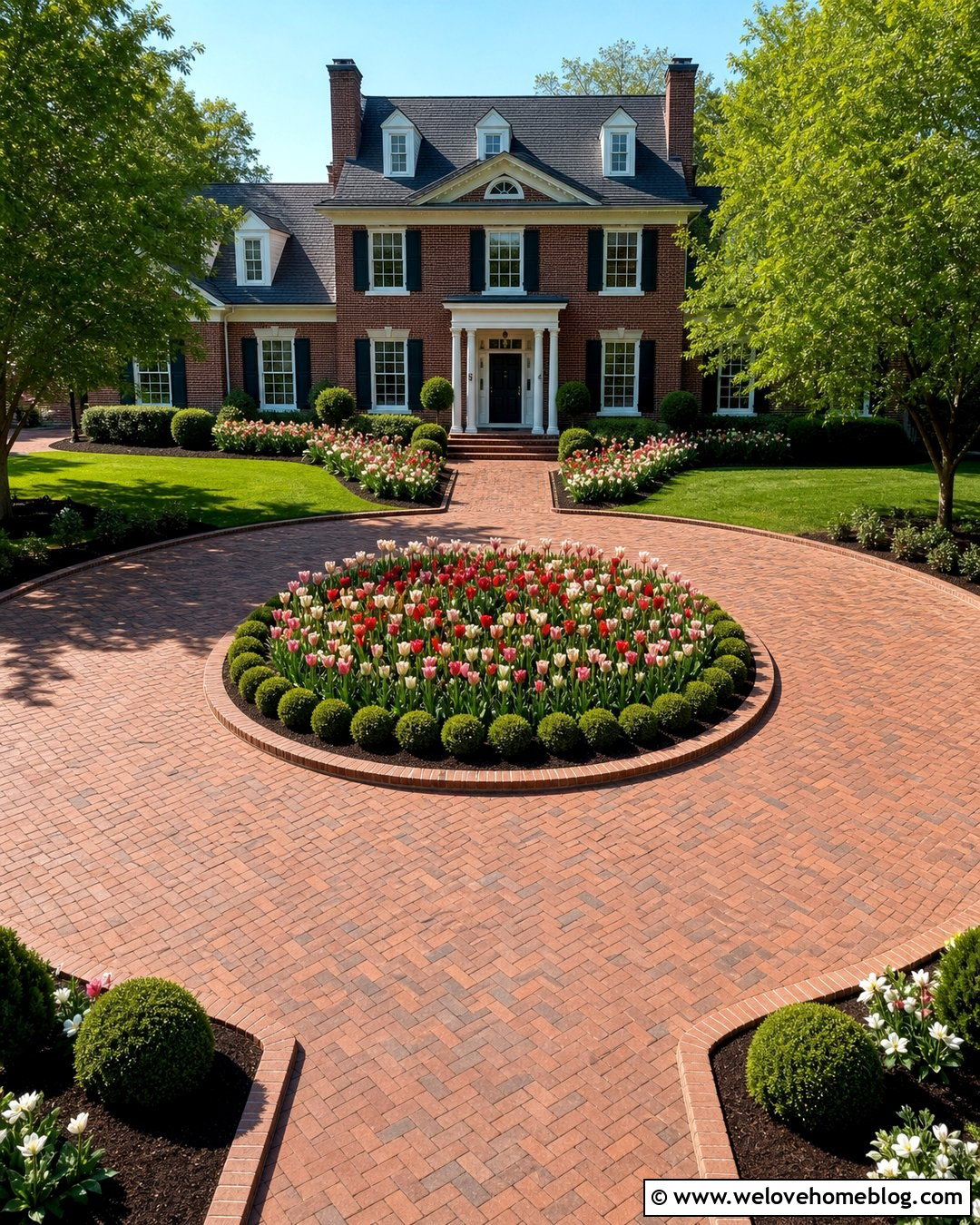
A circular driveway offers several natural locations for organized spring flowers. Use clay brick pavers in a herringbone pattern to form the drive, then create a central oval bed surrounded by a low brick curb. Plant the island with tulips in two or three coordinated colors, backed by clipped evergreen shrubs that remain attractive after the spring display fades. Matching tulip groups can also appear beside the two driveway entrances. Add later-blooming annuals or perennials between the bulbs so the beds do not become empty in summer. The repeated brick material ties the paving, borders, and home facade together. This formal flower driveway works beautifully with Colonial, Georgian, and traditional houses. Symmetry is important, but small variations in flower height will keep the planting from appearing rigid.
6. Exposed Aggregate Driveway With Coneflowers
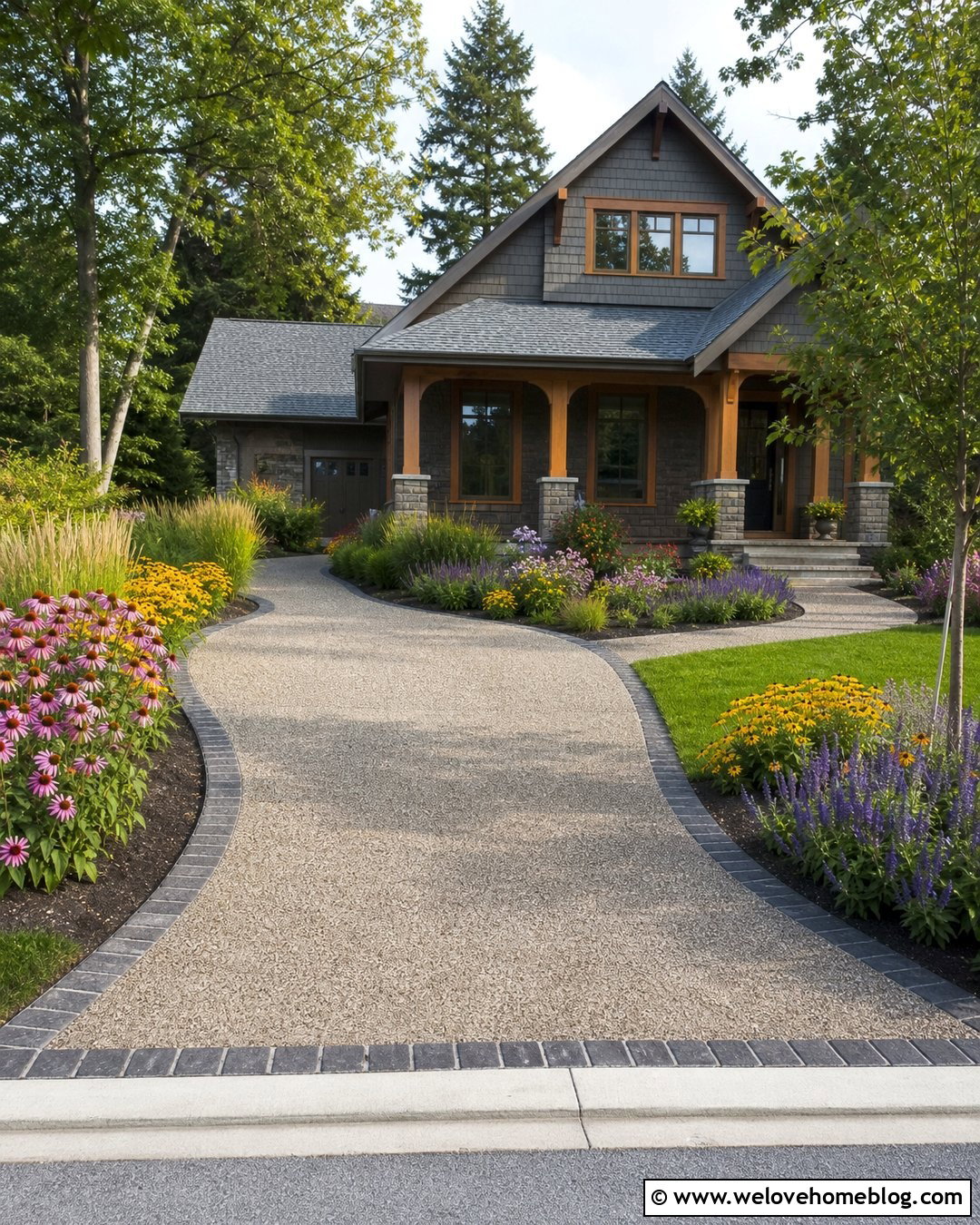
Warm exposed aggregate creates an earthy base for a colorful perennial border. Choose a softly curved driveway with tan and gray stone visible in the concrete finish. Frame it with a narrow charcoal cobblestone edge and broad beds containing purple coneflowers, yellow coreopsis, blue salvia, and airy ornamental grasses. Arrange the plants in repeating groups so each color appears several times along the route. The varied heights provide depth, while the sturdy border prevents soil and mulch from washing onto the driveway. A matching aggregate walkway can branch toward the front porch for a connected layout. This combination works well with Craftsman, prairie, and contemporary ranch homes. Keep plants lower around the driveway entrance and gradually increase their height as the beds approach the house.
7. Small Paver Driveway With Petunias
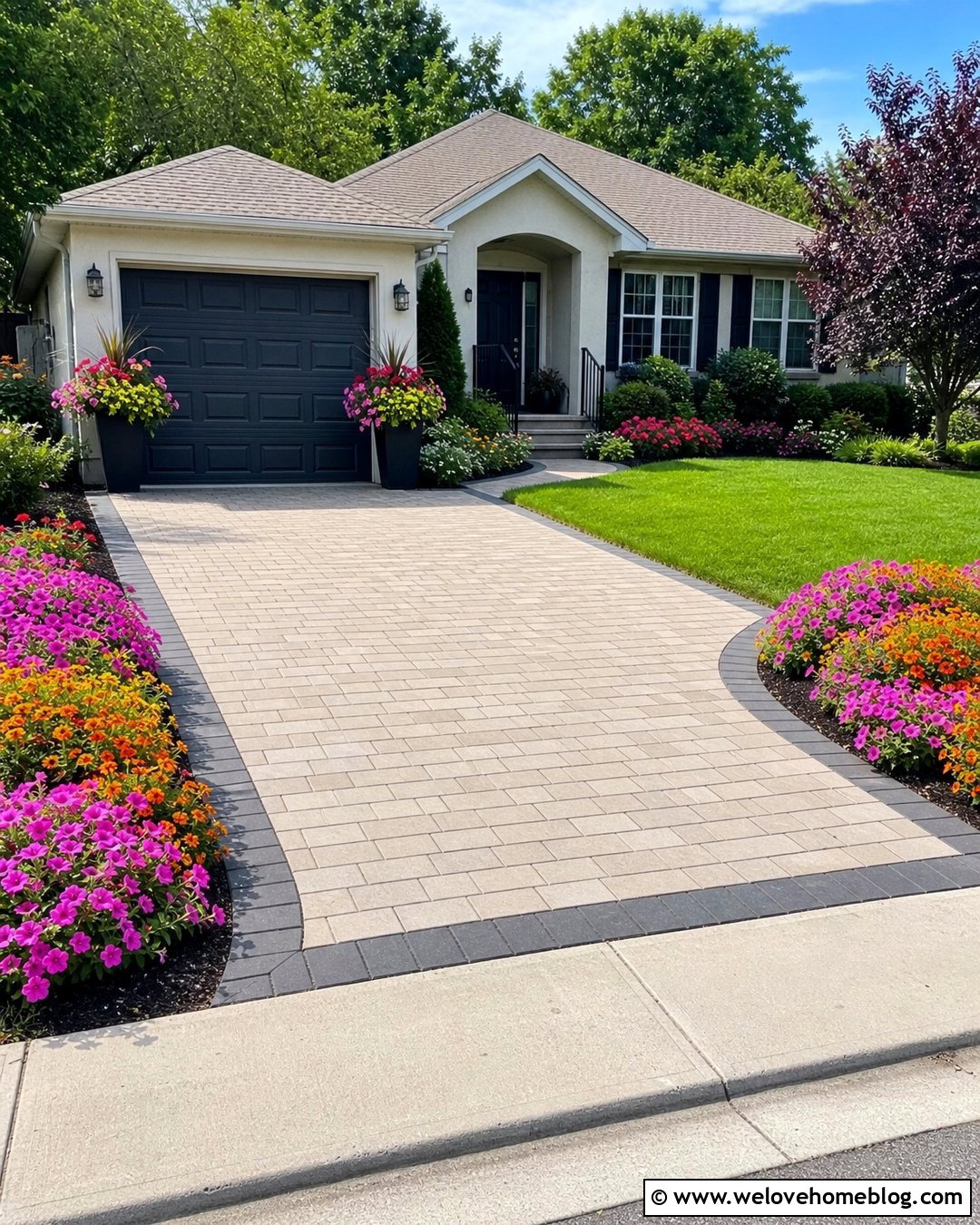
Even a compact front yard can accommodate a bright flower driveway without losing valuable parking space. Install light beige concrete pavers in a running bond pattern and surround them with a dark soldier-course border. Build narrow planting pockets at the outer corners rather than running flower beds along every edge. Mounded petunias, compact marigolds, and trailing calibrachoa can provide concentrated color without overwhelming the small layout. Coordinate the flower palette with the front door or house trim for a unified result. Two matching containers beside the garage can repeat the same flowers vertically. Maintain several inches of clear space between plants and pavement to prevent growth from spilling into the driving area. This tidy design is ideal for townhouses, bungalows, and smaller suburban homes.
8. Cobblestone Driveway With Azalea Borders
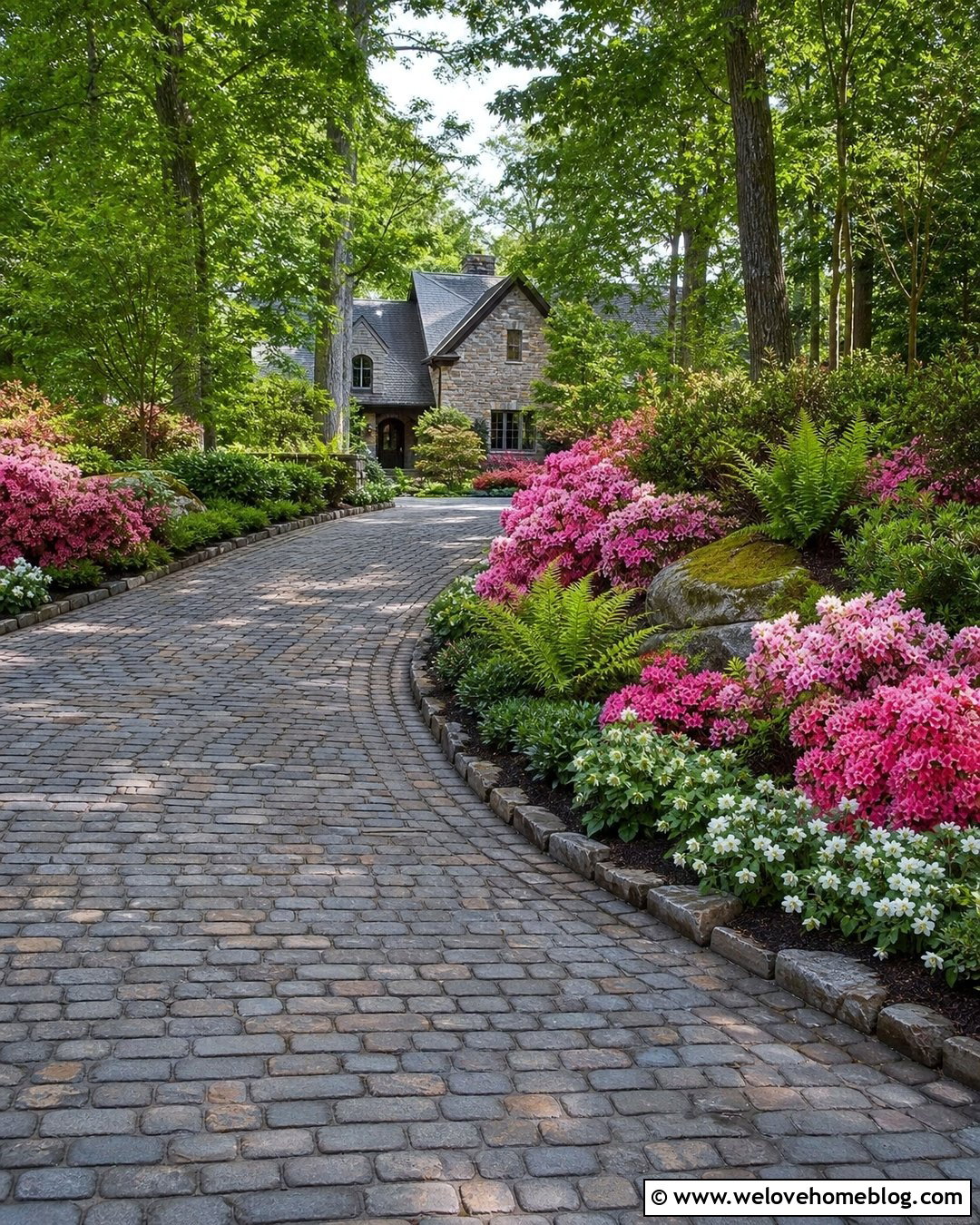
A shaded or partially shaded driveway can still have a memorable flower display. Use weathered gray cobblestone for a curved approach leading to a traditional or woodland-style house. Create irregular stone-edged beds containing azaleas, ferns, hellebores, and compact woodland groundcovers suited to the property’s conditions. The azaleas provide strong seasonal color, while layered foliage keeps the borders interesting beyond the main bloom period. Place the largest shrubs near the house or along a wooded boundary, leaving lower plantings beside the driving surface. Mossy boulders and natural mulch can help the new beds blend into mature surroundings. Avoid crowding every open area. Small sections of visible soil or mulch provide visual rest and make the cobblestone driveway feel charming rather than enclosed.
9. Straight Concrete Driveway With Daylilies
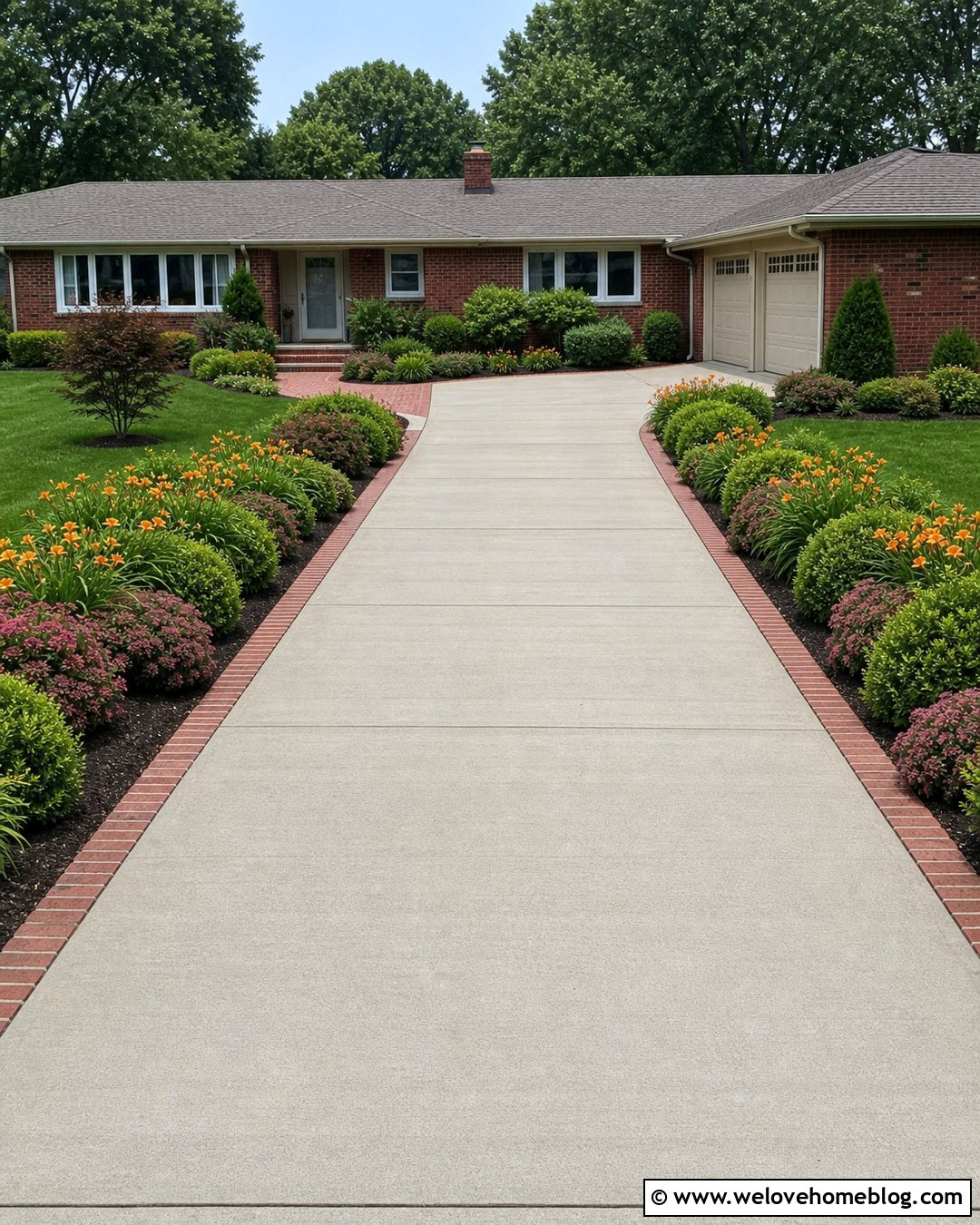
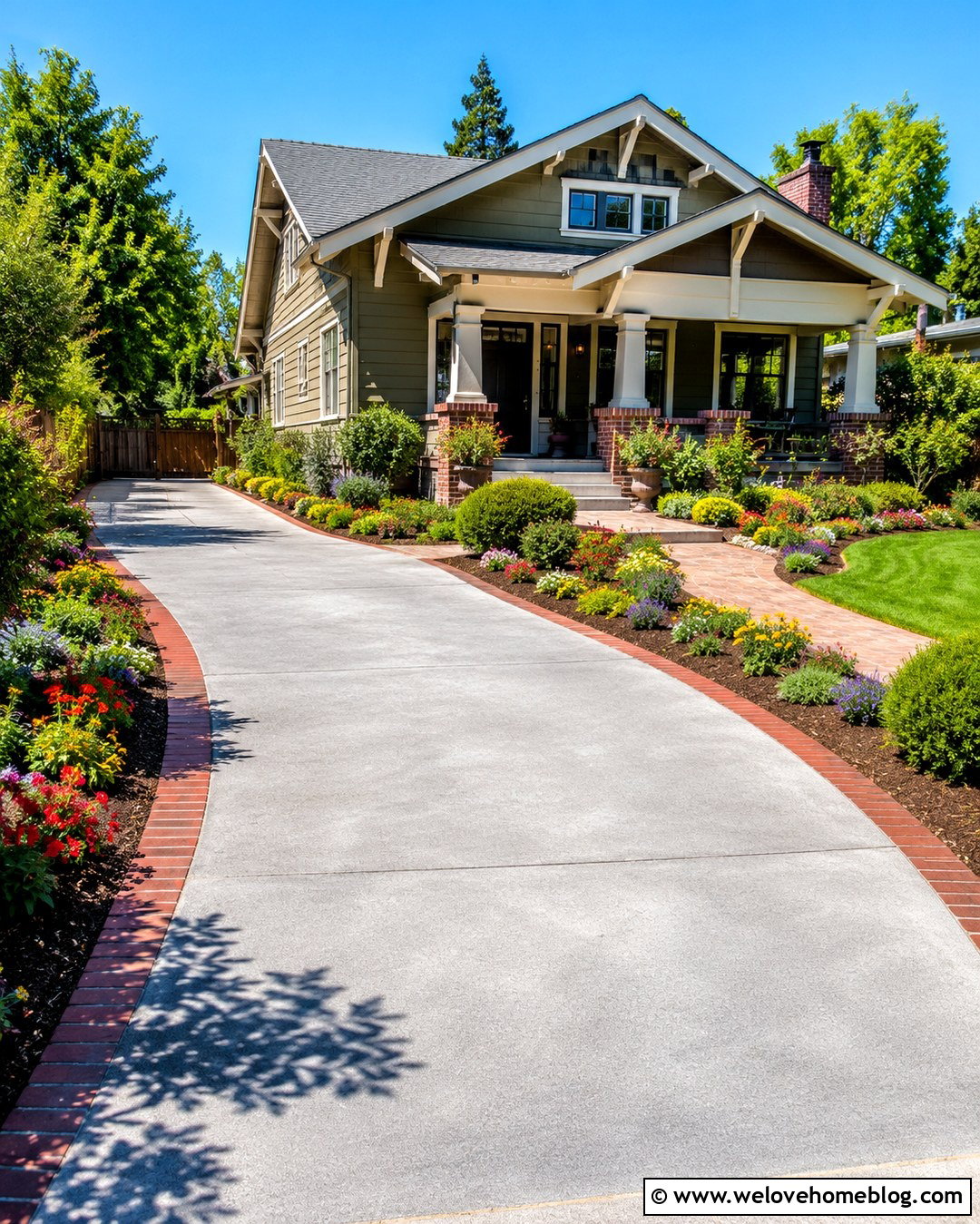
A straightforward driveway can gain warmth through consistent, easy-to-read planting. Start with a broom-finished concrete surface divided into clean rectangular slabs. Add a narrow red brick ribbon on each side, followed by continuous beds of daylilies, compact spirea, and rounded evergreen shrubs. Repeating one main flower in generous groups creates stronger visual impact than using many individual varieties. Select a flower color that complements the home’s brick, siding, or front door. The daylilies should sit far enough from the pavement that arching leaves do not interfere with tires or car doors. At the garage, widen the beds and introduce taller shrubs to soften the building. This complete layout fits ranch, split-level, and traditional suburban homes, providing color while preserving a clean, practical driveway shape.
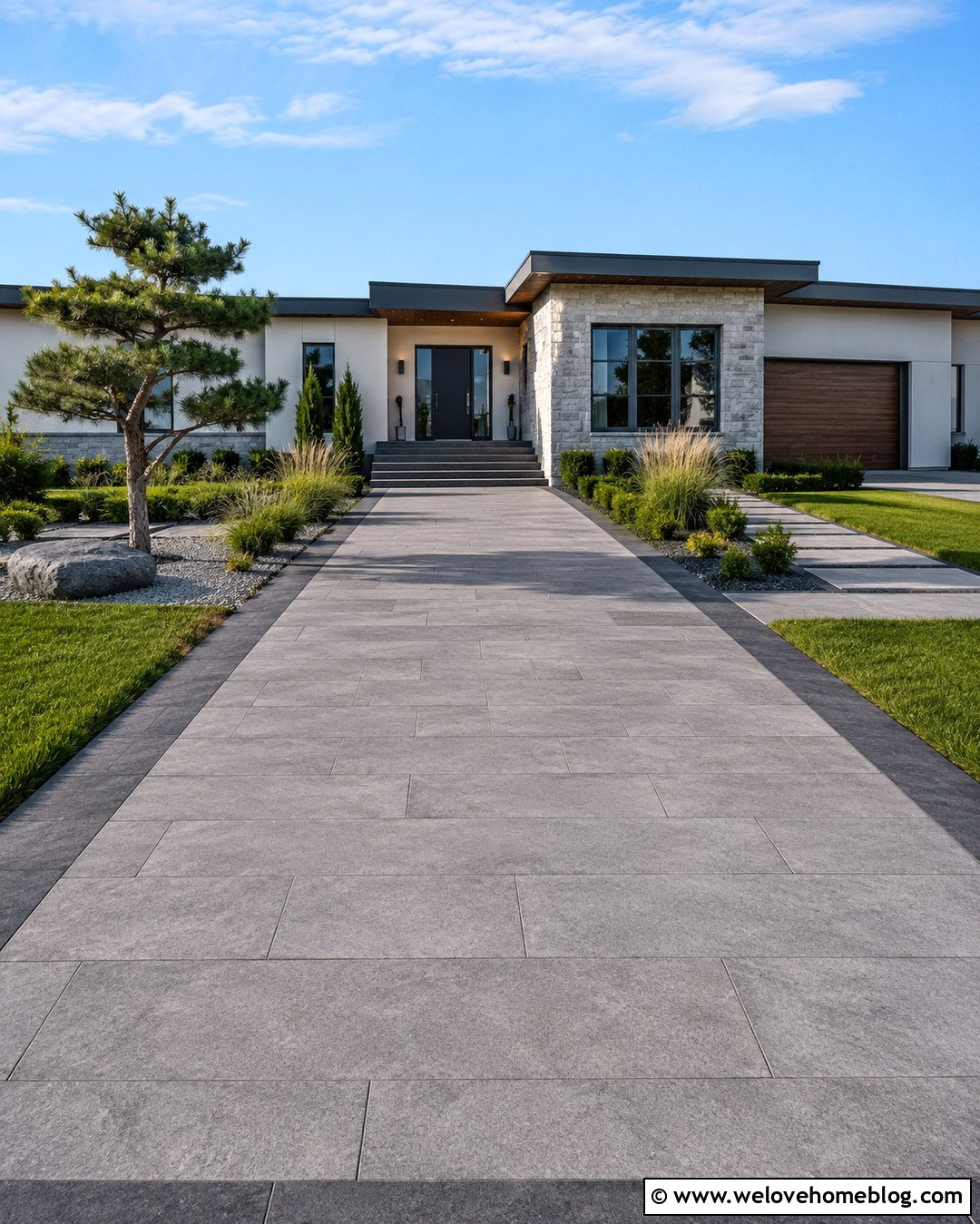
10. Permeable Paver Driveway With Flowering Thyme
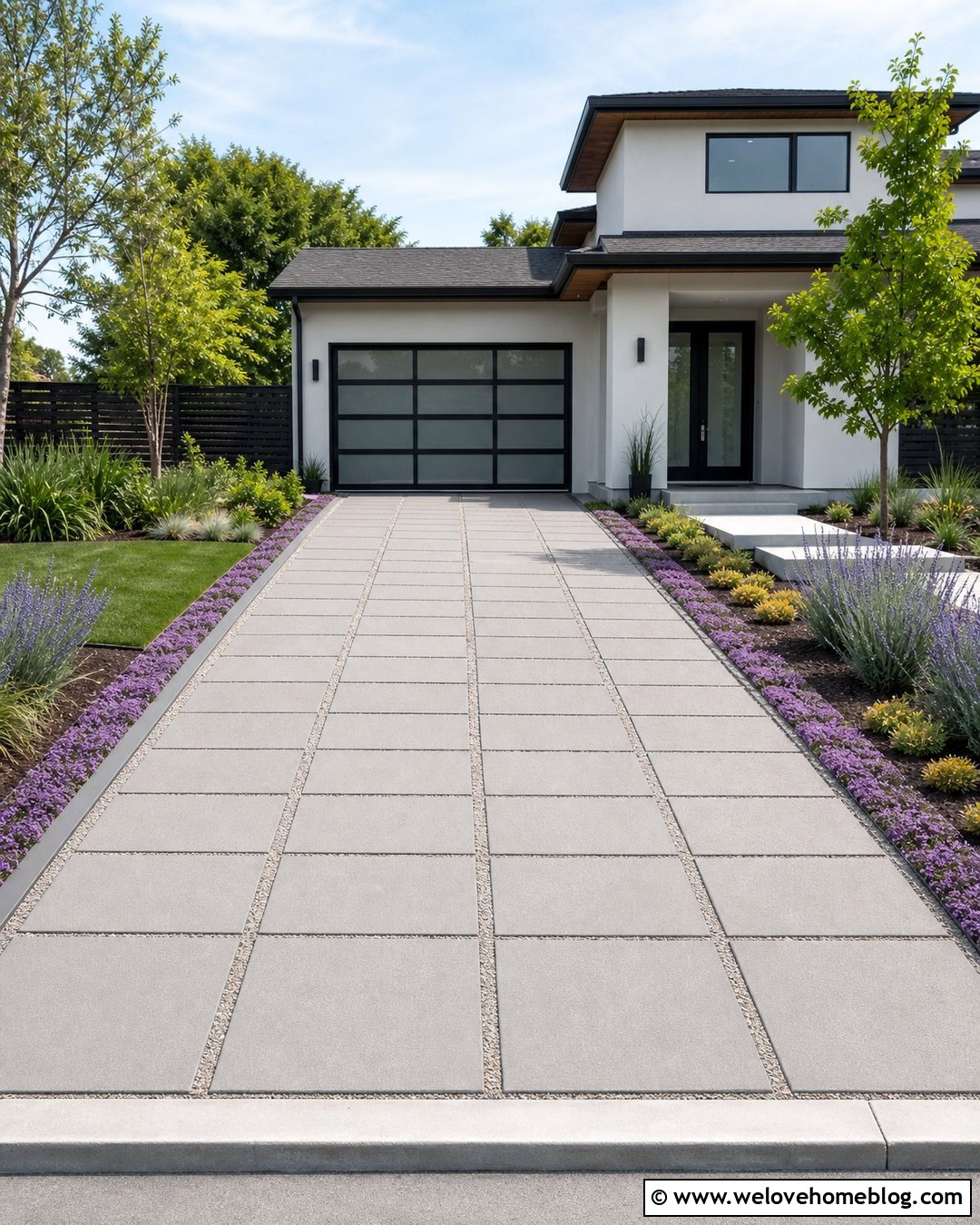
Small flowers between and around permeable pavers can create a softer alternative to uninterrupted paving. Build the driveway with large gray permeable concrete pavers separated by narrow aggregate joints. Along low-traffic side margins, introduce flowering creeping thyme or another locally suitable, low-growing plant that can tolerate the site conditions. Keep the main tire paths open and level. A metal edge can contain the outer pavers, followed by wider beds filled with lavender, sedum, and ornamental grasses. This layered approach makes the tiny flowers part of a complete modern landscape instead of an isolated detail. Pair the driveway with a simple concrete walkway and restrained foundation planting. The design works especially well for contemporary, midcentury, and modern farmhouse homes with clean architectural lines.
11. Driveway Entrance With Climbing Roses
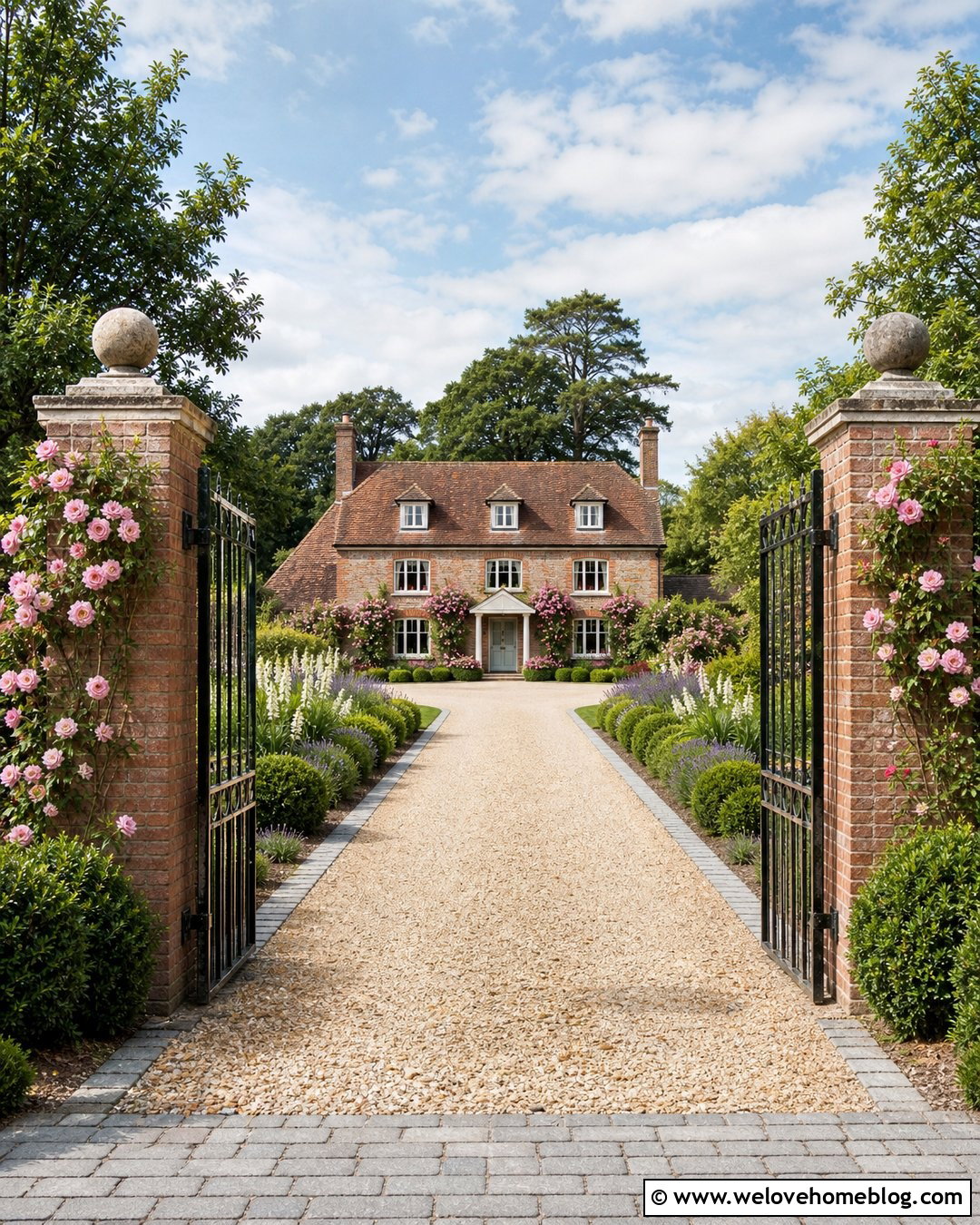
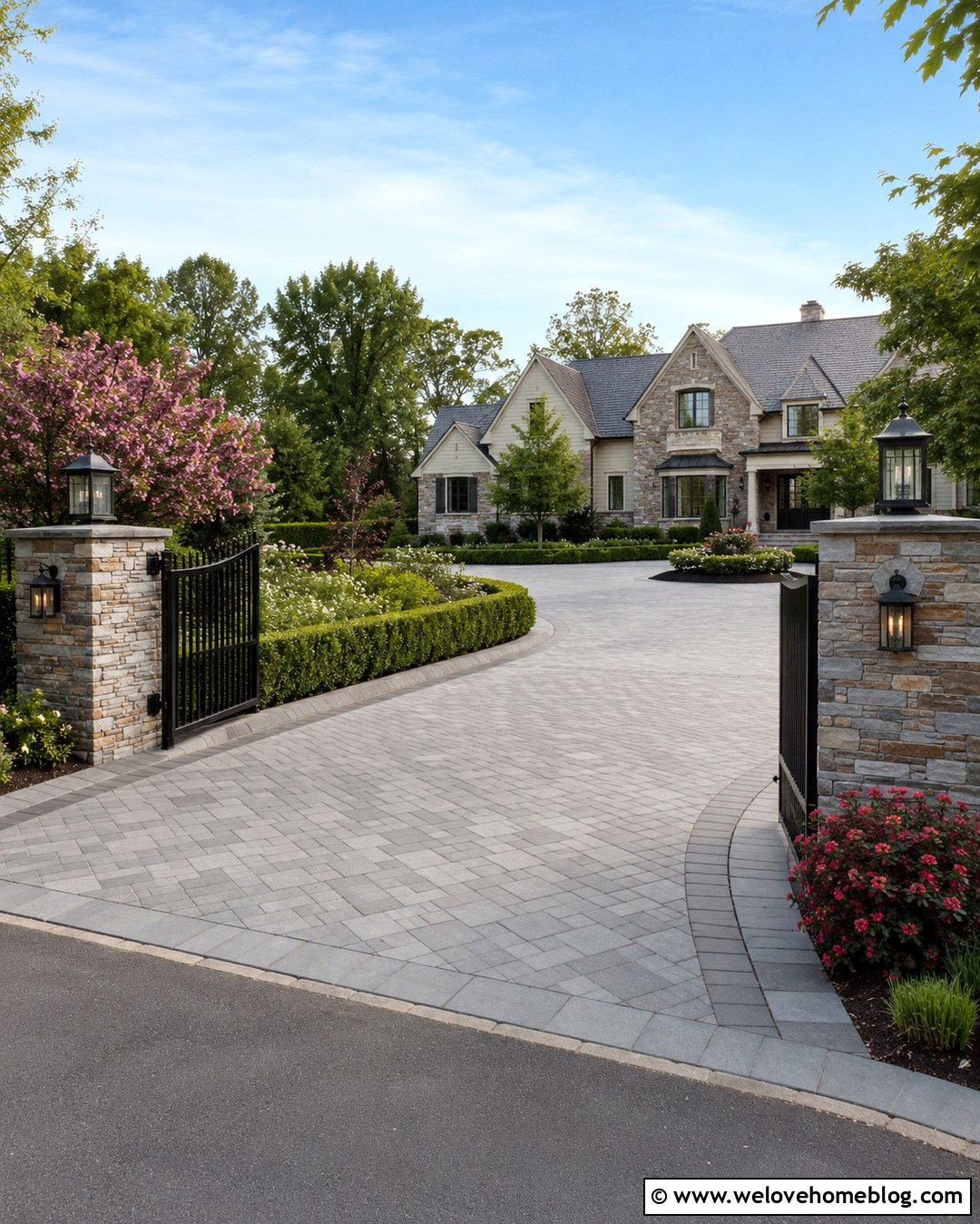
Flowering pillars can turn the beginning of a driveway into a clear and welcoming gateway. Use a pale pea gravel surface for a straight country driveway, contained by cobblestone edging. At the road, install two substantial brick or natural stone pillars with open metal trellises positioned safely away from moving vehicles. Train climbing roses over the trellises while keeping branches trimmed clear of the driveway. Continue the entrance with low beds of catmint, white salvia, and small evergreen shrubs. Repeating a few roses near the front porch connects the gateway with the house. Choose open sightlines instead of dense planting at the street. This complete design suits country, cottage, and English-inspired homes, combining an elegant entrance feature with practical gravel containment and layered flower landscaping.
12. Country Gravel Driveway With Black-Eyed Susans
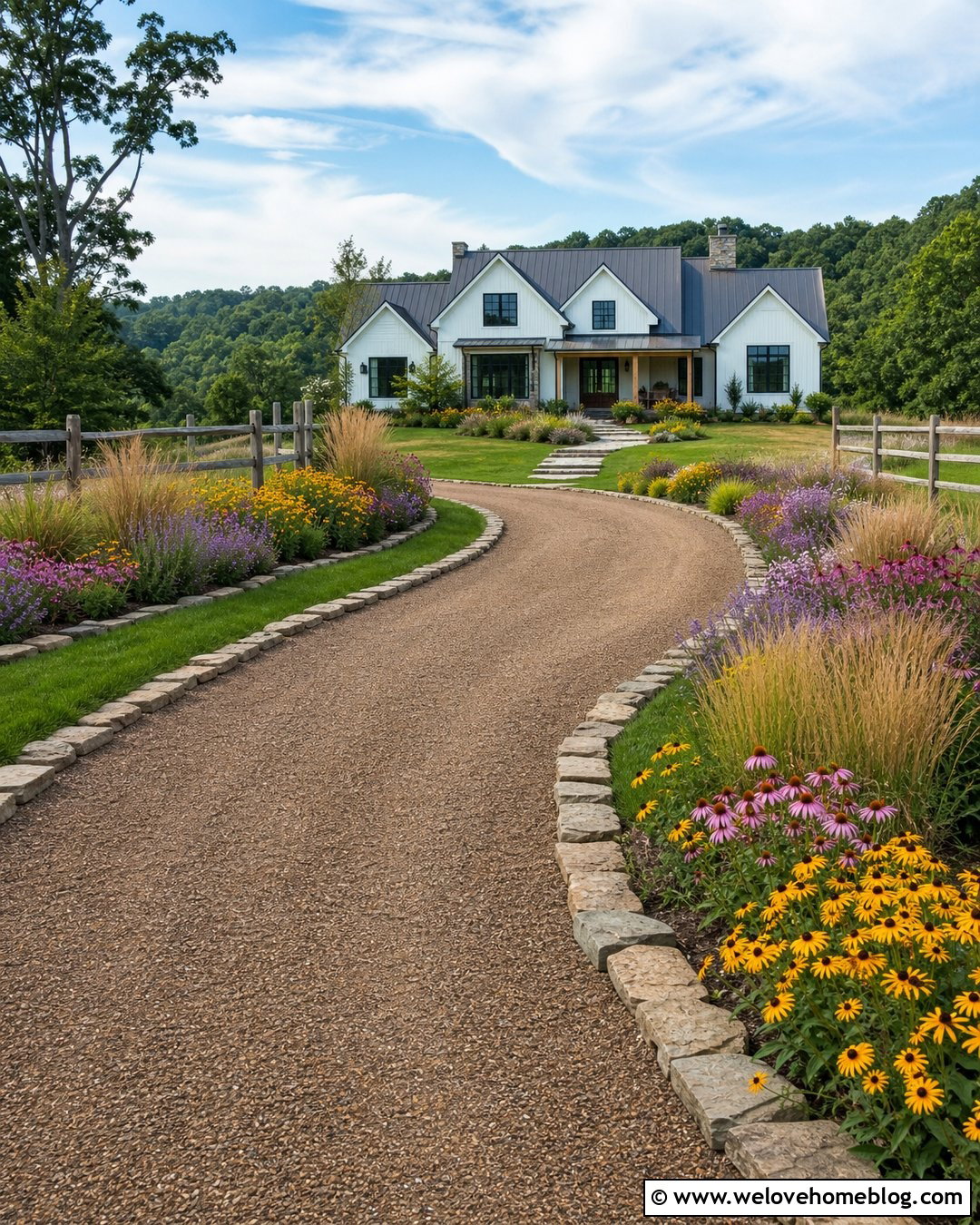
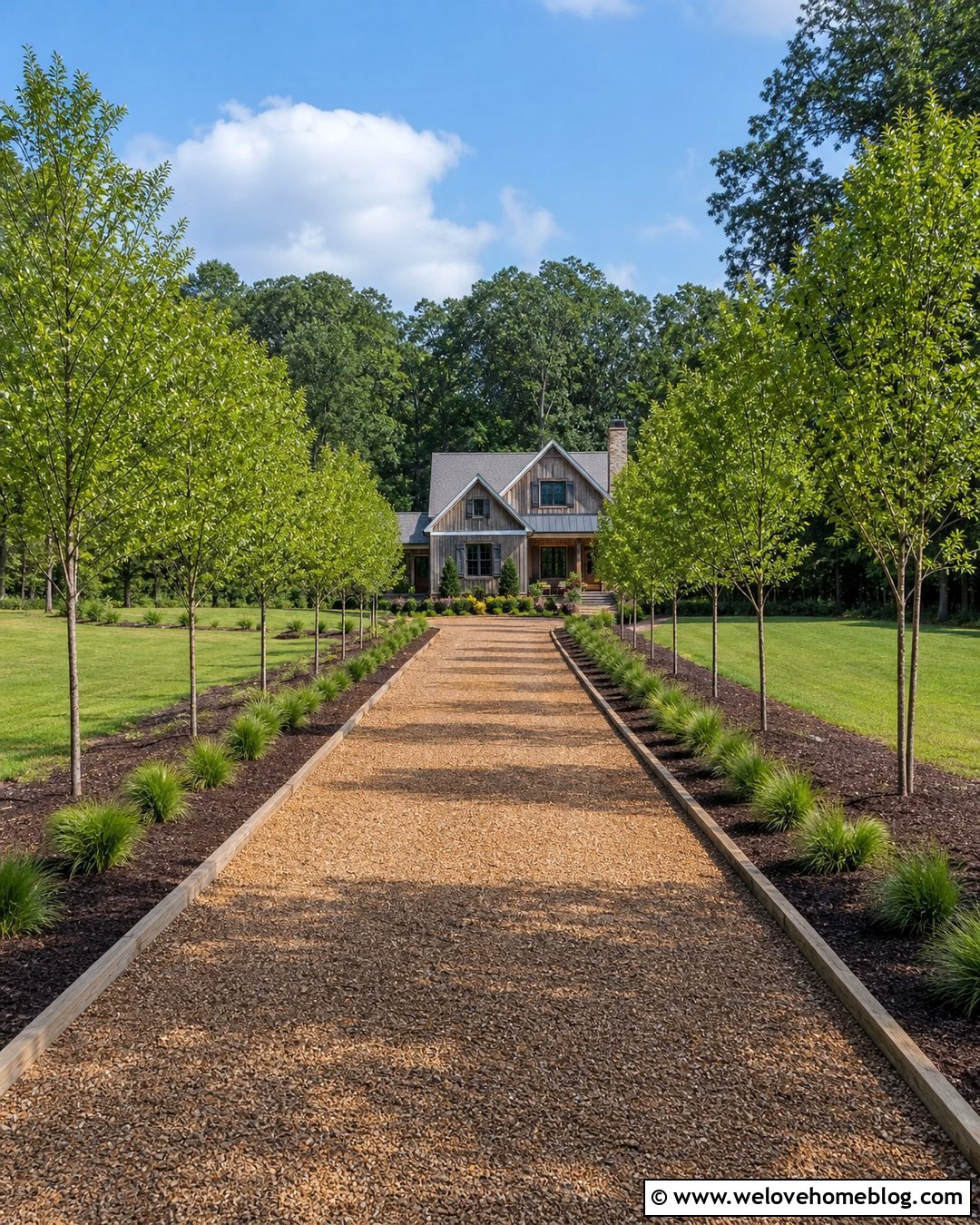
Golden flowers look especially vibrant beside warm brown gravel. Shape the driveway into a loose curve that follows the natural grade of the yard, then contain the gravel with rough-cut timber or weathered stone. Plant broad groups of black-eyed Susans with purple coneflowers, little bluestem, and low-growing asters. A mowed grass strip along the driveway keeps the informal beds from leaning directly into the travel area. Near the house, transition from meadow-like planting to more structured beds and a stone walkway. This creates a gradual change from rustic entrance to finished front door. The palette works well with barns, cabins, ranch houses, and modern farmhouses. Repetition is key: carry the same yellow flowers through several sections instead of planting one large patch in a single location.
13. Circular Driveway With Hydrangea Island
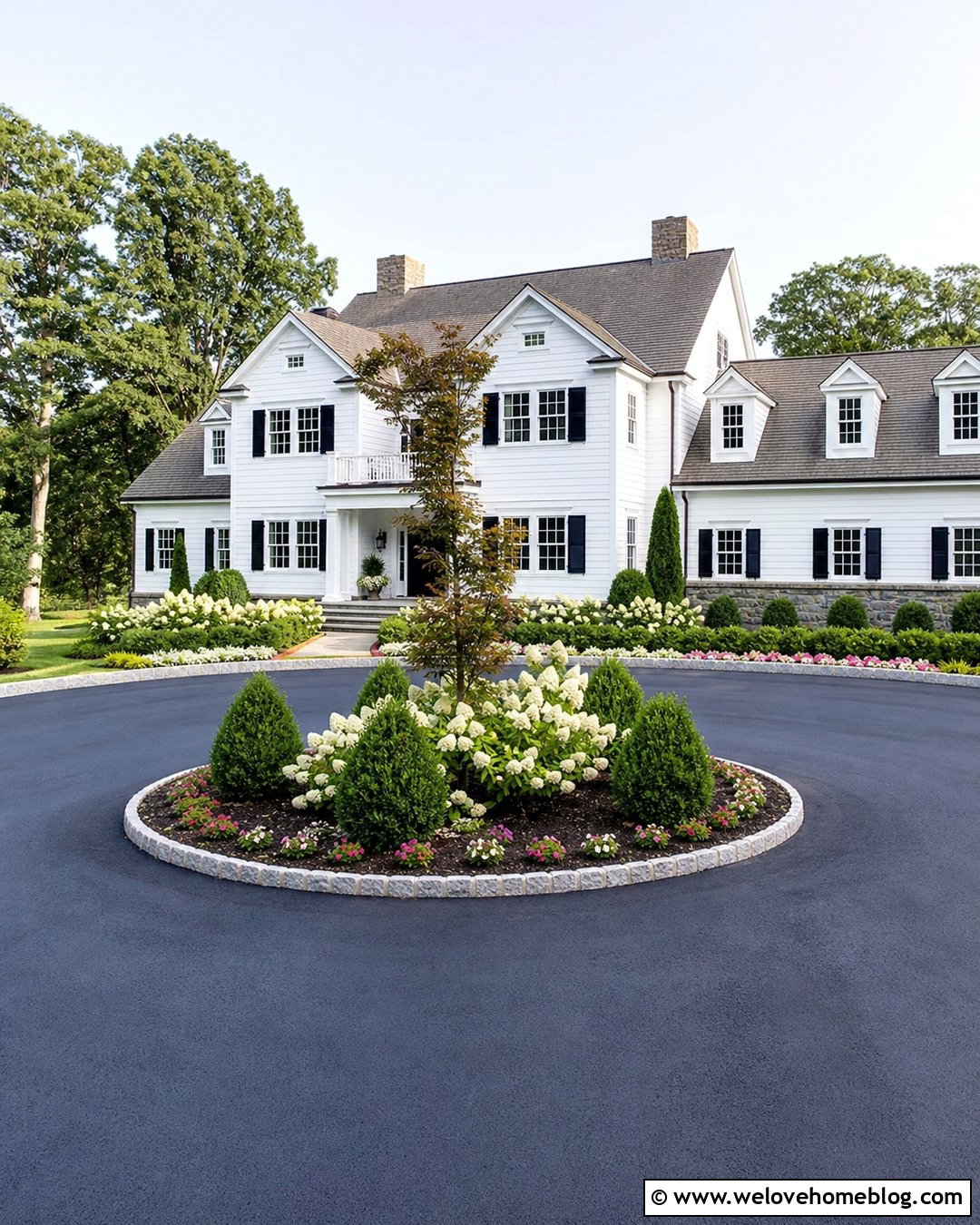
The center of a circular driveway can become the focal point of the entire front yard. Surround a smooth black asphalt drive with a flush granite curb, then build a large central island containing white panicle hydrangeas, compact evergreens, and a small ornamental tree. Use low annual flowers around the island’s outer edge so drivers have clear views across the circle. Match those annuals in smaller beds near both driveway entrances for continuity. Dark mulch and a simple lawn border will keep the flowering island polished. The arrangement should be attractive from every angle, including the street, front porch, and driveway. This complete landscape suits Colonial, French country, and larger suburban homes. Avoid placing overly tall or dense plants where they could hide vehicles entering or leaving the property.
14. Modern Concrete Driveway With Salvia
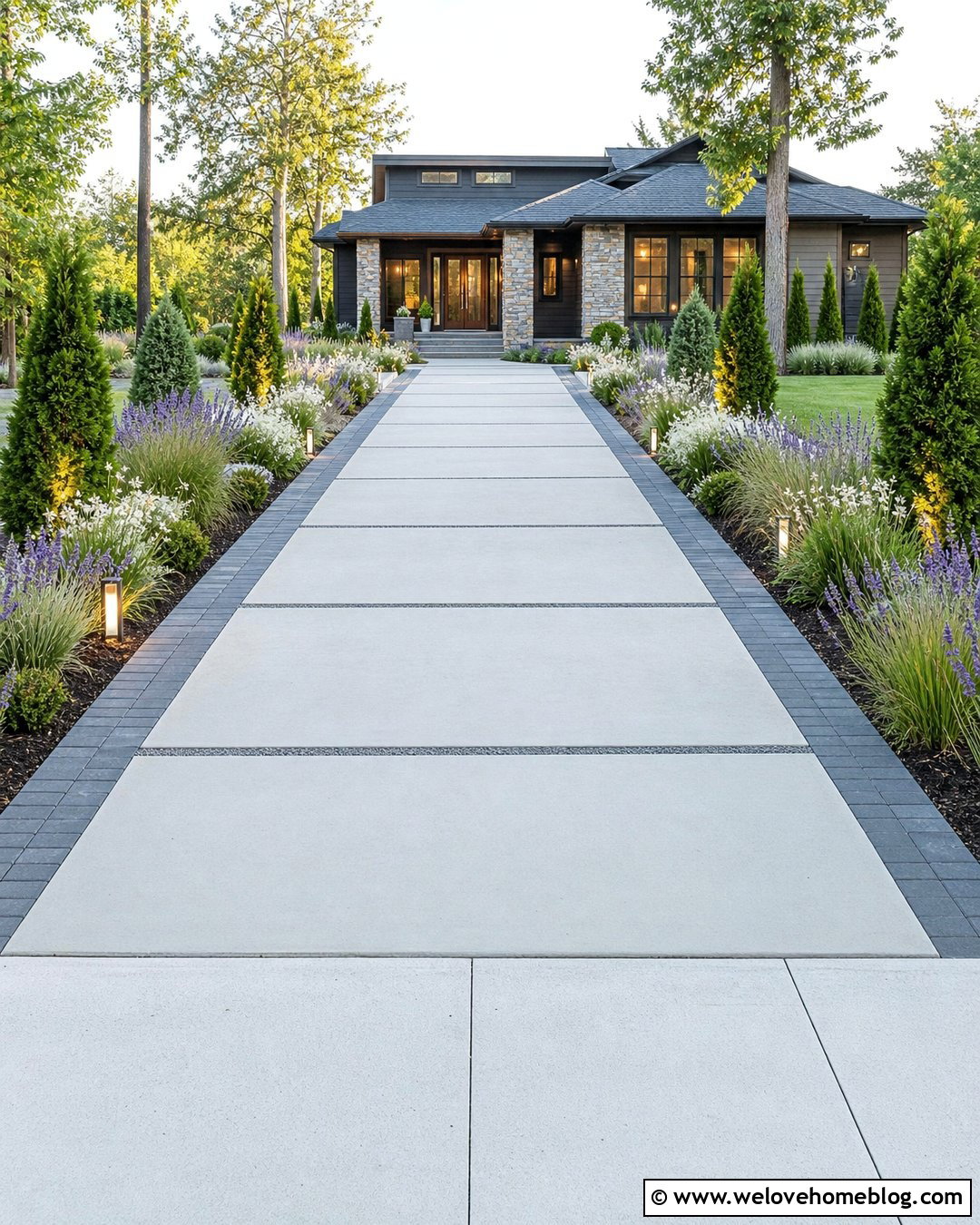
Strong lines and a limited flower palette can make driveway planting feel distinctly modern. Use large-format pale gray concrete slabs separated by thin gravel joints. Keep the driveway straight, with a charcoal paver border that echoes dark window frames or exterior trim. Create rectangular planting beds containing repeated purple salvia, white gaura, sculptural grasses, and clipped evergreen forms. Avoid mixing too many colors. The restrained planting lets flower shape and movement provide interest without softening the architecture excessively. Low linear lighting can be integrated along the border while remaining unobtrusive during the day. Extend one bed toward the front walkway to connect the driveway with the entrance. This design works best with contemporary and modern homes, where paving, flowers, facade, and landscape share the same clean geometry.
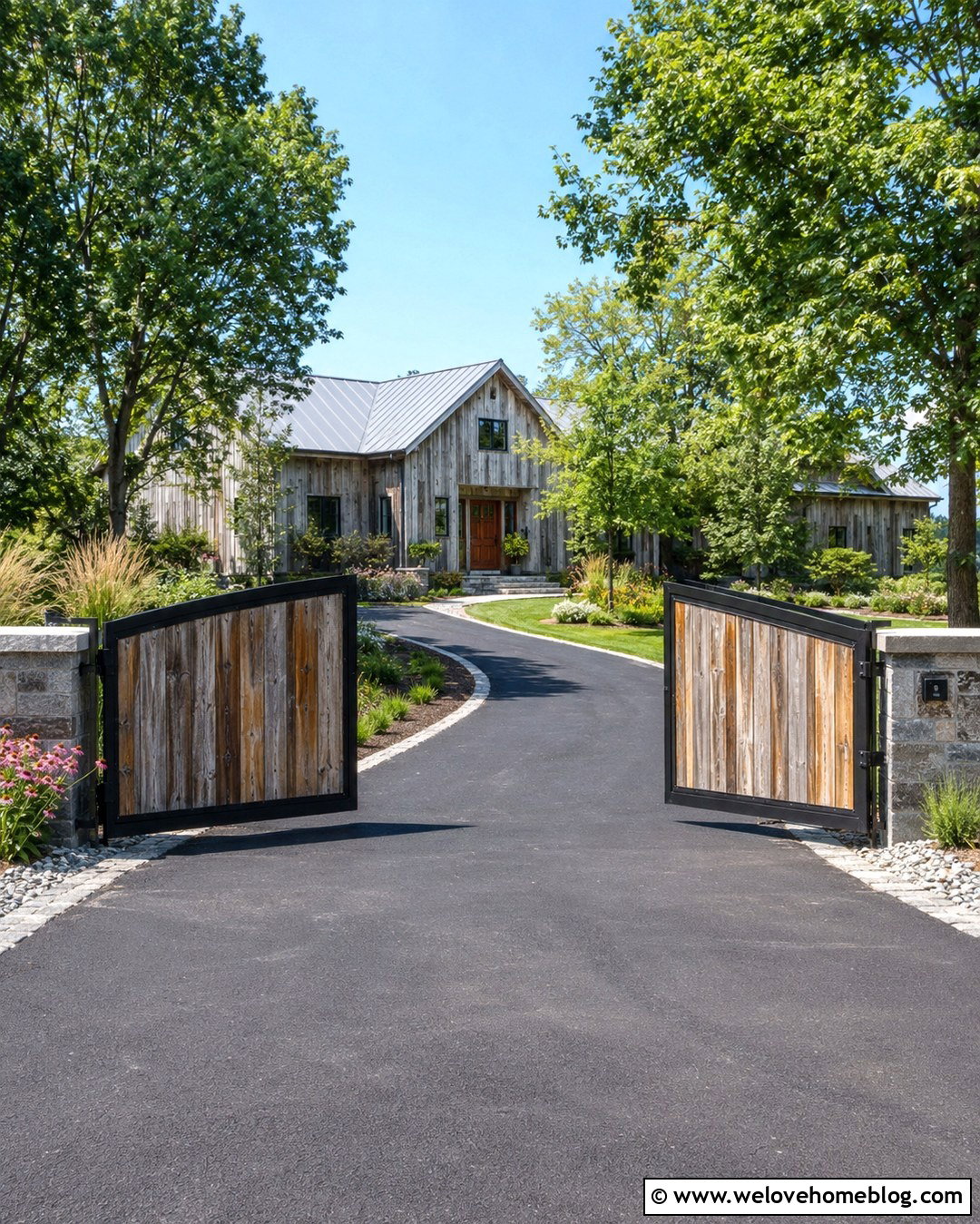


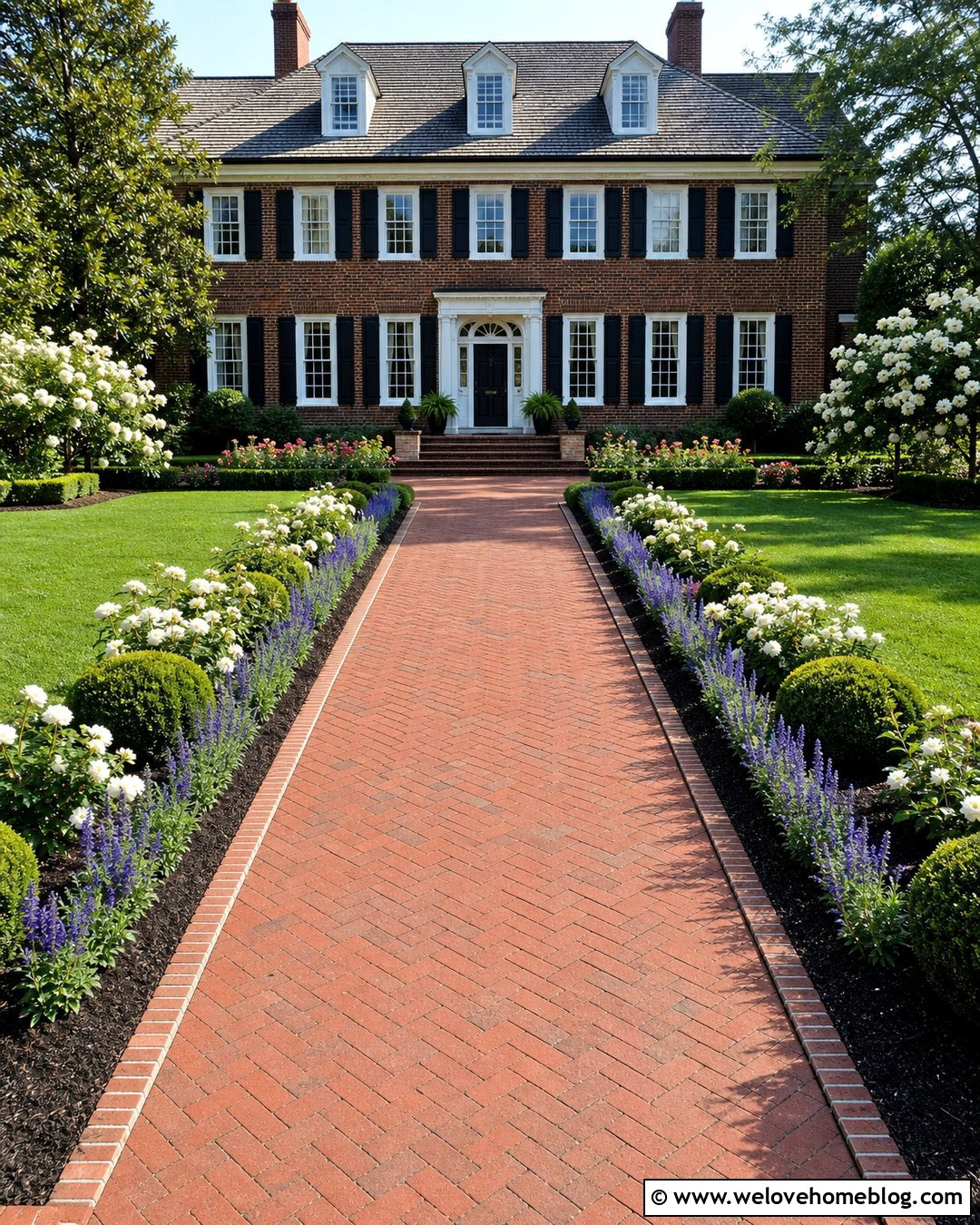
15. Farmhouse Driveway With Zinnia Borders
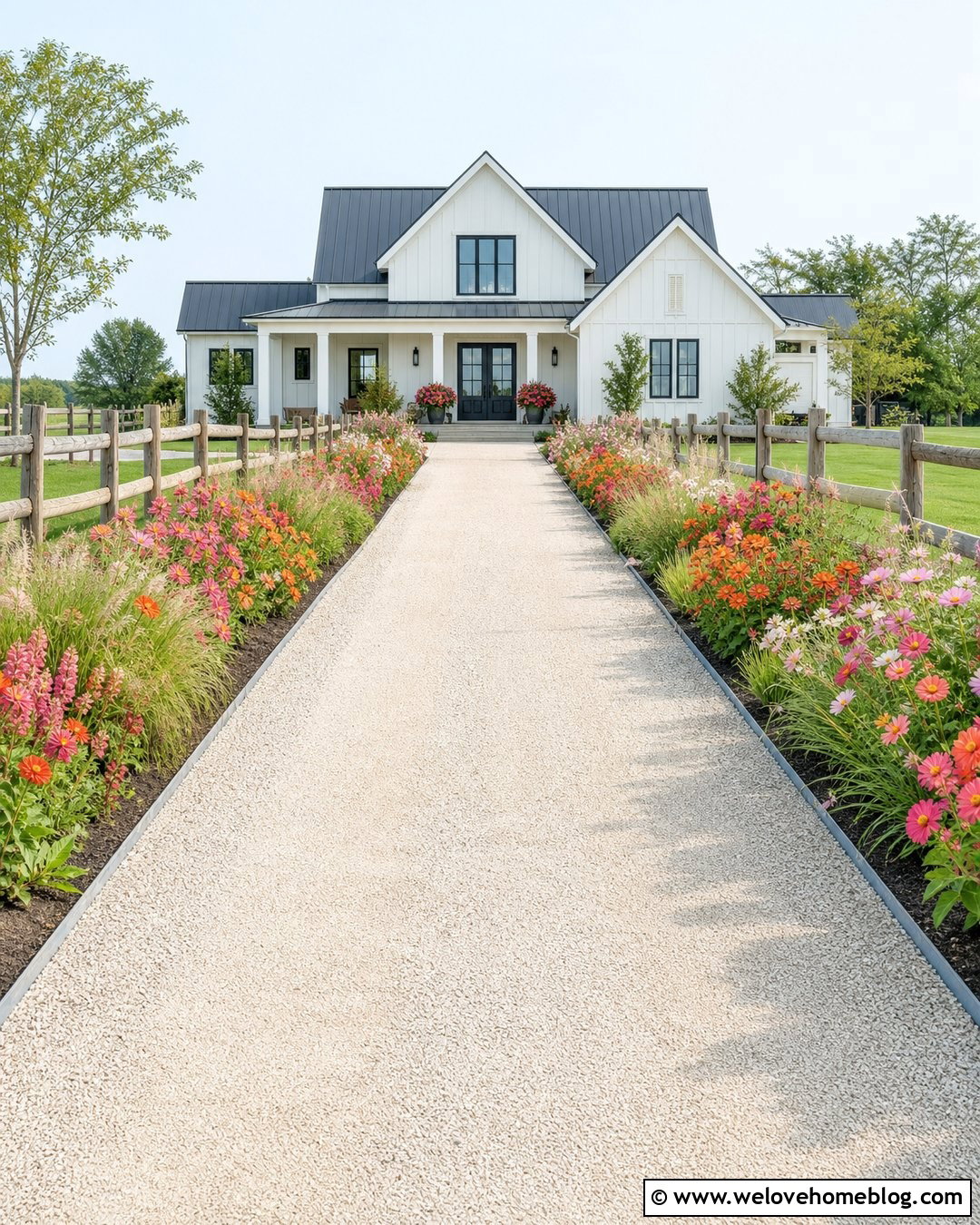
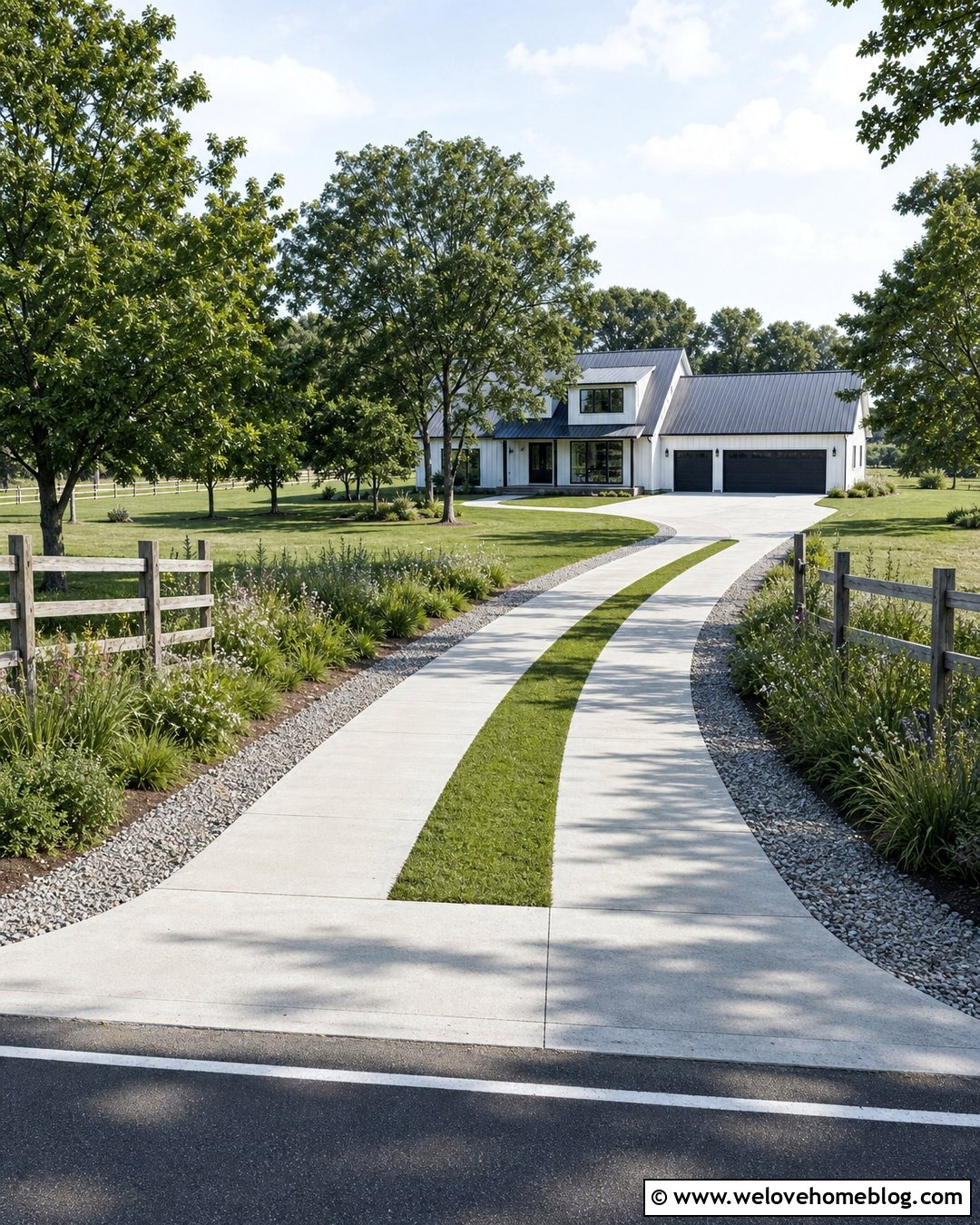
Bright zinnias can give a farmhouse driveway the welcoming color of a cutting garden. Begin with a wide cream-colored crushed limestone driveway leading straight toward the home. Use galvanized steel edging to maintain crisp gravel boundaries, then create deep flower beds near the entrance and garage. Mix zinnias in coordinated pink, coral, orange, and white shades with cosmos, snapdragons, and airy grasses. Leave occasional breaks in the border for lawn access and pedestrian movement. A simple split-rail fence behind the flowers provides height and reinforces the country setting. Repeat smaller zinnia groups beside the porch steps. This complete look is cheerful but still organized because the gravel shape, metal edging, fence, and flower palette remain consistent from the road to the house.
16. Curved Asphalt Driveway With Daffodils
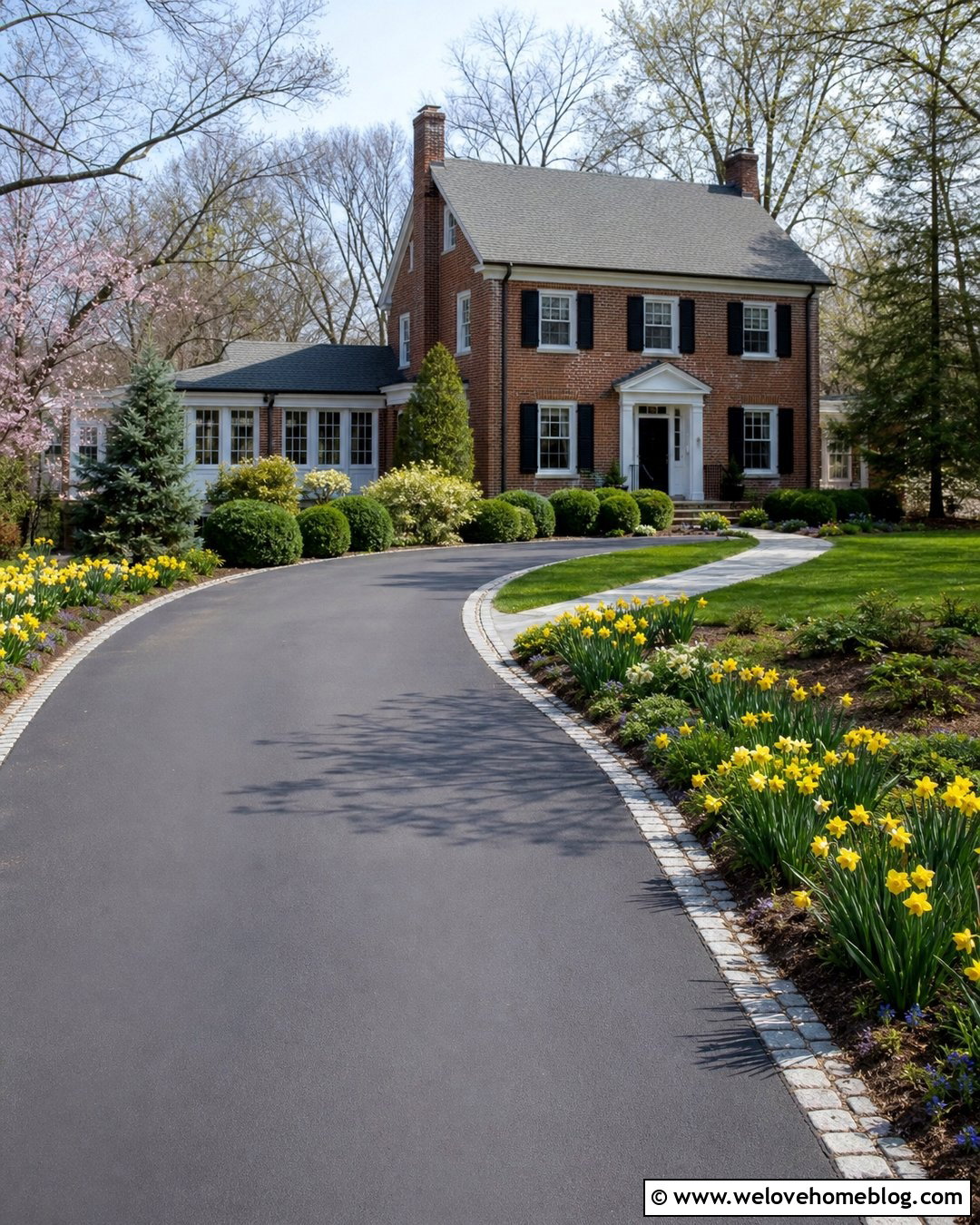
Spring bulbs can transform a curved driveway before much of the yard begins growing. Edge a smooth black asphalt surface with a narrow granite cobblestone ribbon, then plant sweeping drifts of daffodils that follow the curve. Mix the bulbs among evergreen groundcover, compact shrubs, and later-blooming perennials so fading foliage is less noticeable. Rather than creating a thin line of individual flowers, use broad clusters that appear to move through the landscape. Continue several groups toward the front walkway for a connected composition. The yellow flowers contrast strongly with dark pavement and work well beside brick, stone, or white-sided homes. Place bulbs behind a small mulch or groundcover buffer, keeping leaves and flowers away from tires while maintaining the generous ribbon of seasonal color.
17. Brick Driveway With Geranium Borders
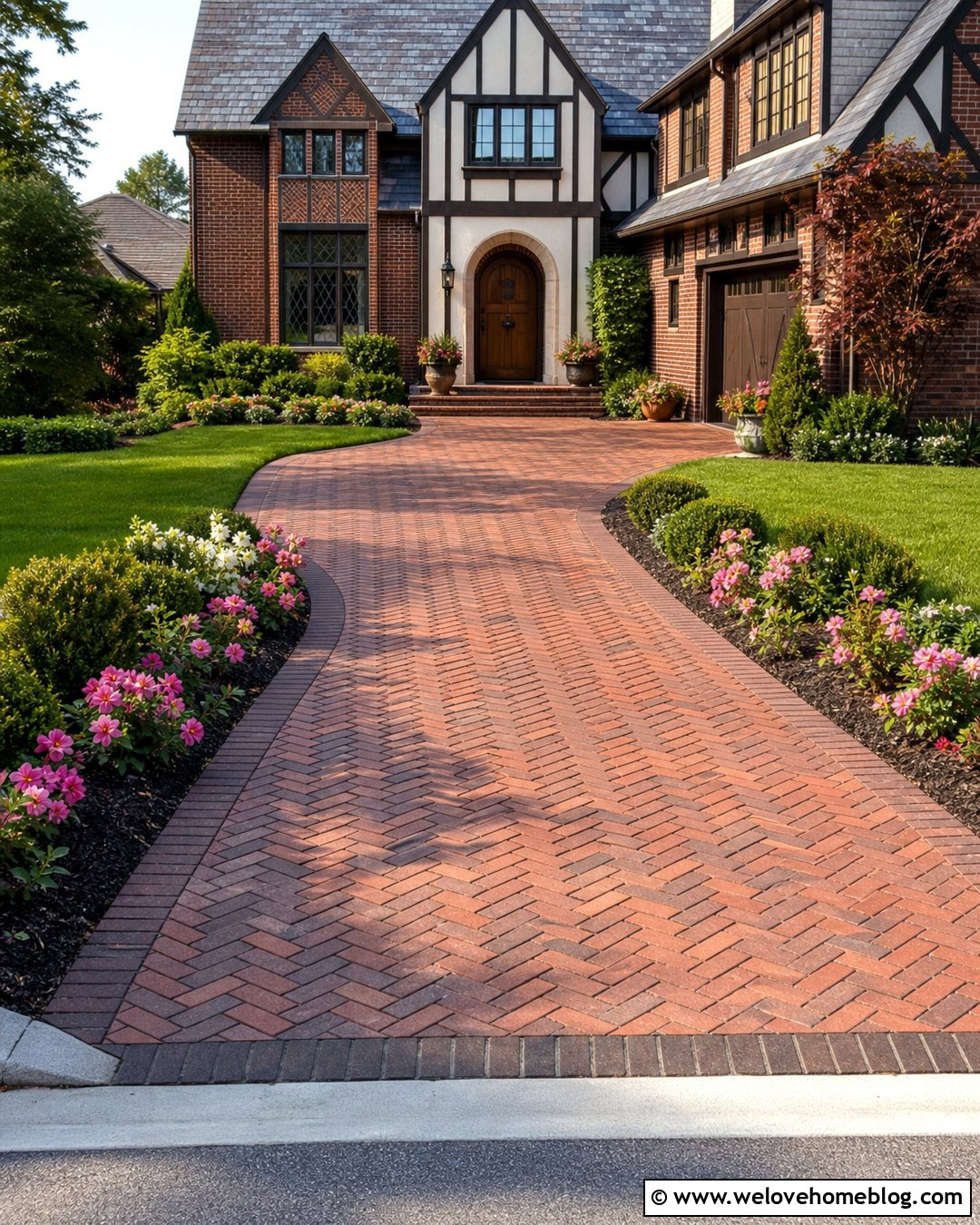
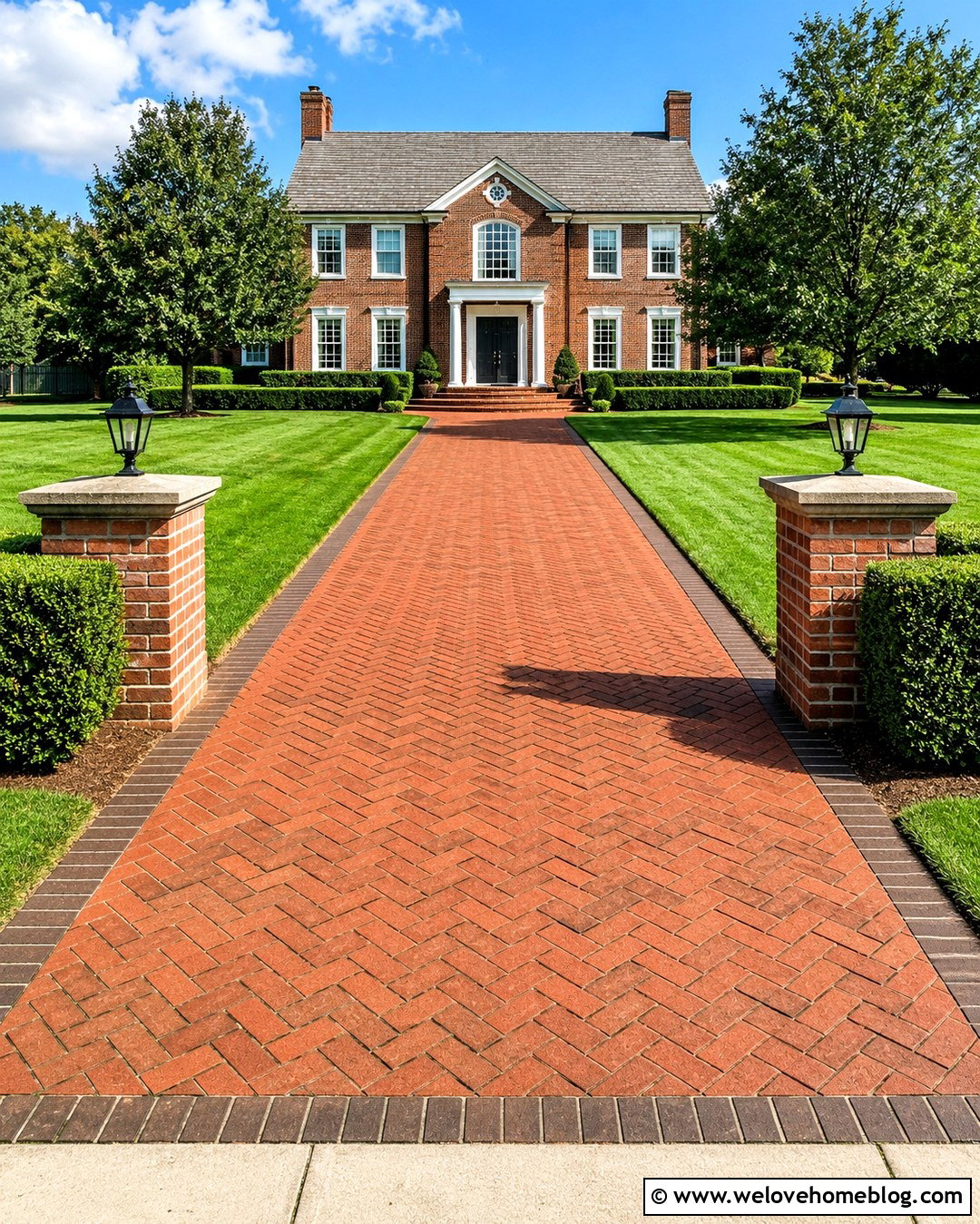
Brick paving and colorful geraniums create a warm, traditional entrance that feels carefully maintained. Lay red and brown clay brick pavers in a herringbone pattern, bordered by a darker brick soldier course. Shape shallow curved beds beside the driveway and fill them with hardy geraniums, compact roses, and low boxwood accents. Depending on the climate, colorful container geraniums can be added near the garage and porch for a stronger seasonal display. Use the same brick for the front walkway to make the driveway and entrance feel like one composition. Keep the planting beds broad enough for healthy growth but clear of door-opening zones. This complete design complements Tudor, Colonial, Craftsman, and traditional brick homes, especially when flower colors repeat tones found in shutters, trim, or the front door.
18. Resin Driveway With Coastal Flowers
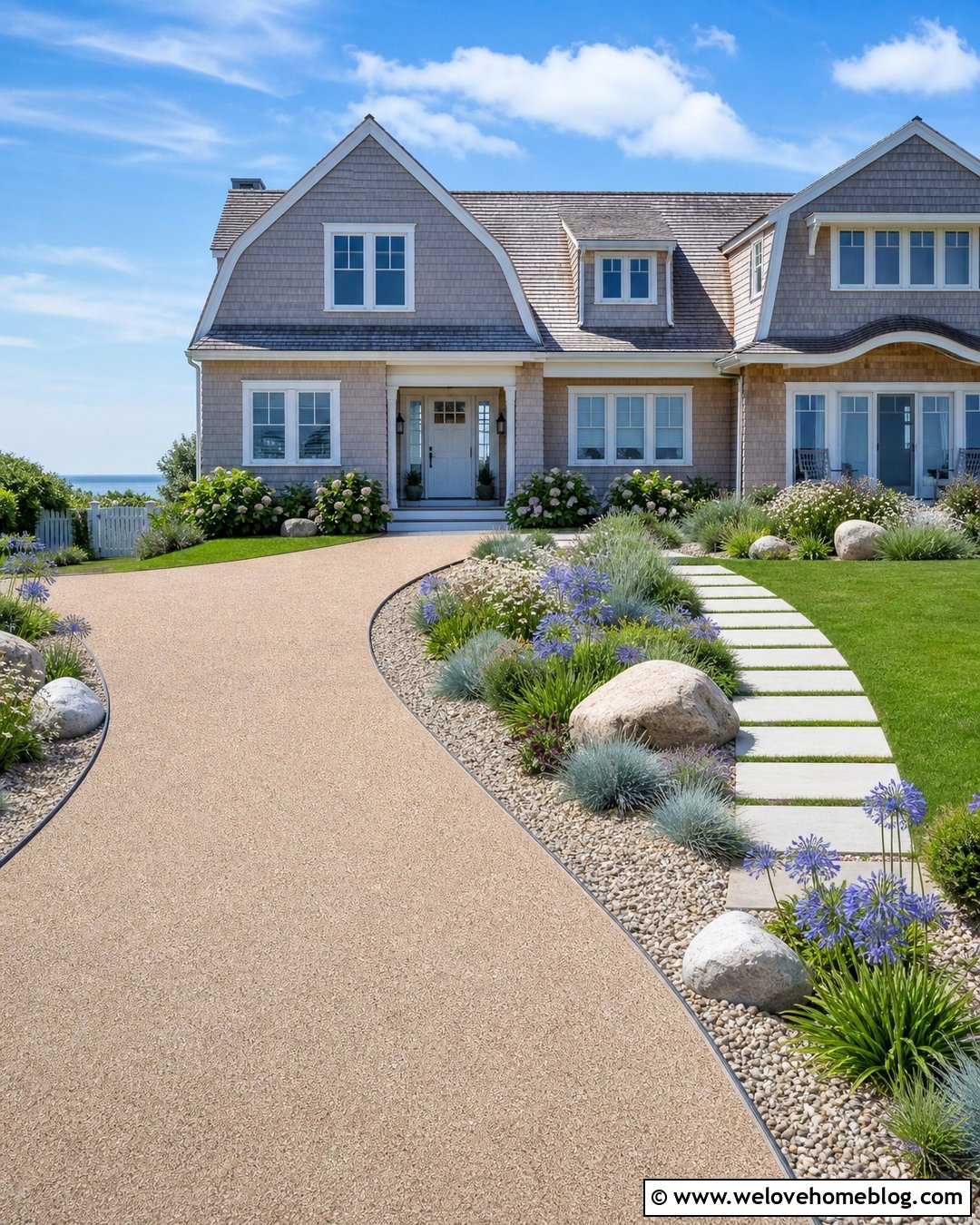
A light resin-bound gravel driveway provides a smooth, contemporary base for coastal-inspired planting. Choose a warm sand-colored aggregate finish and a gently curved layout leading to a shingle, stucco, or coastal cottage home. Frame the driveway with steel edging and free-draining stone beds filled with agapanthus, seaside daisies, gaura, and blue-gray grasses suited to local conditions. Use rounded boulders sparingly to reinforce the relaxed coastal character. The blue, white, and lavender flowers should appear in repeated drifts rather than small scattered spots. Near the house, add a wide stepping-stone walkway through the planting. Keep taller flower stems back from the pavement, where wind or rain will not bend them into the driveway. The finished entrance should feel bright, open, and naturally connected to its setting.
19. Shaded Driveway With Astilbe Flowers
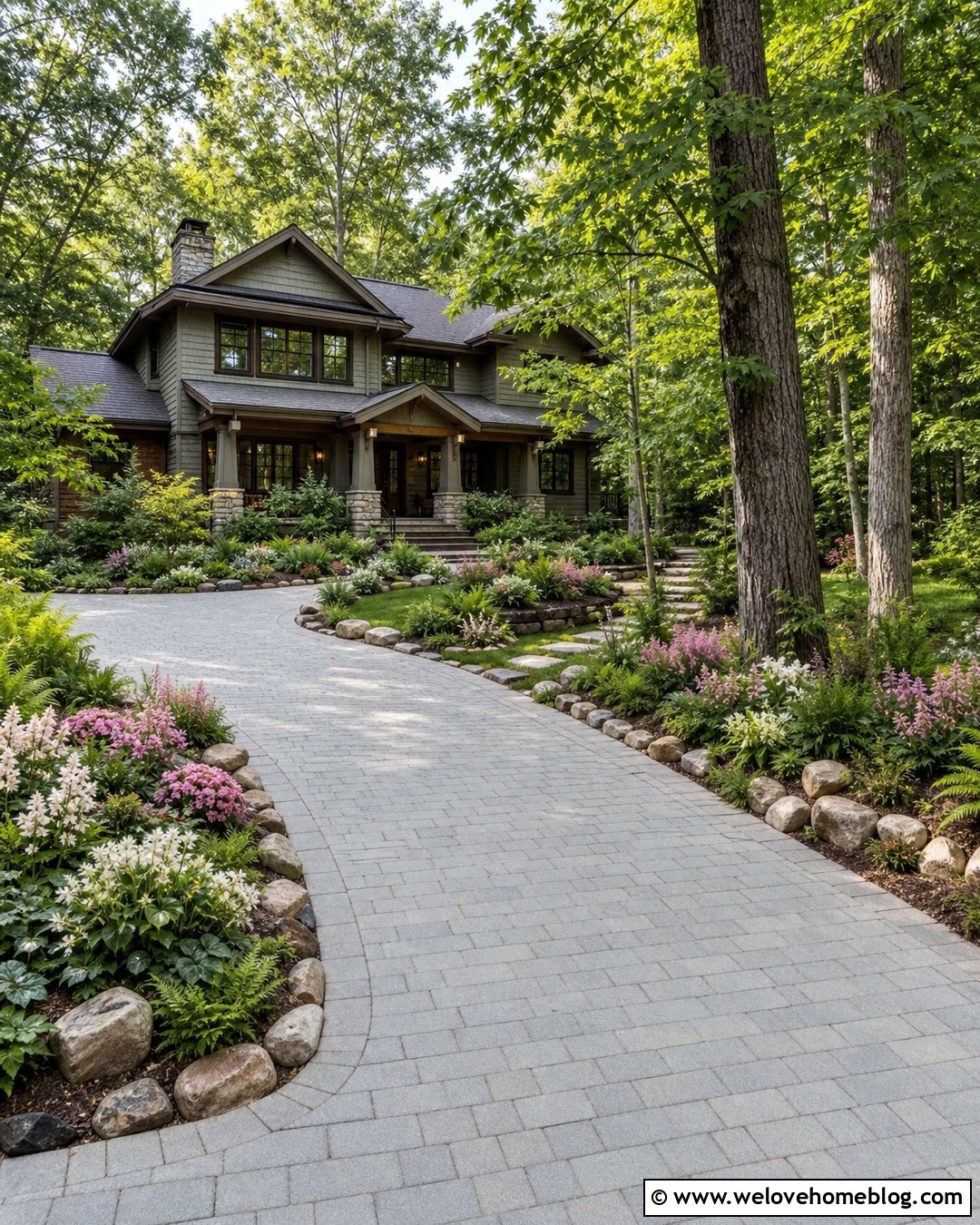
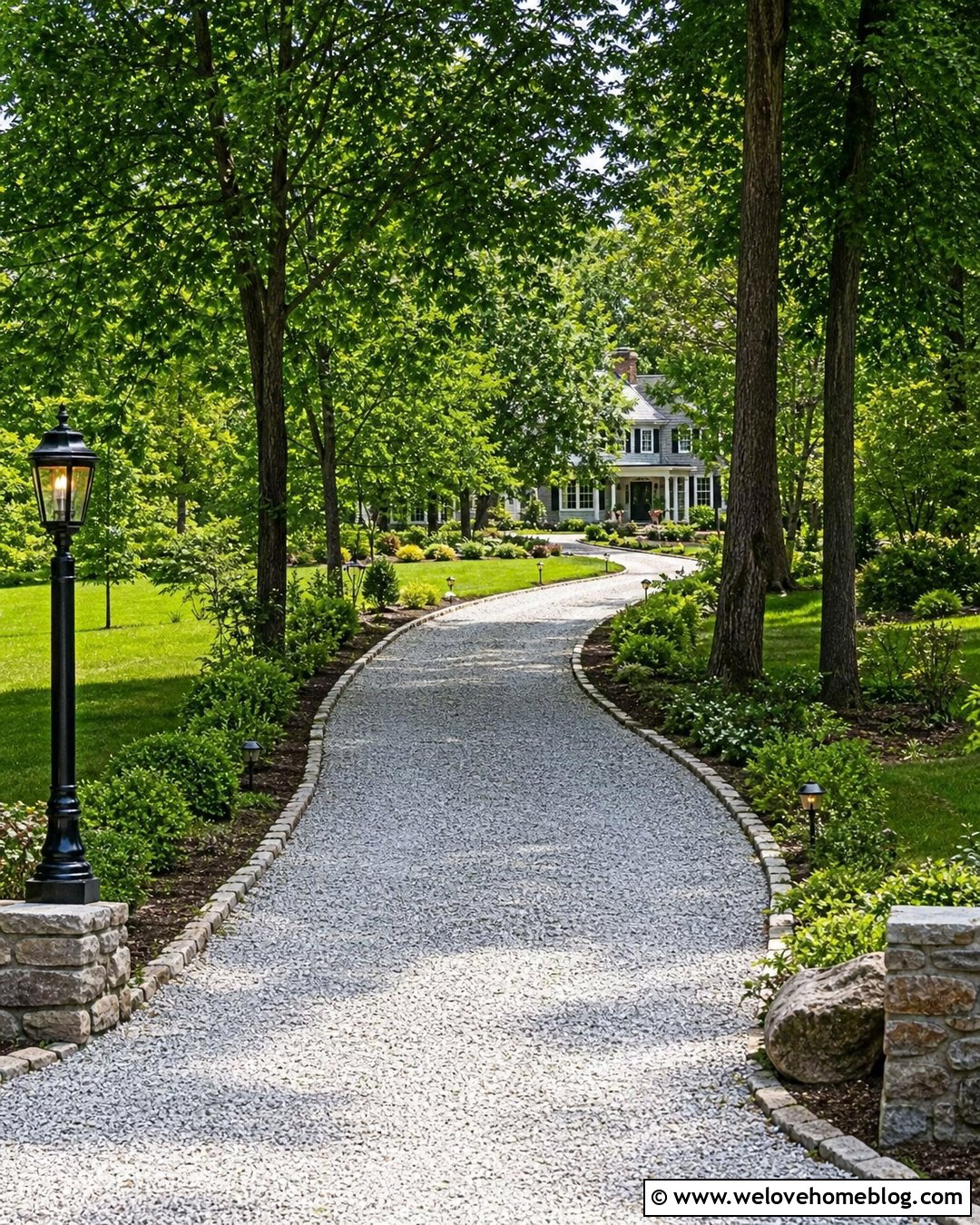
Filtered shade creates an opportunity for lush foliage and soft flower plumes. Use gray concrete pavers for a gently curved driveway passing beneath mature trees. Border the paving with natural fieldstone and layered beds of astilbe, flowering hellebores, hostas, coral bells, and ferns selected for the local climate. The foliage provides lasting texture, while pale pink, white, and burgundy blooms brighten the darker setting. Create broad planting pockets around tree root zones rather than digging narrow trenches against trunks. A woodland-style stepping-stone path can connect the parking area to the porch. Keep the lowest plants directly beside the driveway and place fuller foliage farther back. This balanced arrangement works with Craftsman, cottage, and woodland homes while making shade feel intentional, colorful, and welcoming.
20. Desert Driveway With Heat-Tolerant Flowers
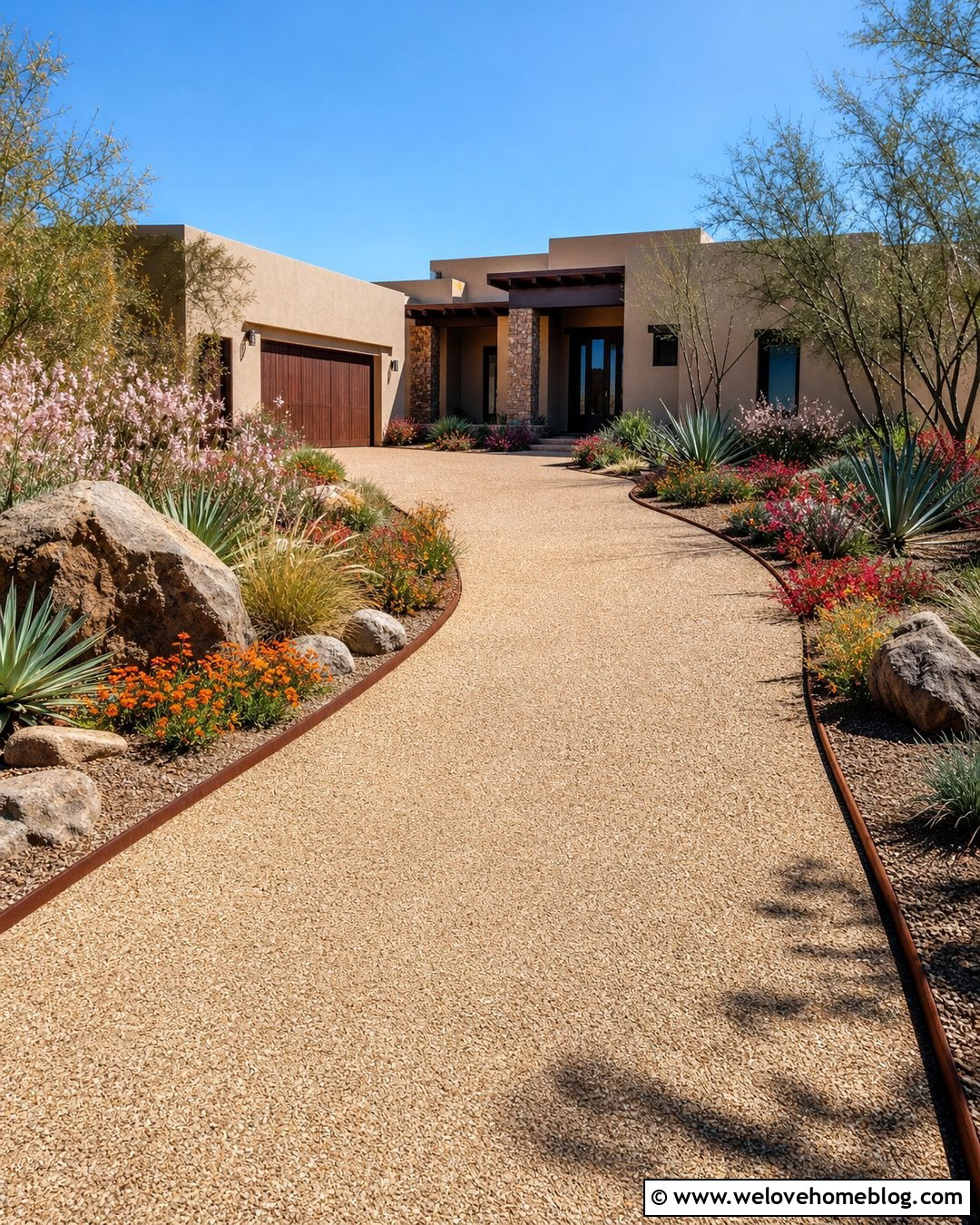
A hot, sunny driveway can be colorful without relying on a water-intensive lawn. Install a warm beige exposed aggregate driveway with a subtle curved layout and rust-colored steel edging. Surround it with decomposed granite beds containing flowering gaura, lantana, penstemon, desert marigold, and other plants appropriate for the region. Add sculptural succulents, ornamental grasses, and several large rocks to create year-round form. Arrange flowers in bold repeating groups rather than covering every inch of ground. The open spacing helps the driveway landscape feel clean and deliberate. Keep thorny or sharply pointed plants away from doors and walkways. This flower driveway design suits Southwestern, adobe, desert modern, and contemporary ranch homes, where the paving color and drought-conscious planting can complement the surrounding terrain.
21. Driveway With Raised Stone Flower Beds
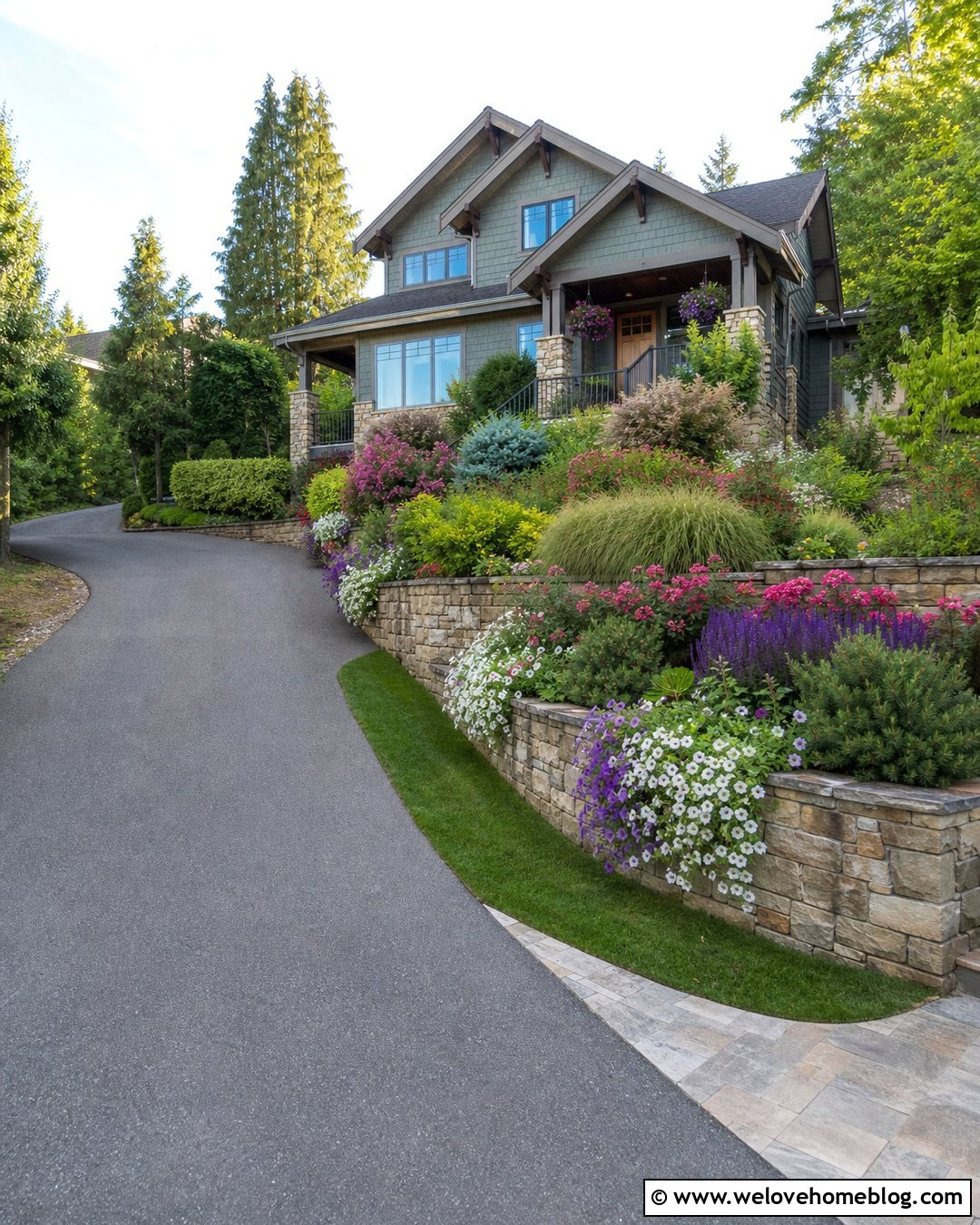
Raised beds can bring flowers into view while controlling soil near a sloped driveway. Use a medium-gray asphalt driveway with a curved route and build low retaining walls from tan natural stone along the uphill side. Fill the terraces with cascading petunias, compact roses, salvia, and ornamental grasses. Place taller shrubs at the back and trailing flowers near the wall so each layer remains visible. On the opposite side, use a narrow lawn strip or simple groundcover to keep the design balanced without making the driveway feel confined. Include drainage openings and avoid constructing walls where they could reduce turning space. Repeat the same stone around the front walkway or porch foundation. The finished layout works beautifully with hillside Craftsman, rustic, and traditional homes.
22. Driveway Mailbox Flower Bed
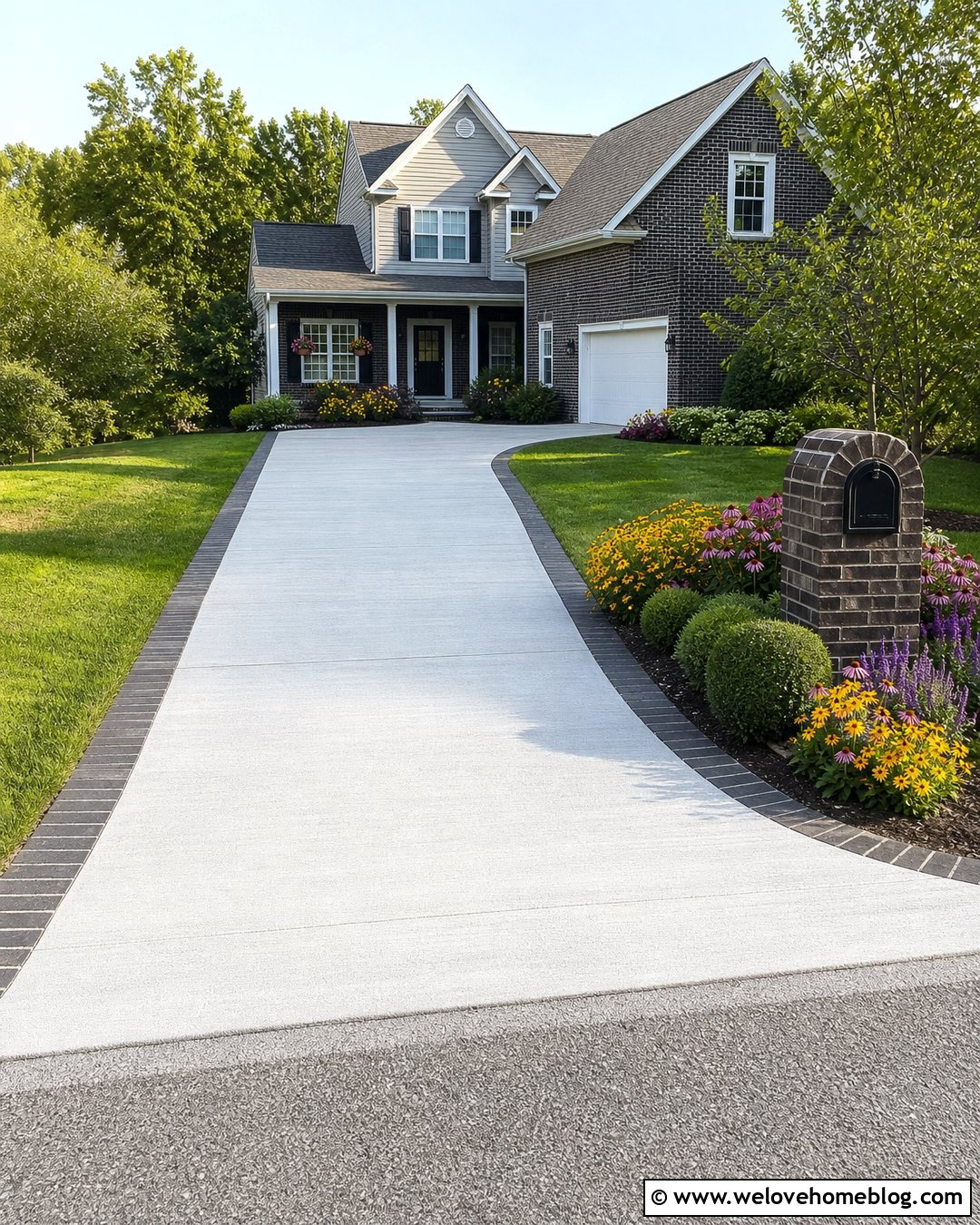
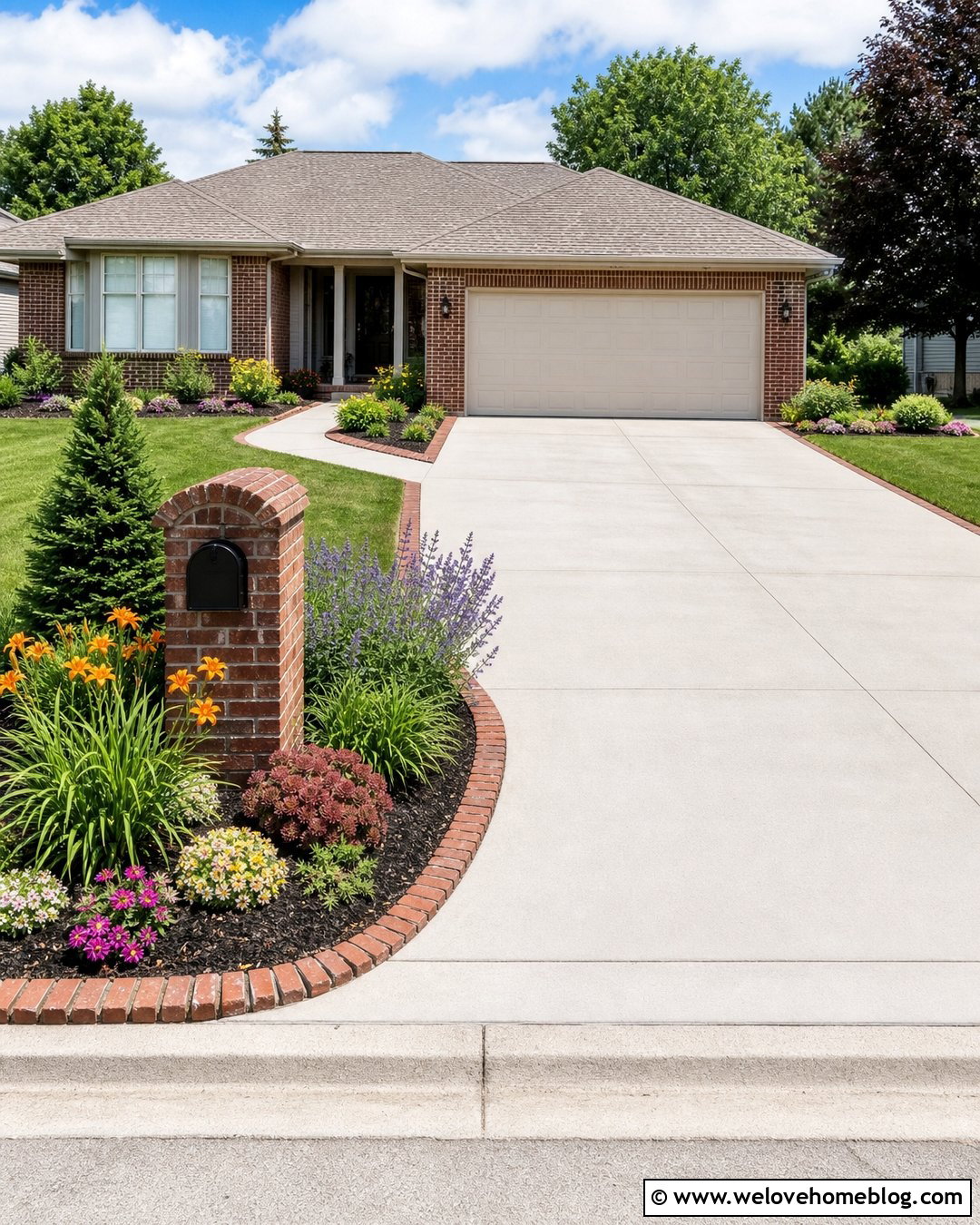
A mailbox garden should look like the natural beginning of the driveway rather than a separate decoration. Pair a straight broom-finished concrete driveway with a dark brick border and a matching brick mailbox column. Form a generous curved bed around the column, keeping plants low enough to preserve street visibility and easy mailbox access. Compact coneflowers, coreopsis, salvia, and seasonal annuals can create color from spring through fall when matched to the region. Add one or two rounded evergreens for structure, then repeat the flowers in small beds closer to the house. Use mulch or decorative gravel to create a clean transition from planting to pavement. This practical arrangement provides a strong first impression while connecting the street, driveway, lawn, and home through repeated materials and colors.
23. Driveway With Flowering Tree Borders
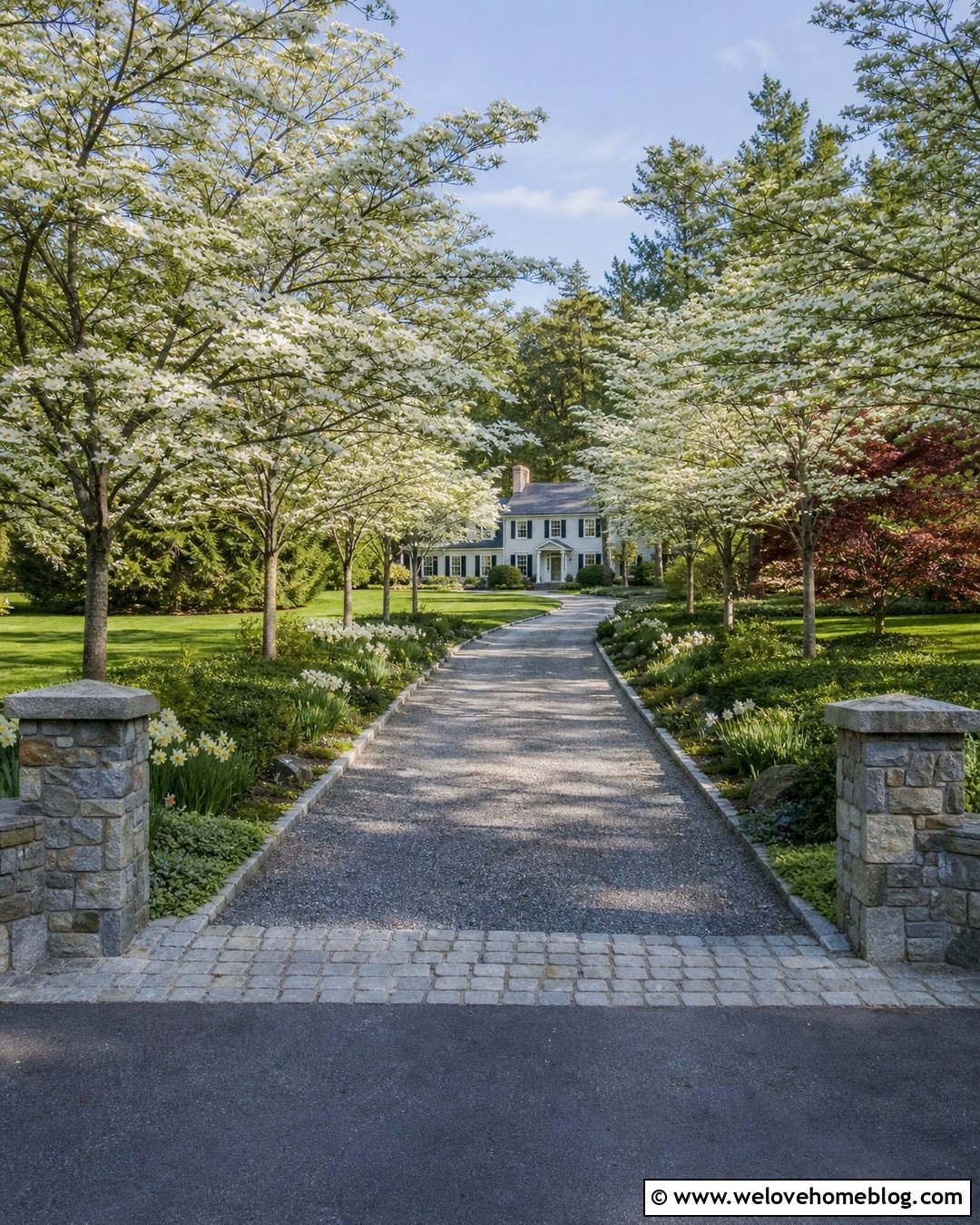
Flowering trees can frame a driveway with height while smaller blooms complete the ground-level design. Use a long, gently curved gray gravel driveway with a crisp steel or cobblestone edge. Plant evenly spaced dogwoods, redbuds, or another locally suitable flowering tree far enough from the pavement to allow for mature trunks and canopies. Beneath them, create broad beds of shade-tolerant flowers, spring bulbs, and low evergreen groundcover. Maintain open views near the road and avoid branches that could interfere with vehicles. A repeated tree rhythm naturally guides attention toward the house. Near the entrance, transition to more detailed beds beside stone pillars or a walkway. This layered approach suits country, Colonial, Craftsman, and estate-style properties with enough room for long-term tree growth.
24. Narrow Driveway With Slim Flower Beds
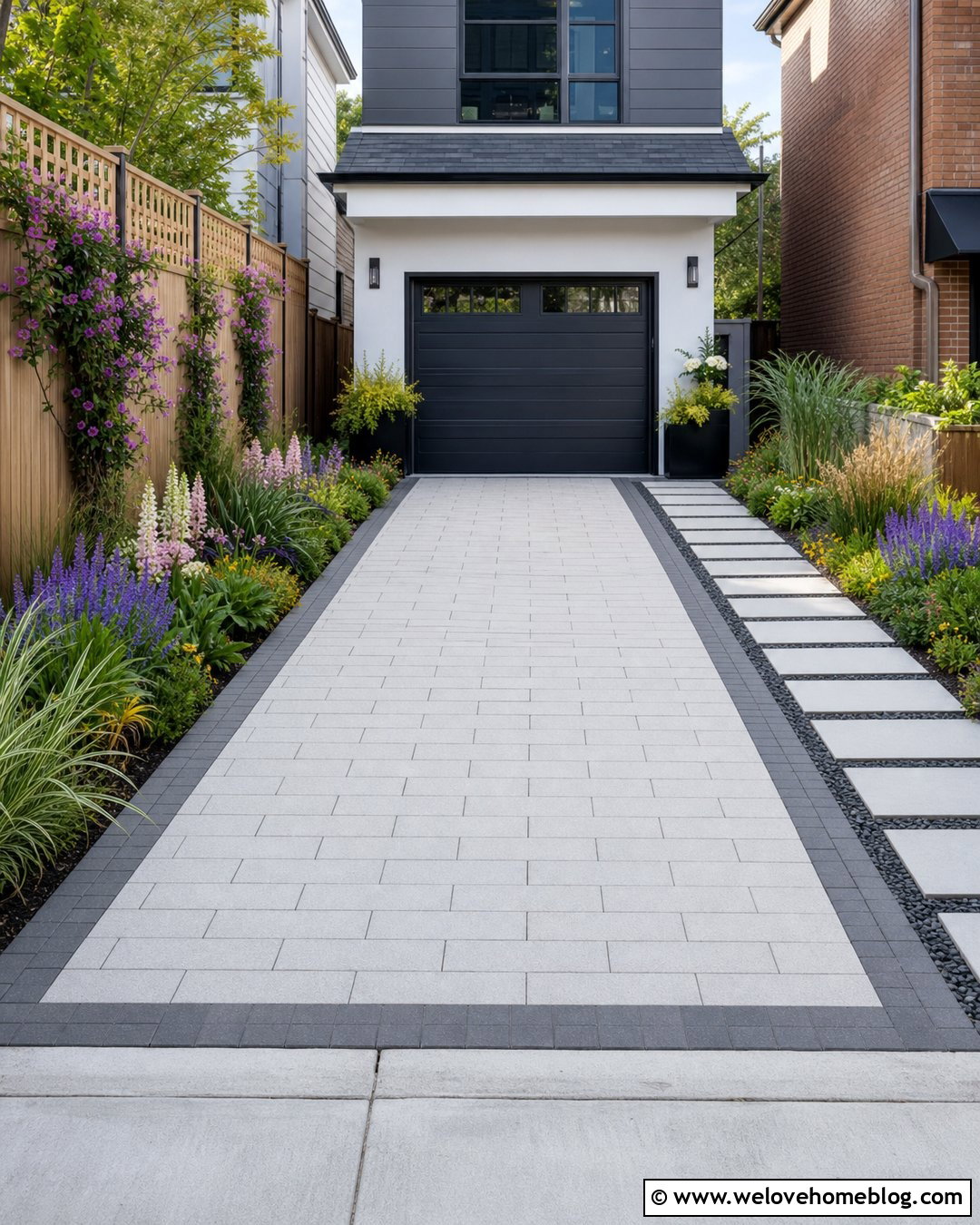
Limited side space does not mean flowers have to disappear. Choose pale gray concrete pavers for a narrow straight driveway and define both sides with a slim charcoal border. Install planting strips only where adequate width remains, using upright flowers such as salvia, compact snapdragons, dwarf daylilies, and narrow ornamental grasses. Keep the planting low and avoid varieties that flop across the pavement. Where beds become too tight, continue the color with wall-mounted planters, trellised flowering vines, or containers beside the garage. A narrow stepping-stone strip can provide a safe route from the car to the front door. This complete design is suitable for urban homes, duplexes, and compact suburban lots because it coordinates paving, vertical planting, small flower beds, and pedestrian access without sacrificing function.
25. Four-Season Flower Driveway Border
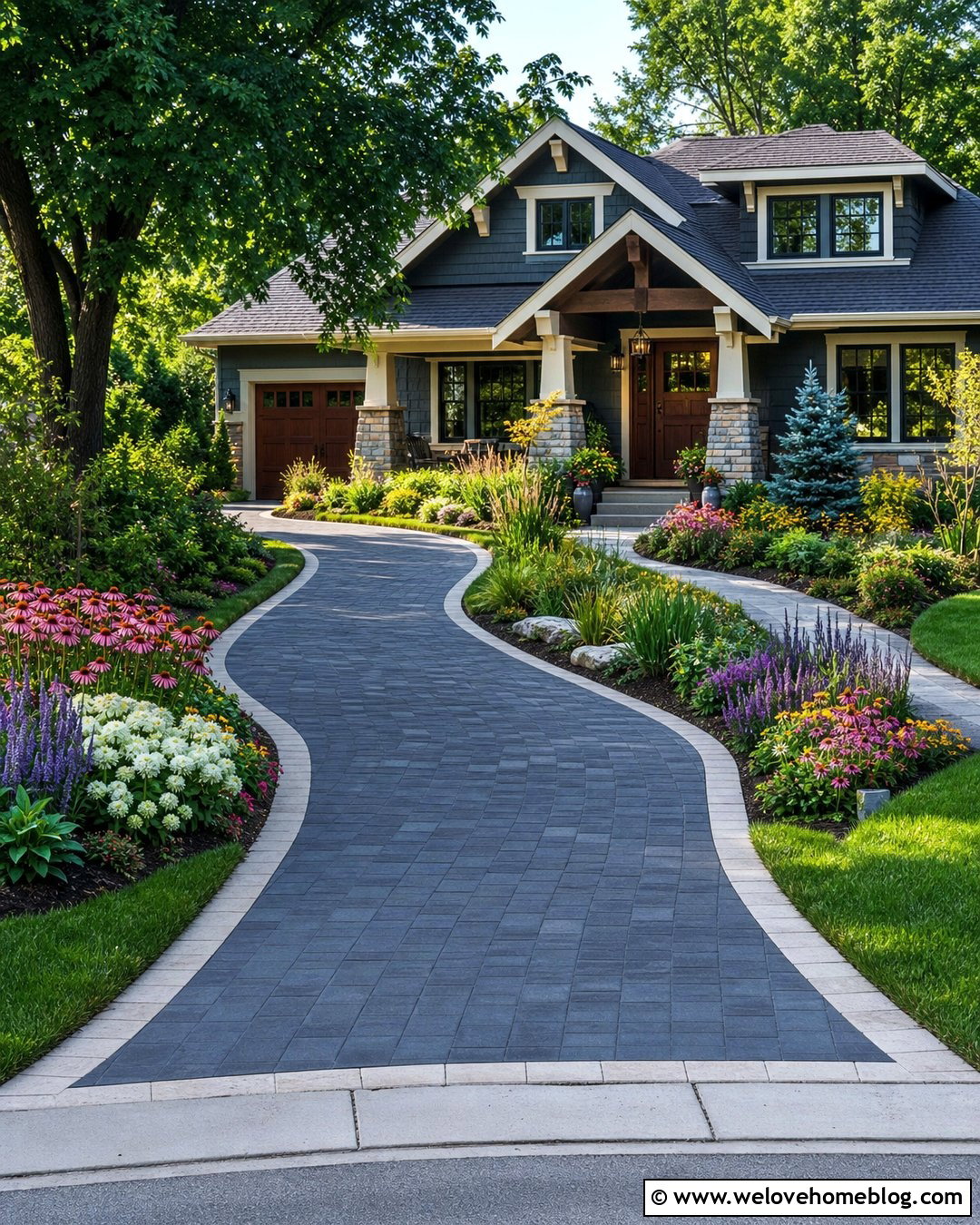
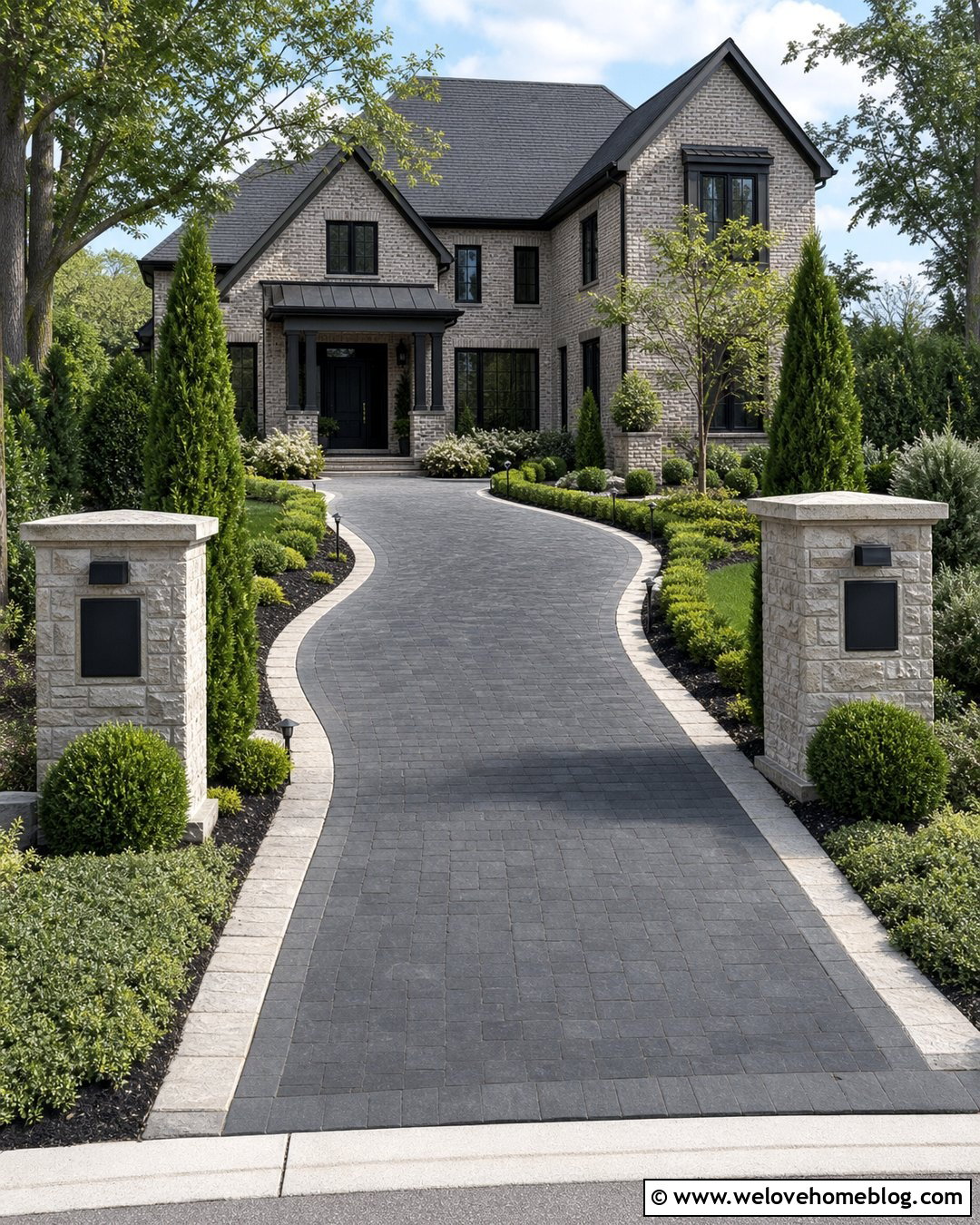
A layered border can keep the driveway attractive even when its main flowers are not blooming. Begin with a curved charcoal paver driveway bordered by a pale stone ribbon. Build deep beds containing spring bulbs, summer coneflowers and salvia, fall asters, and evergreen shrubs that hold the composition together through winter. Add ornamental grasses for movement and seed-head texture, but position them where they will not obstruct the driveway. Repeat plant groups on both sides without making the layout perfectly symmetrical. The result should feel balanced from the street while remaining natural up close. Connect the beds to the front porch with a matching paver walkway and smaller flower pockets. This adaptable design complements many house types and gives the driveway a planned appearance throughout changing seasons.
Conclusion:
The most successful **25 Flower Driveway Ideas** treat the driveway, flowers, edging, yard, walkway, and house as one connected design. Start by evaluating sunlight, drainage, available planting width, and the mature size of every plant. Then choose a simple color palette that complements the driveway material and home exterior. Repeating flowers in generous groups usually creates a clearer look than scattering many individual varieties. Keep low plants near street entrances and vehicle doors, with taller flowers farther back. Durable borders, mulch gaps, and defined walkways also make the landscape easier to maintain. Whether you prefer a formal hydrangea display, relaxed wildflowers, or modern salvia beds, thoughtful placement can produce practical, colorful curb appeal.

Related posts:
Leave a Reply