
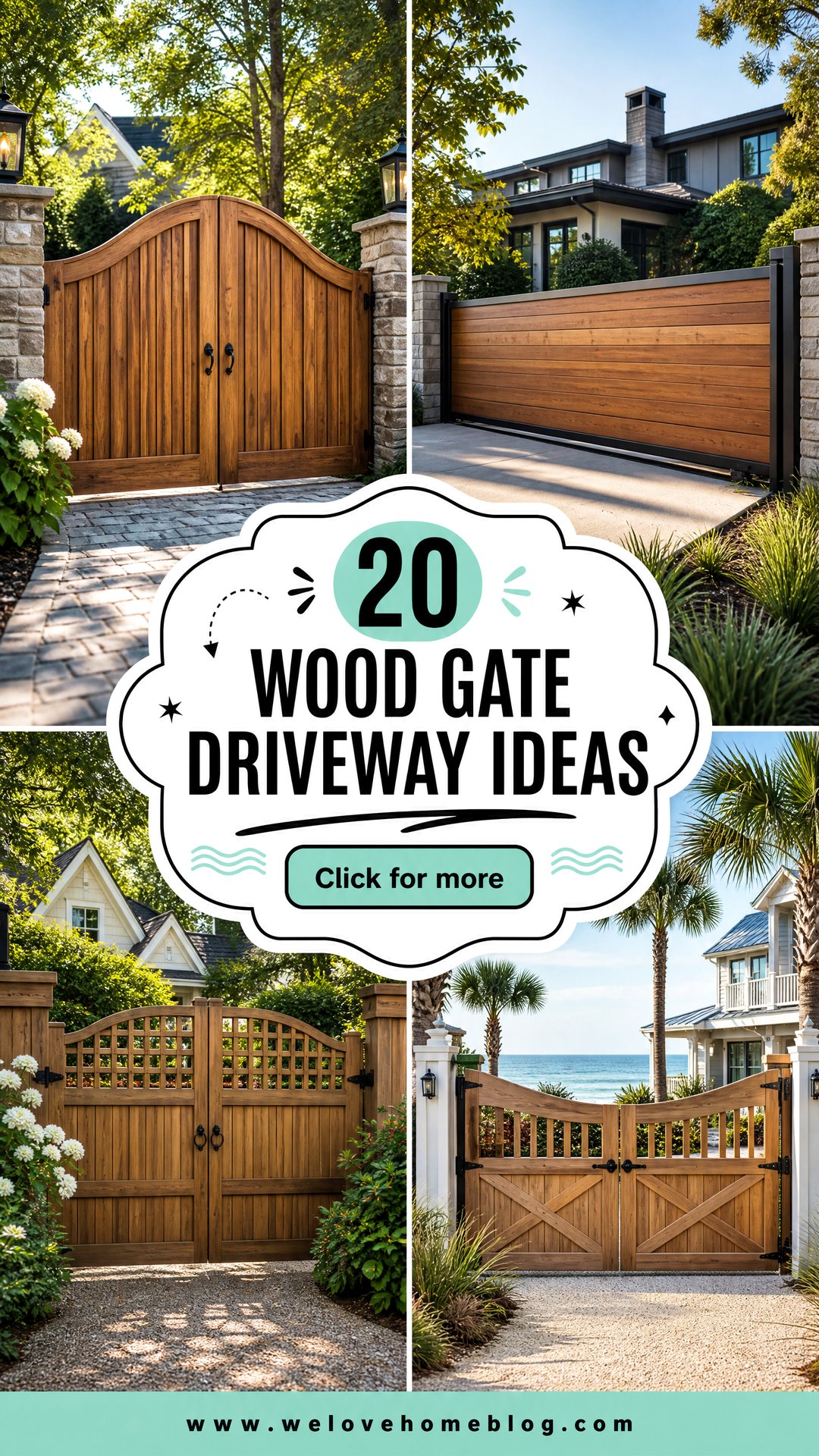
A well-designed wood gate can turn an ordinary driveway into a welcoming, private, and polished entrance. The best designs connect the gate with the driveway surface, house architecture, fence, pillars, and surrounding landscape. Current residential entrances range from streamlined horizontal cedar gates to traditional arched panels, rustic cross-braced gates, and mixed wood-and-metal designs. () Your available opening space will also help determine whether a swinging, sliding, or cantilever system makes the most sense. Beyond appearance, consider visibility, weather exposure, post strength, drainage, and daily operation. Thoughtful lighting and durable hardware can make the finished entrance feel safer and more complete. Use these 20 wood gate driveway ideas to find a complete look that suits your home, yard, and preferred level of privacy.
1. Modern Horizontal Wood Driveway Gate
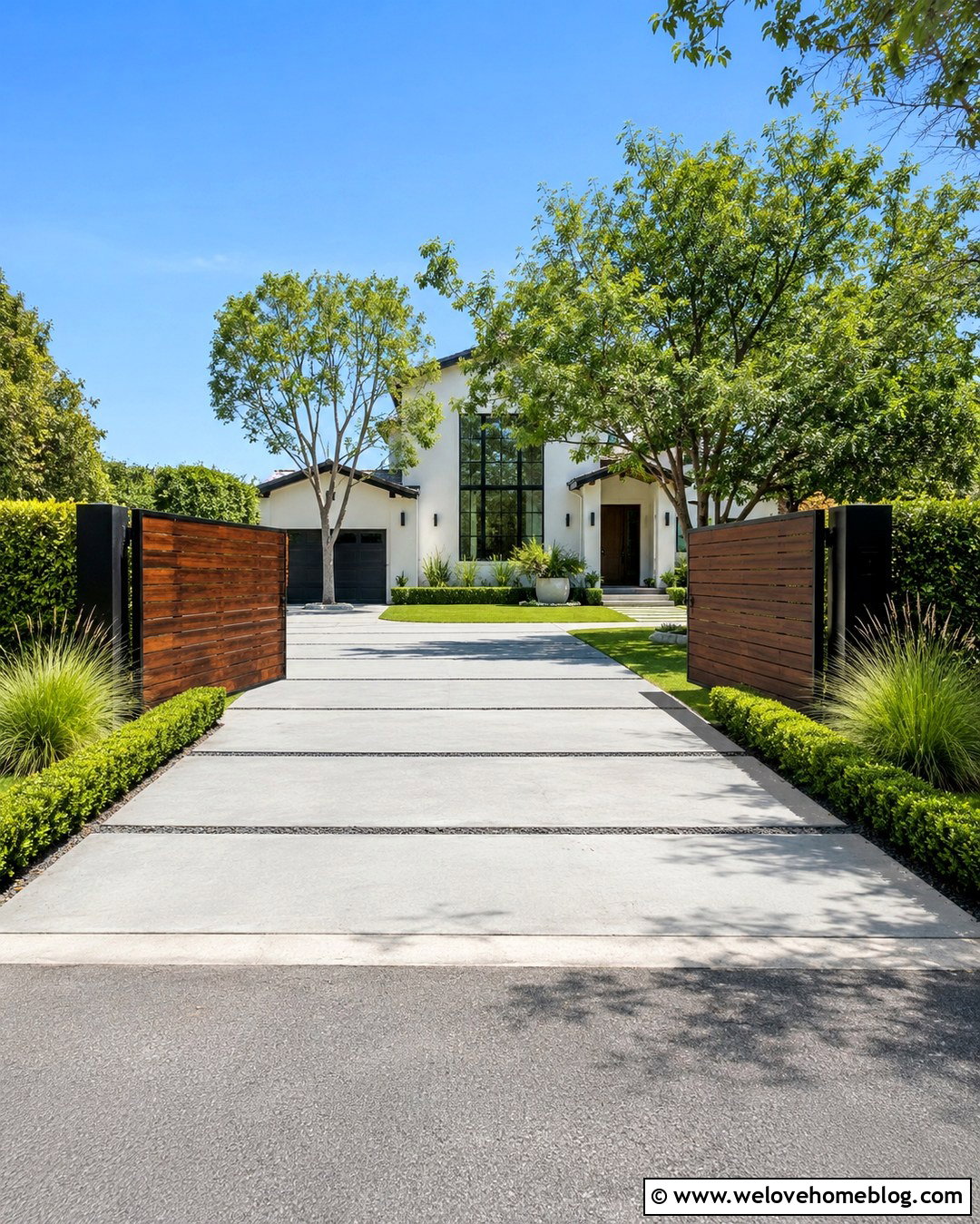
A horizontal cedar gate brings clean lines and natural warmth to a modern entrance. Pair a double-swing gate with a straight driveway made from large-format gray concrete slabs. Narrow gravel joints between the slabs can improve the visual rhythm without making the surface feel busy. Use a concealed steel frame behind the cedar boards to create a crisp outline and support the wide wooden panels. Matte black posts, simple rectangular lights, and low ornamental grasses reinforce the contemporary look. Keep the surrounding beds linear and uncluttered, using plants such as feather reed grass, compact boxwood, and spreading juniper. A warm clear stain highlights the cedar grain while creating a softer contrast against concrete, black metal, and a white modern facade.
2. Farmhouse Wood Driveway Gate
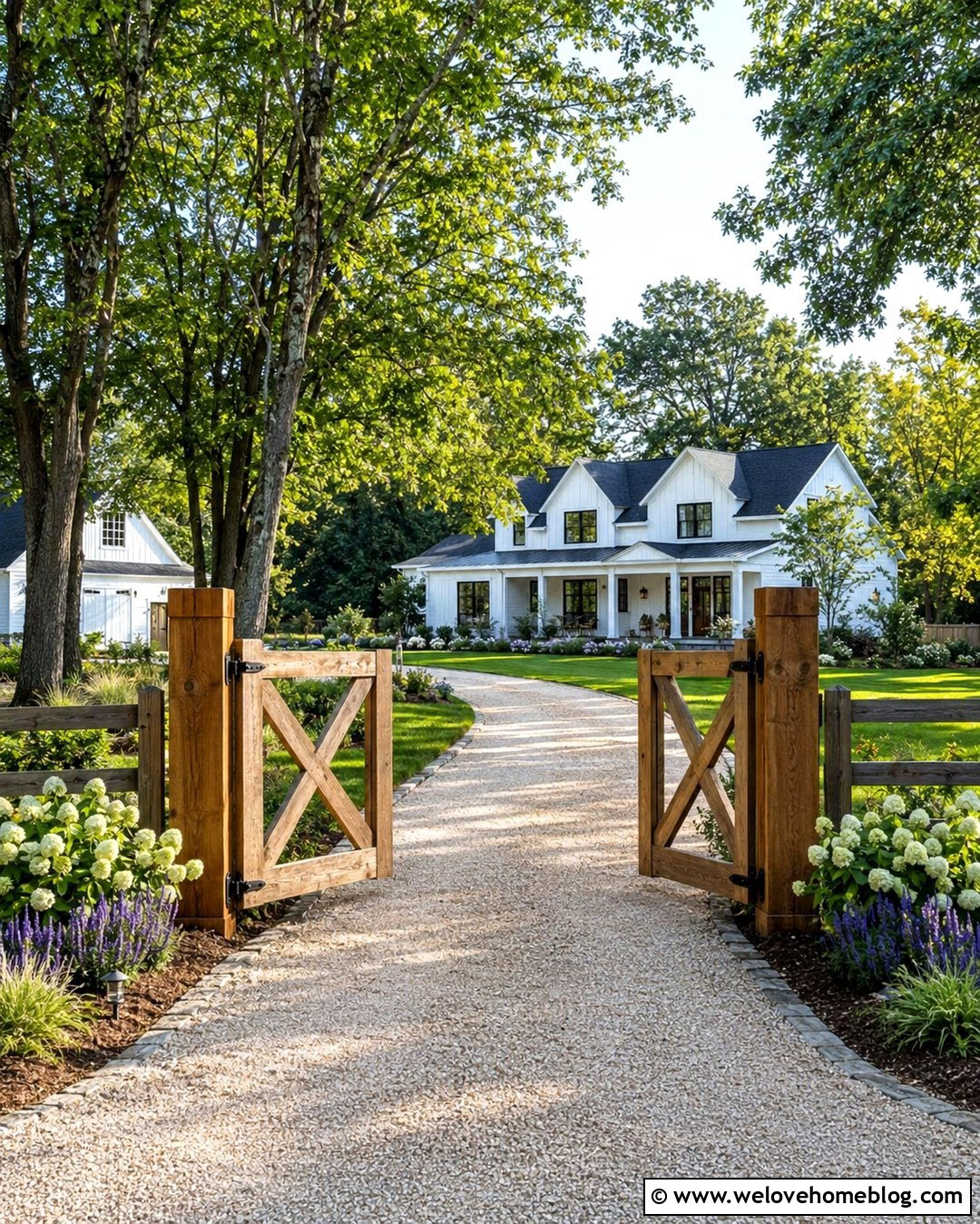
Nothing suits a relaxed country entrance quite like a cross-braced wood gate. Use two stained cedar or Douglas fir leaves with strong X-shaped detailing and black strap hinges. A pale crushed-stone driveway helps the warm wood stand out while supporting the casual farmhouse character. Frame the entrance with chunky timber posts, split-rail fencing, and wide planting beds filled with hydrangeas, salvia, ornamental grasses, and low evergreen shrubs. The driveway can curve gently toward a white modern farmhouse with a dark roof and covered porch. Leave enough open space around the gate so the entrance does not feel crowded. Matching pedestrian gates or fence panels can continue the design across the property and make the driveway look intentionally connected to the surrounding landscape.
3. Arched Wood Driveway Gate
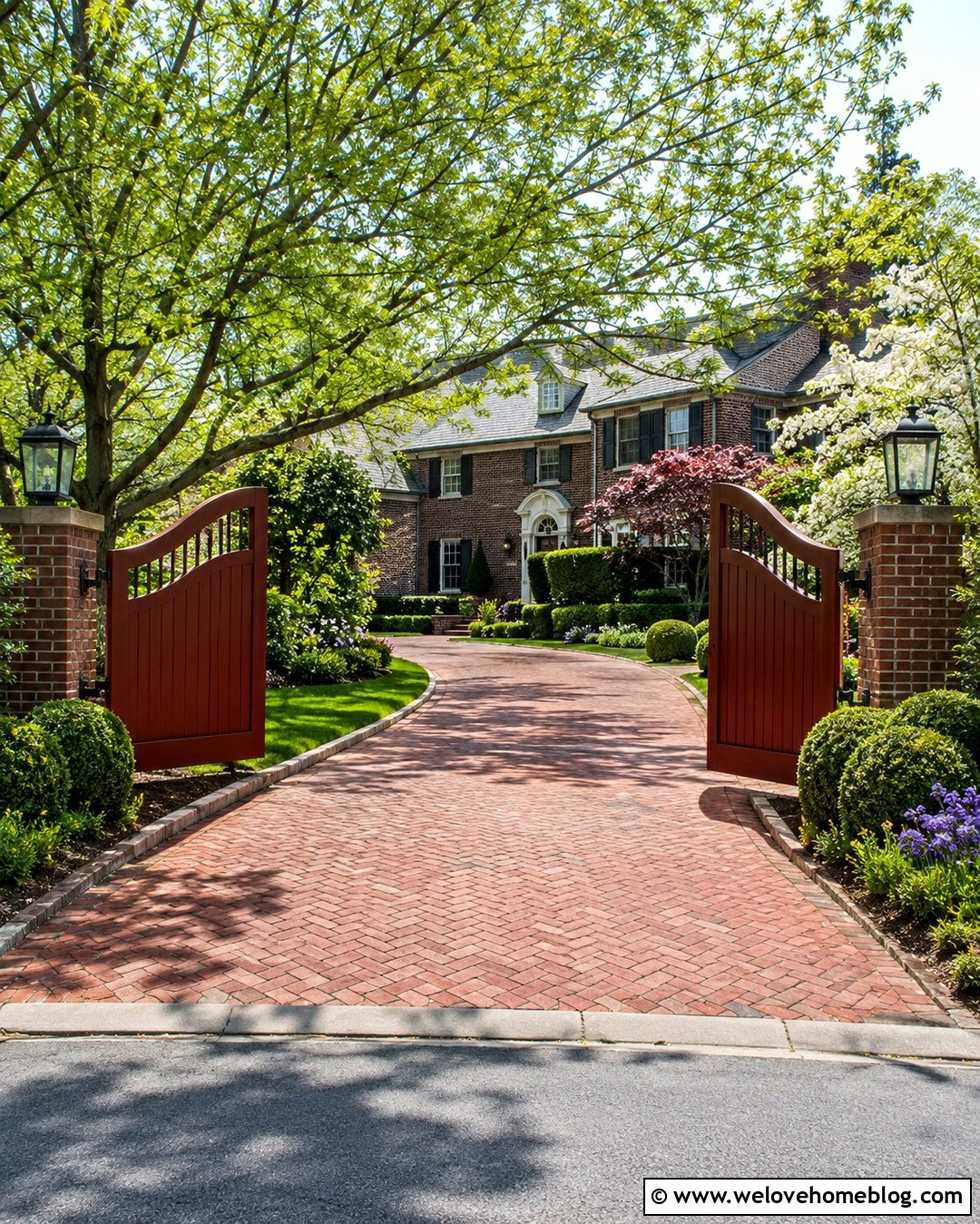
An arched gate creates a graceful focal point for a traditional home. Choose a double-swing design made from vertical redwood boards, with each leaf rising gently toward the center. Warm brick pavers laid in a herringbone pattern provide a rich driveway surface that complements the red tones in the wood. Anchor the gate with stone or brick pillars topped by understated lanterns. Curved planting beds can echo the gate’s shape and soften the entrance with clipped shrubs, flowering perennials, and small ornamental trees. For a more open appearance, add a narrow iron grille near the top of each panel. Keep the arch proportional rather than overly steep. This allows the entrance to feel distinguished and inviting without overwhelming the house or blocking every view into the property.
4. Sliding Wood Driveway Gate
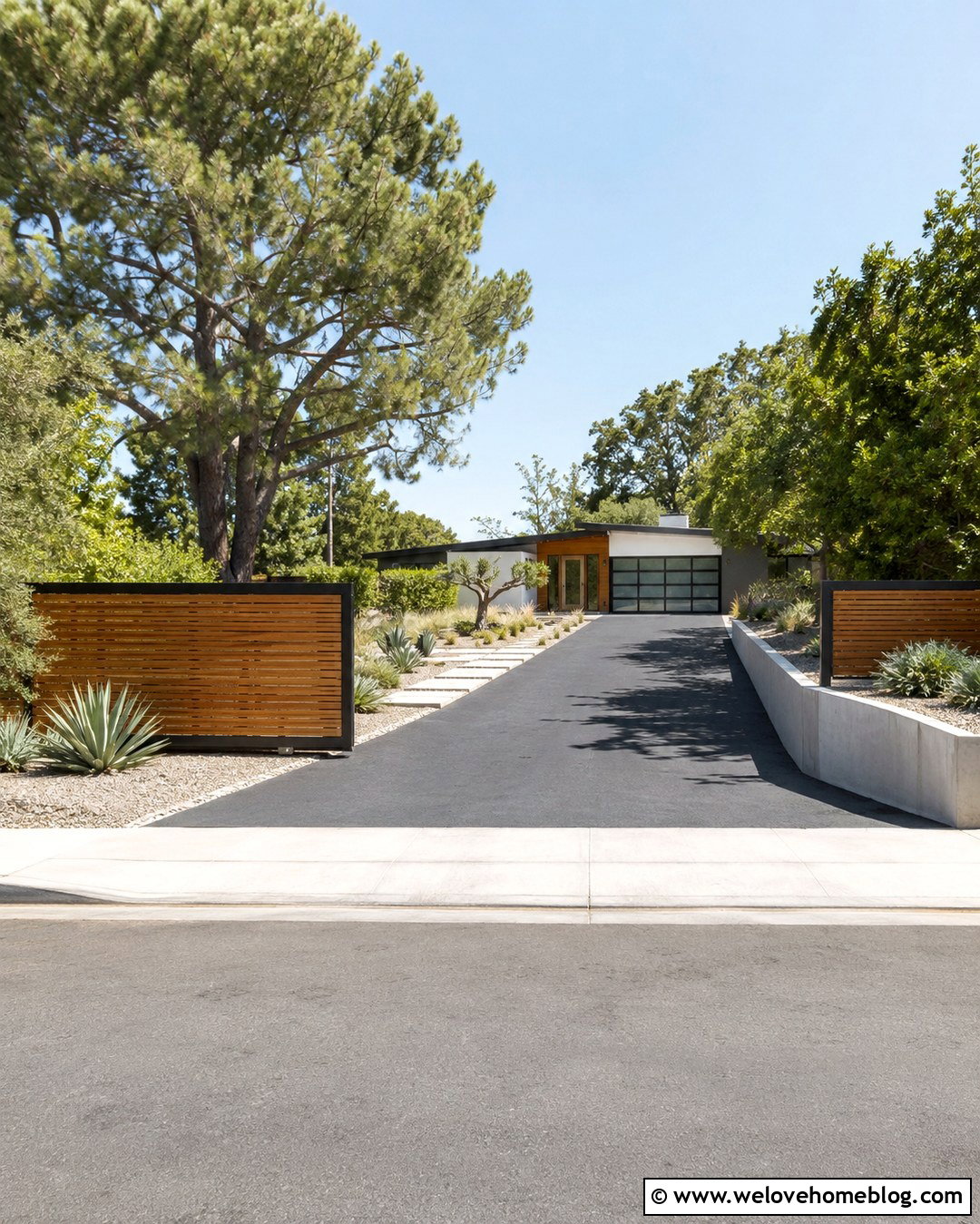
Does your driveway sit on a slope or have limited room for swinging panels? A sliding wood gate can create a practical entrance without requiring a wide opening arc. Use horizontal cedar slats mounted inside a black powder-coated steel frame. Pair the gate with a smooth black asphalt driveway and a straight layout leading to a mid-century modern home. A cantilever-style design can maintain a clean appearance because it does not require a track running across the driving surface. Continue the horizontal pattern into matching fence panels on both sides. Drought-tolerant grasses, sculptural agaves, gravel mulch, and low concrete walls will strengthen the streamlined setting. Carefully plan the side run so the entire gate has enough unobstructed space to slide completely away from the driveway opening.
5. Wood And Metal Driveway Gate
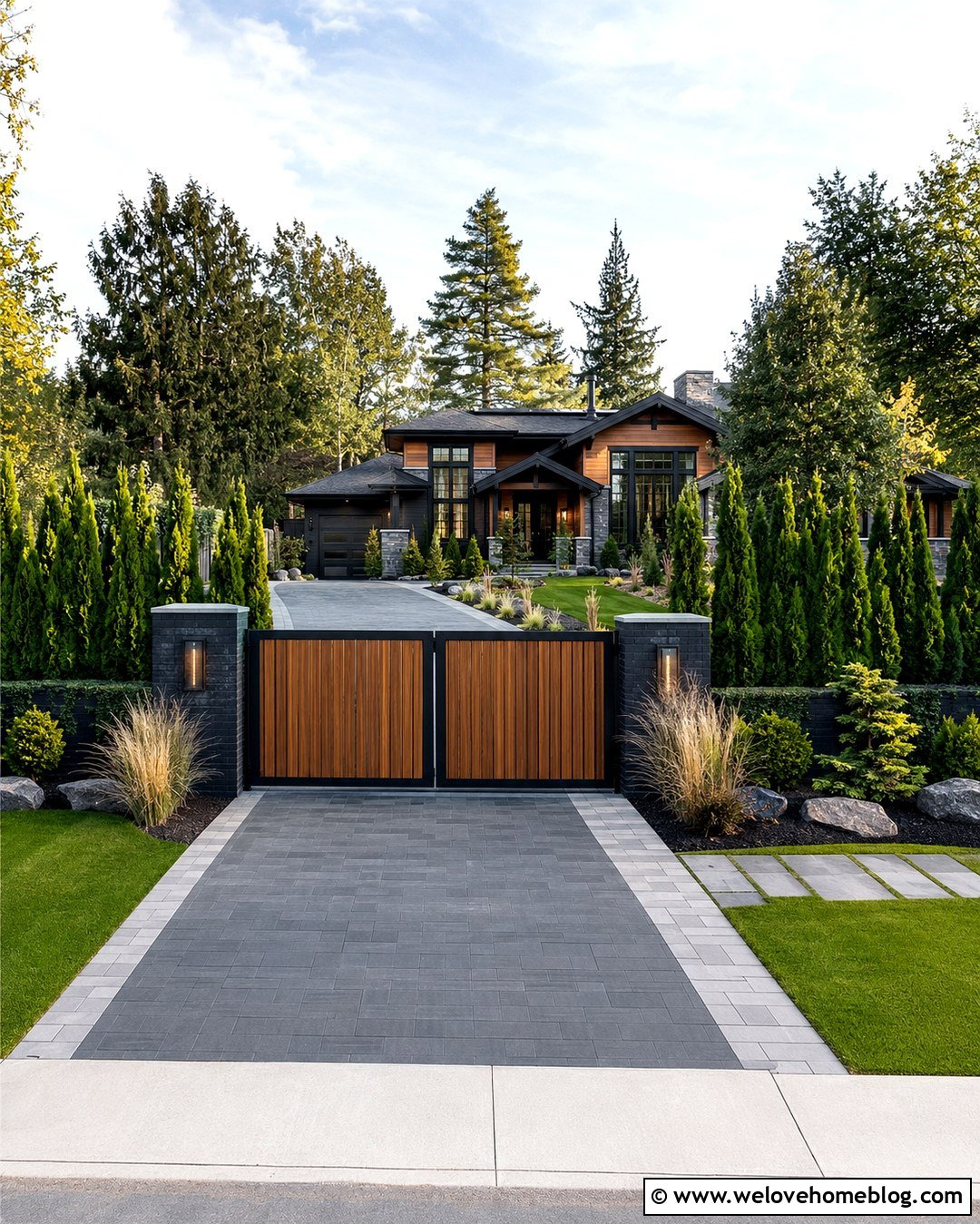
Wood and black metal create a balanced gate that feels warm, strong, and architectural. Select vertical cedar infill boards set within a slim steel frame, then divide the surface into simple rectangular panels. A charcoal concrete paver driveway can extend from the curb to a contemporary craftsman home, with a contrasting light-gray border defining the edges. Use black steel posts or masonry columns with recessed lighting to repeat the frame color. Layer evergreen hedges behind ornamental grasses so the landscaping provides softness without hiding the gate. Small gaps between the wood boards can preserve filtered views and make the entrance feel less imposing. This combination also gives you flexibility: the wood can coordinate with garage doors and porch details, while the metal connects visually with windows, railings, lights, and house numbers.
6. Privacy Wood Gate With Stone Pillars
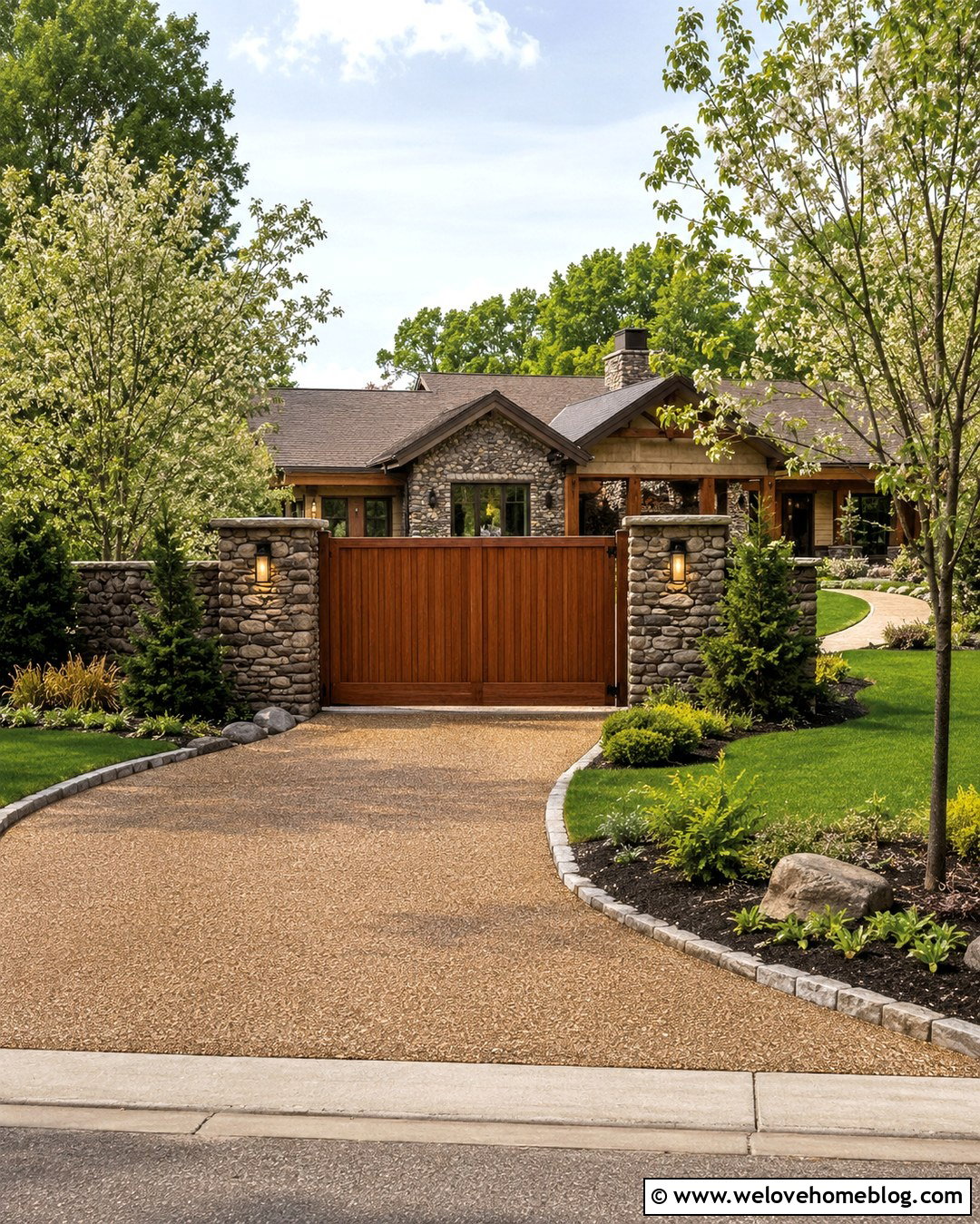
For a driveway facing a busy street, a solid wood gate can create a calm and private arrival. Build the double gate from tightly fitted vertical cedar boards with a simple framed border. Substantial fieldstone pillars on both sides give the wooden panels a permanent, grounded appearance. Continue the entrance with a tan resin-bound gravel driveway that curves toward a stone-accented ranch house. Deep planting beds filled with evergreen shrubs, serviceberry trees, and shade-tolerant ground cover can soften the masonry. Mount address numbers and downlights on the pillars rather than placing extra decorations on the gate. Because solid panels appear visually heavy, use a medium-height design and a warm stain. The combination of stone, wood, and natural-toned paving will feel private without looking harsh or fortress-like.
7. Cottage Wood Picket Driveway Gate
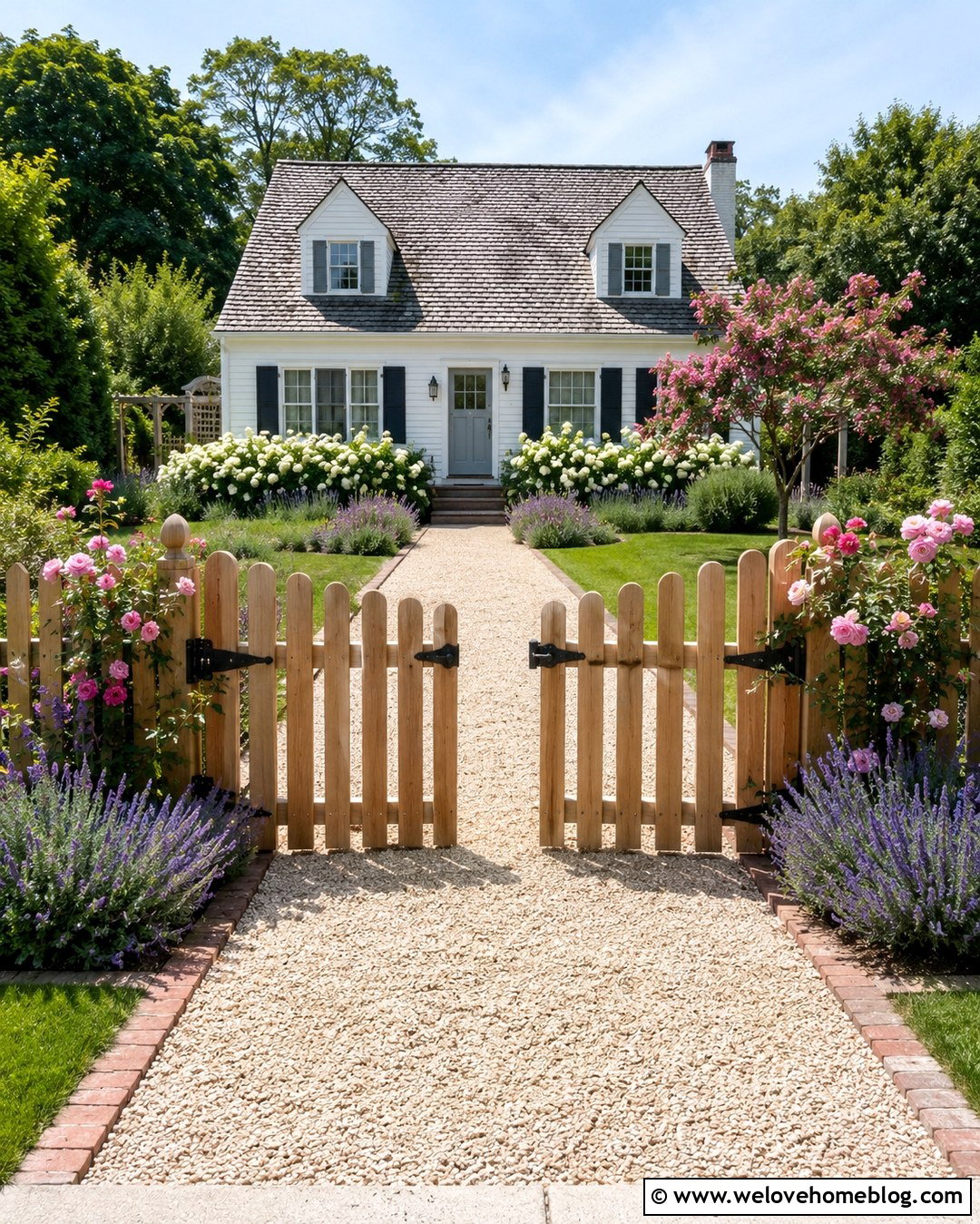
A low wood picket gate can make a compact cottage driveway feel friendly rather than enclosed. Choose a double-swing cedar gate with gently rounded picket tops and a simple painted or natural finish. A cream pea gravel driveway works especially well, creating a bright surface that leads toward a Cape Cod or cottage-style house. Define the gravel with reclaimed brick edging to prevent it from spreading into the lawn and planting beds. Around the entrance, use climbing roses, lavender, catmint, hydrangeas, and a small flowering tree. Matching picket fencing can connect the gate to the garden on both sides. Keep the gate low enough to preserve views of the house and front yard. Black hinges and a traditional latch add definition while remaining simple enough for the informal setting.
8. Board And Batten Wood Driveway Gate
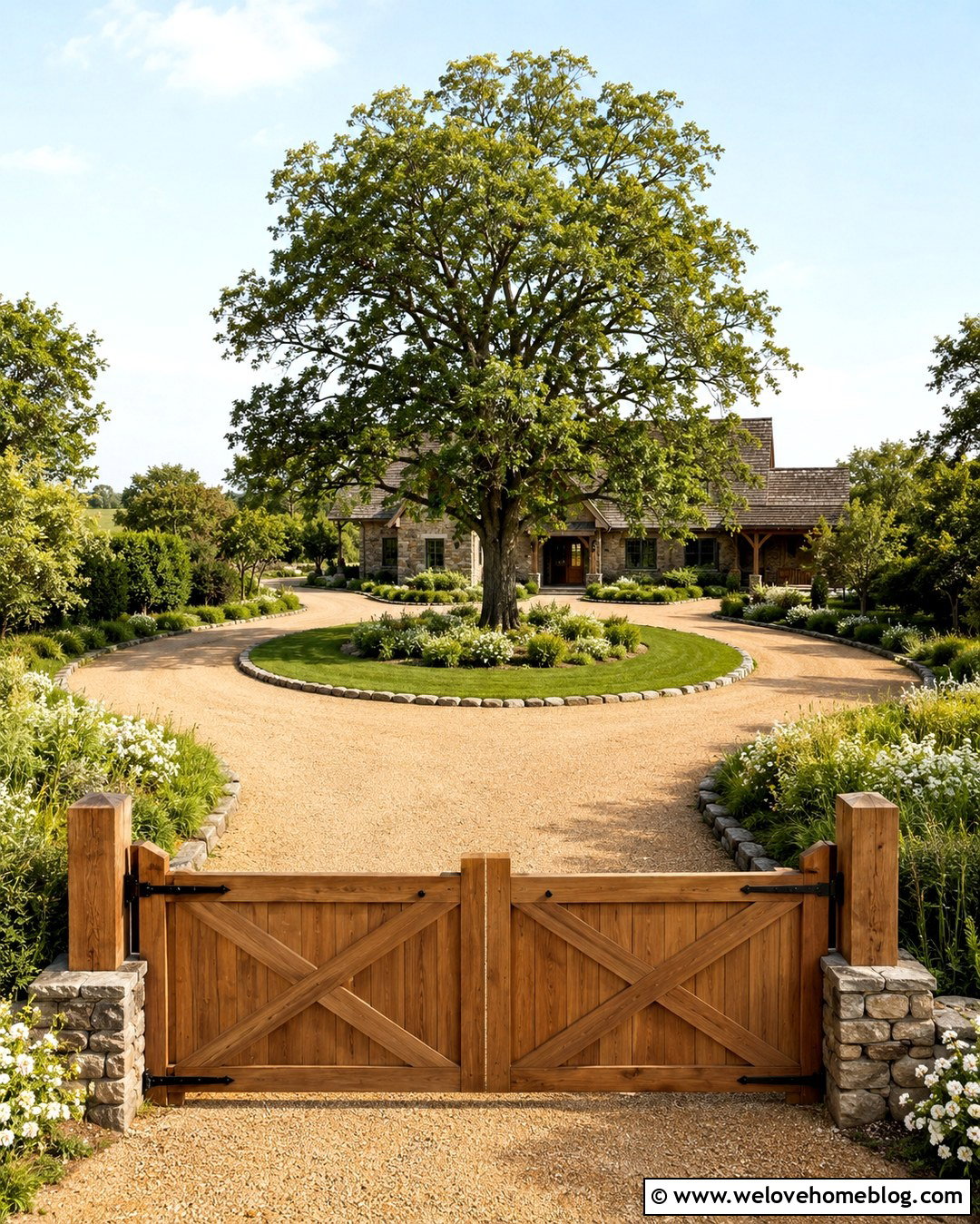
Board-and-batten construction gives a wood gate the sturdy character associated with barns and rural outbuildings. Use wide vertical boards, narrow battens, and diagonal braces on a generous double-swing entrance. A circular driveway surfaced with warm beige gravel can wrap around a central lawn or specimen tree before reaching a country home. Set the gate between square timber posts supported by low stone bases. Black strap hinges, a center latch, and a deep walnut-colored stain will make the workmanship more visible from the road. Plant native grasses, white flowering shrubs, and informal hedges around the entrance to connect it with the wider property. Because a circular layout already makes a strong statement, keep the gate detailing functional and restrained. This creates a welcoming country entrance rather than an overly decorative estate barrier.
9. Craftsman Wood Driveway Gate
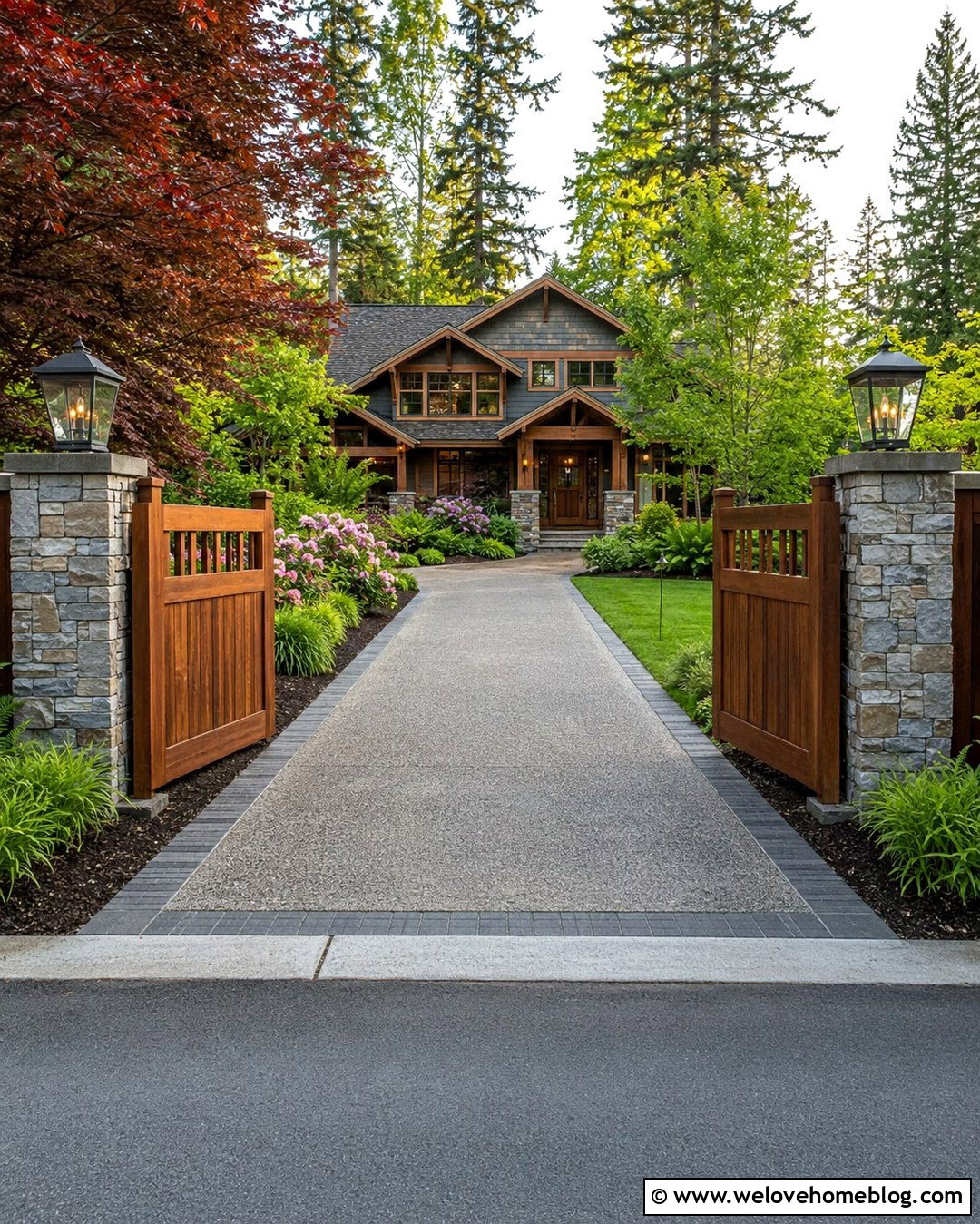
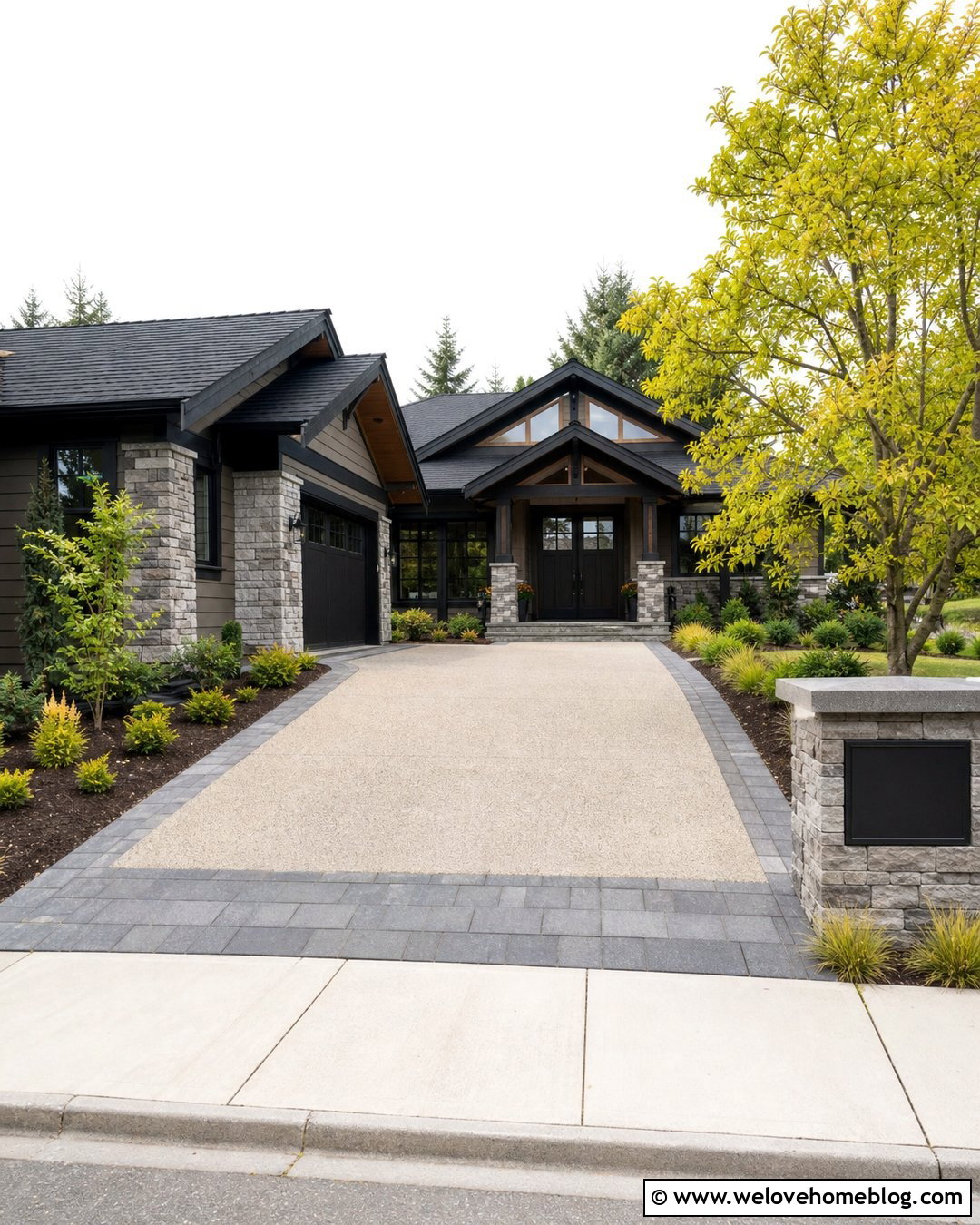
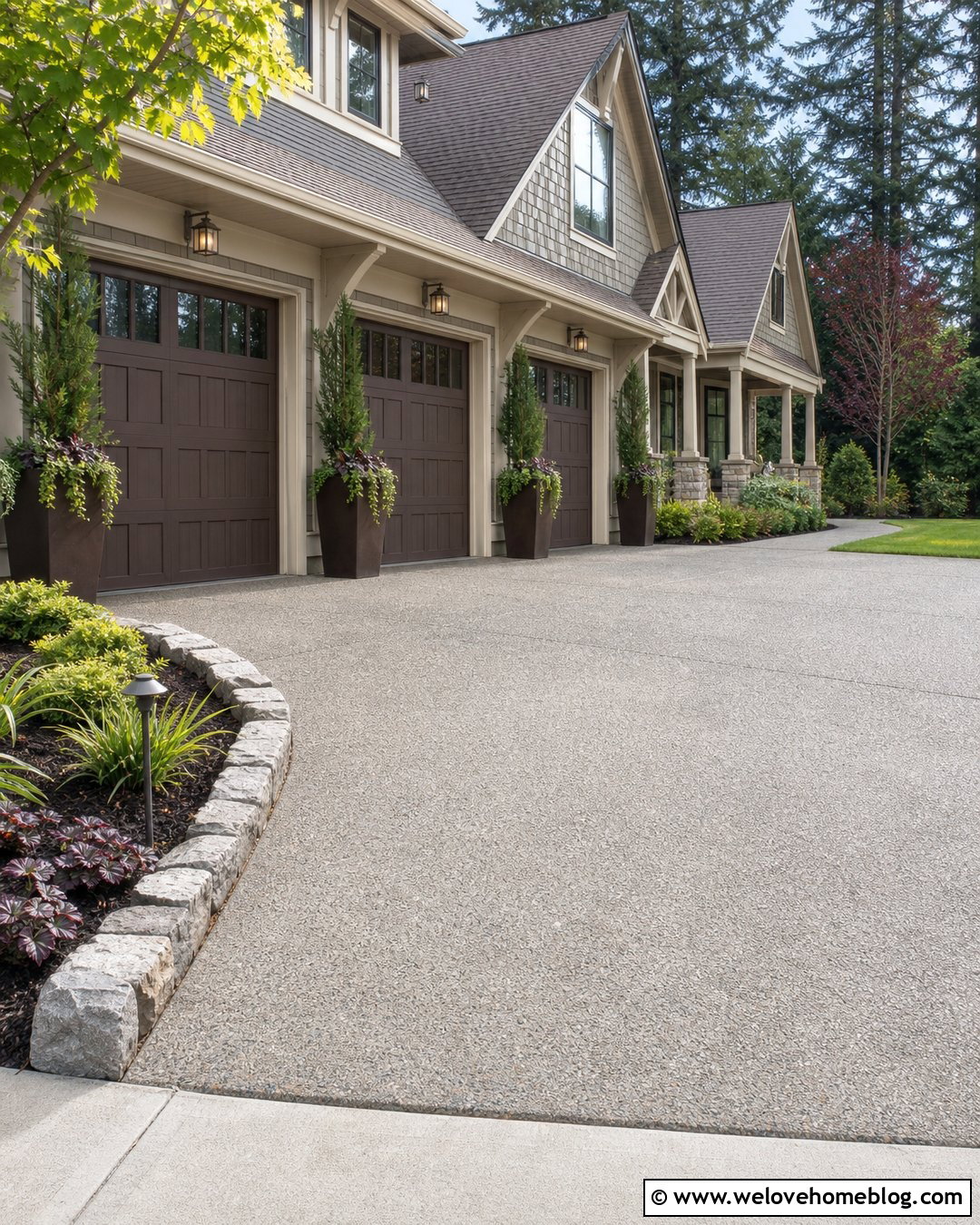
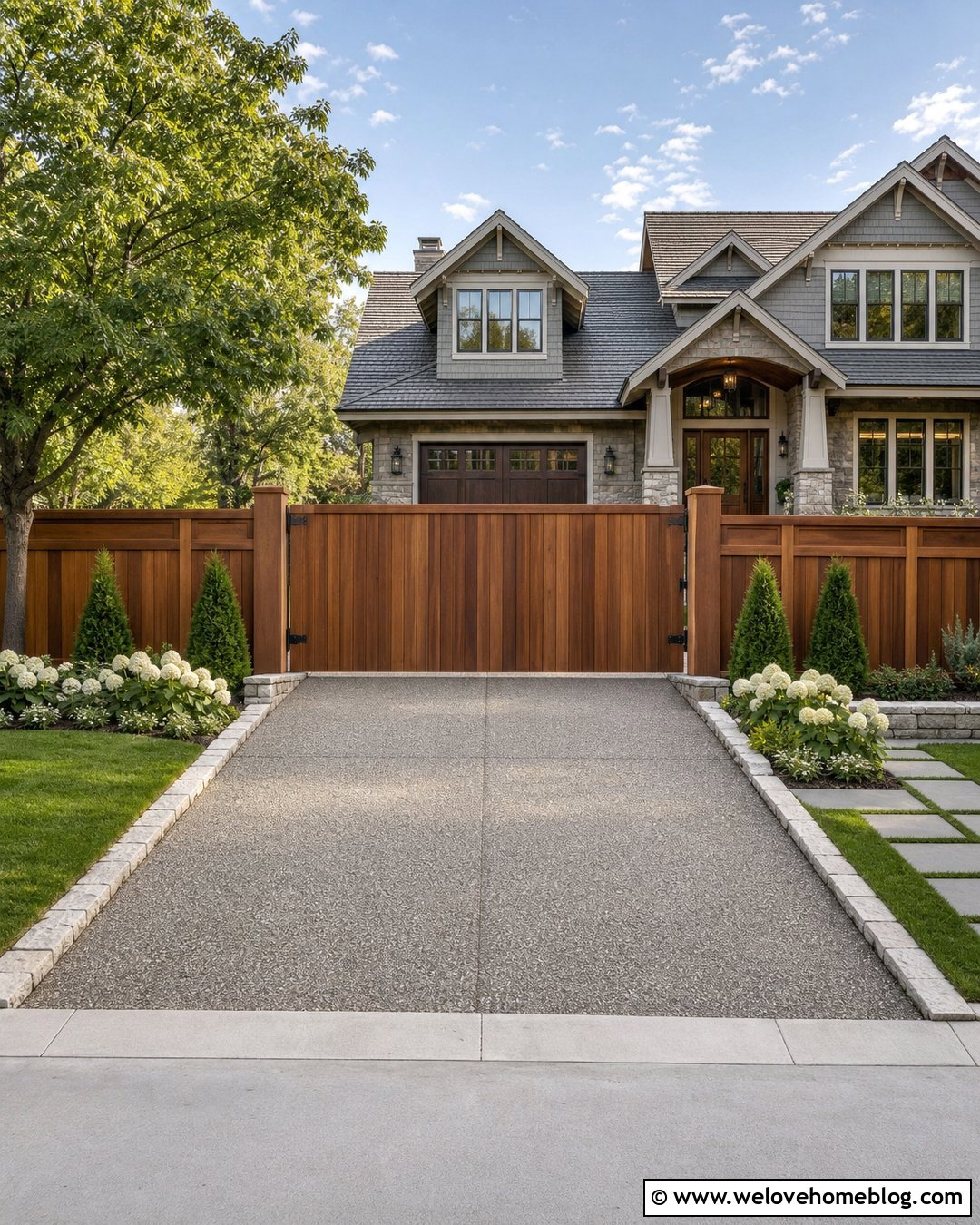
Rich wood panels and visible joinery can make a driveway entrance feel closely connected to a craftsman home. Design the gate with vertical cedar boards, a thick top rail, and small square openings beneath the upper frame. Use tapered stone pillars that repeat the masonry found on the porch or foundation. An exposed aggregate concrete driveway introduces subtle texture while remaining practical and visually quiet. Add a dark paver ribbon along both sides to define the route toward the garage. Layer Japanese maple, compact rhododendrons, ferns, and low ornamental grasses around the pillars. Warm amber-brown stain will emphasize the wood grain, while dark bronze hardware complements traditional craftsman lighting. Keep the gate broad and relatively low so its strong framing looks substantial without hiding the home’s architecture or carefully maintained front garden.
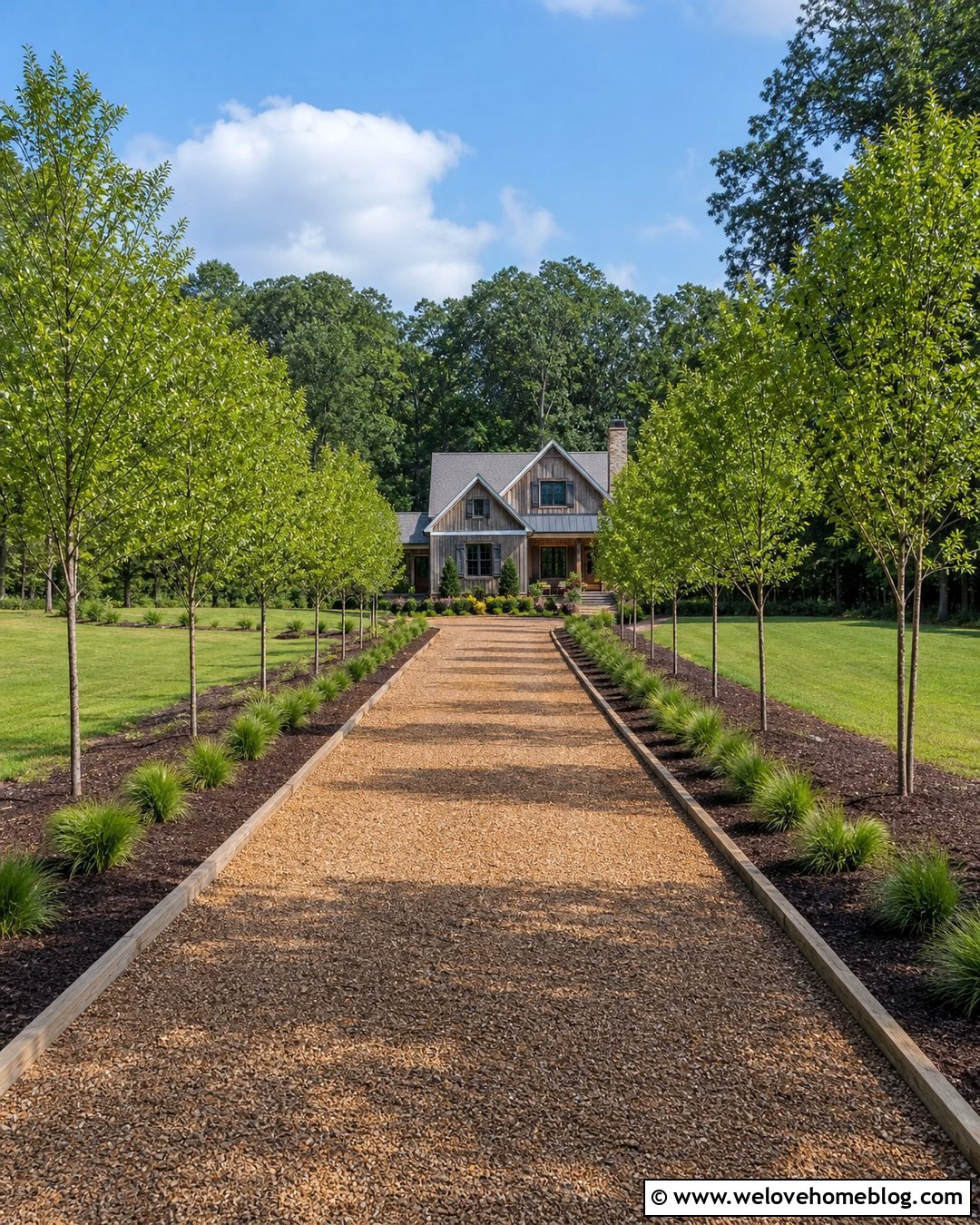
10. Ranch Wood Driveway Gate
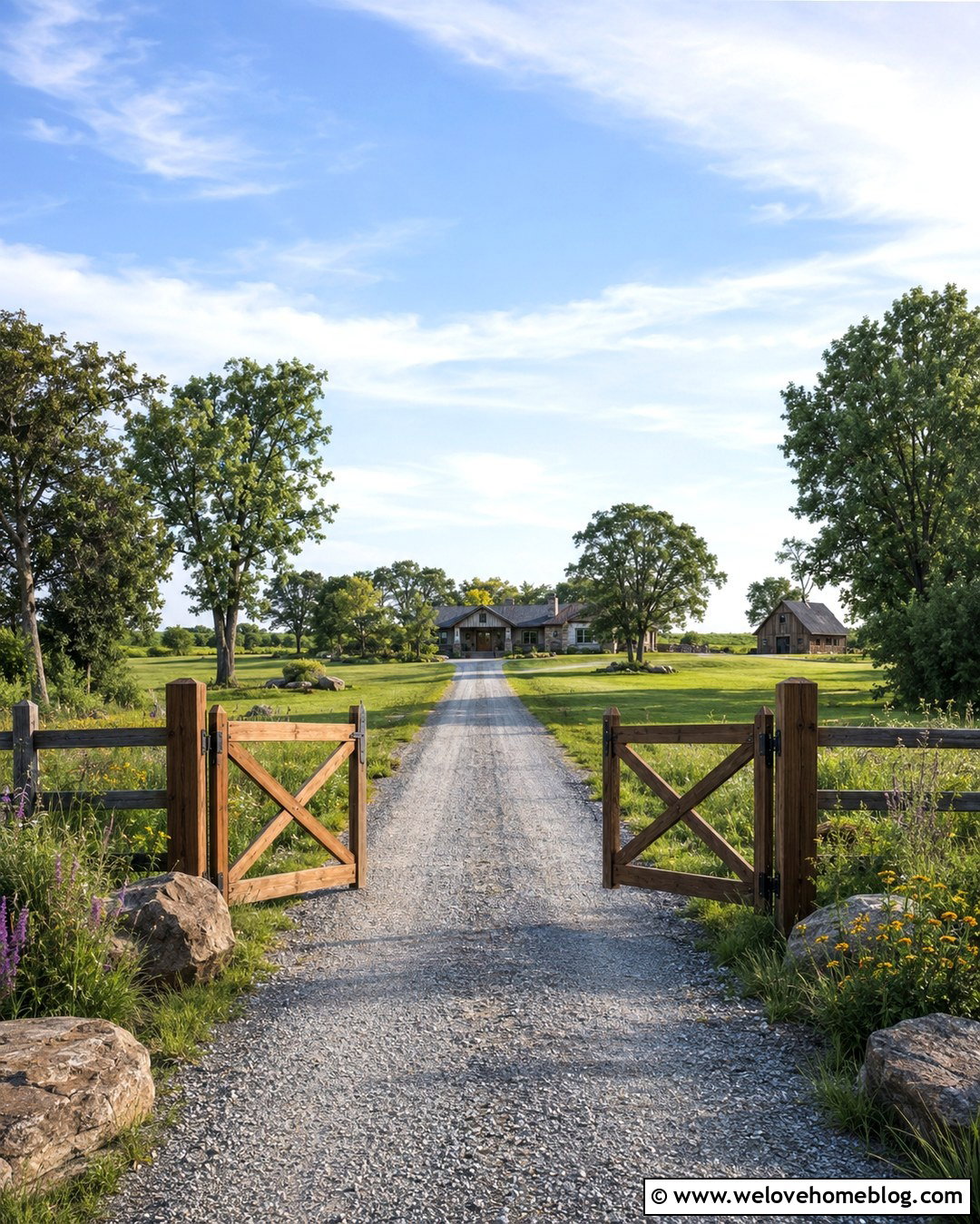
An open ranch gate provides definition while preserving long views across the yard. Use a wide double gate built from cedar rails and diagonal braces, leaving generous open sections between the boards. Pair it with a straight gray crushed-stone driveway leading toward a low ranch house, detached garage, or small barn. Large timber posts and post-and-rail fencing can extend from each side, creating a continuous property boundary. Surround the entrance with native grasses, prairie flowers, weathered boulders, and a few shade trees placed well away from the opening. A natural oil finish keeps the wood warm and informal. If animals are present, adjust the rail spacing and lower clearance accordingly. The finished entrance should feel functional and spacious, with the open gate design reflecting the broad horizontal proportions of the landscape and house.
11. White Wood Driveway Gate
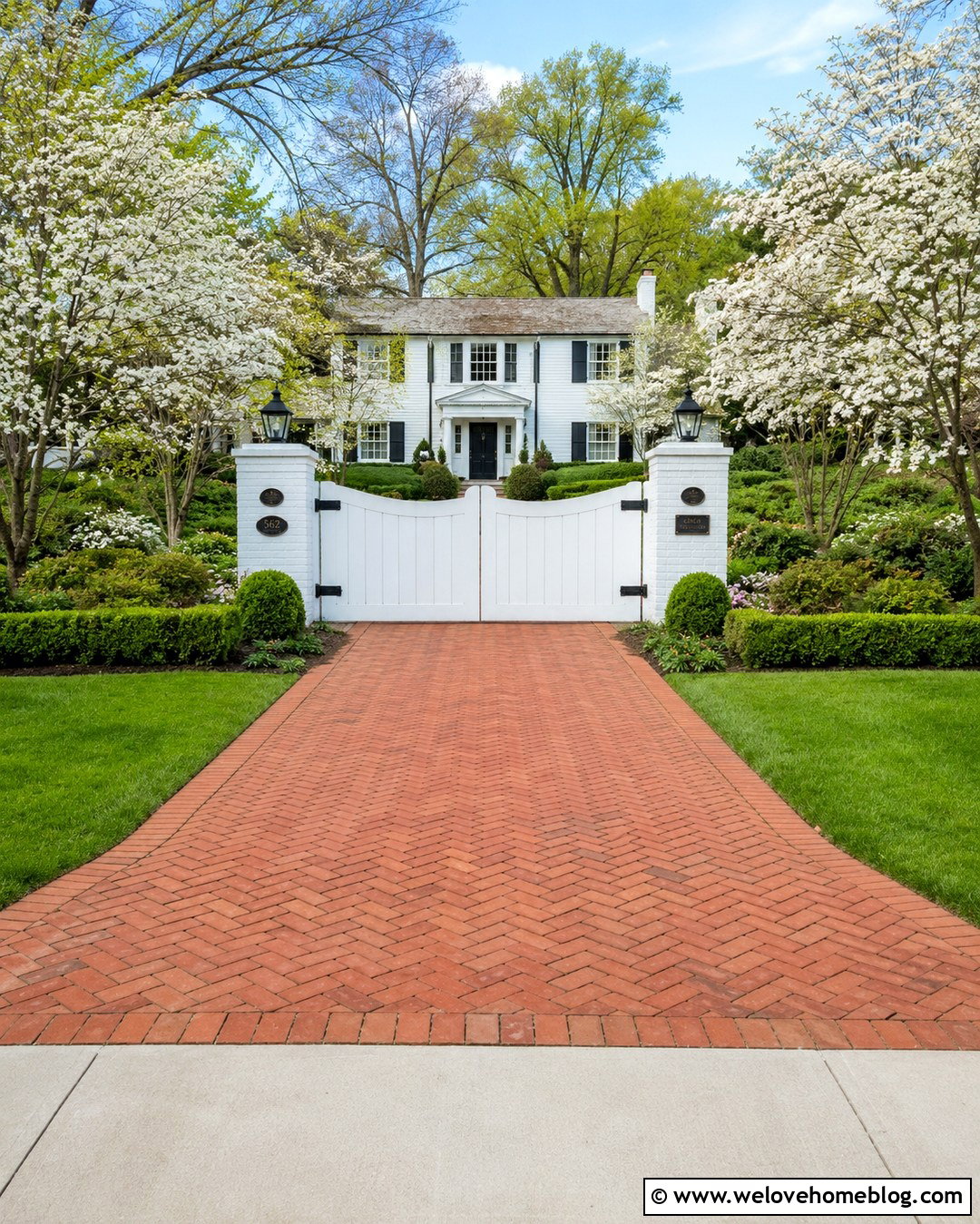
A white-painted gate creates a crisp entrance for a colonial, Georgian, or traditional suburban home. Choose a symmetrical double-swing design with vertical boards and a gently curved top. White brick or painted masonry pillars can frame the gate, while black lanterns and hardware provide a strong, classic contrast. Continue the formal look with a red clay brick driveway laid in a running bond or herringbone pattern. Straight boxwood hedges, flowering dogwoods, and balanced planting beds will reinforce the orderly layout. Use a walkway that branches neatly from the driveway toward the front door. Outdoor-grade paint makes it easier to refresh the gate when weathering becomes visible. Repeating the same white finish on nearby fencing, porch columns, and trim helps the entrance look like an original part of the property rather than a separate addition.
12. Japanese Wood Slat Driveway Gate
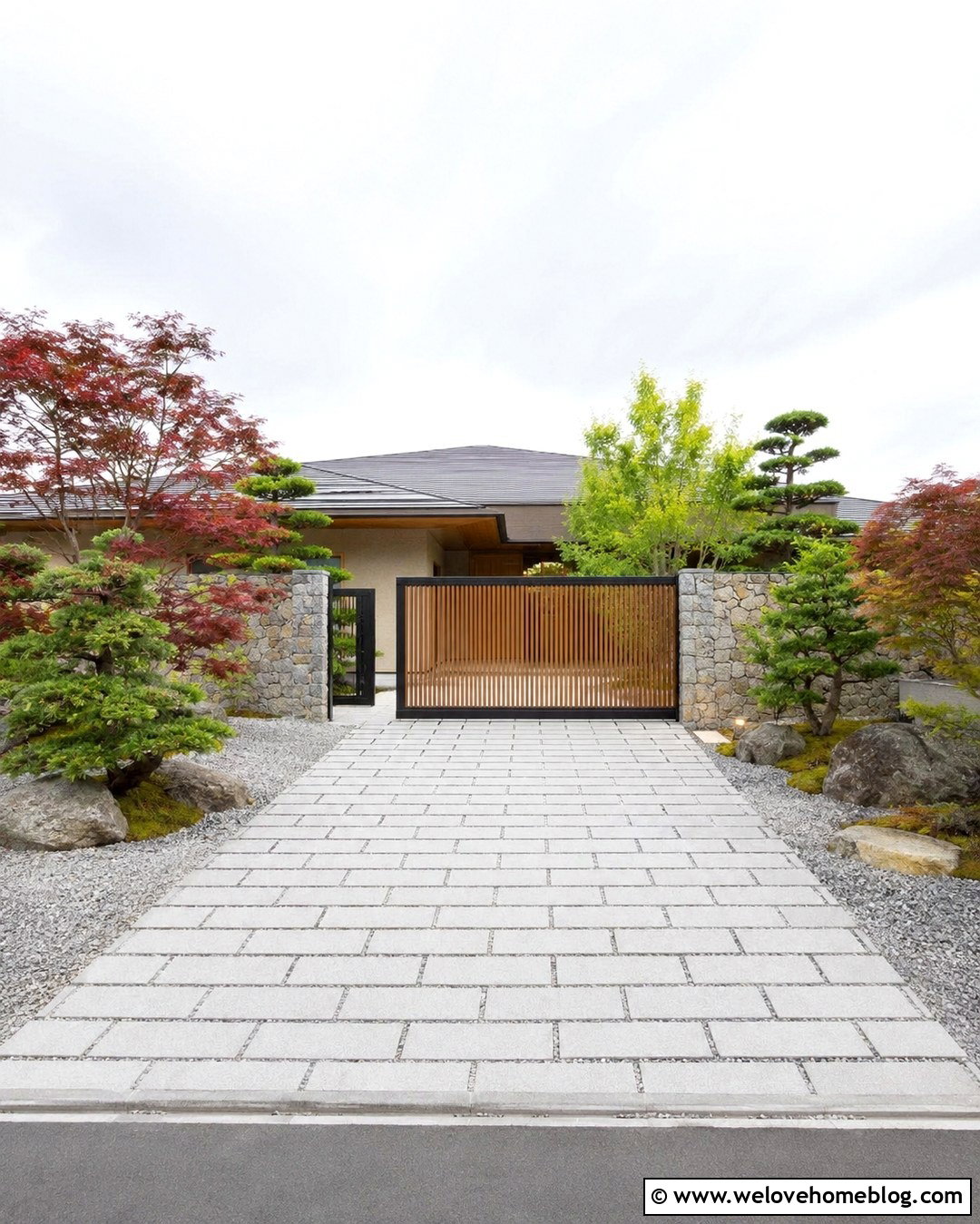
A restrained wood slat gate can complement a Japanese-inspired garden without relying on excessive ornament. Choose closely spaced vertical cedar boards within a dark steel frame and use a single sliding panel for a calm, uninterrupted appearance. Permeable concrete pavers with narrow gravel joints can form a straight driveway toward a minimalist home. Add low stone walls, cloud-pruned evergreens, Japanese maples, mossy ground cover, and carefully placed boulders around the entrance. Keep the planting asymmetrical but balanced, leaving open areas that allow each material to remain visible. A deep brown or charred-looking finish gives the cedar a quiet, grounded tone. Simple pillar lights and a concealed address marker complete the scene. The gate, paving, and landscaping should work together through repetition, clean spacing, and a limited natural color palette.
13. Curved Top Wood Driveway Gate
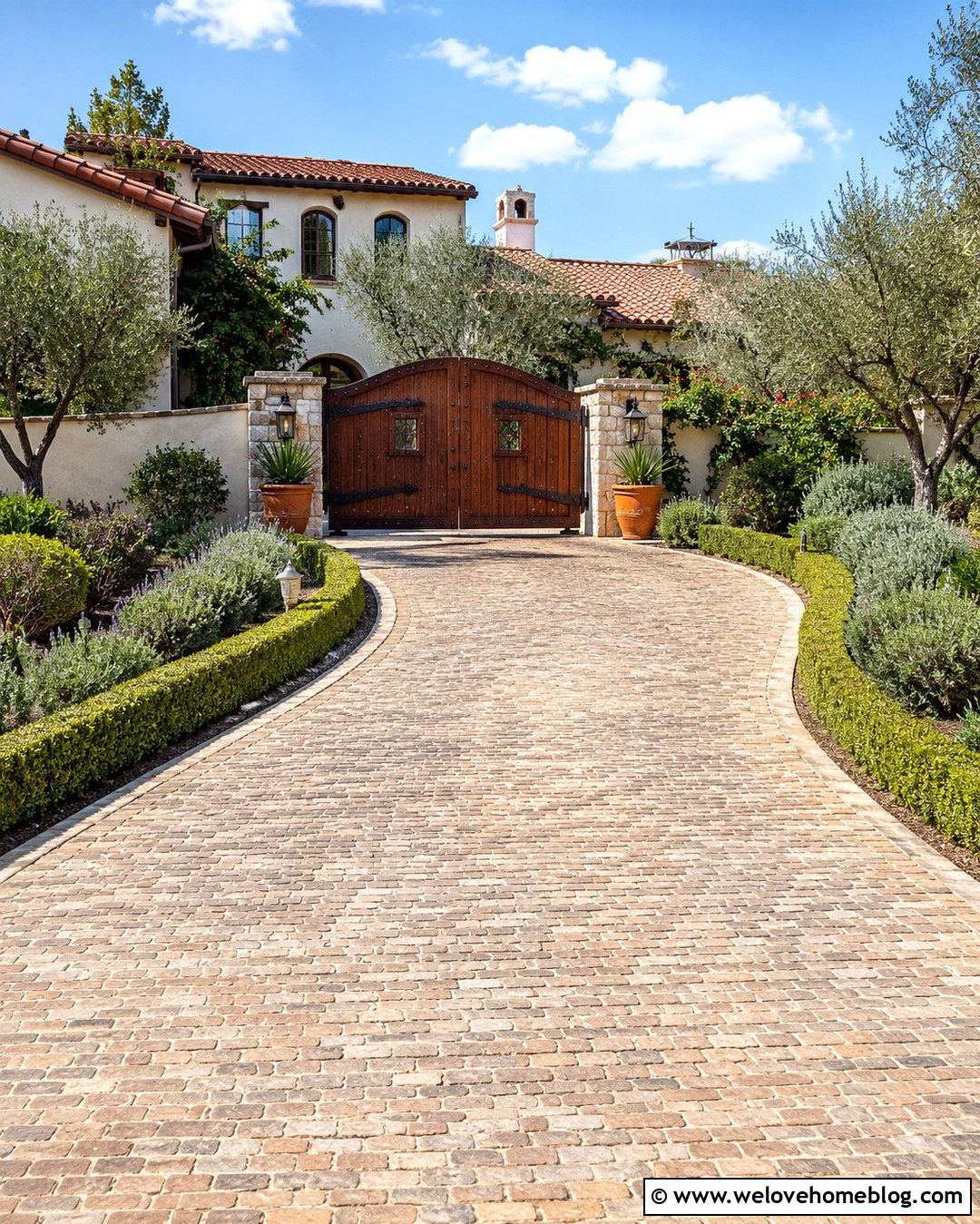
A curved-top wooden gate adds softness to a Mediterranean or Spanish-style driveway. Build the two leaves from vertical mahogany-toned boards and shape their upper edges into a shallow center arch. Decorative iron studs, strap hinges, or a narrow forged grille can provide character without covering the wood grain. Use warm cobblestone or tumbled concrete pavers for a gently curved driveway leading to a stucco house with a clay tile roof. Stone pillars, terracotta planters, and wall-mounted lanterns will strengthen the architectural connection. Frame the approach with olive trees, rosemary, lavender, and low evergreen hedges. Avoid placing tall plants directly beside the moving panels. The completed entrance should combine graceful lines and durable materials while preserving enough visual openness to feel welcoming from the street.
14. Barn Door Wood Sliding Gate
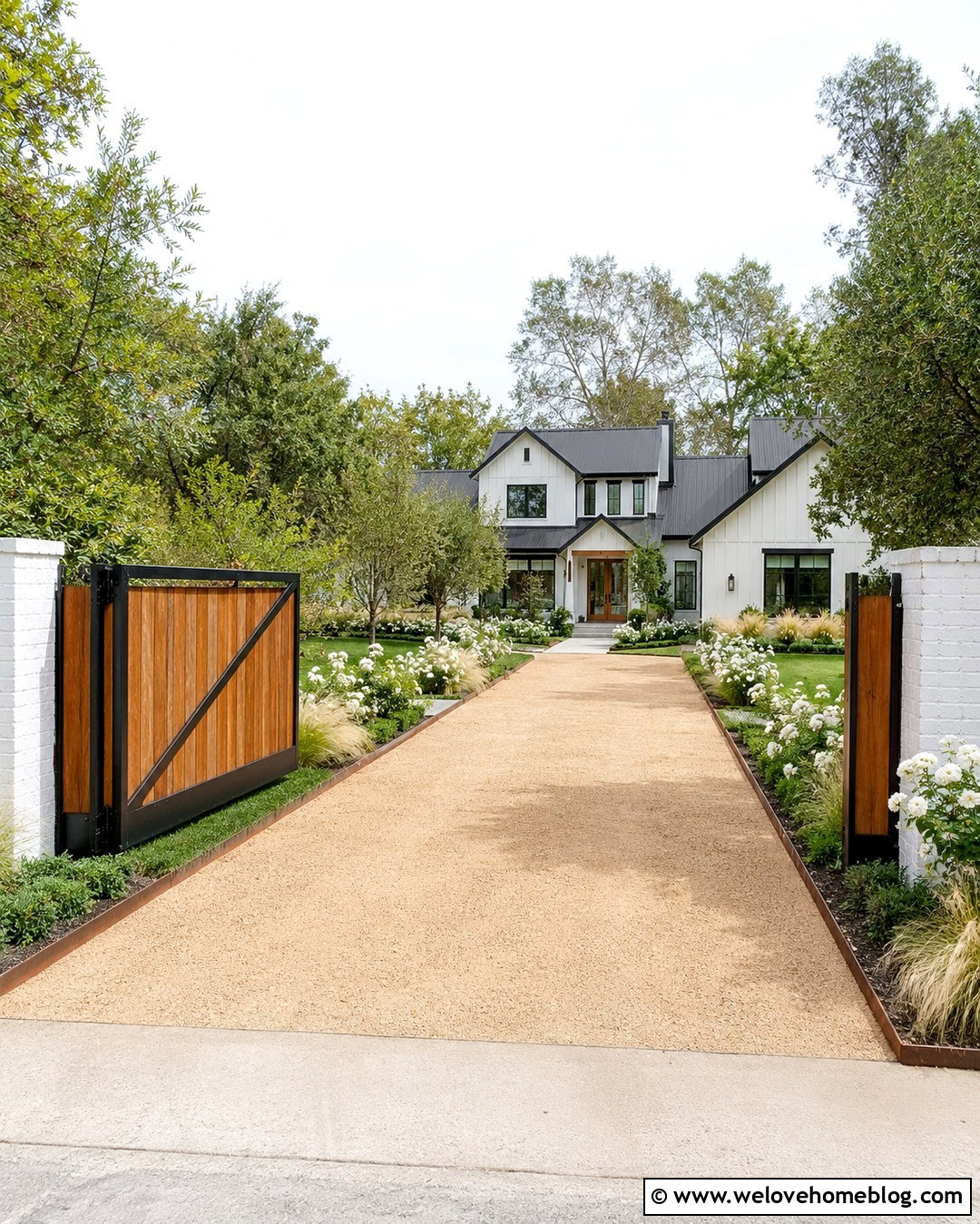
A barn-door sliding gate makes a bold but practical feature for a modern farmhouse entrance. Use wide vertical cedar planks framed by horizontal rails and a large diagonal brace. Mount the wood panel on a black steel support system so it can slide beside a matching fence rather than swinging across the approach. A tan decomposed granite driveway provides a soft, natural surface that complements the warm wood. Edge the route with weathered steel or dark timber, then add ornamental grasses, white roses, and clipped evergreen shrubs. A black-and-white farmhouse in the background ties the materials together. Keep the sliding hardware visually simple and protected from loose driveway material. Repeating the diagonal gate detail on a nearby pedestrian entrance can make the complete frontage feel coordinated and thoughtfully planned.
15. Lattice Top Wood Driveway Gate
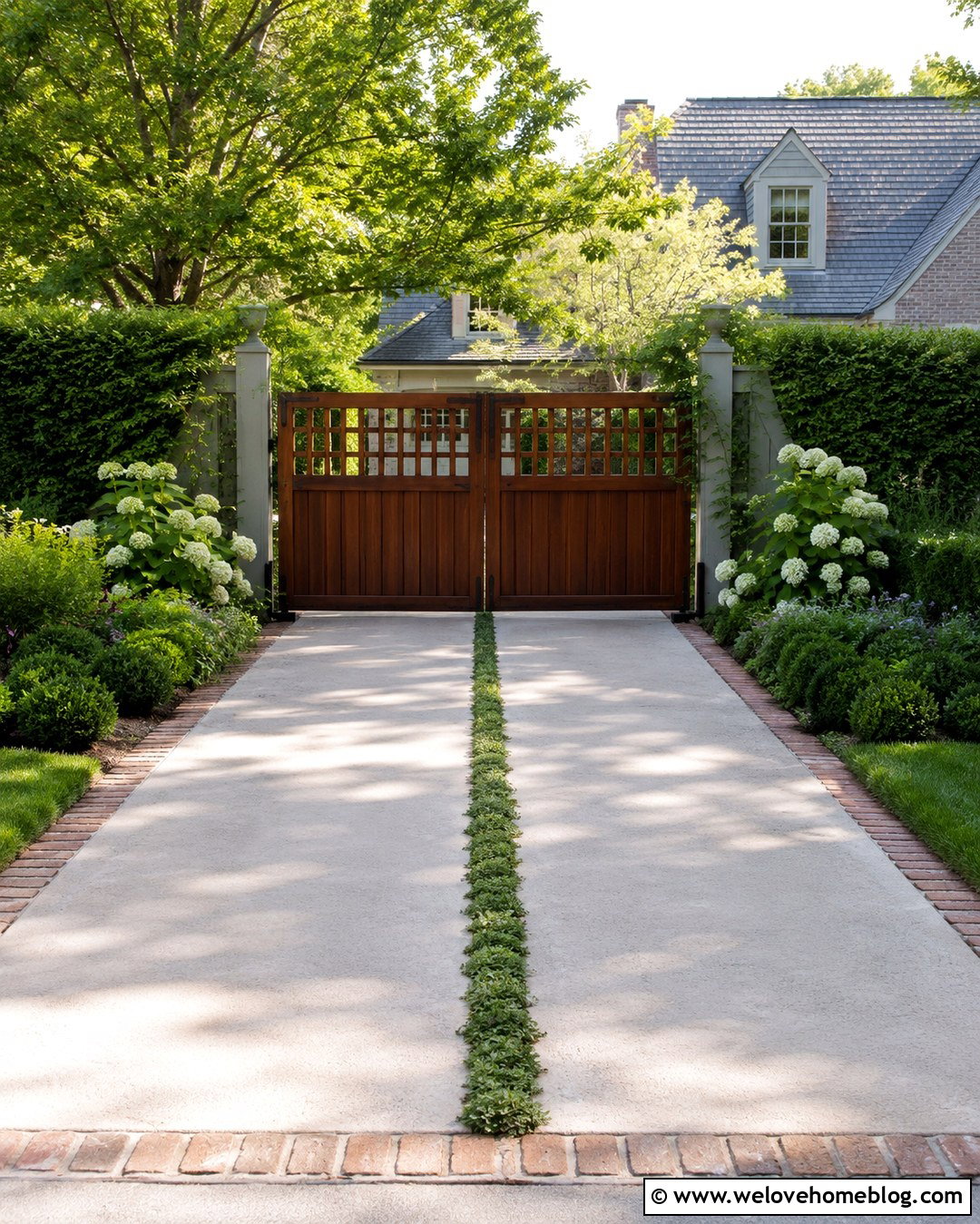
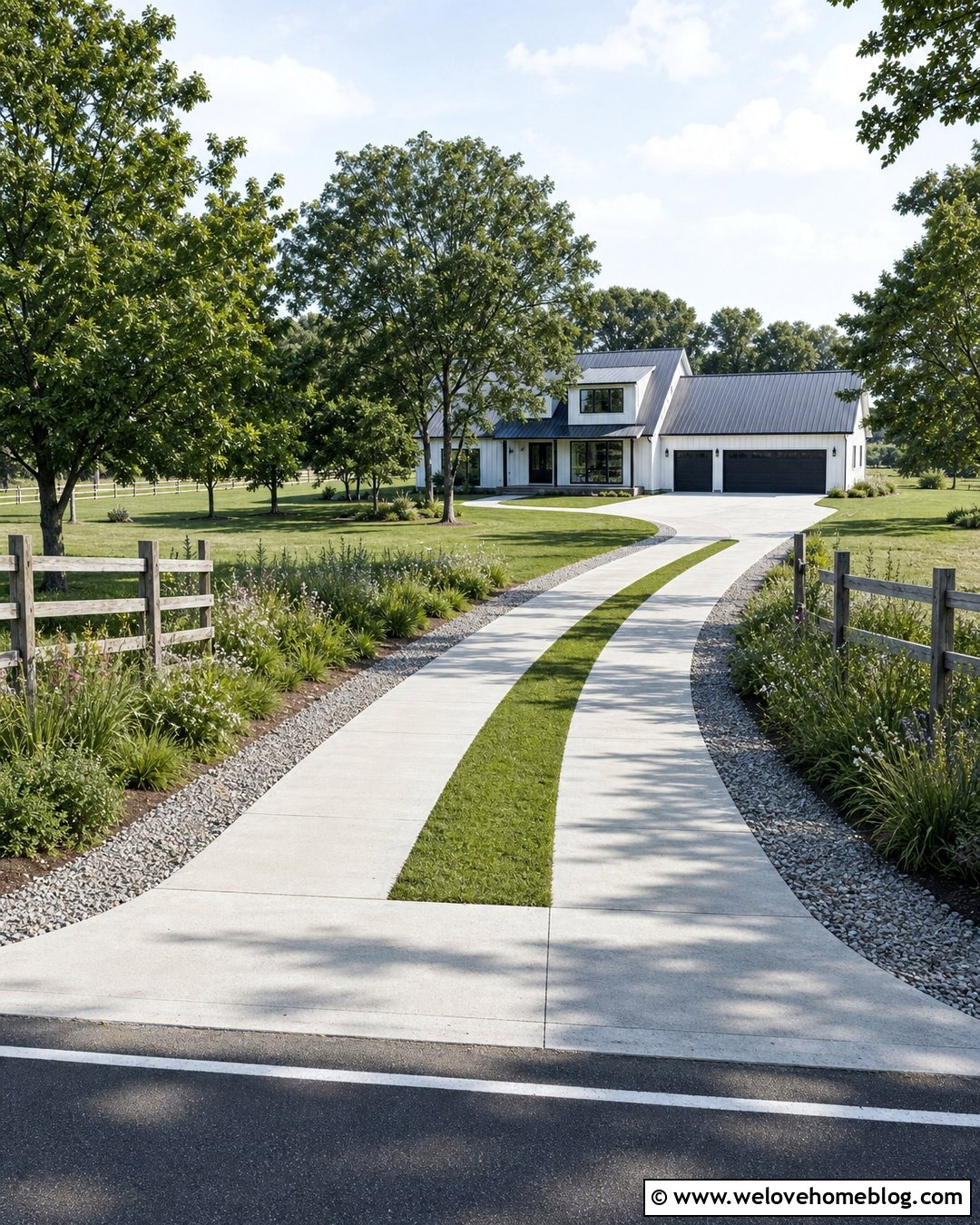
A lattice-topped gate offers partial privacy while keeping the upper portion light and decorative. Use solid redwood boards on the lower panels and a simple square lattice above, framed by substantial wooden rails. Pair the double-swing gate with a pale poured-concrete driveway divided by a central strip of creeping thyme or low grass. Brick edging can connect the concrete to a traditional suburban home and surrounding walkway. Train a restrained climbing vine along adjacent fence sections rather than across the moving gate itself. Hydrangeas, compact hollies, and layered perennial beds can soften both sides of the entrance. Paint the lattice and frame a muted sage green, or stain the entire structure for a more natural result. The mix of solid and open sections creates privacy without making the driveway feel completely closed off.
16. Wood Gate With Pergola Entrance
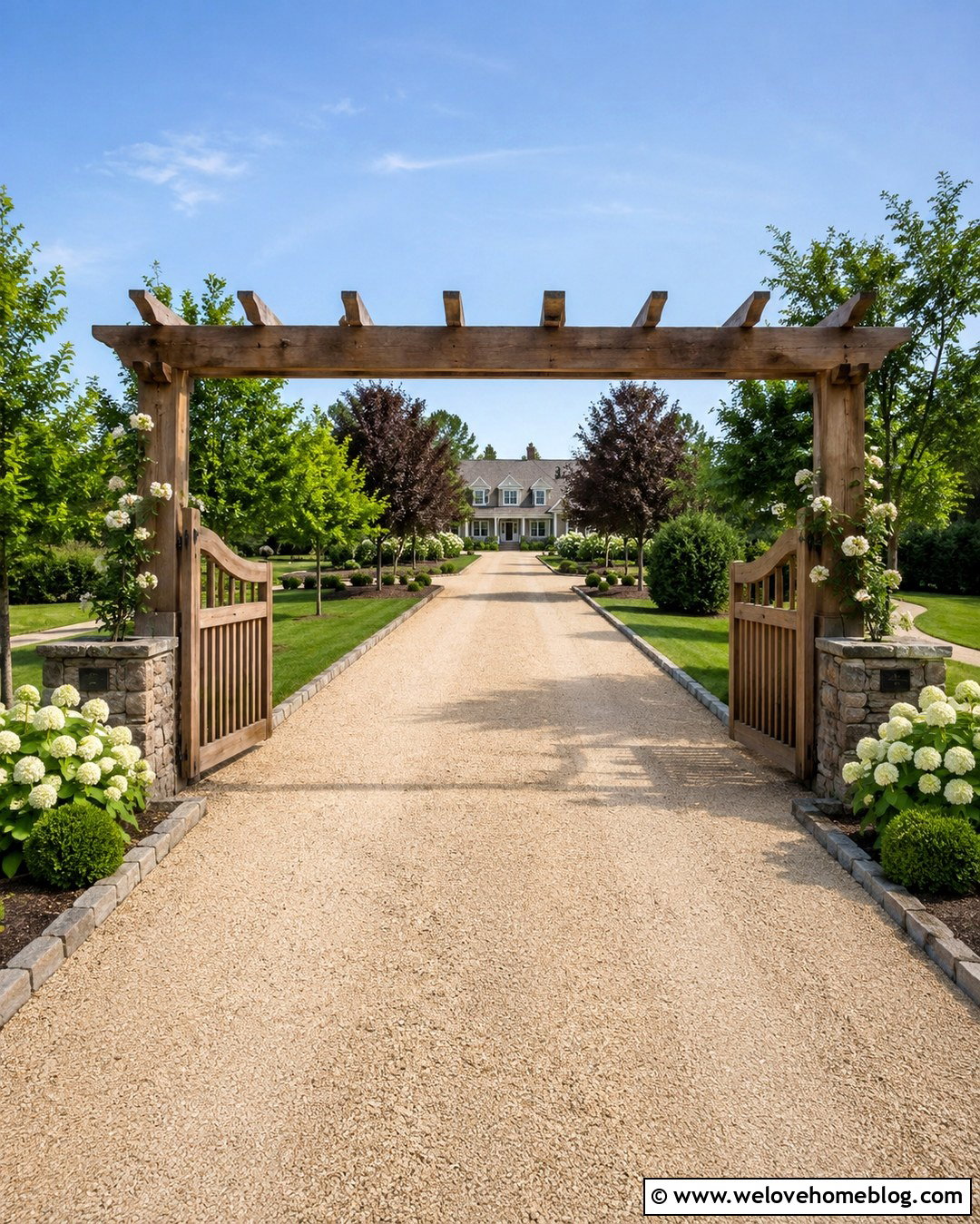
A timber pergola above a wood driveway gate can give a long entrance greater presence and architectural structure. Use a simple open-slat cedar gate beneath thick cedar posts and crossbeams. Pair it with a straight buff-colored gravel driveway leading to a shingle-style or country home. Low stone bases can protect the posts visually and connect the structure to matching driveway borders. Plant climbing roses or a controlled flowering vine on the outer pergola posts, keeping growth clear of hinges, sensors, and moving panels. Continue the landscape with white hydrangeas, clipped shrubs, lawn, and small ornamental trees. The overhead structure should be proportioned for comfortable vehicle clearance and should not feel cramped. Warm wood, pale gravel, and layered greenery create a welcoming entrance with a distinct sense of arrival.
17. Reclaimed Wood Driveway Gate
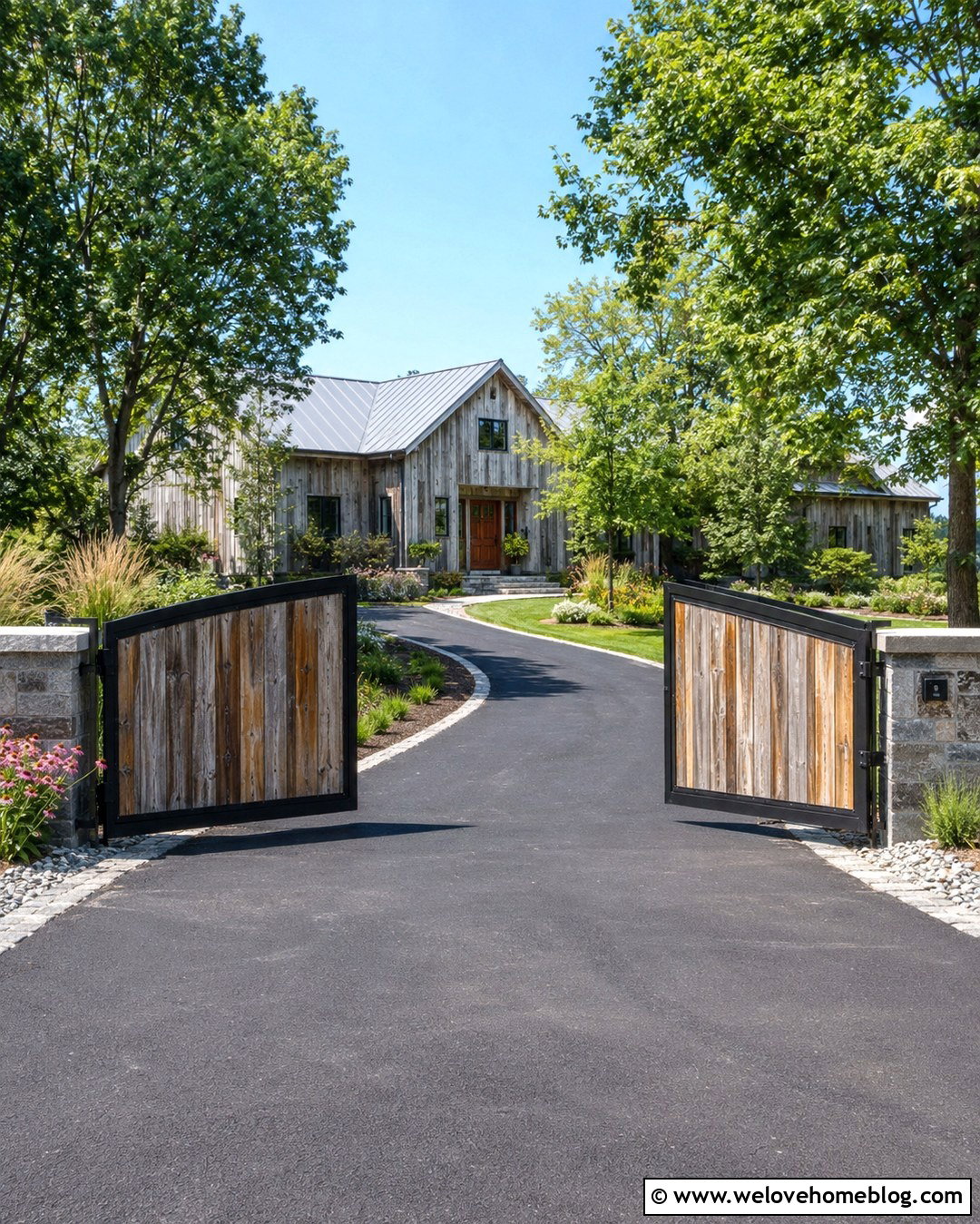
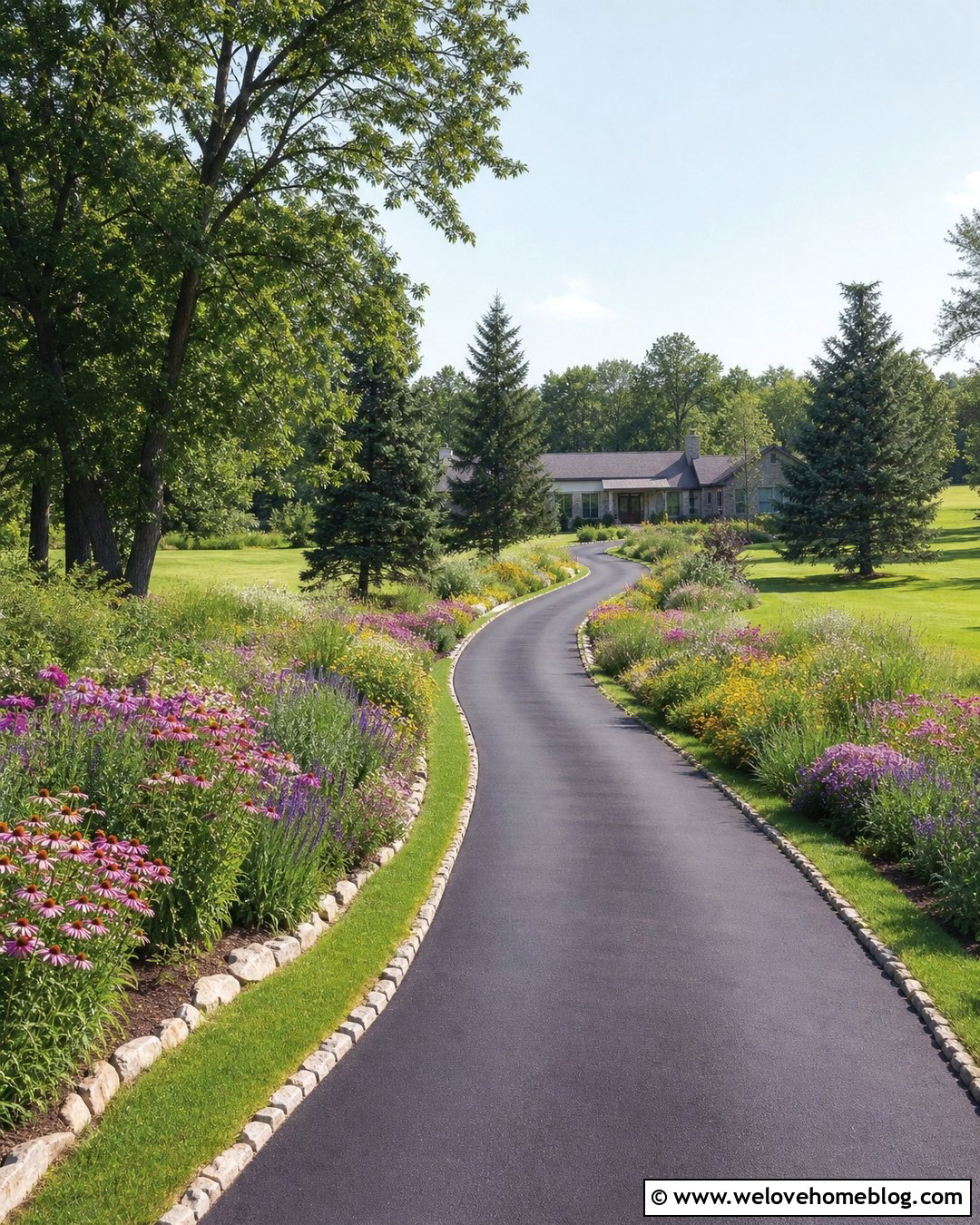
Weathered reclaimed wood can give a driveway entrance authentic texture, especially beside a rustic cottage or converted barn. Use mismatched vertical boards within a reinforced dark metal frame, allowing natural color variations to remain visible. A gently curved black asphalt driveway creates a smooth, practical contrast with the rough wood surface. Define its edges with reclaimed granite setts or cobblestone strips. Native grasses, coneflowers, low junipers, and mature deciduous trees can make the gate feel settled into the landscape. Select salvaged boards carefully, removing weak sections and exposed fasteners before construction. Matte black hinges and a simple steel latch complement the aged character without making the entrance look themed. Repeating a small amount of reclaimed wood on the mailbox enclosure or pedestrian gate will help unify the complete frontage.
18. Automatic Wood Driveway Gate
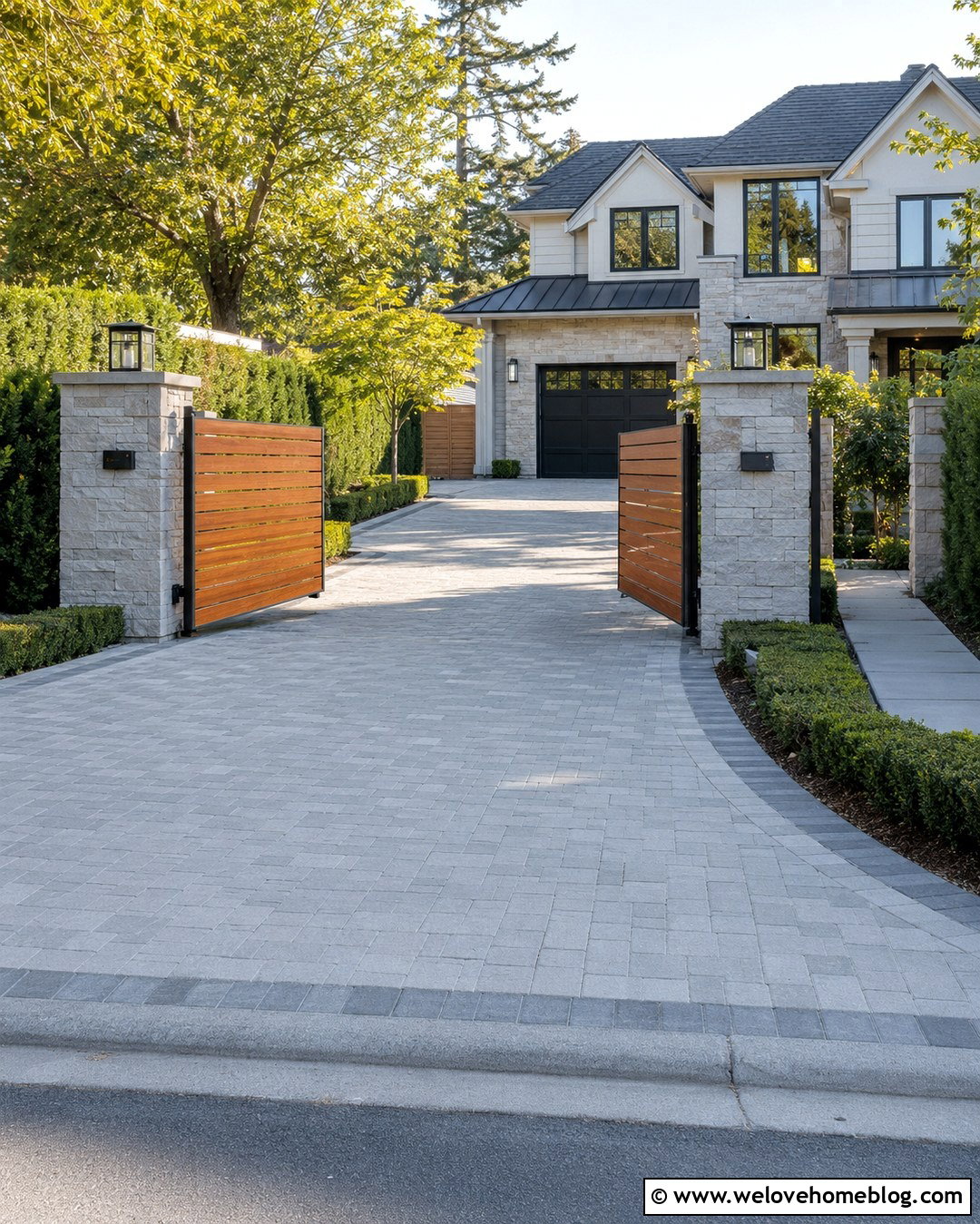
An automatic wood gate can provide a polished daily entrance when its operating system is planned from the beginning. Use balanced double-swing panels with horizontal cedar boards over engineered steel frames. A broad driveway of light-gray interlocking concrete pavers offers a clean approach to a transitional home. Place the controls, hinges, and operator arms discreetly behind masonry pillars, but keep all required safety equipment unobstructed. Certified gate operators, properly positioned entrapment-protection devices, manufacturer instructions, and local code requirements should guide installation; UL 325 addresses automatic gate operator hazards and protective systems. () Finish the entrance with low hedges, ornamental trees, pillar lights, and a separate pedestrian route. A qualified installer can coordinate the gate’s weight, movement, wiring, access controls, drainage, and emergency operation.
19. Narrow Wood Driveway Gate
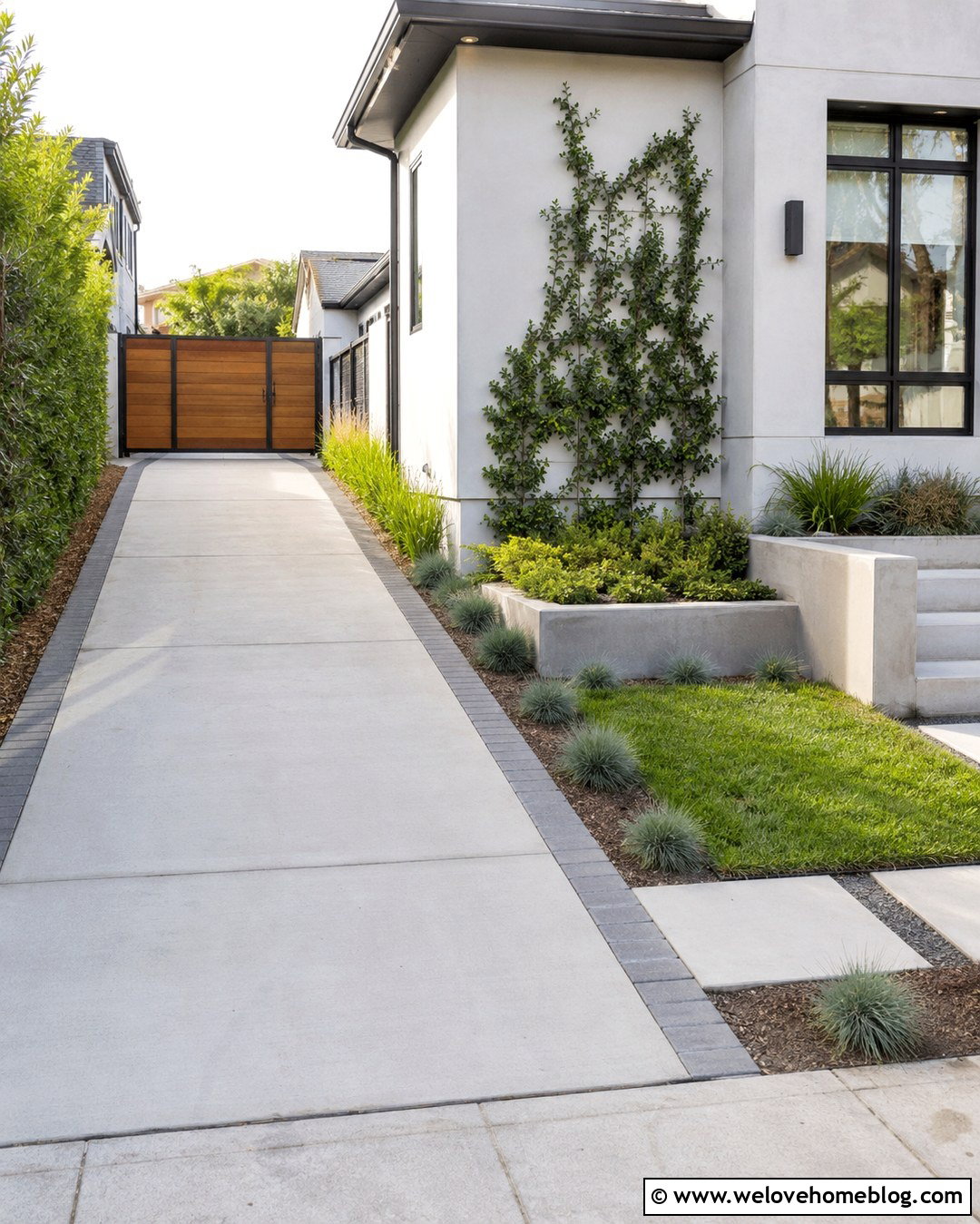
A narrow driveway can still have an attractive gate without making the entrance feel squeezed. Choose a single-swing or compact sliding gate made from slim vertical cedar boards. A light broom-finished concrete driveway will visually widen the approach, especially when bordered by narrow charcoal paver strips. Use simple steel posts instead of oversized masonry pillars to preserve every available inch. Keep adjacent landscaping low and tidy with dwarf grasses, compact evergreen shrubs, and wall-trained greenery. If the driveway runs beside the house, coordinate the gate stain with the garage door, porch ceiling, or wood siding. Position trash storage, utilities, and drainage features away from the gate’s travel path. Clean lines and a limited material palette allow the small entrance to look deliberate, functional, and visually connected to the home.
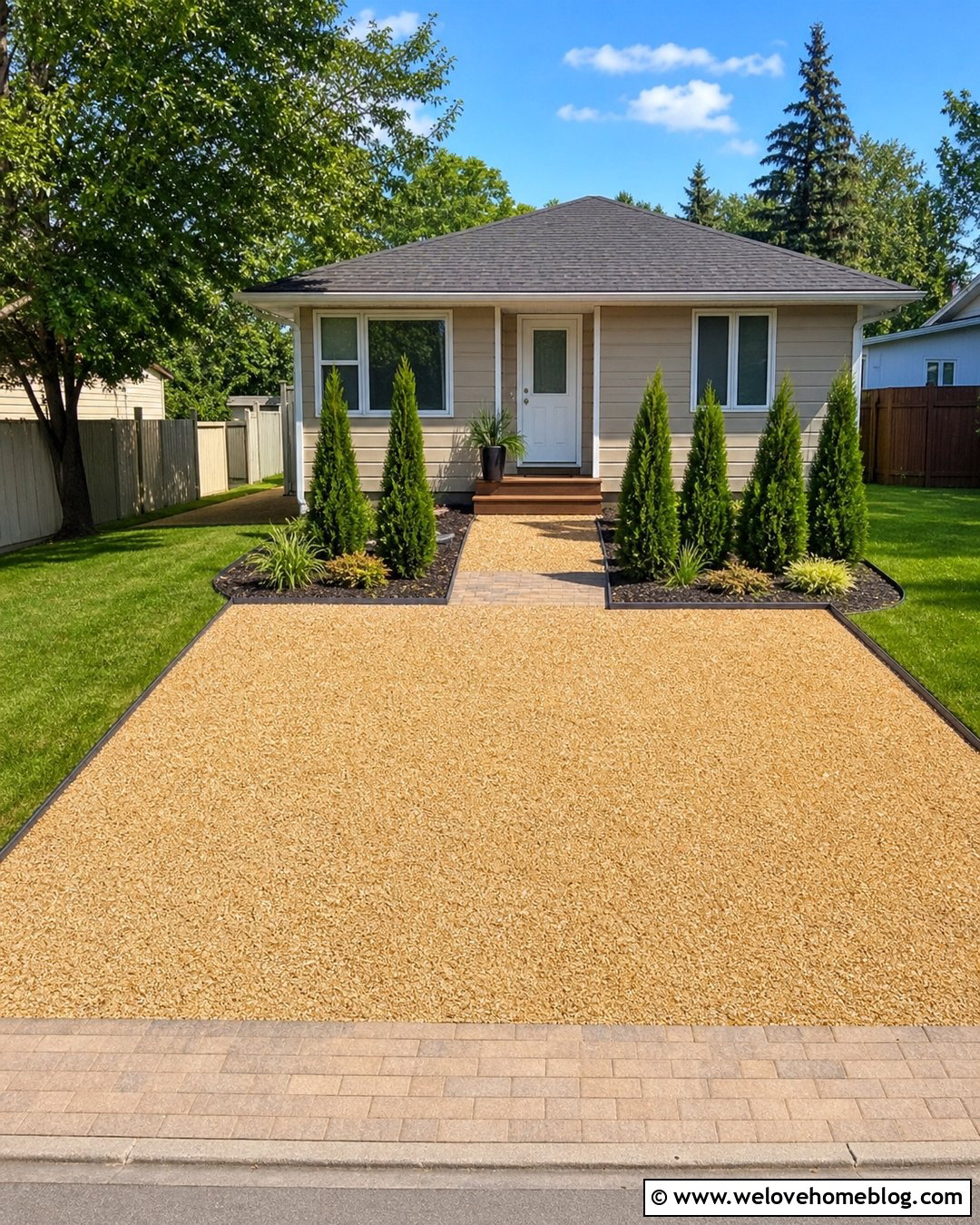
20. Coastal Wood Driveway Gate
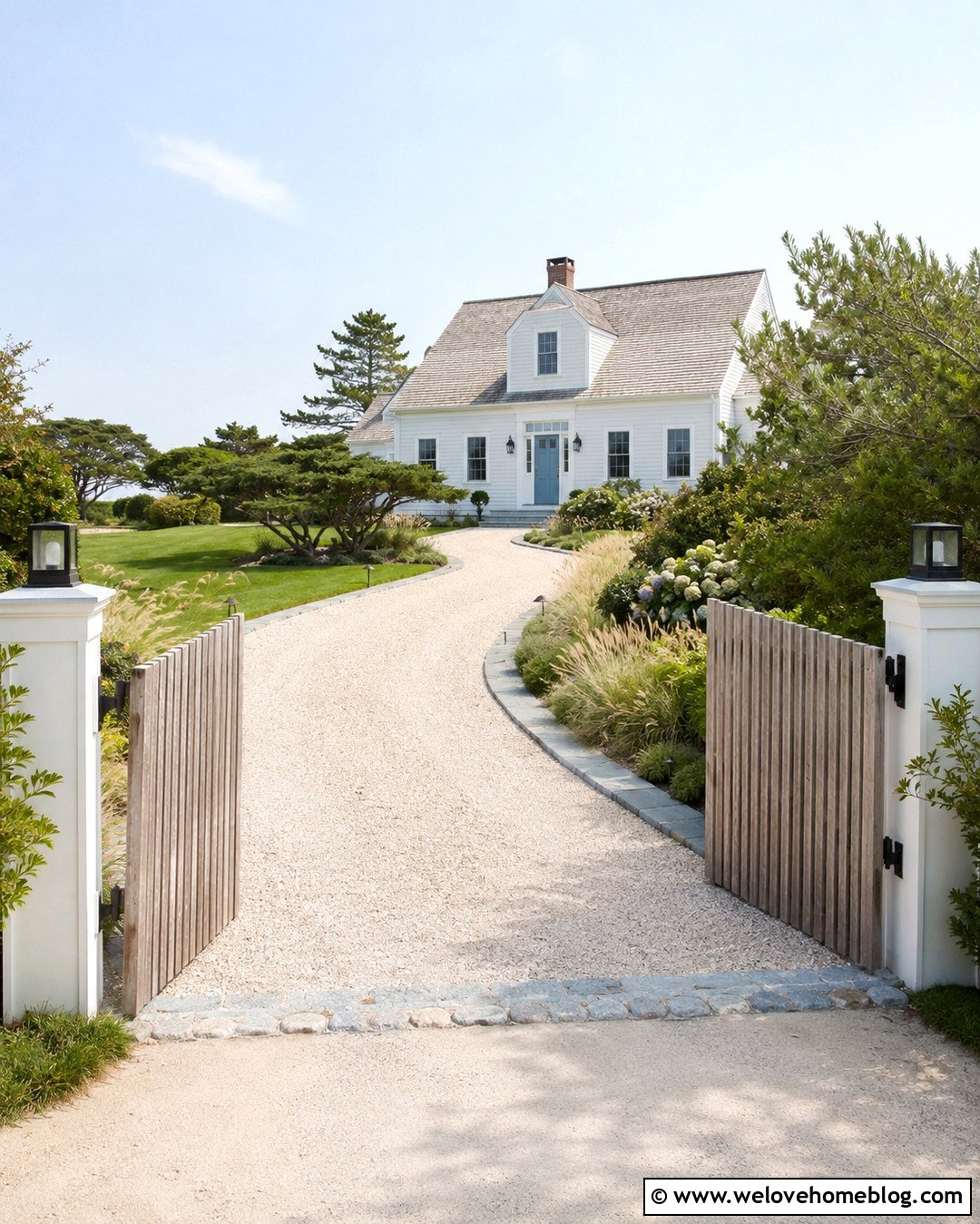
A coastal wood gate should feel light, relaxed, and durable rather than ornate. Use vertical cedar boards with small gaps for airflow, framed by white-painted rails and capped posts. Pair the gate with a pale shell gravel or light resin-bound gravel driveway that curves gently toward a coastal cottage. Bluestone edging can contain the surface while adding a cool gray contrast. Surround the entrance with salt-tolerant ornamental grasses, inkberry, hydrangeas, and windswept native shrubs suited to the local conditions. Soft gray stain or a weathered natural finish works well with white siding and a muted blue front door. Choose corrosion-resistant exterior hardware appropriate for the property’s exposure. Simple post lights and an understated address plaque finish the scene while preserving the bright, informal character of the complete driveway.
Conclusion:
The strongest driveway entrances treat the gate, paving, borders, plants, lighting, and house as one coordinated design. Start by choosing an opening method that works with your driveway width, slope, and available side space. Then select a wood tone and panel pattern that relates naturally to the home. Cedar slats suit modern settings, cross braces reinforce farmhouse character, and framed panels complement traditional architecture. Strong posts, suitable framing, exterior finishes, dependable hardware, and clear drainage will also support long-term performance. If automation is included, use a qualified gate professional and code-compliant safety equipment. These 20 wood gate driveway ideas offer practical starting points for creating an entrance that feels distinctive, welcoming, and appropriate for your property.

Related posts:
Leave a Reply