
These **20 driveway gate safety tips ideas** can help you create an entrance that feels secure, works smoothly, and still improves curb appeal. A safe gate is more than a strong barrier across the driveway. The operator, sensors, controls, hinges, stops, lighting, drainage, landscaping, and pedestrian route must function as one complete system. Automatic gates require extra planning because moving panels can create crushing, drawing-in, and entrapment hazards. Current safety guidance emphasizes listed operators, suitable entrapment protection, controlled access, and professional installation. Local building, electrical, and fire-access rules may also affect the final design. Use the following complete entrance setups as inspiration, then have a qualified gate professional evaluate your property, equipment, and local requirements before installation. Start planning with these **20 driveway gate safety tips ideas**.
1. Automatic Driveway Gate With UL 325 Operator
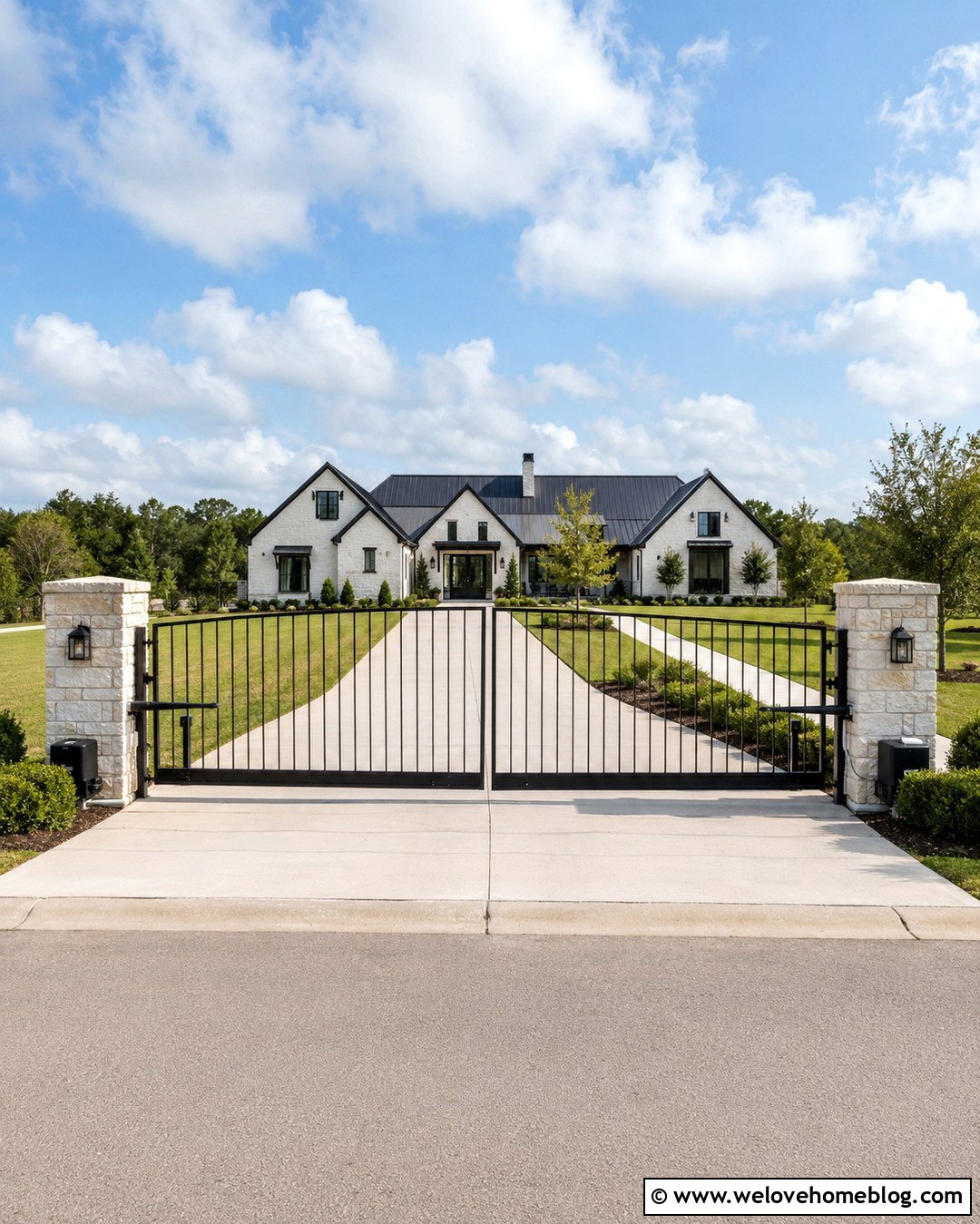
Start with an automatic gate operator listed and labeled to the current UL 325 safety standard. Pair it with a gate constructed and installed using applicable ASTM F2200 principles. This combination addresses both the powered operator and physical gate construction. A professional installer should match the operator to the gate’s type, weight, size, usage level, and travel direction. The finished entrance might feature a straight concrete driveway, sturdy masonry pillars, a properly balanced swing gate, and concealed electrical equipment. Avoid adding a motor to an old manual gate without first checking its hinges, frame, stops, openings, and structural condition. Local codes may require listed equipment, permits, inspections, and specific safety devices, so consult the authority having jurisdiction before work begins. ()
2. Driveway Gate With Dual Entrapment Protection
A well-designed automatic entrance uses monitored safety devices wherever the moving gate could trap a person or object. Depending on the layout, this may include photoelectric sensors, sensing edges, and the operator’s inherent obstruction-detection system. Photo eyes can monitor the vehicle path, while pressure-sensitive edges can protect leading edges, posts, or other contact areas. Each potential entrapment zone should be evaluated separately rather than assuming one sensor protects the entire entrance. Keep the beams properly aligned and clear of weeds, snow, dirt, and decorative objects. If a monitored device develops a fault, the system should not simply continue operating normally. UL guidance calls for two independent entrapment-protection devices for each entrapment zone of an automated gate system. ()
3. Sliding Driveway Gate With Screened Openings
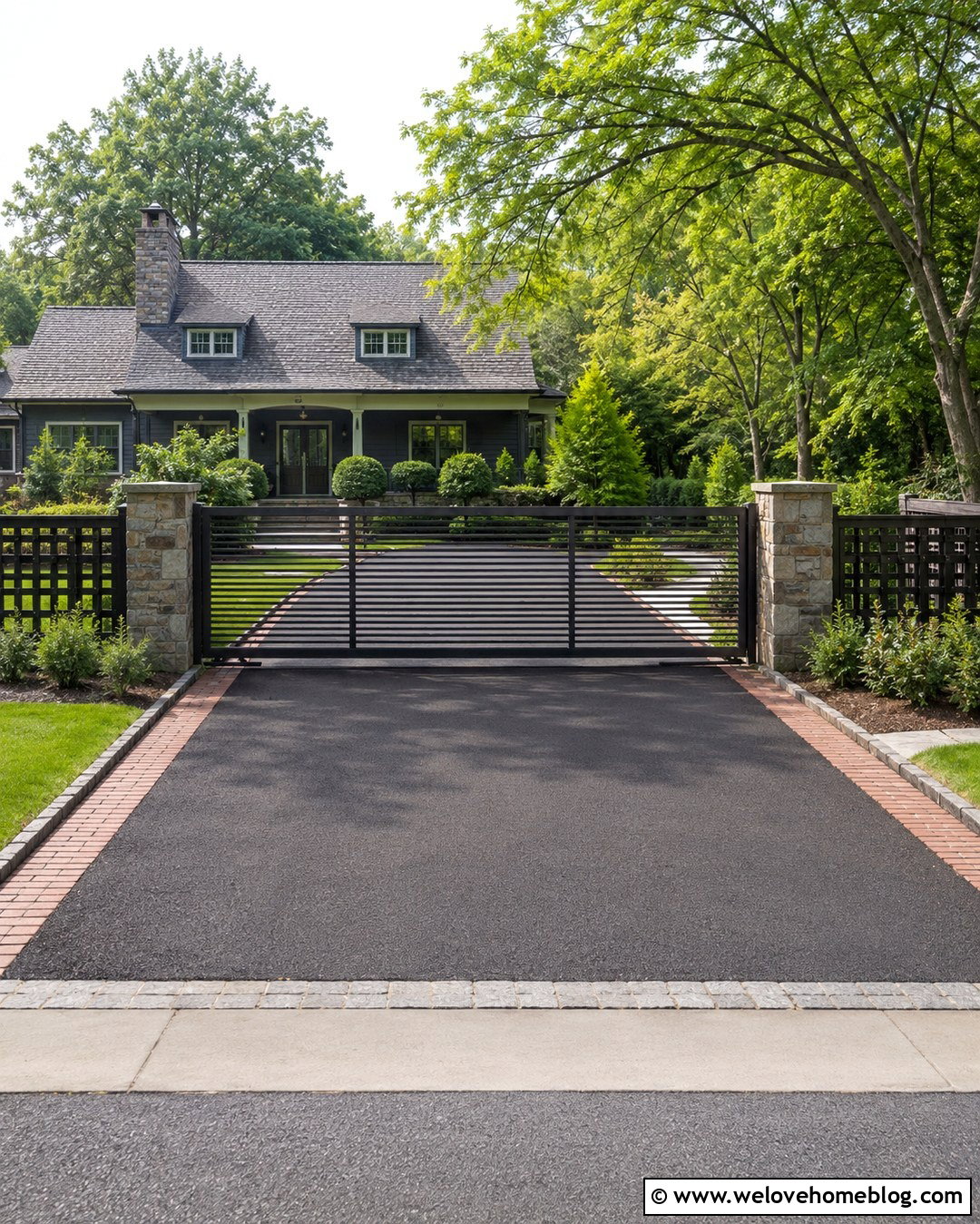
A sliding driveway gate needs careful protection because its openings can pass across stationary fence sections, posts, and rollers. Choose a solid infill or closely spaced screen that prevents hands, feet, clothing, or objects from reaching through the moving gate. The guarded area should include the portion of adjacent fence covered when the gate opens. Pair this construction with covered rollers, protected pinch points, physical stops, monitored photo eyes, and sensing edges selected for the site. A level paver or asphalt driveway also helps the gate track move consistently. Avoid open ornamental bars near the travel zone unless the design meets applicable opening and guarding requirements. ASTM F2200 guidance specifically addresses screening, gaps, stops, protrusions, and fall-over protection for automated sliding gates. ()
4. Swing Driveway Gate With Safe Clearance
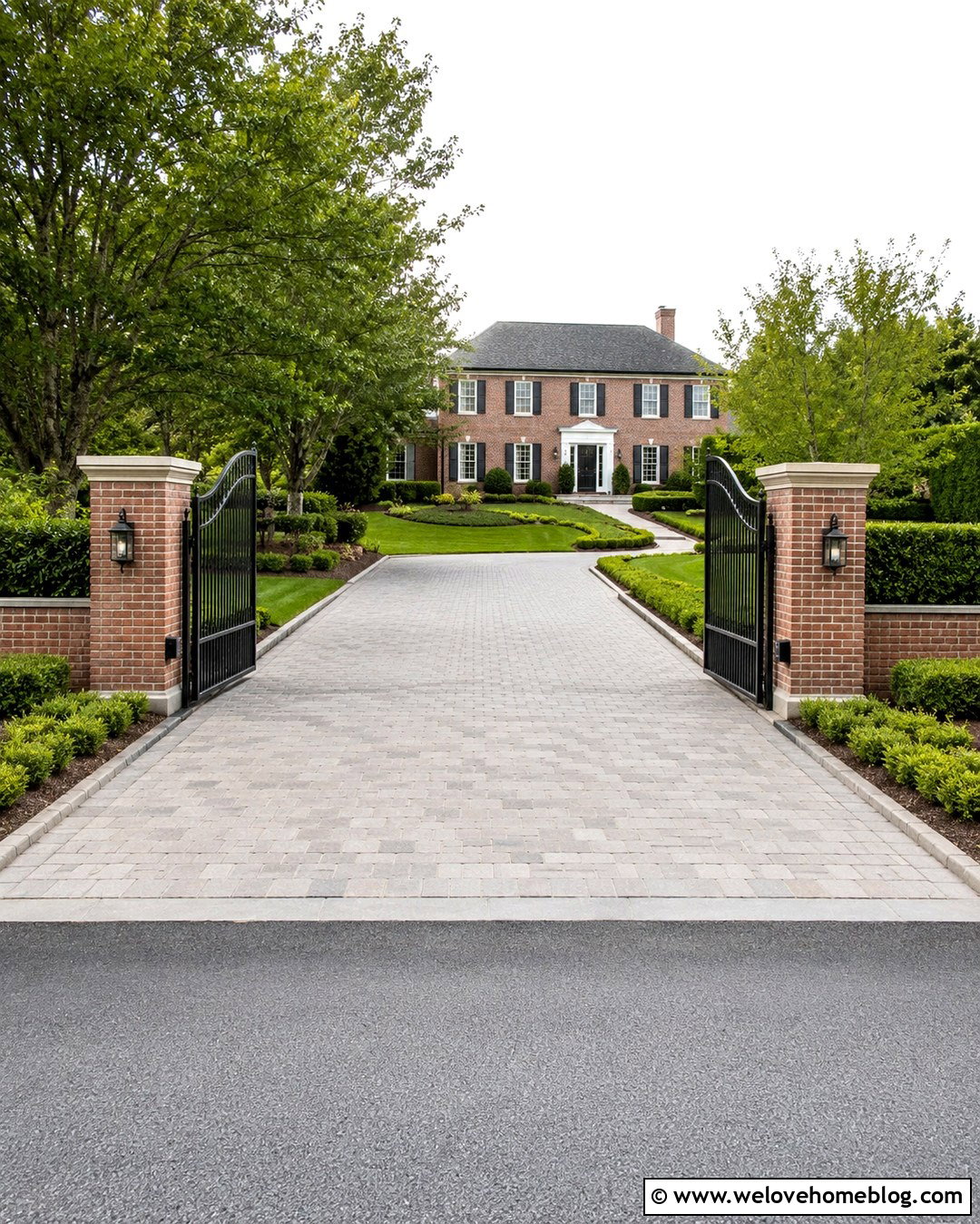
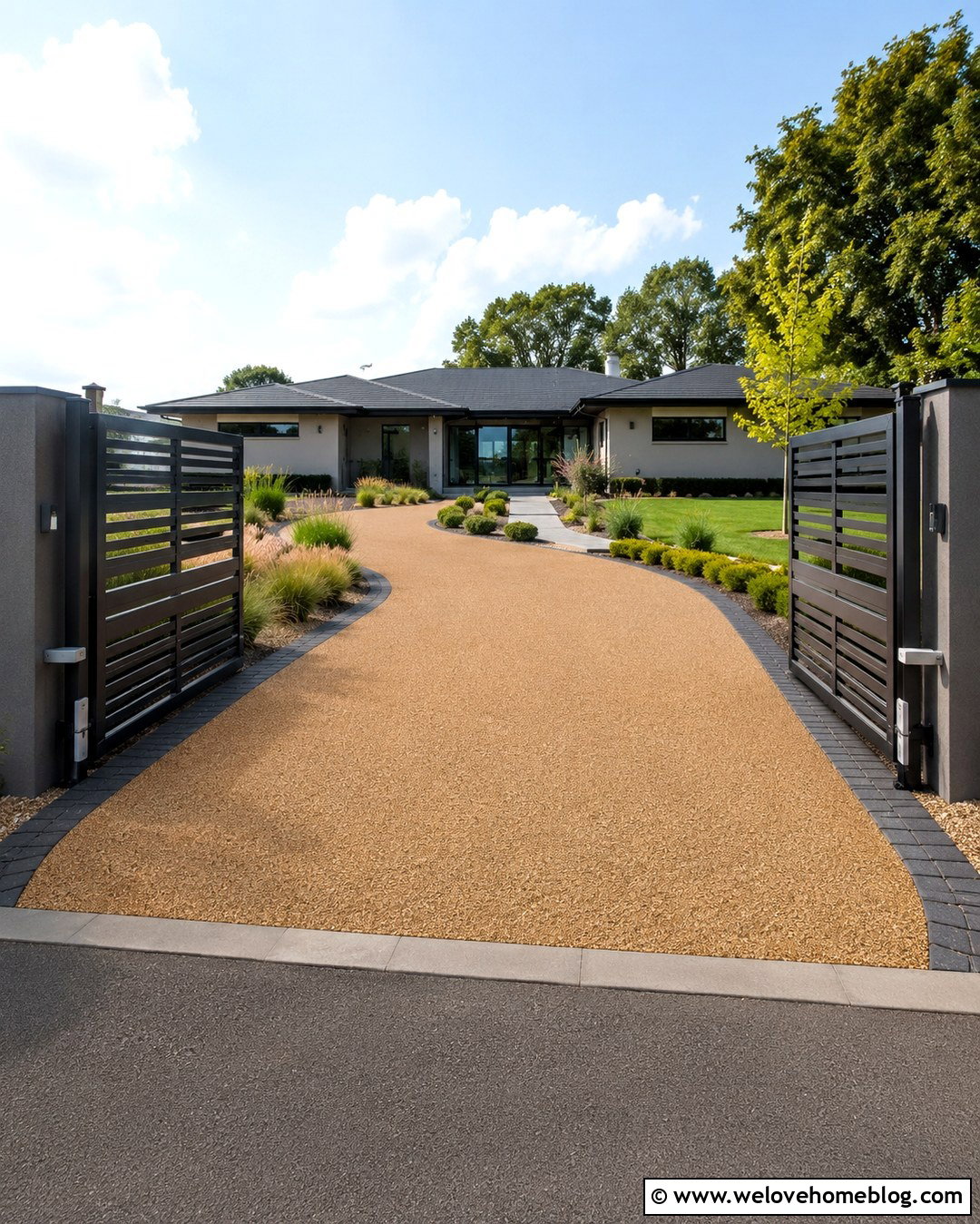
Picture a double swing gate opening smoothly without approaching a wall, tree, parked vehicle, or raised planting bed. That clear movement area is essential because a swinging panel can create a dangerous compression zone against a fixed object. Design the driveway entrance with sufficient room for the full arc of each leaf, including extra clearance around pillars, curbs, operator arms, and landscaping. Place photo eyes and sensing edges where the installer identifies opening and closing hazards. The gate should have strong hinges, secure posts, controlled travel, and physical stops that prevent overtravel. Keep the driveway reasonably level at the entrance so vehicles do not stop unexpectedly within the gate arc. Never allow children, visitors, or pets to wait inside the gate’s path. ()
5. Driveway Gate With Separate Pedestrian Entrance
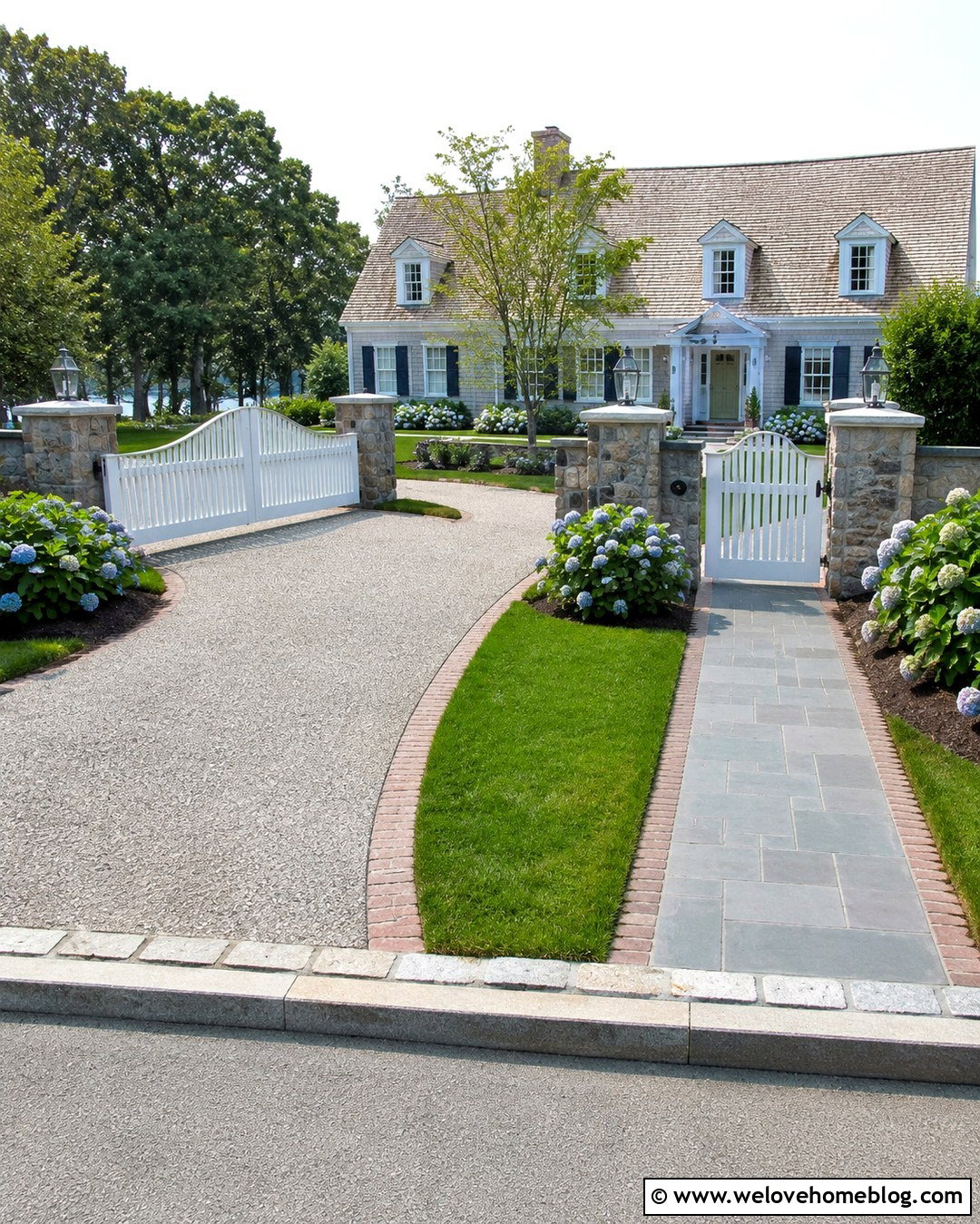
A vehicular driveway gate should not double as the everyday entrance for walkers. Add a separate pedestrian gate and walkway outside the complete travel path of the automatic gate. The pedestrian opening should be easy to recognize from the street, conveniently positioned, and protected from moving panels, operator arms, and vehicle traffic. A paved walkway, low planting border, and dedicated lighting can naturally guide guests toward the safer route. Keep the pedestrian gate usable when the driveway gate is closed, and consider an accessible latch and suitable path dimensions based on local requirements. Automated vehicular gate guidance directs pedestrians toward a separate walk-through entrance rather than through the moving vehicle gate. This layout improves circulation while making the entrance look intentional and welcoming. ()
6. Driveway Gate Controls Away From Moving Parts
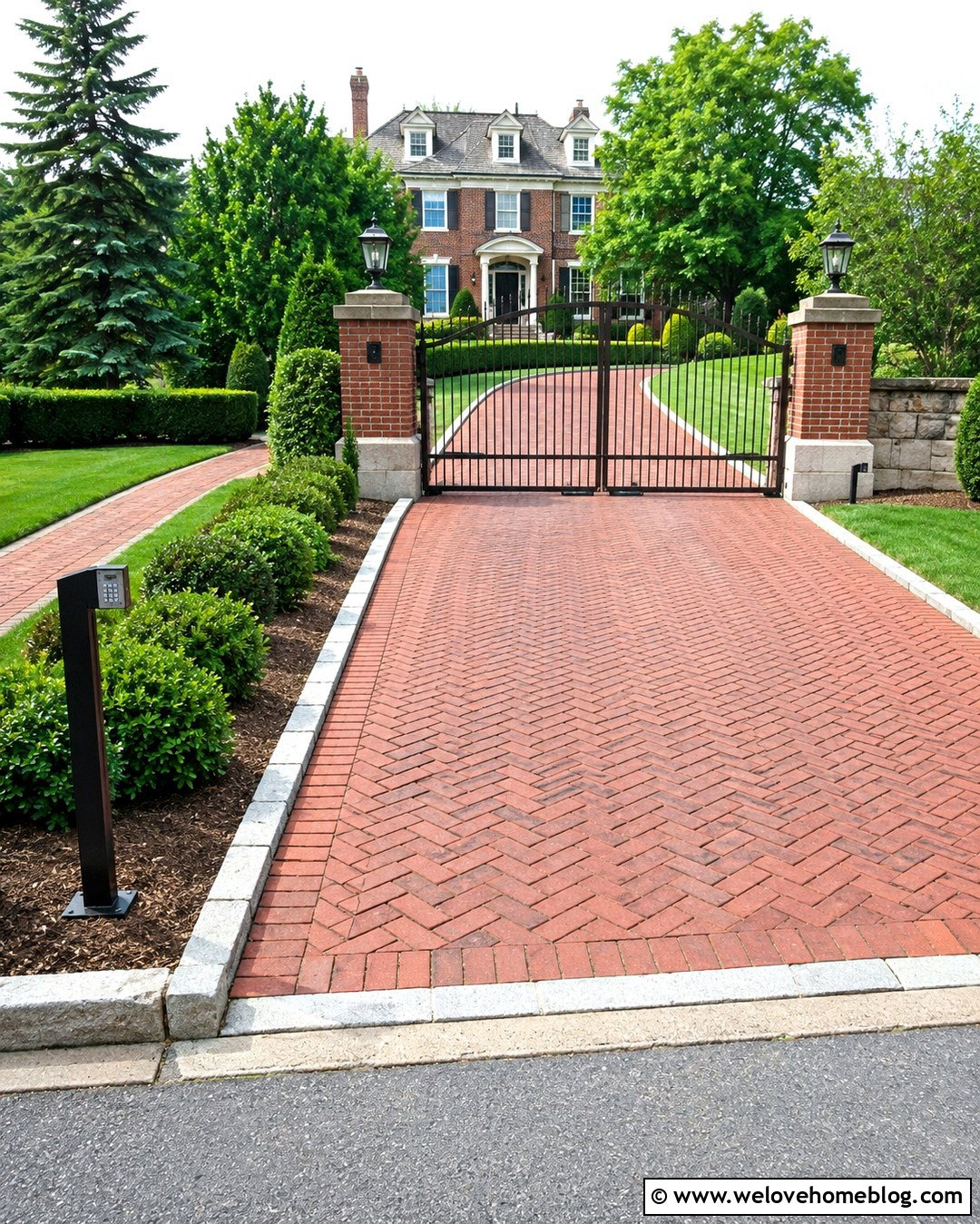
Keypads, card readers, intercoms, and reset controls should never require someone to reach through or around a moving gate. Position user controls far enough from the gate that the person operating them cannot touch the gate or operator. Industry guidance commonly uses at least six feet as a practical rule, although the correct location depends on the system and site. The control station should also provide a clear view of the entrance without placing a vehicle in the gate’s travel path. Mount outdoor controls securely and protect them against unauthorized use. A freestanding keypad pedestal beside a widened concrete or paver approach can provide comfortable vehicle access. Reset controls require line-of-sight placement so the user can confirm that people and obstacles are clear. ()
7. Driveway Gate With Visible Safety Signs

Safety signs provide an important reminder that an automatic gate can move without warning. Install durable warning placards on both sides of the entrance where drivers and pedestrians can see them clearly. Do not hide the signs behind climbing plants, decorative panels, masonry columns, or seasonal landscaping. The warning area should remain bright and uncluttered, with the signs attached according to the operator manufacturer’s instructions. A cohesive entrance can still look attractive by coordinating sign placement with black metal fencing, stone pillars, and neat planting beds. Signs do not replace sensors, safe controls, separate pedestrian access, or responsible supervision. They support those measures by encouraging people to stay away from the gate’s travel area and moving hardware. Inspect damaged, faded, or missing placards during routine maintenance. ()
8. Driveway Gate With Emergency Manual Release
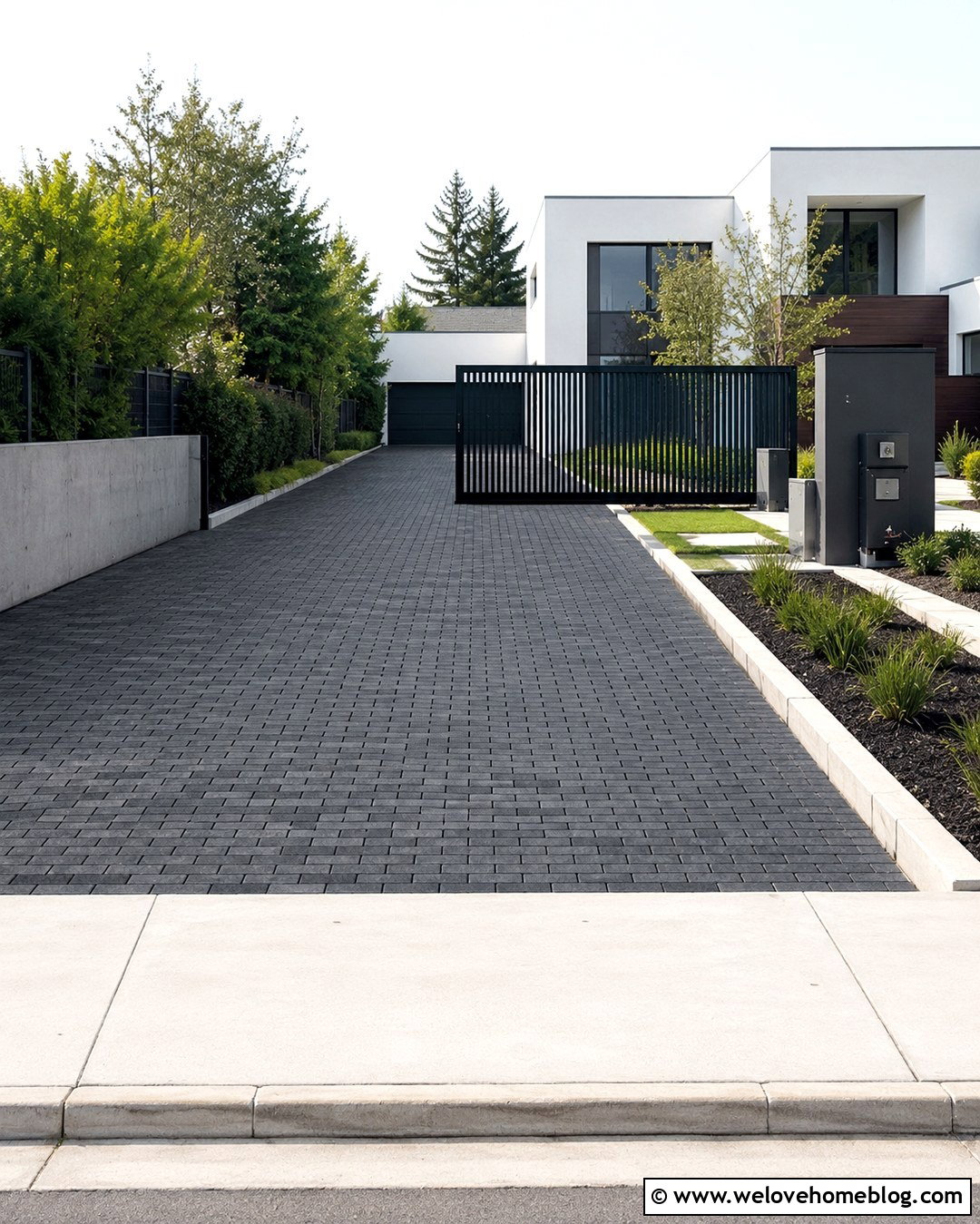
Power failures and equipment faults can leave an automatic gate closed, so include an accessible manual-release procedure in the overall design. The release should be installed exactly as the operator manufacturer specifies and protected against unauthorized access. Household members who may need it should know where it is and how to use it safely, but keys and release tools must stay away from children. Never attempt to force, lift, or disconnect a heavy gate without understanding how its weight is supported. A neat weatherproof operator cabinet beside a level driveway can keep the mechanism protected while remaining serviceable. Test the emergency procedure as directed by the manufacturer or technician. If the gate becomes loose, unbalanced, difficult to move, or structurally damaged, stop using it and call a qualified professional.
9. Driveway Gate With Emergency Responder Access
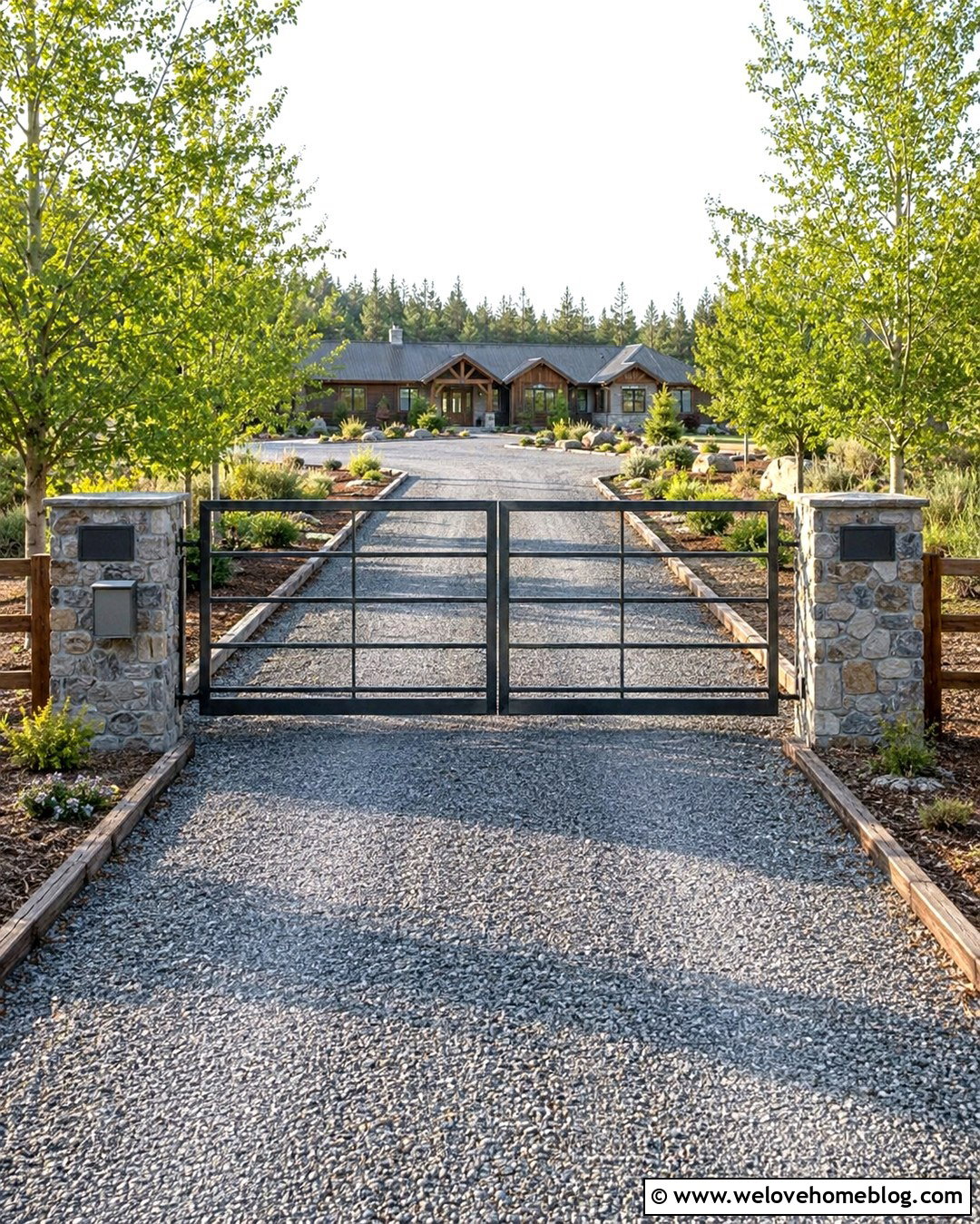
A secure entrance must not create an avoidable delay for firefighters, medical teams, or other emergency responders. Before choosing a lock box, keypad override, radio receiver, or emergency release system, ask the local fire authority what it accepts. Requirements can vary significantly between jurisdictions. The driveway opening, overhead clearance, surface strength, approach, turning area, and gate location must also accommodate local emergency vehicles. Keep branches, parked vehicles, planters, and decorative structures out of the required access route. Use a clearly visible address marker near the entrance without blocking sightlines. Emergency-access hardware should be protected, maintained, and updated whenever locks or access codes change. NFPA materials emphasize maintaining gate access, key-box facilities, suitable driveway clearance, and room for emergency vehicles. ()


10. Driveway Gate With Backup Power

Reliable backup power can keep an automatic driveway gate functional during an outage, but it must be selected for the operator and installed correctly. A compatible battery backup may support normal or limited gate movement, while some properties use a properly designed solar system. Backup power does not replace a manual release or approved emergency access. Position batteries, controllers, and wiring inside weather-resistant enclosures that technicians can reach without standing in the gate path. Consider how often the gate operates, the weight of each panel, winter temperatures, shade, and expected outage duration. Test the backup system according to the manufacturer’s instructions and replace aging batteries before performance becomes unreliable. After severe weather or a prolonged outage, confirm that sensors, limits, and access controls operate normally before regular use resumes.
11. Driveway Gate With Vehicle Detection Sensors
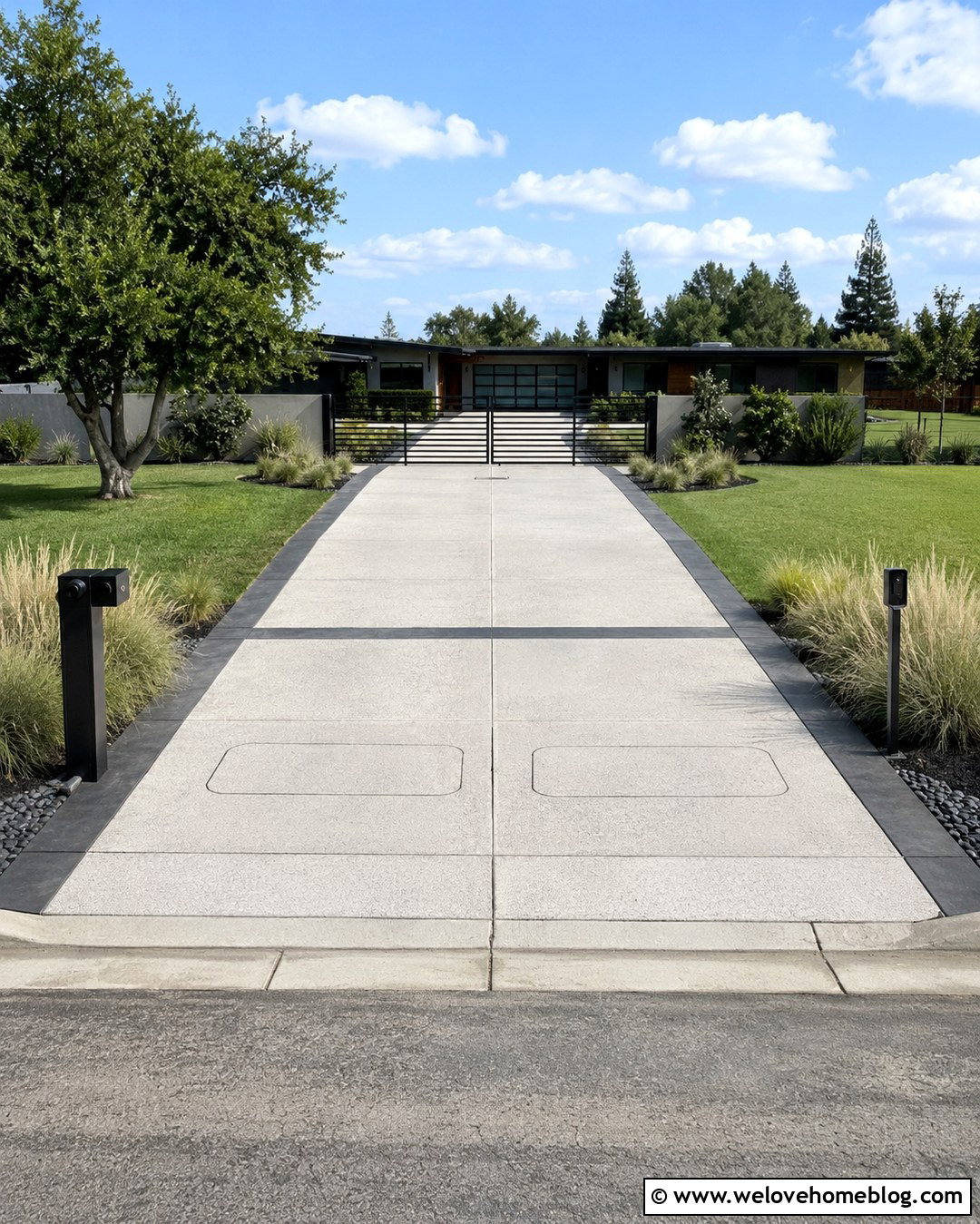
Vehicle-detection equipment can reduce inconvenient or unsafe gate movement when it is correctly designed around the driveway. Exit loops, presence loops, photo eyes, and other detectors perform different functions, so they should not be treated as interchangeable. A qualified installer can position devices based on the driveway width, gate type, vehicle approach, closing timer, and nearby pedestrian route. Keep vehicles fully clear of the moving gate before allowing it to close. Never assume a detector will recognize every bicycle, trailer, low vehicle, or nonmetallic object. The safest entrance combines suitable vehicle controls with required monitored entrapment protection. A wide, level approach and visible stop area also help drivers avoid waiting inside the travel zone. Test detection performance regularly and investigate any unexpected closing, opening, or failure to respond.
12. Driveway Gate With Bright Entrance Lighting
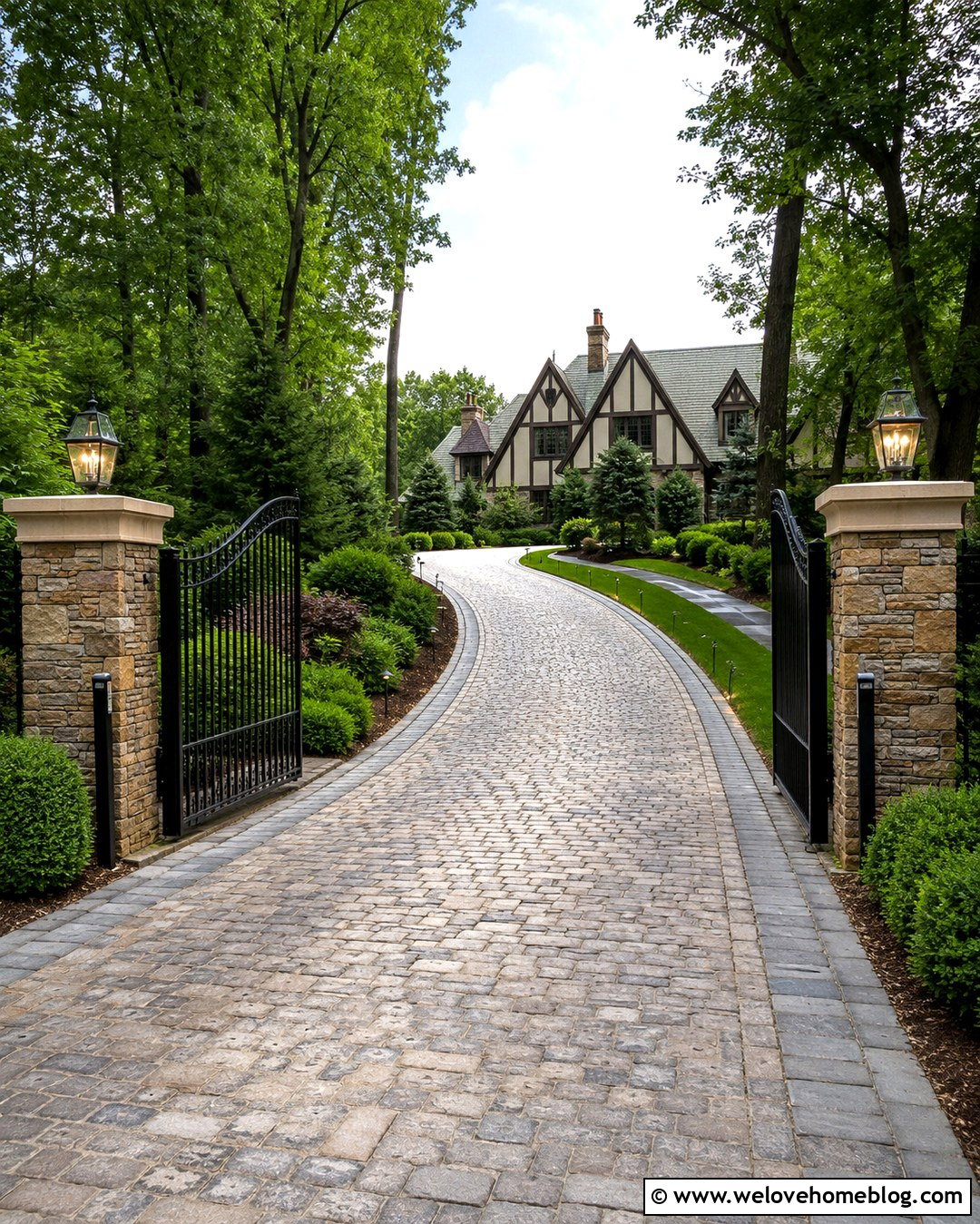
Good lighting makes the complete gate area easier to understand after dark. Illuminate the driveway surface, keypad, pedestrian entrance, gate edges, pillars, and nearby walkway without creating glare for approaching drivers. Low-voltage fixtures can be integrated into masonry columns or positioned along planting beds, while overhead or wall-mounted lights can brighten the broader entrance. Keep fixtures, wires, and transformers outside the moving gate path and protected from impact. Trim vegetation that blocks sensors or casts confusing shadows across the approach. Reflective address numbers can also help visitors and emergency responders identify the property. Lighting is not an entrapment-protection device, but it improves visibility for people checking that the gate path is clear. Include the lighting system in seasonal inspections, especially after storms, landscaping work, or electrical repairs.
13. Driveway Gate With Clear Road Sightlines
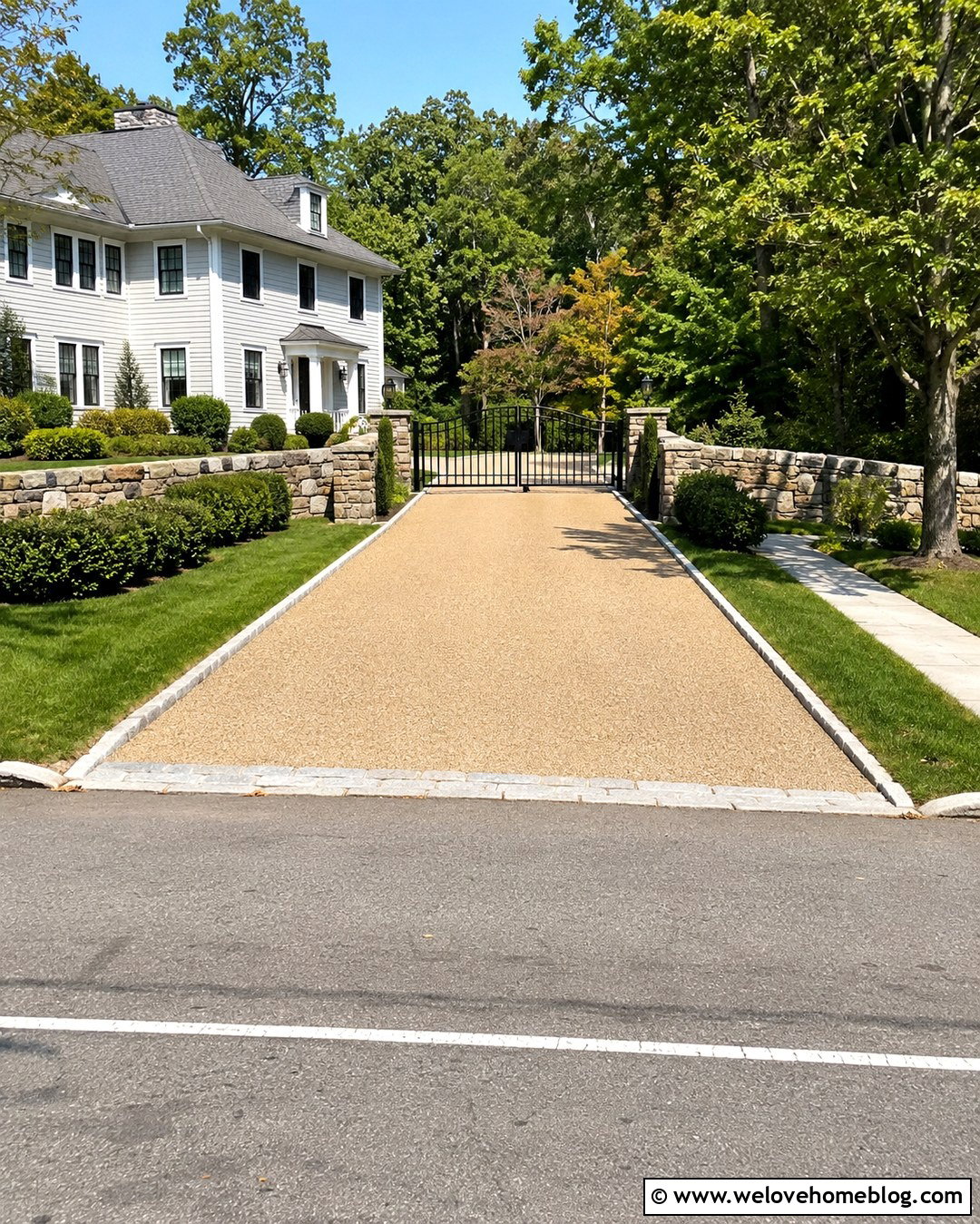
What happens when a driver leaves the property but cannot see traffic approaching from either direction? A safe gate layout provides enough space and visibility for vehicles to pause without blocking the road or stopping within the moving gate area. Place pillars, solid fence panels, hedges, address monuments, and control pedestals where they do not create major sight obstructions. On a sloped or curved entrance, consider a wider apron, mirrors where appropriate, or a gate position farther inside the property, subject to local approval. Keep plants near the road low and prune branches regularly. The gate should not swing into a sidewalk, public right-of-way, or traffic lane. Consult local transportation, zoning, and permitting authorities because setback and visibility requirements vary. The final layout should support both safe movement and balanced curb appeal.
14. Driveway Gate With Level Drainage
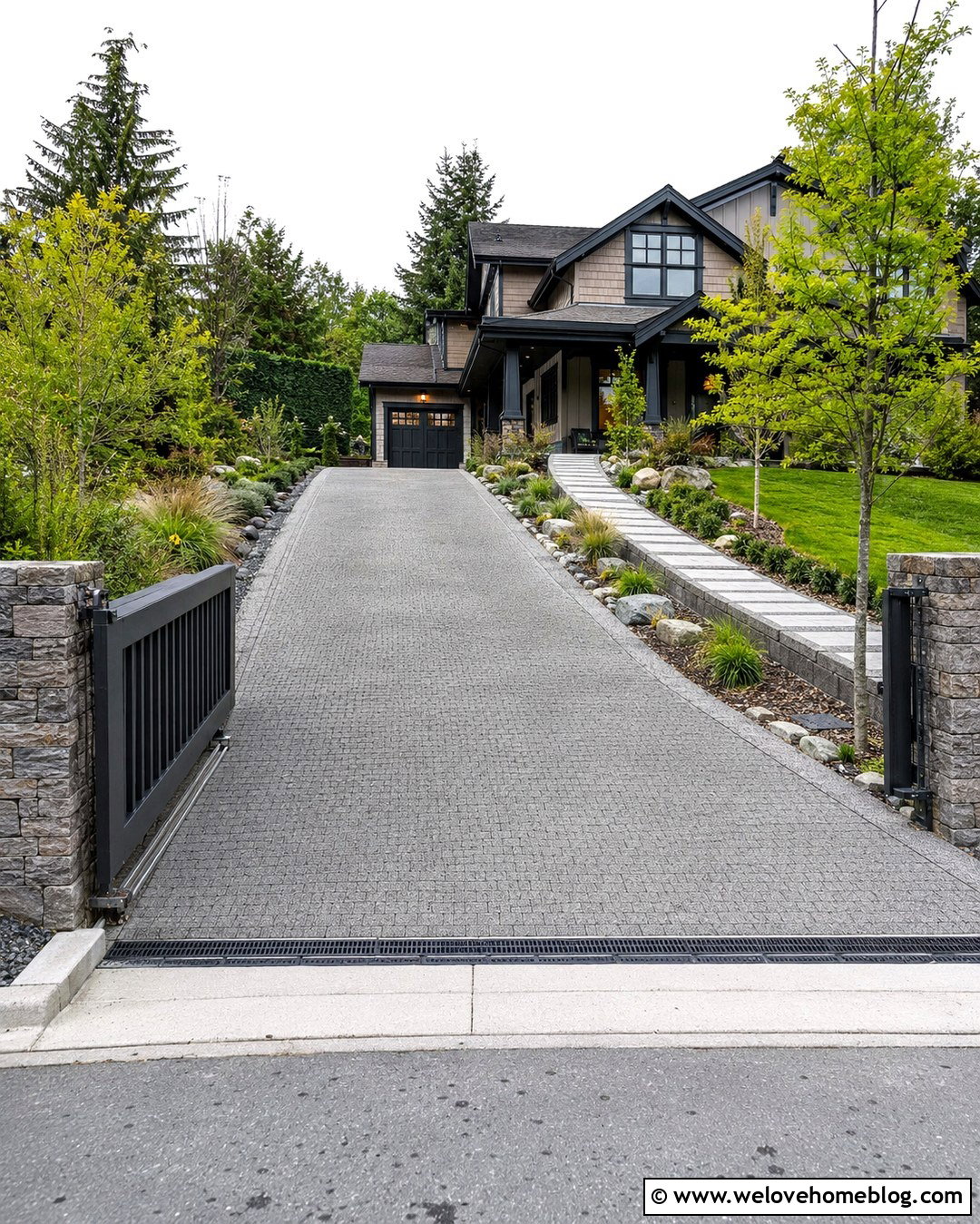
Water, mud, ice, and uneven pavement can interfere with gate movement and sensor performance. Grade the entrance so runoff travels away from operator foundations, tracks, hinges, electrical enclosures, and pedestrian routes. A channel drain may be useful where a driveway slopes toward the gate, while permeable pavers or stabilized gravel can help manage water in suitable settings. Sliding-gate tracks should remain clear of stones, leaves, snow, and sediment. Swing gates need enough ground clearance to move freely without creating an excessive gap or new entrapment concern. Avoid placing sprinkler heads where they repeatedly spray electronics or sensors. Repair settlement, potholes, and lifted pavers before they alter vehicle positioning or gate alignment. Drainage should be planned with the driveway surface, gate foundation, landscaping, and local stormwater requirements as one coordinated system.
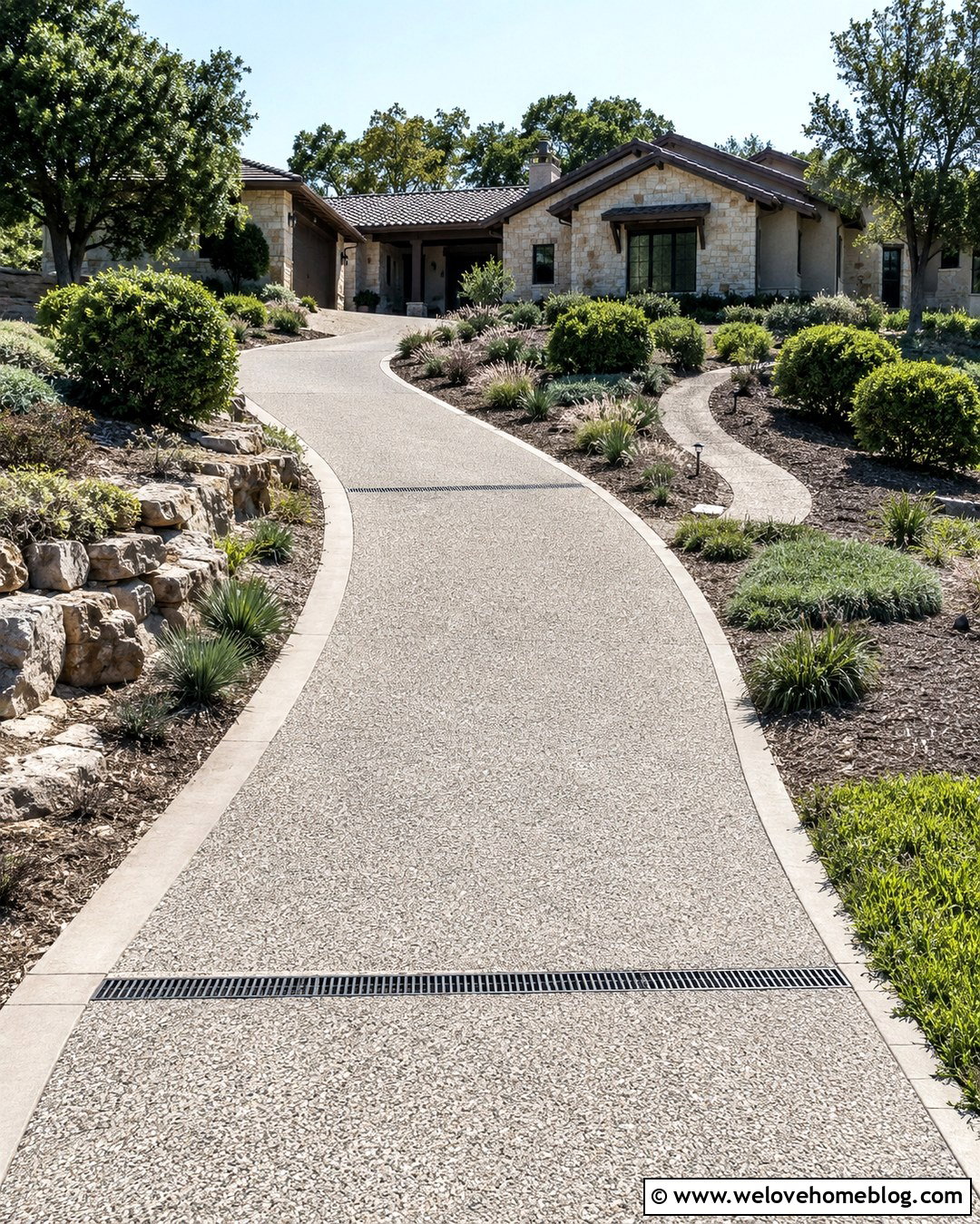


15. Driveway Gate With Covered Moving Hardware
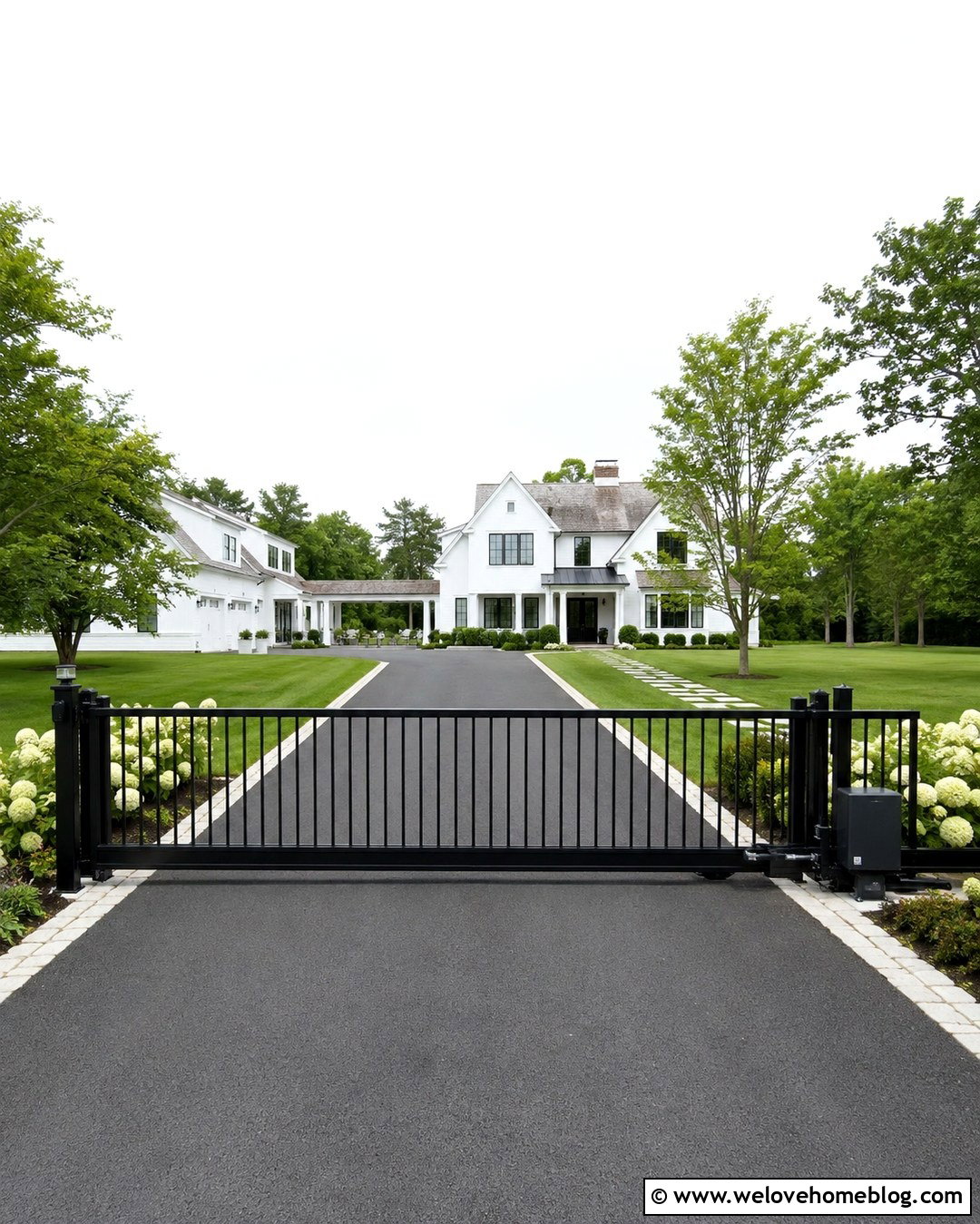
Exposed rollers, chains, sprockets, hinges, and operator arms can create pinch or drawing-in hazards. Use manufacturer-approved guards and covers wherever the gate design requires them, especially around hardware within reach from the public or secure side. Covers should remain securely fastened while still allowing professional maintenance. Do not remove a guard because it collects leaves, conflicts with landscaping, or makes adjustment easier. Instead, correct the underlying clearance or service problem. Keep fingers, tools, clothing, and garden equipment away from moving components, even when the gate appears inactive. A clean equipment zone finished with concrete or compact pavers can reduce weeds and simplify inspection. Safety guidance for gate systems highlights guarding weight-bearing rollers, pinch points, gate openings, and other exposed areas that could contact a person. ()
16. Driveway Gate With Stops And Fall Protection
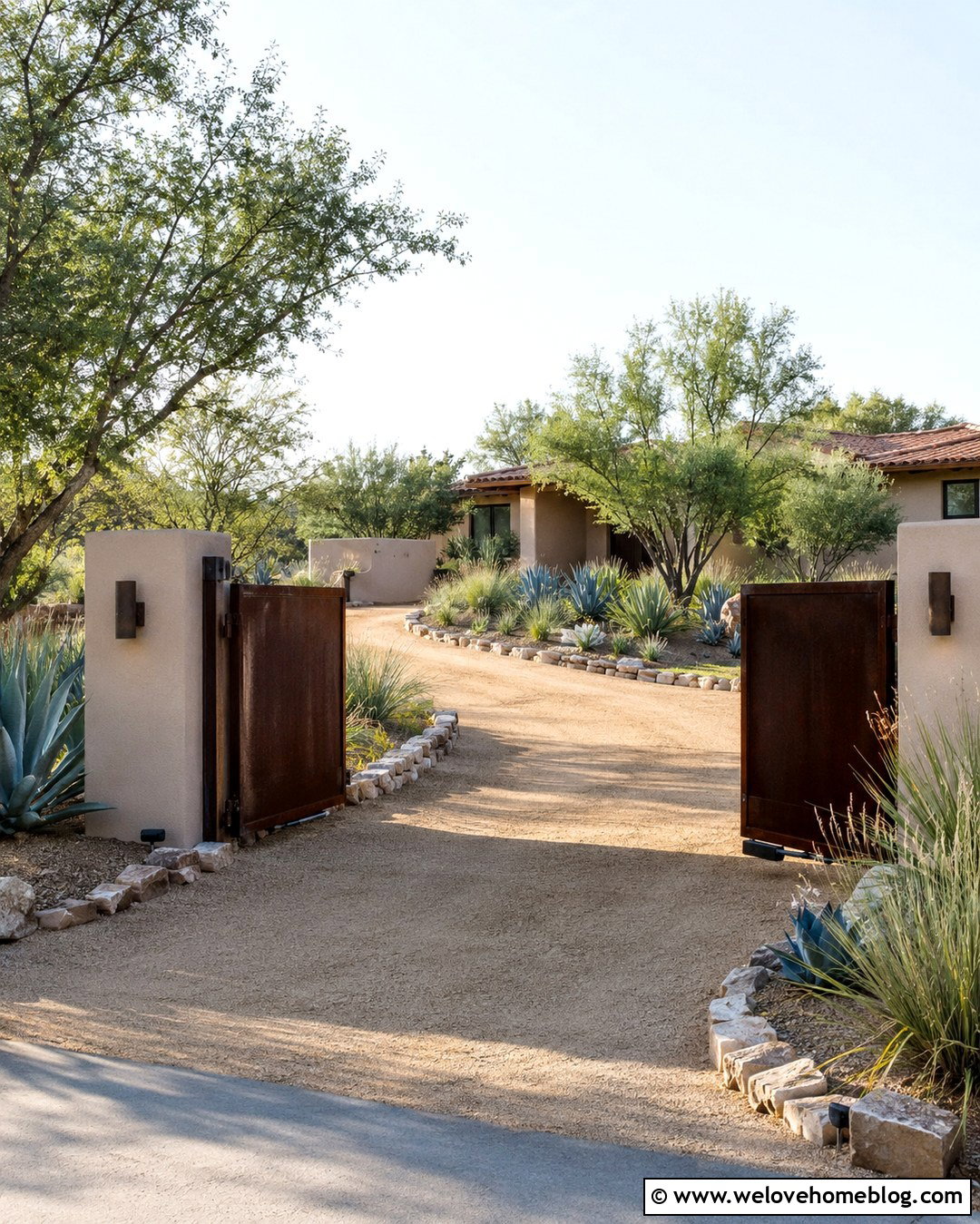
A gate should remain supported and stop at controlled positions even if part of its normal hardware loosens or fails. Physical stops can prevent excessive travel, while suitable fall-over protection helps keep a panel from collapsing if it separates from supporting components. These details matter for both automatic and manual gates. Posts, hinges, rollers, brackets, and foundations must be engineered for the gate’s size, material, wind exposure, and operating forces. A large solid gate can place substantial loads on its supports, so appearance alone should never guide the structure. Inspect for leaning posts, cracked welds, loose fasteners, unusual sagging, or movement at the foundation. ASTM gate standards address positive stops, protrusions, and protection against a gate falling when it becomes detached from its supports. ()
17. Driveway Gate With Child Safe Landscaping
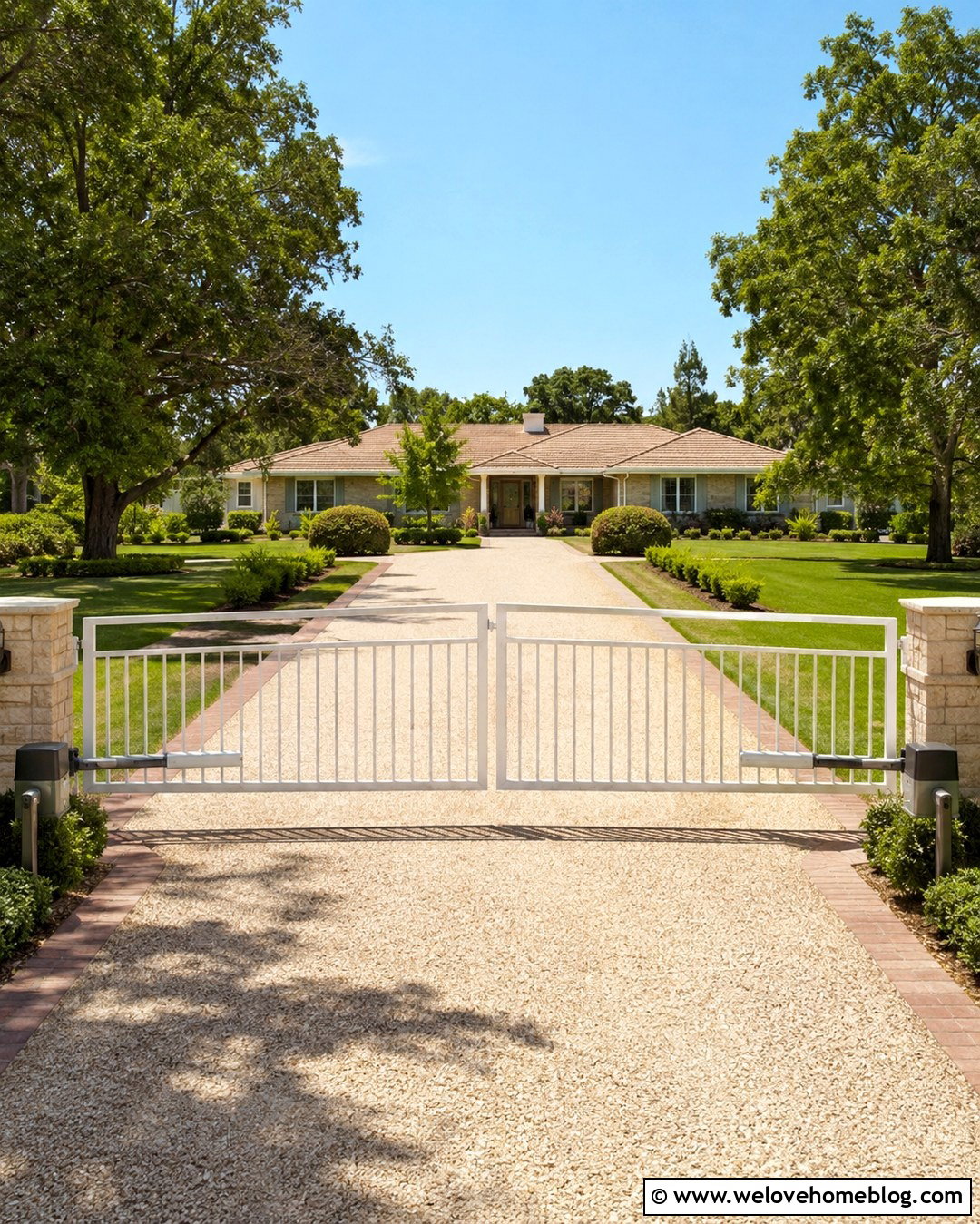
Families can make the gate area less inviting for play by designing clear boundaries around it. Avoid placing swings, benches, sports equipment, decorative rocks, or climbable planters beside the moving gate. Use low, simple planting beds to visually separate the driveway entrance from the lawn while preserving access to sensors and equipment. Dense shrubs should not conceal the operator, pedestrian route, or gate travel zone. Keep remote controls and access credentials out of children’s reach, and teach children never to ride, climb, hang on, or play near the gate. Pets should also be kept away from moving panels because sensors may not detect every animal in every position. Industry safety guidance specifically warns against allowing children to operate controls or play around automatic vehicular gates. ()
18. Driveway Gate With Weatherproof Electrical System
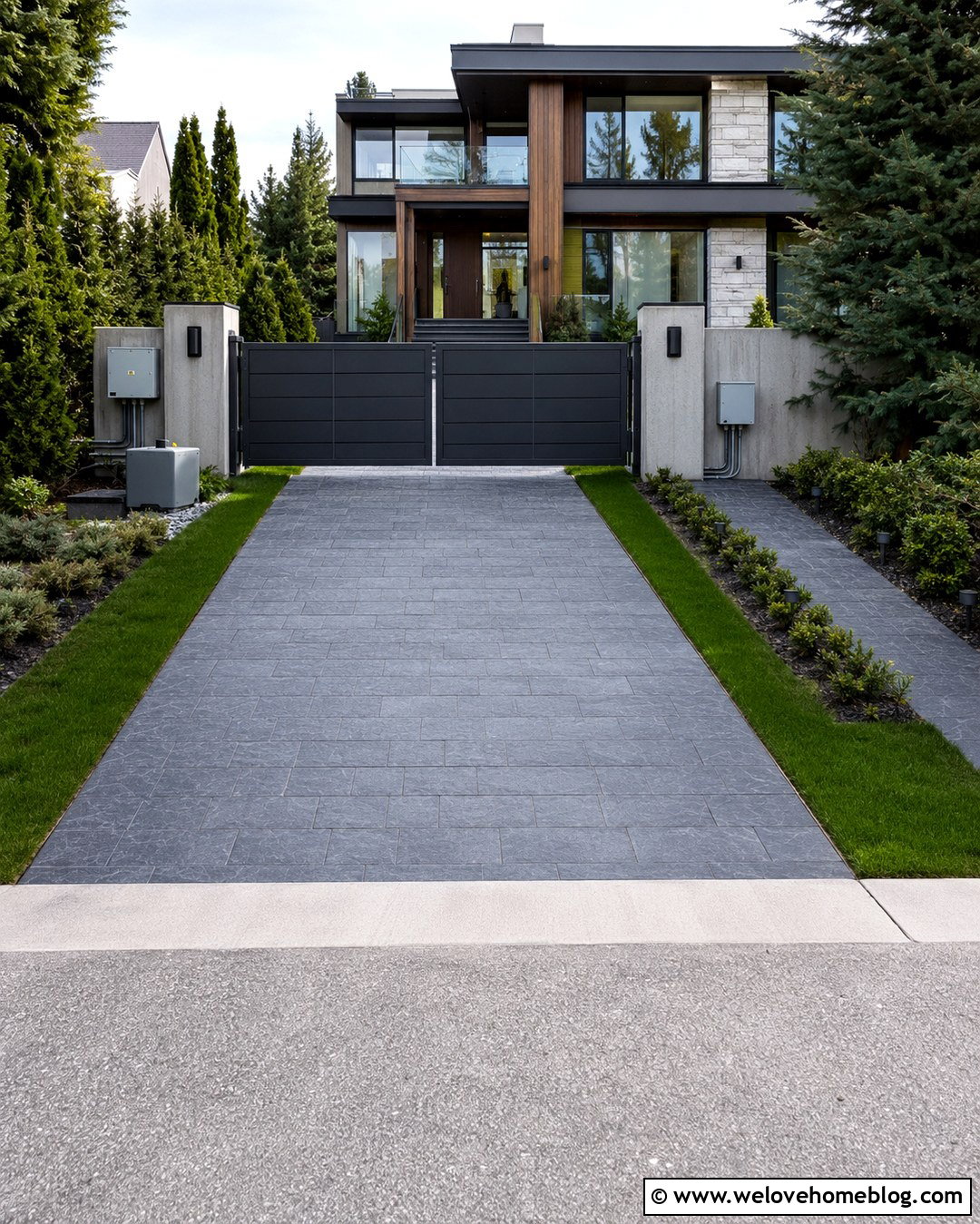
Outdoor gate equipment faces rain, temperature changes, insects, irrigation, lightning, and accidental landscape damage. Use wiring methods, grounding, disconnects, enclosures, and electrical components approved for the location and installed by qualified professionals. Underground conduit should be planned before the driveway surface is completed, preventing improvised cables from crossing pavement or planting beds. Keep electrical boxes above areas likely to flood and maintain the seals specified by the manufacturer. Surge protection may be appropriate where recommended by the installer or local electrical professional. After storms, watch for tripped breakers, damaged conduits, water inside cabinets, misaligned sensors, or irregular gate movement. Never bypass a safety circuit to restore operation. UL 325 addresses electrical, fire, casualty, and entrapment hazards, but safe performance still depends on proper selection, installation, use, and maintenance. ()
19. Driveway Gate With Professional Maintenance Plan
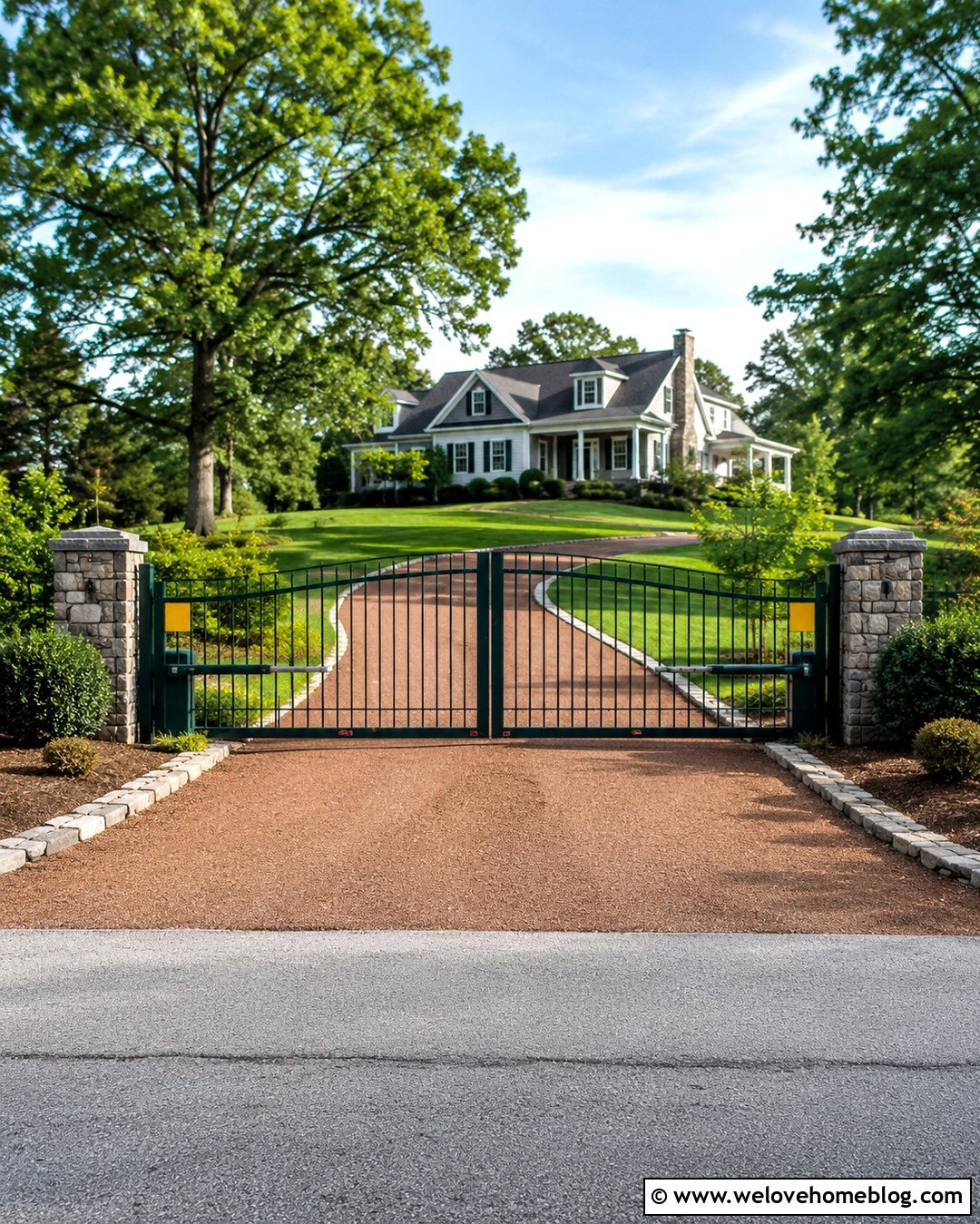
A polished entrance can still become unsafe when wear goes unnoticed. Arrange periodic professional service based on the manufacturer’s instructions, usage level, environment, and local requirements. The technician should examine the operator, gate frame, hinges, rollers, track, fasteners, stops, wiring, batteries, controls, warning signs, and every entrapment-protection device. Between visits, homeowners can keep the path clear and watch for scraping, jerking, unusual noise, delayed response, sagging, or repeated reversals. Do not lubricate, adjust, or replace components unless the manual permits homeowner maintenance. Record service dates and repairs so recurring problems are easier to identify. Regular inspections are particularly important after vehicle impacts, storms, construction, paving, or fence work. Industry guidance notes that ongoing service checks can help identify and prevent gate-system problems. ()
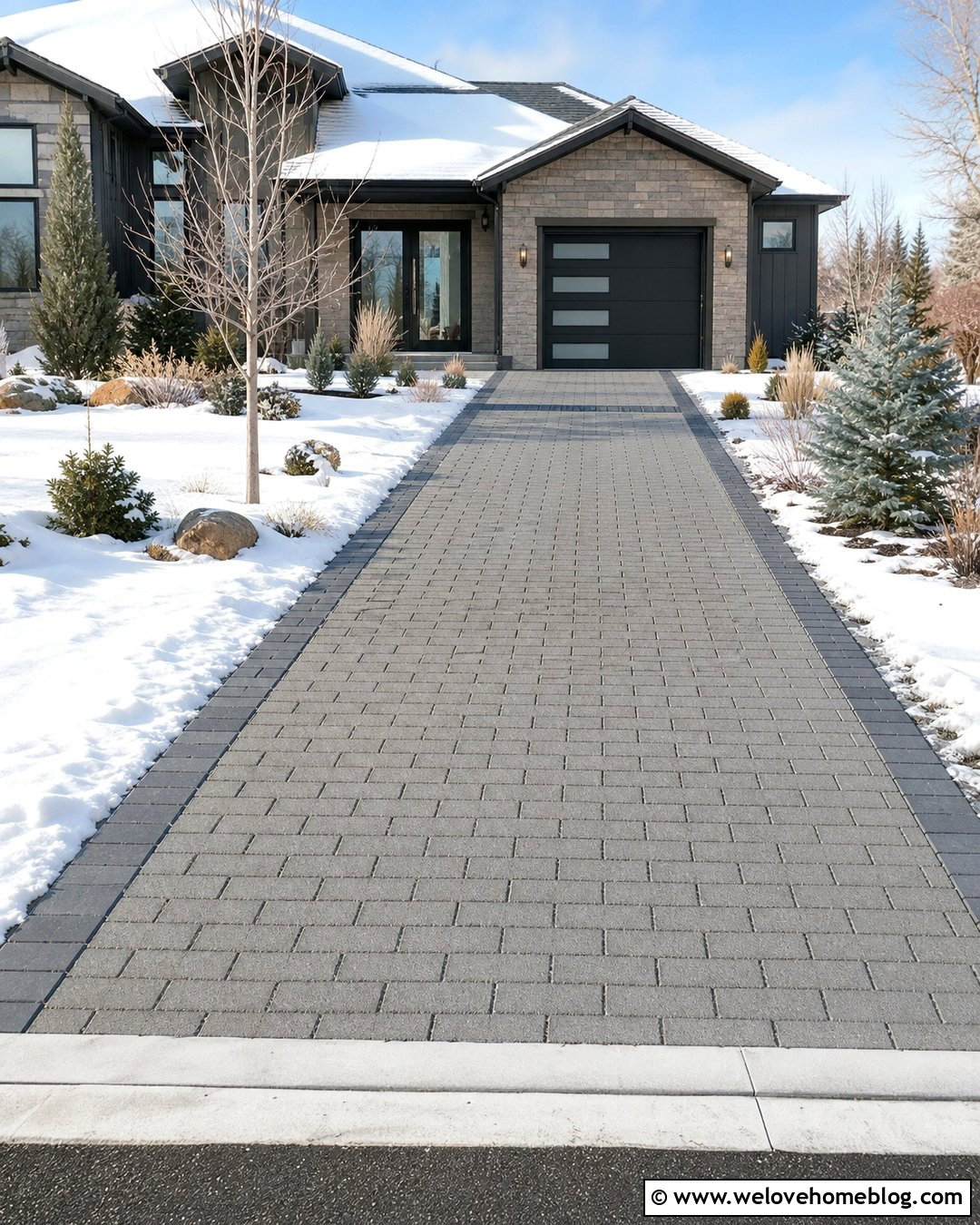
20. Driveway Gate With Routine Safety Testing

Create a simple testing routine based on the operator manufacturer’s instructions and have faults corrected immediately. Begin with a visual check for people, pets, debris, loose hardware, blocked sensors, damaged signs, and landscaping inside the travel area. Test photo eyes and sensing edges only with the approved procedure and suitable test objects. Confirm that the gate stops or reverses as specified, controls respond correctly, and the manual release remains available. Never use a person, pet, hand, or vehicle to test an entrapment device. If the gate continues moving after a safety device is activated, shut down the system and contact a qualified technician. Do not bypass, disconnect, tape over, or reposition a sensor merely to keep the entrance operating. Monitored protection is designed to detect faults rather than permit normal unsafe operation. ()
Conclusion:
The best **20 driveway gate safety tips ideas** combine dependable equipment, thoughtful driveway planning, and consistent maintenance. Begin with a listed operator, a properly constructed gate, and professional evaluation of every potential entrapment zone. Then support the system with safe control placement, separate pedestrian access, clear vehicle movement, good lighting, drainage, emergency access, and protected hardware. Attractive pillars, paving, fencing, and landscaping should complement these safeguards rather than hide sensors or reduce clearance. Because every property and gate system is different, follow the operator manufacturer’s instructions and consult qualified installers, electricians, local code officials, and emergency authorities when needed. If a gate behaves unexpectedly, stop using it until the problem has been professionally diagnosed and corrected.

Related posts:


Leave a Reply