
Lighted driveway ideas can make a home feel safer, more welcoming, and noticeably more polished from the street. The best designs do more than place a few fixtures beside the pavement. They coordinate the driveway material, layout, borders, landscaping, entrance, and house architecture as one complete scene. Recessed LEDs can sharpen a modern concrete surface, while lantern-topped pillars bring traditional character to brick or cobblestone. Solar path lights offer a simpler update for gravel and asphalt driveways. The key is creating useful guidance without excessive glare or visual clutter. Combining low-level edge lighting with selective accents can also make the route easier to understand after dark. () Explore these 20 Lighted Driveway Ideas to find a practical look for your property.

1. Gravel Driveway With Solar Path Lighting
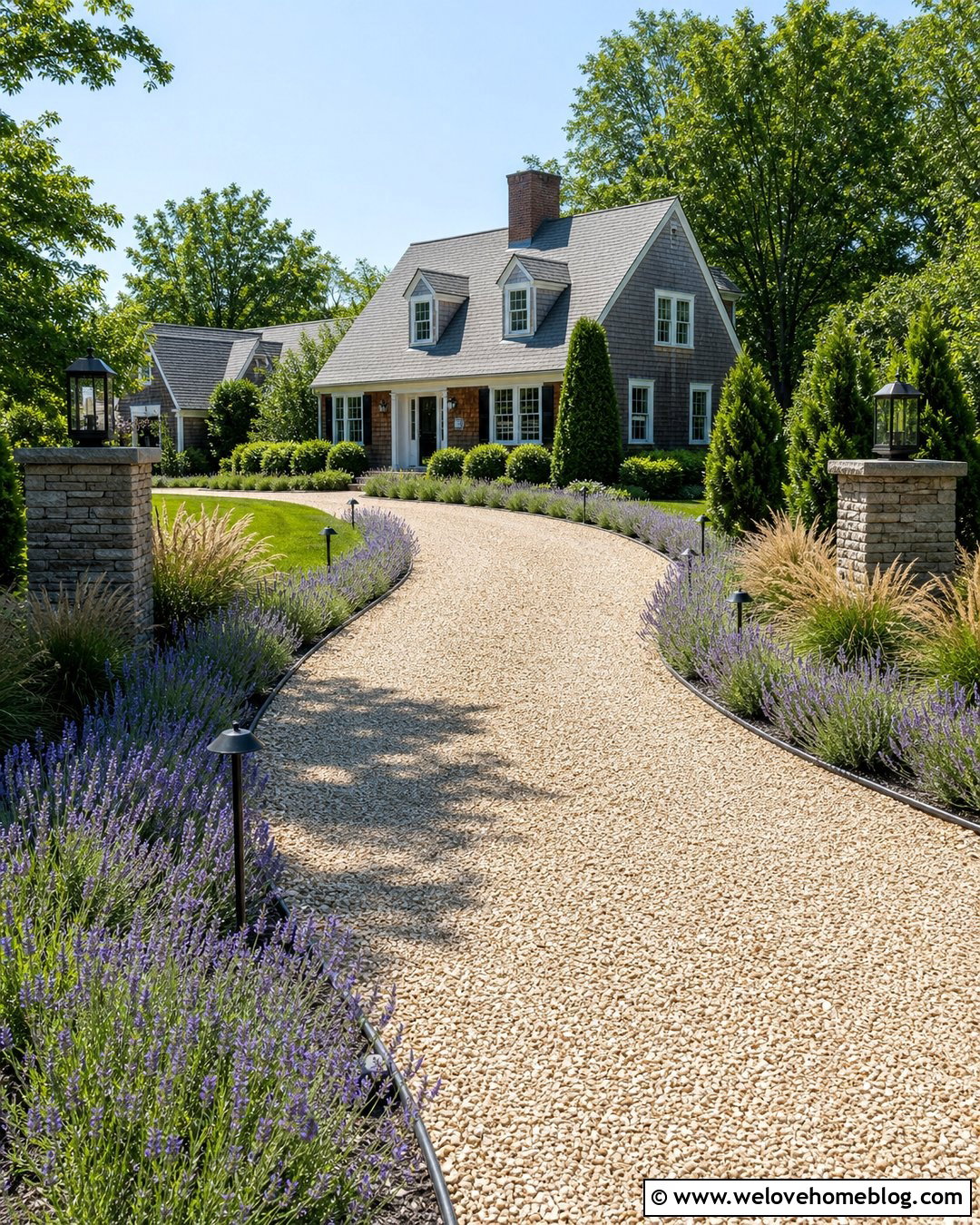
A pale pea gravel driveway becomes much easier to navigate when compact solar path lights mark both sides. Use a gently curved layout leading toward a cottage, ranch, or Cape Cod home. Dark steel edging keeps loose gravel away from the lawn, while staggered fixtures produce a softer appearance than perfectly matched rows. Place the lights inside planting beds rather than directly beside the driving surface, reducing the chance of accidental damage. Lavender, ornamental grasses, and compact evergreen shrubs can soften the fixtures during the day. At the entrance, two stone columns with simple solar lanterns establish a clear starting point. This complete arrangement suits homeowners who want an approachable, relatively simple lighting update without making a country-style gravel driveway feel overly formal.
2. Paver Driveway With Recessed LED Lighting
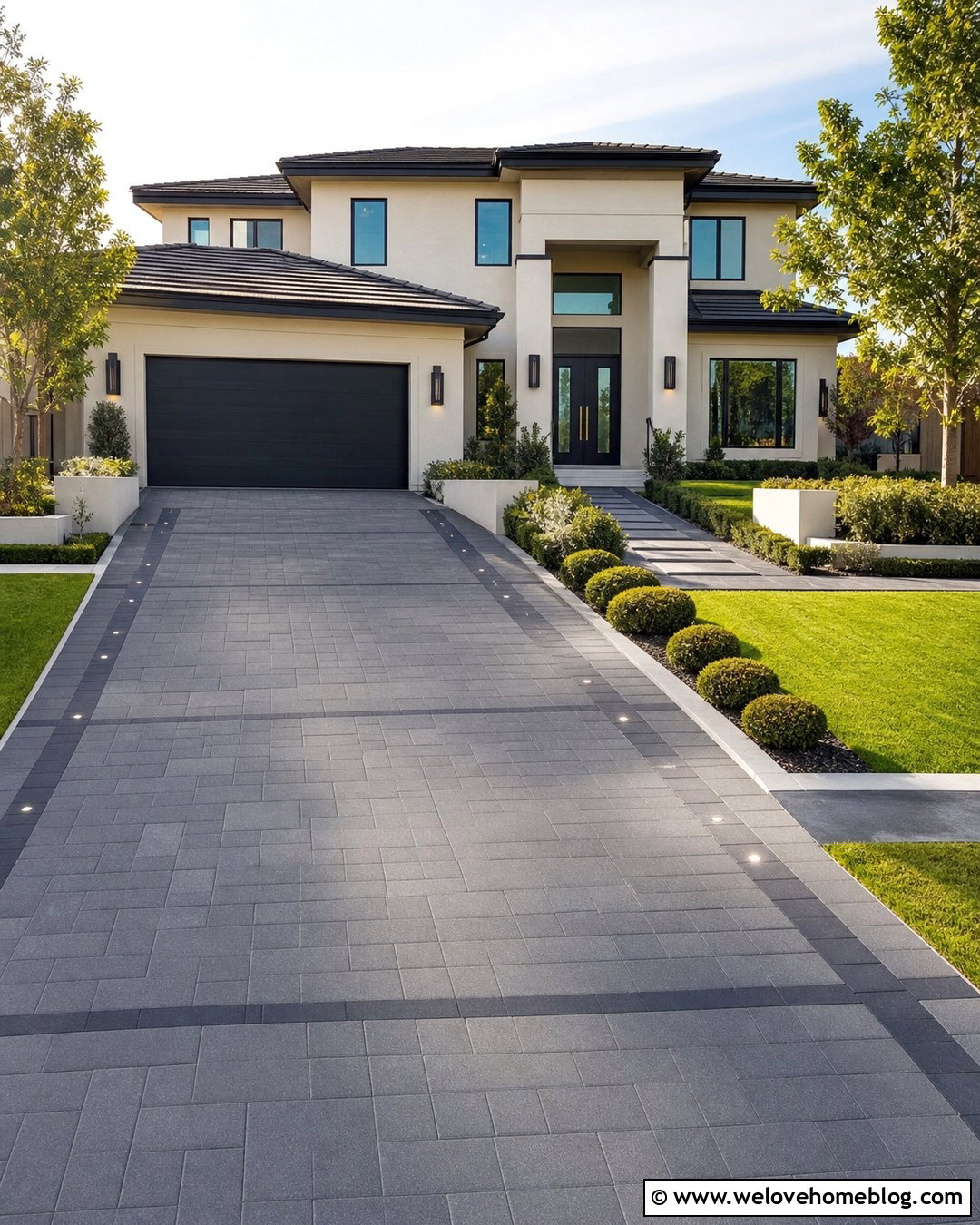
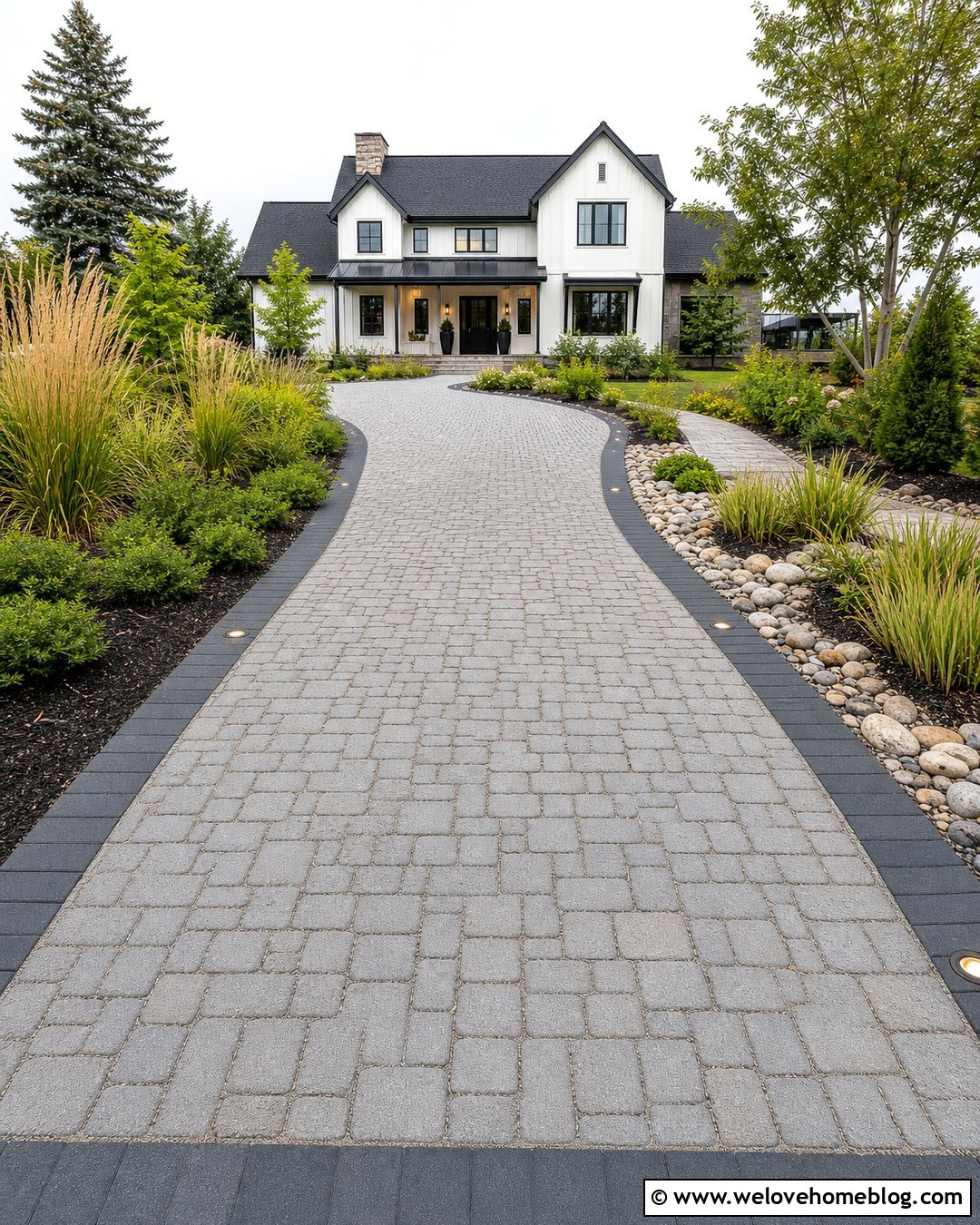
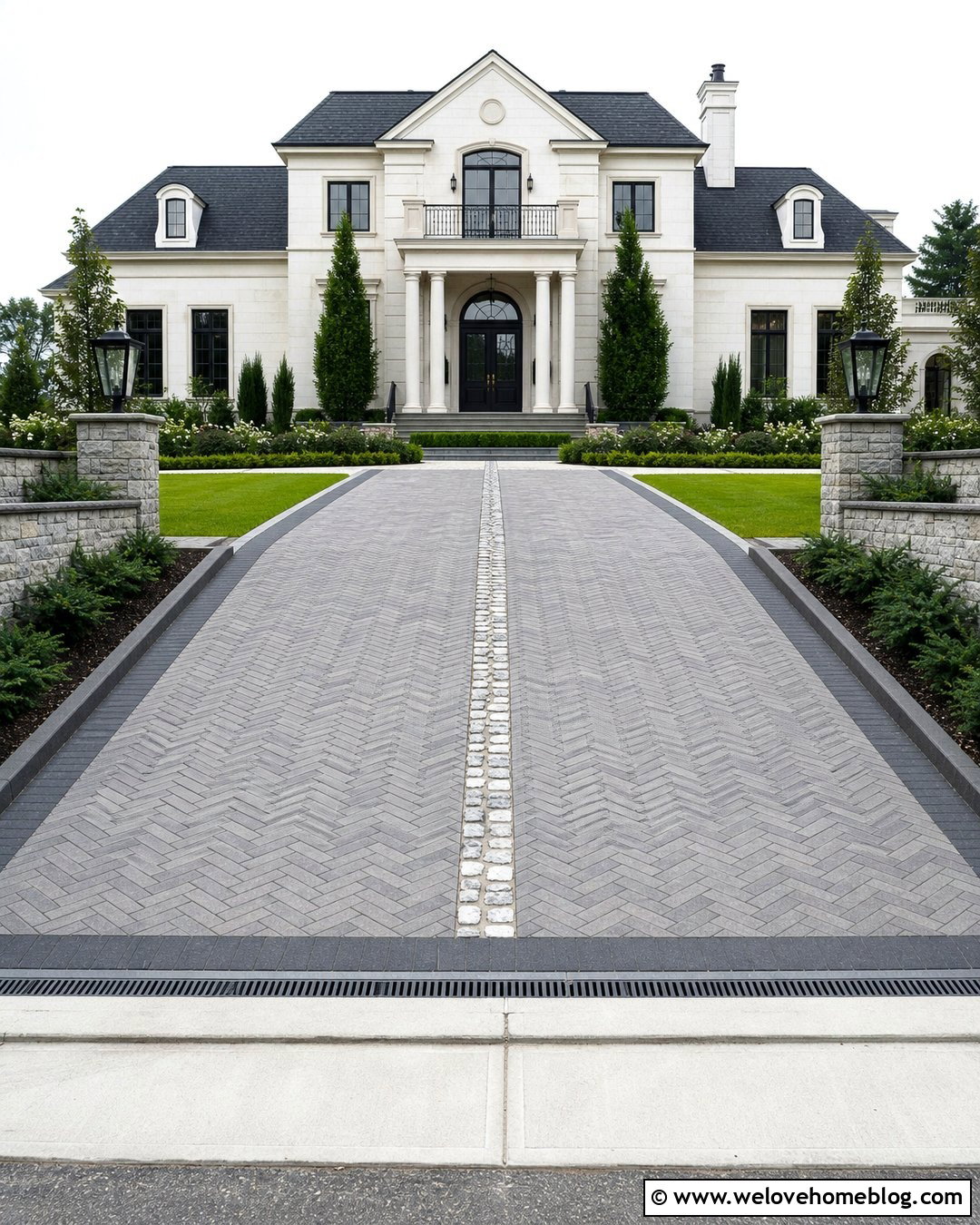
Recessed LEDs give a paver driveway a clean, built-in appearance without introducing tall fixtures. Choose large-format charcoal concrete pavers in a straight layout, then place small drive-over-rated lights within darker border courses. The illuminated border clearly defines the usable driving area while emphasizing the geometric paving pattern. Add narrow grass strips or low clipped shrubs beyond the border to prevent the hardscape from feeling stark. Near the garage, repeat the same lights beside the connecting walkway for a smooth visual transition. This design looks especially cohesive with a modern home featuring black window frames, pale stucco, and simple garage doors. Recessed fixtures should sit flush with the paving and be positioned carefully to avoid creating uncomfortable glare for arriving drivers. ()
3. Concrete Driveway With Modern Bollard Lighting
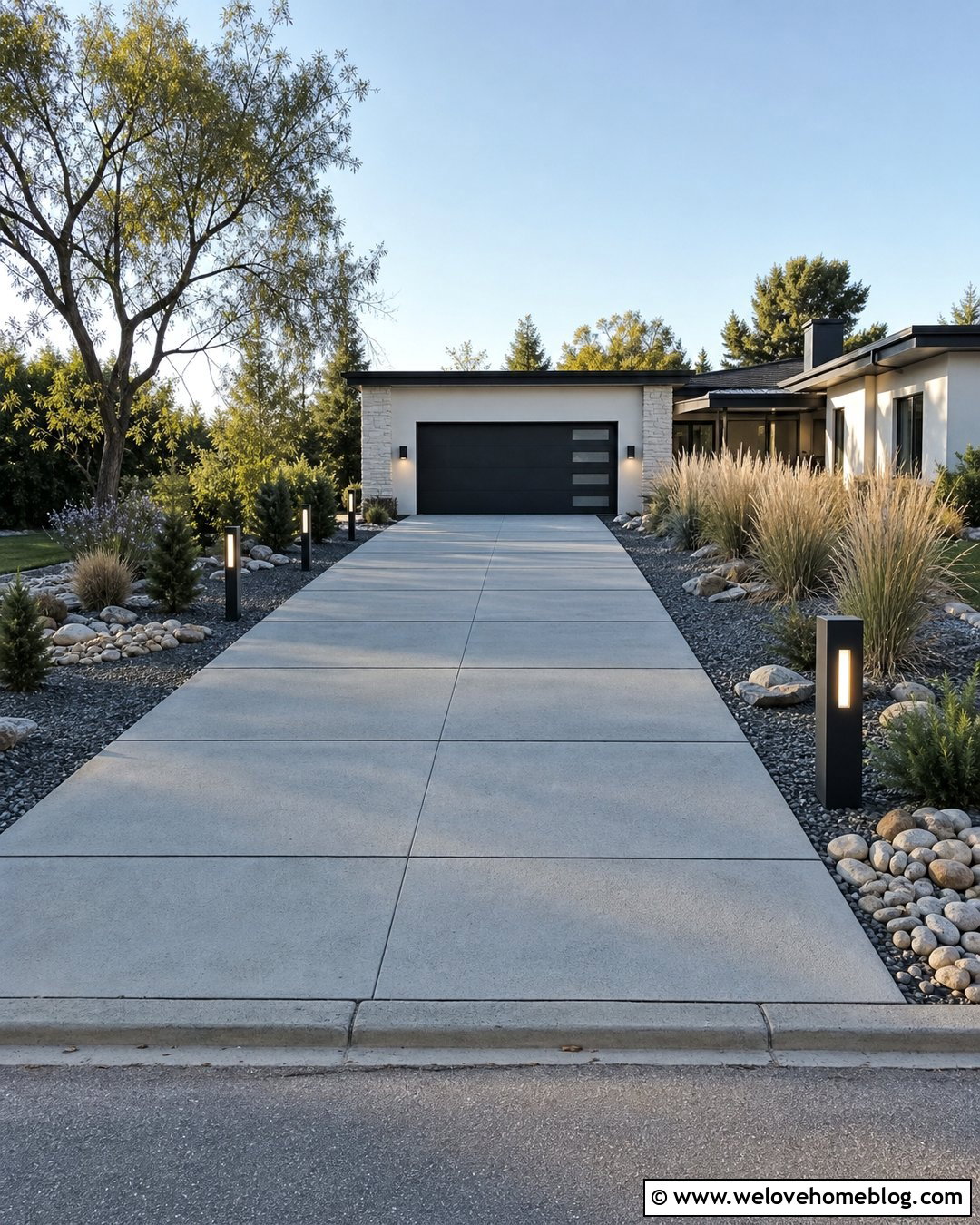
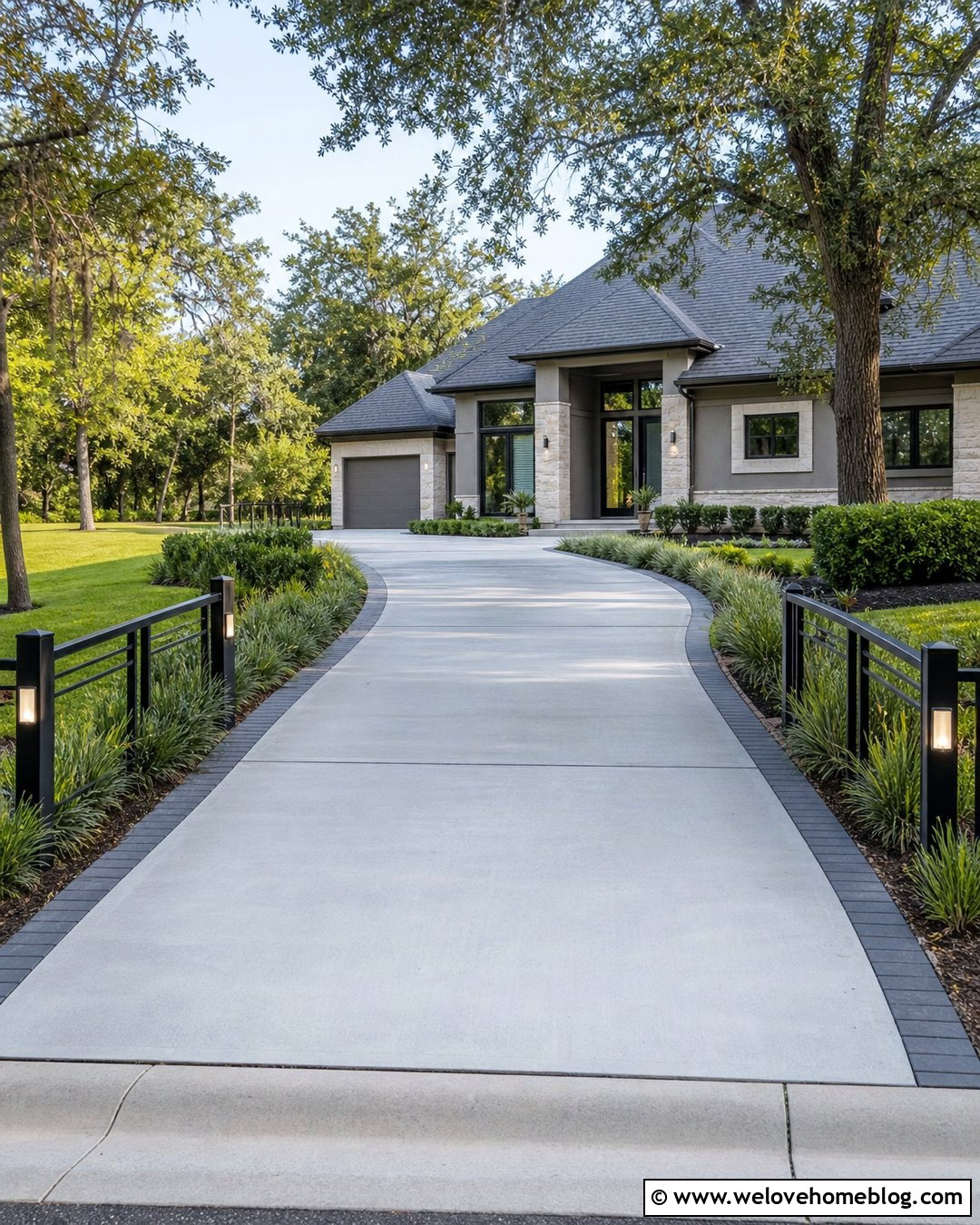
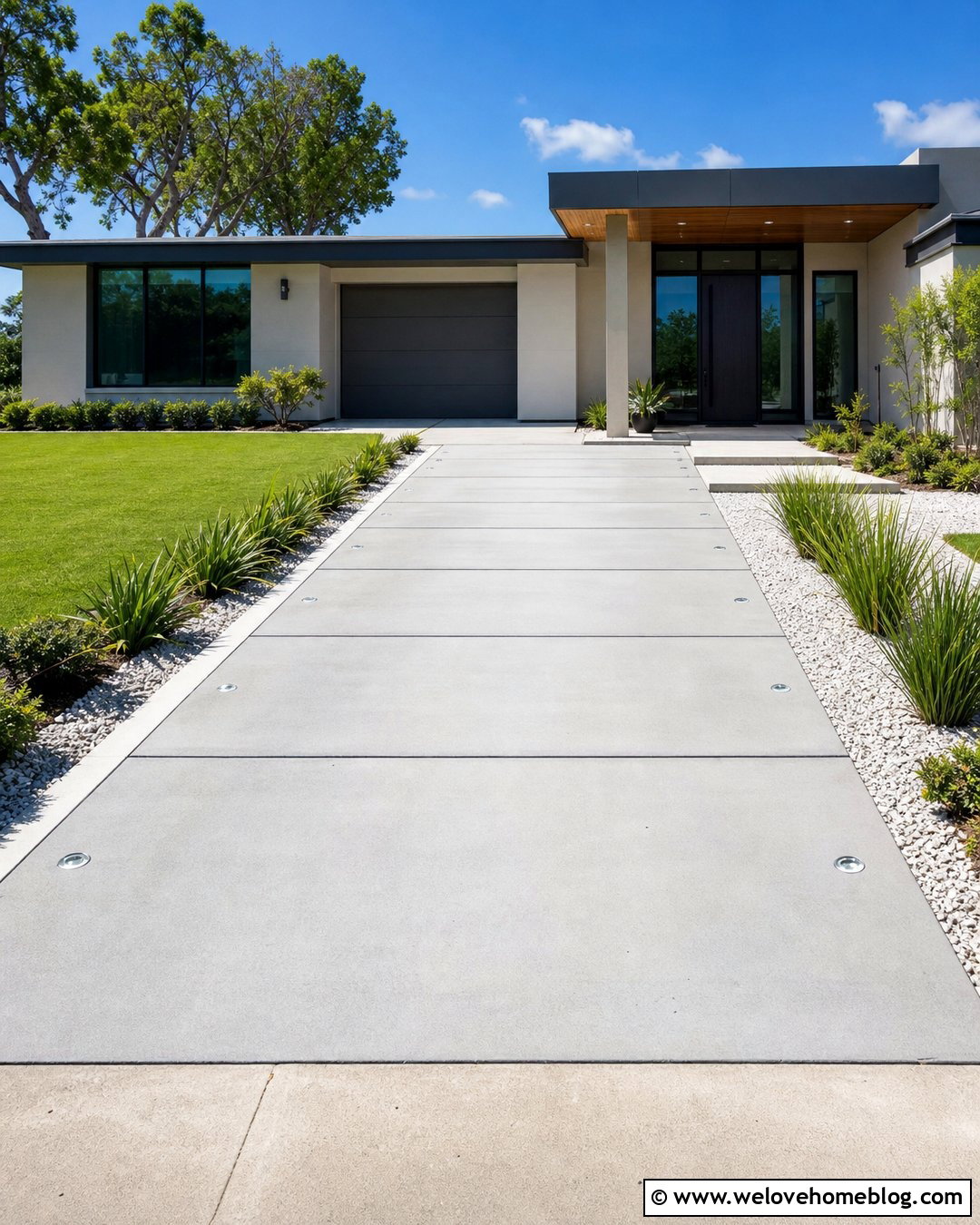
Picture a wide gray concrete driveway framed by slim black bollards and structured planting beds. This combination works particularly well with a contemporary or midcentury modern home because every element has a clear, understated shape. Divide the poured concrete into large rectangular sections with narrow control joints, then position bollards beyond the pavement where tires cannot reach them. Alternating the fixtures from side to side creates balanced guidance without producing a runway effect. Fill the surrounding beds with feather reed grass, dwarf evergreens, and smooth river rock. A matching black address marker can sit near the entrance. Complete the lighting plan with shielded wall fixtures beside the garage, allowing the bollards to guide the approach while the house-mounted lights brighten the arrival and parking area.
4. Brick Driveway With Lantern Post Lighting
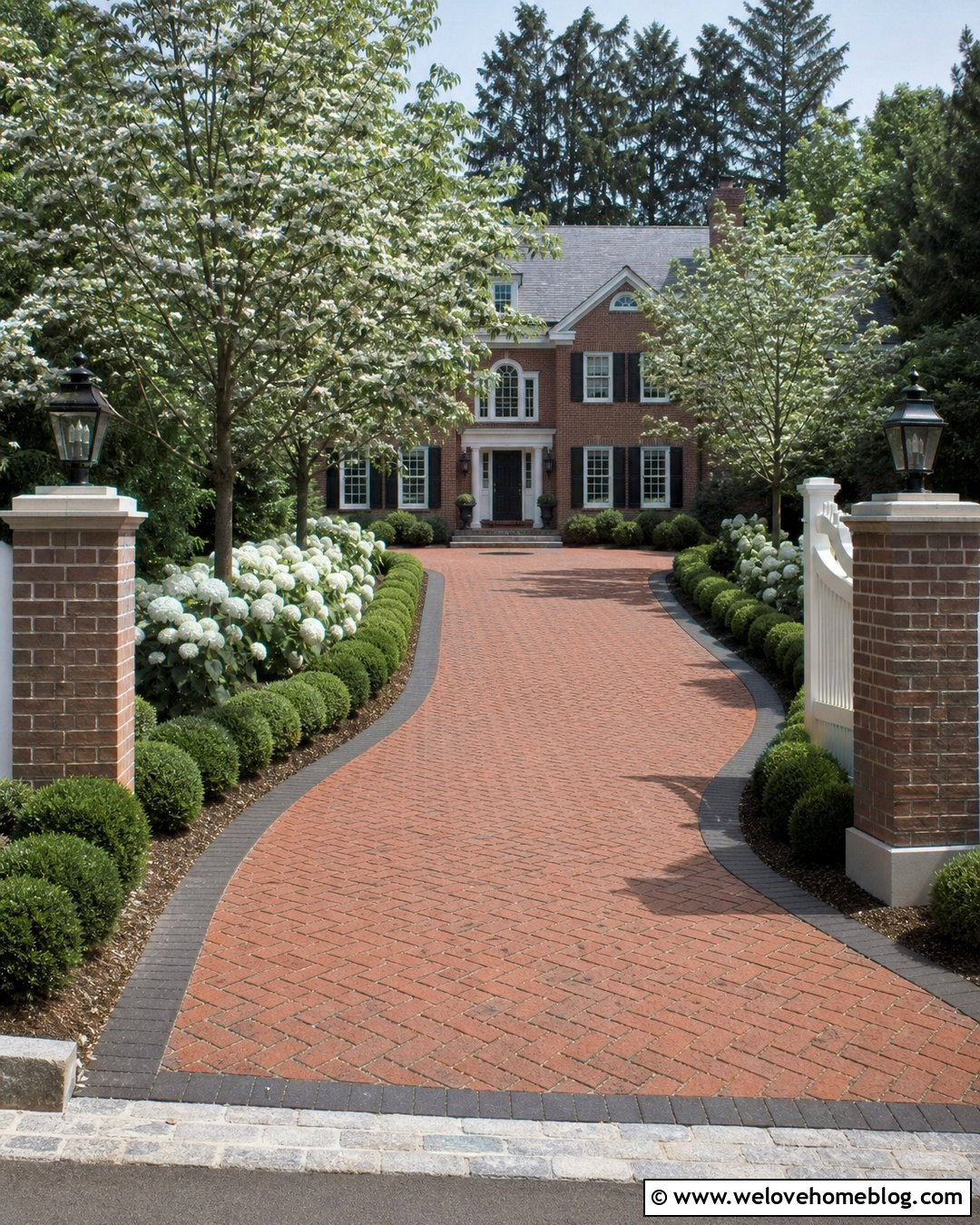
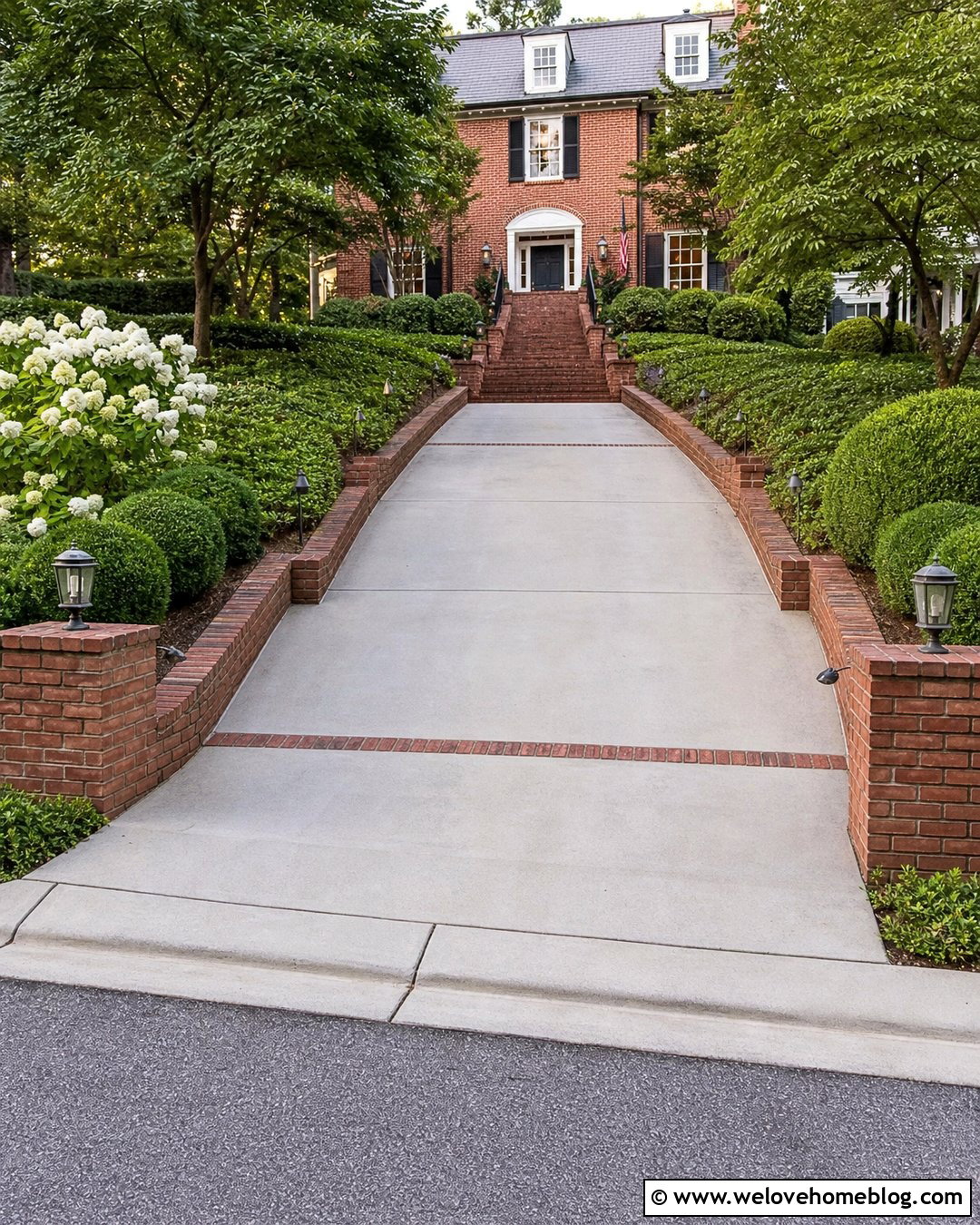
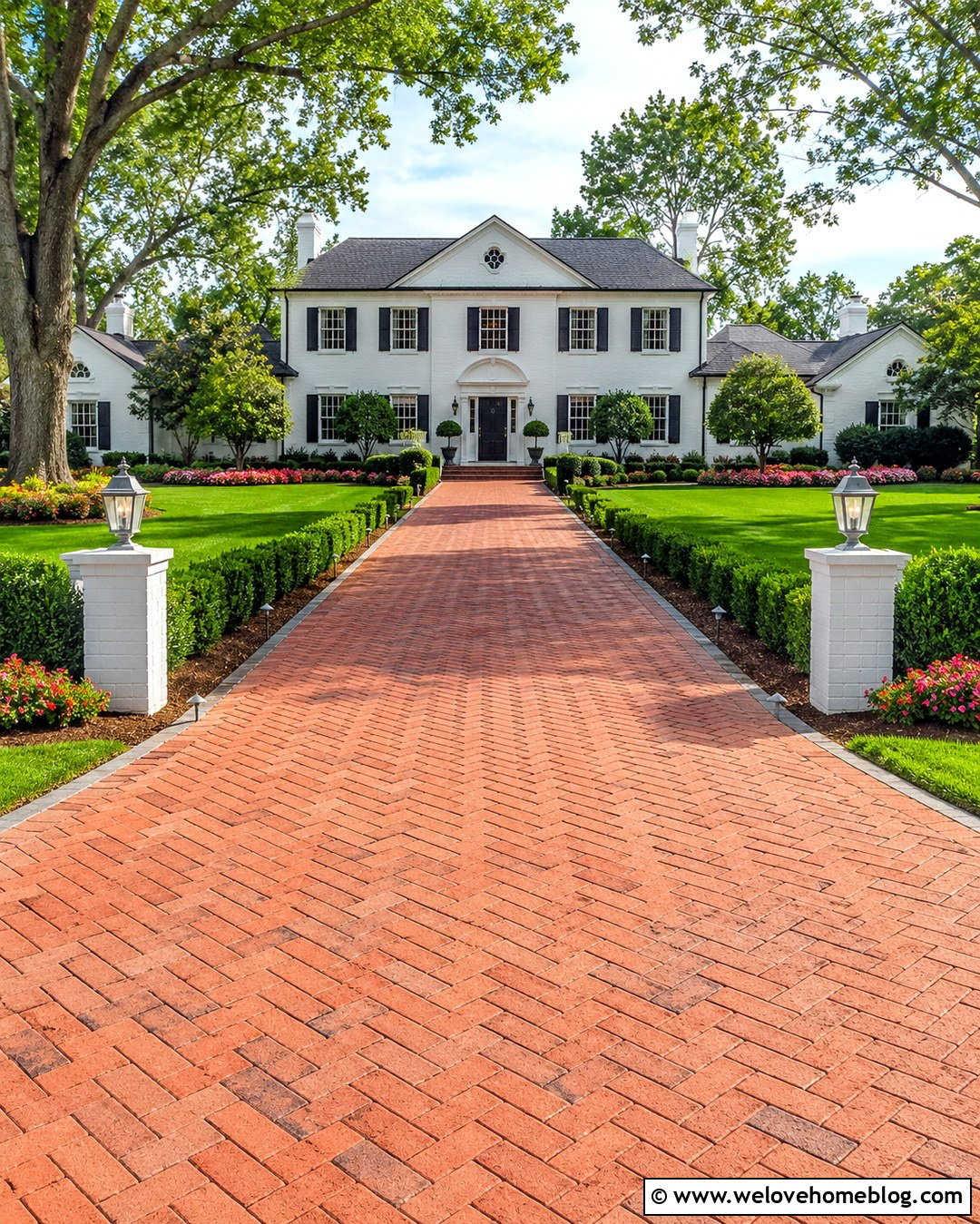
Traditional lantern posts naturally complement a red clay brick driveway arranged in a herringbone pattern. A straight or gently curved approach can be bordered with darker soldier-course bricks, creating a finished edge that remains attractive in daylight. Place medium-height lantern posts in generous planting beds rather than lining the entire driveway with closely spaced fixtures. Boxwood, hydrangeas, and small flowering trees can surround each post and help integrate it into the landscape. For a colonial home, select lanterns that coordinate with the front porch and garage hardware. Two larger masonry pillars at the street can carry matching pier-mounted lights. Repeating one fixture family from the entrance to the house prevents a busy appearance and gives the property a composed, established character.
5. Cobblestone Driveway With Lighted Stone Pillars
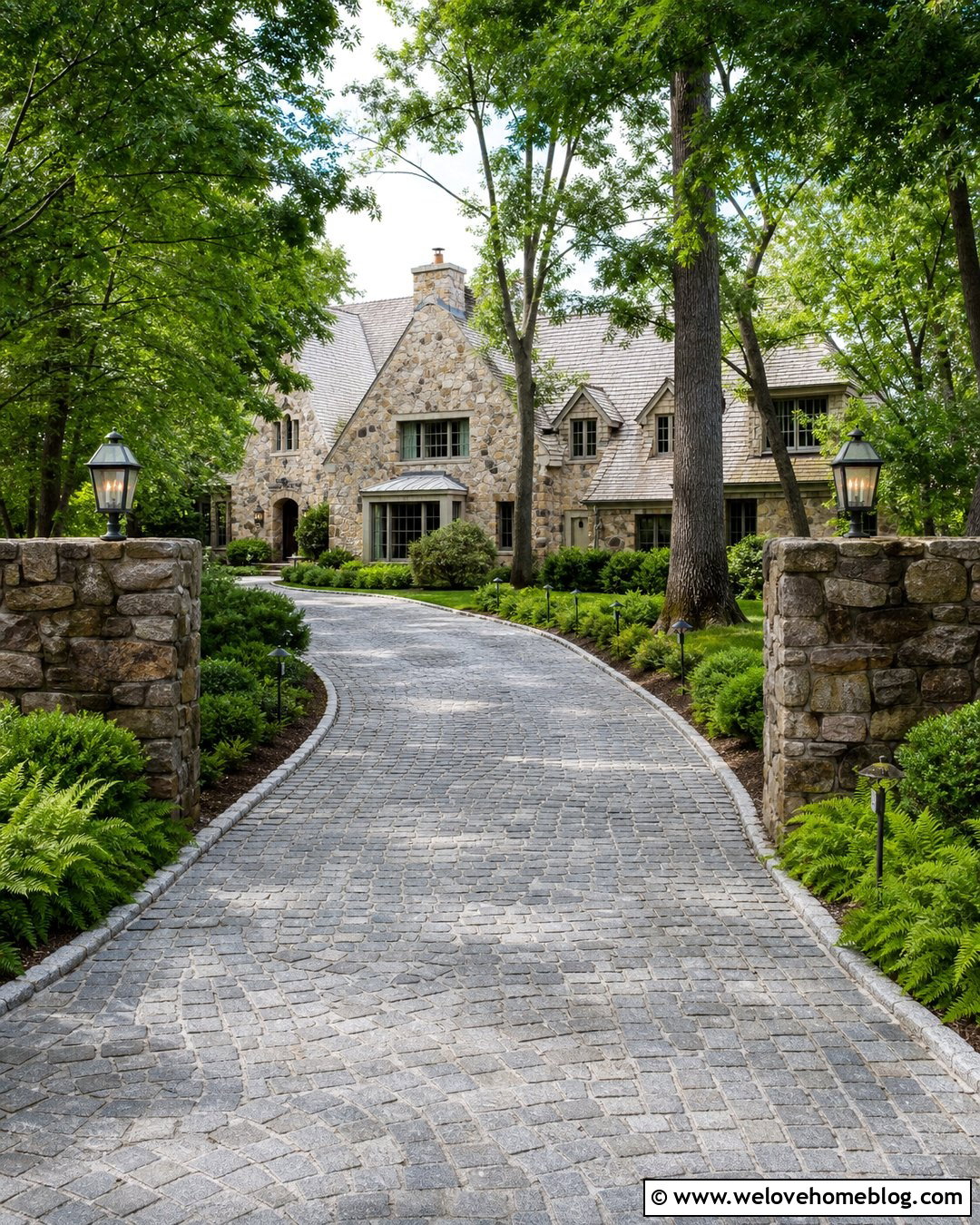
A cobblestone driveway gains a strong sense of arrival when substantial stone pillars frame its entrance. Choose weathered gray cobblestones for a curved approach leading to a Tudor, European-inspired, or stone-fronted home. Cap each pillar with a restrained lantern that spreads light downward across the driveway apron. Continue the effect with a few low path lights concealed among ferns, boxwood, and shade-tolerant ground cover. A narrow granite curb can contain the cobblestones and visually connect with the pillar masonry. Avoid adding fixtures at every possible location. The illuminated pillars should remain the focal point, while secondary lights quietly reveal the curves and borders. This layered arrangement highlights the craftsmanship of the stone without overwhelming its natural color and texture with excessive brightness.
6. Asphalt Driveway With Low Edge Lighting
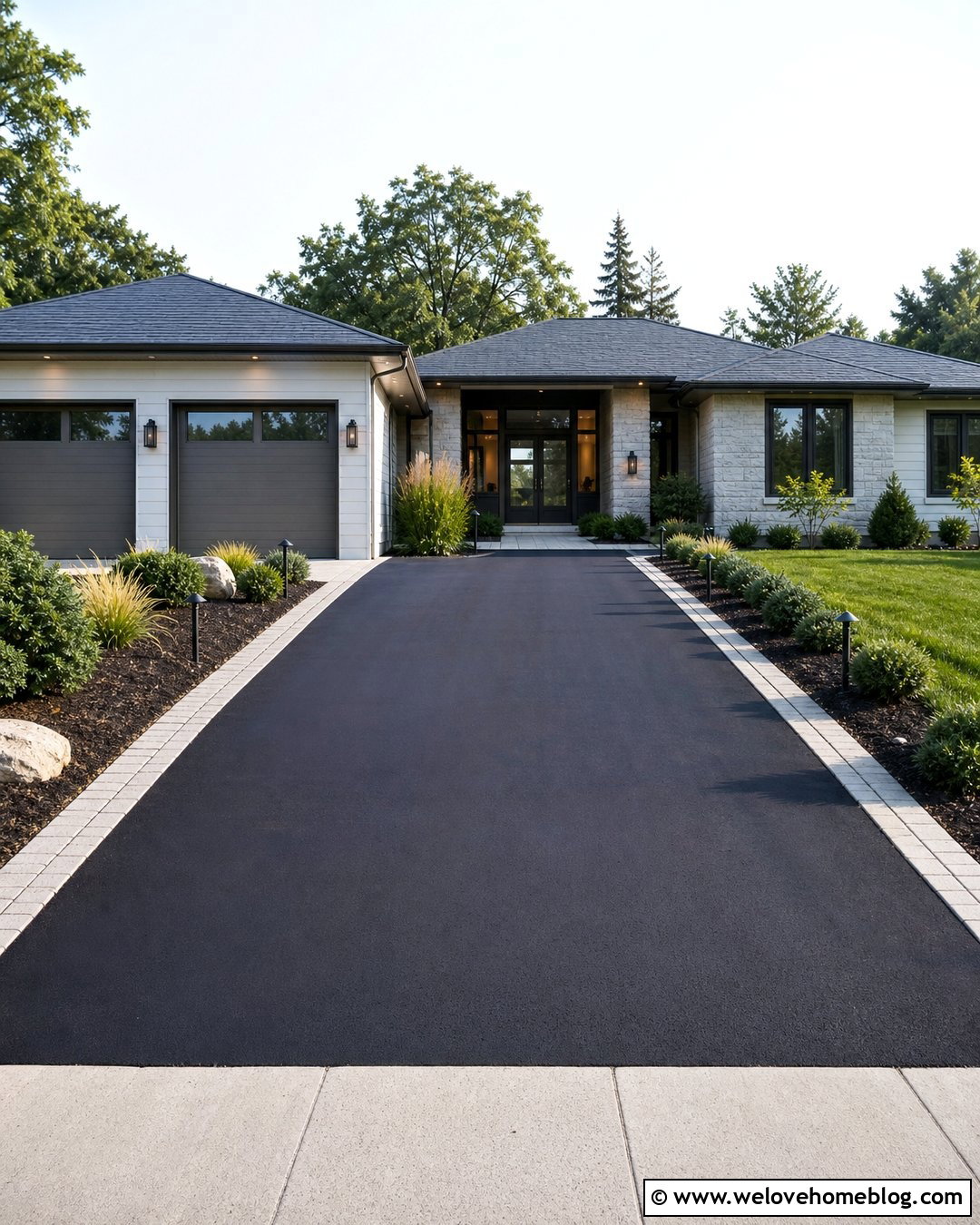
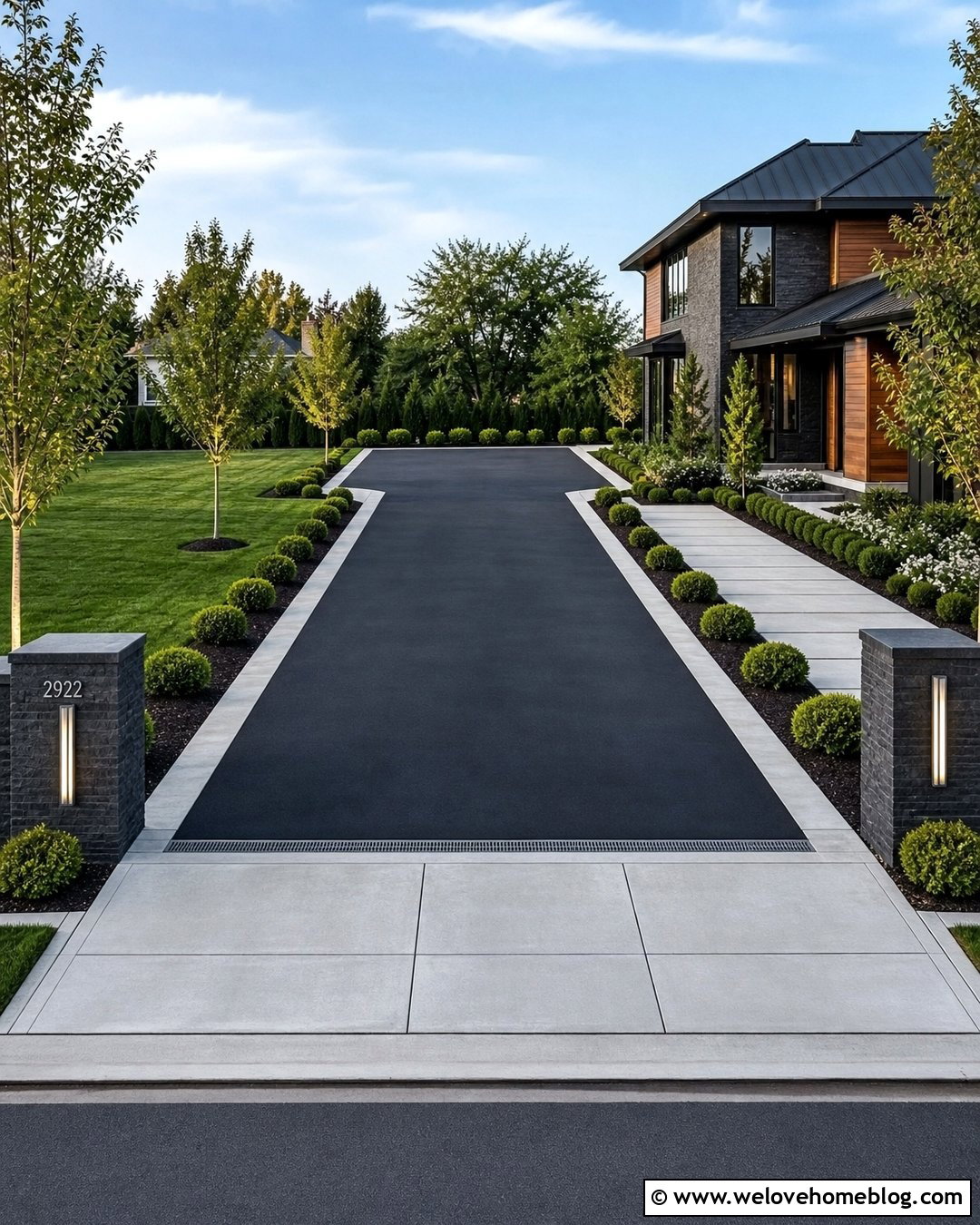
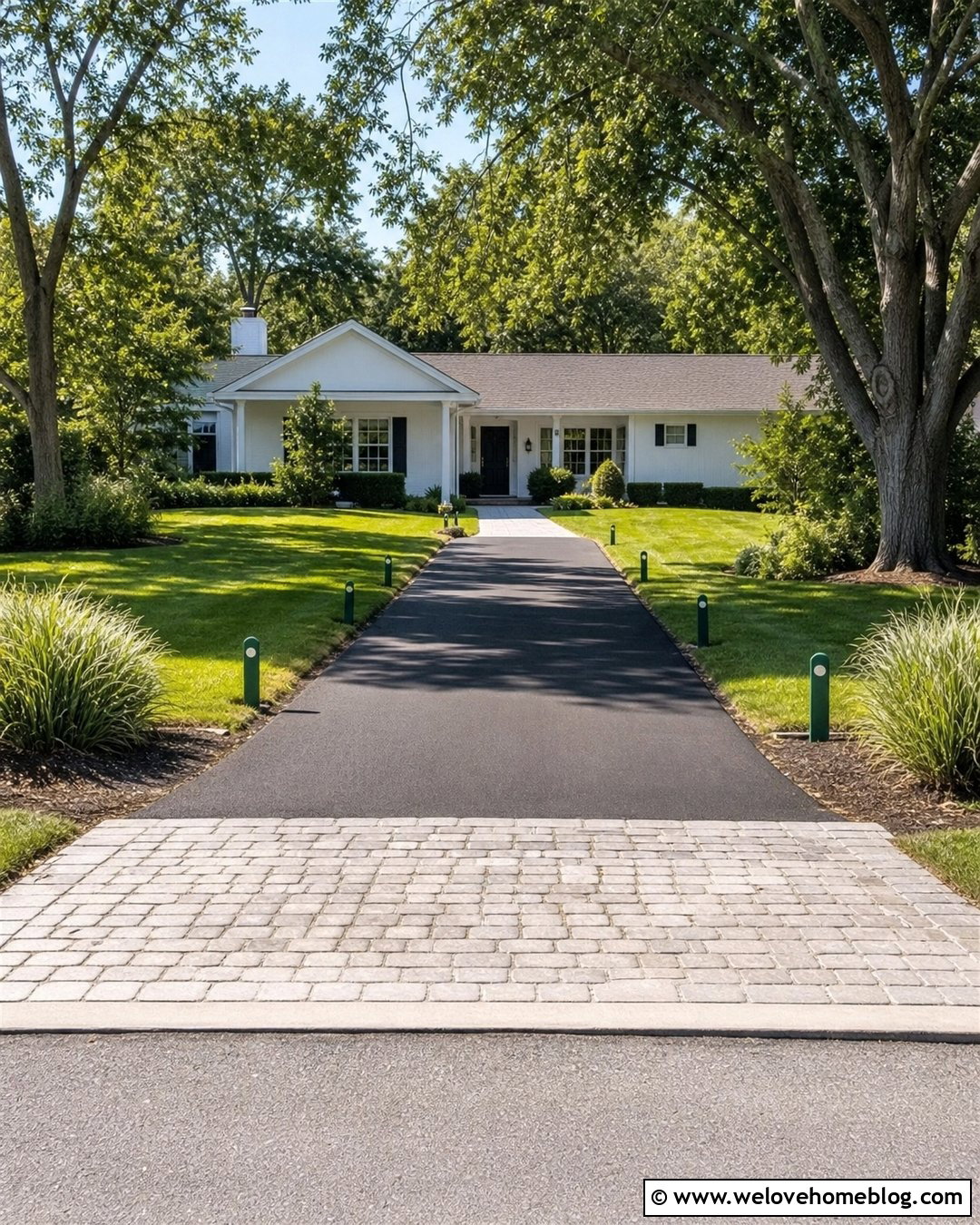
Black asphalt can look refined when crisp borders and low-profile lighting give it stronger definition. Start with a smooth straight driveway edged by a double ribbon of light gray concrete pavers. Install compact shielded path lights within mulch beds just outside that border. Their downward beams can illuminate the pavement edge without shining directly toward the street or neighboring windows. Use evenly spaced ornamental grasses, inkberry holly, or low junipers to create rhythm between fixtures. Near the garage, widen the paver ribbon into a practical parking apron and add coordinated wall lights above or beside the doors. This affordable-looking surface combination suits ranch, split-level, and transitional homes. The contrasting border also makes the dark asphalt easier to read while adding a customized finish.
7. Curved Driveway With Tree Downlighting
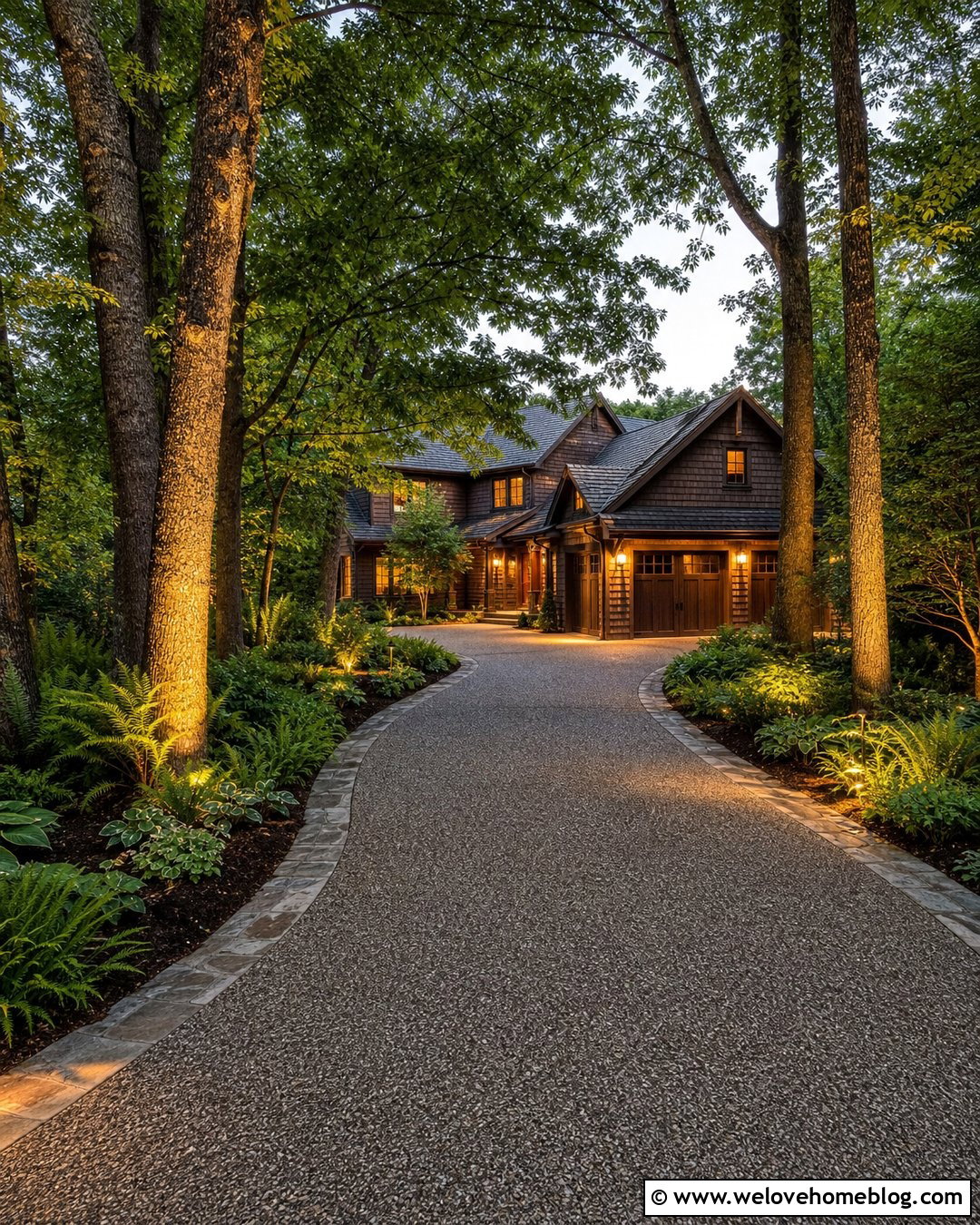
A curved driveway passing beneath mature trees offers an ideal setting for soft overhead lighting. Mount carefully aimed downlights within selected branches so the illumination filters through leaves and creates broad, natural-looking pools across the pavement. Tree-mounted downlighting can provide ambient coverage along longer stretches where numerous ground fixtures might feel cluttered. () Use warm gray exposed-aggregate concrete for the driveway and define its curve with a narrow natural-stone border. Ferns, hostas, and woodland shrubs can fill the shaded beds beyond the edge. At the house, subtle garage sconces complete the route without competing with the trees. This approach is especially attractive for craftsman, rustic contemporary, and wooded suburban homes, where the lighting should feel integrated into the landscape rather than displayed as decoration.
8. Circular Driveway With Lighted Center Landscaping
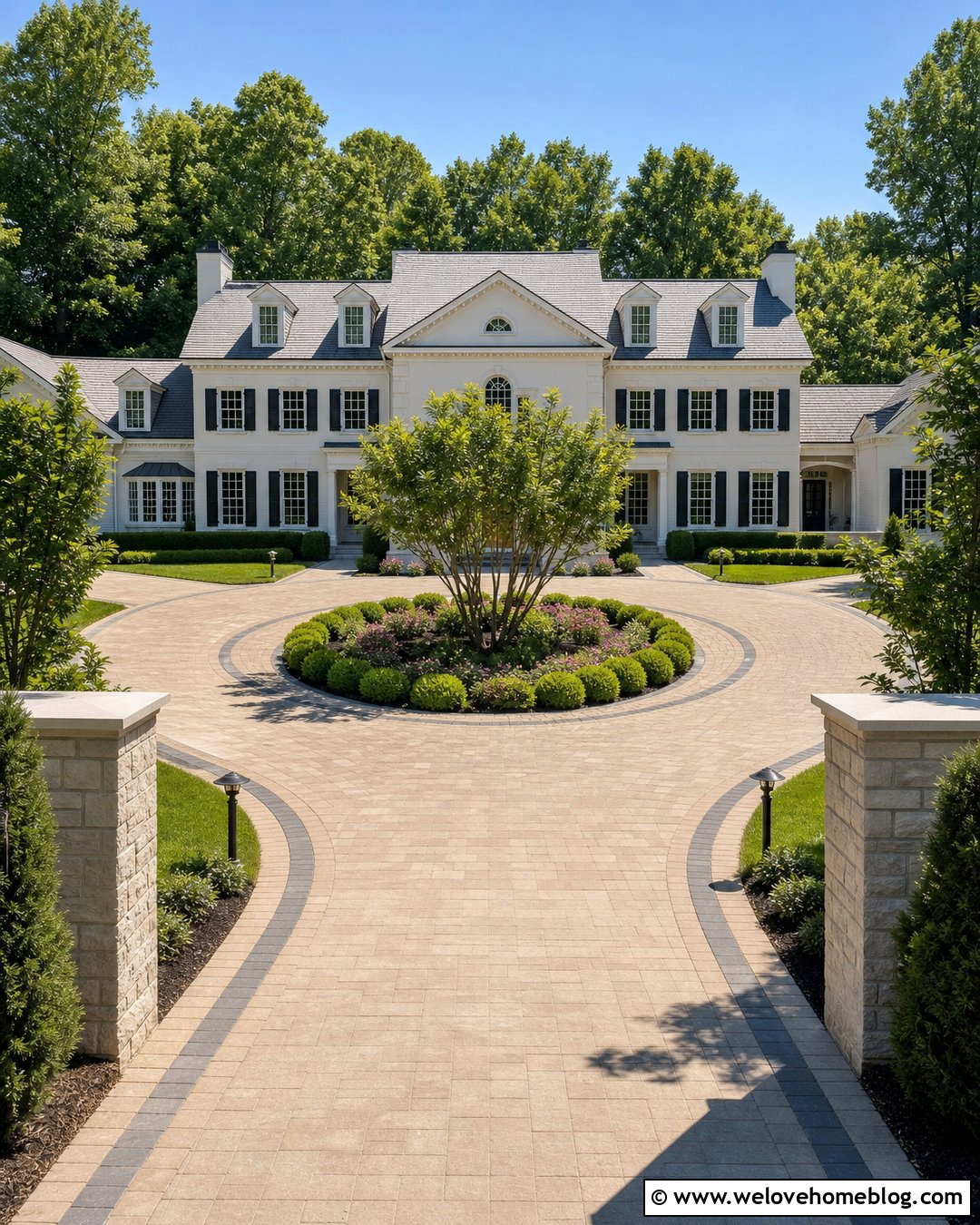
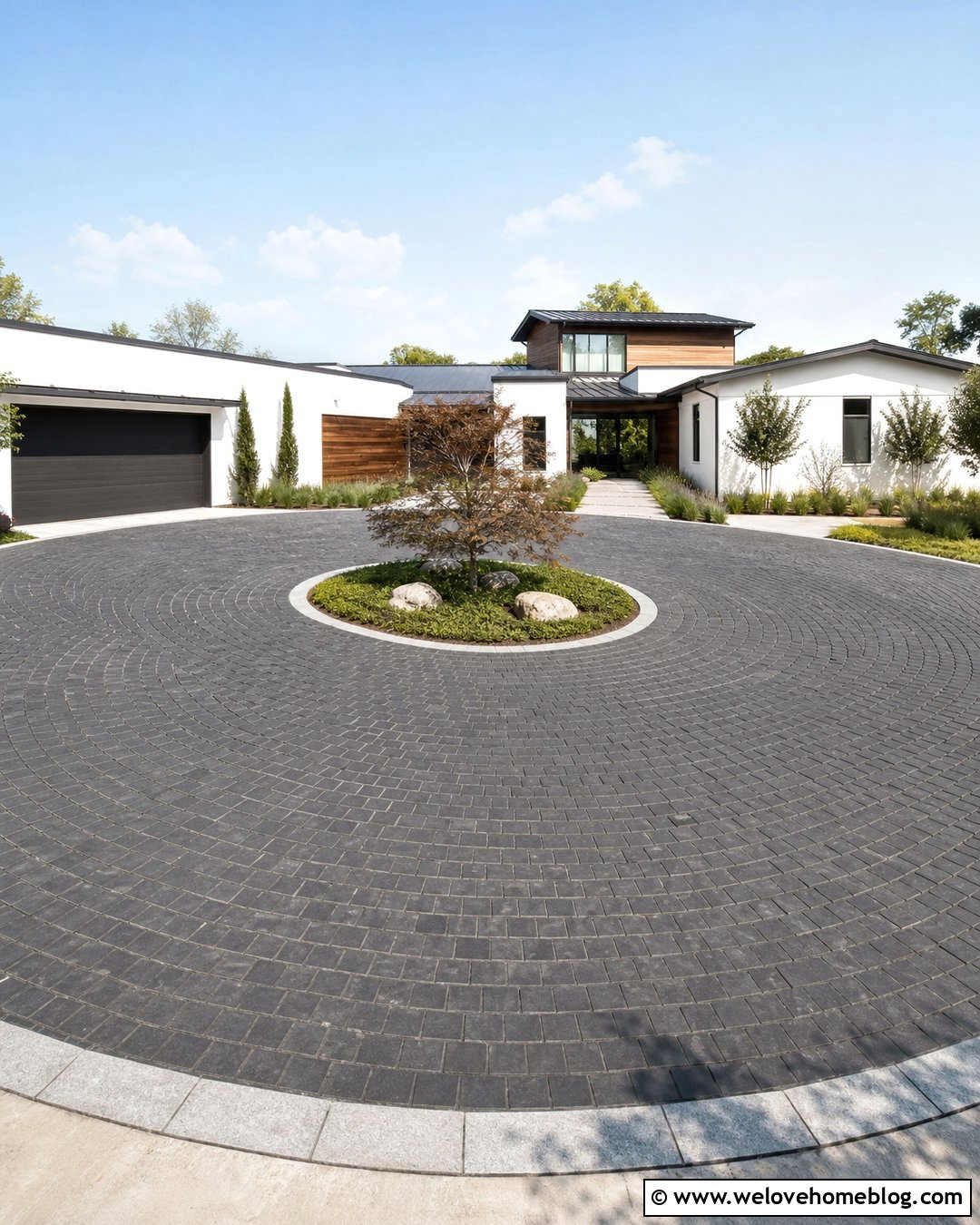
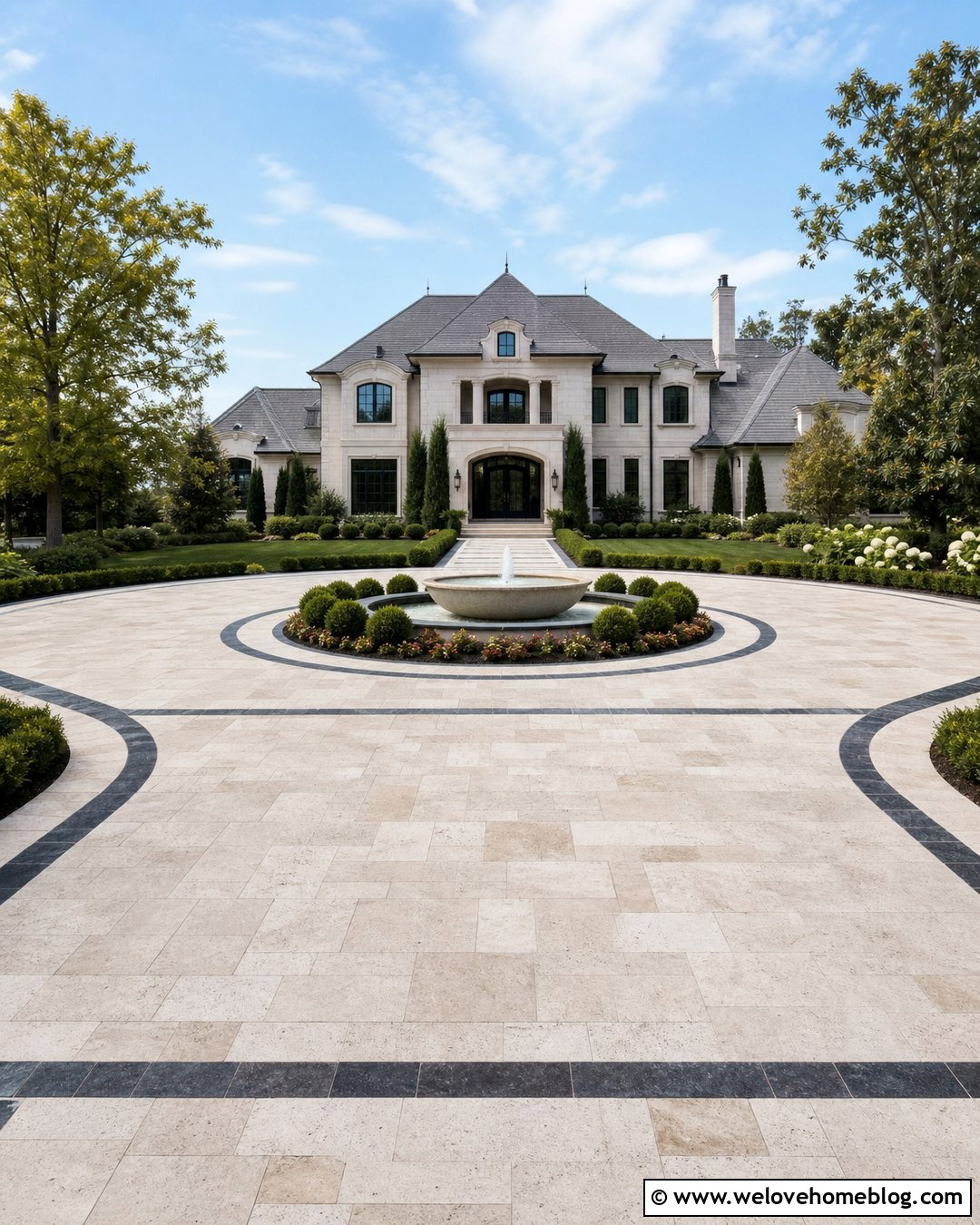
A circular driveway becomes more memorable when lighting emphasizes both the driving loop and the landscaped center island. Use warm beige concrete pavers with a darker outer border, then place low directional fixtures around the island’s perimeter. Aim them toward a multi-stem ornamental tree, sculpted evergreen, or layered planting composition rather than toward approaching vehicles. Small recessed markers along the outside curve can provide additional guidance without surrounding the circle with posts. Frame the street entrance with matching masonry columns and understated cap lights. This complete layout works beautifully with Georgian, colonial, and large transitional homes. Keep the center planting low enough near entry and exit points to maintain open views. The resulting design feels formal and organized while still giving the landscape a prominent role.
9. Farmhouse Driveway With Lighted Fence Posts
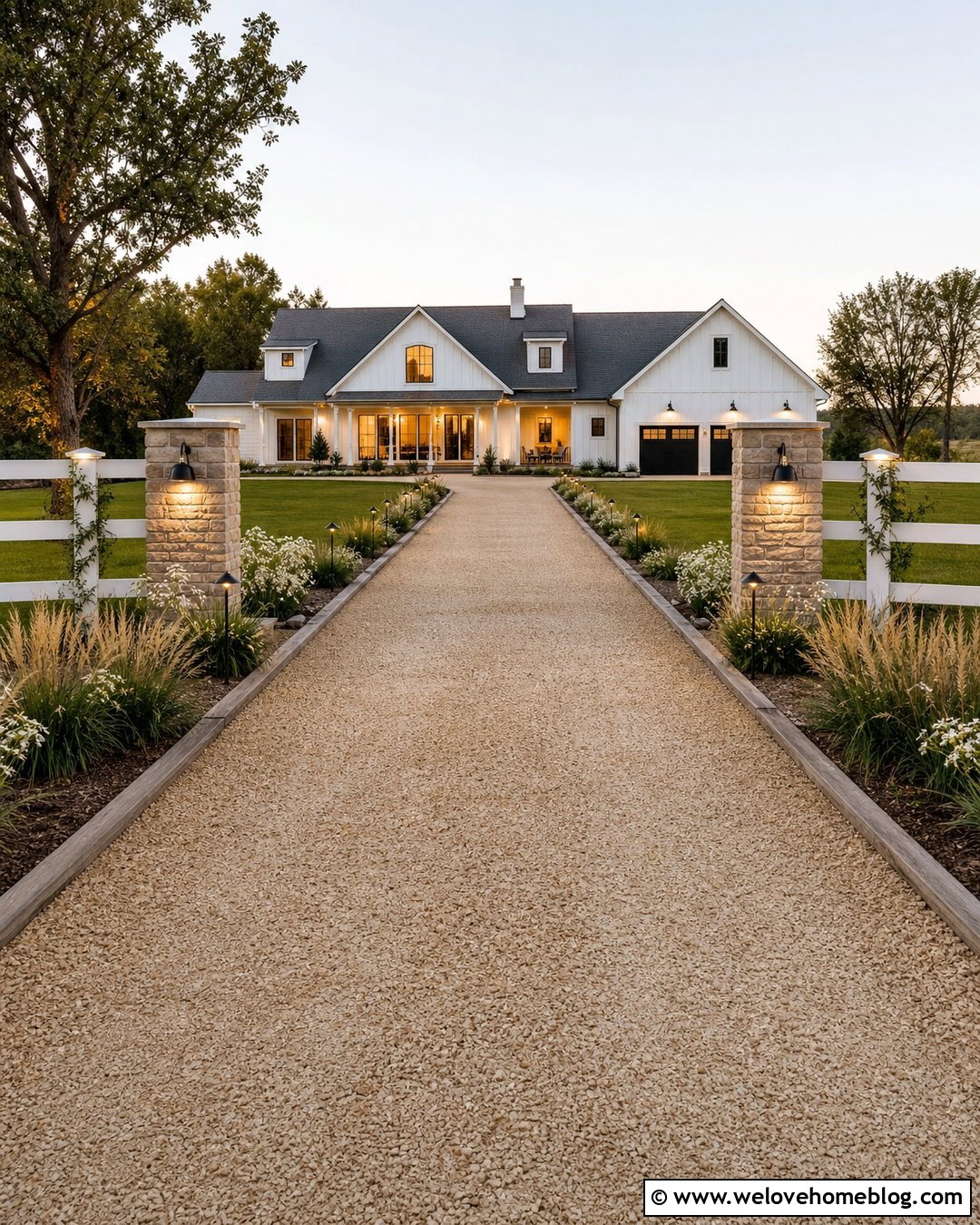
A long farmhouse driveway feels cohesive when lighting is built into the entrance fence and repeated toward the house. Begin with compacted tan gravel or fine crushed limestone, edged by weathered timber or dark metal. White board fencing can follow the driveway for a short distance, with shielded lanterns mounted on selected posts rather than every post. Continue the route with a few simple black path lights placed among native grasses and white flowering perennials. At the entrance, taller wood or stone pillars can support matching fixtures and a discreet address plaque. Finish the approach with barn-style garage sconces on a white modern farmhouse. The limited palette of white, black, tan, and green keeps the design relaxed, practical, and visually connected.
10. Driveway With Continuous LED Border Lighting
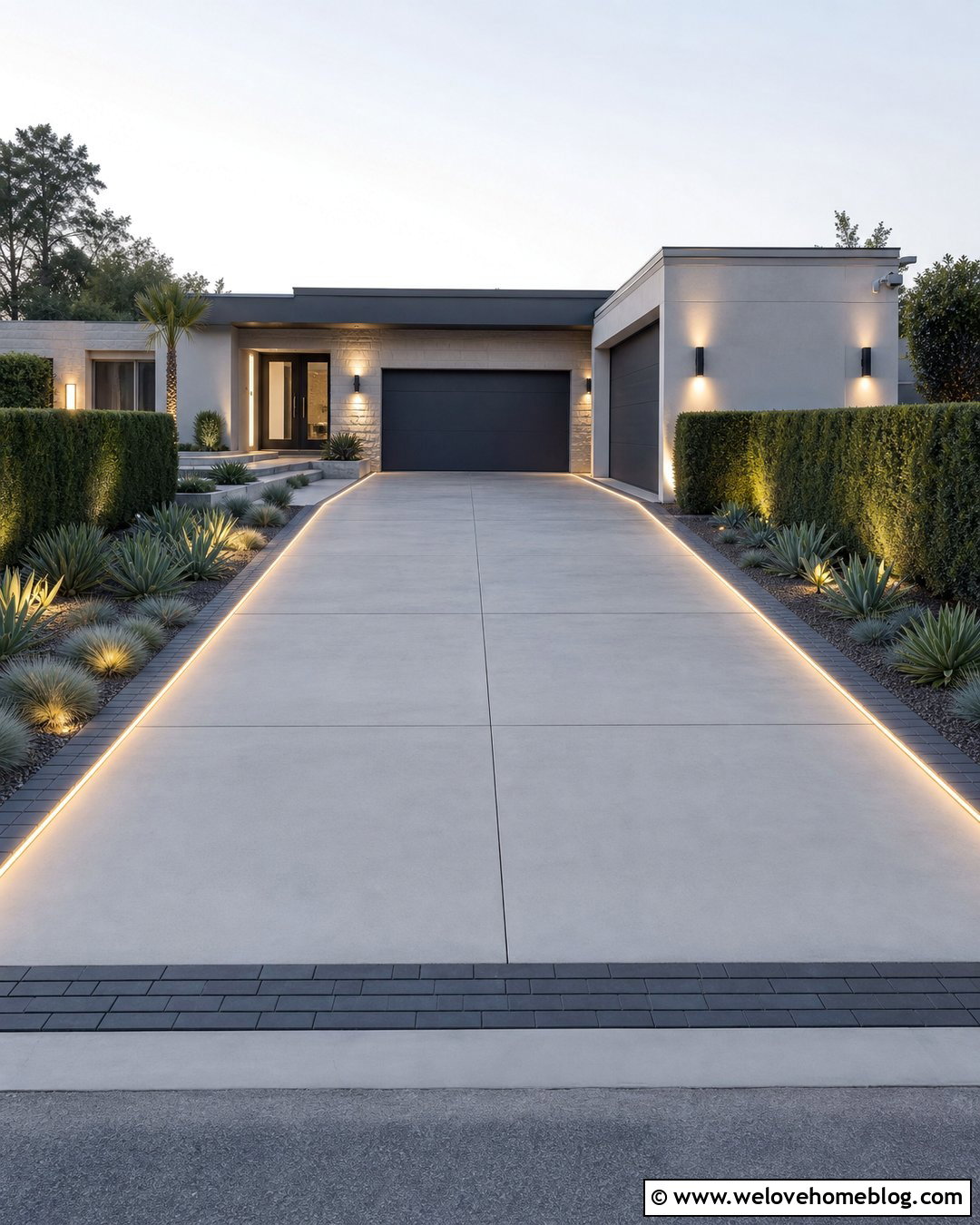
Continuous LED border lighting creates a sharp outline that can transform a simple driveway into a striking modern feature. Use smooth light gray poured concrete in a straight layout, bordered by charcoal pavers containing recessed linear lighting channels. The glowing lines should trace the main driving edges and stop before the sidewalk or public roadway. Pair the illumination with low architectural plants such as agave, blue fescue, or clipped hedges, depending on the climate. A flat-roofed modern home with dark siding and broad garage doors provides an ideal background. Keep additional fixtures minimal, using only discreet wall lights near the garage and front walk. Properly concealed strips create a cleaner effect than exposed diodes and help the driveway border read as part of the hardscape.
11. Driveway With Lighted Retaining Walls
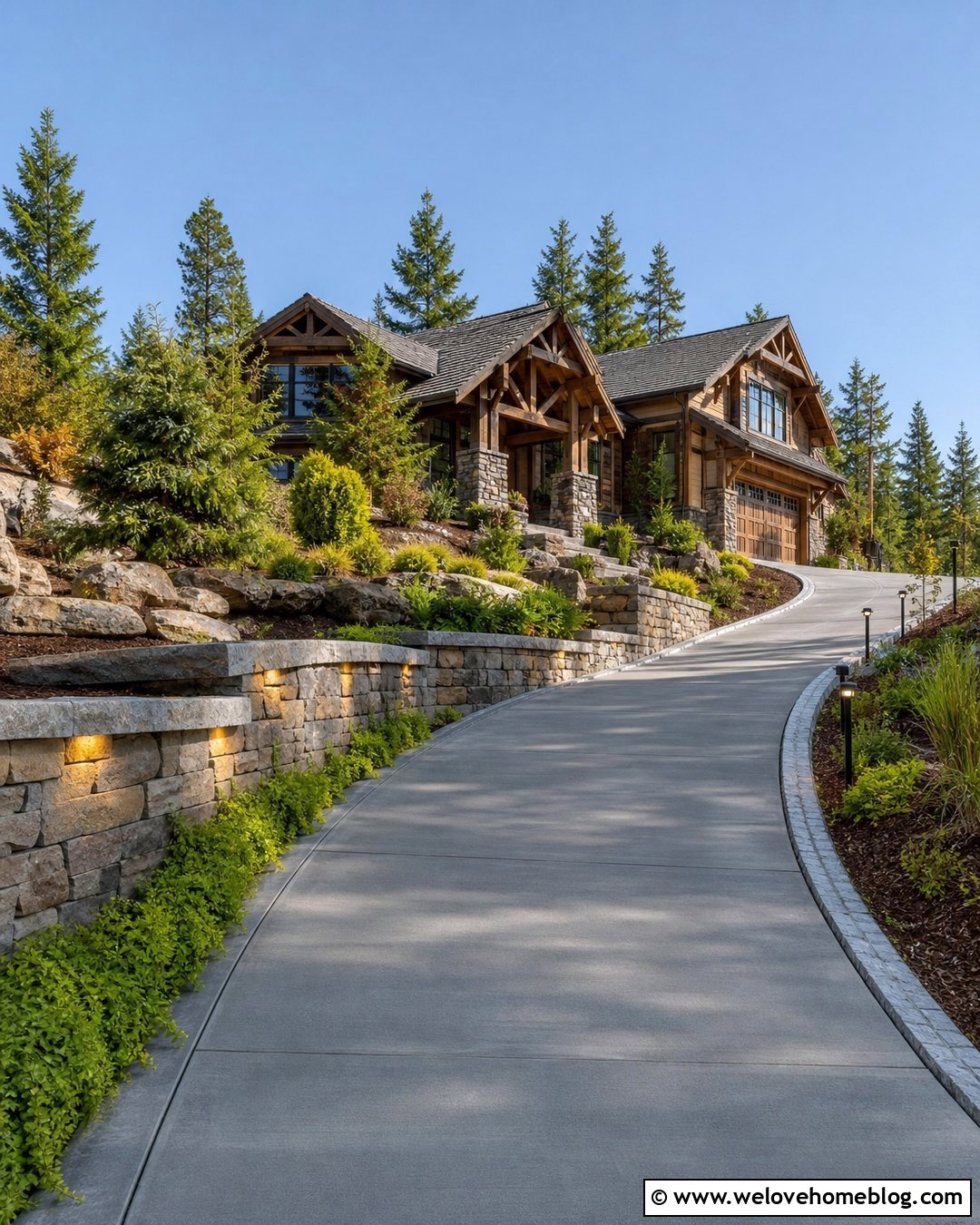
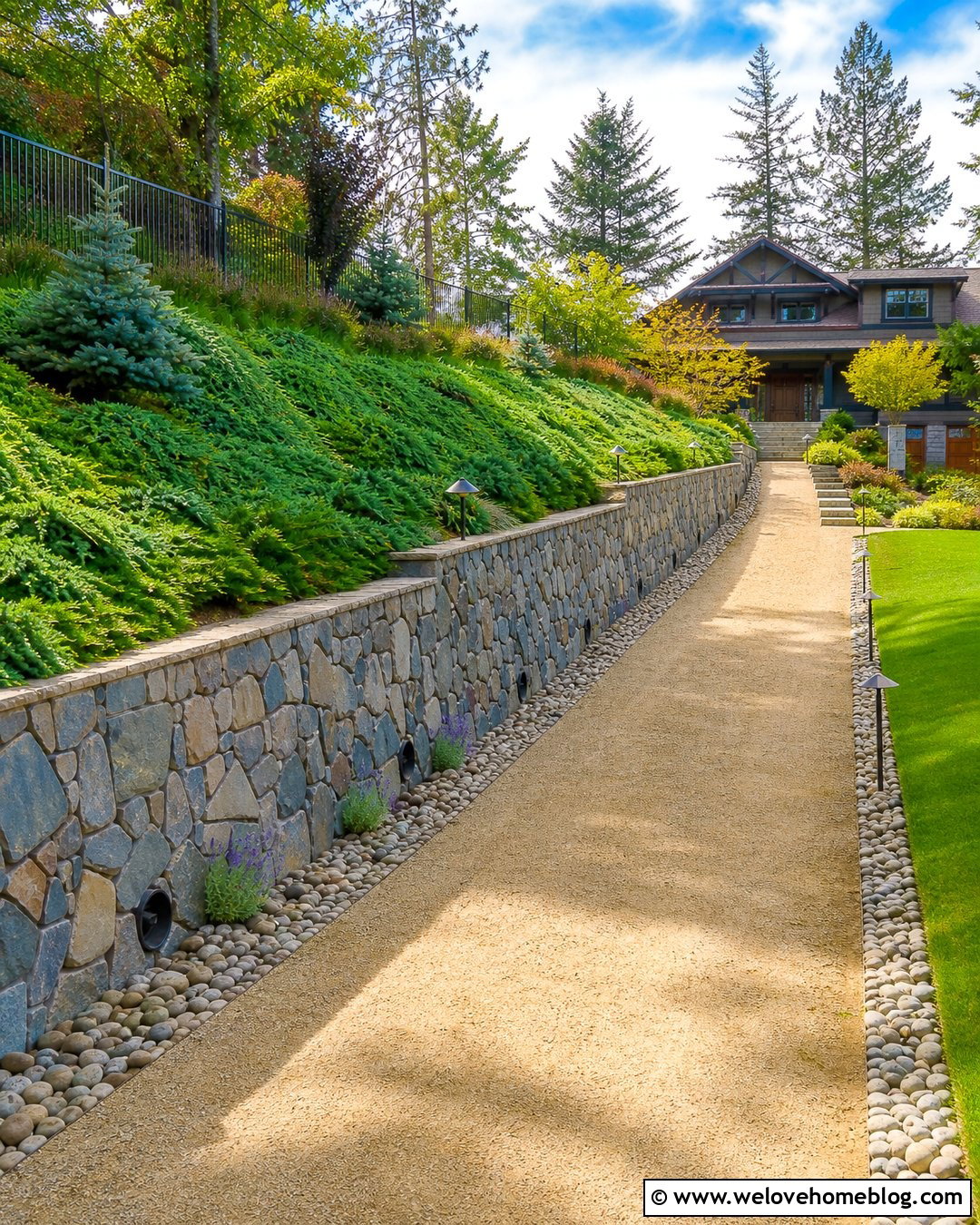
Sloped properties often need retaining walls, which can become an attractive part of the driveway lighting plan. Choose a brushed concrete driveway that curves uphill beside stacked natural-stone walls. Install small recessed hardscape lights beneath selected wall caps so light washes down across the textured stone and adjacent pavement. Space them according to changes in grade and direction rather than creating an uninterrupted row. Plant trailing ground cover above the wall, then add upright shrubs and small trees farther back for depth. On the open side of the driveway, use a simple granite curb and occasional low path lights. This design suits hillside ranch, mountain contemporary, and craftsman homes. It turns a necessary structural feature into useful nighttime guidance without adding posts to a narrow driving area.
12. Small Driveway With Garage Wall Lighting
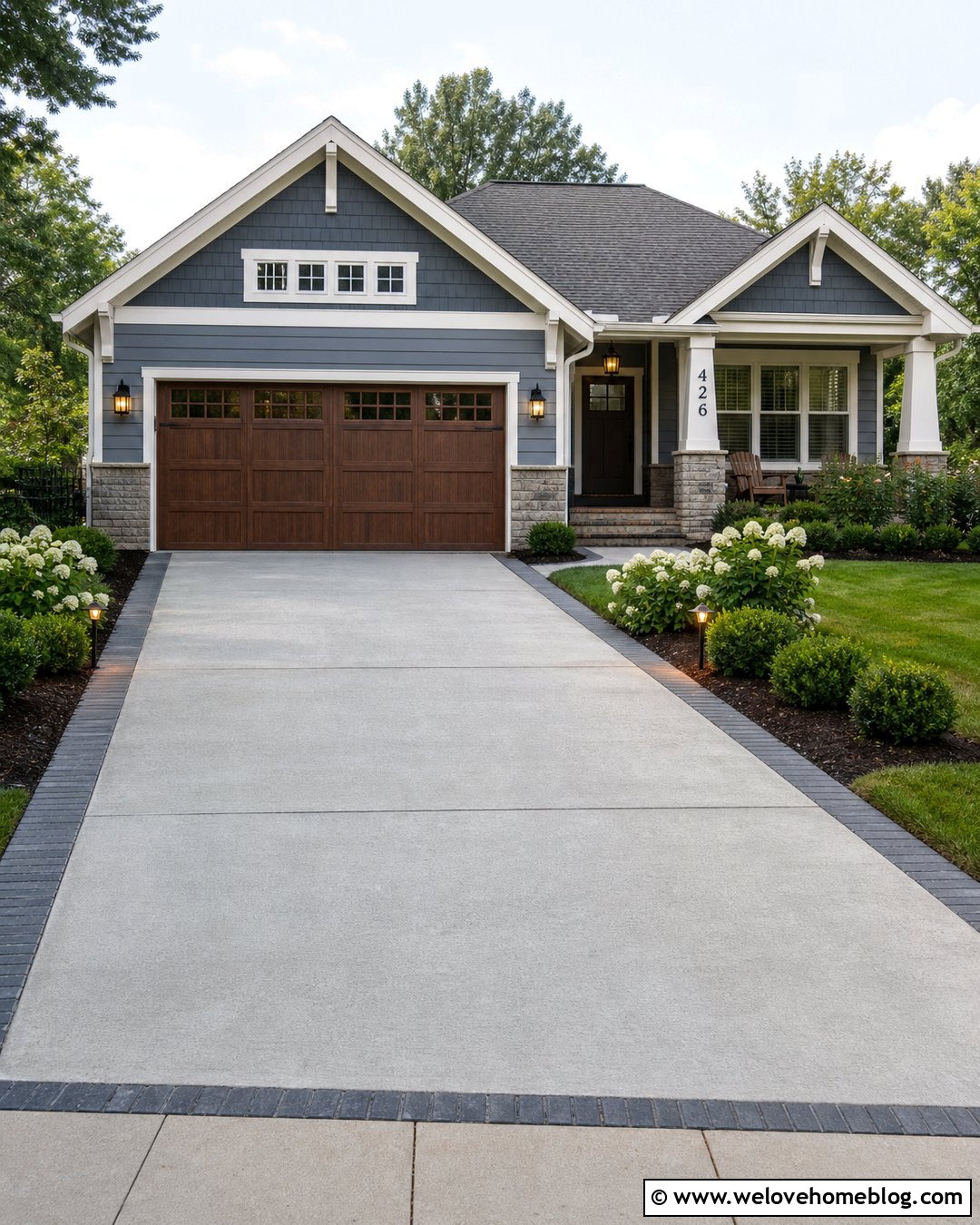
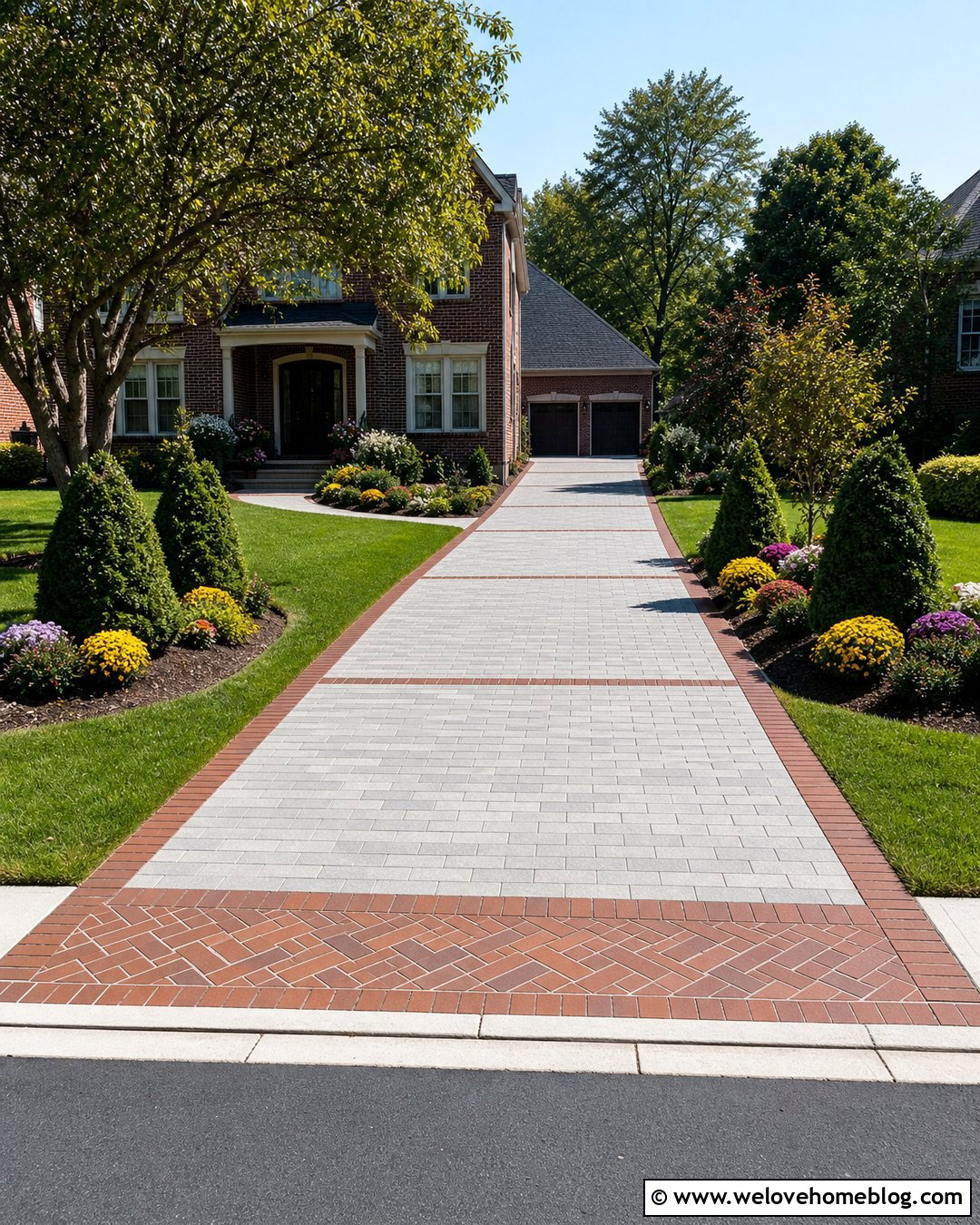
Not every property needs fixtures running from the curb to the garage. On a short suburban driveway, well-chosen garage wall lights may provide the clearest and least cluttered solution. Use a light broom-finished concrete surface with a charcoal brick border and compact planting beds on both sides. Mount shielded sconces beside each garage door, directing light downward onto the parking area. Add two low path lights where the driveway meets the front walkway, creating an obvious pedestrian transition. A pair of small flowering shrubs can frame that connection without blocking the beams. This arrangement works with townhomes, bungalows, and compact craftsman houses. Coordinating the sconce finish with the house numbers, door hardware, and border pavers helps the modest driveway appear intentionally designed.
13. Smart Driveway With Motion Sensor Lighting
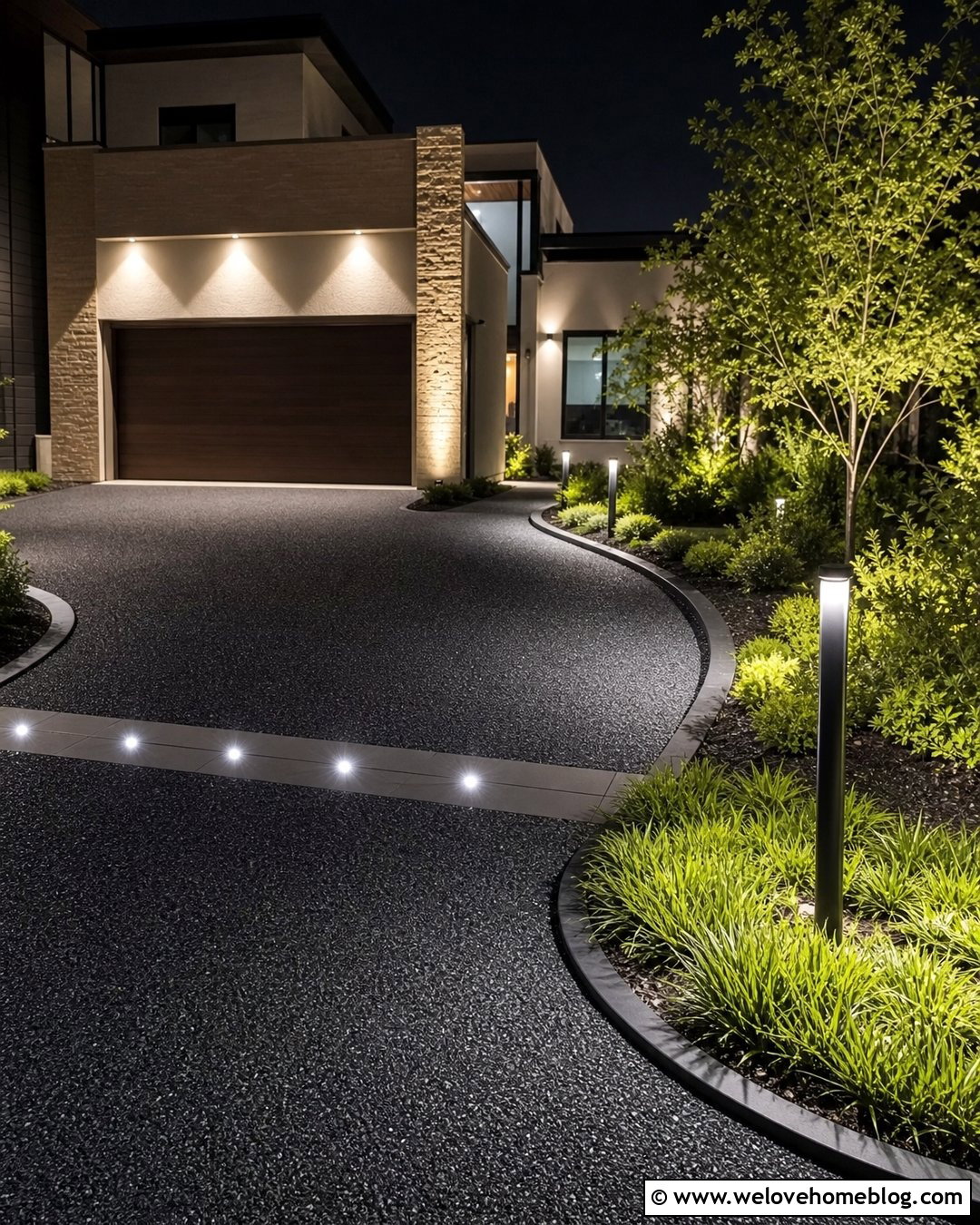
Smart controls can make a comprehensive lighting design more convenient without changing the driveway’s daytime appearance. Imagine a dark resin-bound gravel driveway leading in a gentle curve toward a contemporary home. Slim bollards mark the outer edge, recessed dots identify the walkway crossing, and shielded garage lights illuminate the final parking zone. Connect the fixtures to compatible motion sensors, timers, or automated controls so different lighting layers can operate when needed. Keep the sensors aimed within the property to reduce unnecessary activation from street traffic. Plant low sedges and compact shrubs around the bollards, leaving their light openings unobstructed. The coordinated combination of dark surfacing, black fixtures, and restrained landscaping creates a seamless look while allowing the lighting behavior to adapt to arrivals and departures.
14. Dark Sky Driveway With Shielded Lighting
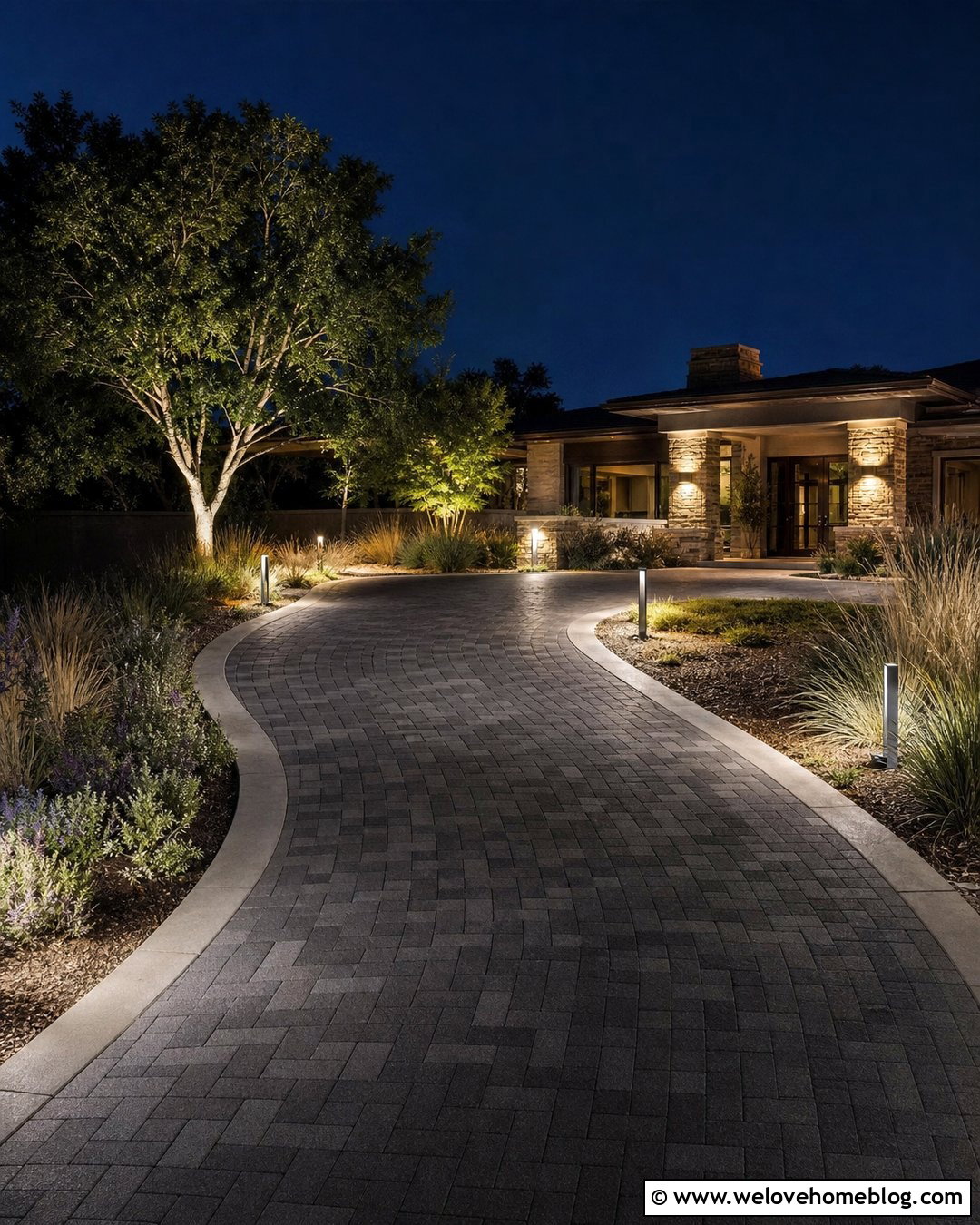
A dark-sky-conscious driveway uses focused illumination instead of flooding the entire front yard. Select a permeable charcoal paver surface with a curved border and low native planting beds. Install full-cutoff bollards or shielded path lights that send light downward onto the driveway edges. Add narrow accent beams for one entrance pillar or specimen tree, carefully aiming them away from neighboring windows and the sky. Shielded fixtures and controlled placement can reduce glare while preserving useful guidance. () Choose a warm, consistent light color throughout the property and avoid mixing harsh floodlights with decorative lanterns. This complete design fits contemporary, prairie, and environmentally minded landscapes. It makes the driveway readable while allowing the plants, house, and surrounding night environment to retain their natural visual depth.
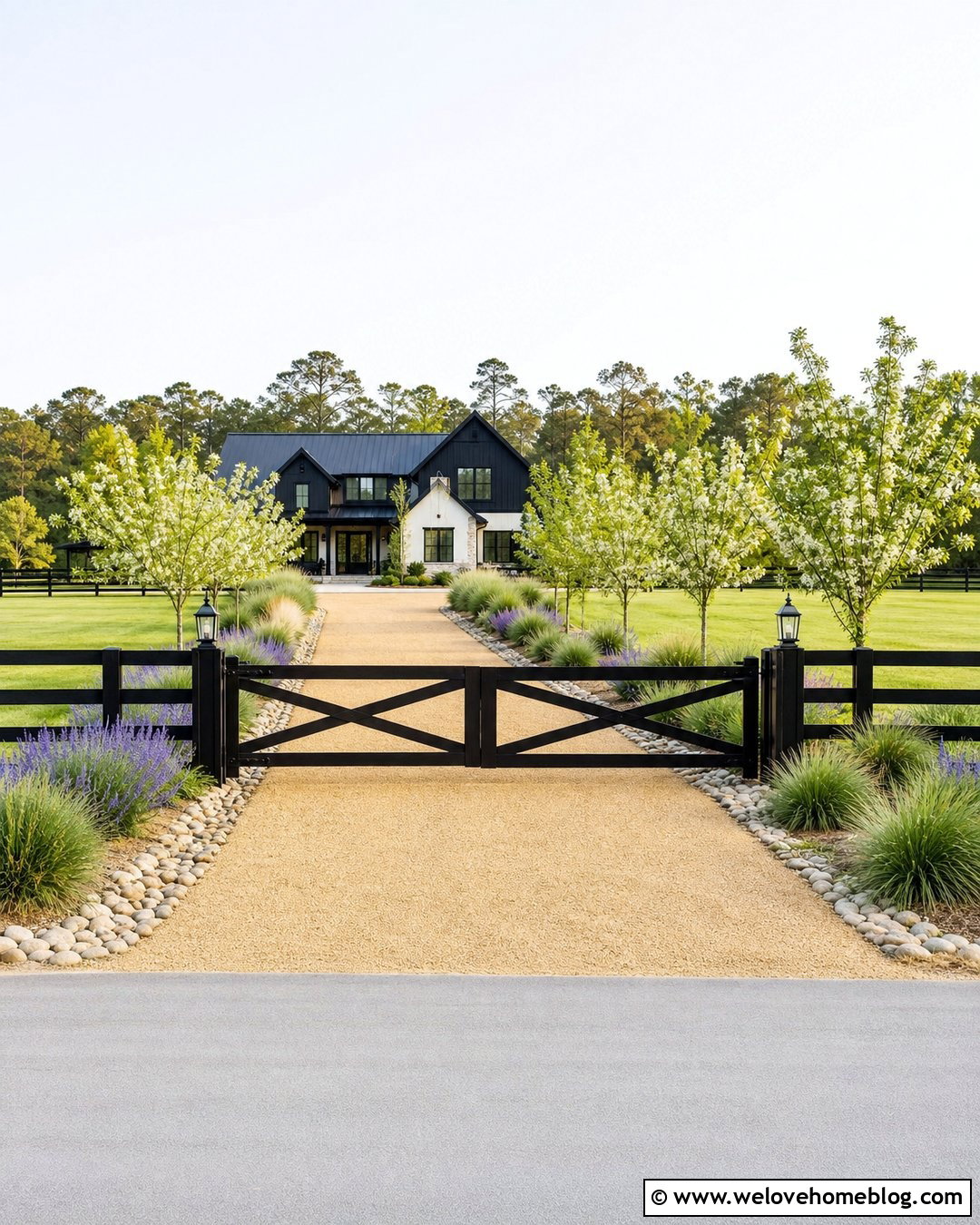
15. Long Driveway With Alternating Bollard Lighting
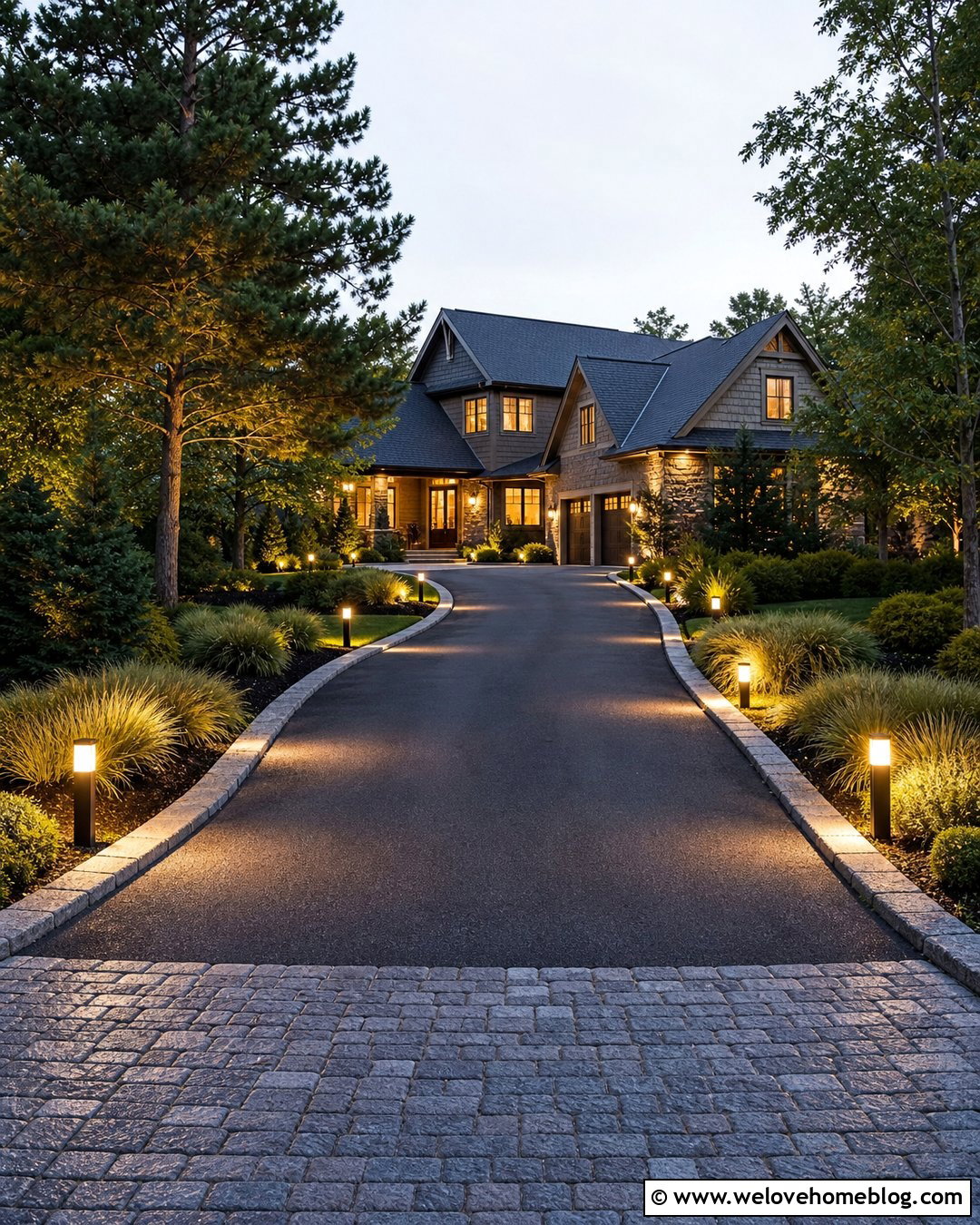
A long driveway needs a clear rhythm, but fixtures do not have to form two rigid parallel lines. Use medium gray asphalt or concrete with a granite cobblestone apron at the street. Position shielded bollards on alternating sides, setting them beyond a low curb and within broad planting strips. This staggered arrangement can guide the eye through gentle bends while using fewer visible fixtures than matching rows. Between the bollards, plant drifts of ornamental grass, low evergreen shrubs, and occasional canopy trees. Increase the lighting concentration near important transitions, including the gate, walkway crossing, turnaround, and garage. A modern ranch or large craftsman house works well at the end of this approach. Consistent fixture height and finish keep the long composition orderly from curb to residence.
16. Resin Driveway With Flush Paver Lighting
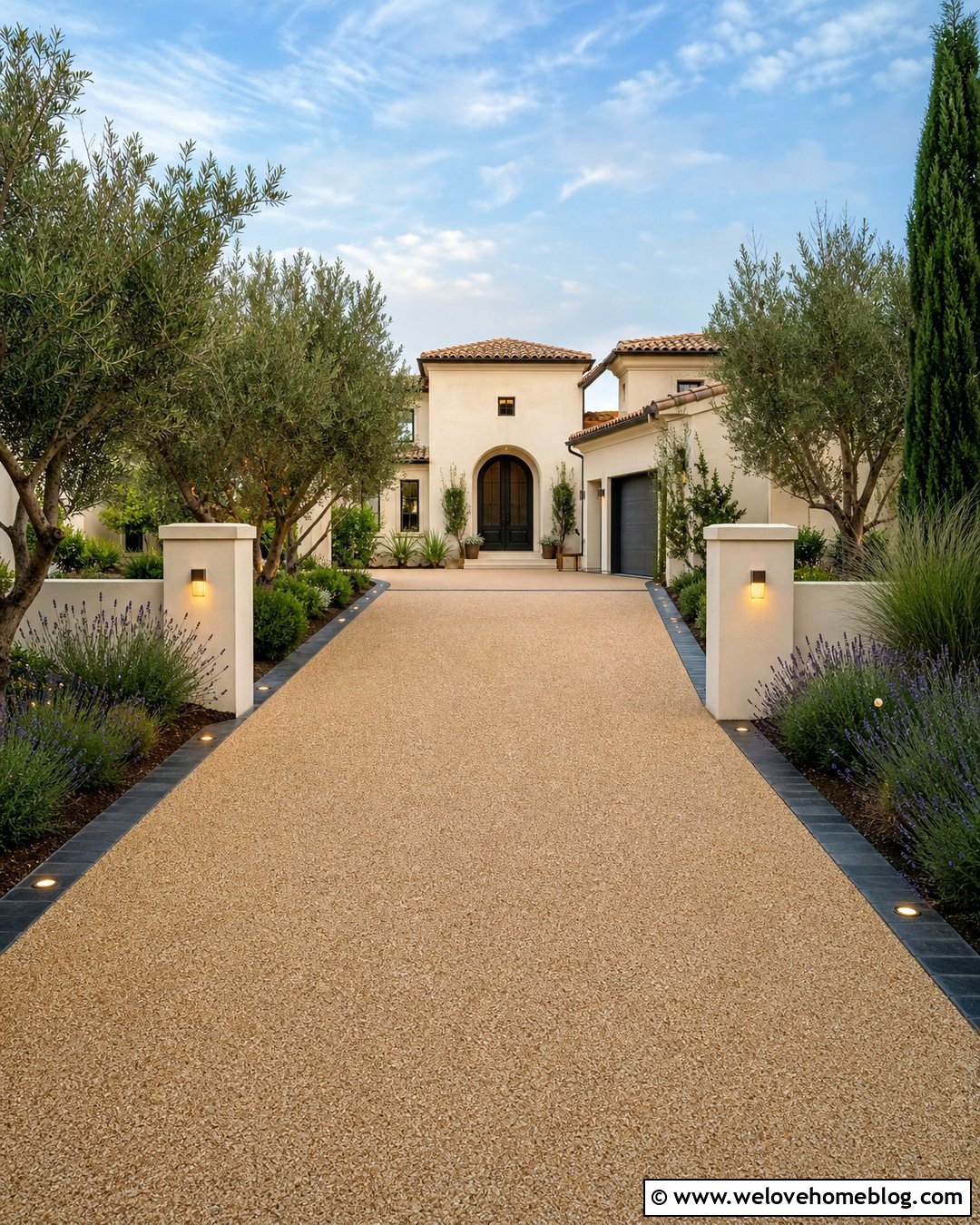
A resin-bound gravel driveway offers a smooth-looking surface that pairs well with discreet flush lighting. Choose a warm buff resin aggregate for a straight approach to a cream stucco or contemporary Mediterranean home. Define the edges with narrow bands of dark porcelain pavers, placing small recessed lights at key intervals within the border. Rather than illuminating every foot, concentrate them near the entrance, curve, front walkway, and parking apron. Use drought-tolerant beds containing olive trees, lavender, rosemary, and sculptural grasses to frame the hardscape. Low stucco walls with recessed step lights can separate the driveway from the front garden. The contrast between warm aggregate, dark borders, and bright green planting gives the property an upscale appearance while maintaining a smooth, uncluttered driving route.
17. Coastal Driveway With Low Path Lighting
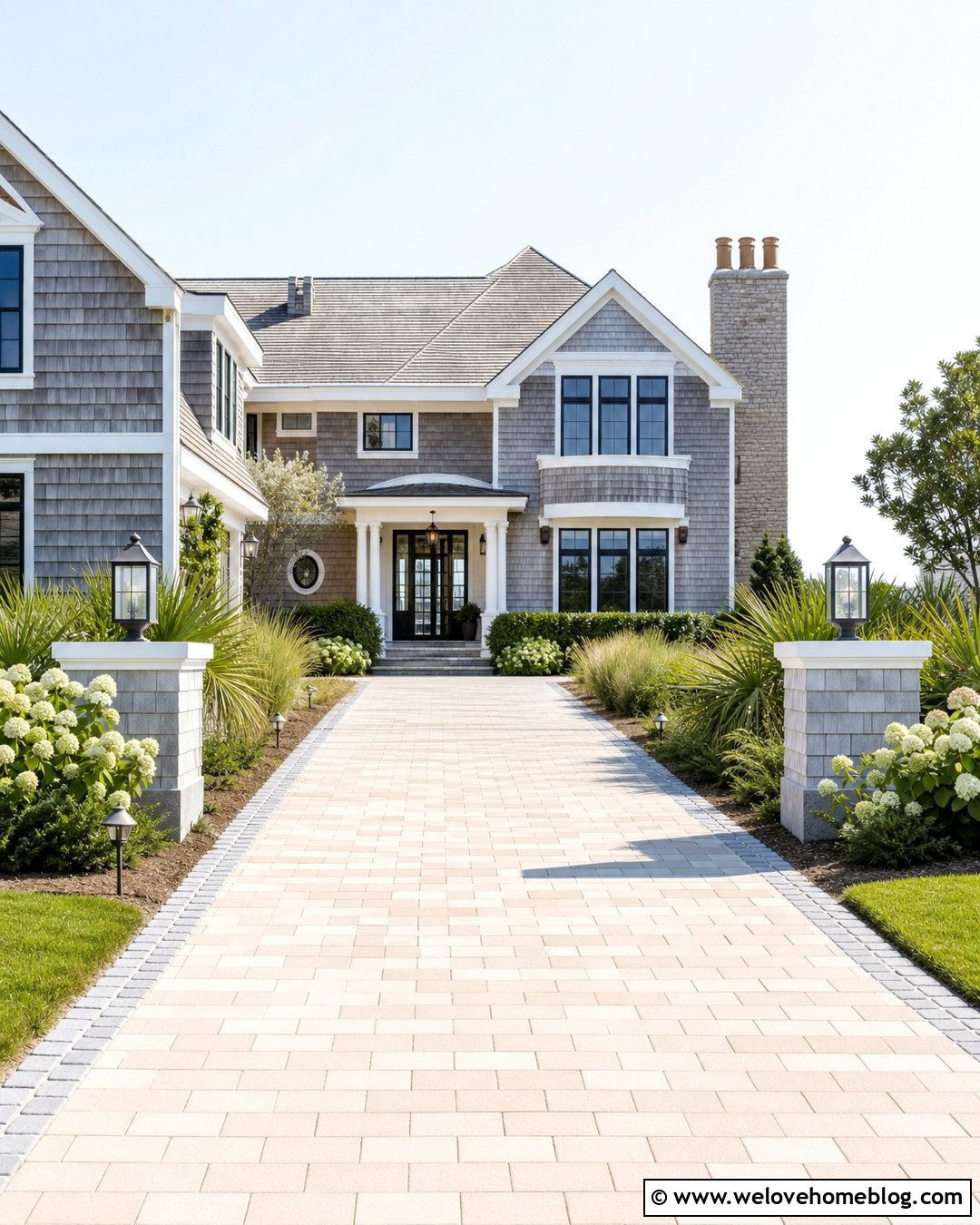
Coastal homes benefit from lighting that feels simple, durable, and visually light. Create a straight driveway with pale shell-toned permeable pavers arranged in a running bond. Border the paving with bluish-gray cobblestones and wide beds of beach grass, dwarf palmetto, hydrangea, or other regionally appropriate plants. Install compact downward-facing path lights in a weather-suited finish, placing them several inches behind the cobblestone edge. At the entrance, use short masonry pillars with clean lanterns rather than tall formal posts. A light-colored shingle, coastal cottage, or raised beach house completes the setting. Keep the fixture shapes uncomplicated so the driveway material and breezy planting remain dominant. Repeating the same finish on porch and garage lights visually connects the curb, parking area, and house.
18. Gravel Driveway With Boulder Uplighting
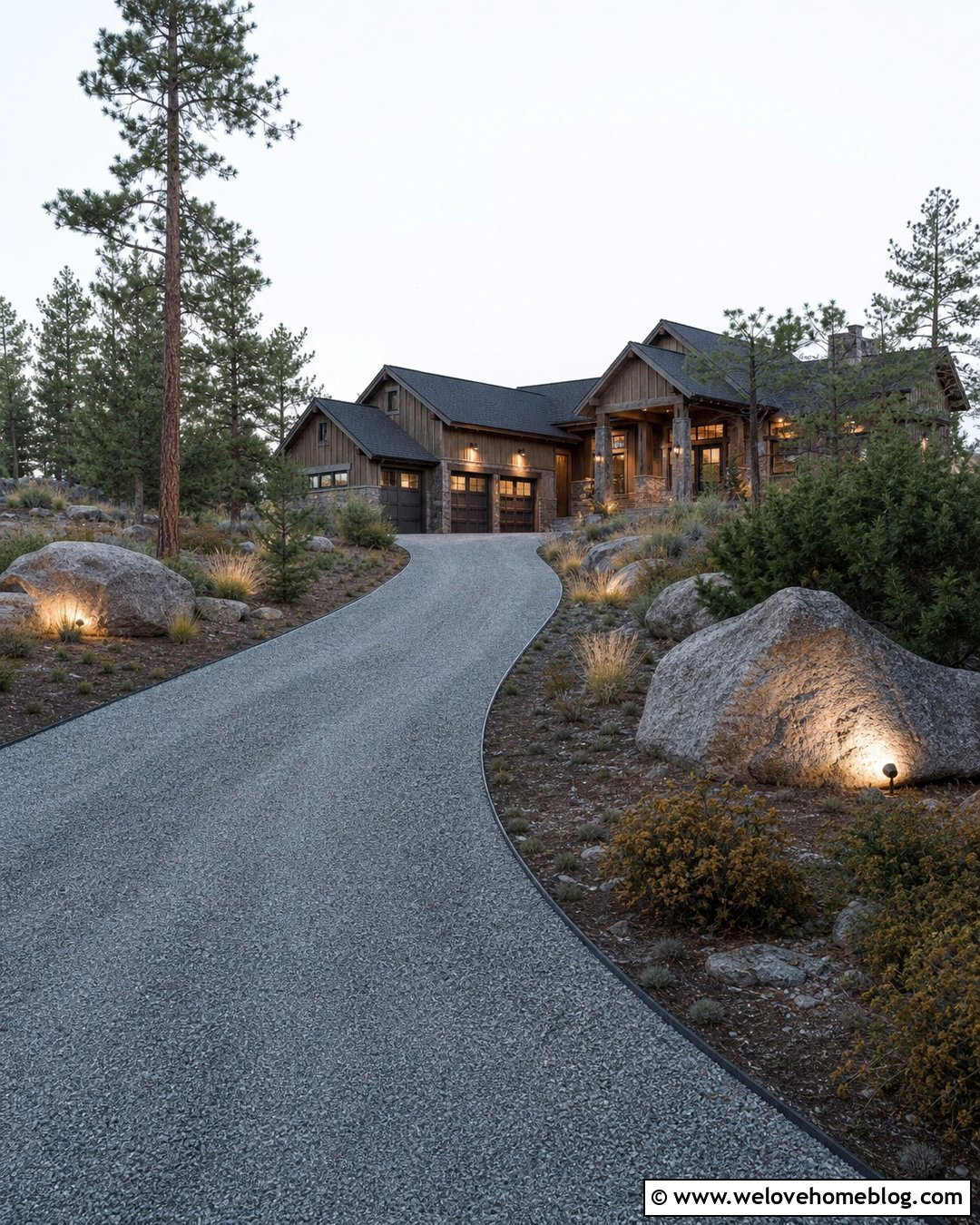
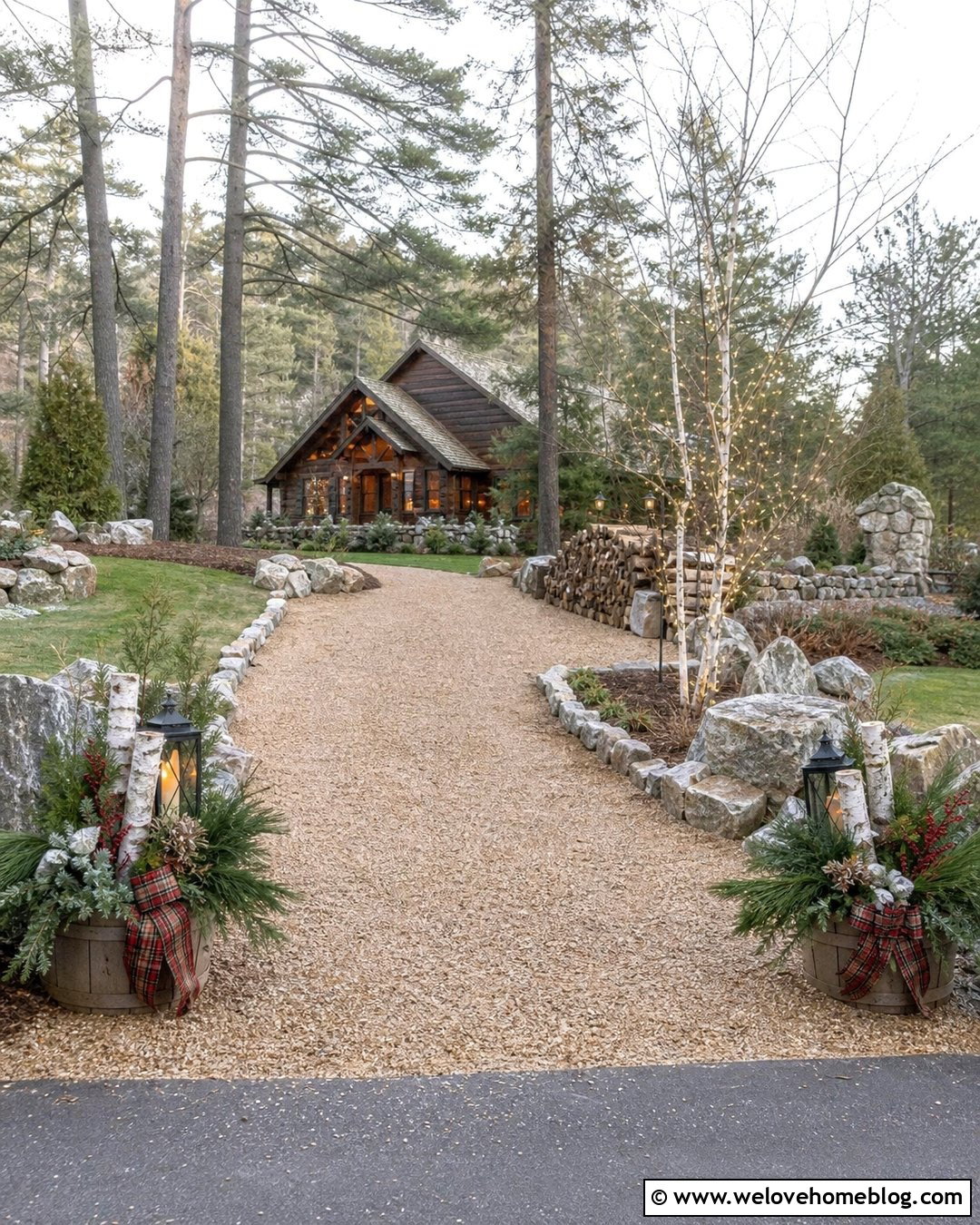
Natural boulders can form a rugged border while also providing strong focal points for driveway lighting. Use medium gray crushed gravel in a winding layout leading toward a rustic ranch, cabin-inspired, or mountain contemporary house. Place large fieldstones beyond a sturdy steel edge, then conceal narrow-beam accent fixtures among low ground cover at the base of selected rocks. Aim the light across their textured faces instead of toward drivers. Add native grasses, spreading junipers, and small pines to blend the boulders into the surrounding yard. Simple downlights near the garage can illuminate the parking zone. This layered approach avoids placing vulnerable fixtures inside the loose gravel. It also makes the driveway boundary clearer while preserving the informal, natural character of the material and landscape.
19. Driveway With Lighted Address Pillars
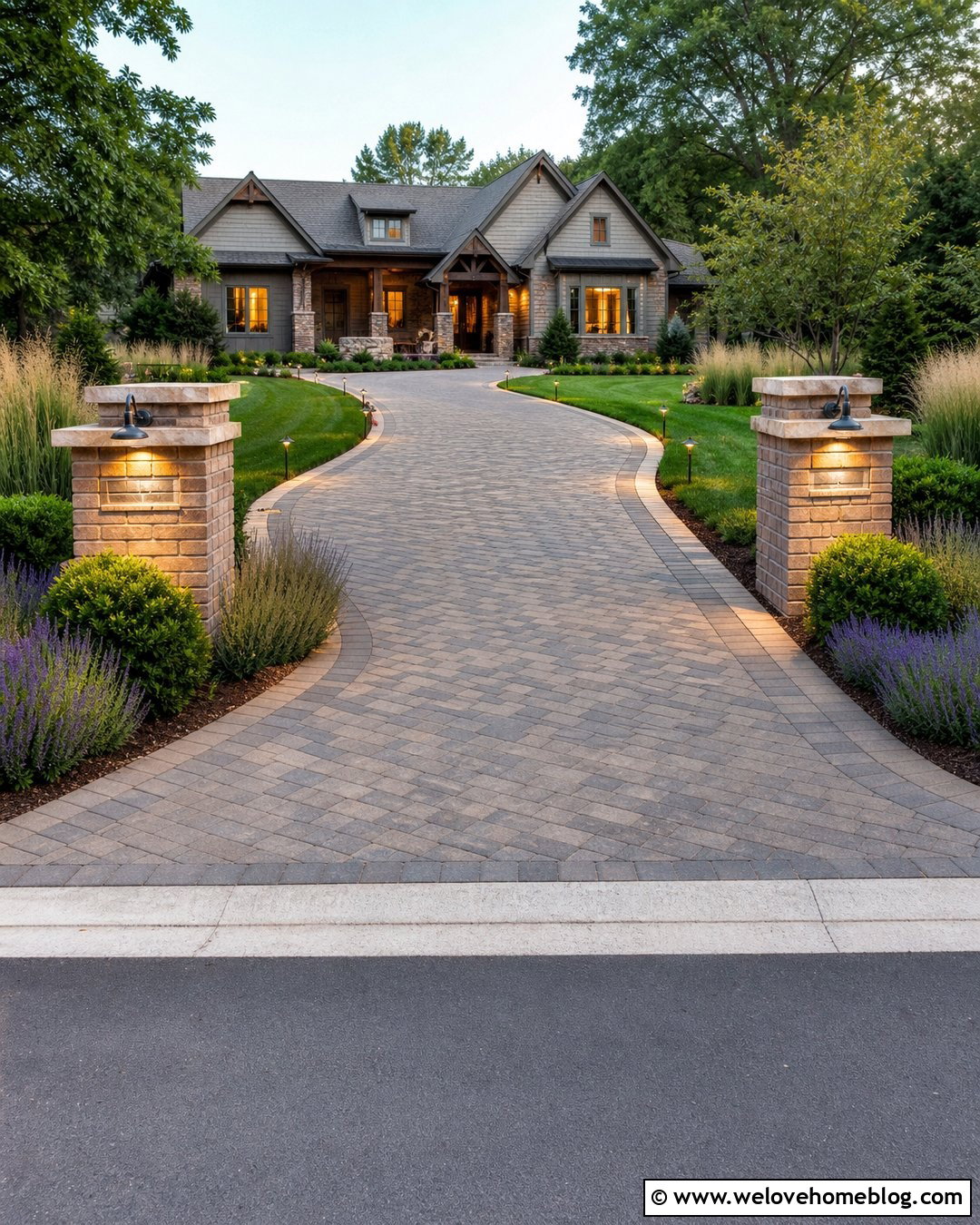
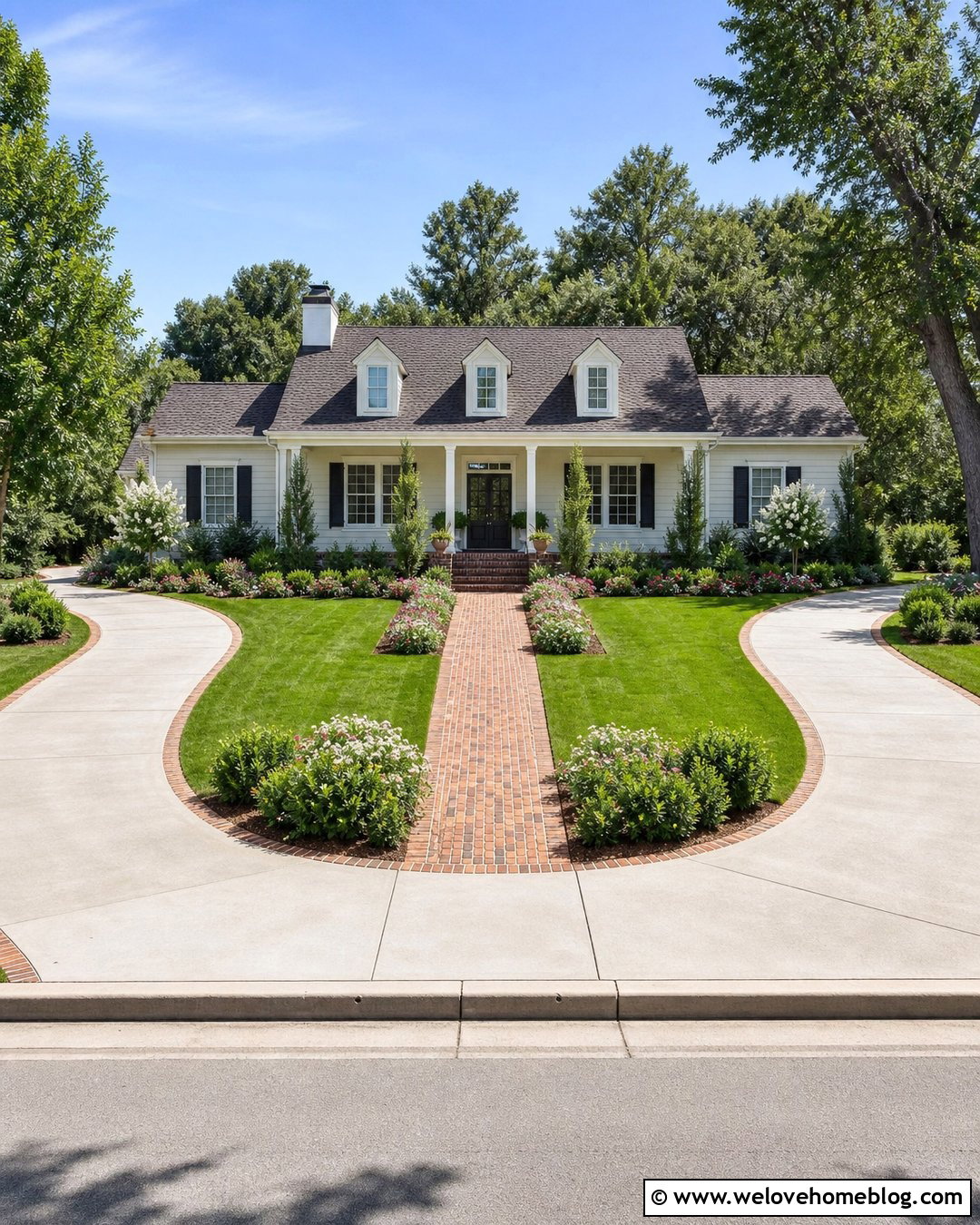
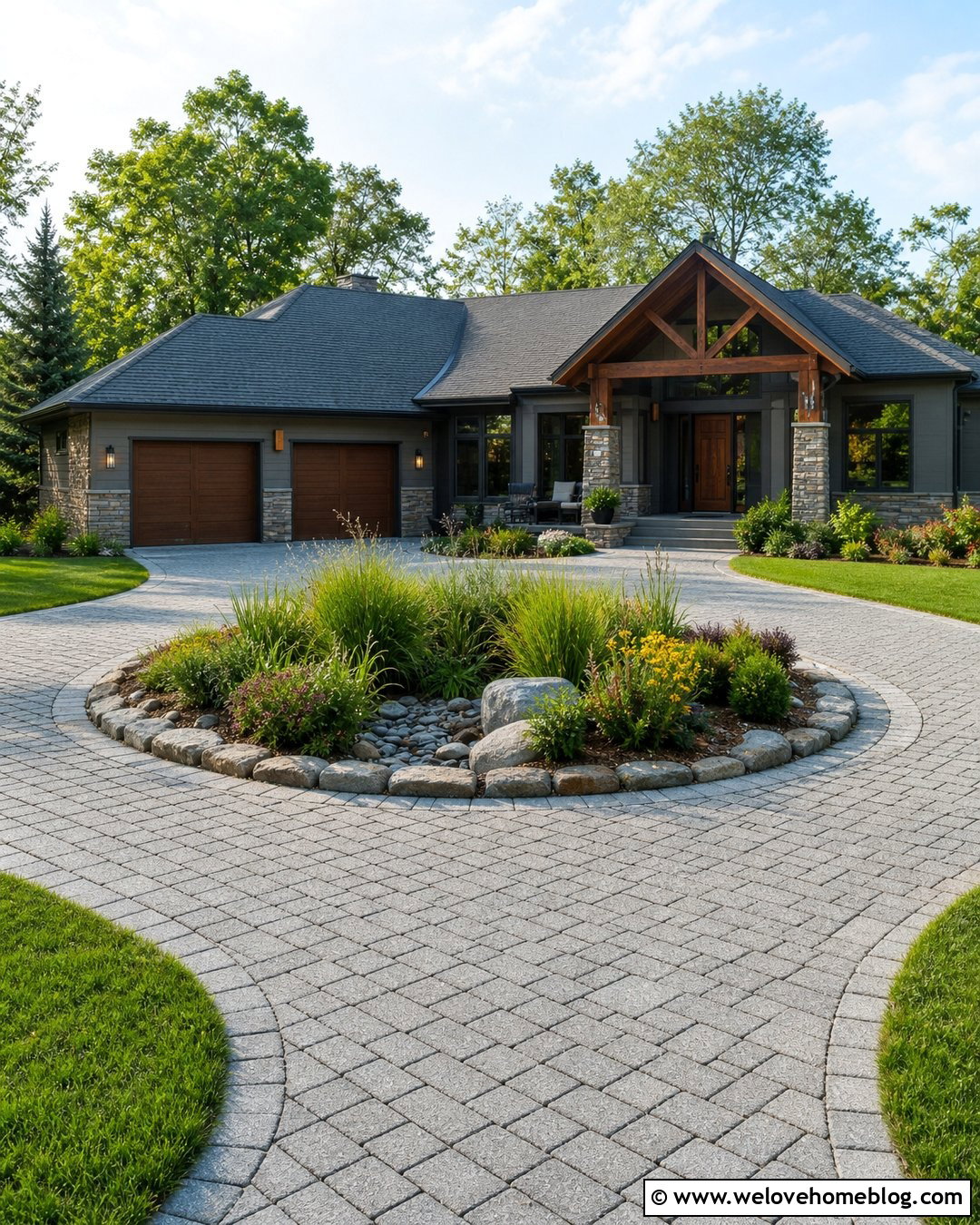
Lighted address pillars create a visible entrance and can set the design direction for the entire driveway. Begin with a warm gray interlocking concrete paver surface in a gentle S-curve. Build two low brick or stone pillars at the curb, leaving enough clearance for comfortable vehicle movement. Fit each pillar with a downward-facing cap light, and illuminate the house number with a separate concealed fixture if necessary. Continue the driveway with a matching masonry border and occasional low path lights among boxwood, salvia, and ornamental grasses. Repeat the pillar material on porch columns or a front walkway wall to connect the entrance with the home. This balanced arrangement suits traditional, transitional, and craftsman properties without requiring a full gate or elaborate fence system.
20. Gated Driveway With Layered Entrance Lighting
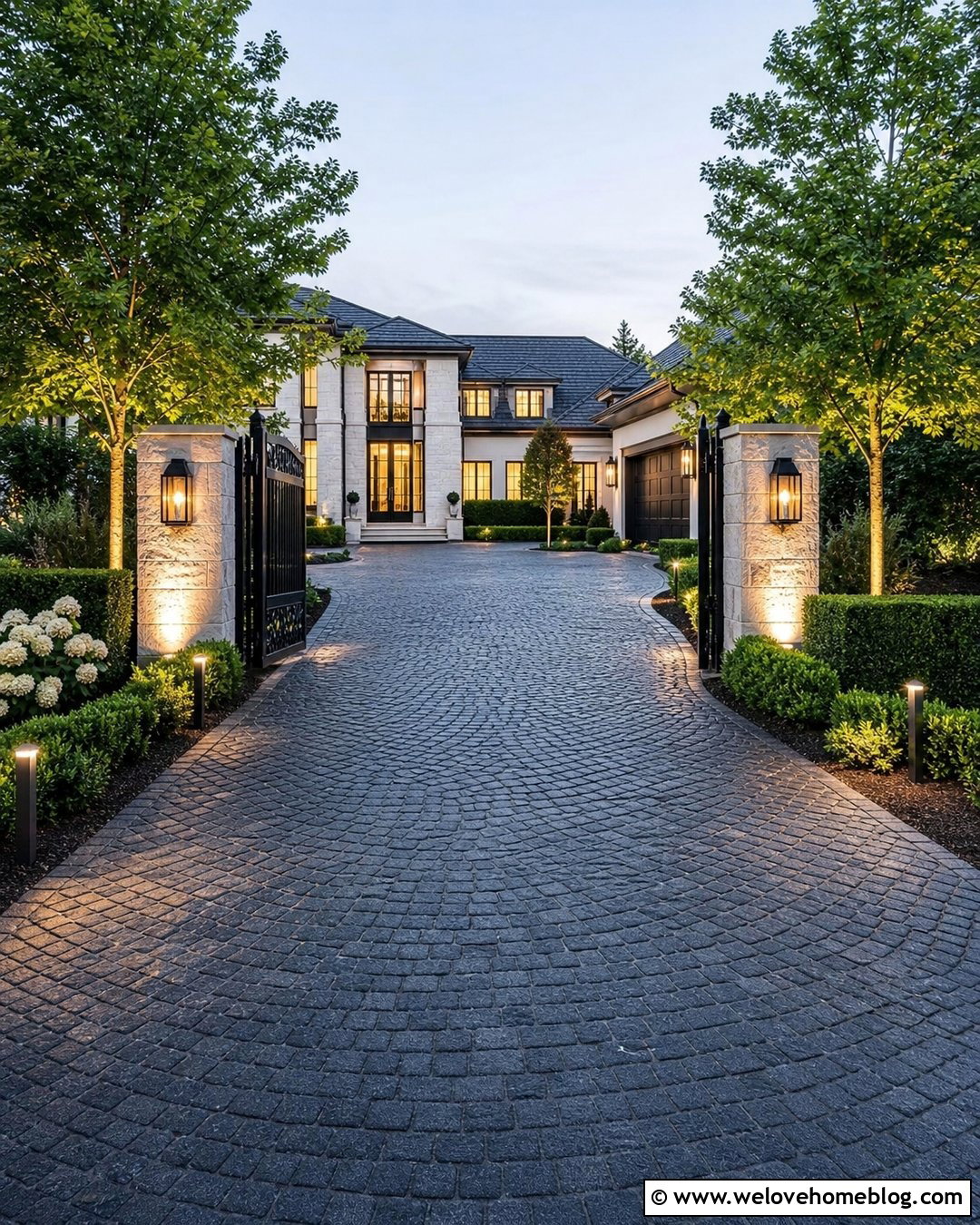
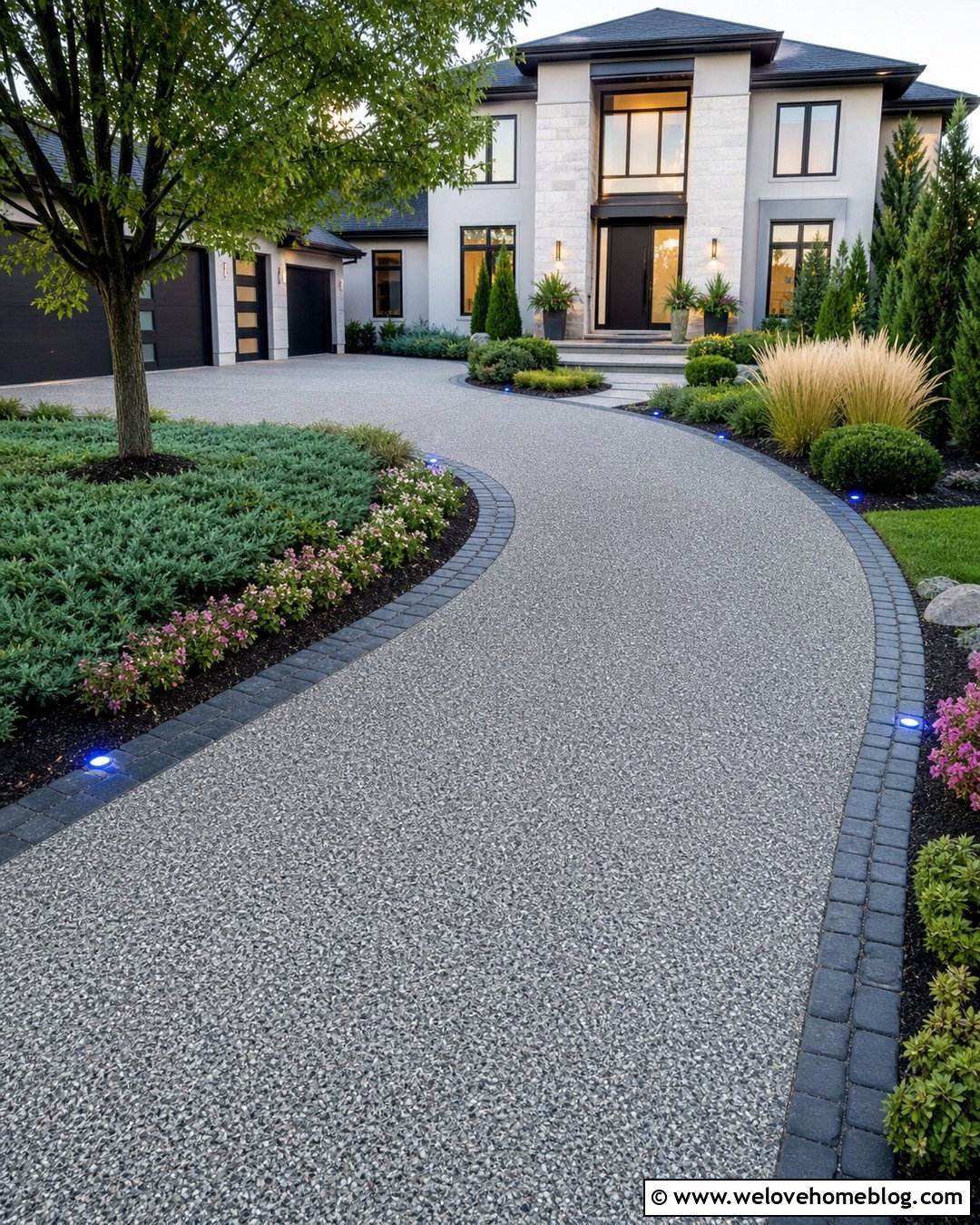
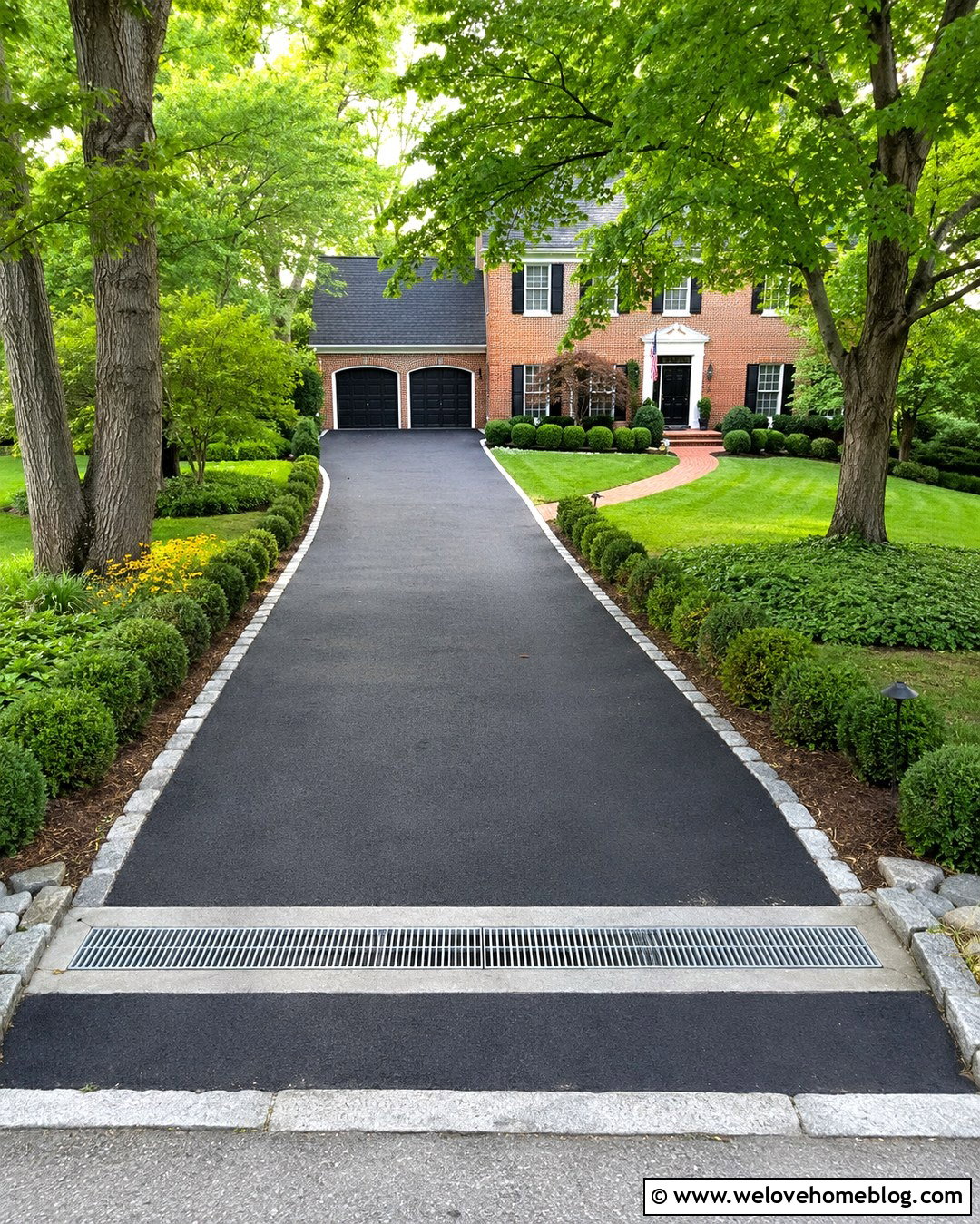
A gated driveway offers several opportunities for lighting, but the finished entrance should still feel organized. Use charcoal cobblestone or dark concrete pavers in a wide, gently curved layout leading toward a large transitional home. Frame the metal gate with substantial limestone pillars carrying shielded cap lanterns. Add concealed uplights at the pillar bases to reveal the masonry texture, then use low bollards beyond the gate to guide vehicles toward the house. Soft landscape lights can highlight clipped hedges and symmetrical trees without competing with the entrance. Near the garage, coordinated wall fixtures complete the arrival sequence. Gate, pillar, bollard, and architectural lighting work best when treated as connected layers rather than unrelated bright spots. ()
Conclusion:
The most successful 20 Lighted Driveway Ideas combine visibility, curb appeal, and thoughtful restraint. Begin with the driveway’s material and shape, then choose lighting that supports those features instead of overpowering them. Recessed fixtures can preserve clean modern lines, while bollards, lantern posts, and illuminated pillars add stronger architectural character. Landscaping should soften the equipment and help define safe boundaries. It is also useful to concentrate light around entrances, bends, walkway crossings, parking areas, and changes in grade. Keep fixtures outside tire paths, control glare, and repeat finishes already found on the house. Whether your driveway is gravel, concrete, asphalt, resin, brick, or stone, a coordinated lighting plan can make the entire property feel more complete.

Related posts:
Leave a Reply