
A steep driveway can look attractive and remain practical, but loose stone, fast runoff, tire spin, and seasonal washouts must be addressed as one connected system. These 20 Steep Gravel Driveway Solutions Ideas combine stable gravel surfaces with better grading, strong borders, controlled drainage, and slope-friendly landscaping. Angular stone, compacted base layers, gravel stabilization grids, swales, culverts, and reinforced outlets can all improve performance when properly matched to the property. The best approach depends on the driveway grade, soil, rainfall, winter weather, vehicle use, and available space. Significant excavation, retaining walls, or drainage changes should always be reviewed by a qualified local professional. Explore the complete driveway designs below for practical inspiration from these 20 Steep Gravel Driveway Solutions Ideas.

1. Steep Gravel Driveway With Gravel Grid
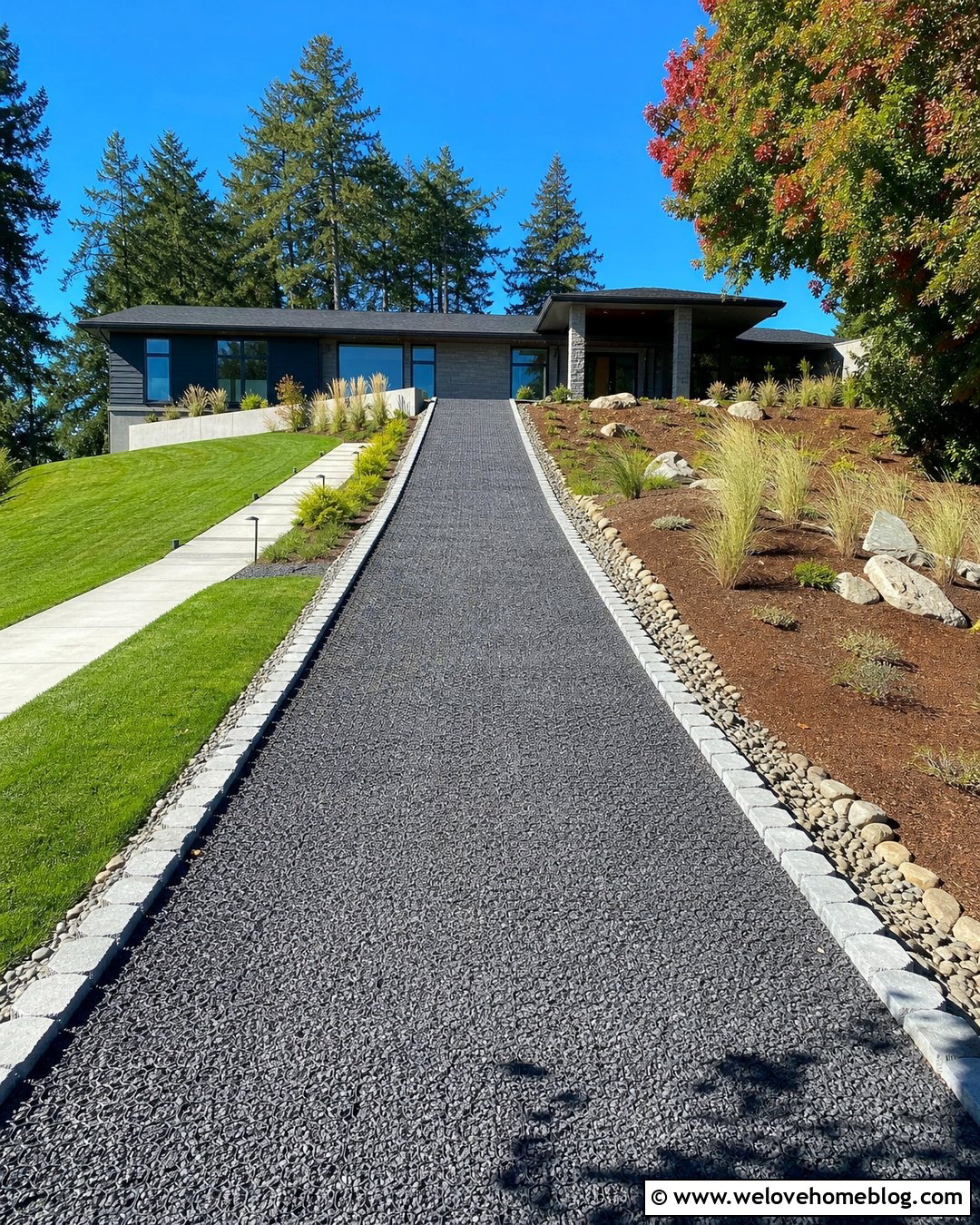
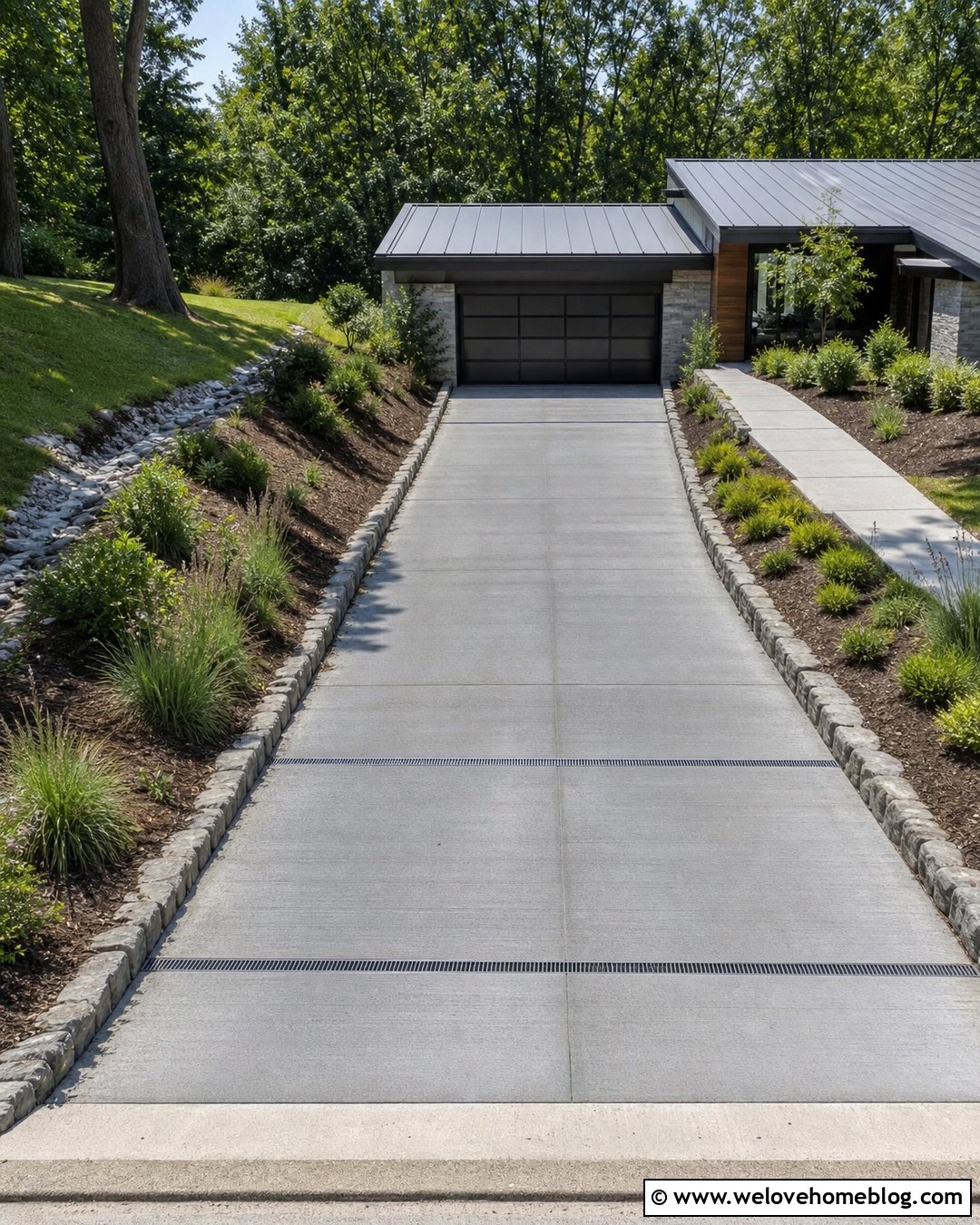
A gravel stabilization grid creates a firm, neat surface without removing the natural appearance of stone. Start with a properly excavated and compacted aggregate base, then install a load-rated cellular grid according to the manufacturer’s instructions. Fill the cells with small angular crushed gravel rather than smooth pea gravel. The interlocking stone and grid help limit sideways movement under tires, especially during braking and acceleration. Add raised stone curbs along both sides and direct runoff toward a planted swale instead of allowing it to flow straight downhill. This complete look works well with a modern ranch or contemporary farmhouse. The finished driveway appears clean and permeable while offering better traction and noticeably less loose gravel near the bottom.
2. Crowned Steep Gravel Driveway With Side Ditches
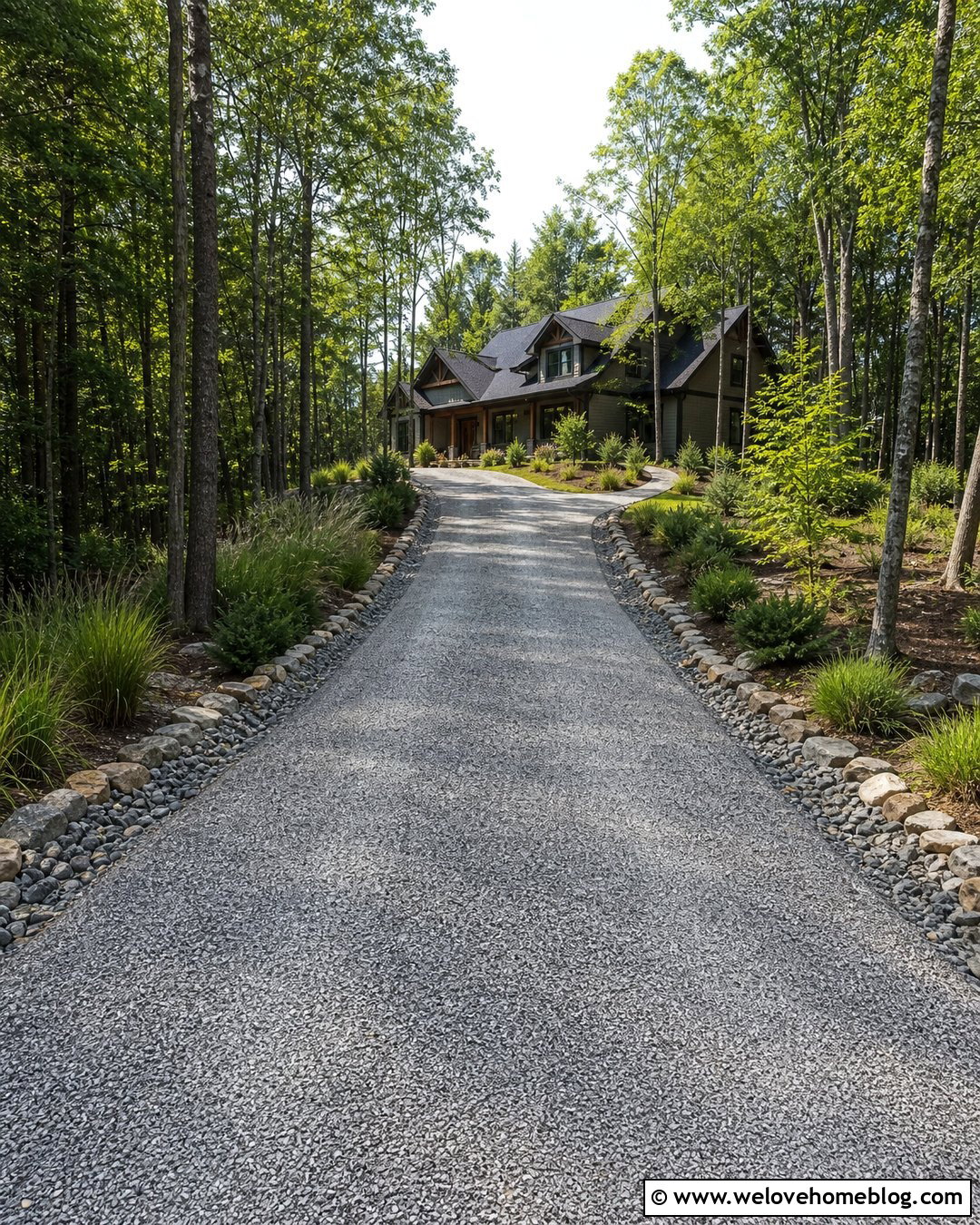
When rainwater runs down the center, even a thick gravel layer can develop channels and deep ruts. A crowned driveway places the center slightly higher than the edges, encouraging water to leave the driving surface quickly. Pair the crown with shallow, maintained drainage ditches on both sides and compacted angular gravel over a strong aggregate base. Line faster-flowing sections of the ditches with stone or erosion-control material. Low native grasses can soften the outer banks without blocking drainage. A straight driveway framed by these balanced channels looks especially appropriate beside a Craftsman or woodland home. Road drainage guidance consistently emphasizes moving water away from the traveled surface and maintaining ditches so they do not fill with sediment. ()
3. Cross-Sloped Gravel Driveway With Planted Swale
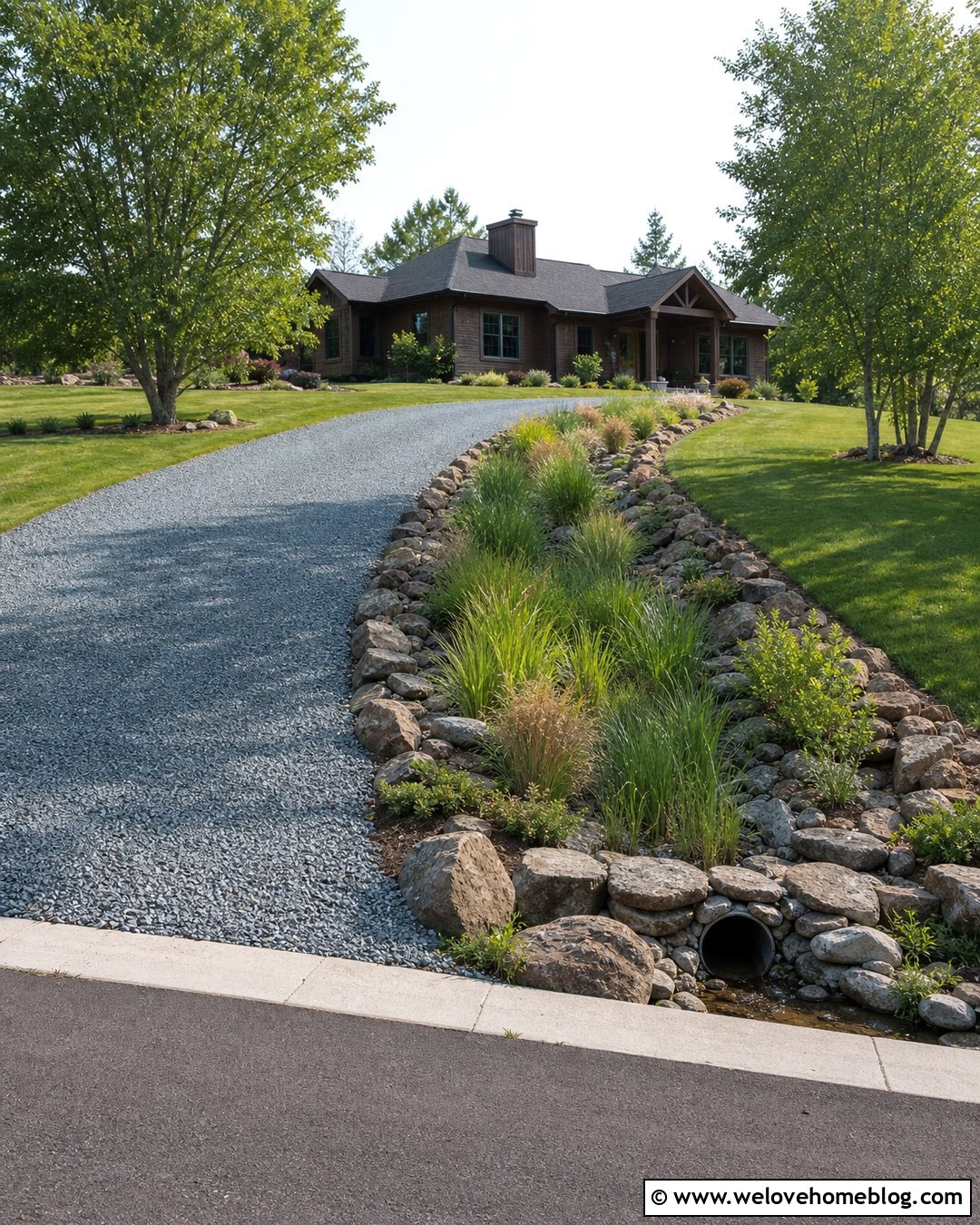
A driveway that follows a hillside can use a controlled cross slope instead of a traditional center crown. The gravel surface tilts gently toward one reinforced side, where runoff enters a broad planted swale. Dense-rooted sedges, rushes, ornamental grasses, and low shrubs help slow the water and protect exposed soil. Use compacted crushed limestone or gray angular gravel for dependable tire grip. A natural stone curb on the downhill edge provides a clear boundary, while occasional armored overflow points move excess water toward safe outlets. This arrangement feels less engineered when paired with a rustic ranch or mountain-style house. The swale should remain wide, shallow, and accessible for maintenance rather than becoming a deep ditch beside the driving lane.
4. Steep Gravel Driveway With Top Trench Drain
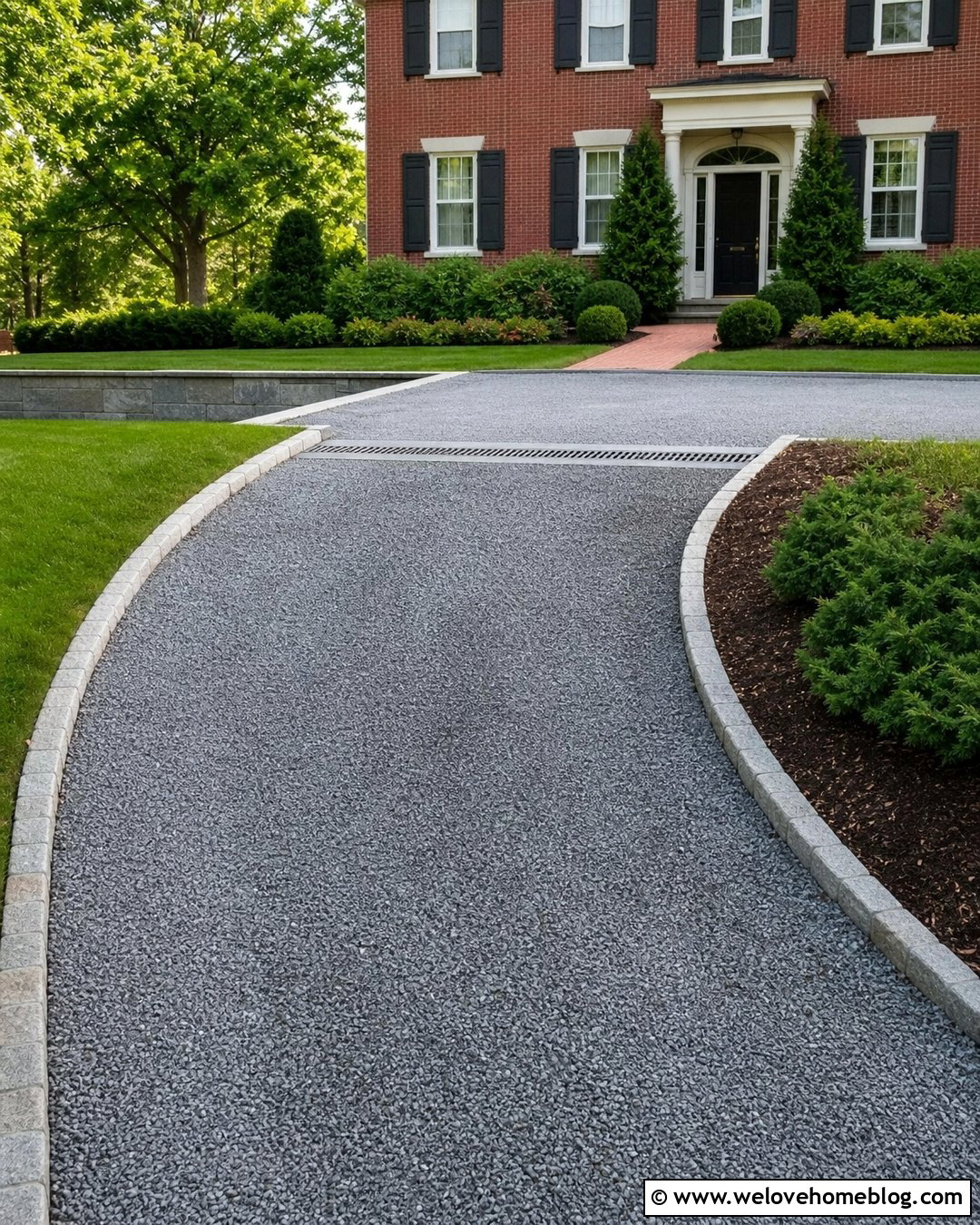
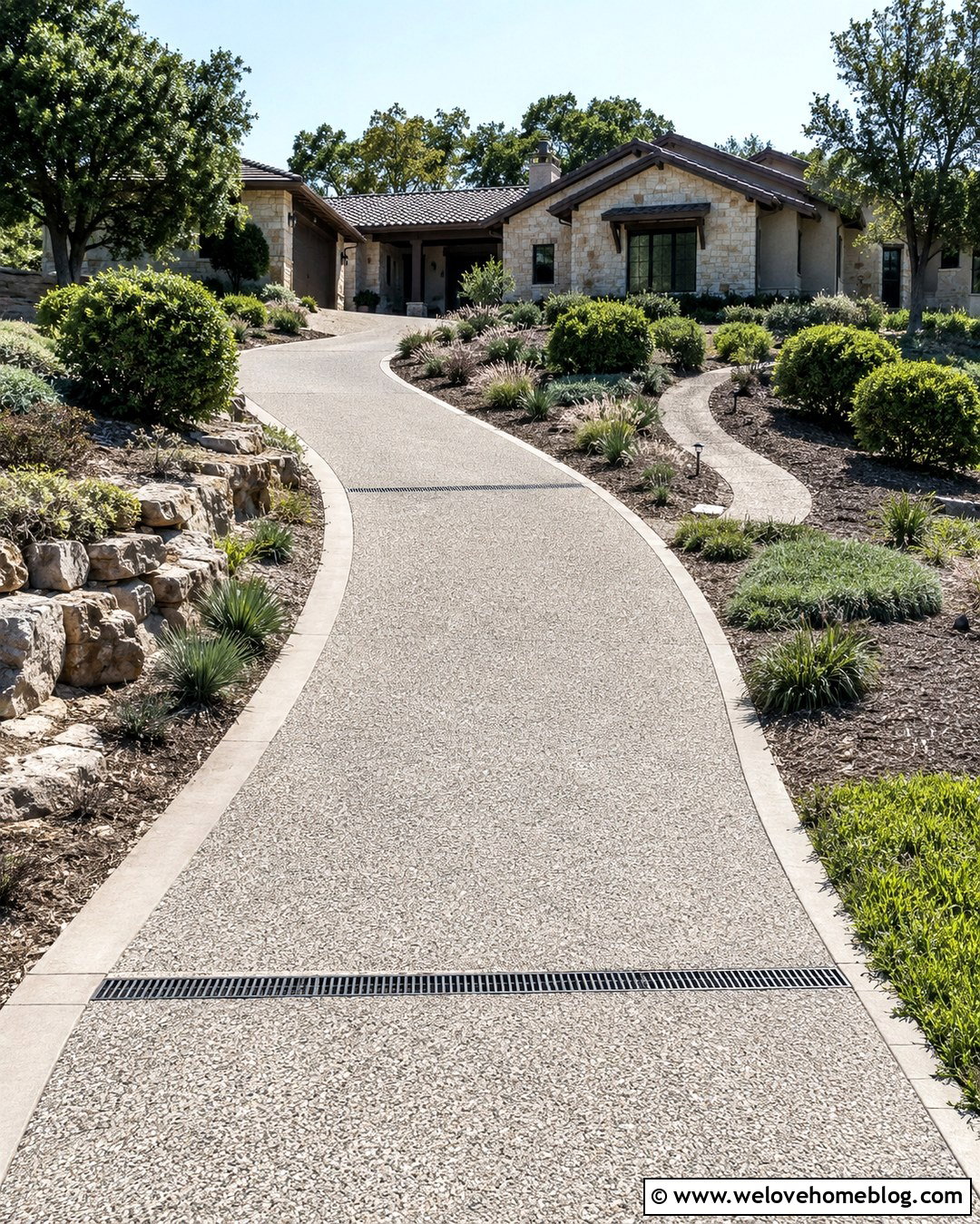
Stopping runoff before it gains speed can be more effective than repairing repeated damage farther downhill. Place a vehicle-rated trench drain across the upper entrance to the steep section, where it can intercept water arriving from a road, parking area, or flatter driveway landing. The drain should discharge through a properly sized pipe to a stable, legal outlet. Use compacted dark gray crushed gravel below the drain and add granite curbing to protect its ends. A slightly curved driveway can make the transition feel natural near a Colonial or Cape Cod home. Keep the grate clear of leaves, sediment, and ice. This design is particularly useful when an uphill hard surface sends concentrated runoff directly onto the gravel slope.
5. Steep Gravel Driveway With Rolling Grade Dips
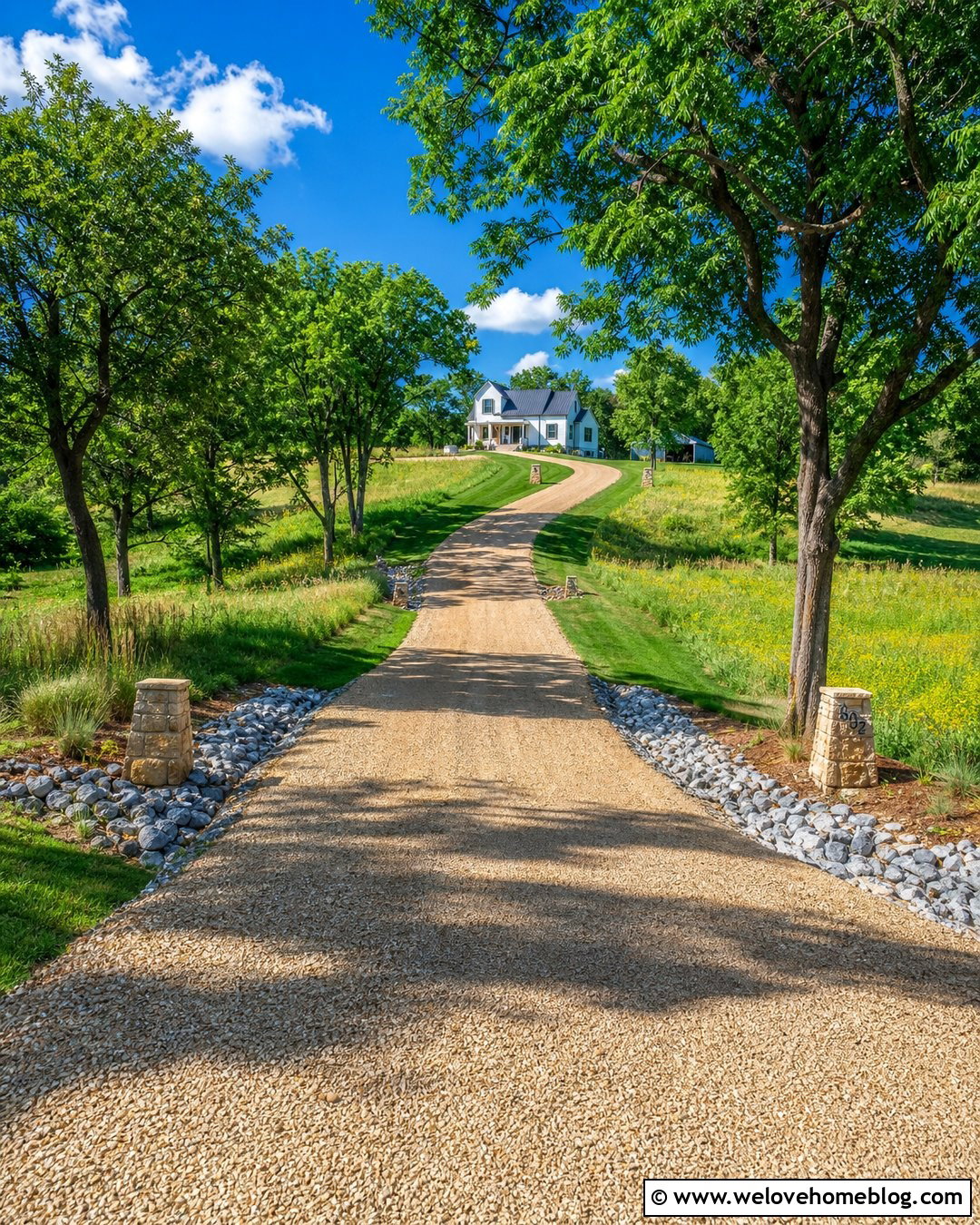
Long, uninterrupted slopes allow water to gather speed, so carefully placed rolling grade dips can redirect it before erosion becomes severe. Each broad dip crosses the gravel driveway at a slight angle, guiding runoff toward a rock-lined outlet without feeling like a harsh speed bump. Compact the entire profile with dense-grade crushed stone and finish it with a thinner layer of angular gravel. Low stone markers and grass-covered banks make the drainage points visible while keeping the setting natural. This solution suits long country driveways leading to farmhouses, cabins, or rural ranch homes. Grade dips require accurate shaping, adequate outlet protection, and periodic maintenance, but properly planned grade changes can break up extended downhill flows. ()
6. Switchback Gravel Driveway On A Steep Hill
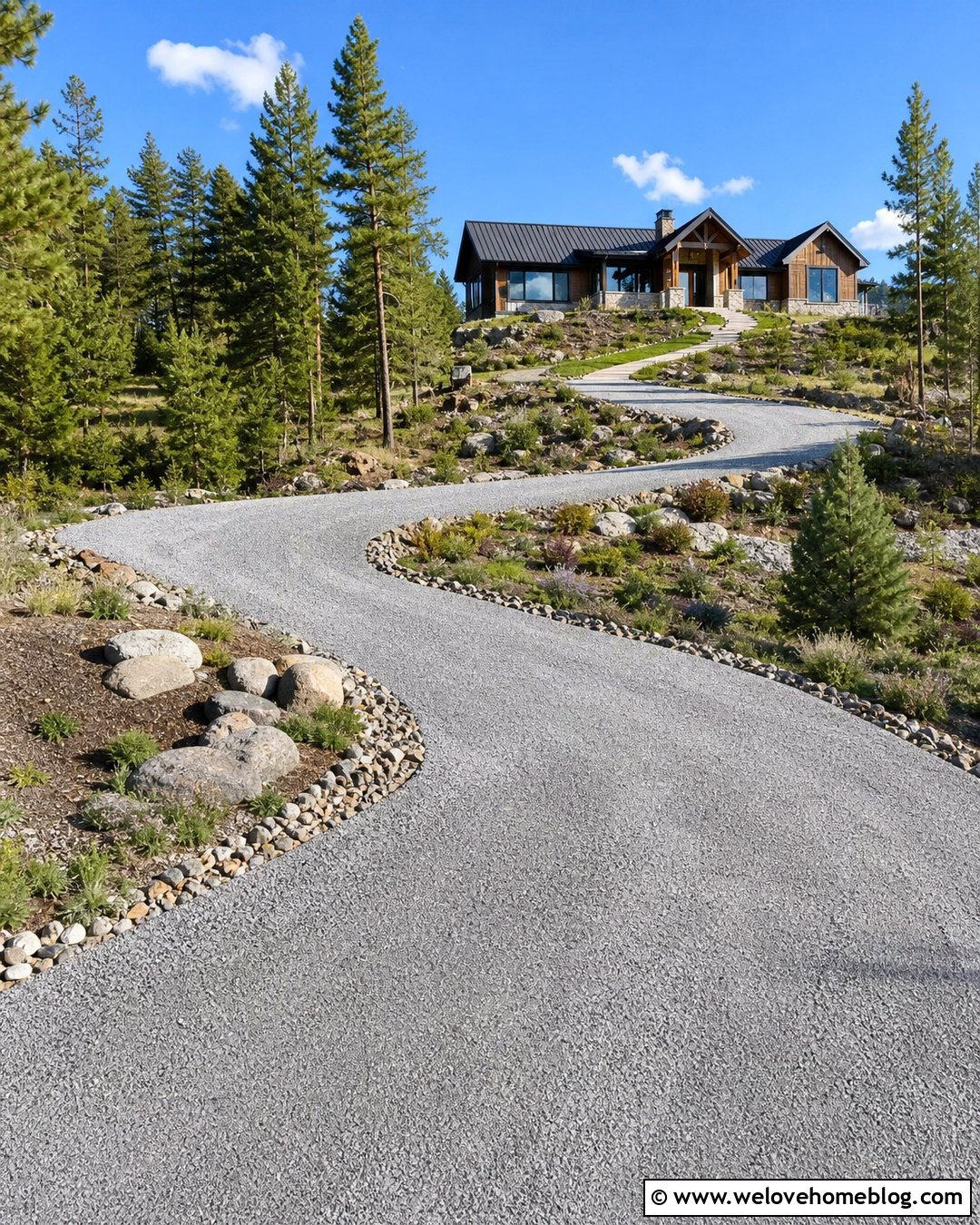
If the property has enough width, a switchback can reduce the effective climbing grade by extending the driveway across the hillside. Build the route with compacted angular gravel, wide curves, and level or gently sloped turning areas. Reinforce the inside of each bend with a drainage swale and protect the downhill side with a professionally designed retaining edge where needed. Native trees, low groundcover, and exposed boulders can blend the drive into a wooded landscape. The result looks intentional beside a mountain home or modern cabin. Vehicle turning radius, sight distance, emergency access, winter traction, and slope stability must guide the layout. Switchbacks involve major grading, so this is a design for professional engineering rather than casual excavation.
7. Gravel Driveway With Retaining Wall And Drainage
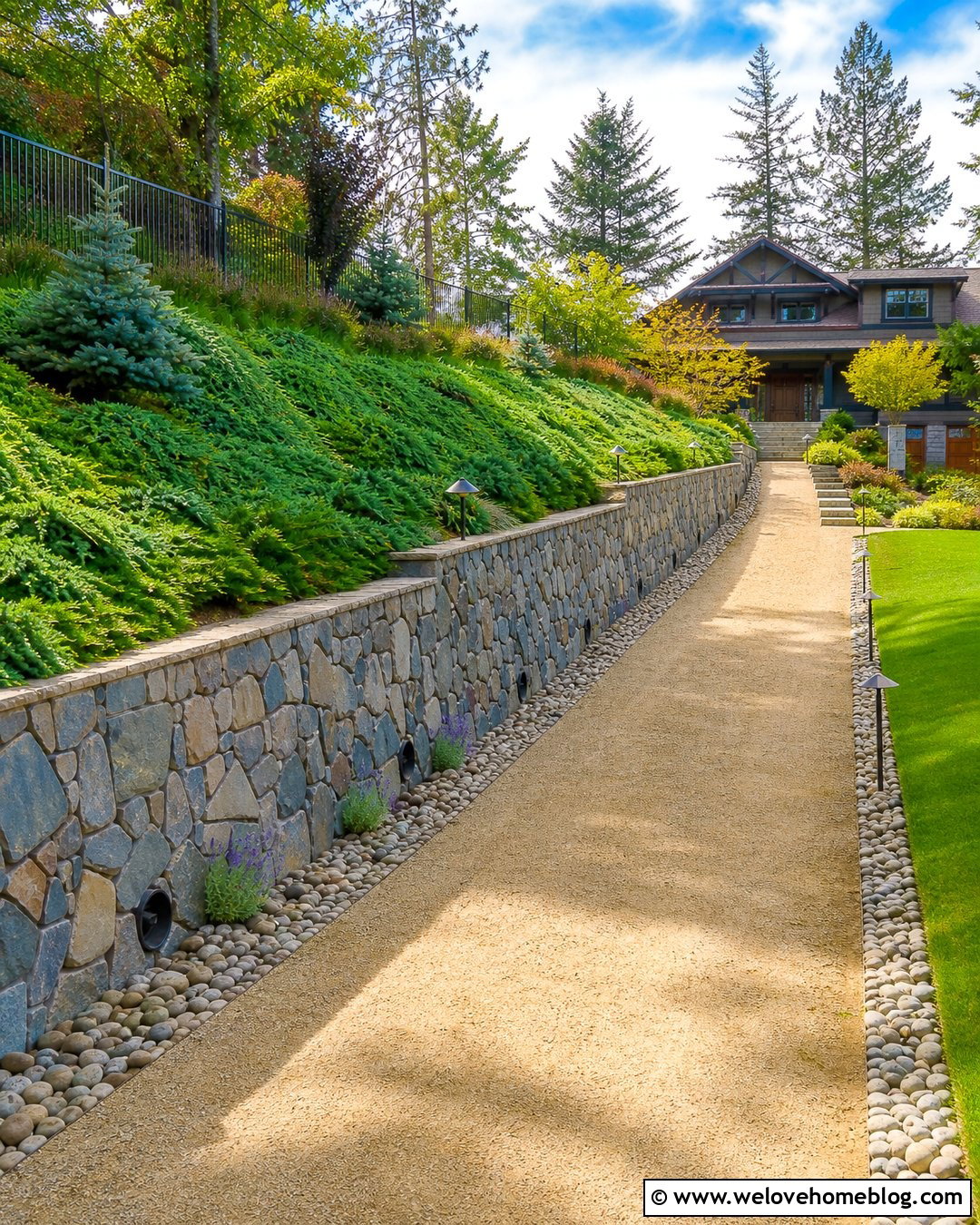
A retaining wall can create a safer, wider gravel driveway when one side cuts into a steep bank. Choose segmental concrete blocks, natural stone, or engineered gabions that complement the house. Behind the wall, include free-draining aggregate, filter fabric, and a properly designed drainage system so trapped water does not build pressure. Surface the driveway with compacted tan crushed gravel and place a shallow swale along the opposite edge. Cascading groundcover above the wall softens its height, while low lighting improves edge visibility without clutter. This complete design works well with Craftsman, Tudor, and hillside contemporary homes. Retaining walls can affect utilities, drainage, and neighboring land, making permits and professional structural guidance essential. ()
8. Terraced Gravel Driveway With Level Landings
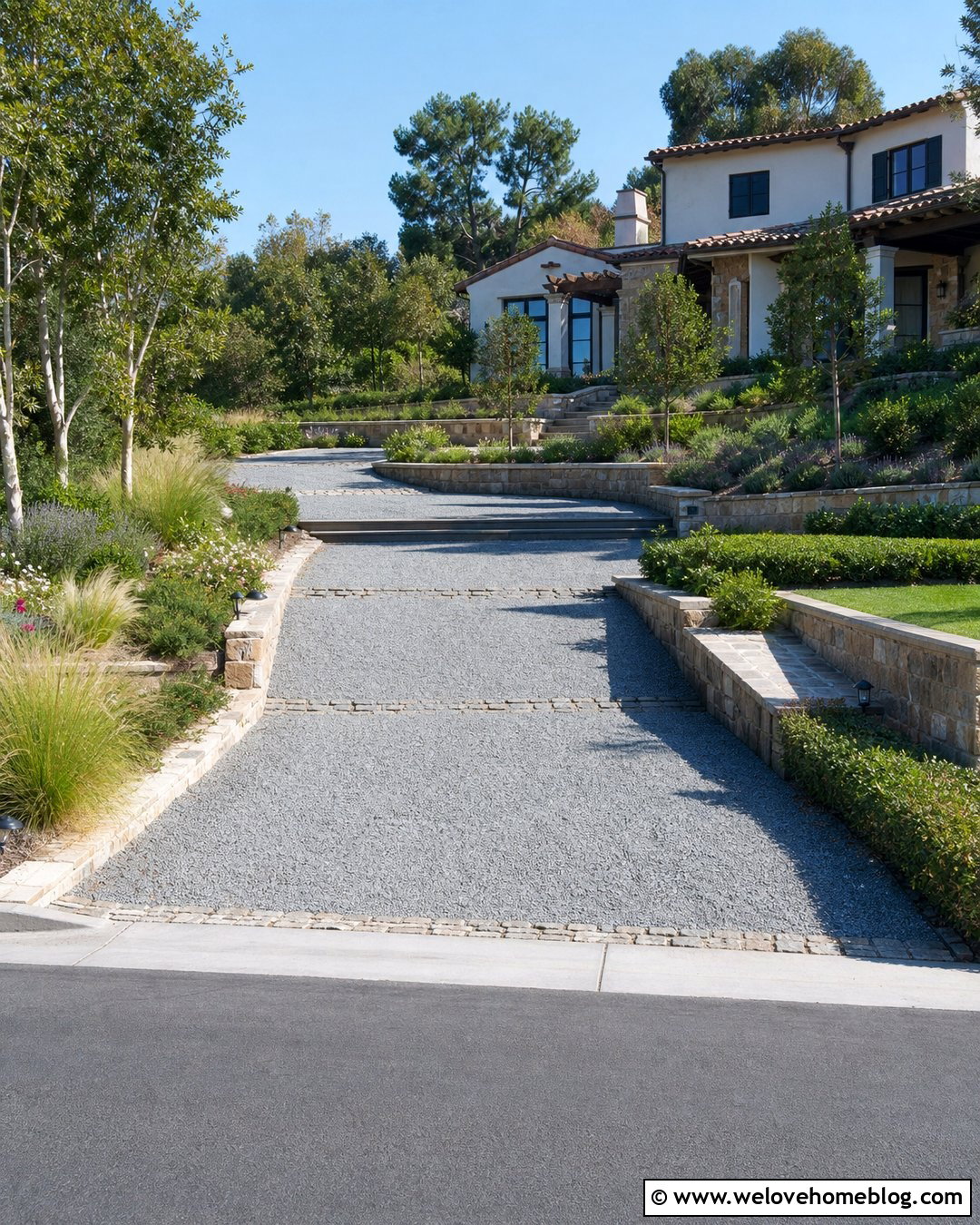
A series of shorter sloped runs separated by level landings can make a difficult driveway feel more manageable. The landings provide places for vehicles to pause, turn, or regain traction before continuing. Use compacted gray crushed gravel throughout, with cobblestone bands marking each change in grade. Low stone retaining walls can support the adjacent terraces, while planted banks reduce bare soil and visually connect the levels. This layout looks impressive beside a split-level, Mediterranean, or hillside modern house. Water still needs a continuous route through swales, drains, or culverts so it does not collect on the landings. Because every transition affects vehicle clearance and runoff, the vertical profile should be designed before excavation begins.
9. Steep Crushed Stone Driveway With Layered Base
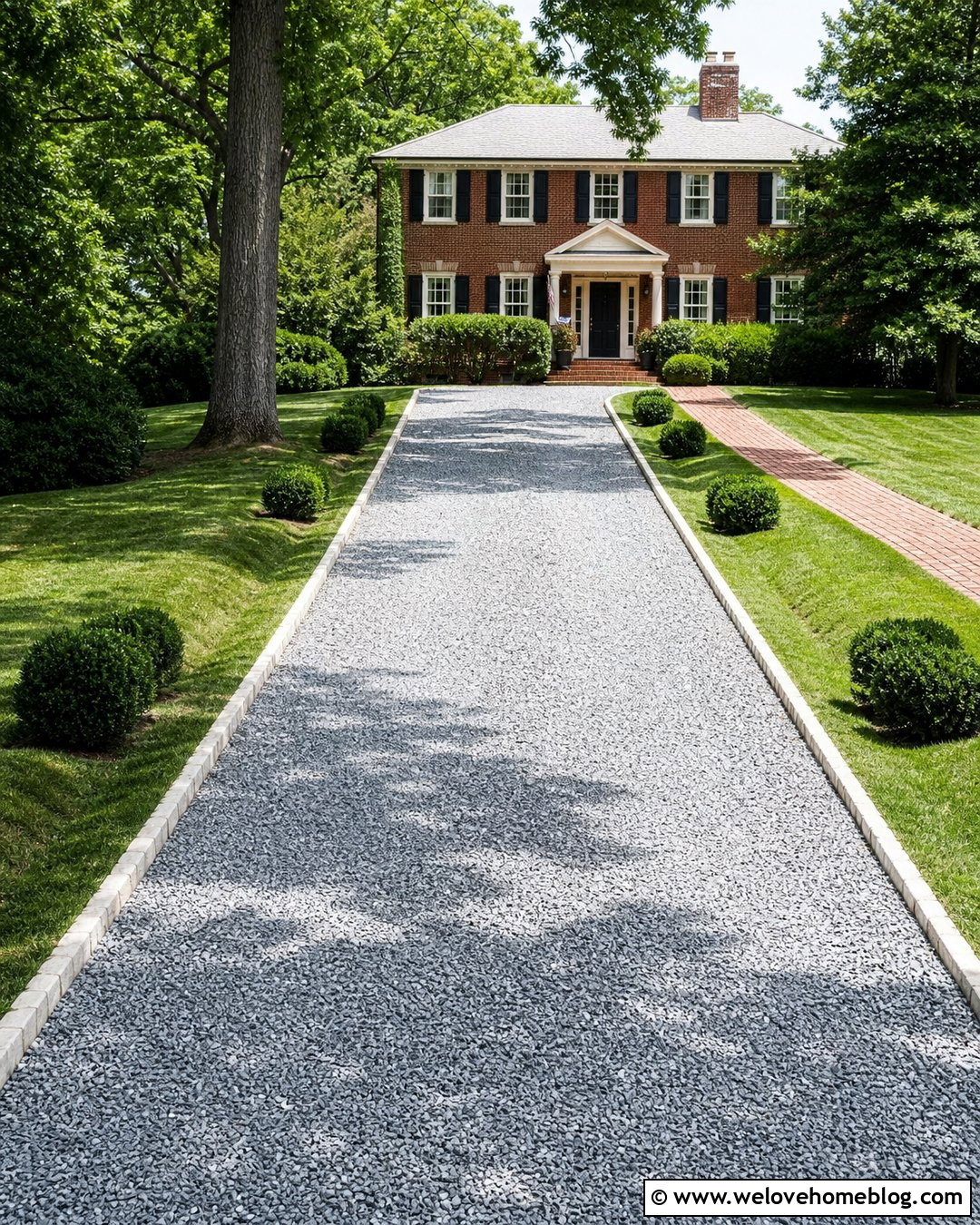
A durable gravel surface begins below the stone that remains visible. Excavate weak soil as required, separate the subgrade with suitable geotextile where conditions call for it, and install compacted aggregate in controlled layers. Finish with angular crushed stone containing enough varied particle sizes to lock together under compaction. Avoid relying on a decorative surface layer placed directly over soft mud. Frame the straight driveway with concrete or granite curbs and shallow grass swales. This structured appearance complements a brick Colonial or traditional suburban house. A well-built base helps distribute vehicle loads and reduces rutting, while the surface profile handles rainfall. Soil conditions and expected traffic should determine the actual depth and aggregate specification rather than a universal measurement.
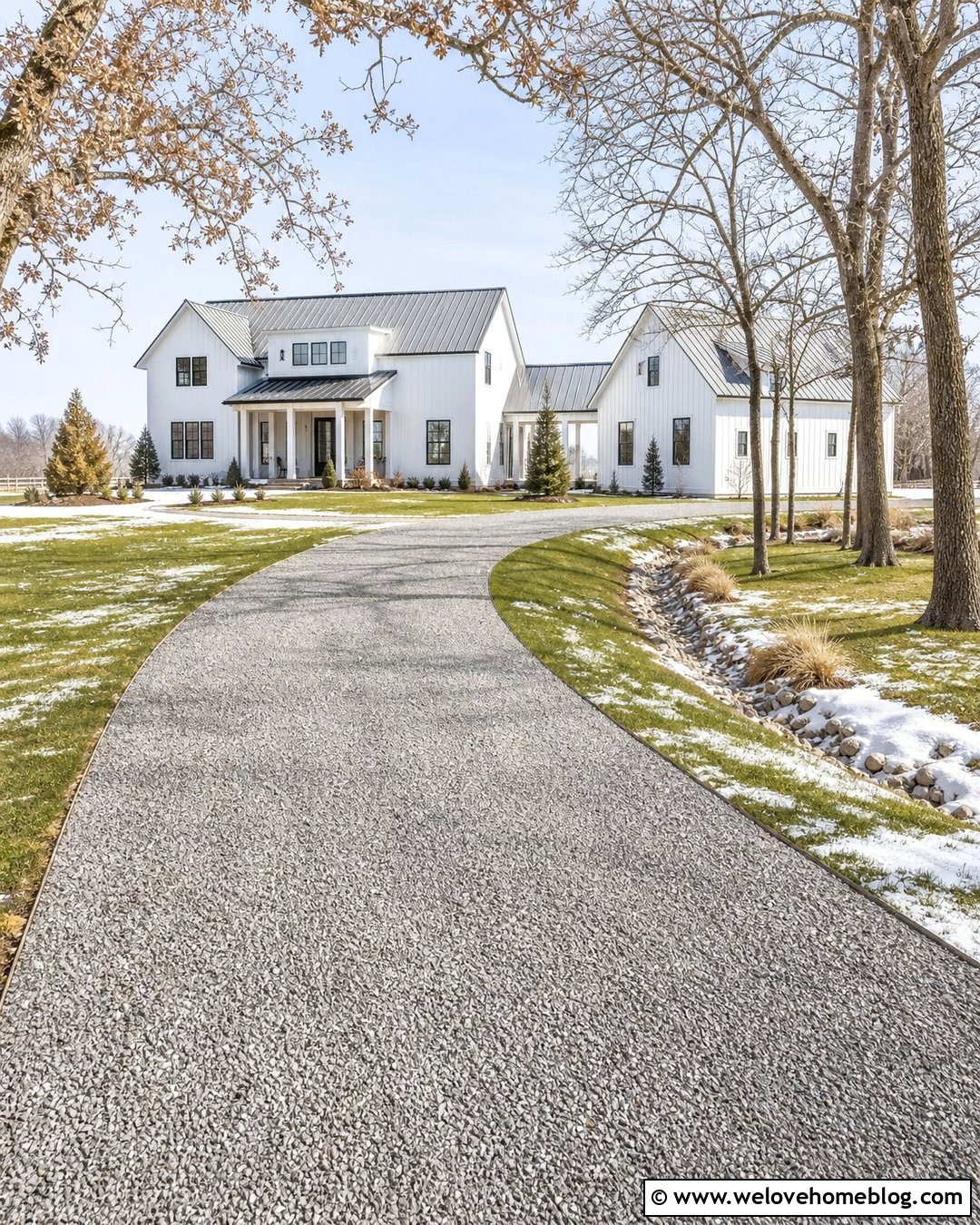
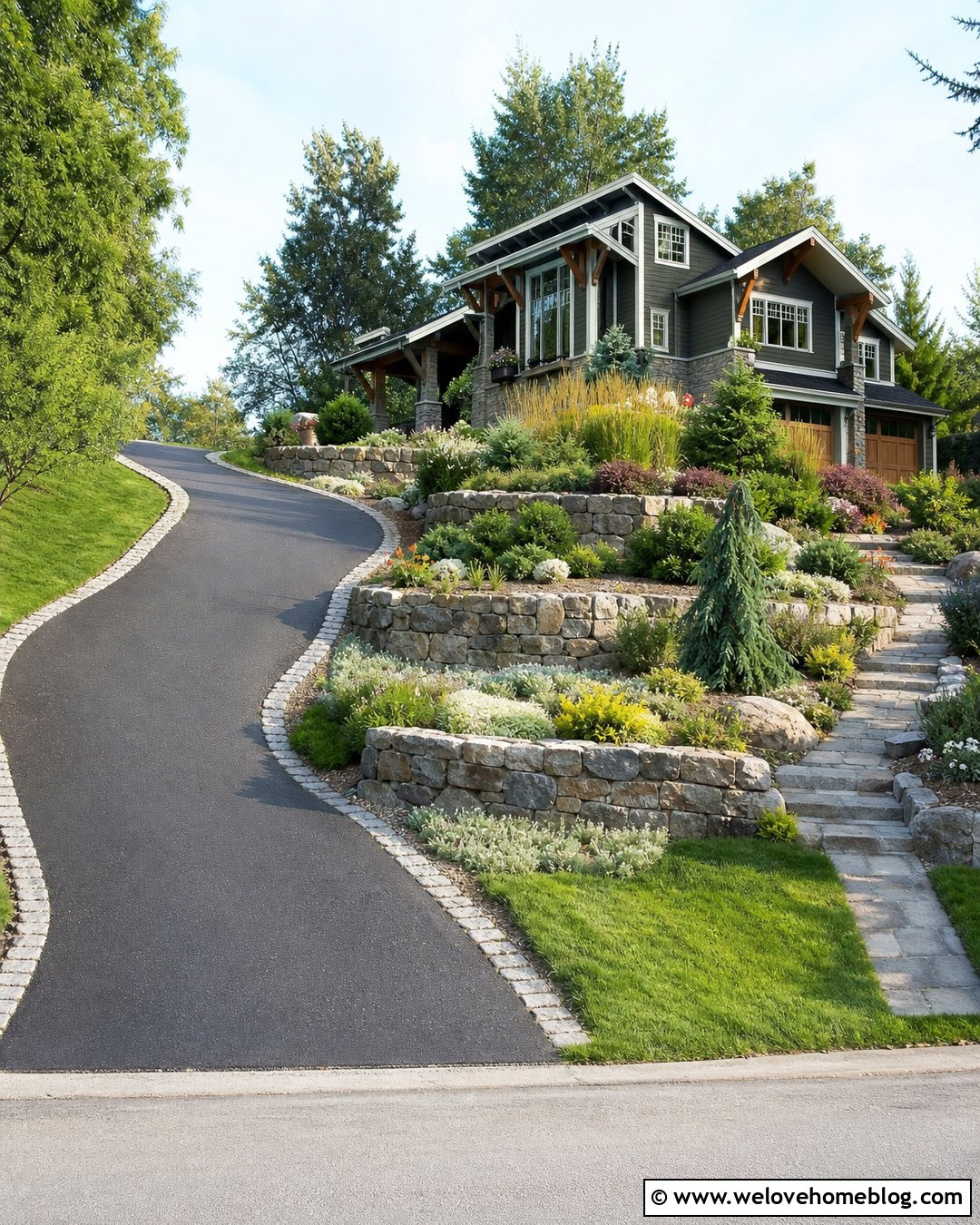
10. Curved Steep Gravel Driveway With Stone Edging
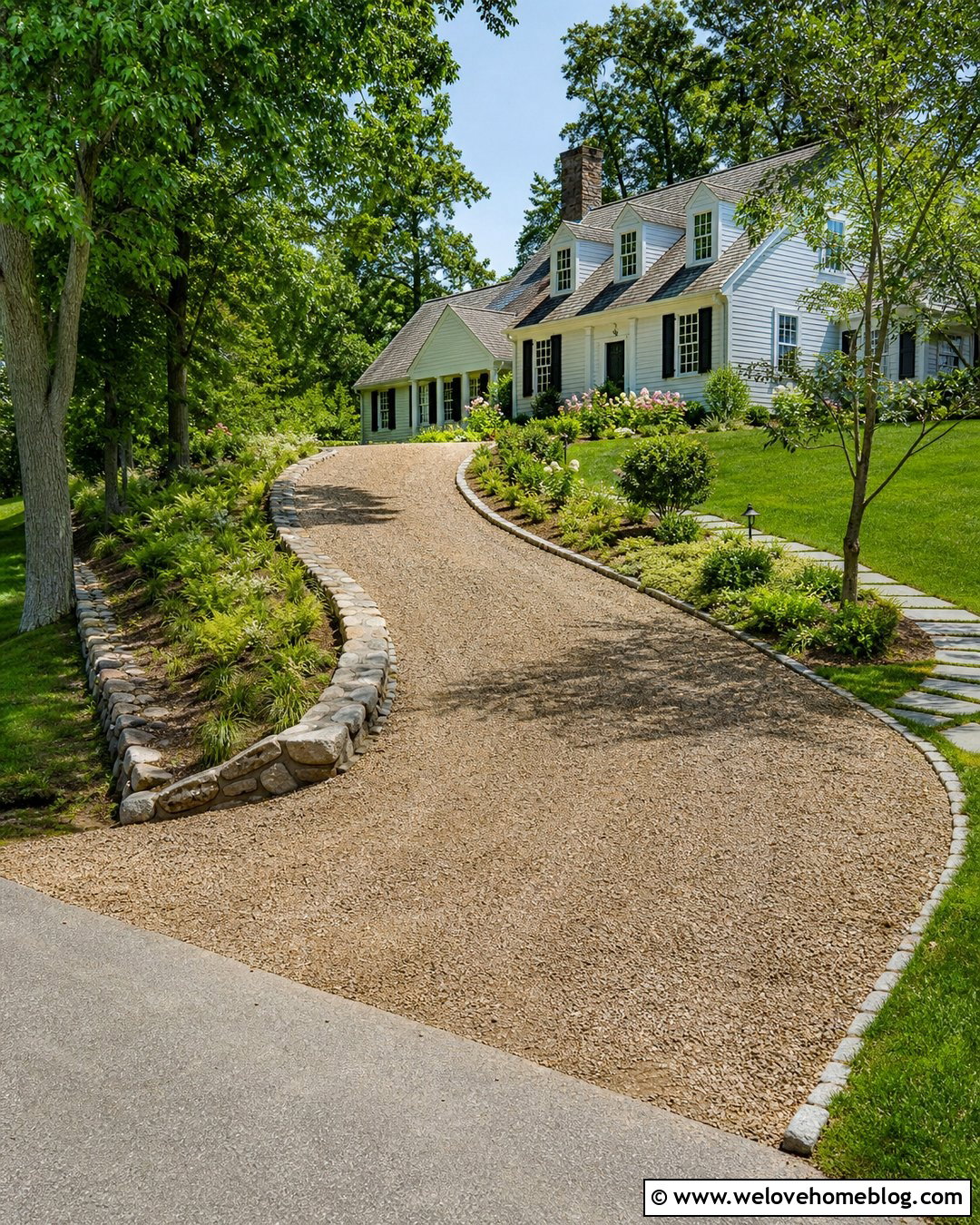
A gentle curve can lengthen the approach and soften an abrupt climb when the yard provides enough room. Surface the driveway with warm brown crushed gravel that contrasts with a continuous border of rough-cut fieldstone. Shape the curve broadly enough for delivery vehicles and avoid tight bends on the steepest section. On the uphill side, add a planted drainage swale with ferns, ornamental grasses, and compact shrubs. The downhill edge can use a low reinforced shoulder to prevent gravel from spilling into the lawn. This complete driveway look feels welcoming beside a cottage, Cape Cod, or country home. The curve, drainage, and edging should work together rather than treating the stone border as decoration alone.
11. Steep Gravel Driveway With Rock-Lined Drainage Channel
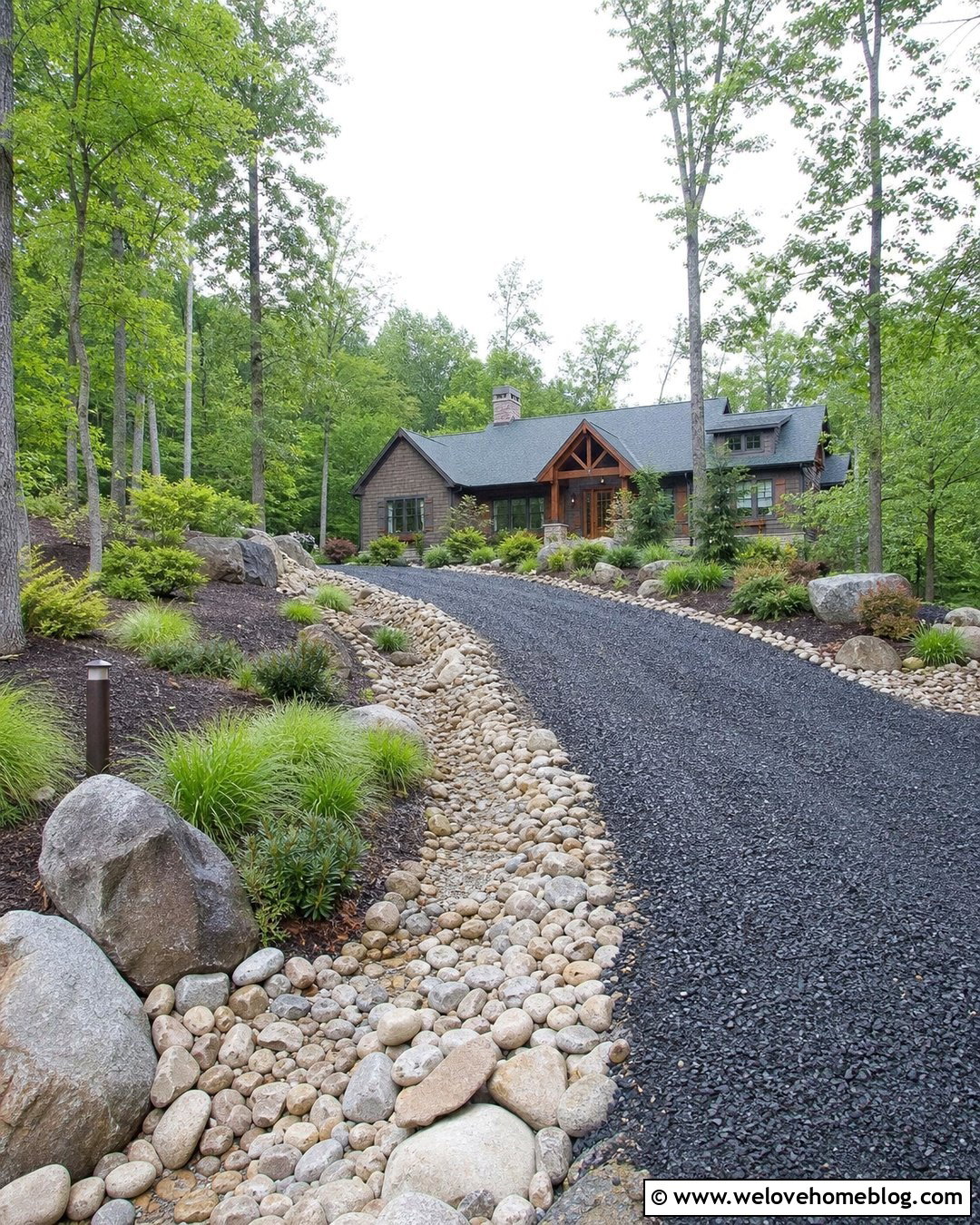
A rock-lined channel can carry concentrated runoff beside the driveway while protecting the soil beneath it. Use a carefully graded channel with appropriately sized stone, filter material, and a stable discharge area. The driveway itself can feature compacted charcoal crushed gravel with a subtle cross slope toward the channel. Place larger boulders outside the driving clearance zone, then add moisture-tolerant grasses and shrubs along the upper bank. This rugged design fits a woodland ranch or mountain lodge without looking overly formal. Keep the channel clear of leaves and displaced gravel. Concentrated water should never be released onto an unstable slope, neighboring property, or roadside without approval; it needs a protected outlet capable of handling the expected flow. ()
12. Gravel Driveway With Culvert And Reinforced Entrance
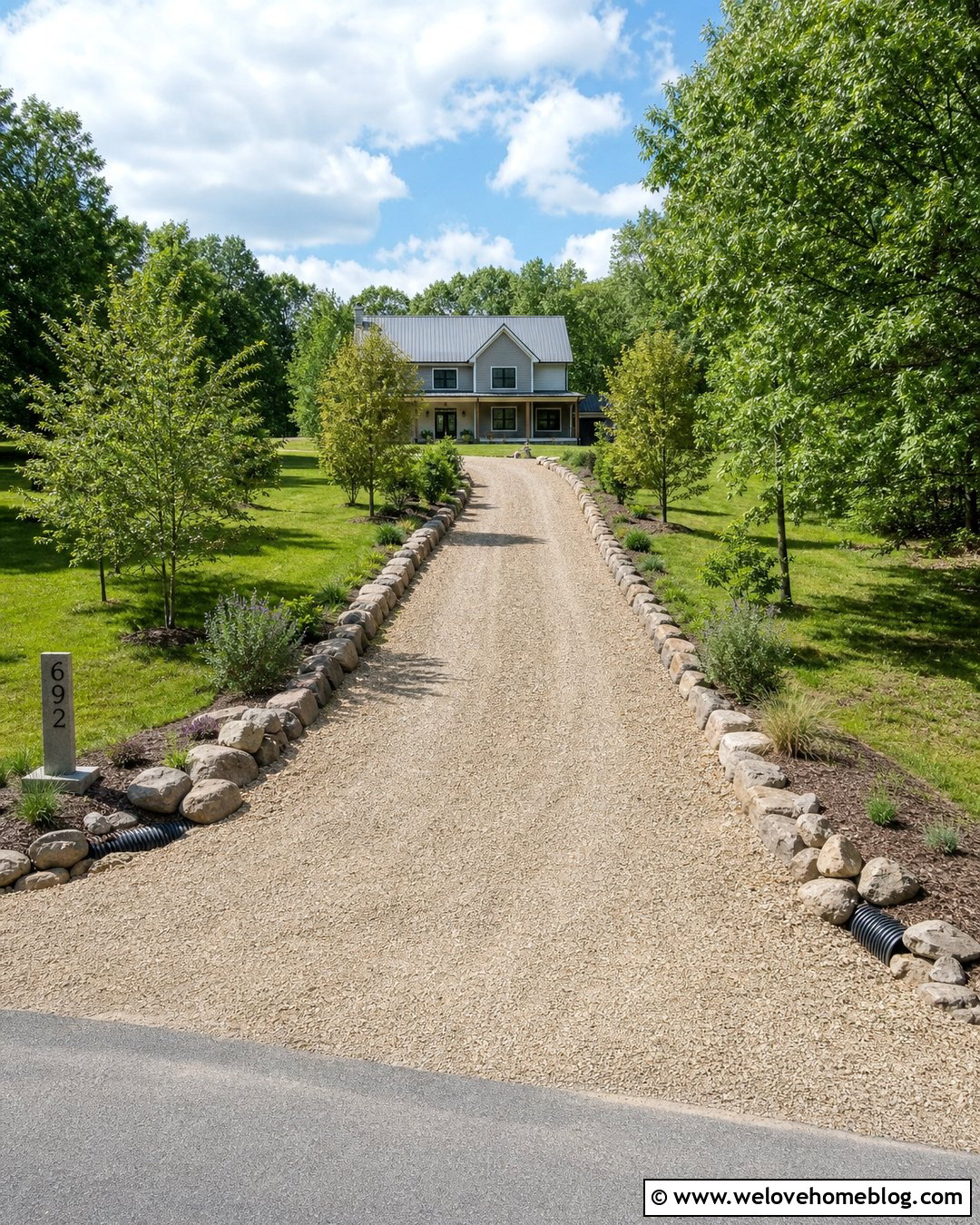
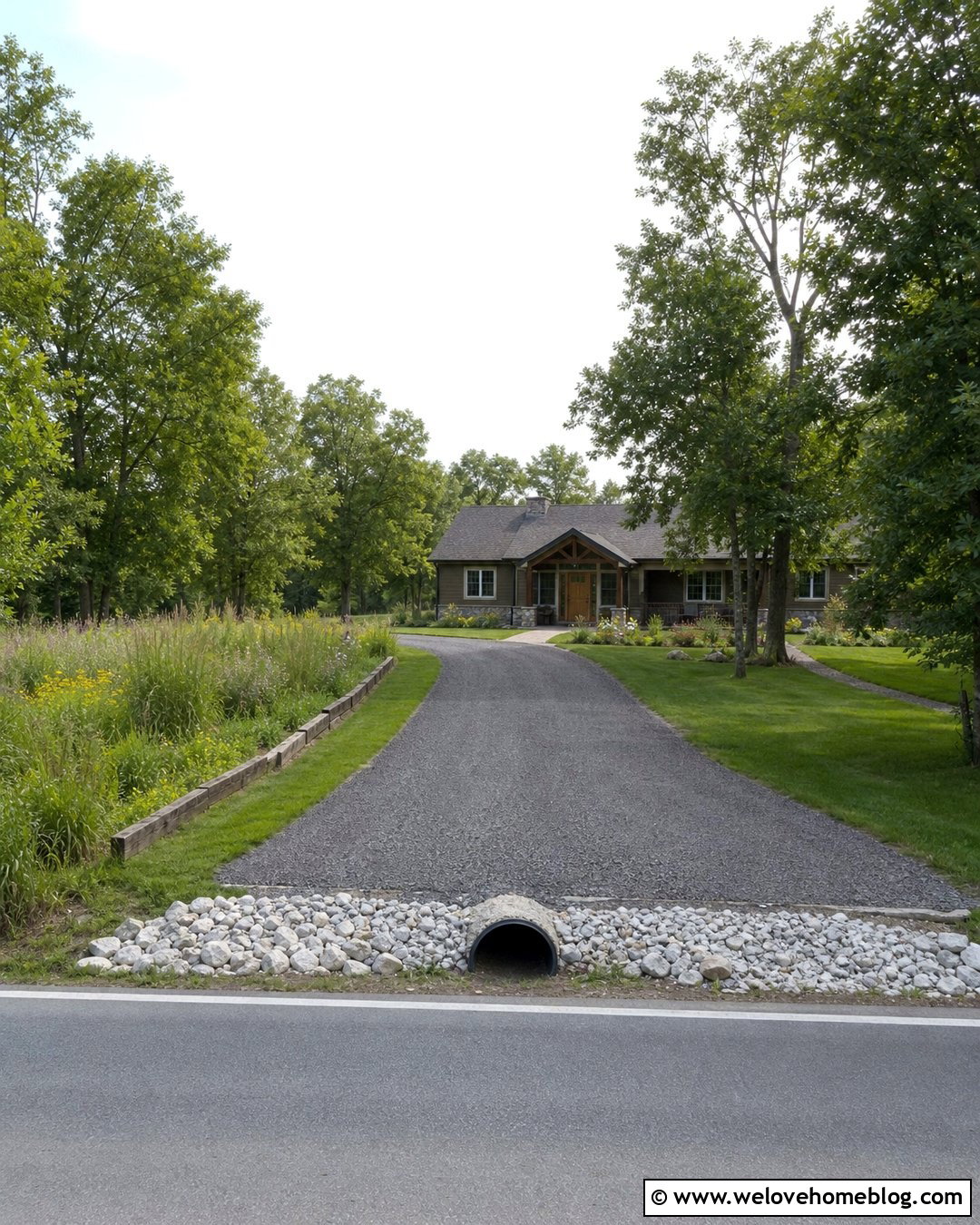
Where a roadside ditch crosses the driveway entrance, a correctly sized culvert can maintain drainage without sending water over the gravel. Build the entrance over a professionally selected pipe, compact the surrounding fill in layers, and protect both ends with flared treatments or flush rock armoring. Continue the driveway uphill with tightly compacted crushed granite and defined stone borders. A wider, nearly level entrance apron gives vehicles room to leave the street before beginning the climb. Native shrubs and a simple address marker can frame the opening without obstructing visibility. This solution suits rural and suburban properties alike. Culvert placement often requires municipal approval because poor sizing or an unstable outlet may contribute to flooding, blockage, or erosion.
13. Steep Gravel Driveway With Cobblestone Drainage Bands
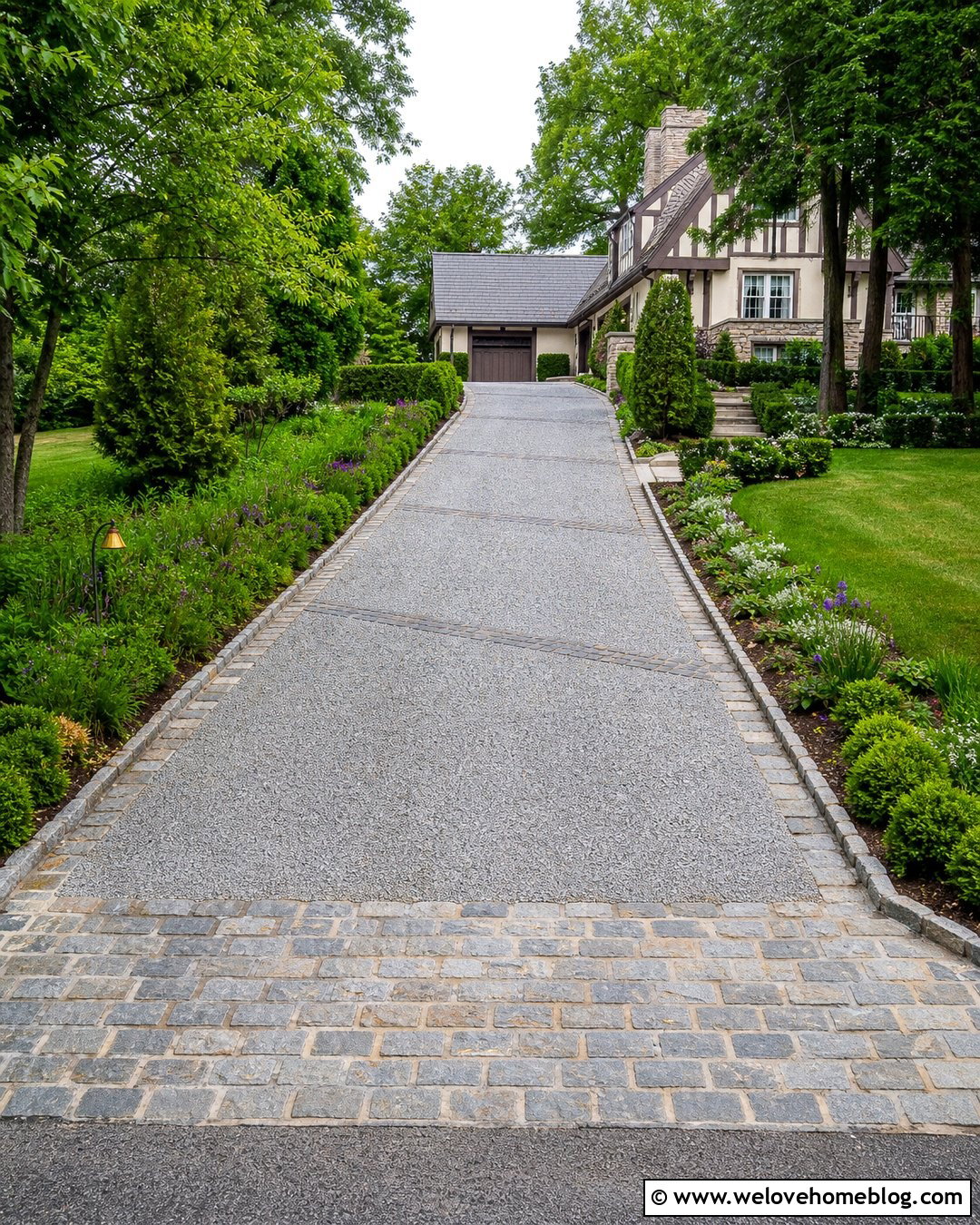
Diagonal cobblestone bands can add structure while directing small amounts of surface water toward side drainage areas. Set each band into a stable base so it remains flush enough for tires, snow equipment, and pedestrians. Between the bands, use compacted light gray angular gravel rather than loose rounded stone. Continue the cobblestone along the edges to form a coordinated border, then place planted swales at the discharge points. The repeating pattern looks polished beside a Tudor, European-inspired, or traditional brick home. These bands should supplement an overall drainage plan, not serve as the only protection during heavy storms. Their spacing, angle, and outlets must respond to the real slope and water volume to avoid creating new erosion at the driveway edges.
14. Steep Gravel Driveway With Timber Borders
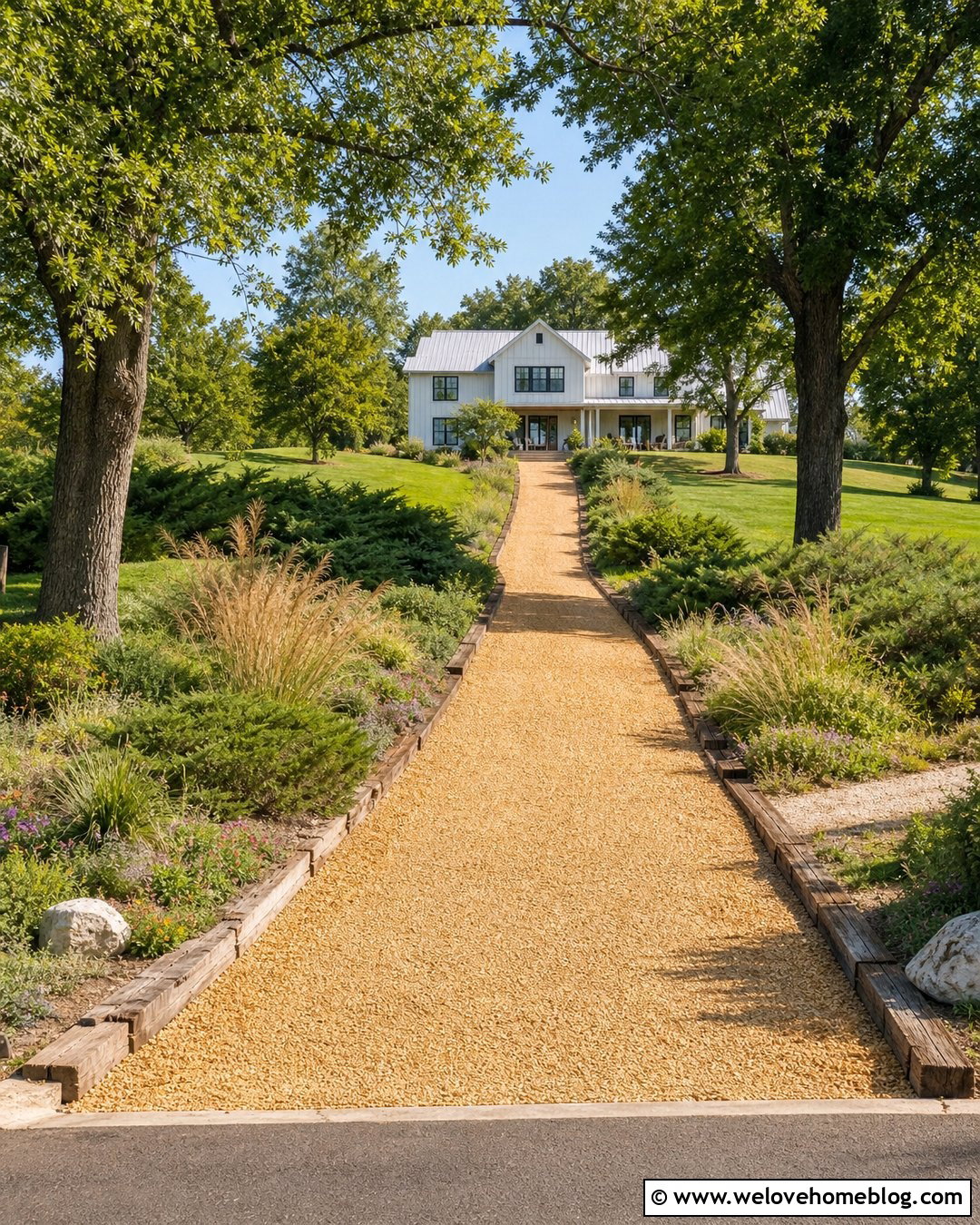
Heavy timber borders can contain gravel along a moderately steep rural driveway and create a warm, informal appearance. Use durable, ground-contact-rated material secured with an appropriate anchoring system, keeping the timbers low and outside normal tire paths. Fill the driveway with compacted golden crushed gravel over a stable aggregate base. A shallow uphill swale captures runoff, while the downhill border protects the shoulder from minor stone migration. Plant meadow grasses, low junipers, and native flowering groundcover beyond the timbers. This look pairs naturally with a farmhouse, barn-style house, or woodland cabin. Timber has a limited service life compared with masonry and should not be treated as a structural retaining wall where significant soil pressure or drop-offs are present.
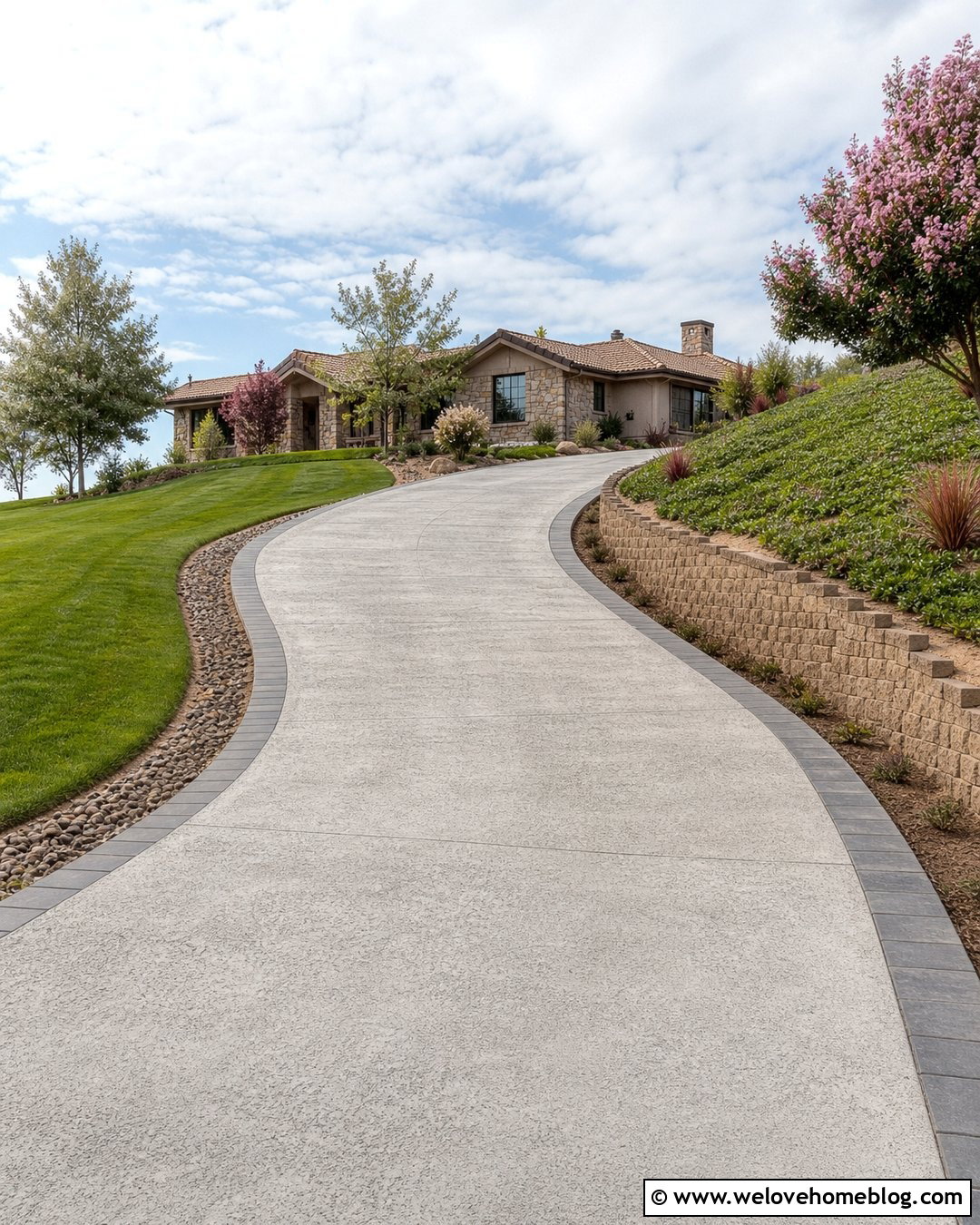
15. Steep Gravel Driveway With Granite Curb
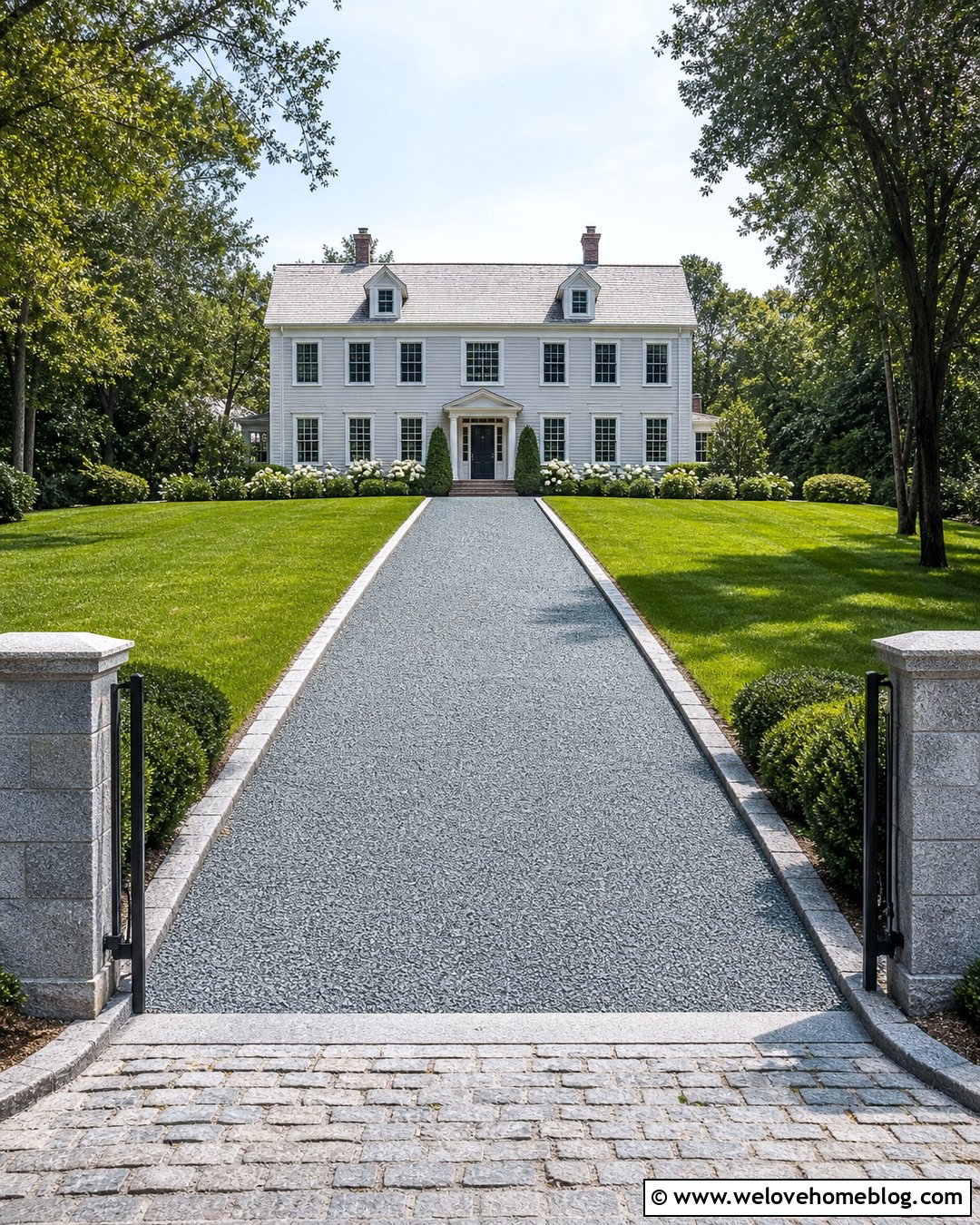
A continuous granite curb gives a steep gravel driveway a crisp edge and helps keep surface stone out of nearby planting beds. Use compacted blue-gray crushed gravel and set the curbing into a reinforced base that can withstand turning tires and freeze-thaw movement. On the uphill side, leave planned openings where water can enter a lined swale or catch basin rather than trapping it on the driveway. Frame the entrance with matching granite pillars and low evergreen shrubs for a unified appearance. This formal design complements Colonial, Georgian, and high-end traditional homes. The curb height should remain visible without creating a tire hazard. Snowplow clearance, drainage paths, and comfortable driveway width need to be considered before installation.
16. Steep Gravel Driveway With Parking Turnout
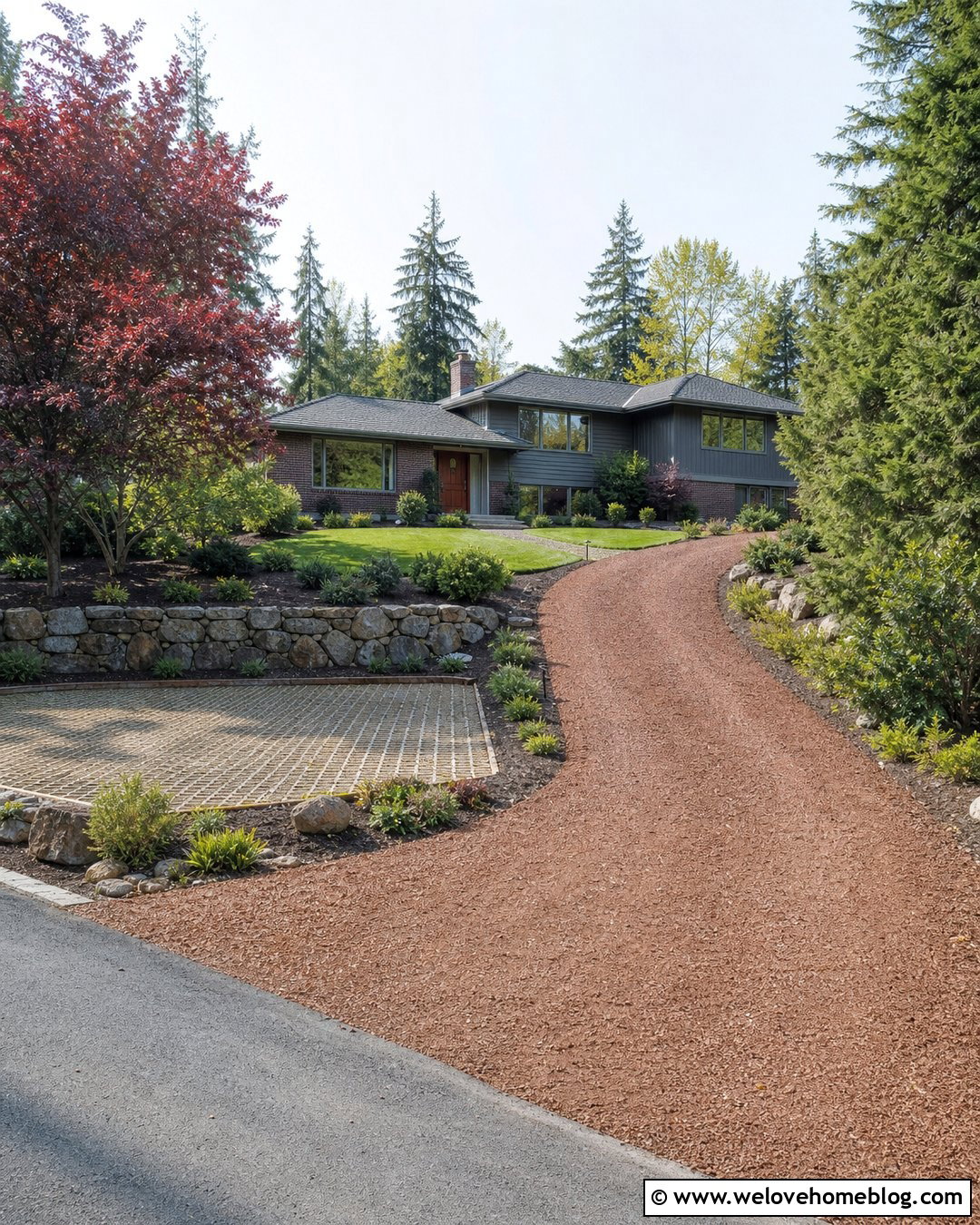
A parking turnout can improve daily use when the main driveway is too steep or narrow for comfortable stopping. Place the turnout on the more stable side of the slope and grade it close to level while maintaining positive drainage. Connect it to the main drive with compacted rust-colored crushed gravel and reinforce the turning area with a gravel grid beneath the surface. A low stone wall can support the outer edge, while small trees and evergreen planting beds screen the space from the street. This complete layout works well beside ranch, split-level, and country homes. The turnout must be large enough for safe maneuvering and positioned where drivers have clear visibility without backing directly onto the steepest portion.
17. Steep Gravel Driveway With Grass Paver Shoulders
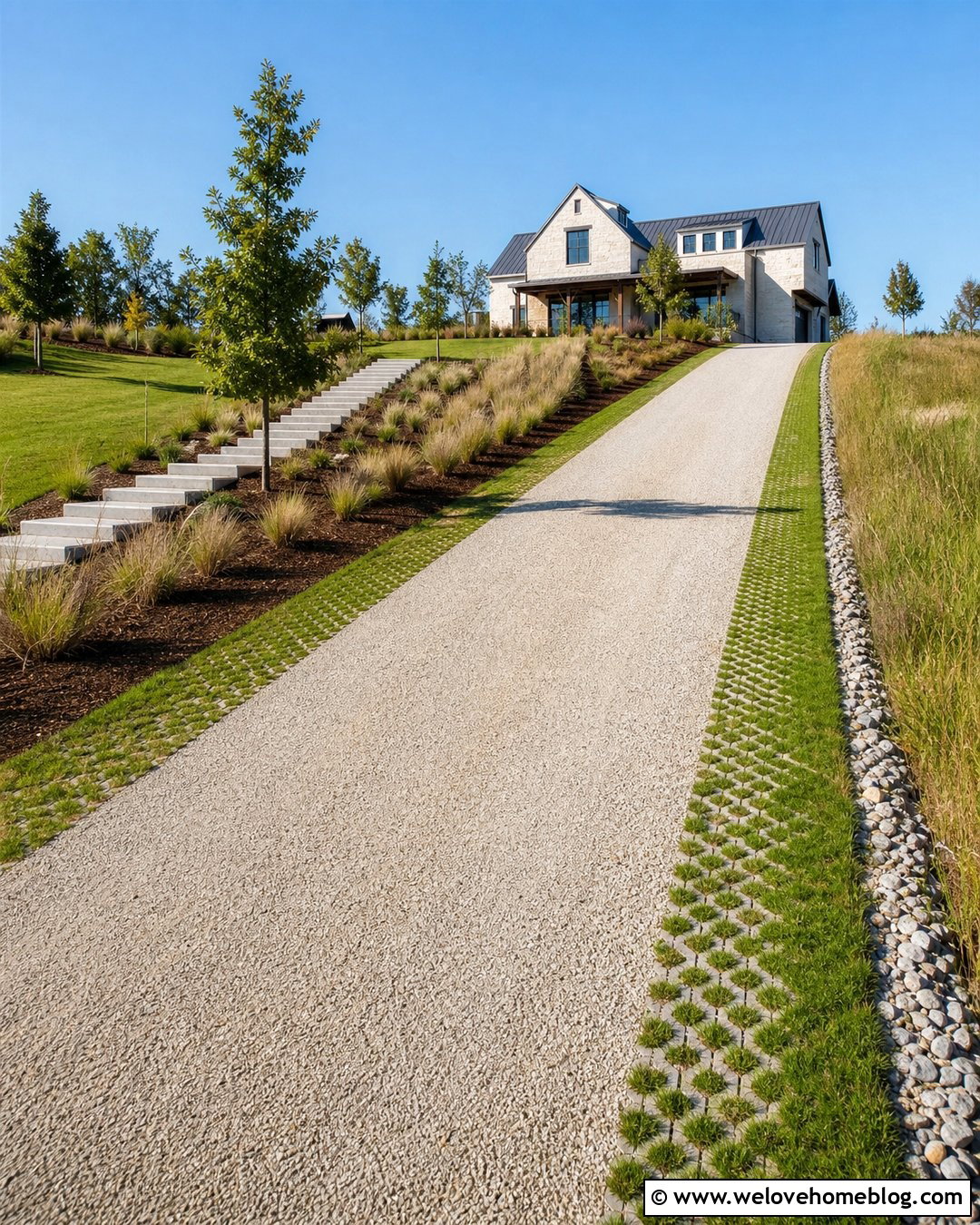
Reinforced grass paver shoulders provide a forgiving transition between the main gravel surface and the surrounding yard. Keep the driving lane in compacted angular limestone gravel, then install load-rated cellular grass pavers along both sides where occasional tires may travel. The green shoulders visually widen the driveway without creating a broad expanse of loose stone. Add a shallow swale beyond the uphill shoulder and a reinforced gravel edge on the lower side. This fresh, permeable look suits modern farmhouses, contemporary ranches, and eco-conscious suburban homes. Select grass or groundcover suited to local rainfall and sunlight. On very steep, frequently driven areas, gravel-filled cells may perform more reliably than planted cells and require less seasonal repair.
18. Gravel Driveway With Paved Road Apron
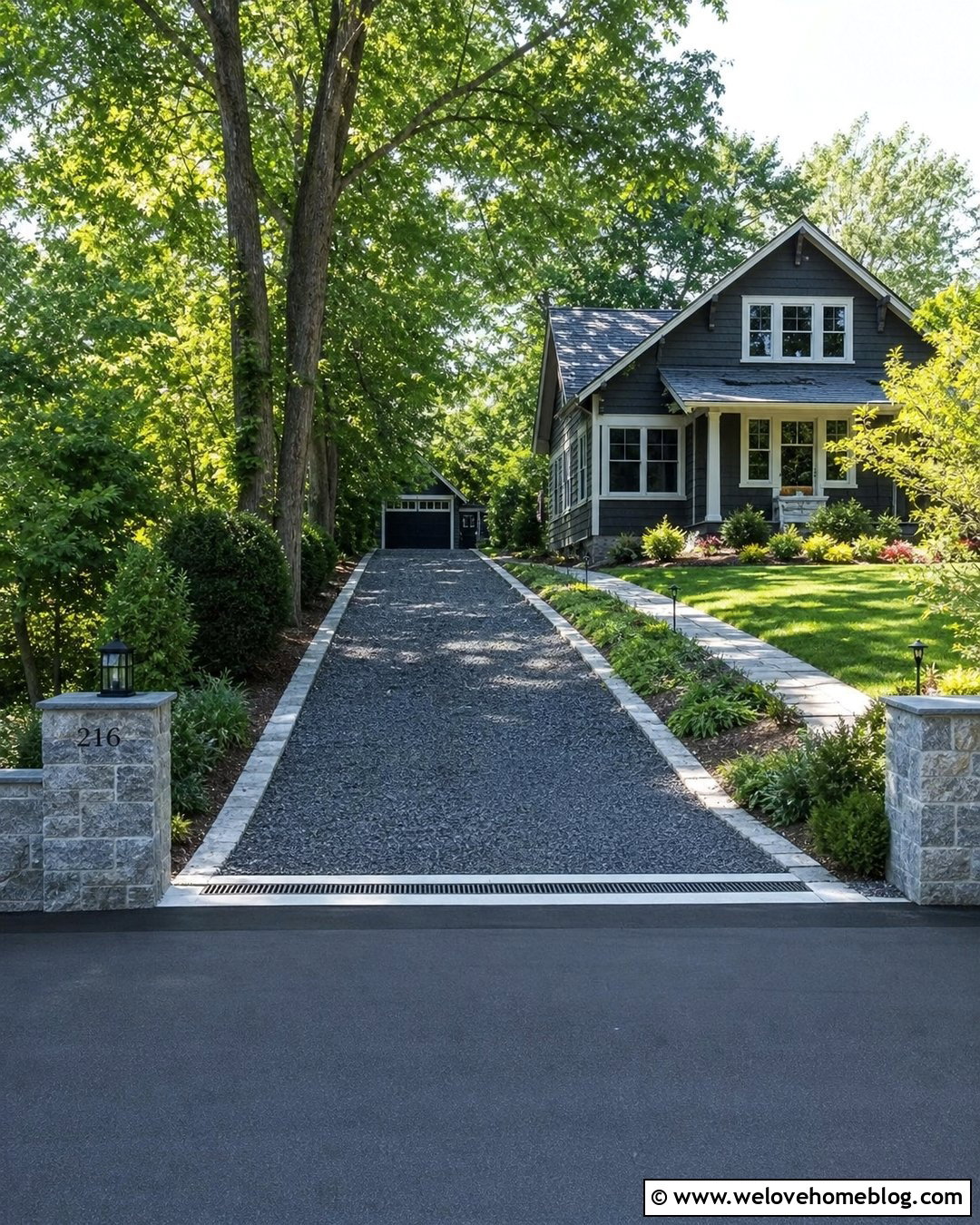
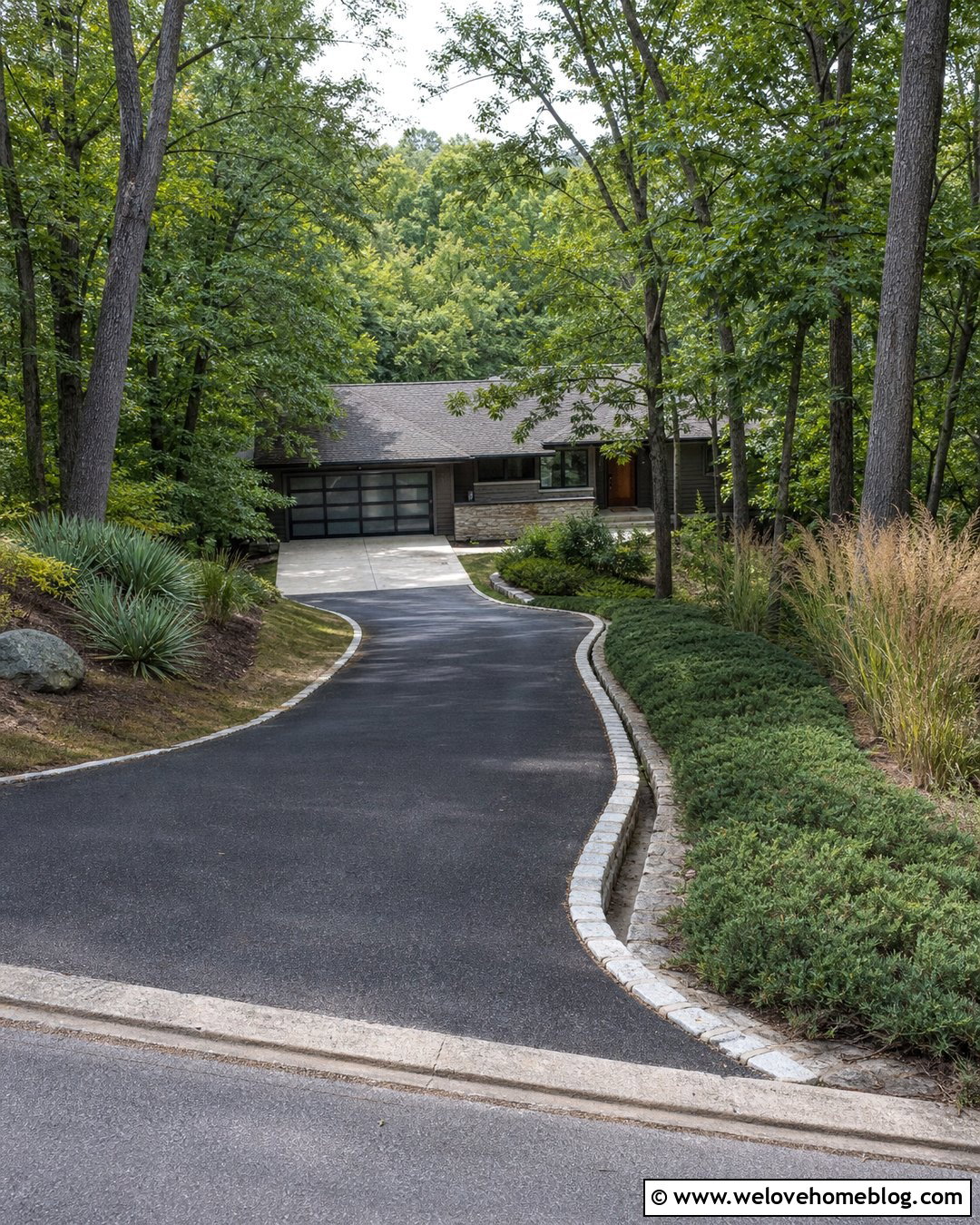
The bottom of a steep gravel driveway often receives loose stone carried downhill by runoff and braking tires. A short concrete, asphalt, or interlocking-paver apron can create a cleaner transition at the public road while the main driveway remains gravel. Use dark angular crushed stone on the slope, granite edging along both sides, and a channel drain just above the paved apron where appropriate. Low shrubs and an address pillar can define the entrance without blocking sightlines. This mixed-material solution looks finished beside nearly any suburban house. The paved section must not send untreated runoff into the street, and its joint with the gravel should be reinforced so repeated vehicle movement does not create a rut or abrupt bump.
19. Steep Gravel Driveway With Planted Erosion-Control Banks
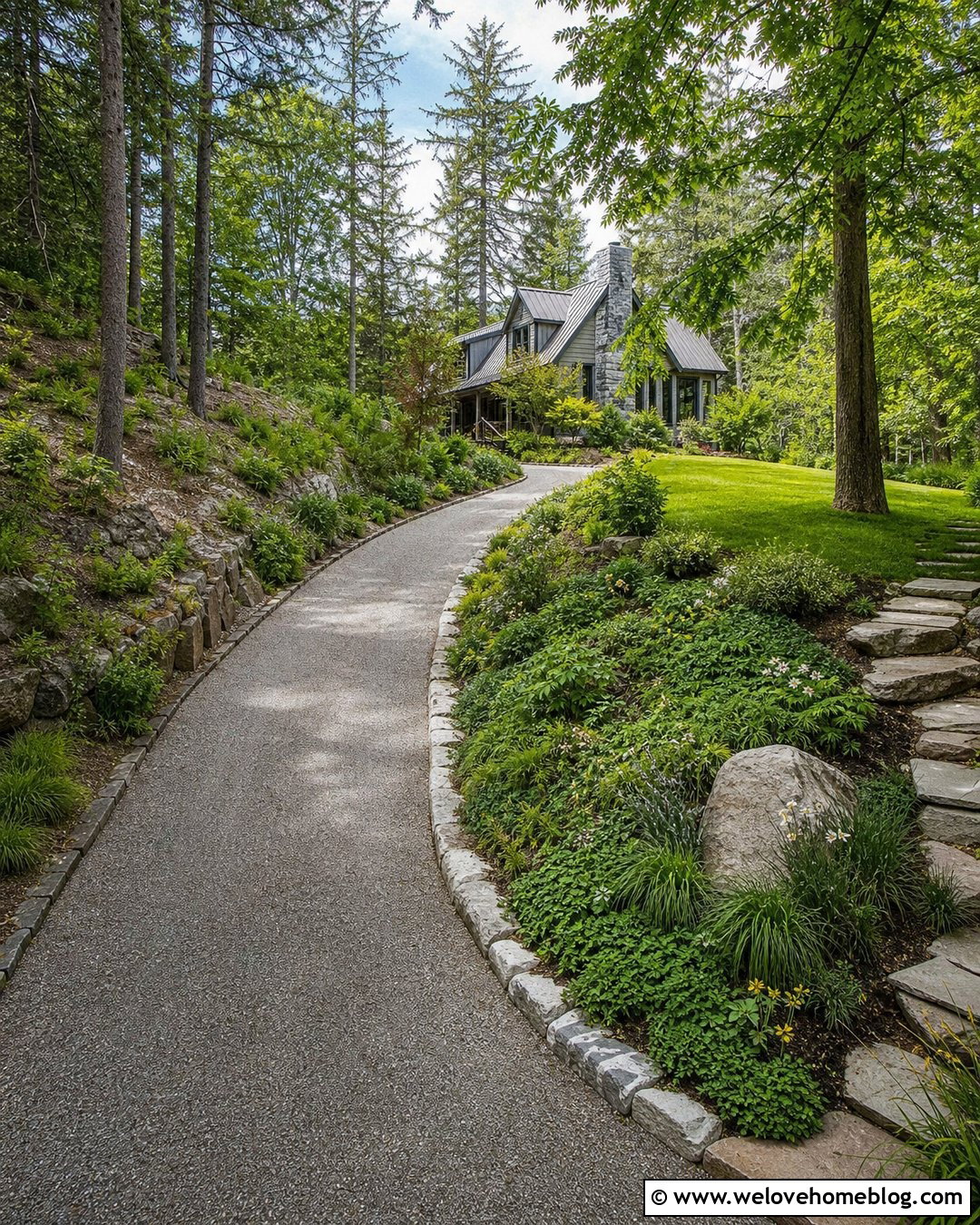
Bare banks beside a steep driveway can shed soil onto the gravel and create muddy drainage problems. Cover these slopes with dense, regionally appropriate groundcover, deep-rooted grasses, spreading shrubs, and biodegradable erosion-control materials while the plants establish. Use compacted warm gray crushed gravel for the driveway, bordered by a low stone curb and an uphill drainage swale. Group plants in broad repeating masses rather than isolated specimens, leaving access to drains and utility areas. This landscape-rich design complements cottages, Craftsman homes, and wooded contemporary houses. Vegetation is most effective after concentrated runoff has been controlled near its source. Very steep or unstable banks may need terracing, engineered reinforcement, or retaining walls before planting. ()
20. Steep Gravel Driveway With Reinforced Gravel Berm
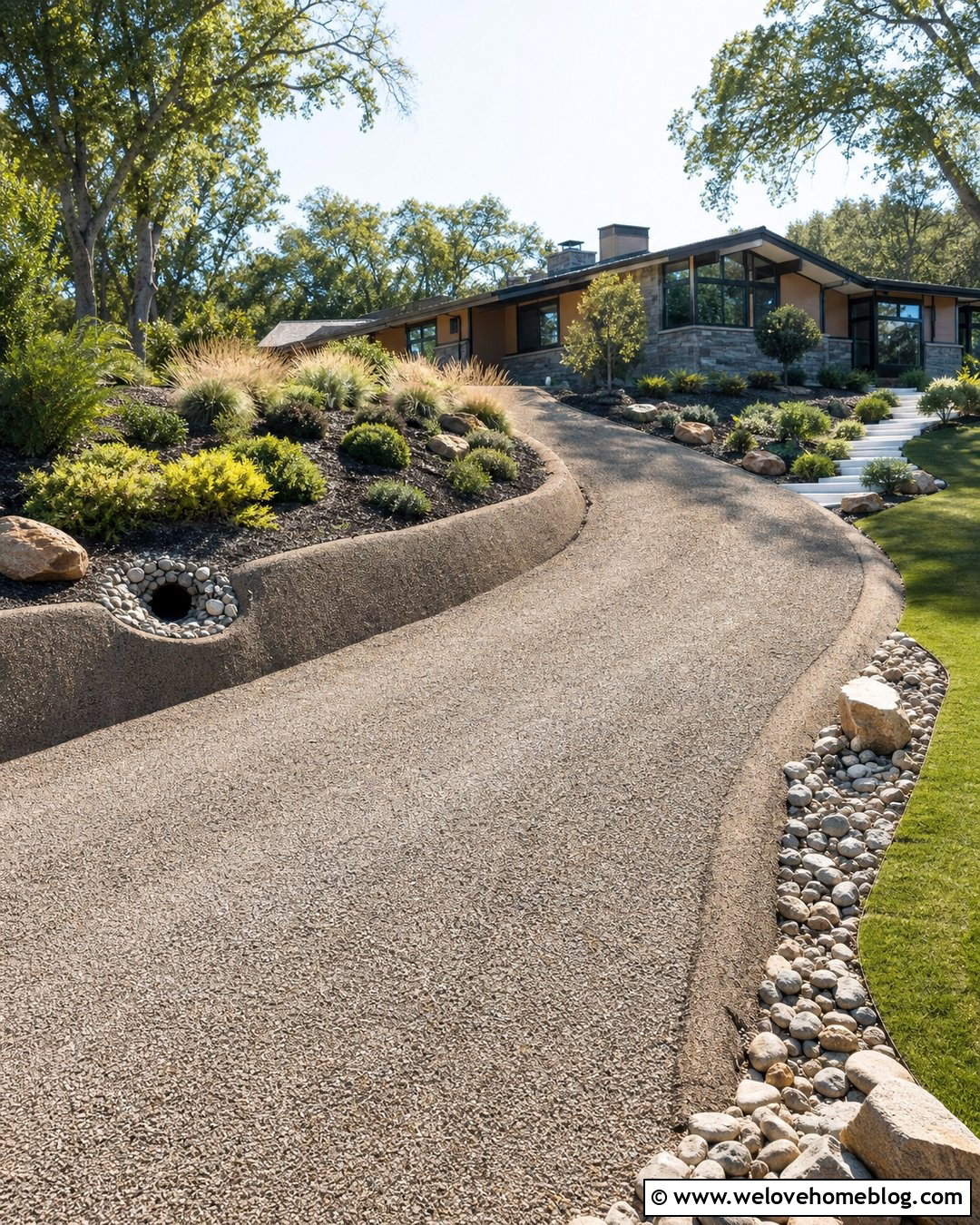
A low reinforced berm can guide runoff toward planned collection points without placing a deep ditch beside the driveway. Shape the berm along the uphill edge using compacted aggregate, then armor vulnerable sections with larger stone or erosion-resistant vegetation. Surface the driveway with tightly compacted crushed granite and give it a gentle cross slope toward controlled openings in the berm. Each opening should discharge into a rock-lined channel, swale, or approved underground drain. A broad curved layout with native shrubs and shade trees makes the system feel integrated into the yard. This approach works well with ranch, contemporary, and rural homes. The berm must not redirect water toward buildings, neighboring lots, septic systems, or unstable slopes.
Conclusion:
The best steep gravel driveway is designed around water movement, vehicle traction, and long-term slope stability rather than appearance alone. Gravel grids, compacted angular stone, layered bases, crowns, swales, trench drains, culverts, retaining walls, and reinforced outlets can solve different parts of the problem. Combining several compatible measures usually creates a more reliable result than repeatedly adding fresh gravel after storms. Use these 20 Steep Gravel Driveway Solutions Ideas to identify a complete look that suits your home, landscape, climate, and budget. Before changing the driveway grade or installing major drainage structures, consult qualified local professionals and confirm permit requirements. Careful planning can create a driveway that feels safer, looks intentional, and requires fewer repairs.

Related posts:
Leave a Reply