
A well-planned turnaround makes a driveway safer, easier to navigate, and more attractive from the street. These 20 Turnaround Driveway Ideas explore practical layouts for narrow suburban lots, spacious country properties, sloped yards, and busy family homes. Options range from compact hammerheads and side bays to circular loops and formal motor courts. Each complete look combines an appropriate surface with clear borders, useful landscaping, and a layout that complements the house. Before building, test the turning space with the largest vehicle that regularly visits your property. Also consider drainage, snow removal, visibility, garage access, and local construction requirements. Whether you prefer affordable gravel or refined stone pavers, these 20 Turnaround Driveway Ideas offer plenty of functional inspiration.
1. T-Shaped Concrete Driveway Turnaround
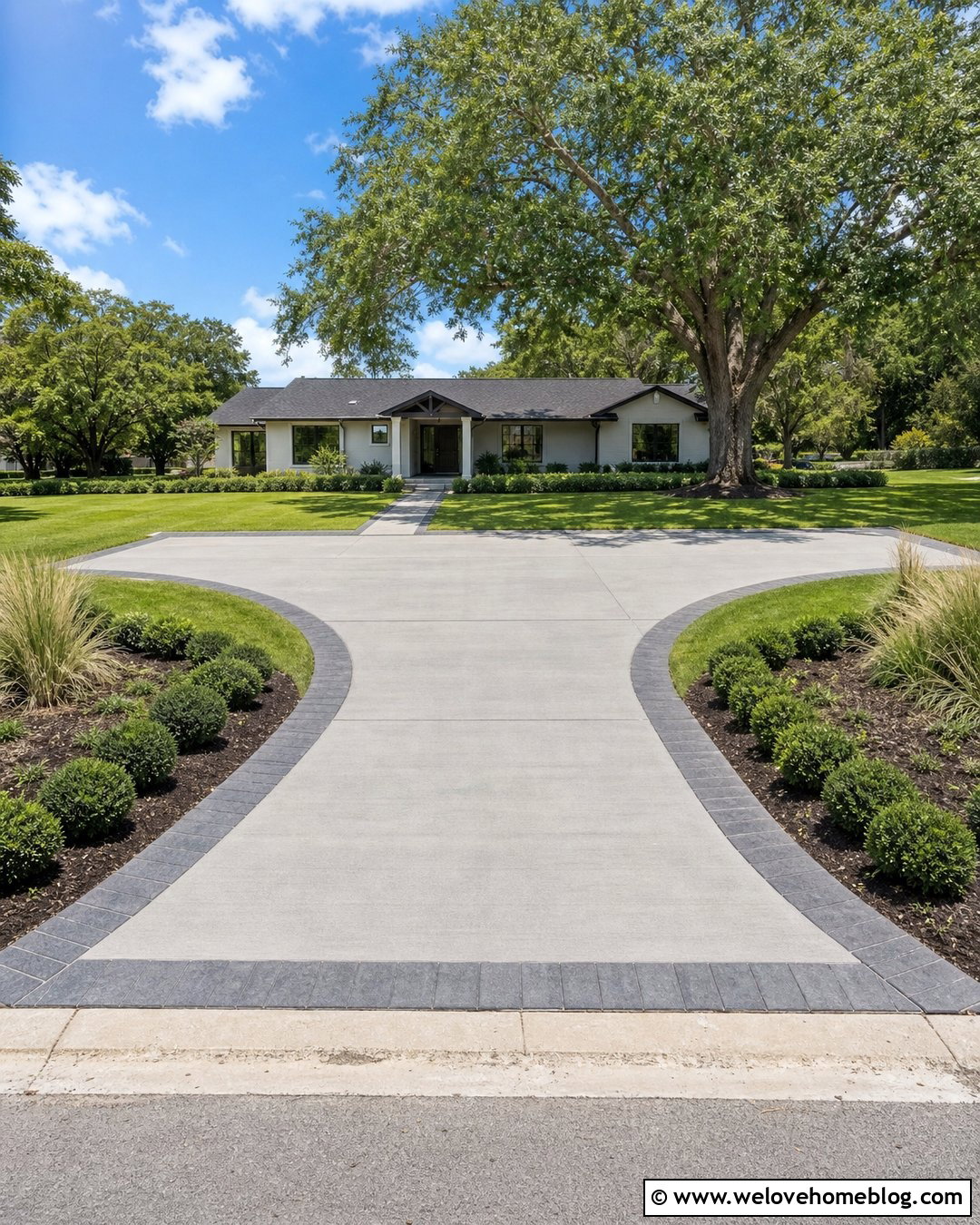
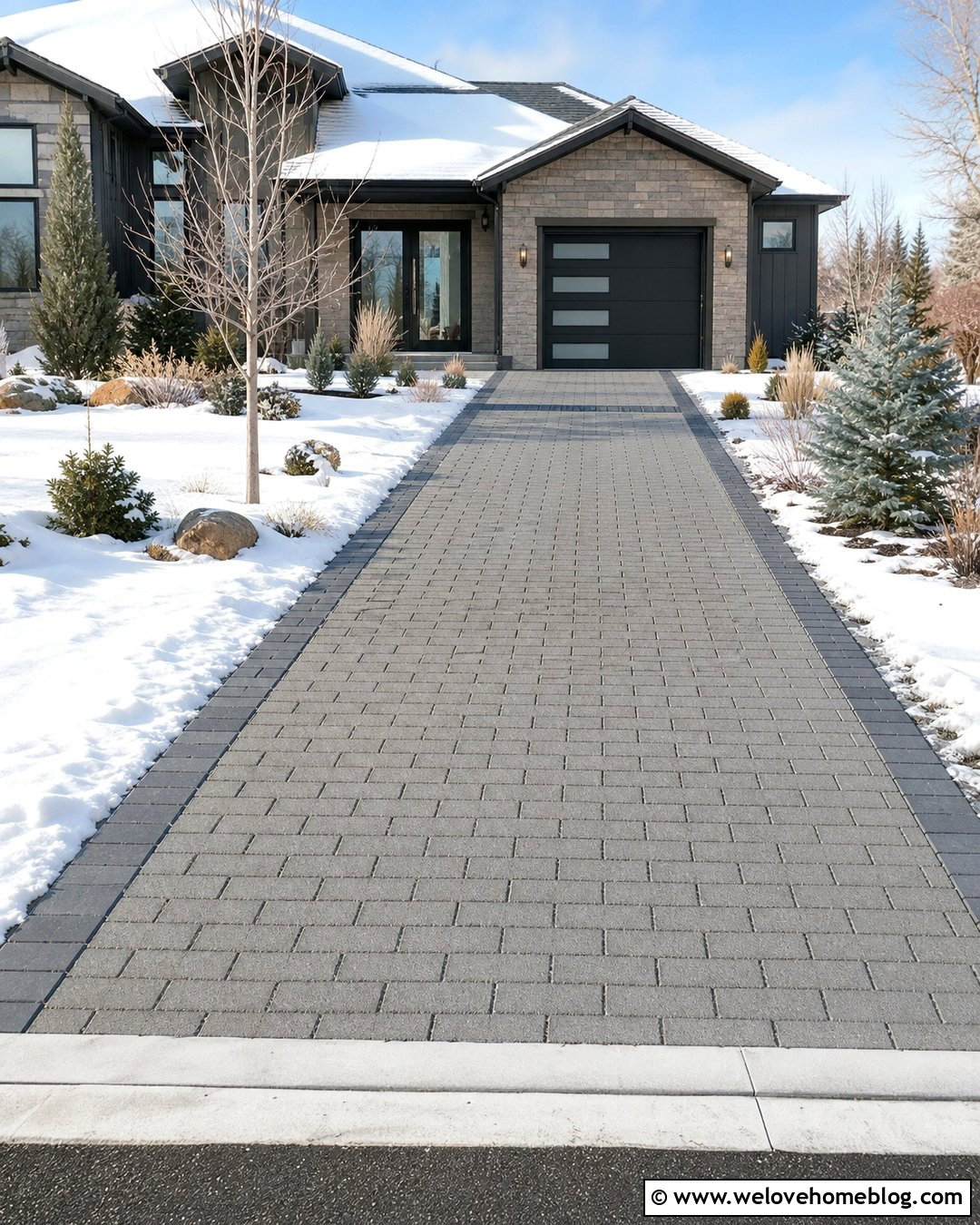
A T-shaped turnaround is a practical choice when a full circular driveway would consume too much of the front yard. Use light gray poured concrete for the main drive and extend a perpendicular turning arm near the garage. A dark charcoal paver ribbon can outline the shape and make the added pavement look intentional. Keep low planting beds around the outer corners so shrubs do not interfere with vehicle movement or sightlines. This design works especially well with ranch, split-level, and contemporary homes. Match the turnaround joints with the driveway’s existing control-joint pattern for a cleaner appearance. When space permits, make one arm slightly deeper so it can double as temporary guest parking without blocking everyday access.
2. Gravel Hammerhead Driveway Turnaround
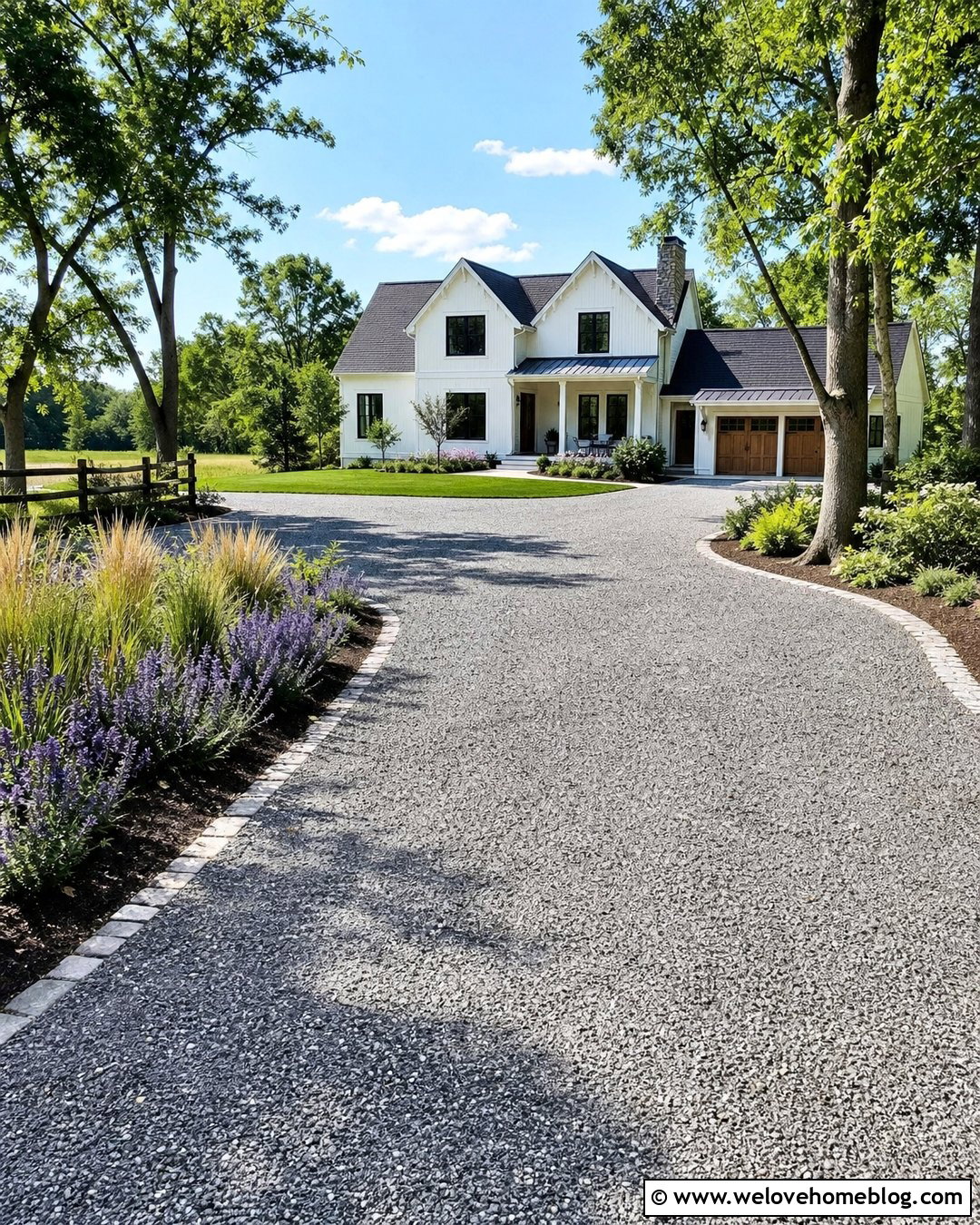
Crunchy gray gravel brings a relaxed country character to a compact hammerhead layout. Extend the gravel driveway beyond the normal parking position, then create a wide crosspiece where vehicles can complete a simple multipoint turn. Granite cobbles or steel edging will hold the loose material in place around the corners. Frame the turnaround with ornamental grasses, flowering shrubs, and a broad lawn rather than tall hedges that reduce visibility. A properly prepared, compacted base helps prevent ruts where tires repeatedly pivot. This complete look suits modern farmhouses, cabins, and rural homes. Continue the same gravel into the turnaround so the addition feels connected, but use a cobblestone threshold near the garage to reduce loose stones around the entrance.
3. Paver Driveway Turnaround Court
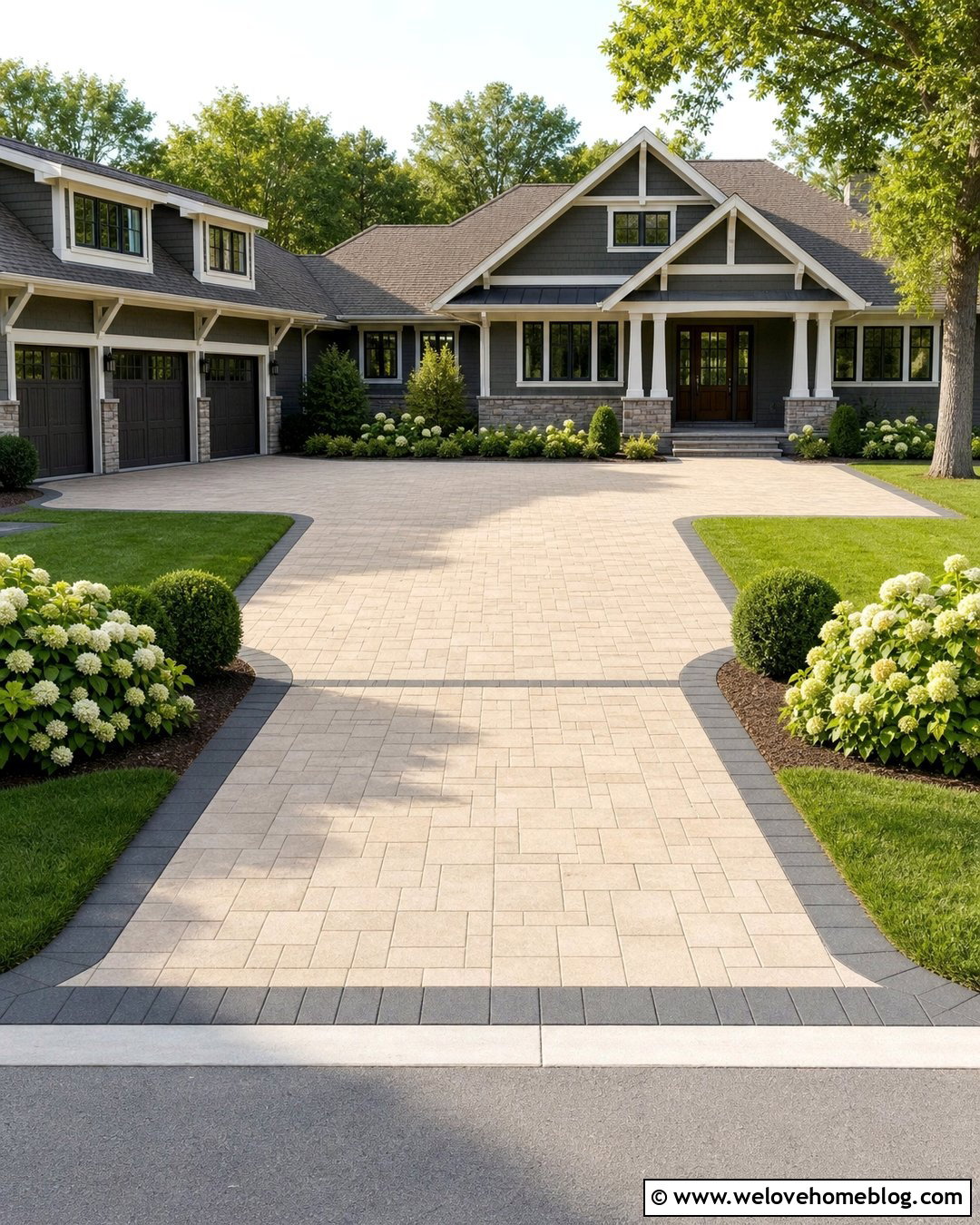
For a polished front approach, turn the area in front of the garage into a rectangular paver court. Choose warm beige concrete pavers in a running-bond or modular pattern, then define the perimeter with a contrasting charcoal soldier-course border. The larger paved space gives drivers room to reverse, reposition, and leave the property facing forward. Symmetrical planting beds can soften the broad hardscape without narrowing the usable turning zone. Add compact boxwood, hydrangeas, or low ornamental grasses beside the border. A matching paver walkway should connect the court to the front door without crossing the main vehicle path. This design feels especially cohesive with Craftsman, transitional, and brick-front homes, where an organized surface pattern supports strong architectural lines.
4. Circular Brick Driveway Turnaround
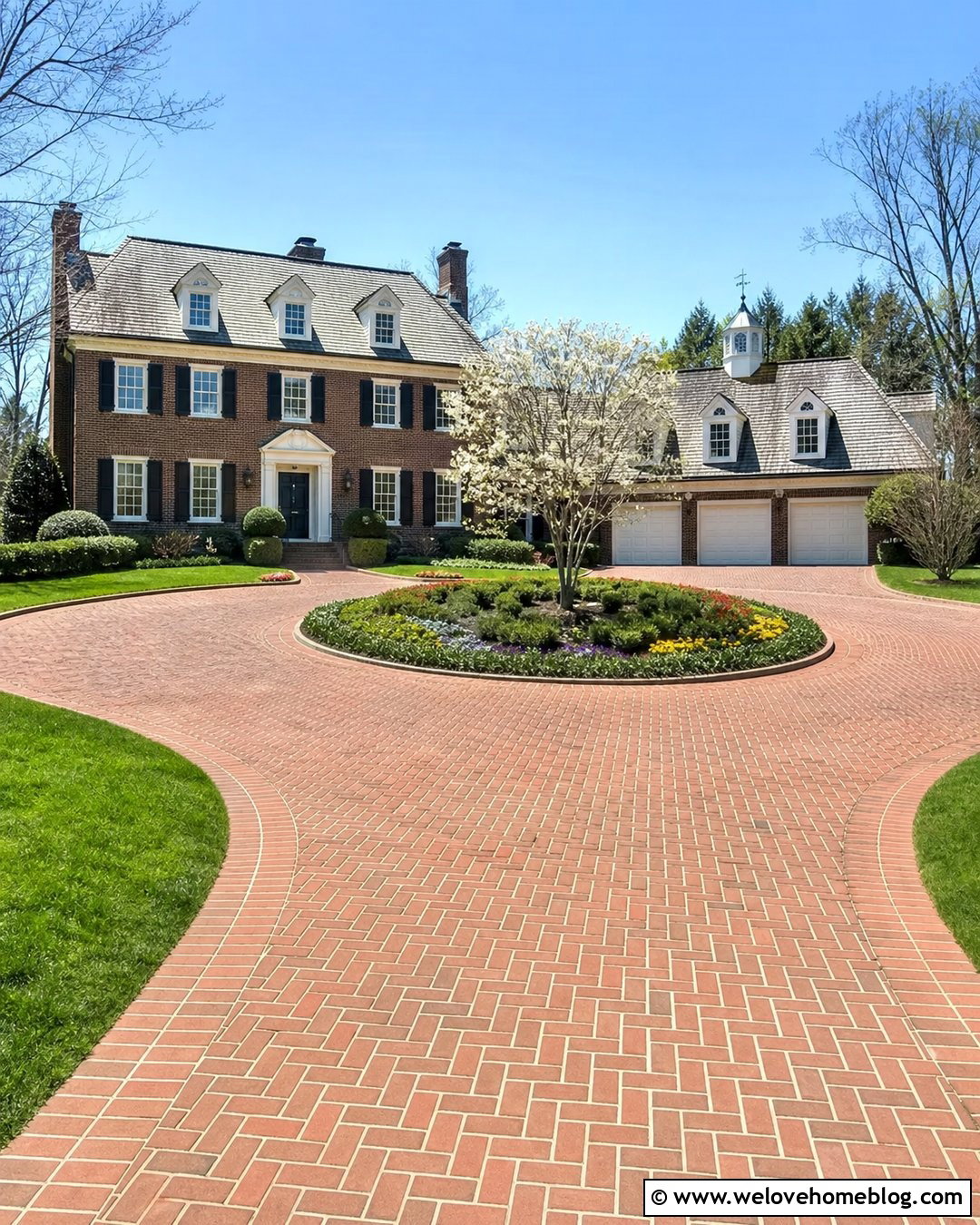
A circular brick driveway creates continuous movement while adding traditional curb appeal. Clay brick pavers laid in herringbone can form the driving loop, while a simple running-bond border emphasizes the curved edges. Place a landscaped island at the center with one small ornamental tree, low groundcover, and seasonal flowers that remain below important sightlines. The circle should connect naturally to the garage or a short parking spur so vehicles are not left in the main traffic path. This complete design pairs beautifully with Colonial, Georgian, and Cape Cod homes. Repeat brick around the front walkway or entry steps to connect the hardscape. Gentle curves and restrained planting keep the turnaround elegant rather than making the front yard feel overly paved.
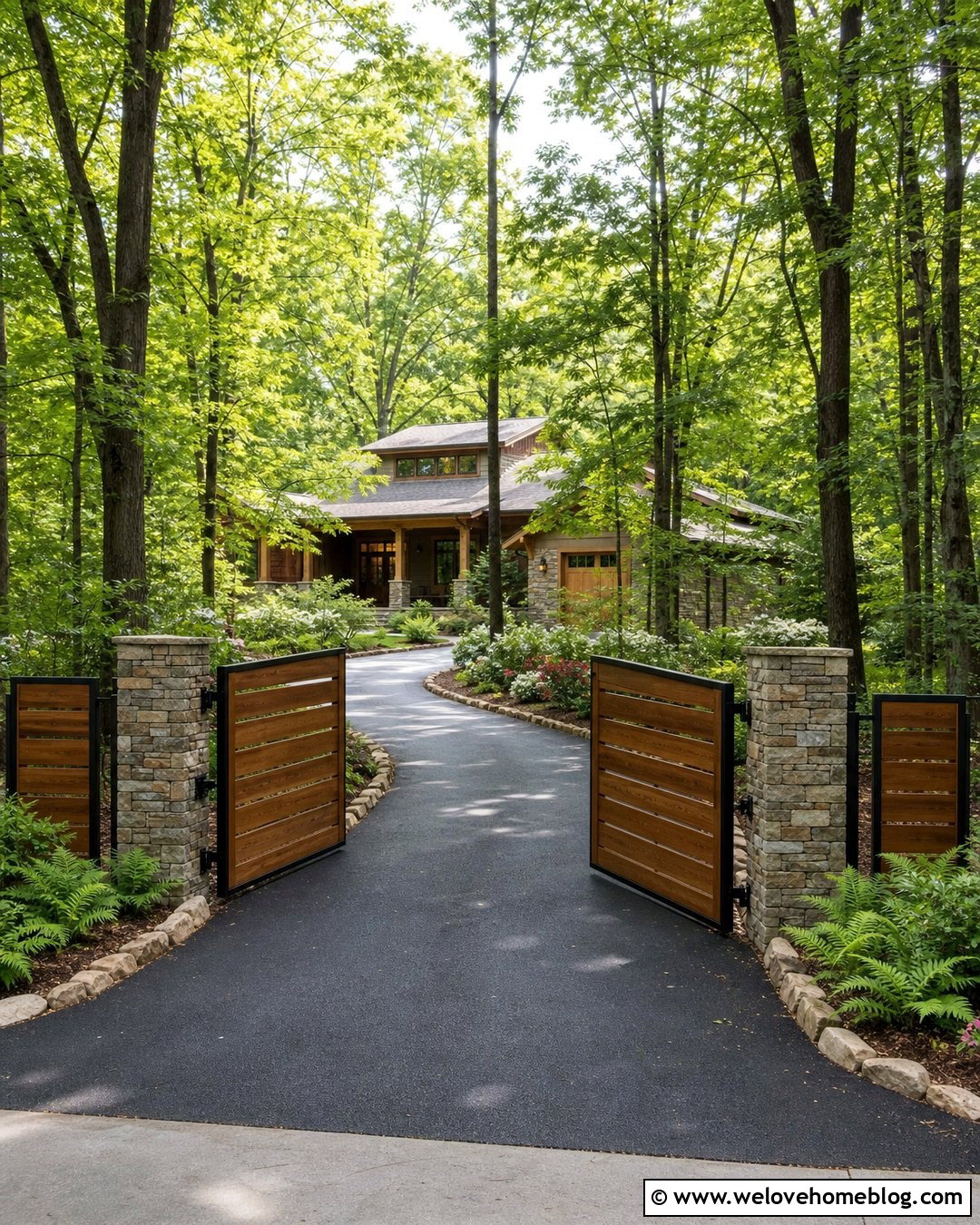
5. Teardrop Asphalt Driveway Turnaround
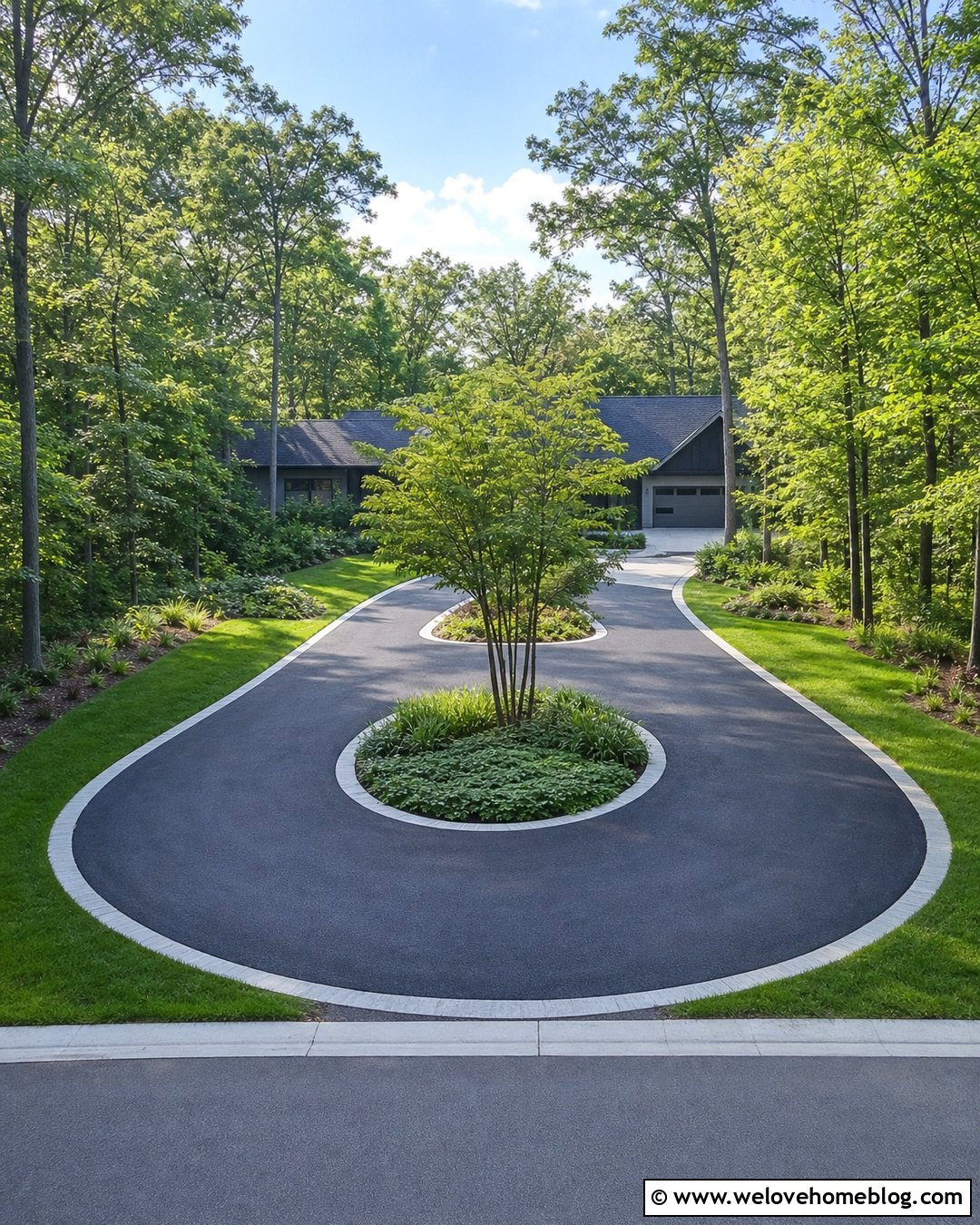
A teardrop loop provides forward movement with less symmetry and formality than a traditional circular driveway. Smooth black asphalt can follow a gently curved path around a long, tapered planting island before reconnecting with the main drive. Edge the pavement with light concrete curbing or gray pavers for a crisp contrast that also protects vulnerable asphalt edges. Fill the island with native grasses, spreading groundcover, and a small multi-stem tree. The narrow end should remain open and uncluttered so drivers can clearly read the route. This layout suits wooded properties and homes positioned at an angle from the street. Its flowing shape also helps the driveway follow natural yard contours instead of forcing a rigid circle into an irregular landscape.
6. Y-Shaped Gravel Driveway Turnaround
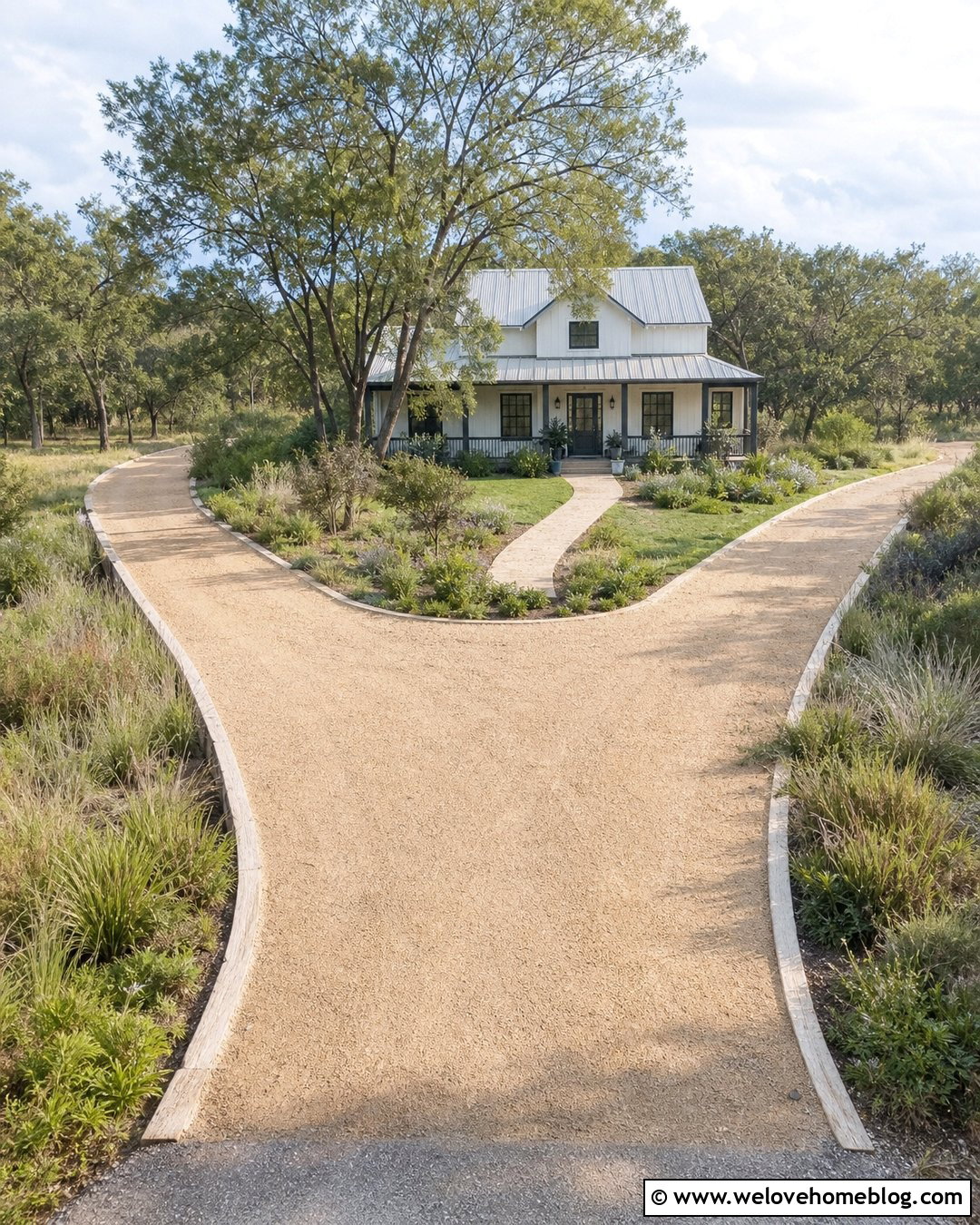
A Y-shaped turnaround can fit naturally at the end of a long gravel driveway. The two angled branches give drivers space to pull forward, reverse across the center, and leave in the opposite direction. Use compacted tan crushed stone for a stable surface and line both arms with weathered timber or dark steel edging. Instead of surrounding the entire shape with formal beds, blend the edges into meadow grasses, shade trees, or low native shrubs. This reduces the visual impact of the extra driving area on a rural property. Keep the center junction broad and free of decorative boulders. A matching gravel walkway can lead from one branch to a country porch, helping the turnaround feel like a planned part of the arrival experience.
7. Side Bay Concrete Driveway Turnaround
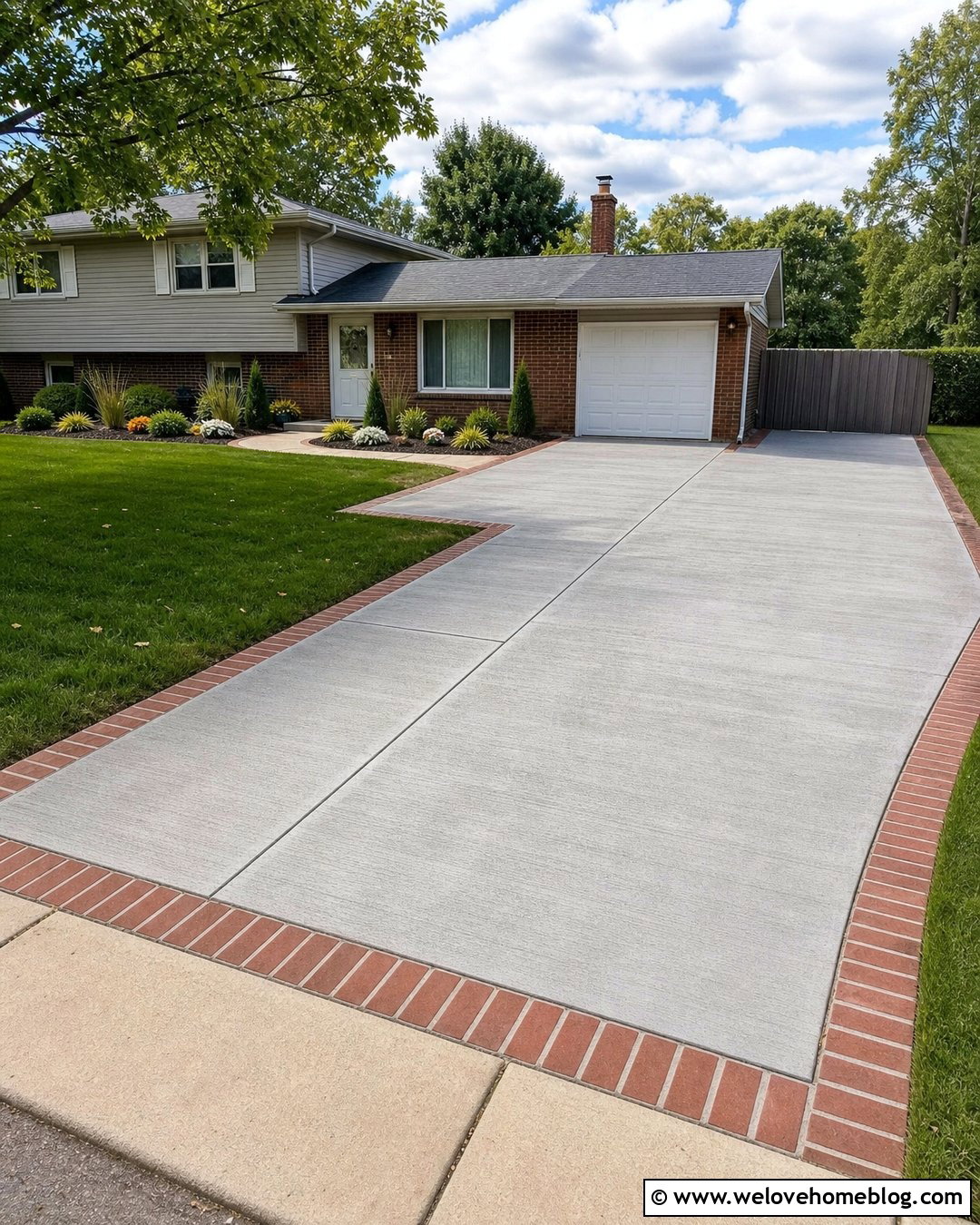
When the front yard is narrow, a rectangular side bay can provide turning space without widening the entire driveway. Add a broom-finished concrete pad near the garage and position it perpendicular to the main drive. A brick or paver border will distinguish the bay while connecting it visually to the house. Use the remaining side yard for a slim planting bed with upright grasses, dwarf evergreens, and low flowers. The bay can also serve as occasional parking, but its regular turning path should stay clear of planters and storage. Aligning the pad with a garage wall or architectural feature makes the addition look purposeful. This straightforward layout works particularly well beside suburban ranch houses, duplexes, and compact two-story homes.
8. L-Shaped Paver Driveway Turnaround
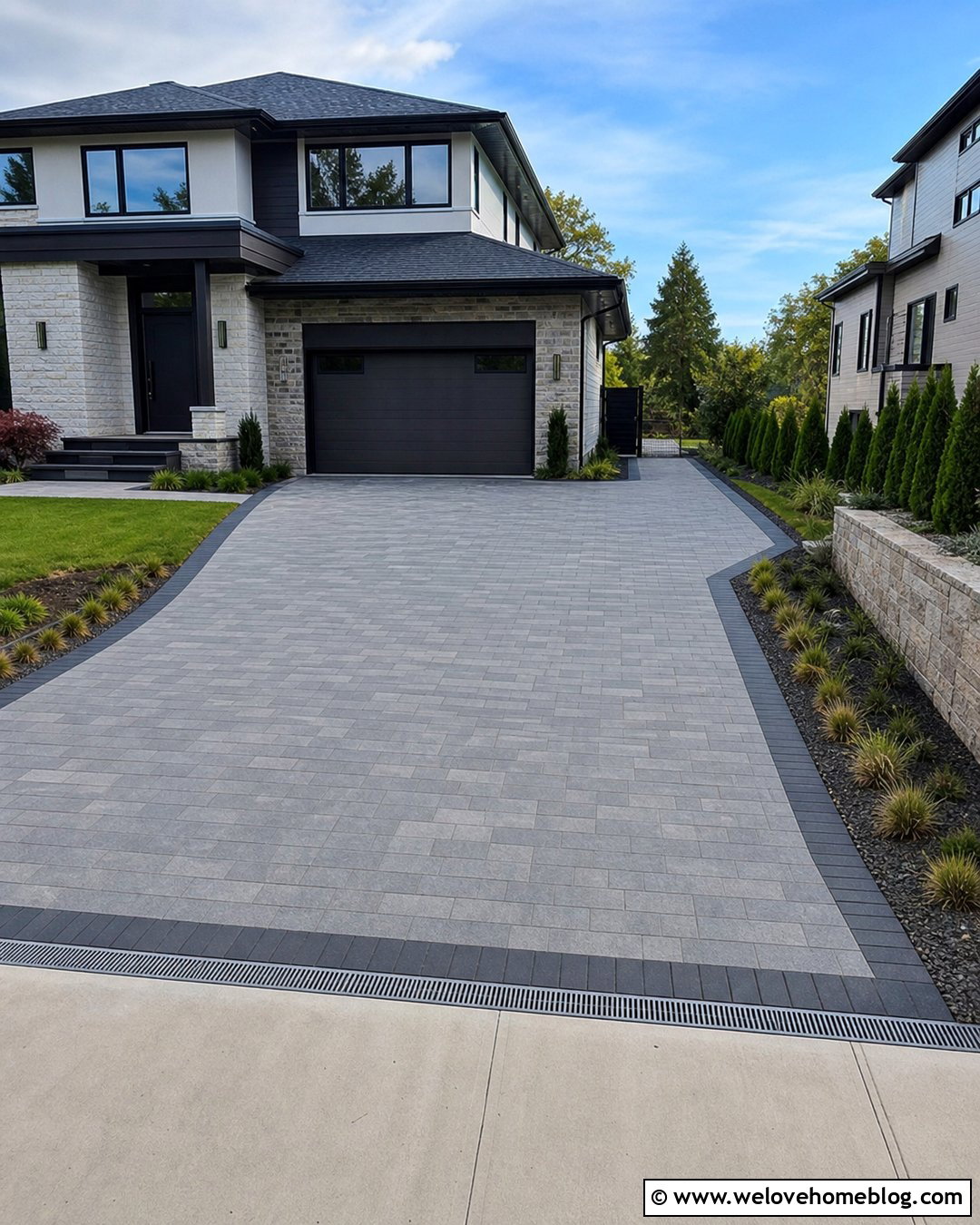
An L-shaped turnaround uses one extended arm to create a simple reversing area beside the main driveway. Choose medium-gray concrete pavers in a clean running-bond pattern and use darker pavers around the perimeter. The extension can follow the edge of the house, a retaining wall, or an attached garage, making it useful on asymmetrical lots. Add a narrow planting strip between the pavers and foundation to soften the hardscape without reducing maneuvering space. A linear drain may be integrated where the two paved sections meet if runoff collects near the inside corner. This design looks especially appropriate with contemporary homes because the geometry feels organized and understated. Matching pathway pavers can continue from the turnaround to a side entrance or mudroom.
9. Permeable Grid Driveway Turnaround
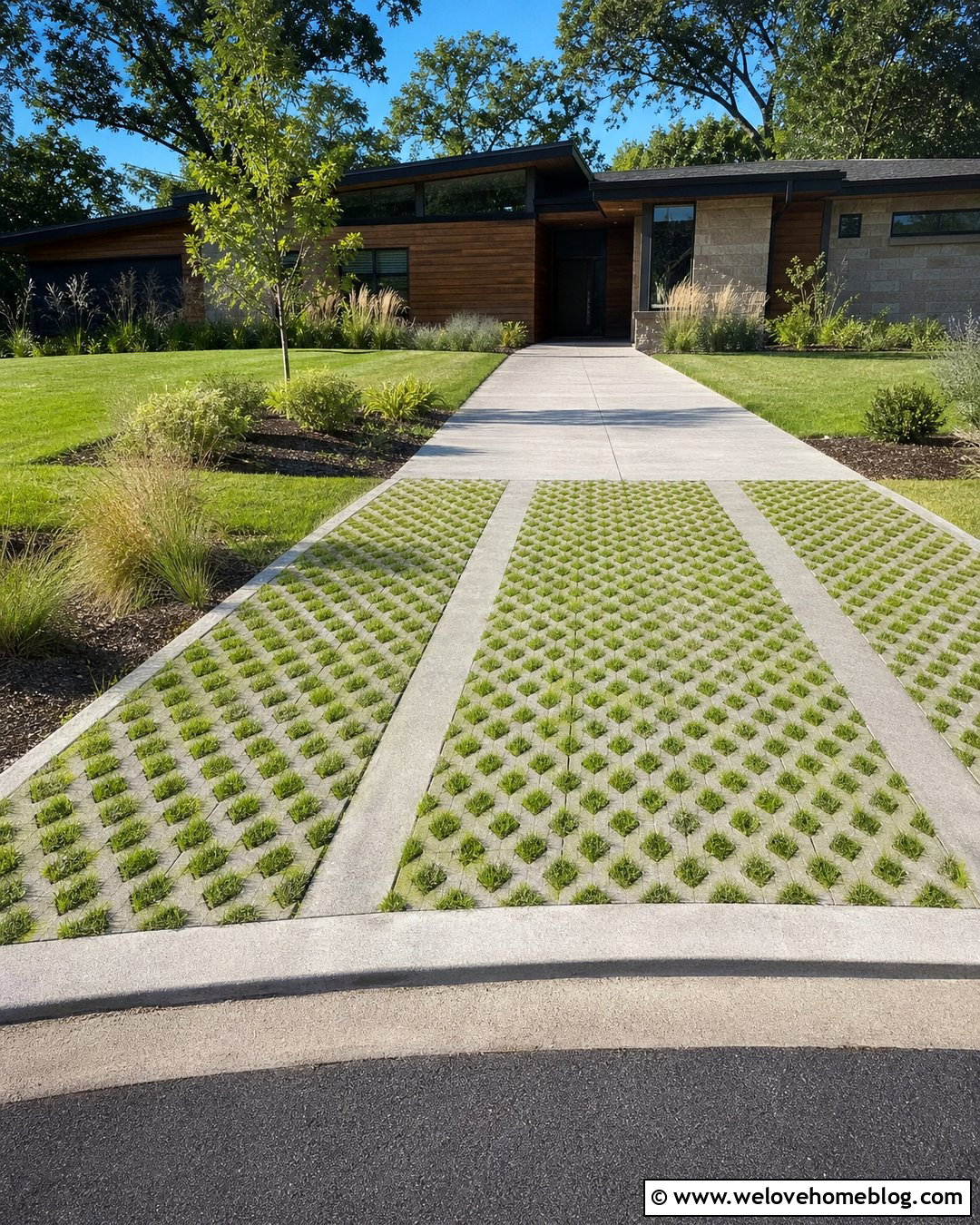
A grass-grid turnaround can reduce the visual weight of a large paved area while keeping the surface usable. Install load-bearing permeable grid pavers across the turning zone and fill the openings with healthy turf or small angular gravel. Pair the grid with a straight poured-concrete driveway so the material change clearly identifies the turnaround. A flat steel or concrete border helps maintain a precise outline between the grid and surrounding lawn. This green treatment works well in front of modern, midcentury, and environmentally focused homes. Keep heavily used tire paths reinforced and follow the grid manufacturer’s base requirements. Nearby landscaping should remain simple, with native grasses and compact shrubs echoing the texture of the planted surface without hiding its functional shape.
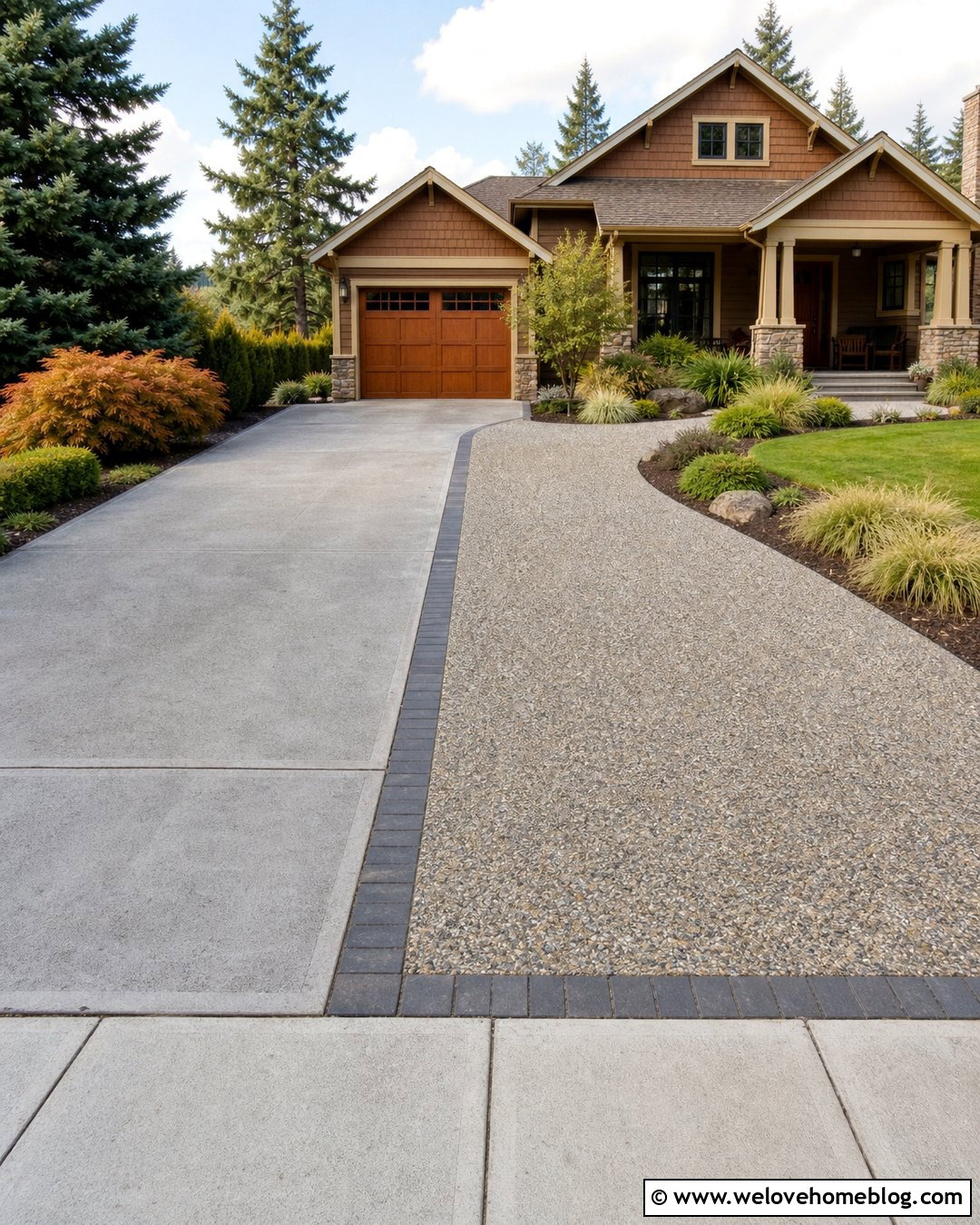
10. Resin-Bound Curved Driveway Turnaround
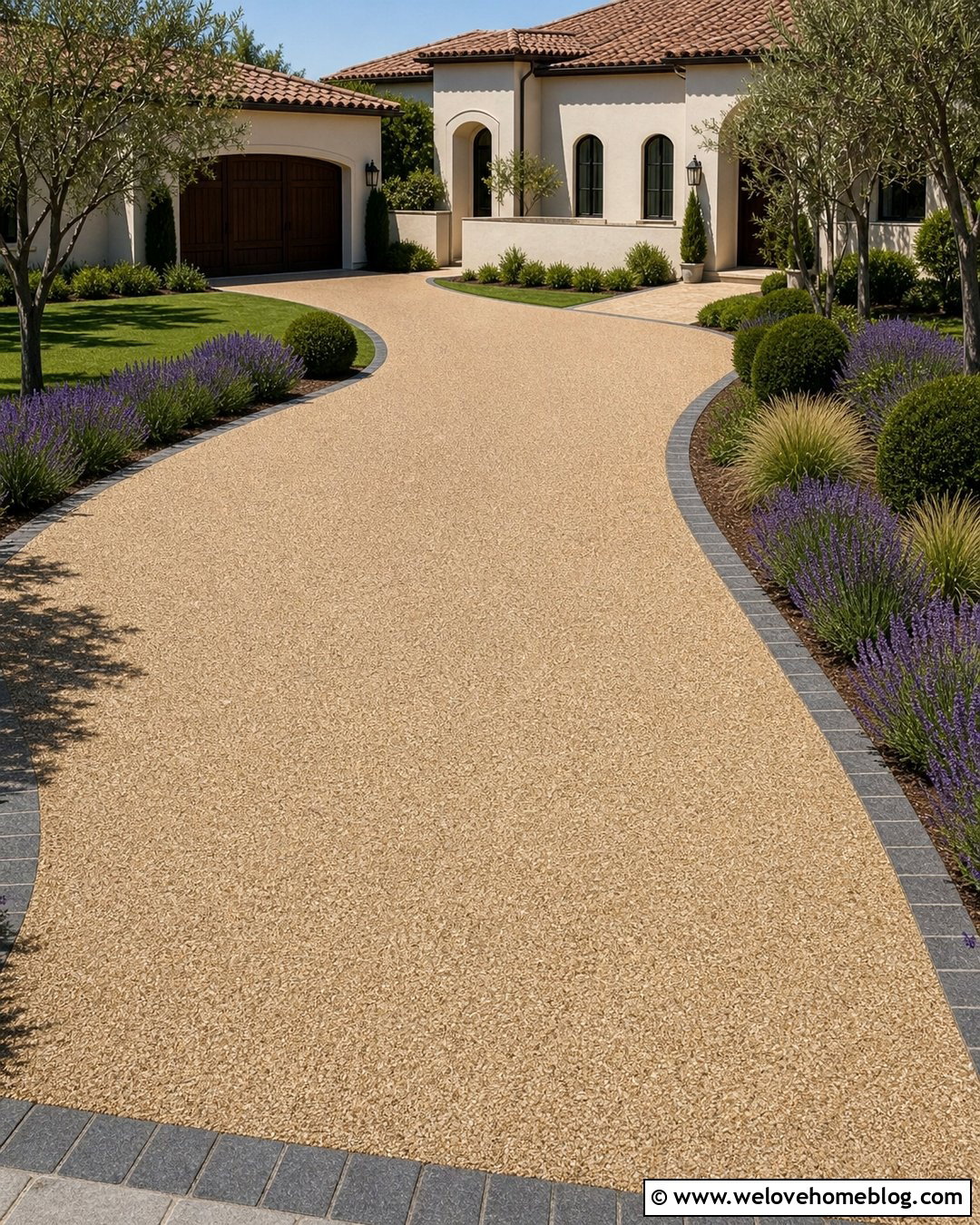
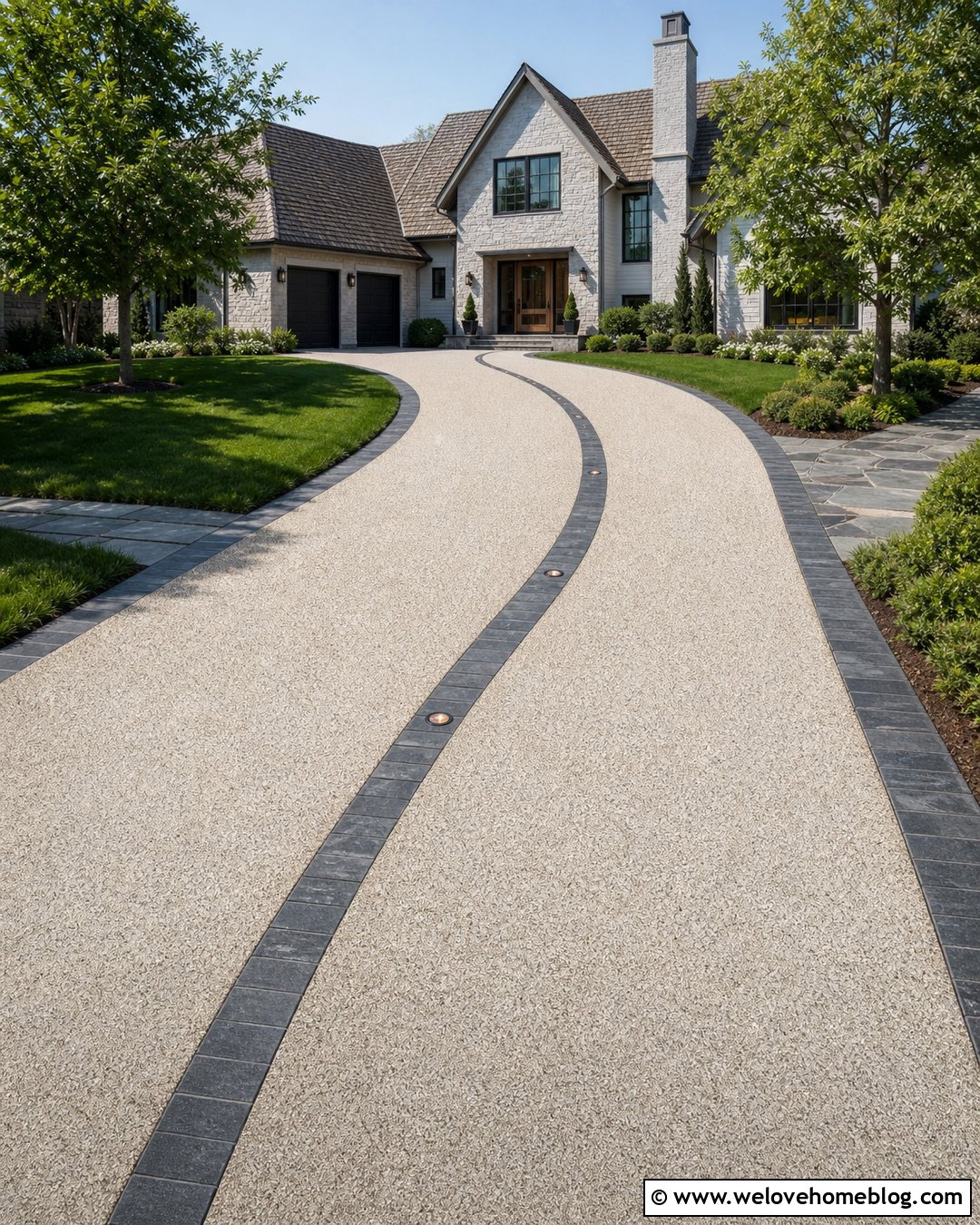
A resin-bound gravel surface gives a curved turnaround a smooth, seamless appearance without losing the natural texture of stone. Select warm buff aggregate for the main driveway and sweep it into a broad turning pad near the house. Dark granite setts can define the curves, protect the edges, and mark the transition to the garage. Surround the outside edge with layered planting beds containing lavender, evergreen mounds, and soft ornamental grasses. The resulting palette feels inviting beside stucco, stone, or light-painted homes. Avoid squeezing decorative beds into the vehicle’s turning path. Instead, use the shape of the border to create visual movement. A coordinated resin-bound walkway can branch toward the front entrance and make the entire arrival area feel unified.
11. Cobblestone Motor Court Turnaround
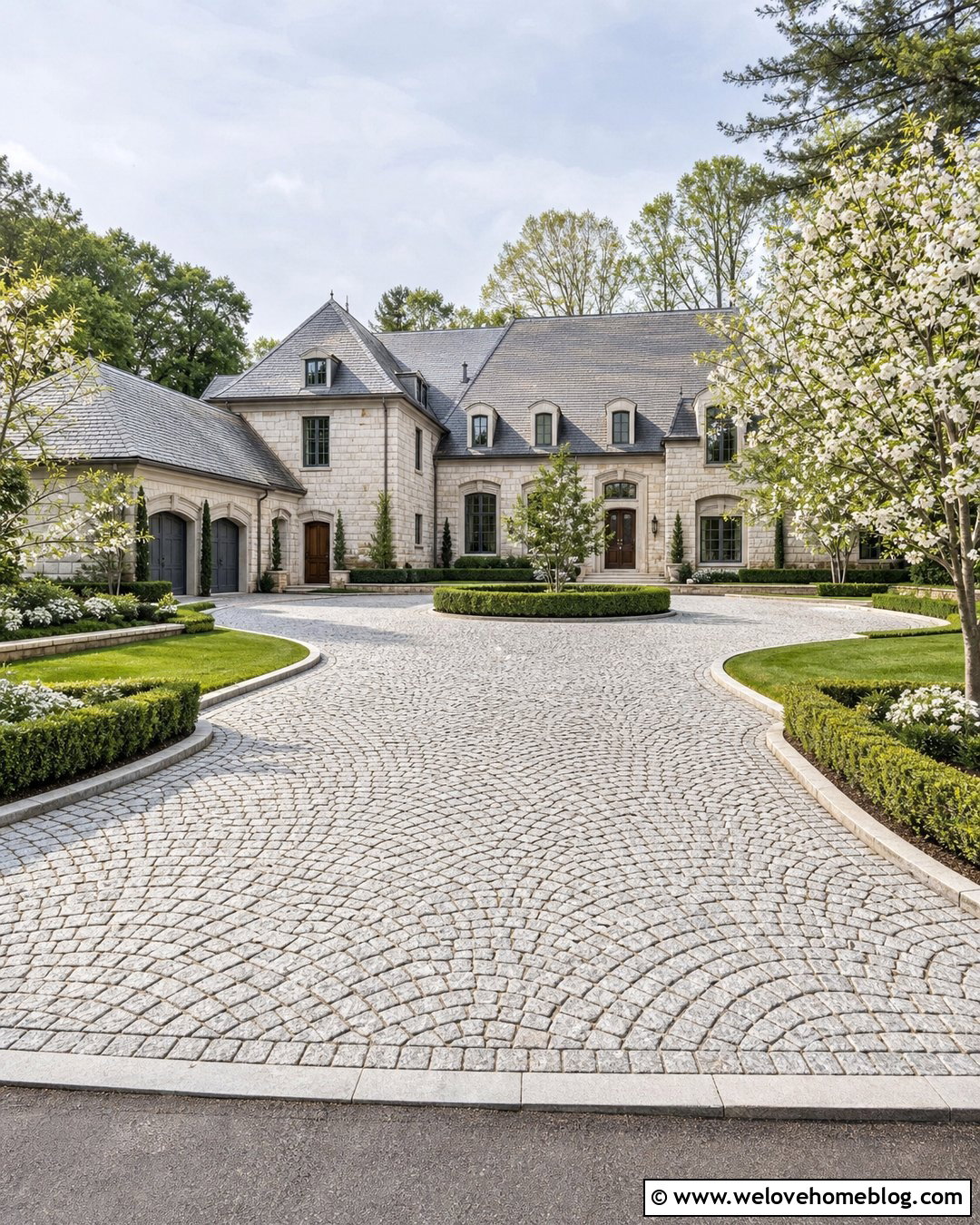
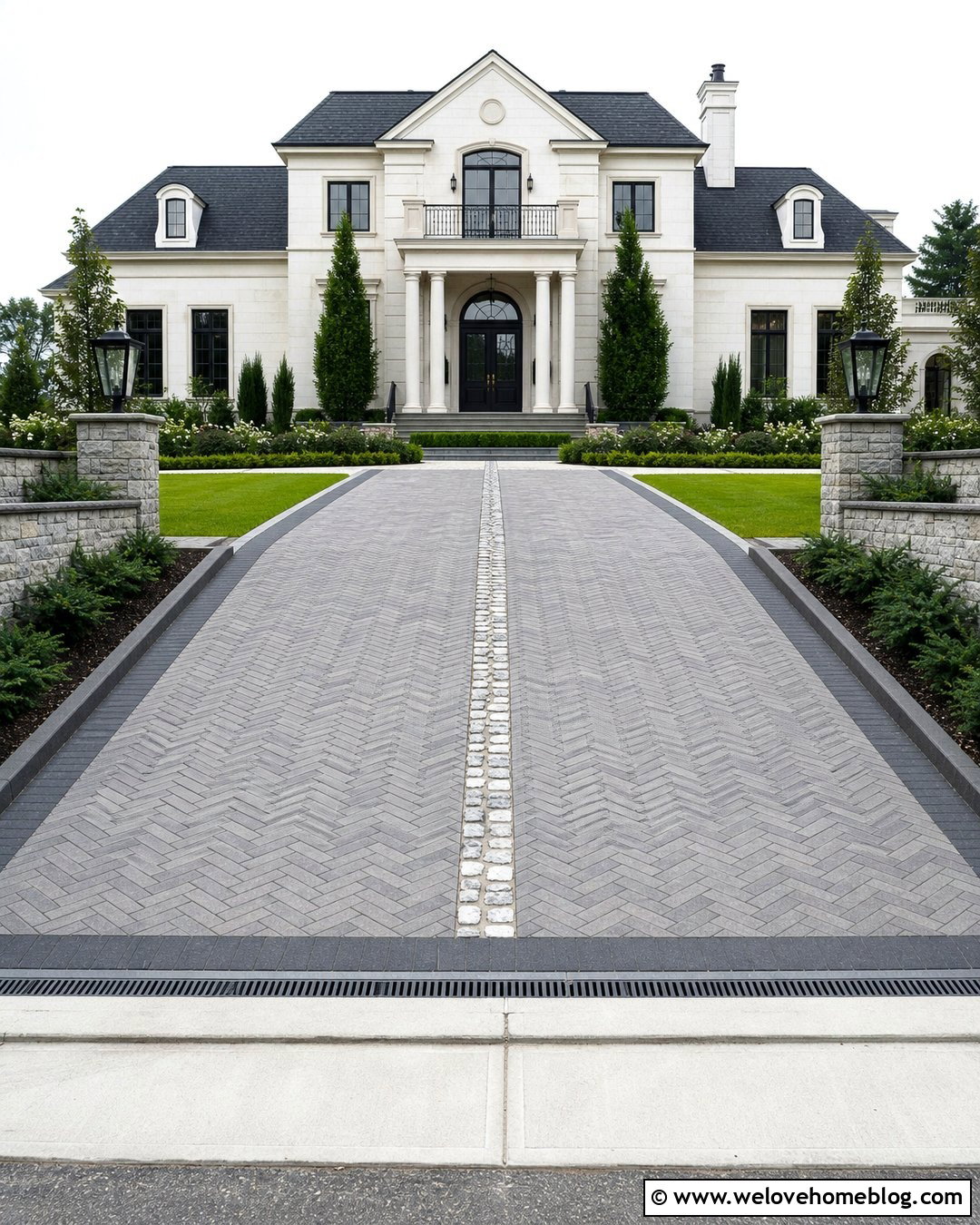
A cobblestone motor court provides generous turning space and an established, formal appearance. Lay gray granite cobblestones in a fan pattern across a wide rectangular or softly rounded court in front of the house. Use larger stone curbs around the perimeter and create a defined connection to the garage doors. Balanced planting beds with clipped evergreen shrubs, flowering trees, and lawn panels can frame the court without competing with its texture. This design is well suited to French country, Tudor, and European-inspired homes. Because cobblestone creates strong visual detail, keep the surrounding materials restrained. A smooth stone walkway and simple entry steps are enough. Thoughtful lighting along the borders can clarify the edges while leaving the central turning area completely open.
12. Concrete Strip Driveway Turnaround
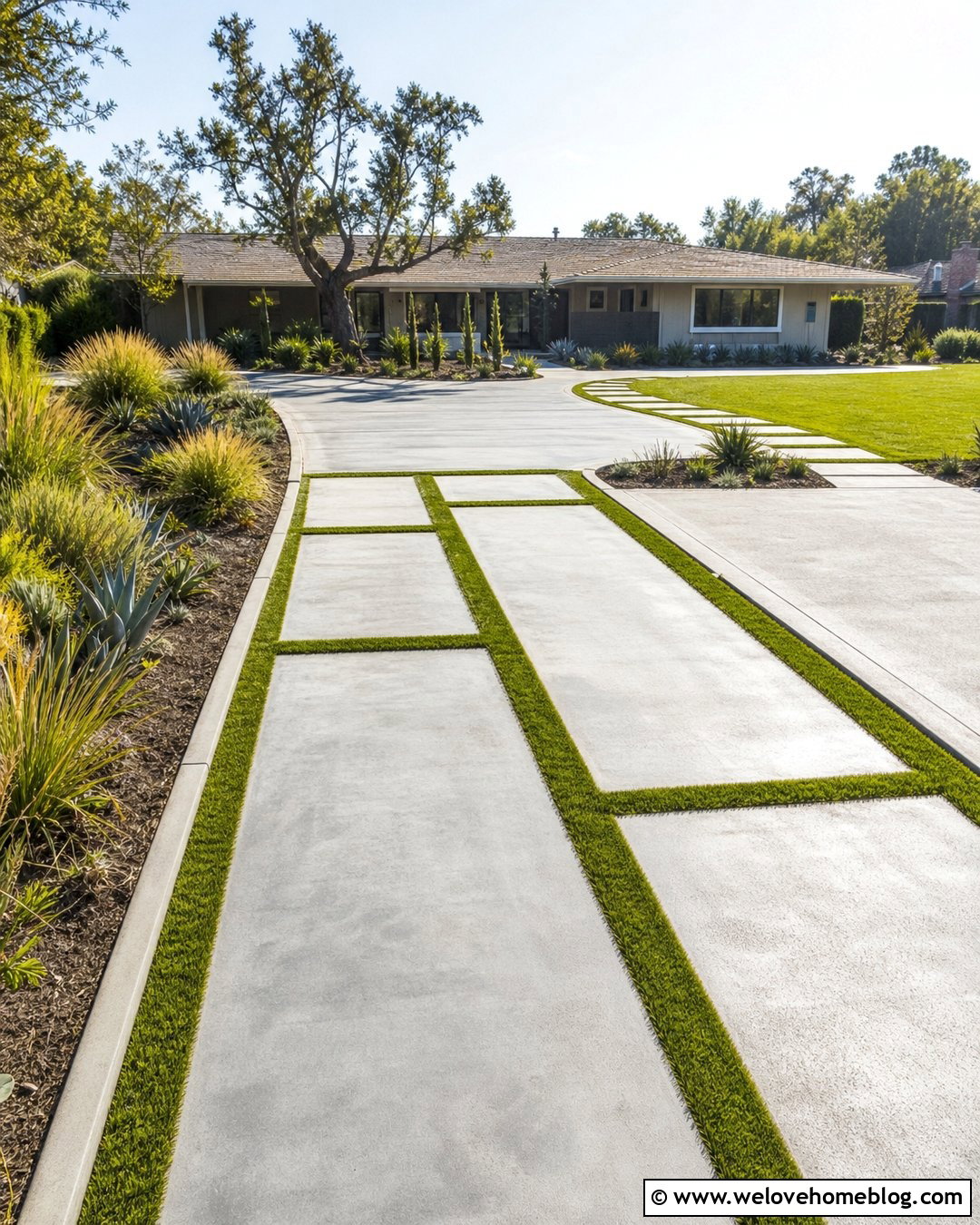
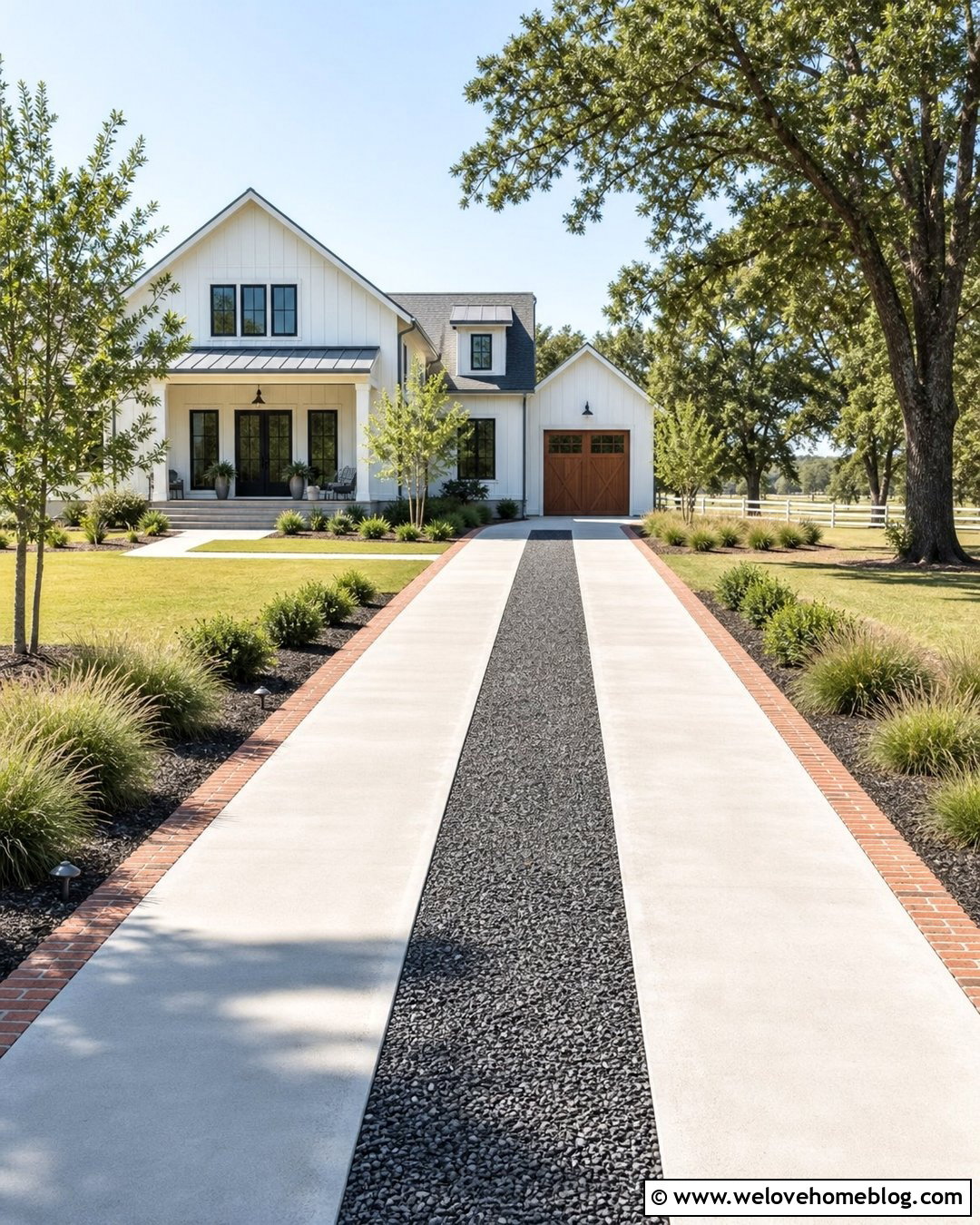
Concrete driving strips separated by grass or decorative gravel can make a turnaround feel lighter and less expansive. Use two broad bands of smooth gray concrete along the main driveway, then widen and curve them through the turning zone. Fill the spaces between the strips with reinforced turf or compacted river gravel that can tolerate occasional tire contact. Flush concrete edging will keep each section aligned and simplify lawn maintenance. This modern treatment looks best beside minimalist, midcentury, or low-profile homes. Repeat the strip layout in the walkway or front landing for visual continuity. The path of travel must remain easy to understand, so avoid overly complicated patterns. Simple lines, open lawn, and structured planting beds create the cleanest complete driveway composition.
13. Asphalt Turnaround With Paver Border
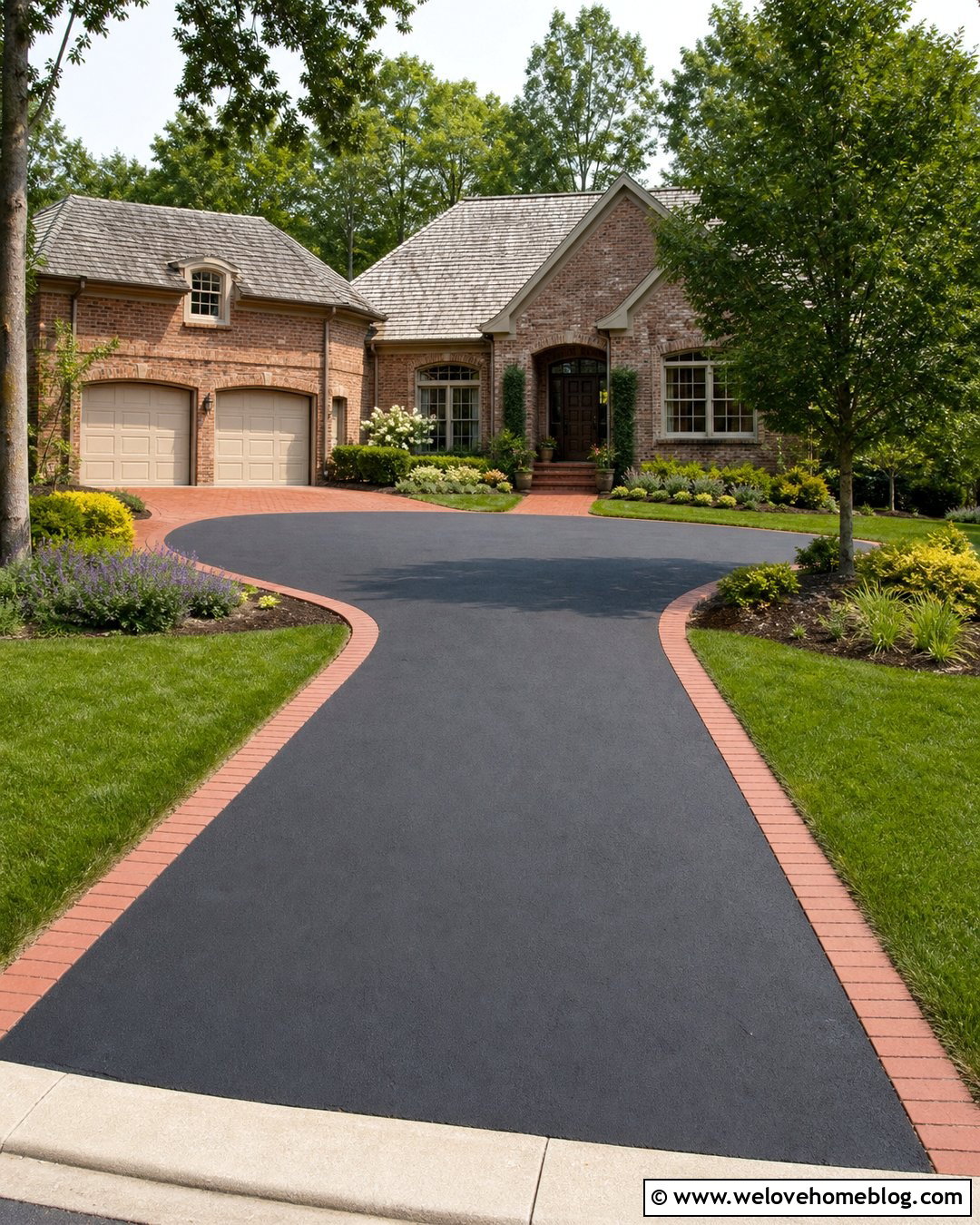
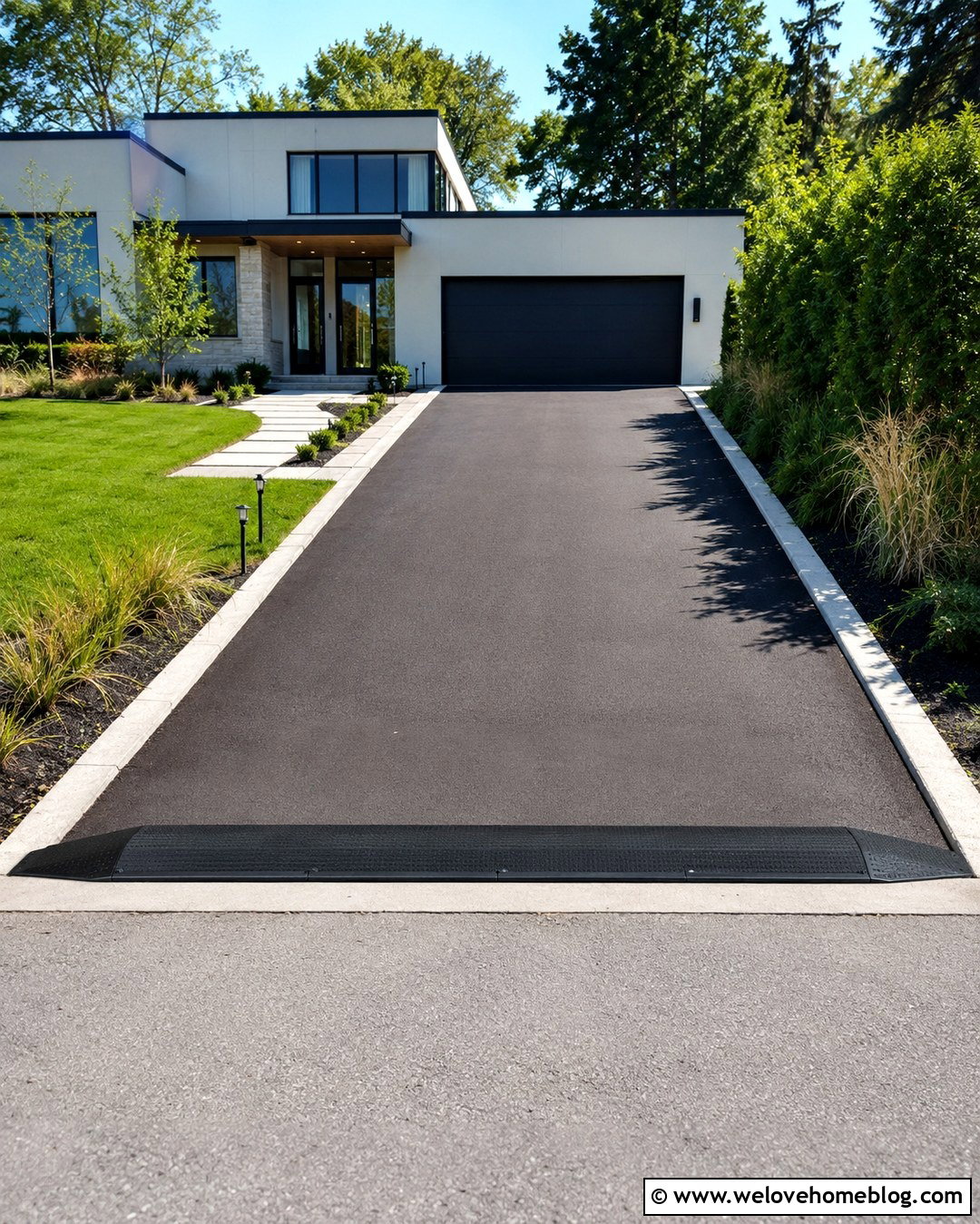
Black asphalt is practical for a long driveway, but a contrasting paver border can make the turnaround look more finished. Create a broad rectangular or rounded turning pad near the garage and outline it with red clay brick or charcoal concrete pavers. Carry the same border along the driveway entrance for a consistent view from the street. Plant low shrubs and perennials outside the edging, leaving the corners open for better visibility. A paver apron in front of the garage can provide another attractive transition while separating asphalt from the building. This design fits many suburban homes and offers a balanced mix of simple paving and traditional detail. The strong border also helps define where lawn, mulch, and pavement should meet.
14. Crushed Limestone Farmhouse Turnaround
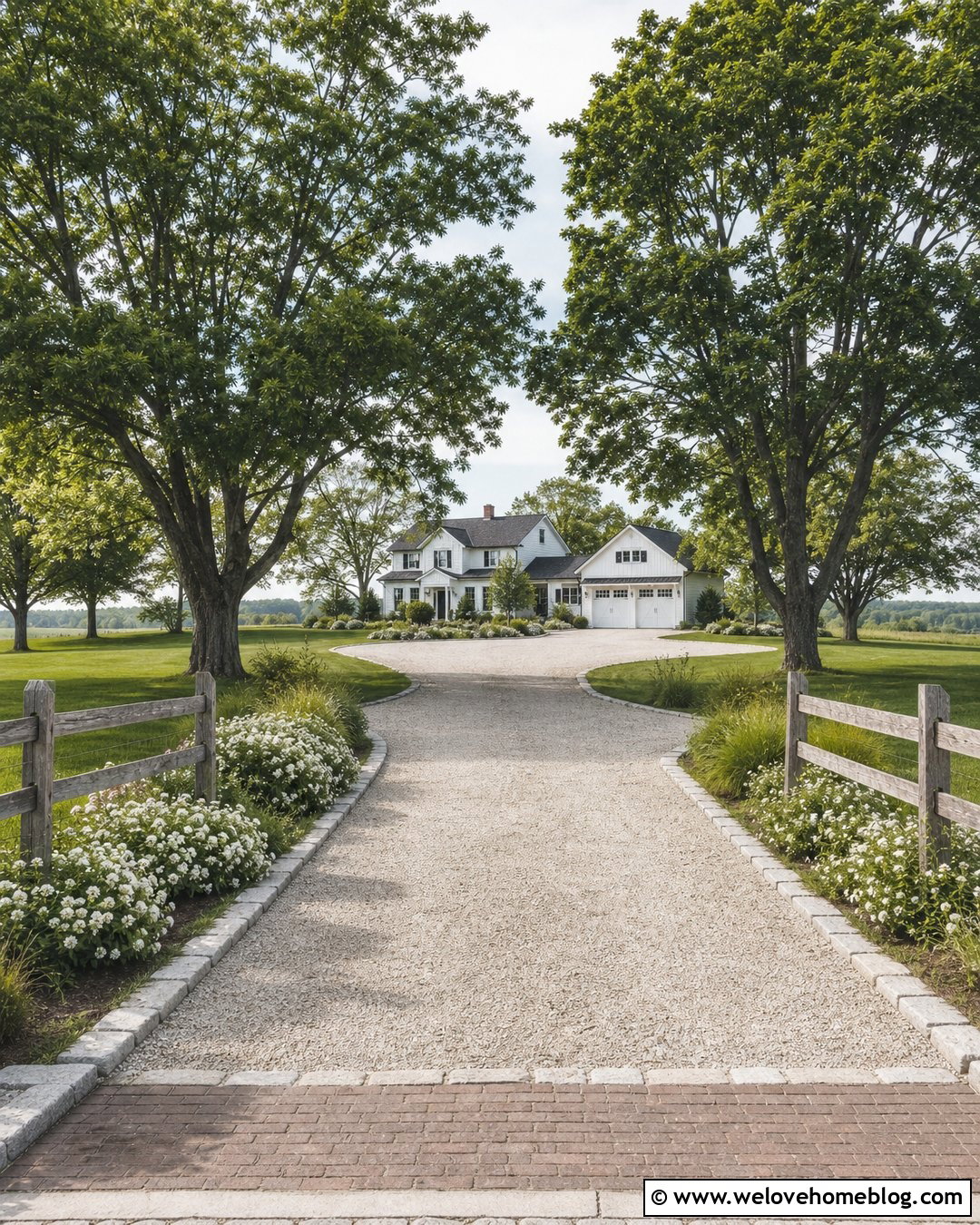
Pale crushed limestone creates a bright, welcoming approach to a modern farmhouse or traditional country home. Form a generous hammerhead or rectangular turnaround near the garage using well-compacted limestone over a properly prepared base. Edge the driving area with reclaimed granite blocks, sturdy timber, or matching limestone curbs. Frame the space with split-rail fencing, native grasses, white flowering shrubs, and a few shade trees. The broad rural setting allows the extra gravel area to blend into the landscape rather than resemble a parking lot. Use larger stone at drainage channels and finer material on the finished surface. A brick apron beside the house can catch loose gravel and create a clean transition from the rustic turnaround to the garage and front walkway.
15. Exposed Aggregate Island Turnaround
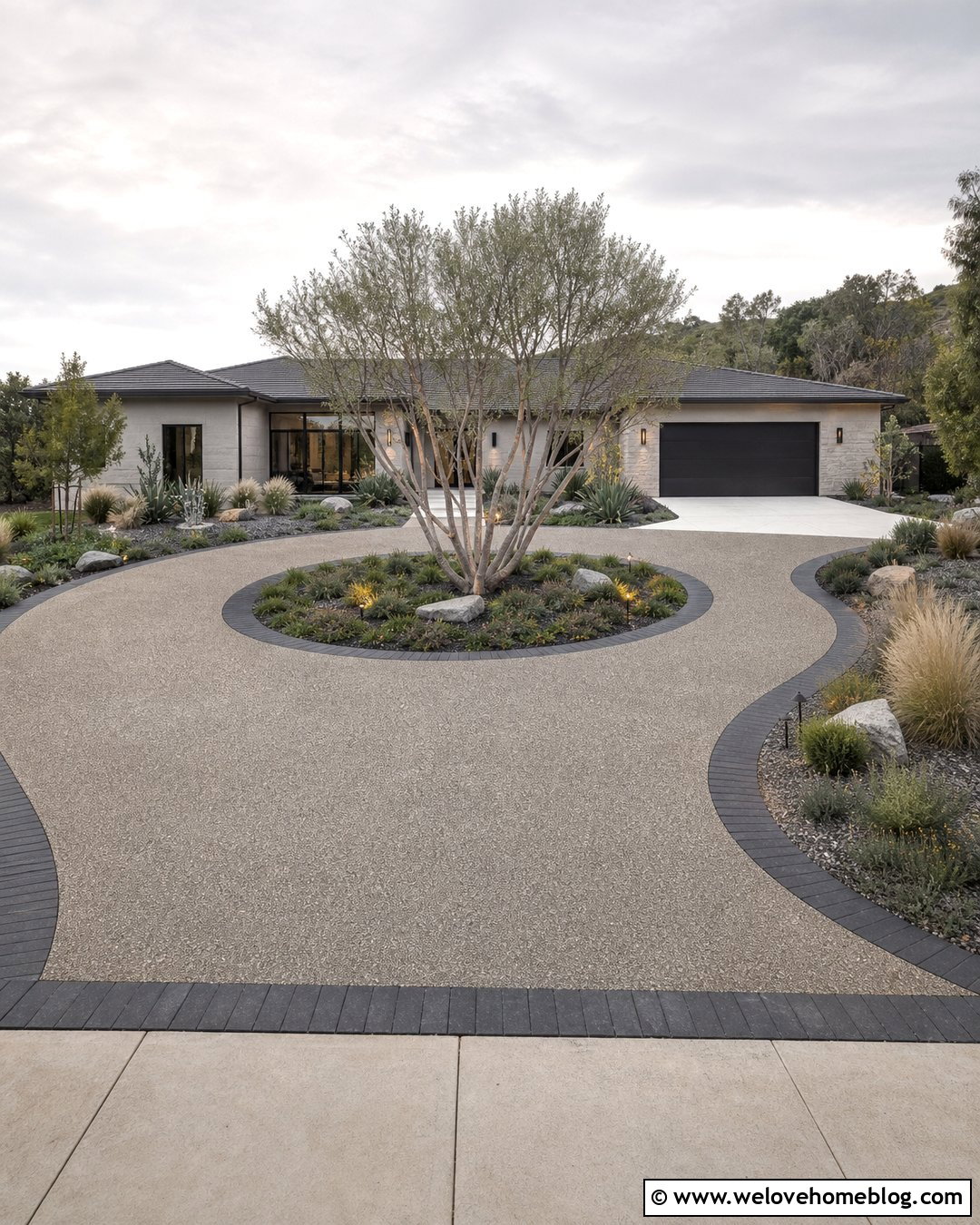
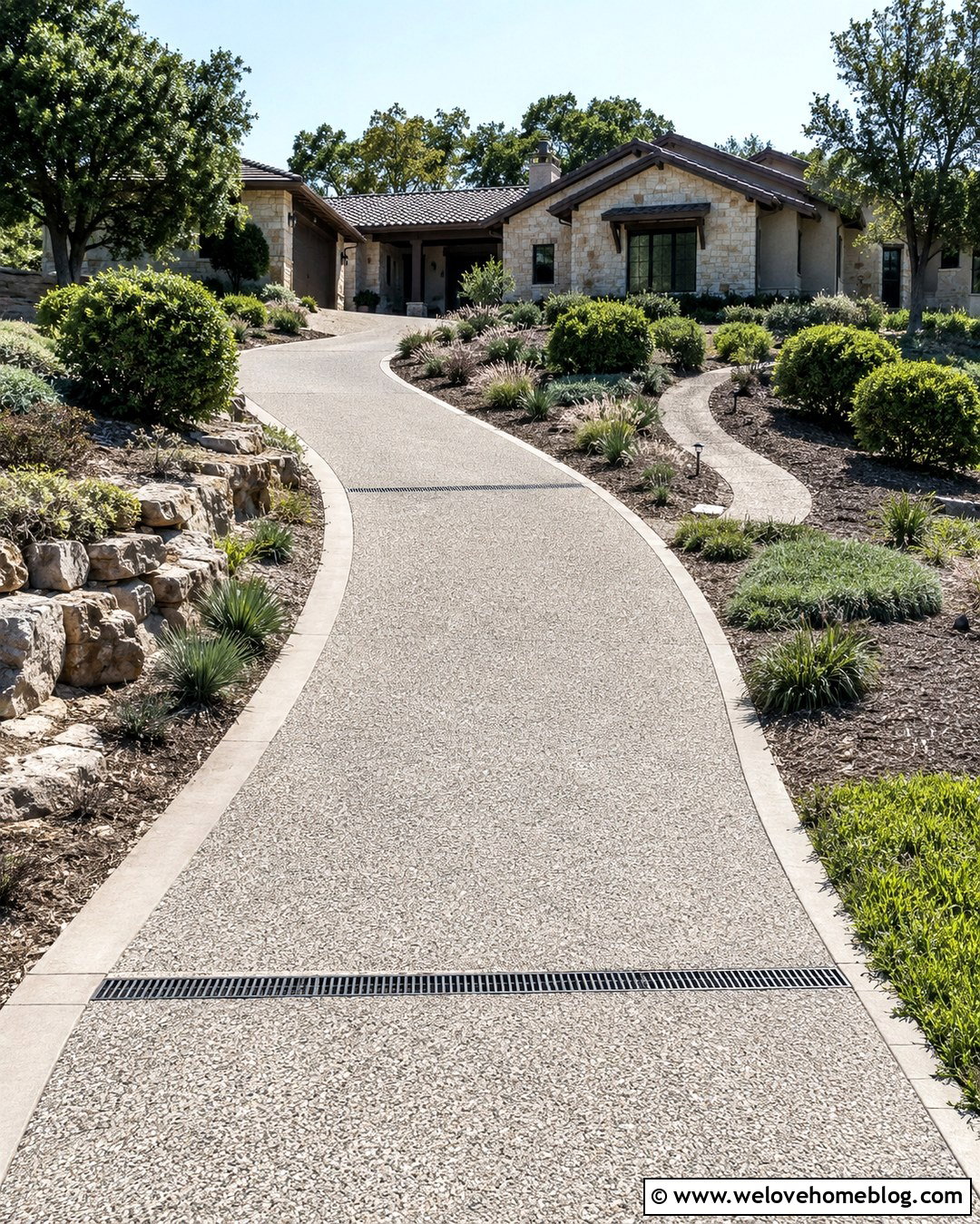
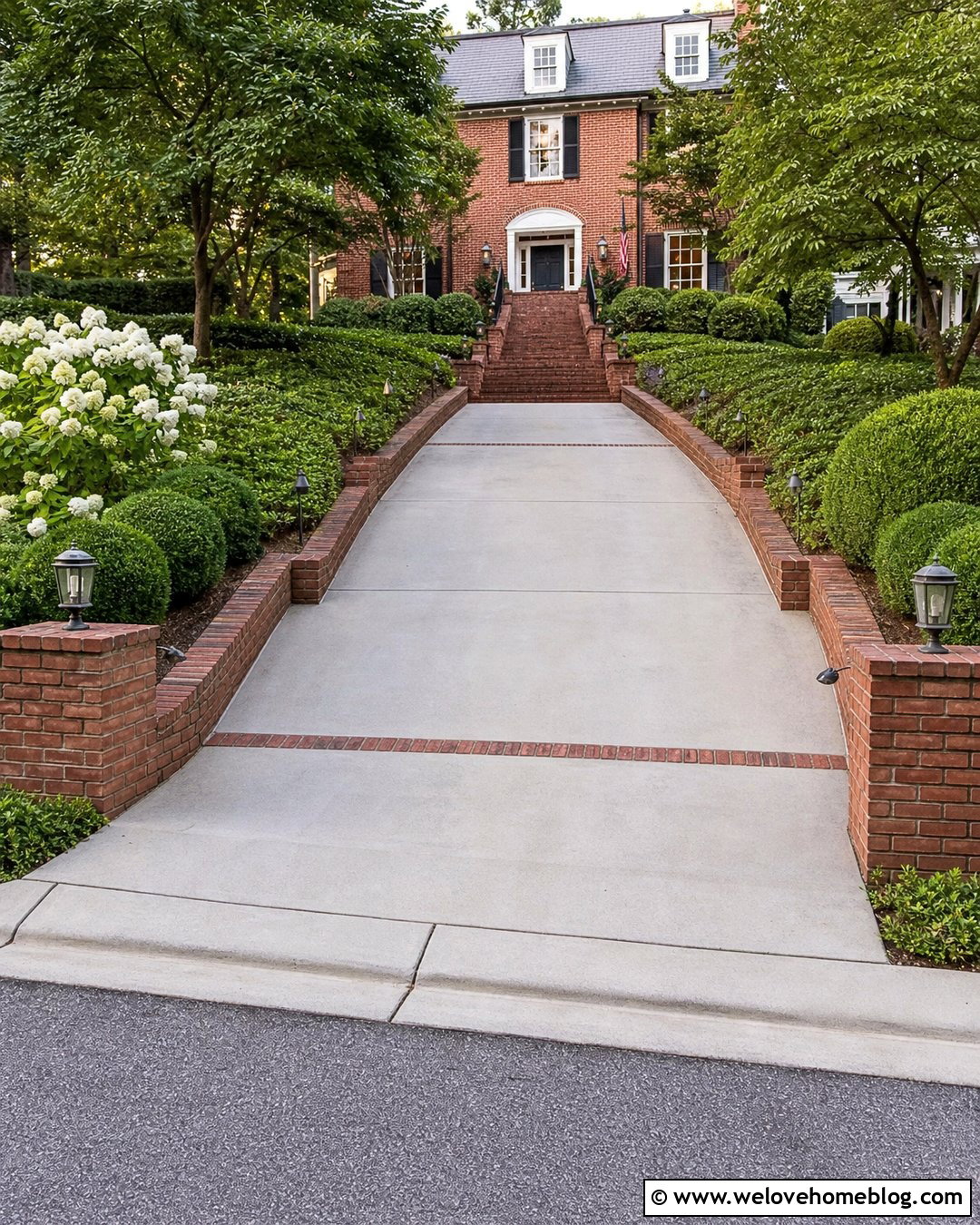
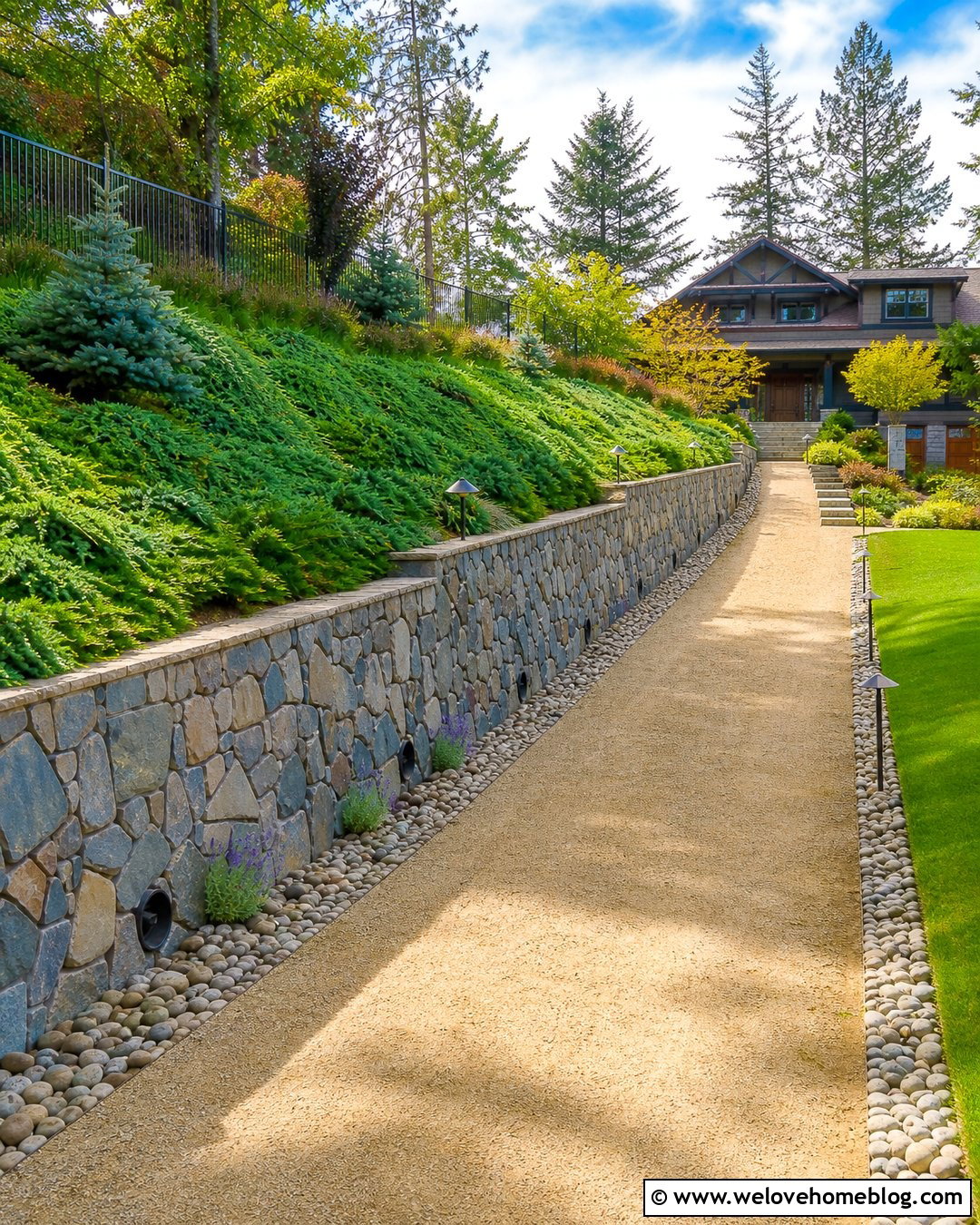
Exposed aggregate concrete brings subtle texture to a turnaround built around a compact central island. Shape the driving area as an offset circle or rounded rectangle, using warm gray aggregate that complements natural stone on the house. Outline the inner island with dark pavers, then plant it with one sculptural tree, low evergreen groundcover, and drought-tolerant perennials. The island organizes traffic while breaking up the visual expanse of concrete. Keep branches, rocks, and raised planters away from the inner driving edge. A smooth concrete apron can connect the textured turnaround to the garage for a comfortable transition. This complete layout feels especially appropriate for contemporary ranch homes and desert-inspired properties with simple, architectural landscaping and open views across the front yard.
16. Stamped Concrete Turnaround Pad
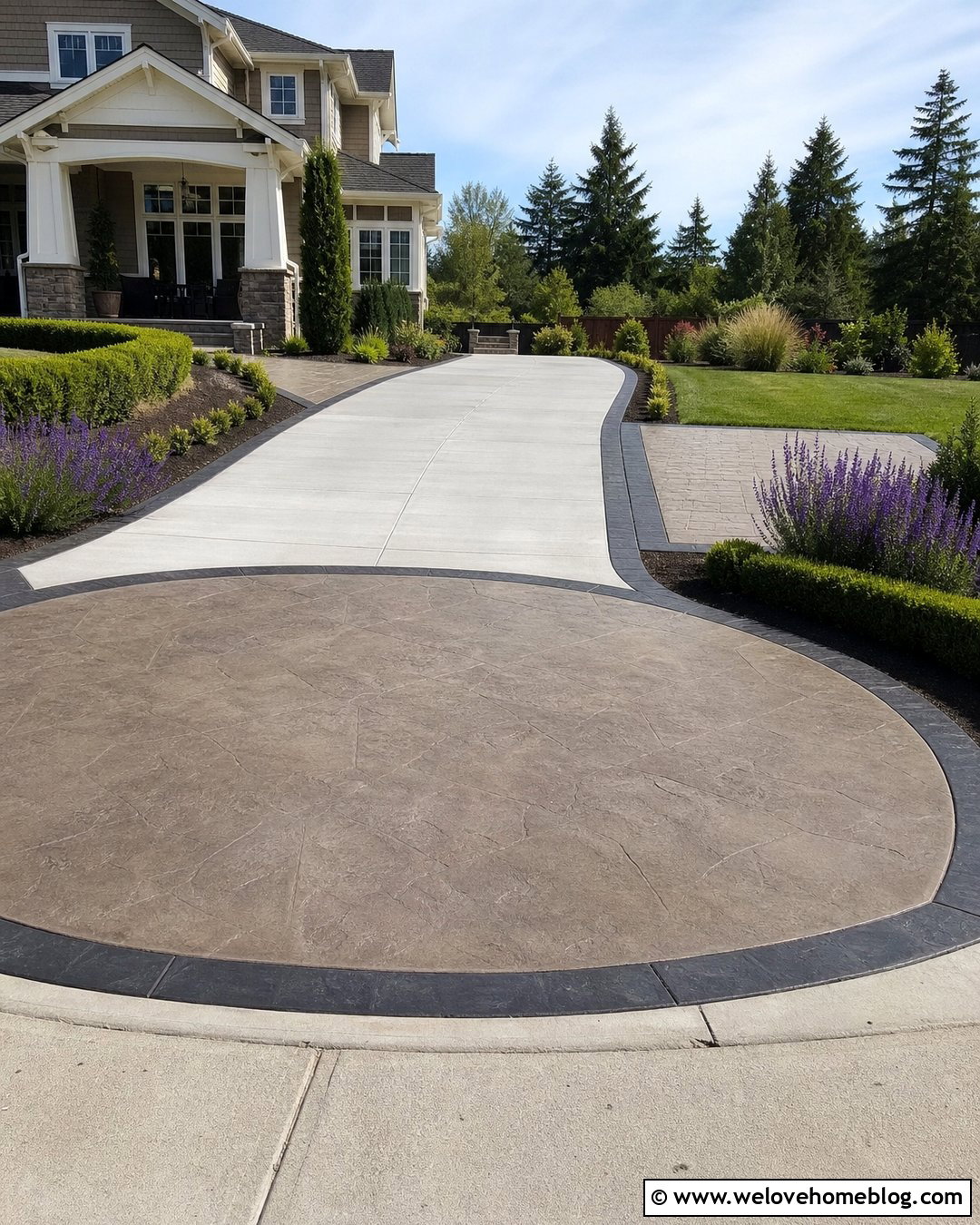
Stamped concrete can make a basic turnaround pad resemble stone without introducing numerous joints or loose pieces. Use a slate-textured pattern in a medium taupe tone for a square side pad connected to a lighter broom-finished concrete driveway. Add a darker integral border to frame the turning zone and coordinate with the home’s roof or shutters. Curved beds of boxwood, salvia, and ornamental grass can soften the corners while preserving a wide vehicle path. This look suits traditional suburban and Craftsman homes that need extra detail near the garage. Keep the pattern scale moderate so it remains believable across the large area. Matching stamped accents on the walkway or porch steps will make the turnaround feel integrated rather than added later.
17. Narrow Lot Offset Driveway Turnaround
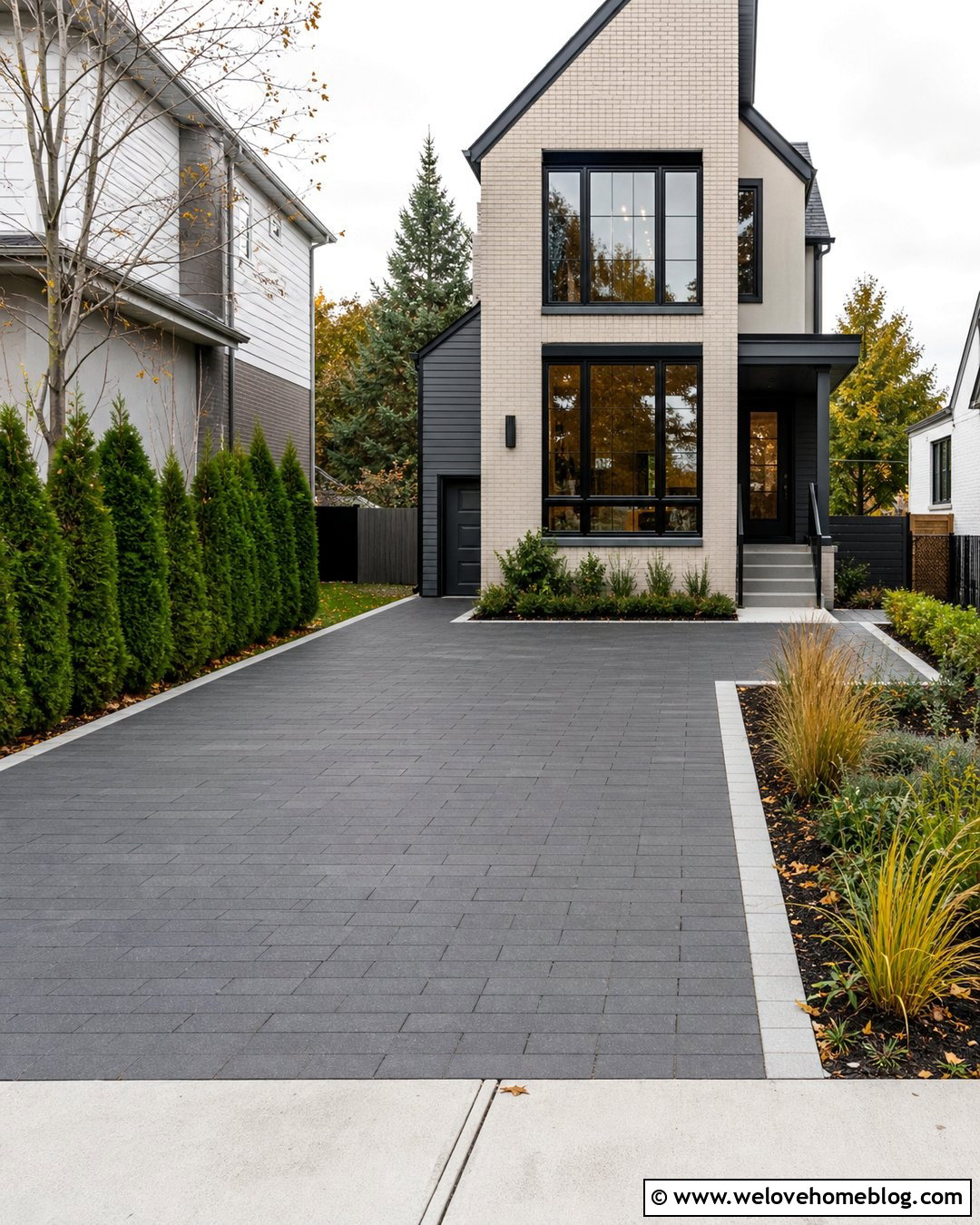
An offset turnaround places the maneuvering area to one side of a straight driveway, preserving more lawn on the opposite side. Use charcoal rectangular pavers for the main drive and extend a compact rectangular pad toward an unused side yard. A flush light-gray border can clarify the edges without creating obstacles. Add upright shrubs along the property line and a narrow rain garden at the outer edge, provided drainage planning supports that placement. Near the house, connect the turnaround to a side-facing garage with a clean paver apron. This layout works well for urban infill homes, townhouses with wider lots, and properties where the front door sits close to the driveway. The asymmetrical design feels balanced when landscaping adds height opposite the paved extension.
18. Sloped Driveway Level Turnaround
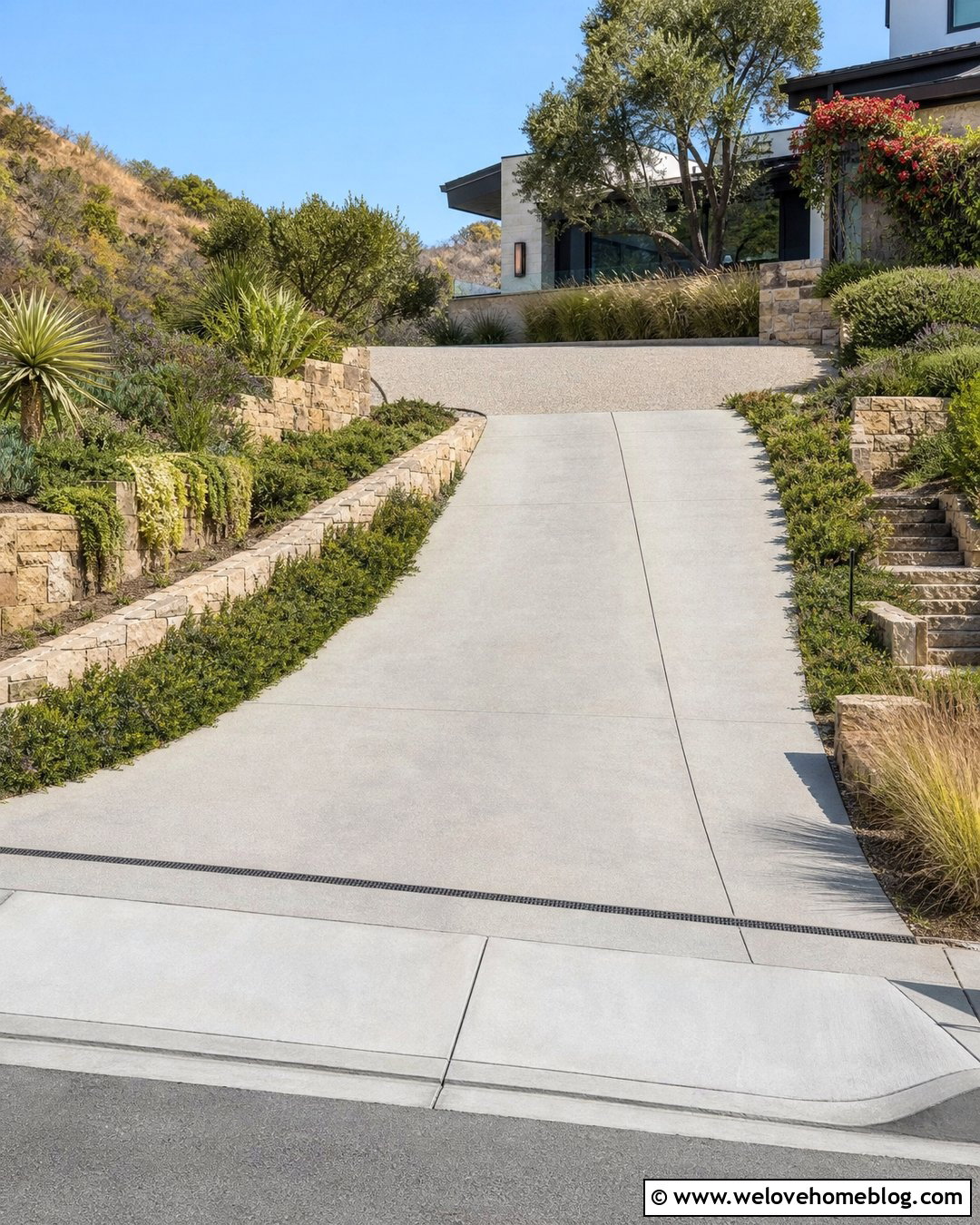
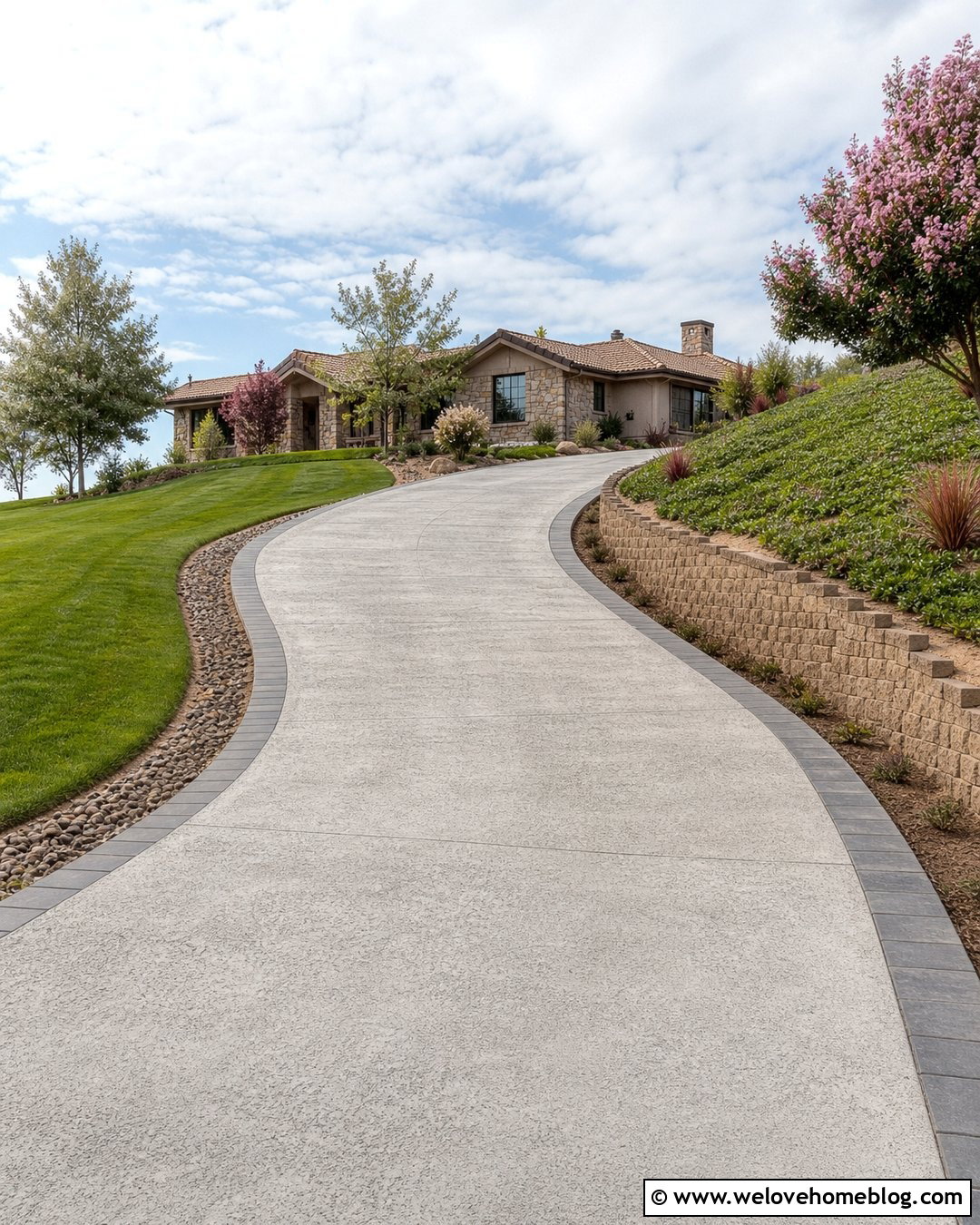
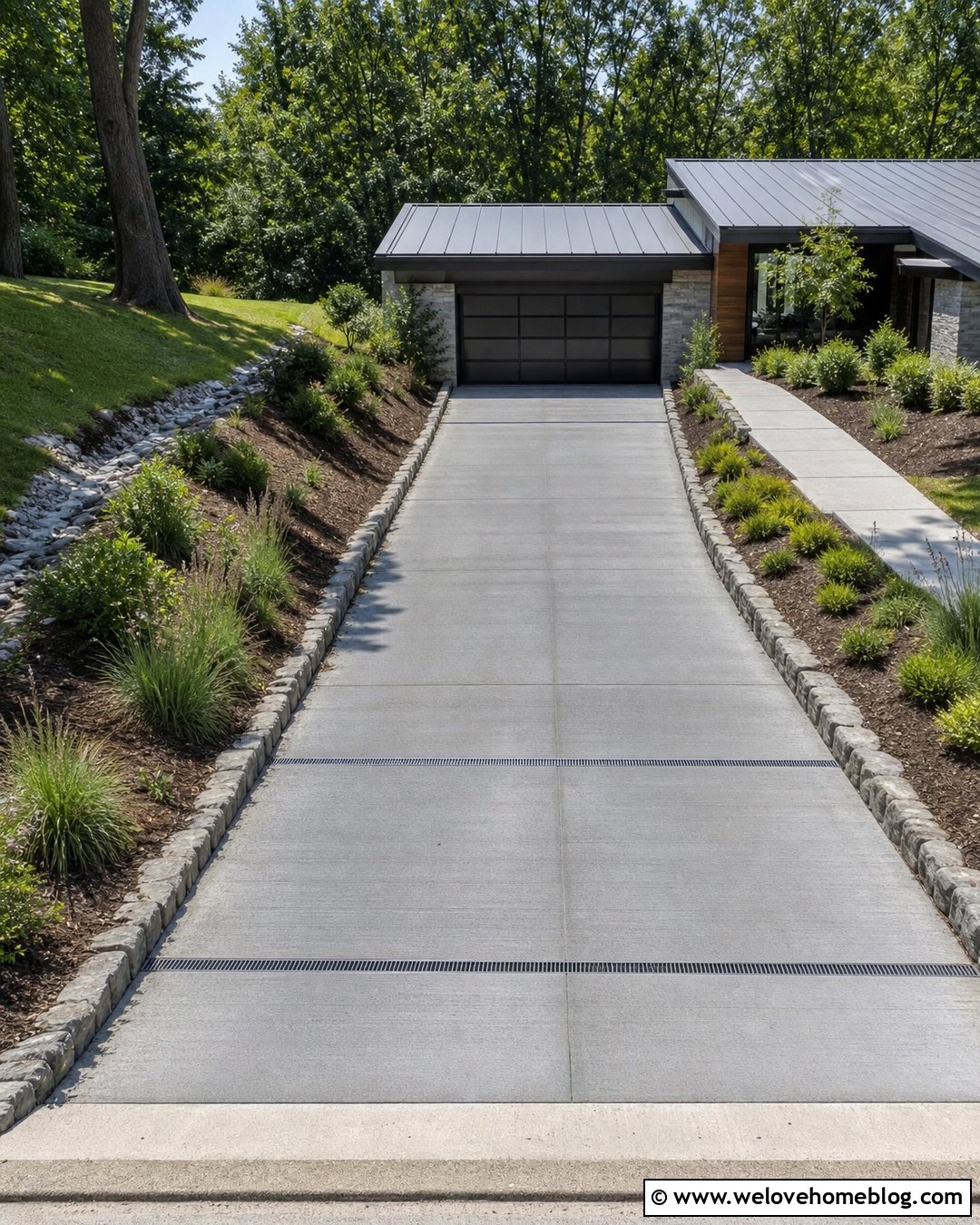
A sloped property benefits from a level turnaround placed near the house rather than on the steepest part of the approach. Use textured poured concrete for traction on the incline and transition to an exposed aggregate turning pad at the top. Low stone retaining walls can hold the surrounding grade while forming clear visual borders. Plant the upper banks with deep-rooted groundcover, ornamental grasses, and compact shrubs that will not obstruct drivers. Drainage should direct water away from the garage and prevent runoff from crossing the main maneuvering area. This complete design pairs naturally with hillside contemporary, mountain, and split-level homes. Broad transitions between slope and pad help the layout feel comfortable, while coordinated stone steps can connect the driveway to the front entrance.
19. Wide Driveway Turnaround For Large Vehicles
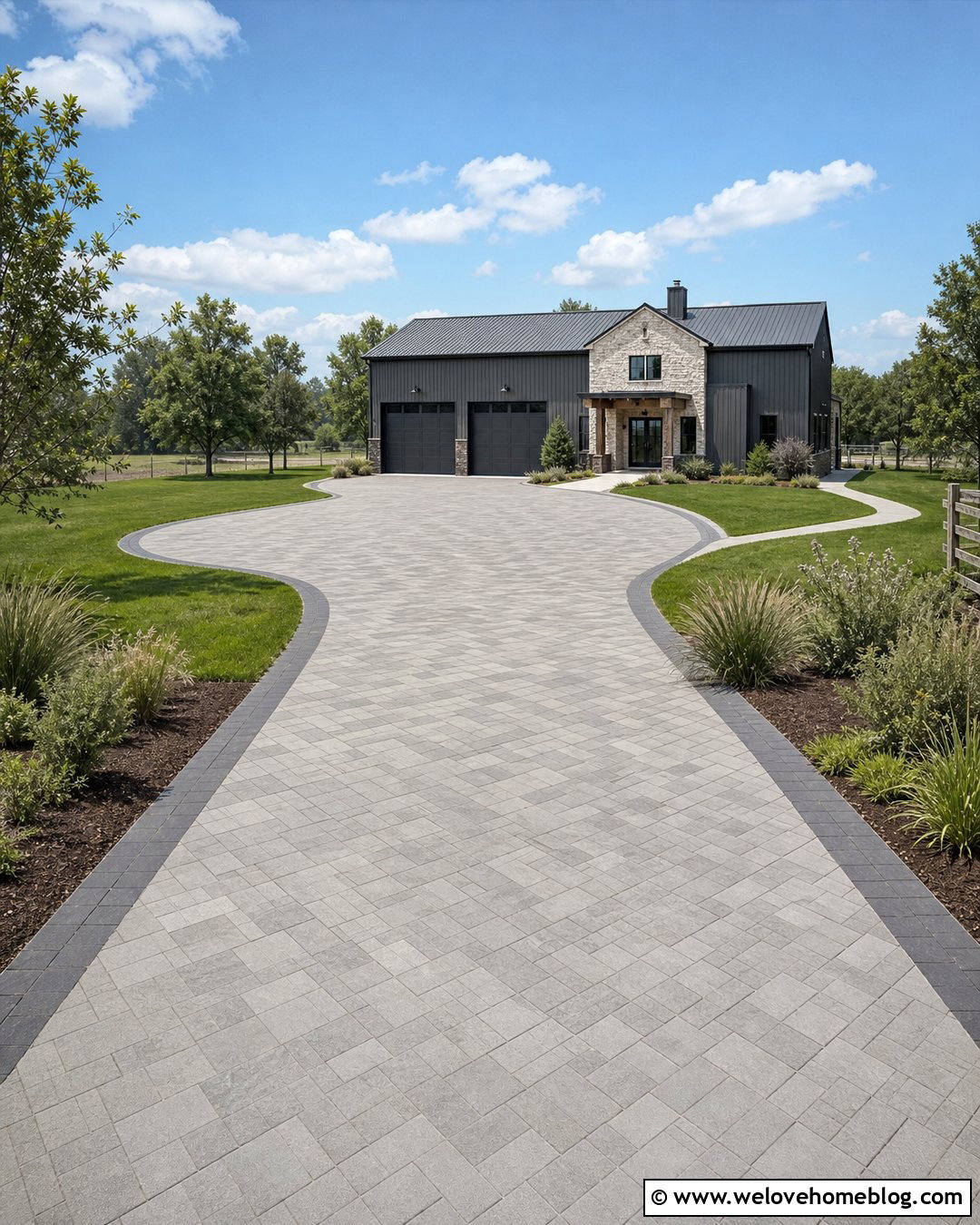
Homes that regularly accommodate pickups, trailers, or recreational vehicles need a wider and less decorative turning area. Build a broad concrete hammerhead or paved parking court with open corners and a clearly marked route back to the main driveway. Heavy-duty gray interlocking concrete pavers can add character while supporting the expansive layout. Use a dark border to define the edges, but avoid raised curbs in locations where longer vehicles may track. Place shade trees and planting beds farther from the pavement than usual. A separate walkway should guide guests to the entrance without crossing the primary maneuvering zone. This complete look works well on large ranch, barndominium, and country properties where function matters, yet an organized paving pattern still supports attractive curb appeal.
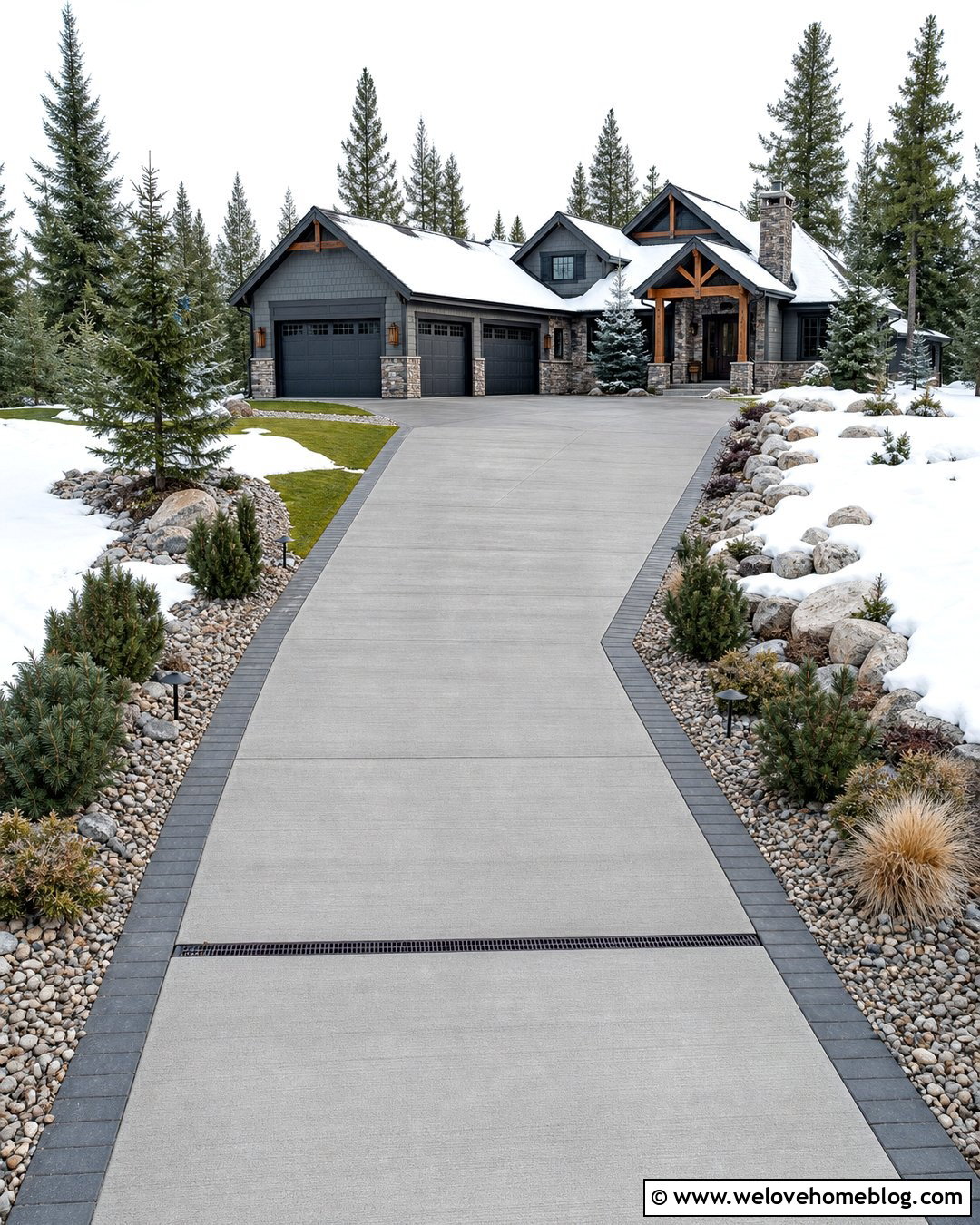
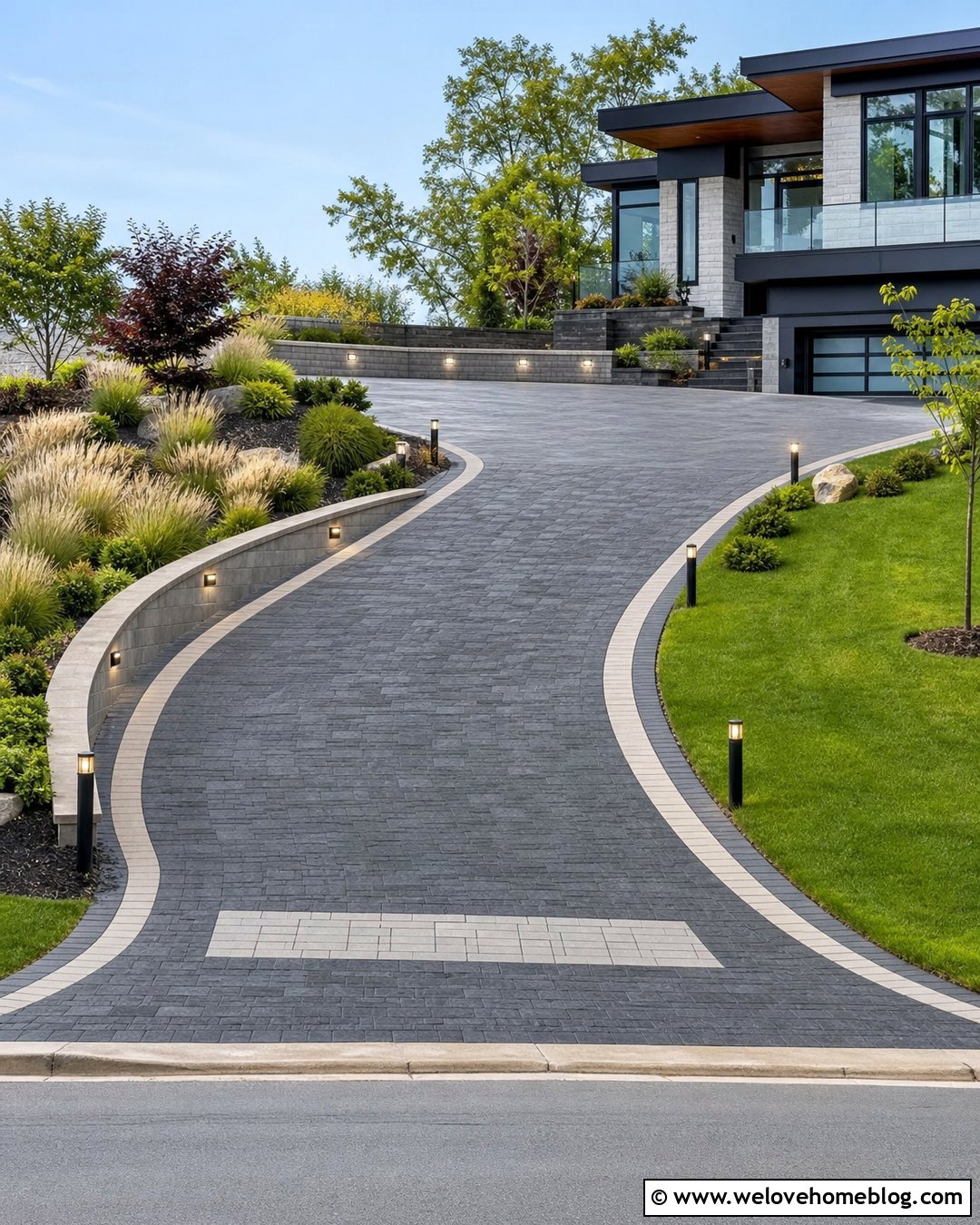
20. Budget Gravel Driveway Turnaround
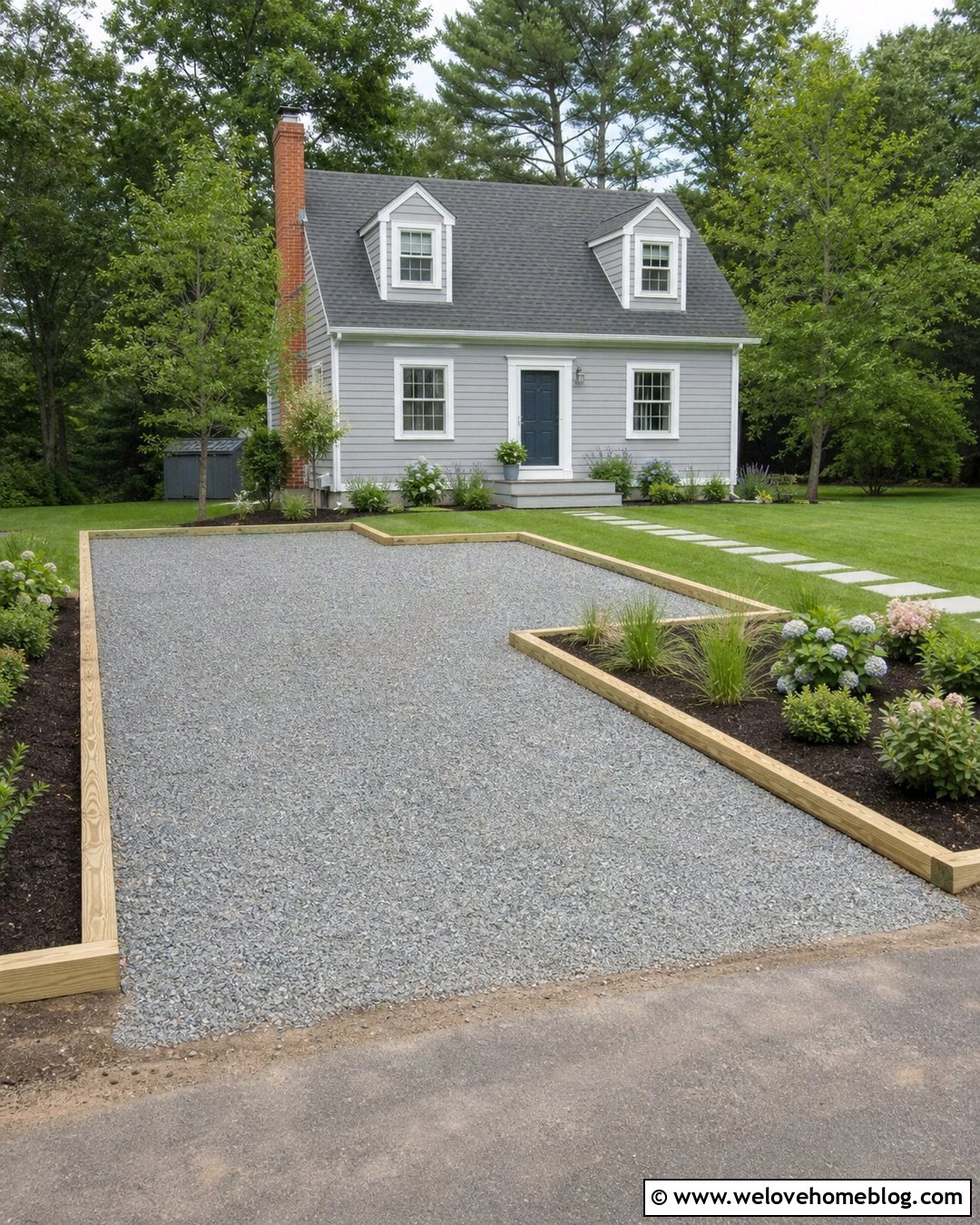
A simple gravel extension can create useful turning space without rebuilding the entire driveway. Add a rectangular or angled pad beside the existing drive using compacted gray crushed gravel that closely matches the original surface. Define the perimeter with pressure-treated timber, steel edging, or economical concrete landscape blocks. Keep the shape straightforward to reduce excavation and material waste. Mulched beds with hardy grasses and low shrubs can soften the new edges, while a stepping-stone walkway prevents pedestrians from crossing loose gravel. The completed area should look like a deliberate part of the property rather than an improvised parking patch. This approach works with cottages, starter homes, and rural houses, offering a practical way to improve daily access while leaving room for future paving upgrades.
Conclusion:
The best turnaround combines comfortable vehicle movement with a surface, shape, and landscape that suit the property. Compact T-shaped pads and side bays can serve narrow lots, while circular loops and motor courts create a more generous arrival experience. Concrete, asphalt, gravel, pavers, cobblestone, and permeable grids can all work when supported by a suitable base, clear edging, and thoughtful drainage. Before construction, mark the proposed outline and test it with the vehicles that will use the space. Keep plants, walls, and decorative features outside the active turning path. With careful planning, these 20 Turnaround Driveway Ideas can improve convenience, forward-facing exits, and overall curb appeal without overwhelming the front yard.

Related posts:
Leave a Reply