
A good-looking driveway does not need premium stone, elaborate masonry, or a large landscaping budget. These **35 Gravel Driveway Cheap Ideas** show how affordable gravel can create an attractive, practical entrance when the surface, shape, edging, and planting are planned together. Crushed stone is usually best for vehicle areas because its angular pieces compact more securely than smooth, rounded gravel. Proper grading, drainage, and a stable base also matter more than decorative extras when you want lasting results. () You can control costs by choosing locally available stone, keeping the layout simple, reusing border materials, and limiting expensive details to visible areas near the street or garage. Below, you will find **35 Gravel Driveway Cheap Ideas** for different homes, lot sizes, and curb appeal goals.

1. Crushed Stone Gravel Driveway With Timber Edging
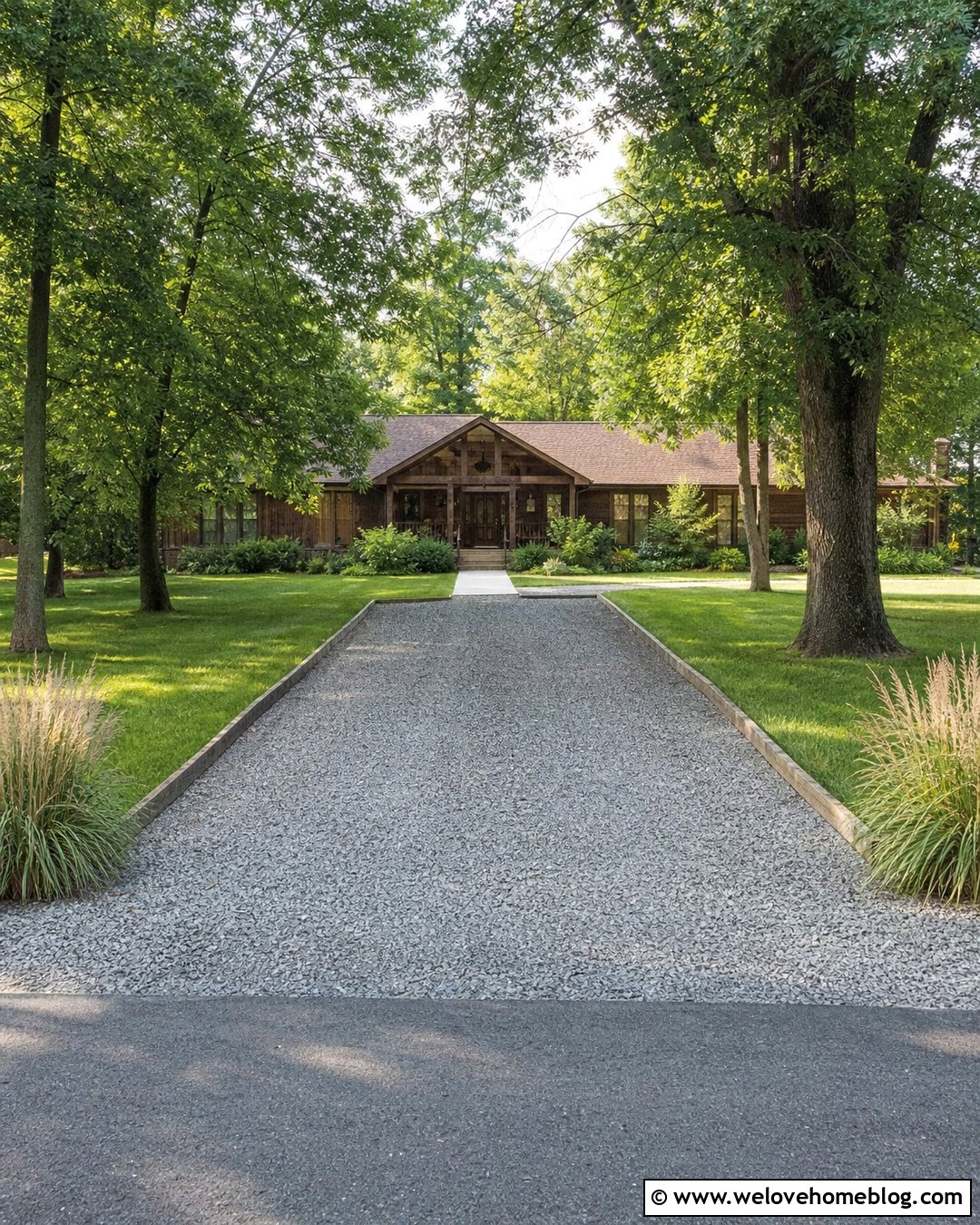
A straight crushed stone driveway with landscape timber edging is one of the easiest complete looks to build on a limited budget. Choose gray or tan crushed stone from a nearby quarry to reduce delivery costs. Install pressure-treated timbers along both sides, securing them with long spikes so the gravel remains contained. The strong lines work especially well beside ranch homes, cabins, and simple country houses. Add narrow grass strips outside the timbers rather than filling large planting beds. Two clusters of low ornamental grasses near the street can mark the entrance without creating much maintenance. Keep the driveway slightly crowned in the center so water moves toward the sides instead of collecting in tire tracks.
2. Pea Gravel Driveway With Reclaimed Brick Edging
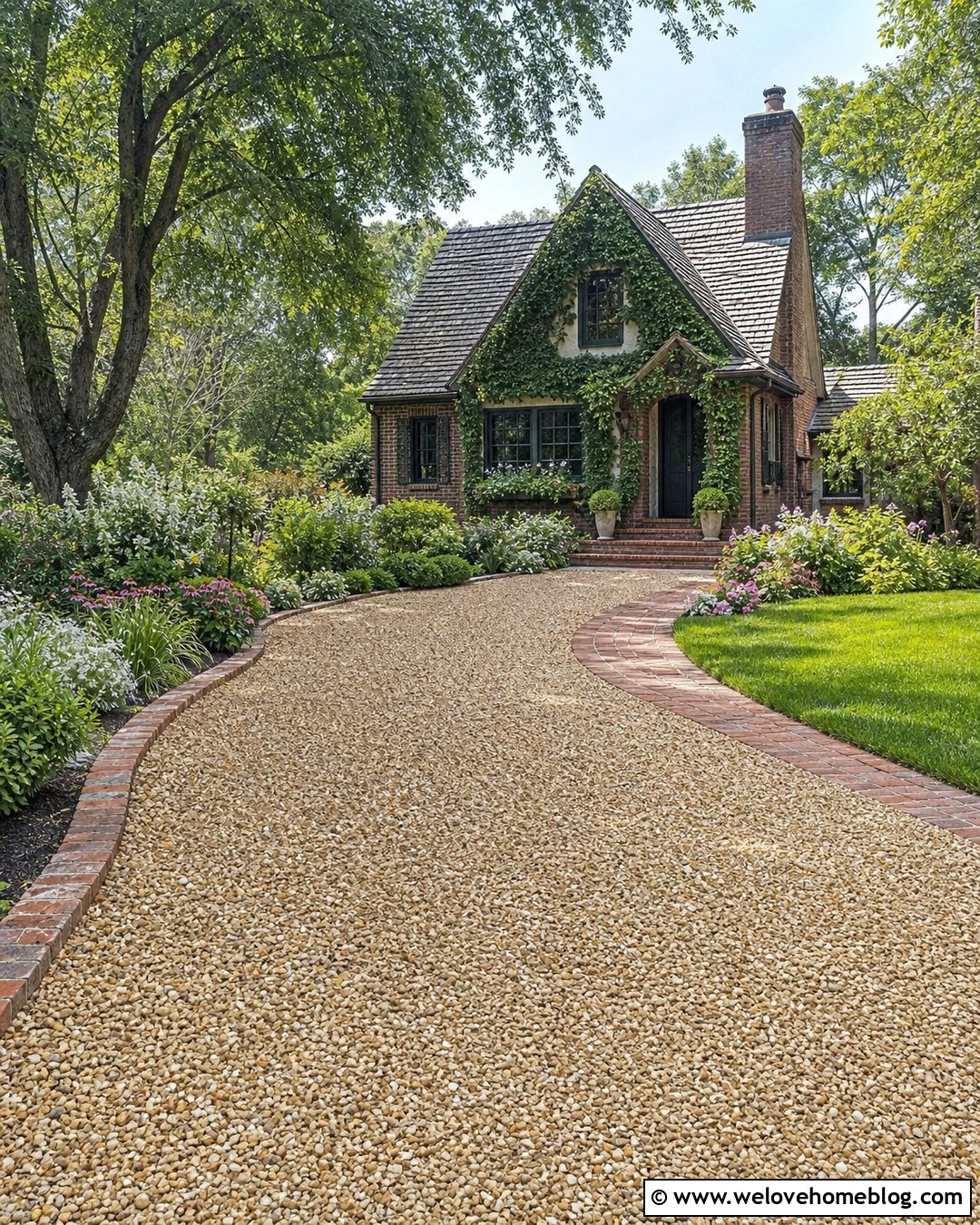
Warm pea gravel and reclaimed red brick can give a small cottage driveway a finished appearance without requiring new masonry. Use compacted crushed stone underneath, reserving the smoother pea gravel for a thin decorative top layer. This prevents the entire driveway from feeling loose under vehicle tires. Lay salvaged bricks lengthwise along each edge, keeping them nearly level with the surface so they are less likely to shift. A gently curved layout makes the approach feel softer and connects naturally with a brick walkway. Frame the entrance with inexpensive flowering perennials, mulch, and an open lawn. The mixture of golden gravel, aged brick, and relaxed planting creates welcoming curb appeal while making secondhand materials look intentional.
3. Gray Gravel Driveway With a Grass Center Strip
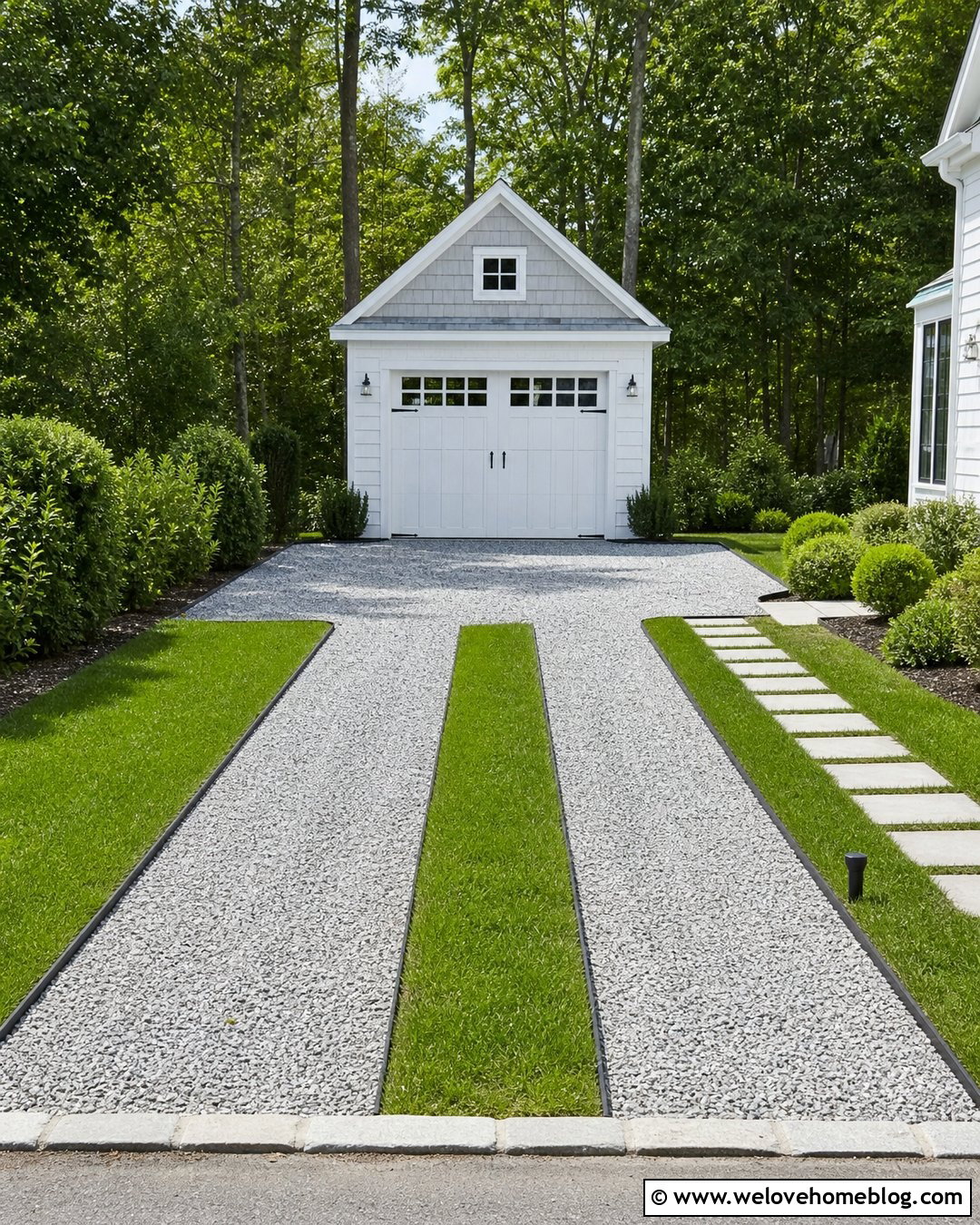
Why cover the entire entrance when two compacted driving lanes may be enough? A ribbon driveway uses gray crushed gravel beneath the vehicle tires while leaving a strip of grass through the center. This design reduces the amount of stone required and suits cottages, detached garages, and low-traffic rural properties. Install flexible metal or recycled plastic edging along the inner and outer edges of each lane. The borders keep the gravel separated from the lawn and help preserve the clean ribbon shape. Continue the grass center toward the garage, but add a full-width gravel parking pad where vehicles turn or stop. A few simple shrubs beside the house complete the look without adding expensive hardscape.
4. White Gravel Driveway With Black Plastic Edging
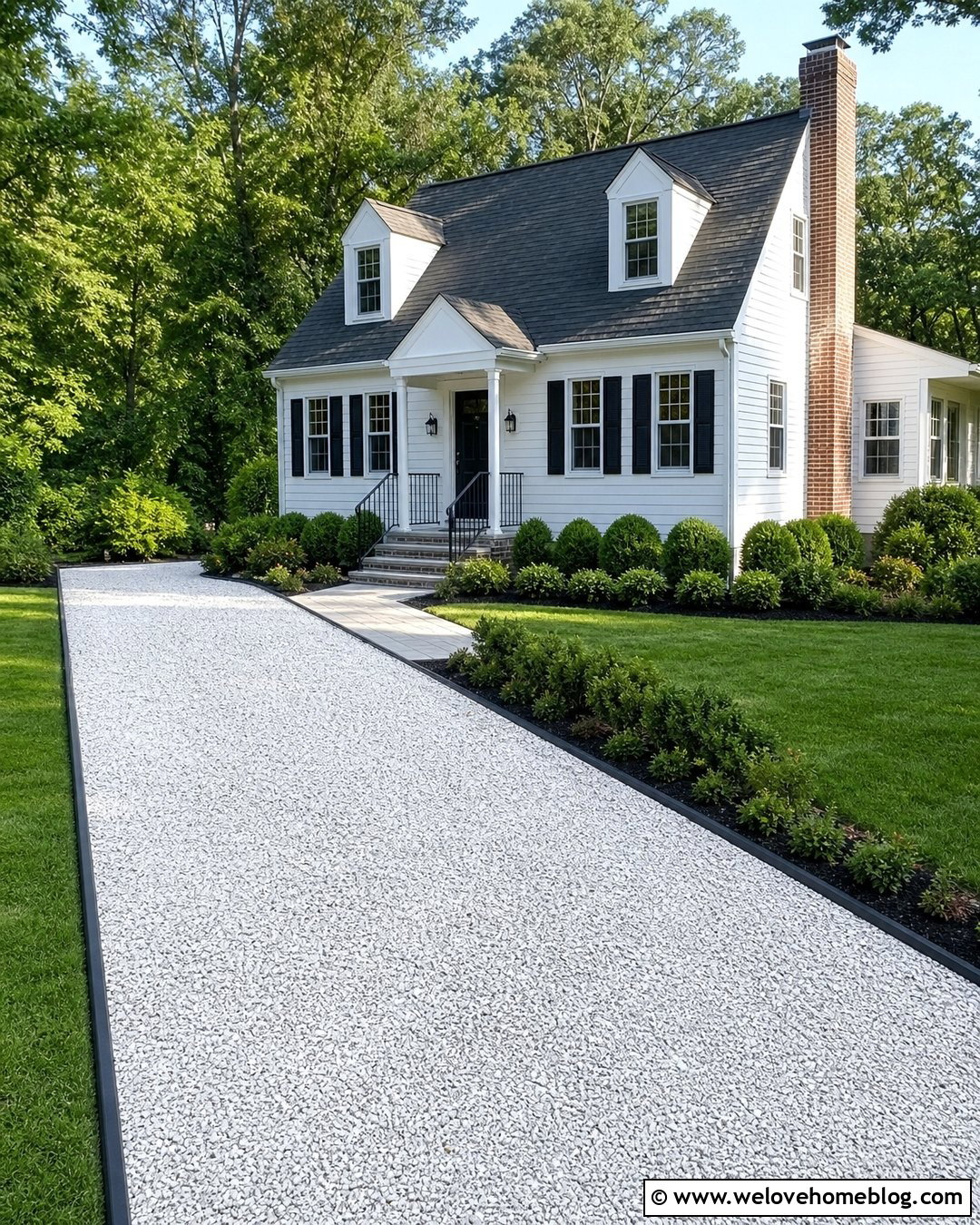
White limestone gravel can brighten a shaded front yard and make a basic driveway feel cleaner. To keep the project economical, use affordable gray crushed aggregate for the base and spread white stone only across the visible top. Black recycled plastic edging creates a crisp boundary without the cost of brick, steel, or poured concrete curbs. Use a straight driveway shape beside a compact Cape Cod or bungalow, where the pale surface can complement white siding and dark shutters. Add deep green foundation shrubs and a narrow mulch bed along one side. Since light gravel can show soil and leaves, avoid placing it directly beneath messy trees. Simple planting and sharp edges will let the contrasting colors carry the design.
5. Gravel Driveway With Natural Rock Borders
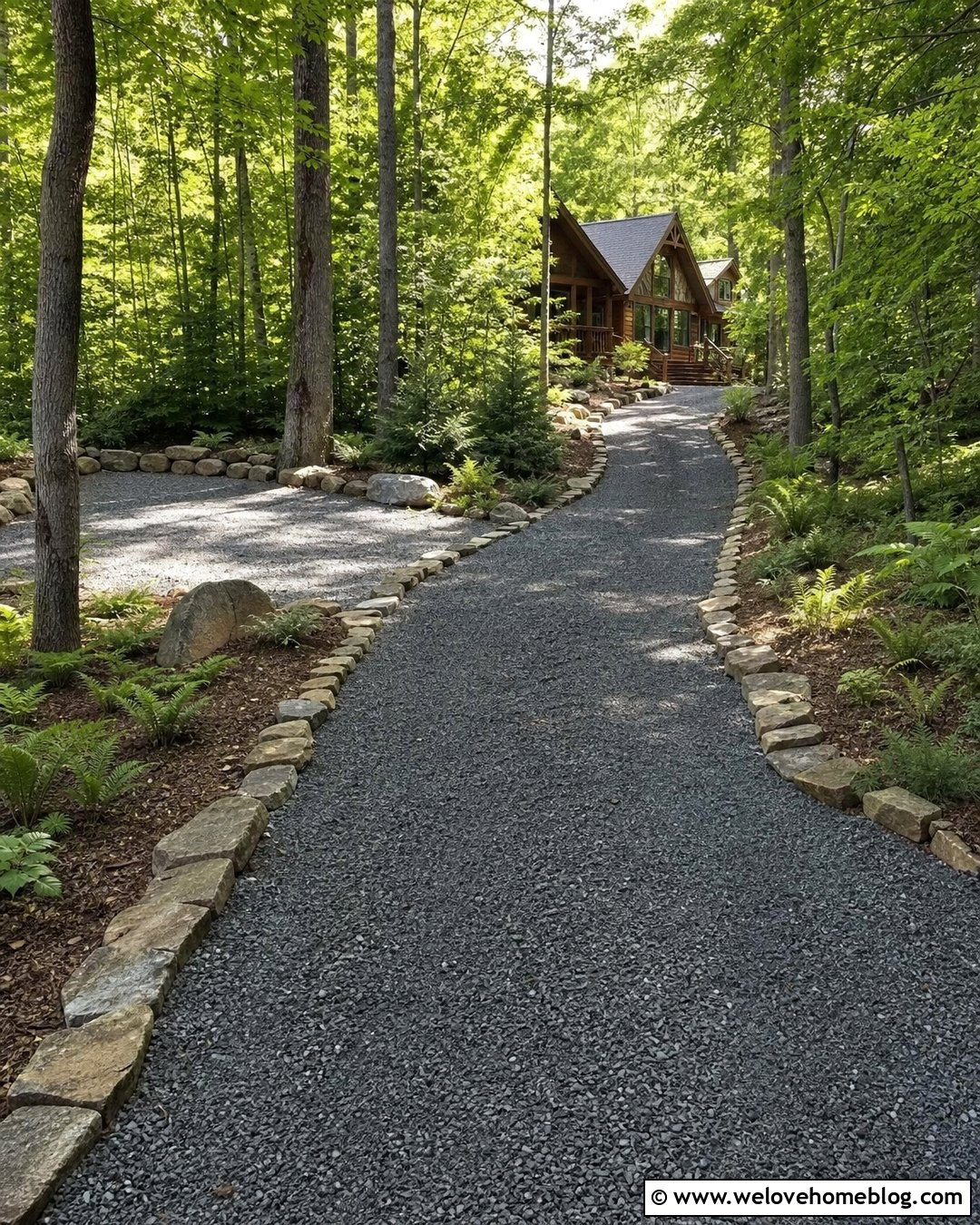
Fieldstone gathered on the property or purchased in an unsorted local load can become an affordable border for a rustic gravel driveway. Pair medium gray crushed gravel with irregular rocks placed along both sides of a gently winding approach. Set the largest stones partly into the ground to reduce movement and make the border appear established. Avoid making the rock line too tall, especially where drivers need extra clearance. Native grasses, low-growing ground covers, and existing trees can fill the surrounding landscape without formal beds. This complete look works well with cabins, country homes, and wooded lots. Repeating several matching rocks around the mailbox or entrance creates visual consistency without requiring decorative pillars or costly custom stonework.
6. Gravel Driveway With Concrete Paver Ribbons
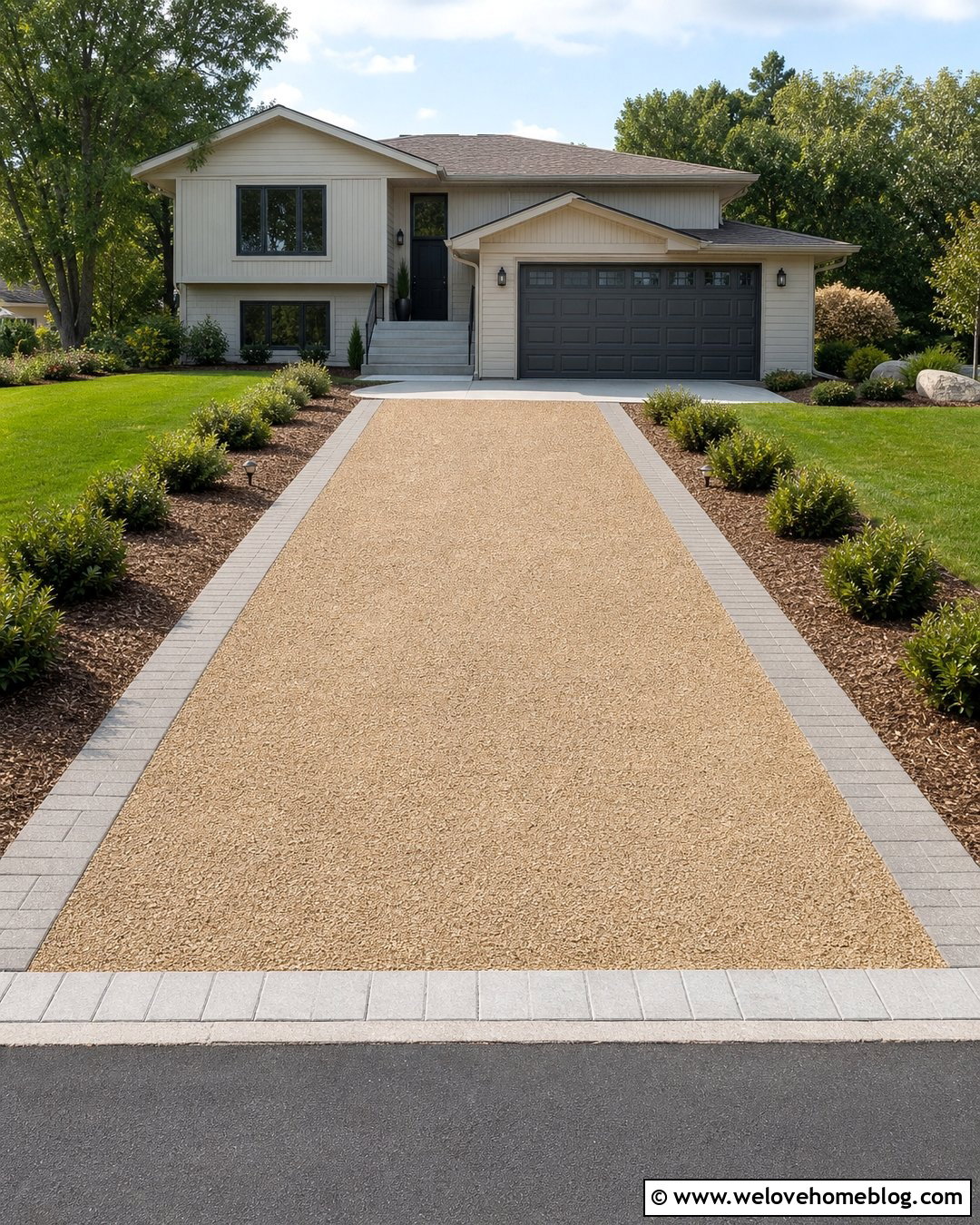
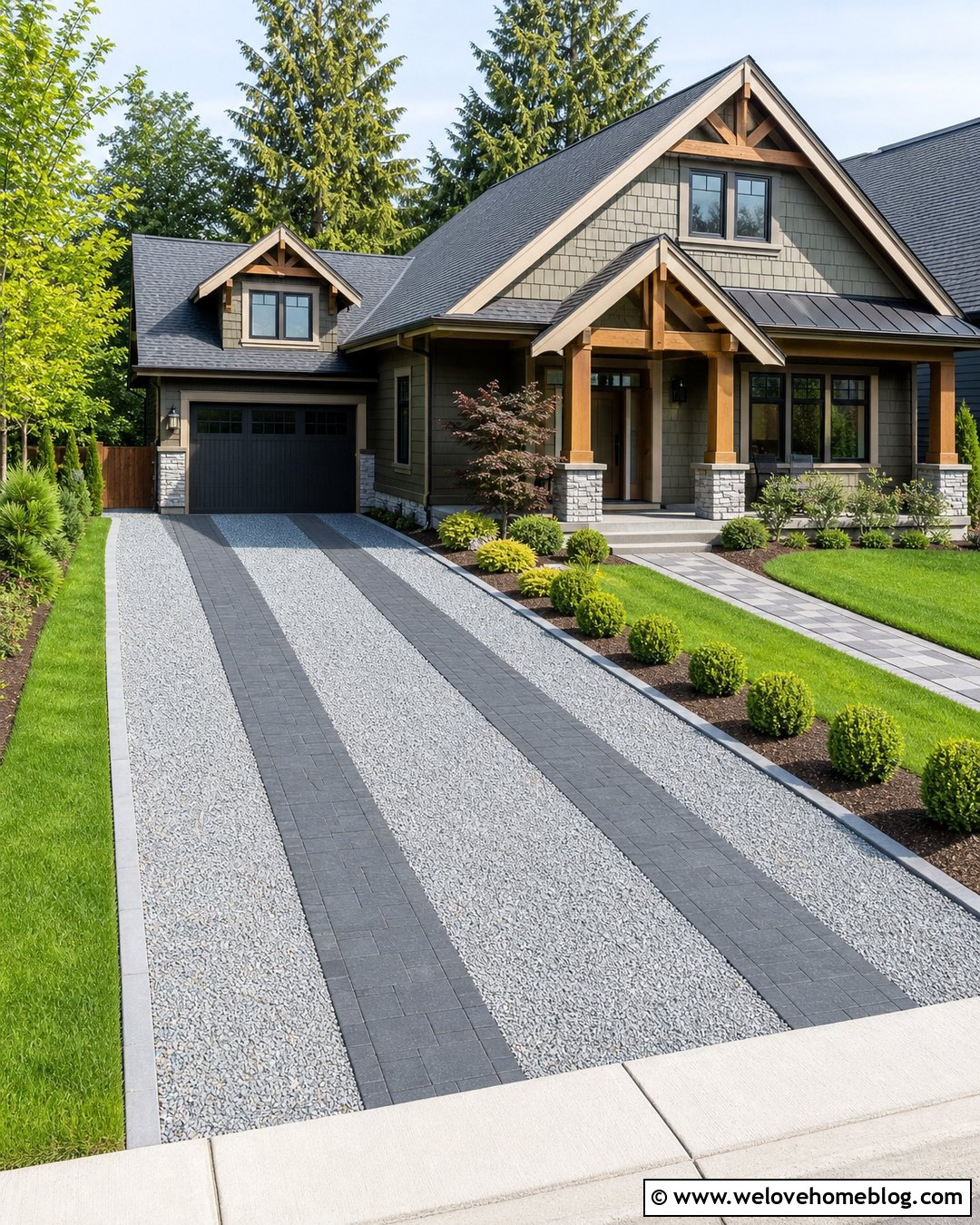
Concrete pavers can provide durable accents without covering the entire driveway. Start with compacted tan crushed gravel in a straight or slightly curved layout. Add one narrow row of inexpensive rectangular pavers along each side, using clearance or leftover pavers when possible. A matching ribbon across the entrance and another near the garage visually frame the loose surface. This combination suits suburban ranch and split-level homes because it looks organized but not overly formal. Plant low evergreen shrubs behind the borders and maintain a simple lawn beyond them. The pavers create helpful transitions where the gravel meets the street and garage apron. Keeping masonry details narrow controls material costs while giving the driveway a more permanent, structured finish.
7. Gravel Driveway With a Mulch Border
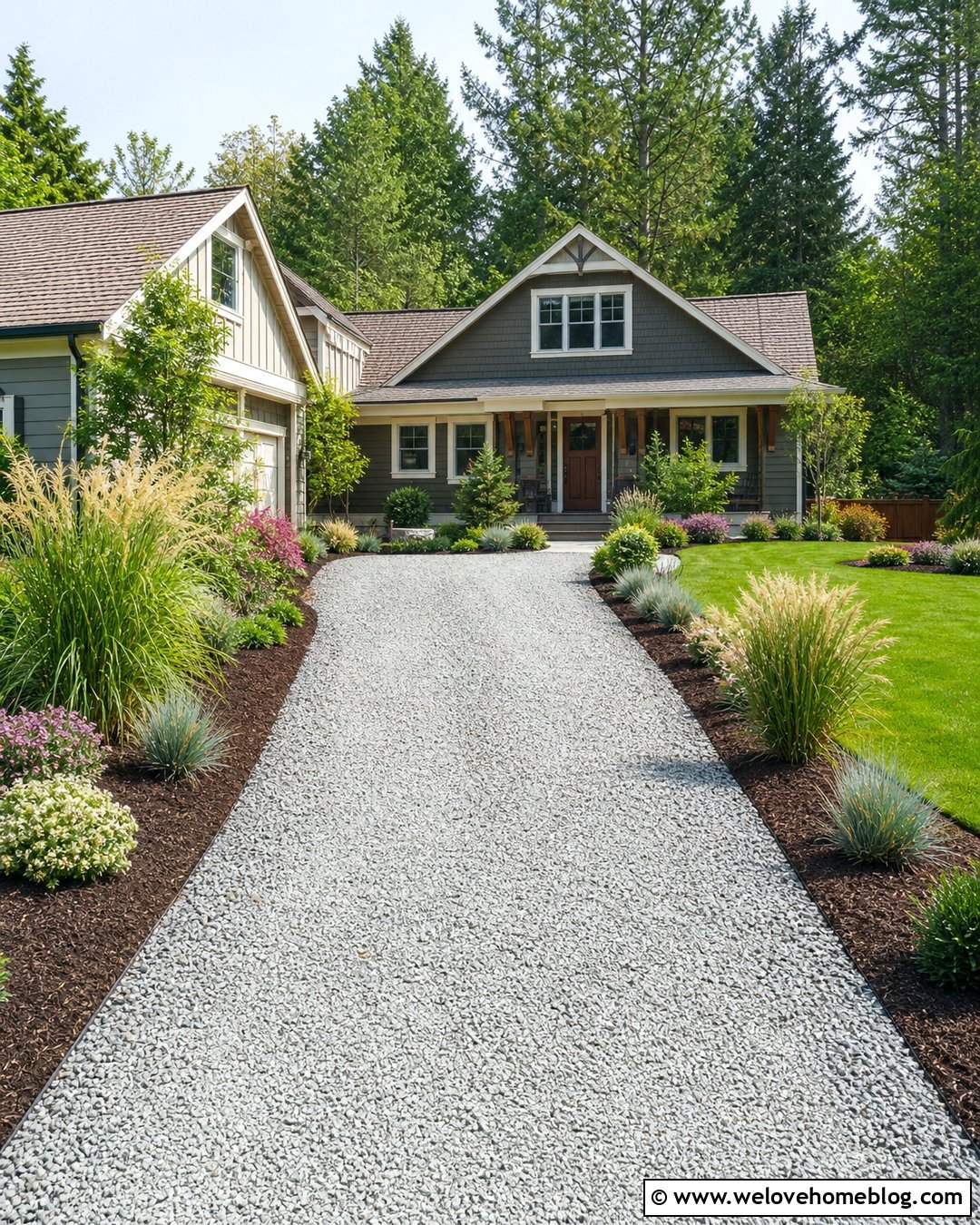
A mulch border is useful when masonry edging would consume too much of the budget. Shape a straight gray gravel driveway with shallow planting beds running along both sides. Use dark brown wood mulch to create clear visual separation between the light driveway and green lawn. Concealed plastic edging can hold the gravel in place while remaining mostly hidden beneath the finished surface. Plant the beds sparsely with affordable shrubs, ornamental grasses, and divided perennials from other parts of the yard. Wider planting groups near the house and entrance will look more intentional than evenly spaced plants along the entire drive. This simple arrangement works with ranch, craftsman, and traditional homes while leaving room to add more landscaping gradually.
8. Gravel Driveway With Log Edging
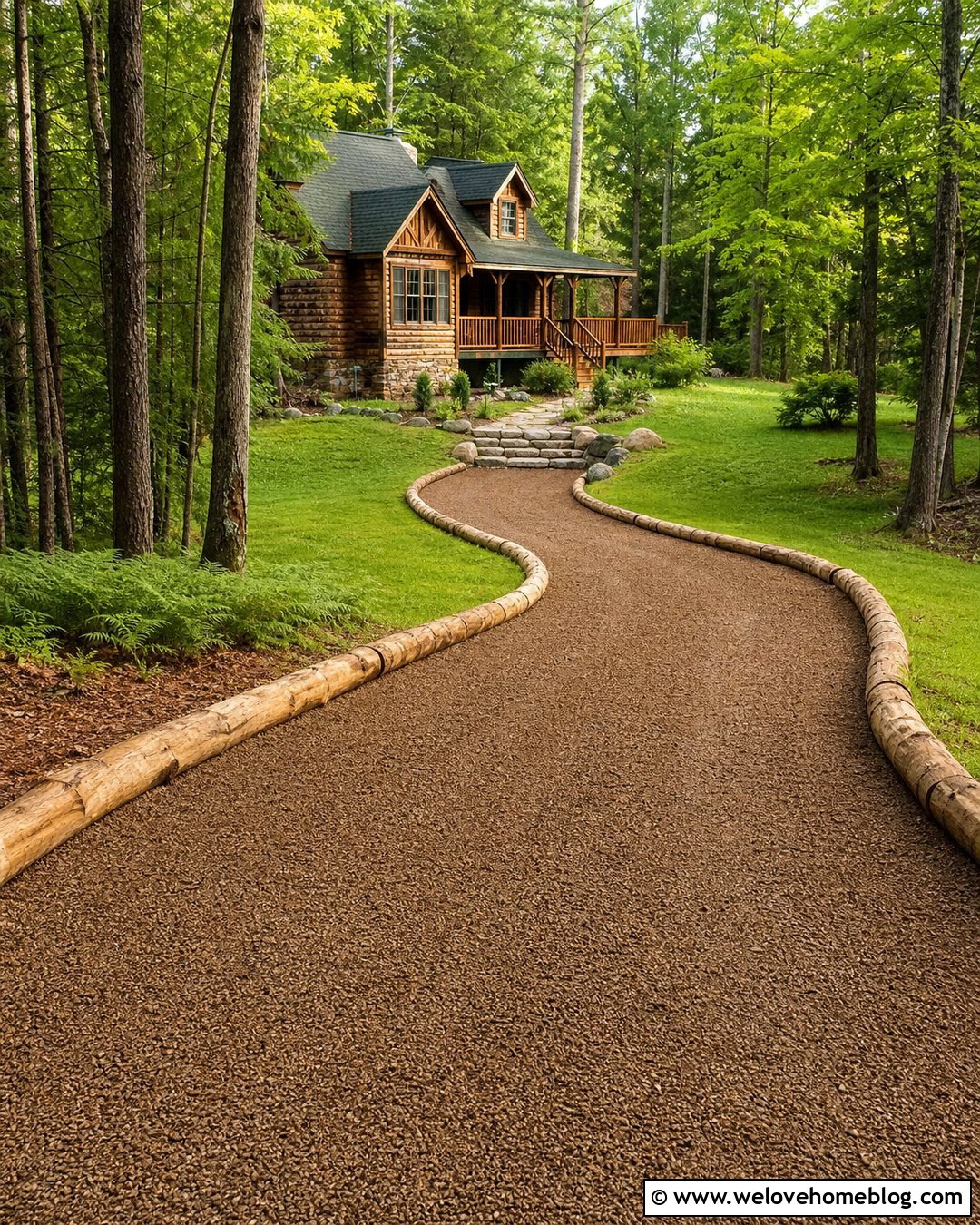
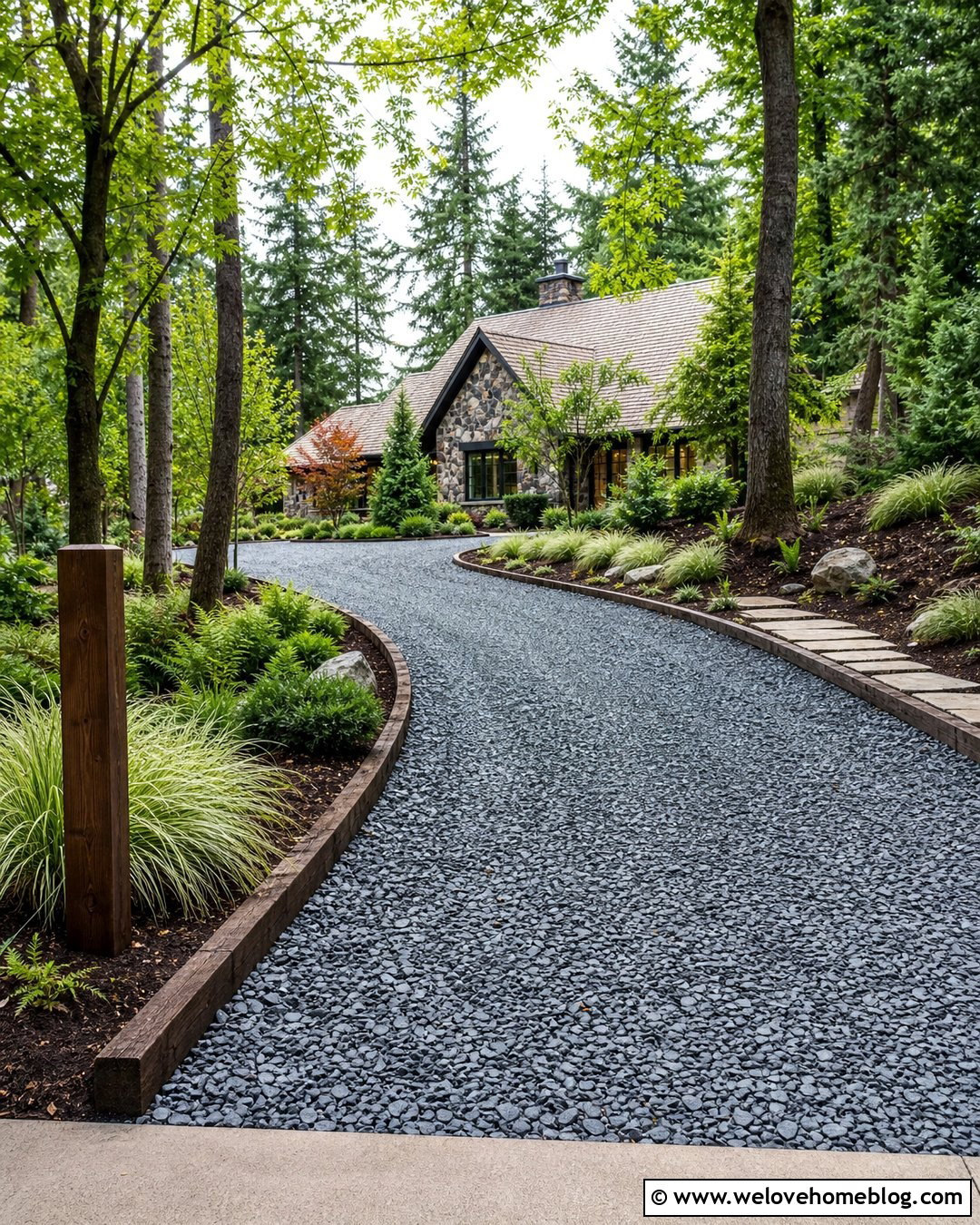
Long, straight logs can provide an inexpensive natural border for a rural gravel driveway. Select rot-resistant local wood or sound logs already available on the property. Position them beside a brown crushed stone surface and anchor them so rolling tires cannot push the border outward. A softly curved layout leading through existing trees strengthens the rustic character. Surrounding meadow grass, ferns, and woodland plants can remain informal, reducing the need for new lawn or irrigation. Near the house, transition from the logs to a small stone parking pad or concrete garage apron. This prevents the design from appearing unfinished where it meets the building. The finished driveway feels appropriate for a cabin or farmhouse rather than simply looking like loose gravel spread across the yard.
9. Gravel Driveway With a Brick Entrance Apron
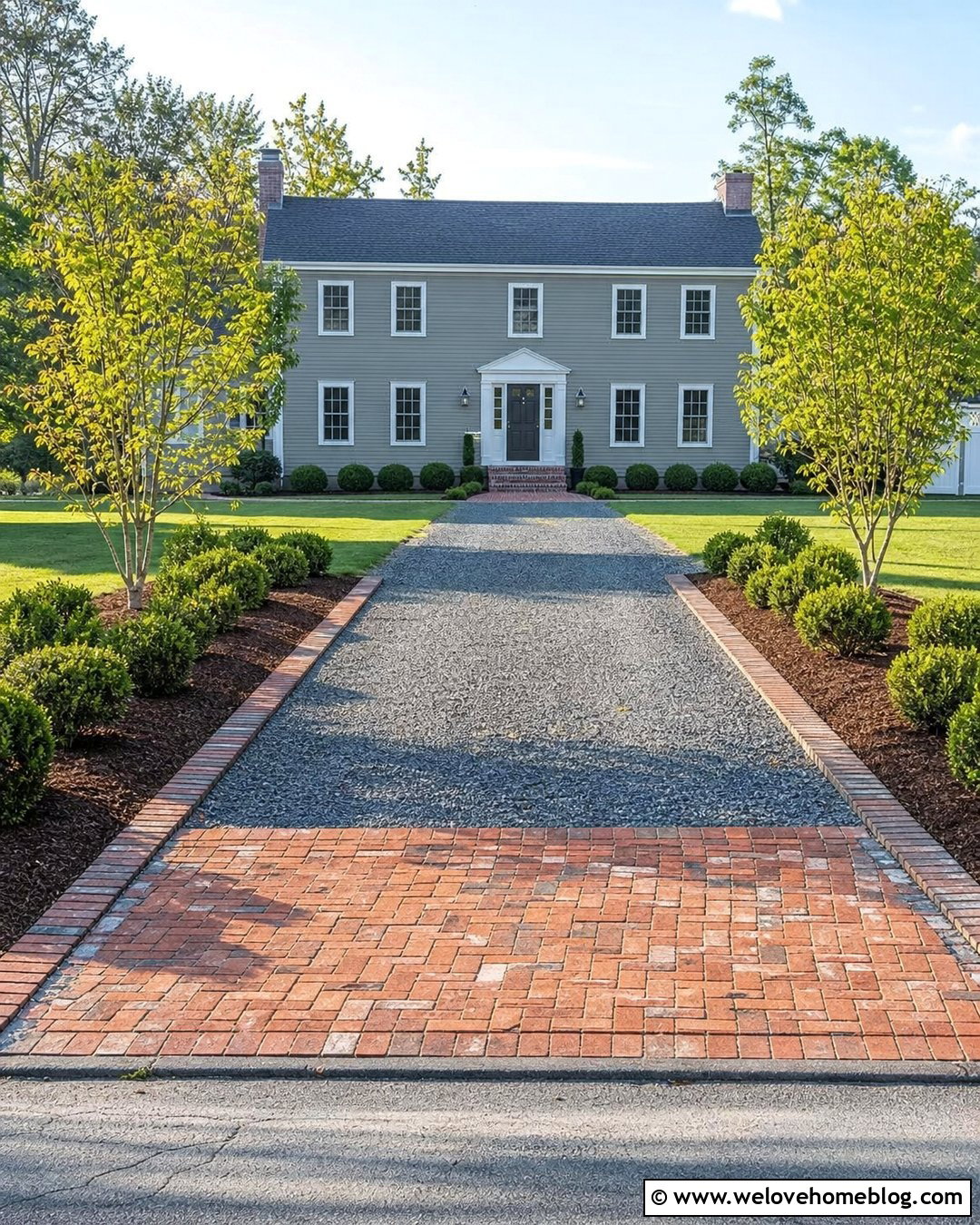
Concentrating better materials near the street is a smart way to improve curb appeal without rebuilding the whole driveway. Use economical gray crusher-run gravel for the long central approach, then install a short reclaimed brick apron at the entrance. Continue a single brick row along the first several feet to create a clear transition. The durable entrance reduces loose gravel movement toward the road and makes the property boundary easier to recognize. () A pair of simple mulch beds with compact shrubs can frame the apron. This design works with colonial and traditional homes because the red brick adds familiar color and structure. Repeat the brick near the front walkway so the upgraded entrance feels connected to the house.

10. Gravel Driveway With Steel Landscape Edging
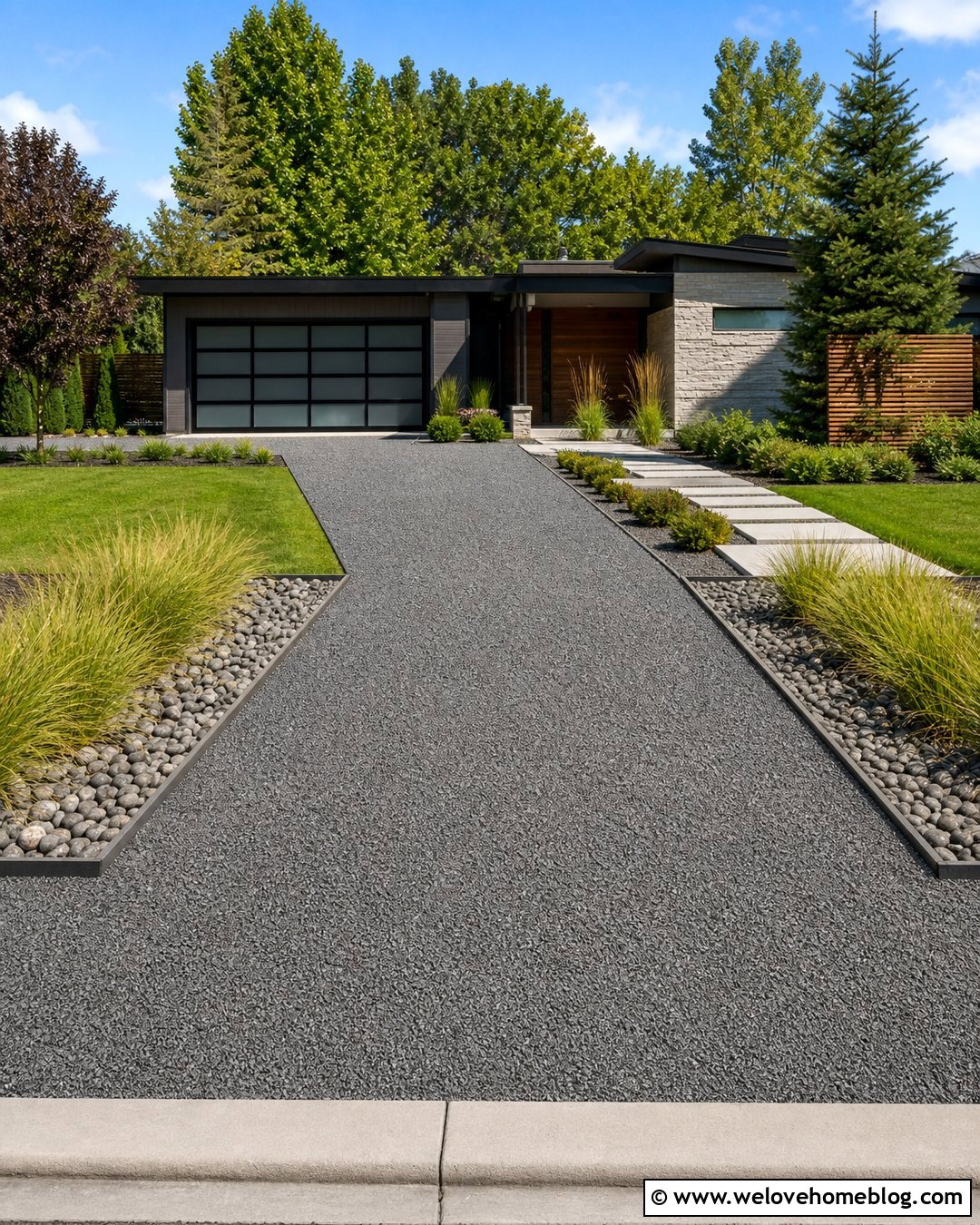
Thin steel edging provides a clean border without taking up much driveway width. Pair dark gray crushed granite with a straight approach leading to a modern or updated midcentury home. Install the edging almost level with the gravel so it contains the material without becoming a tire hazard. Continue the steel around simple rectangular planting beds containing ornamental grasses, low evergreen shrubs, and decorative river rock. This repetition connects the driveway to the landscaping and makes the economical surface feel deliberately designed. Keep the planting palette limited and allow open lawn to provide most of the surrounding color. Steel may cost more than plastic initially, so use it only along visible curves and lawn edges if the overall budget is especially tight.
11. Gravel Driveway With a Cobblestone Entrance Border
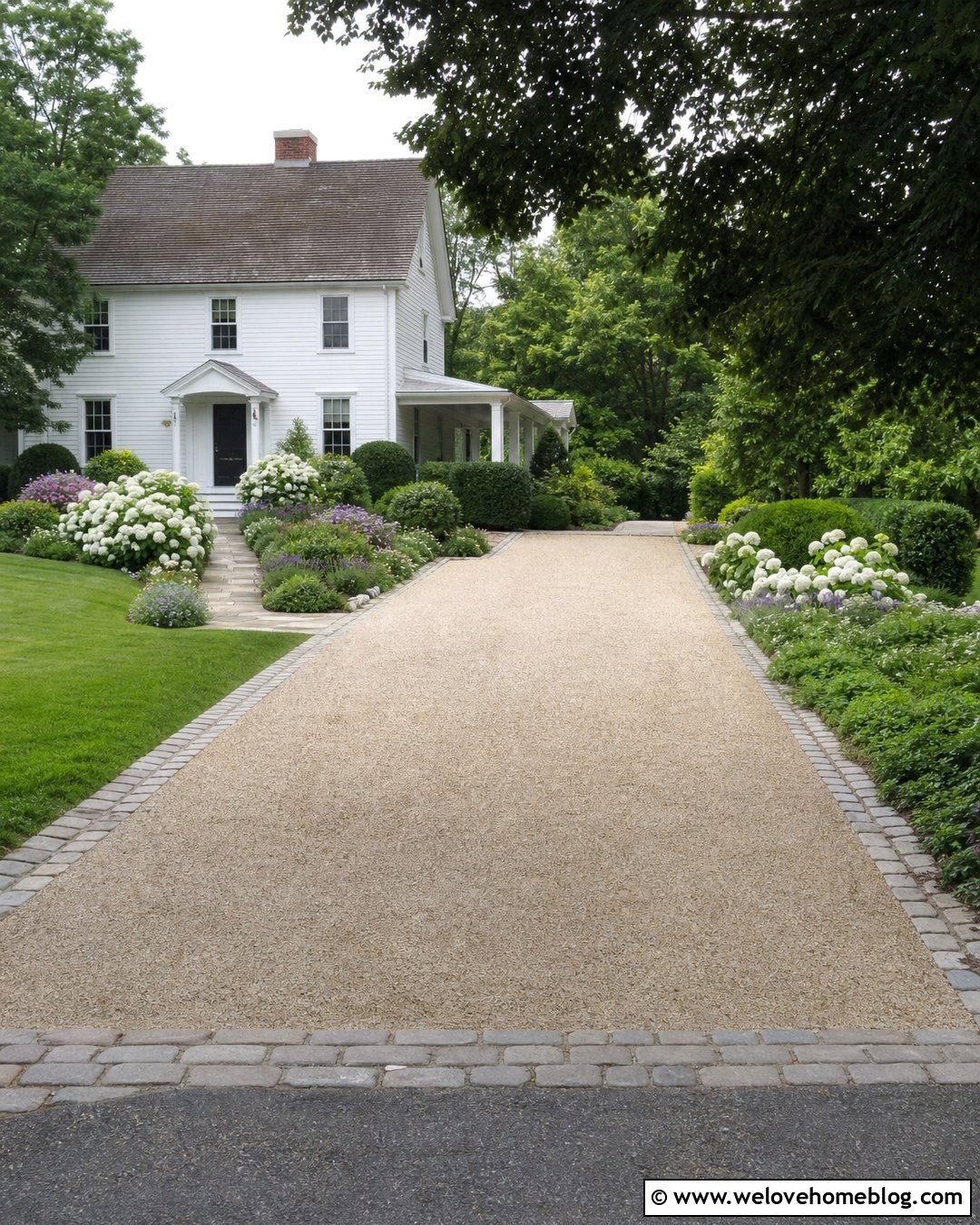
A few cobblestones can deliver classic character when they are used strategically. Cover the main driveway with inexpensive buff crushed gravel and reserve reclaimed cobblestones for the entrance and a narrow border around the parking area. A straight approach with a slightly wider turning pad suits a traditional farmhouse or colonial home. Install the stones tightly enough to define the edge, but avoid an elaborate pattern that increases labor. Add clipped shrubs near the house and relaxed flowering plants closer to the road. The contrast between rough gravel and aged cobblestone creates a layered appearance that feels more expensive than it is. Searching architectural salvage yards for mixed or weathered pieces can make this design considerably more affordable.
12. Gravel Driveway With a Simple Curved Layout
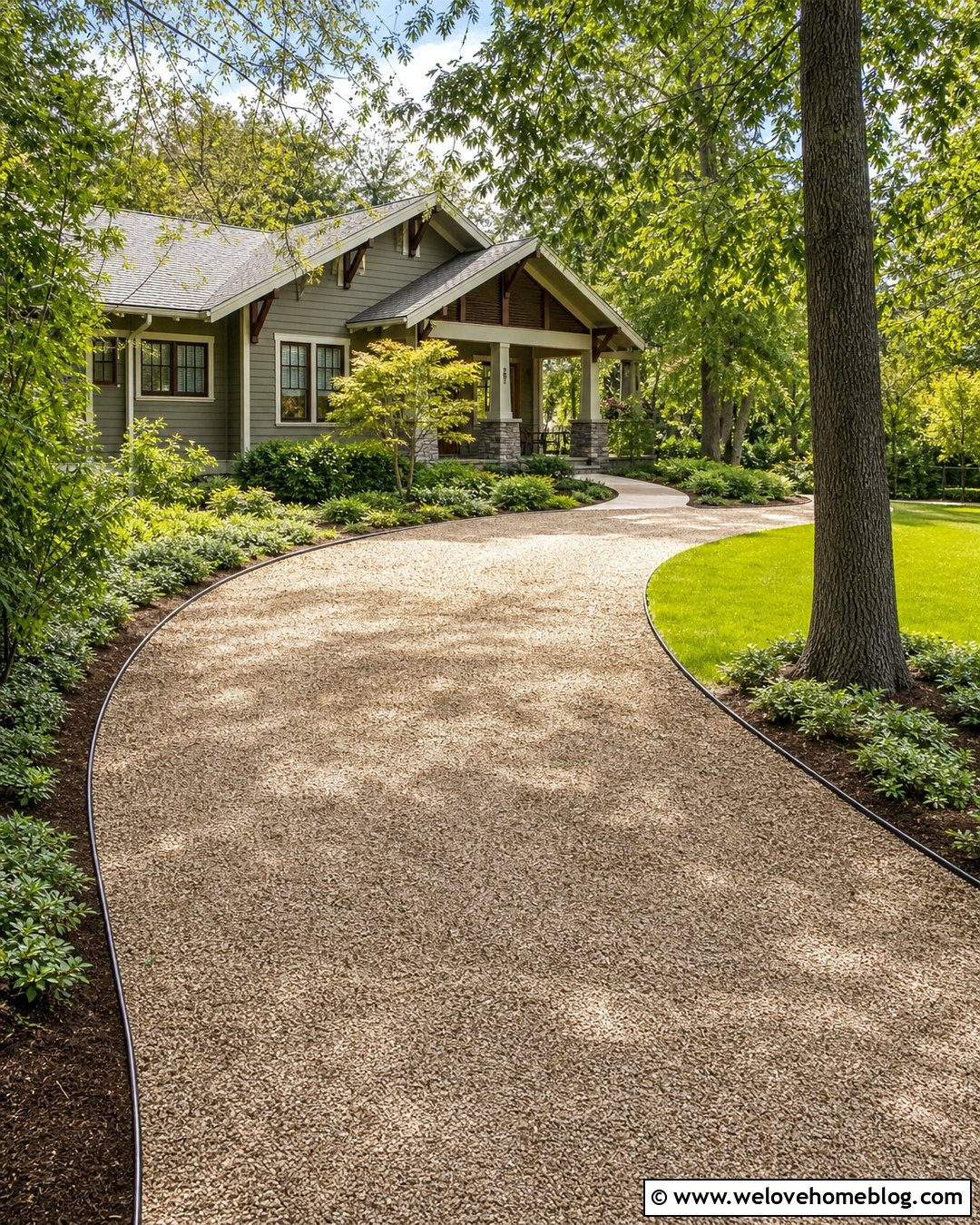
A subtle curve can make an economical driveway feel thoughtfully planned. Use locally sourced tan crushed stone and follow the natural contour of the front yard rather than forcing a perfectly straight route. Flexible plastic or metal edging can maintain the shape where the driveway meets lawn and planting beds. Position the curve around an existing tree or established shrub instead of purchasing a new landscape centerpiece. Low ground covers and mulch can fill the inside bend, while an open lawn keeps the outside edge easy to navigate. This layout works particularly well for craftsman homes and wooded suburban properties. Avoid multiple tight turns, which require more excavation and make gravel difficult to contain. One broad curve provides the strongest effect.
13. Gravel Driveway With Low-Cost Solar Lights
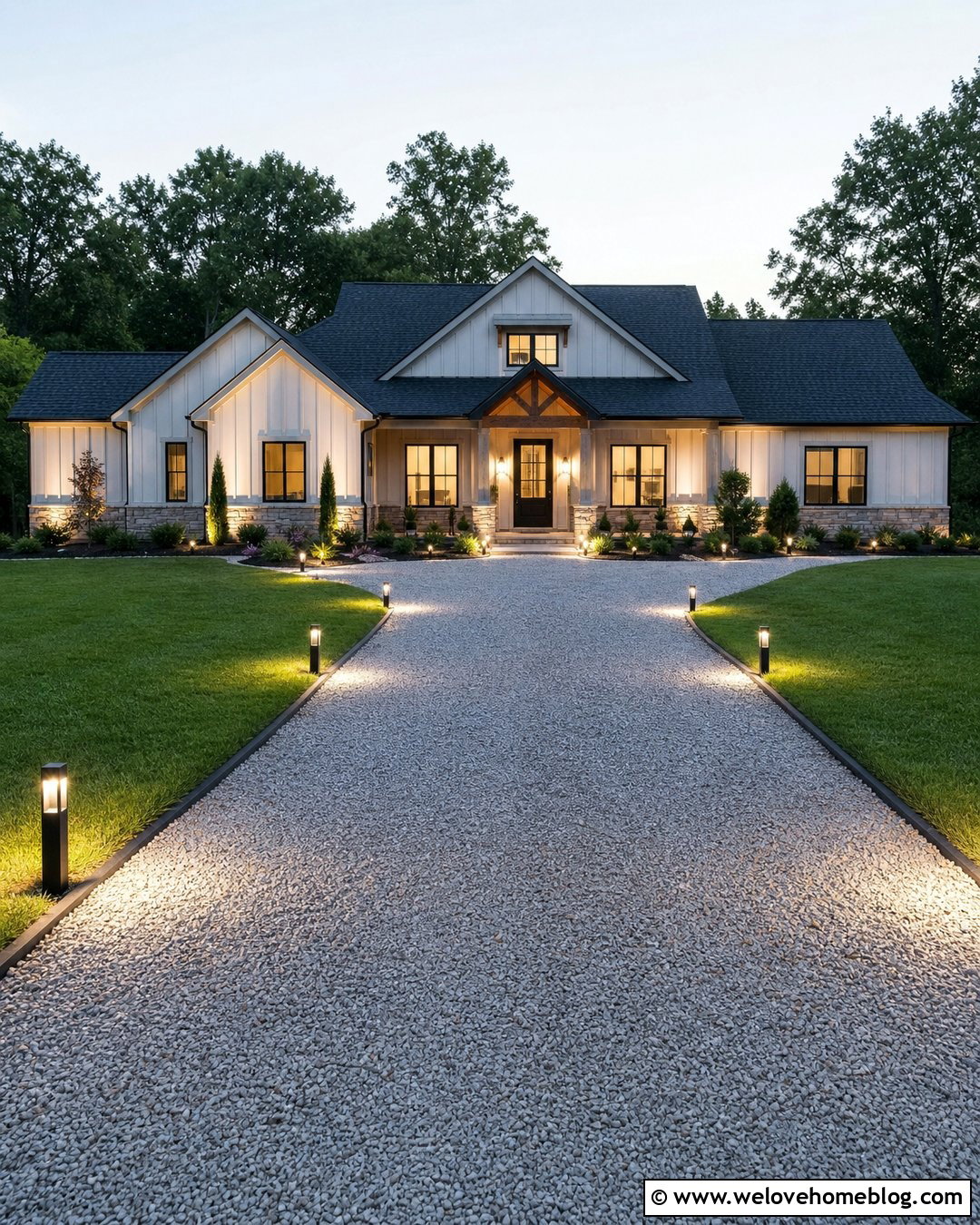
Lighting can improve the appearance of a plain gravel driveway without requiring electrical trenching. Choose compact solar fixtures and place them at important points rather than lining every foot of the driveway. A straight light gray gravel surface with black plastic edging provides a neutral background. Install lights near the street entrance, front walkway, curve, and parking area. During daylight, repeat their black finish on the mailbox or house hardware to keep the design coordinated. Surround the driveway with lawn and simple foundation shrubs so the fixtures do not compete with busy landscaping. Select models with replaceable batteries when possible. The finished design suits contemporary ranch and suburban homes, giving an inexpensive gravel approach a clearer and more organized structure.
14. Gravel Driveway With a DIY Wood Address Sign
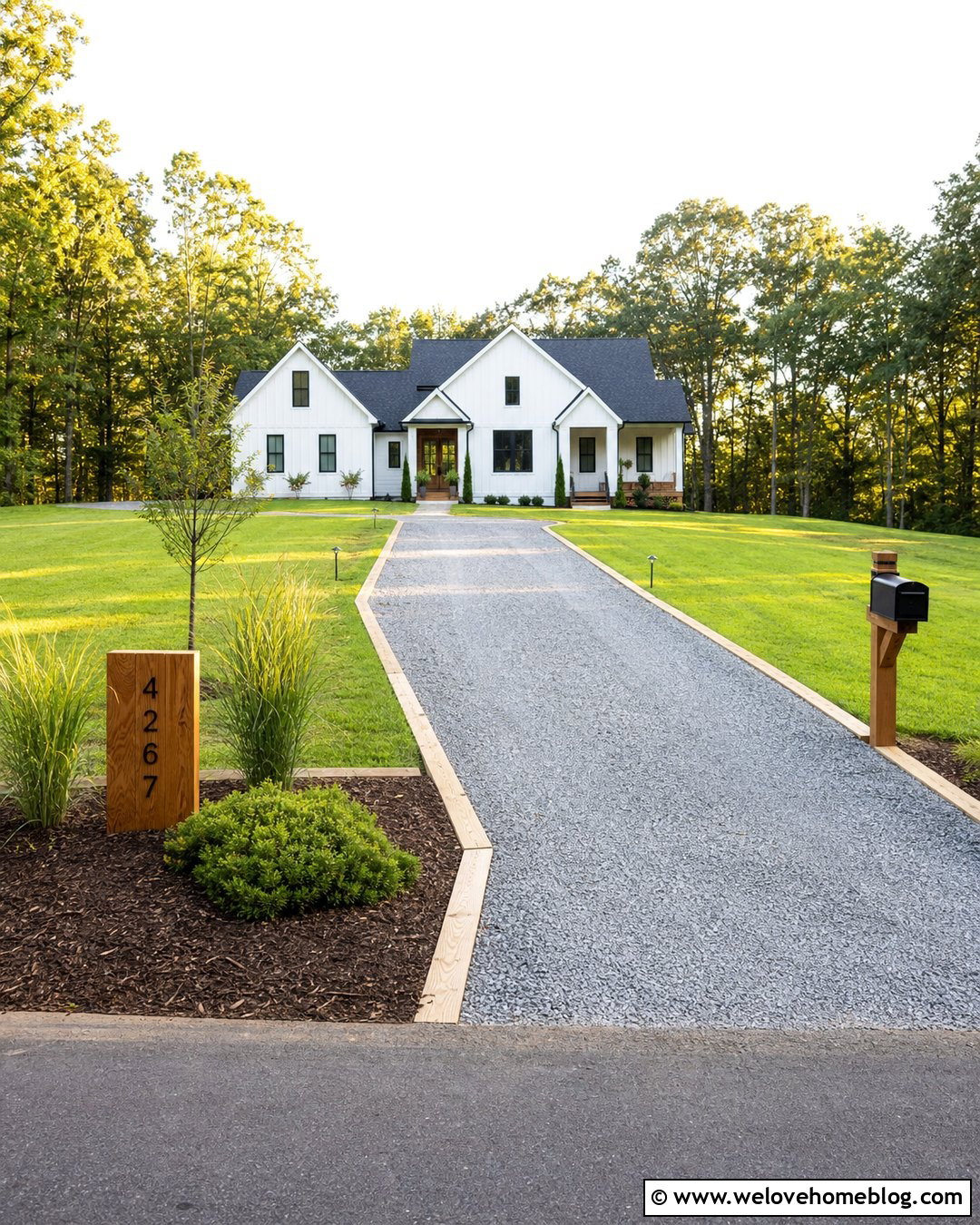
A handmade address sign can become the focal point of an otherwise simple driveway entrance. Use compacted gray crushed gravel in a straight layout with pressure-treated timber edging. Build the sign from exterior-grade wood, stain it to coordinate with the house, and mount it beyond the vehicle clearance area. A small mulch bed containing two ornamental grasses and a low evergreen can anchor the post. Keep the opposite side of the entrance open for safe sightlines. This arrangement works especially well with modern farmhouses, country homes, and cabins. Repeat the sign’s wood tone on a nearby gate, porch column, or mailbox. One useful, well-proportioned feature often creates more impact than numerous small decorations scattered along the driveway.
15. Gravel Driveway With Wildflower Borders
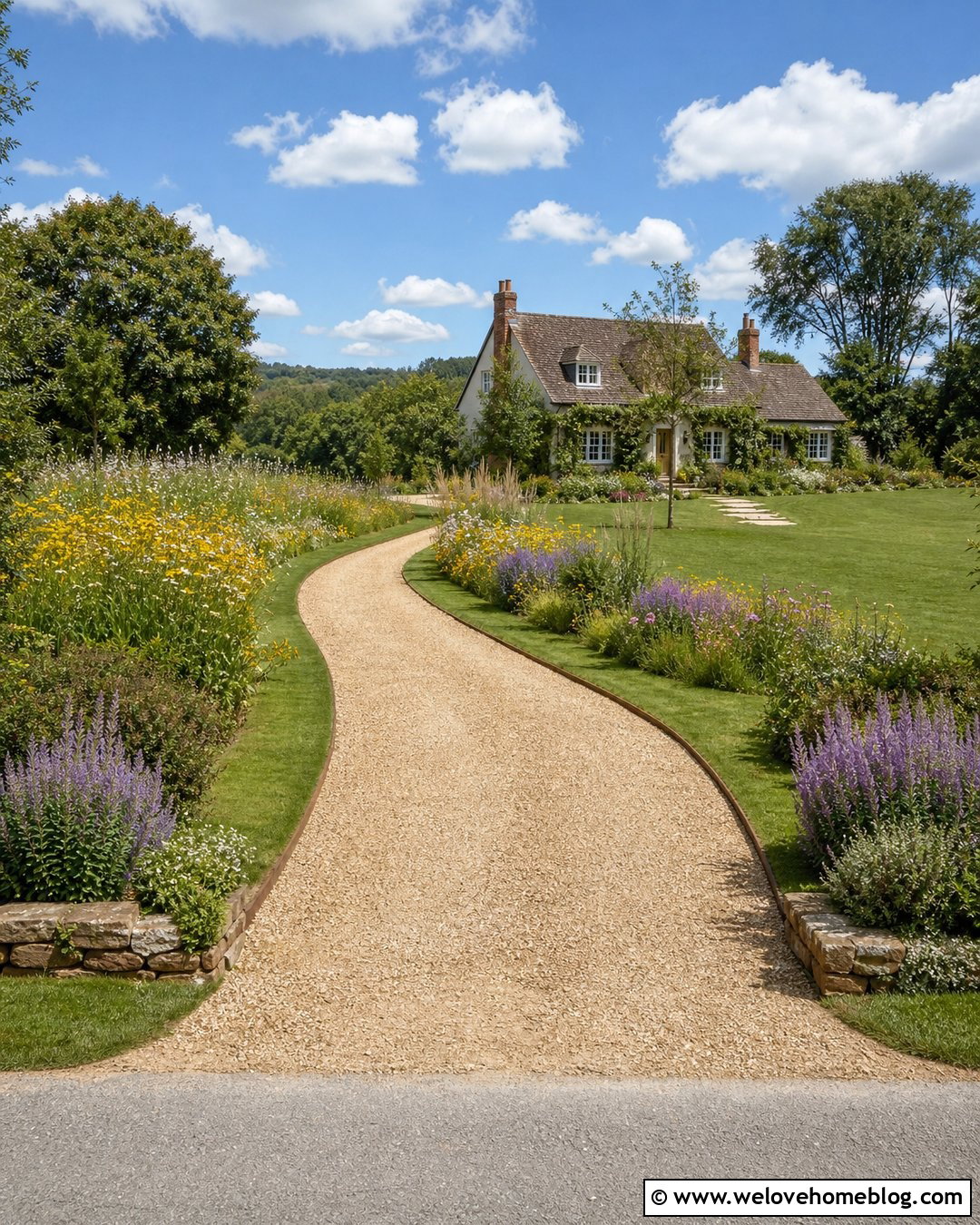
A gravel driveway bordered by wildflowers can look colorful without relying on formal hedges or expensive stonework. Choose warm beige crushed gravel and create a gently winding route toward a cottage or country house. Use low, flexible edging to prevent gravel from entering the planting zones. Sow regionally appropriate flowers in broad drifts, leaving a narrow mowed strip between tall plants and the driving surface. This setback keeps stems away from vehicles and makes seasonal maintenance easier. Place lower flowers near the entrance so drivers have a clear view of approaching traffic. The combination of gravel, informal planting, and open lawn creates a complete landscape that improves over time. It is especially practical where a polished suburban design would feel out of place.
16. Gravel Driveway With Recycled Concrete Edging
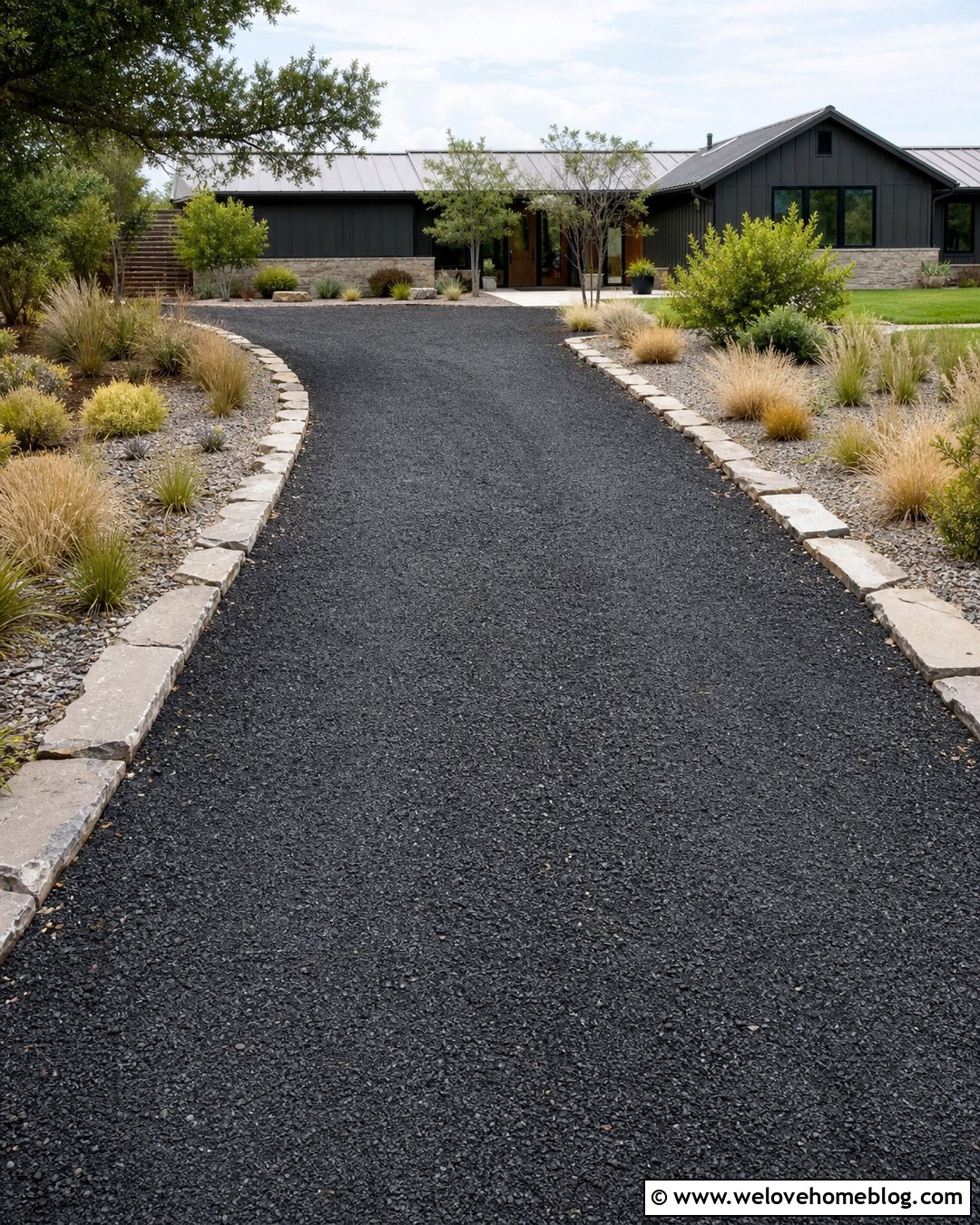
Broken concrete can become a sturdy border when pieces have reasonably consistent thickness and clean edges. Use charcoal crushed gravel for the driveway and arrange salvaged concrete chunks along both sides with their flatter faces exposed. The pale gray border provides subtle contrast and suits an industrial farmhouse, modern ranch, or casual contemporary home. A straight layout keeps installation manageable and reduces complicated cuts. Add drought-tolerant grasses and gravel-mulched beds outside the border to continue the rugged material palette. Set each concrete piece into a compacted trench so it does not wobble or project into the driving area. This reuse-focused approach saves usable material from disposal while giving the driveway a more substantial edge than lightweight plastic.
17. Gravel Driveway With Native Grass Landscaping
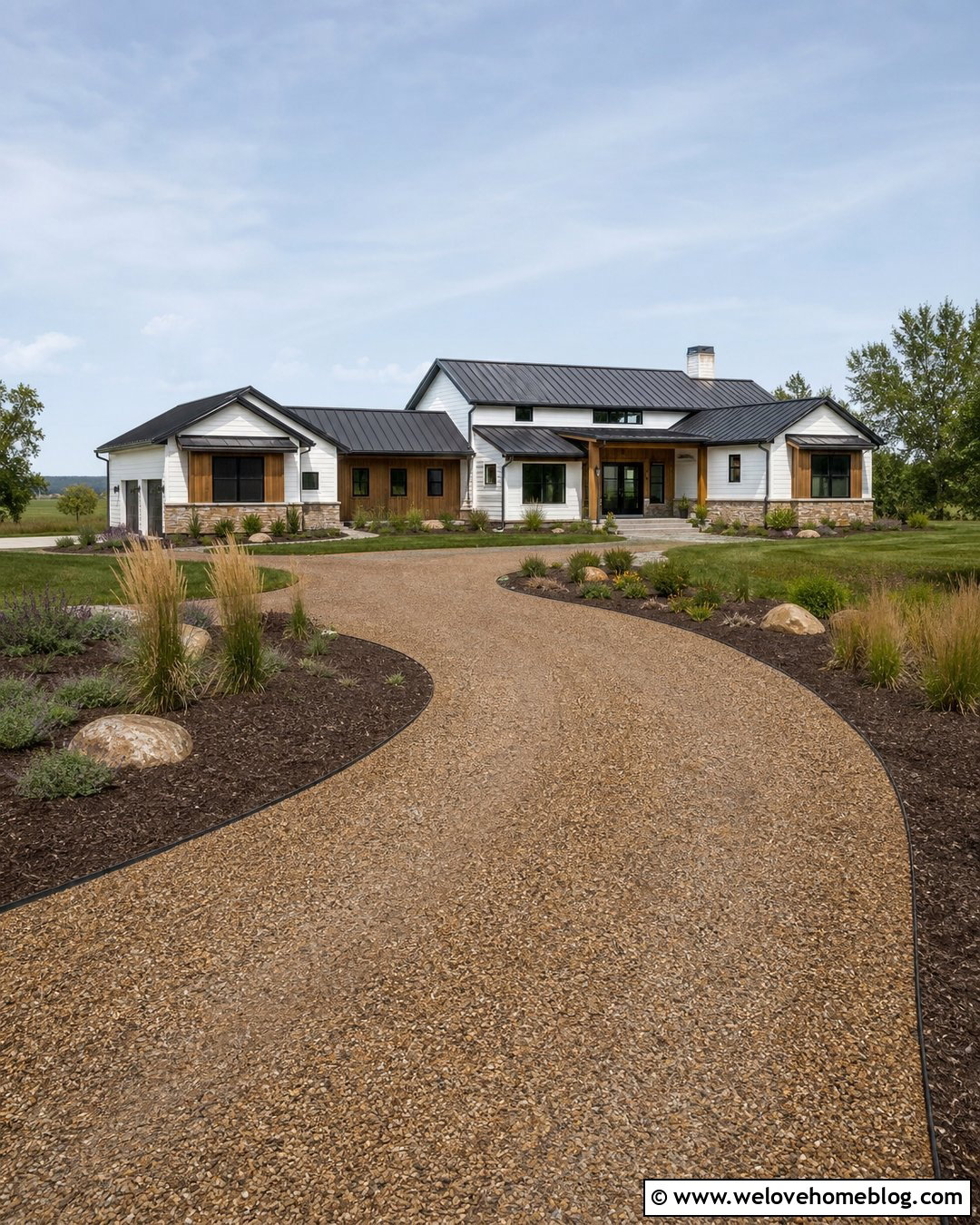
Movement from native grasses can soften a long gravel driveway while keeping the overall plan simple. Cover the drive with medium brown crushed stone that relates to the surrounding soil and landscape. Use an understated metal edge along a broad curved layout, then plant grasses in irregular groups outside it. Select mature sizes that will not lean into the path or block visibility. Leave open space near the entrance, walkway, and turning points. A few larger rocks can connect the planting beds to the gravel without becoming the main expense. This complete design complements prairie homes, modern farmhouses, and rural ranch properties. Once established, locally suitable grasses can reduce the need for intensive watering and frequent replacement compared with a highly formal border.
18. Gravel Driveway With a Small Parking Pad
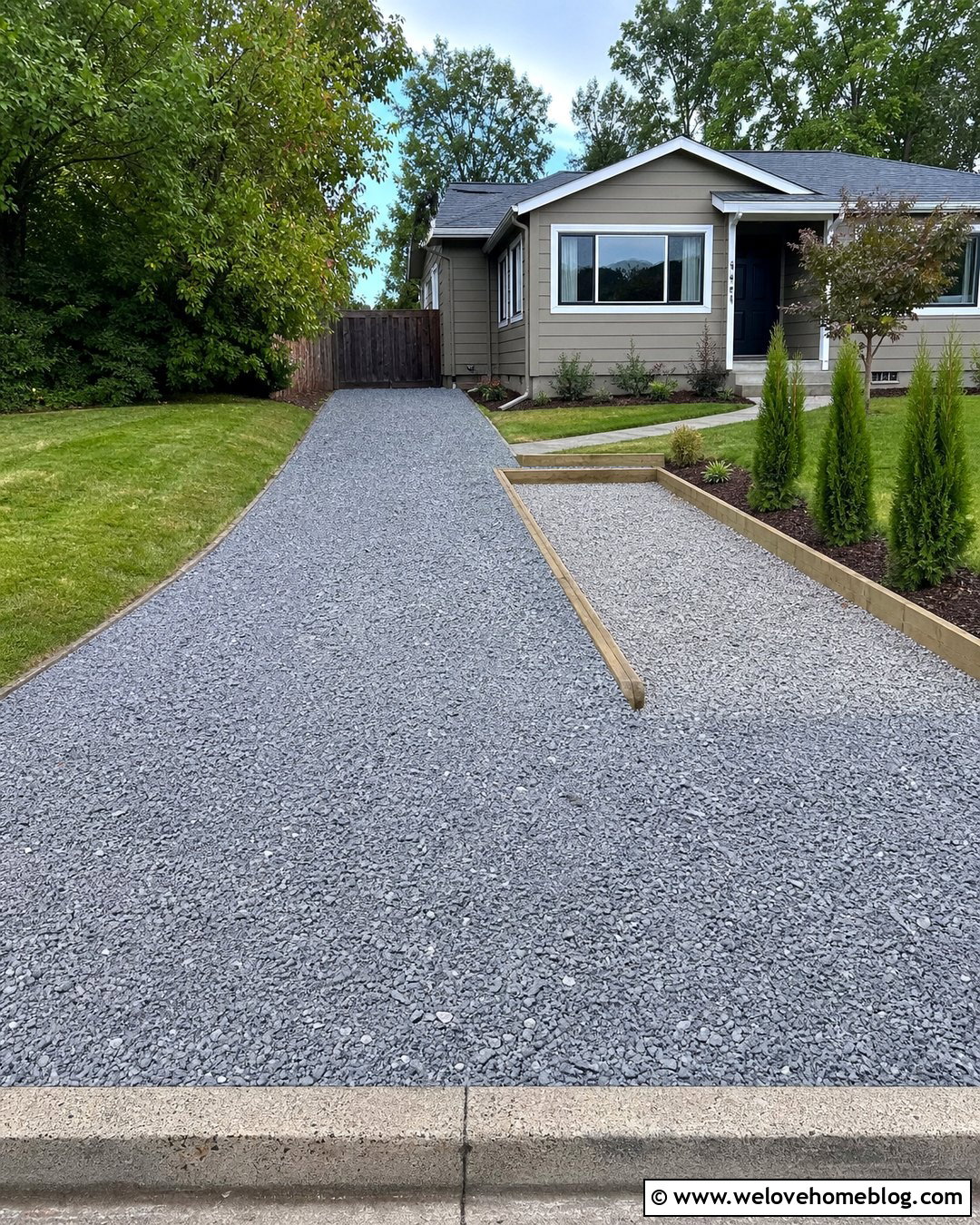
A compact parking pad can make a narrow gravel driveway more useful without paying to widen its full length. Run a straight driveway of affordable gray crusher-run from the street, then create a rectangular gravel bay near the house. Define the bay with pressure-treated timbers or reclaimed concrete pavers. Use the same gravel in both areas so the extension looks original rather than added later. A narrow mulch bed with upright shrubs can screen the parking space from the front porch. Preserve enough lawn between the pad and property line for drainage and maintenance. This layout suits small ranch homes, duplexes, and cottages where space is limited. Careful measurements will prevent buying more aggregate than the project actually requires.
19. Gravel Driveway With a Circular Lawn Island
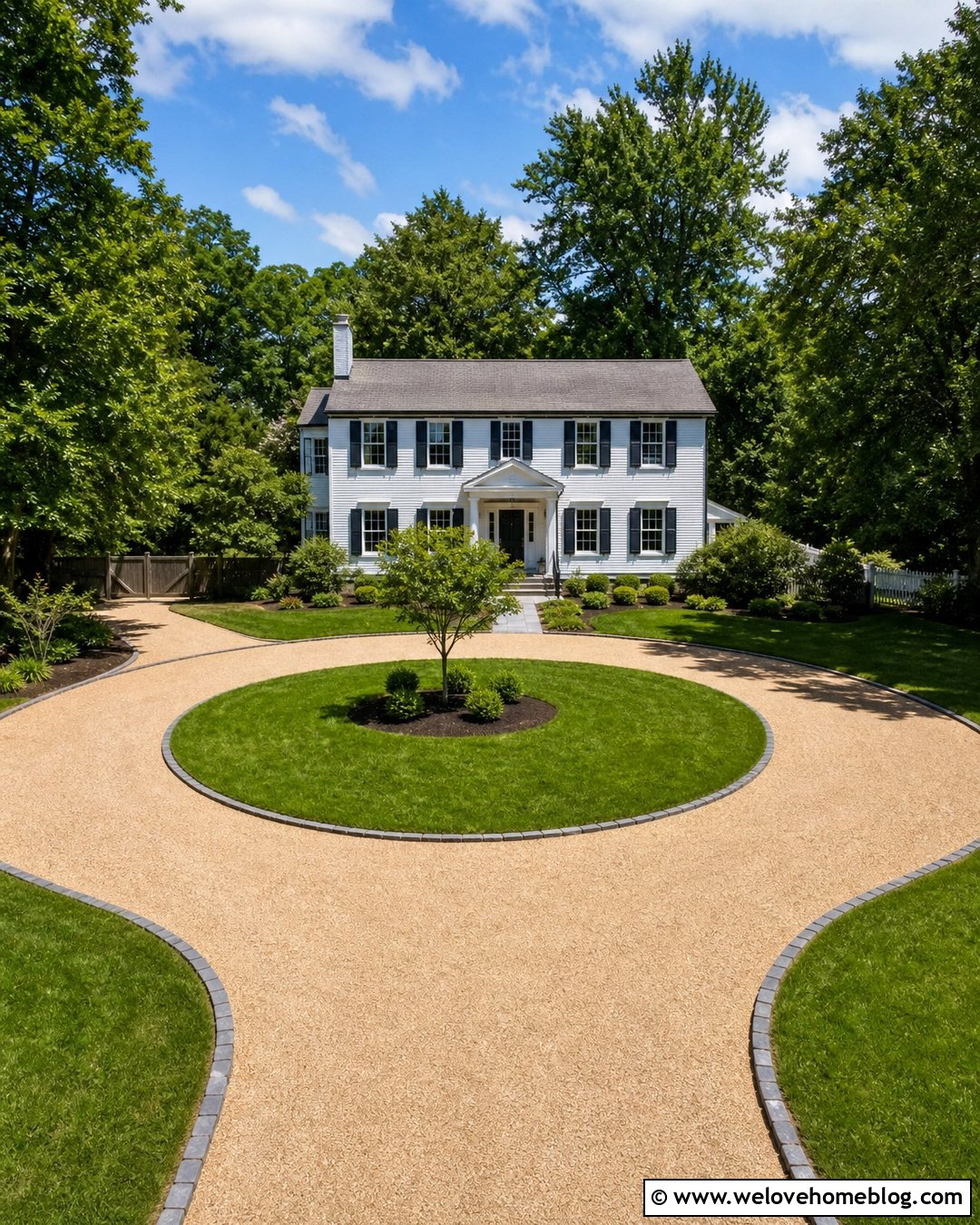
A full circular driveway can use substantial material, but a compact loop around an existing lawn island can still be affordable on a wide, shallow lot. Choose locally available tan crushed gravel and keep the driving lane consistently narrow. Use simple black edging around the center island and outer lawn boundary. Instead of filling the island with costly masonry or complex planting, retain healthy grass and add one small ornamental tree if needed. A short walkway can connect the loop to a colonial, ranch, or farmhouse entrance. Proper grading is important because water should not collect along the inside curve. The finished look offers convenient vehicle movement while allowing the green center to break up the large gravel surface.

20. Gravel Driveway With Concrete Tire Tracks
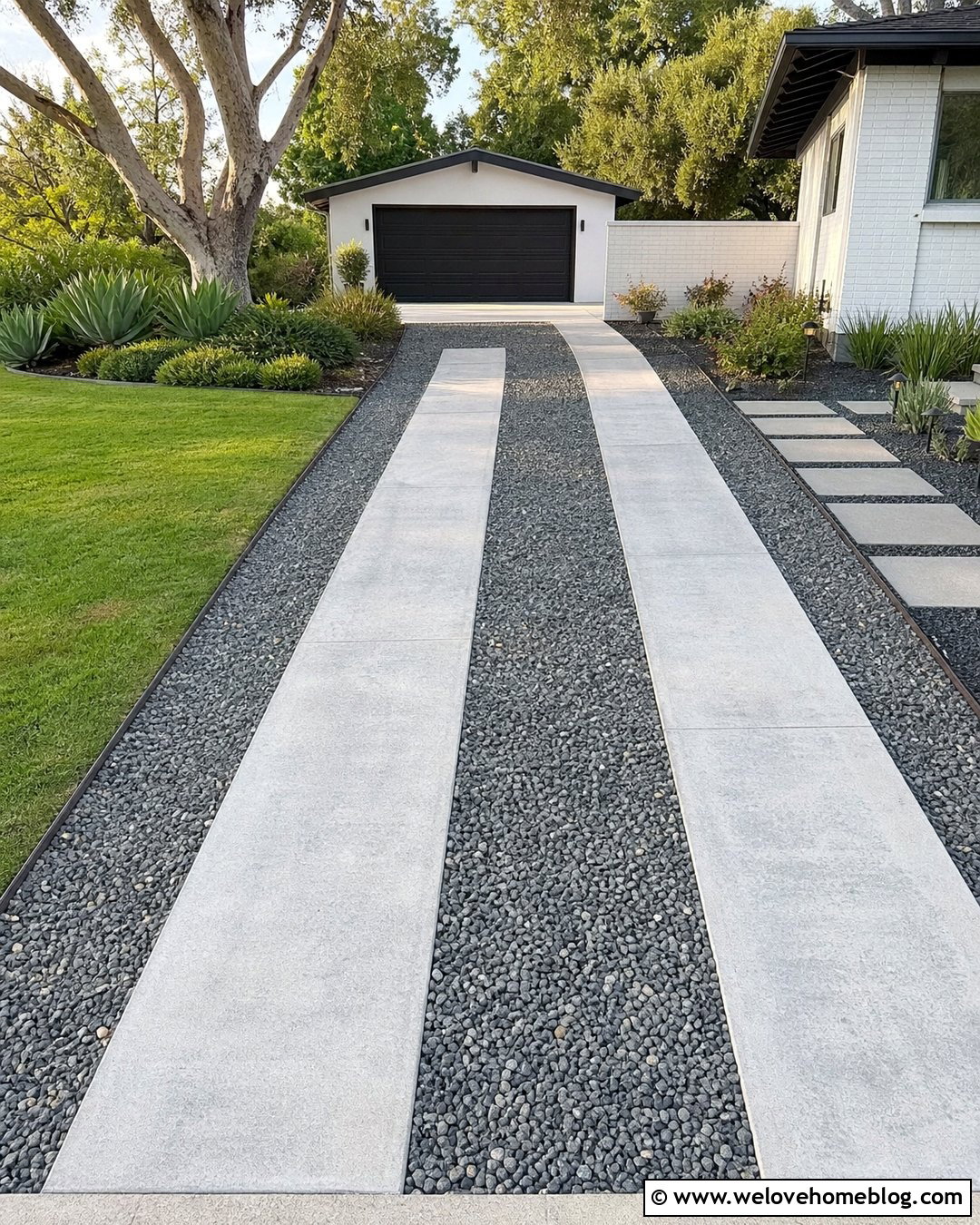
Concrete tire tracks combined with gravel create a practical ribbon driveway for frequently used entrances. Pour two simple concrete strips where vehicle wheels travel and fill the center and side areas with inexpensive angular gravel. The strips stabilize the main route, while gravel reduces the amount of concrete required. Keep the layout straight and lead it toward a detached garage, midcentury ranch, or contemporary home. Use grass or low ground cover outside the gravel edges, with a compact planting bed near the front walkway. The concrete should have a lightly textured finish for a plain, functional appearance. This hybrid layout is most economical when the existing route is narrow and does not require complicated curves, wide turnarounds, or extensive decorative forming.
21. Gravel Driveway With a Stone Drainage Channel
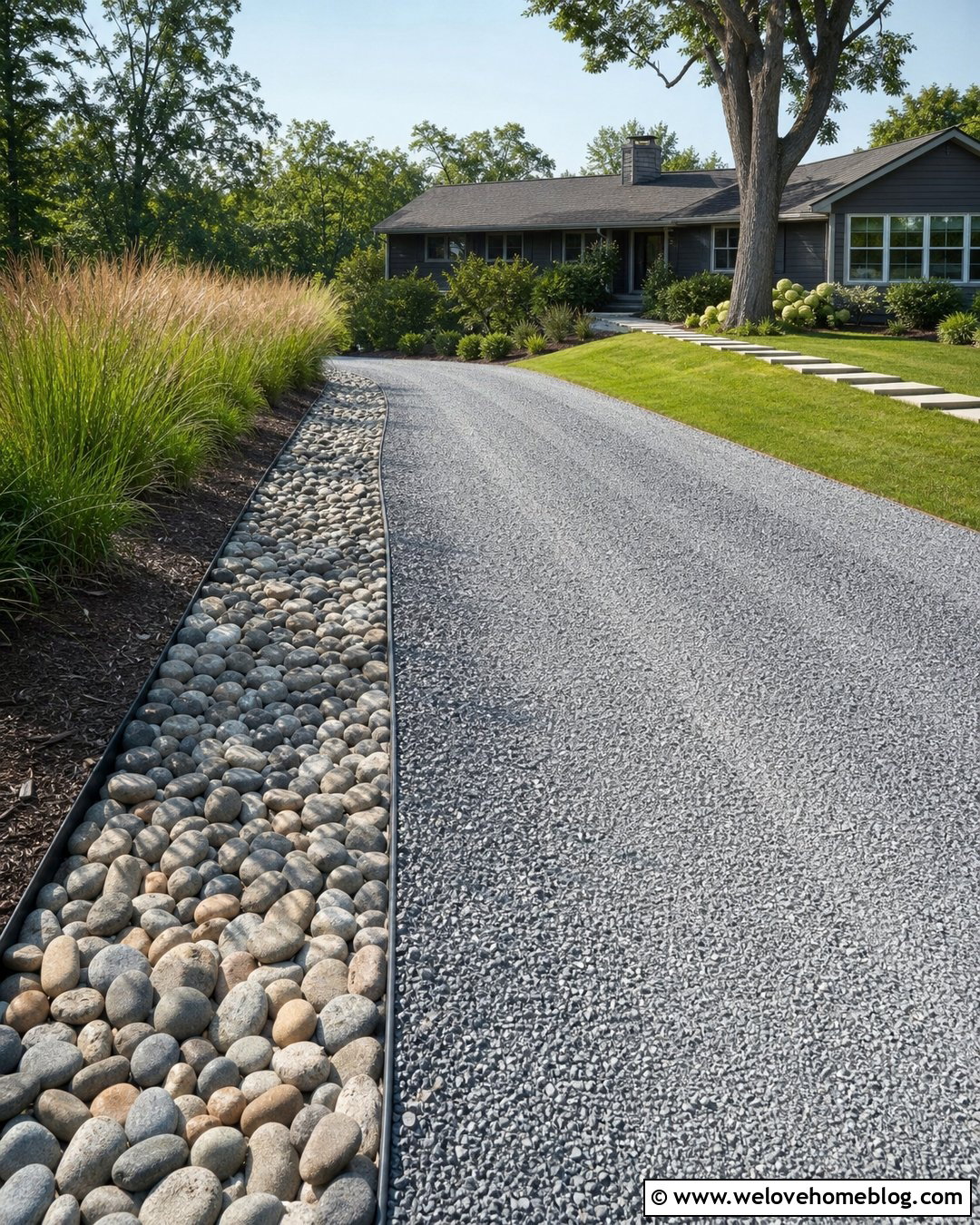
A shallow stone channel can become part of the driveway design when runoff naturally travels along one side. Use compacted gray crushed gravel for a slightly crowned driveway and create a lower drainage strip filled with larger river stones. Separate the two materials with sturdy edging so vehicle gravel does not migrate into the channel. Continue the drainage feature toward an appropriate landscaped area rather than directing water onto a neighboring property or public road. Plant moisture-tolerant grasses beyond the stones and maintain open lawn on the opposite side. This practical layout suits sloped ranch homes, cabins, and rural properties. Because site conditions and local requirements vary, confirm where runoff may safely go before reshaping the driveway or adding drainage structures.
22. Gravel Driveway With Salvaged Paver Edging
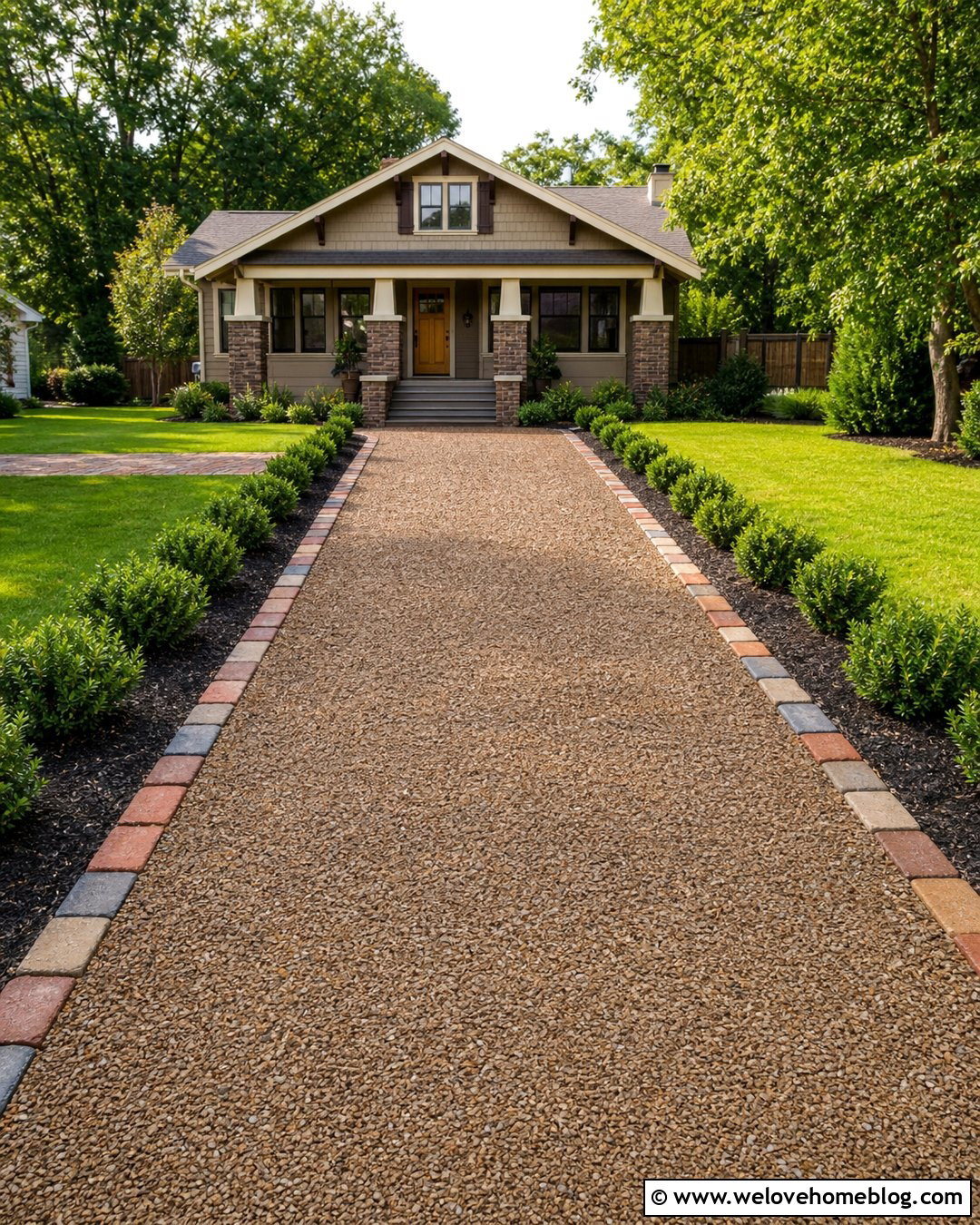
Mixed salvaged pavers can create attractive driveway borders when their colors are arranged deliberately. Pair warm brown gravel with red, charcoal, and faded tan pavers laid in a simple single-row edge. Keep the driveway straight to minimize cutting and place the darkest pavers near the entrance for visual definition. A craftsman bungalow or older brick home provides a natural background for the varied materials. Add compact evergreen shrubs and mulch beds near the house, while leaving the rest of the driveway beside open lawn. If the reclaimed pavers differ in thickness, set each one individually into a prepared base. The slight color variation will feel collected and established, but the consistent border line keeps the overall driveway neat.
23. Gravel Driveway With a Farm Gate Entrance
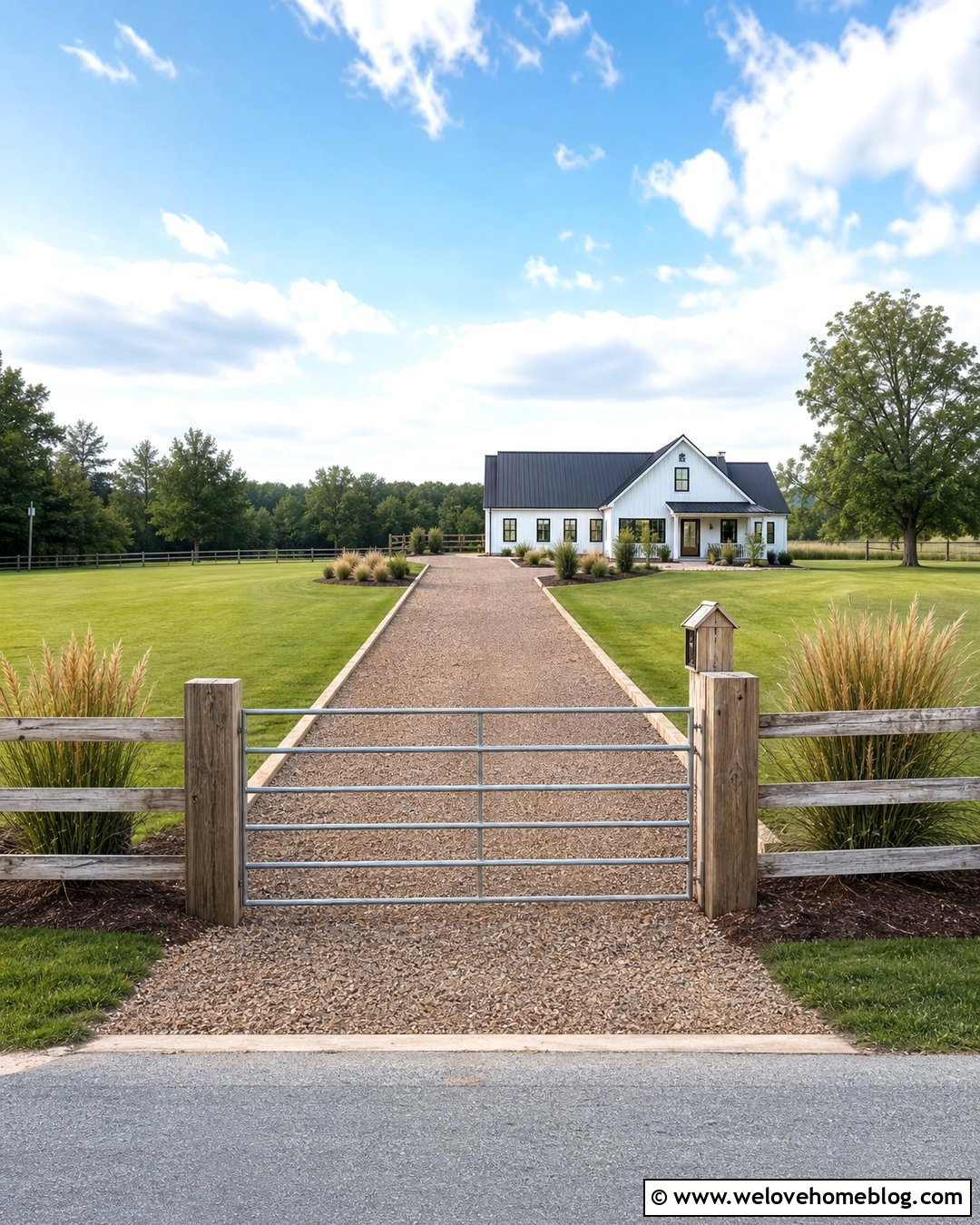
A basic farm gate can provide a strong entrance without decorative masonry pillars. Use brown crushed gravel for a straight country driveway and define the edges with long timber beams. Install a simple galvanized or painted metal gate between sturdy wood posts, leaving enough setback for a vehicle to wait safely off the road where local rules permit. Low split-rail fencing can extend a short distance on each side instead of enclosing the entire property. Add mowed grass, two groups of ornamental grasses, and a small wood address marker. This restrained combination works with farmhouses, barndominiums, and rural ranch homes. Matching the gate hardware, mailbox, and exterior light finish creates a coordinated look using inexpensive functional elements.
24. Gravel Driveway With a Split-Rail Fence Border
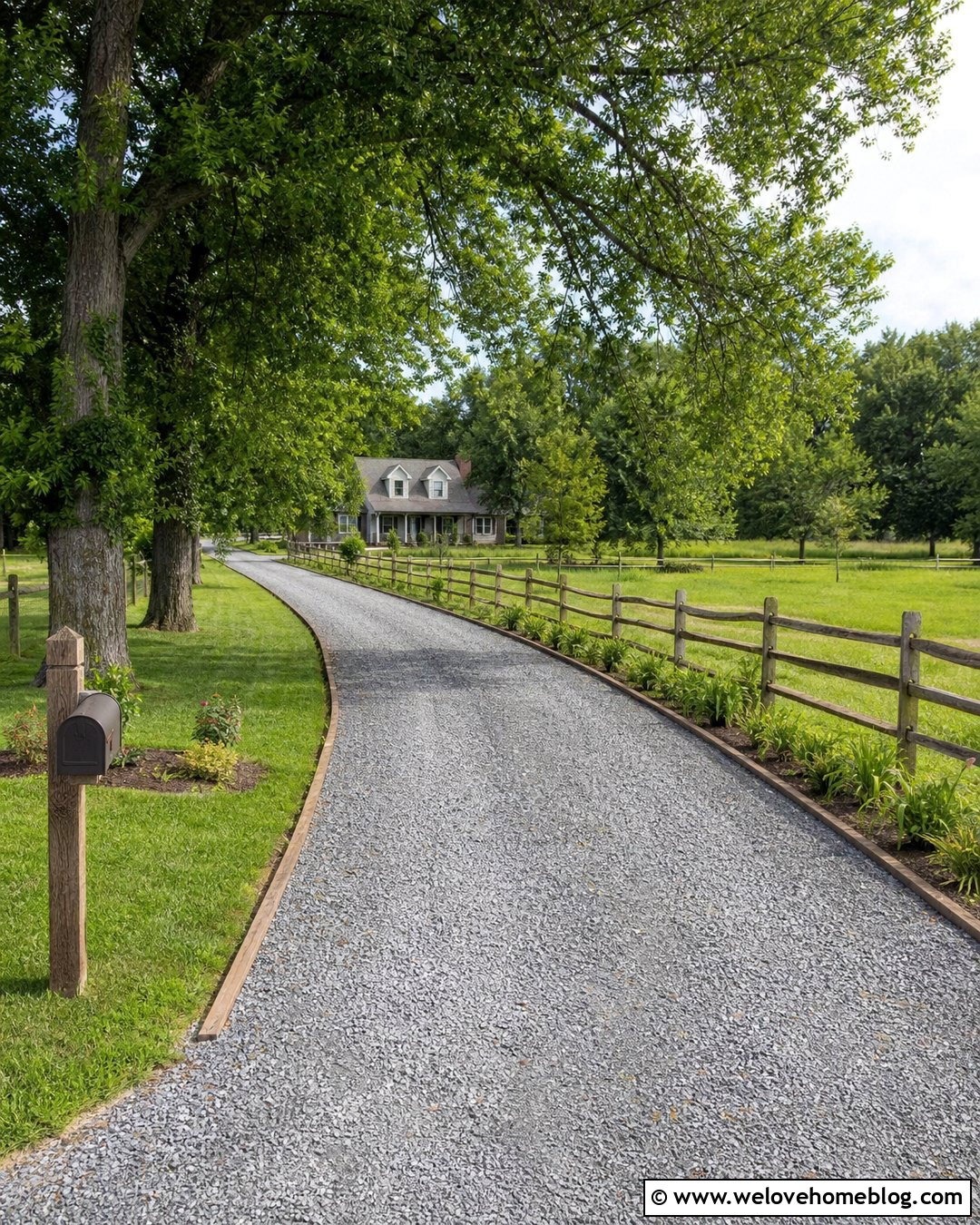
A split-rail fence gives a long gravel driveway a defined country character without requiring a solid or highly finished enclosure. Lay medium gray crushed stone in a broad, gently curved route toward a farmhouse or cabin. Run the fence along one side only, preferably where it can also separate the driveway from a field or deep front yard. Use timber edging near the lawn side to contain loose stone. Existing trees, mowed grass, and native plants can complete the landscape with minimal new construction. Repeat the fence material around the mailbox or entrance sign for balance. Leaving the opposite side more open prevents the approach from feeling narrow and keeps the budget focused on the most visible stretch of fencing.
25. Gravel Driveway With Ground Cover Edges
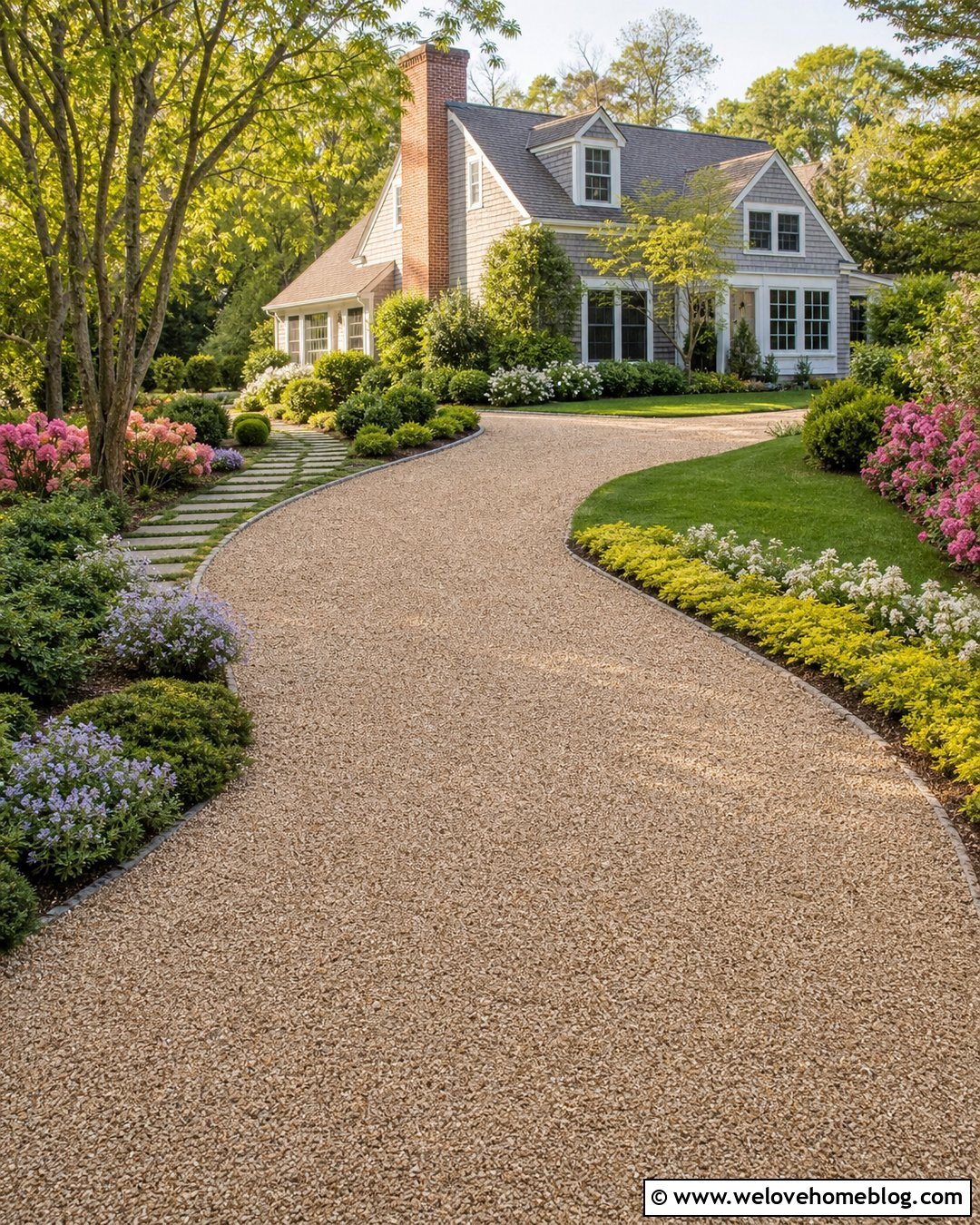
Low ground cover can replace a continuous lawn edge and make a small gravel driveway feel integrated with the garden. Select compacted tan crushed stone for a curved cottage approach and contain it with hidden flexible edging. Plant tough, low-growing species outside the border, choosing varieties appropriate for local sunlight, soil, and winter conditions. Maintain a clear setback from the tire path because even spreading plants can be damaged by repeated traffic. Add a narrow stepping-stone walkway through the ground cover toward the front door. A few flowering shrubs near the house can provide height without crowding the driving area. This design reduces the harsh line between gravel and planting while keeping expensive hardscape details to a minimum.
26. Gravel Driveway With a Paver Walkway Crossing
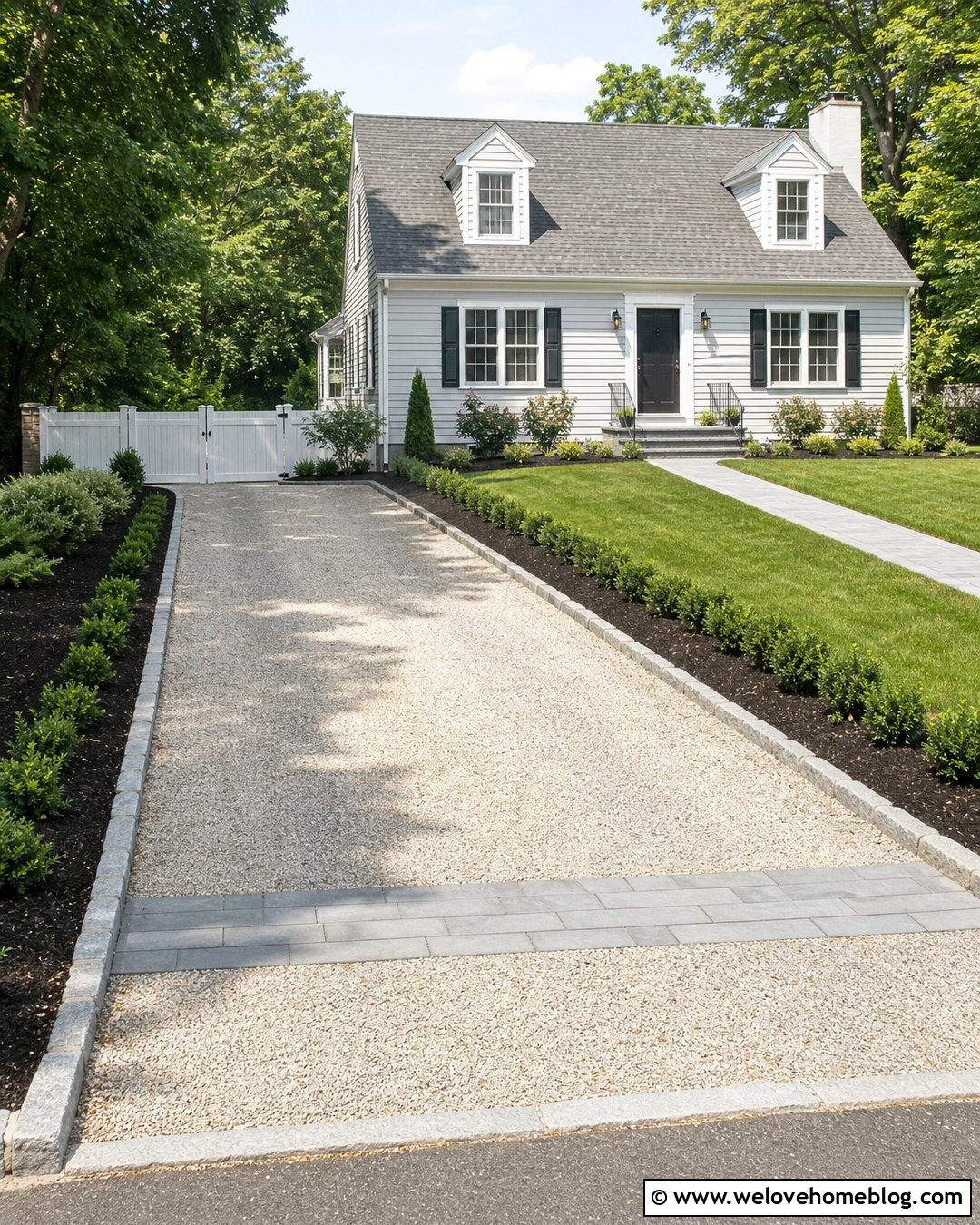
A paver crossing can connect the front walk to the yard while breaking up a long stretch of gravel. Use light gray crushed stone in a straight driveway and install one band of economical concrete pavers across its width. Continue the same pavers as a walkway leading to the porch of a ranch, craftsman, or Cape Cod home. Choose a simple running-bond pattern that requires few cuts. Concealed metal or plastic edging can hold the gravel on either side of the crossing. Frame the walkway with low shrubs, mulch, and a modest lawn. This arrangement places the more comfortable walking surface where it is actually needed. Matching the paver band and path also makes the entrance look planned without covering the driveway in costly paving.
27. Gravel Driveway With Evergreen Shrub Borders
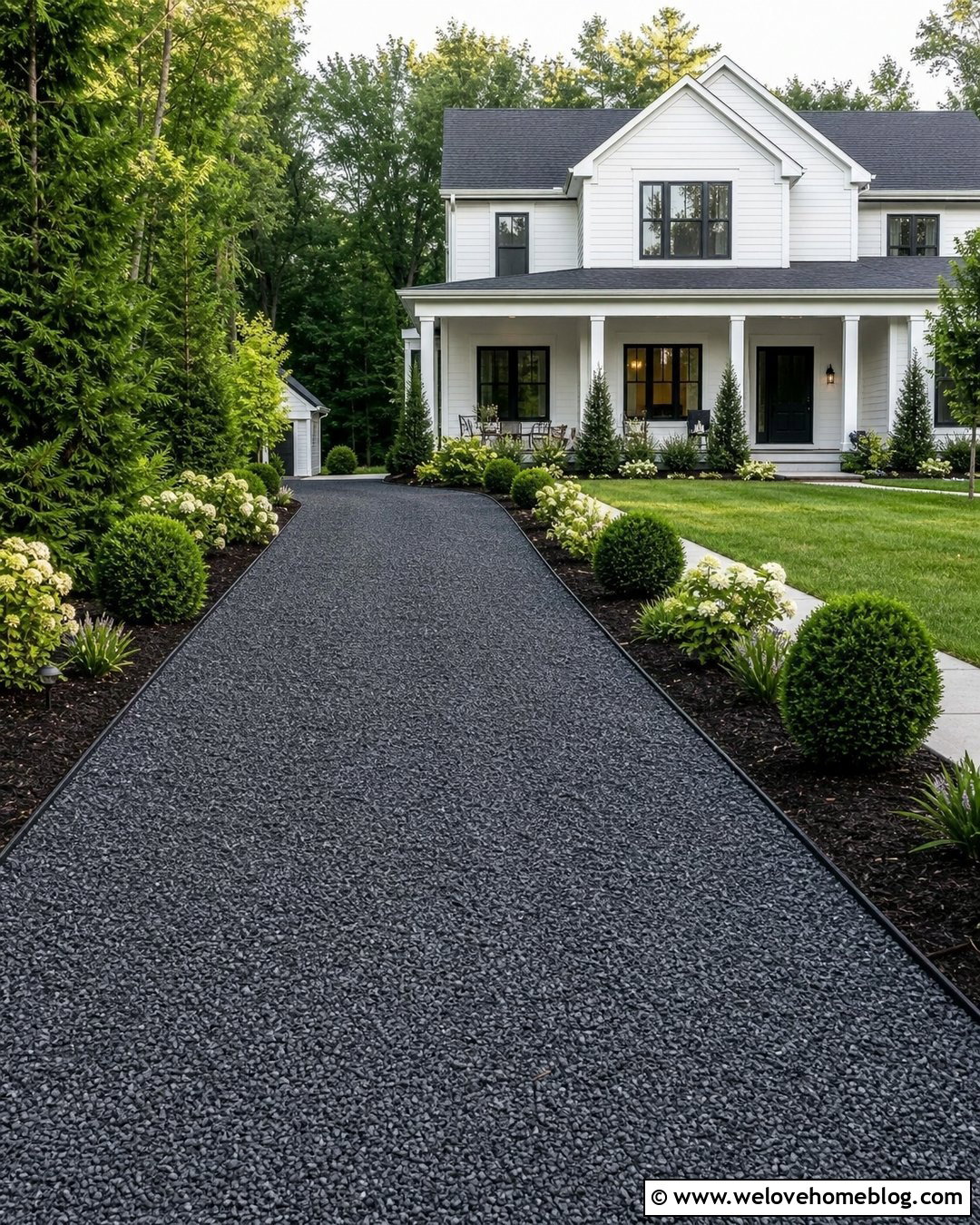
Evergreen shrubs can give a simple gravel driveway year-round structure, but they do not need to form a continuous hedge. Pair charcoal crushed granite with a straight driveway leading to a traditional brick or white-sided home. Install an affordable plastic edge, then arrange compact evergreens in spaced groups near the entrance, walkway, and garage. Fill the gaps with mulch and a few low perennials instead of buying dozens of shrubs. Keep mature plant widths in mind so branches will not narrow the driving surface. A rectangular lawn beyond the beds reinforces the clean layout. Limiting the landscaping to key areas lowers the initial expense, allows each plant room to develop, and avoids the ongoing trimming required by a formal hedge.
28. Gravel Driveway With a Dry Creek Border
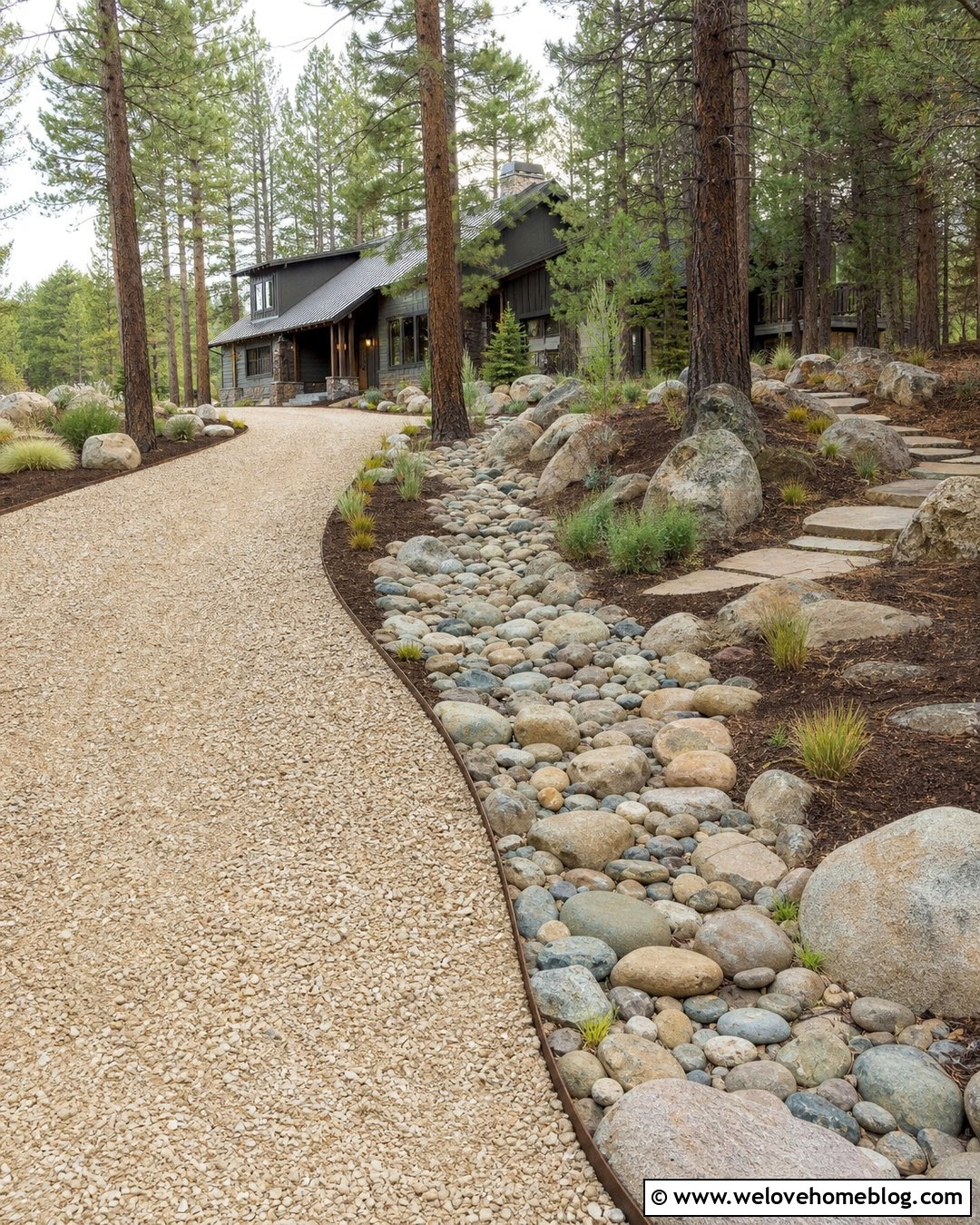
A dry creek can manage a naturally low landscape area while adding visual interest beside a gravel driveway. Cover the driveway with angular buff gravel and separate it from the creek using a firm steel or stone edge. Fill the shallow channel with larger rounded river rock so the two surfaces remain visually distinct. Curve both features gently through a wooded or drought-tolerant front yard. Add scattered boulders, native grasses, and mulch, but leave the area closest to the street open. The dry creek should follow the actual site grade rather than functioning as decoration alone. For drainage problems involving large volumes of water, steep slopes, or neighboring property, professional advice may prevent erosion and incorrect runoff routing.
29. Gravel Driveway With a Horseshoe Layout
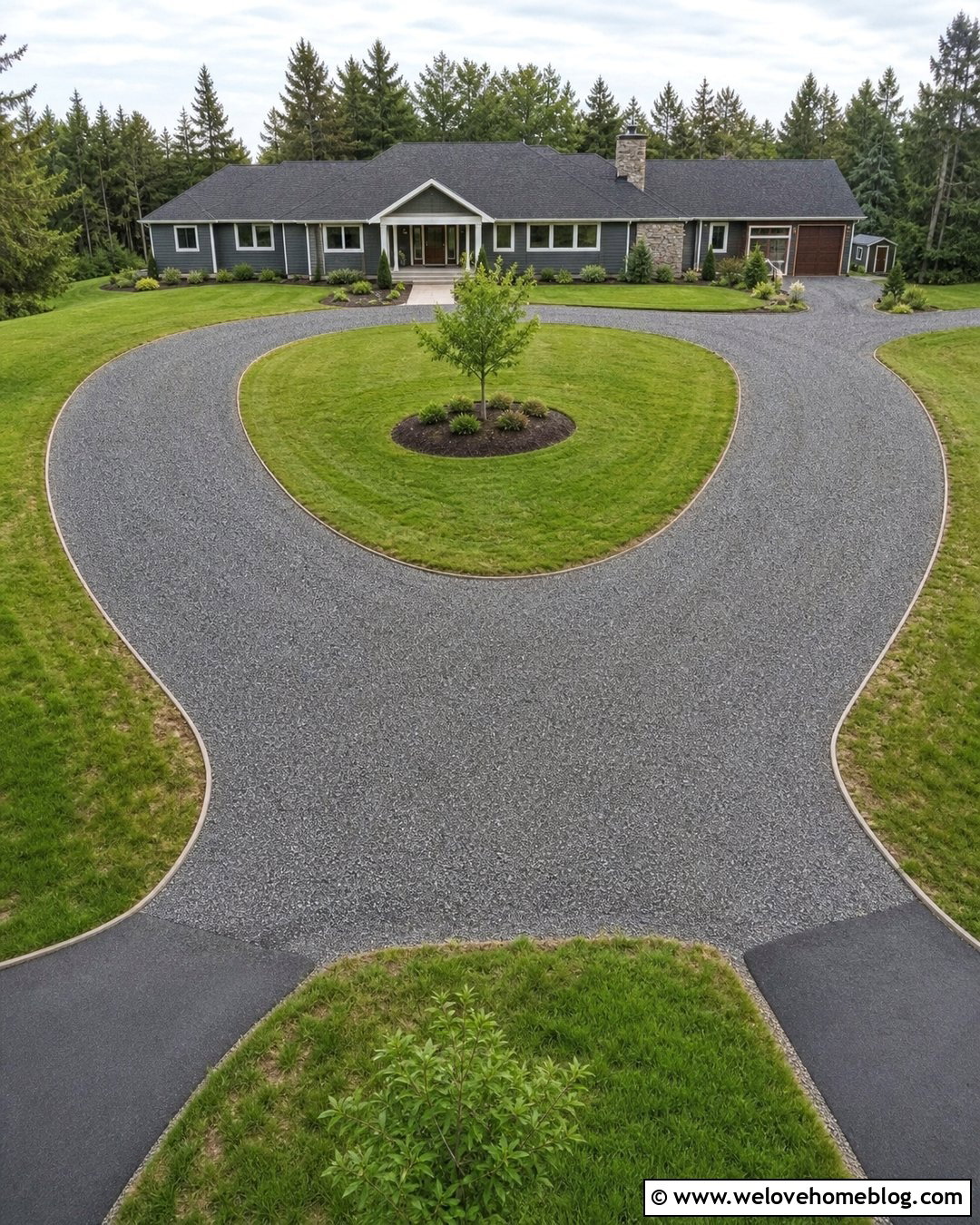
A compact horseshoe driveway can work on a broad front yard when the curves are kept simple and the lane is not oversized. Use economical gray crusher-run for the main surface and flexible recycled edging around both arcs. Leave a large grass island in the center rather than installing expensive landscaping across the entire area. One small tree, a mulch ring, and several low shrubs can provide a focal point without blocking sightlines. Connect a short concrete or paver walkway from the inner curve to the front porch. This layout complements ranch, colonial, and farmhouse homes. Before construction, check local requirements for driveway openings because creating two street connections may require permits, minimum spacing, or approval from the appropriate authority.
30. Gravel Driveway With a Modern Black Border
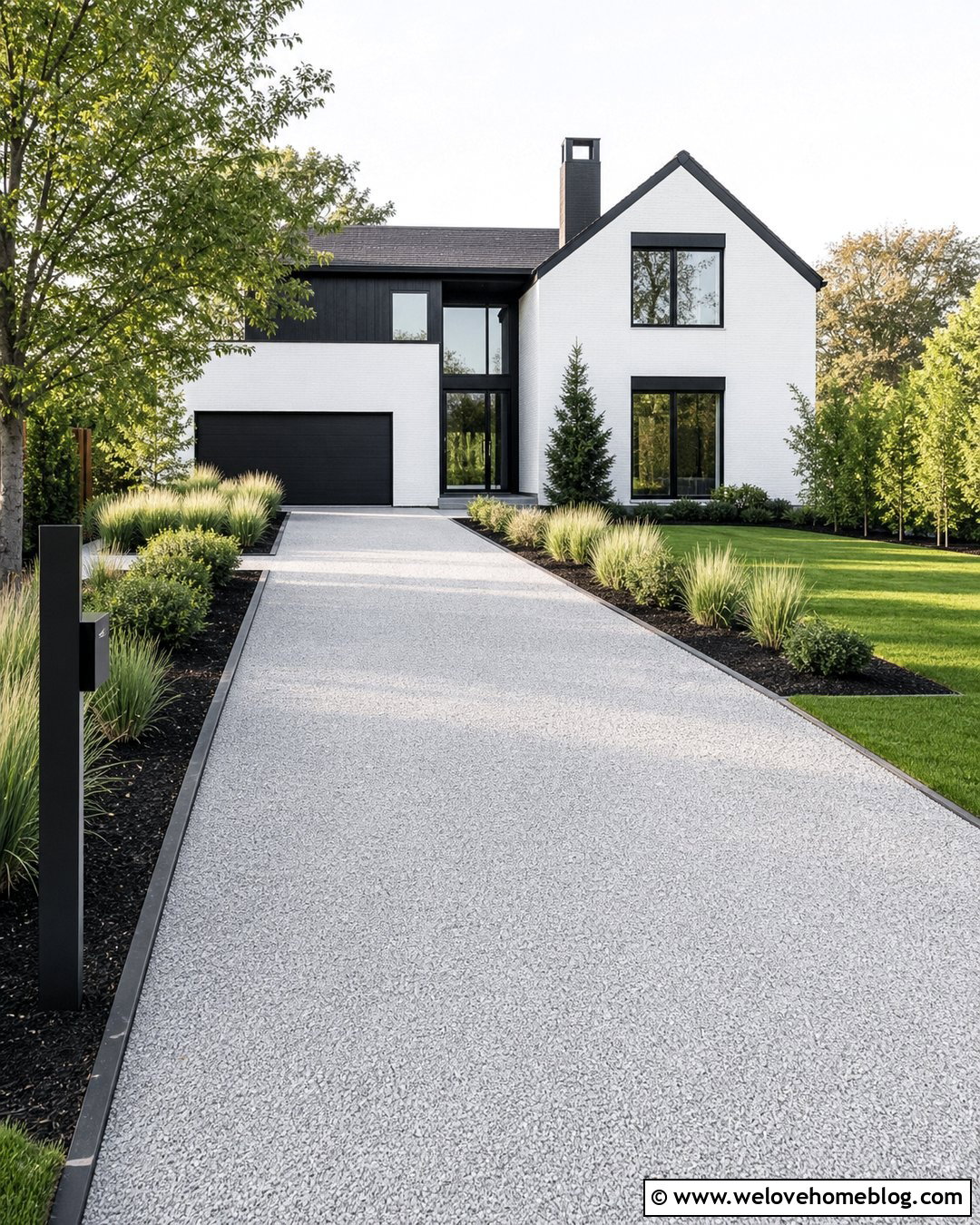
Dark borders can make ordinary gray gravel look sharper beside a modern house. Use compacted light gray crushed granite in a wide, straight layout and frame it with black metal edging. Carry the same dark finish into rectangular planting beds, an address post, and simple exterior fixtures. Fill the beds with inexpensive ornamental grasses, low shrubs, and dark mulch. A strip of lawn between the driveway and sidewalk can keep the entrance from feeling overly hard. Near the garage, add a narrow charcoal paver band as a transition rather than paving the full approach. The limited color palette creates a polished appearance, while the materials remain straightforward. Clean lines and careful gravel containment are more important here than elaborate decoration.
31. Gravel Driveway With a Rustic Mailbox Bed
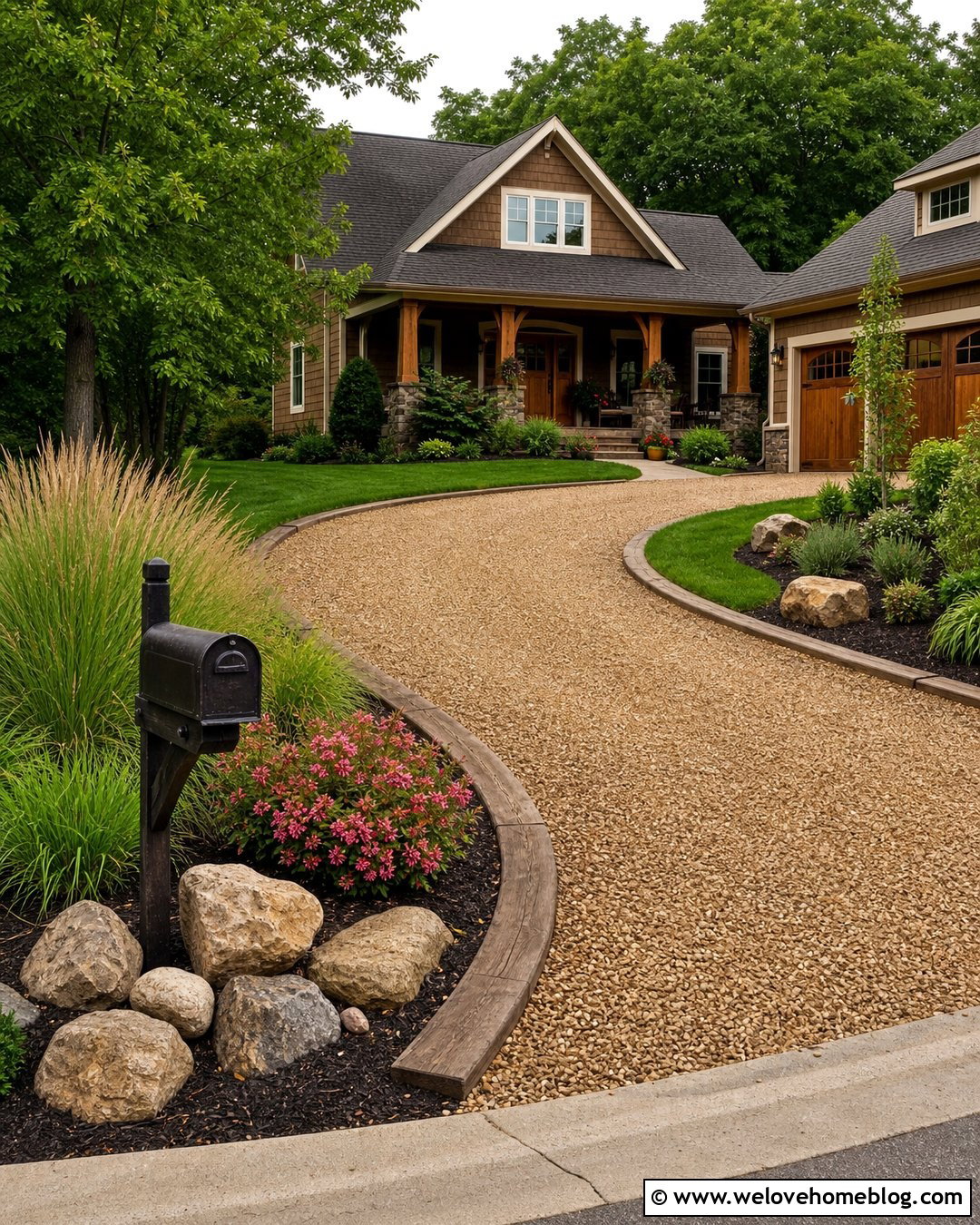
The mailbox area offers a small, affordable place to give a long gravel driveway personality. Choose warm brown crushed stone for a straight or softly curved approach with timber edging. Build a compact bed around a simple wood or black metal mailbox, placing it where it meets postal and road-clearance requirements. Use natural rocks, dark mulch, low ornamental grasses, and one hardy flowering shrub. Repeat the same plant combination near the house to connect the entrance with the rest of the landscape. Keep the street-facing side low and uncluttered for visibility. This complete design works well with craftsman homes, cabins, and modern farmhouses. Focusing the landscaping in two coordinated areas prevents the long driveway from becoming expensive to plant.
32. Gravel Driveway With a Gravel Grid
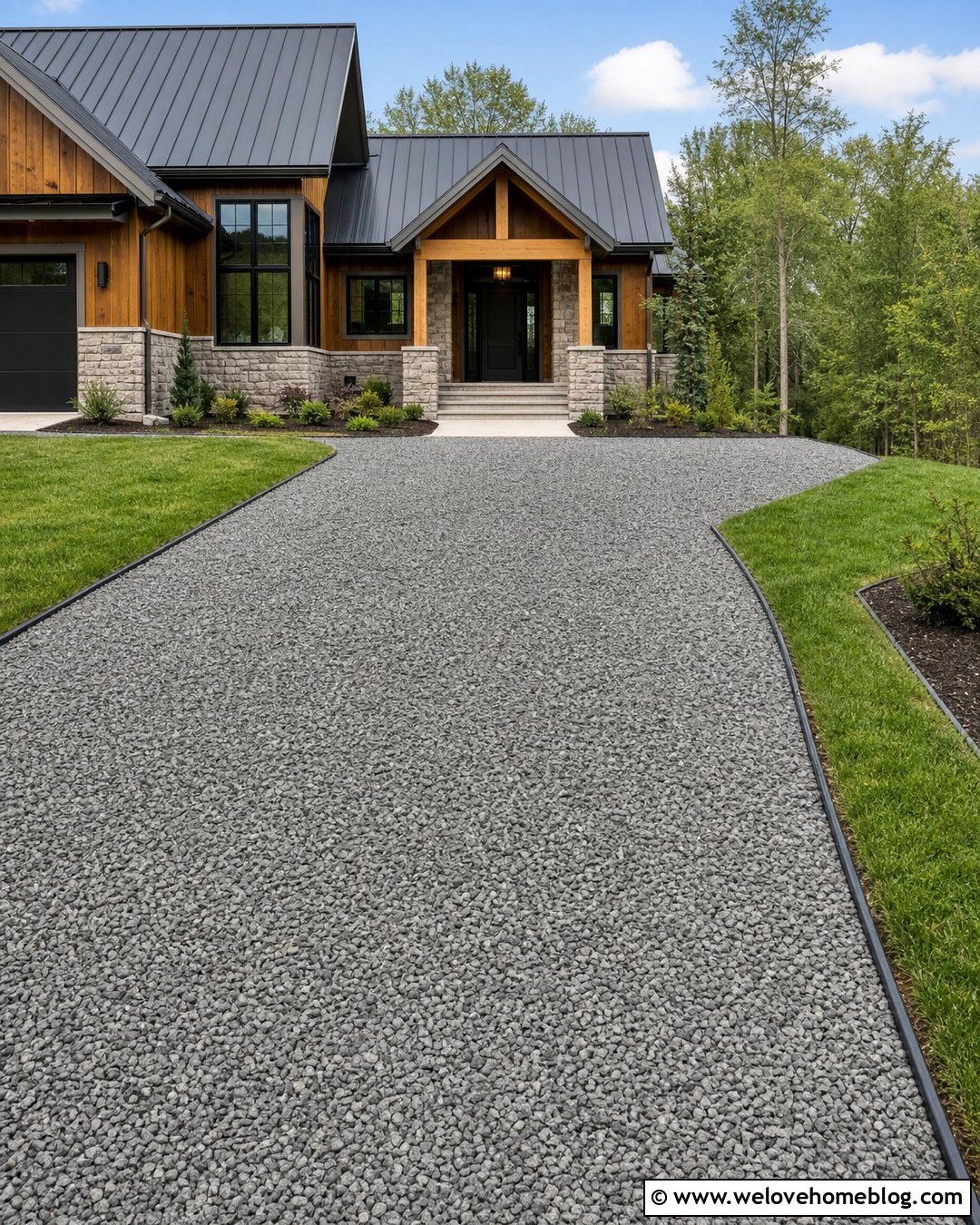
A gravel stabilization grid can be useful where loose stone repeatedly develops ruts or spreads into nearby lawn. Install the grid over a properly prepared base and fill it with angular gray gravel suited to the system. Use the material on a straight suburban driveway or limit it to turning areas and slopes if covering the entire route exceeds the budget. Black metal edging and narrow grass borders create a clean transition to the yard. Add simple foundation shrubs around a contemporary ranch or craftsman home. Grid systems can improve lateral gravel stability, but they do not replace grading, drainage, or adequate base preparation. () Concentrating the grid beneath high-wear areas may provide the best balance between performance and cost.
33. Gravel Driveway With a Widened Entrance
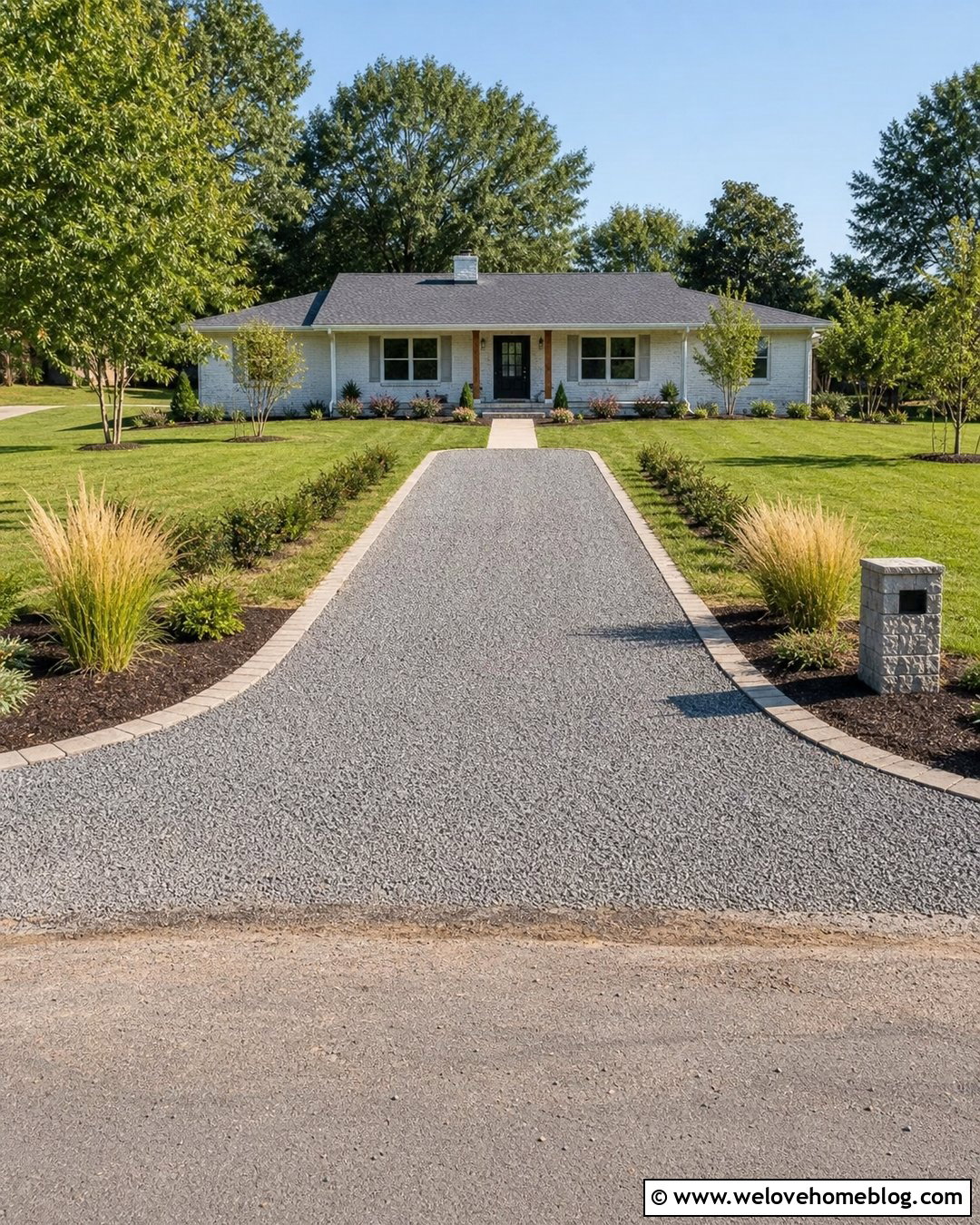
A narrow driveway can feel easier to use when only the street entrance is widened. Keep the main route straight and cover it with medium gray crushed stone. Flare both sides gradually near the road, using sturdy reclaimed pavers or natural stone to hold the new shape. Two matching mulch beds can sit beyond the flare without extending into necessary sightlines. Add low grasses, a modest address marker, and open lawn around the planting. This layout suits small ranch and suburban homes where a full driveway expansion would remove too much yard. Confirm property boundaries and local right-of-way rules before installing permanent edging near the street. A carefully shaped entrance can improve the driveway’s appearance and function while requiring far less gravel than widening its complete length.
34. Gravel Driveway With a Budget Turnaround
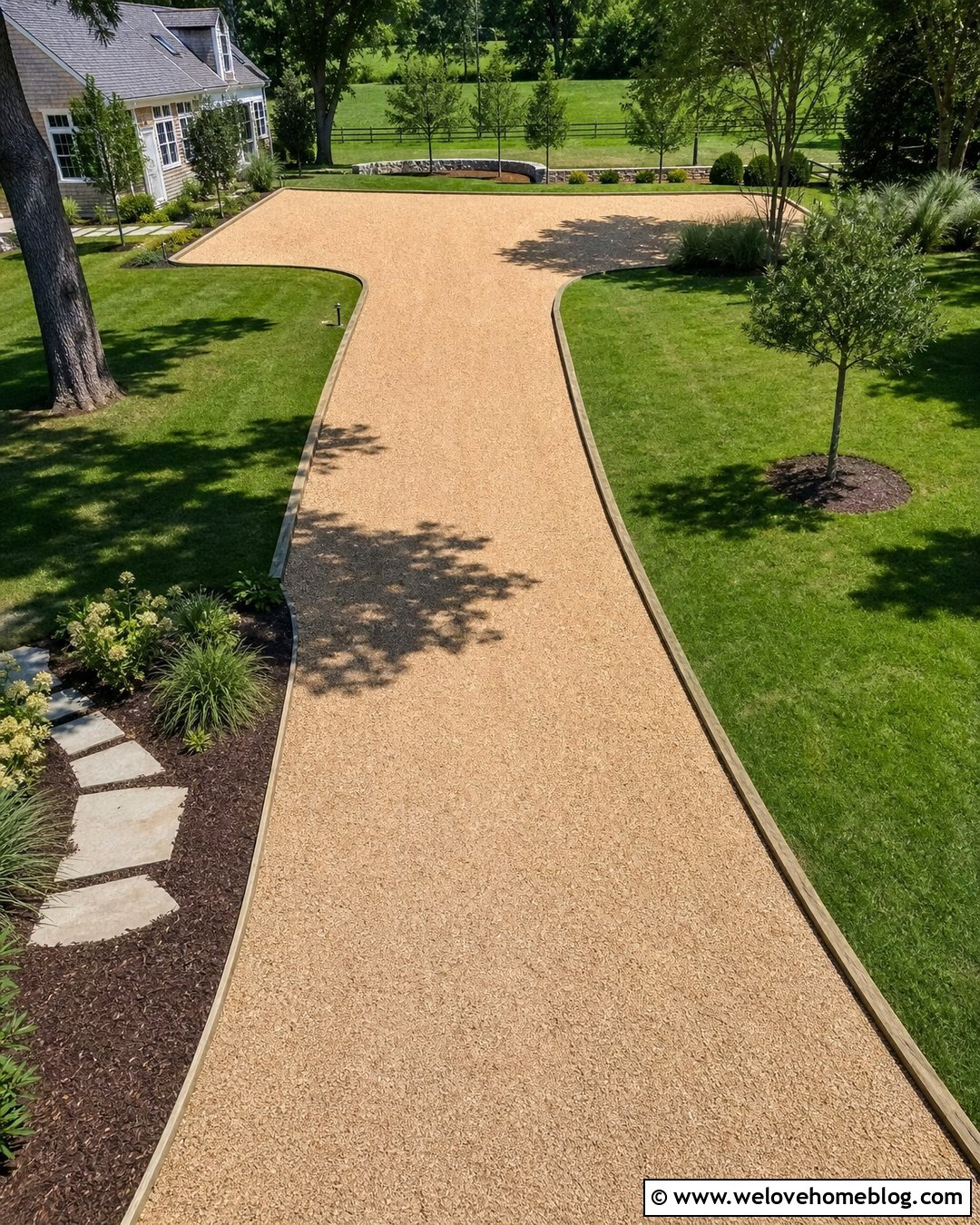
A simple turnaround can prevent awkward reversing on a long property without creating a large circular drive. Run tan crushed gravel toward the house, then add a compact T-shaped or hammerhead extension near the garage. Use pressure-treated timbers along the outside edges and a low metal border where the turnaround meets the lawn. Plant one corner with ornamental grasses and mulch, leaving the remaining edges open for vehicle clearance. A country house, cabin, or deep-lot ranch provides the ideal setting. Measure the vehicles that regularly use the driveway before selecting dimensions, and consider occasional delivery or emergency access. Keeping the turnaround rectangular reduces excavation, edging cuts, and wasted gravel while making the layout visibly organized.
35. Gravel Driveway With a Mixed Gravel Finish
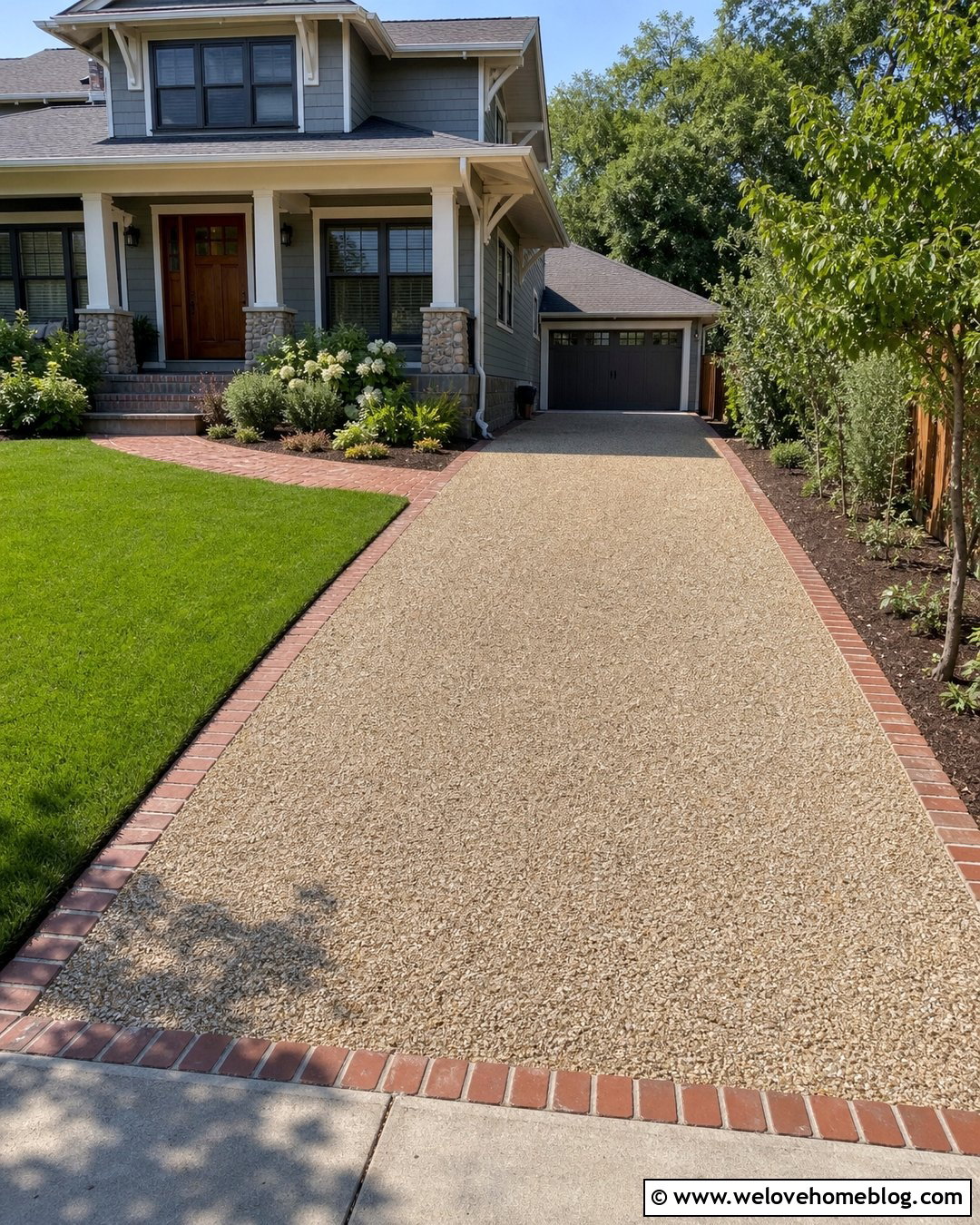
Combining affordable base gravel with a more attractive top material can create a premium appearance for less. Build the main driveway with compactable gray crusher-run, then spread a thinner layer of tan crushed limestone or granite chips over the visible surface. Use sturdy timber or reclaimed brick edging to contain the finished material. A broad straight layout works with nearly any suburban home, while a slight curve suits a country setting. Add lawn along one side and a simple mulched shrub border along the other. Purchase the decorative stone only after calculating the required top-layer volume. The base should provide stability, while the upper layer supplies the desired color and texture. This approach avoids paying decorative-stone prices for the driveway’s full depth.
Conclusion:
The best **35 Gravel Driveway Cheap Ideas** combine practical construction with a few carefully chosen visual details. Start with a stable base, sensible grading, and gravel that suits vehicle traffic. Then improve the complete look with affordable timber, brick, stone, steel, plants, or reclaimed materials. You do not need to decorate every foot of the driveway. Concentrating borders and landscaping near the street, walkway, parking area, and house can create stronger curb appeal for less money. Before digging, confirm property lines, utility locations, drainage rules, and driveway entrance requirements. With thoughtful planning, a low-cost gravel driveway can look tidy, complement the home, and remain manageable through routine raking and occasional replenishment.

Related posts:
Leave a Reply