
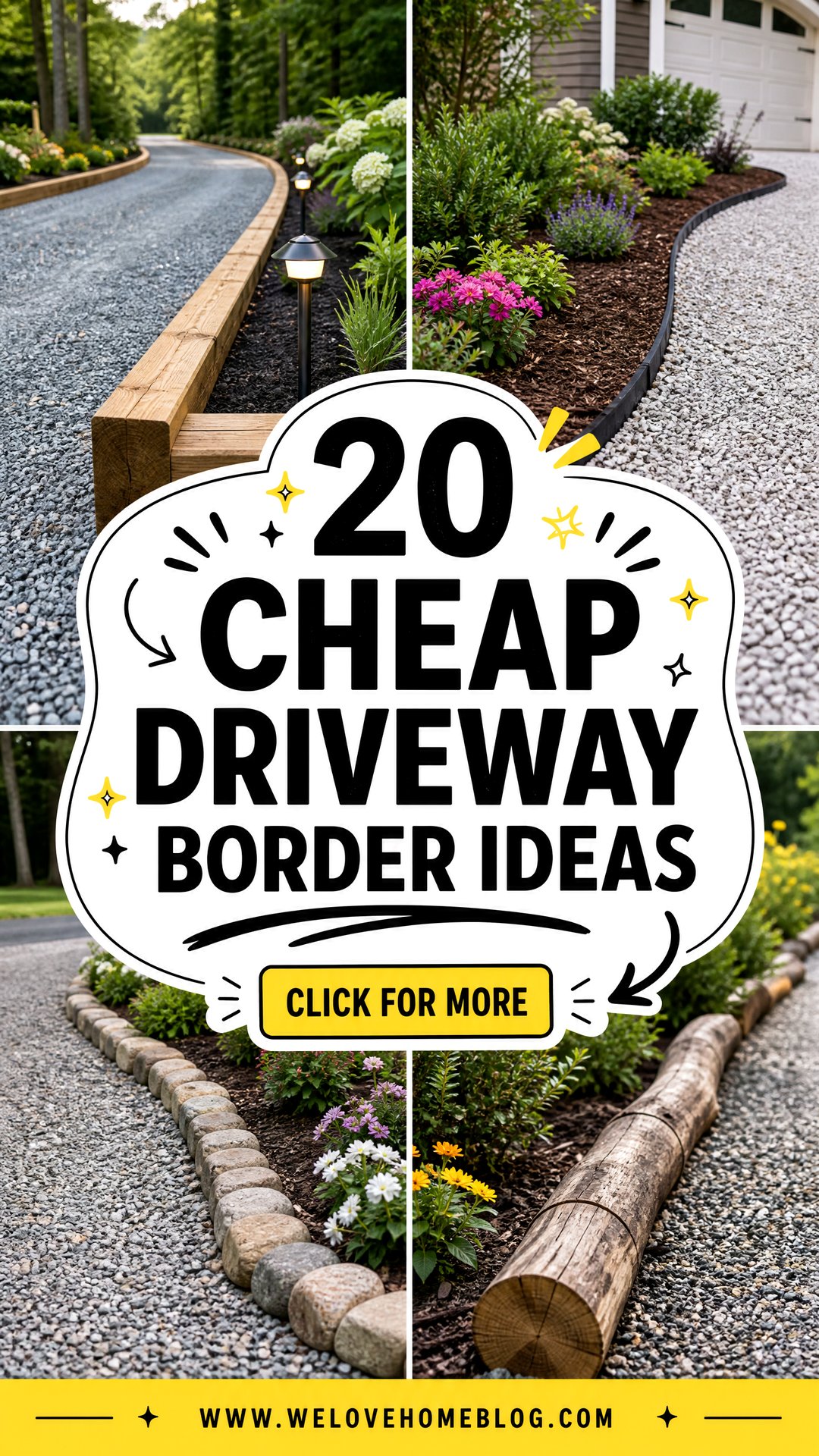
Cheap driveway border ideas can make a basic entrance look finished without requiring a full driveway renovation. The right border also creates a cleaner transition between the driving surface, lawn, and planting beds. Budget-friendly choices include reclaimed brick, landscape timber, gravel bands, concrete blocks, flexible edging, and low-growing plants. Match the border to the driveway surface and house exterior so everything feels connected. Before installing it, consider vehicle clearance, drainage, soil movement, and future maintenance. Loose materials usually need a firm restraint, while wood should be rated for ground contact. Whether your driveway is asphalt, concrete, gravel, or pavers, these complete designs balance practical installation with attractive curb appeal. Explore these **20 Cheap Driveway Border Ideas** for an affordable front-yard update.
1. Reclaimed Brick Driveway Border
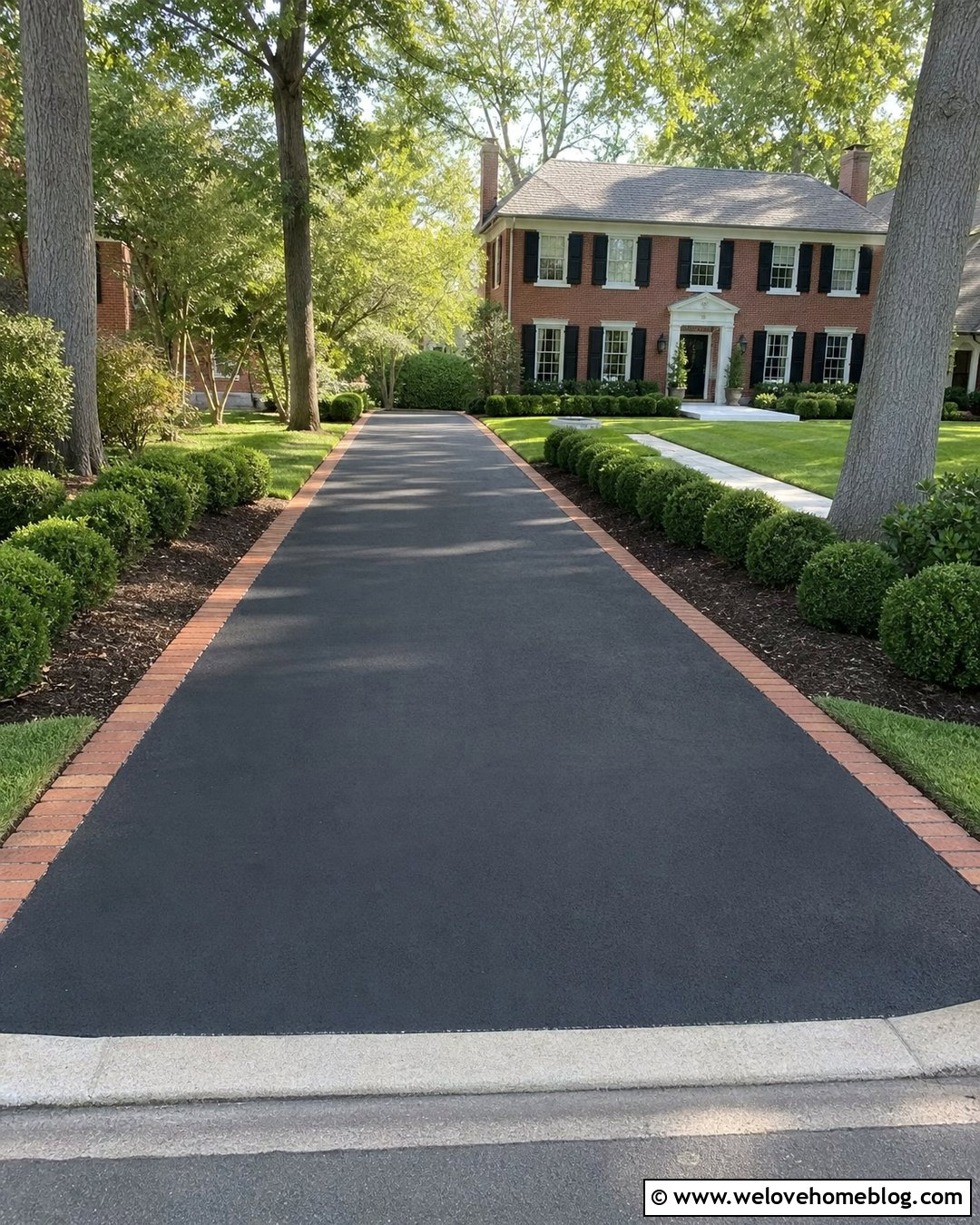
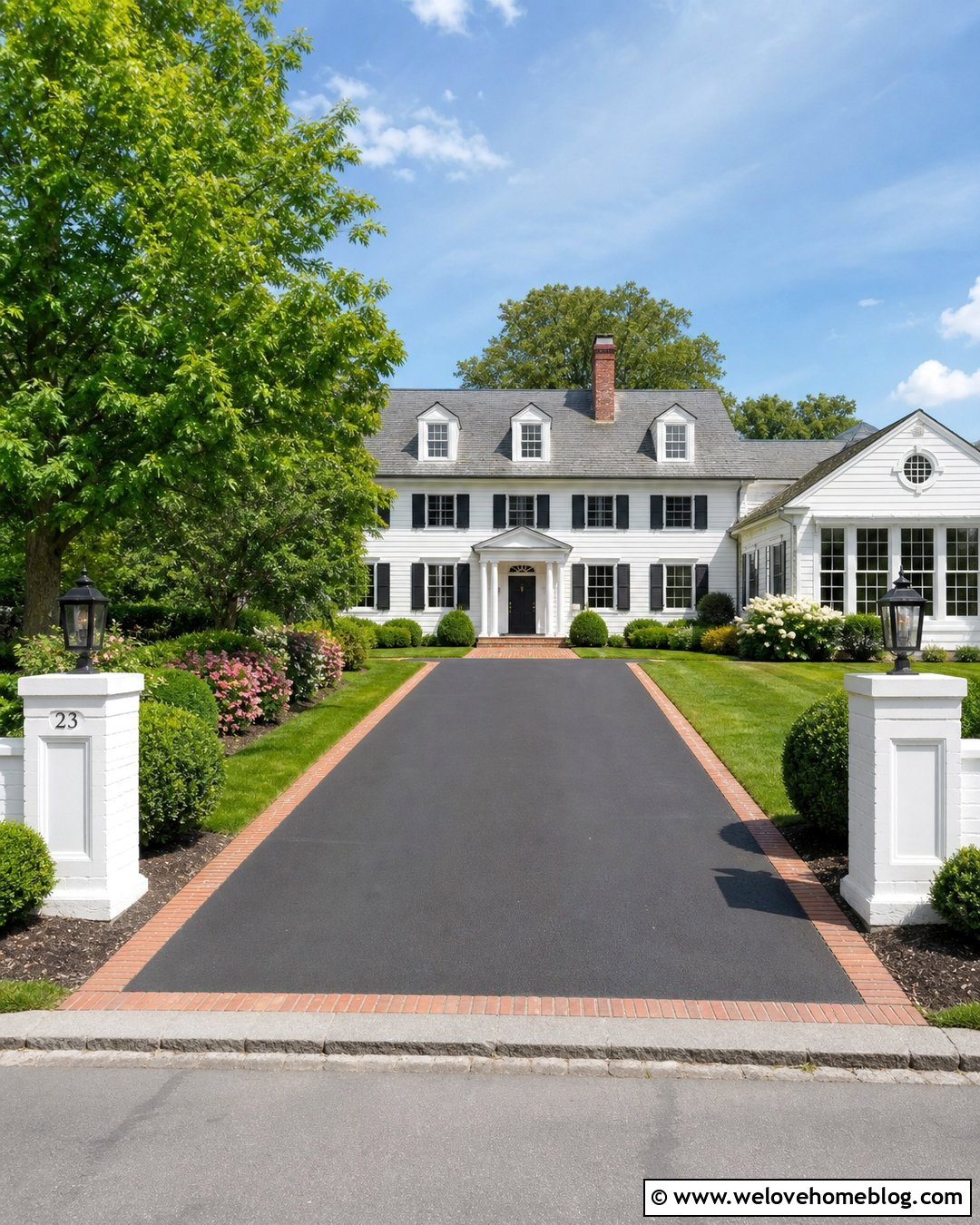
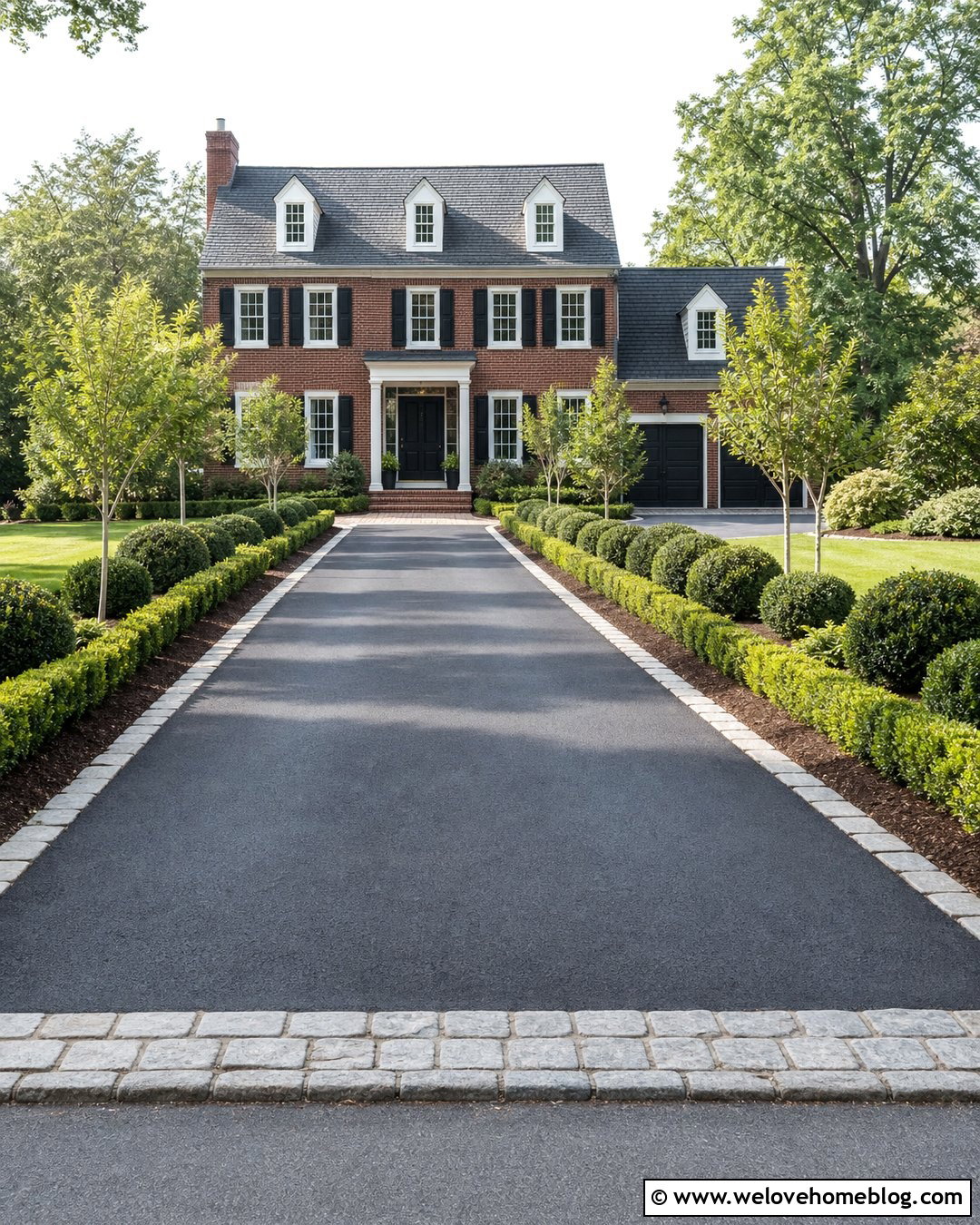
Reclaimed bricks give a straight black asphalt driveway a warm, established appearance without the cost of buying new decorative pavers. Install one row of bricks along each side, either flat for a subtle edge or upright for stronger separation. A compacted gravel and sand base helps keep the bricks level. Pair the reddish border with narrow mulch beds, ornamental grasses, and a simple concrete walkway leading to a colonial or traditional home. Choose bricks with similar thicknesses, even when the colors vary, to create a smoother line. Salvage yards, demolition projects, and neighborhood marketplaces are good places to search for affordable materials. Brick can define asphalt, concrete, or gravel, although loose driveway stone may require a hidden edge restraint. ()
2. Landscape Timber Gravel Driveway Border
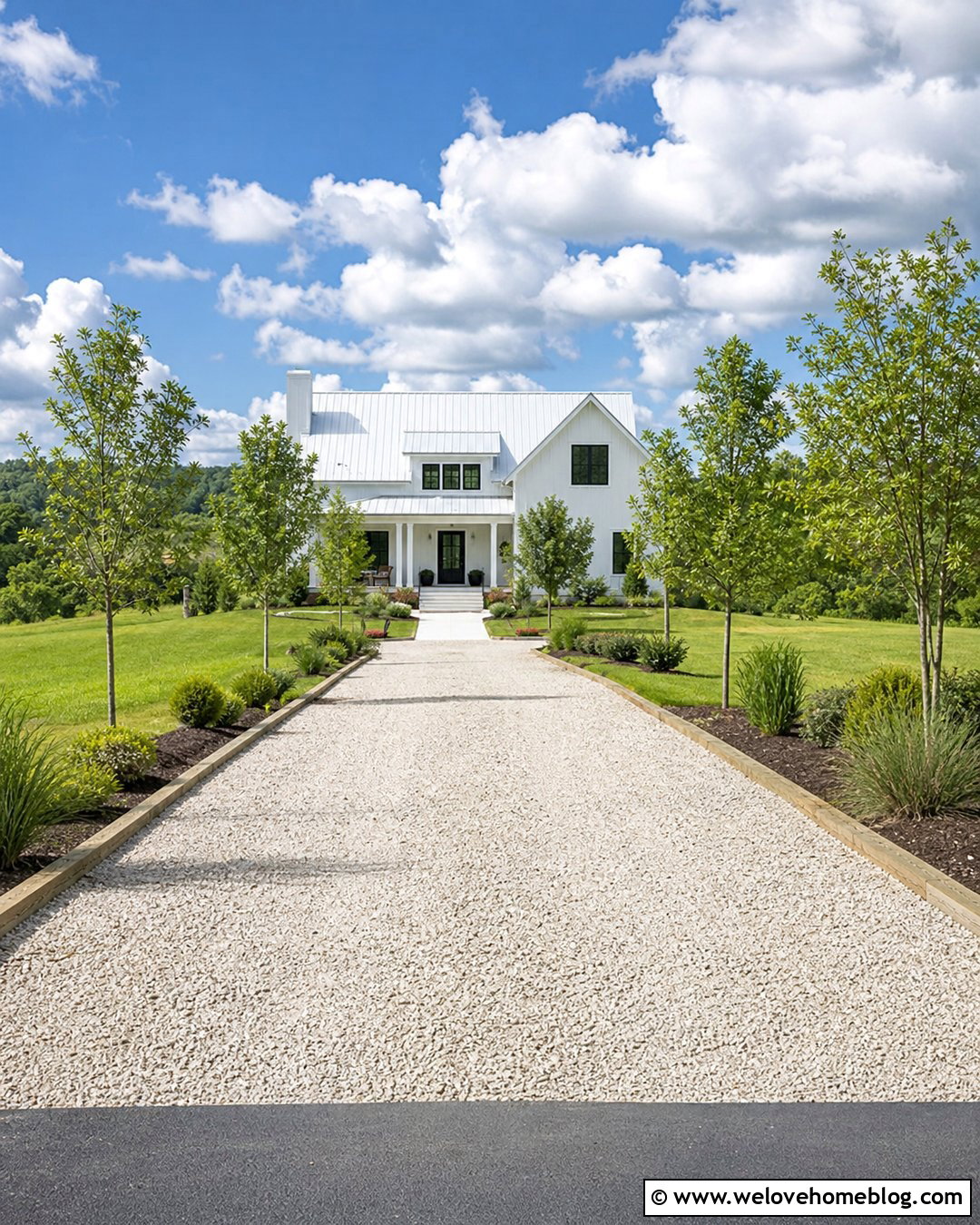
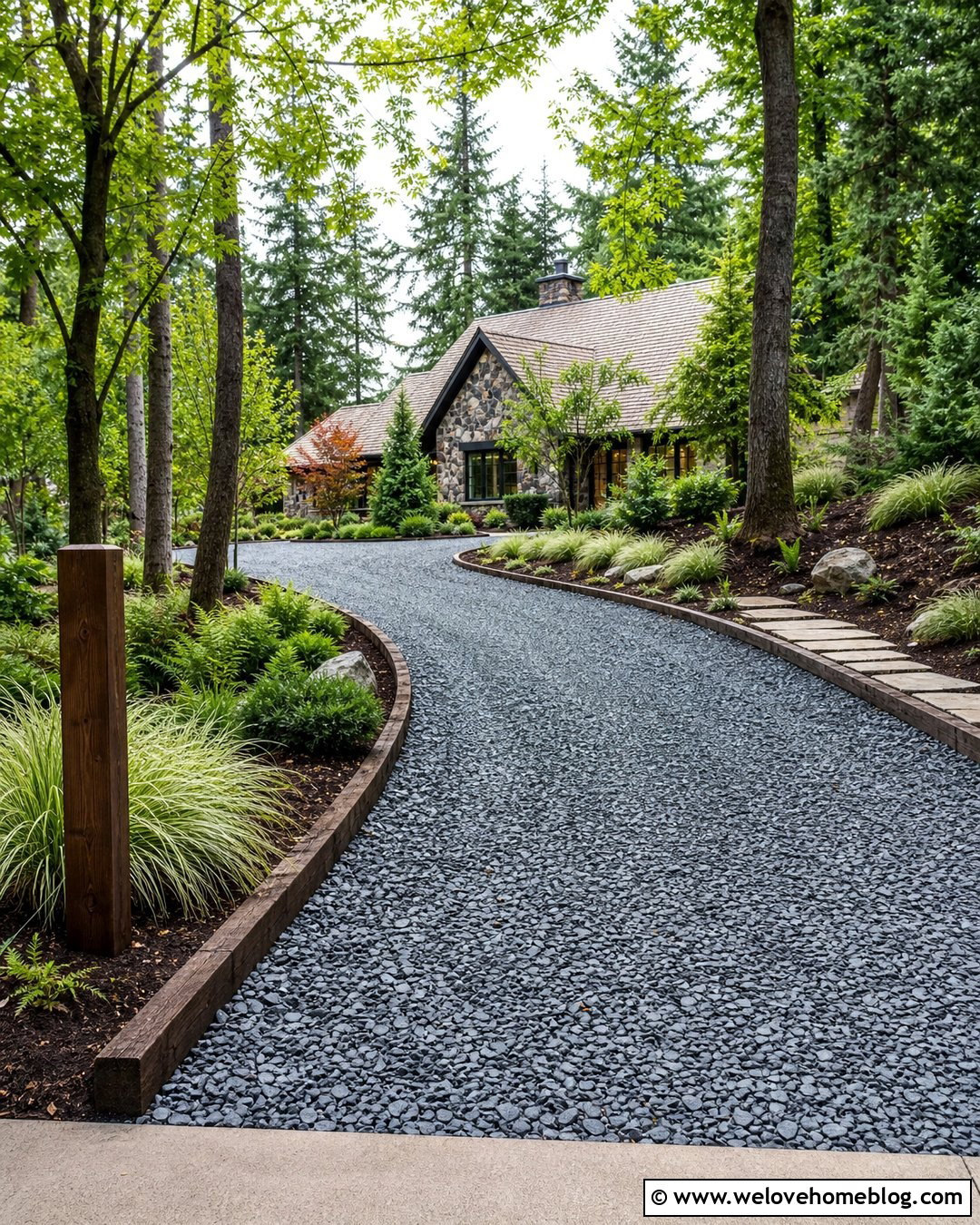
A pale crushed-gravel driveway framed with pressure-treated landscape timbers creates an economical country look. This design works best on a long, straight driveway where the lumber requires fewer cuts and joints. Set the timbers partly into shallow trenches so their tops sit just above the gravel. Secure them with long spikes or rebar where appropriate, keeping all hardware below the driving surface. Add broad lawn strips, a few native shrubs, and simple planting beds near the house rather than landscaping the entire driveway. This keeps the project affordable and easy to maintain. Ground-contact-rated lumber is the practical choice for damp soil conditions. Timber is commonly used as a low-cost gravel restraint, but it should be inspected periodically for movement and decay. ()
3. Plastic Edging And Mulch Driveway Border
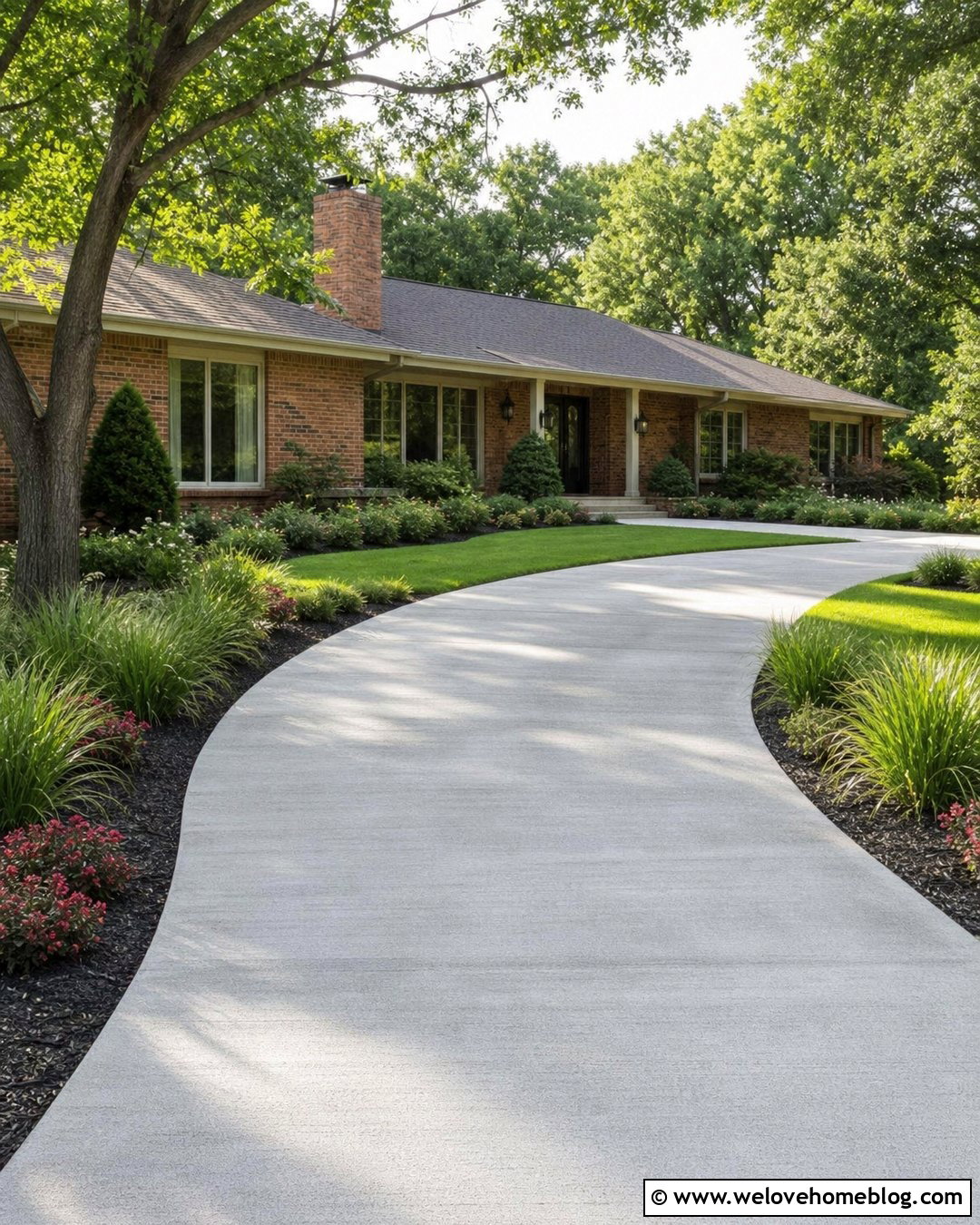
Flexible plastic edging can create a surprisingly neat border beside a light-gray concrete driveway when most of the material is hidden. Install the edging slightly below the concrete surface, leaving only enough height to stop mulch from washing onto the driveway. A narrow band of dark shredded mulch provides contrast and covers the plastic from the curb view. Finish the look with evenly spaced dwarf shrubs, low ornamental grasses, or seasonal flowers leading toward a ranch house. This border is especially useful for gentle curves because the material bends without complicated cutting. Use long anchoring spikes and prepare a smooth trench to prevent uneven sections. Plastic landscape edging remains one of the least expensive manufactured edging choices, making it practical for long driveways. ()
4. Metal Edging And River Rock Driveway Border
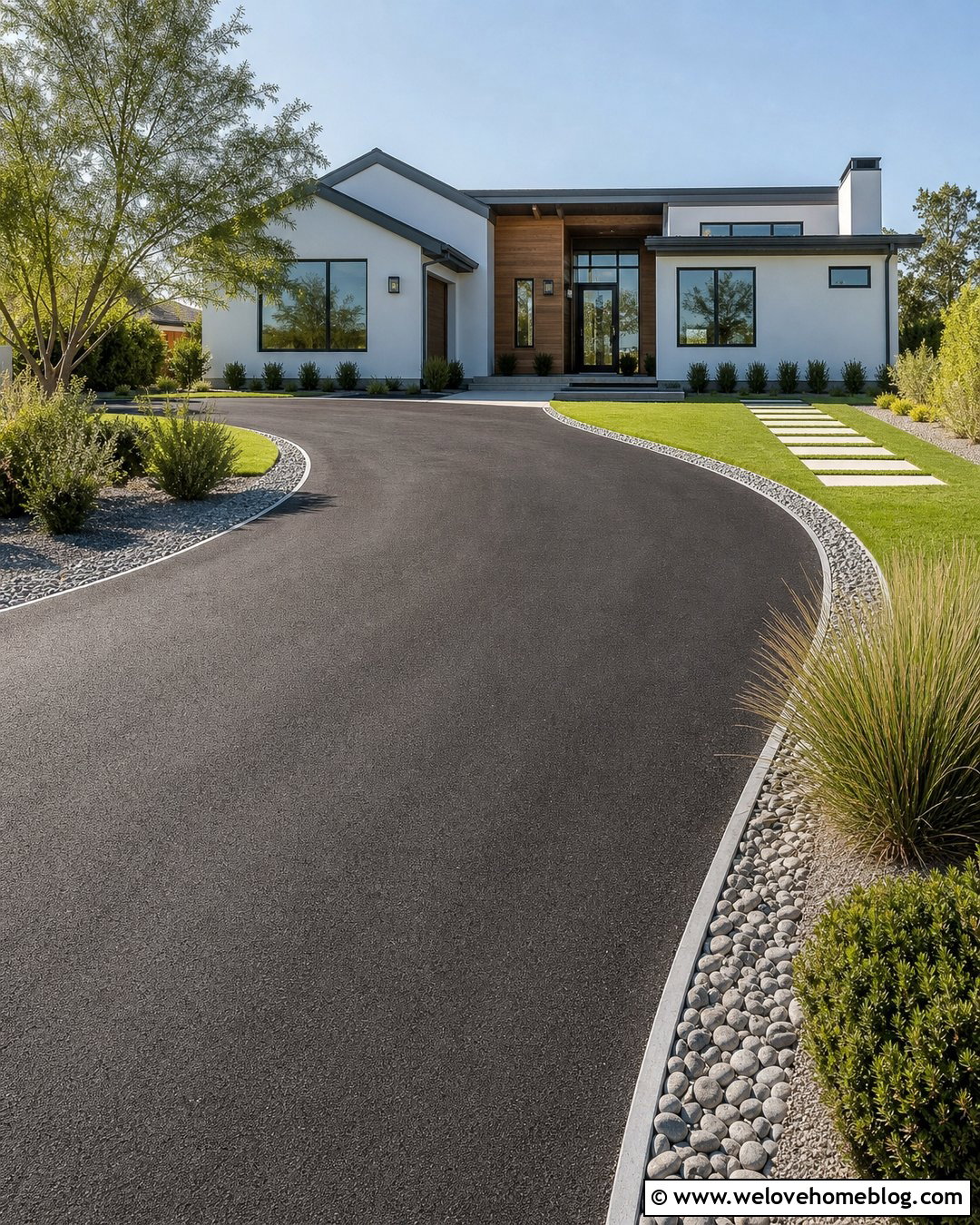
A slim metal edge paired with an inexpensive river-rock strip gives a black asphalt driveway a clean, modern finish. The metal restraint should sit between the asphalt and decorative stones, preventing the rock band from spreading across the driving area. Use galvanized steel or aluminum edging in long sections to reduce visible joints. Beyond the stone, continue with lawn, drought-tolerant grasses, and a few structural shrubs around a modern house. A six- to twelve-inch rock band is usually wide enough to create visible contrast without requiring a large quantity of stone. Choose locally available gravel or river rock to control transportation costs. Flexible metal is also helpful around a curved driveway because it creates a smooth line without the bulky appearance of masonry.
5. Pea Gravel Concrete Driveway Border
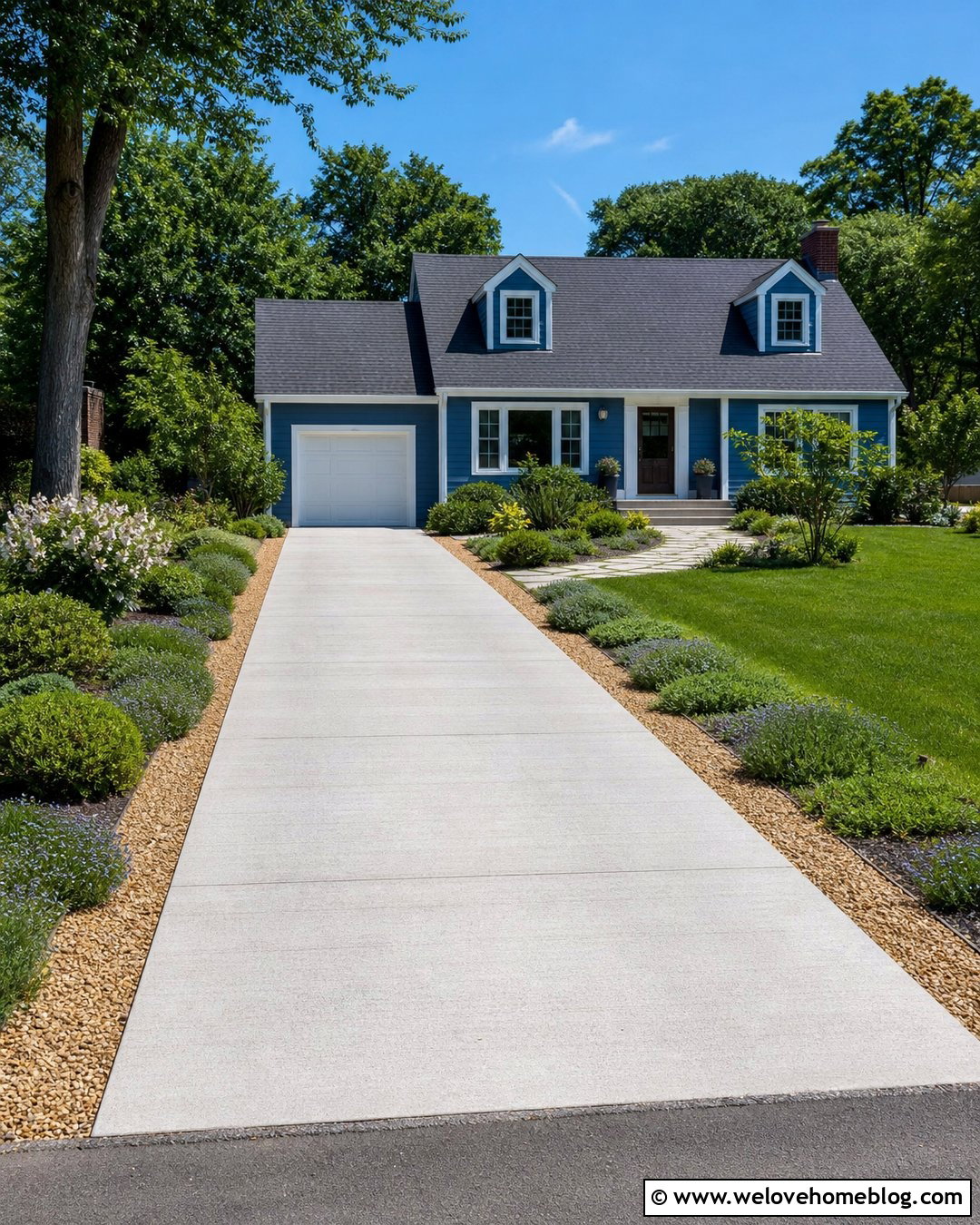
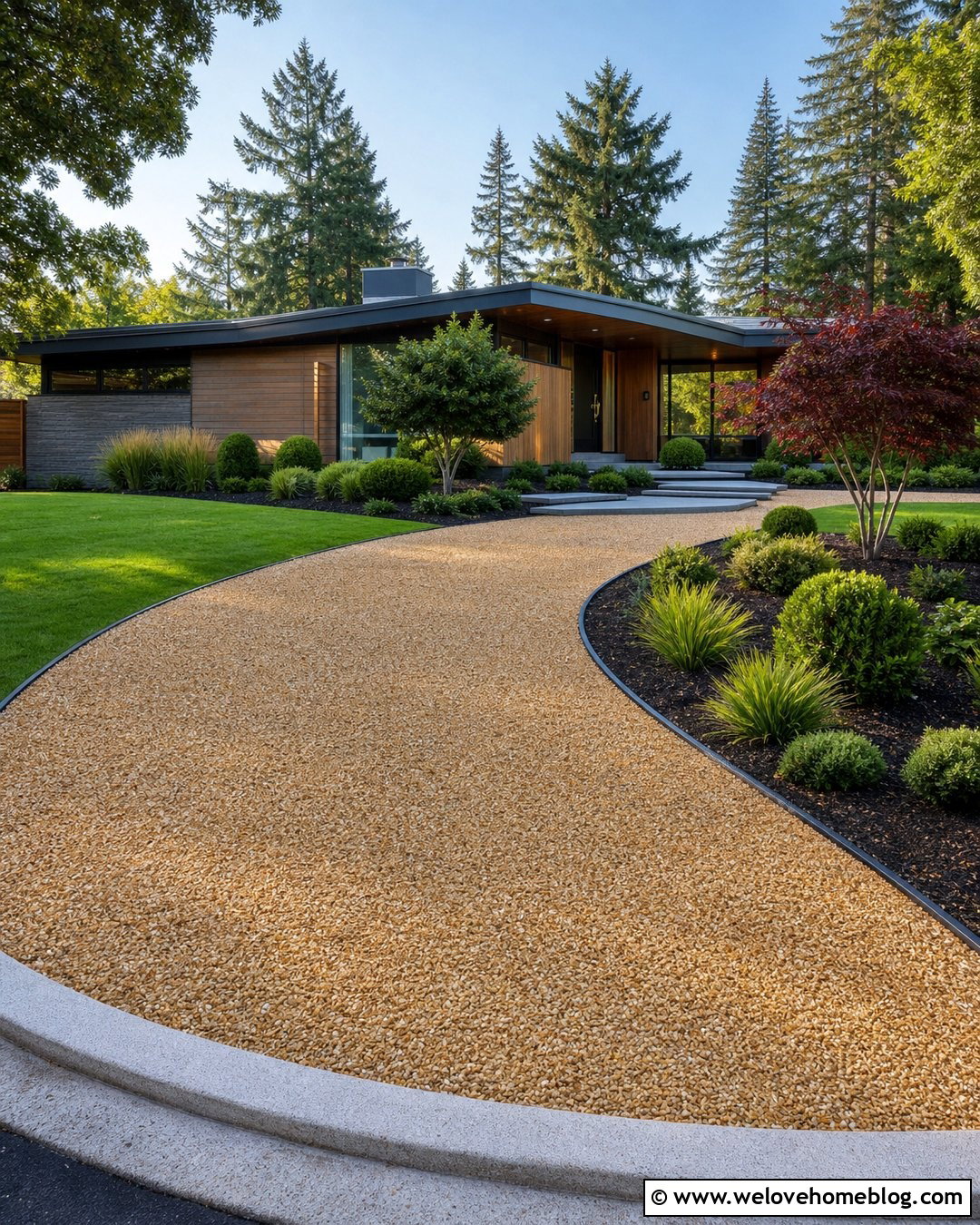
Warm tan pea gravel can soften the appearance of a wide, broom-finished concrete driveway. Create a narrow gravel band on both sides and contain it with inexpensive plastic or metal edging along the lawn. The concrete becomes the firm inner edge, while the hidden outer restraint keeps the small stones in place. Pair the gravel with simple boxwood alternatives, spreading ground covers, and a stepping-stone walkway near a Cape Cod house. Select angular pea-sized gravel when possible because very rounded stones move more easily under foot traffic. This design is especially effective when the driveway is structurally sound but looks plain. Instead of paying for decorative resurfacing, the contrasting border introduces color and texture while preserving the existing concrete as the main driving surface.
6. Crushed Stone Asphalt Driveway Border
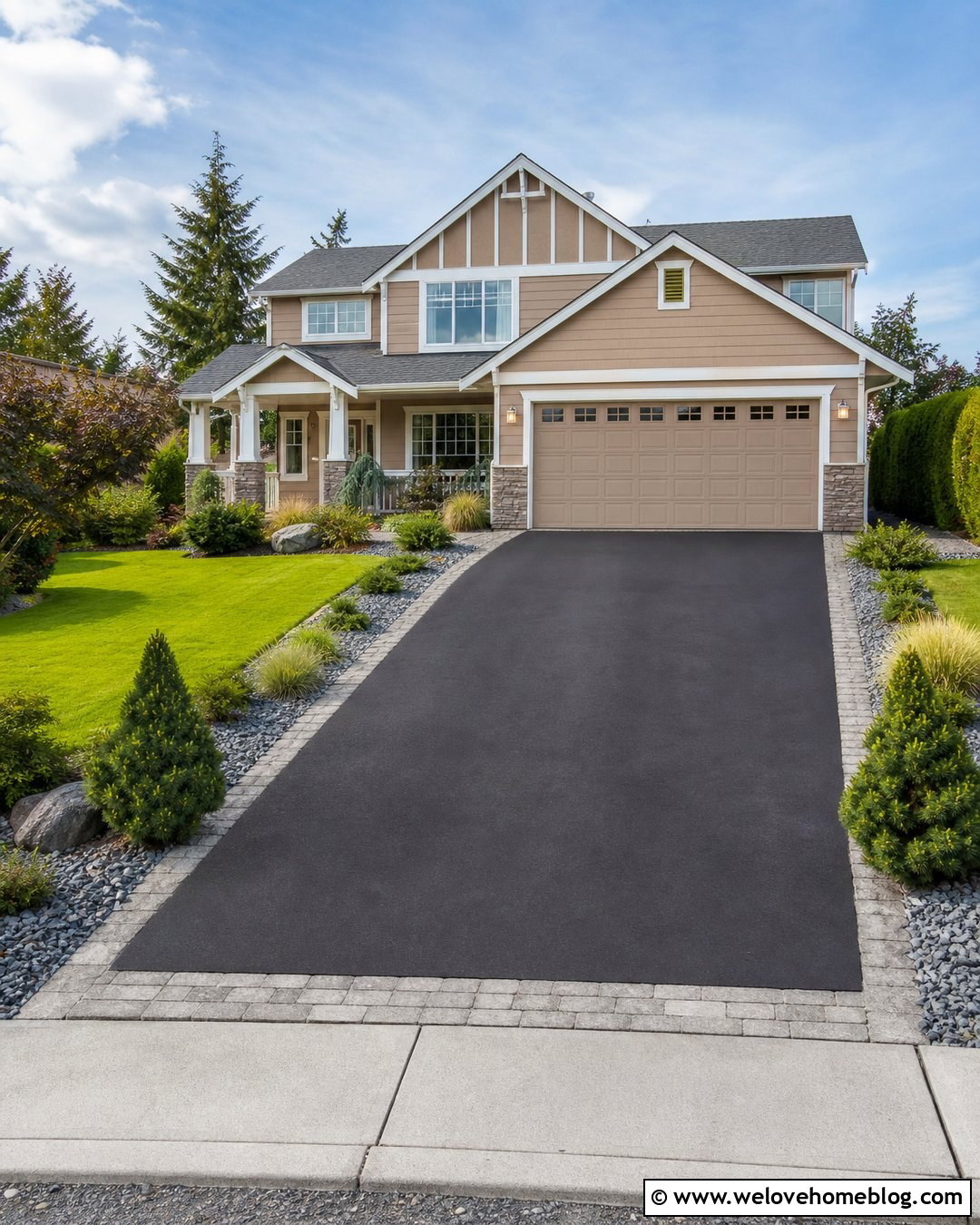
A gray crushed-stone band creates an understated border around a dark asphalt driveway. The similar colors produce a coordinated look, while their contrasting textures clearly define the edge. Excavate a shallow strip, compact the soil, and add landscape fabric only where it suits the site and drainage plan. Fill the strip with angular crushed stone and contain its lawn-facing side with hidden edging. Near the house, widen the border into small planting pockets filled with evergreen shrubs and tough perennials. This keeps the long section simple while adding interest where visitors see it most. Crushed concrete may offer an even cheaper alternative when available locally. Loose stone borders can support drainage, but they should never redirect runoff toward the foundation, sidewalk, or neighboring property.
7. Concrete Paver Driveway Border
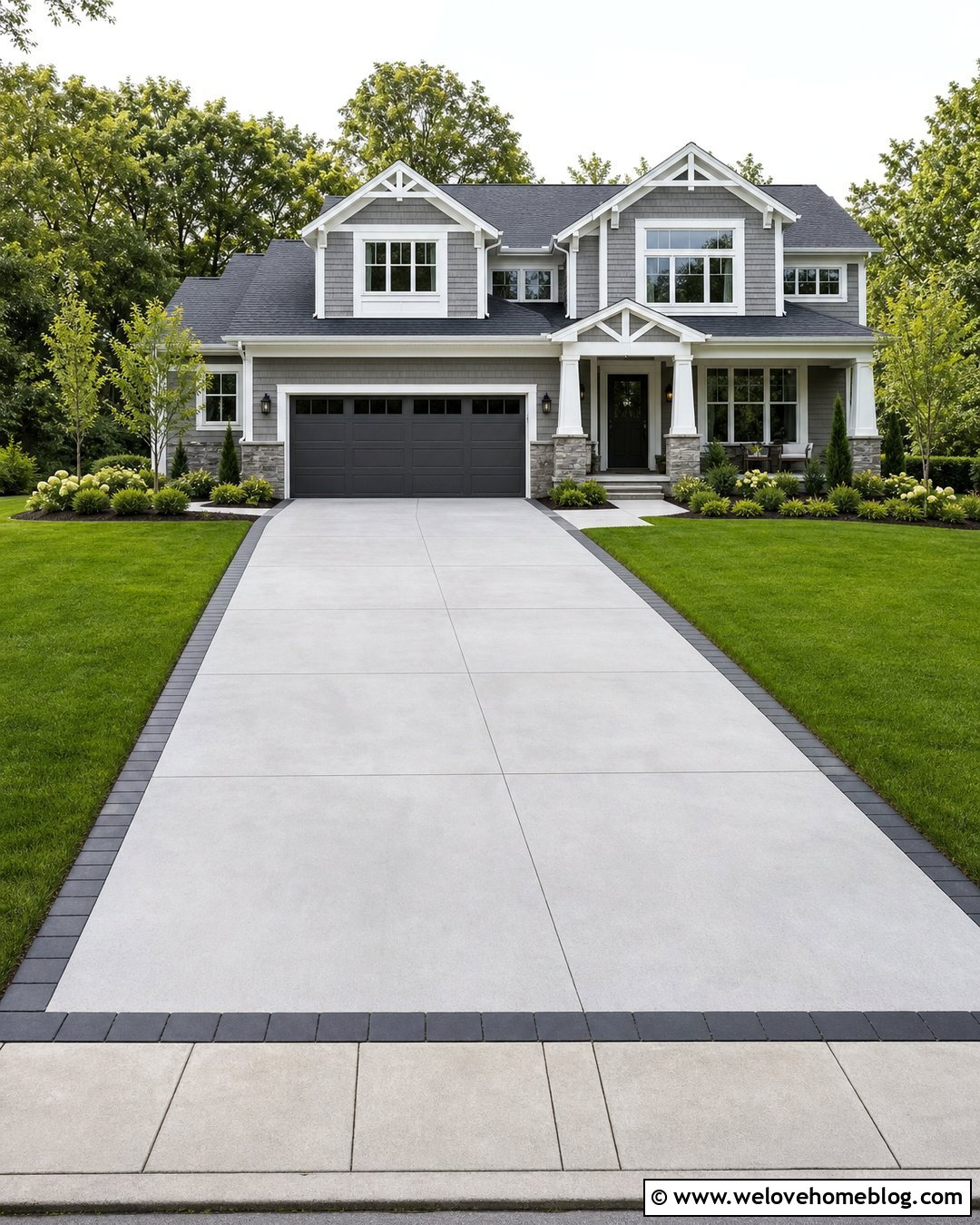
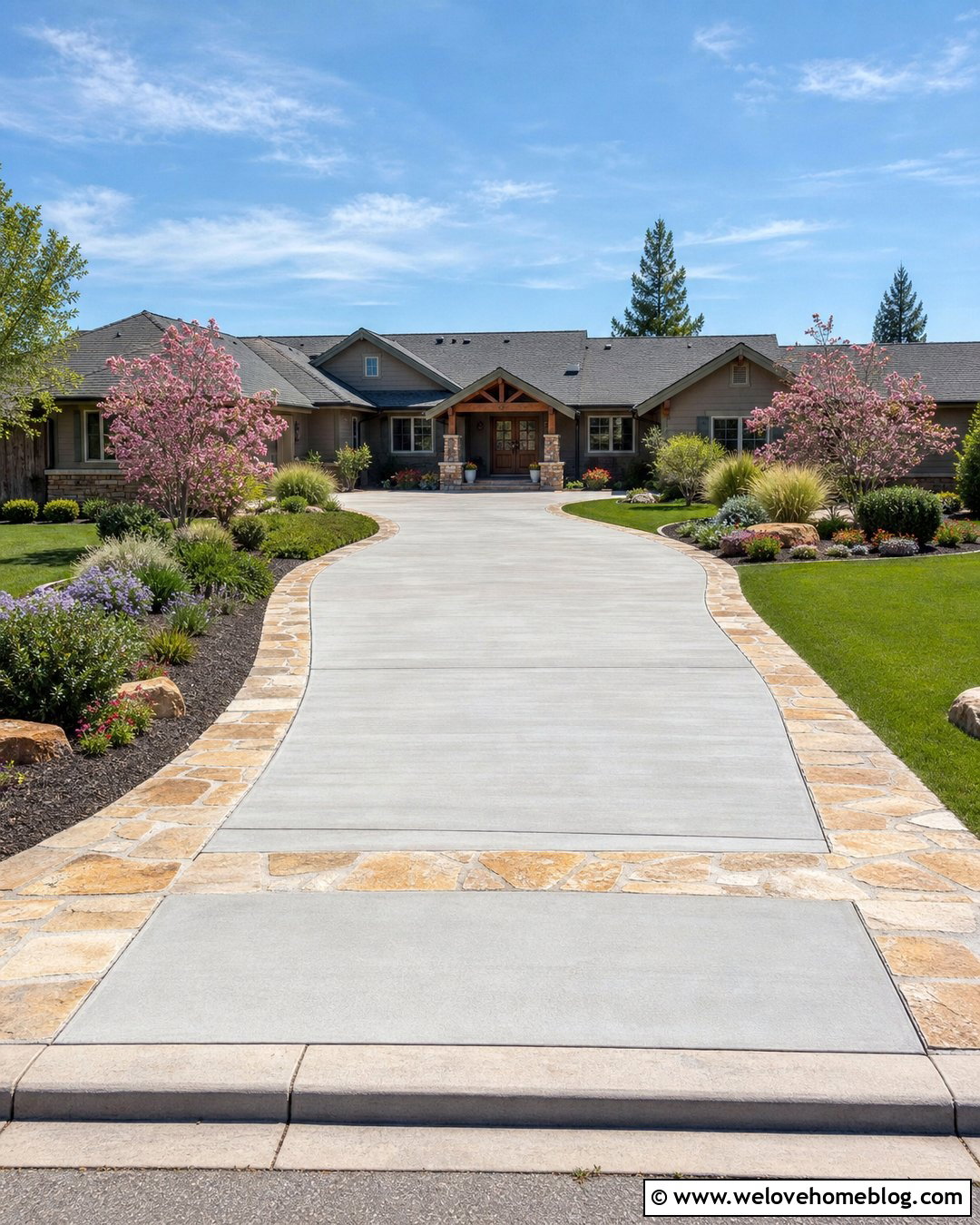
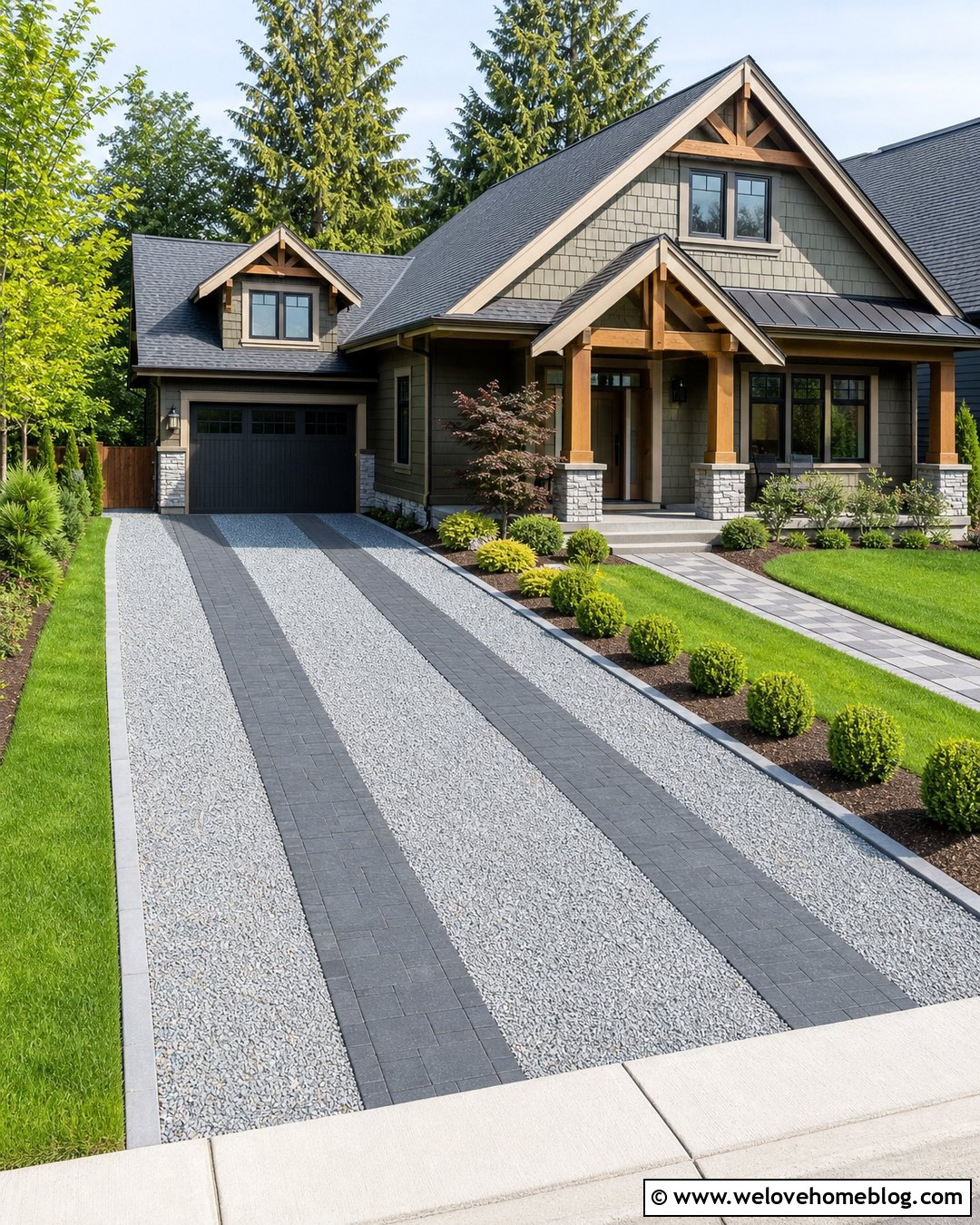
Standard concrete pavers laid as a single soldier-course border can dress up an existing poured-concrete driveway. Choose charcoal, tan, or muted red pavers that contrast with the main gray surface and complement the house facade. Set them in a properly compacted trench and keep the finished border close to the driveway height. A narrow lawn edge and symmetrical foundation beds complete the look around a suburban craftsman home. Buying basic rectangular pavers is usually more economical than ordering decorative shapes. You can also watch for discontinued colors sold by the pallet or use leftover pavers from another project. Keep the pattern simple so replacement pieces remain easy to find. A strong outer restraint is important because vehicle tires may occasionally cross the border near the garage or street.
8. Concrete Block Gravel Driveway Border
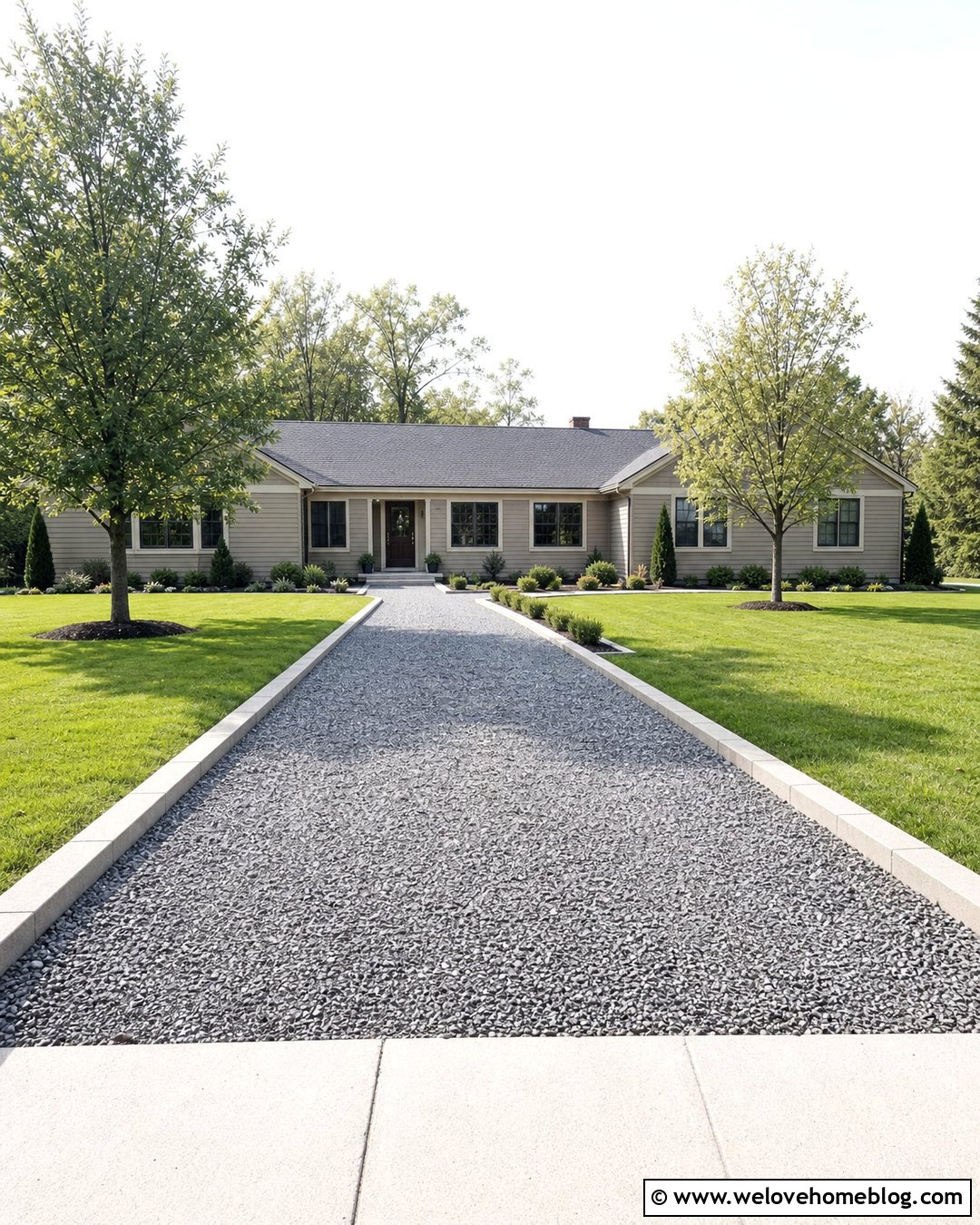
Basic concrete blocks can form a durable border for a broad gravel driveway when they are installed low and kept visually simple. Place solid rectangular blocks end to end along the driveway, with most of each block set below grade. Fill the driving area with compacted gray limestone and add broad lawn panels outside the border. Near a modest ranch house, repeat the block color in a short walkway or small porch landing. This creates a coordinated design rather than making the edging look improvised. Standard concrete blocks are more attractive when their openings and rough sides remain hidden. Avoid tall exposed barriers that could interfere with vehicle doors or become tripping hazards. Concrete blocks are frequently presented as a cost-conscious gravel-containment option. ()
9. Fieldstone Curved Driveway Border
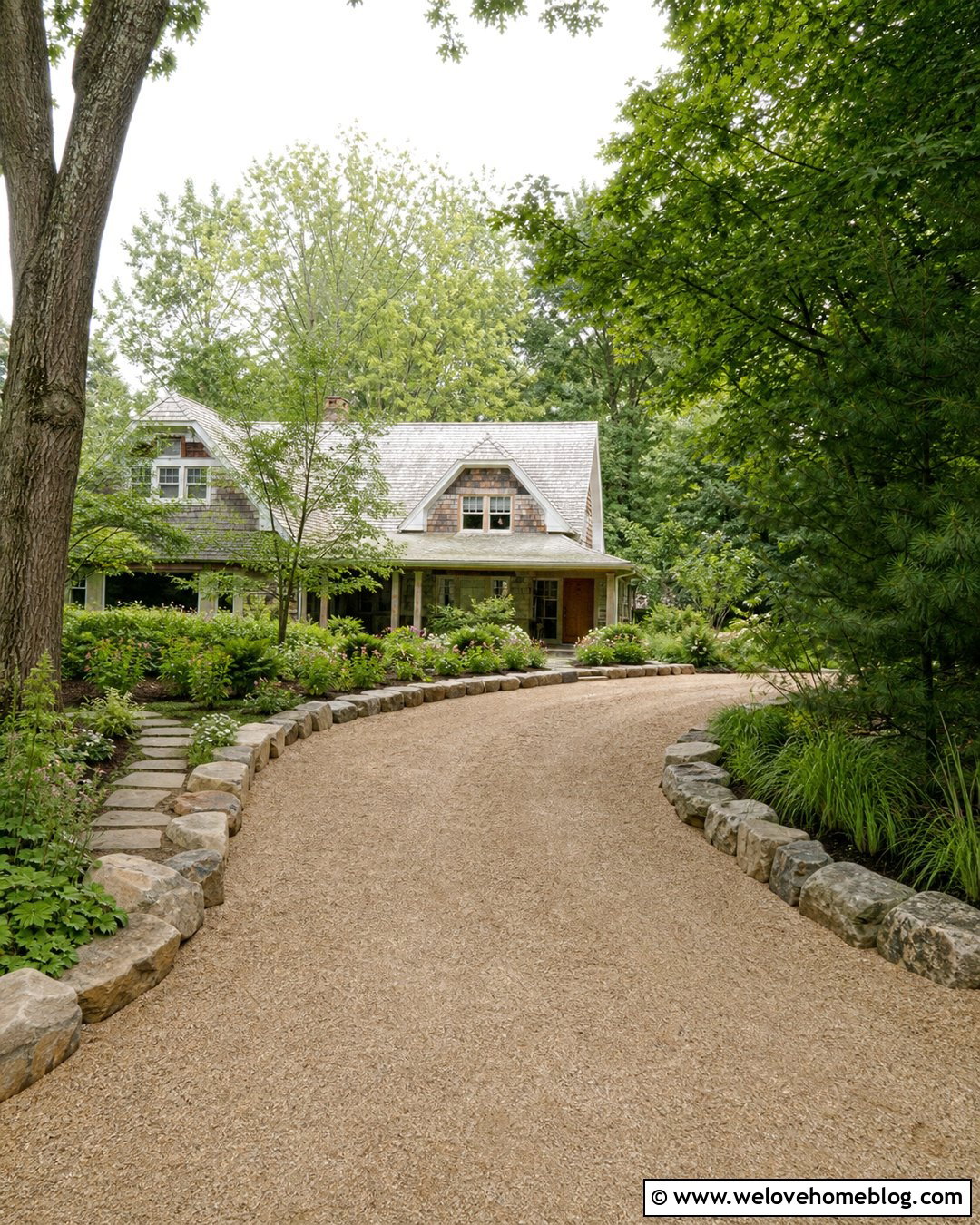
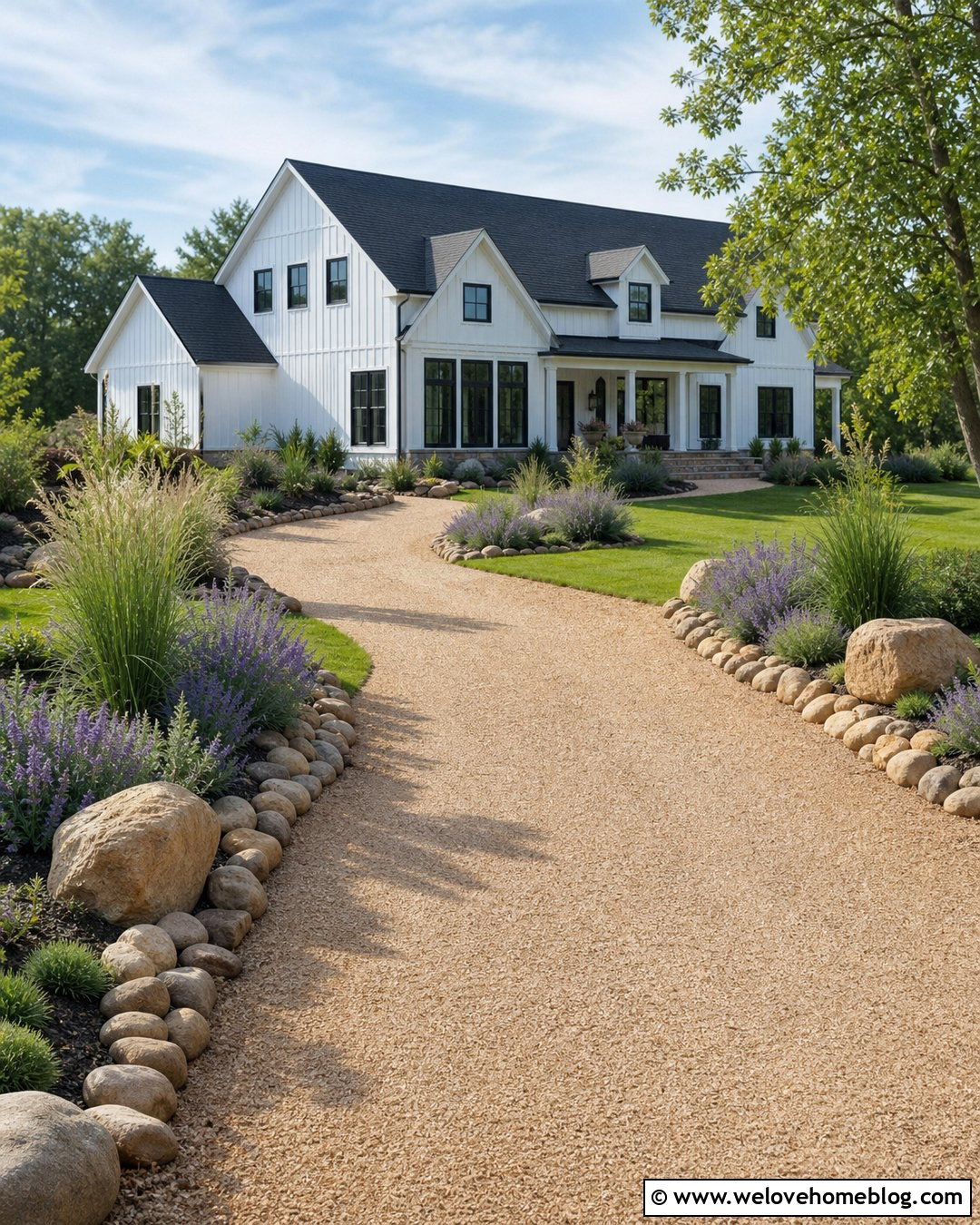
Locally collected or salvaged fieldstone can beautifully outline a curved gravel driveway leading to a cottage or country home. Choose broad, relatively flat stones and partially bury them to create a stable, low border. Irregular colors work well with warm buff gravel, natural lawns, and relaxed planting beds filled with ferns, ornamental grasses, and native flowering plants. Keep the stones close together along the inside curve, where loose gravel is most likely to spread. Larger rocks can mark the entrance, while smaller pieces continue toward the house. The informal variation is part of the appeal, so perfect sizing is unnecessary. However, avoid sharp stones or high projections near the driving lane. Free stone can reduce material expenses, but transport, safe handling, and site permission still require planning.
10. Poured Concrete Mow Strip Driveway Border
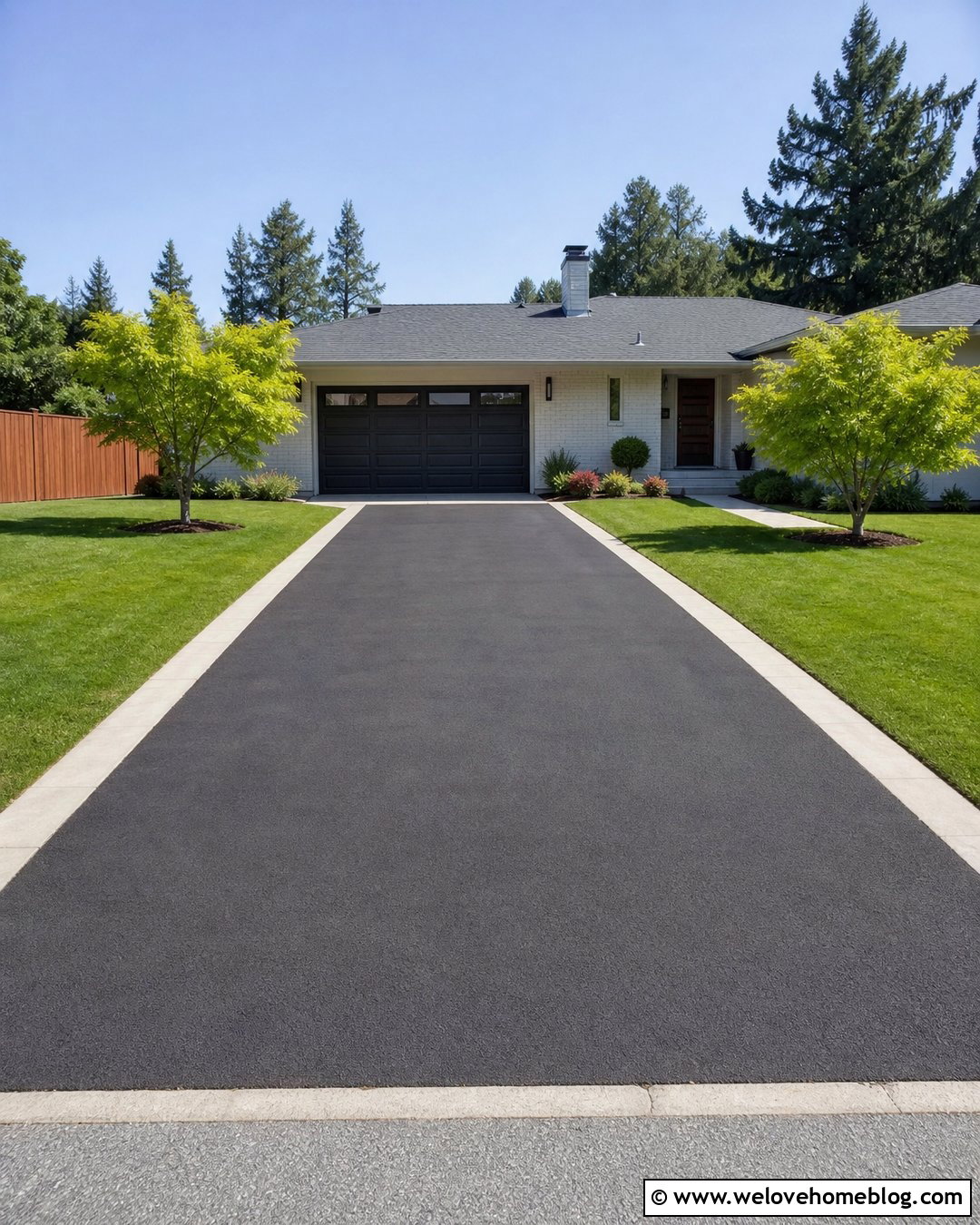
A narrow poured-concrete mow strip provides a practical border beside an asphalt driveway and an easy transition into the lawn. Keep the strip low and relatively narrow so it uses less concrete while still giving mower wheels a flat surface. A straight layout is easiest for DIY formwork, although gentle curves can be created with flexible boards. Match the concrete to an existing sidewalk or front step for a cohesive appearance. Frame the driveway with healthy turf, small foundation beds, and two compact trees near a midcentury ranch home. This design avoids loose stone and reduces trimming along the pavement. Proper preparation matters because an unsupported strip may settle or crack. Divide long runs with control joints, and confirm that the finished grade allows water to move safely away from buildings.
11. Natural Trench Driveway Border
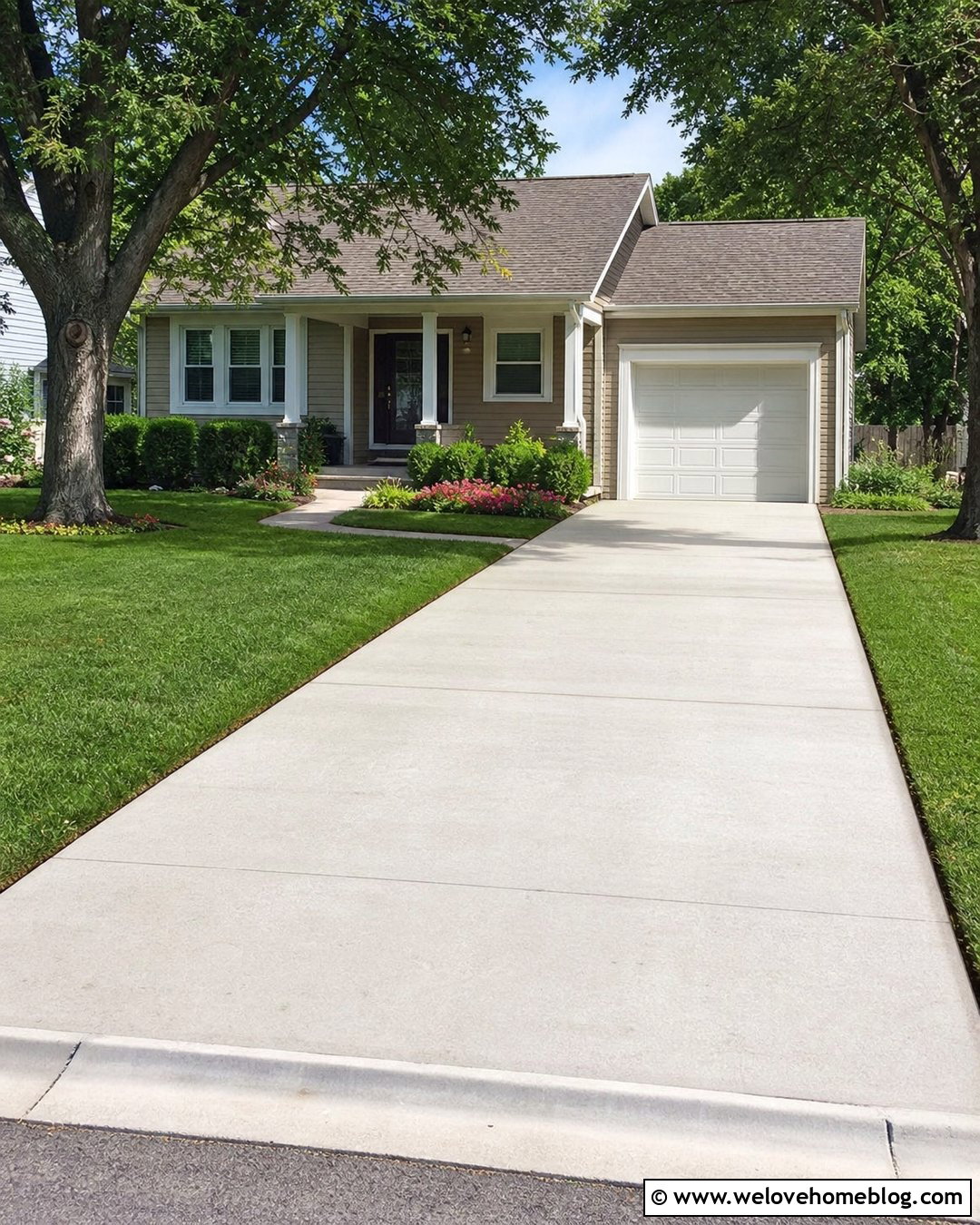
For the lowest possible material cost, cut a crisp trench between a concrete driveway and the surrounding lawn. This creates a clean shadow line without bricks, pavers, or manufactured edging. Use a half-moon edger or flat spade to form a narrow vertical cut, then remove a small amount of soil and grass beside the pavement. The design suits a simple straight driveway leading to a neat bungalow, especially when the lawn is dense and regularly maintained. Repeat the edge beside nearby walkway beds so the landscape looks intentional. A natural trench will require recutting as grass spreads and soil washes into the gap. It is therefore inexpensive upfront but more demanding over time. It works best on fairly level ground where heavy runoff will not erode the exposed soil.
12. Mulch And Perennial Driveway Border
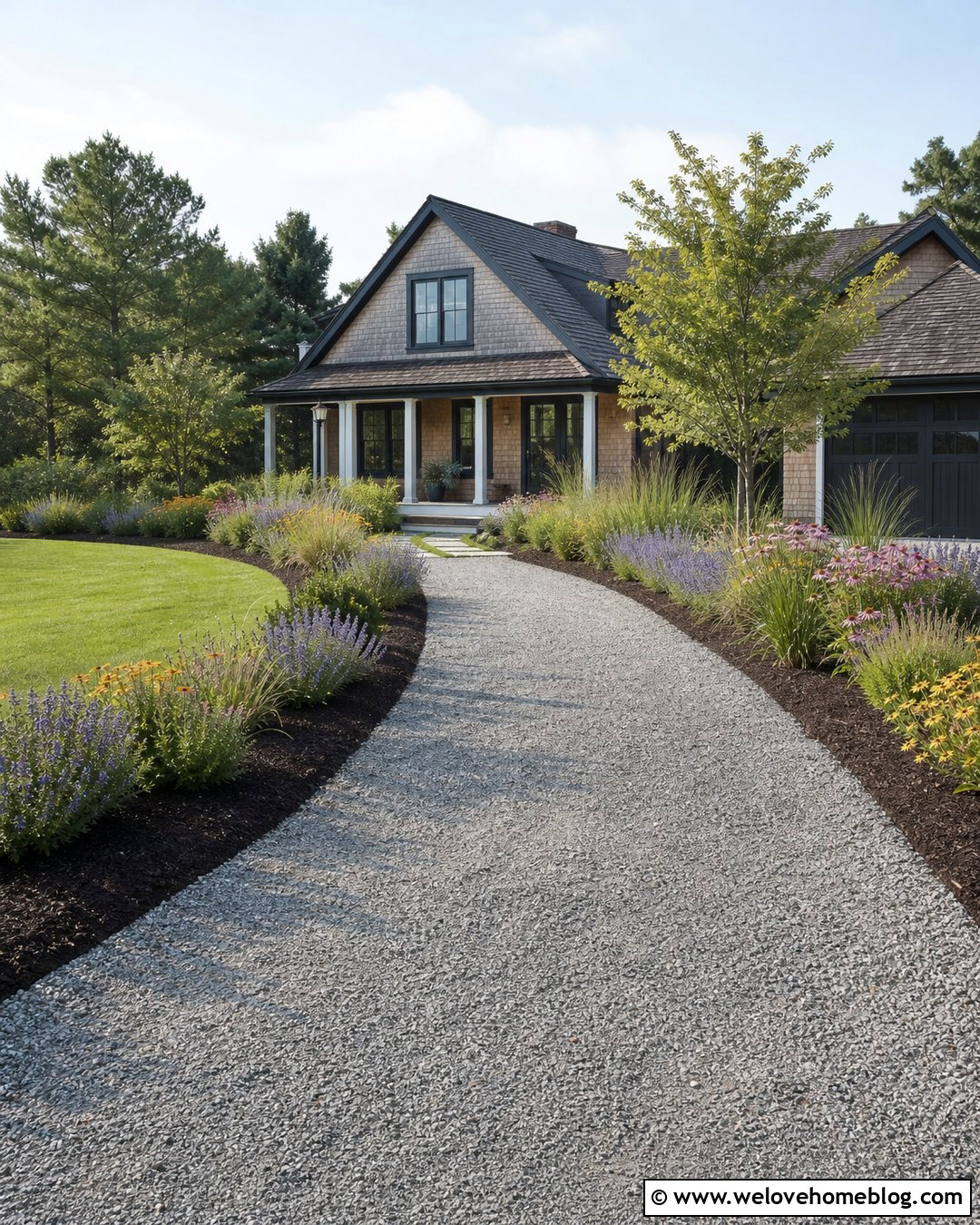
A mulch border planted with divided perennials can transform a plain gravel driveway into a welcoming cottage entrance. Use inexpensive shredded bark or arborist wood chips in a generous curved bed, but place a firm hidden restraint between the mulch and driveway stone. Fill the bed with repeat divisions of daylilies, catmint, coneflowers, or other plants suited to your climate. Repeating just two or three varieties creates a more organized look than buying many unrelated plants. Leave open mulch near the curb so mature foliage does not block sightlines. The border can gradually widen toward the house, where a small ornamental tree adds height. Plant divisions shared by friends or moved from backyard beds can reduce costs while giving the driveway a mature, coordinated landscape.
13. Low Hedge Concrete Driveway Border
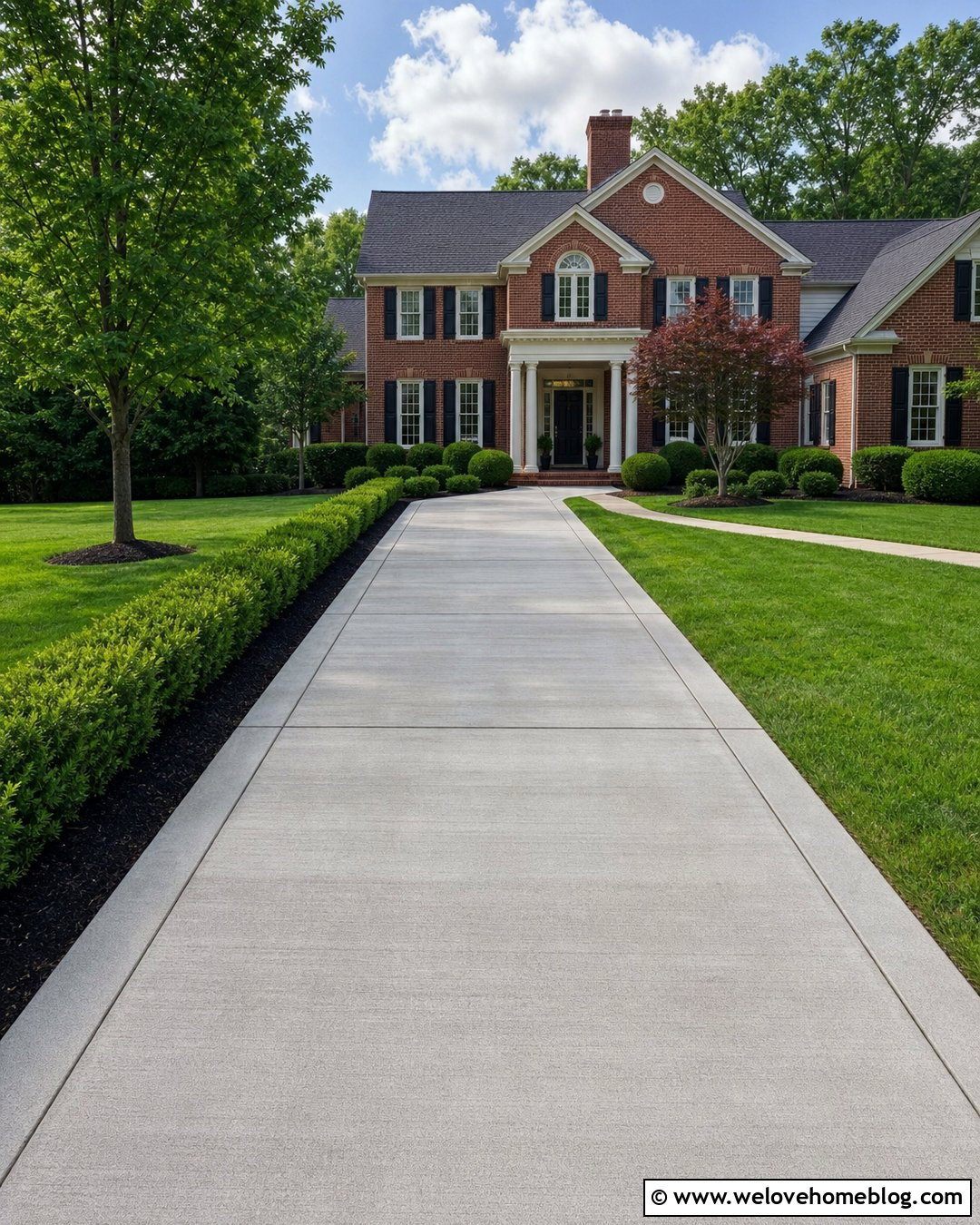
Small hedge plants can create a living border along a straight concrete driveway without adding expensive hardscape materials. Start with young plants or rooted cuttings and space them according to their expected mature width. Place the hedge behind a slim mulch strip so branches do not immediately hang over the pavement. A row on one side may be enough, especially when the opposite side connects to a walkway or open lawn. This asymmetrical layout fits a brick colonial home and keeps the entrance from feeling too formal. Select a compact species appropriate for local soil, winter conditions, and water availability. Regular pruning will preserve vehicle clearance and sightlines near the street. Purchasing smaller plants costs less, although the border will need time to fill in and appear continuous.
14. Scalloped Concrete Driveway Border
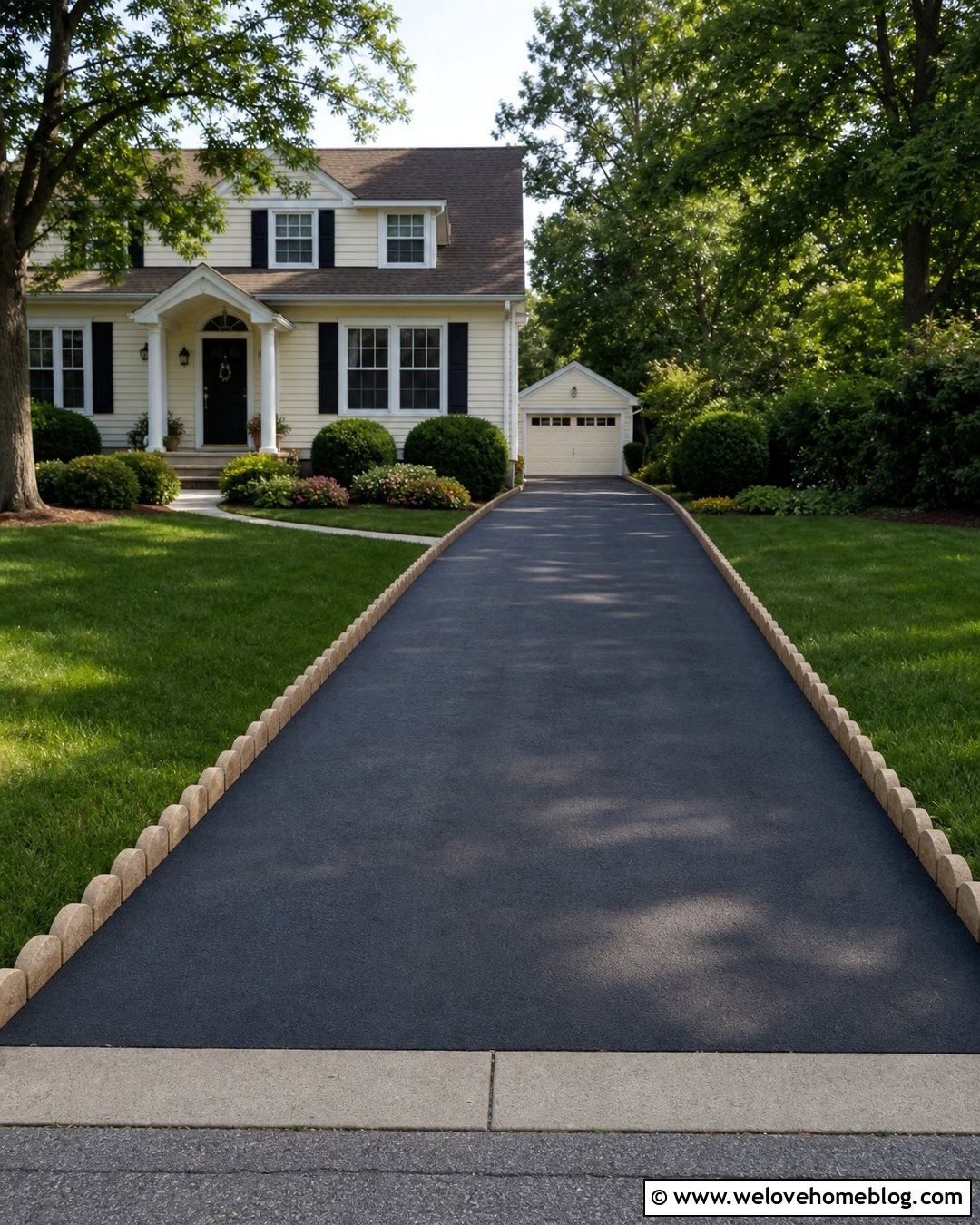
Precast scalloped concrete edgers offer a familiar, budget-conscious border for a narrow asphalt driveway. Their repeating curved tops add definition, but the pieces look best when installed low rather than standing high above the pavement. Choose a natural gray or muted tan color and use the same product around nearby planting beds. Set the units on compacted stone dust or sand, checking the line frequently to prevent a wavy finish. Pair the border with simple lawn, rounded shrubs, and a small concrete walkway leading to a traditional suburban home. Because individual sections are easy to replace, this option can suit homeowners who want manageable DIY repairs. Keep joints close when edging loose materials, since wide gaps may allow gravel, soil, or mulch to escape.
15. Recycled Rubber Asphalt Driveway Border
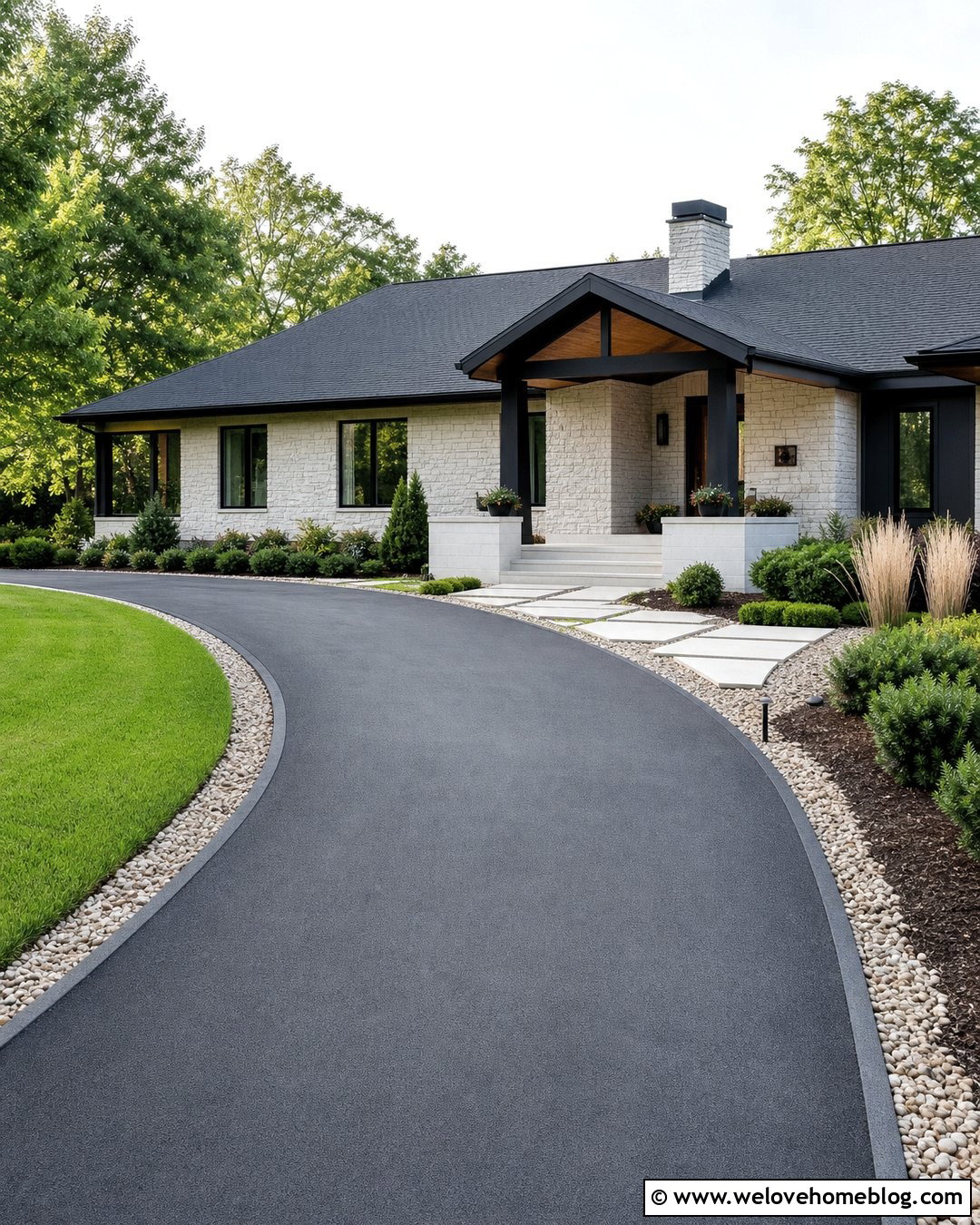
Recycled rubber edging can frame an asphalt driveway while maintaining a soft, low-profile transition to adjacent planting beds. Black or dark-gray edging blends into the pavement, allowing the mulch, grasses, and shrubs to provide the visible decoration. Use it along a gently curved driveway leading to a contemporary ranch house. Install the edging securely and keep its upper surface low enough to avoid contact with tires, snow-removal equipment, and mower blades. A narrow bed of light stone or brown mulch adds contrast without greatly increasing the project cost. Rubber products vary in thickness, flexibility, and fastening systems, so choose one intended for exterior landscape use. The border works particularly well when you want a manufactured restraint but prefer something less visually prominent than brick or concrete blocks.
16. Wooden Board Driveway Border
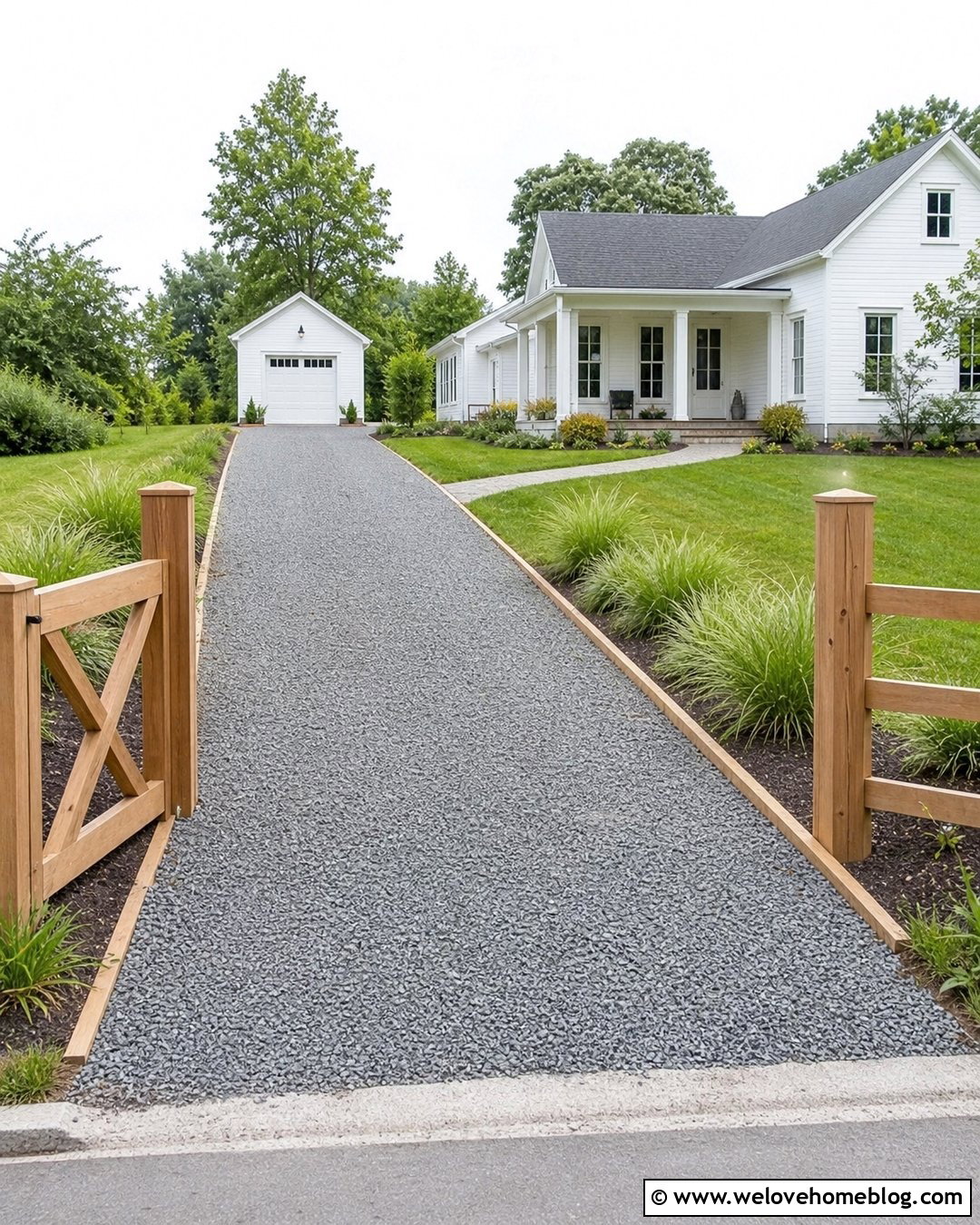
Ground-contact-rated wooden boards can create a simple border for a small crushed-gravel driveway beside a farmhouse or detached garage. Install the boards vertically in shallow trenches and brace them with stakes on the landscape side. The finished edge should sit slightly above the gravel, providing containment without creating a tall obstruction. Add a narrow strip of lawn, a few clumps of ornamental grass, and a matching wooden walkway gate to connect the design. Straight lumber works best on rectangular parking pads and direct driveway runs. Use shorter replaceable sections rather than one complicated continuous assembly. This makes future repairs easier if a board warps or decays. Avoid untreated pallet wood, exposed nails, and unknown salvaged lumber near vehicles, children, pets, or edible planting areas.
17. Brick Chip Driveway Border
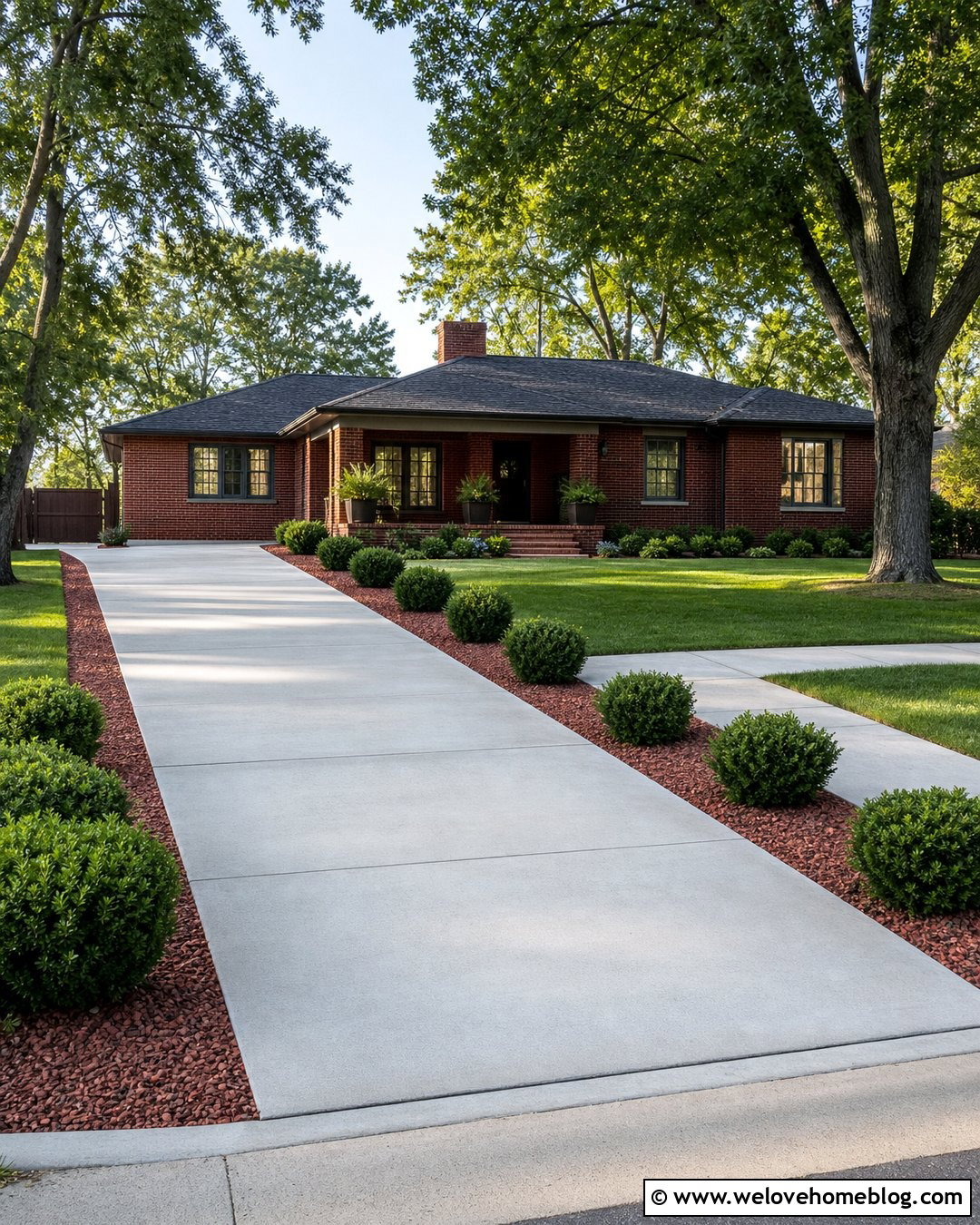
Crushed brick chips create a colorful border beside a pale concrete driveway and can be affordable when sourced as reclaimed landscape material. The reddish aggregate looks especially cohesive with a brick ranch or craftsman home. Install a hidden outer restraint, then spread the chips in a narrow, even band between the driveway and lawn. Repeat the red tone in porch steps, walkway accents, or terracotta-colored planters near the entrance. Keep plants limited to compact evergreen shrubs so the border remains visible and uncluttered. Brick chips can be sharp and may migrate, so they are better for decorative side bands than areas that people regularly cross. Use a contrasting concrete or paver apron at the sidewalk to prevent the loose material from spilling into public walking areas.
18. Cobblestone-Look Paver Driveway Border
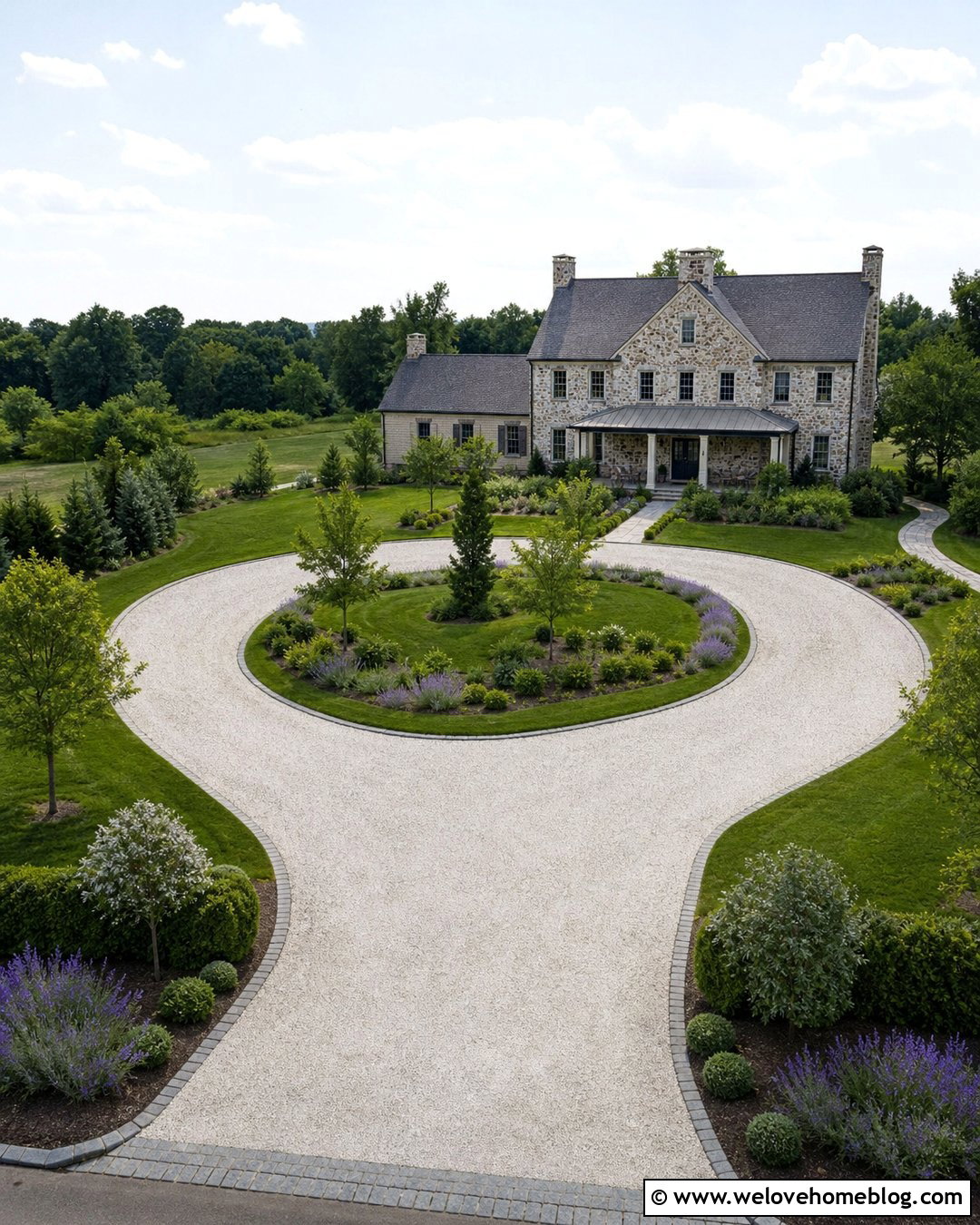
Small tumbled concrete pavers can imitate a cobblestone border for less than many natural granite products. Use one narrow row around a light gravel driveway with a soft horseshoe layout. Gray and charcoal pavers provide a strong edge, while their aged finish complements a traditional farmhouse or stone-front home. Plant inexpensive lavender alternatives, catmint, or compact native shrubs in beds outside the border, selecting species suited to local conditions. Concentrate the pavers along the most visible approach if the budget cannot cover the entire driveway. The less prominent rear section can use hidden metal or plastic edging in a matching line. Keeping all pavers flush and tightly spaced improves the finished appearance and reduces the risk of vehicle tires catching raised corners.
19. Natural Log Gravel Driveway Border
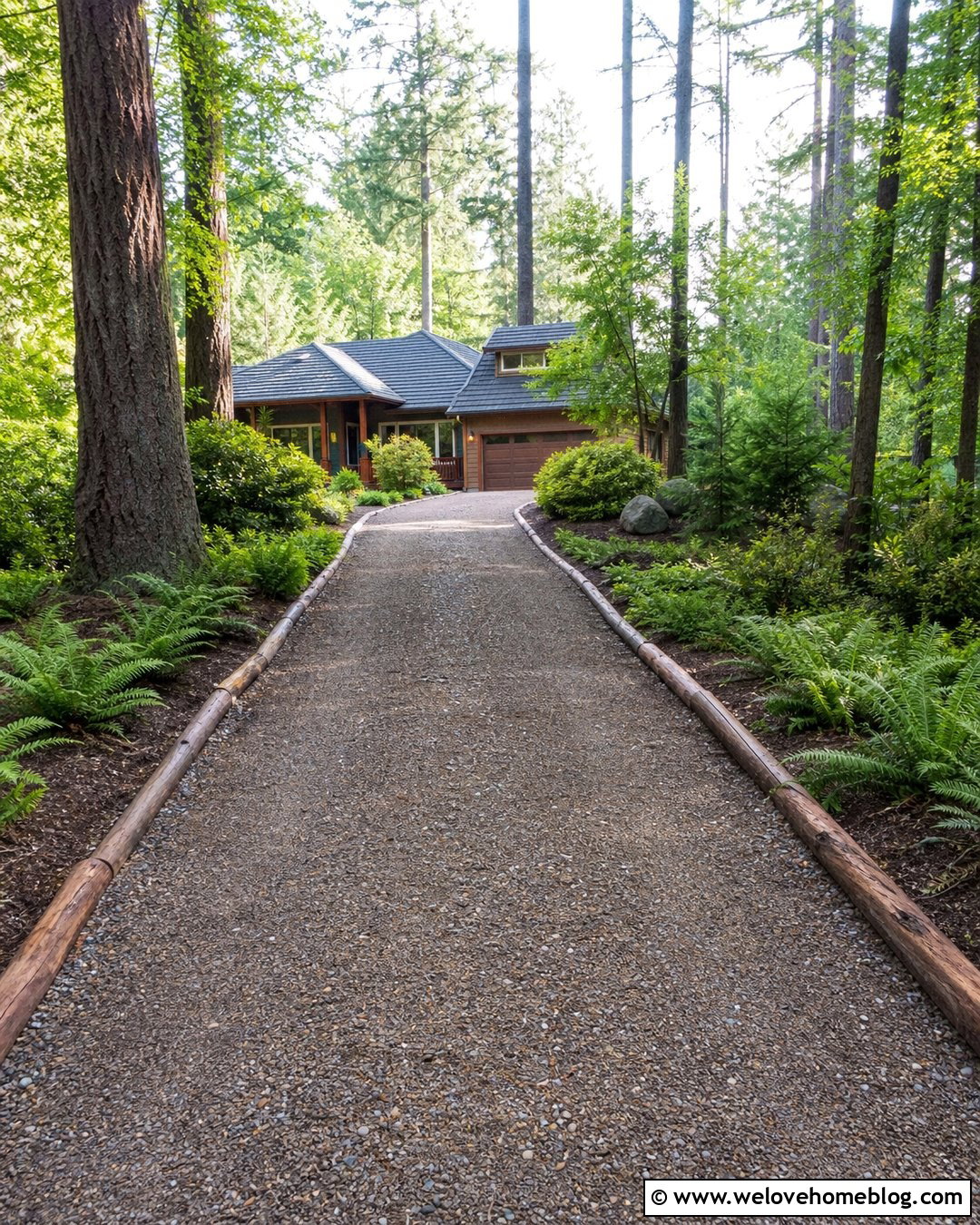
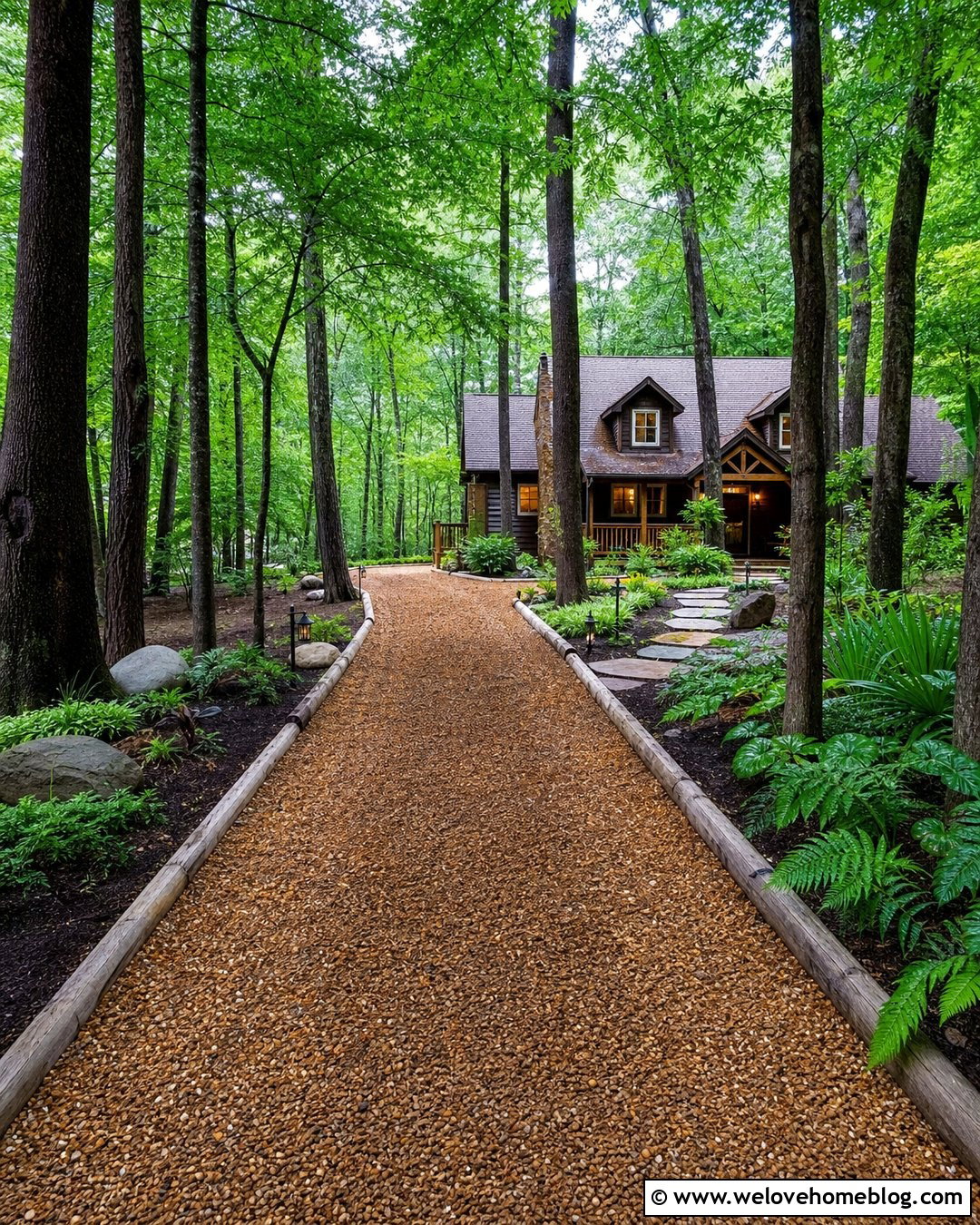
Straight logs gathered responsibly from your own property can border a rustic gravel driveway with very little material expense. Choose sound logs of similar diameter, remove unstable branches, and place them in shallow channels beside compacted brown or gray gravel. This design fits a wooded cabin, country ranch, or simple rural home. Add ferns, native ground covers, and small woodland shrubs beyond the logs so the border blends naturally into the setting. Use the logs only along straight or gently bending sections, since tight curves create awkward gaps. They should remain low, stable, and safely away from normal tire paths. Natural wood eventually decomposes, making this a temporary rather than permanent solution. Plan for replacement and avoid using rotted, insect-damaged, or chemically contaminated wood.
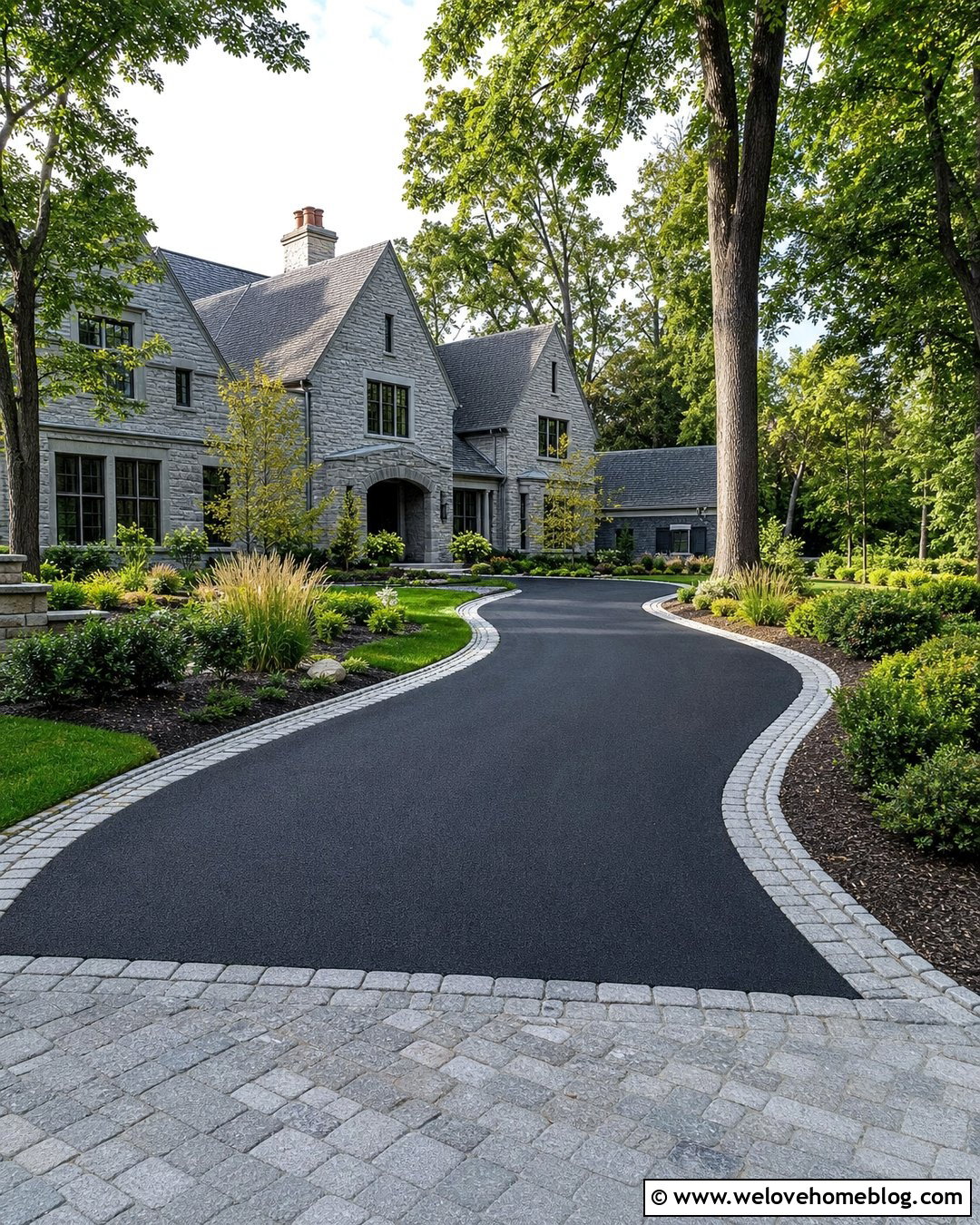
20. Crushed Shell Driveway Border
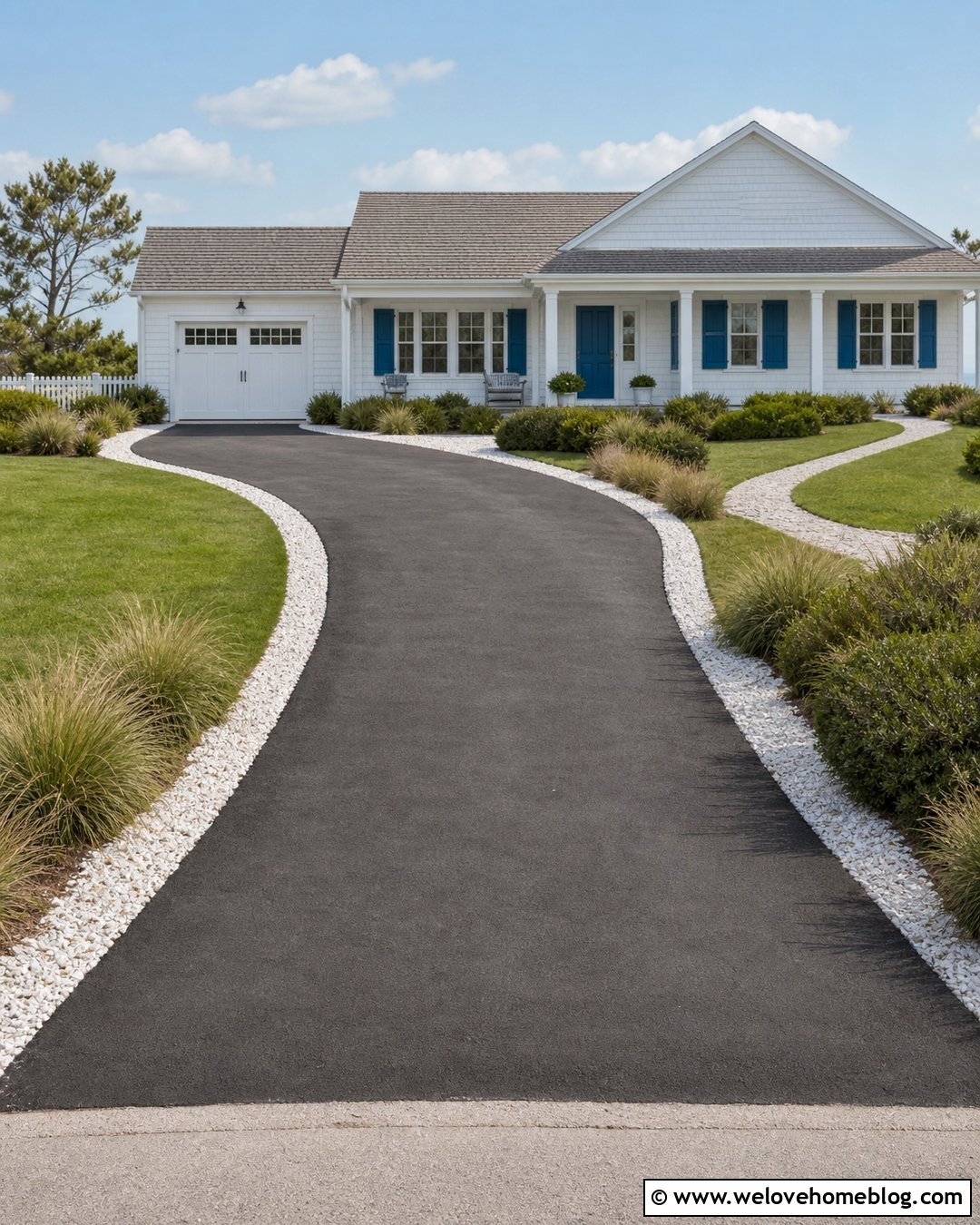
In coastal regions where crushed shell is readily available, a bright shell band can border a darker asphalt or tan gravel driveway. The pale color creates a crisp transition into green lawn and coastal planting beds. Contain the shell with low flexible edging, particularly along curves and near the sidewalk. Pair it with salt-tolerant ornamental grasses, compact shrubs, and a simple coastal cottage facade. Use locally sourced material because long-distance delivery can quickly erase any budget advantage. A shell border also looks more deliberate when repeated in a nearby garden path or around the mailbox. Compact the material lightly and replenish thin areas as pieces settle. Check local rules and sourcing practices before purchasing shells, and maintain clear drainage rather than allowing the border to become a raised barrier.
Conclusion:
The best **20 Cheap Driveway Border Ideas** combine affordable materials with a layout that suits the driveway, house, and maintenance routine. Reclaimed brick and basic pavers provide traditional structure, while timber, logs, and fieldstone create a relaxed country look. Hidden plastic, metal, or rubber edging works well when the border should stay visually subtle. Gravel, mulch, plants, and brick chips can add color without replacing the main driveway surface. Whatever material you choose, prepare a stable base, preserve drainage, and keep raised edges away from tires and walkways. Start with the most visible section if funds are limited. A carefully installed border can make an ordinary driveway look cleaner, more intentional, and better connected to the landscape.

Related posts:


Leave a Reply