
A well-planned driveway border can turn a basic parking surface into a polished part of your front yard. Beyond adding visual definition, borders can help contain loose gravel, separate pavement from lawns and planting beds, and create a coordinated transition between the street and house. Popular materials include brick, Belgian block, concrete curbing, natural stone, metal, timber, pavers, and low-growing plants. () The best choice depends on your driveway material, home style, maintenance preferences, drainage needs, and budget. Each design below combines the driveway surface, shape, edging, and surrounding landscape into one complete look. Explore these 40 Driveway Border Ideas to find a practical design that complements your property.
1. Belgian Block Asphalt Driveway Border
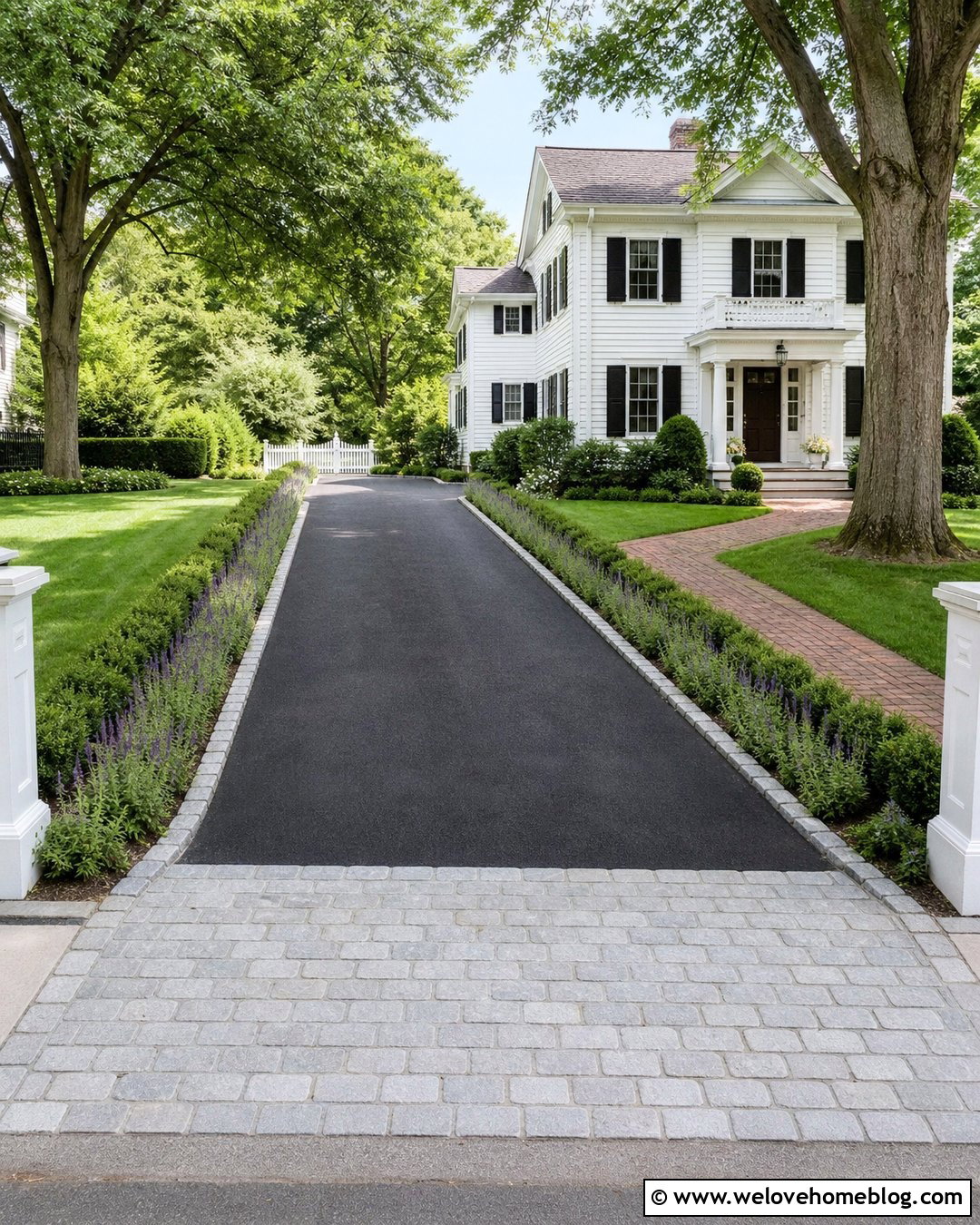
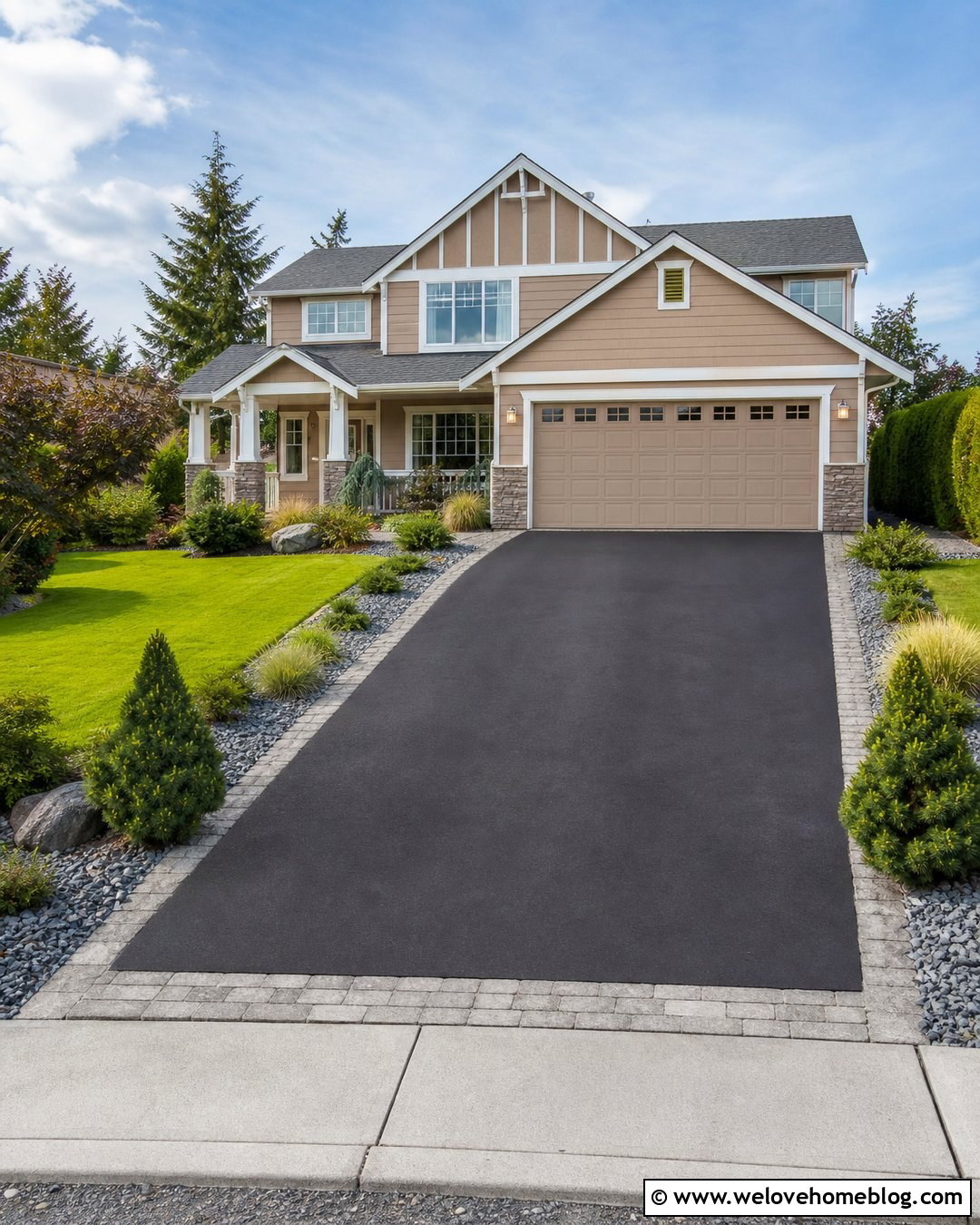
Belgian block creates a strong, traditional frame around a smooth black asphalt driveway. Use granite blocks in gray, charcoal, or mixed earth tones along both sides of a straight driveway. Set the blocks slightly above the asphalt to establish a visible edge, or install them nearly flush for easier snow removal and vehicle access. A matching Belgian block apron near the street can make the design feel complete. Add narrow planting beds with boxwood, catmint, or compact ornamental grasses behind the stone. This combination works especially well with Colonial, Cape Cod, and brick homes. The textured granite provides an attractive contrast against dark pavement while giving the entire driveway a more permanent, carefully finished appearance. ()
2. Brick Concrete Driveway Border
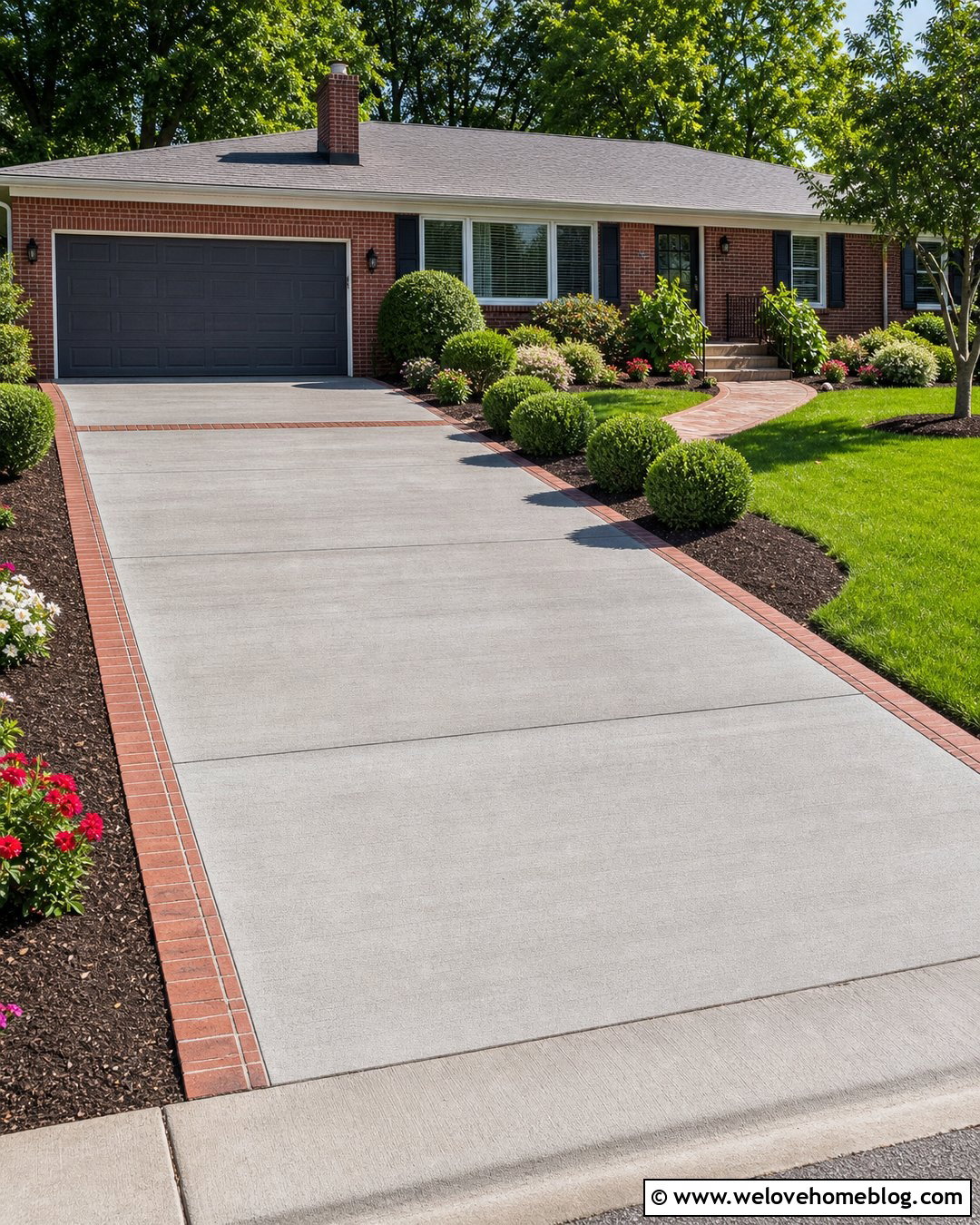
A red brick border adds warmth and traditional character to a light gray poured concrete driveway. Lay one or two brick rows along the edges in a running bond pattern, then repeat the material across the driveway near the garage or sidewalk. The brick color can coordinate with a brick house, chimney, porch steps, or front walkway. Keep the driveway straight and symmetrical for a formal look, with lawn on one side and mulched planting beds on the other. Rounded shrubs and seasonal flowers will soften the hard surfaces without hiding the border. Choose clay brick rated for exterior paving rather than ordinary wall brick. The finished combination suits ranch, Colonial, Craftsman, and traditional suburban homes.
3. Cobblestone Gravel Driveway Border
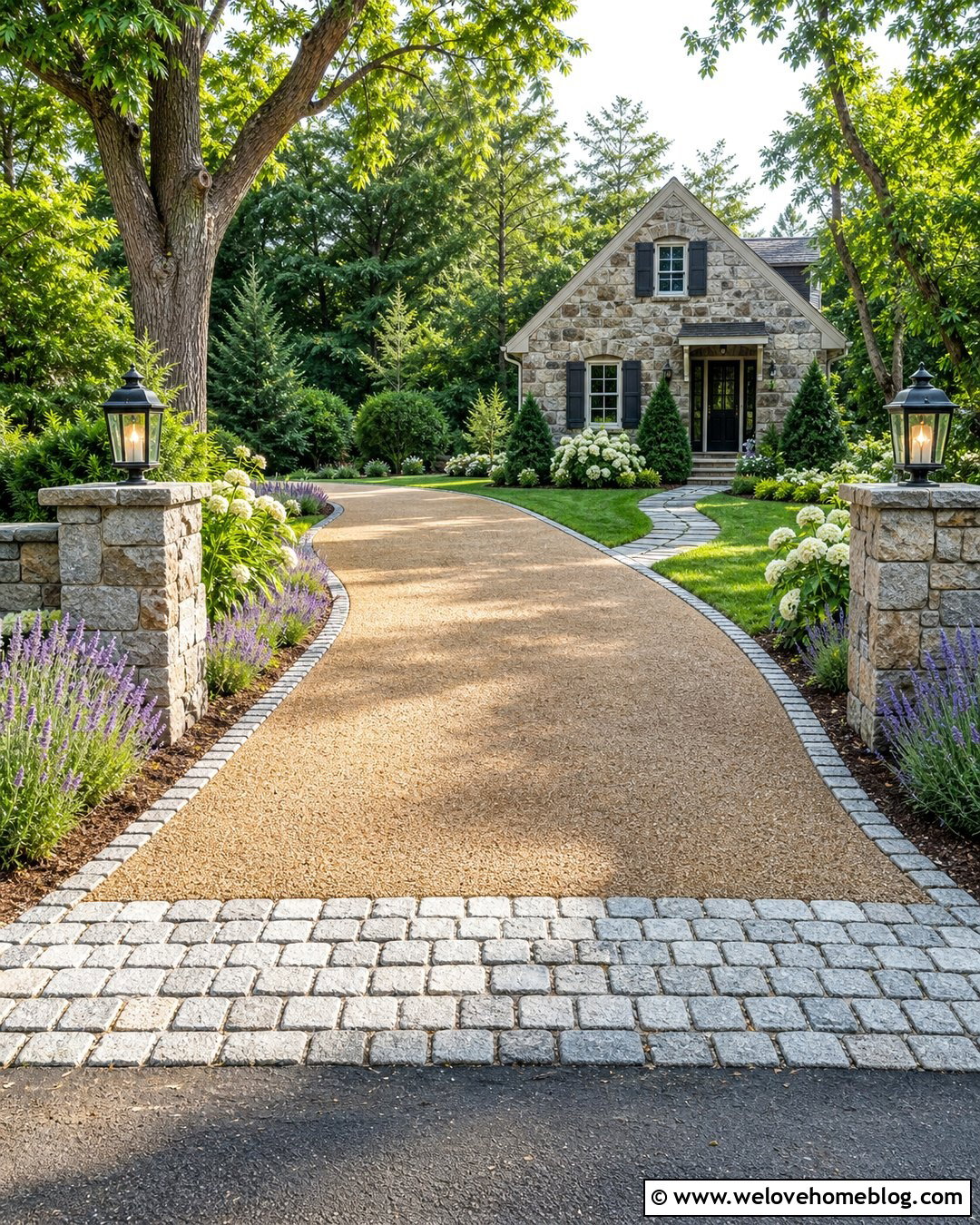
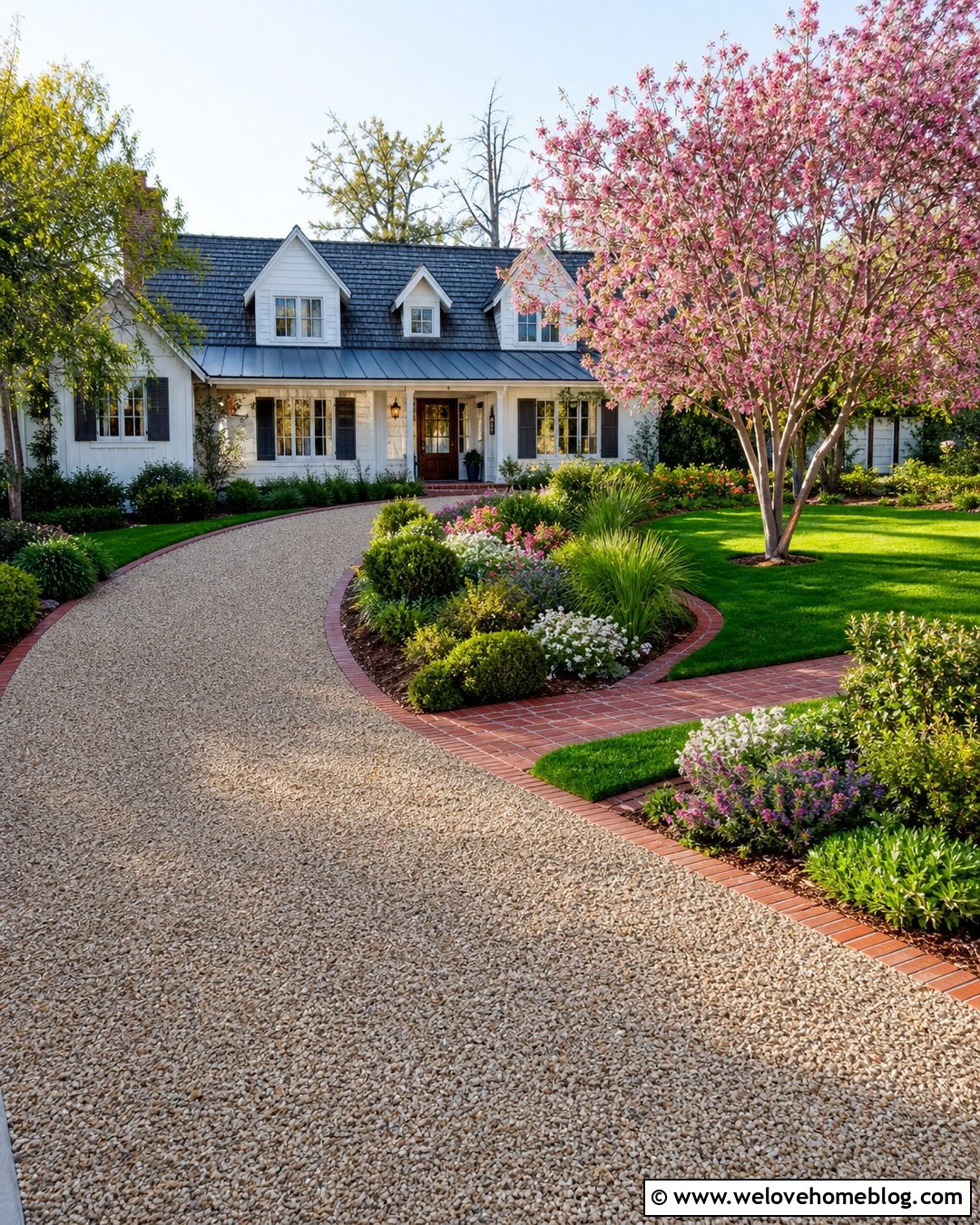
Cobblestone edging gives a loose gravel driveway a sturdy, old-world frame. Pair warm gray cobbles with compacted tan gravel for a soft country appearance, or choose darker stones around pale limestone gravel for stronger contrast. A gently curved driveway makes the irregular cobblestone texture especially noticeable. Continue the border around a parking area so the design looks intentional from the curb to the garage. Plant lavender, hydrangeas, or low evergreen shrubs behind the stones, leaving enough open space to prevent branches from reaching passing vehicles. Cobblestones may also form a wider apron at the road, where gravel is more likely to scatter. The overall look complements stone cottages, Tudor houses, farmhouses, and wooded residential properties.
4. Concrete Curb Asphalt Driveway Border
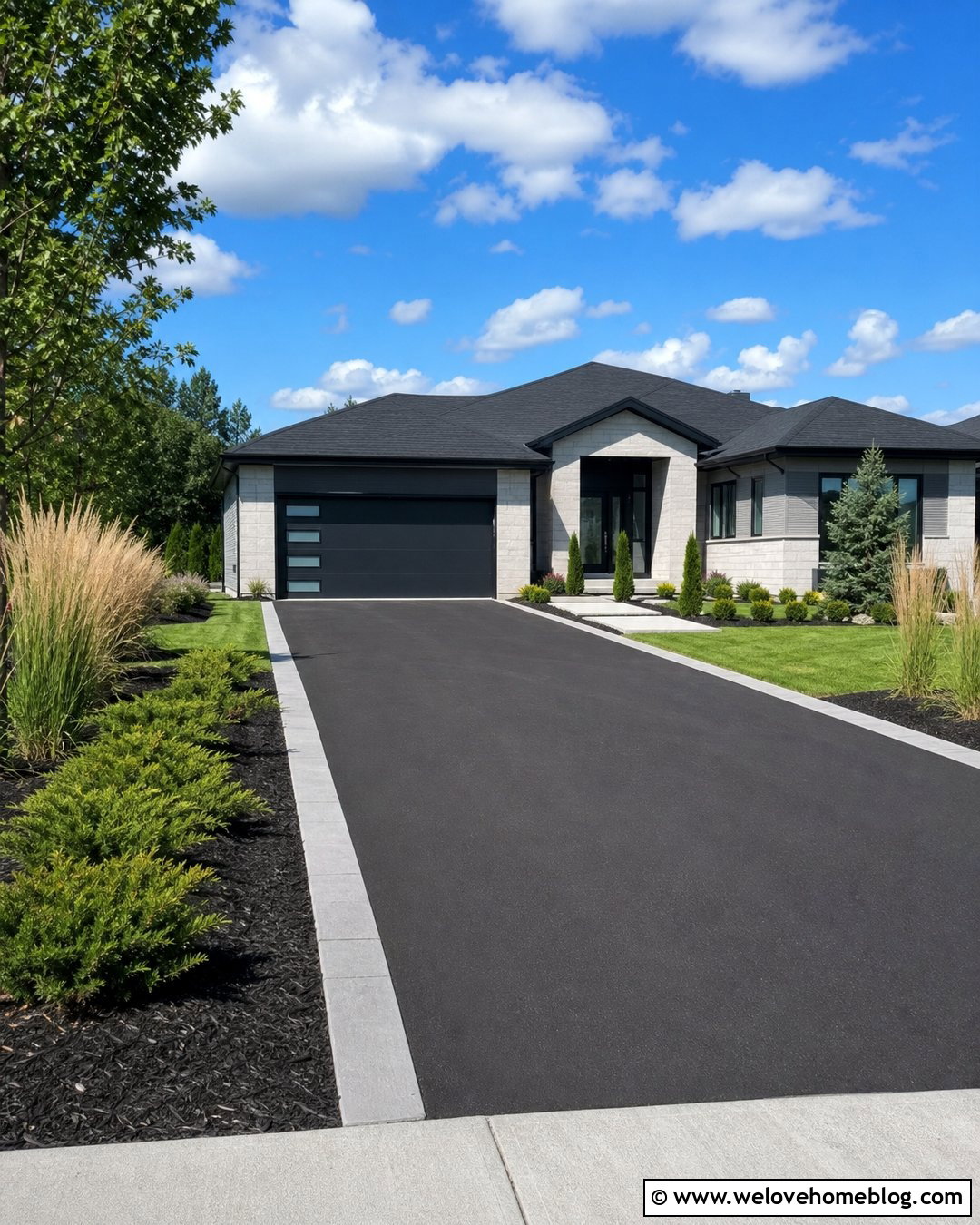
Continuous concrete curbing gives an asphalt driveway a neat, low-maintenance outline. A straight black asphalt surface bordered by light gray curbs feels clean and practical, particularly beside a wide lawn. The curb can be poured flush with the pavement or raised slightly where the driveway meets planting beds. For more visual interest, consider a charcoal tint, subtle stone texture, or simple stamped finish. Repeat the concrete around nearby garden beds to connect the driveway with the broader landscape. Low junipers, ornamental grasses, and evenly spaced flowering shrubs will keep the setting attractive without making it busy. Concrete curbing works with contemporary ranch houses, split-level homes, and simple suburban architecture, creating a crisp transition between dark pavement and green landscaping. ()
5. Steel Modern Driveway Border
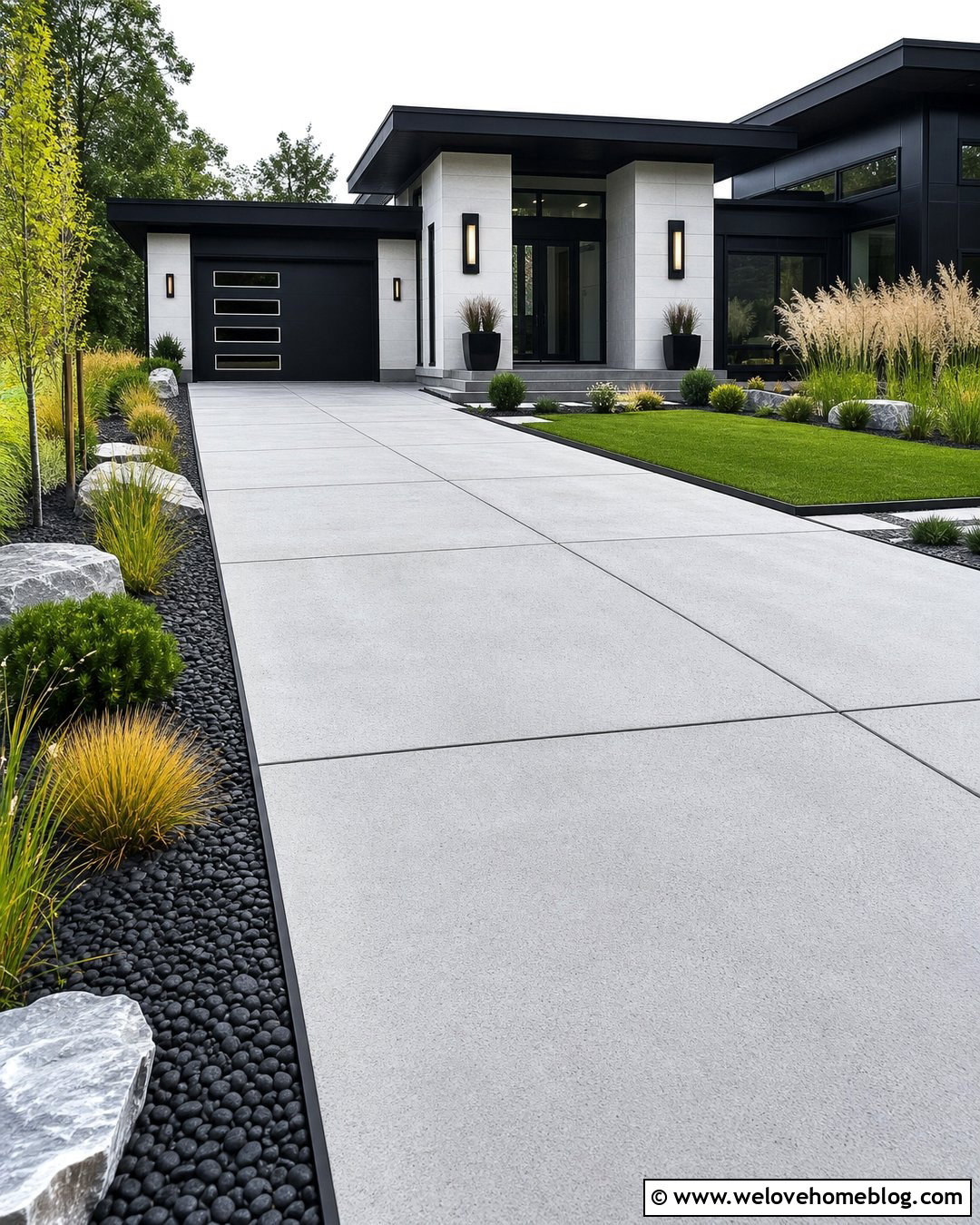
Slim steel edging is ideal when you want the driveway border to look crisp without becoming a major visual feature. Use dark powder-coated steel beside a pale gray poured concrete driveway with a straight or gently angled layout. Set the steel close to the surface so it quietly separates the pavement from black mulch, decorative gravel, or modern planting beds. Repeating rows of feather reed grass, dwarf evergreens, and sculptural shrubs will emphasize the clean geometry. This border looks particularly effective beside a modern home with black windows, horizontal siding, or a flat-roofed entry. Keep the lawn, walkway, and planting lines simple. The result is a streamlined driveway that appears organized, spacious, and closely connected to the architecture.
6. Timber Gravel Driveway Border
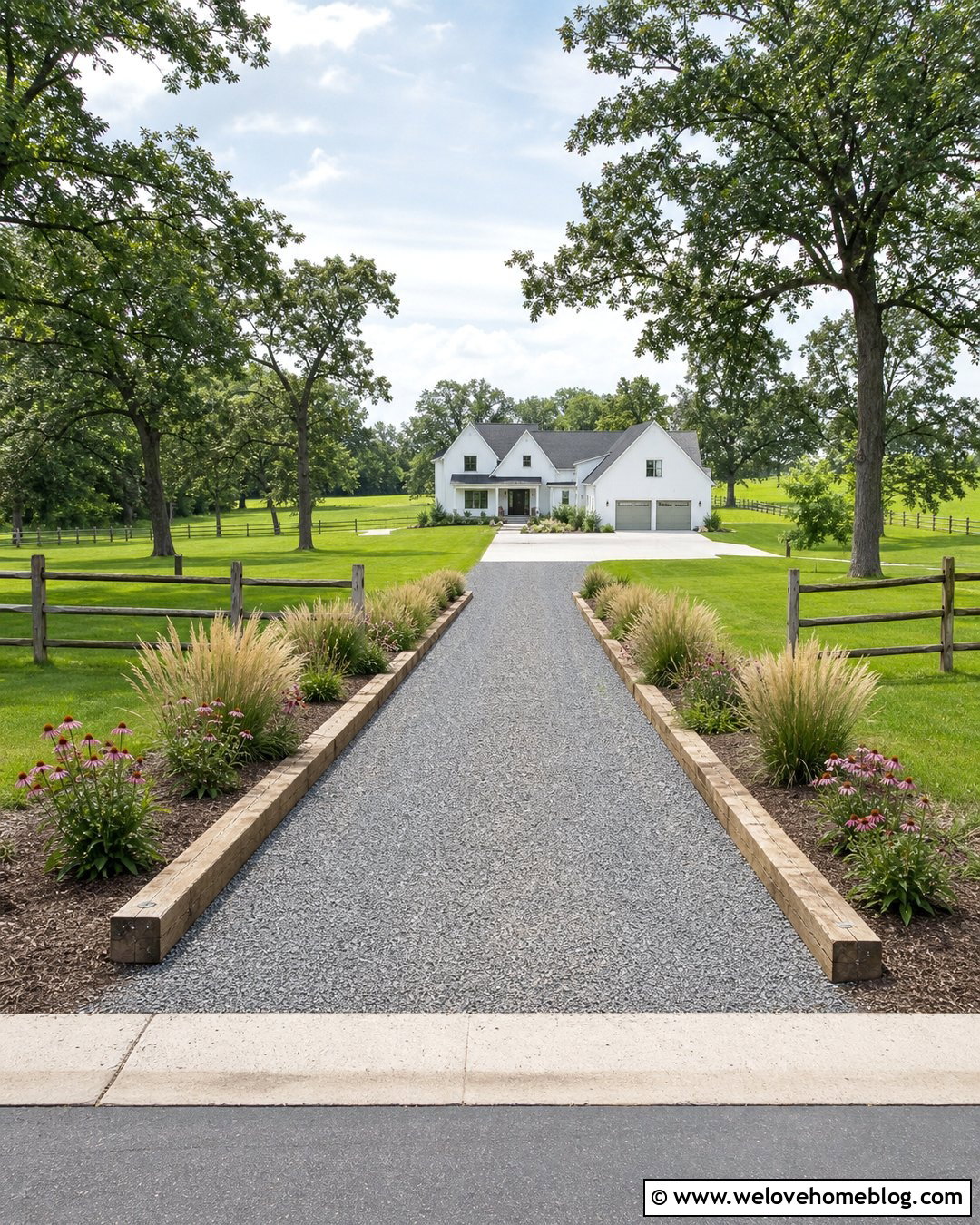
Landscape timbers bring a relaxed, rustic edge to a gravel driveway. Pair thick pressure-treated or naturally durable wood beams with compacted gray gravel on a straight country driveway. Install the timbers level and securely anchored, especially around curves or sloped areas. A wide grass verge, split-rail fence, and informal beds of coneflowers or ornamental grasses can continue the rural character. Near the garage, end the timber border cleanly against a concrete parking pad or paver walkway. This complete look feels appropriate for modern farmhouses, cabins, ranch homes, and wooded properties. The wood should relate to another feature, such as porch posts, fencing, shutters, or a mailbox, so the border appears integrated rather than added as an afterthought.
7. River Rock Concrete Driveway Border
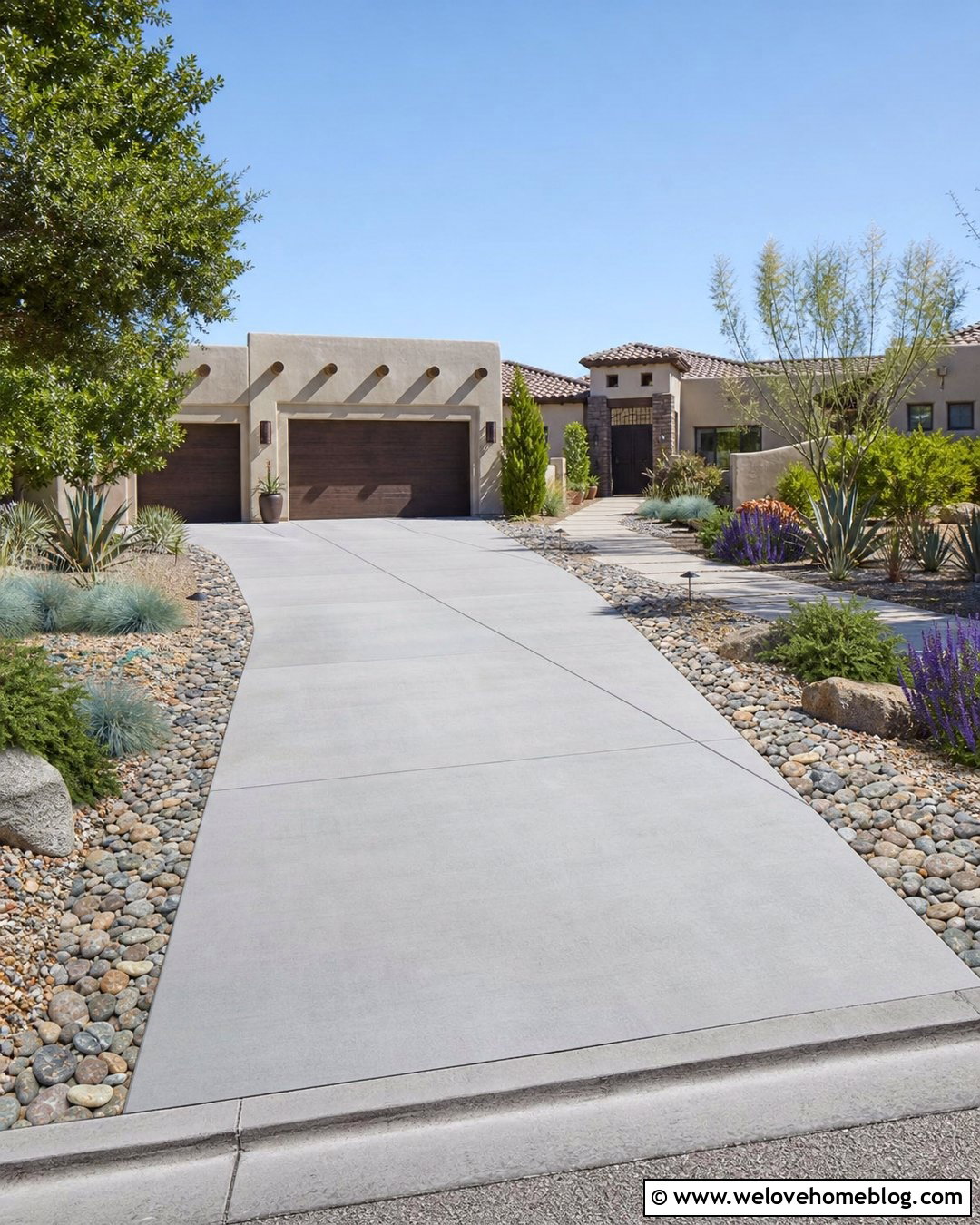
A river rock border can soften the hard lines of a poured concrete driveway while adding natural color and texture. Create a shallow strip of smooth gray, tan, and brown stones between the concrete and surrounding planting beds. A concealed metal edge on the landscape side will help define the rock band. Use drought-tolerant plants such as blue fescue, yucca, agave, salvia, or low juniper to build a complete water-wise setting. This treatment looks especially balanced around a wide, straight driveway leading to a stucco ranch or Southwestern-inspired home. Select stones large enough to remain visually distinct from ordinary gravel. Keep the river rock strip consistent in width so it reads as an intentional driveway border rather than scattered landscape stone.
8. Flagstone Asphalt Driveway Border
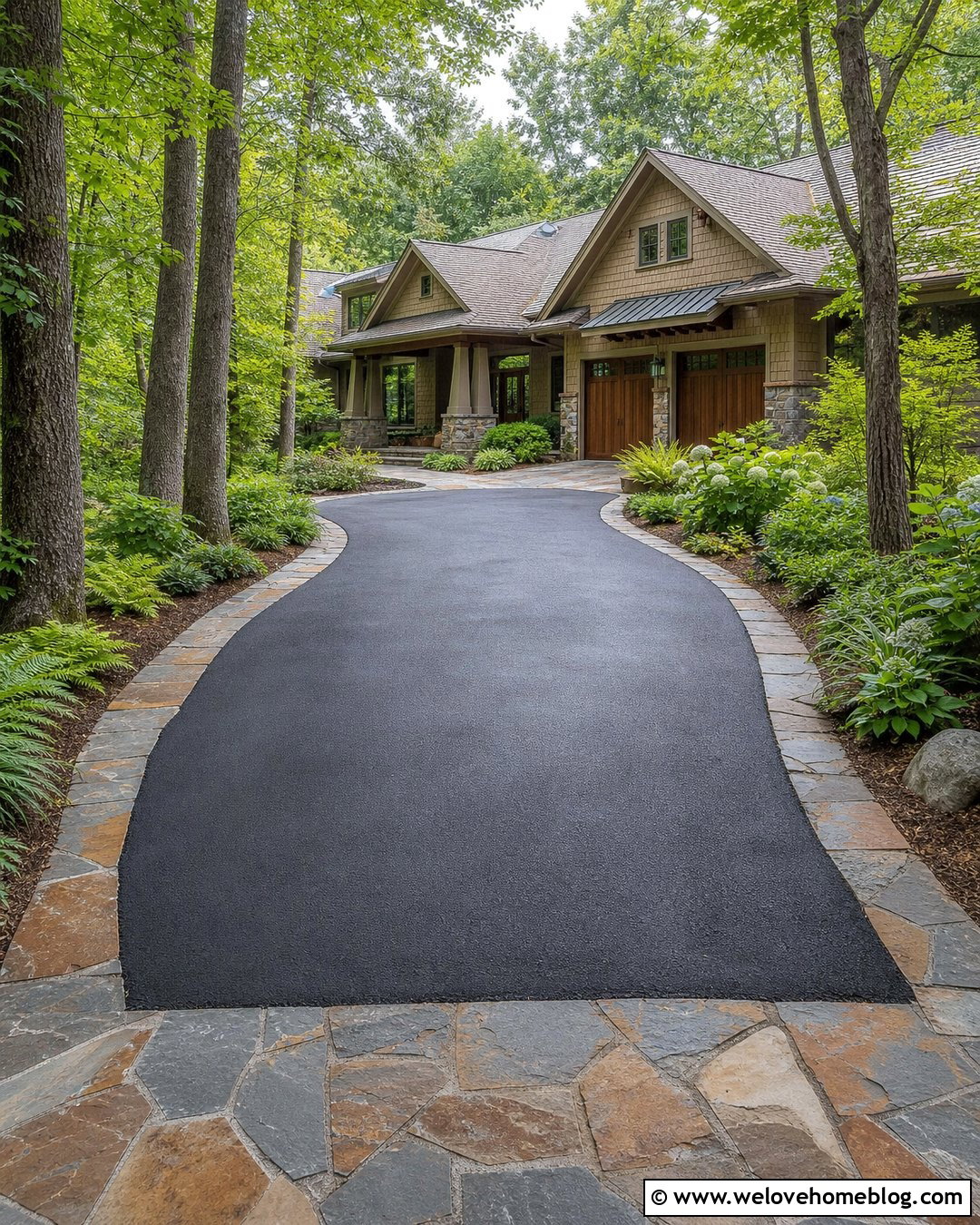
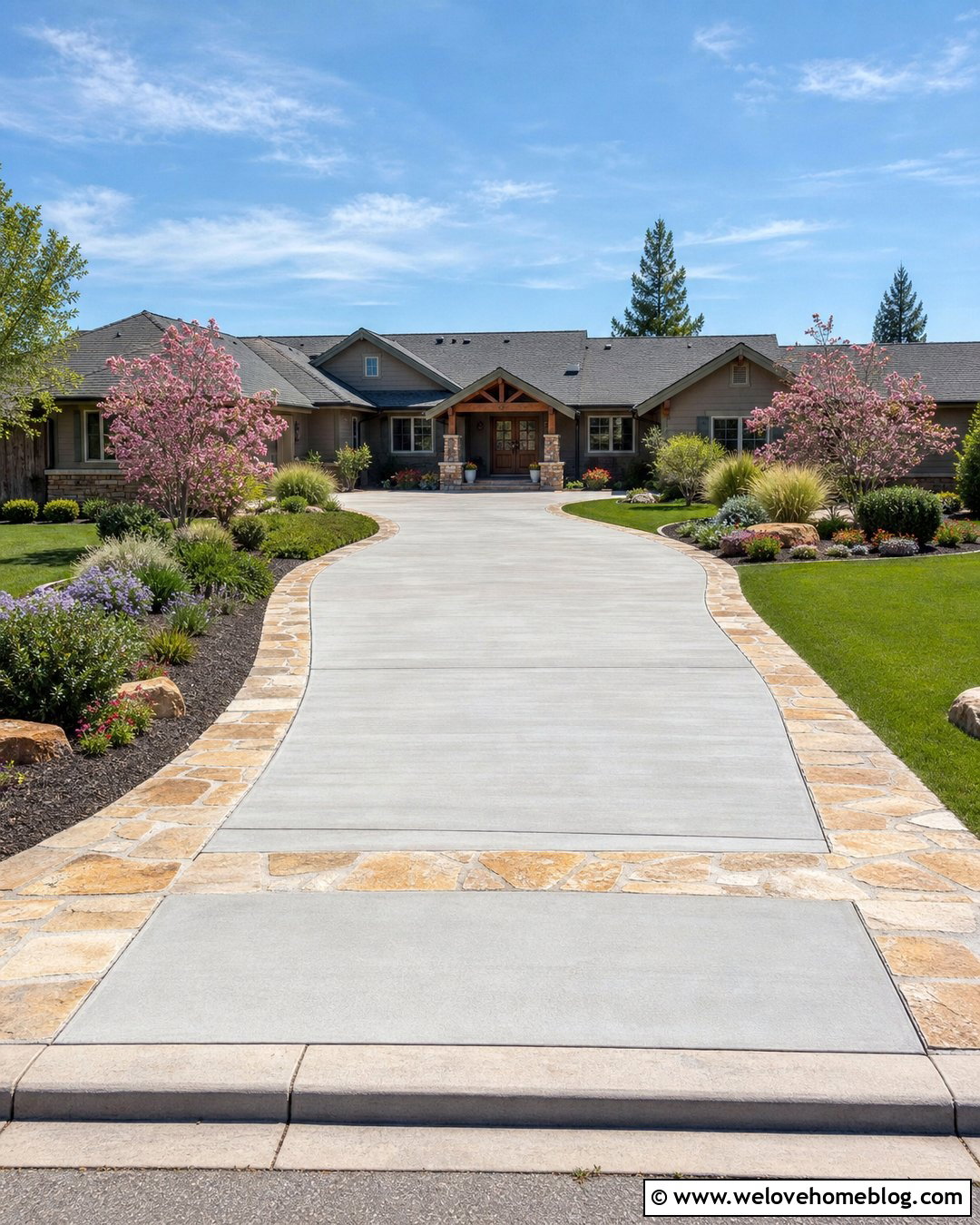
Irregular flagstone can give a plain asphalt driveway a softer, handcrafted appearance. Choose flat stones in muted gray, brown, and rust tones, then install them along the edges of a gently curved black asphalt surface. A wider flagstone area near the street can function as a decorative entrance apron. Continue similar stone into the front walkway or porch steps for a coordinated layout. Behind the driveway border, use natural planting groups such as ferns, hostas, hydrangeas, and woodland grasses. This design works beautifully with Craftsman houses, stone-front homes, cabins, and properties surrounded by mature trees. Keep the stones close in height and avoid narrow projections that could become vulnerable where vehicle tires regularly cross the edge.
9. Paver Ribbon Concrete Driveway Border
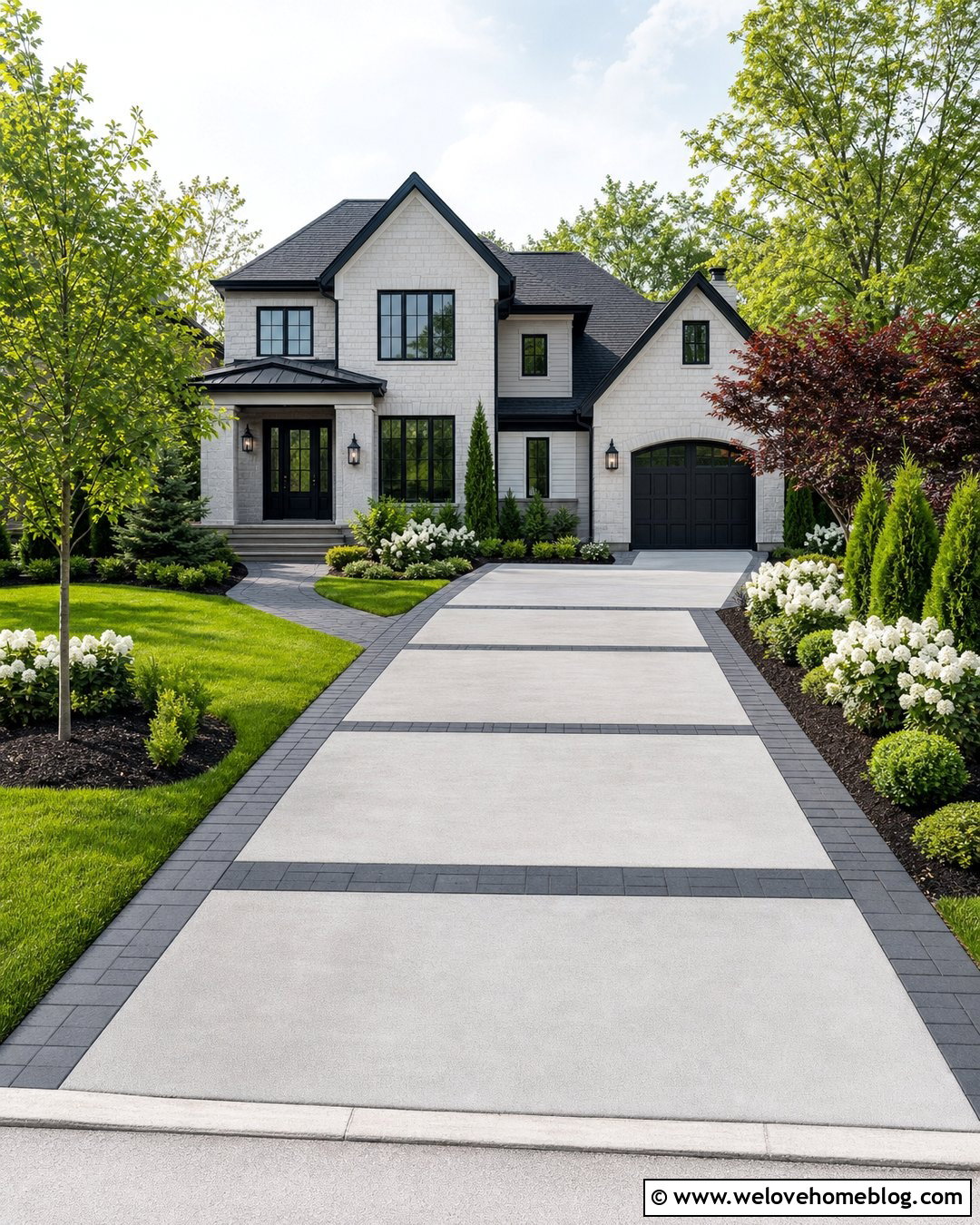
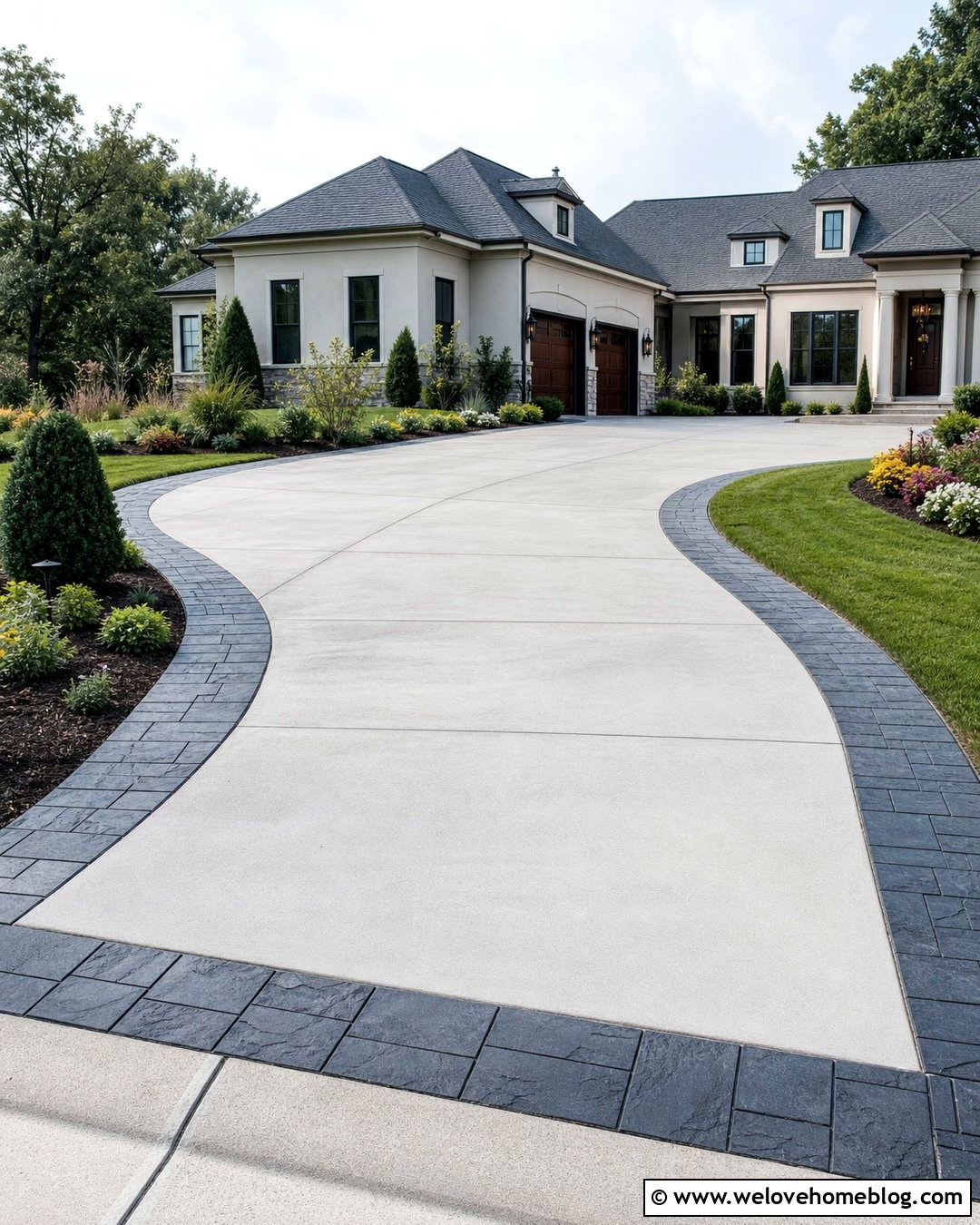
A contrasting paver ribbon can make a standard concrete driveway look more detailed without replacing the main surface. Frame broom-finished gray concrete with rectangular charcoal pavers laid in a running bond pattern. Add a second ribbon across the driveway near the sidewalk or garage to connect the side borders visually. This treatment works with straight, curved, and wider double driveways. Use neatly trimmed lawn on one side and layered beds of evergreen shrubs, flowering perennials, and mulch on the other. Match the paver color to the roof, shutters, garage door, or front walkway. The border will feel especially cohesive beside contemporary, transitional, or updated ranch homes, where restrained colors and clear lines support a polished curb view.
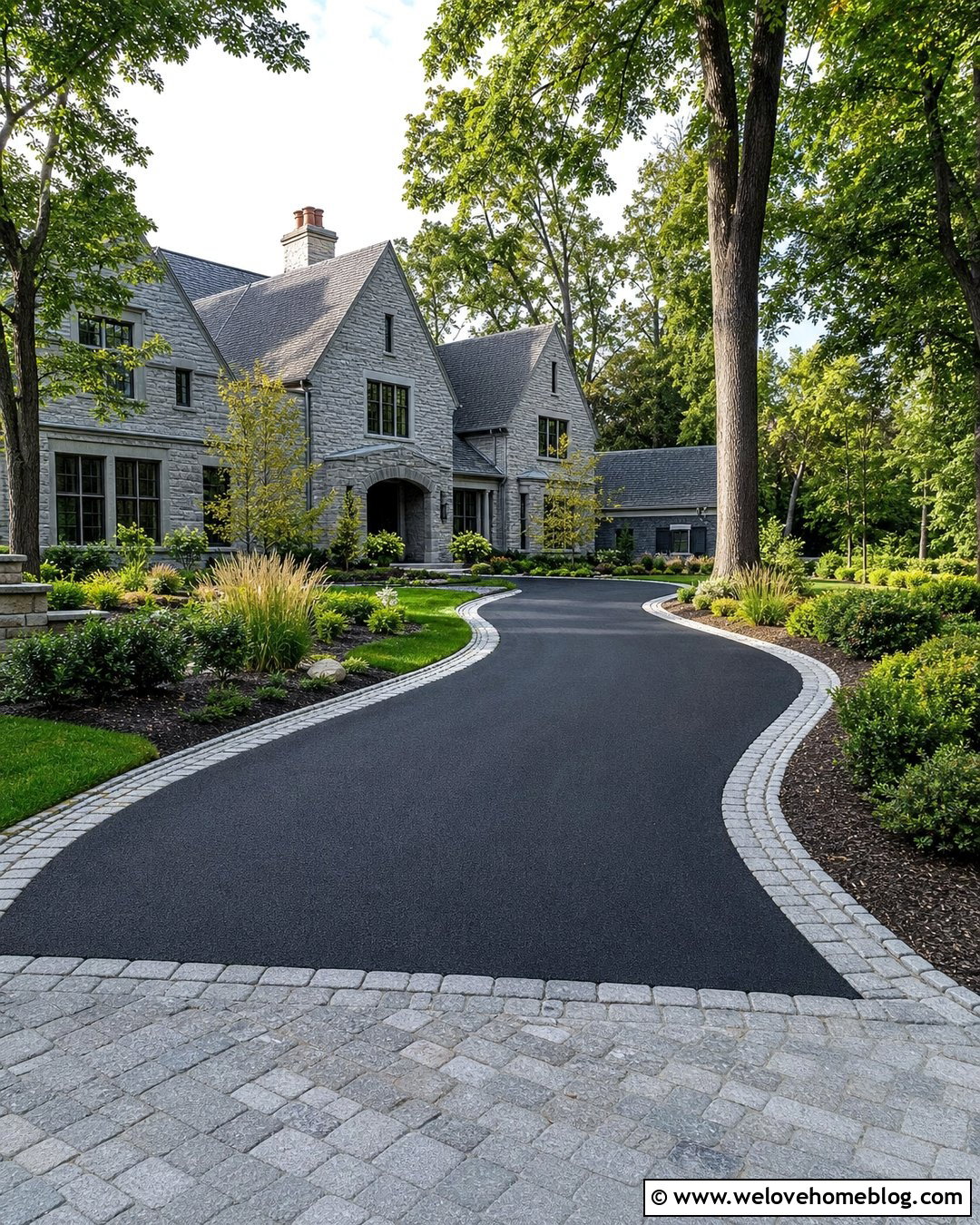
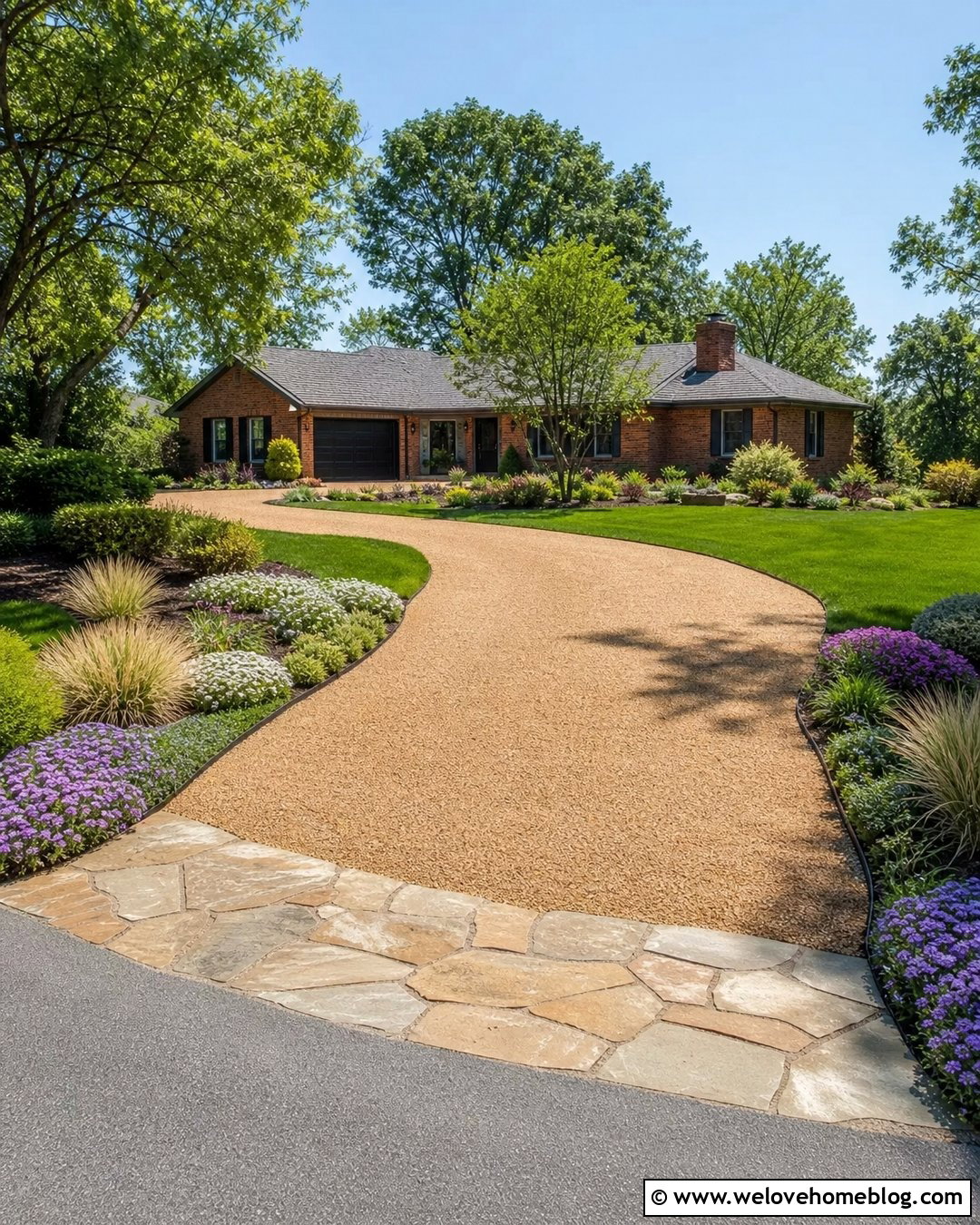
10. Grass Strip Paver Driveway Border
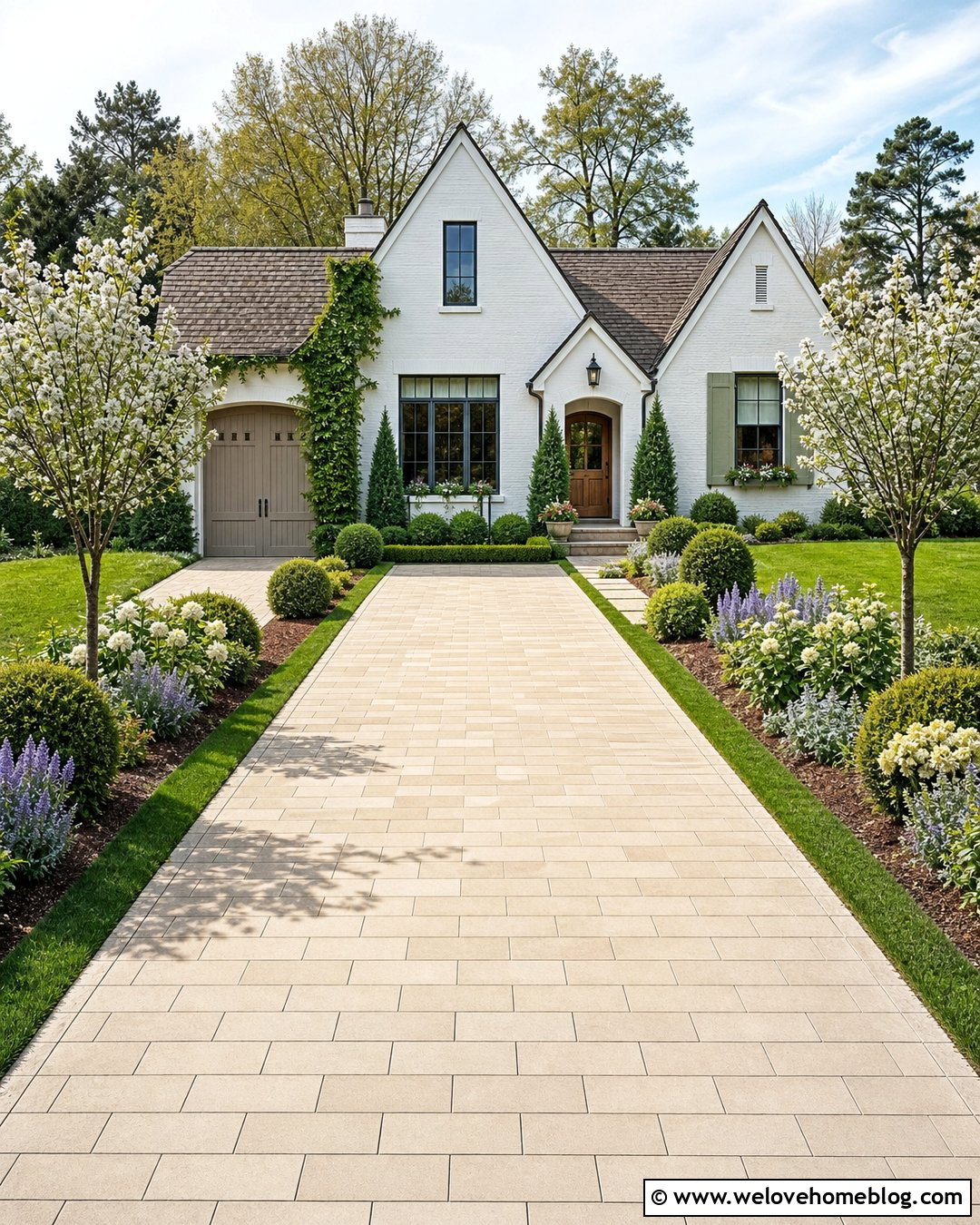
A narrow grass strip creates a fresh, garden-focused border around a light concrete paver driveway. Choose warm beige or pale gray pavers in a simple running bond pattern, then leave a consistent green band between the driveway and outer planting beds. Install a concealed edge restraint beside the pavers so the grass does not creep into the joints. This border is most attractive on a level driveway where mowing and trimming remain manageable. Beyond the grass, add clipped shrubs, small flowering trees, and a matching paver walkway. The living frame helps a large paved area feel less dominant. It suits cottage homes, classic suburban houses, and properties with generous lawns, especially when the grass strip repeats around nearby walkways or parking areas.
11. Lavender Gravel Driveway Border
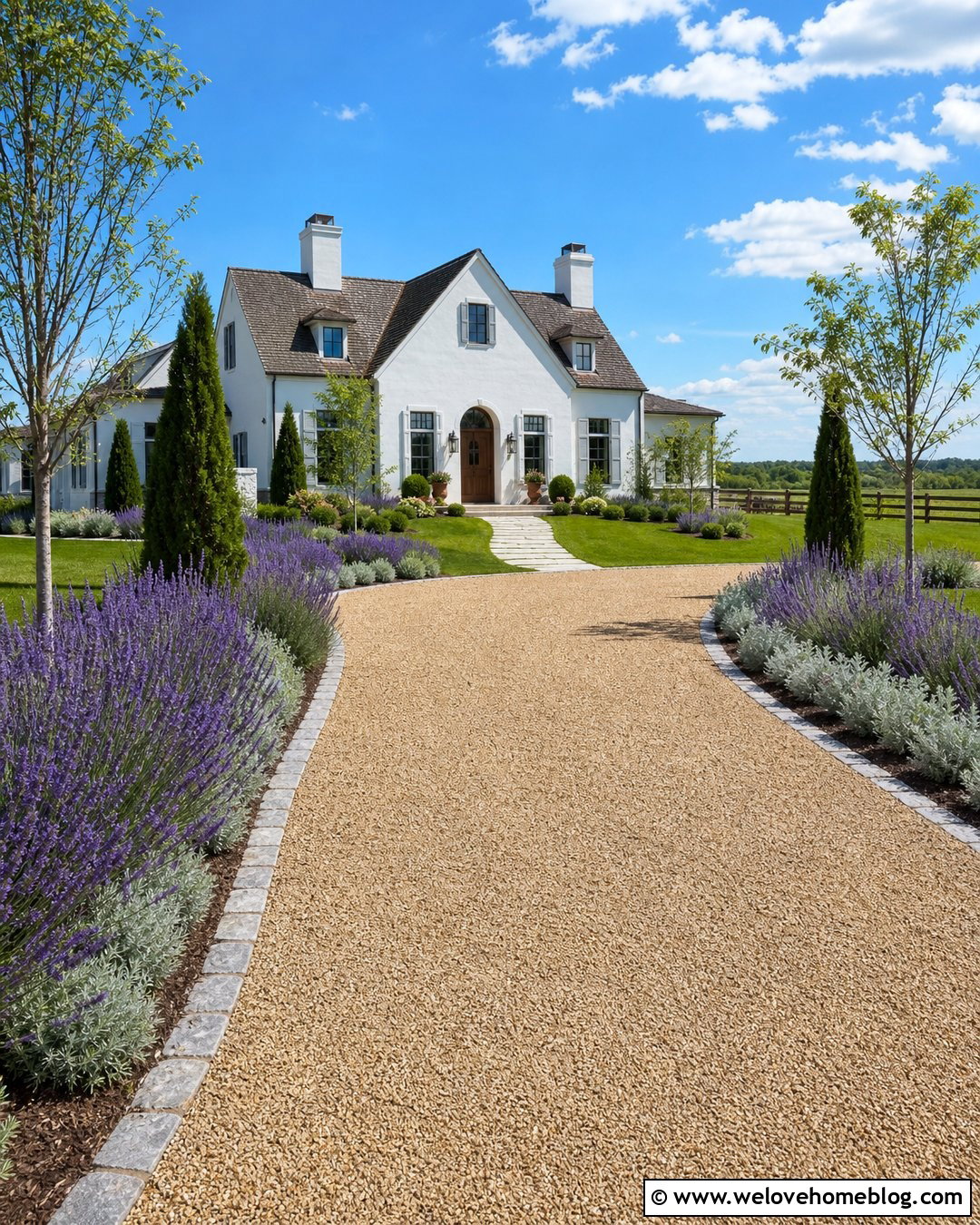
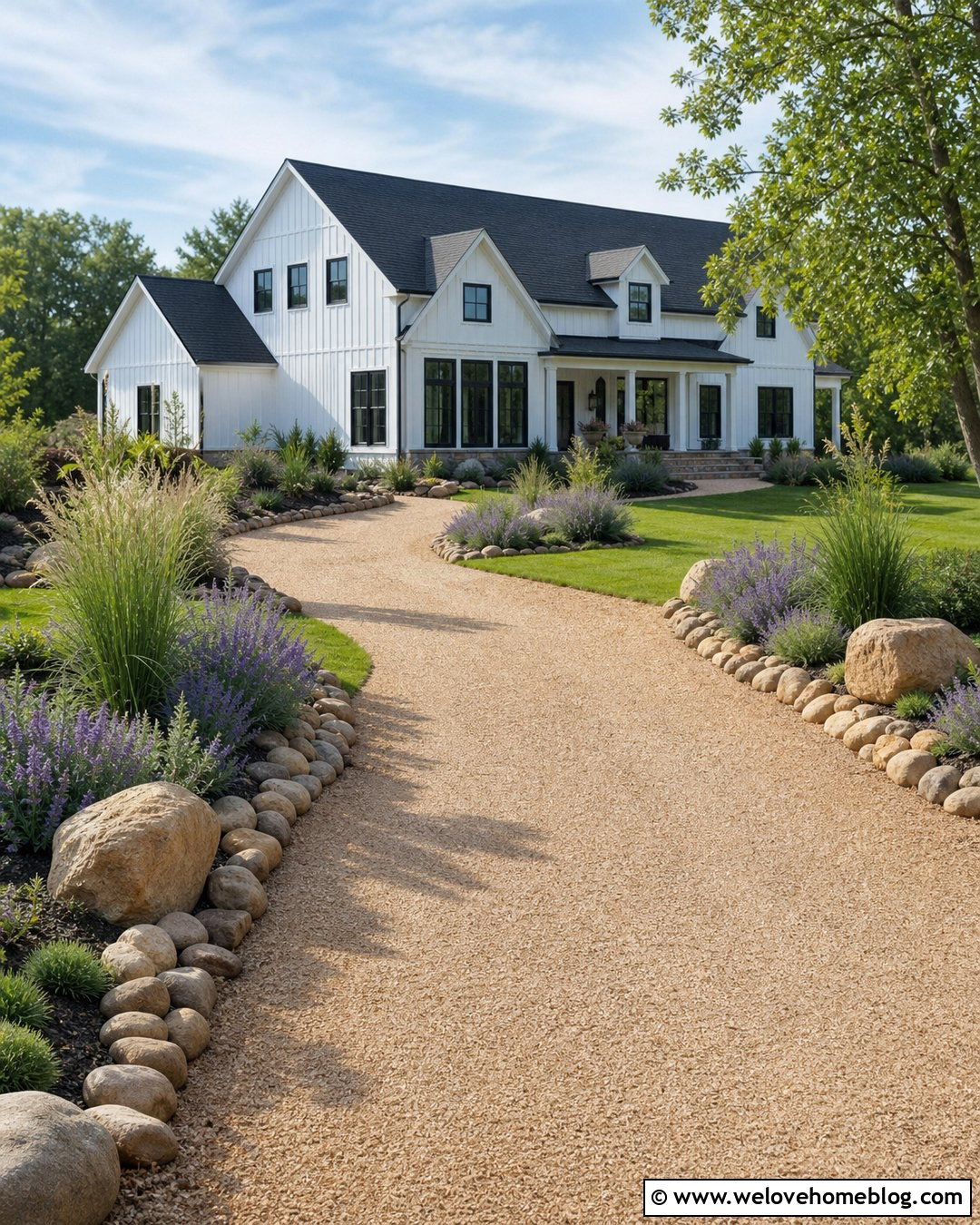
Imagine a curved pea gravel driveway passing between long, fragrant bands of lavender. A low cobblestone or steel edge should separate the gravel from the planting soil, giving the loose surface a practical retaining border. Use warm buff gravel to complement the purple flowers and silver-green foliage. Space the lavender far enough from the driving area that mature plants will not lean into vehicles. A few upright evergreens or small ornamental trees can provide year-round structure behind the lower planting. This complete border design works beautifully with white farmhouses, French country homes, cottages, and stucco houses. In colder or humid regions, select a locally suitable plant with a similar compact shape if lavender does not perform reliably in the site conditions.
12. Low Hedge Asphalt Driveway Border
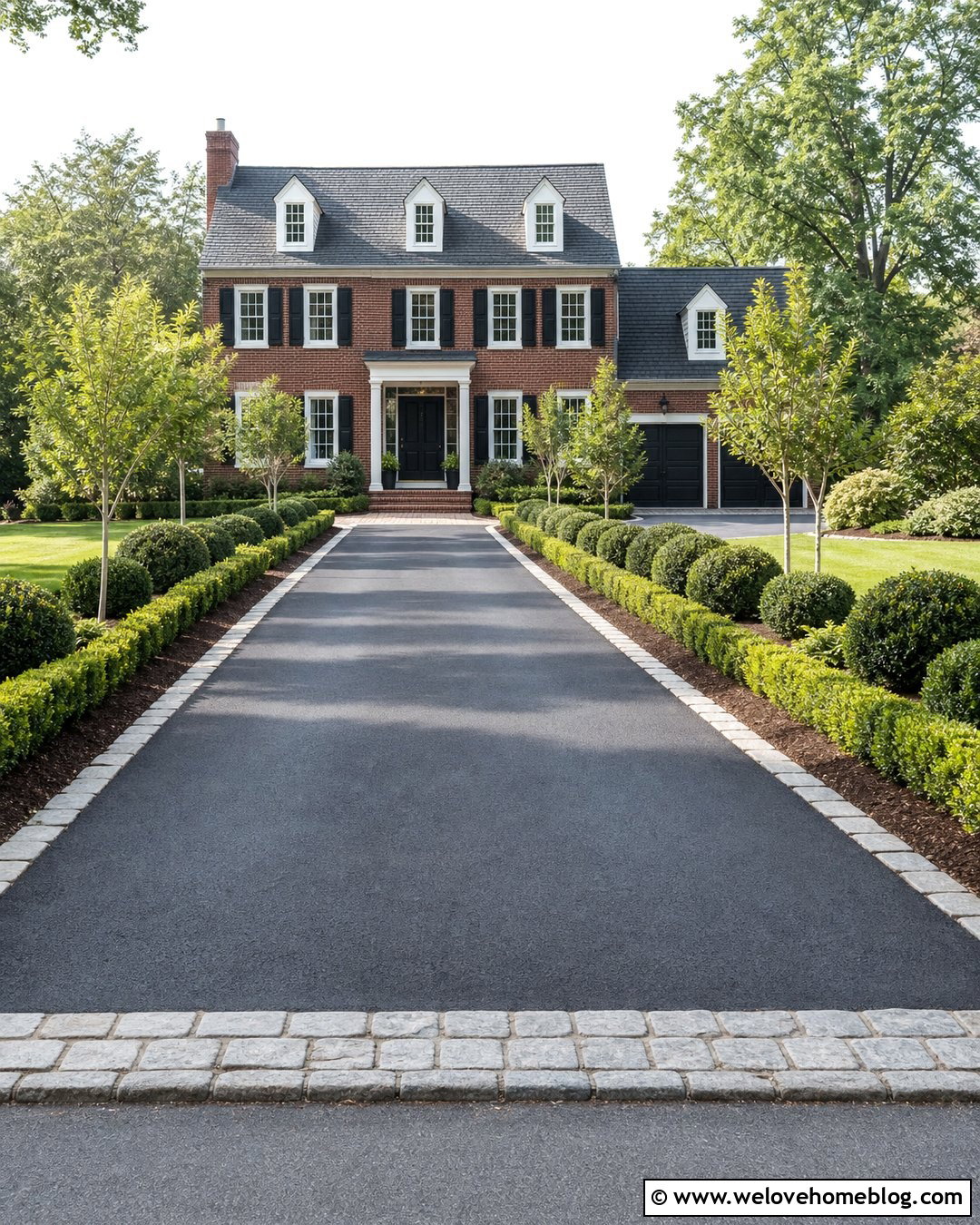
A clipped hedge creates a formal green frame around a straight asphalt driveway. Place a durable Belgian block or concrete edge between the black pavement and the planting strip, then grow compact boxwood, inkberry, or another locally appropriate evergreen hedge behind it. Keep the hedge low enough to preserve visibility near the street and driveway entrance. Symmetrical planting beds, matching walkway borders, and evenly spaced small trees can reinforce the orderly layout. This border feels particularly natural in front of Colonial, Georgian, and traditional brick homes. Allow enough soil width for healthy root growth rather than squeezing plants into a narrow gap. Regular trimming will maintain the crisp shape, while the hard inner edge keeps branches and soil away from the driving surface.
13. Ornamental Grass Concrete Driveway Border
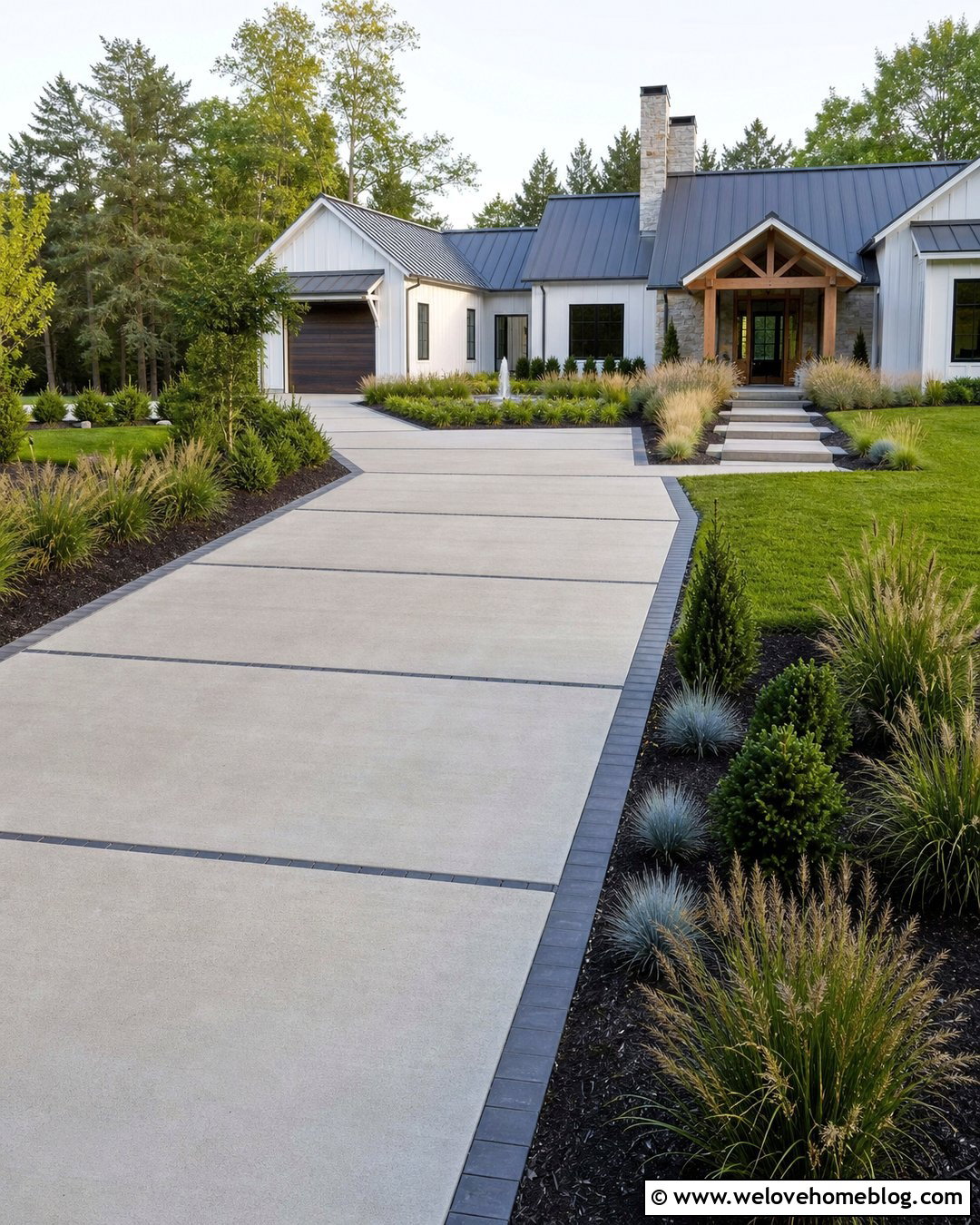
Soft ornamental grasses can balance the broad surface of a modern concrete driveway. Start with a straight or angled driveway made from large, light gray concrete slabs. Add a narrow charcoal paver border, followed by deep planting beds filled with repeating clumps of fountain grass, blue fescue, or feather reed grass. Mixing two grass heights creates movement without making the landscape feel chaotic. Keep taller varieties away from the street so they do not interfere with visibility. Dark mulch or decorative stone will make the foliage stand out and reduce the appearance of bare soil. This complete border works well with modern farmhouse, contemporary, and midcentury homes. It provides texture and seasonal interest while preserving a simple, architectural driveway layout.
14. Boxwood Brick Driveway Border
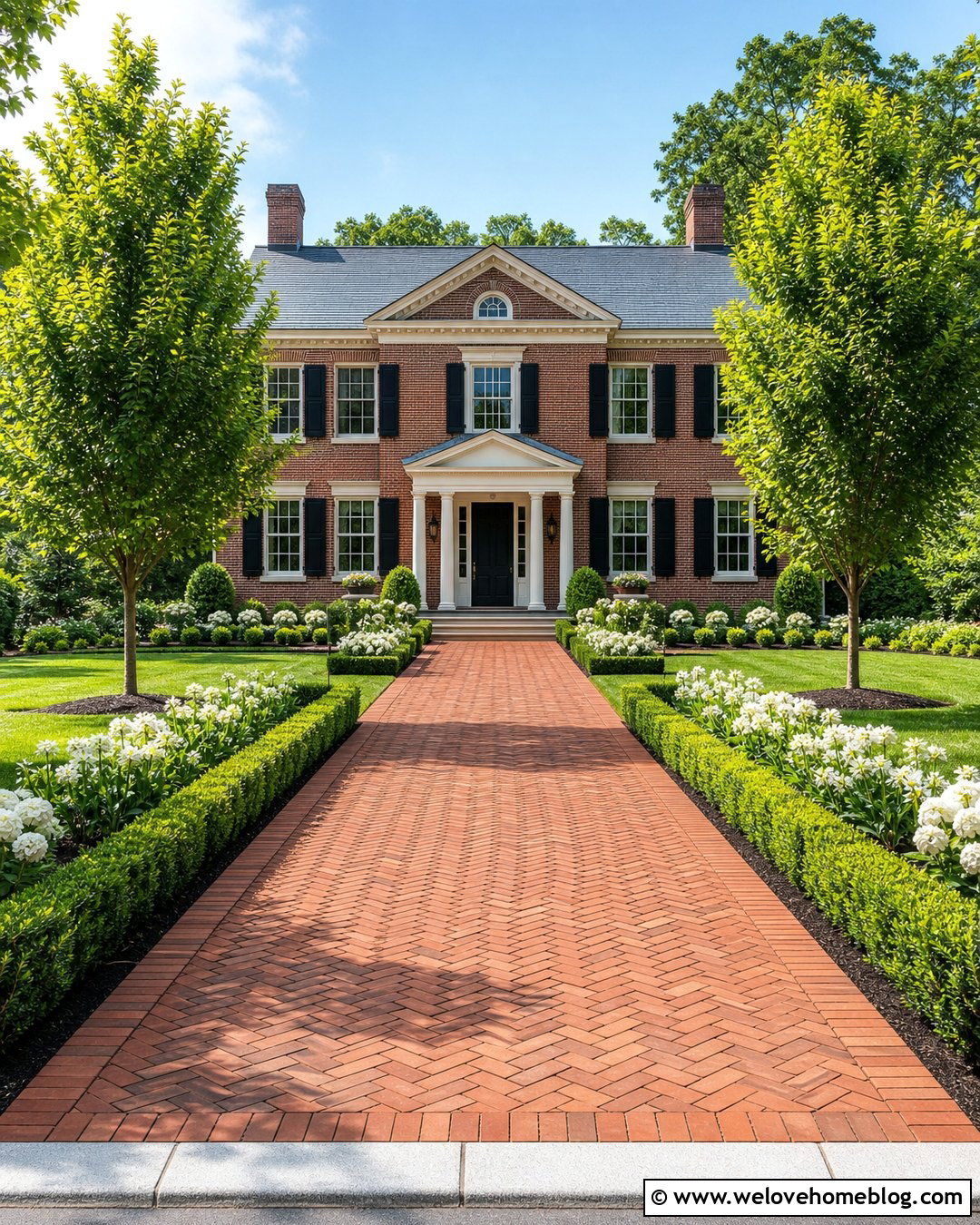
A low boxwood border brings structure to a traditional clay brick driveway. Use red or brown brick pavers in a herringbone pattern, with a soldier-course brick edge creating a clean outer frame. Behind it, plant clipped boxwood in a continuous row or evenly spaced rounded forms. Add white flowering perennials and dark mulch in selected areas to prevent the planting from looking too rigid. A matching brick walkway can branch toward the front porch without interrupting the border. This design is especially suitable for Colonial, Federal, Georgian, and formal cottage homes. Maintain a comfortable gap between the plants and bricks so foliage does not cover the pattern. The combination of masonry and evergreen planting produces a refined entrance throughout the year.
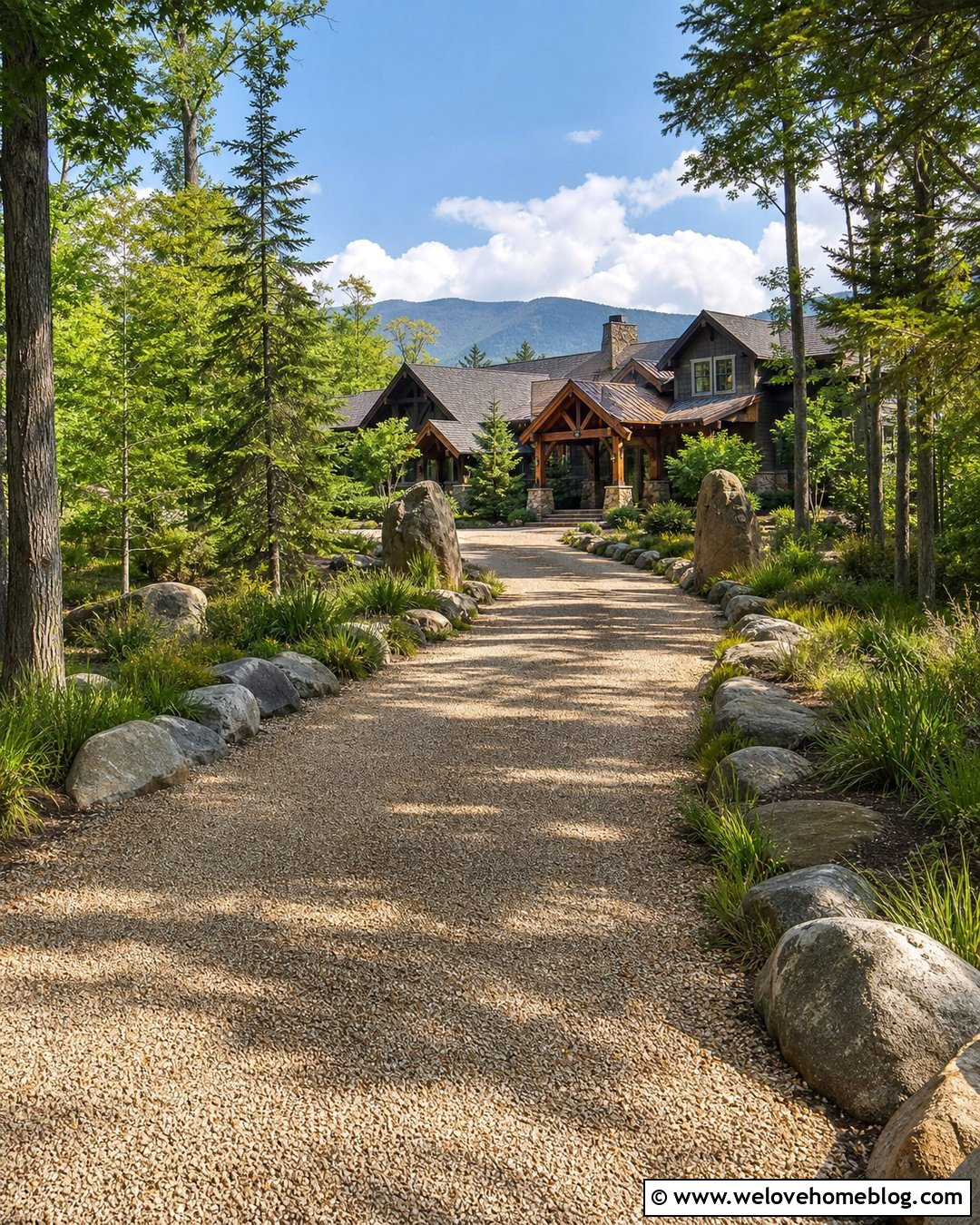
15. Mulch Bed Concrete Driveway Border
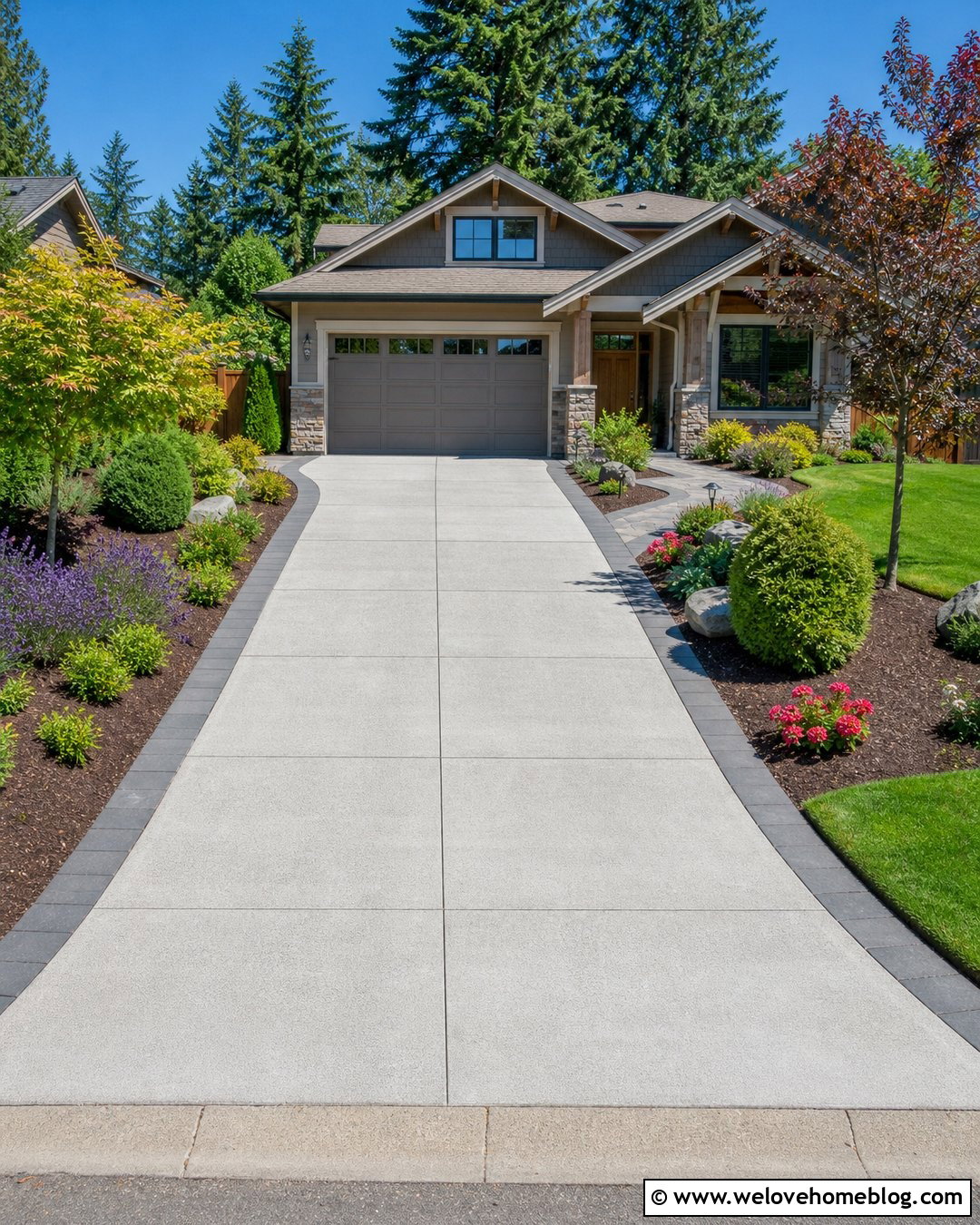
A simple mulch bed can be one of the most flexible borders for a poured concrete driveway. Define the pavement with a flush brick or concrete paver edge, then create a broad planting bed filled with dark brown or black mulch. Use a layered arrangement of low ground cover, medium shrubs, and one or two small ornamental trees. Curving the bed gently along a straight driveway will soften the overall geometry without reducing useful parking space. Coordinate the border pavers with the front walkway or porch. This affordable-looking yet polished combination suits almost any suburban house, from ranch to Craftsman. Keep mulch below the top of the hard edge so it is less likely to wash or spill onto the driveway after rain.
16. Crushed Stone Asphalt Driveway Border
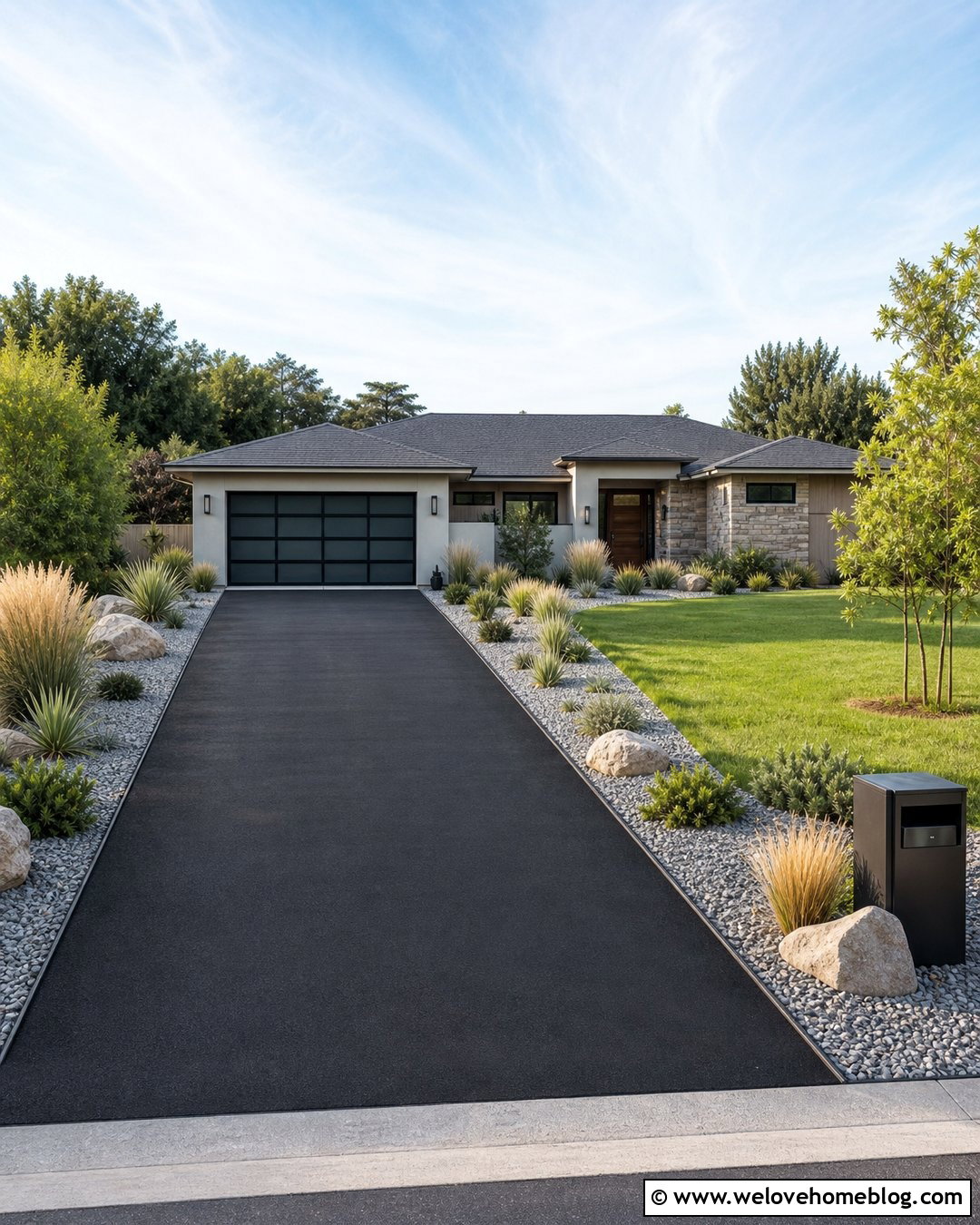
A crushed stone strip can provide a subtle transition between black asphalt and planted landscaping. Use angular gray granite or pale limestone in a narrow, consistent band along both sides of the driveway. Separate the stones from the lawn or garden bed with steel edging, concrete curbing, or a flush row of pavers. The contrasting aggregate will make the asphalt edge look straighter and more deliberate. Add drought-tolerant shrubs, low grasses, and a few larger accent rocks beyond the border. This treatment fits contemporary ranch houses, mountain homes, and practical suburban properties. For a coordinated entrance, repeat the crushed stone around the mailbox or address marker. Avoid using a stone color too similar to the asphalt if you want the border to remain clearly visible.
17. Decomposed Granite Paver Driveway Border
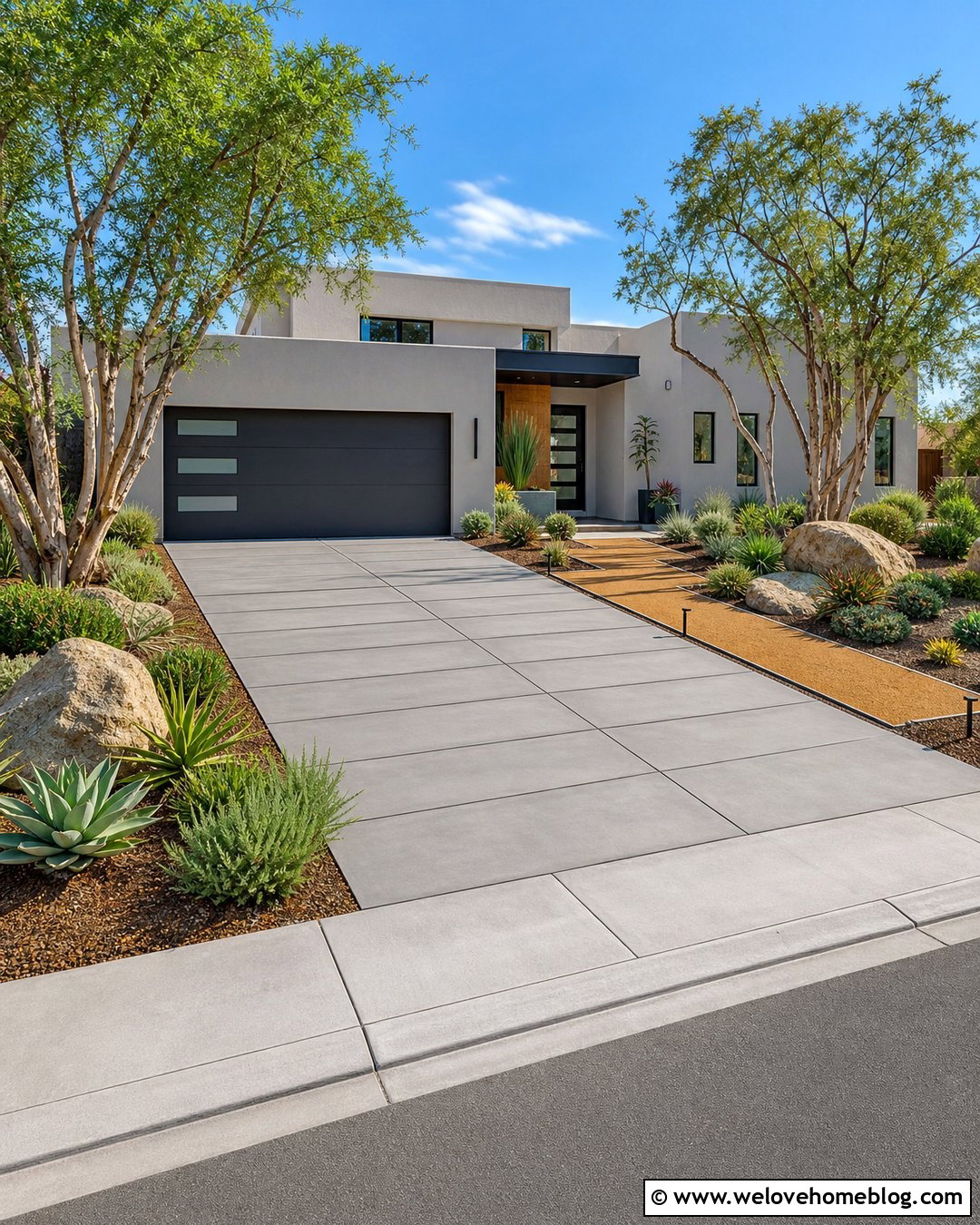
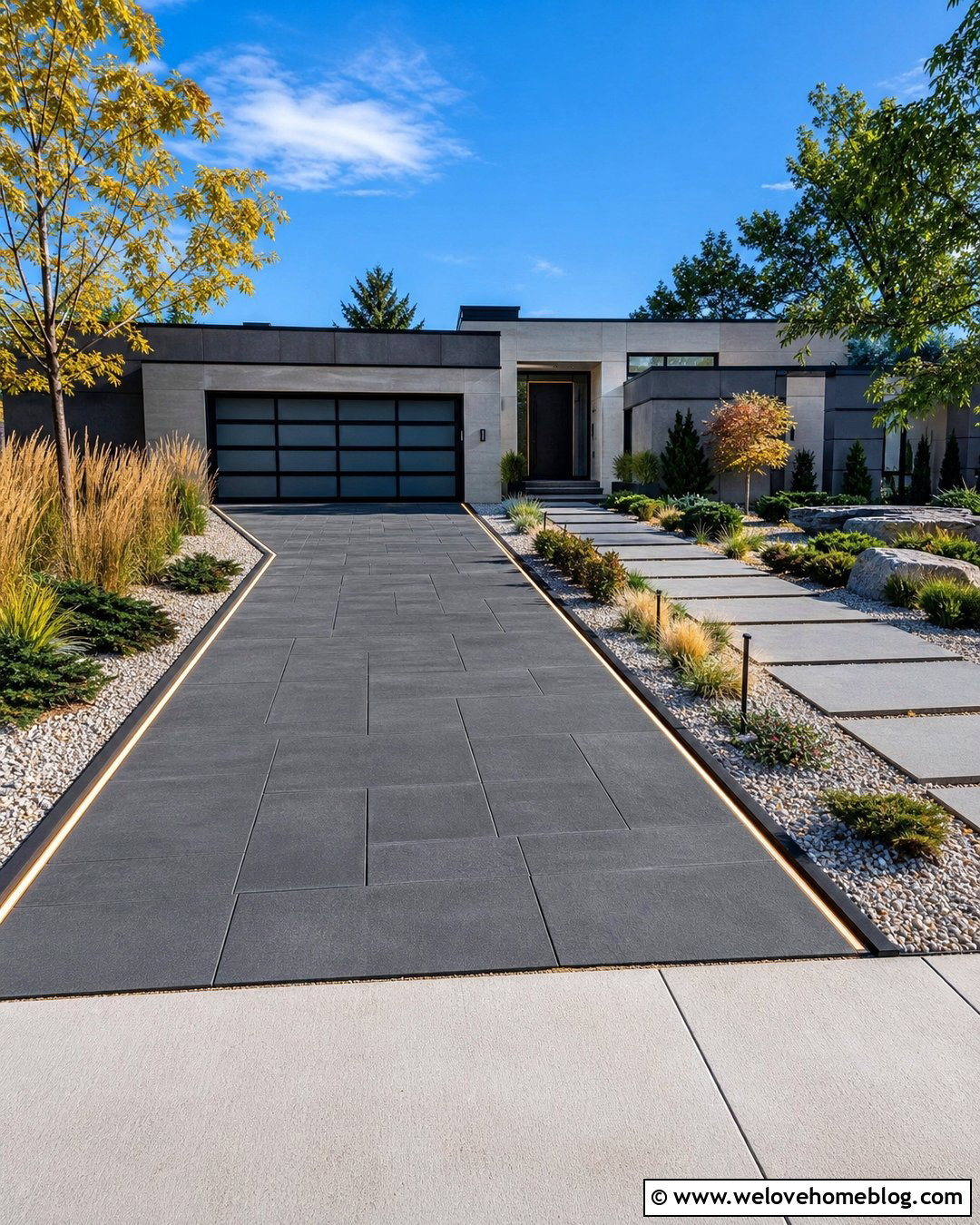
Warm decomposed granite can create a soft landscape border beside a cool gray paver driveway. Install large-format concrete pavers in a straight layout, then frame them with a narrow strip of compacted golden or rust-toned decomposed granite. Steel edging can separate the granite from planting beds while maintaining a slim profile. Add sculptural grasses, succulents, sage, and small multi-trunk trees for a contemporary, water-conscious landscape. Repeat the decomposed granite in the front walkway or a small seating area to connect the spaces. This combination suits modern stucco houses, Southwestern homes, and California-inspired ranch properties. A clear difference in color and texture keeps the border visually effective, even when the planting remains restrained and relatively low.
18. Boulder Gravel Driveway Border
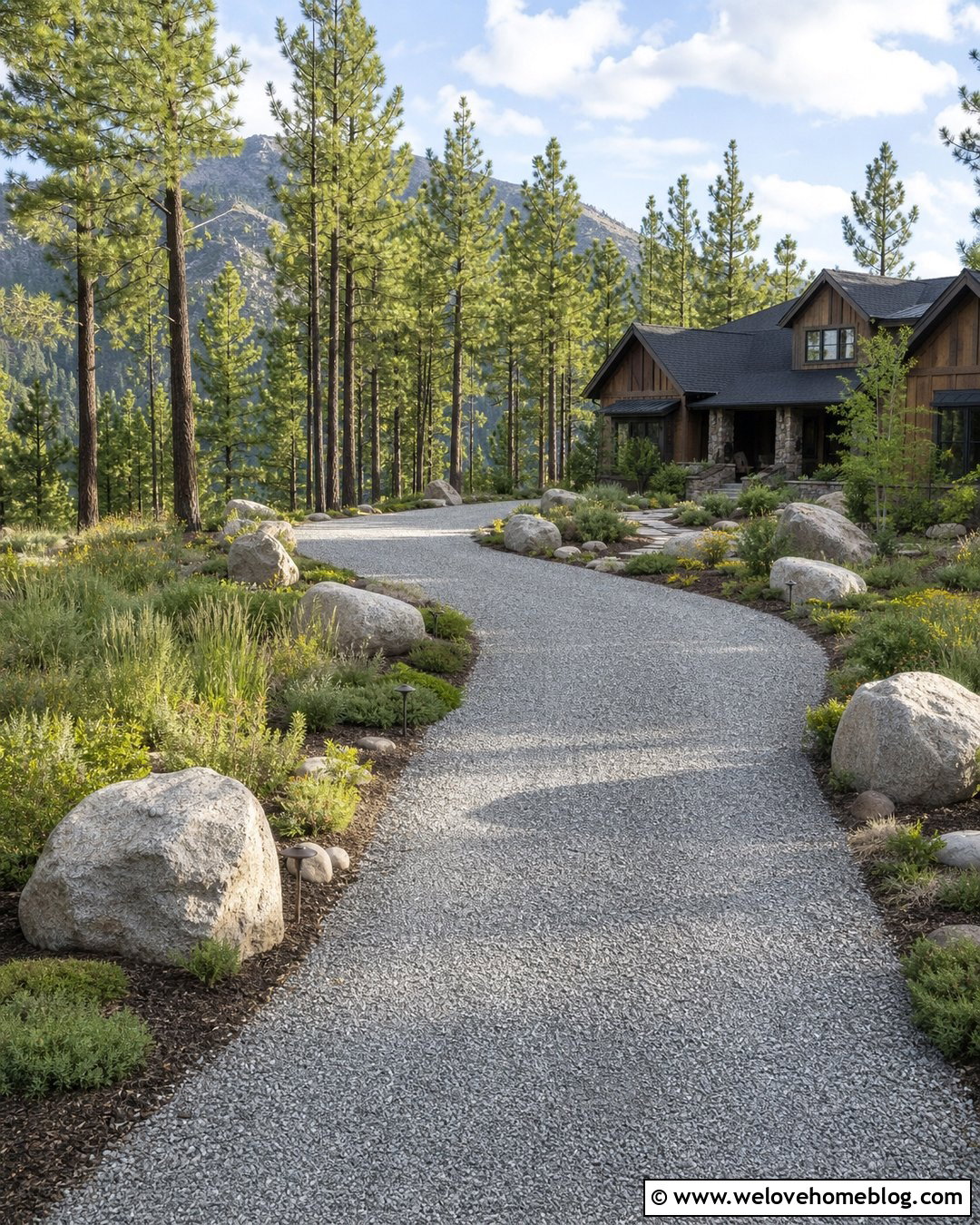
Large landscape boulders can define a wide gravel driveway without creating a continuous hard line. Use compacted gray crushed gravel on a gently curving approach, then position substantial native stones at key points along the outer edge. Smaller fieldstones and low ground covers can fill the spaces between them. Keep boulders safely outside the normal tire path, especially near turns and parking areas. Pine trees, native grasses, and informal shrubs will make the border feel connected to the surrounding site. This rugged design works best on mountain properties, wooded lots, cabins, and rustic ranch homes. Choose stones with colors already present in the house foundation or local landscape. The finished border should feel naturally placed while still making the driveway route easy to understand.
19. Fieldstone Curved Driveway Border
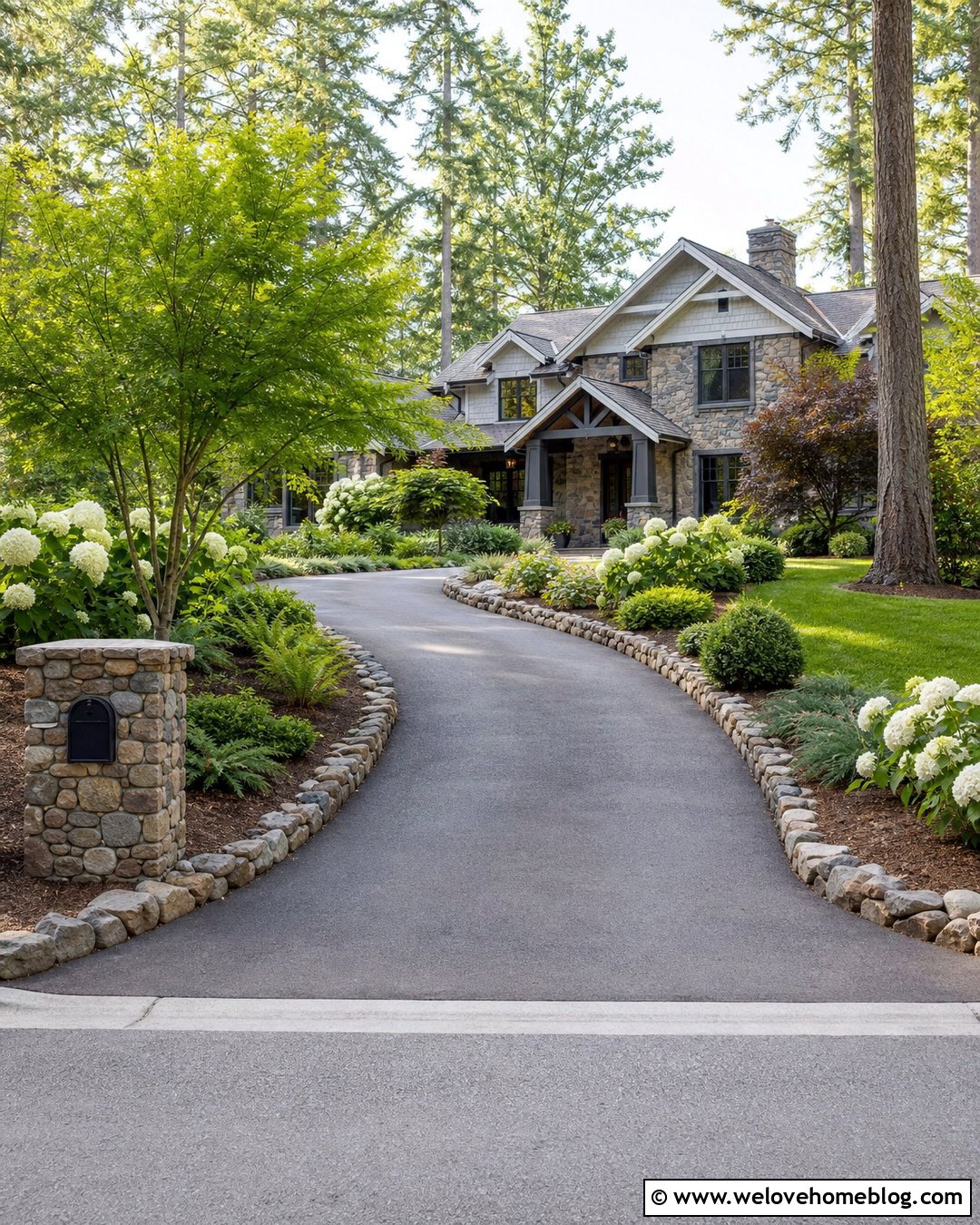
A curved driveway gains character when it follows a continuous fieldstone edge. Pair warm gray asphalt or compacted gravel with irregular stones in gray, tan, and muted brown. Set the fieldstone close together along the curve so the border clearly guides the eye toward the house. On the outside of the bend, add a generous planting bed with hydrangeas, ferns, dwarf evergreens, and one ornamental tree. Keep the inside curve lower and more open for better visibility. This complete look complements cottages, Craftsman homes, wooded Colonials, and stone-front houses. Carry the fieldstone into a mailbox base, garden wall, or walkway edge to unify the property. A consistent installation height will prevent the rustic material from appearing uneven or unfinished.
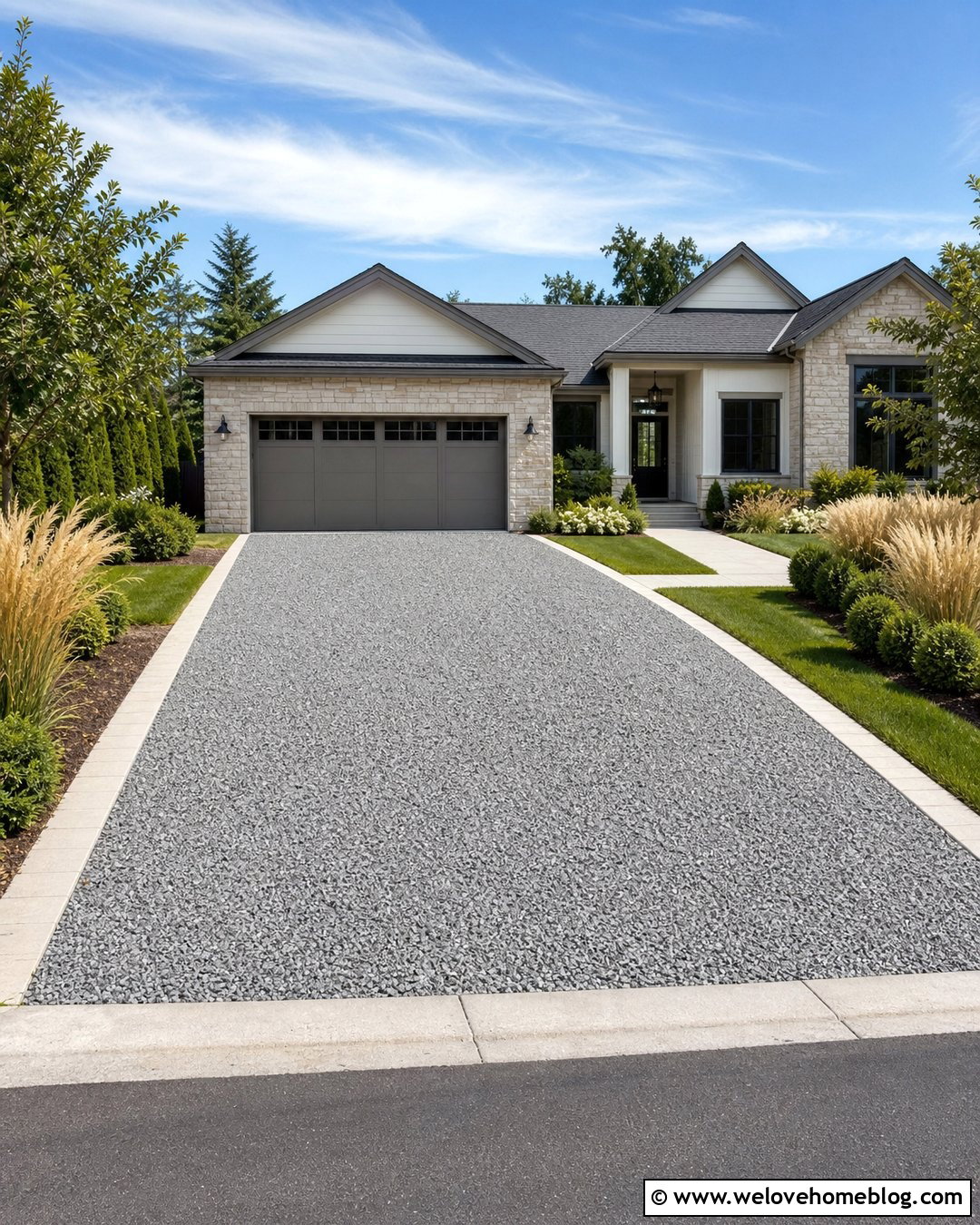
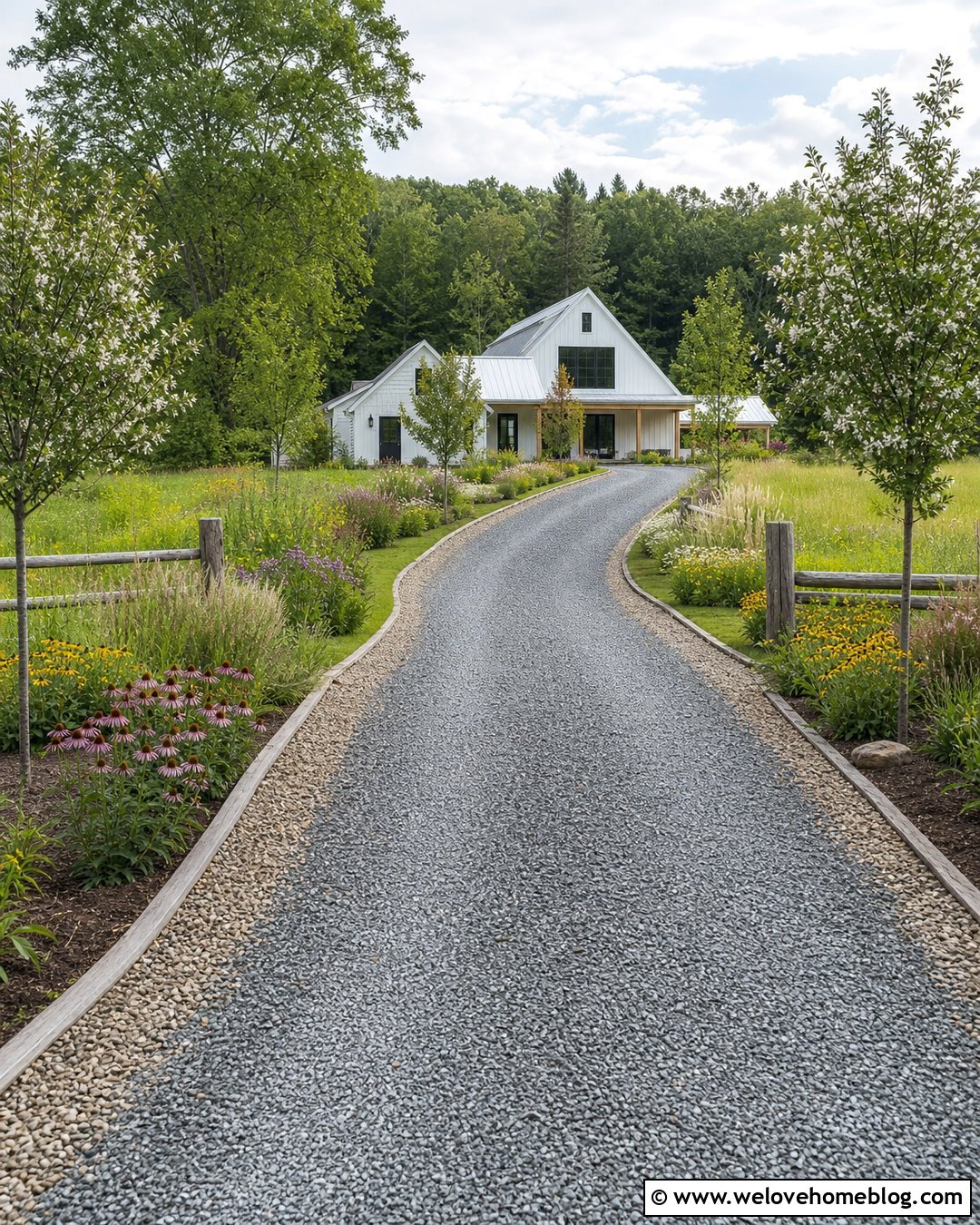
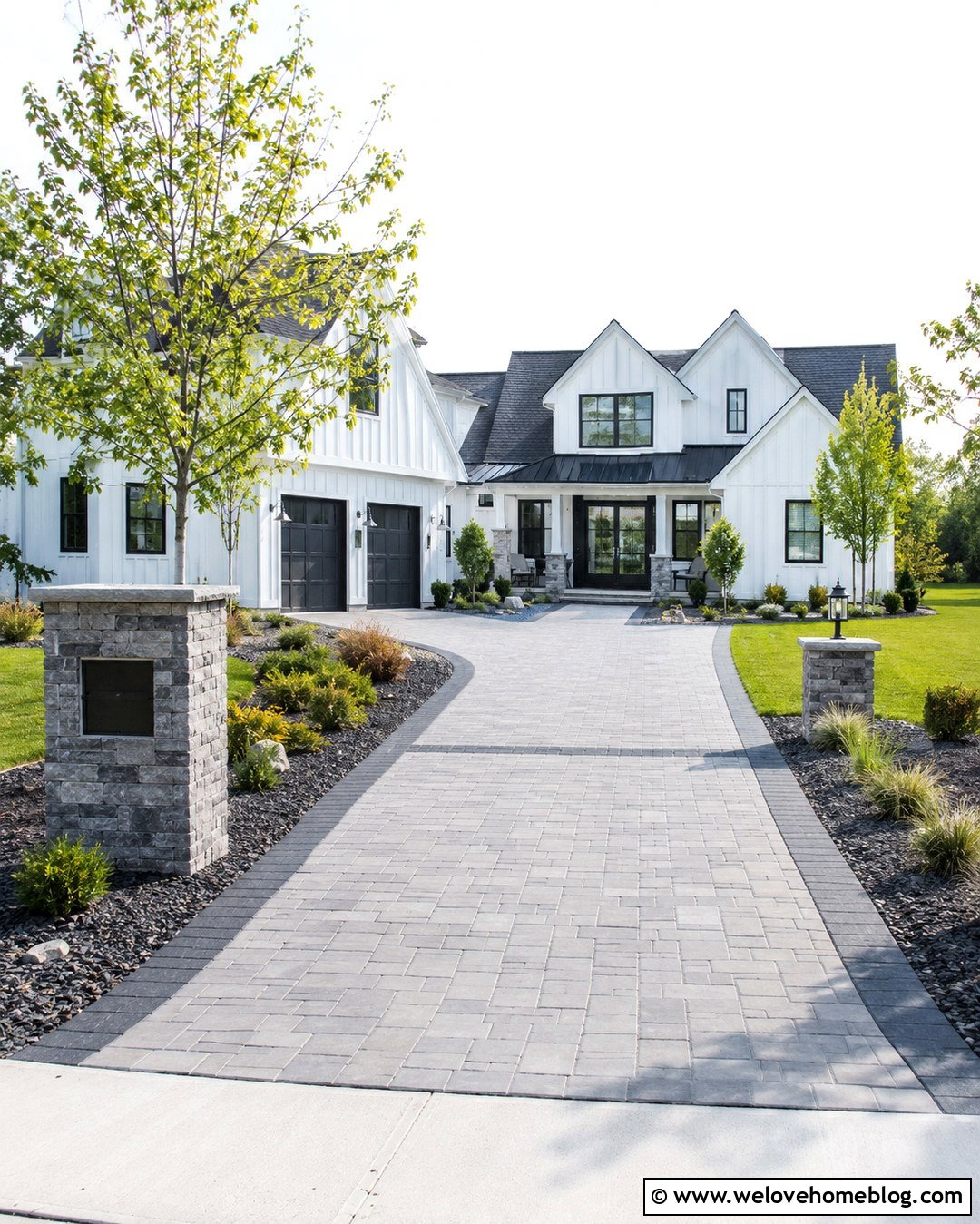
20. Limestone Gravel Driveway Border
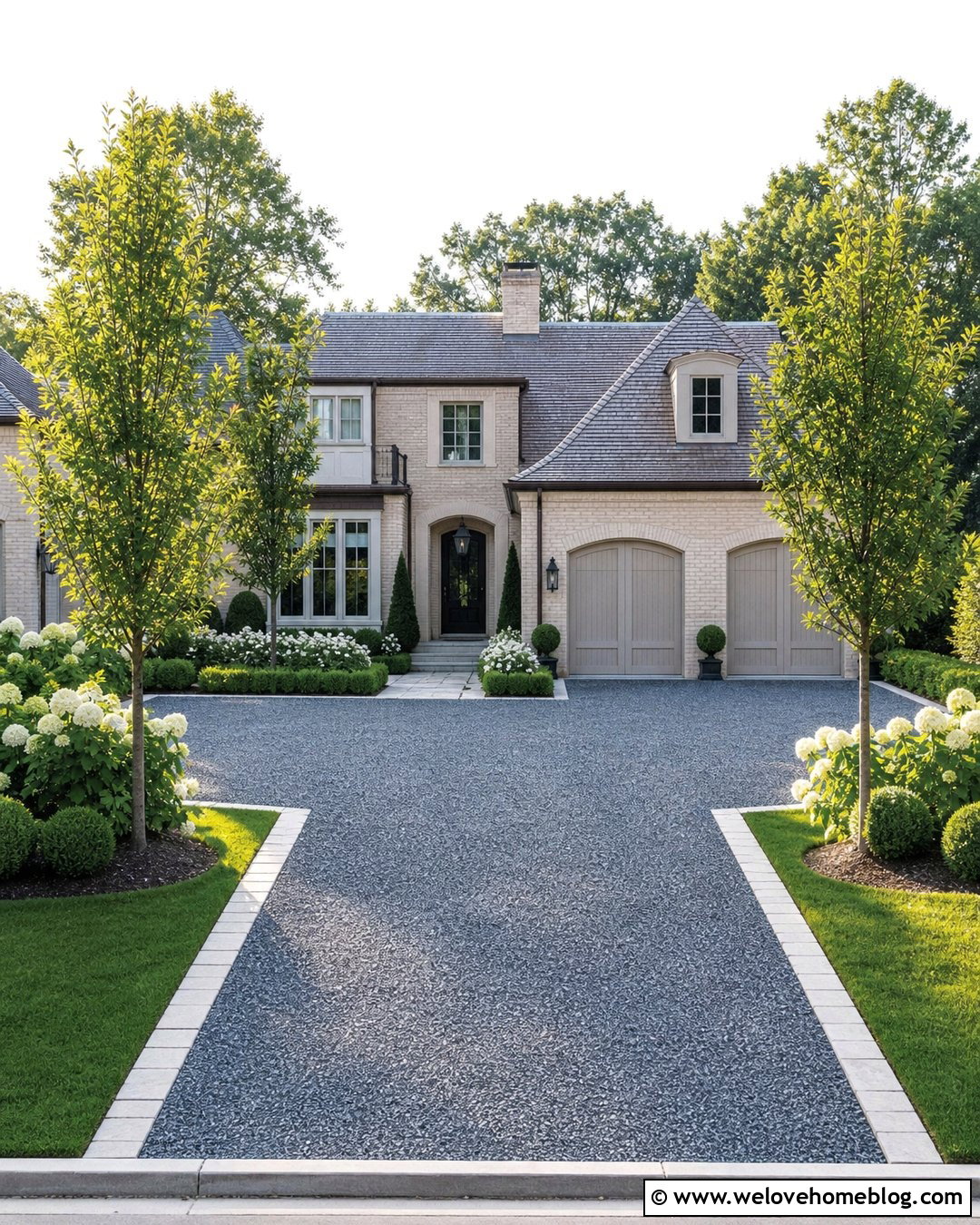
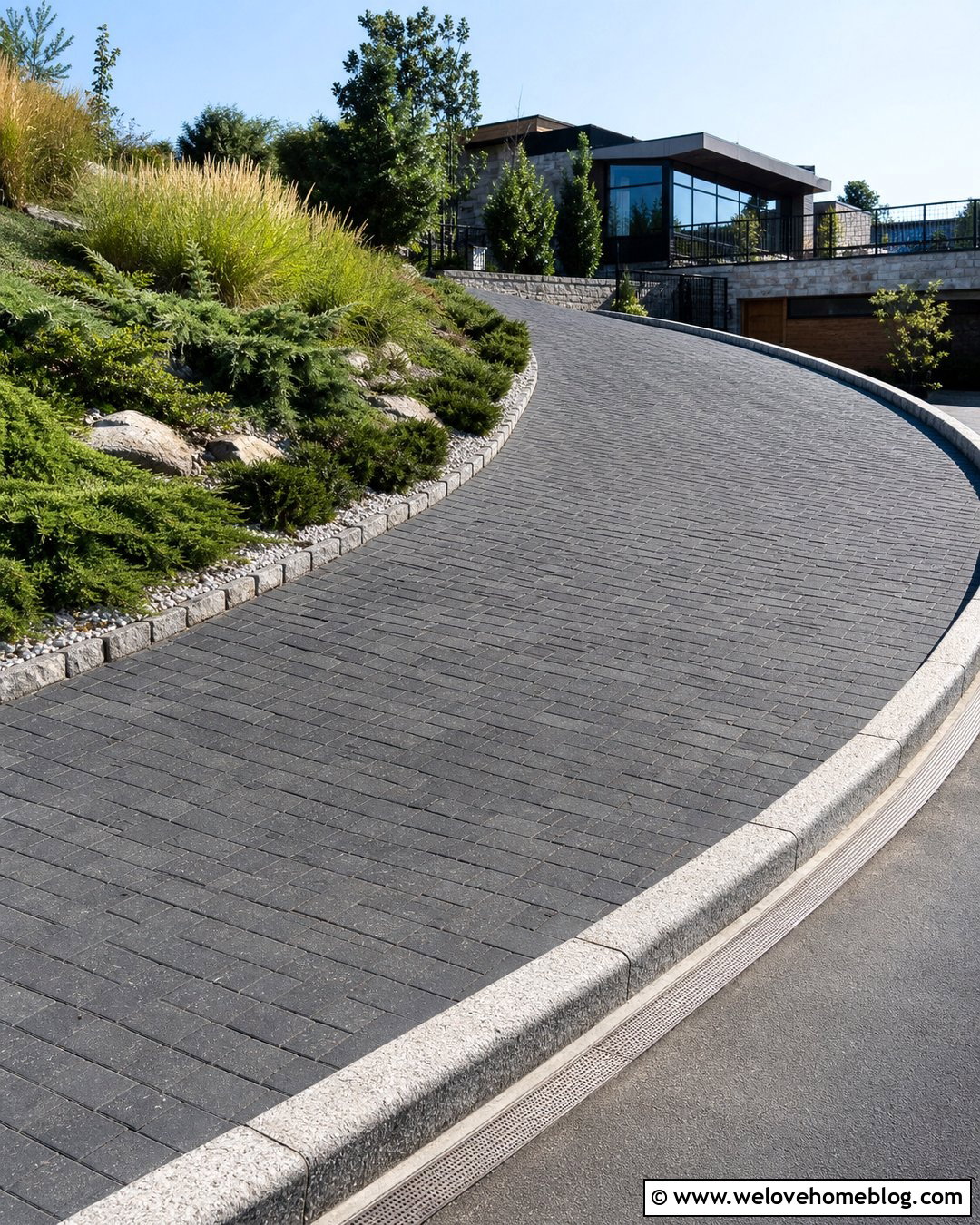
Pale limestone edging creates a bright, tailored frame around a darker gravel driveway. Use rectangular limestone blocks beside compacted charcoal or blue-gray gravel for a clear contrast. A straight driveway with a slightly wider parking court will showcase the clean stone geometry. Add green lawn, clipped evergreen shrubs, and white flowering plants to continue the light, restrained palette. Limestone steps or a matching front walkway can connect the driveway to the house. This border looks refined beside light brick, painted brick, limestone, or traditional stucco facades. Select dense exterior-grade stone suited to local weather and vehicle conditions. The border can sit nearly flush for a subtle appearance or rise slightly beside planting beds where stronger separation is useful.
21. Slate Concrete Driveway Border
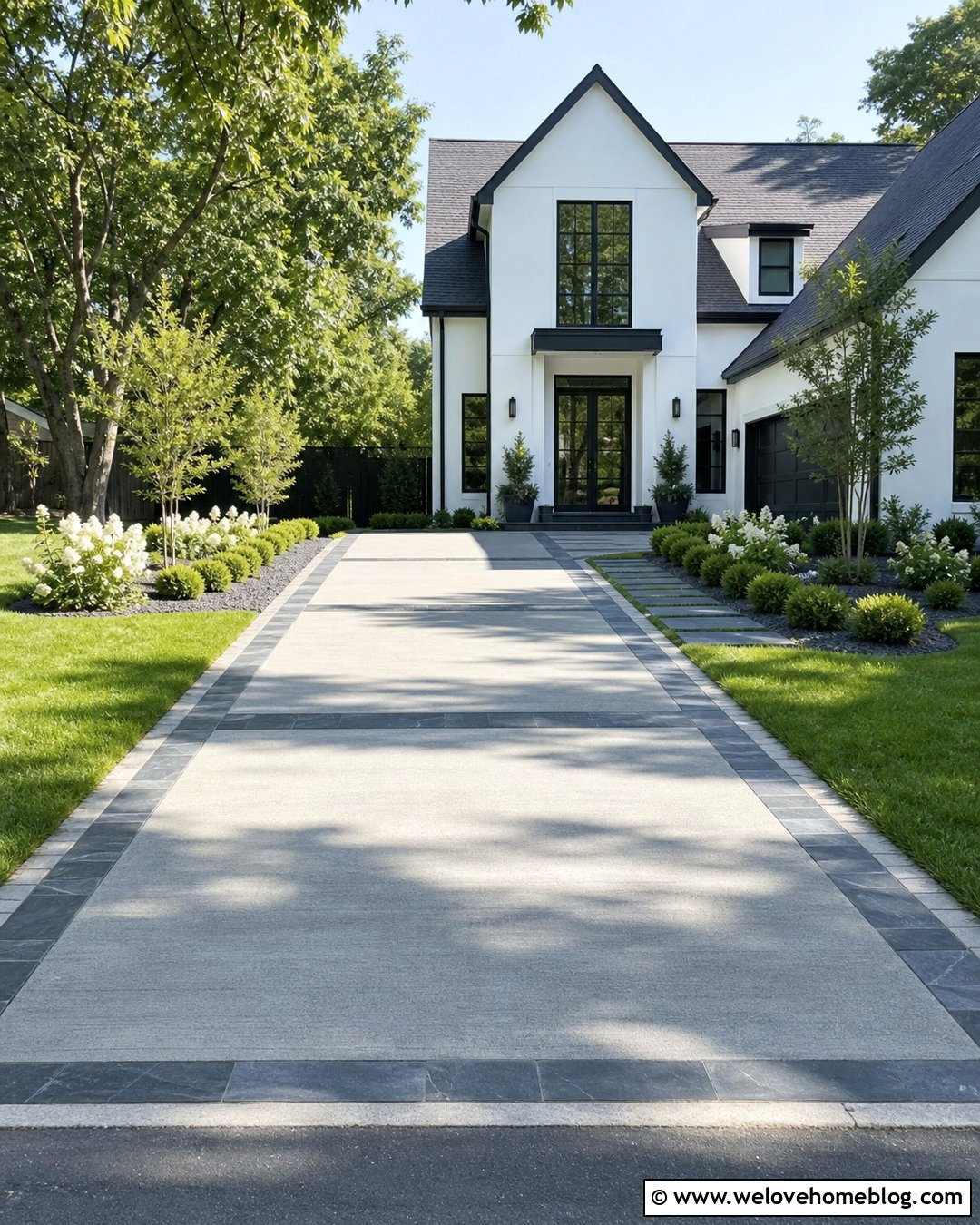
Dark slate provides an elegant outline for pale concrete. Frame a straight broom-finished concrete driveway with rectangular slate setts in charcoal, blue, and deep gray tones. Repeat the slate as a narrow cross-band at the garage entrance or where the front walkway begins. Behind the border, use simple beds of green shrubs, white flowers, and smooth gray mulch to maintain the limited color palette. The strong contrast is especially attractive beside contemporary, transitional, and modern farmhouse homes with black-framed windows. Choose textured slate rather than a highly polished surface for an exterior setting. Because natural slate varies in tone, arrange pieces before installation to distribute the colors evenly. The resulting border feels detailed and upscale without distracting from the house.
22. Travertine Paver Driveway Border
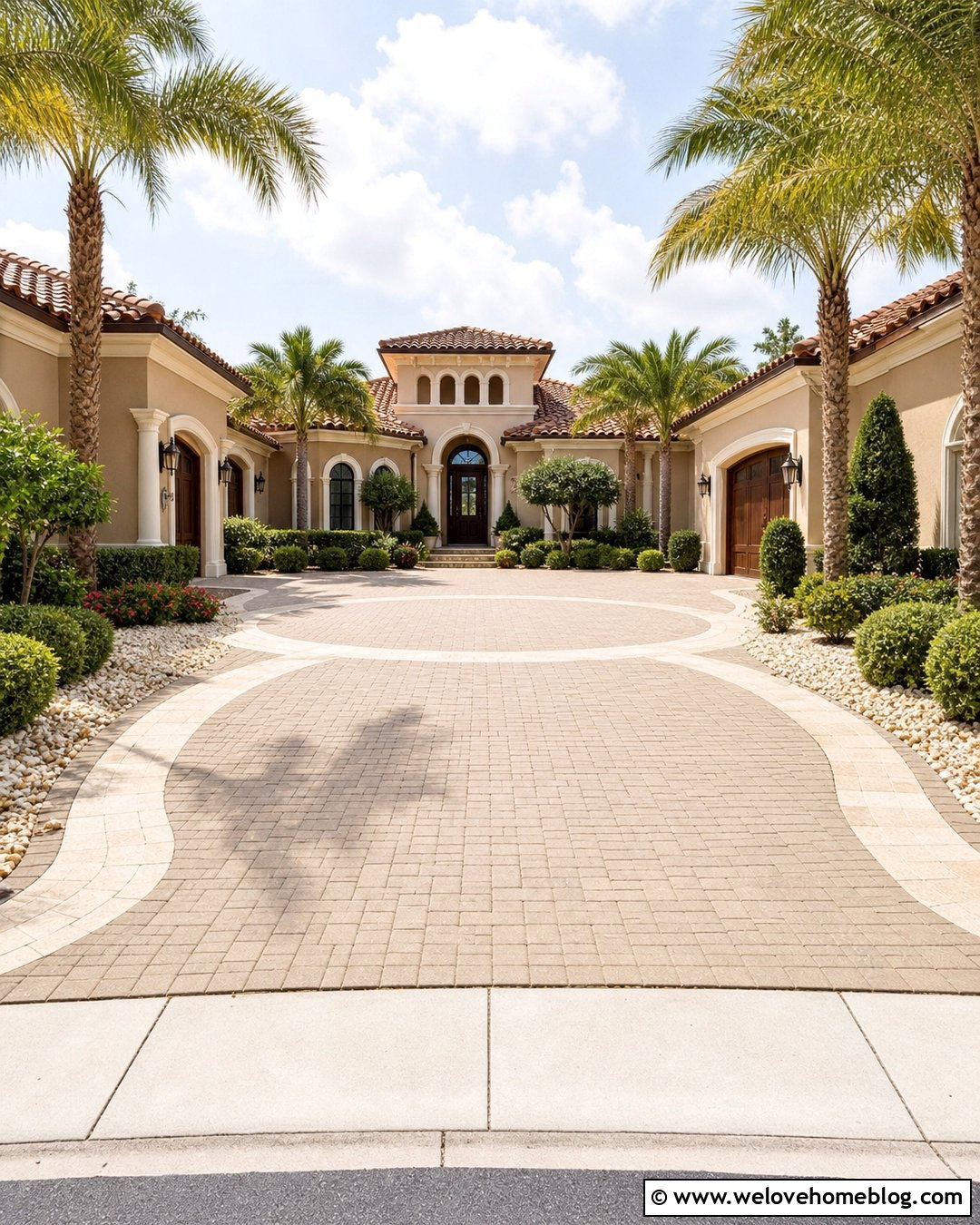
A travertine border brings a warm, light-toned finish to a concrete paver driveway. Use cream or beige tumbled travertine around taupe interlocking pavers, creating a subtle contrast rather than a bold outline. The combination is well suited to a circular or gently curved driveway in a warm-climate landscape. Frame the edge with palms, clipped shrubs, flowering ground covers, and pale decorative stone. A travertine walkway leading to the entrance will help the border feel purposeful. This complete look complements Mediterranean, Spanish Revival, Florida, and light stucco homes. Select stone intended for exterior vehicular applications, and avoid overly smooth finishes. Warm facade colors, terracotta roof tiles, and dark metal details will complete the coordinated curb appeal.
23. Red Brick Asphalt Driveway Border
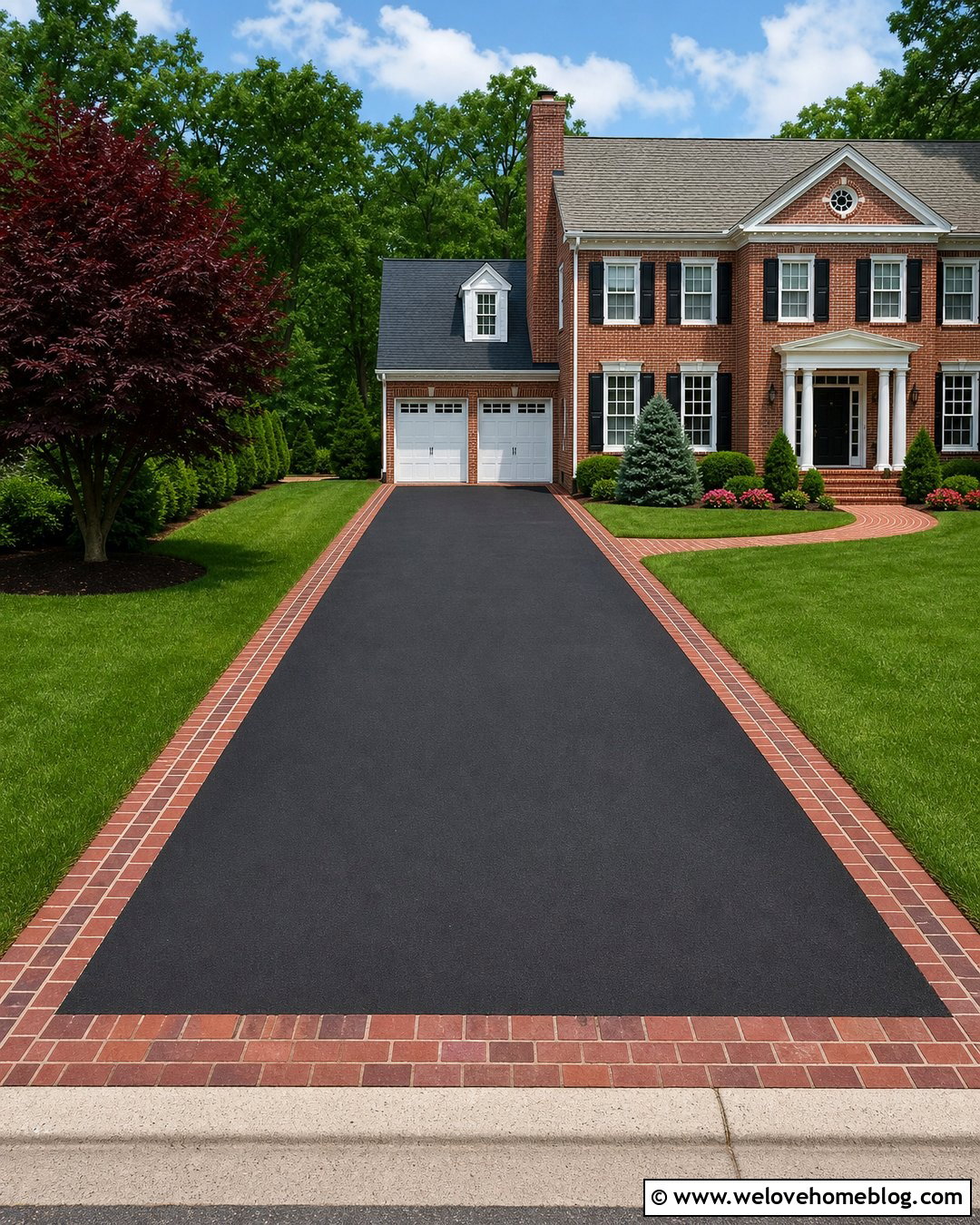
Red brick creates an instantly recognizable border around deep black asphalt. Lay the bricks flat in a single or double running bond row for a broad ribbon, or use an upright soldier course for a narrower, more pronounced edge. Repeat the brick across the driveway near the street to form an entrance band. Green lawn and traditional foundation shrubs provide enough surrounding color without competing with the masonry. This combination is a natural match for red brick Colonials, ranch houses, and classic suburban homes. Select brick shades that relate to the facade but do not need to match it perfectly. A mixture of red, burgundy, and brown can look more forgiving. Keep the curves smooth and the border width consistent from curb to garage.
24. Charcoal Paver Concrete Driveway Border
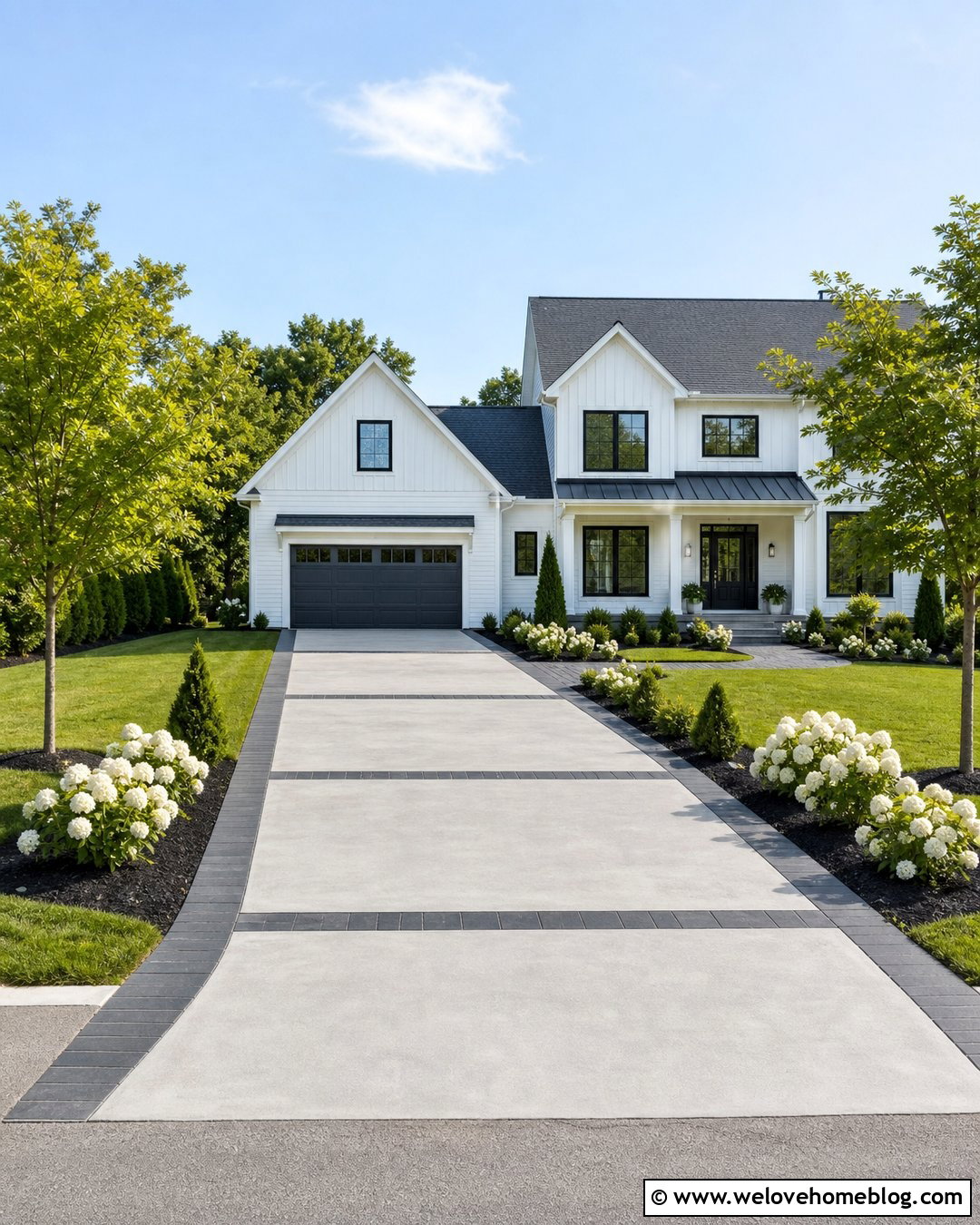
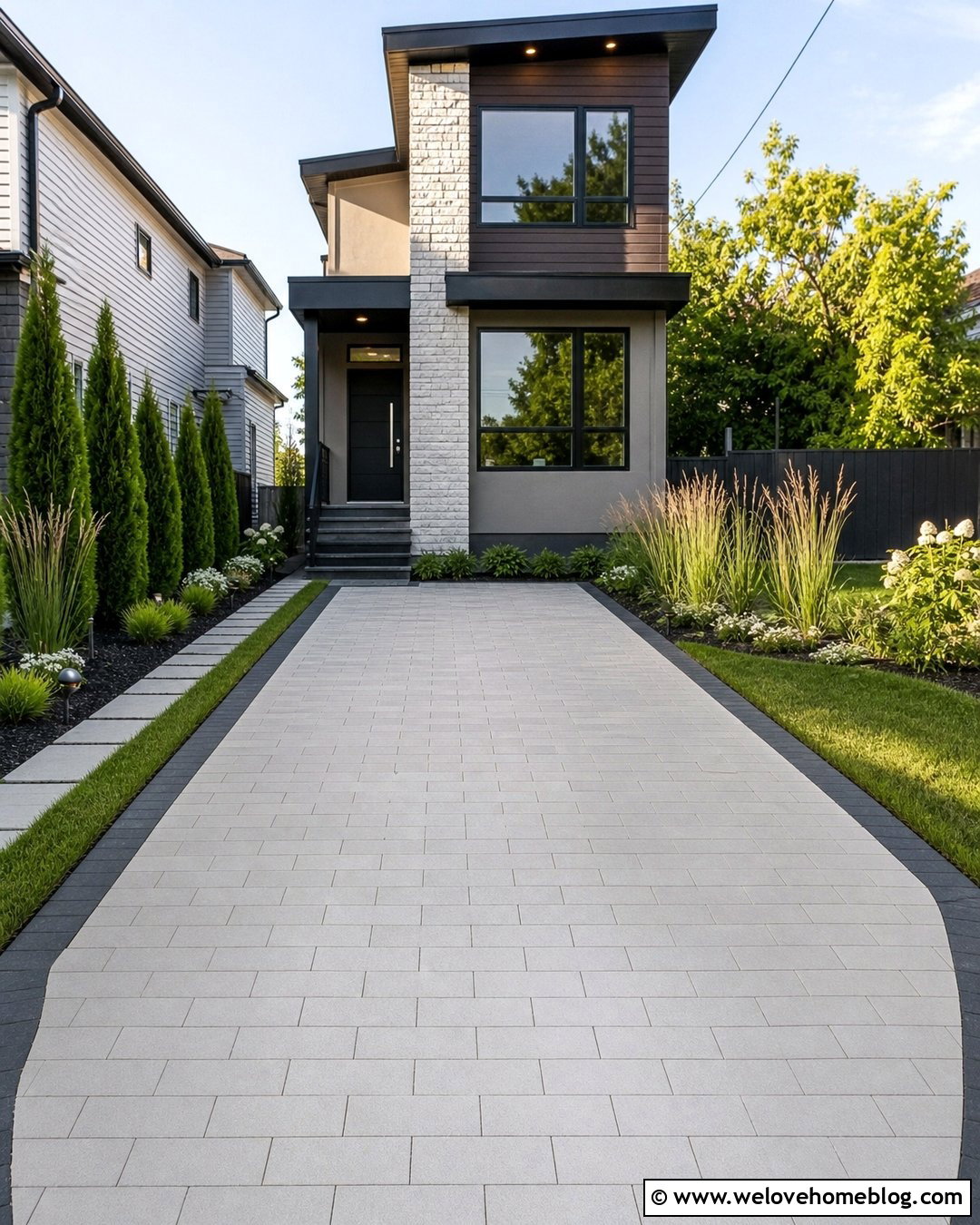
Charcoal pavers add a strong graphic frame to a light gray concrete driveway. Use narrow rectangular pavers along both sides and repeat them in one or two bands across the surface. A wide, straight driveway will look more proportionate with a double-row border, while a narrow single driveway may need only one row. Continue the charcoal material into a walkway, porch landing, or mailbox pad. Surround the pavement with clipped lawn, black mulch, white flowering shrubs, and compact evergreens. This complete design complements contemporary brick homes, modern farmhouses, and updated split-level properties. The darker edge visually contains the concrete and introduces detail without relying on a complicated pattern. Keep the pavers flush where vehicle tires may cross them.
25. White Pebble Asphalt Driveway Border
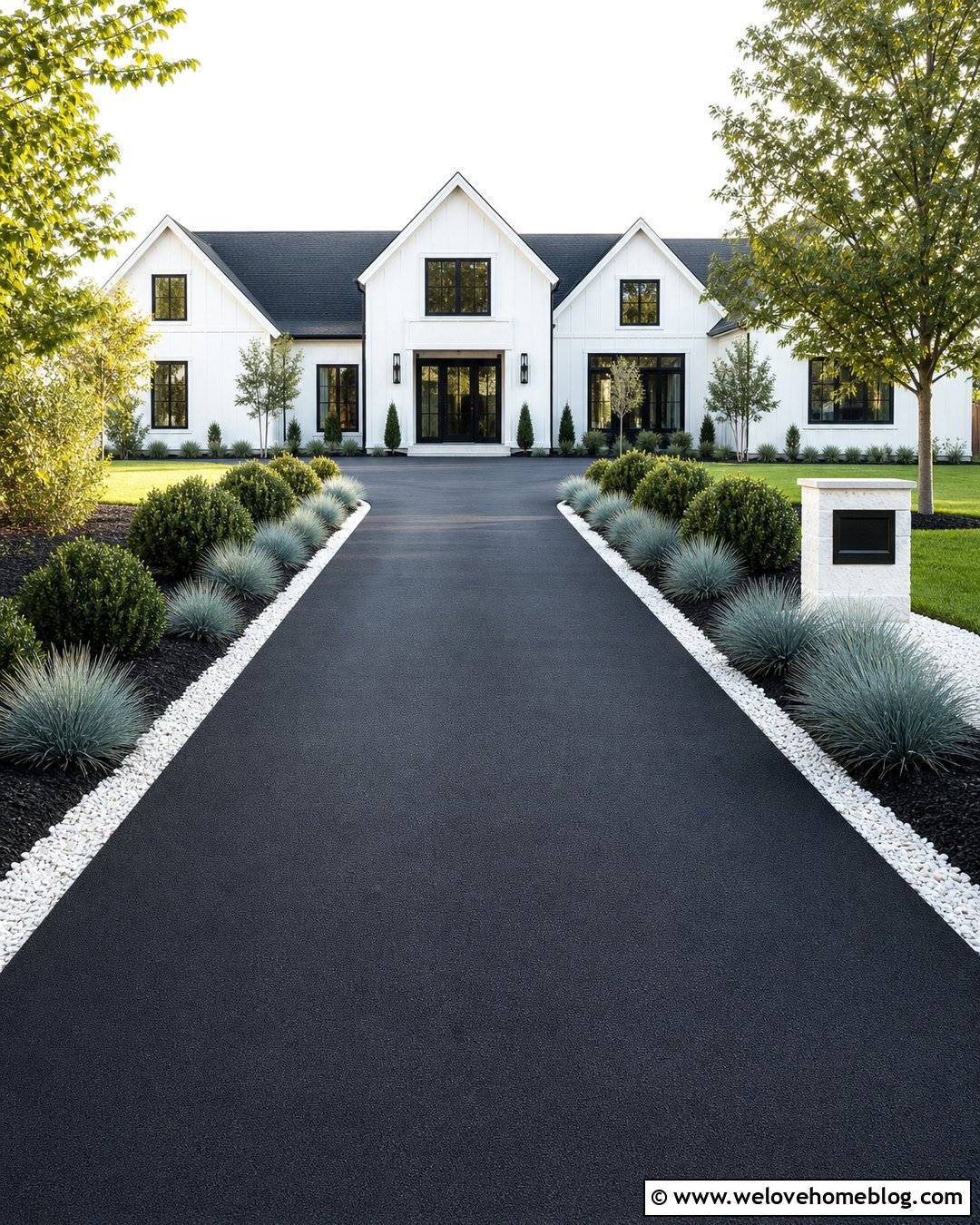
Bright white or pale cream pebbles create dramatic contrast against a black asphalt driveway. Place the stones in a narrow trench between the pavement and a concealed steel edge. Use the pebble strip as a decorative transition rather than the primary structural restraint. Beyond it, add dark green shrubs, blue-gray grasses, and black or brown mulch. A straight driveway leading to a white modern farmhouse or contemporary house will give this border the clearest setting. Repeat the pale stones around the address sign or front path to distribute the color. Choose larger decorative pebbles that will be less likely to scatter than tiny gravel. Regular removal of leaves and soil will help the light-colored border maintain its sharp, high-contrast appearance.
26. Corten Steel Gravel Driveway Border
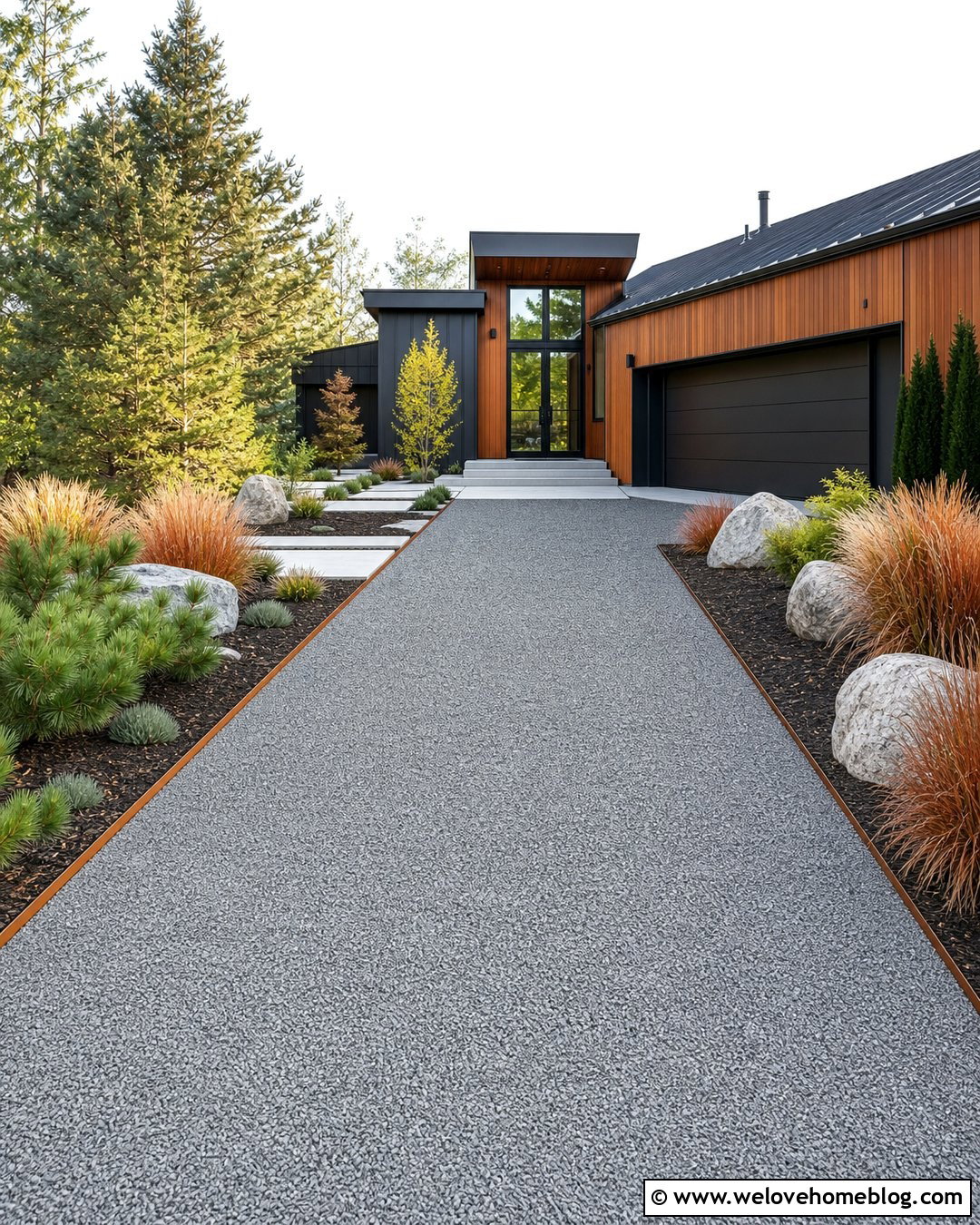
Corten steel creates a slim rust-colored line around a modern gravel driveway. Pair the warm metal with compacted gray crushed stone on a straight or angular layout. Allow the edging to rise only slightly above the surface, creating definition without producing a bulky curb. Rust, tan, and green ornamental grasses can echo the steel color in surrounding beds. Add sculptural boulders, low evergreens, and a concrete slab walkway for a complete contemporary landscape. This border pairs particularly well with modern houses featuring wood siding, dark metal roofing, or weathered steel accents. Plan where weathering runoff will travel before installation, especially near pale paving. The finished design should feel minimal, with the metal acting as a precise line between gravel and planting.
27. Raised Planter Concrete Driveway Border
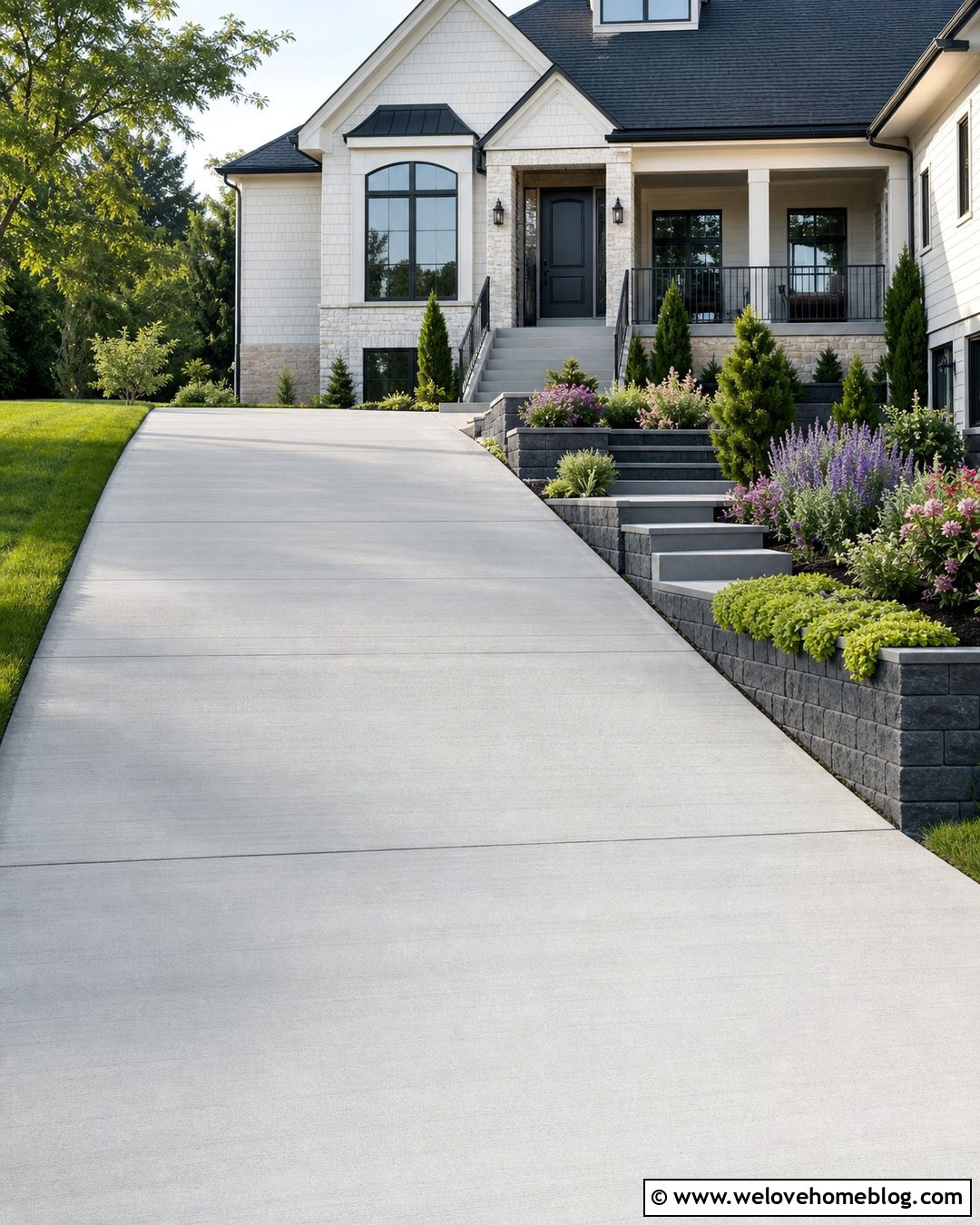
A raised planter border can transform a wide concrete driveway into a more welcoming entrance. Build a low rectangular wall from brick, natural stone, or architectural concrete blocks along one side of the pavement. Fill it with compact evergreens, flowering perennials, and trailing ground covers that soften the top edge. Keep the wall away from vehicle doors and turning zones. On the opposite side, use a simpler flush paver border and lawn to avoid making the driveway feel narrow. This asymmetrical design is especially effective beside sloped yards or homes with elevated front entrances. Match the planter material to the house foundation, porch, or retaining walls. Integrated steps or a walkway can connect the raised bed naturally with the front door.
28. Drainage Swale Gravel Driveway Border
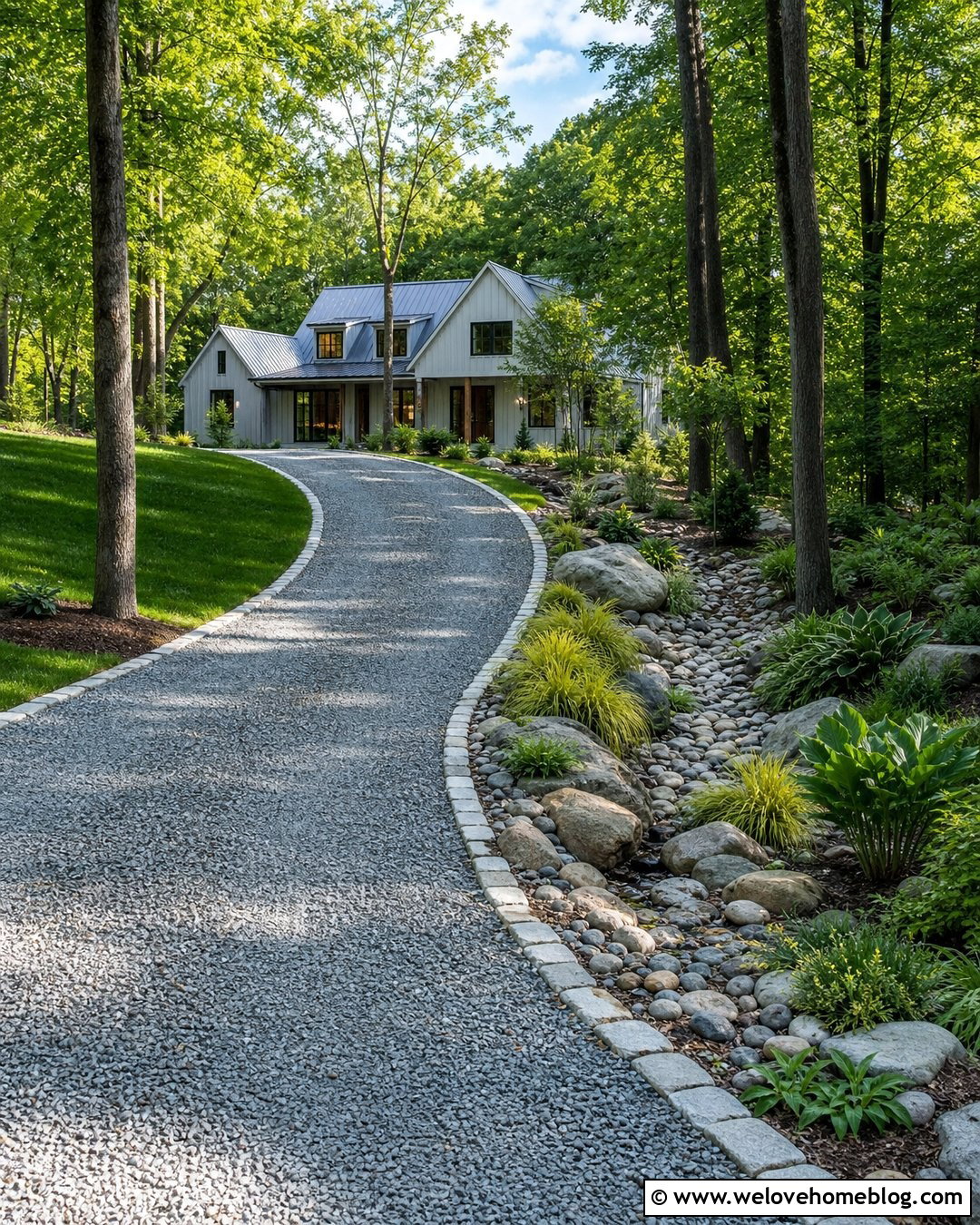
A landscaped drainage swale can become an attractive border rather than a purely functional channel. Place it beside a gently sloped crushed gravel driveway, using a firm cobblestone or concrete paver edge to contain the driving surface. Line the shallow swale with rounded river rock, moisture-tolerant grasses, sedges, and locally appropriate plants. The opposite driveway side can feature a simpler lawn edge for visual balance. Position larger stones where they help guide the shape without interrupting water movement. This complete border works well on wooded, rural, and environmentally focused properties. Coordinate the stone colors with the gravel and house foundation. Proper grading should be planned for the specific site so water moves away from structures and does not collect across the driveway.
29. Cobblestone Apron And Asphalt Border
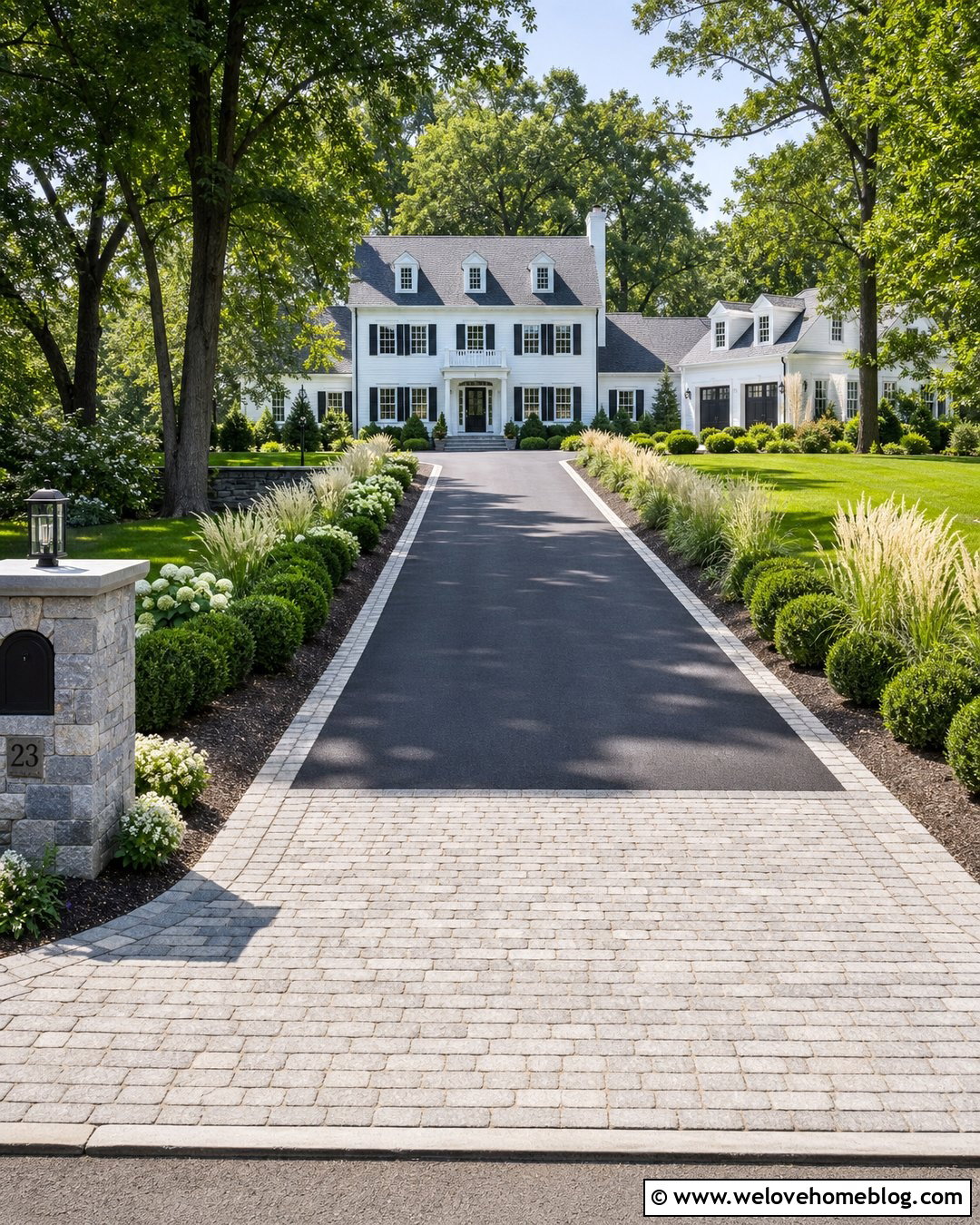
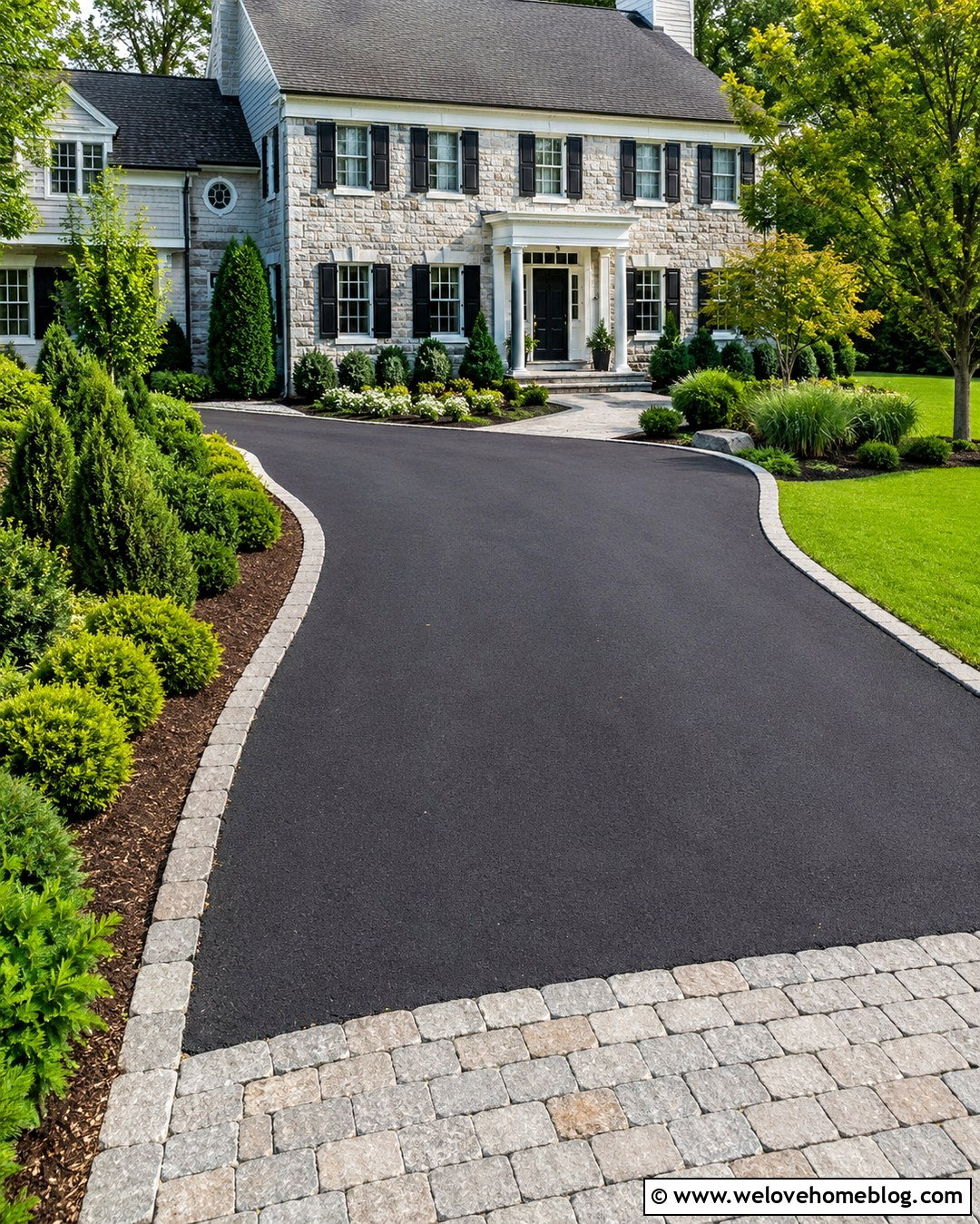
A cobblestone apron can connect two matching side borders and establish a distinct driveway entrance. Start with smooth black asphalt, then install gray granite cobbles along both edges. Extend the stones across the full driveway width near the street in a broad rectangular band. Flared corners will make the transition feel generous and easier to follow from the road. Place low shrubs, ornamental grasses, and a coordinated mailbox behind the apron without blocking sightlines. This layout works beautifully with long Colonial, Georgian, Craftsman, and estate-style driveways. Repeat a smaller cobblestone band near the garage if the driveway is especially long. The matching apron and borders create a complete frame, preventing the street connection from looking visually disconnected from the rest of the approach.
30. Brick Apron And Concrete Border
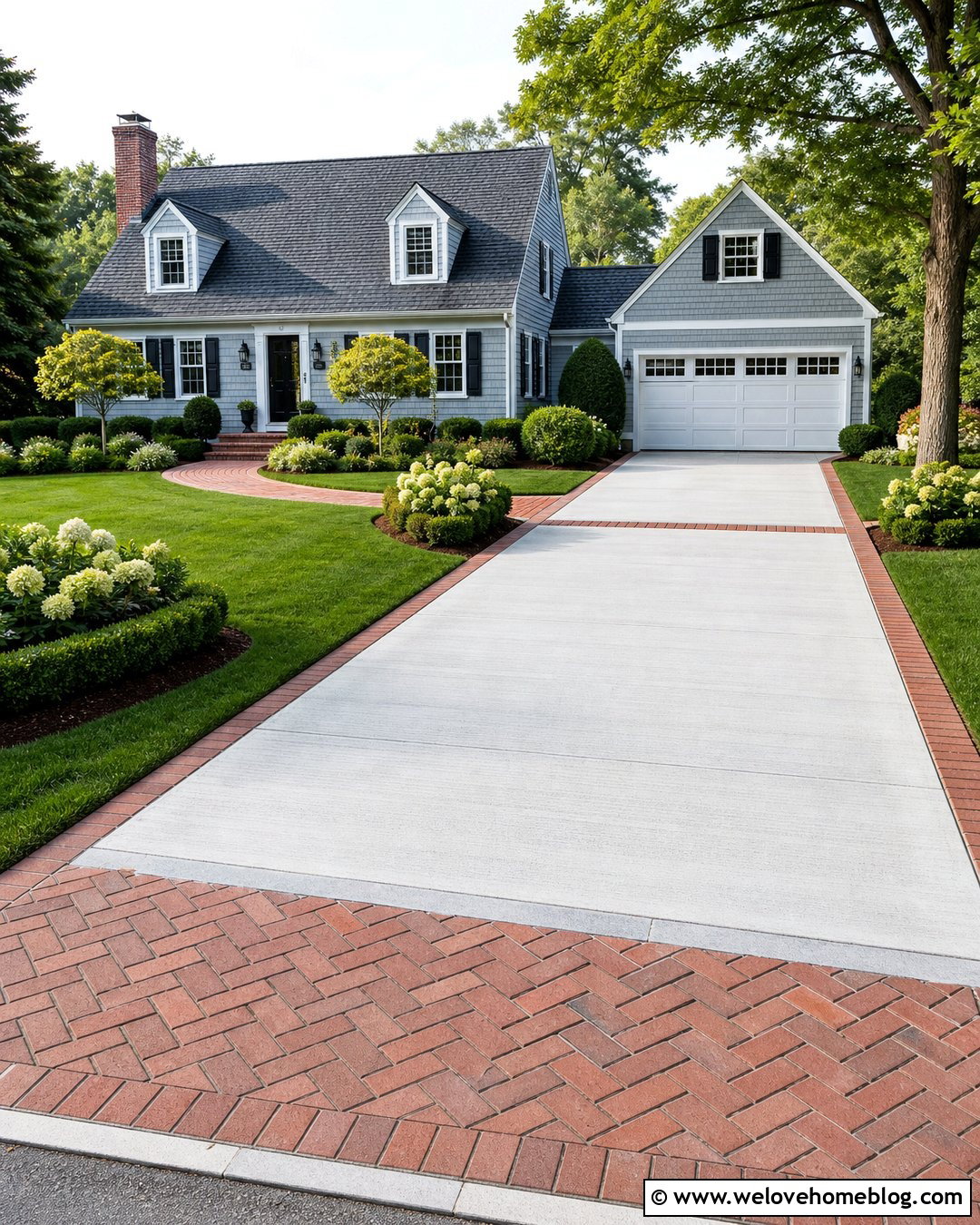
A brick apron introduces color and pattern to a simple poured concrete driveway. Frame the concrete sides with matching clay bricks, then widen the masonry into a herringbone or basket-weave apron at the curb. Another brick band near the garage can give the layout a balanced beginning and ending. Use curved planting beds with boxwood, hydrangeas, and seasonal flowers to soften the straight pavement. A brick walkway leading toward the front porch will strengthen the connection to the house. This design suits traditional ranch, Colonial, Cape Cod, and Craftsman homes. Select the brick color from existing facade details, but include slight tonal variation for a natural appearance. A flush installation will maintain a smooth transition where tires cross from concrete to brick.
31. Double Paver Driveway Border
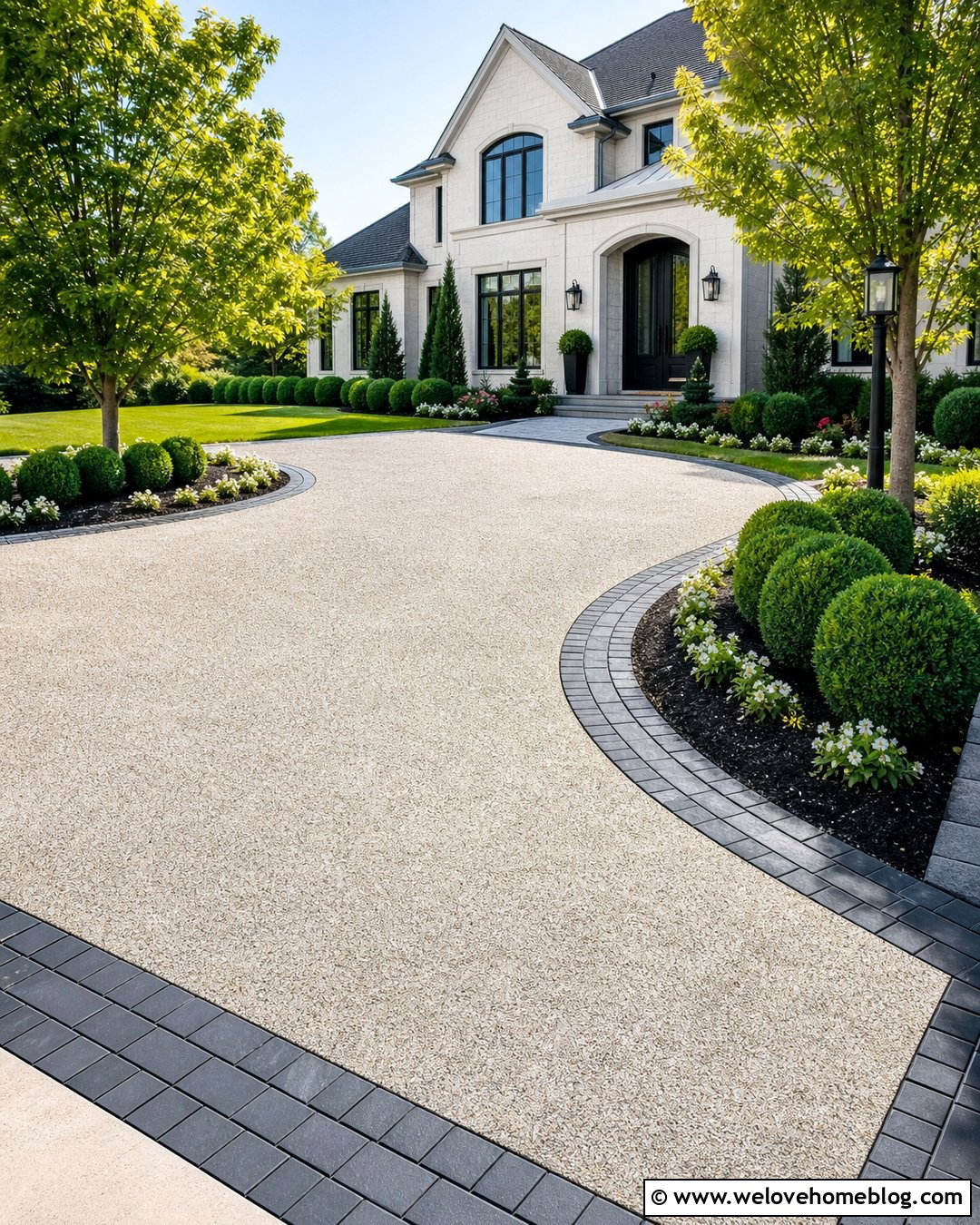
A double paver border gives a wide driveway enough visual weight to feel properly framed. Use a pale exposed aggregate or poured concrete center with two rows of dark rectangular pavers along each side. The inner row can run lengthwise, while the outer row uses a contrasting soldier-course orientation. Continue both rows around a parking court or circular turnaround for consistency. Add structured planting beds with rounded evergreens, ornamental trees, and low flowering plants outside the pavers. This border is well suited to larger transitional, contemporary, and estate-style homes. Limit the design to two coordinated colors so the extra pattern does not look busy. Repeating one of the pavers in the walkway or front steps will bring the complete hardscape together.
32. Flush Mower Strip Driveway Border
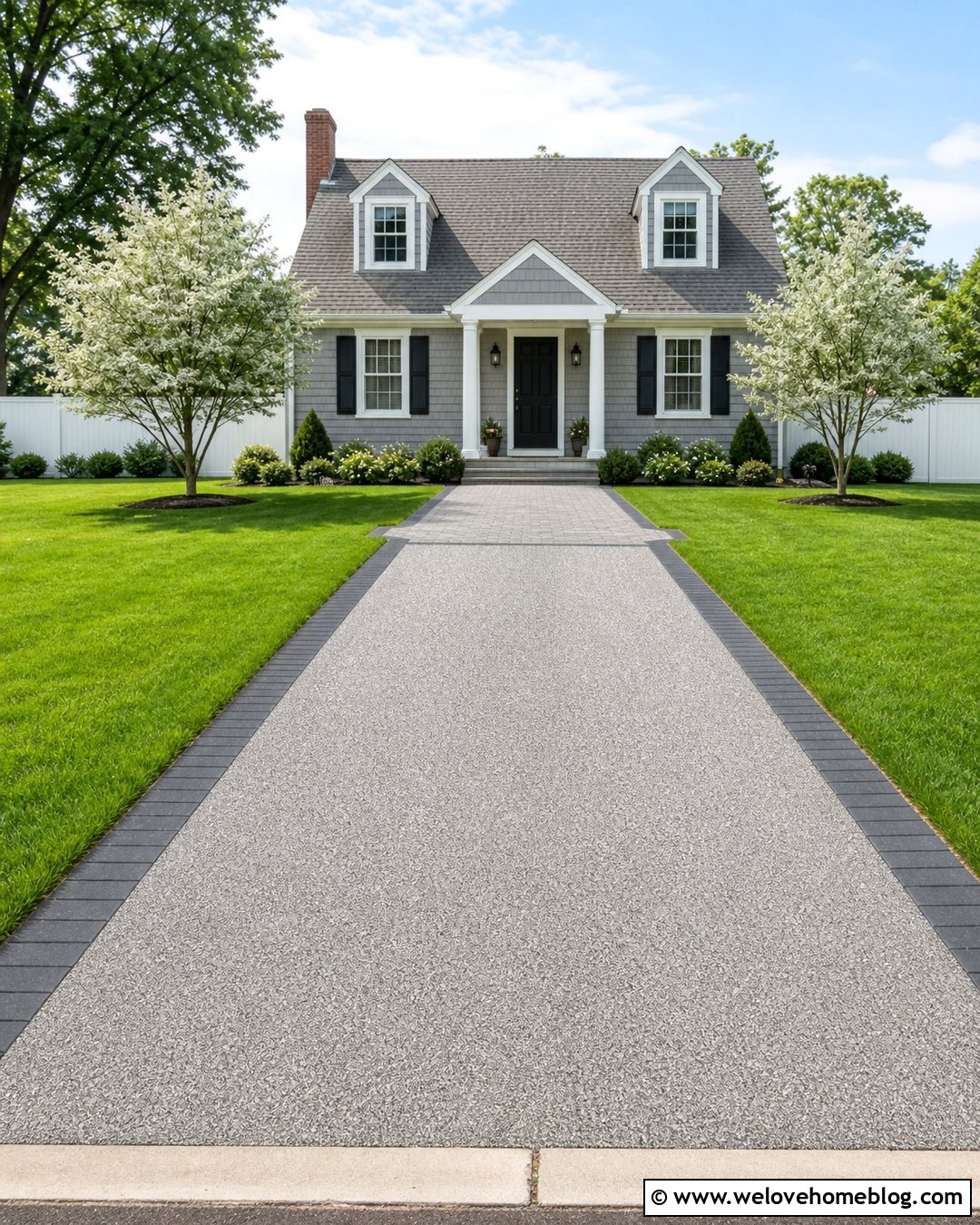
A flush mower strip keeps the driveway-to-lawn transition simple and easy to navigate. Install a row of concrete or clay pavers level with a poured concrete, asphalt, or resin-bound gravel driveway. The flat border provides a clear visual line while allowing lawn equipment to travel along the edge. Use a straight layout with neatly maintained grass on both sides for a clean suburban appearance. Near the house, widen the strip into a small paved connection to the walkway. Add a few foundation shrubs and ornamental trees rather than continuous planting beds. This understated border suits ranch, Cape Cod, and modest contemporary homes. Choose a paver color that is slightly darker than the driveway so the edge remains visible without becoming the main feature.
33. Scalloped Concrete Driveway Curb
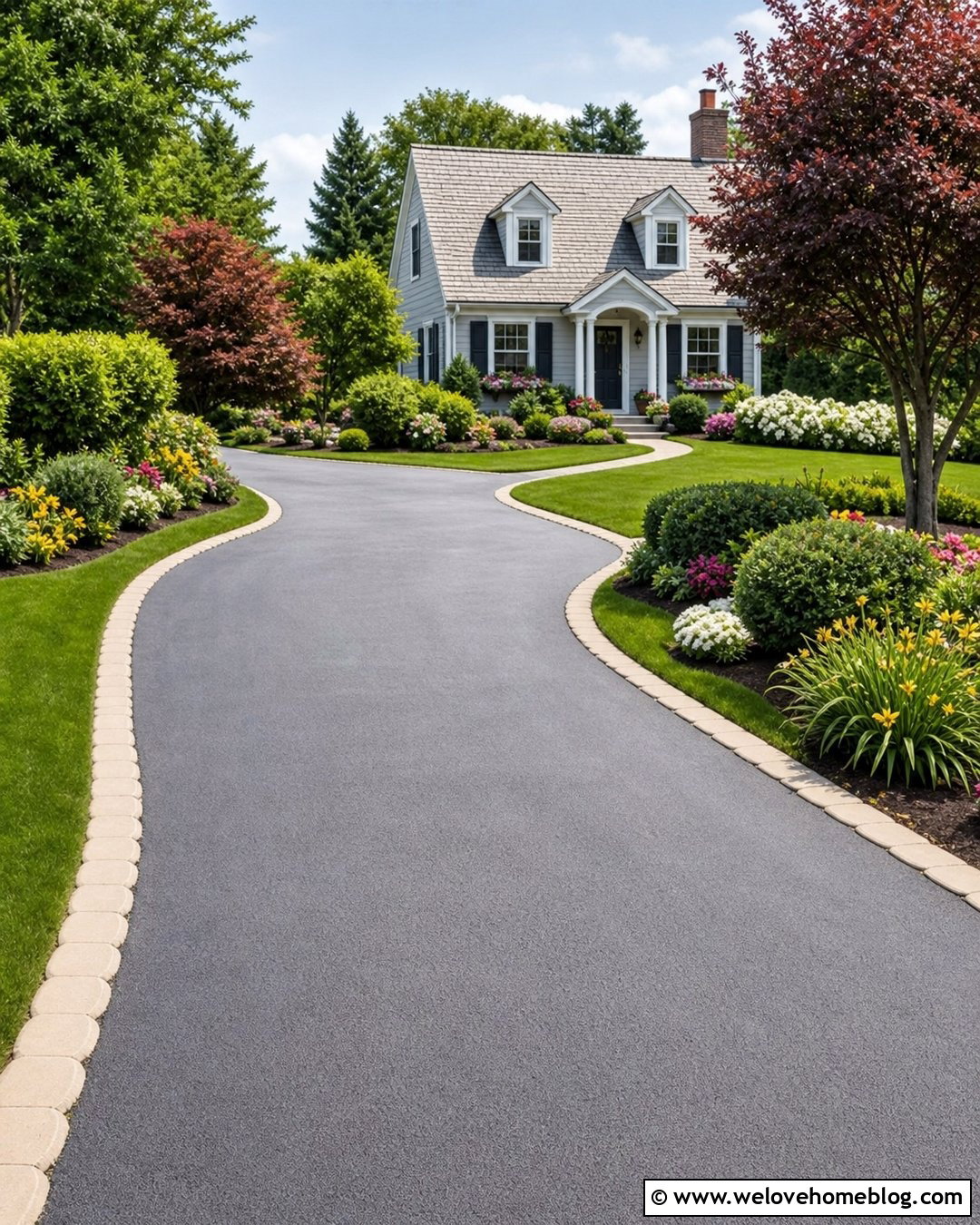
Scalloped concrete curbing can add gentle detail to a straightforward asphalt or concrete driveway. Choose a low-profile curve with a smooth gray, buff, or lightly textured finish. Pair it with a gently bending driveway and traditional planting beds filled with compact shrubs, daylilies, and seasonal flowers. Keep the curb pattern consistent and avoid combining it with too many other decorative materials. A matching curved walkway or garden border can help the shape feel connected to the overall yard. This treatment works best with cottage, ranch, and traditional suburban houses rather than sharply modern architecture. Select a restrained scallop instead of a tall, heavily patterned curb. The goal is to create a soft transition between the driving surface, lawn, and garden.
34. Recycled Brick Gravel Driveway Border
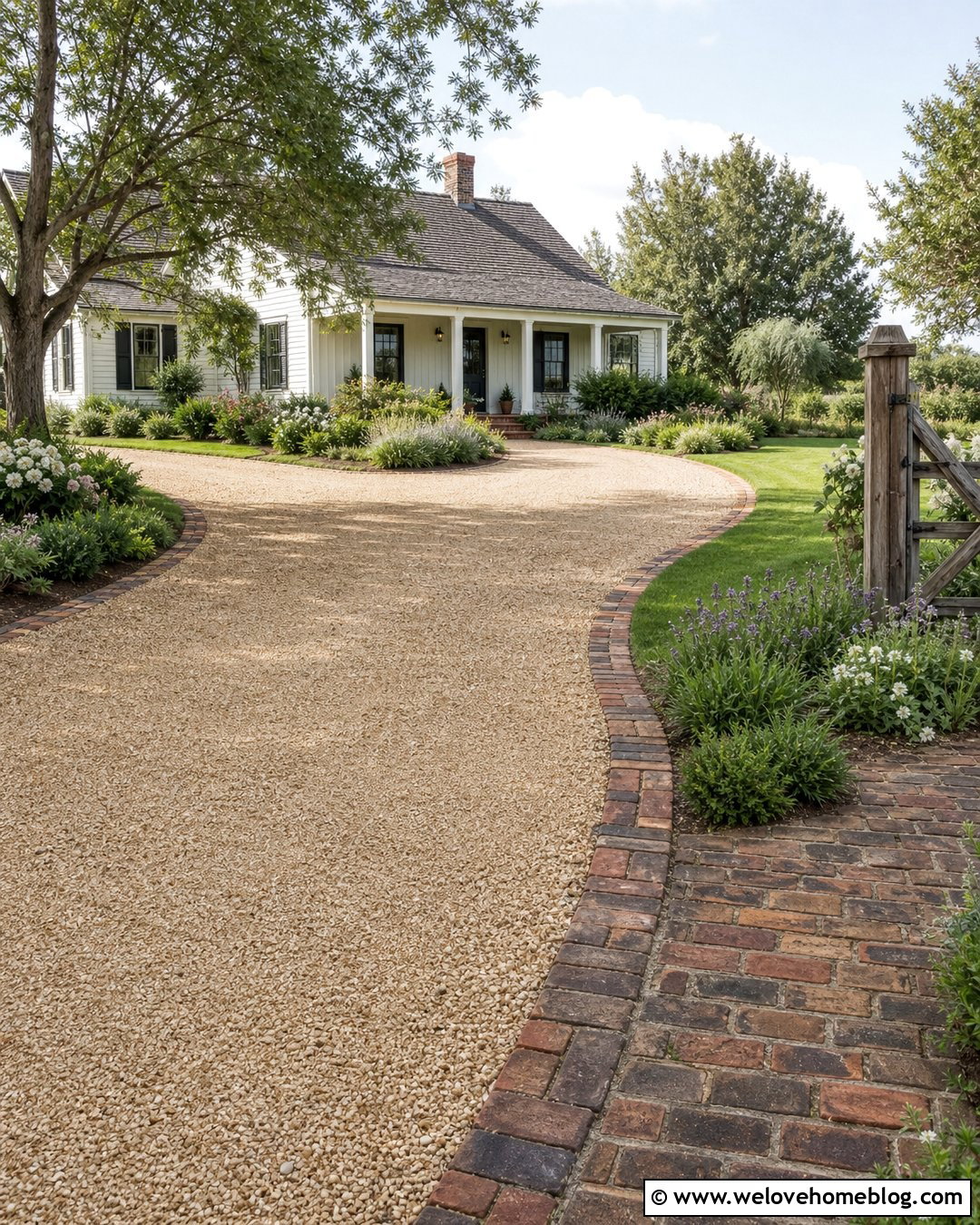
Reclaimed brick gives a gravel driveway a relaxed, established appearance. Use weathered red, brown, and charcoal bricks around compacted tan or gray gravel. Lay them flat in an irregular running bond, but maintain a consistent border width so the result still looks organized. A curved driveway leading to a farmhouse or cottage provides the right informal setting. Add flowering shrubs, herbs, ornamental grasses, and a simple timber gate or mailbox. Reclaimed brick can vary in size and condition, so sort the pieces before installation and reserve the strongest units for vehicle crossing points. Repeat the material in a garden path or porch landing. The aged color variation adds character while the defined brick edge keeps the loose gravel visually contained.
35. Split Rail Gravel Driveway Border
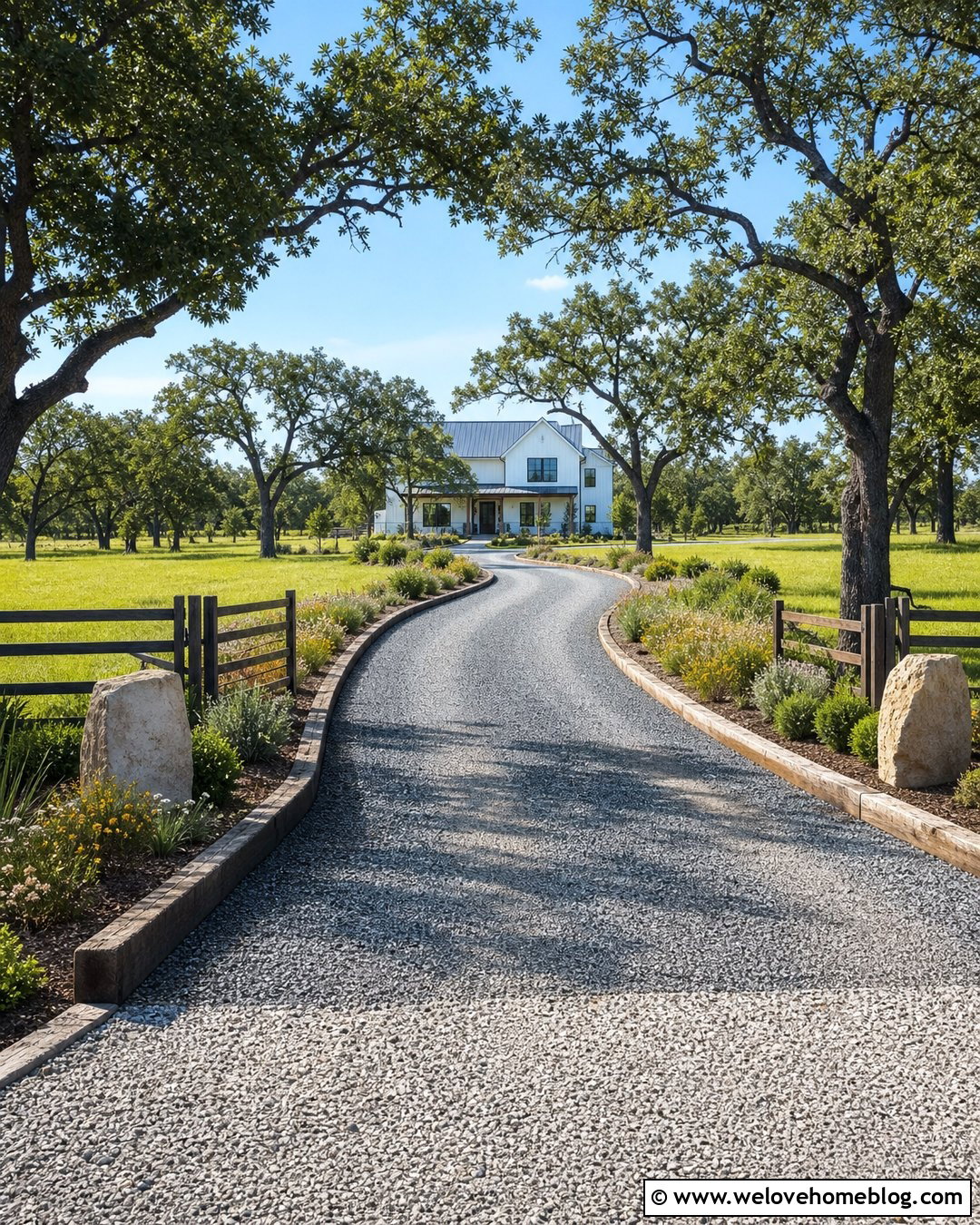
A split-rail fence can form the outer layer of a broad country driveway border. Begin with a compacted gray or tan gravel surface edged by heavy timber, stone setts, or dark steel. Place the fence several feet behind the structural edge, leaving space for native grasses, wildflowers, and low shrubs. This layered arrangement makes the driveway feel enclosed without creating a solid wall. Use a long, gently curving layout leading to a ranch house, modern farmhouse, barn-style home, or wooded cabin. Match the fence stain to porch posts or other exterior wood. Near the road, keep planting low and pull the fence back to preserve a clear entrance. A gravel apron and simple stone address marker can complete the rural curb view.
36. Stone Wall Gravel Driveway Border
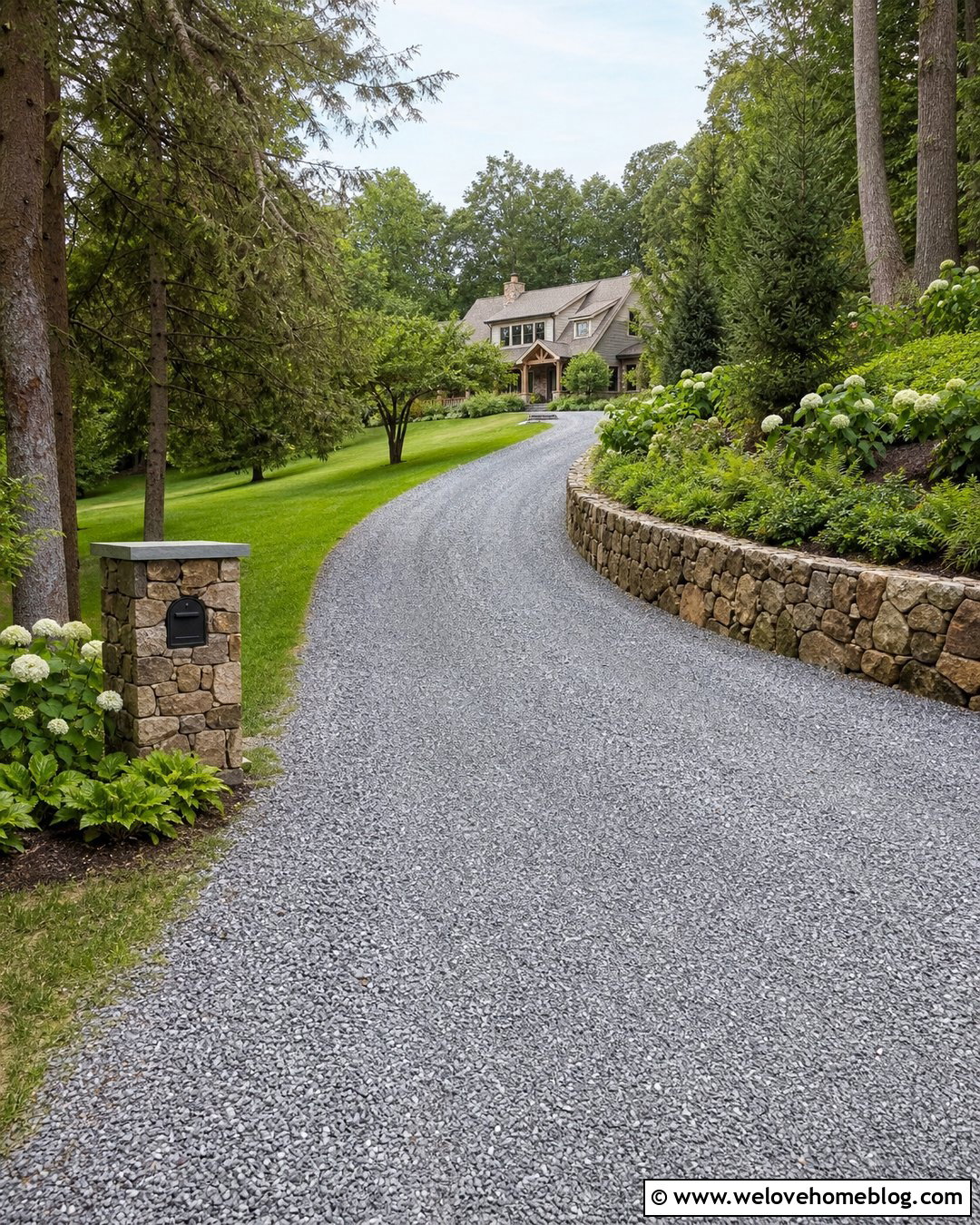
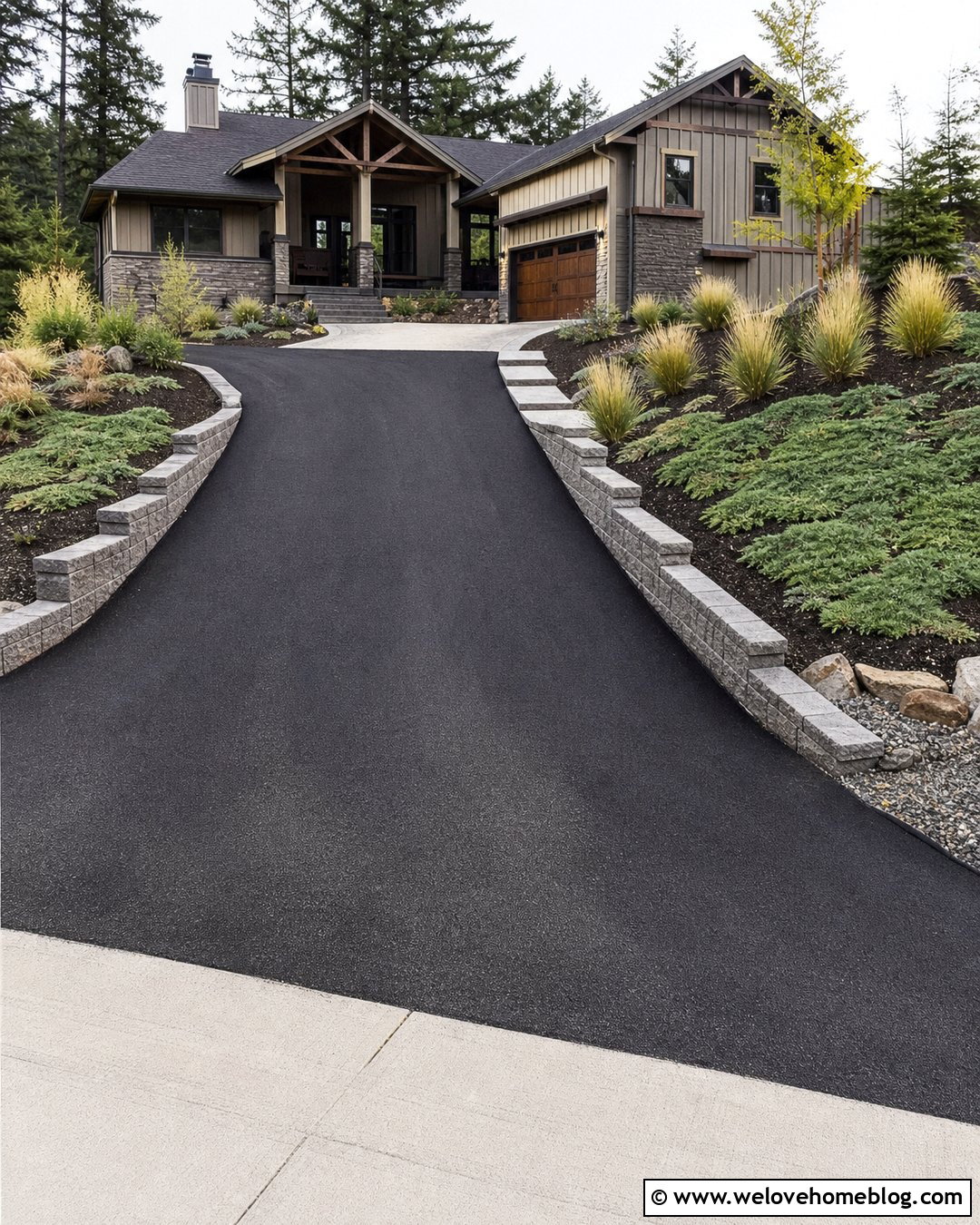
A low dry-stacked stone wall creates a substantial border along a long gravel driveway. Pair gray crushed stone with fieldstone in mixed charcoal, tan, and brown tones. Use the wall on one side where the land rises, while the opposite side remains open with grass or low planting. This approach prevents the driveway from feeling overly enclosed. Add ferns, hydrangeas, evergreen shrubs, and mature trees above the wall to connect it with the landscape. A matching stone mailbox or gate pillar can mark the street entrance. This border suits country estates, Craftsman homes, cabins, and properties with natural slopes. Keep the wall height modest near curves and entrances. The stone should coordinate with the house foundation or chimney for a unified appearance.
37. Gate Pillar Paver Driveway Border
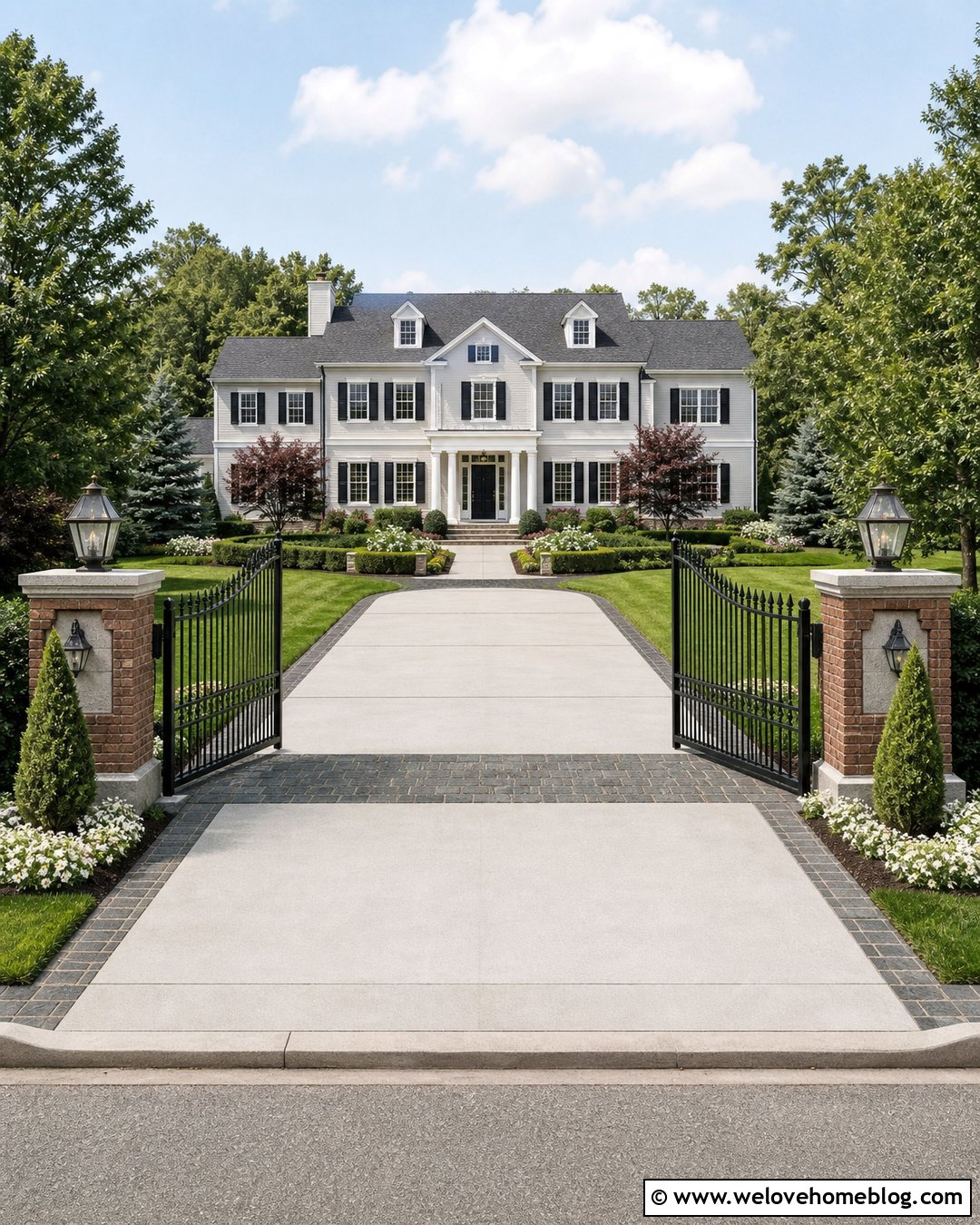
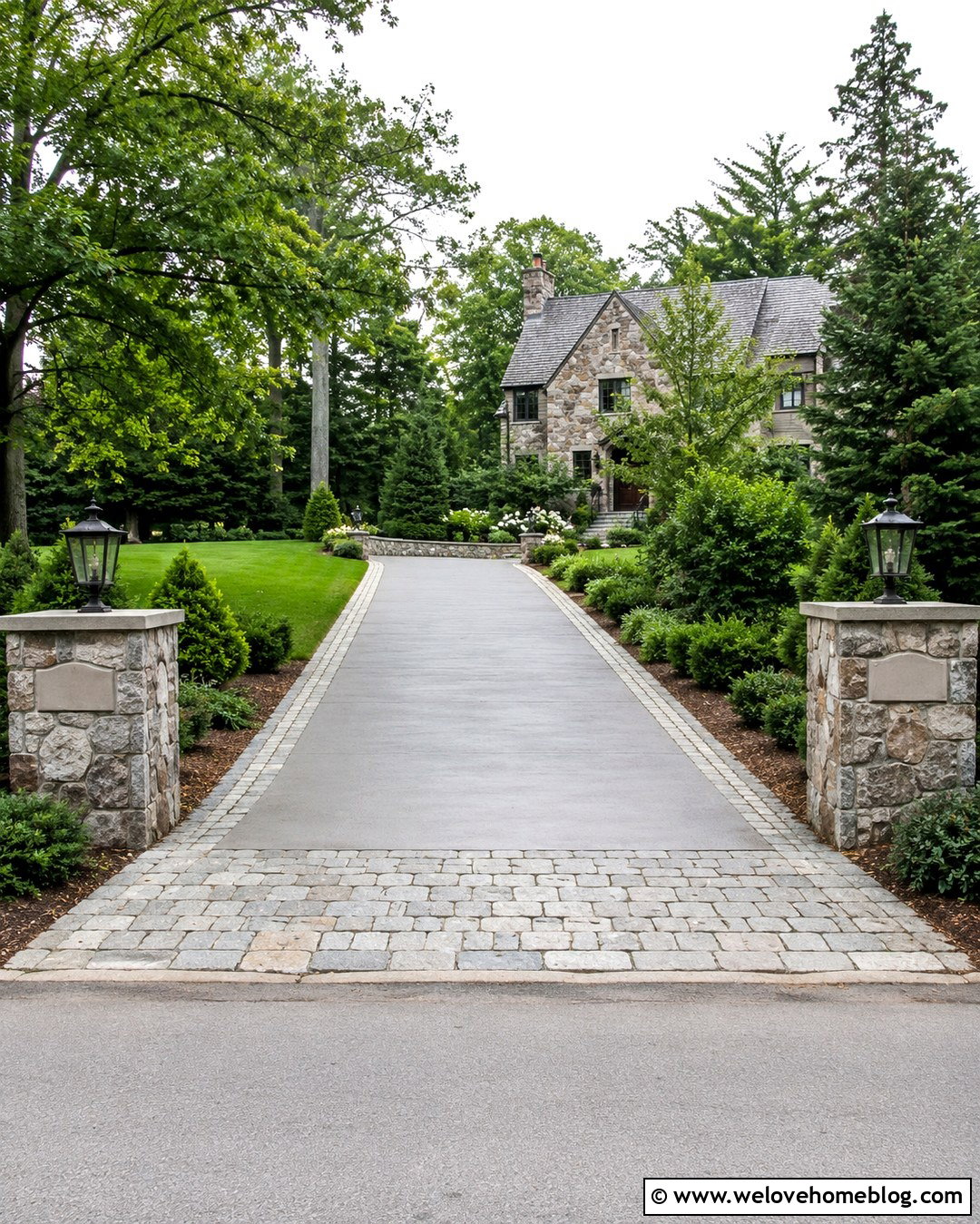
Gate pillars look most convincing when they connect directly with the driveway border. Frame a light gray concrete or asphalt driveway with dark cobblestone pavers, then widen the border around two brick or stone entrance pillars. Continue the same pavers across the driveway beneath an open metal or wood gate. Behind the pillars, use symmetrical beds with low evergreens, flowering shrubs, and neatly trimmed lawn. Keep tall plants away from the roadway for clear visibility. This complete entrance works with Colonial, Mediterranean, modern farmhouse, and estate-style homes. Match the pillar caps and masonry colors to the house facade. Even when the gate remains open, the connected border makes the entrance look balanced and establishes a clear transition from the public street to the private driveway.
38. Address Sign Driveway Border
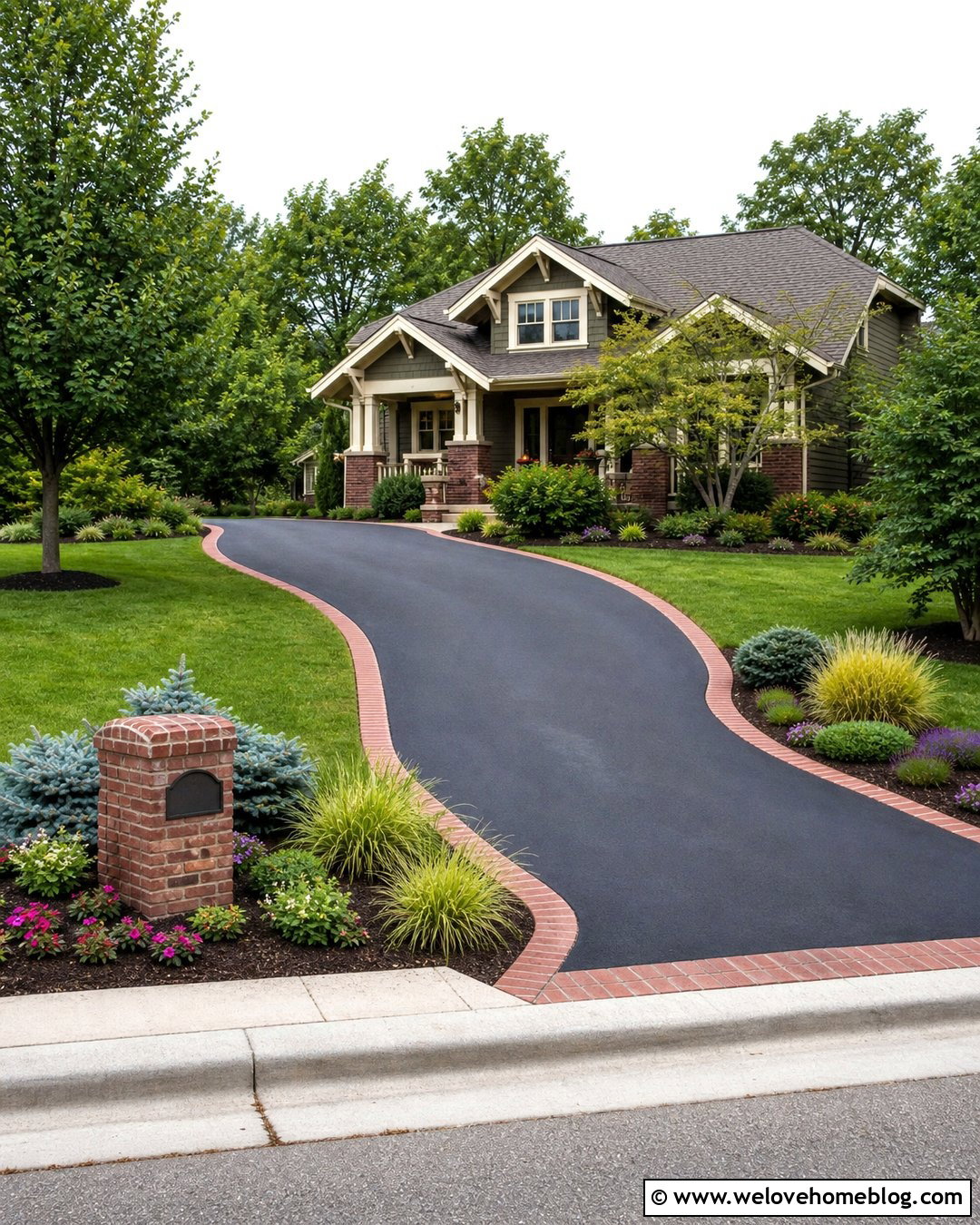
An address sign can become part of a complete driveway border rather than standing alone in the lawn. Use a curved black asphalt or gray gravel driveway framed with brick or natural stone. At the entrance, widen one planting bed and place a low masonry address marker within it. Surround the sign with compact grasses, evergreen shrubs, and seasonal color, keeping all numbers unobstructed. Repeat the marker’s brick or stone in the driveway edge and nearby walkway. The opposite side of the entrance can use a smaller matching bed to maintain visual balance. This design suits nearly any house style when materials are coordinated carefully. Keep the sign far enough from the pavement to avoid vehicle damage while preserving an open, easy-to-read curb view.
39. Lighted Paver Driveway Border
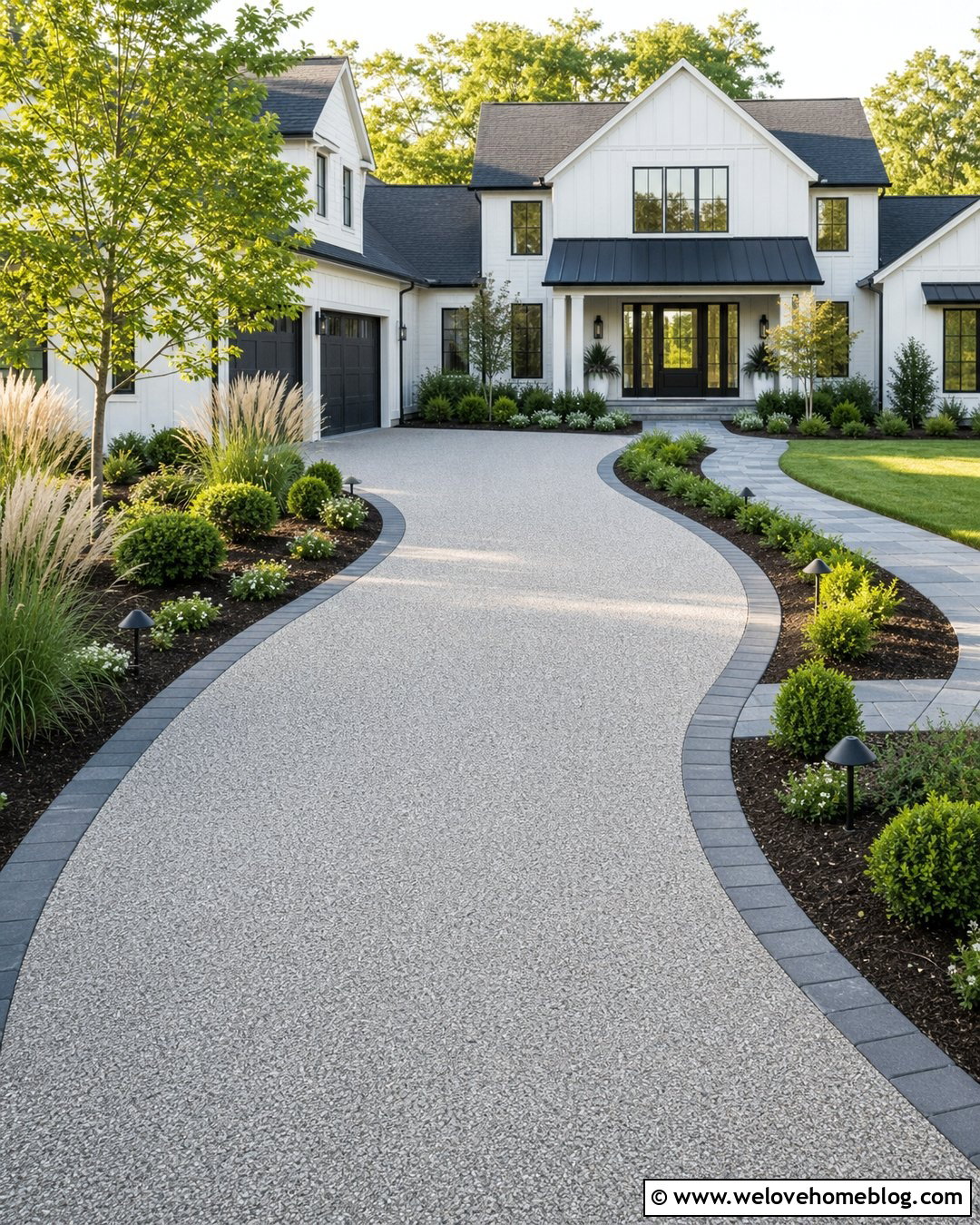
Low landscape lighting can make a paver border more useful without overwhelming the daytime design. Frame a resin-bound gravel or poured concrete driveway with charcoal pavers, then place compact downward-facing lights at measured intervals behind the edge. During daylight, the fixtures should blend into beds of ornamental grasses, boxwood, and low ground cover. Use fewer fixtures around straight sections and highlight curves, walkway intersections, and the garage approach. This layout suits contemporary, transitional, and modern farmhouse homes. Keep lighting equipment outside the tire path and avoid positioning fixtures where vehicle doors may hit them. Choose a consistent fixture finish that matches house hardware or exterior sconces. The paver border should remain the main visual line, with lighting serving as a discreet supporting feature.
40. Mixed Material Circular Driveway Border
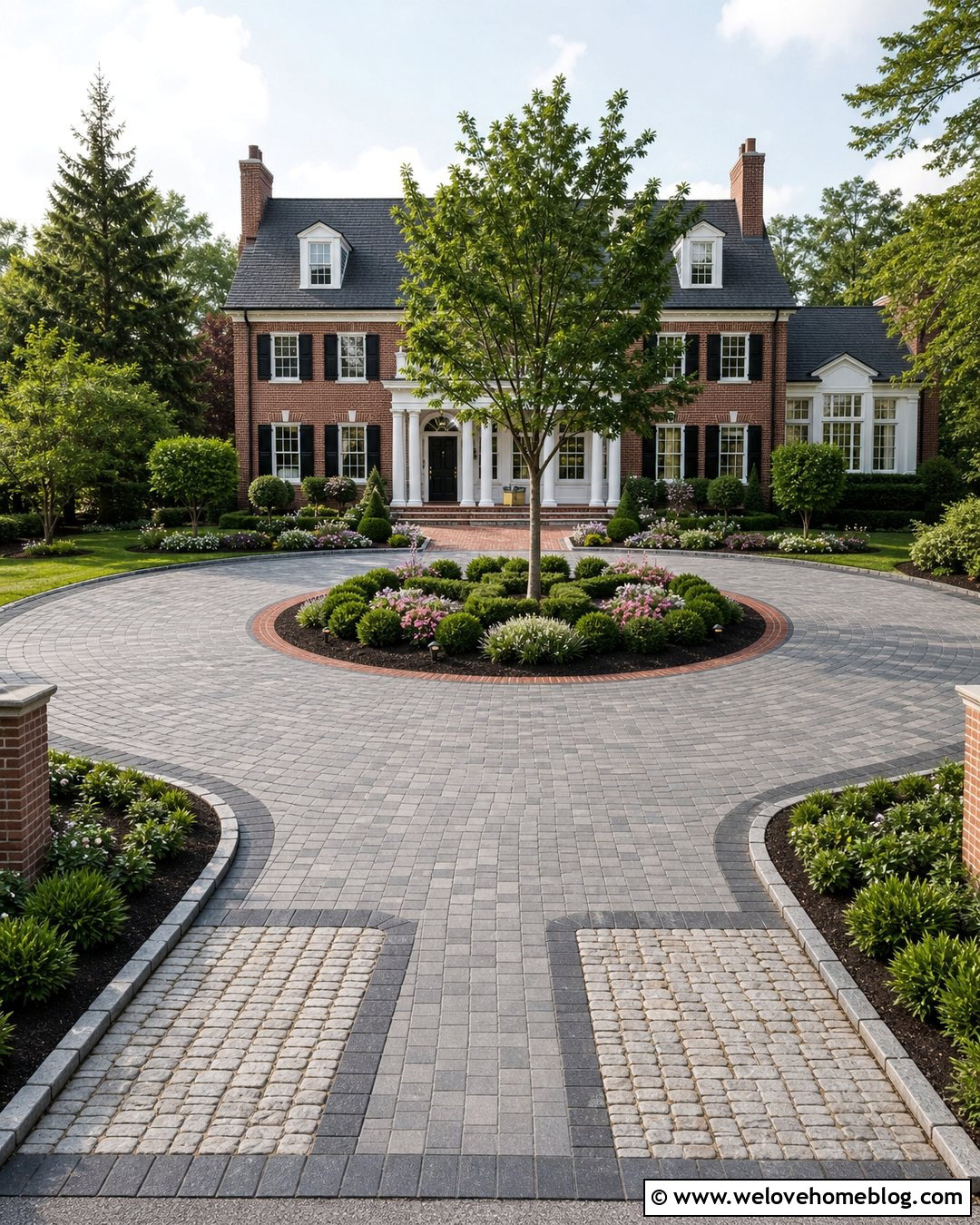
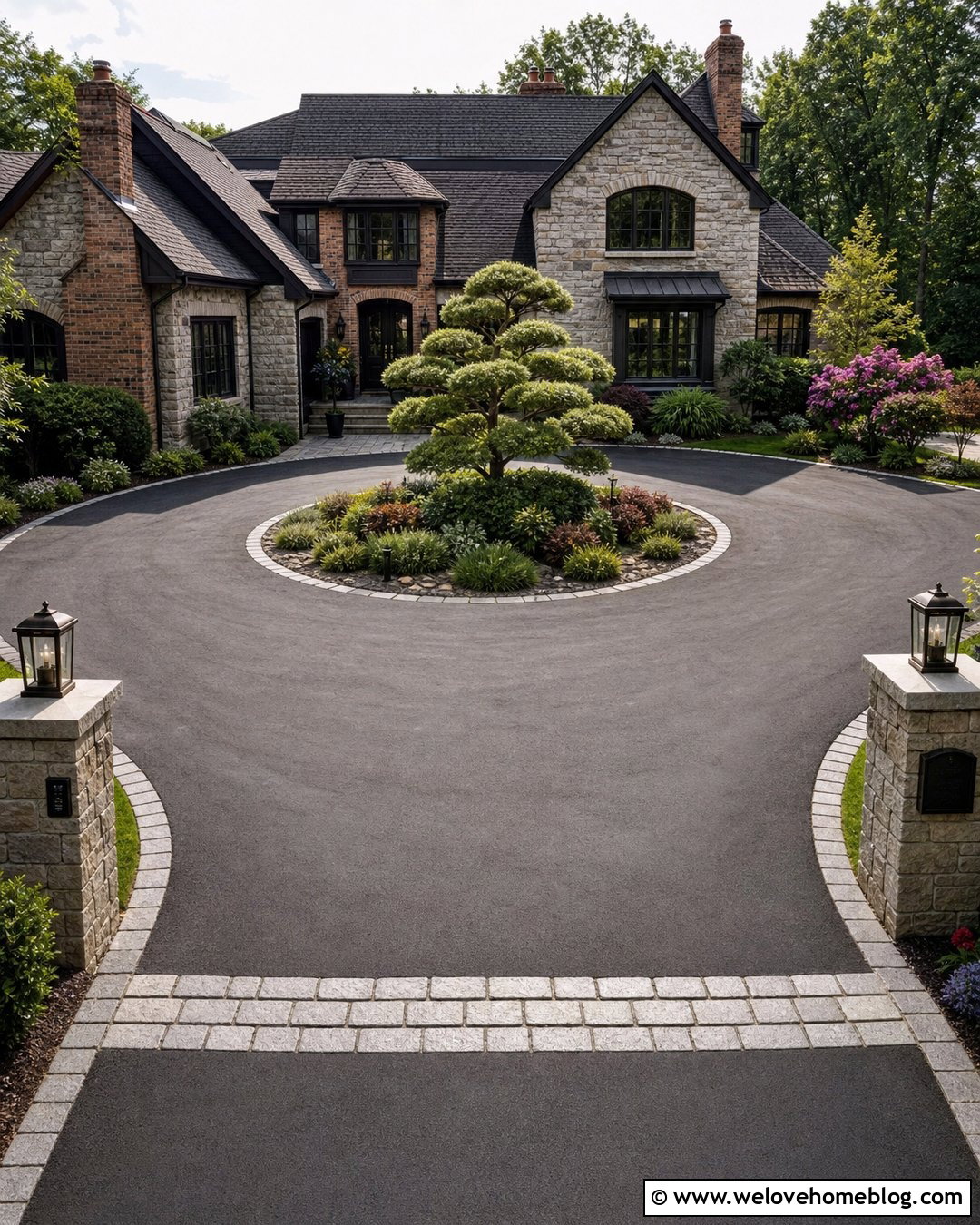
A circular driveway can support a layered border without looking crowded. Use warm gray concrete pavers for the driving surface, dark Belgian block around the outside edge, and a flush brick ribbon around the central island. Fill the island with a specimen tree, low evergreen shrubs, flowering perennials, and dark mulch. On the house side, connect the brick ribbon to a matching front walkway. Keep the street entrances symmetrical and repeat the Belgian block across each opening as a narrow apron. This complete design works well with Colonial, Georgian, Craftsman, and larger traditional homes. Limit the palette to three related hardscape materials. Clear repetition around the full circle will help the mixed border appear coordinated rather than assembled from unrelated decorative elements.
Conclusion:
The right driveway border should complement the surface, guide the shape, and connect the driveway with the house and surrounding yard. Brick and Belgian block offer classic definition, while steel, charcoal pavers, and poured curbing create cleaner modern lines. Timber, fieldstone, boulders, and planted edges feel more natural in rural or informal settings. Before choosing a design, consider vehicle movement, maintenance, drainage, visibility, climate, and how the border will meet the street and garage. Repeating the edging material in a walkway, apron, mailbox, or planter can make the entire front yard feel coordinated. Use these 40 Driveway Border Ideas as a starting point for creating a practical, attractive, and complete entrance.

Related posts:

Leave a Reply