
The right driveway kerbing can make an ordinary front yard look finished, organized, and far more inviting. It creates a clean transition between the driving surface, lawn, pathways, and planting beds. Kerbing also provides practical edge restraint, helping materials such as gravel, asphalt, and block paving stay in place under regular vehicle traffic. Properly supported edges are especially important for paved and permeable driveway systems. () From traditional brick borders to modern concrete curbs, the best choice should complement the driveway material, house architecture, drainage plan, and surrounding landscape. Some designs sit flush for easy access, while others form a raised barrier. The complete looks below explore different materials, layouts, and budgets through **20 Driveway Kerbing Ideas**.
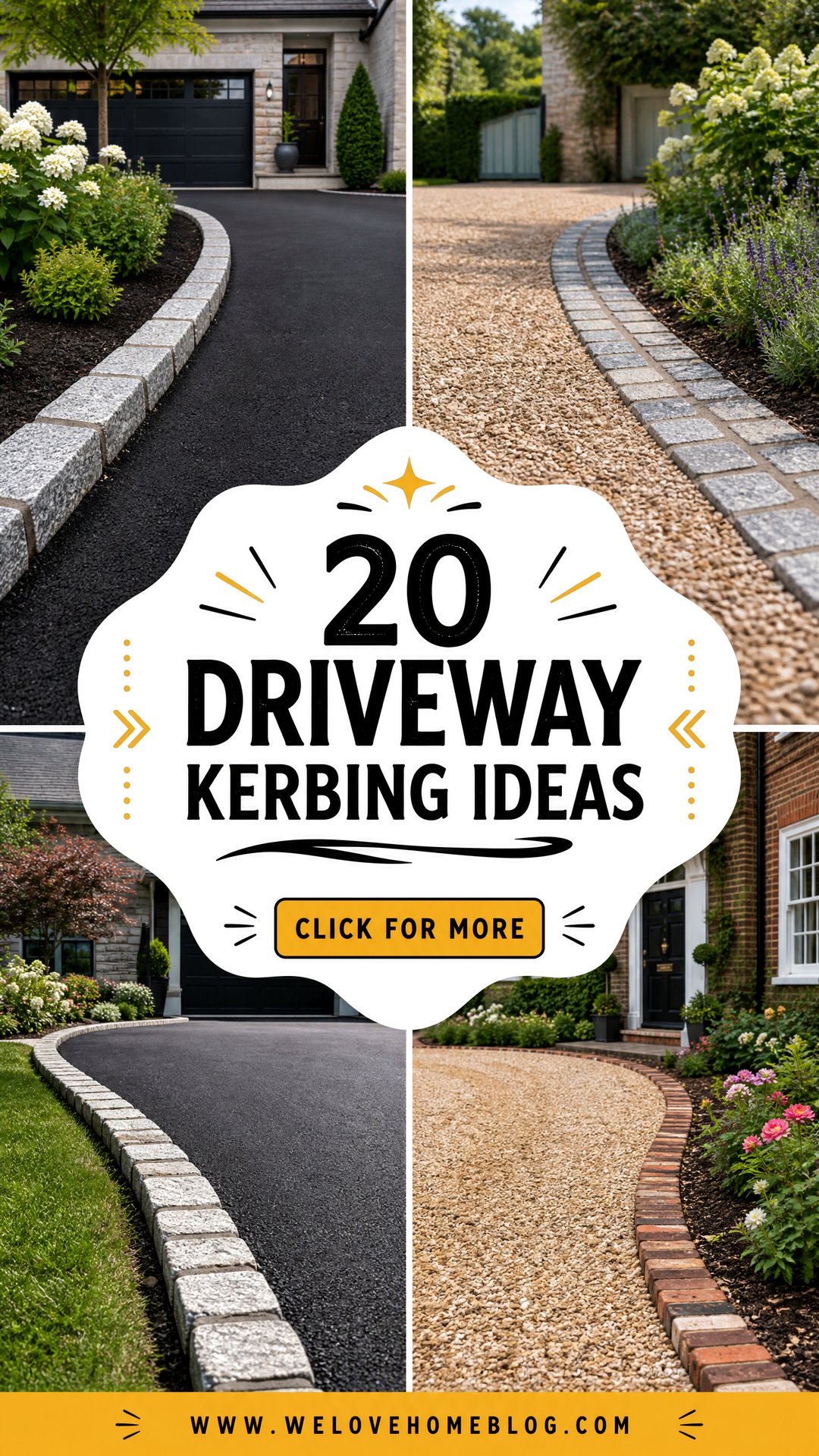
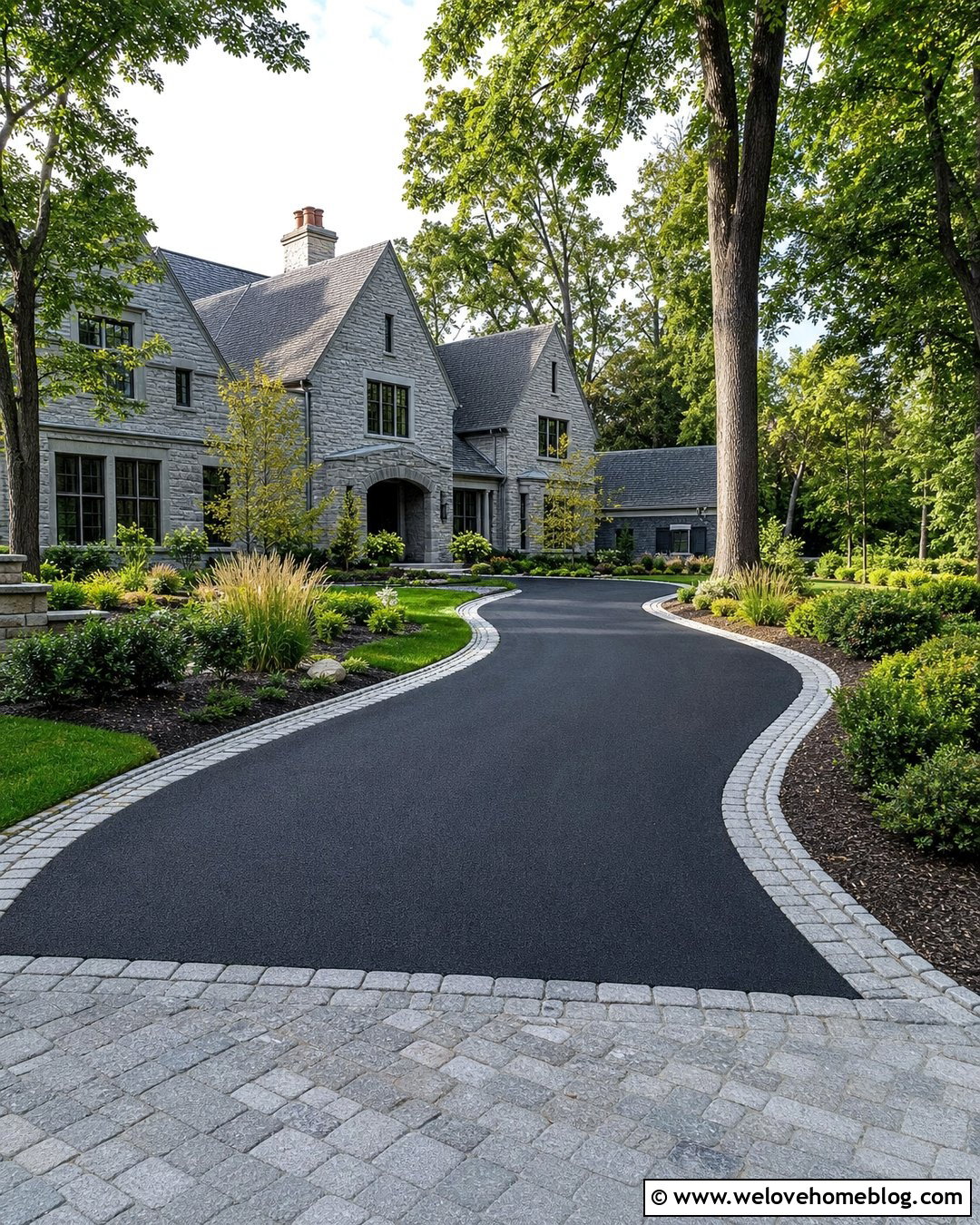
1. Asphalt Driveway With Granite Set Kerbing
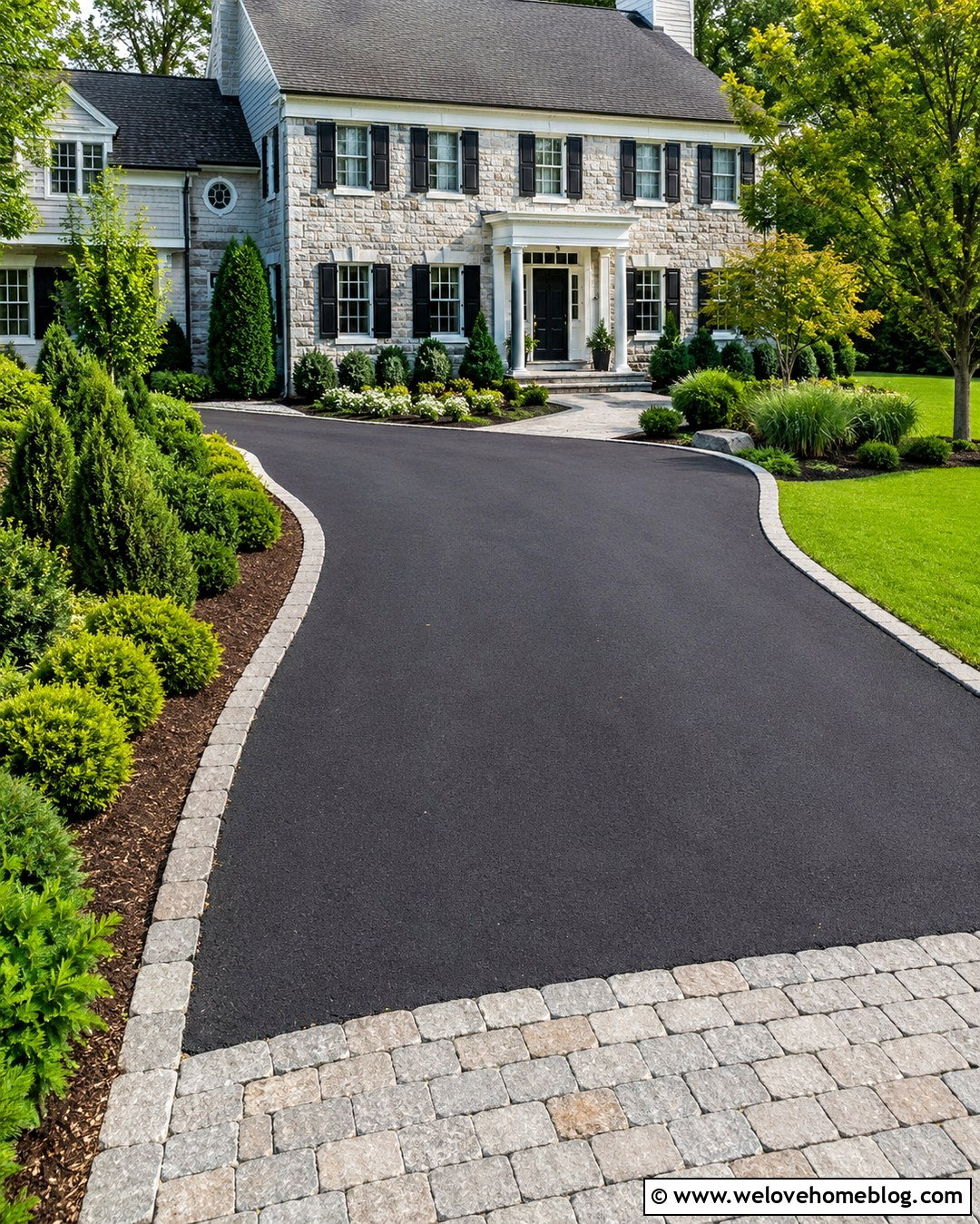
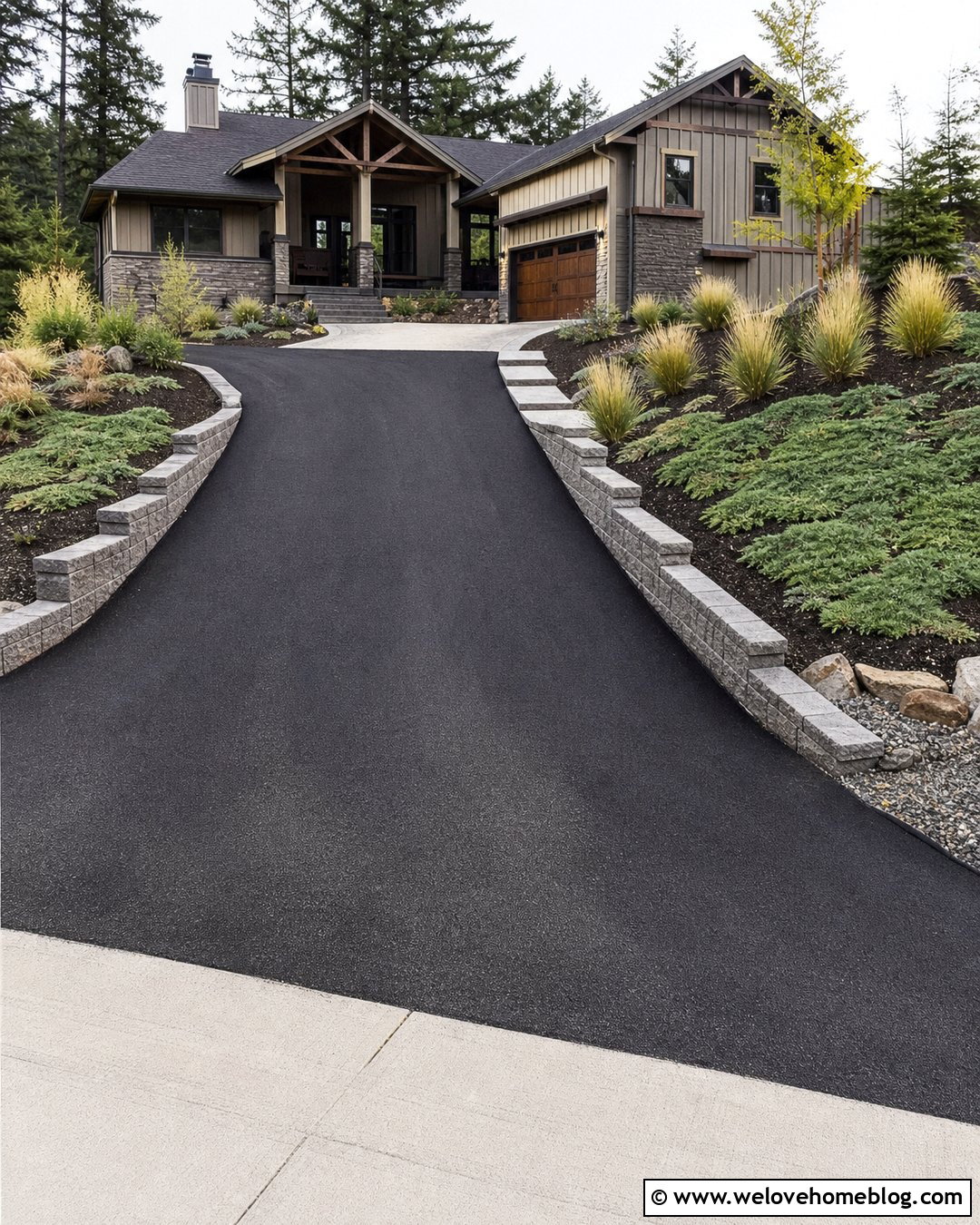
Black asphalt gains a more refined appearance when framed by natural granite sets. Use one upright row along each side of a straight or gently curved driveway. The textured gray stone creates a strong contrast against the smooth, dark surface. It also connects naturally with stone walkways, retaining walls, or a masonry house facade. For a balanced landscape, place low ornamental grasses and compact evergreen shrubs behind the kerbing. Keep plants set back from turning areas so branches do not scratch vehicles. Granite sets should be installed on a stable concrete bed rather than placed loosely in soil. Continue the stone around the entrance apron to create a complete border that looks substantial from the street.
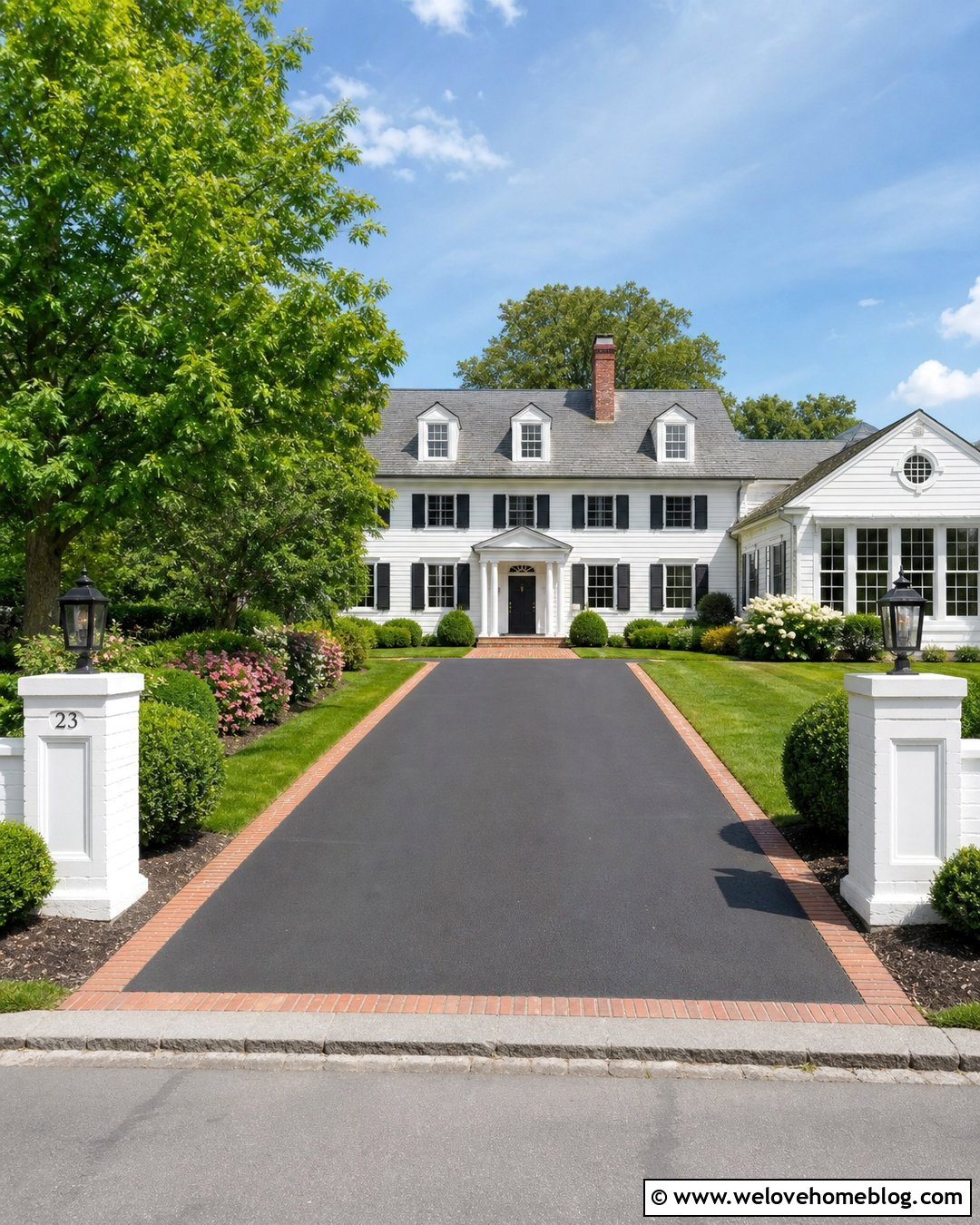
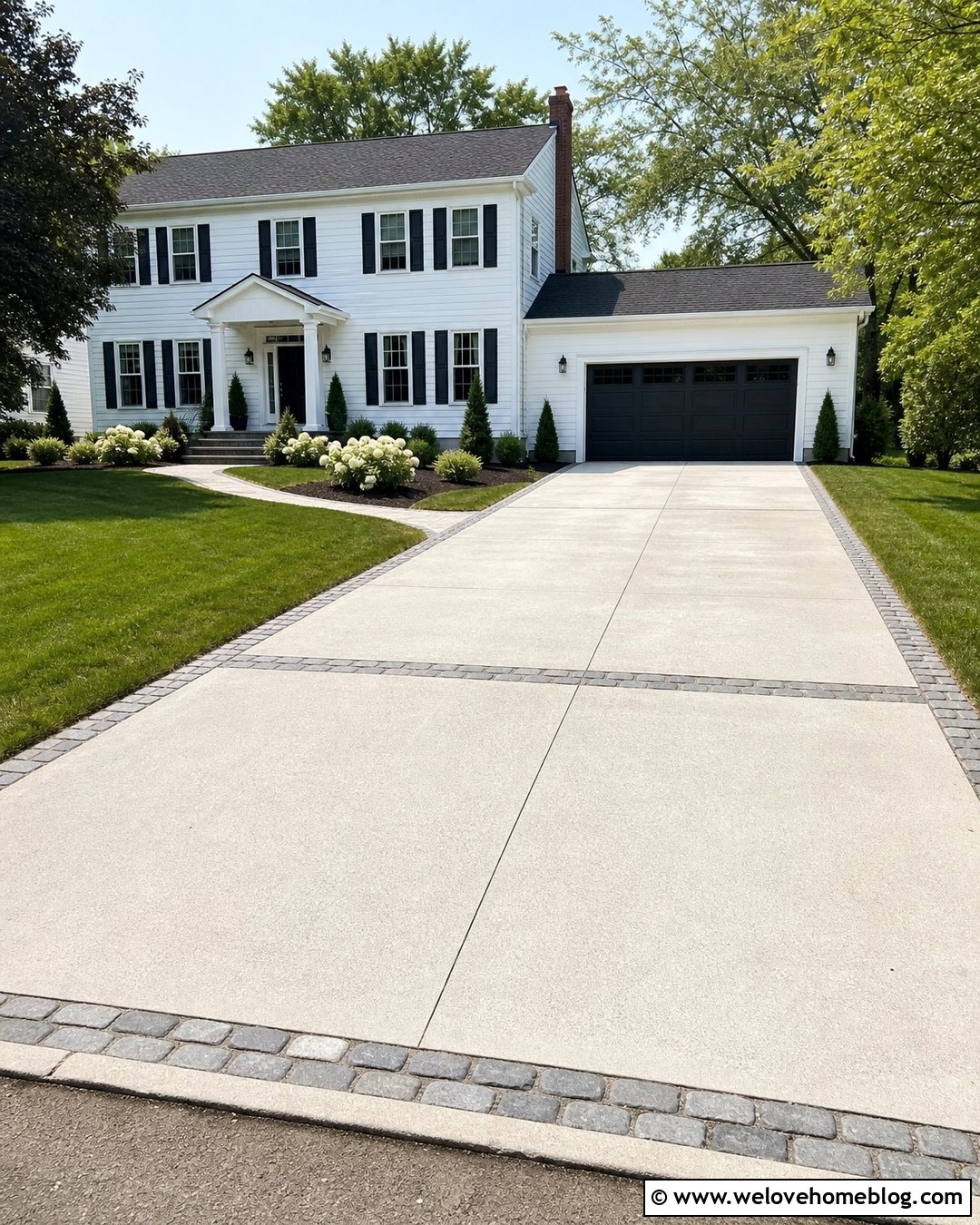
2. Concrete Driveway With Brick Kerbing
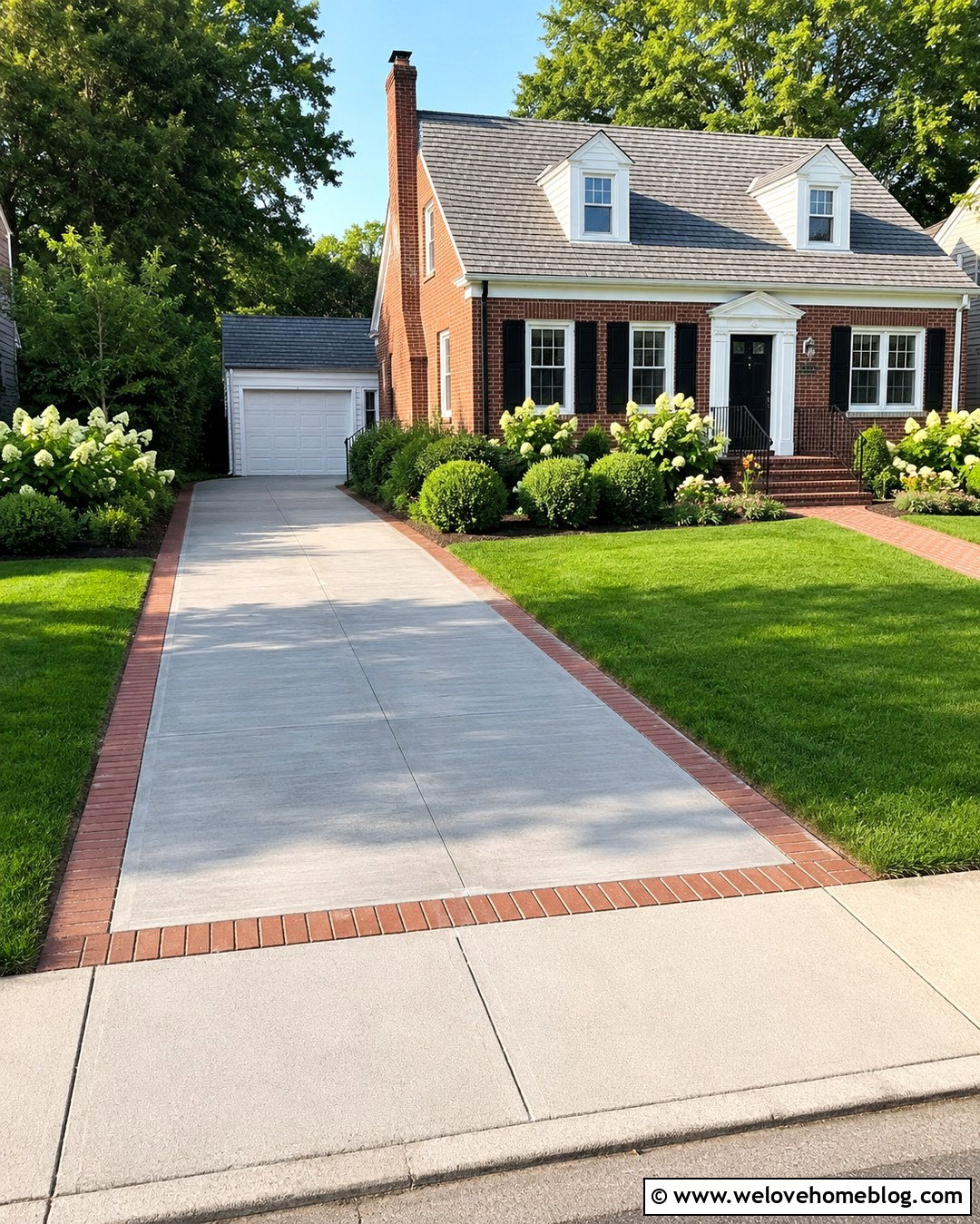
Warm brick kerbing can soften the plain appearance of a light gray poured concrete driveway. A single soldier-course border, with bricks positioned side by side, gives the driveway a clear outline without making it look too busy. Red or brown clay brick works particularly well with Colonial, Cape Cod, and traditional ranch homes. Match the border to existing porch steps or exterior brick for a connected design. A straight driveway can be framed with neat lawn on one side and layered foundation planting on the other. Consider repeating the brick in the front walkway or as a narrow ribbon near the garage. Choose driveway-rated bricks, since ordinary landscaping brick may not handle vehicle pressure or repeated freeze-thaw conditions.
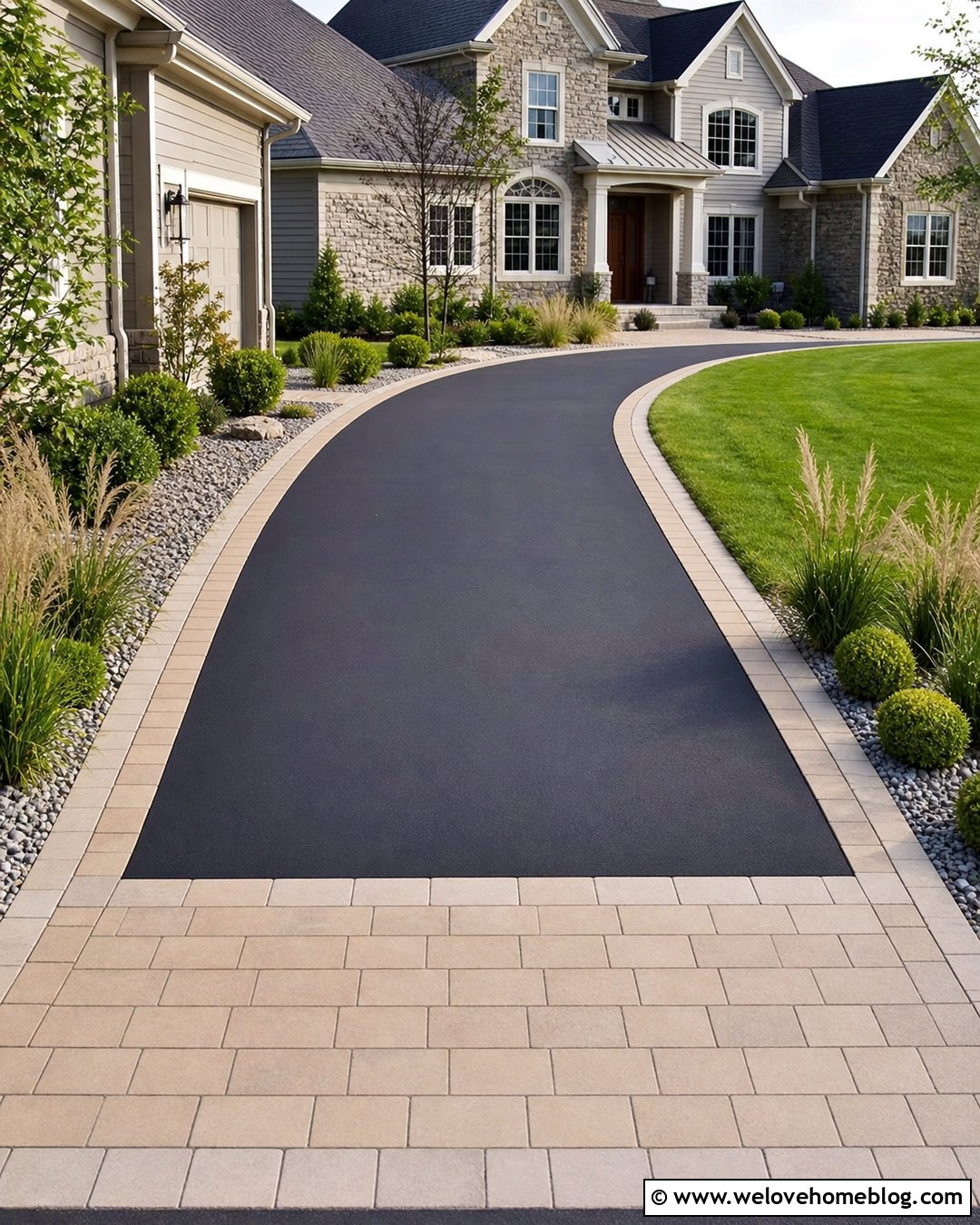
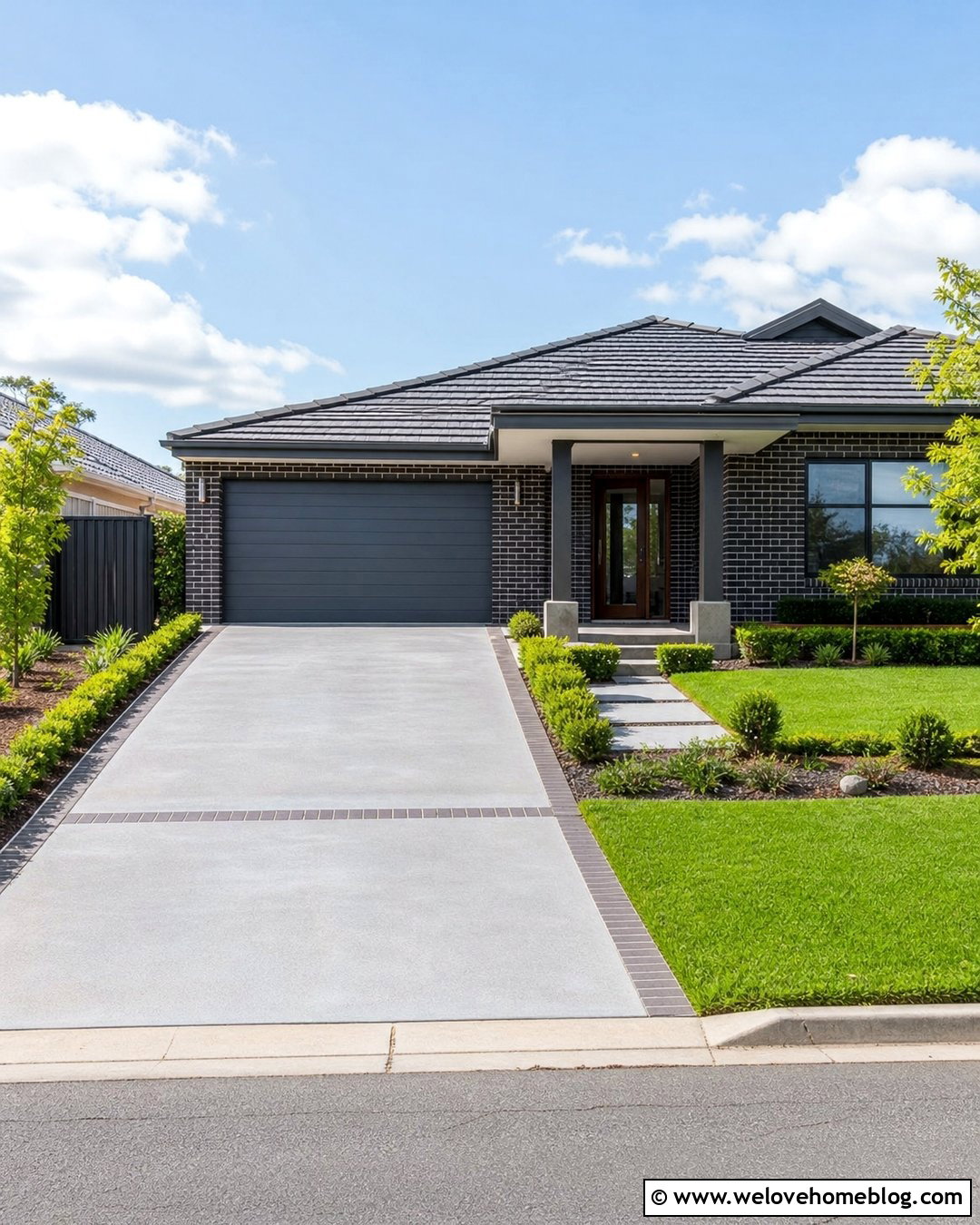
3. Block Paving Driveway With Charcoal Kerbing
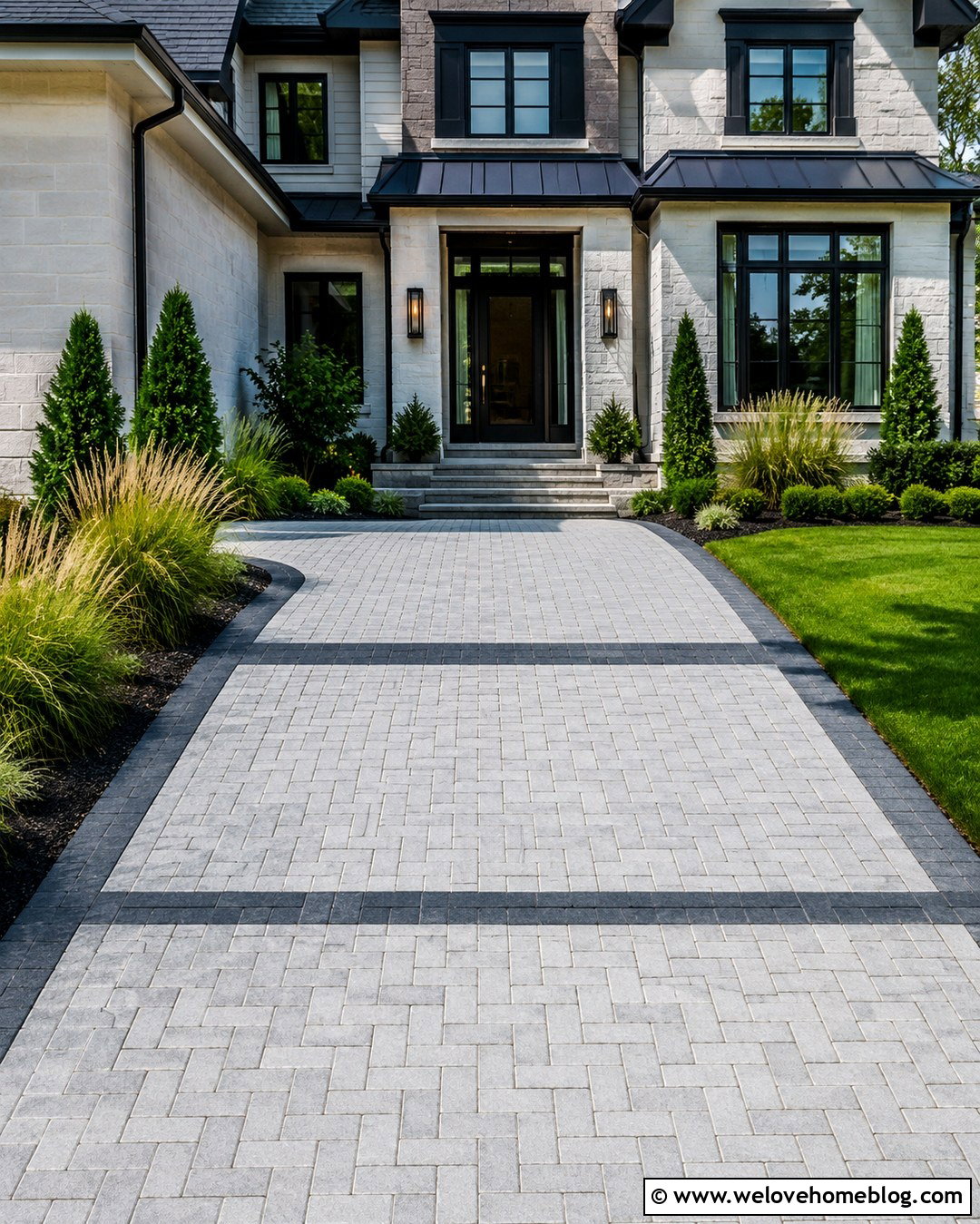
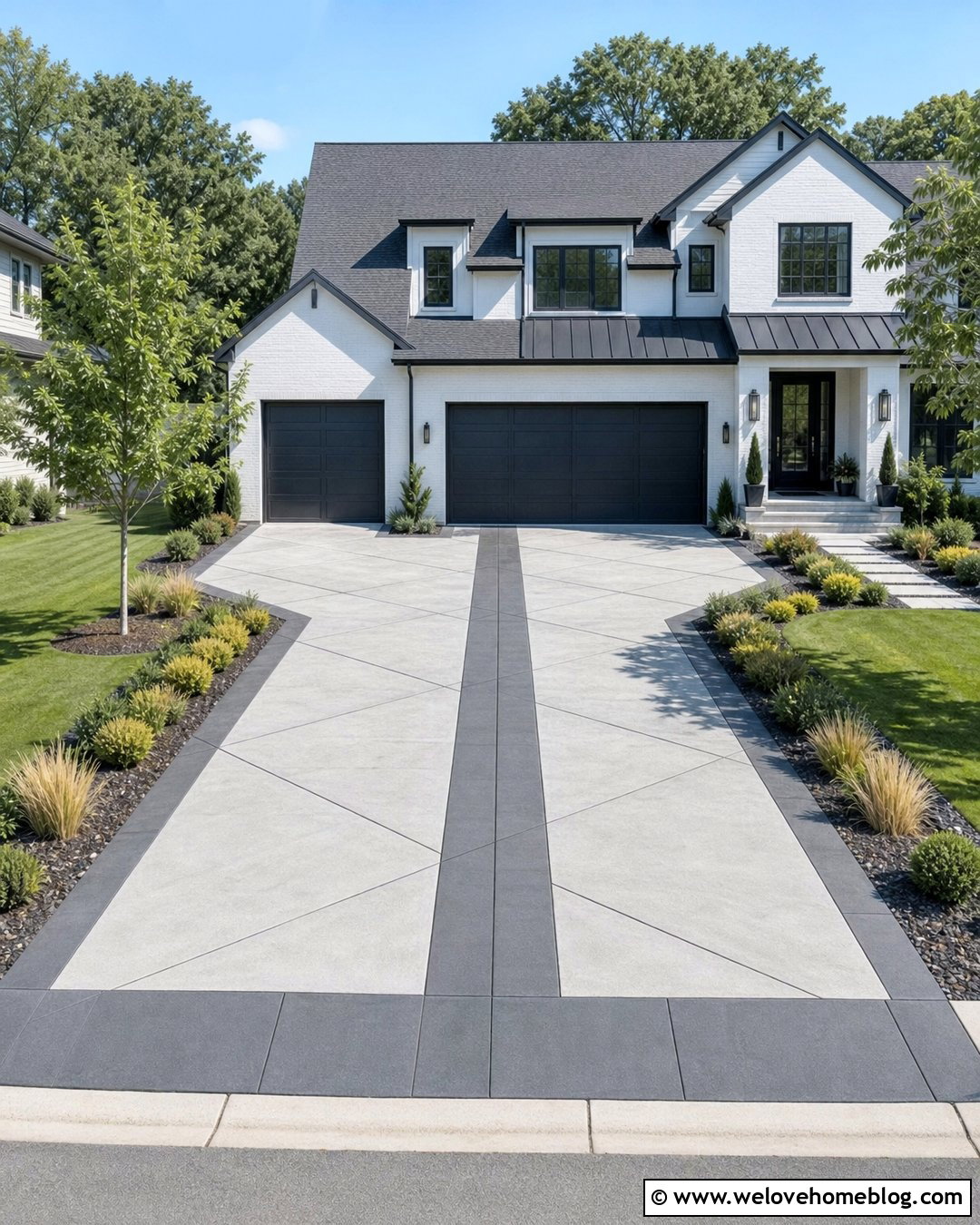
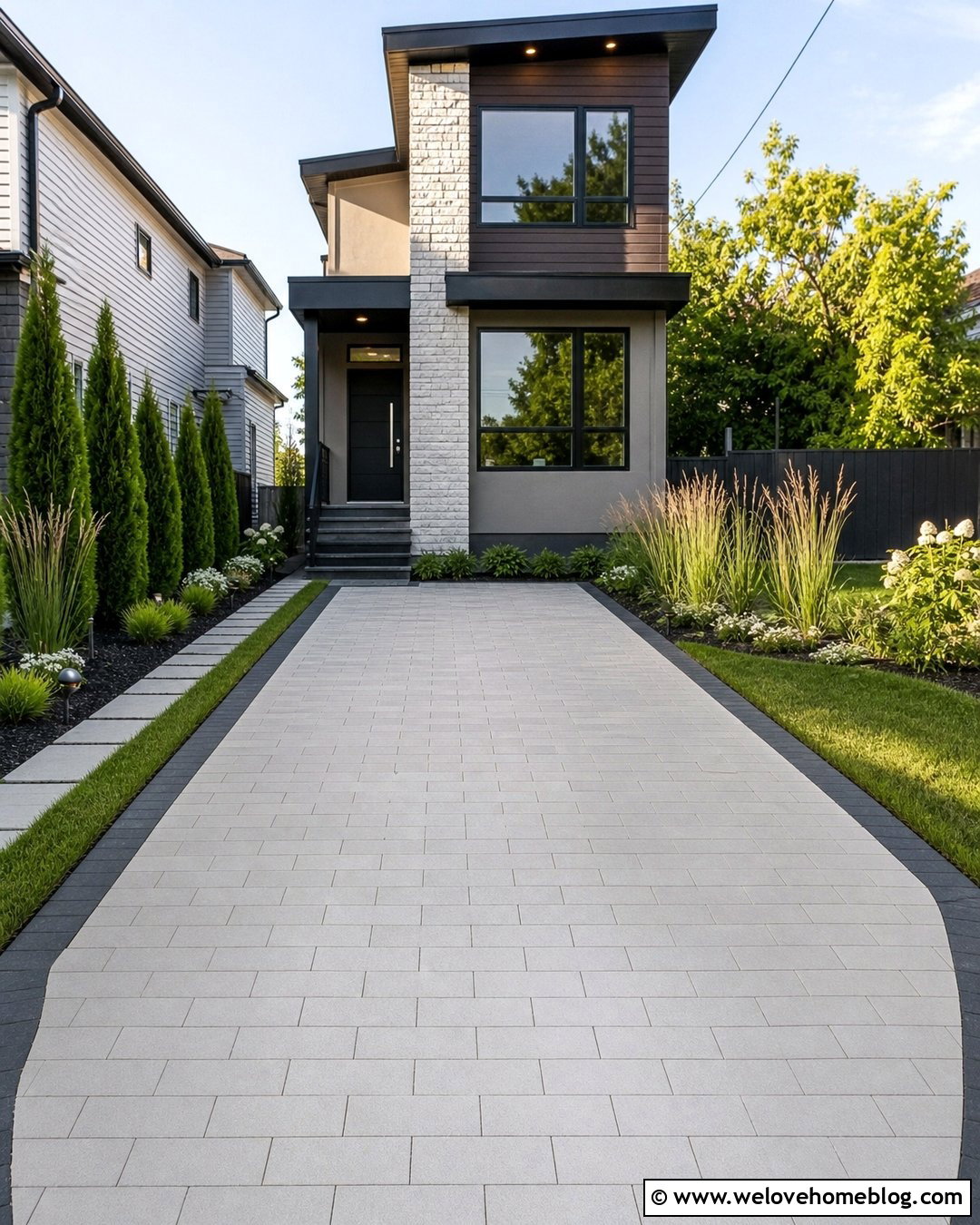
A pale block paving driveway looks sharper when surrounded by charcoal kerbing blocks. Choose light gray pavers for the main surface, then install a dark soldier-course edge that clearly defines the entire layout. This high-contrast combination suits modern and transitional houses with black windows, gray siding, or dark roof details. On a wide driveway, repeat the charcoal blocks as a subtle dividing ribbon between parking spaces. Rectangular planting beds can follow the same crisp lines beside the kerbing. Fill them with clipped boxwood alternatives, ornamental grasses, and pale gravel mulch. The border blocks need solid edge restraint and proper concrete support so the field pavers cannot spread outward under vehicle movement. ()
4. Gravel Driveway With Flush Cobblestone Kerbing
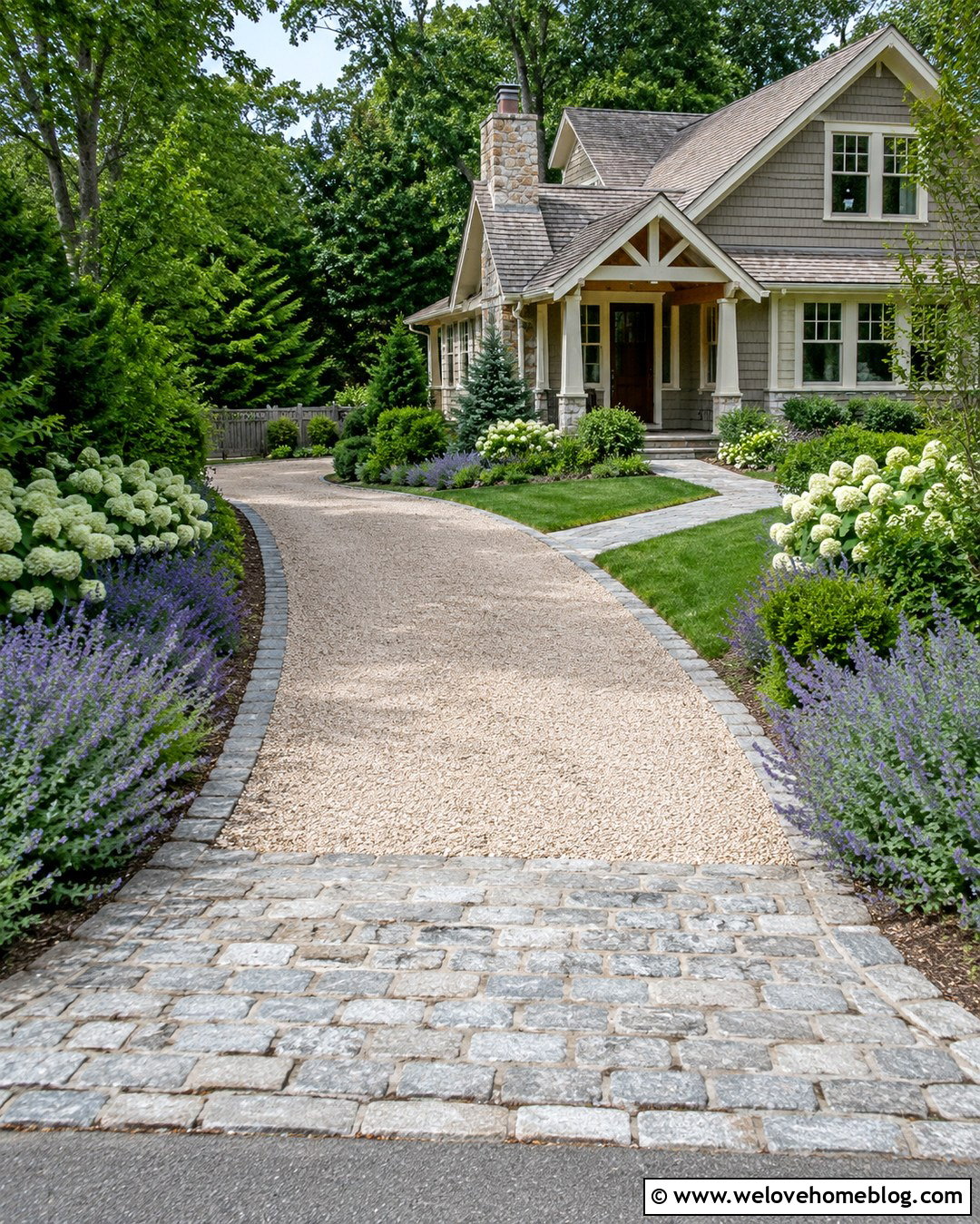
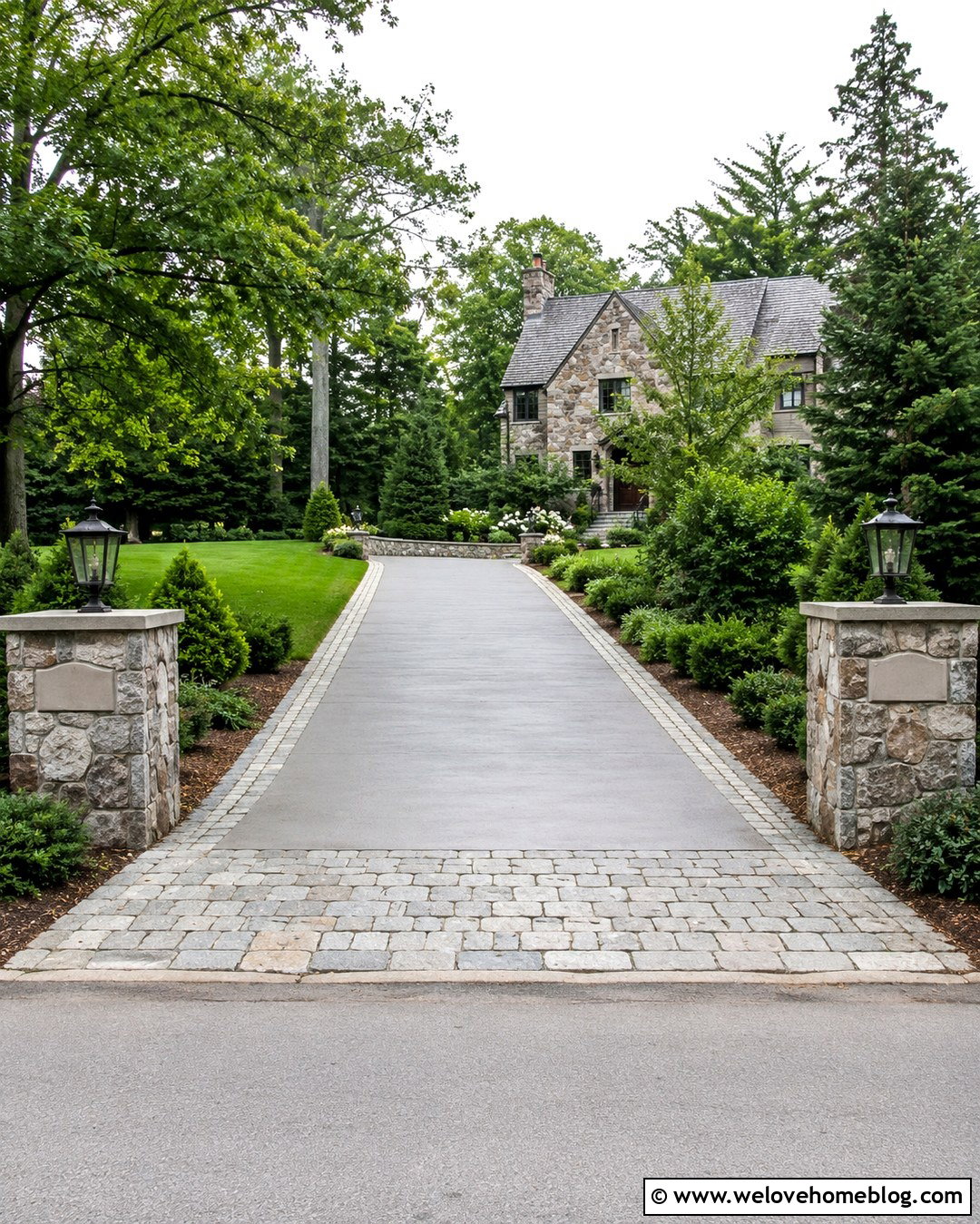
Imagine a soft beige gravel driveway bordered by weathered cobblestones that sit almost level with the surface. This combination has an established, informal character that complements cottages, Craftsman homes, and traditional farmhouses. Flush kerbing keeps the gravel contained while allowing lawn equipment and pedestrians to cross the edge comfortably. Use cobblestones in mixed gray and brown tones so the border feels connected to the landscape. A gently curved layout can lead through generous beds of lavender, catmint, hydrangeas, and evergreen shrubs. At the street, widen the cobblestone border into a deeper entrance apron. That strengthened transition helps define the access point and gives the loose gravel driveway a more intentional, permanent appearance from the curb.
5. Sloped Gravel Driveway With Raised Concrete Kerbing
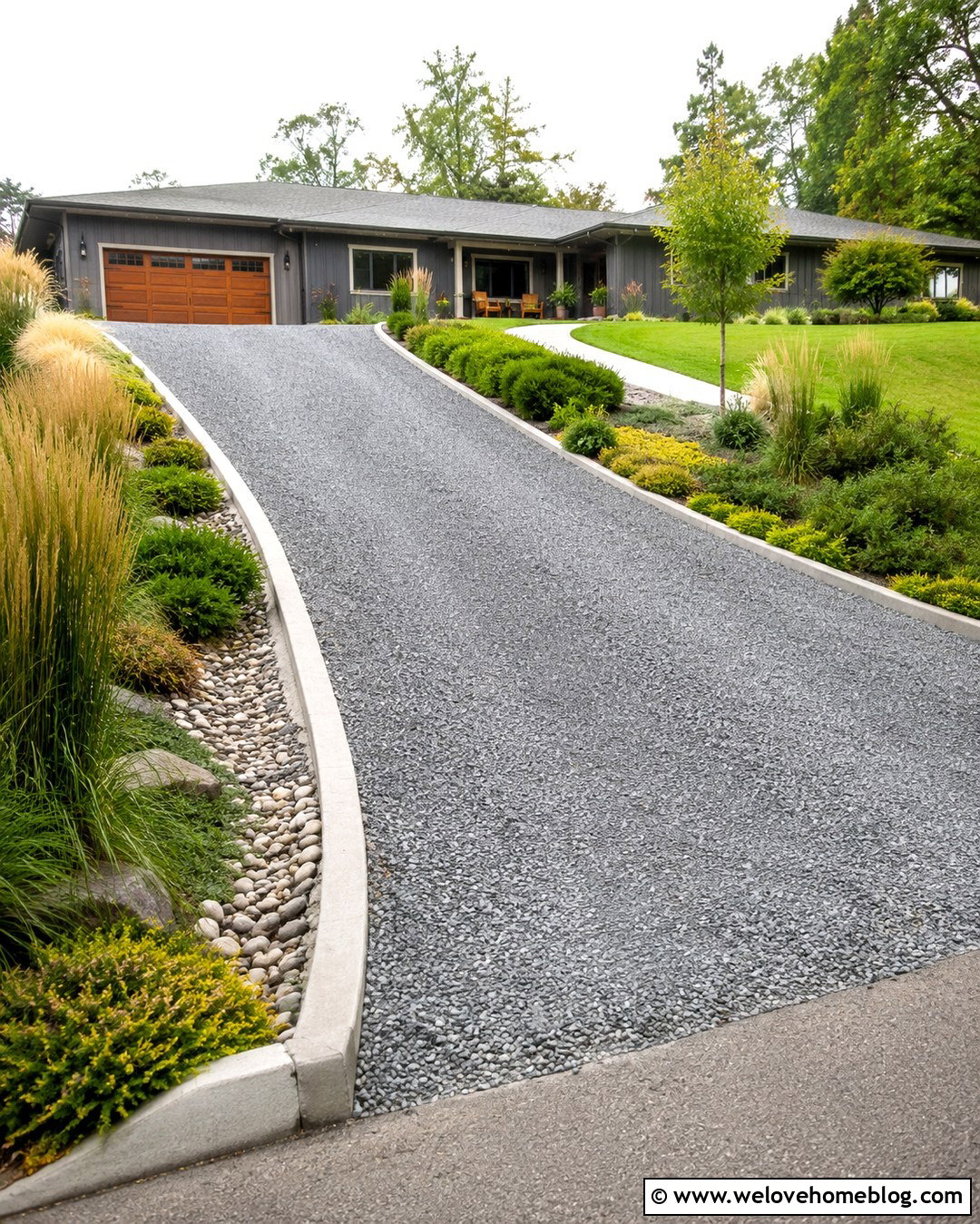
A sloped gravel driveway needs a strong edge that clearly separates the driving lane from lower lawns and garden beds. Raised precast concrete kerbing provides a simple, durable solution with a clean and consistent profile. Pair medium-gray crushed gravel with pale concrete curbs for a practical suburban look. Allow the driveway to follow a gentle curve rather than making abrupt turns that encourage gravel displacement. Plant erosion-resistant ground covers, compact junipers, and ornamental grasses beyond the curb. On the downhill side, integrate drainage openings or a gravel swale where the site plan requires water to leave the driveway. The kerbing should guide loose stone without trapping runoff against the pavement, garage, or house foundation. Have the slope and drainage route assessed before installation.
6. Exposed Aggregate Driveway With Poured Kerbing
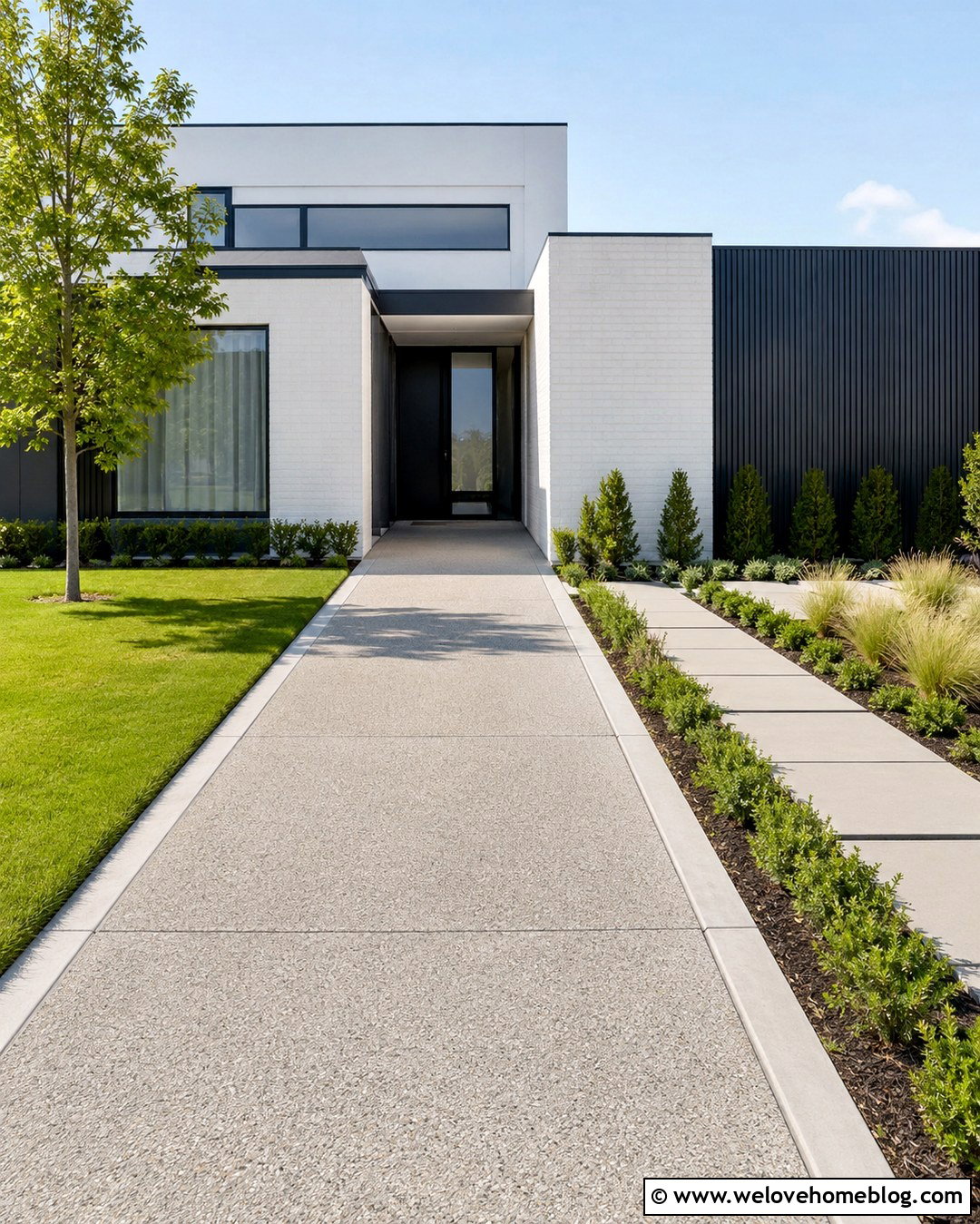
Exposed aggregate concrete already has plenty of visual texture, so streamlined poured kerbing keeps the overall design calm. Select a warm gray aggregate driveway containing small tan and charcoal stones. Frame it with smooth, cast-in-place concrete curbs in a matching gray tone. The subtle difference between the textured surface and clean border gives a modern home a polished approach. A straight driveway works well with rectangular lawn panels, structured planting beds, and a wide path leading to the front door. Keep the curb slightly raised near garden beds but lower it at pedestrian crossing points. Saw-cut control joints should align thoughtfully with important landscape lines. This prevents the driveway, curb, and walkway from looking like unrelated concrete elements installed at different times.
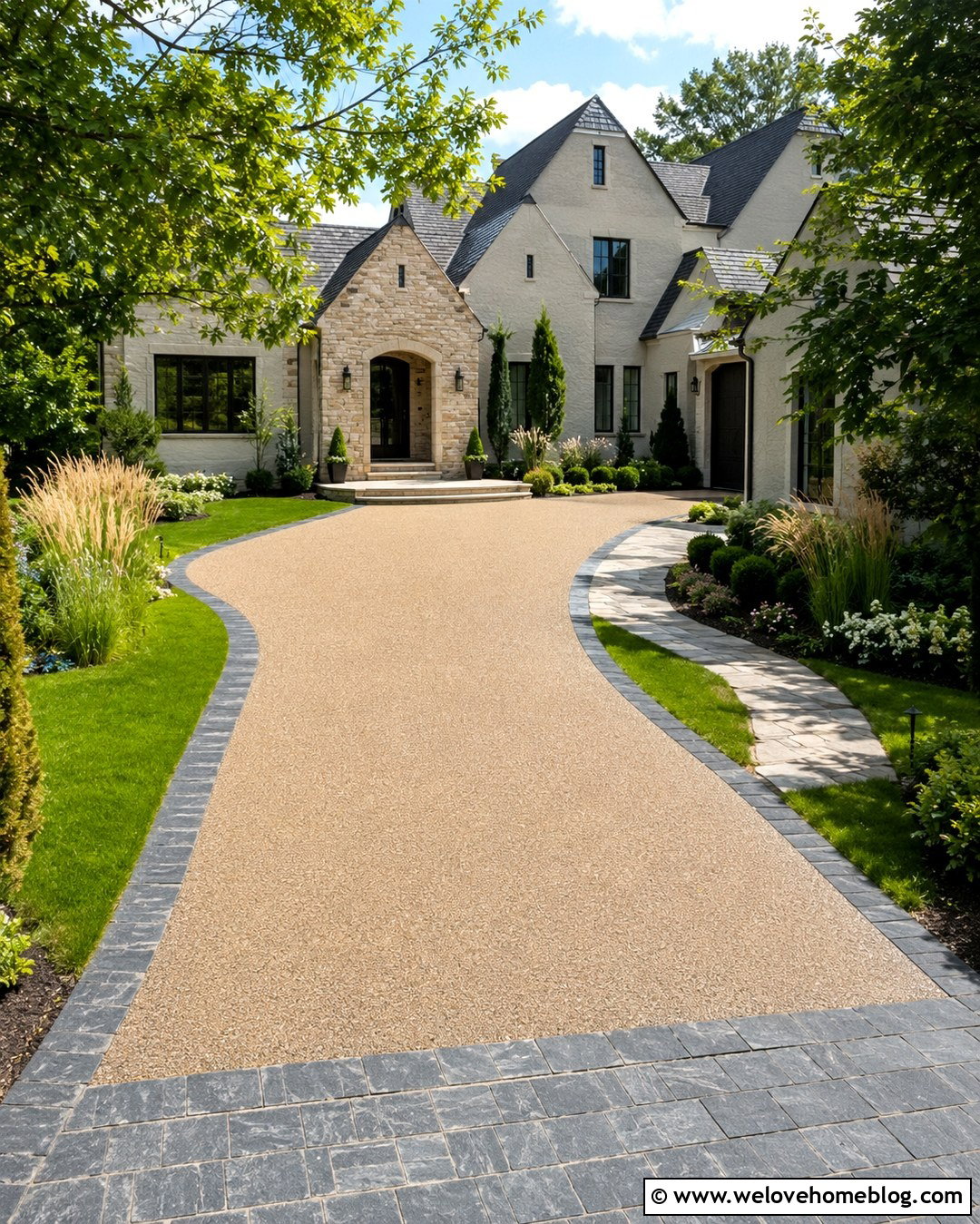
7. Resin-Bound Driveway With Sandstone Kerbing
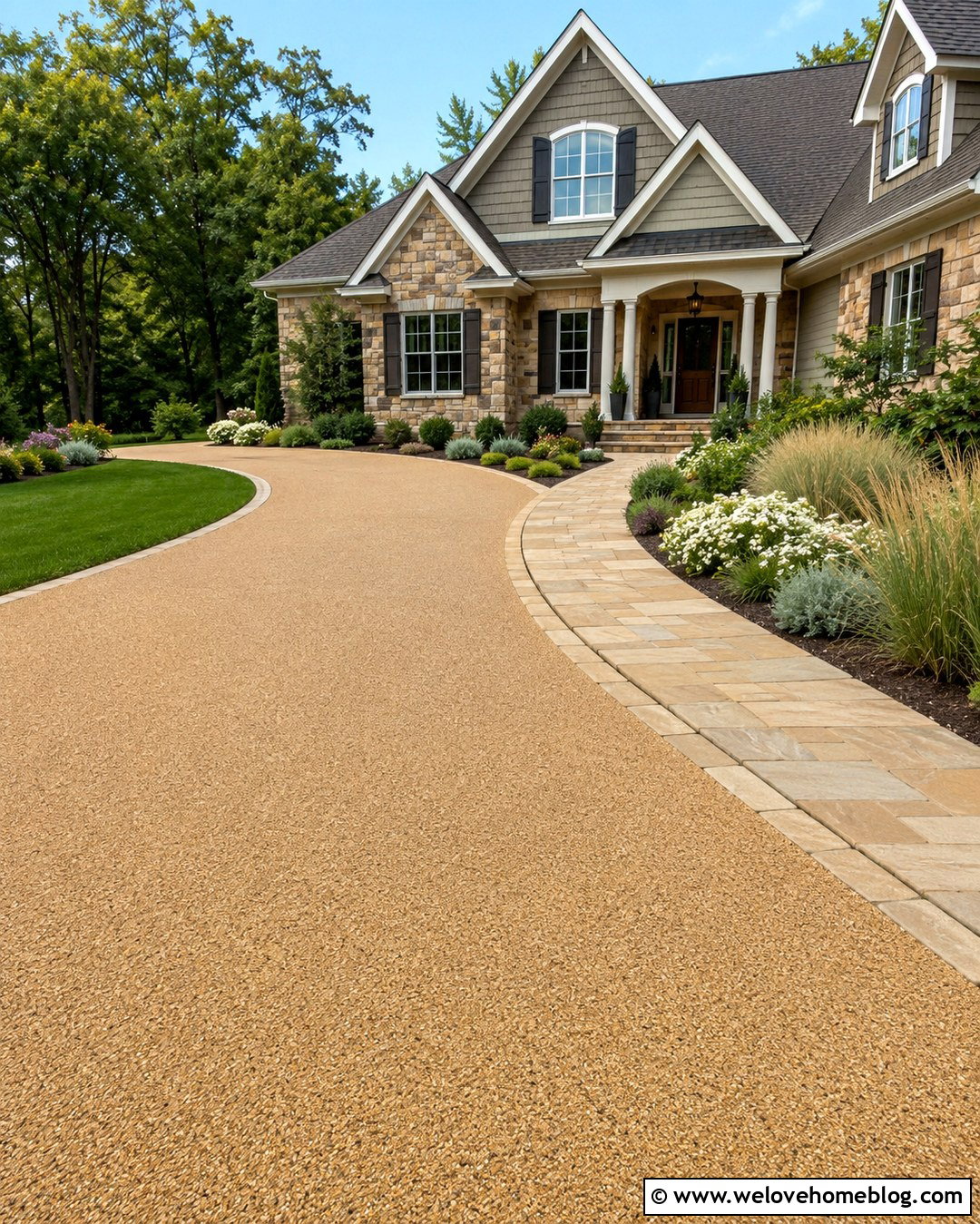
Golden resin-bound gravel creates a smooth-looking surface that pairs naturally with warm sandstone kerbing. Use sawn sandstone blocks for a neat edge rather than heavily irregular stones that may compete with the uniform driveway finish. A broad, curved layout can sweep toward a Craftsman or stone-front home while leaving room for planting at the inside bend. Surround the driveway with sage-green shrubs, white flowers, ornamental grasses, and a tidy lawn. The sandstone can also continue into the front walkway, creating a coordinated transition from parking area to entrance. Select stone colors that appear elsewhere on the house, such as porch columns or facade accents. Keep the resin surface and kerb heights carefully aligned at the garage threshold and sidewalk connection.
8. Modern Concrete Driveway With Steel Kerbing
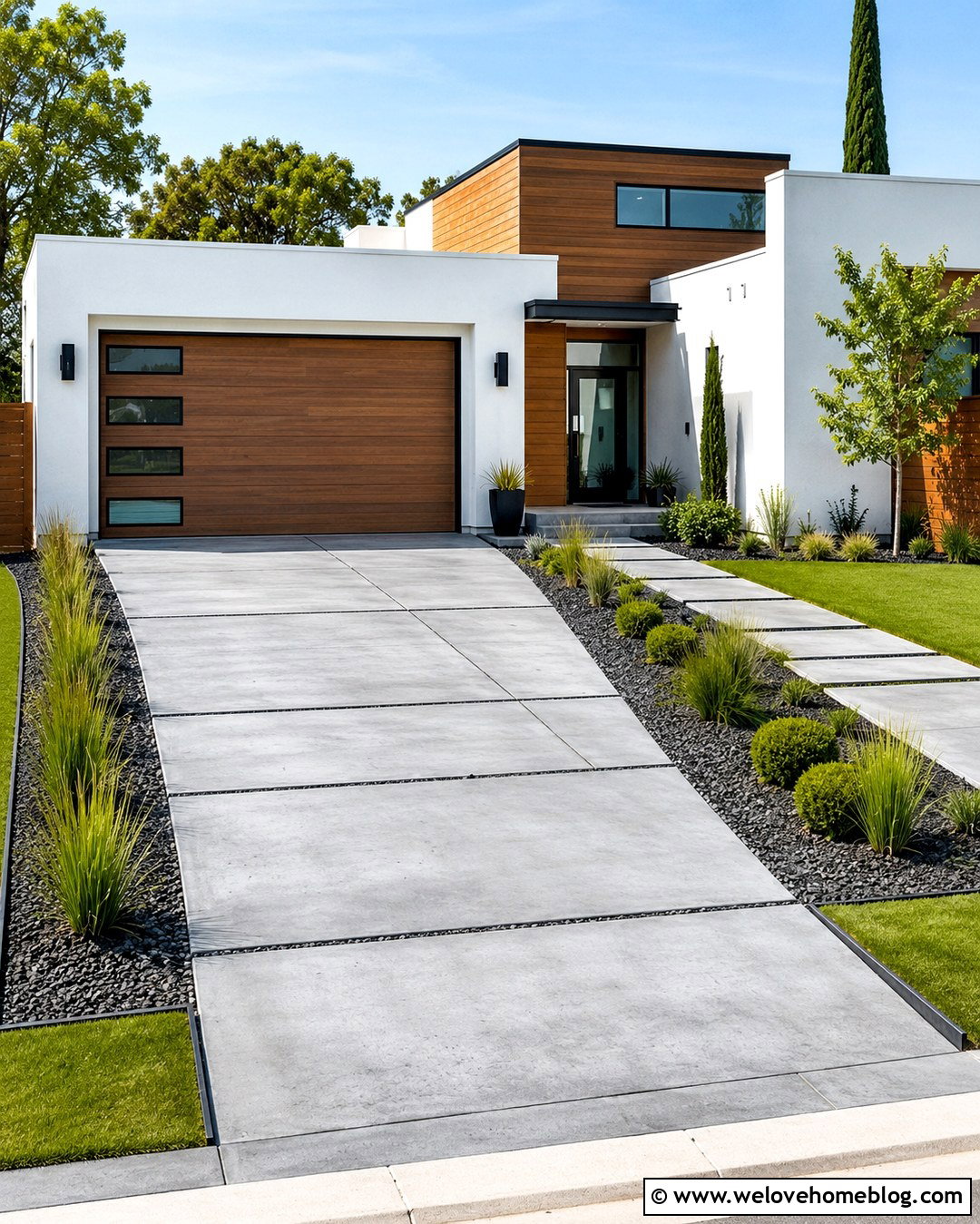
Thin steel kerbing gives a modern concrete driveway an exceptionally clean edge. It works best when the metal is installed as a restrained border rather than left unsupported beside vehicle turning zones. Pair large, medium-gray concrete slabs with dark steel edging and narrow strips of decorative black gravel. A straight or slightly offset layout can lead toward a minimalist house with white stucco, wood cladding, and black-framed windows. Use upright ornamental grasses and low mounded shrubs to soften the geometry without covering the border. The steel can sit nearly flush beside the lawn and rise slightly around planting beds. Choose a corrosion-resistant finish suited to local conditions. This complete look is understated, but the crisp alignment requires careful base preparation and accurate installation.
9. Country Gravel Driveway With Timber Kerbing
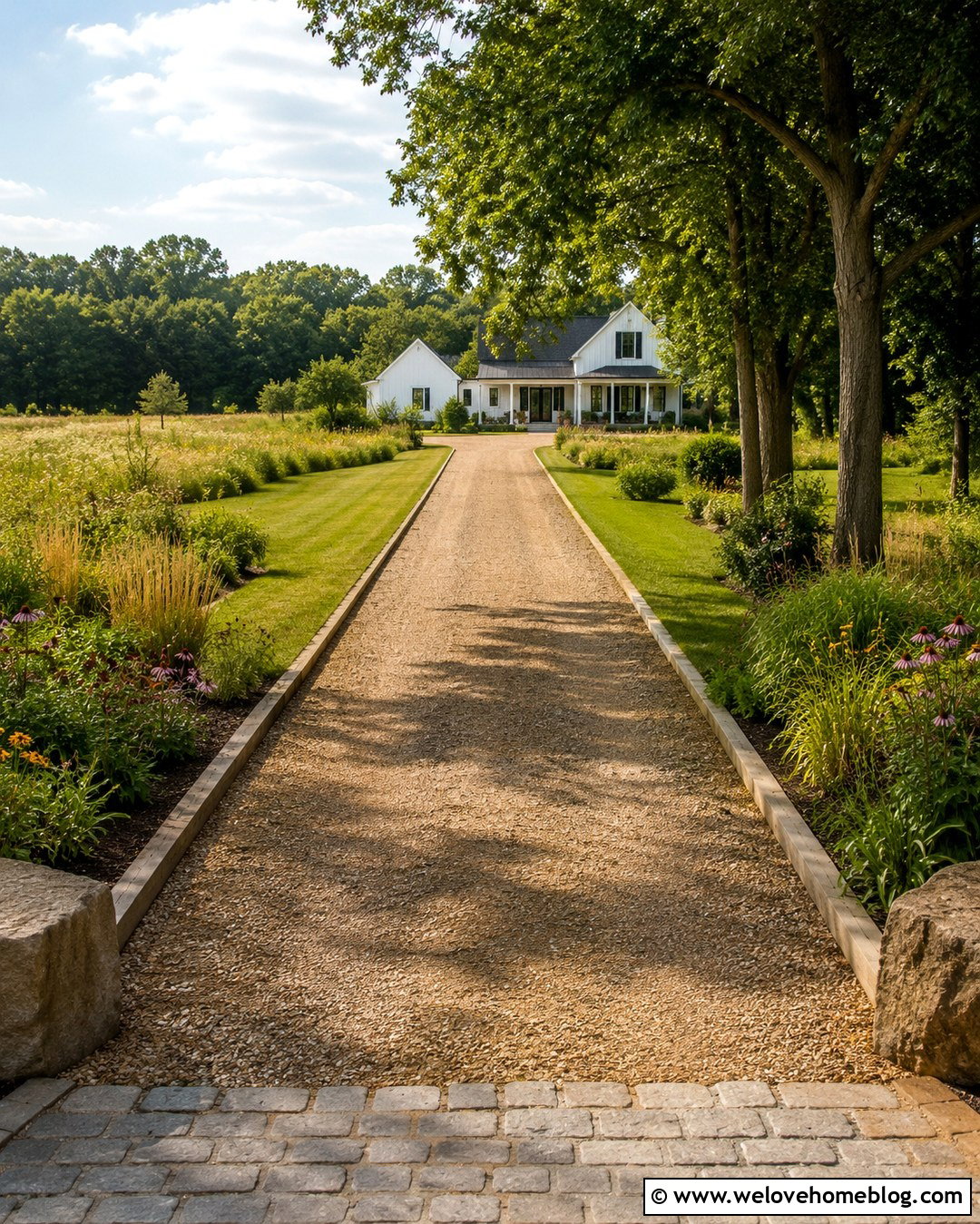
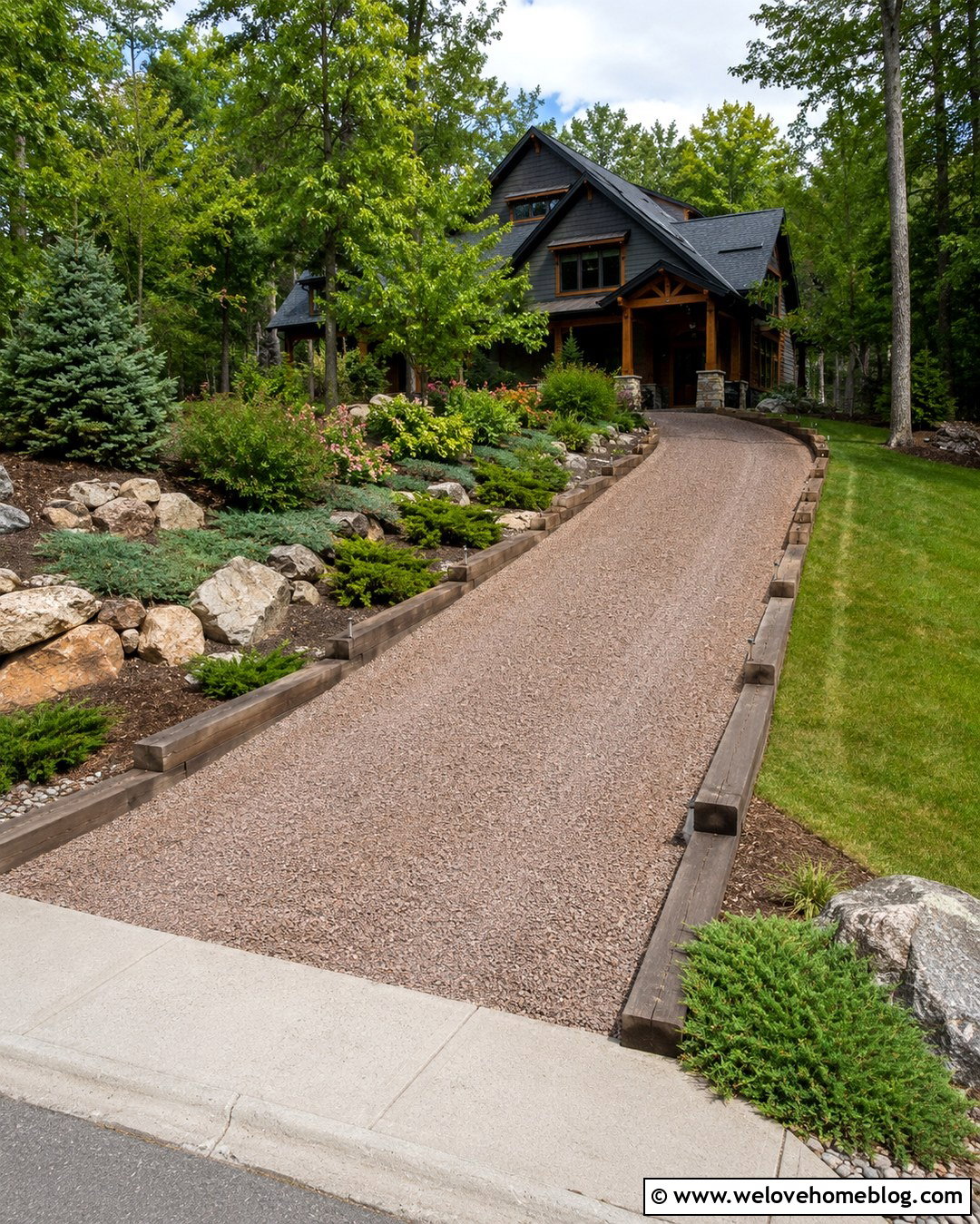
Timber kerbing brings warmth to a long country driveway surfaced with compacted golden gravel. Pressure-treated landscape timbers or durable hardwood sleepers can follow a mostly straight route toward a farmhouse, barn-style garage, or rural cottage. Set the timbers securely so they do not shift when tires approach the edge. Behind them, use broad planting zones with native grasses, flowering perennials, and occasional shade trees. A narrow mown lawn strip can provide a tidy buffer between the kerb and deeper meadow planting. Timber is most successful away from constantly wet soil and intense turning areas. At the public road and garage entrance, switch to stone or brick kerbing for added strength. This material change can look deliberate when the colors remain warm and natural.
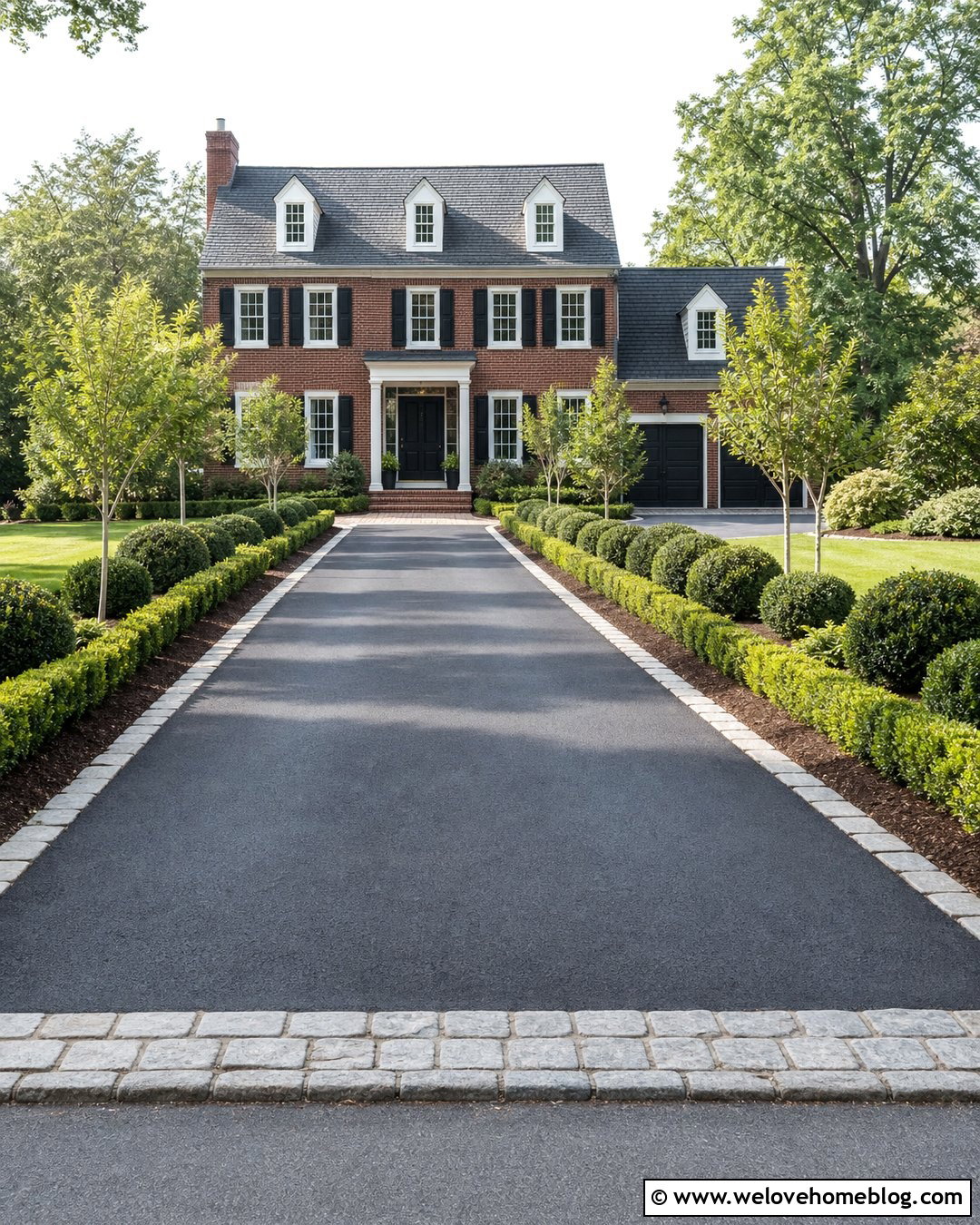
10. Asphalt Driveway With Belgian Block Kerbing
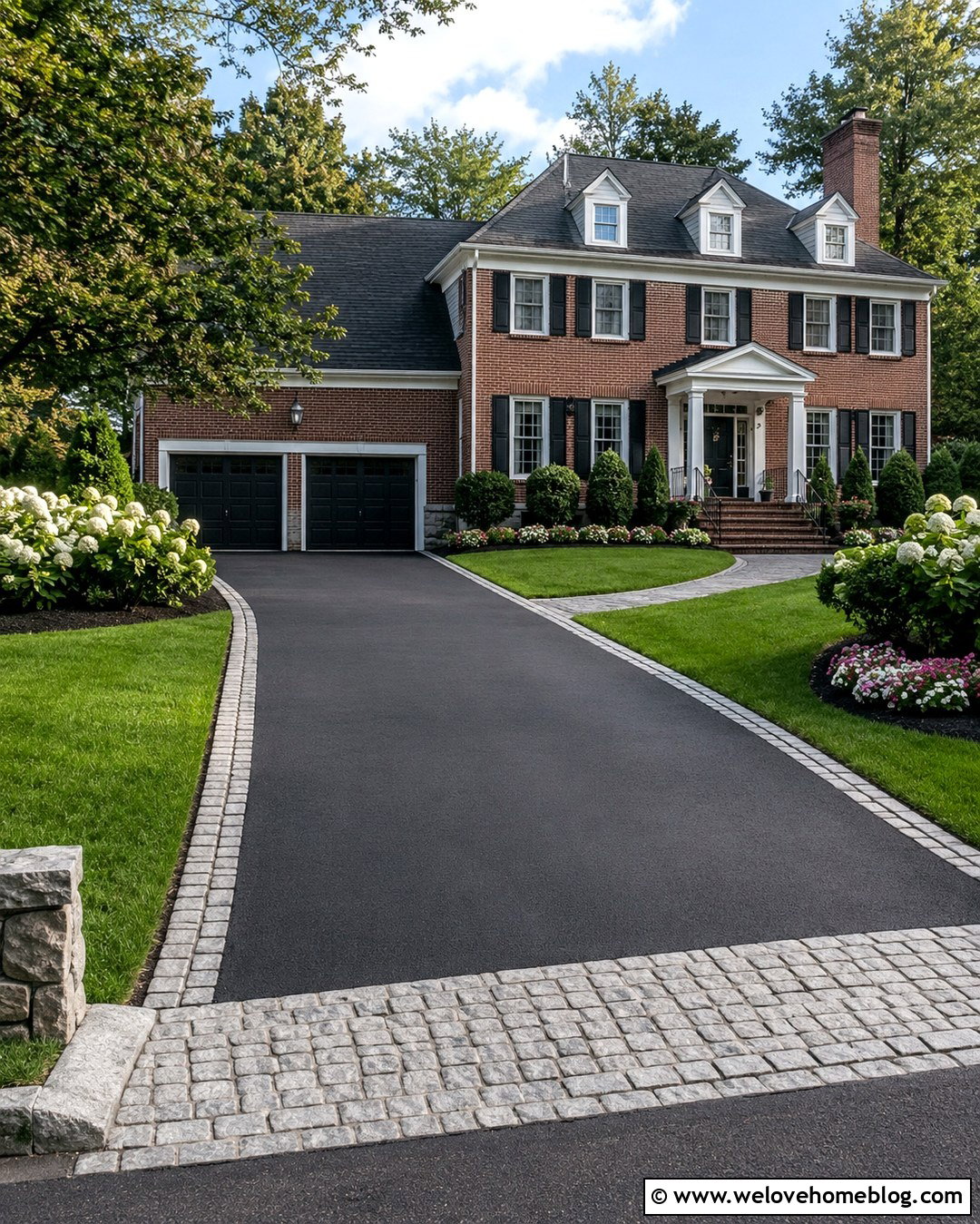
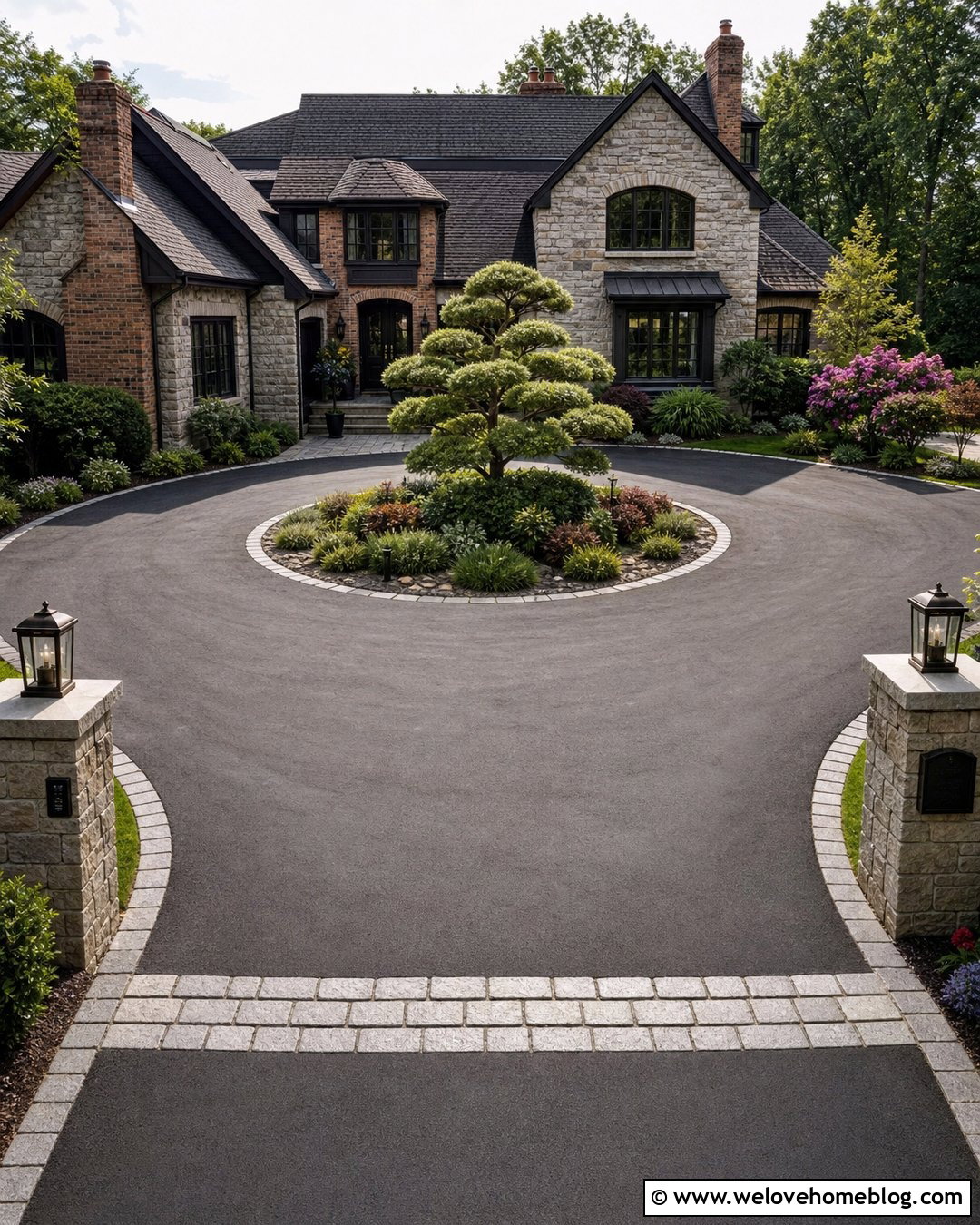
Belgian block kerbing gives a standard asphalt driveway a substantial, high-end frame. The rough granite blocks can be installed upright for a pronounced border or set lower for a more accessible edge. Gray, charcoal, and muted brown blocks complement deep black asphalt without creating an overly colorful design. Use the same material across a flared driveway entrance, where the wider border becomes an attractive apron. On both sides, combine manicured lawn with layered beds of hydrangeas, compact evergreens, and seasonal flowers. A straight approach suits Colonial and traditional brick homes, while a gentle curve works well on larger wooded properties. Belgian blocks should be aligned carefully and supported with concrete so they resist settling, rotation, and pressure from the asphalt edge. ()
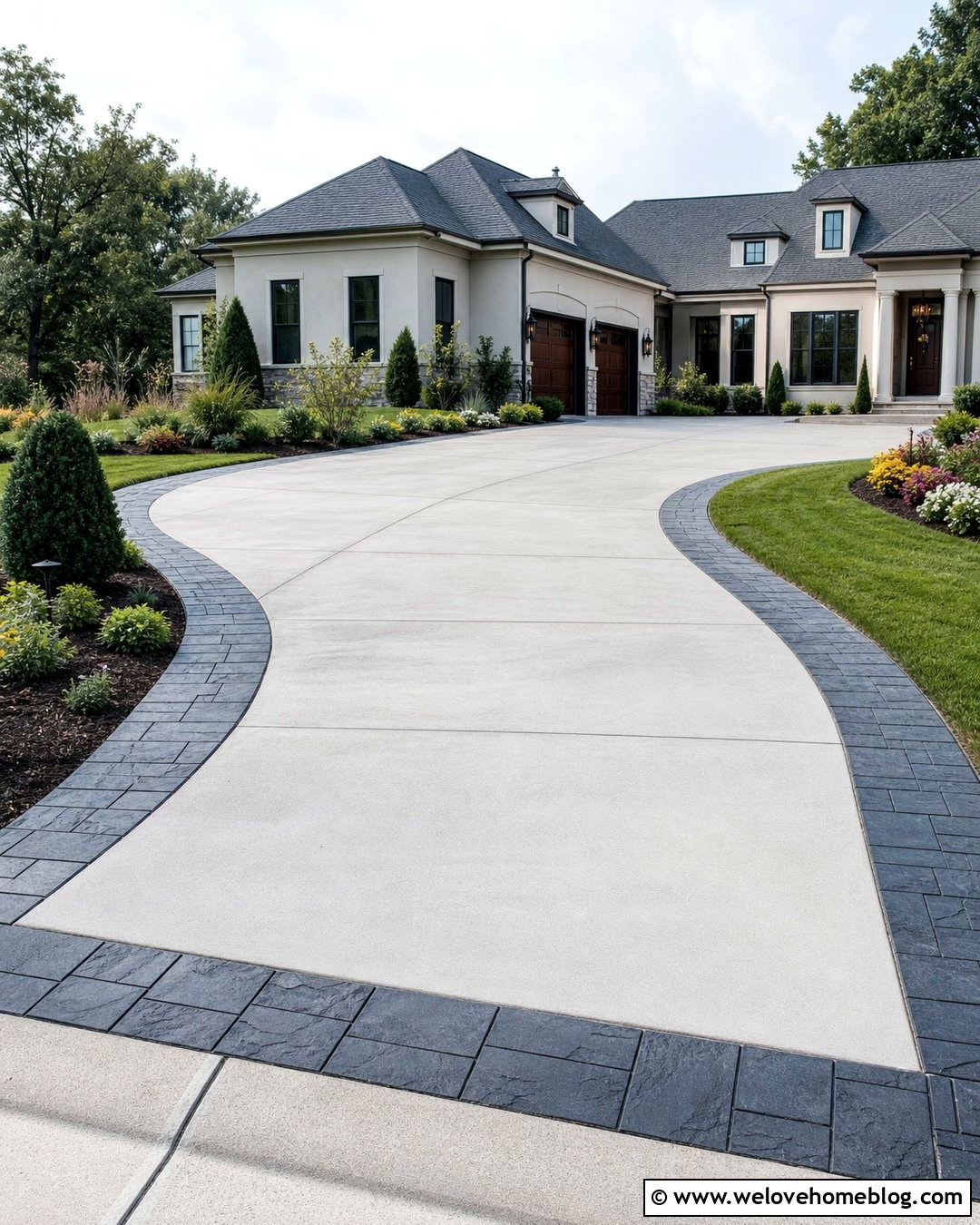
11. Circular Paver Driveway With Double Kerbing
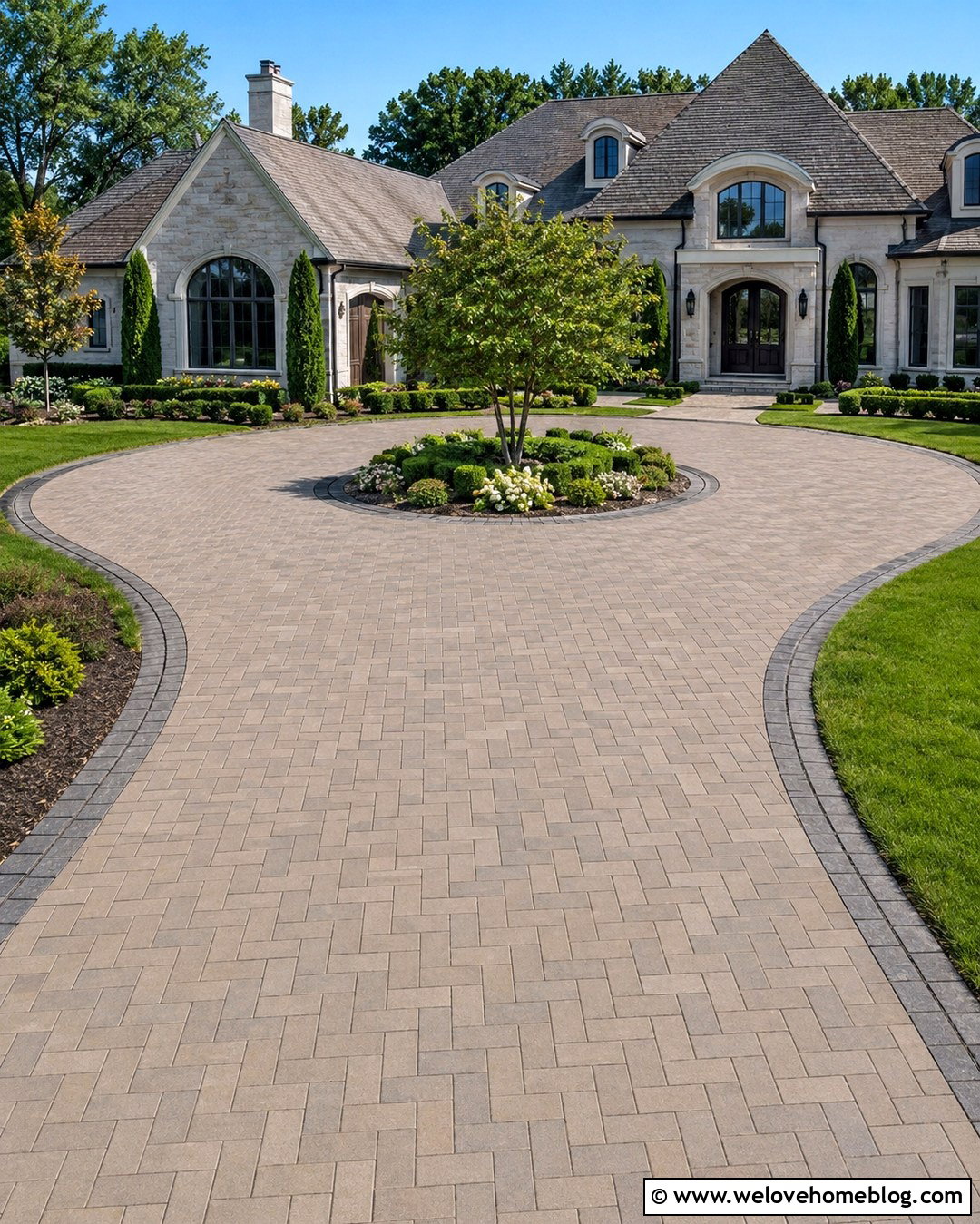
A circular driveway benefits from double-row kerbing because the additional width makes its curves easier to see. Use warm taupe concrete pavers in a herringbone pattern for the main surface. Frame both sides with two rows of charcoal rectangular blocks laid in a smooth arc. The dark border visually separates the driveway from the central island and outer lawn. In the island, plant a small ornamental tree surrounded by low shrubs and ground covers that preserve visibility. Repeat the charcoal blocks around the connecting walkway and entrance apron. Because circular layouts receive turning forces from several directions, strong edge support is essential. Keep the curves generous, the planting restrained, and the available driving width suitable for the vehicles that regularly use the property.
12. Gray Concrete Driveway With Red Brick Kerbing
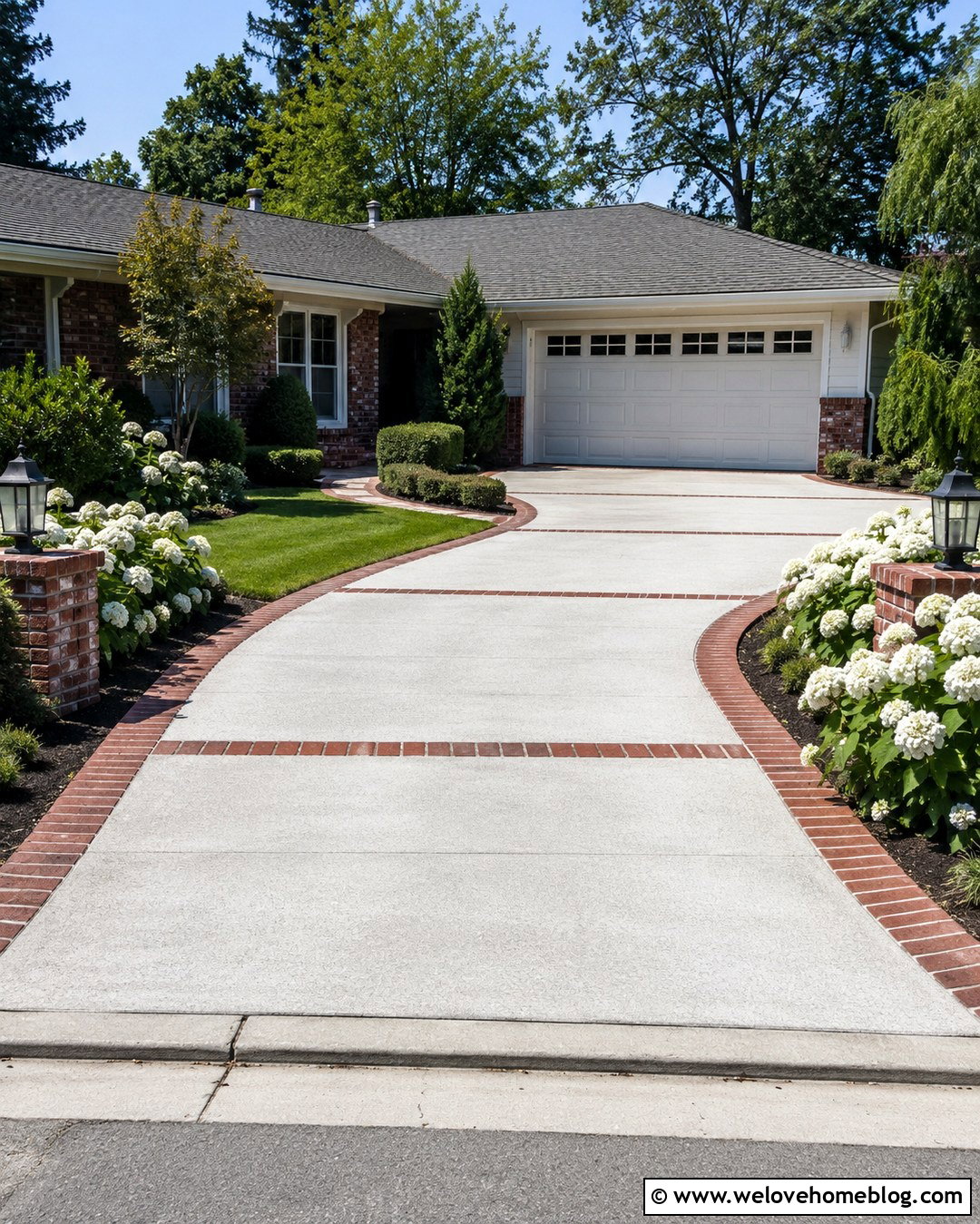
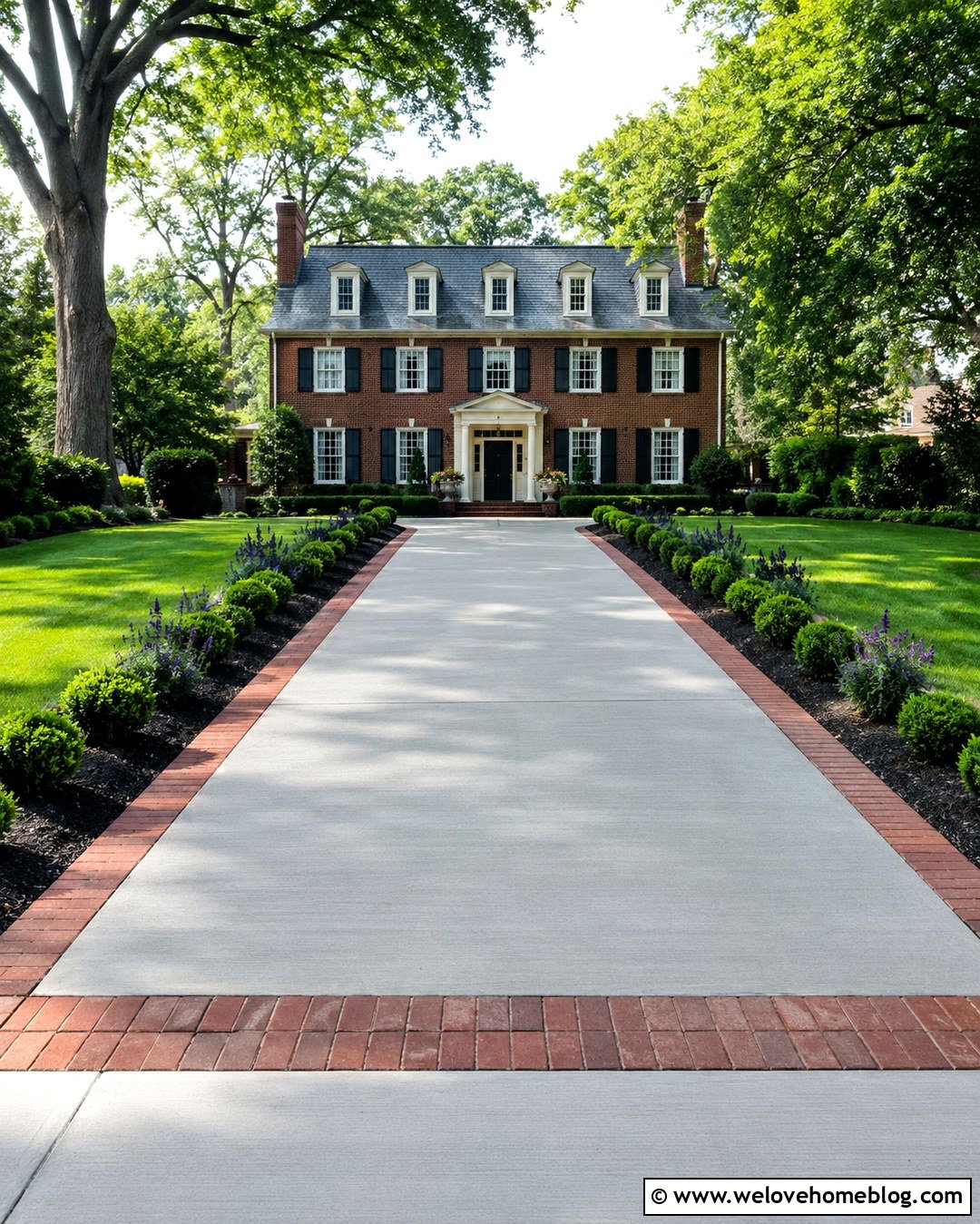
Red brick kerbing adds warmth and definition to a broad gray concrete driveway. It is particularly effective when the house has brick chimneys, red masonry accents, or a traditional front porch. Rather than outlining only the outer edges, continue the brick across the driveway as a decorative ribbon near the street or garage. This creates visual sections within a large slab and makes the design feel more detailed. Keep the concrete finish smooth or lightly broomed so it does not compete with the textured clay border. Curved garden beds filled with white flowering shrubs, dark green evergreens, and mulch can follow the brick line. Use rounded transitions at the entrance instead of tight corners, which may be harder for vehicles to navigate comfortably.
13. Curved Driveway With Granite Kerbing
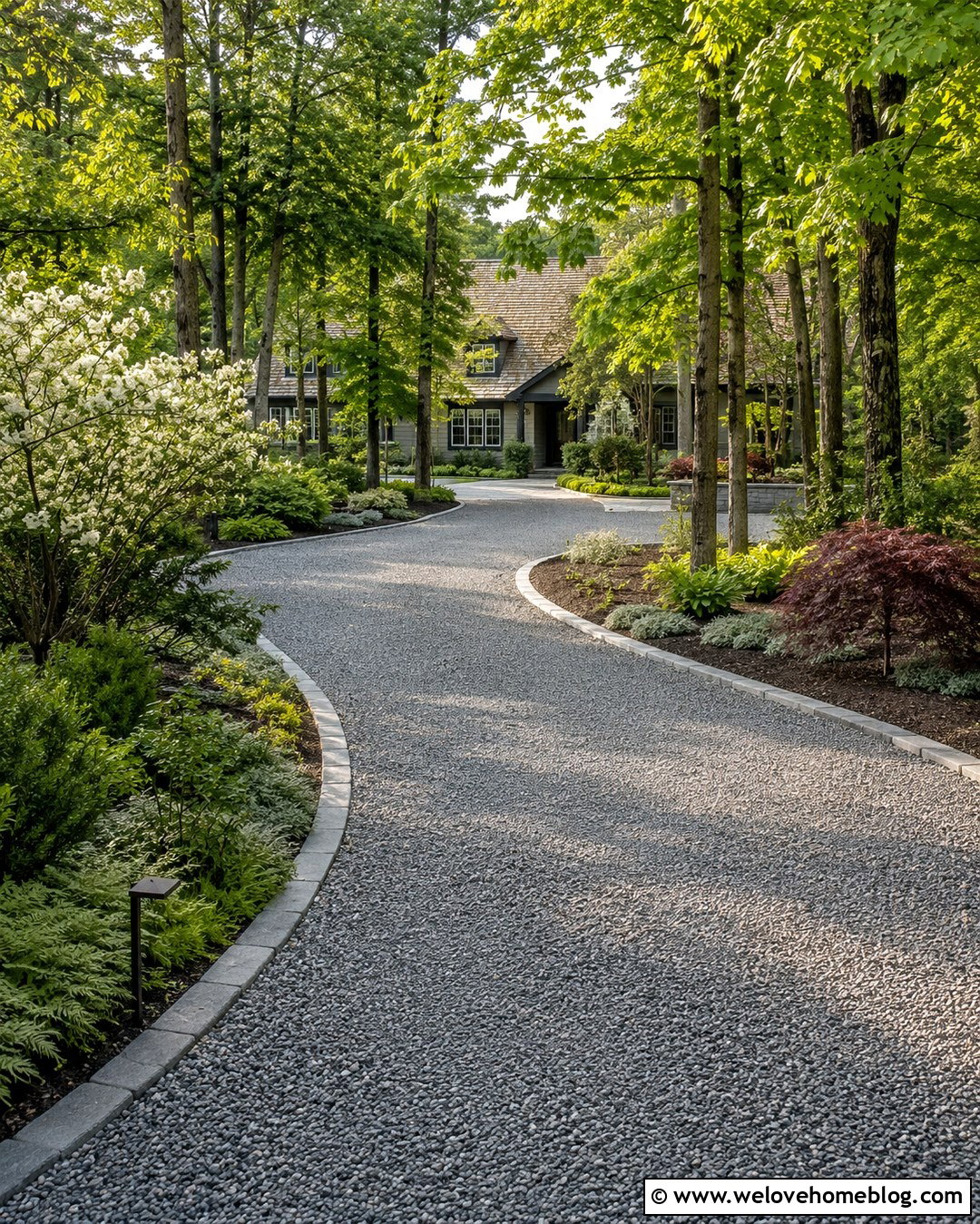
Long curved driveways need kerbing that emphasizes the route without making the landscape feel rigid. Silver-gray granite kerbs create a durable outline beside a fine gray gravel or asphalt surface. Use longer kerb units on gentle sections and shorter sets around tighter bends to produce smooth, natural-looking curves. A tree-lined approach can include maples, serviceberries, or other regionally appropriate trees positioned well beyond vehicle clearance. Beneath them, simple ground covers and mulched planting beds reduce visual clutter. Place low marker lights behind the kerbing rather than directly in the driving surface. Near the house, widen the border around a parking court or turning area. Repeating the same granite in the walkway steps creates a coordinated arrival sequence from the road to the front door.
14. Permeable Paver Driveway With Flush Kerbing
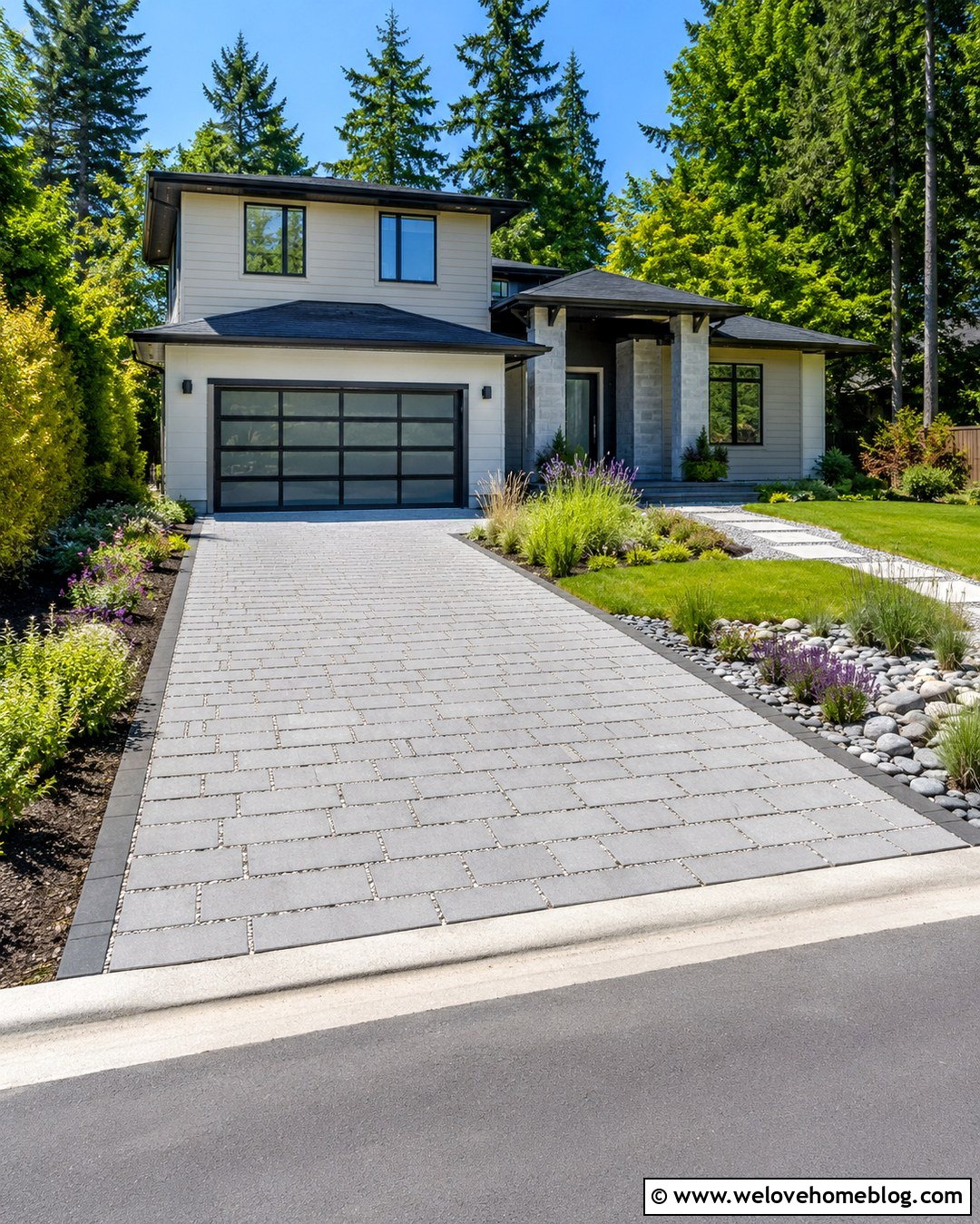
Permeable concrete pavers can create a practical driveway that also looks refined. Choose medium-gray rectangular pavers with visible stone-filled joints, then frame them with darker flush kerbing. The border should provide enough restraint to keep the paving field stable without blocking the intended drainage system. () A straight driveway can slope gently toward a planted rain garden positioned away from the house. Use moisture-tolerant ornamental grasses, flowering perennials, and smooth river stones within that garden. Keep the lawn edge simple so the paver joints remain the main texture. The base, soil conditions, drainage route, kerb construction, and possible underdrain must be designed as one system. This prevents a decorative border from interfering with how the permeable driveway manages water.
15. Driveway With Scalloped Concrete Kerbing
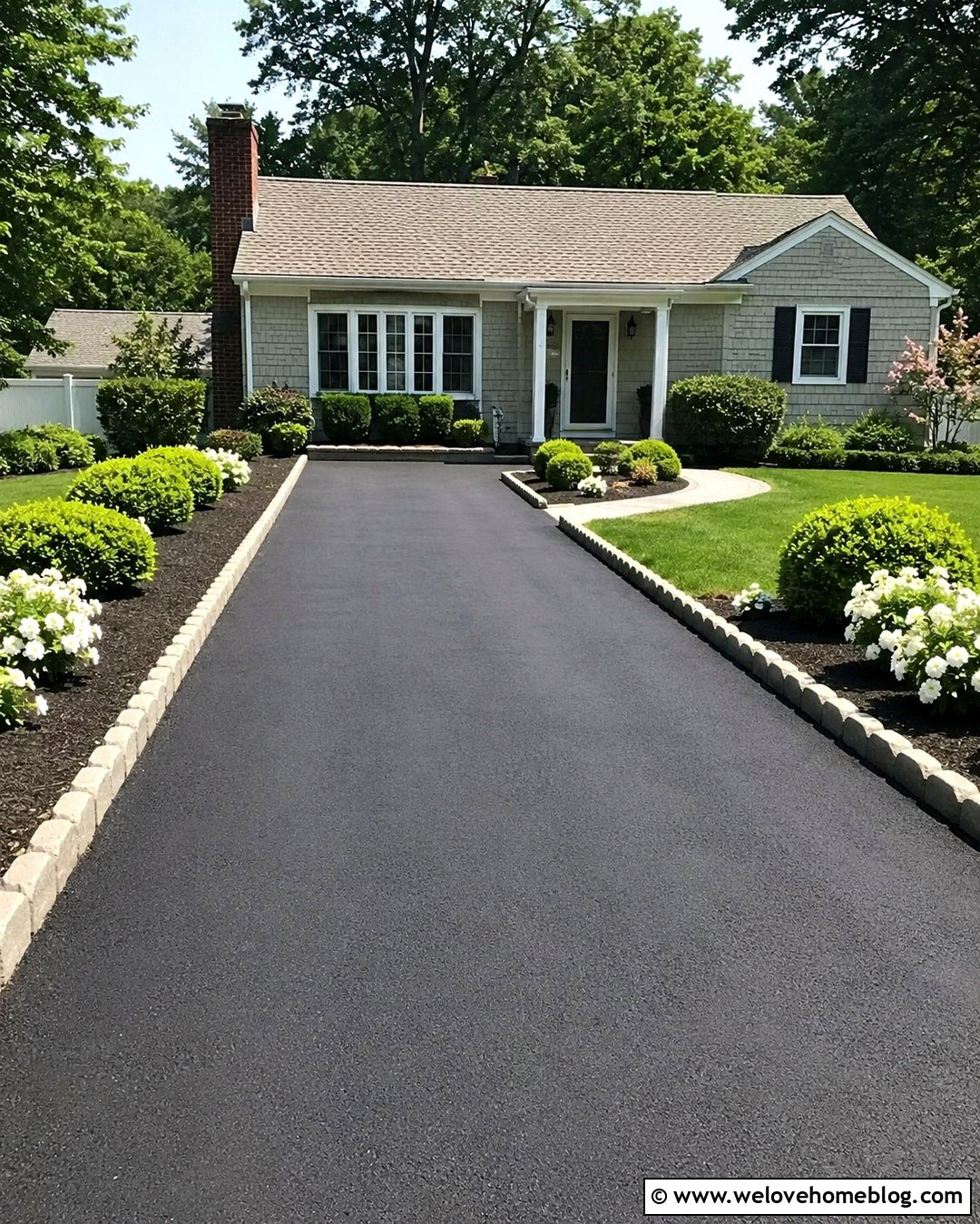
Scalloped concrete kerbing can suit a modest suburban driveway when its decorative shape is used carefully. Pair a simple black asphalt surface with low, warm-gray scalloped curbs rather than highly colored edging. Keep the driveway straight and surround it with a neat lawn, rounded evergreen shrubs, and a limited selection of flowering plants. The repeating curves bring softness to a ranch or cottage-style home without requiring an expensive paving pattern. Avoid combining scalloped kerbs with many other ornate materials, since the overall yard may become visually crowded. Install the units at a consistent height and use smooth transition pieces near the sidewalk and garage. A matching curved planting bed near the house will make the kerbing feel integrated instead of added as an isolated decoration.
16. Raised Block Kerbing With Planting Beds
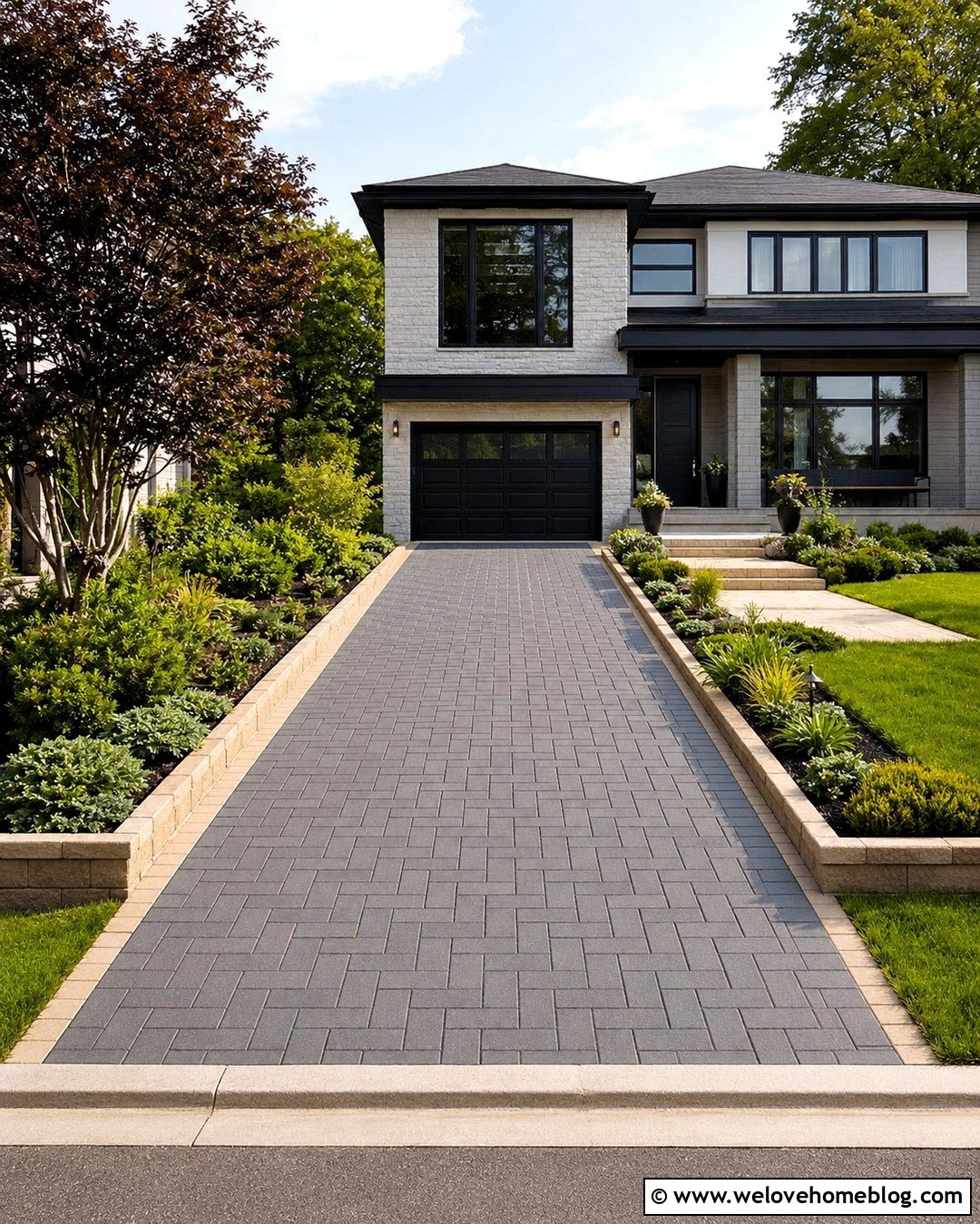
Raised block kerbing can turn the edges of a driveway into clearly defined garden beds. Start with a charcoal block paving driveway in a basketweave or herringbone pattern. Add tan bullnose kerb blocks along both sides, raising them enough to retain soil and mulch without creating an unnecessarily tall wall. Behind the kerbs, layer low ground covers, compact shrubs, and narrow ornamental grasses. Keep mature plant widths in mind so foliage does not hang over parking space. This design is useful where the lawn sits slightly above the driveway or where shallow beds need separation from vehicle areas. Include breaks for the front walkway, drainage, and utility access. Use matching tan blocks around porch steps or path edges to tie the complete front-yard design together.
17. Driveway Kerbing With Channel Drainage
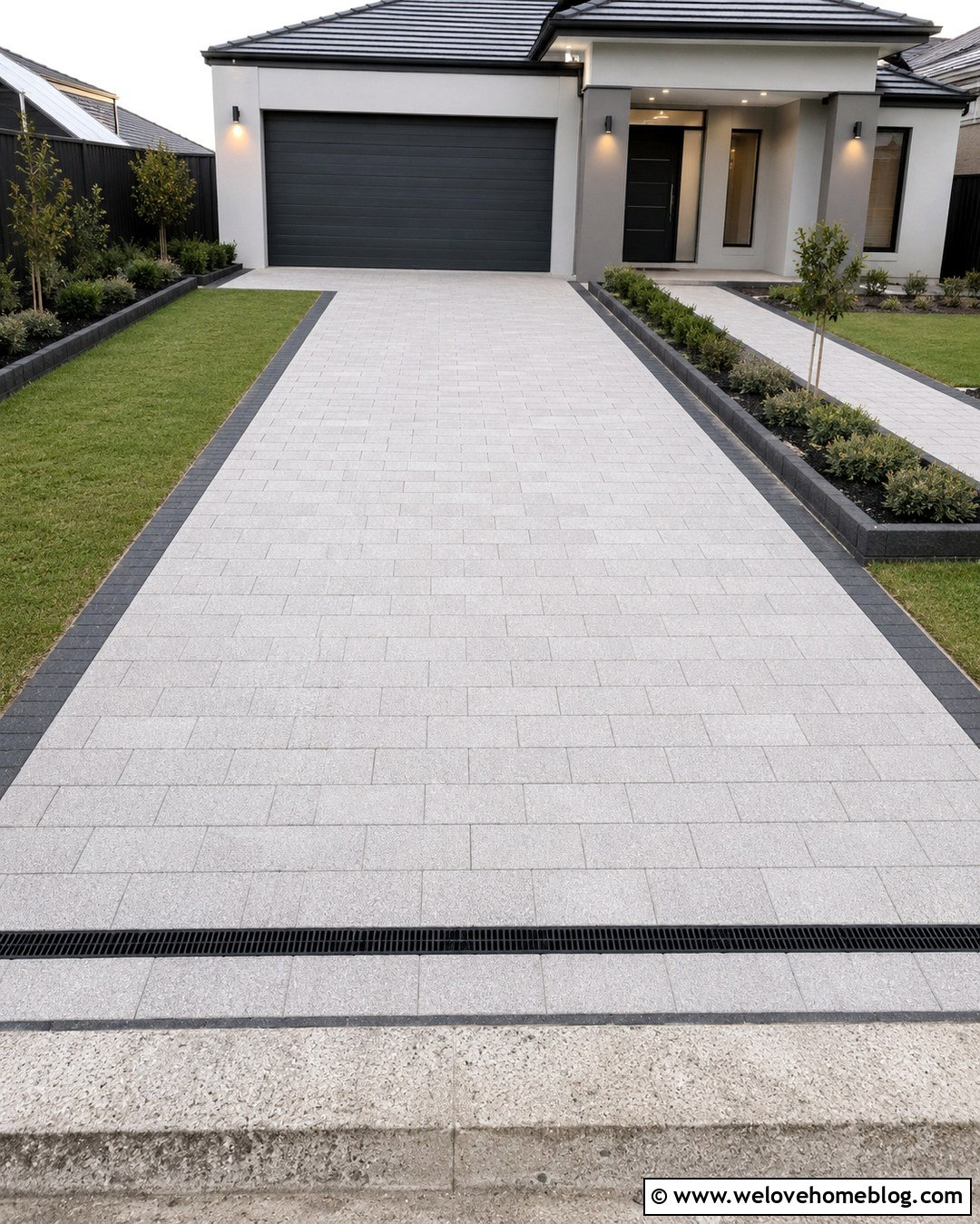
Where runoff collects near a garage, combine sturdy kerbing with a properly positioned channel drain. A light gray concrete block driveway can have charcoal kerbs along the sides and a slim, vehicle-rated drainage channel across the lower end. Align the dark channel grate with a matching paver ribbon so the drainage feature looks intentional. On a modern suburban property, use straight planting beds, trimmed lawn, and low shrubs to reinforce the orderly layout. The driveway surface should direct water toward the channel without forming low spots beside the kerbing. The drain also needs a lawful, suitable outlet rather than simply moving water toward neighboring land or the street. Because levels determine whether the system works, establish finished heights before installing the driveway surface, edge restraints, or garage threshold.
18. Split Driveway With Central Kerbing
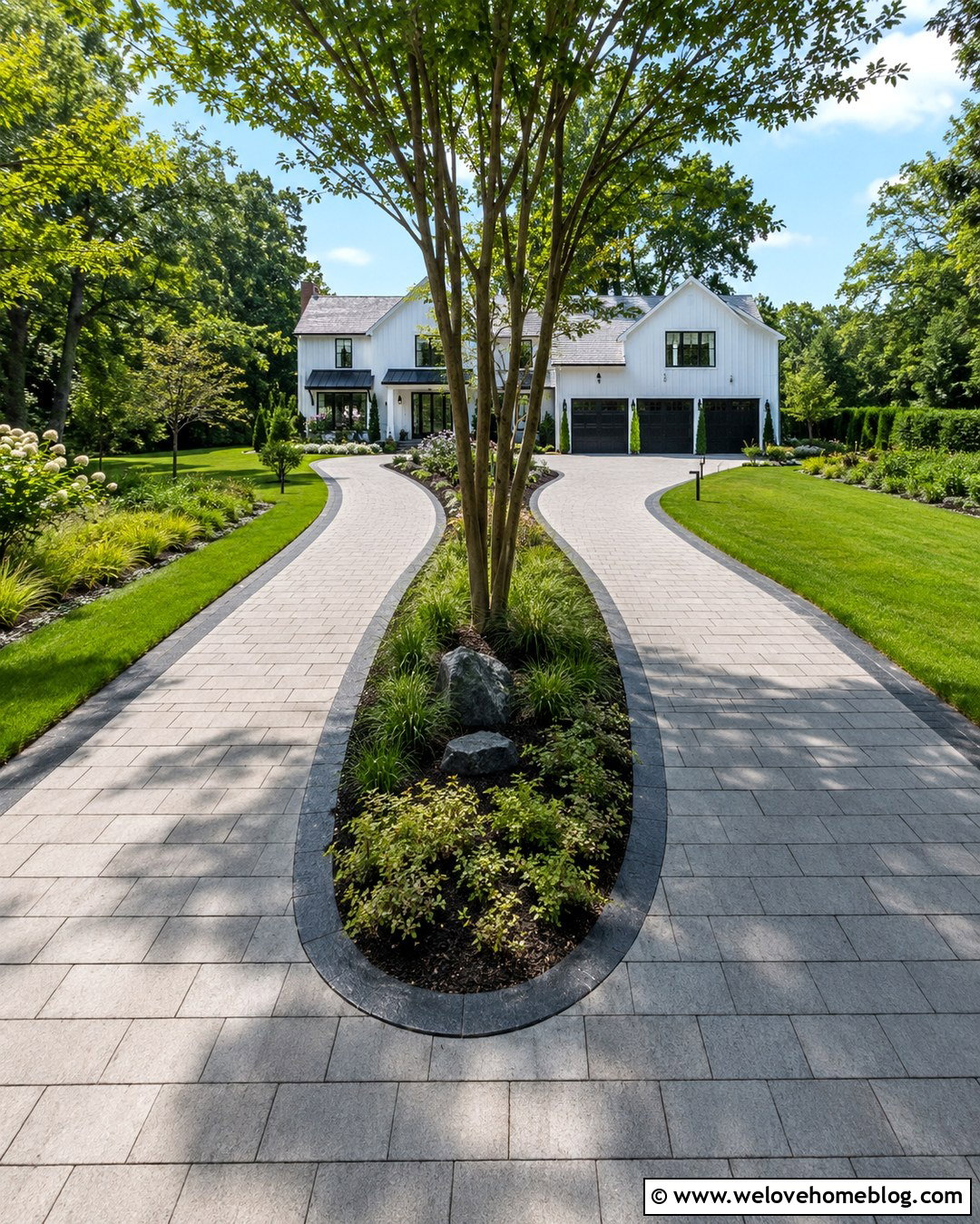
A split driveway can look more organized when a kerbed planting strip separates the entry and exit lanes. Surface both lanes with warm gray concrete pavers in a running bond pattern. Use dark granite set kerbing around a long, tapered central island and along the outside edges. Plant the island with a small multi-stem tree, low ornamental grasses, and spreading ground covers that will not obstruct visibility. The two lanes can reconnect near a modern farmhouse garage or form part of a horseshoe layout. Keep the island narrow enough to preserve comfortable driving space but wide enough to protect plant roots. Repeat the granite around the front walkway and entrance apron. This creates a connected design rather than making the central bed appear randomly placed.
19. Coastal Gravel Driveway With Limestone Kerbing
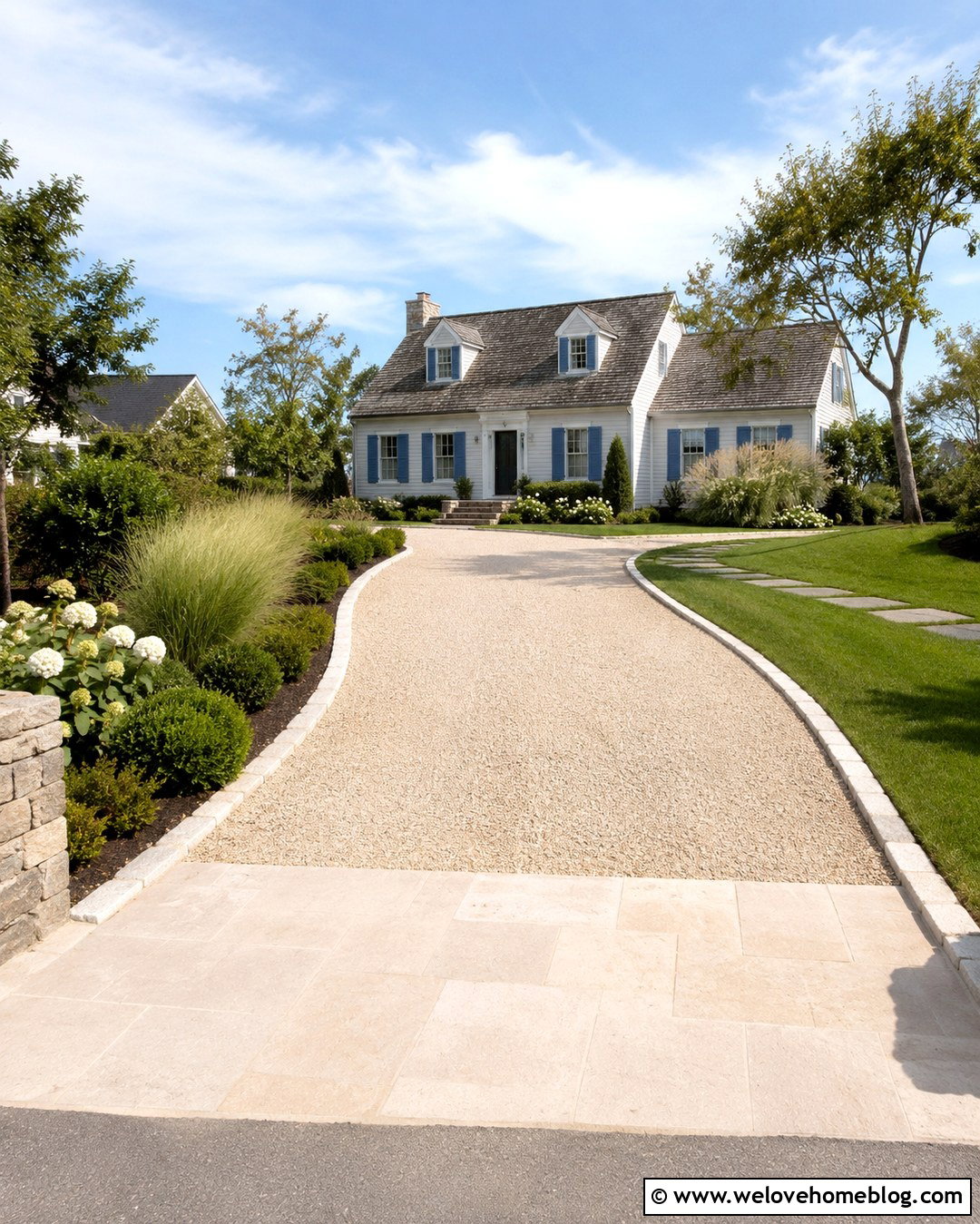
Pale limestone kerbing creates a relaxed border for a coastal-inspired gravel driveway. Choose compacted buff gravel or crushed shell-colored stone for the surface, then frame it with creamy sawn limestone blocks. A softly curved driveway can lead toward a light-sided Cape Cod or coastal cottage with blue-gray shutters. Surround the edges with salt-tolerant grasses, low evergreen shrubs, and drifts of white flowers suited to the local climate. Keep mulch and plant growth behind the kerbing so loose organic material does not mix with the pale driveway. At the entrance, use a wider limestone apron to create a strong transition from the road. Since some limestone can stain or weather unevenly, select a dense exterior grade appropriate for driveway edges and regional conditions.

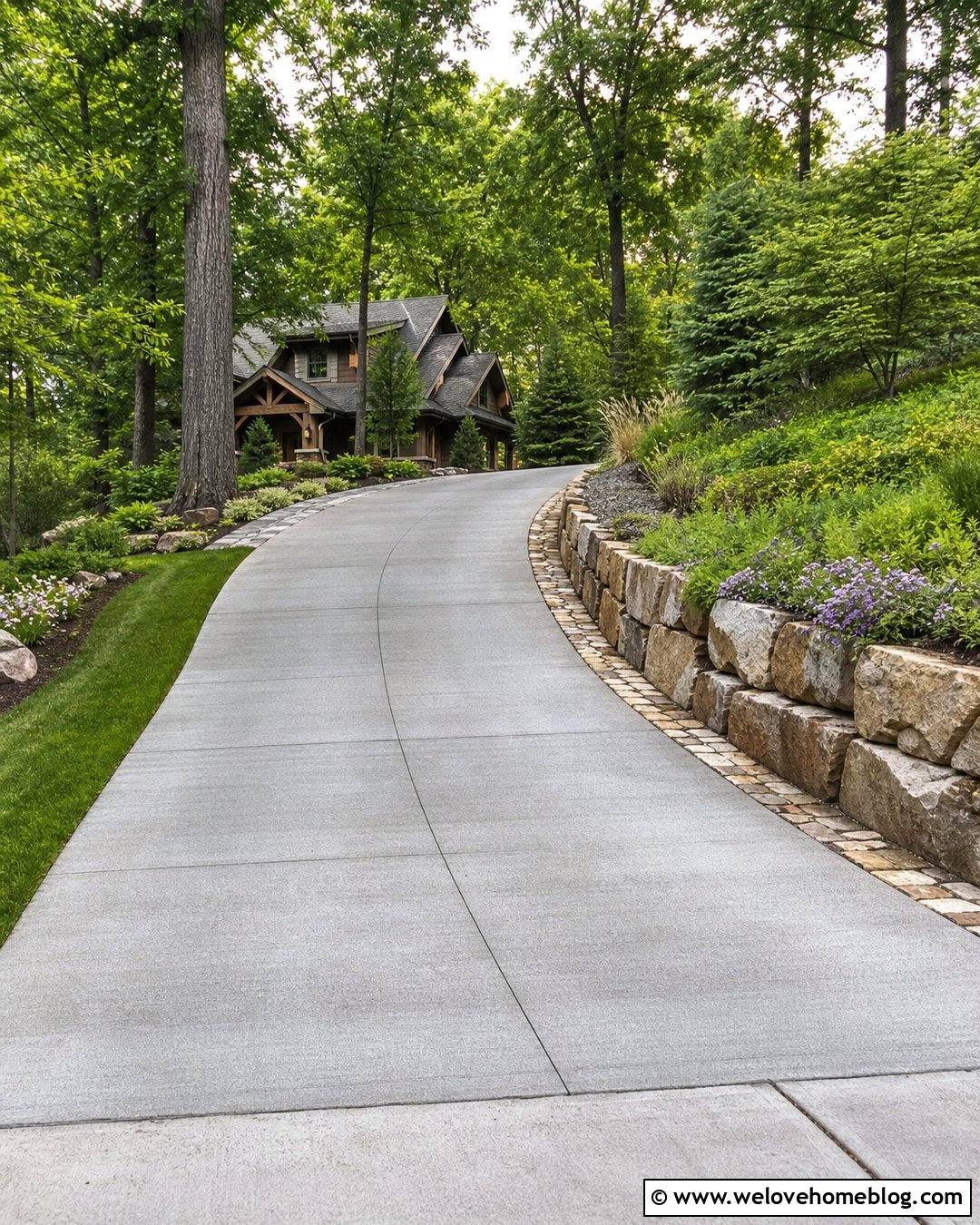
20. Gravel Driveway With Reclaimed Brick Kerbing
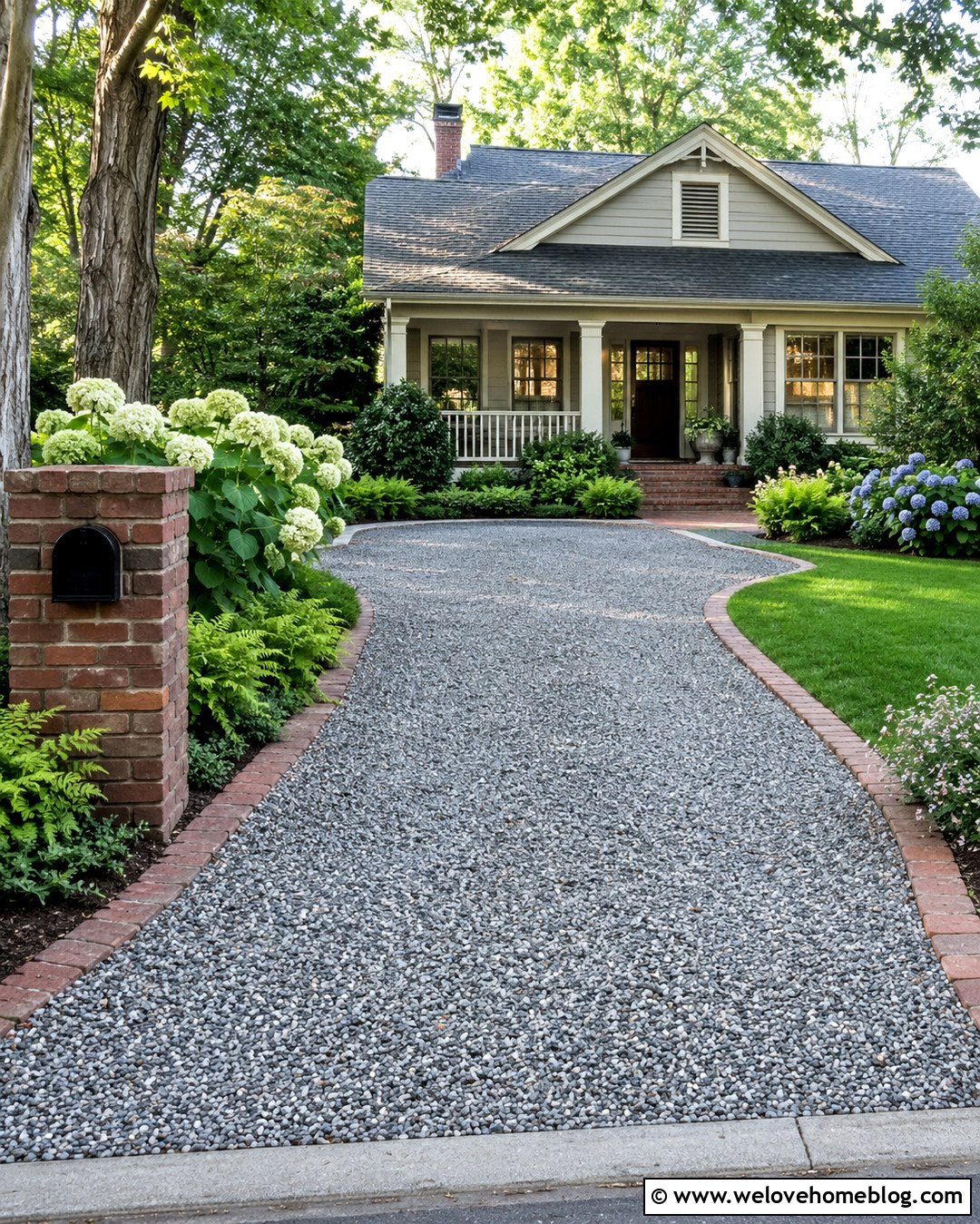
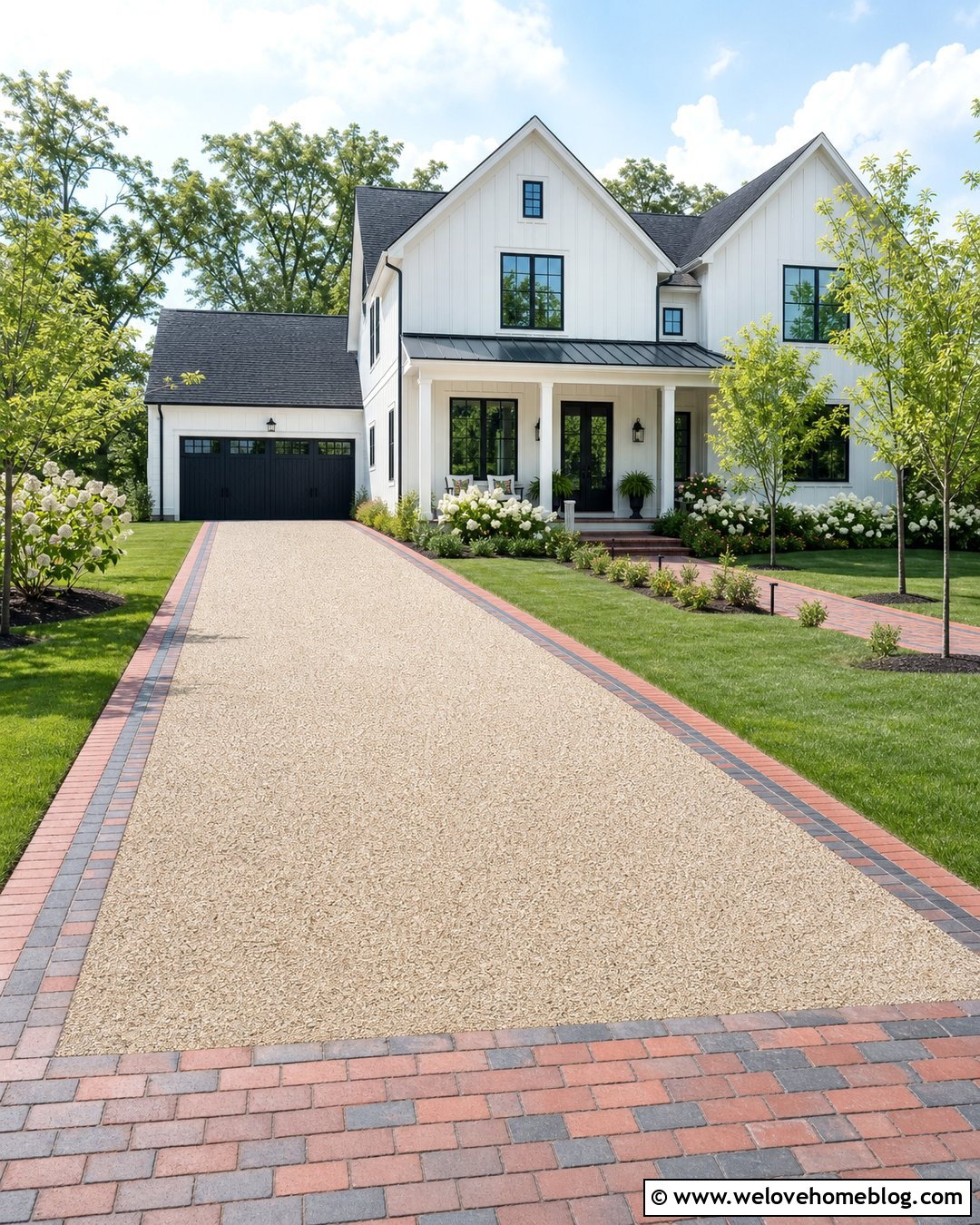
Reclaimed brick kerbing offers a character-rich way to finish an affordable gravel driveway. Use compacted gray crushed stone as the main surface and frame it with mixed red and brown bricks laid in a single soldier course. Slight color variation complements older cottages, bungalow homes, and traditional garden landscapes. Keep the brick line even, despite the weathered surfaces, so the finished edge looks intentional. A gently curved driveway can pass beds of hydrangeas, ferns, flowering perennials, and small evergreen shrubs. Inspect reclaimed bricks before installation and reserve damaged pieces for non-traffic garden areas. Set suitable bricks on a stable base with strong support at corners and turning points. Repeat them in the walkway border or mailbox surround to connect the driveway with the wider front yard.
Conclusion:
Effective driveway kerbing should look attractive while supporting the driveway surface, guiding vehicles, controlling loose material, and connecting the hardscape with the yard. Granite and Belgian block provide a substantial traditional finish, while smooth concrete, charcoal pavers, and steel suit cleaner modern designs. Brick, sandstone, limestone, and timber introduce warmer color and texture. Before choosing a border, consider vehicle movement, driveway slope, drainage, maintenance, climate, and the architecture of the house. Kerbing should be installed as part of the driveway system rather than treated as a decorative afterthought. Use these **20 Driveway Kerbing Ideas** to create an approach that feels complete, practical, and welcoming from the curb.

Related posts:
Leave a Reply