
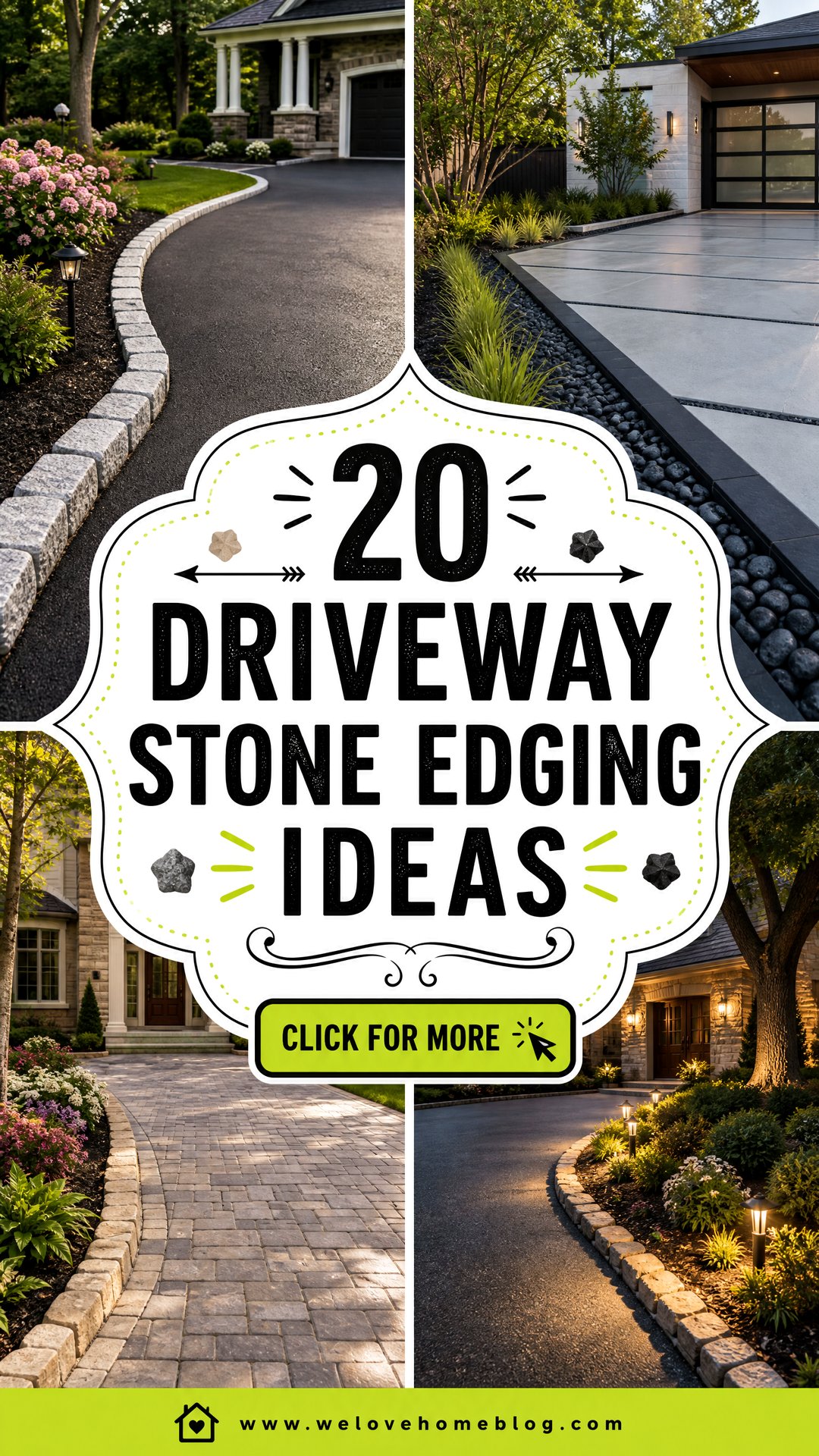
Stone edging can turn an ordinary driveway into a polished part of the landscape. These **20 Driveway Stone Edging Ideas** cover natural, traditional, rustic, and modern combinations for gravel, asphalt, concrete, resin, and paver surfaces. A well-planned border can help contain loose aggregate, separate pavement from planting beds, and create a clear transition between the driveway and lawn. Stone also brings color and texture closer to the house, making the entire front yard feel connected. () Choose an edging scale that suits the driveway width, and coordinate its tone with the facade, walkway, or retaining walls. From formal granite blocks to relaxed fieldstone borders, explore these **20 Driveway Stone Edging Ideas**.
1. Gravel Driveway With Cobblestone Edging
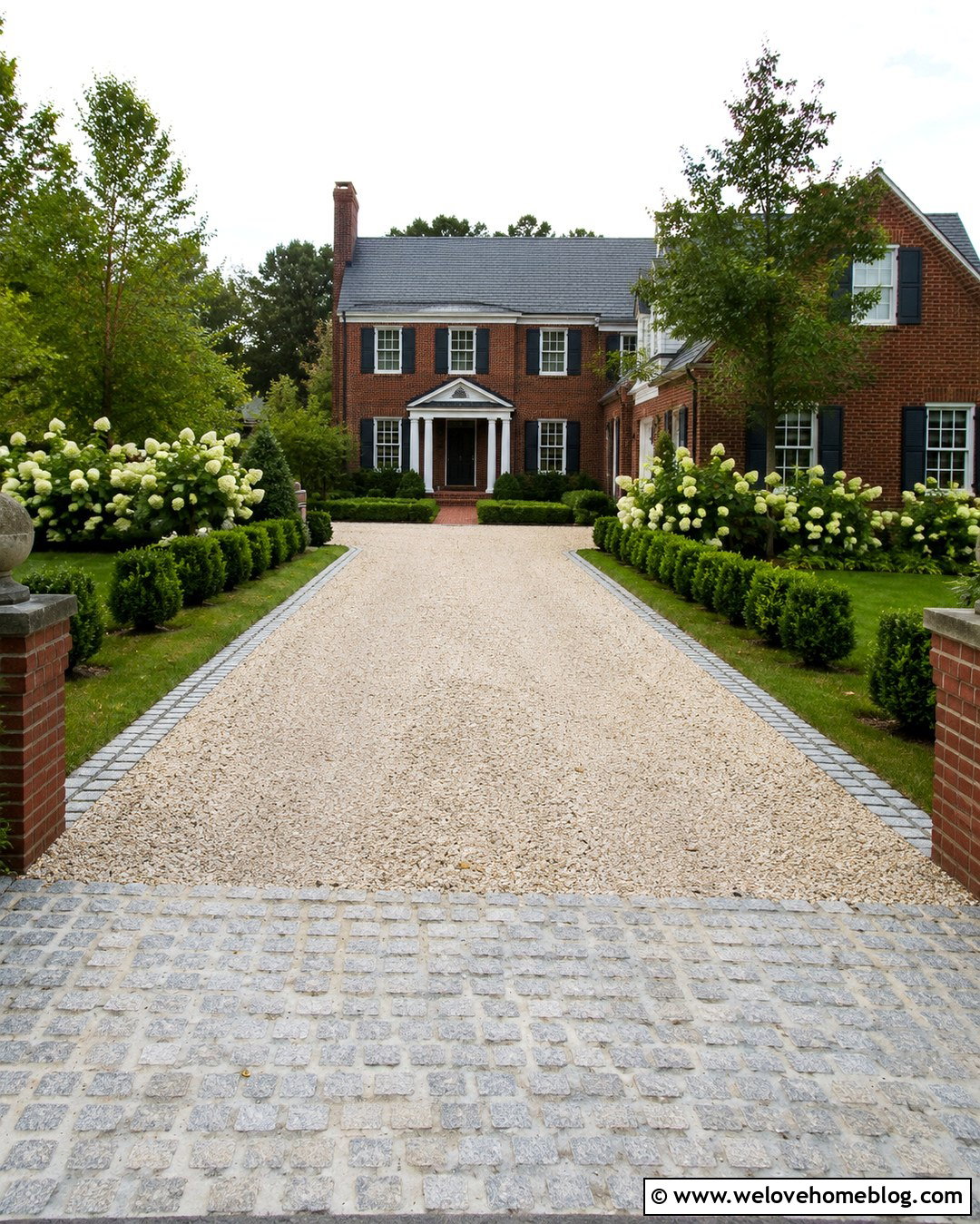
A pale gravel driveway framed with dark cobblestones offers strong contrast and dependable definition. The combination works especially well on a straight driveway leading to a traditional brick, Colonial, or Cape Cod home. Set the cobblestones in one continuous row for a simple border, or use two rows where the driveway meets planting beds. Charcoal, gray, and weathered brown stones hide tire marks and visually anchor light gravel. Add clipped boxwoods, hydrangeas, or ornamental grasses behind the edging to soften its weight. At the street, widen the cobblestone border into a matching apron. This makes the entrance feel intentional while connecting both sides of the driveway. Keep the stones level enough that vehicle doors and lawn equipment can pass comfortably.
2. Concrete Driveway With Granite Block Edging
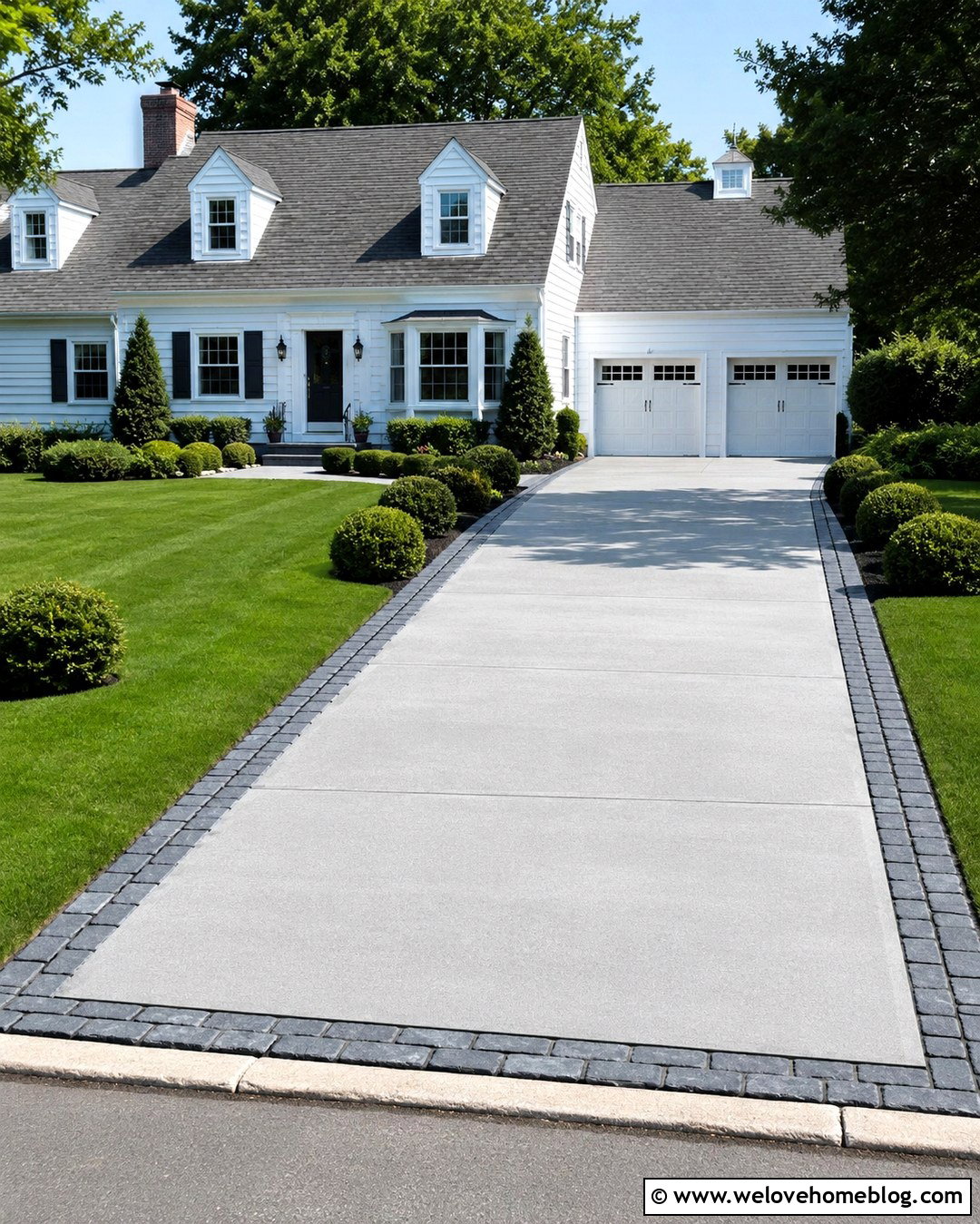
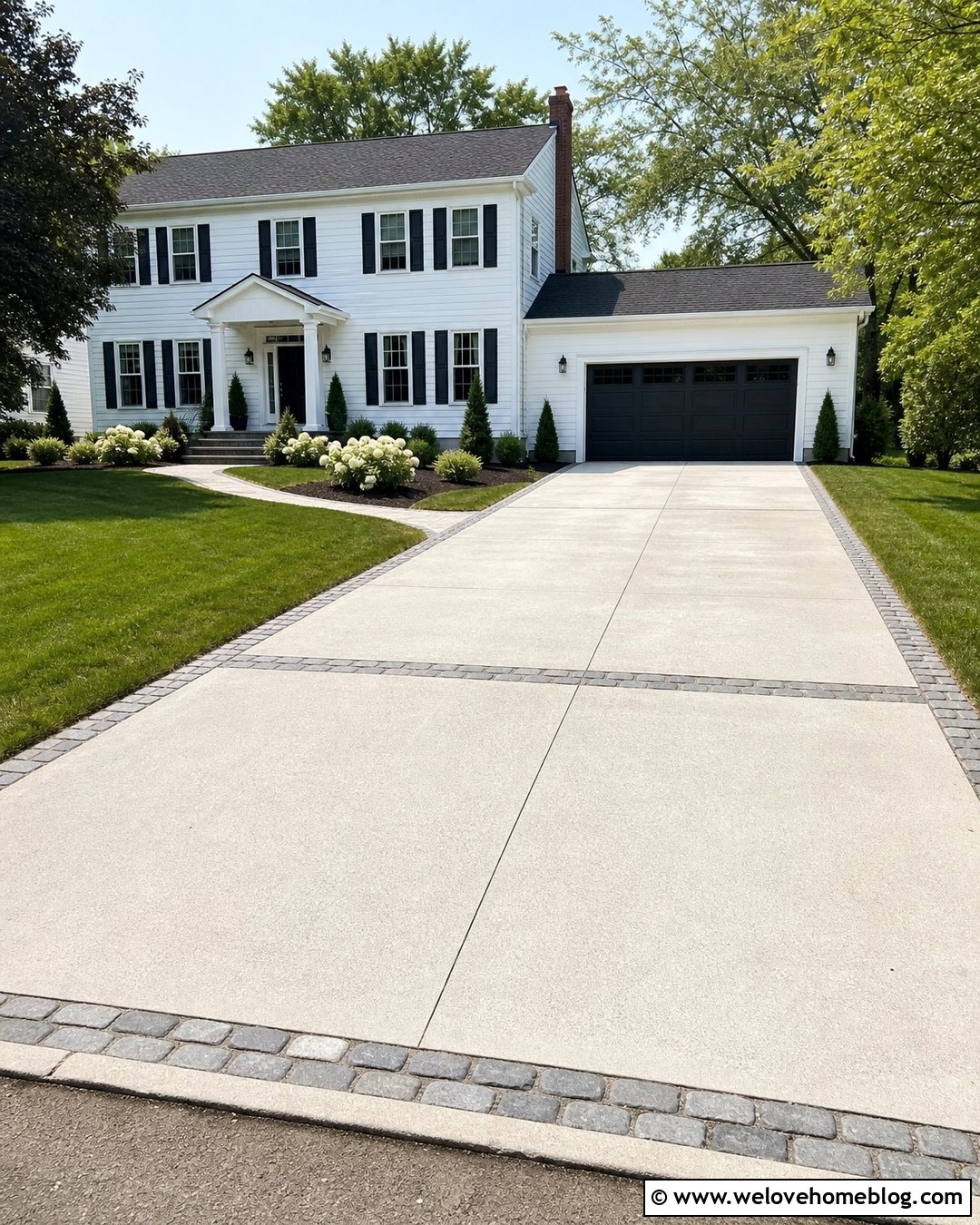
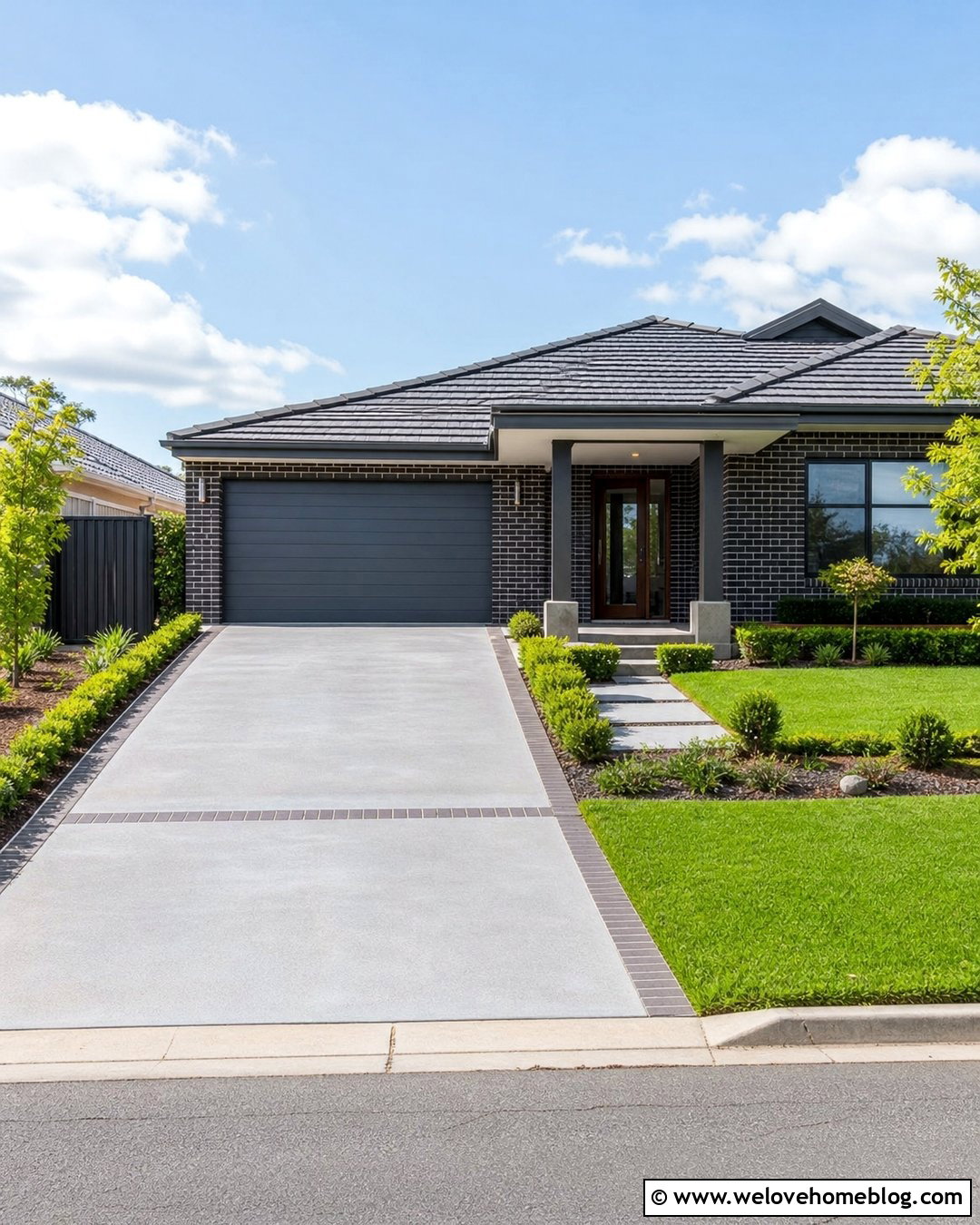
Clean granite blocks give a poured concrete driveway a more finished and substantial appearance. Choose medium-gray blocks for a quiet tonal effect or darker charcoal granite for a sharper outline. On a wide, straight driveway, a double border can balance the broad concrete surface. A single flush-set row is better for a compact front yard because it provides definition without taking up planting space. Continue the same granite beside the front walkway to visually connect the garage and main entrance. Low evergreen shrubs and neat lawn panels reinforce the structured look. Granite blocks can also form a contrasting band across the driveway near the sidewalk or garage. Proper base preparation and edge restraint are important where vehicles may regularly cross or press against the border.
3. Asphalt Driveway With Belgian Block Edging
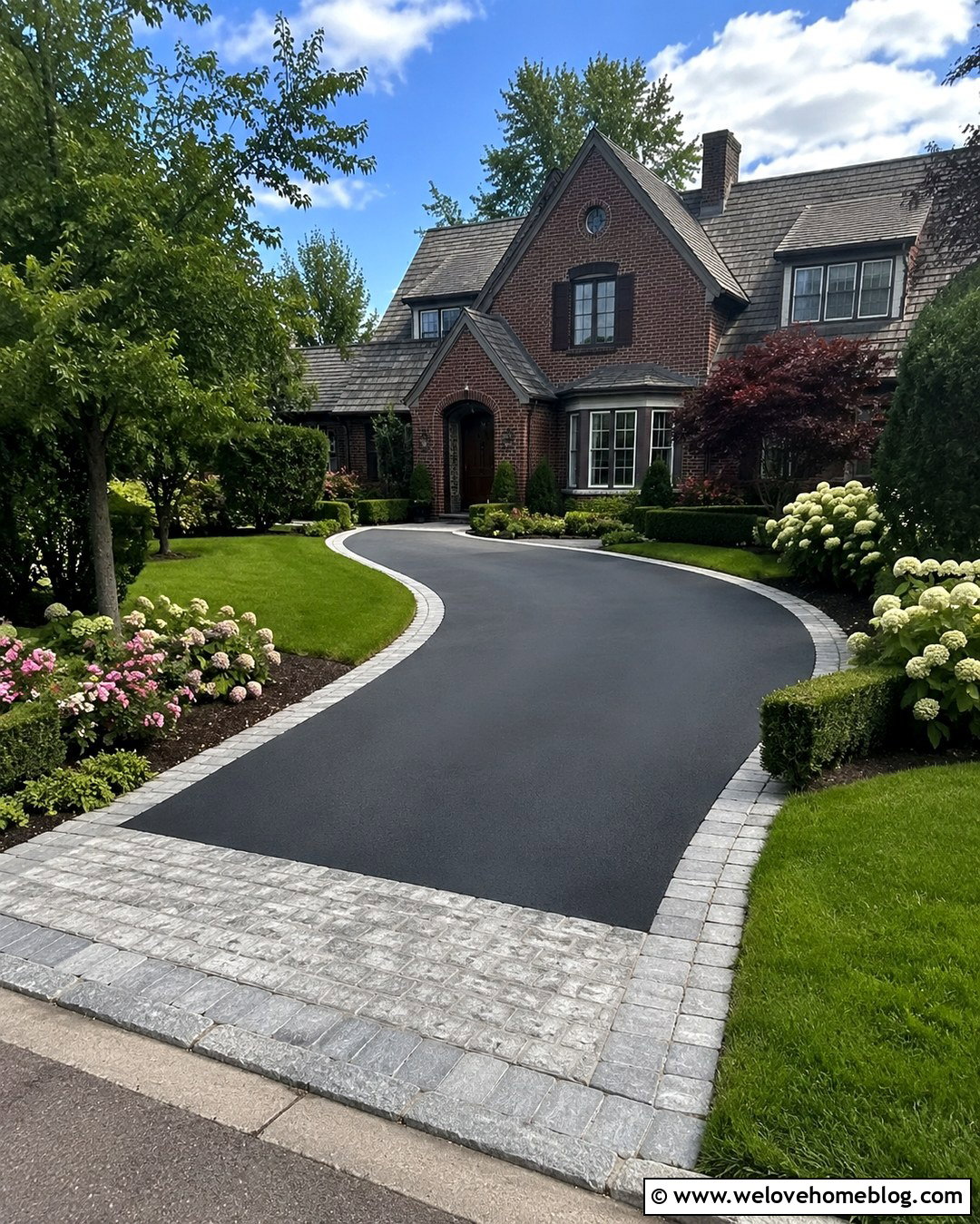
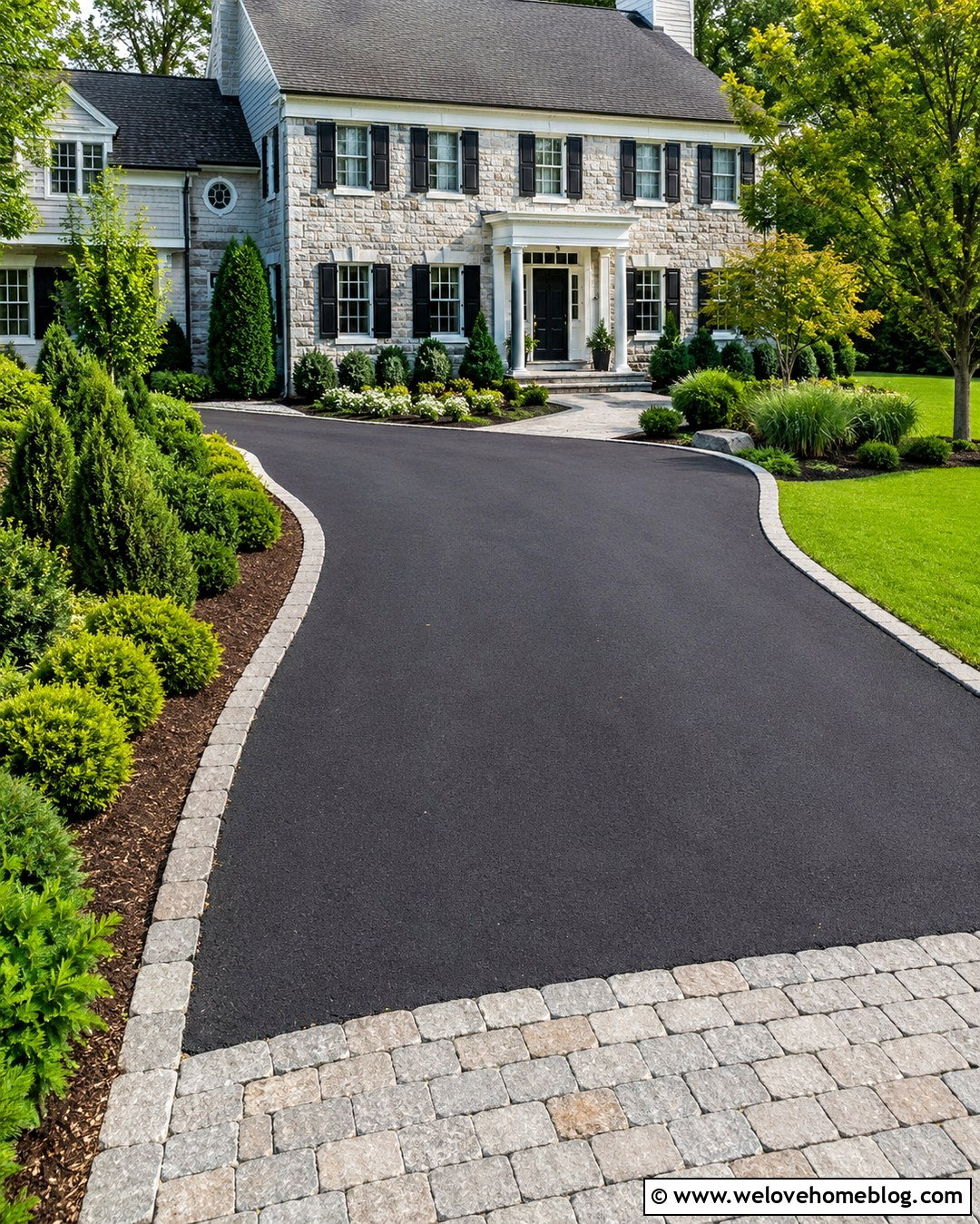
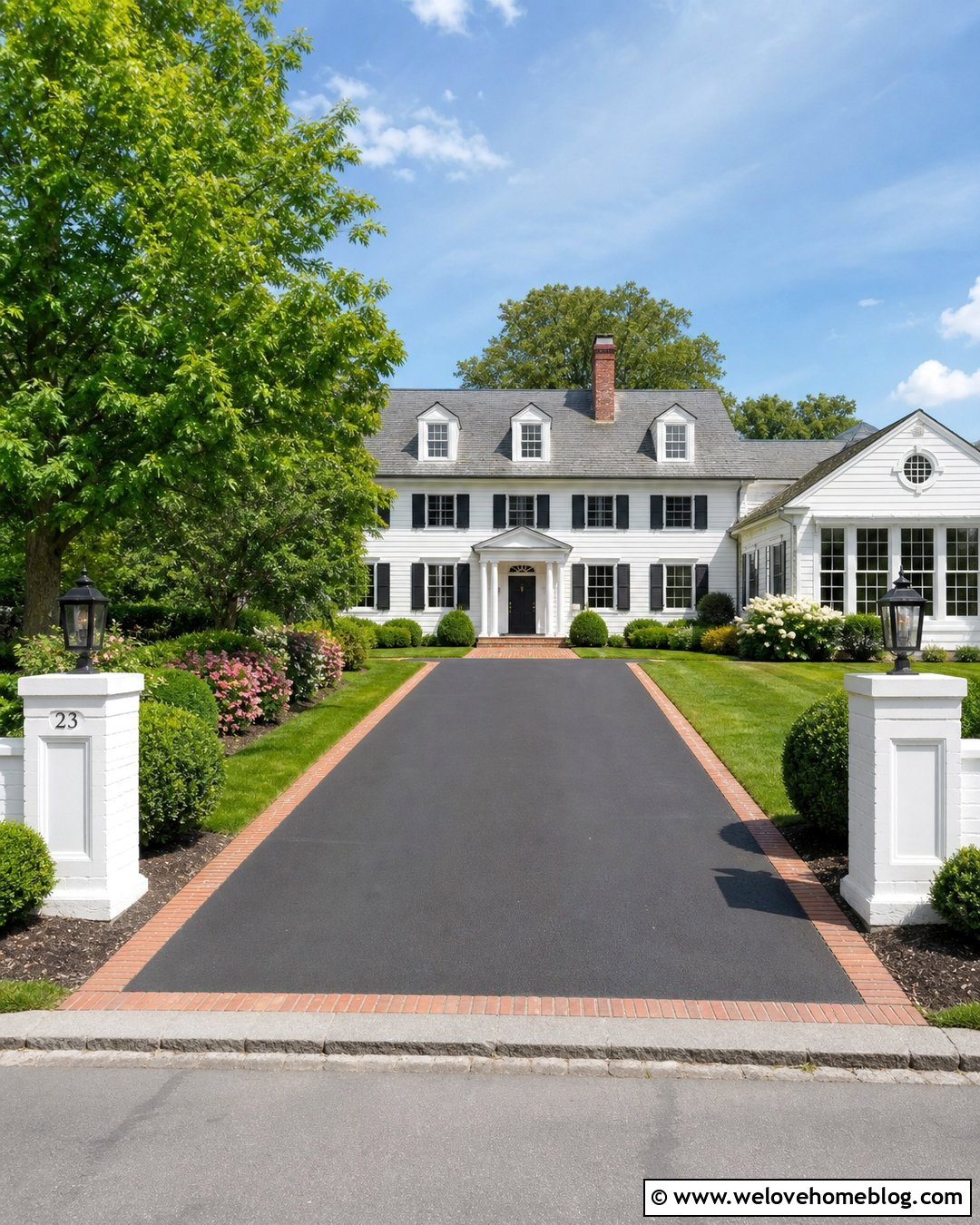
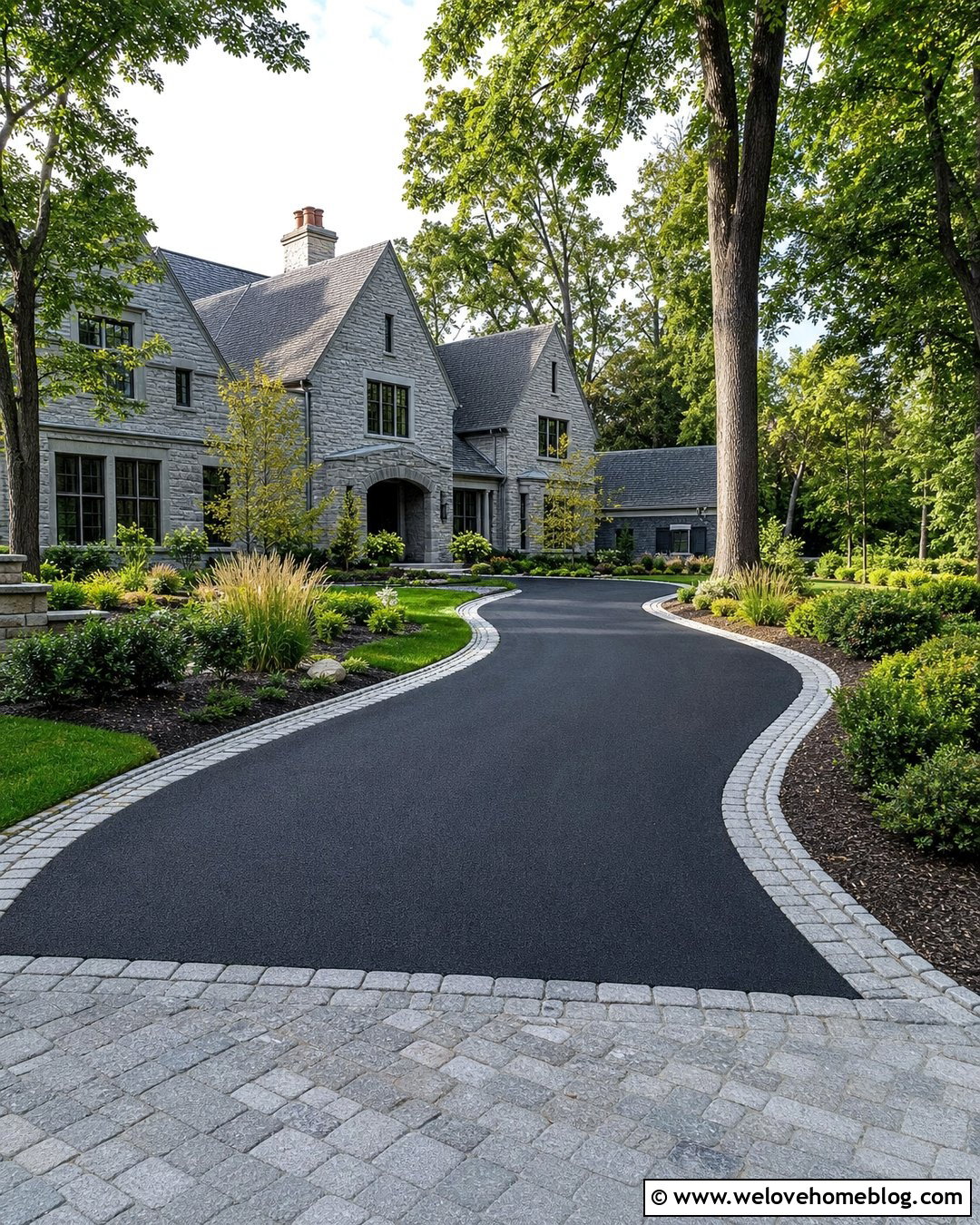
Black asphalt and light-gray Belgian blocks create a classic border that feels equally suitable for traditional and updated homes. The pale stone breaks up the dark pavement and makes curved or uneven edges look more deliberate. Install the blocks slightly raised when the goal is to separate asphalt from mulch beds. A flush installation creates a cleaner mowing edge beside lawn. For a cohesive entrance, carry the same Belgian blocks across the driveway as an apron and around nearby tree beds. White flowering shrubs, deep green hedges, and a red brick facade complement this high-contrast combination. Stone edging also helps visually define asphalt boundaries, particularly where the pavement meets soft landscaping. () Use wider blocks around curves so the border does not appear fragmented.
4. Curved Driveway With Fieldstone Edging
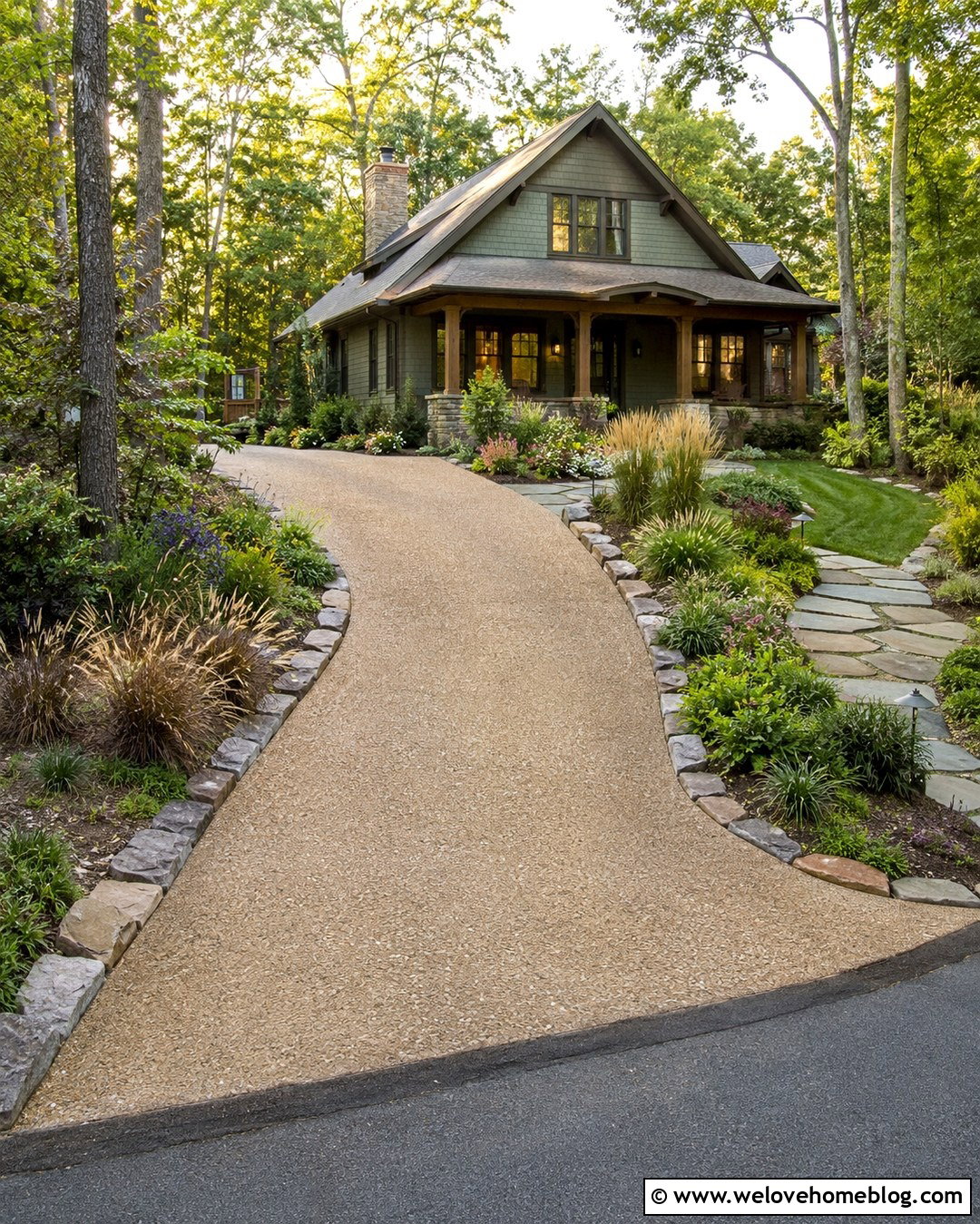
Irregular fieldstones emphasize the relaxed shape of a curved driveway without making it look overly formal. Their varied sizes, softened edges, and earthy colors feel natural beside gravel, exposed aggregate, or lightly textured concrete. Select stones with similar heights so the finished border remains consistent, even when the faces vary. Along the outside curve, create broad planting beds filled with ornamental grasses, flowering perennials, and low shrubs. The inside curve can remain simpler with lawn or ground cover, preventing the approach from feeling crowded. Fieldstone edging is particularly attractive beside Craftsman cottages, ranch homes, and wooded properties. Match a few of the stone colors to the home’s siding, chimney, or foundation. This small connection helps the winding driveway feel integrated with the architecture.
5. Pea Gravel Driveway With Limestone Edging
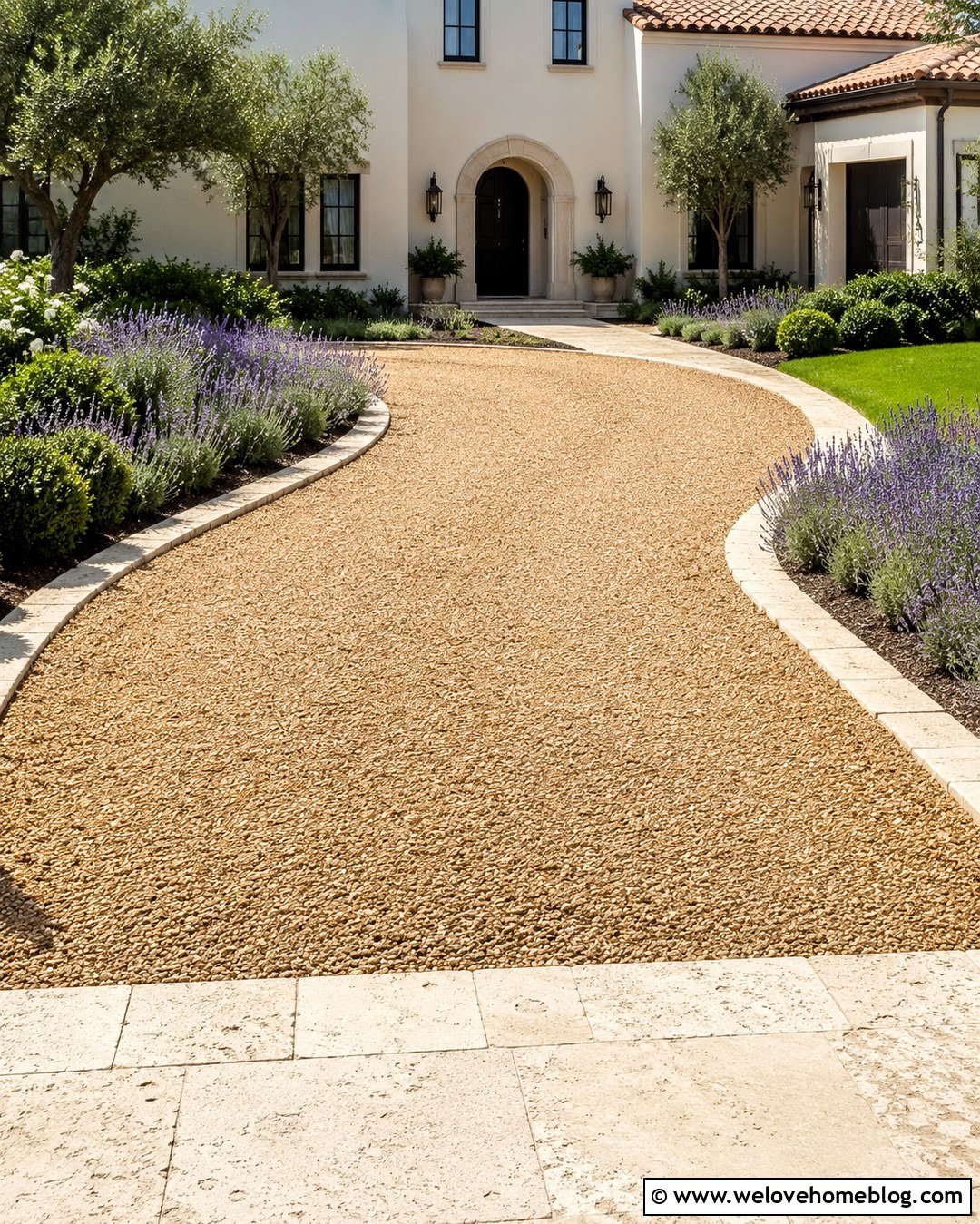
Warm limestone provides a soft, elegant frame for a cream or honey-colored pea gravel driveway. This light palette can brighten a shaded yard and complement beige siding, white stucco, or natural wood details. Use rectangular limestone setts for an orderly edge that keeps the rounded gravel visually contained. A gently curved layout prevents the pale surface from appearing too plain. Behind the stone, plant lavender, catmint, salvia, or compact grasses for movement and color. In wetter planting areas, leave a narrow drainage strip between the edging and dense vegetation. A wider limestone apron near the road gives the entrance extra presence and reduces the abrupt transition between gravel and pavement. Repeat limestone in the walkway or porch steps to create a unified front-yard design.
6. Modern Driveway With Black Stone Edging
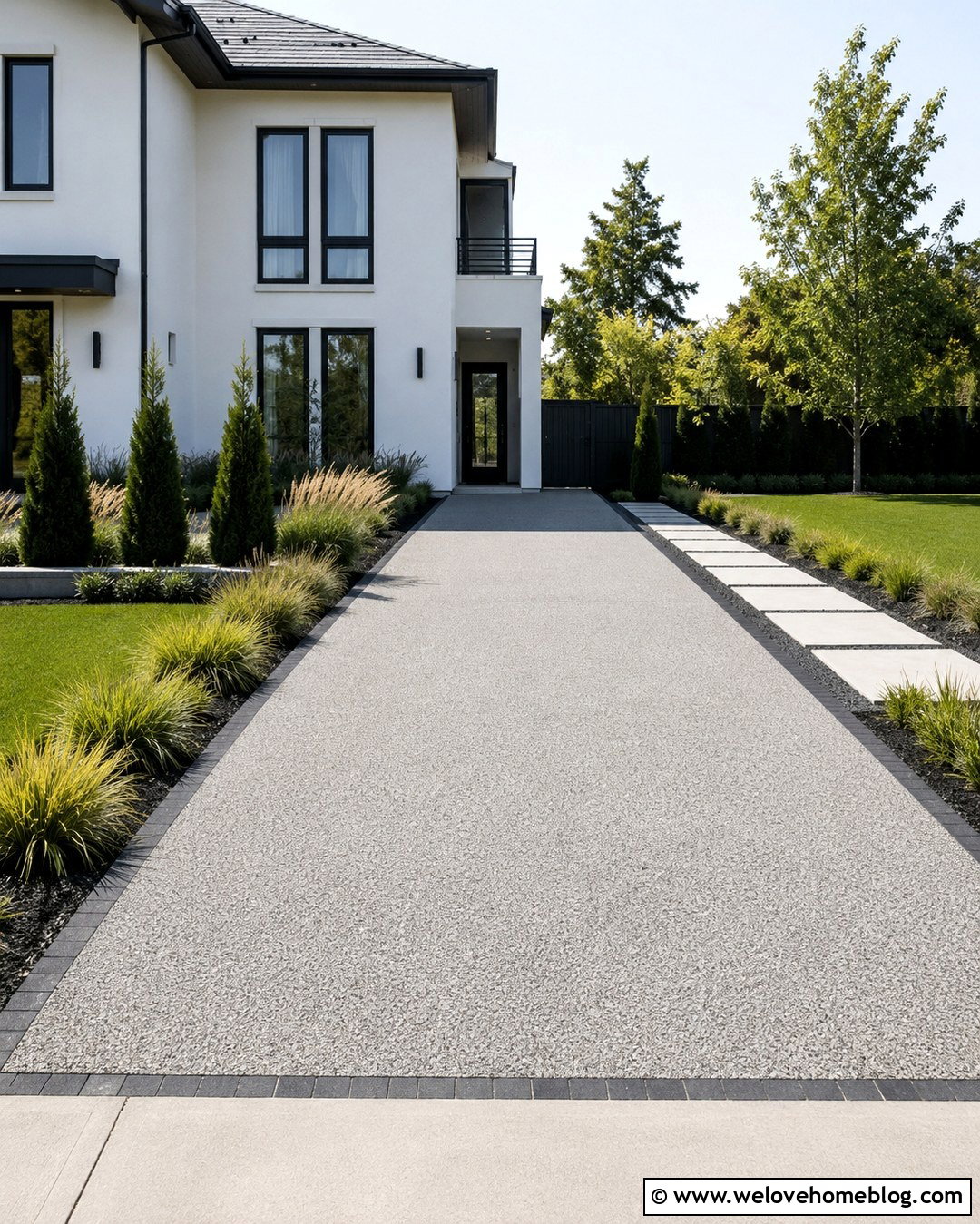
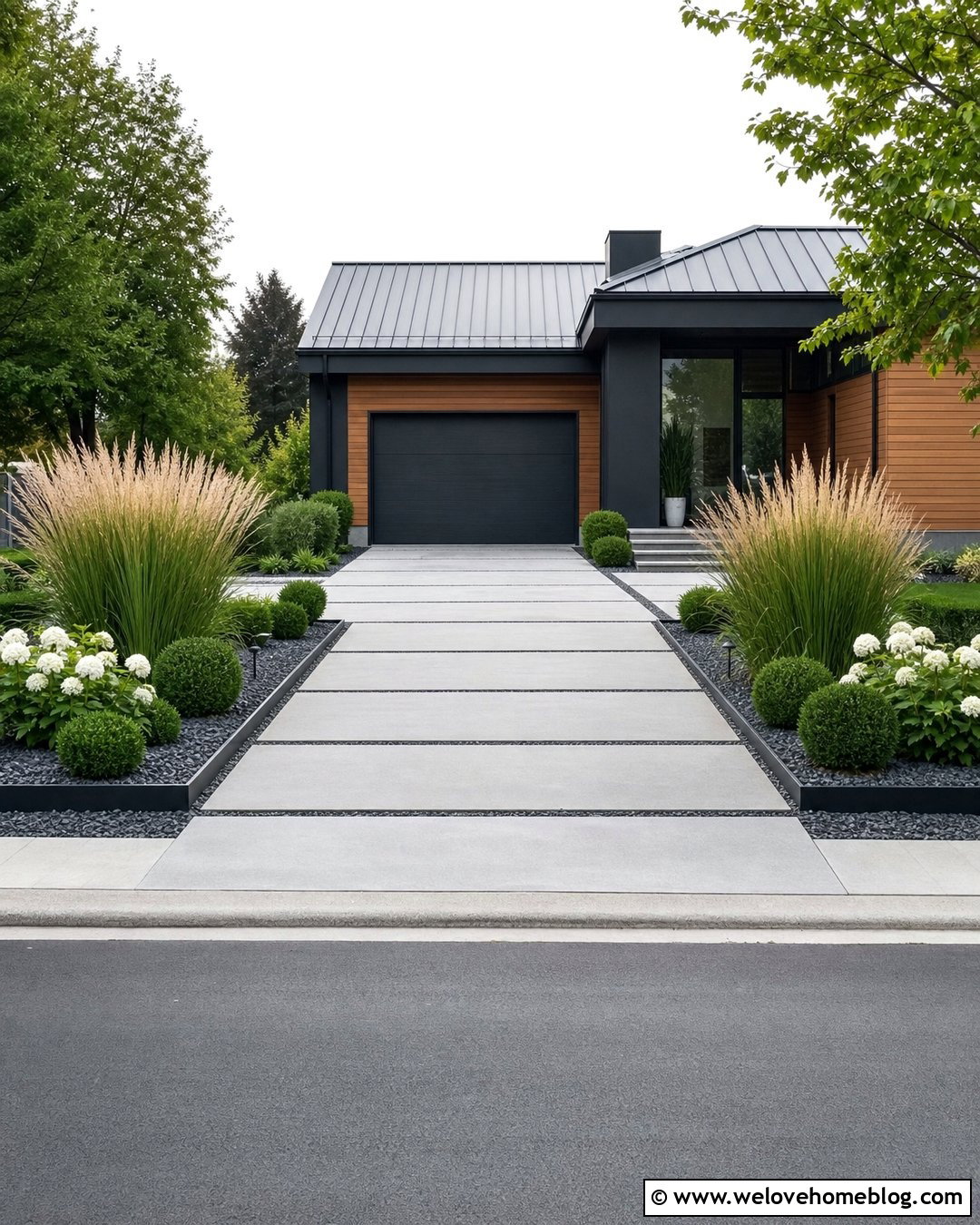
For a crisp contemporary look, pair light-gray concrete or resin-bound gravel with narrow black basalt edging. The dark line highlights the driveway geometry and looks especially effective around straight edges, angular planting beds, and offset parking areas. Set the basalt flush with the driveway for a sleek surface rather than a raised curb. Add rectangular lawn panels, architectural grasses, and compact evergreen shrubs to continue the minimalist theme. A modern home with white stucco, black window frames, or dark vertical siding provides an ideal background. Use integrated linear drainage where necessary instead of expecting the decorative border to solve water-management problems. Permeable driveway systems require correctly designed bases and perimeter restraints to perform as intended. () Keep the color palette restrained so the edging remains noticeable without overwhelming the facade.
7. Farmhouse Driveway With Natural Stone Edging
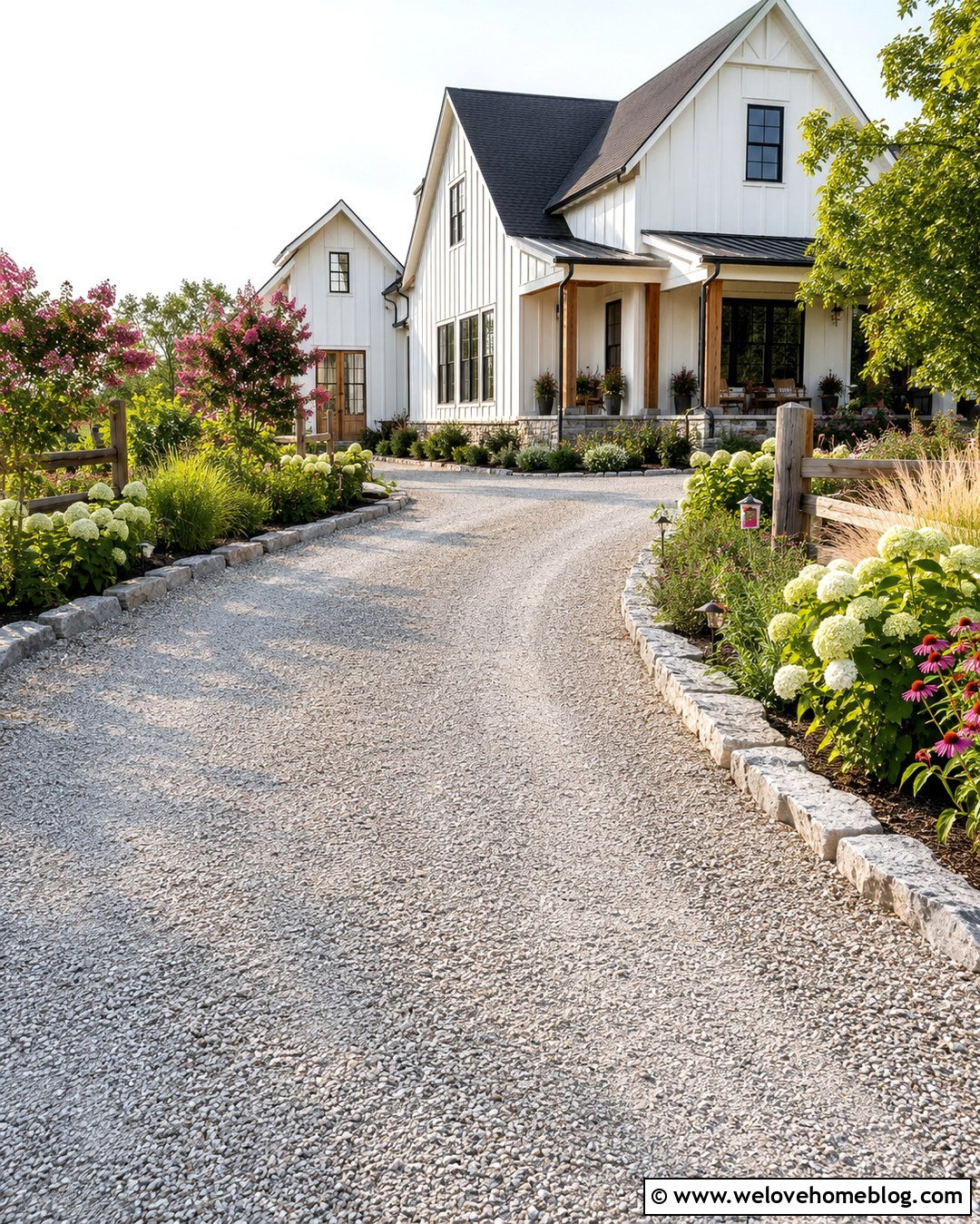
A crushed limestone driveway bordered by chunky natural stone suits the welcoming character of a modern farmhouse. Choose weathered gray, tan, and brown stones that coordinate with timber posts, board-and-batten siding, or a stone porch foundation. A straight approach feels more formal, while a gentle curve creates a relaxed country entrance. Keep the edging low and slightly irregular, but avoid stones that project into the driving area. Plant hydrangeas, panicle grasses, coneflowers, and small flowering trees along generous beds behind the border. Near the road, use larger stones around wooden fence sections or simple masonry pillars. Repeating the same stone around mailbox beds and walkway corners ties everything together. The result should feel natural and established rather than perfectly symmetrical or heavily landscaped.
8. Circular Driveway With Cobblestone Edging
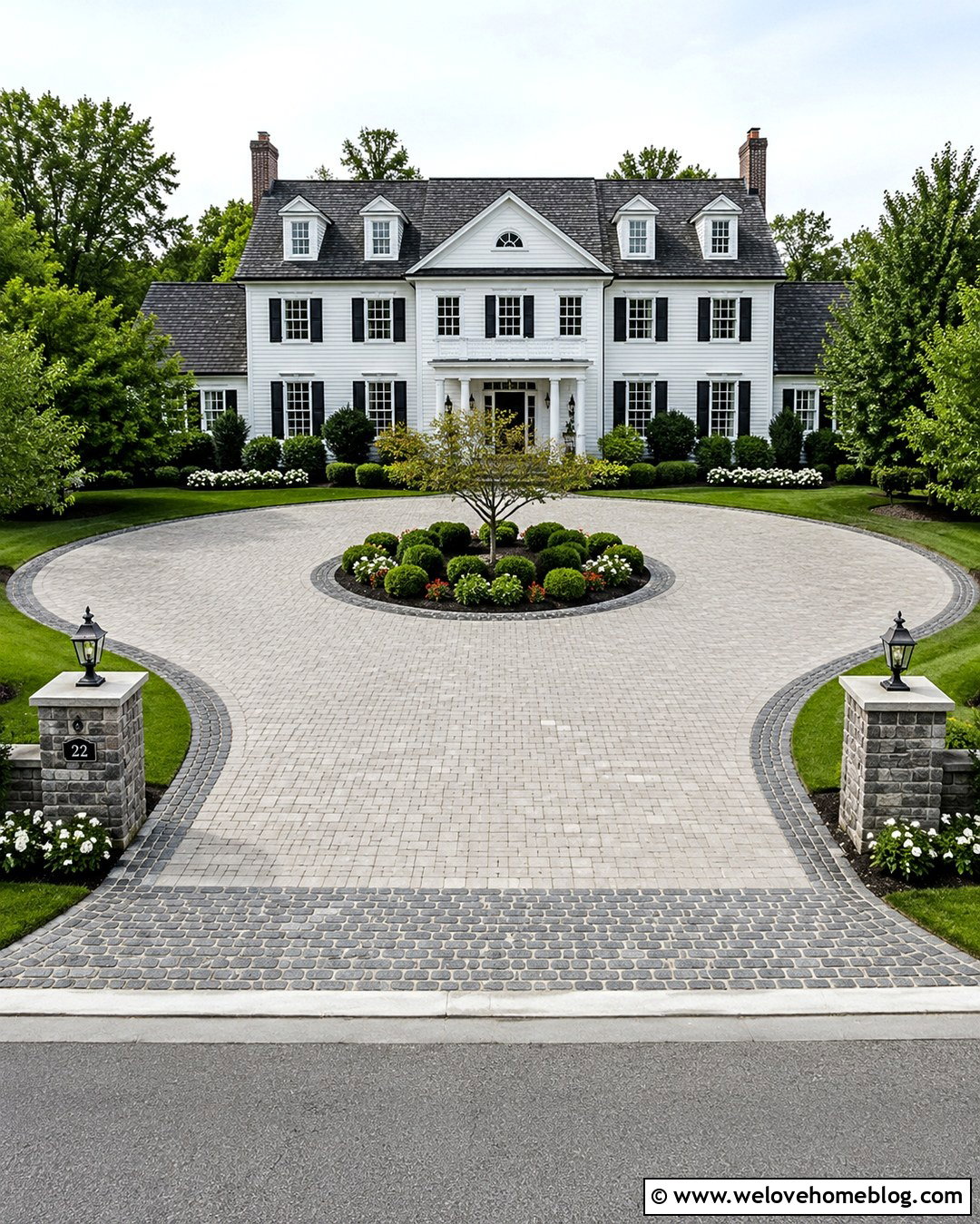
Cobblestone edging brings order and definition to a circular driveway, where several curves must work together. Frame both the outside perimeter and the central island so the design reads as one complete shape. A light gravel, gray concrete, or muted paver surface will allow darker cobblestones to stand out clearly. In the center, use a small ornamental tree surrounded by low shrubs and seasonal perennials. Keep plants away from driver sightlines, particularly near the entrance and exit. Matching cobblestone aprons can mark both openings from the street and give the layout a balanced appearance. This combination complements Colonial, Tudor, and European-inspired homes. If the circle is compact, choose smaller cobbles and restrained planting so the driveway does not feel narrow or visually busy.
9. Brick Driveway With Bluestone Edging
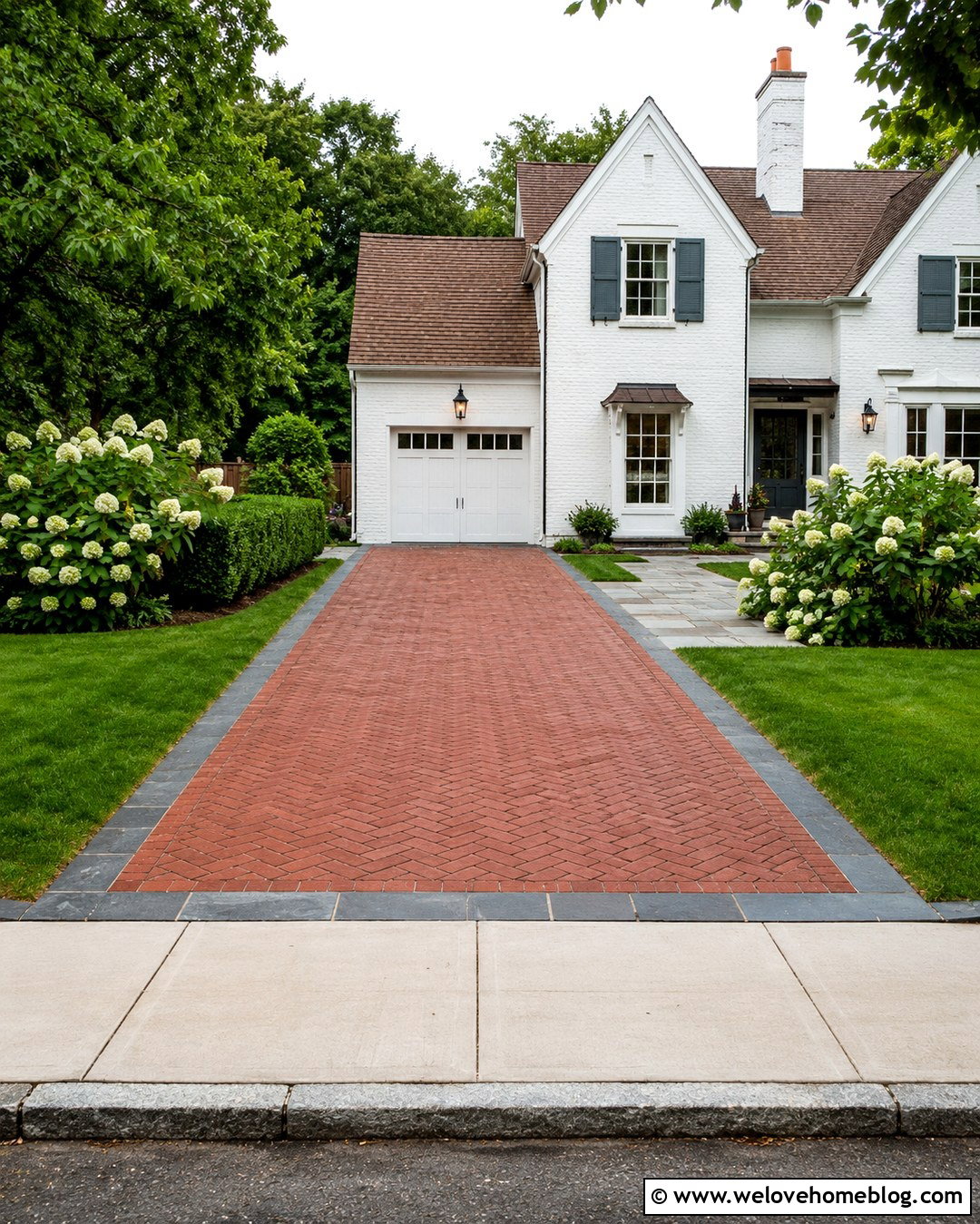
Red or brown clay brick pavers gain a refined outline when paired with blue-gray bluestone. The cool border balances the warmer driveway surface and can connect beautifully with bluestone porch steps or a front walkway. Use long rectangular pieces for a streamlined edge or smaller blocks around curves. A herringbone brick pattern adds movement through the center, while the bluestone creates a calm frame around it. This full driveway look works well with traditional homes, painted brick facades, and classic garden landscaping. Add evergreen hedges, white flowering shrubs, and neatly maintained lawn along the sides. At the garage, repeat the bluestone in a narrow threshold band. Avoid introducing several additional masonry colors, since the contrast between brick and bluestone already provides plenty of visual detail.
10. Gravel Driveway With River Rock Edging
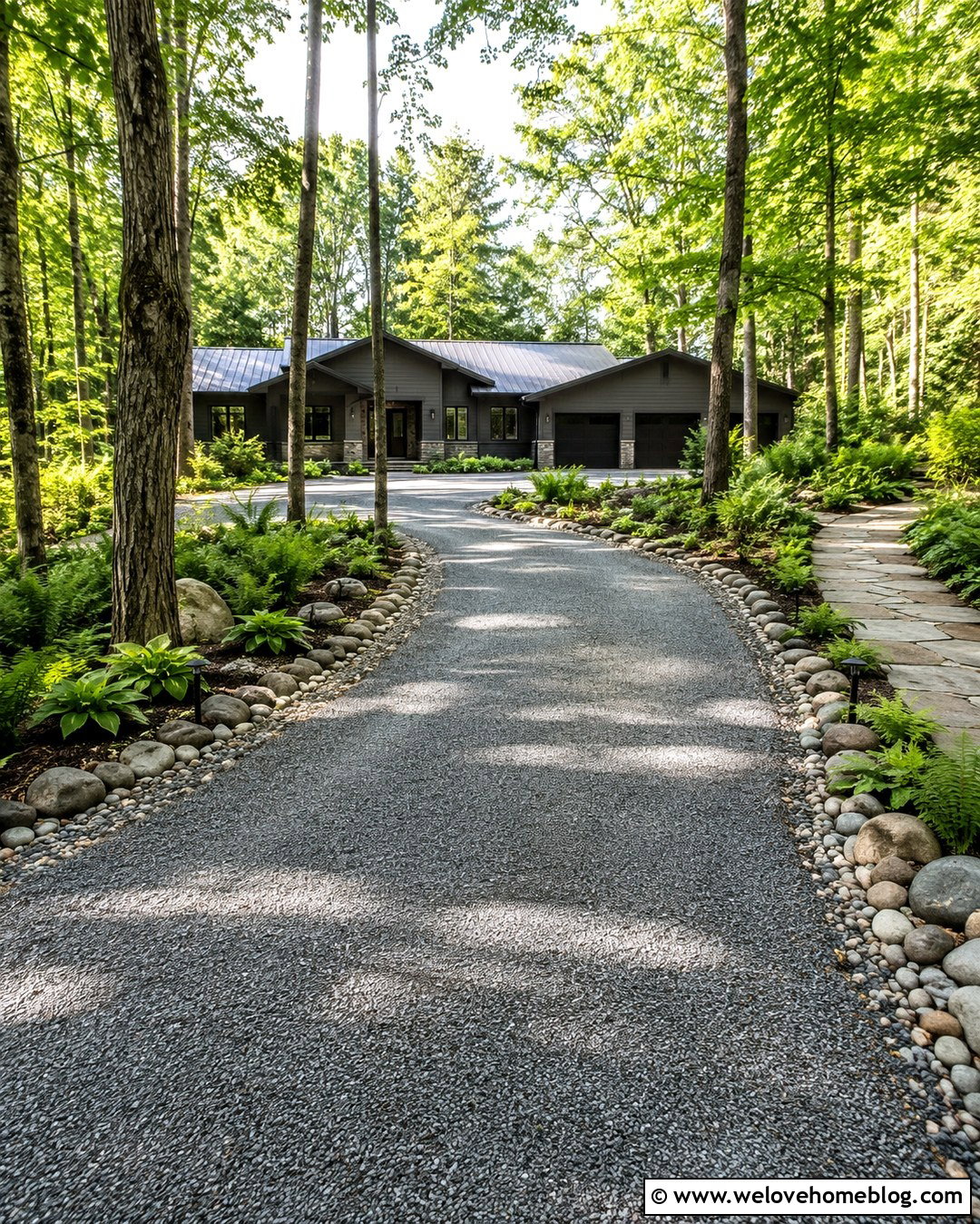
Smooth river rock can create a relaxed border around a gray or tan gravel driveway, especially in wooded or informal landscapes. Rather than placing scattered rocks directly against the driving surface, arrange them within a defined strip. Use larger stones along the gravel edge and smaller pebbles behind them for a layered transition. The border can follow a winding driveway toward a ranch, cabin-inspired, or contemporary woodland home. Ferns, sedges, hostas, and low native shrubs will reinforce the natural setting. A shallow rock-lined drainage channel can be incorporated where professionally planned for runoff, but decorative stone should not block the intended flow of water. Select river rocks in a coordinated mix of gray, brown, and muted cream. Too many bright colors can make the border appear cluttered.
11. Paver Driveway With Sandstone Edging
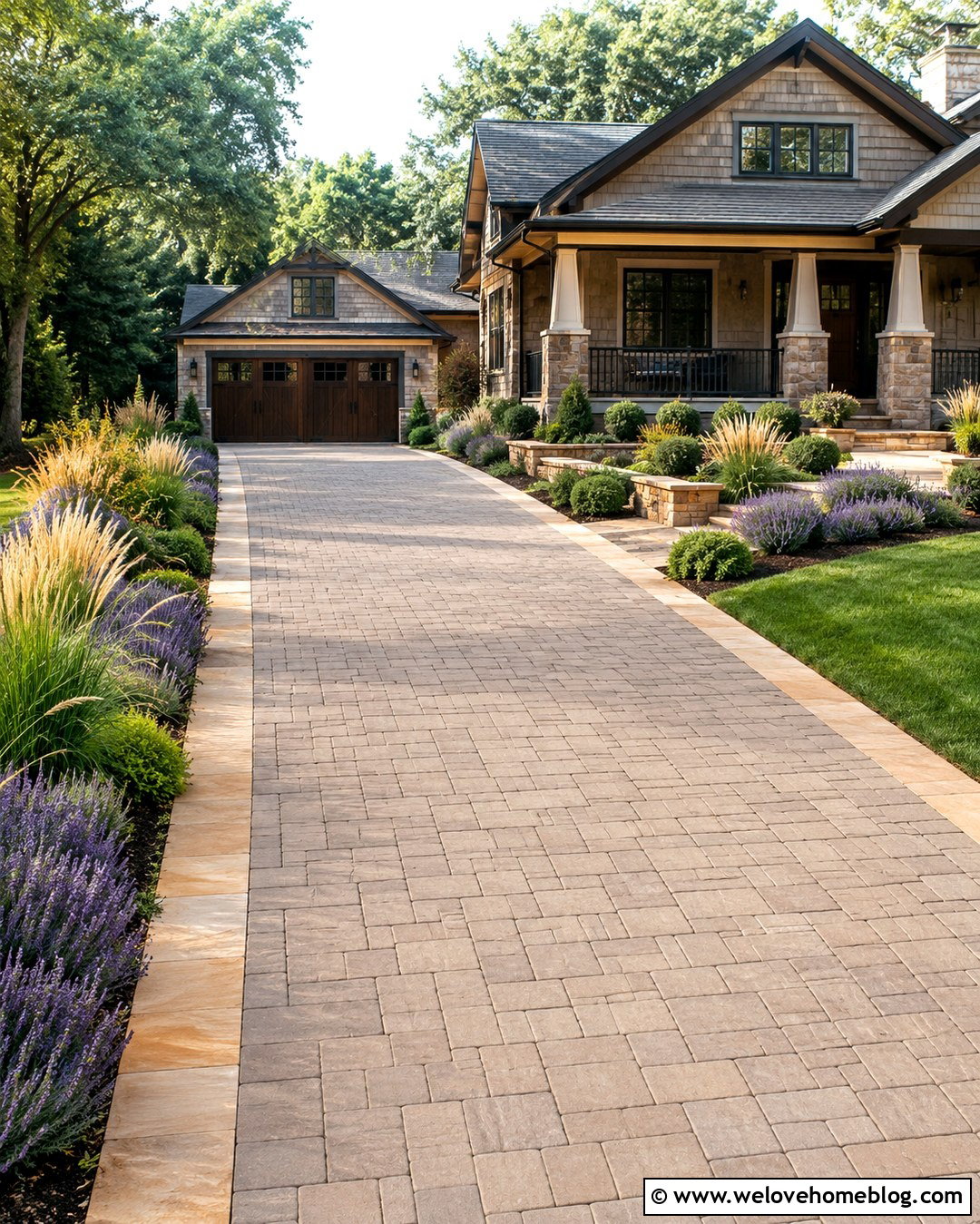
A taupe concrete paver driveway bordered with warm sandstone feels polished without appearing too formal. Select a sandstone tone that is slightly lighter or darker than the main pavers so the edge remains visible. Large rectangular border stones work best on straight sections, while smaller setts can follow curves near the entrance. Use the same sandstone to outline a connecting walkway and the corners of adjacent planting beds. Soft ornamental grasses, lavender, and rounded evergreen shrubs balance the geometric paving. This combination is particularly attractive beside Craftsman, Mediterranean, and transitional homes. If the paver field contains several colors, keep the sandstone border relatively uniform. A simple edge gives the eye a resting point and prevents the driveway pattern from competing with the house and landscape.
12. Sloped Driveway With Raised Stone Edging
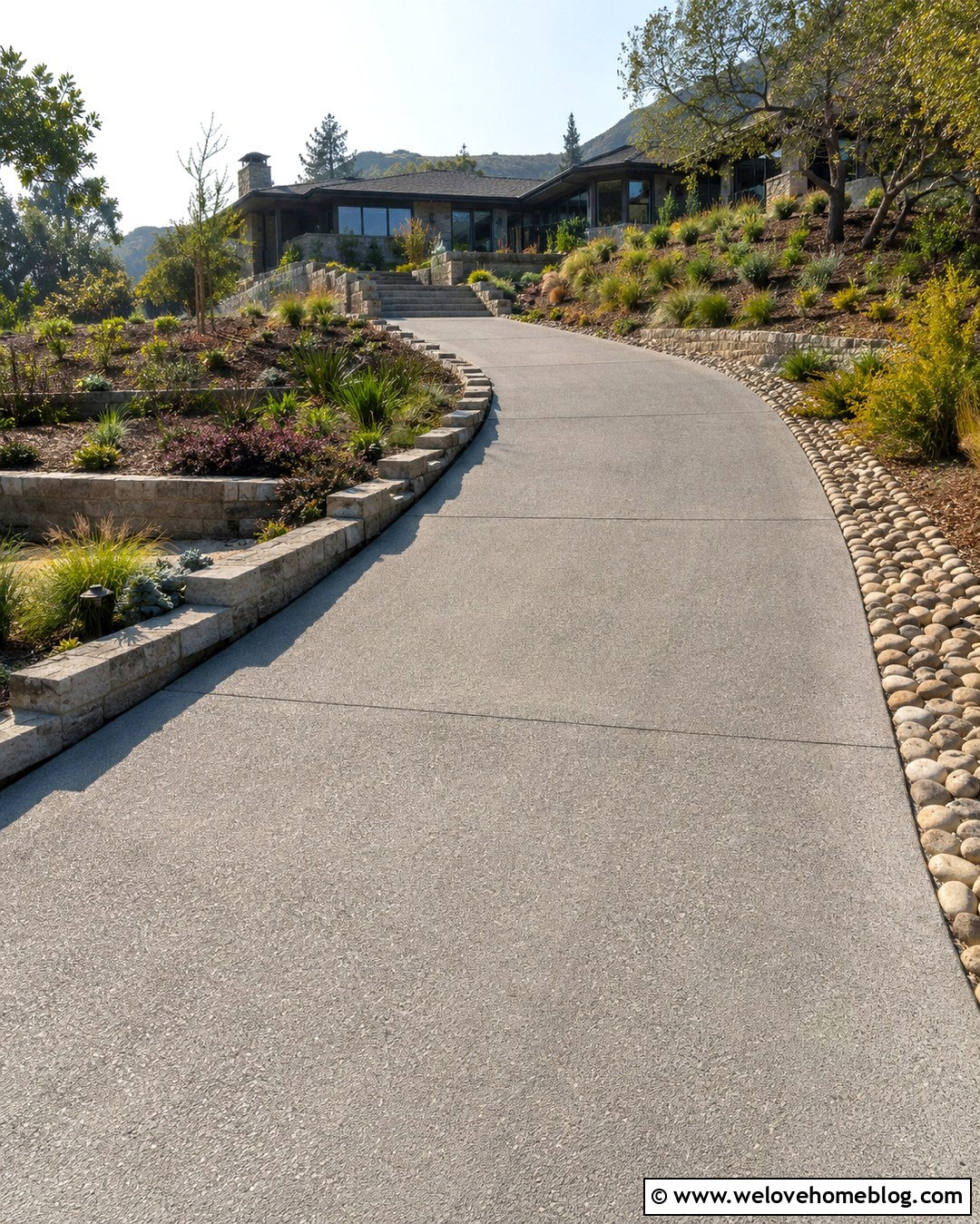
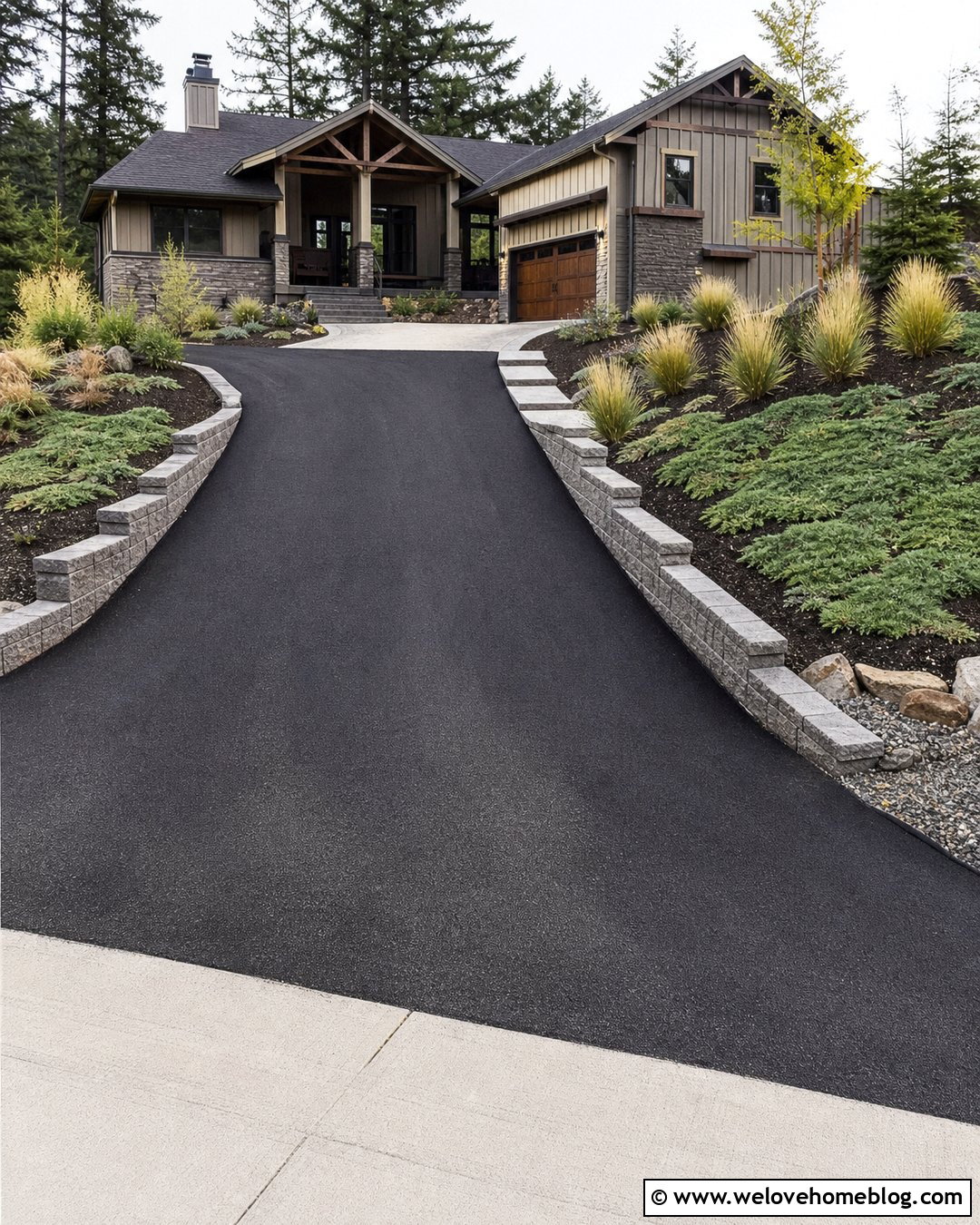
A sloped driveway benefits visually from a substantial stone edge that follows the grade in clean, gradual steps. Pair textured concrete or asphalt with a low granite or limestone curb on the side facing an elevated planting bed. On the lower side, use flush-set stones where water must move toward a properly designed drainage system. Avoid creating an edging arrangement that traps runoff against the driveway or directs it toward the garage. Terraced beds planted with spreading shrubs, ornamental grasses, and erosion-conscious ground covers can soften the grade. The stone color should coordinate with nearby retaining walls so the slope feels organized rather than pieced together. For steeper properties, consult qualified drainage and hardscape professionals before installation. The final border must support the overall site plan, not interfere with it.
13. Exposed Aggregate Driveway With Slate Edging
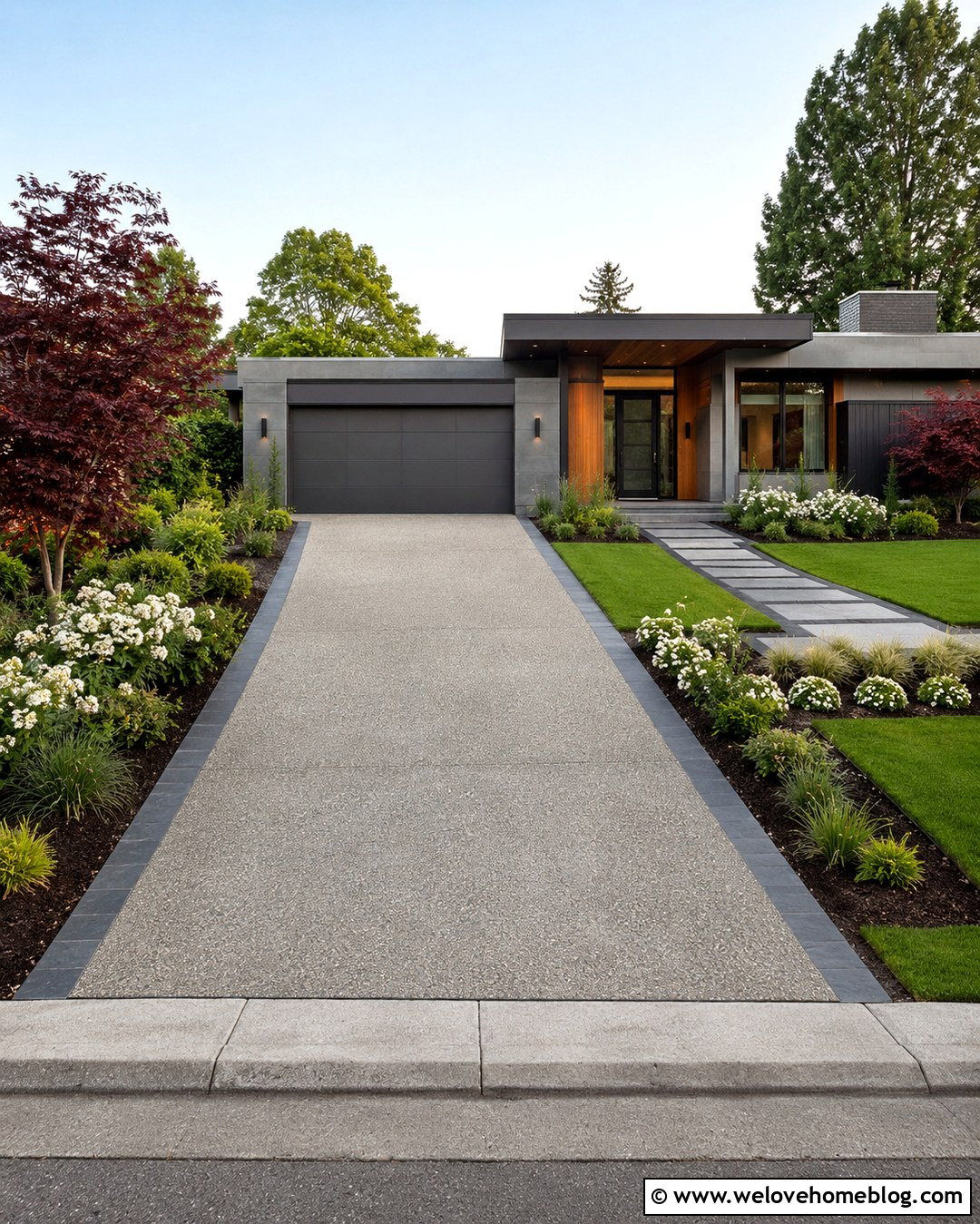
Dark slate creates a sophisticated border around a warm-gray exposed aggregate driveway. The fine texture of the slate contrasts with the pebbled concrete finish, producing interest without adding a complicated pattern. Use rectangular slate setts in a flush, single-row layout for a contemporary home. A wider double row can suit a larger midcentury or ranch property. Repeat slate around nearby planting beds or in the front walkway, but limit its use to a few clear locations. Evergreen grasses, burgundy foliage, and white flowers look striking against the charcoal border. Because slate appearance and performance can vary by product, select material intended for exterior paving and local weather conditions. A contractor can also help determine the correct base and installation method for vehicle-edge areas.
14. White Gravel Driveway With Gray Stone Edging
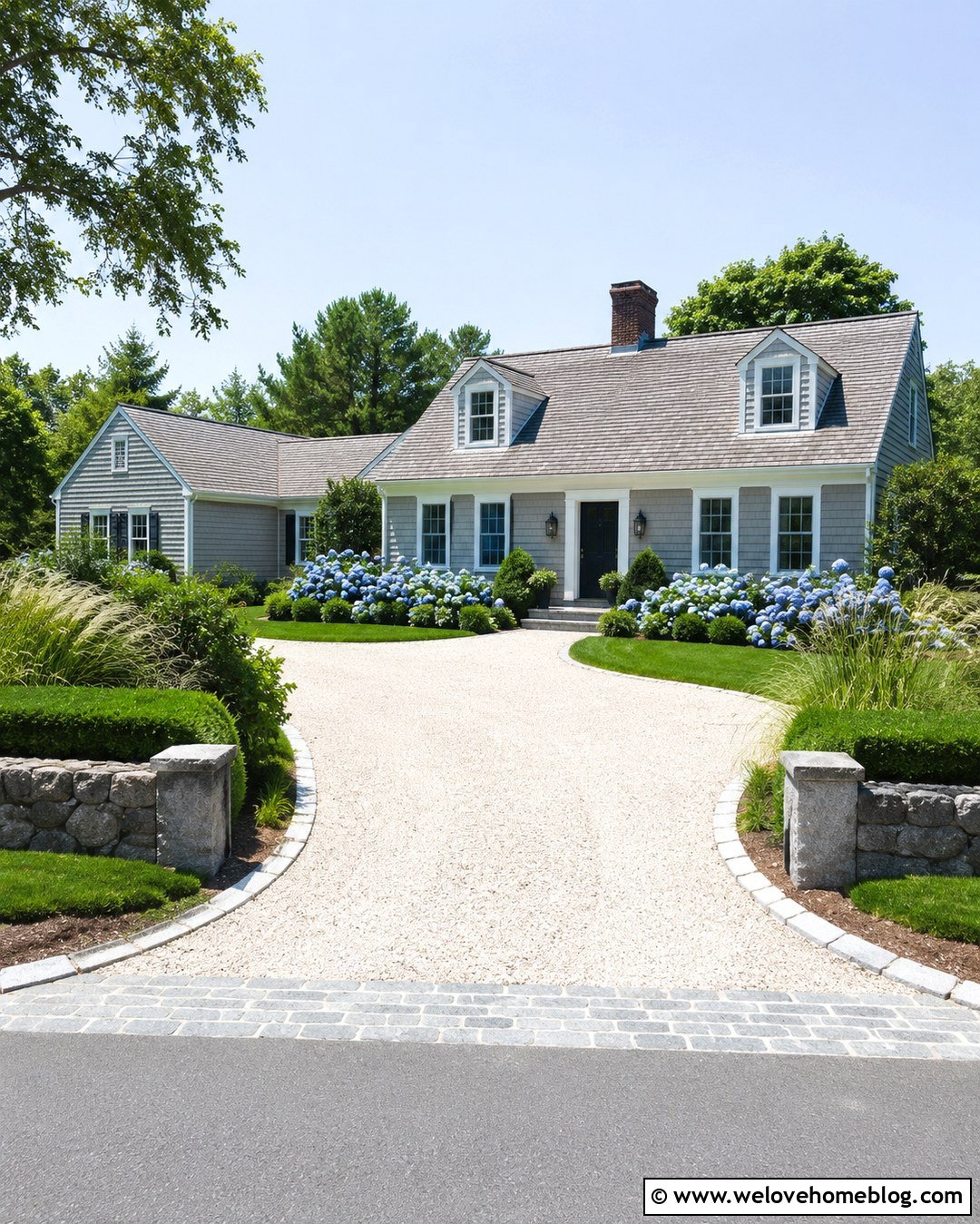
Bright white gravel feels cleaner and more grounded when enclosed by a medium-gray stone border. The contrast clearly shows the driveway shape and prevents the pale surface from visually blending into light-colored walkways. Use granite or concrete-stone setts along a straight or horseshoe layout leading to a white farmhouse, coastal home, or gray-sided Cape Cod. Deep green shrubs, blue hydrangeas, and ornamental grasses add color without making the landscape overly formal. Place a wider stone apron at the entrance to create a strong transition from the street. White gravel can display soil, leaves, and tire marks more readily, so consider an off-white or lightly mixed aggregate for easier upkeep. The gray edging should be wide enough to remain visible after the gravel is spread and compacted.
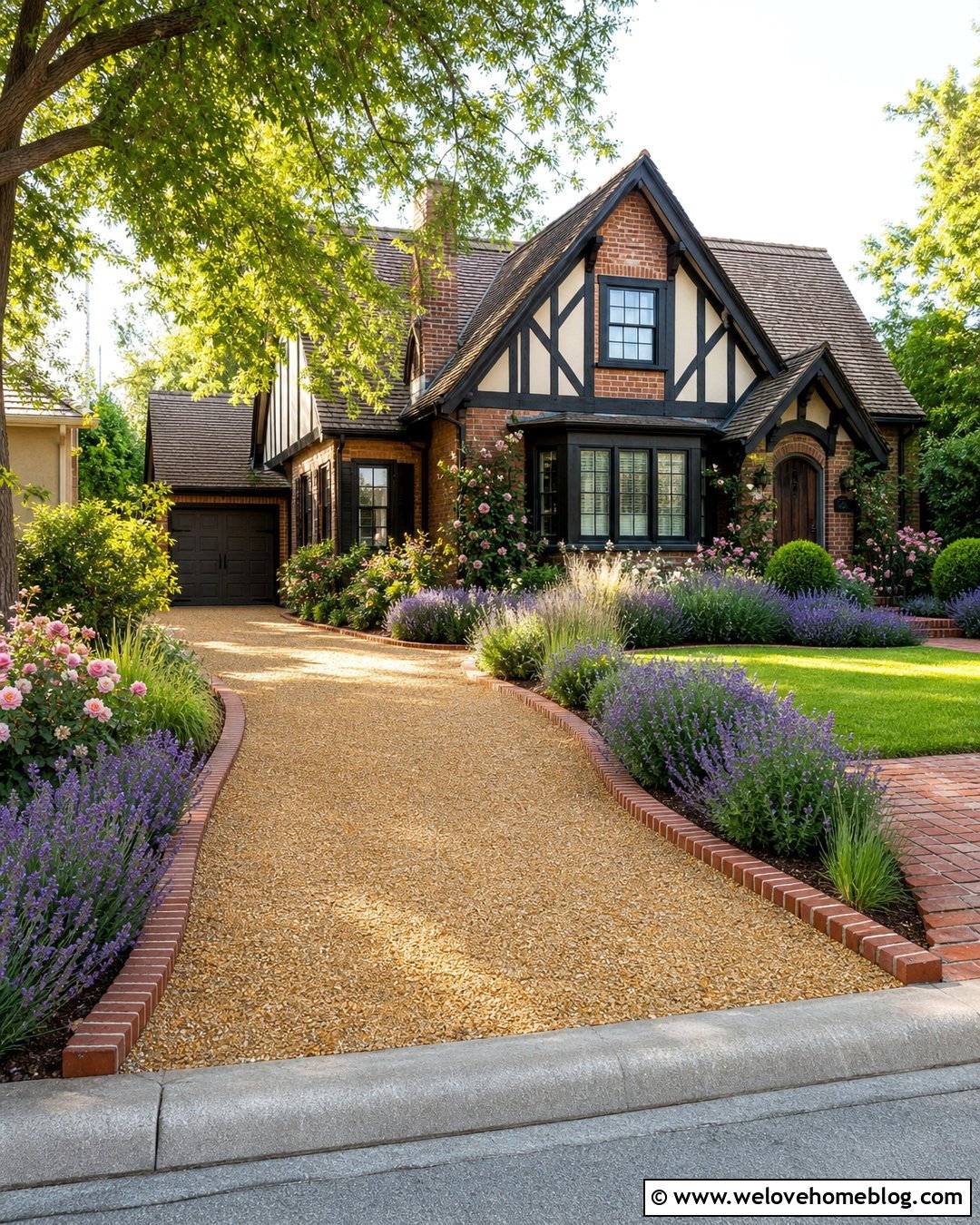
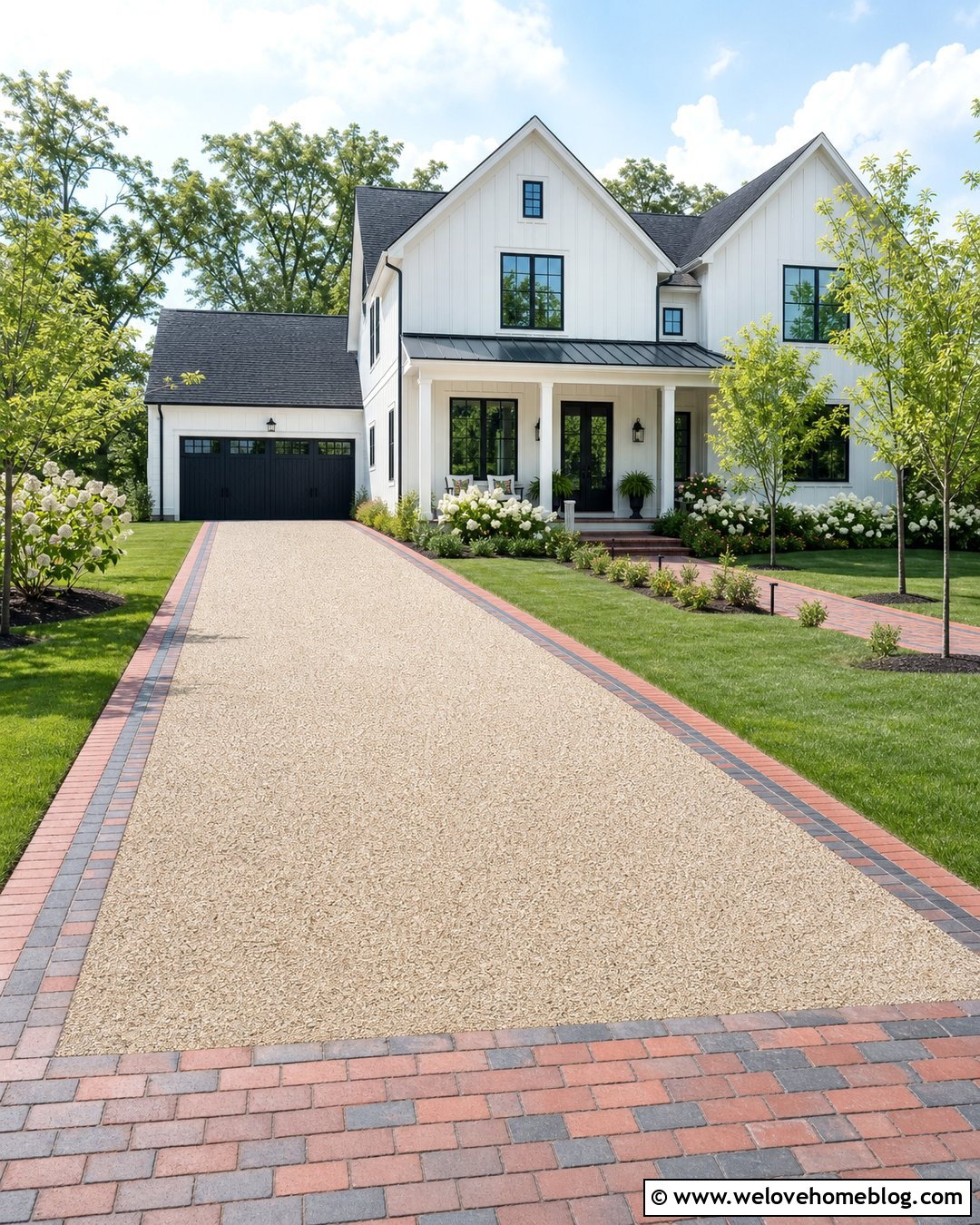
15. Rustic Driveway With Large Stone Edging
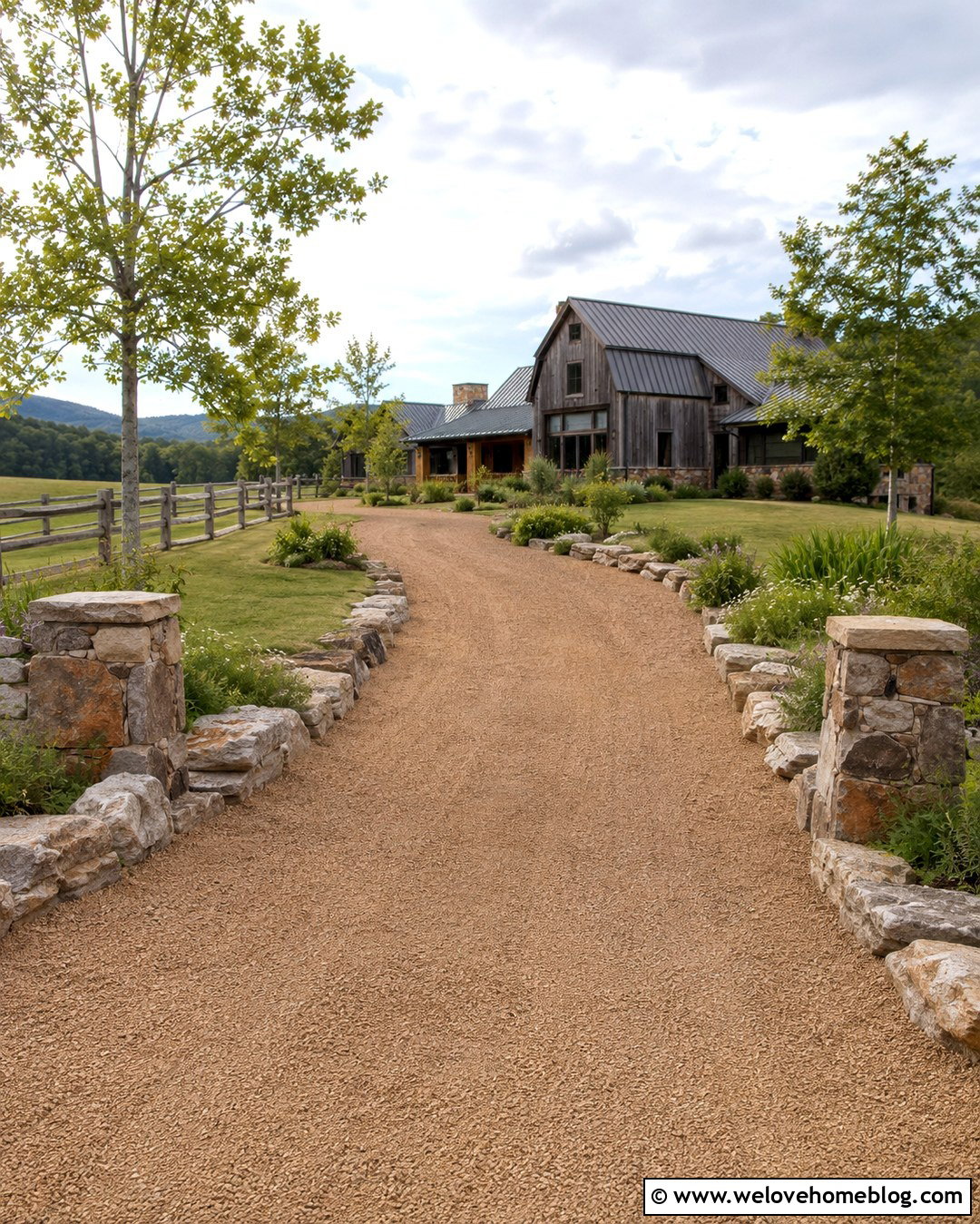
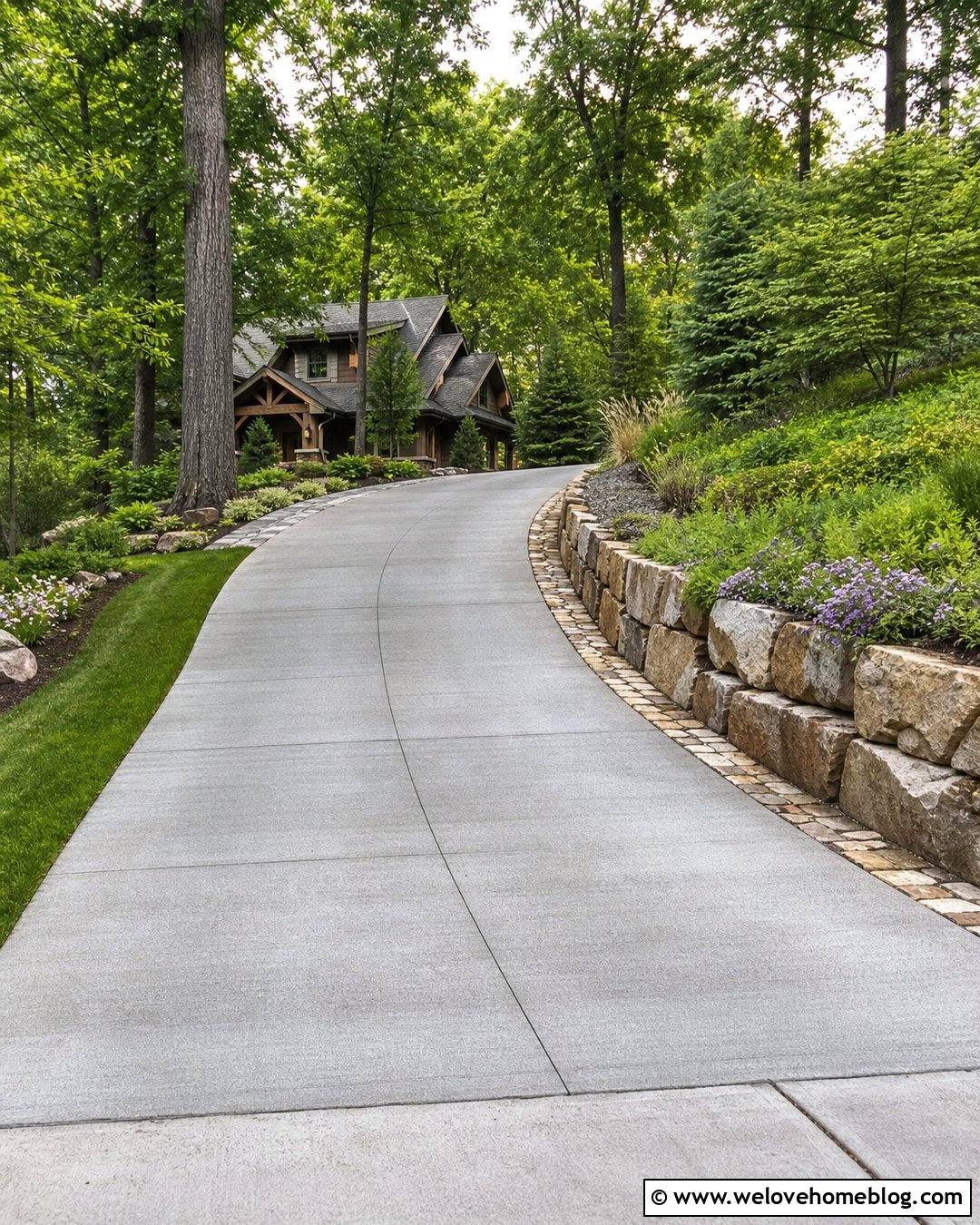
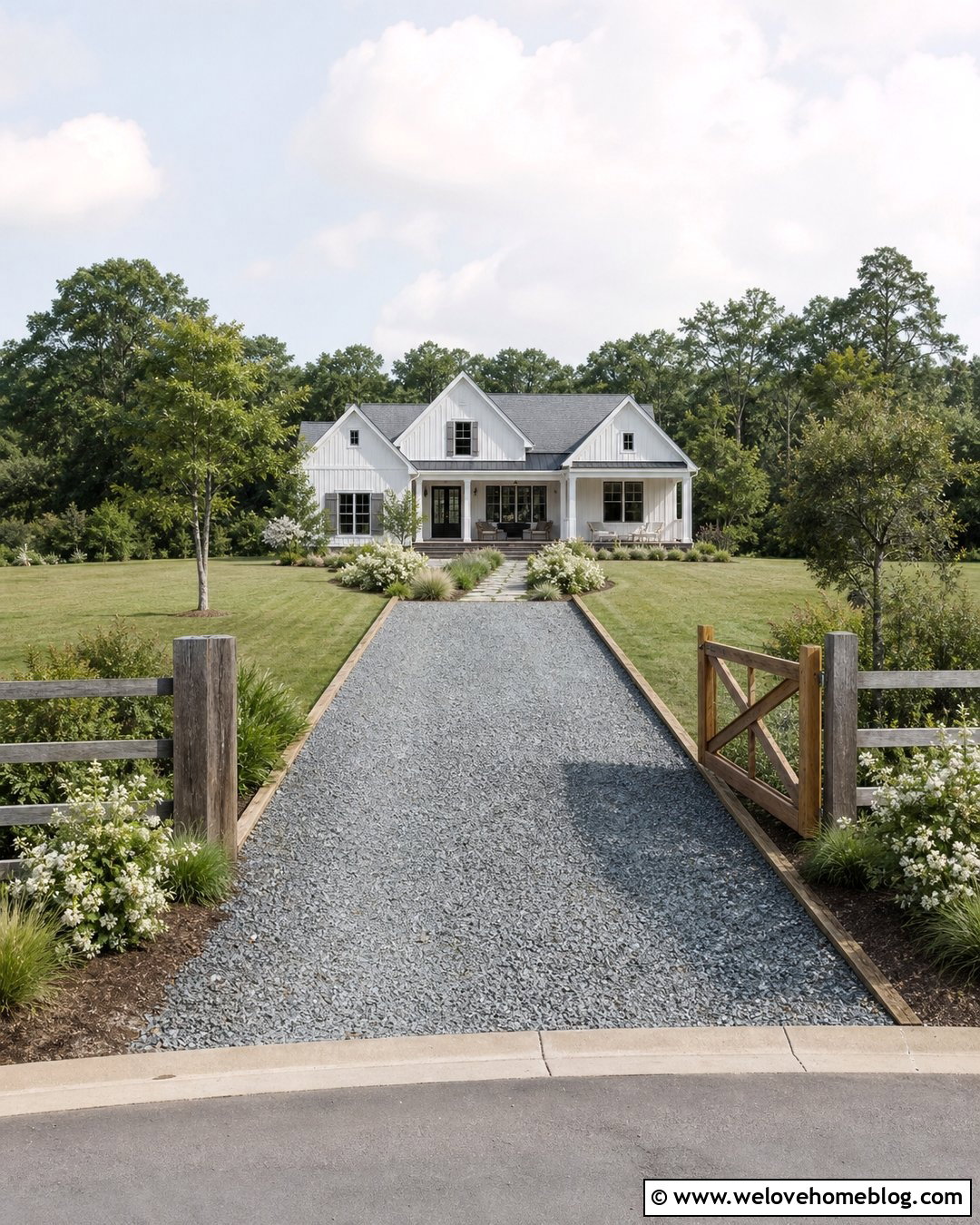
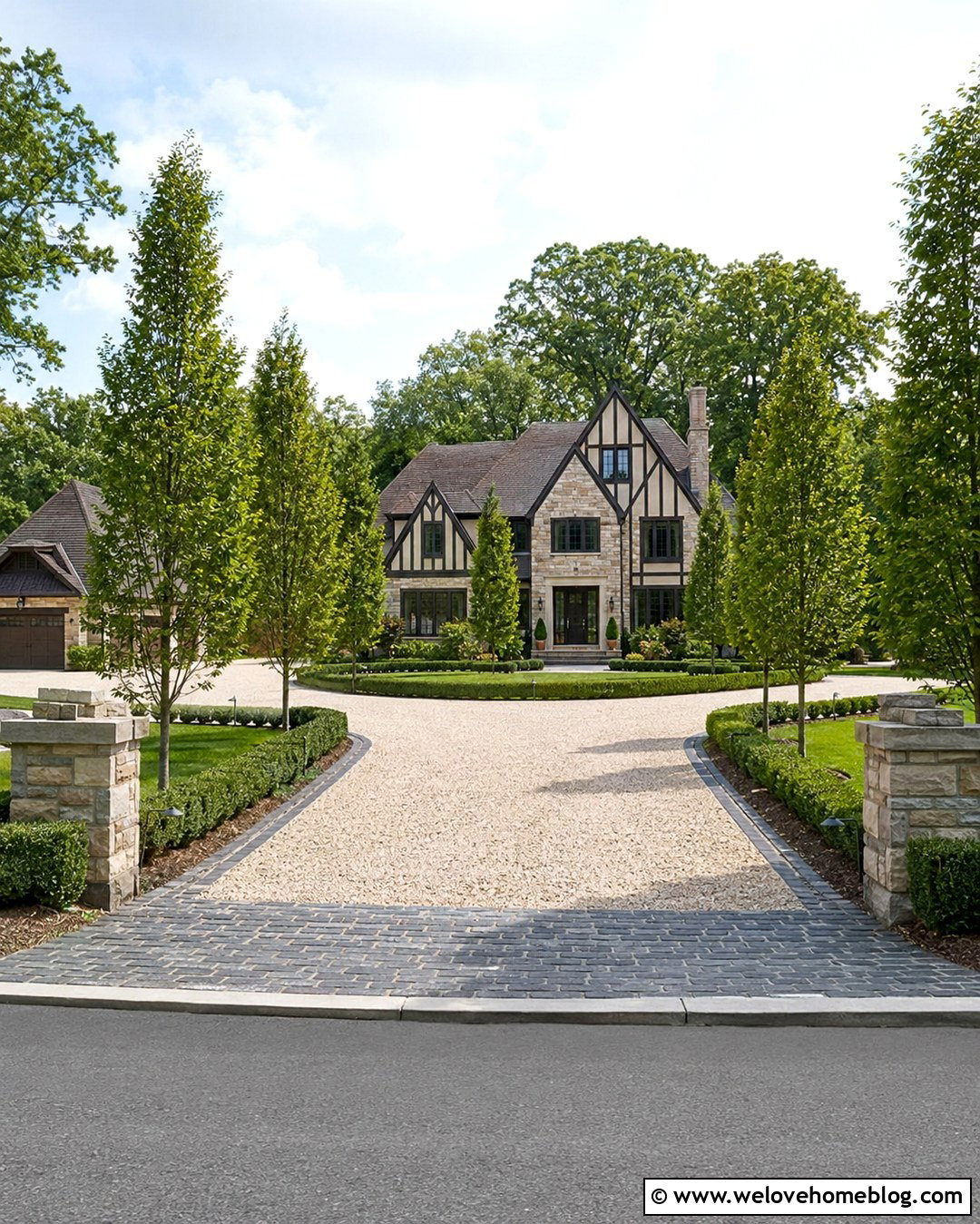
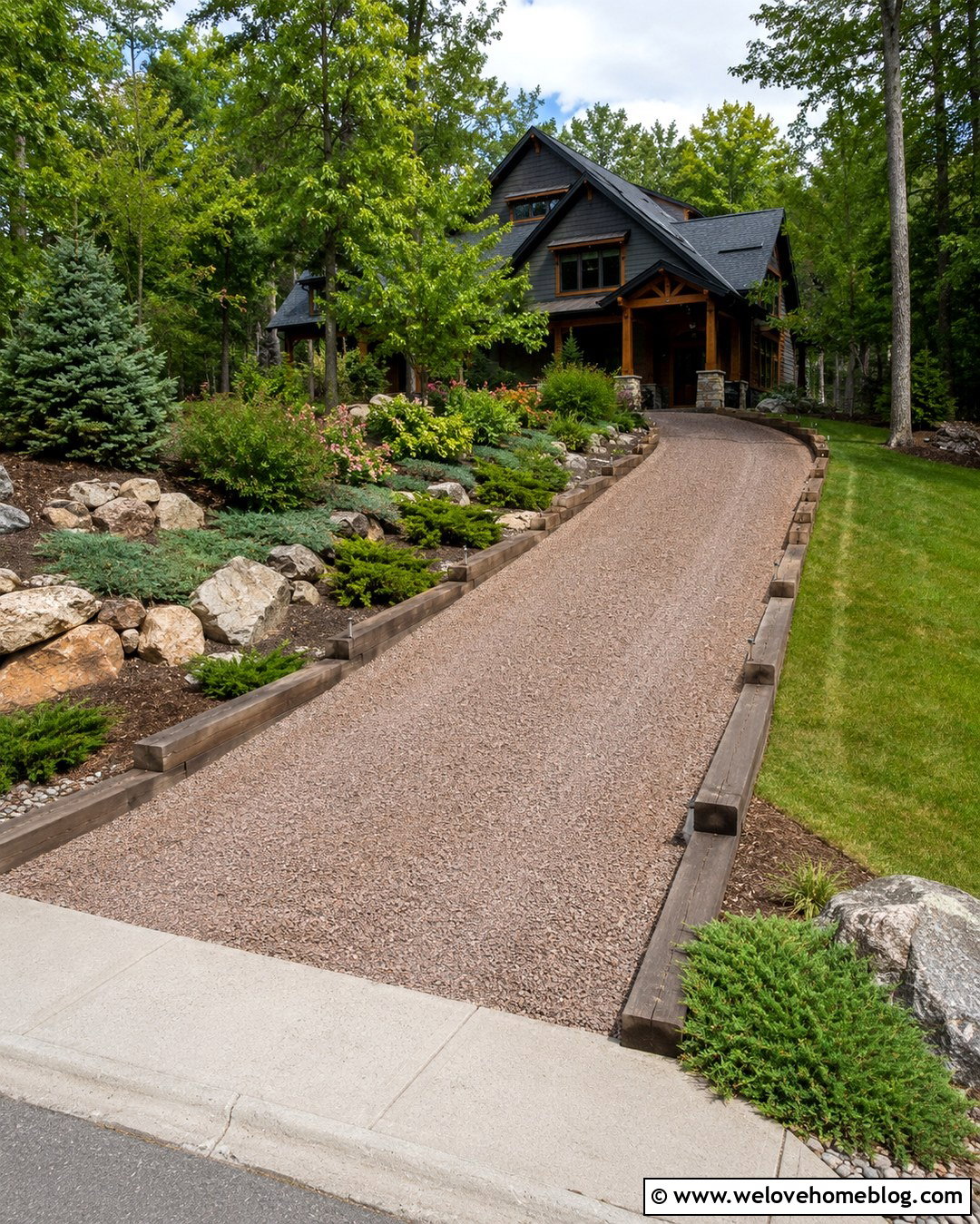
Large, rough-cut stones make an effective visual boundary for a broad rustic driveway. Pair them with compacted crushed stone or earthy gravel in a curved layout leading to a country, log, or barn-inspired home. Instead of using an unbroken wall of boulders, space substantial stones closely enough to define the edge while maintaining a natural appearance. Keep their faces outside the vehicle clearance zone. Behind the edging, blend meadow grasses, low native shrubs, and groups of flowering perennials into the surrounding yard. Large stones can also anchor the entrance near timber fencing or simple gateposts. Choose locally compatible colors such as weathered gray, rust, or buff. Repeating the largest stones near the house helps the long driveway feel connected from the street to the garage.
16. Driveway Entrance With Stone Apron Edging
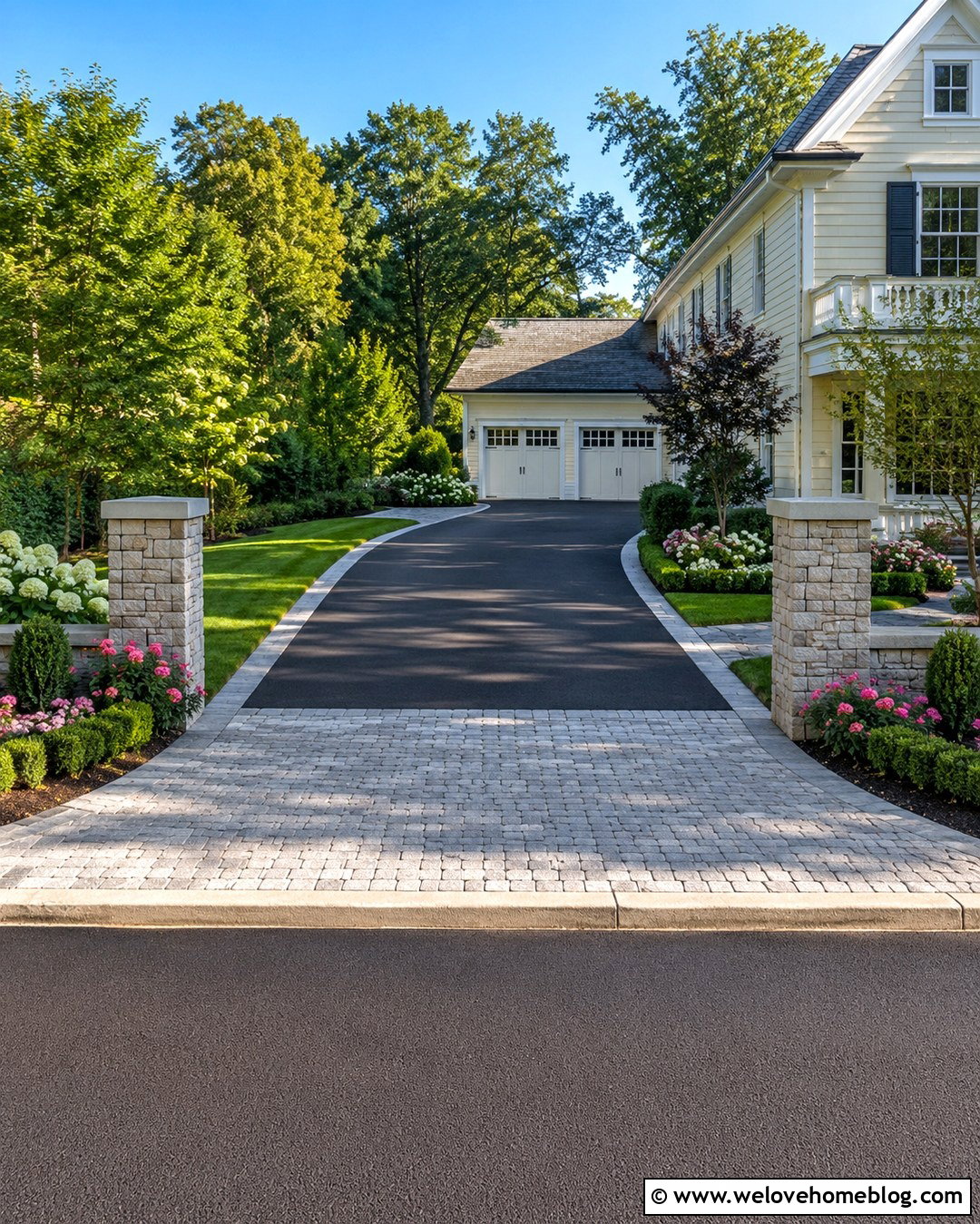
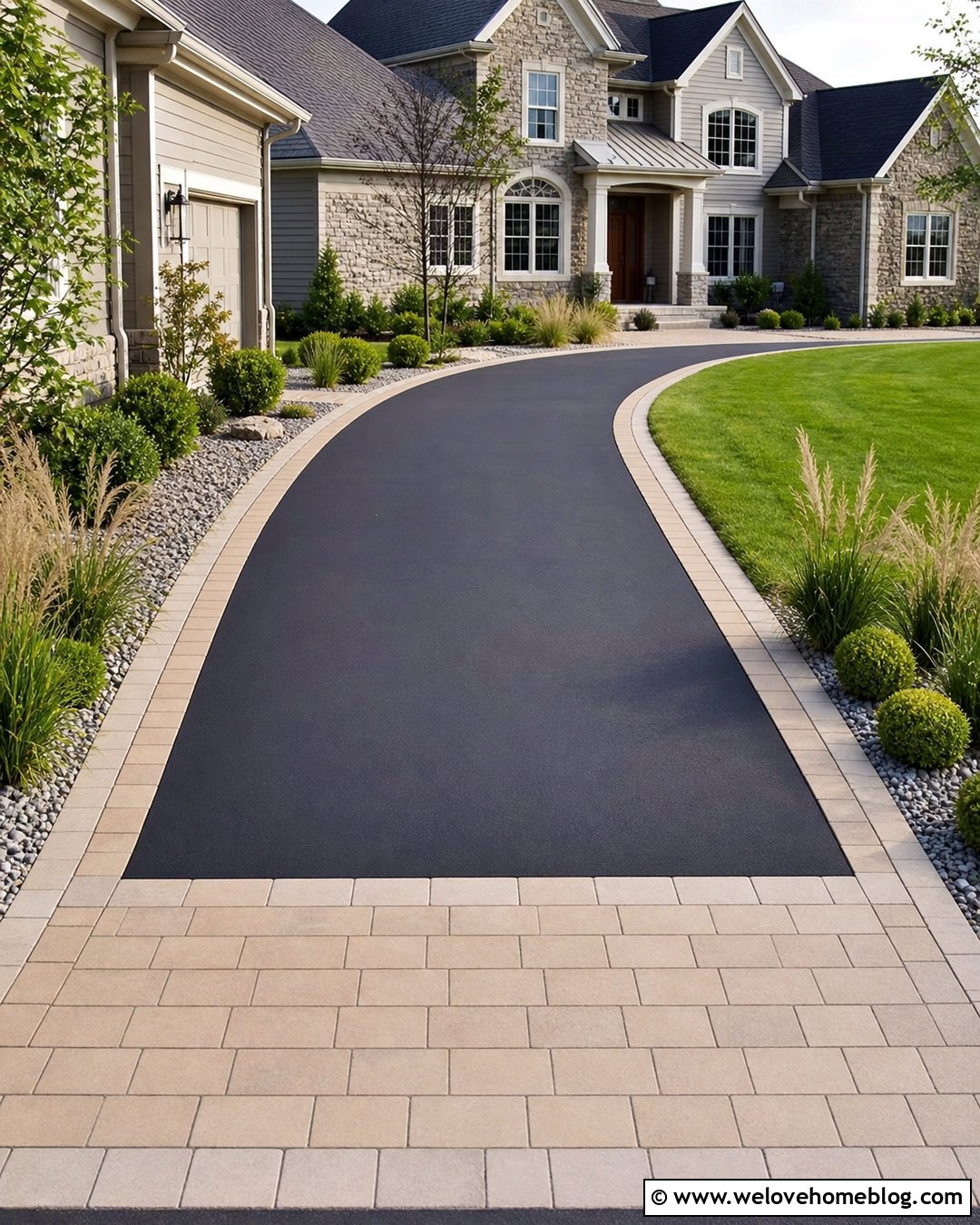
A stone apron can turn basic driveway edging into a complete entrance feature. Begin with a concrete, asphalt, or gravel driveway, then install a band of granite setts or cobblestones across the opening near the street. Continue the same stone along both sides to form a continuous frame. The apron should be wide enough to appear intentional but proportional to the driveway and front yard. Pair it with low planting beds, address pillars, or neatly clipped shrubs that preserve visibility for drivers. Materials used around the apron must suit vehicle traffic and local site conditions. Pavers and stone borders are commonly used to distinguish the driveway entrance from the road. () Match the apron to the home’s masonry details for a coordinated, welcoming approach.
17. Decomposed Granite Driveway With Flagstone Edging
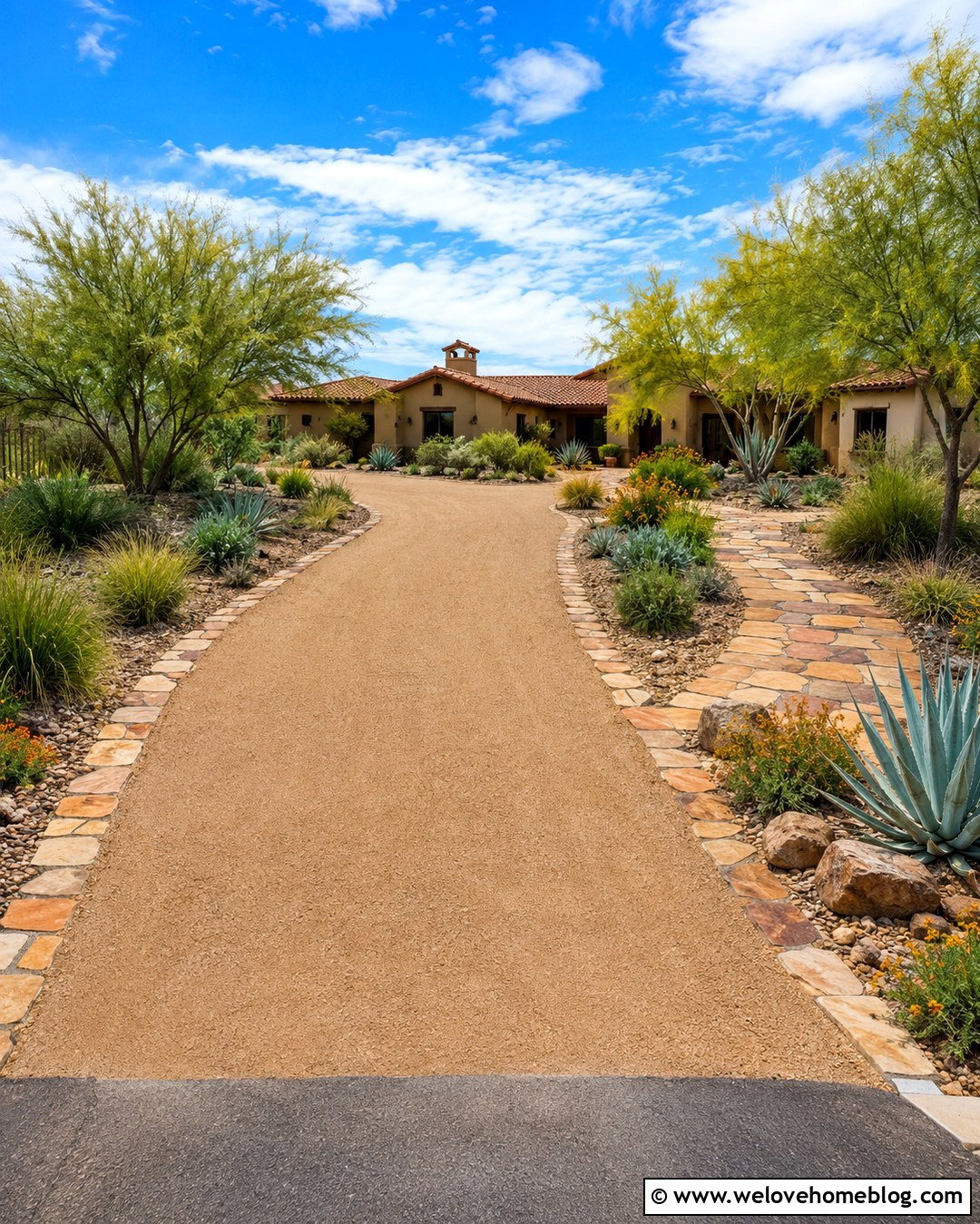
A warm decomposed granite driveway looks natural beside irregular flagstone edging. This pairing suits Southwestern, ranch, cottage, and drought-conscious landscapes. Choose flagstones in tan, rust, gray, or soft brown, then set them closely along a curved or gently flared driveway. Their broad surfaces make the border visible without creating the formal rhythm of small blocks. Beyond the edge, use gravel mulch, sculptural grasses, agaves, drought-tolerant shrubs, or regionally appropriate native plants. Repeat several flagstones in the front walkway to connect the pedestrian and vehicle routes. The edging should follow a stable base and remain outside common tire paths. Because loose surfaces may migrate, a well-defined perimeter helps preserve the intended driveway shape. Avoid mixing too many gravel sizes, which can make the entrance appear unfinished.
18. Resin Driveway With Granite Sett Edging
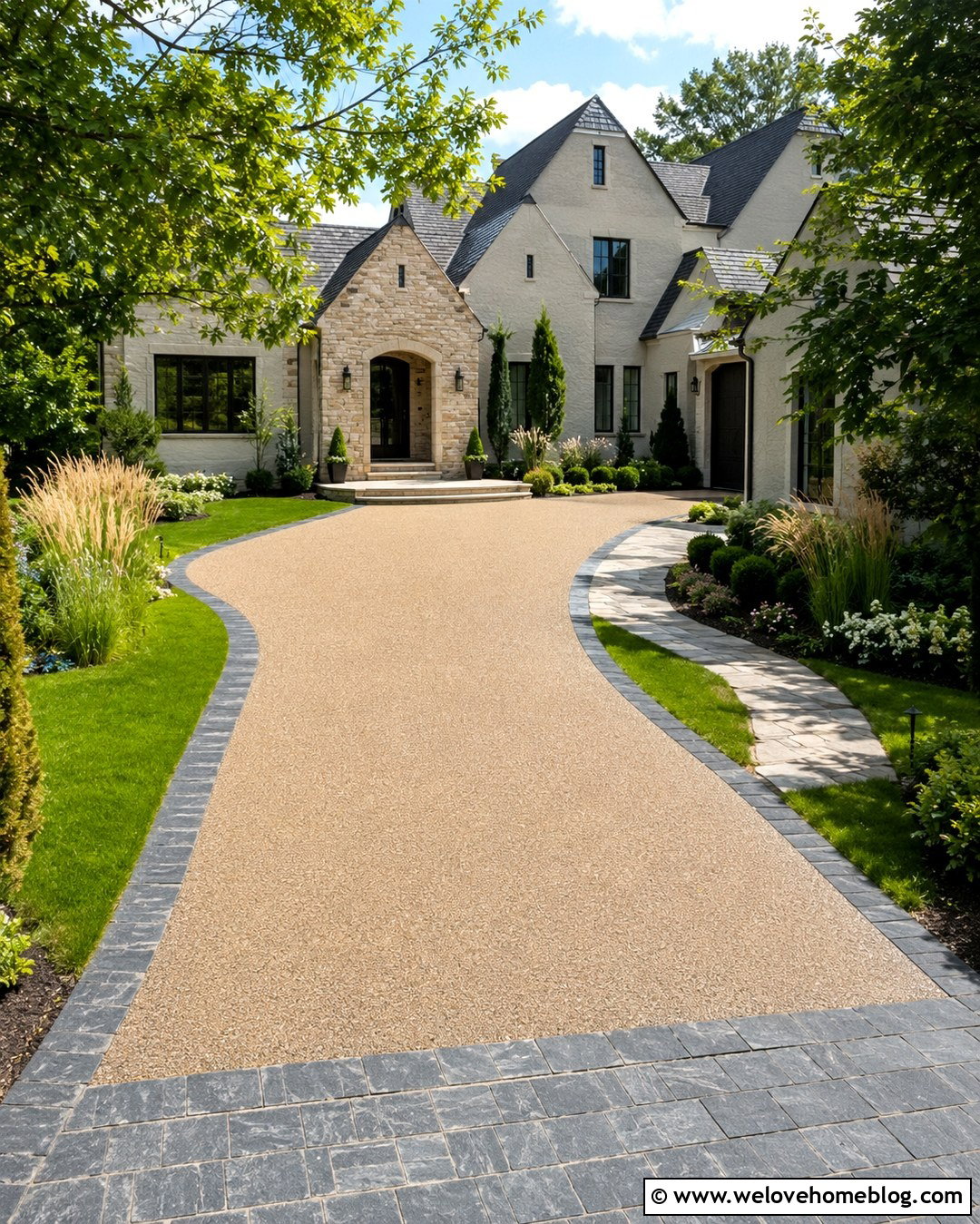
A smooth resin-bound gravel driveway gains traditional detail from a narrow frame of granite setts. Select warm beige resin for a welcoming country look or cool gray resin for a contemporary facade. Dark charcoal setts create strong contrast, while silver-gray stones offer a softer transition. A curved driveway can use small setts to follow the radius cleanly without large gaps. Extend the border around a parking bay and across the entrance as a matching apron. Plant structured shrubs near the house, then use looser grasses and perennials closer to the street. This balance keeps the complete design from looking rigid. Coordinate the aggregate and granite samples in natural daylight before making a final choice. Subtle undertones can influence whether the two materials appear harmonious or mismatched.
19. Narrow Driveway With Flush Stone Edging
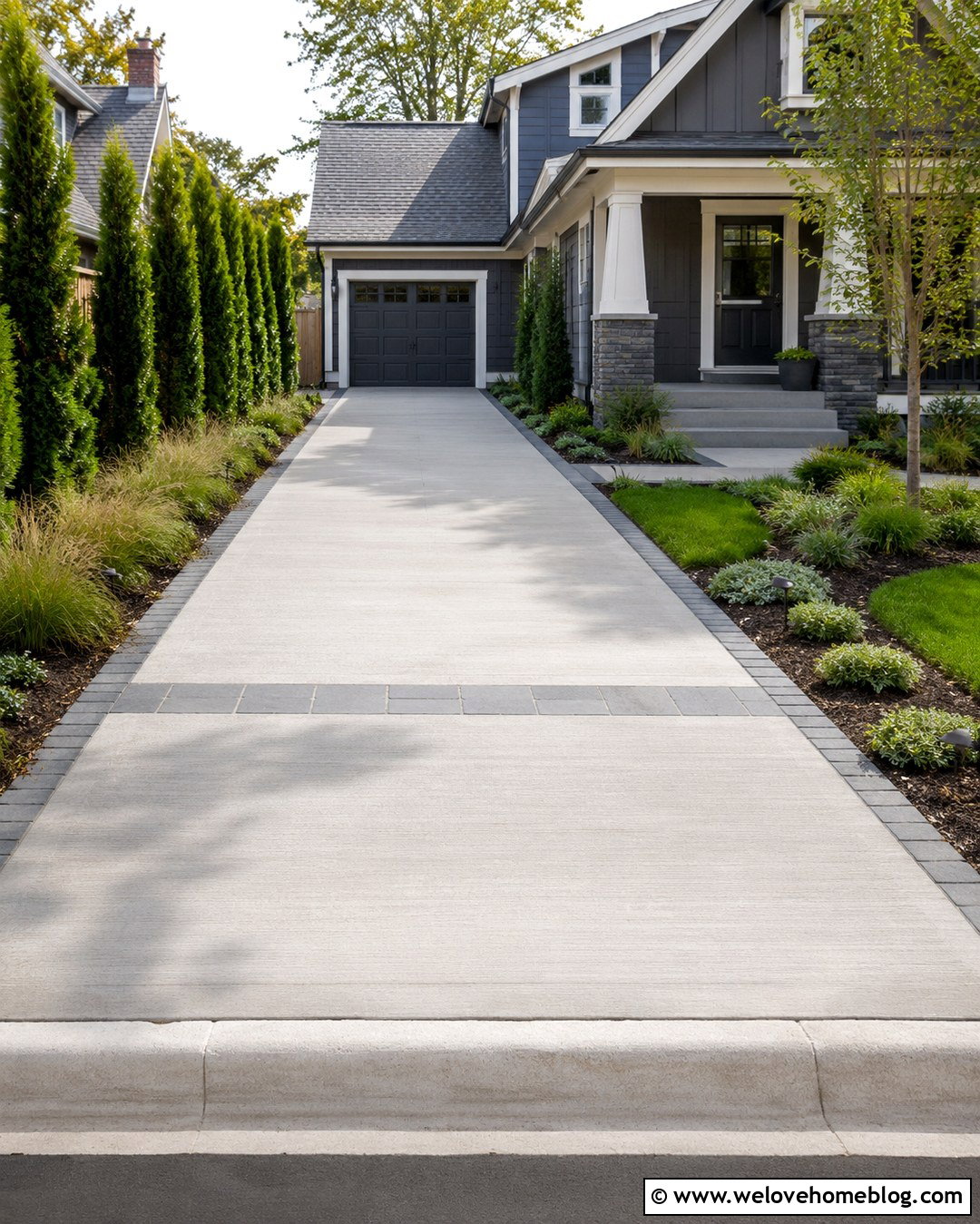
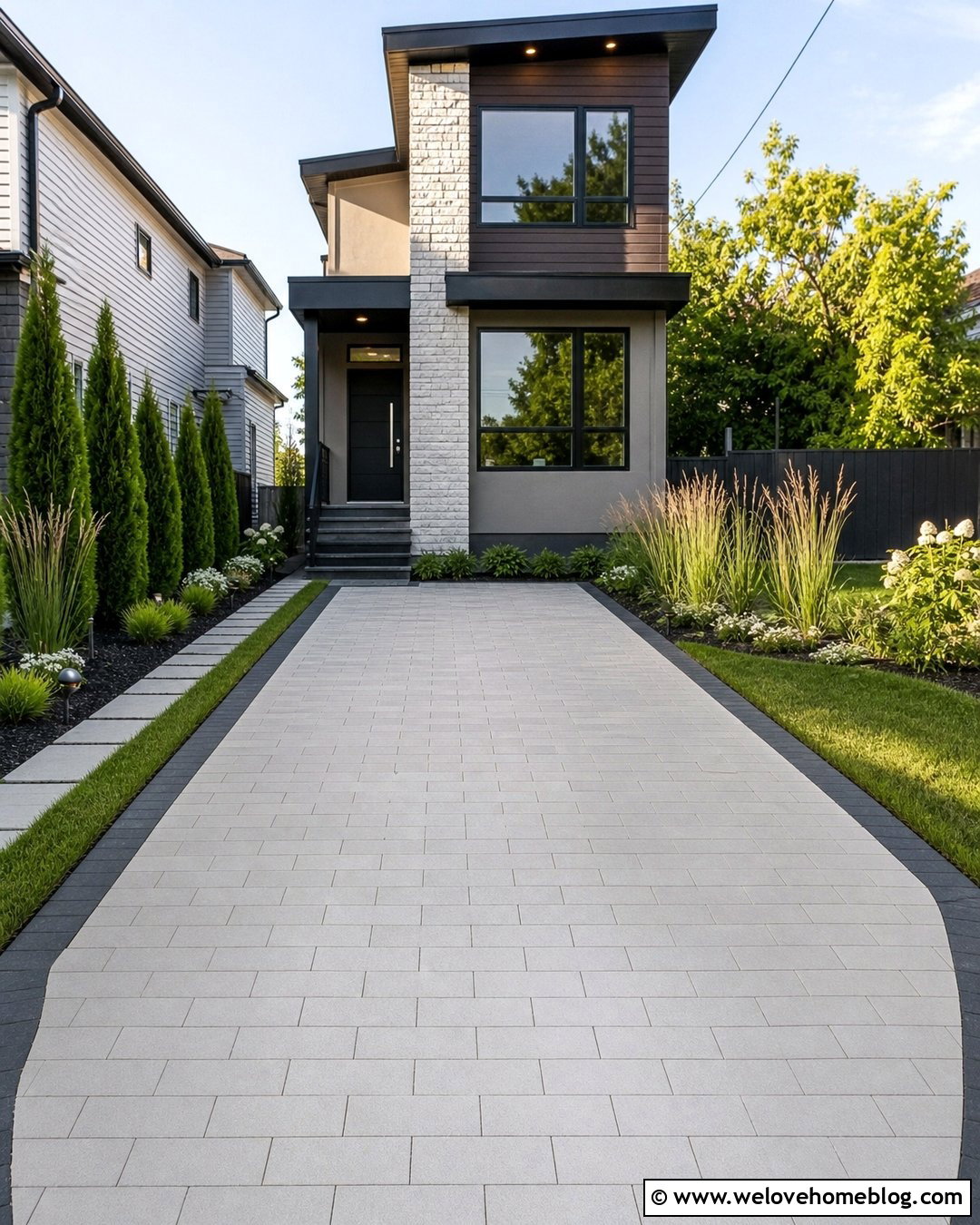
A narrow driveway needs definition without losing useful driving width. Flush stone edging provides a visible border while avoiding the confined feeling created by raised curbs. Pair broom-finished concrete or compacted gravel with a single row of slim granite, limestone, or bluestone setts. Run the stones beside low planting beds rather than large shrubs that could crowd doors and mirrors. Columnar evergreens, compact grasses, and ground covers can add greenery within limited space. Where the driveway meets the walkway, use the same stone to create a small crossing band. This makes the layout feel connected and helps guests identify the path to the front door. Keep the border pattern simple and consistent. Too many contrasting bands can make a narrow surface appear shorter and more fragmented.
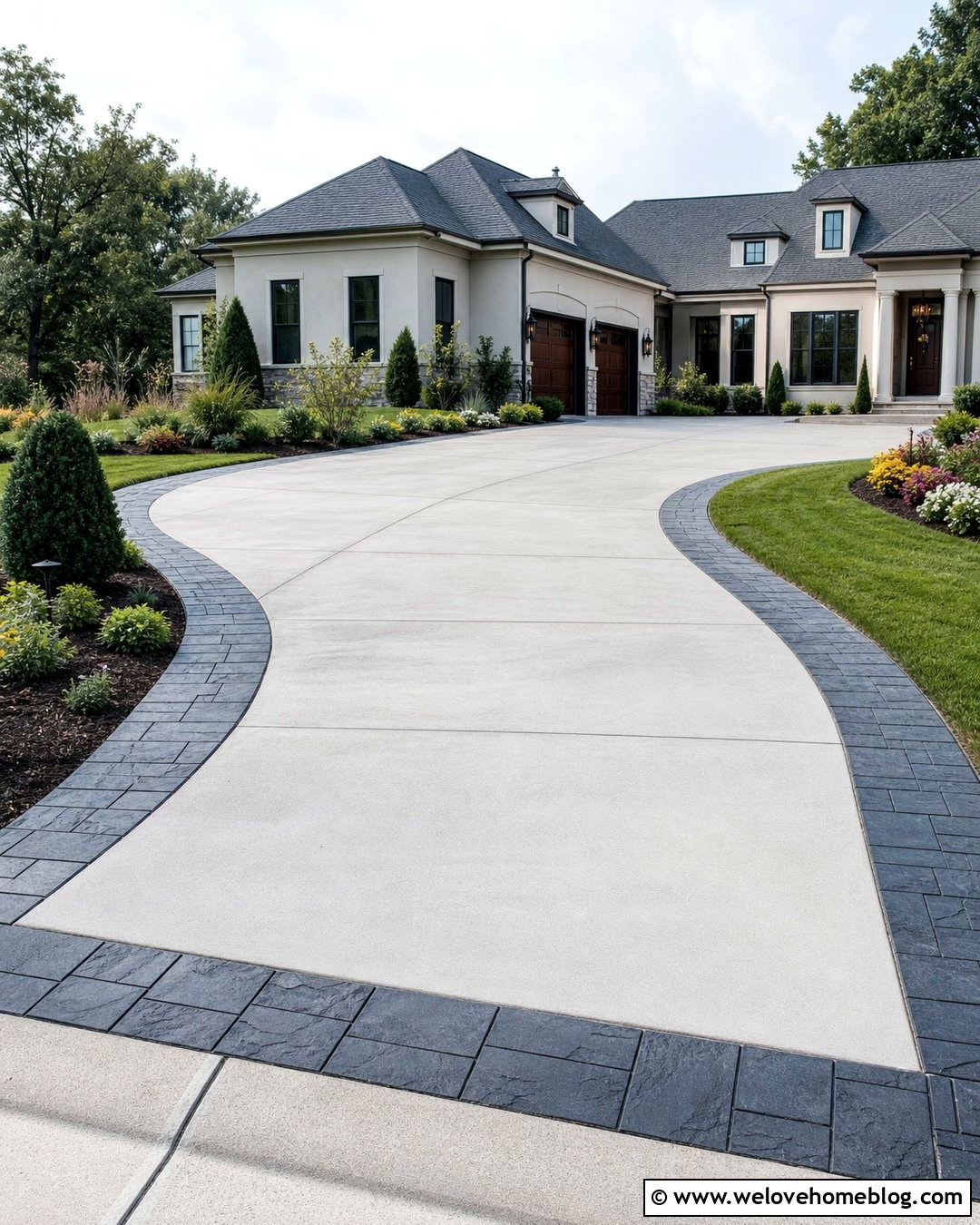
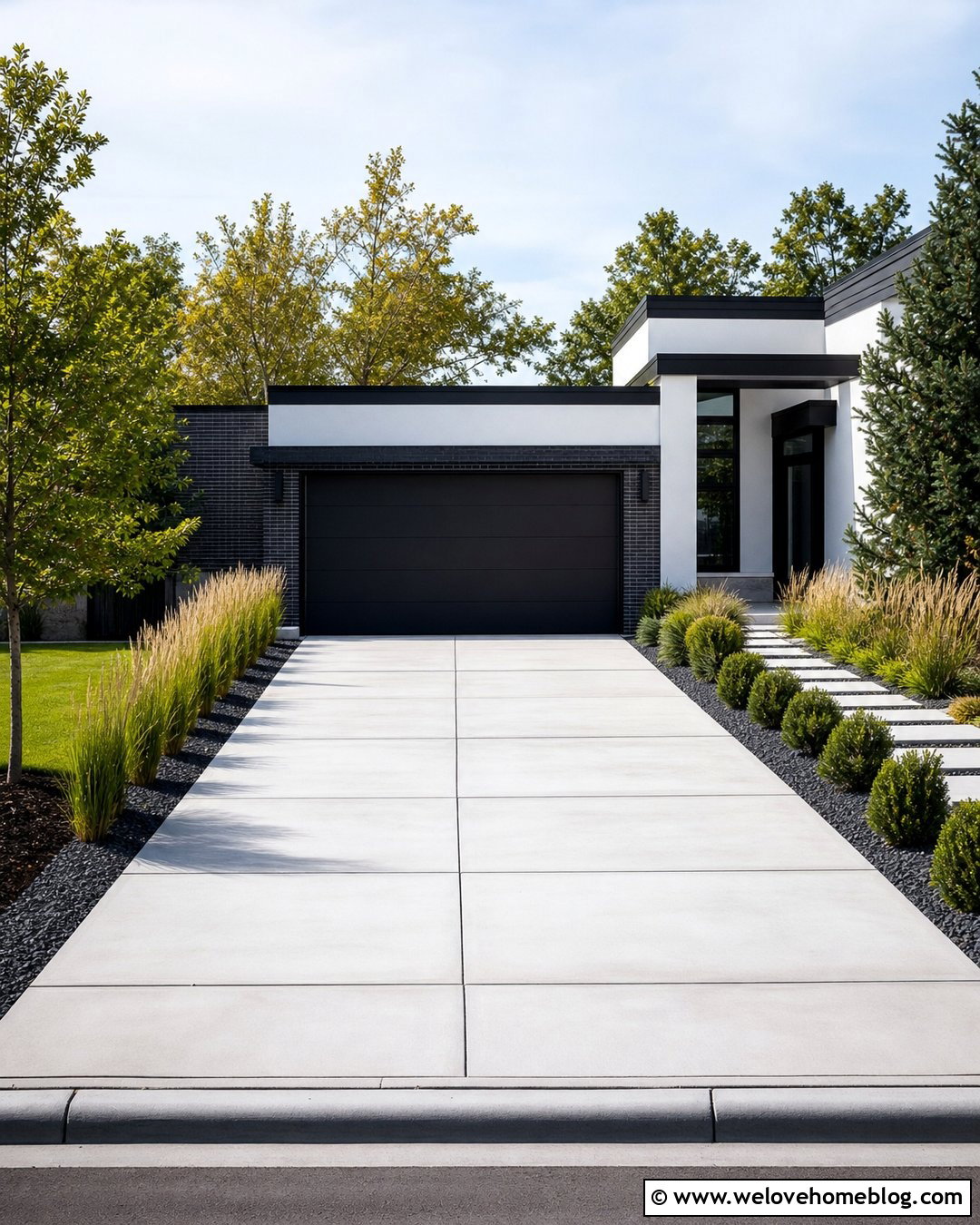
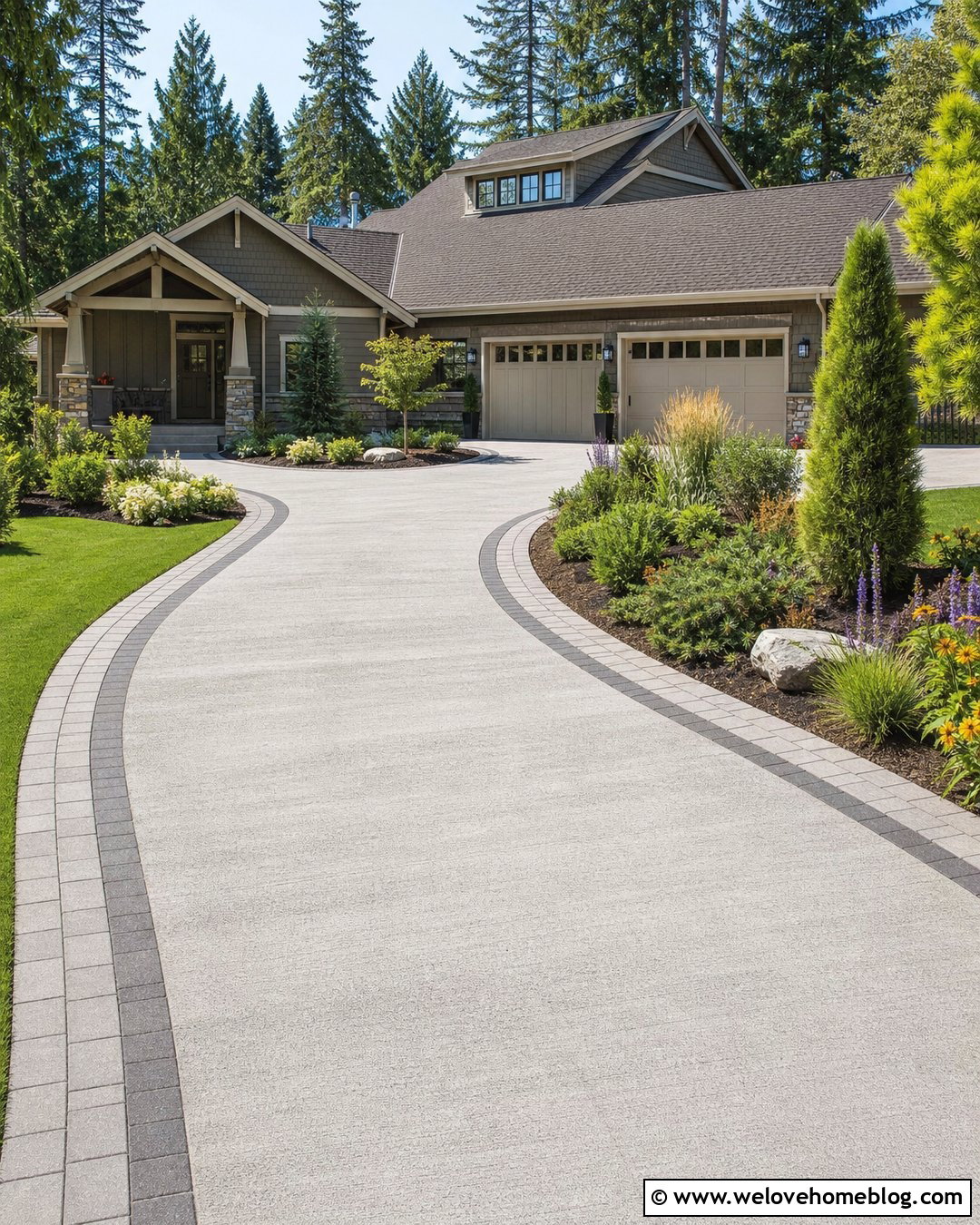
20. Driveway With Stone Edging And Landscape Lighting
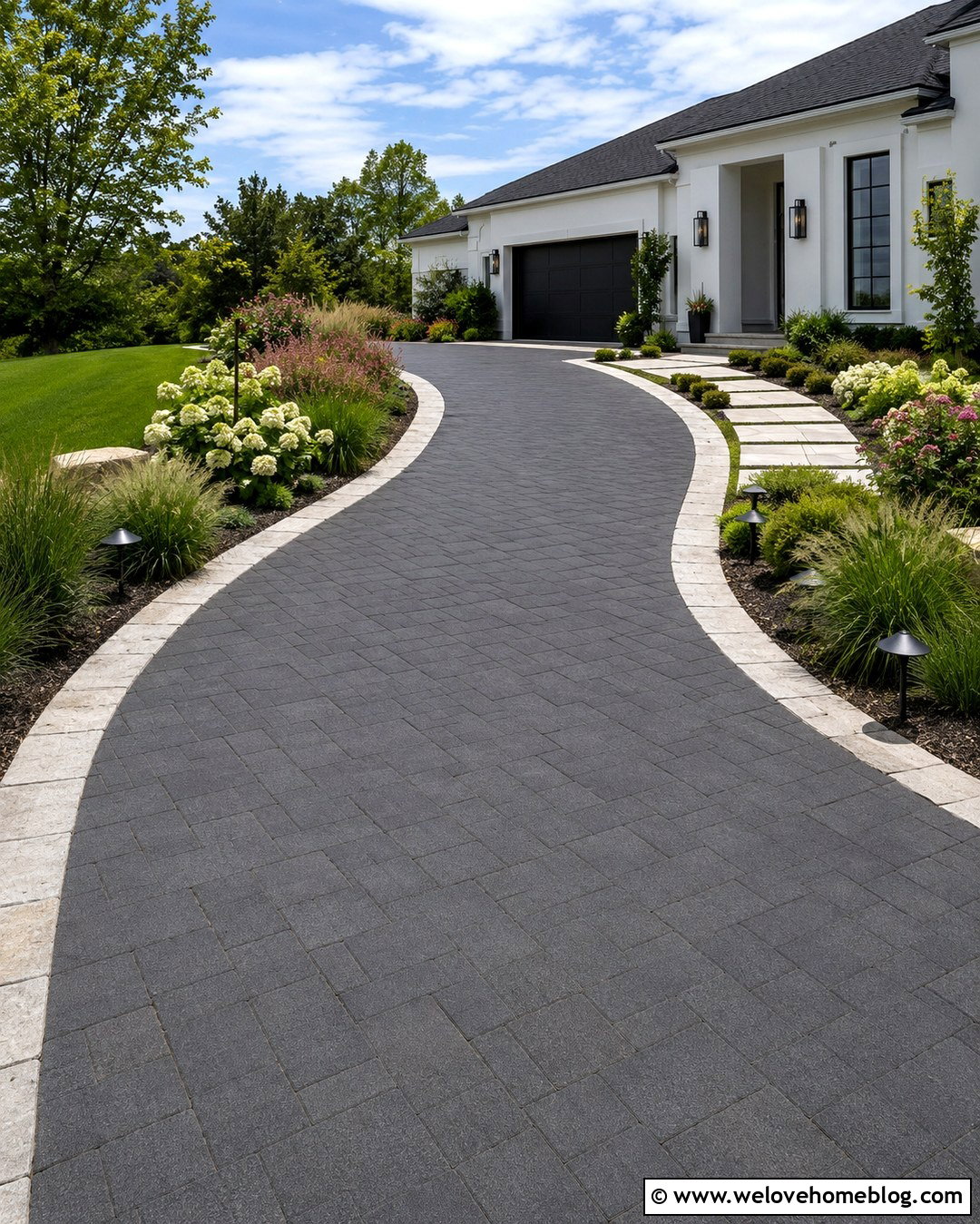
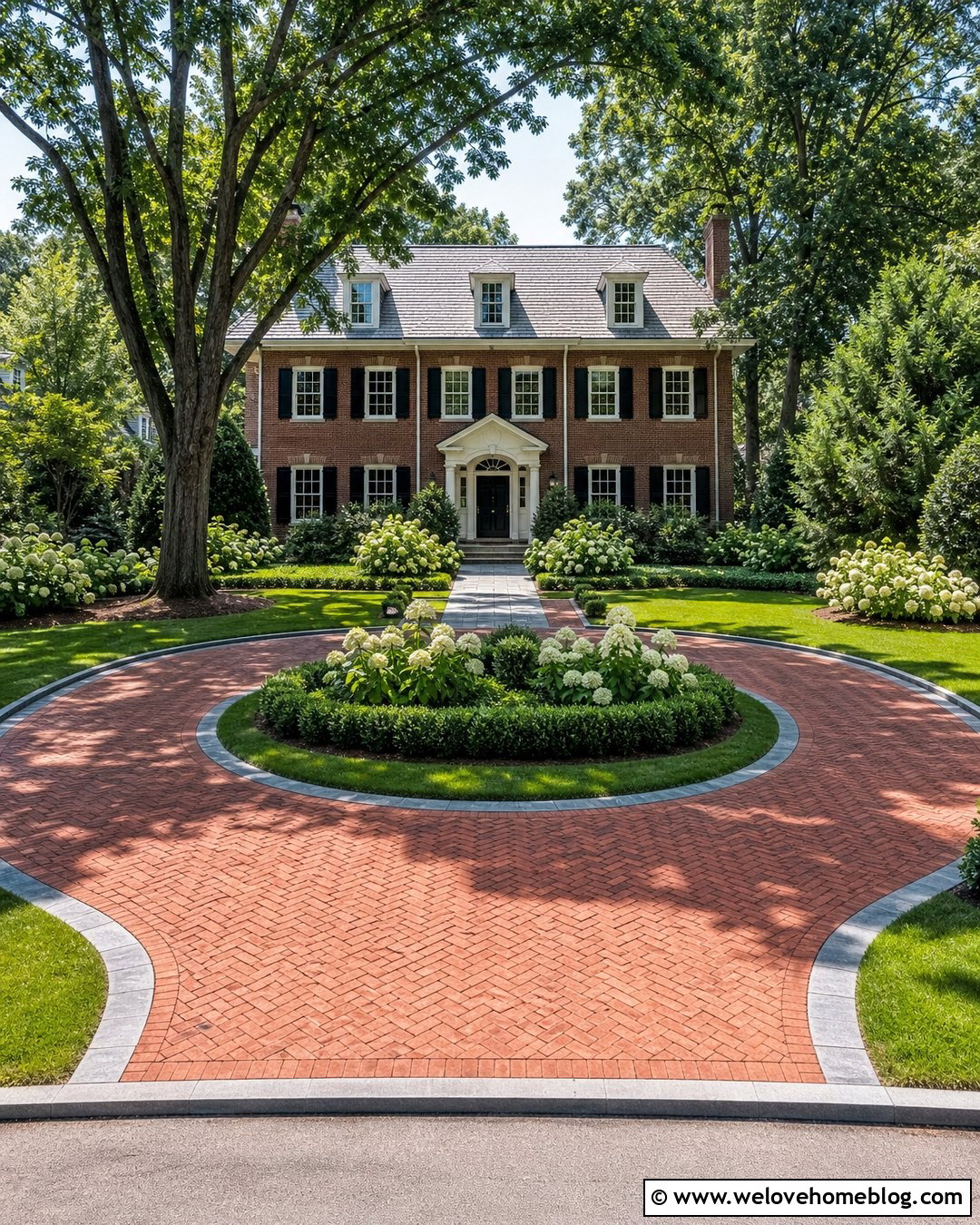
Stone edging becomes more useful as a design feature when it also organizes driveway lighting and planting. Pair a dark asphalt or gray paver driveway with a wide limestone or granite border. Place low, shielded fixtures in the landscape behind the stones rather than directly in the vehicle path. Space them consistently along a curved approach, focusing attention on bends, the entrance, and the walkway connection. During the day, layered grasses, flowering shrubs, and neat ground cover soften the masonry. The house facade should remain the visual destination at the end of the driveway. Choose fixture finishes that coordinate with the garage lights, gate hardware, or front door. Plan wiring, drainage, and edging installation together so later work does not disturb the finished border or driveway base.
Conclusion:
The best **20 Driveway Stone Edging Ideas** combine attractive materials with a layout that suits the driveway, house, and surrounding yard. Cobblestones and granite blocks create strong, formal lines, while fieldstone, river rock, and flagstone offer a softer natural character. The driveway surface matters too. Light gravel benefits from a darker frame, and asphalt can look more refined beside pale stone. Consider vehicle clearance, drainage, mowing access, planting space, and local weather before choosing a border. Repeat the edging material in an apron, walkway, retaining wall, or entrance pillar for a connected appearance. With thoughtful proportions and proper installation, stone edging can make the entire approach feel cleaner, more durable, and intentionally designed.

Related posts:
Leave a Reply