
A well-designed border gives loose stone a clear boundary, reduces gravel migration, and makes the entire front yard feel more finished. These 25 Edging For Gravel Driveway Ideas explore complete driveway looks rather than isolated materials. You will find options for straight, curved, circular, rustic, traditional, and modern layouts. Each design combines the gravel color and texture with practical edging, planting, drainage, and the architecture of the house. Durable masonry suits busy entrances, while steel, timber, composite, and planted borders offer different price points and visual effects. Properly anchored edging is especially important where gravel meets lawns, planting beds, slopes, and public roads. () Use these 25 Edging For Gravel Driveway Ideas to create a cleaner, stronger, and more attractive approach to your home.
1. Steel Edging For A Gravel Driveway
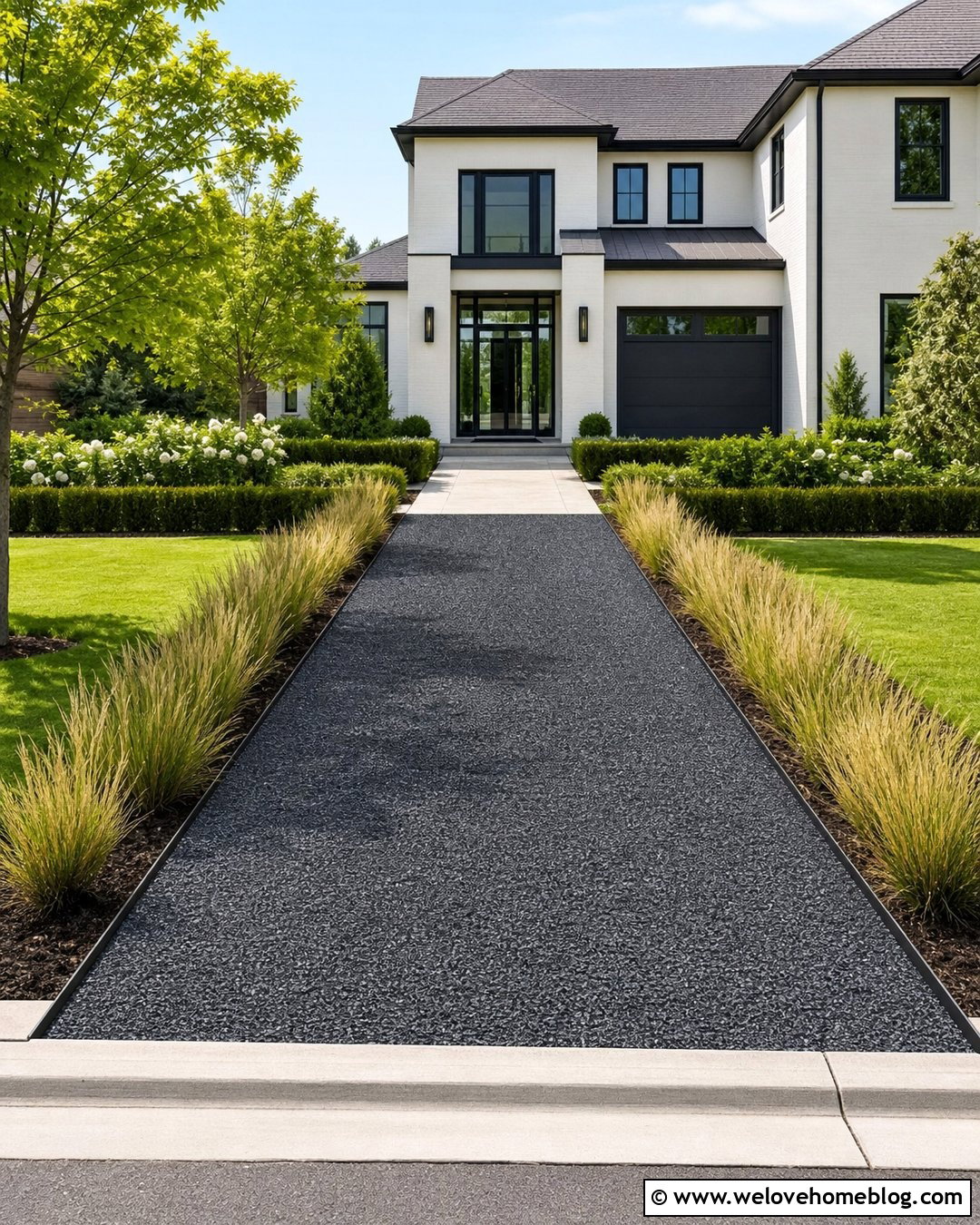
Slim steel edging creates a crisp transition without adding a bulky border. Pair black steel strips with compacted gray crushed gravel for a modern driveway that feels clean but not overly formal. The edging can follow a straight approach or bend around a gentle curve, making it useful for contemporary homes with simple landscaping. Install the steel low enough that it does not become a noticeable trip point, but high enough to contain the finished gravel layer. Deep stakes and a stable base help prevent movement. Complete the look with rectangular planting beds, ornamental grasses, low evergreen shrubs, and a concrete walkway. Dark steel virtually disappears from a distance, allowing the texture of the gravel and the architecture to remain the main features. ()
2. Corten Steel Edging For A Gravel Driveway
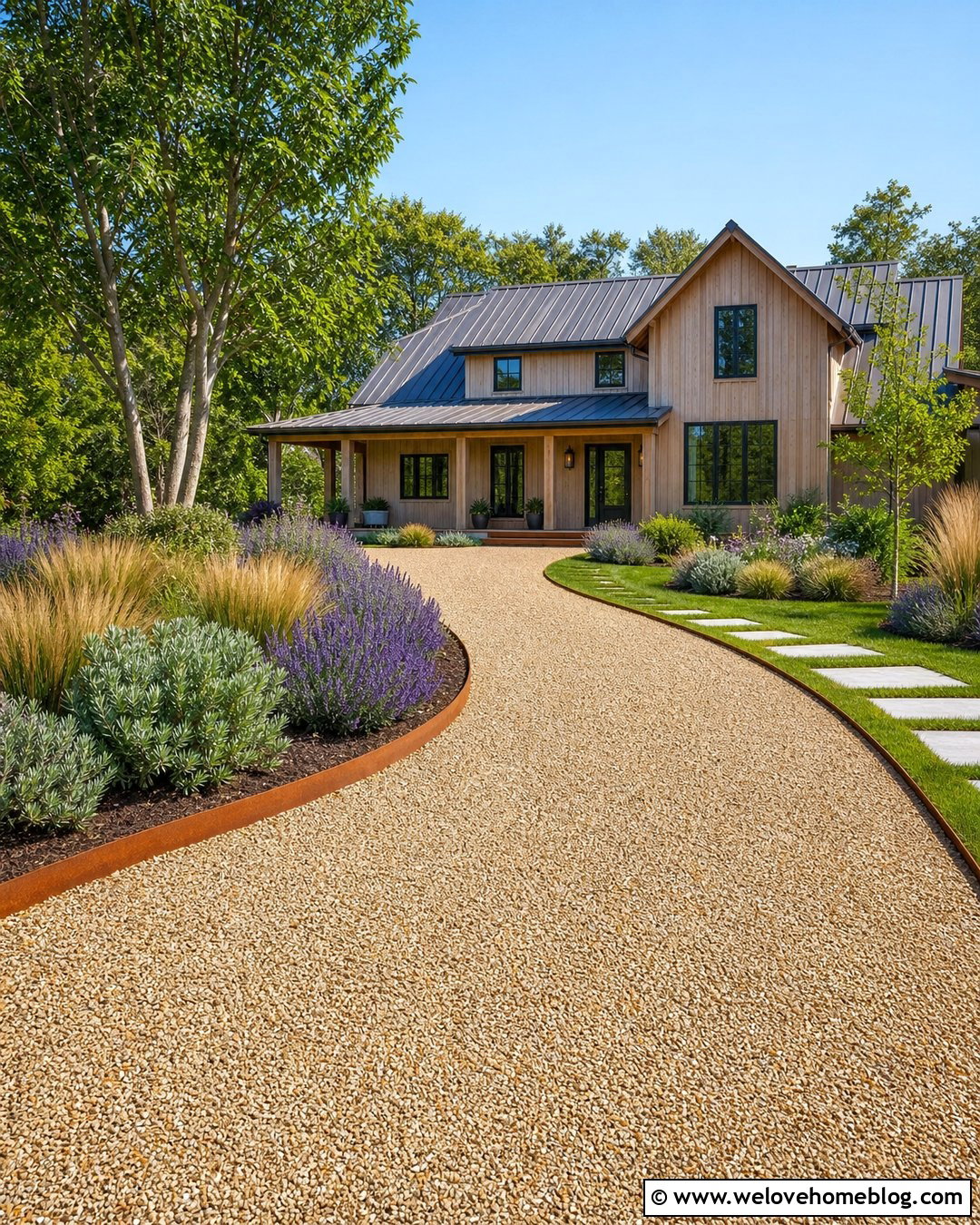
Corten steel brings warm, earthy color to a gravel driveway while maintaining a thin, contemporary profile. Its weathered rust-toned surface pairs especially well with buff pea gravel, tan crushed stone, or golden decomposed granite. Use it along a curved driveway leading to a modern farmhouse or a home with cedar siding. The steel can also outline matching planting beds beside the drive, creating a connected landscape rather than a separate strip of edging. Choose a product designed for exterior landscape use and anchor it securely in a prepared trench. Soft grasses, lavender, sage, and compact shrubs balance the industrial appearance of the metal. Keep the edge relatively low and maintain a consistent gravel level for a smooth, deliberate transition.
3. Aluminum Edging For A Gravel Driveway
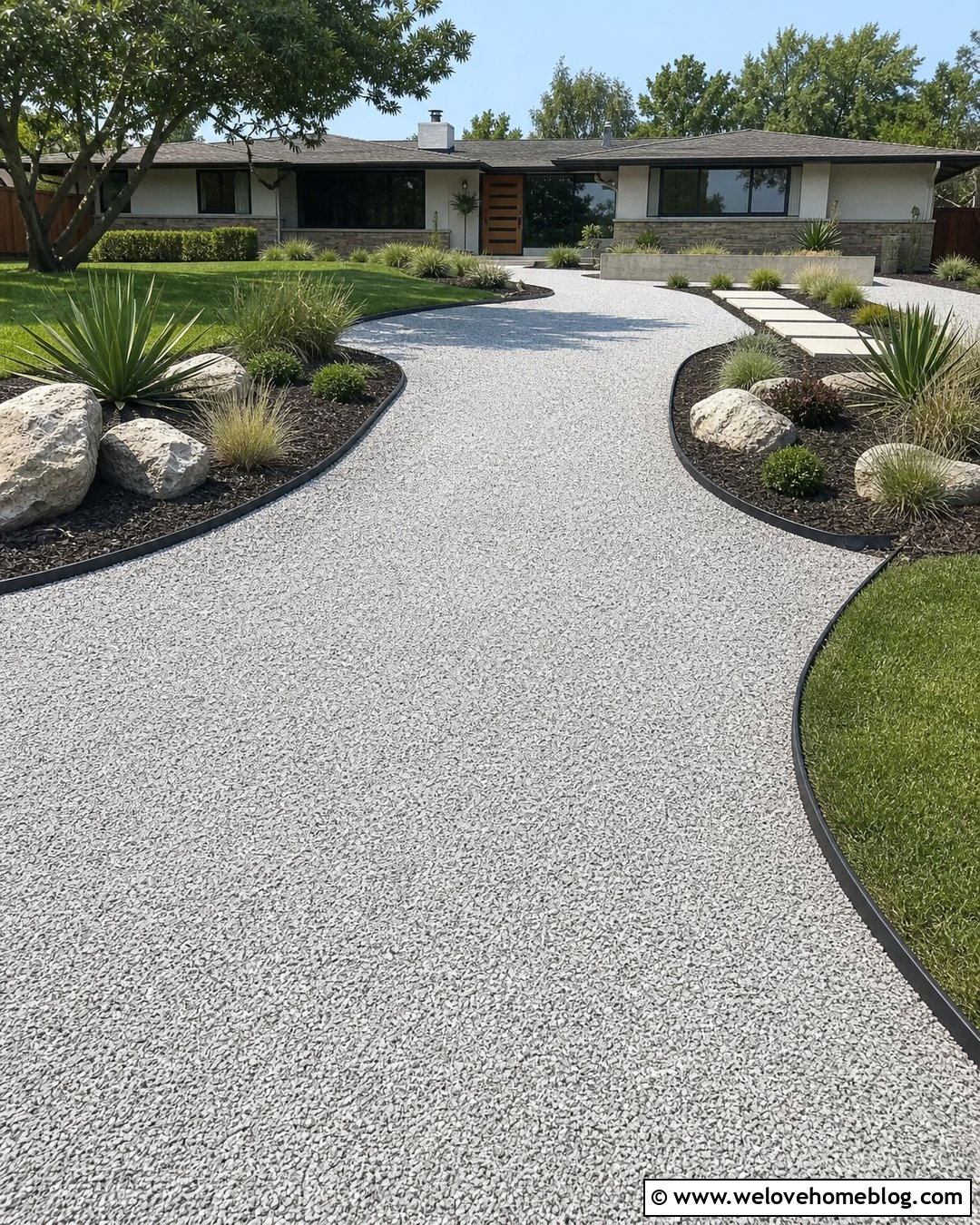
Aluminum edging is a useful choice when you want a narrow border that resists rust and follows gentle curves. It works particularly well around a light gray gravel driveway serving a low-profile ranch or midcentury home. Select a heavier landscape grade rather than a thin decorative product, especially near turning areas where gravel pushes outward. Place the edging between the driveway and a broad lawn, then use stone mulch and drought-tolerant plants near the house. Silver aluminum can blend with pale gravel, while black-coated aluminum creates stronger contrast. A smooth curved layout makes the driveway feel wider and more welcoming. Proper staking, a compacted base, and careful grading remain important because the edging defines the shape but cannot correct an unstable driveway foundation. ()
4. Brick Edging For A Gravel Driveway
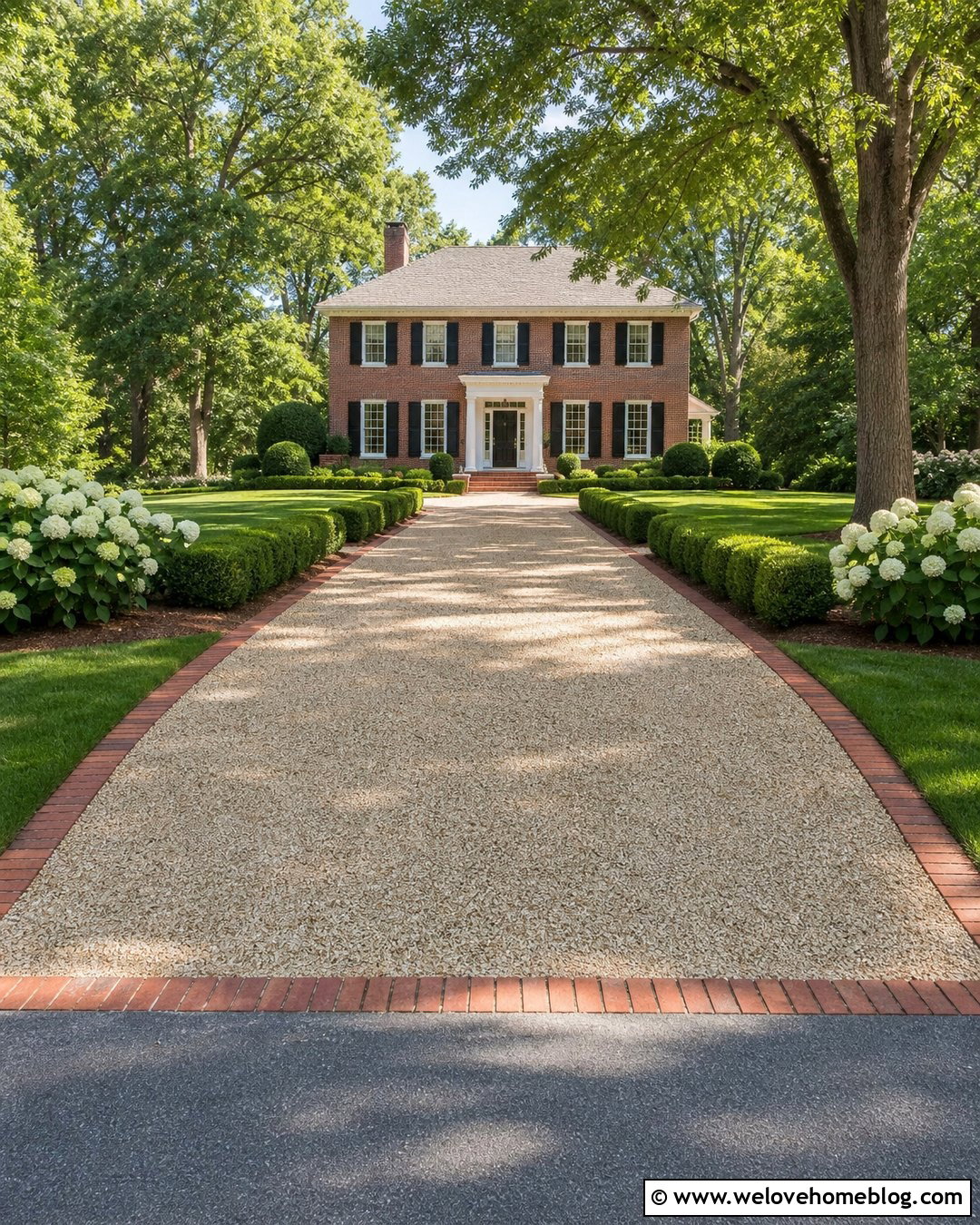
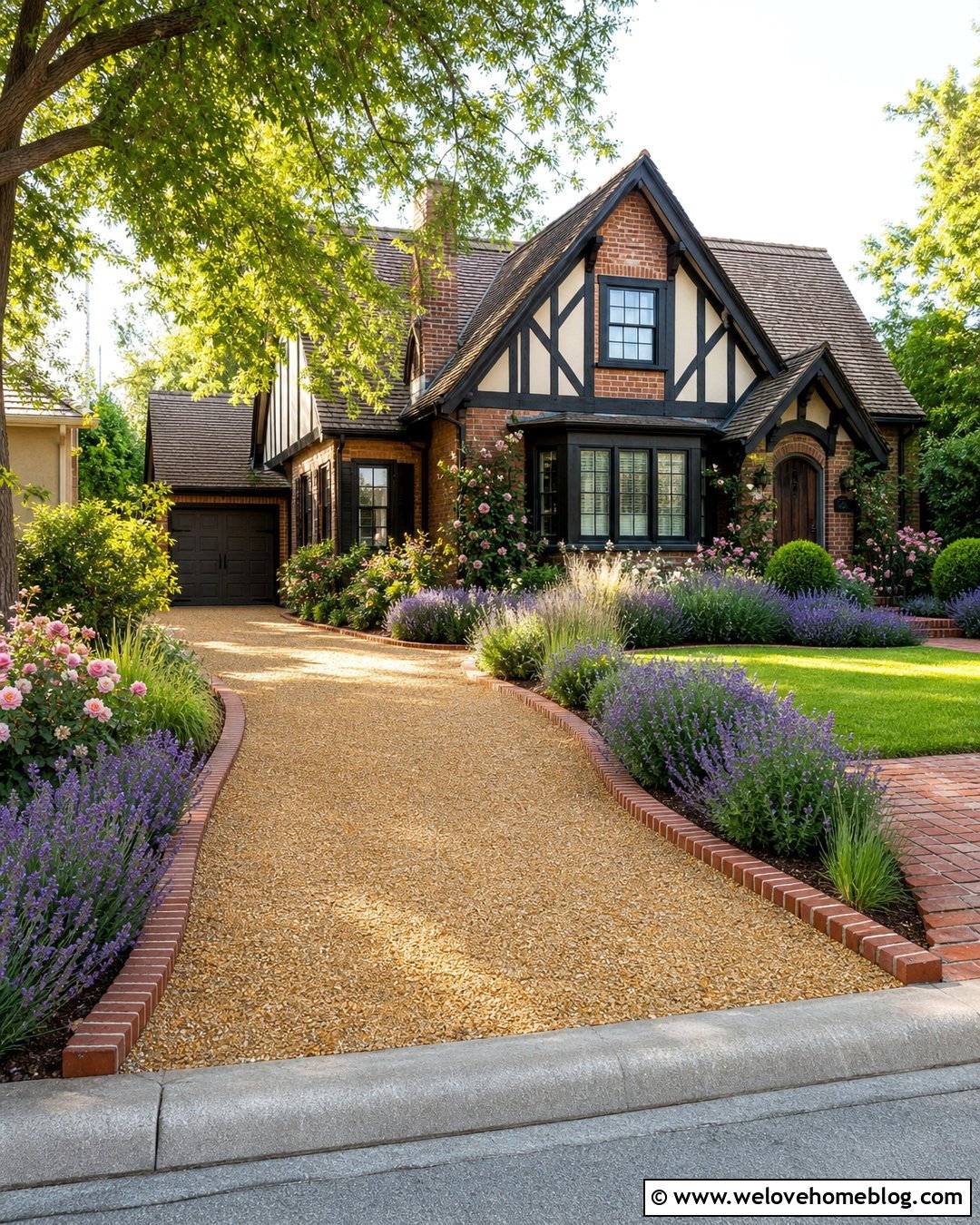
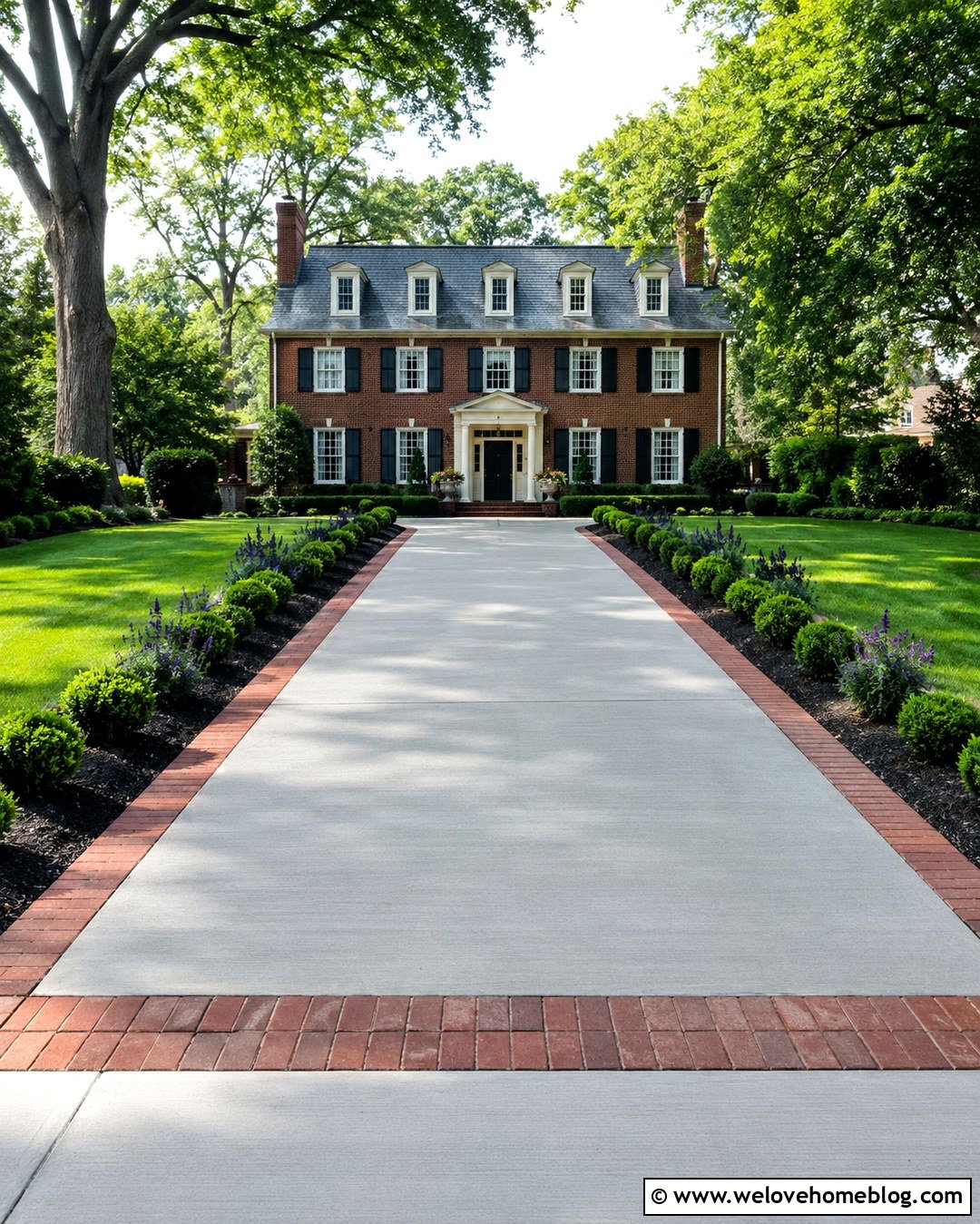
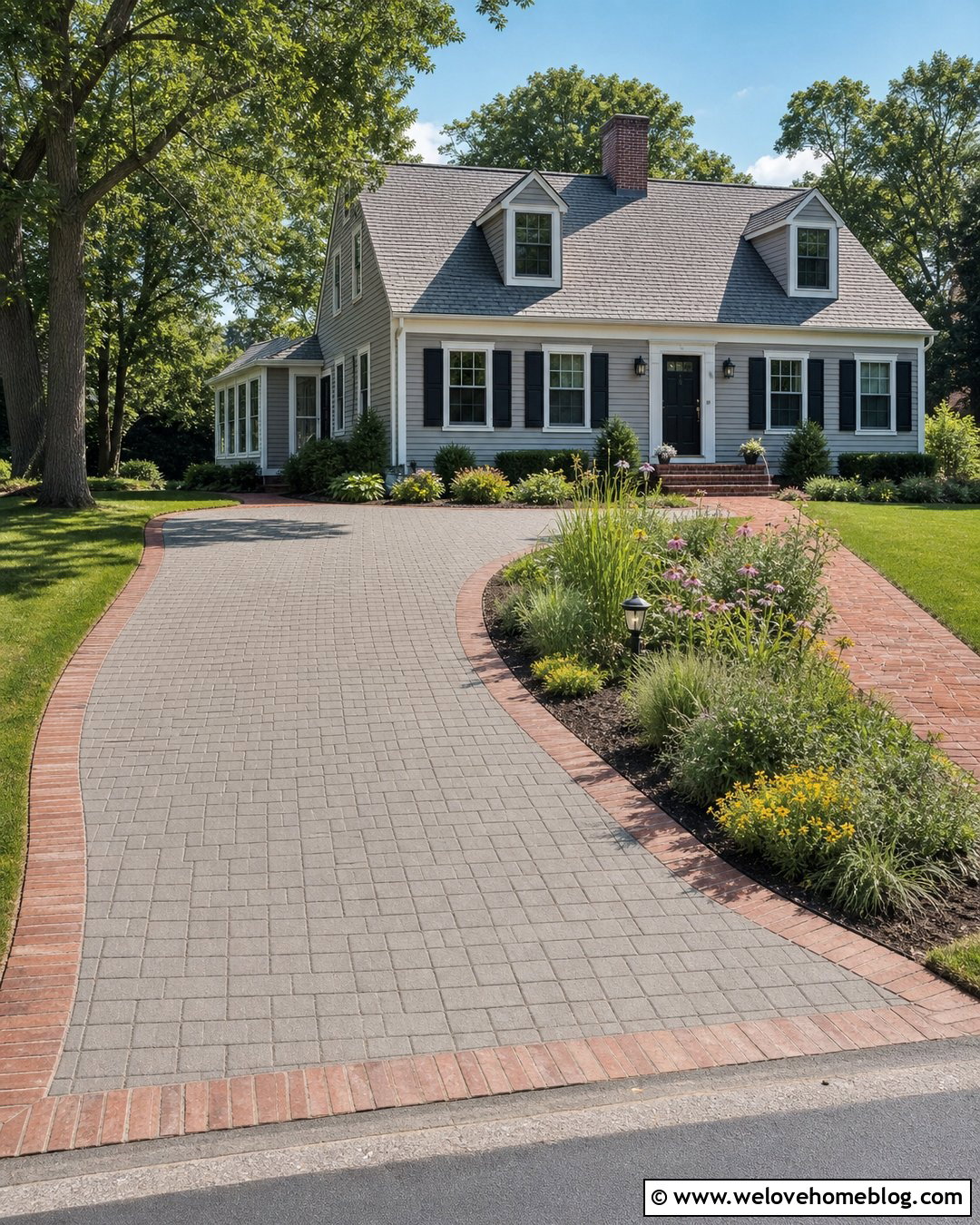
Red brick edging adds warmth and traditional character to a pale gravel driveway. It looks especially appropriate beside colonial, Cape Cod, Georgian, and classic ranch homes with brick chimneys or red masonry details. Set the bricks in a straight soldier course along both sides of the driveway, then repeat the material around the front walkway. The repeated color helps the driveway connect visually with the house. A restrained landscape of boxwood, hydrangeas, lawn, and shade trees completes the formal look. For a dependable border, install the bricks over a prepared base and provide suitable edge support rather than placing them loosely on soil. A slightly raised inner face can help contain gravel, but the border should remain comfortable to walk across and easy to maintain. ()
5. Double Brick Edging For A Gravel Driveway
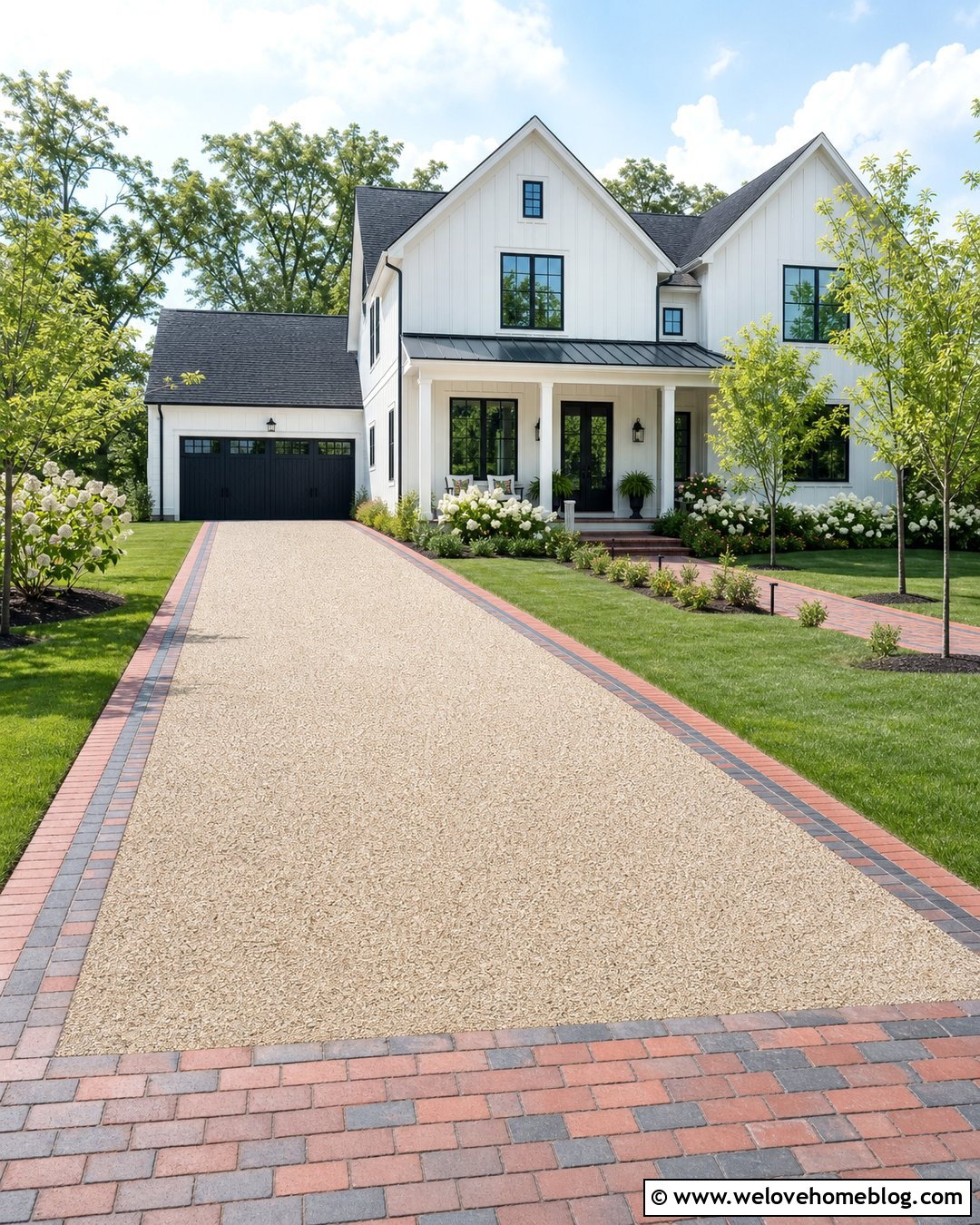
A double row of brick creates a wider, more noticeable frame than a single soldier course. This design works well with cream gravel on a straight driveway leading to a white farmhouse, brick cottage, or traditional suburban home. Lay the bricks in a running bond or compact basket-weave pattern to make the border feel like a narrow paved ribbon. That extra width creates a useful visual transition between loose gravel and lawn. Match the brick color to the front steps, porch foundation, or garden walkway for a coordinated exterior. Small flowering shrubs and neatly clipped beds can soften the strong geometry. Because the brick ribbon sits close to vehicle traffic, proper excavation, a stable base, and strong lateral restraint are important for reducing settlement and spreading.
6. Cobblestone Edging For A Gravel Driveway
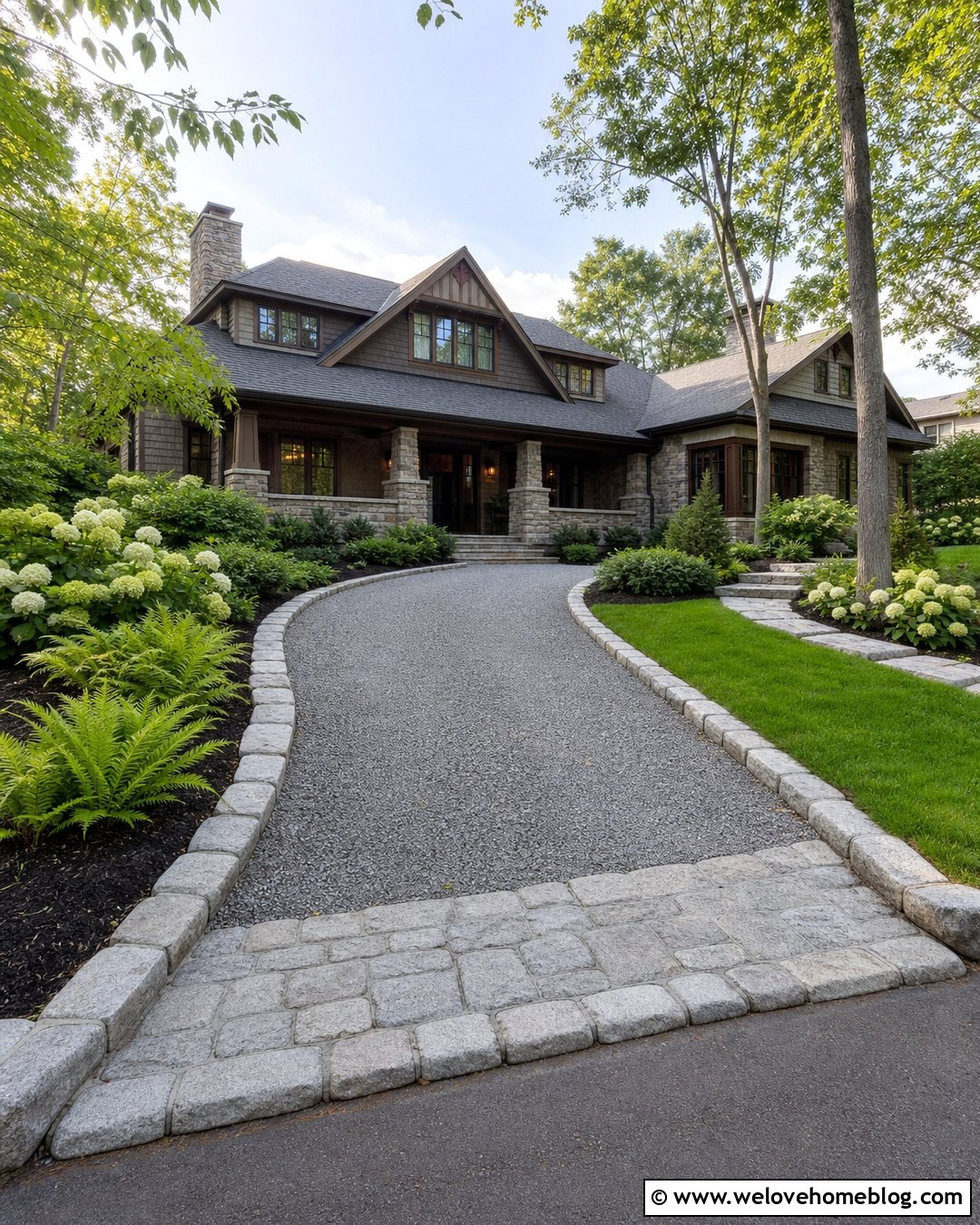
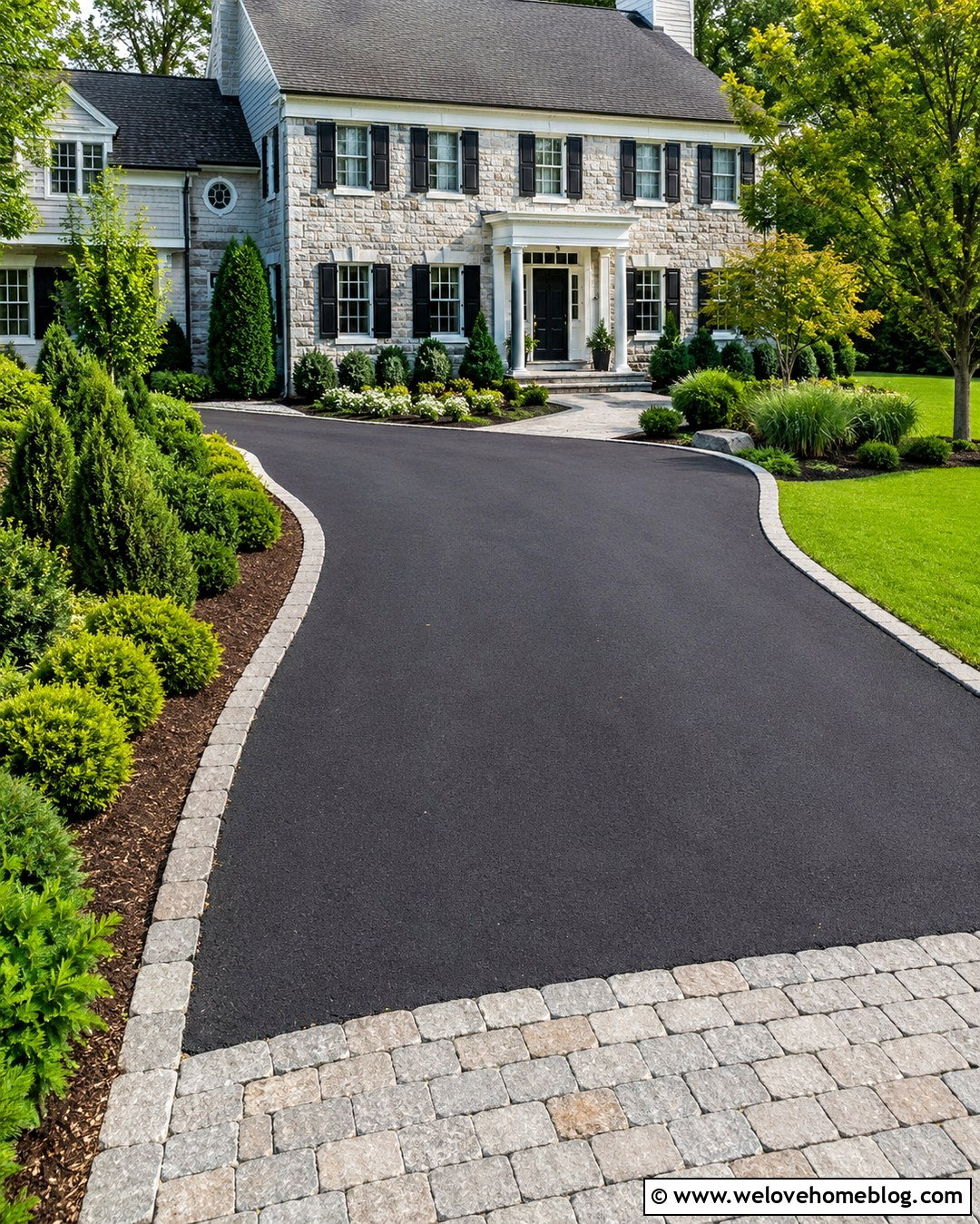
Cobblestone edging gives a gravel driveway a substantial boundary with classic character. Large granite cobbles look especially attractive beside gray crushed gravel on a curved approach to a stone house, Craftsman home, or traditional cottage. Their weight and depth create a stronger visual and physical edge than thin decorative strips. Set the stones in a consistent trench with their tops aligned, even when their natural faces vary slightly. Repeat a few cobblestones across the driveway entrance to form a coordinated apron or threshold. Ferns, hydrangeas, evergreen shrubs, and mature trees support the established look. Cobblestones are suitable for prominent entrances and areas affected by runoff, although larger or more complicated installations may be easier for an experienced mason to complete. ()
7. Granite Sett Edging For A Gravel Driveway
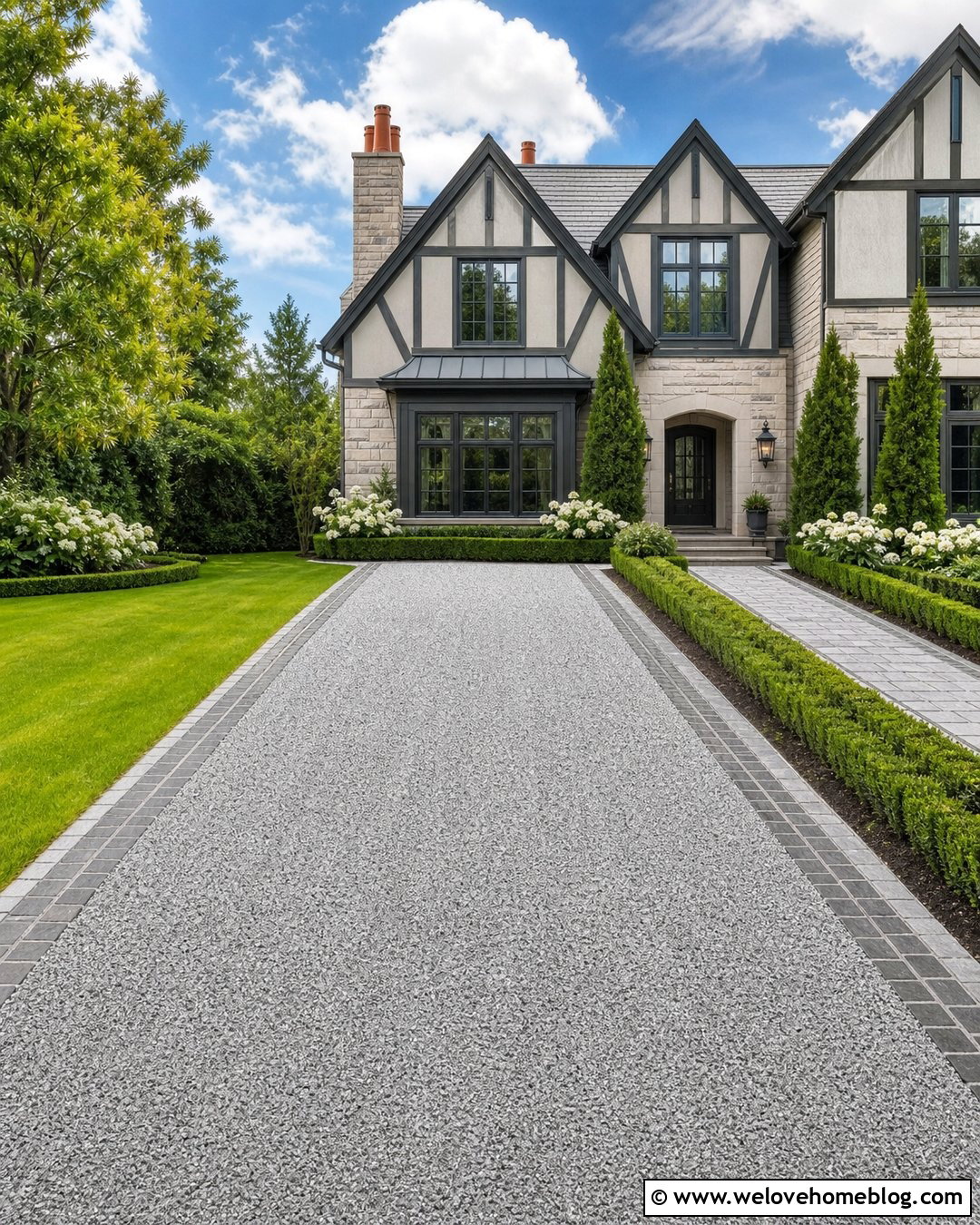
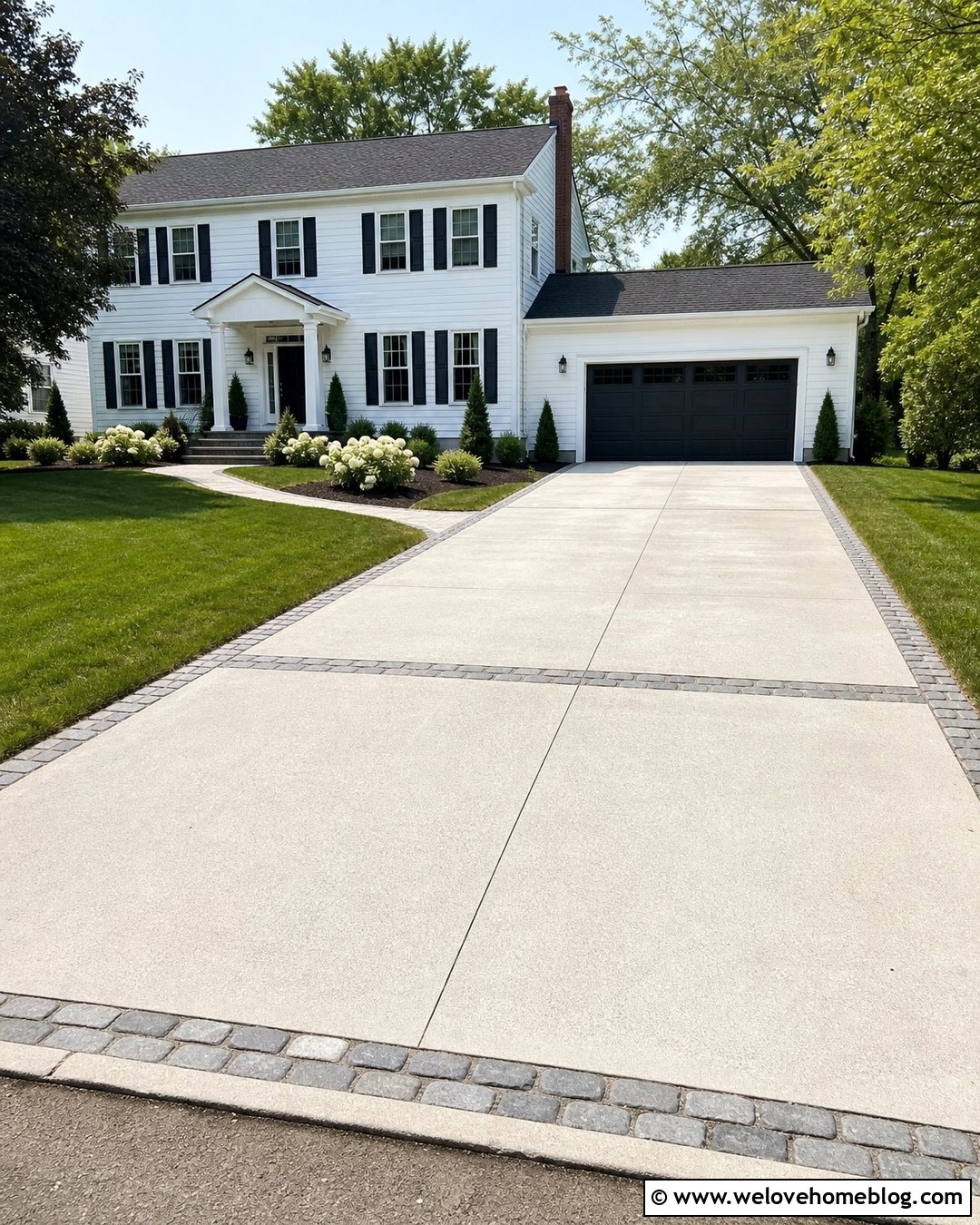
Granite setts create a refined border that feels slightly more regular than rounded cobblestones. Pair charcoal or silver-gray setts with small gray gravel for a driveway leading to a Tudor, colonial, or stone-front home. A single row provides a subtle outline, while two or three rows form a wide band that can handle a more formal entrance. The squared stones are useful for defining straight lines, parking bays, and transitions near a garage. Continue the same setts around a walkway or planting bed so the design feels intentional. Structured boxwood, upright evergreens, and white flowering shrubs complement the tailored appearance. Granite is durable, but the finished border still depends on a compacted foundation and secure setting that prevents individual units from rocking or separating.
8. Fieldstone Edging For A Gravel Driveway
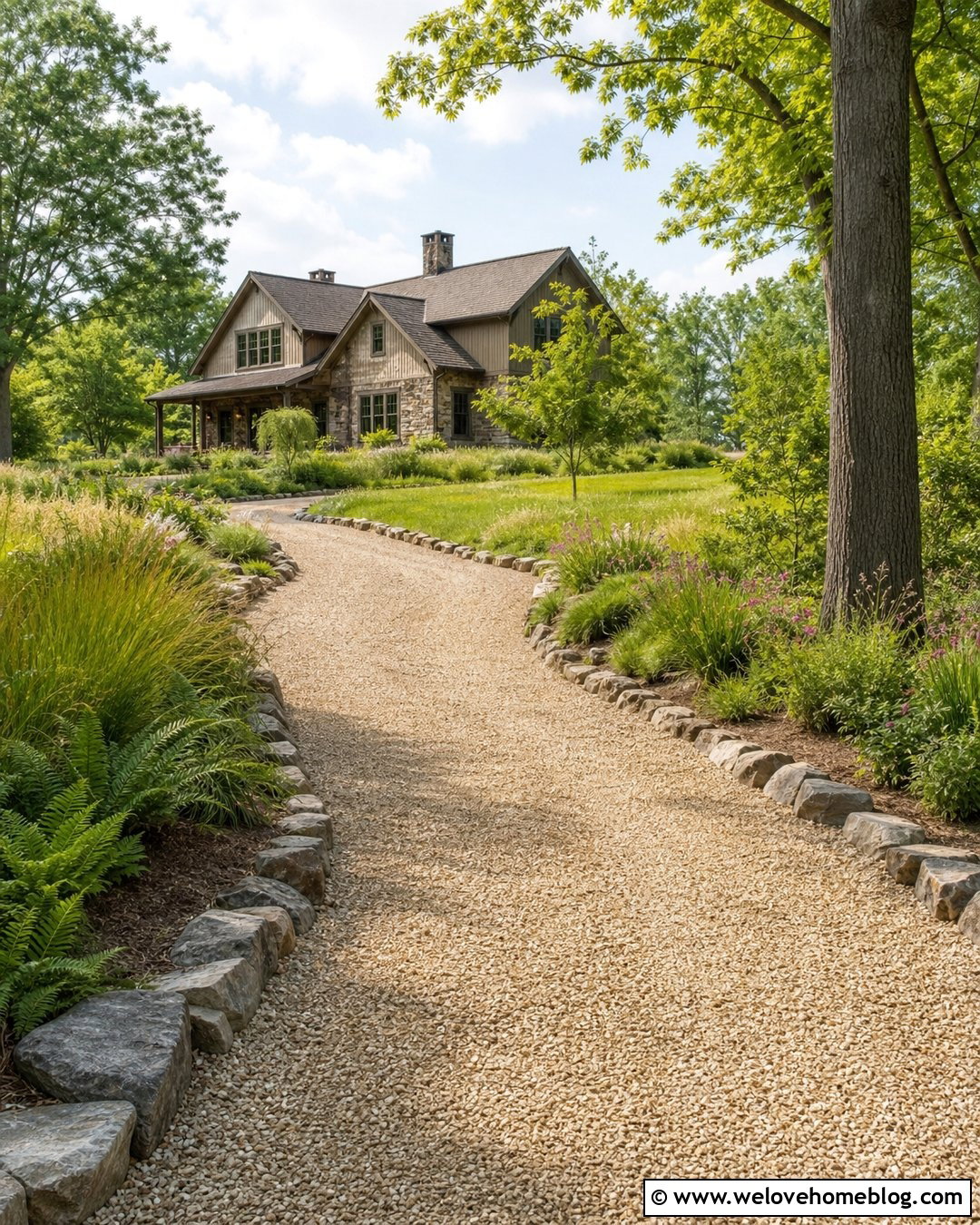
Irregular fieldstone edging gives a gravel driveway a relaxed, regional look. It suits country homes, wooded properties, cabins, and farmhouses where perfectly uniform masonry might feel out of place. Combine mixed gray and brown fieldstones with tan crushed gravel on a gently winding driveway. Select stones with enough size and weight to create a stable boundary, then bury part of each stone rather than balancing it on the surface. Varying shapes can be fitted closely while preserving a natural appearance. Native grasses, ferns, flowering perennials, and broad drifts of shrubs help the border blend into the landscape. Keep taller stones away from tight turning zones and garage doors. The finished design should feel organic while still providing a clearly defined, easy-to-follow driveway edge.
9. Flagstone Edging For A Gravel Driveway
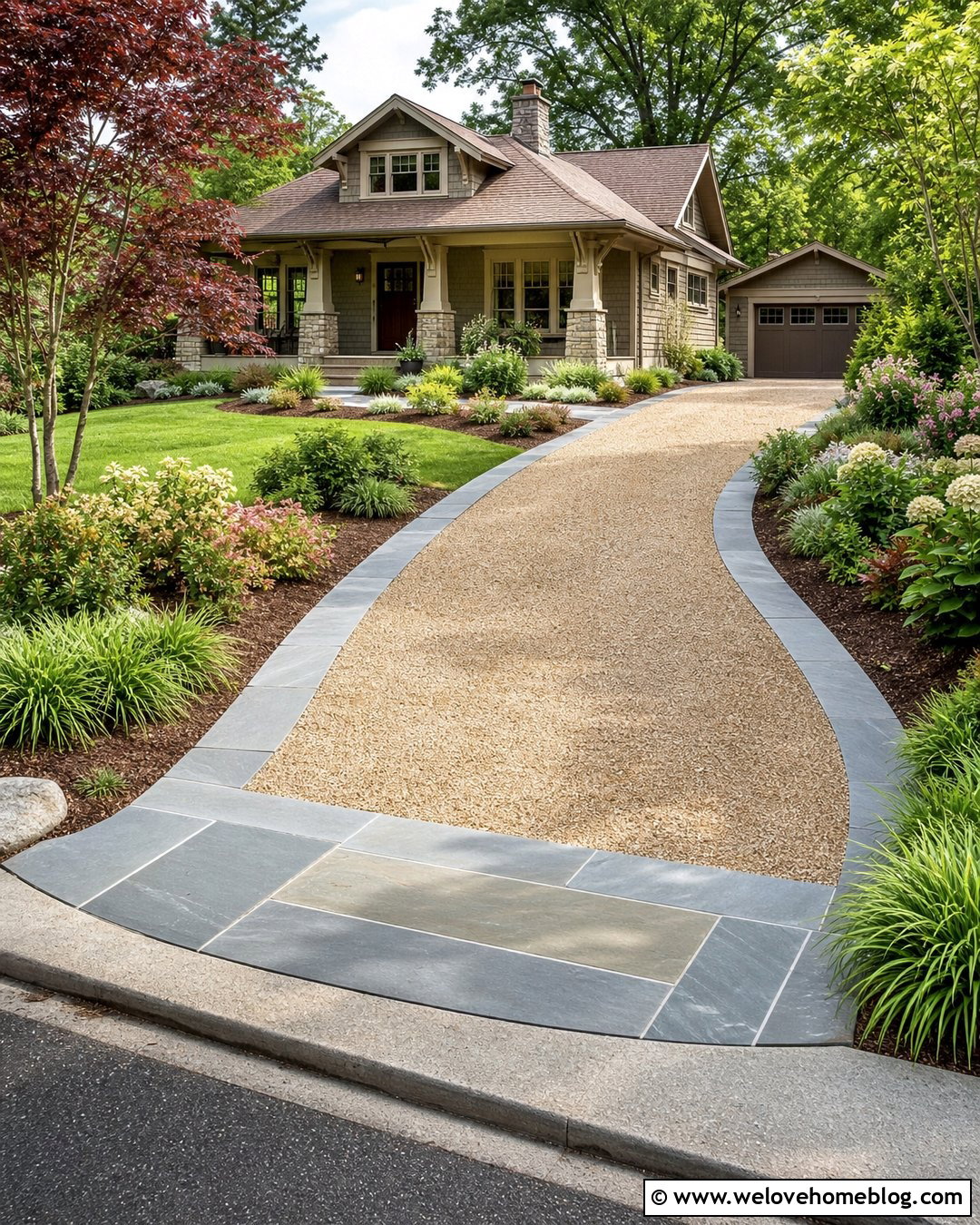
Flat flagstones can form a broad, walkable border beside a gravel driveway. This approach works well when passengers regularly step from the driveway into the yard or when the edge connects with a front path. Pair warm Pennsylvania bluestone or buff sandstone with beige pea gravel on a curved Craftsman driveway. Lay the stones as a continuous ribbon with relatively tight joints, using an appropriate compacted base to limit rocking. The flat surface creates a practical transition while its irregular outline keeps the design relaxed. Extend the same flagstone toward the porch to unify the driveway and entry walk. Layered planting beds with sedges, flowering shrubs, and small ornamental trees complete the scene. Avoid stones with sharply raised edges where vehicle tires frequently cross the border.
10. Paver Edging For A Gravel Driveway
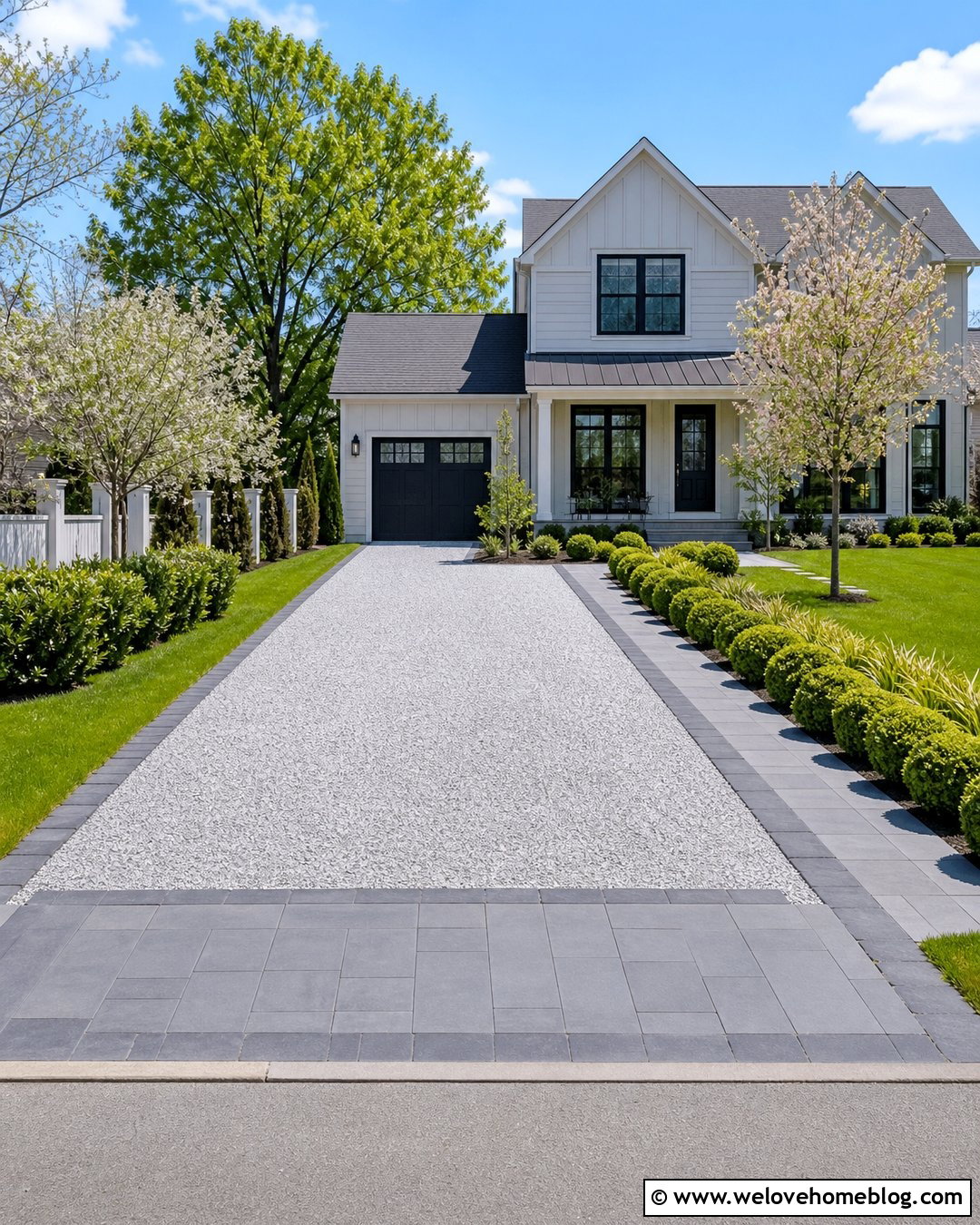
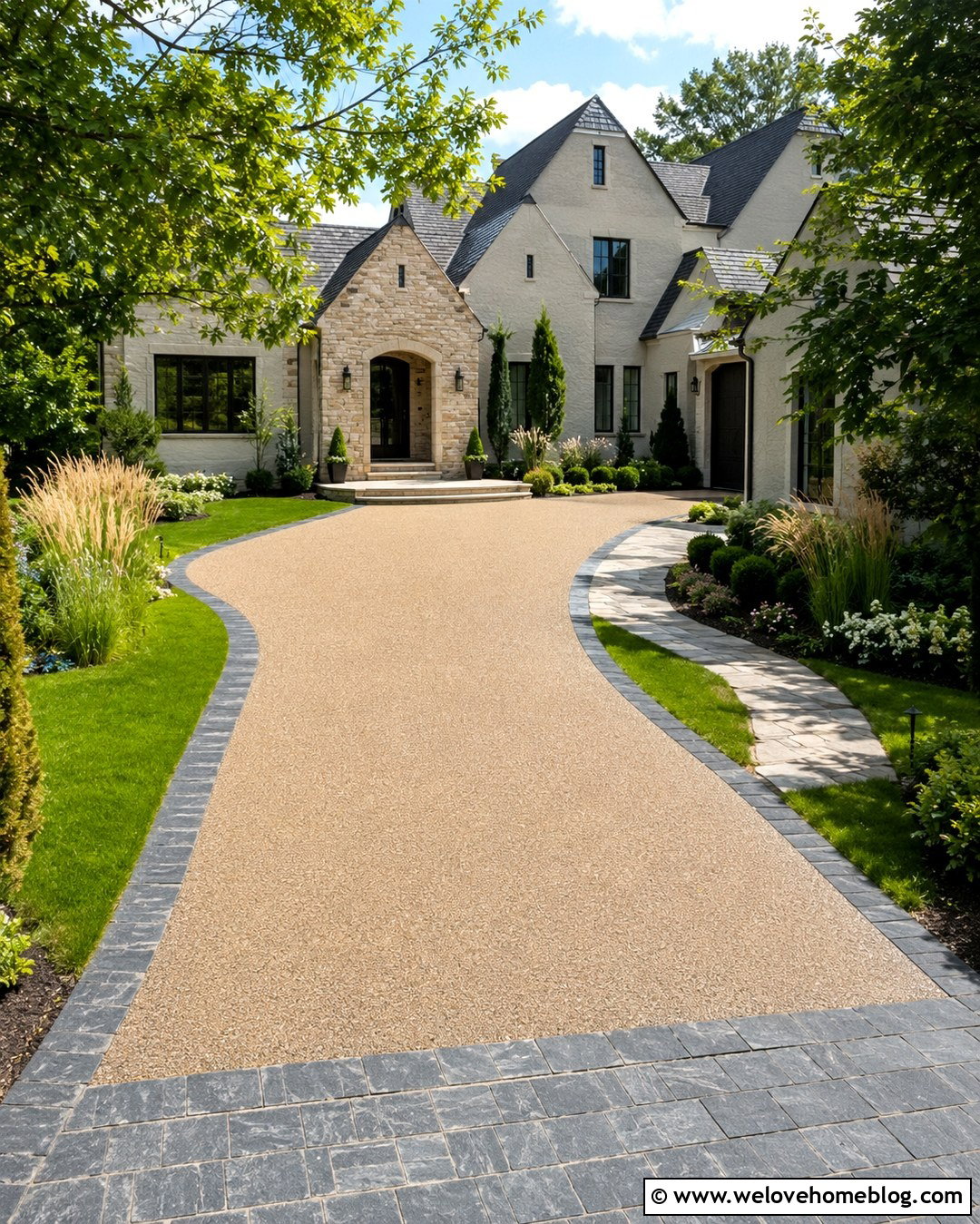
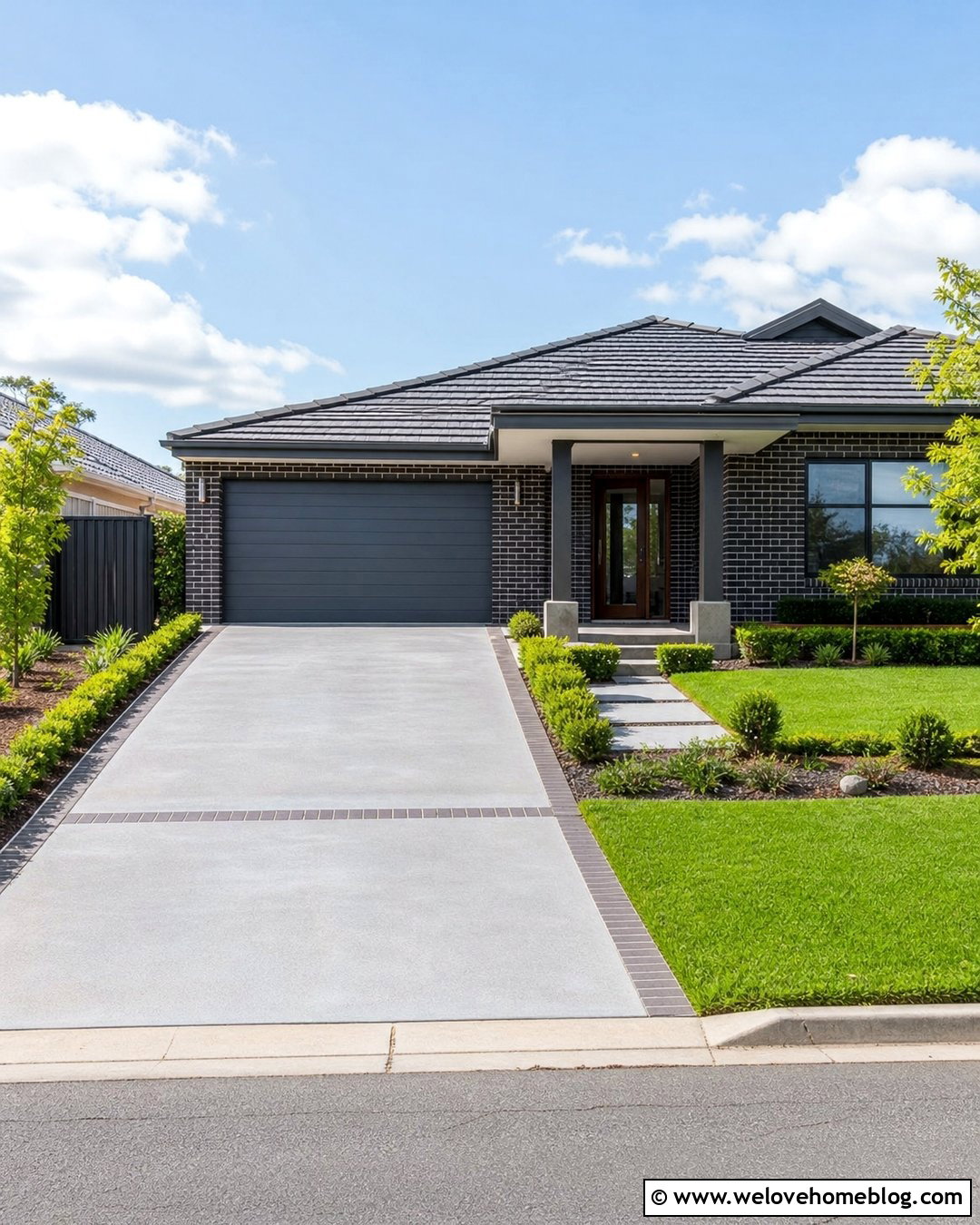
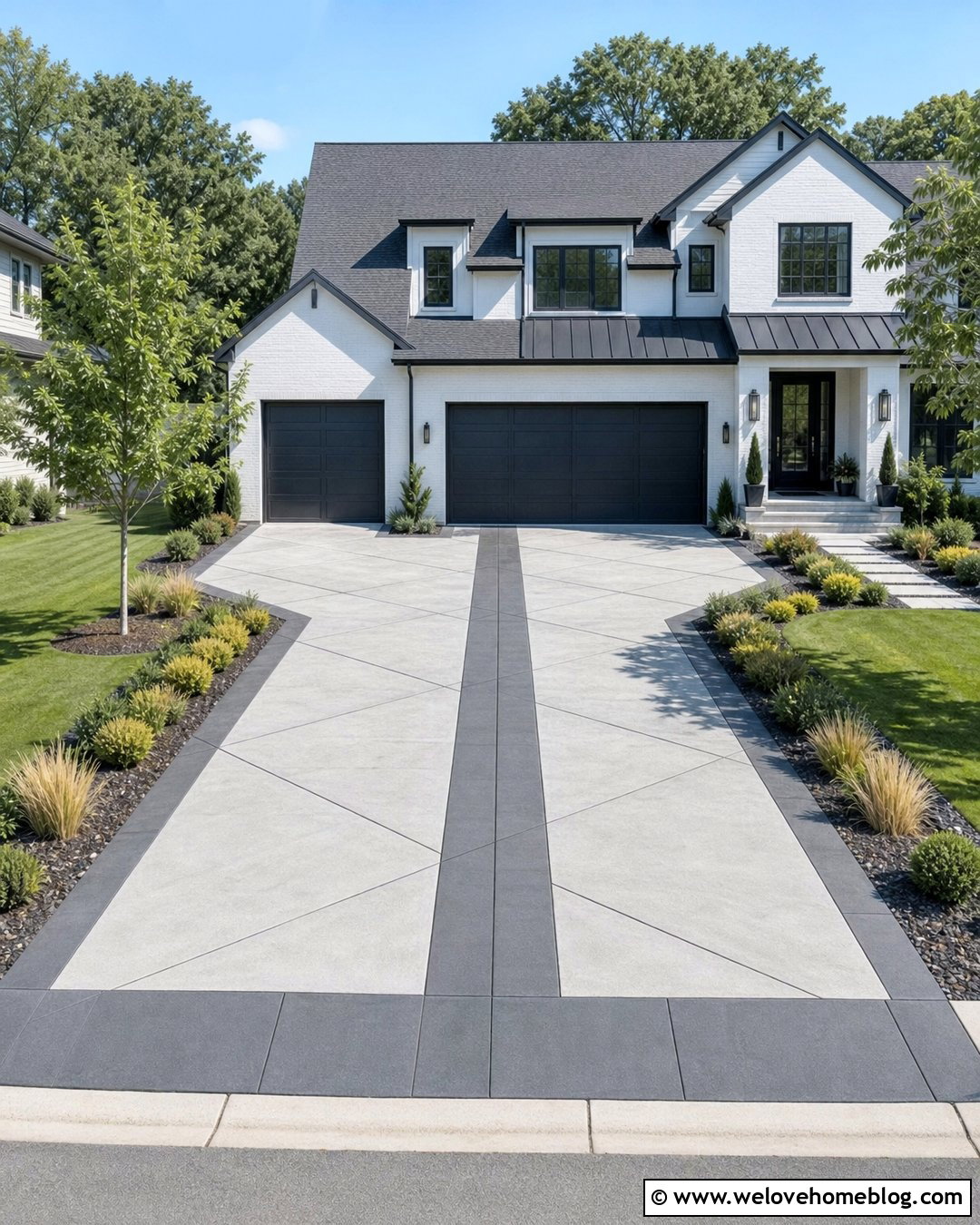
Concrete pavers offer consistent sizing, many colors, and enough flexibility to suit traditional or contemporary homes. For a balanced suburban look, frame a light gray gravel driveway with a single row of charcoal rectangular pavers. The dark ribbon creates contrast and clearly separates the stone from the lawn. On a larger driveway, use a double paver course near the entrance and narrow it along the main approach. Match the border to the front walkway or porch steps for continuity. Simple foundation shrubs, ornamental grasses, and a healthy lawn keep the design polished. Pavers should be installed over a properly prepared base and secured at the outer side so traffic and gravel pressure do not push them apart. Consistent joints make the entire driveway appear more carefully constructed. ()
11. Tumbled Paver Edging For A Gravel Driveway
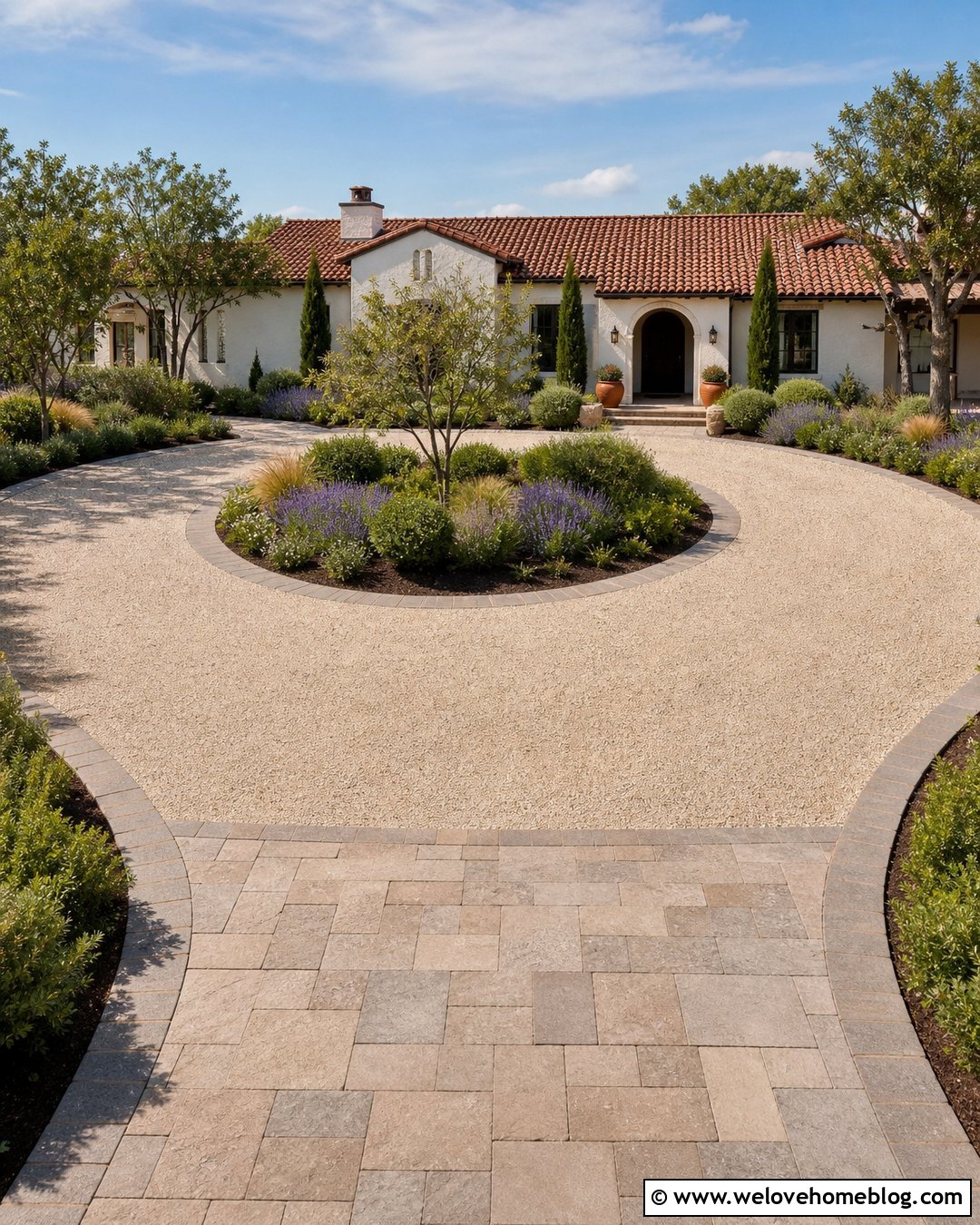
Tumbled concrete pavers provide the orderly installation of manufactured units with a softer, aged appearance. Use warm taupe pavers beside cream limestone gravel on a horseshoe driveway leading to a Mediterranean, Spanish-style, or stucco home. Their rounded edges complement loose stone and prevent the border from looking too sharp. A wide paver ribbon at the entrance can transition into a single course along the curved sides. Repeat the pavers around planting islands filled with rosemary, lavender, ornamental grasses, and compact evergreens. Choose colors that relate to the roof, stucco, or front steps rather than introducing an unrelated tone. Set the border on a stable, well-compacted foundation and use appropriate restraint. The finished driveway will feel established, cohesive, and easier to distinguish from surrounding beds.
12. Concrete Curb Edging For A Gravel Driveway
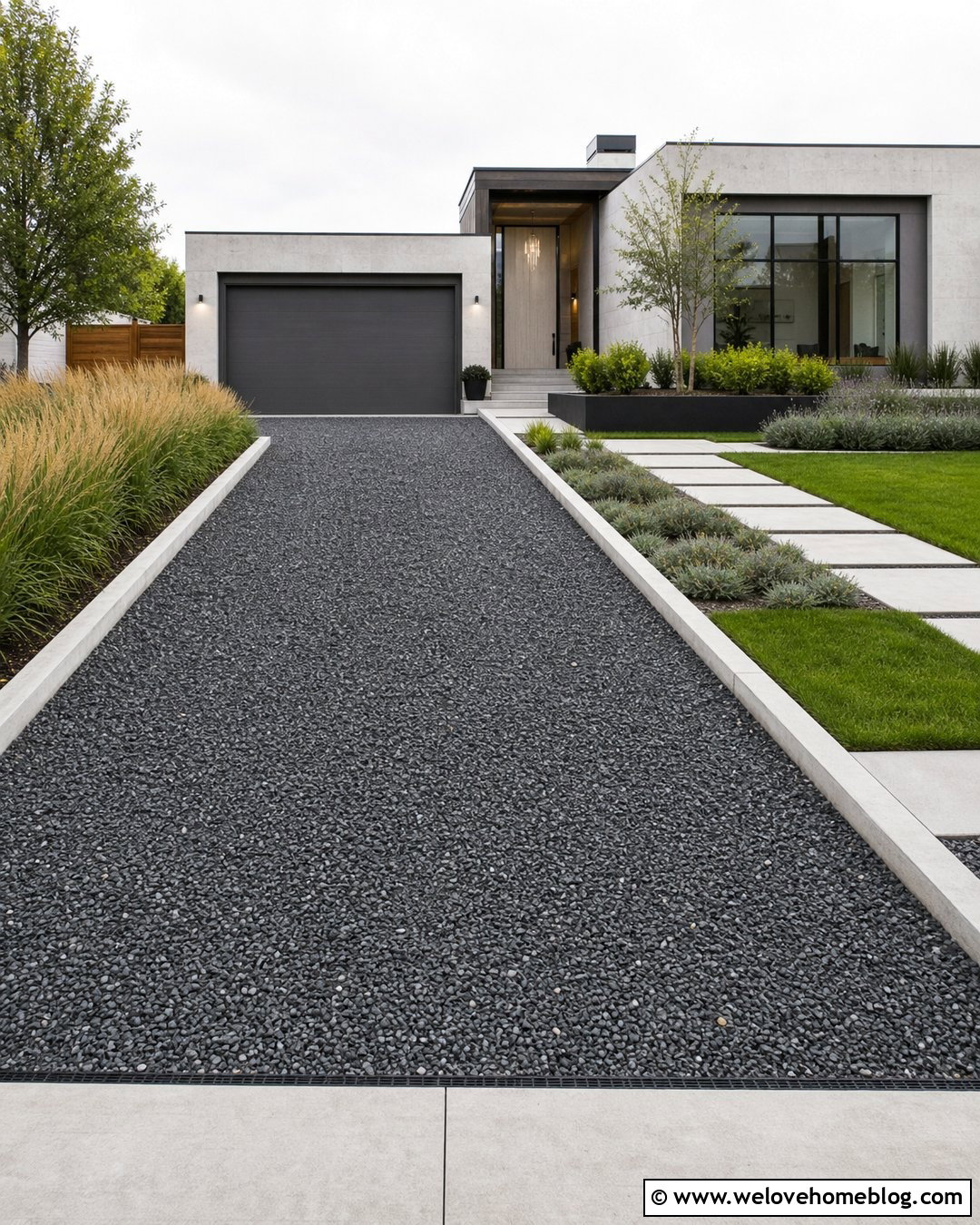
A poured concrete curb creates a durable, continuous boundary for gravel. It is particularly useful beside long driveways, sloped properties, and areas where loose stone regularly spreads into planting beds. Pair a smooth light-gray curb with angular charcoal gravel on a straight driveway leading to a contemporary home. The curb can remain simple or include gently rounded corners near the road and garage. Keep its exposed height modest unless the design also needs to manage a grade change. Linear ornamental grasses, low shrubs, and clean lawn panels reinforce the structured appearance. Drainage should be planned before installation because a continuous curb can influence where water moves. When properly positioned, the border gives the gravel surface a crisp shape while creating a practical mowing and maintenance line. ()
13. Stamped Concrete Edging For A Gravel Driveway
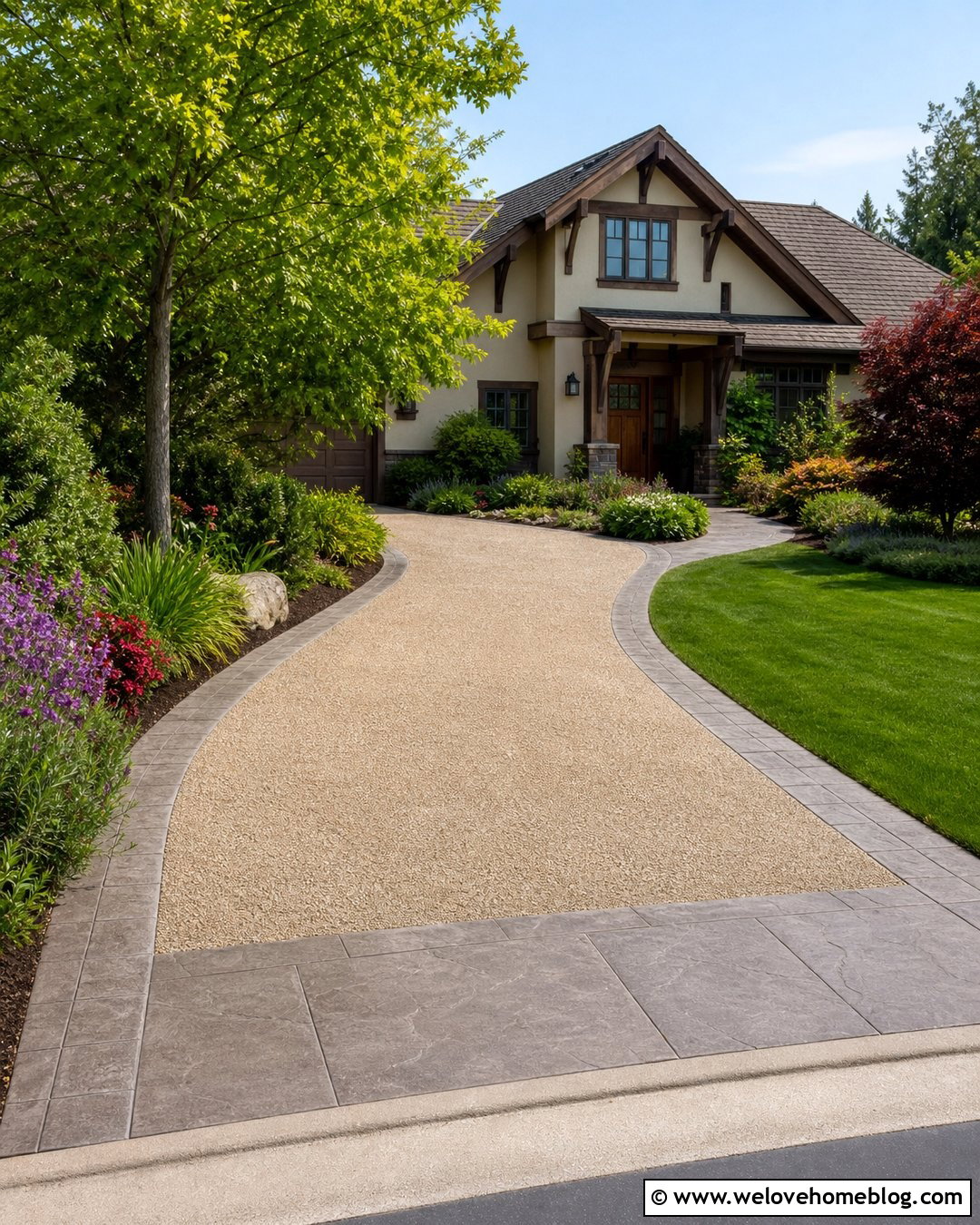
Stamped concrete edging can provide the appearance of stone or brick in a continuous border. It works best when the color and pattern closely relate to materials already used on the house. Frame warm beige gravel with a slate-textured taupe curb beside a craftsman or traditional stucco home. Keep the stamping subtle so the border supports the overall exterior rather than competing with the gravel. A wide apron near the street can transition into narrower edging along the main drive. Use layered shrubs, ornamental trees, and a coordinating concrete walkway to complete the design. Control joints and suitable reinforcement should be part of the installation plan. A professional finish is valuable because uneven stamping, excessive color variation, or poorly placed seams can make a prominent driveway border look artificial.
14. Landscape Timber Edging For A Gravel Driveway
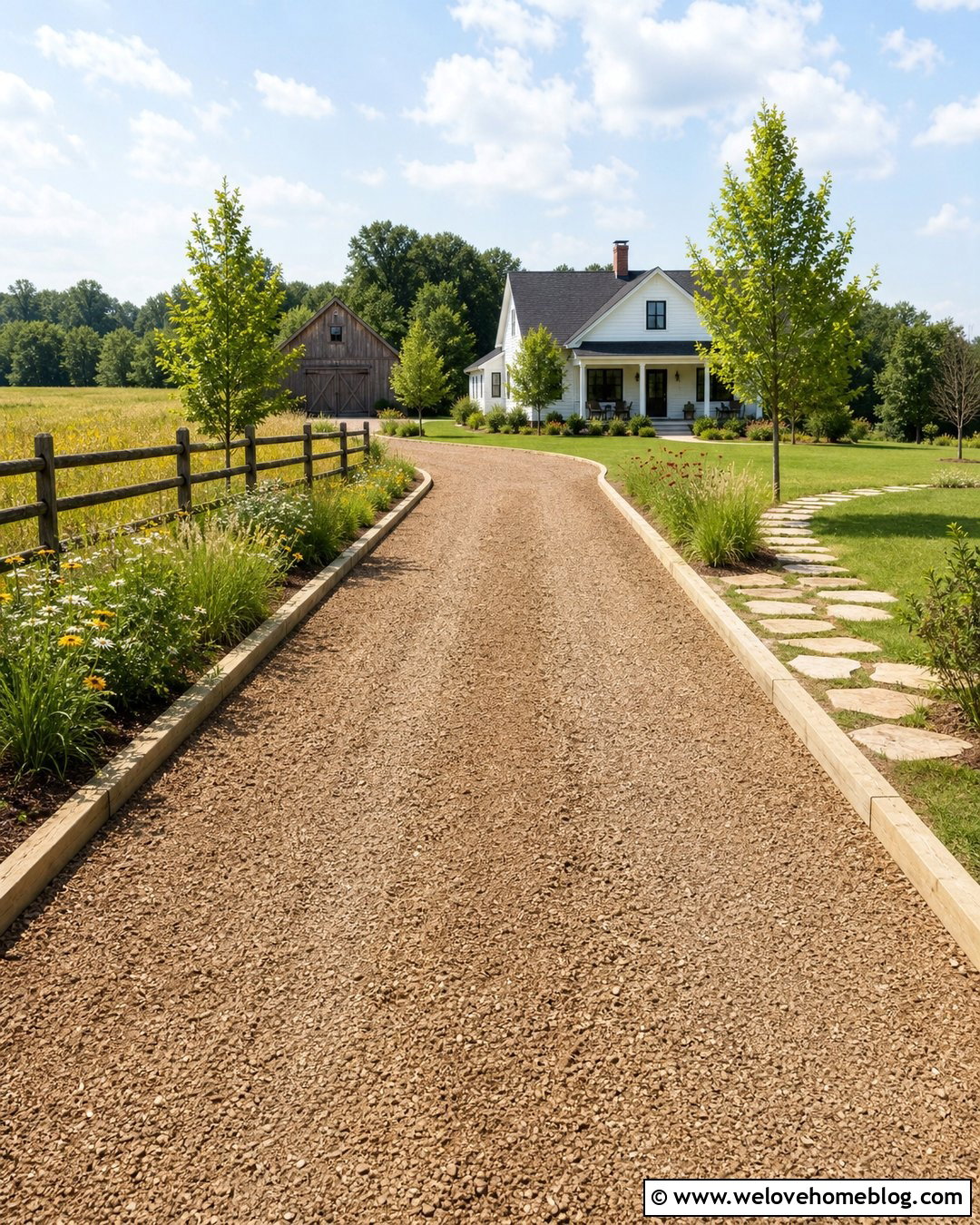
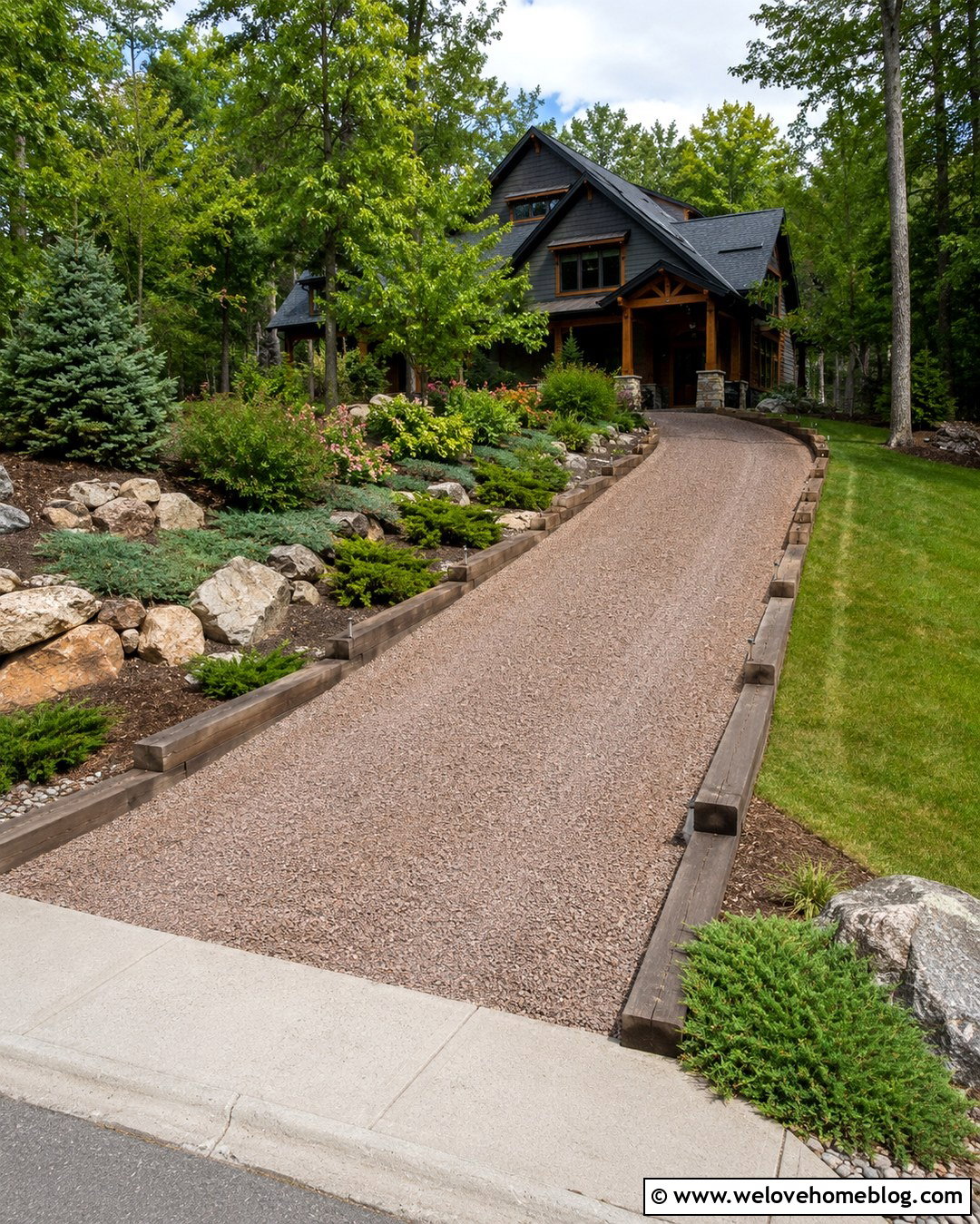
Landscape timbers create a straightforward border for a rustic or budget-conscious gravel driveway. Their long, straight form suits country properties, cabins, barns, and simple farmhouse entrances. Pair pressure-treated or naturally durable timber with brown crushed gravel on a straight drive bordered by meadow planting. Anchor the boards securely and join sections carefully so the edge does not bow or separate. Timber is most practical along low-speed sections rather than tight turning areas exposed to repeated tire contact. A matching post-and-rail fence, native grasses, young shade trees, and a simple stepping-stone walkway can tie the whole setting together. Wood in regular contact with damp soil eventually requires maintenance, so plan for inspection and replacement. Proper drainage and preservative treatment can help the border remain useful longer. ()
15. Cedar Log Edging For A Gravel Driveway
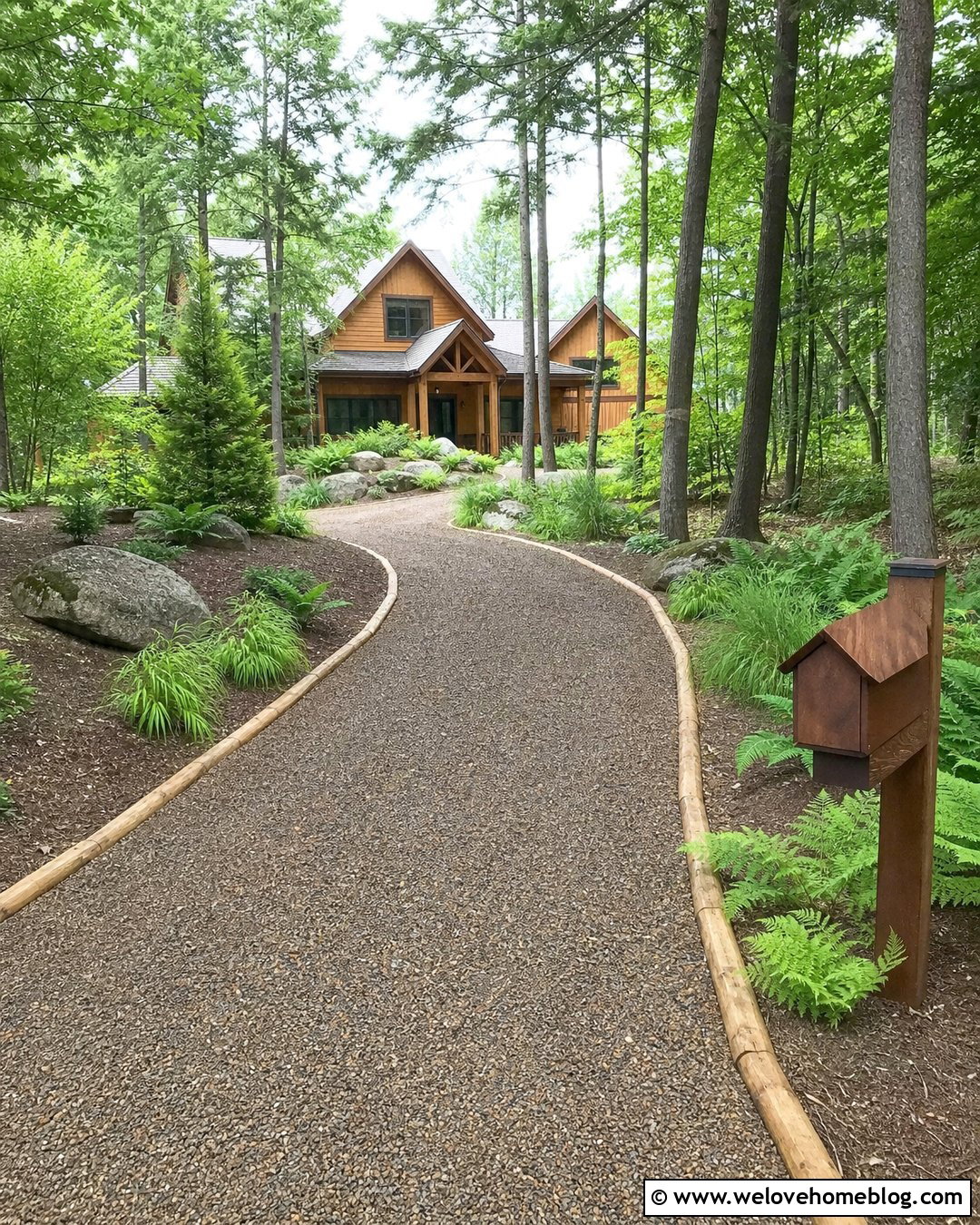
Cedar logs bring a natural, handcrafted edge to a gravel driveway in a wooded or rural setting. Use peeled logs with consistent diameters beside warm brown gravel on a winding approach to a cabin, lodge-style house, or rustic ranch. Partially recess the logs and anchor them so they cannot roll or shift. A low profile is safer and looks more integrated than a tall row of exposed logs. Repeat cedar in a nearby fence, mailbox post, or porch detail to connect the driveway with the property. Surrounding beds can include ferns, native grasses, woodland ground covers, and clusters of boulders. This edge will weather and change color over time, which supports the natural look. Good drainage is essential because constantly wet ground can shorten the service life of wood.
16. Hardwood Sleeper Edging For A Gravel Driveway
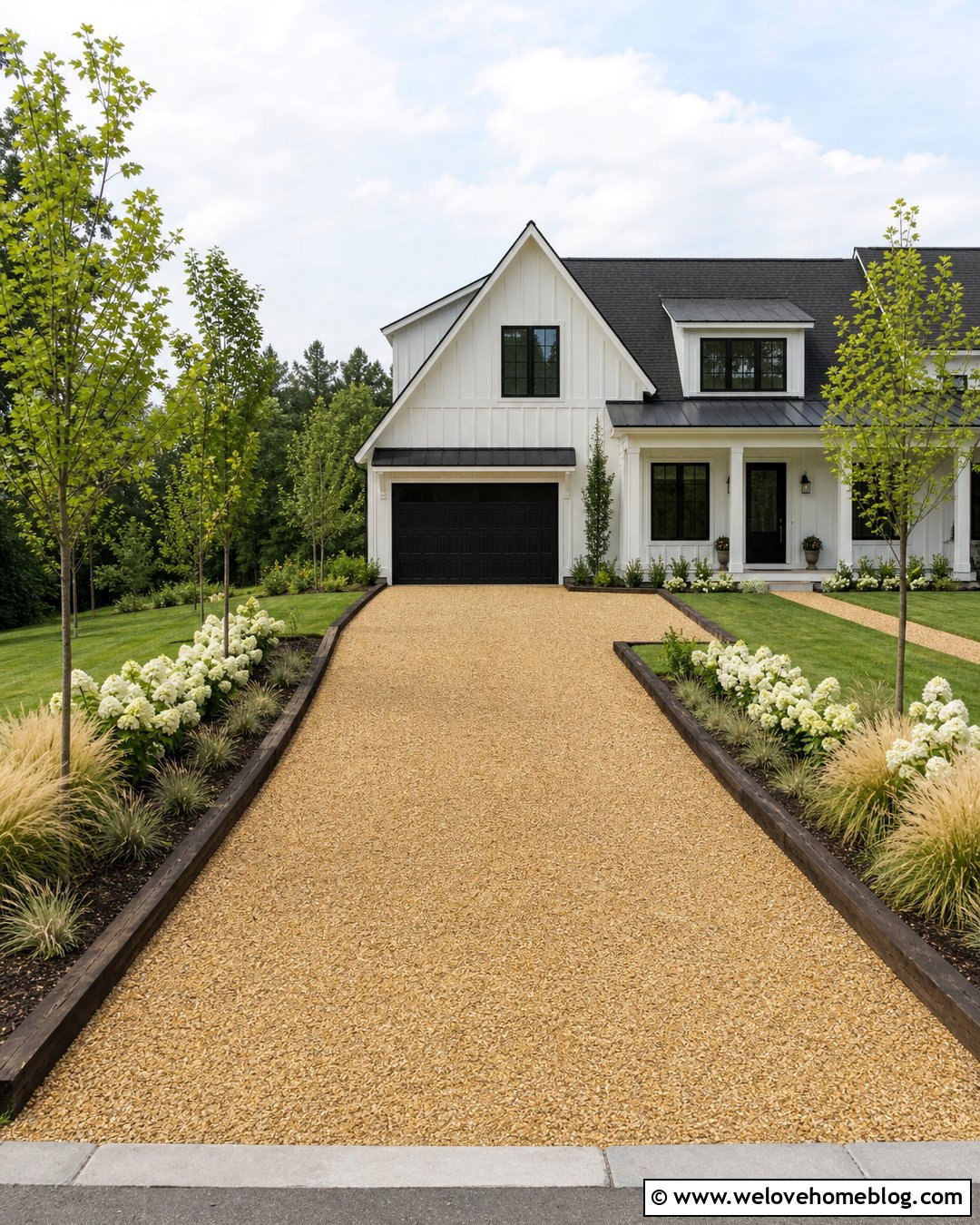
Thick hardwood sleepers create a bold linear border for wide gravel driveways and informal parking areas. Choose untreated or exterior-rated new sleepers rather than questionable reclaimed pieces that may contain unwanted preservatives. Dark brown sleepers pair well with golden crushed stone and a modern farmhouse with black windows. Use them along a straight driveway, then turn the same material around a rectangular parking bay or raised planting bed. Secure each sleeper to a prepared base with appropriate stakes or pins. The substantial profile can accommodate a small change in grade, although larger slopes require a properly engineered retaining solution. Feather grasses, hydrangeas, young trees, and a simple gravel walkway soften the strong horizontal lines. Inspect the wood periodically for movement, splitting, and moisture damage.
17. Composite Edging For A Gravel Driveway
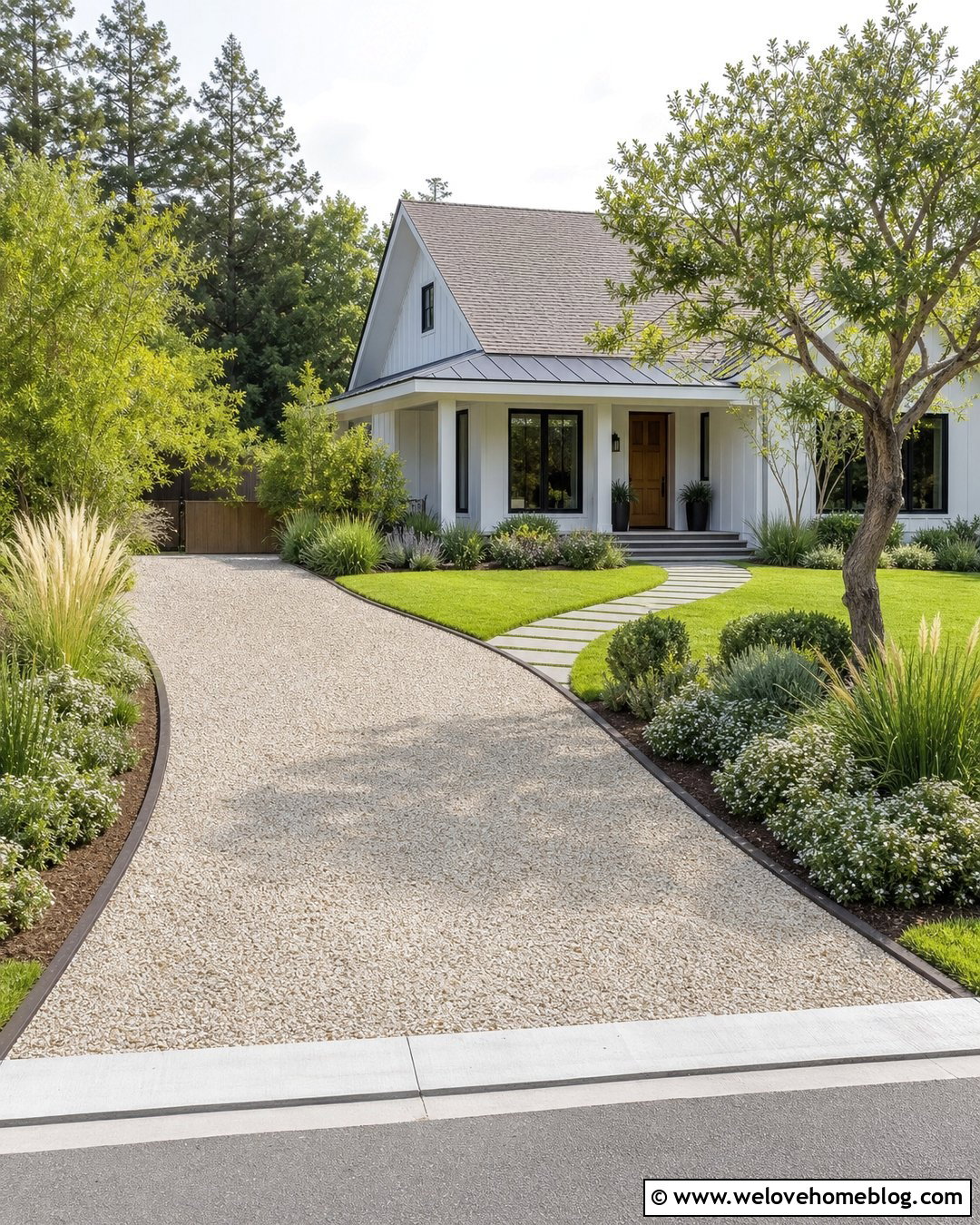
Composite edging offers the appearance of a narrow timber board with less concern about rot. It can follow gentle curves, making it suitable for a compact gravel driveway that winds through a landscaped front yard. Choose a dark brown or black product and combine it with pale pea gravel for clear contrast. Because product strength varies, select edging rated for demanding landscape applications and keep it away from locations where tires repeatedly cross. Anchor it at close, consistent intervals according to the manufacturer’s requirements. Frame the driveway with low evergreen shrubs, ornamental grasses, and a curved stepping-stone walk leading to a contemporary cottage. Composite edging works best when it remains visually quiet. Its purpose is to hold the clean line while the gravel, planting, and house provide the main character.
18. Recycled Rubber Edging For A Gravel Driveway
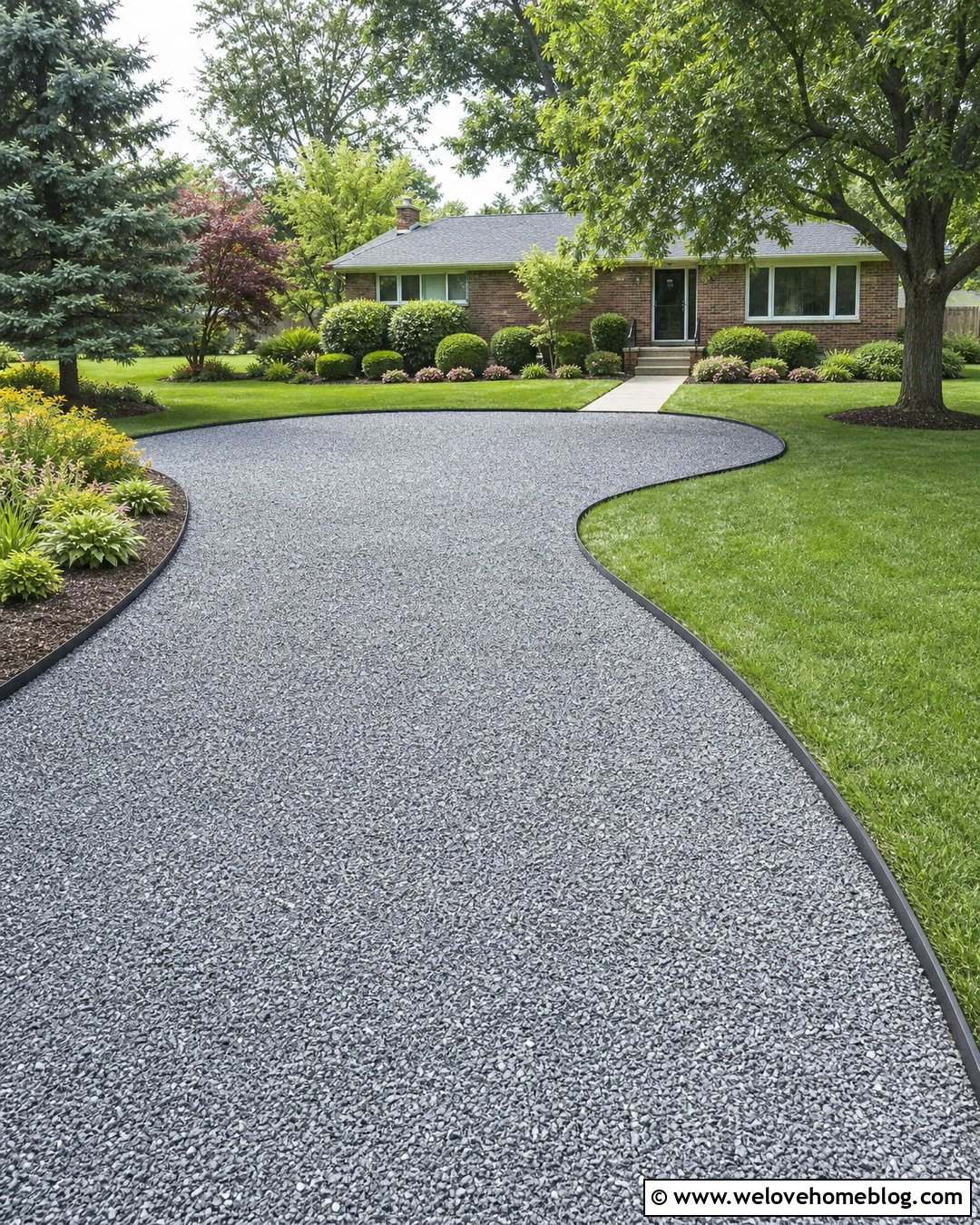
Recycled rubber edging can define a lightly used residential gravel driveway or an adjacent parking extension. Its flexibility is helpful around curves, planting islands, and irregular property lines. Pair black rubber edging with medium-gray angular gravel and a simple ranch home surrounded by lawn. Set most of the edging below view so only a narrow dark line remains visible. Use sturdy spikes and follow the product’s installation limits, especially near vehicle turning zones. A concrete walkway, rounded shrub beds, and shade trees can make the practical border feel like part of a complete landscape. Rubber may suit a modest DIY project, but it generally provides less visual weight than masonry. Reserve it for locations where a subtle, flexible, and economical boundary makes more sense than a formal curb. ()
19. Hidden Plastic Edging For A Gravel Driveway
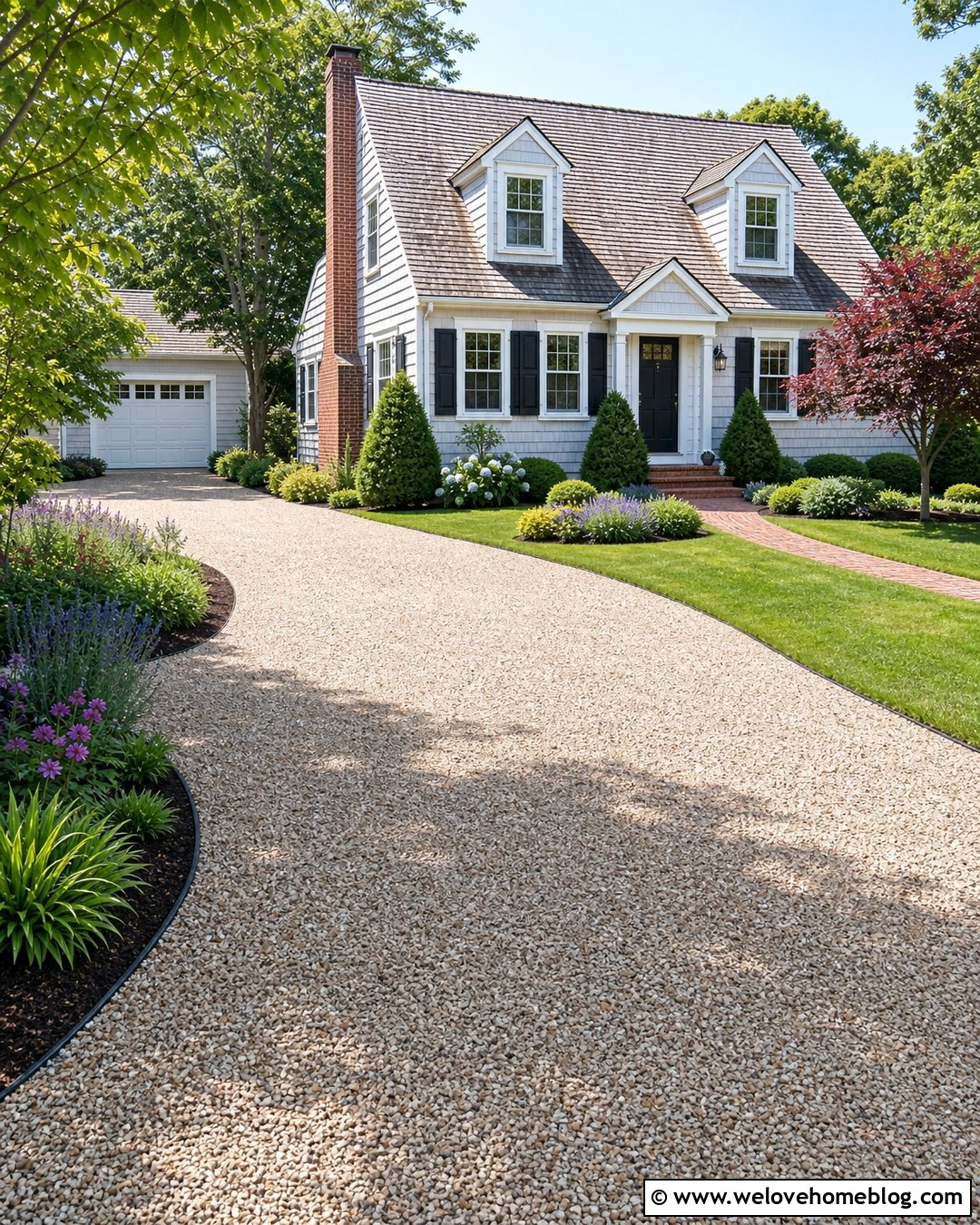
Hidden plastic edging keeps attention on the gravel and landscaping rather than the border itself. Use it along a small, low-traffic pea gravel driveway leading to a cottage or compact suburban home. The top should sit close to the finished gravel level, creating a nearly invisible separation from mulch or lawn. Choose a rigid, heavy-duty landscape product and stake it frequently to reduce waviness. Thin decorative plastic is better suited to garden beds than areas exposed to strong outward pressure from vehicles. Complete the driveway with curved perennial borders, dwarf shrubs, and a brick walkway to the porch. This approach is most successful on level ground with good drainage. It provides a clean visual edge without introducing another obvious color, texture, or masonry pattern into a small front yard.

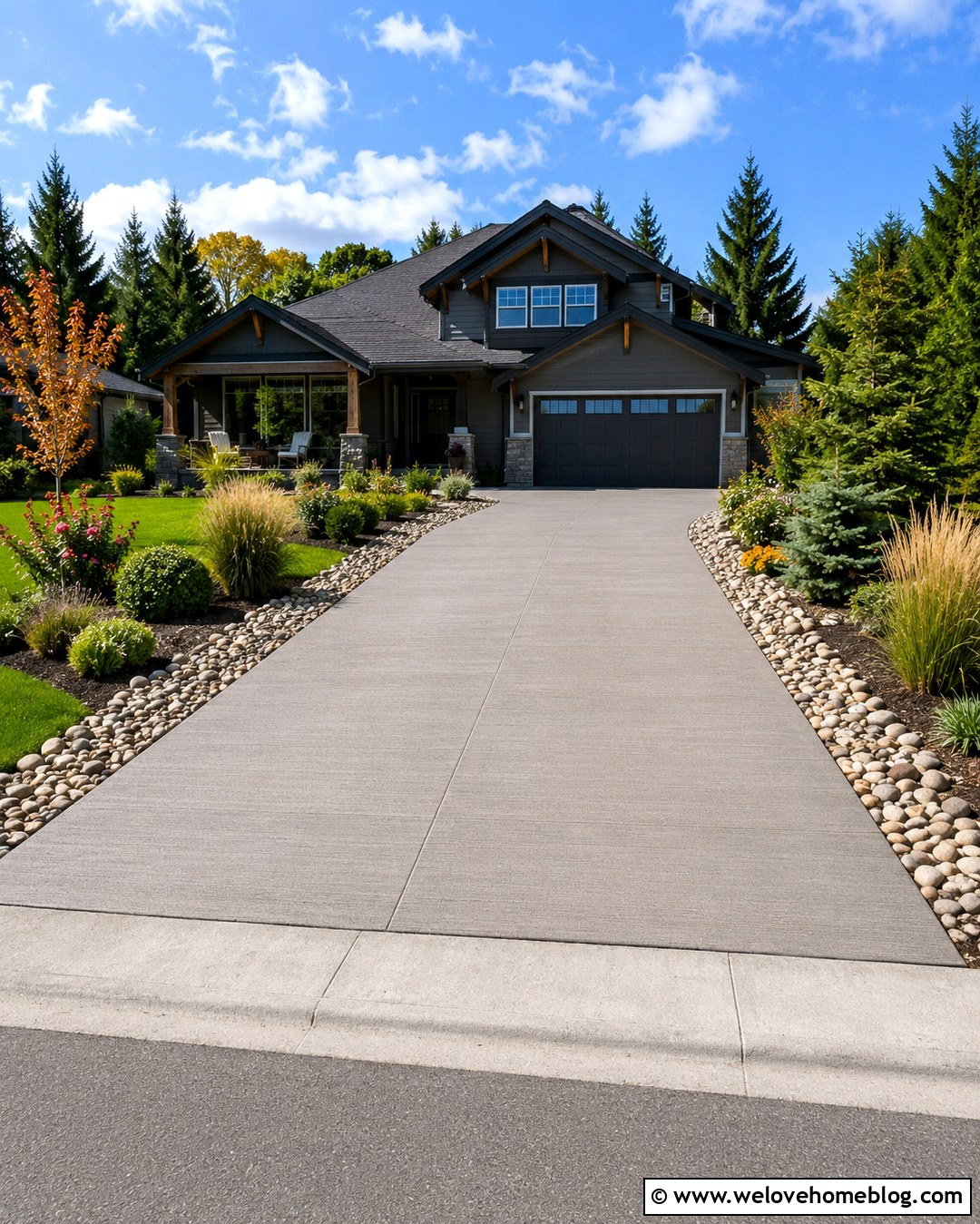
20. Boulder Edging For A Gravel Driveway
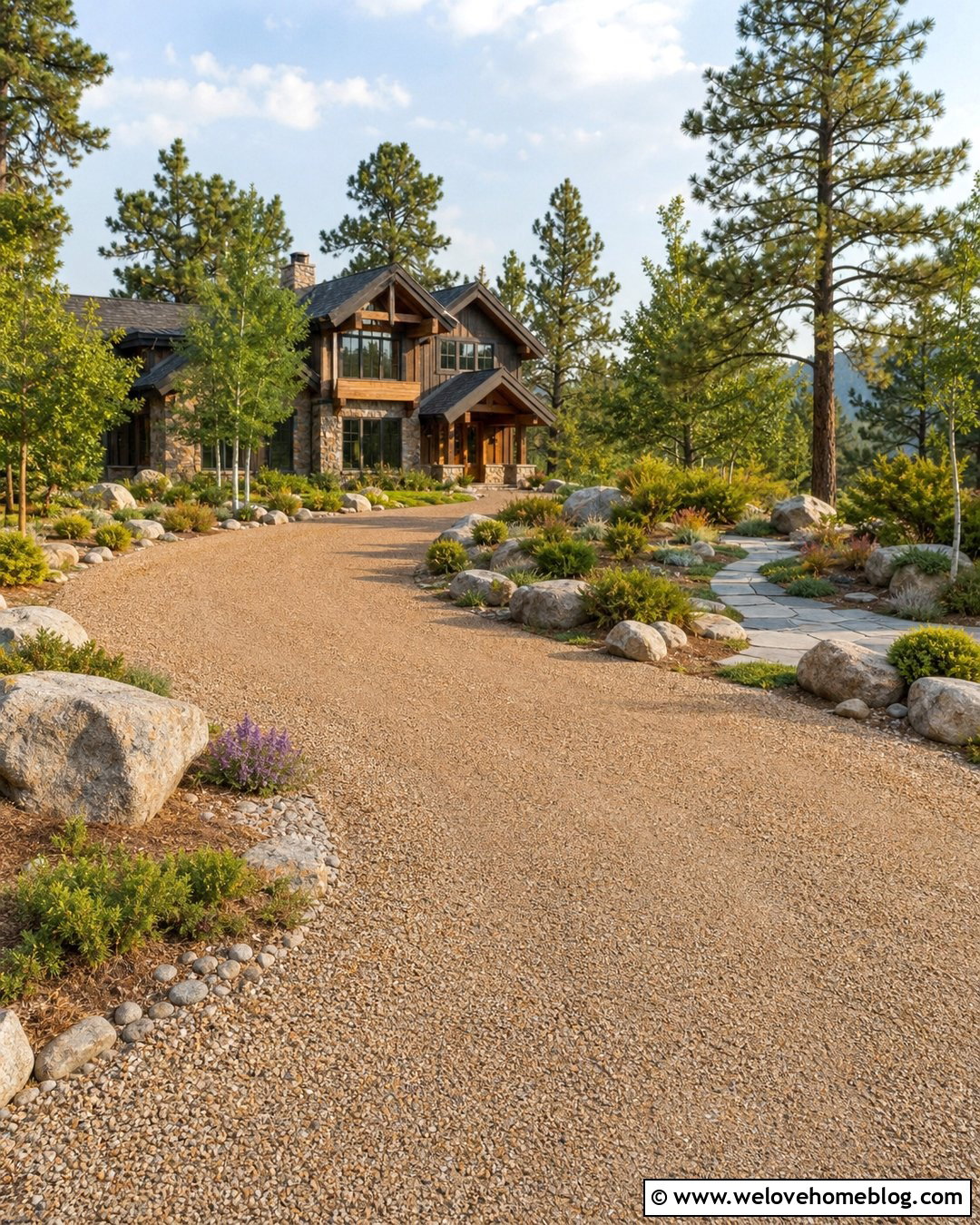
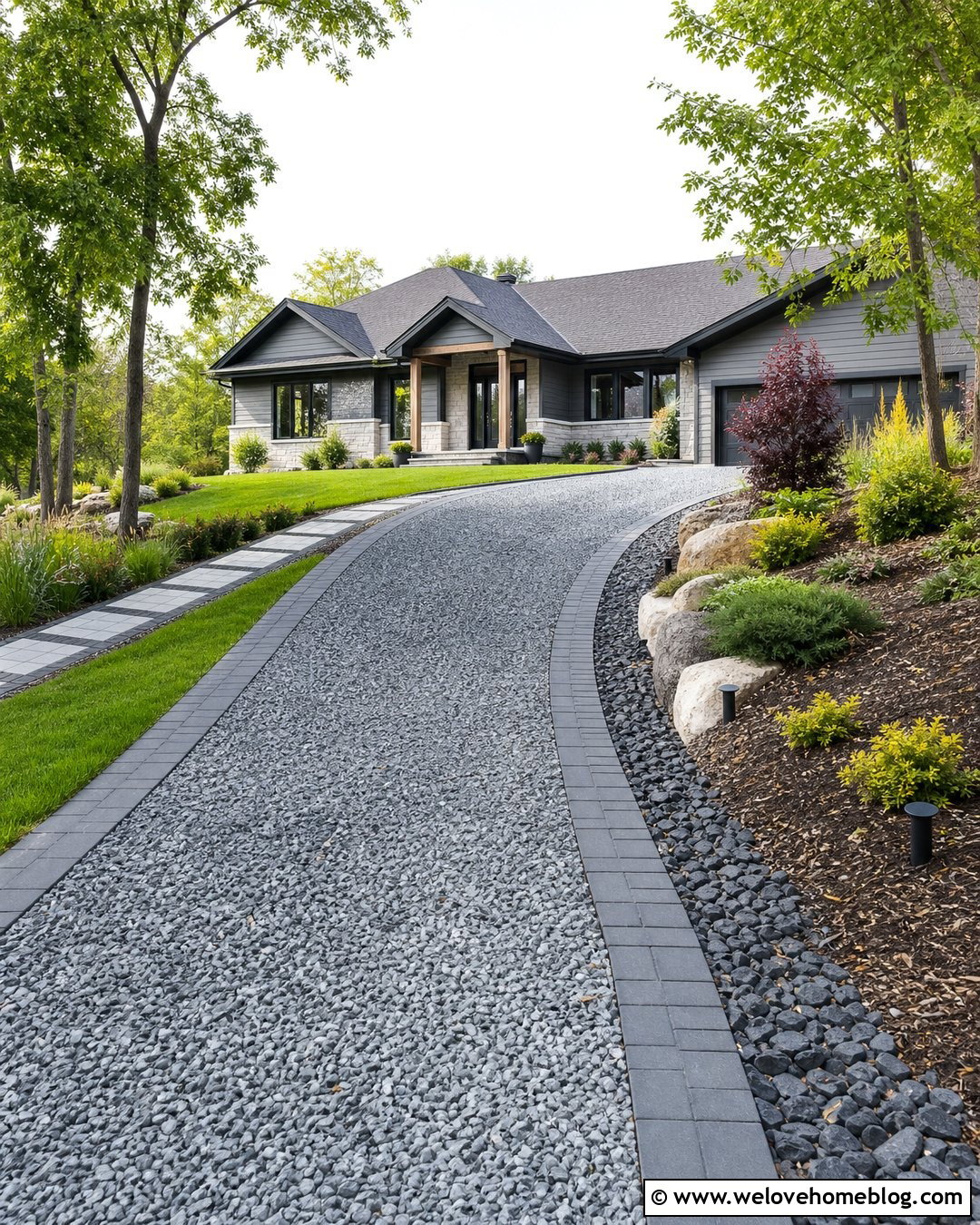
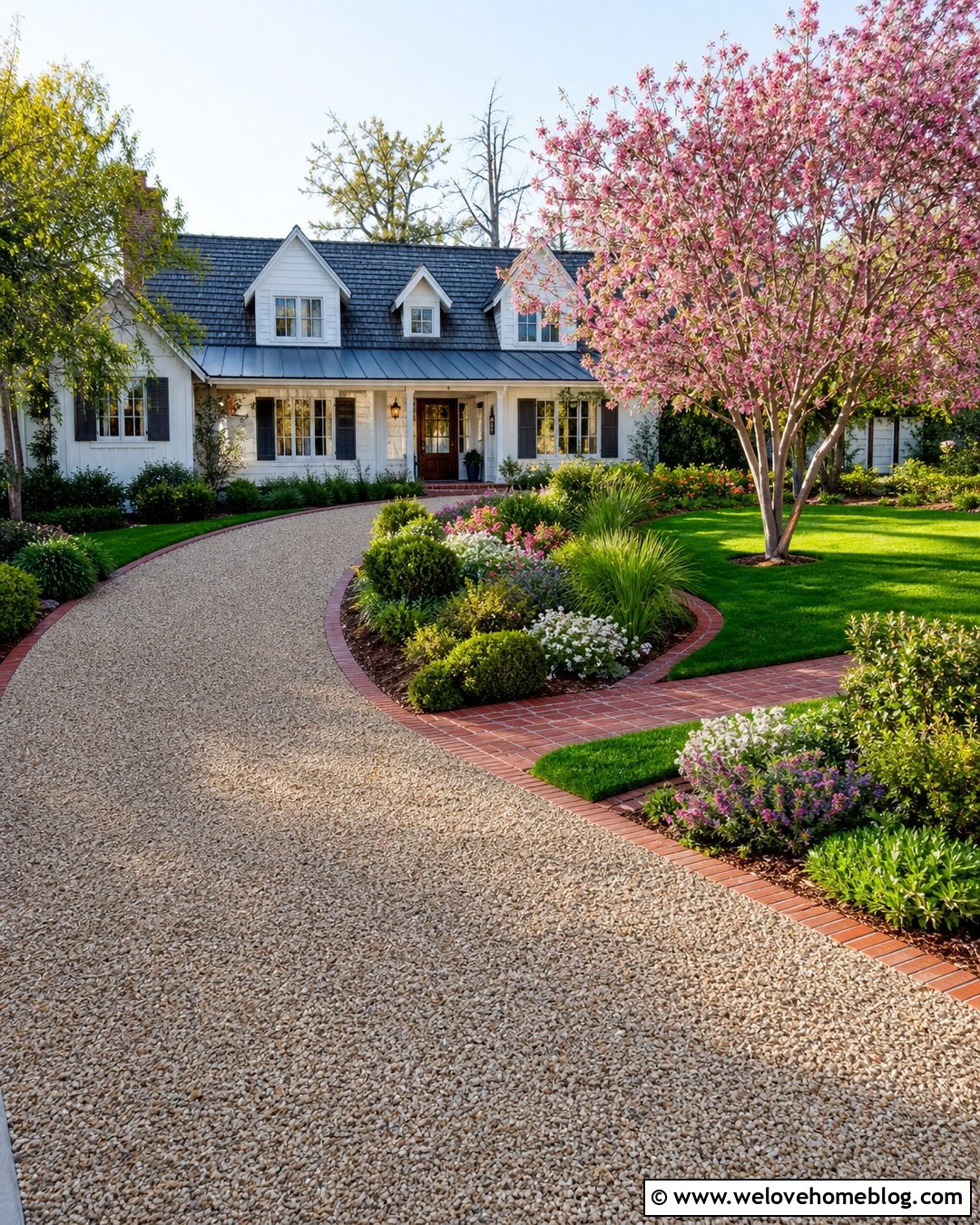
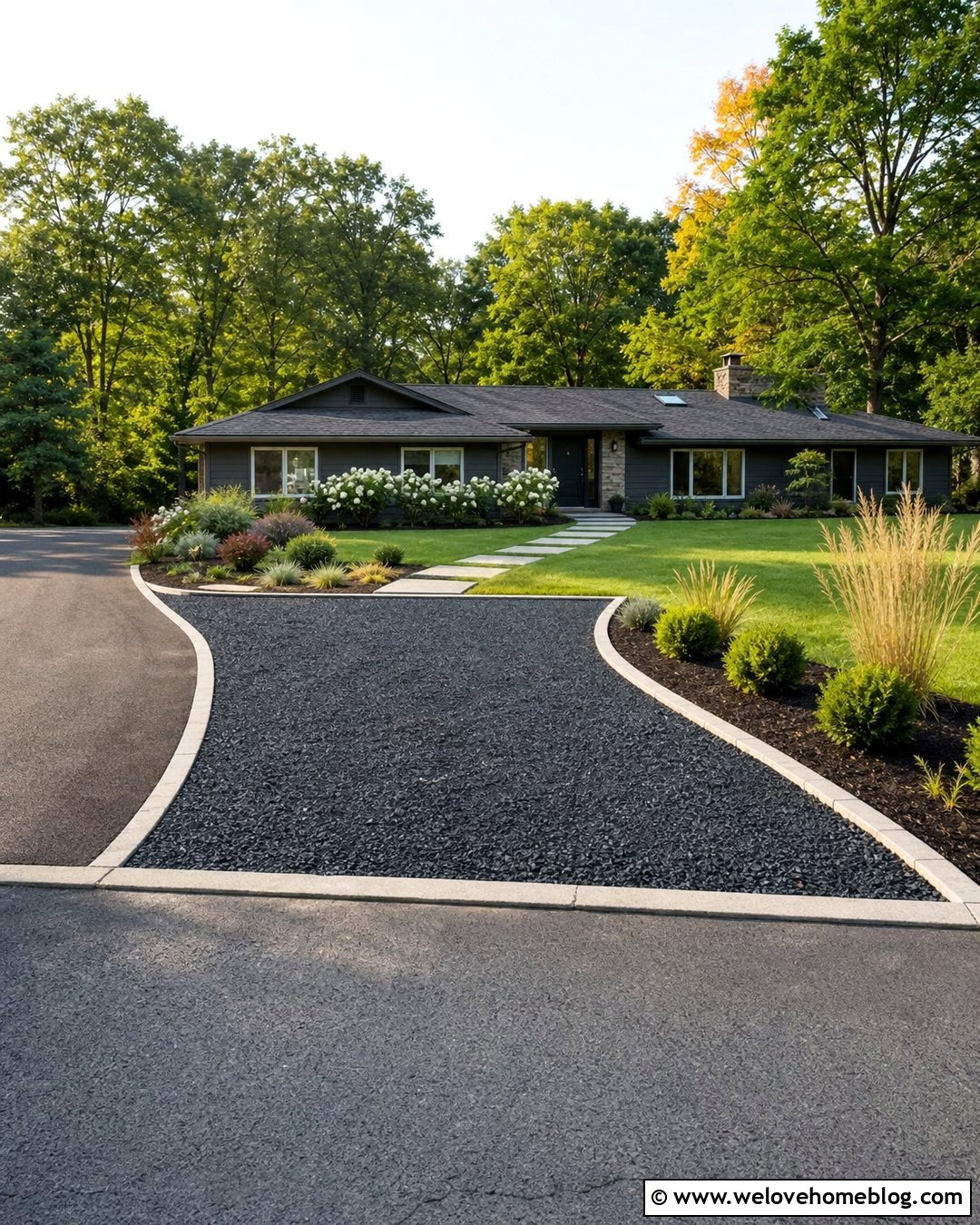
Large boulders can mark the edge of a gravel driveway while blending naturally into a spacious landscape. Place them at selected intervals rather than forming an unbroken wall. This preserves open views and avoids making the driveway feel narrow. Combine weathered gray boulders with mixed brown gravel on a sweeping curved drive leading to a mountain, lodge, or woodland home. Set each boulder partially into the ground so it appears stable and established. Fill the spaces with native grasses, low junipers, flowering ground covers, and smaller companion stones. Keep boulders well outside the vehicle clearance zone, especially around curves and near the garage. The gravel surface, irregular stone markers, and natural planting should read as one broad landscape composition rather than a line of decorative rocks.
21. River Rock Edging For A Gravel Driveway
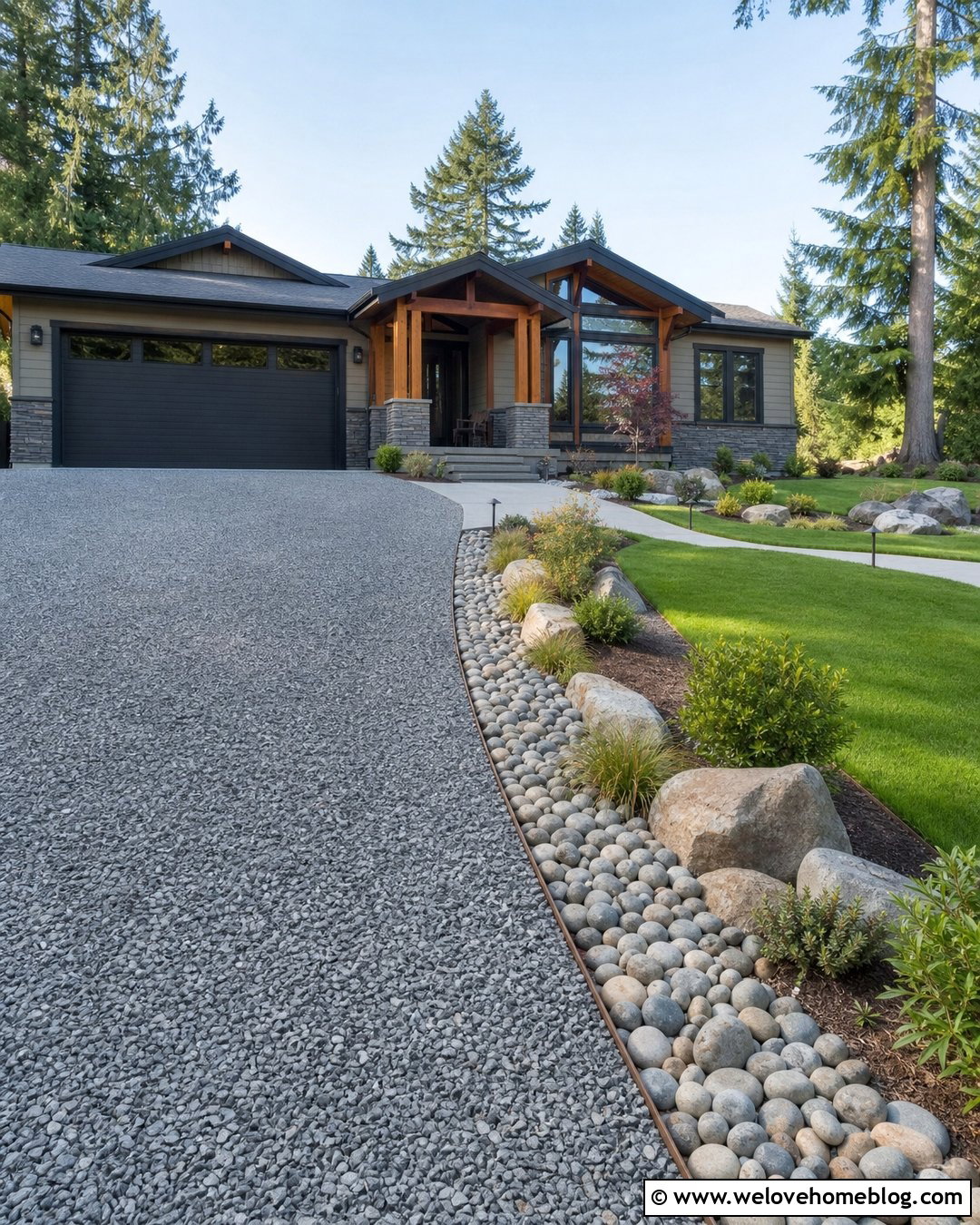
A river rock border can double as a drainage feature beside a gravel driveway. Use smooth gray and tan river stones in a shallow, carefully graded channel along the lower side of a sloping drive. The driveway itself might use compacted angular gray gravel, creating visible contrast between the stable driving surface and rounded drainage stone. Add a steel or stone separator between the two materials to limit mixing. This design suits ranch, Craftsman, and contemporary homes in natural landscapes. Moisture-tolerant grasses, sedges, shrubs, and occasional boulders can soften the channel without obstructing water movement. Drainage requirements vary by property, so the channel should direct runoff toward an approved outlet rather than a neighboring lot or building foundation. The result is practical, textured, and visually connected to the yard.
22. Low Stone Wall Edging For A Gravel Driveway
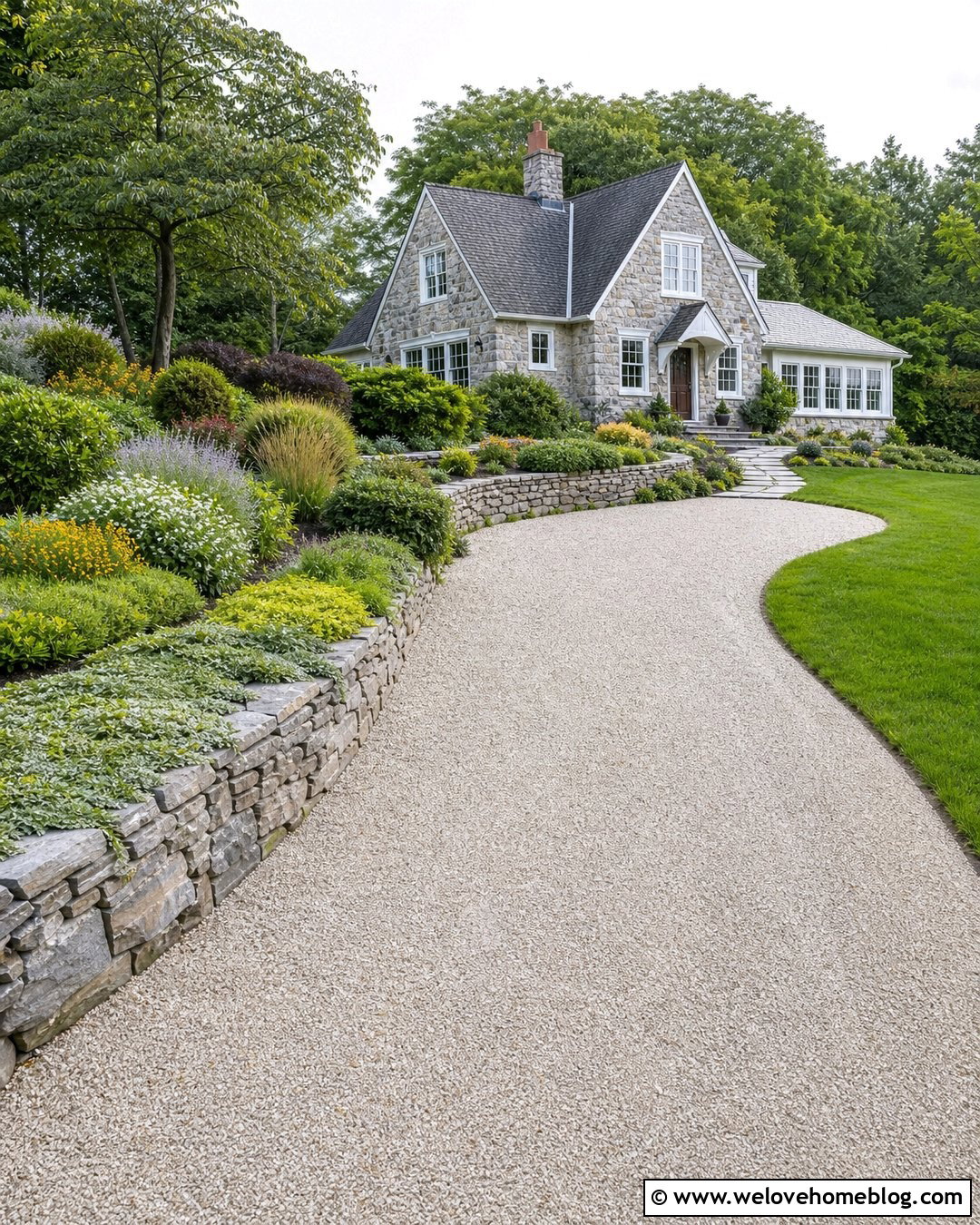
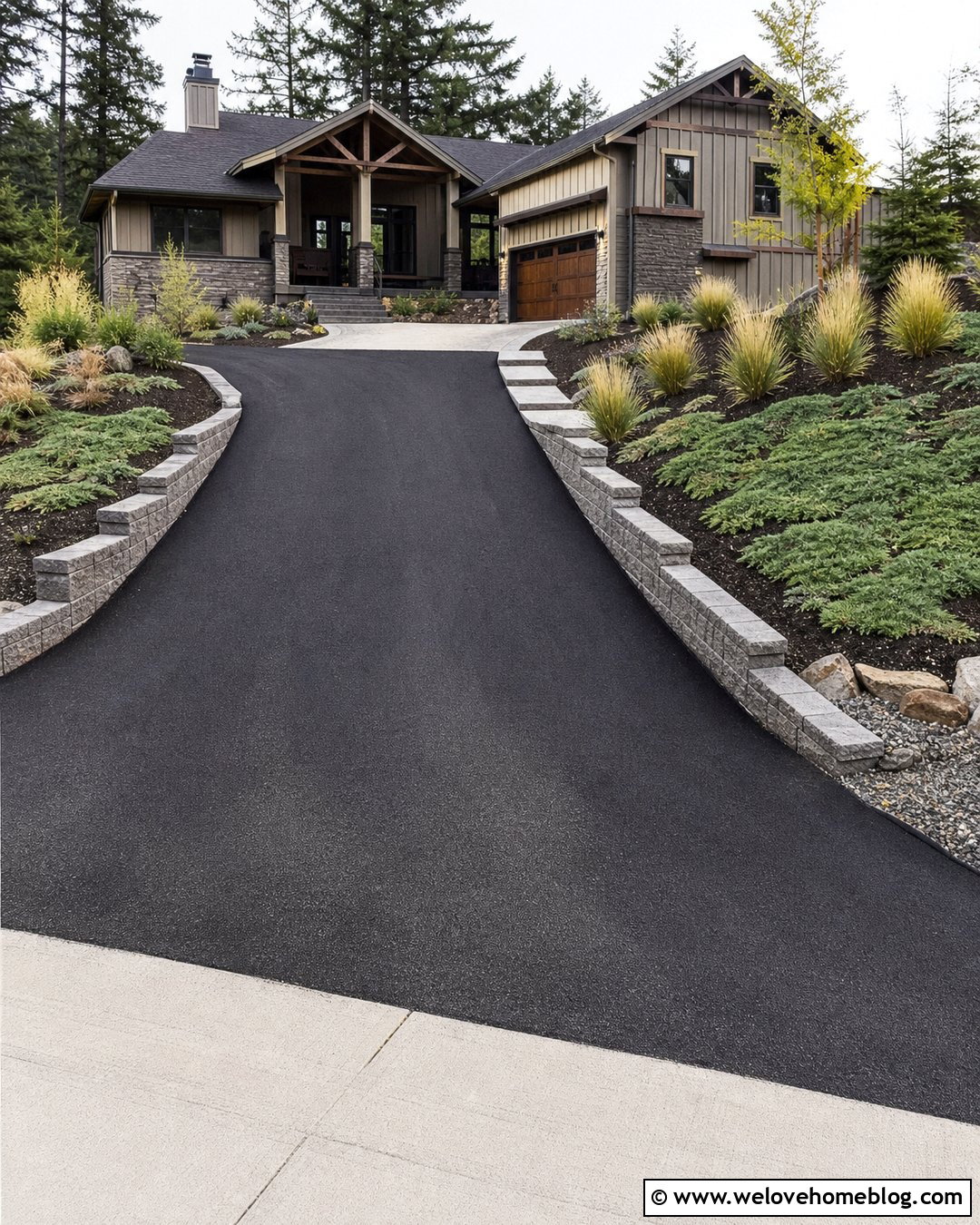
A low dry-stacked stone wall can edge a gravel driveway where the lawn or planting area sits slightly above the driving surface. Pair irregular gray stone with pale crushed granite on a gently curved driveway serving a traditional stone house or hillside cottage. Keep the wall low enough to preserve sightlines and allow comfortable vehicle clearance. A broad planting bed above it can hold creeping ground covers, small shrubs, ornamental grasses, and seasonal flowers. The stone should match or complement masonry on the house, front steps, or property walls. A properly prepared foundation is important because settling can cause individual stones to lean into the driveway. If the border retains a meaningful amount of soil, drainage and structural details require more attention than a purely decorative edging installation.
23. Grass Strip Edging For A Gravel Driveway
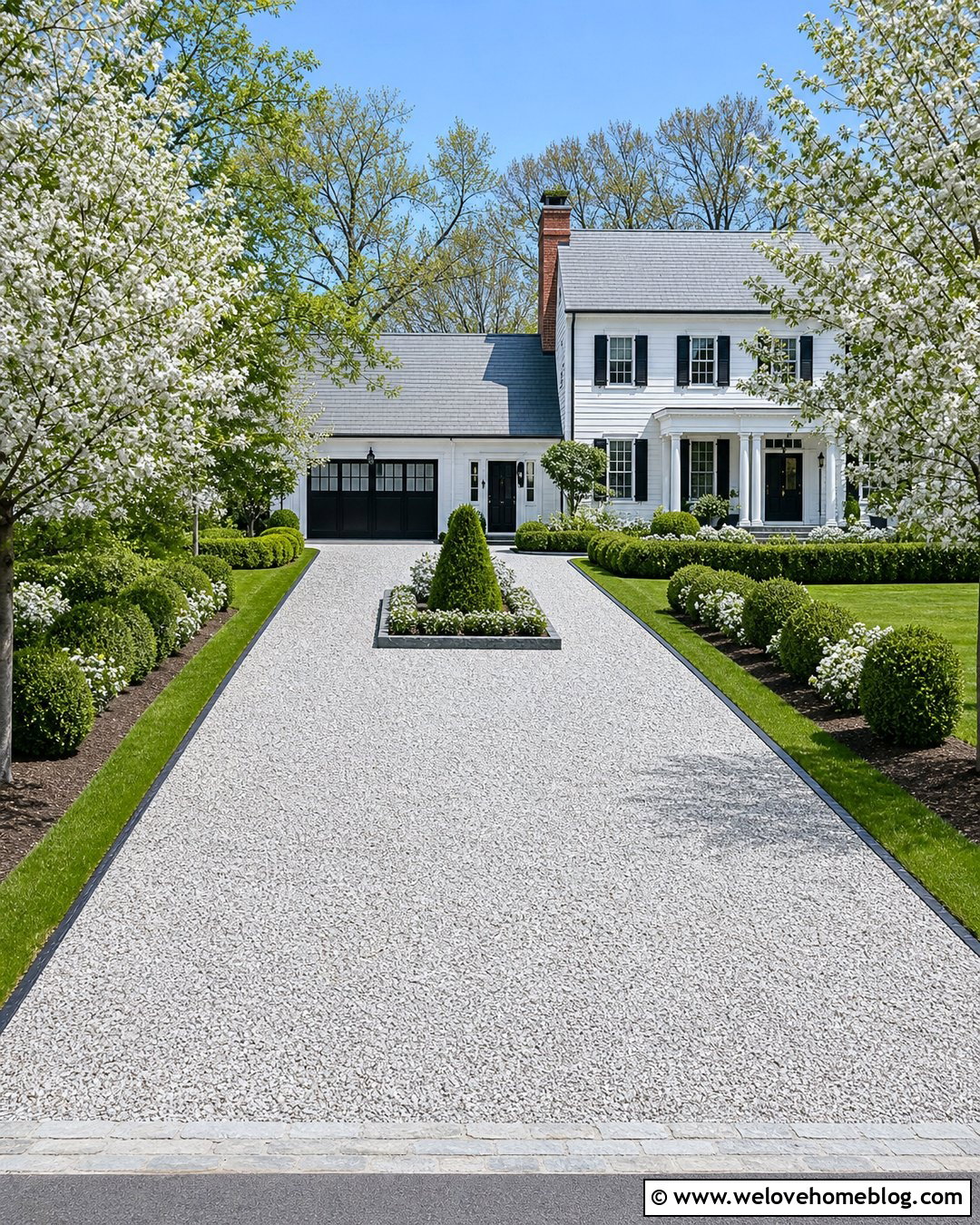
A narrow grass strip can soften a gravel driveway when it is paired with a reliable hidden restraint. Install steel or aluminum edging against the gravel, then maintain a level ribbon of turf between the driveway and larger planting beds. This layered transition looks attractive beside a white colonial, Cape Cod, or traditional suburban home. Use pale gray gravel on a straight or gently curved driveway and repeat the grass strip around a central planting island. The narrow lawn band introduces fresh color without allowing roots and gravel to mix freely. Make it wide enough for practical mowing or select a low-growing ground cover where lawn care would be awkward. Neatly shaped shrubs, flowering trees, and a matching stone walkway complete the formal but approachable front-yard design.
24. Planted Stone Edging For A Gravel Driveway
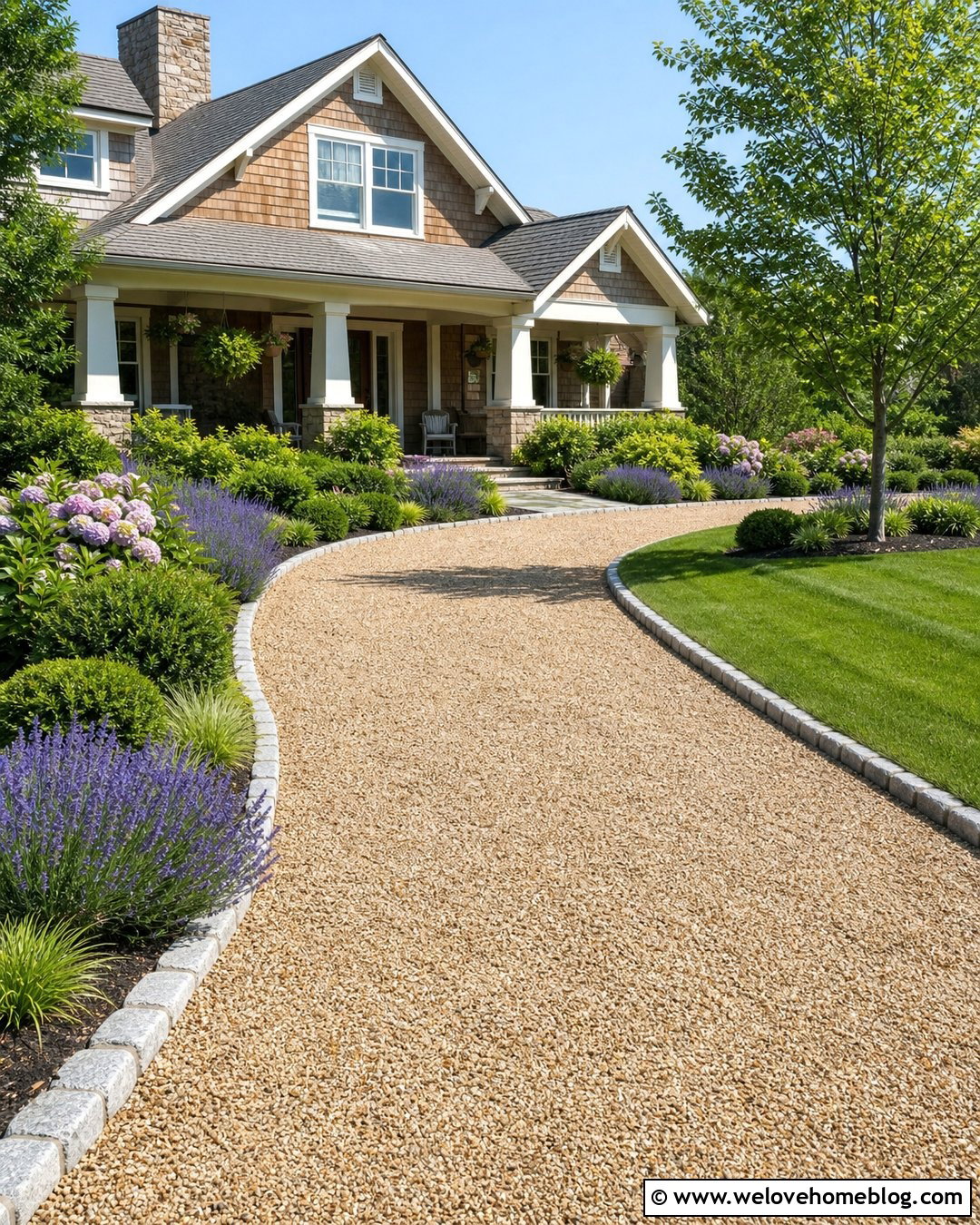
A planted border works best when durable stone provides the actual gravel restraint. Set a low row of granite cobbles beside warm pea gravel, then build a layered bed immediately beyond it. Lavender, catmint, dwarf grasses, compact evergreens, and flowering shrubs can create a soft edge without spilling into the driving area. This complete look suits a cottage, Craftsman, or modern farmhouse with a curved driveway. Choose plants that match local light, soil, moisture, and winter conditions. Keep mature widths in mind so branches do not reduce vehicle clearance. Repeating a limited plant palette along the driveway creates rhythm and makes a long approach feel intentional. The stone controls the loose gravel, while the planting hides some of its hardness and connects the driveway to the wider garden.
25. Mixed Edging For A Gravel Driveway
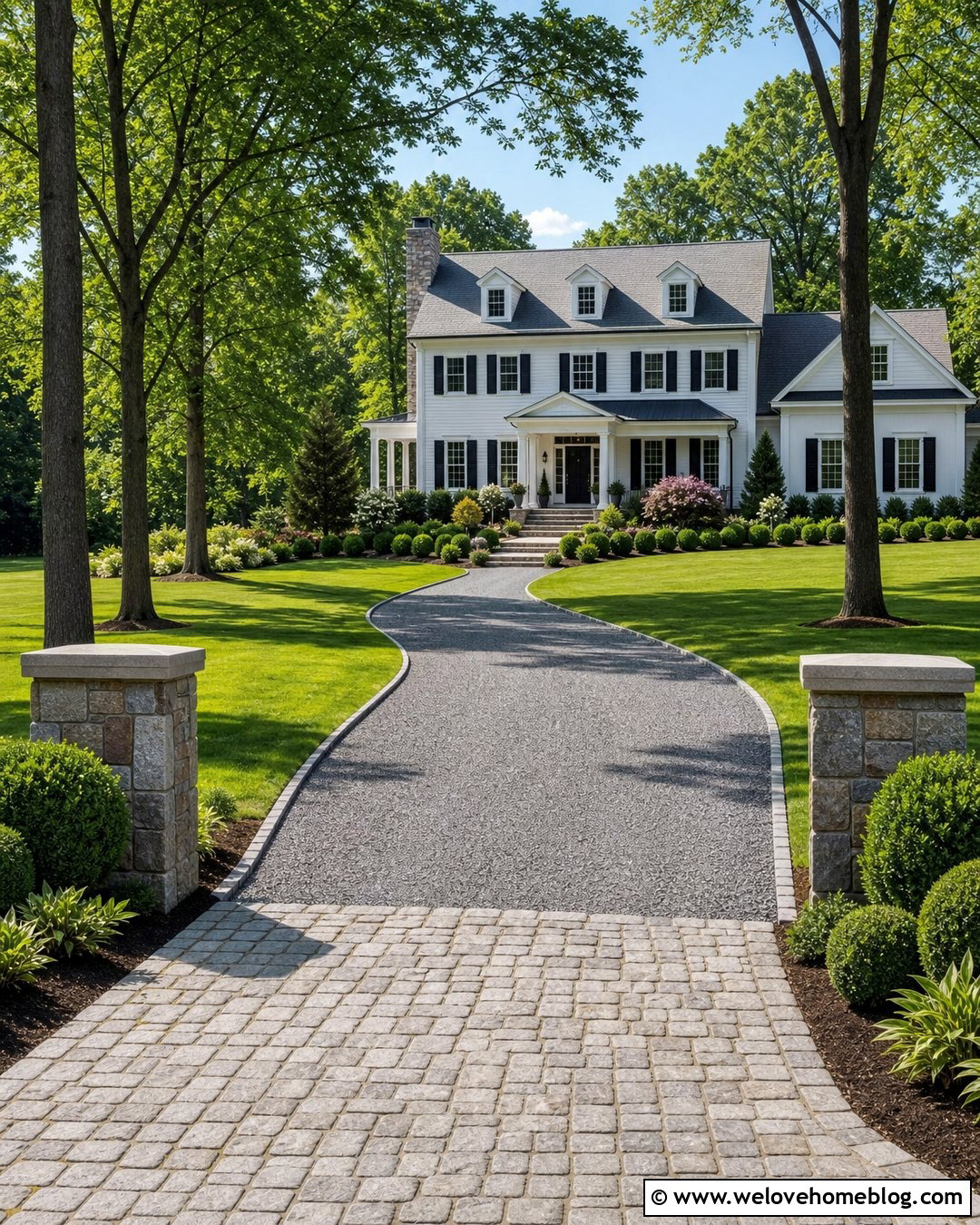
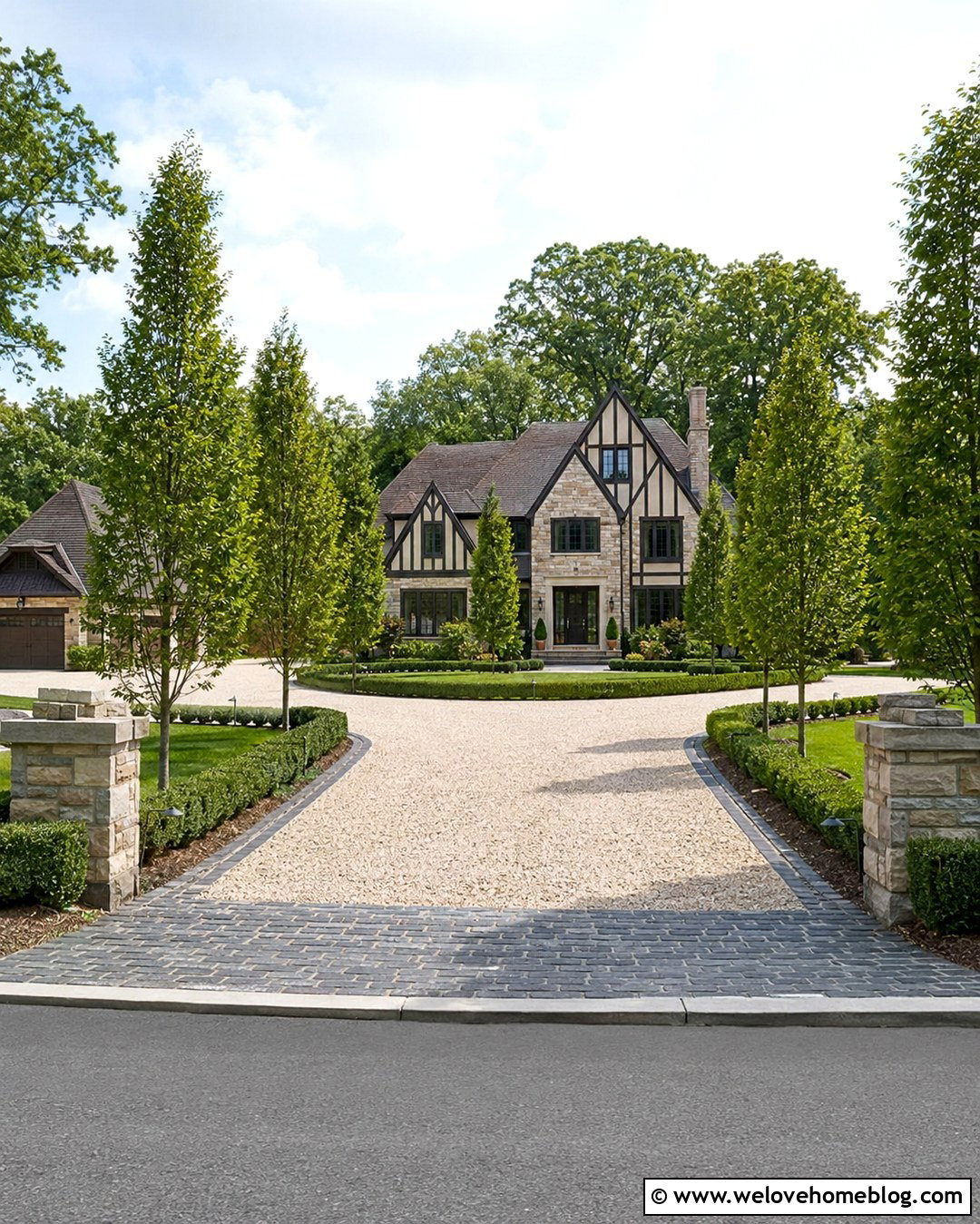
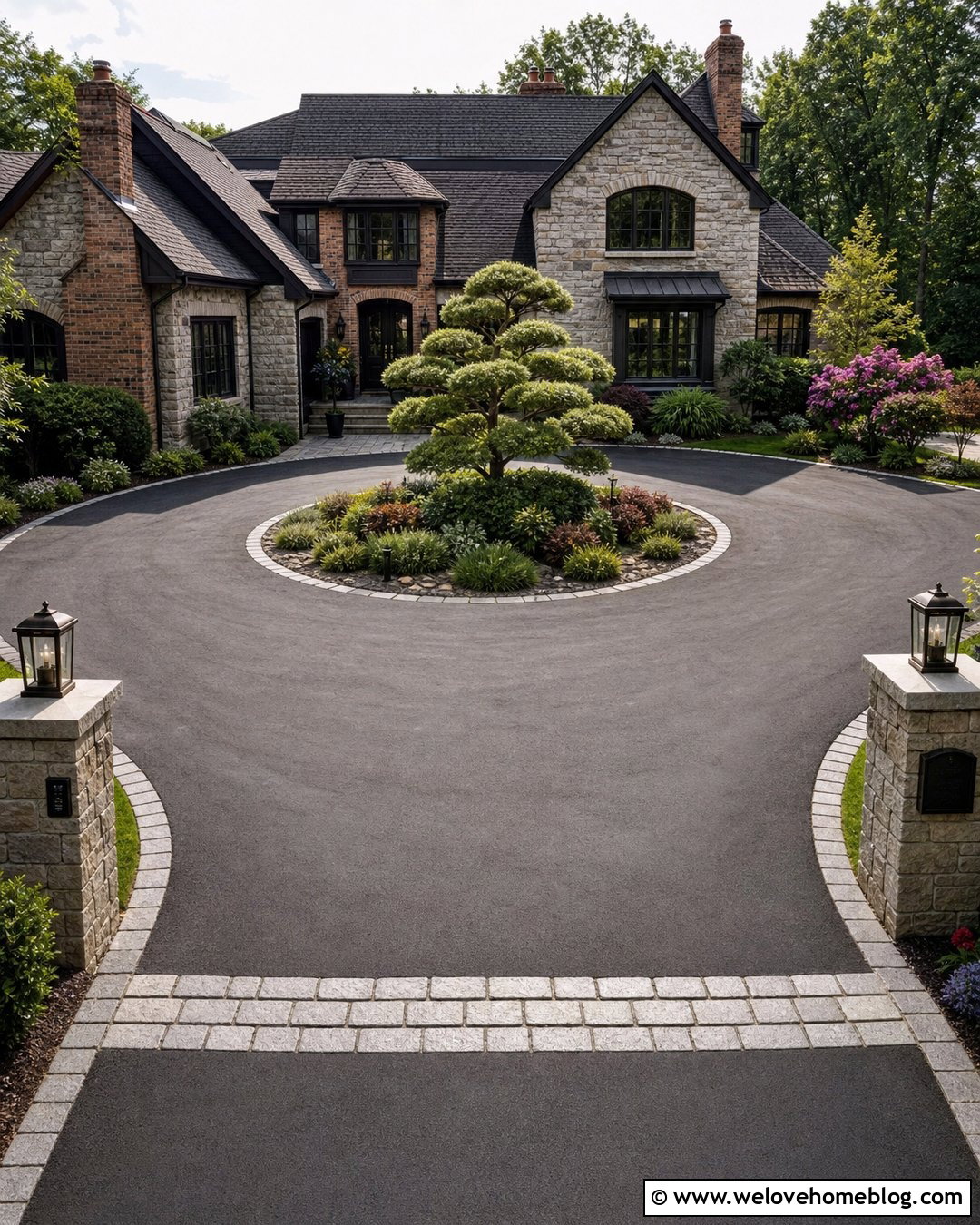
Mixed edging allows premium materials to be concentrated where they make the greatest visual impact. Build a cobblestone apron and matching entrance pillars at the road, then continue slim black steel edging along the remaining gravel driveway. Use compacted gray crushed gravel in a long, gently curved layout leading to a modern colonial or large farmhouse. The substantial cobblestone entrance handles the transition from the street, while the quieter steel border keeps the rest of the design streamlined. Repeat cobblestones around the mailbox or front walkway for continuity. Trees, clipped shrubs, lawn, and broad planting beds can frame the approach without overcrowding it. Careful material coordination is essential. Limiting the palette to gravel, dark metal, granite, and planting prevents the combined border from looking fragmented.
Conclusion:
The best edging should complement the house, contain loose stone, fit the driveway’s shape, and withstand the conditions found along the route. Masonry borders provide visual weight around busy entrances, while metal creates clean lines without dominating the landscape. Timber, composite, and flexible products can suit simpler or lower-traffic settings. Planted borders become more effective when a durable restraint separates roots and soil from the gravel. Whatever design you select, prepare a stable base, maintain safe vehicle clearance, and account for drainage before installation. A consistent material palette will make the driveway feel connected to the house and yard. These 25 Edging For Gravel Driveway Ideas offer practical starting points for creating a tidy, attractive, and lasting entrance.

Related posts:
Leave a Reply