
A driveway can feel unfinished when the pavement meets the lawn without a clear transition. Adding pavers along one or both sides creates definition, introduces color, and connects the driveway to nearby walkways, planting beds, or architecture. These 20 Driveway With Pavers On Side Ideas cover practical combinations for concrete, asphalt, gravel, resin-bound, and exposed aggregate surfaces. You will find narrow borders for compact lots, wider bands for extra parking, and decorative layouts for curved or circular approaches. Choose pavers that complement the home’s exterior, then coordinate their pattern with the driveway shape and surrounding landscape. Proper base preparation and edge restraint are also important wherever pavers may experience vehicle pressure. Explore these complete 20 Driveway With Pavers On Side Ideas to find a balanced look for your property.

1. Concrete Driveway With Brick Pavers On Sides
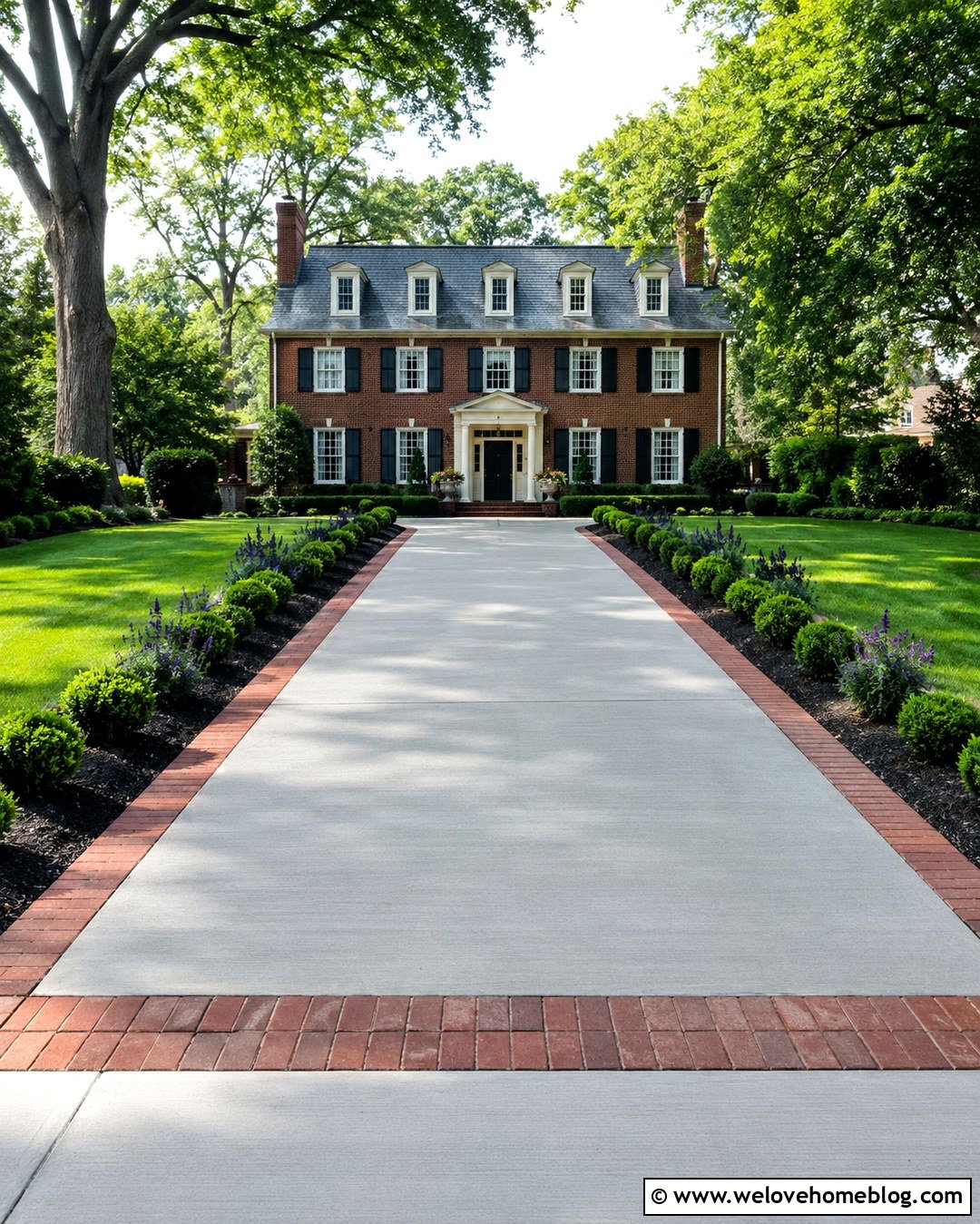
A light gray concrete driveway gains instant warmth when red or brown brick pavers run along both sides. Use a soldier-course pattern, with rectangular bricks placed side by side, to create straight and clearly defined edges. Paver borders commonly use a contrasting color, size, or pattern to distinguish them from the main driveway surface. Secure edge restraints also help maintain the finished line. () Connect one border to a matching brick walkway leading toward the porch. On the opposite side, add a narrow bed filled with boxwood, salvia, and dark mulch. This complete layout works especially well with colonial, Cape Cod, and traditional brick homes because it repeats familiar facade colors without making the entrance feel overly formal.
2. Asphalt Driveway With Cobblestone Pavers On Sides
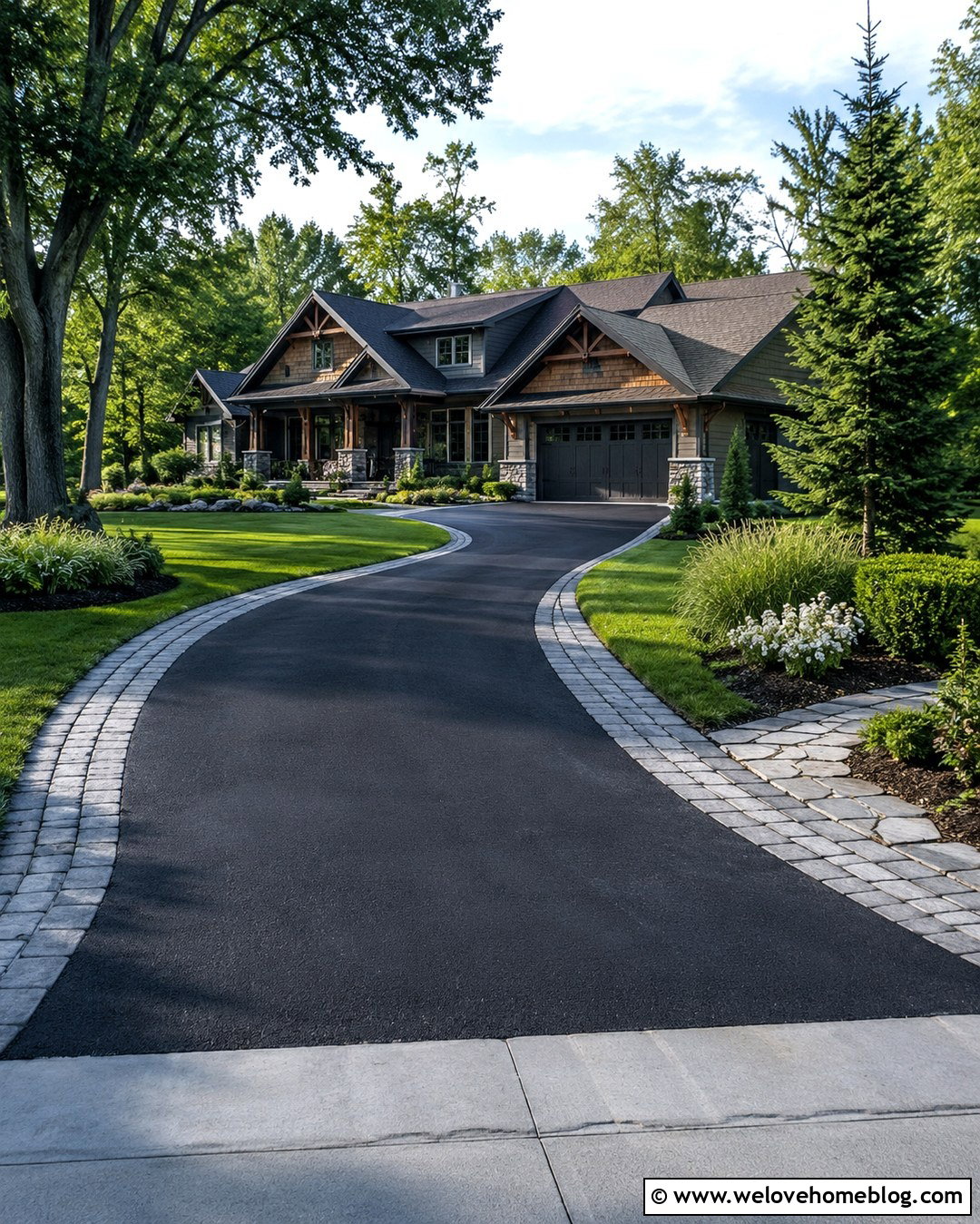
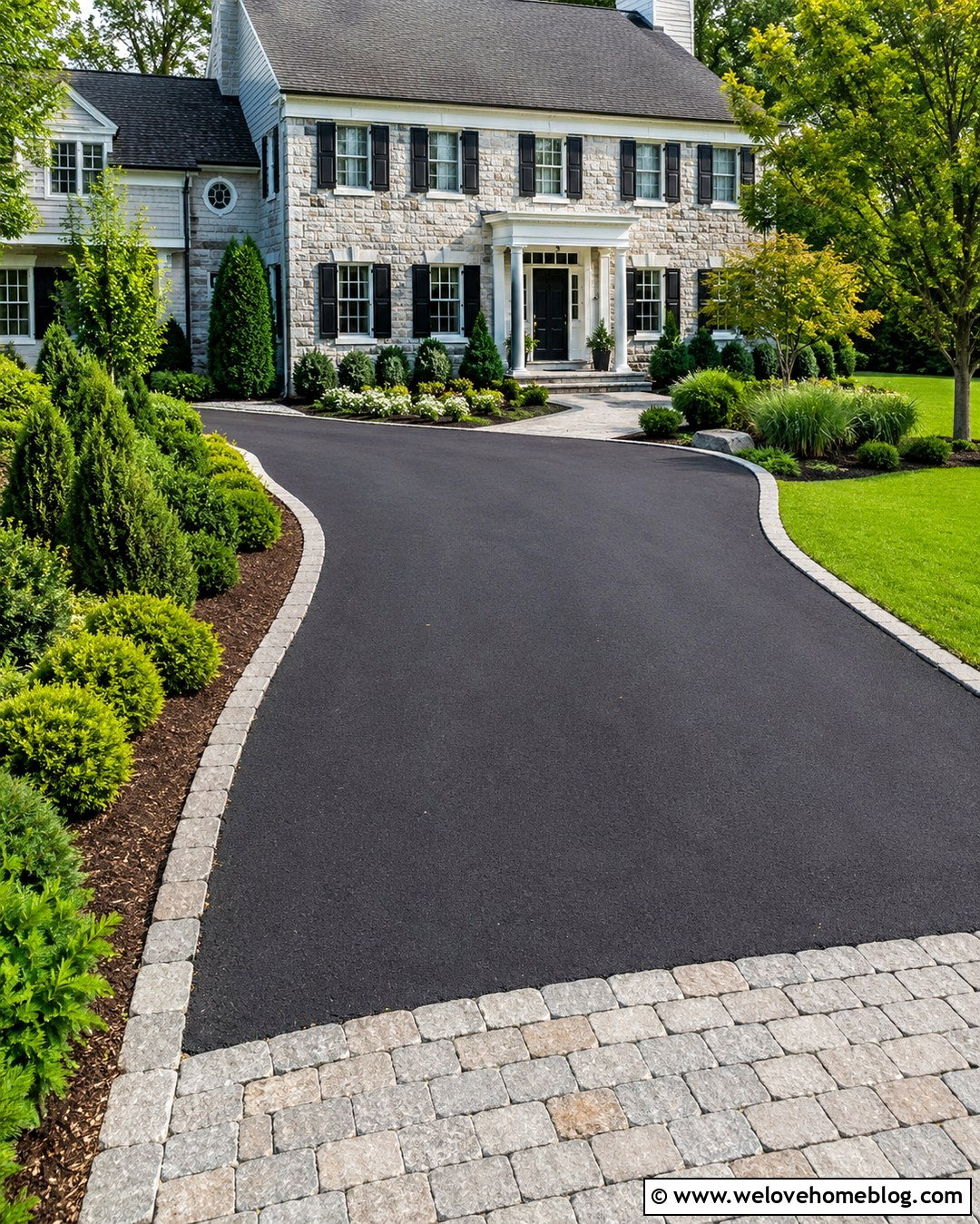
Deep black asphalt looks more refined beside gray granite or concrete cobblestone pavers. Install two or three rows along both sides to frame the dark surface and disguise slightly irregular edges. A straight driveway can use uniform cobbles, while a gently curved approach looks better with smaller pieces that follow the bend smoothly. Keep the pavers close to ground level so lawn equipment can pass beside them more easily. Frame the entrance with ornamental grasses, clipped evergreen shrubs, and two medium-height shade trees. A natural stone walkway can branch from one paver border toward a craftsman porch. The combination feels established and substantial, but the simple plant palette prevents the driveway from appearing too busy or old-fashioned.
3. Gravel Driveway With Wide Paver Borders
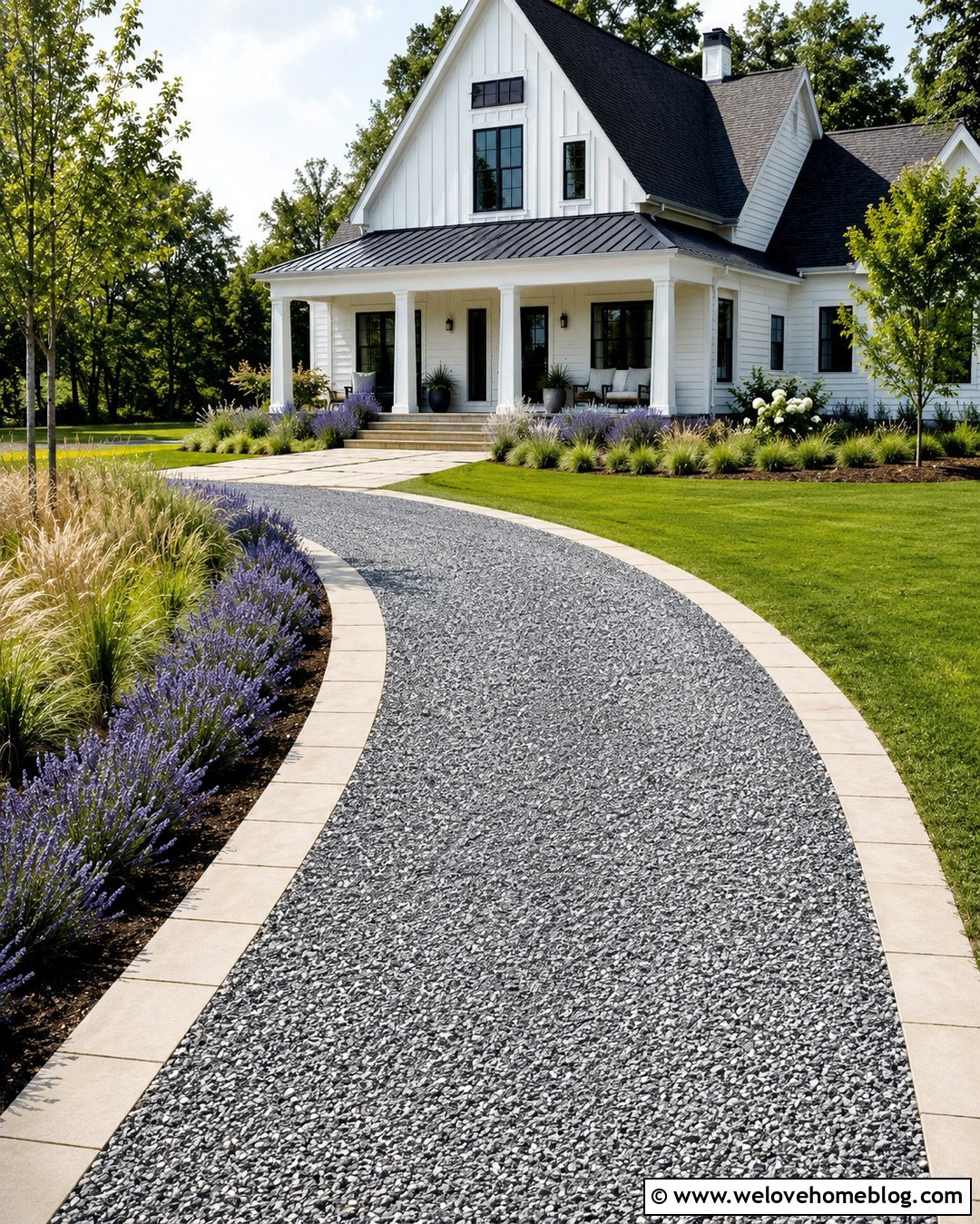
Loose gravel becomes more visually organized when wide paver bands define its sides. Start with compacted gray crushed stone for the driving area, then install 12- to 18-inch borders using large tan concrete pavers. The warm edges make the gravel feel intentional while providing a cleaner place to step when entering or leaving a vehicle. Use a straight layout near the street and soften it with a slight curve as the driveway approaches a modern farmhouse. Low lavender, catmint, and compact grasses can follow the outer edges without hiding the pavers. Repeat the tan pavers in the front walkway and porch steps. The coordinated colors connect the driveway, landscaping, and house while maintaining the relaxed character that makes gravel appealing.
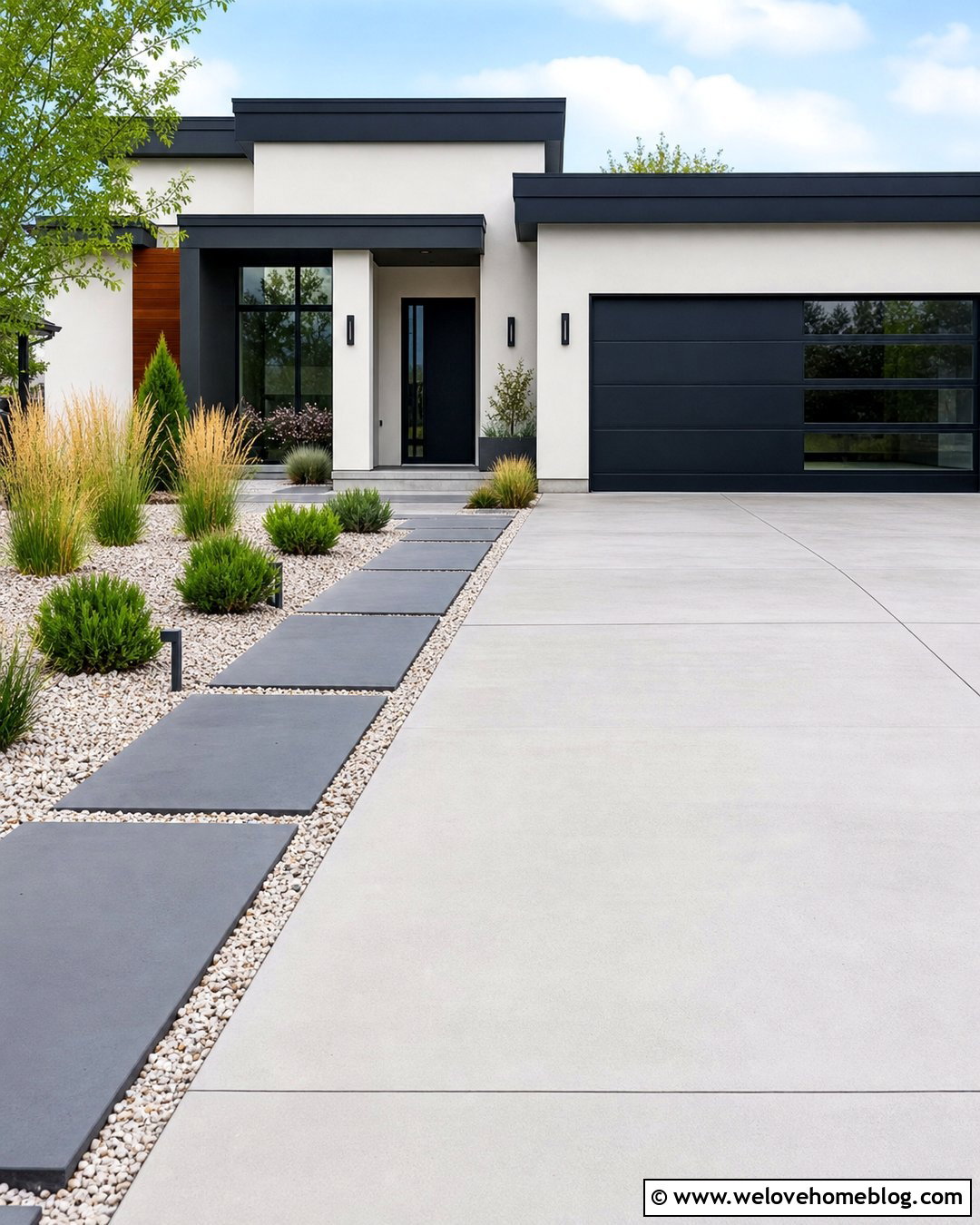
4. Modern Concrete Driveway With Charcoal Pavers On Sides
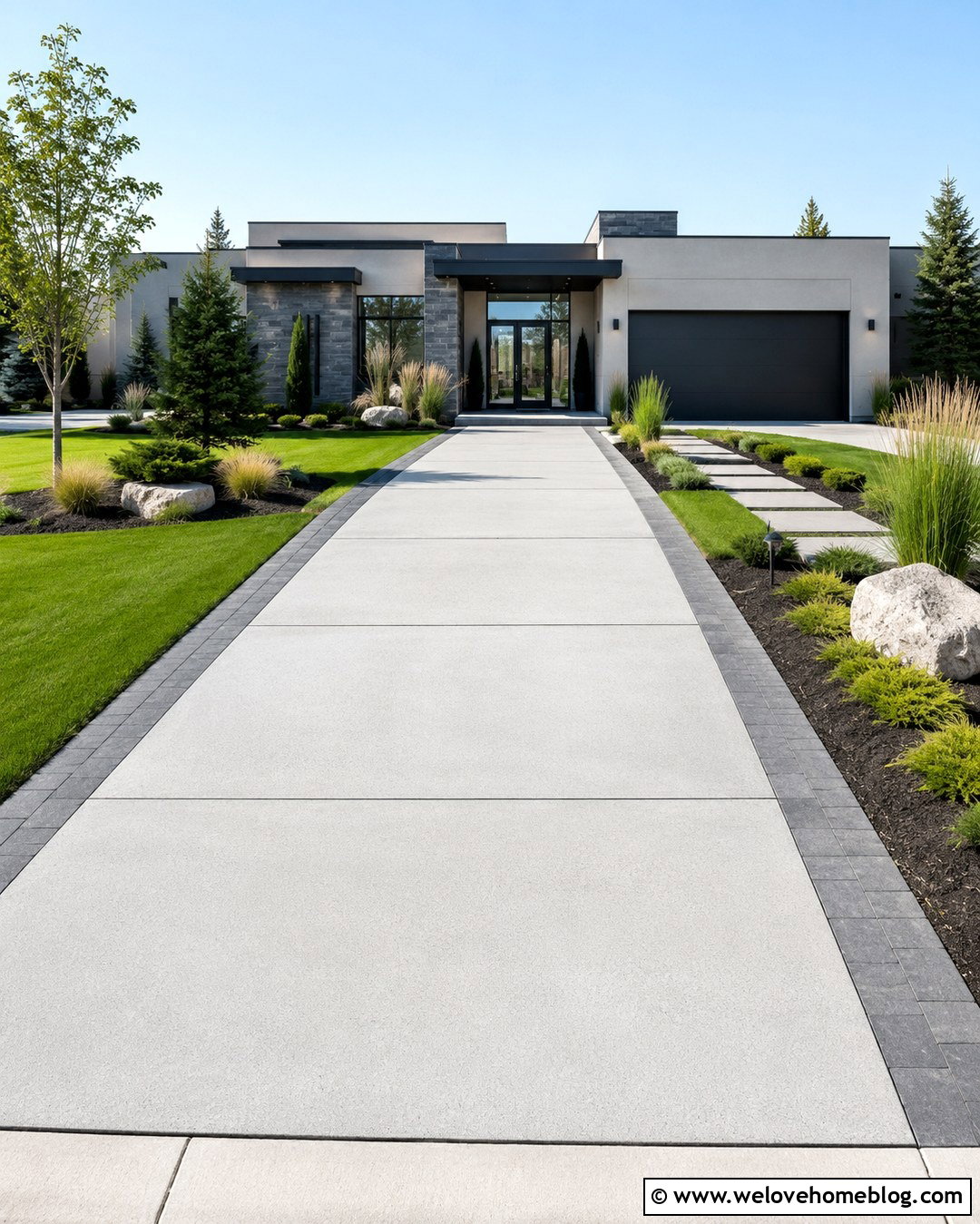
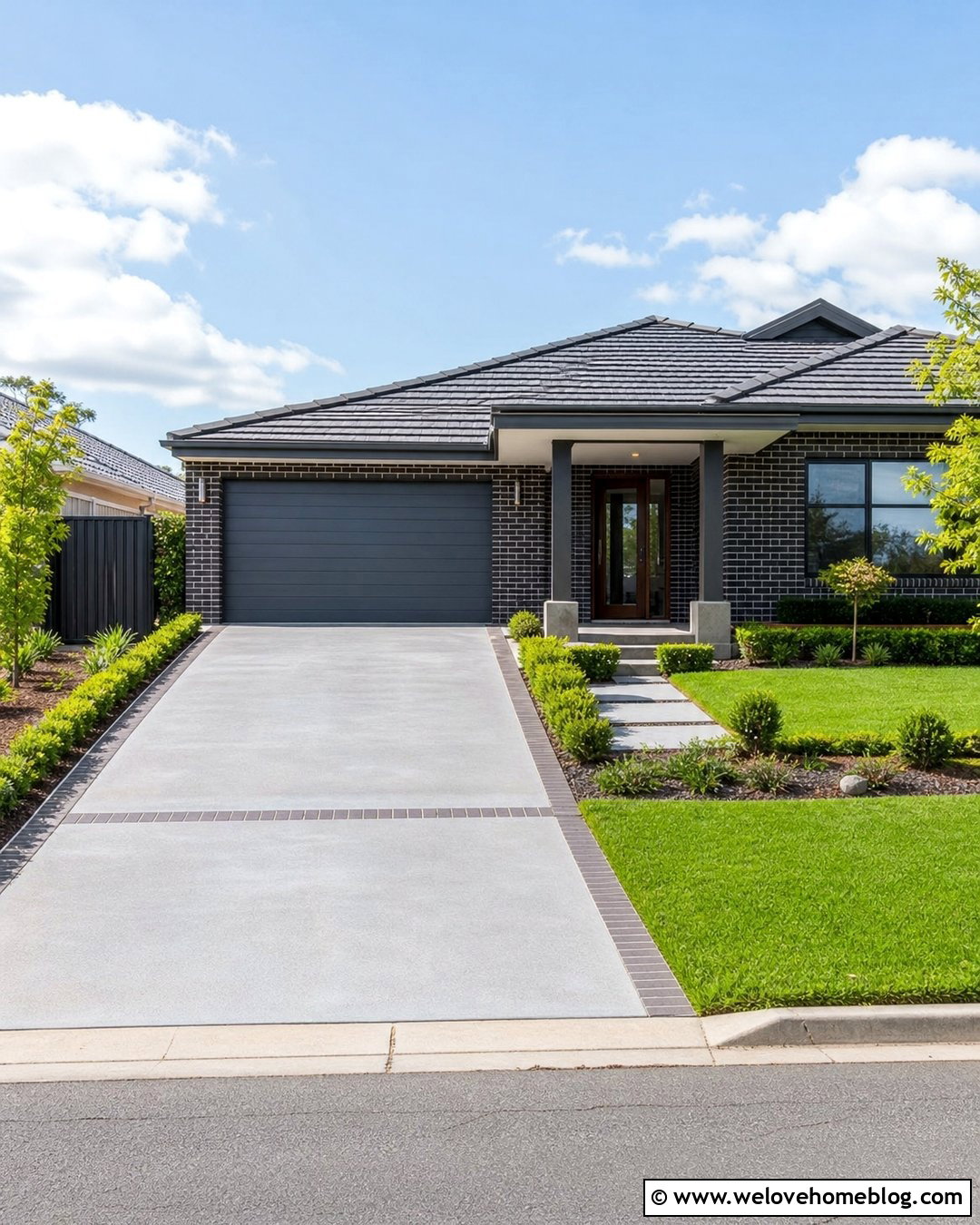
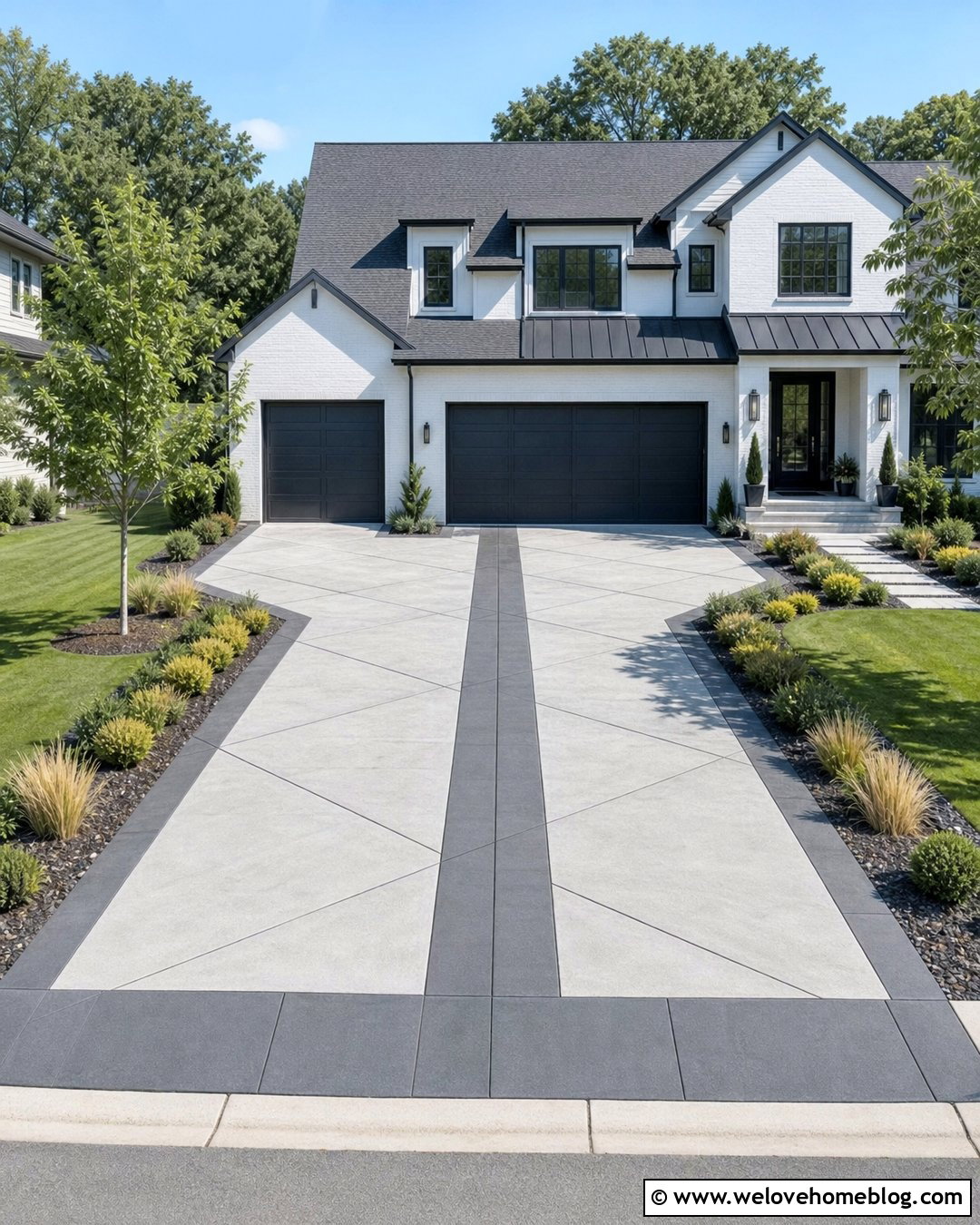
Crisp contrast suits a modern exterior. Pair smooth pale gray poured concrete with wide charcoal concrete pavers placed along both sides in a stacked bond pattern. The dark bands create strong lines that guide attention toward the garage and front entrance. Divide an especially broad driveway into large concrete panels with narrow control joints that align with the paver layout. Surround the edges with rectangular planting beds containing feather reed grass, dwarf evergreens, and sculptural boulders. A matching charcoal paver walkway can turn sharply toward a flat-roofed porch. Keep the lawn edges straight and the planting palette limited. This arrangement gives the entire front yard a clean geometric structure without covering the driveway in expensive decorative material.
5. Curved Driveway With Stone Pavers On Sides
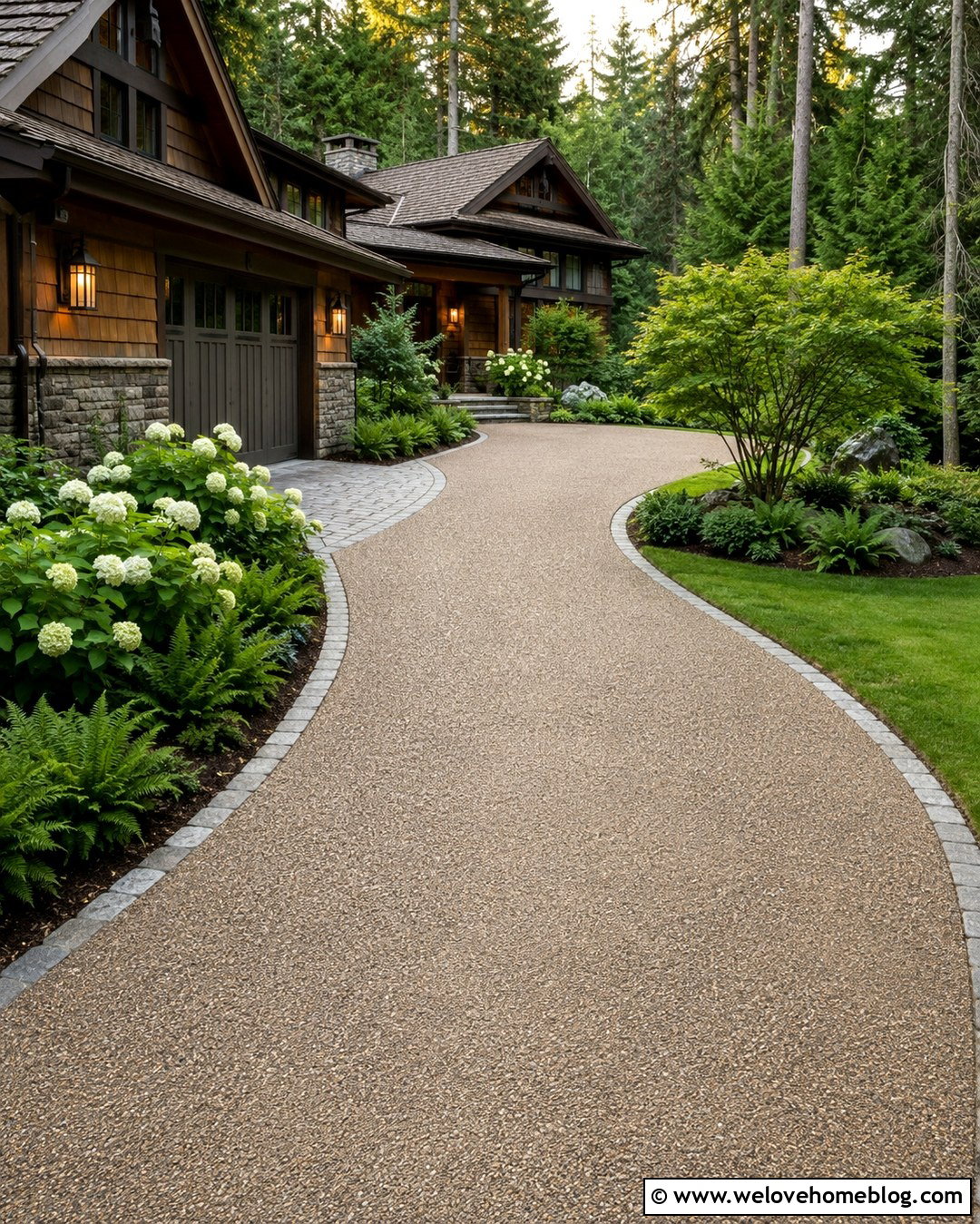
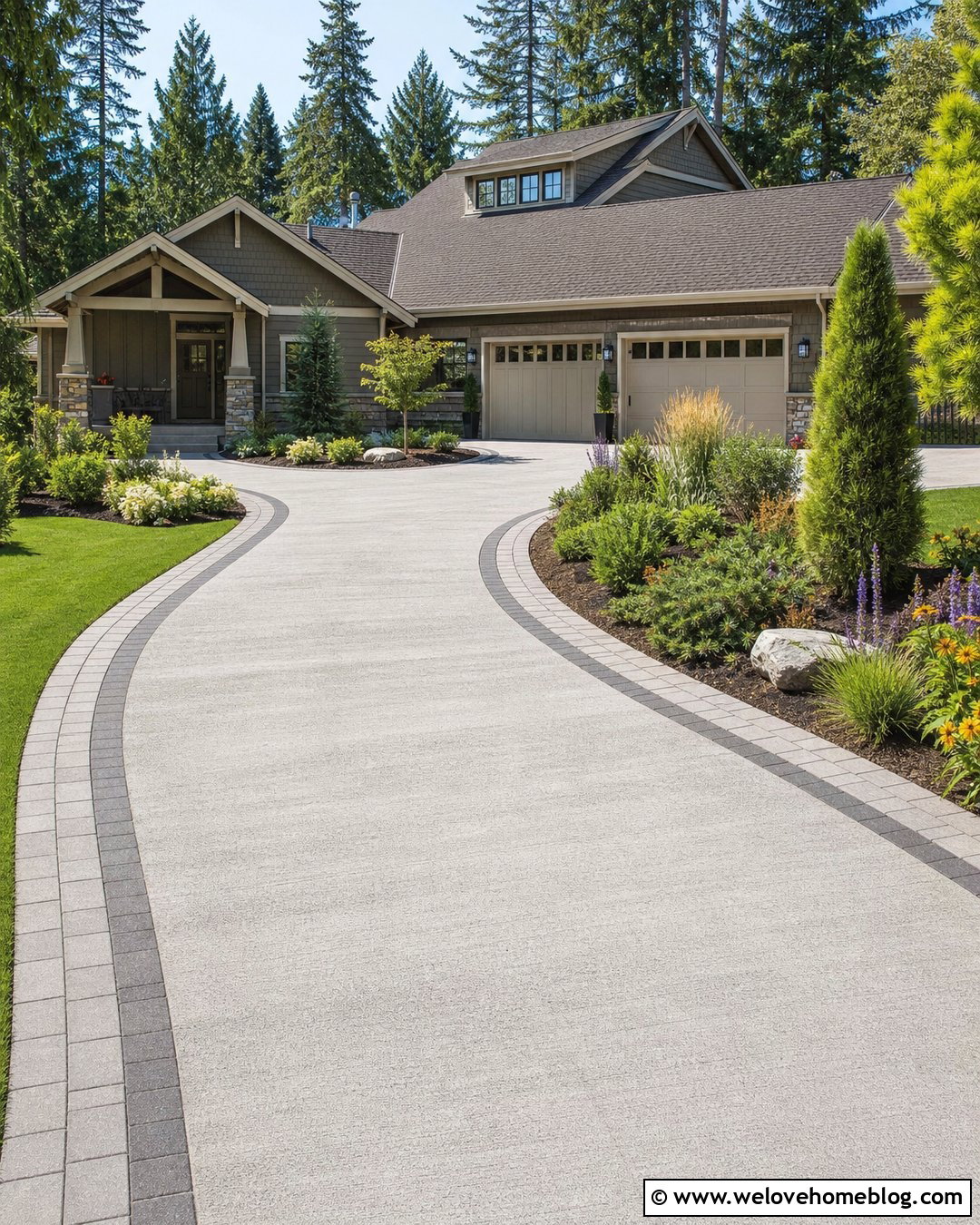
A curved driveway needs edging that follows its shape naturally rather than fighting against it. Use warm beige exposed aggregate for the central surface and smaller stone-look concrete pavers along both sweeping sides. Lay the pavers in a flexible running bond, allowing the joints to adjust gradually around every bend. On the outside curve, create a deep planting bed with hydrangeas, ferns, and layered evergreen shrubs. The inside curve can remain mostly lawn, anchored by one ornamental tree surrounded by low ground cover. Carry the side pavers into a fan-shaped apron near the garage. This complete design complements craftsman, cottage, and wooded suburban homes because the textured materials blend comfortably with an informal landscape.
6. Driveway With Paver Walkway On One Side
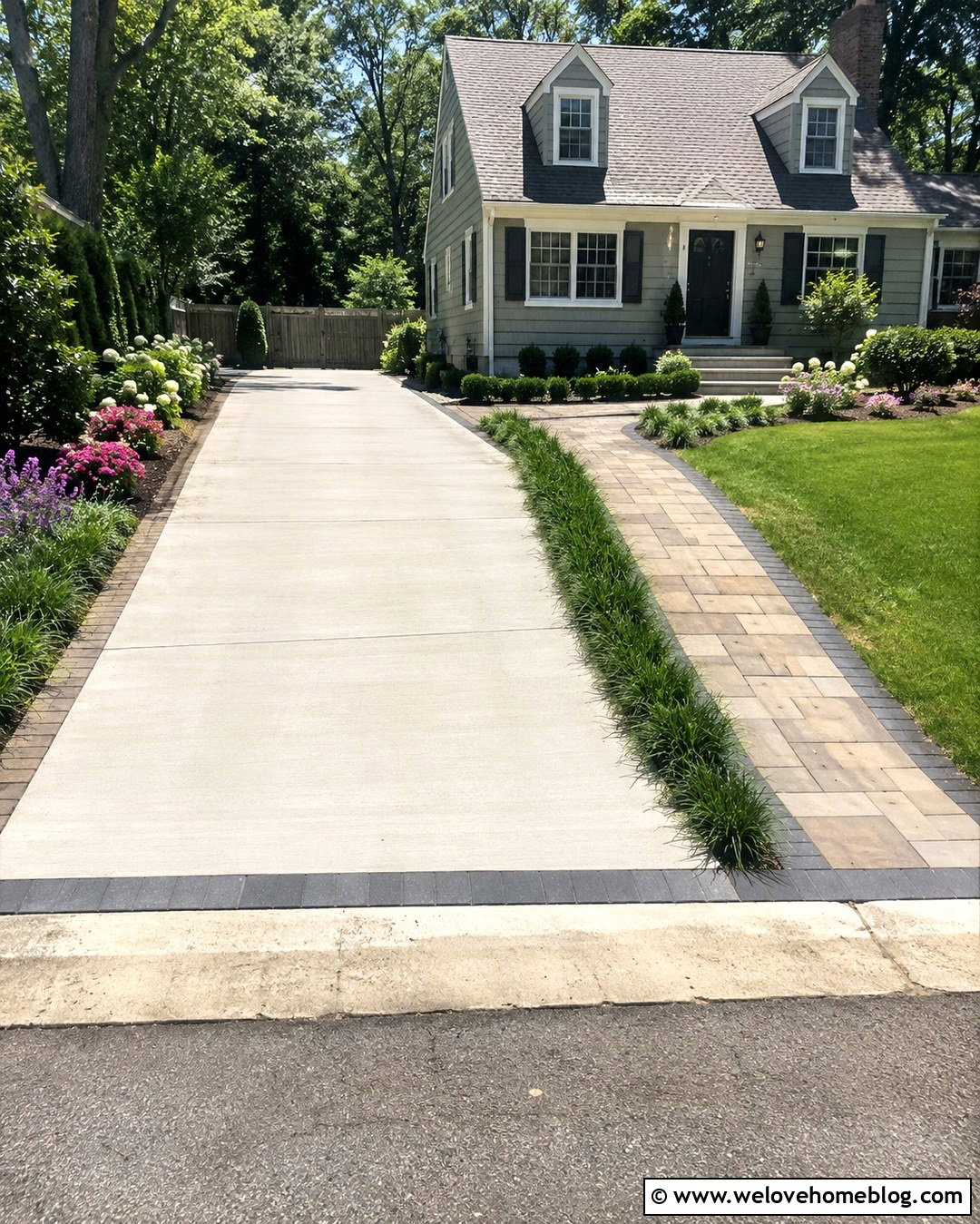
When the front door sits away from the garage, turn one side of the driveway into a dedicated paver walkway. Pair a plain broom-finished concrete driveway with a three- to four-foot-wide path of tan and charcoal interlocking pavers. This width generally provides a comfortable pedestrian route while clearly separating foot traffic from the driving surface. () Add a contrasting border around the walkway, then curve it gently toward the porch instead of making an abrupt turn. A narrow planting strip between the driveway and path can hold liriope, dwarf grasses, or low flowering perennials. Keep the opposite driveway side simple with matching single-row paver edging. The result feels connected, safe, and thoughtfully planned rather than added as an afterthought.
7. Driveway With Matching Pavers On Both Sides
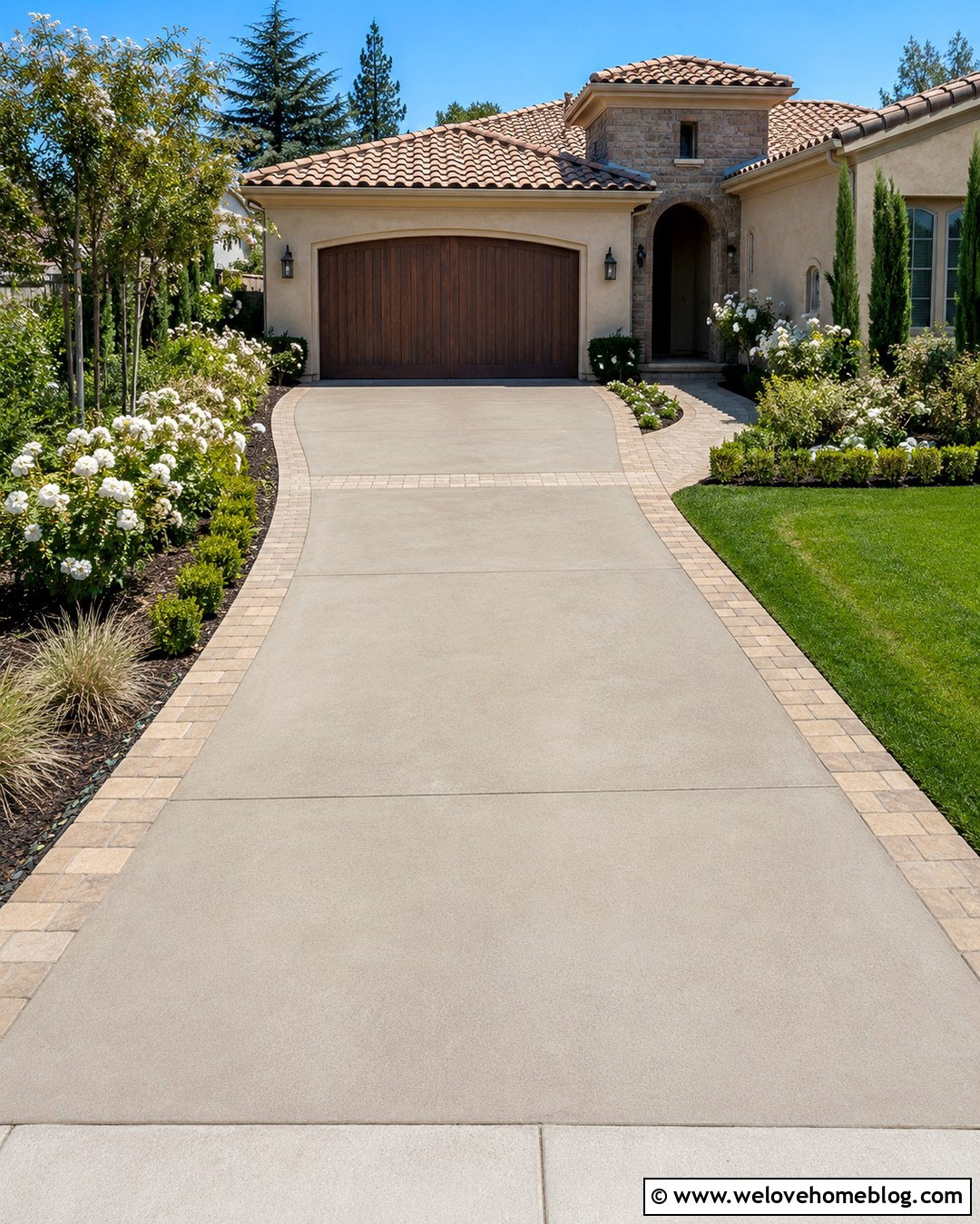
Matching the side pavers to the home’s facade is an easy way to create a coordinated entrance. Around a beige stucco house, for example, combine a warm gray concrete driveway with sand-colored interlocking pavers on both sides. Use two parallel rows for enough visual presence without reducing the driving area. Extend the same pavers across the driveway near the garage to form a decorative transition band. Softly curved planting beds filled with white roses, compact hollies, and ornamental grasses can frame the outer edges. A matching paver walkway should connect one side directly to the entry. Repeating one hardscape material in several locations makes the front yard feel unified, even when the driveway itself uses a simpler and more affordable surface.
8. Exposed Aggregate Driveway With Paver Edging
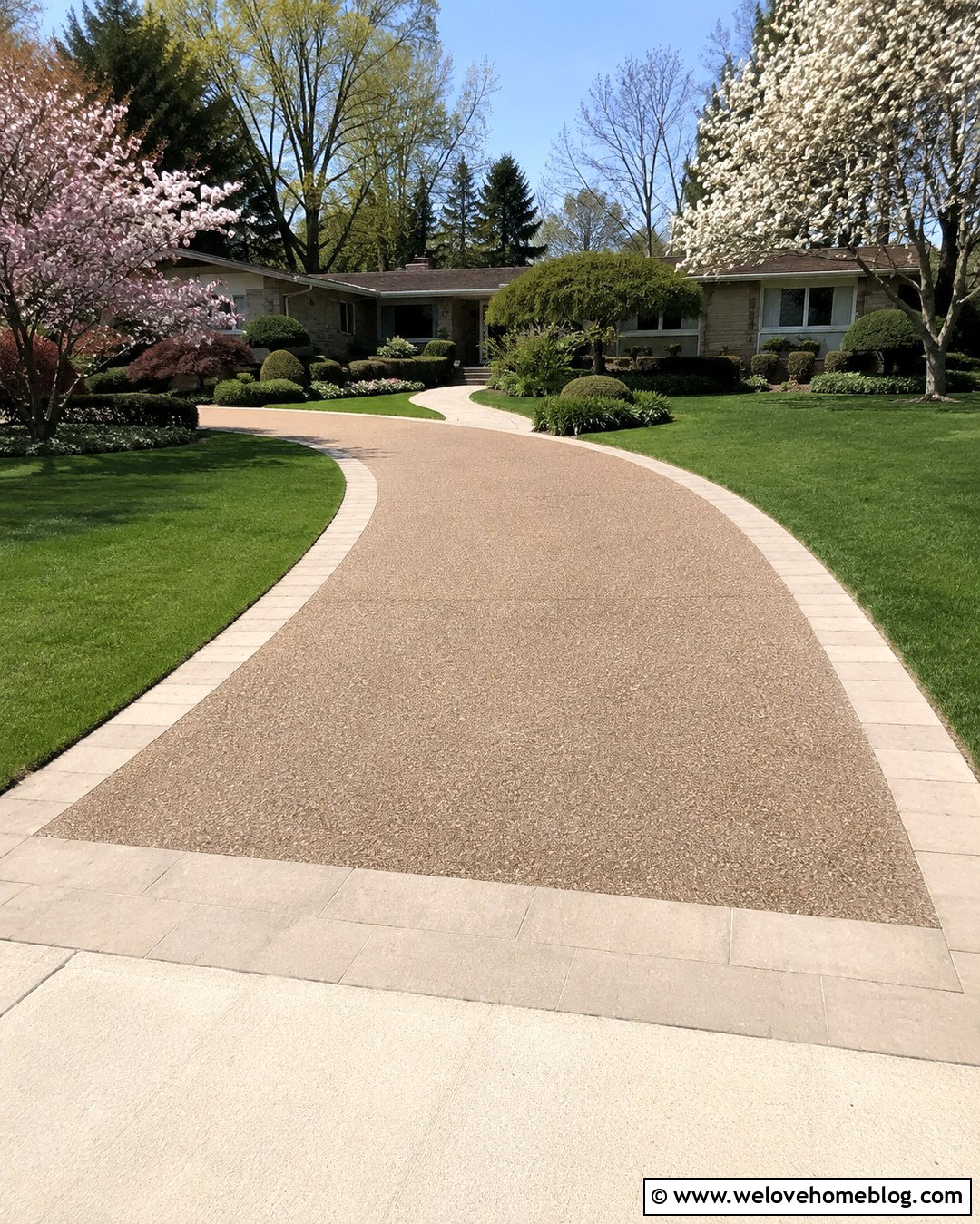
Exposed aggregate already contains plenty of texture, so its side pavers should provide contrast without adding visual clutter. Choose a medium-brown aggregate driveway and frame it with smooth cream concrete pavers in a single wide row. The lighter border brightens the edges and highlights the driveway’s graceful shape. Near the street, widen the pavers slightly to create a noticeable entrance apron. Repeat the cream color in a curved walkway and low retaining edge around the front garden. Use simple landscaping with clipped shrubs, small flowering trees, and broad areas of green lawn. This complete combination suits ranch and midcentury homes because it feels relaxed, durable, and polished. Keep the paver pattern straightforward so the aggregate remains the primary texture.
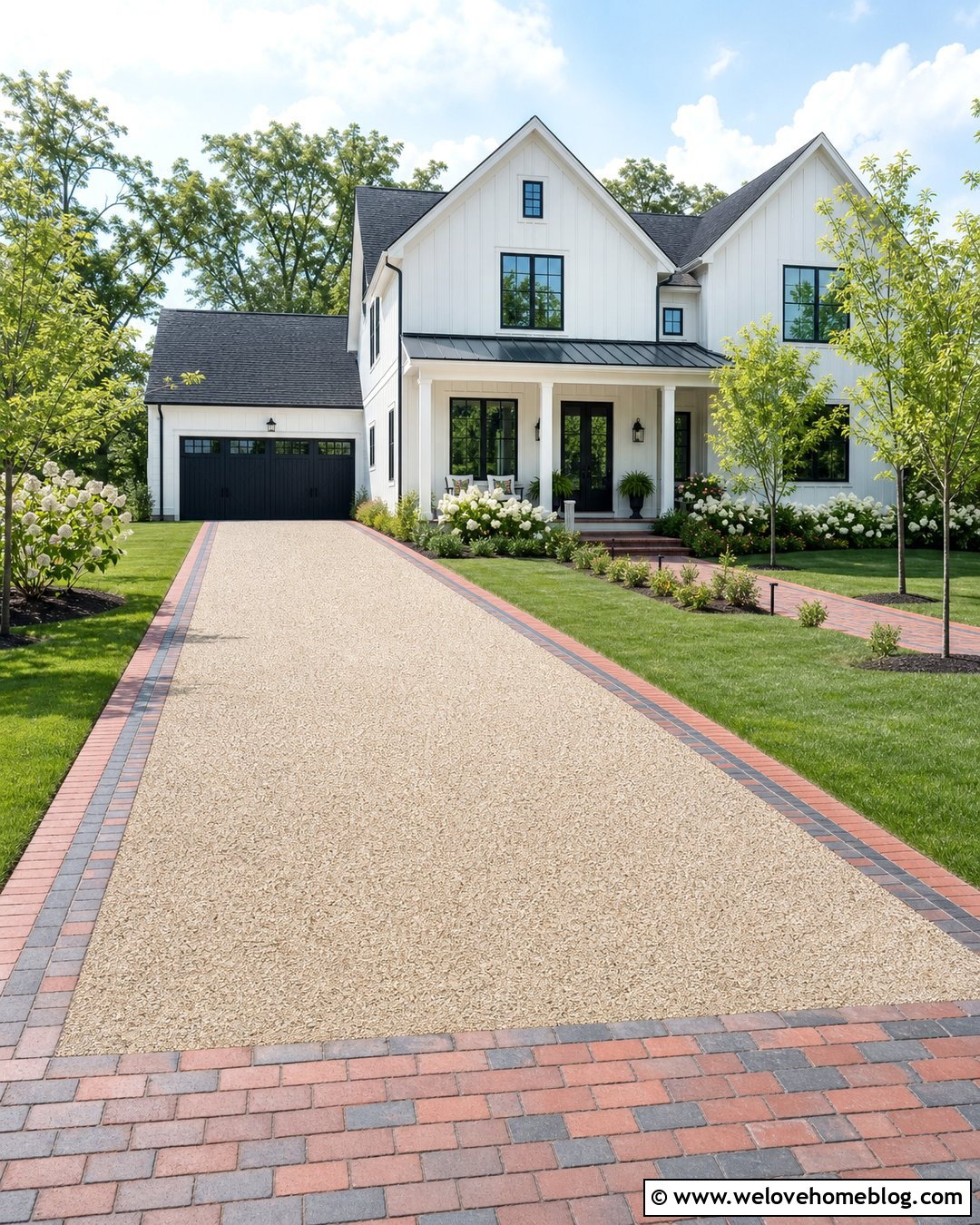
9. White Gravel Driveway With Red Brick Pavers On Sides
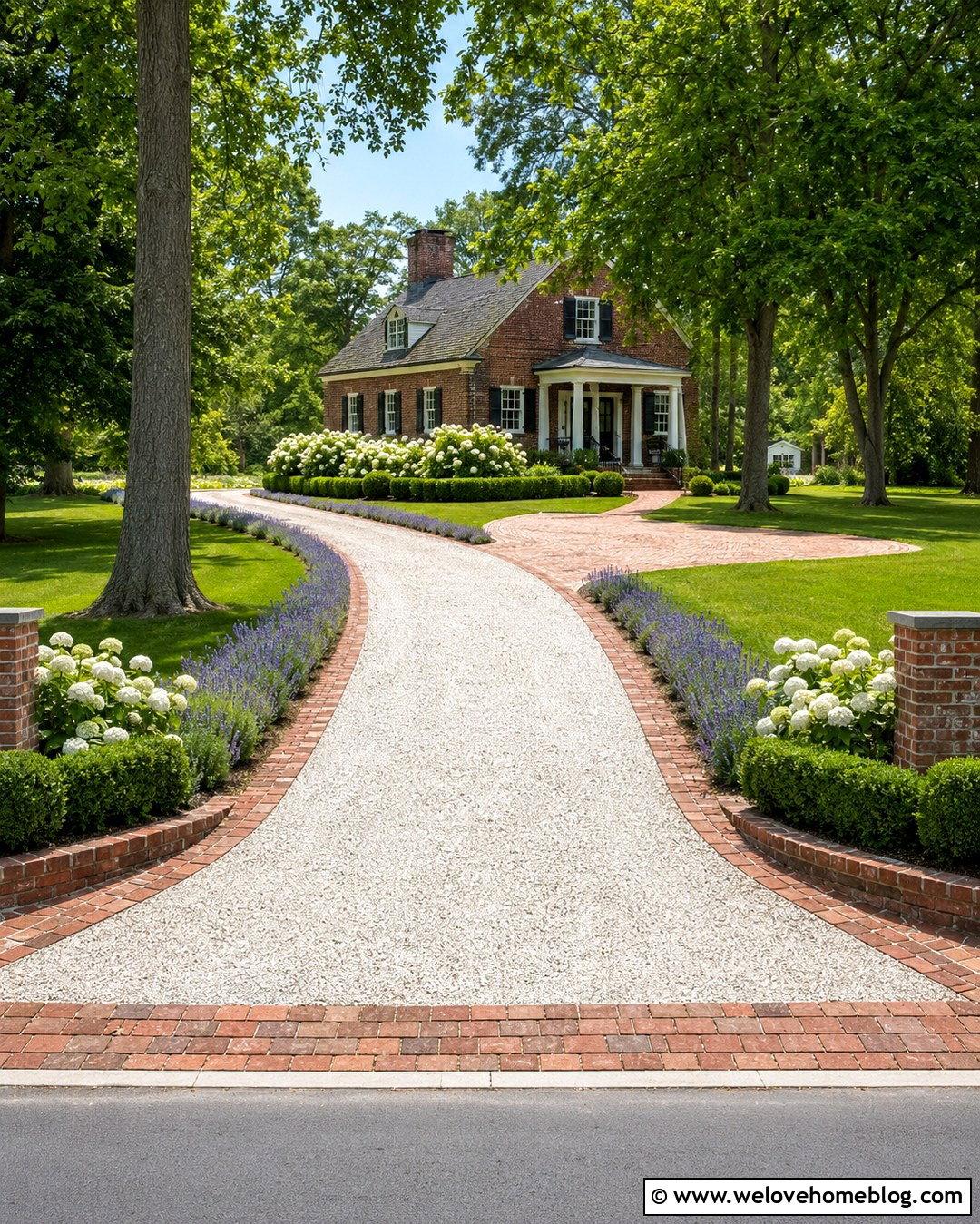
Bright limestone gravel and traditional red brick create a cheerful country entrance. Run two rows of weathered clay brick pavers along both sides of a straight or gently curving driveway. The brick contains the light-colored gravel visually and adds a strong connection to a red brick farmhouse or colonial facade. Place the pavers in a running bond for a relaxed appearance, then use matching brick around a small turning area near the garage. Line the outer borders with lavender, white hydrangeas, or low boxwood hedges. A brick walkway can branch toward the front porch through the lawn. Because white gravel shows scattered soil and leaves easily, allow enough border width to keep planting beds comfortably separated from the driving surface.
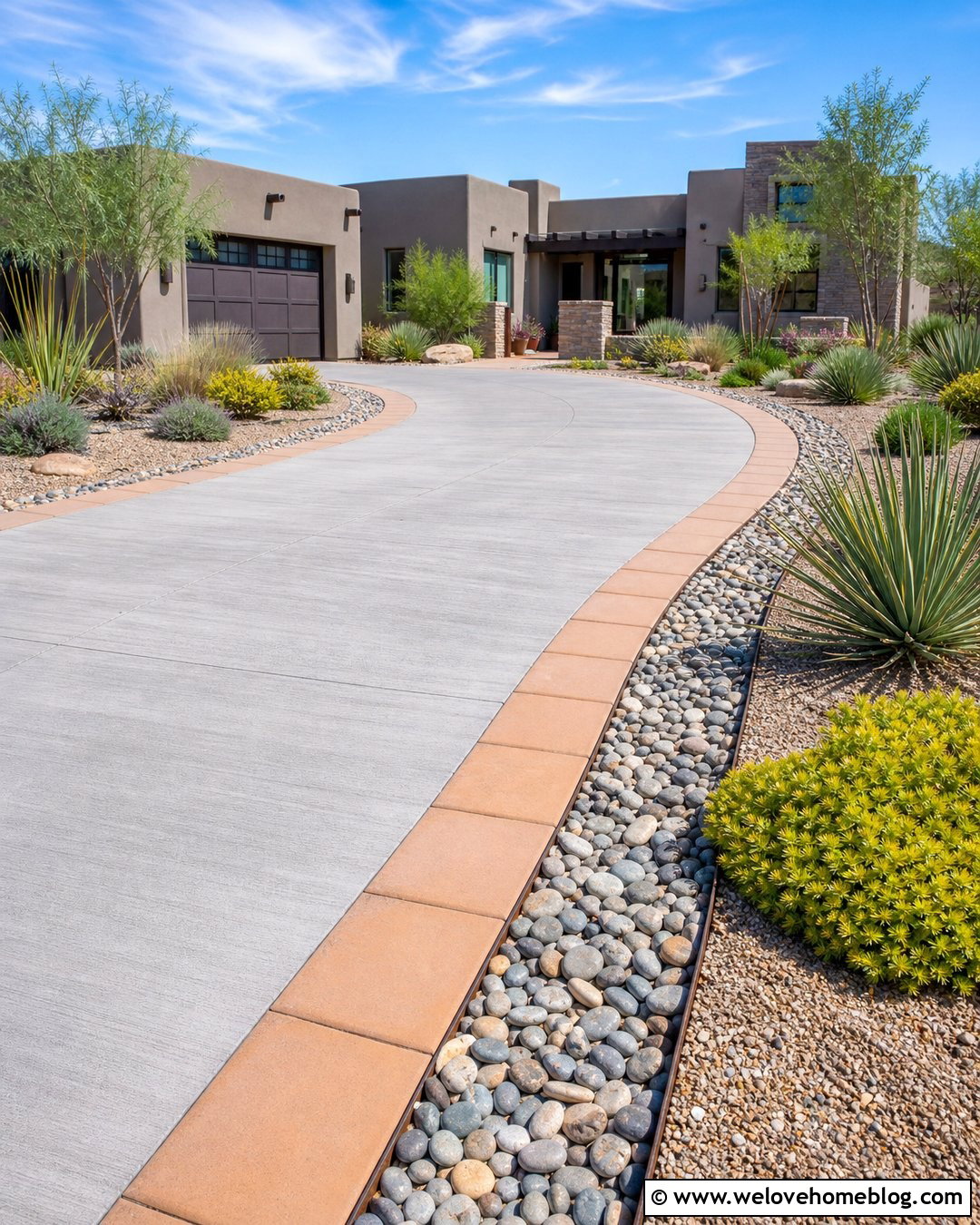
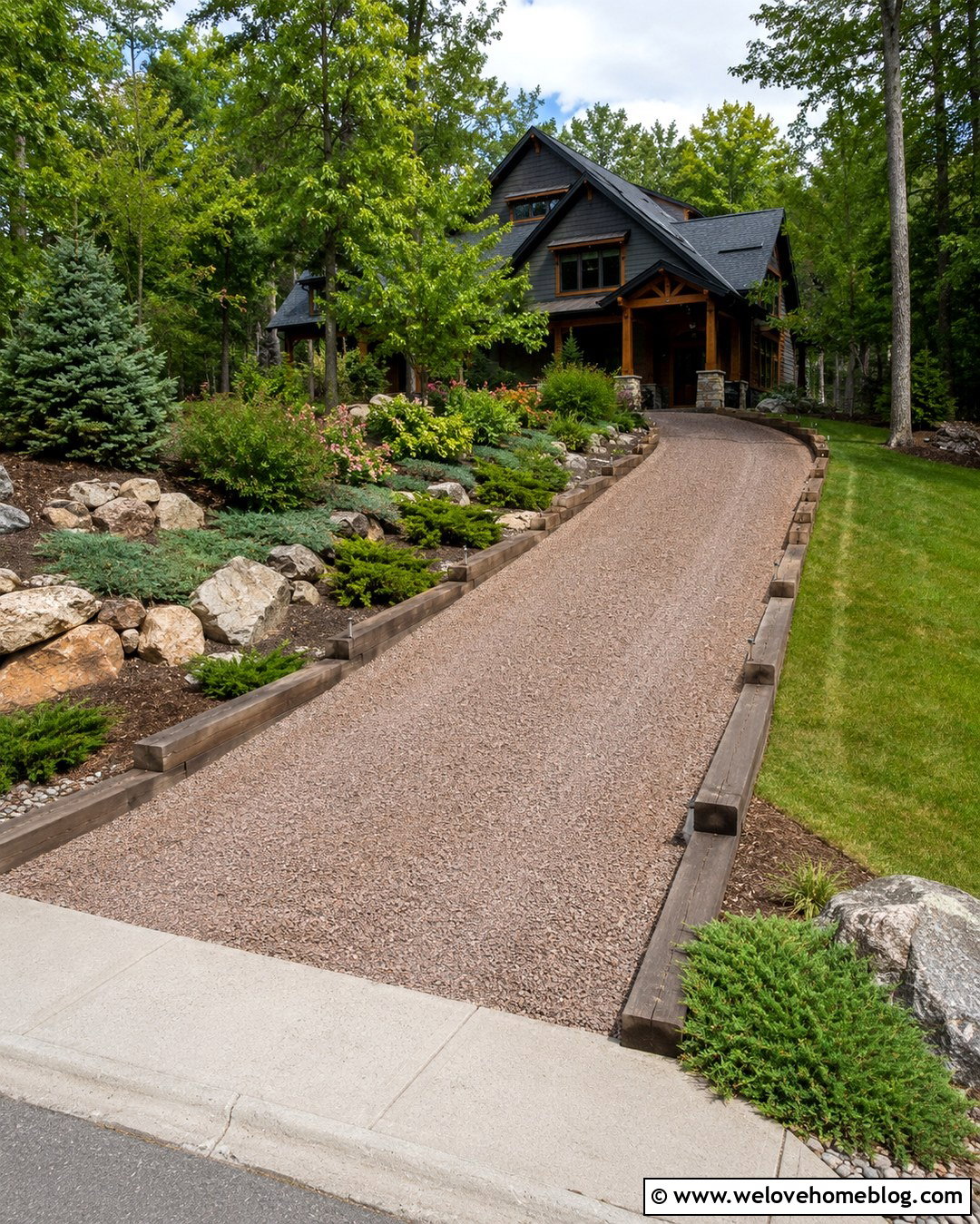
10. Resin-Bound Driveway With Granite Pavers On Sides
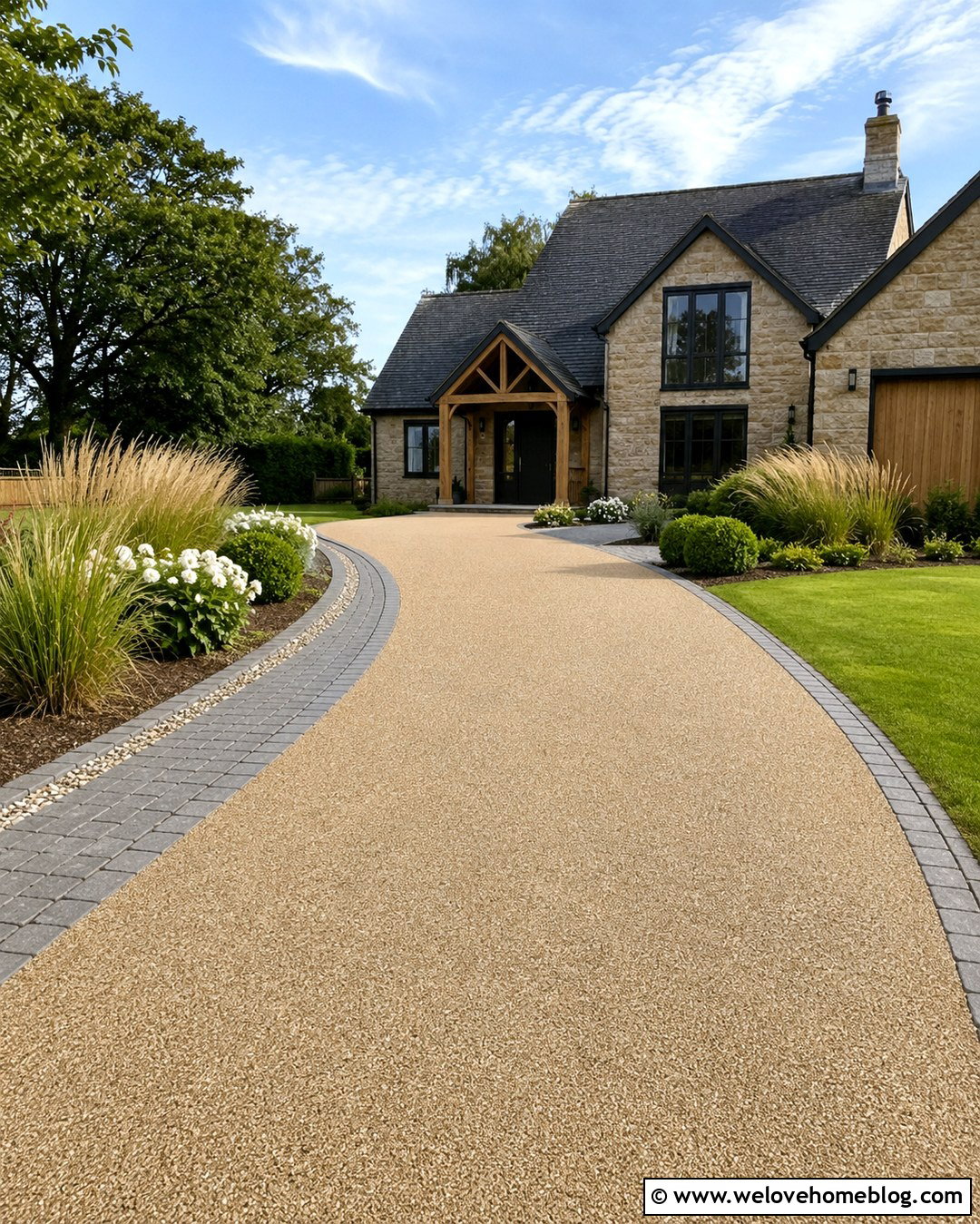
A resin-bound gravel driveway creates a smooth, contemporary surface that pairs beautifully with rugged granite edging. Choose a warm beige resin-bound finish and add two rows of dark gray granite setts along both sides. The darker pavers sharpen the outline while balancing the driveway’s fine texture. For a modern country home, use a subtle curve leading toward a detached garage and continue the granite around a nearby walkway. Plant airy ornamental grasses, white flowering perennials, and rounded evergreen shrubs beyond the pavers. A narrow gravel drainage strip can sit discreetly behind one edge where appropriate for the site. This combination feels upscale without becoming flashy because the restrained colors allow the driveway shape, stone texture, and landscaping to work together.
11. Driveway With Permeable Pavers On Sides
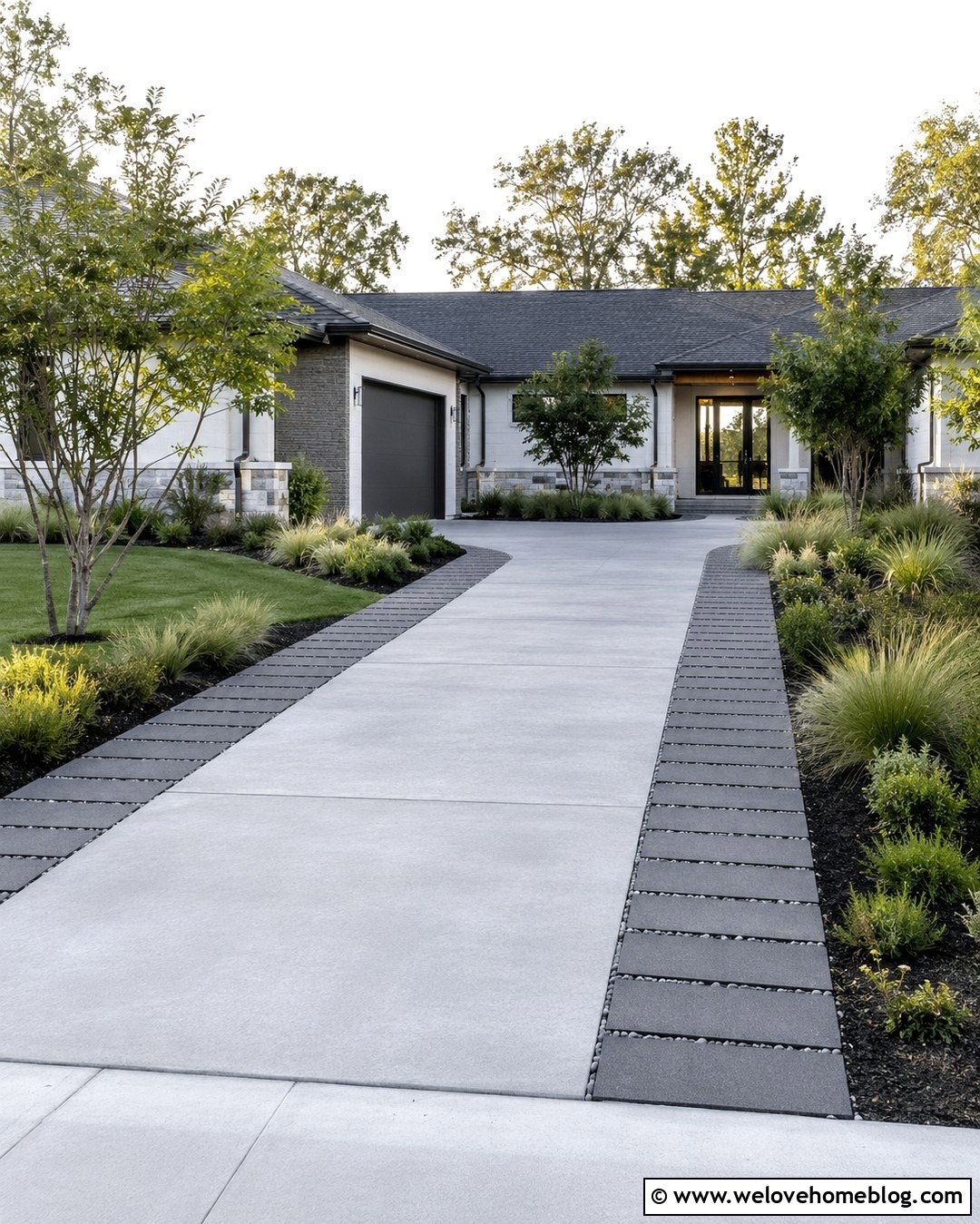
Permeable side pavers can create a useful transition between a solid driveway and surrounding planting areas. Start with a light gray concrete center and place wide permeable concrete paver bands along both sides. Select charcoal or natural gray blocks with open joints filled with clean stone rather than soil. A straight layout creates a modern appearance, while staggered planting pockets can soften the outer edges. Use moisture-tolerant grasses and regionally suitable shrubs where runoff naturally travels, based on professional site and drainage guidance. Connect one paver band to a matching front walkway so the functional material feels integrated into the landscape. Against a contemporary ranch house, the varied gray tones create depth while maintaining a quiet, uncluttered curb view.
12. Farmhouse Driveway With Tumbled Pavers On Sides

Soft edges and weathered colors give a farmhouse driveway an inviting, established character. Use tan crushed gravel or warm gray concrete for the main surface, bordered by tumbled concrete pavers in mixed beige and brown tones. A three-paver-wide band on both sides provides enough detail for a long driveway without feeling delicate. At the entrance, flare the borders outward toward simple stone pillars or white fence sections. Plant hydrangeas, panicle grasses, and low junipers along selected areas while leaving open lawn between larger planting groups. Near the house, connect one border to a generous paver walkway leading to a covered porch. This complete look combines practical structure with informal landscaping, making it suitable for modern farmhouses, country homes, and converted barns.
13. Small Driveway With Narrow Paver Strips
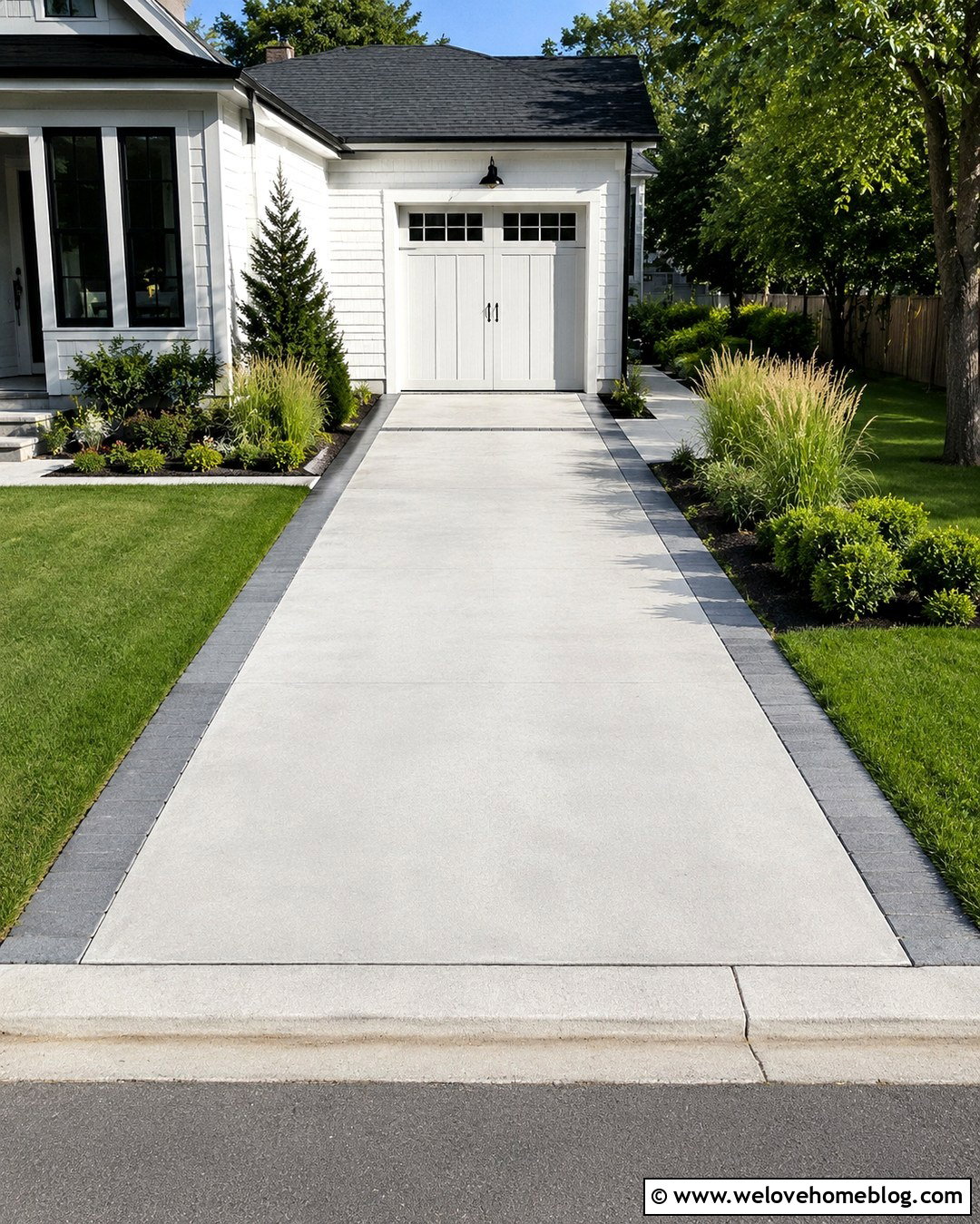
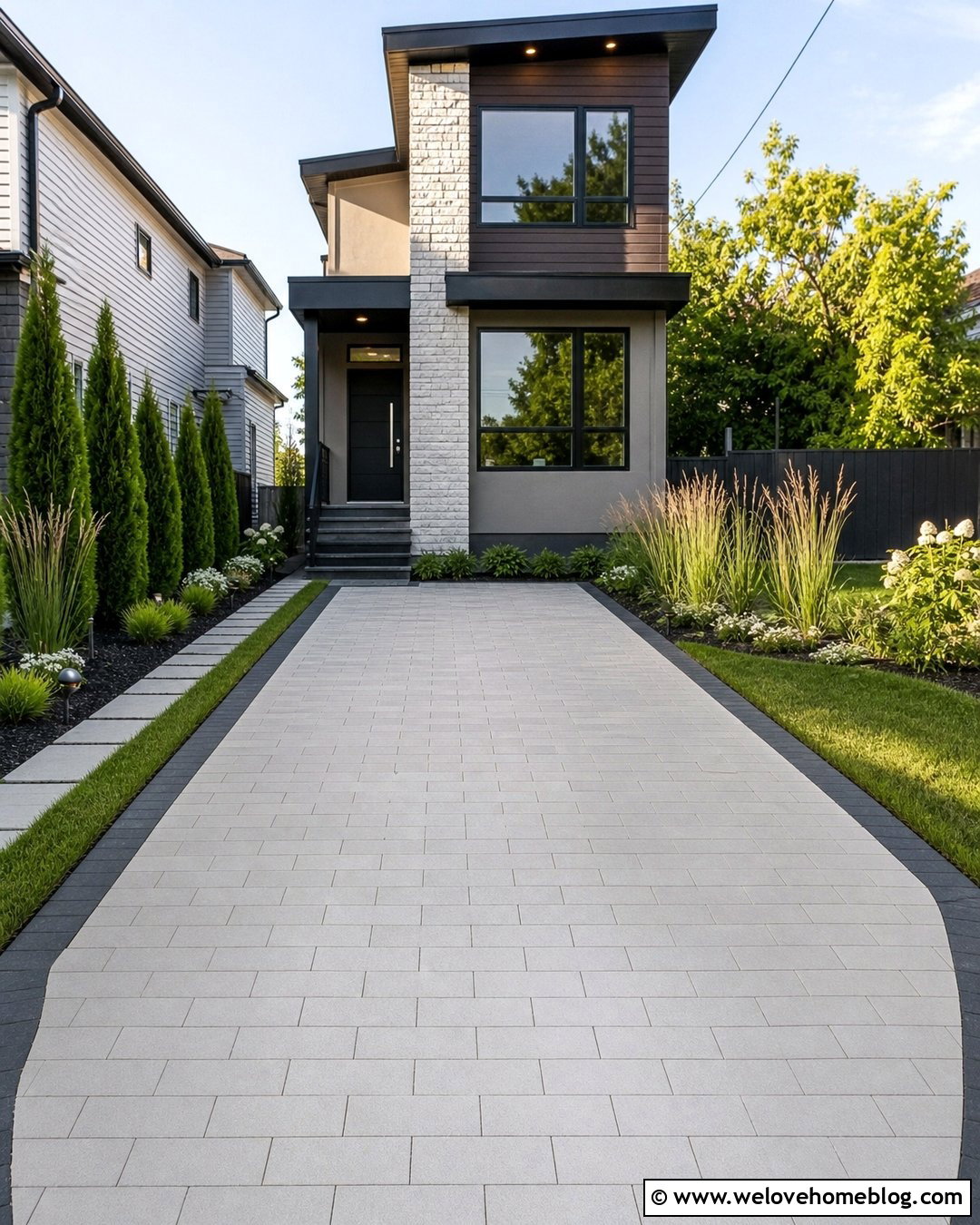
Limited space does not require an elaborate border. A compact concrete driveway can look wider and more finished with one narrow row of dark pavers along each side. Select slim charcoal concrete blocks and set them flush with the driveway to preserve every usable inch. Continue the border across the garage threshold for a simple framed effect. On one side, place a narrow walkway directly beyond the pavers. On the other, use upright ornamental grasses or compact evergreen shrubs that will not spread into the parking area. Light-colored concrete visually opens the space, while the dark paver lines emphasize its full length. This clean arrangement works particularly well for townhomes, cottages, and narrow suburban lots with single-car garages.
14. Circular Driveway With Paver Borders
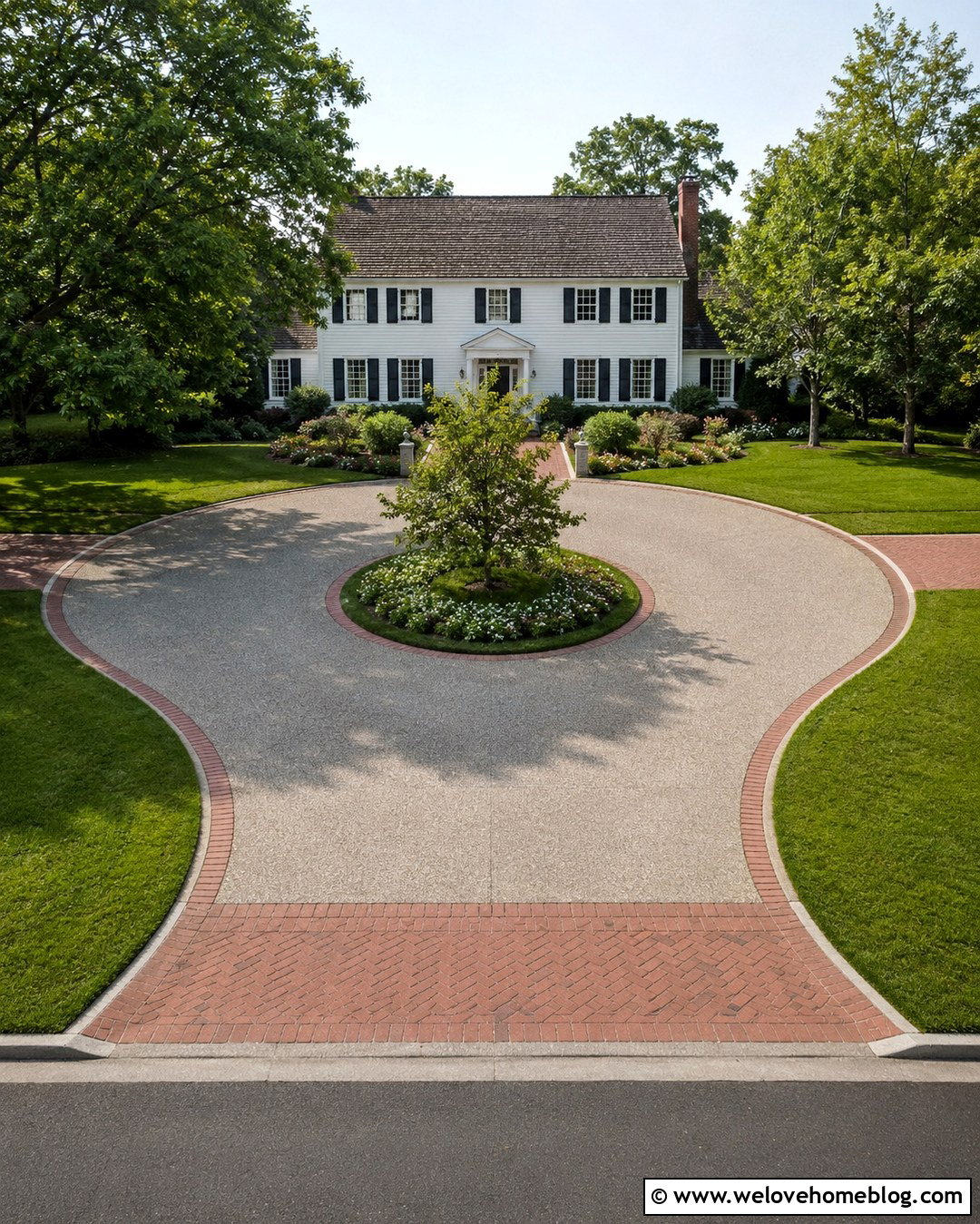
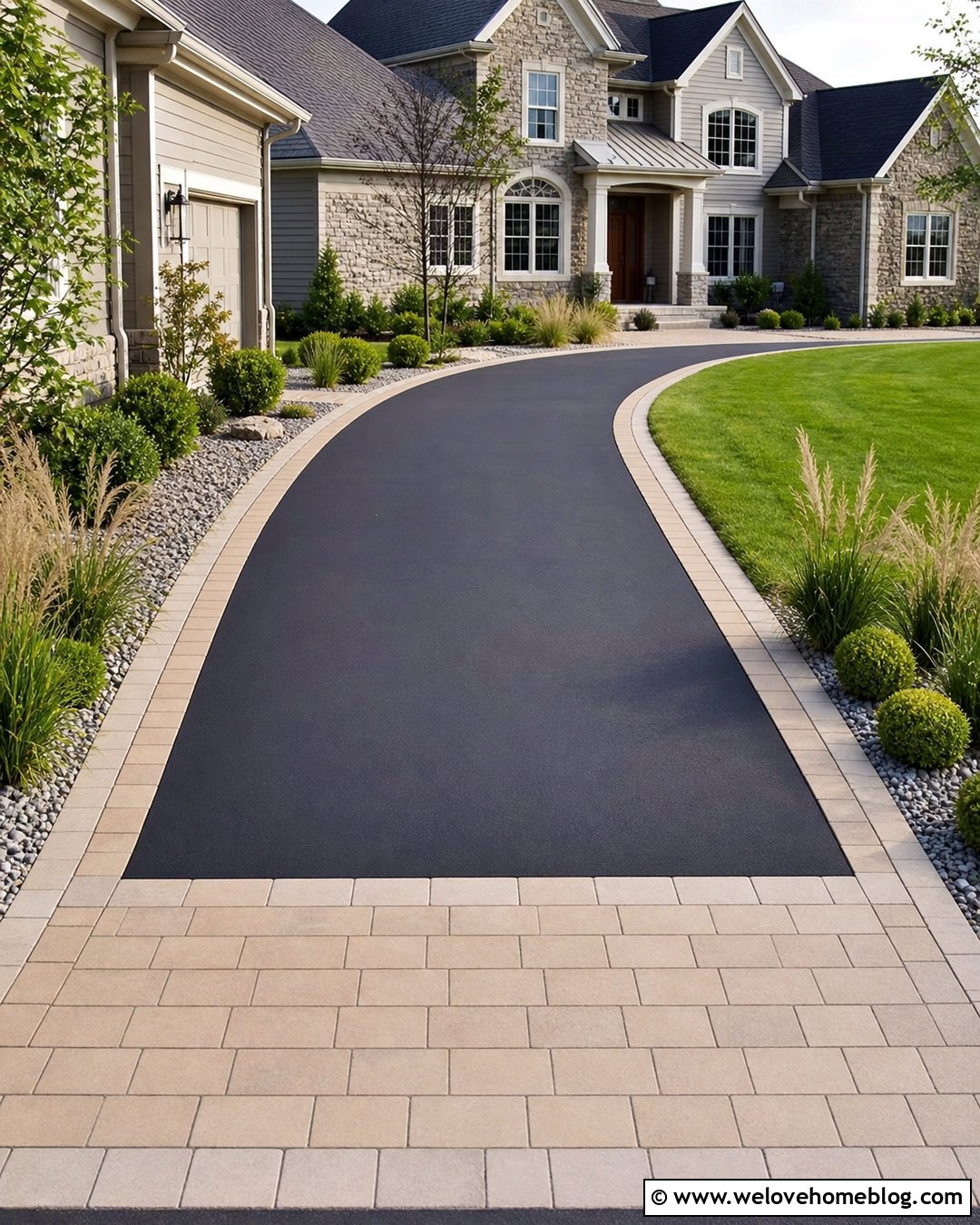
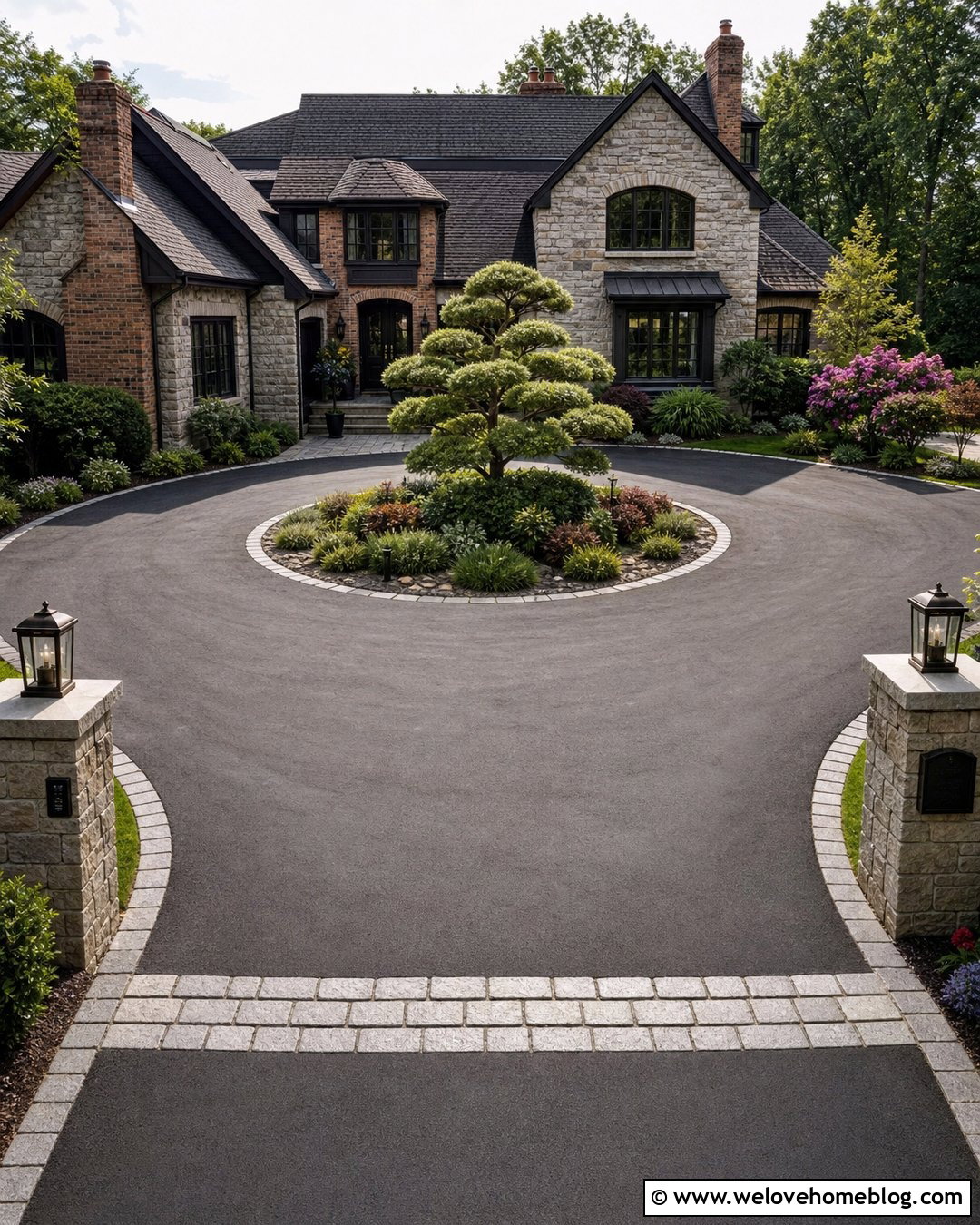
A circular driveway looks most balanced when the pavers define both its outer edge and central island. Use warm gray asphalt or exposed aggregate for the driving lane, then install muted red brick pavers around the complete loop. A second matching course can outline the center island, creating a consistent frame from the street to the front door. Fill the island with a small ornamental tree, low flowering shrubs, and ground cover that preserves open views across the driveway. At the entrance and exit, widen the pavers into short decorative aprons. Repeat the brick in the front walkway and porch steps. This coordinated design gives colonial and traditional homes a formal layout while the restrained planting keeps vehicle movement clear and uncomplicated.
15. Sloped Driveway With Raised Pavers On Sides
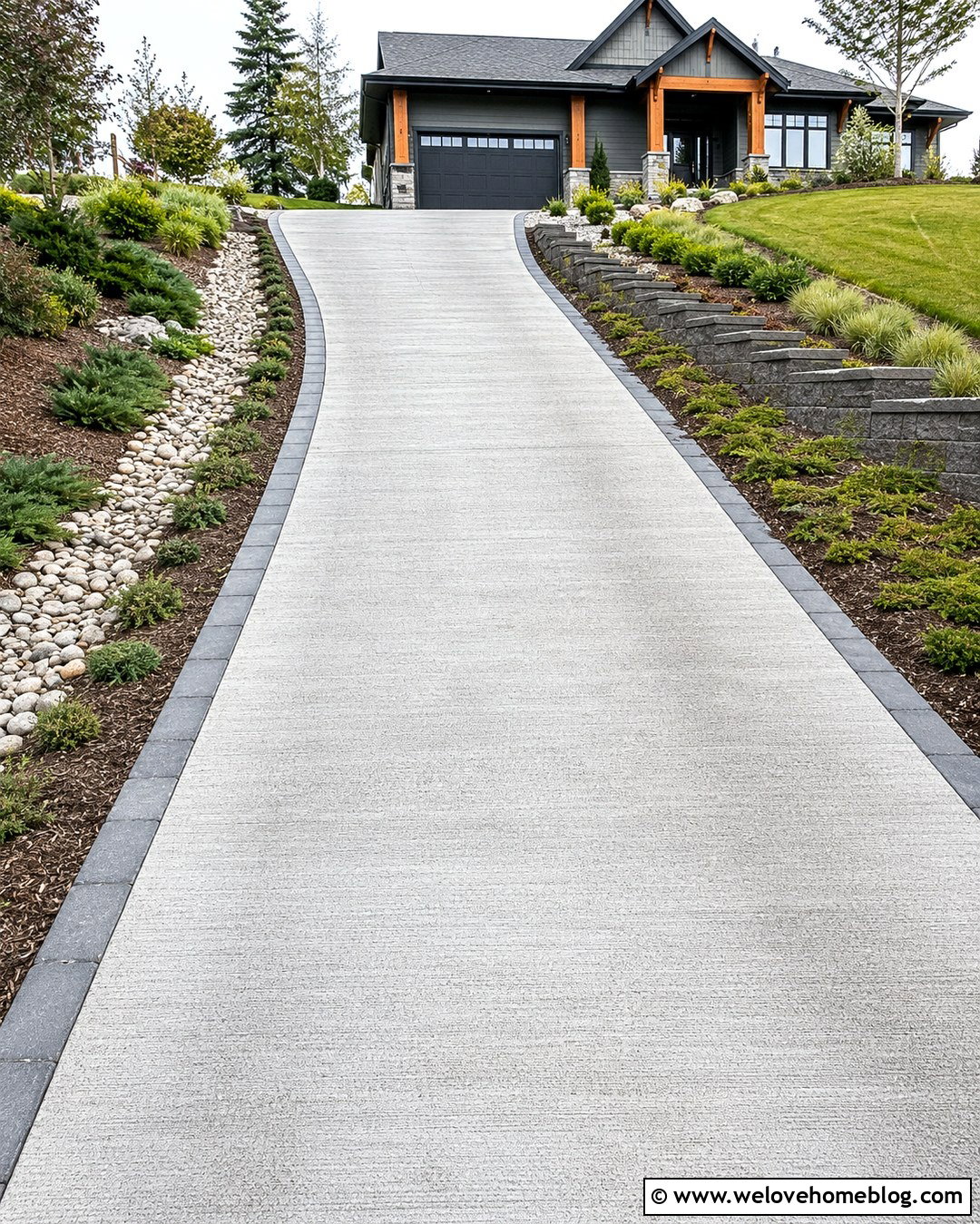
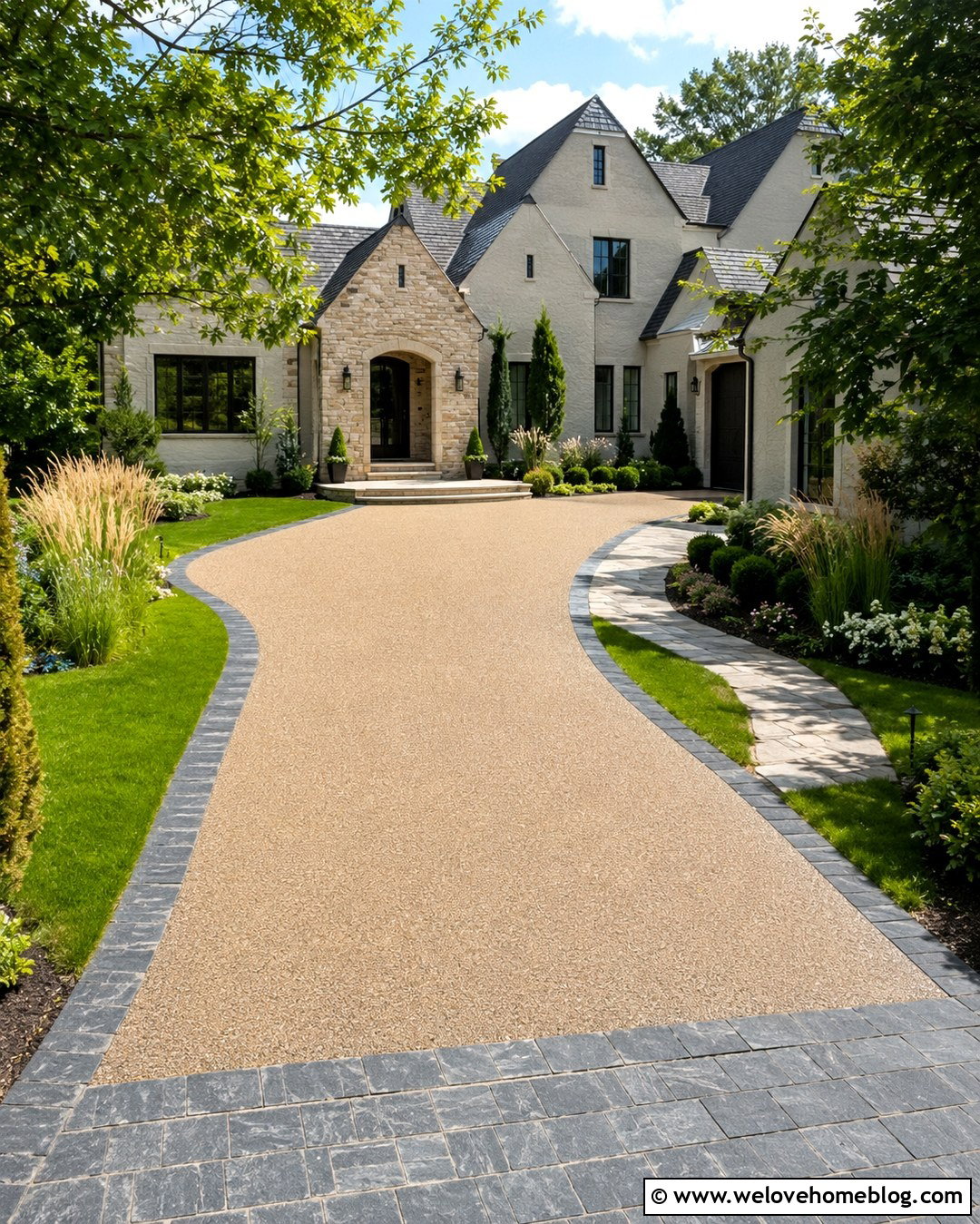
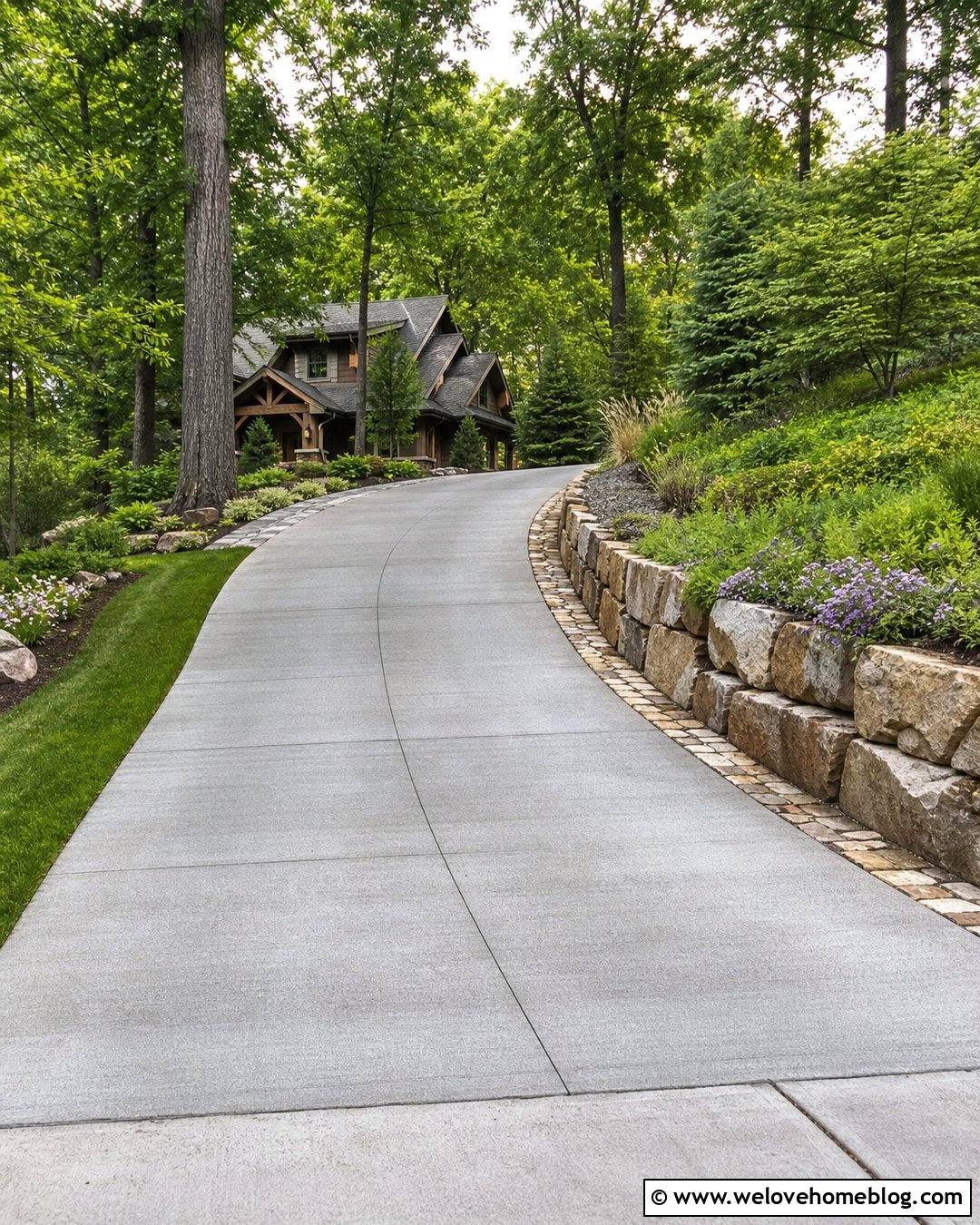
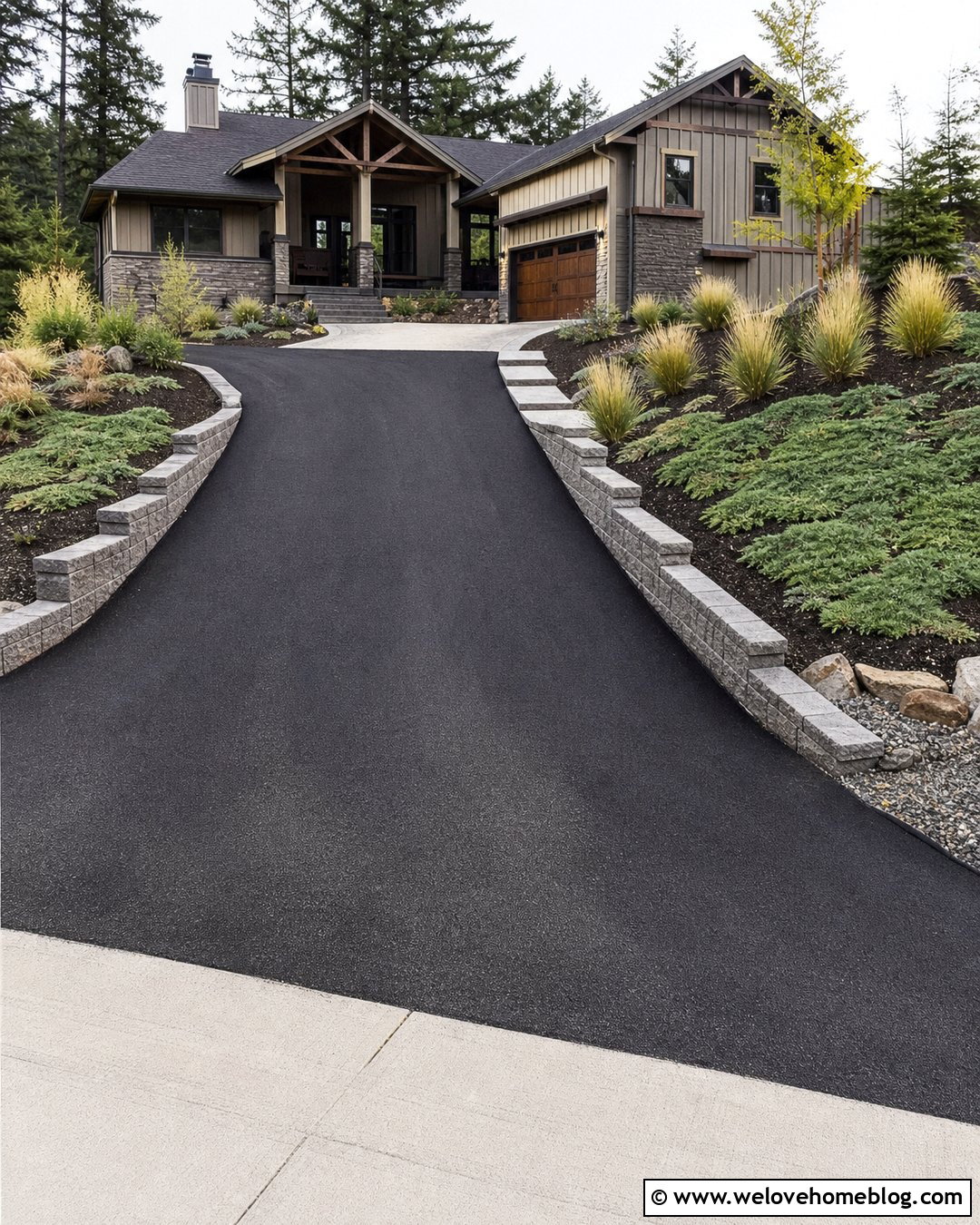
Sloped driveways benefit from strong visual boundaries and carefully planned transitions. Pair a textured broom-finished concrete surface with slightly raised charcoal concrete pavers along both sides, subject to local grading and drainage requirements. The raised edge can separate the driveway from mulched slopes, but it should not create an unsafe obstruction near regular vehicle paths. Use low retaining walls farther outside the pavers where the grade changes more dramatically. Plant the upper side with spreading junipers, ornamental grasses, and erosion-conscious ground covers. Keep the lower side more open, using lawn or a shallow landscaped drainage area where professionally appropriate. A straight paver pattern reinforces the driveway’s direction and gives the challenging slope a controlled, orderly appearance.
16. Driveway With Paver Parking Strip On Side
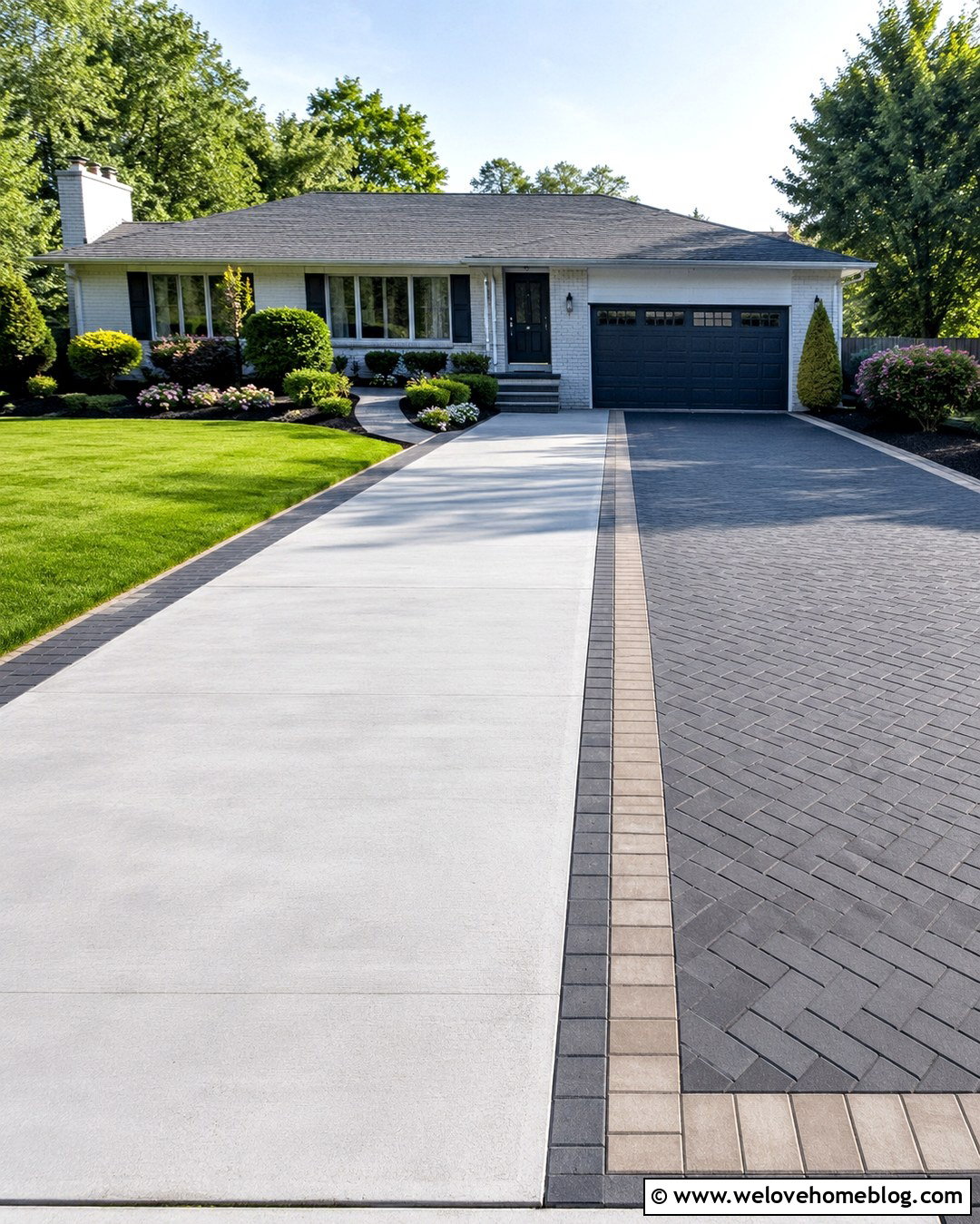
Need occasional room for a second vehicle without constructing a fully paved extension? Add a wide paver parking strip along one side of an existing asphalt or concrete driveway. Use load-rated interlocking concrete pavers in a charcoal herringbone pattern, supported by a properly designed vehicular base. A contrasting tan border can separate the extension from the lawn. Keep the original driveway light gray so the parking strip reads as a coordinated feature rather than a mismatched repair. Connect its upper end to the garage apron and its lower end to the front walkway. Finish the opposite side with a narrow row of matching charcoal pavers and low shrubs. This asymmetrical arrangement adds flexibility while maintaining a deliberate, balanced front-yard design.
17. Driveway With Pavers And Grass On Sides
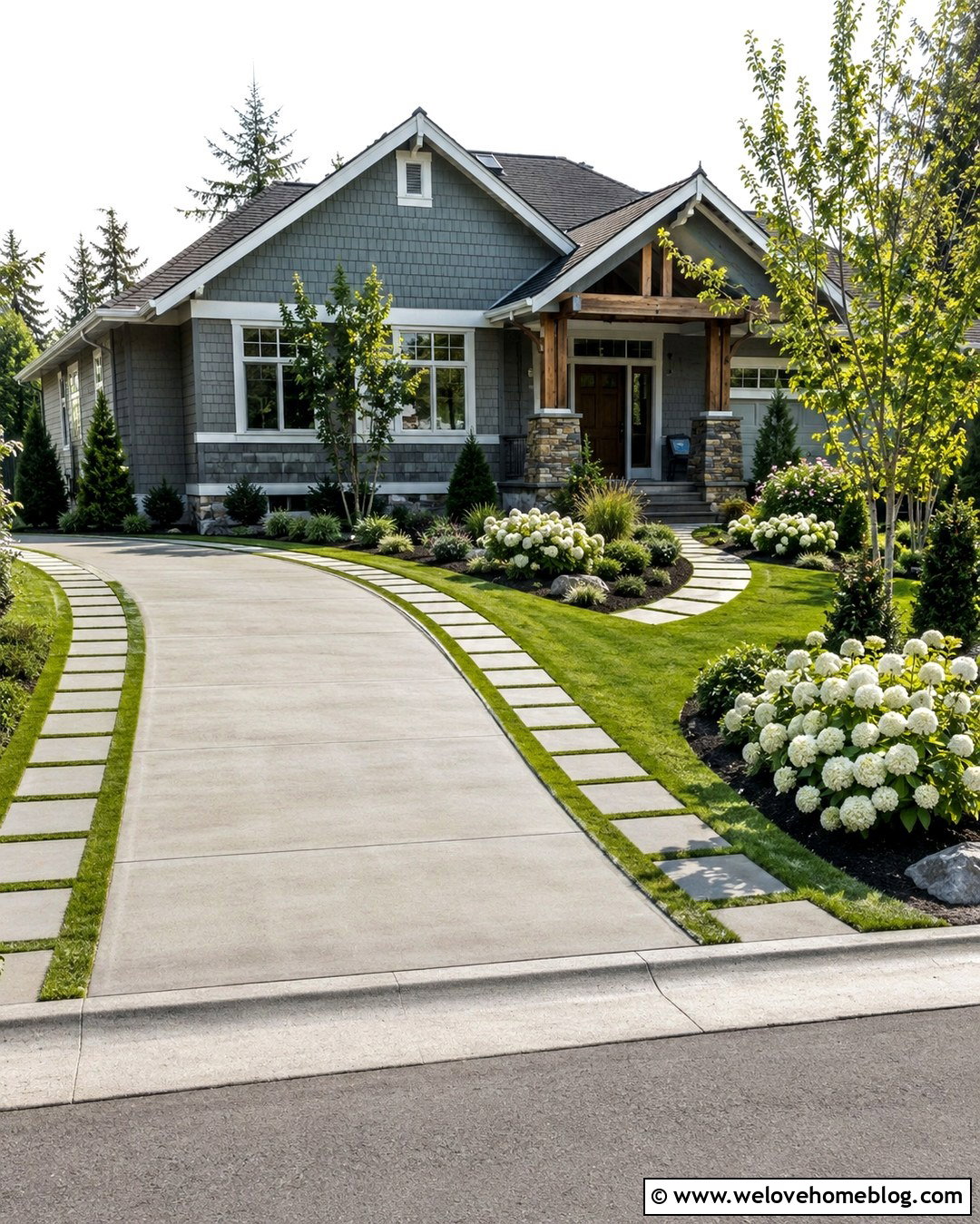
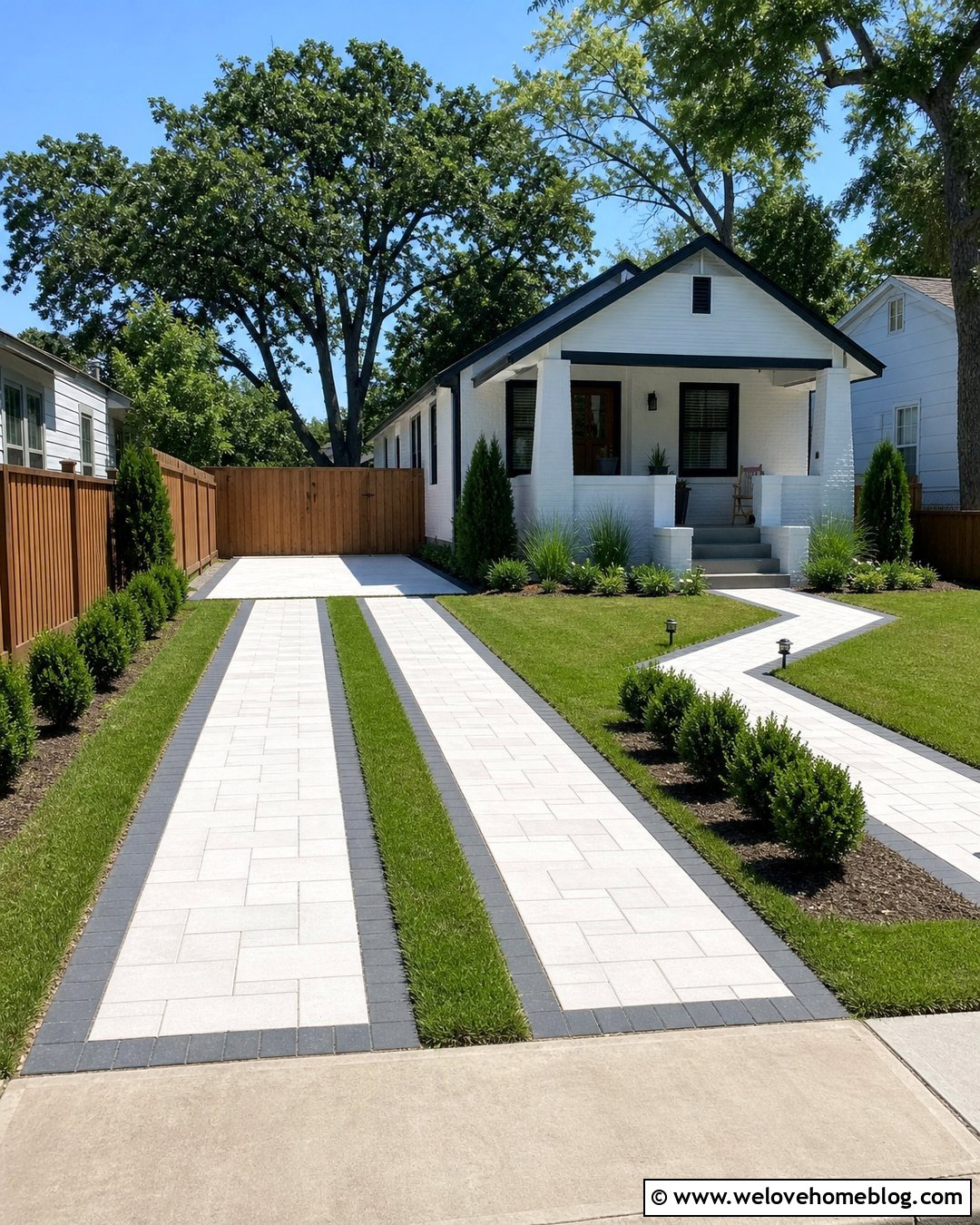
Grass strips between side pavers can soften a broad driveway and make the hardscape feel less dominant. Begin with smooth gray concrete, then place rectangular stone-look pavers in parallel lines along both edges. Leave narrow green strips between the pavers and outer planting beds, provided the layout remains practical for mowing and vehicle movement. Near the house, allow one paver line to widen into a walkway toward the front porch. Use curved flower beds beyond the grass with small trees, hydrangeas, and low evergreen shrubs. The mixture of structured pavers and living green edges complements ranch, cottage, and craftsman homes. Choose turf that suits local sunlight and climate, and keep the pavers level enough to create a neat transition.
18. Driveway With Side Pavers And Lighting
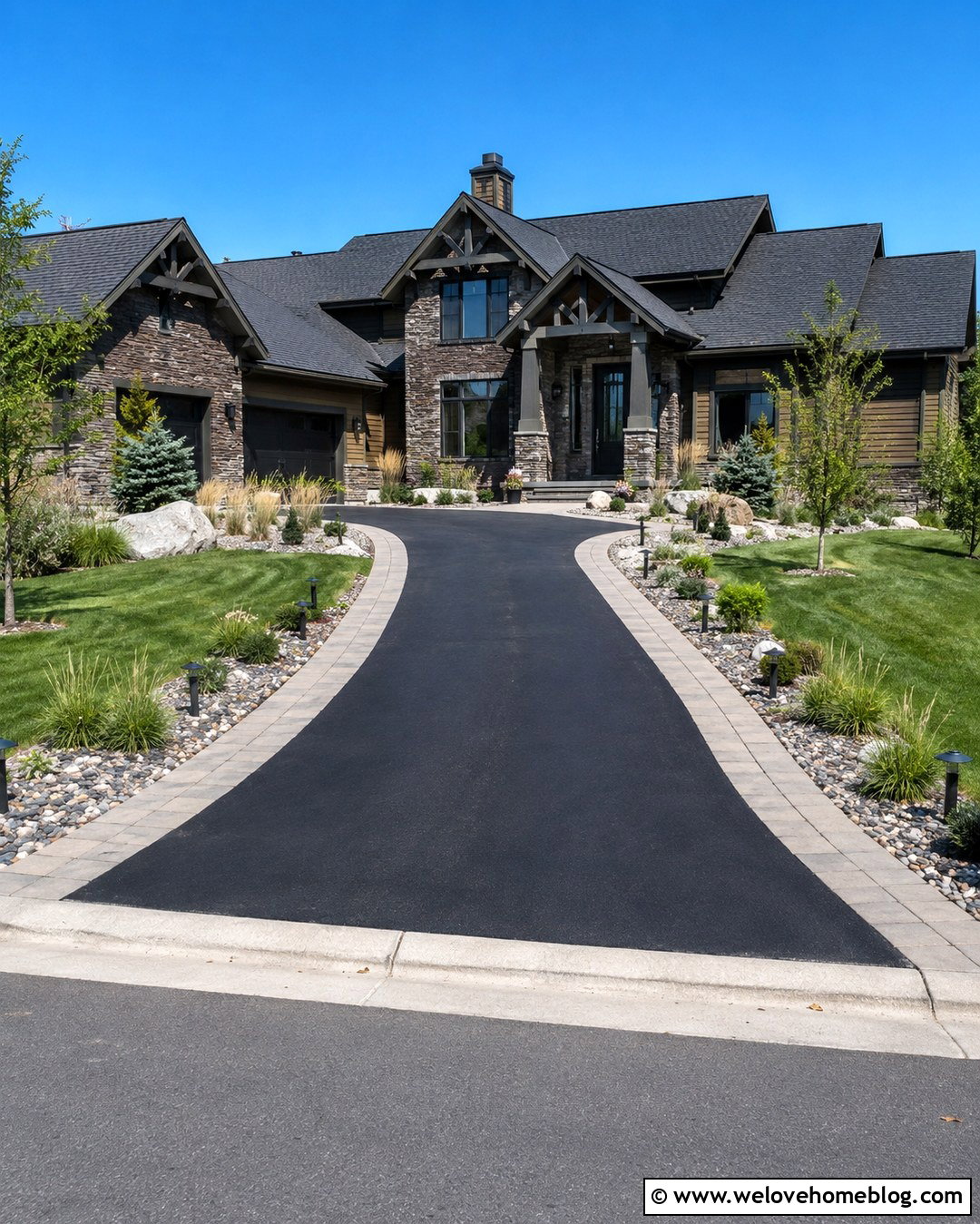
Integrated lighting makes side pavers more functional while strengthening the driveway’s overall layout. Pair black asphalt with warm gray concrete pavers installed in two wide rows on each side. Position low-profile fixtures just beyond the pavers so they mark the route without narrowing the driving area. During the day, the fixtures should blend into beds filled with ornamental grasses, dwarf evergreens, and light-colored decorative stone. Continue the paver border around a curved walkway and use the same fixture design near the porch. A contemporary craftsman facade with stone accents will tie the materials together. Plan fixture spacing, wiring, glare control, and drainage with qualified professionals so the bright, clean daytime design also performs comfortably after sunset.
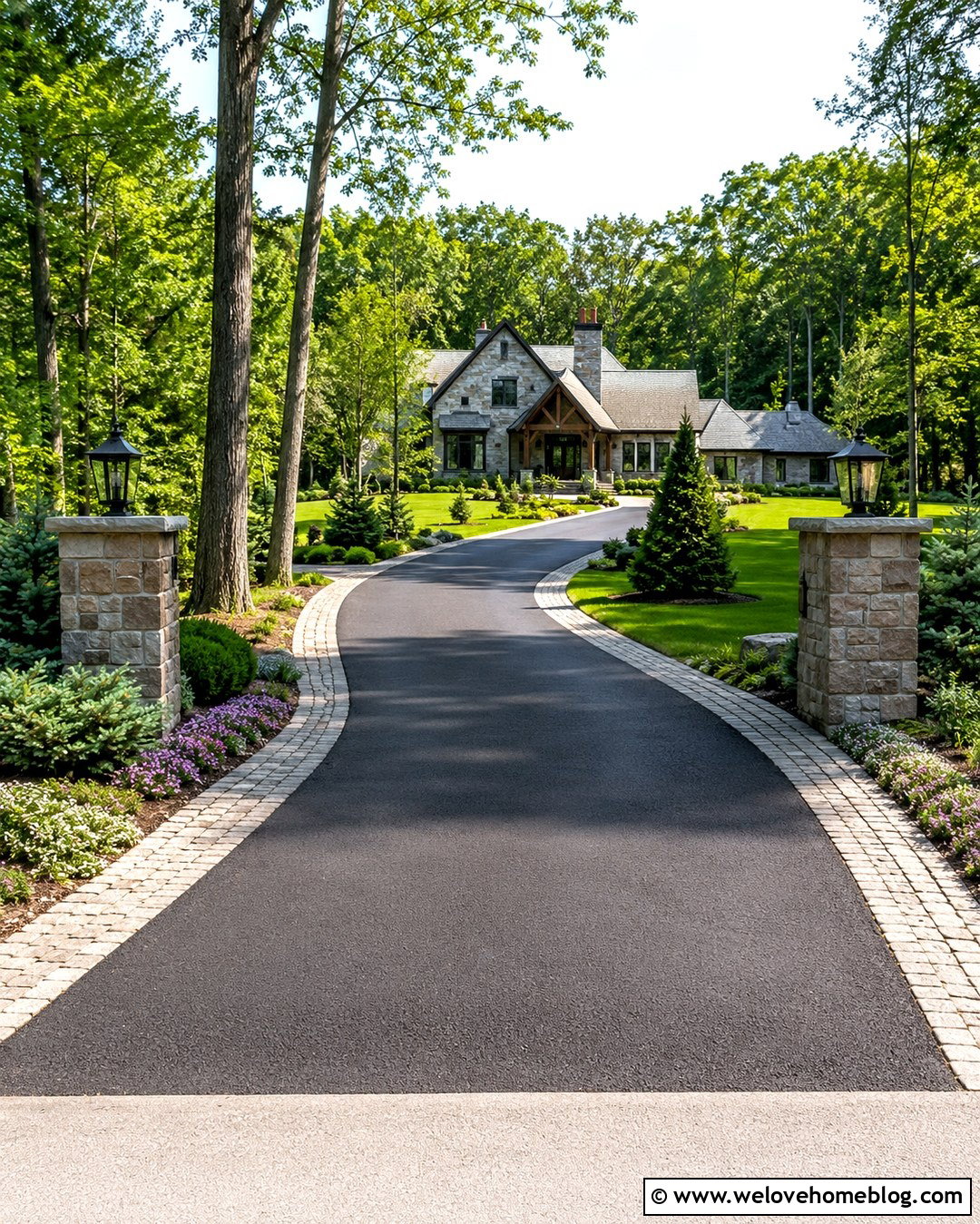
19. Driveway Entrance With Paver Sides And Pillars
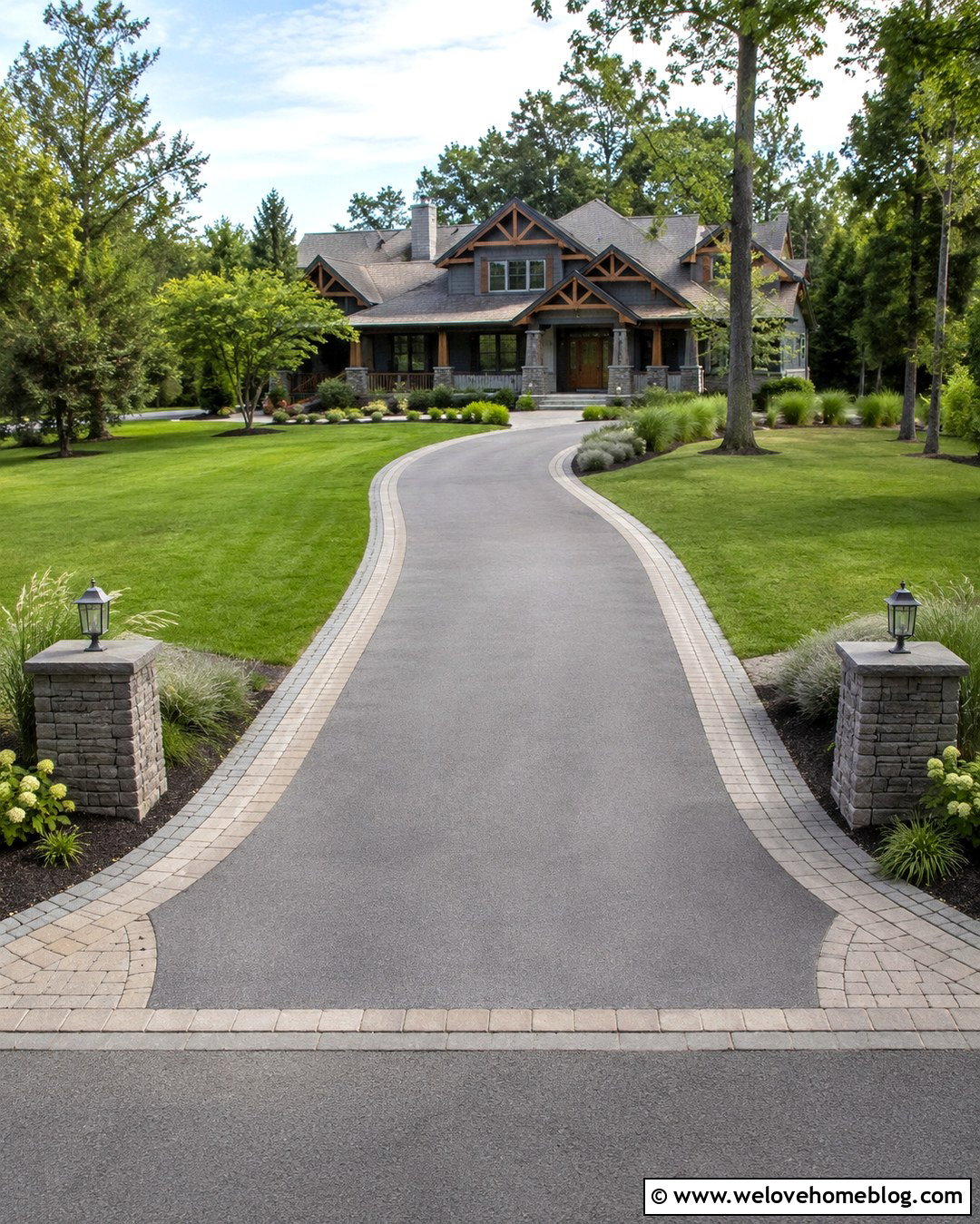
Create a stronger arrival by combining side pavers with coordinated entrance pillars. Use a medium-gray asphalt driveway edged by three rows of tan and charcoal concrete pavers. At the street, flare the paver bands outward and finish them beside low stone or brick pillars. The pillars can echo the home’s facade and support simple lights, but they should remain appropriately positioned for visibility and vehicle clearance. Continue the borders along a gentle curve toward a traditional or craftsman house. Behind the pillars, plant low shrubs and ornamental grasses that will not hide the entrance. Matching pavers around the front walkway complete the connection. This layered arrangement makes a long driveway easier to recognize while keeping the entrance welcoming rather than imposing.
20. Driveway With Paver Sides And Flower Beds
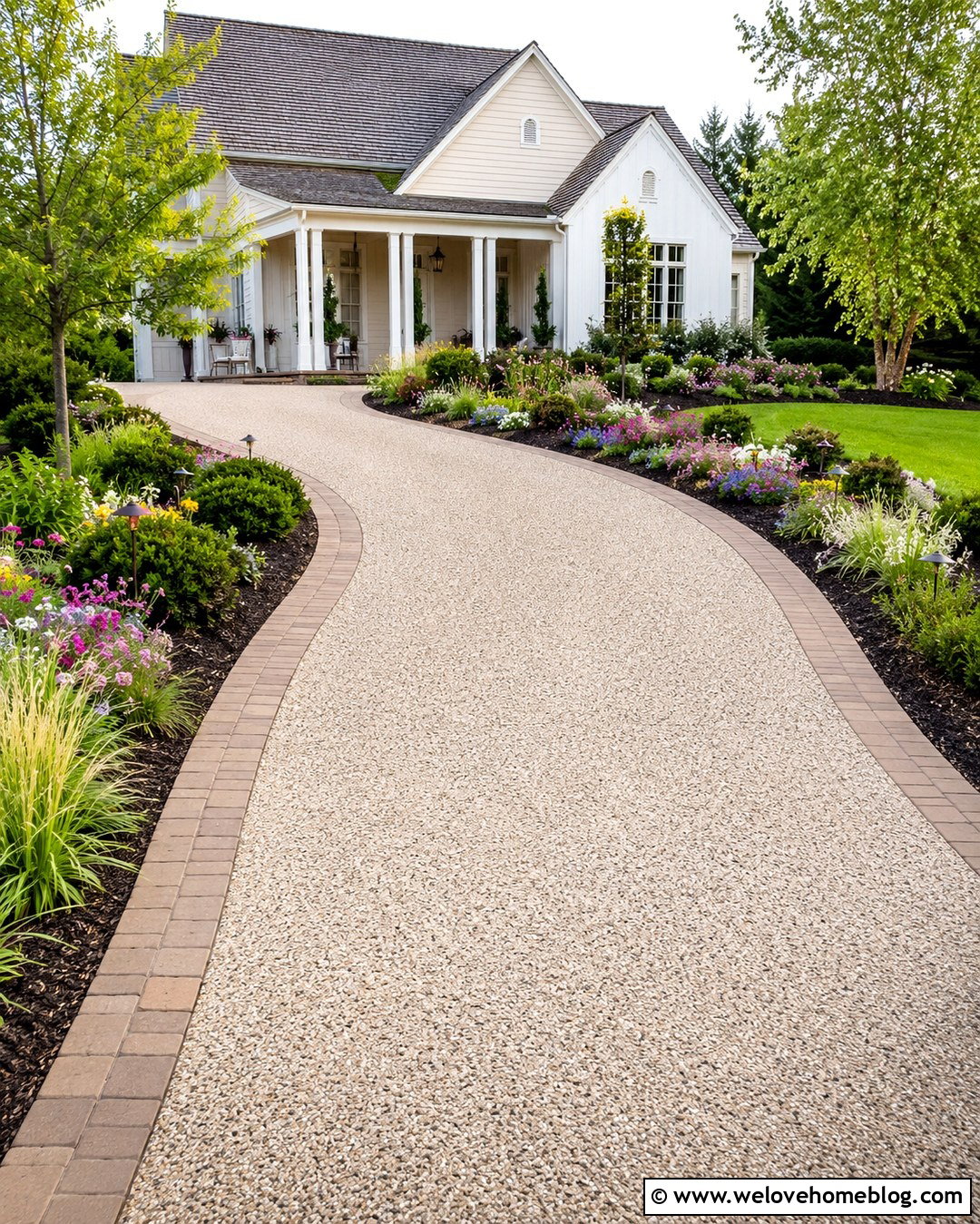
Colorful planting beds can turn side pavers into part of a complete garden composition. Start with a pale exposed aggregate driveway and add warm brown concrete pavers along both sides in a running bond pattern. Beyond the pavers, shape deep curved beds containing compact shrubs, ornamental grasses, and repeating groups of long-blooming perennials suited to the local climate. Keep taller plants closer to the house and lower varieties near the street to preserve visibility. Connect one paver border to a matching path that passes through the garden and reaches the porch. A light craftsman or cottage facade provides a calm background for the planting colors. The clear paver edge prevents the beds from visually spilling into the driveway and keeps the complete approach well defined.
Conclusion:
The best 20 Driveway With Pavers On Side Ideas combine attractive materials with a shape and layout that make sense for the property. Brick can warm up concrete, granite can sharpen resin-bound gravel, and charcoal pavers can give asphalt a more architectural finish. Side pavers may also become a walkway, entrance apron, parking strip, or transition into landscaped beds. Before selecting a design, consider driveway width, vehicle clearance, drainage, local climate, and the colors already present on your home. Use a suitable compacted base and appropriate edge restraint, especially where tires may cross the pavers. With thoughtful planning, even a simple side border can make the entire driveway and front yard feel more cohesive.

Related posts:
Leave a Reply