
A paver border can turn a basic driveway into a more polished part of your home’s exterior. It creates a clear outline, introduces color and texture, and helps connect the driveway with nearby walkways, planting beds, and architectural details. The best designs consider the entire setting rather than treating the edging as an isolated feature. Surface material, driveway shape, border width, drainage, landscaping, and house style should all work together. Borders can contrast with the driveway or repeat colors found in the roof, masonry, or trim. Different paver colors, textures, shapes, and laying patterns offer plenty of room for customization. () The complete looks below explore **20 Paver Edged Driveway Ideas** for traditional, modern, rustic, and compact properties.
1. Asphalt Driveway With Brick Paver Border
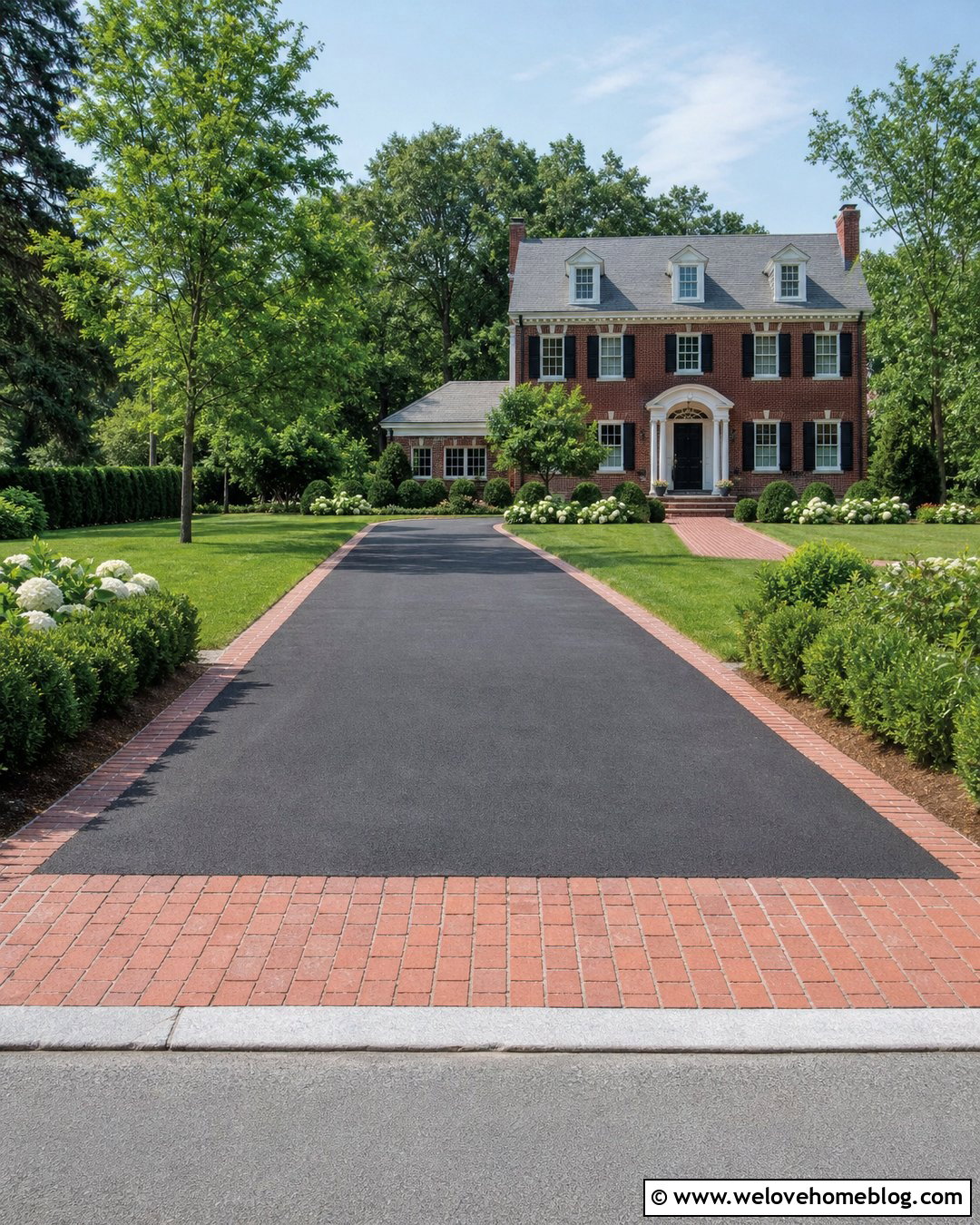
Fresh black asphalt creates a smooth, practical surface, while a red or brown brick paver border adds warmth and definition. This combination looks especially natural beside a Colonial, Cape Cod, or traditional brick home. Install the bricks in a soldier course, with their short ends facing the driveway, for a strong visual outline. A gently curved layout can soften the dark surface and guide attention toward the garage. Along the outside edge, use trimmed lawn and simple planting beds filled with boxwood, hydrangeas, or ornamental grasses. Matching brick can continue across the driveway entrance as an apron. The repeated material connects the driveway to the house and makes the entire front yard feel carefully planned rather than purely functional.
2. Concrete Driveway With Charcoal Paver Border
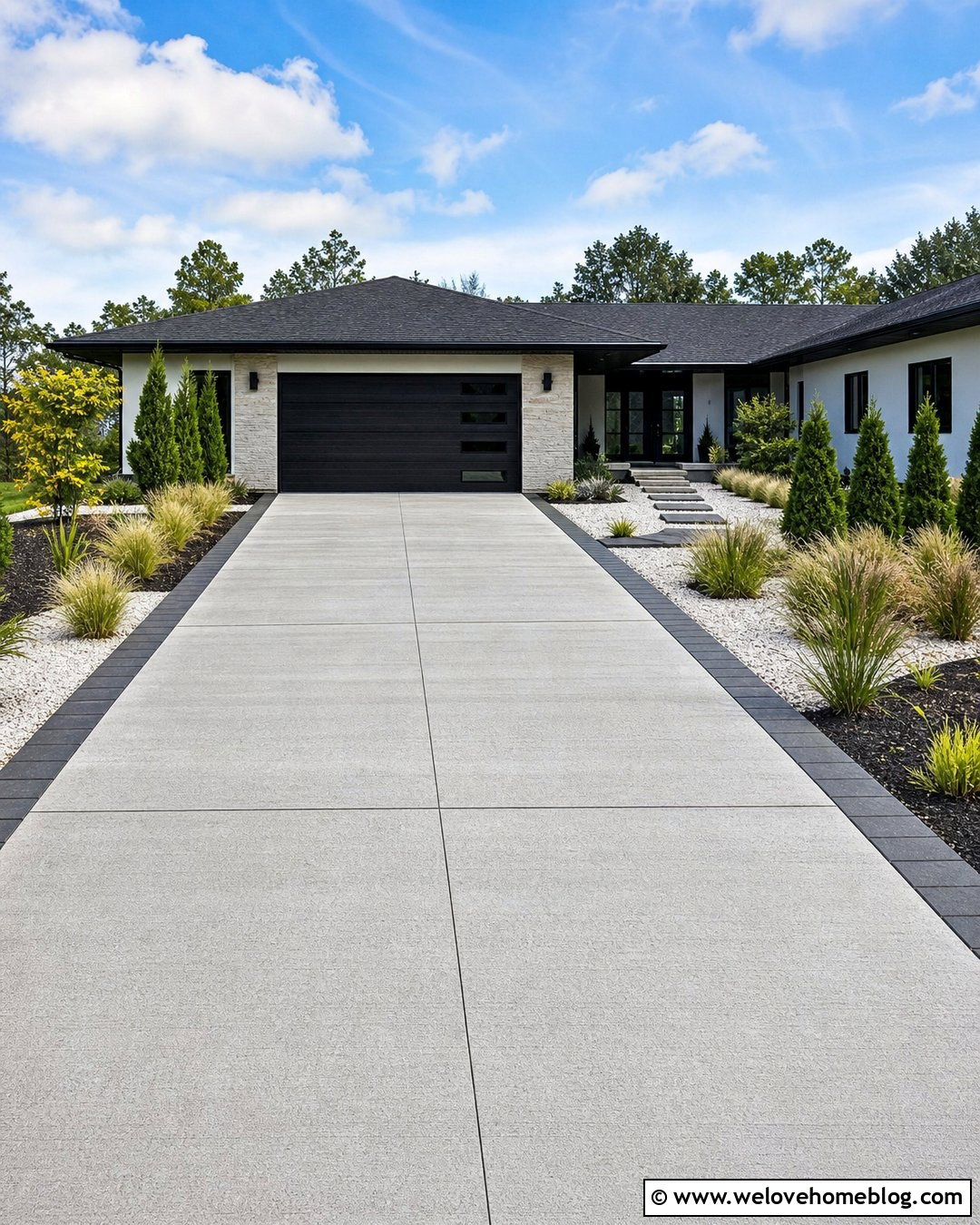
Light gray poured concrete gains a crisp, contemporary finish when framed with charcoal concrete pavers. The strong color contrast makes the driveway shape easy to read from the street without introducing an overly decorative pattern. Choose large rectangular pavers laid lengthwise in a sailor course for clean lines. This design works well with modern, transitional, and updated ranch homes featuring black windows or dark roofing. Keep the driveway straight and pair it with geometric planting beds, clipped evergreen shrubs, and pale decorative gravel. A matching paver band across the garage apron can complete the frame. Repeating charcoal pavers along the front walkway creates another useful connection. Limit the surrounding material palette so the bold border remains intentional, balanced, and visually connected to the home.
3. Gravel Driveway With Cobblestone Paver Edging
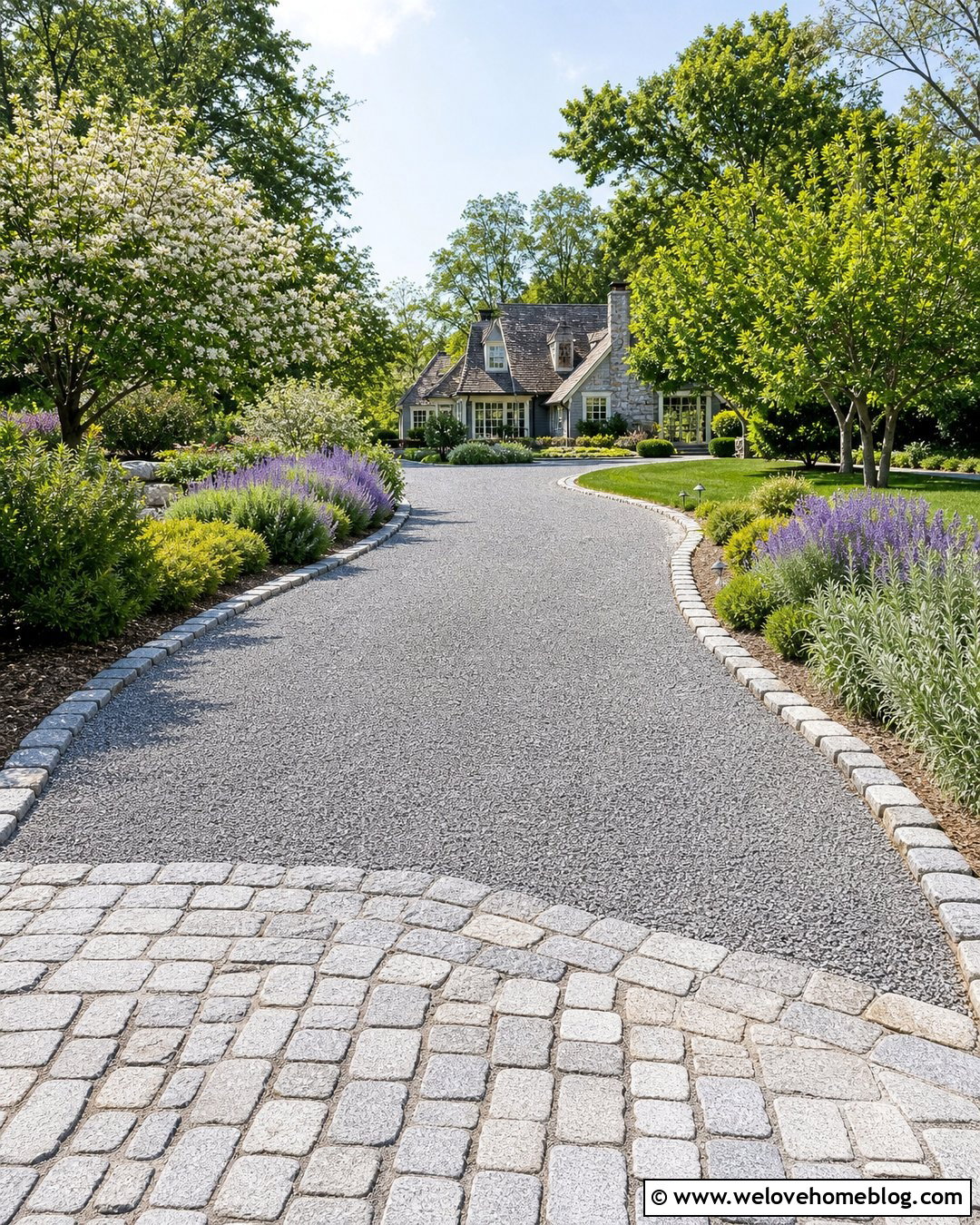
The sound and texture of gravel feel relaxed, but cobblestone paver edging gives the surface a stable-looking, finished outline. Use compacted gray crushed stone for the driveway and chunky granite cobblestones in mixed gray tones along both sides. A curved layout suits country homes, cottages, and wooded properties because it follows the landscape naturally. Wide planting beds filled with lavender, catmint, low juniper, and small flowering trees can soften the stone edges. At the street, widen the cobblestone border into a full entrance apron that helps visually contain the gravel. The rugged pavers should sit slightly above the gravel without creating a harsh curb. This combination feels rustic and established while keeping the driveway clearly separated from lawns, garden beds, and pedestrian paths.
4. Curved Driveway With Double Paver Border
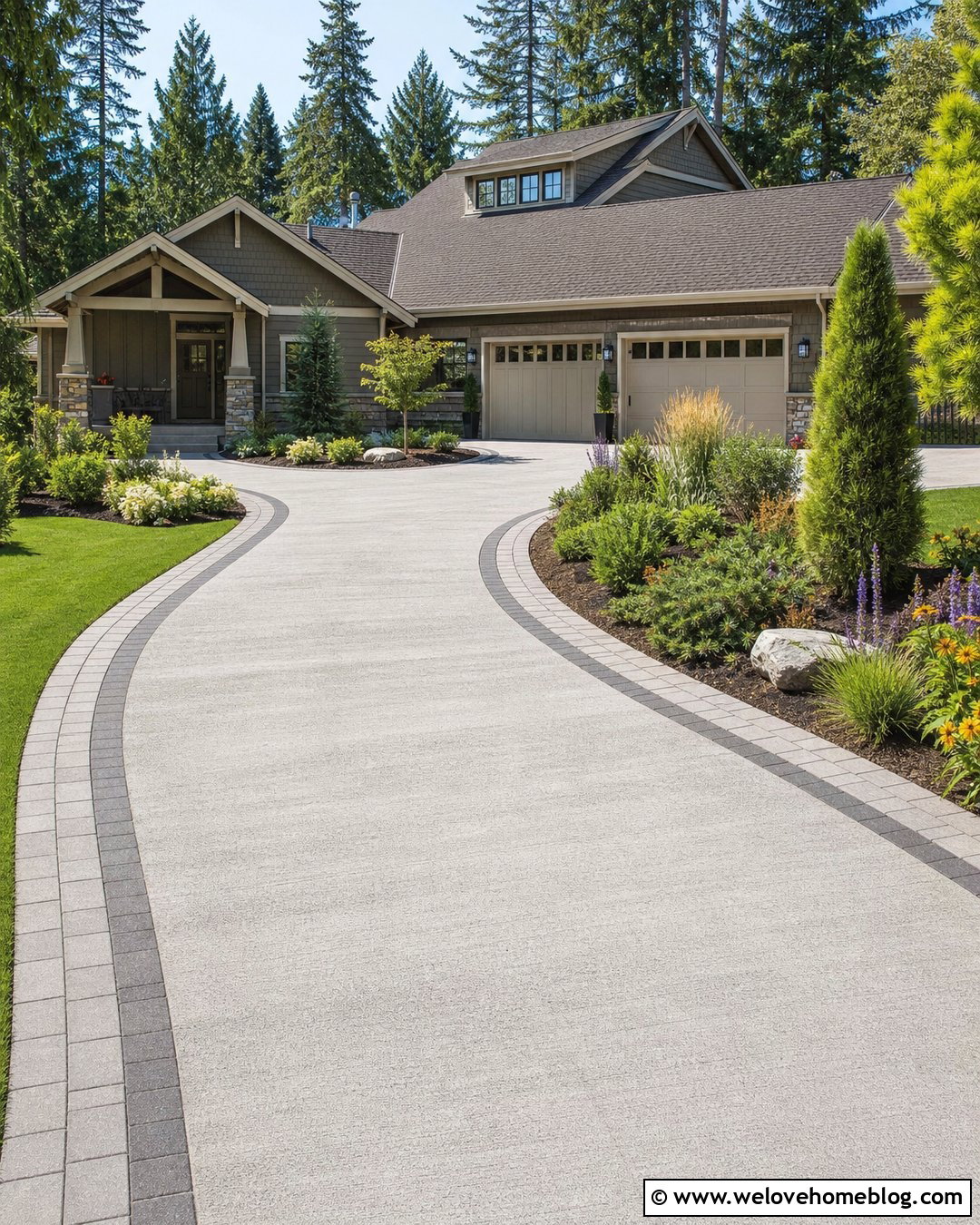
A double paver border gives a curved driveway more visual depth than a single narrow row. Start with a broom-finished concrete surface, then add an inner row of charcoal rectangular pavers and an outer row of warm gray square pavers. The two colors create a layered frame that emphasizes every bend without making the design feel busy. This look complements Craftsman and transitional homes with mixed stone, siding, and dark trim. Follow the curve with flowing planting beds rather than straight hedges. Dwarf evergreens, ornamental grasses, and clusters of long-blooming perennials will echo the relaxed movement. Keep the border width consistent around the turns. Professional layout and accurate paver cuts are especially important because uneven joints become more noticeable along sweeping curves.
5. Modern Driveway With Large Format Paver Edge
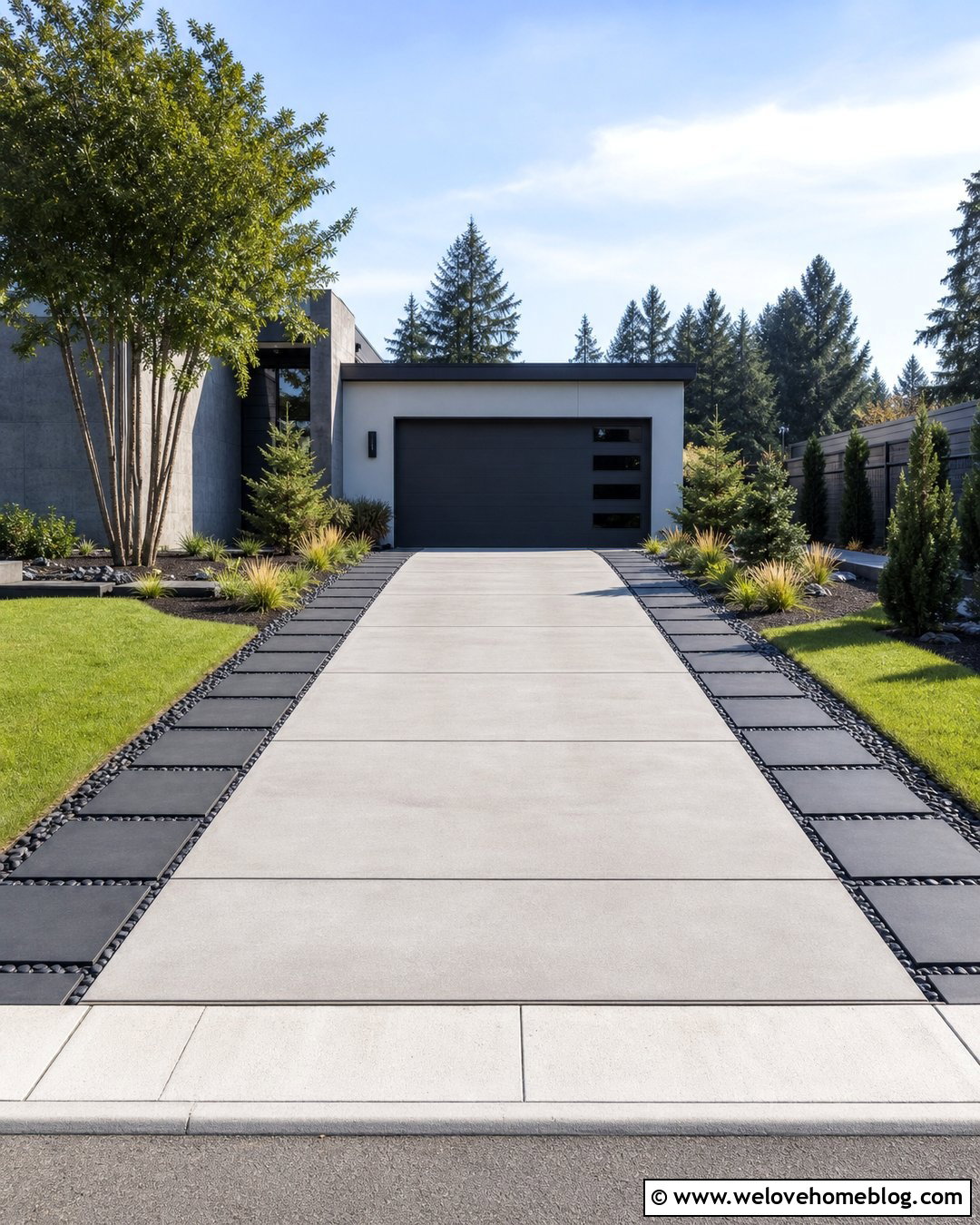
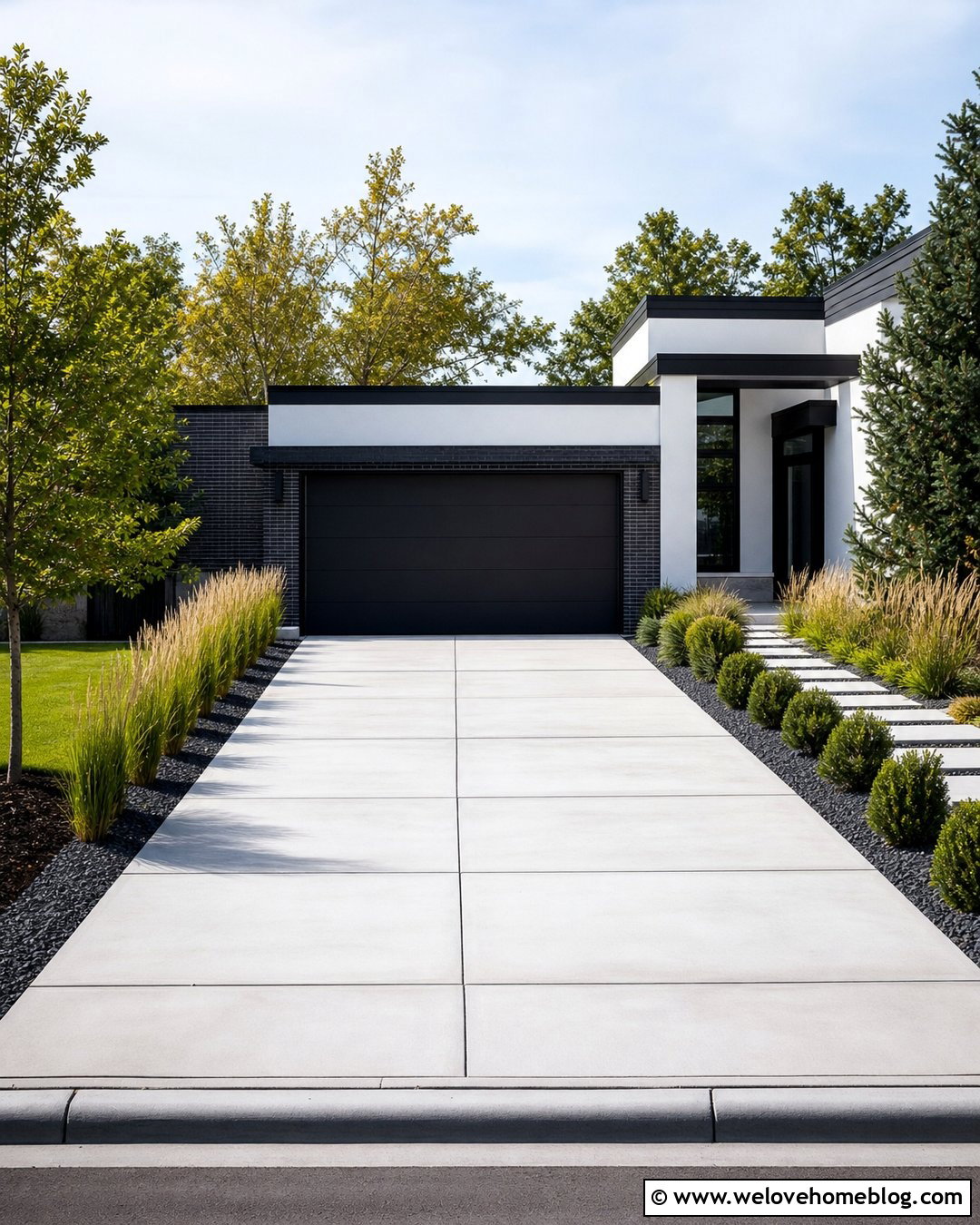
For a minimalist exterior, combine smooth gray concrete with a border made from large-format concrete pavers. Long charcoal slabs installed parallel to the driveway create fewer joints and a calm, architectural appearance. A wide, straight layout works best, especially when it lines up with a modern garage, covered entry, or rectangular walkway. Add narrow grass strips or beds of black gravel between the driveway and surrounding landscape. Sculptural grasses, compact evergreens, and one multi-stem ornamental tree can provide softness without hiding the geometry. Continue the same border pavers around the walkway to create a coordinated hardscape plan. Because large pavers have a strong visual presence, use a restrained color palette. Smooth finishes, precise spacing, and uncluttered landscaping allow this paver-edged driveway to feel sophisticated rather than severe.
6. Farmhouse Driveway With Tumbled Paver Border
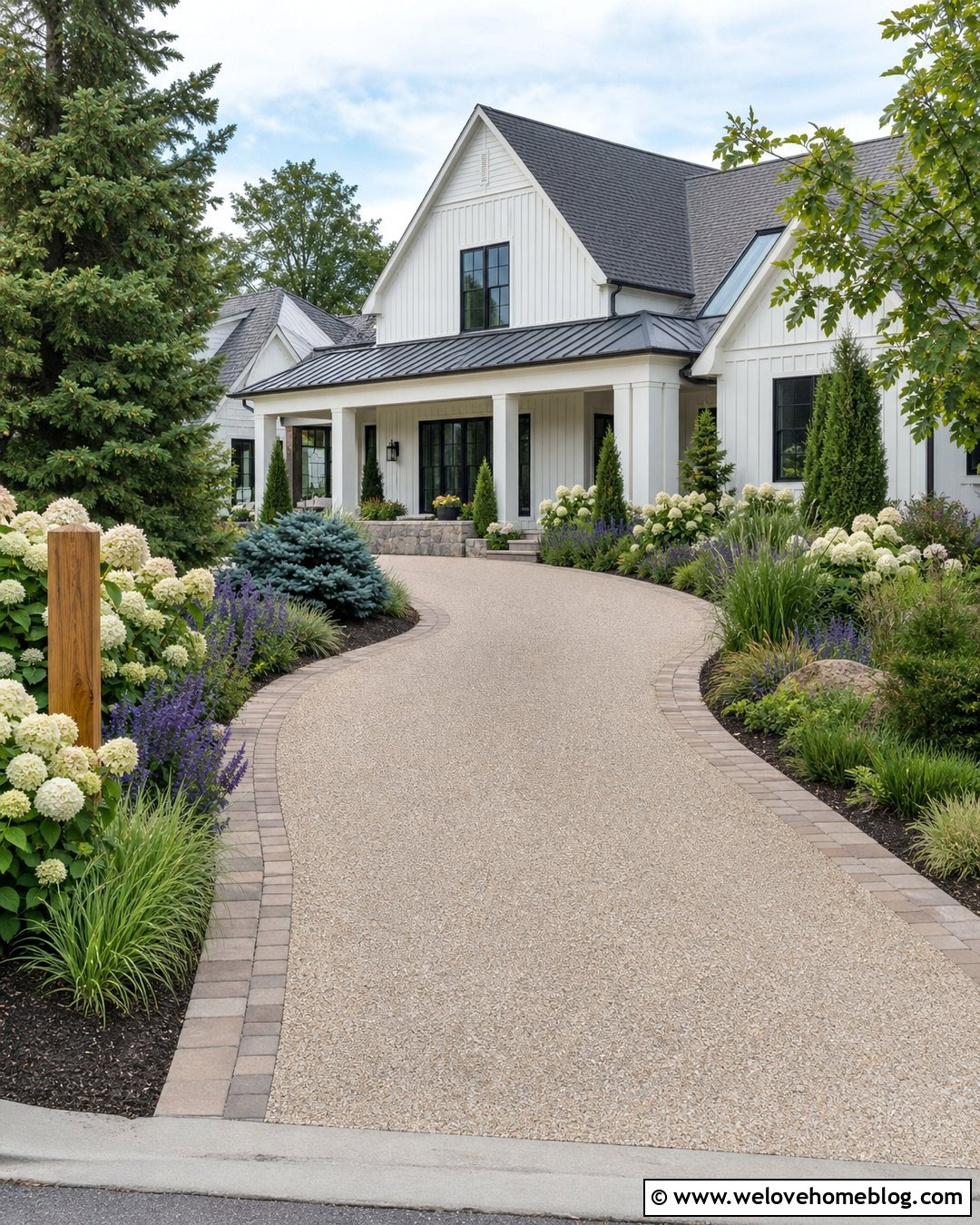
Warm, weathered materials suit a farmhouse better than sharply polished finishes. Pair a light beige gravel or exposed aggregate driveway with tumbled concrete pavers in blended tan, brown, and gray tones. Their softened edges create the appearance of an older, established entrance. A gently curved driveway leading to a white farmhouse can be bordered by two rows of pavers laid in a relaxed running bond. Use deep planting beds with hydrangeas, salvia, ornamental grasses, and low evergreen shrubs. A simple stone walkway can connect the driveway to the porch without competing with the border. Near the road, add matching pavers around a mailbox bed or wooden address post. The complete design should feel welcoming and rural while remaining neat enough for a modern residential property.
7. Circular Driveway With Contrasting Paver Border
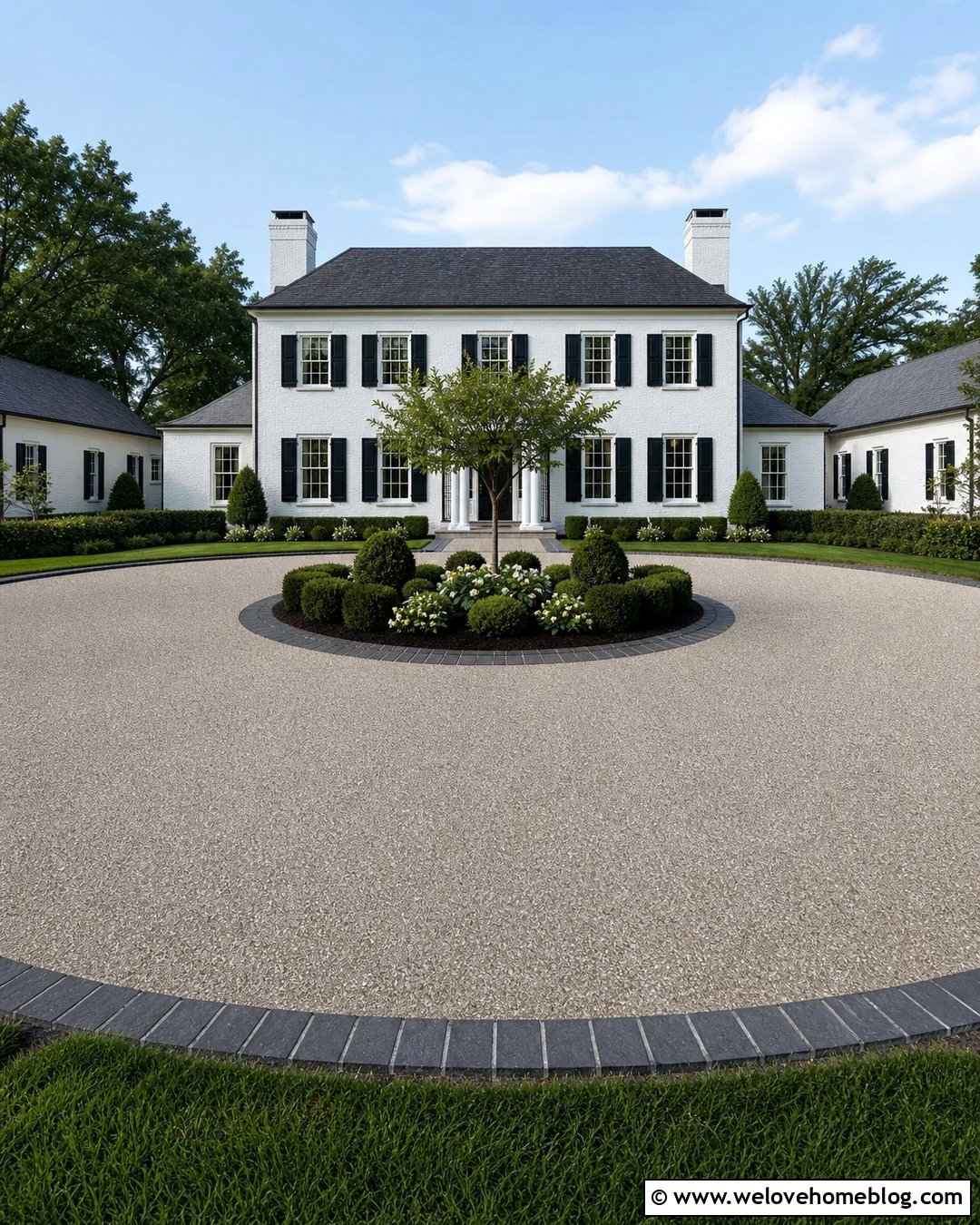
A circular driveway becomes easier to understand visually when a contrasting paver border outlines both its outer edge and center island. Use warm gray concrete or exposed aggregate for the main surface and dark charcoal pavers for the frame. Rectangular pavers laid in a soldier course can follow the curves cleanly and highlight the symmetrical layout. Landscape the center island with one small ornamental tree, low shrubs, and seasonal flowers that will not block views across the driveway. Matching pavers around the island create continuity with the perimeter. This design pairs well with Colonial, Georgian, and large traditional homes. Keep entrance points broad and uncluttered, and repeat the paver color in the front walkway or steps. The result feels formal without requiring elaborate decoration or oversized masonry features.
8. White Concrete Driveway With Gray Paver Edge
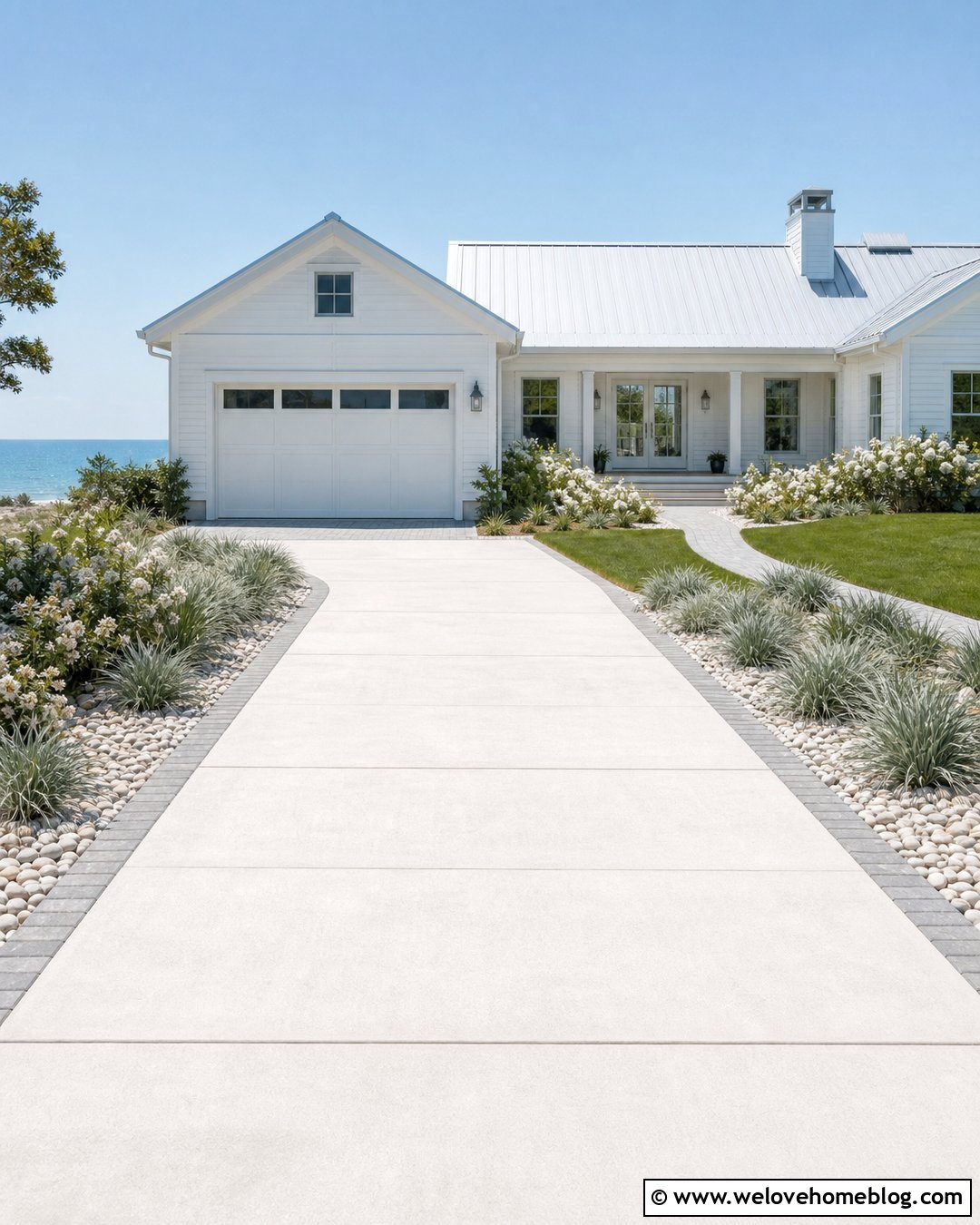
Bright white or very pale concrete can make a small front yard feel more open, especially when paired with a medium-gray paver edge. The softer contrast feels cleaner than black edging while still defining the driveway. Choose rectangular pavers with a lightly textured finish so the border does not appear glossy beside the concrete. A straight driveway suits a coastal, contemporary, or light-colored ranch home. Frame it with green lawn, silvery ornamental grasses, white flowering shrubs, and pale river rock accents. A gray paver apron at the garage can help disguise tire marks near the threshold while visually linking both edges. Use the same pavers for a narrow walkway leading to the porch. Together, the limited colors create an airy, cohesive approach with practical everyday curb appeal.
9. Black Asphalt Driveway With Red Brick Paver Border
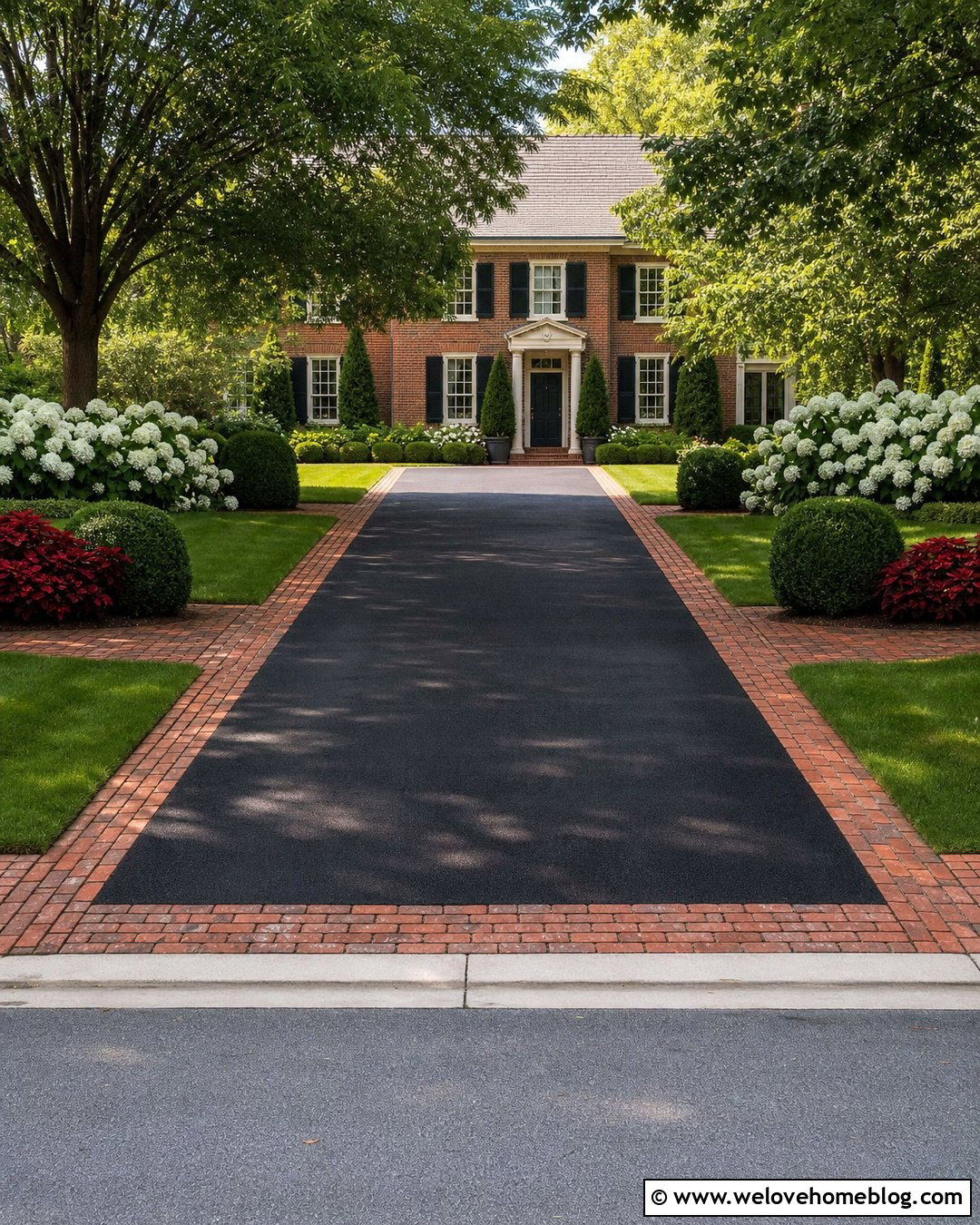
Few combinations are as recognizable as dark asphalt framed by traditional red brick. The rich brick color breaks up the large black surface and works beautifully with homes featuring red masonry, warm shutters, or a classic front porch. Use reclaimed-looking clay brick pavers for extra variation, but keep the border alignment neat. A straight driveway can feature a double sailor course along both sides and a matching band across the entrance. Add green lawn and planting beds with white hydrangeas, boxwood, and red-toned foliage for a balanced palette. Brick-lined walkways can branch from the driveway toward the porch. Because asphalt and brick have very different textures, the border becomes a noticeable architectural feature. Proper base preparation and a clean interface help the two materials meet evenly and securely.
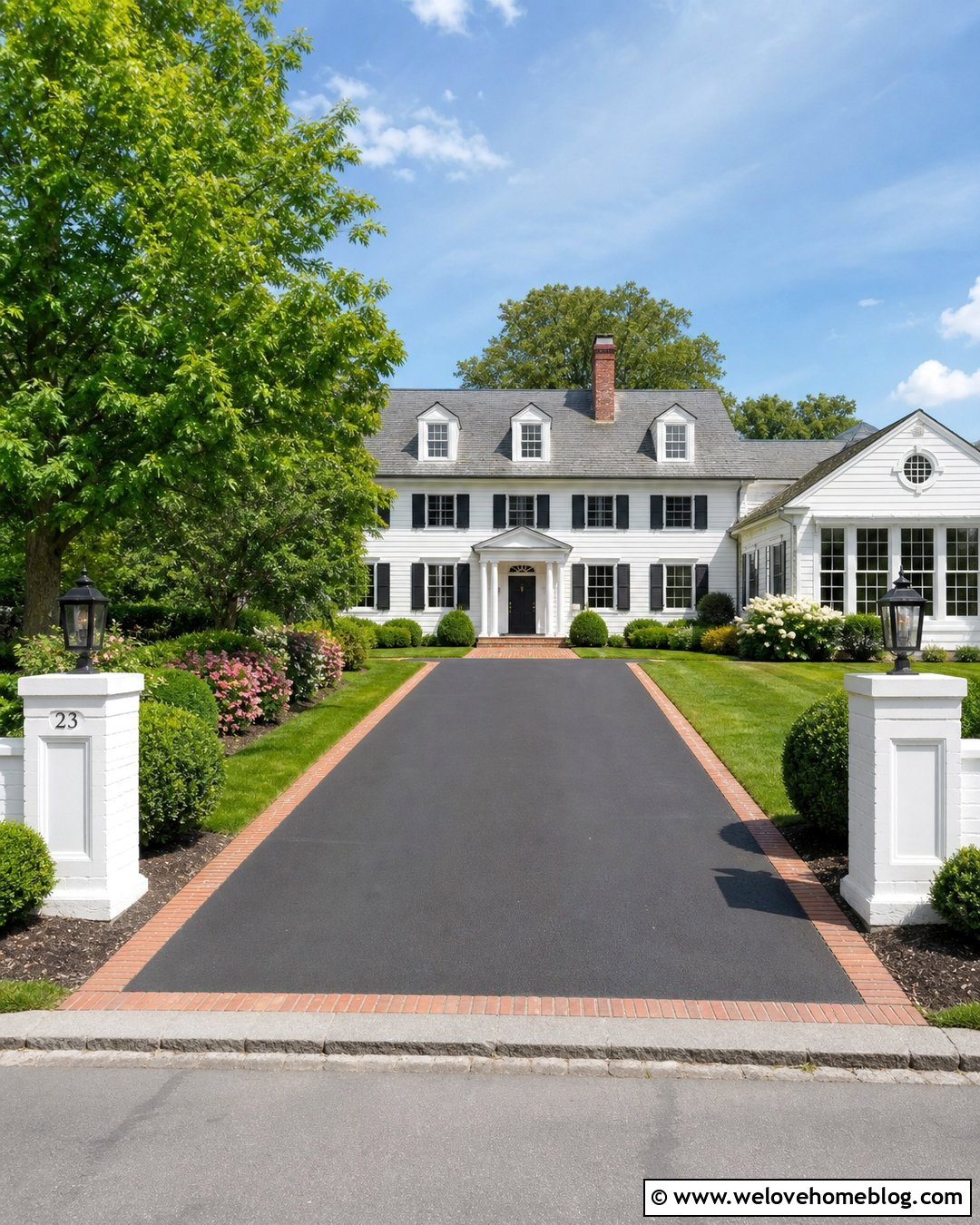
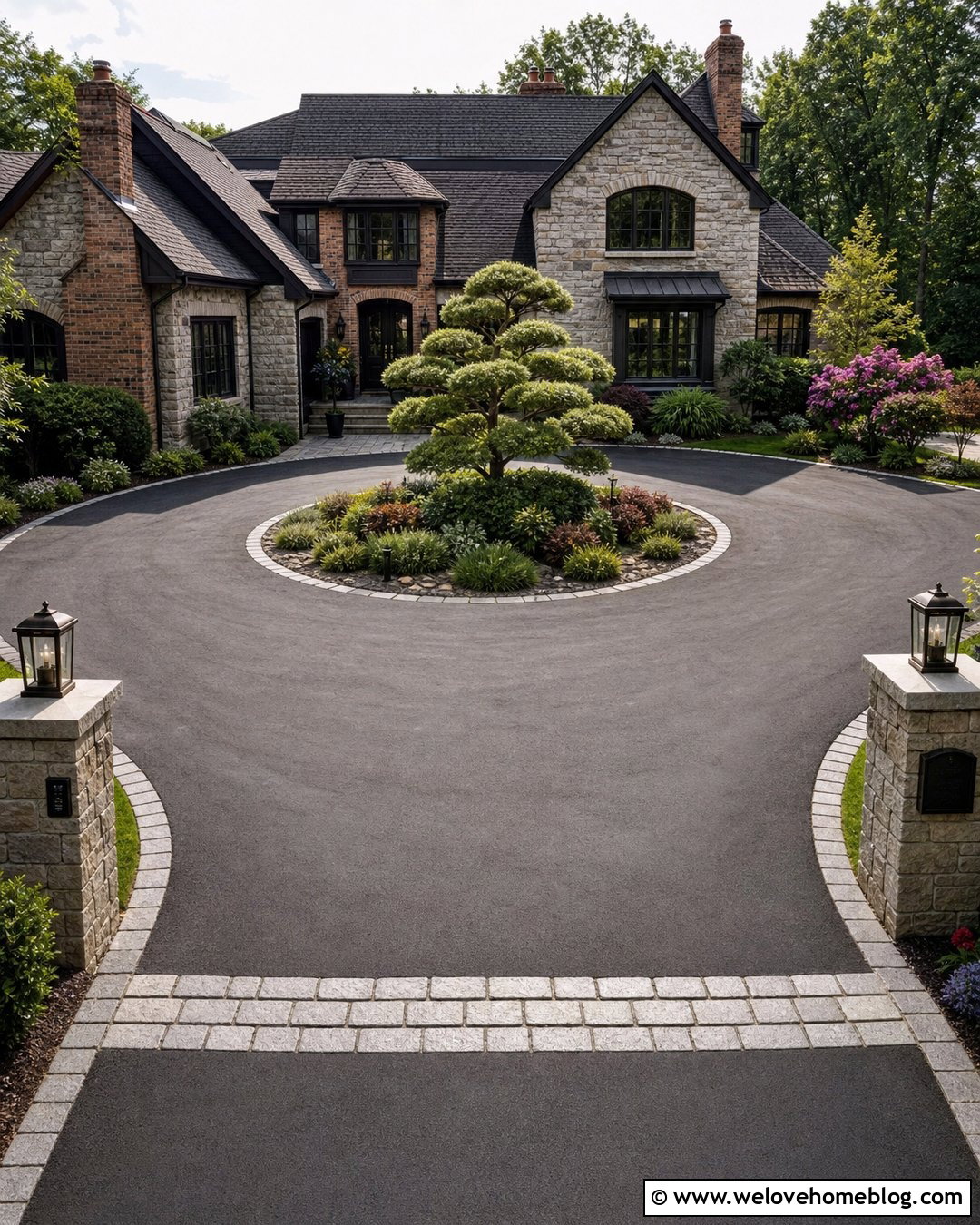
10. Exposed Aggregate Driveway With Sandstone Paver Edge
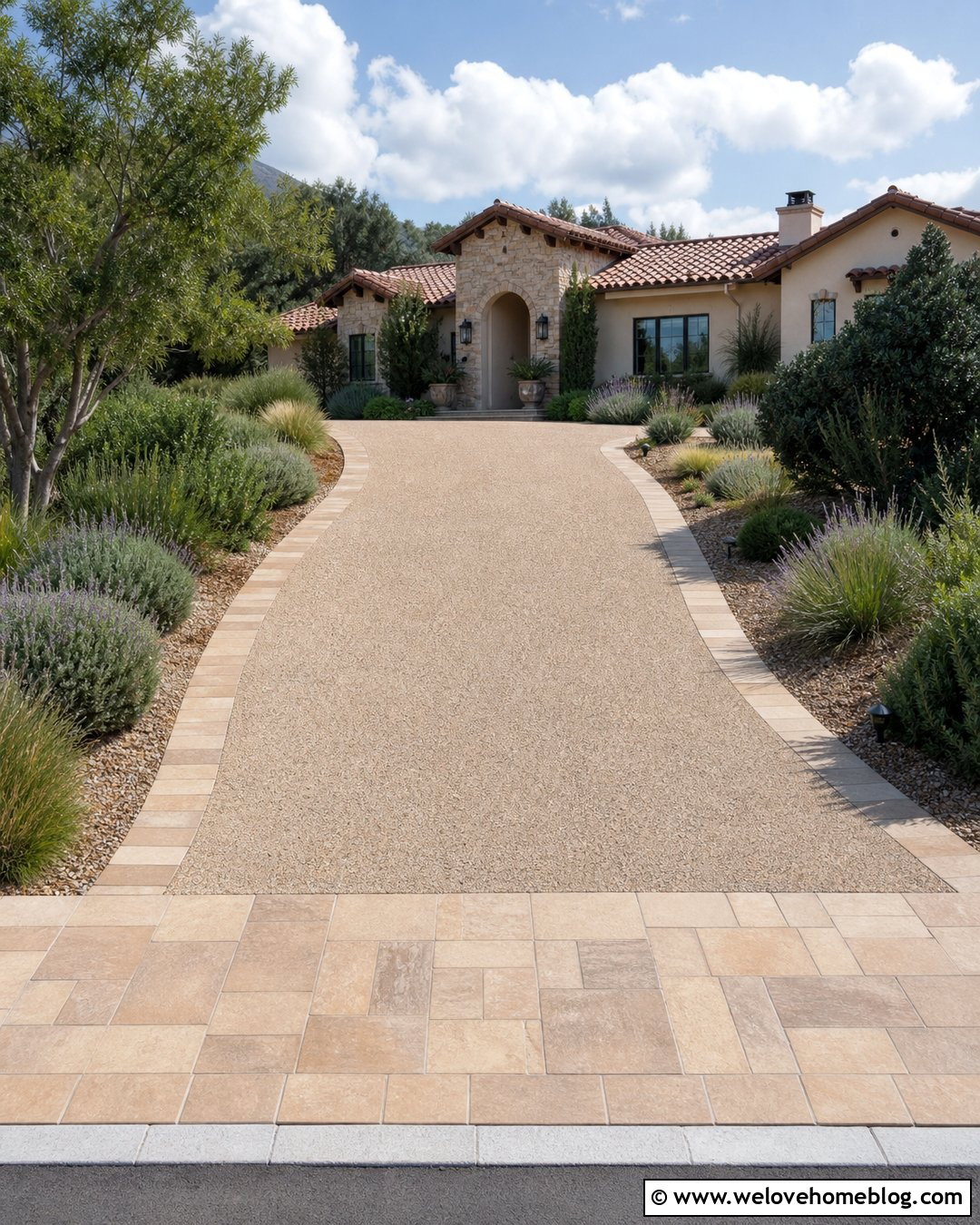
Exposed aggregate already contains natural color and texture, so its border should complement rather than overwhelm it. Sandstone-toned concrete pavers in beige, cream, and muted brown can pull out the warmer stones within the driveway surface. Use a wide single border along a softly curved layout leading to a Craftsman or Mediterranean-style house. A smooth paver finish provides subtle contrast against the pebbled concrete. Surrounding beds can include rosemary, lavender, ornamental grasses, and drought-tolerant shrubs planted over tan gravel mulch. Repeat the sandstone color in the front steps or walkway for a coordinated exterior. At the street, create a wider paver apron that clearly marks the entrance. This layered mix of natural-looking materials produces a warm driveway design without relying on bold color differences or complicated patterns.
11. Resin-Bound Gravel Driveway With Block Paver Border
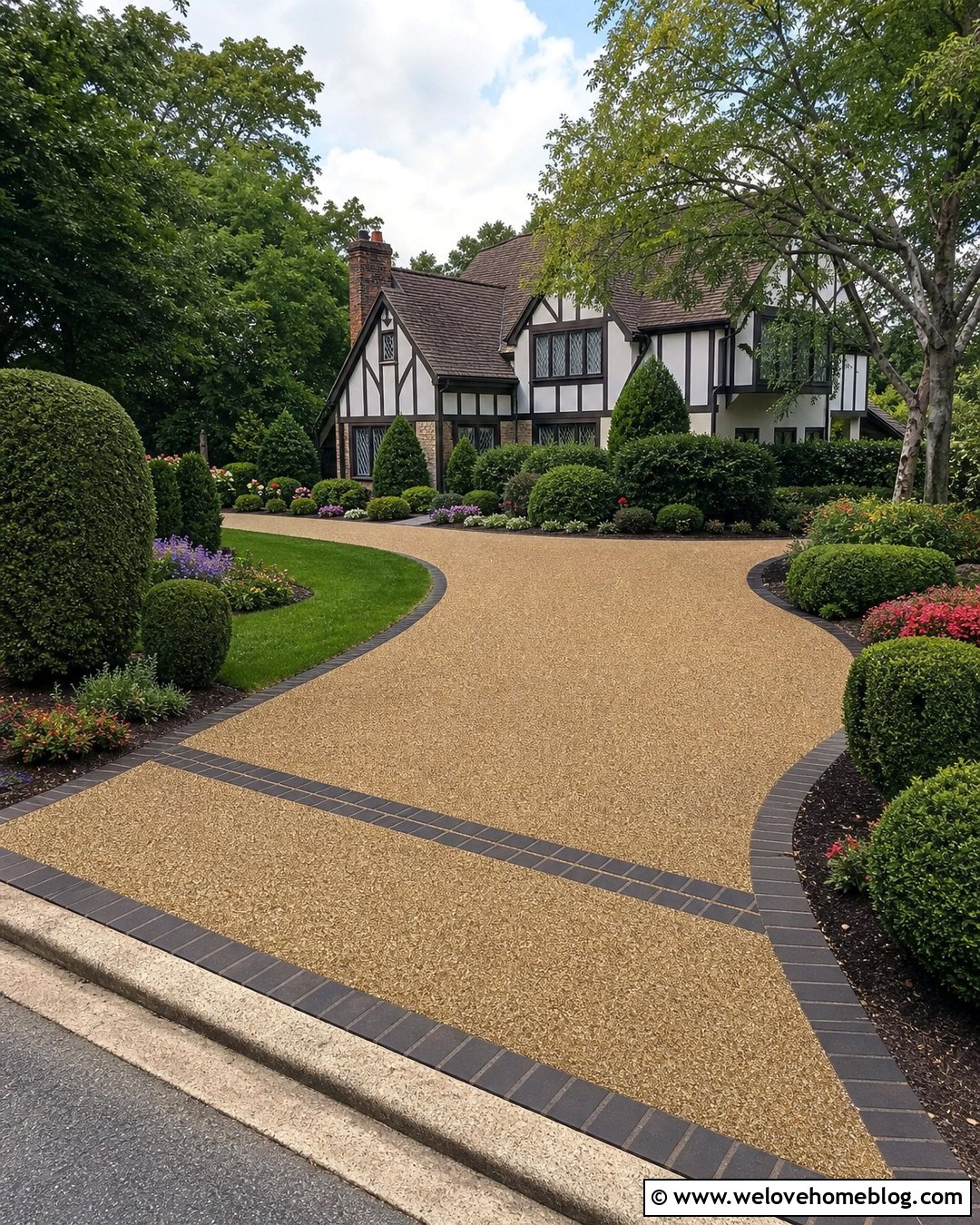
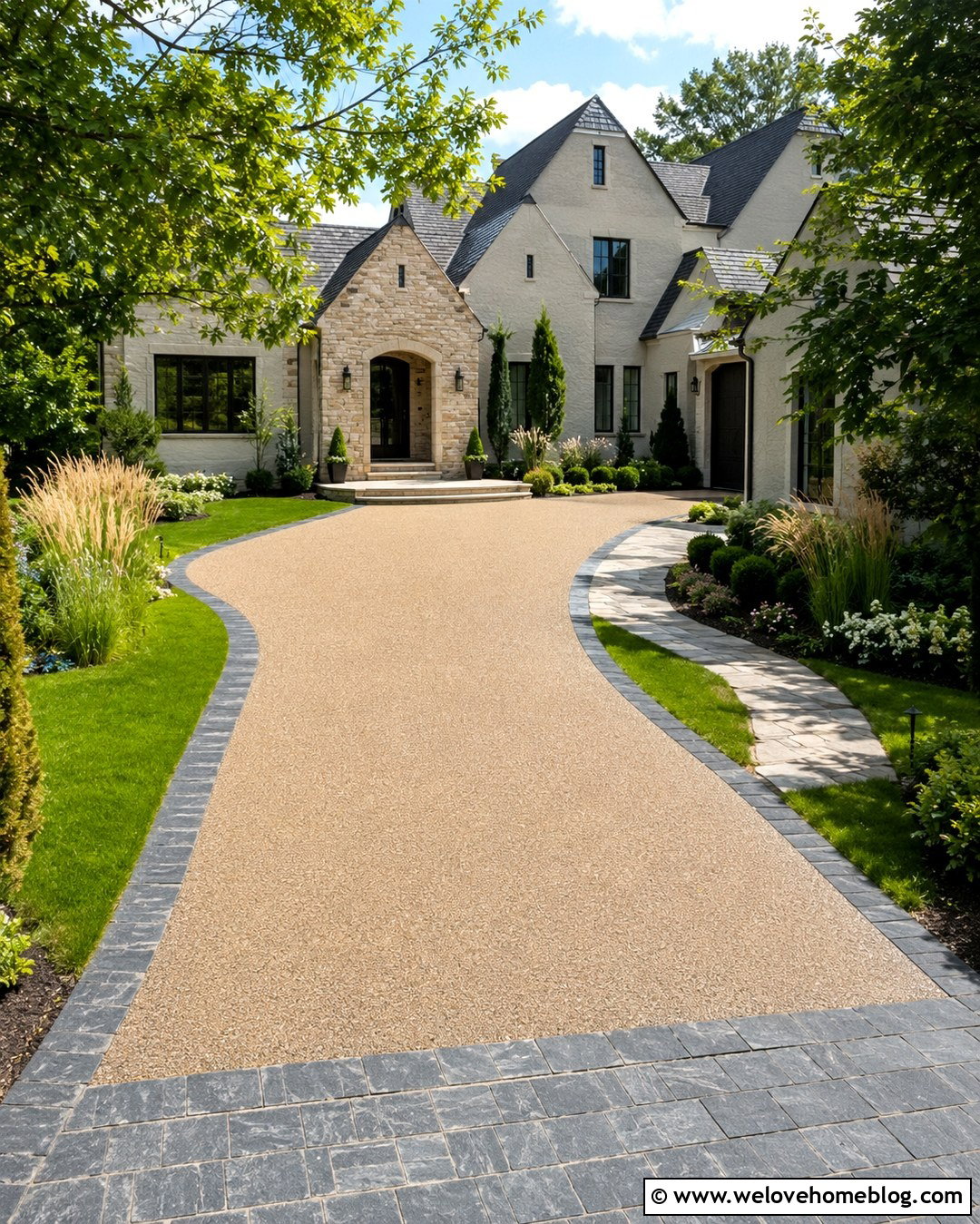
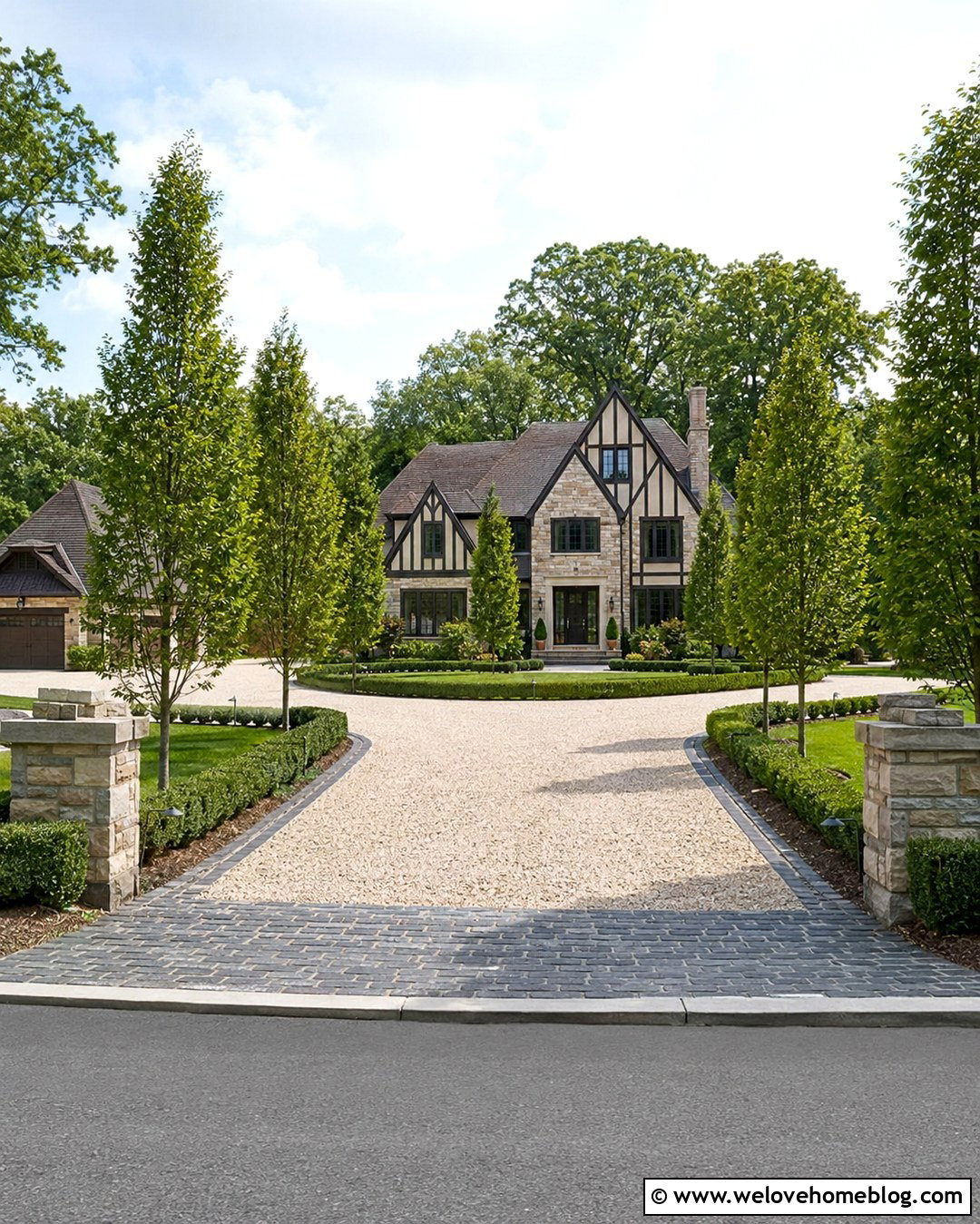
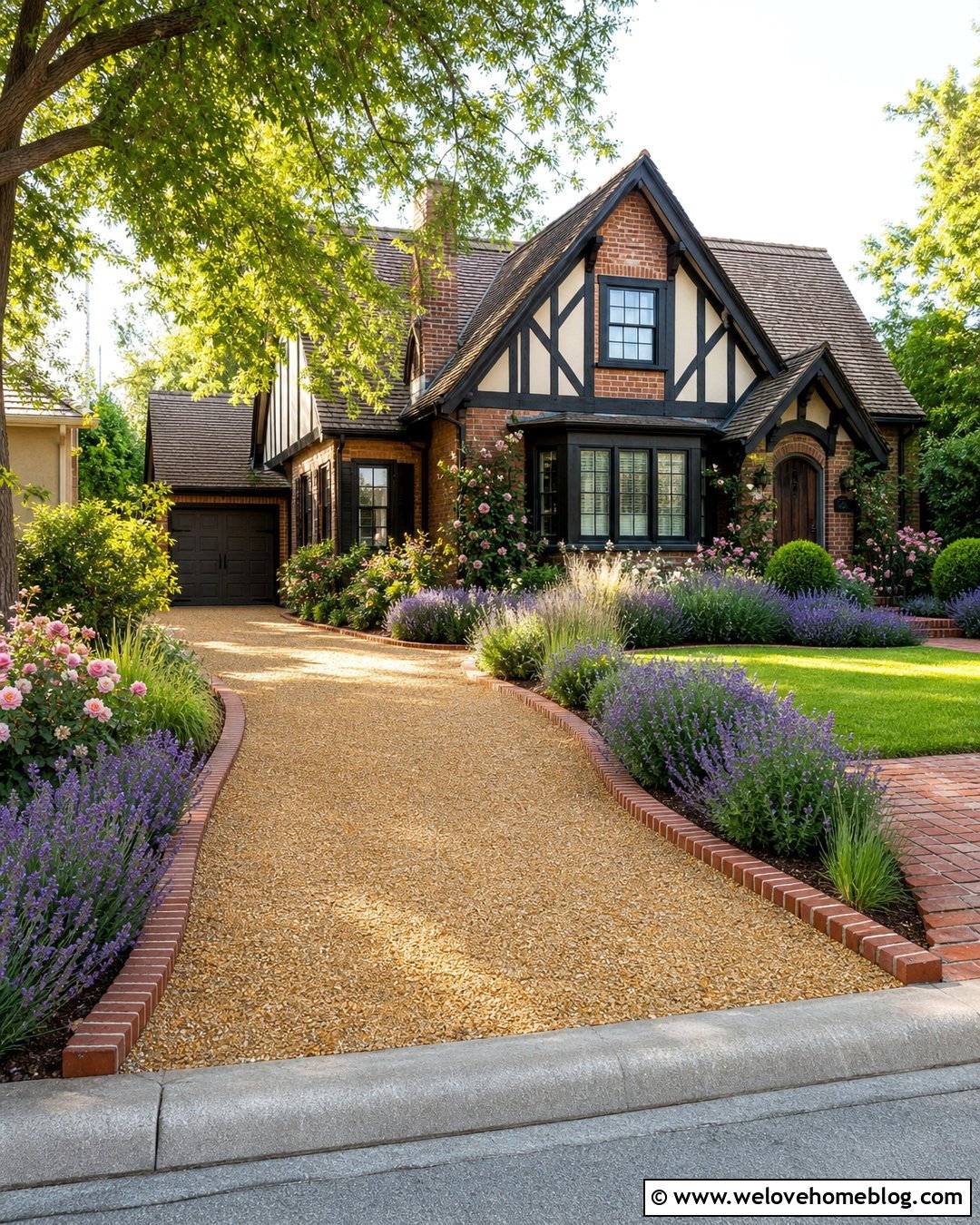
A resin-bound gravel driveway offers a uniform pebbled appearance that pairs naturally with a structured block paver border. Choose honey-colored resin-bound gravel and frame it with dark brown or charcoal rectangular pavers. The darker edge provides definition while making the lighter center feel warm and inviting. A curved or fan-shaped approach works well in front of a cottage, Tudor, or traditional suburban home. Continue the pavers across the entrance and around nearby planting beds to create one continuous outline. Soft landscaping can include clipped shrubs, flowering perennials, and a small lawn separated from the drive by a generous bed. Keep the gravel color related to the home’s stonework or roof. This prevents the combination from looking disconnected and allows the textured surface and tidy border to complement each other.
12. Permeable Driveway With Dark Paver Border
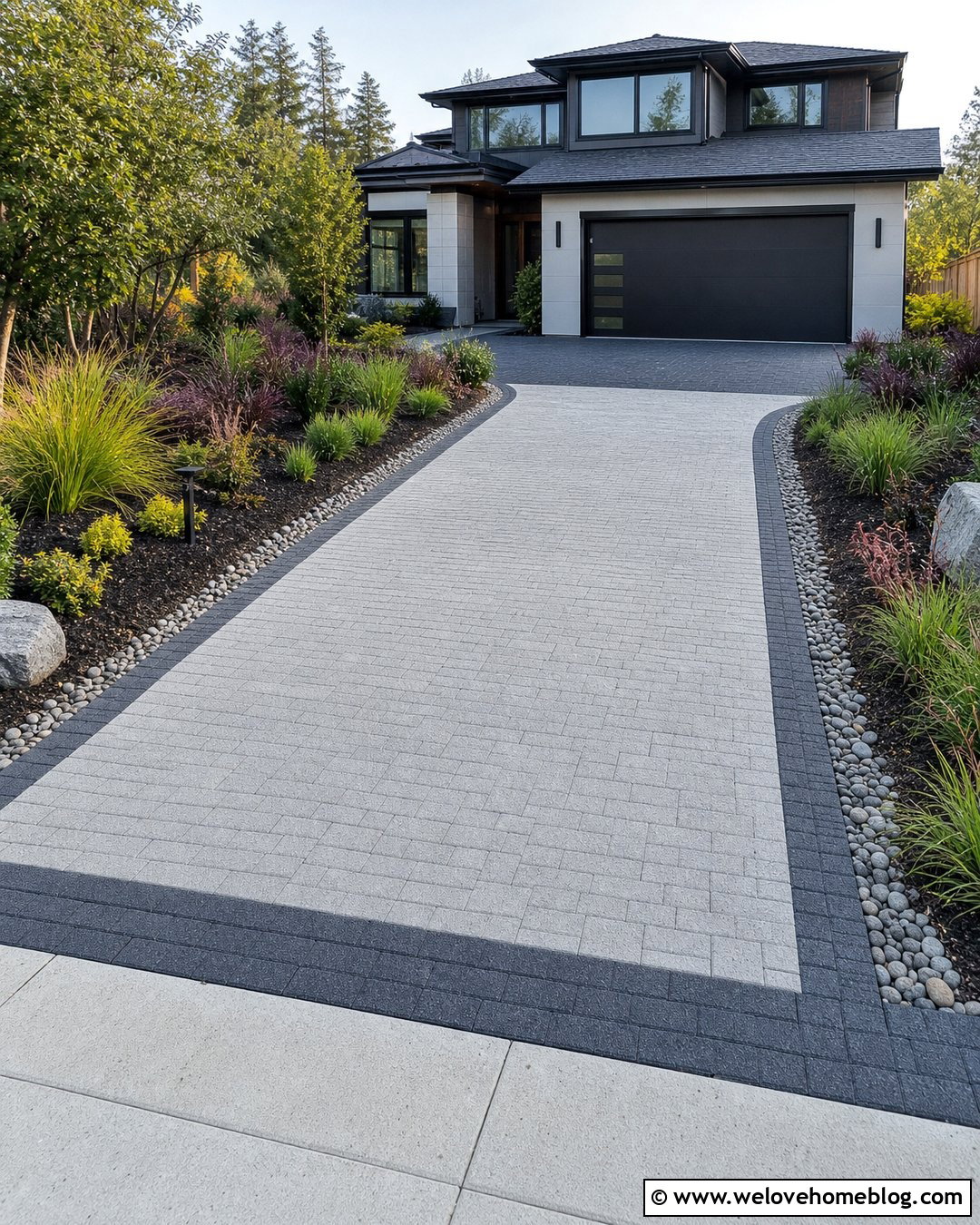
A permeable driveway can still have a clear and attractive frame. Use permeable concrete pavers in a light gray running bond for the main surface, then define the edges with darker pavers from a compatible system. The border can follow a straight driveway and widen near the garage to form a practical apron. This layout complements contemporary homes, especially those with gray siding, dark roofs, and simple landscaping. Add rain-friendly planting beds with ornamental grasses, sedges, and durable native shrubs along the sides. Decorative stone channels can provide another visual transition between the pavers and plants. Keep the driveway pattern simple so the dark perimeter remains noticeable. The chosen pavers, joint material, base, edging, and grading should be designed as one system by an experienced installer rather than selected only for appearance.
13. Narrow Driveway With Light Paver Edging
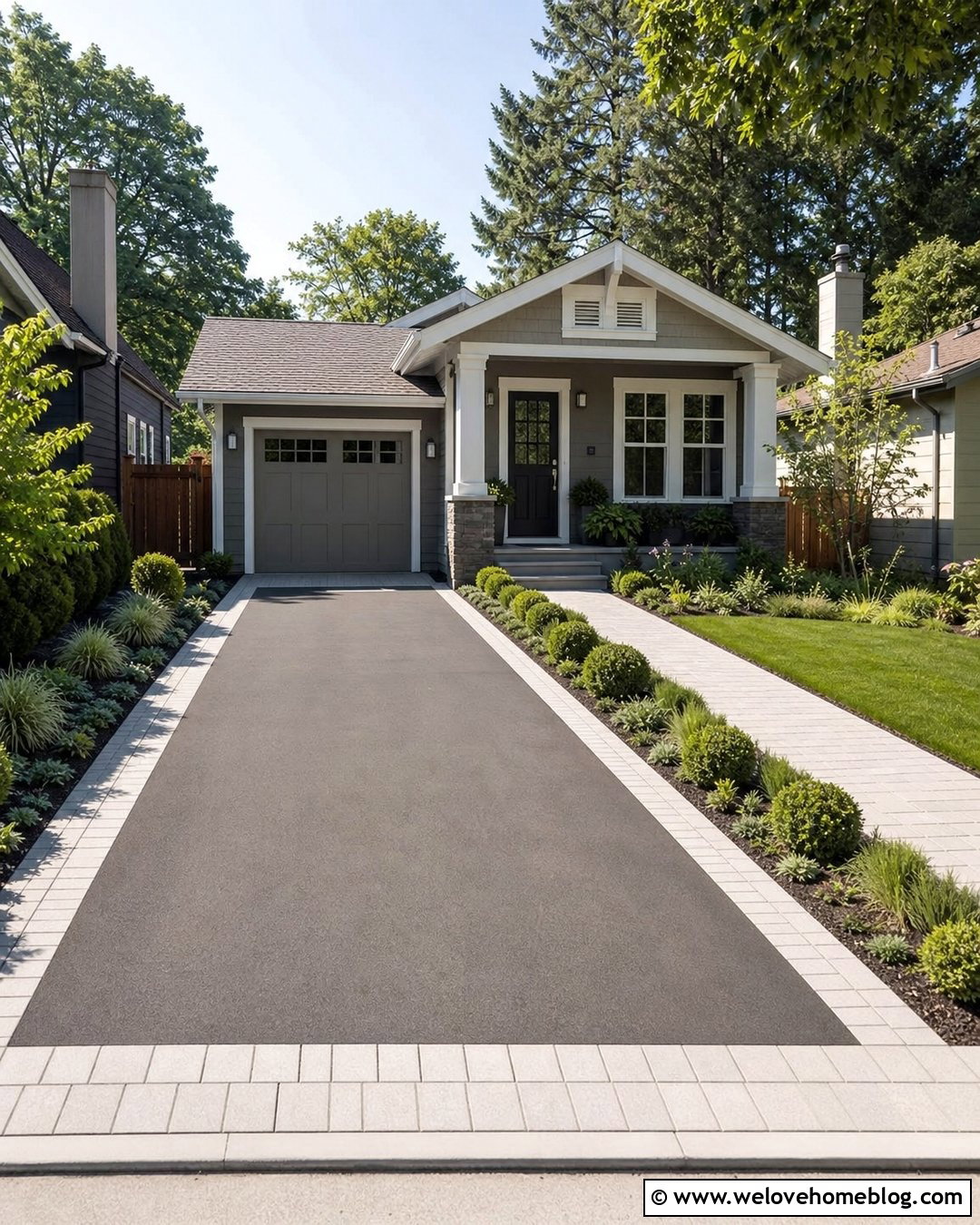
A narrow driveway needs definition without losing too much visual or usable width. Pair medium-gray asphalt with slim cream or light-gray pavers installed lengthwise along each side. A sailor course uses fewer rows and creates long lines that make the driveway appear more generous. This approach works well beside compact ranch homes, bungalows, and urban properties with limited side yards. Keep adjacent planting low and controlled. Narrow beds with dwarf grasses, compact boxwood, or creeping ground cover can soften the border without spilling into the driving area. Use the same light pavers for a small apron near the garage and a direct walkway to the front door. Avoid highly contrasting double borders, which may divide the available space into too many narrow strips and make the driveway feel tighter.
14. Sloped Driveway With Textured Paver Border
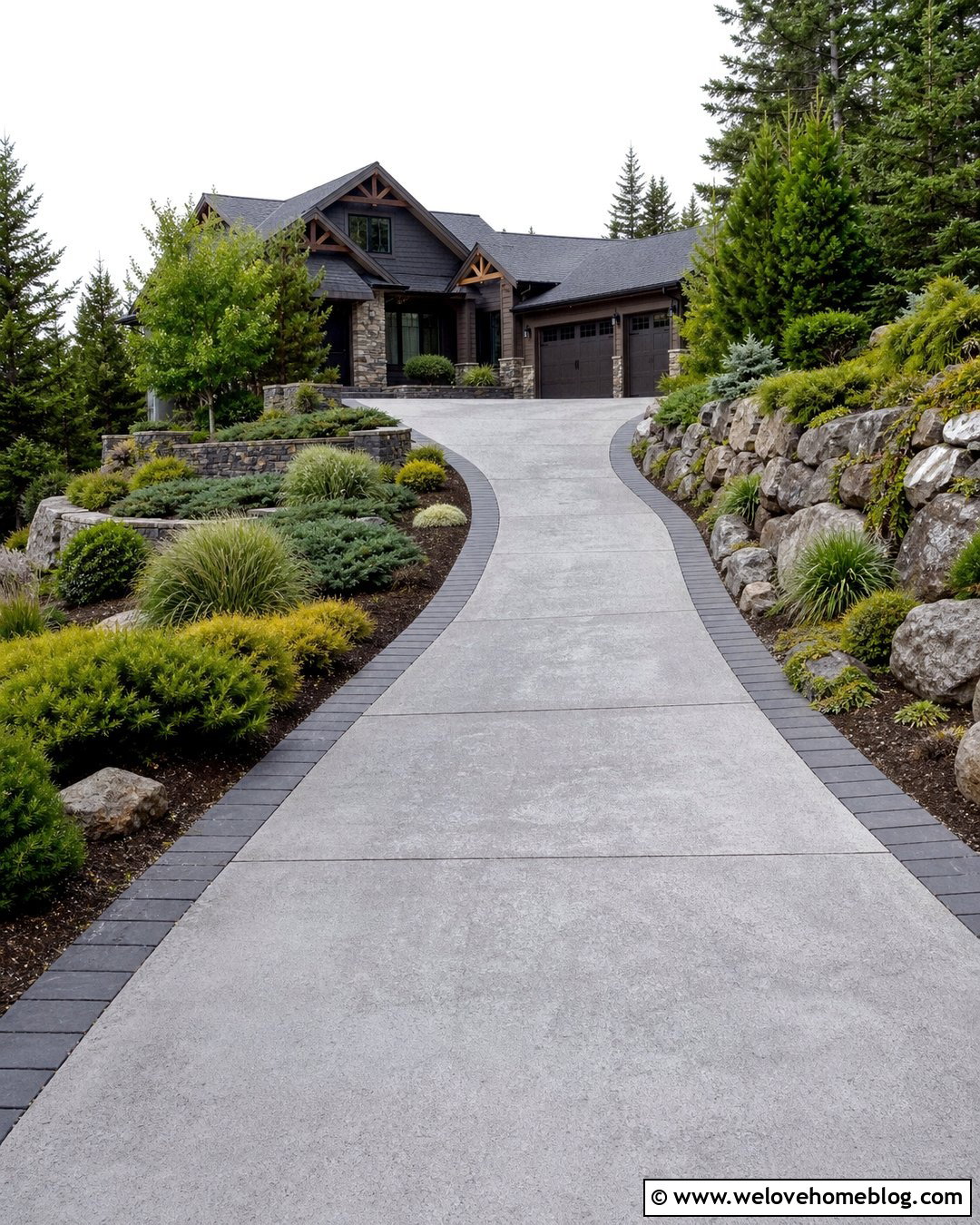
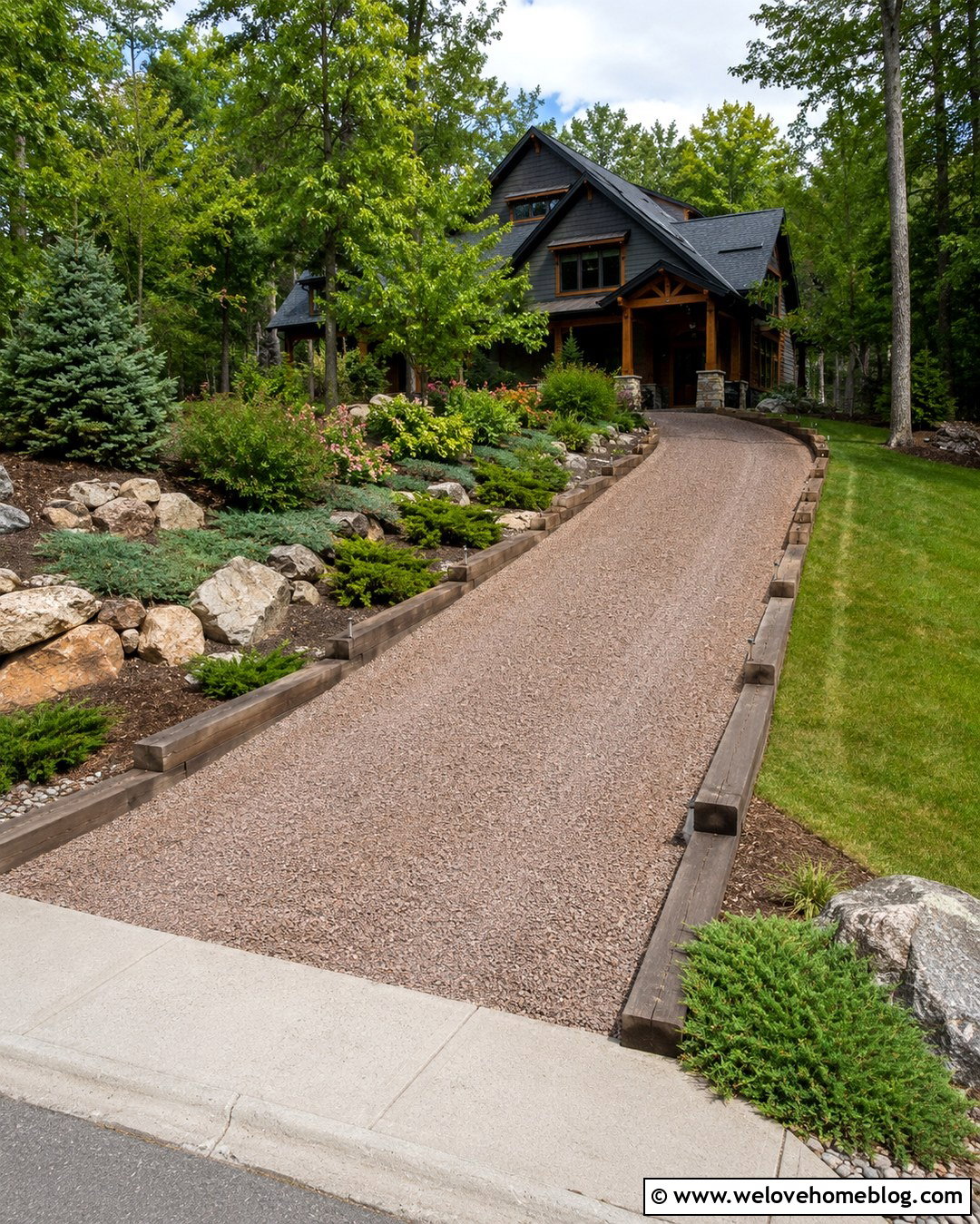
On a sloped driveway, the paver border should visually follow the grade instead of fighting it. A lightly textured concrete driveway framed with rugged charcoal pavers creates a practical-looking design with plenty of character. Install the border in a simple soldier course, keeping its width even from the street to the garage. Tiered planting beds can run beside the driveway and help the surrounding landscape transition up the slope. Use low retaining walls, spreading junipers, compact grasses, and deep-rooted shrubs to create a layered appearance. Repeating the charcoal pavers around steps or a nearby walkway ties the elements together. Drainage planning is particularly important on sloping sites, so surface pitch, runoff direction, border construction, and any channel drain should be resolved before decorative materials are installed.
15. Driveway Apron With Matching Paver Edge
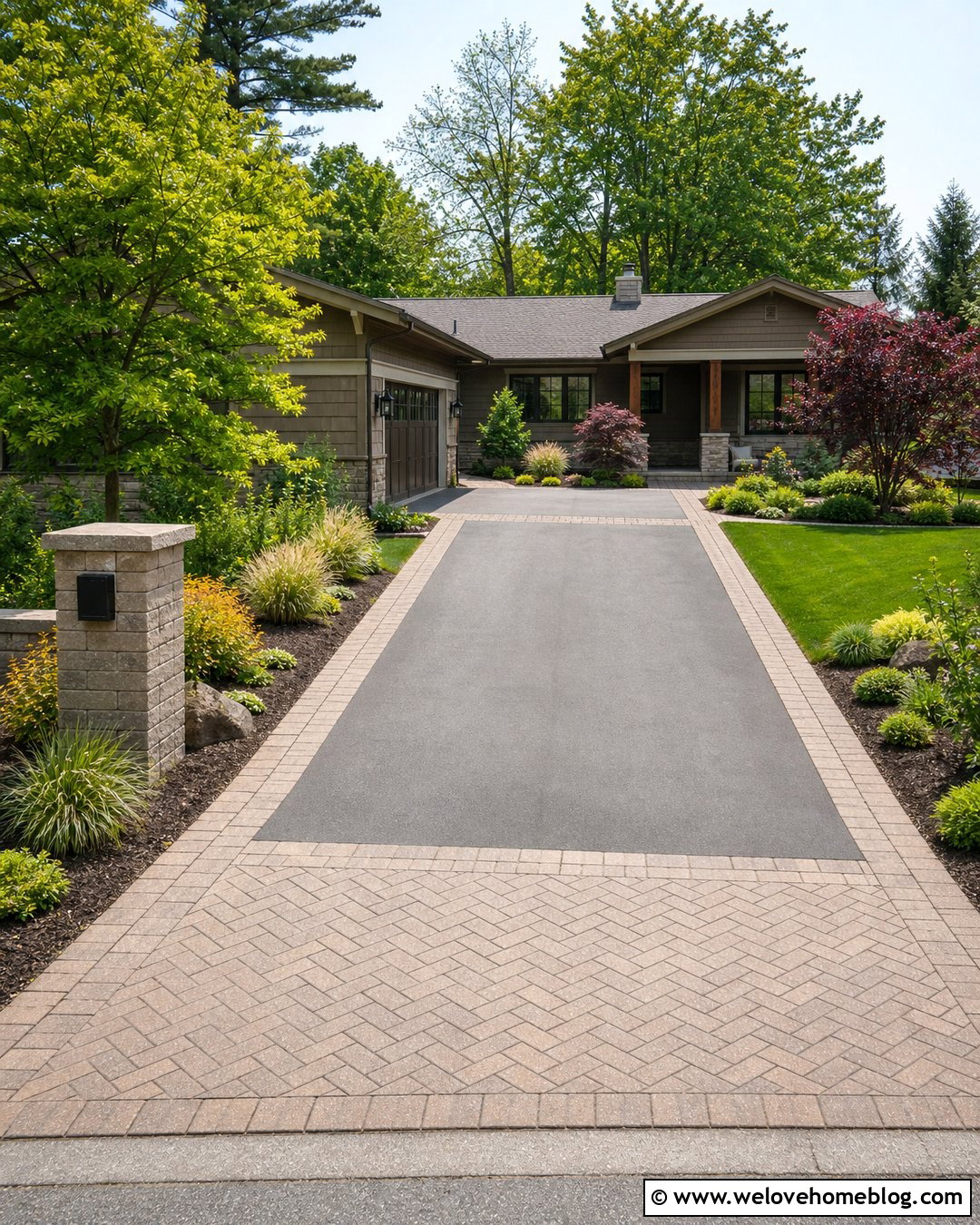
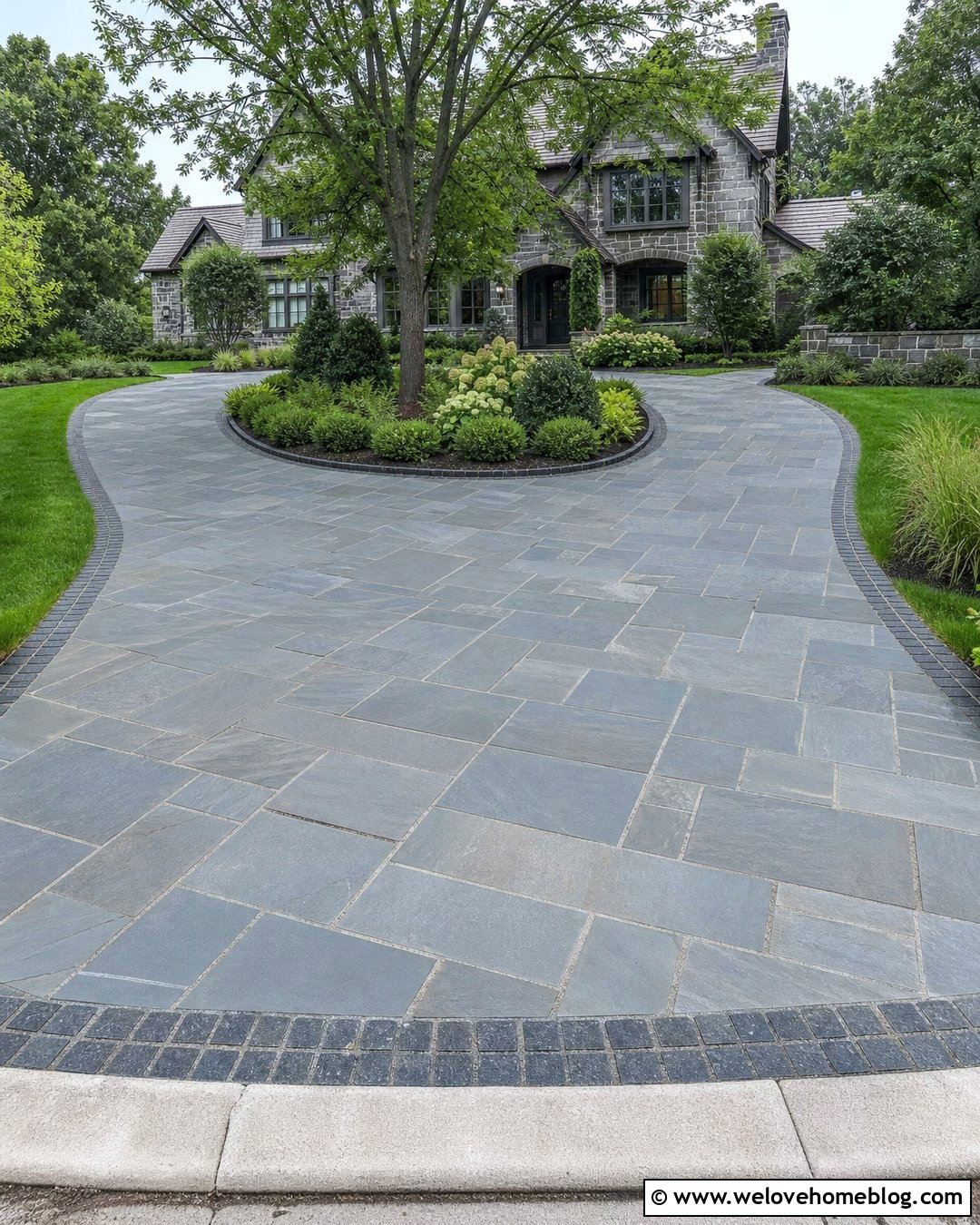
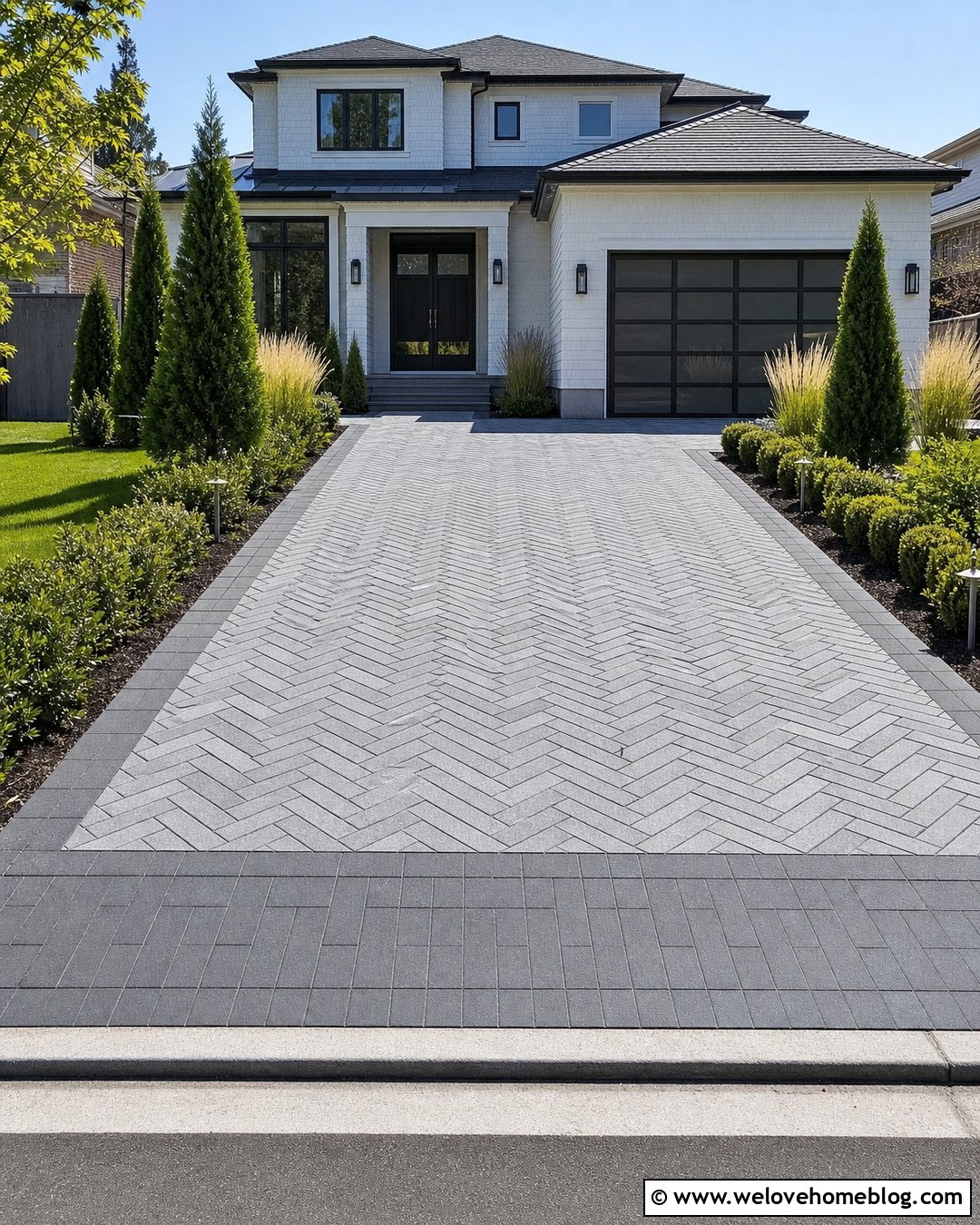
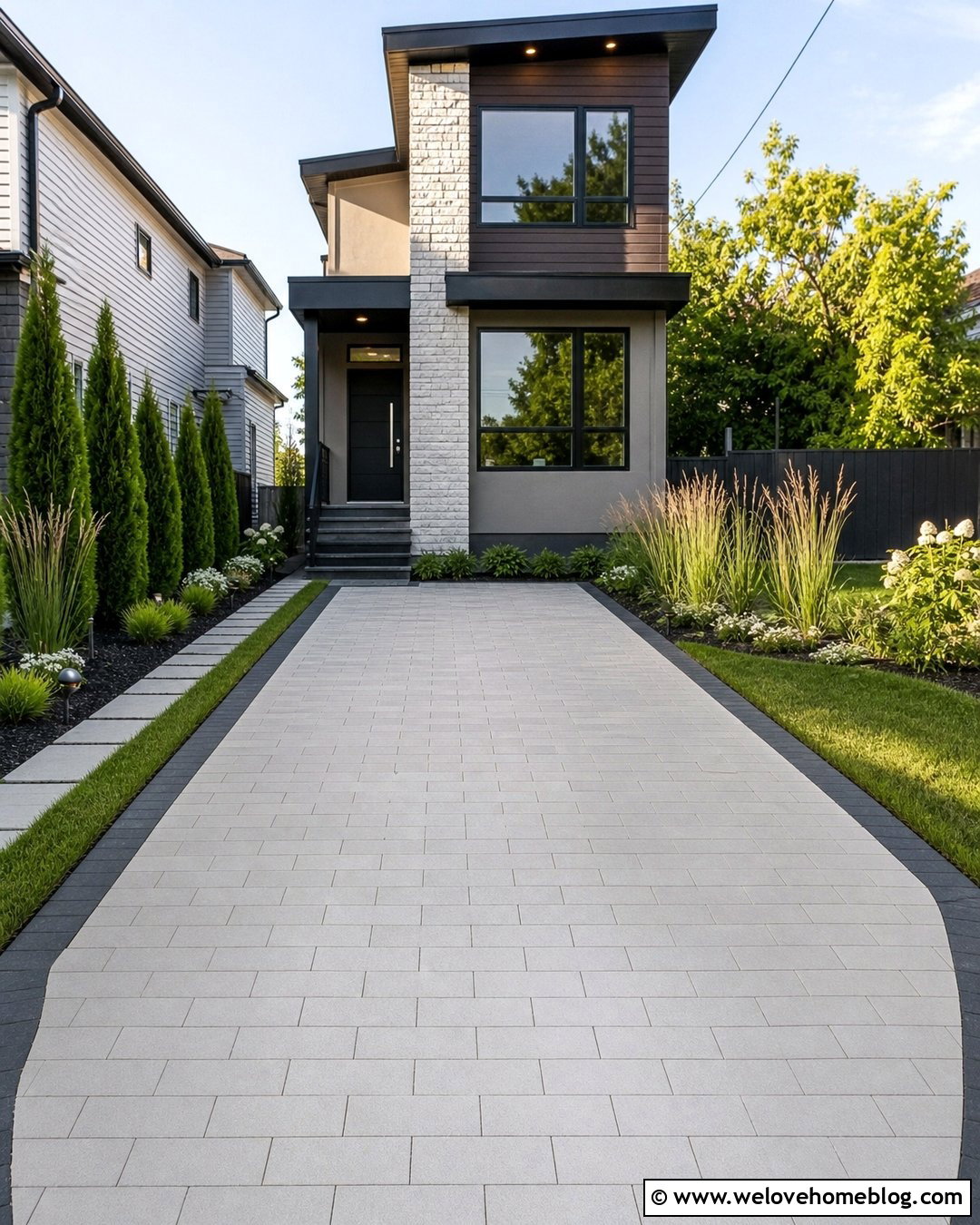
A paver apron can make the driveway entrance feel wider and more welcoming while connecting both side borders. Begin with a straight gray asphalt driveway edged by warm taupe concrete pavers. At the curb, expand those pavers into a broad rectangular apron laid in a herringbone pattern. The change in pattern marks the arrival point without introducing another material or color. This look works with Craftsman, ranch, and traditional suburban homes. Add matching masonry around an address post or mailbox bed near one side of the entrance. Low shrubs and ornamental grasses should frame the apron without interfering with clear sightlines. Continue the side borders toward the garage, where another cross band can visually complete the design. The repeated paver material gives the entire driveway a deliberate beginning, middle, and end.
16. Concrete Driveway With Herringbone Paver Border
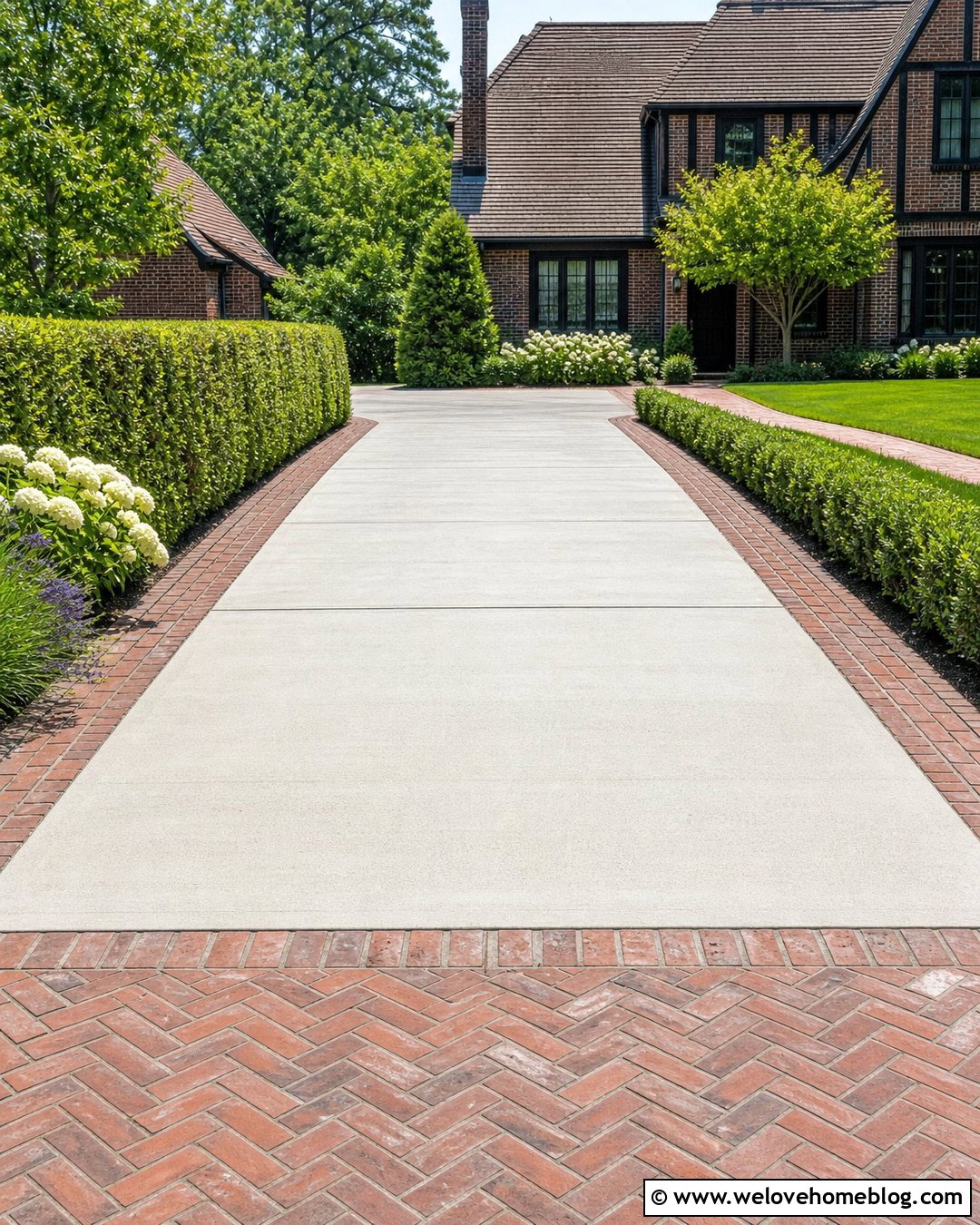
A herringbone border introduces movement around a broad concrete driveway without covering the entire surface in pavers. Use light broom-finished concrete for the center and weathered red-brown brick pavers for a wide perimeter band. The angled herringbone layout feels especially appropriate beside traditional brick, Tudor, and European-inspired homes. Since the border pattern is visually active, keep the driveway shape straight or only gently curved. Simple evergreen hedges, lawn, and restrained flower beds will prevent the entrance from becoming overly detailed. Carry the brick pavers across the garage apron and into the front walkway for continuity. A narrow solid soldier course outside the herringbone band can provide a clean finishing line. Careful cuts at corners and curves are essential for keeping the repeating pattern balanced and easy to recognize.
17. Driveway With Paver Edge and Grass Strip
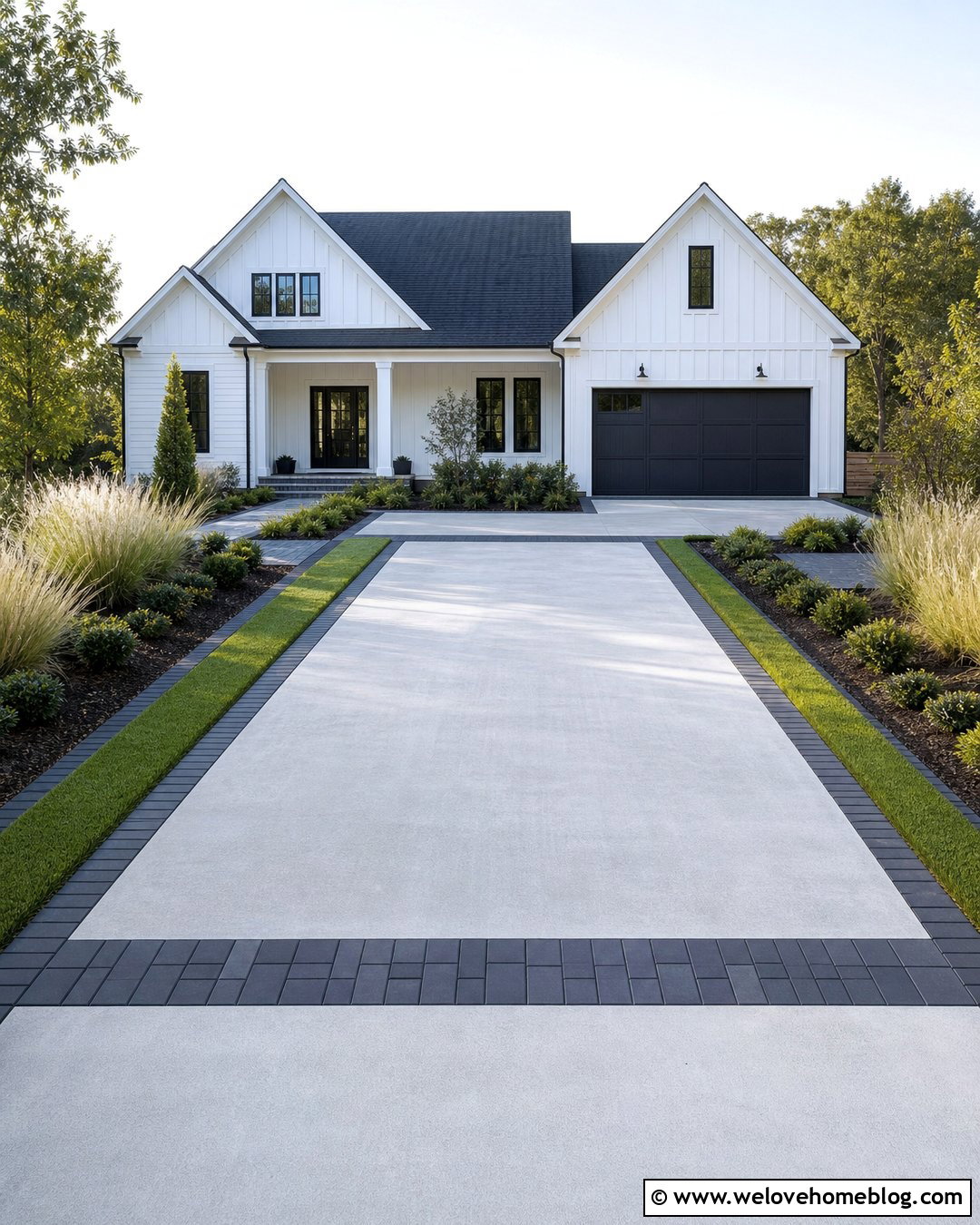
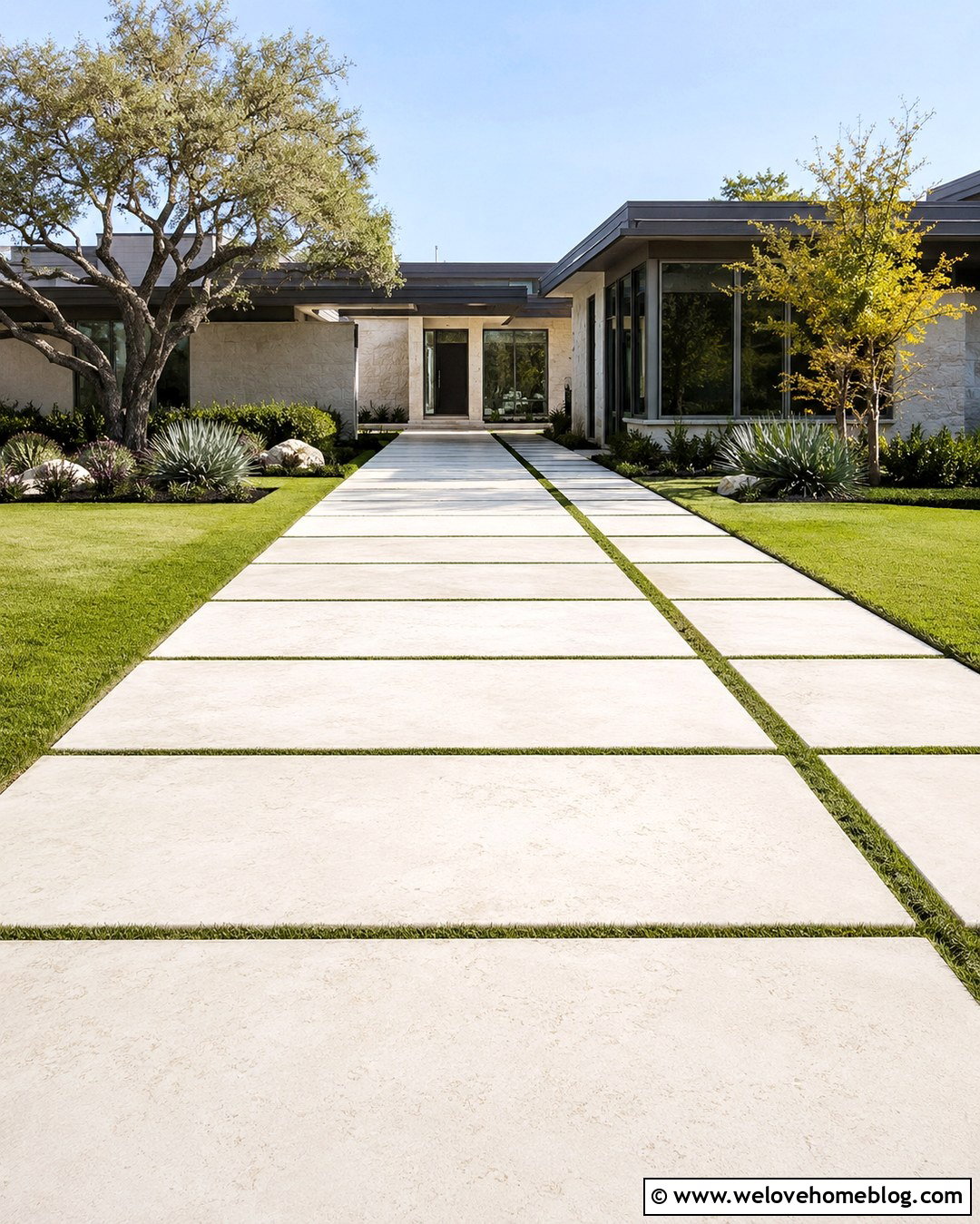
A narrow grass strip between the main driveway and its paver border can soften a large hard surface. Use smooth light-gray concrete for the driveway, a slim band of neatly maintained turf, and charcoal rectangular pavers along the outer edge. The three-part transition creates color and texture while still looking organized. It is best suited to level, spacious properties where the grass strips can remain wide enough for simple maintenance. A modern ranch or contemporary farmhouse provides an ideal backdrop. Connect the paver border to matching walkways and geometric planting beds filled with ornamental grasses and compact shrubs. At the entrance and garage, replace the turf strips with solid paver bands for uninterrupted access. The finished layout feels greener and less imposing than one continuous area of concrete.
18. Driveway With Paver Border and Landscape Lighting
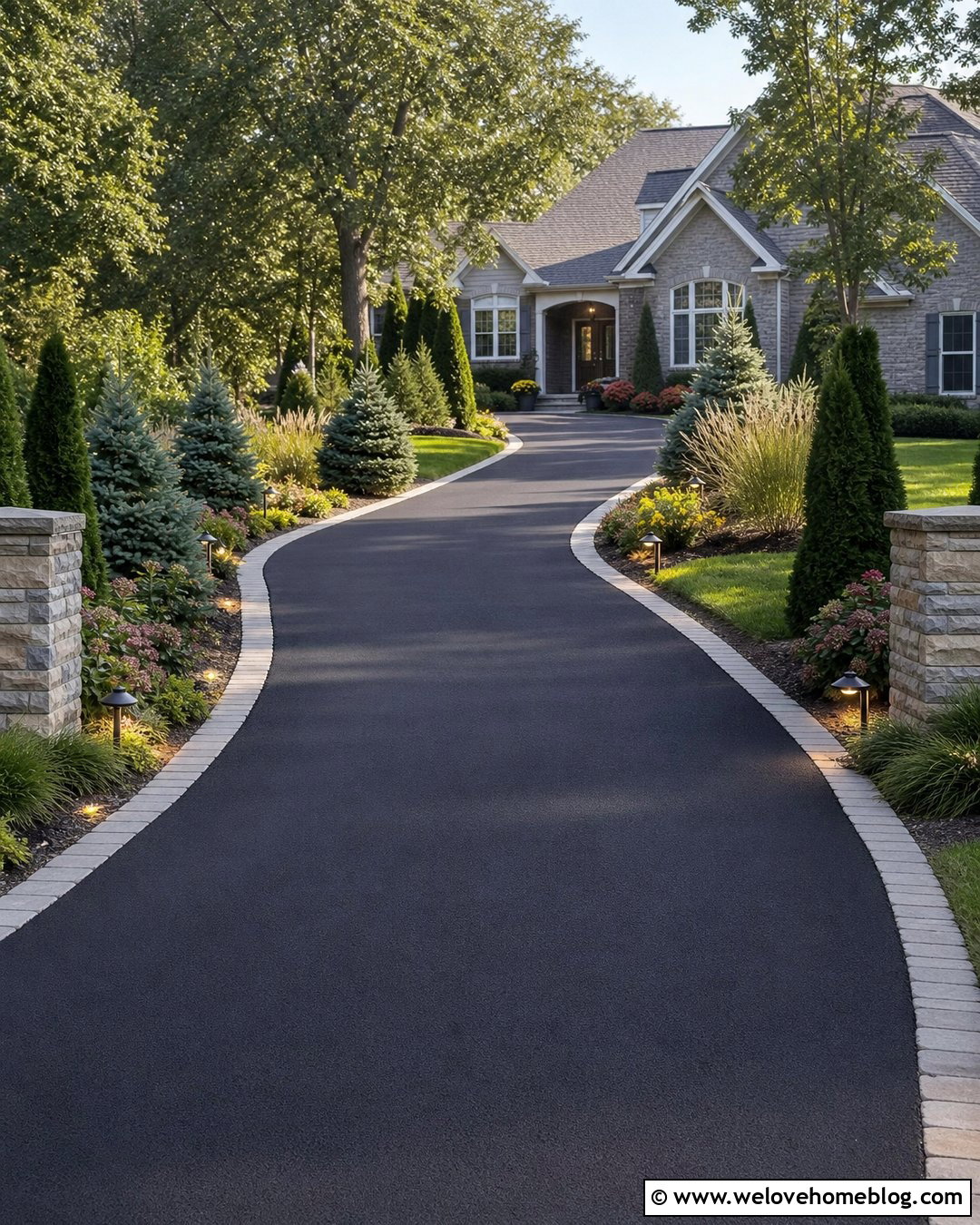
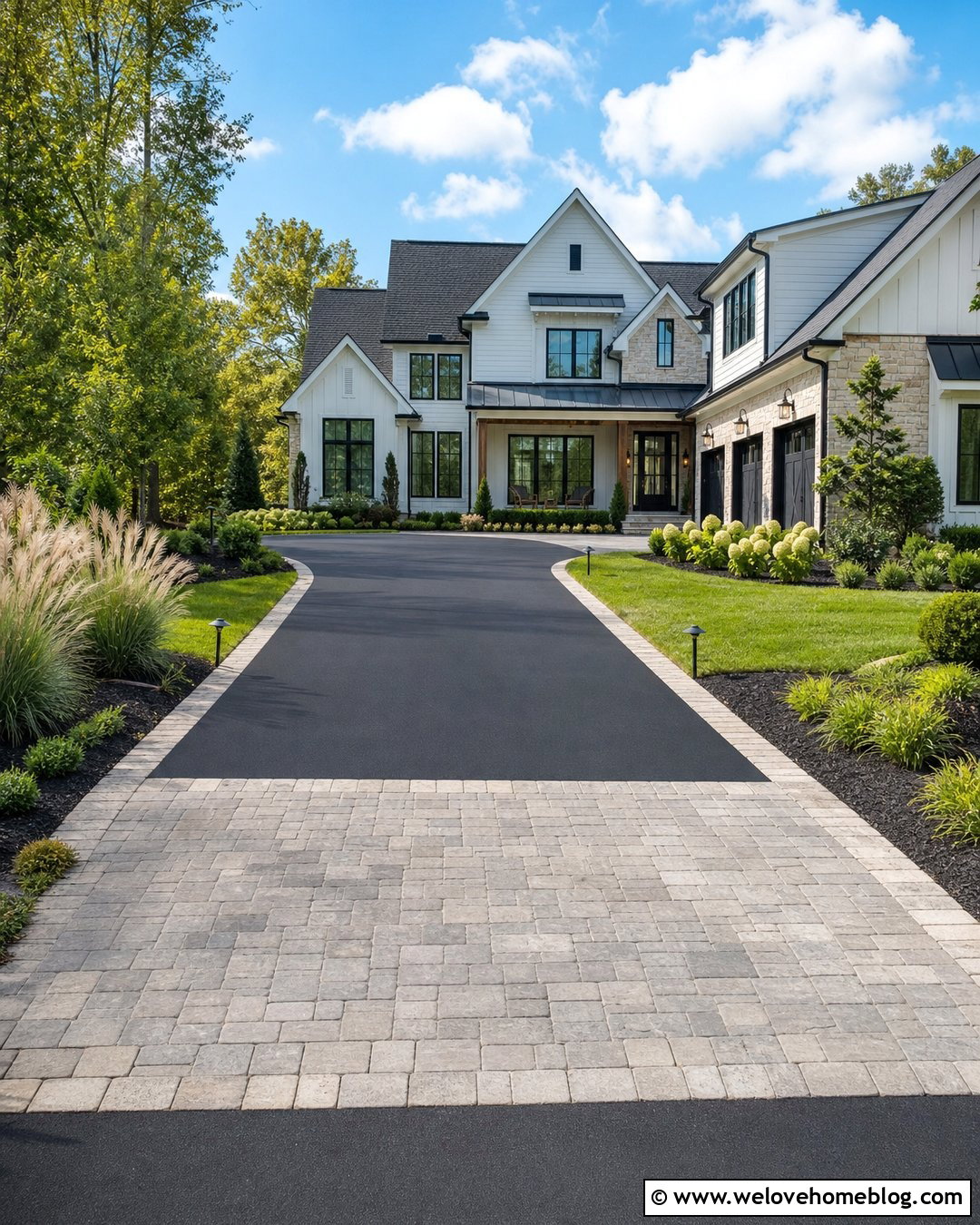
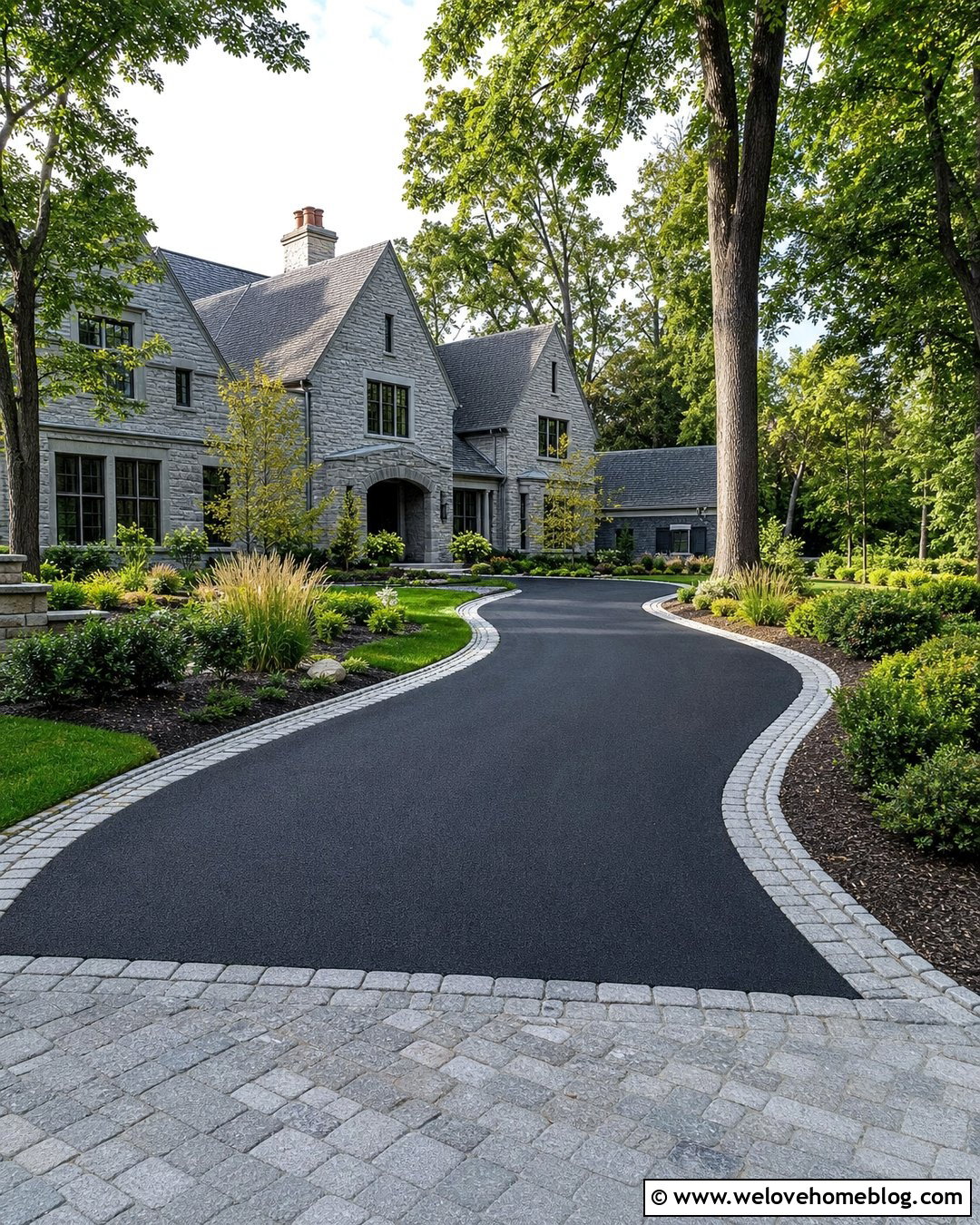
Well-positioned lighting can emphasize a paver border while improving the driveway’s presence after sunset, although the daytime design should remain attractive on its own. Pair a curved black asphalt driveway with a warm-gray cobblestone paver edge. Install low-profile fixtures in the planting beds rather than directly in driving areas. Space them evenly along major curves and near the entrance instead of creating an overly bright runway effect. During the day, layered beds of dwarf evergreens, fountain grass, and flowering perennials will frame the dark surface. At the street, matching stone pillars can hold additional shielded fixtures and an address plaque. Use the cobblestone border around the walkway and foundation beds as well. This repetition makes the lighting, landscaping, pavers, and driveway appear as one coordinated entrance.
19. Driveway With Paver Edge and Stone Pillars
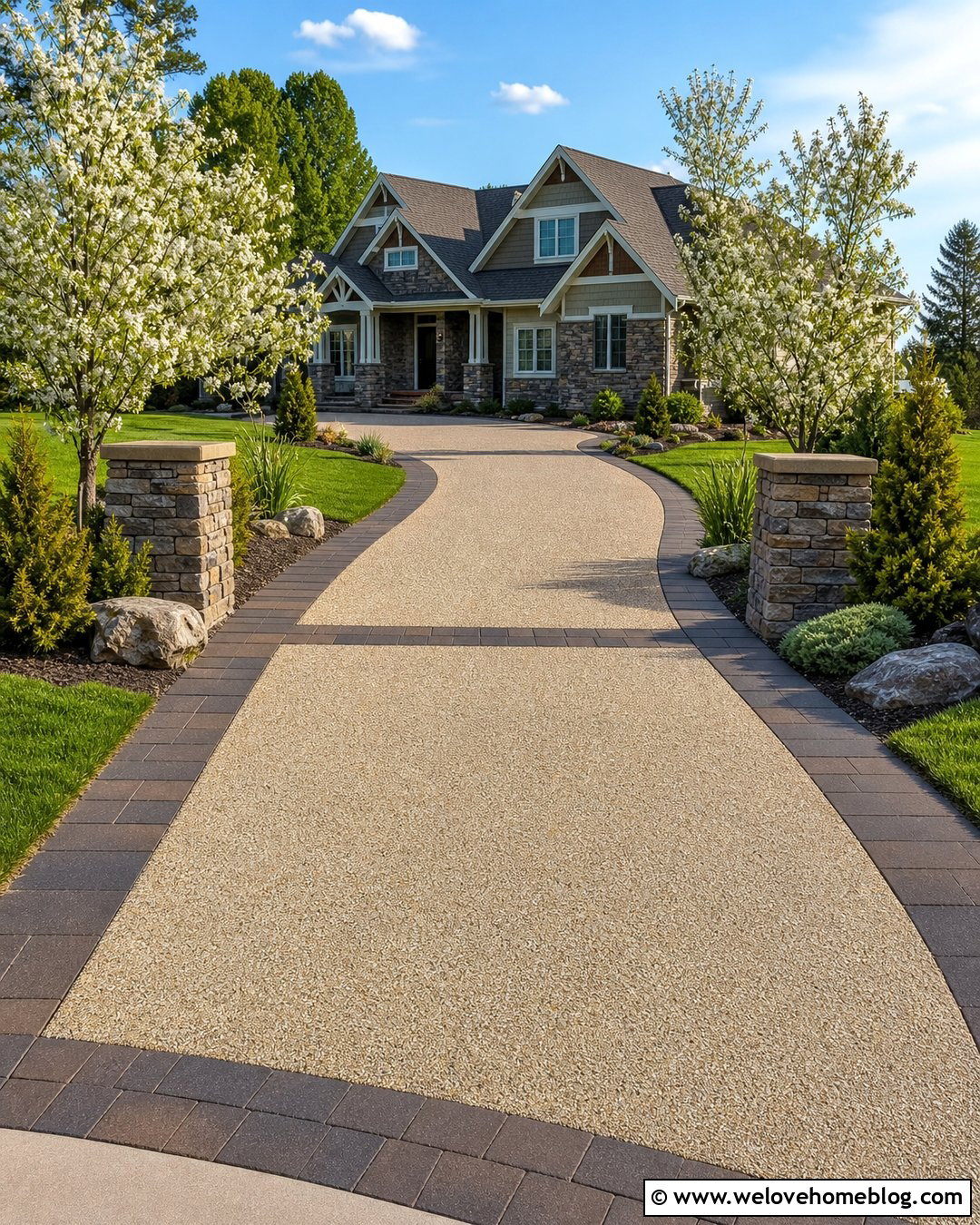
Stone pillars create a strong entrance, and the driveway border can connect them visually to the house. Choose a warm beige exposed aggregate driveway with brown and charcoal pavers running along both sides. At the street, build low stone pillars using masonry that matches the home’s facade. Widen the paver border around each pillar to form tidy planting pockets rather than leaving awkward strips of lawn. A gently curved driveway can then lead toward a Craftsman or mountain-style home. Use restrained landscaping with low juniper, ornamental grasses, and a pair of small flowering trees. Matching pavers can surround the pillar bases and continue across the entrance as a decorative band. Keep the pillars proportional to the property so they frame the approach without making a residential driveway feel narrow or overly formal.


20. Driveway With Paver Border and Drainage Channel
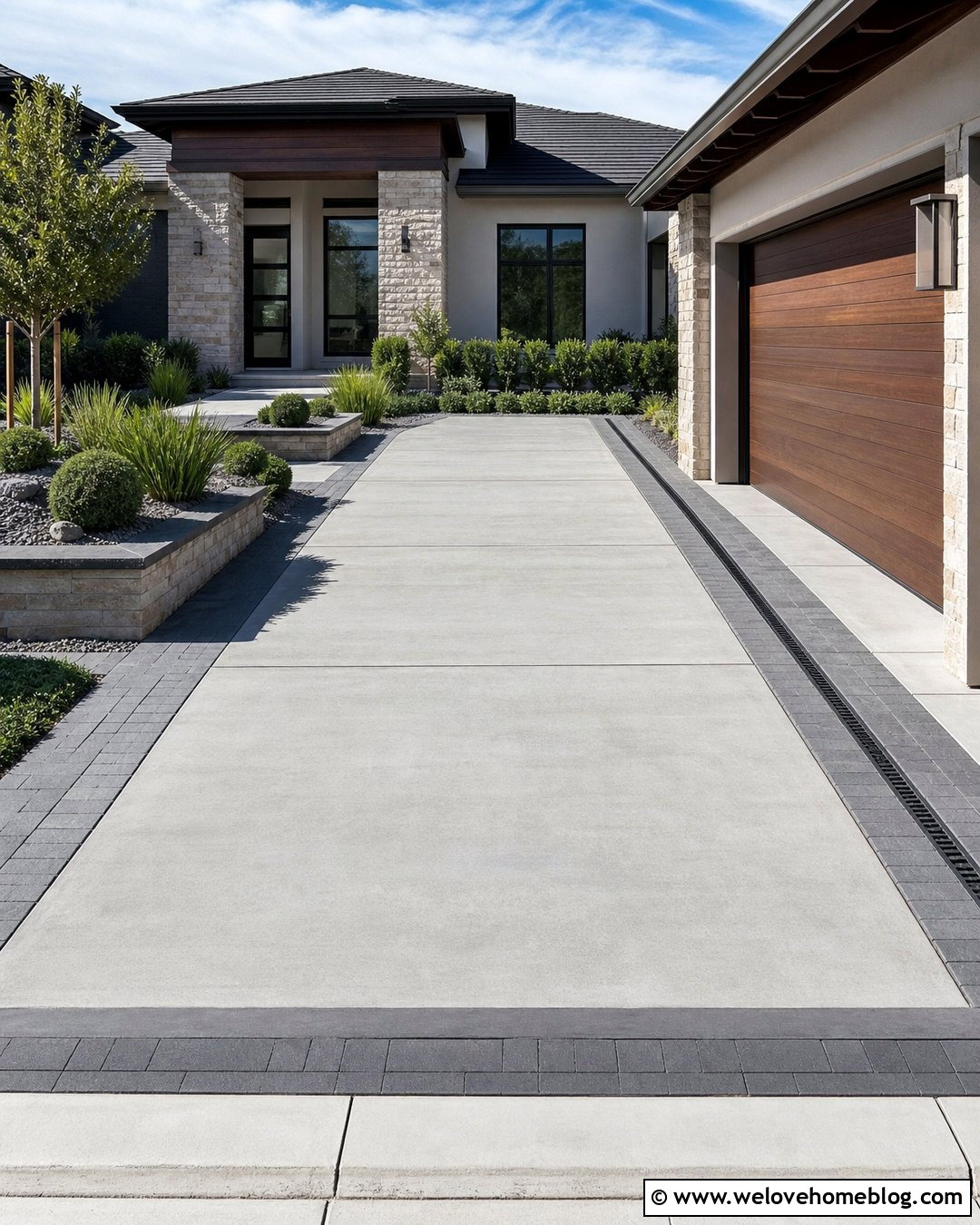
A drainage channel can become part of the design when it aligns with the paver border. Use a pale gray poured concrete driveway with a dark charcoal paver perimeter and a slim linear channel near the garage or lowest point. Place a matching paver band beside the channel so it looks integrated rather than added later. This clean arrangement suits modern and transitional homes with simple facades. Along the driveway, use raised planting beds, clipped shrubs, and ornamental grasses while preserving a clear route for runoff. The border can widen near downspout outlets or landscape transitions where additional detailing is needed. Final placement should follow the site’s actual grading and drainage requirements. Paver edge restraints and a properly prepared base are also important for maintaining a neat perimeter. ()
Conclusion:
The strongest **20 Paver Edged Driveway Ideas** treat the driveway, border, landscaping, and home as parts of one exterior plan. Brick can warm up asphalt, charcoal pavers can sharpen pale concrete, and cobblestone can give gravel a more established outline. Layout matters just as much as color. Straight sailor courses feel modern, soldier courses provide clear definition, and double borders emphasize curves or formal entrances. Before choosing a look, consider driveway width, slope, drainage, snow removal, nearby walkways, and the colors already present on your house. A well-prepared base and suitable edge restraint are essential. With thoughtful planning, even a simple paver border can create a cleaner, more connected, and more memorable approach to your home.

Related posts:
Leave a Reply