
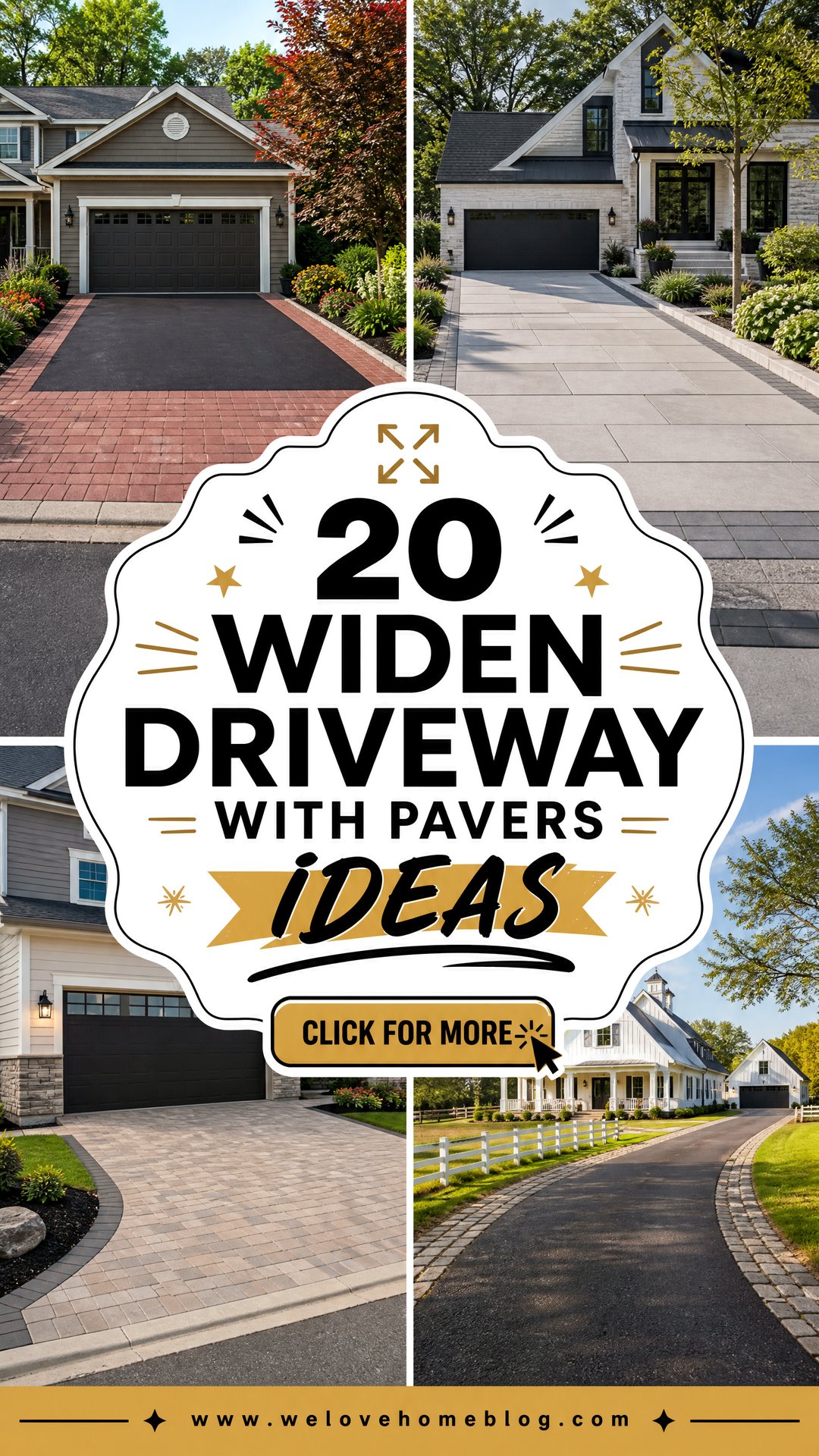
A narrow driveway can make daily parking frustrating, leave tire ruts in the lawn, and limit space for guests. These 20 Widen Driveway With Pavers Ideas show how a carefully planned paver extension can add usable width while improving the entire front yard. Pavers work especially well beside concrete, asphalt, gravel, and existing paver surfaces because their color and pattern can create an intentional transition. The right layout may provide a second parking lane, a wider garage approach, or a small pull-off area without rebuilding everything. Before installation, check local setback, drainage, permit, and HOA requirements. Also choose vehicle-rated pavers and a properly compacted base. Explore the complete driveway looks below with these 20 Widen Driveway With Pavers Ideas.
1. Concrete Driveway With Matching Gray Paver Strips
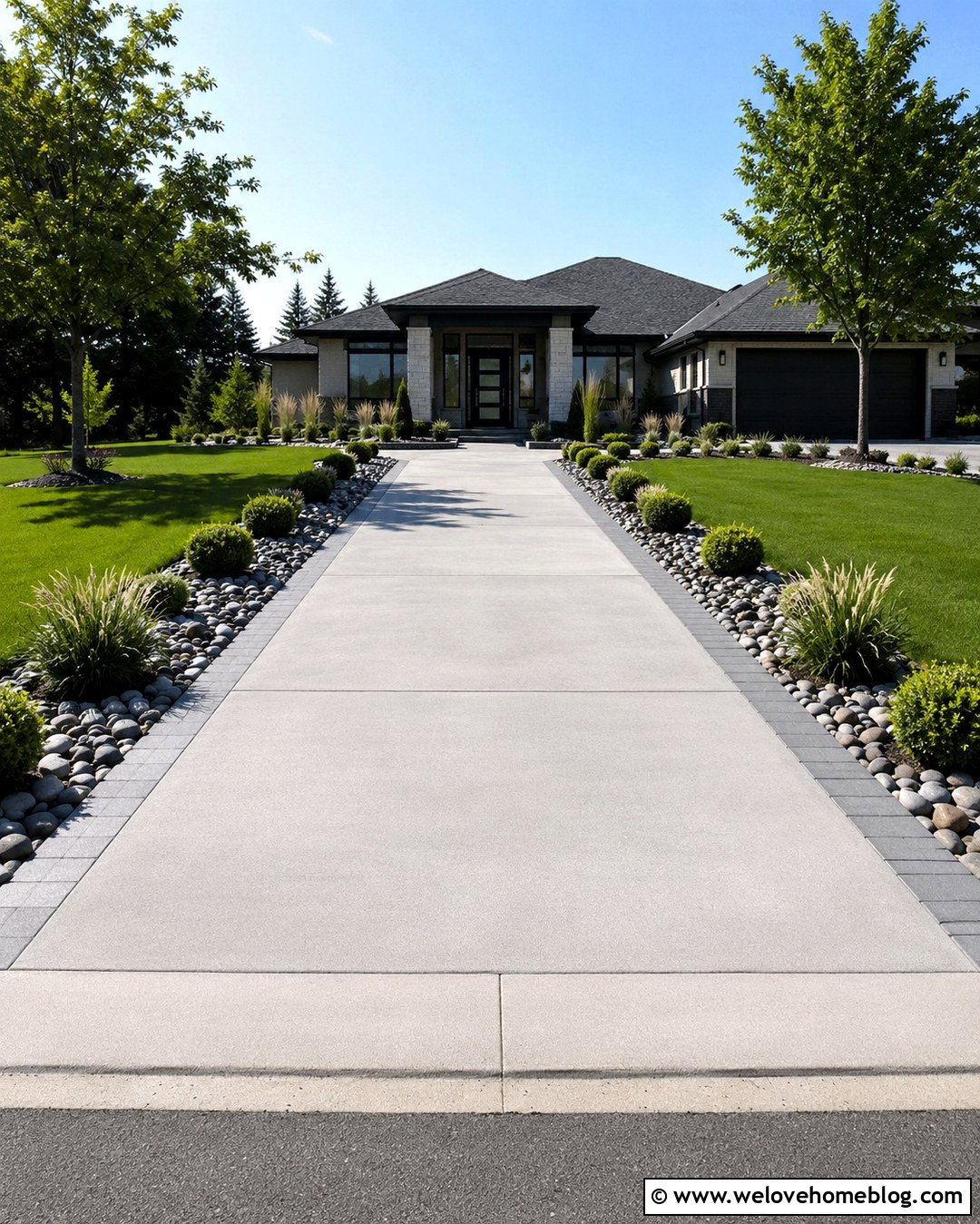
Light gray concrete pavers can widen a poured concrete driveway without creating a distracting contrast. Install a three- to five-foot paver strip along one side or use matching strips on both sides for a balanced layout. Choose rectangular pavers with cool gray tones similar to the existing slab. A running bond pattern keeps the design simple and makes the extension appear connected to the original driveway. Add a charcoal soldier-course border to define the new outer edge. Low ornamental grasses, clipped boxwoods, and pale river rock can soften the wider paved area. This complete look suits a contemporary ranch or modern suburban home. Keep the pavers level with the concrete so tires cross the joint smoothly and water does not collect along the transition.
2. Asphalt Driveway With Red Brick Paver Extensions
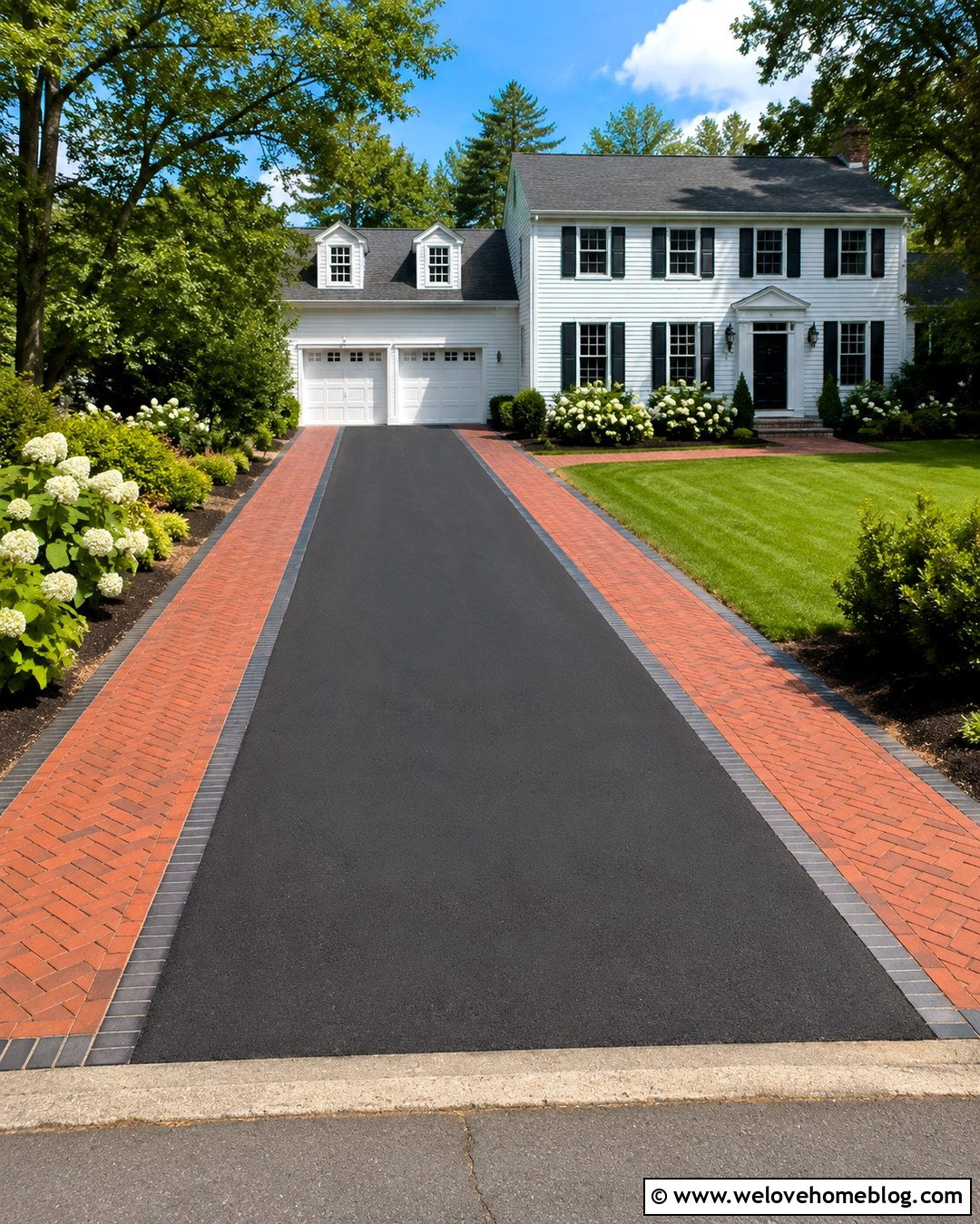
Warm red brick pavers bring character to a plain black asphalt driveway while creating extra parking width. Extend one or both sides with vehicle-rated clay brick pavers laid in a herringbone pattern. The angled pattern visually connects the added paving to the long driveway rather than making it resemble a separate walkway. Use a narrow charcoal border between the asphalt and brick to create a clean, deliberate transition. Traditional foundation shrubs, flowering hydrangeas, and a curved lawn edge complement the rich brick color. This combination looks especially natural with Colonial, Cape Cod, or red brick houses. Because asphalt and pavers respond differently to temperature and movement, the joint and outer edges need secure restraint. Proper grading should direct runoff away from the garage and house foundation.
3. Driveway Widening With Contrasting Paver Borders
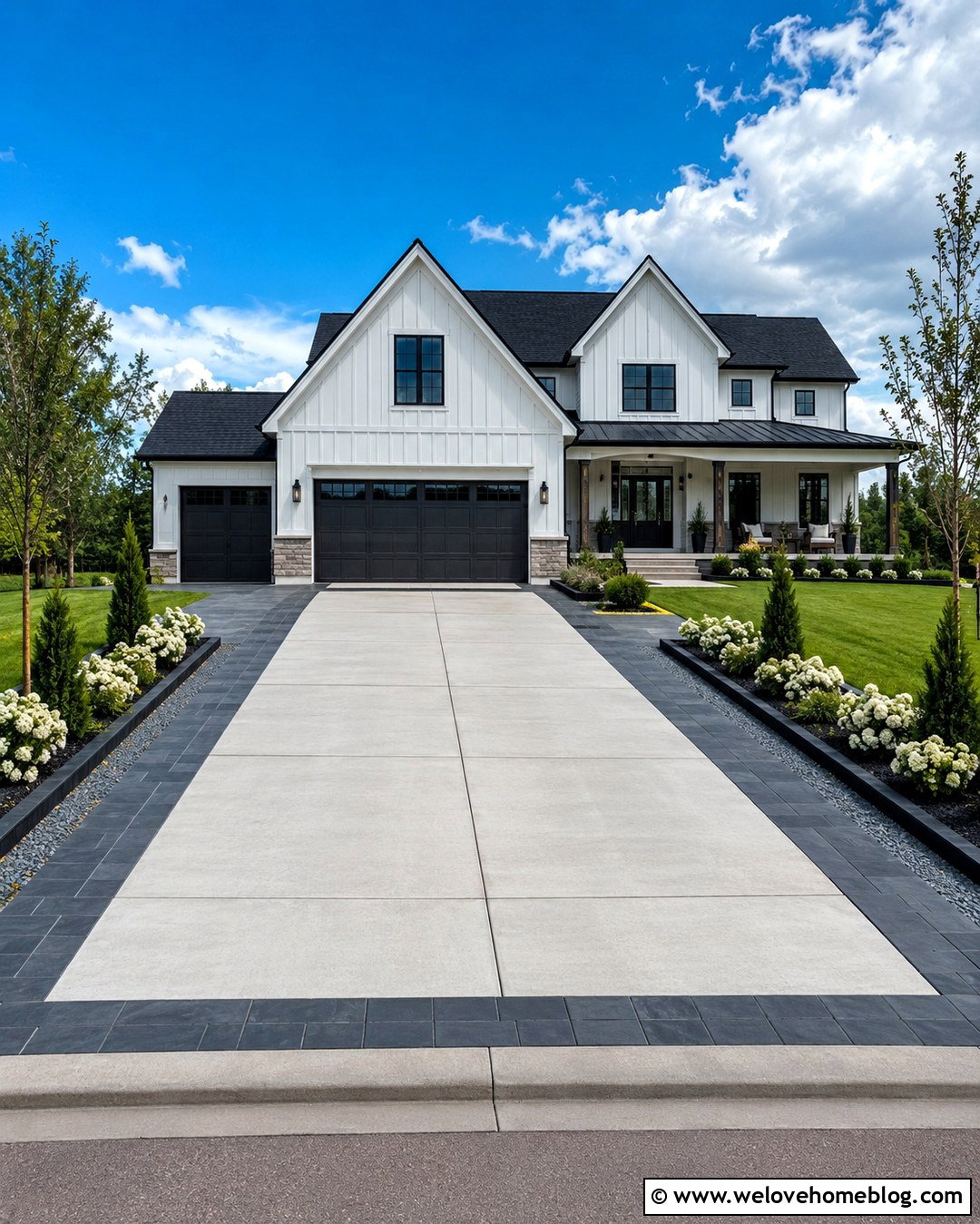
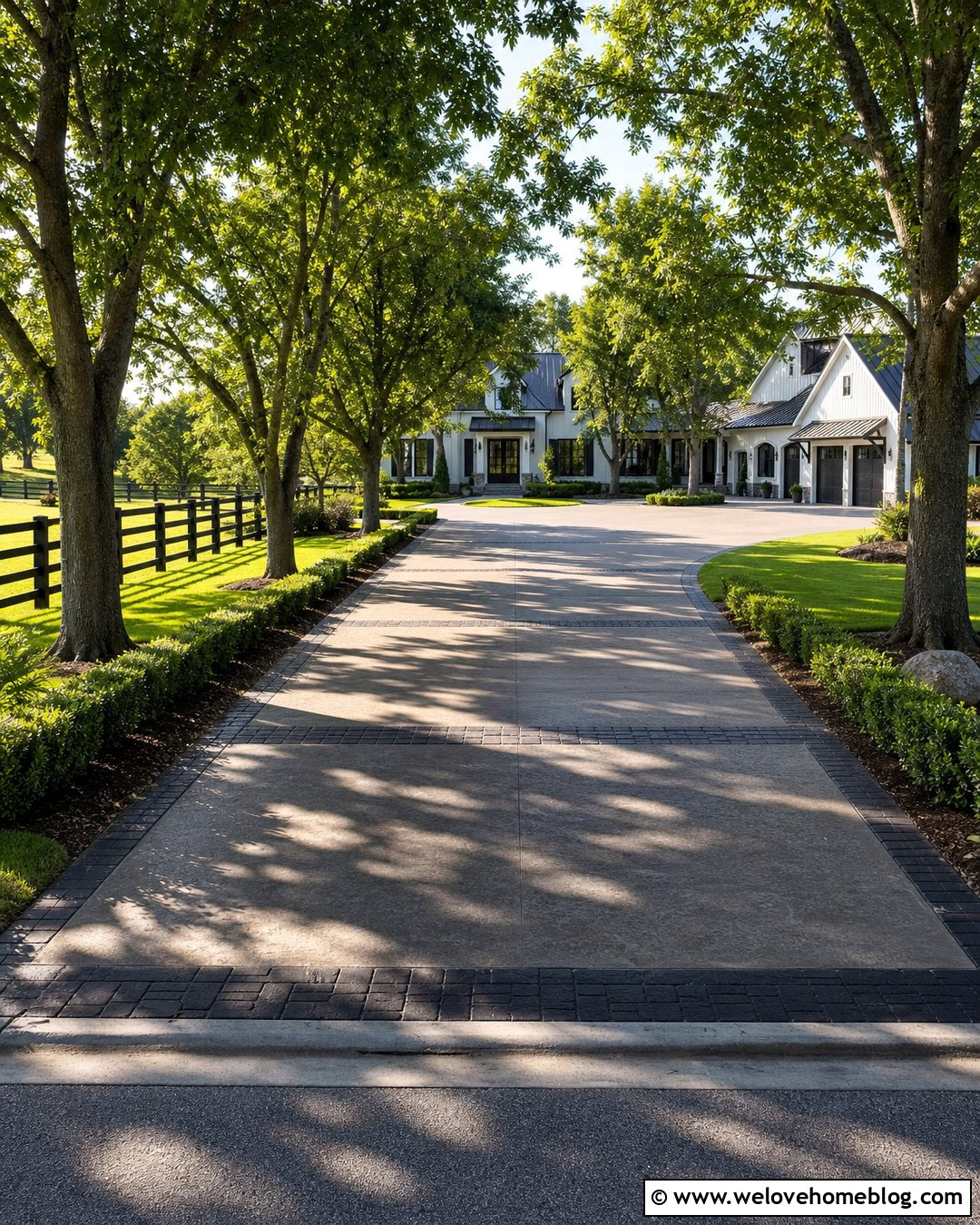
A contrasting paver extension can turn necessary extra parking space into a strong design feature. Start with a concrete driveway and add wide charcoal paver bands along both sides. Continue the dark pavers across the driveway near the sidewalk and garage to form a complete frame. This creates visual unity even when the new pavers do not match the older concrete perfectly. Large rectangular pavers arranged in a running bond pattern give the widening a clean, modern appearance. Frame the outer edges with straight planting beds containing evergreen shrubs, white flowers, and decorative gravel. The darker bands clearly show drivers where the expanded surface ends, helping protect the lawn. This full-width design pairs well with a modern farmhouse featuring black windows, light siding, and a simple garage door.
4. Permeable Paver Driveway Extension
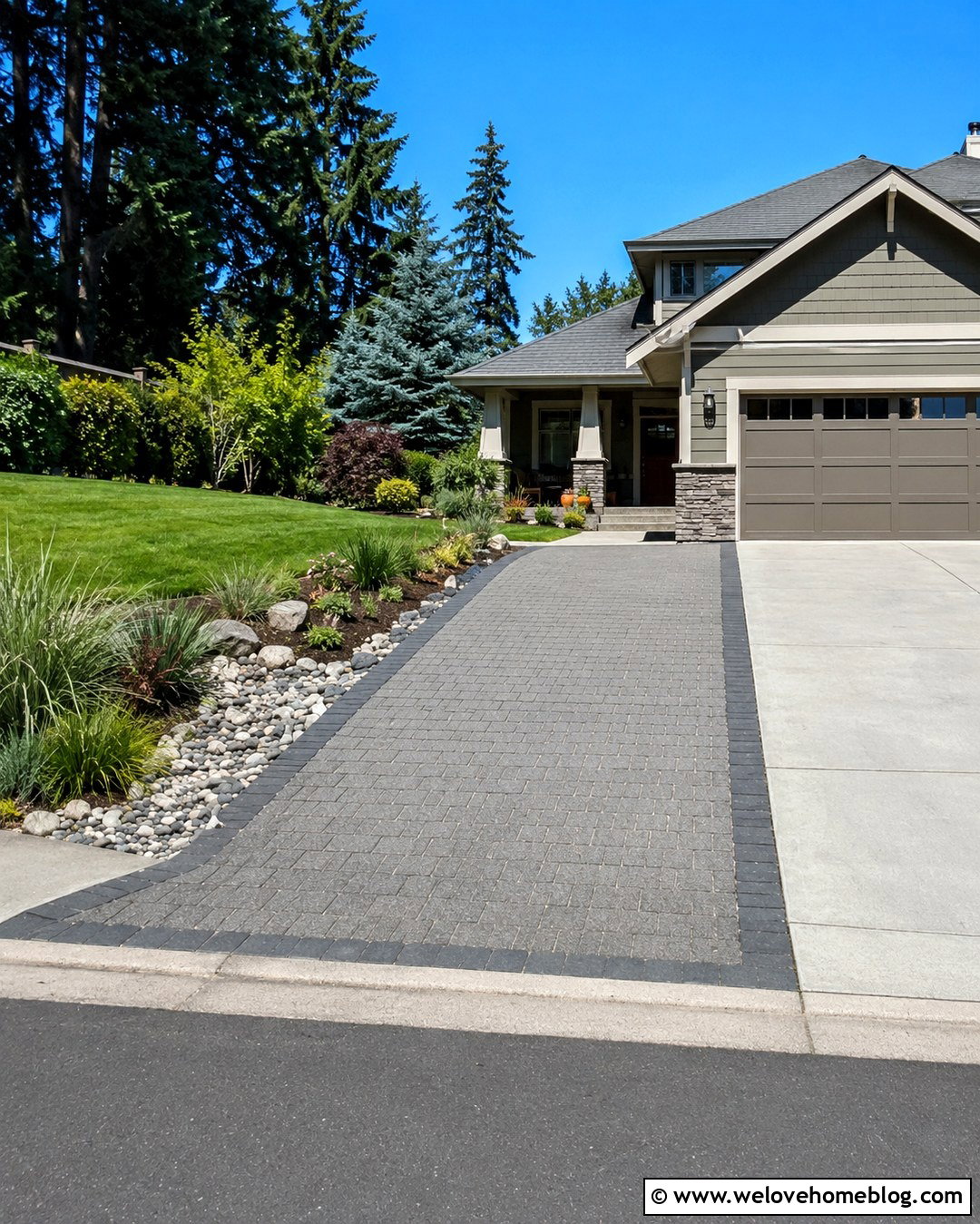
Permeable concrete pavers offer an attractive way to widen a driveway while supporting better on-site drainage. Use them as a broad extension beside an existing concrete or asphalt surface, especially where additional hardscaping could increase runoff. Select medium gray permeable pavers with stone-filled joints and install them over a properly designed open-graded base. A darker paver border can contain the pattern and separate it from nearby planting beds. Complete the design with a shallow rain garden, moisture-tolerant grasses, and a gently sloped lawn that receives excess water. The extension can function as guest parking while still looking integrated with the front landscape. Soil conditions and local stormwater rules matter, so have the drainage system evaluated before construction. Routine joint cleaning also helps maintain water movement through the paving.
5. Herringbone Paver Strip Beside A Narrow Driveway
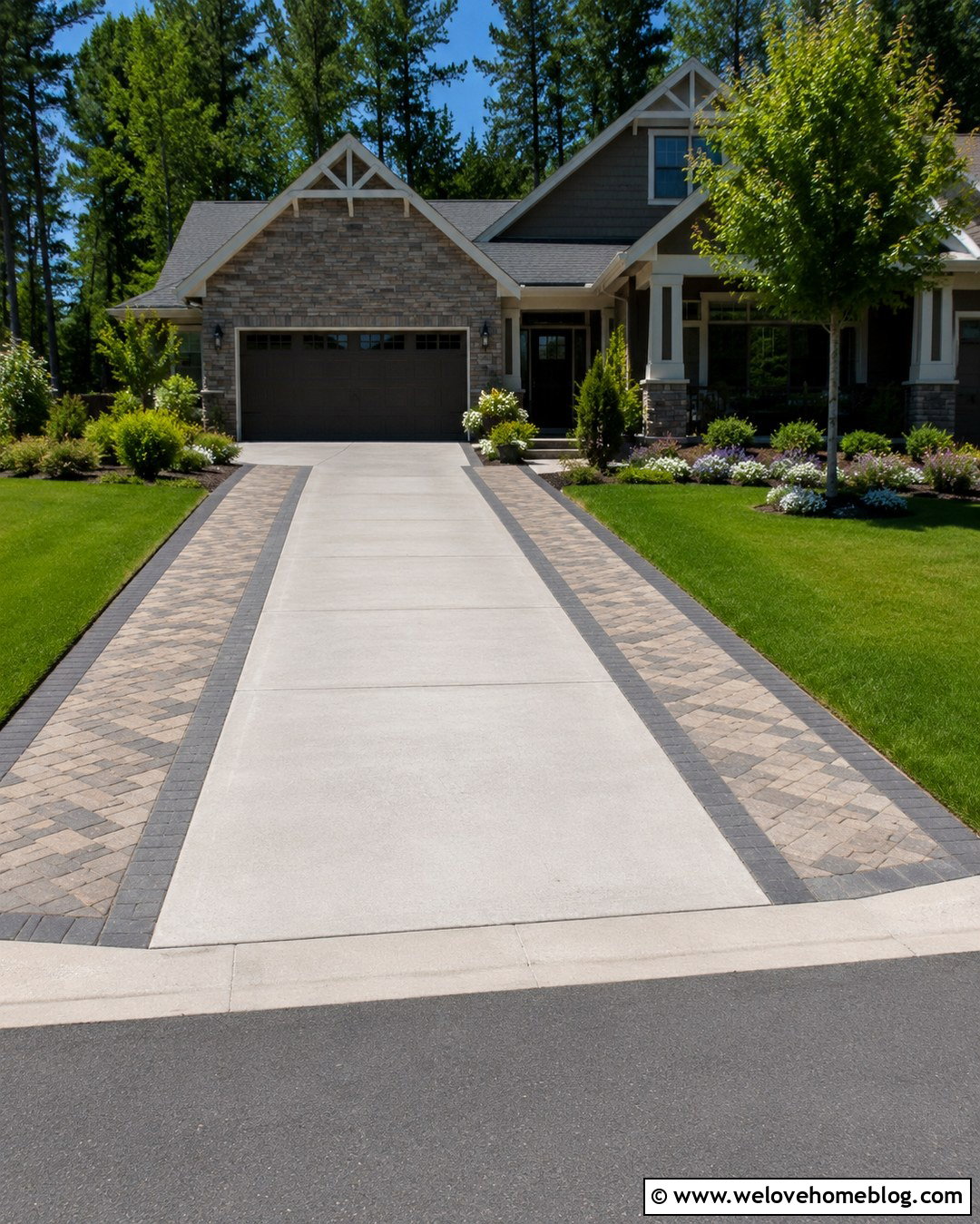
Does your driveway need just enough extra width to make opening car doors easier? A herringbone paver strip provides a practical shoulder without taking over the front yard. Install a two- to four-foot band of tan and charcoal concrete pavers beside a narrow poured concrete driveway. The interlocking herringbone layout handles turning movement visually and creates a textured contrast against the smooth slab. Continue the strip from the curb to the garage so it reads as part of the driveway rather than an unfinished patch. Add a dark soldier-course border on the lawn side, followed by low ground cover and compact shrubs. This restrained design works well for Craftsman homes with natural stone accents. A flush transition prevents an uncomfortable bump when tires or footsteps cross between the surfaces.
6. Driveway Extension With Large Format Pavers
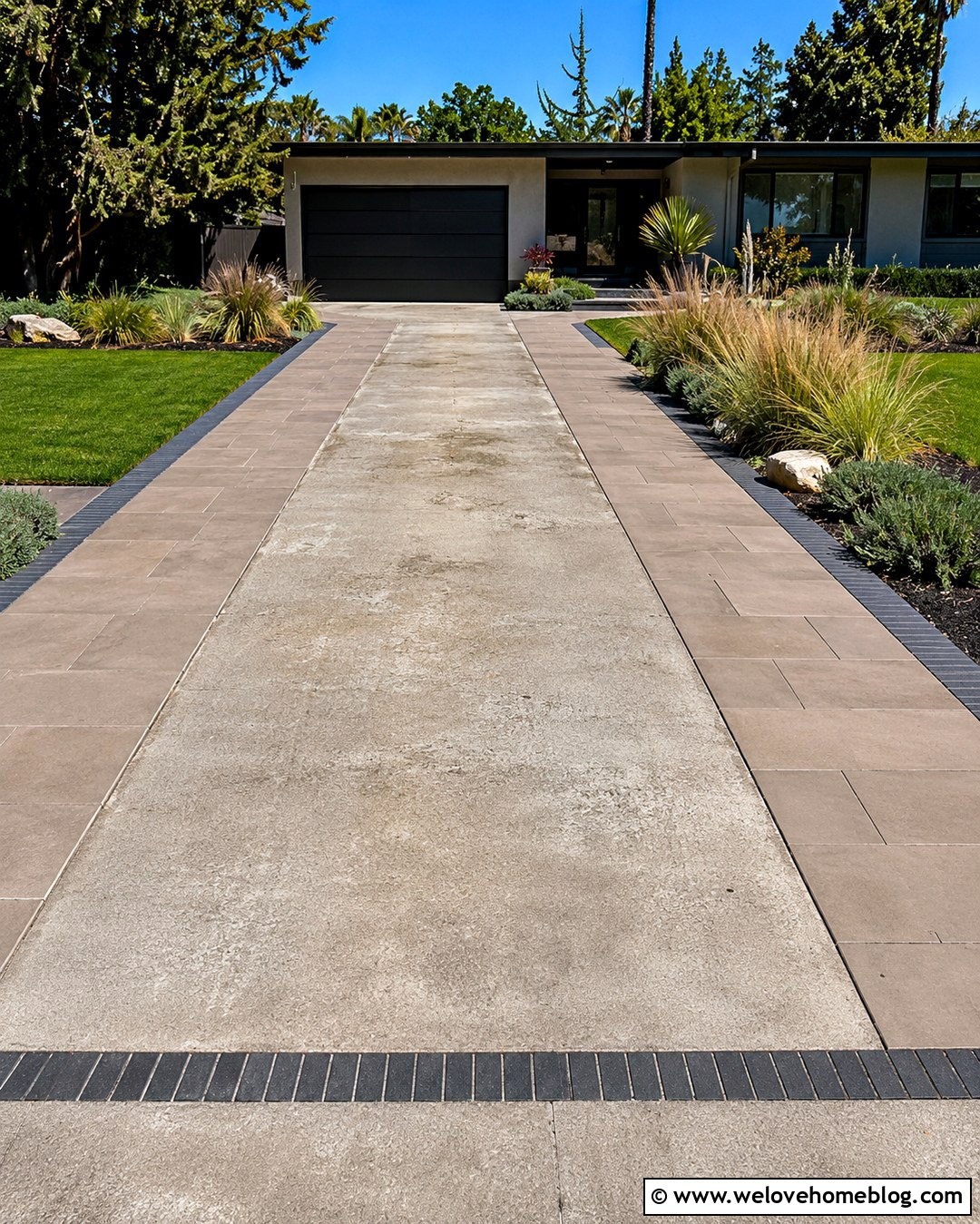
Large-format concrete pavers can give an older driveway a wider, more contemporary appearance. Place broad rectangular pavers along both sides of the existing concrete, using a staggered layout with narrow joints. Choose a warm gray or greige color that coordinates with the house facade instead of trying to copy weathered concrete exactly. Carry the same pavers across the garage apron or nearby walkway to make the extension feel planned. A slim charcoal border keeps the large units visually contained. Finish the surrounding yard with structured evergreen beds, ornamental grasses, and square lawn edges. This clean arrangement complements modern and midcentury homes, especially those with wide horizontal rooflines. Large pavers require excellent base preparation and complete support beneath each unit, since weak areas can lead to rocking or uneven settlement under vehicle weight.
7. Curved Driveway Widening With Tumbled Pavers
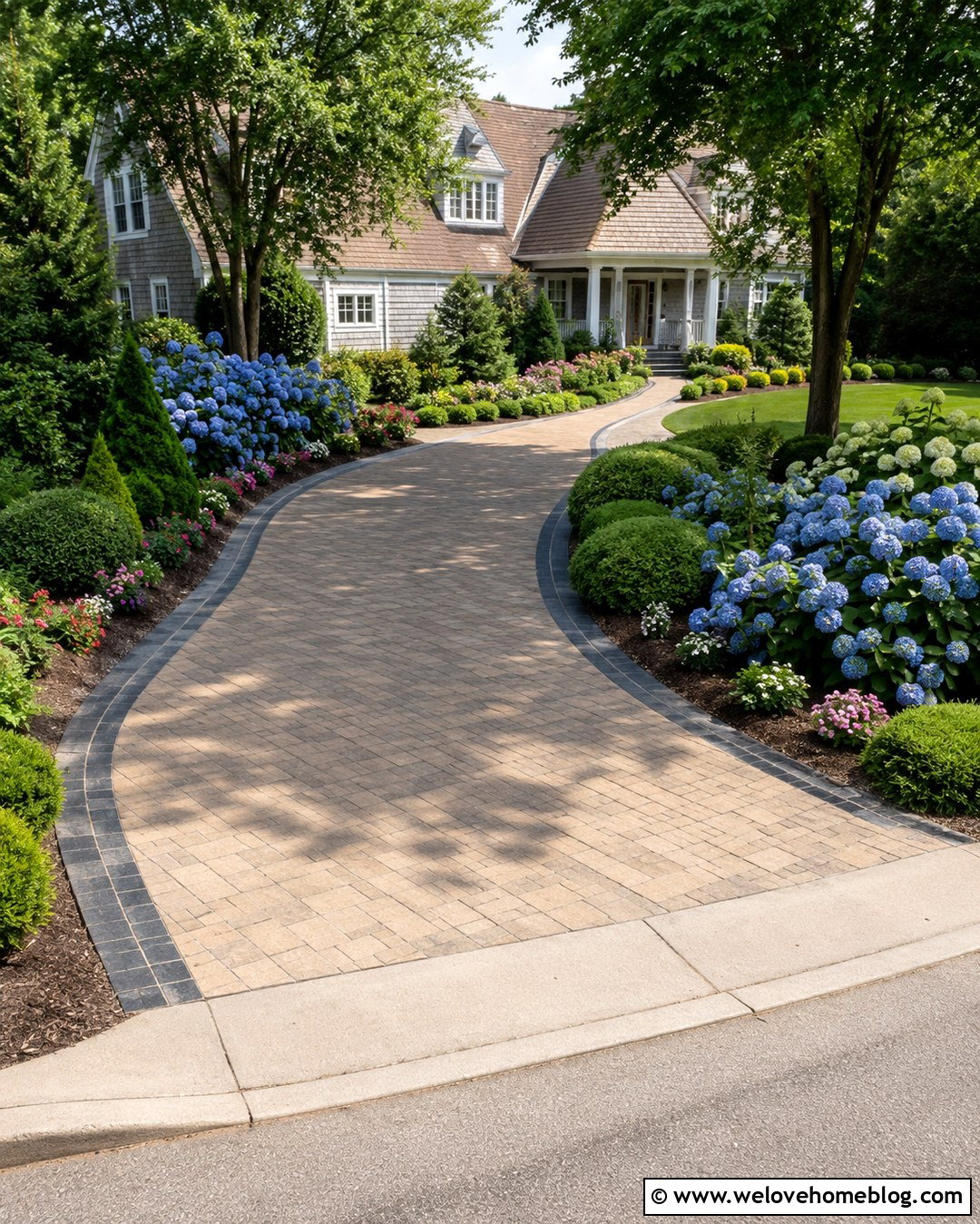
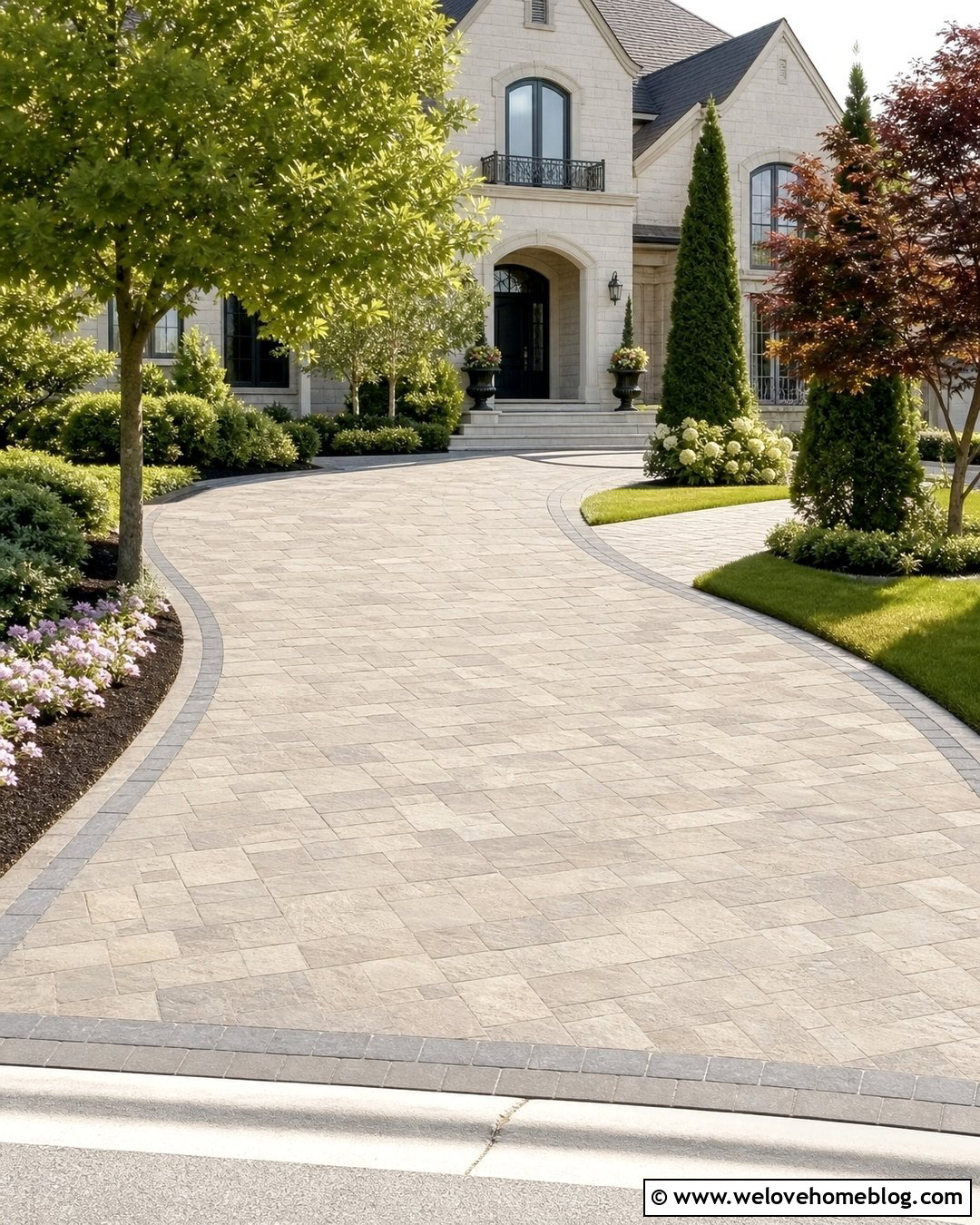
Soft curves can make a driveway extension blend naturally into a landscaped front yard. Widen one side of a curved concrete driveway with tan tumbled concrete pavers that have gently aged edges. Use a fan or running bond pattern that follows the driveway’s arc, then define the outside with a darker rounded border. Near the curb, flare the extension slightly to create a more comfortable entrance. Taper it closer to the house if full parking width is unnecessary near the garage. Curved beds filled with hydrangeas, dwarf evergreens, and flowering perennials reinforce the flowing layout. This complete look suits traditional, cottage, and Craftsman homes. Avoid tiny cut pieces along the bend because they can look busy and may be less stable. A carefully planned curve produces larger cuts and a cleaner finished edge.
8. Two Car Driveway With Paver Side Parking
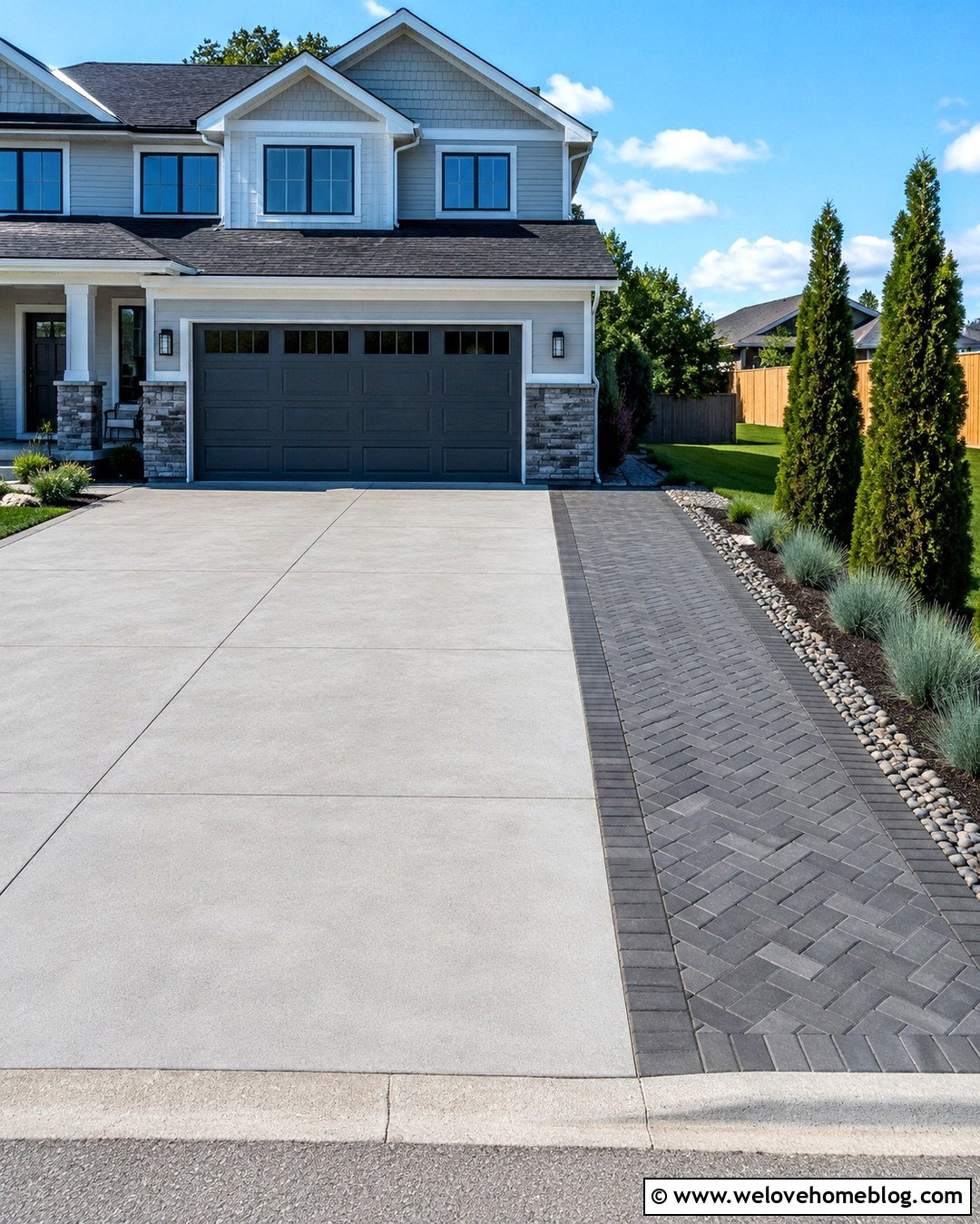
A full paver parking lane can transform a single-width driveway into space that works for two vehicles. Add a wide rectangular extension beside an existing concrete driveway, beginning at the curb and continuing toward the garage or side yard. Use charcoal and medium gray interlocking concrete pavers in a herringbone pattern for a durable, clearly defined parking surface. Separate the old and new materials with a straight border course that makes the transition intentional. Along the outside edge, create a narrow planting bed with upright evergreens, low grasses, and decorative stone. The landscaping should remain compact so branches do not interfere with parked vehicles. This practical arrangement fits a suburban two-story home and preserves a clear front walkway. Confirm that the widened entrance, curb cut, and parking position comply with local requirements before installation.
9. Driveway Turnaround Pad With Pavers
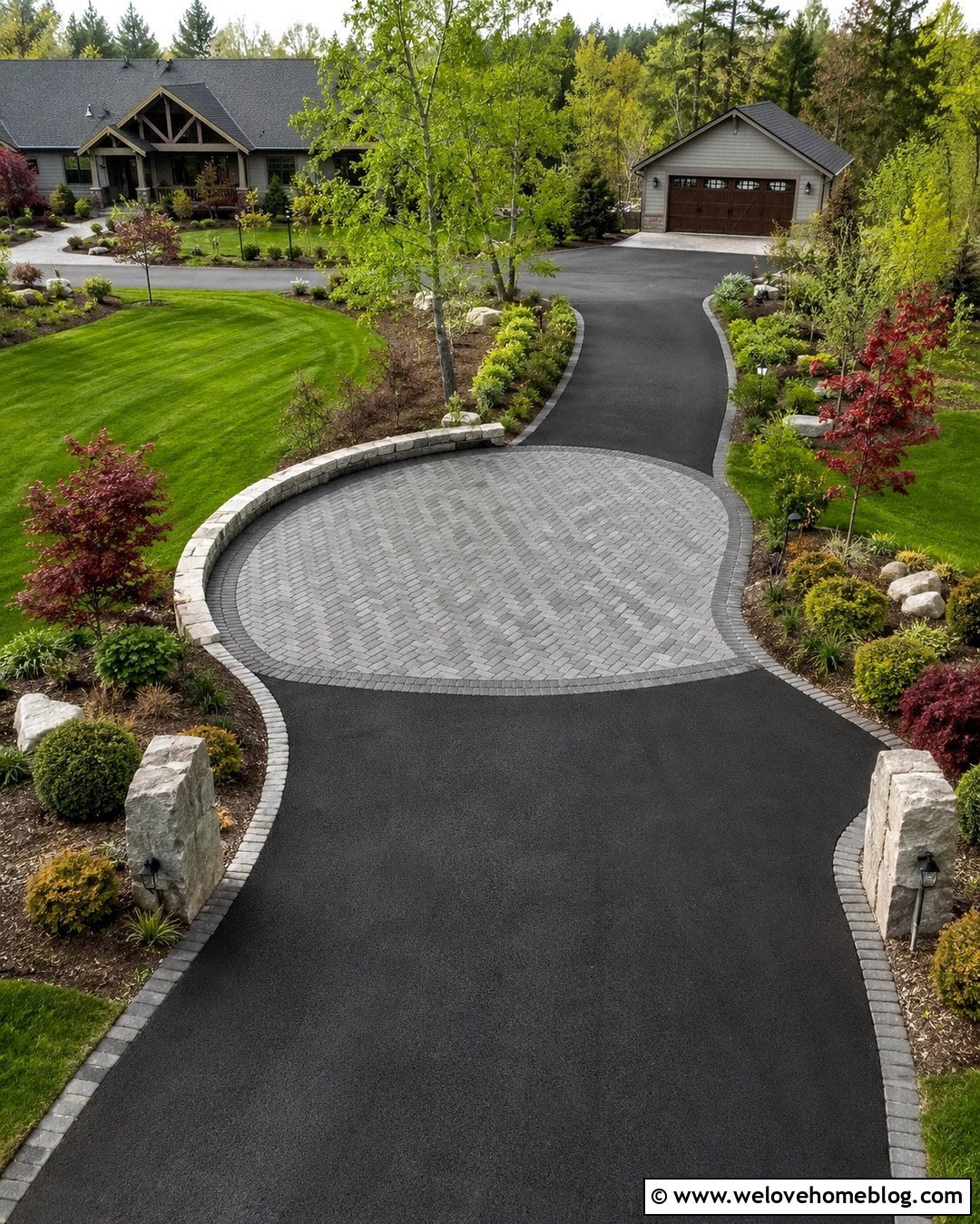
Sometimes the best widening project is a strategically placed turnaround pad rather than a full-length extension. Add a square or gently rounded paver bay near the garage where drivers need more space to reverse, turn, or park temporarily. Choose textured gray concrete pavers that coordinate with the existing asphalt or concrete driveway. A herringbone center surrounded by a contrasting soldier-course border gives the pad structure and helps it feel connected to the main approach. Frame the outer curve with a low stone retaining edge, compact shrubs, and a small ornamental tree. This design is useful on long driveways where backing toward the street feels inconvenient. Keep the planting clear of sightlines and allow enough paved room for the intended turning movement. Proper slope and drainage are particularly important where the pad meets the original surface.
10. Garage Apron Widening With Pavers
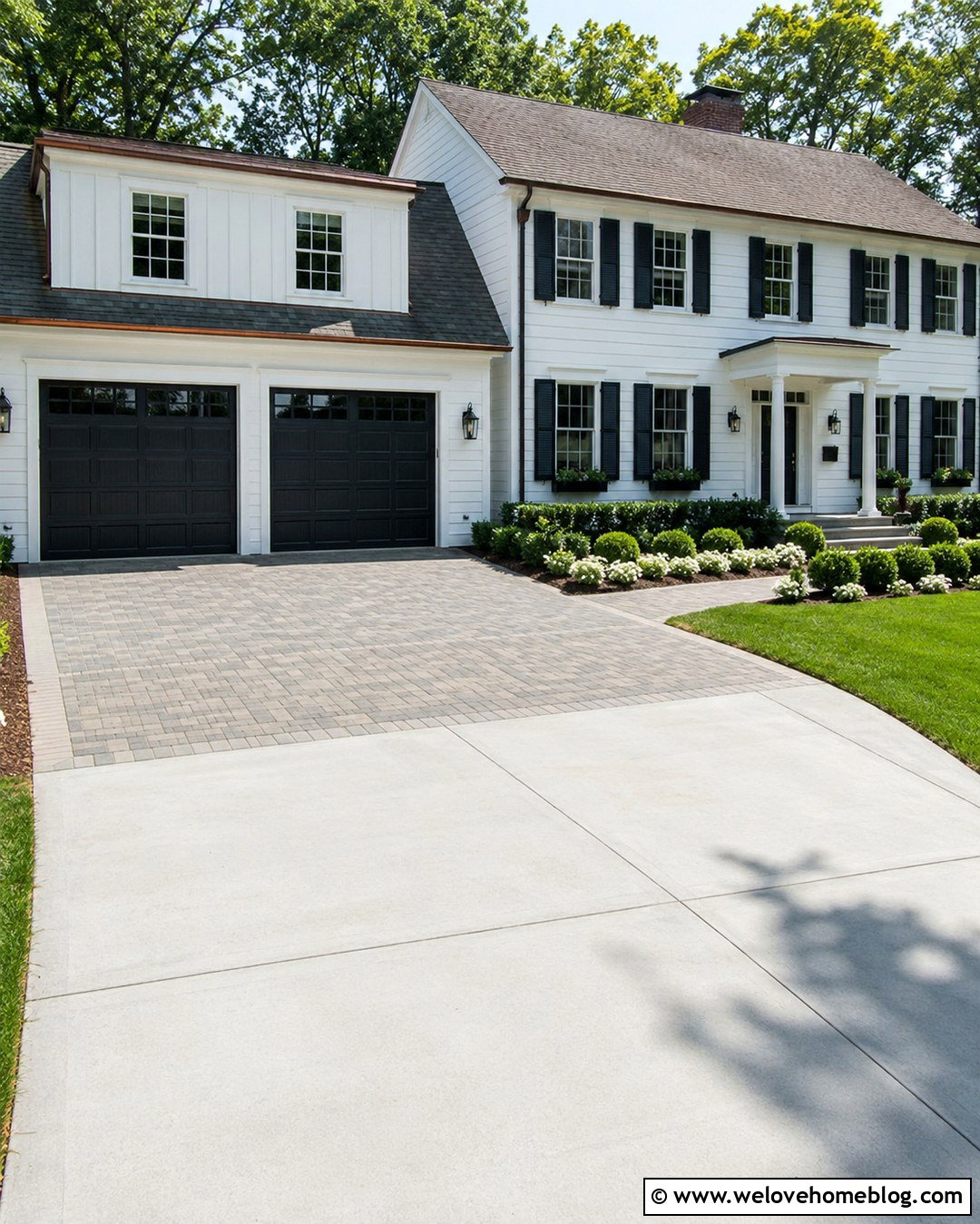
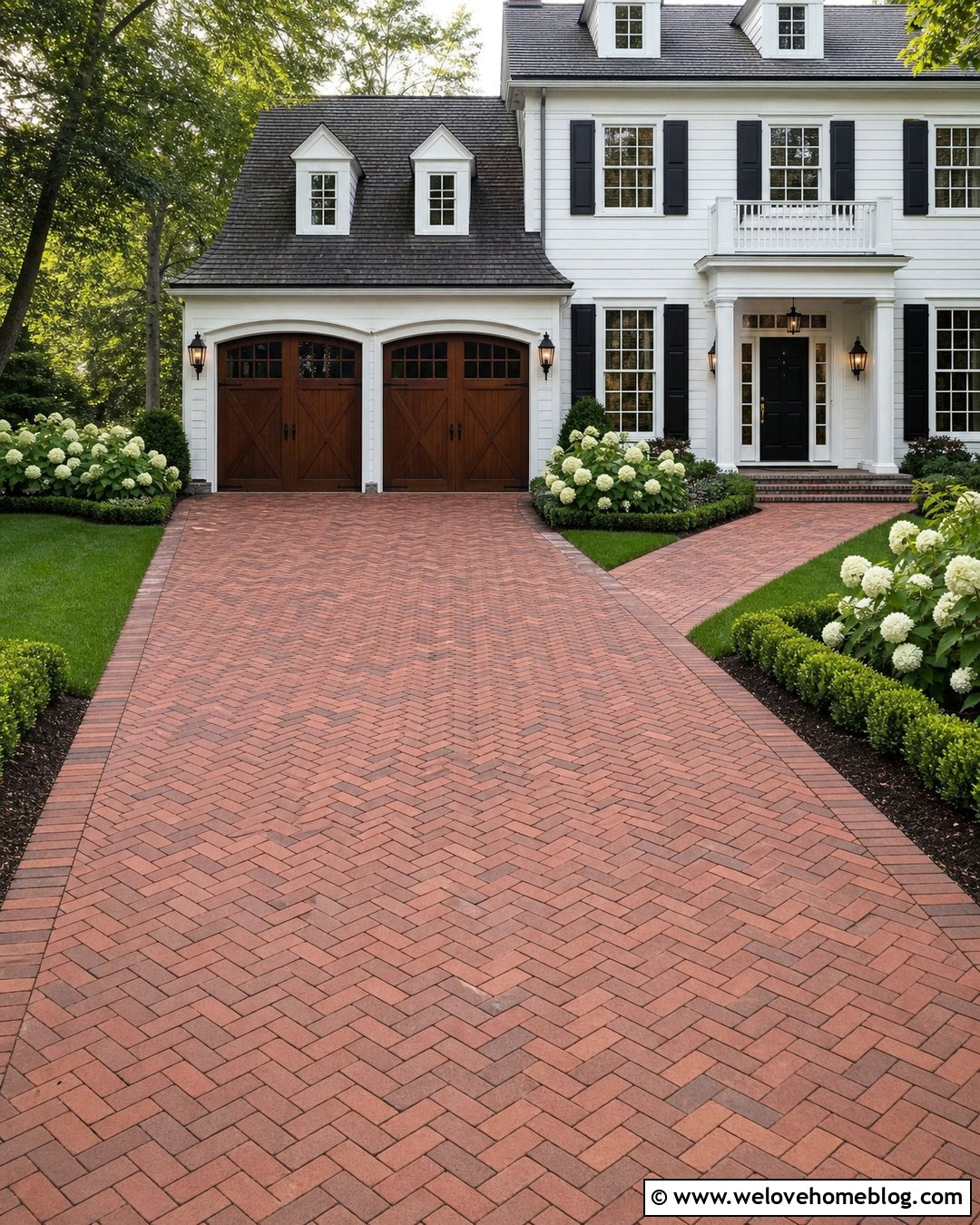
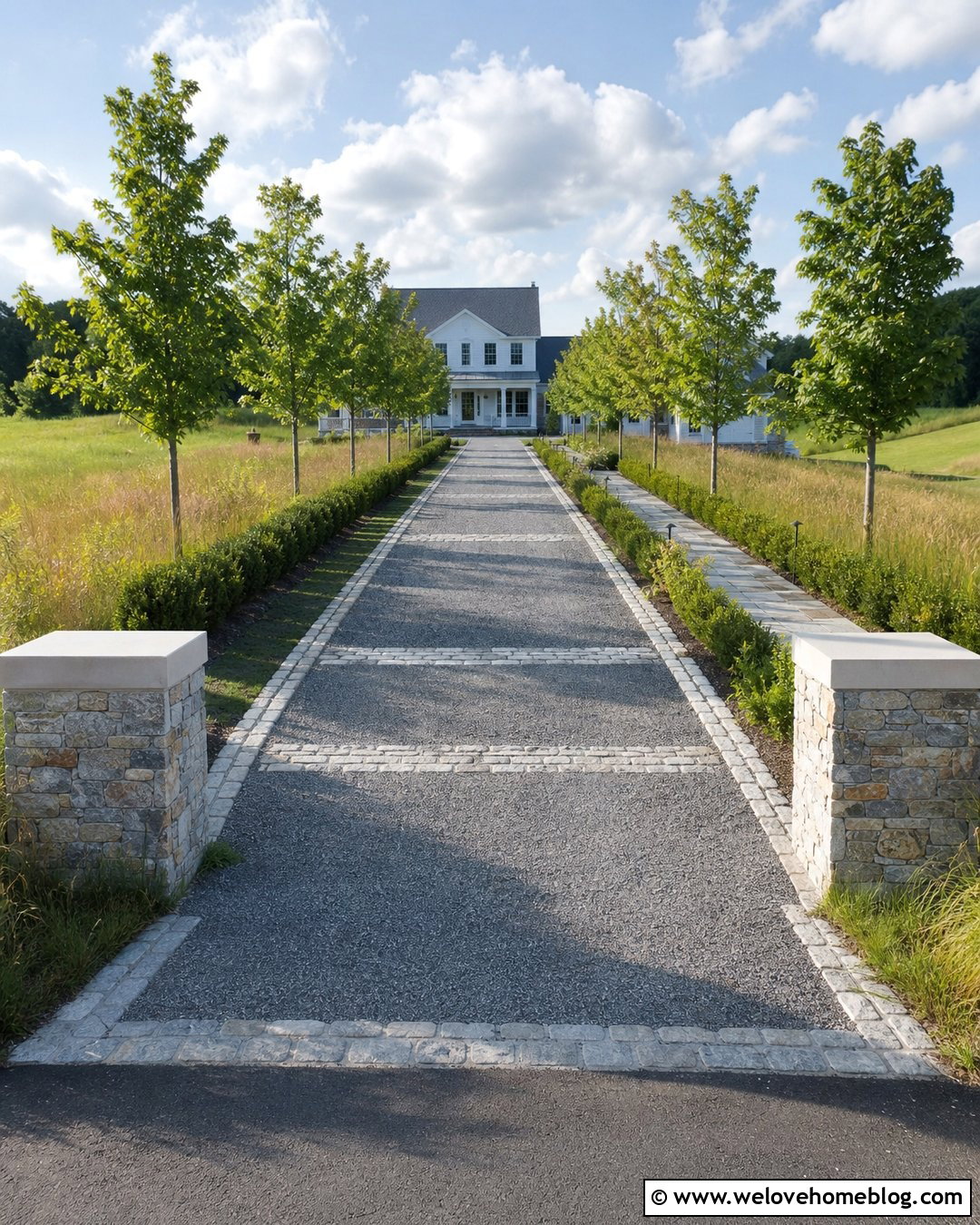
The narrowest part of many driveways is directly in front of the garage. Widening this area with pavers can provide more room for turning, unloading, and walking around parked vehicles. Install matching extensions on both sides of a poured concrete garage apron using warm gray rectangular pavers. Carry the pavers across the front as a decorative band, creating a framed transition between the driveway and garage doors. A running bond pattern feels orderly without competing with the house. Add symmetrical planting beds beyond the widened apron, using low boxwoods, seasonal flowers, and light-colored mulch. This balanced layout works beautifully with Colonial and traditional homes. Keep soil and plants away from garage trim, and ensure the paving slopes away from the building. Flush joints also reduce trip hazards where residents frequently enter and exit vehicles.
11. Brick House Driveway With Tan Paver Extension
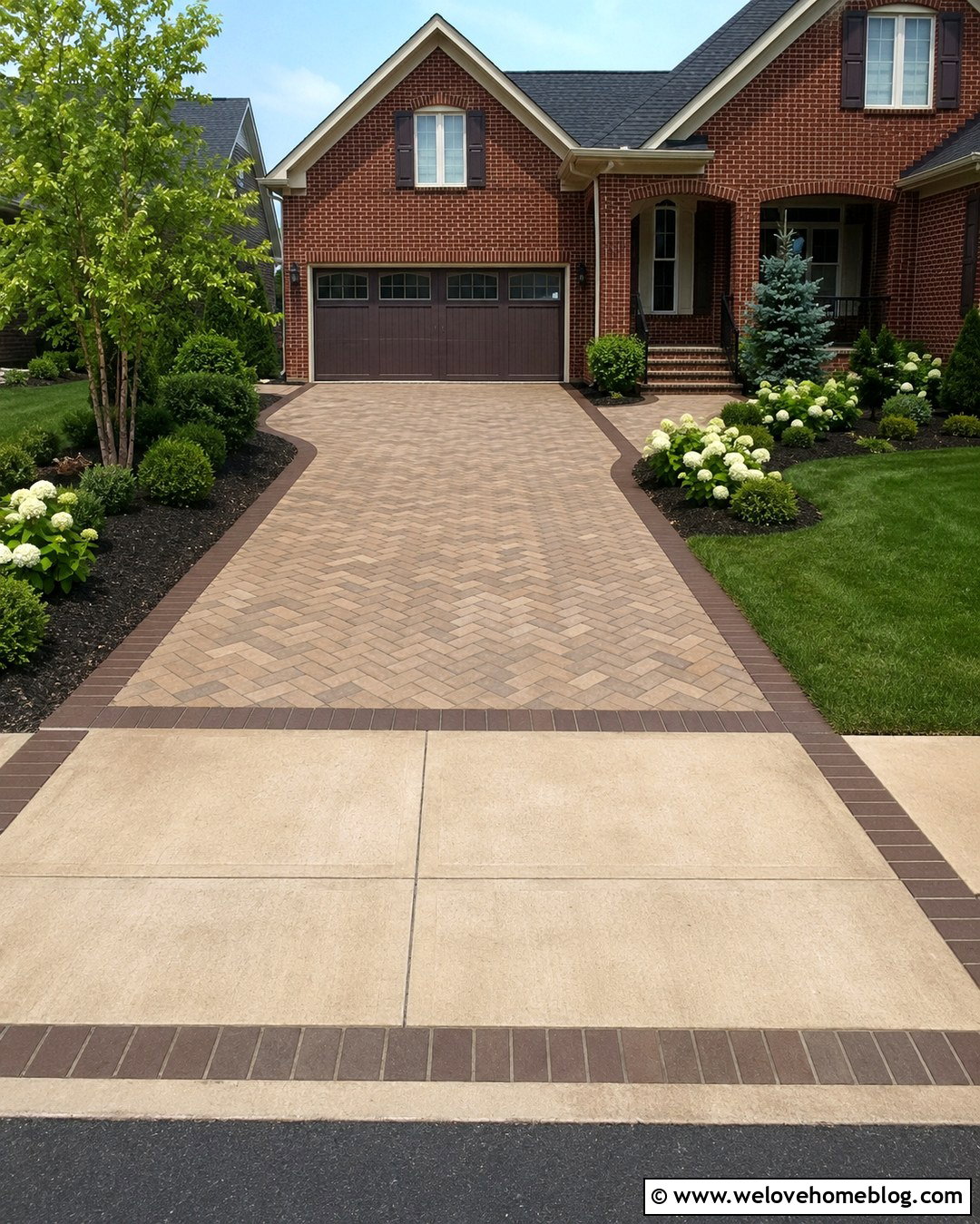
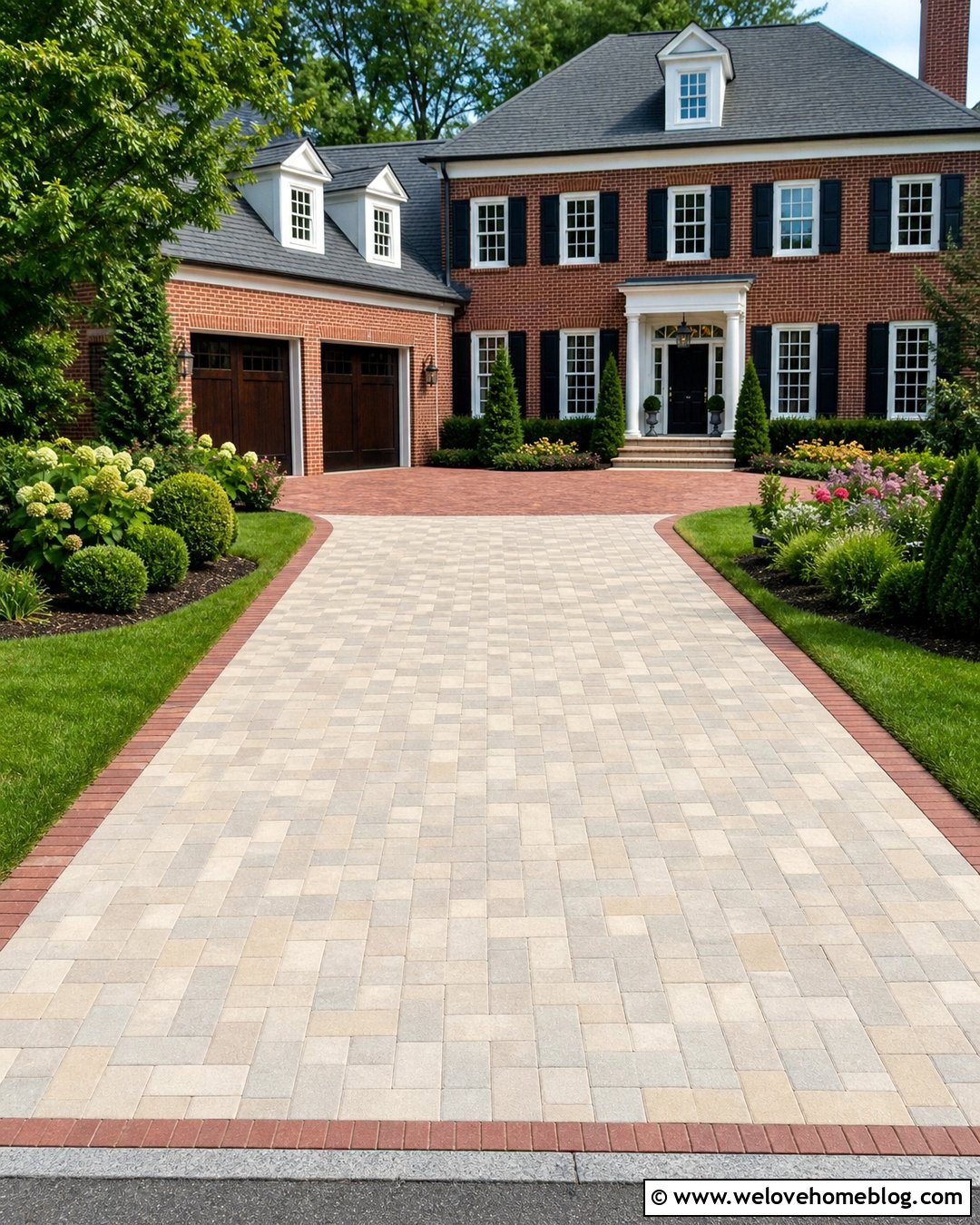
A red brick house often benefits from a softer paver color rather than more red masonry. Widen the concrete driveway with tan, buff, and muted brown concrete pavers that relate to the brick mortar and trim. Use a herringbone layout for the main extension and a deep brown soldier course around the edge. Extend the same pavers into the front walkway so both surfaces feel connected. Curved planting beds with glossy evergreens, white hydrangeas, and dark mulch can bridge the colors of the driveway and facade. This complete design adds parking space without making the front yard feel overly paved. Choose a blended paver finish that hides dust and minor staining. Where the extension meets the existing slab, maintain a neat, consistent joint and avoid creating a narrow channel that could trap water or collect debris.
12. Modern Driveway With Black Paver Side Bands
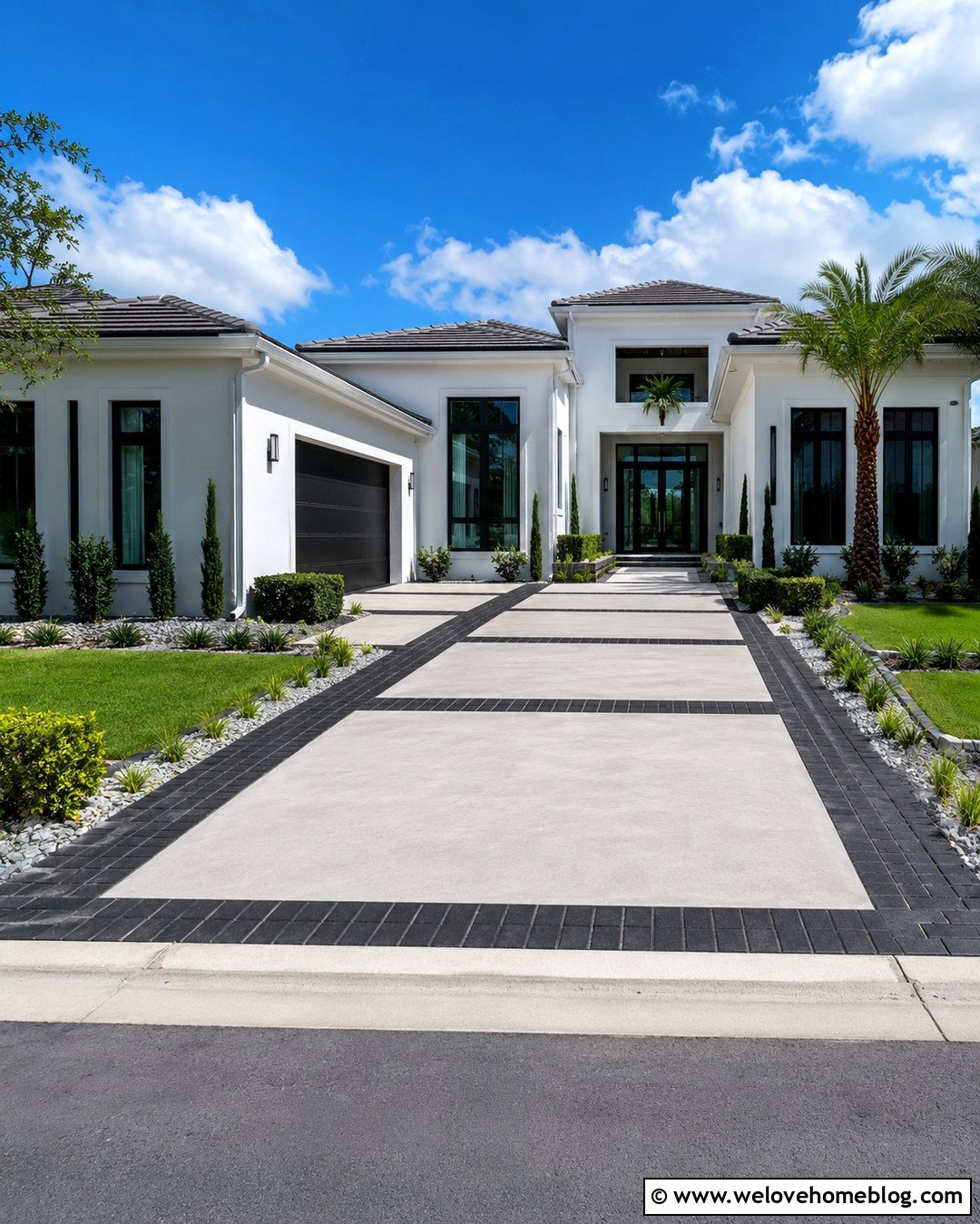
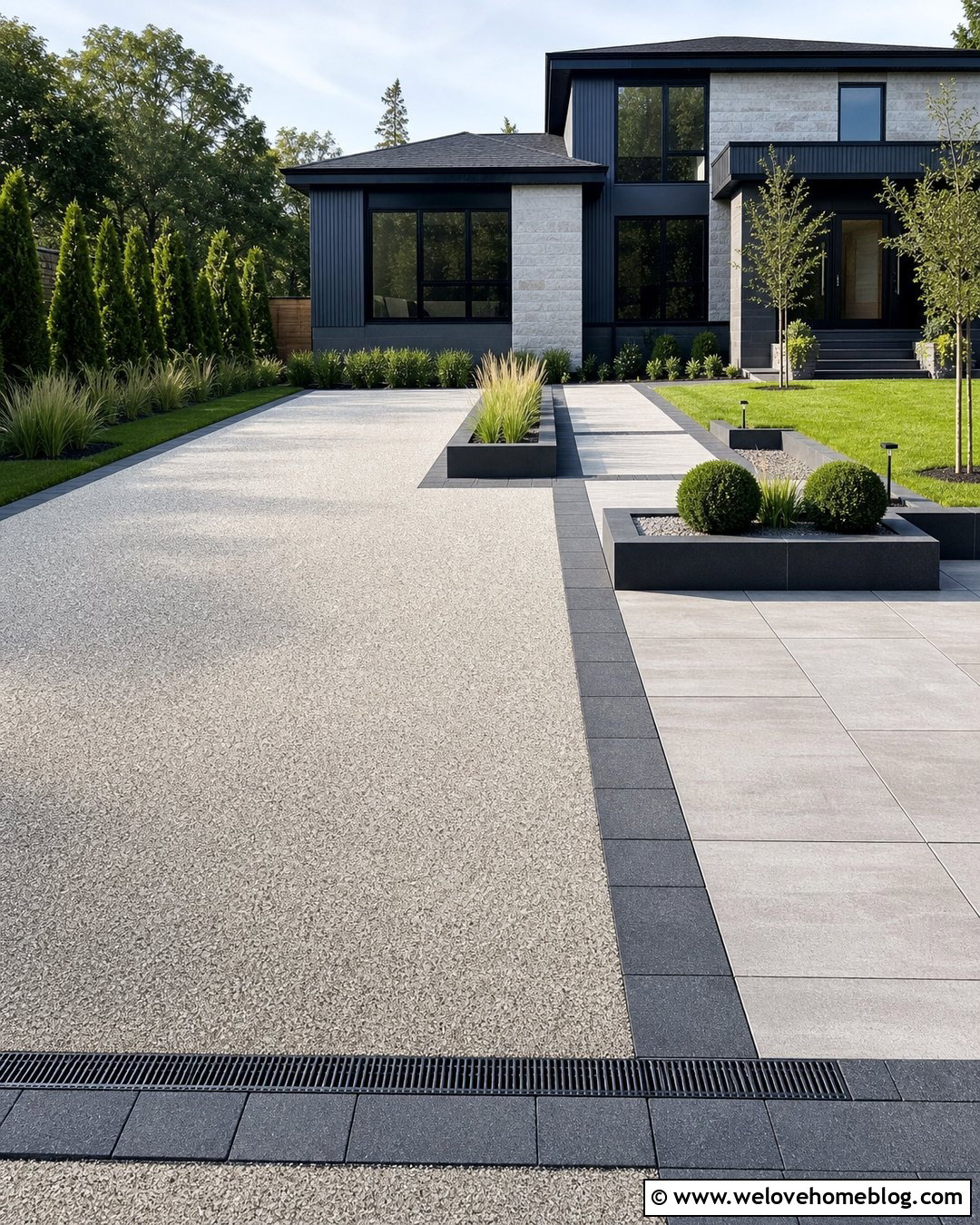
Crisp black paver bands can make a basic driveway look wider and more architectural. Add broad charcoal or near-black concrete pavers to both sides of a light gray concrete surface. Lay the pavers in a straight stacked bond or elongated running bond to emphasize the route toward the garage. Repeat the dark material as a crossband near the curb and another near the garage doors. This visual framing ties the side extensions together. Keep the landscaping minimal with linear beds, clipped shrubs, ornamental grasses, and pale decorative rock. A modern house with white stucco, black-framed windows, and a flat or low-pitched roof completes the look. Dark pavers can become hot in strong sunlight, so consider climate and surface exposure. Precise grading and clean edge restraints are essential for maintaining the sharp geometric lines.
13. Farmhouse Driveway With Cobblestone Paver Edges
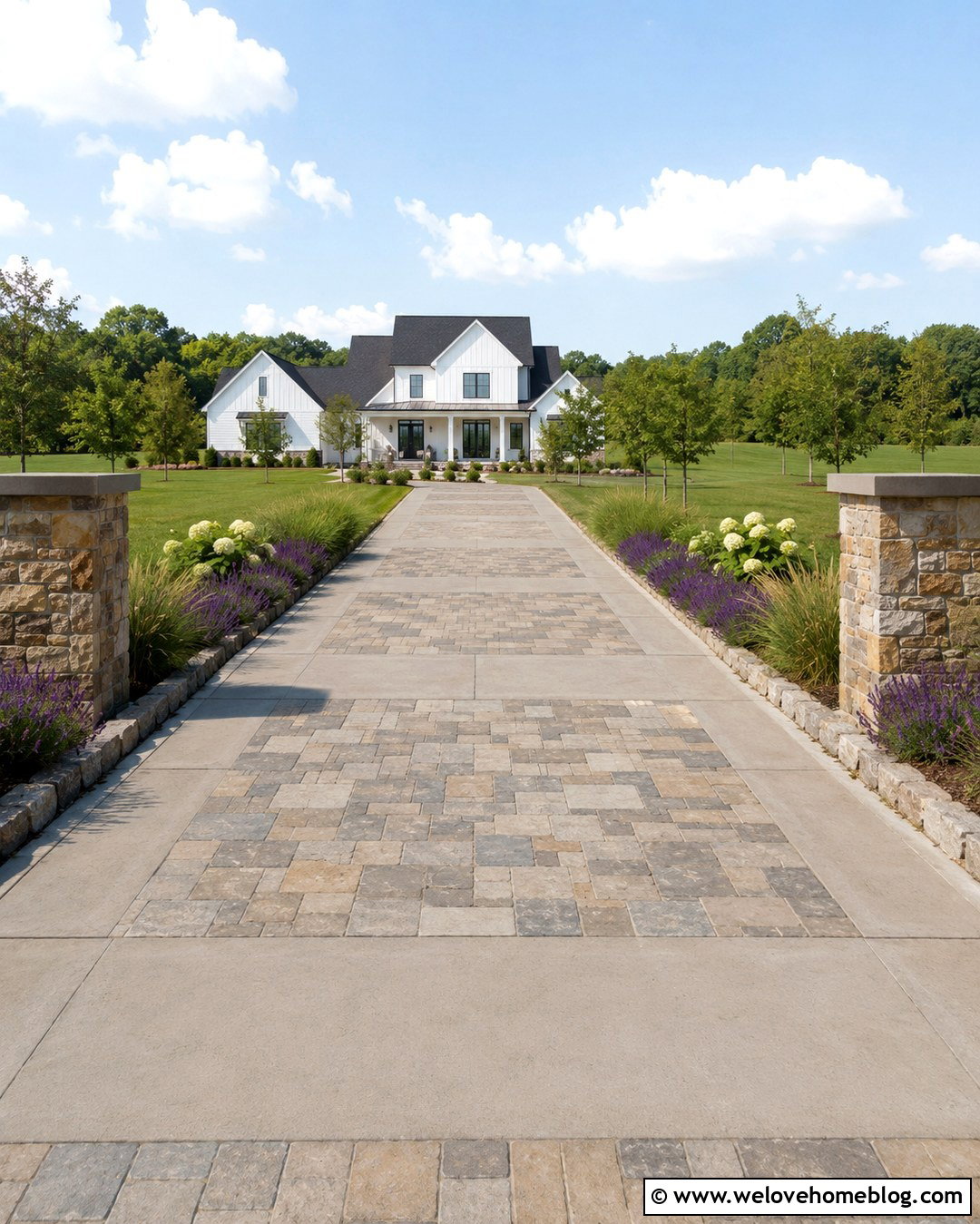
For a rural or modern farmhouse setting, cobblestone-style pavers can widen a driveway while adding an established, traditional feel. Install broad bands of gray and brown tumbled concrete cobbles beside a poured concrete or compacted gravel center. Make each side wide enough to support tires, not merely function as decorative edging. A random rectangular pattern keeps the surface relaxed and complements natural materials. Frame the outer edges with low fieldstone curbing and long beds of lavender, ornamental grasses, and white flowering shrubs. Near the road, widen the paver bands around simple stone entrance pillars to create a welcoming approach. The farmhouse in the background might feature white siding, a dark roof, and timber details. Use vehicle-rated pavers with a strong compacted base so the rustic appearance still performs as dependable parking space.
14. Driveway Widening With Grass Joint Pavers
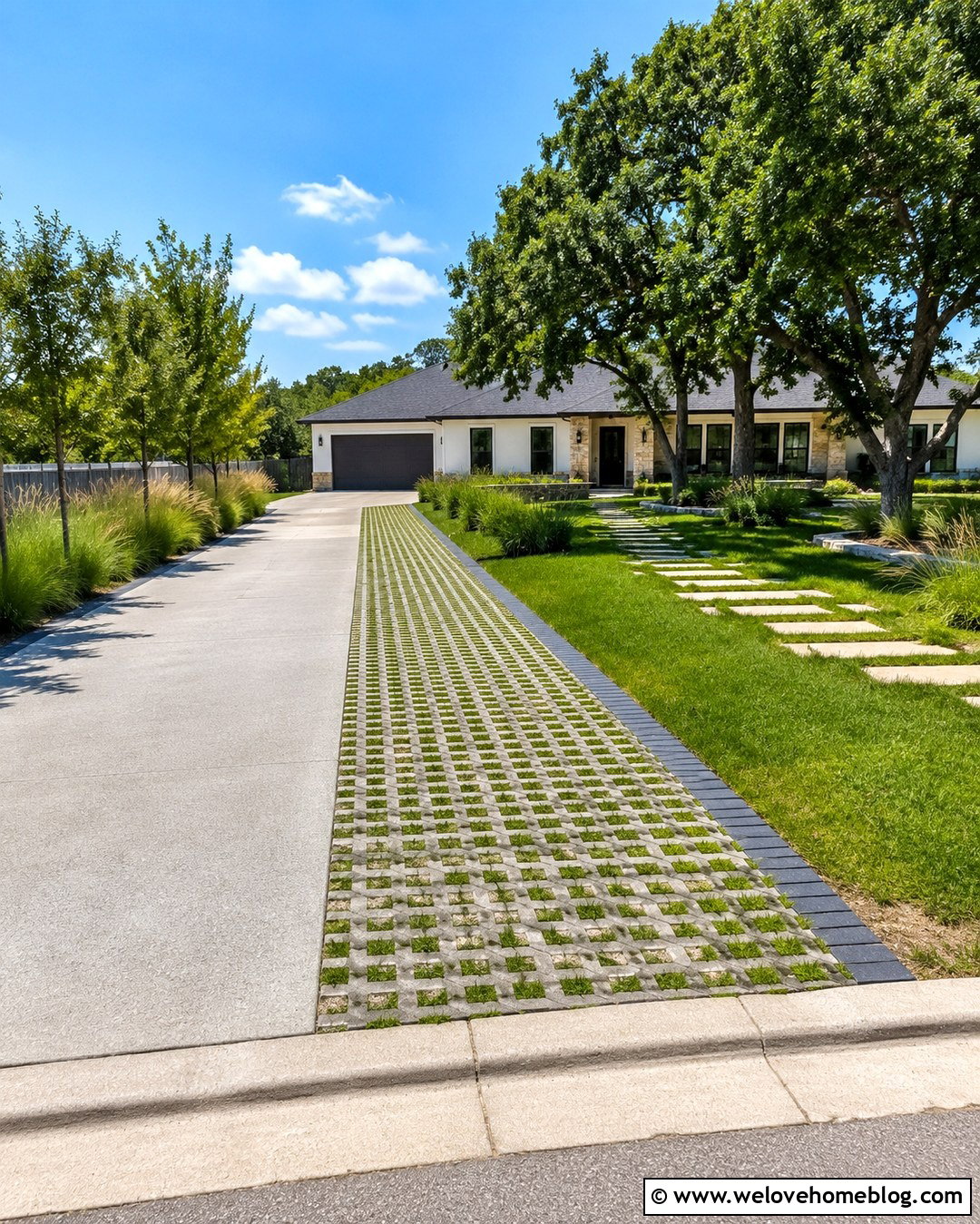
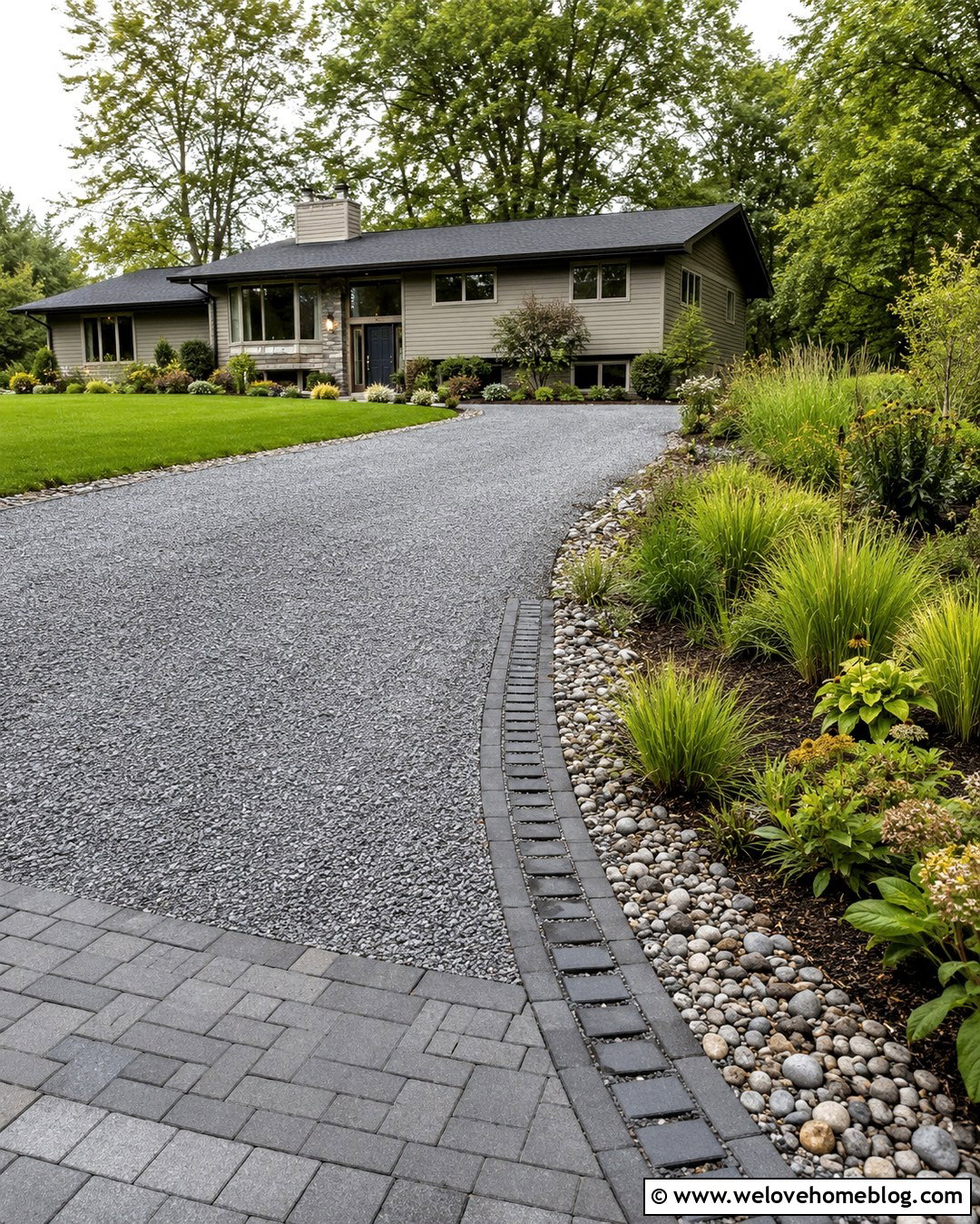
Grass-joint pavers can preserve a greener front-yard appearance while creating an occasional parking shoulder. Add concrete grid pavers or open-joint permeable units along one side of an existing driveway. Fill the openings with a suitable grass blend or small clean aggregate, depending on climate, sun exposure, and maintenance needs. A solid paver border between the main driveway and grid area creates a smooth, readable transition. Continue the green extension from the curb toward the house, then taper it into the lawn before reaching prominent front landscaping. Native grasses, small shrubs, and a simple stepping-stone walkway support the natural look. This treatment works best where the extension receives lighter or occasional use. Frequent parking may weaken grass growth, so aggregate-filled openings can be a more practical choice for heavily used areas or difficult growing conditions.

15. Sloped Driveway Extension With Textured Pavers
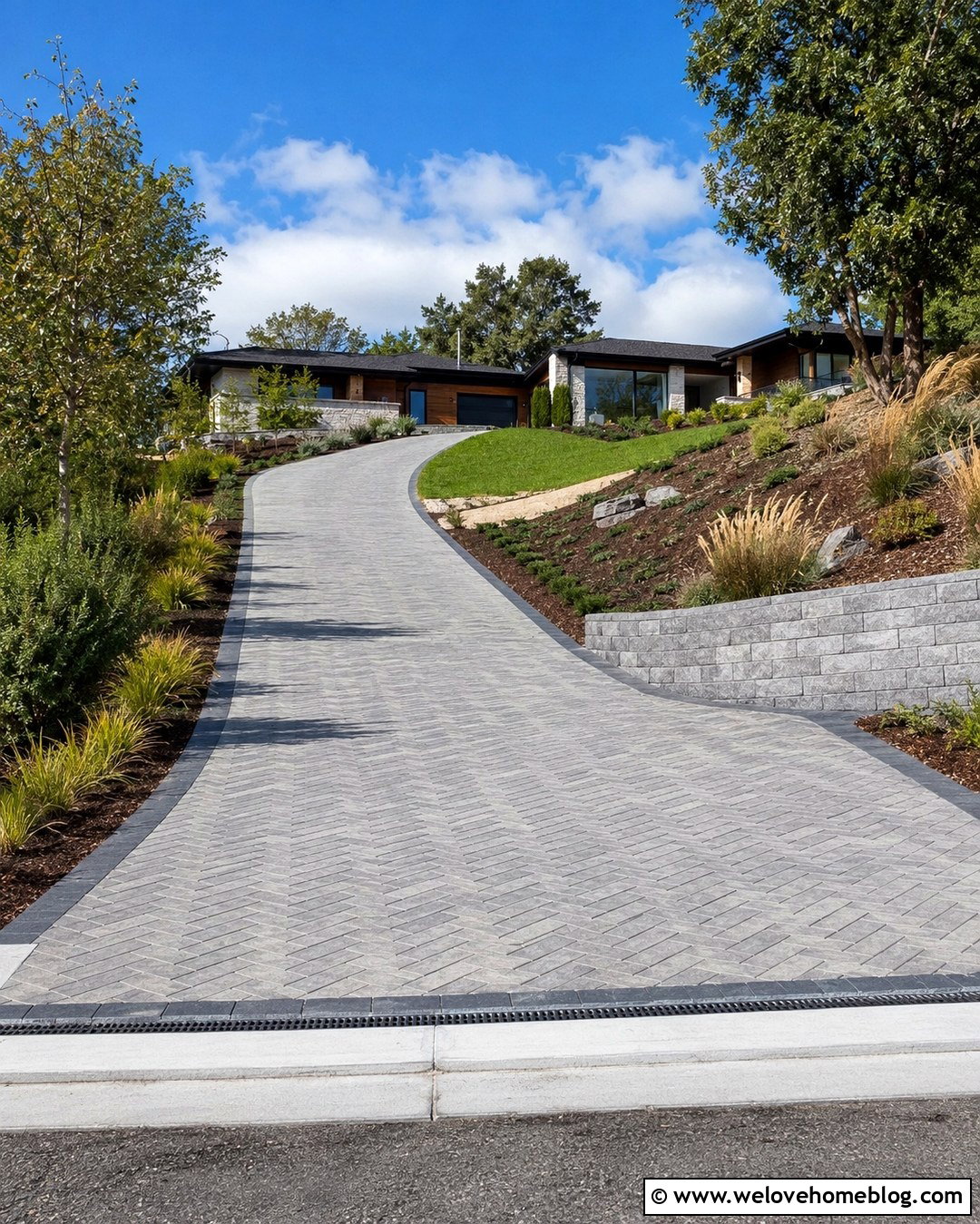
A sloped driveway needs a widening design that provides visual traction, stable edges, and controlled drainage. Use textured concrete pavers in a herringbone pattern along the lower side of an existing concrete driveway. Medium gray pavers with a charcoal border create a clear parking shoulder while disguising everyday dirt. If the yard drops away, support the outer edge with an engineered low retaining wall that follows the driveway’s grade. Plant the slope with deep-rooted ground covers, compact shrubs, and ornamental grasses to reduce exposed soil. Add a drainage channel where necessary so water does not rush across the new extension or collect near the garage. This structured look suits a hillside ranch or contemporary home. Because slope conditions vary, professional grading and base design are valuable for preventing movement, edge failure, and uneven settlement.
16. Driveway Widening With A Paver Walkway
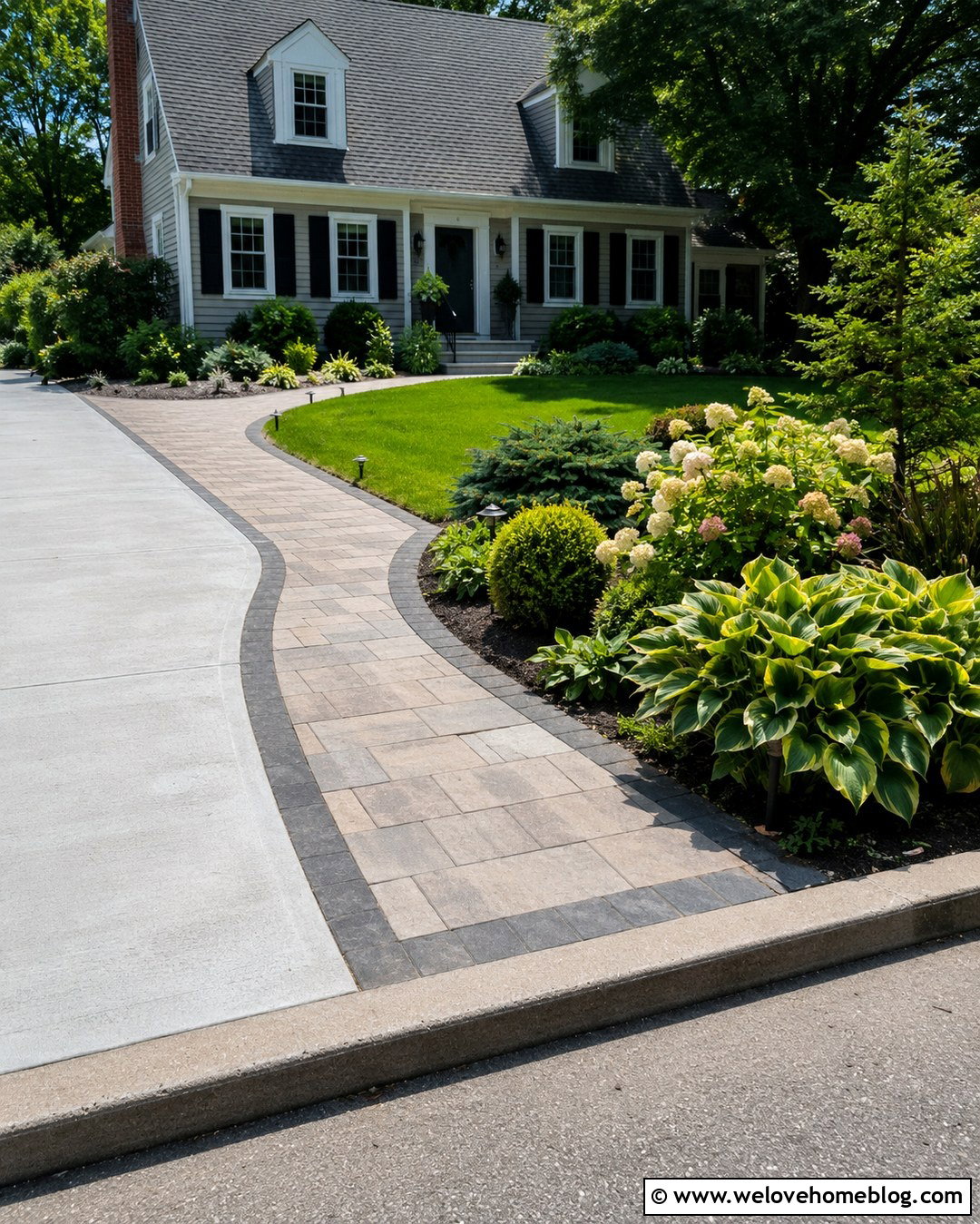
Combining the driveway extension with a walkway allows one paved area to solve two problems. Add a four-foot strip of beige and gray concrete pavers beside a narrow concrete driveway, making it sturdy enough for occasional tire use but comfortable for pedestrians. At the front yard, curve the paver strip toward the porch to form a generous walkway. Use a running bond pattern on the long section and a matching border around the curve. A slightly darker edge helps separate the route from planting beds filled with hostas, hydrangeas, and low evergreens. This connected design reduces the need for another path across the lawn. It works especially well with Cape Cod and cottage homes. Keep the walking surface flush, smooth, and well lit, while ensuring any section used by vehicles has an appropriate structural base.
17. Reclaimed Brick Paver Driveway Extension
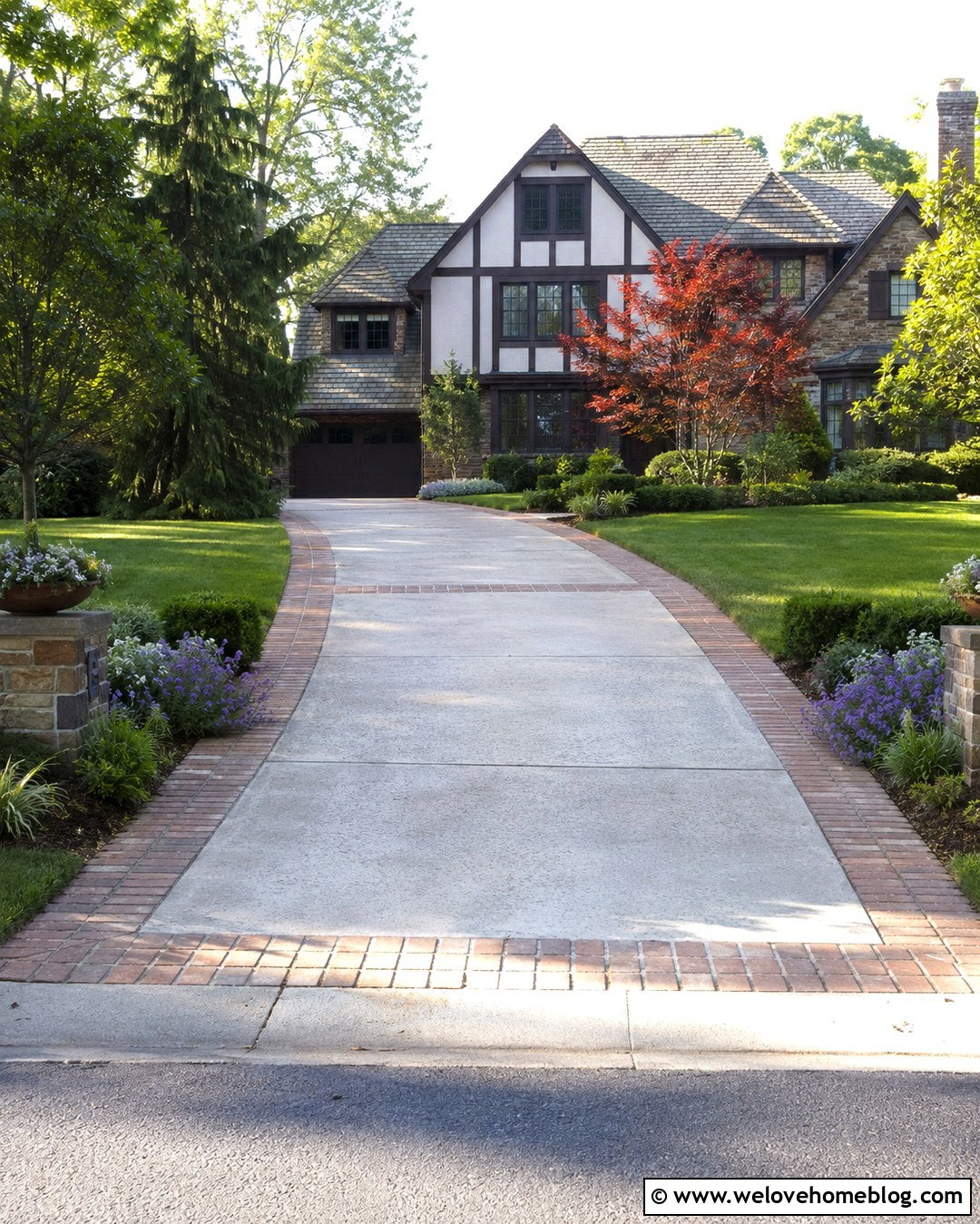
Weathered reclaimed brick can give a driveway extension instant character, particularly beside an older home. Use dense, sound bricks that are suitable for exterior paving and expected vehicle loads rather than ordinary soft wall bricks. Arrange the extension in a traditional herringbone pattern with a straight brick border along the existing concrete driveway. Subtle differences in red, brown, and charcoal create a rich surface that does not need to match the older slab. Continue a narrow ribbon of the same brick across the driveway for visual connection. Frame the outside with cottage planting beds, low hedges, and an ornamental tree. This look complements Tudor, Colonial, and historic-inspired houses. Reclaimed materials should be sorted carefully for consistent thickness and condition. Proper edge restraint will help prevent the varied units from shifting under turning tires.
18. Driveway Pull Off With Paver Parking Bay
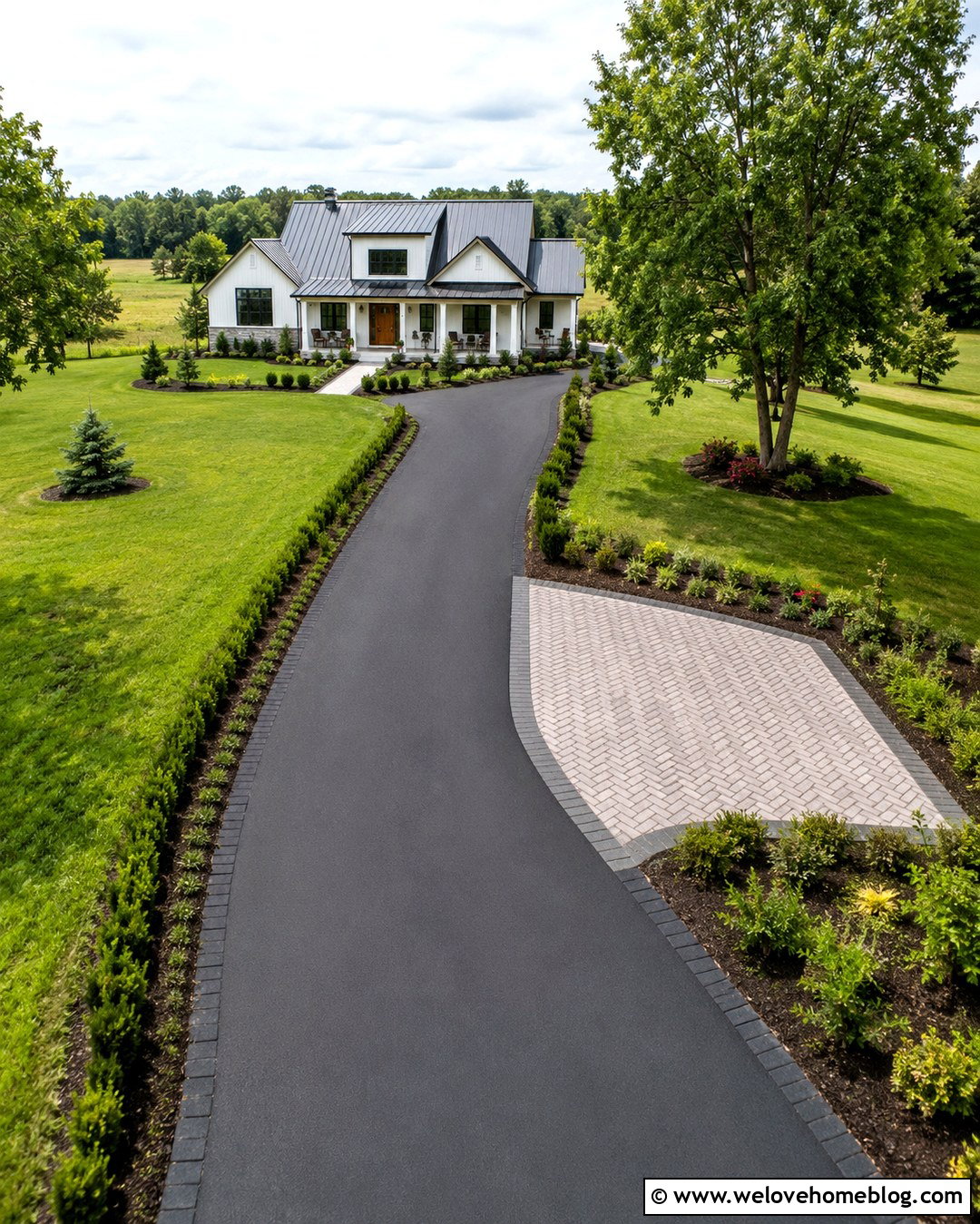
A paver pull-off creates guest parking without widening the entire driveway from street to garage. Place a rectangular or softly curved parking bay beside the middle section of a long asphalt driveway. Use warm gray concrete pavers in a herringbone pattern and connect the bay with a gently flared entrance. A charcoal border should follow the complete outline, clearly separating the parking area from surrounding landscaping. Add a low evergreen hedge at the back, but leave the entrance open and easy to see. A small shade tree, lawn, and layered perennial beds can make the pull-off feel like part of the garden. This layout suits larger suburban, country, and estate-style properties. Size the bay for realistic vehicle movement, and avoid placing trees or lighting posts where opening doors or turning bumpers could cause damage.
19. Circular Driveway Widening With Paver Aprons
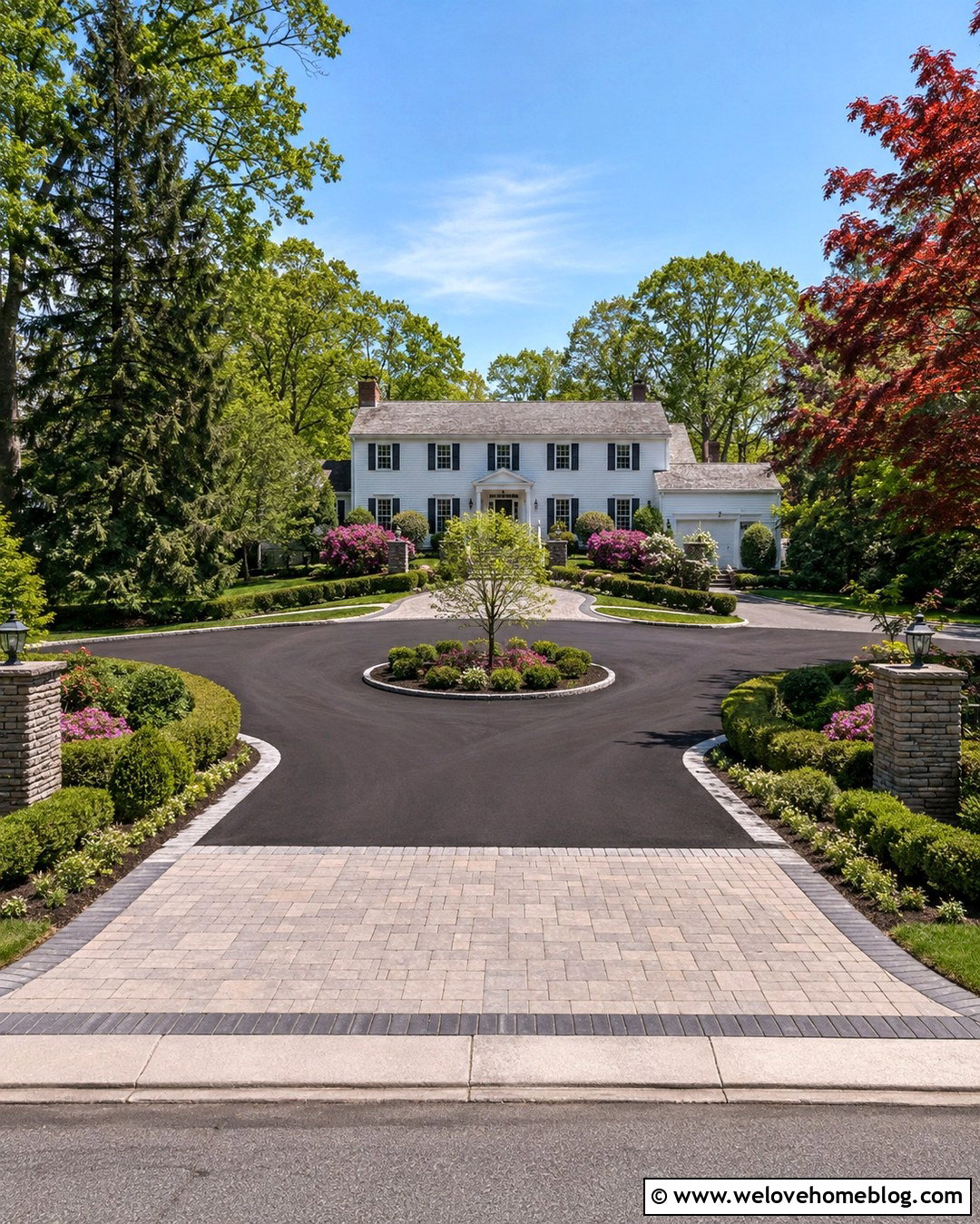
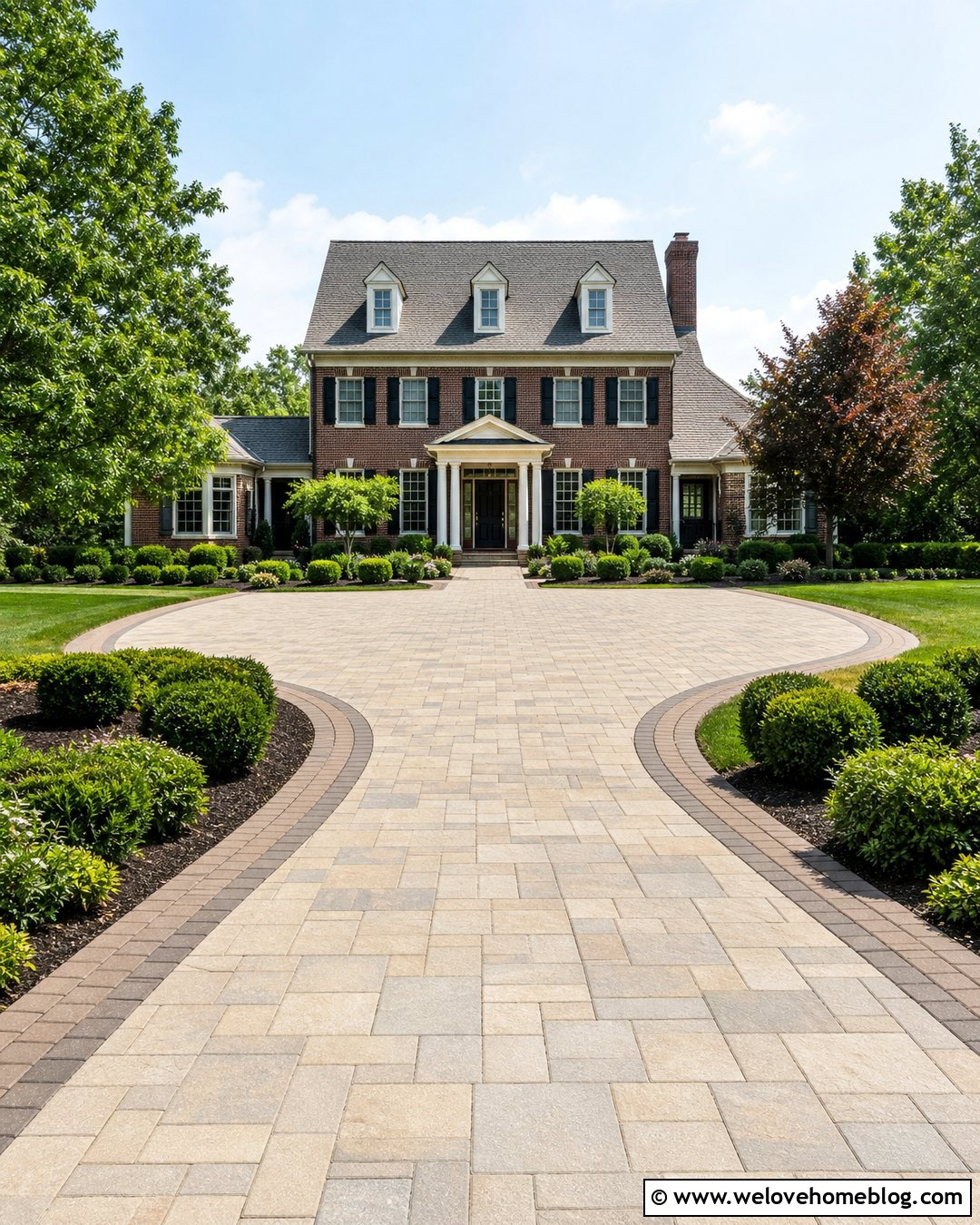
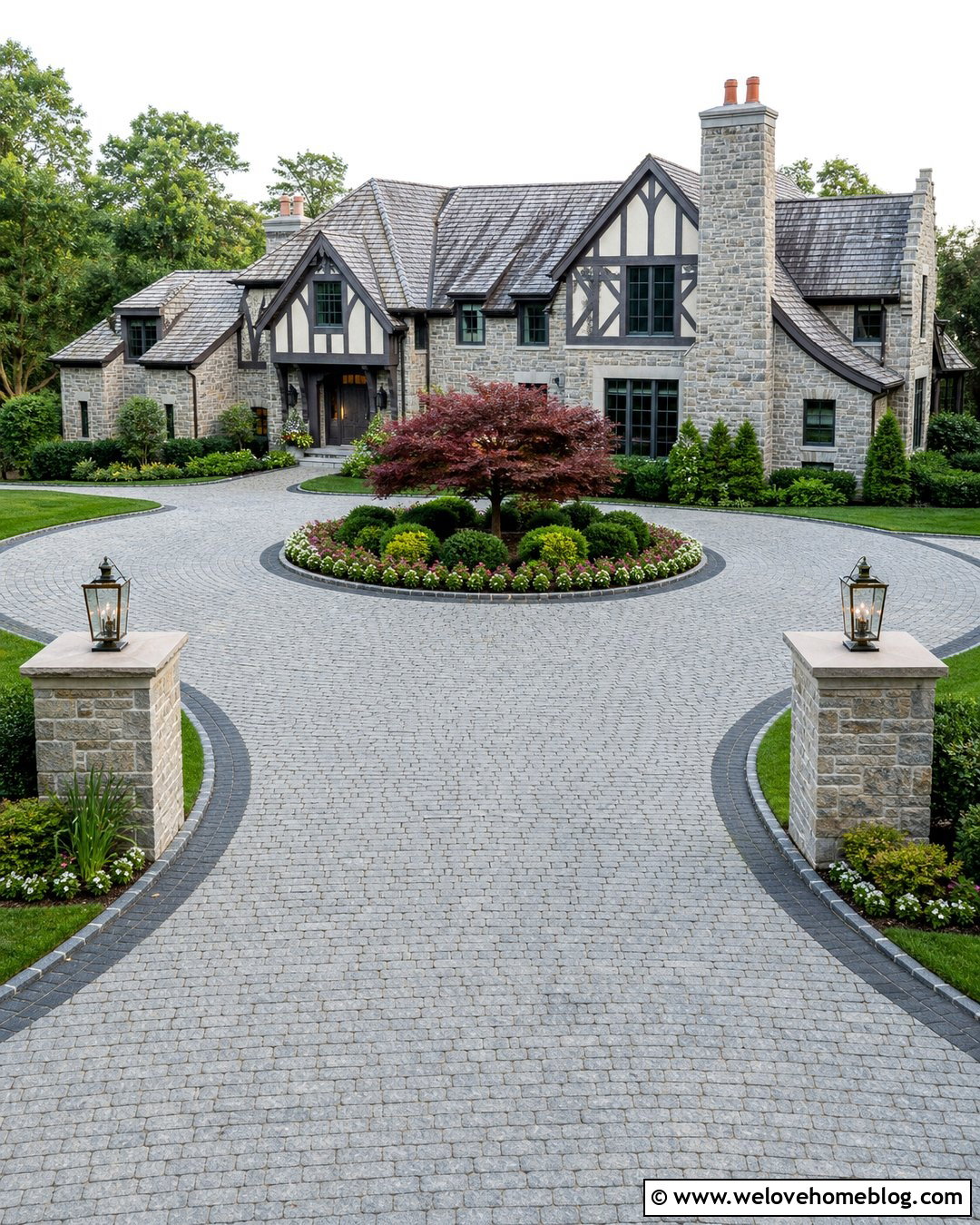
A circular driveway may need extra room at its entrances or near the front door rather than along the entire loop. Widen the two curb approaches with fan-shaped concrete paver aprons, then create a larger paver stopping area in front of the house. Choose tan and gray tumbled pavers that contrast gently with an asphalt or poured concrete center. Define each apron with a dark soldier-course border that follows the curve. Stone pillars, low hedges, flowering shrubs, and a central landscaped island complete the symmetrical design. This layout gives vehicles more turning space while preserving the graceful circular form. It suits Colonial, Mediterranean, and larger traditional homes. Carefully plan transitions so drivers do not cut over soft landscaping. The paver base and edging should withstand repeated turning forces at every widened section.
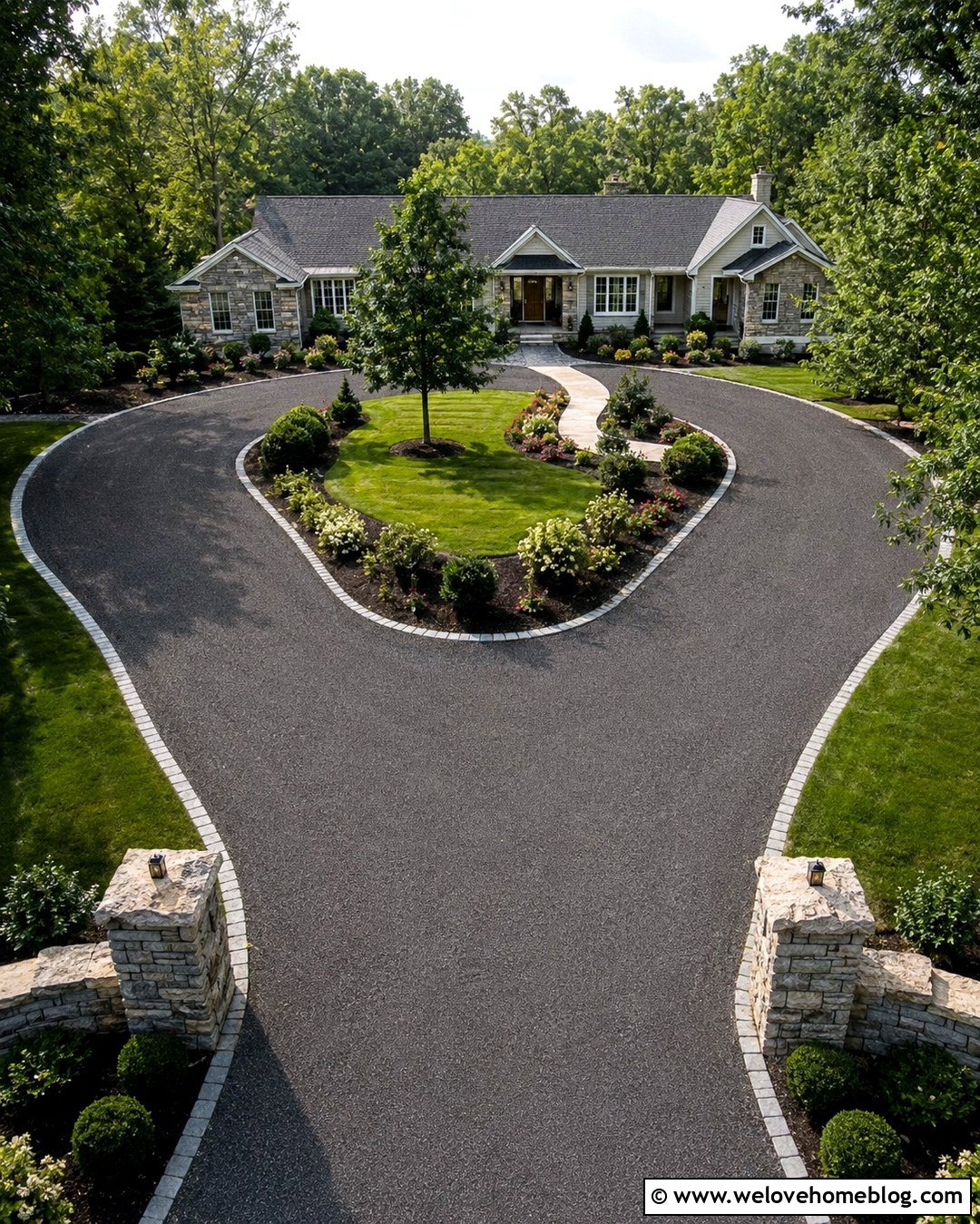
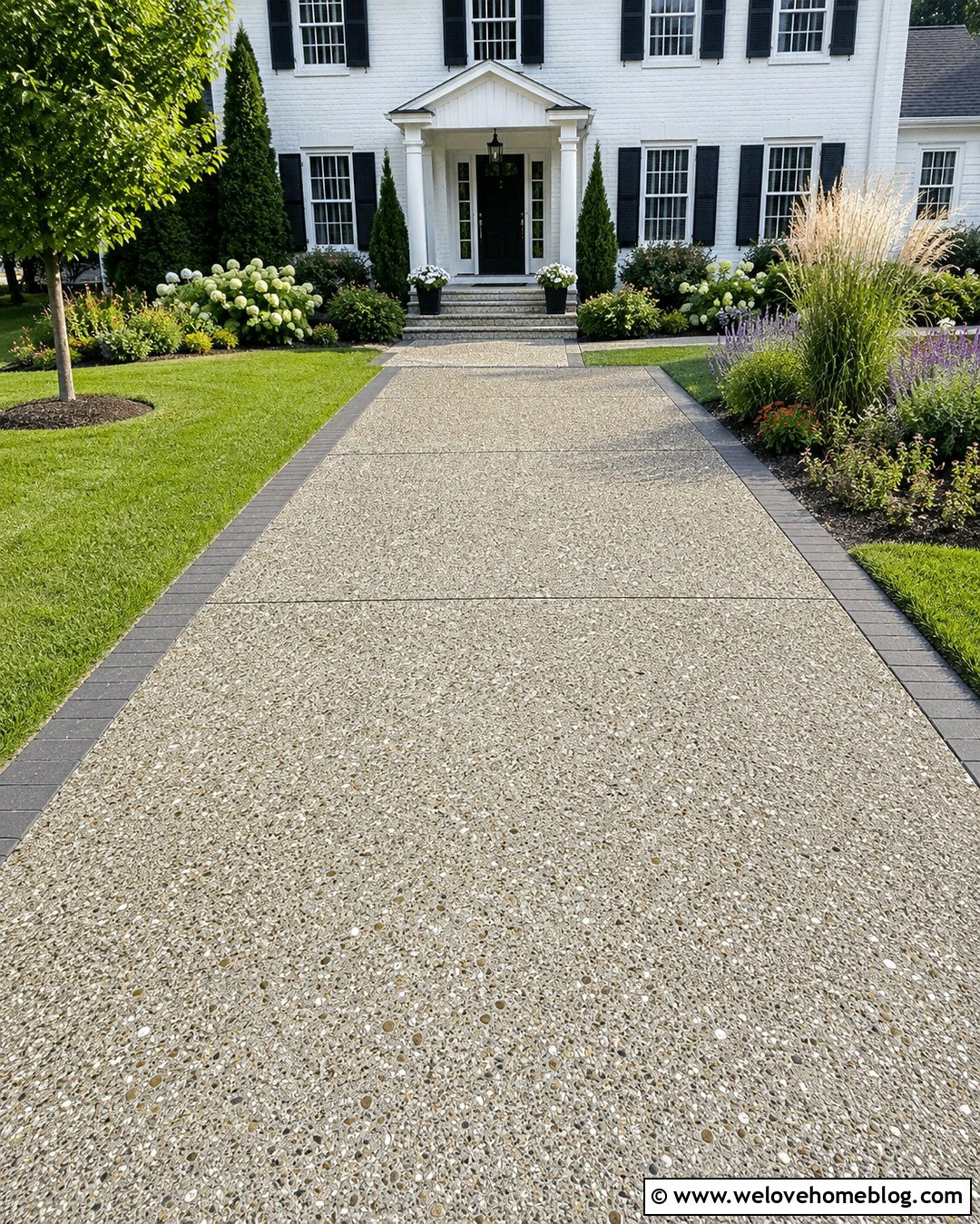
20. Budget Driveway Widening With Simple Concrete Pavers
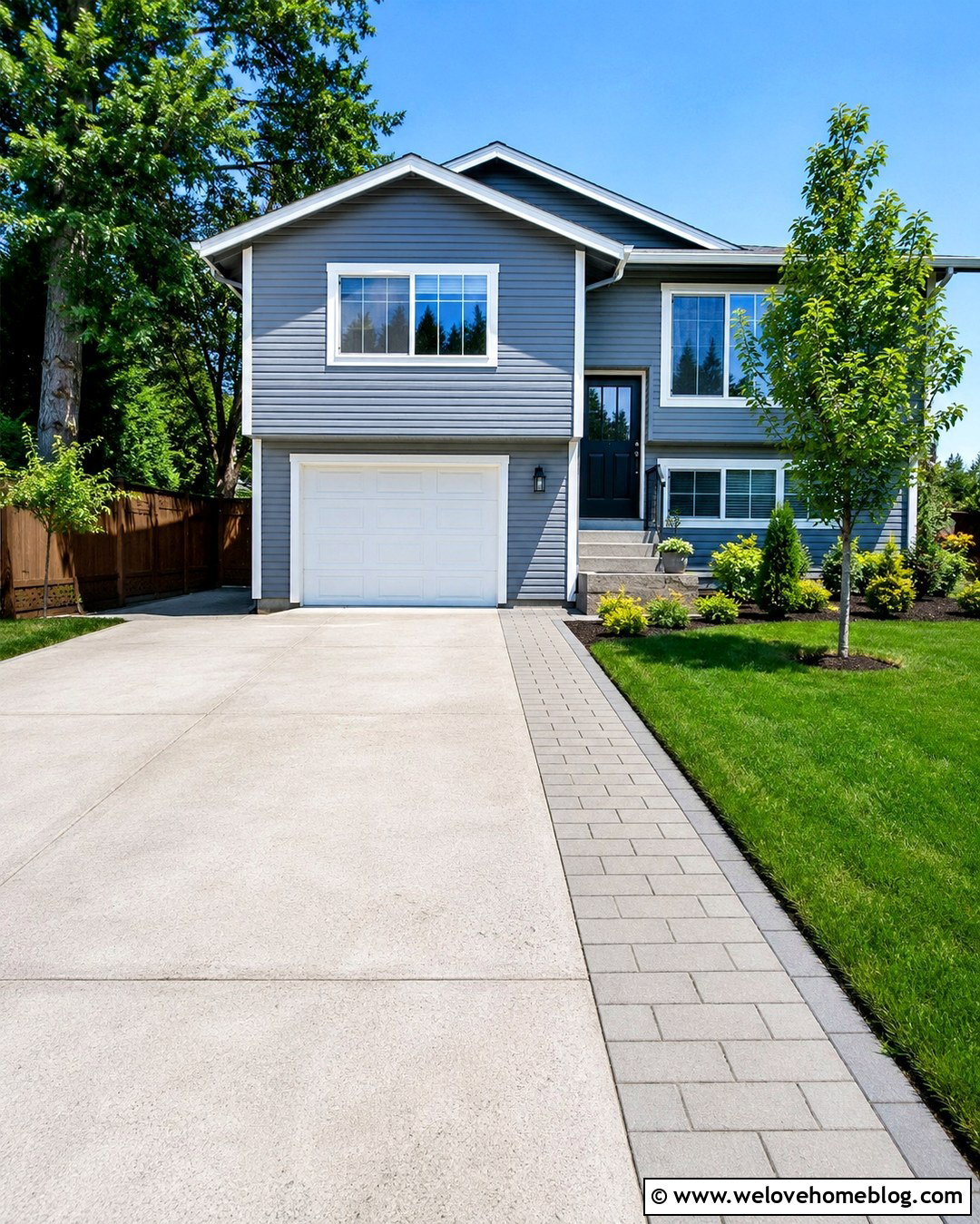
A straightforward paver extension can look polished without using complicated patterns or premium materials. Choose standard rectangular concrete pavers in a neutral gray or tan and install a three- to four-foot strip along one side of the driveway. A basic running bond reduces cuts and supports an efficient layout. Use the same paver turned lengthwise as a simple outer border. Fresh sod, a narrow mulch bed, and a few easy-care shrubs will make the widened area feel finished without increasing the project’s visual complexity. This practical look works with ranch, split-level, and modest suburban homes. Focus the budget on excavation, base compaction, drainage, and edge restraint rather than decorative extras. If matching old concrete is impossible, select a deliberately contrasting paver color so the extension appears planned instead of looking like an unsuccessful repair.
Conclusion:
These 20 Widen Driveway With Pavers Ideas demonstrate how additional parking can become part of a complete curb-appeal upgrade. A narrow paver shoulder may improve door clearance, while a full parking lane, turnaround pad, garage apron, or pull-off can solve larger access problems. Coordinate the paver color with the house, existing driveway, walkway, borders, and landscaping for a connected appearance. More importantly, build the extension for vehicle use with suitable pavers, a stable compacted base, secure edge restraints, and effective drainage. Local rules may affect driveway width, setbacks, curb changes, and permeable coverage, so check requirements early. With careful planning, the new paving can look intentional, remain functional, and complement the property for years.

Related posts:
Leave a Reply