
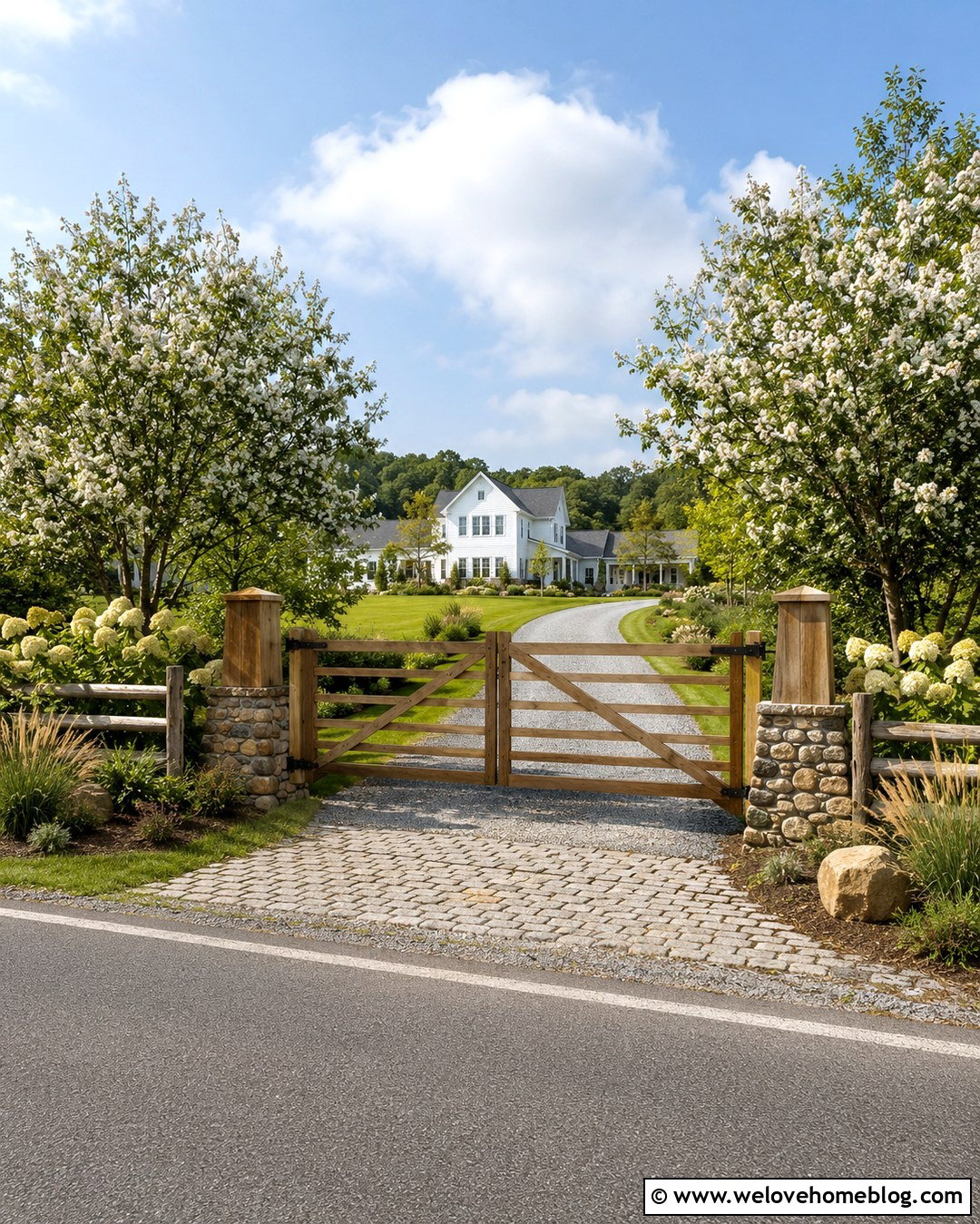
Driveways and walkways should feel like connected parts of one welcoming front yard, not separate surfaces chosen at random. The best combinations coordinate color, texture, shape, borders, drainage, and landscaping while still making the pedestrian route easy to recognize. You might repeat one material across both areas, introduce a contrasting walkway, or use a shared border to pull everything together. Your home’s architecture, yard size, climate, maintenance needs, and budget should also guide the plan. From affordable gravel and asphalt to refined brick, cobblestone, concrete, and permeable pavers, there is an option for nearly every property. The complete looks below offer practical, attractive inspiration through **20 Driveways And Walkways Ideas**.

1. Modern Concrete Driveway And Paver Walkway
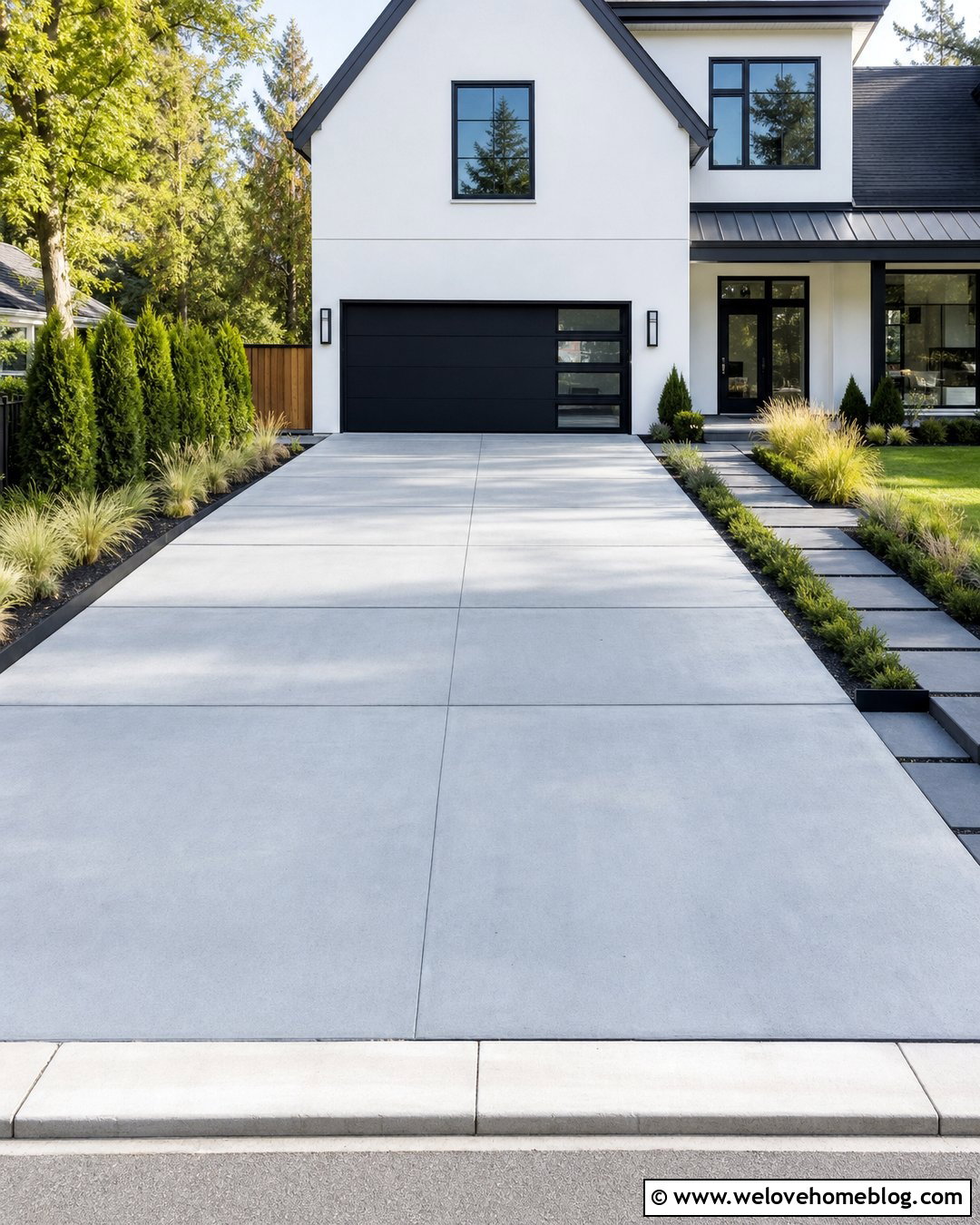
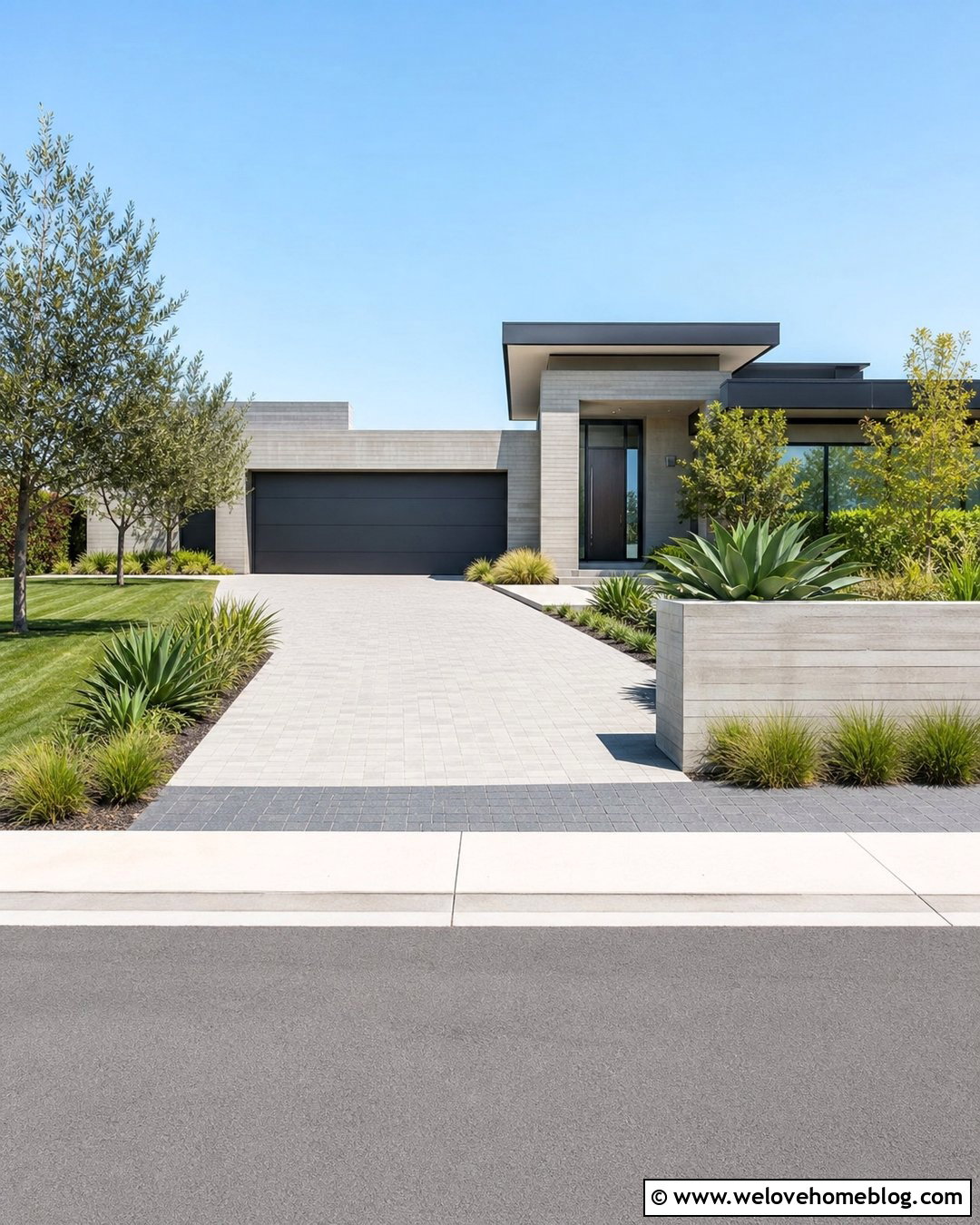
A smooth concrete driveway creates a clean foundation for a modern home, while large rectangular pavers make the walkway easy to identify. Choose light gray poured concrete with narrow control joints for the vehicle area. Then install charcoal or warm gray pavers from the driveway edge to the front door. Straight lines reinforce the contemporary look, but a slightly offset path can prevent the yard from feeling too rigid. Add black metal edging, clipped ornamental grasses, and low evergreen shrubs around both surfaces. A narrow planting strip between the driveway and walkway provides useful visual separation. Repeat the walkway’s darker color in the garage door, exterior lights, or window trim to create a balanced and intentional front entrance.
2. Asphalt Driveway And Brick Walkway
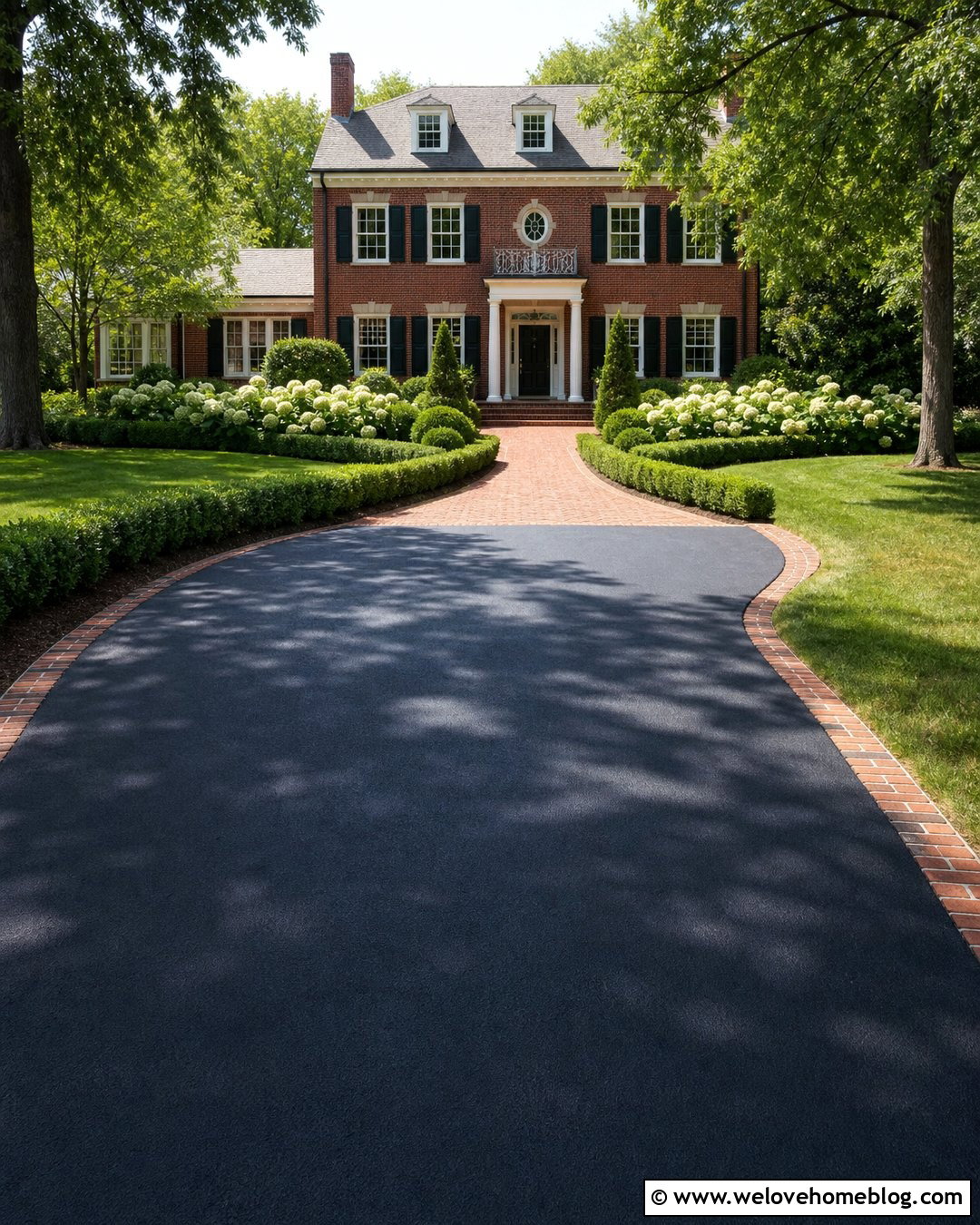
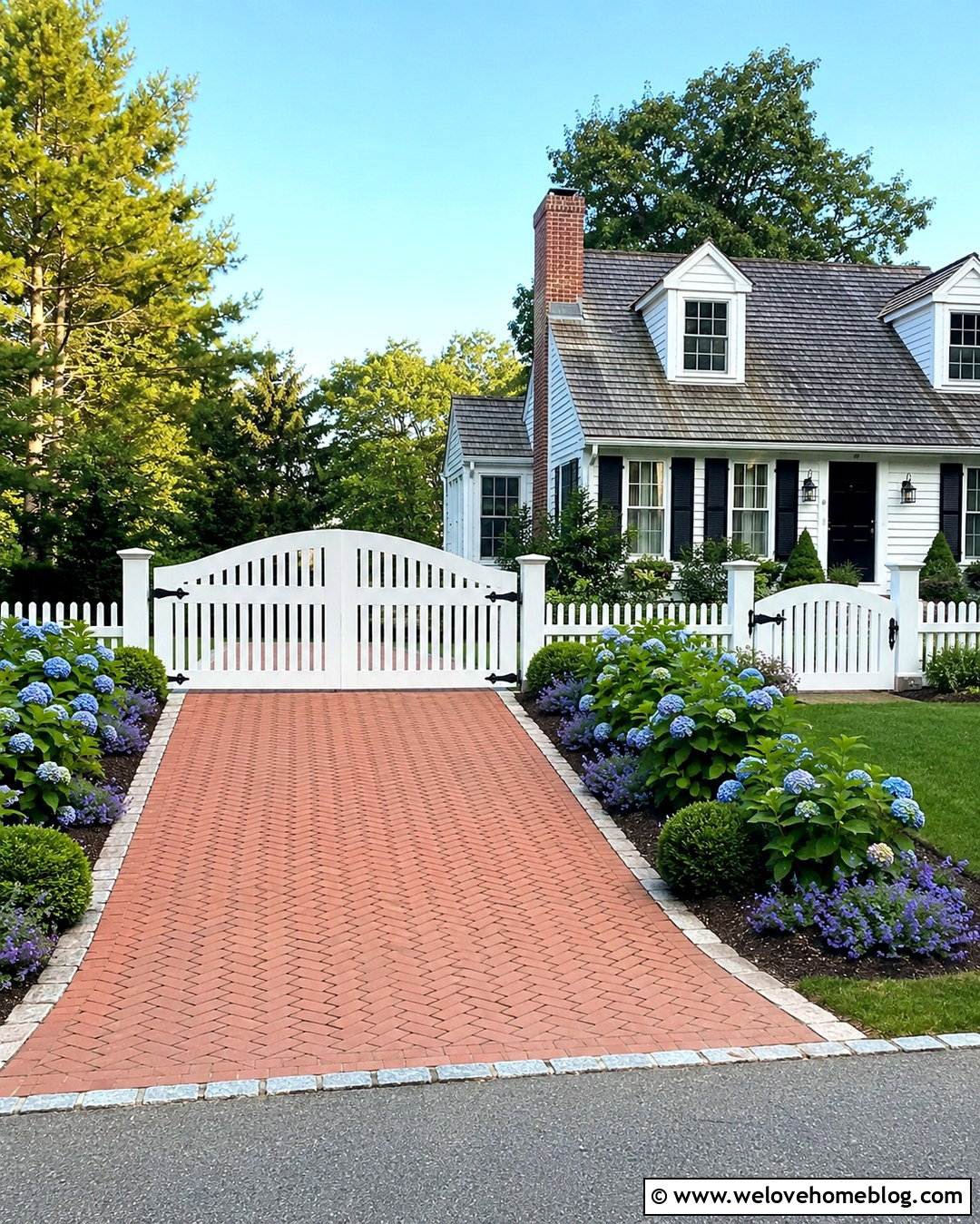
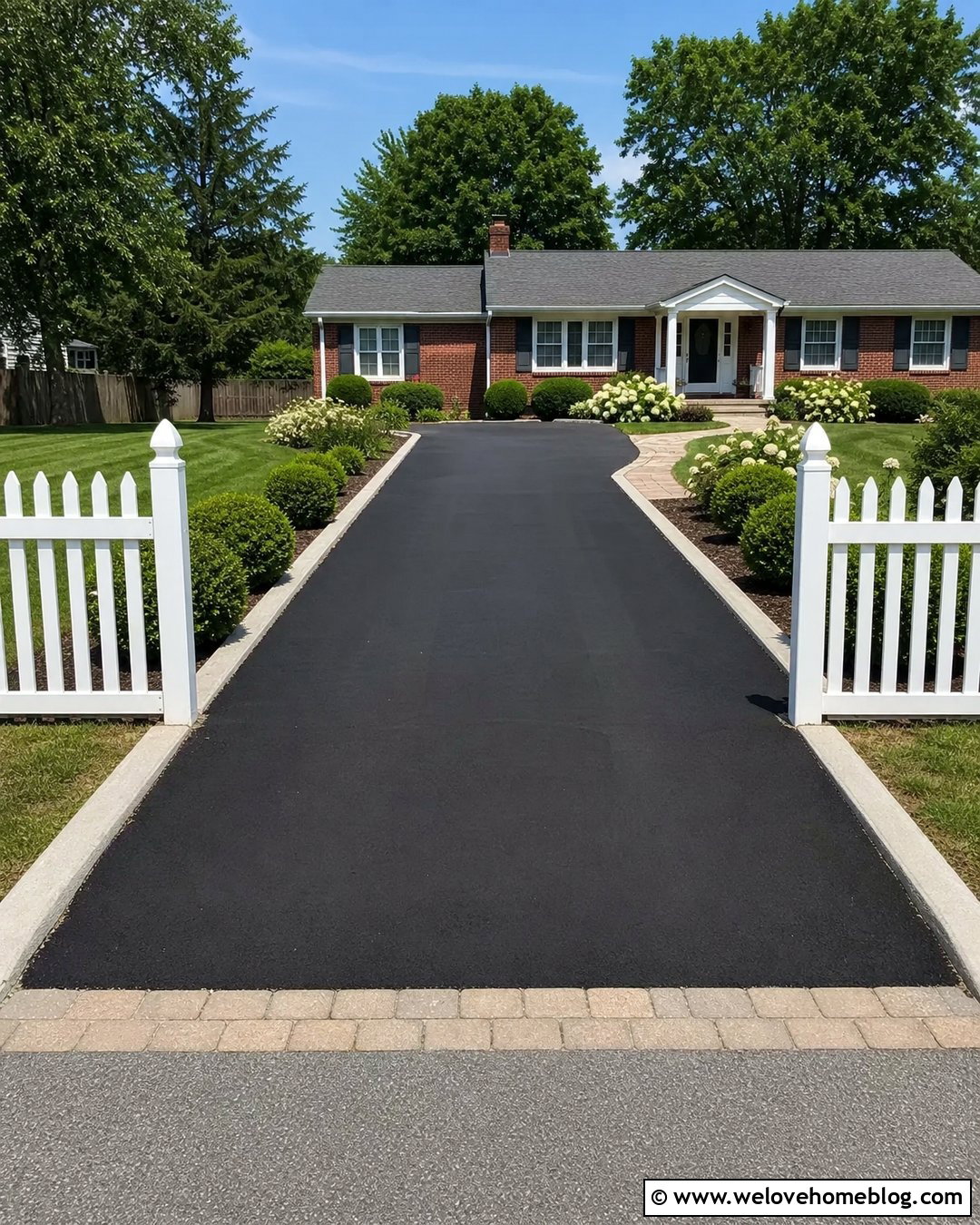
Black asphalt becomes more inviting when it is paired with a traditional red or brown brick walkway. The asphalt provides a smooth, practical parking surface, while clay brick pavers bring warmth and character closer to the house. Lay the walkway in a herringbone pattern for extra visual interest and use the same brick as a narrow border around the driveway. This repeated material connects the two areas without making them identical. Curved garden beds filled with boxwood, hydrangeas, and seasonal flowers can soften the dark pavement. Keep the walkway entrance visible by widening it where it meets the driveway. This combination works especially well with Colonial, Cape Cod, and traditional brick homes because it feels established without appearing overly formal.
3. Gravel Driveway And Flagstone Walkway
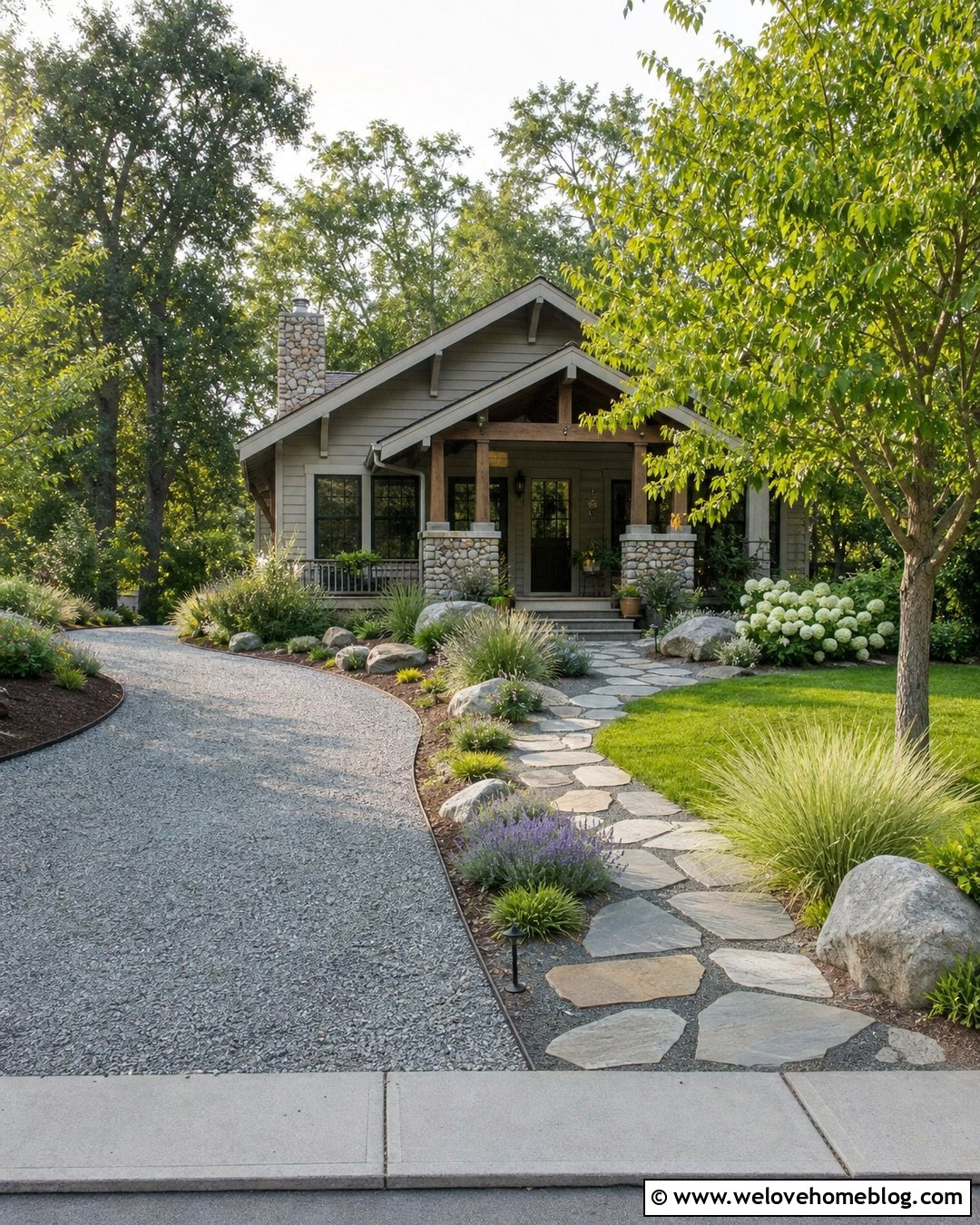
The gentle crunch of gravel and the uneven beauty of natural flagstone create a relaxed entrance suited to cottages, ranch homes, and country properties. Use compacted gray gravel for the driveway and contain it with steel, stone, or concrete edging. A flagstone walkway can branch naturally from the parking area and curve toward the porch. Set the stones close together for comfortable walking, using stone dust or low ground cover in the joints. Large boulders, ornamental grasses, lavender, and flowering shrubs can frame the route without making it feel crowded. Choose flagstone containing gray or tan tones found in the gravel. This shared color palette helps the surfaces relate, while their different sizes and textures clearly separate vehicles from pedestrians.
4. Brick Driveway And Matching Brick Walkway
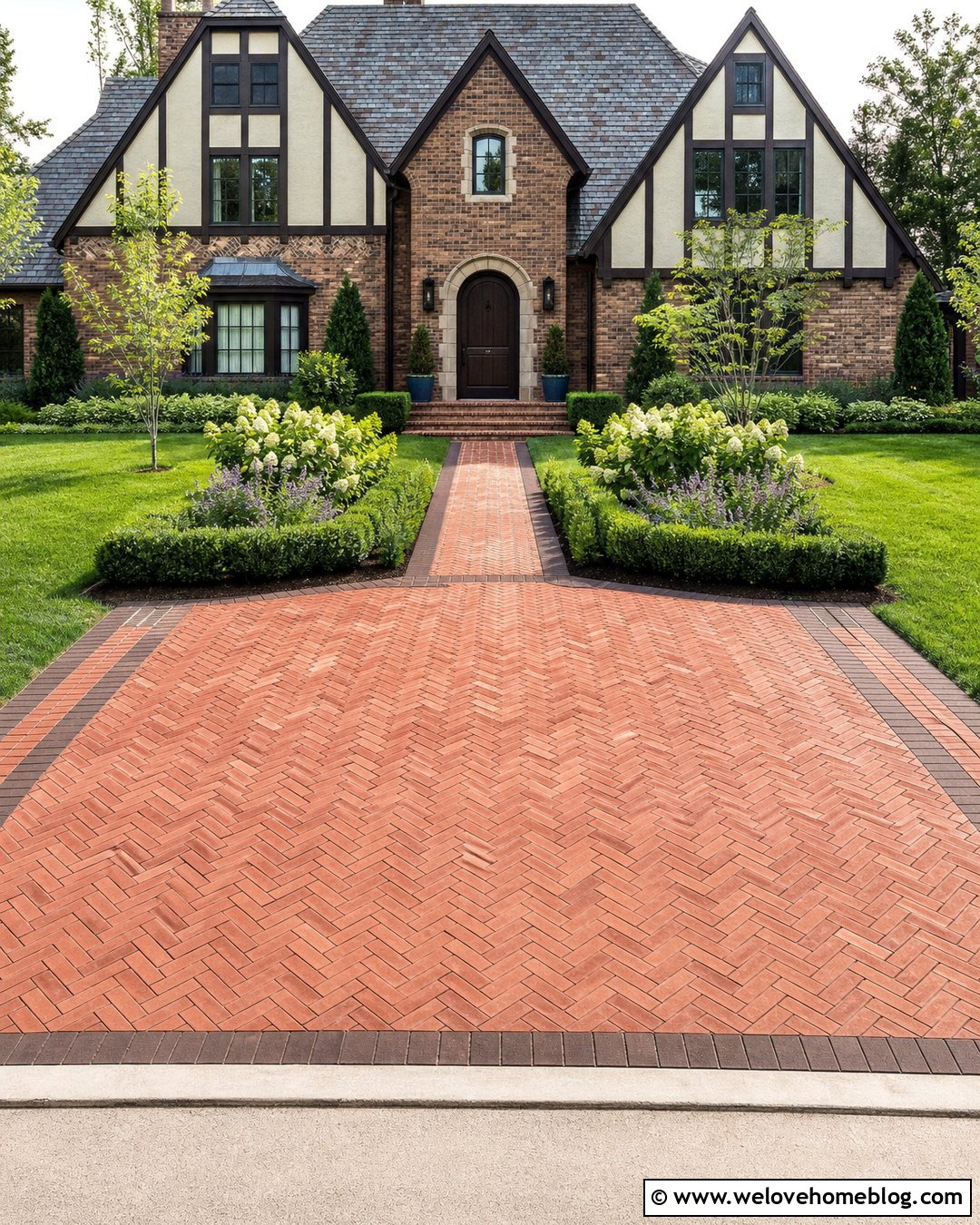
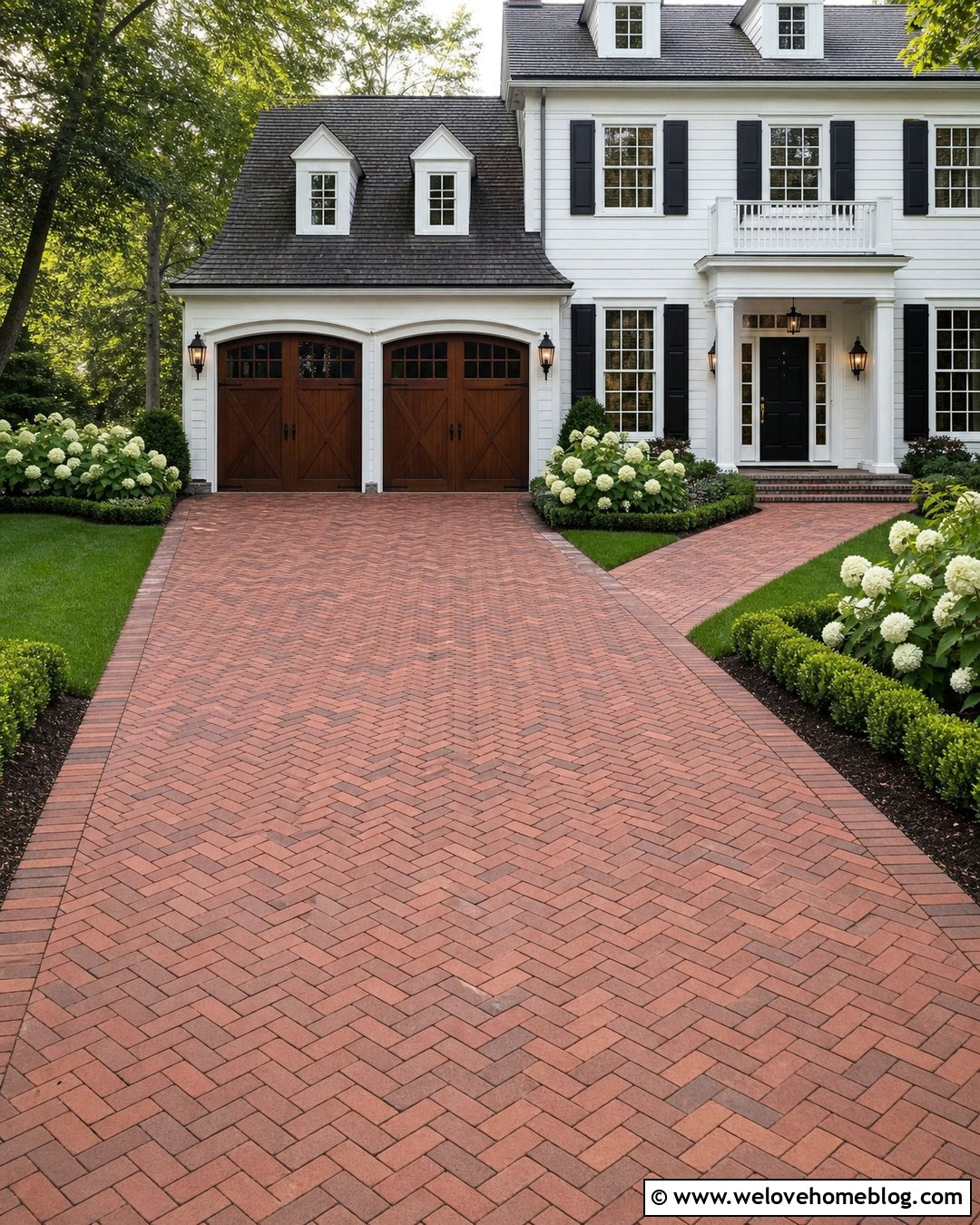
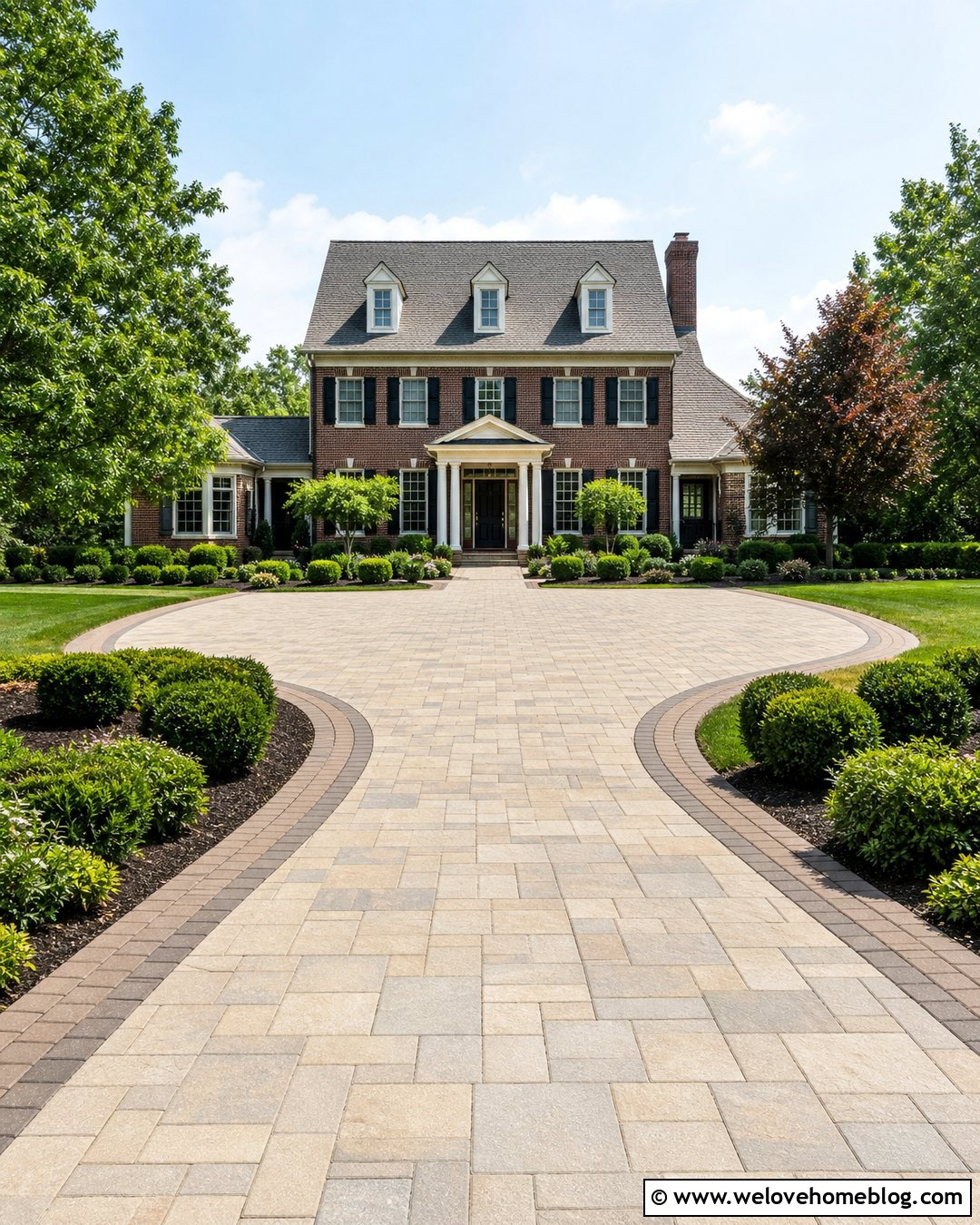
Few combinations feel as coordinated as a clay brick driveway flowing into a matching brick walkway. Use a durable herringbone pattern across the driveway because its interlocking layout suits a heavily traveled surface. The walkway can repeat the same pattern or shift to running bond to create subtle distinction. Define both areas with a soldier-course border in a deeper brown or charcoal brick. A straight path leading to a centered porch supports a formal layout, while clipped hedges and symmetrical planting beds strengthen the classic appearance. For a softer result, curve the walkway through layered perennial beds. Brick works beautifully with Colonial, Tudor, Craftsman, and traditional homes, especially when its color relates to the facade, chimney, steps, or roof accents.
5. Permeable Paver Driveway And Stepping Stone Walkway
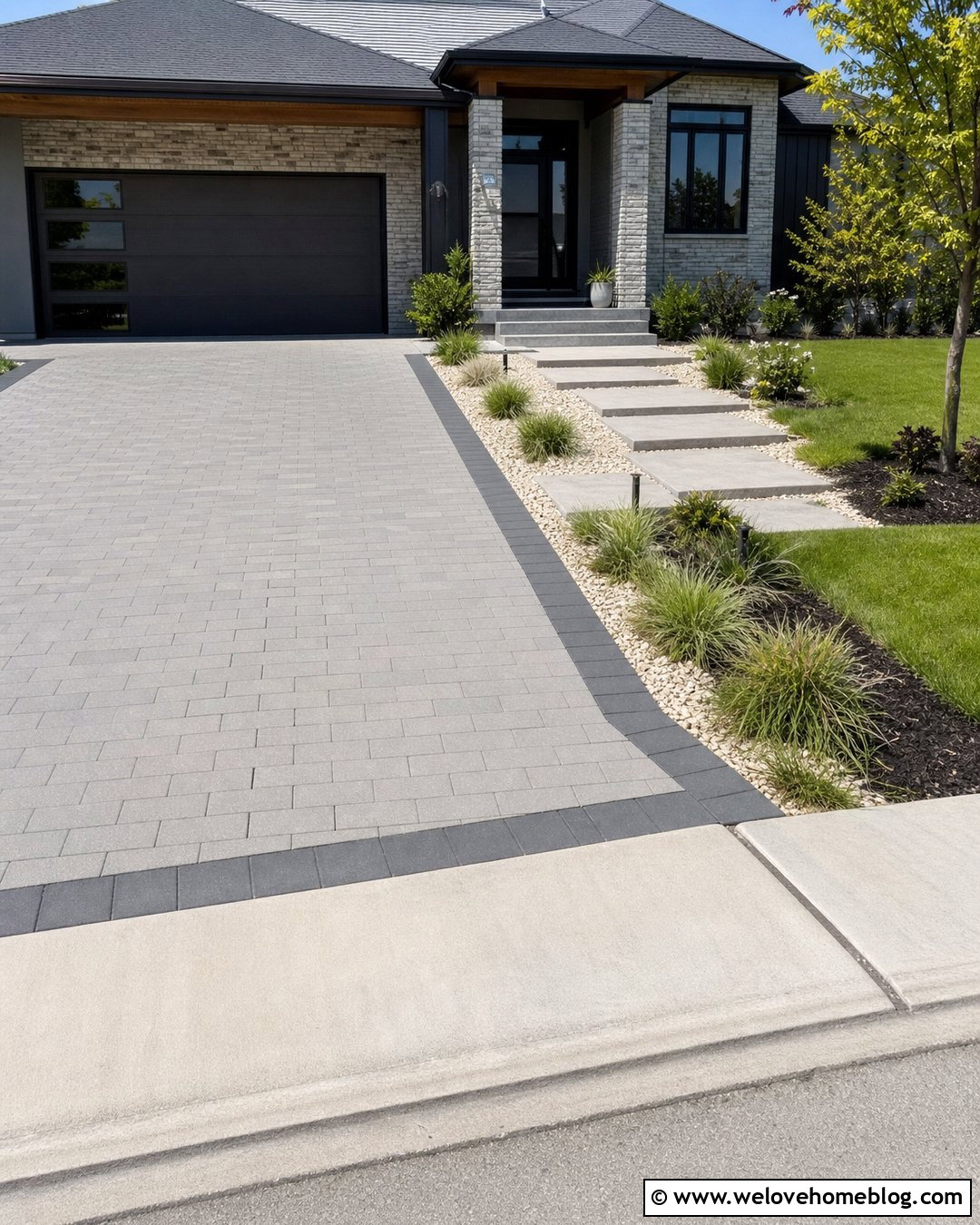
Permeable concrete pavers can give the front yard structure while leaving small joints that allow water to move through the paved area. Choose medium-gray rectangular pavers for the driveway and install them in a simple running bond or modular pattern. Create the walkway with oversized concrete stepping stones placed in gravel or low ground cover. The slabs should be large and closely spaced enough to provide an obvious, comfortable route. Use a shared charcoal border around both surfaces to tie the design together. Rain-tolerant grasses and low shrubs can fill nearby planting beds and soften the hardscape. This combination feels modern but not stark, making it useful for contemporary homes that need a practical surface, visible pedestrian access, and more landscaping around the entrance.
6. Exposed Aggregate Driveway And Concrete Walkway
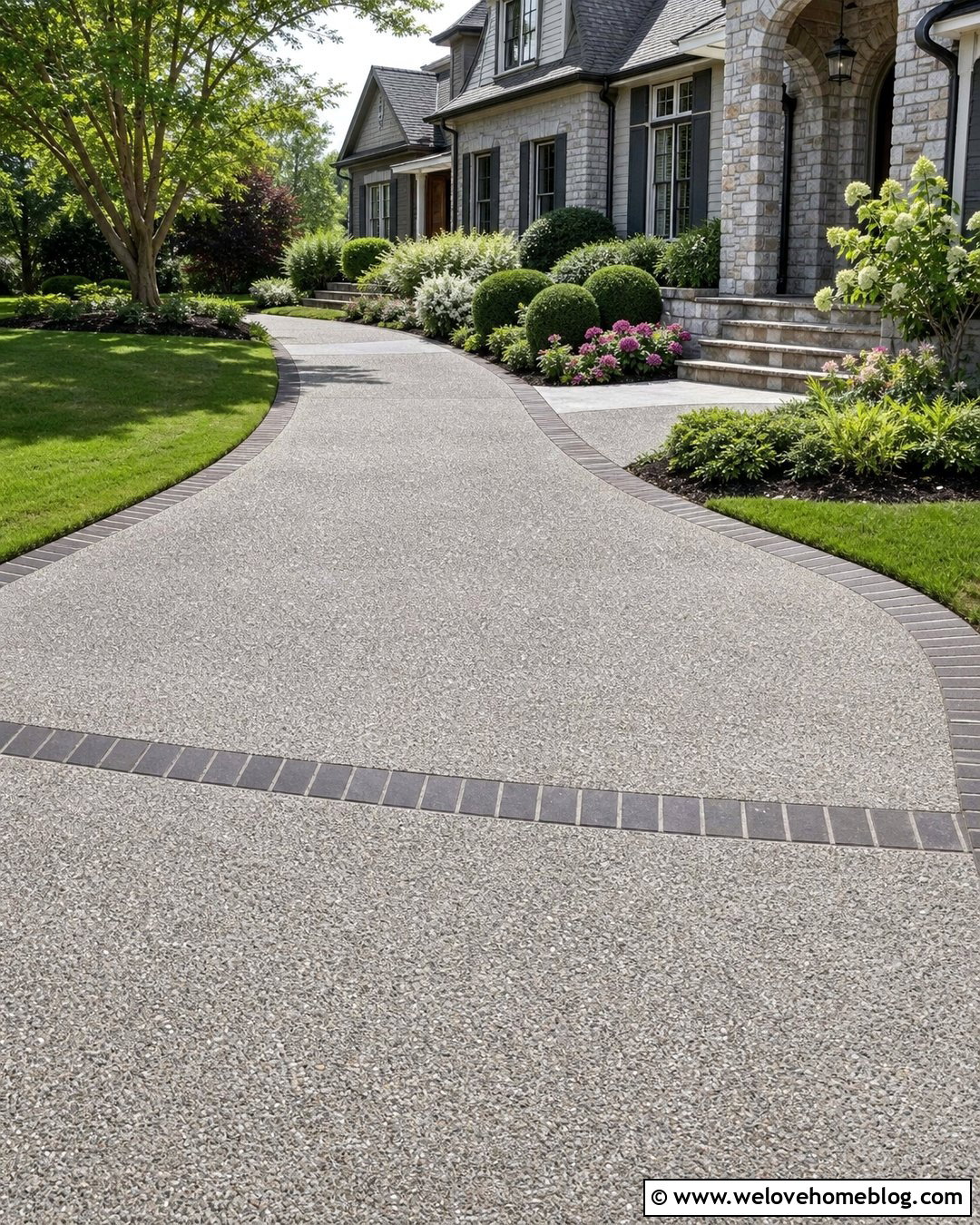
Exposed aggregate adds texture to a driveway without introducing a complicated pattern. Its small visible stones also hide everyday marks better than a perfectly smooth finish. Pair a warm gray exposed aggregate driveway with a smooth poured-concrete walkway in a closely related color. A band of dark concrete or brick can outline the path and continue across the driveway as a decorative connection. Use broad curves rather than sharp turns if the house has traditional or transitional architecture. Plant rounded evergreen shrubs, flowering perennials, and a small ornamental tree beside the walkway. Because exposed aggregate can look visually busy, keep the surrounding materials simple. Matching concrete steps and a generous porch landing complete the transition from the curb to the front door.
7. Circular Gravel Driveway And Brick Walkway
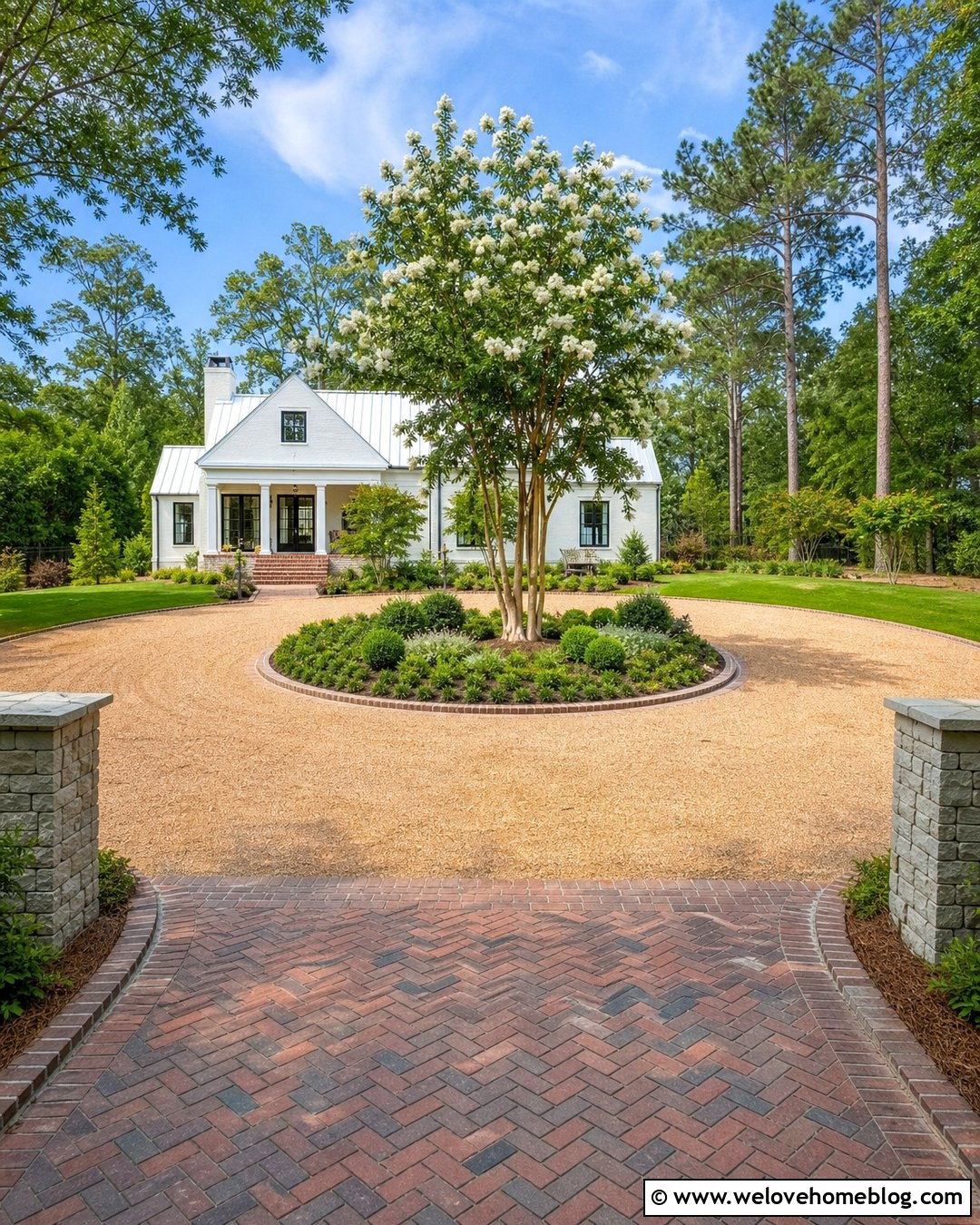
A circular gravel driveway can transform a broad front yard into a graceful arrival space while allowing vehicles to move through without backing toward the street. Fill the loop with compacted tan or gray gravel and use brick curbing to hold the loose material in place. From the inner curve, continue a brick walkway toward the front entrance using a basketweave or running-bond pattern. A landscaped island becomes the focal point, so plant one appropriately sized ornamental tree surrounded by low shrubs and ground cover. Keep taller plants away from the entrance points to preserve clear views. Matching brick steps, porch details, or planters will strengthen the connection. This complete layout suits farmhouse, Colonial, and country homes with generous front yards.
8. Curved Concrete Driveway And Garden Walkway
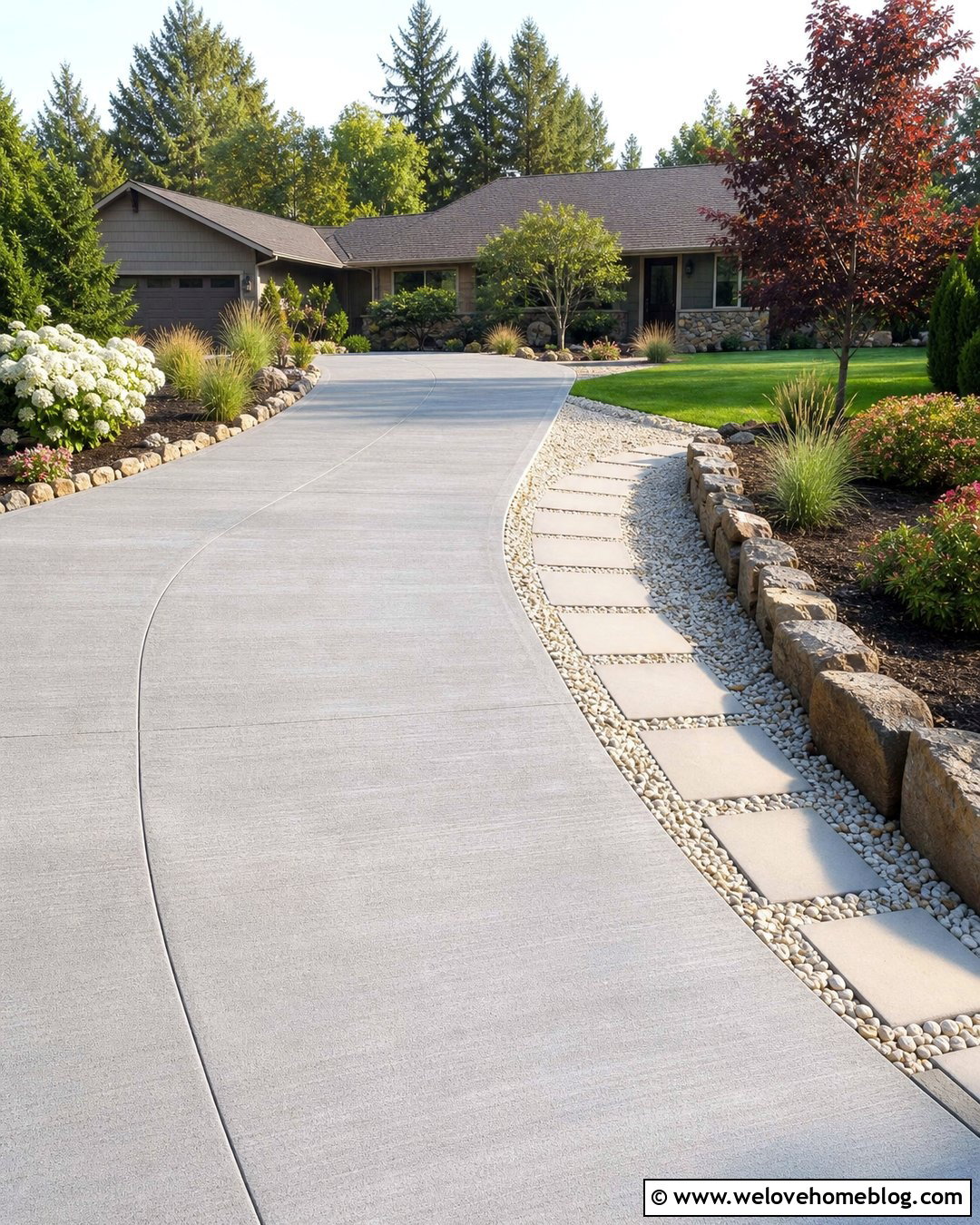
A curved concrete driveway can make an angled garage or deep front yard feel more natural. Instead of attaching a walkway at the last possible point, branch it from the inside curve where visitors can immediately see the front door. Use lightly brushed gray concrete for the driveway and square concrete pavers for the walkway. Set the pavers within pale gravel or creeping ground cover to create a softer garden character. Layer ornamental grasses, flowering shrubs, and compact evergreens along the path, keeping mature plant sizes in mind. A stone border can trace the driveway curve and reappear around the walkway beds. This repeated edge gives the entire design continuity while helping the pedestrian route stand apart from the wider vehicle surface.
9. Cobblestone Driveway And Bluestone Walkway
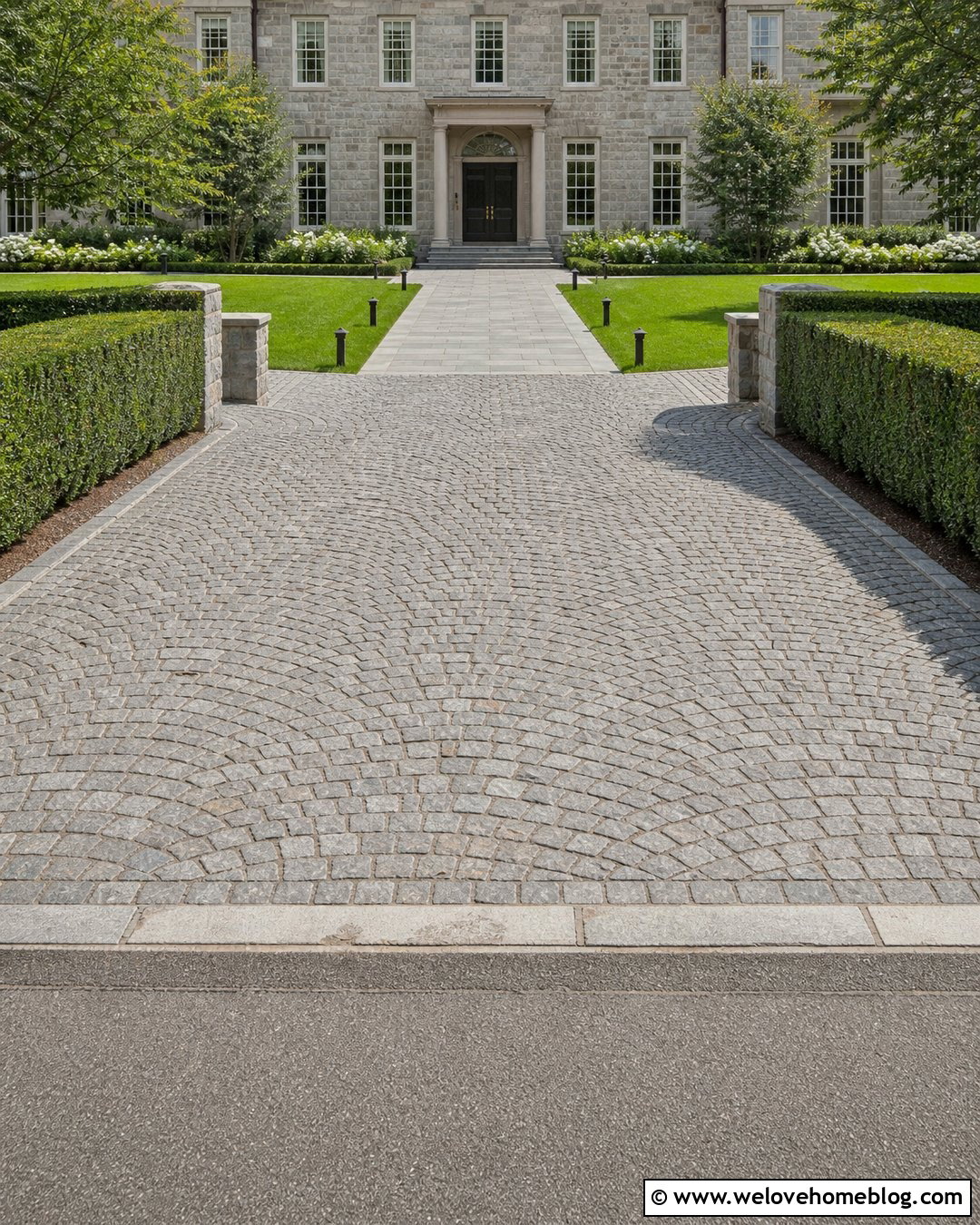
Cobblestone creates a substantial, old-world driveway that pairs naturally with a wide bluestone walkway. Select gray granite cobbles with varied tones and arrange them in fan, running-bond, or gentle arched patterns. Large rectangular bluestone slabs provide a smoother walking surface and a clear visual route to the entrance. Use granite setts as the walkway border so both areas share one recognizable detail. Formal hedges, white flowering shrubs, and evenly spaced path lights complement the refined hardscape. Because both stones have strong texture, keep planting beds orderly rather than overly complicated. This combination is especially appropriate for Tudor, Georgian, European-inspired, and historic homes. Properly scaled entry steps can carry the bluestone directly to the porch for a cohesive finish.
10. Resin-Bound Driveway And Porcelain Walkway
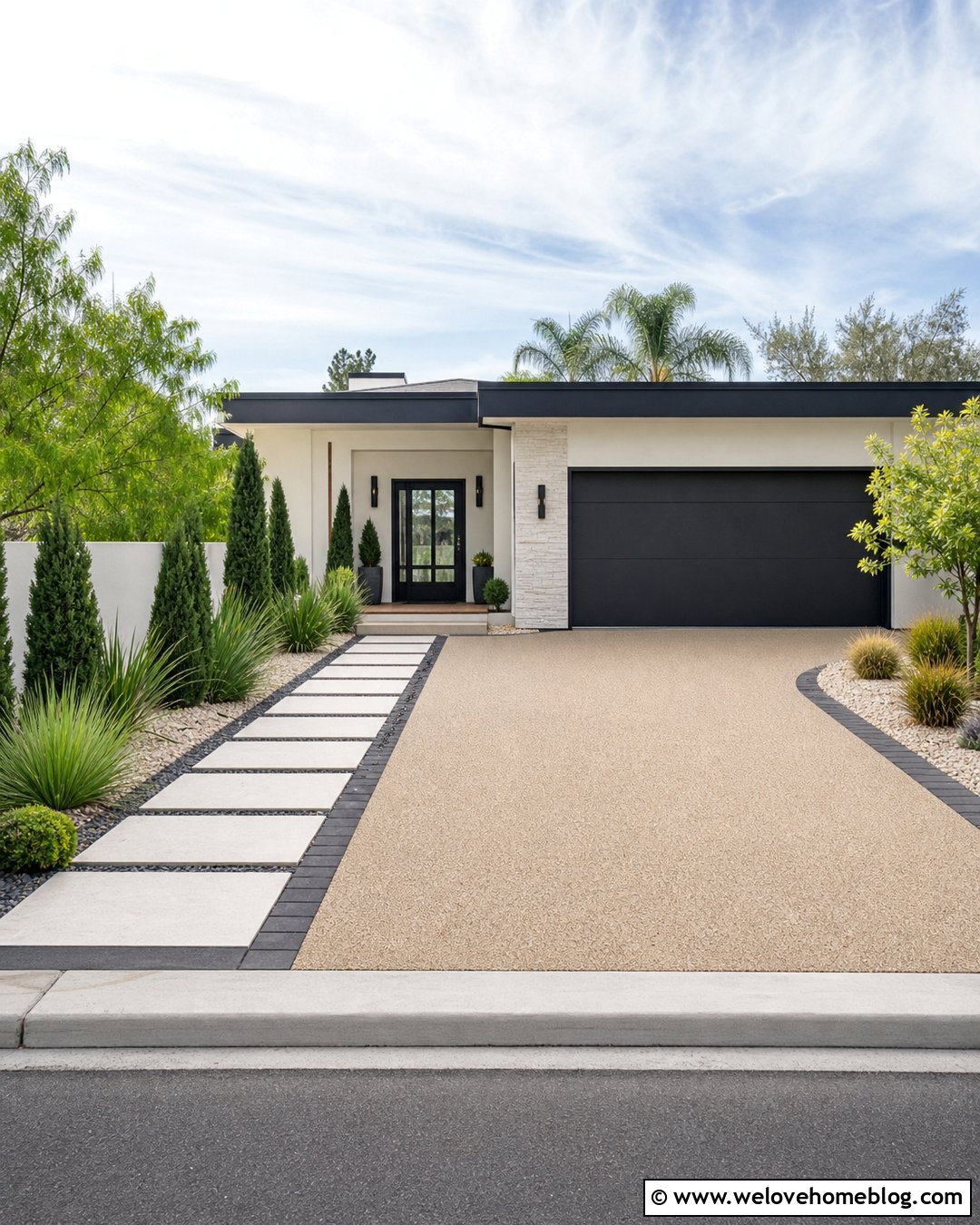
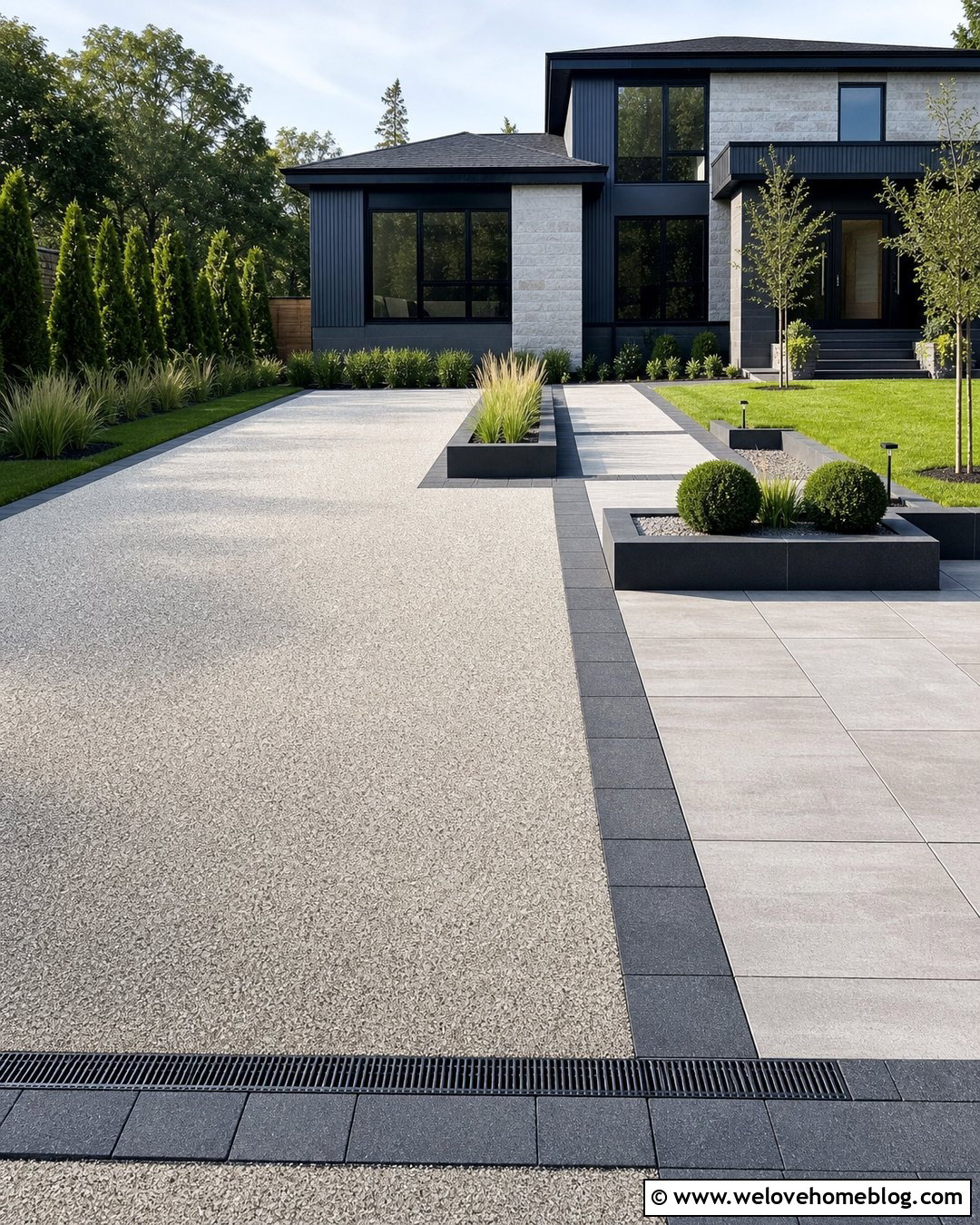
A resin-bound gravel driveway offers a smooth, contemporary appearance with the visual texture of small stone. Pair warm beige resin-bound gravel with large cream or light-gray outdoor porcelain pavers leading to the front door. Keep the driveway broad and simple, then define the walkway with a dark metal edge or narrow charcoal paver border. A gentle curve can soften a boxy modern facade, while a straight path supports stronger architectural lines. Use sculptural evergreens, ornamental grasses, and gravel mulch to maintain a polished, low-clutter landscape. The porcelain walkway should have an exterior-rated, slip-resistant finish. Repeat its tone on the porch landing or front steps. This combination delivers clear circulation and a refined entrance without relying on decorative patterns or excessive color.
11. Stamped Concrete Driveway And Bordered Walkway
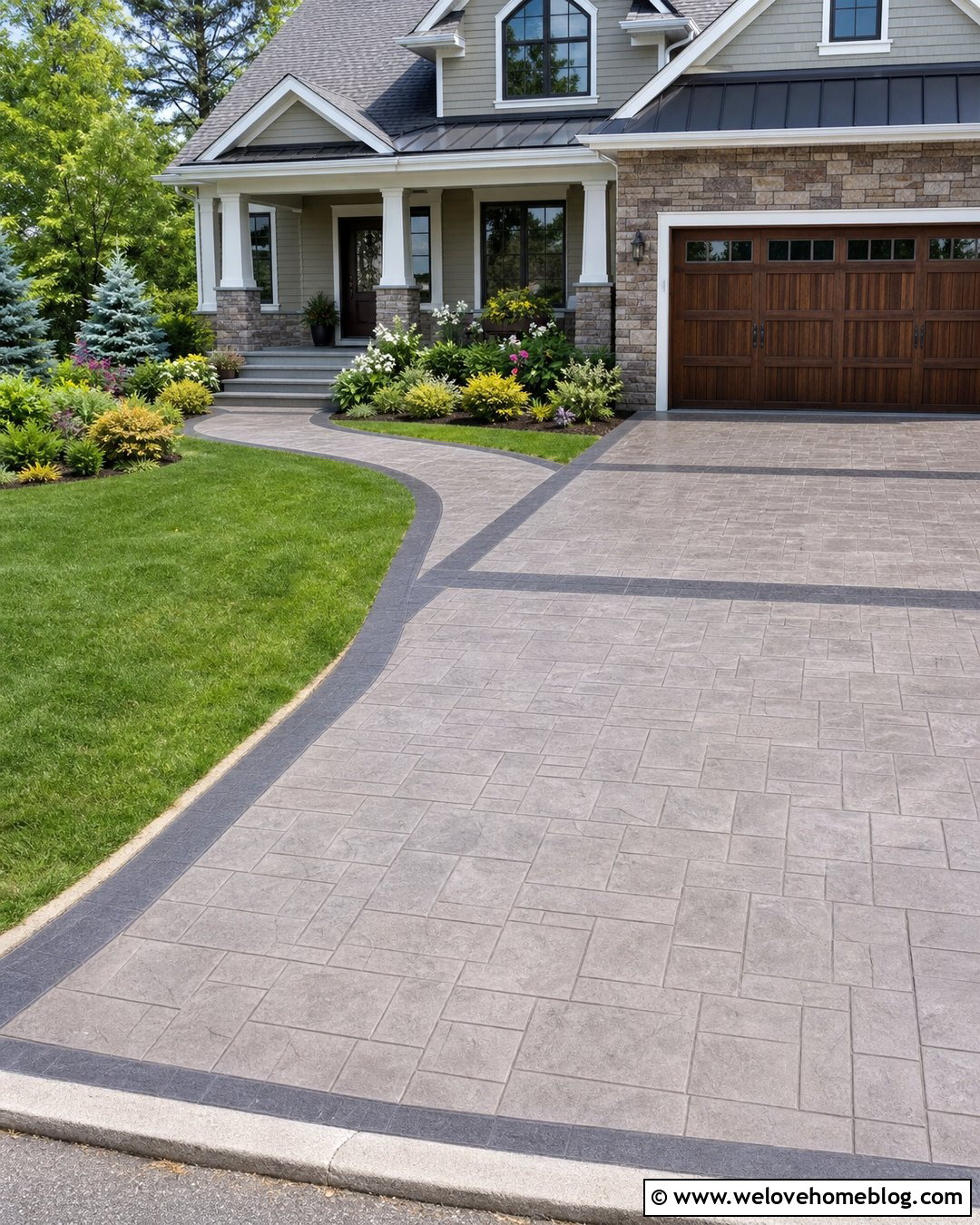
Stamped concrete can coordinate the driveway and walkway while still giving each surface a separate identity. Choose a subtle slate or ashlar-stone pattern in warm gray for the driveway. Use the same stamped finish on the walkway, but frame it with a contrasting brick or charcoal concrete border. The walkway can curve gently through the lawn before widening near the porch steps. Matching border bands across the driveway help break up a large paved area and visually direct attention toward the entrance. Surround the hardscape with layered shrubs, flowering perennials, and neatly defined lawn edges. Avoid combining too many stamp patterns or colors. One restrained texture and one clear accent border usually produce a more convincing, coordinated result for ranch, transitional, and suburban homes.
12. Farmhouse Gravel Driveway And Brick Walkway
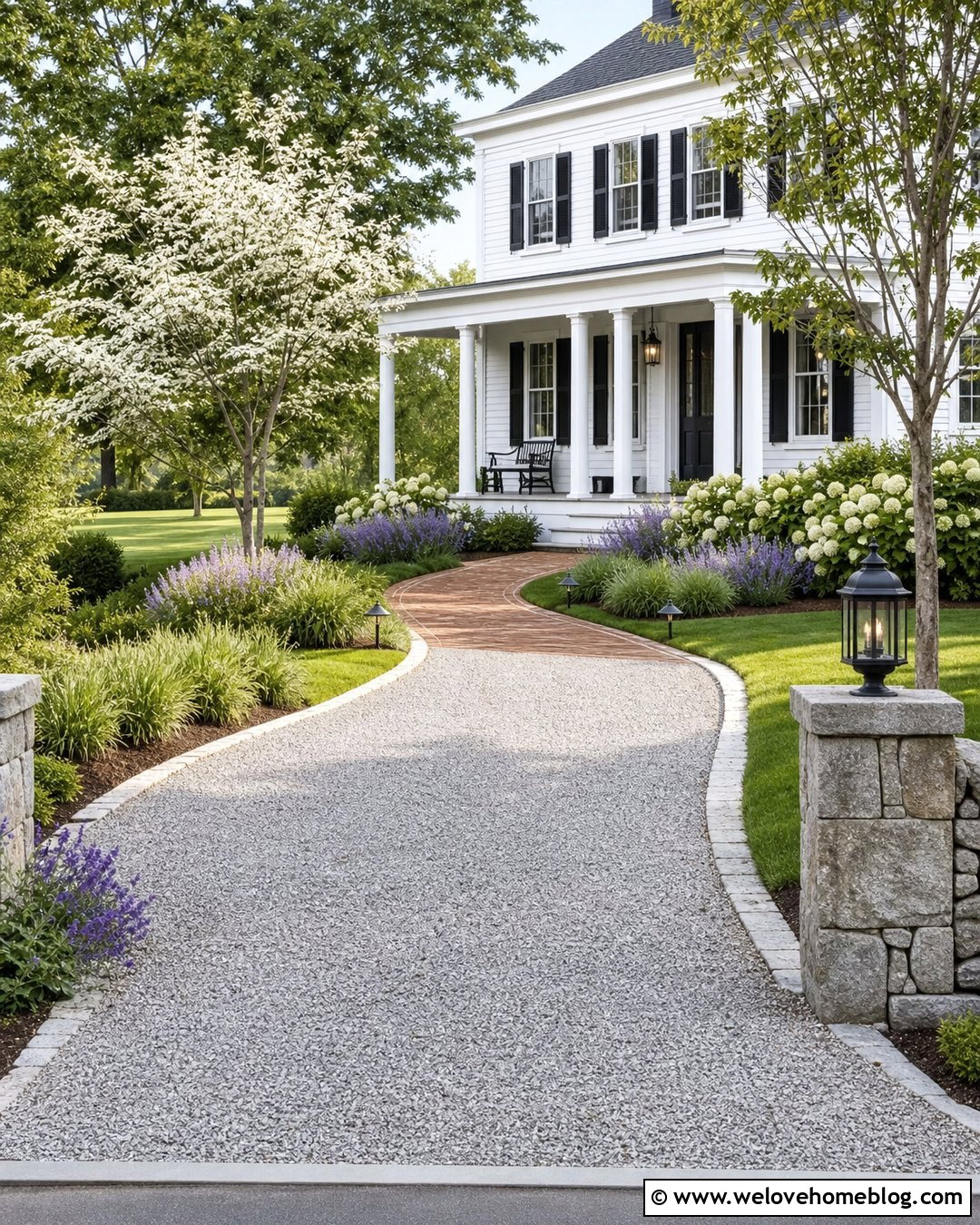
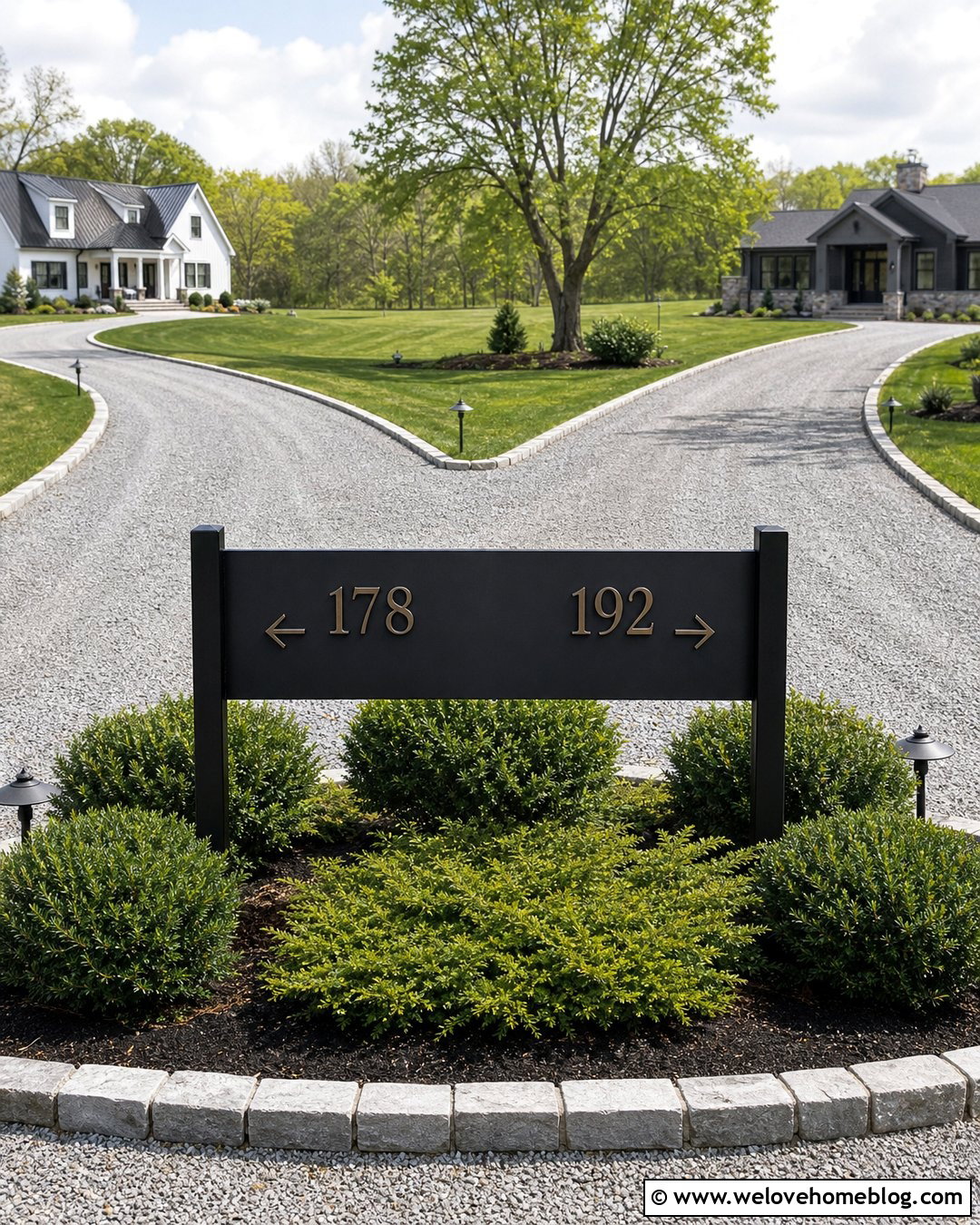
A pale gravel driveway, red brick walkway, and deep planting beds create an approachable farmhouse entrance. Use compacted limestone or light gray crushed stone for a bright vehicle surface. Edge it with reclaimed-look brick or weathered granite to keep gravel away from the lawn. Continue the brick into a generous walkway that curves toward the porch and widens at the steps. Plant hydrangeas, catmint, ornamental grasses, and small flowering trees along the route. A simple timber or stone address marker can identify the entrance without overwhelming the relaxed setting. Black lantern lights and white porch details add crisp contrast. The finished design should feel practical and slightly informal, with repeated brick accents providing enough structure to keep the gravel and abundant landscaping visually connected.
13. Black Paver Driveway And Concrete Slab Walkway
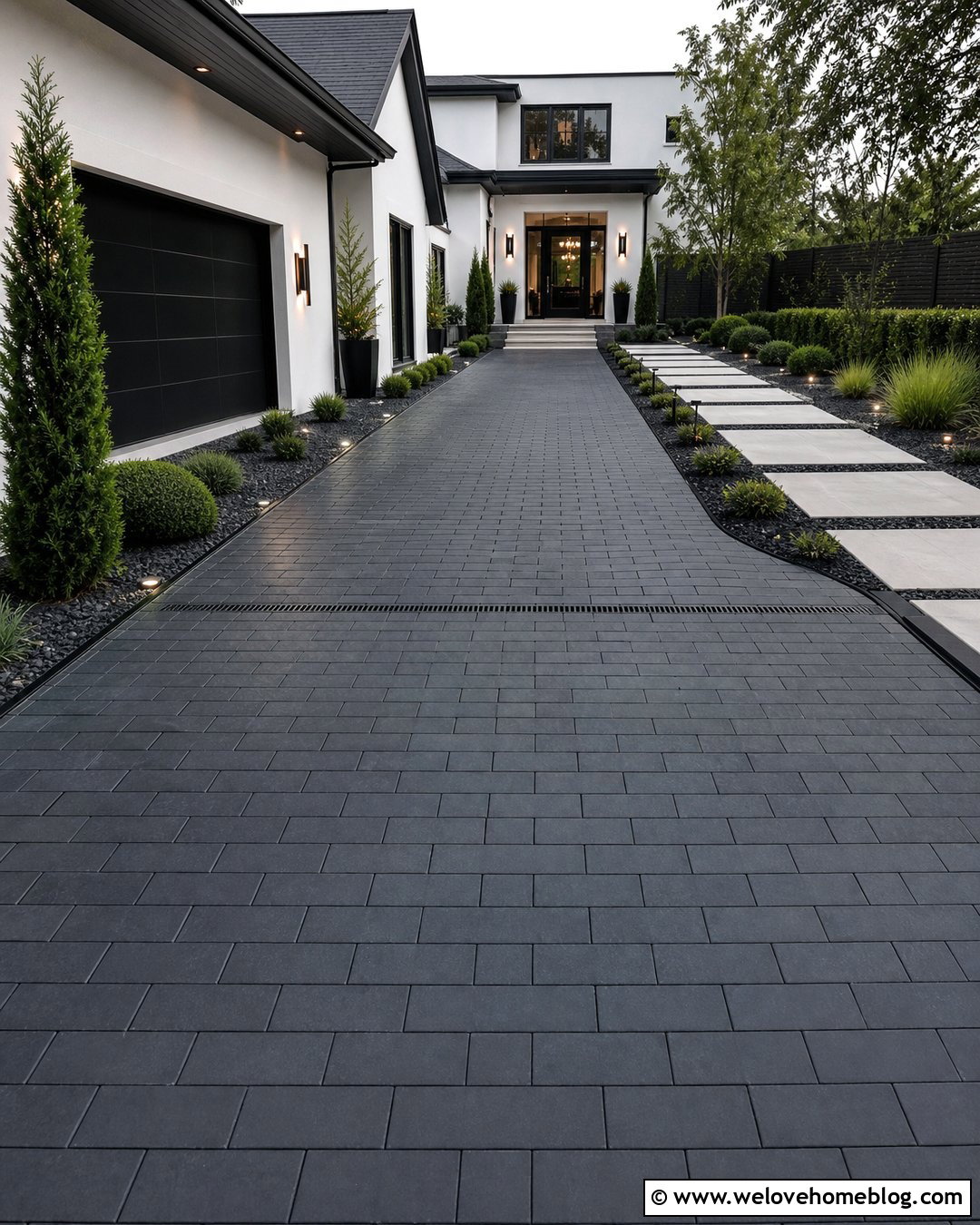
Dark concrete pavers create strong contrast against a light modern house, especially when paired with oversized pale concrete walkway slabs. Install charcoal pavers in a clean running-bond pattern across the driveway, using minimal color variation for a streamlined appearance. Set rectangular gray poured-concrete slabs through a bed of black gravel to form the walkway. Align the slabs with the front door, windows, or garage divisions for architectural balance. Low grasses and clipped evergreen mounds can soften the geometry without hiding it. Add narrow linear drains where needed and keep transitions between materials level. Black metal path lights, edging, and planters reinforce the palette. This dramatic combination works best when the full yard remains uncluttered and each material has a clearly defined purpose.
14. Coastal Gravel Driveway And Limestone Walkway
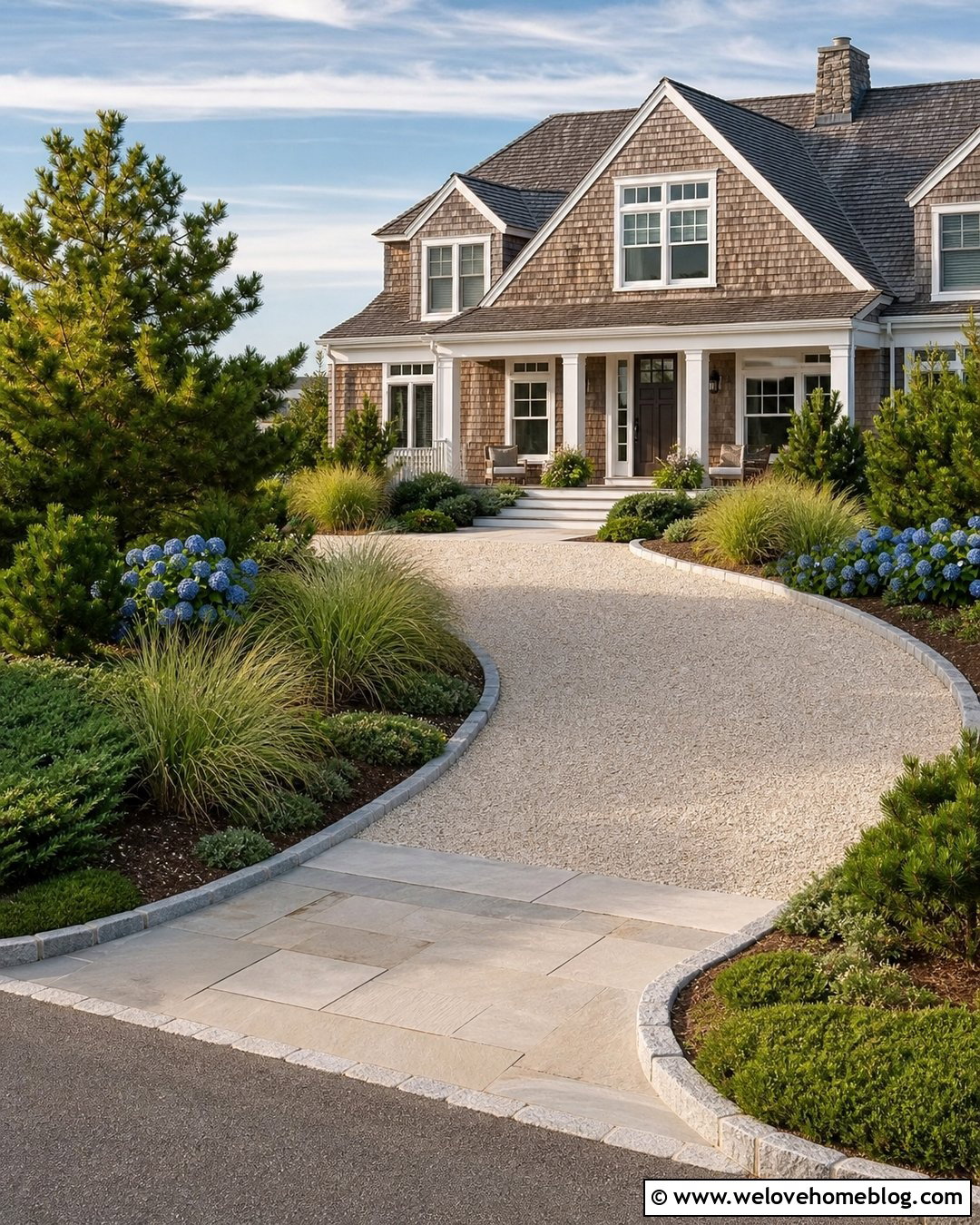
A coastal front yard benefits from light materials that complement weathered siding, sandy colors, and breezy planting. Use pale crushed shell or cream-colored gravel for the driveway, contained by light granite or concrete edging. Build the walkway from large limestone slabs in soft beige tones, allowing it to curve naturally toward the porch. Beach grass, dwarf evergreens, hydrangeas, and salt-tolerant ground cover can frame both surfaces with movement and texture. Keep the planting low near the street so the entrance remains open and welcoming. A widened limestone landing beside the driveway gives guests a comfortable place to step out. This airy combination suits coastal cottages and shingle-style homes, linking the garage, garden, and front door through one calm, sun-washed color palette.

15. Desert Paver Driveway And Xeriscape Walkway
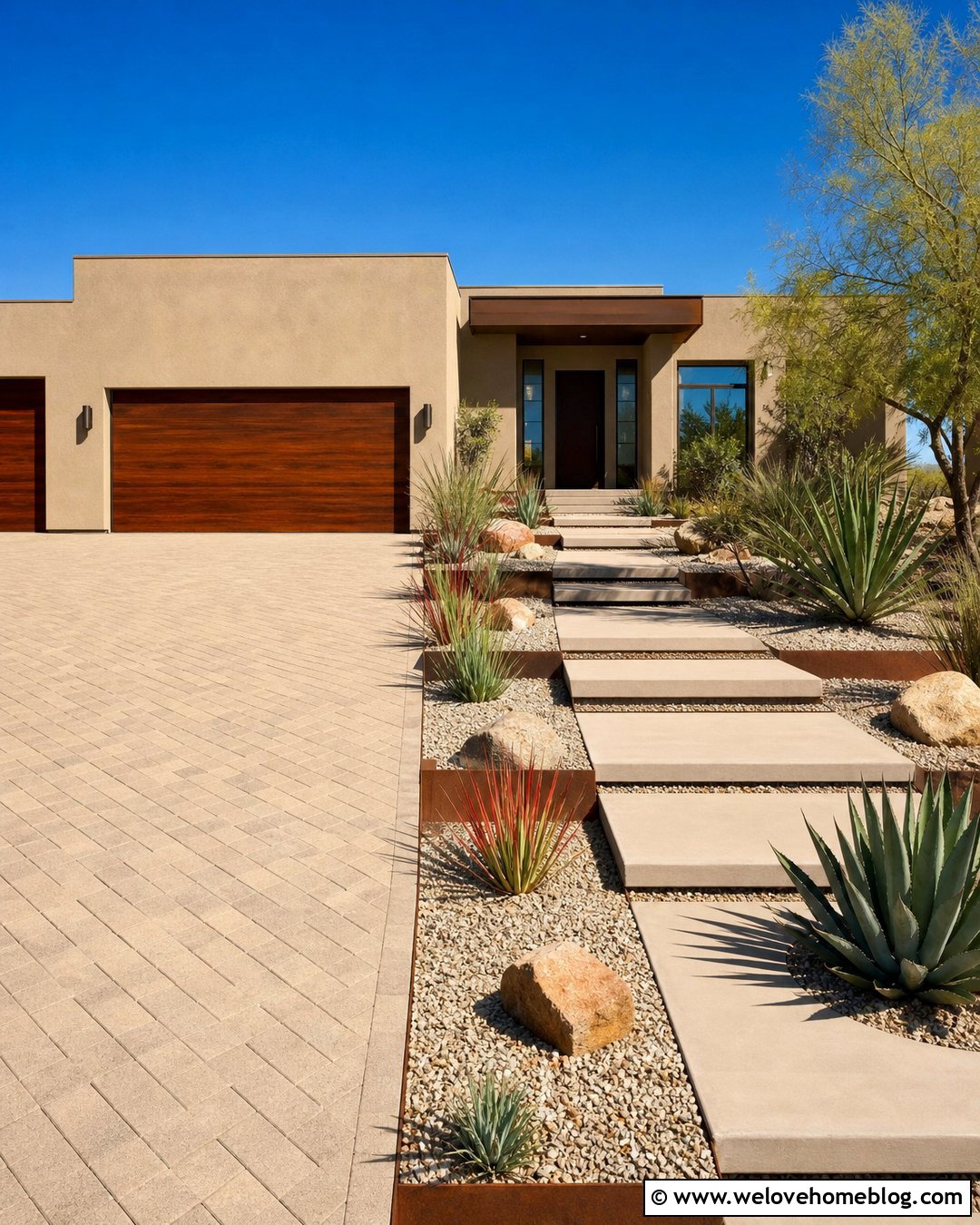
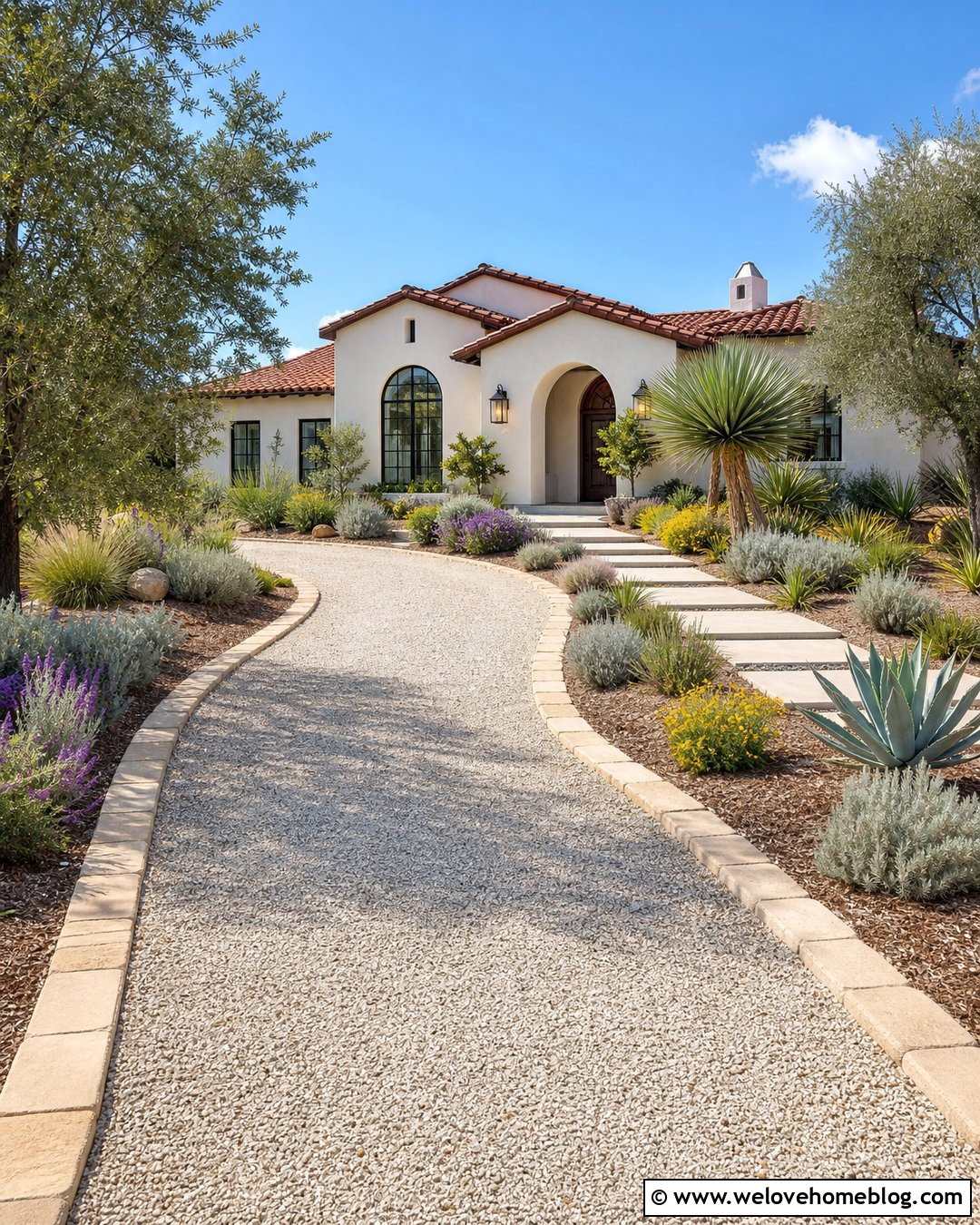
Warm concrete pavers and water-conscious landscaping can turn a dry front yard into a complete, highly structured entrance. Select sand, taupe, or muted terracotta pavers for the driveway and arrange them in a modular pattern. Create the walkway with larger rectangular pavers in a slightly lighter tone, separated by bands of small desert gravel. Rust-colored steel edging can outline both areas and coordinate with the surrounding rock mulch. Accent the route with agave, yucca, red yucca, decorative grasses, and carefully placed boulders suited to the local climate. Keep thorny plants away from walking edges and vehicle doors. A straight or gently angled layout complements Southwestern, adobe, and desert-modern homes while reducing the visual impact of a wide paved driveway.
16. Woodland Asphalt Driveway And Stone Walkway
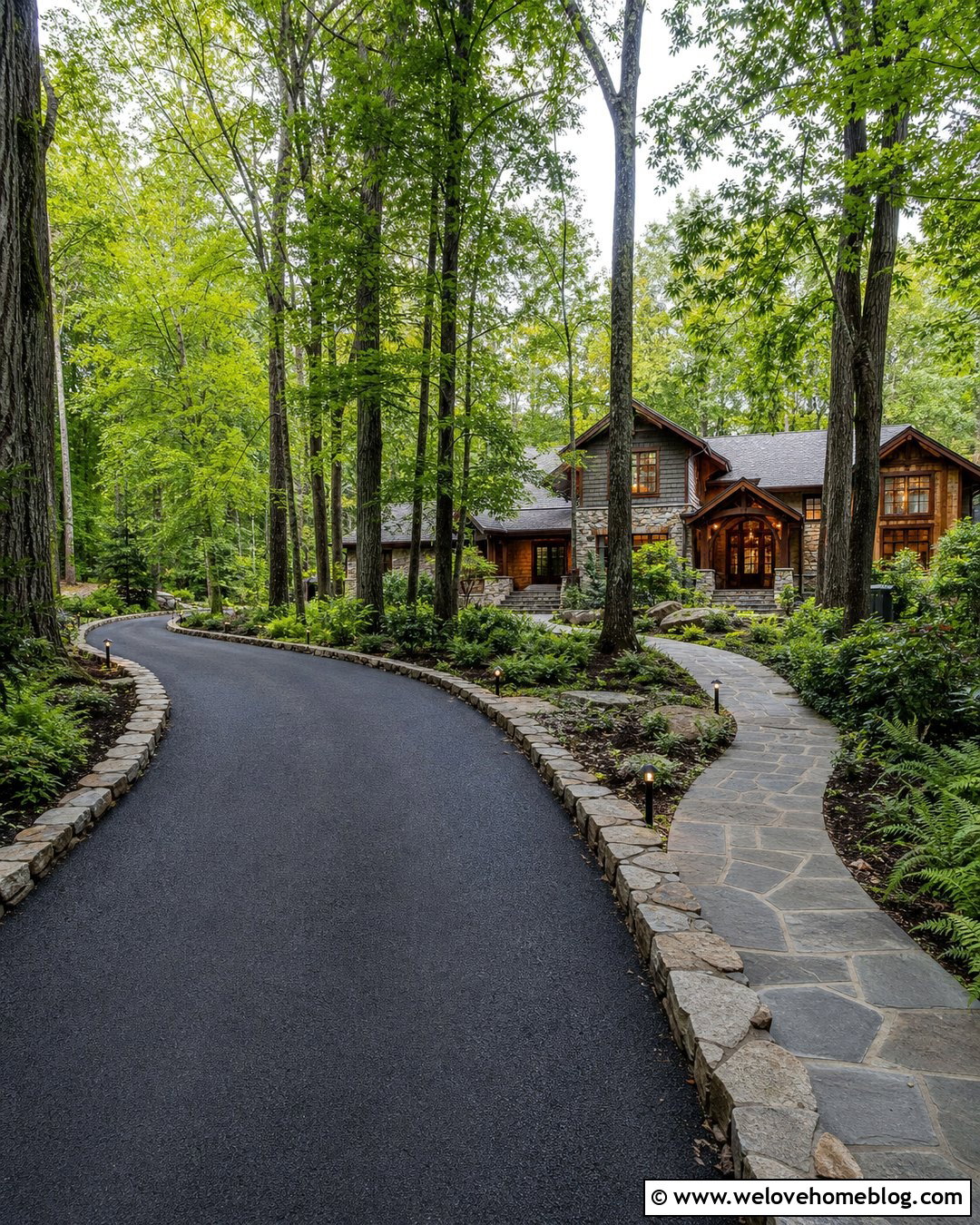
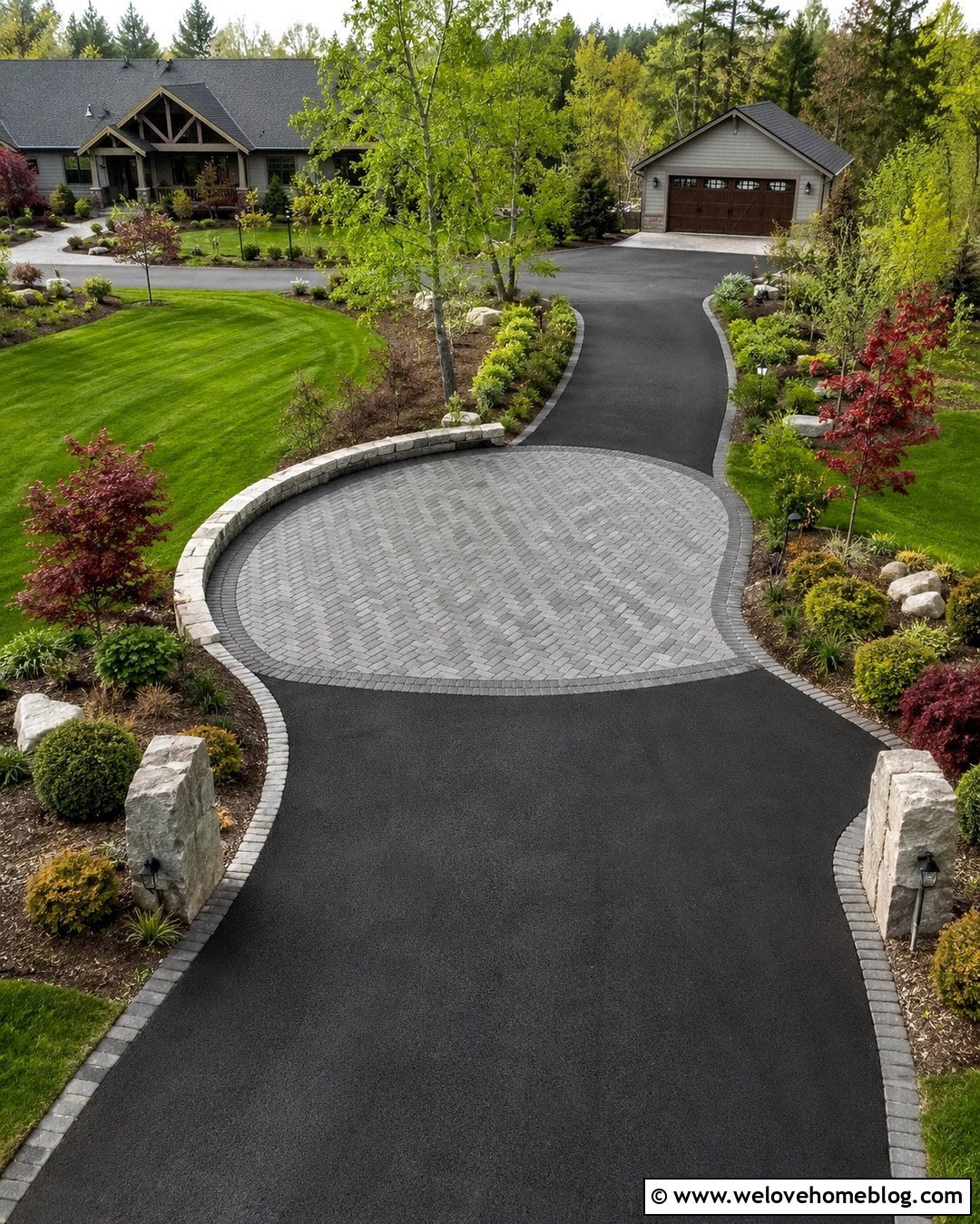
An asphalt driveway can settle quietly into a wooded property when natural stone defines its edges and pedestrian route. Choose deep black asphalt with a lightly textured finish, then border it with irregular gray fieldstone or granite cobbles. A wide flagstone walkway can branch from the driveway and curve through ferns, shade-tolerant shrubs, and woodland ground cover. Use stones with relatively flat surfaces and close joints to make the path easier to navigate. Low bollard lights can mark the route without making the setting feel urban. Preserve established trees where practical, but allow enough open space around the pavement for visibility and maintenance. This combination works well with rustic cabins, Craftsman houses, and contemporary woodland homes featuring stone, timber, or dark siding.
17. Small Grass Paver Driveway And Paver Walkway
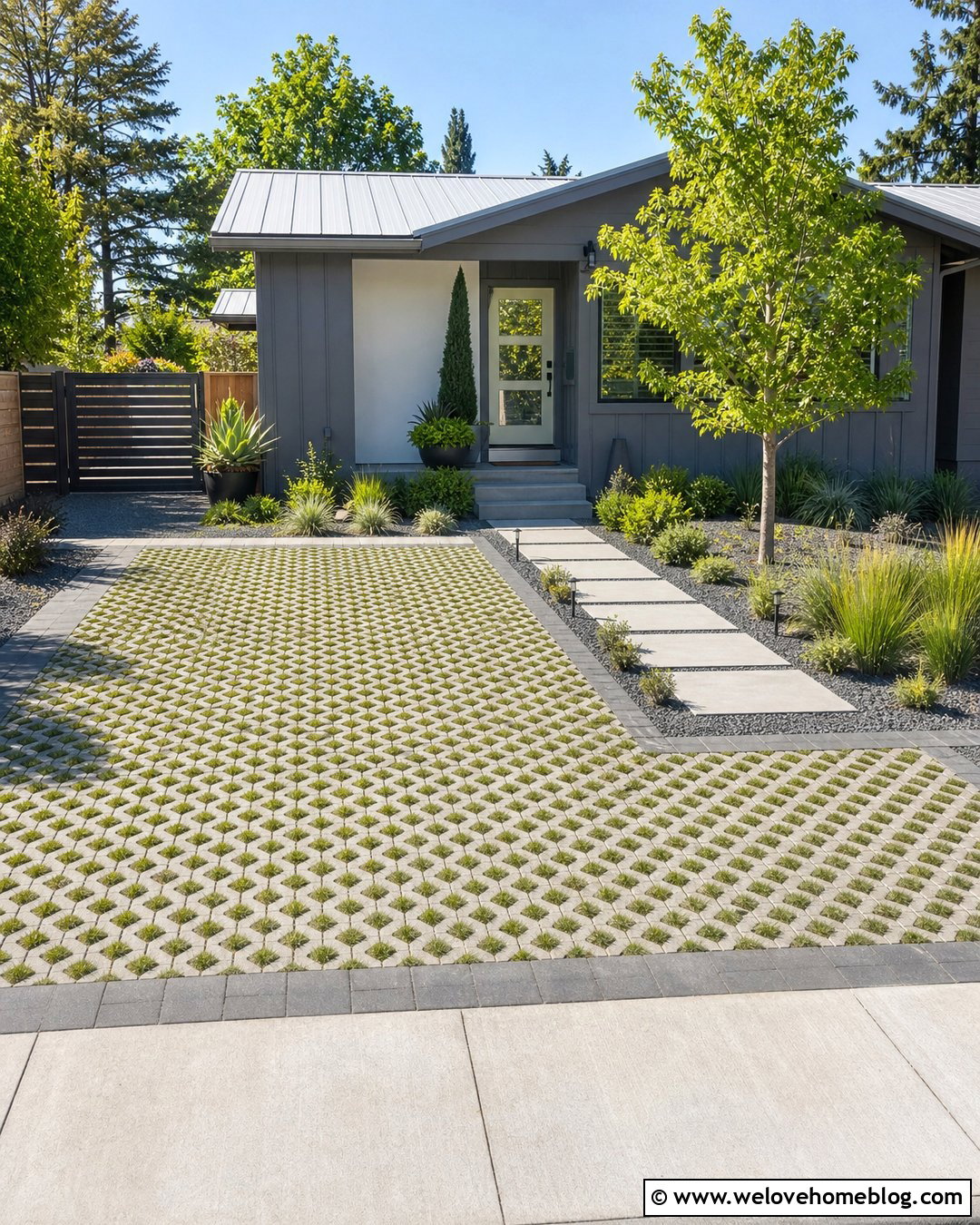
In a compact front yard, grass-grid pavers can reduce the appearance of a large solid parking pad. Install load-rated concrete grid pavers across the driveway and fill the openings with durable turf or decorative gravel suited to the site. Use solid concrete pavers for the walkway so pedestrians have a continuous, dependable surface. A charcoal border around both zones creates definition and prevents the small yard from looking fragmented. Keep the walkway direct, especially when space between the driveway and property line is limited. Narrow planting beds with compact grasses, dwarf shrubs, and one small ornamental tree can add softness without restricting movement. Repeating the house’s exterior colors in the pavers, edging, and planters makes this space-saving layout feel thoughtful rather than crowded.
18. Long Gravel Driveway And Side Walkway
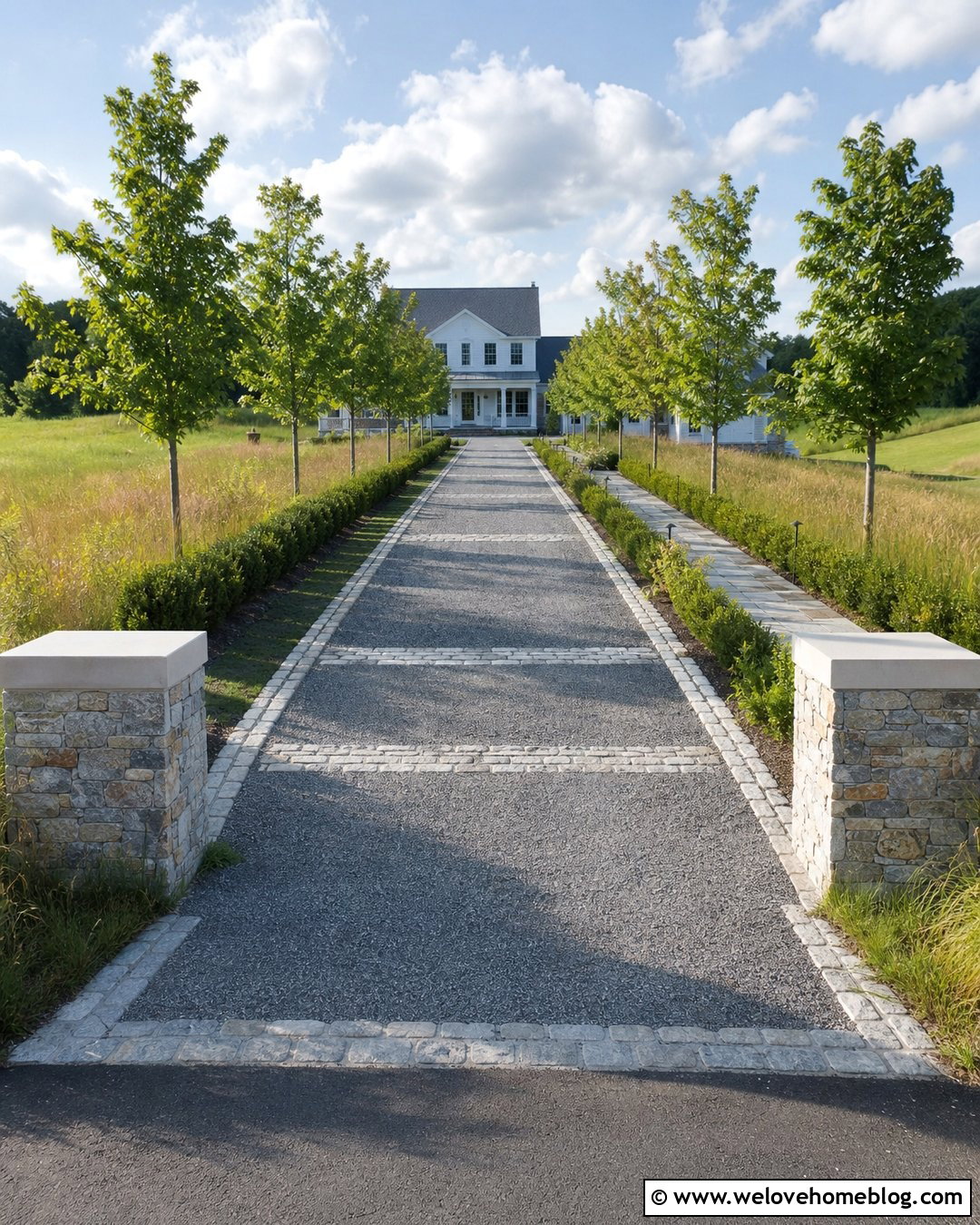
A long driveway needs rhythm and a clear destination so it does not resemble an empty strip through the yard. Use compacted gray gravel with cobblestone edging and introduce matching cobblestone bands at measured intervals. A separate flagstone walkway can run beside the final section of the driveway, guiding guests safely from a parking area to the house. Line the entrance with evenly spaced trees, but position them far enough from the pavement to accommodate mature trunks and roots. Low hedges, meadow-like grasses, or simple lawn can fill the spaces between. Stone pillars and understated lighting provide a visible starting point near the road. This complete design suits country, farmhouse, and estate properties where distance, scale, and arrival experience are important.
19. Sloped Concrete Driveway And Stepped Walkway
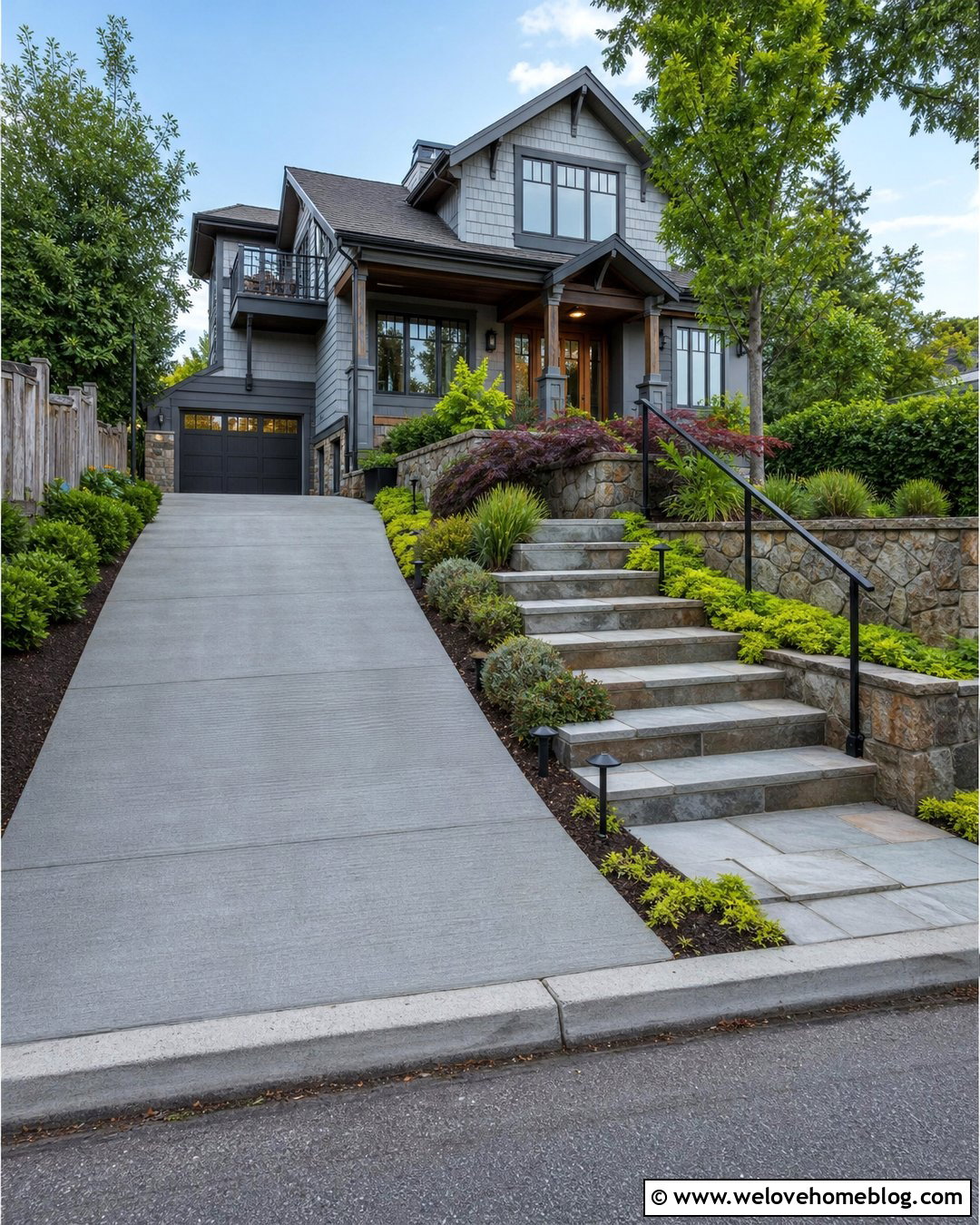
When the house sits above the street, separating vehicle and pedestrian routes can make the front yard easier to understand. Use broom-finished poured concrete for the sloped driveway, with textured bands across key areas for visual detail. Place a stepped walkway beside it using concrete or natural bluestone treads and generous landings. A low stone retaining wall can hold the adjacent slope and double as a strong border between the two routes. Add handrails where required and use low path lights to define each landing. Plant spreading ground cover, compact shrubs, and ornamental grasses along the retaining wall to soften the elevation change. Coordinating stone on the steps, wall, and house foundation will help the challenging layout feel unified and intentional.
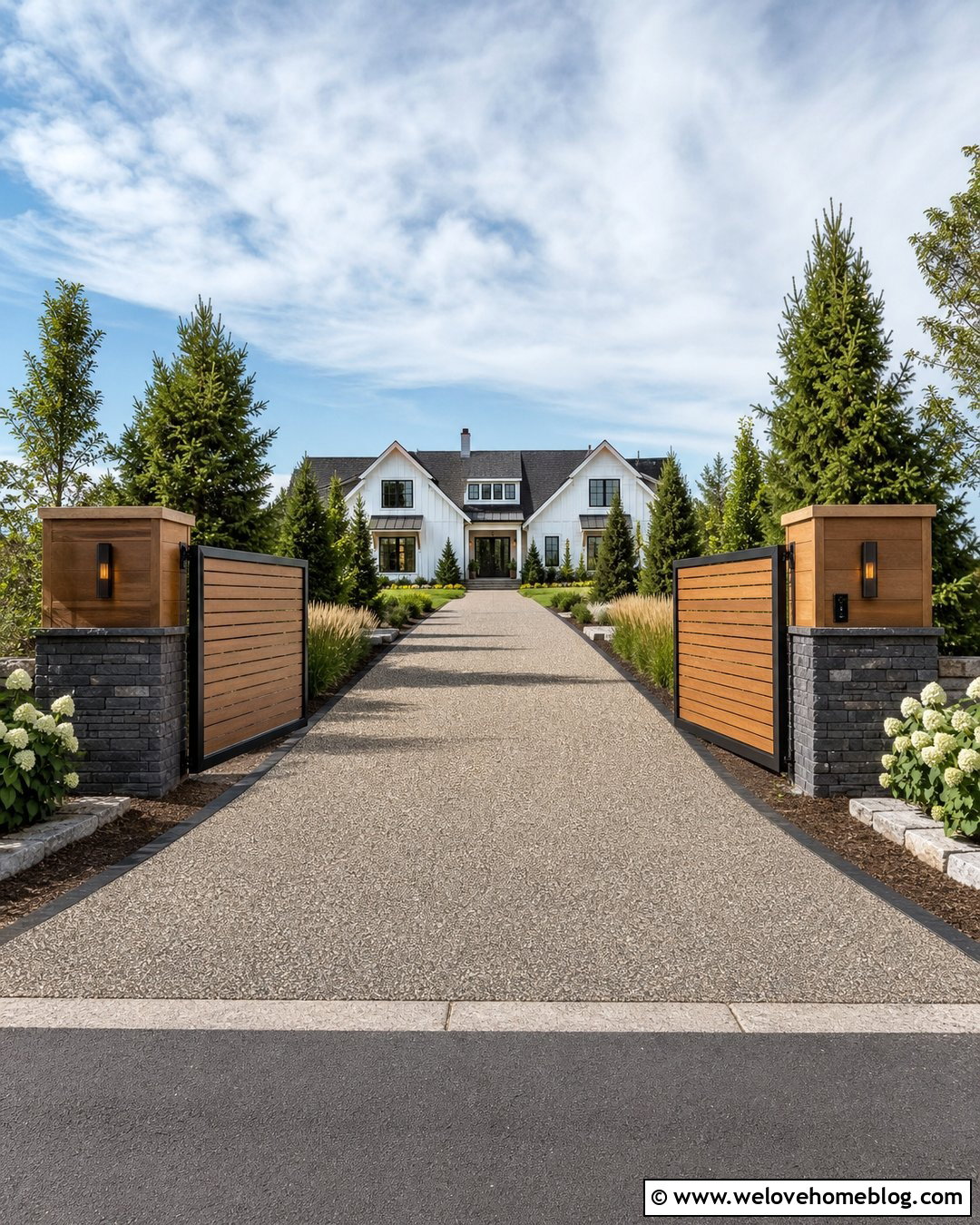
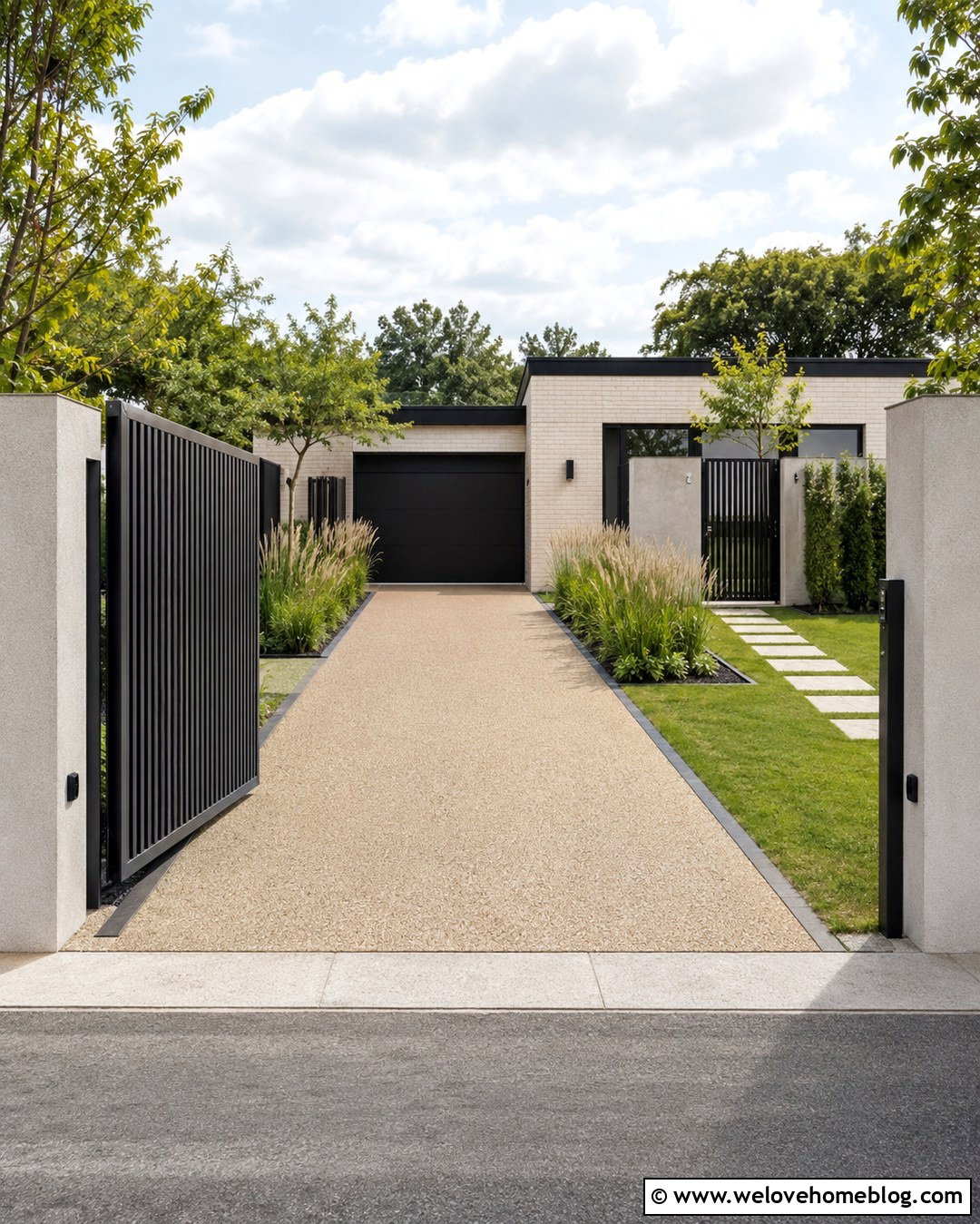
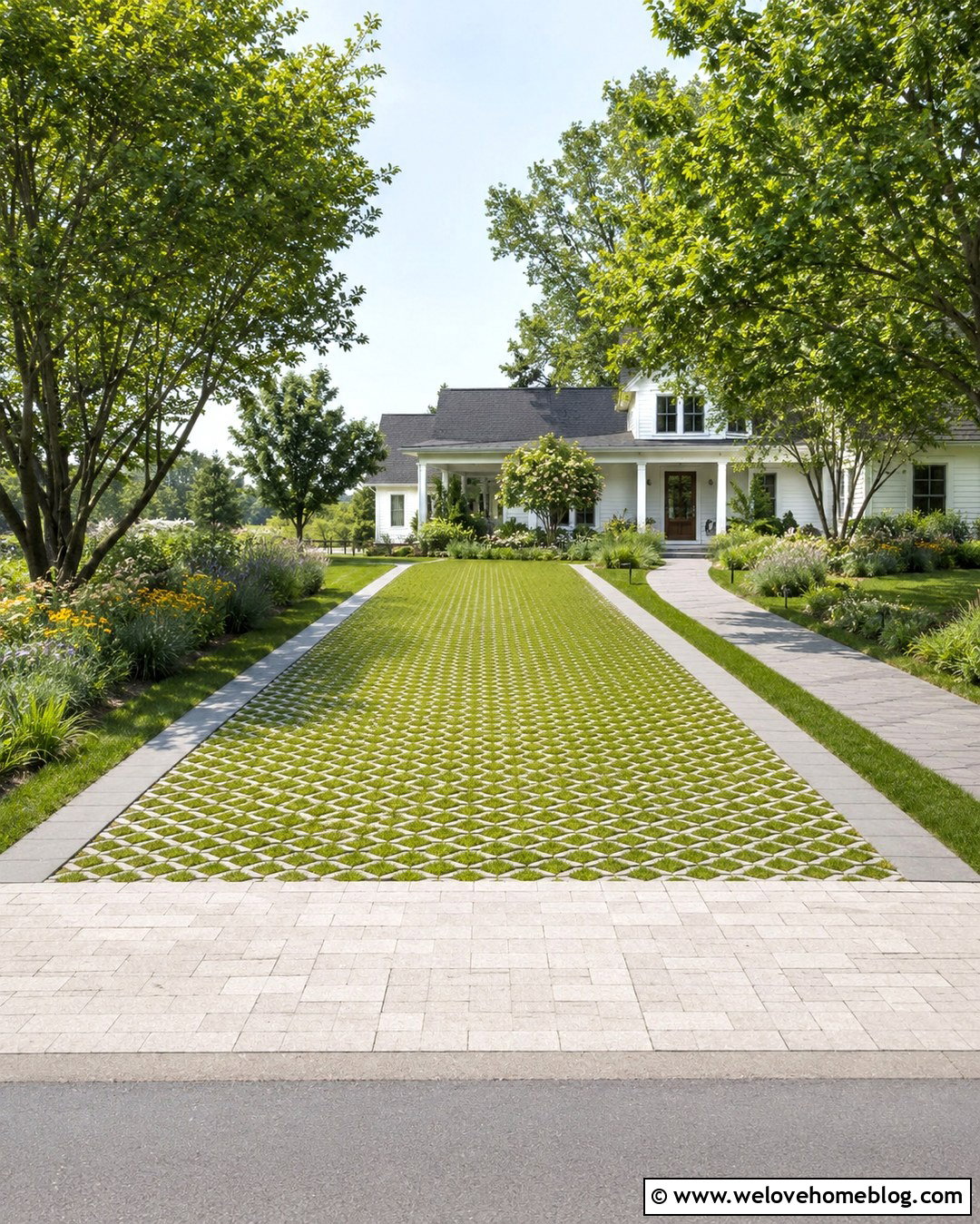
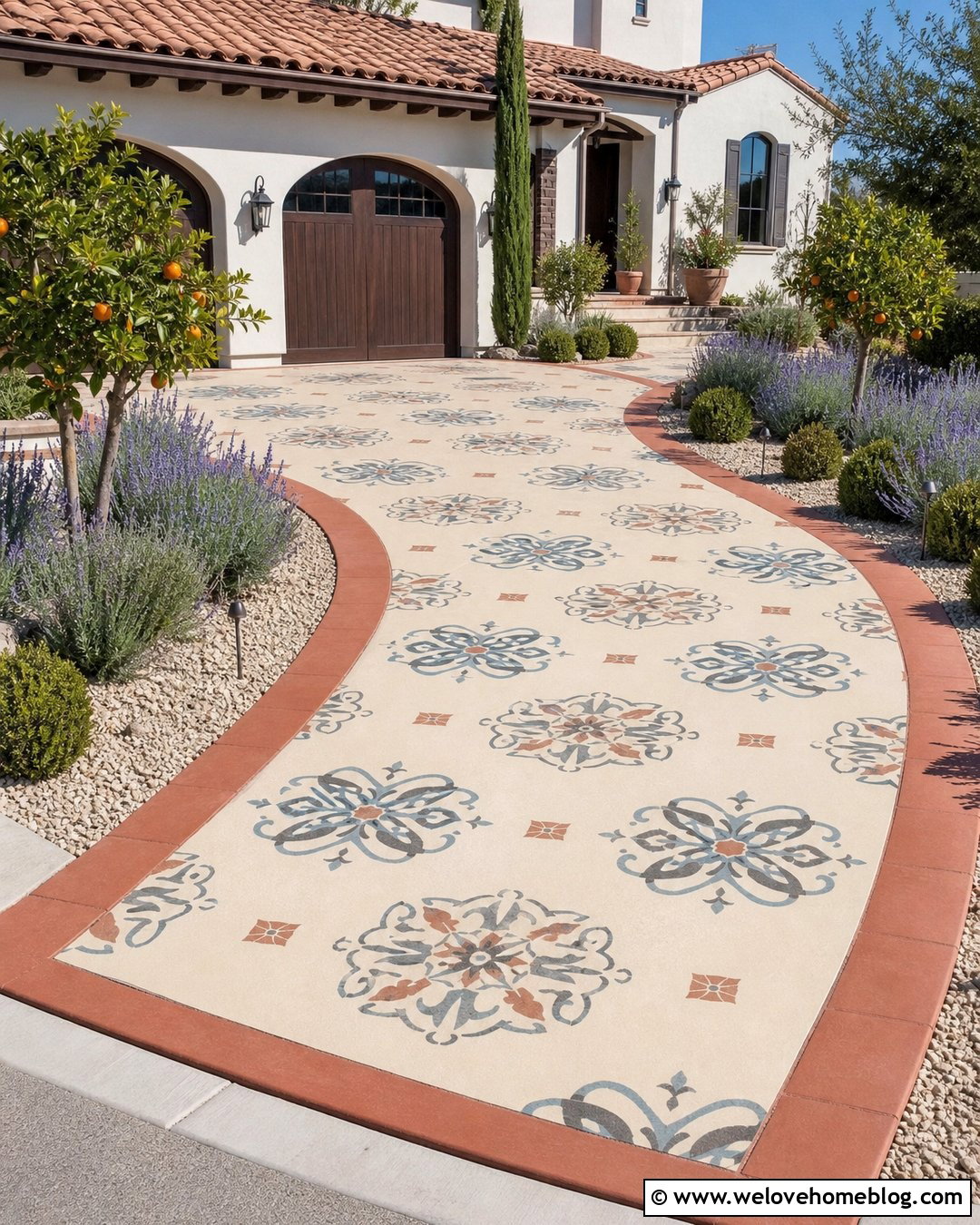
20. Mixed Material Driveway And Connected Walkway
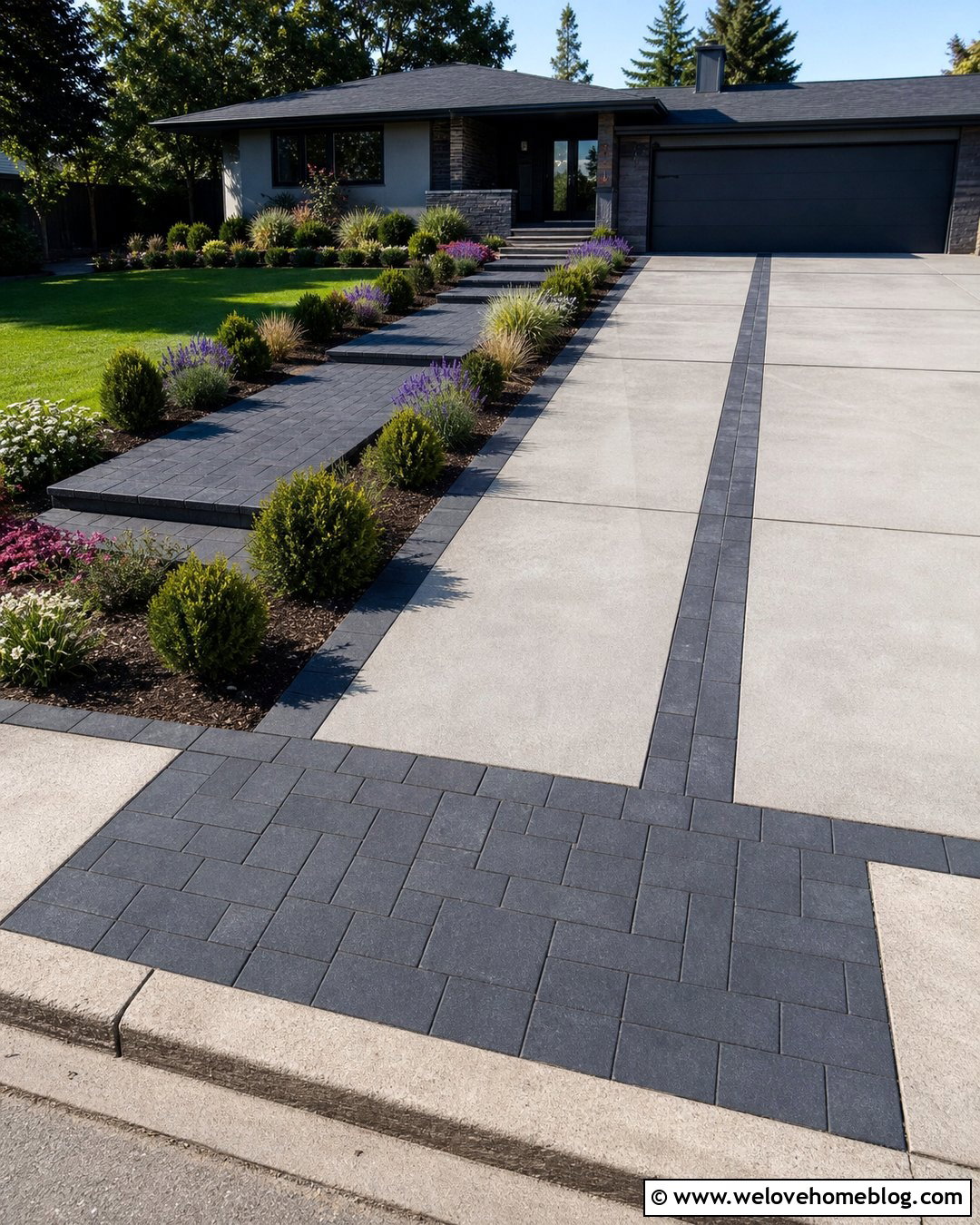
Combining materials can break up a large front yard, but the palette should remain controlled. Start with light gray poured concrete as the main driveway surface. Add clay brick or dark concrete paver ribbons around the perimeter and across the driveway to introduce scale. Continue that accent material into a full paver walkway leading to the porch. This creates an obvious connection without covering the entire property in expensive pavers. Shape the planting beds to follow the hardscape lines and repeat a small group of shrubs, grasses, and flowering perennials throughout the yard. A matching paver apron near the street can complete the composition. This flexible approach adapts to modern, traditional, ranch, and Craftsman homes while providing plenty of opportunities for customization.
Conclusion:
Successful driveways and walkways combine practical movement with a clear, coordinated exterior design. Start by studying how vehicles enter, where guests park, and the route people naturally take toward the door. Then choose materials that suit the home, local conditions, maintenance expectations, and project budget. Matching surfaces can create continuity, while contrasting materials can make the walkway easier to recognize. Borders, lighting, planting beds, and repeated colors help unite both areas. Drainage, safe footing, visibility, and comfortable transitions should remain priorities throughout planning. Whether you prefer gravel, asphalt, brick, concrete, stone, or pavers, these **20 Driveways And Walkways Ideas** can help you build a more attractive and welcoming approach.

Related posts:
Leave a Reply