
A well-planned patio and driveway combination can make the entire front or side yard feel larger, more useful, and more connected. Instead of treating parking and outdoor living as separate projects, coordinate the surface colors, borders, drainage, walkways, and landscaping. The two spaces do not need to match exactly. Repeating one color or border material can create continuity while different laying patterns clearly define where vehicles stop and seating begins. Current hardscape guidance favors this cohesive approach, along with permeable surfaces and intentional landscape transitions. () Whether you have a narrow suburban lot, a wide country property, or a compact front yard, these **20 Patio And Driveway Combo Ideas** offer practical ways to combine curb appeal with everyday function.

1. Matching Concrete Paver Patio And Driveway
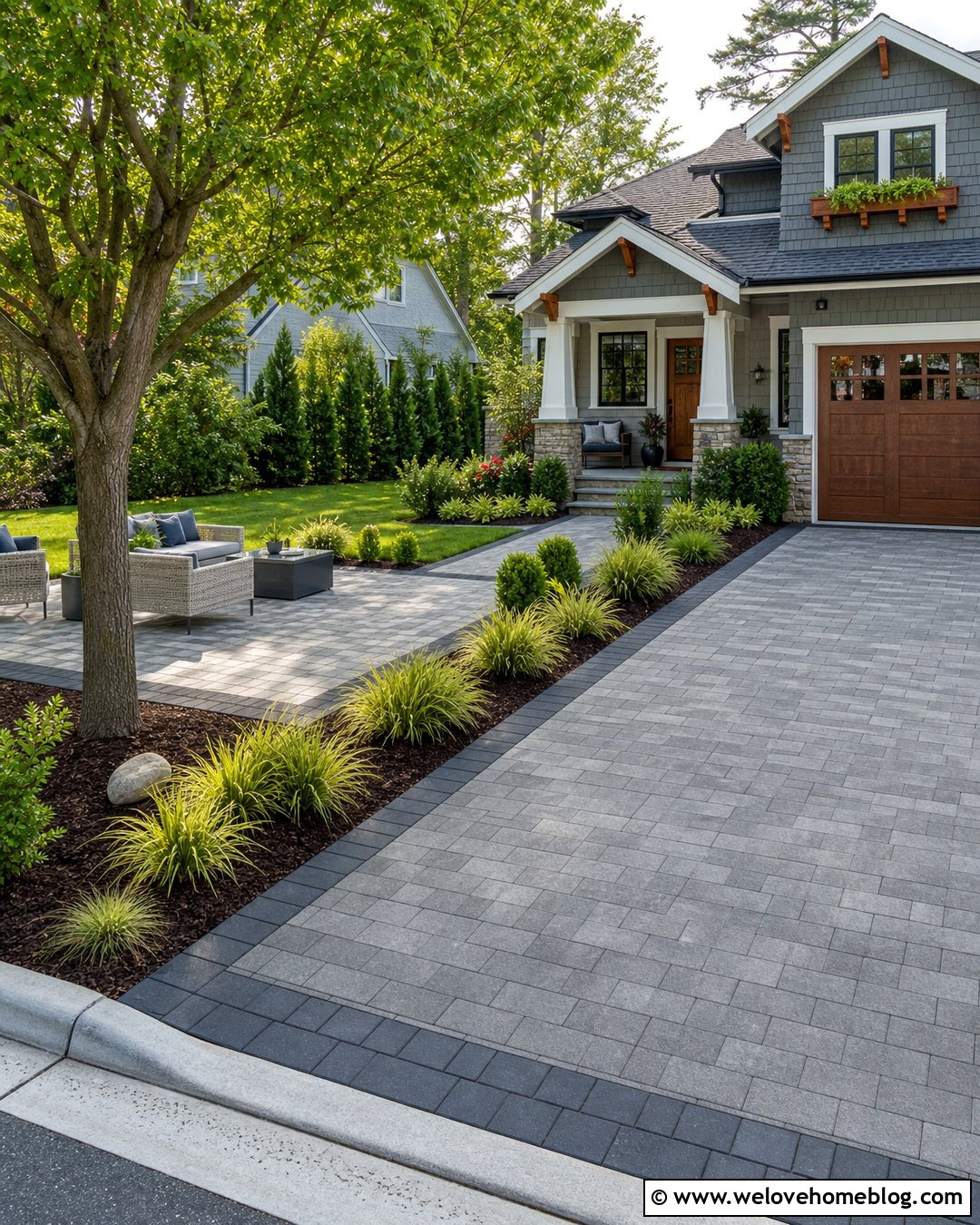
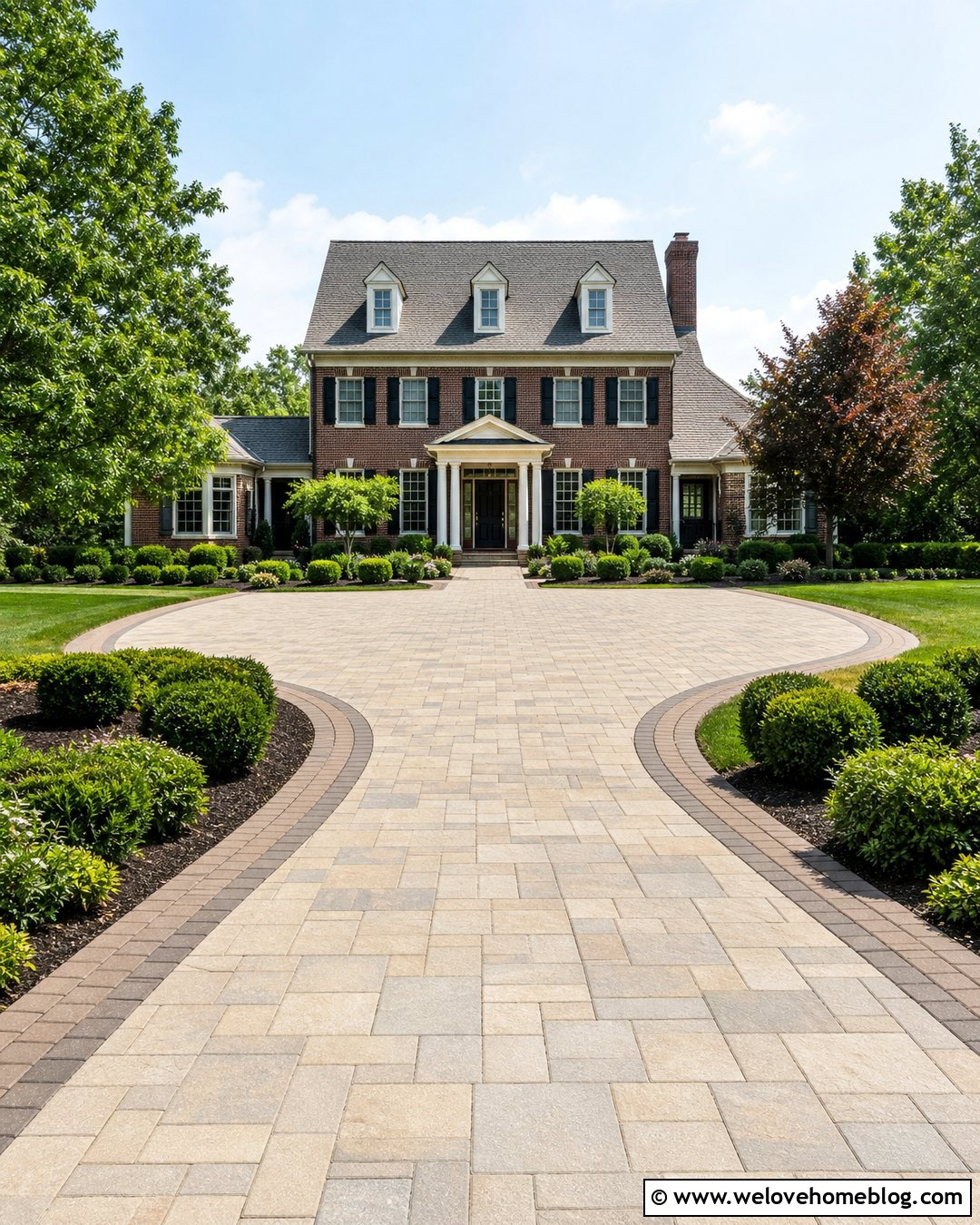
Matching concrete pavers create one of the cleanest transitions between a driveway and an attached patio. Choose driveway-rated pavers in a medium gray, warm beige, or blended stone tone, then continue the same color onto the patio. Change the laying pattern to define each zone. For example, use a running bond across the driveway and a basket-weave pattern within the seating area. A dark charcoal soldier-course border can outline both spaces and make them feel intentionally connected. Add low planting beds between the patio and parking lane where space allows. Ornamental grasses, compact shrubs, and a small shade tree soften the large paved area. Keep furniture outside the vehicle turning path, and use substantial planters as attractive visual buffers.
2. Concrete Driveway With Attached Front Patio
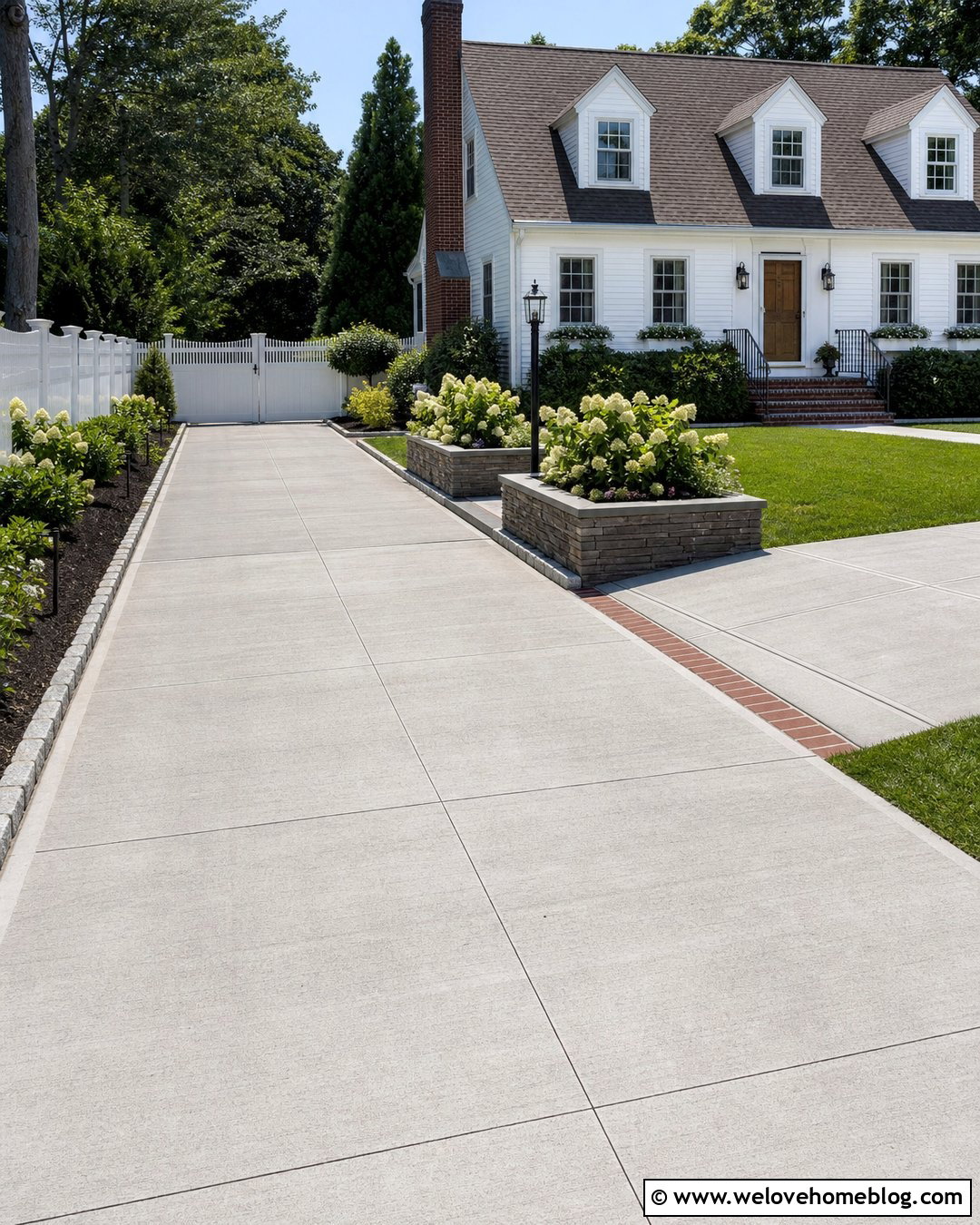
A poured concrete driveway can flow naturally into a welcoming front patio without making the yard look like one oversized slab. Use saw-cut control joints to create a simple grid across the driveway, then switch to smaller square sections on the patio. A light broom finish provides a practical surface, while a subtle warm-gray integral color complements many house facades. Separate the seating zone with a narrow brick or concrete paver ribbon. Raised planting beds can provide another protective boundary without blocking views of the entrance. Place the patio beside the front walkway rather than directly in front of the garage. This layout gives guests a clear route to the door and keeps chairs safely away from parked vehicles and routine driveway activity.
3. Asphalt Driveway With Brick Paver Patio
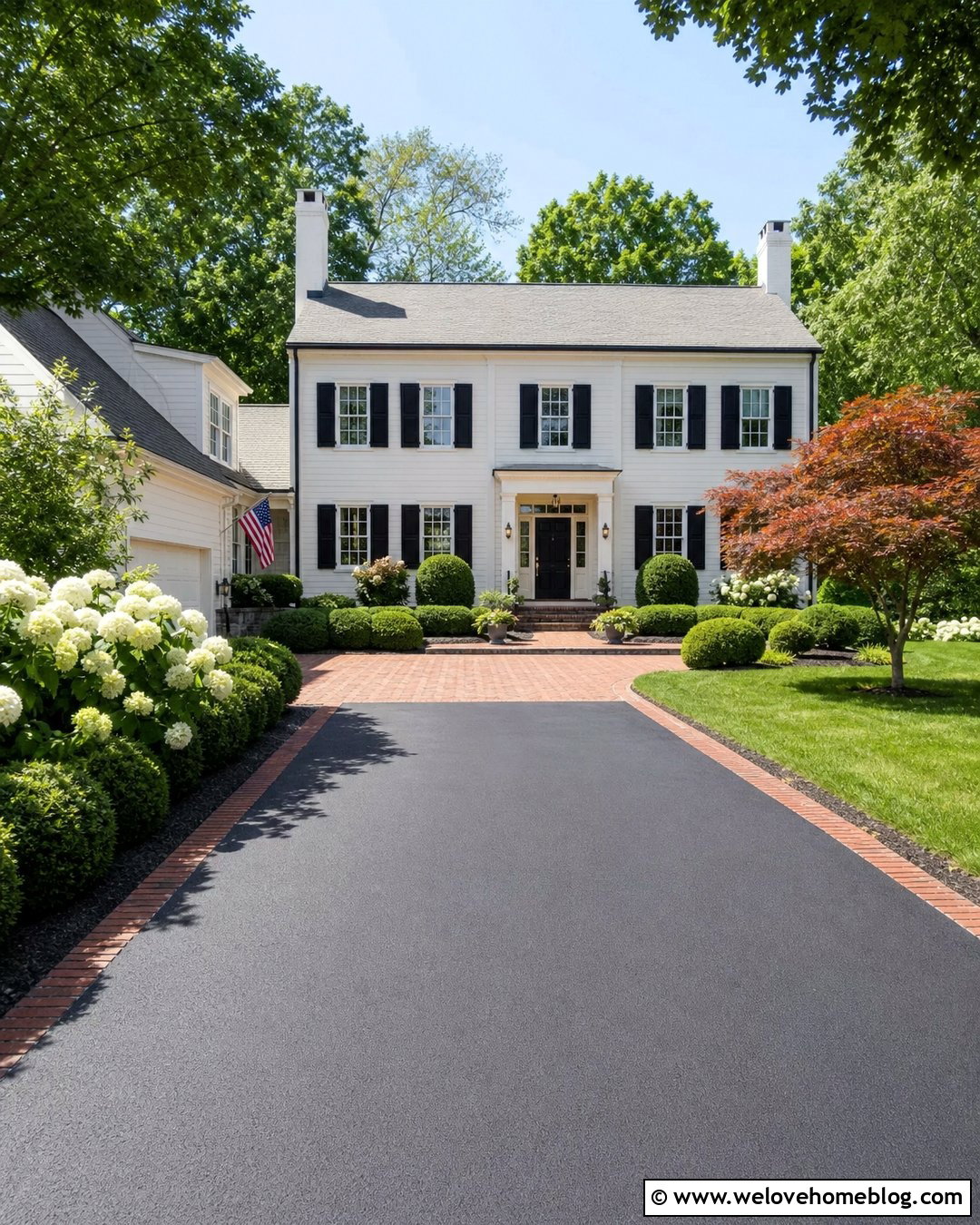
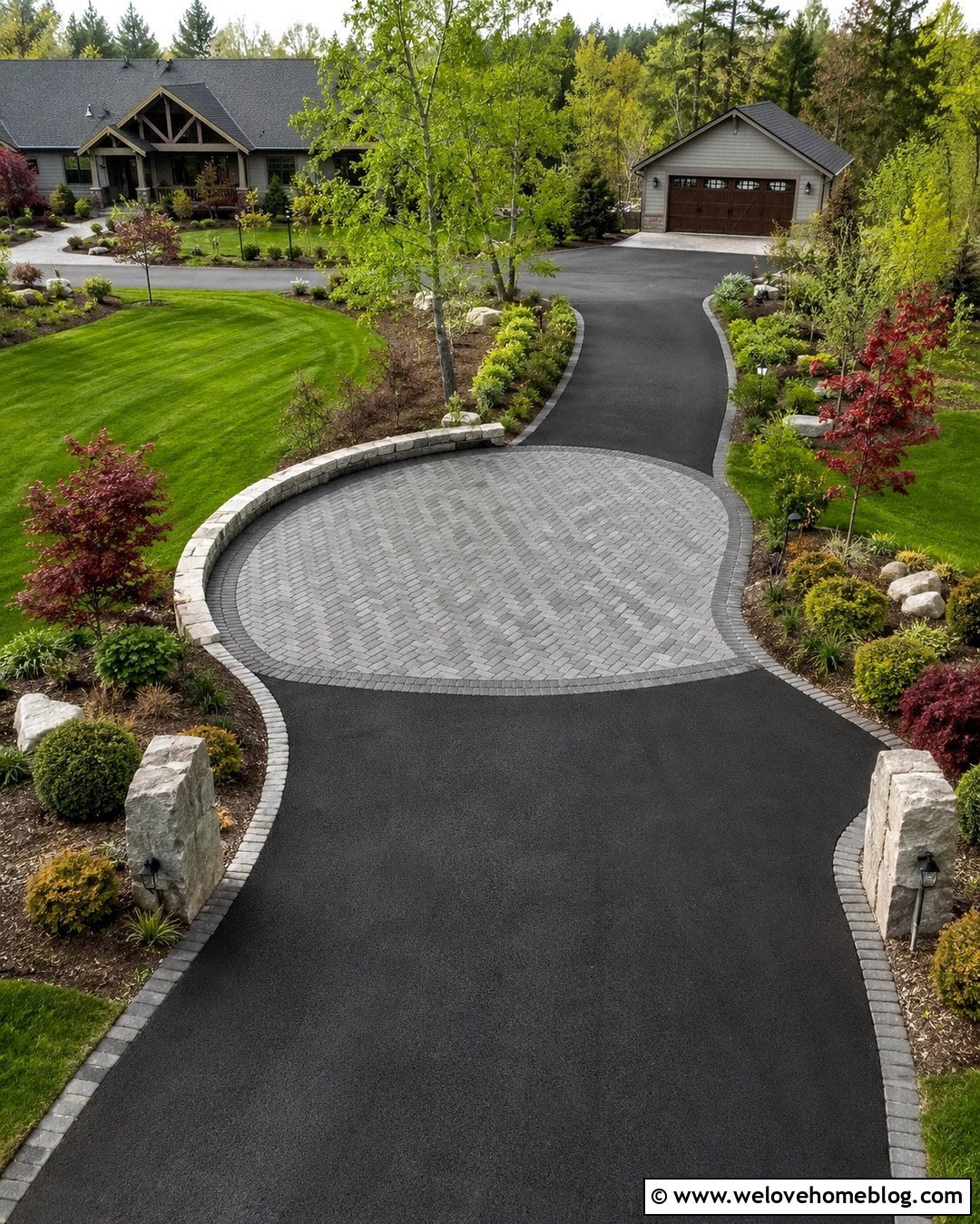
Black asphalt and red-brown brick create a classic, budget-conscious combination with plenty of visual contrast. Keep the asphalt driveway simple and use clay brick pavers for an adjoining front or side patio. Carry a matching brick ribbon along both driveway edges to connect the two surfaces. A herringbone pattern gives the patio a more detailed appearance, while the driveway remains durable and understated. This pairing works especially well with Colonial, Cape Cod, and traditional brick homes. Add clipped evergreen shrubs, hydrangeas, and a small lawn strip around the patio for softness. Where the materials meet, install a secure edge restraint and a smooth transition. The finished design should look connected but clearly communicate which area is intended for parking and which is reserved for relaxing.
4. Gravel Driveway With Flagstone Patio
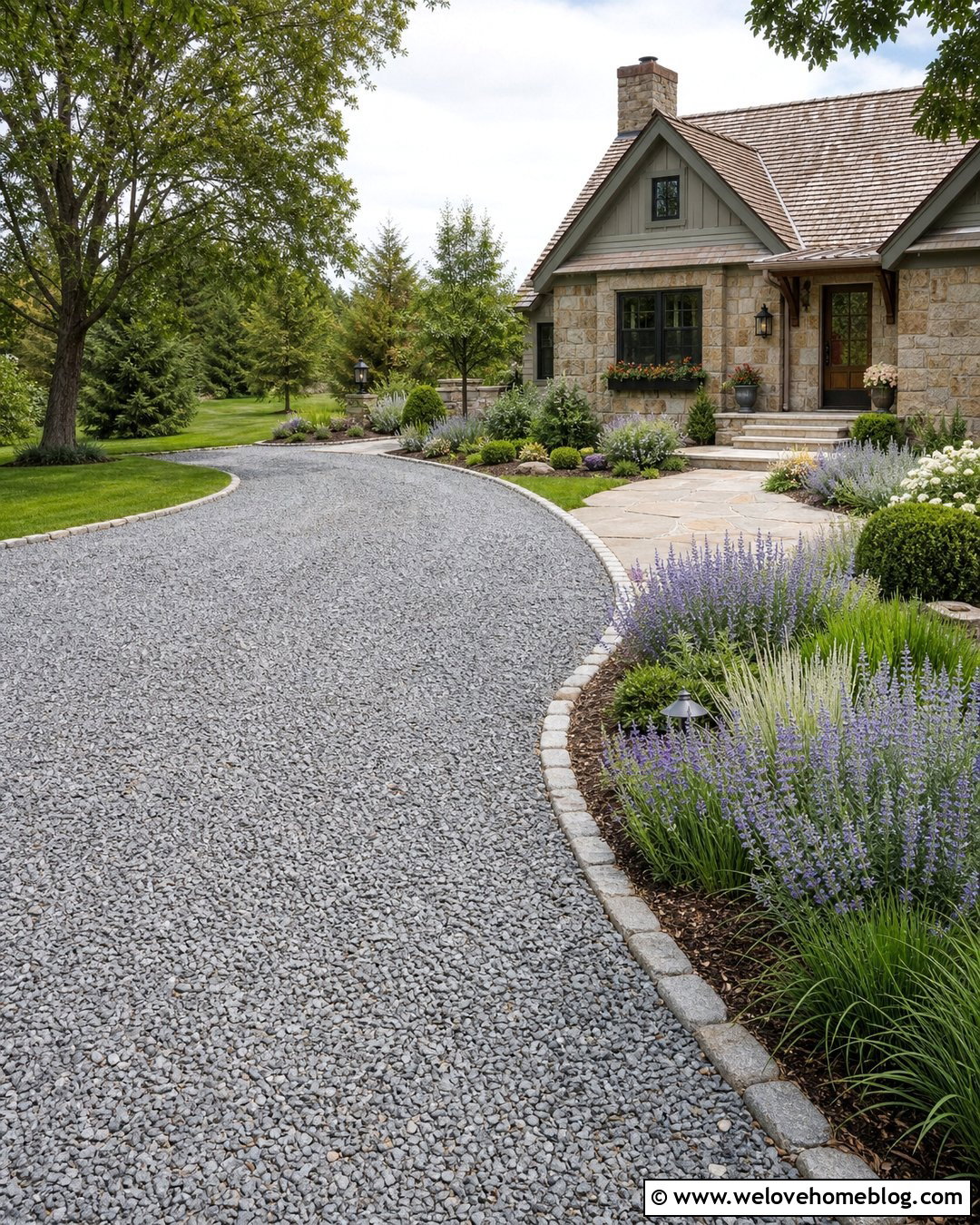
The soft crunch of gravel and the irregular texture of flagstone can give a patio-driveway combination a relaxed country character. Use compacted angular gravel for the driveway because it generally stays in place better than loose, rounded stones. Create the patio with broad flagstone pieces set closely together over a properly prepared base. Repeat several flagstones as stepping pads between the parking area and seating zone. Steel, brick, or cobblestone edging helps prevent gravel from migrating onto the patio. Surround the layout with lavender, catmint, ornamental grasses, and low evergreen shrubs. This complete look suits cottages, ranch homes, and rustic farmhouses. Include a gentle slope or drainage channel so runoff does not carry loose gravel into the patio or toward the house.
5. Herringbone Brick Patio And Driveway
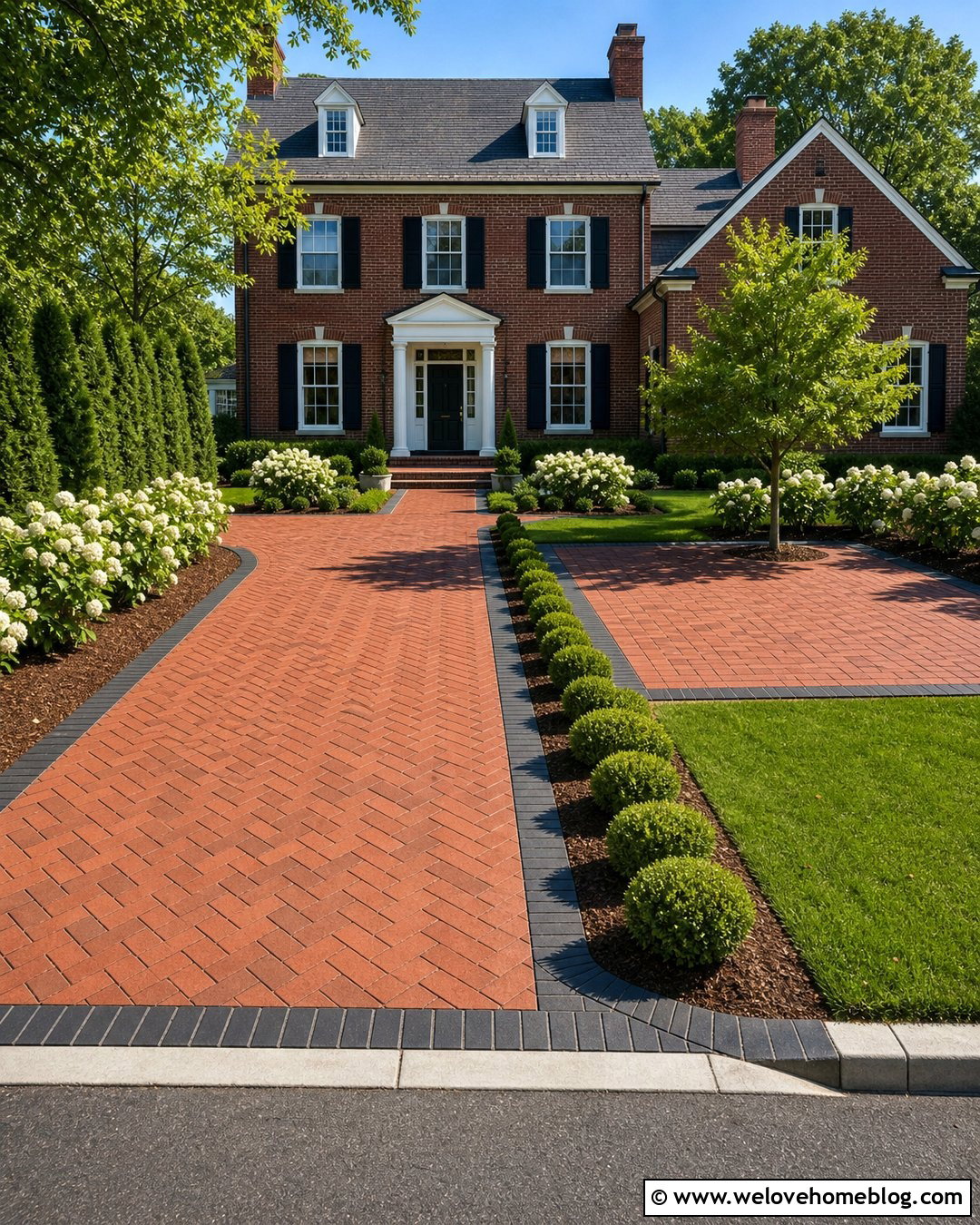
A full brick paver surface can turn the driveway and patio into a warm, traditional outdoor composition. Lay driveway-rated clay or concrete brick pavers in a herringbone pattern where vehicles travel. This interlocking arrangement also creates strong visual movement toward the house. Continue the same brick color onto the patio, but change to a running bond or basket-weave pattern to mark the living area. Add a charcoal brick border around both zones for crisp definition. A curved planting bed can provide separation while preserving easy movement between the spaces. Boxwood, white flowering shrubs, and a small ornamental tree reinforce the formal appearance. Make the patio wide enough for furniture without narrowing the required driveway clearance or interfering with access to the garage.
6. Permeable Paver Patio And Driveway
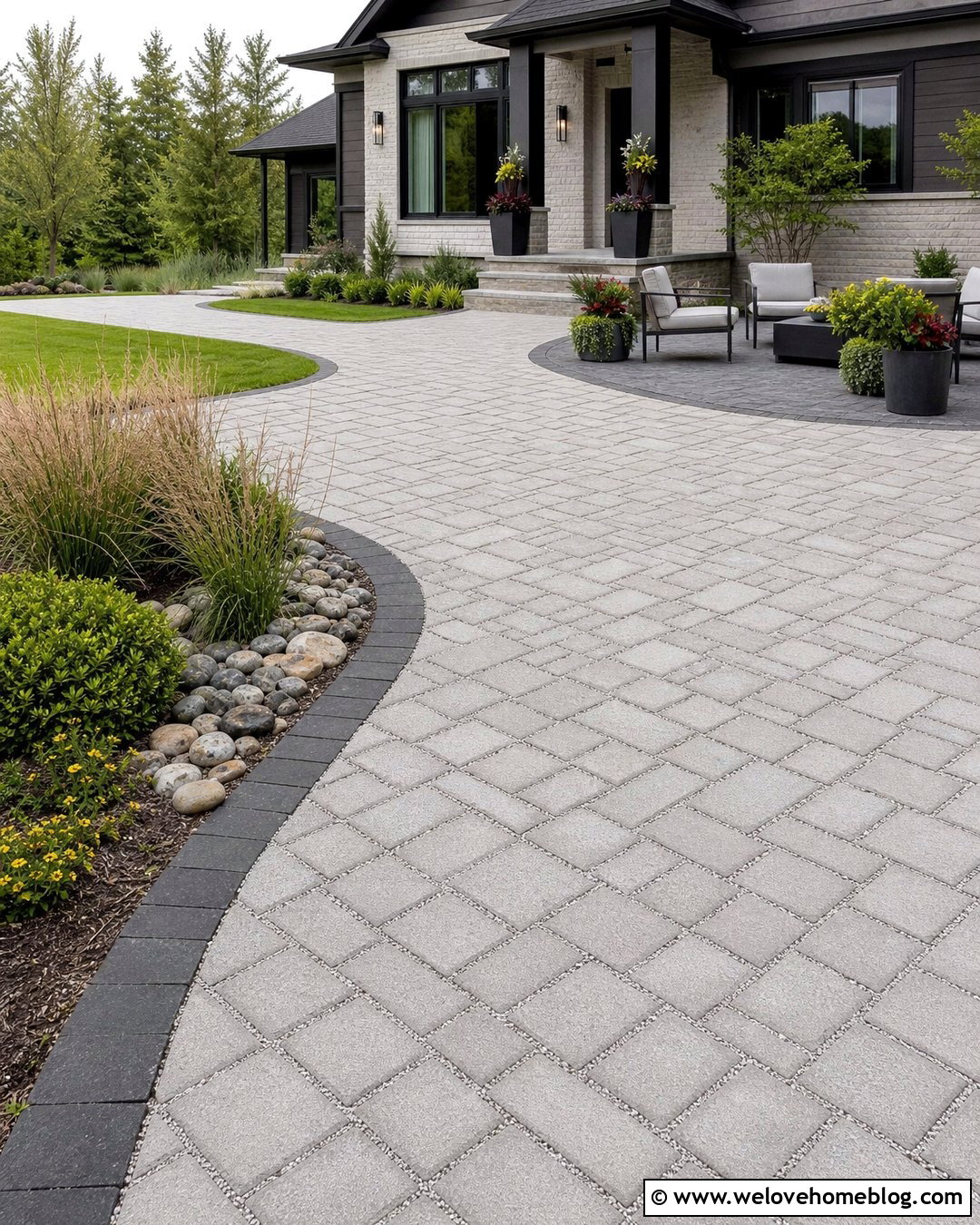
Permeable concrete pavers are a smart choice when drainage is a major part of the design. Use stone-filled joints across the driveway and patio so both areas share the same texture and color. Permeable systems allow water to move through their openings into a correctly designed crushed-stone base, but their performance depends heavily on proper excavation, grading, and installation. () Define the patio with a contrasting paver border, built-in bench, or line of large planters. A rain garden positioned near the lower edge can strengthen the landscape connection without obstructing movement. Select patio furniture with stable, wide feet that will sit comfortably on the jointed surface. Before installation, confirm local requirements and have the site’s soil, slope, drainage needs, and vehicle loads professionally evaluated.
7. Modern Concrete Patio And Driveway
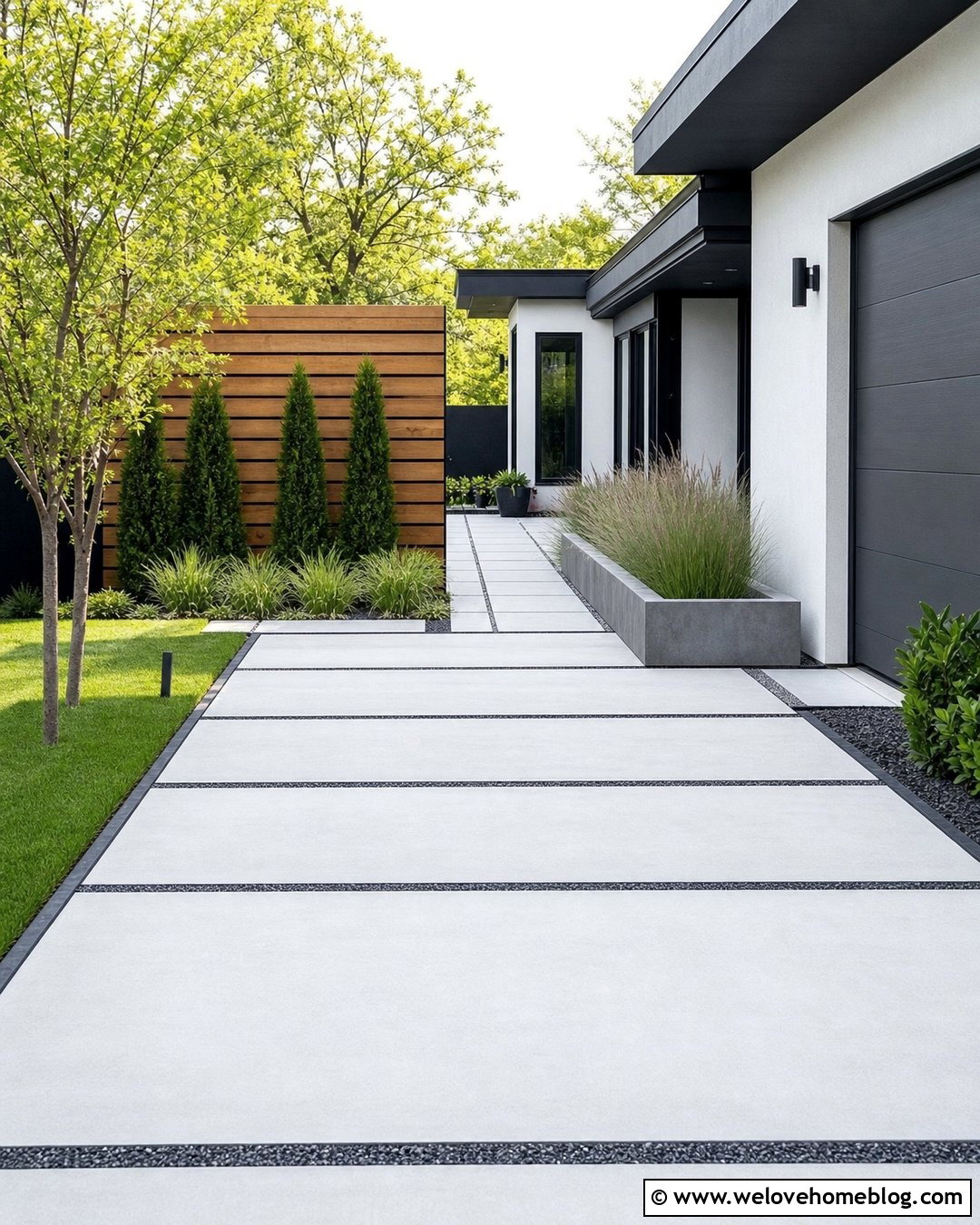
Large rectangular concrete slabs create a streamlined patio and driveway for a modern home. Use smooth light-gray poured concrete or oversized driveway-rated concrete pavers, arranged in a clean linear layout. Narrow dark gravel joints can visually separate the slabs, but driveable areas require a construction system designed to resist shifting and vehicle loads. Extend the same geometry onto a side patio, where the slabs can become slightly smaller and more closely spaced. Black steel edging, rectangular planters, and structured ornamental grasses reinforce the modern lines. A horizontal wood screen provides patio privacy and warms the cool concrete palette. Keep the planting scheme restrained rather than empty. Repeating three or four plant varieties throughout the approach creates softness while preserving the uncluttered, architectural appearance.
8. Circular Driveway With Courtyard Patio
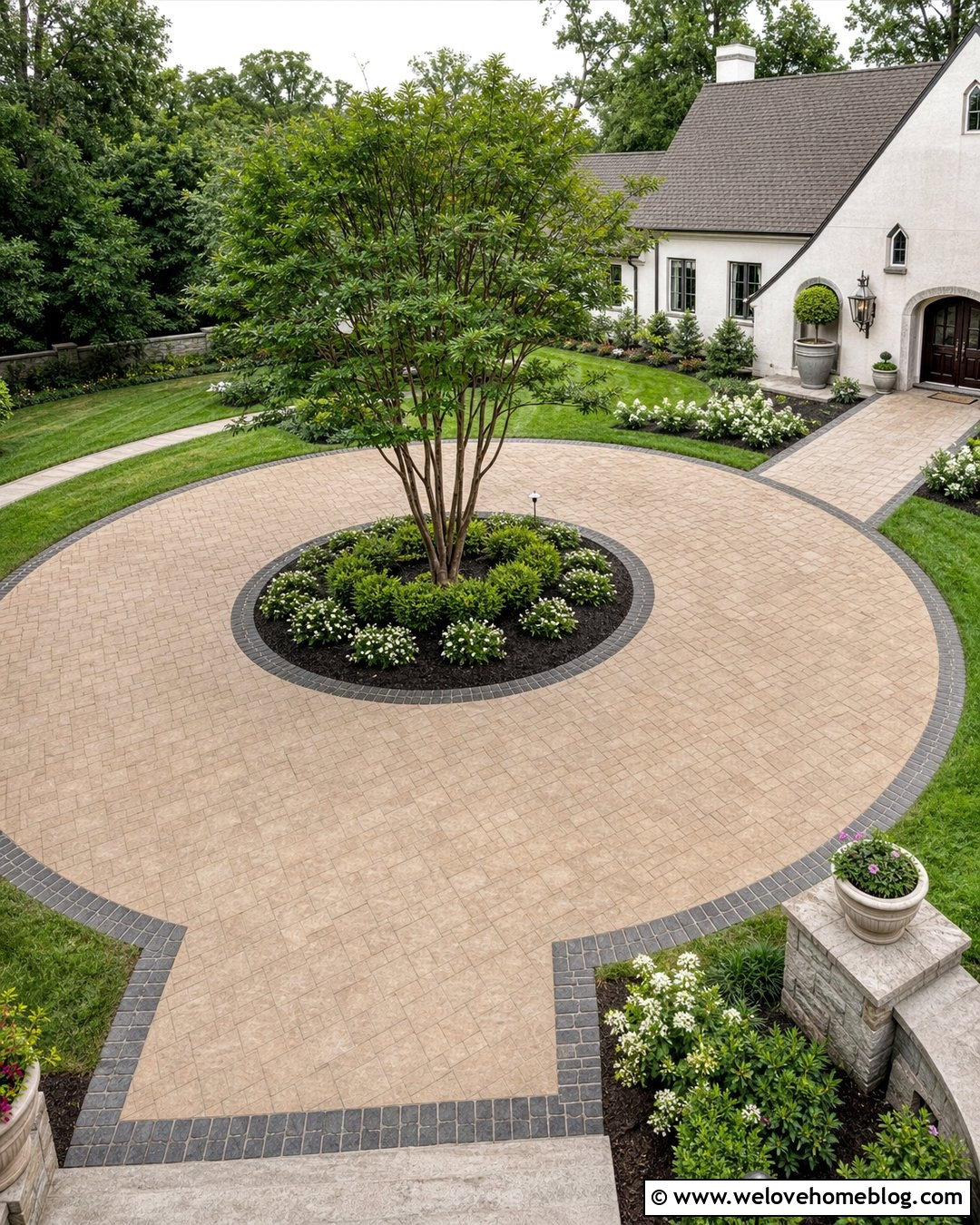
A circular driveway can wrap around a landscaped island while connecting to a patio near the front entrance. Use tumbled concrete pavers or exposed aggregate for the curved vehicle lane, then create a coordinating courtyard patio beside the walkway. Repeat the driveway’s border paver around the patio to unify the layout. The central island can hold a multi-stem tree, low shrubs, seasonal flowers, and ground cover that will not block views across the drive. Place the seating area away from the primary curve so furniture never enters the turning path. Low masonry walls or substantial planters can create a comfortable boundary. This combination works best on a wider lot where the circle, patio, front walk, and planting zones can each have enough room to function comfortably.
9. Small Front Yard Patio And Driveway
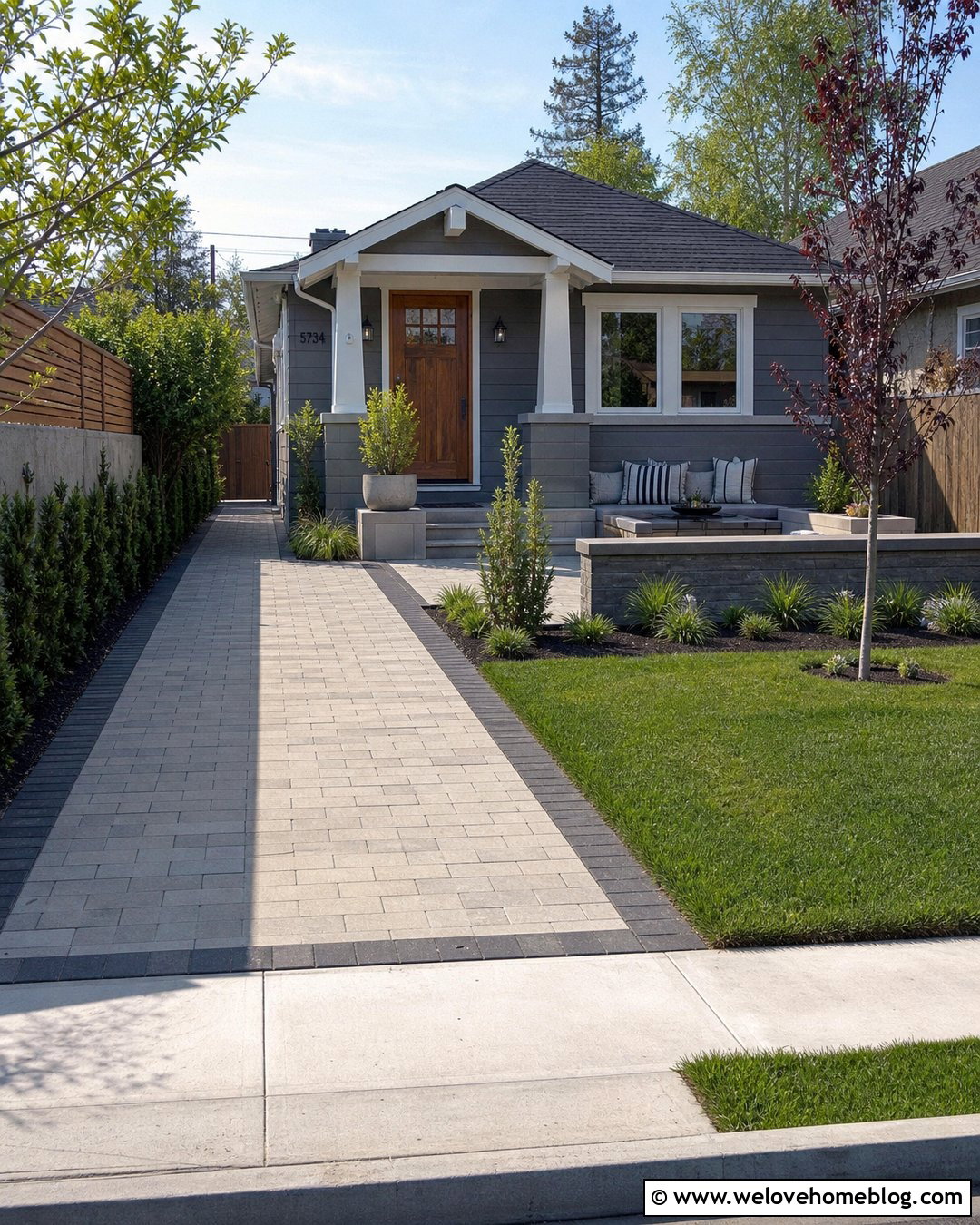
Limited space calls for a compact layout with clear boundaries and very little wasted ground. Run a straight concrete paver driveway along one side of the house and place a small front patio beside the entrance. Use the same warm-gray pavers in both areas, but outline the patio with a darker border and a narrow planting bed. A built-in bench consumes less room than several freestanding chairs and helps keep the seating zone organized. Choose upright shrubs, dwarf grasses, and one slender ornamental tree instead of plants that spread across walkways. Avoid complicated material changes that can make a small yard feel fragmented. A continuous paver palette, simple rectangular shapes, and an unobstructed route from the sidewalk to the front door will make the property feel more spacious.
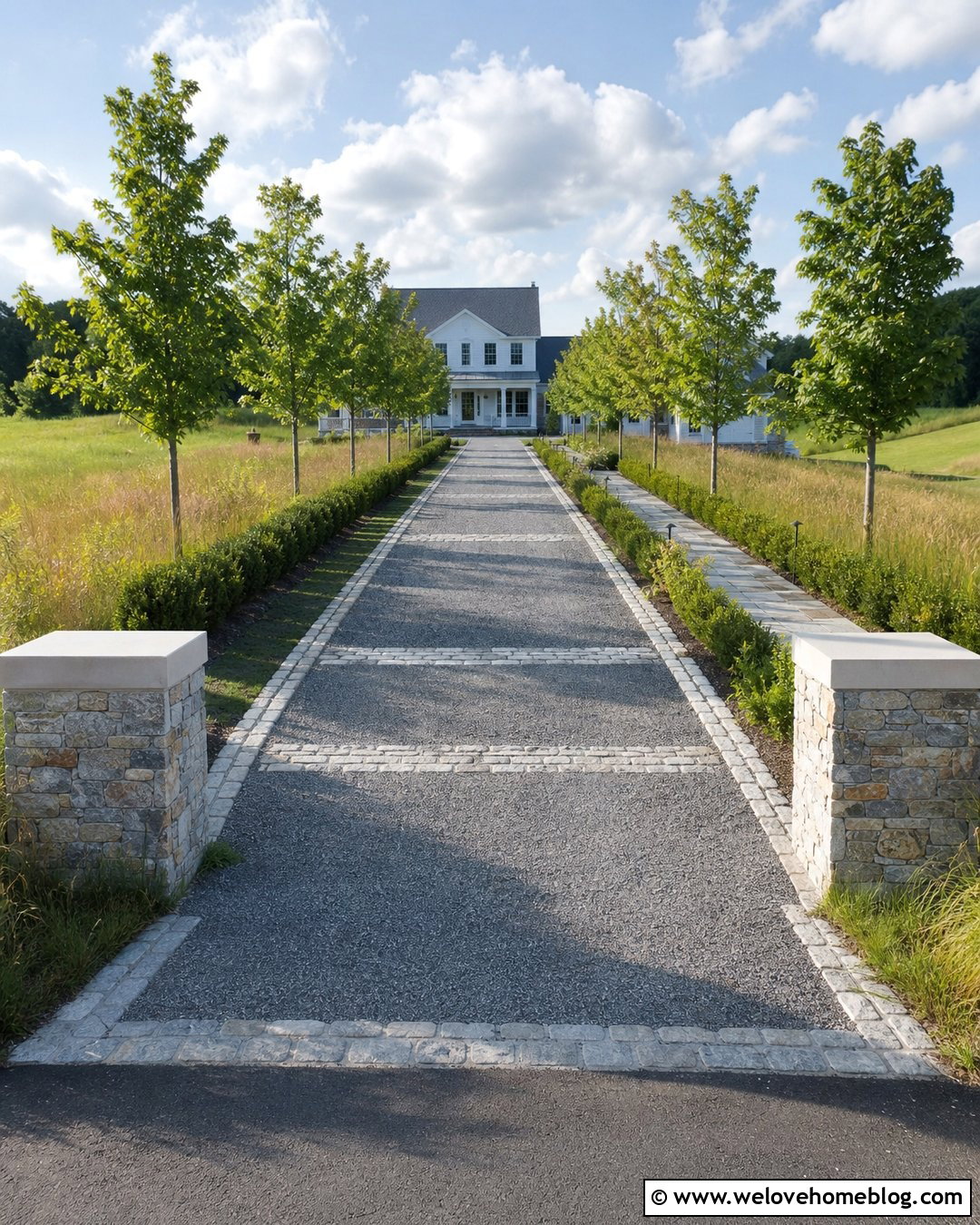
10. Narrow Driveway With Side Patio
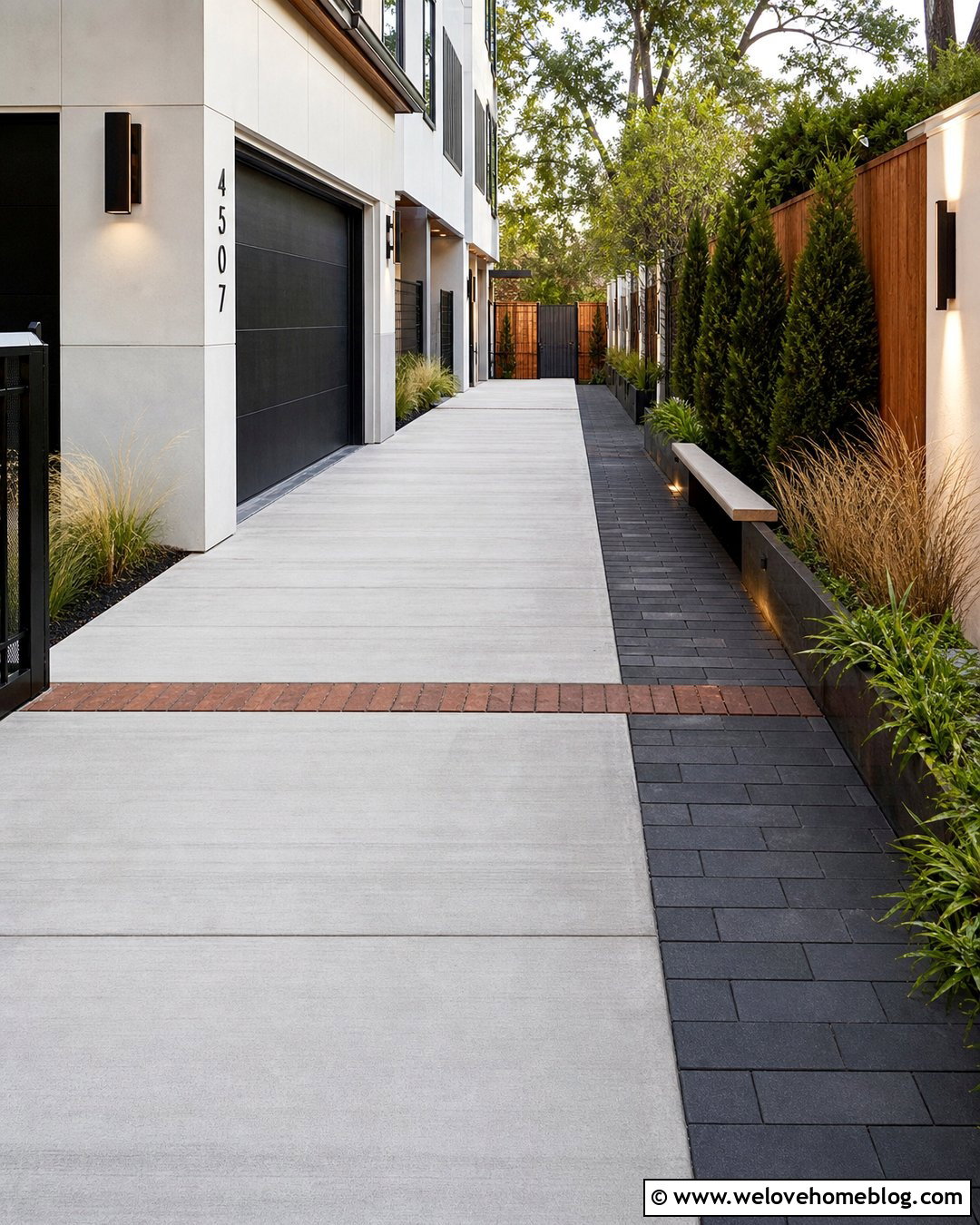
What can you do when the driveway occupies most of a narrow side yard? Turn the remaining strip into a linear patio that follows the driveway toward the backyard. A brushed concrete driveway paired with long-format concrete patio pavers keeps the design simple. Install a contrasting brick or charcoal paver band between the two areas to create a visible safety boundary. Against the fence, add a slim built-in bench, wall-mounted lighting, and narrow planters filled with grasses or compact evergreens. Position the widest patio section near the house, where a small table can sit without restricting vehicle doors. Proper grading is essential because runoff should move away from the foundation and patio. This arrangement makes an overlooked side yard useful while maintaining practical driveway access.
11. Curved Driveway With Garden Patio
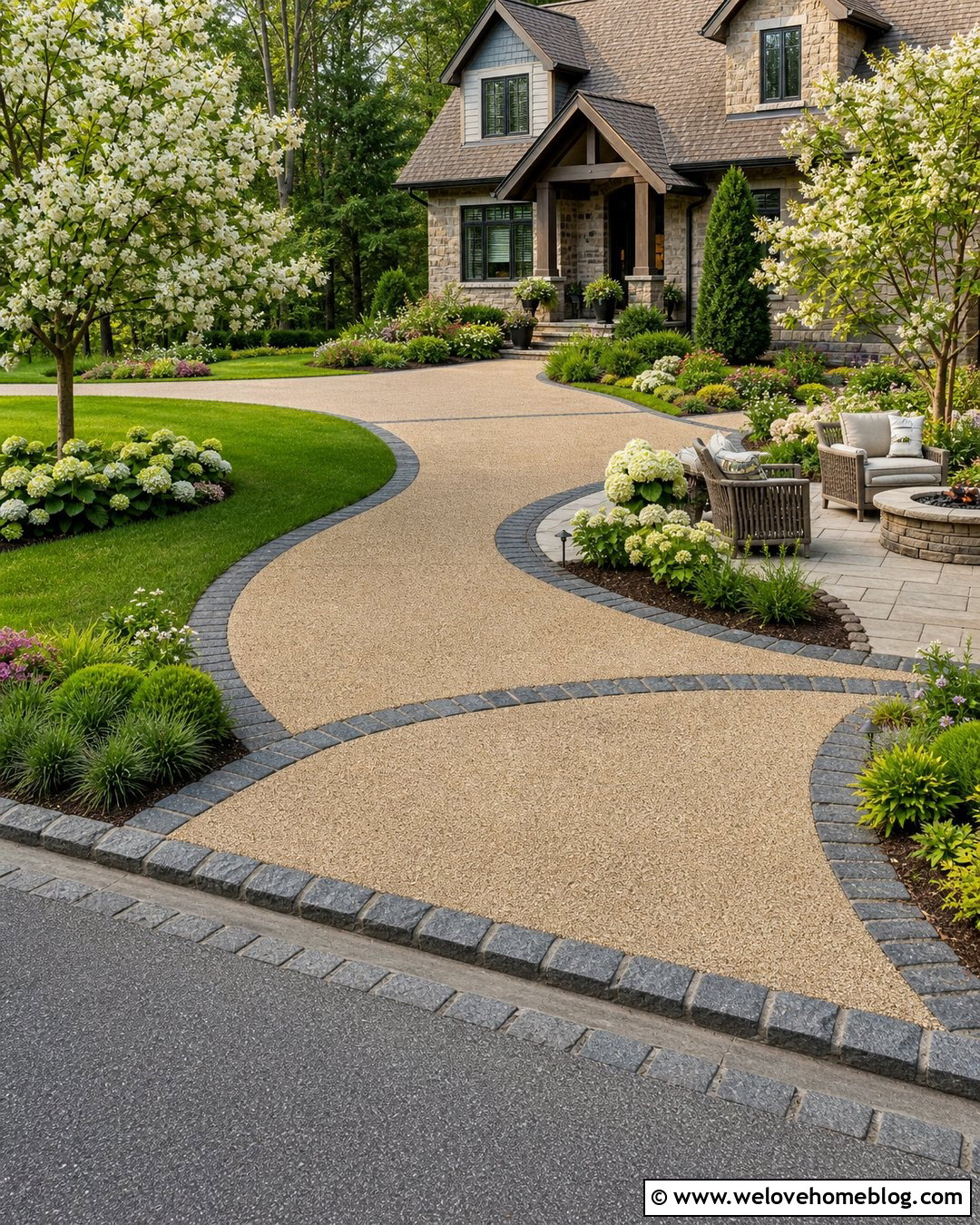
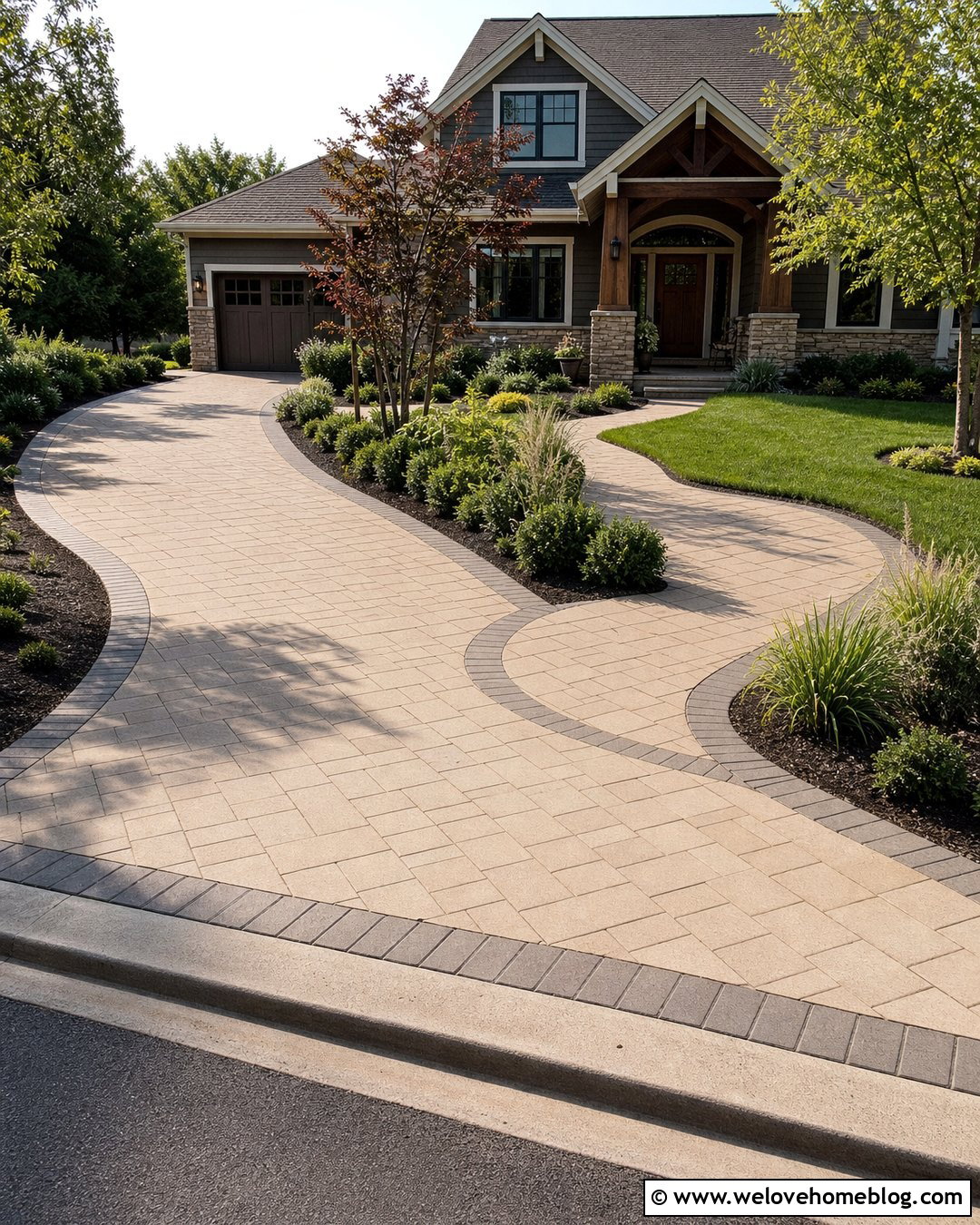
A gently curved driveway can guide the eye through layered landscaping before arriving at a tucked-away garden patio. Use warm beige concrete pavers or exposed aggregate for the driveway, bordered with dark cobblestones that emphasize the curve. Near the front entrance, let a matching walkway branch toward a rounded patio surrounded by planting beds. Repeat the cobblestone border around the seating area so the two zones feel related. Small flowering trees, hydrangeas, ornamental grasses, and ground-cover plants can create privacy without forming a tall visual barrier. Keep shrubs low near the street and along the inside curve to protect sightlines. This combination feels natural on Craftsman, cottage, and traditional homes, especially when the material colors echo stone, brick, or wood details on the facade.
12. Patio And Driveway With Pergola
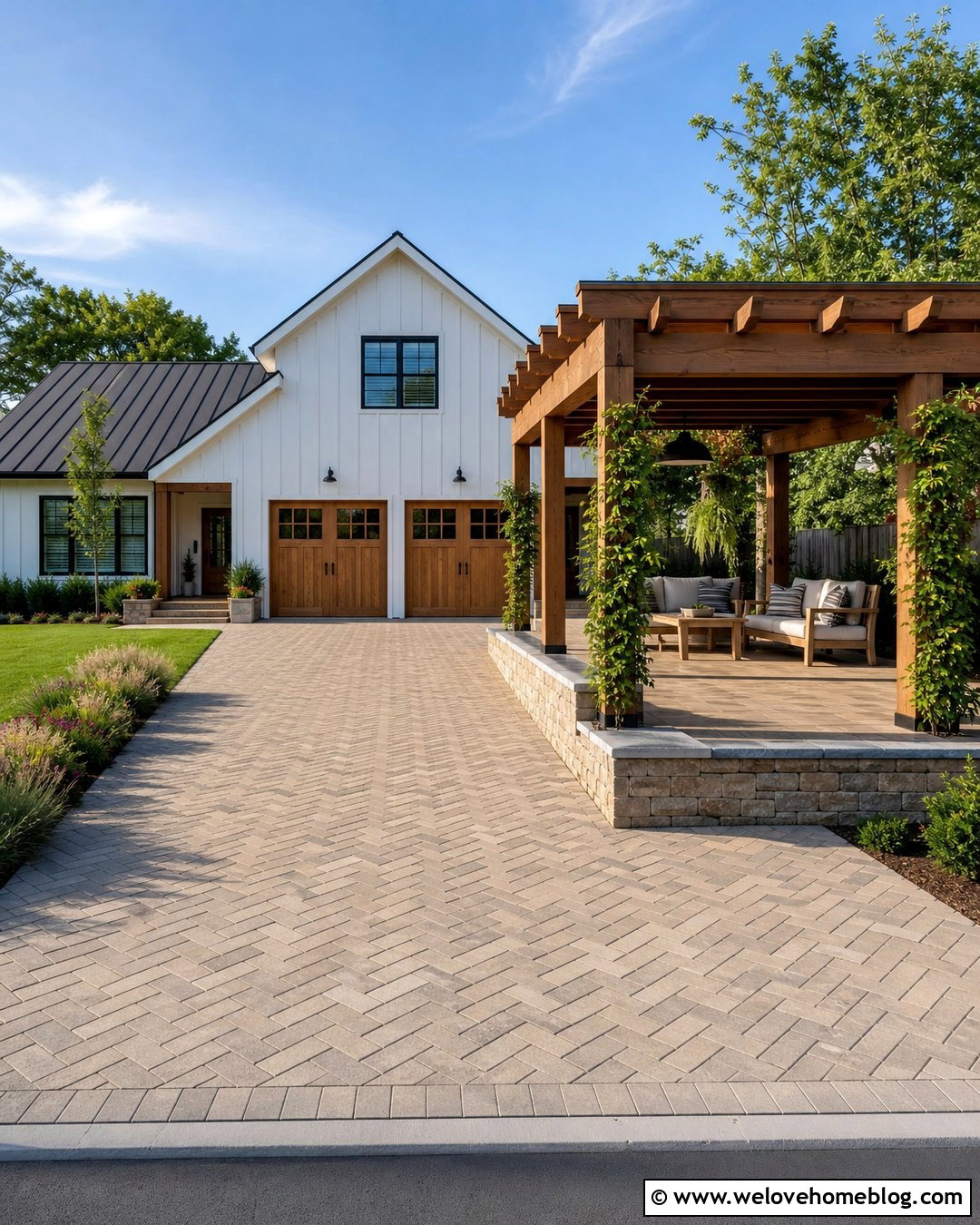
A pergola can give an attached patio a strong identity while separating it visually from the open driveway. Pair a tan concrete paver driveway with a side patio made from the same paver collection. Use a herringbone pattern on the driveway and a running bond beneath the pergola. Wood posts anchored entirely within the patio area create a welcoming outdoor room without narrowing the vehicle lane. Add a low stone planter or seat wall along the driveway-facing edge for protection and definition. Climbing greenery, compact shrubs, and soft ornamental grasses help the structure blend into the yard. Keep vines controlled so they do not interfere with gutters or vehicle clearance. The pergola color can repeat the front door, trim, or garage door finish for greater architectural continuity.
13. Patio And Driveway With Fire Pit
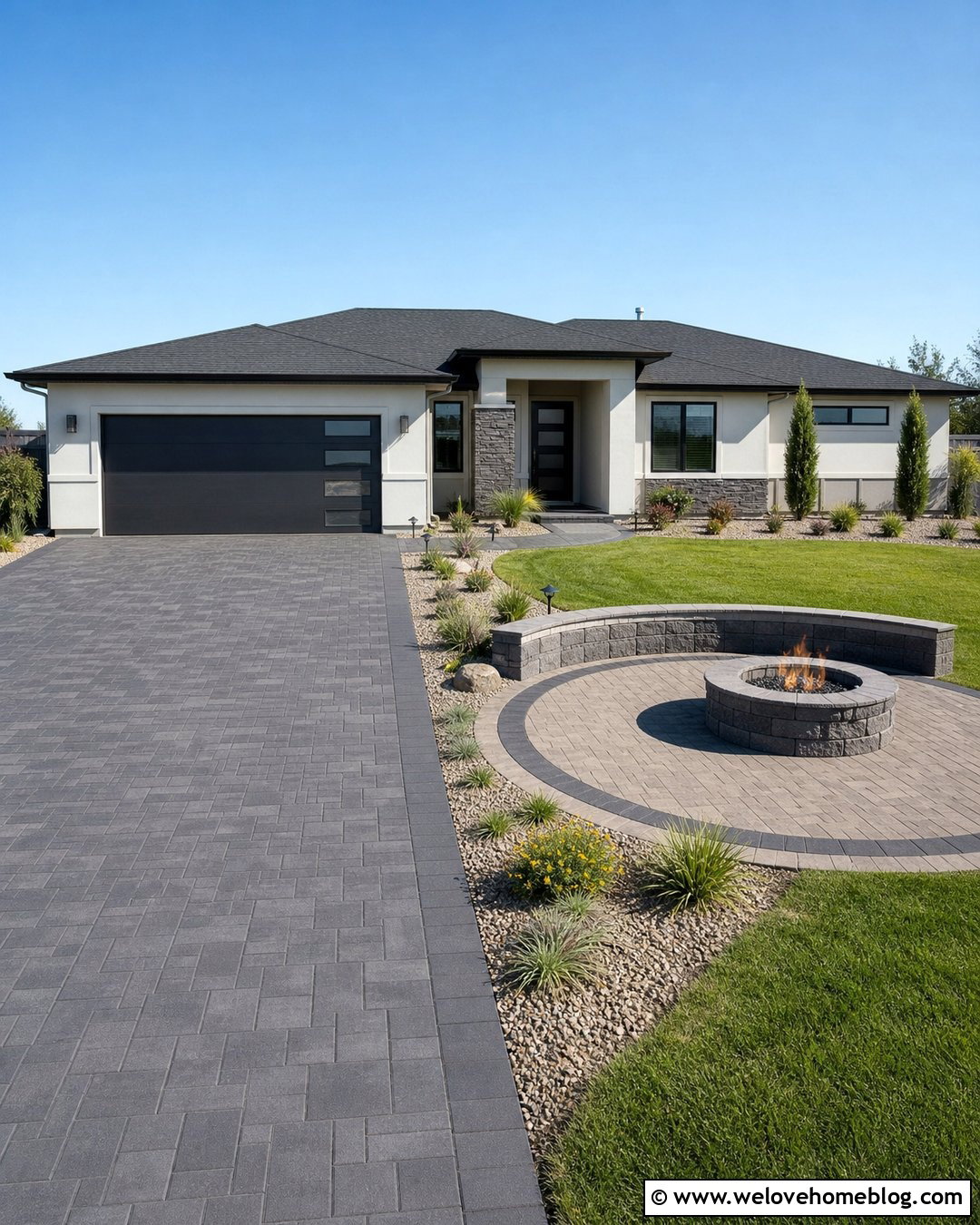
A patio with a fire pit can sit beside a driveway when the layout provides comfortable separation from vehicles, buildings, overhanging branches, and combustible materials. Create the driveway with charcoal concrete pavers and use lighter taupe pavers for a circular adjoining patio. Repeat the charcoal pavers as a ring around the seating zone and as a border along the drive. A low masonry wall can form a clear division while doubling as extra seating. Plant gravel beds, low grasses, and heat-tolerant greenery outside the immediate fire feature area. Select a fire pit system intended for the chosen fuel and location. Because clearance and installation requirements vary, consult local codes and the manufacturer’s directions. The final patio should feel intentionally protected rather than squeezed into leftover parking space.
14. Patio And Driveway With Retaining Wall
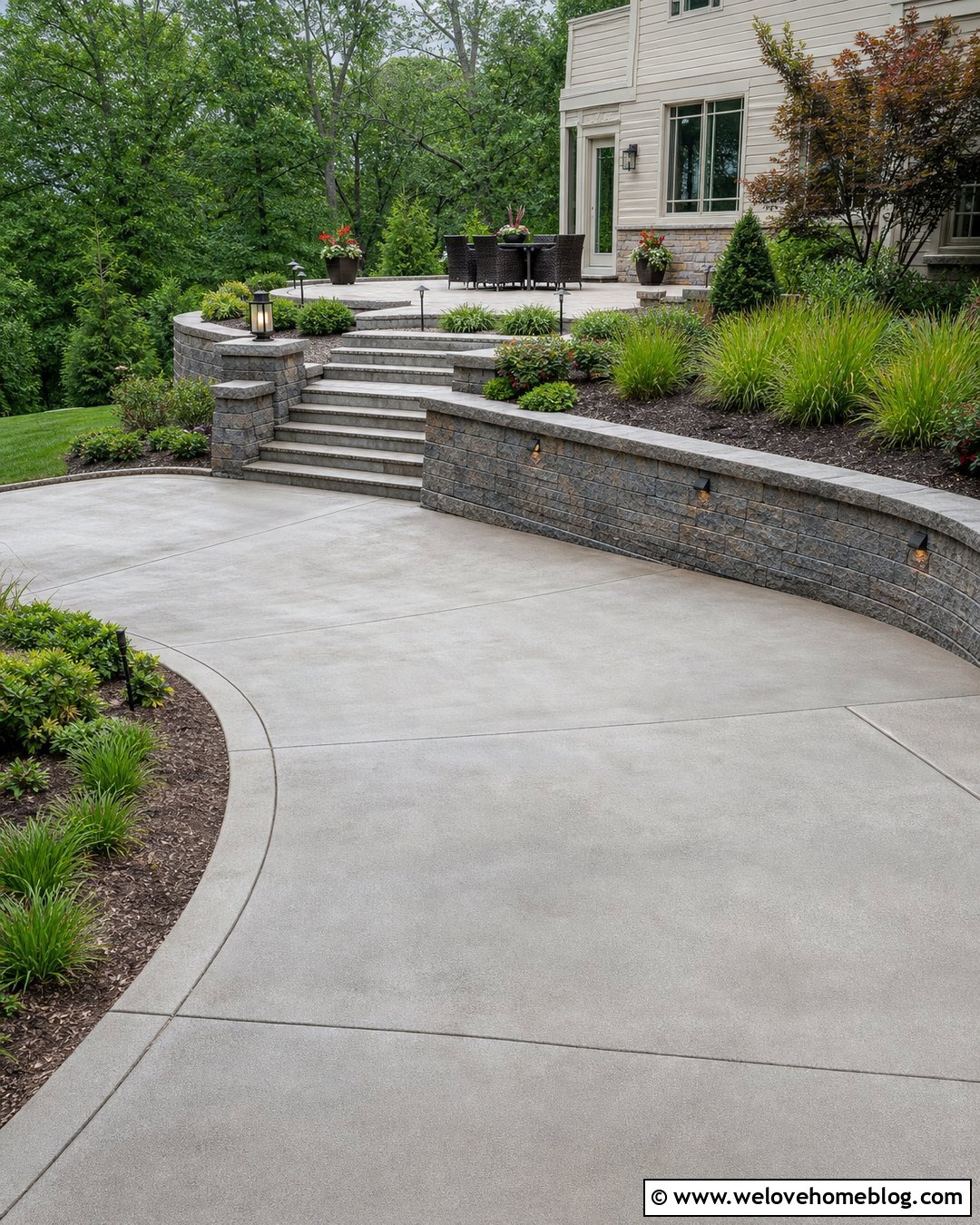
Sloped properties often need a retaining wall before a useful patio-driveway layout can take shape. A curved asphalt or concrete driveway can follow the lower grade, while a raised paver patio occupies a level terrace beside the house. Build the retaining structure with engineered concrete wall blocks or natural stone that coordinates with both paving materials. Wide steps can connect the parking area to the patio and front entrance. Include a handrail where required, along with integrated wall lighting for safer movement. Cascading ground covers and low shrubs soften the upper edge, while ornamental grasses frame the driveway below. Drainage behind the wall is a structural priority, not merely a landscaping detail. Have significant walls designed and installed according to local engineering and permit requirements.


15. Patio And Driveway With Grass Strips
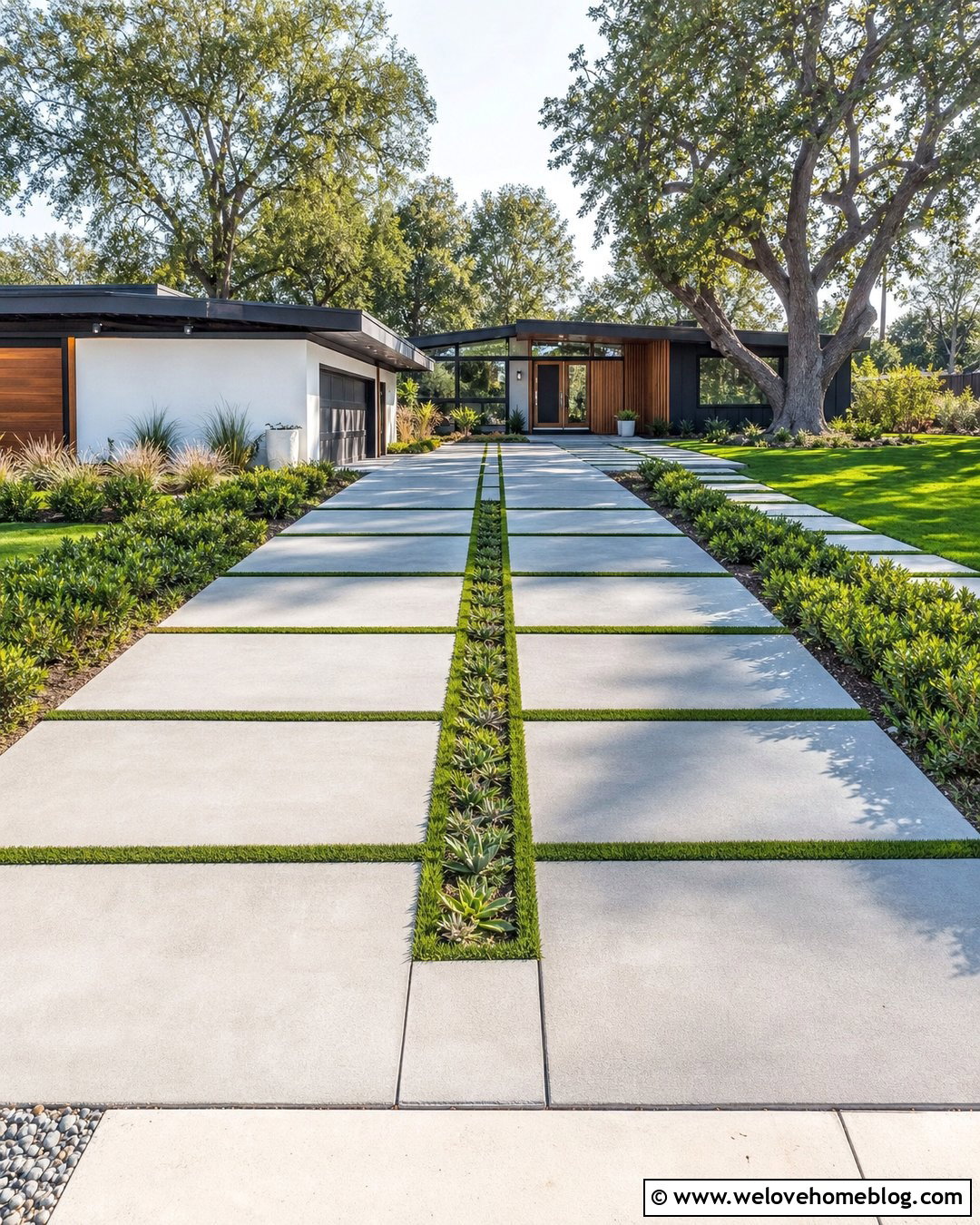
Grass strips can break up a wide paved area and help the patio feel more connected to the lawn. Use rectangular concrete pavers for the driveway with narrow planted joints or a central green strip, provided the system is engineered for vehicle traffic and local growing conditions. Continue solid pavers toward an adjacent patio so tables and chairs have a level, dependable surface. A dark paver border can outline both spaces and create a clean transition at the lawn. Choose durable turf suited to the property’s sun exposure, climate, and expected foot traffic. In dry regions, low ground cover or decorative stone may be more practical than grass. Regular trimming will be needed to keep the planted joints crisp and prevent vegetation from spreading across the paver surfaces.
16. Cobblestone Driveway With Stone Patio
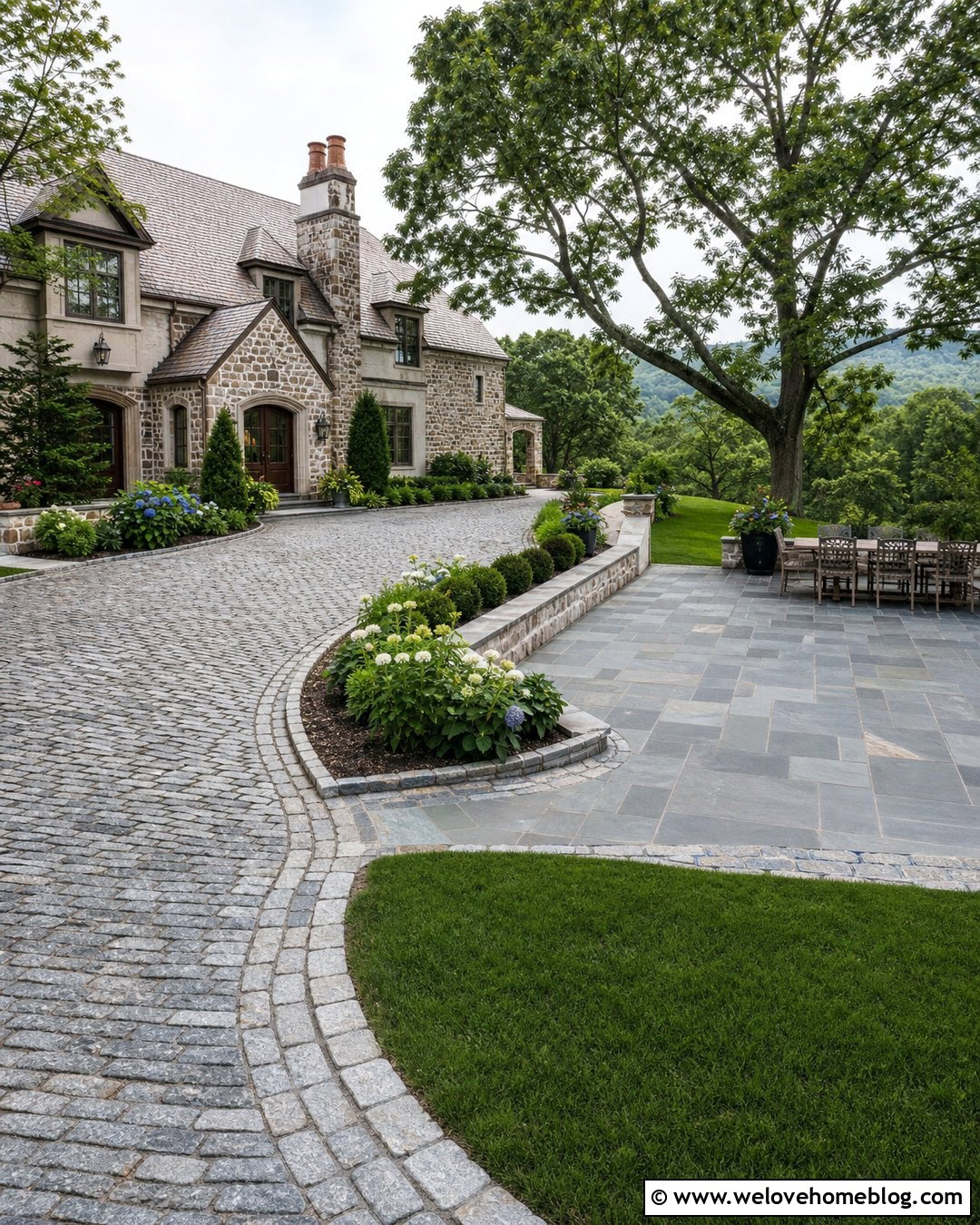
Cobblestone and natural stone produce a substantial, old-world combination that complements traditional and European-inspired homes. Use granite cobblestones across a short driveway or as broad driving ribbons within a more economical paver field. Build the adjoining patio with rectangular bluestone or limestone, selecting tones that relate to the cobbles without matching them perfectly. Repeat cobblestone around the patio perimeter and along the connecting walkway. A low natural-stone wall can separate seating from vehicle movement while supporting raised planting beds. Add clipped evergreens, flowering perennials, and a specimen tree for a balanced landscape. Because irregular stone can create an uneven surface, plan accessible walking routes carefully. Proper base preparation and skilled installation are especially important where the driveway must carry regular vehicle weight.
17. Resin-Bound Driveway With Porcelain Patio
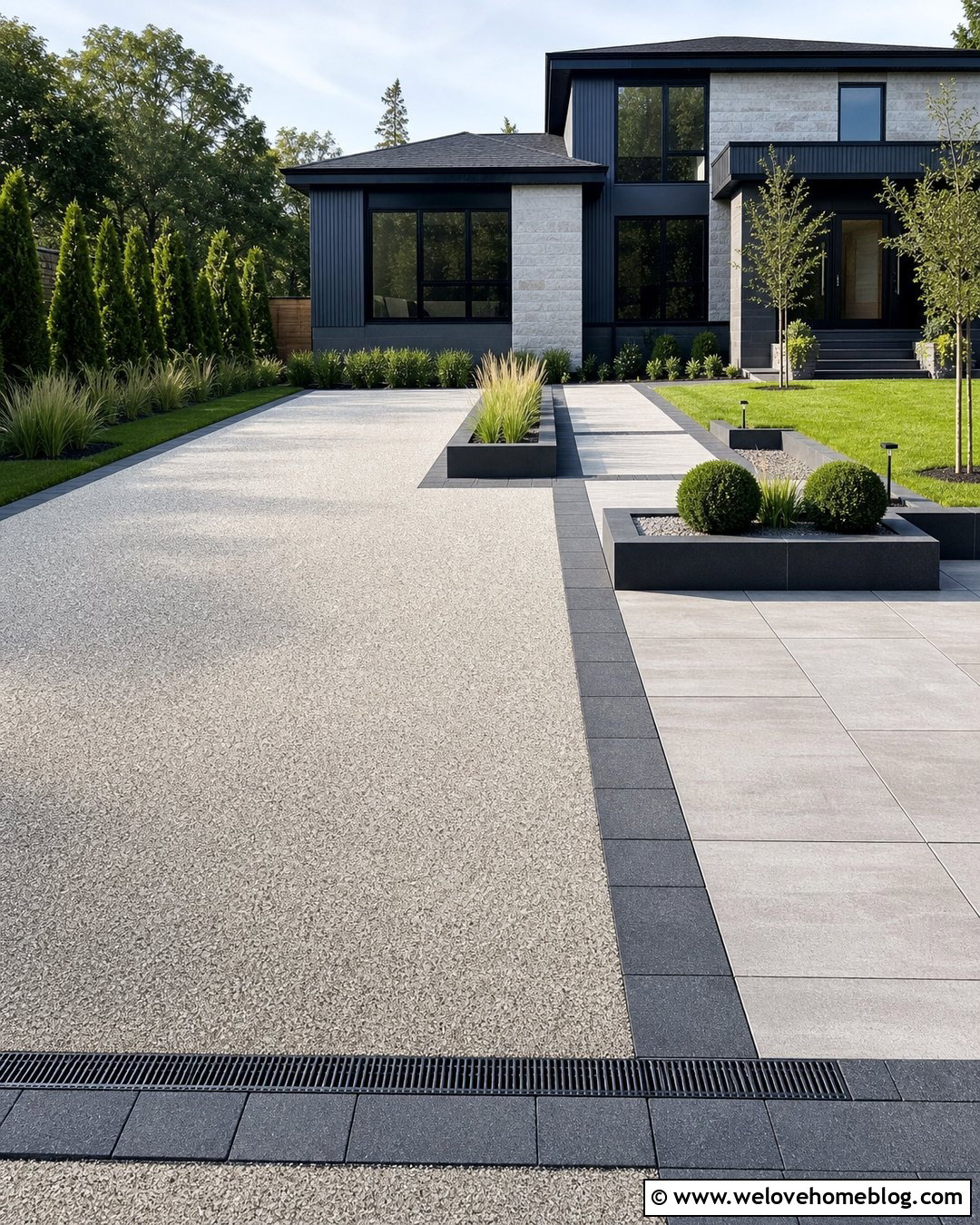
A resin-bound gravel driveway and porcelain paver patio create a smooth, contemporary pairing with subtle material contrast. Choose a warm beige or silver-gray resin-bound aggregate for the driveway, then install large outdoor porcelain pavers in a complementary tone on the adjoining patio. A charcoal block-paver ribbon can frame both surfaces and make the transition look precise. Use a shallow linear drain where the patio and driveway meet if the grading directs water toward that junction. Raised rectangular planters, evergreen spheres, and soft grasses add structure without cluttering the clean layout. Confirm that the driveway system, sub-base, and resin specification are suitable for vehicles and local weather. Porcelain can require specialized installation, so select products and construction methods intended for exterior freeze, moisture, and slip conditions.
18. Modern Farmhouse Patio And Driveway
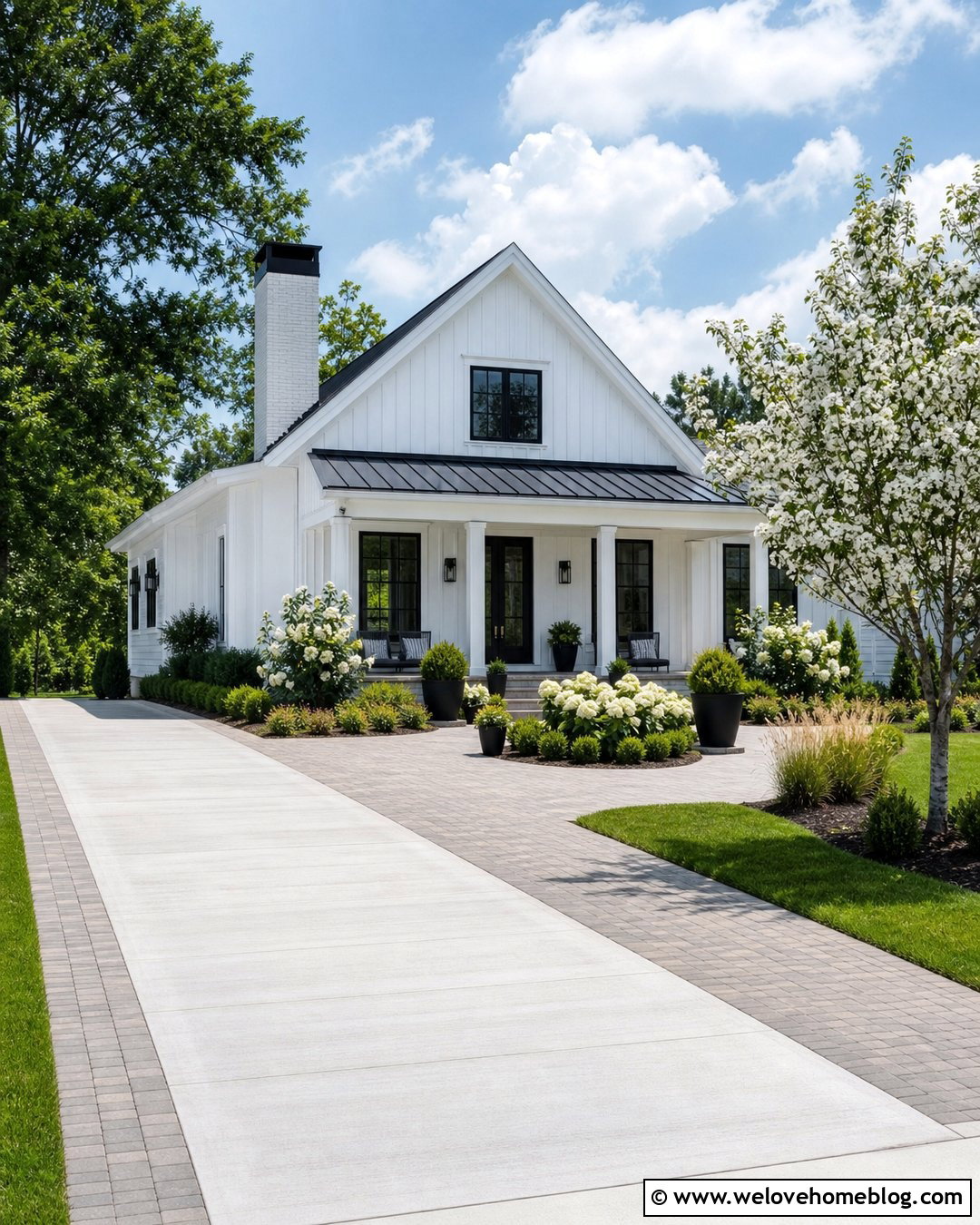
For a modern farmhouse, combine practical materials with crisp black accents and relaxed planting. A light-gray concrete driveway can lead toward the garage while widening into a brick paver patio near the front porch. Use muted red, greige, or charcoal brick rather than bright orange tones. A matching brick ribbon along the concrete edges ties the two surfaces together. Frame the patio with white hydrangeas, panicle grasses, boxwoods, and a small flowering tree. Black metal lighting and large dark planters can repeat window frames or exterior hardware. Keep the driveway mostly straight and the patio rectangular for a neat architectural fit. The design should feel welcoming but not overly rustic, with enough open lawn and planting space to soften the broad concrete surface.
19. Ranch House Patio And Driveway
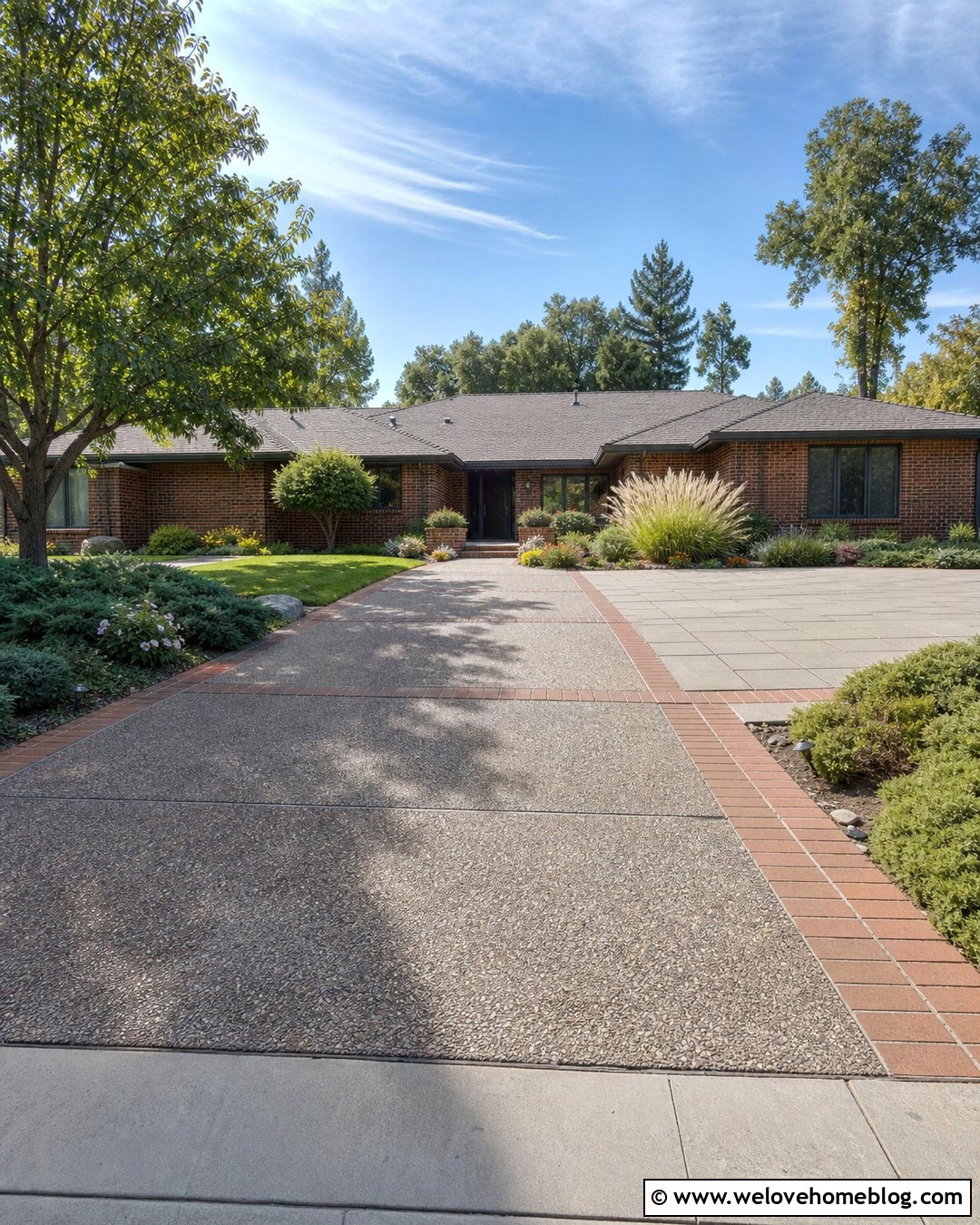
The long, low facade of a ranch house works well with a wide patio that runs beside the driveway. Use an exposed aggregate concrete driveway in a warm gray tone and create the patio with square concrete pavers in a similar color. A wide brick border can connect the surfaces while adding definition against the horizontal architecture. Place the patio near the main entrance or living-room windows, but leave a generous planting bed between seating and parked vehicles. Layer low junipers, ornamental grasses, flowering shrubs, and one small shade tree to avoid hiding the home. Broad steps and a direct walkway should make the entry easy to identify. This straightforward arrangement improves outdoor living space without forcing a complicated layout onto a typically simple, open ranch-style front yard.

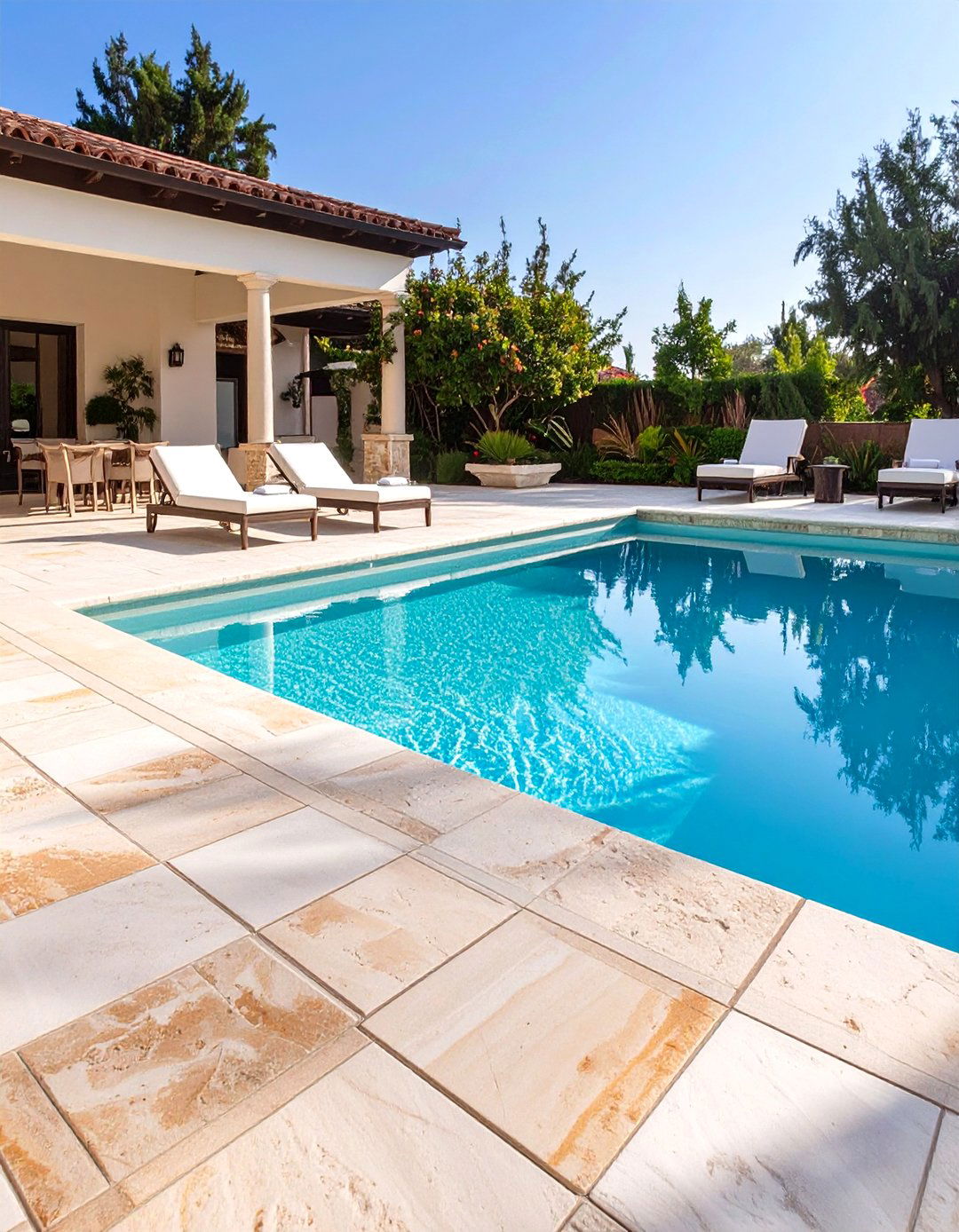


20. Budget Gravel Patio And Driveway
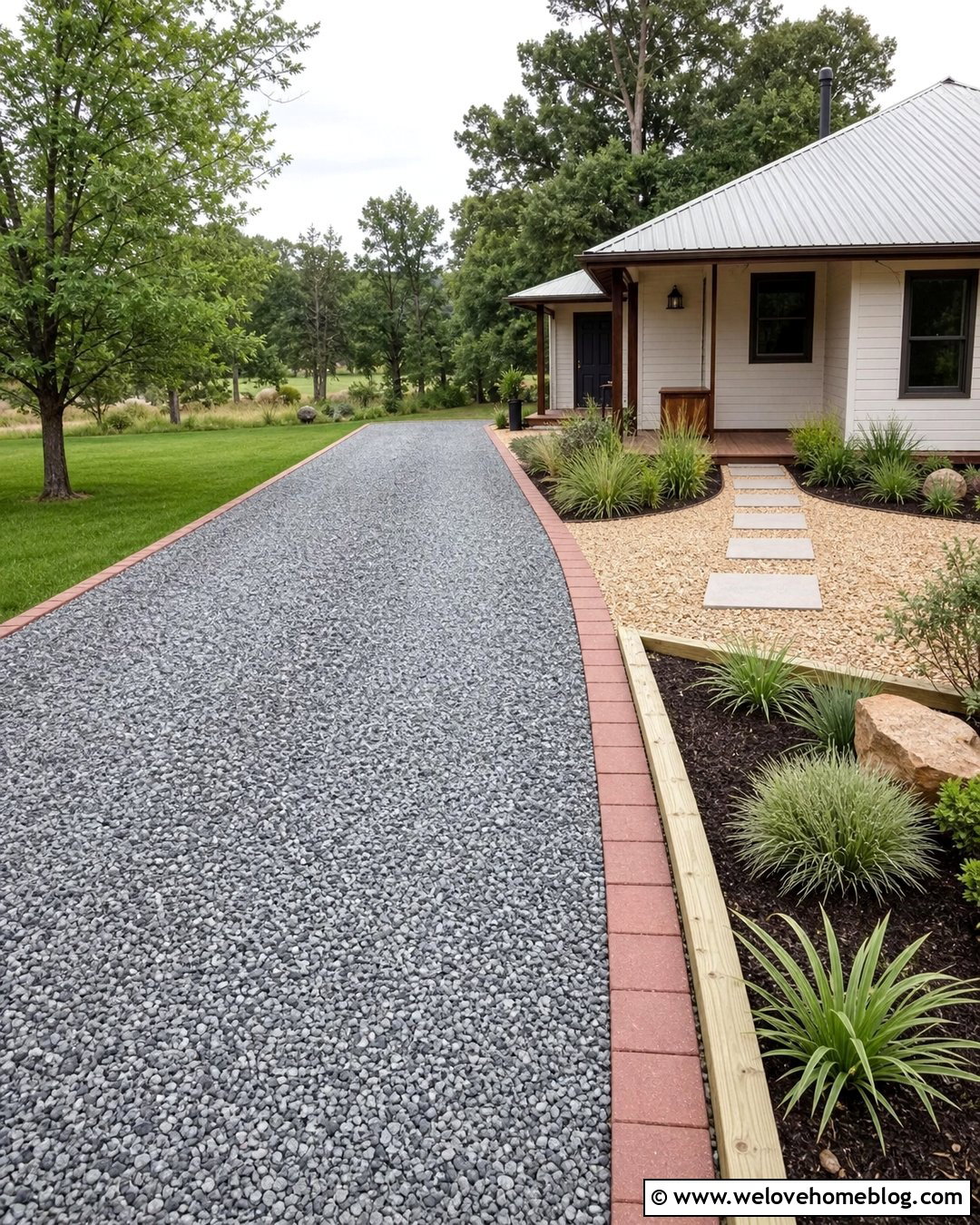
A coordinated gravel layout can offer an attractive patio and driveway combination without covering the entire yard in premium masonry. Use compacted gray angular gravel for the driveway and smaller tan crushed stone for the patio. Separate the colors with pressure-treated timber, steel edging, or an affordable concrete paver border. Set several large concrete stepping pads between the parking area, patio, and entrance to create a stable walking route. A simple shade sail or freestanding umbrella can make the seating area more comfortable. Choose inexpensive landscape plants that mature reliably in your region, then group them in broad beds for greater visual impact. Good excavation, compaction, edging, and drainage remain important. Cutting costs on the visible material should not mean skipping the base that supports everyday use.
Conclusion:
The most successful patio-driveway combinations look coordinated while giving each space a clear purpose. Repeating a paver color, border, joint pattern, or landscape material can connect the design without making the patio feel like an extension of the parking area. Safety, drainage, vehicle clearance, stable base construction, and comfortable walking routes should guide every decision. From affordable gravel and asphalt pairings to refined cobblestone, porcelain, and permeable pavers, there is a solution for nearly every home and lot size. Use these **20 Patio And Driveway Combo Ideas** as a starting point, then adapt the materials, dimensions, plants, and transitions to your architecture, climate, local requirements, maintenance preferences, and budget.

Related posts:


Leave a Reply