
A well-planned patio and driveway combination can make an outdoor area feel larger, more useful, and visually connected. The best 20 patio driveway combo ideas coordinate the hardscape materials while keeping driving, parking, dining, and relaxing zones easy to recognize. Current hardscape guidance favors either repeating one material throughout or choosing complementary colors and patterns that create a clear transition between surfaces. () Consider drainage, furniture placement, vehicle turning space, and the route from the curb to the house before selecting a layout. Thoughtful borders, planting beds, pergolas, and lighting can soften the paved areas without making maintenance difficult. The complete designs below offer practical inspiration for different home styles, lot sizes, and budgets through these 20 patio driveway combo ideas.

1. Matching Concrete Driveway And Patio
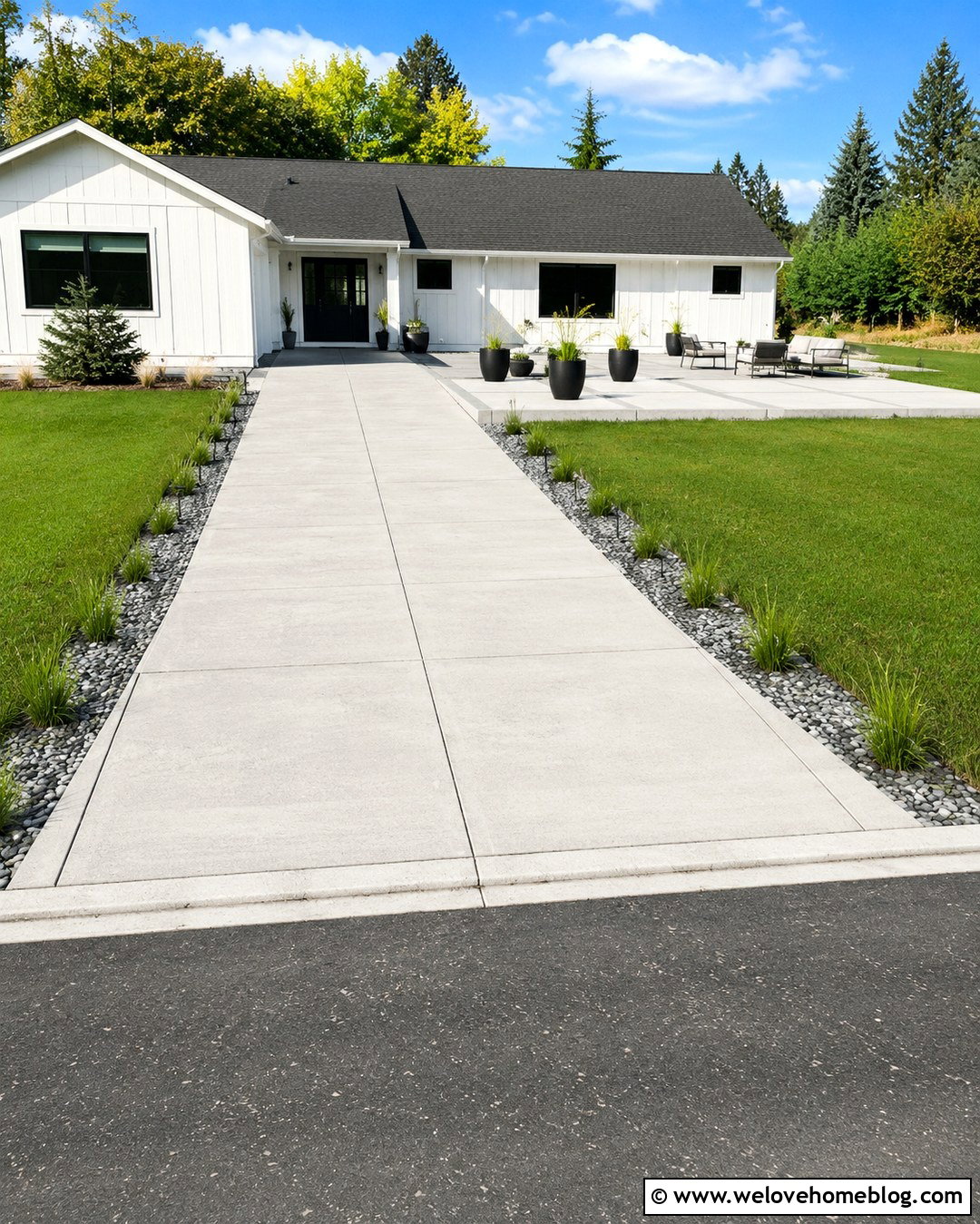
Matching concrete creates a clean, uninterrupted surface that works especially well beside a modern ranch or updated suburban home. Use broom-finished light gray concrete for the straight driveway, then widen it near the house to form a rectangular patio. A narrow saw-cut grid can visually separate the parking lane from the seating area without introducing another material. Frame the patio with ornamental grasses, evergreen shrubs, and a slim river-rock drainage strip. Large planters near the outdoor furniture provide another useful boundary. Keep the patio slightly raised or separated by a channel drain if water naturally travels down the driveway. Black sconces, simple furniture, and a concrete walkway complete this streamlined, low-clutter combination.
2. Concrete Driveway With Paver Patio
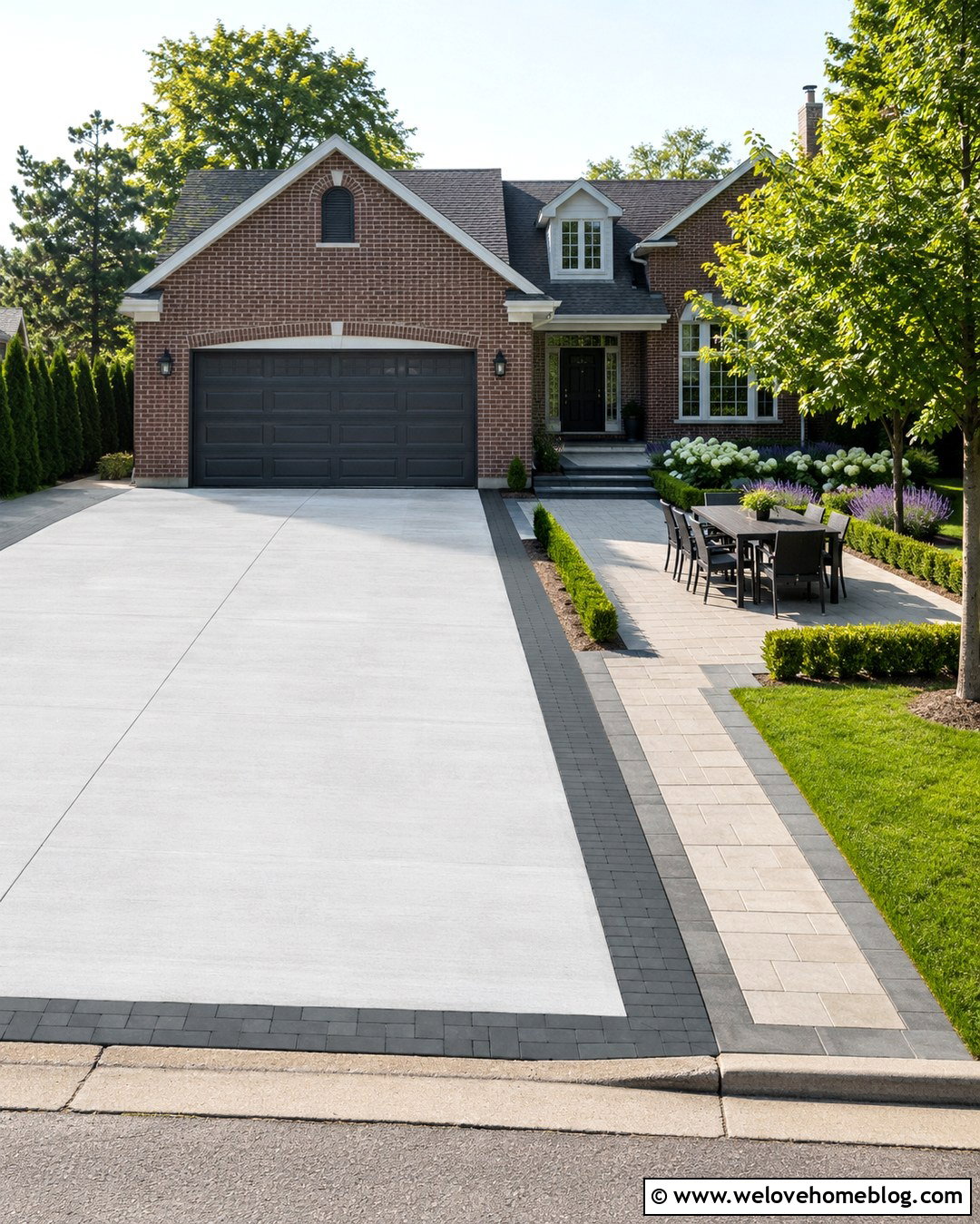
Do you want the durability of concrete without making the entire yard look like one large slab? Pair a pale broom-finished concrete driveway with a warm patio made from concrete pavers in a running-bond pattern. Position the patio beside the garage or near a side entrance, where it can function as an outdoor dining area. A charcoal paver ribbon along the driveway creates a visual link to the darker patio border. Low boxwood hedges and flowering perennials soften the meeting point between the two surfaces. Choose pavers that complement the home’s brick, stone, or siding rather than matching it exactly. This combination provides a practical driving surface while giving the patio more texture and personality.
3. Paver Driveway And Patio
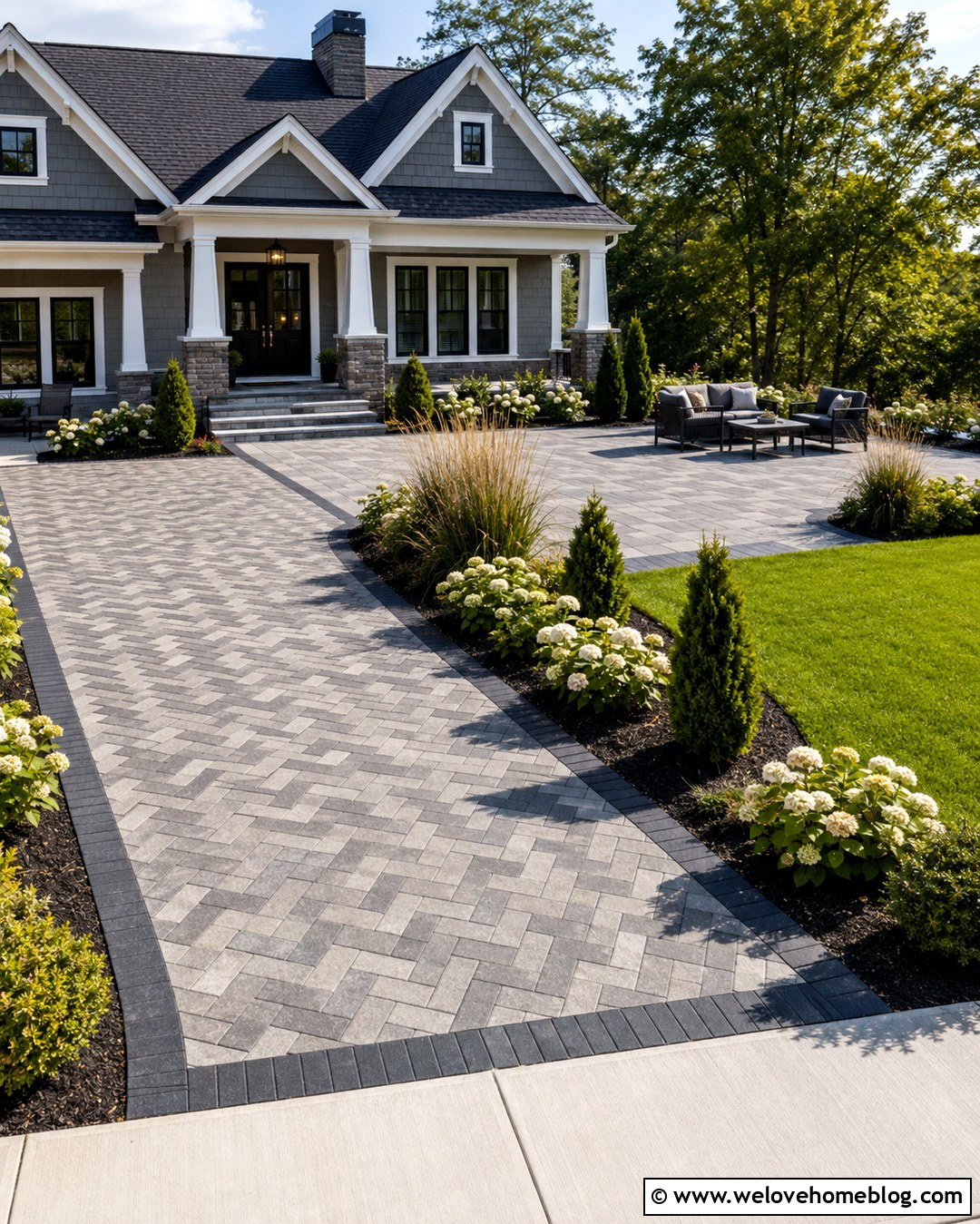
Using concrete pavers across both areas creates strong visual continuity, particularly on compact properties where several different materials could feel busy. Install thicker charcoal and light gray driveway pavers in a herringbone pattern for dependable vehicle movement. Change to a running-bond pattern on the adjoining patio to mark the entertaining zone while maintaining the same color palette. A contrasting soldier-course border can outline both spaces and produce a tailored finish. Place the patio along the house with enough clearance for a dining table, grill, and circulation. Raised planting beds filled with hydrangeas, grasses, and compact evergreens prevent the hardscape from dominating the yard. Matching steps and a connecting walkway make the entire exterior feel intentionally planned.
4. Gravel Driveway With Flagstone Patio
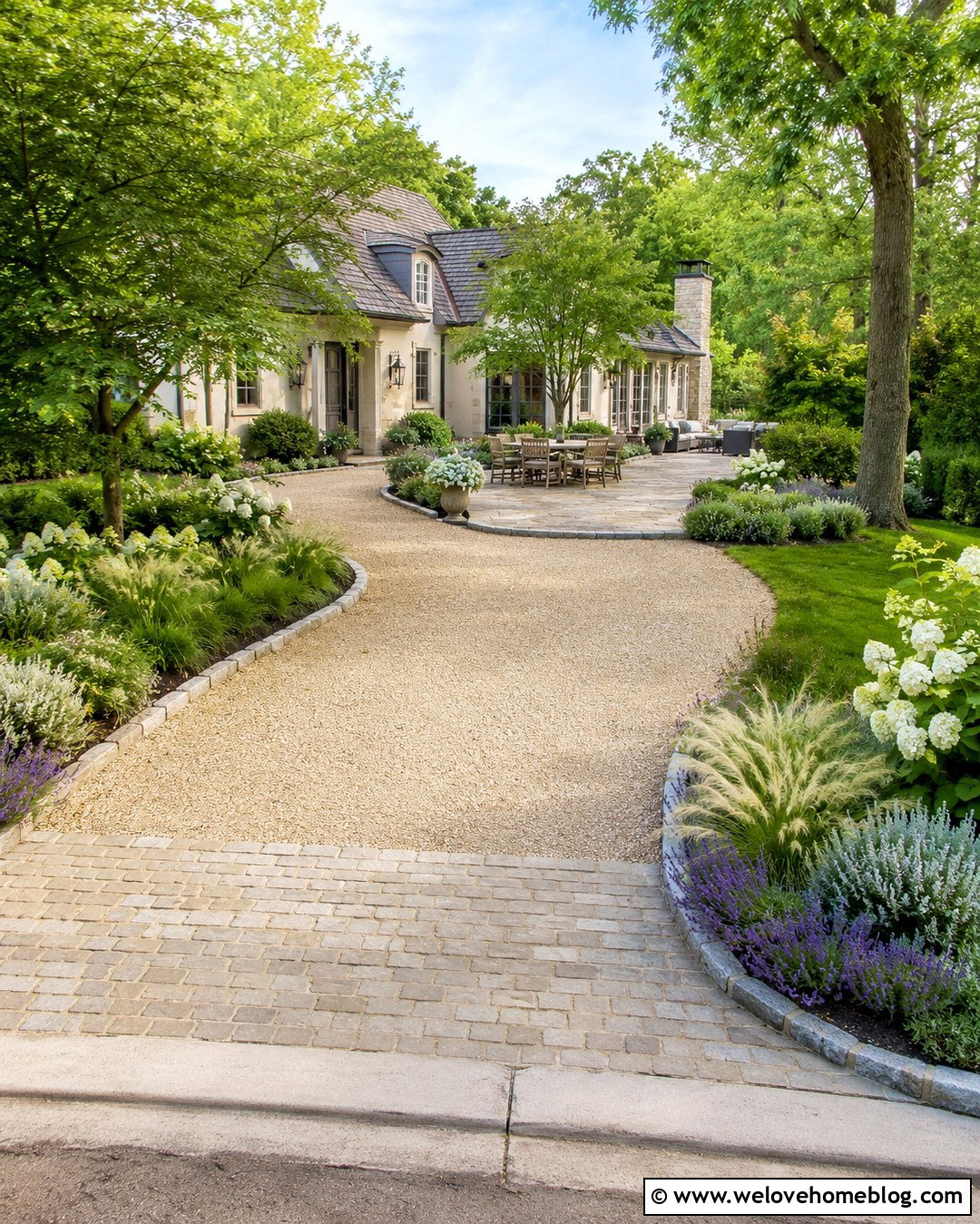
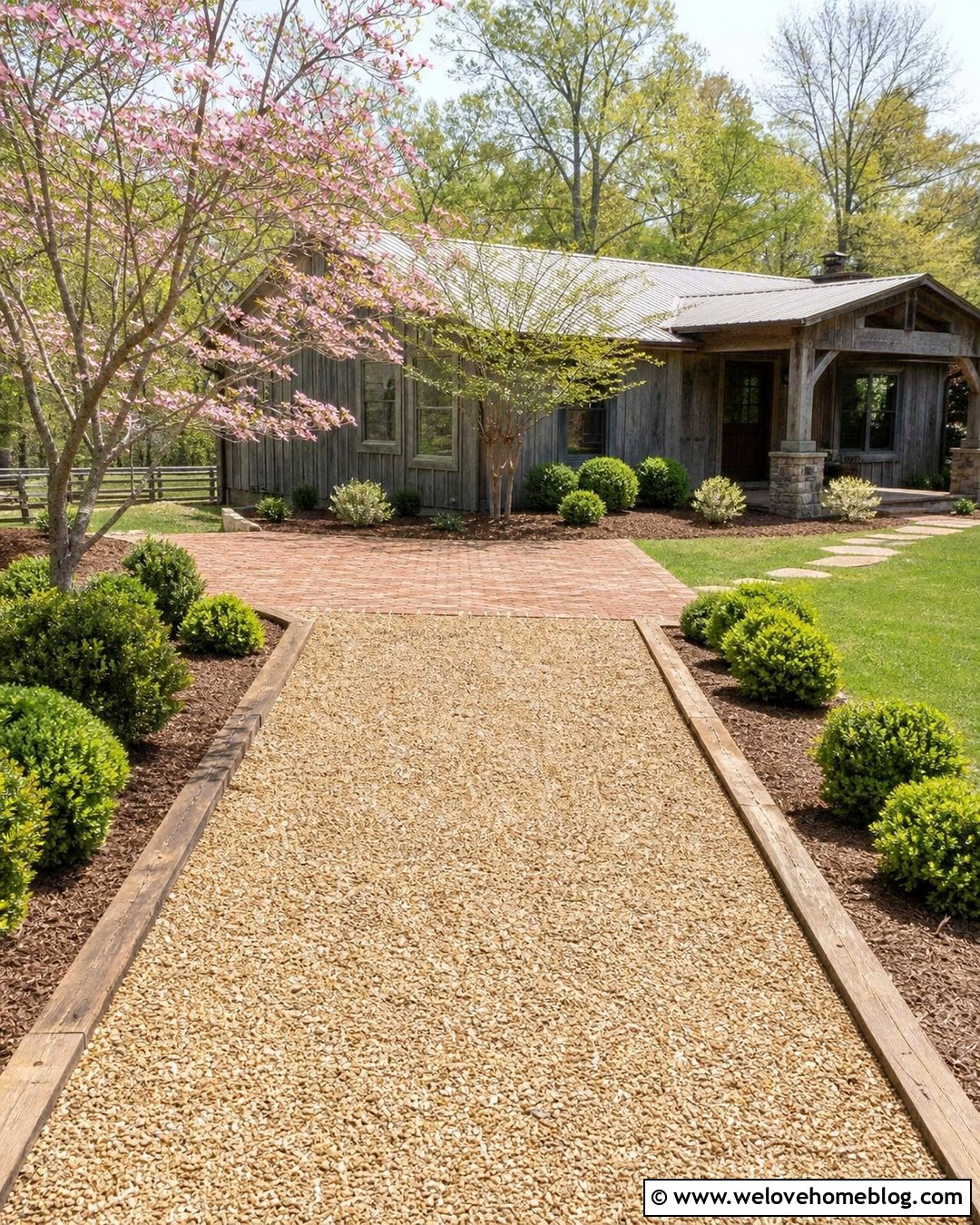
Loose gravel and irregular flagstone create a relaxed combination that suits cottages, cabins, and country homes. Shape a curved driveway from tan crushed gravel and contain it with steel edging or chunky natural-stone curbing. Near the house, transition into a broad flagstone patio using stones with warm gray, buff, and brown tones. A short cobblestone apron between the surfaces helps keep loose gravel away from the seating area. Surround the patio with lavender, catmint, ornamental grasses, and low flowering shrubs for a soft garden atmosphere. Leave generous joints between selected flagstones and fill them with gravel to connect the materials visually. This complete look feels informal, yet the defined borders keep it neat and practical.
5. Asphalt Driveway With Brick Patio
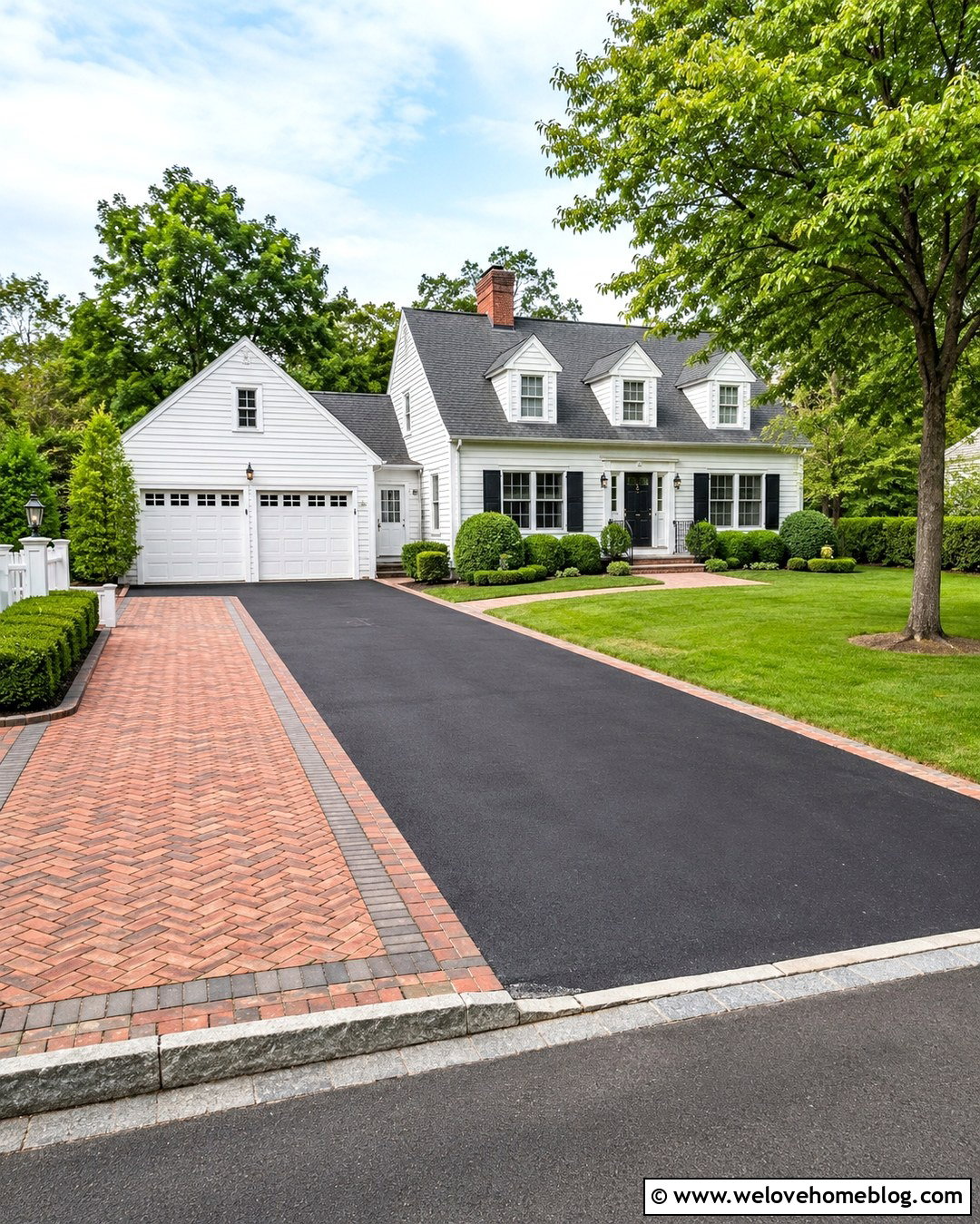
Black asphalt provides an affordable, understated background for a traditional red or brown brick patio. Run the driveway straight toward a detached garage, then place the patio beside it near the kitchen or side door. A brick ribbon installed along the asphalt edges ties the two areas together and gives the driveway a more finished appearance. Lay the patio bricks in herringbone for texture, using a darker soldier-course border around the perimeter. Green lawn, clipped hedges, and a small shade tree balance the rich surface colors. Add a paved walkway between the patio and front entry so guests never need to cross the parking area. The result is classic, functional, and appropriate for colonial or Cape Cod homes.
6. Circular Driveway With Courtyard Patio
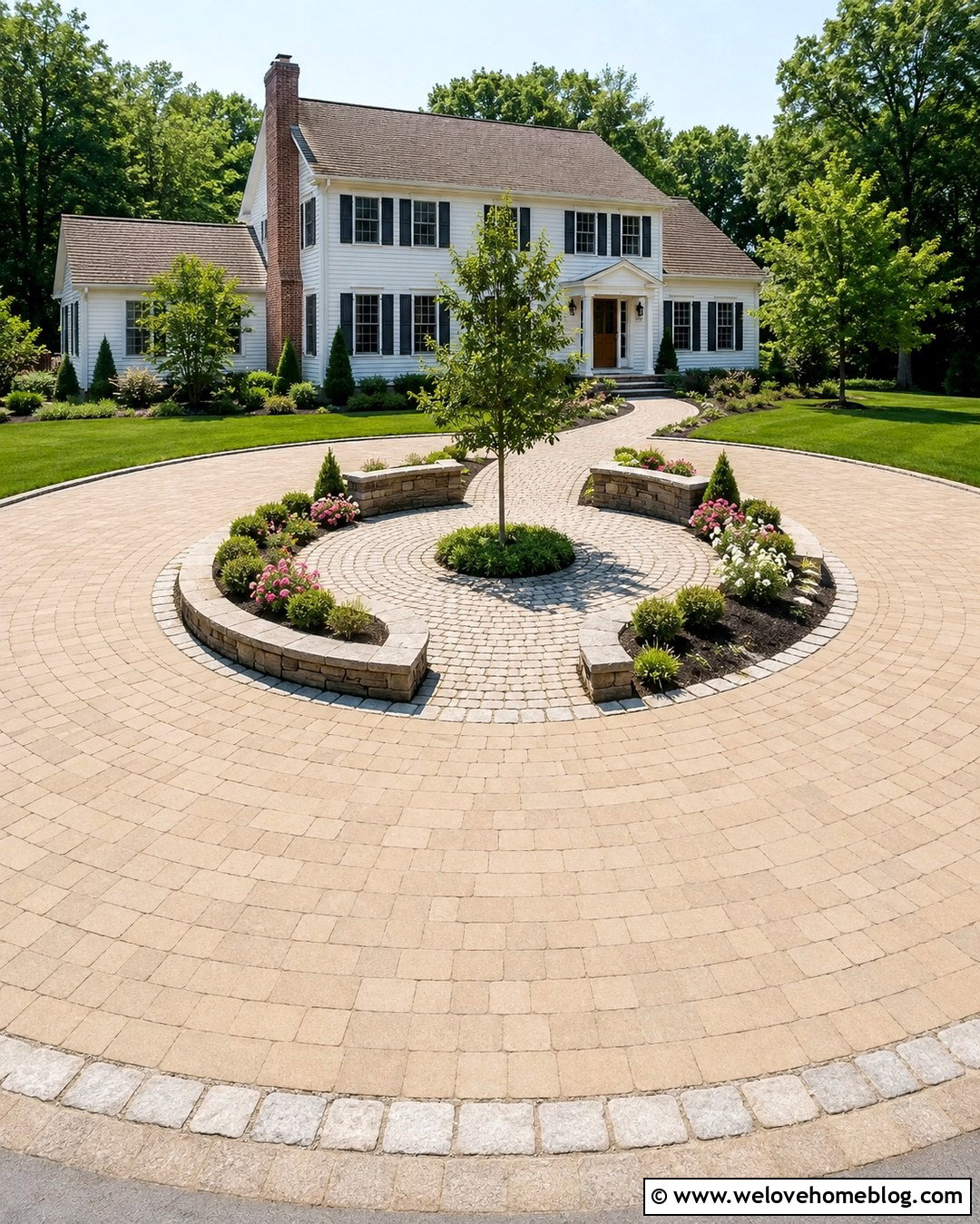
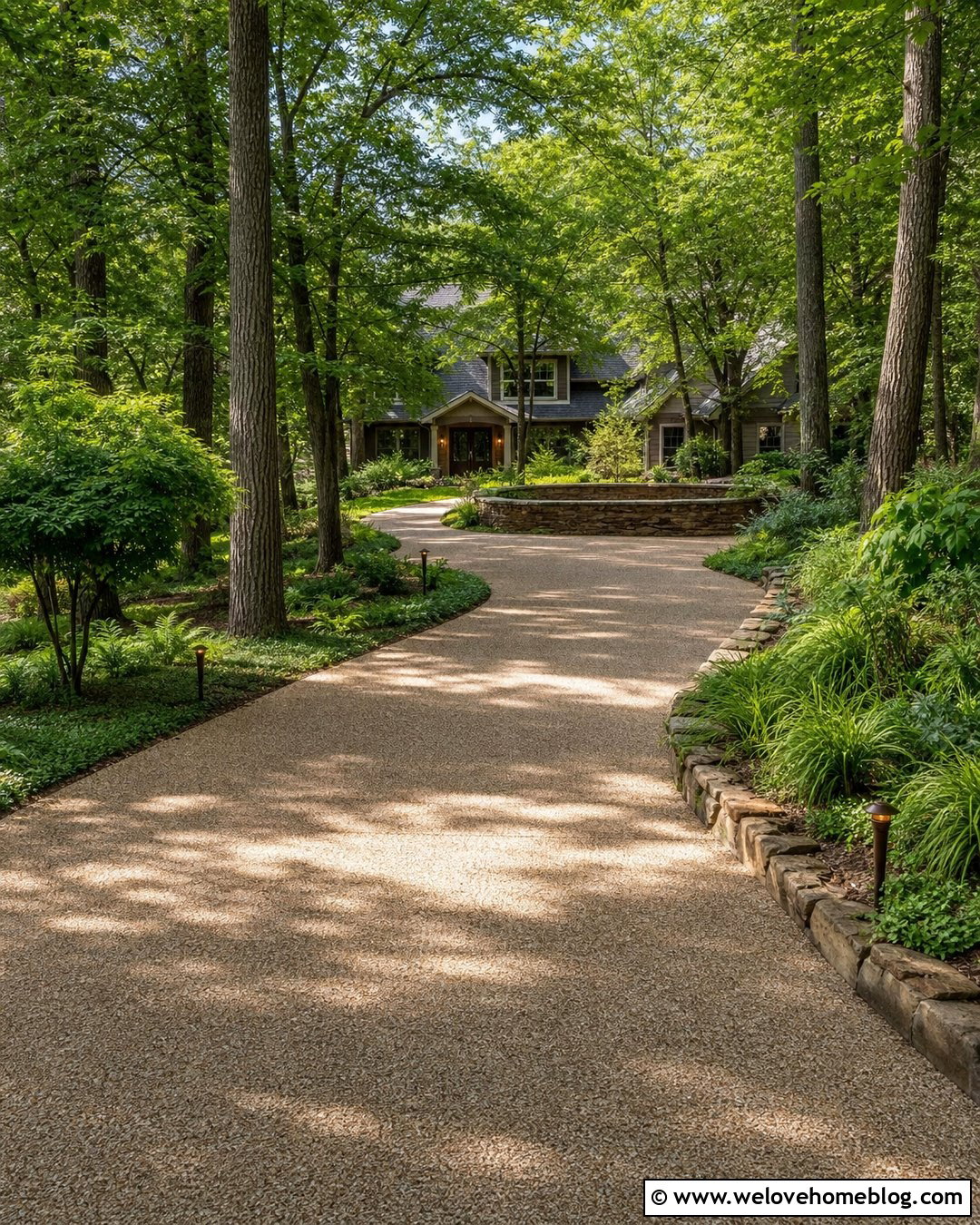
A circular driveway can wrap gracefully around a central courtyard patio, creating a memorable entrance and a useful gathering place. Build the driving lane from warm beige concrete pavers or exposed aggregate, then define the inner patio with complementary pavers in a smaller pattern. A low stone seat wall provides separation from moving vehicles while doubling as casual seating. In the center, use a specimen tree, fountain, or large planted urn as the focal point. Curved planting beds around the outer driveway can repeat the same shrubs and flowers used near the patio. Maintain a clear pedestrian route from the courtyard to the front door. This arrangement works best on wider properties with enough turning room and an open front-yard setting.
7. Side Driveway With Backyard Patio
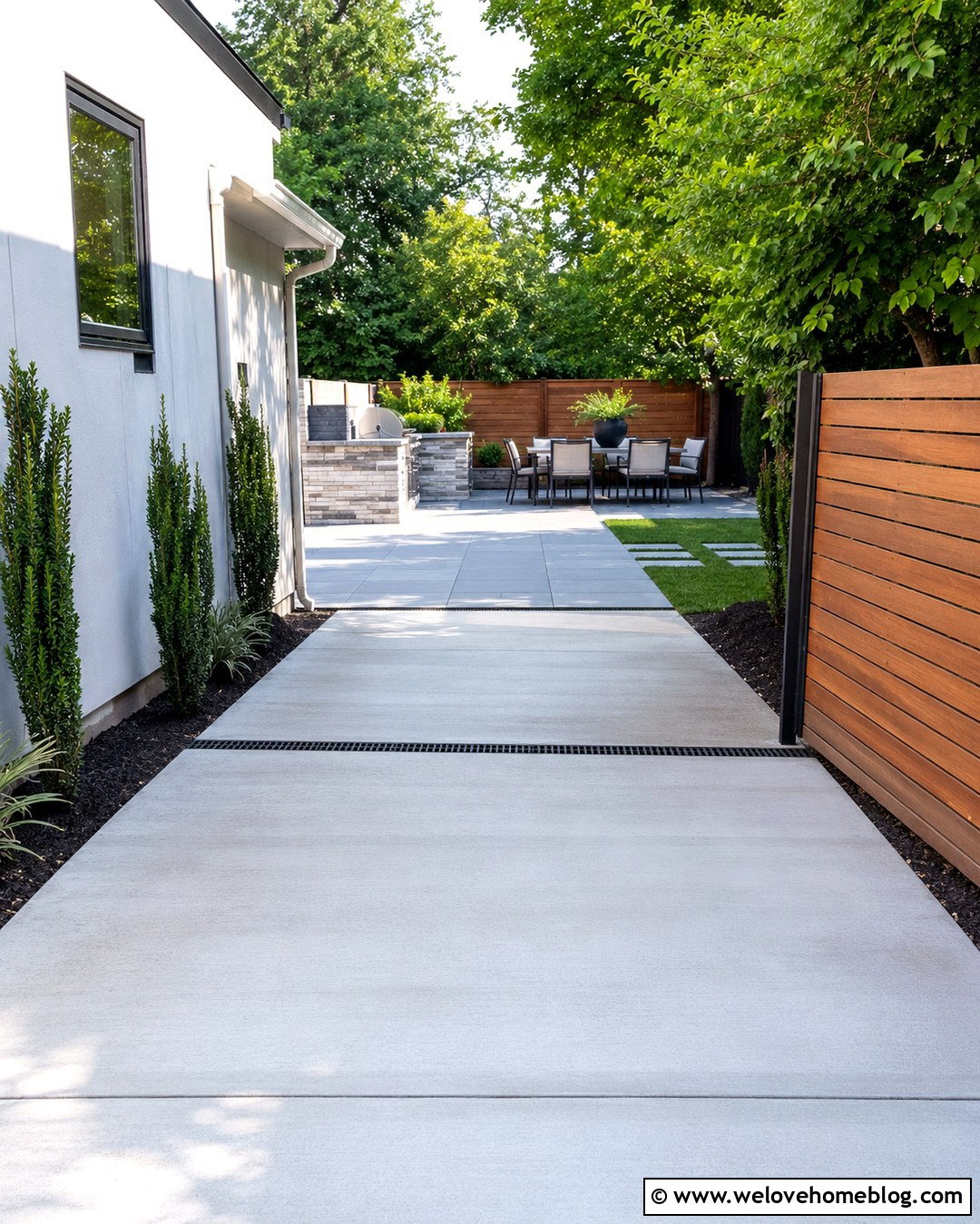
A narrow side driveway can become the natural pathway into a backyard patio when the materials and transitions are carefully coordinated. Use light gray poured concrete for the driveway, adding a strip drain before it reaches the entertaining area. Continue the route with large-format concrete patio pavers in a slightly warmer tone. A horizontal wood gate can separate the front parking space from the private backyard without interrupting the visual flow. Beside the patio, include a dining zone, grill station, and narrow planting beds with upright shrubs. Stepping stones or a paver walkway can connect the patio to the lawn. This layout uses a challenging side yard efficiently while keeping cars, outdoor furniture, and garden areas in clearly organized zones.
8. Small Driveway With Front Patio
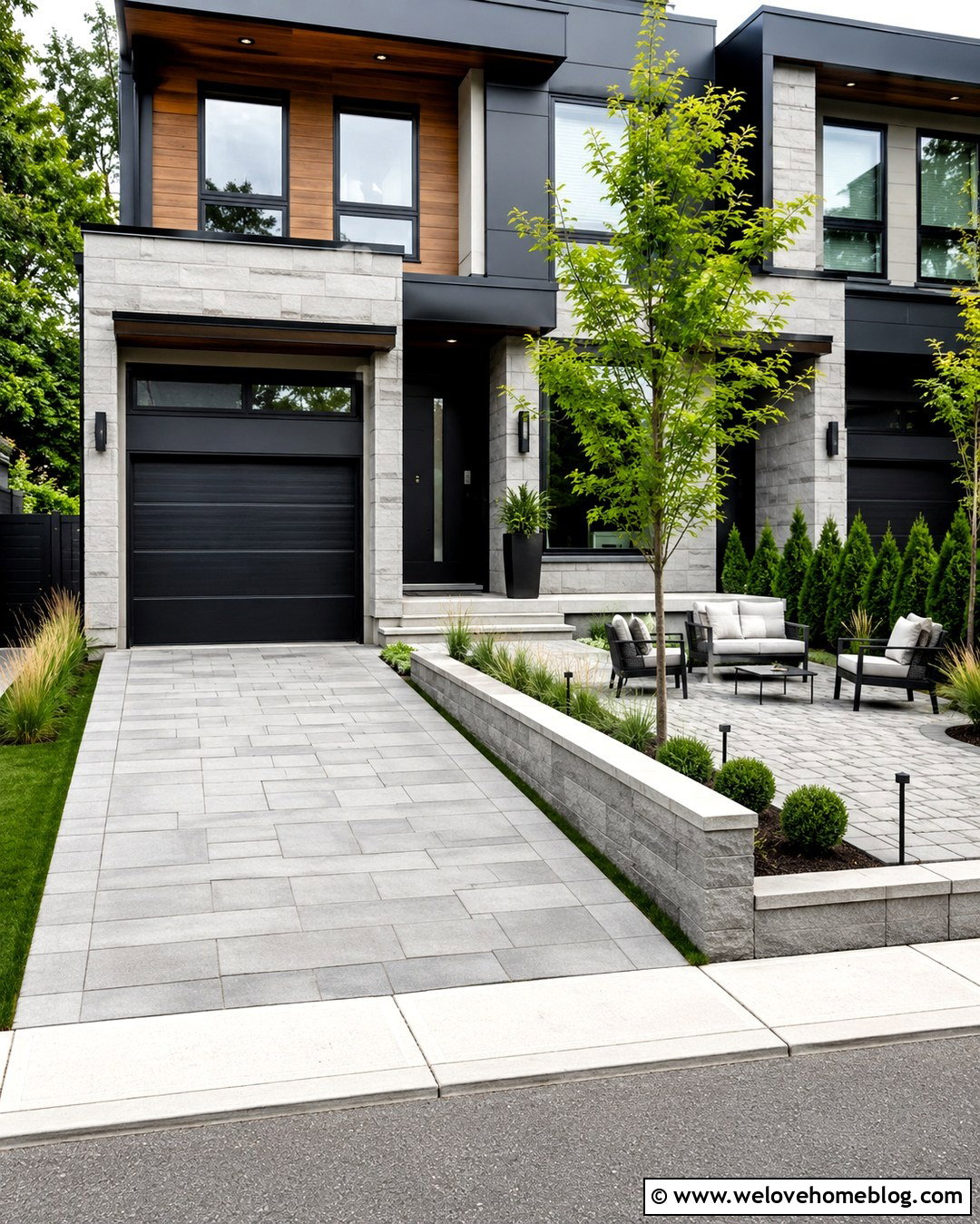
On a small urban or suburban lot, a compact front patio can sit beside the driveway without sacrificing comfortable parking. Choose large rectangular gray concrete pavers for a single-car driveway and smaller matching pavers for the patio. Rotate the laying pattern to show where the parking surface ends and the seating area begins. A raised planter or low masonry wall provides a protective buffer while adding greenery and optional bench seating. Keep furniture compact, such as two lounge chairs and a small round table. A narrow walkway should connect the curb, patio, and front door without crossing the parking bay. Layered grasses, dwarf shrubs, and one slender tree bring privacy while preserving an open, welcoming view from the street.
9. Modern Driveway With Covered Patio
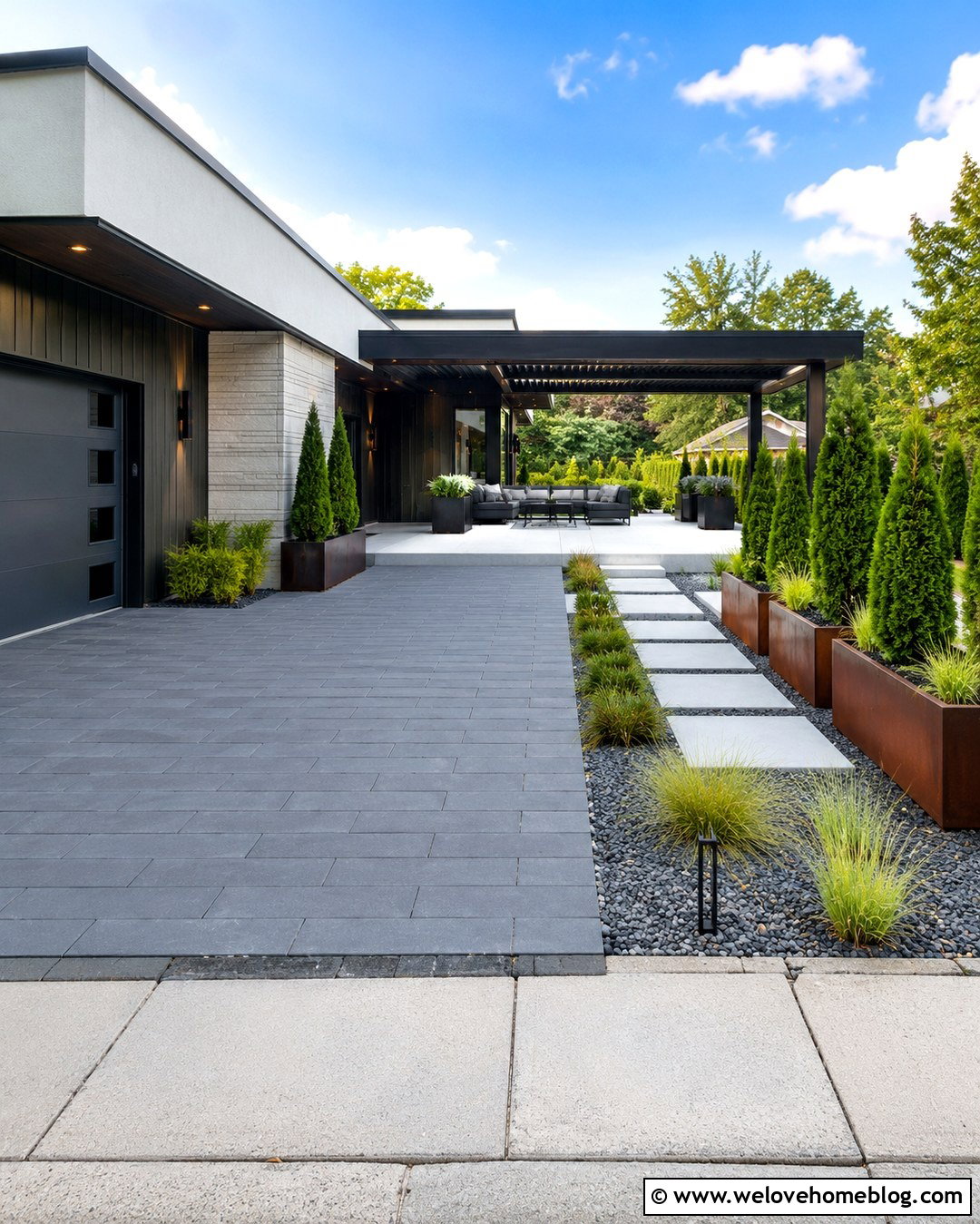
Crisp lines and a restrained palette can make a modern driveway and covered patio feel like one architectural feature. Create the driveway from smooth charcoal concrete pavers arranged in a linear pattern, then use lighter large-format porcelain pavers beneath the adjacent patio roof. Repeat the charcoal tone through patio borders, steel planters, and window frames. A flat-roof pergola or house extension provides shade while clearly marking the living zone. Insert narrow gravel joints or planted strips between selected driveway slabs to reduce the appearance of uninterrupted paving. Structured evergreens and architectural grasses suit the minimalist setting. Recessed lighting, a simple walkway, and uncluttered furniture finish the design while keeping the driveway approach broad, bright, and easy to navigate.
10. Farmhouse Gravel Driveway With Patio
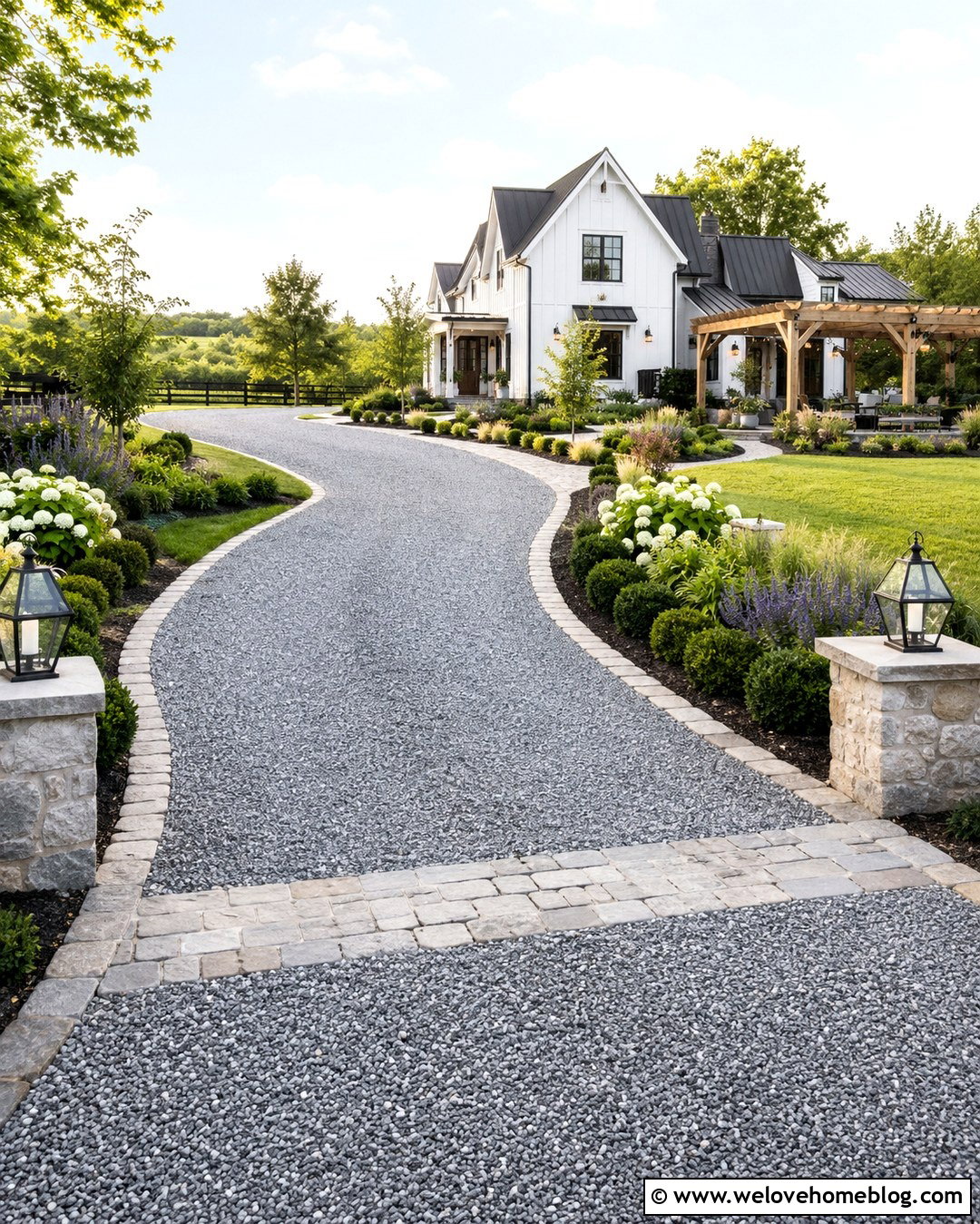
The crunch of gravel and the warmth of weathered stone create an inviting approach to a modern farmhouse. Use compacted gray crushed stone for a gently curved driveway with thick cobblestone edging. Near the porch, widen the layout into a rectangular patio made from tumbled concrete pavers in soft limestone tones. A pergola with natural wood posts can define the dining area without blocking views of the house. Plant hydrangeas, salvia, boxwoods, and ornamental grasses around the patio and along the driveway entrance. A cobblestone transition strip will help contain the gravel and protect the cleaner patio surface. Black lanterns and simple wood furniture coordinate with common farmhouse details while keeping the full outdoor space relaxed rather than overly decorative.
11. Permeable Paver Driveway With Garden Patio
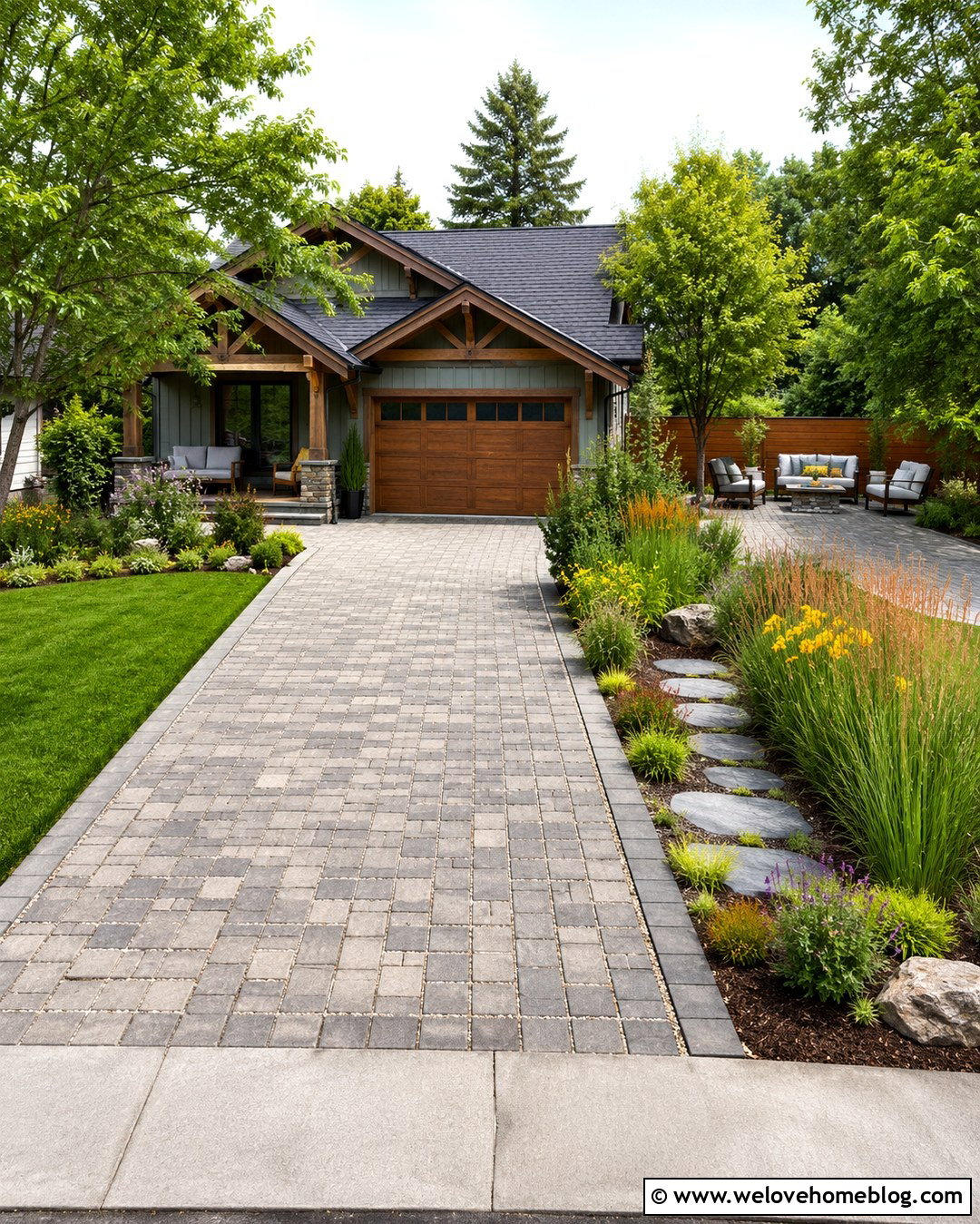
A permeable driveway can blend naturally with a garden-focused patio while giving rainfall space to filter through open joints. Select permeable concrete pavers in blended gray tones for the straight driveway, using small gravel-filled gaps throughout the surface. Place an adjoining patio near the house with matching pavers laid more tightly in a modular pattern. A broad planted swale or rain garden can border the driveway and collect water from surrounding paved areas. Fill it with regionally suitable grasses, sedges, flowering perennials, and moisture-tolerant shrubs. Add a stepping-stone path across the planting area if needed. The combination feels green and welcoming because the patio, driveway, and drainage landscaping operate as one coordinated outdoor design instead of unrelated features.
12. Stamped Concrete Driveway And Patio
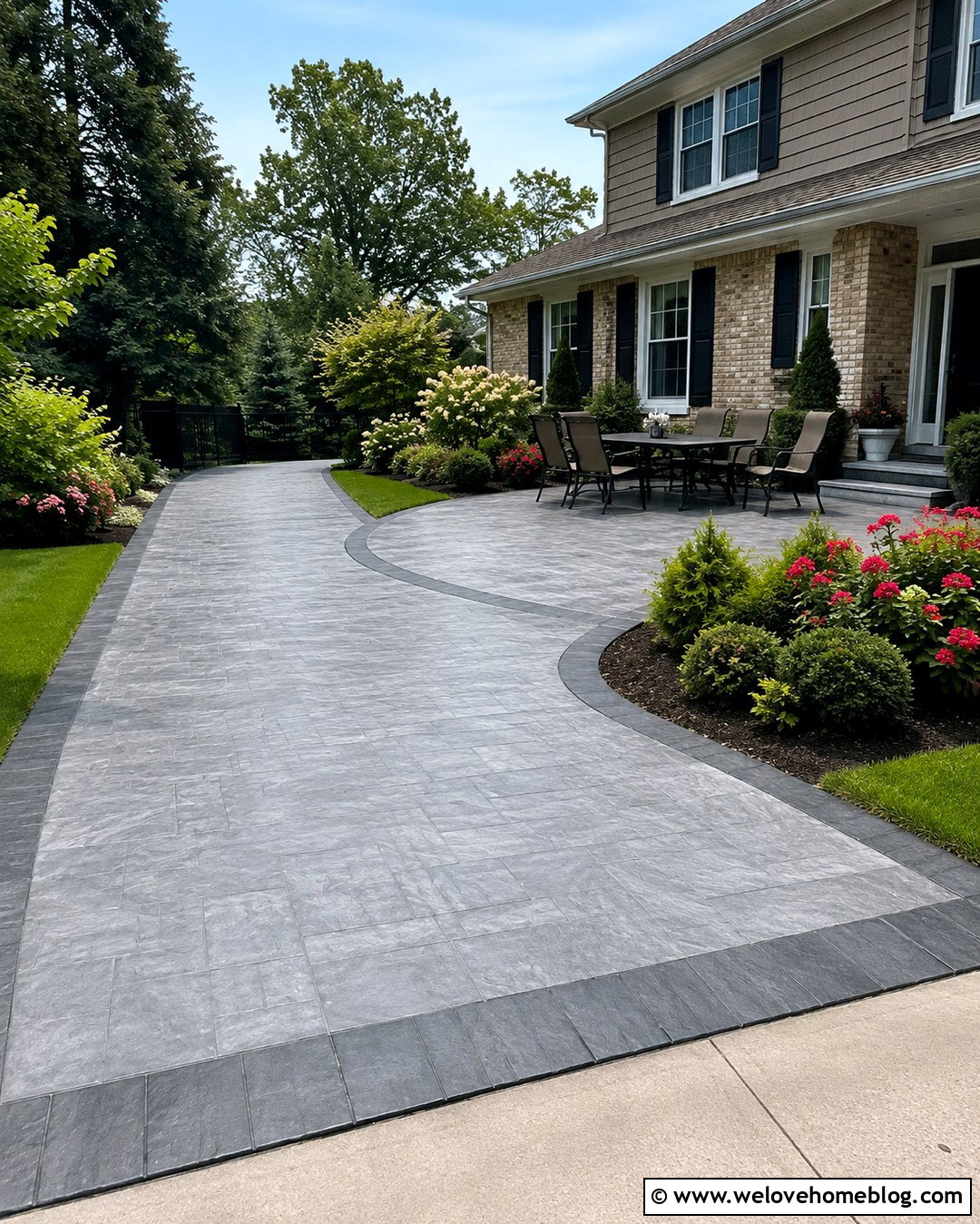
Stamped concrete can provide the appearance of patterned masonry while maintaining a continuous poured surface. Use a medium-gray slate texture on the driveway and repeat it on the attached patio, changing the stamp direction or border color to distinguish the two zones. A charcoal stamped band around the patio can frame dining furniture and echo the home’s roof or shutters. Create a wide curved transition rather than a sharp corner where the surfaces meet. This improves the visual flow and leaves more room around parked vehicles. Soft planting beds with roses, flowering shrubs, and small evergreens complement the textured concrete. Before installation, compare full-size color samples outdoors because stains and release colors can appear different under direct sunlight.
13. Driveway Extension With Seating Patio
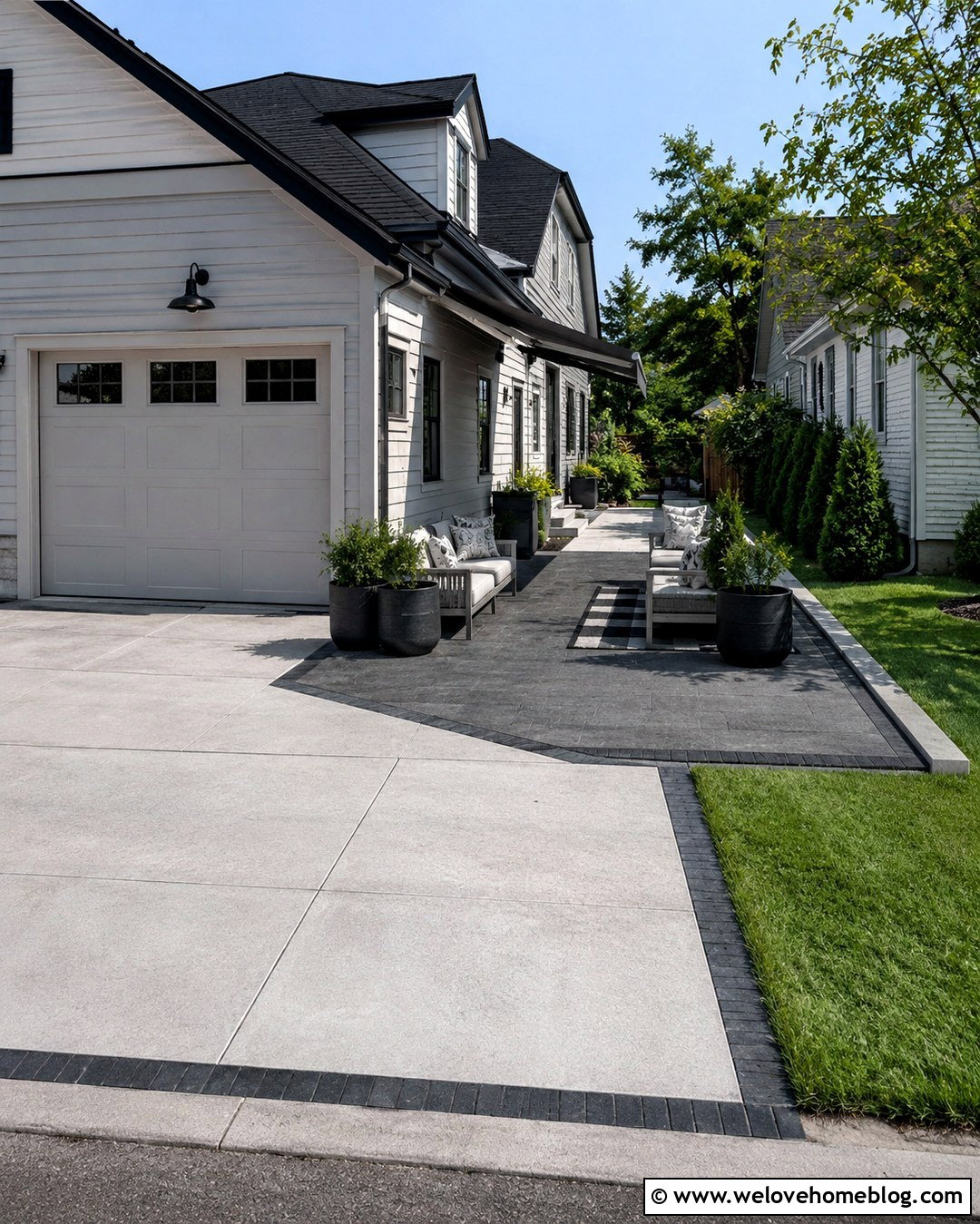
An existing driveway extension can serve as a flexible patio when parking demand changes throughout the day. Extend a concrete driveway beside the garage using interlocking pavers rated for vehicle areas. Arrange the patio furniture on this widened section, but retain a clear lane for garage access and safe movement. Large planters, movable benches, and an outdoor rug can define the seating zone without creating permanent obstacles. Use a darker paver border to outline the extension and connect it to a walkway leading toward the backyard. A retractable shade sail or wall-mounted awning adds comfort without using valuable ground space. This multipurpose arrangement is particularly helpful on narrow lots where a separate patio would consume too much lawn or garden area.
14. Curved Driveway With Side Patio
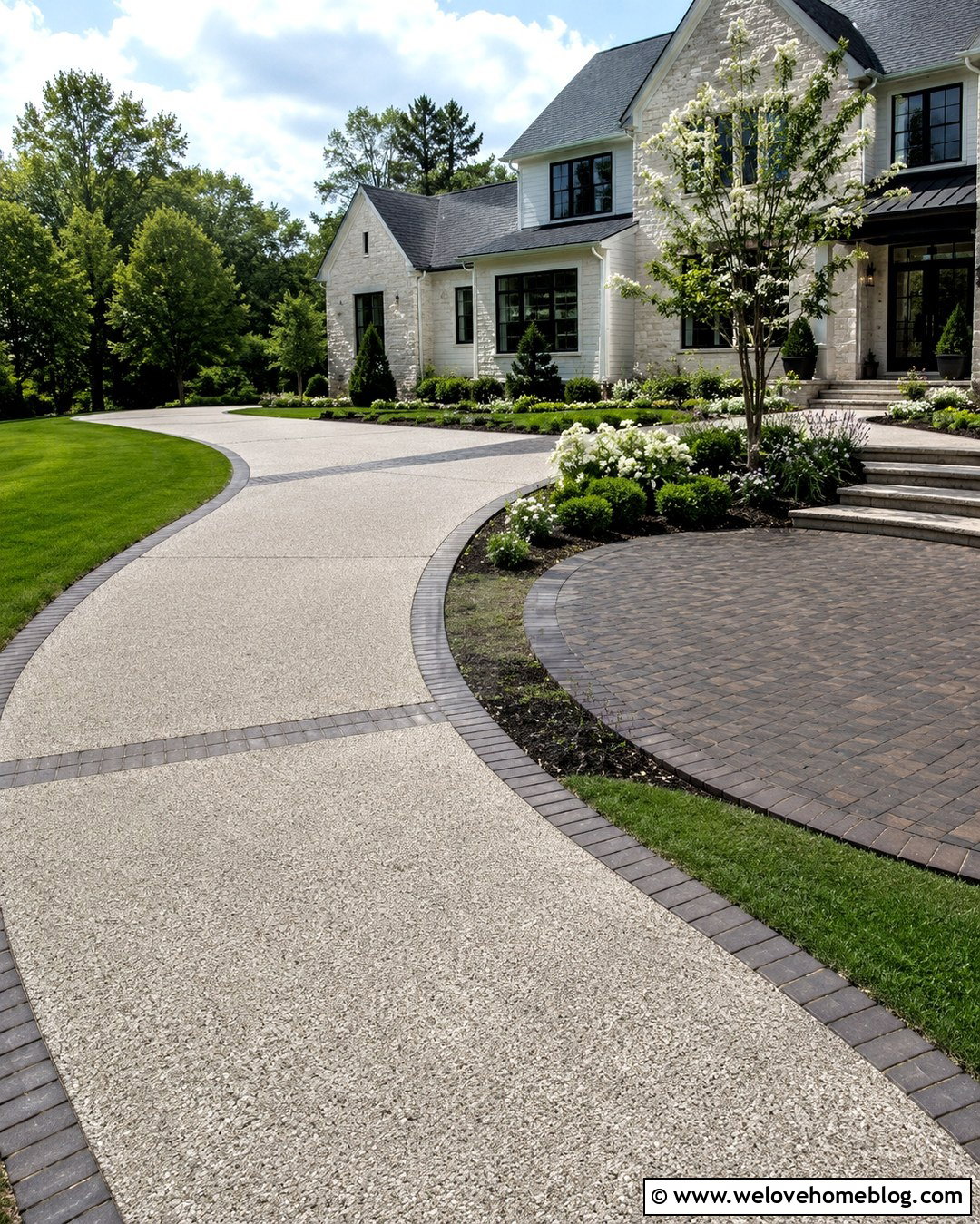
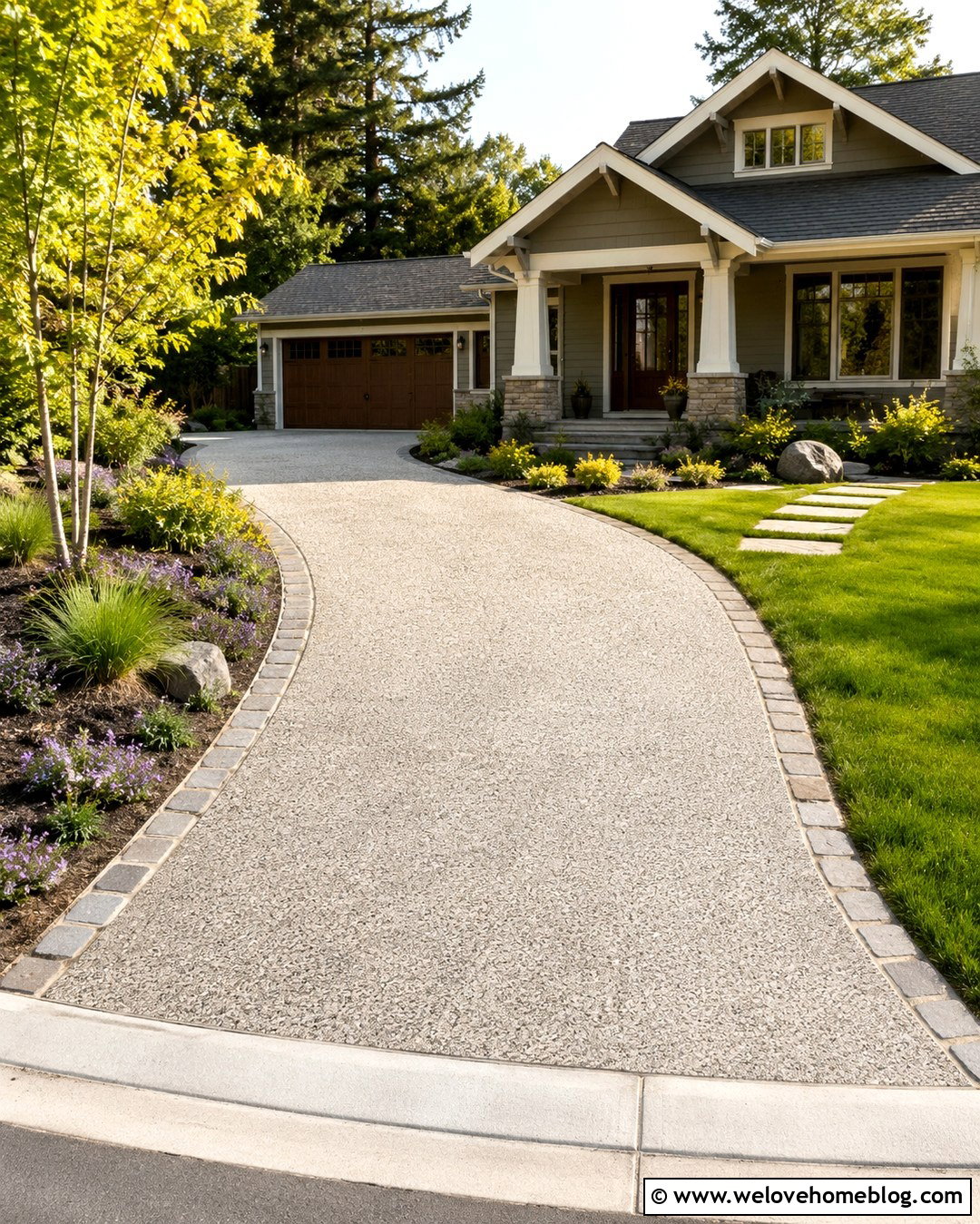
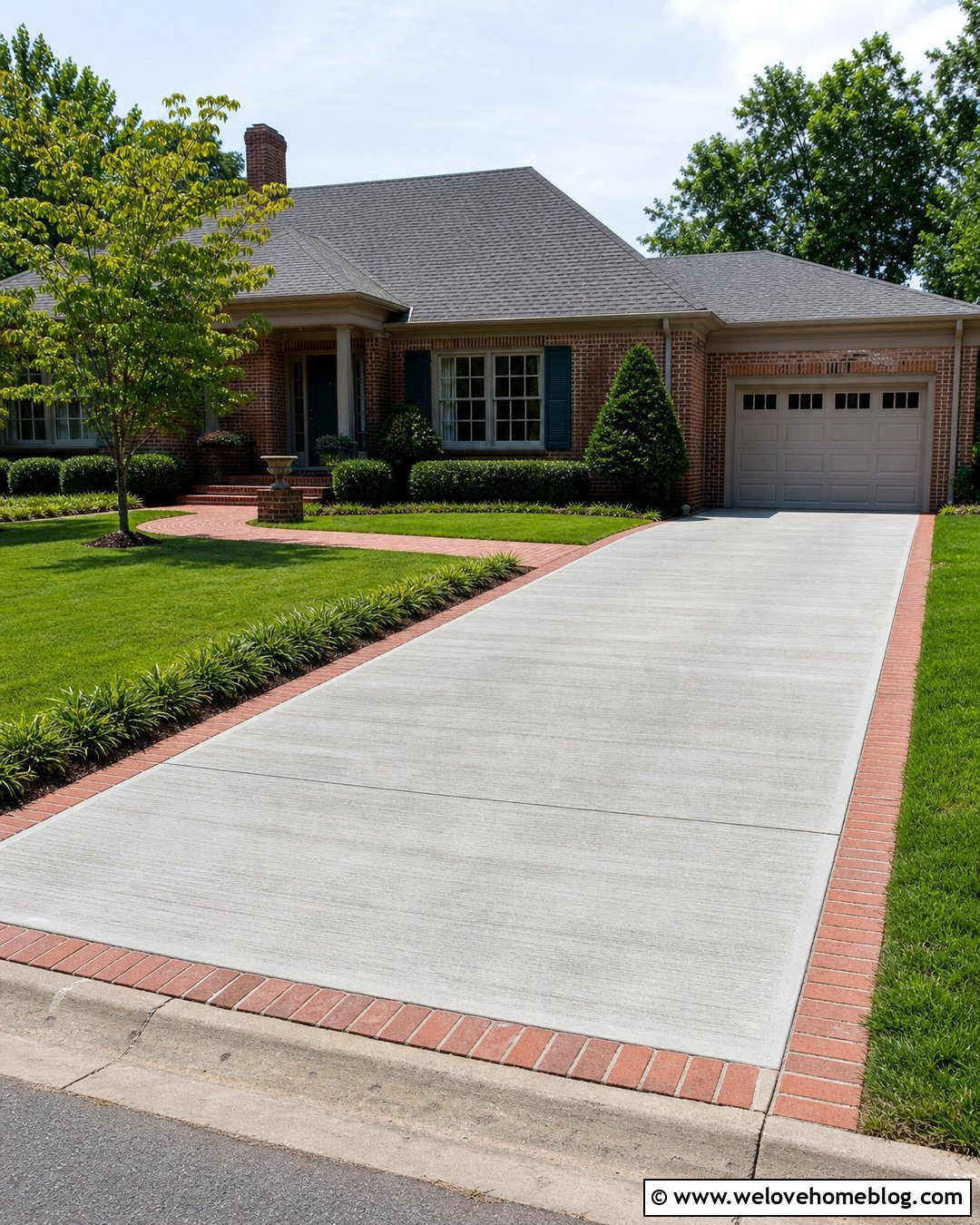
A sweeping driveway can guide attention toward a side patio while softening the approach to the house. Form the driveway from light exposed aggregate concrete, adding a dark brick ribbon that follows every curve. At the widest bend near the home, create a rounded patio with matching brick pavers. The shared border gives both surfaces a cohesive appearance even though their materials differ. Place a crescent-shaped planting bed between the driving lane and patio to provide comfortable separation. Low shrubs and flowers preserve visibility, while a small ornamental tree can shade the outer seating area. Curved steps and a matching walkway should connect the patio directly to the entry. This layout feels graceful and uses irregular front or side yards effectively.


15. Brick Driveway With Courtyard Patio
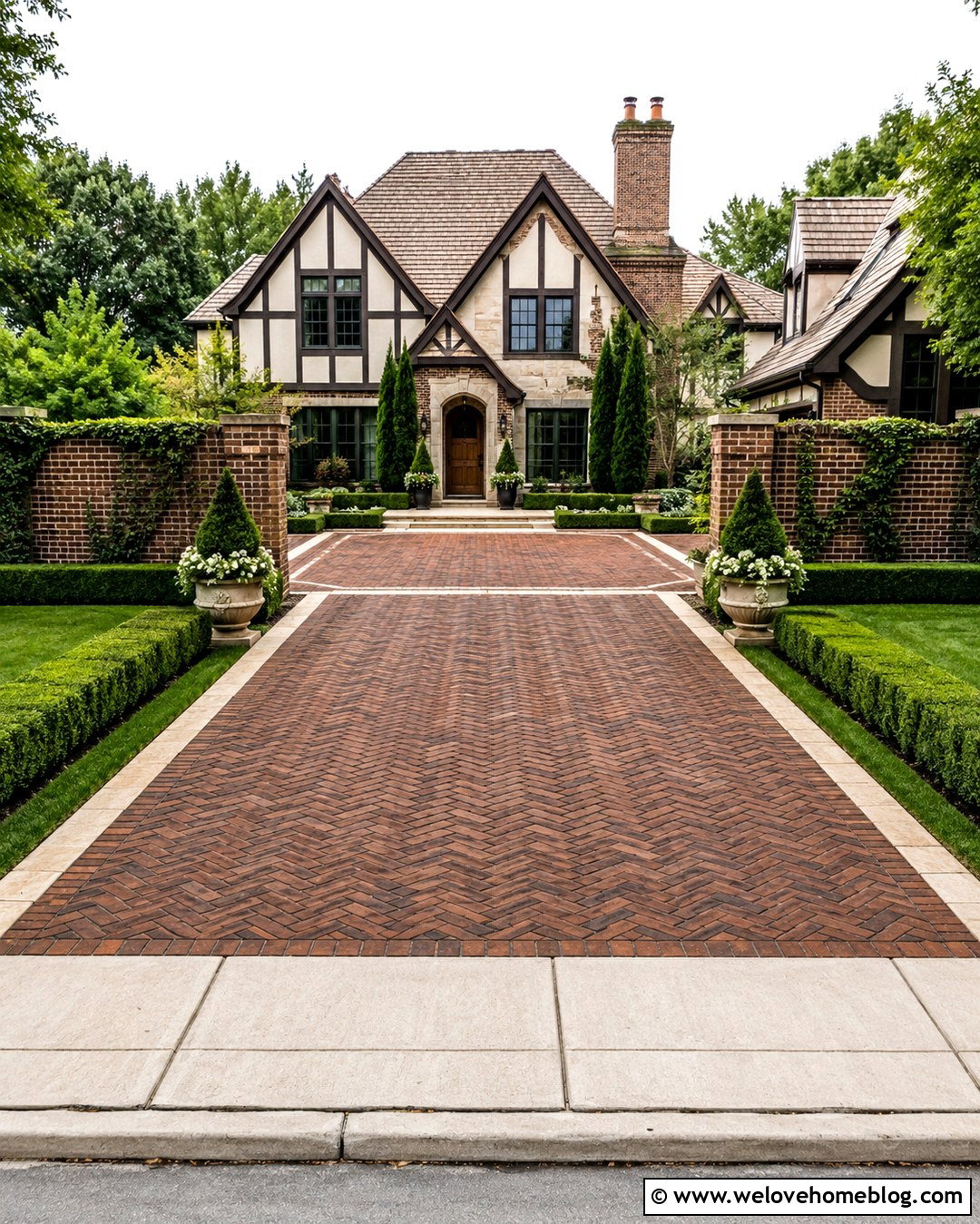
Clay brick can carry a traditional driveway directly into a private courtyard without losing definition between driving and living areas. Lay dark red and brown driveway bricks in herringbone because the angled pattern provides a strong visual direction toward the garage. At the courtyard patio, switch to basketweave brick surrounded by a limestone border. A brick or stucco privacy wall can protect the seating area and reflect the home’s architecture. Include wide entry openings so the courtyard never feels enclosed or disconnected from the yard. Evergreen hedges, climbing vines, and symmetrical planters bring softness to the masonry. A pale stone walkway leading to the front door brightens the palette and makes pedestrian circulation easy to understand from the curb.
16. Driveway Patio With Pergola
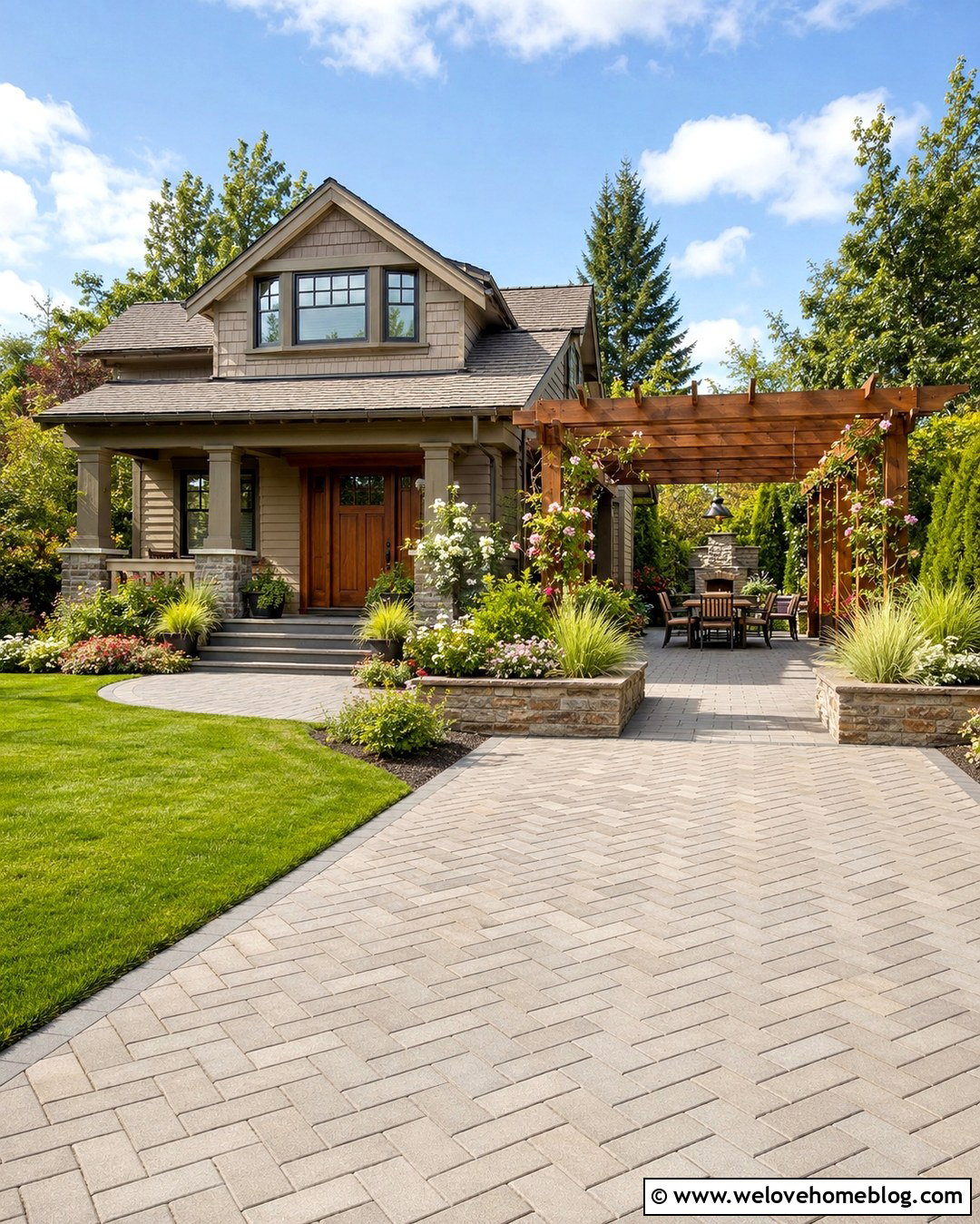
A pergola can turn the patio portion of a connected hardscape into a recognizable outdoor room. Start with a warm gray concrete paver driveway and continue the same pavers onto an adjoining rectangular patio. Change from herringbone on the driveway to running bond under the pergola, creating a subtle but useful distinction. Choose wood or powder-coated metal posts that complement the home’s exterior trim. Low masonry planters at the patio edges can protect furniture from the parking area and provide space for grasses or flowering vines. Leave the driveway side of the pergola open for easy access and clear sightlines. A walkway, layered foundation planting, and simple outdoor dining set complete this practical arrangement for entertaining near the house.
17. Driveway Patio With Fire Pit
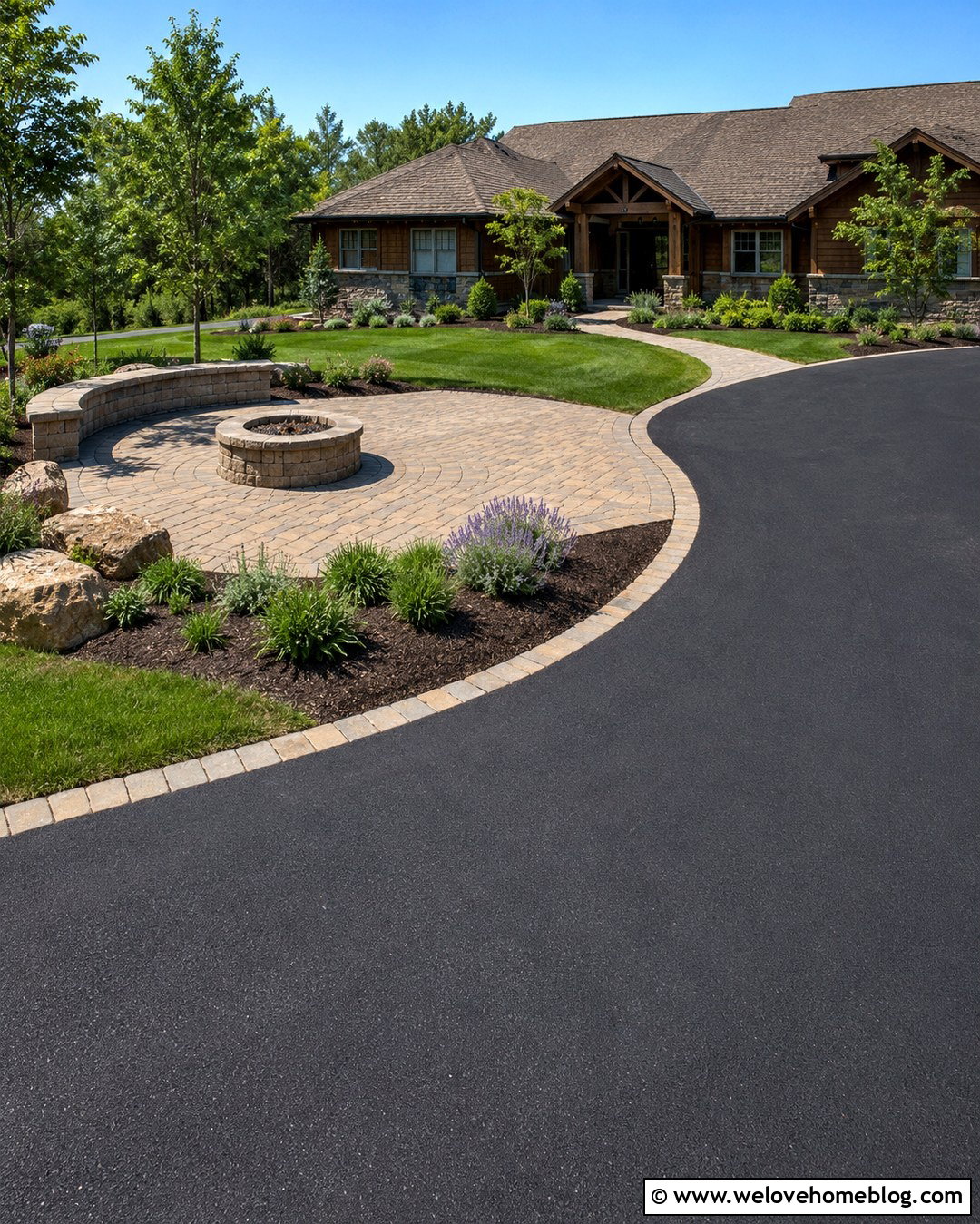
A fire pit patio can connect to the driveway as long as the gathering zone is clearly separated from parking and vehicle traffic. Build a broad black asphalt driveway with a curved extension made from tan concrete pavers. Center a masonry fire pit on the paver section and surround it with comfortable movable chairs. A low seat wall and deep planting bed create a protective boundary between the lounge area and driving lane. Repeat the tan pavers in a narrow border along the asphalt to make the two surfaces feel related. Keep nearby branches, fences, and structures in mind when selecting the fire feature’s location. Confirm local requirements and manufacturer clearances before construction. The finished layout offers a casual entertaining area without isolating it from the house.
18. Driveway Patio With Retaining Wall
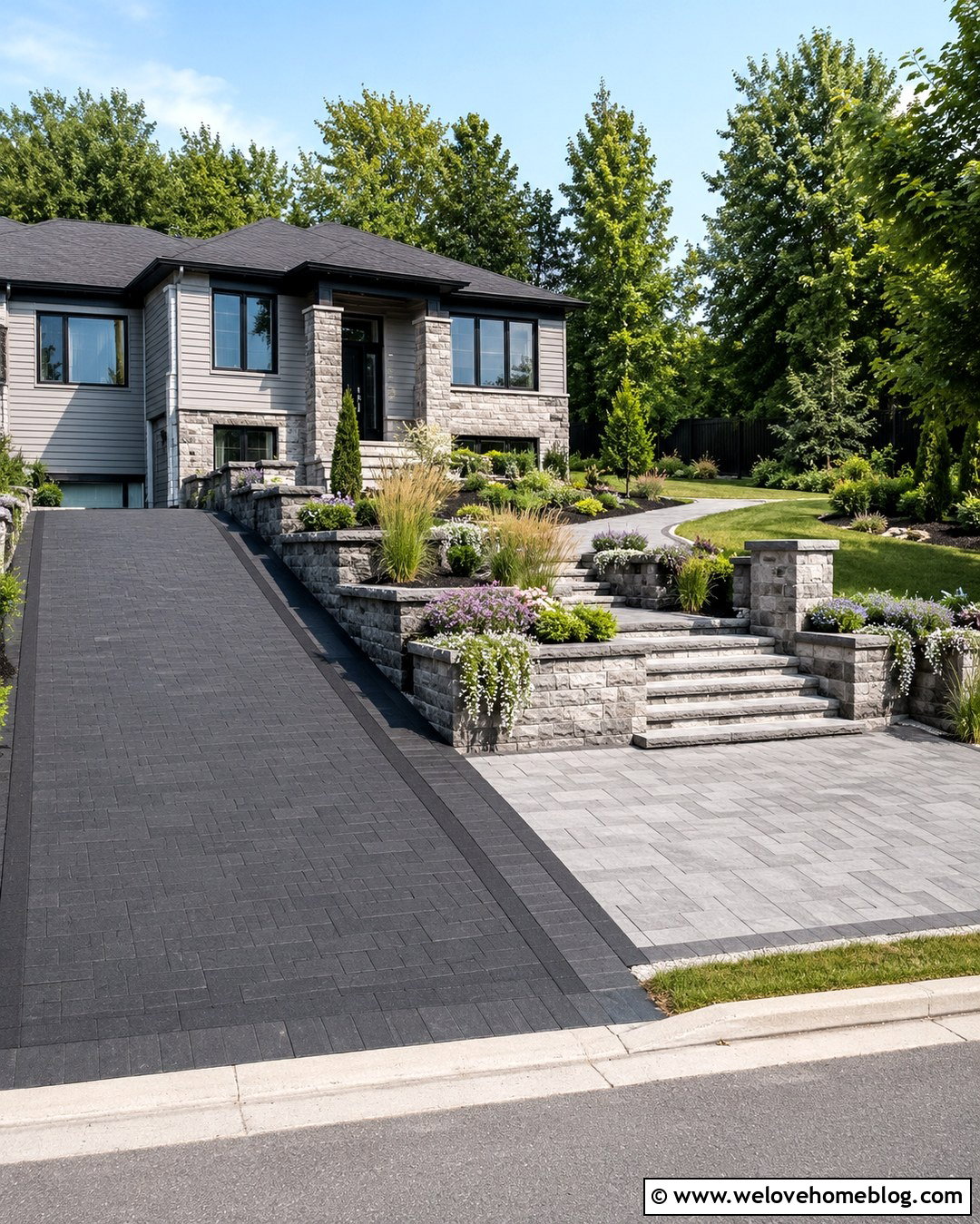
Sloped lots often need a retaining wall before a driveway and patio can share the same level comfortably. Use charcoal concrete pavers for a gently rising driveway, then create a level patio beside the house with lighter gray pavers. Build the retaining wall from split-face concrete blocks or natural stone that coordinates with the home’s foundation. A broad cap can provide extra seating around the patio edge. Integrate steps into the wall to connect the lawn, patio, and upper garden without forcing people onto the driveway. Cascading plants, compact shrubs, and ornamental grasses will soften the structure. Include appropriate drainage behind the wall and direct surface water away from seating areas. This layered solution can transform an awkward grade into organized outdoor living space.
19. Driveway Patio With Grass Strips
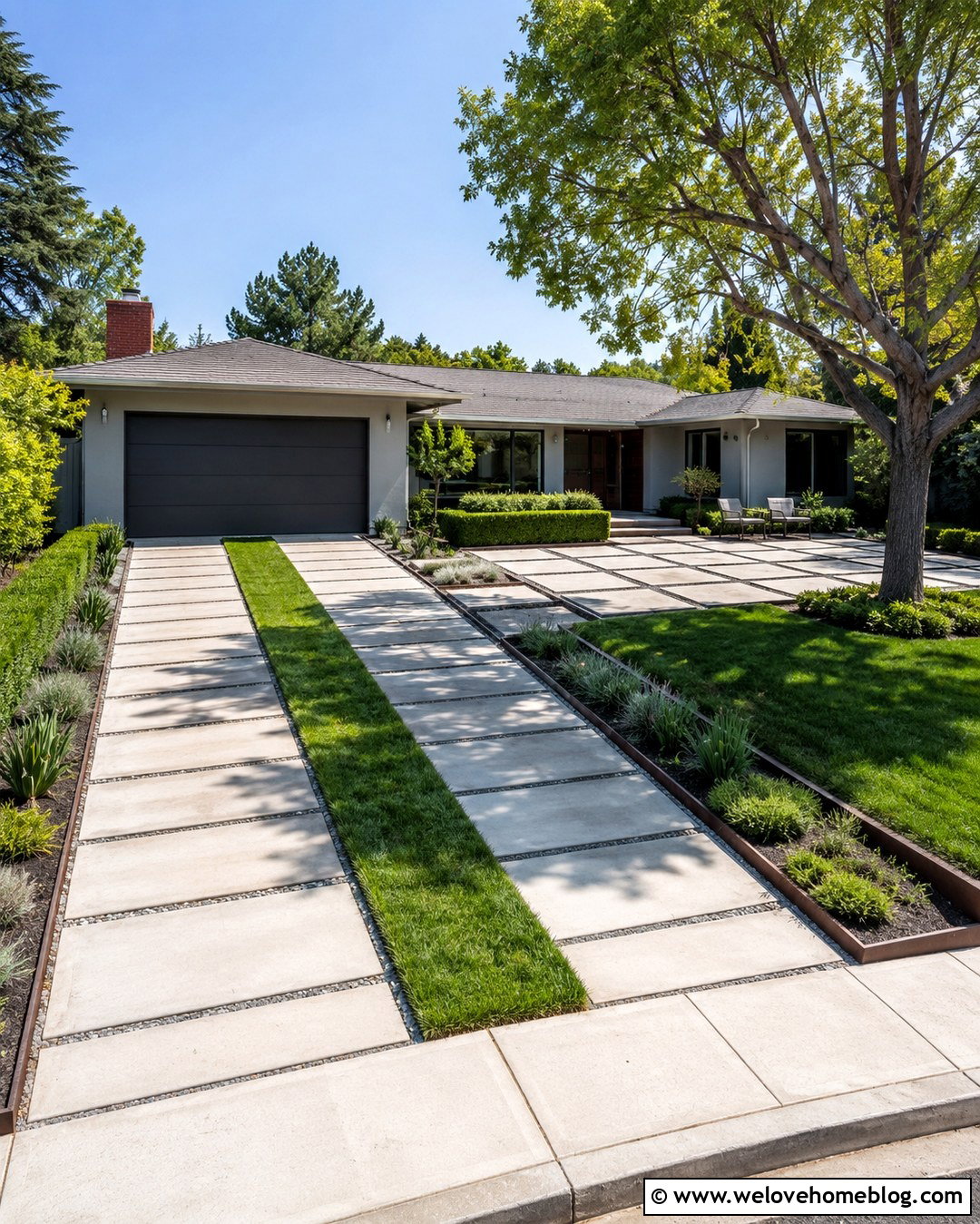
Grass strips can break up a wide hardscape and create a softer transition between the driveway and patio. Construct the driveway with two broad tracks of pale concrete pavers, leaving a durable planted strip through the center. Beside the house, continue the pavers into a square patio with a complete solid surface for stable furniture placement. Repeat narrow green joints around the patio perimeter instead of beneath chairs and tables. Steel edging keeps the lawn lines crisp and prevents soil from spreading over the pavers. Drought-tolerant turf or low ground cover may be suitable depending on climate, sunlight, and traffic. Add simple hedges, a shade tree, and a direct front walkway. The greenery makes this practical combination feel lighter and more integrated with the yard.
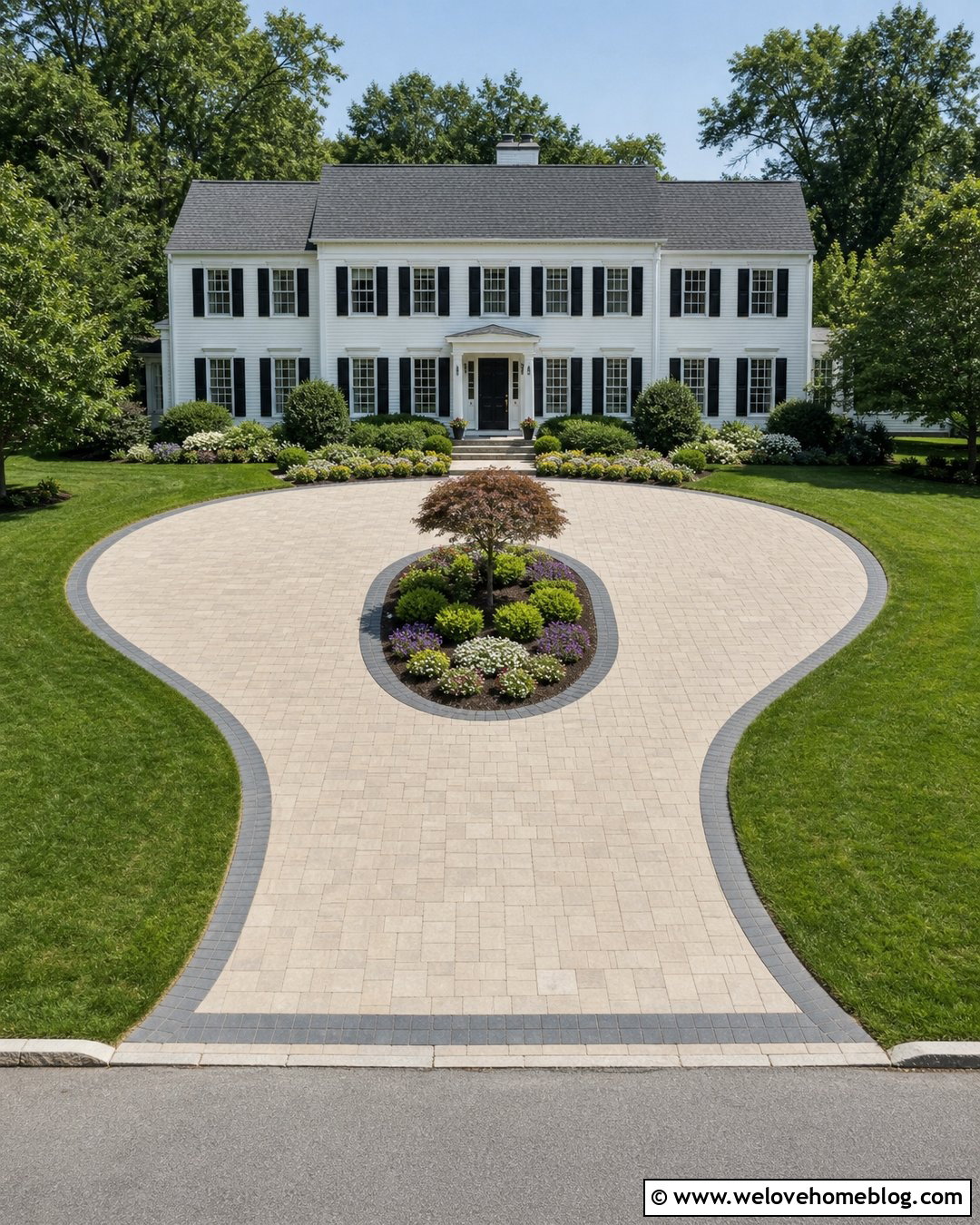
20. Two Tone Driveway And Patio
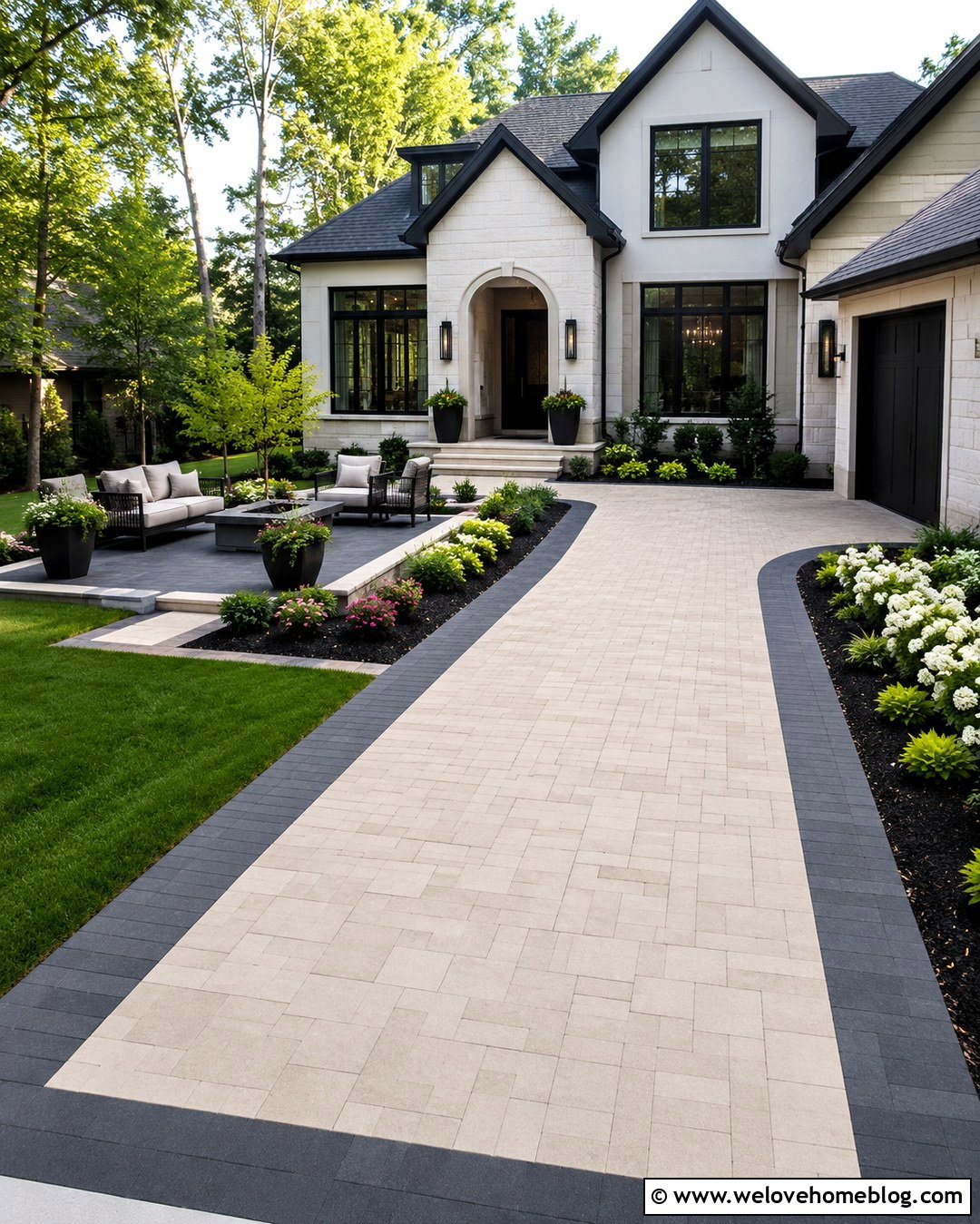
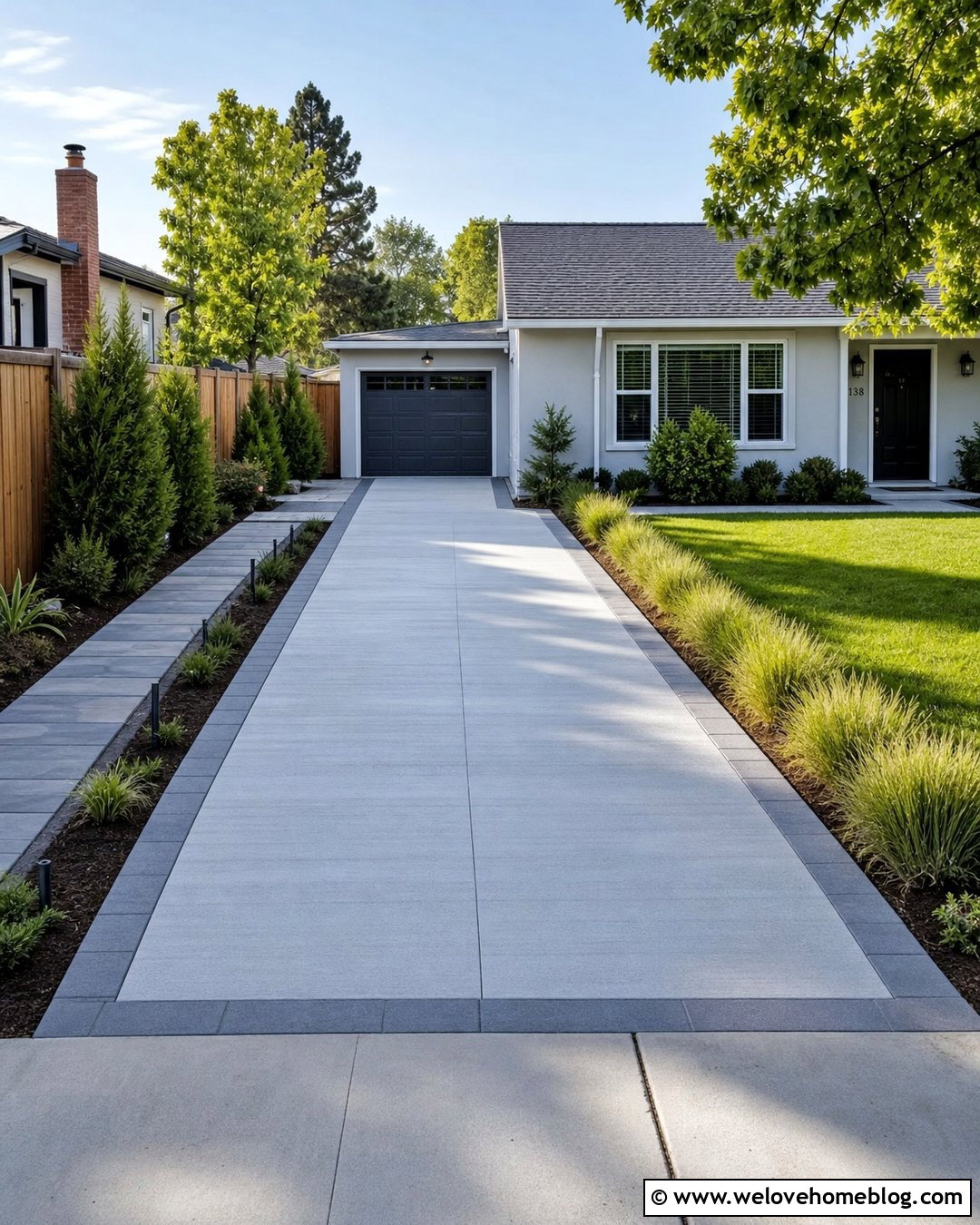
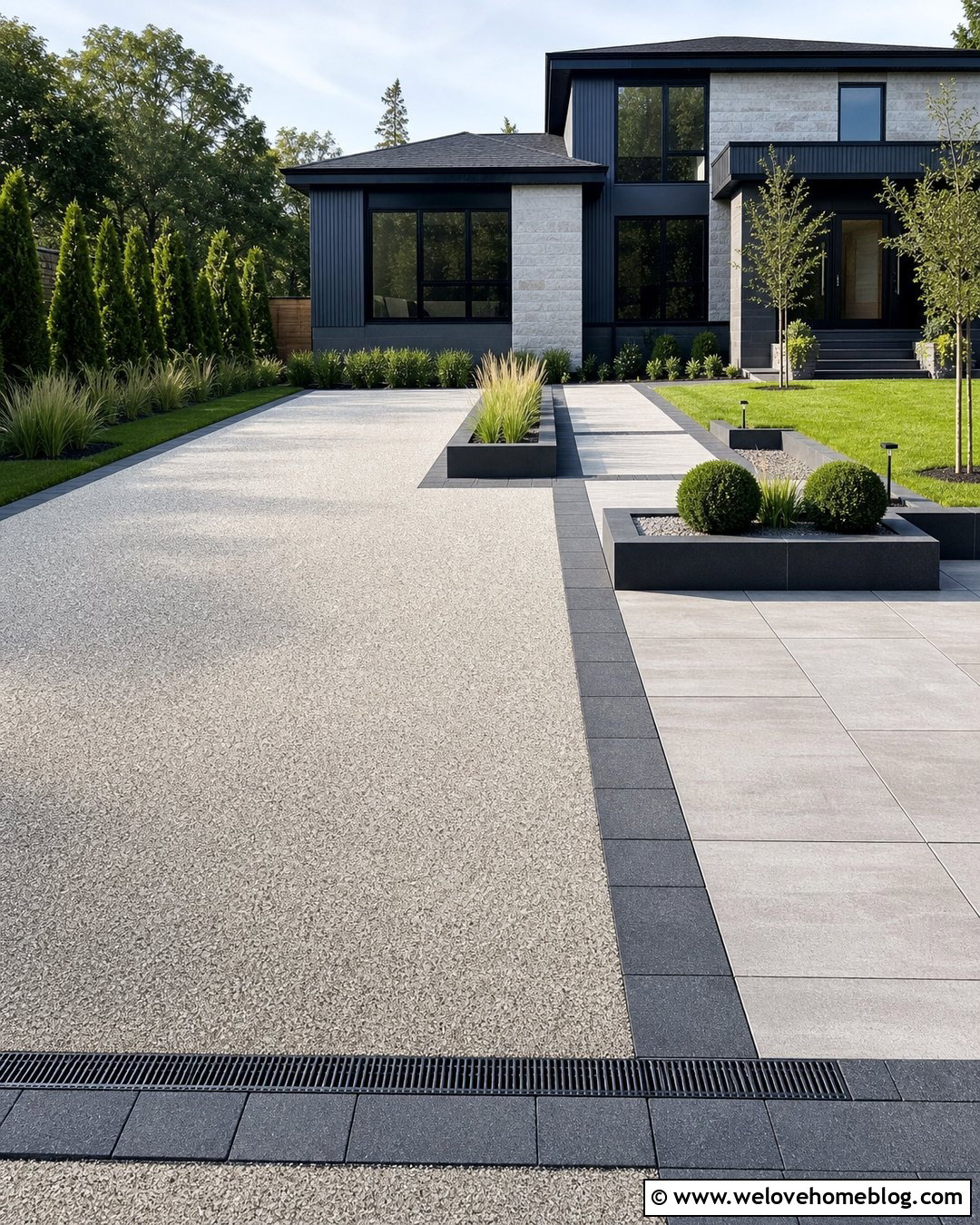
A two-tone palette can connect different outdoor zones without forcing every surface to match. Use light beige concrete pavers for the main driveway and outline it with a wide charcoal border. Reverse the colors on the adjoining patio, placing charcoal pavers in the center and beige units around the edge. This creates visual unity while giving each space a separate identity. Keep the laying patterns simple so the color contrast does not become overwhelming. A rectangular lawn, structured planting beds, and one continuous walkway can balance the graphic hardscape. Select furniture and planters that repeat one or two exterior house colors. This approach works with contemporary, transitional, and updated traditional homes, especially when the patio remains visible from the street or driveway entrance.
Conclusion:
The most successful 20 patio driveway combo ideas balance attractive materials with safe, comfortable everyday use. Matching pavers can make a small yard feel more connected, while concrete, gravel, brick, or asphalt combinations add contrast and help define separate zones. Borders, pattern changes, planters, walls, and drainage channels can mark the patio without making it look disconnected from the driveway. Before construction begins, measure vehicle clearance, furniture space, walking routes, slopes, and water flow. Choose materials designed for the demands of each surface, even when their colors look similar. With careful planning, your driveway can remain a practical entrance while the adjoining patio becomes a welcoming and polished outdoor living space.

Related posts:

Leave a Reply