
A well-planned patio beside the driveway can turn an overlooked strip of yard into a comfortable and attractive outdoor space. The best layout connects the patio, driveway, walkway, landscaping, and house instead of treating each area separately. Material choices also matter. Coordinating pavers, borders, planting beds, and decorative stone can make adjoining hardscapes feel intentional and improve the overall arrival experience. () Privacy screens, raised planters, pergolas, and low walls can provide separation without making the patio feel boxed in. Whether you have a narrow side yard or a wide front driveway, the following **20 Patio Next To Driveway Ideas** offer practical ways to create a more useful and welcoming outdoor area.

1. Small Paver Patio Next To Driveway
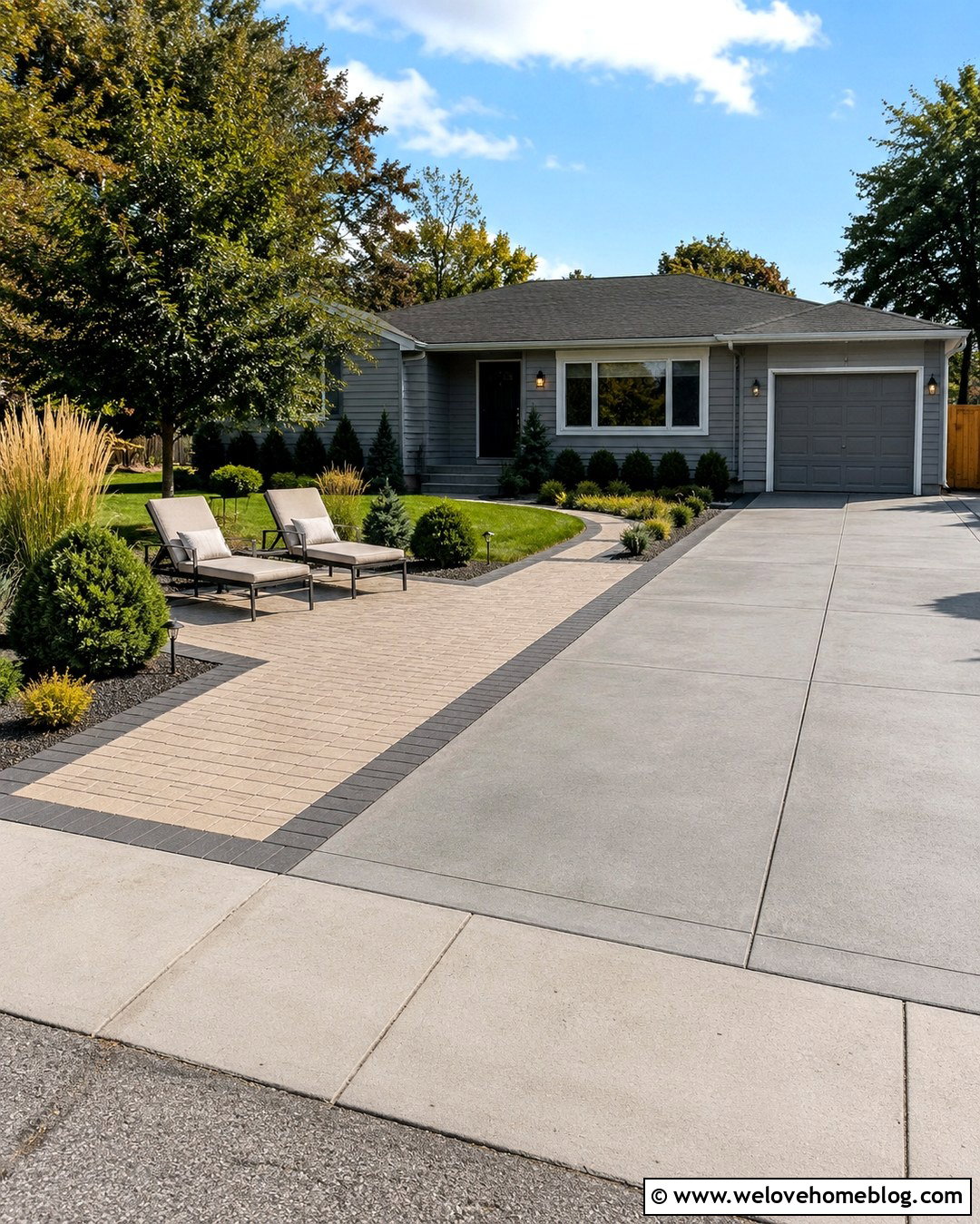
A small paver patio can fit neatly beside a straight concrete driveway without consuming the entire front or side yard. Use warm beige concrete pavers in a running-bond pattern to distinguish the seating area from the smooth gray driveway. A dark charcoal border gives the patio a finished outline and creates a visual buffer near moving vehicles. Add two compact lounge chairs, a small table, and a narrow planting bed along the outer edge. Low ornamental grasses and dwarf evergreen shrubs provide softness without overwhelming the space. Continue the pavers toward the front walkway so the patio feels connected to the house. Leave a comfortable open strip along the driveway for car doors, foot traffic, and everyday maintenance.
2. Patio Next To Driveway With Privacy Screen
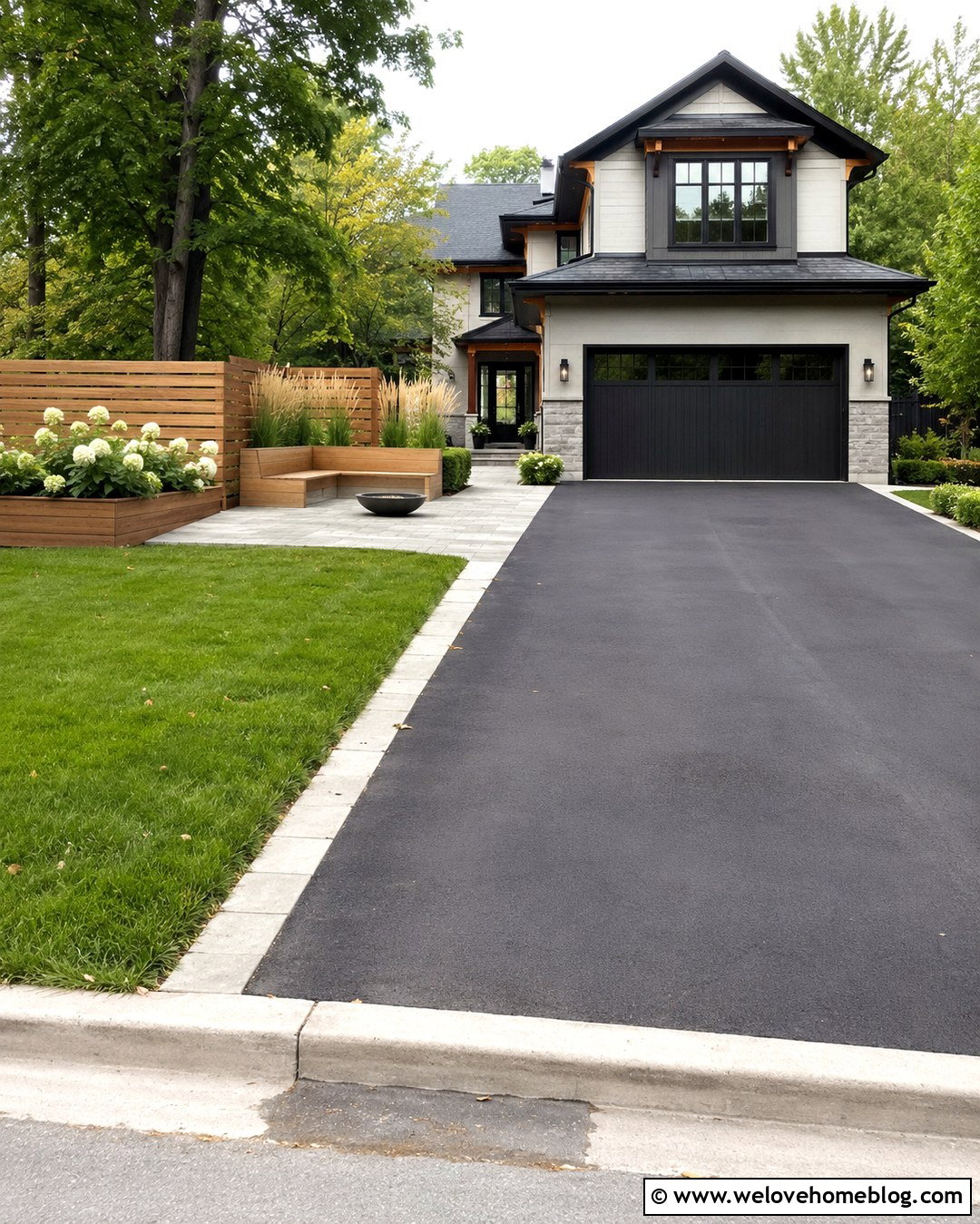
When a patio sits close to parked cars or neighboring property, a slim privacy screen can make it feel much more comfortable. Pair a light gray concrete paver patio with a black asphalt driveway and install a horizontal cedar screen between them. Keep the screen long enough to shelter the main seating zone, but stop it short of the street-facing edge to maintain an open entrance. A raised planter at the base can hold feather reed grass, compact hydrangeas, or regionally suitable evergreens. Use matching cedar on a pergola or built-in bench to create a coordinated appearance. The combination of screening and layered plants adds privacy while preserving light and airflow. Trellises, evergreen planting, and outdoor-room layouts are commonly used to improve privacy in compact patio spaces. ()
3. Gravel Patio Next To Concrete Driveway
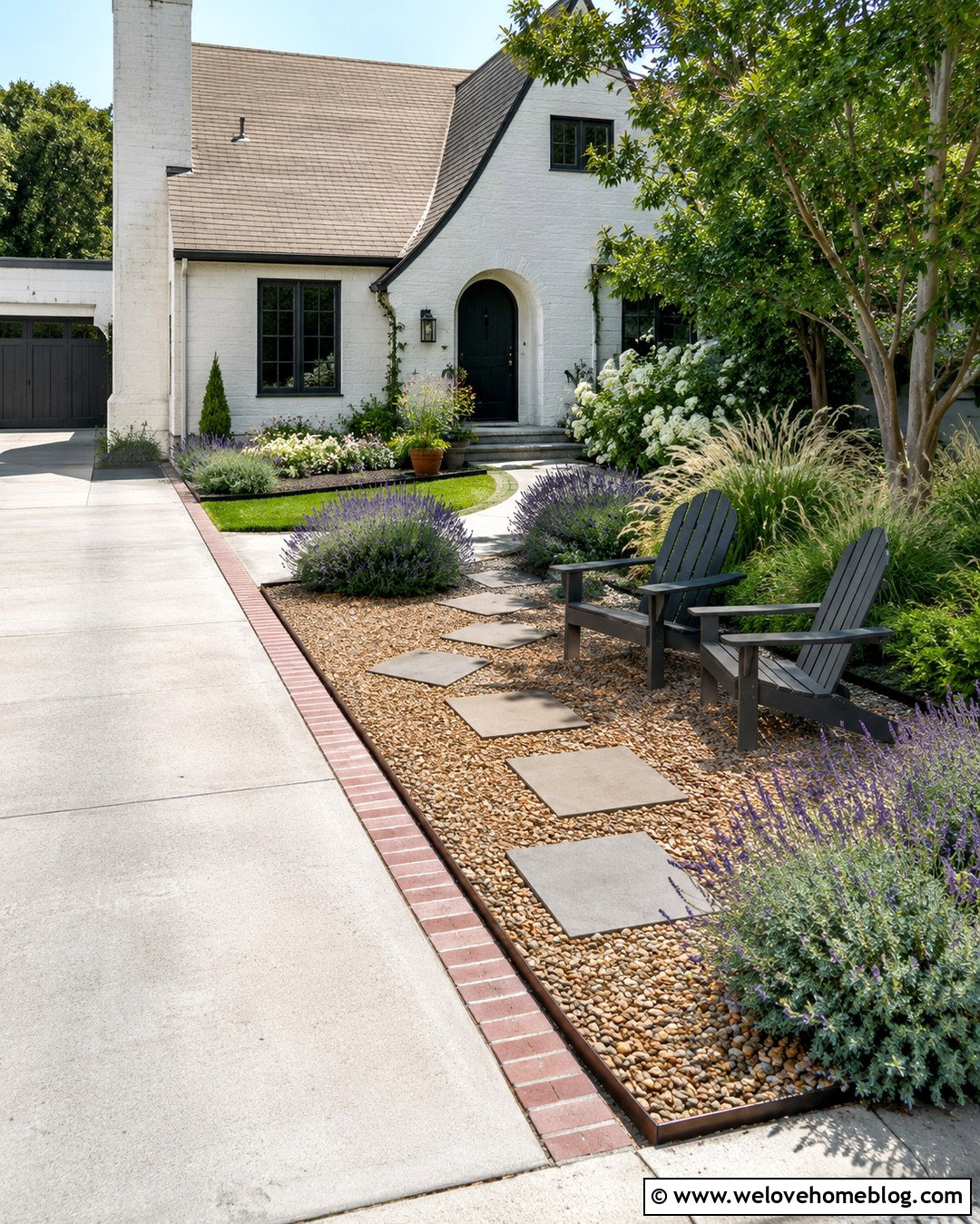
Crunchy pea gravel and smooth poured concrete create an attractive contrast that works especially well with cottages, ranch homes, and casual gardens. Shape the gravel patio as a soft rectangle beside the driveway, then contain the loose material with steel edging or a solid brick border. A properly defined edge helps keep gravel from spreading into the vehicle area or lawn. Place large square stepping stones through the patio to create stable routes between the driveway, seating, and house entrance. Surround the outer side with lavender, catmint, salvia, or drought-tolerant grasses suited to the local climate. Simple Adirondack chairs and a round table complete the relaxed arrangement. Repeating the patio’s brick border near the garage creates continuity across the full driveway design.
4. Brick Patio Next To Asphalt Driveway
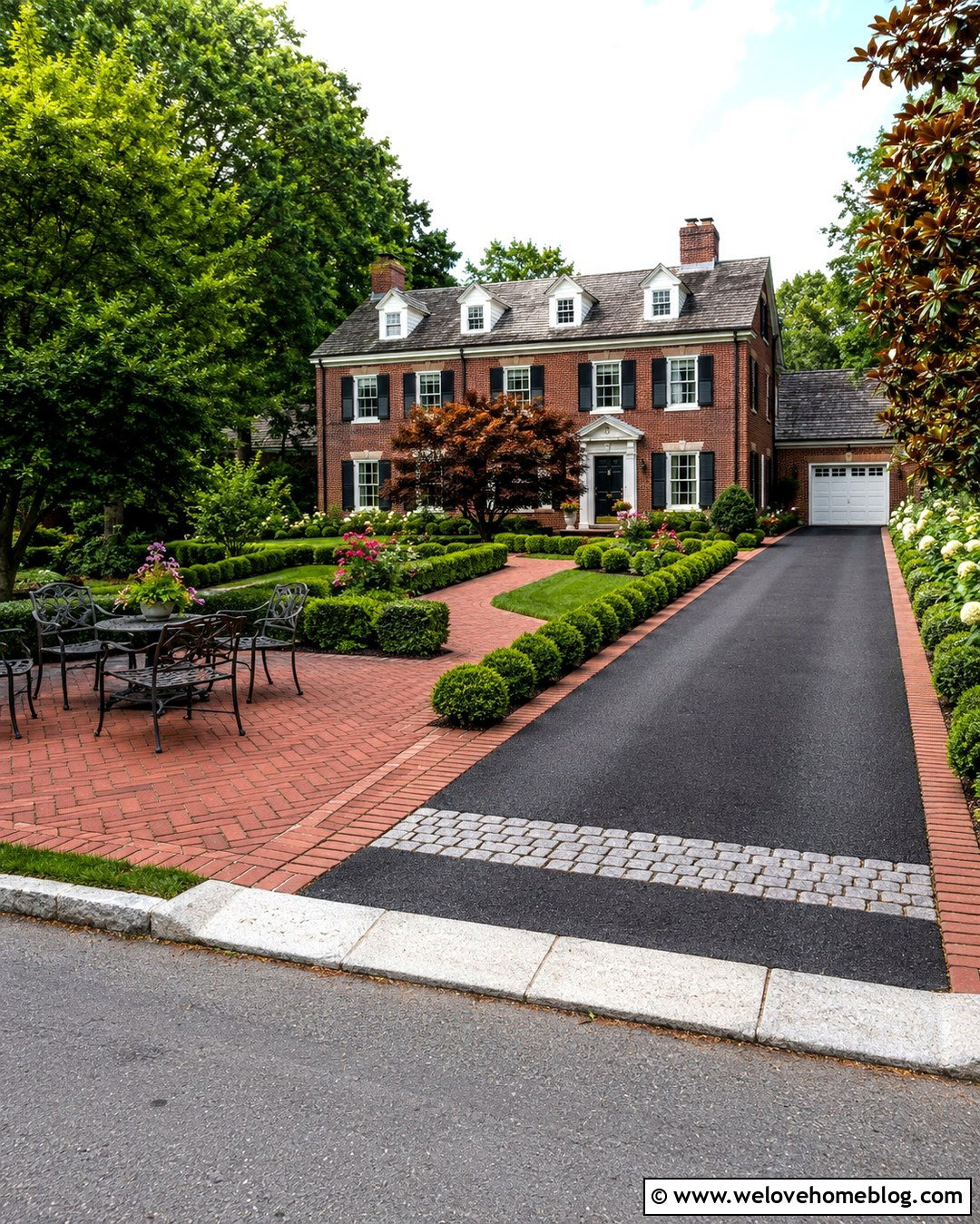
Rich red brick can bring warmth and character to a plain black asphalt driveway. Lay the patio in a classic herringbone pattern, then use a straight soldier-course border to emphasize its shape. A narrow cobblestone strip between the patio and driveway creates a strong transition and protects the patio edge from occasional tire contact. This combination looks particularly natural beside a colonial, Cape Cod, or traditional brick house. Add a curved planting bed around the patio’s exposed sides, filling it with boxwood, flowering perennials, and a small ornamental tree. Black metal chairs can echo the driveway color without making the seating area appear heavy. Continue a short brick walkway toward the front door so the new patio feels like part of the home’s original architecture.
5. Modern Patio Next To Driveway
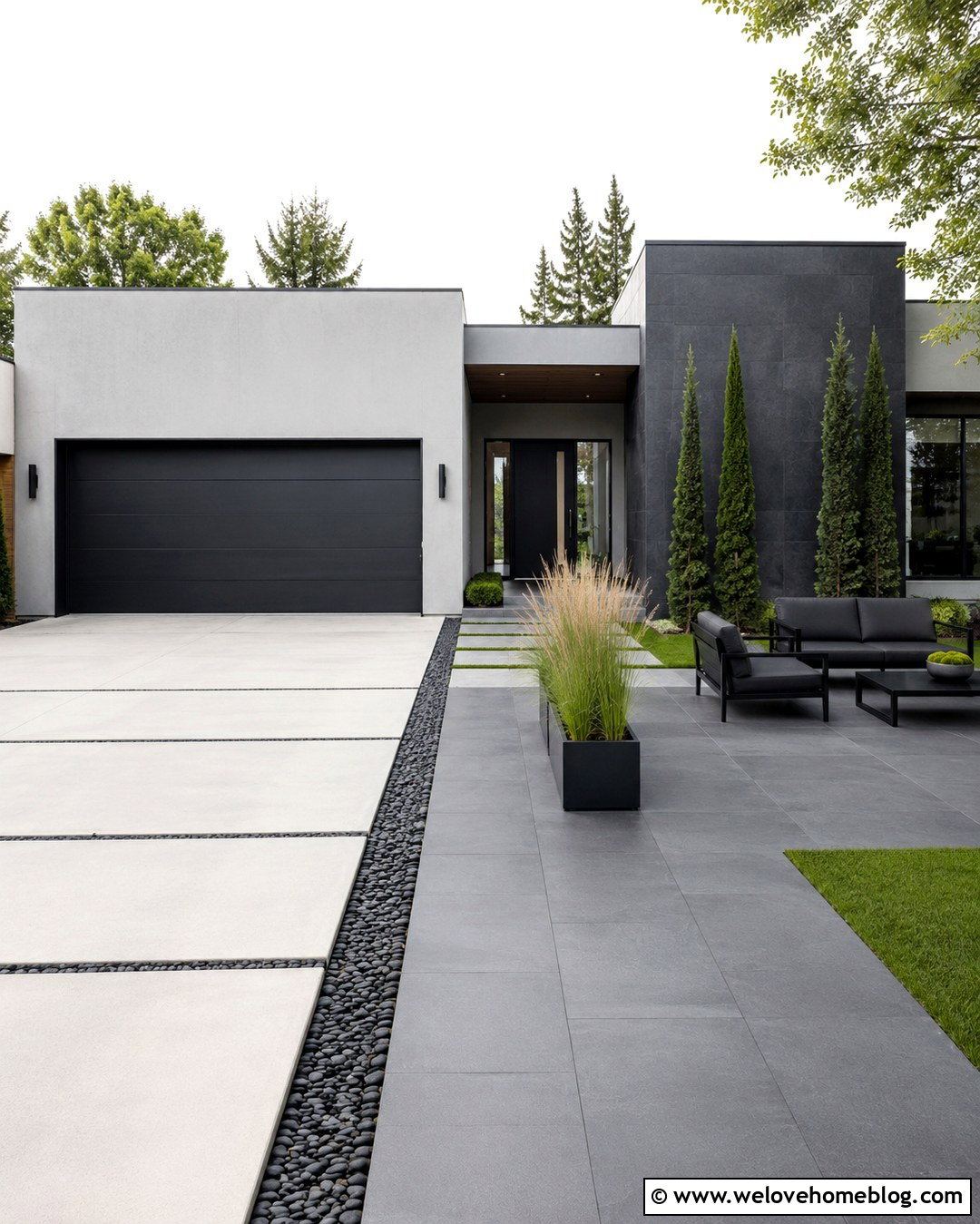
Crisp geometry can transform a driveway-side patio into an extension of a modern home. Use large-format charcoal porcelain pavers for the patio beside a pale gray poured-concrete driveway. Separate the surfaces with a narrow strip of black river rock or low ground cover. A rectangular patio layout will reinforce the clean lines of the garage, windows, and front walk. Furnish the space with a simple bench, compact lounge chairs, and a low square table. Along the driveway edge, install tall rectangular planters containing upright grasses or narrow evergreens. These provide subtle screening while repeating the home’s architectural shapes. Keep the planting palette restrained, using several plants in repeated groups rather than many unrelated varieties. The completed area should look uncluttered, balanced, and deliberately integrated with the driveway.
6. Covered Patio Next To Driveway
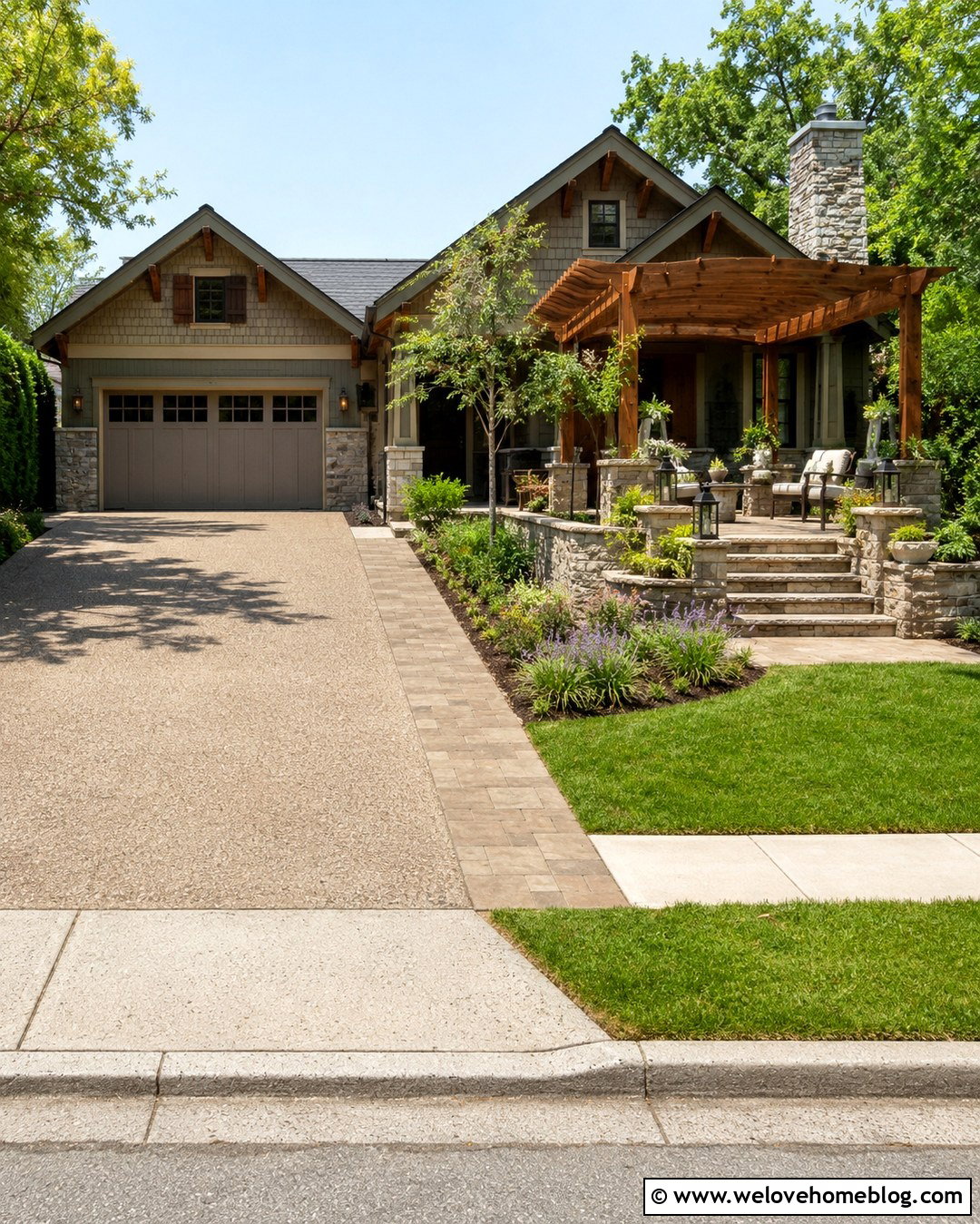
Imagine stepping out of the car and entering a sheltered seating area before reaching the house. A covered patio can provide this convenient transition when it is carefully positioned beside the driveway. Build the patio with textured tan concrete pavers and use a simple cedar pergola or solid-roof pavilion for overhead definition. Set the posts within raised stone planters rather than directly beside the vehicle path. A low retaining wall can wrap around the outer patio edge and double as extra seating. Add climbing vines only where they will not interfere with the driveway or roof drainage. Connect the patio to the side or front door with a direct paver walkway. Coordinating the roof color with the house and the patio border with the driveway creates a unified, permanent-looking addition.
7. Front Yard Patio Next To Driveway
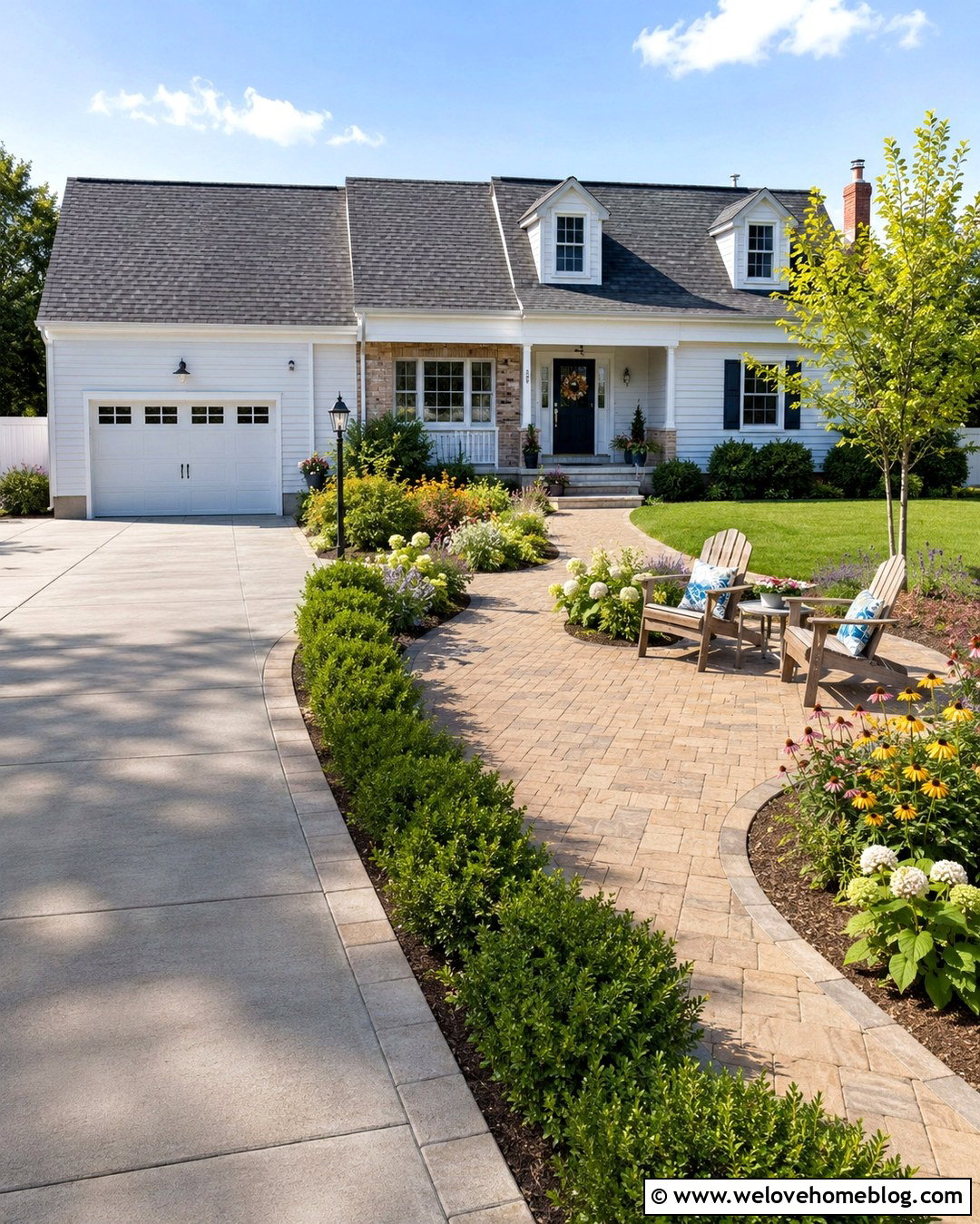
A front yard patio can create a welcoming social space while making better use of lawn beside the driveway. Choose light brown tumbled pavers that complement the home’s exterior and contrast gently with a gray concrete driveway. A curved patio edge will soften the rectangular shape of the garage and parking area. Frame the seating space with a low hedge, colorful perennials, and one airy ornamental tree rather than a tall solid barrier. This preserves street views while giving the patio a sense of enclosure. Position chairs toward the garden or house instead of directly toward parked vehicles. A wide walkway should connect the patio, driveway, and front porch without cutting through the seating arrangement. Front patios can strengthen curb appeal and create a warmer, more inviting entrance when hardscape and planting are planned together. ()
8. Raised Patio Next To Sloped Driveway
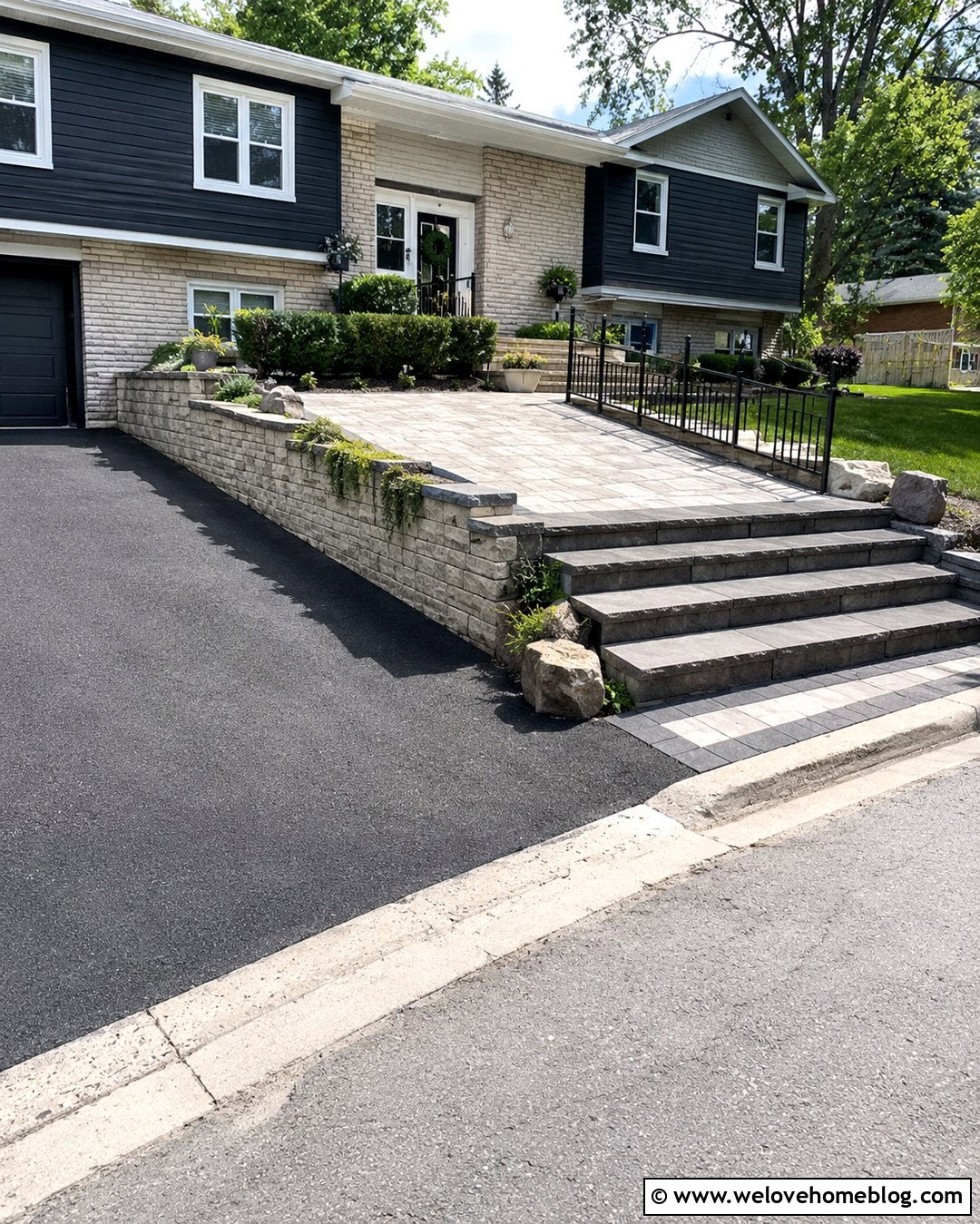
A sloped lot does not have to prevent you from creating a level patio beside the driveway. Build a raised patio with natural stone-look concrete pavers supported by a coordinated segmental retaining wall. The wall should follow the driveway’s grade while the patio surface remains level and comfortable. Place steps at the house-facing end so visitors do not enter the seating area from the active vehicle zone. Low shrubs and trailing plants can soften the exposed retaining wall without hiding its attractive texture. Add a metal railing where the change in elevation makes one appropriate, selecting a simple finish that matches exterior fixtures. A contrasting paver band should clearly mark the patio boundary. The resulting design turns difficult terrain into a useful outdoor room and gives the sloped driveway a more polished frame.
9. Patio Next To Driveway With Planter Wall
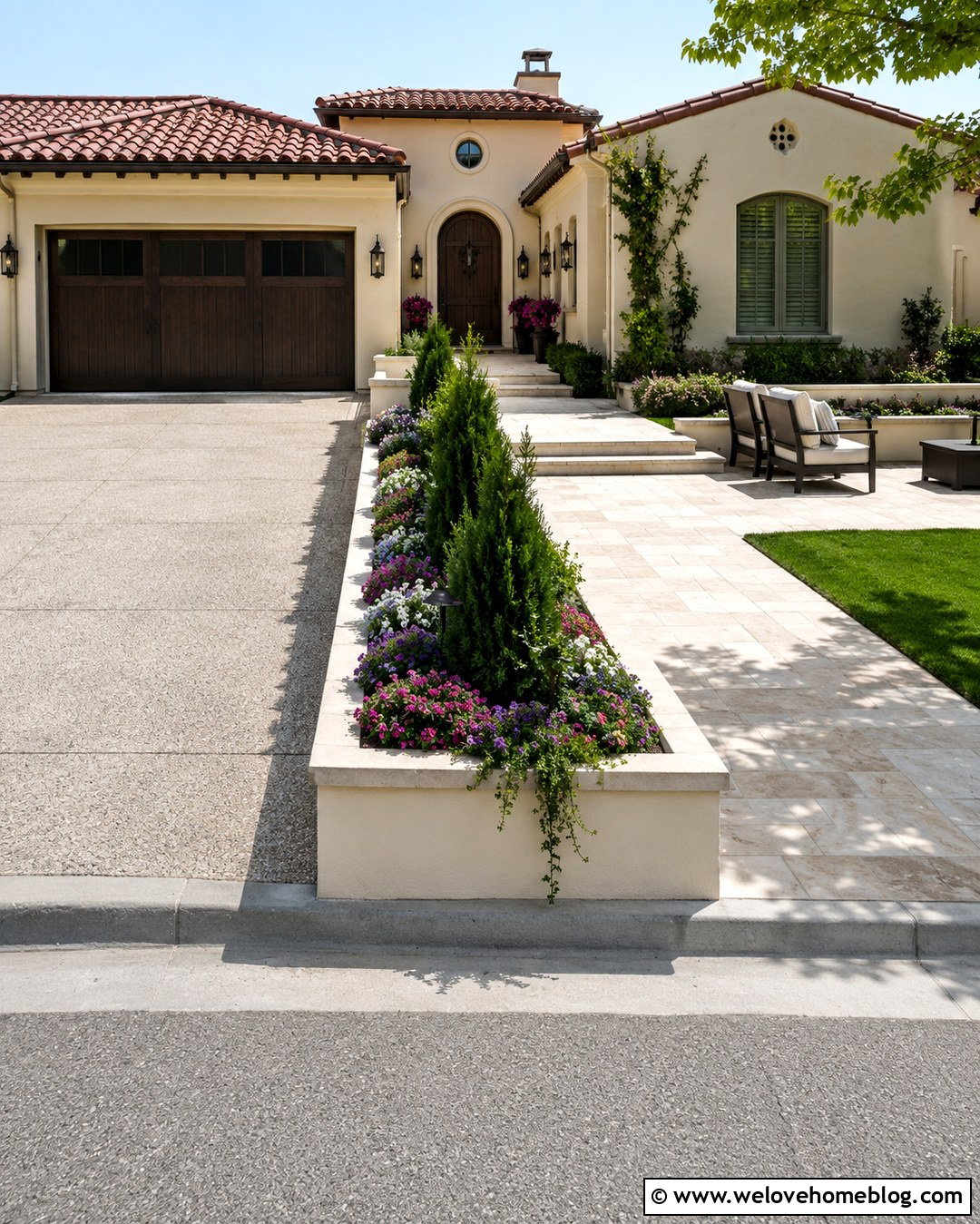
A planter wall creates an effective middle ground between a completely open patio and a tall privacy fence. Pair a cream-colored travertine patio with an exposed-aggregate driveway, using a low rendered masonry planter to divide the two surfaces. Build the planter high enough to screen the lower part of parked vehicles while keeping the patio bright and connected to the yard. Fill it with layered vegetation, placing compact evergreens at the back and seasonal flowers or trailing plants along the front. Wide coping can provide an informal place to set drinks or display containers. Repeat the planter’s finish on porch steps or an address pillar for consistency. Keep the patio entrance near the house rather than directly beside the parking space, allowing people to reach the seating area without walking around furniture or planters.
10. Patio Next To Driveway With Pergola
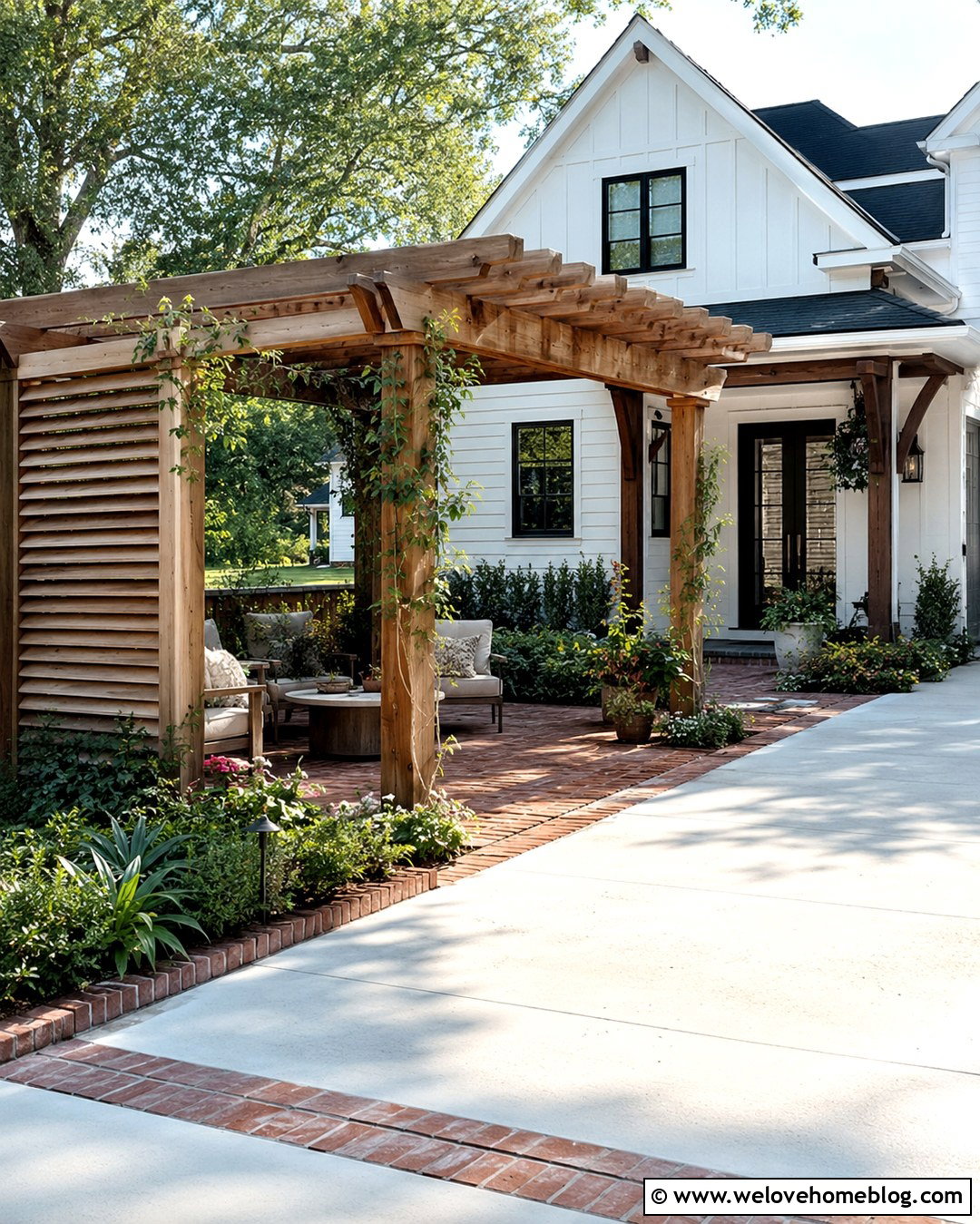
A pergola gives an exposed driveway-side patio an architectural focal point and a stronger sense of place. Install it over a rectangular clay brick paver patio beside a light concrete driveway. White-painted timber works well with traditional homes, while natural cedar or black aluminum suits contemporary exteriors. Position the pergola posts along the patio perimeter so they do not narrow the driveway or obstruct car doors. A brick ribbon between the surfaces can visually connect the patio with the front walkway. Add outdoor curtains or a slatted panel only on the side needing privacy. Keep the driveway-facing entrance open and easy to navigate. Climbing plants can soften the overhead structure, but choose manageable varieties and provide regular pruning. Finish the setting with low garden beds that blend the pergola into the surrounding landscape.
11. Circular Patio Next To Curved Driveway
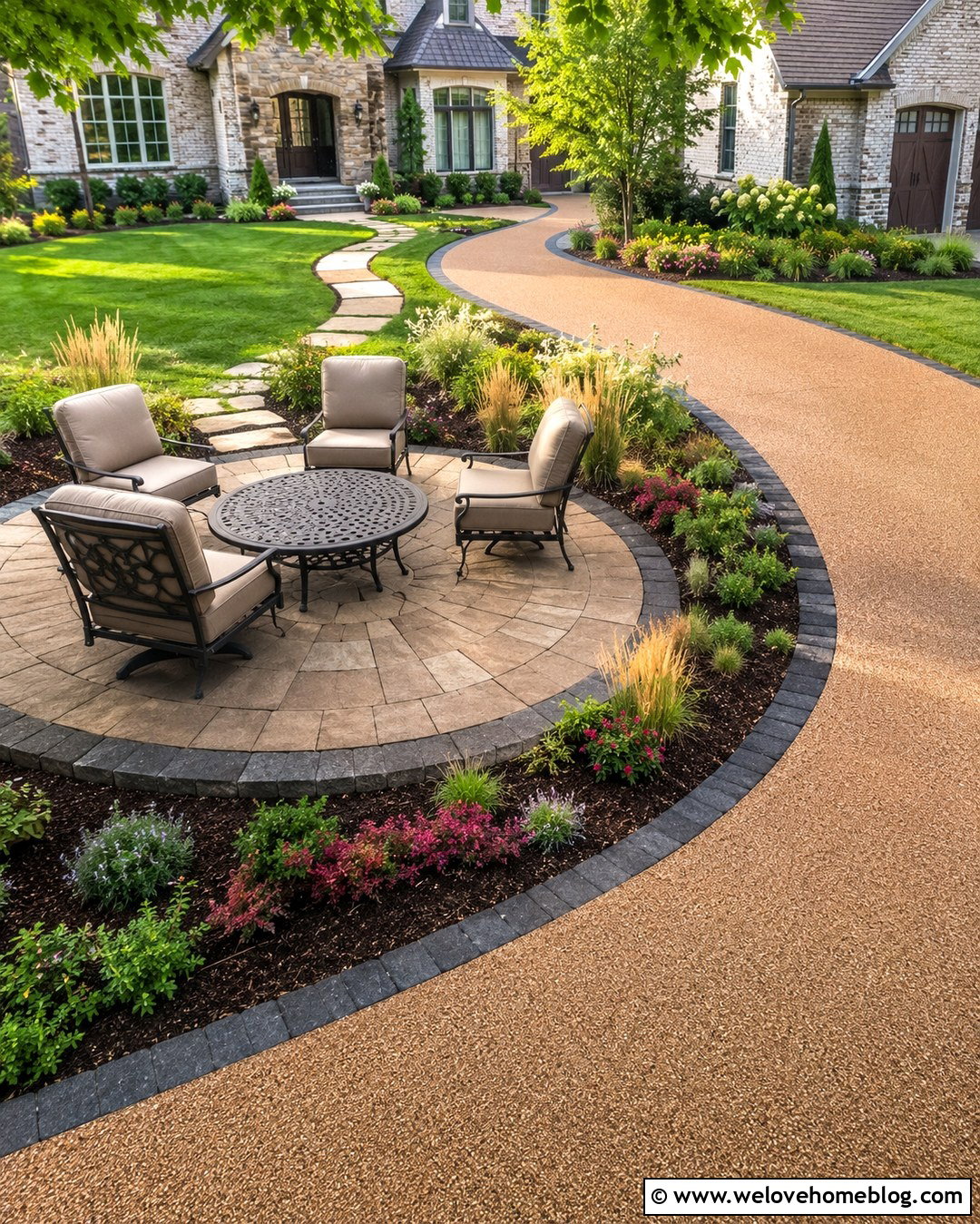
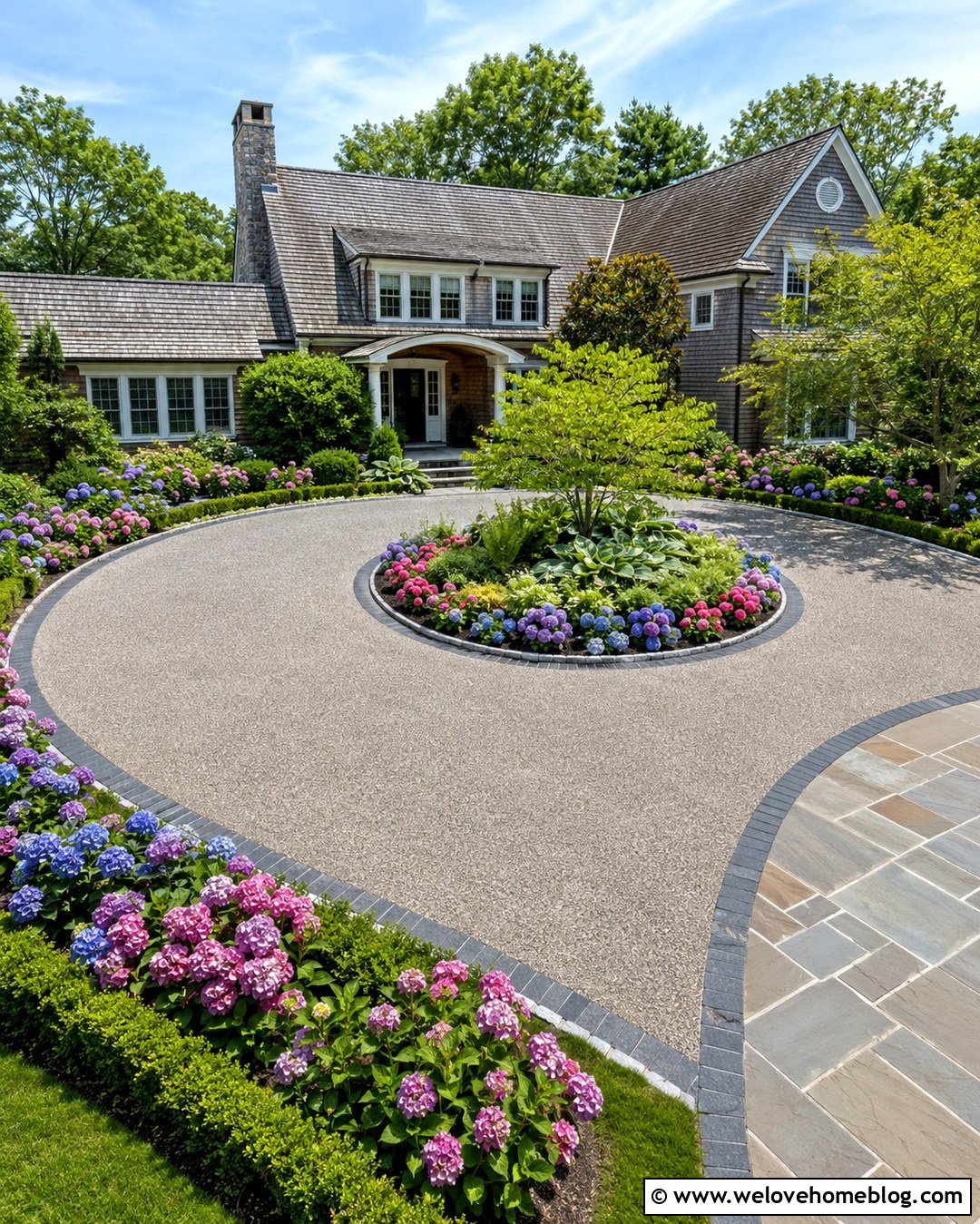
Flowing shapes work beautifully when a patio sits beside a curved driveway. Create a circular patio using sandstone-colored concrete pavers laid in a radial pattern, then place it inside the bend of a curved resin-bound gravel driveway. A dark paver border will define the circle and coordinate with a matching driveway edge. Center the furniture around a coffee table, large planter, or simple decorative feature to reinforce the shape. Surround the outer half of the patio with sweeping beds of ornamental grasses, flowering shrubs, and low ground cover. Keep the driveway side more open for safe, convenient access. A curved stepping-stone path can connect the patio to the front porch. Repeating circular forms in the planting beds prevents the patio from looking like an isolated feature placed beside the drive.
12. Patio Next To Driveway With Low Fence
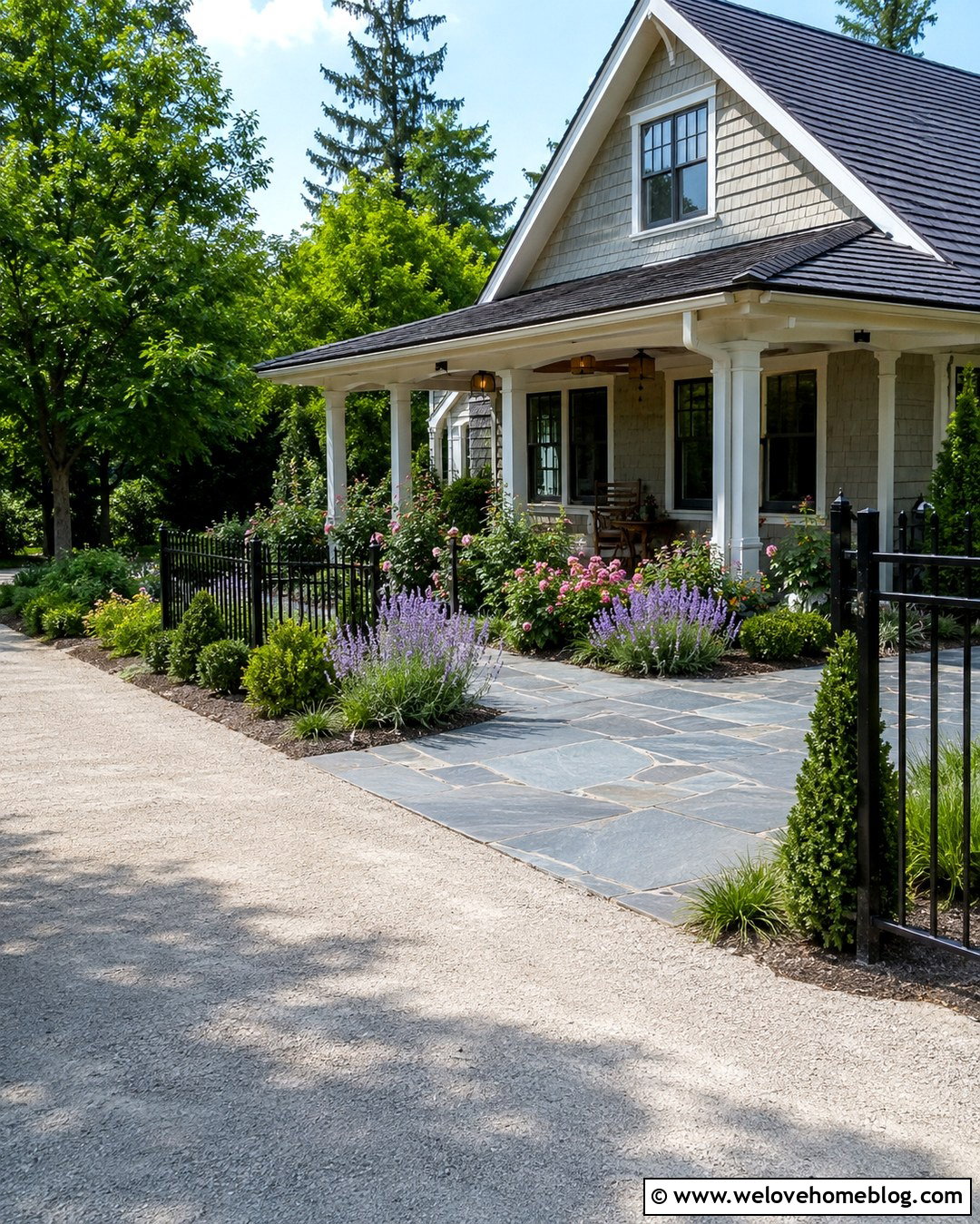
A low fence can separate a seating area from the driveway without blocking the house or making the yard feel smaller. Combine a blue-gray flagstone patio with a pale gravel driveway, then install a three-foot open picket or metal fence along their shared edge. Set the fence back slightly and place a narrow planting strip in front of it. Roses, catmint, dwarf grasses, or compact evergreen shrubs can soften the structure and provide seasonal color. Include a gate near the walkway so the patio remains easy to reach from the parking area. Match the fence finish to the home’s trim, porch railings, or exterior lights. Because the fence remains visually open, it defines the outdoor room while allowing light, breezes, and garden views to pass through the entire setting.
13. Driveway Patio With Matching Pavers
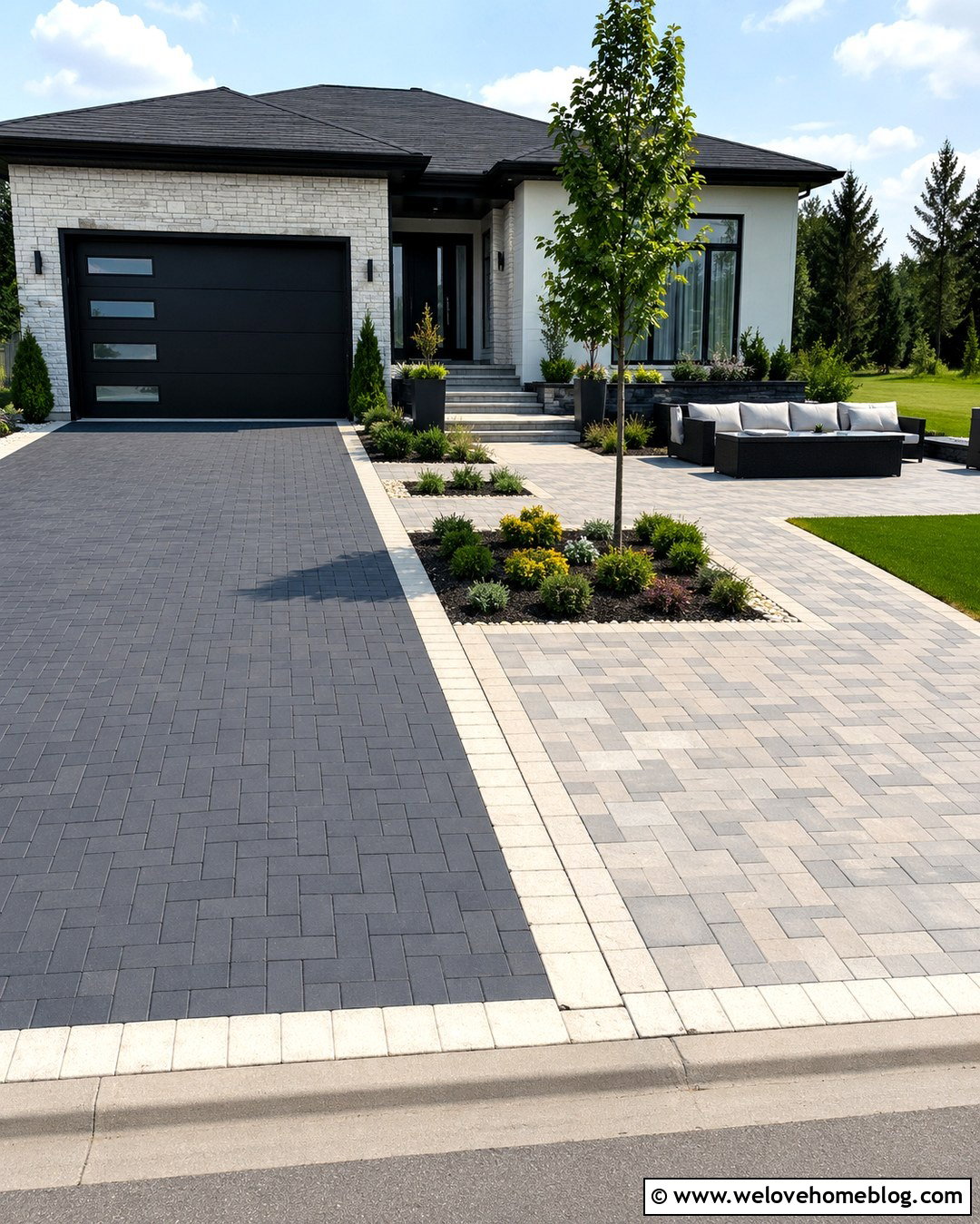
Using related pavers across the driveway and patio can make two separate areas feel like one carefully planned landscape. Choose durable charcoal interlocking concrete pavers for the driveway and lighter gray pavers from the same collection for the adjacent patio. A contrasting cream border can outline both surfaces while clearly identifying the seating zone. Turn the patio at a slight angle or change its laying pattern so it does not resemble an extra parking bay. For example, use a linear pattern on the driveway and a basket-weave arrangement beneath the furniture. A planted island with a small tree and low shrubs can strengthen the separation. Coordinated paving colors, borders, landscaping, and retaining features are frequently used to create a more cohesive driveway design. ()
14. Patio Between Driveway And House
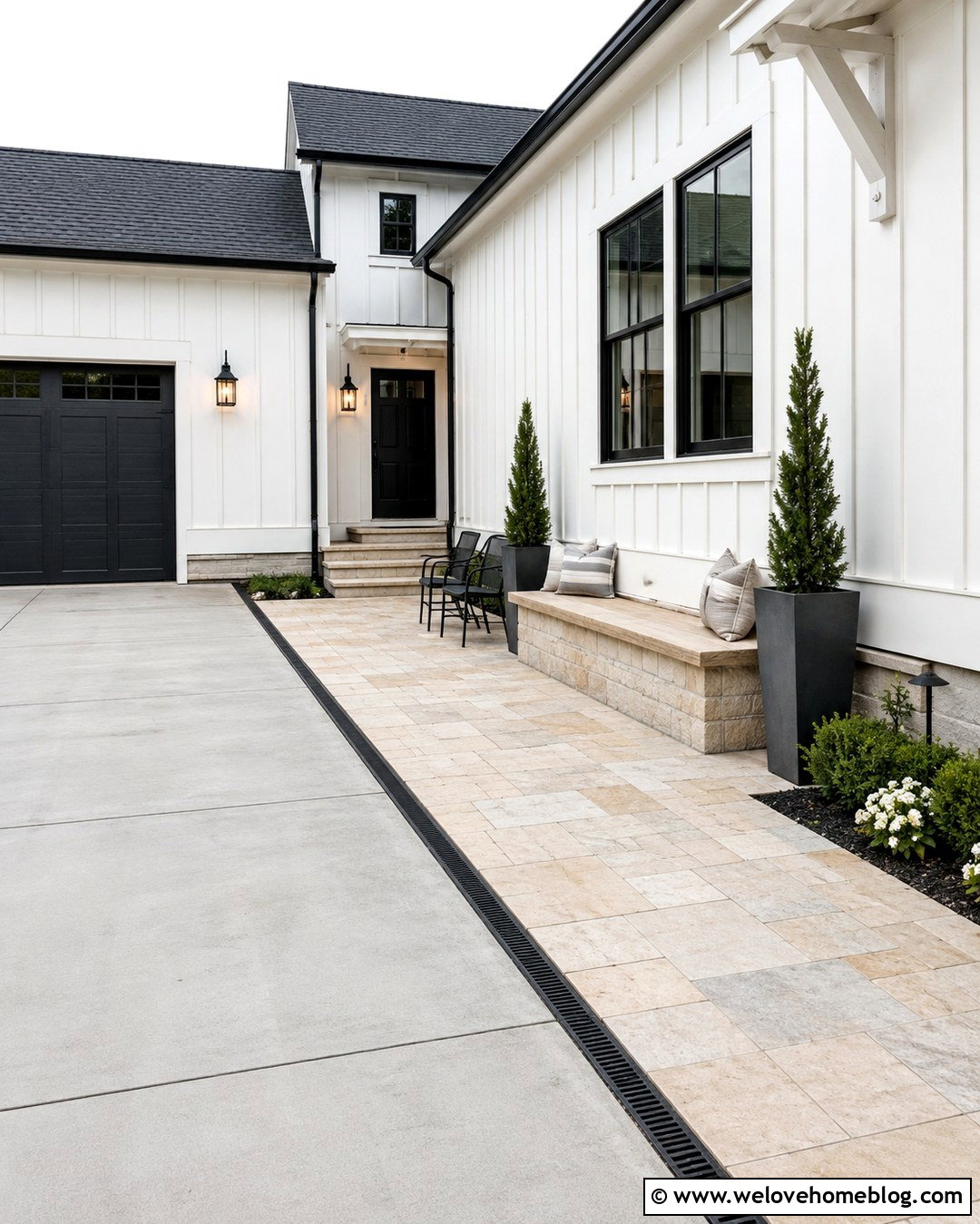
The narrow zone between a driveway and house can become a useful patio when circulation is planned first. Install rectangular limestone pavers in a running-bond pattern beside a smooth concrete driveway. Keep a clear walkway along the house so people can reach the door without moving through the furniture arrangement. Place a built-in bench against a solid wall, leaving the open patio edge for compact chairs and planters. A slim drainage channel between the patio and driveway can create a neat transition while directing surface water away from the seating area. Use wall-mounted lighting rather than freestanding fixtures where space is limited. Tall, narrow planters can soften the garage wall without consuming valuable floor area. The finished space functions as both an entrance court and a comfortable spot for coffee or conversation.


15. Side Yard Patio Next To Driveway
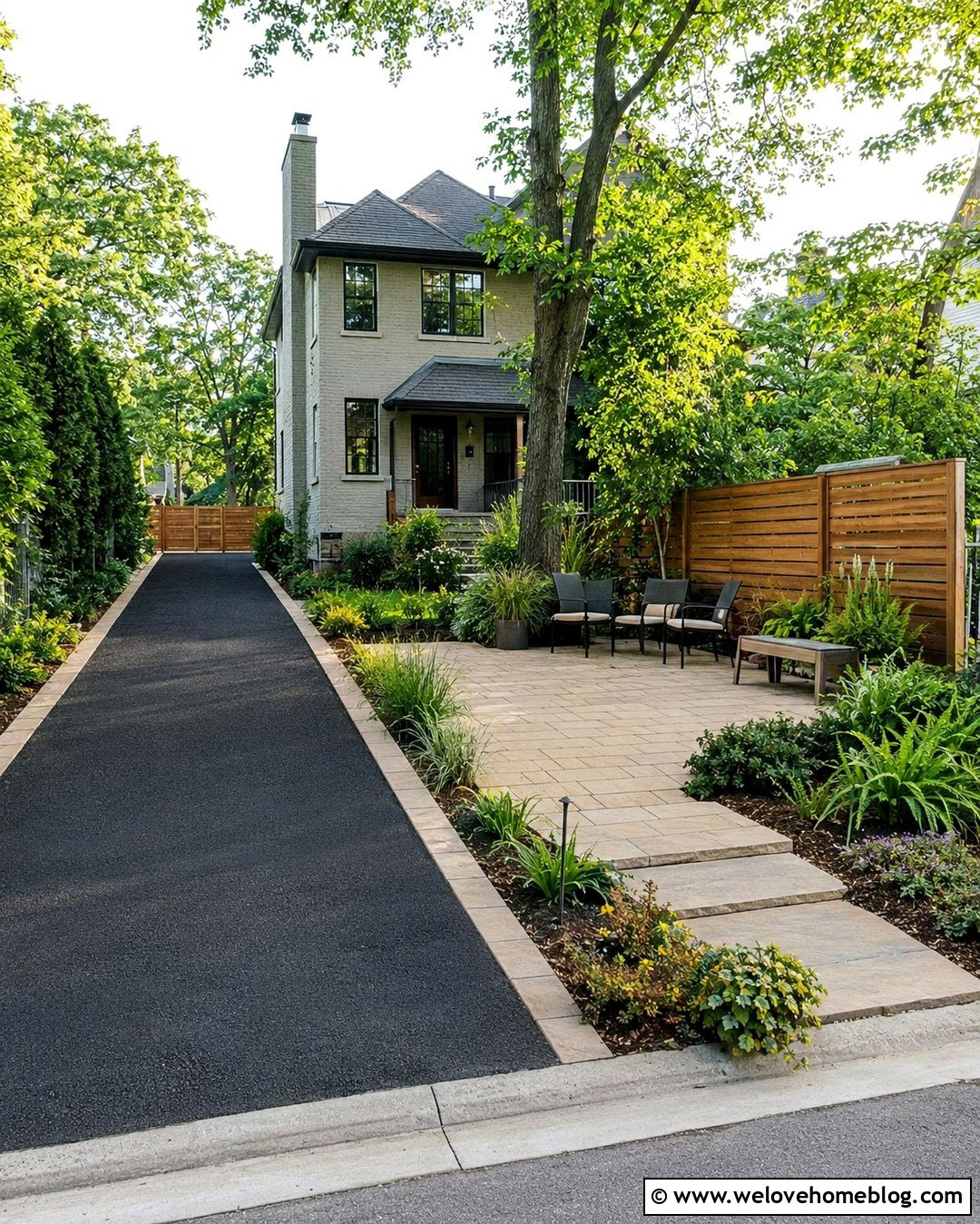
A long side yard beside the driveway is ideal for a narrow, destination-style patio. Use warm buff concrete pavers for the seating area and pair them with a black asphalt driveway edged in matching buff blocks. Instead of placing everything in one straight line, widen the patio near the house and taper it toward the yard. This gives the seating zone a more intentional shape. A horizontal wood screen along the outer boundary can provide privacy, while a narrow bed of ferns, hostas, grasses, or drought-tolerant plants responds to local light conditions. Add a stepping-stone path from the driveway rather than merging the two surfaces completely. Finish with a compact bench and movable chairs. The layout turns an awkward passage into an attractive outdoor room without restricting parking or access.
16. Farmhouse Patio Next To Gravel Driveway
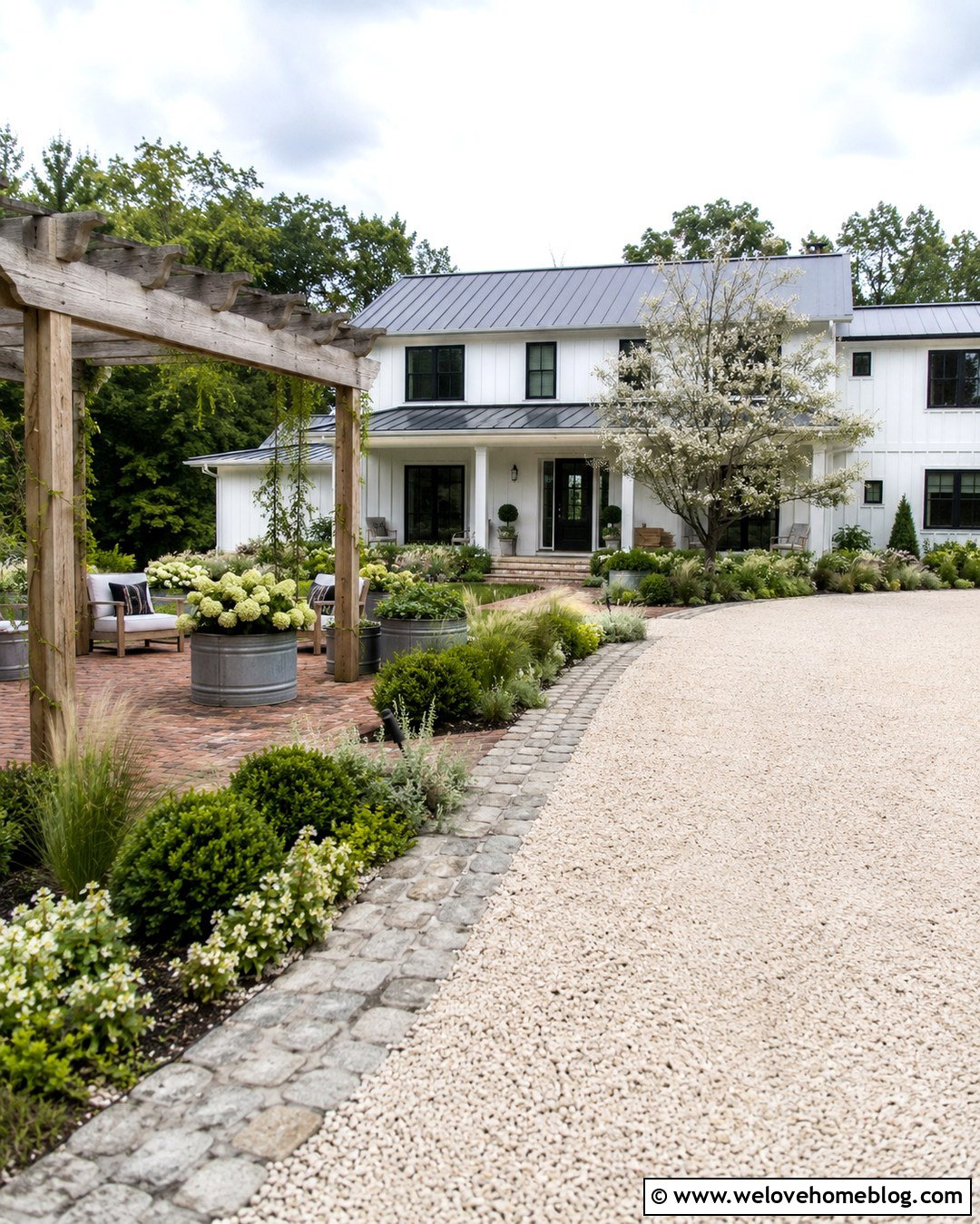
A farmhouse patio feels most natural when its materials have warmth, texture, and slightly informal edges. Build the patio with reclaimed-look red brick pavers beside a pale crushed-limestone driveway. Use a broad strip of cobblestones to contain the driveway gravel and protect the brick patio boundary. A simple timber pergola, galvanized planters, and classic outdoor chairs support the relaxed character without creating a themed display. Frame the outer patio edge with hydrangeas, ornamental grasses, herbs, and a small flowering tree suited to the region. A brick walkway can lead directly to the porch of a white modern farmhouse. Keep the driveway open and uncluttered, allowing the pale gravel to brighten the setting. Together, the brick, stone, timber, and layered planting produce a comfortable and cohesive country entrance.
17. Patio Next To Driveway With Garden Border
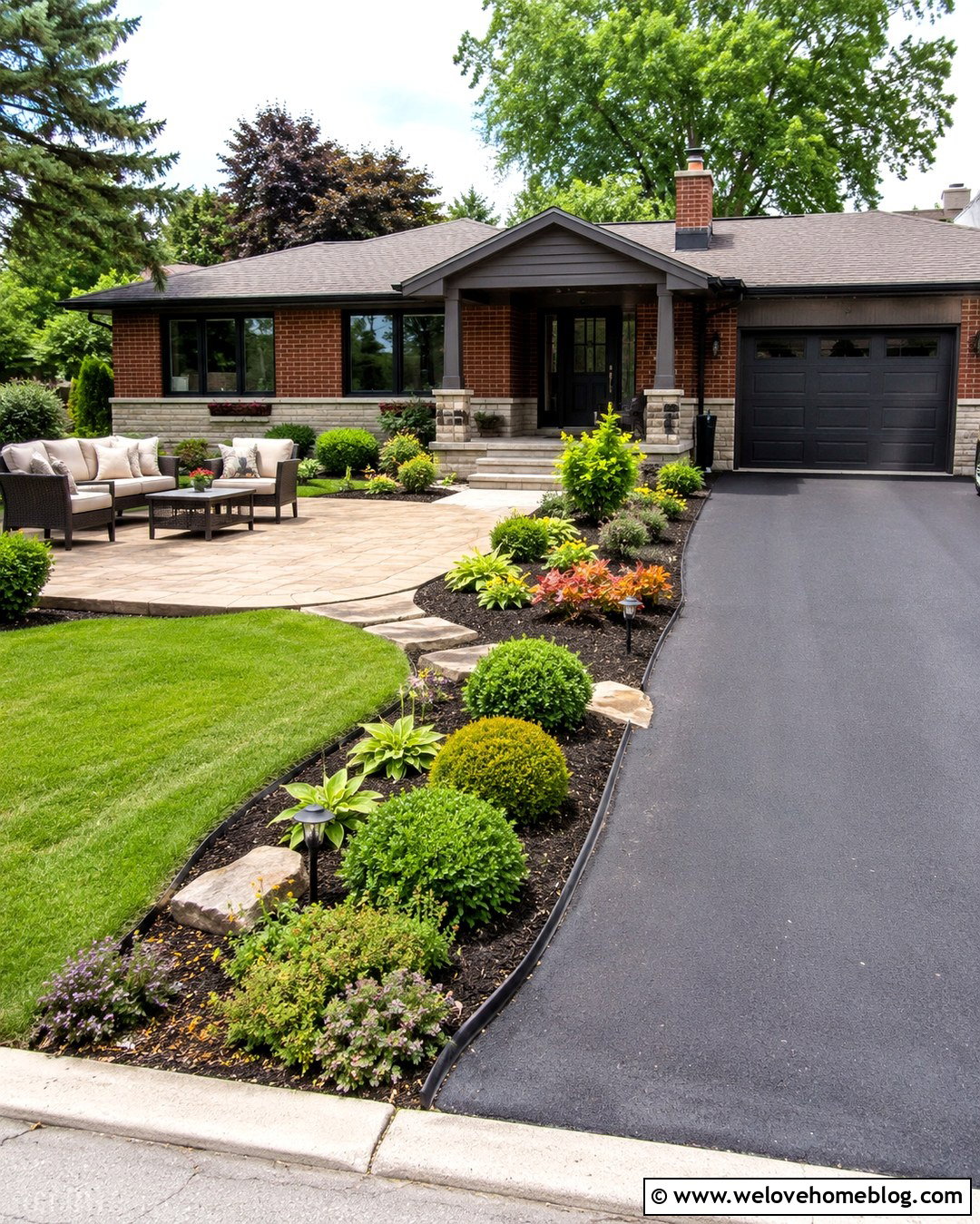
If the driveway feels too close to the seating area, use a layered garden border as a soft divider. Place a tan stamped-concrete patio beside a straight gray asphalt driveway and leave a generous planting bed between them. Shape the bed with gentle curves to reduce the visual hardness of the adjoining paved surfaces. Start with low ground cover near the patio, add flowering perennials through the middle, and position compact shrubs closer to the driveway. This arrangement preserves views from seated areas while screening tires and pavement. A stone or steel edge keeps soil and mulch out of both hardscapes. Add one stepping-stone crossing between the driveway and patio rather than interrupting the entire bed. Repeating a few dependable plants in groups will create a calmer, more organized border than mixing many individual varieties.
18. Patio Next To Driveway With Outdoor Kitchen
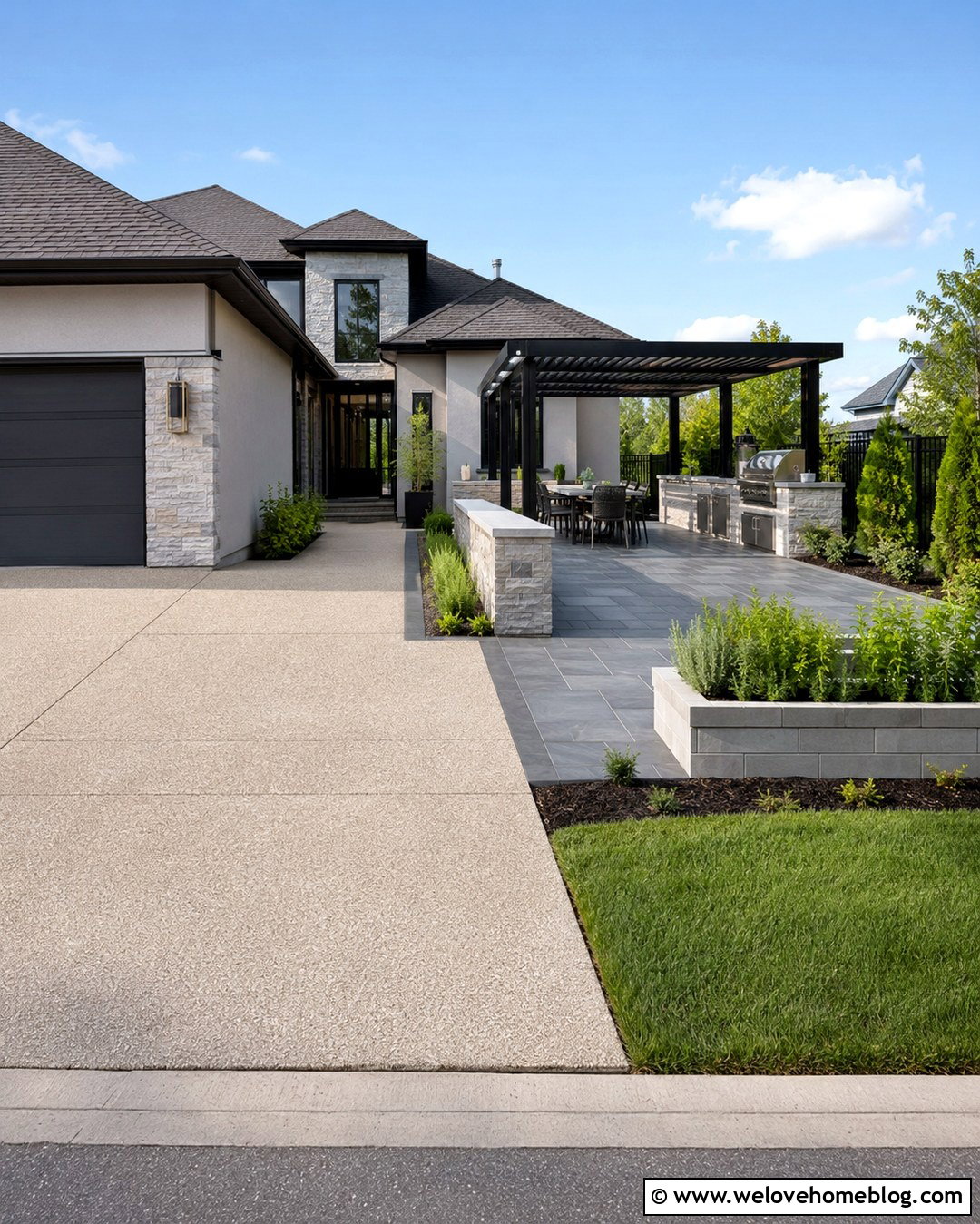
A driveway-side patio can support an outdoor kitchen when cooking, seating, and vehicle circulation are clearly separated. Use dark gray porcelain pavers for the patio beside a light exposed-aggregate driveway. Position the kitchen counter against the house or along the patio’s outer edge, never where open doors or guests could spill into the parking route. A low masonry wall between the driveway and dining zone adds separation and can coordinate with the kitchen base. Leave generous open space around the grill and follow the appliance manufacturer’s clearance requirements. Add a pergola above the dining area while keeping heat-producing equipment appropriately located. Raised planters filled with herbs and compact shrubs soften the edges. A direct walkway from the driveway makes unloading supplies convenient without sending foot traffic through the main seating arrangement.
19. Patio Next To Driveway With Carport
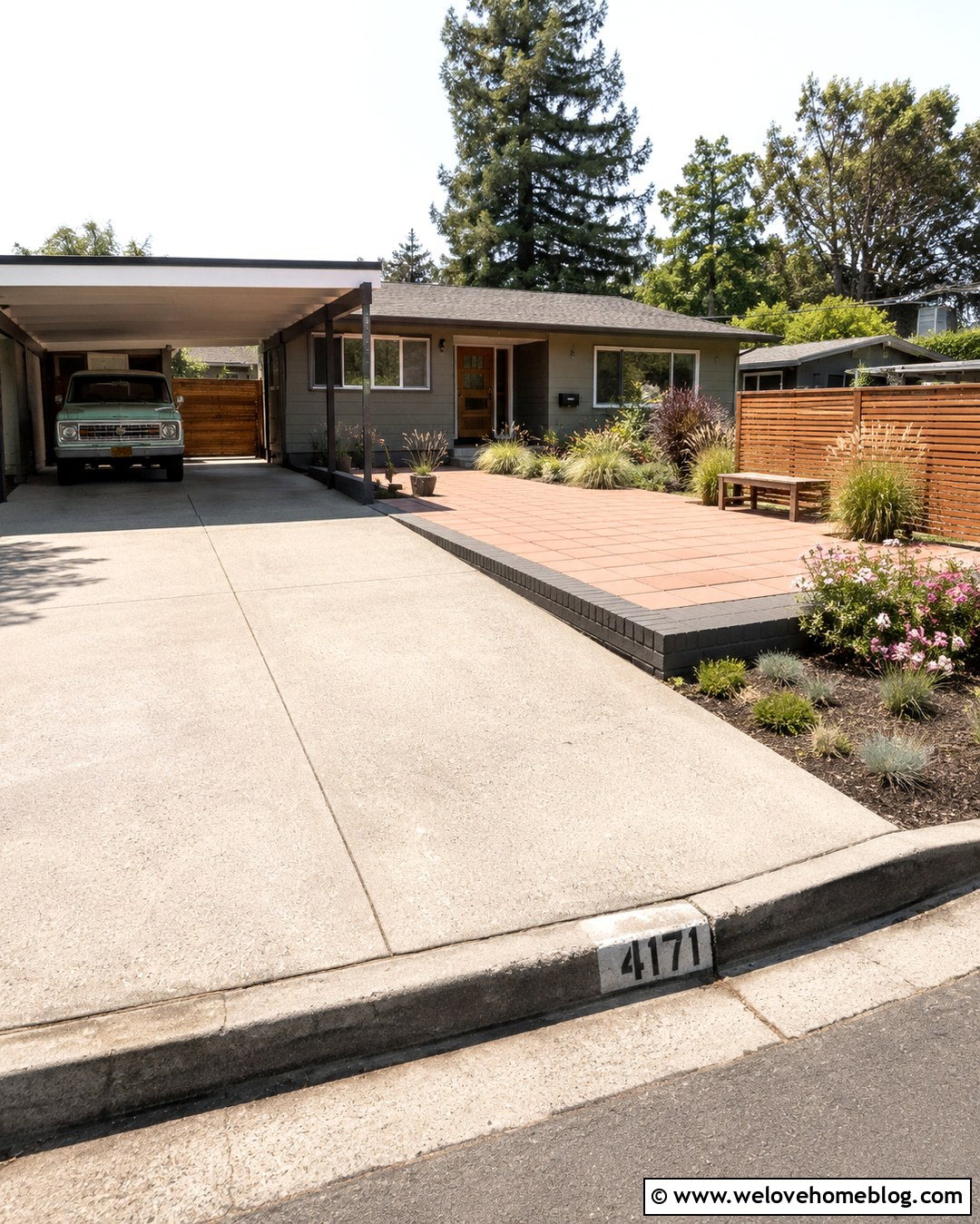
A patio placed beside a carport needs strong visual cues so the relaxation area does not look like overflow parking. Use terracotta-toned concrete pavers for the patio and smooth gray concrete for the straight driveway beneath the carport. Define the shared edge with a wide charcoal paver band, then raise the patio slightly with a single, clearly visible step. A slatted timber panel between the carport posts can screen the vehicle while preserving airflow and daylight. Arrange the patio furniture around an outdoor rug or low table to emphasize its residential purpose. Extend a planting bed around the uncovered patio perimeter, using grasses and flowering shrubs to soften the structure. Matching timber details on the carport, screen, and patio bench will connect the areas while maintaining distinct functions.

20. Budget Patio Next To Driveway
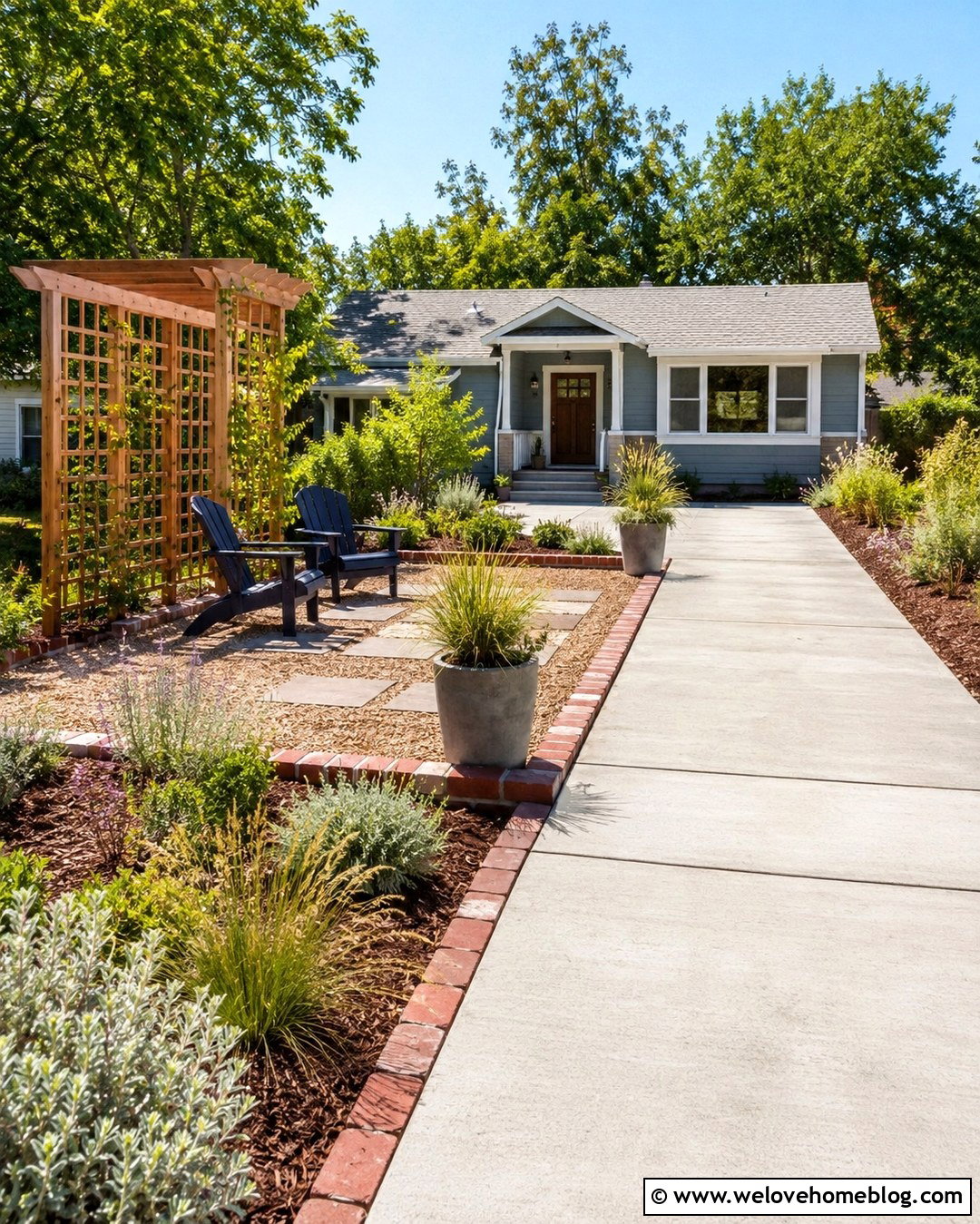
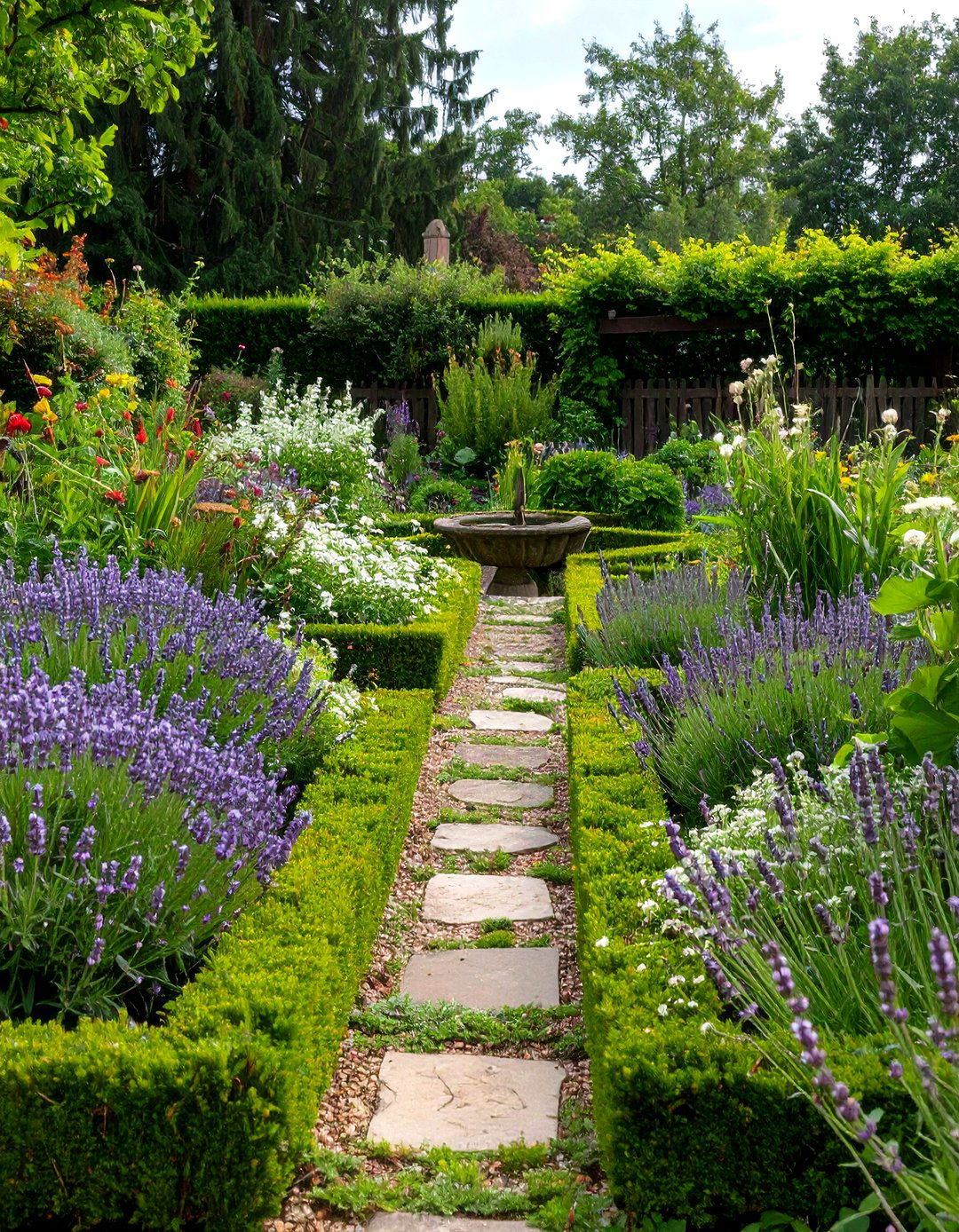
An appealing patio beside the driveway does not require expensive natural stone or a complicated structure. Start with a compact square of stabilized crushed gravel beside an existing concrete driveway. Contain it with pressure-treated timber, recycled brick, or economical concrete edging so the material stays in place. Place several large concrete stepping stones beneath chair legs and along the route to the house. These provide stable footing while adding a simple pattern. Create privacy with a freestanding trellis and climbing plants rather than a full fence. Mulched beds filled with divided perennials, native grasses, or small shrubs can soften the remaining edges over time. Use movable chairs, a compact table, and large weather-resistant planters. The result feels finished because every affordable element supports one clear, coordinated layout.
Conclusion:
The most successful **20 Patio Next To Driveway Ideas** balance comfort, appearance, and everyday access. A patio should feel connected to the house and landscape while remaining clearly separate from active parking space. You can achieve this with contrasting paving patterns, strong borders, planting beds, low walls, screens, or subtle changes in elevation. Always consider vehicle doors, walking routes, drainage, privacy, and maintenance before choosing the final layout. Whether you prefer a modern porcelain patio, a traditional brick courtyard, or an affordable gravel retreat, coordinate its shape and materials with the driveway. That thoughtful approach will turn an unused edge of the property into an inviting outdoor room with practical, lasting curb appeal.

Related posts:


Leave a Reply