
Landscaping beside a driveway can soften hard paving, define vehicle space, improve privacy, and connect the garage to the rest of the front yard. These 25 landscaping next to driveway ideas combine practical surfaces with borders, planting beds, walkways, trees, lighting, and drainage-friendly details. The best design depends on available width, sunlight, climate, maintenance needs, and how people enter or exit parked vehicles. Low plants generally work well near pavement, while taller shrubs and trees can provide structure farther back. Matching the landscaping to the driveway material and house exterior also creates a more polished result. Whether your property is narrow, sloped, formal, modern, or rural, the complete driveway looks below offer useful inspiration through 25 landscaping next to driveway ideas.

1. Concrete Driveway With Evergreen Shrub Borders
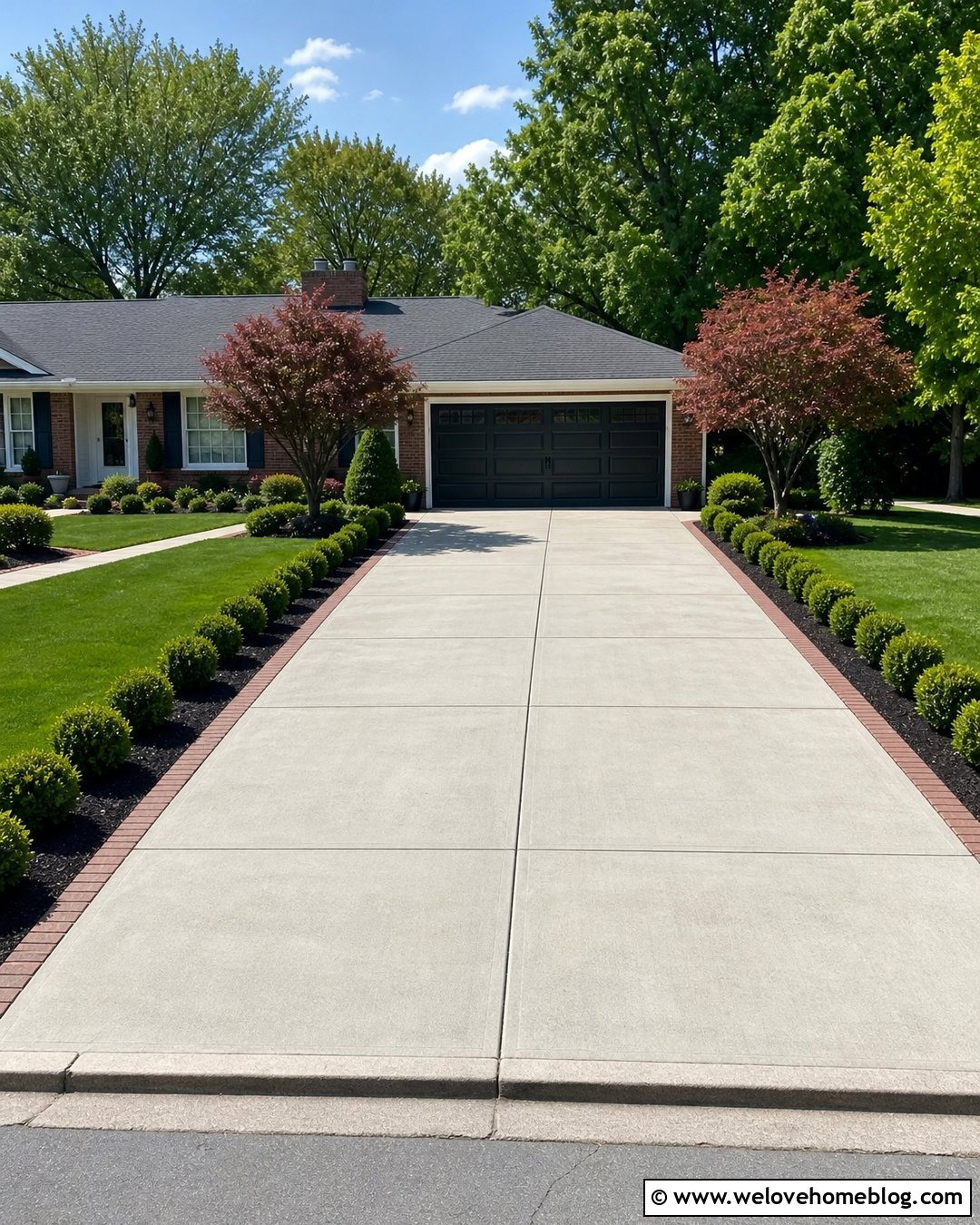
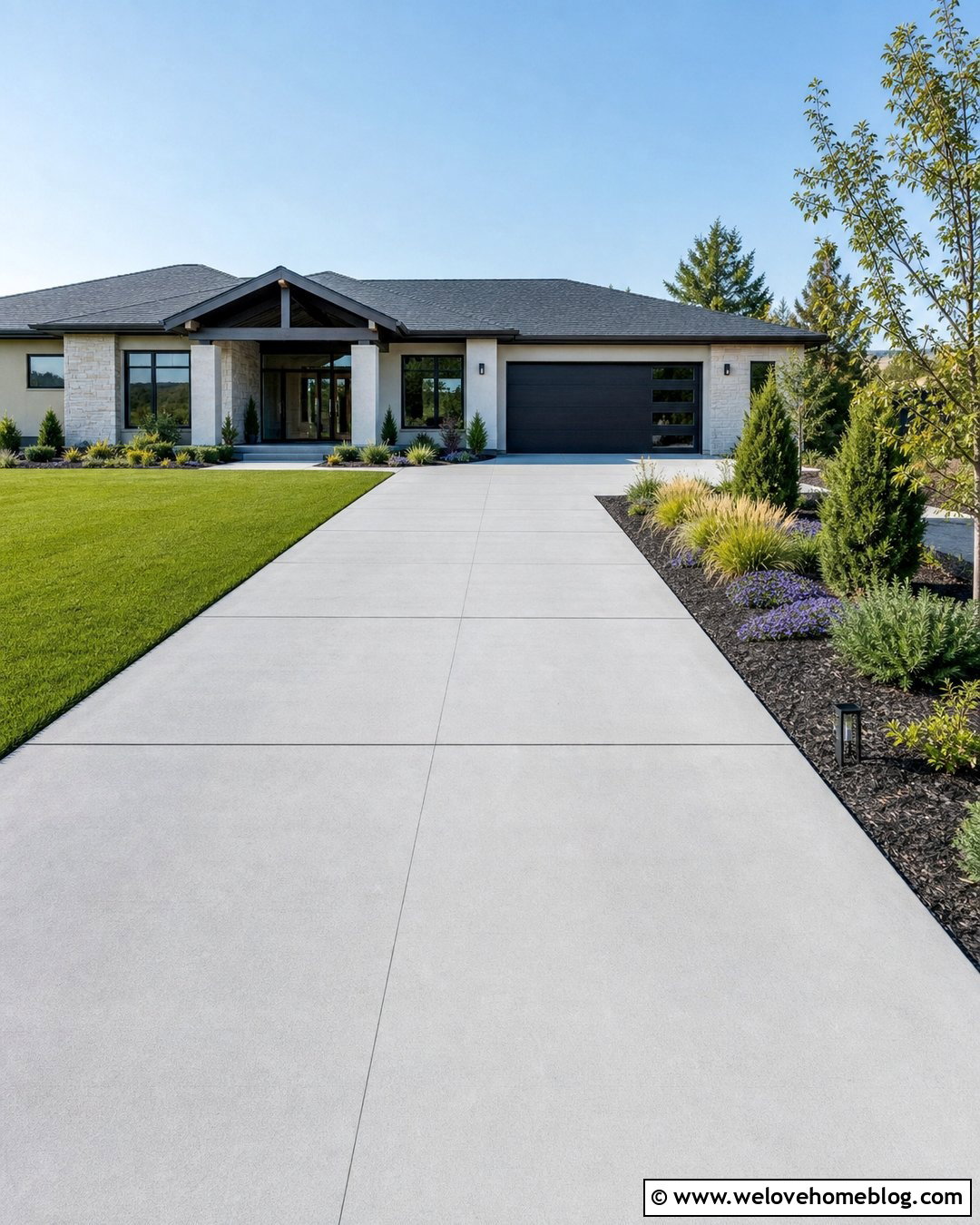
A straight, light gray concrete driveway feels softer when compact evergreen shrubs run along both sides. Choose rounded plants that stay below car-window height, then space them far enough from the pavement to prevent branches from scratching vehicles. A narrow bed of dark mulch creates contrast against the concrete and makes the greenery stand out. Add a flush brick edge between the bed and driveway for a clean transition that will not become a tripping hazard. Near the house, increase the planting height with two small ornamental trees or upright evergreens. This arrangement suits a ranch, Colonial, or Craftsman home because it looks neat throughout the year. Keep the garage end open so passengers have room to step out comfortably.
2. Curved Driveway With Cottage Flower Beds
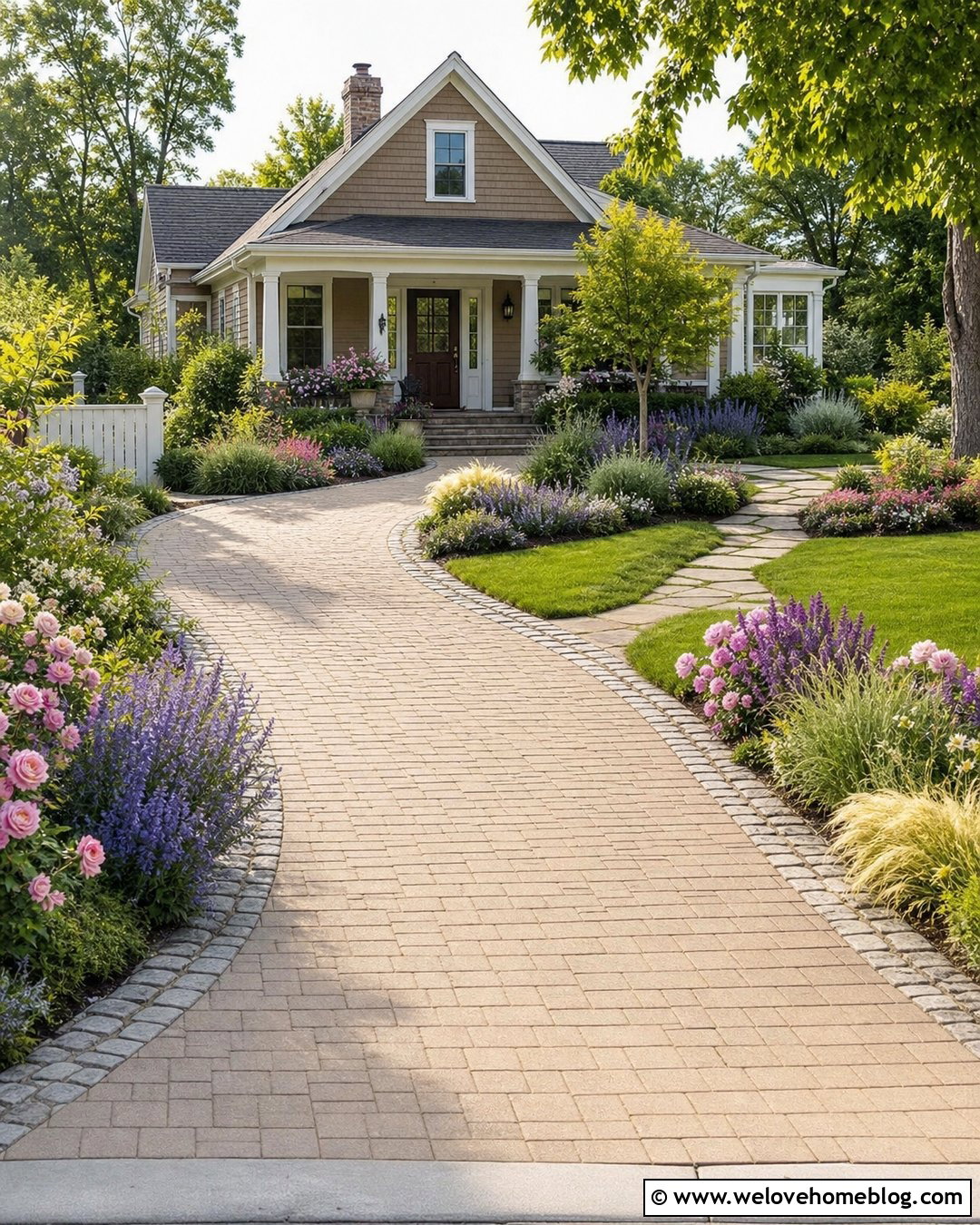
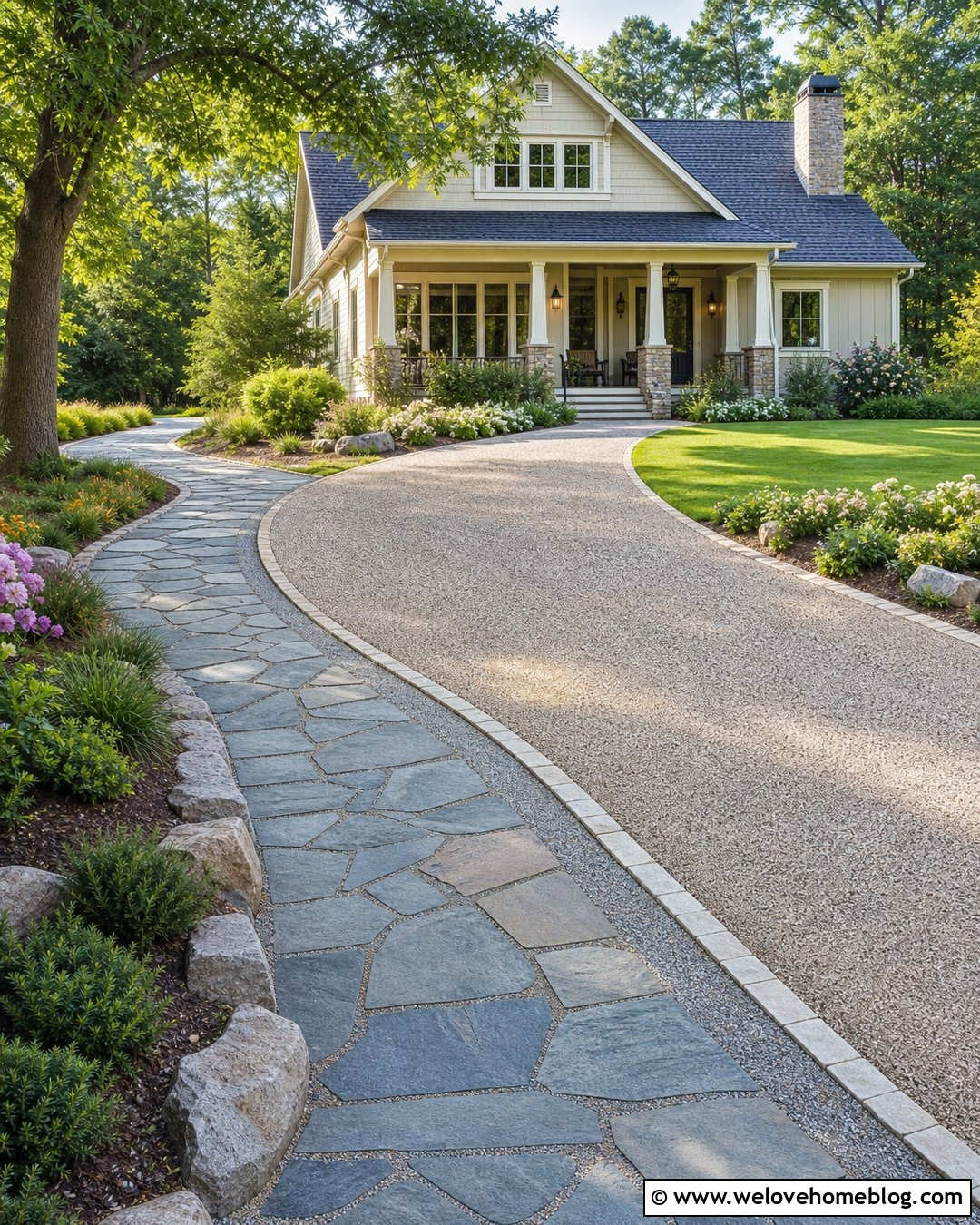
Imagine a gently curved driveway passing through loose beds filled with roses, catmint, salvia, and soft ornamental grasses. This complete look works especially well with warm concrete pavers or pale gravel because the colorful planting balances the neutral surface. Use cobblestone edging to maintain the driveway’s curve and keep soil away from vehicle tires. Plant lower flowers beside the pavement, then gradually add taller perennials and shrubs toward the lawn. Repeating several plants along the route prevents the border from looking random. A flagstone walkway can branch from the driveway toward a cottage-style front porch. Leave occasional gaps for passengers, trash bins, and garden access. The result feels abundant and welcoming without allowing plants to overwhelm the driving area.
3. Modern Driveway With Ornamental Grass Landscaping
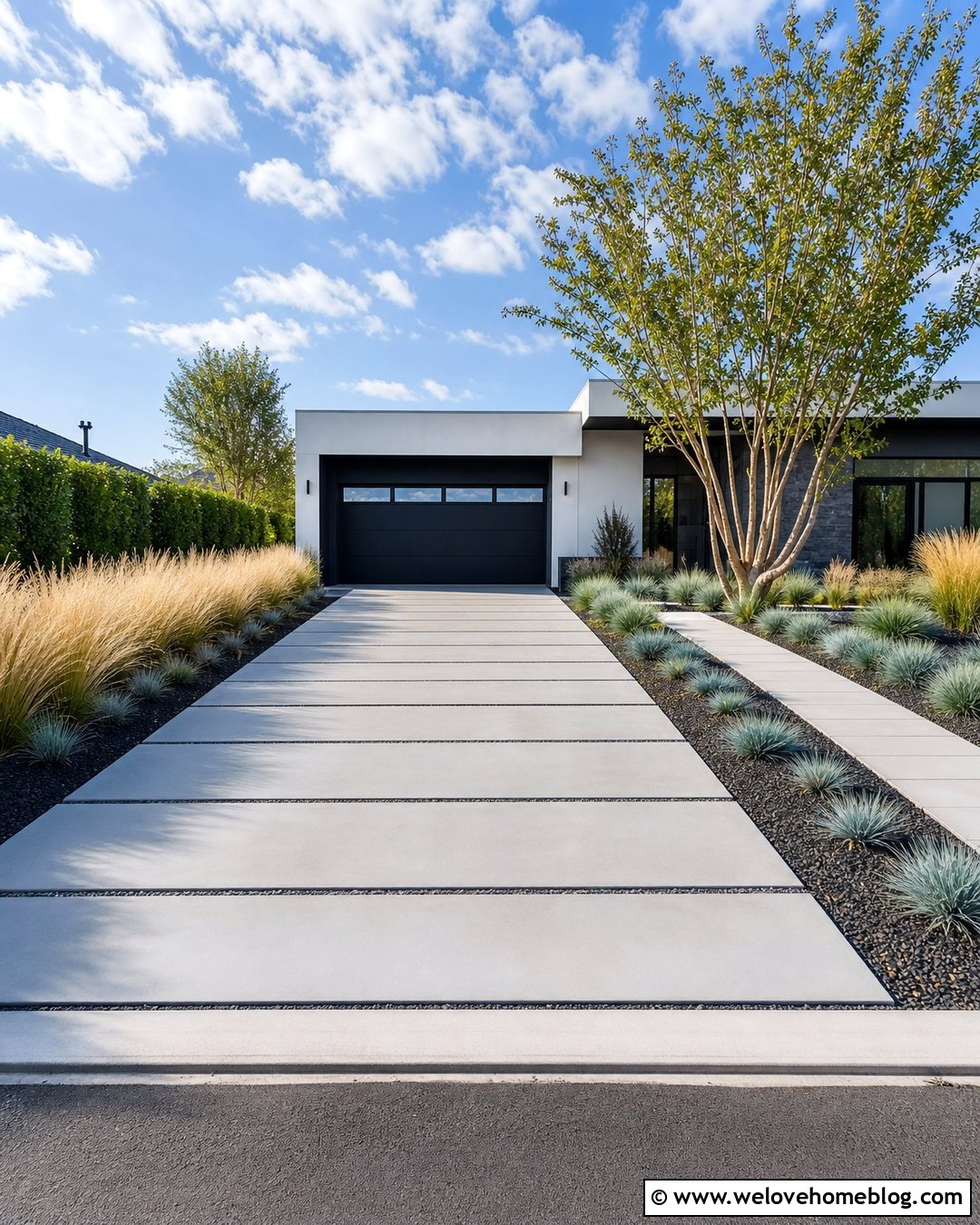
Clean lines and restrained planting can make an ordinary driveway complement a modern house. Pair large-format concrete pavers with straight beds of feather reed grass, blue fescue, or another regionally suitable ornamental grass. Dark gravel mulch reinforces the contemporary palette while reducing the visual contrast between open soil and the pavement. Use black steel edging to create a crisp boundary that follows the rectangular driveway layout. Rather than filling every inch, arrange grasses in repeated blocks with generous negative space. Add one sculptural multi-stem tree near the front corner, positioned where it will not obstruct visibility. A wide concrete walkway and low geometric lighting can connect the driveway to the entrance. This landscape feels organized, airy, and easier to maintain than a heavily layered flower border.
4. Gravel Driveway With Lavender Borders
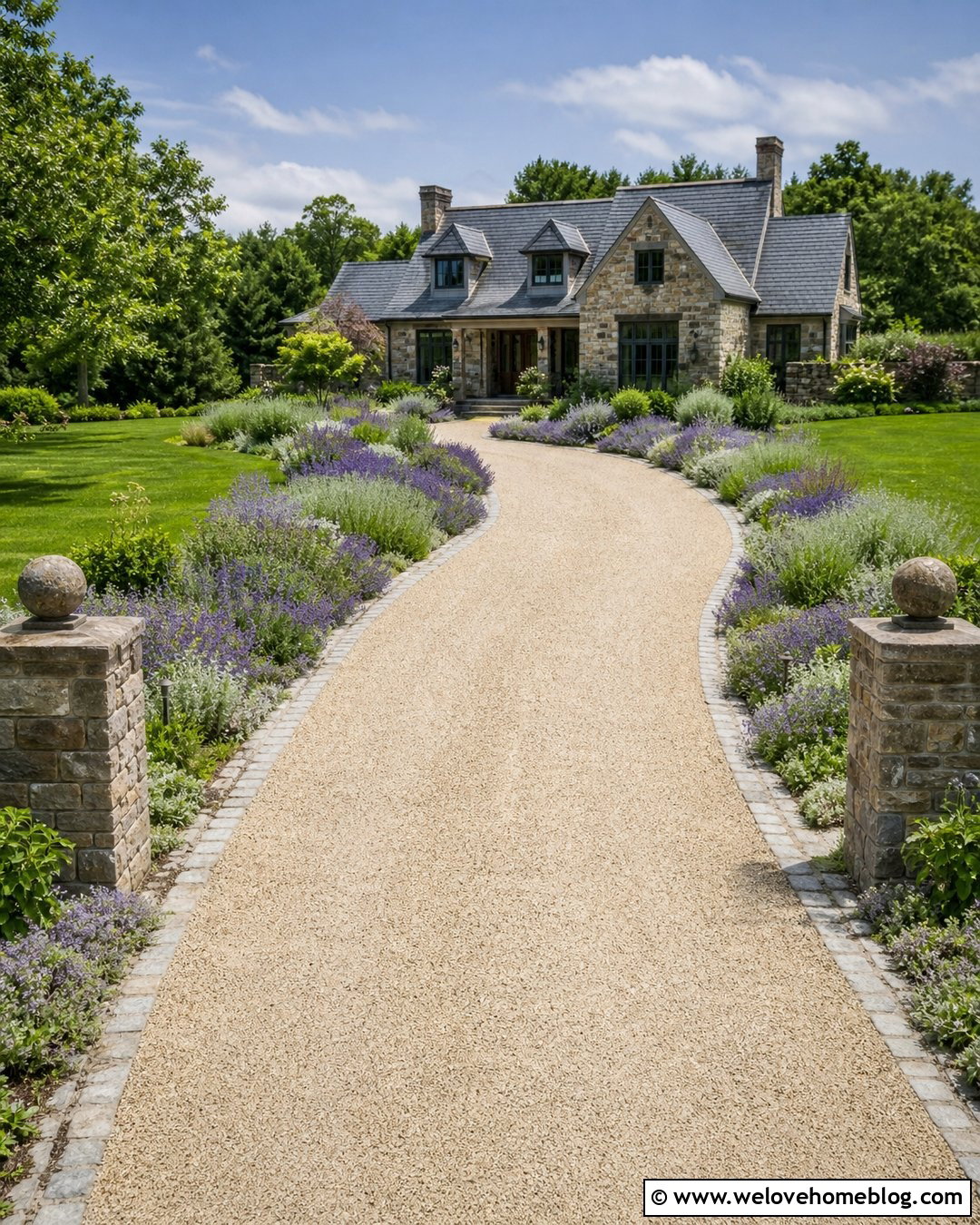
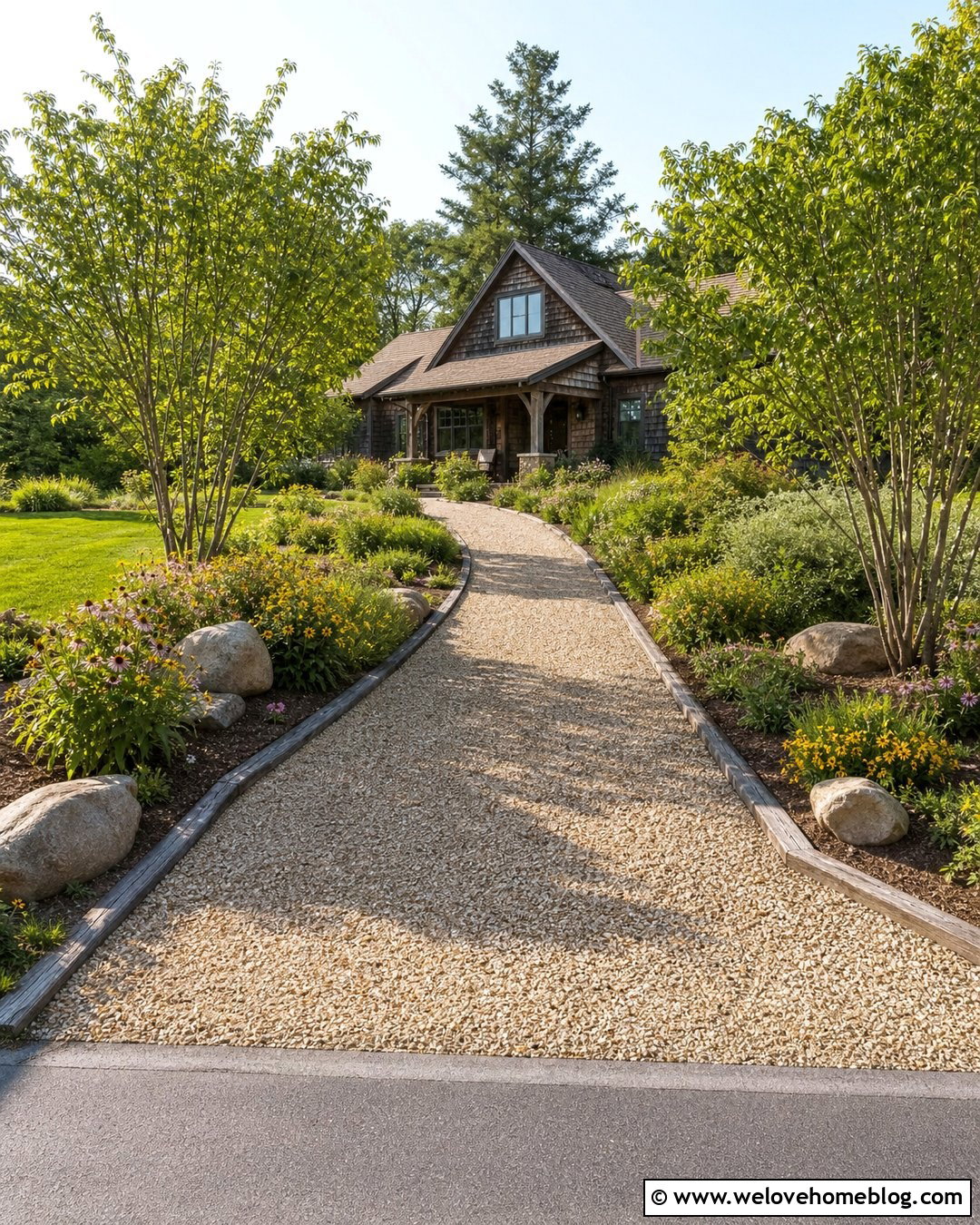
The crunch and warm texture of a beige gravel driveway pair naturally with lavender borders and informal country landscaping. Install a durable cobblestone or steel edge to contain the driveway gravel before preparing the planting beds. Place lavender in broad repeating groups rather than one continuous line, allowing air to move around the plants. Small clumps of catmint, thyme, or silvery foliage can fill the gaps and extend the textured look. This combination needs strong sun and soil conditions suited to plants that dislike consistently wet roots. A gently curving driveway makes the planting feel more relaxed, especially when it leads to a farmhouse or stone cottage. Finish the entrance with two wider beds and low stone markers, while preserving clear sightlines near the road.
5. Asphalt Driveway With Hydrangea Landscaping
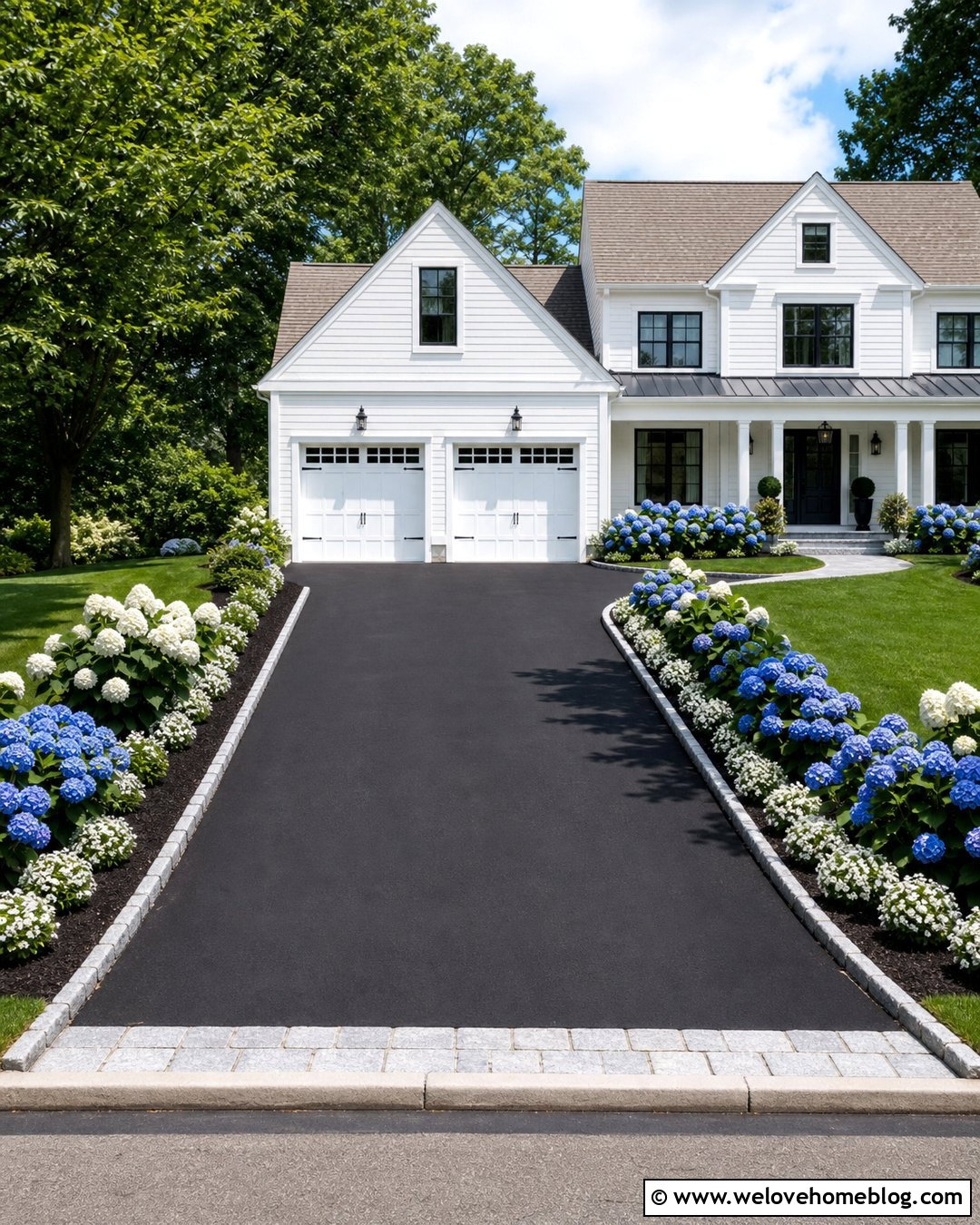
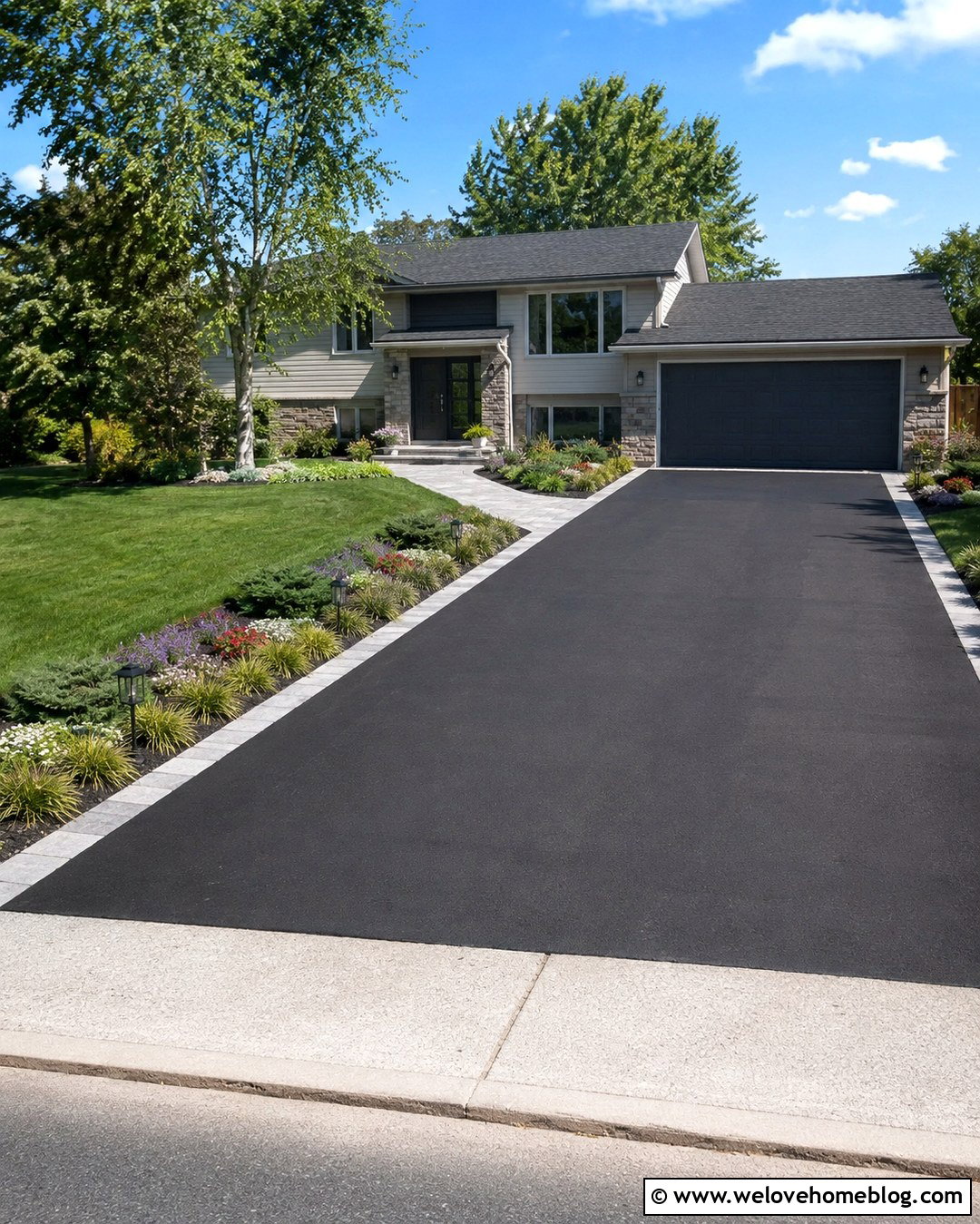
A black asphalt driveway creates a strong background for flowering hydrangeas, green lawn, and pale stone edging. Build a generous mulched bed along one side rather than squeezing shrubs into a strip that is too narrow for their mature size. Place the hydrangeas back from the pavement and use compact perennials or low ground cover along the front edge. This layered arrangement keeps large leaves and flowers away from moving vehicles. Light gray granite blocks can separate the dark asphalt from the planting and coordinate with a traditional home’s foundation. Repeat the same hydrangeas near the garage to visually connect the full driveway. Because light and climate affect flowering and growth, select varieties appropriate for the site. The finished landscape feels lush, balanced, and intentionally planned.
6. Concrete Driveway With River Rock Landscaping
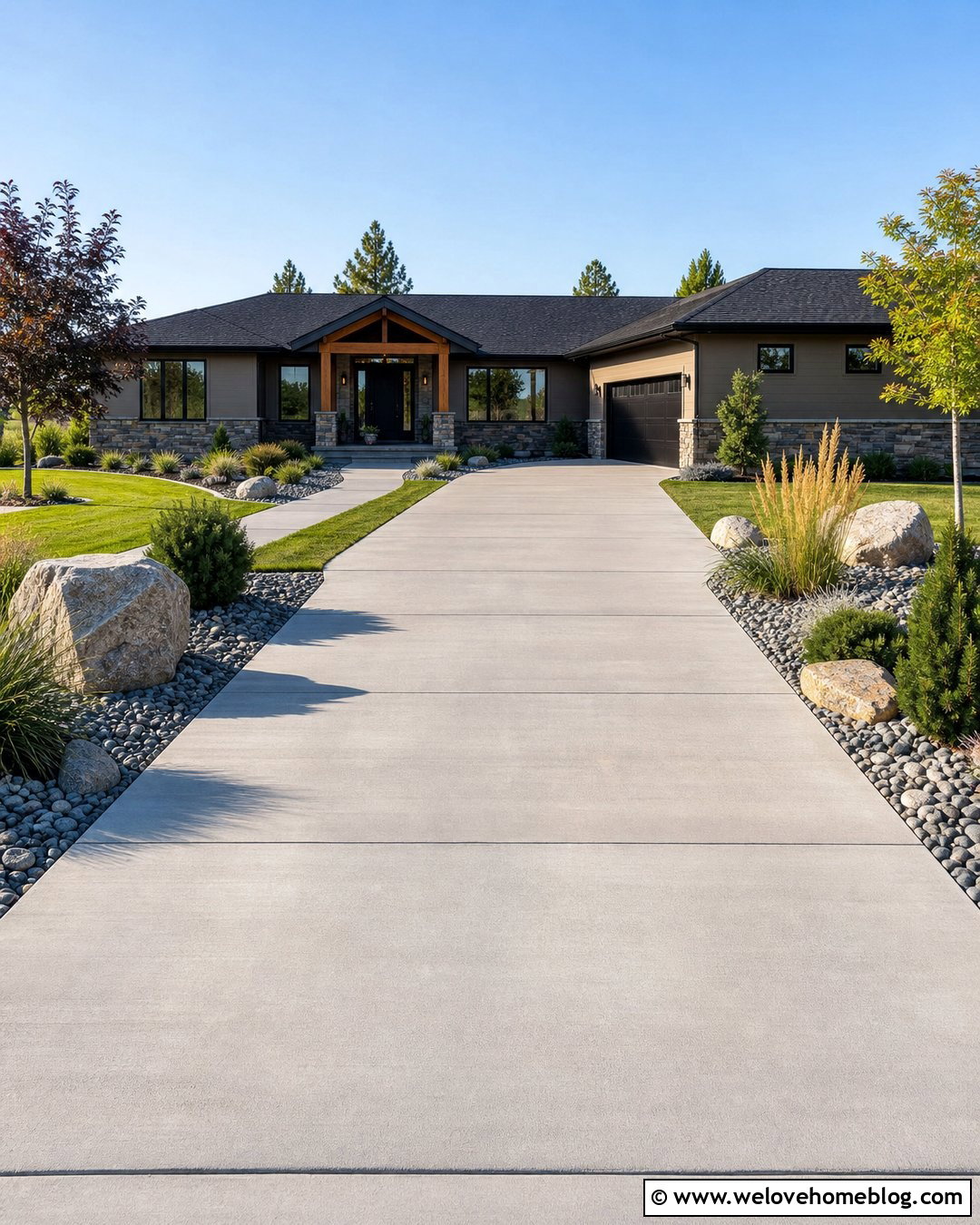
River rock can create a clean, low-water border beside a smooth poured-concrete driveway. Use mixed gray stones as mulch, but add well-spaced plants so the area does not resemble a drainage ditch. Upright grasses, compact evergreen shrubs, and drought-tolerant flowering perennials provide color and shape without crowding the pavement. A concealed metal edge keeps the rock from scattering across the driveway. Arrange a few larger boulders away from the vehicle path to establish natural focal points. For a modern ranch home, continue the river rock toward the entry walkway and foundation beds. The stones should sit over a properly prepared base appropriate for the site, with runoff directed away from structures. This complete design offers strong texture while keeping the driveway border visually simple and organized.
7. Brick Driveway With Boxwood Borders
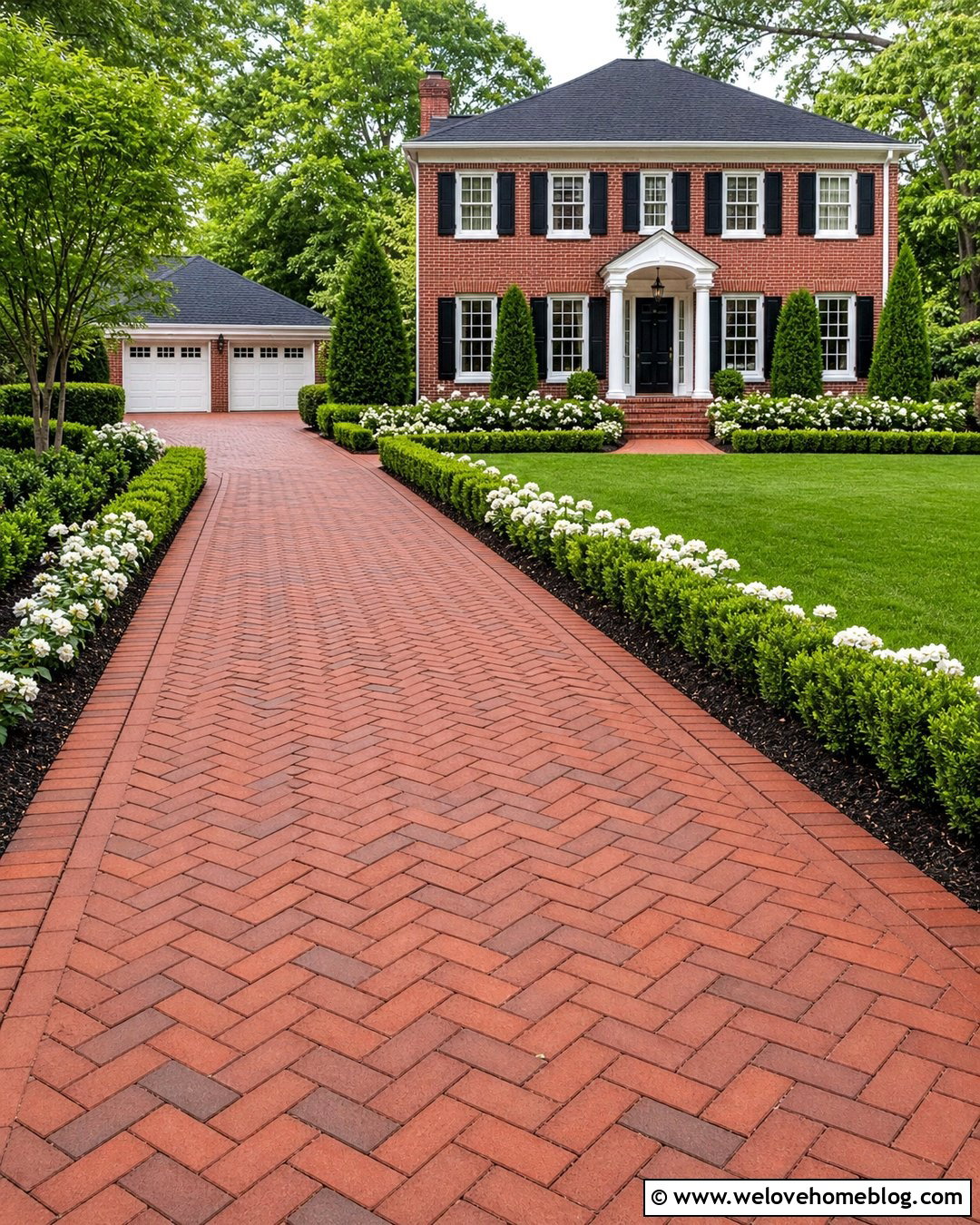
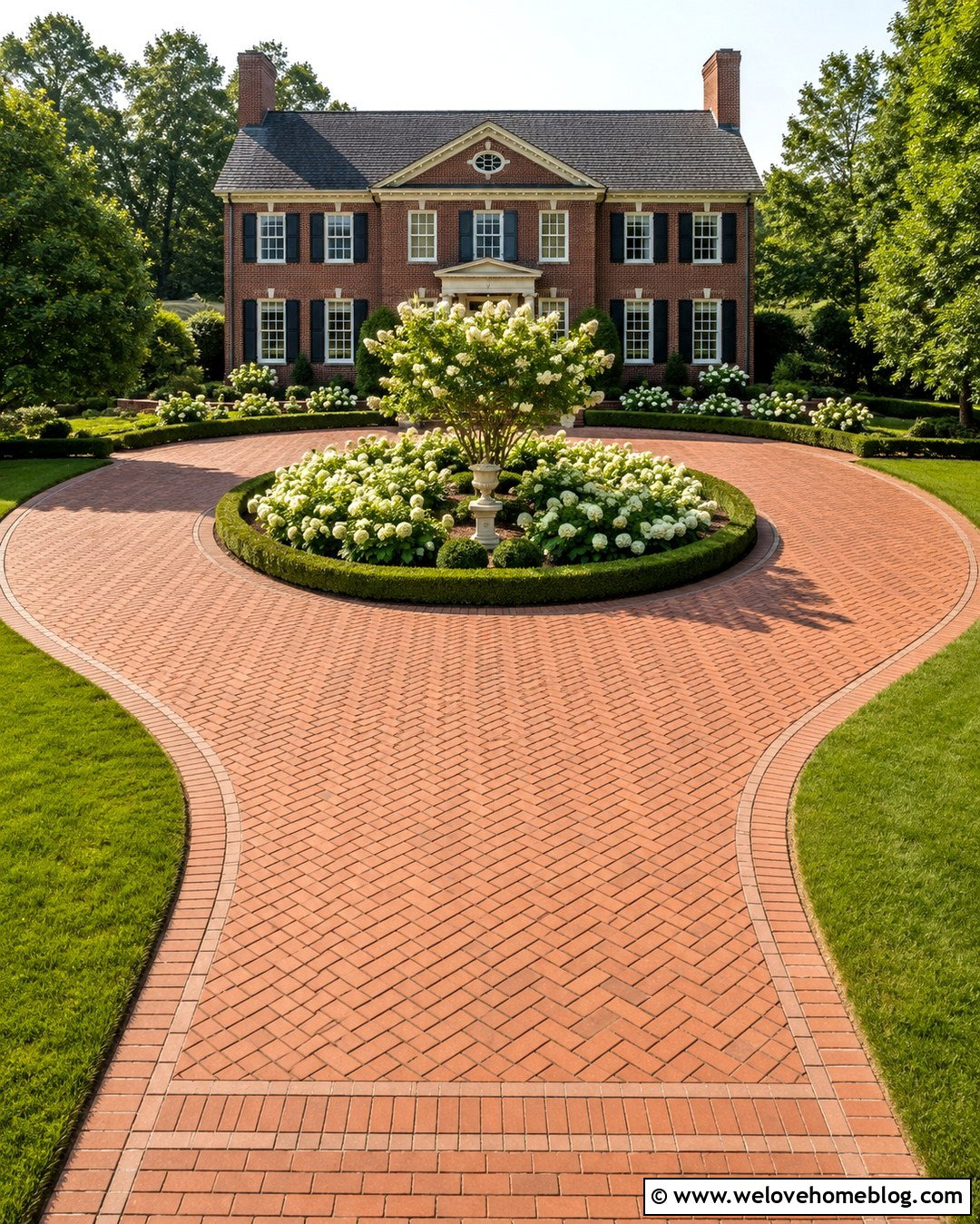
For a formal front yard, clay brick pavers and clipped boxwood borders create an orderly approach to the house. Lay the driveway in a herringbone pattern with a straight soldier-course edge, then position the hedge behind a narrow strip of mulch. Keeping a small gap between the plants and bricks makes trimming easier and prevents foliage from hiding the patterned border. Symmetrical flower beds near the entrance can include white blooms and upright evergreens for additional height. This complete treatment looks especially fitting beside a Colonial, Georgian, or traditional brick home. A matching brick walkway should branch clearly toward the front door without interrupting vehicle movement. Regular shaping is part of the look, so homeowners wanting less maintenance can substitute naturally compact evergreen shrubs suited to their region.
8. Paver Driveway With Native Pollinator Beds
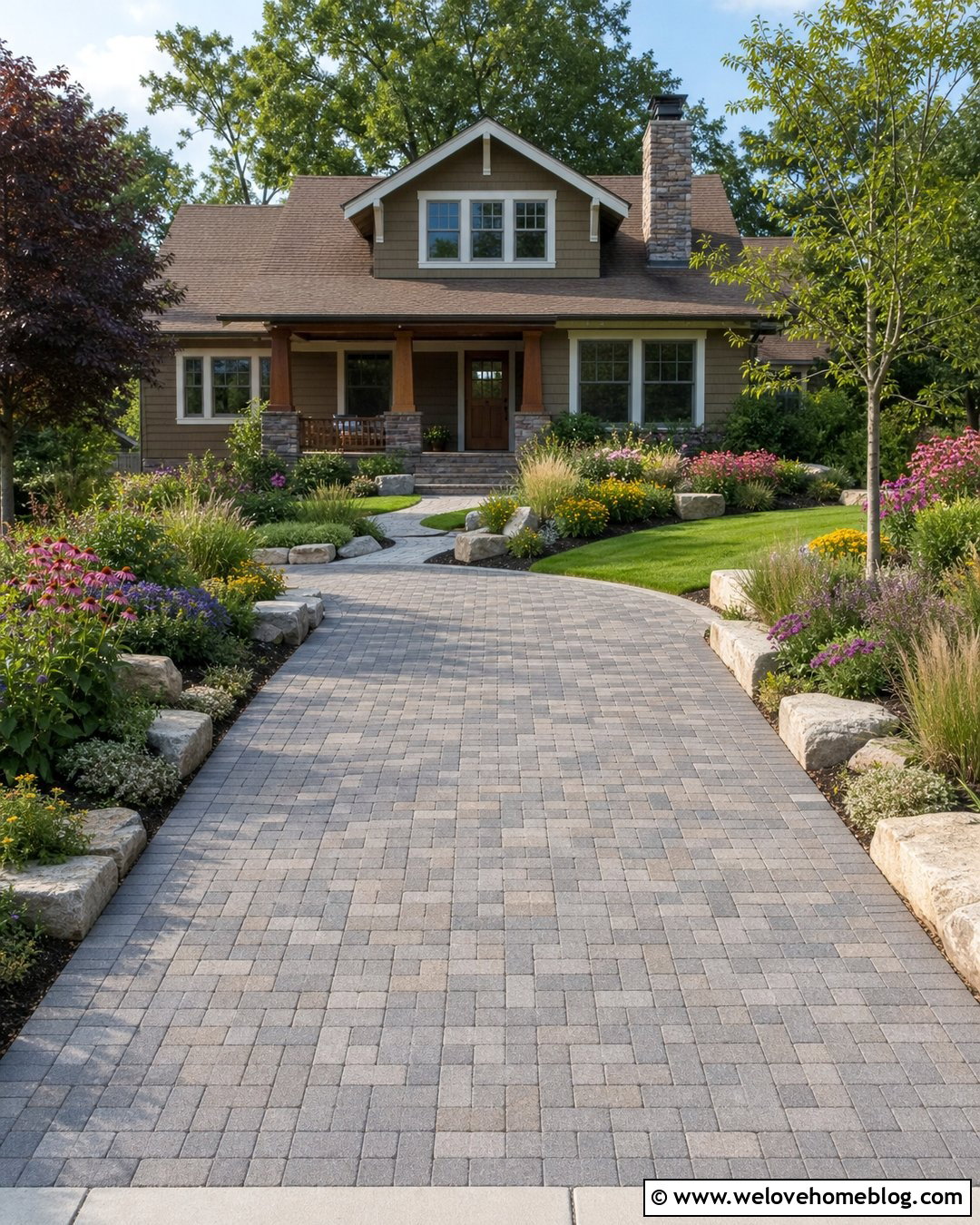
A driveway can become part of a wildlife-friendly front yard when permeable concrete pavers are paired with native flowering borders. Start with low, resilient plants beside the paving, then build height using regionally appropriate grasses and flowering perennials. Repeating three to five main species creates a composed landscape while still providing seasonal variation. A natural stone edge keeps the bed defined and protects plants from tires. Include open stepping areas where passengers commonly exit, particularly close to the garage. Near the street, keep plants short enough to preserve visibility for drivers and pedestrians. A simple Craftsman house provides an attractive backdrop for this relaxed planting style. The paver colors, stone border, and muted flower palette should relate to the home’s siding and masonry for a unified appearance.
9. Driveway With a Rain Garden Border
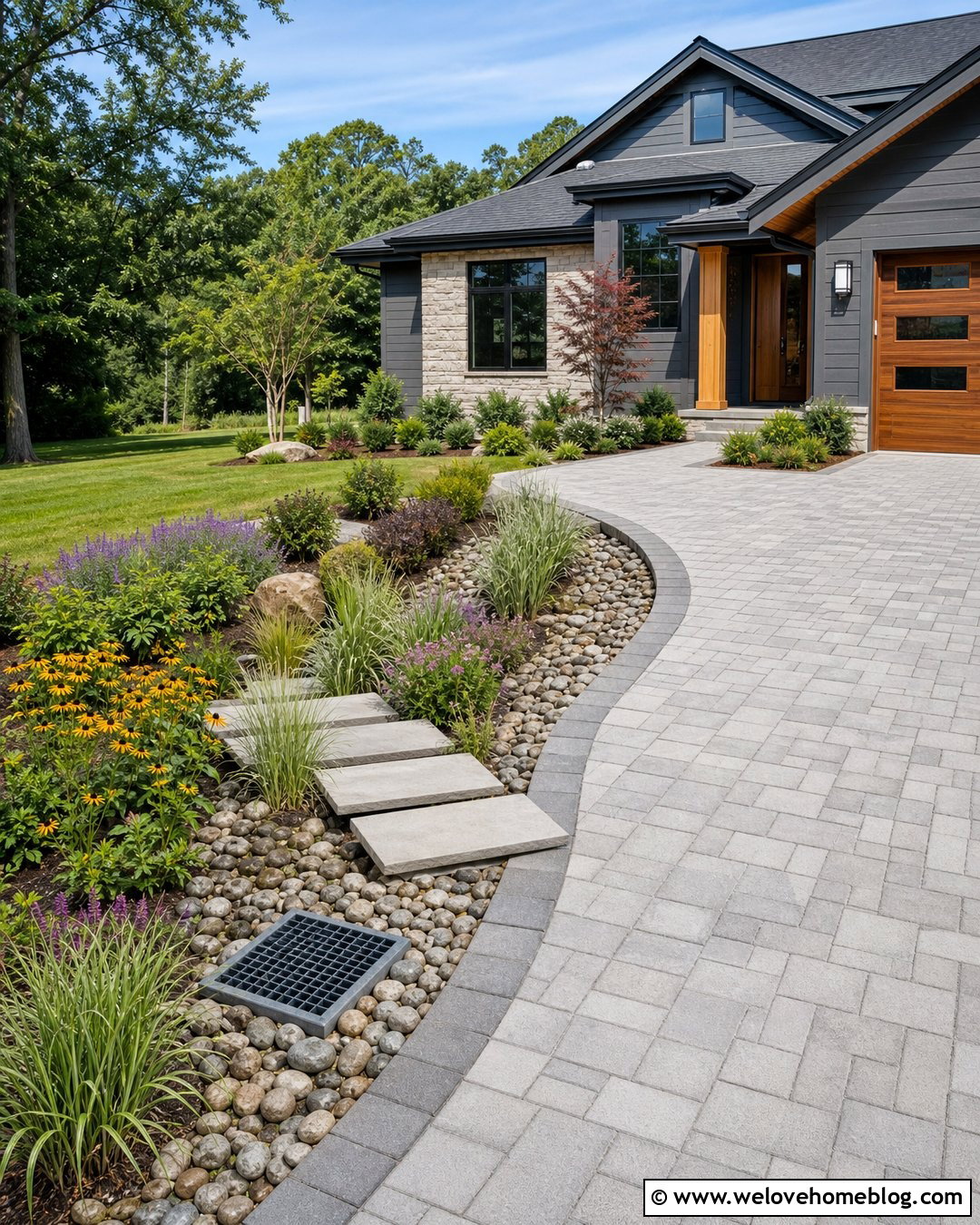
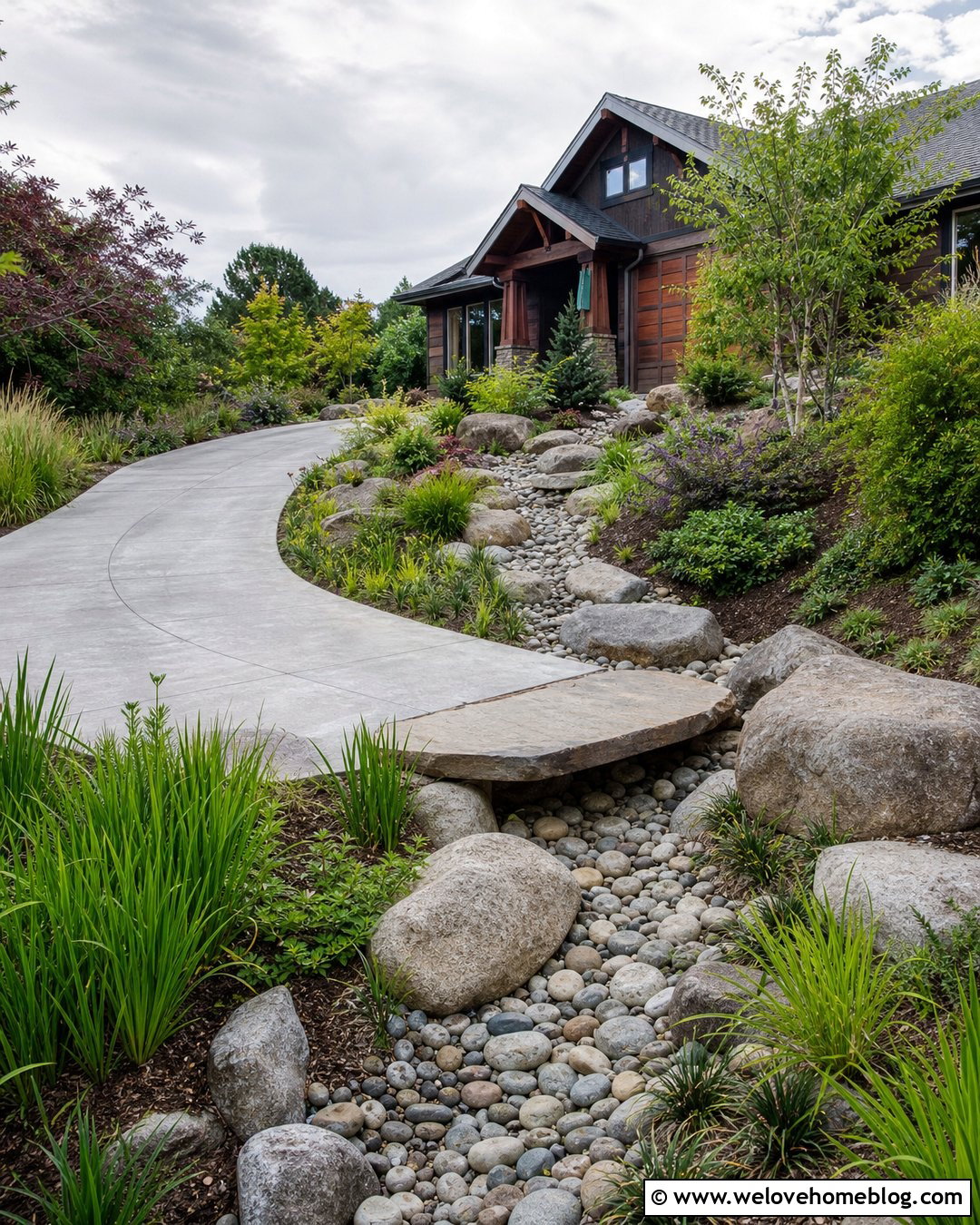
Does water collect along the lower side of your driveway after heavy rain? A carefully positioned rain garden can turn that problem area into an attractive planted feature. Pair a permeable paver driveway with a shallow, curved depression filled with plants selected for the site’s moisture patterns and local climate. Place river stone around the inflow area to reduce exposed soil and visually connect the garden to the hardscape. Sedges, flowering perennials, and compact shrubs can create a layered border without blocking the driveway. The grade must direct water safely away from the house, neighboring property, and pavement base. Add a raised stepping path where people need to cross the bed. When properly planned, the driveway, drainage feature, and landscaping read as one intentional front-yard design.
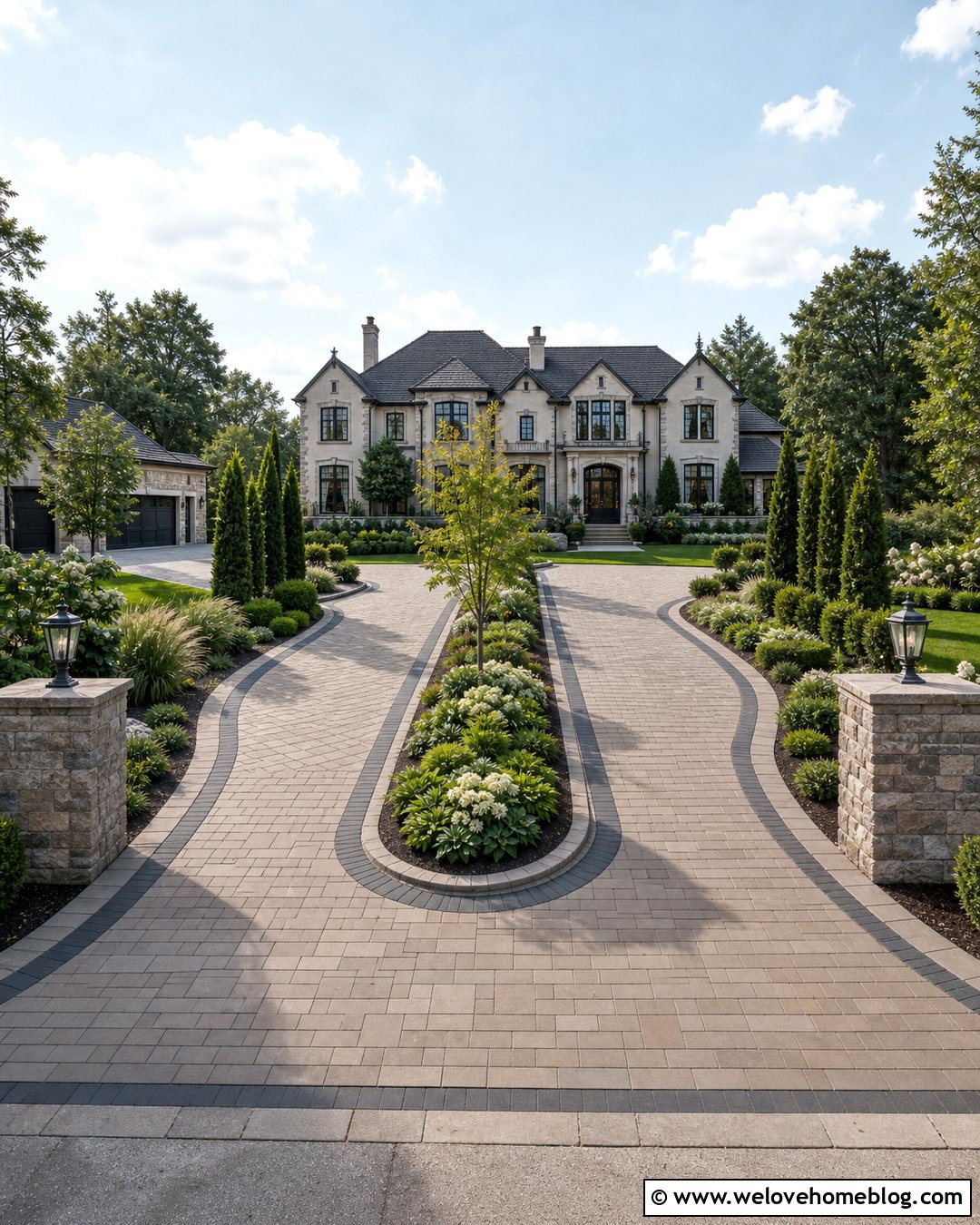
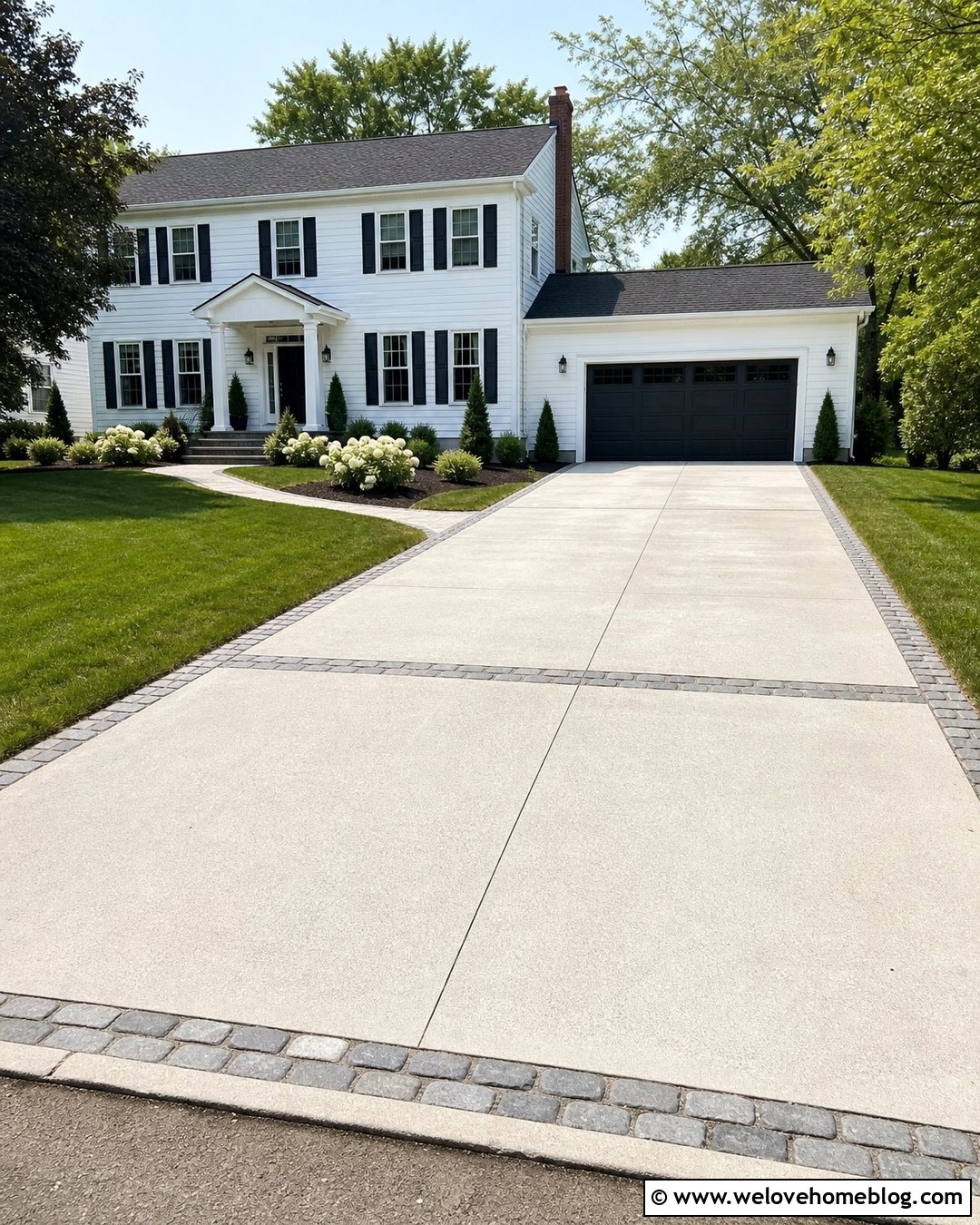
10. Long Driveway With Tree-Lined Landscaping
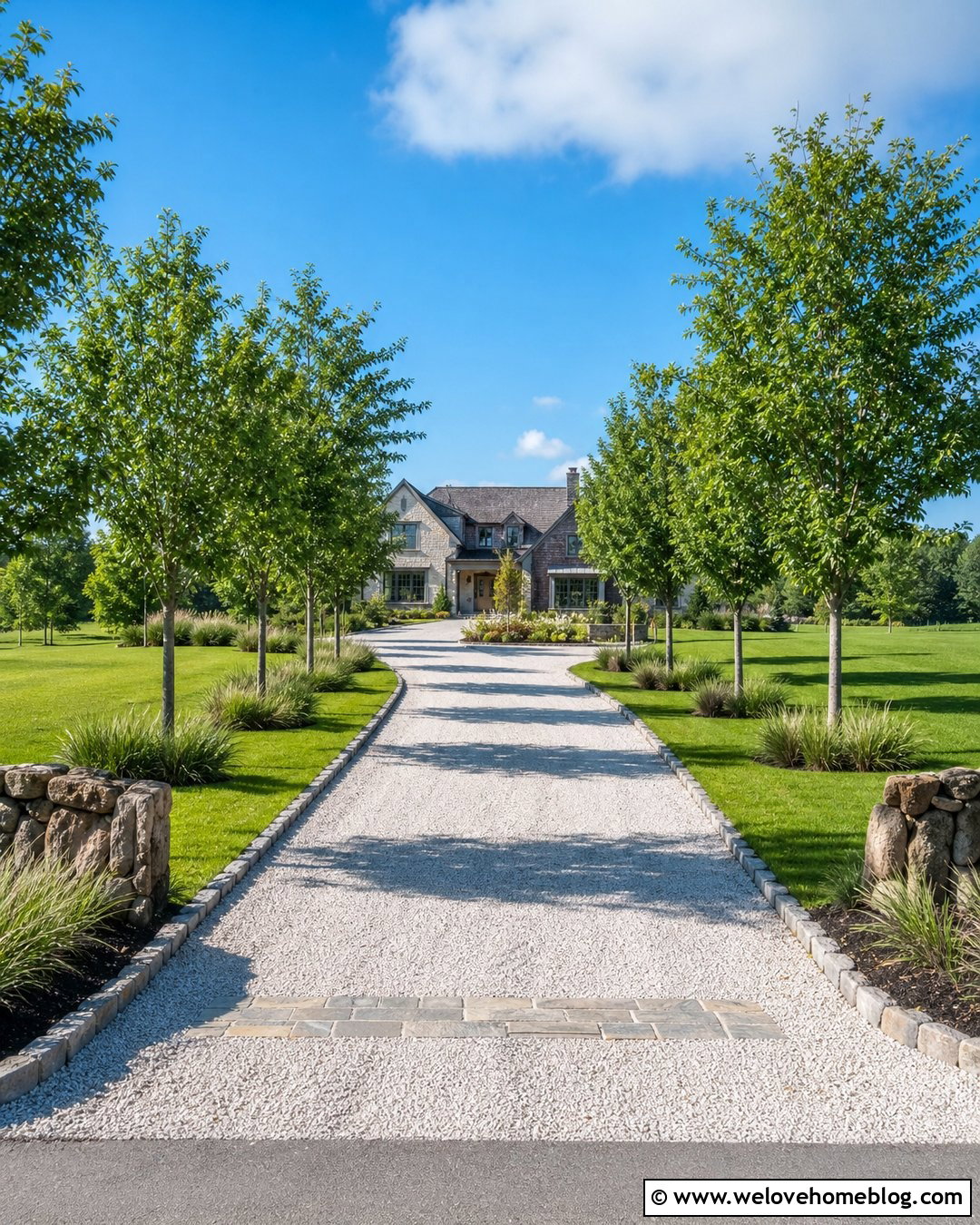
A long driveway gains rhythm and scale when evenly spaced trees frame the approach. This layout works beautifully with pale crushed-stone gravel, a gently curved route, and wide grass verges on both sides. Choose trees appropriate for the local climate and available planting width, accounting for their mature canopies and root systems. Set trunks far enough from the driving surface to reduce conflicts with vehicles and maintenance equipment. Beneath the trees, use a simple layer of lawn, low ground cover, or repeated ornamental grasses rather than complicated flower beds. Stone edging can hold the gravel in place while maintaining the rural character. At the house, widen the planting into larger beds that visually anchor the driveway. The repeated trees make the property entrance feel structured without requiring ornate features.
11. Circular Driveway With a Landscaped Center Island
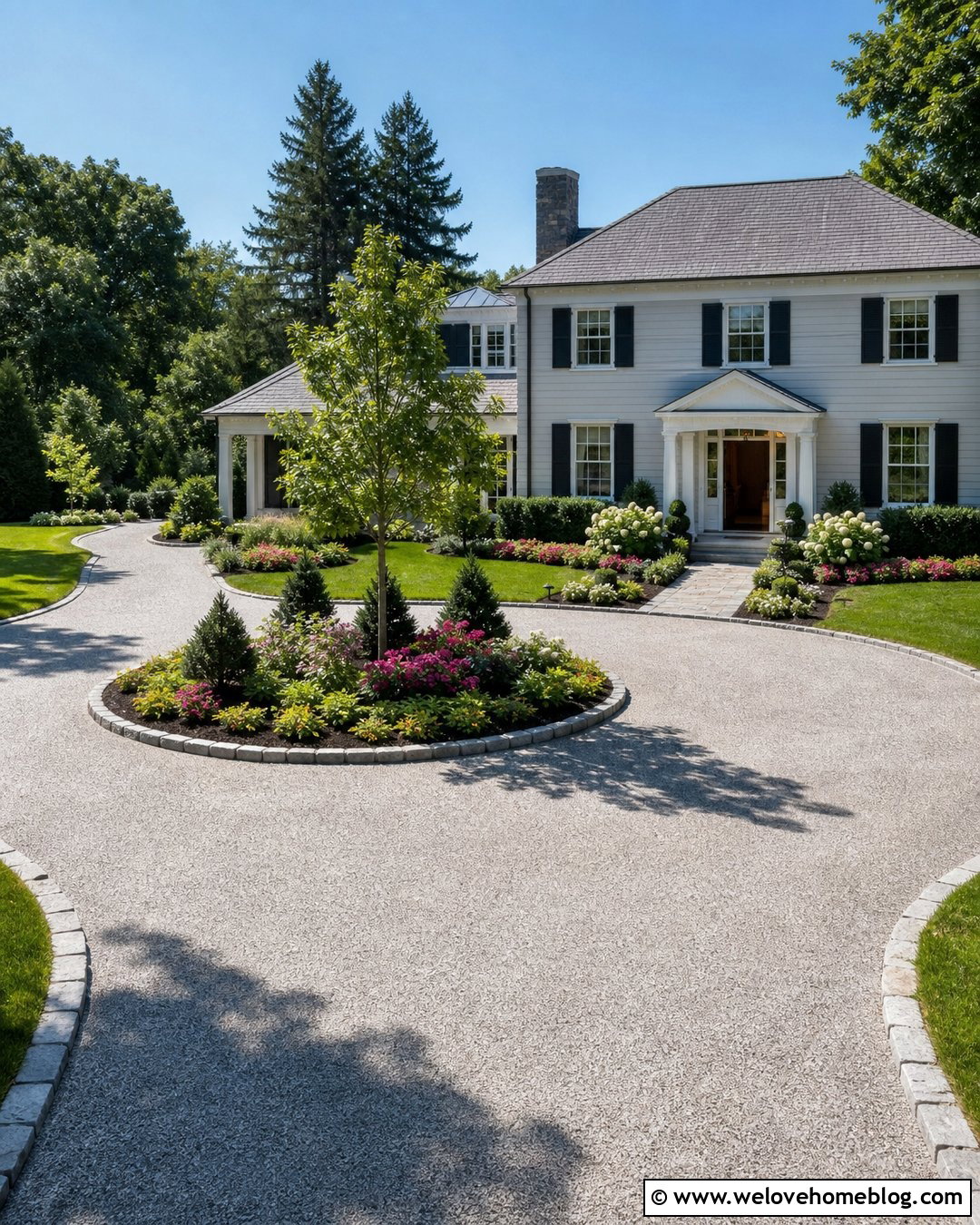
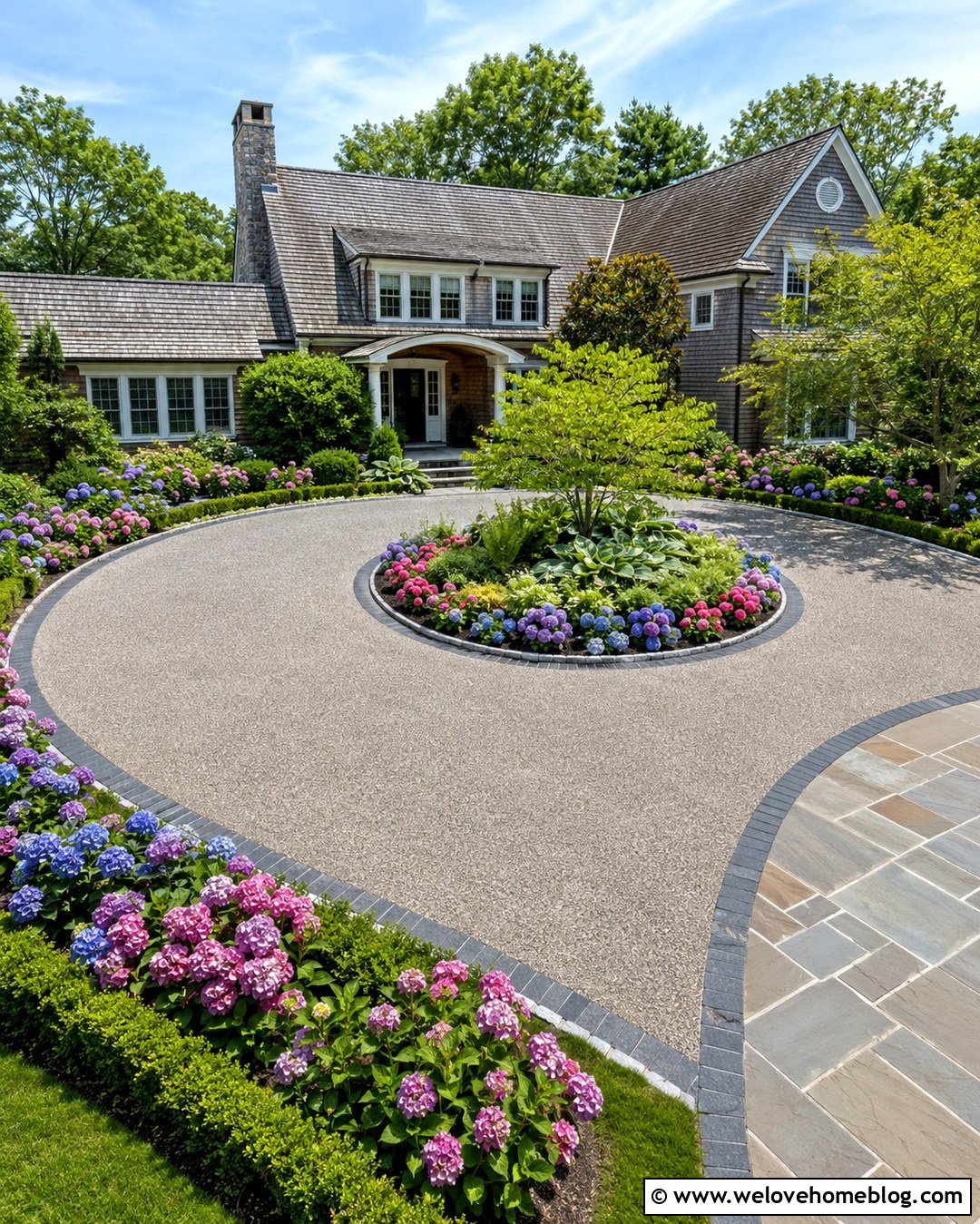
A circular driveway offers a prominent center island that can become the front yard’s main focal point. Surround a light exposed-aggregate driveway with a low cobblestone curb, then shape the island to follow the driveway’s inner curve. Place one small ornamental tree slightly off-center and layer compact evergreen shrubs, seasonal flowers, and ground cover around it. Keeping plants low near the entrance and exit maintains open views across the circle. A boulder, birdbath, or simple urn may add character, but one focal feature is usually enough. Repeat a few island plants beside the house so the landscape feels connected rather than isolated. This arrangement suits properties with sufficient turning space and gives a traditional home a gracious approach while preserving convenient vehicle circulation.
12. Driveway With Raised Stone Planting Beds
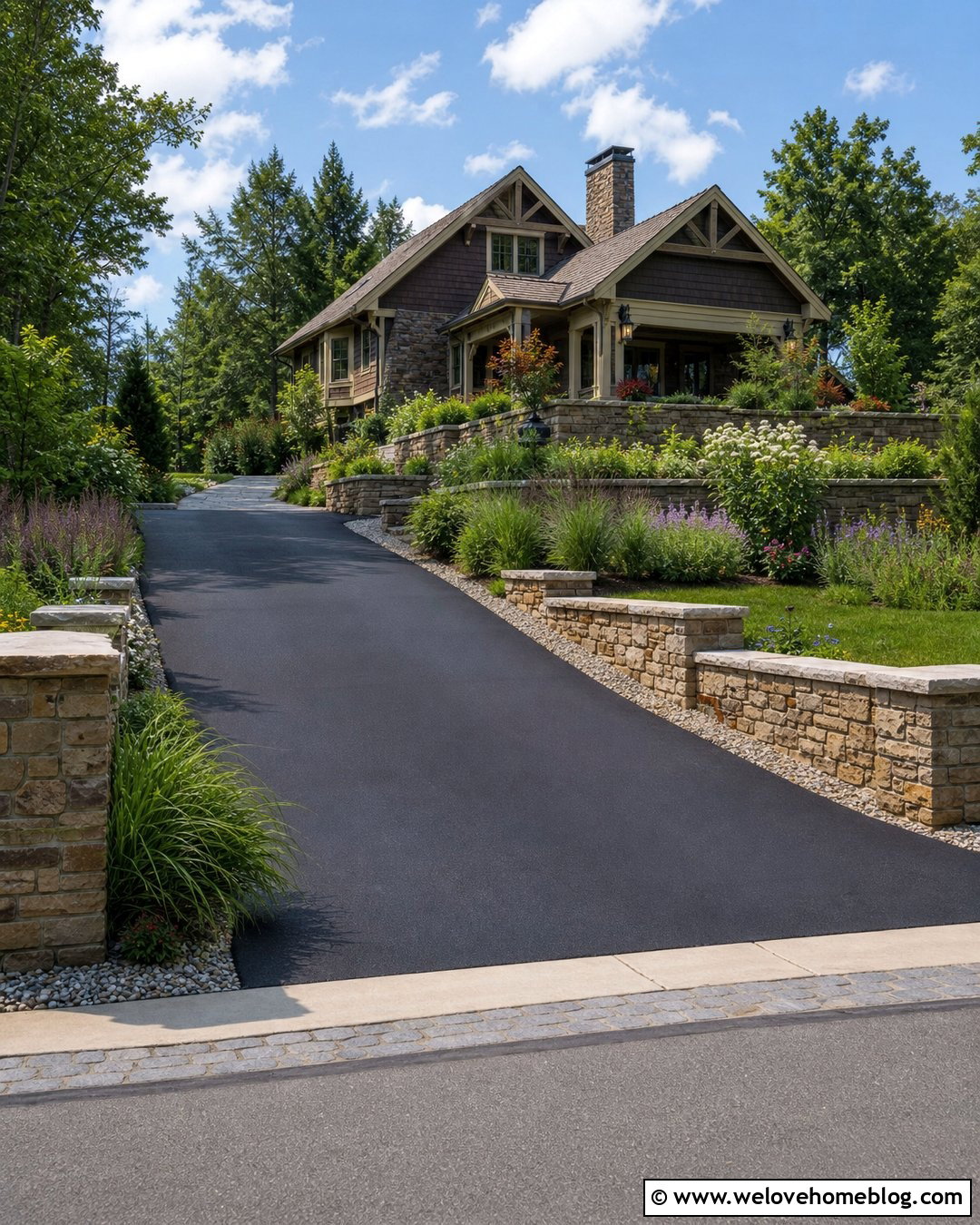
Raised stone beds bring definition to a driveway where the lawn slopes or the existing soil is difficult to plant. Next to a dark asphalt surface, a low wall made from warm fieldstone creates attractive contrast and holds a layered mix of shrubs, grasses, and flowering perennials. Keep the wall low beside parking areas so doors can open freely. It may rise gradually toward the house where additional height is useful. Capstones provide a finished appearance, while a narrow gravel transition helps prevent soil and mulch from washing onto the asphalt. Echo the same stone around the front walkway or porch columns to connect the landscape with the house. Thoughtful drainage behind the wall is essential. The finished driveway looks established, structured, and integrated into the changing grade.
13. Driveway With Low-Maintenance Mulch Beds
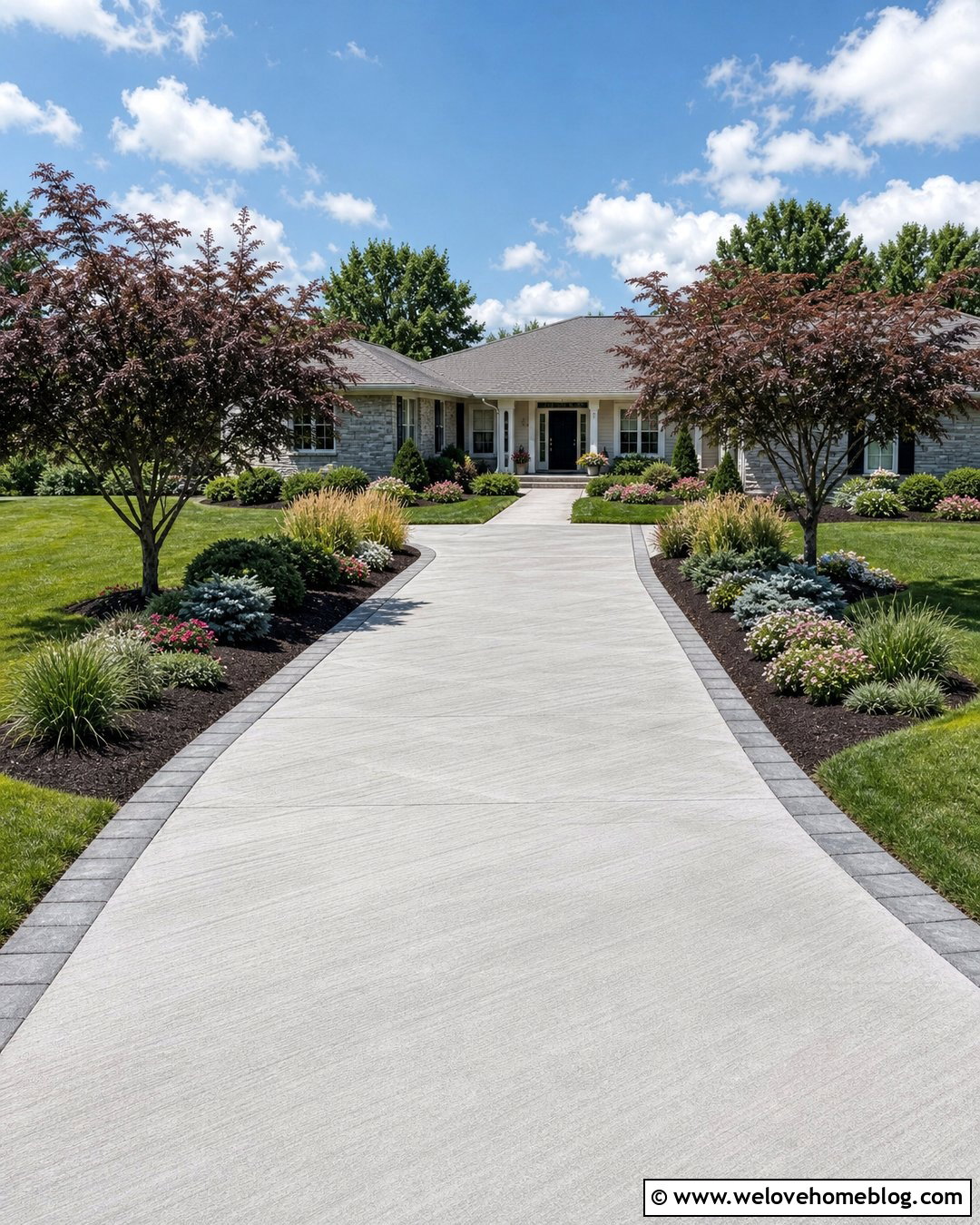
Simple landscaping can still make a strong difference when every material has a clear purpose. Frame a straight concrete driveway with broad, gently curved mulch beds containing compact evergreens, durable ornamental grasses, and a limited selection of flowering perennials. Use plants that fit the available space at maturity so constant pruning is not required. A flush concrete or paver curb maintains a tidy line and helps keep mulch off the driving surface. Group plants in repeated clusters rather than spacing many unrelated varieties along the border. Add one small tree near the front corner and another near the garage to balance the composition. This complete look works with many suburban homes because it offers year-round structure, seasonal color, and straightforward maintenance without making the driveway feel narrow or crowded.
14. Sloped Driveway With Retaining Wall Landscaping
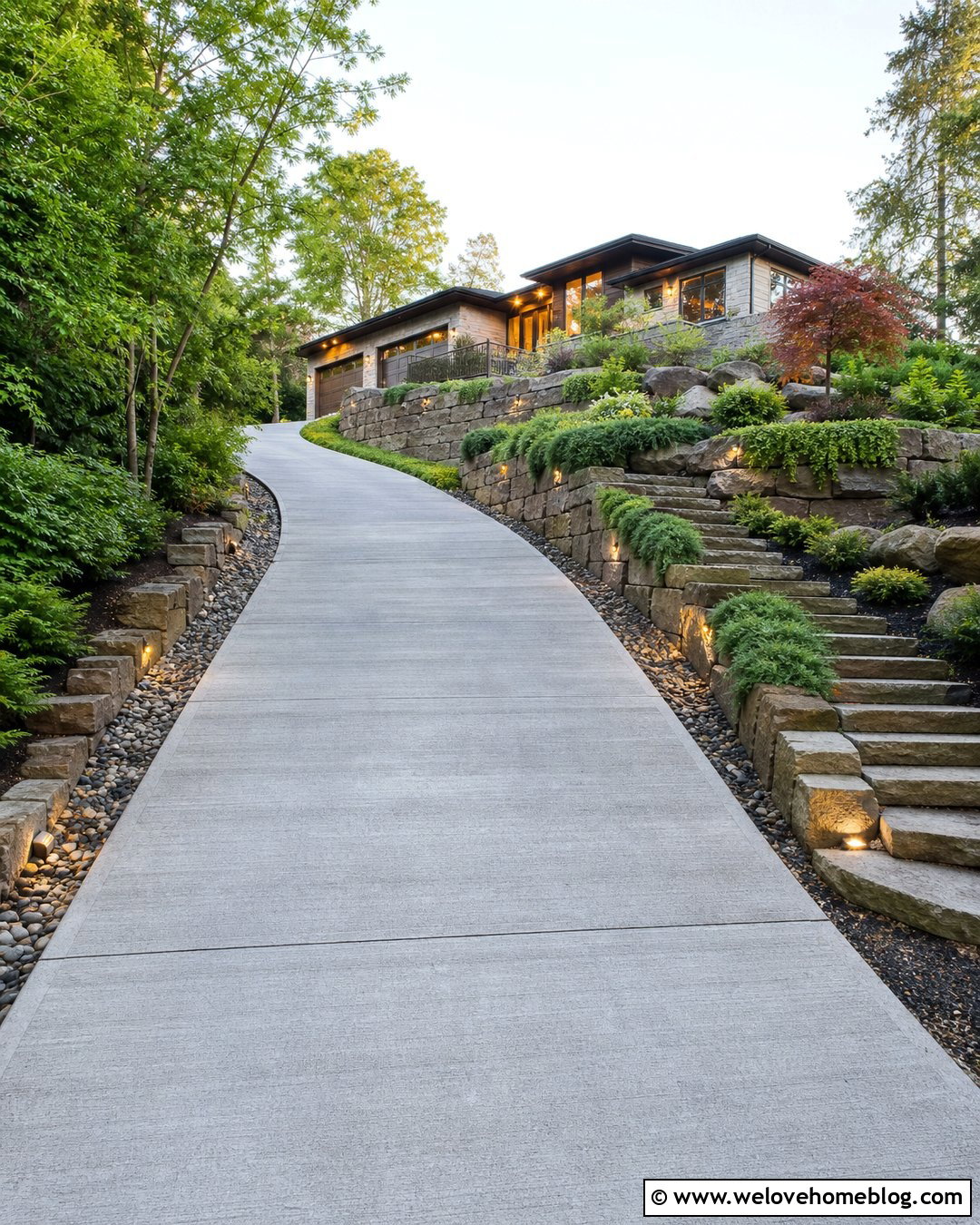
Landscaping a sloped driveway requires stronger structure than a flat border. Pair a broom-finished concrete driveway with a tiered natural-stone retaining wall that follows the grade without forming one overpowering barrier. Plant trailing ground cover near the wall’s top, medium shrubs in the next layer, and small trees where the bed becomes wider. These levels soften the masonry while leaving the vehicle edge open. Low-profile lights built into or placed above the wall can improve the visibility of the driveway boundary. Include steps or a separate walkway if pedestrians regularly move up the slope. Proper wall construction, drainage, and local requirements should be addressed before planting. When the stone, driveway finish, and house facade share similar tones, this practical solution becomes a cohesive part of the property.
15. Driveway With a Privacy Hedge Border
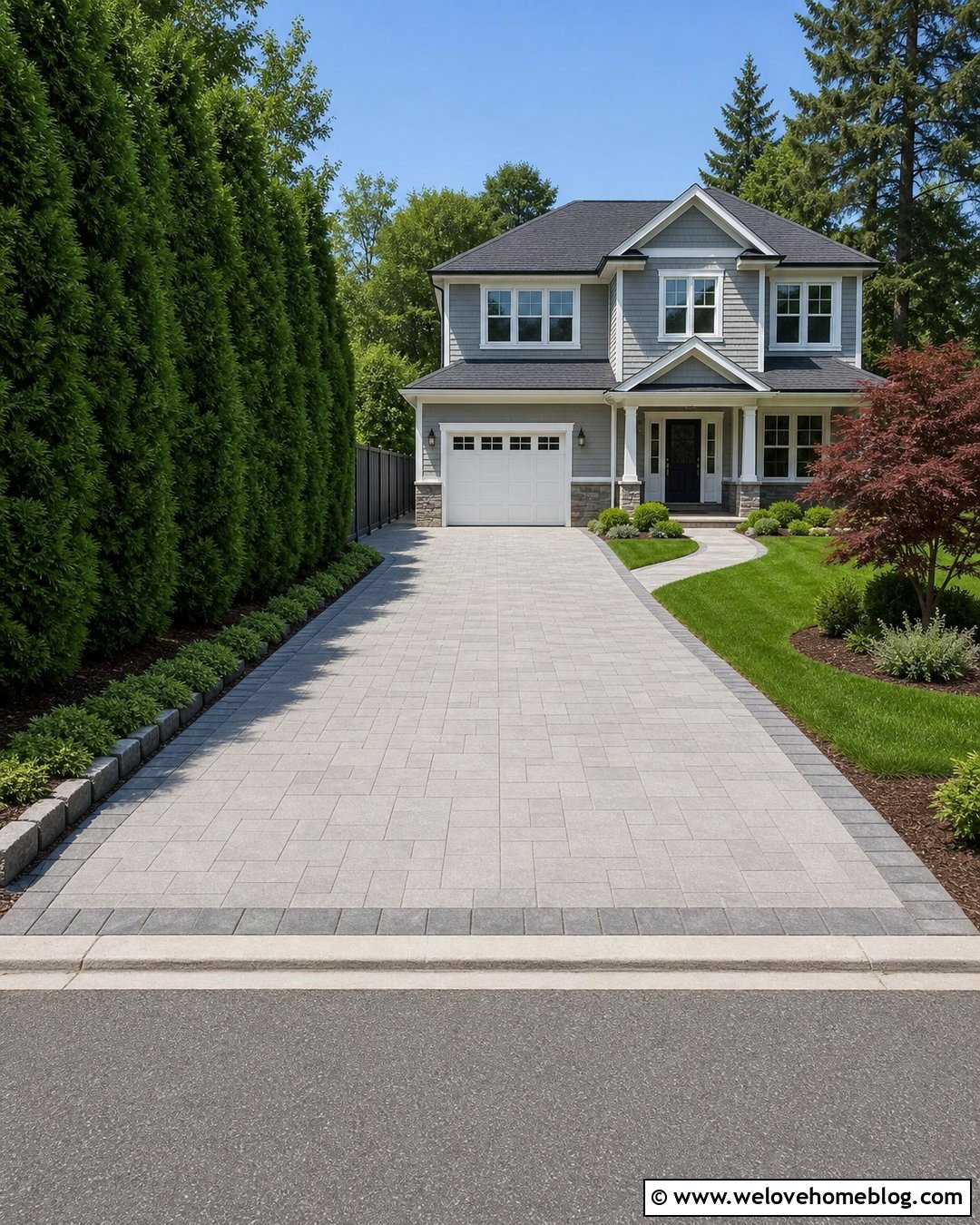
A driveway running close to a neighbor’s yard or sidewalk can feel more private with a carefully scaled hedge. Along a straight concrete paver driveway, plant an evergreen screen behind a low stone border and a narrow foreground layer of ground cover. This arrangement hides bare lower stems and makes the hedge feel like part of a designed bed. Choose plants based on mature width, local growing conditions, and the amount of regular trimming you are willing to do. Keep the screen farther back near the street so it does not interfere with visibility. Where passengers exit vehicles, widen the space or replace shrubs with flat stepping stones. Continue the hedge toward a side fence or front planting bed, creating a continuous green frame around the property without enclosing the driveway too tightly.
16. Narrow Driveway With a Paver Walkway
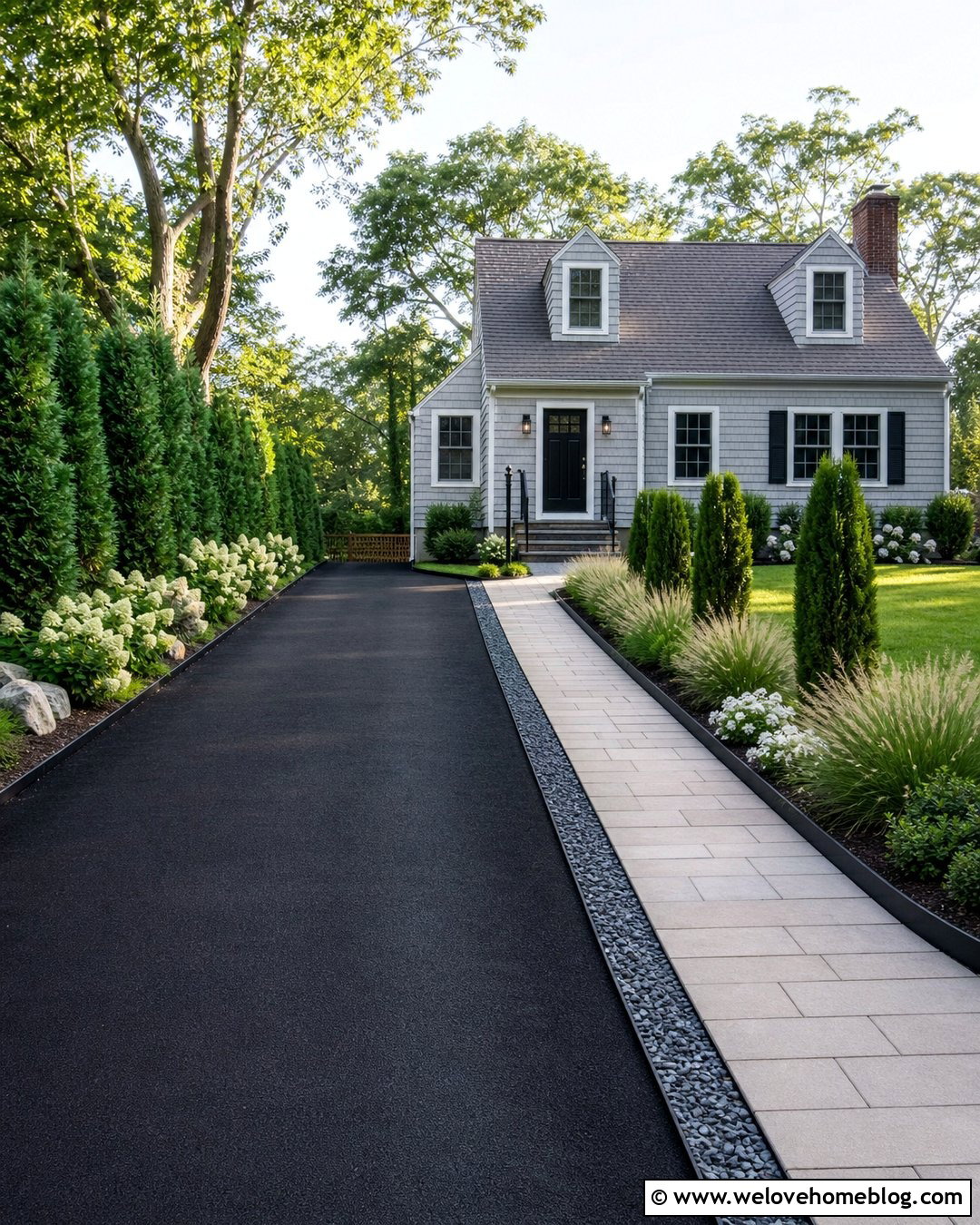
When a narrow driveway doubles as the main pedestrian route, landscaping must improve access rather than reduce it. Place a slim paver walkway along one side of a black asphalt driveway, separated by a band of small decorative gravel. On the outer side of the path, install a compact bed of low grasses, flowering ground cover, and columnar shrubs near the house. This keeps greenery away from car doors while creating a pleasant walk to the entrance. Use a contrasting paver color so guests can immediately recognize the walking route. The path should connect smoothly with the sidewalk and front steps. A simple metal edge contains the gravel and soil. This complete layout makes limited space feel organized, gives pedestrians a dedicated route, and adds texture without narrowing the usable driveway.
17. Coastal Driveway With Soft Grass Borders
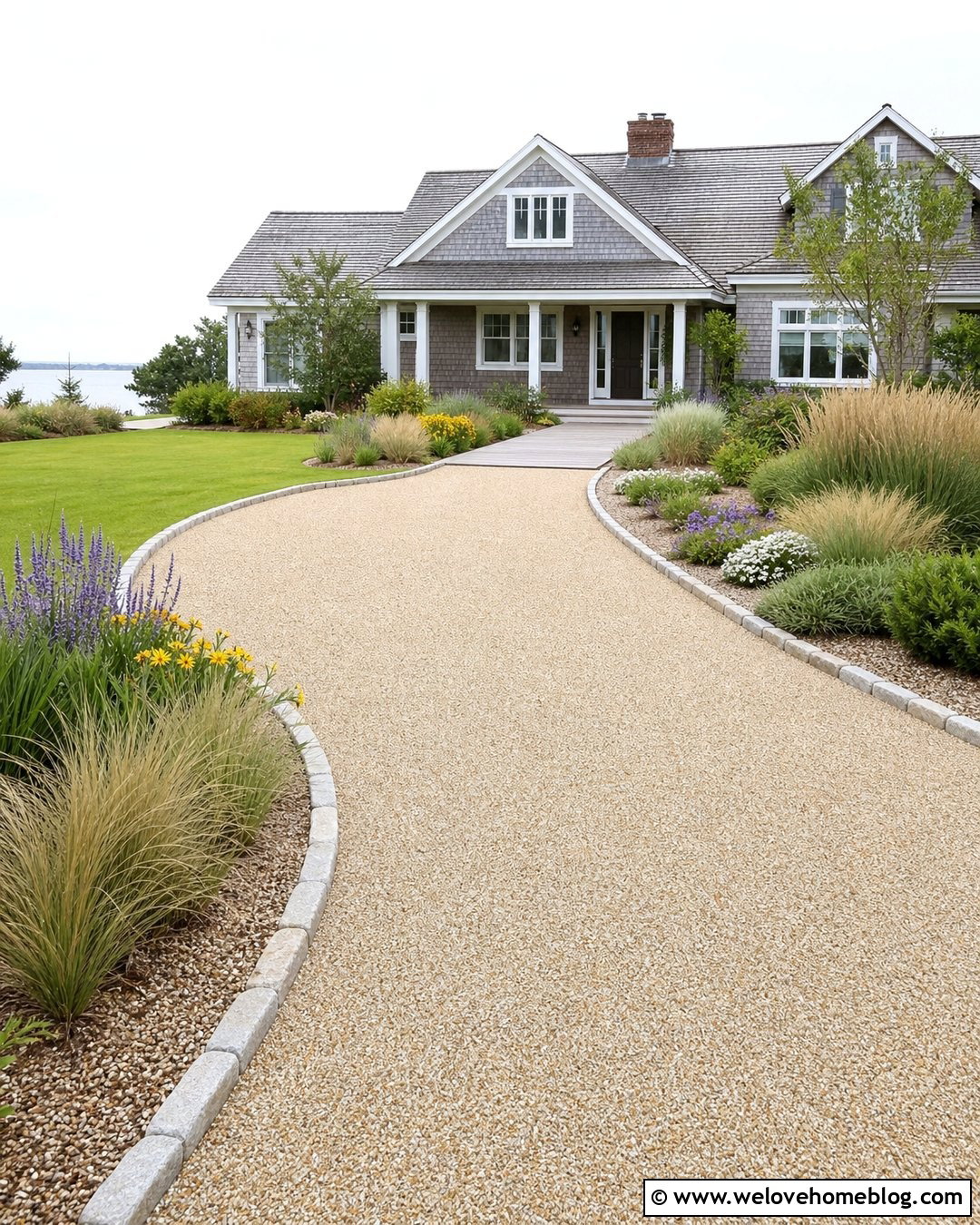
A coastal-inspired landscape feels natural beside a pale resin-bound gravel driveway and a weathered-shingle or light-sided house. Frame the softly curved surface with stone edging, sandy-toned gravel beds, and loose groups of salt- and wind-tolerant grasses suitable for the region. Add low flowering perennials between the grass clumps for seasonal color, but keep the overall palette restrained. A boardwalk-style path or large natural stone slabs can guide visitors from the driveway to the front porch. Near the road, use shorter plants that will not obstruct the view. Avoid placing loose decorative sand where it can wash onto the driving surface. The combination of muted paving, moving grasses, coastal stone, and open planting creates a relaxed entrance while maintaining a clear, durable boundary around the entire driveway.
18. Desert Driveway With Succulent Landscaping
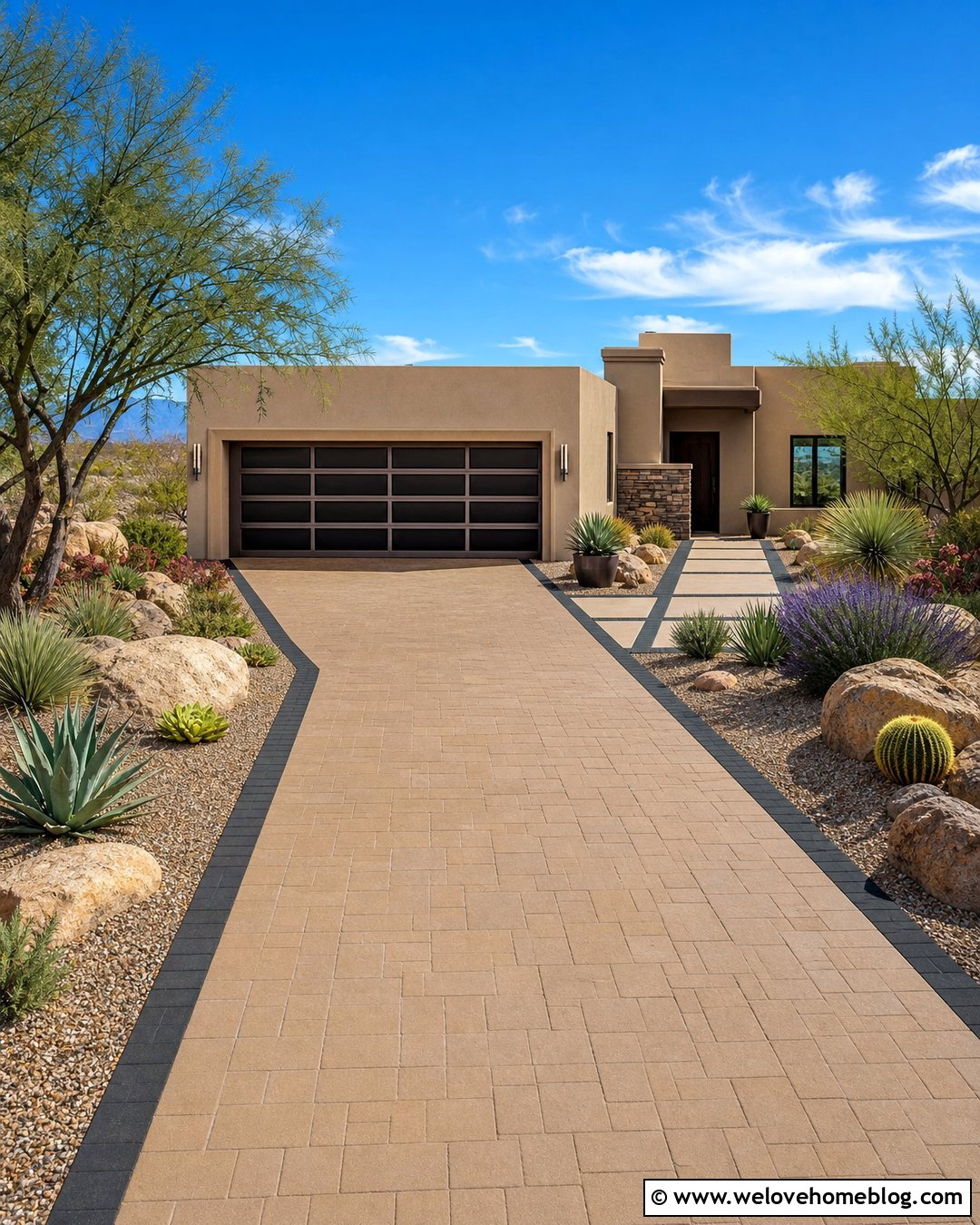
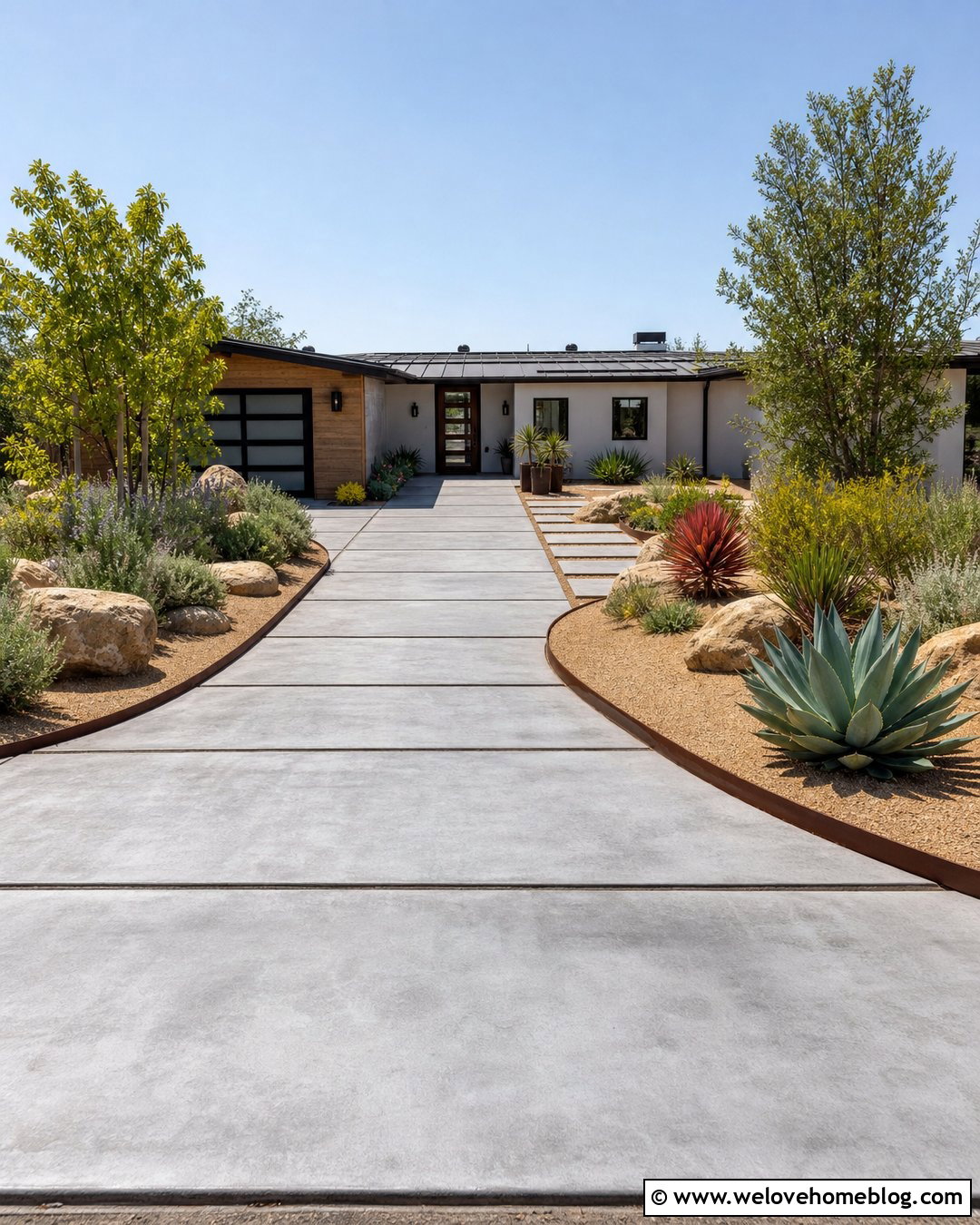
In a hot, dry setting, a driveway border can look colorful without relying on a traditional lawn. Pair warm concrete pavers with broad beds of decomposed granite, sculptural succulents, desert-adapted shrubs, ornamental grasses, and carefully positioned boulders. Arrange plants in uneven groups with open gravel between them, allowing each form to remain visible. A darker paver ribbon along the driveway edge creates a distinct separation from the landscape. Keep spiny or rigid plants well away from doors, walkways, and areas where children or pets may pass. Low-voltage fixtures can highlight the larger boulders while also marking the route. Coordinate gravel colors with the home’s stucco, stone, and roof. This full xeriscape design makes the driveway feel integrated into its climate rather than surrounded by an unrelated green border.
19. Shaded Driveway With Woodland Landscaping
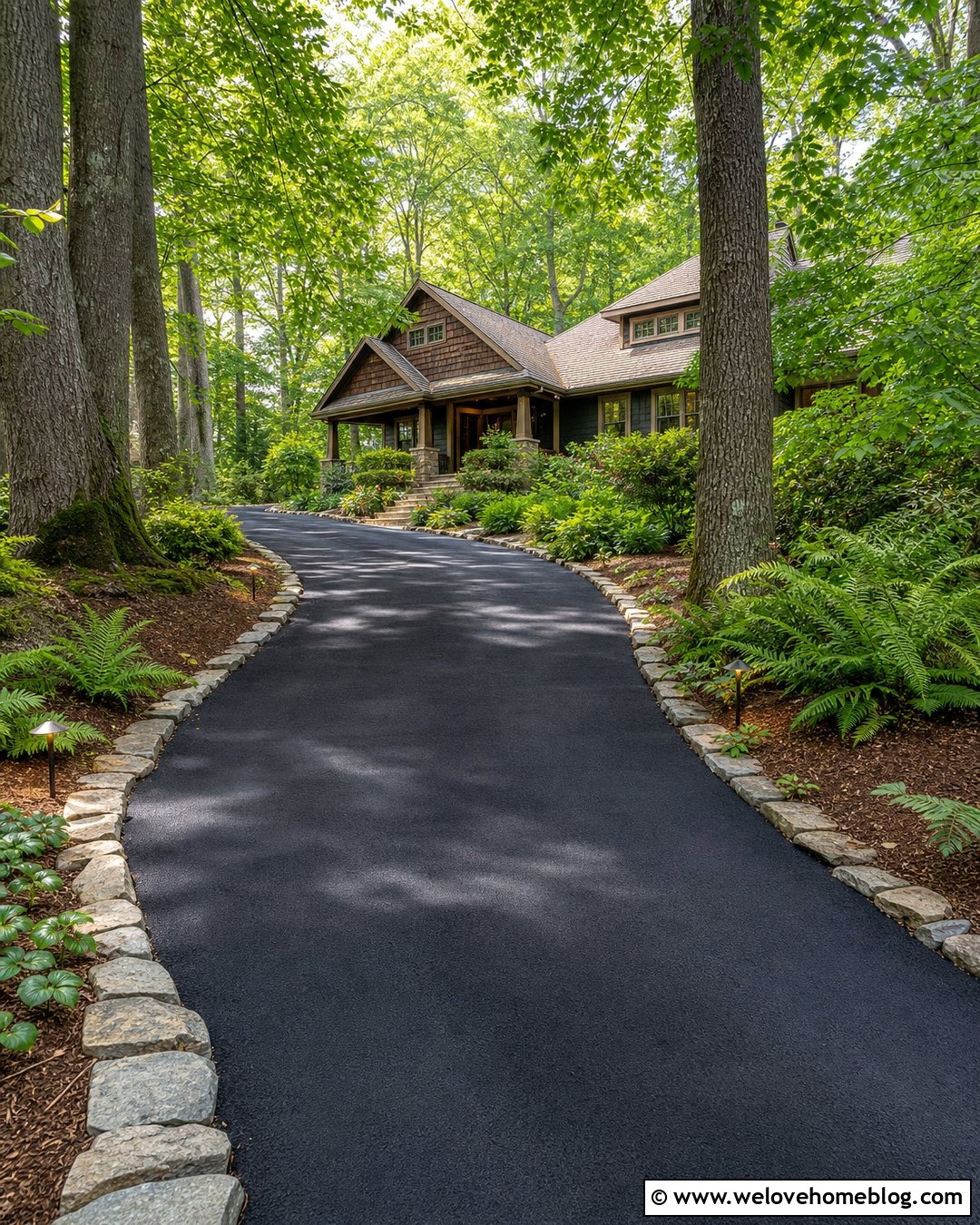
A driveway beneath mature trees needs plants that can handle lower light and competition from established roots. A gently curved asphalt driveway can be softened with natural stone edging and wide woodland beds containing ferns, sedges, compact shrubs, and shade-tolerant ground cover selected for local conditions. Use foliage with different textures and shades of green to create interest when flowers are limited. A layer of organic mulch keeps the beds visually calm and complements the wooded setting. Avoid piling mulch around tree trunks or changing the soil level over major roots. Place low lights along the stone edge where the shade makes the route harder to see. A Craftsman or cabin-style house completes the look, with the dark pavement, irregular stone, and layered greenery forming a quiet, natural approach.

20. Farmhouse Driveway With Boulder Landscaping
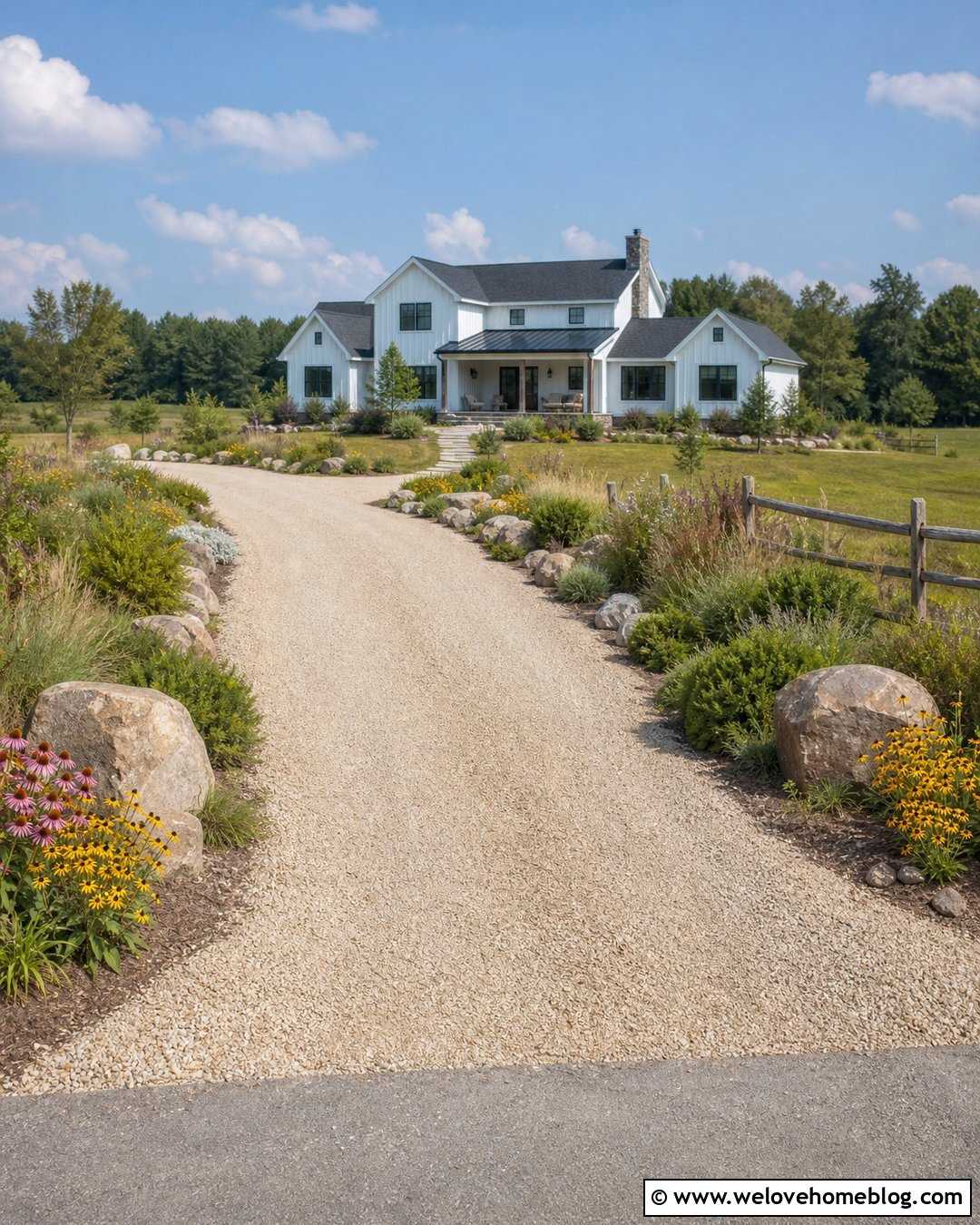
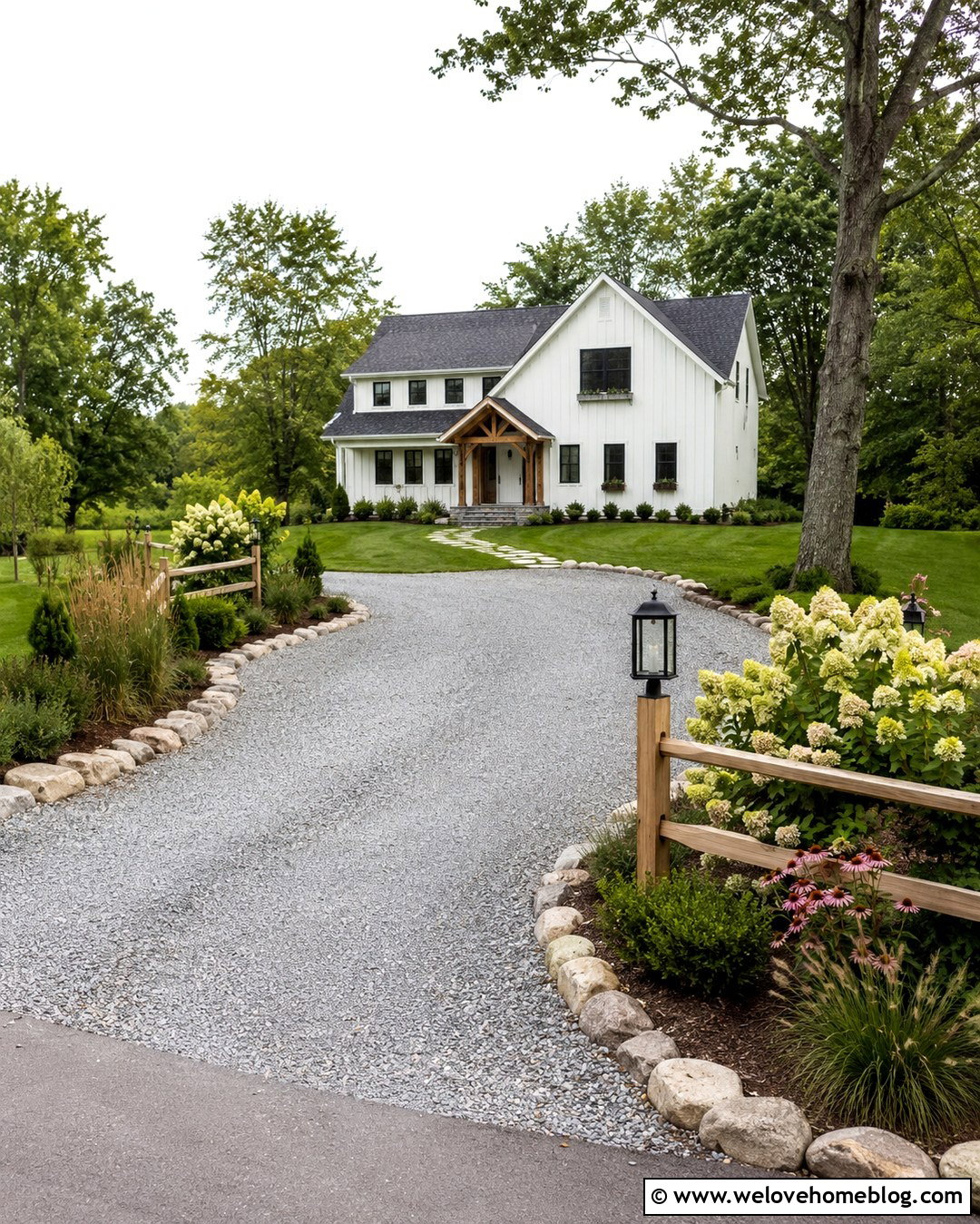
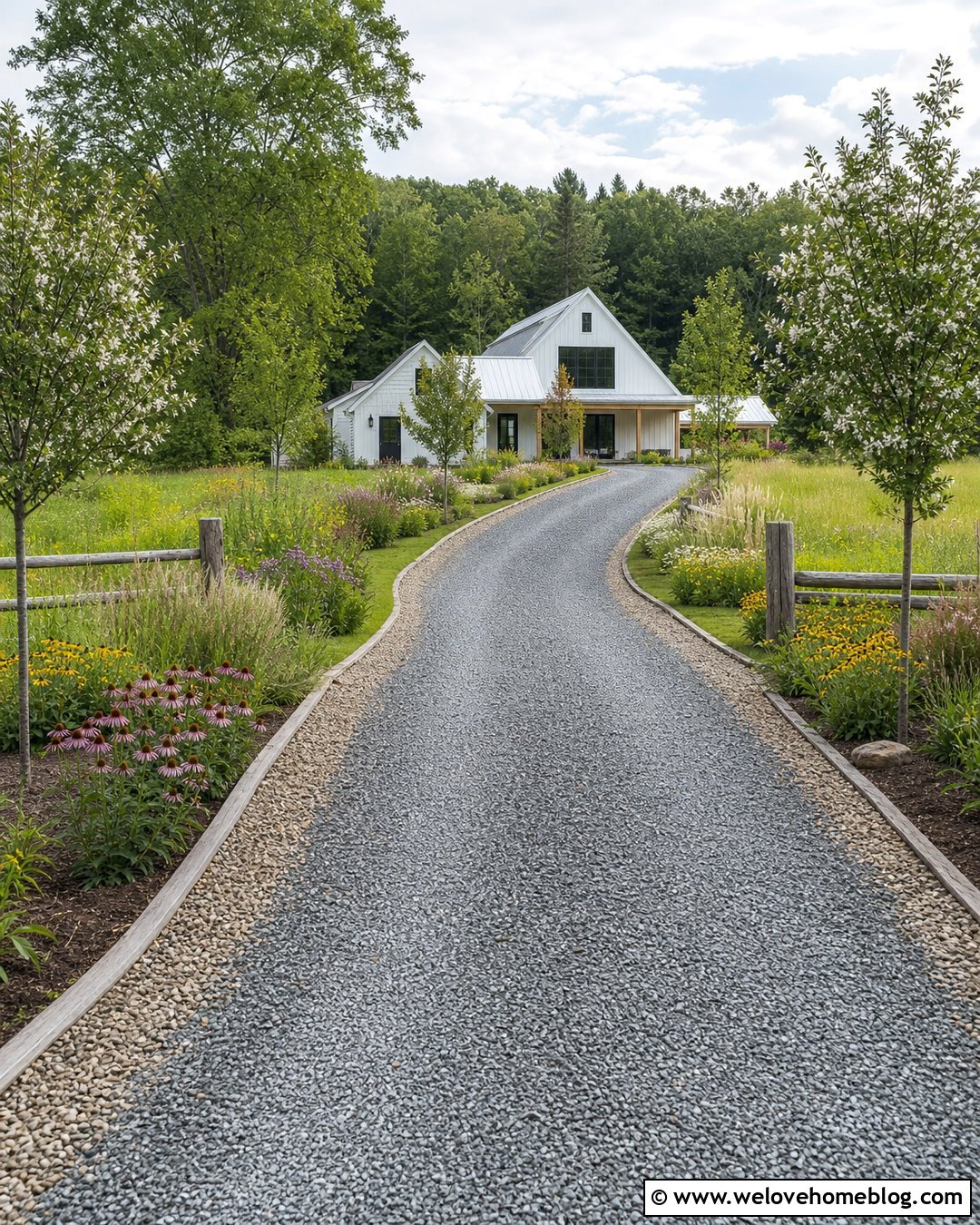
A farmhouse driveway feels grounded when rugged materials and simple planting frame the route. Use tan crushed gravel for a wide, gently curved surface, then contain it with large fieldstones and a concealed structural edge. Beyond the stones, plant broad sweeps of native grasses, black-eyed Susans, coneflowers, and compact shrubs appropriate for the area. Position several large boulders near the driveway entrance, but keep them safely outside the vehicle path and clear sight triangle. A split-rail fence can run behind the planting to reinforce the rural character. Near the house, transition into more organized foundation beds and a flagstone walkway. The weathered gravel, natural rock, meadow-like planting, and farmhouse exterior work together without looking overly formal or dependent on constant maintenance.
21. Colonial Driveway With Symmetrical Landscaping
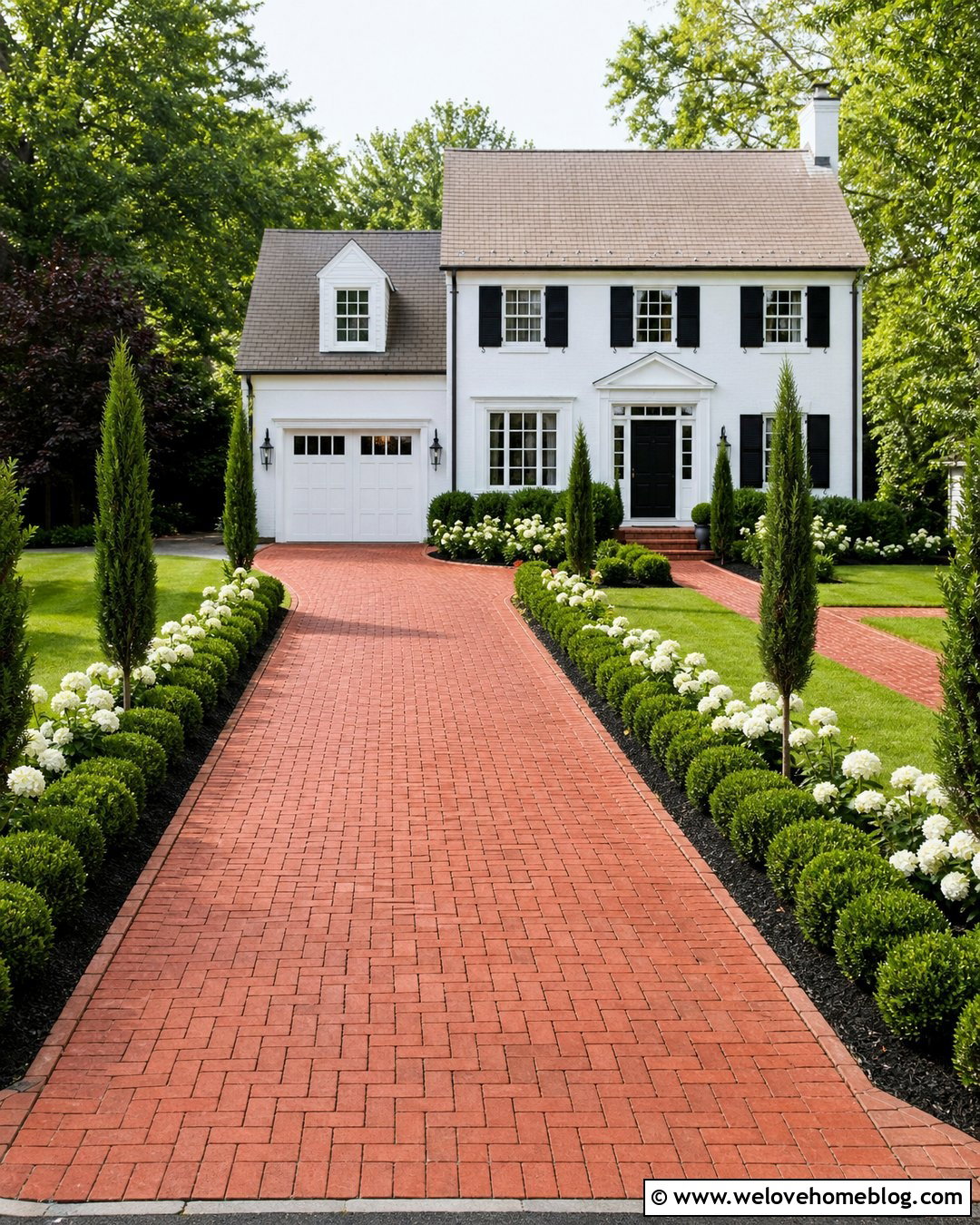
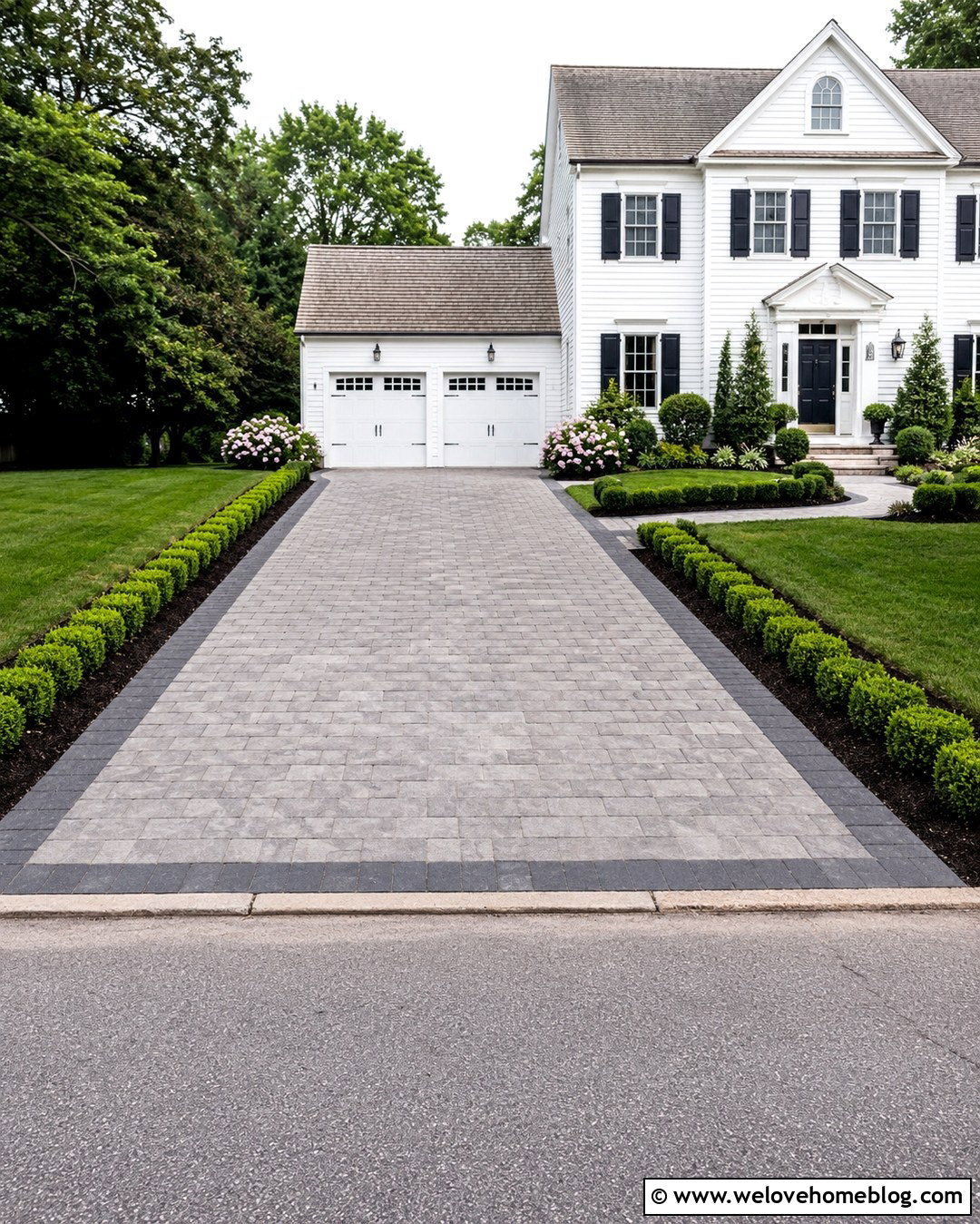
Symmetry can make a traditional Colonial home and its driveway feel especially polished. Start with a straight red brick driveway or brick-edged concrete surface centered on the garage. Create matching planting beds on both sides using low boxwood-like evergreens, white flowering shrubs, and narrow upright trees. Each side should repeat the same shapes and spacing without crowding the driving area. A brick walkway can branch from the driveway at a right angle and lead directly to the front entrance. Use dark mulch and a crisp lawn edge to strengthen the formal lines. Near the street, install balanced entrance beds rather than tall features that could reduce visibility. By repeating materials from the facade, walkway, and driveway border, the landscaping makes the entire front elevation feel orderly and connected.
22. Modern Driveway With Corten Steel Planters
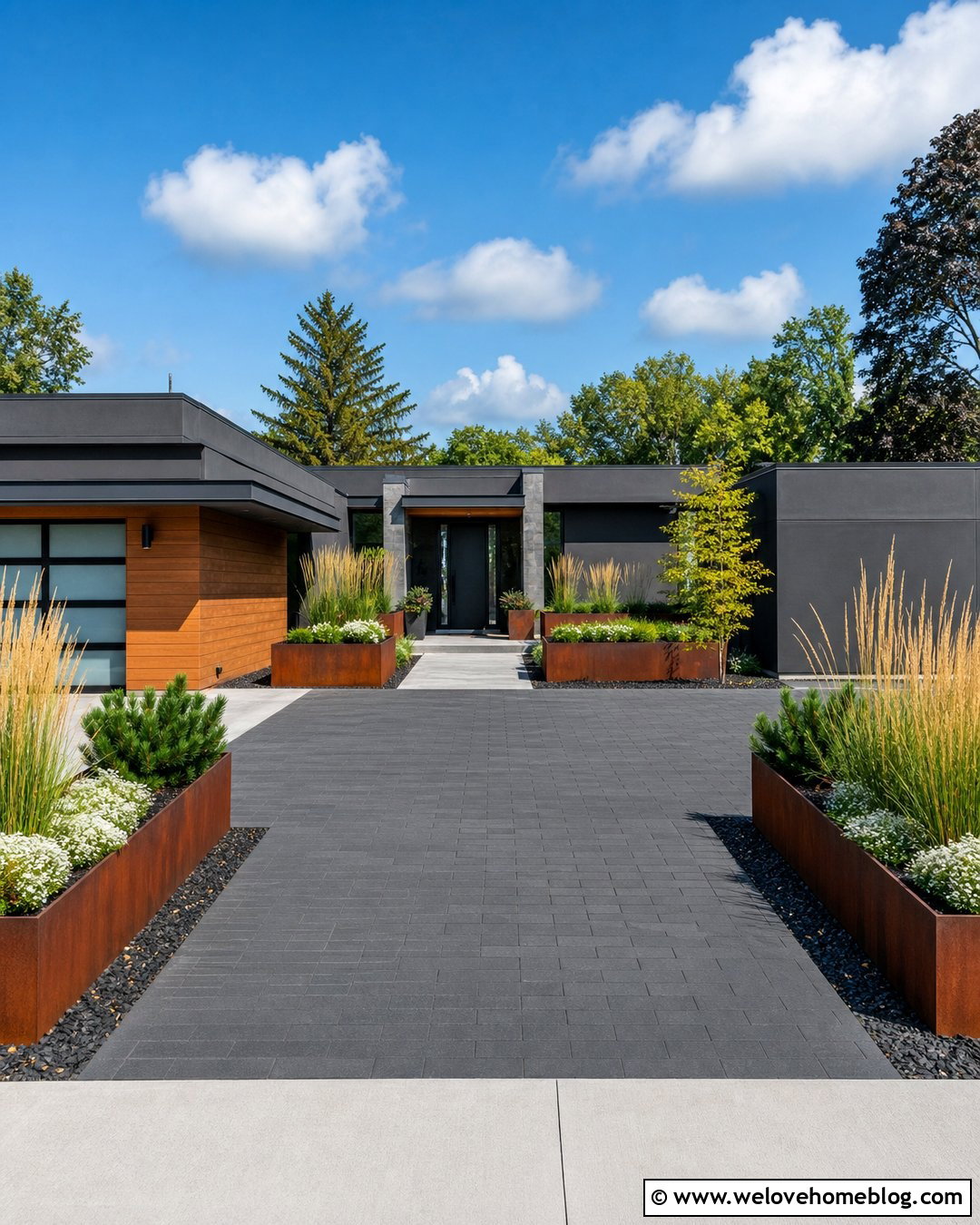
Corten steel brings warm color and sharp definition to a modern driveway landscape. Pair charcoal concrete pavers with wide linear planters positioned along one side of the approach. Fill them with upright ornamental grasses, compact evergreen forms, and a few low flowering plants in a restrained palette. Black gravel around the planters creates a smooth transition between rusty steel and dark paving. Keep the planter walls low beside parking spaces, then use taller sections closer to the home where they will not interfere with car doors or sightlines. A large-format concrete walkway can cross the planting bed and connect to a flat-roofed entrance. Repeat the steel as a mailbox, address panel, or small edging detail. This complete design feels bold and architectural without needing complicated plant combinations.
23. Driveway Entrance With Pillars and Planting Beds
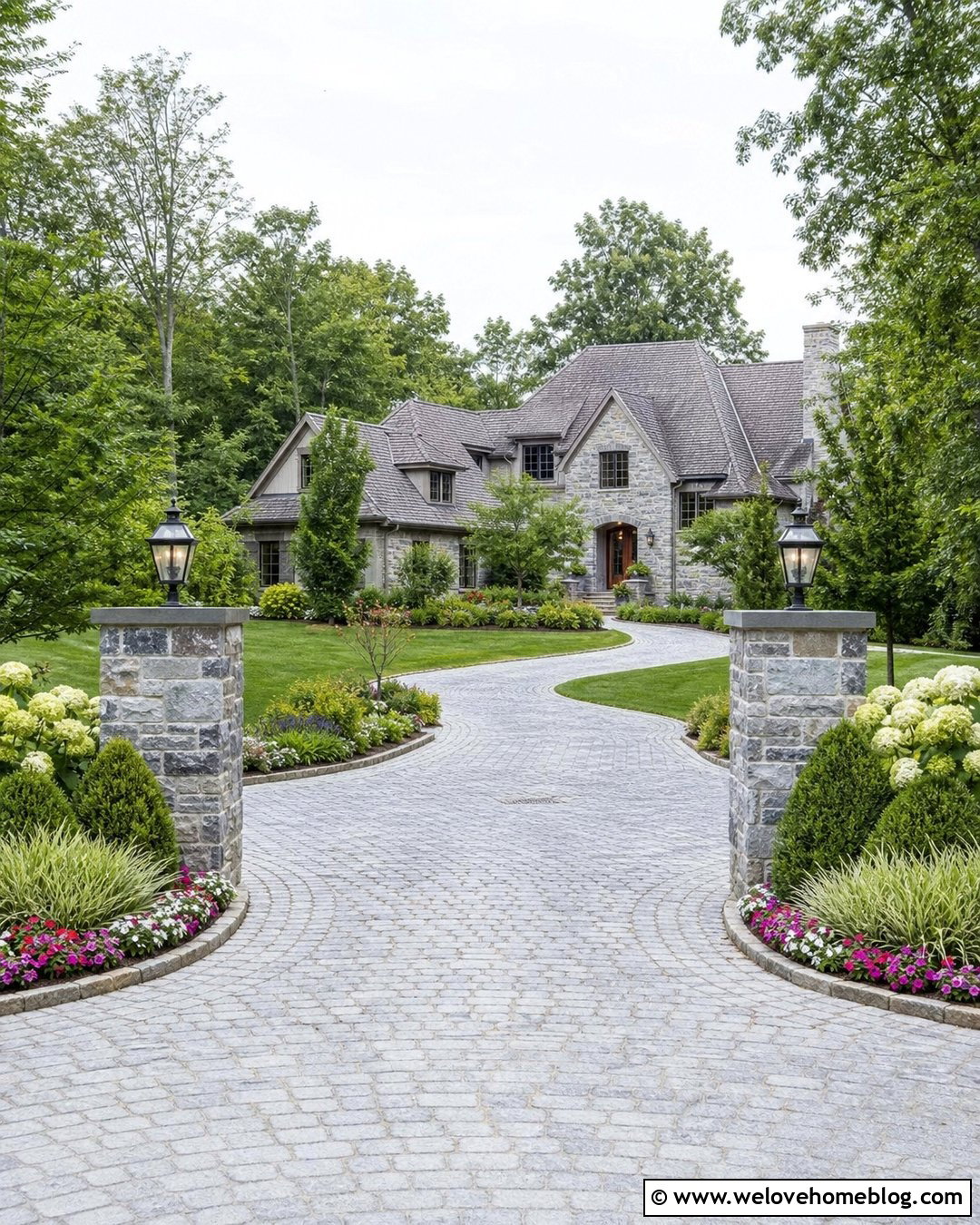
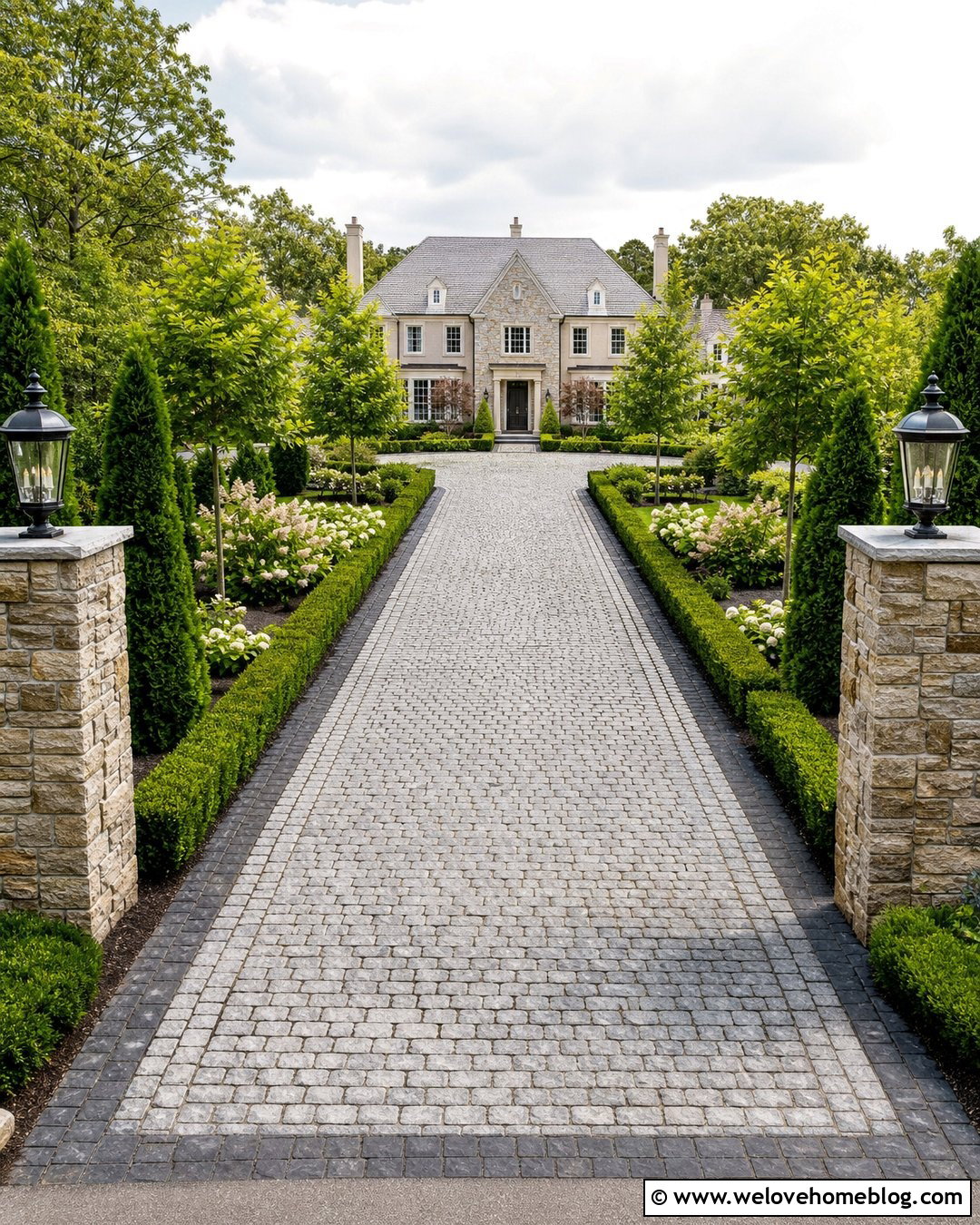
The entrance sets expectations for everything that follows, especially on a long driveway. Frame a curved cobblestone driveway with two stone pillars set behind safe, open turning areas. Build low crescent-shaped beds around the pillars using compact evergreen shrubs, ornamental grasses, and seasonal flowers. The plants should remain short near the street so drivers can see approaching traffic and pedestrians. Continue the stone as a low driveway edge, then transition into wider natural planting farther onto the property. Simple lantern-style fixtures can top the pillars, while an address plaque remains easy to read without dominating the design. Match the pillar stone to the home’s chimney or foundation. This coordinated combination makes the entrance visible, welcoming, and connected to the driveway, landscape, and house beyond.
24. Driveway With Layered Plants and Lighting
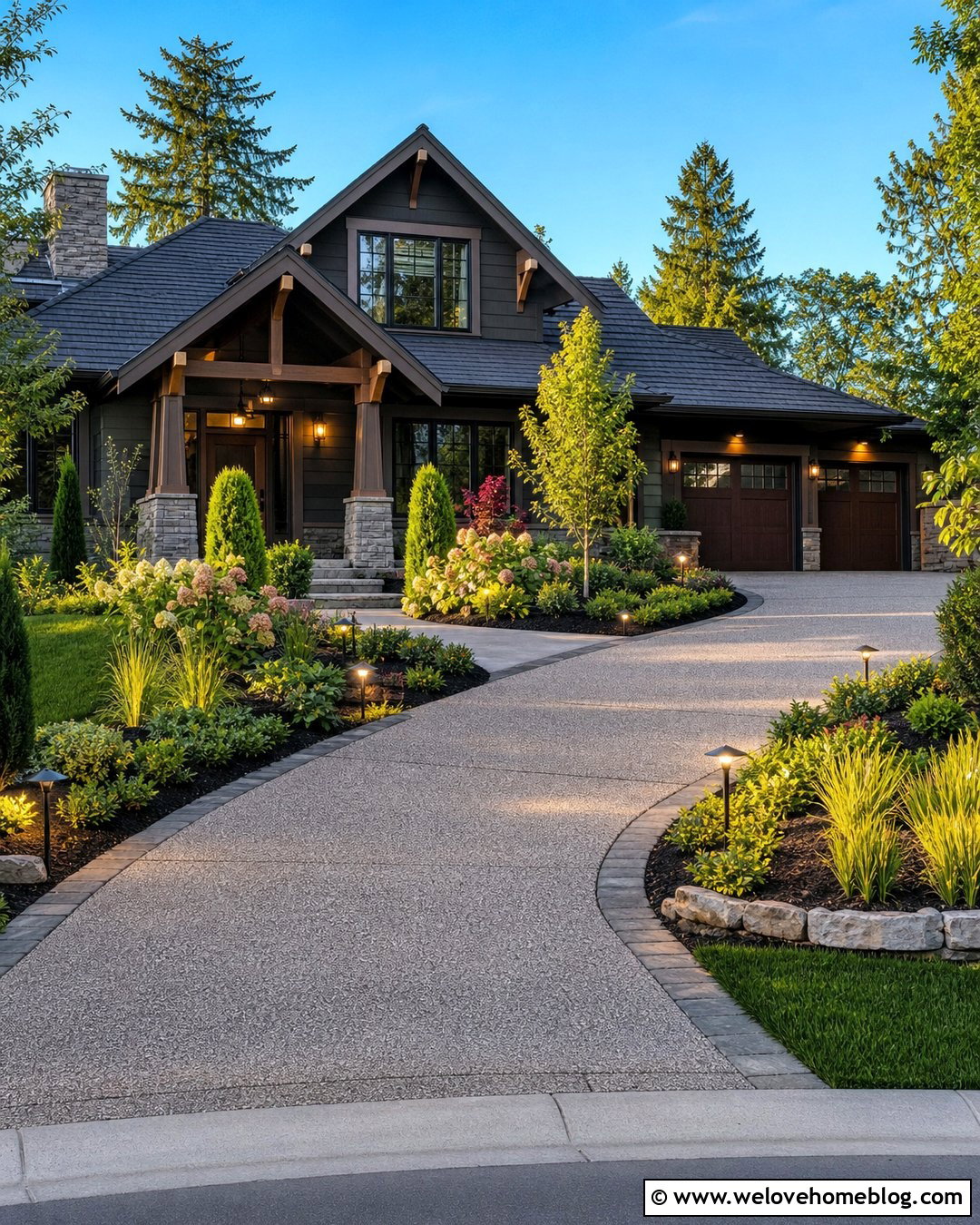
Good driveway lighting should support the landscaping instead of appearing as a row of disconnected fixtures. Along a curved exposed-aggregate driveway, create layered beds with low ground cover at the front, flowering shrubs in the middle, and upright evergreens at key corners. Place low-voltage path lights within the front layer so they mark the driveway boundary without becoming the main daytime feature. A natural stone curb keeps mulch and soil off the aggregate surface. Use additional lighting near the walkway intersection, garage, and entrance rather than illuminating every plant. During the day, the repeated layers guide the eye toward the house. After dark, the fixtures make changes in direction easier to understand. The driveway material, stone edge, planting heights, and lighting all contribute to one complete approach.
25. Budget Driveway With Simple Perennial Borders
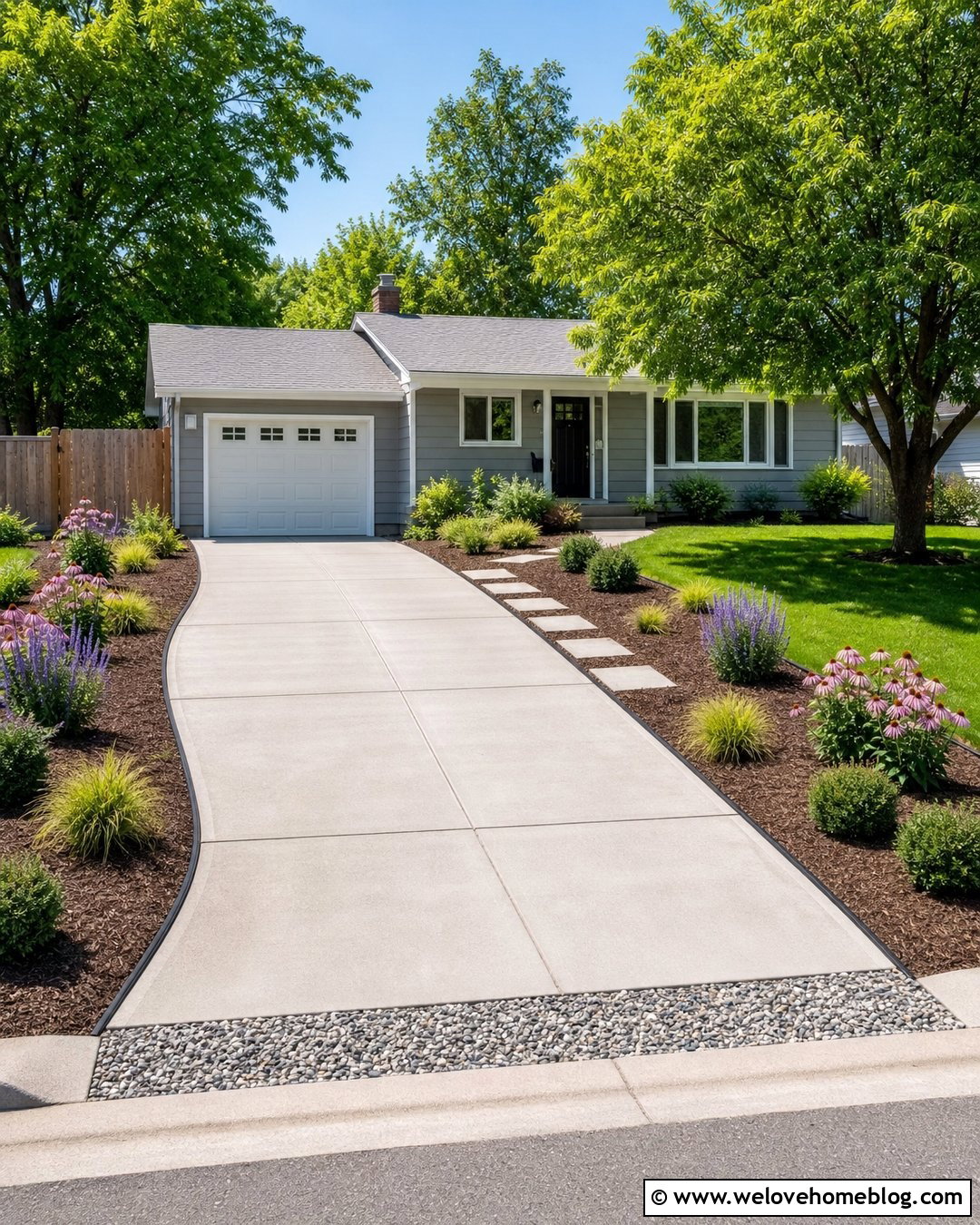
An affordable driveway upgrade can begin with a clean edge and a limited plant palette. Beside an existing gray concrete driveway, remove irregular strips of lawn and create two gently curved beds using flexible metal edging. Add mulch, then plant repeated groups of durable perennials, small ornamental grasses, and compact shrubs suitable for the site. Start with wider spacing and allow plants to mature rather than buying enough to fill every gap immediately. Use inexpensive concrete stepping pads where passengers need access to the lawn or sidewalk. A fresh gravel strip near the driveway entrance can handle occasional tire contact better than delicate flowers. Repeating the same three or four plants keeps purchasing and maintenance simple. The complete landscape looks planned, colorful, and achievable without replacing the functional driveway surface.
Conclusion:
The most successful landscaping next to a driveway combines appearance with everyday access, visibility, drainage, and realistic maintenance. Start by studying where doors open, people walk, water collects, and tires occasionally leave the pavement. Then choose a border, planting layout, and driveway material that suit the house and available space. Low plants, defined edges, repeated colors, and clear transitions usually create a more polished result than crowded beds filled with unrelated features. Trees, hedges, walls, and large boulders should be placed with mature size and driver sightlines in mind. Use these 25 landscaping next to driveway ideas to create an approach that feels welcoming, practical, and connected to your entire front yard.

Related posts:
Leave a Reply