

1. Gravel Driveway With Lavender Borders
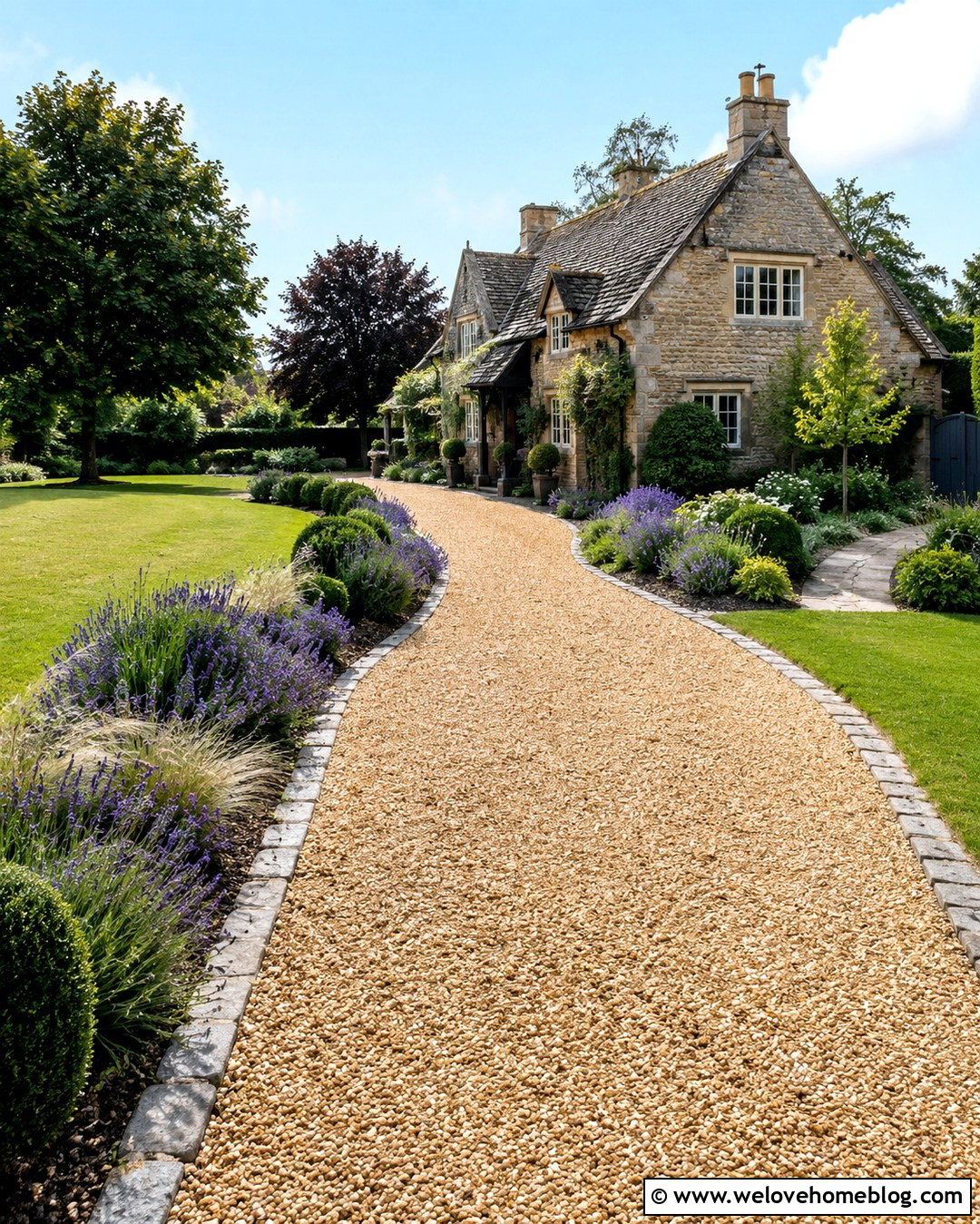
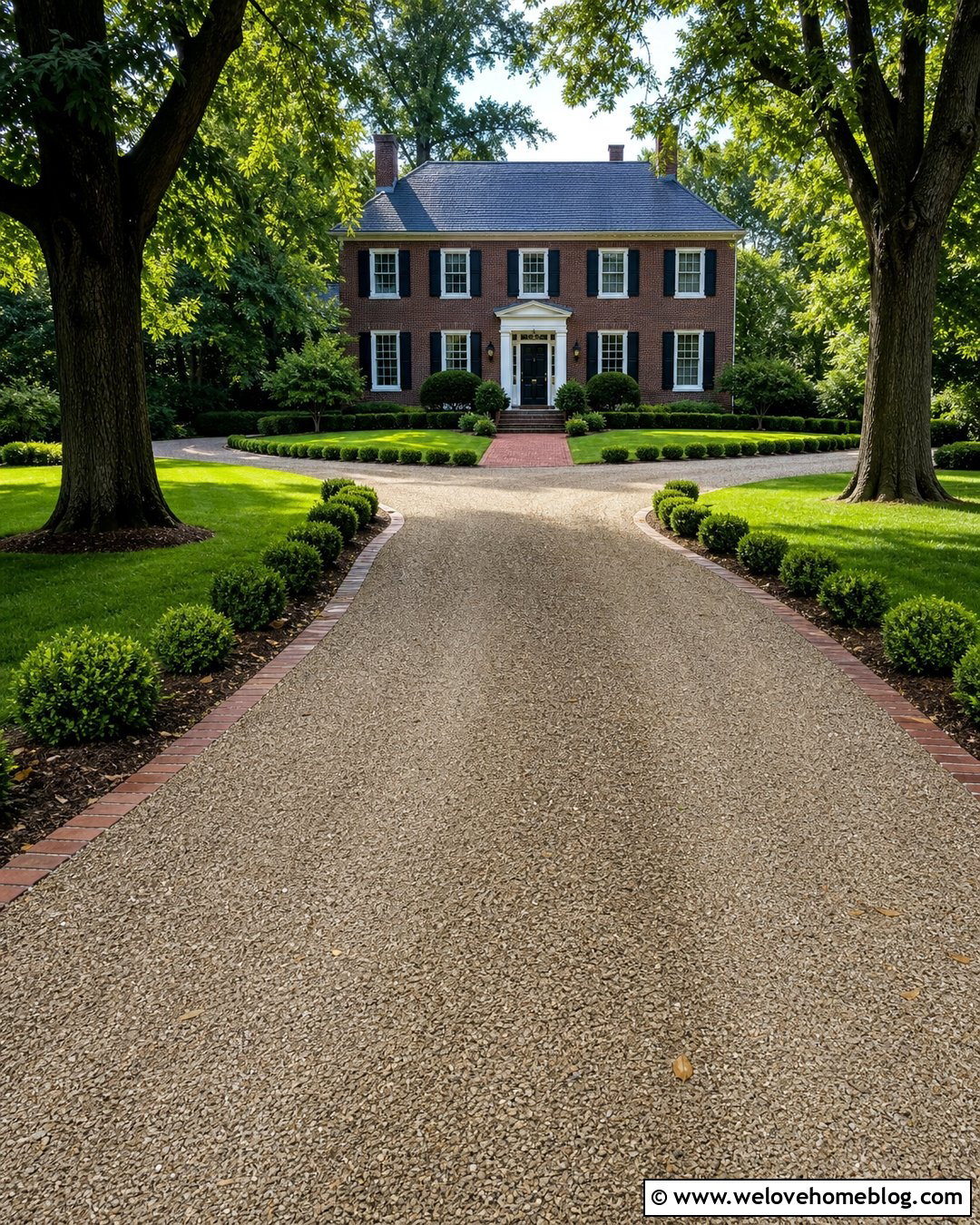
Warm golden gravel, soft lavender borders, and aged cobblestone edging create a relaxed entrance that suits cottages and traditional brick homes. Use a gently curved driveway rather than a rigid straight line when the front garden has enough width. This makes the approach feel more natural. Install firm metal or stone edging to prevent loose gravel from spreading into the beds. Lavender can be mixed with compact grasses, hardy geraniums, and low evergreen shrubs for longer seasonal interest. Keep plants set back from turning areas so stems do not brush against vehicles. A matching gravel path can connect the parking space to the front door. Add one small ornamental tree near the house to give the entire driveway structure without overwhelming the view.
2. Block Paving Driveway With Evergreen Beds
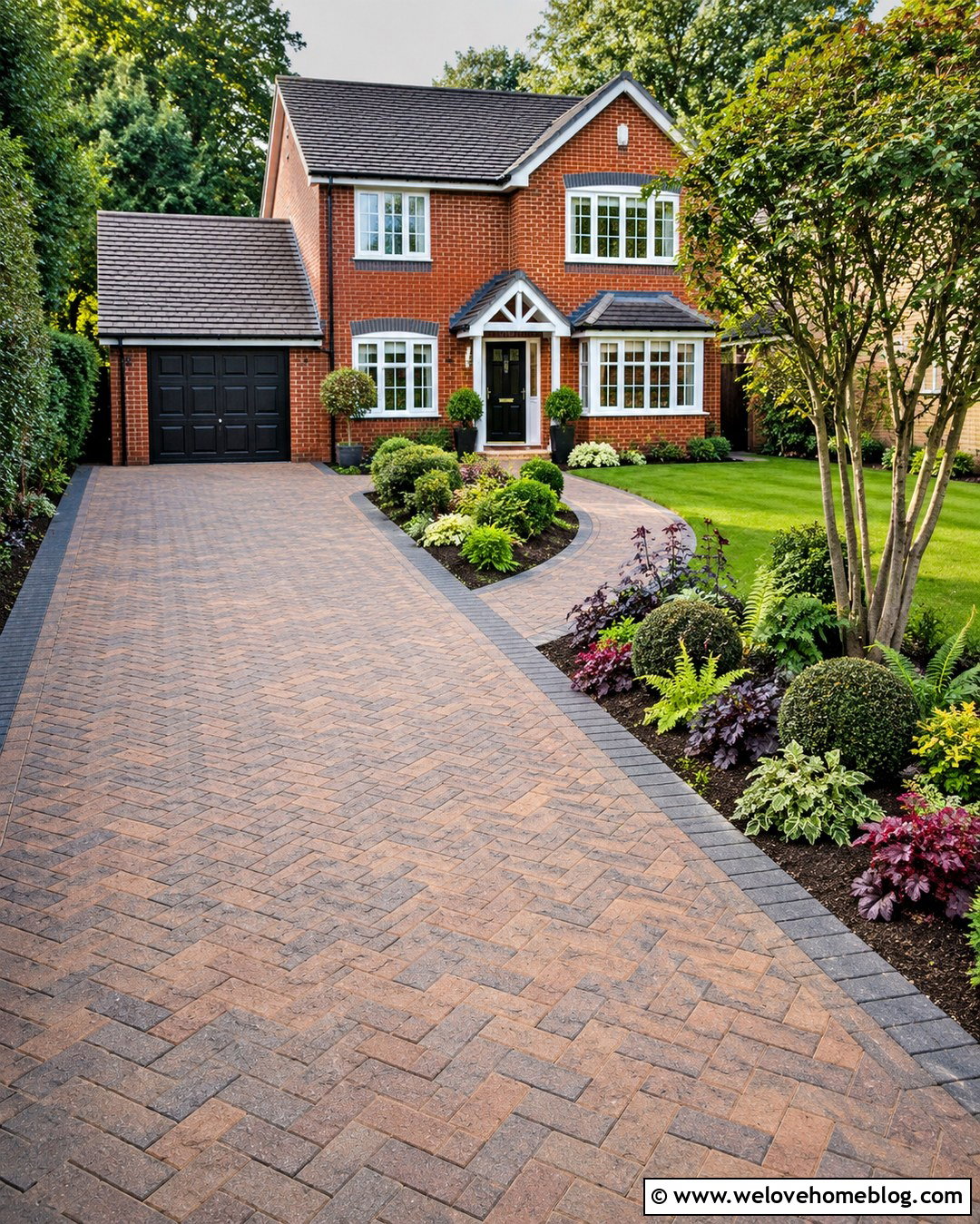
A block paving driveway looks more inviting when neat planting beds break up its broad, solid surface. Choose warm brindle blocks for a red-brick property or muted gray paving for a newer home. Lay the blocks in a herringbone pattern and finish the perimeter with a darker soldier-course border. Along one side, create a continuous bed containing rounded evergreen shrubs, ferns, heucheras, and shade-tolerant ground cover. Repeating a limited selection keeps the landscaping tidy rather than crowded. A small multi-stem tree can mark the transition between the driveway and front walkway. Leave enough clear space beside parking bays for doors to open comfortably. The result combines durable parking with greenery that looks established throughout the year and requires only occasional shaping.
3. Resin Driveway With Modern Planting
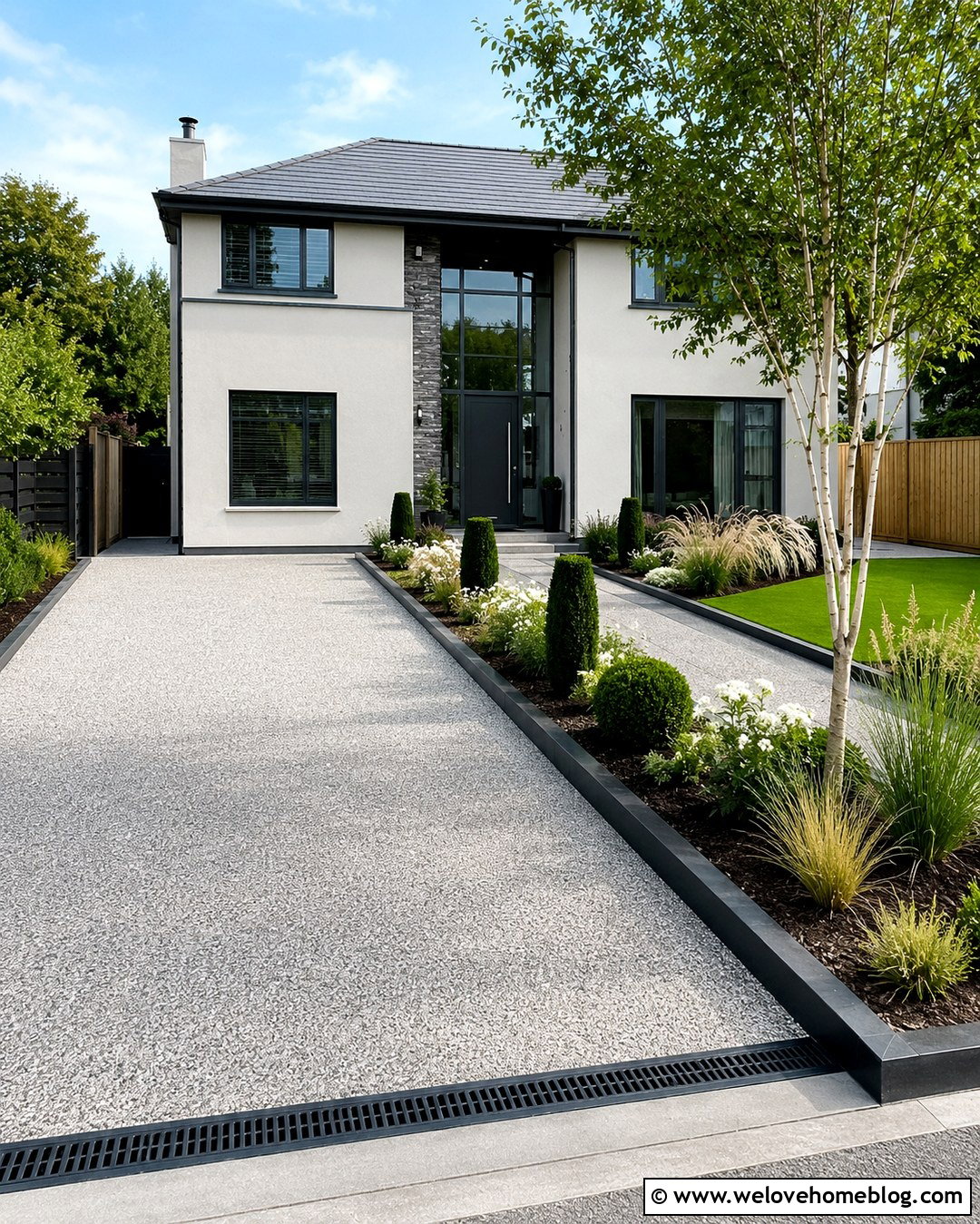
Smooth resin-bound gravel pairs naturally with simple planting and the clean facades found on contemporary UK homes. Select a silver-gray or warm buff aggregate that complements the brickwork, render, and window frames. A straight driveway with a clearly defined pedestrian path creates an organized layout. Use dark metal edging to separate the resin from rectangular beds filled with ornamental grasses, clipped evergreens, and a few white-flowering perennials. Repeating the same plants in evenly spaced groups strengthens the modern appearance. Avoid filling every gap with different varieties. One sculptural multi-stem birch or compact olive can provide height near the entrance. Integrated drainage channels should sit flush with the surface. This complete design feels polished while remaining practical for everyday parking and access.
4. Permeable Driveway With A Rain Garden
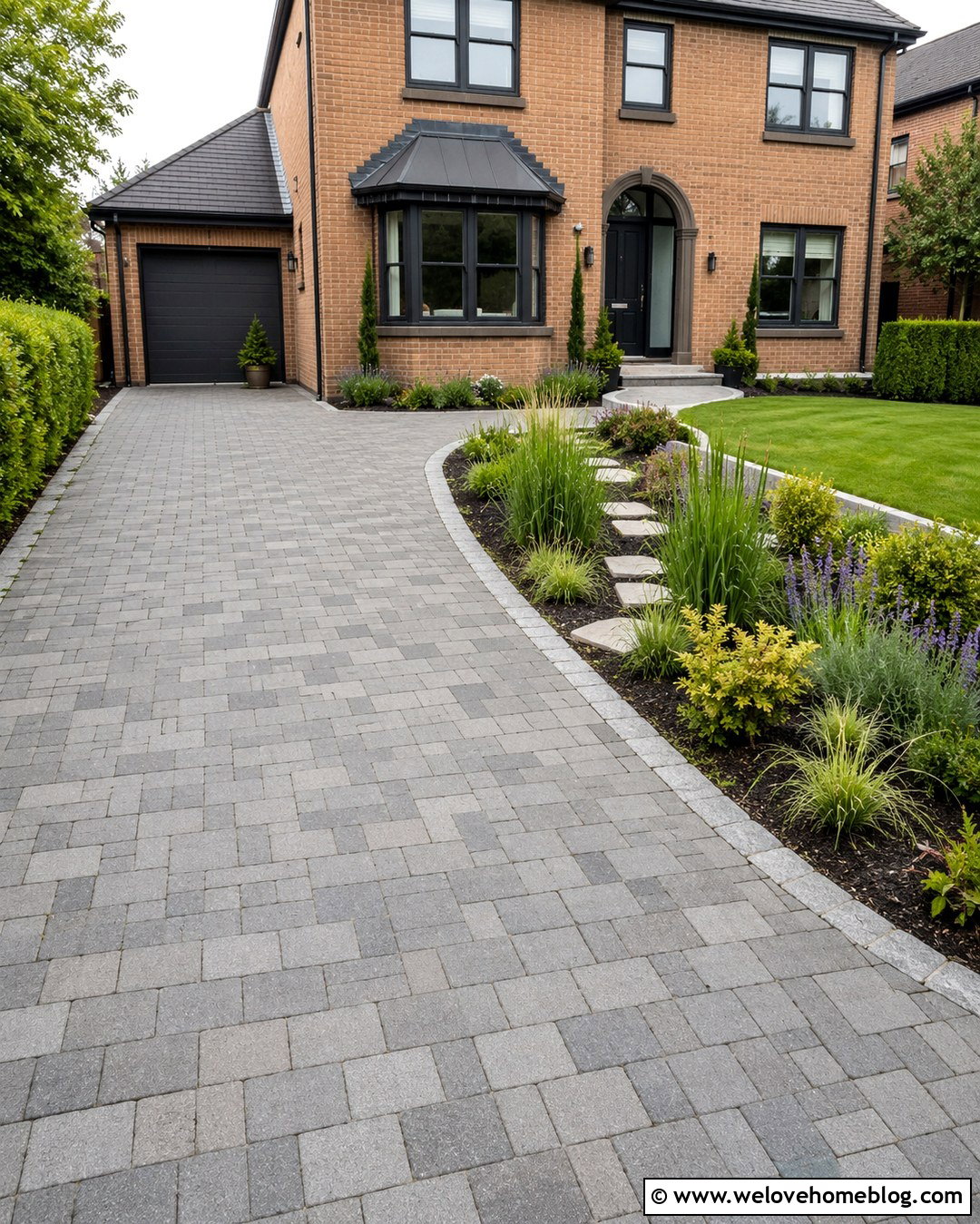
Rainy conditions make drainage an important part of UK driveway landscaping. Permeable block pavers can form the main parking surface, while a shallow rain garden beside the lower edge collects and filters runoff. Define the bed with granite setts and shape it as a broad curve that follows the driveway. Moisture-tolerant grasses, irises, sedges, and compact shrubs give the drainage feature a planted, intentional appearance. Include stepping stones if the bed sits between the car and front entrance. The surface levels and underlying drainage system should be professionally planned for the specific soil and site. Permeable materials or on-property drainage can also help a larger front hard surface meet applicable planning requirements. () The finished driveway looks green and cohesive rather than engineered around an exposed drain.
5. Victorian Brick Driveway With Formal Hedges
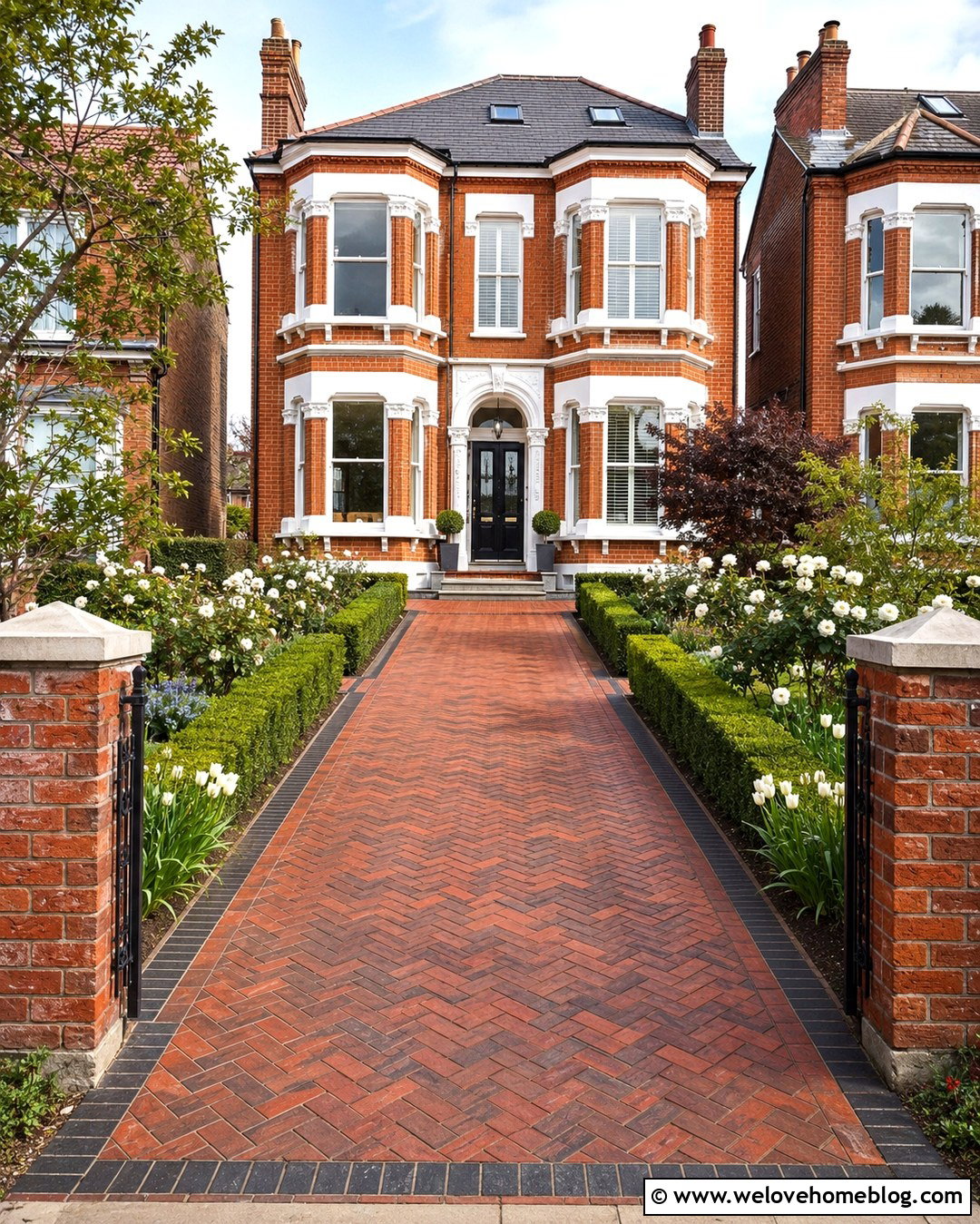
Traditional clay brick paving can reinforce the character of a Victorian terrace, villa, or bay-fronted home. Use red and brown bricks in a herringbone layout, framed by a narrow charcoal brick border. Low yew hedges along the sides create formal structure without hiding the architecture. Behind them, add seasonal bulbs, white roses, and upright evergreen shrubs for softness and color. The planting should stay low near the pavement to preserve visibility when vehicles exit. Restore or replicate original gateposts where possible, and connect them to the front door with a straight brick path. Black metal railings and simple globe-free lanterns complete the period appearance. This approach feels historically appropriate, yet the defined parking area and restrained planting still meet the needs of a modern household.
6. Tarmac Driveway With Granite Edging
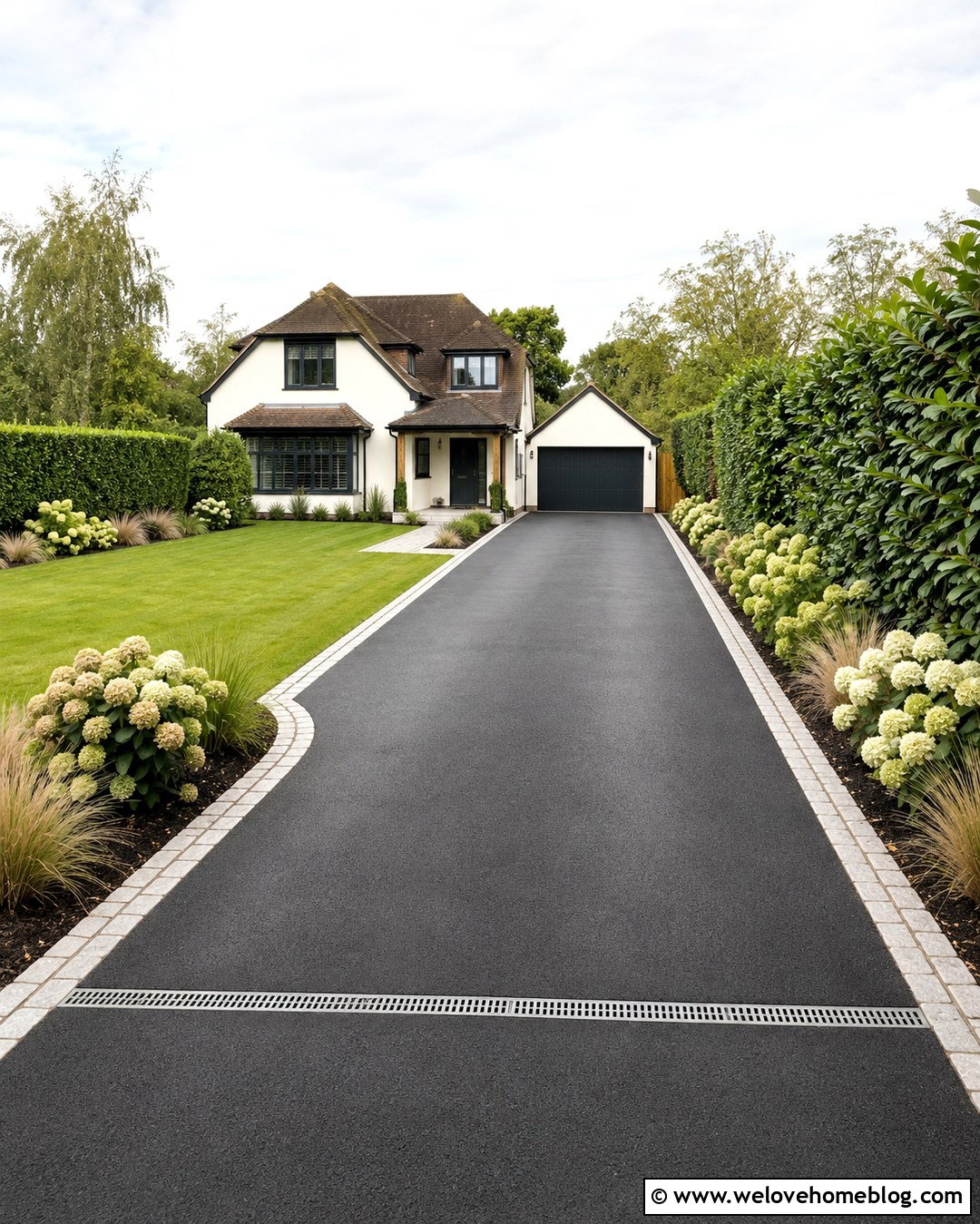
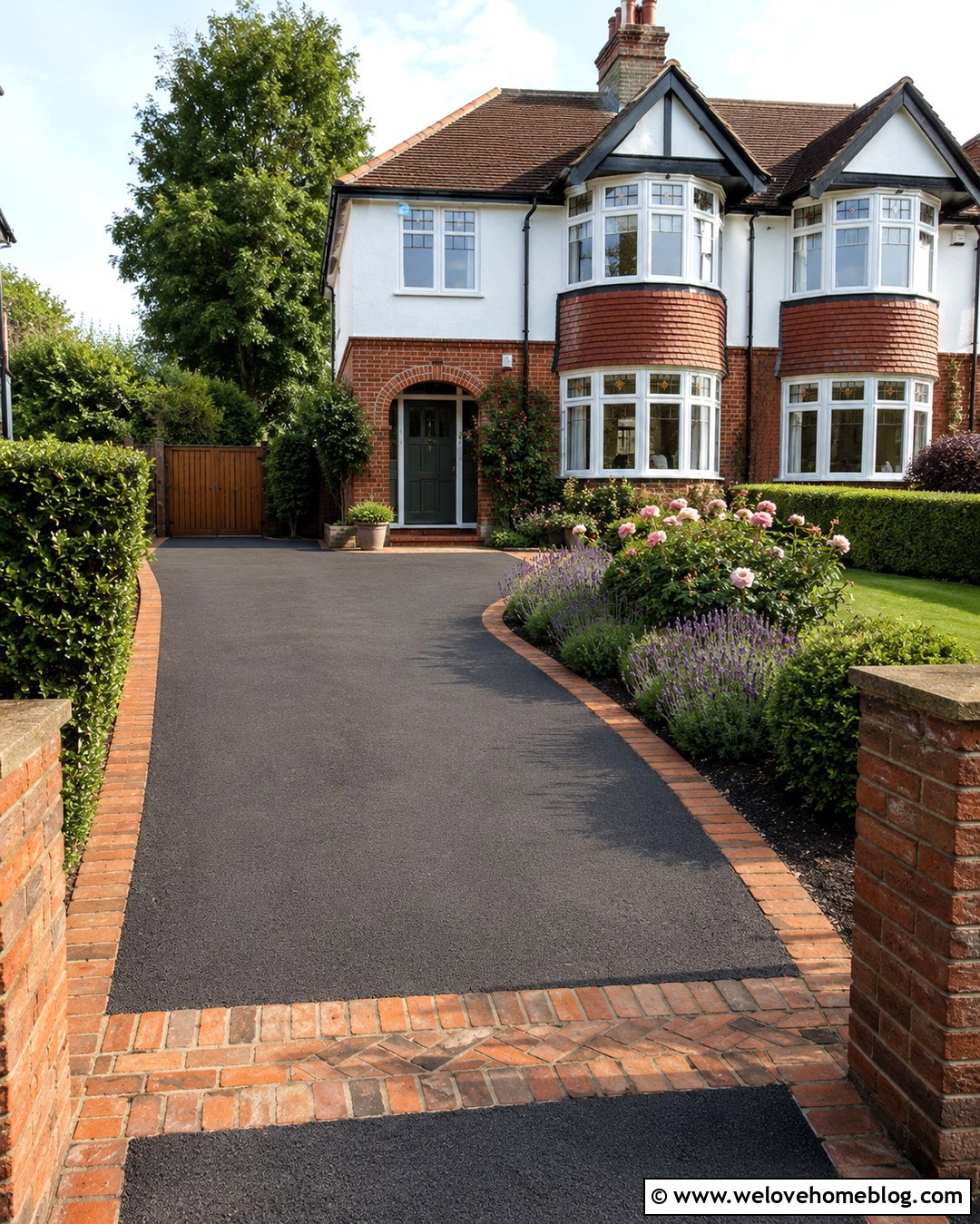
Black tarmac becomes far more attractive when it is framed with pale granite setts and carefully organized planting. This practical combination works especially well for long suburban driveways or properties where vehicles turn frequently. Run a double row of granite along both sides and repeat it around the front path for continuity. Wide planting beds can contain clipped Portuguese laurel, ornamental grasses, and groups of pale hydrangeas. On a narrower plot, use a single border with upright shrubs against the boundary. The strong contrast between dark tarmac and light stone gives the driveway a crisp finish. Position drainage channels discreetly across the garage entrance where required. Finish with a generous planted area near the front door so the surface does not visually dominate the entire garden.
7. Small Driveway With Planting Pockets
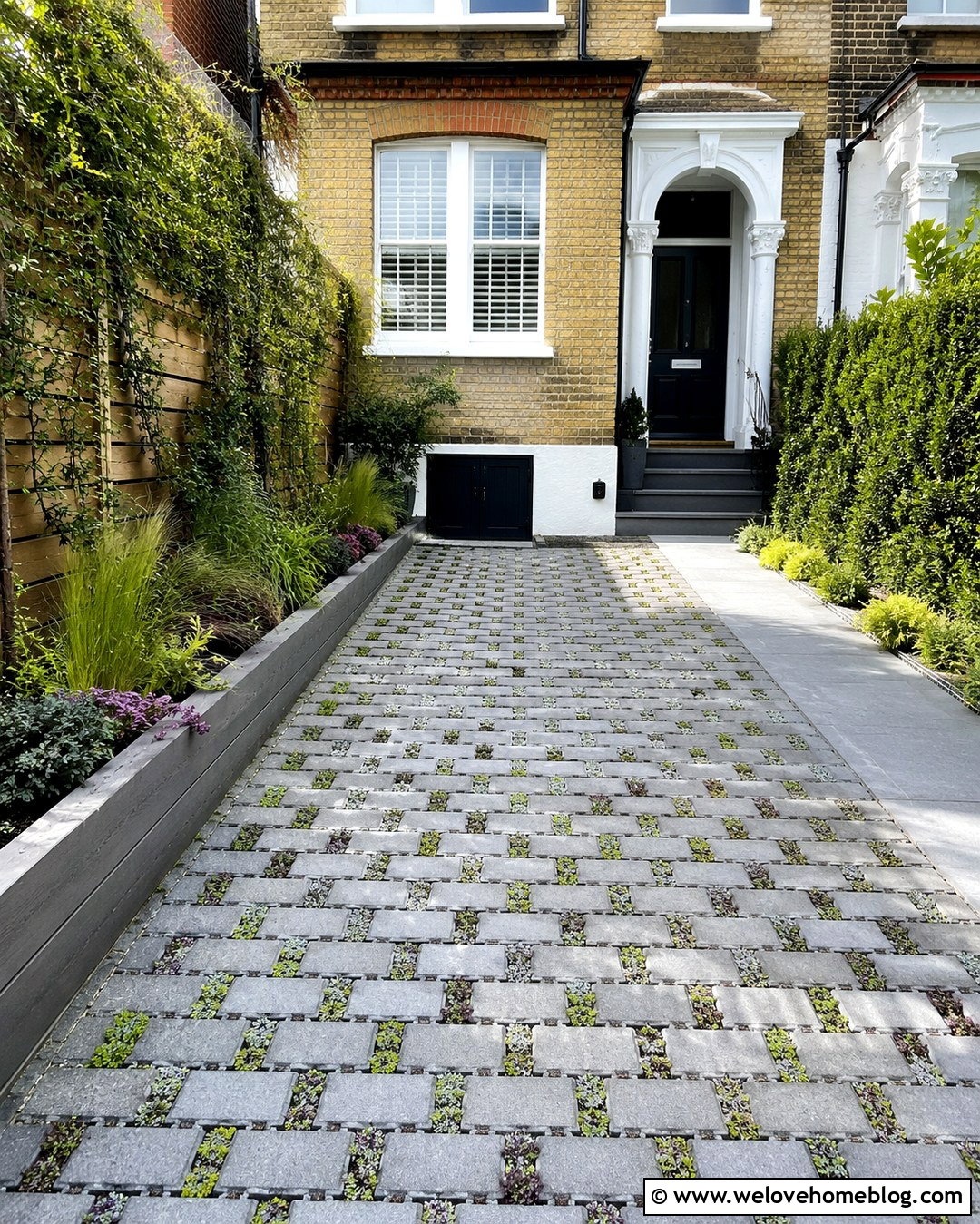
Even a one-car front garden can include useful greenery without sacrificing parking space. Start with permeable gray block paving laid in a simple running pattern. Remove selected blocks around the edges to create small planting pockets filled with creeping thyme, ajuga, sedums, or compact grasses. The RHS recommends leaving genuine soil pockets rather than planting over hardcore or concrete, particularly when adding low-growing plants around paved parking areas. () A narrow raised bed beneath the front window can hold one clipped evergreen and seasonal perennials. Use wall-mounted climbers to add height without taking up ground space. Keep the route between the vehicle and front door level and unobstructed. This balanced layout makes a compact driveway feel like a garden rather than wall-to-wall paving.
8. Circular Gravel Driveway With A Planted Island
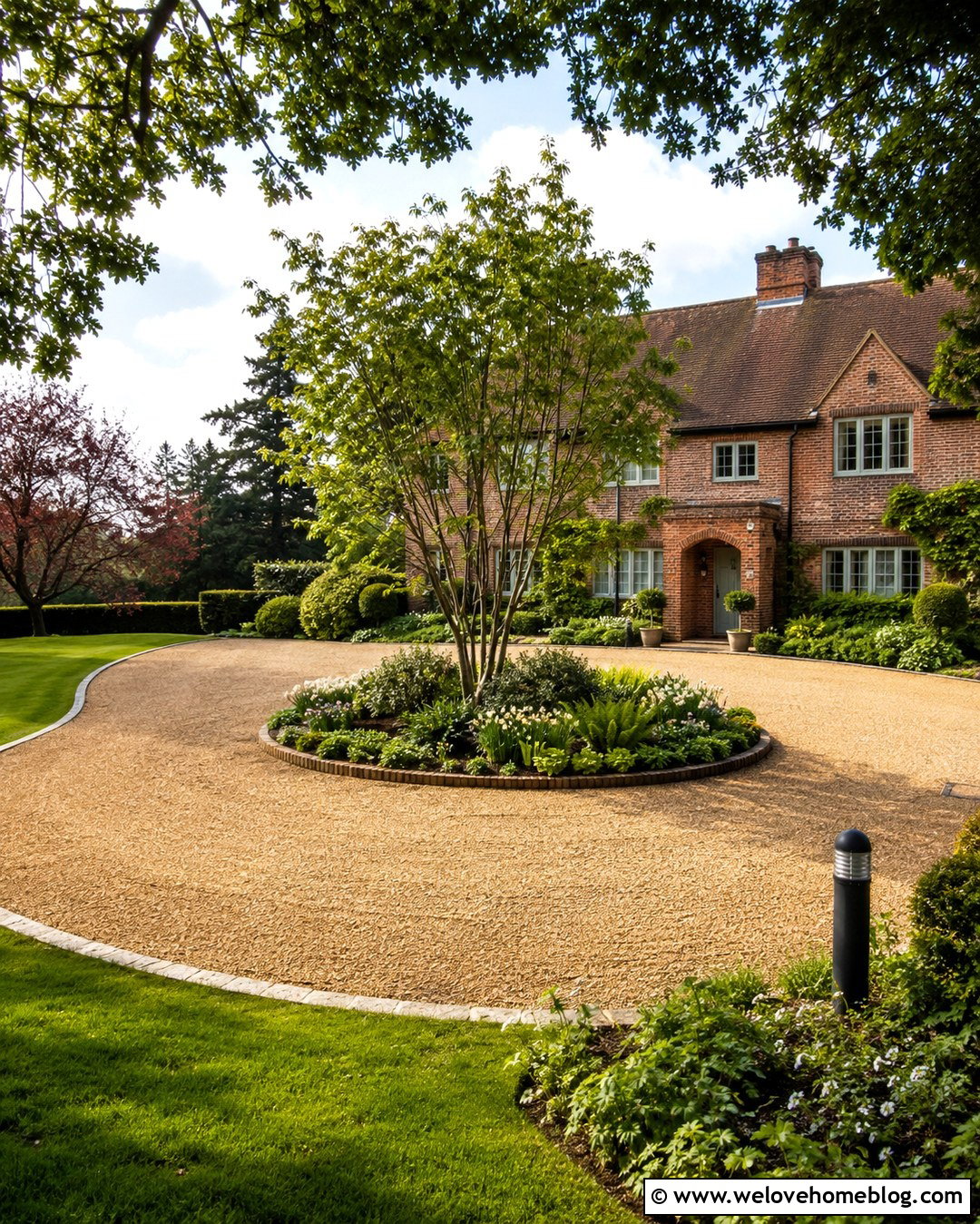
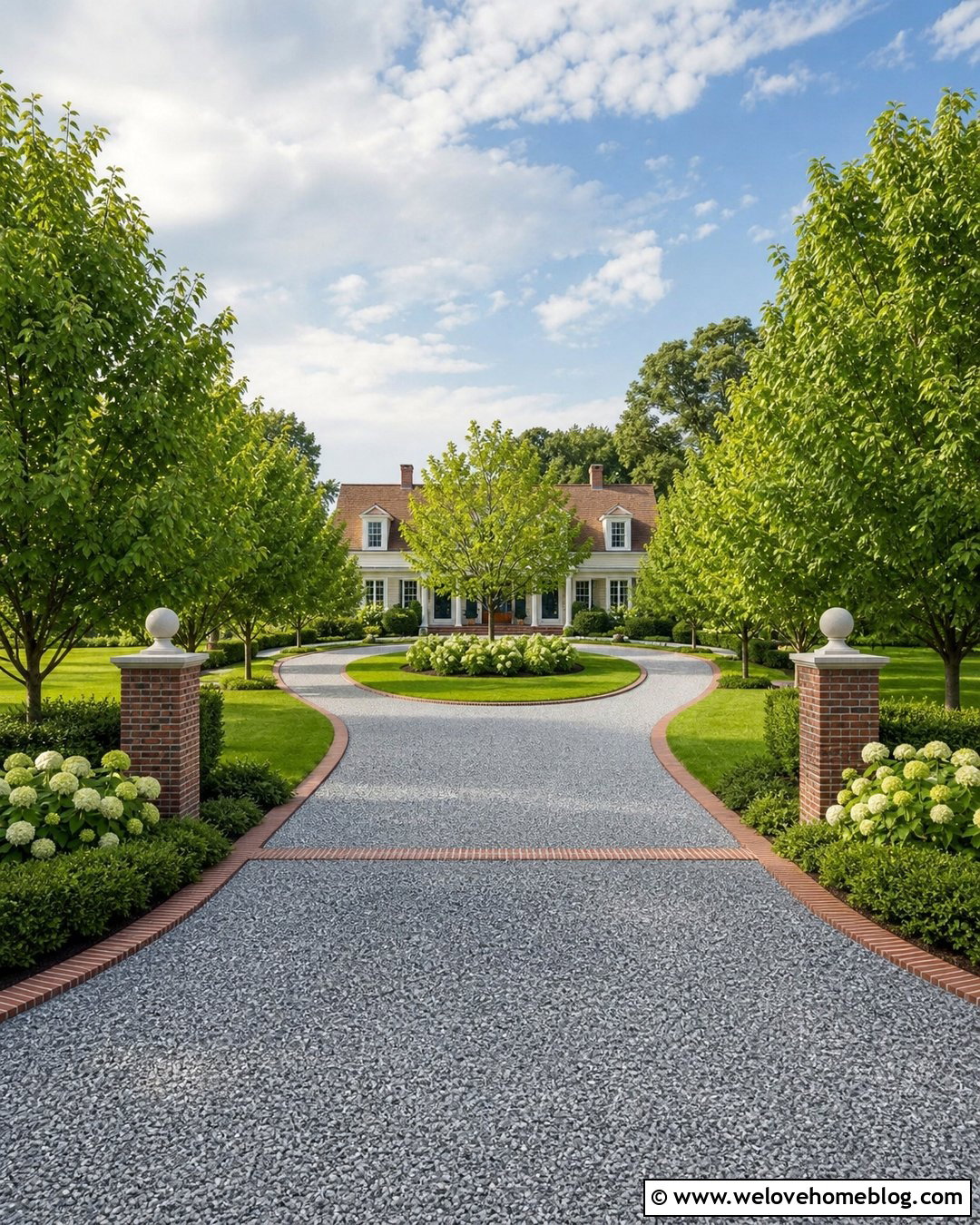
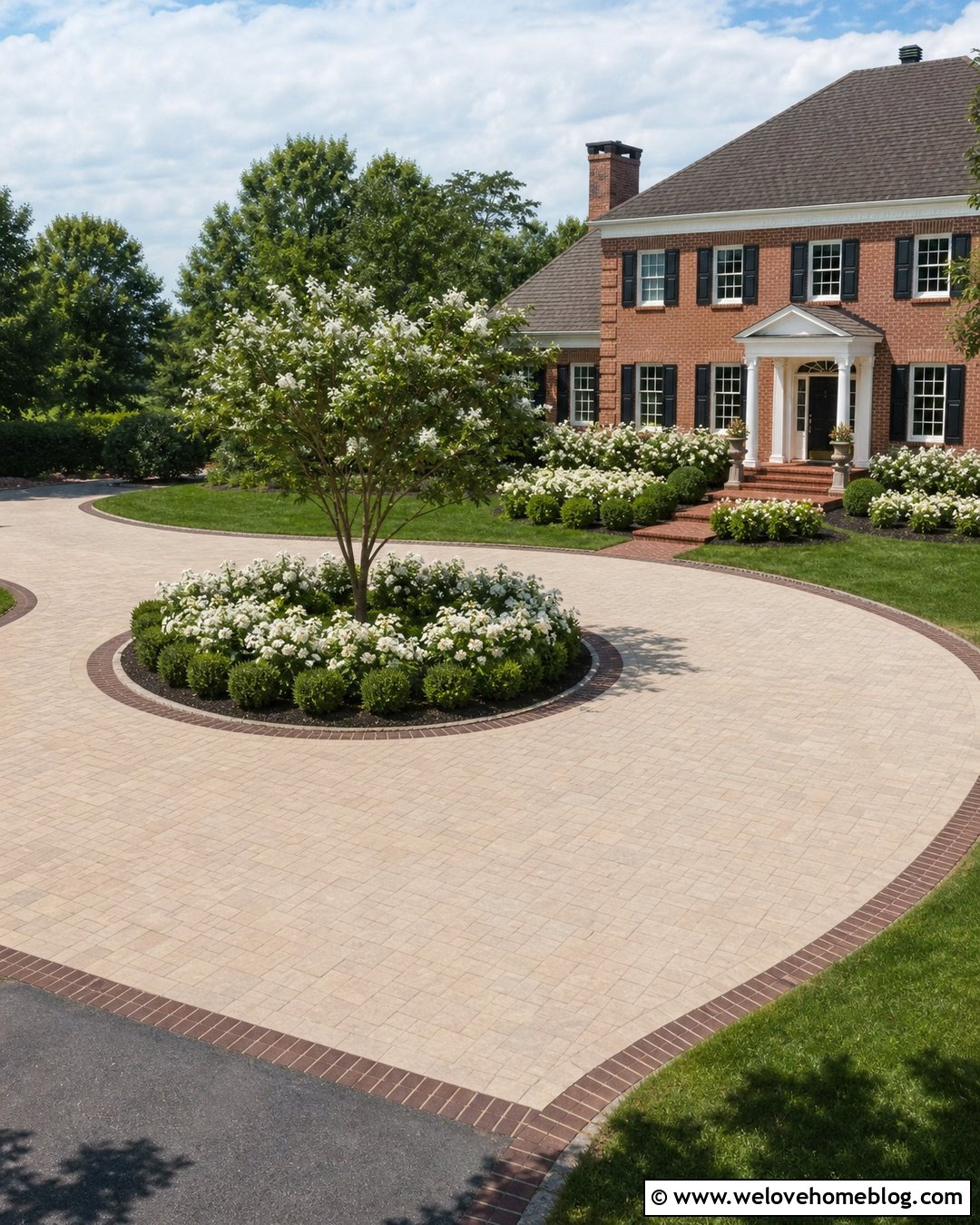
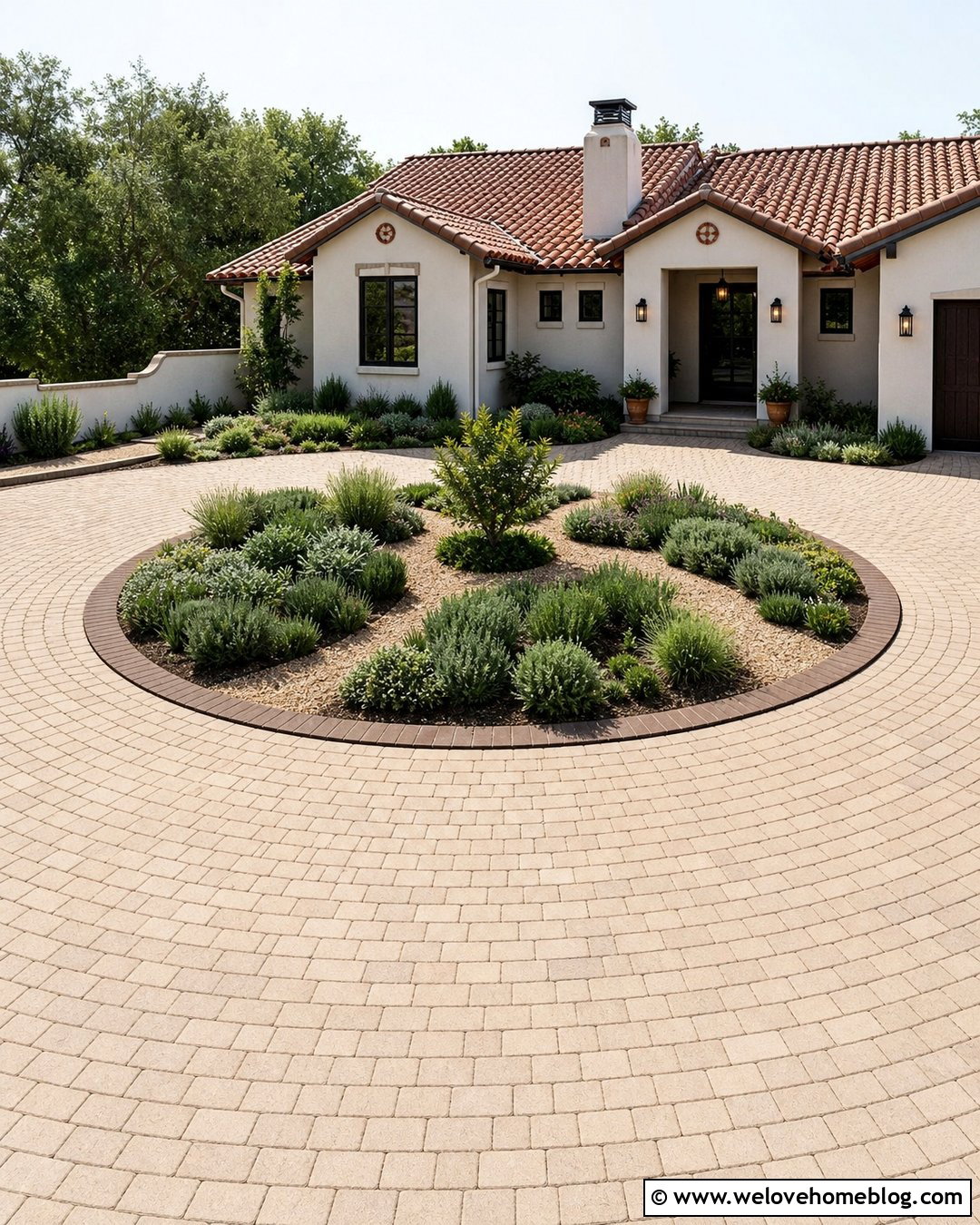
A circular gravel driveway can transform a larger front garden into an elegant but natural-looking arrival space. Use locally appropriate golden or gray gravel, contained by sturdy granite or reclaimed brick edging. In the center, create a broad planted island with a multi-stem tree as the focal point. Surround it with shade-tolerant shrubs, ferns, spring bulbs, and low ground cover. Keep taller planting away from the outer entrance so drivers have clear views of pedestrians and traffic. The turning lane should remain wide enough for comfortable movement without tires crossing the border. Repeat a few plants beside the house to connect the island with the wider garden. Subtle bollard lights can trace the curve while leaving the tree and layered planting as the main visual feature.
9. Curved Driveway With Small Trees
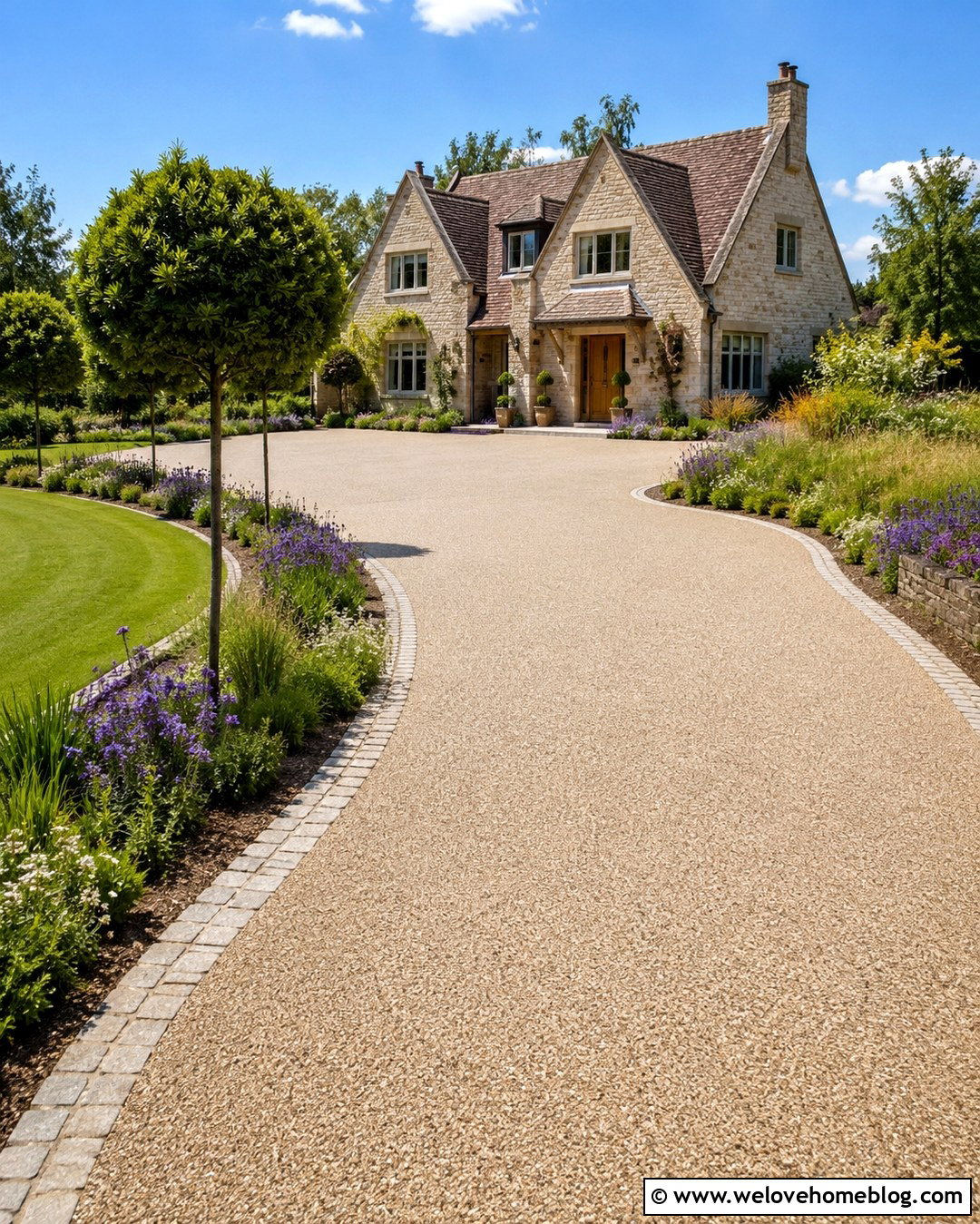
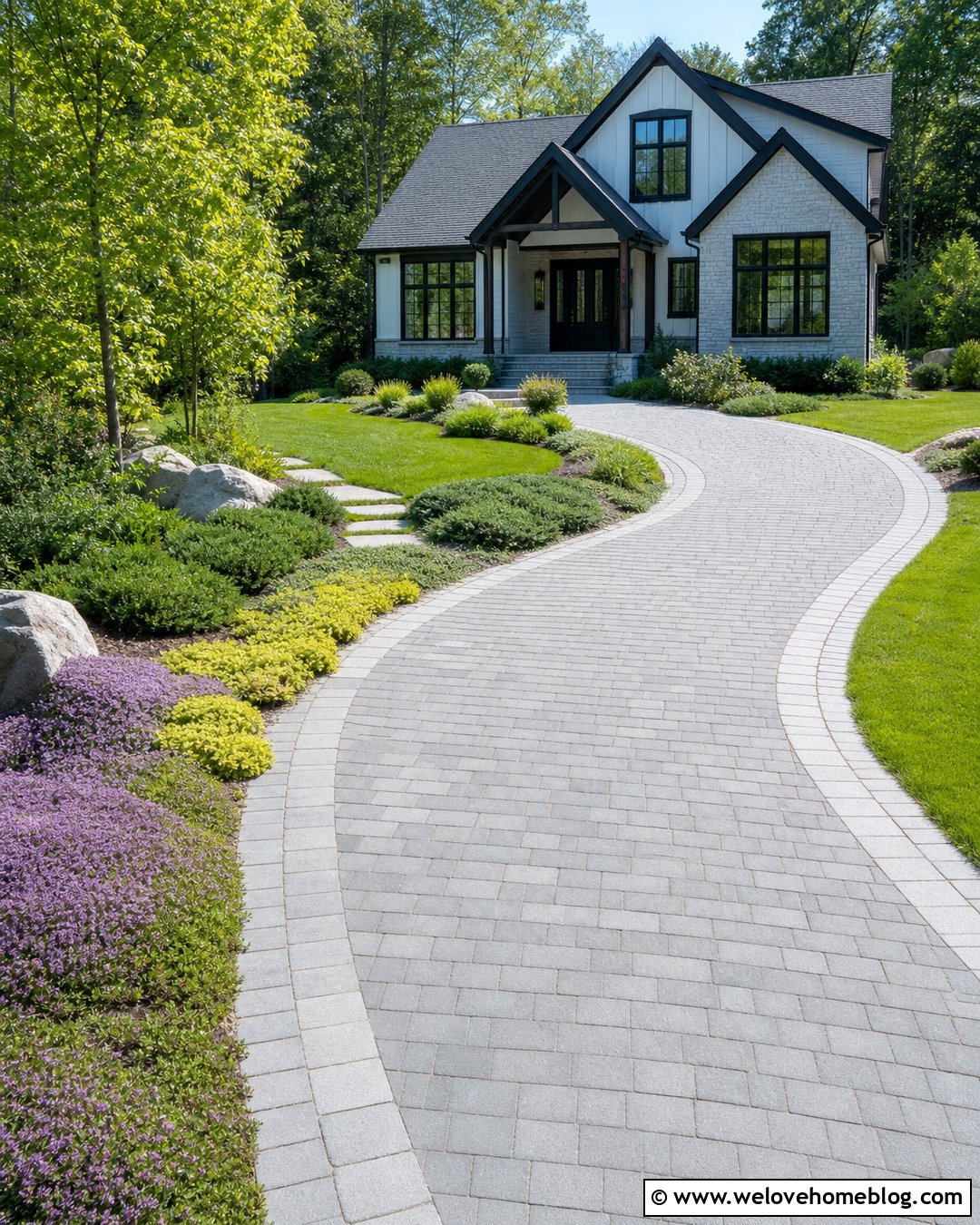
A gently curved driveway creates a slower, more interesting approach to a detached or semi-rural home. Pale gravel or resin-bound gravel keeps the surface visually light, while cobblestone edging clearly defines the bends. Plant evenly spaced, compact trees along the outer curve, choosing varieties with narrow trunks and canopies that will not obstruct vehicles. Beneath them, use a continuous mix of ornamental grasses, hardy geraniums, and spring bulbs. On the inner curve, maintain a simple lawn or low meadow border so the layout does not feel enclosed. Allow for the mature spread of every tree rather than planting tightly for instant impact. At the house, widen the driveway into a practical parking court framed by matching beds. The complete scheme feels established, graceful, and easy to navigate.


10. Sloped Driveway With Raised Planting Beds
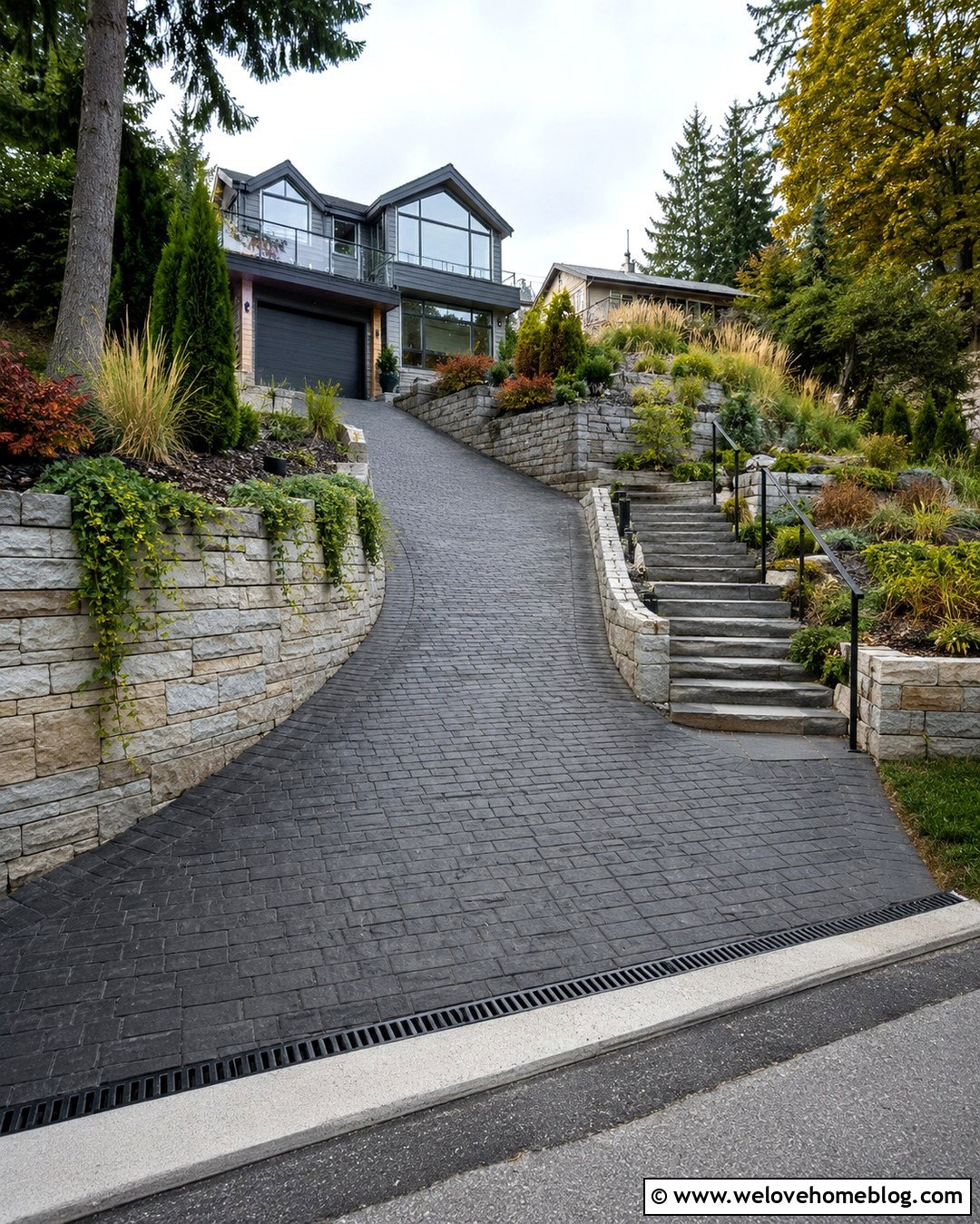
A sloping driveway benefits from strong edges that control soil and create level planting areas. Choose textured block paving or resin-bound gravel for the main surface, then use brick or natural stone retaining walls along the higher side. Build the walls in stepped sections rather than forcing one tall, uninterrupted barrier. Each level can hold compact evergreens, trailing plants, ornamental grasses, and drought-tolerant perennials. On the lower edge, install an appropriate drainage channel so water is directed safely within the property. Add a separate stepped walkway with a handrail when the incline makes pedestrian access uncomfortable. Repeating the driveway edging on the wall caps ties the materials together. Thoughtful terracing makes a difficult gradient look deliberate while reducing the visual impact of a large bank or retaining structure.
11. Narrow Driveway With Vertical Planting
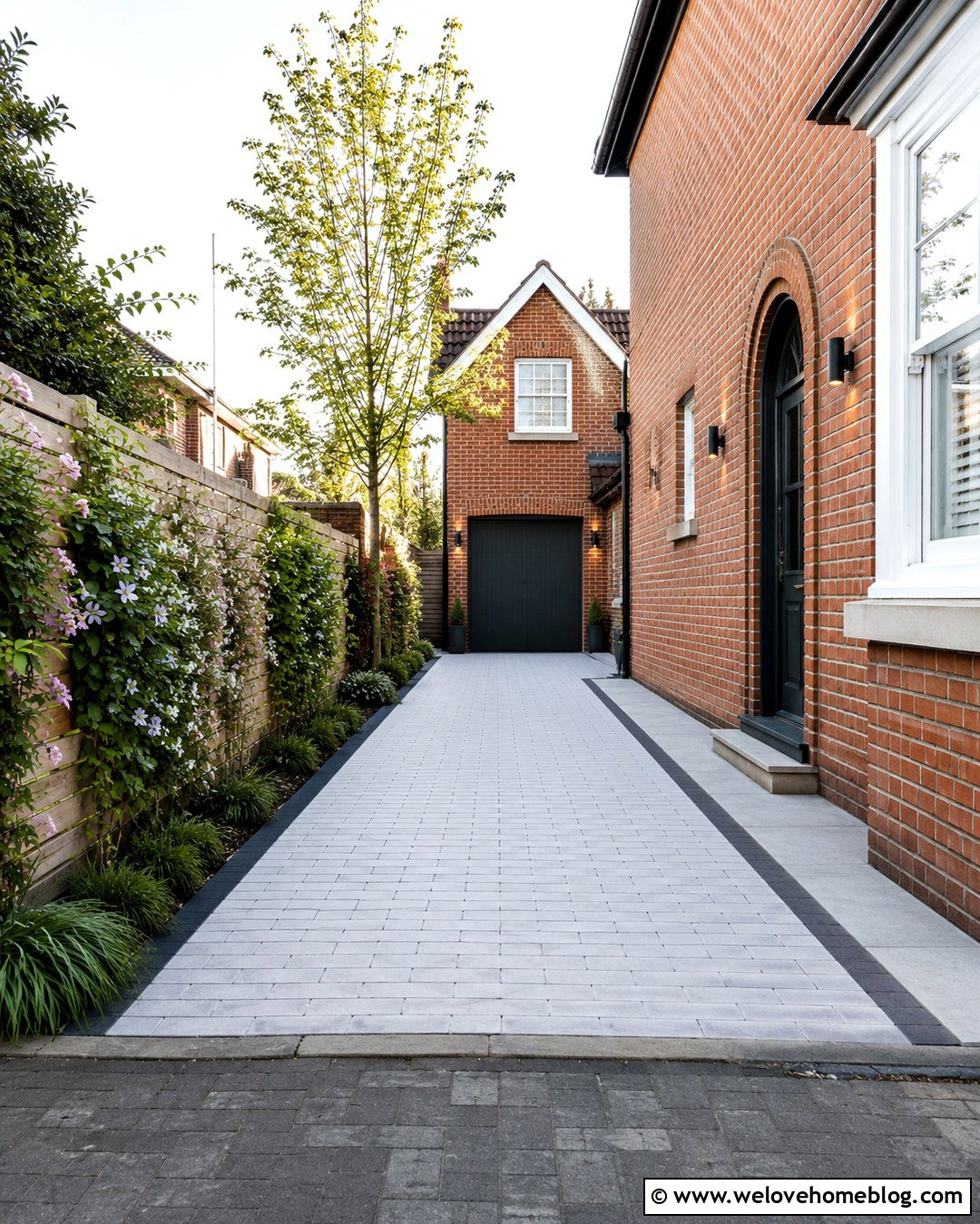
When a driveway runs closely between the house and boundary, vertical planting can provide greenery without reducing vehicle clearance. Use light-gray permeable pavers to brighten the narrow space and install a slim charcoal border along each side. A sturdy timber fence with horizontal wires can support climbing hydrangea, star jasmine, clematis, or trained evergreen foliage where conditions allow. Keep growth trimmed flat and check that stems will not interfere with doors or mirrors. At the end of the driveway, create a deeper bed with one upright tree and shade-tolerant ground cover. Wall lights can illuminate the route without occupying floor space. A contrasting paved path beside the parking strip will clarify pedestrian access. This layered approach turns a restricted side driveway into a greener, more comfortable entrance.
12. Shared Driveway With A Planted Boundary
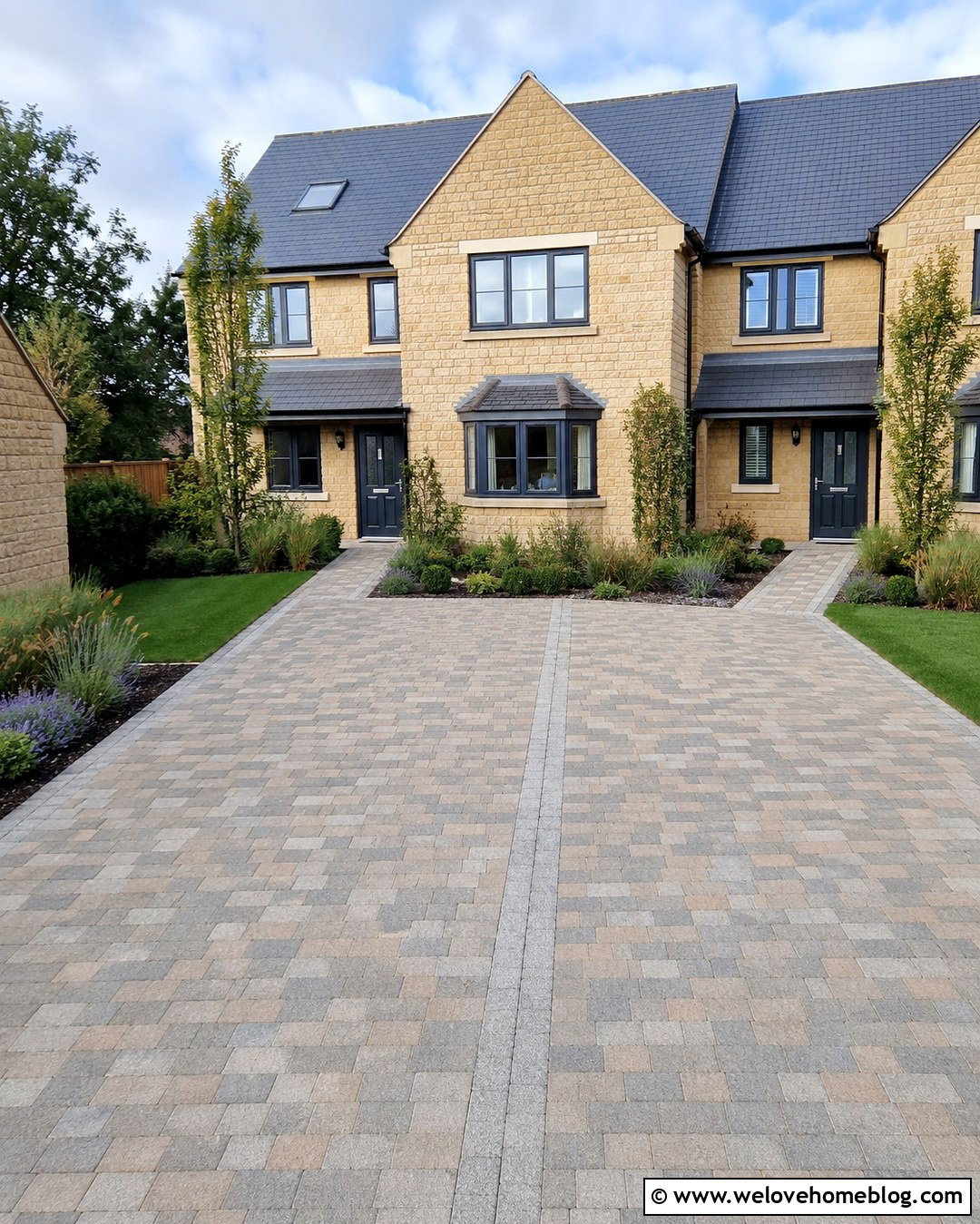
A shared driveway needs a clear division that does not restrict turning or create an unfriendly barrier. Begin with coordinated permeable block paving across the full entrance, then define each property using a narrow granite ribbon set flush with the surface. Farther from the pavement, introduce a low planted strip containing compact grasses, lavender, or clipped evergreen shrubs. Keep the planting below sight lines and stop it before the main maneuvering area. Matching front paths can branch toward each doorway, helping visitors understand the layout immediately. If greater privacy is required near the houses, gradually increase the planting height with upright shrubs or a narrow hedge. Using the same paving across both sides maintains visual unity, while the subtle stone line and landscaping create ownership without making the shared space feel divided or cramped.
13. Coastal Gravel Driveway With Wind-Tolerant Planting
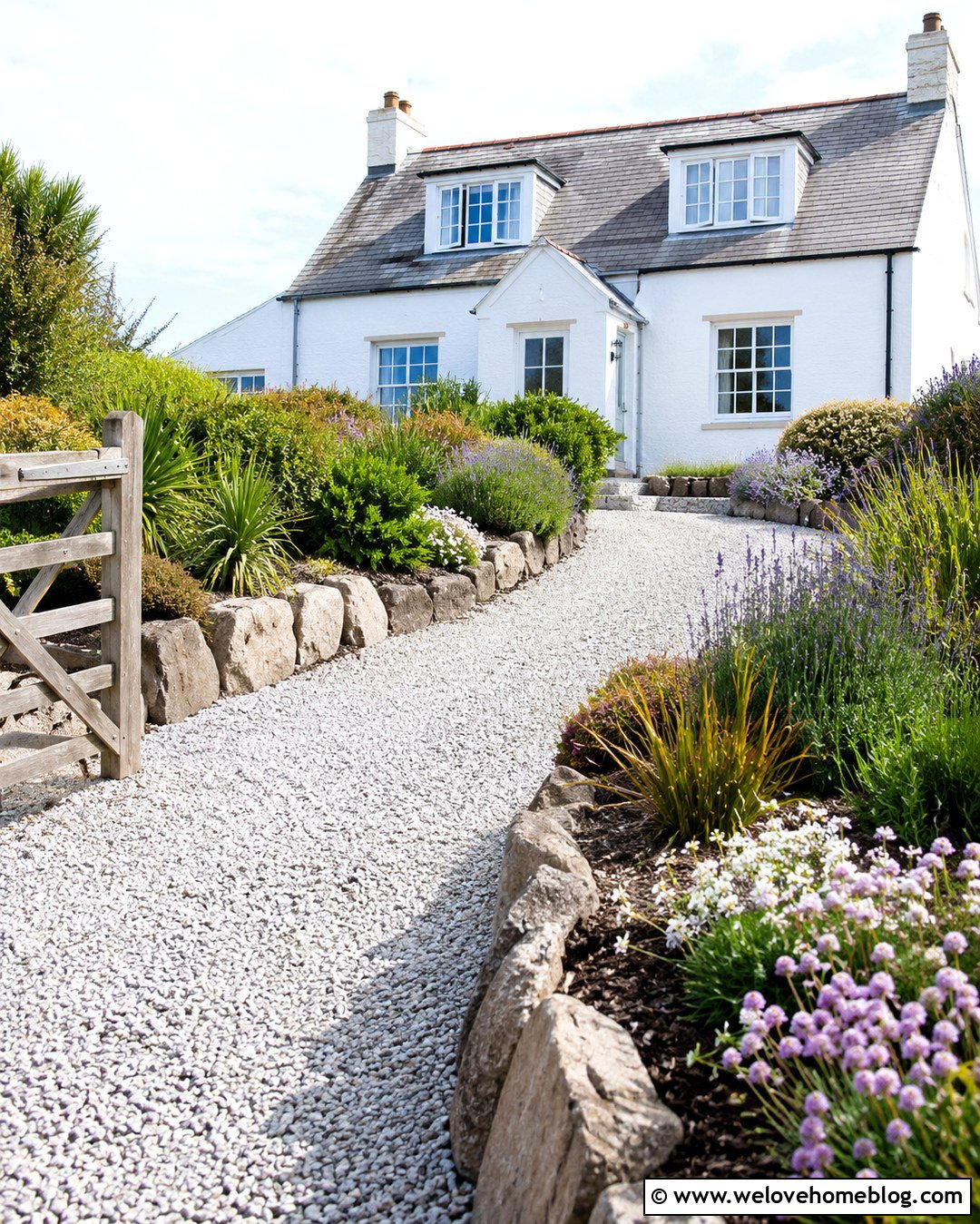
A coastal driveway should feel connected to its setting while handling exposed, windy conditions. Use pale gray gravel with rugged stone edging for a surface that complements rendered cottages and weathered brick. Form a loose curve toward the house and create wide, mulched beds on both sides. Plant wind-tolerant grasses, hebes, sea thrift, lavender, and other varieties suited to the site’s soil and salt exposure. Group plants in broad drifts rather than isolated specimens to produce a stronger landscape and better visual rhythm. A low slatted gate can mark the entrance without creating a heavy barrier. Avoid delicate plants that need constant support or shelter. The combination of soft gravel, textured stone, and resilient planting creates a relaxed driveway that looks appropriate beside a bright coastal home.
14. Country Driveway With Native Hedge Planting
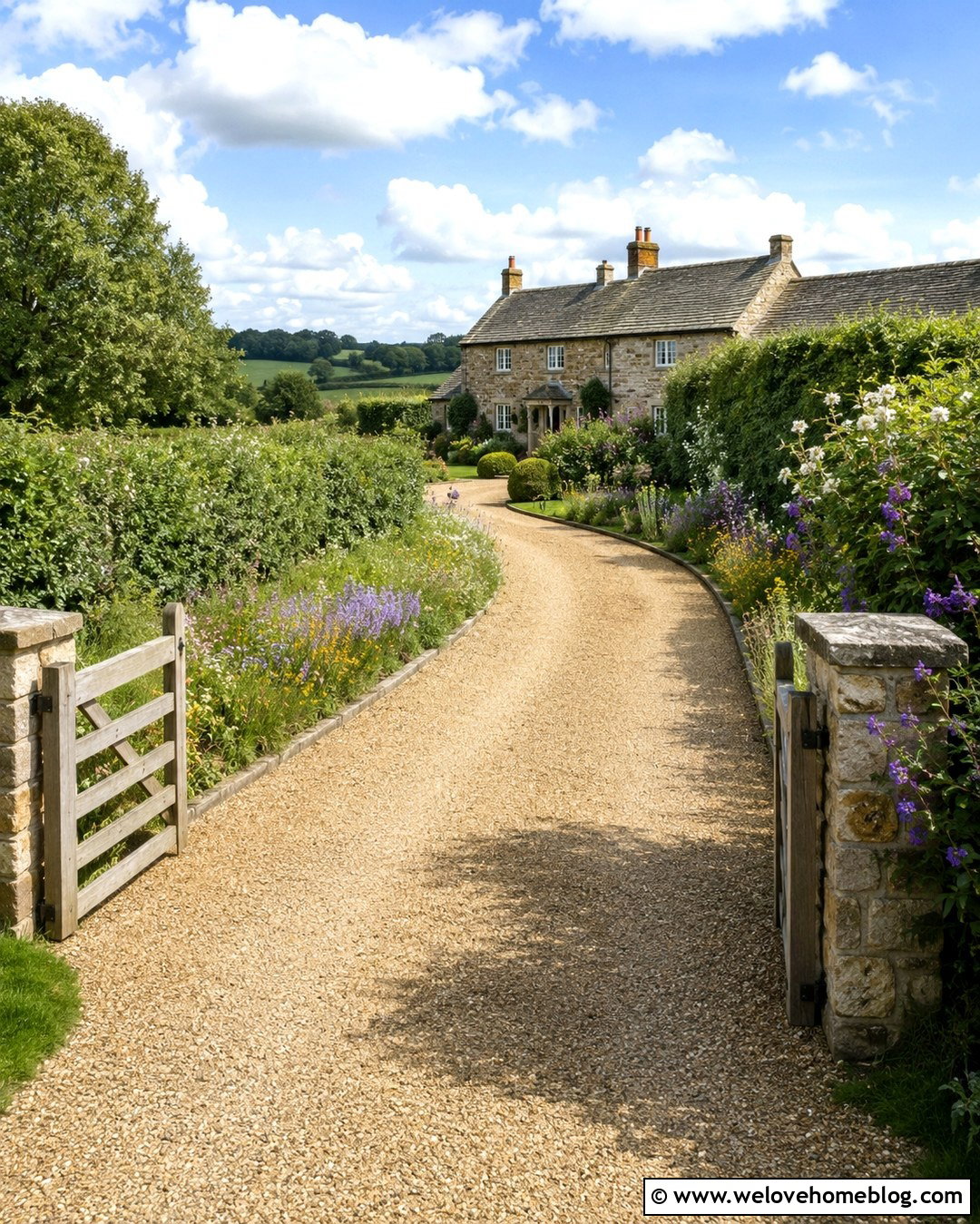
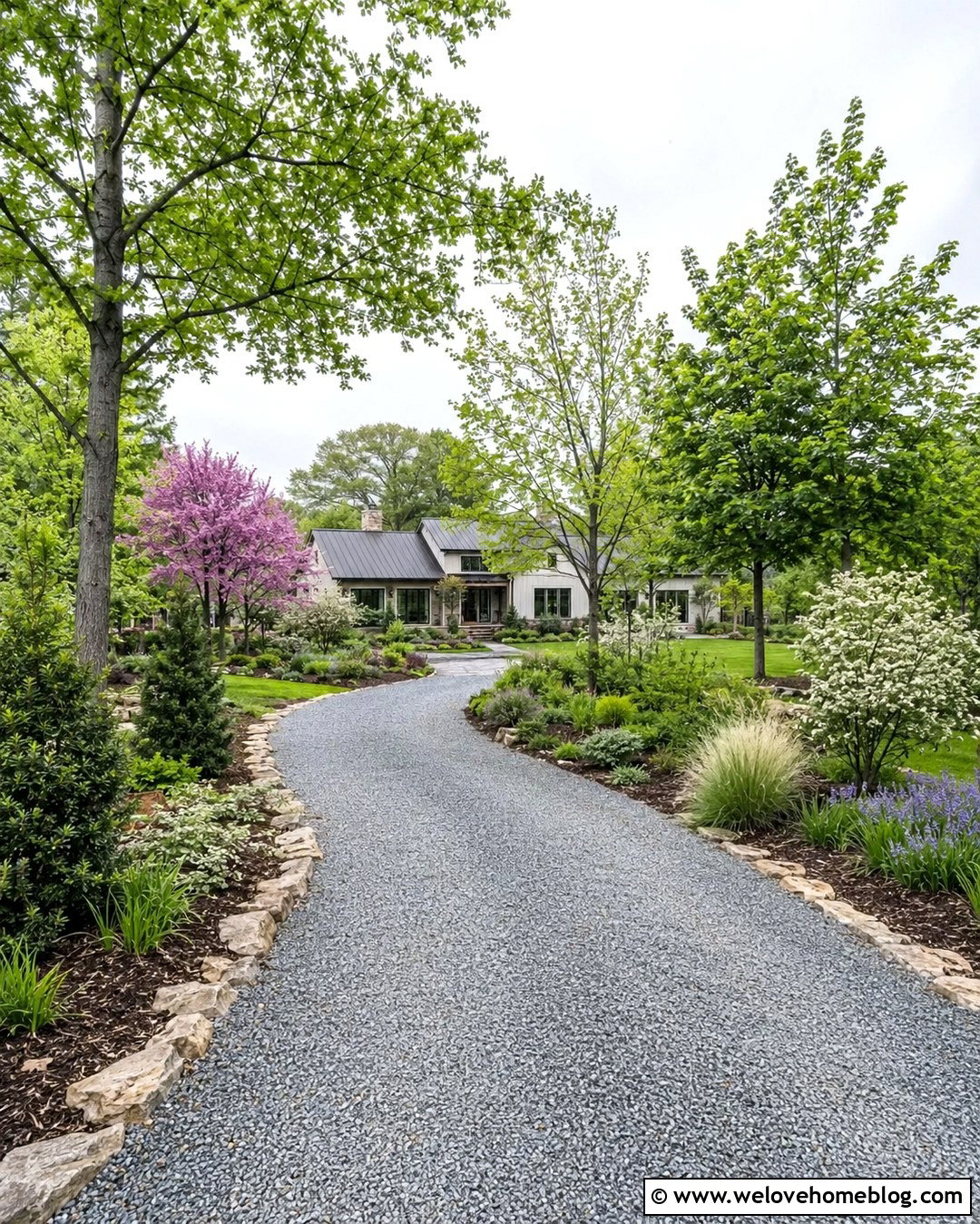
A long country driveway can blend into the landscape through informal gravel, native hedging, and meadow-style borders. Choose compacted golden gravel with timber or stone edging, shaped in a gentle curve toward a farmhouse or converted barn. Run a mixed hedge along one boundary using locally suitable species, but keep its growth controlled near the road entrance. Between the hedge and driveway, add bulbs, grasses, and perennial wildflowers that tolerate the available light and soil. A simple timber gate supported by brick or stone pillars gives the entrance definition. Near the house, transition into neater clipped shrubs and structured beds so the landscaping feels progressively more formal. This complete approach preserves the rural atmosphere while giving drivers a clear, durable route and an attractive sense of arrival.


15. Concrete Driveway With Grass Strips
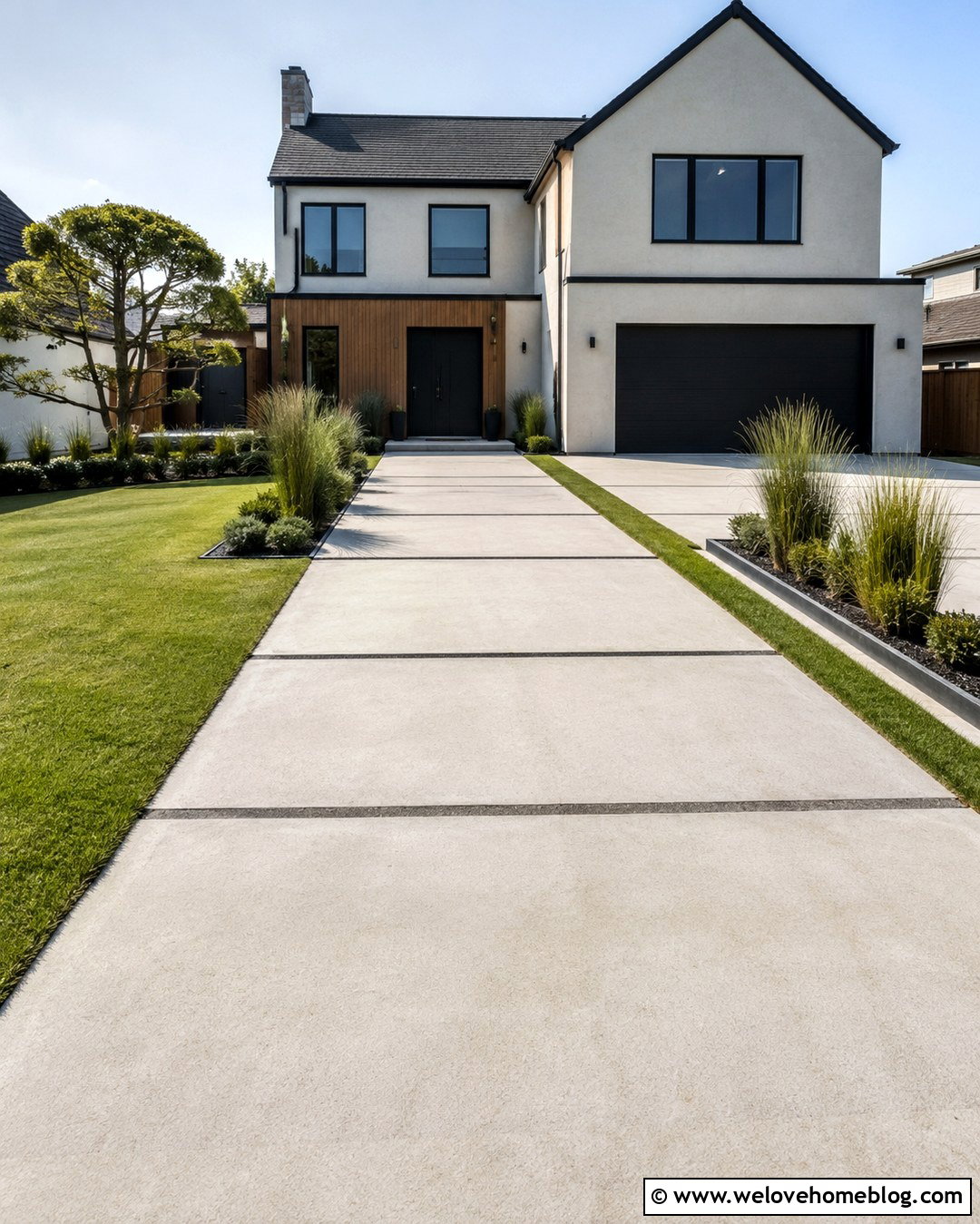
Large-format concrete slabs can suit a modern house when narrow grass or ground-cover joints soften the geometry. Use pale-gray poured concrete panels in a straight driveway with clean rectangular divisions. Between selected panels, add reinforced planting strips containing close-cut grass or durable low ground cover. Keep the main wheel tracks solid and level to reduce wear. Along the boundaries, create linear beds with upright grasses, compact shrubs, and one sculptural tree. Dark steel edging will provide a sharp transition between the concrete and soil. A matching slab walkway can lead directly to the entrance, separated from parking by a thin planted bed. This layout gives the front garden a distinctly contemporary character while balancing the hard surface with enough greenery to prevent the driveway from feeling stark or unfinished.
16. Cobblestone Driveway With Cottage Planting
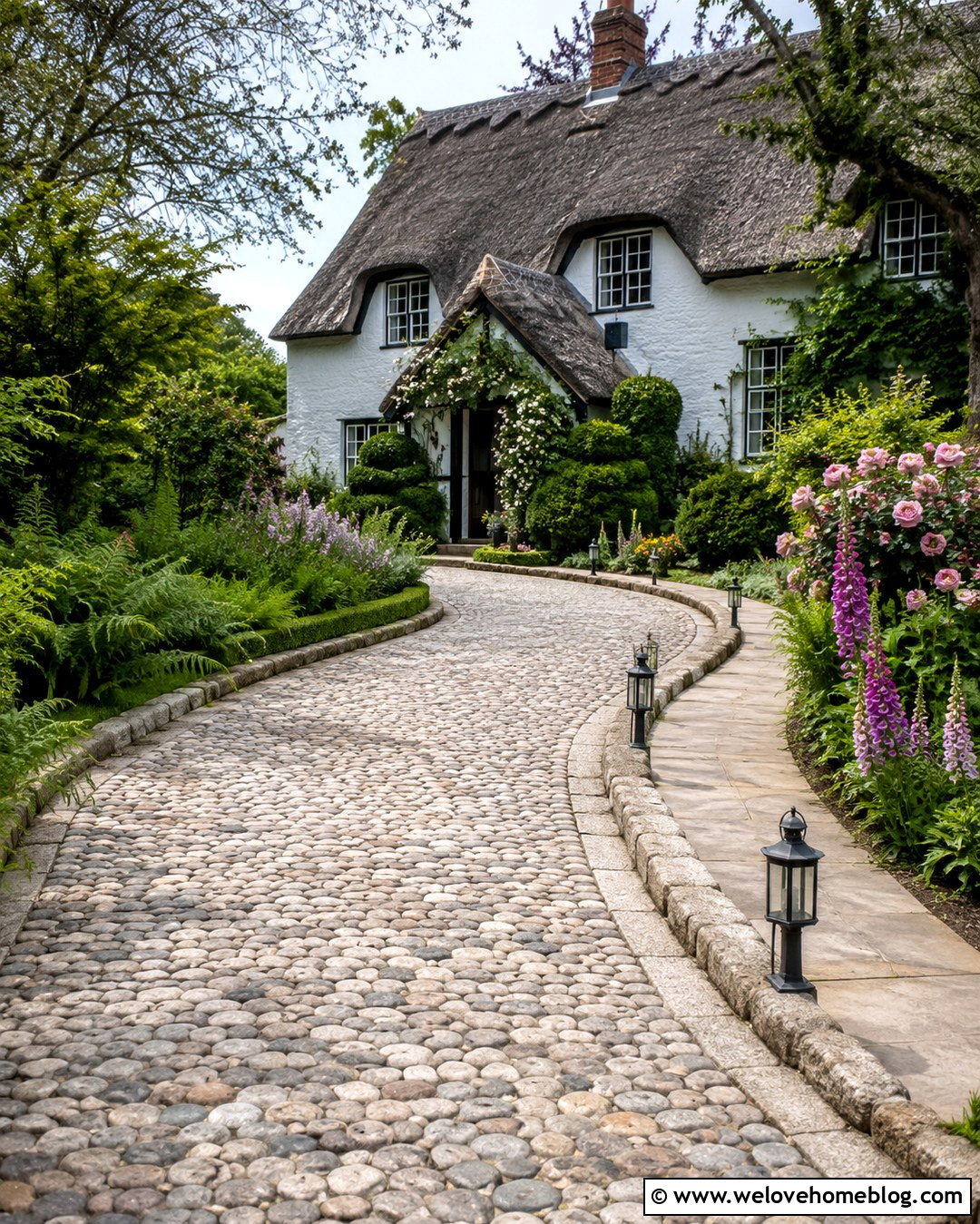
Rounded cobblestone or tumbled stone paving gives a cottage driveway a beautifully established appearance. Lay the stones in gentle arcs to follow a curved approach, using larger granite setts around the perimeter for stability and definition. Deep borders filled with roses, foxgloves, hardy geraniums, ferns, and clipped evergreens can soften the stone without spilling into the parking area. Train a climber around the porch rather than placing large shrubs beside the front door. A narrow stone path should offer a smoother walking route, particularly when the driveway surface is uneven. Low traditional lanterns can sit within the borders instead of directly on the paving. The weathered material, layered planting, and irregular layout work together naturally, making the entrance feel welcoming rather than overly formal or newly installed.
17. Low Maintenance Driveway With Evergreen Landscaping
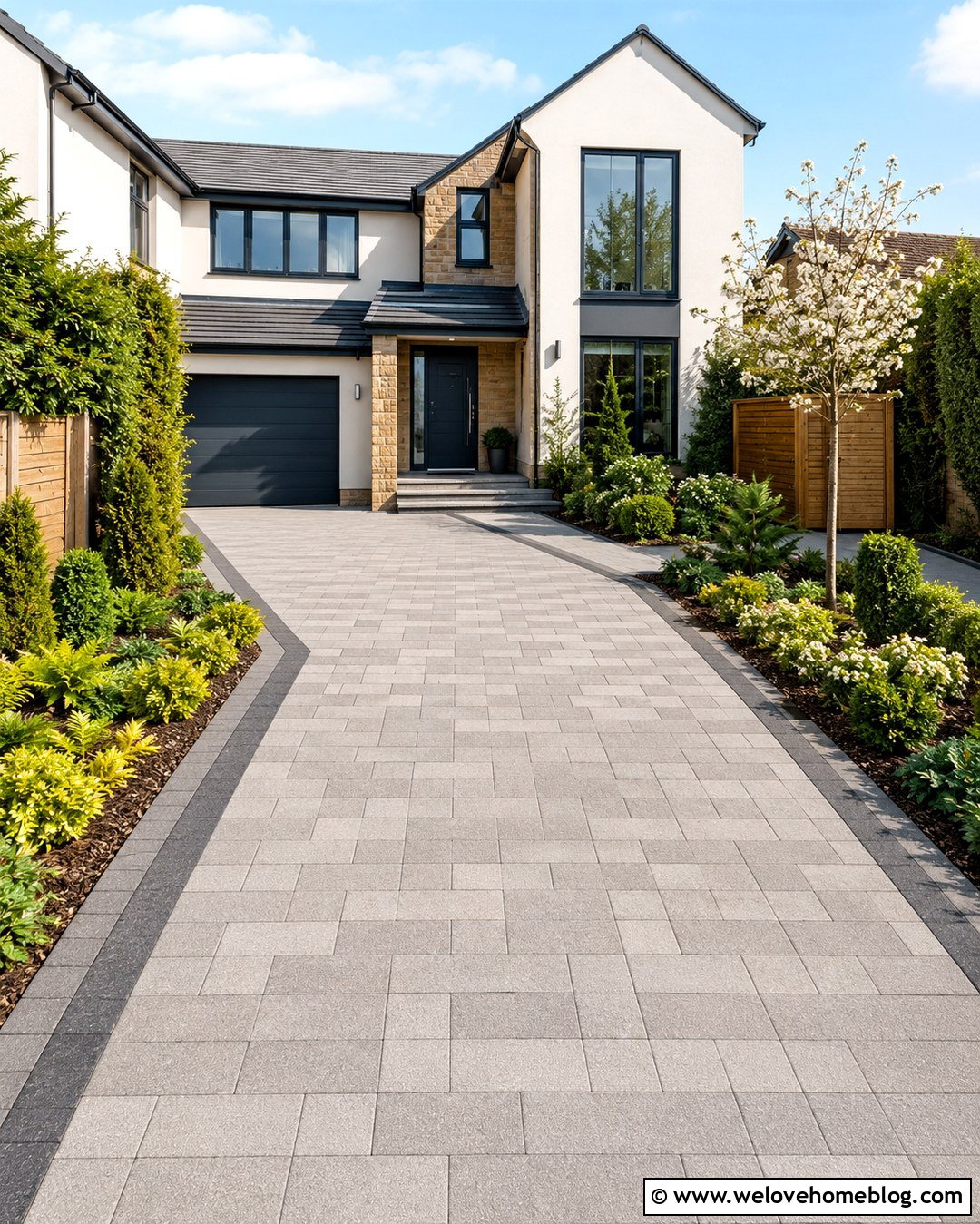
For a driveway that looks organized in every season, combine warm-gray block paving with a restrained evergreen planting scheme. A straight layout bordered by darker blocks keeps the parking area visually neat. Use beds containing rounded pittosporum, choisya, compact conifers, ferns, and ground-cover plants selected for the local light conditions. Repeat each variety several times instead of buying one of everything. Mulch the soil to reduce exposed ground and make routine care easier. One small deciduous tree can introduce spring blossom or autumn color without changing the low-maintenance character. Avoid shrubs with sharp thorns beside car doors and paths. Add a simple paved walkway and concealed bin area using matching materials. This practical design provides year-round structure while requiring less frequent replanting than heavily seasonal borders.
18. Driveway With Integrated Landscape Lighting
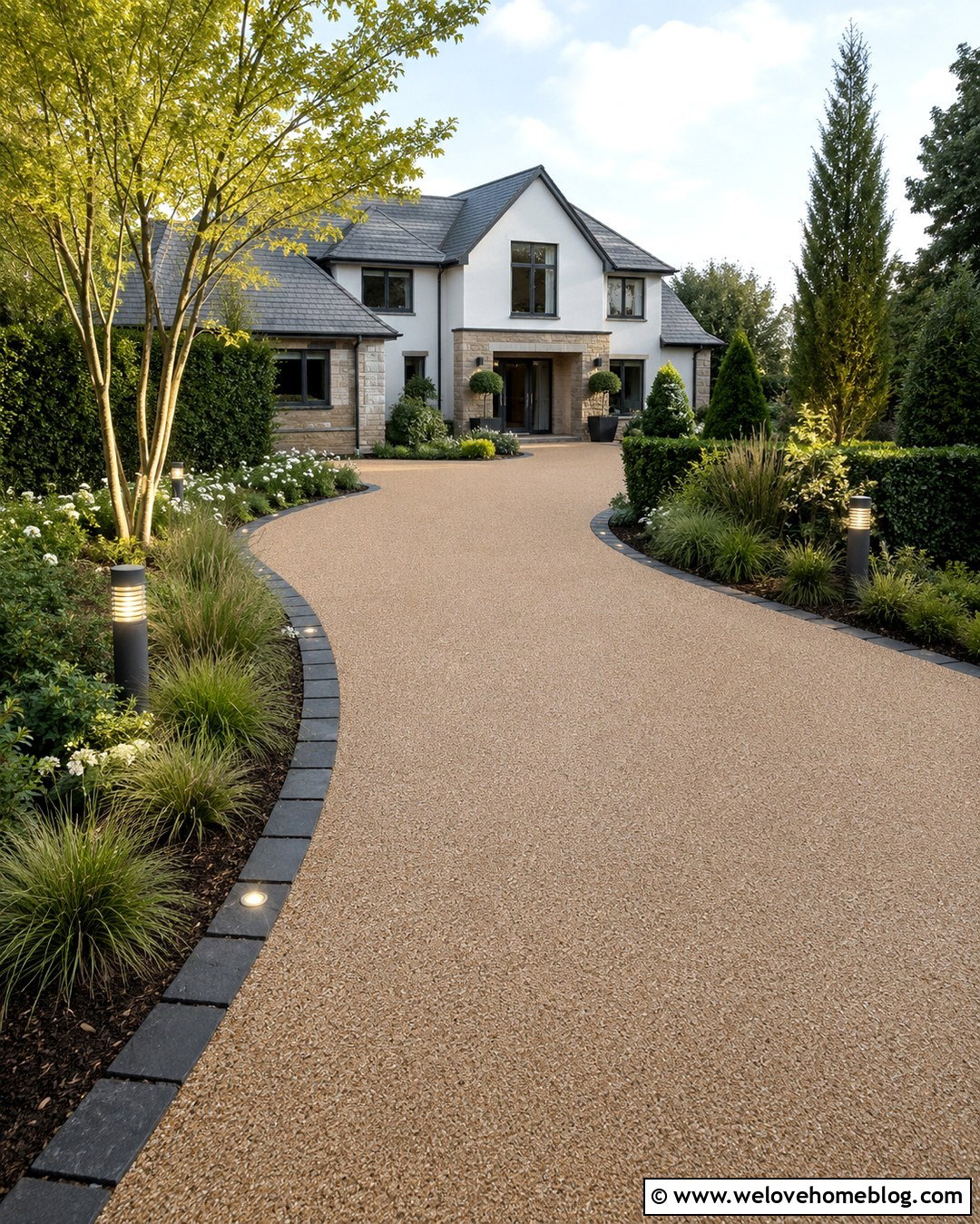
Lighting is most successful when it forms part of the complete driveway plan rather than being added randomly afterward. Use resin-bound gravel in a warm natural tone for a gently curved driveway, edged with dark granite setts. Install low shielded bollards at key changes in direction and recessed lights beside the pedestrian path. Additional fixtures can highlight one small tree and the texture of the entrance pillars without shining directly toward neighboring windows or the road. During daylight, layered beds of grasses, evergreen shrubs, and white flowers keep the scheme bright and attractive. Space fittings consistently, but avoid outlining every inch like a runway. The driveway material, curved shape, planting, and restrained lighting should guide visitors naturally from the street to the front door while maintaining a calm residential appearance.
19. Driveway With Planted Bin Screening
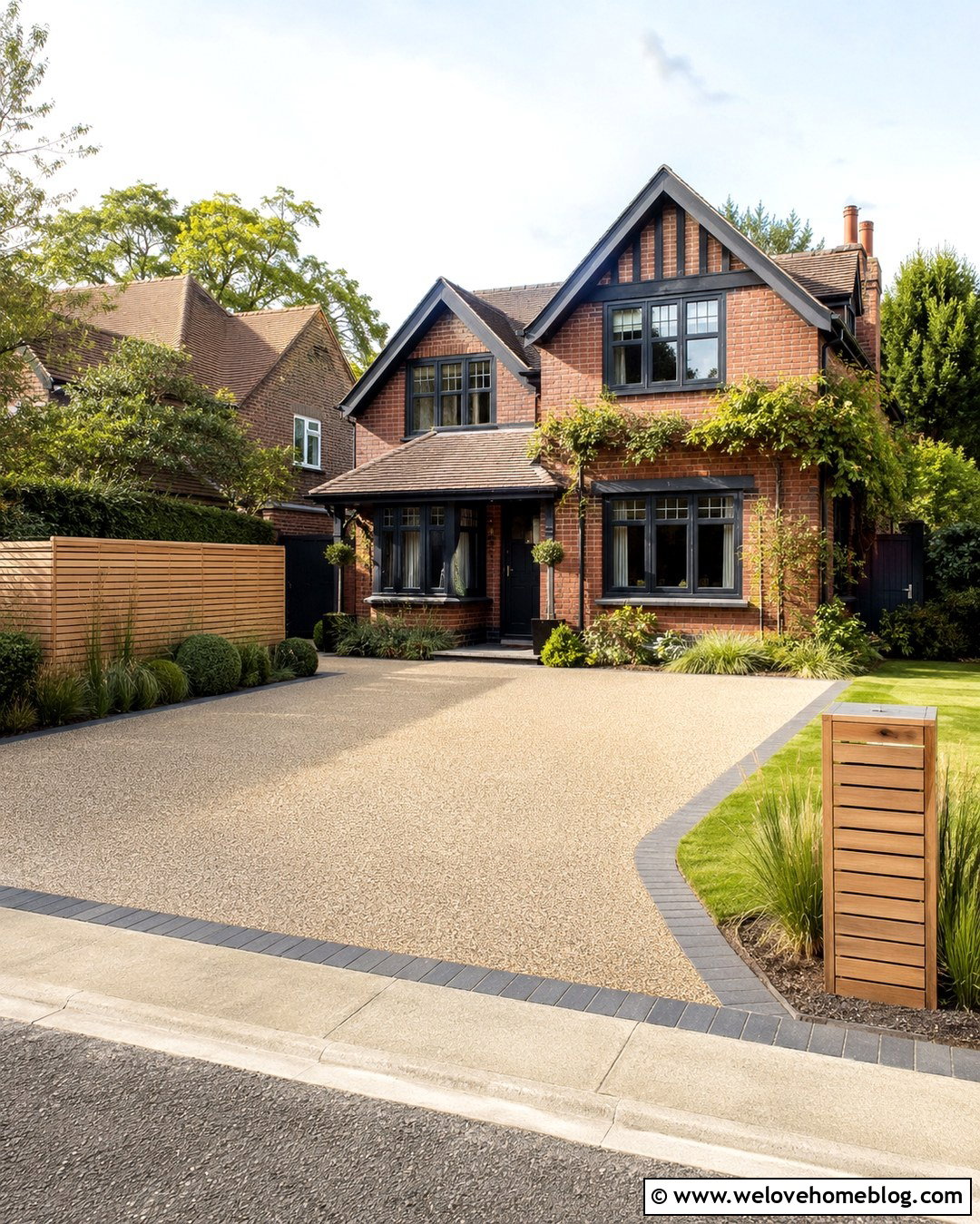
Bins can be accessible without becoming the first feature visitors notice. Create a buff resin-bound driveway with a straight layout, finished with a charcoal block border. Near the house, build a slatted timber screen that matches the front door or fencing. Position it on a paved pad so bins can be moved easily on collection day. Add a narrow planting bed in front containing evergreen grasses, compact shrubs, and a climber trained against the screen. Keep the storage structure away from turning zones and make sure doors can open fully. Repeat the timber tone in a small address sign or gate to make the screen feel integrated. A clear path between the parking space and entrance completes the design. The result is functional, tidy, and visually connected to the surrounding landscape.
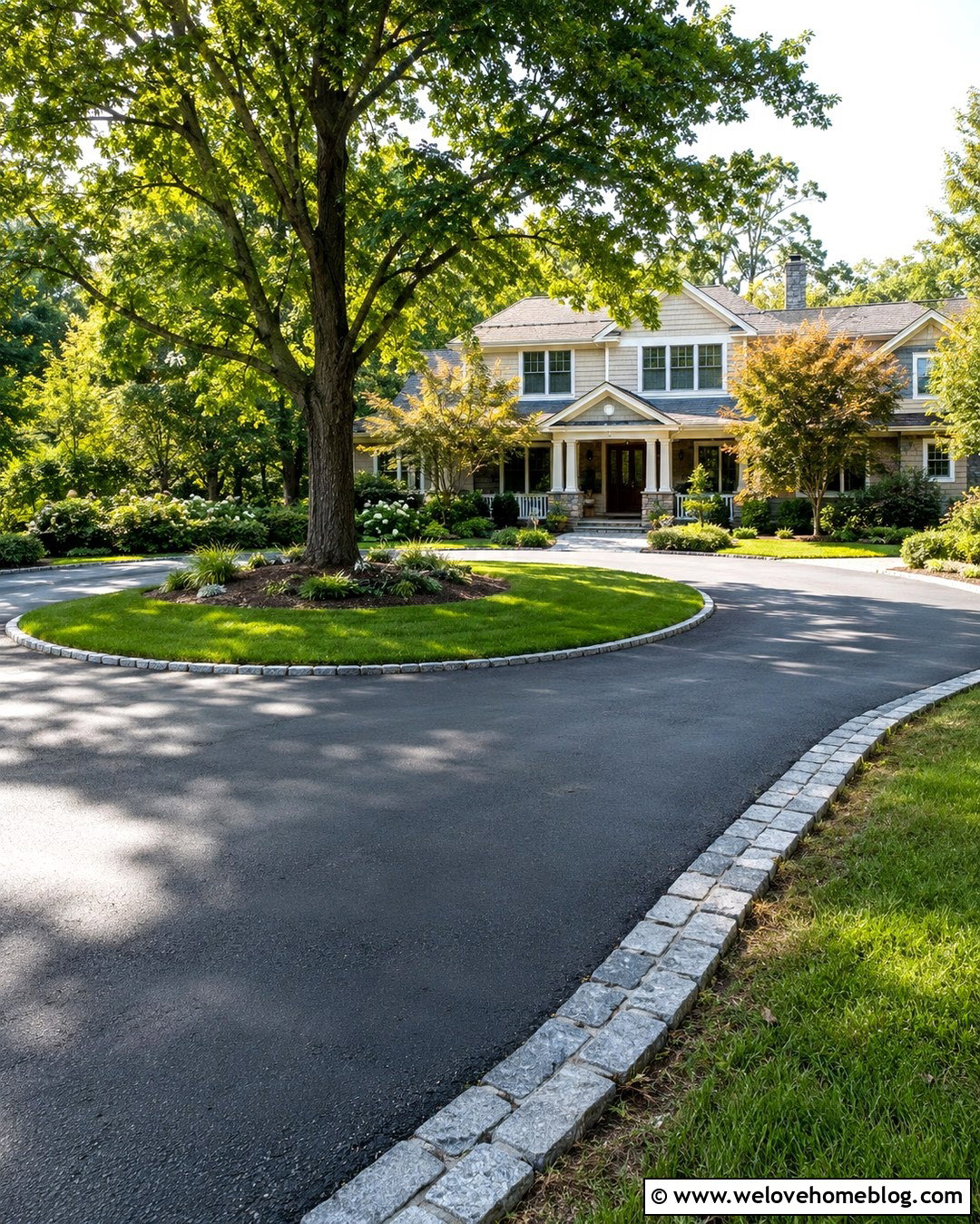
20. Gated Driveway With Pillars And Planting
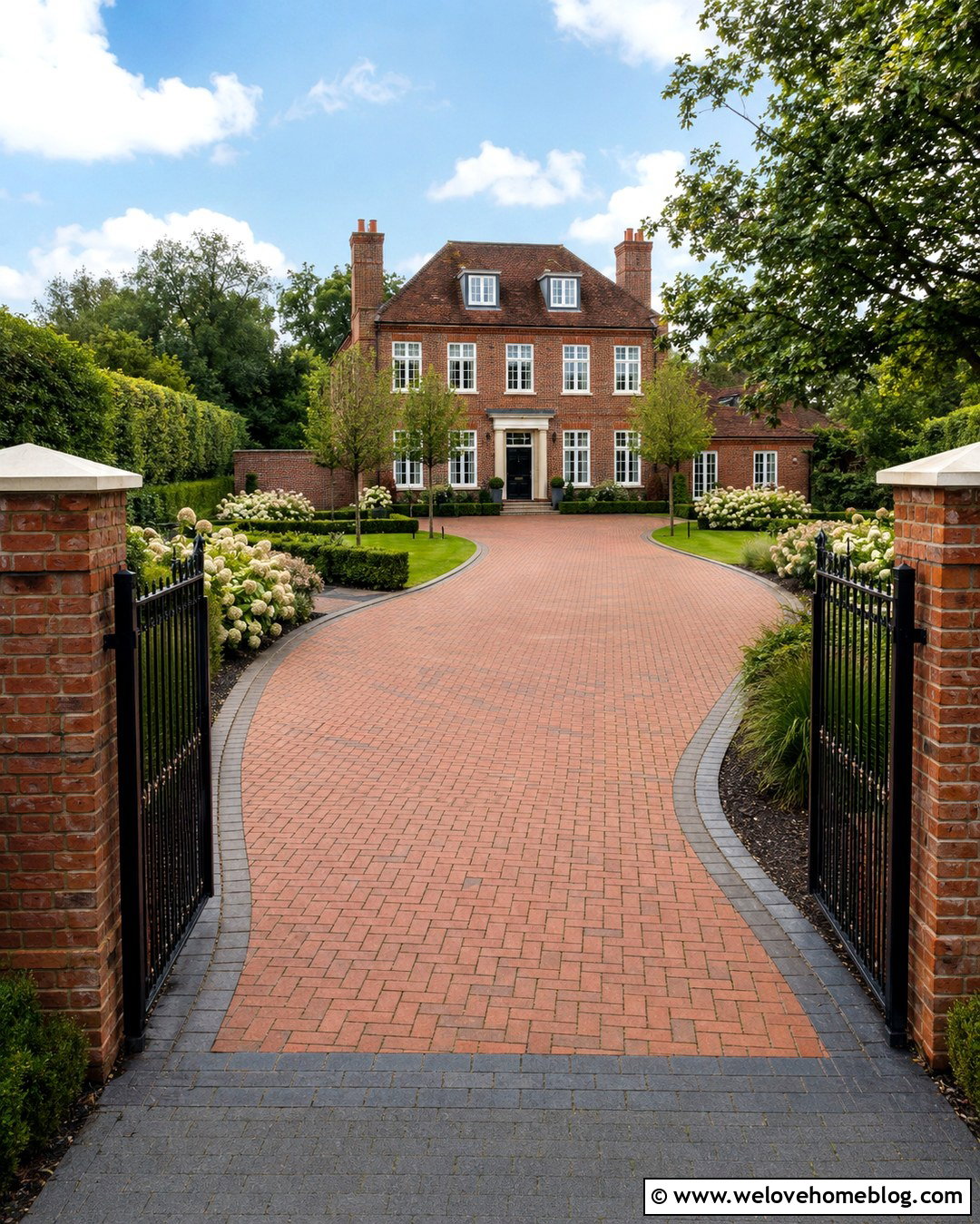
A gated entrance looks most balanced when its materials are repeated throughout the driveway and landscaping. Use warm clay block paving in a herringbone pattern, bordered by charcoal setts and shaped into a broad, slightly curved approach. Build brick pillars that coordinate with the house, then install simple timber or dark metal gates with adequate opening space. Low evergreen hedges can extend from each pillar, backed by hydrangeas, ornamental grasses, and one small tree on either side. Keep planting low around the pavement for clear visibility. Inside the gate, widen the driveway enough for comfortable access before introducing deeper beds. Local approval may be needed for a new or altered vehicle crossing, and dropped-kerb requirements vary between councils. () The finished entrance feels secure, welcoming, and proportionate.
Conclusion:
Successful 20 Driveway Landscaping Uk Ideas balance practical parking with plants, attractive materials, safe access, and suitable drainage. Begin by measuring the usable area and marking vehicle paths, door-opening zones, and the route to the entrance. Then choose a driveway surface that complements the property and local setting. Planting should frame the space without blocking views or creating constant maintenance. Even small front gardens can accommodate narrow borders, climbing plants, containers, or paving pockets. For larger properties, curves, central islands, trees, gates, and layered beds can create a stronger arrival experience. Before construction, check local planning, drainage, and dropped-kerb requirements. A well-planned driveway will feel like part of the garden instead of a separate parking area.

Related posts:


Leave a Reply