
Curves can turn a basic vehicle path into an inviting part of the landscape. These **20 Curvy Driveway Ideas** explore complete designs that combine practical layouts with attractive paving, defined borders, thoughtful planting, and architecture that suits the setting. A gentle bend can guide the eye toward the house, preserve mature trees, soften a wide front yard, or make a long approach feel less rigid. Materials also shape the result. Gravel creates relaxed country character, while concrete, brick, asphalt, cobblestone, and permeable pavers offer distinctly different finishes. Before choosing a layout, consider turning space, drainage, visibility, maintenance, and how the driveway connects with the garage and walkway. () Below, you will find practical and inspiring **20 Curvy Driveway Ideas**.

1. Curvy Gravel Driveway With Stone Edging
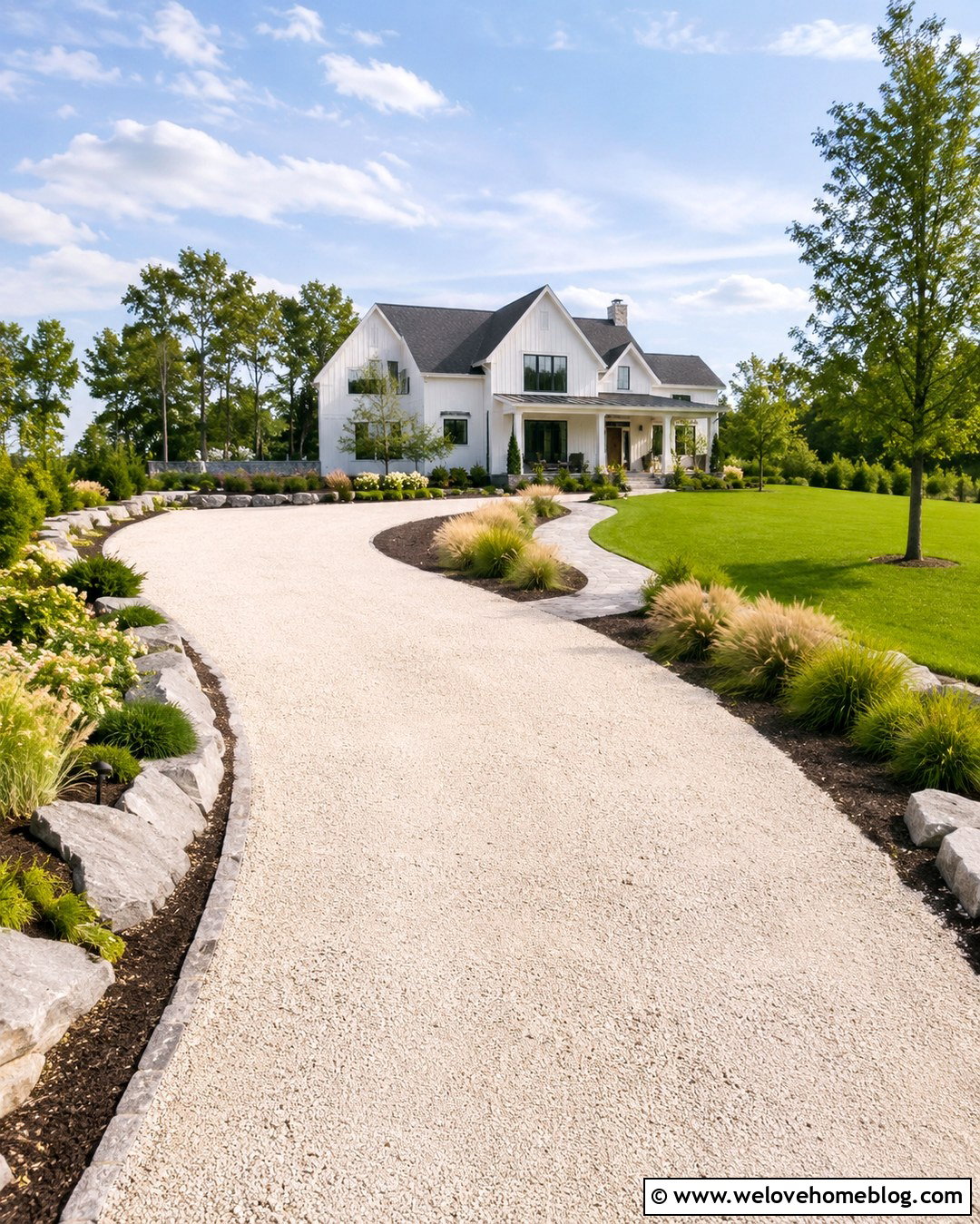
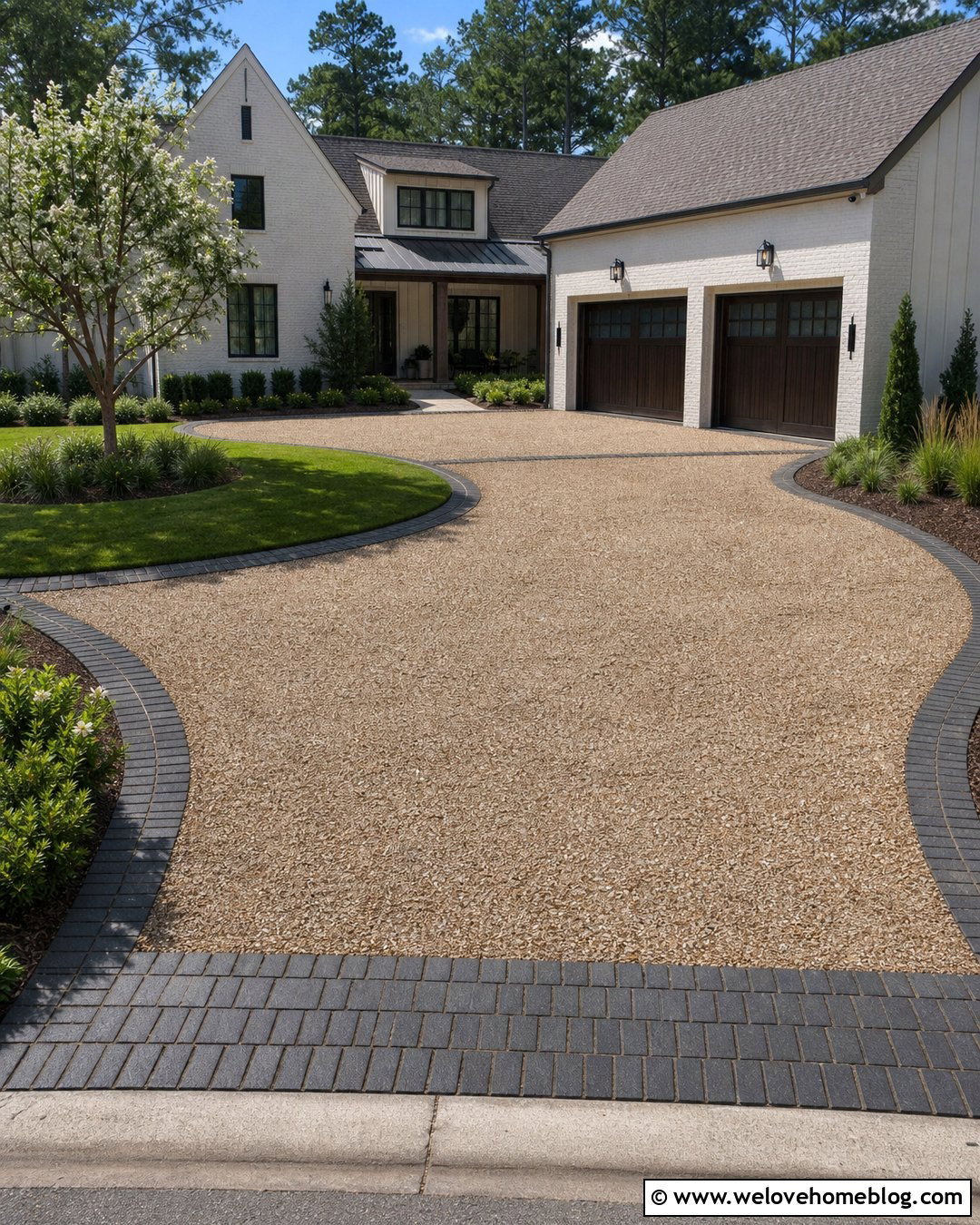
A pale gravel surface makes a sweeping driveway feel relaxed and naturally connected to the yard. Use compacted crushed stone for the structural base, then add a decorative top layer in warm beige, gray, or cream. Large fieldstone edging keeps loose material contained while emphasizing every bend. Along the outside curve, create broad planting beds filled with ornamental grasses, low evergreens, and flowering perennials. Keep plants shorter near the street so drivers can see approaching traffic. This complete look works especially well with country homes, cottages, and modern farmhouses. A matching gravel parking area can widen near the garage without interrupting the flowing shape. Install proper grading beneath the surface to direct runoff away from the house and prevent washed-out sections.
2. Curvy Concrete Driveway With Brick Borders
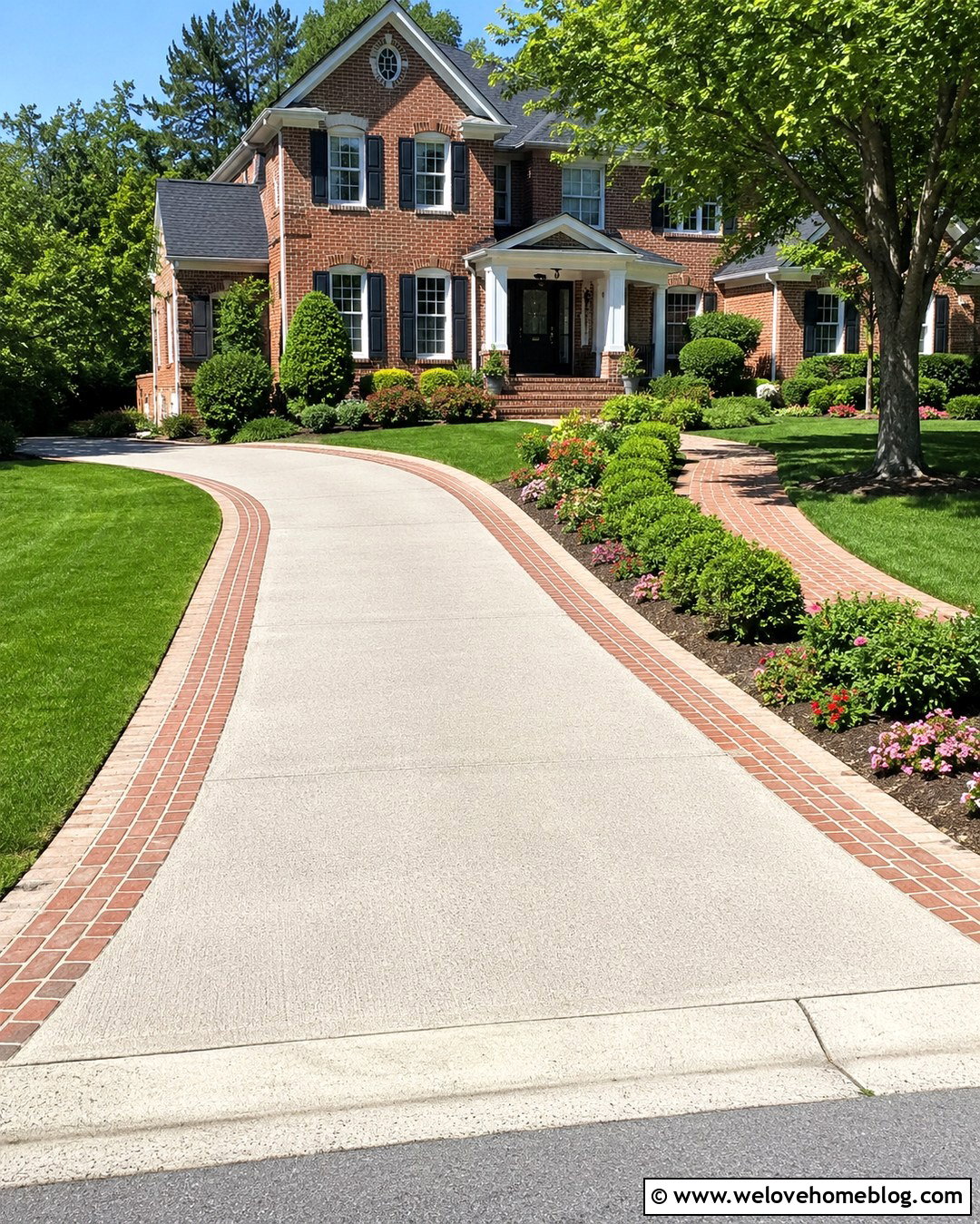
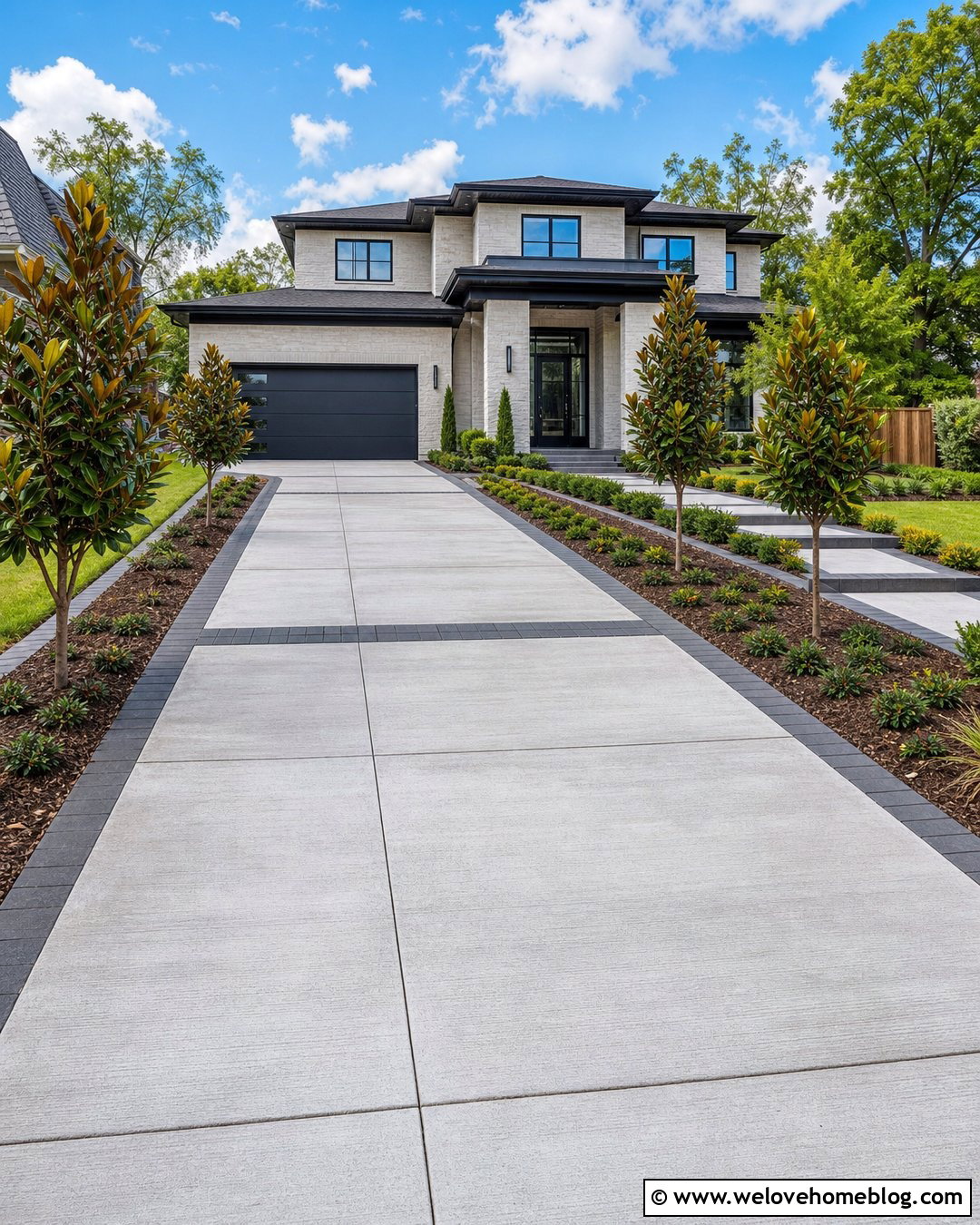
Smooth poured concrete gains warmth and definition when its curves are outlined with red or charcoal brick. The brick border creates a crisp visual guide while connecting the driveway to brick steps, porch columns, or the home’s facade. Choose wide, gradual bends rather than several tight turns, especially where vehicles enter the garage. Curved planting beds can follow the outside edges and contain neatly clipped shrubs, seasonal flowers, and small ornamental trees. Control joints should be thoughtfully positioned so they look balanced with the driveway’s movement. For a traditional suburban home, use light gray concrete and classic red brick. A darker brick ribbon produces a cleaner contemporary effect. Continue the same brick into the front walkway to make the driveway and entrance feel intentionally coordinated.
3. Curvy Asphalt Driveway With Cobblestone Edging
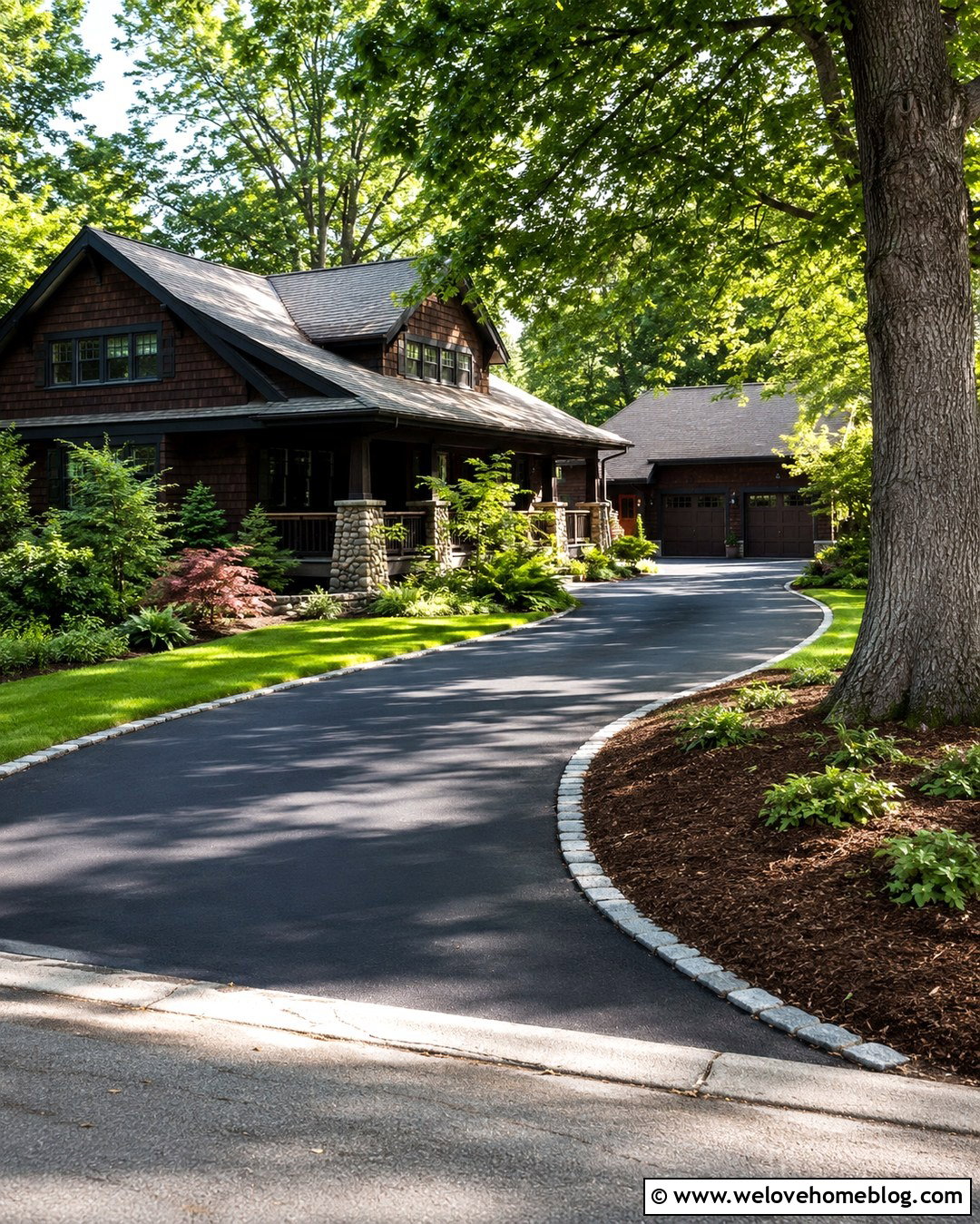
Fresh black asphalt creates a strong, smooth line through a green front yard. Cobblestone edging softens that dark surface and gives the driveway a more finished, permanent appearance. Light gray granite cobbles provide sharp contrast, while weathered brown stones suit wooded and rustic properties. Sweep the driveway around an existing shade tree, leaving a generous mulched bed around the trunk rather than paving close to its roots. Low shrubs and ground cover can frame the curves without reducing visibility. Near the garage, widen the asphalt into a practical turning and parking pad. This combination works well for long driveways because asphalt keeps the broad surface visually simple while the cobblestones add character. Periodic sealing will also help the black finish remain neat and consistent.
4. Curvy Brick Driveway With Boxwood Borders
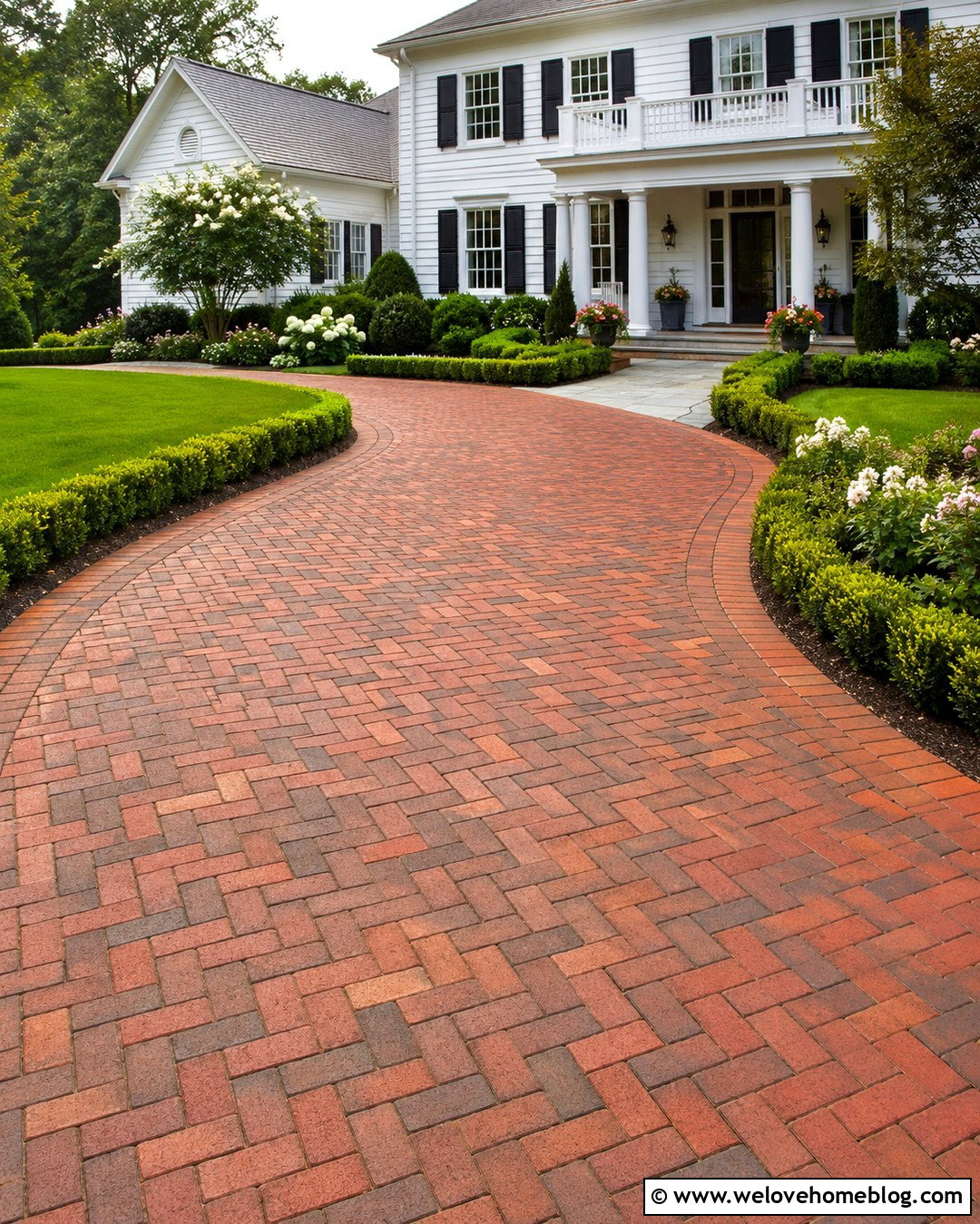
Rich clay brick pavers can make a curved driveway feel established and welcoming. A herringbone pattern handles the changing direction beautifully because its angled lines add movement without competing with the overall shape. Outline the surface with a straight-set brick soldier course to hold the pattern visually together. Low boxwood hedges following both curves create a formal frame and connect the driveway to traditional foundation landscaping. Leave occasional openings for a stone walkway, utility access, and convenient movement between parked vehicles and the front door. This look complements Colonial, Georgian, and Cape Cod houses particularly well. Choose bricks with slightly varied red and brown tones to avoid an overly uniform surface. Beneath them, a carefully prepared base helps preserve clean curves and reduces uneven settling.
5. Curvy Paver Driveway With Grass Strips
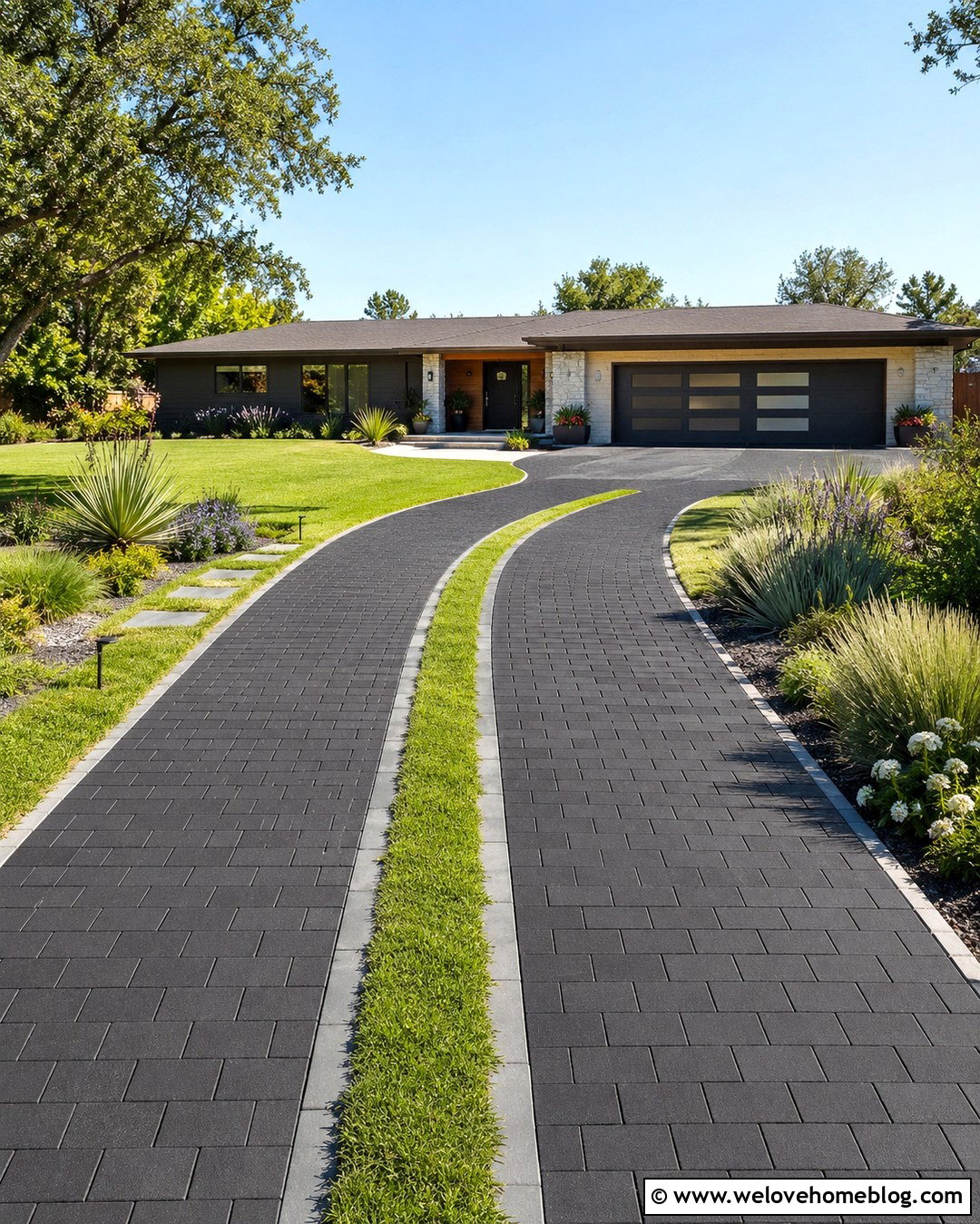
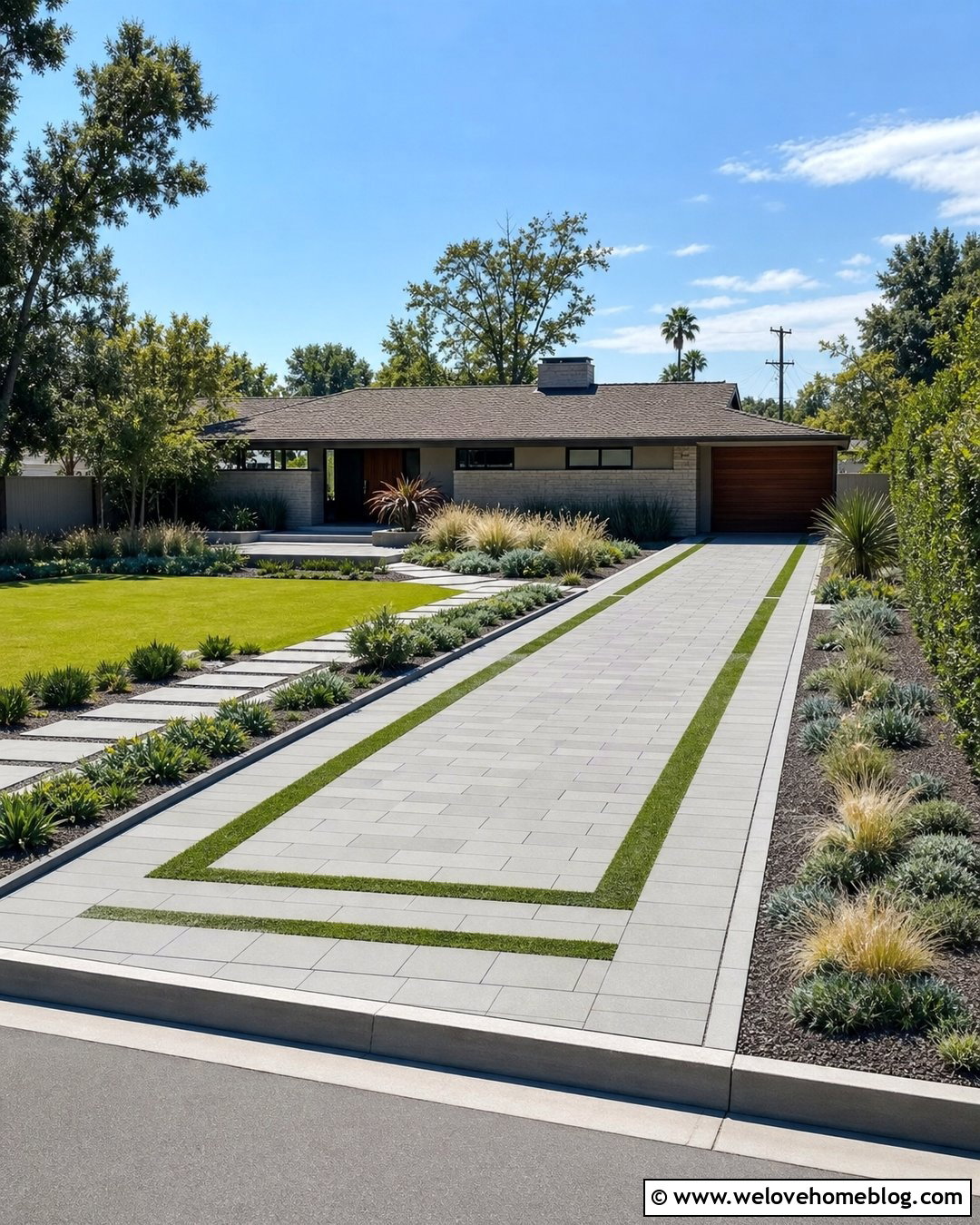
Large concrete pavers separated by narrow grass strips can give a curvy driveway a fresh, garden-focused appearance. Use rectangular charcoal or warm gray pavers in two defined wheel tracks, allowing green lawn to fill the center and outer joints. The layout reduces the visual weight of the paved area while keeping the route easy to understand. A low metal or concrete edge should separate the planted strips from nearby beds. Frame the outside curve with drought-tolerant grasses, compact flowering shrubs, and a simple stepping-stone walkway. This design fits modern ranch homes and contemporary houses with wide, low facades. Keep the bends gentle so the wheel tracks remain comfortable to follow. In heavily used areas near the garage, transition to a solid paver parking pad for easier maneuvering.
6. Curvy Cobblestone Driveway With Cottage Landscaping
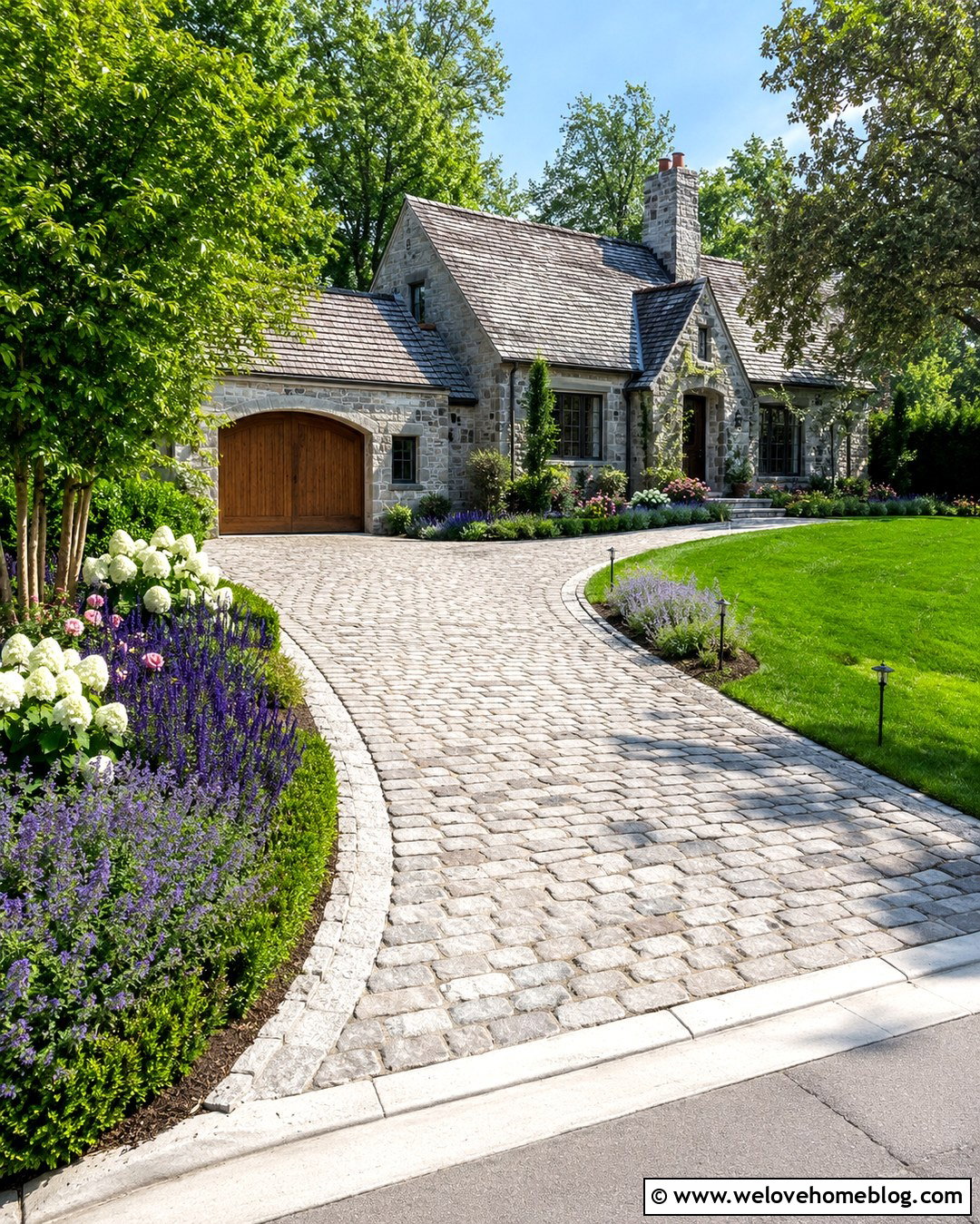
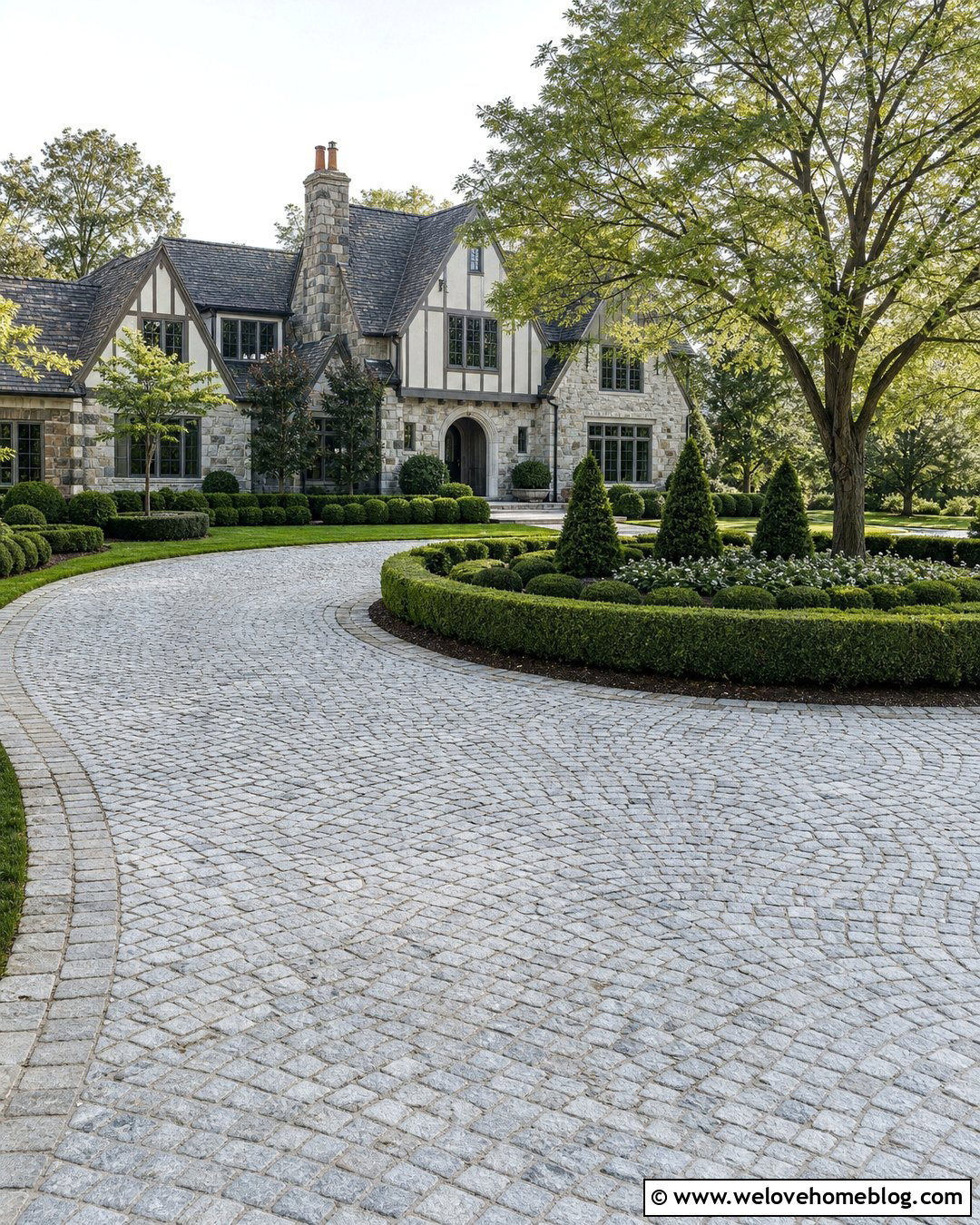
Uneven color and natural texture make cobblestone a charming match for a garden-filled curved driveway. Choose rounded reclaimed cobbles for an aged appearance or flatter granite setts for a smoother, more structured surface. Let the driveway bend through layered cottage beds planted with lavender, catmint, roses, salvia, and compact hydrangeas. A narrow stone border keeps soil and spreading plants away from the driving area. Instead of making both sides perfectly symmetrical, vary bed depths to reinforce the informal garden mood. This design looks especially convincing beside stone cottages, Tudor homes, and houses with painted brick. Include a wider cobblestone apron near the garage or side entrance. Low path lights placed beyond the edging can illuminate the route while keeping fixtures safely away from vehicle tires.
7. Curvy Exposed Aggregate Driveway With Native Plants
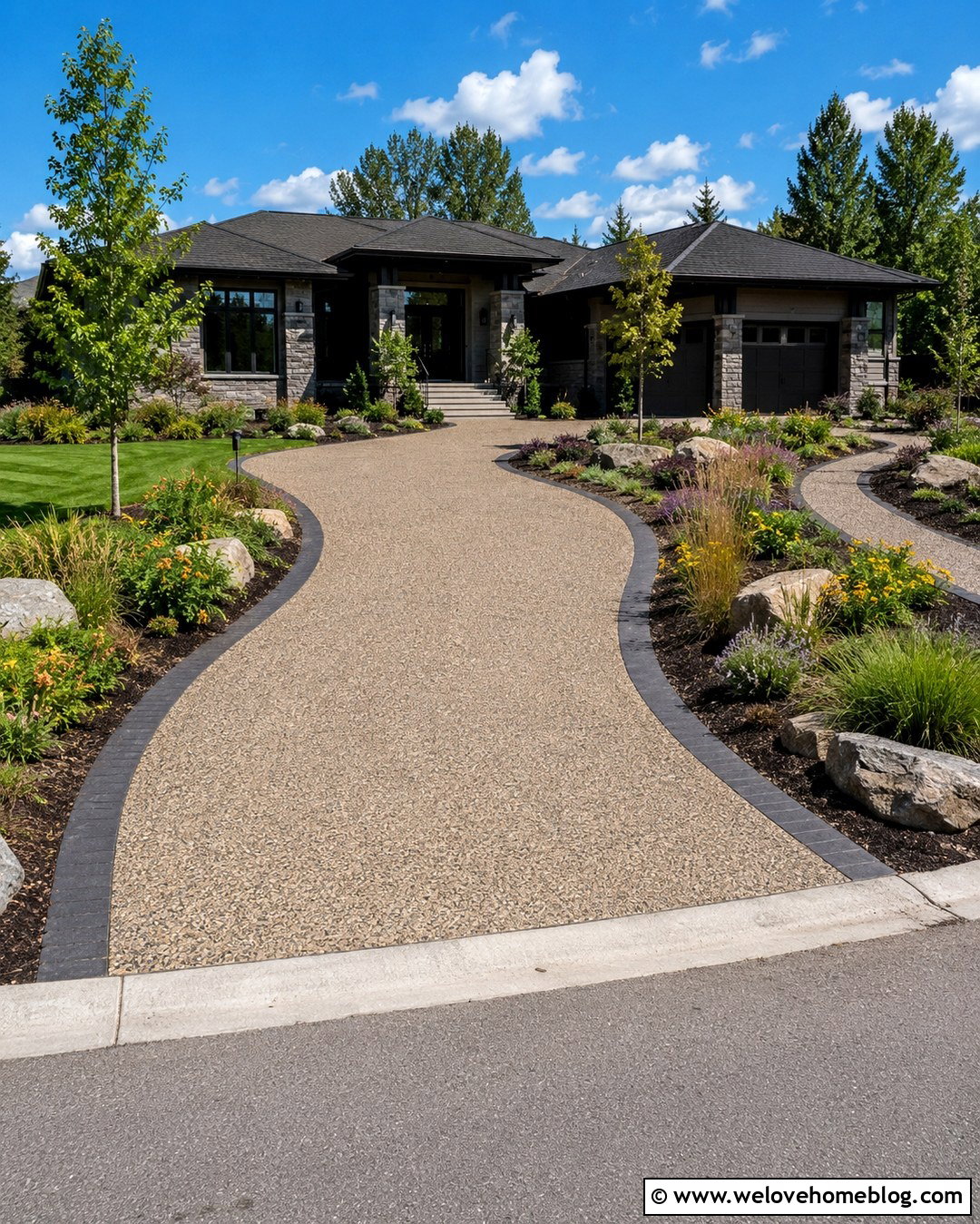
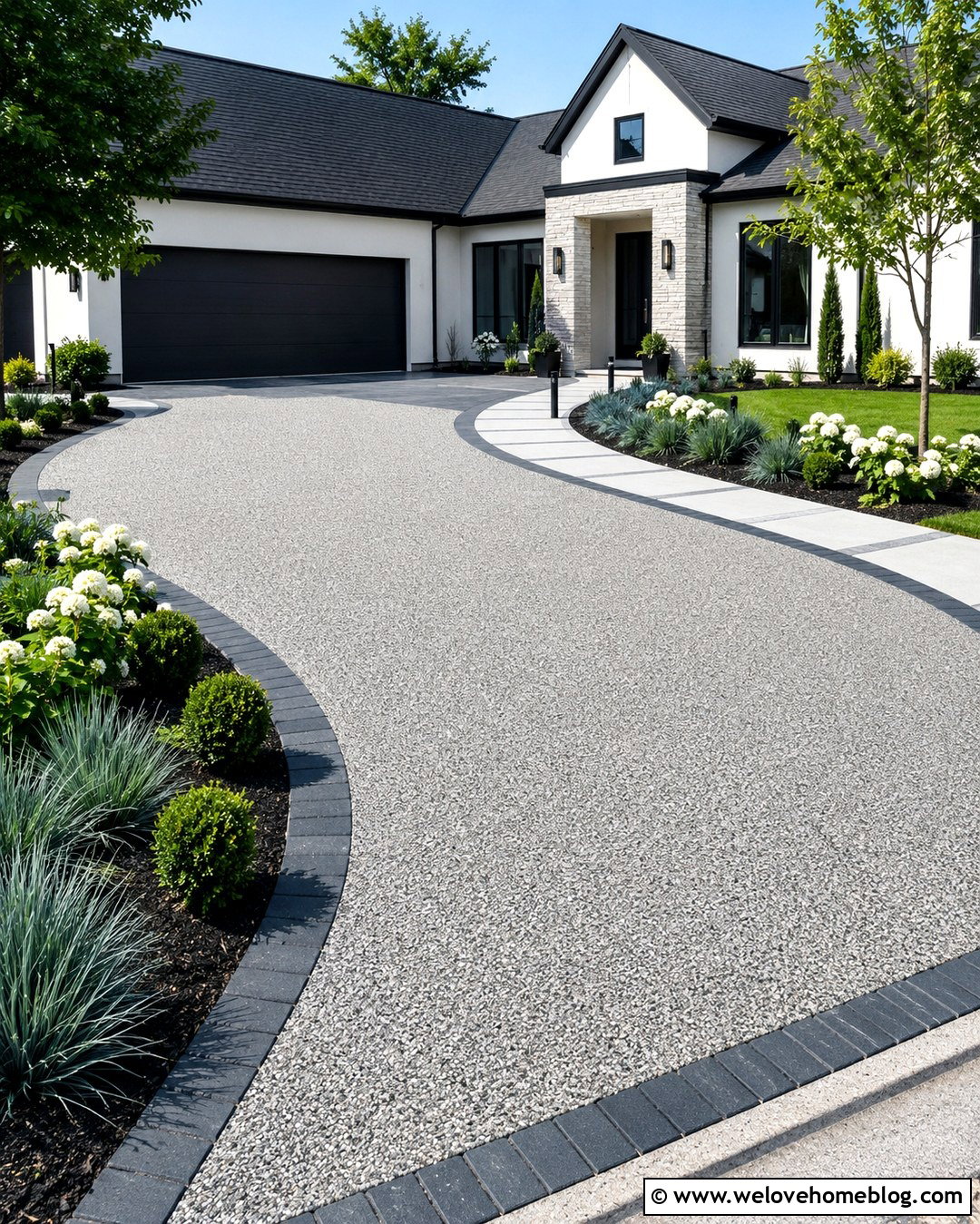
Exposed aggregate concrete combines a dependable paved surface with visible stone texture that feels appropriate in a natural landscape. Select an aggregate blend containing tan, gray, and brown stones, then form the driveway into one broad curve leading toward the garage. Dark concrete bands along the edges can define the shape without introducing a completely different material. Plant the outer bend with native grasses, flowering perennials, ground covers, and a few sculptural boulders. This low, loose arrangement is particularly effective around modern, prairie, or midcentury homes. Keep taller plants farther from the entrance and inside turning areas. A curved walkway made from the same aggregate can branch toward the porch. Repeating the driveway’s stones in nearby planting beds helps the entire front yard look balanced and connected.
8. Curvy Resin-Bound Driveway With Metal Edging
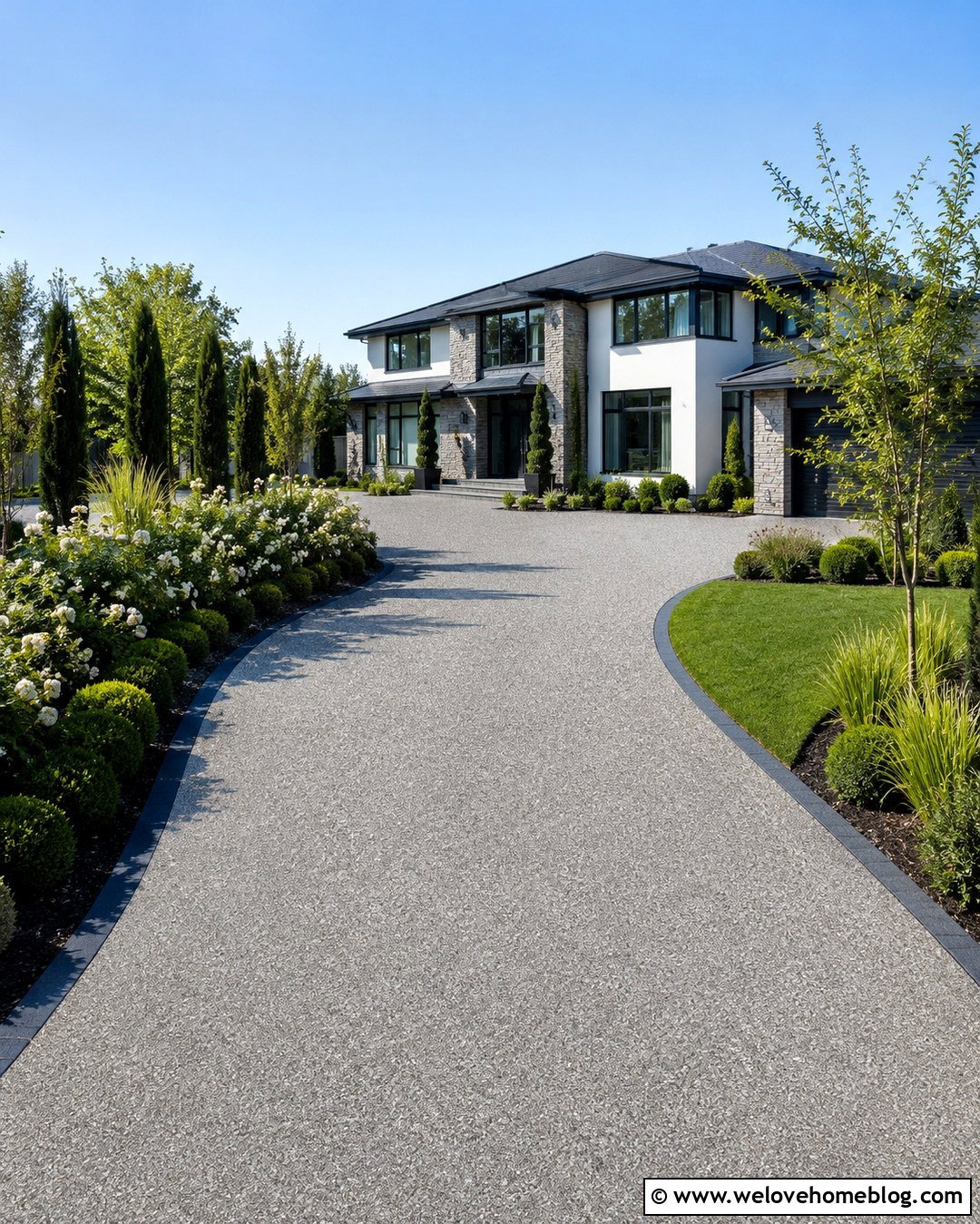
A resin-bound gravel surface delivers the appearance of fine stone with a clean, consistent finish. Warm golden aggregate can soften a traditional home, while silver-gray stone creates a more contemporary approach. Flexible black steel edging neatly follows the driveway’s curves and provides a slim transition into lawn or planting beds. For a polished design, run one sweeping bed along the outer edge with clipped evergreens, white flowering shrubs, and ornamental grasses. The inside curve can remain mostly lawn, preventing the layout from feeling crowded. Near the house, widen the resin-bound surface into a rounded parking court. This material-and-landscape combination suits properties where homeowners want gravel-like texture without a visibly loose surface. Carefully selected aggregate colors can also echo stonework, roof tones, or exterior trim.
9. Curvy Driveway Around A Mature Tree
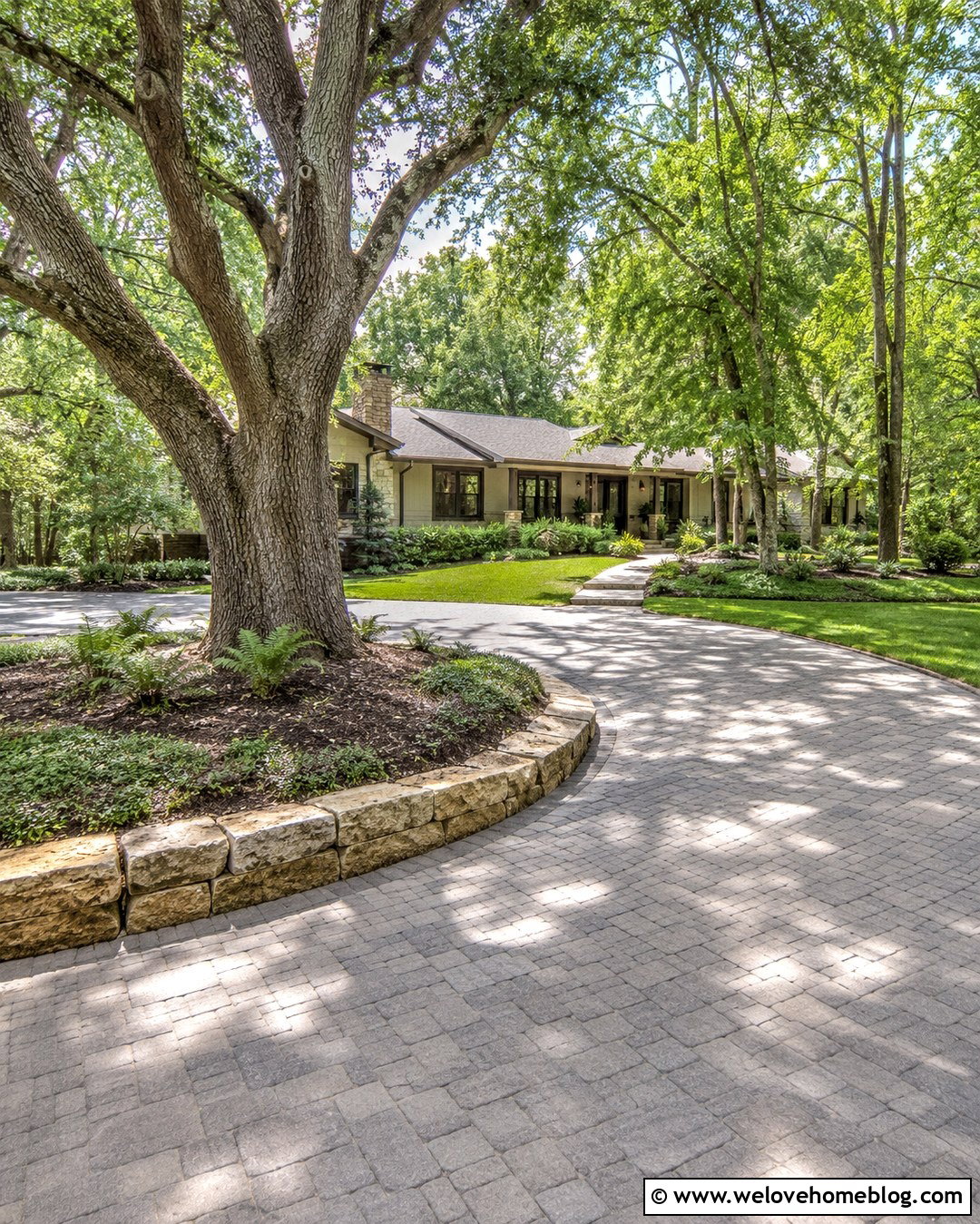
A mature tree can become the feature that gives a curved driveway its purpose. Instead of forcing a straight route through the yard, guide the surface around a broad planting island that protects the tree and creates a memorable arrival. Use warm gray concrete pavers for the driveway and a raised natural-stone curb around the island. Fill the bed with mulch, shade-tolerant ground cover, ferns, and low shrubs, but avoid piling material against the trunk. The curve should provide enough clearance for comfortable vehicle movement without bringing pavement unnecessarily close to major roots. This approach works beautifully on wooded suburban lots and ranch properties. Repeat the island’s stone around nearby beds or the front walkway so it feels integrated rather than like an obstacle in the driveway.
10. Curvy Driveway With A Landscaped Center Island
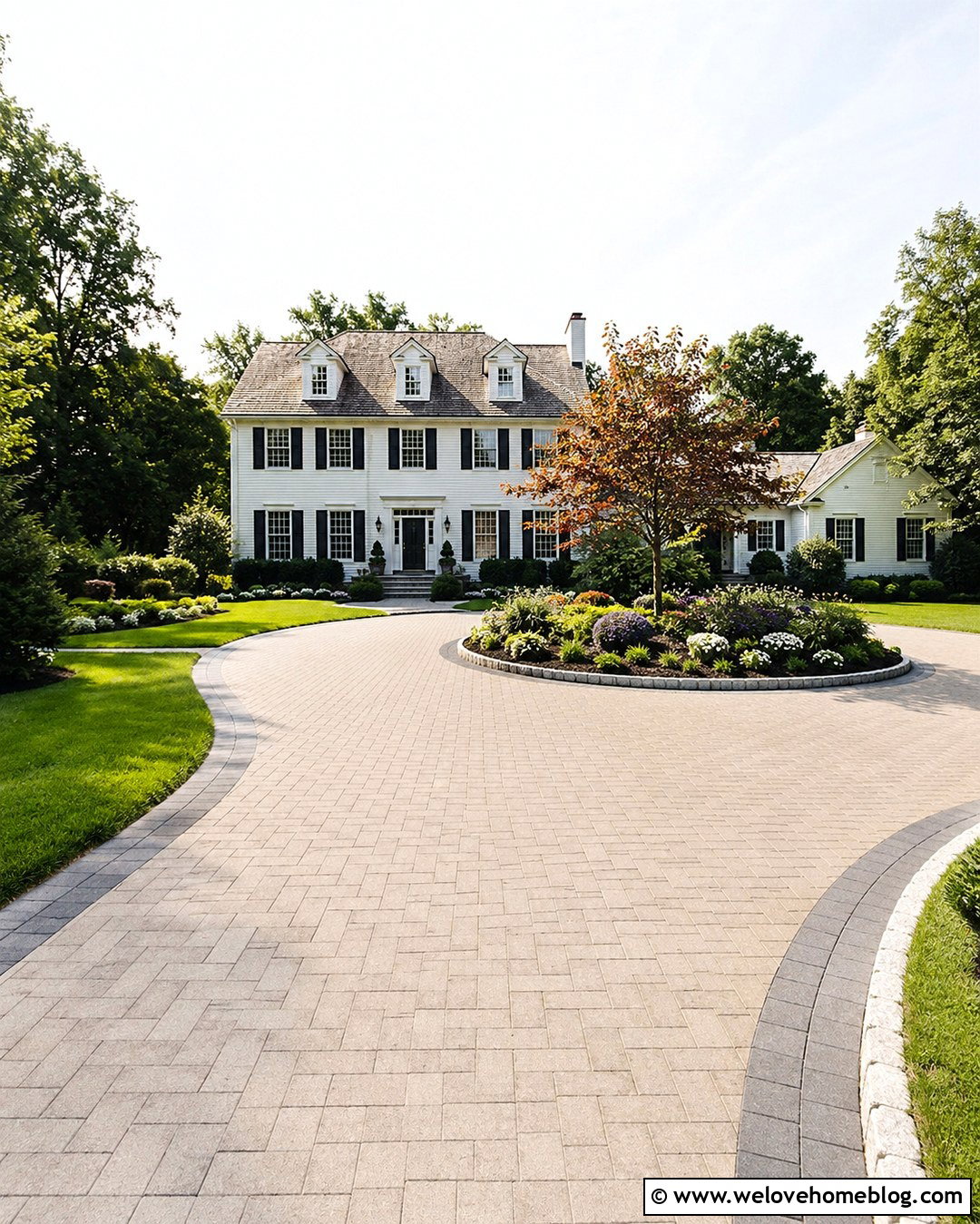
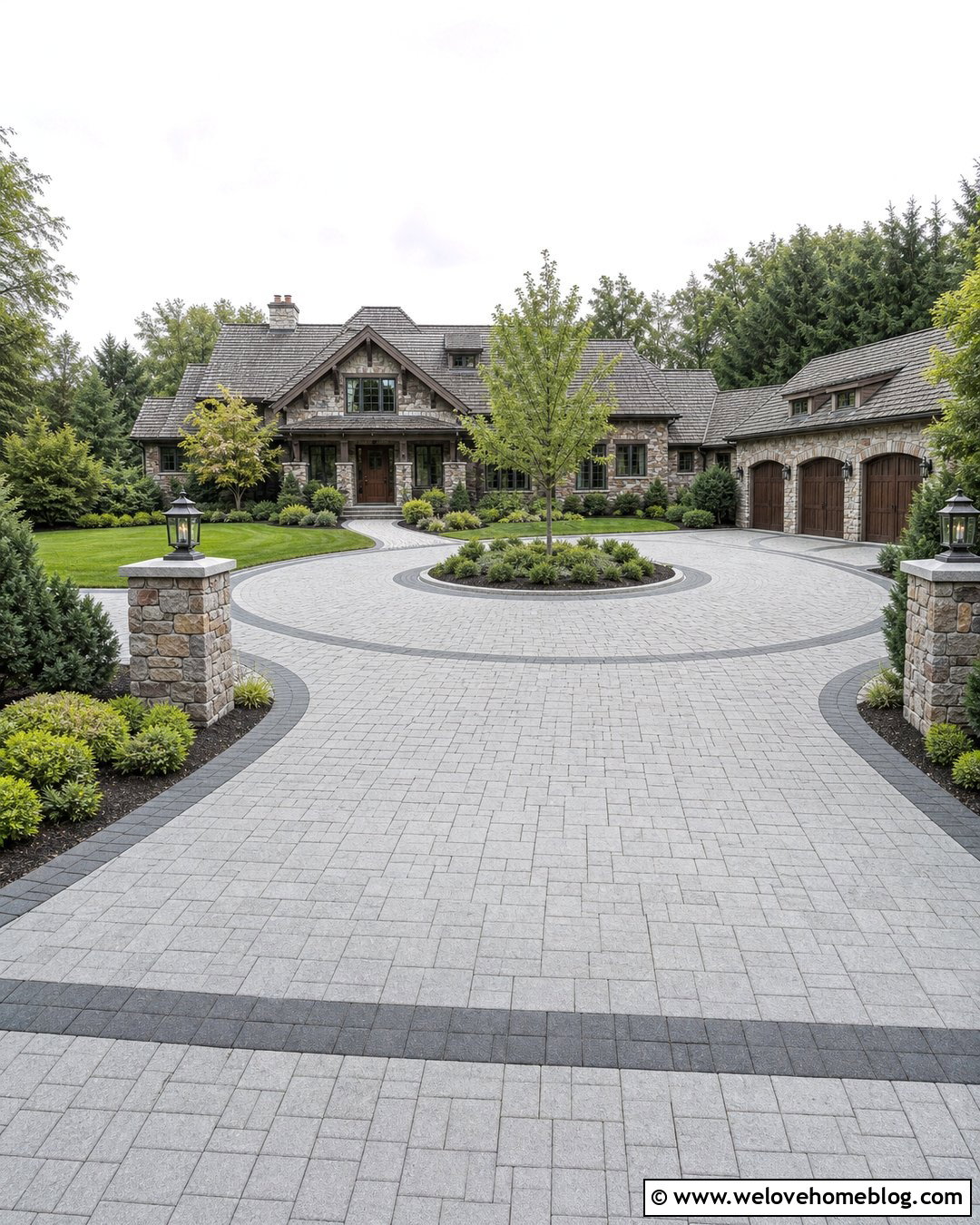
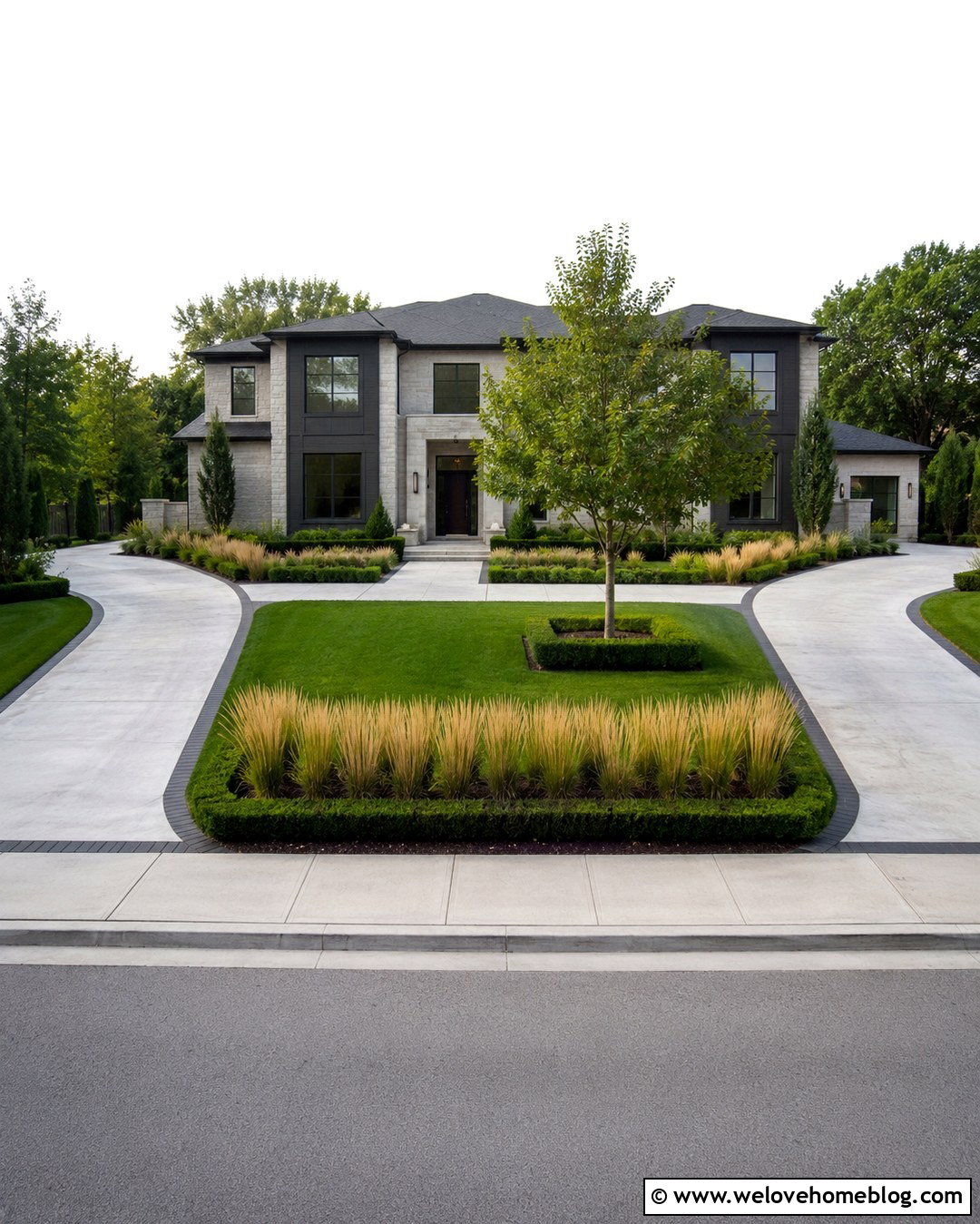
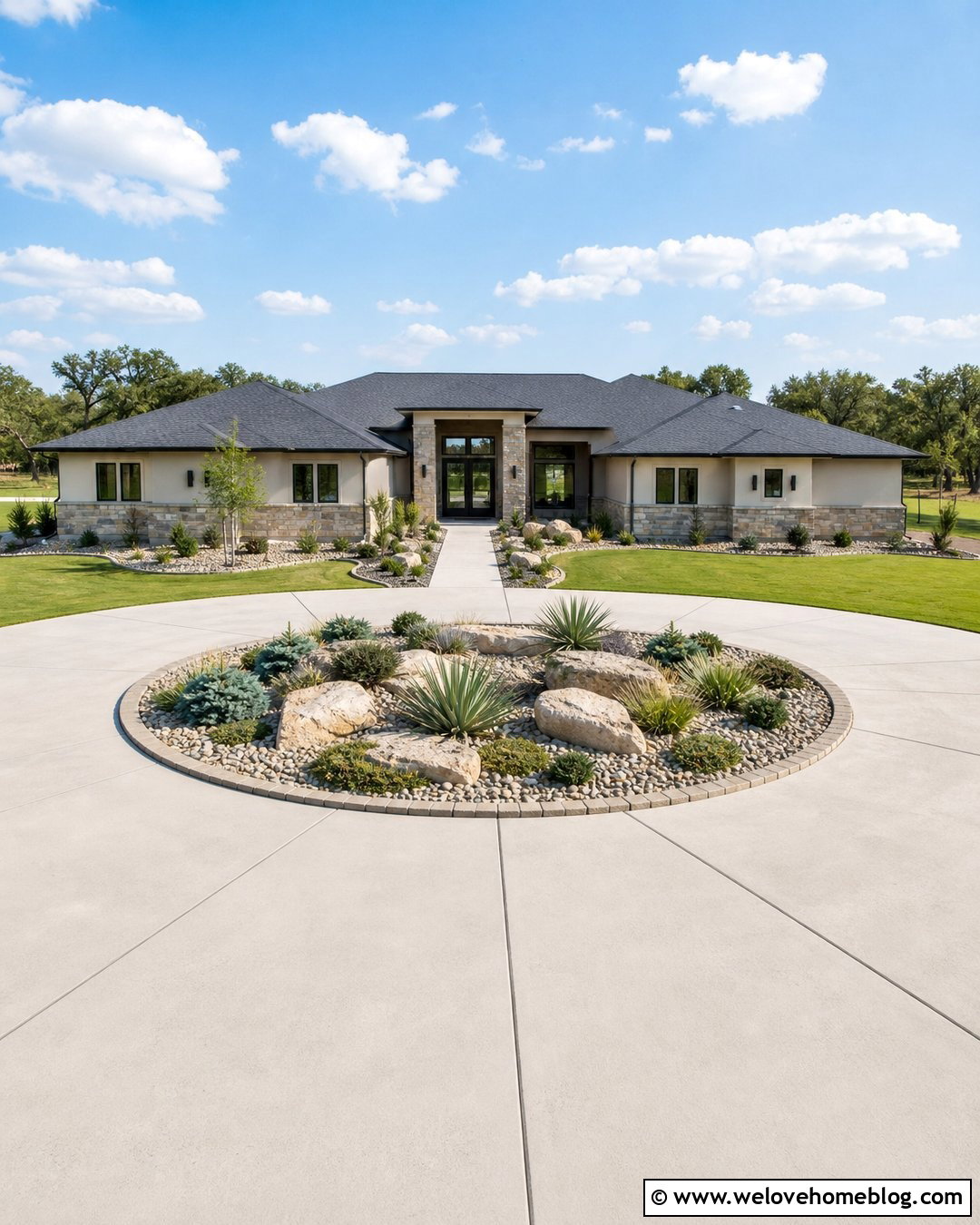
A long bend becomes more graceful when it opens into a rounded drive surrounding a landscaped island. Cover the driveway with neutral concrete pavers laid in a running-bond pattern, then use a darker paver border to emphasize the outline. In the center, plant one appropriately scaled ornamental tree above low evergreen shrubs and seasonal ground cover. Keeping the arrangement simple preserves visibility across the island and prevents overgrowth from narrowing the driving lane. A stone or brick curb protects plants from tires and keeps mulch off the pavers. This design gives guests a clear place to approach, turn, and leave without backing down a long drive. It works particularly well in front of Colonial, Mediterranean, and traditional two-story homes with symmetrical facades and prominent front entrances.
11. Curvy Driveway With Stone Entrance Pillars
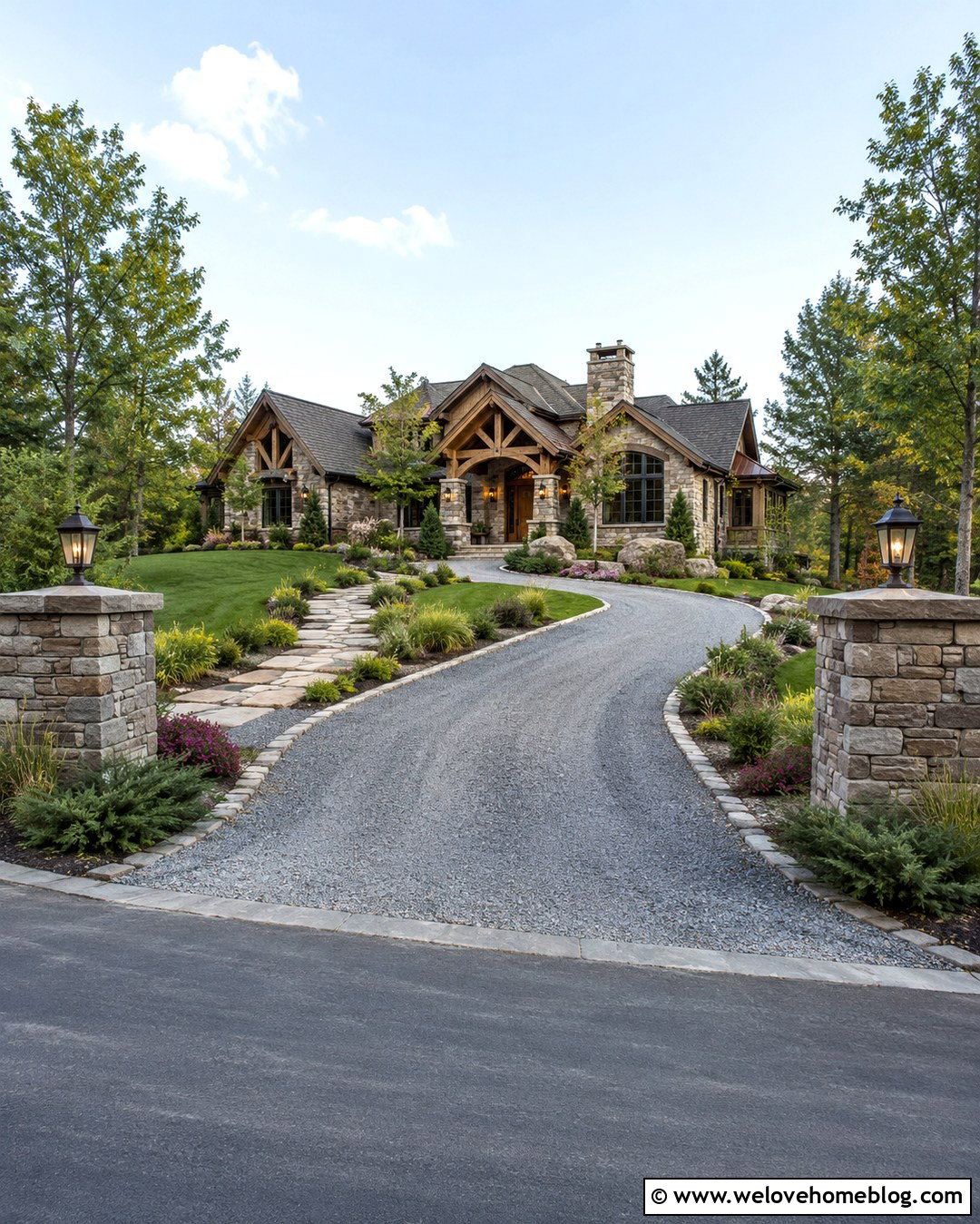
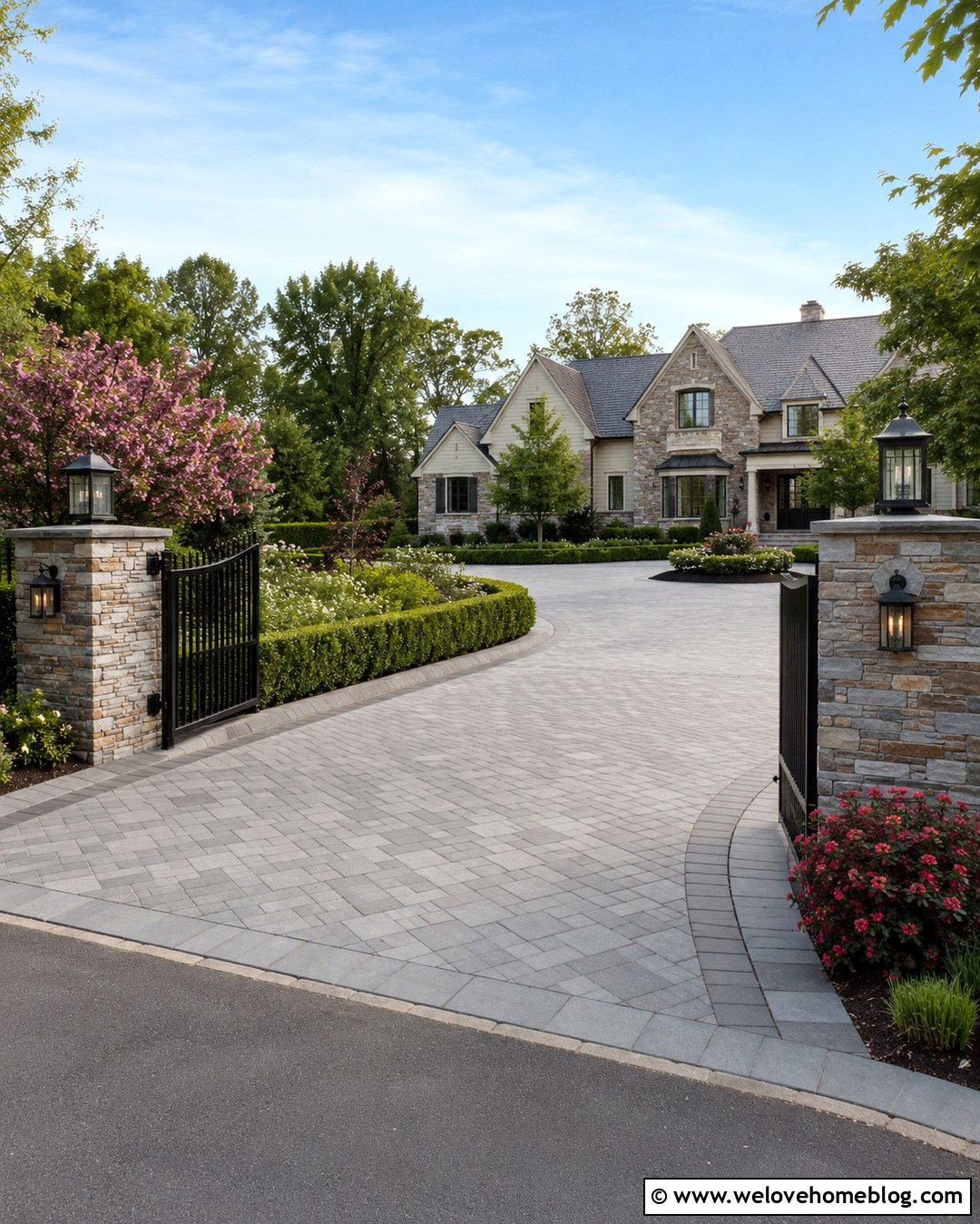
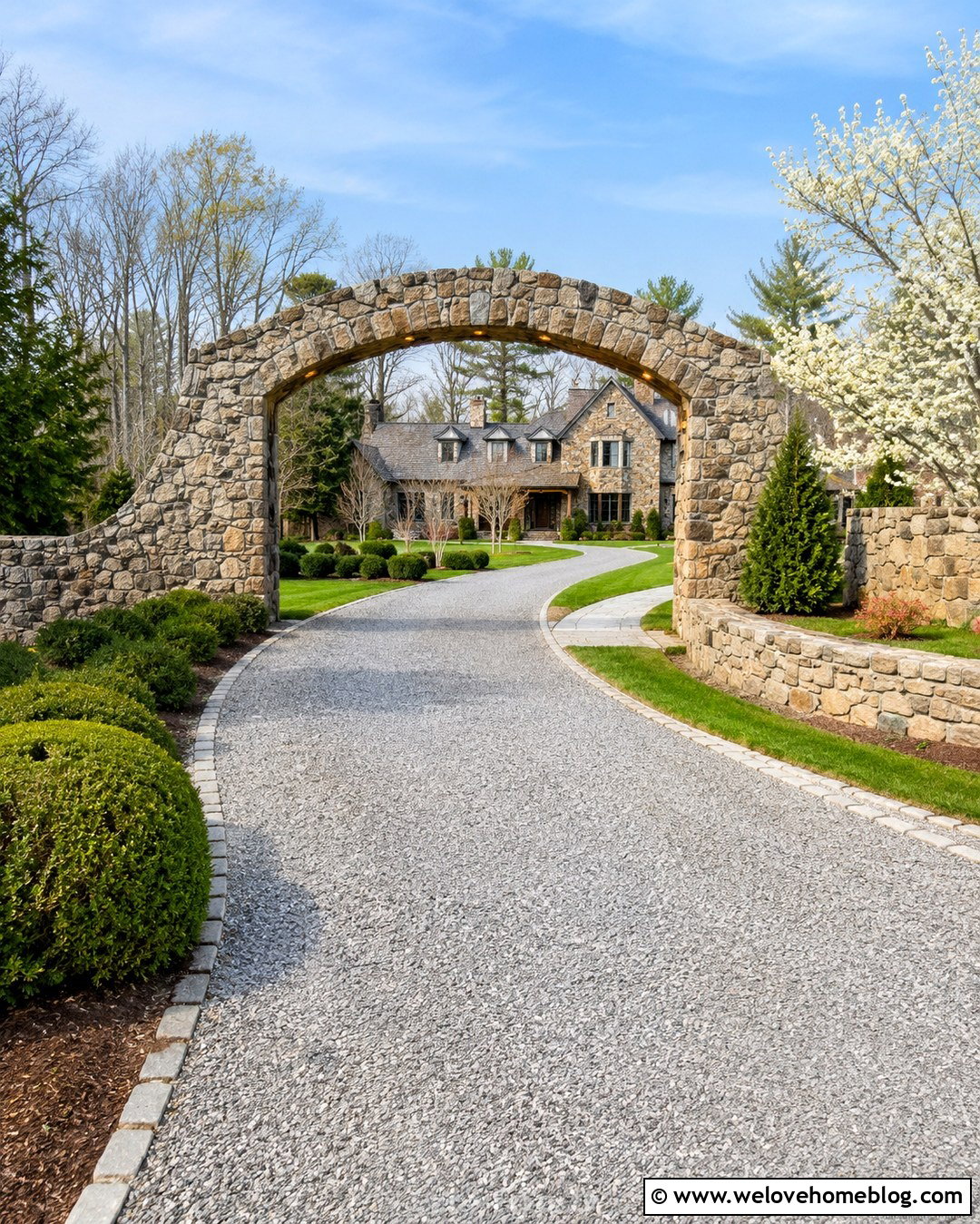
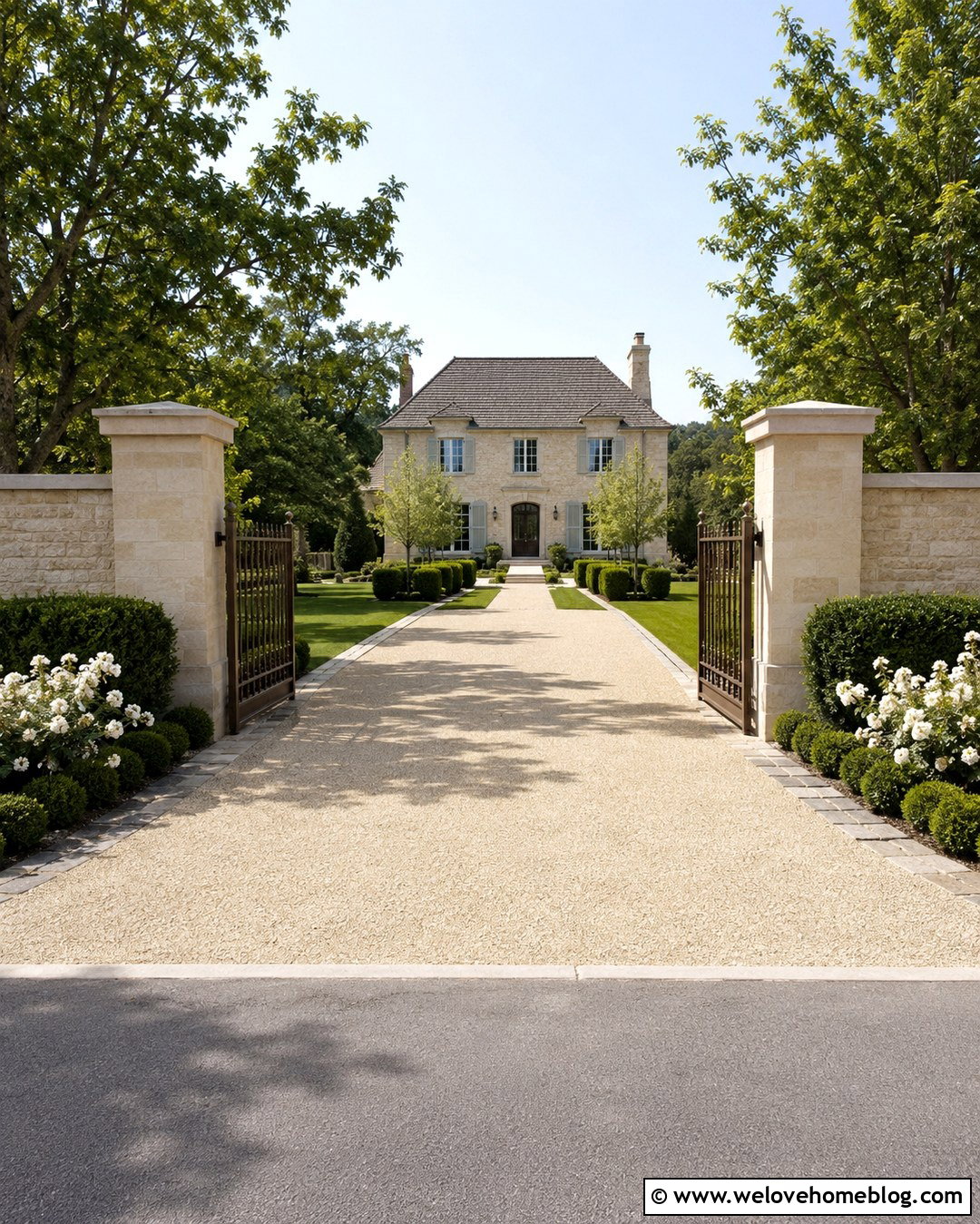
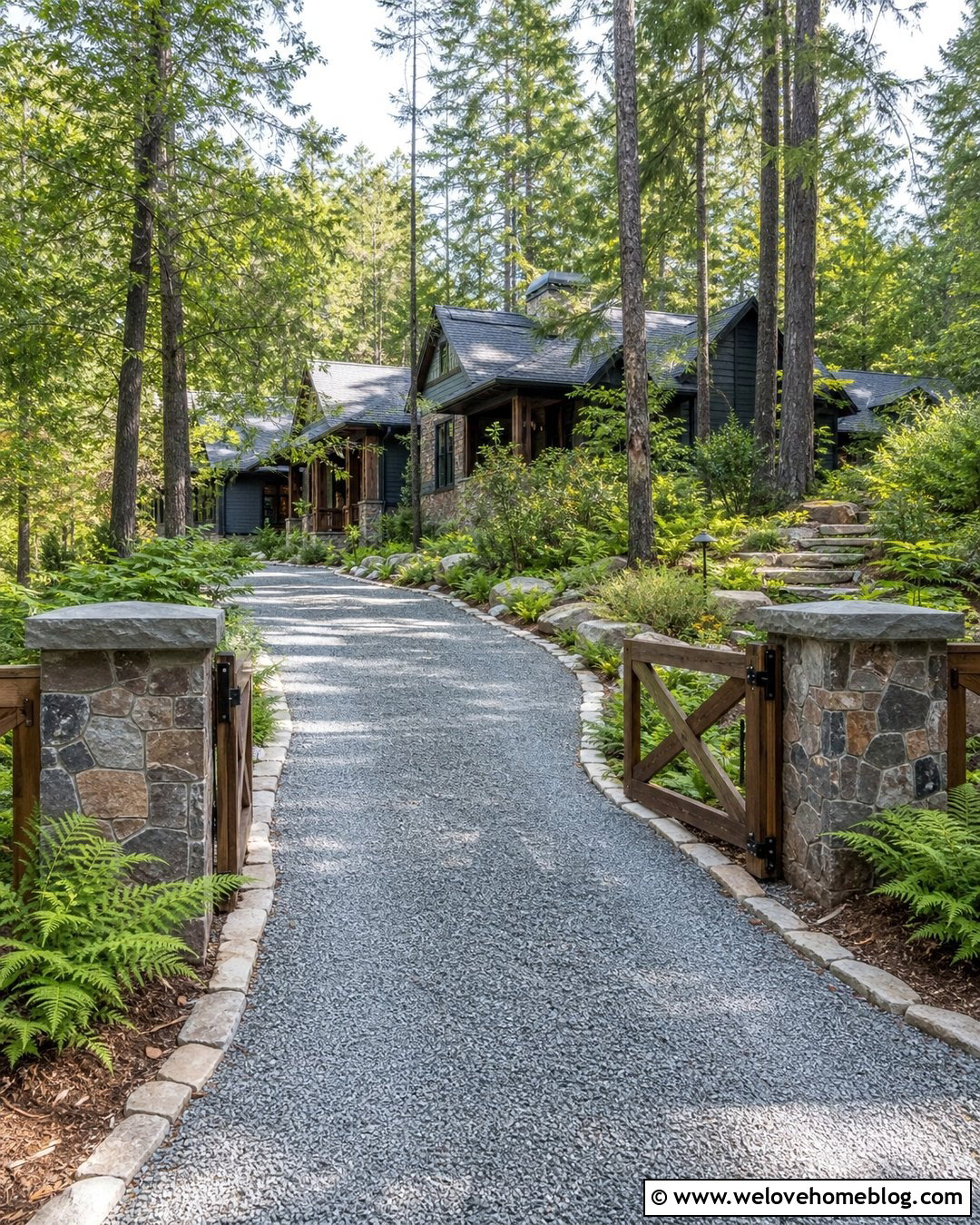
Strong entrance pillars can anchor the beginning of a driveway while the curving route creates a softer journey toward the house. Use compacted gray gravel for the main surface, bordered by granite setts that continue around each bend. Build low, substantial pillars from the same stone used on the home’s foundation or front steps. Position them far enough apart to provide comfortable clearance and maintain visibility along the road. Behind the pillars, arrange layered beds with low junipers, flowering shrubs, and upright ornamental grasses. The planting should gradually become more relaxed as the driveway curves through the yard. Simple lanterns mounted on the pillars add practical illumination without cluttering the entrance. This complete look suits estate-inspired homes, mountain houses, and traditional residences on larger lots.
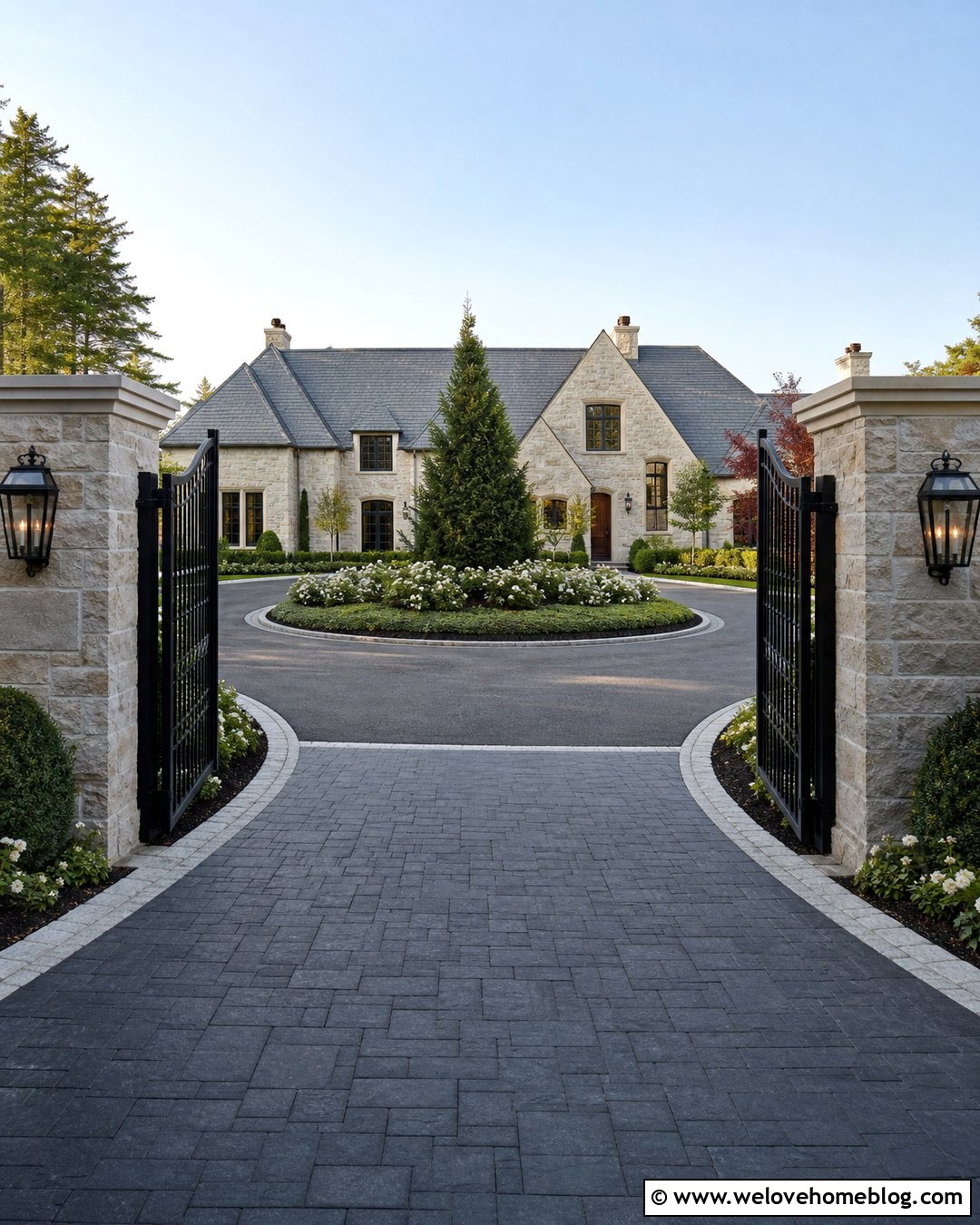
12. Curvy Driveway With A Modern Sliding Gate
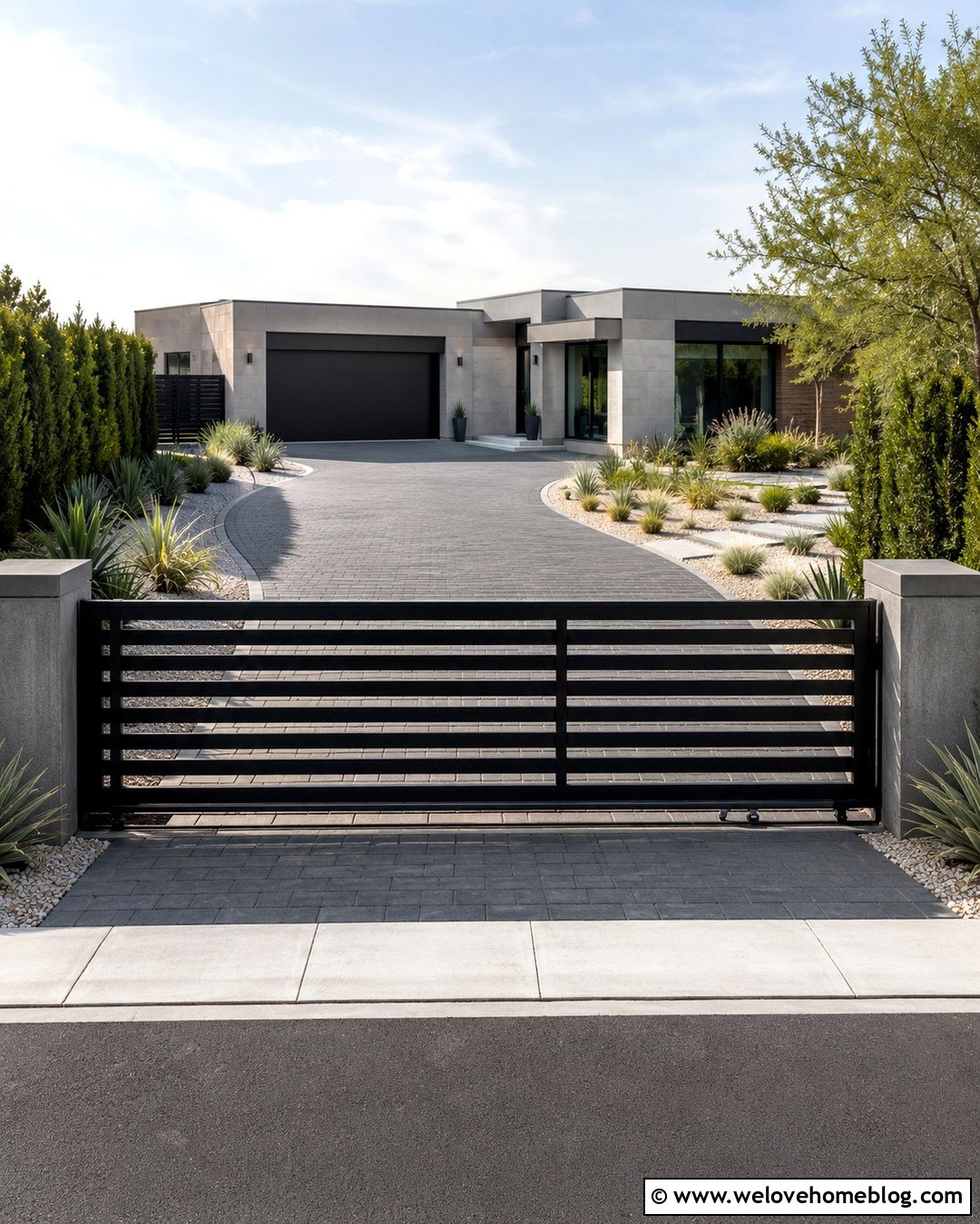
Clean materials keep a gated curvy driveway from looking overly formal. Begin with a wide entrance surfaced in dark charcoal concrete pavers and install a horizontal-slat sliding gate between simple masonry columns. Beyond the gate, let the driveway sweep gently toward a modern home instead of continuing in a rigid straight line. Narrow steel edging can separate the pavers from gravel beds planted with agave, yucca, feather grass, or compact evergreens suited to the local climate. Keep the gate area level and free from plants that could interfere with its movement. Recessed or low-profile lighting should outline the entrance and first bend without producing glare. Repeating the gate’s dark finish in the paver border, house trim, and address feature creates a cohesive contemporary front yard.
13. Curvy Driveway With Hydrangea Borders
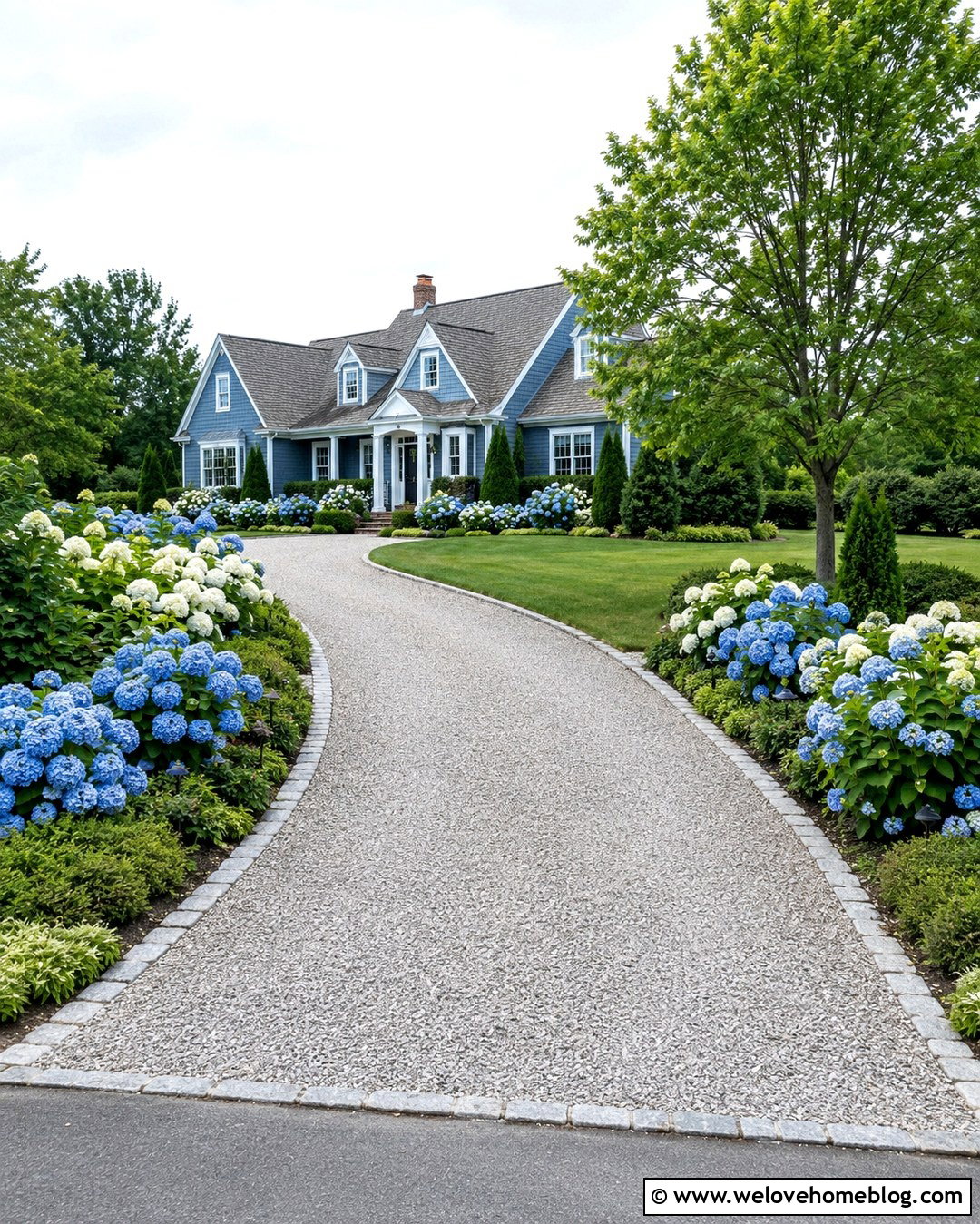
Clouds of hydrangea blooms can transform a gently bending driveway into a lush approach, especially near a cottage, Cape Cod, or traditional farmhouse. Choose a light gray chip-seal or fine gravel surface with a restrained cobblestone edge. Plant hydrangeas in generous beds along the outside curve, where their rounded forms can echo the driveway’s movement. Mix them with compact evergreens for winter structure and low ground cover to conceal bare soil. Set shrubs far enough back to prevent mature branches from leaning over the driving area. On the inside curve, maintain open lawn and one small ornamental tree for balance. Flower colors can coordinate with the house, such as white blooms beside a dark facade or soft blue varieties near gray siding and natural stone details.
14. Curvy Driveway With Ornamental Grass Landscaping
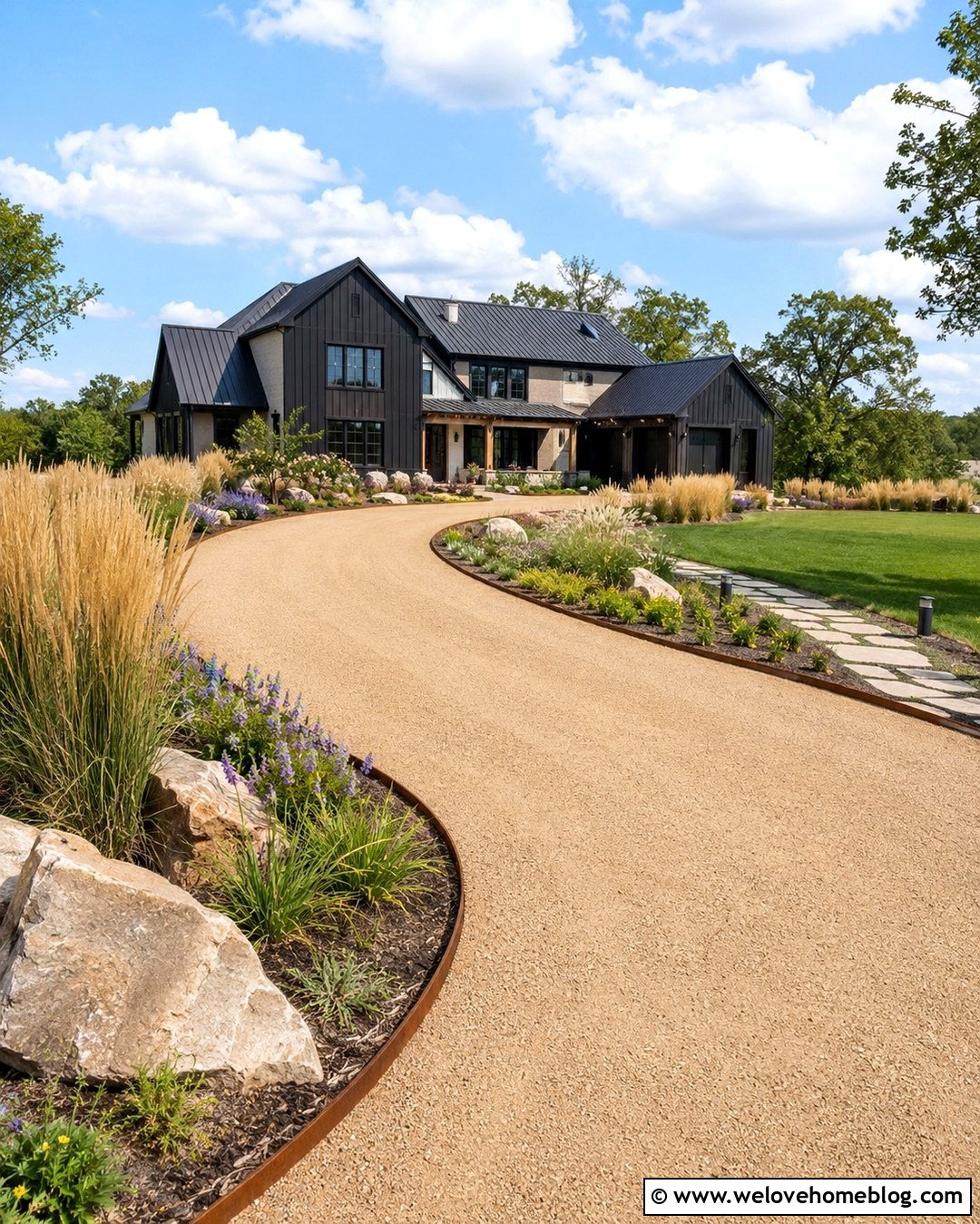
Soft ornamental grasses accentuate motion without making a curved driveway feel heavily enclosed. Pair a warm beige stabilized gravel surface with rust-colored steel edging for a crisp but natural boundary. Plant sweeping groups of switchgrass, little bluestem, fountain grass, and low flowering perennials along the broader outside bend. Vary the plant heights, keeping the shortest selections closest to the entrance and any intersections. A few weathered boulders can provide structure between the grasses while tying into the gravel tones. This complete landscape works well with prairie houses, modern farmhouses, and contemporary homes surrounded by open land. Leave practical breaks in the planting for drainage outlets and pedestrian access. During winter, dried grass forms can continue to define the curve even when flowers and deciduous shrubs are dormant.
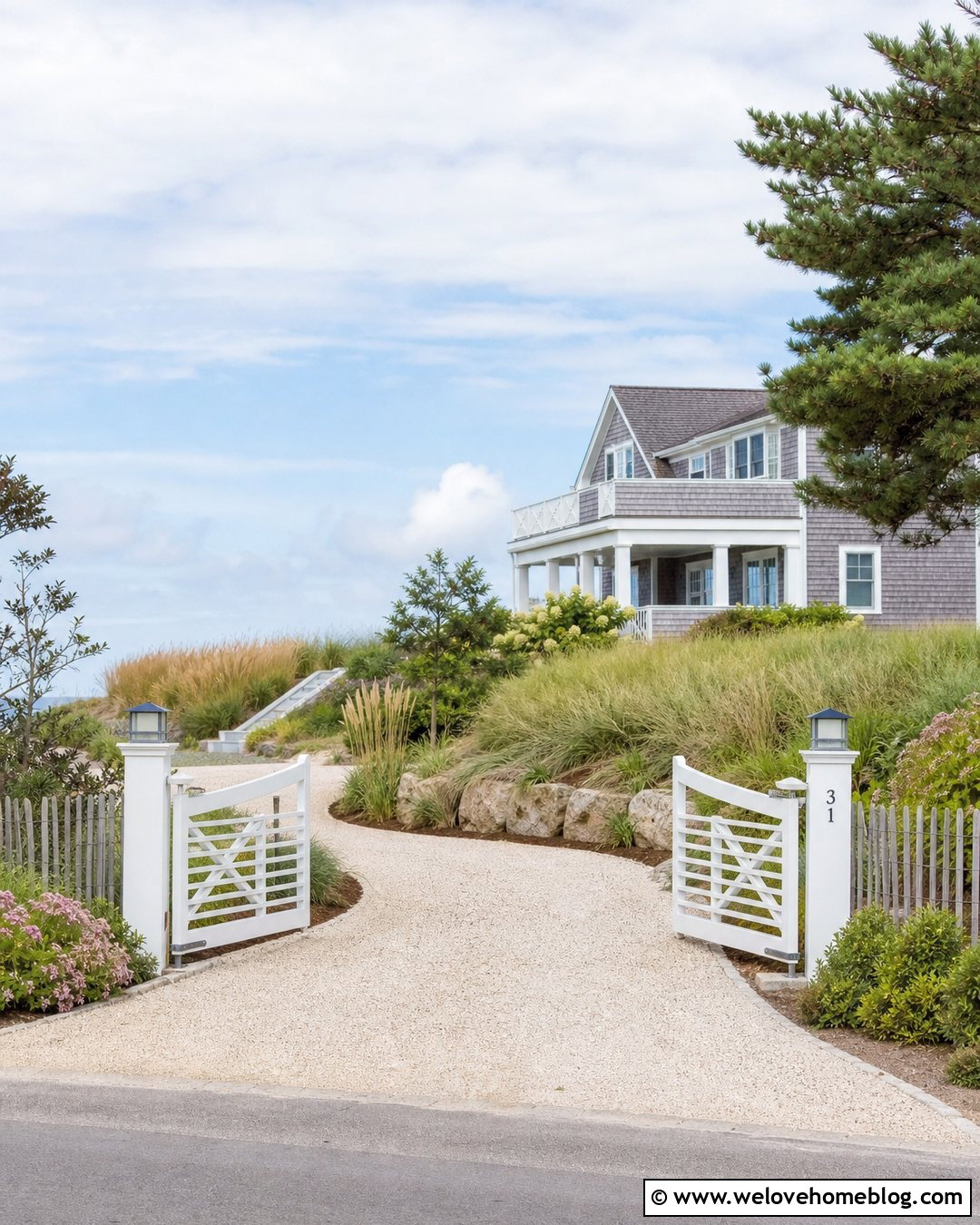
15. Curvy Driveway With A Brick Ribbon Border
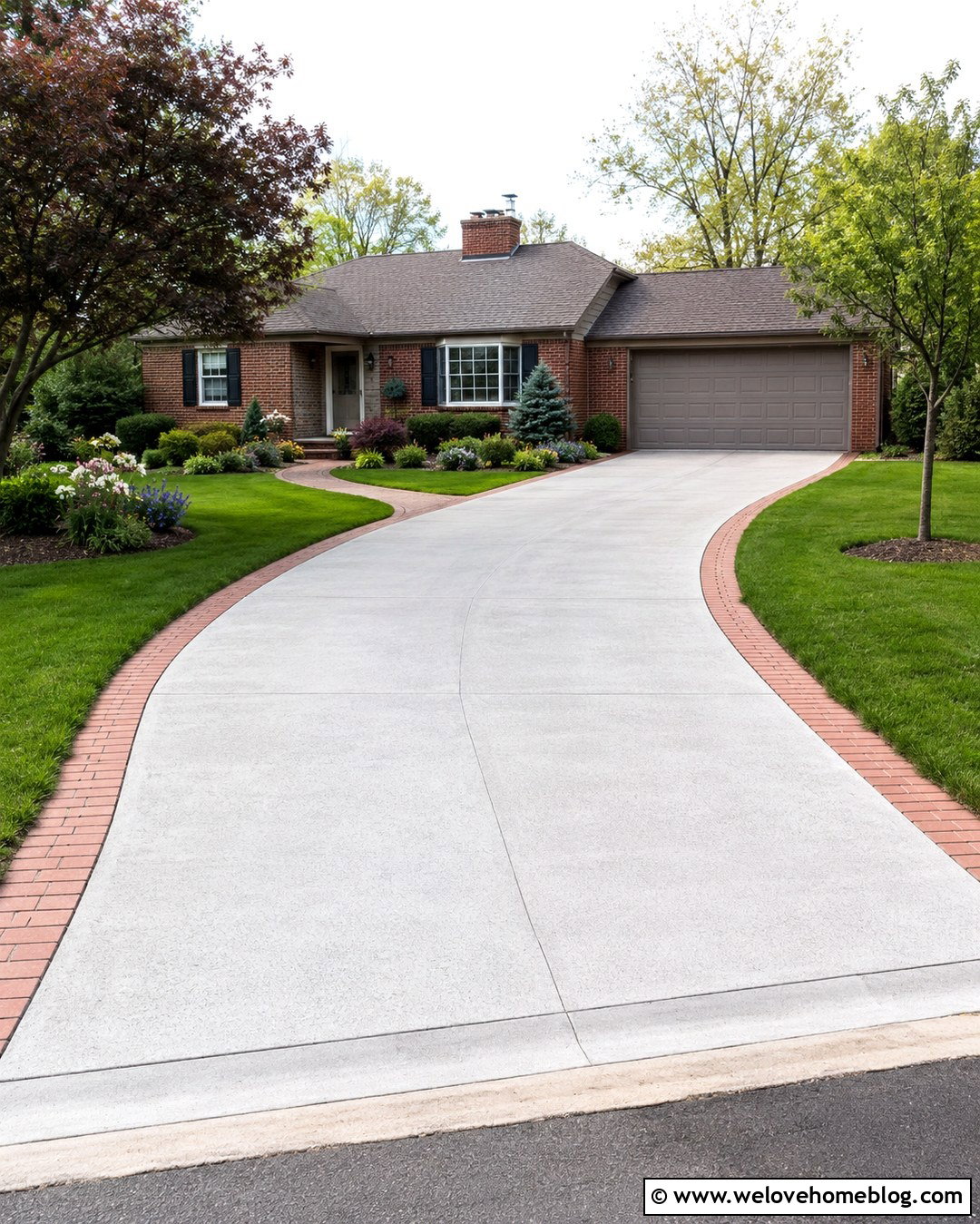
A brick ribbon adds color and precision to an affordable poured-concrete driveway. Select a medium-gray broom-finished concrete surface, then trace both edges with two rows of clay brick in warm red or brown. The narrow border highlights the curvy layout without overwhelming a smaller front yard. Use matching brick where a curved walkway branches toward the porch, creating a clear connection between vehicle and pedestrian routes. Landscape one side with lawn and a compact shade tree, while the opposite edge receives a deeper bed of evergreen shrubs and flowering perennials. This asymmetry keeps the space interesting without making it busy. The combination is ideal for brick ranch houses and traditional suburban homes. Choose border colors already present in the facade for a unified, intentional finish.
16. Curvy Driveway With Landscape Lighting
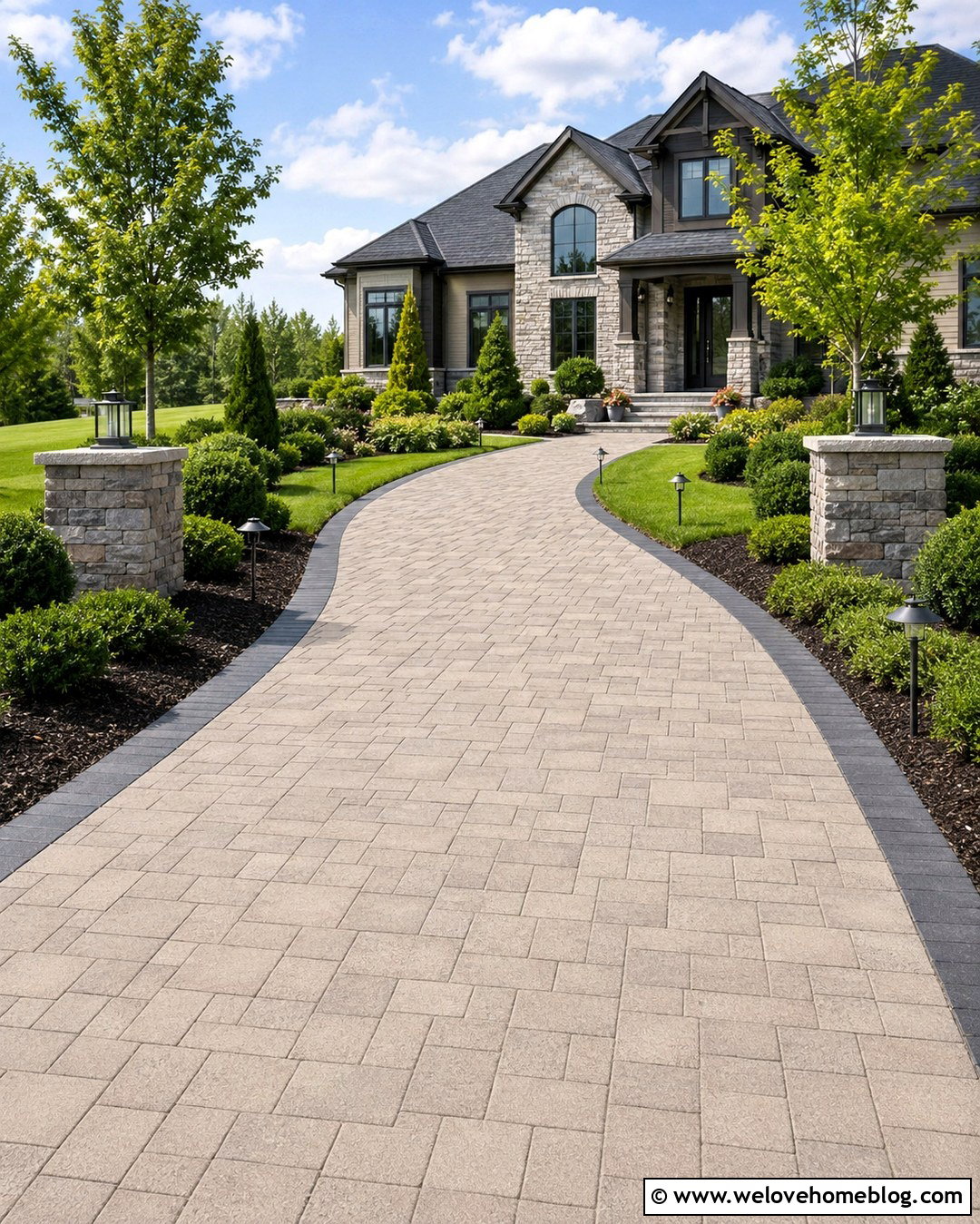
Lighting can make each bend easier to recognize while improving the driveway’s appearance from the house. Use tan interlocking concrete pavers with a contrasting charcoal edge, then position low shielded fixtures beyond the border at steady intervals. Follow the outer curves rather than placing lights directly opposite one another, which can create an overly rigid runway effect. Layer the lighting with subtle illumination on entrance trees, stone walls, or address pillars. During the day, frame the route with low evergreen mounds, ground cover, and broad areas of lawn. Avoid placing fixtures where tires, snow equipment, or opening car doors could damage them. A gently curving layout with coordinated lighting works with many home designs, but it is especially effective around contemporary and transitional houses with clean exterior lines.
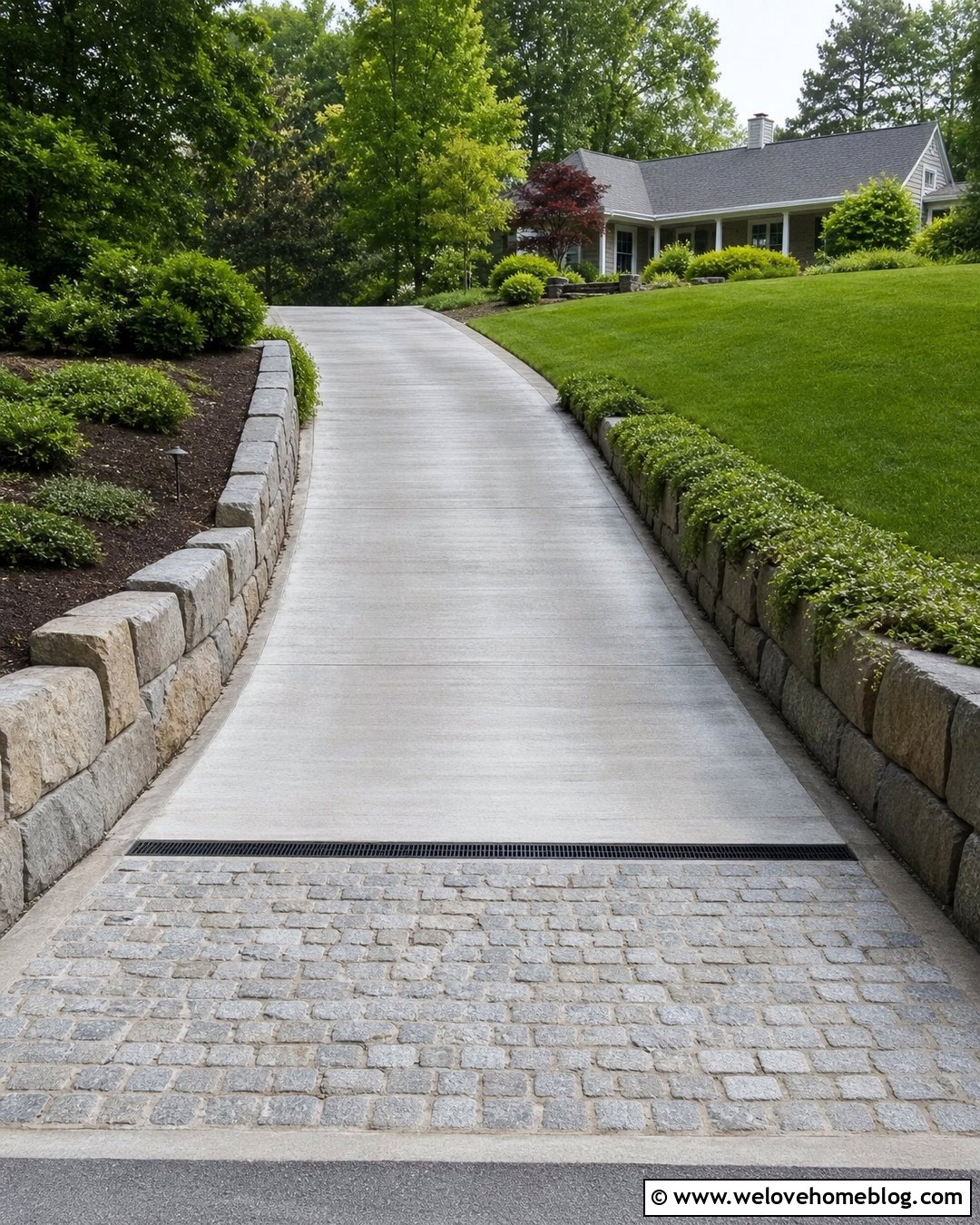
17. Curvy Driveway On A Sloped Yard
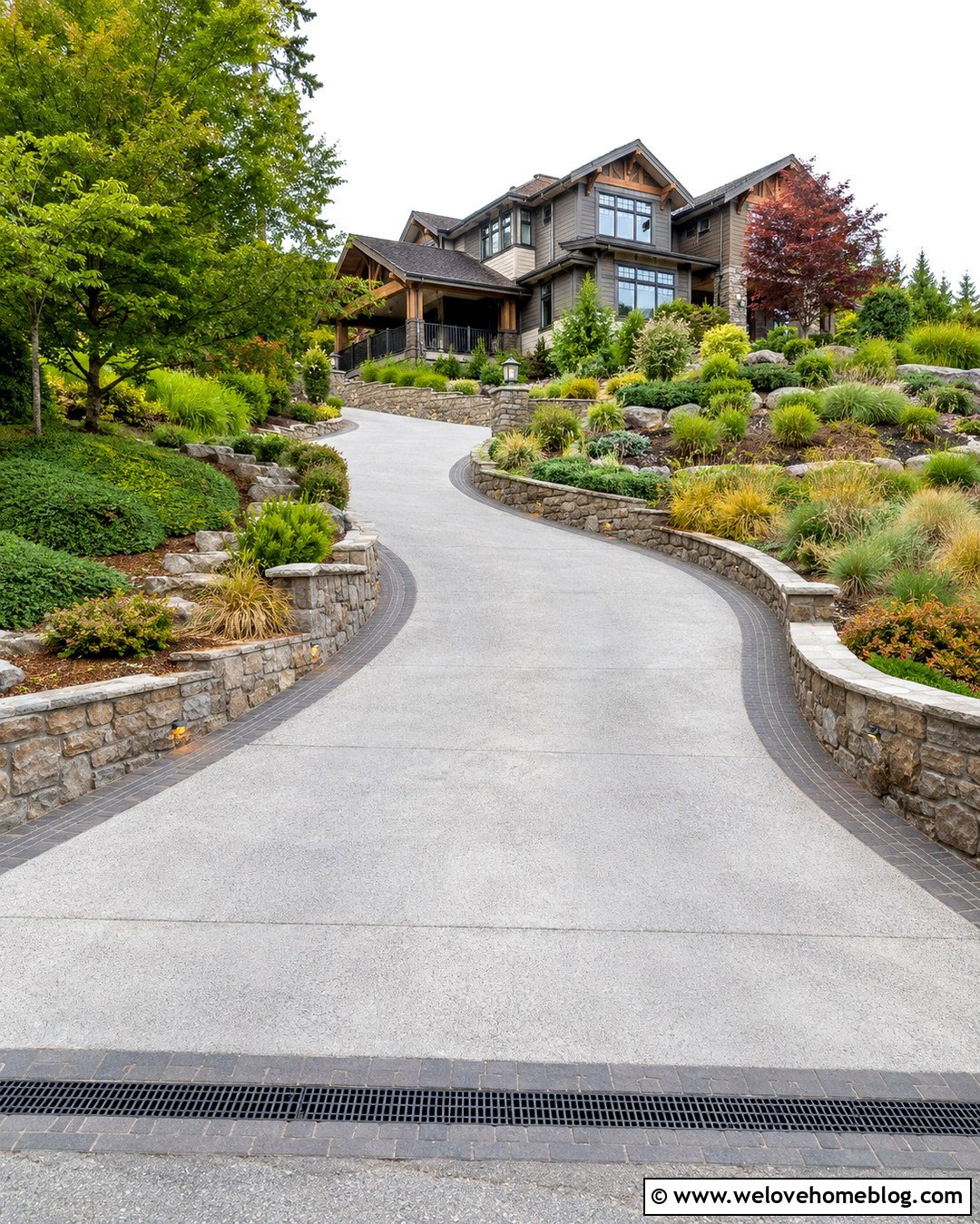
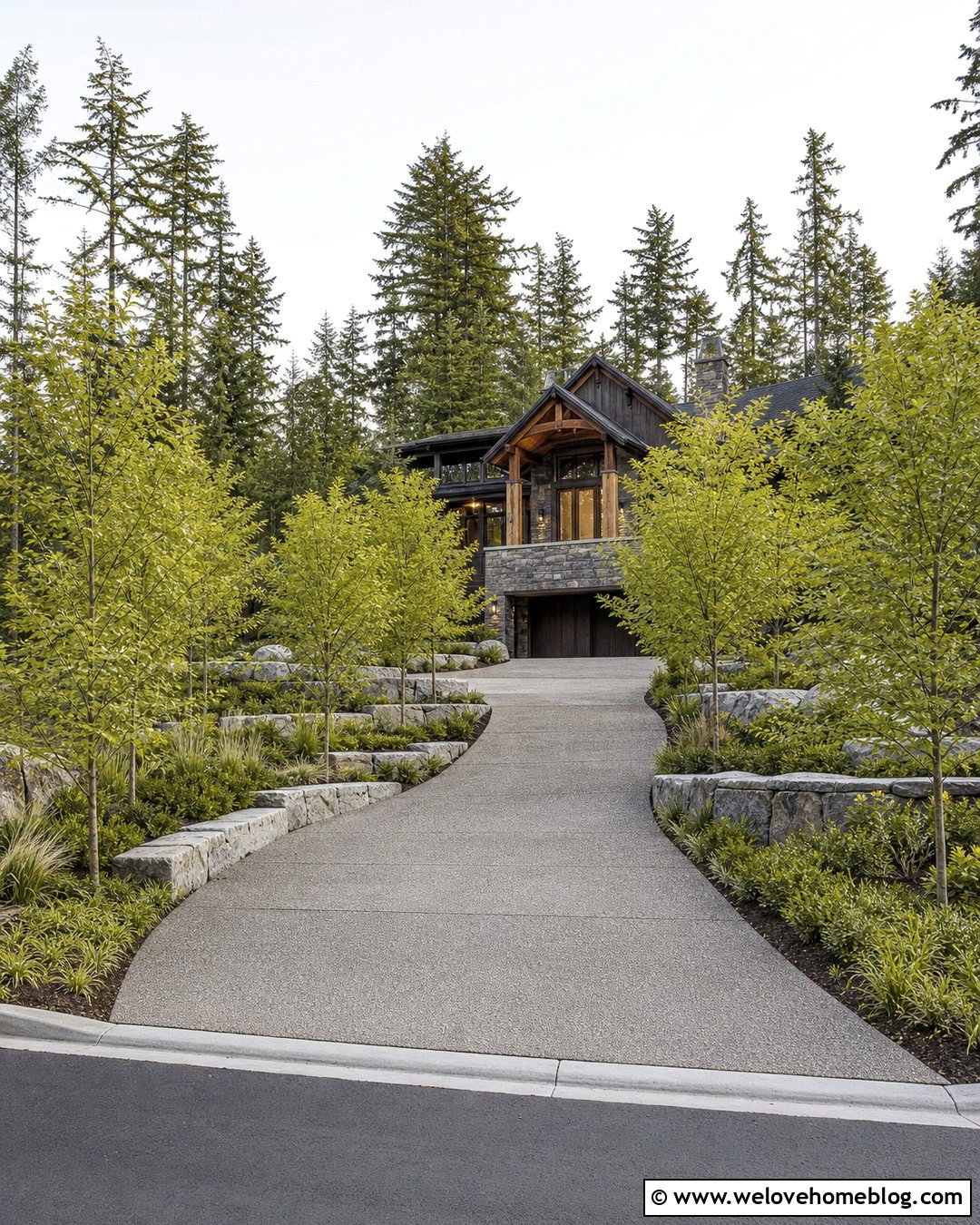
A sweeping driveway can make a change in elevation feel more gradual and visually natural. Use textured concrete or interlocking pavers that create a clearly defined surface, then design broad turns rather than abrupt bends. Retaining walls may be needed along cut slopes, and their material should coordinate with the home and driveway border. Plant the upper bank with deep-rooted ground covers, low shrubs, and ornamental grasses to create a finished transition. On the lower side, use a raised stone edge where necessary to separate the pavement from drainage areas. Water management, turning geometry, and winter conditions deserve professional attention before construction begins. Curved routes may provide a smoother transition on some sloped properties, but the final layout must respond to the site’s actual grade and available space. ()
18. Curvy Driveway For A Small Front Yard
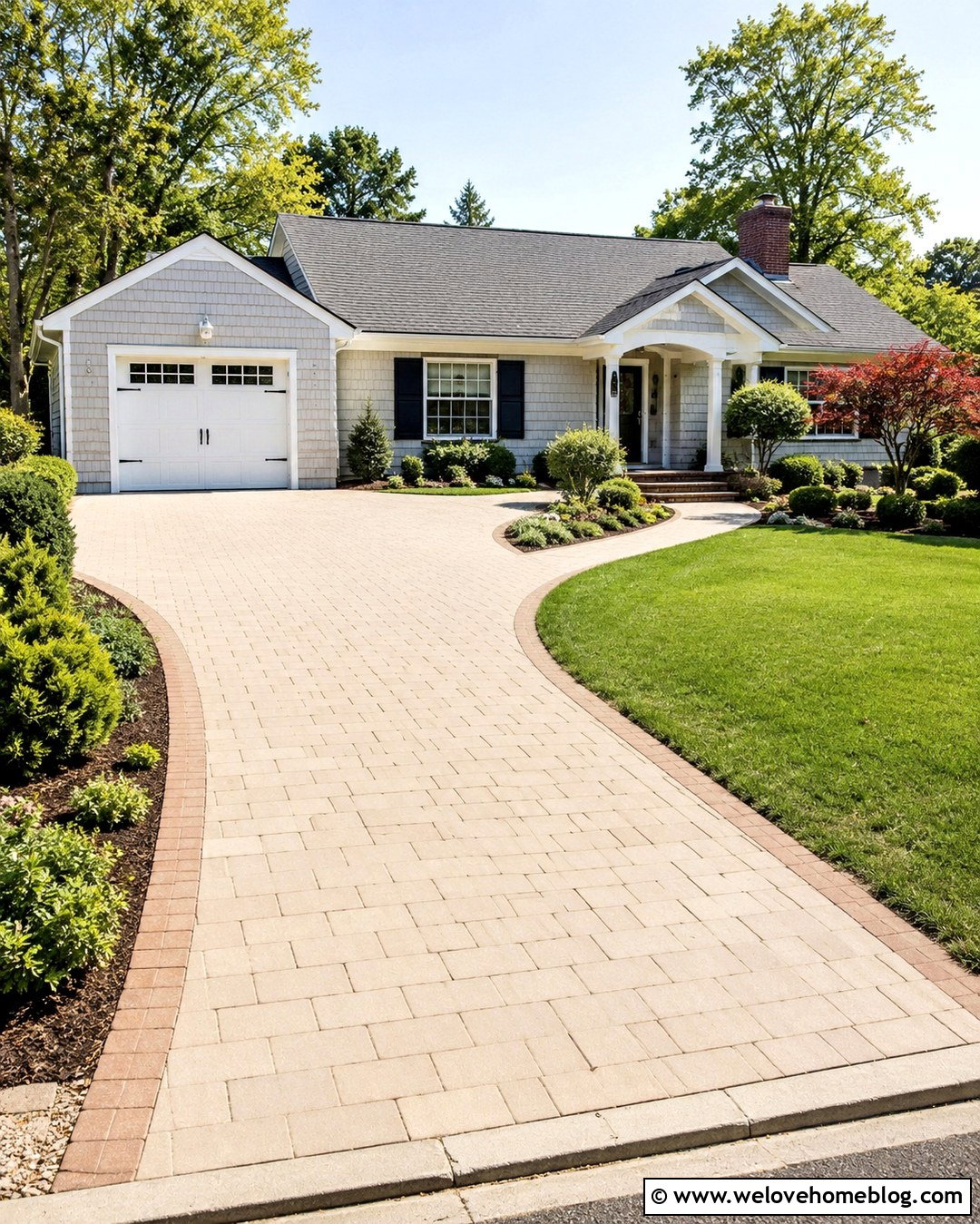
A compact property does not need an exaggerated winding driveway. One shallow curve can soften the approach, move parking away from the front walkway, and create space for a useful planting bed. Choose light concrete pavers in a simple running-bond pattern so the surface does not look overly busy. Define the inner bend with a low brick border and a compact bed containing one dwarf tree, evergreen shrubs, and ground cover. Keep the outside edge open and connect it directly to a curved walkway leading to the porch. Near the garage, widen the pavers only as much as required for turning and parking. Limiting the palette to two paving colors and several repeated plants will make the small yard appear organized. The result feels intentional without sacrificing valuable driveway space.
19. Curvy Driveway Through A Wooded Yard
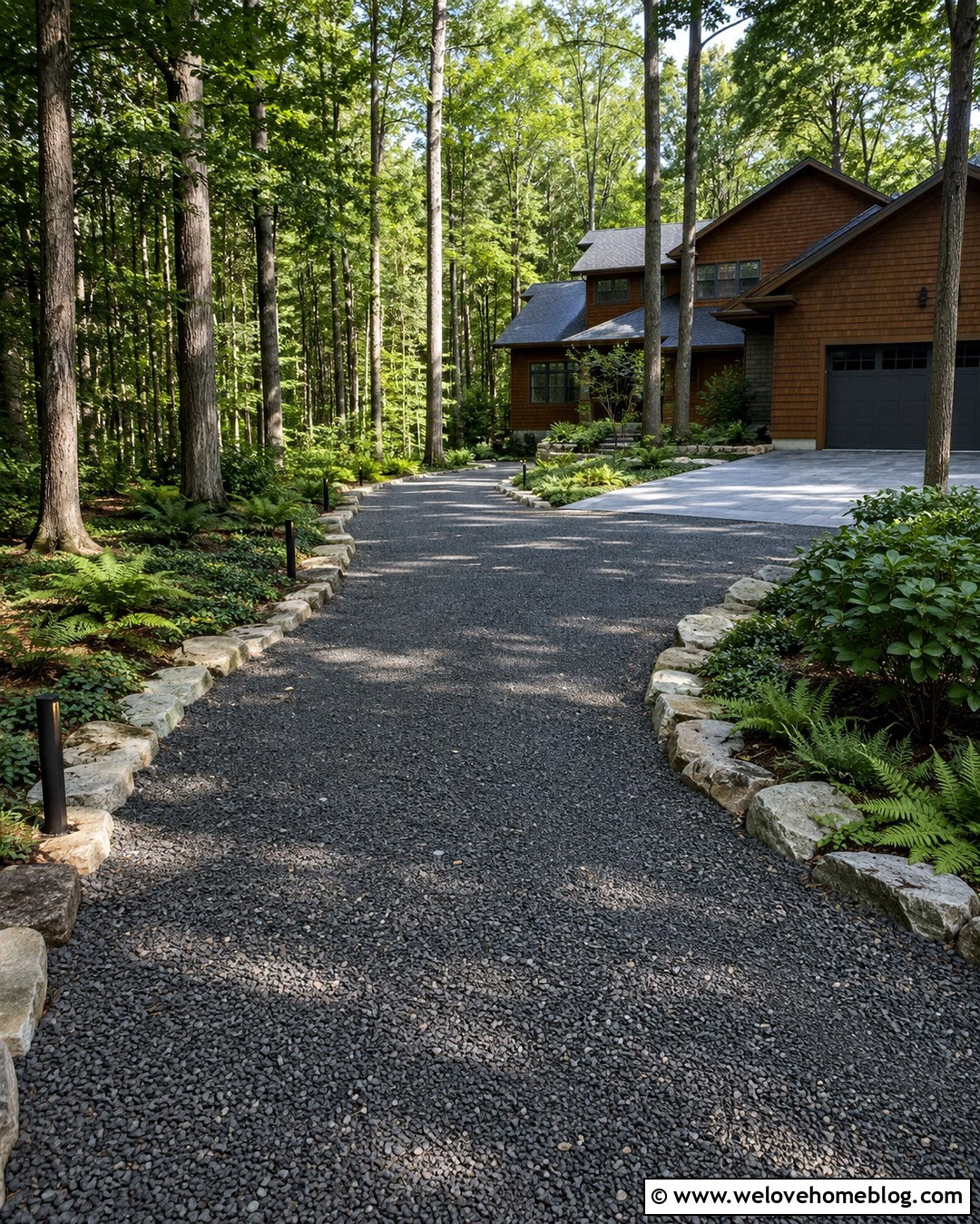
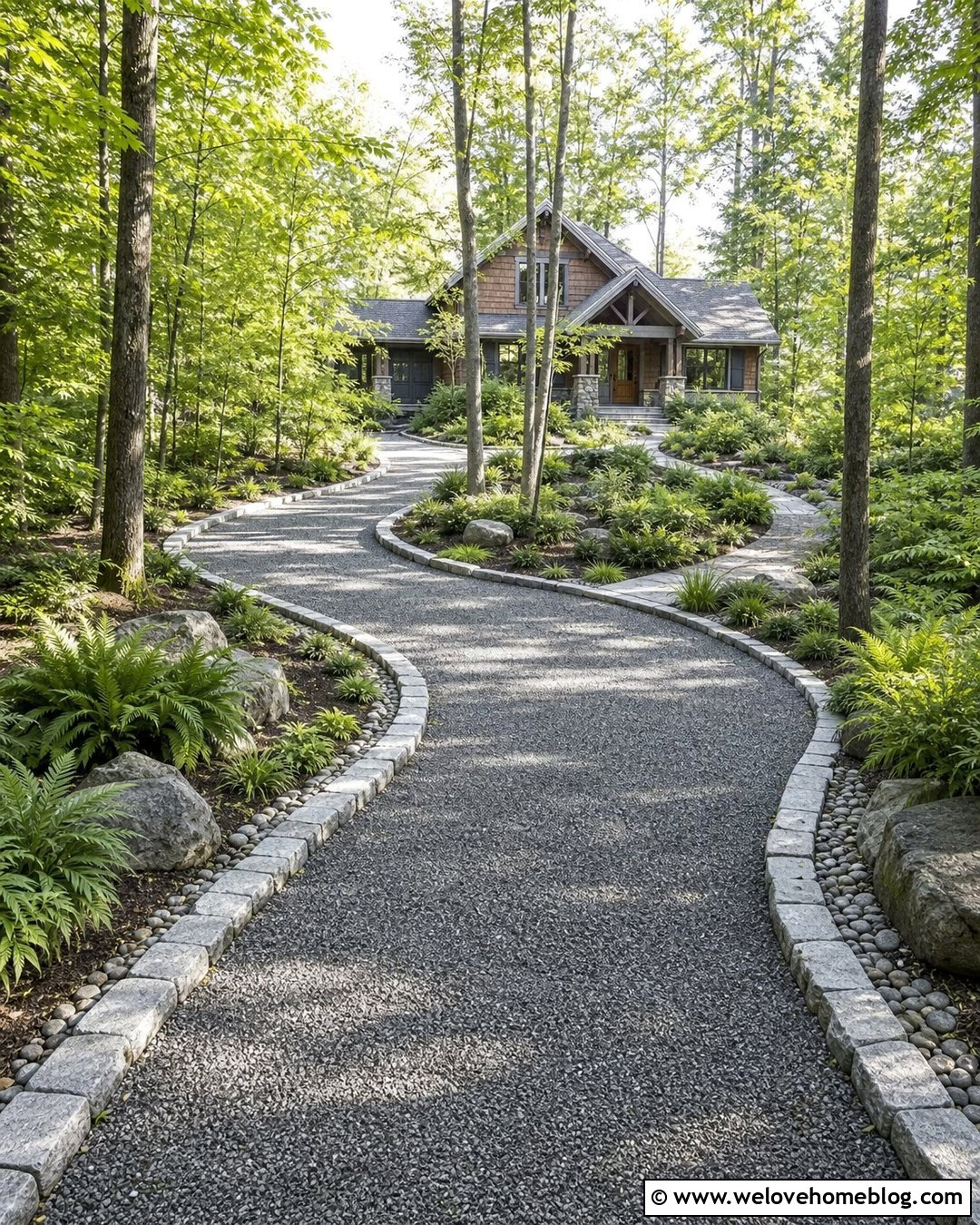
A driveway winding between mature trees can create a peaceful arrival while preserving the property’s strongest natural features. Crushed granite or dark gray gravel offers a quiet surface that blends into a wooded setting. Edge it with large weathered stones placed in relaxed, irregular lines rather than a formal continuous curb. Use woodland plants such as ferns, native sedges, compact rhododendrons, and shade-loving ground covers to repair disturbed areas beside the route. The bends should feel purposeful and maintain clear sightlines, particularly where the driveway narrows or approaches the house. Near the garage, transition into a wider paver apron that provides a stable parking area. A few simple bollard lights can mark key curves while remaining visually unobtrusive among the trees and natural understory planting.
20. Curvy Driveway With A Rounded Parking Court
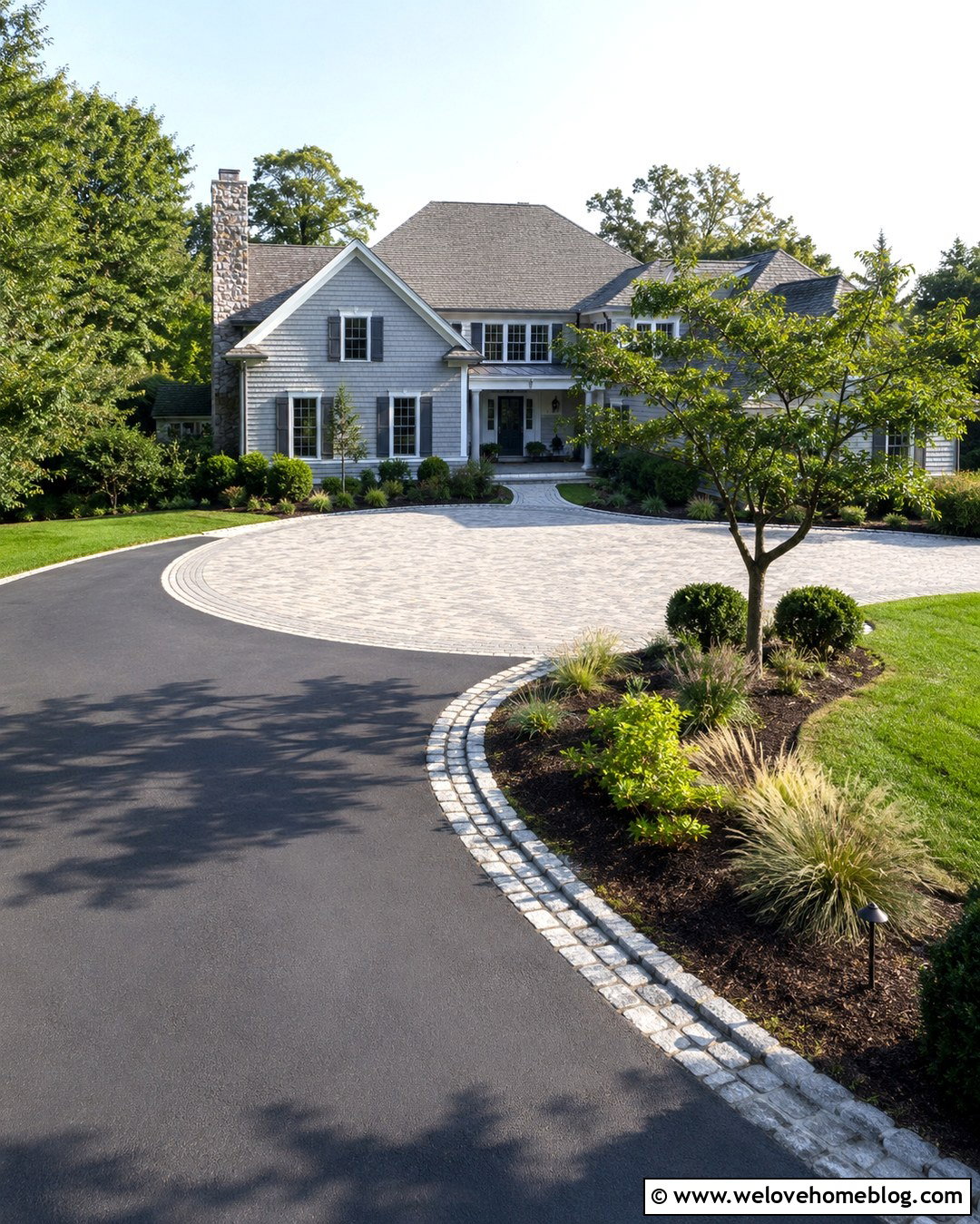
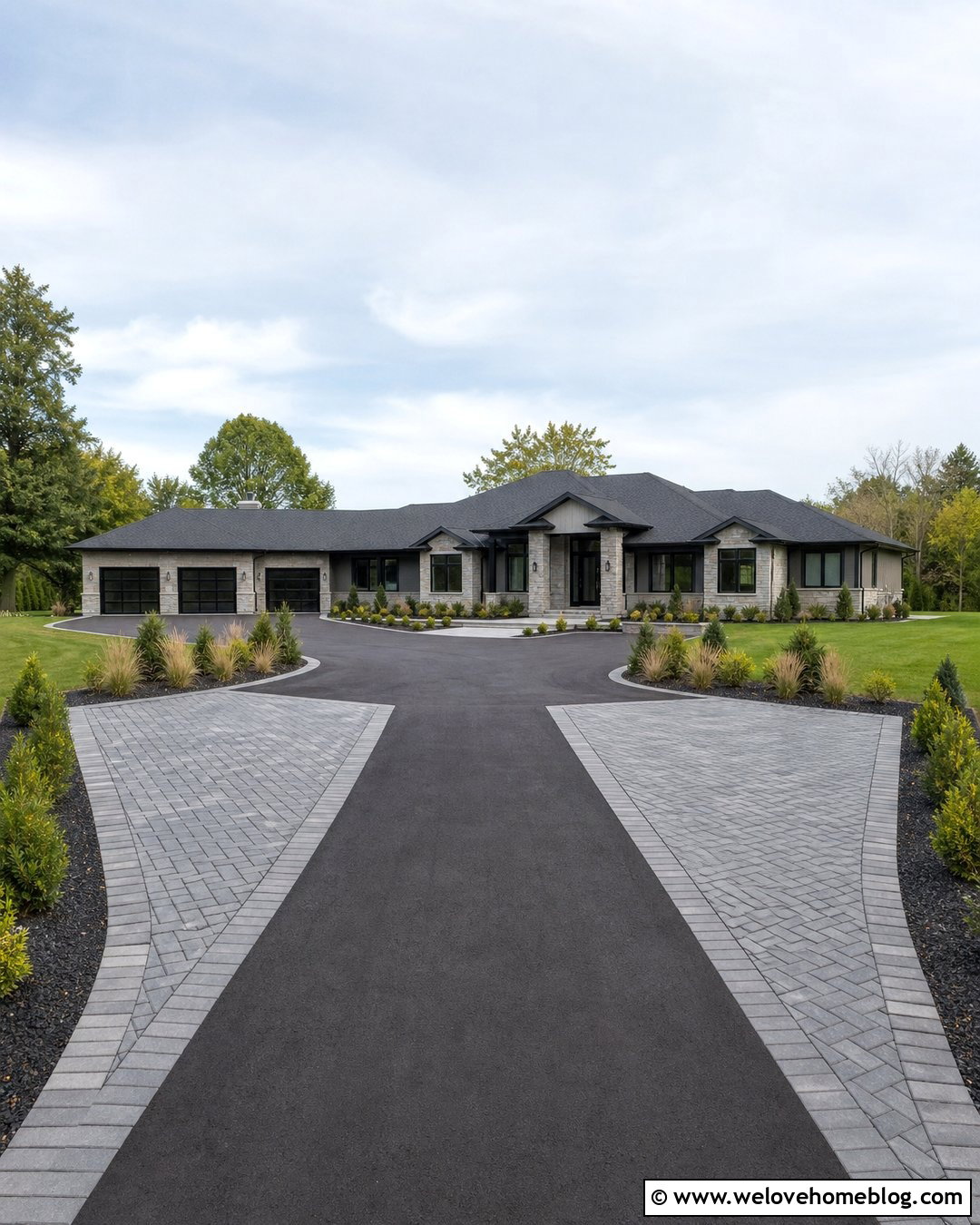
A rounded parking court creates a practical destination at the end of a sweeping driveway. Surface the main approach with black asphalt for simplicity, then transition into a circular court made from variegated gray concrete pavers. A granite cobblestone band can connect the two materials and outline the court’s shape. Place a curved planting bed between the parking area and front entrance, using low shrubs, ornamental grasses, and one sculptural tree to soften the hardscape. Keep the garage side more open so vehicles have room to maneuver. A matching paver walkway should lead guests directly from the court to the porch without crossing common backing zones. This layout works well for larger suburban homes where the driveway must support everyday parking while still creating an attractive, clearly organized arrival.
Conclusion:
The best **20 Curvy Driveway Ideas** treat the surface, bends, borders, landscaping, and house as one connected design. A successful curve should look attractive from the street while remaining comfortable to navigate and easy to maintain. Gravel and asphalt suit relaxed or expansive settings, while brick, concrete, resin-bound aggregate, and pavers can create a more tailored finish. Trees, garden beds, lighting, gates, and entrance pillars should reinforce the route rather than crowd it. Before building, mark the proposed shape, test vehicle movement, plan drainage, and check local access requirements. Whether your yard is compact, wooded, sloped, or spacious, a well-planned curvy driveway can add function, depth, and welcoming curb appeal.

Related posts:
Leave a Reply