
Cypress trees bring height, structure, and year-round greenery to a residential entrance. Their narrow silhouettes can make a short approach feel more formal, guide the eye along a long driveway, or create privacy without filling every inch of the front yard. The key is treating the trees, driveway surface, borders, lighting, and house facade as one coordinated landscape. Italian cypress naturally supports Mediterranean and formal designs, while Leyland cypress can create a fuller privacy screen. Bald cypress offers a softer, deciduous option for properties with more space. Before planting, consider mature tree size, sunlight, drainage, utility lines, sightlines, and local growing conditions. The complete looks below offer practical inspiration for different homes, materials, layouts, and budgets through these **20 Cypress Tree Driveway Ideas**.
1. Italian Cypress Tree Gravel Driveway
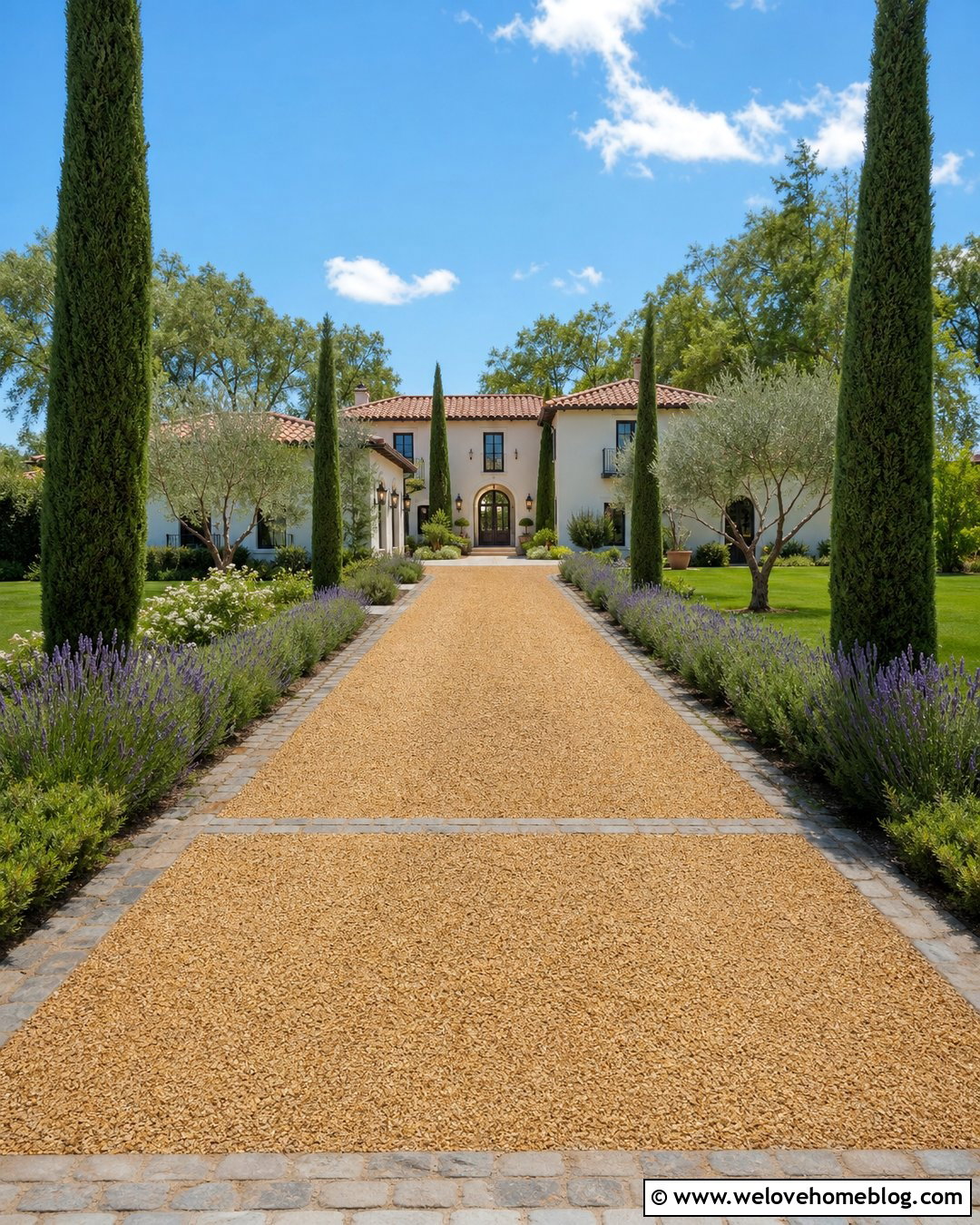
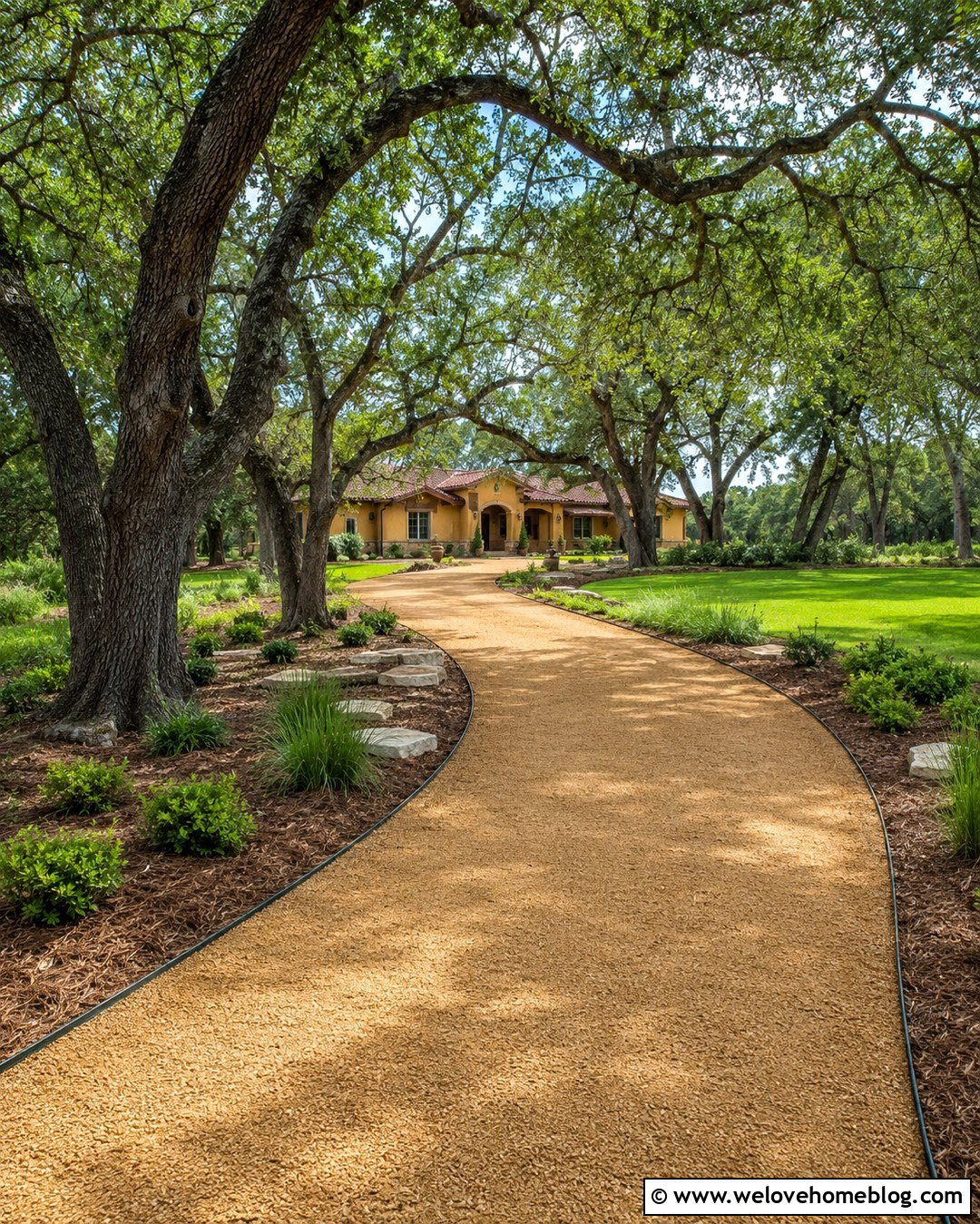
Warm gravel and upright Italian cypress create a relaxed Mediterranean entrance that still looks carefully organized. Use buff, tan, or pale gray gravel for the driveway, then contain it with steel edging or a narrow cobblestone border. Plant evenly spaced cypress trees on both sides to establish a strong visual rhythm leading toward the house. Beds of lavender, rosemary, ornamental grasses, or drought-tolerant ground cover can soften the lower portion of each tree. Leave enough setback between the trunks and driving surface for mature growth and vehicle clearance. This complete look works especially well with stucco homes, clay roof tiles, stone walls, and warm wood doors. Low path lights between selected trees can improve visibility without making the landscape feel crowded. ()
2. Cypress Tree Concrete Driveway
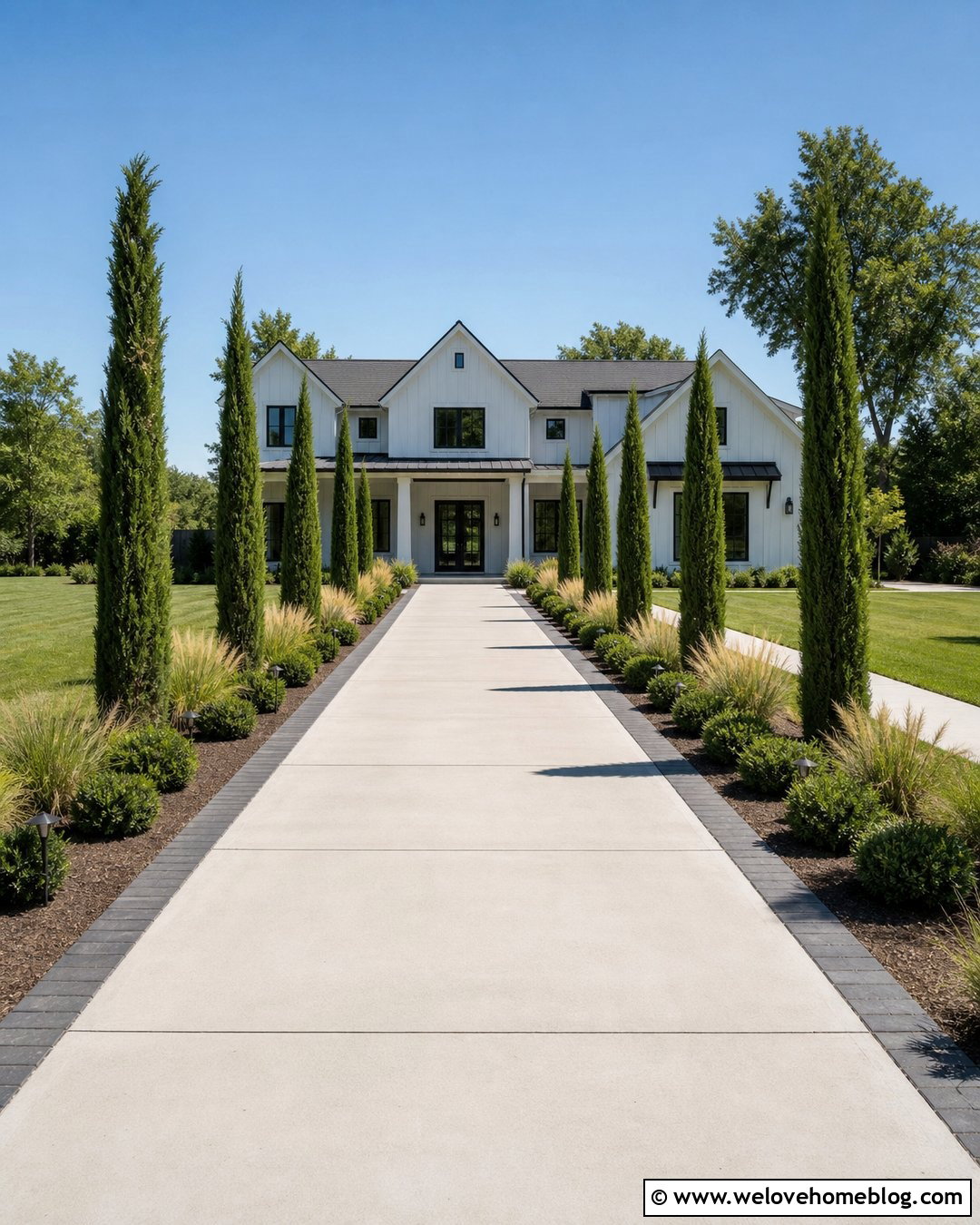
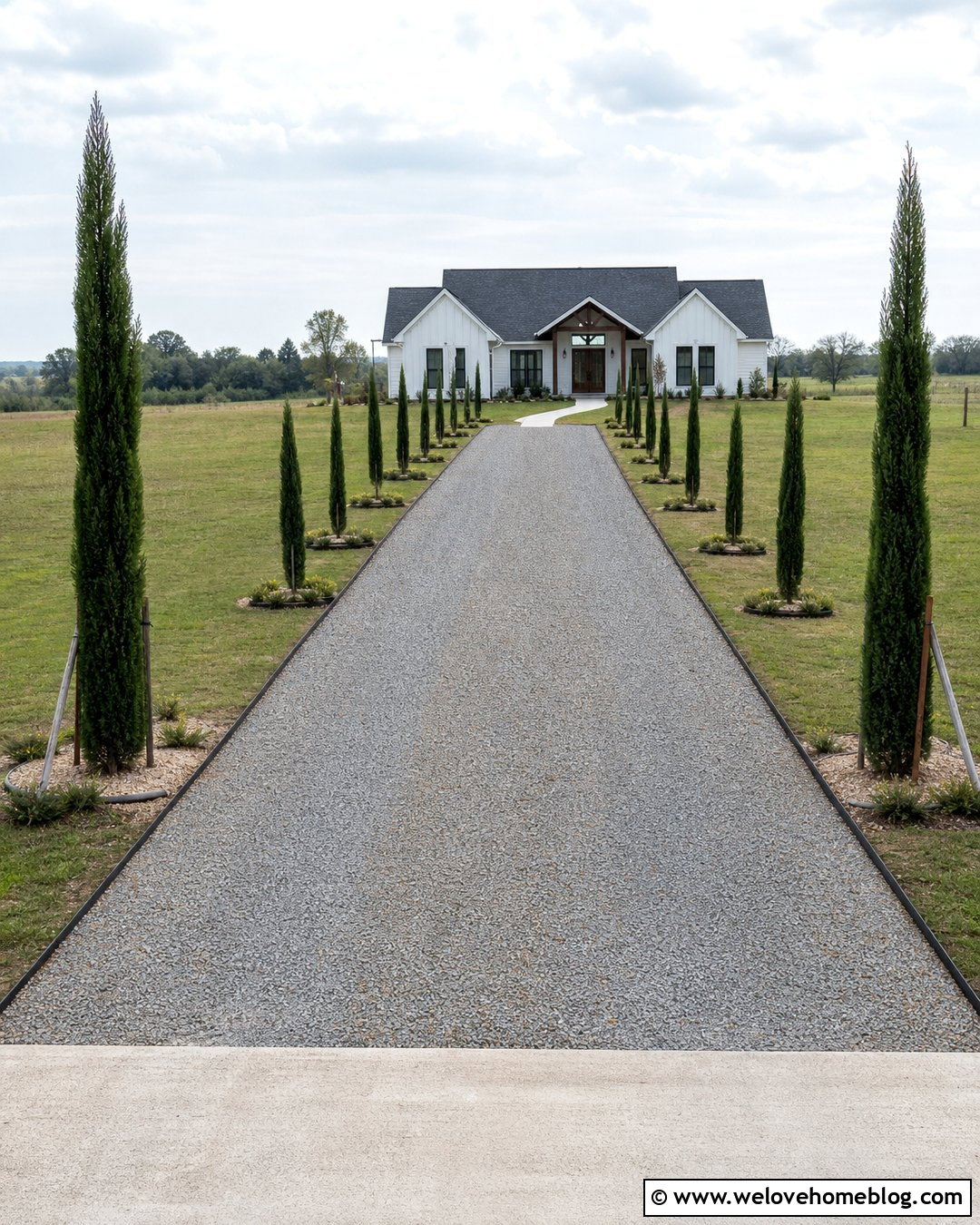
A light concrete driveway gains character when tall cypress trees frame its clean, straight layout. Choose pale gray poured concrete with subtle control joints rather than an overly busy stamped finish. Narrow planting beds can run beside the pavement, with upright cypress trees spaced consistently and low evergreen shrubs filling the gaps. A dark brick or charcoal paver ribbon provides contrast and creates a finished transition between concrete and soil. This arrangement suits modern farmhouse, transitional, and updated ranch homes because it balances simple architecture with strong greenery. Keep the beds wide enough for healthy root development and place trees away from underground utilities. Repeating one ground cover beneath the entire row produces a calm appearance and makes the cypress silhouettes the main feature.
3. Cypress Tree Paver Driveway

Do you want a driveway that feels established rather than freshly installed? Tumbled concrete pavers in warm beige, sand, or greige tones pair naturally with dark green cypress trees. Lay the pavers in a running bond or understated herringbone pattern, then use a darker soldier-course border to hold the shape visually. Plant cypress trees in generous beds along both sides, adding clipped boxwood, lavender, and pale decorative stone underneath. A gently curved layout keeps the formal planting from looking too rigid. Coordinate the pavers with the home’s walkway, steps, and porch details for continuity. This complete driveway design works particularly well with European-inspired, Tuscan, Spanish Revival, and traditional stucco houses, where texture and symmetry strengthen the entrance.
4. Cypress Tree Circular Driveway
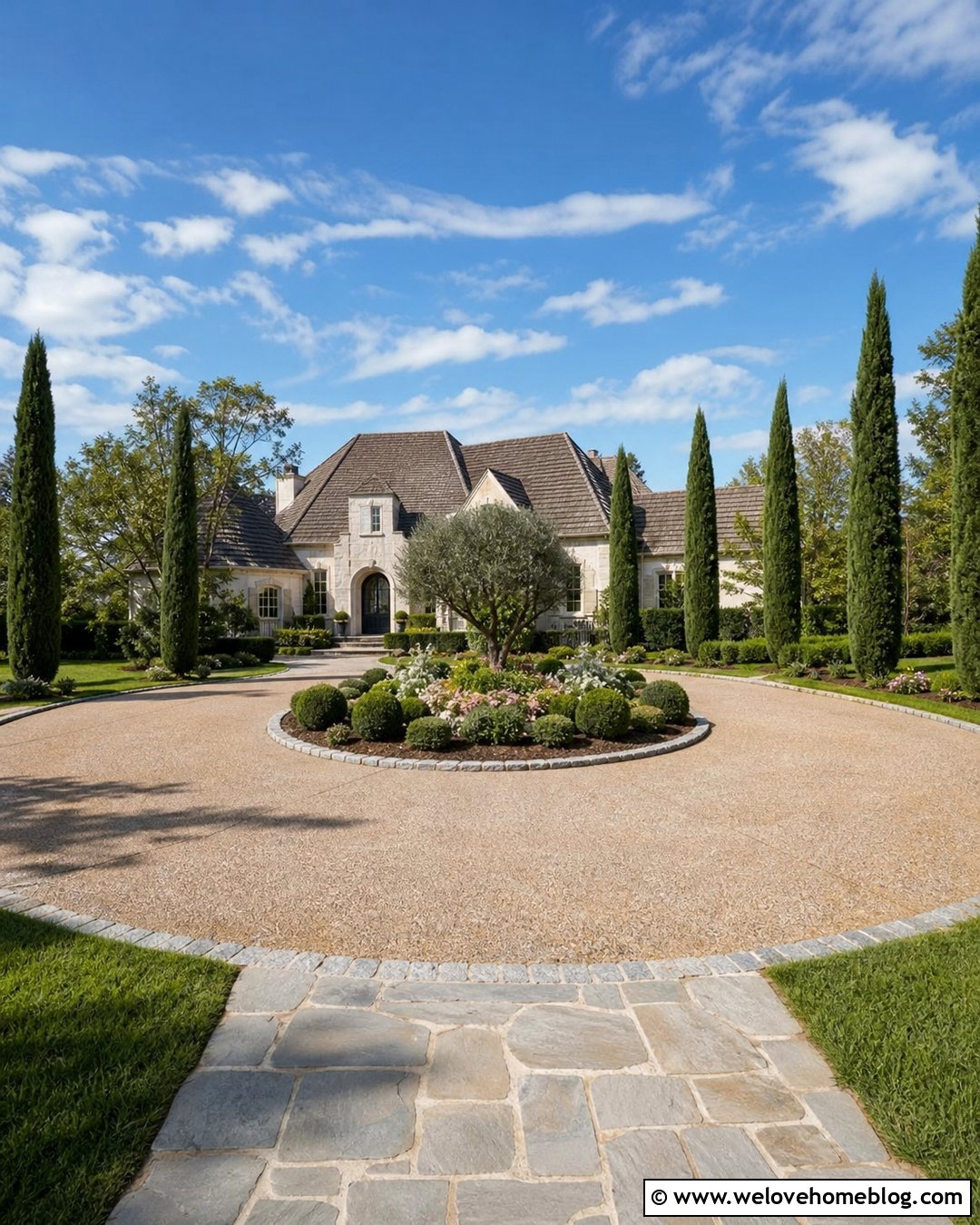
A circular driveway provides an excellent setting for cypress trees because the vertical forms help define its sweeping geometry. Use smooth beige pavers or exposed aggregate for the driving surface, edged with contrasting stone. Place several cypress trees around the outer curve while keeping the central island lower and more open. A small ornamental tree, clipped shrubs, seasonal flowers, and decorative gravel can fill the island without blocking views across the driveway. Two taller cypress trees near the entrance can emphasize the arrival point and visually connect the road to the house. Check turning space, drainage, and clear sightlines before finalizing the beds. The result feels grand but remains functional, especially in front of a wide colonial, Mediterranean, or French country home.
5. Cypress Tree Driveway With Stone Walls
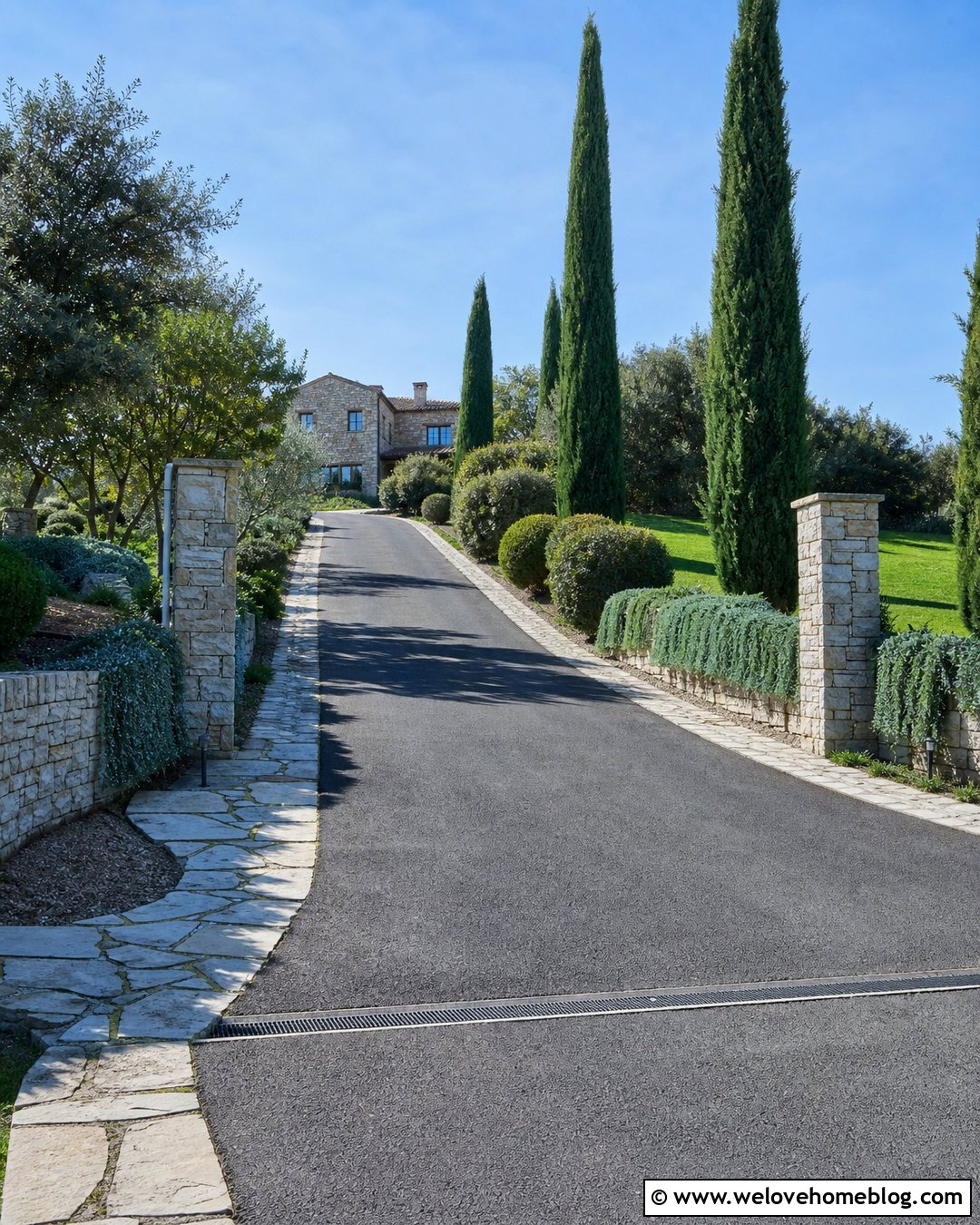
Natural stone walls give a cypress-lined driveway weight and permanence. Begin with a straight or gently rising asphalt driveway, then build low retaining walls where the surrounding grade changes. Warm limestone, fieldstone, or ledgestone can connect the driveway to a stone-faced house. Plant cypress trees behind the walls so their narrow forms rise cleanly above the masonry without interfering with passing vehicles. Add low mounding shrubs and trailing ground cover along the wall edges to soften the transition. At the entrance, slightly taller stone pillars can mark the property without requiring an elaborate gate. Proper drainage behind retaining walls is important, particularly on sloped lots. This design creates a polished country-estate look while controlling soil and defining planting areas.
6. Cypress Tree Driveway With Brick Edging
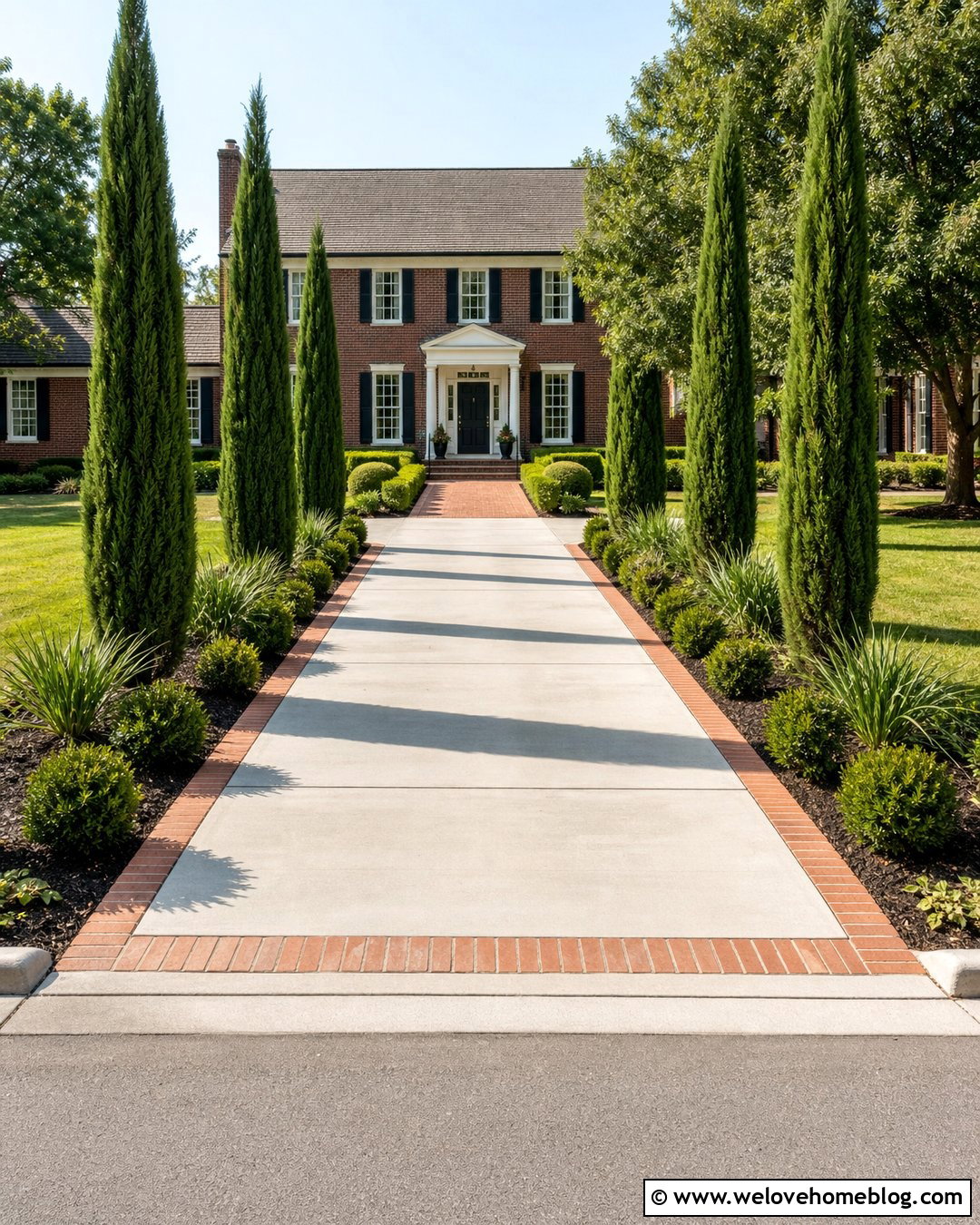
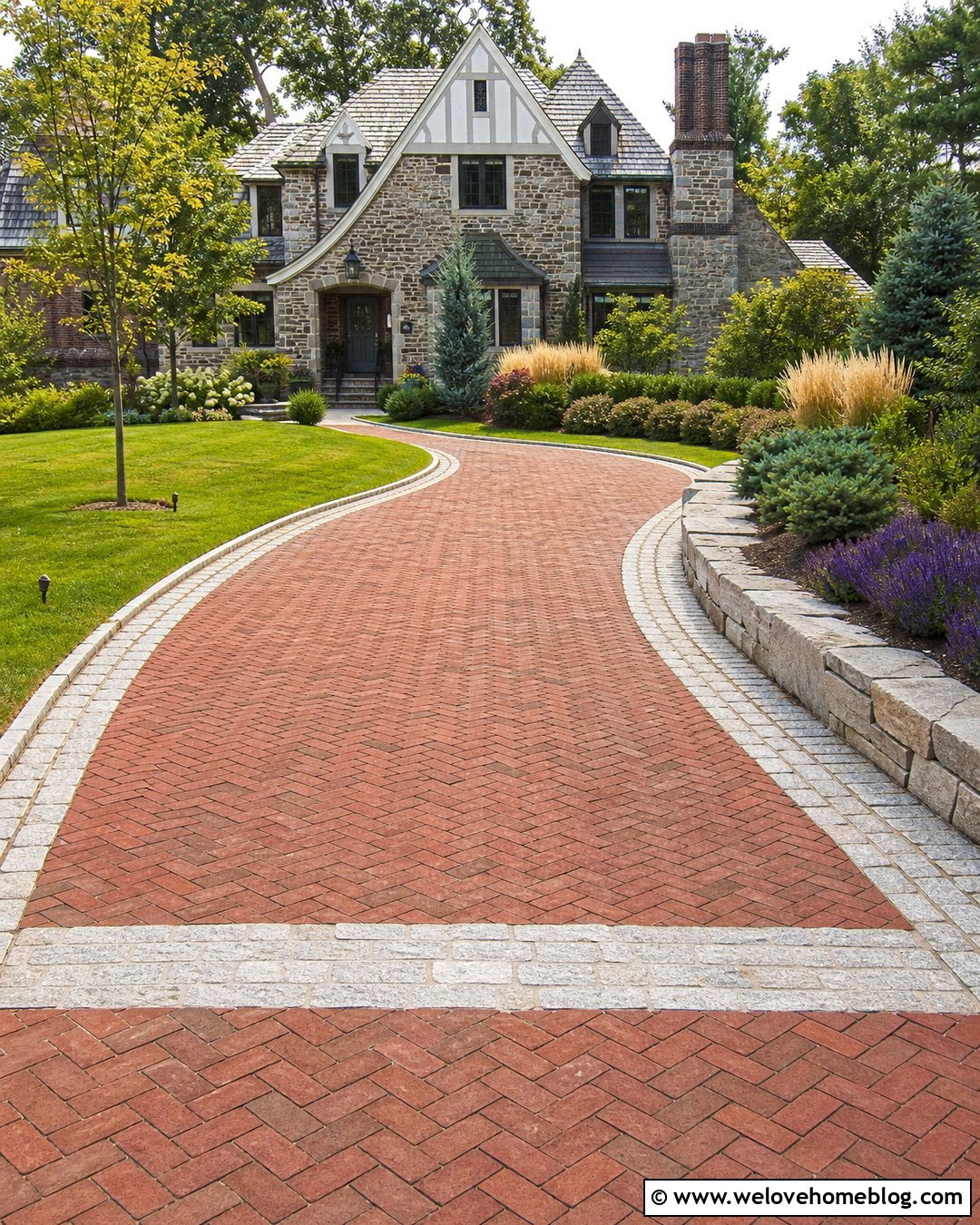
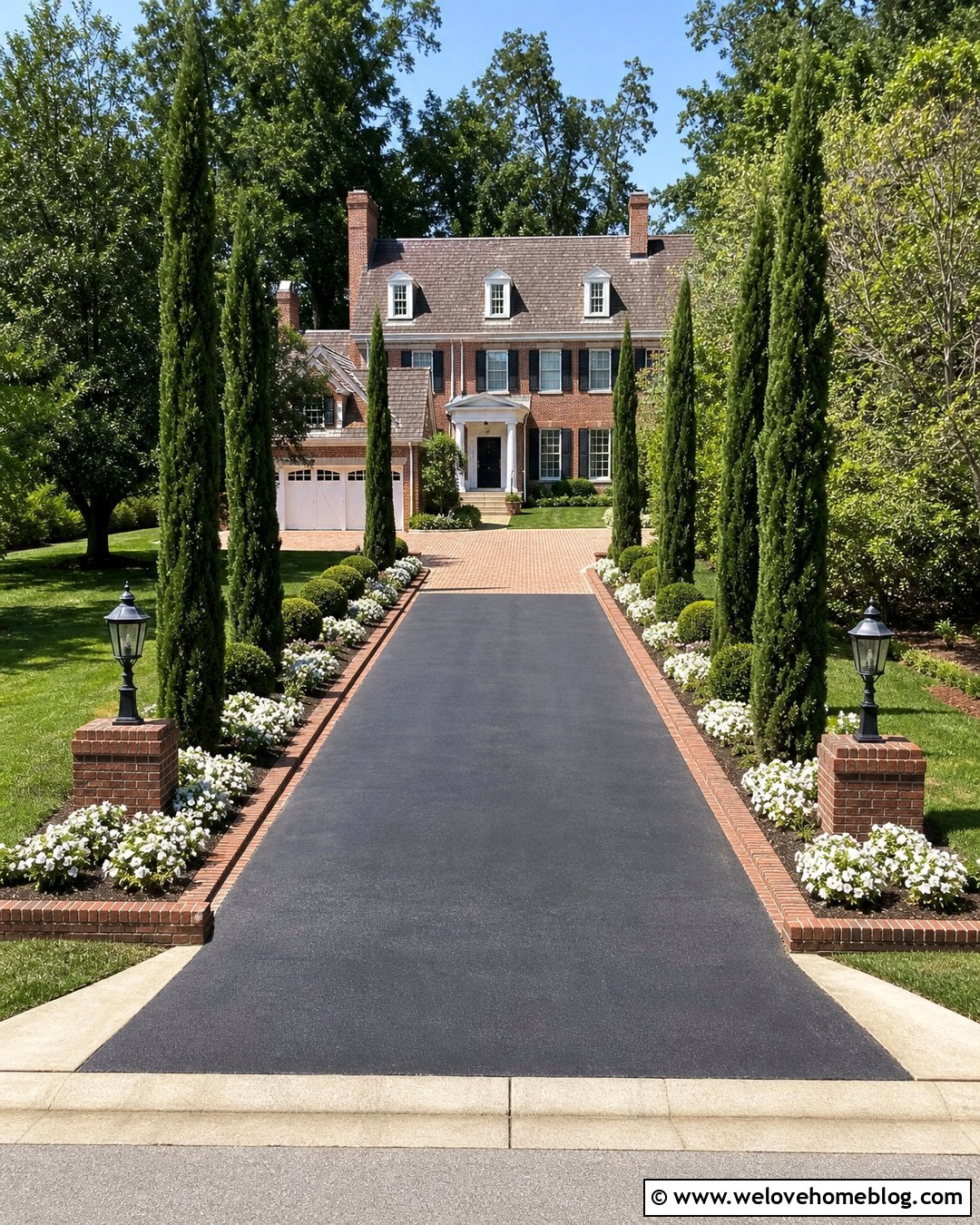
Brick edging adds a traditional detail to an otherwise simple cypress tree driveway. It looks especially attractive beside pale gravel, gray concrete, or black asphalt. Install clay bricks as a single soldier-course border, or use a double row when the driveway needs stronger definition. Deep red and brown brick tones complement the rich green foliage of cypress trees and can repeat colors found in a brick facade or chimney. Set the trees in wide mulched beds rather than placing them directly against the pavement. Low boxwood, liriope, or ornamental grasses can create a graduated layer beneath their tall forms. A straight layout emphasizes symmetry, while a curved brick ribbon makes a long approach feel softer and more connected to the surrounding lawn.
7. Cypress Tree Driveway Privacy Screen
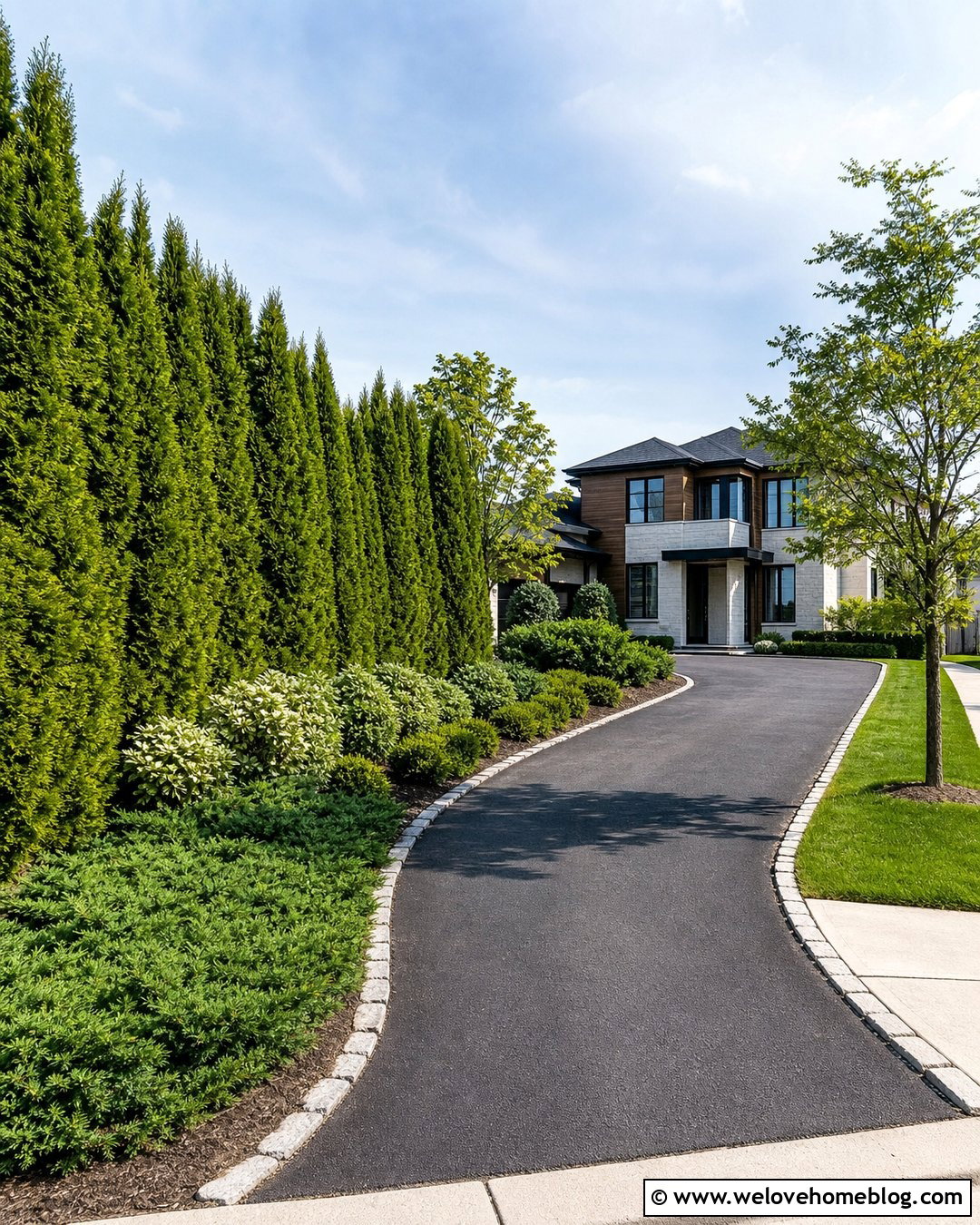
When neighboring windows or nearby properties overlook the driveway, cypress trees can become part of a layered privacy border. A black asphalt or gray concrete surface provides a simple base that lets the greenery dominate. Position the trees along the exposed side rather than automatically enclosing both edges. Combine taller cypress with medium evergreen shrubs and low ground cover to avoid a bare row of trunks. Leyland cypress develops a broader screen than narrow Italian cypress, so the available planting width and mature dimensions should guide the selection. Include breaks near intersections, walkways, and garage entrances to preserve visibility. A curved bed line will make the screen feel more like intentional landscaping and less like a rigid green wall. ()
8. Cypress Tree Driveway Entrance
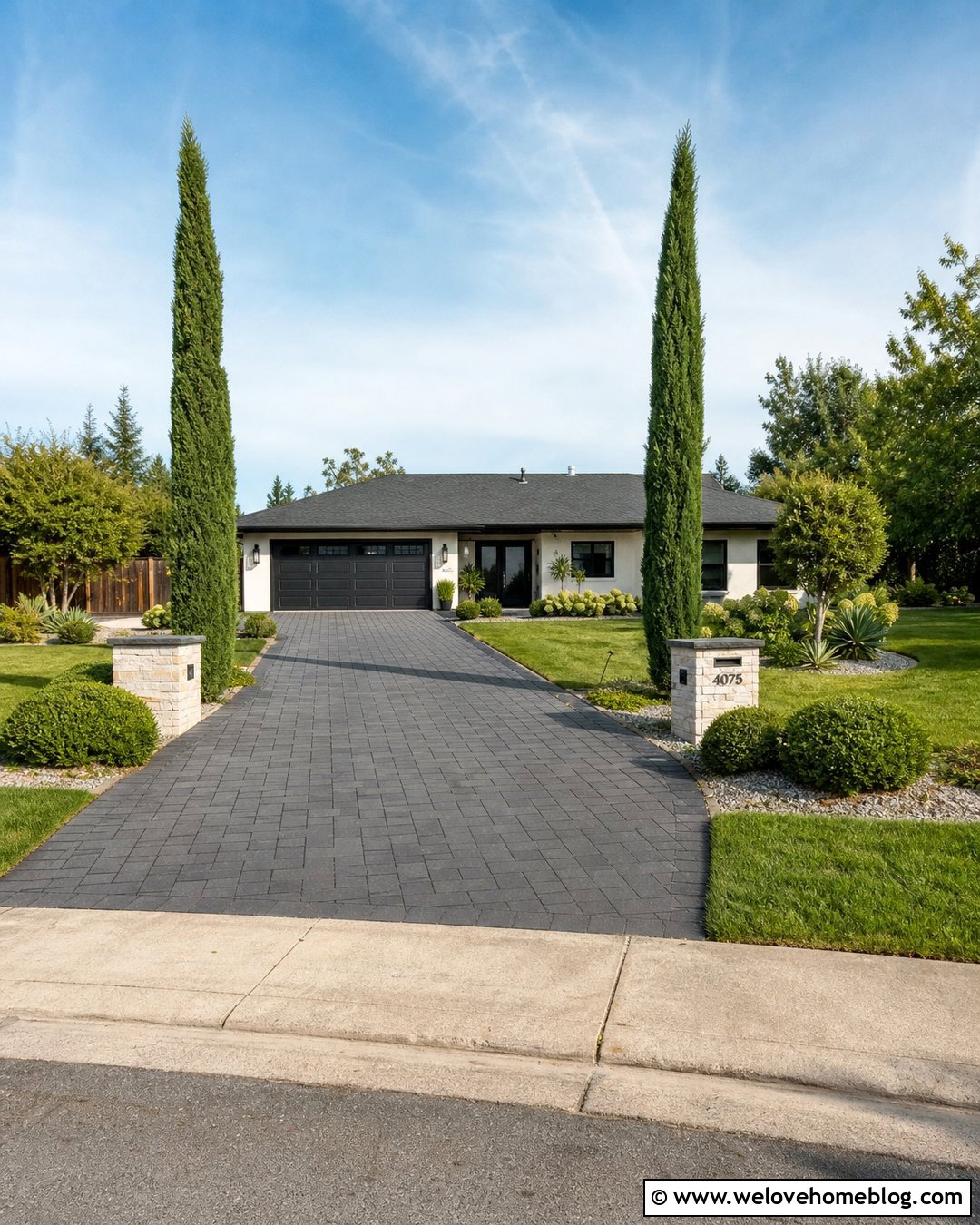
A pair of cypress trees can transform a basic driveway entrance without lining the entire approach. Place one tree on each side behind low masonry columns, generous planting beds, or a short stone border. For balance, use a driveway material that relates to the home, such as charcoal pavers for a modern facade or tan gravel for a country property. Keep signs, lighting, and plants simple so the vertical trees remain the focal point. Rounded shrubs and spreading ground cover can soften their narrow silhouettes at ground level. Avoid placing the trees where mature growth could hide approaching traffic or interfere with gates. This focused treatment is useful for shorter driveways and modest front yards because it creates a strong sense of arrival using fewer trees and materials.
9. Cypress Tree Driveway With Iron Gate
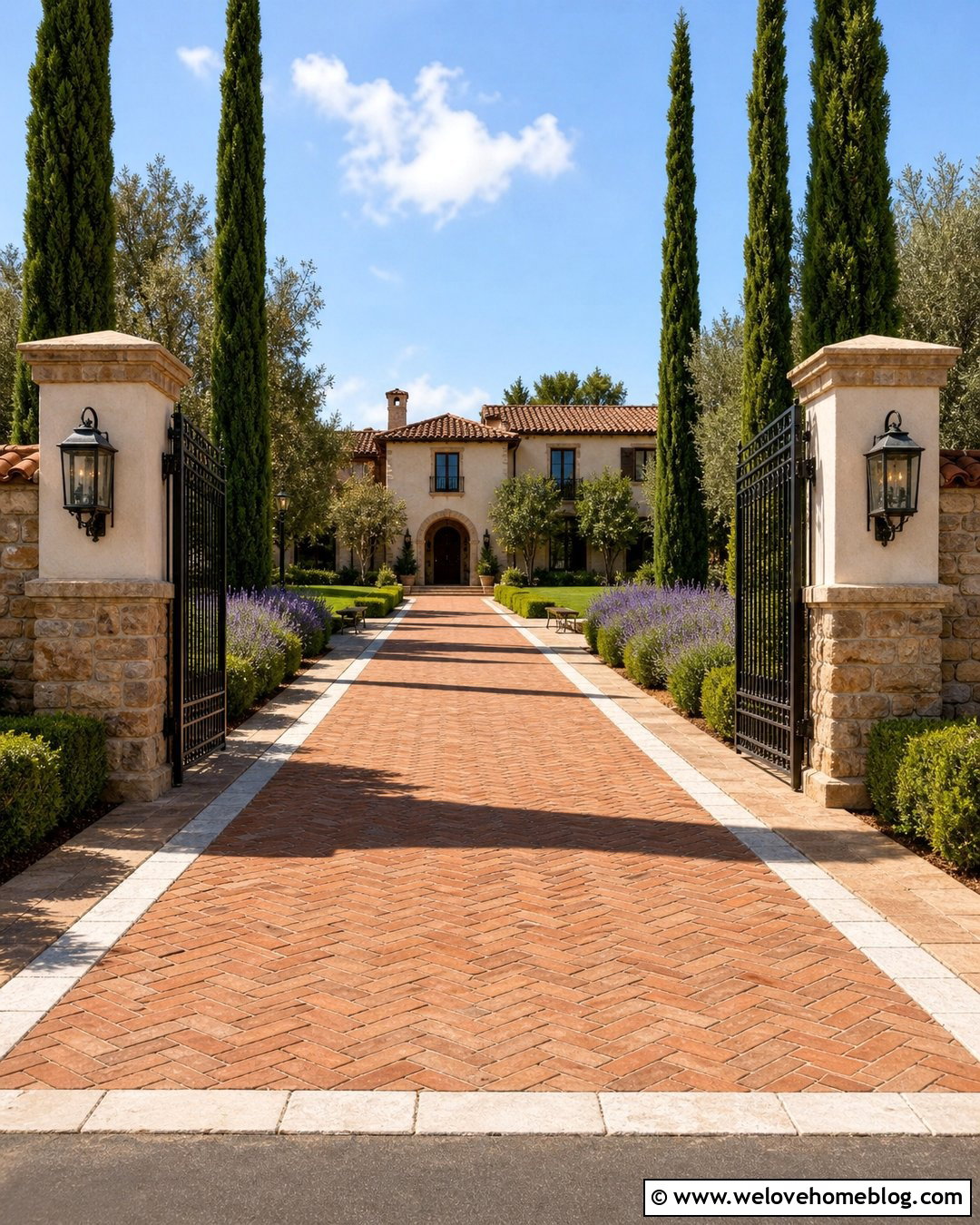
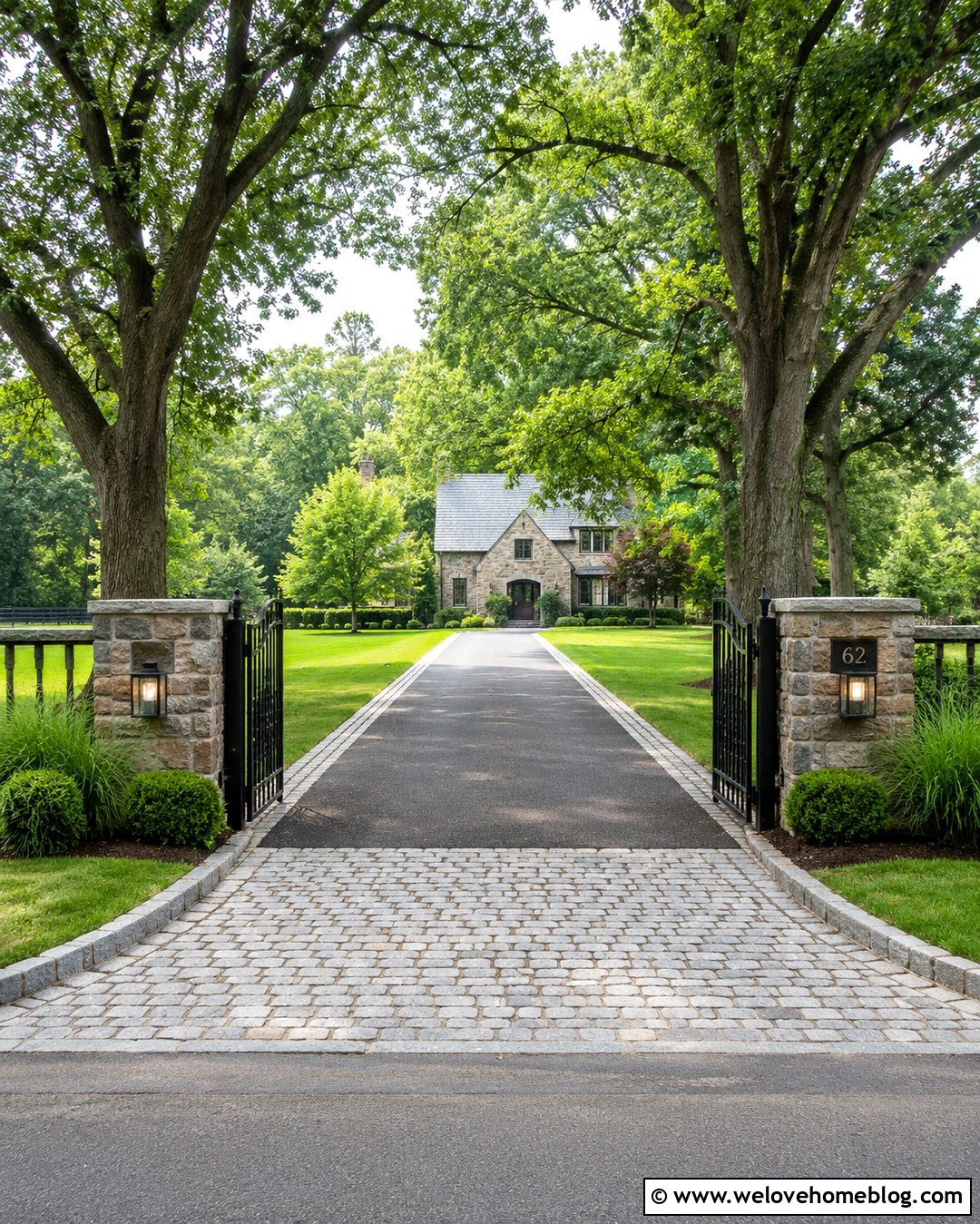
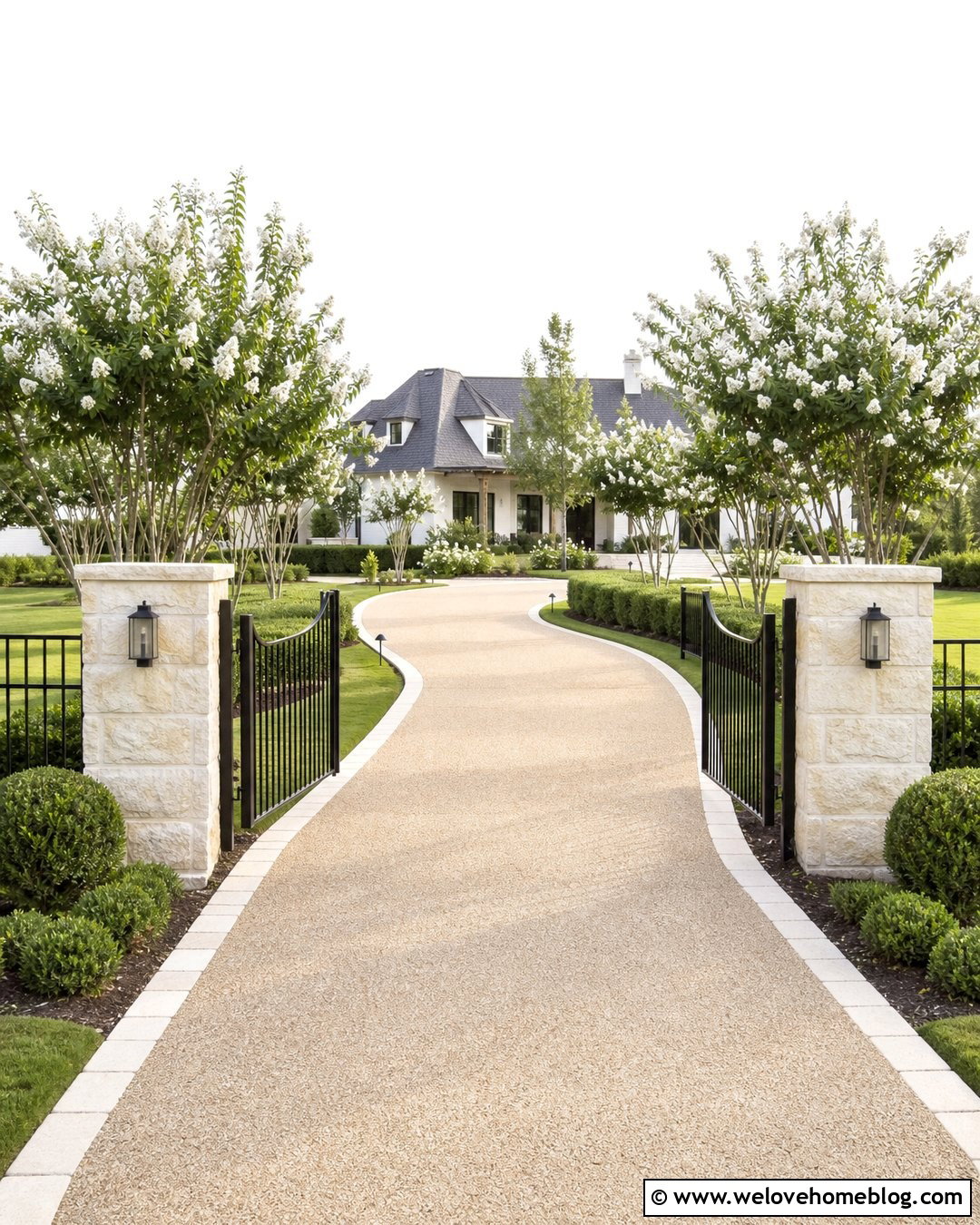
Slim cypress trees and a black iron gate create a formal entrance with clear European influence. Use clay brick pavers, warm cobblestone, or lightly textured concrete for the driveway so the gate does not feel disconnected from the surface. Flank the opening with stone or stucco pillars, then plant cypress trees just beyond them to add height. Additional trees can continue down the drive at wider intervals, maintaining rhythm without creating a closed corridor. Keep shrubs near the gate low enough to protect visibility and allow room for mechanical equipment. The gate design should repeat architectural lines found on the house, railing, or front door. Soft lavender borders and restrained landscape lighting can complete the setting while keeping the entrance elegant rather than overly decorative.
10. Cypress Tree Driveway With Lighting
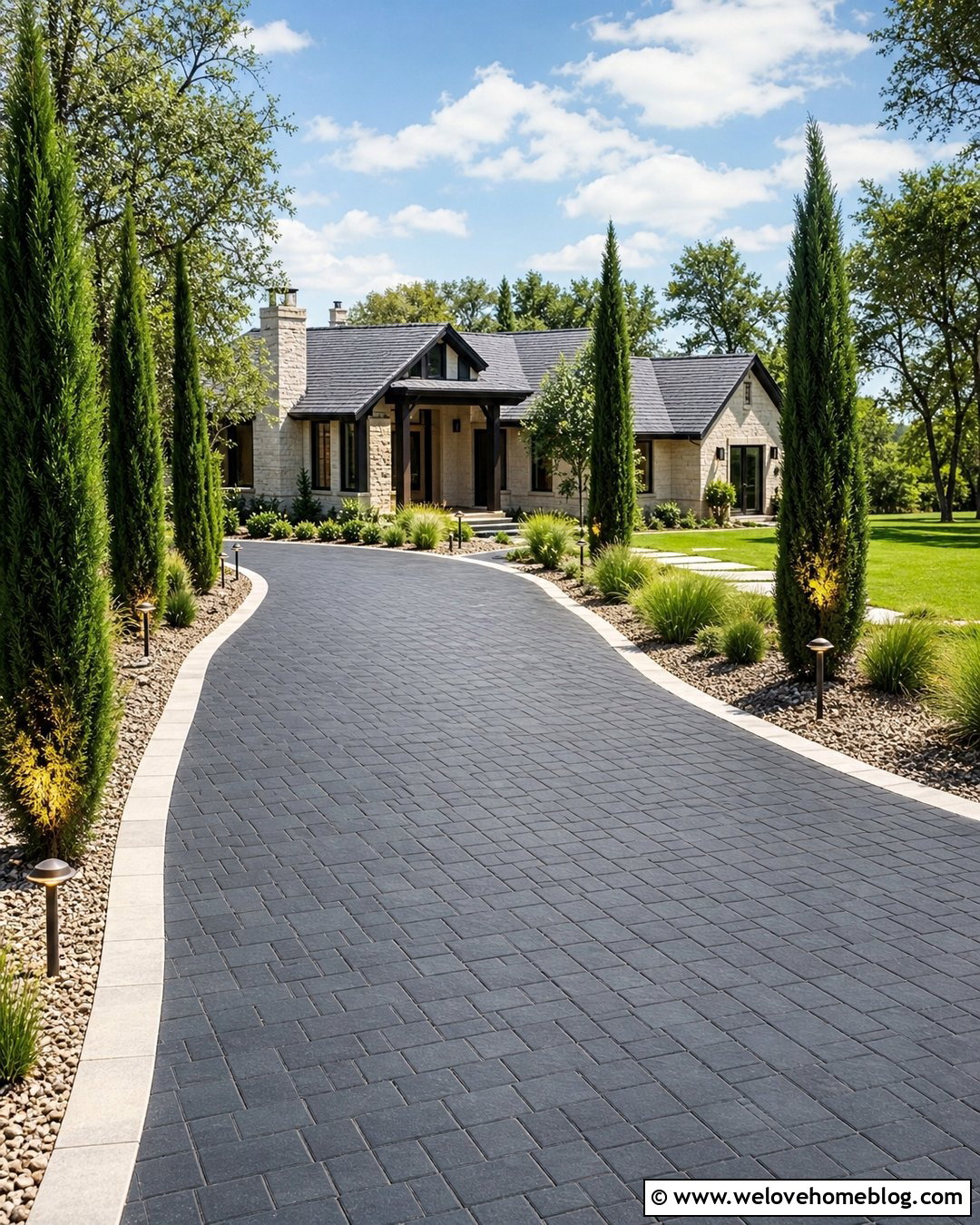
Landscape lighting can reveal the shape of cypress trees while also making a long driveway easier to navigate. Start with a dark asphalt or charcoal paver surface, then add pale stone edging that remains visible in low light. Space cypress trees evenly along one or both sides and install shielded uplights at selected trunks instead of illuminating every tree. Low path fixtures can mark curves, borders, and driveway transitions. Keep fixtures out of mowing paths and away from areas where tires may cross the edge. During the day, use ornamental grasses, clipped shrubs, and gravel mulch to create visual interest around the bases. The best result feels cohesive in bright conditions while providing safe, controlled illumination after sunset without glare shining toward drivers, neighbors, or windows.
11. Cypress Tree Driveway With Lavender Borders
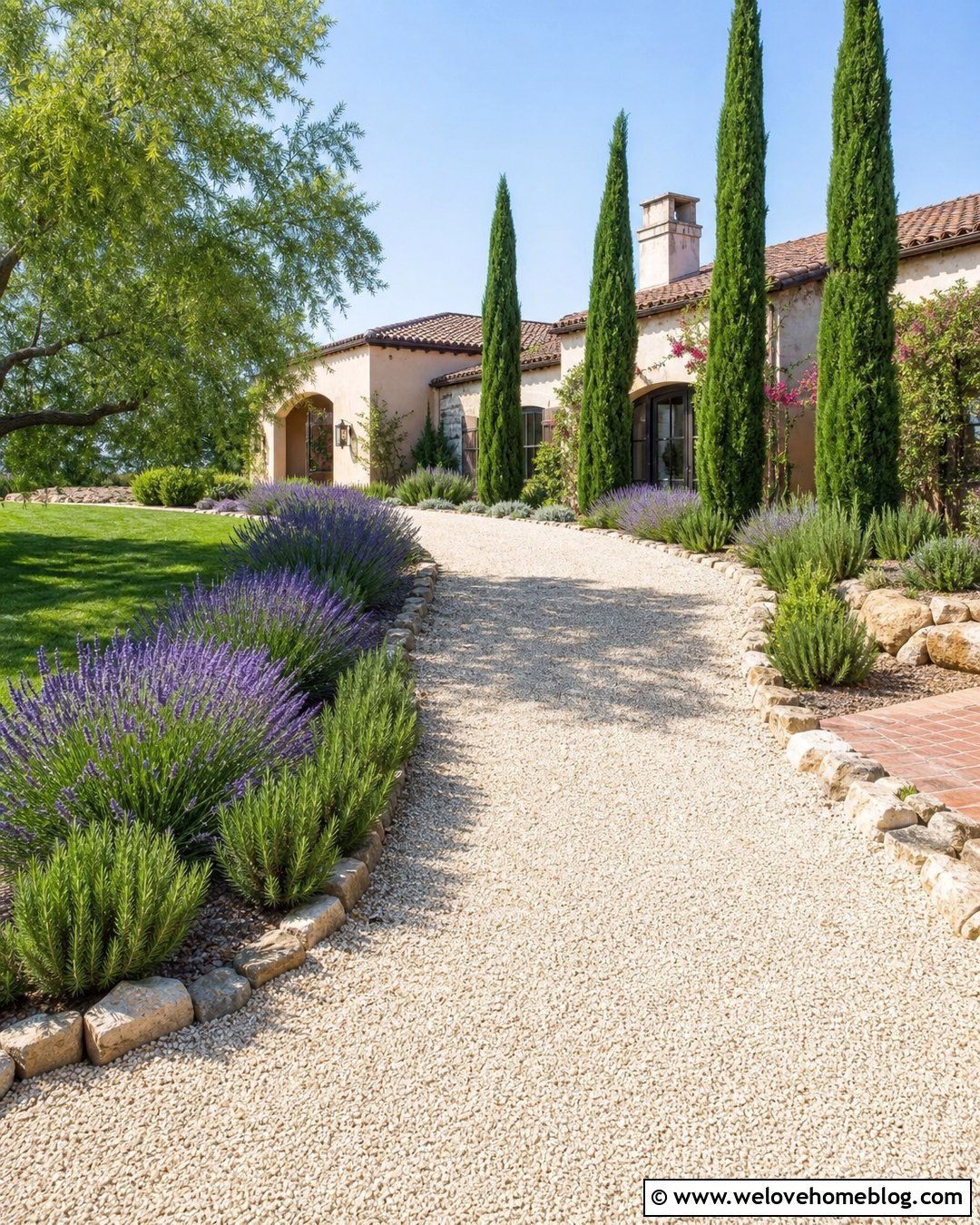
Few combinations feel as naturally Mediterranean as dark green cypress trees and soft rows of lavender. Use cream limestone gravel or warm beige pavers for the driveway to reinforce the sun-washed color palette. Plant cypress trees at measured intervals, then repeat lavender in broad drifts between them. A narrow steel, brick, or natural stone edge keeps loose material away from the planting beds. The contrast between tall vertical trees and low rounded flowers gives the driveway depth without making it feel overplanted. This design works best where the site offers suitable sun and drainage for the chosen plants. Near the house, continue the same materials into the walkway or front terrace. Stucco walls, terracotta accents, and an arched entry complete the coordinated appearance.
12. Cypress Tree Driveway With Boxwood Hedges
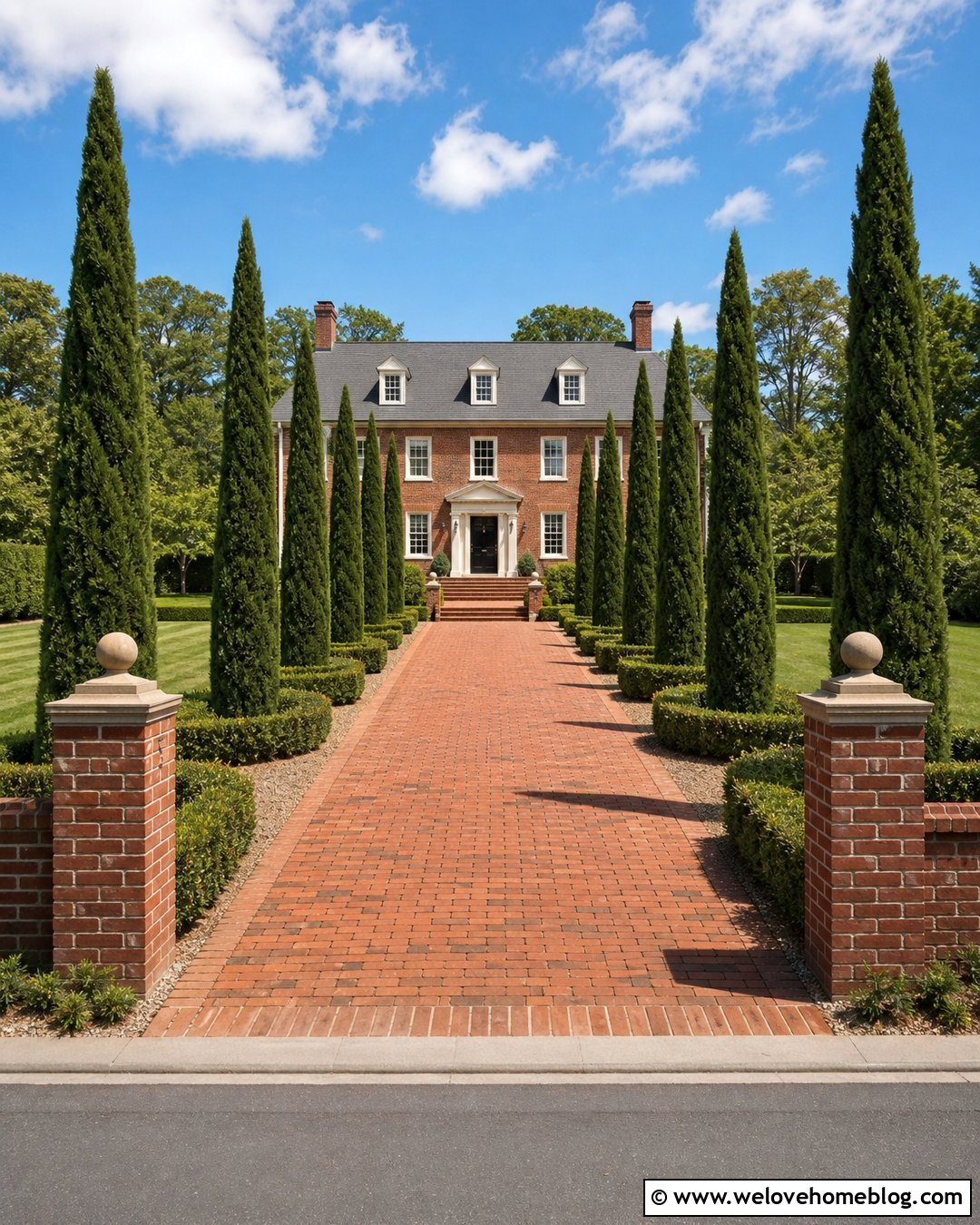
Cypress trees and clipped boxwood produce a structured driveway suited to colonial, Georgian, and European-inspired homes. Choose smooth concrete, traditional brick, or orderly rectangular pavers for the surface. Position cypress trees as taller punctuation points, then connect them visually with a low boxwood hedge. The hedge can follow a straight driveway or trace the outside edge of a broad curve. Maintain a clear strip between the plants and pavement so foliage does not interfere with vehicle doors or snow removal. A contrasting gravel mulch keeps the beds neat and reduces the number of competing colors. At the entrance, repeat the boxwood around simple brick pillars or an address marker. The combination provides strong year-round form and makes even a relatively plain driveway feel deliberately planned.
13. Cypress Tree Driveway With Olive Trees
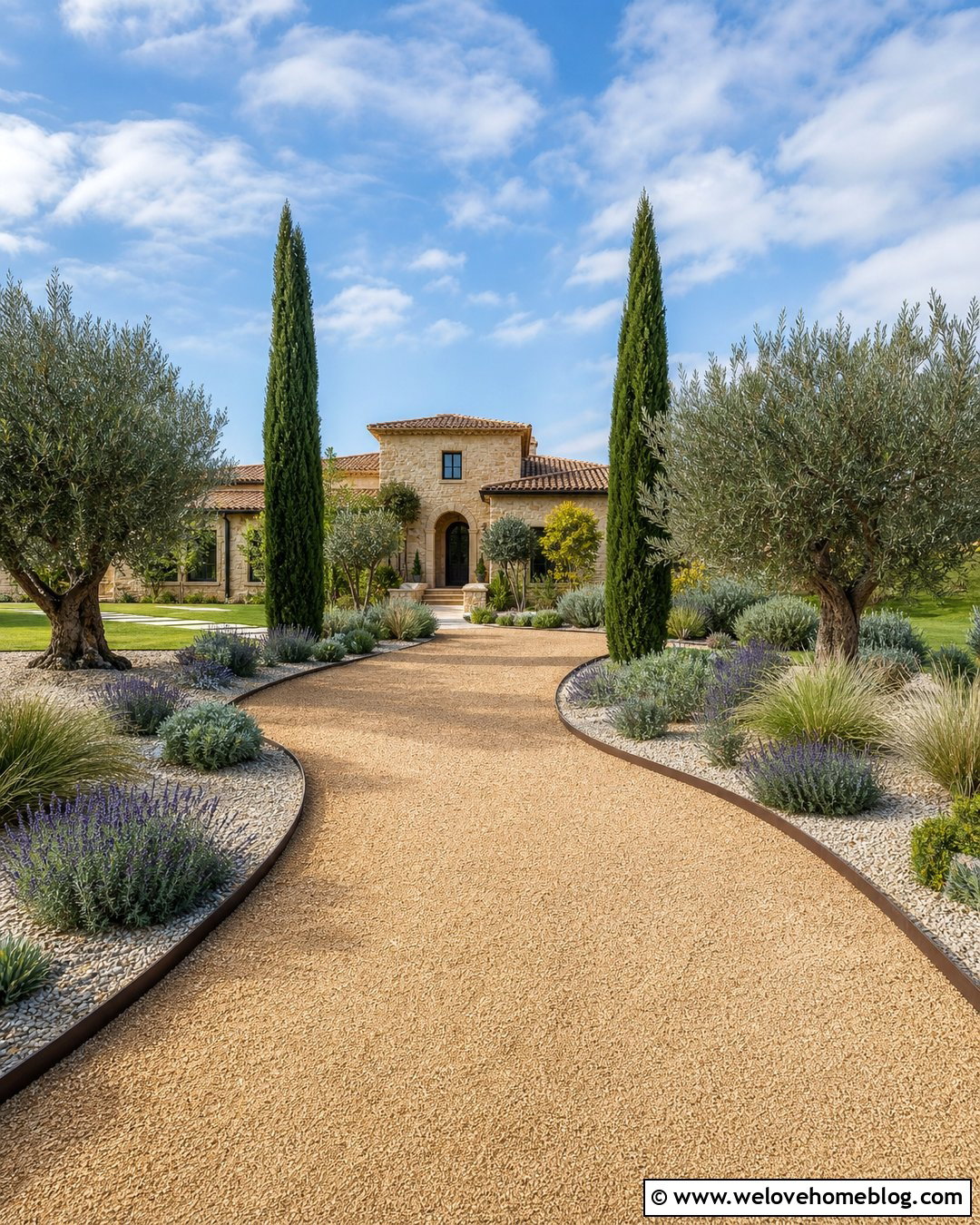
Mixing cypress and olive trees creates a more relaxed landscape than using a perfectly uniform row. Begin with a warm gravel or aged stone paver driveway that curves gently toward a stucco or light stone house. Use cypress trees at key points, such as the entrance, the bend, and the area near the home. Place olive trees between them where wider planting beds can accommodate spreading canopies. Lavender, rosemary, sage-colored grasses, and pale gravel mulch can unify the different tree forms. The cypress provides vertical structure, while the olive foliage introduces softer texture. This composition is especially effective on larger sunny properties. Choose plants that suit the local climate, and create sufficient separation from pavement, walls, and overhead lines before planting the trees.
14. Cypress Tree Driveway With Grass Strips
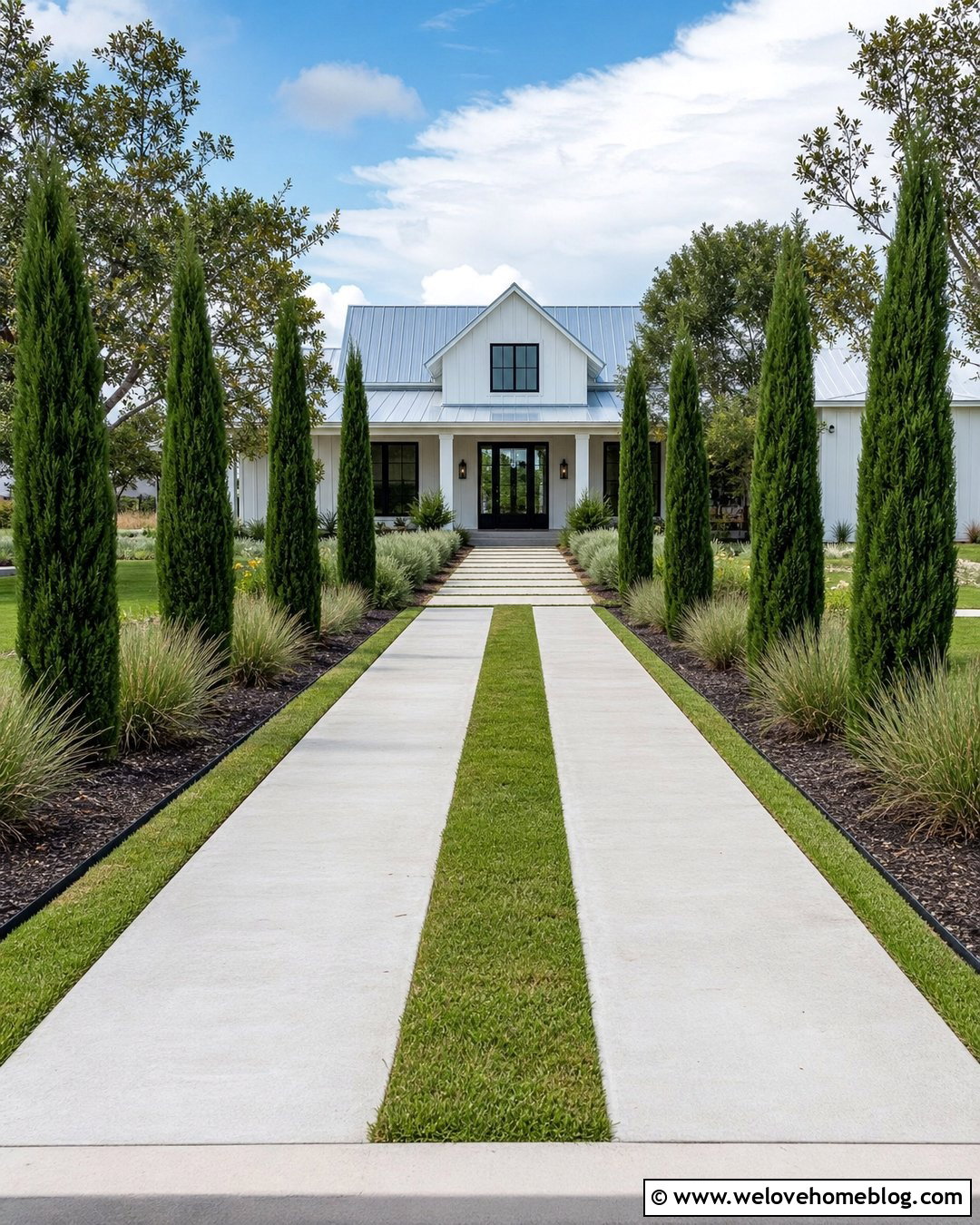
Concrete wheel tracks separated by grass can make a cypress-lined driveway feel greener and less visually dominant. Use two reinforced poured-concrete lanes or rows of large concrete pavers, leaving a planted strip through the center. Continue narrow lawn strips outside the driveway before transitioning into mulched cypress beds. The repeated green surfaces connect the upright trees to the wider yard and suit modern farmhouse, ranch, and contemporary country homes. This layout is most practical where irrigation, drainage, soil, and traffic levels can support healthy turf. For lower maintenance, a durable ground cover or permeable planted grid may replace conventional grass. Keep the edges crisp and ensure the driving lanes are properly sized. The final look should feel intentional, not like an unfinished solid driveway.

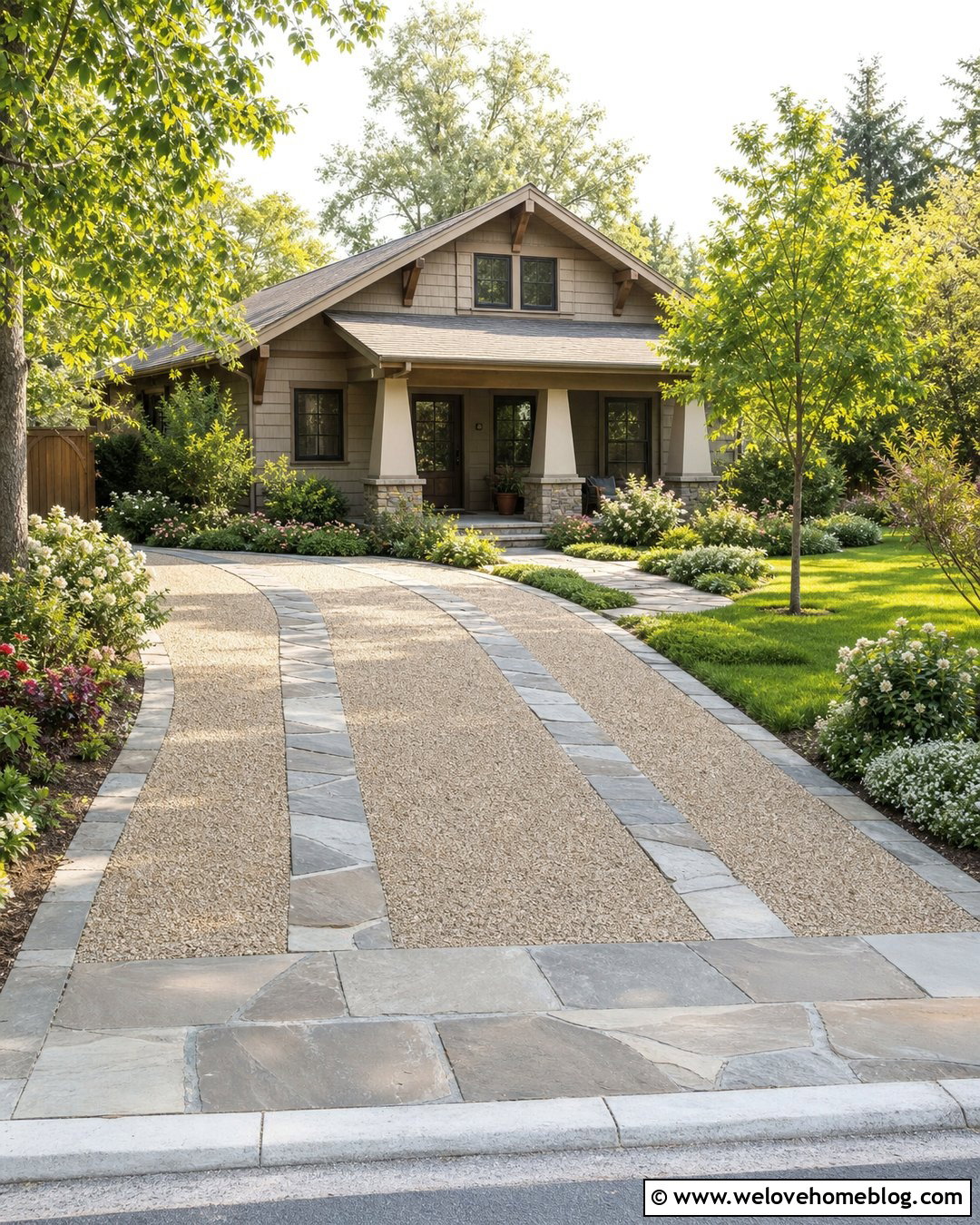
15. Cypress Tree Curved Gravel Driveway
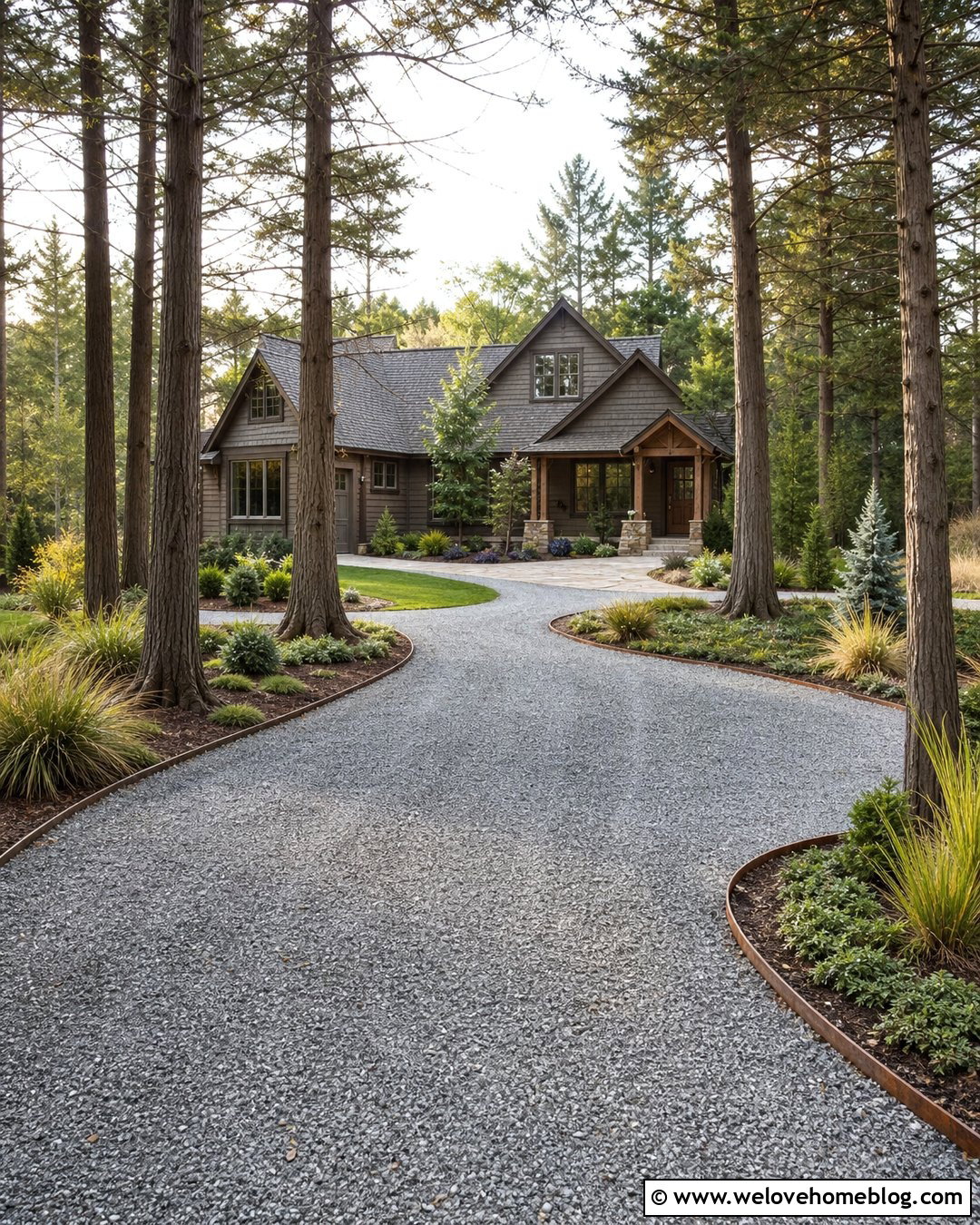
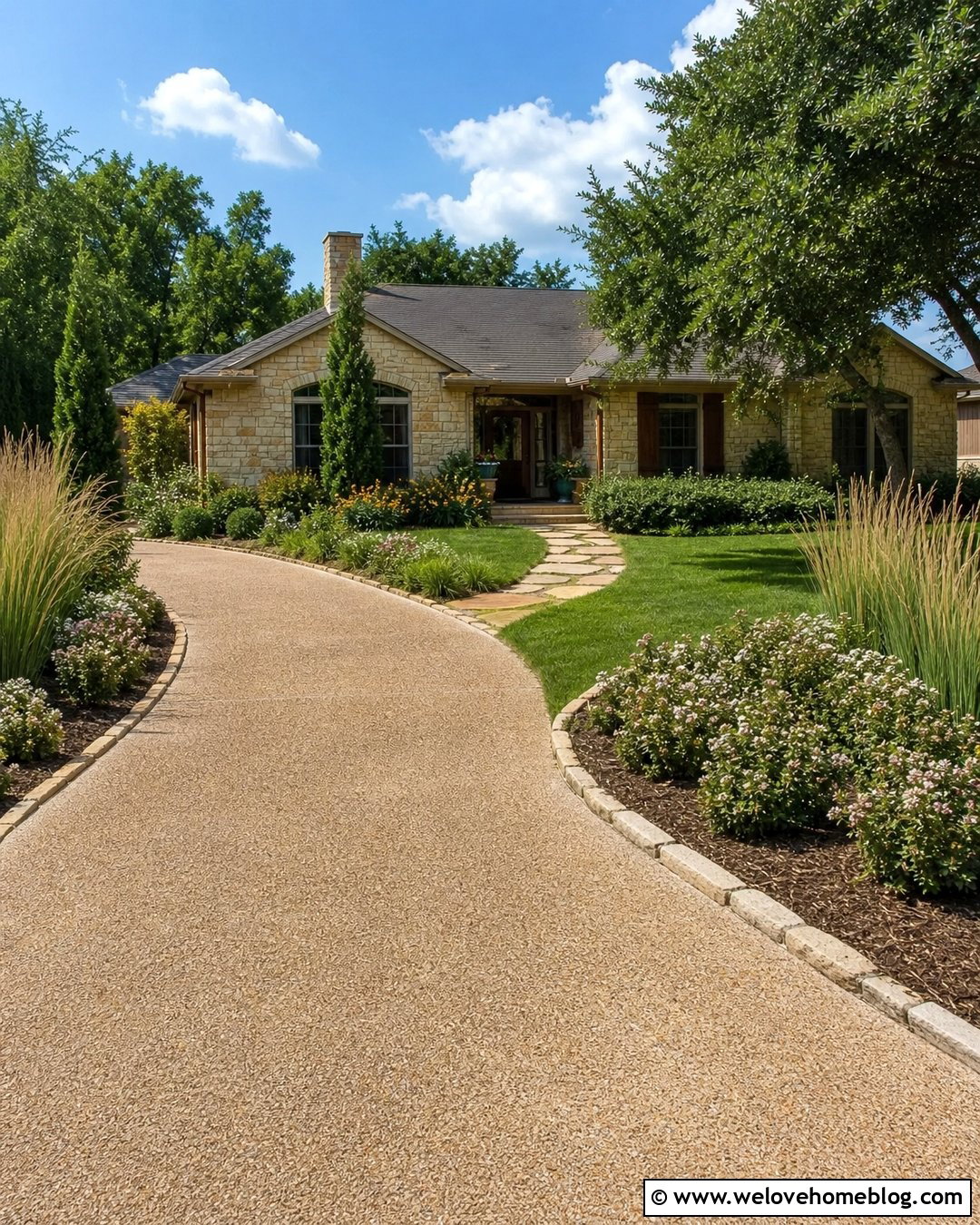
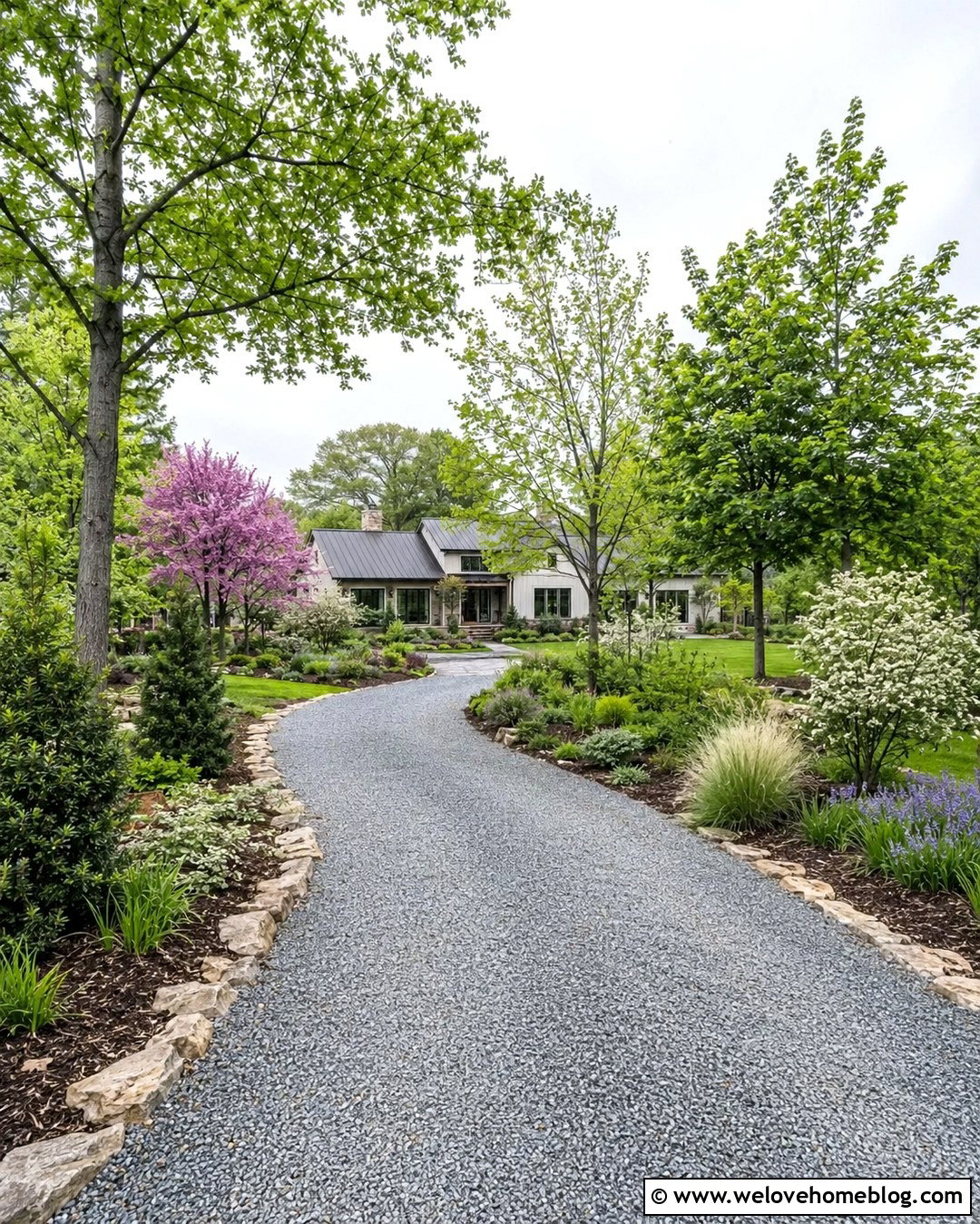
A curved gravel driveway encourages the eye to move through the landscape, while cypress trees highlight each change in direction. Select compacted gray crushed stone for a cooler modern appearance or tan gravel for a rustic property. Define the edges with cobblestone, weathered steel, or pressure-treated timber suited to the home’s character. Instead of spacing every tree identically, place cypress in small groups around major curves and near the final approach. Fill the wider beds with ornamental grasses, hardy shrubs, and low ground cover. Keep the inside of each bend relatively open so drivers can see ahead. This layout works well on irregular or sloped lots because the planting helps the driveway settle naturally into the yard rather than cutting across it as one hard line.
16. Cypress Tree Modern Driveway
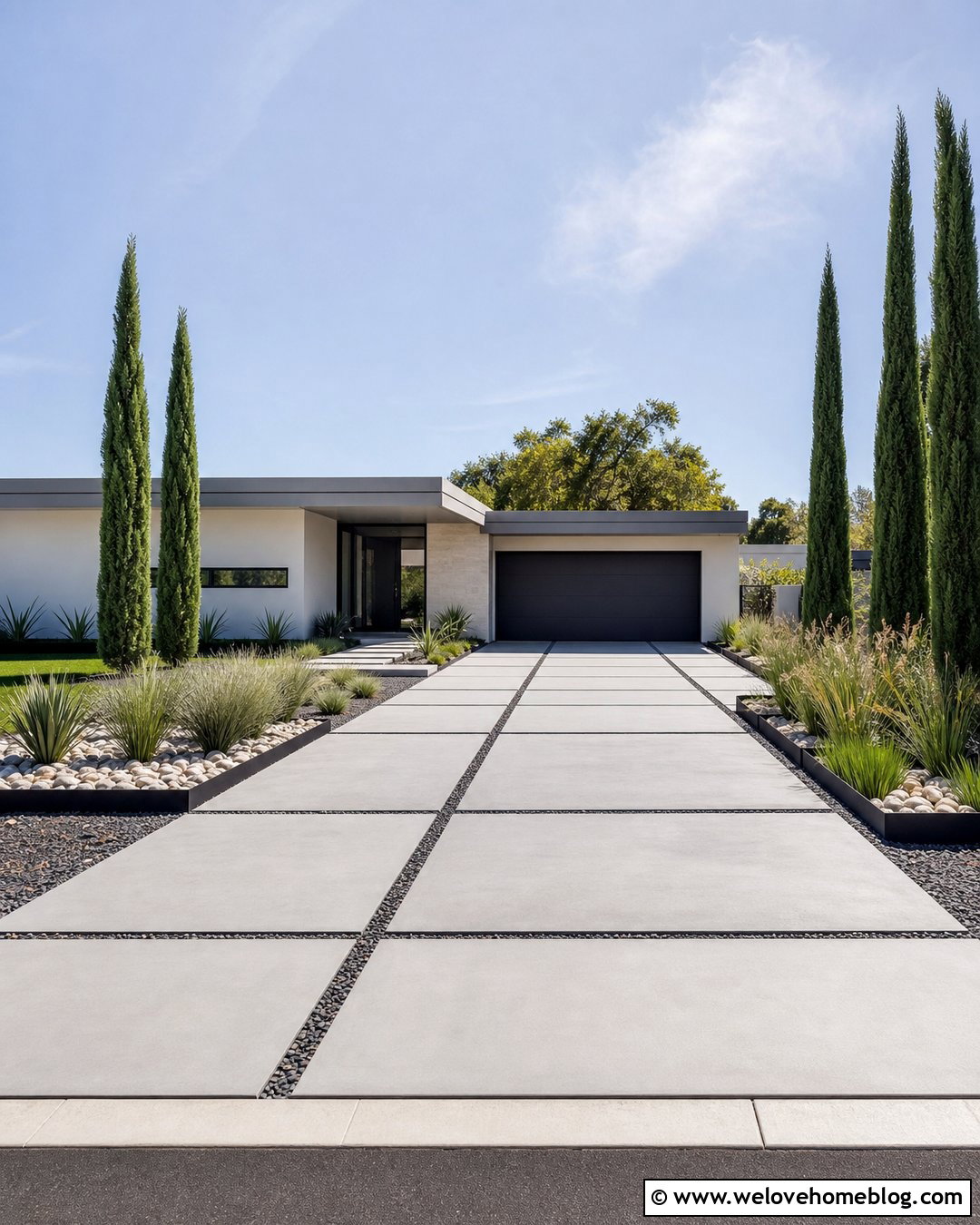
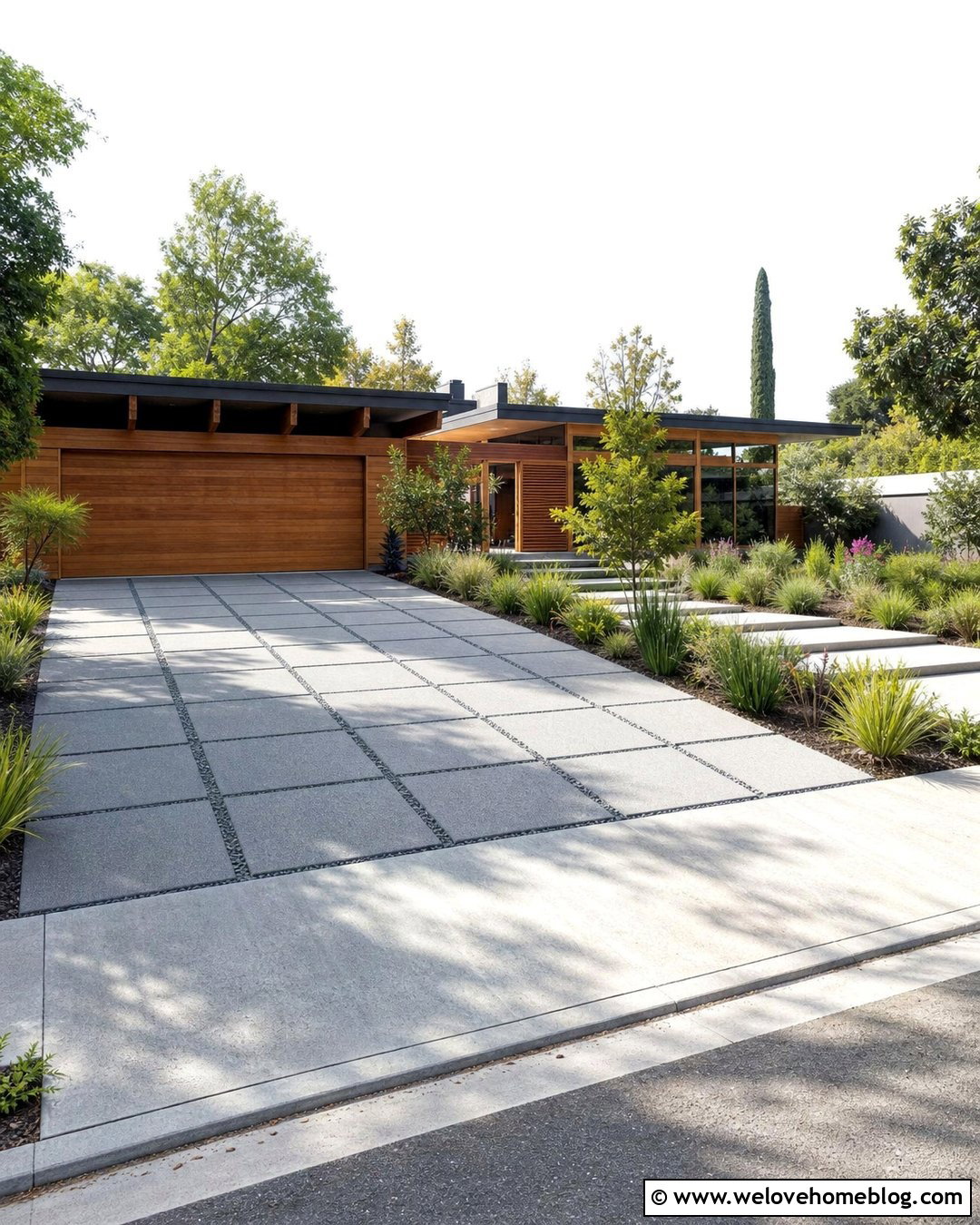
A modern cypress tree driveway relies on restraint, strong lines, and a limited material palette. Use large-format concrete slabs in light gray, separated by narrow gravel joints or dark grass strips. Plant Italian cypress in rectangular beds aligned with the architecture, but avoid filling every available space. Black steel edging, pale river rock, and low architectural grasses can form the supporting landscape. For an asymmetrical house, a single row of cypress may look more appropriate than matching rows. Continue the driveway pattern into the front walkway to create a unified approach. Flat-roofed, midcentury, and contemporary homes benefit from the contrast between crisp paving and organic foliage. Keep utilities, drainage structures, and lighting integrated discreetly so the finished landscape remains clean and uncluttered.
17. Cypress Tree Farmhouse Driveway
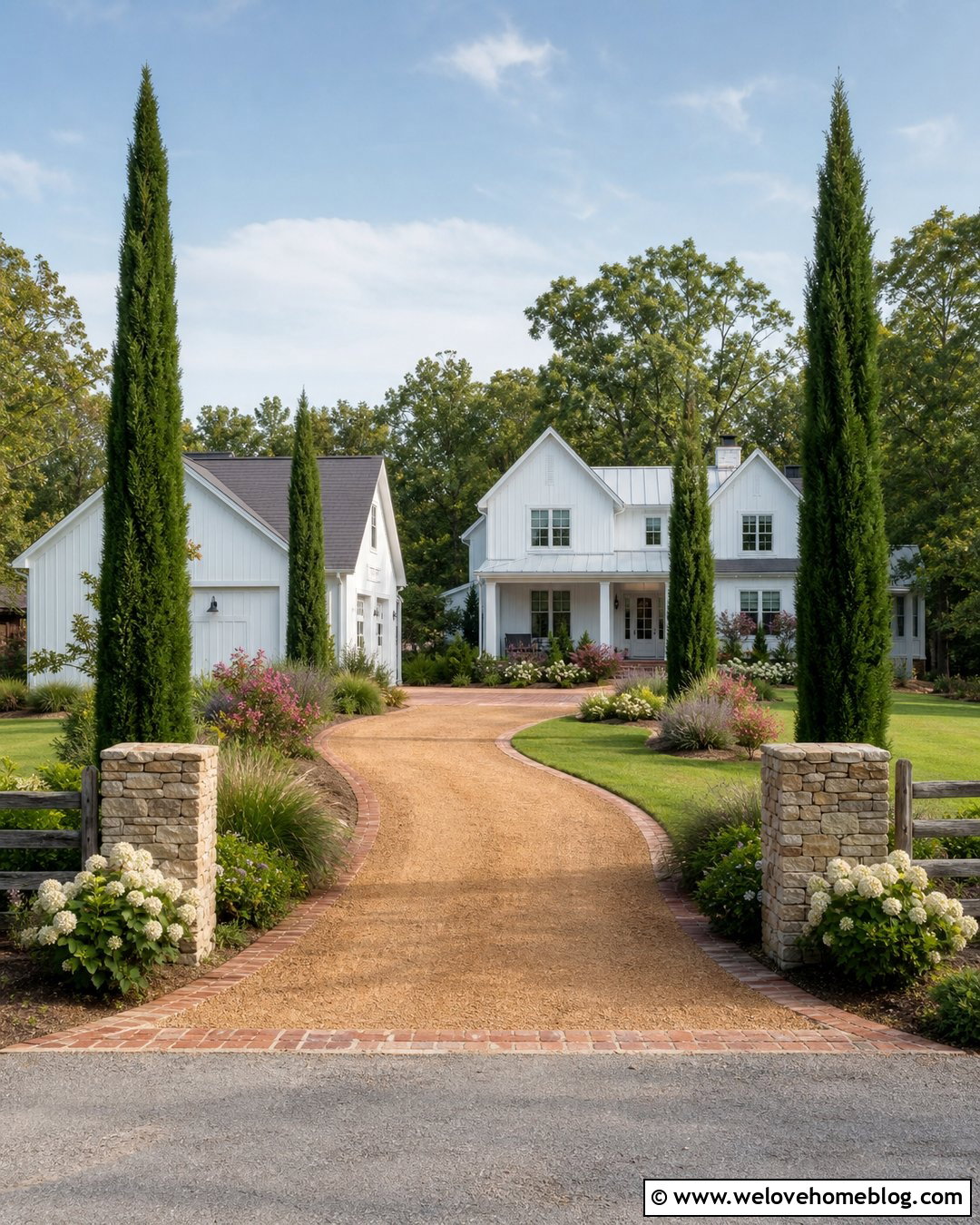
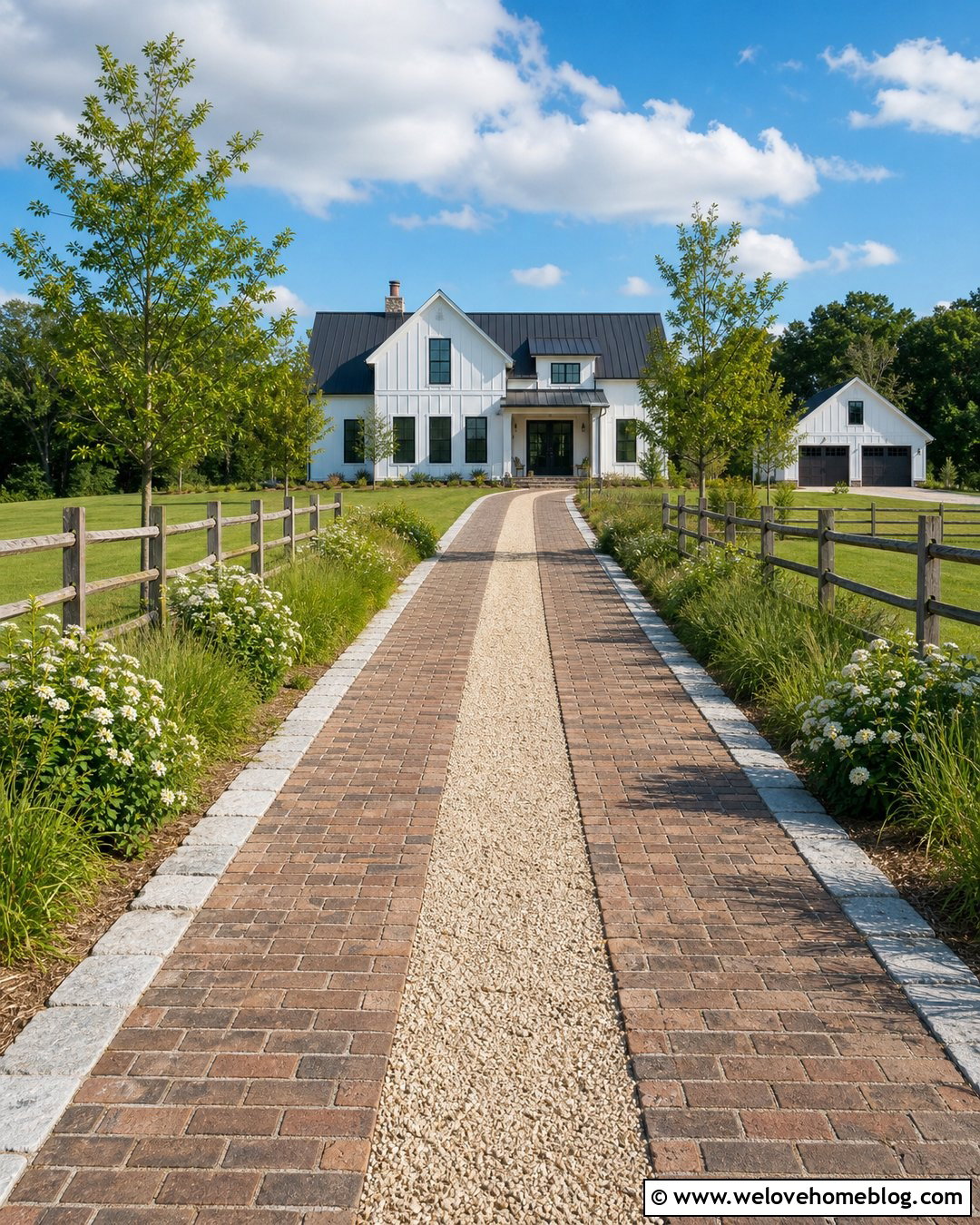
A farmhouse driveway feels more inviting when cypress trees are combined with relaxed materials and softer planting. Use compacted tan gravel for a rural look, edged with reclaimed brick or natural fieldstone. Instead of creating a severe formal avenue, space the trees generously and mix them with hydrangeas, grasses, or flowering shrubs suited to the site. A split-rail fence can run behind one planting bed without crowding the driveway. Near the road, simple stone pillars or a painted wood address sign can establish the entrance. Continue the gravel into a broad parking court near the house, using a brick apron to control loose stones at the garage. White siding, black windows, natural wood, and deep green cypress foliage create a balanced farmhouse color scheme.
18. Cypress Tree Sloped Driveway
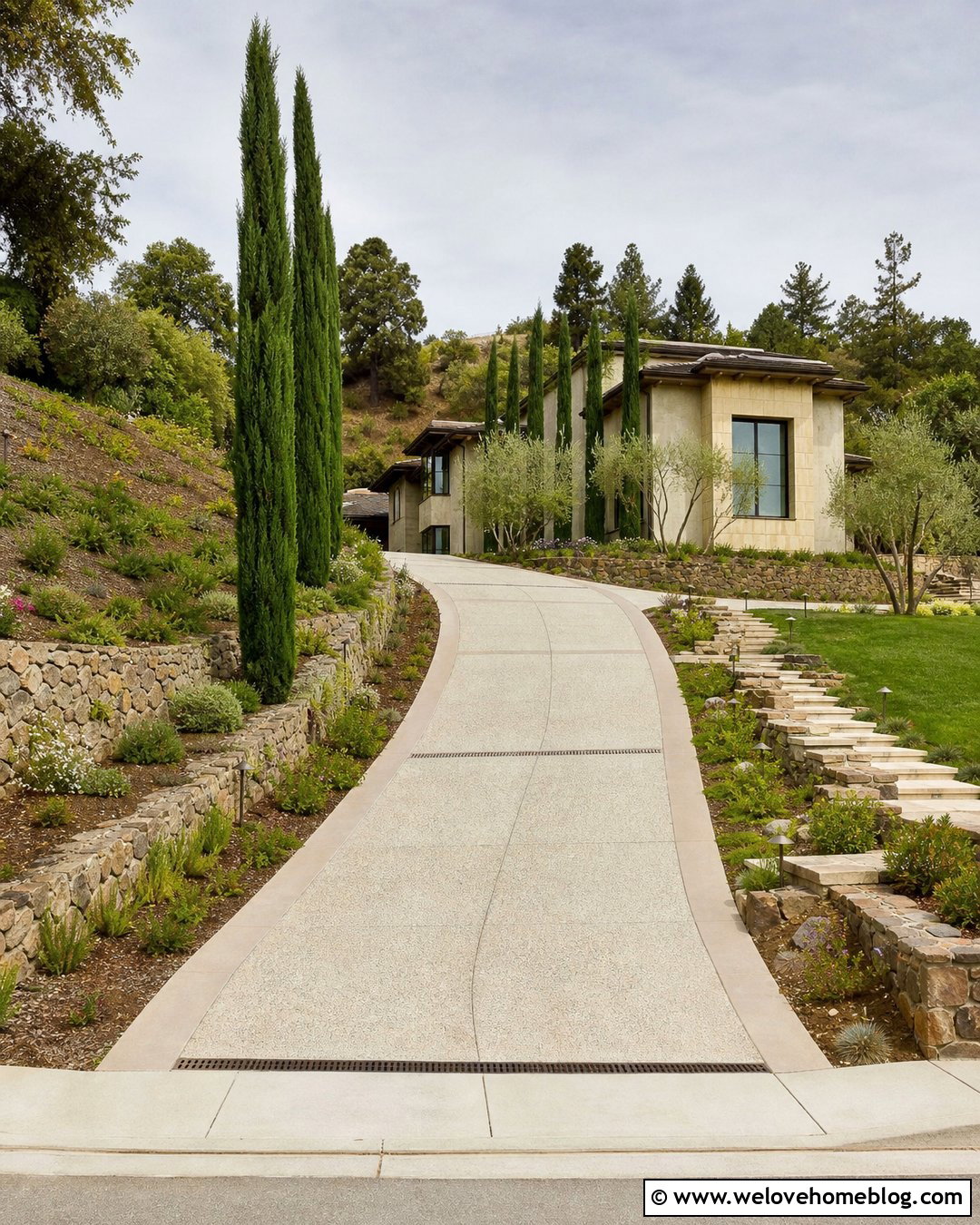
A sloped driveway needs landscaping that addresses grade changes as well as appearance. Choose textured concrete, interlocking pavers, or exposed aggregate for a clearly defined driving surface. Use cypress trees on terraced planting areas rather than placing every trunk along the same steep line. Low retaining walls made from concrete block, natural stone, or matching brick can stabilize beds and repeat materials from the house. Ground covers and spreading shrubs help visually connect each terrace while keeping the tall trees from appearing isolated. Direct runoff toward an appropriate drainage system instead of allowing water to wash through mulch or across pavement. Keep the lower entrance open for visibility. With careful grading, the cypress trees can emphasize the upward approach and make the slope feel purposeful rather than difficult.
19. Cypress Tree Driveway With Address Pillars
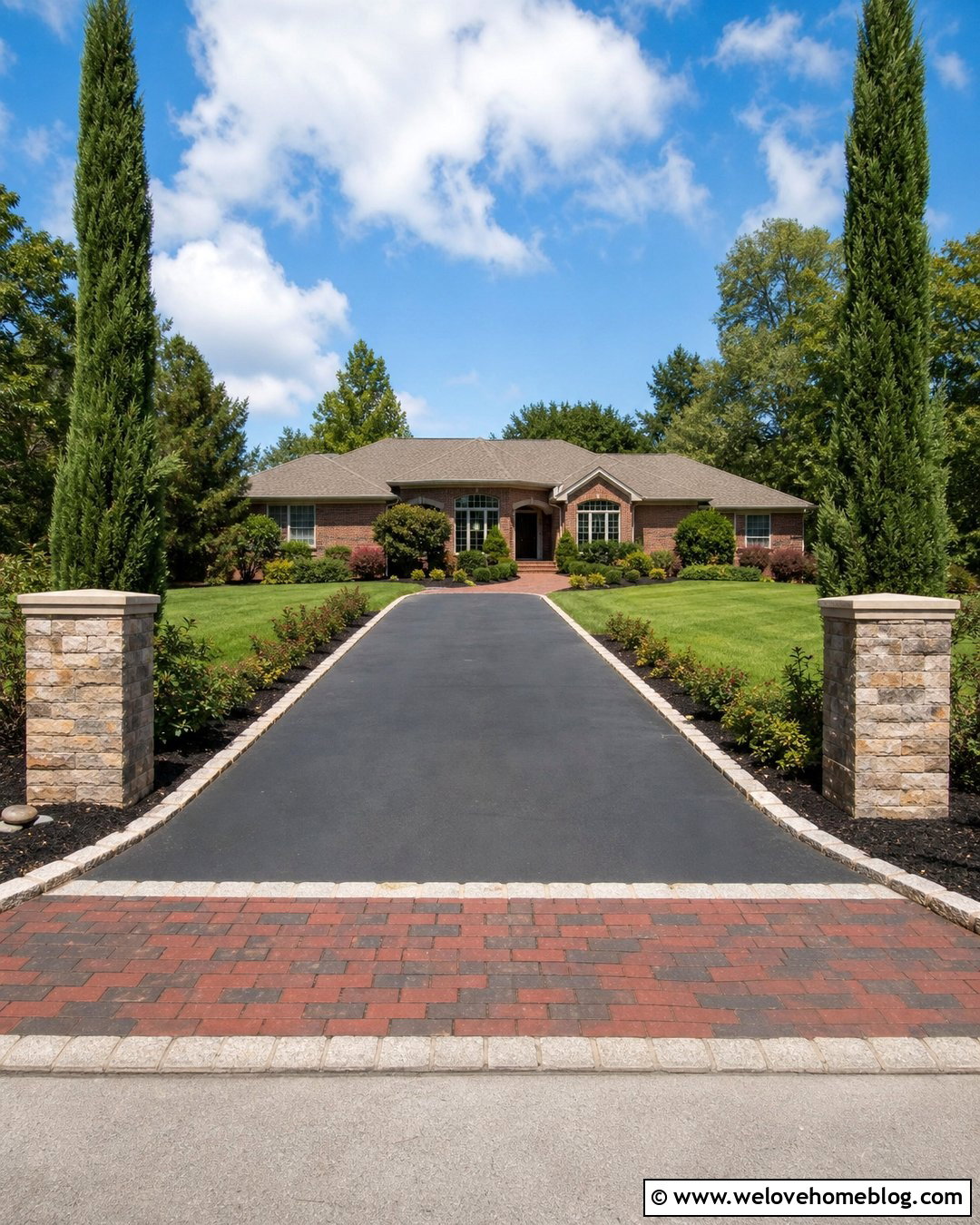
Address pillars give a cypress-lined driveway a clear starting point and make the property easier to identify. Build the pillars from brick, stucco, concrete, or stone that matches the home. Plant one cypress behind each pillar, leaving enough room for mature width and routine maintenance. A straight black asphalt driveway with a paver apron offers a practical base, while a gravel or cobblestone surface creates a more traditional entrance. Keep the address display simple, high contrast, and visible from the road. Low evergreen shrubs can fill the beds without covering the numbers. Add modest downlighting or integrated fixtures if appropriate, but avoid excessive ornament. Repeating the pillar material along the driveway border or front walkway will tie the entrance to the house and landscape.
20. Cypress Tree Driveway Parking Court
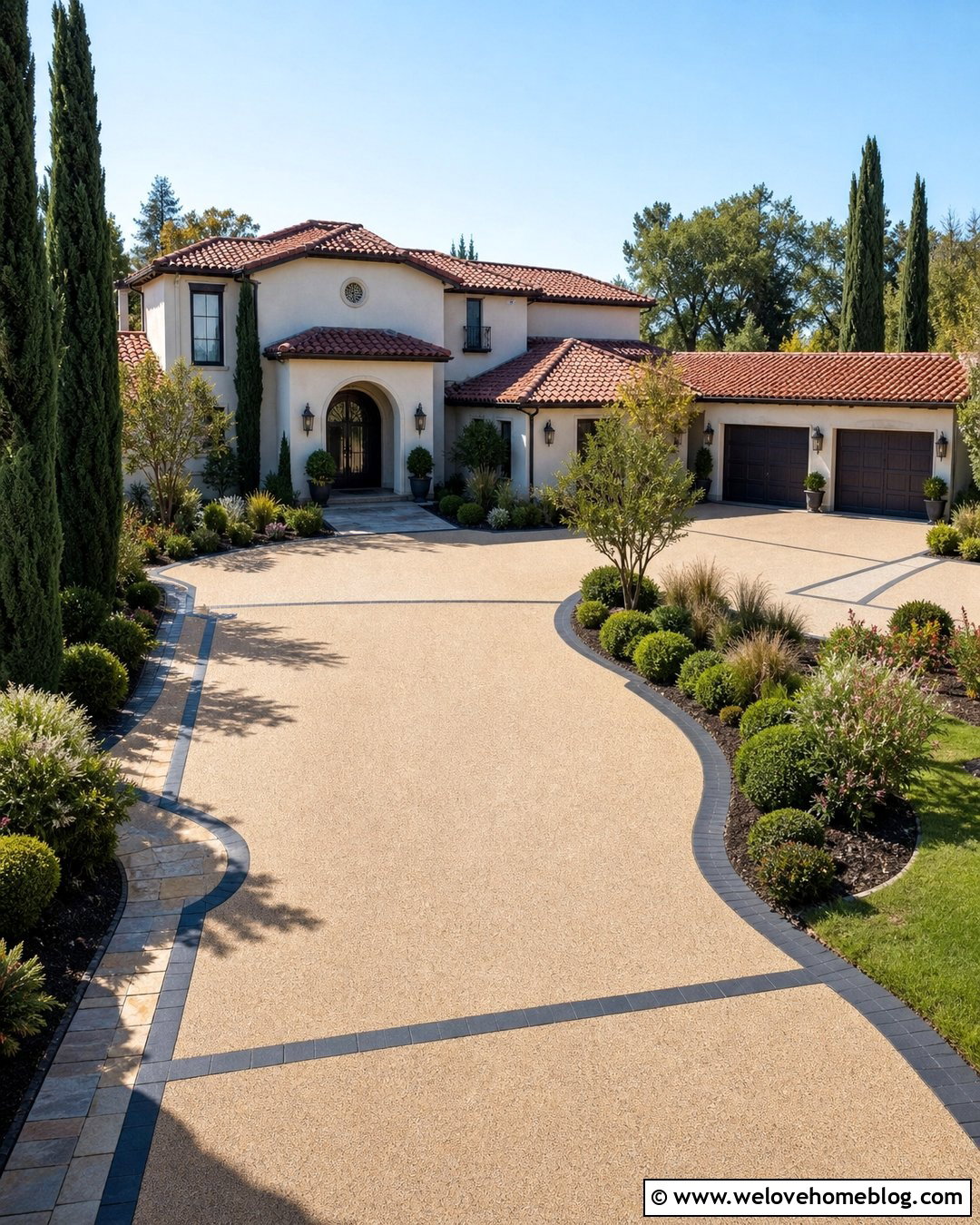
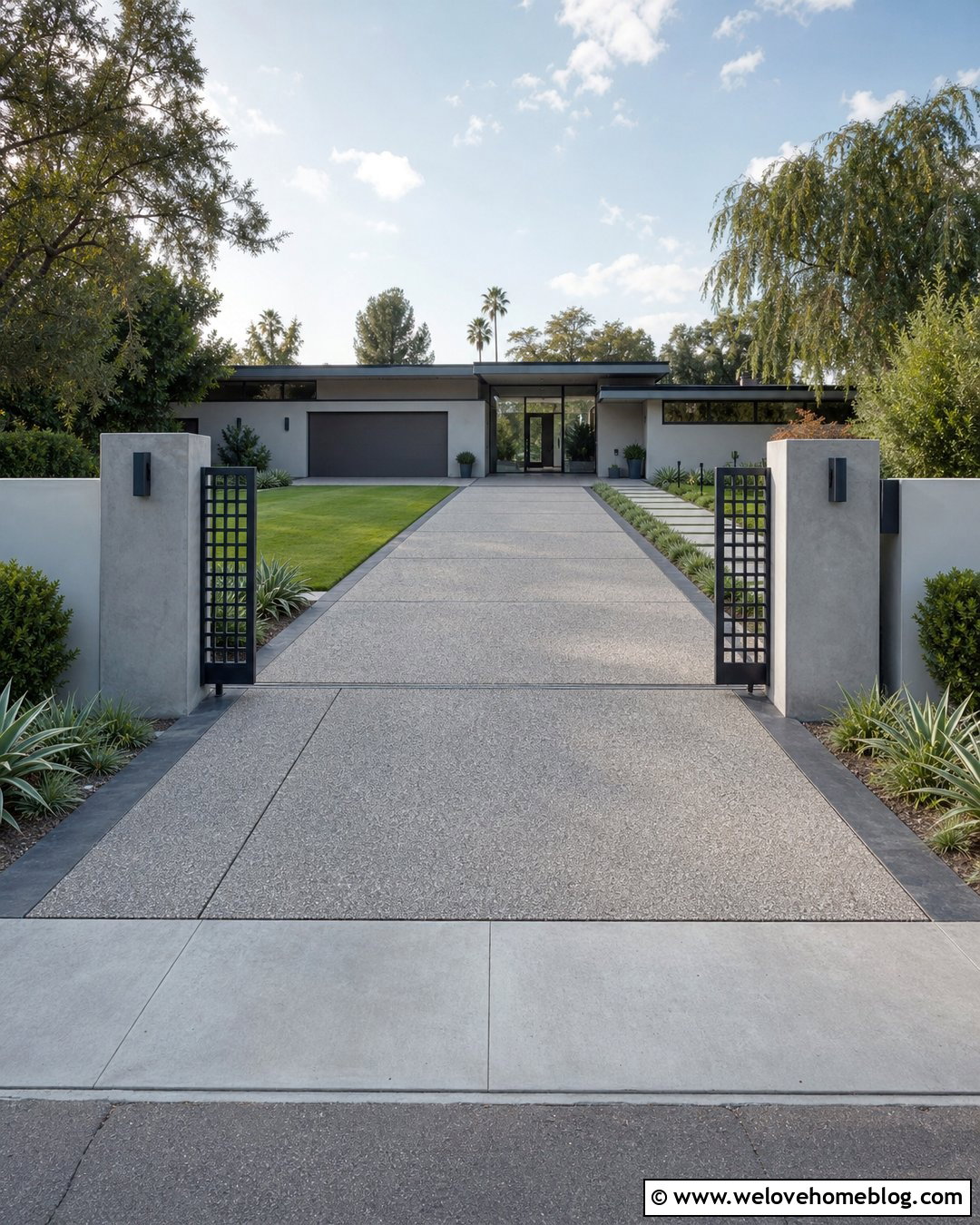
A wide parking court can feel exposed unless trees and borders divide it into a more comfortable scale. Use concrete pavers, exposed aggregate, or resin-bound gravel for a durable, visually consistent surface. Arrange cypress trees around the outer perimeter rather than within tight islands where vehicle doors and roots may conflict. A row near the house can frame the facade, while a second group beside the approach guides vehicles toward the parking area. Use contrasting paver bands to define turning zones and parking edges without adding barriers. Broad beds of evergreen shrubs, ornamental grasses, and seasonal color can soften the court. Preserve clear access to garages, walkways, and service areas. This complete layout works particularly well for large ranch, Mediterranean, and estate-style homes.
Conclusion:
The strongest **20 Cypress Tree Driveway Ideas** combine trees with the entire entrance rather than treating planting as an afterthought. Driveway material, shape, borders, lighting, and surrounding beds should support the tall silhouettes and connect naturally to the house. Italian cypress can provide a narrow, formal look, while broader cypress selections may suit privacy screening or larger properties. Before installation, confirm mature dimensions, local suitability, drainage, sunlight, utilities, road visibility, and required setbacks. Start with a clear scale plan and place the most important trees at entrances, curves, and architectural focal points. Thoughtful spacing and restrained materials will create a driveway that remains practical while gaining structure, privacy, and memorable curb appeal.

Related posts:


Leave a Reply