
Few landscape features create a grander welcome than flowering trees arranged along a well-designed driveway. These 20 crepe myrtle trees lining driveway ideas combine colorful blooms, sculptural trunks, attractive paving, defined borders, and layered planting into complete curb appeal looks. Crepe myrtles can suit formal entrances, relaxed country properties, compact suburban yards, and modern homes when the variety matches the available space. Medium and large cultivars are especially effective for driveway rows, while smaller selections help prevent crowding in narrow planting strips. Mature canopy width, vehicle clearance, sunlight, drainage, and pavement setbacks should guide the final placement. () Whether you prefer gravel, asphalt, concrete, brick, or pavers, explore these practical 20 crepe myrtle trees lining driveway ideas.

1. White Crepe Myrtle Gravel Driveway
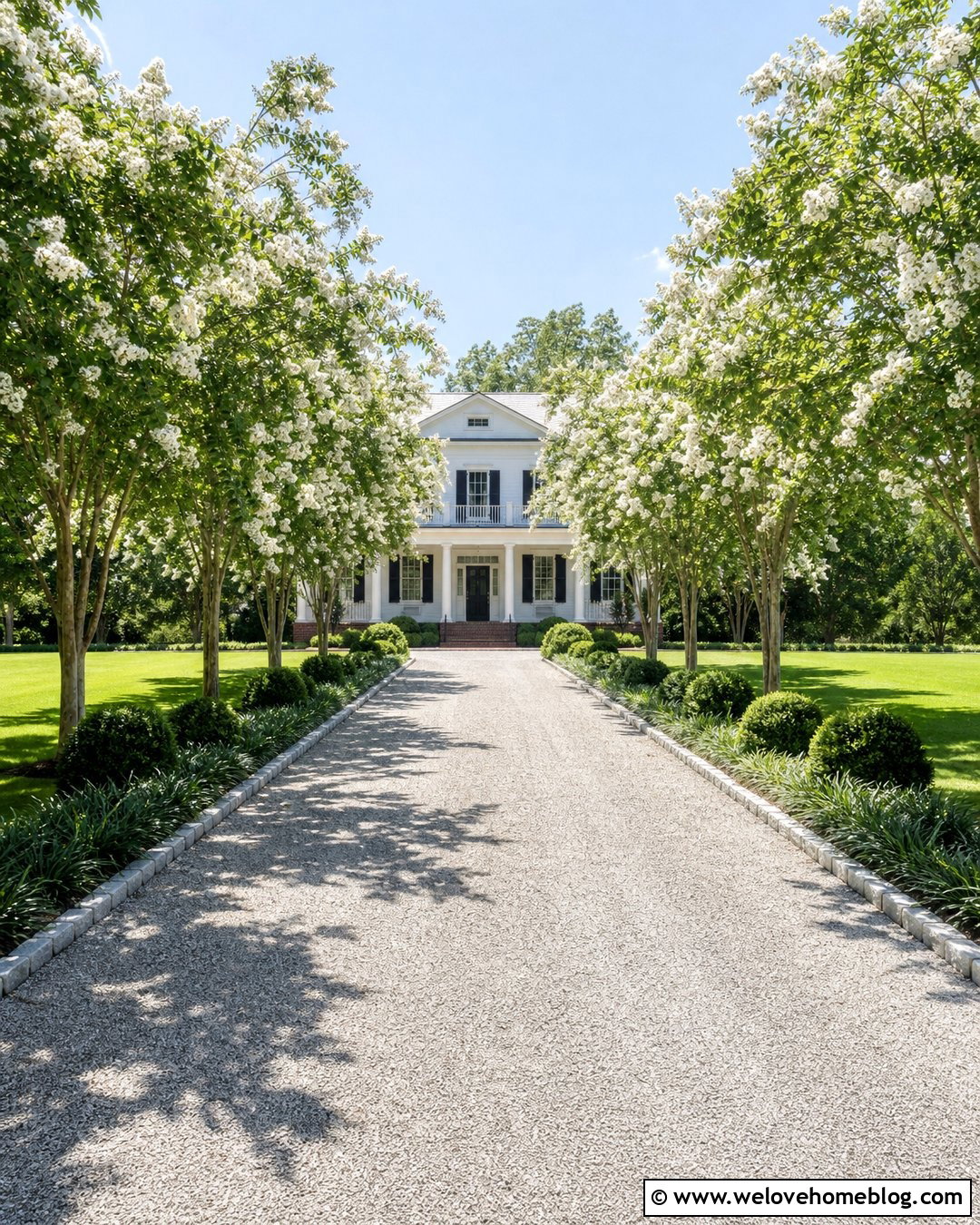
A pale gravel driveway framed by white crepe myrtles feels bright, graceful, and relaxed. Use compacted gray or cream gravel for the driving surface, then contain it with a sturdy cobblestone edge. Plant matching white-flowering trees on both sides to create a balanced avenue leading toward the house. Natchez crepe myrtles work particularly well where there is enough room for their mature height and spread. Keep the trunks several feet beyond the pavement so branches do not interfere with vehicles. Low evergreen shrubs, liriope, and simple lawn panels can cover the ground without competing with the blooms. This complete arrangement suits Colonial, Southern, and modern farmhouse homes while keeping a long driveway visually organized throughout the year.
2. Pink Crepe Myrtle Asphalt Driveway
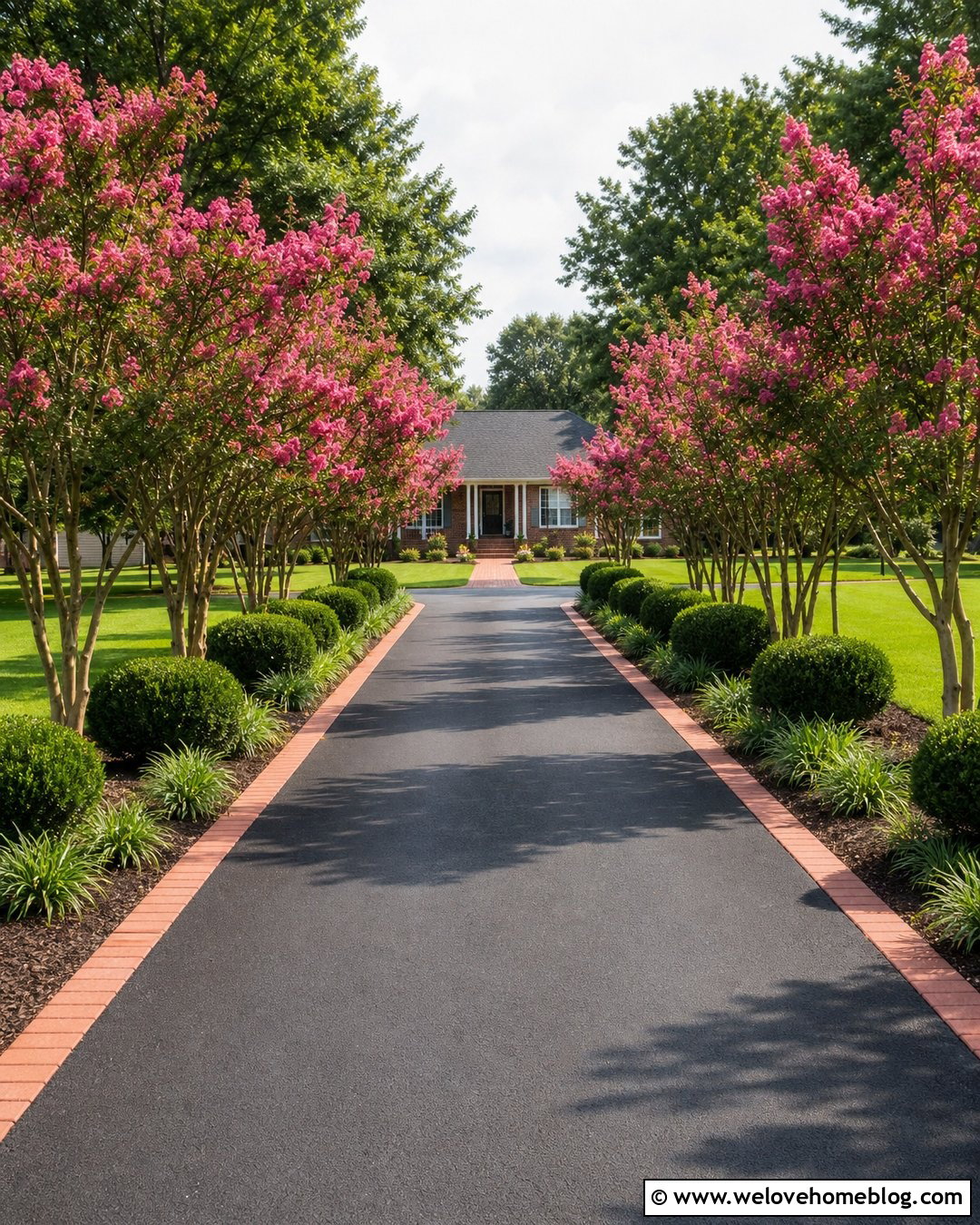
Can a basic asphalt driveway become an attractive landscape feature? A double row of pink crepe myrtles can soften the dark surface and create a strong sense of arrival. Choose a warm pink cultivar with an upright form, then repeat it at consistent intervals along both sides. Add narrow red brick ribbons between the asphalt and planting beds to introduce color and keep mulch away from the pavement. Rounded boxwoods and low ornamental grasses create structure beneath the trees without hiding their trunks. A straight layout makes the repetition especially noticeable from the street. This design works beautifully with a red brick ranch or traditional two-story house, where the pink flowers, green foliage, black asphalt, and brick border form a coordinated palette.
3. Red Crepe Myrtle Concrete Driveway
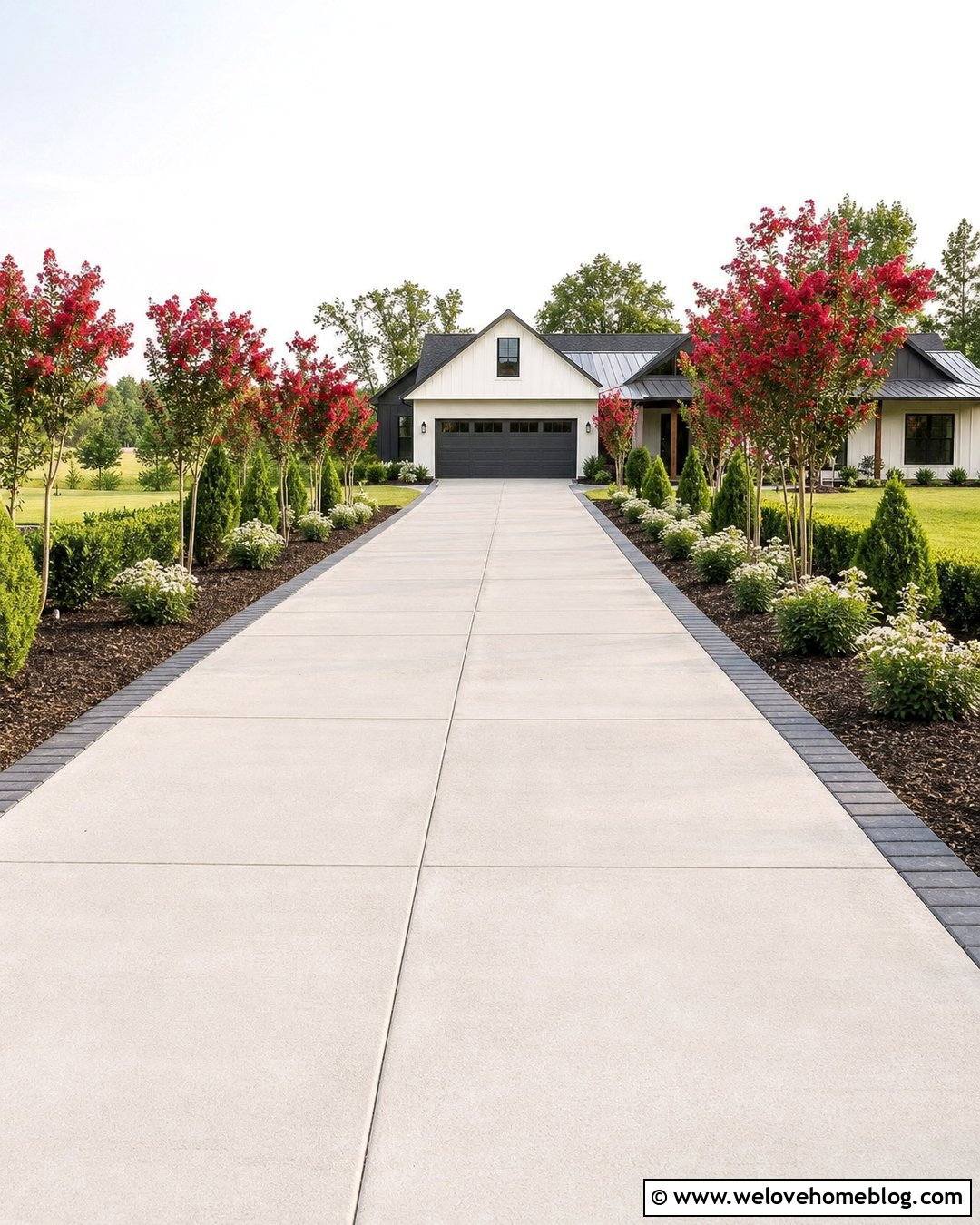
Bright red blooms can give a wide concrete driveway the color it needs without making the landscape feel busy. Start with light gray poured concrete divided into large rectangular sections. Border the surface with charcoal pavers for sharper definition, then plant red-flowering crepe myrtles in generous beds beyond the edging. Dynamite is one cultivar commonly selected for strong red color, although local suitability and mature dimensions should always be checked. Repeat clipped evergreen shrubs and white flowering perennials below the trees for a clean layered effect. The straight trunks provide vertical rhythm, while the spreading crowns soften the hard lines of the concrete. This bold, polished combination is particularly effective beside contemporary ranch houses and updated suburban homes with black exterior accents.
4. Purple Crepe Myrtle Paver Driveway
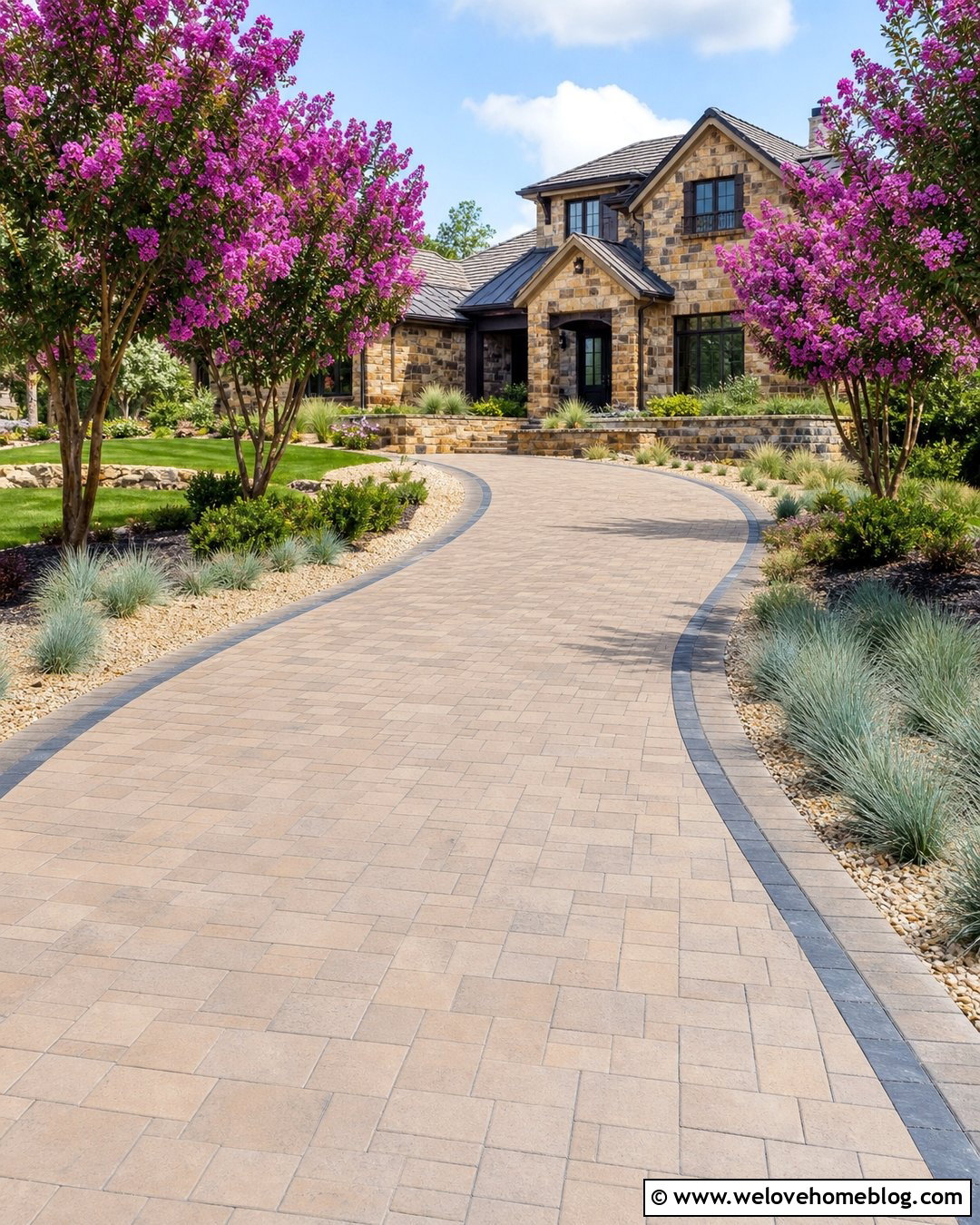
Purple crepe myrtles look especially rich beside warm beige driveway pavers. Arrange large-format concrete pavers in a running bond pattern, using a darker soldier-course border to hold the shape together. A gently curved driveway makes the tree row appear longer and reveals the flowering canopies gradually as visitors approach. Plant matching purple-blooming trees along the outside of each curve, leaving open lawn or ground cover around their trunks. Blue-green ornamental grasses and pale stone mulch can connect the purple flowers with the neutral paving. Avoid mixing too many strong bloom colors beneath the trees. The restrained planting keeps the crepe myrtles dominant. This complete look complements Craftsman homes, stone facades, and tan stucco houses with natural wood garage doors.
5. Crepe Myrtle Driveway Allée
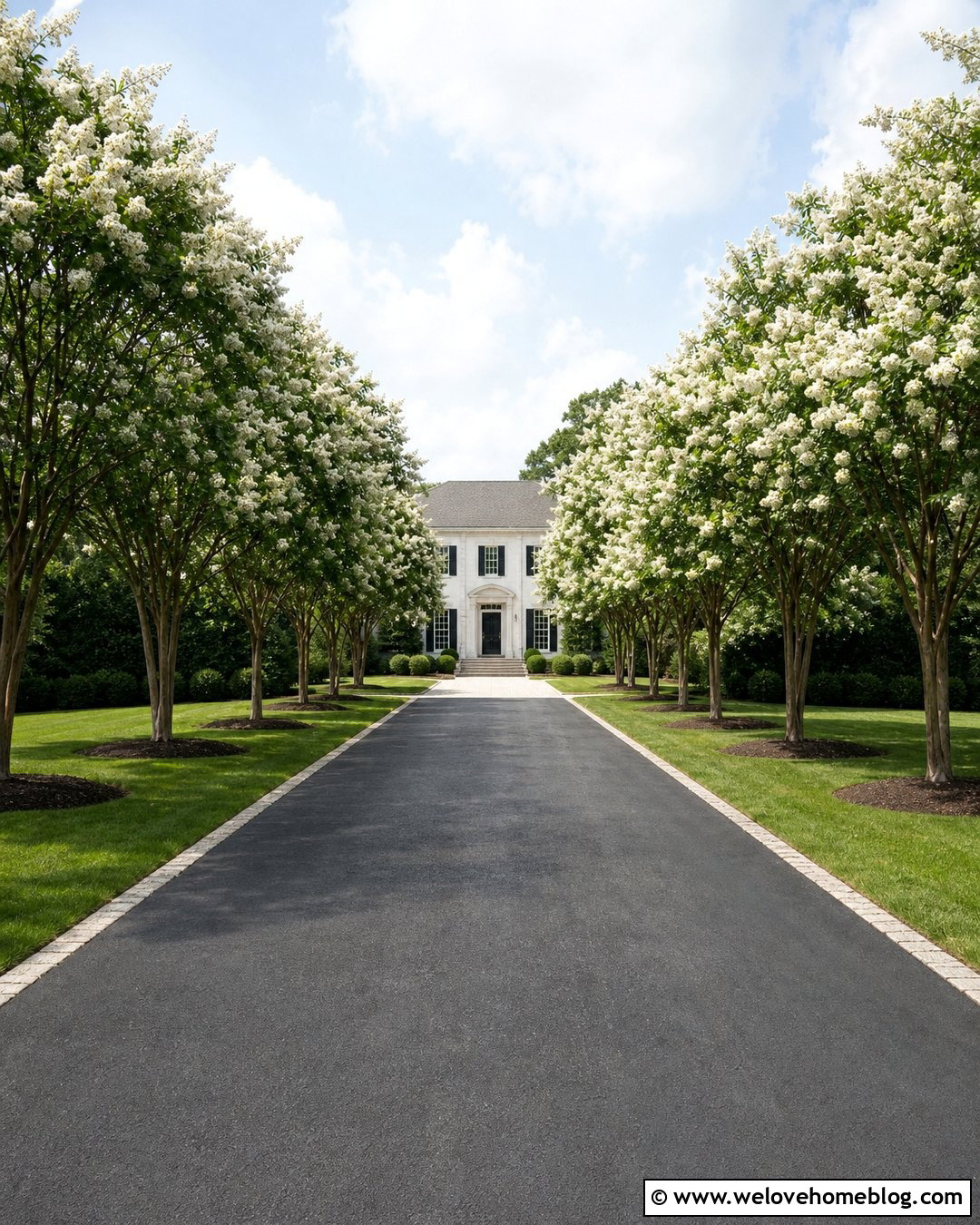
A formal allée creates a dramatic green corridor that directs attention toward the house. Build the look around a long, straight driveway made from charcoal asphalt or smooth gray concrete. Use one crepe myrtle cultivar throughout so the trees develop a consistent height, canopy shape, and flower color. Matching rows should line both sides at equal intervals, with trunks carefully aligned across the driveway. Actual spacing must reflect the mature spread of the selected cultivar; medium varieties may need approximately 10 to 12 feet or more when visible trunks and joining canopies are desired. () Finish the design with simple lawn panels, understated mulch rings, and a centered walkway. This disciplined layout suits symmetrical Colonial, Georgian, and Southern homes.
6. Curved Driveway With Crepe Myrtle Trees
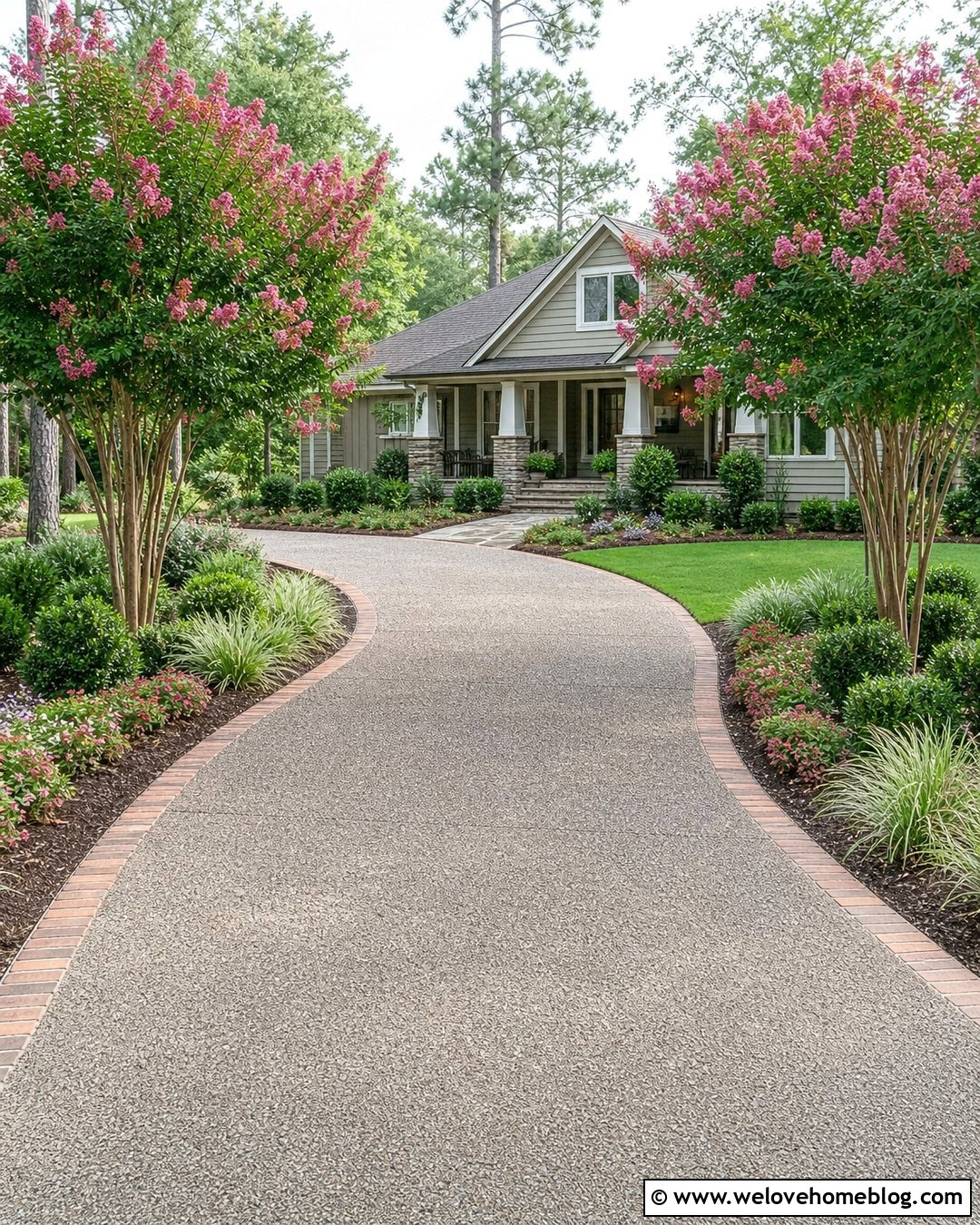
A curved driveway gains depth when crepe myrtles trace its full shape. Use exposed aggregate concrete in a warm gray tone, then define the edge with a narrow band of clay brick pavers. Position the trees along the sweeping curves rather than forcing them into a rigid straight line. Matching spacing still creates rhythm, but the changing viewpoint makes each canopy feel slightly different. Soft pink flowers pair nicely with sage-colored ornamental grasses, compact hollies, and broad areas of lawn. Keep shrubs low near the street so drivers retain clear sightlines when entering or leaving the property. Near the house, allow the beds to become fuller and more layered. This welcoming design complements cottage, Craftsman, and traditional suburban architecture without appearing overly formal.
7. Circular Driveway With Crepe Myrtle Trees
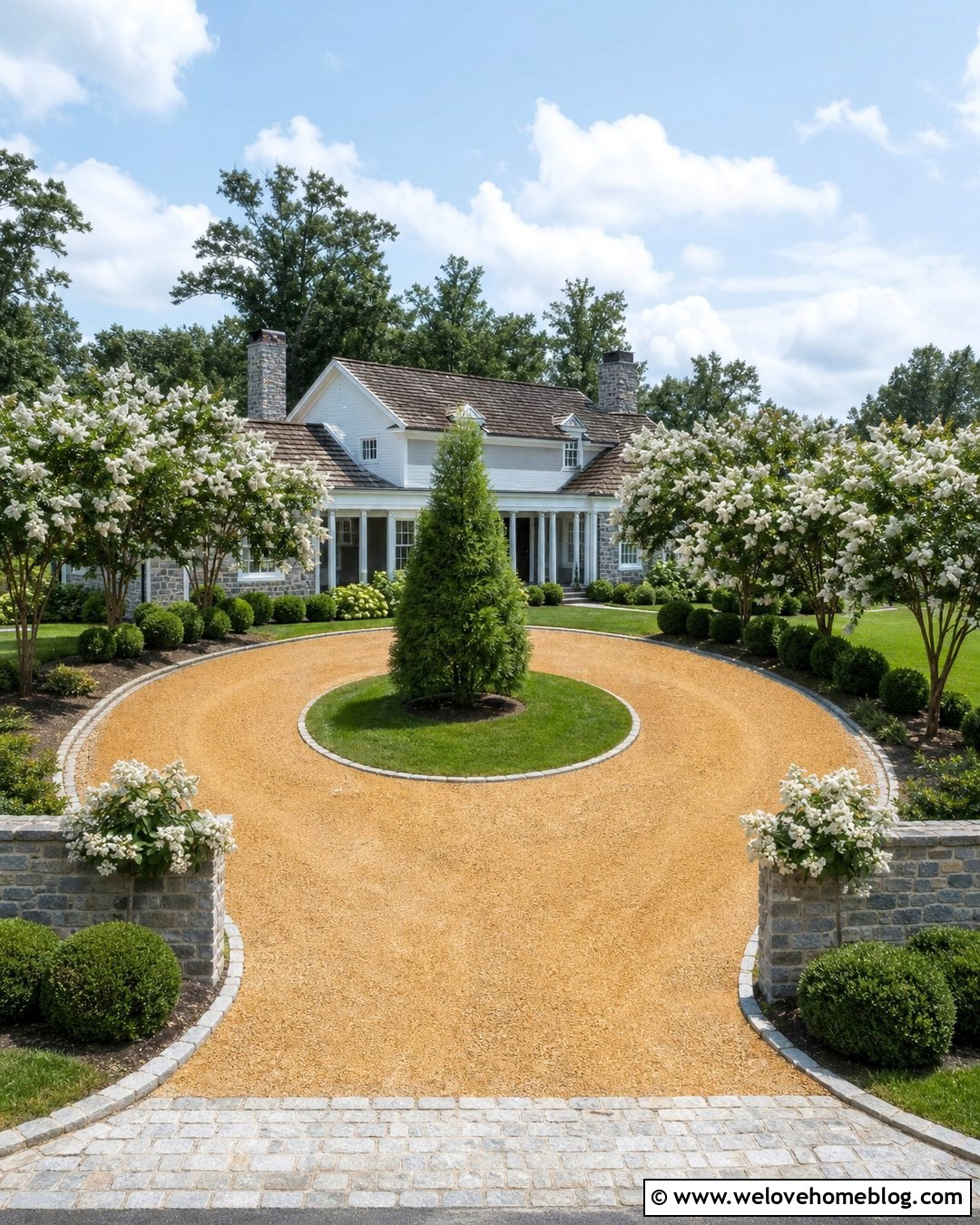
The sweeping sound of gravel and a ring of summer flowers can turn a circular driveway into a memorable entrance. Cover the drive with compacted golden gravel and secure its edges with aged granite cobblestones. Plant matching white crepe myrtles around the outer arc, where their canopies frame the property without blocking views across the center island. Use the island for a specimen evergreen, clipped shrubs, or a simple lawn rather than another large flowering display. Near the house, repeat the same cobblestone around planting beds to connect every area. Wide gaps at the entrance preserve visibility and prevent the landscape from feeling enclosed. This complete arrangement feels natural beside country homes, farmhouses, and larger Southern residences with broad front porches.
8. Crepe Myrtle Driveway With Brick Borders
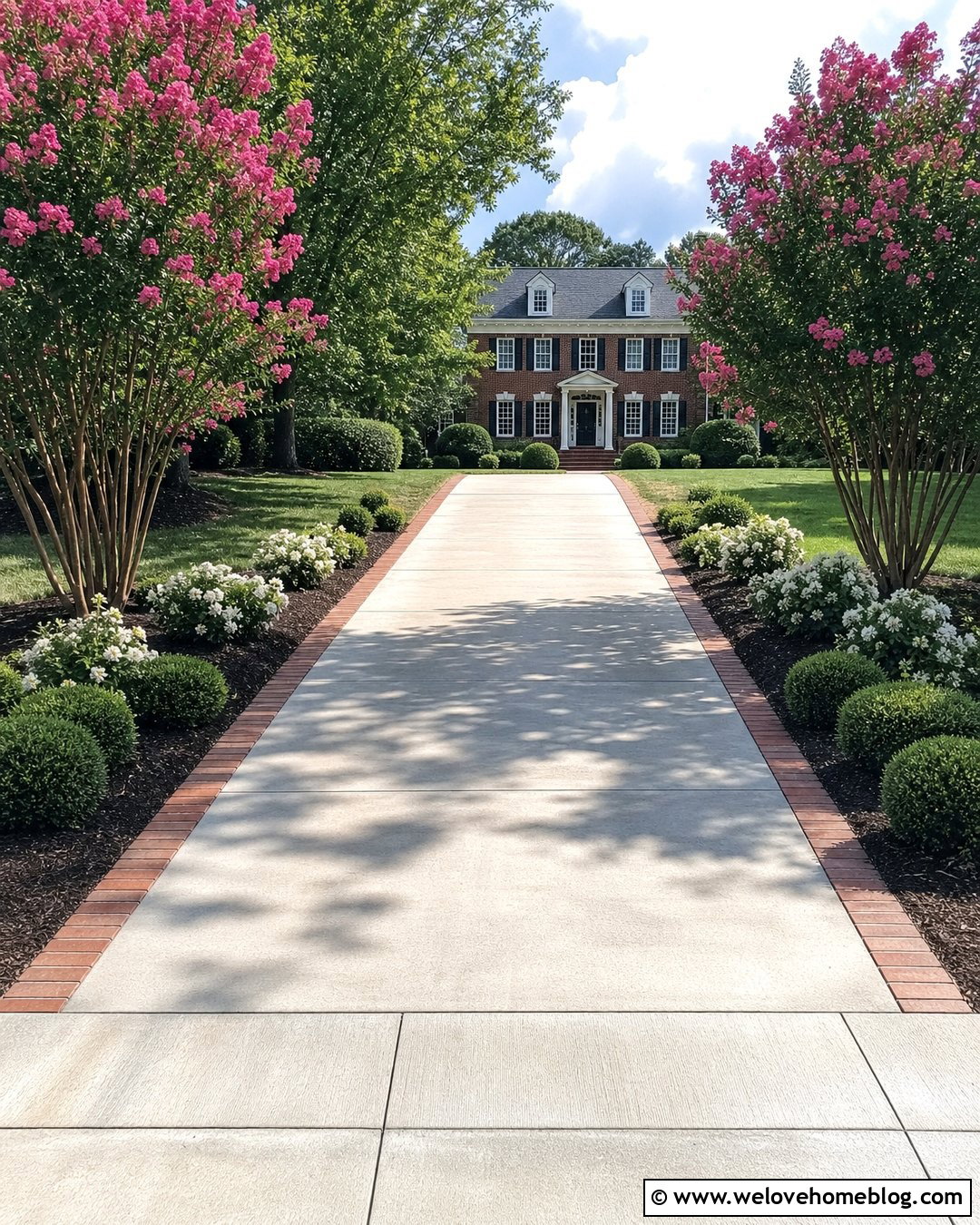
Warm brick edging creates an attractive transition between flowering trees and a neutral driveway. Begin with brushed gray concrete, then install a double brick border that follows the full length of the drive. Place medium pink crepe myrtles in mulched beds just beyond the bricks, repeating their positions evenly on both sides. Beneath them, use compact evergreen shrubs and masses of white flowers to balance the strong summer color overhead. The brick should relate to the house facade, front steps, or walkway rather than look like an unrelated accent. A straight driveway reinforces the orderly layout, while slightly irregular tree trunks keep it from becoming severe. This combination works especially well with brick Colonial houses, traditional ranch homes, and transitional properties with white trim.
9. Crepe Myrtle Driveway With Stone Edging
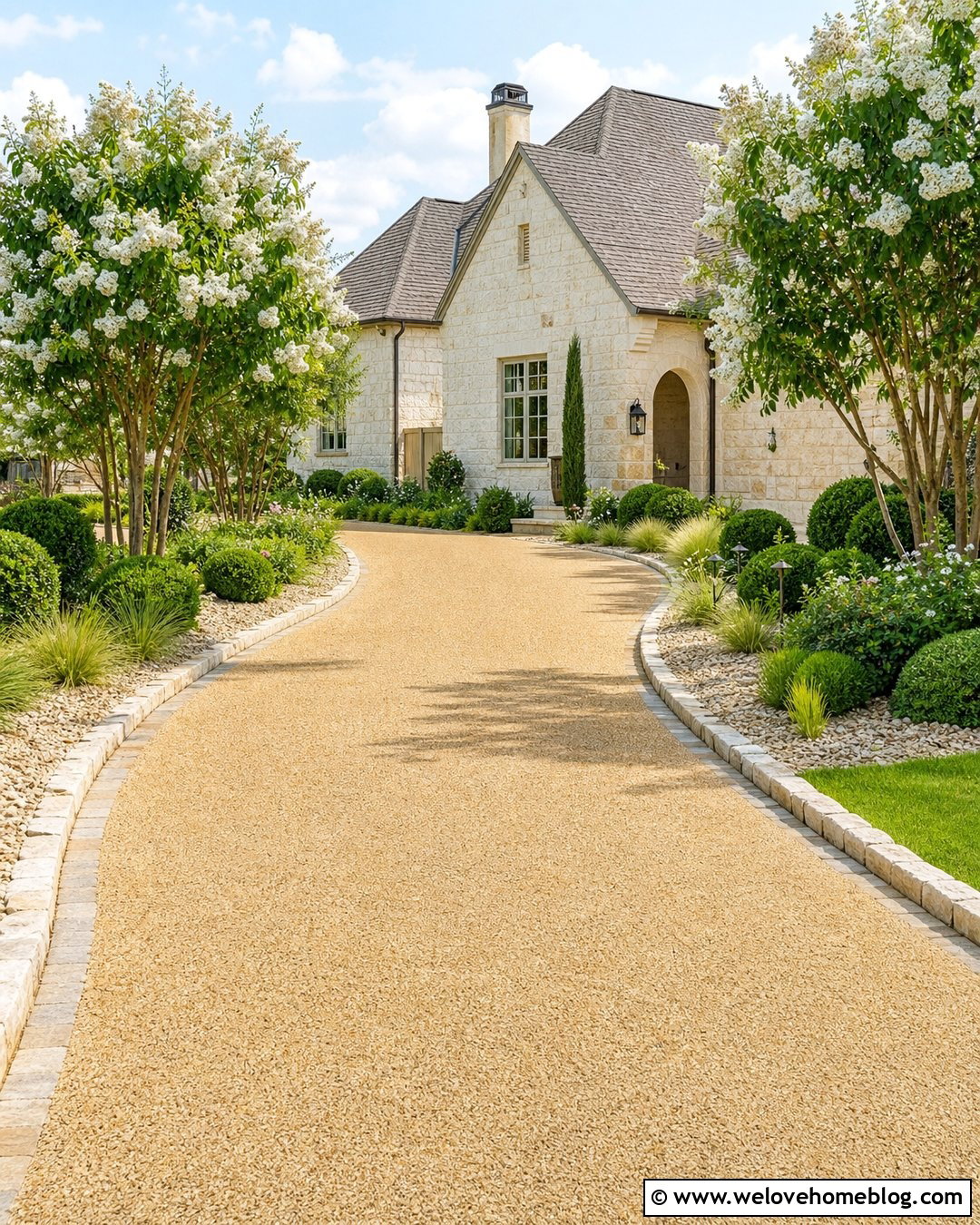
Natural stone can make a crepe myrtle-lined driveway feel established from the moment it is installed. Choose resin-bound gravel in a warm sand color for a smooth, refined surface with subtle texture. Edge both sides with rough-cut limestone blocks, then set white-flowering crepe myrtles into broad planting beds beyond the stone. Rounded hollies, dwarf gardenias, and low ornamental grasses can fill the lower layer while keeping the attractive trunks exposed. Carry the limestone into the front walkway or porch foundation for visual continuity. On a gently bending driveway, the pale trees and stone border guide the eye toward the entrance. This complete landscape suits limestone houses, French country architecture, and light stucco homes surrounded by open lawn.
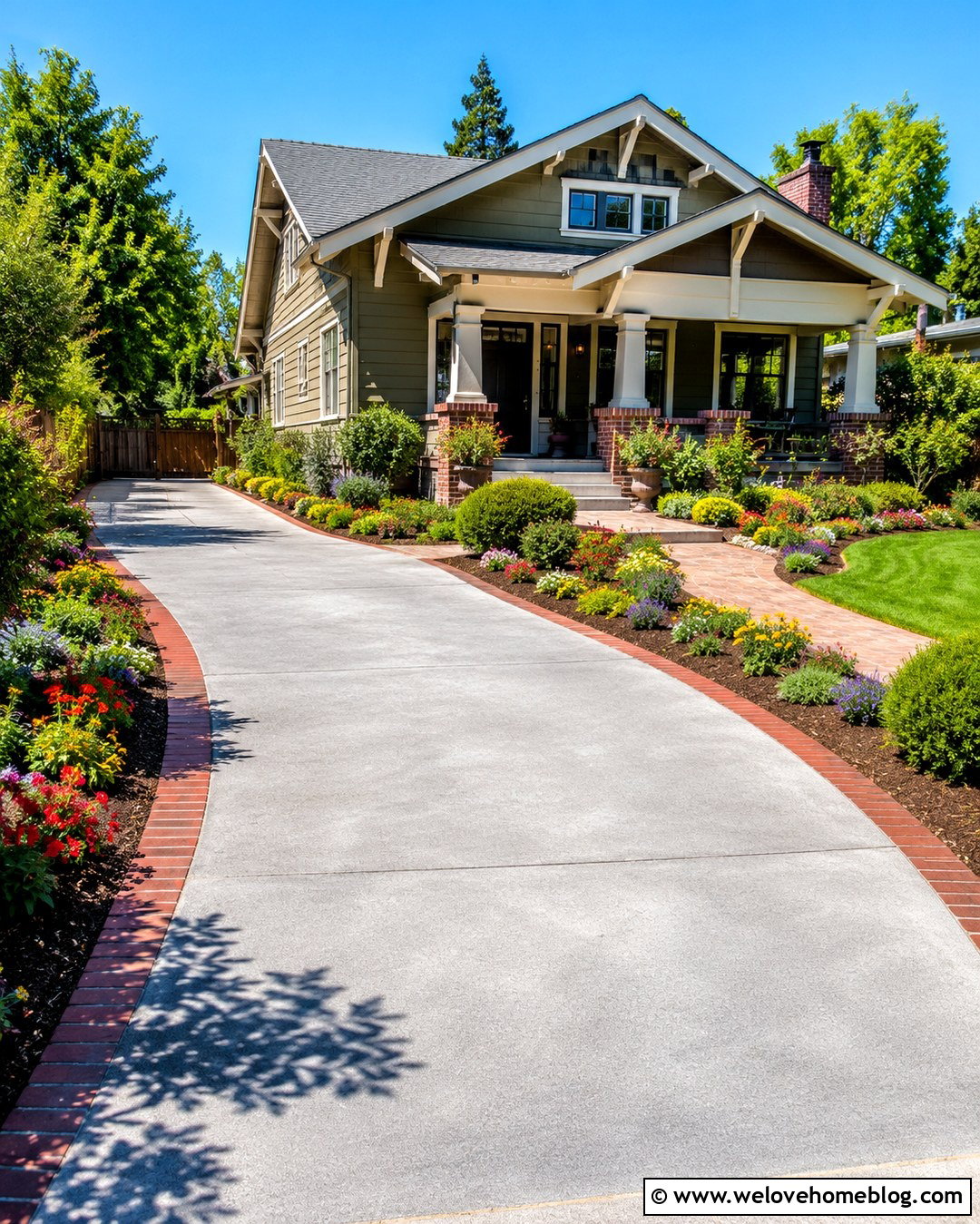
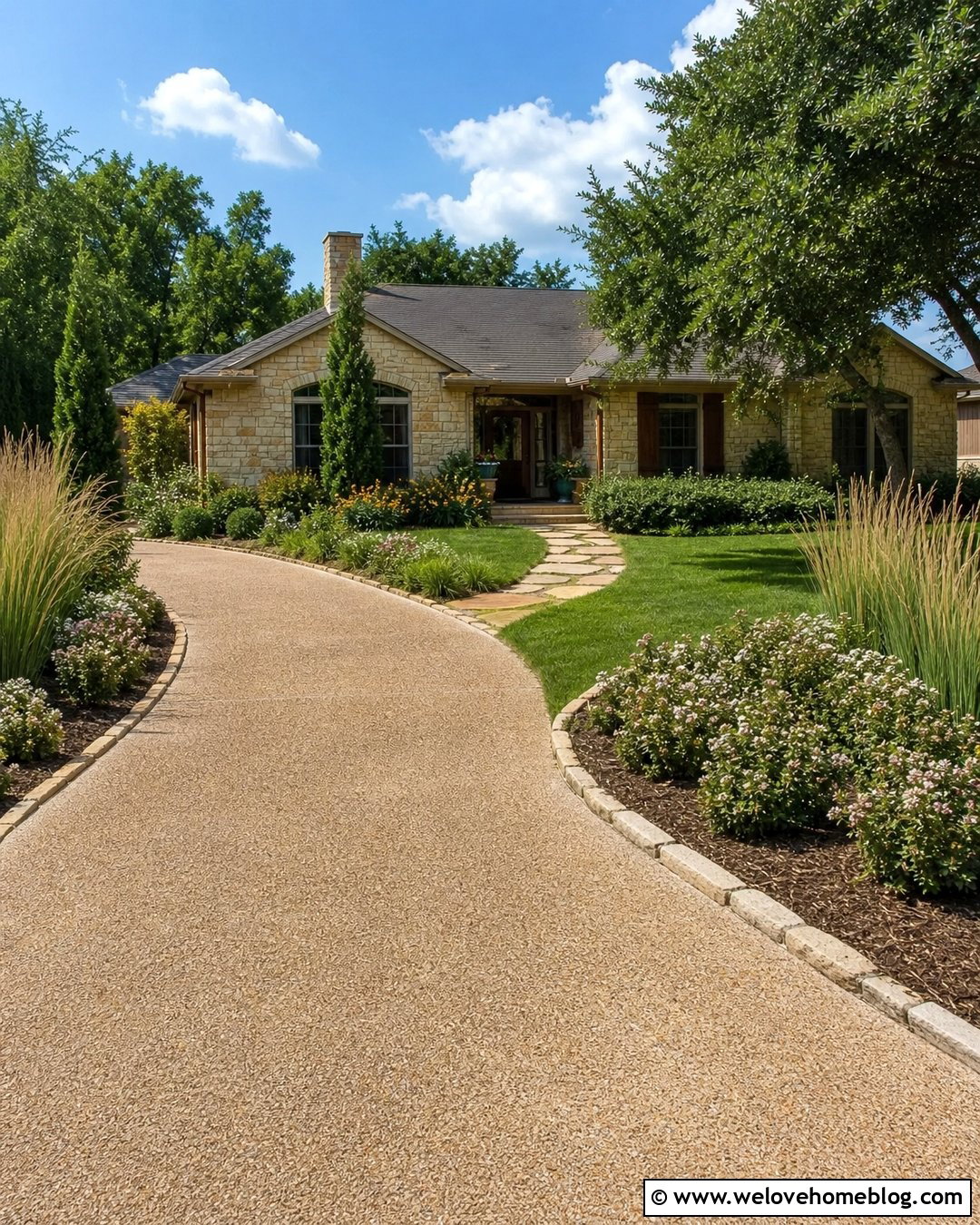
10. Crepe Myrtle Driveway With Lavender Borders
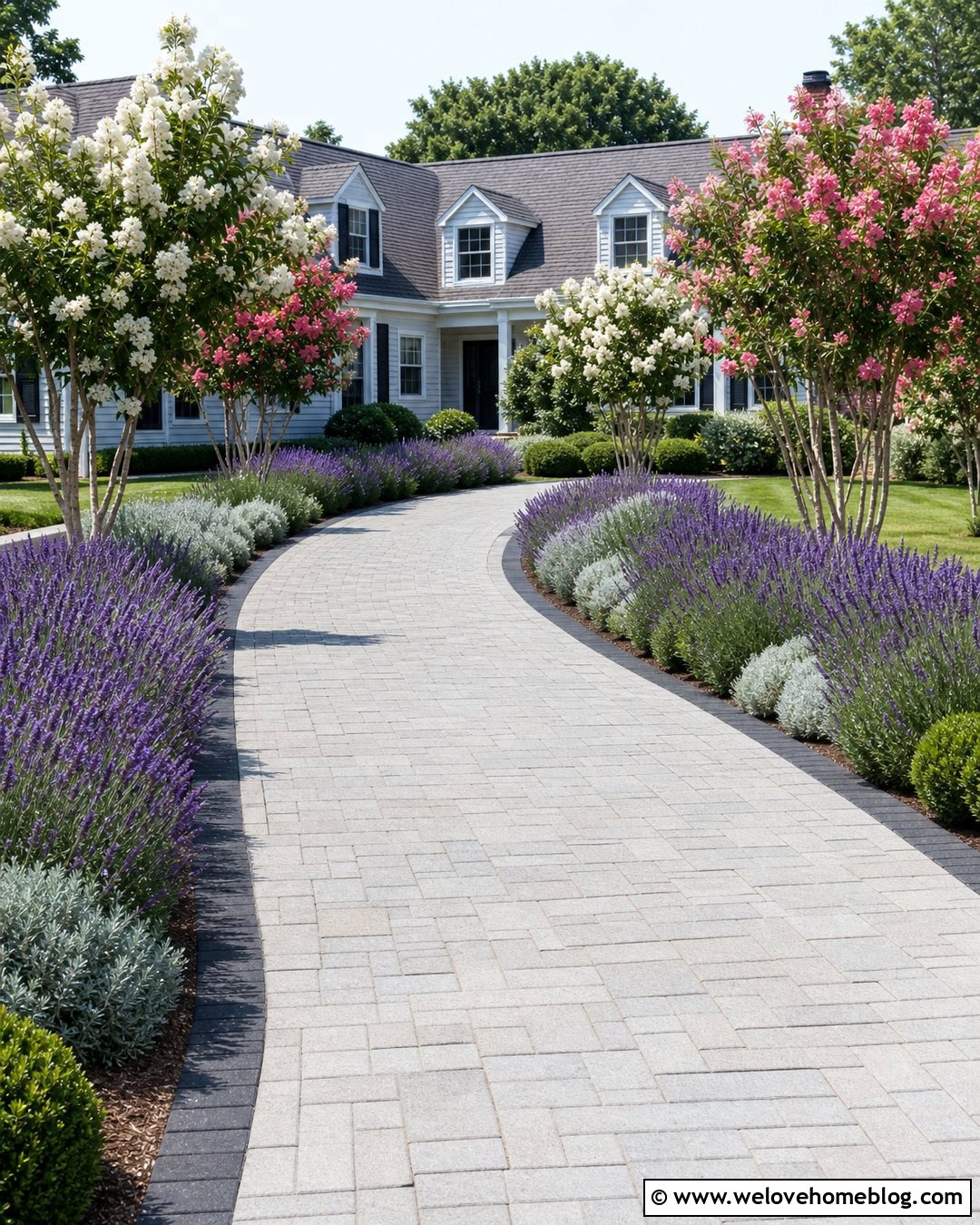
Fragrant-looking lavender borders and crepe myrtle canopies create a colorful approach without overwhelming the driveway. Use pale gray concrete pavers for a straight or softly curved surface, with darker gray pavers forming a crisp outer band. Plant white or soft pink crepe myrtles behind broad sweeps of lavender-colored perennials. Where true lavender struggles with humidity or soil conditions, locally suitable purple-flowering plants can produce a similar effect. Add silver foliage and compact evergreen mounds to maintain structure after flowering ends. The low border preserves a clear view of the crepe myrtle trunks and makes routine driveway access easier. This coordinated combination feels right beside cottage homes, Cape Cod houses, and pale modern farmhouses with simple black-framed windows.
11. Crepe Myrtle Driveway With Ornamental Grasses
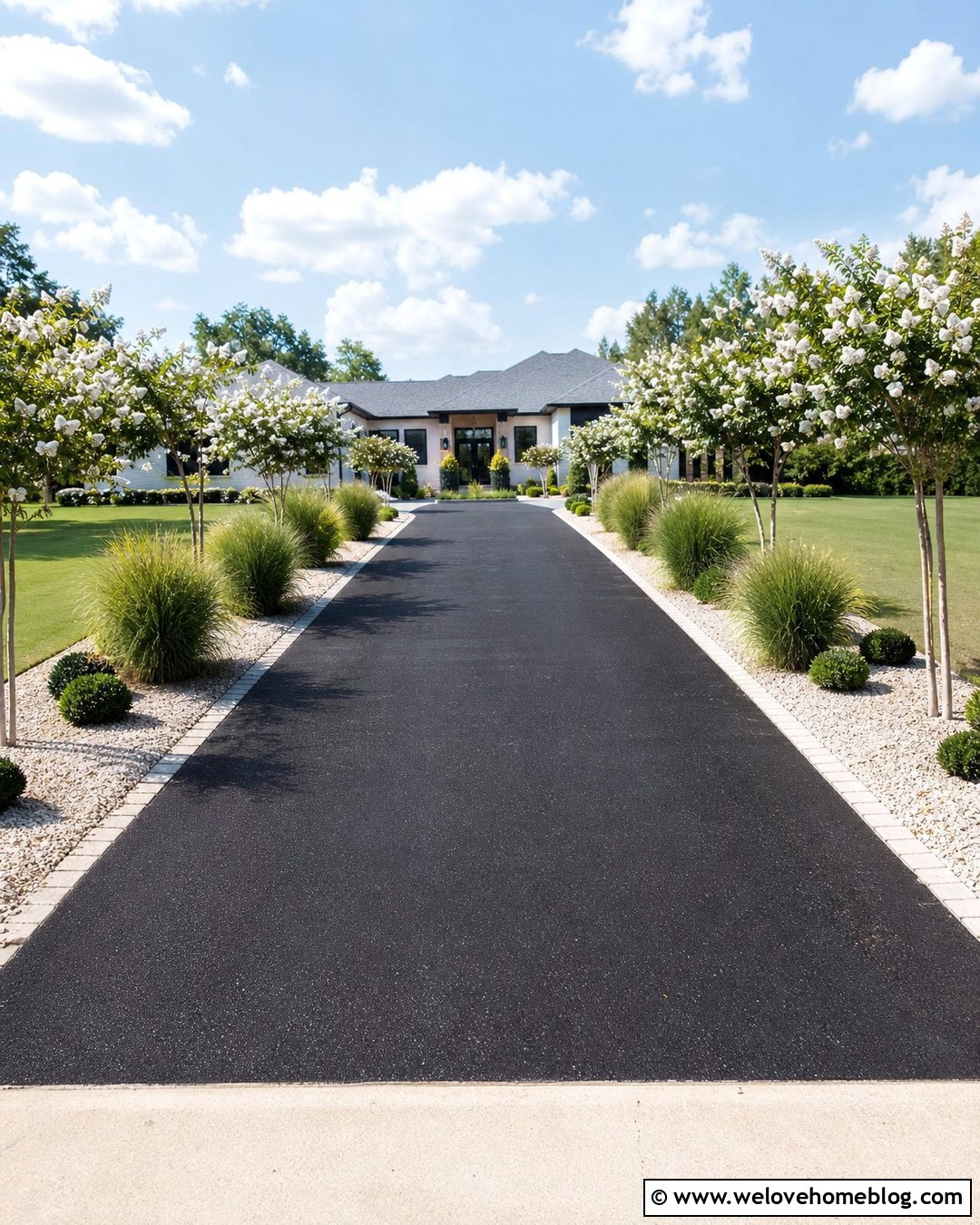
When summer breezes move through flowering branches and fine grass blades, a driveway feels softer and more connected to its landscape. Pair a black asphalt surface with a slim border of light concrete pavers for contrast. Behind the edging, alternate white crepe myrtles with wide masses of fountain grass or another regionally suitable ornamental grass. Keep the grasses far enough from the pavement that mature foliage does not flop into vehicle space. Repeated groups are easier to maintain and more visually effective than many scattered varieties. Gravel mulch can give the beds a clean finish and improve the modern appearance. This complete design is an excellent fit for contemporary ranch houses, minimalist homes, and updated brick properties with dark roofs.
12. Crepe Myrtle Driveway With Boxwood Hedges
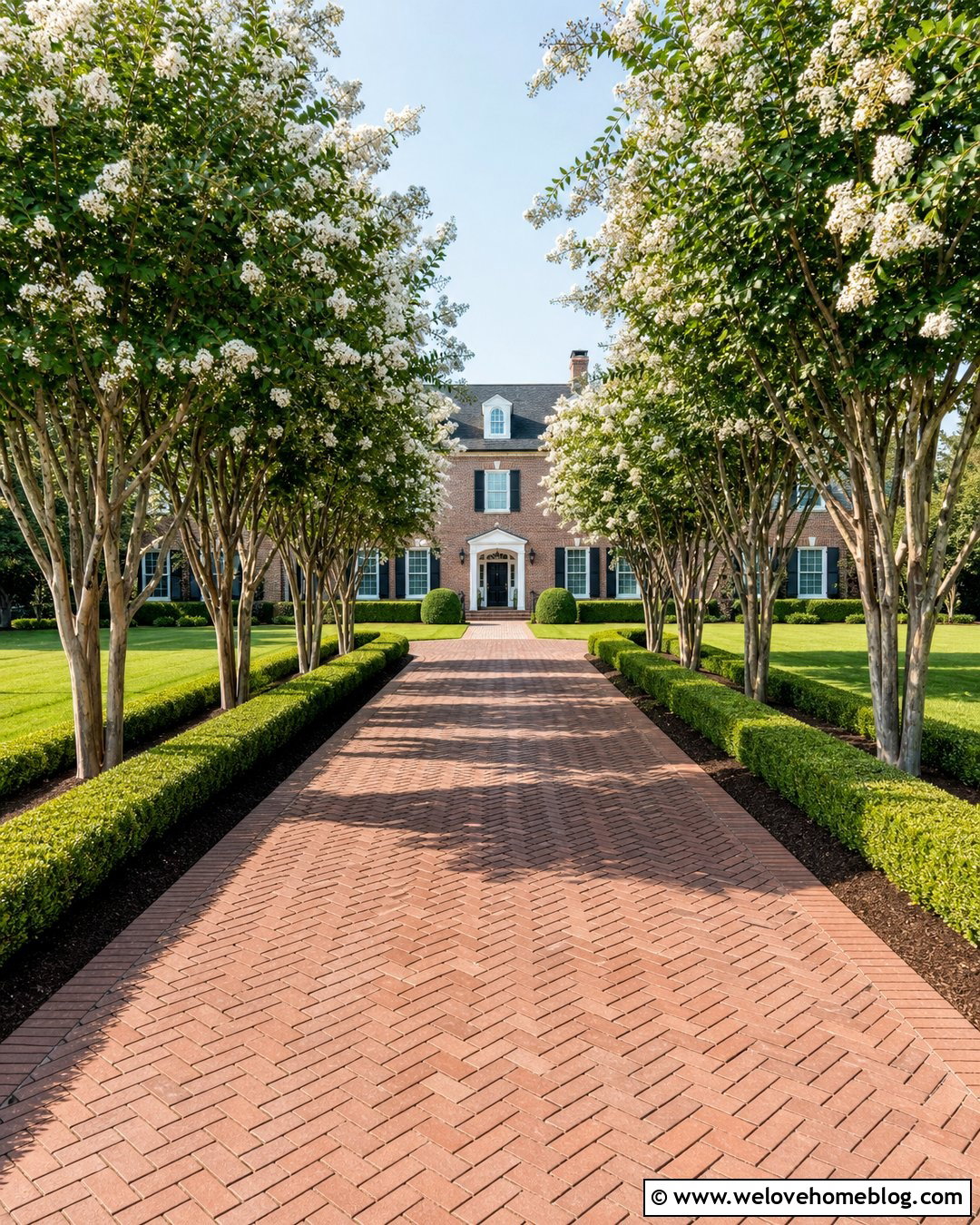
Crisp hedges beneath airy crepe myrtle canopies create a layered, formal entrance. Install clay brick pavers in a herringbone pattern for the driveway, then frame them with a straight soldier-course border. Plant white crepe myrtles at measured intervals on both sides and connect their planting beds with a continuous low boxwood hedge. Keep the hedge neatly below the branching points so the pale trunks remain visible. Dark mulch provides contrast while reducing the number of competing materials in the scene. At the street, terminate the hedges before they obstruct sightlines. A matching brick walkway can lead from the driveway to the front door. The final look feels tailored and timeless beside Georgian, Federal, Colonial, and traditional Southern houses.
13. Crepe Myrtle Driveway With Hydrangea Beds
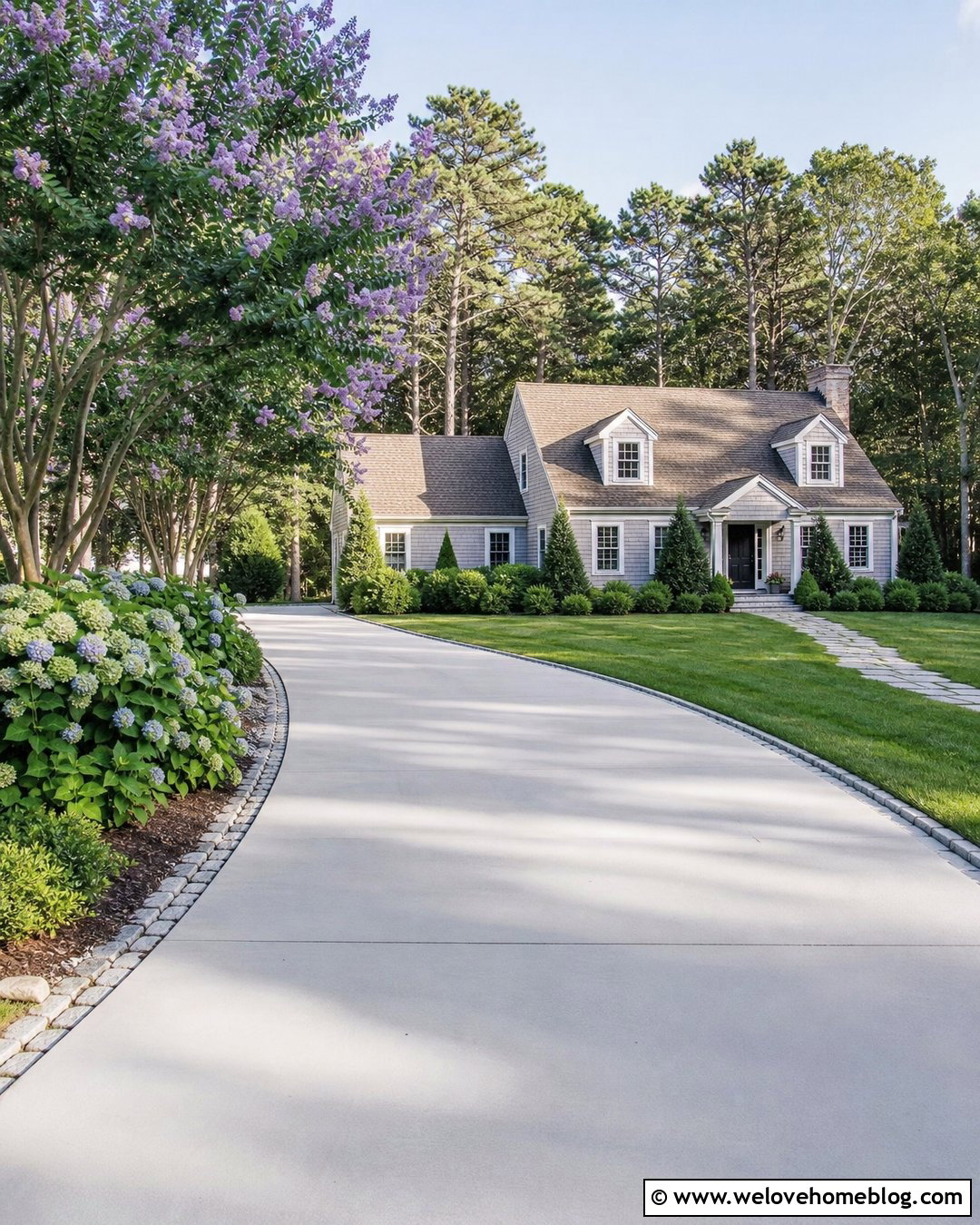
Large hydrangea blooms can fill the lower portion of a crepe myrtle-lined driveway with generous color and texture. Use smooth light gray concrete for the driving surface and add a narrow cobblestone ribbon along each side. Position white or lavender crepe myrtles behind broad beds containing hydrangeas, evergreen foundation shrubs, and shade-tolerant ground cover where conditions permit. Keep enough separation between the tree trunks and shrubs for airflow, maintenance, and mature growth. A curved driveway helps reveal the layered planting in stages instead of showing everything at once. Select a restrained flower palette so the border remains cohesive. This lush design works particularly well with shingled cottages, Cape Cod homes, and traditional houses set against wooded or partially shaded backdrops.
14. Crepe Myrtle Driveway With Entry Pillars
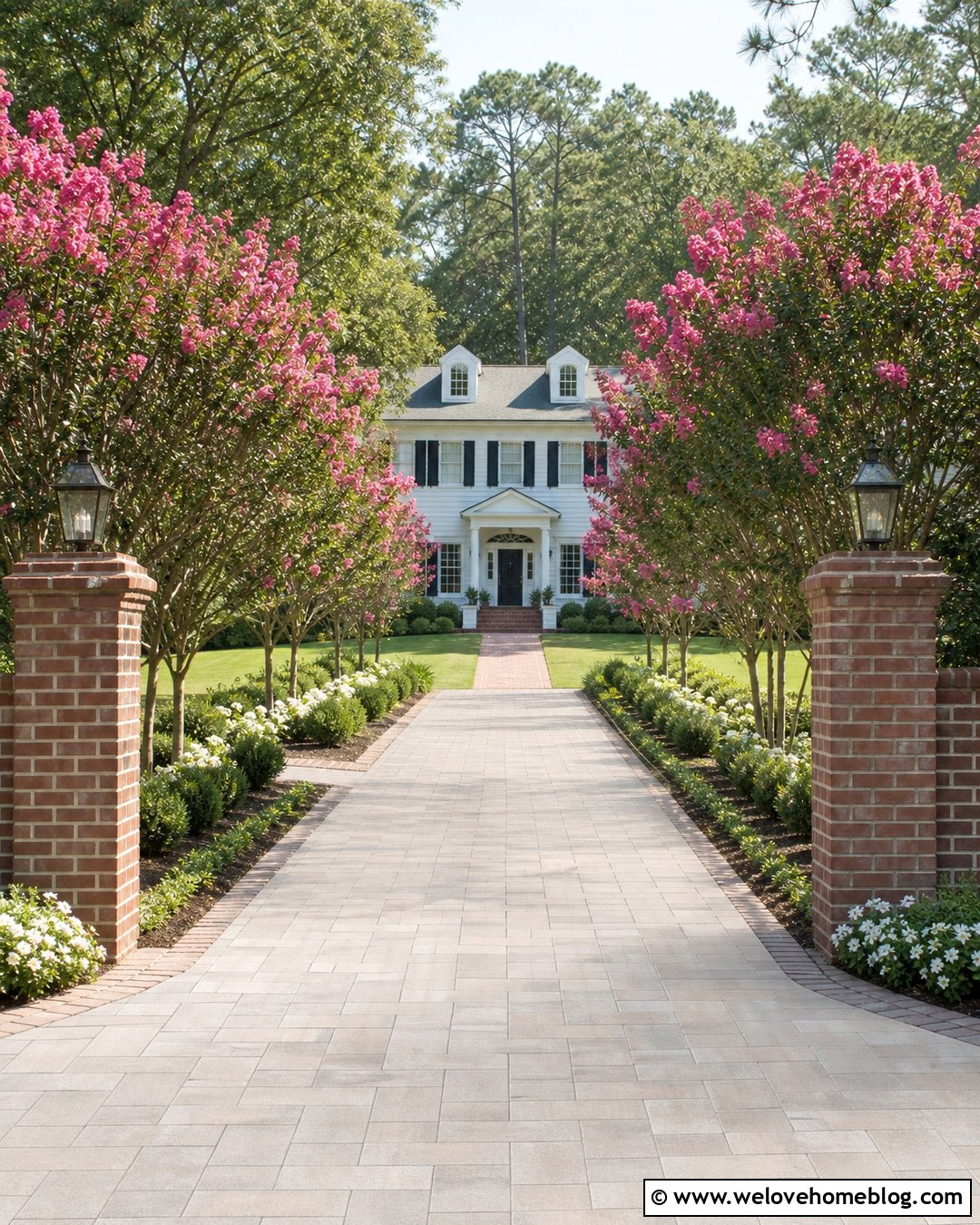
Substantial entrance pillars can introduce a crepe myrtle avenue without overpowering it. Build low brick or natural stone pillars on both sides of a straight driveway, leaving generous clearance around the driving lane. Continue inward with warm gray concrete pavers and matching masonry edging. Place two prominent crepe myrtles just behind the pillars, then repeat the same cultivar farther toward the house. White flowers look refined with stone, while red or pink flowers can connect to a brick facade. Low evergreen planting around the pillar bases keeps the entrance polished without covering the masonry. Add a clear address plaque if desired, but avoid excessive decoration. This organized landscape makes a strong first impression at Colonial, farmhouse, and estate-style properties.

15. Crepe Myrtle Driveway With Black Metal Gate
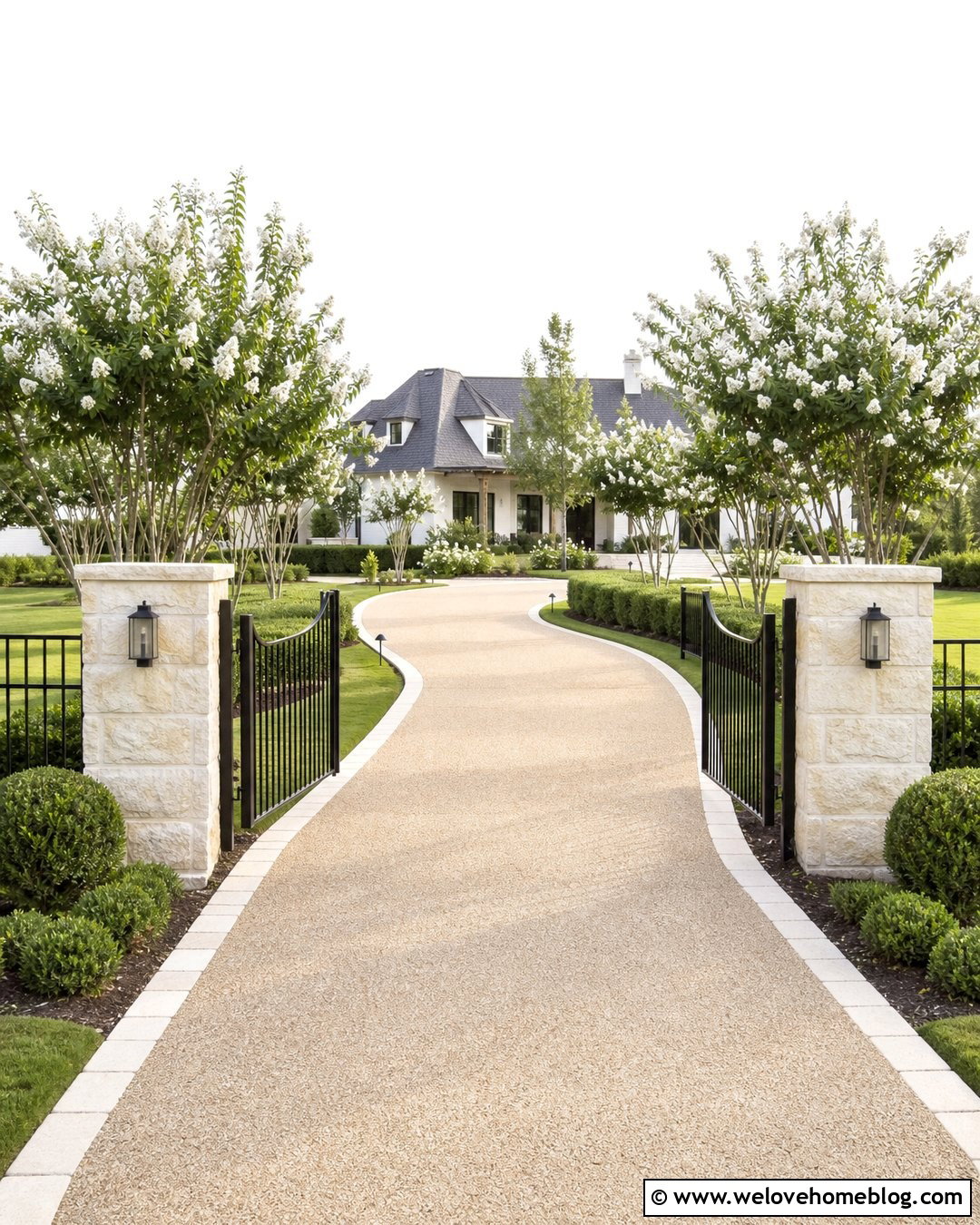
A black metal gate becomes more inviting when it opens into a bright corridor of crepe myrtle flowers. Choose a light tan resin-bound gravel driveway with a smooth, gently curved layout. Anchor the gate between limestone pillars, then repeat black metal details in small landscape lights or a nearby fence. White crepe myrtles provide a striking contrast and help the entrance feel open rather than heavy. Continue the matched tree rows beyond the gate toward the house, using low green shrubs and neatly cut lawn beneath them. The gate swing, underground utilities, and mature branches should all be considered before planting. This complete design pairs security with softness and works beautifully for country houses, Southern homes, and refined modern farmhouses.
16. Crepe Myrtle Driveway With Landscape Lighting
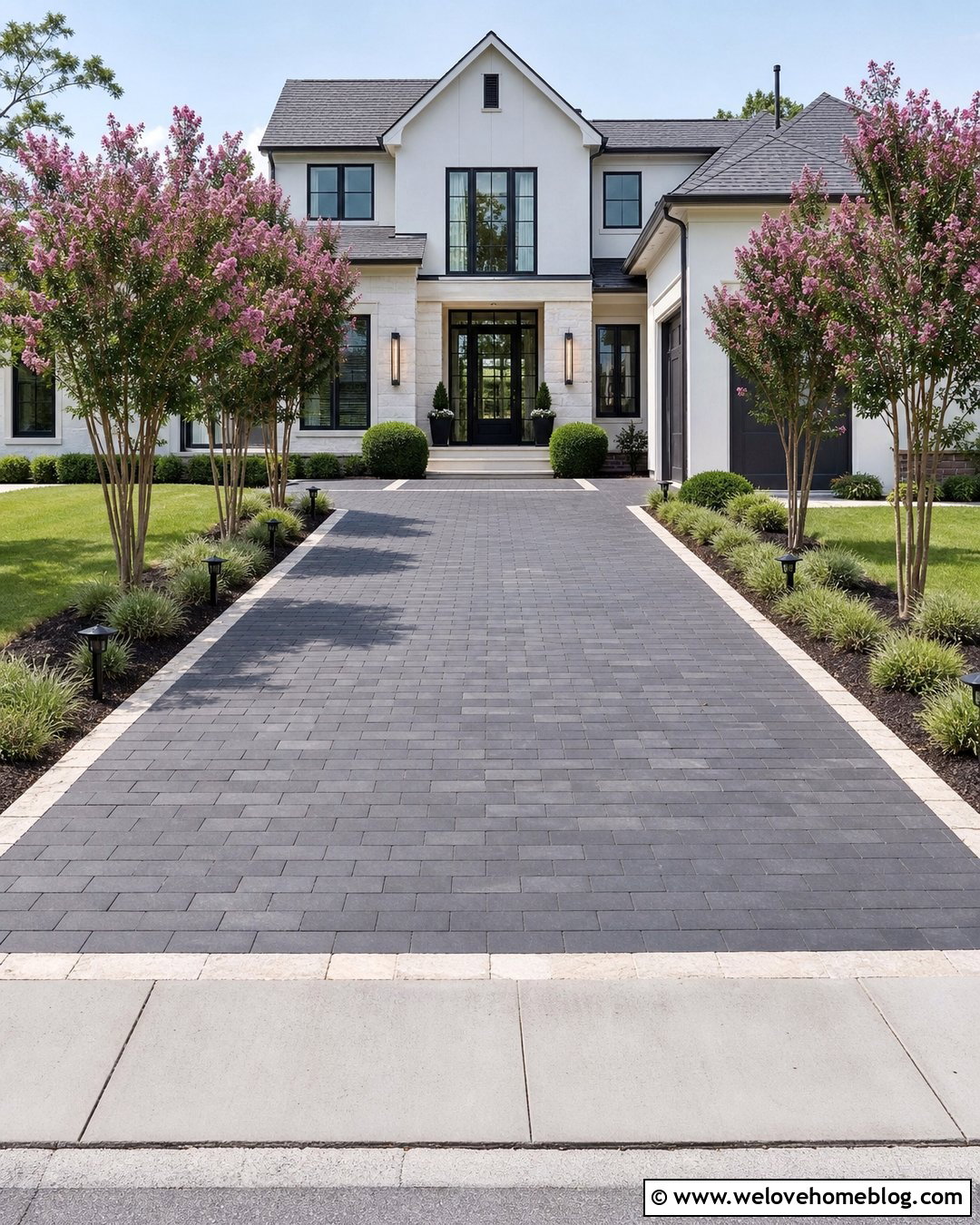
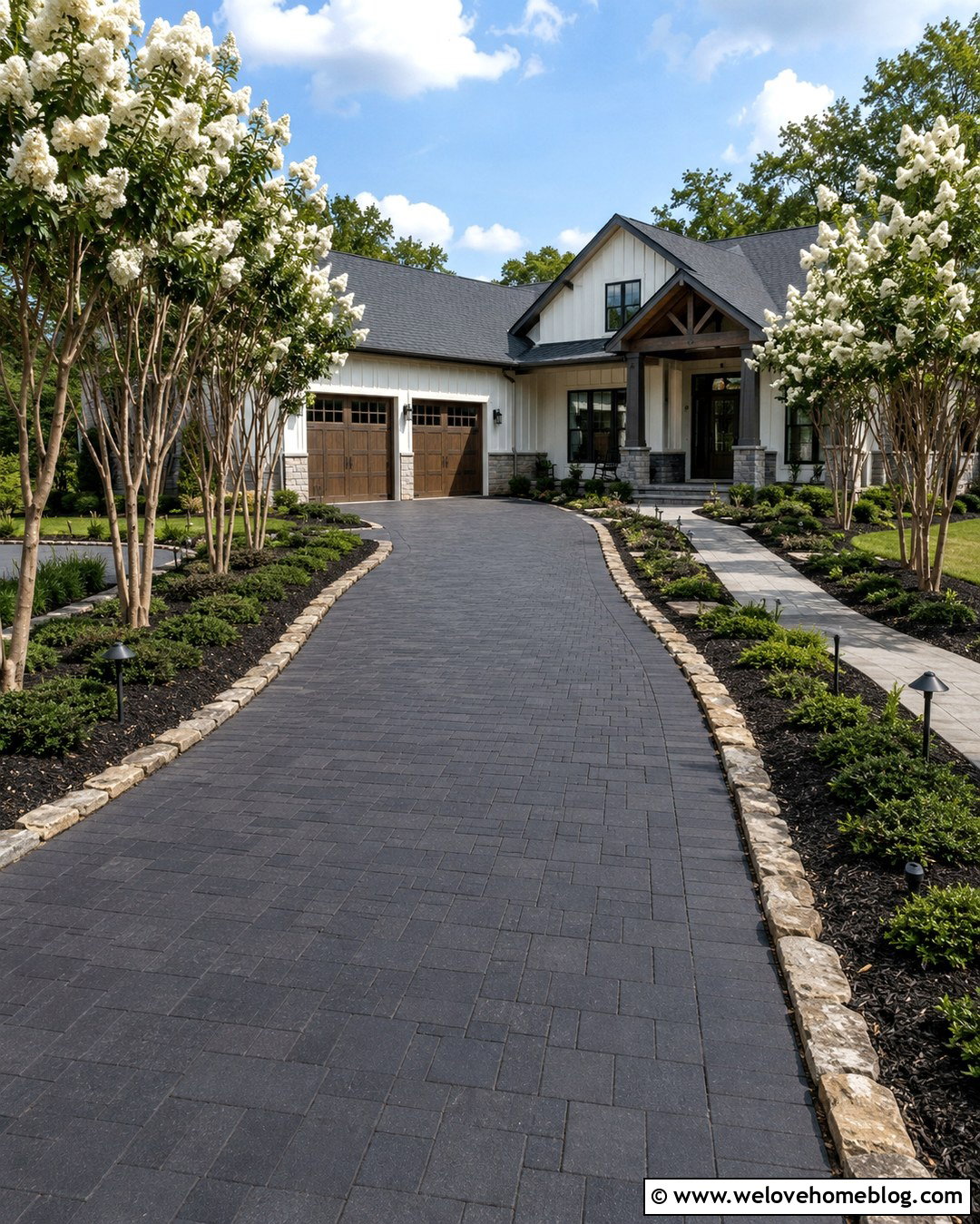
Thoughtfully positioned lighting can highlight crepe myrtle trunks while keeping the driveway attractive during the day. Start with charcoal concrete pavers arranged in a clean running bond pattern. Use a pale stone border to separate the surface from mulched beds containing pink crepe myrtles, dwarf grasses, and rounded evergreen shrubs. Place simple low-voltage fixtures near the tree bases, but set them where mowers, tires, and maintenance equipment will not damage them. Aim illumination upward through the trunks and canopies rather than directly toward drivers or neighboring windows. During daylight, the black fixtures should blend into the mulch. This complete arrangement suits modern, transitional, and contemporary homes where structured planting and restrained materials create a polished approach without unnecessary ornament.
17. Crepe Myrtle Driveway With Grass Strips
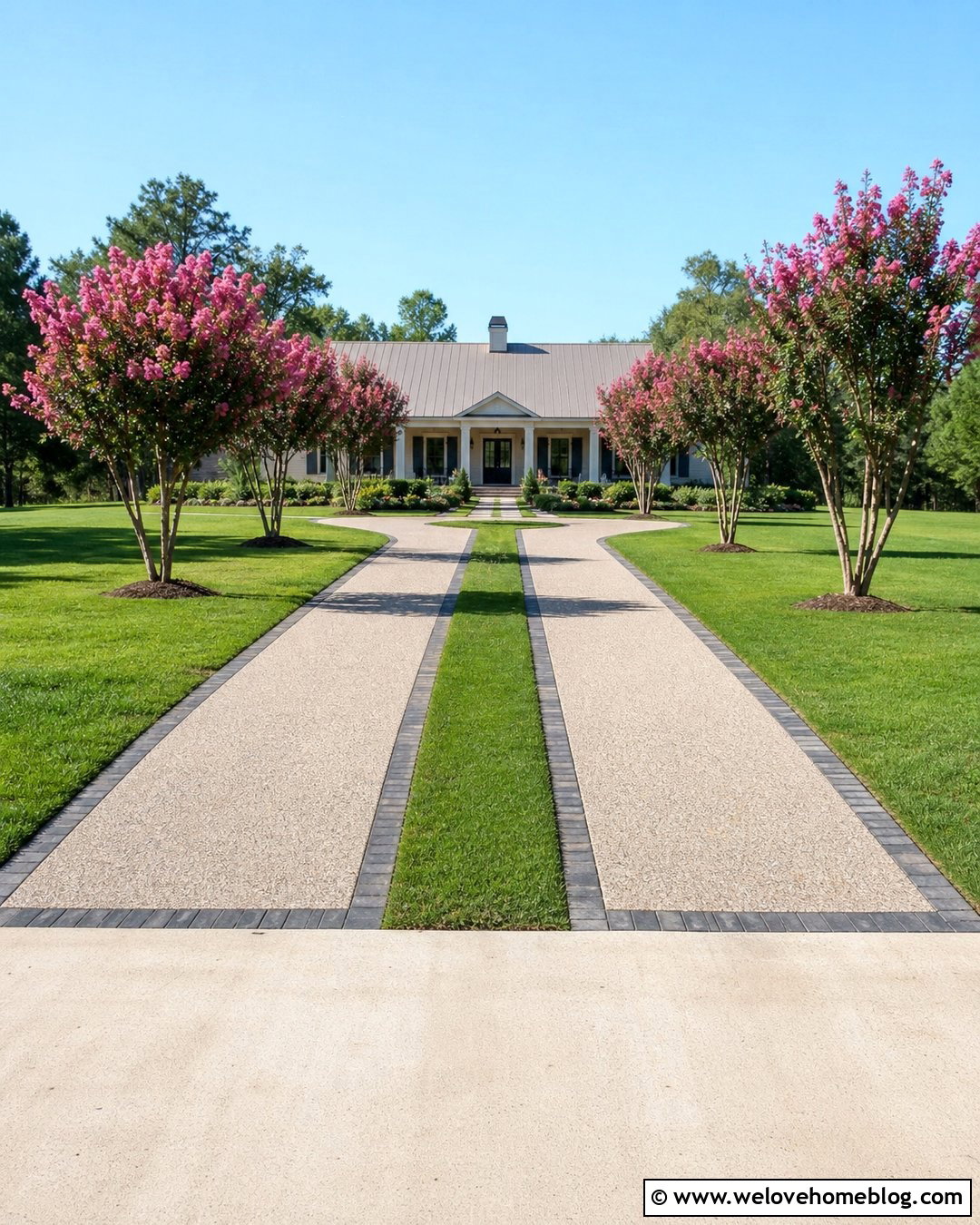
Grass strips can visually lighten a broad driveway and help it blend into an open front yard. Use two parallel lanes of exposed aggregate concrete with a maintained green strip running between them. Add narrow flush paver borders so wheels do not damage the lawn edges. Line the outer sides with evenly spaced pink crepe myrtles planted in generous turf panels rather than small mulch circles. A simple ground-level edge around each tree makes mowing easier while preserving the open appearance. This layout works best where the driveway is wide enough for safe vehicle movement and the center grass receives adequate sunlight. Paired with a low ranch, farmhouse, or country home, the repeated trees create structure without losing the property’s relaxed character.
18. Crepe Myrtle Driveway For Small Yards
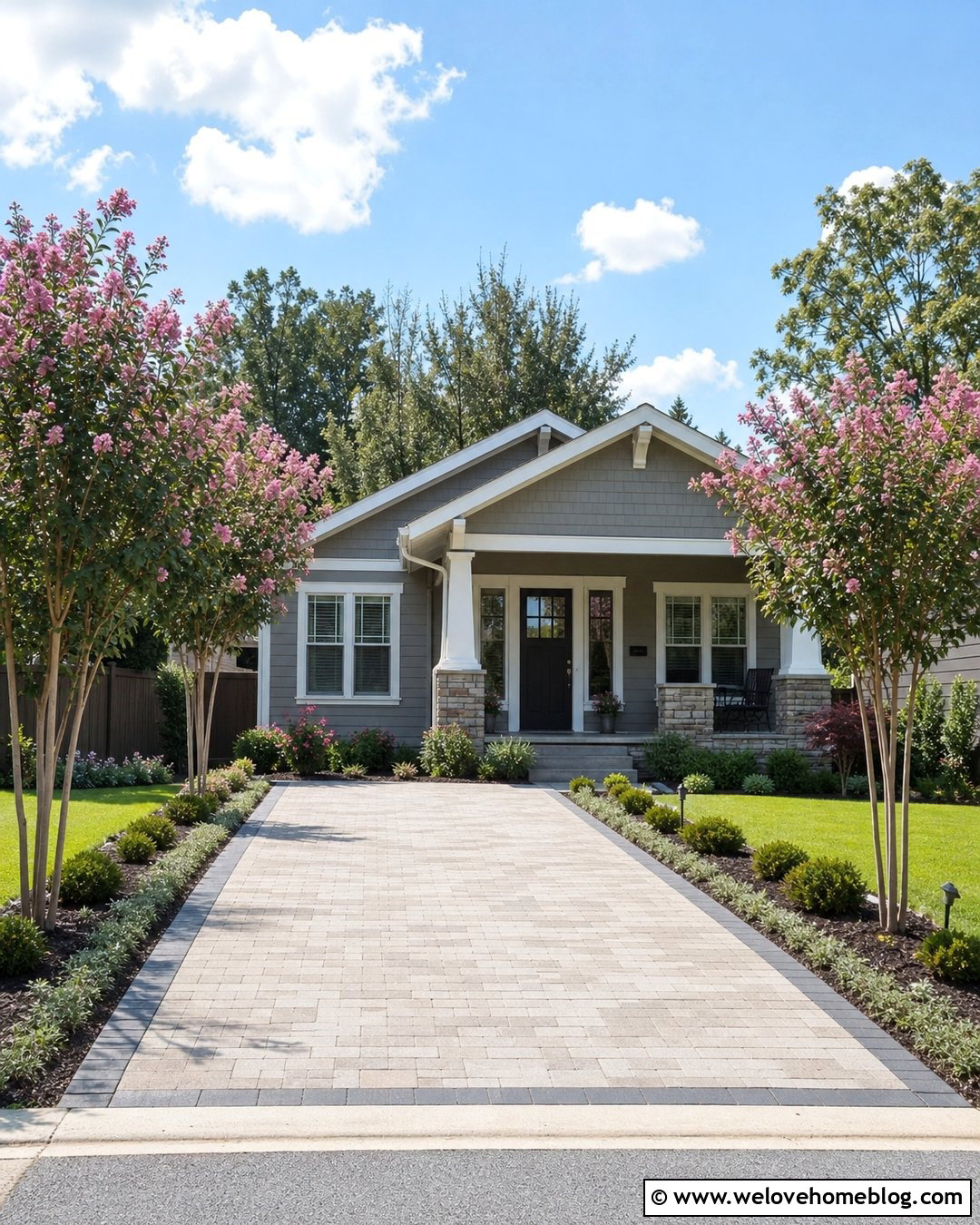
A compact front yard can still support a flowering driveway border when the tree scale is chosen carefully. Use a short, straight driveway made from pale interlocking concrete pavers, then add a slim charcoal border for definition. Select smaller or semi-dwarf crepe myrtles whose mature dimensions fit the planting strips rather than relying on heavy pruning to control oversized trees. Narrower cultivars can provide color and vertical form without overwhelming the garage, walkway, or neighboring property. () Underplant with low ground cover and small evergreen mounds instead of bulky shrubs. Leave the pavement edges open near the sidewalk for clear visibility. This scaled-down design suits bungalows, cottages, duplexes, and compact suburban houses while maintaining usable driveway space.
19. Crepe Myrtle Driveway For Modern Farmhouse Homes
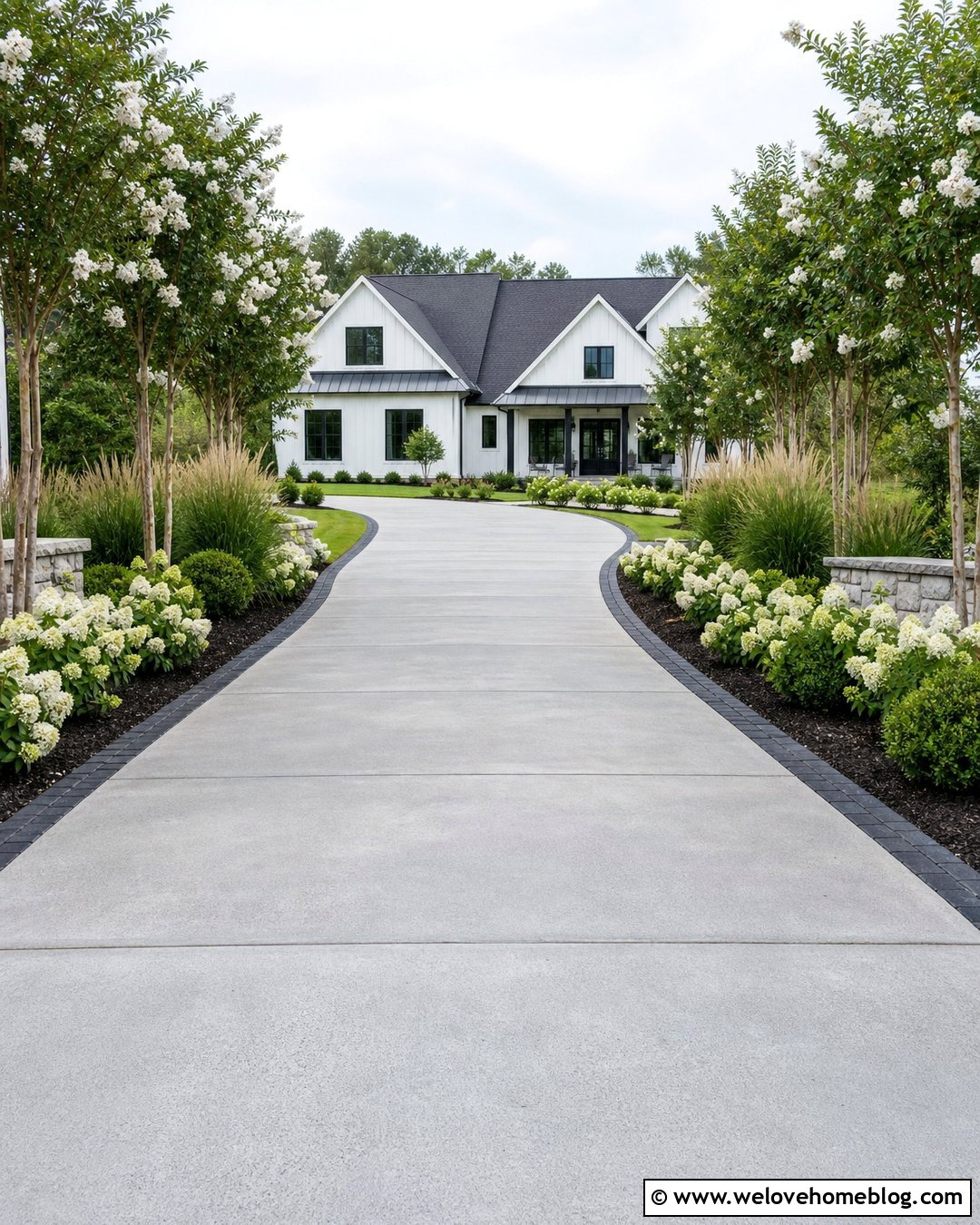
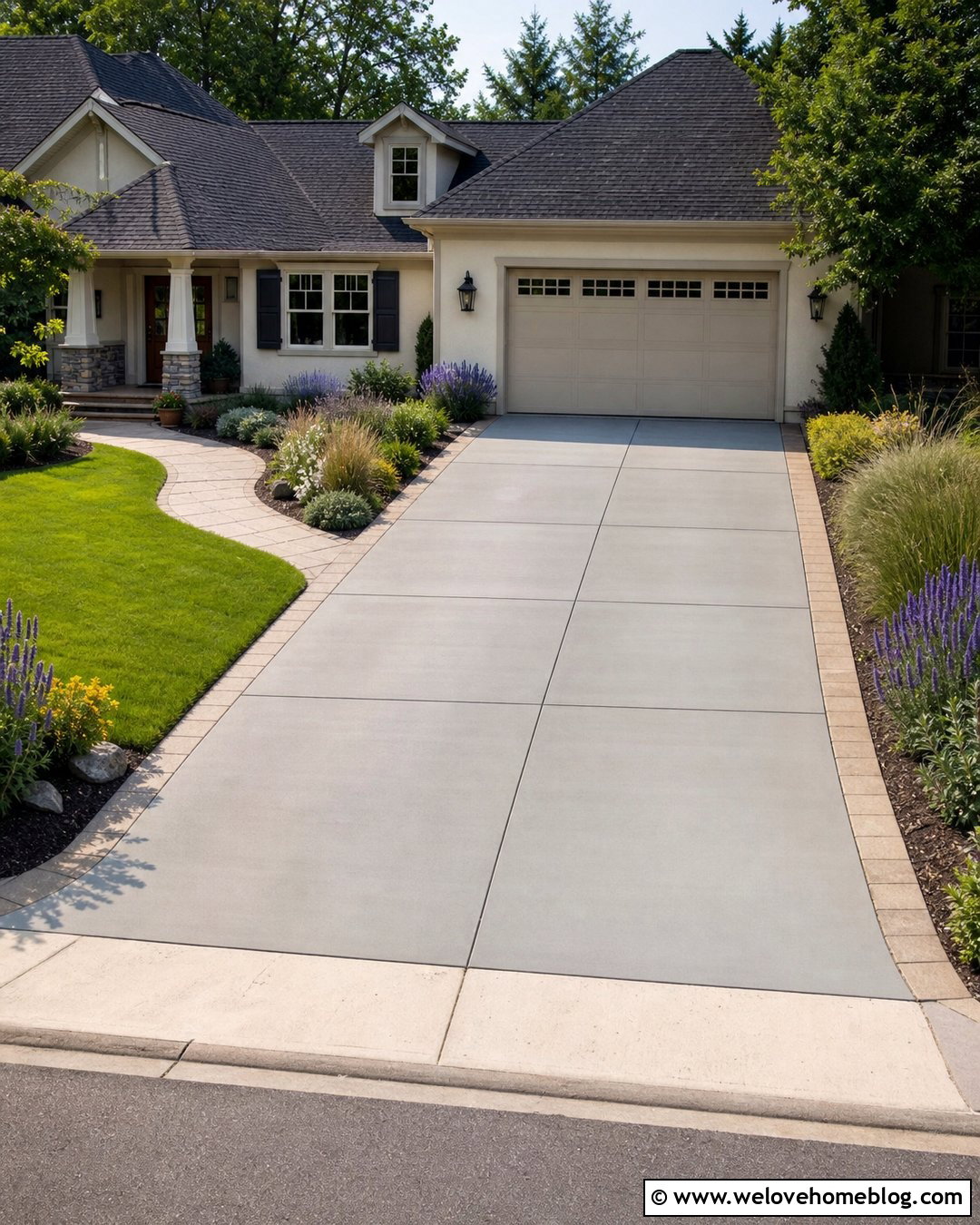
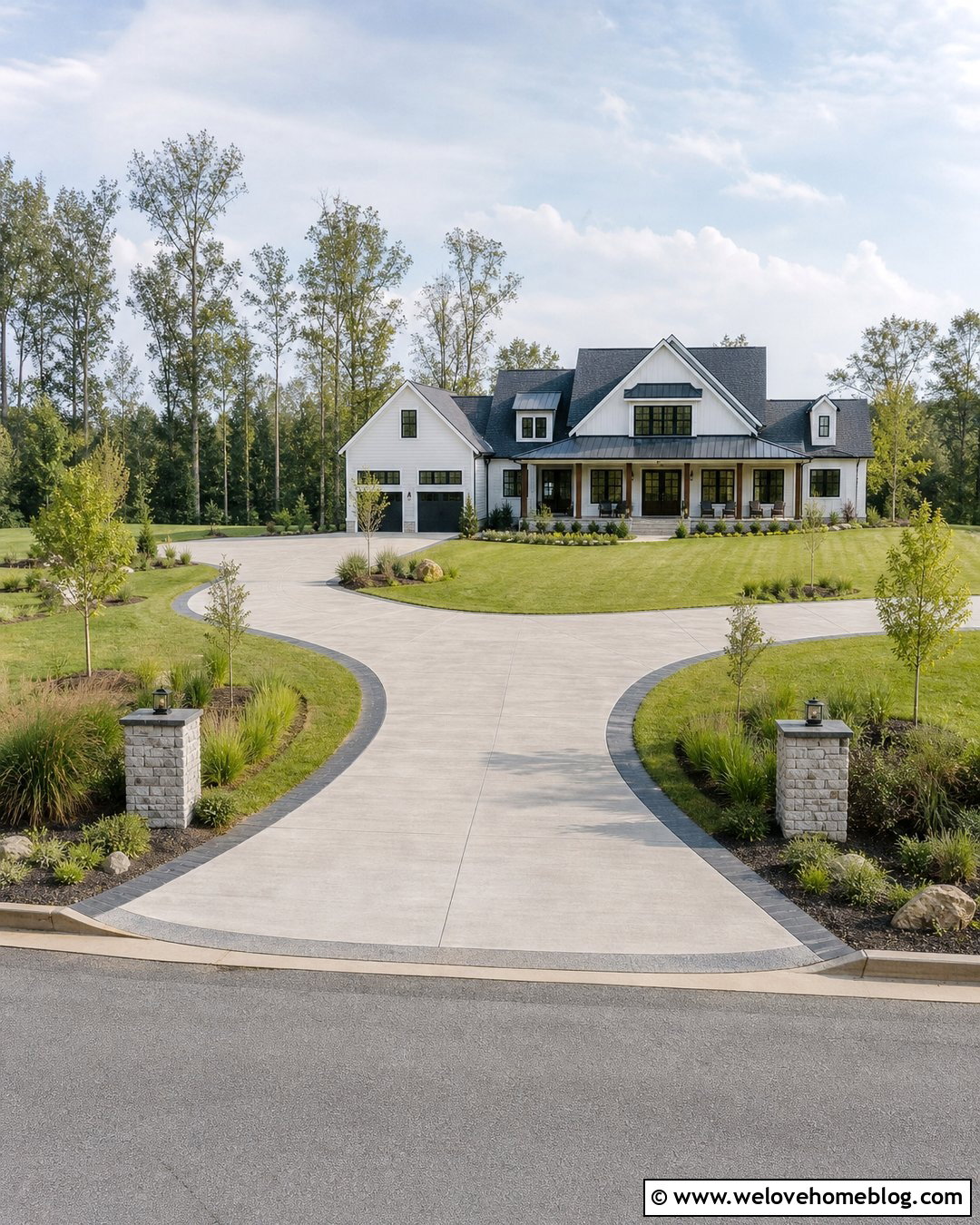
A modern farmhouse entrance looks complete when strong black-and-white architecture is balanced by soft flowering trees. Use medium gray poured concrete with regularly spaced saw-cut joints and narrow black brick borders. Plant white crepe myrtles in long beds along both sides, allowing the trunks to stand against dark mulch and deep green foliage. Repeat masses of ornamental grass, compact hydrangeas, and low evergreen shrubs beneath the canopy. Keep the driveway straight or introduce one broad curve near the house for a relaxed country feel. Black landscape lights can echo the windows, roof, and garage hardware. This coordinated approach prevents the trees from looking added afterward. Instead, paving, planting, and architecture read as one clean, welcoming farmhouse landscape.
20. Mixed Color Crepe Myrtle Driveway
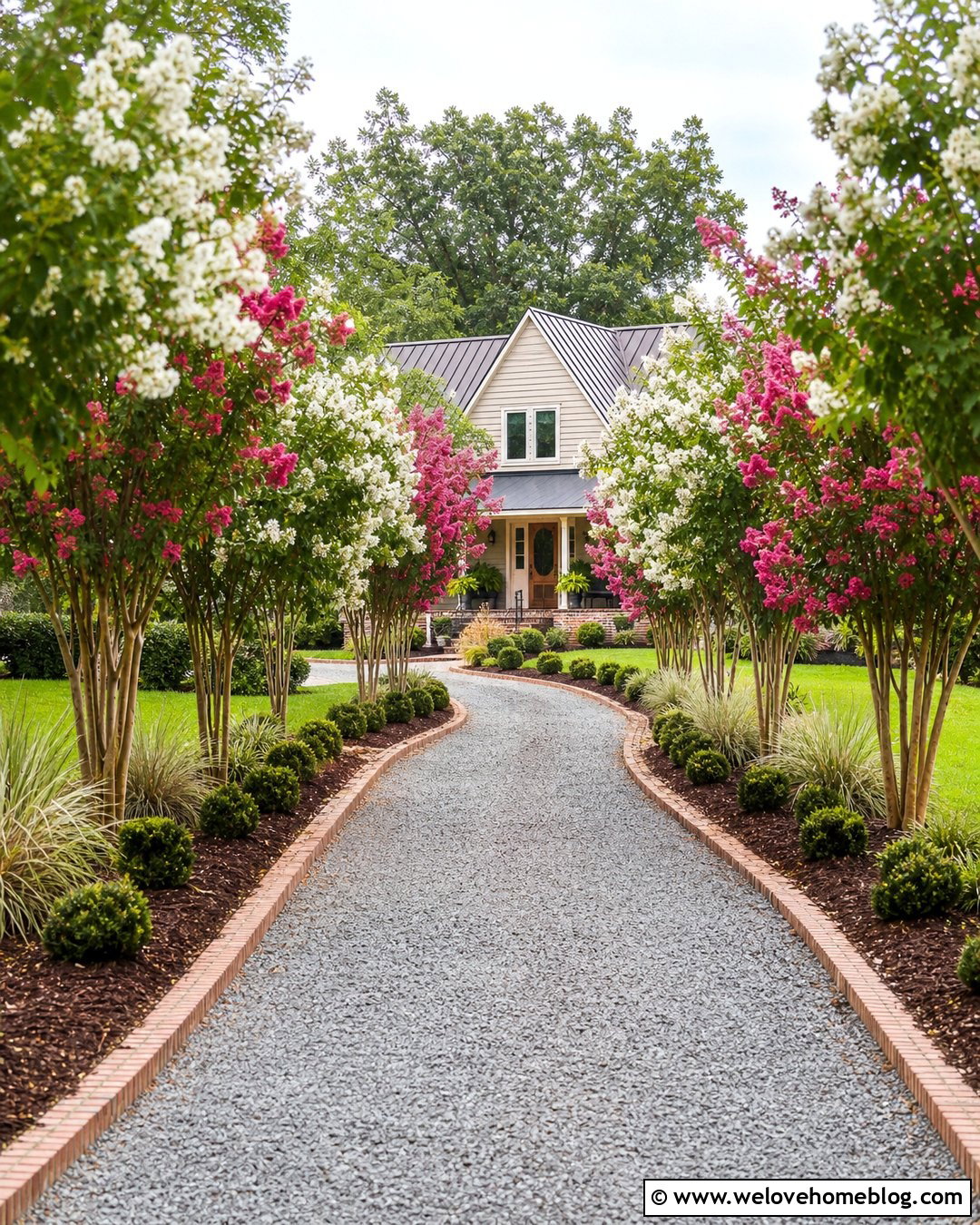
Multiple flower colors can work along a driveway when the arrangement follows a clear plan. Cover a long, curved drive with compacted gray gravel and contain it with warm clay brick edging. Use alternating pink and white crepe myrtles at consistent intervals, or group each color into separate sections rather than placing shades randomly. Repeating the same low shrubs, mulch, and ornamental grasses beneath every tree keeps the landscape connected. Choose cultivars with similar mature heights, forms, and growth rates so one color does not dominate the avenue. Matching varieties on directly opposite sides can also preserve visual balance. This cheerful, informal treatment complements eclectic cottages, country homes, and casual Southern properties where a single-color row might feel too rigid.
Conclusion:
The best crepe myrtle driveway combines beautiful seasonal color with practical planning. Select cultivars according to their mature height, canopy spread, growth habit, and local conditions. Then coordinate the trees with the driveway material, shape, edging, lower planting, and architecture. Consistent spacing creates a formal avenue, while curved rows and mixed borders produce a softer effect. Always preserve vehicle clearance, street visibility, drainage, and maintenance access. Avoid placing large cultivars in narrow strips or depending on severe annual pruning to keep them small. From gravel farmhouse approaches to structured paver entrances, these 20 crepe myrtle trees lining driveway ideas can create a welcoming landscape that feels intentional from curb to front door.

Related posts:
Leave a Reply