
A worn driveway can make the entire front yard feel neglected, but damage does not always require a complete tear-out. These 20 Fixing Concrete Driveway Ideas combine practical repairs with finished designs that improve drainage, durability, and curb appeal. The right approach depends on whether you are dealing with narrow cracks, spalling, settlement, stains, broken edges, or widespread structural movement. Minor defects can often be filled or resurfaced, while sinking or badly fractured slabs may need professional leveling or replacement. () Each solution below treats the driveway as a complete outdoor feature by considering its surface, shape, borders, landscaping, and connection to the house. Explore these complete 20 Fixing Concrete Driveway Ideas.

1. Concrete Driveway Hairline Crack Repair
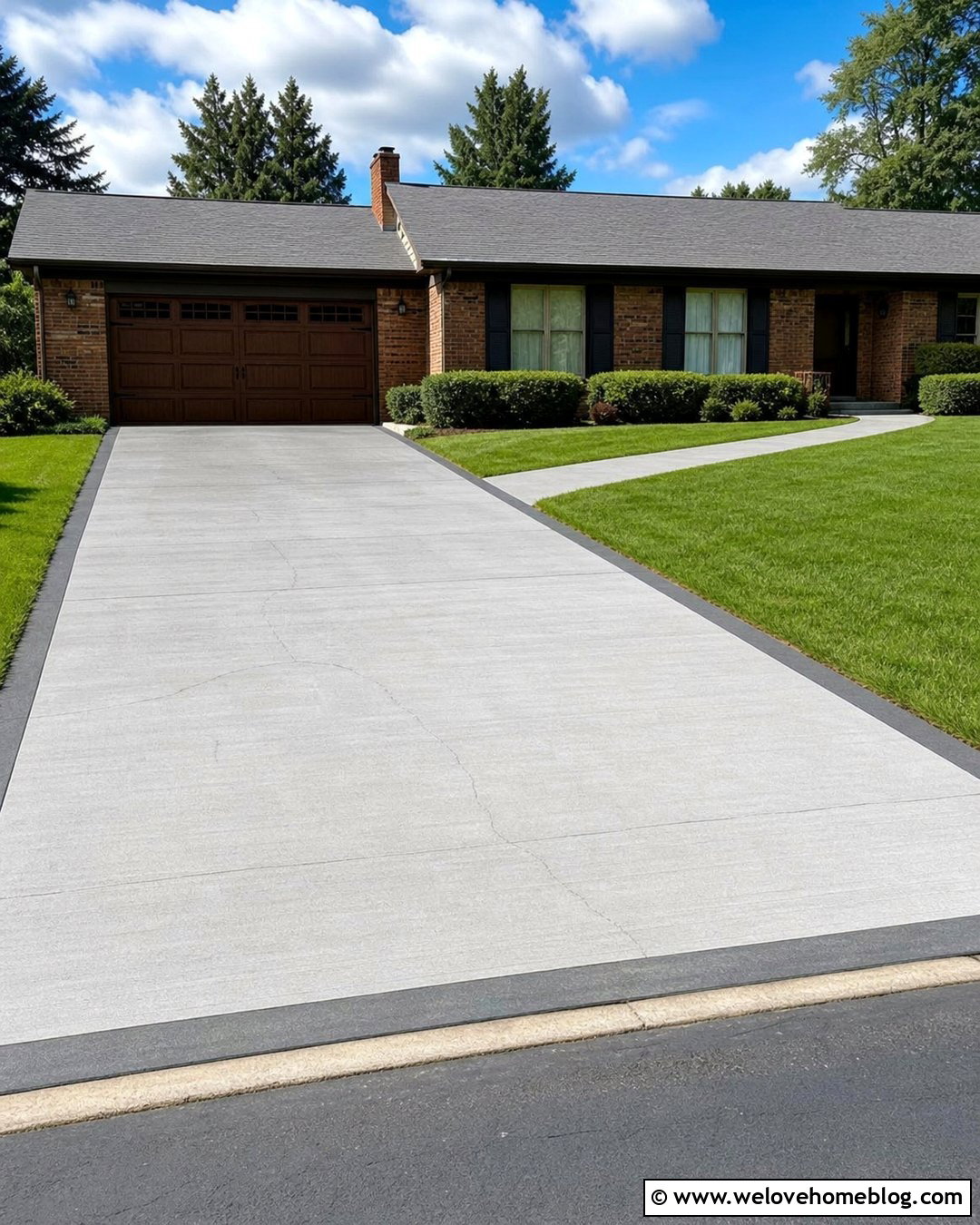
Thin cracks can disappear into a clean, updated driveway when the repair is planned as part of the whole surface. Start by cleaning loose dirt from the cracks, then use a compatible concrete crack filler according to the manufacturer’s directions. Hairline and other small cracks are generally better repair candidates when the surrounding slab remains stable and level. () After the filler cures, a light gray penetrating stain can help reduce obvious color differences. Keep the straight broom-finished driveway simple with charcoal concrete edging, trimmed lawn, and low evergreen shrubs. A matching concrete walkway can branch toward the front door. This understated layout suits a brick ranch house and prevents the repaired lines from becoming the main visual feature.
2. Concrete Driveway Wide Crack Repair
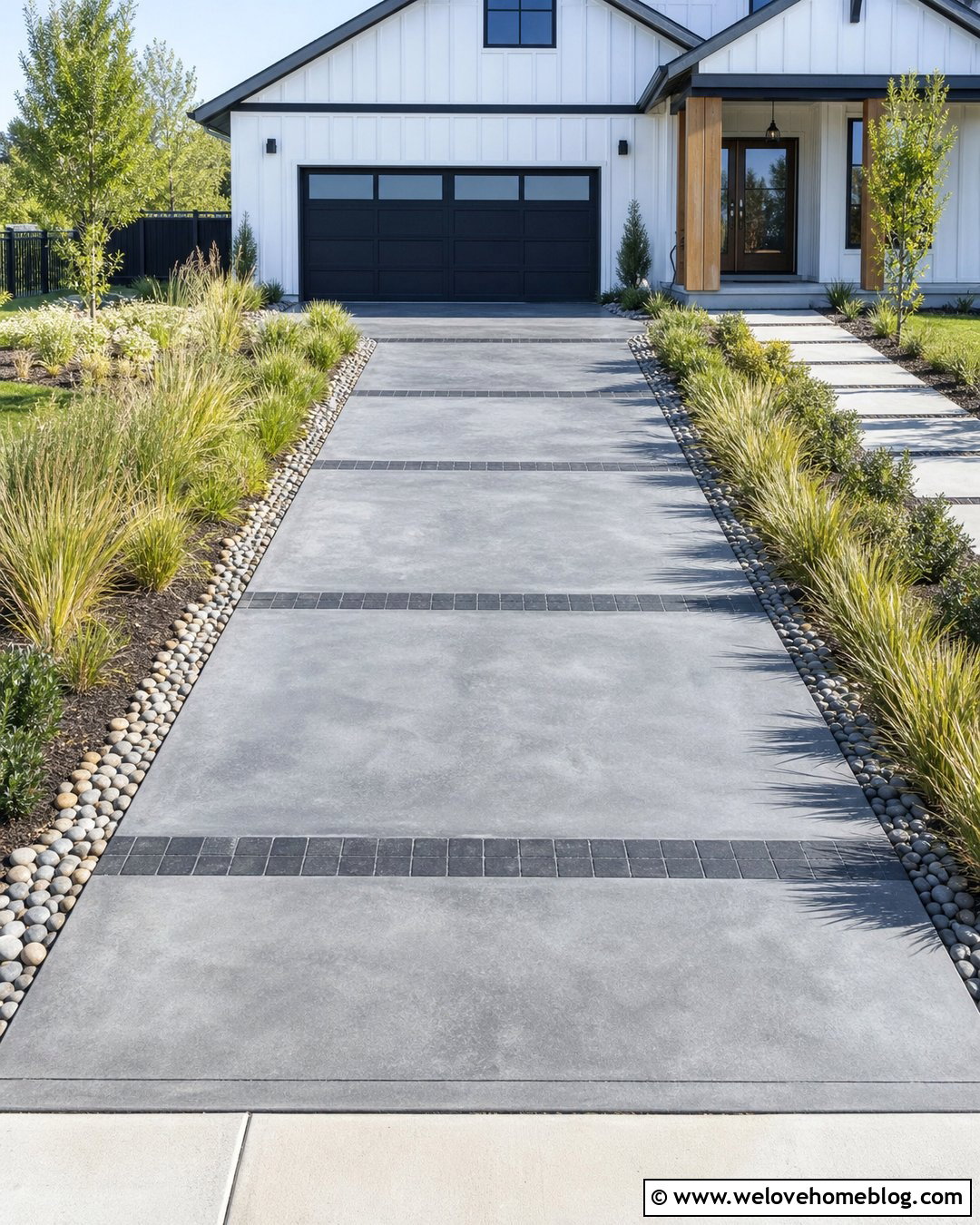
A wide crack needs more than a thin cosmetic coating, especially when water can collect inside it. Have the crack evaluated if its edges have shifted vertically or continue moving. On a stable slab, the opening may be cleaned, prepared, and filled with an appropriate flexible concrete joint or crack sealant. The repaired surface can then receive a medium-gray stain that visually connects the old slab and new material. Add dark concrete paver ribbons across the driveway at balanced intervals, positioning one near the repair where practical. These decorative bands make the finished layout look intentional. Frame the straight driveway with river-rock drainage beds, ornamental grasses, and a paved walkway leading to a modern farmhouse. The strong horizontal details draw attention away from the repaired area.
3. Concrete Driveway Chipped Edge Repair
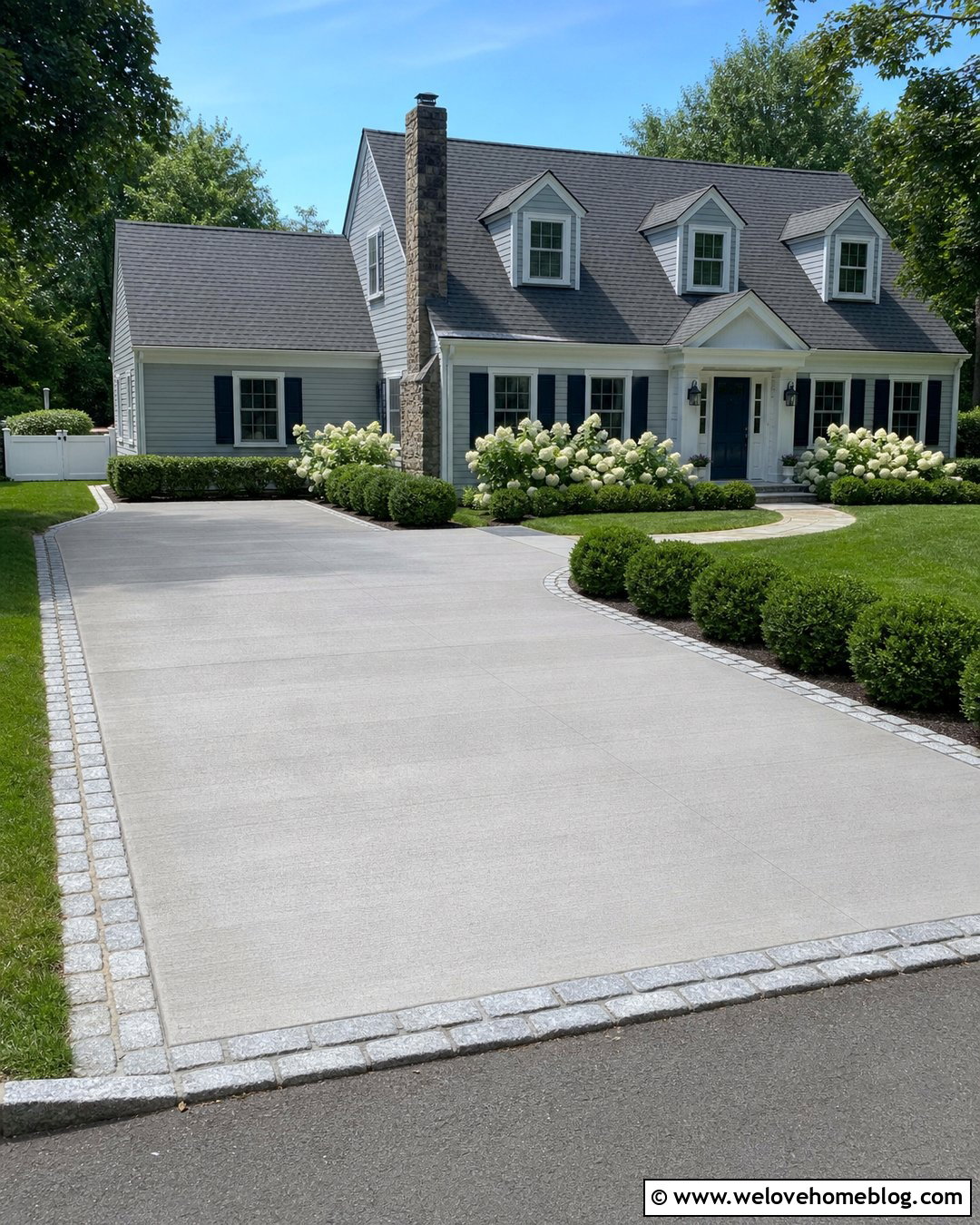
Crumbling edges often develop where vehicle tires repeatedly pass close to unsupported concrete. Remove loose material before rebuilding a stable edge with a suitable concrete repair product and properly formed sides. Repairs should restore the driveway’s usable shape instead of leaving a fragile, feather-thin patch. Once cured, install a flush cobblestone border beside the repaired gray broom-finished concrete. The stone helps define the driving area and discourages tires from slipping onto soft soil. A straight driveway with gently widened parking space works well for a Cape Cod home. Add compact boxwoods, white flowering shrubs, lawn, and a walkway behind the border. This complete treatment makes the repair less visible while giving the driveway stronger visual boundaries and a polished connection to the yard.
4. Concrete Driveway Spalling Repair
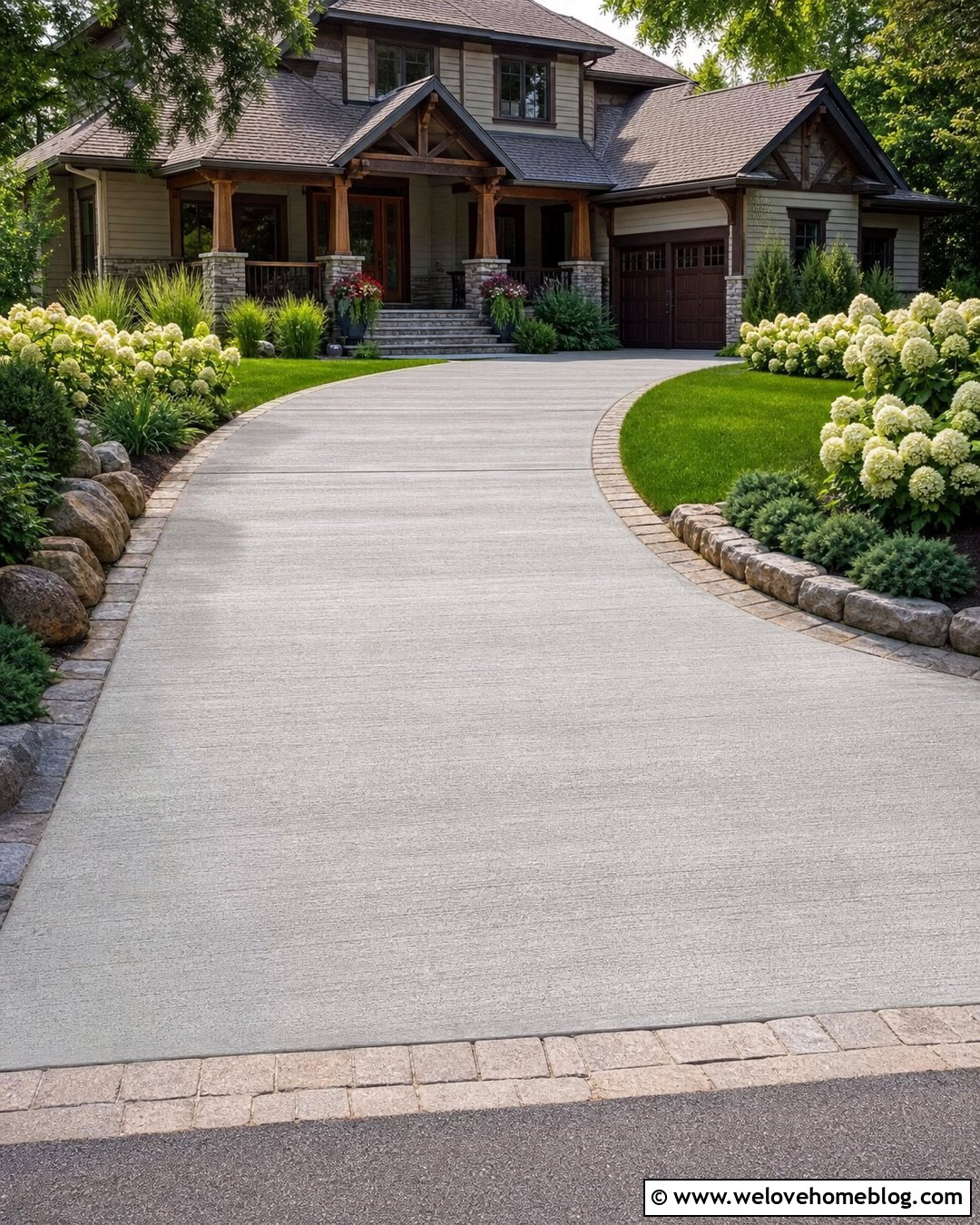
Does the driveway look rough, flaky, or covered with shallow depressions? Surface spalling may be a candidate for professional preparation and resurfacing when the slab below remains structurally sound. A bonded cement-based overlay can cover widespread cosmetic damage and create a more consistent finish, but unstable or severely moving concrete must be corrected first. () Choose a light-gray broom texture for traction and a clean suburban appearance. Give the driveway a gentle curve toward a craftsman house, then frame it with tan stone edging. Layered beds of dwarf evergreens, hydrangeas, and decorative grasses can follow the same curve. A warm paver walkway at the garage transition introduces contrast. The repaired surface, curved border, and planting design work together instead of making the overlay look like an isolated cover-up.
5. Concrete Driveway Scaling Repair
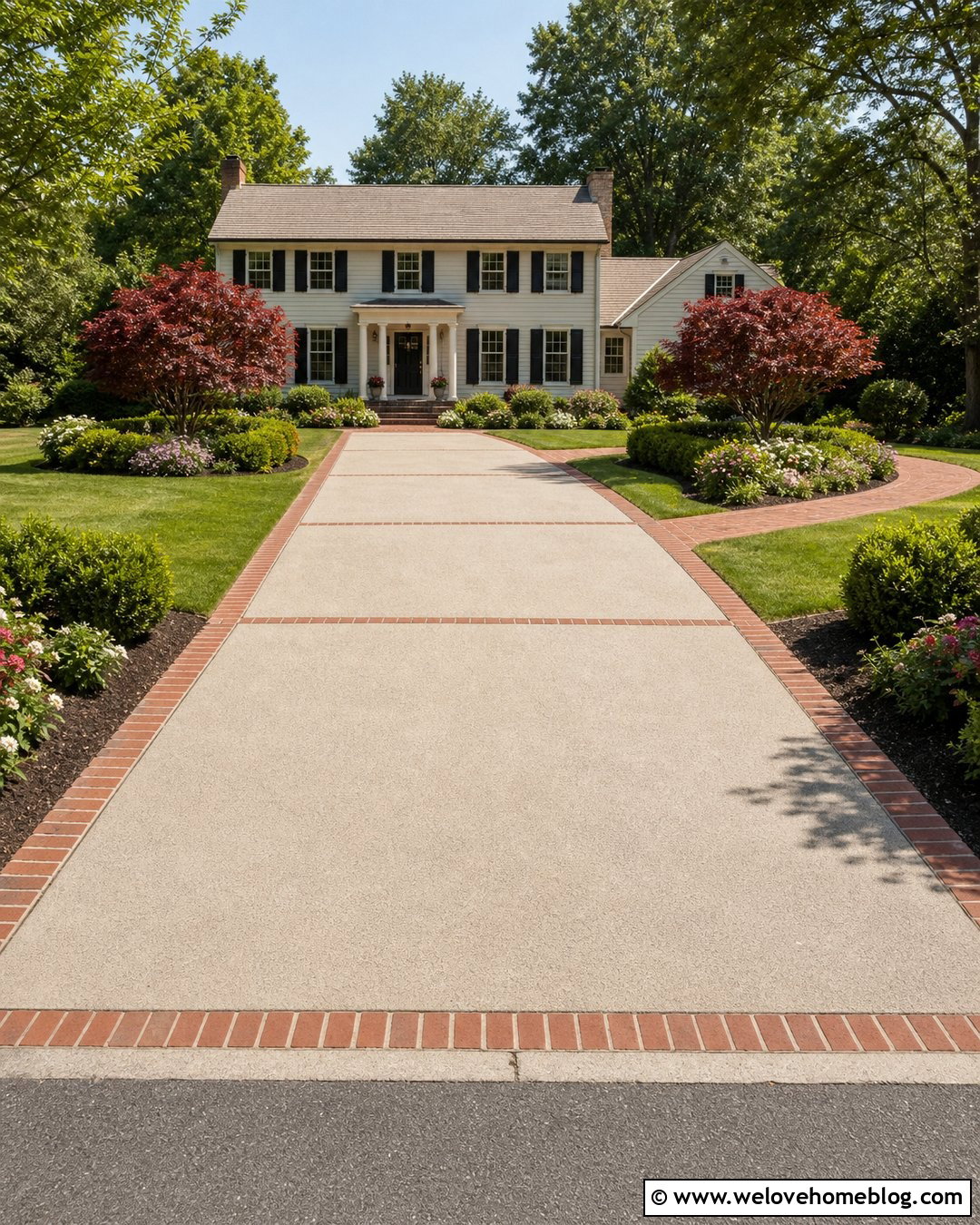
Scaling leaves the top of concrete patchy and worn, often making an otherwise level driveway appear older than it is. Begin with an assessment of the slab and remove weak surface material before applying any compatible resurfacing system. A thin concrete overlay with a uniform sand finish can restore a cohesive appearance when deterioration is limited to the surface. Choose a soft greige tone that complements a traditional colonial facade. A broad straight layout can be divided with narrow clay-brick ribbons near the sidewalk and garage. Continue the warm color through brick edging, a curved front walkway, and neatly shaped planting beds. Red maples, low boxwoods, and seasonal flowers create structure without crowding the driveway. The result feels like a coordinated exterior update rather than a basic scaled-concrete repair.
6. Concrete Driveway Pitting Repair
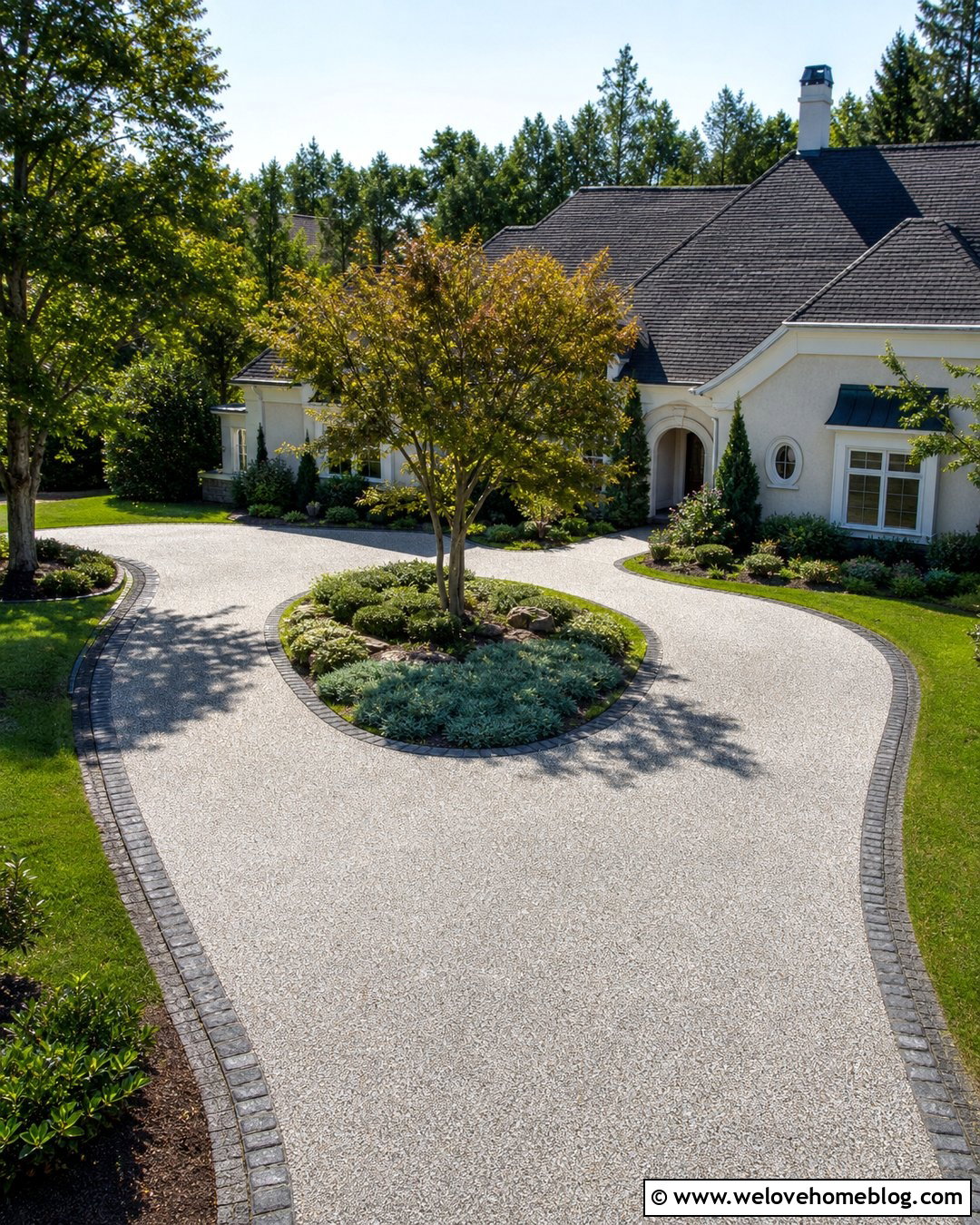
Small pits can trap dirt and water, creating a speckled surface that is difficult to keep clean. If the damage is shallow and the base is stable, clean and prepare the concrete before adding a resurfacing layer designed for vehicle traffic. An exposed-aggregate concrete overlay can disguise minor surface variation while creating a deliberately textured finish. Use a blend of pale gray, cream, and charcoal aggregate on a wide horseshoe driveway. Dark granite setts can form the outer border and highlight both entrances. In the center island, plant a small ornamental tree with low shrubs and groundcover that will not block sightlines. A cream stucco house provides a warm background. The textured concrete, stone edge, and central landscaping turn a pitted driveway into a distinctive arrival area.
7. Sunken Concrete Driveway Leveling
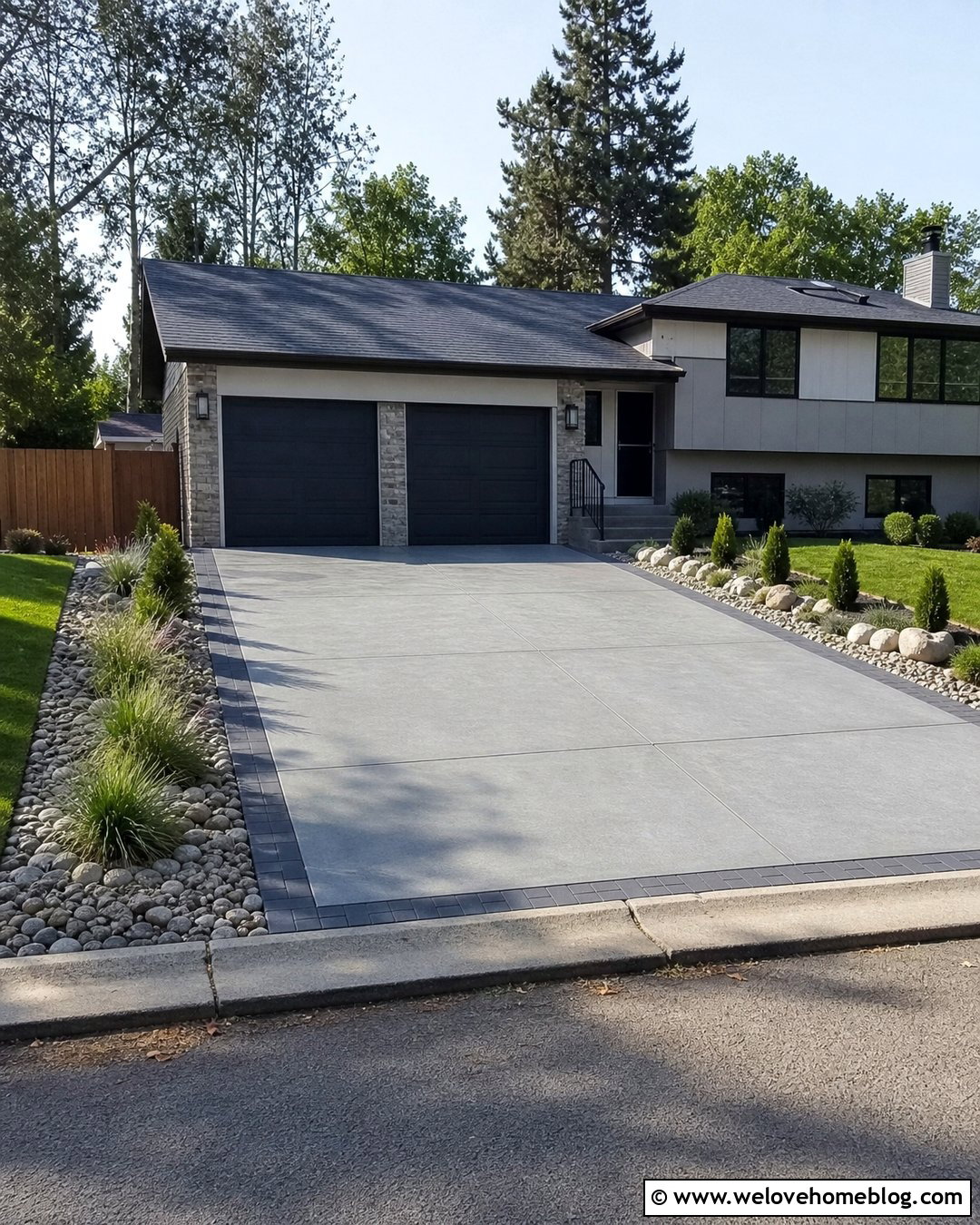
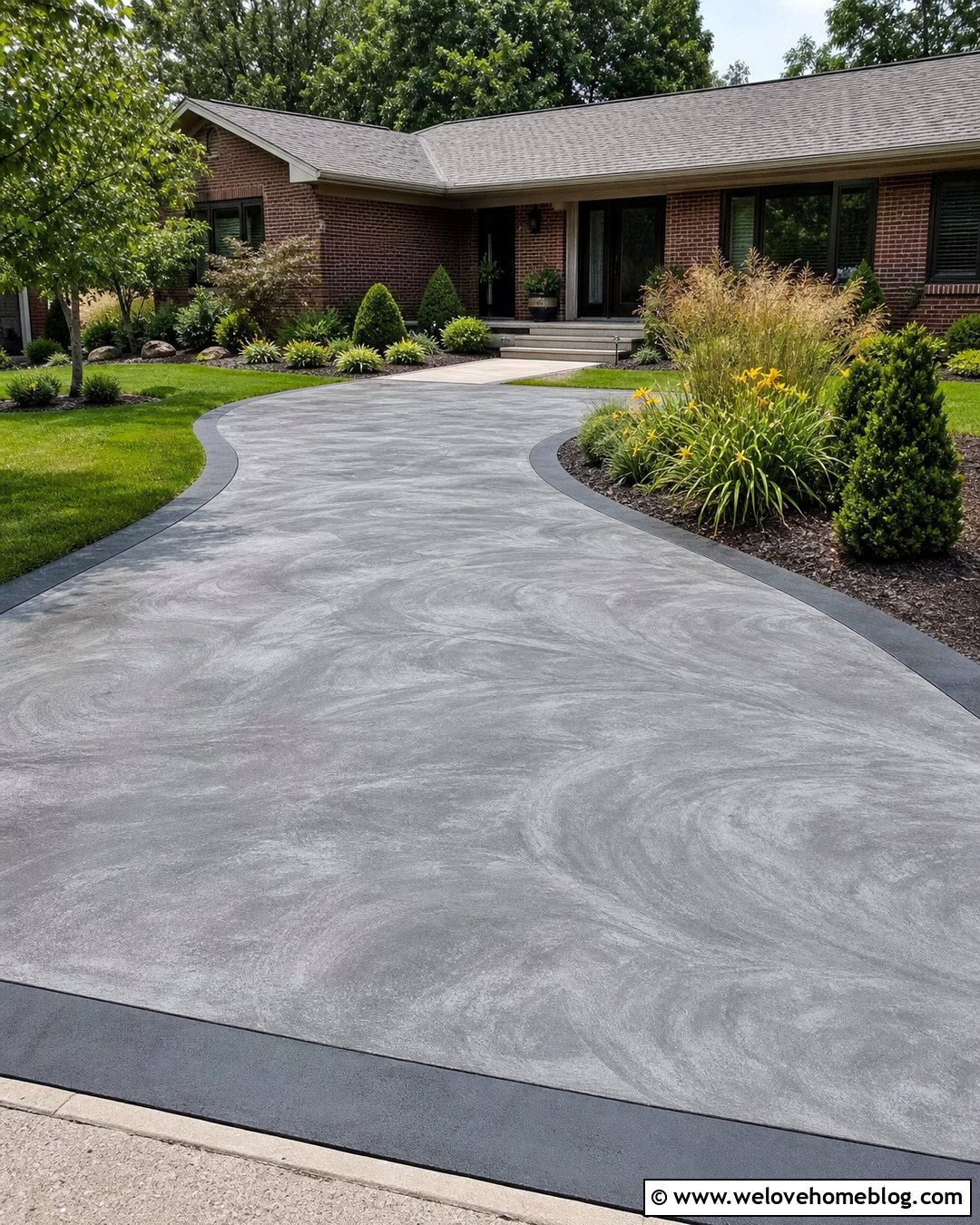
A settled slab can create puddles, uneven joints, and an uncomfortable transition into the garage. Because sinking often involves voids or weak material below the concrete, ask a qualified contractor whether slabjacking, polyurethane foam lifting, partial replacement, or drainage correction is appropriate. Lifting may preserve usable concrete without replacing the entire driveway. () After leveling, seal the repaired joints and unify the surface with a natural-gray concrete stain. A straight driveway leading to a split-level home can feature dark soldier-course concrete pavers along both sides. Add shallow swales filled with river stone, sedges, and compact shrubs to guide runoff away from the slab. Keep the lawn slightly below the concrete edge. This design addresses the likely conditions around settlement while giving the leveled driveway crisp, attractive boundaries.
8. Uneven Concrete Driveway Joint Repair
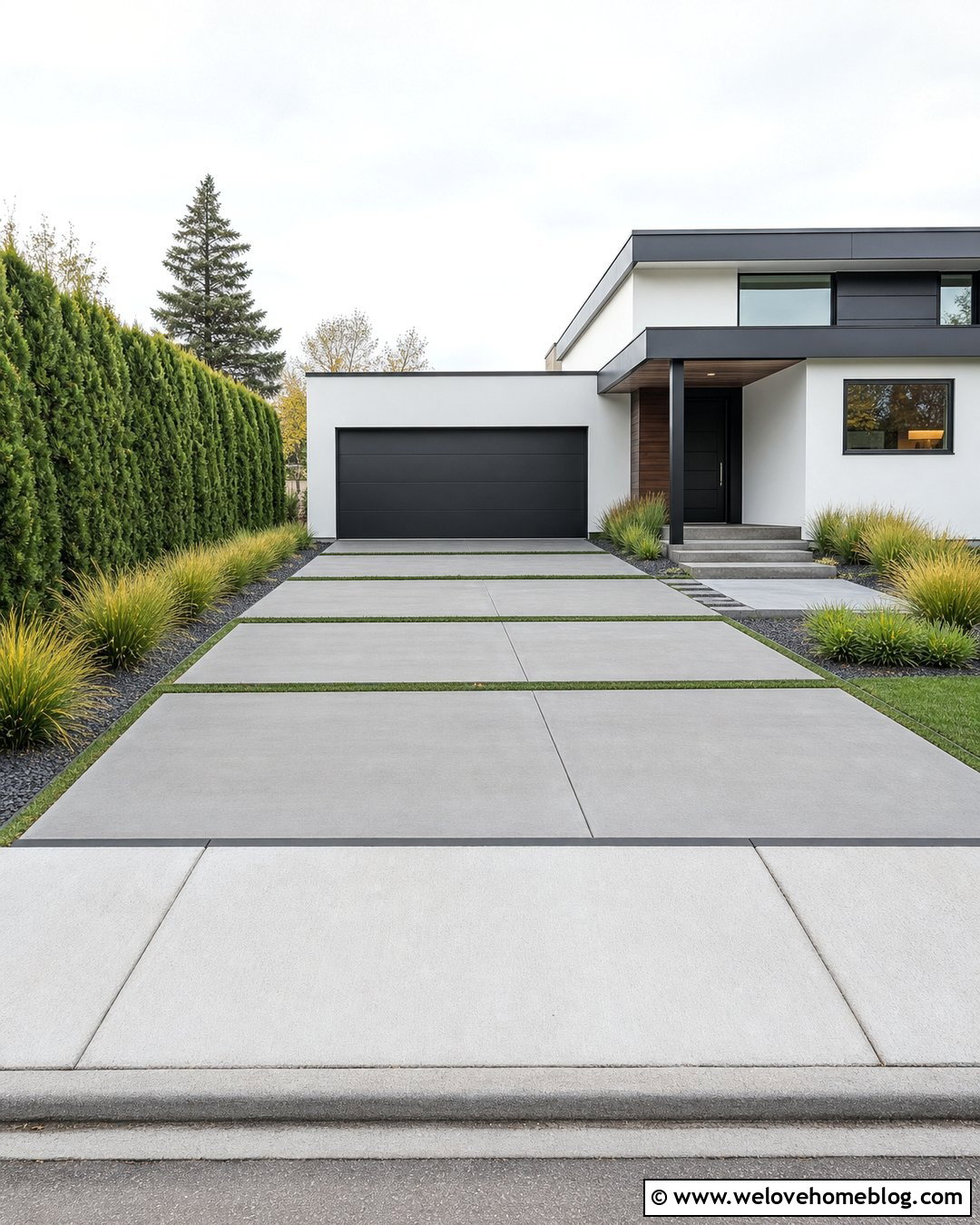
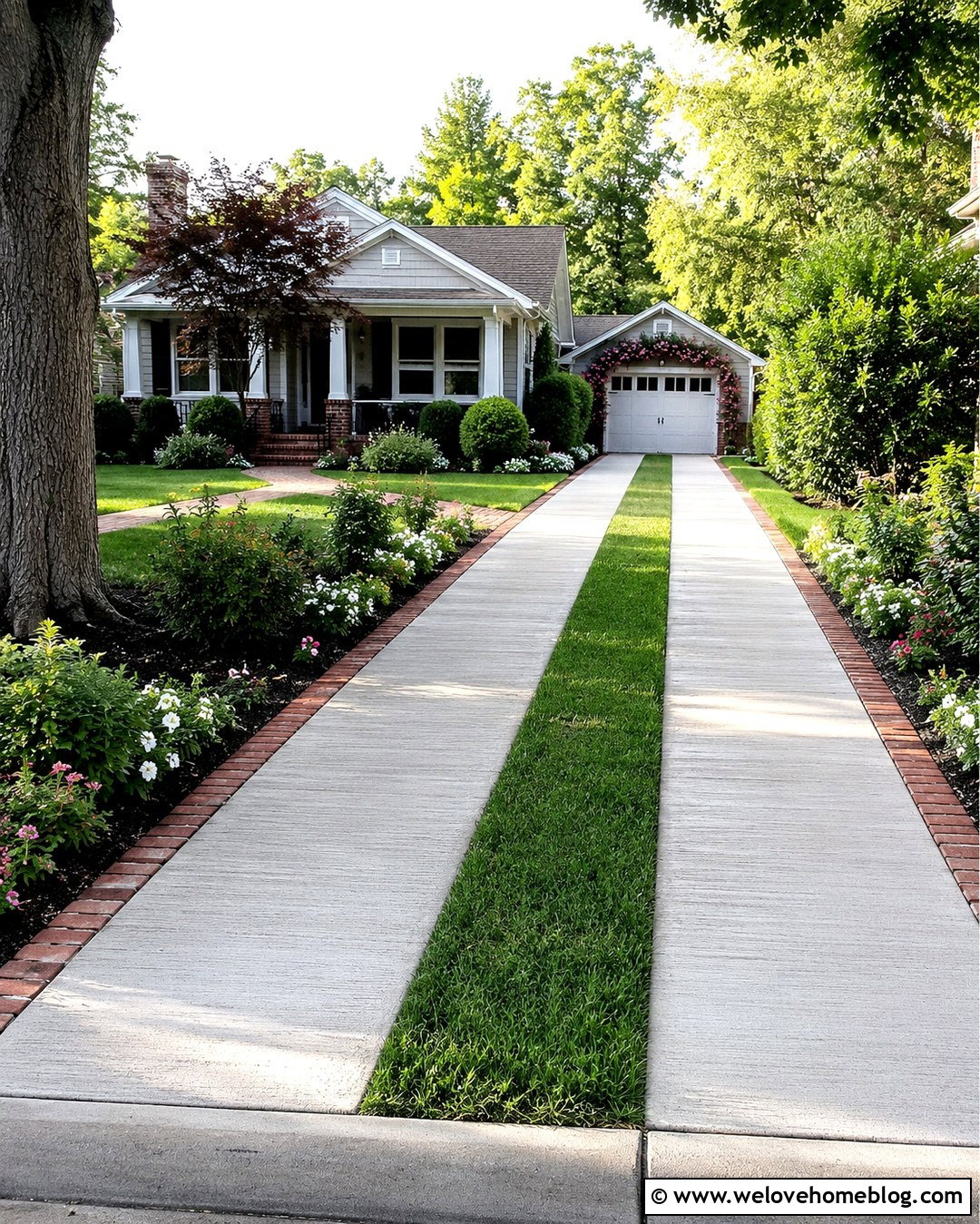
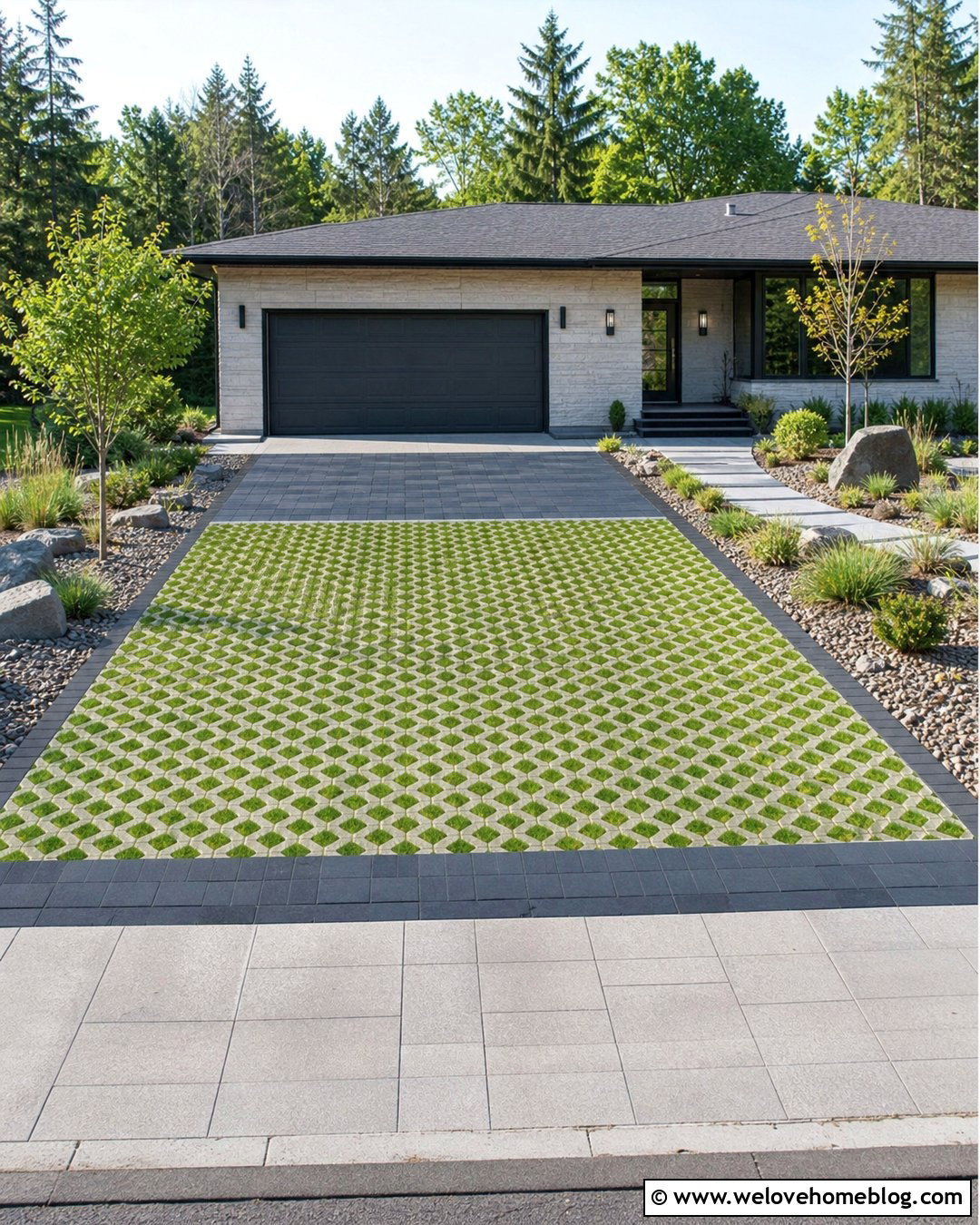
One raised slab edge can become a noticeable bump and a potential tripping point near the sidewalk or garage. The correct repair depends on the amount of movement and its cause. Professional grinding may help with a modest height difference, while lifting, stabilization, or panel replacement may be needed for larger displacement. Once the slabs align, clean and reseal the joint with an appropriate flexible product. Give the restored broom-finished concrete driveway a contemporary look with narrow grass strips set between selected concrete panels. Black metal edging keeps the strips neat without narrowing the driving path. Use a rectangular layout, clipped grasses, low hedges, and a large-format concrete walkway beside a modern home. Repeating lines across the driveway make the repaired joint feel like part of the organized grid.
9. Concrete Driveway Partial Slab Replacement
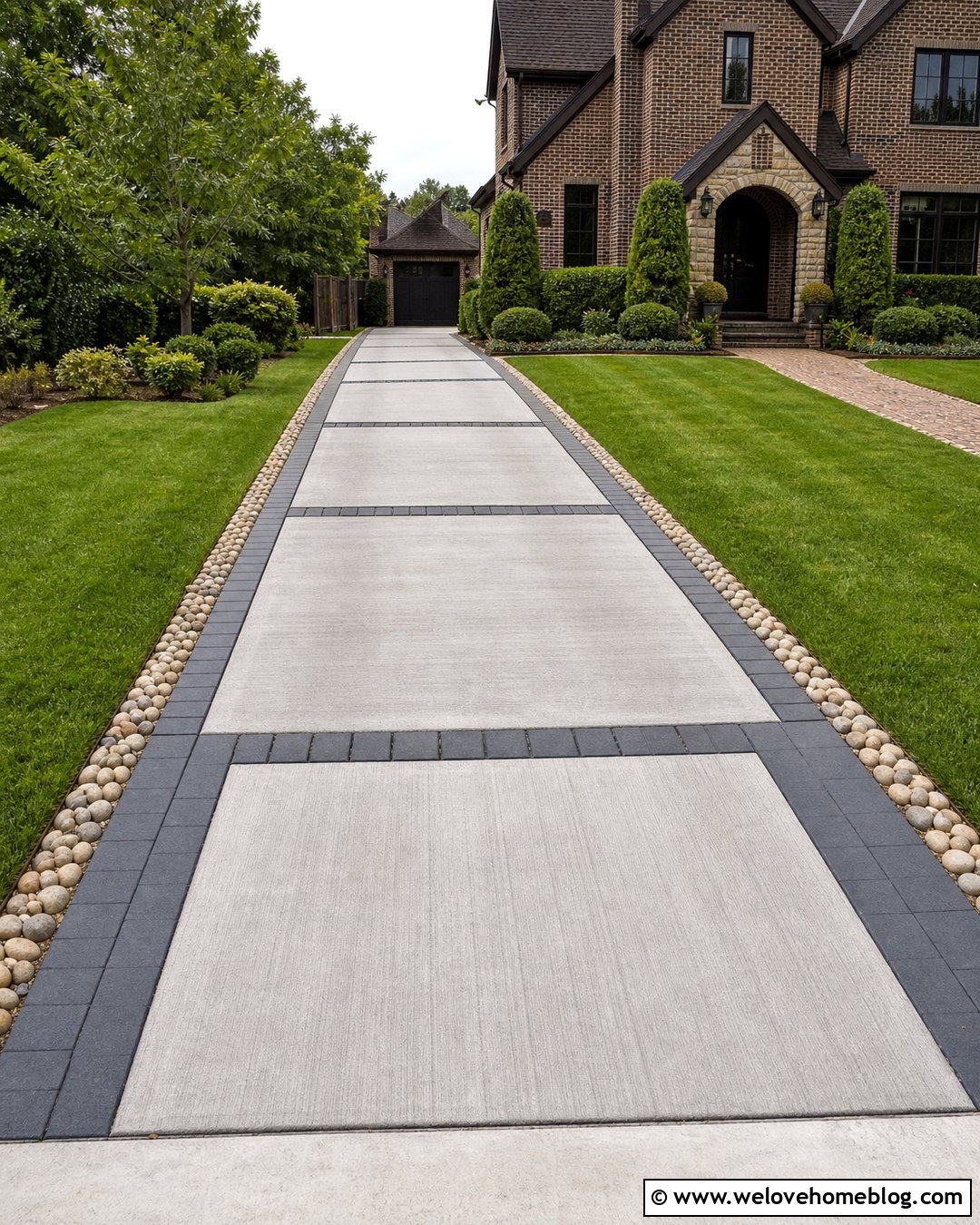
When one panel is badly cracked but neighboring slabs remain strong, partial replacement can be more sensible than covering the entire driveway. A contractor can remove the failed section, inspect the base, correct local drainage or soil issues, and pour a properly supported replacement panel. The new concrete may not match aged concrete immediately, so turn the transition into a deliberate design feature. Border the replacement with narrow charcoal concrete paver bands that continue across the full driveway width. Use medium-gray broom-finished concrete throughout the visible design. A wide driveway leading to a two-story brick house can include stone edging, symmetrical lawn panels, clipped shrubs, and a brick walkway. The repeated bands visually connect old and new sections while adding structure to a straightforward suburban entrance.
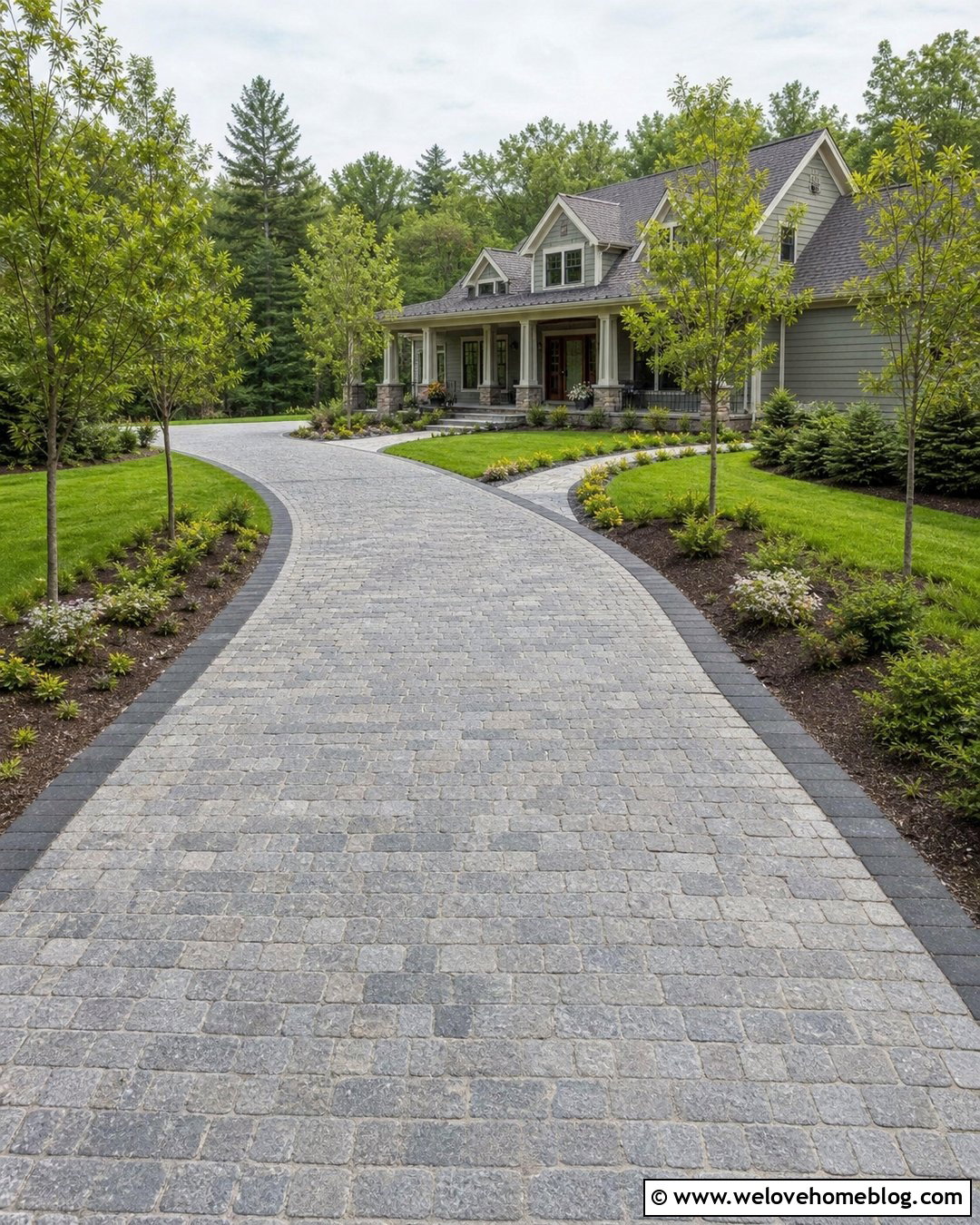
10. Concrete Driveway Control Joint Repair
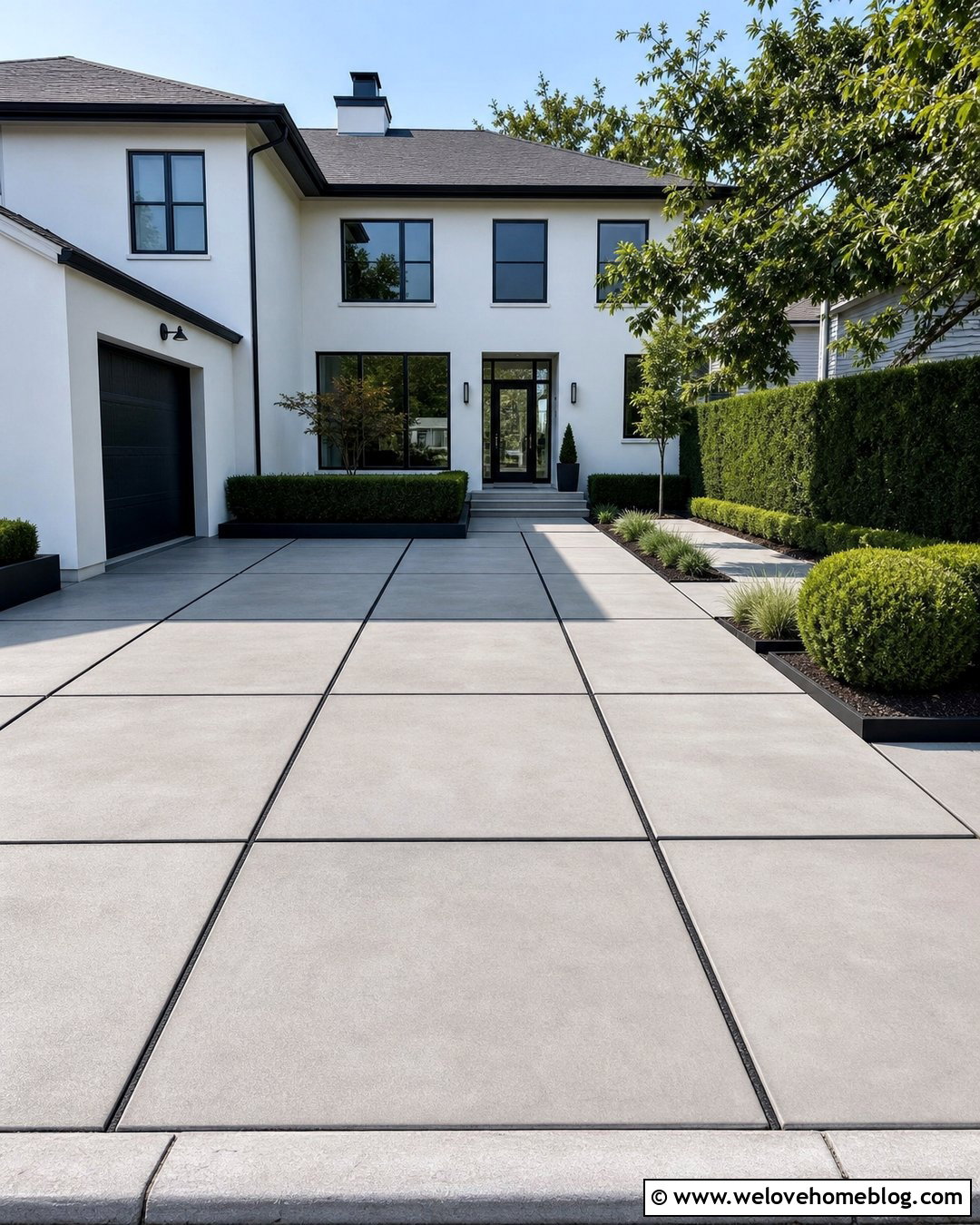
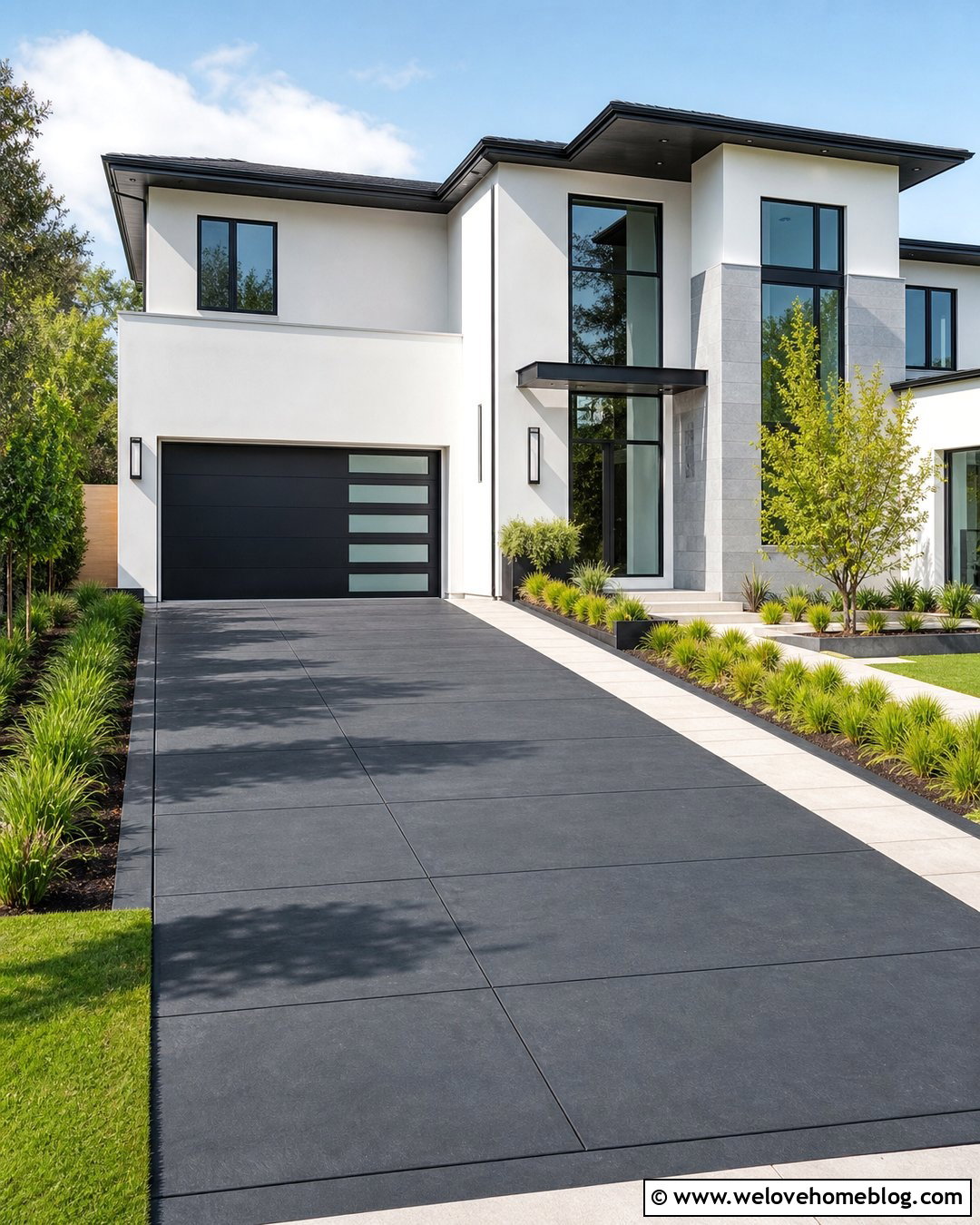
Open or deteriorated control joints can collect weeds, grit, and water even when the surrounding concrete remains in good condition. Remove failed material and debris, then use a compatible joint-sealing system that can accommodate normal slab movement. Avoid simply covering functional joints with rigid resurfacer because the underlying movement may reappear above. Highlight the restored joints instead of trying to hide them. On a large square-panel concrete driveway, use a deep charcoal joint color to create a clean geometric pattern. Continue the grid with rectangular planting beds, a straight concrete walkway, and clipped evergreen hedges. A minimalist white house with black-framed windows reinforces the orderly design. The joints become purposeful lines that divide the gray concrete surface and connect the driveway visually to the architecture.
11. Concrete Driveway Oil Stain Repair
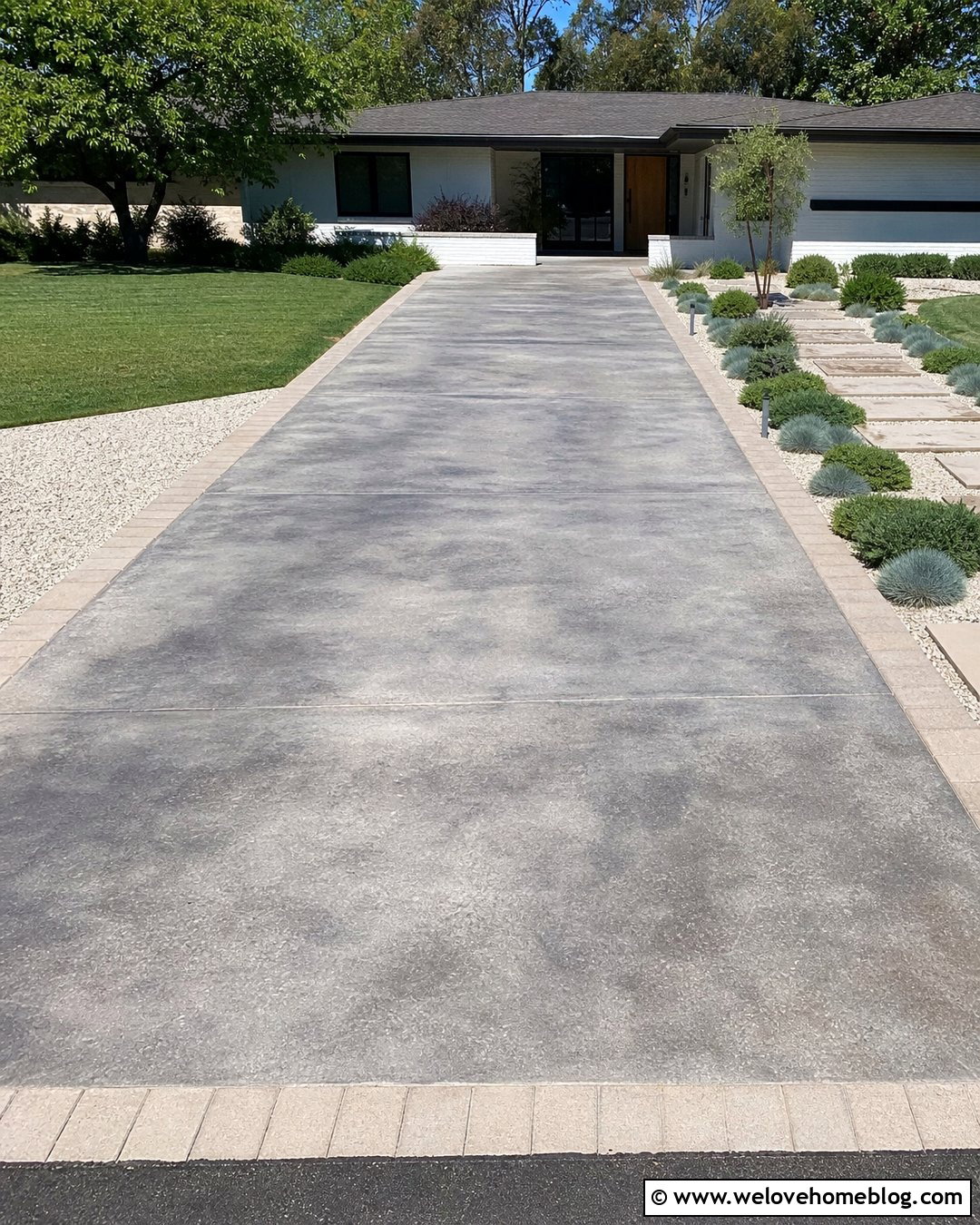
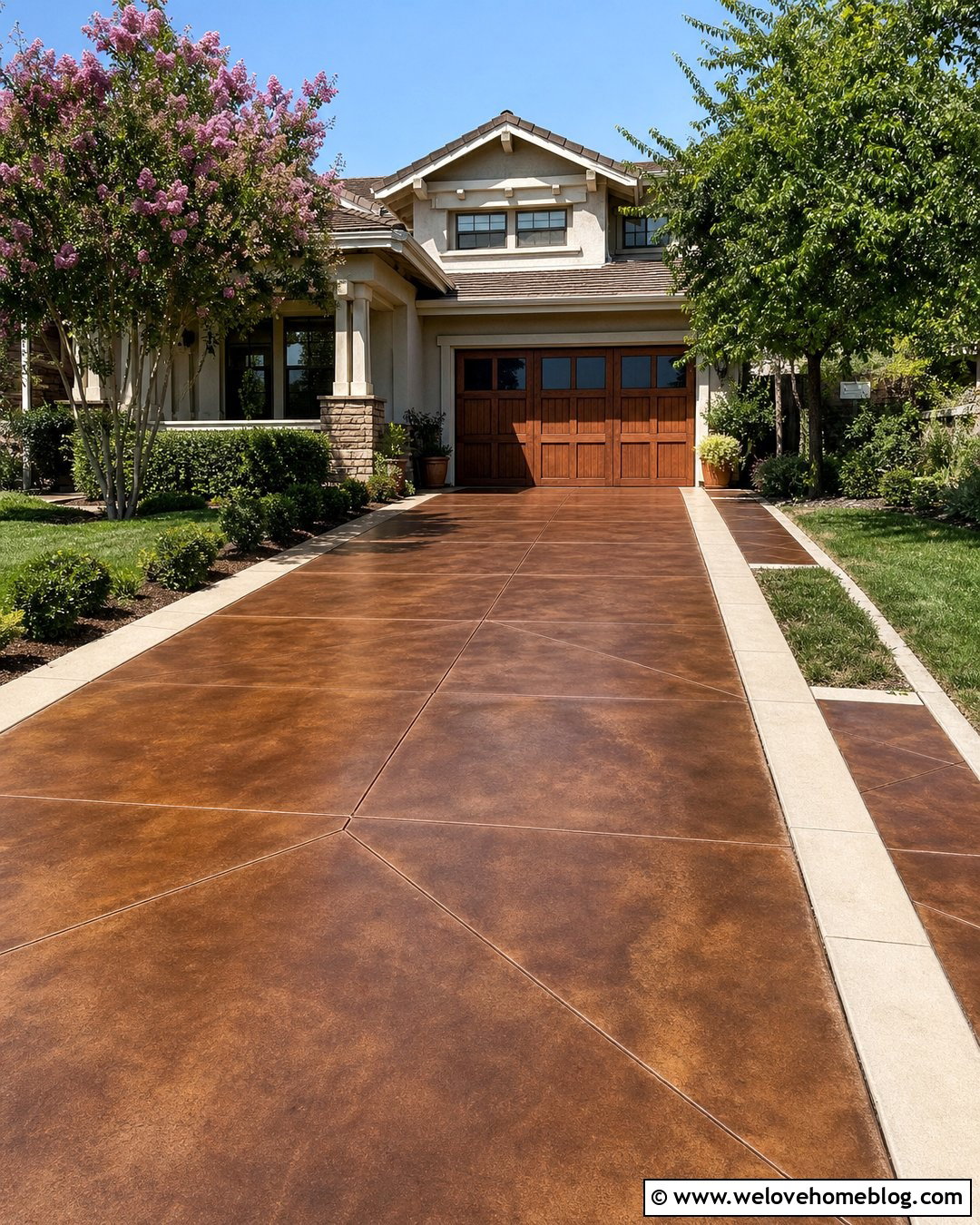
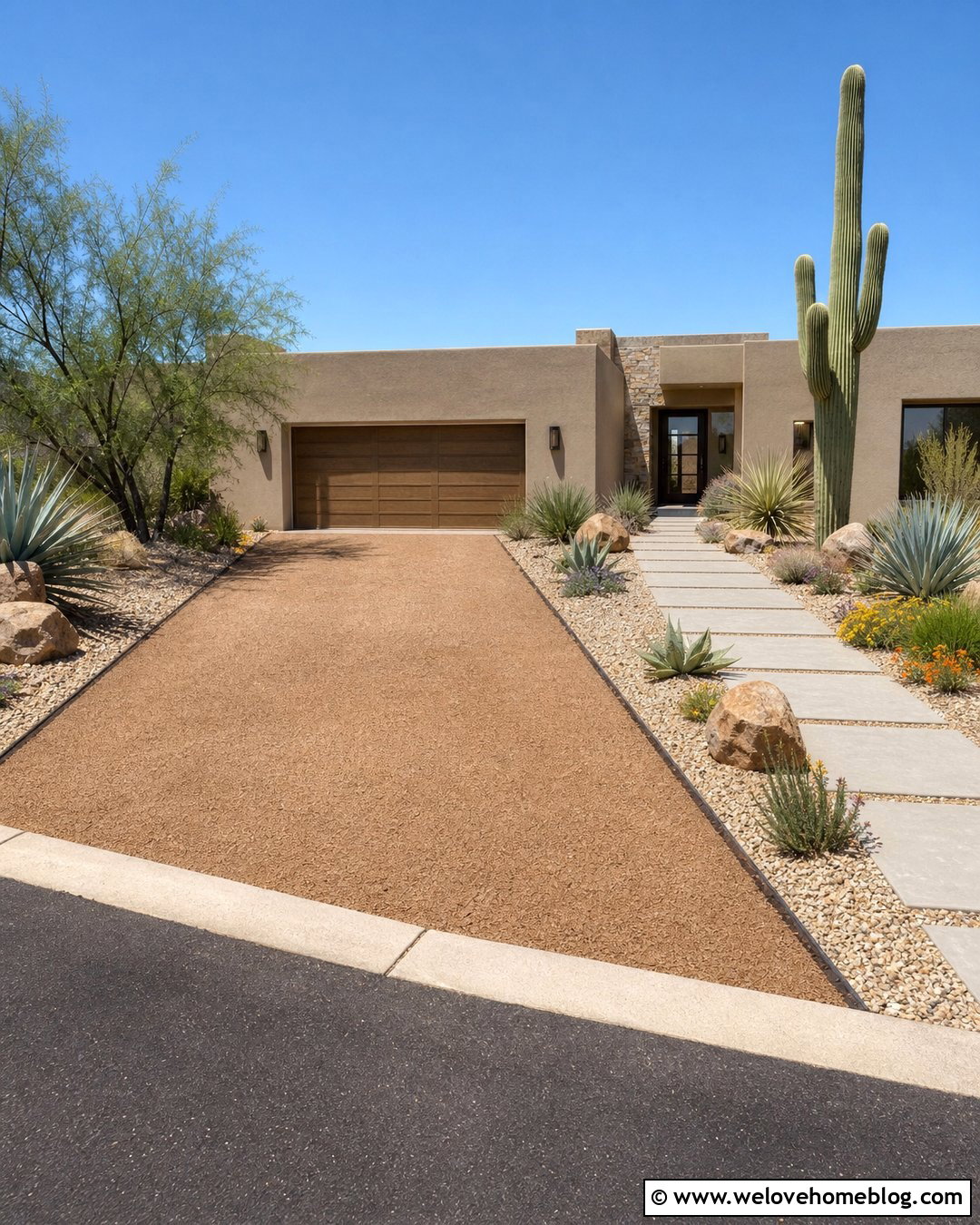
Dark oil marks can remain visible after routine washing, especially when they have penetrated unsealed concrete. Begin with a concrete-safe degreasing method, following product directions and protecting nearby plants and drains. Deep discoloration may still require additional treatment or a decorative finish after cleaning. A mottled charcoal-and-gray concrete stain can blend remaining shadows across the full driveway instead of creating one obvious patched area. Use this finish on a wide, straight driveway leading to a midcentury ranch house. Border the concrete with buff-colored pavers and drought-tolerant beds containing blue fescue, low junipers, and pale gravel mulch. A stepping-stone walkway can cross the planting bed toward the entrance. The darker surface looks intentional and makes future tire marks less visually dominant without resembling painted concrete.
12. Concrete Driveway Rust Stain Repair
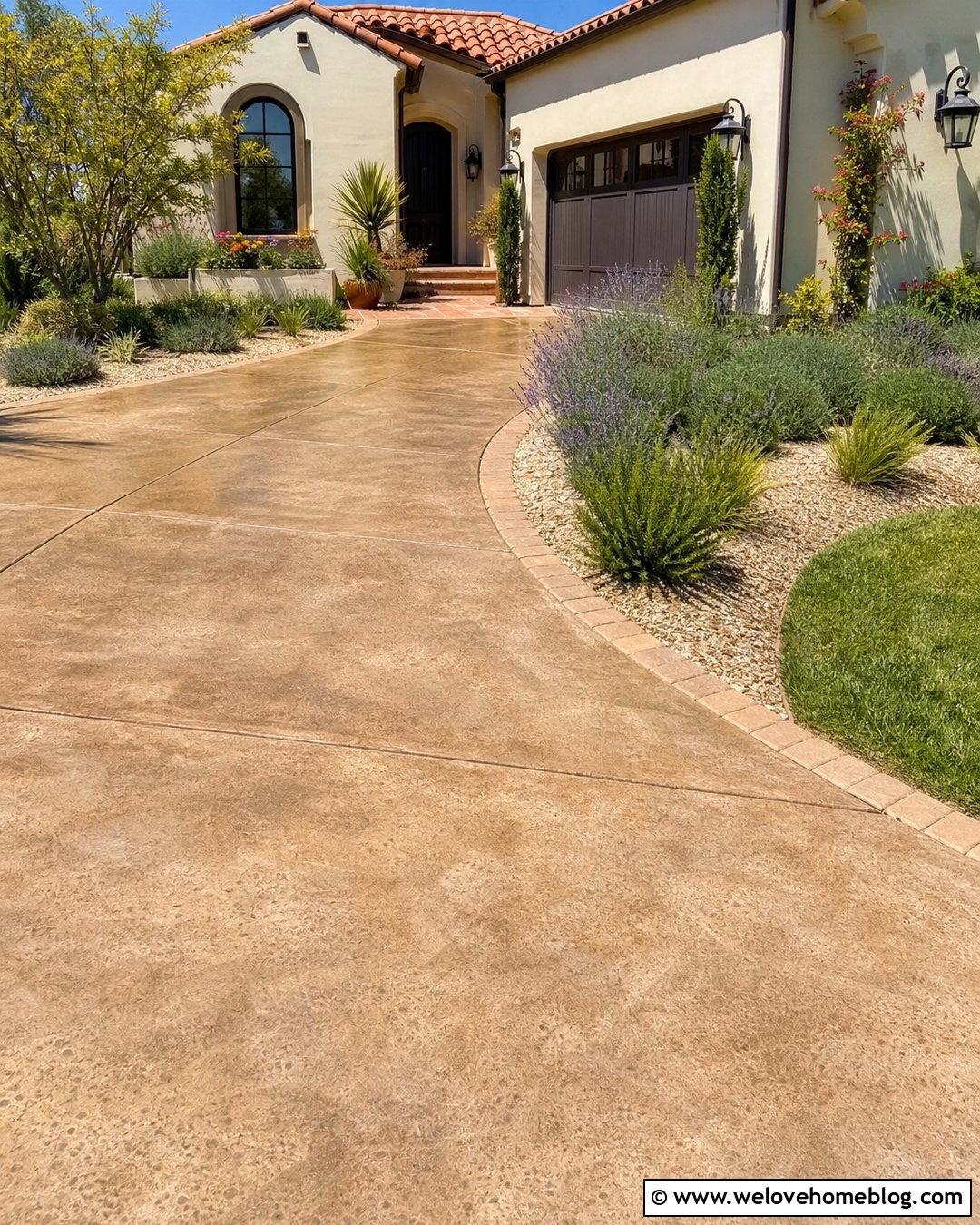
Rust marks from irrigation water, metal furniture, or fertilizer can leave orange patches that clash with cool gray concrete. Identify and correct the source before treating the stain, or the discoloration may quickly return. Use a cleaner formulated for rust on concrete and test it in a hidden area first. If faint marks remain, a warm taupe concrete stain can bring the entire surface into a more forgiving color range. Pair the stained driveway with a curved layout leading to a Mediterranean-inspired stucco house. Terracotta concrete paver edging, rosemary, lavender, ornamental grasses, and pale stone mulch can reinforce the warm palette. Keep irrigation heads directed away from the concrete. The color treatment, curved border, and dry landscaping create a complete design while helping old rust discoloration recede.
13. Discolored Concrete Driveway Resurfacing
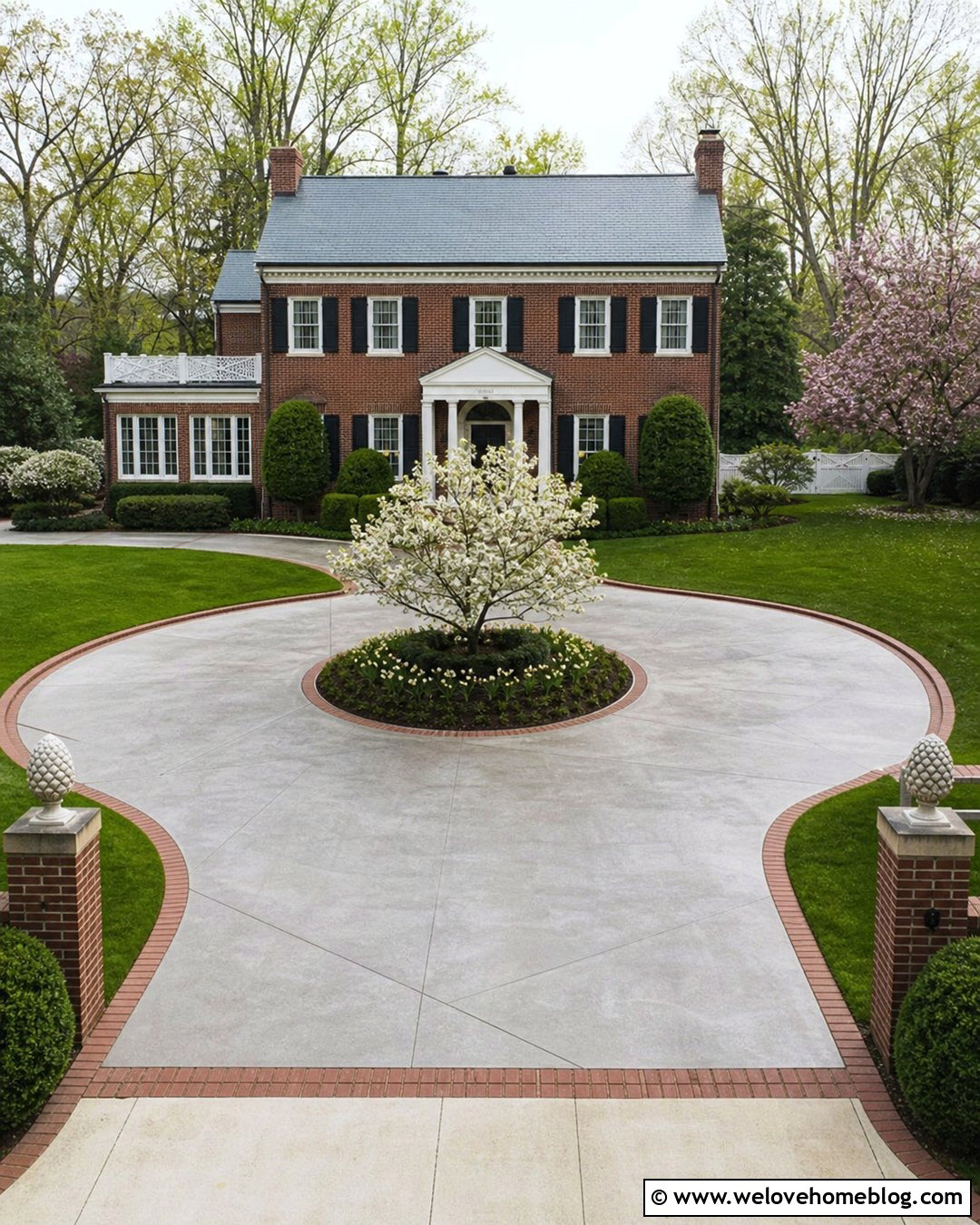
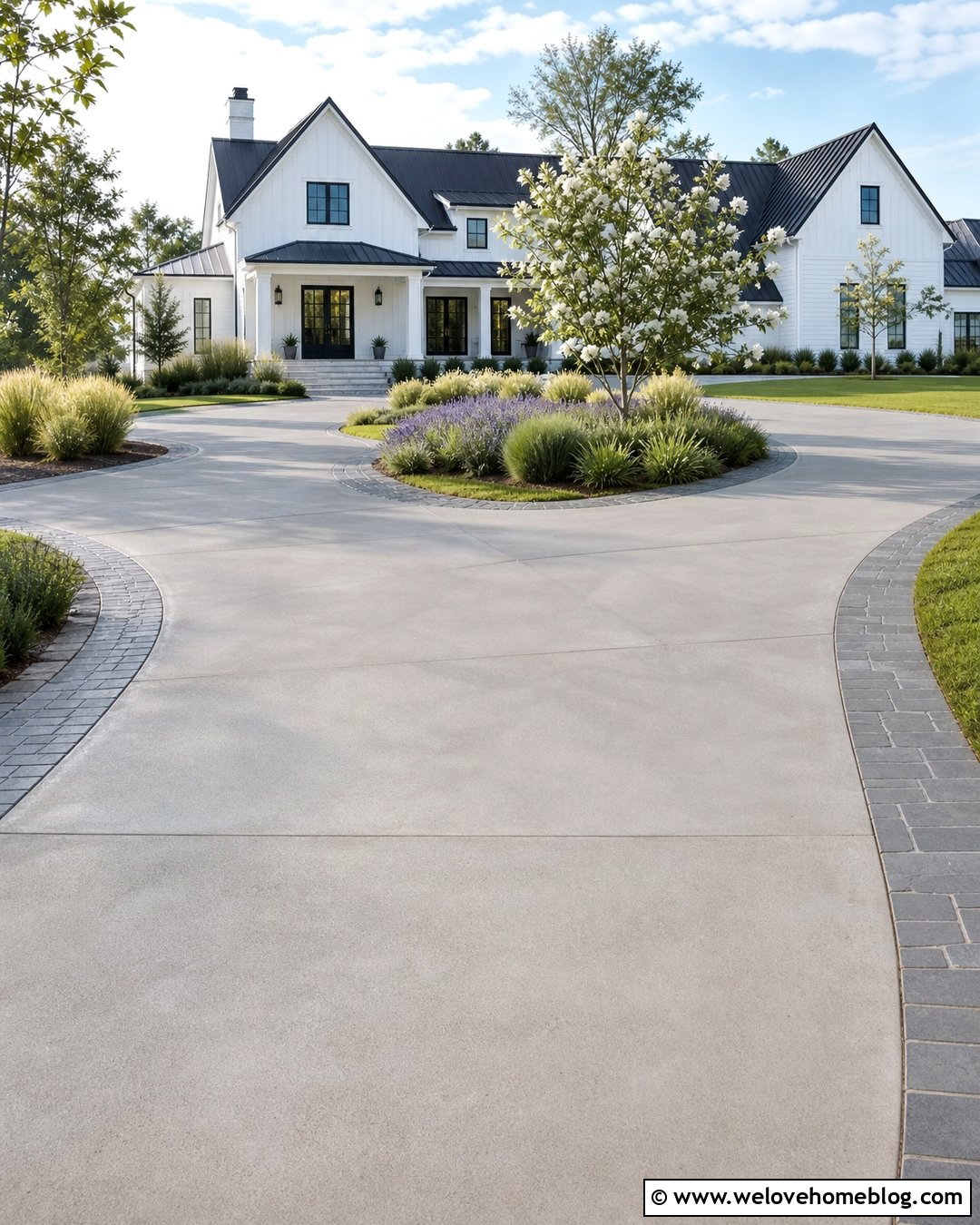
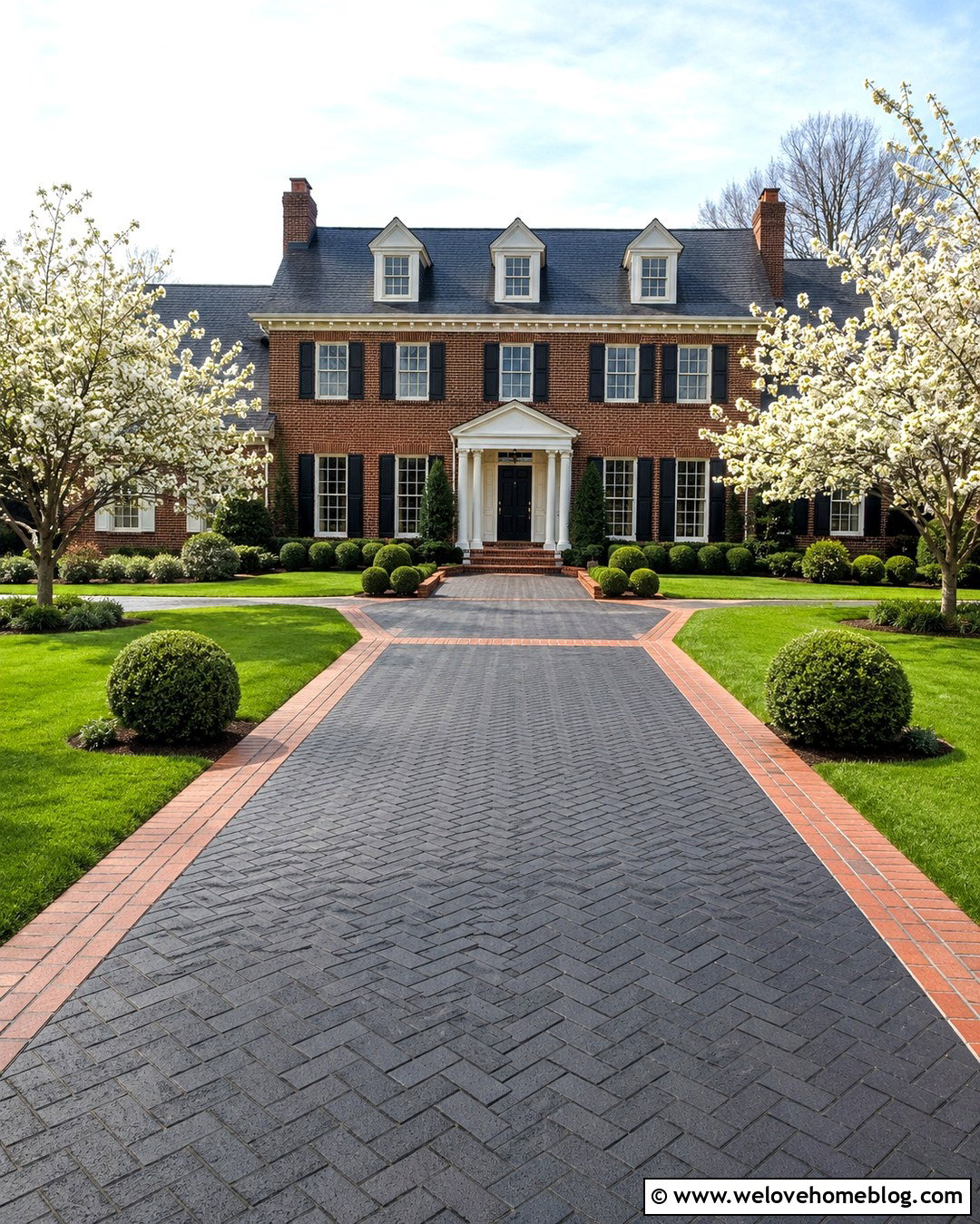
Uneven curing, old repairs, weathering, and repeated cleaning can leave a driveway with several mismatched shades. When the concrete is sound, a continuous resurfacing layer can provide a more predictable appearance than spot coloring every patch. Repair active defects first, prepare the slab carefully, and choose a resurfacing product rated for outdoor vehicle use. A medium-gray brushed overlay gives a broad circular driveway a fresh, consistent surface. Outline the circle with deep red brick and repeat the brick around a central planting island. A small flowering tree, evergreen groundcover, and low seasonal plants provide color without blocking the view of a traditional Georgian house. The continuous overlay visually connects the old sections, while the circular border and balanced landscaping create a formal, finished approach.
14. Stamped Concrete Driveway Overlay
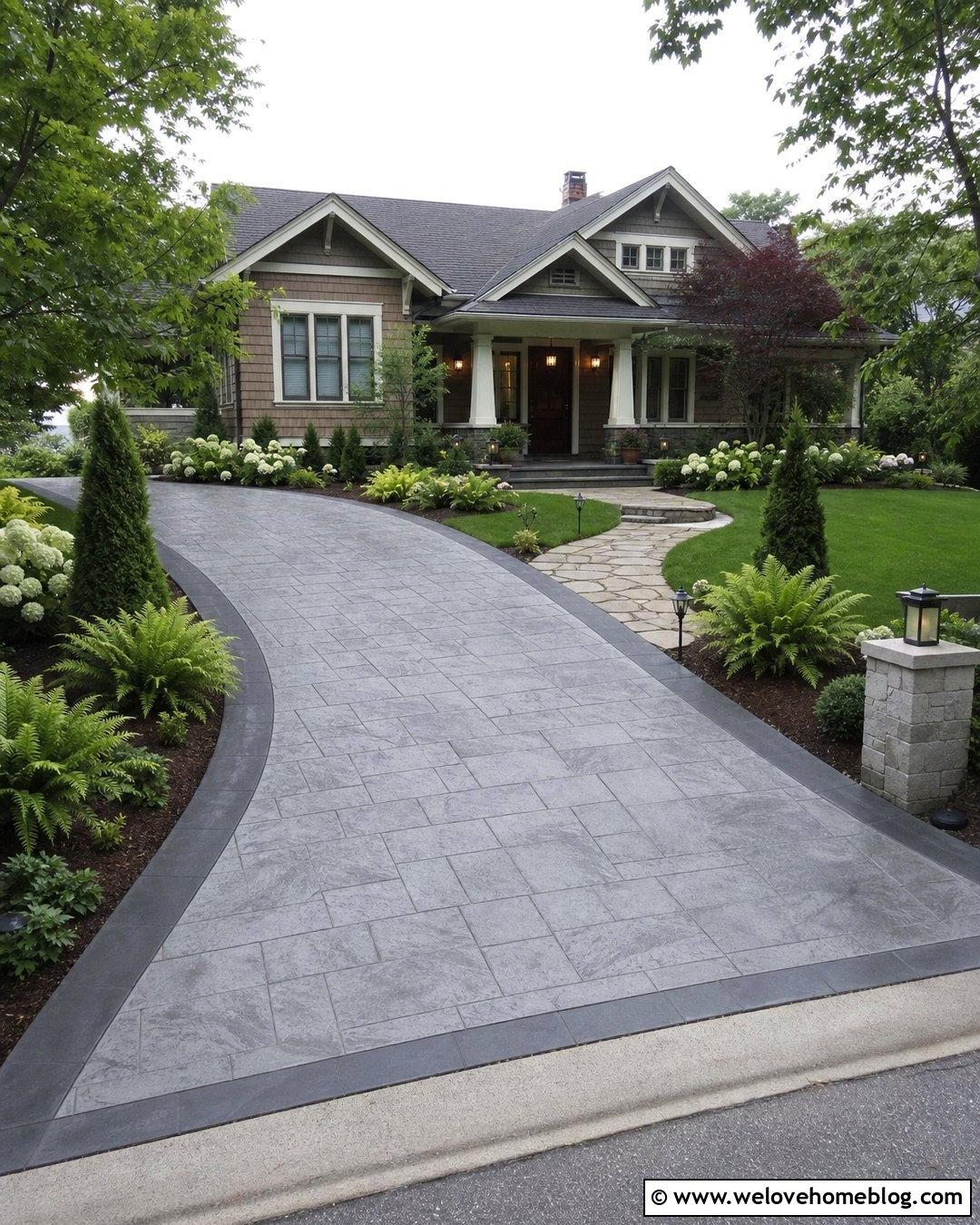
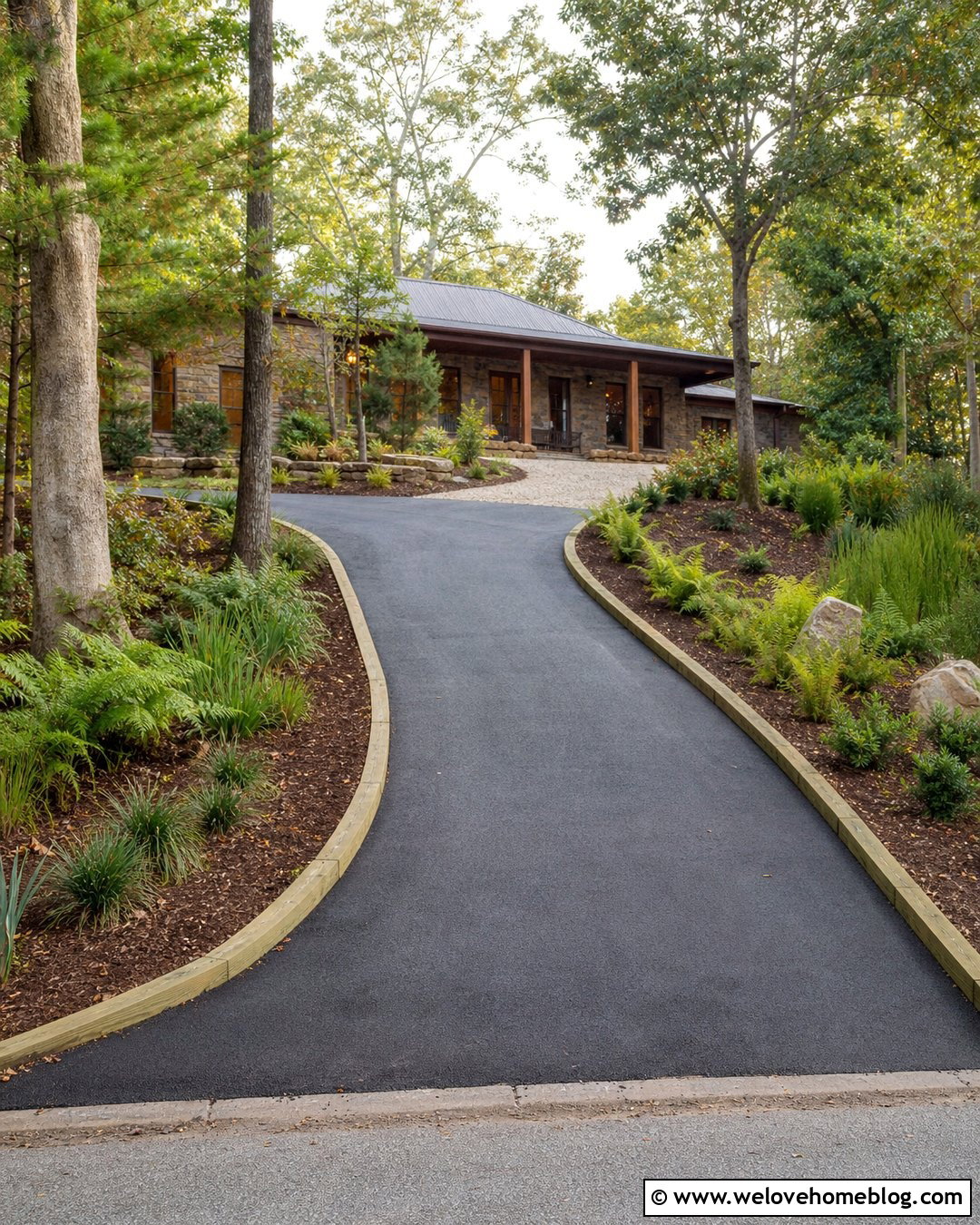
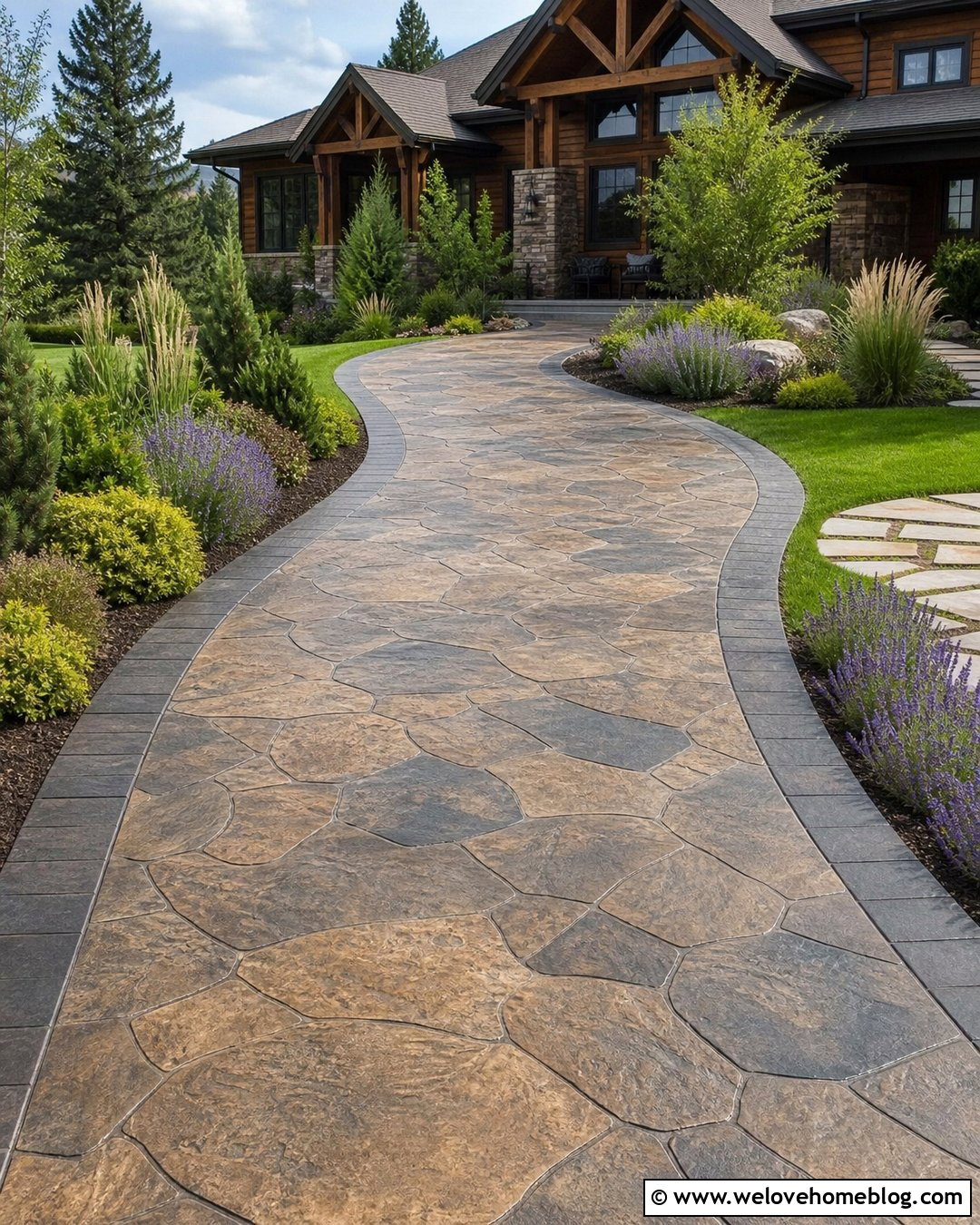
A decorative overlay can repair a tired but stable driveway while changing its appearance more dramatically. After cracks and damaged areas are properly treated, a professional stamped concrete system can create the look of large stone pavers without removing every sound slab. Select a subtle ash-gray slate pattern with restrained charcoal accents so the surface does not feel overly busy. A gently curved driveway can lead toward a craftsman bungalow with a stone porch. Add a smooth dark-gray concrete border that separates the patterned field from planting beds. Ferns, hydrangeas, dwarf conifers, and a curved flagstone walkway complete the composition. Decorative resurfacing can provide color, texture, and pattern while concealing repaired surface imperfections. () Proper preparation remains essential to prevent existing problems from undermining the new finish.
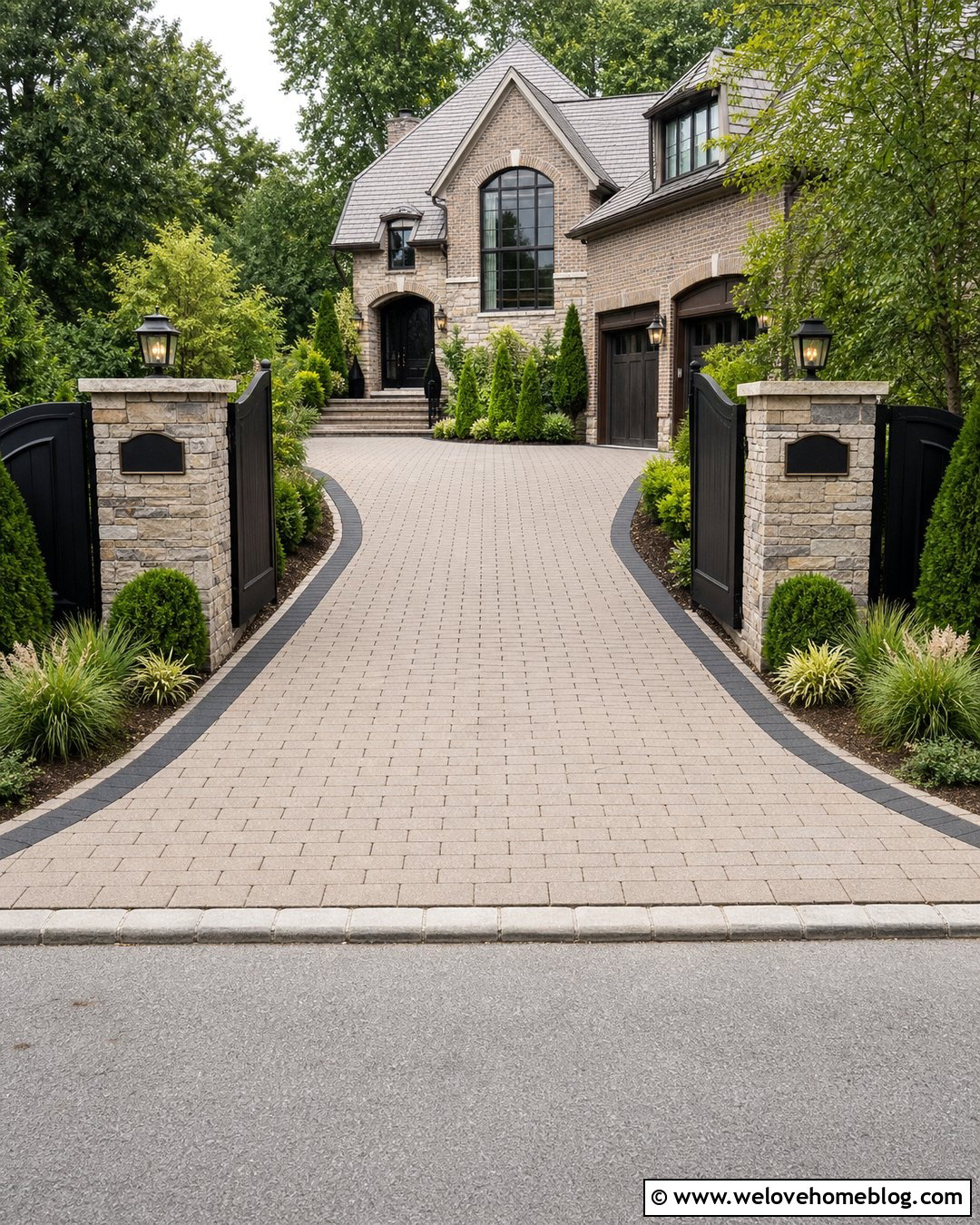
15. Concrete Driveway Faux Paver Resurfacing
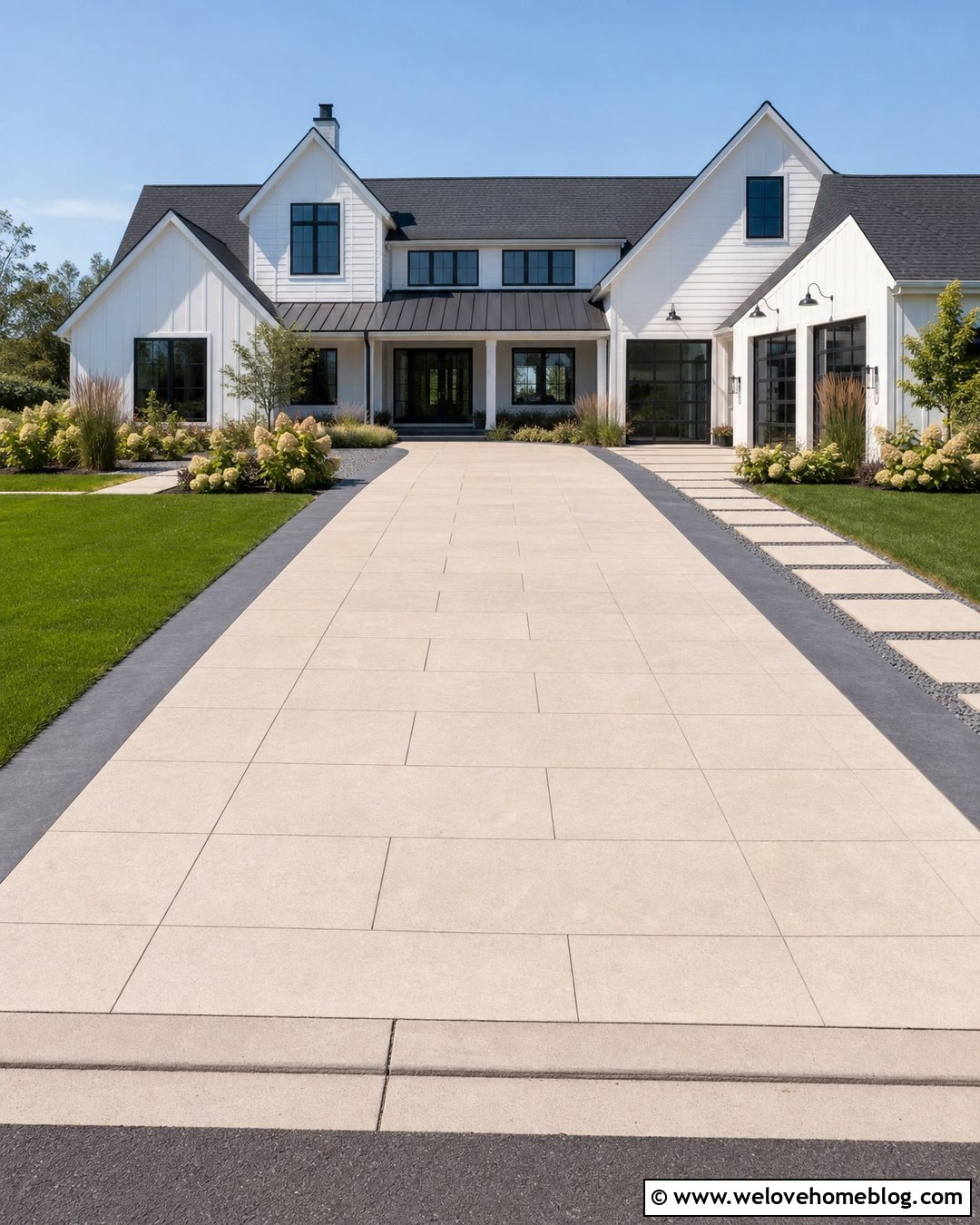
Large square pavers can inspire a cleaner resurfacing pattern for concrete that has numerous cosmetic repairs. Apply a vehicle-rated concrete overlay only after confirming that the original slabs are stable. Score or stencil the new surface into generous rectangular shapes rather than using a tiny pattern that may overwhelm the front yard. A pale limestone-colored concrete finish with soft gray joints works beautifully on a straight driveway beside a contemporary farmhouse. Add wide charcoal concrete curbs, simple lawn panels, and beds of panicle hydrangeas with upright ornamental grasses. Continue the rectangular pattern into a broad walkway at the front porch. This complete look hides patchy repair colors while preserving concrete as the main driveway material. The larger pattern also gives the approach a calm, spacious appearance.
16. Concrete Driveway Drainage Repair
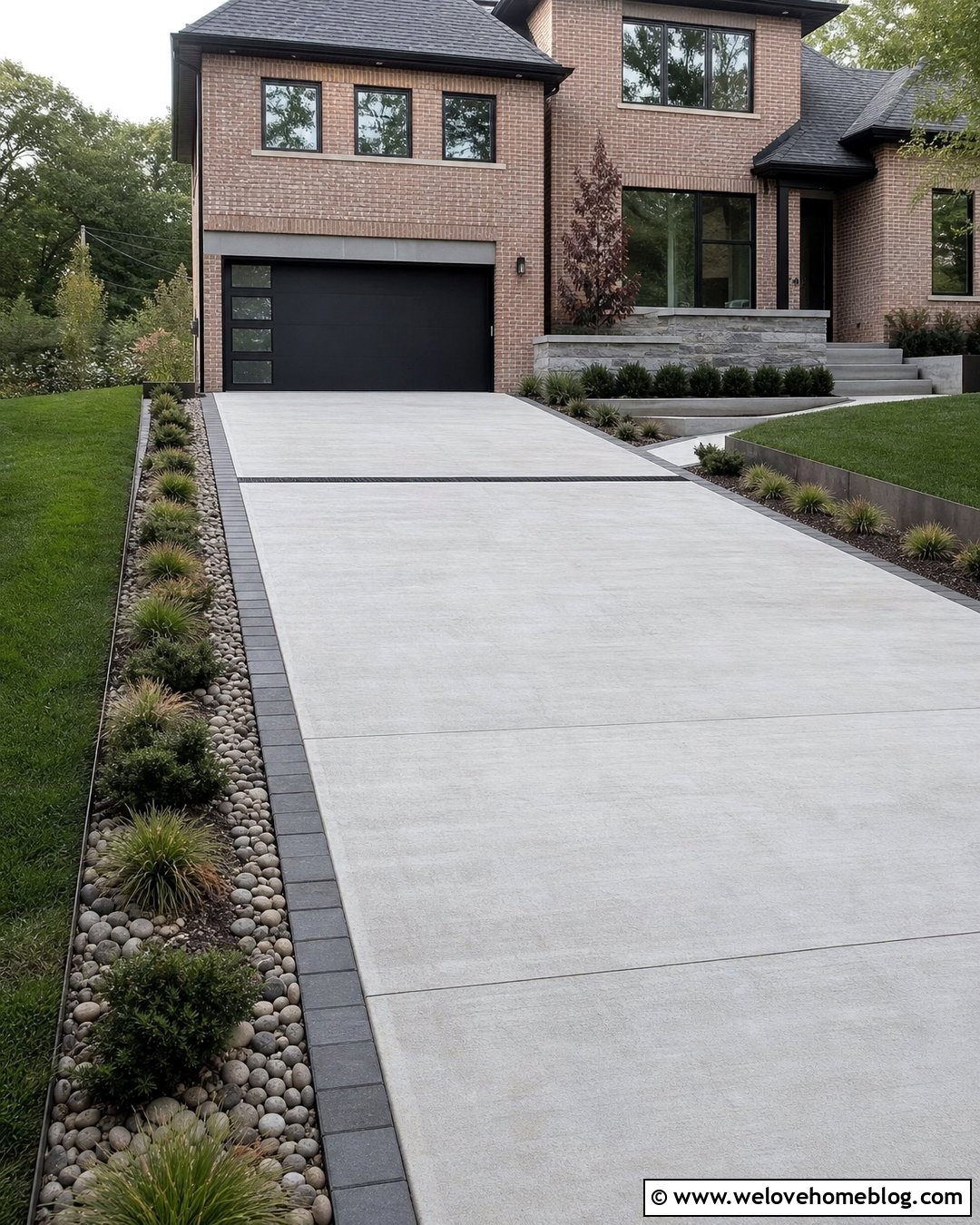
Standing water can shorten the life of repairs and may point to poor slope, blocked runoff paths, or settled concrete. Correct the water problem before repeatedly filling cracks or resurfacing damaged areas. Depending on the site, the solution may include regrading nearby soil, lifting slabs, extending downspouts, or installing a properly designed channel drain. A light-gray brushed concrete driveway can slope gently toward a slim black trench drain near the garage. Use charcoal paver edging and river-rock drainage strips along the sides. Moisture-tolerant sedges, compact inkberry shrubs, and a raised lawn frame the straight approach to a modern brick house. The drain should read as an integrated transition rather than an afterthought. This design combines water management, clean borders, and restrained planting in one practical driveway renovation.
17. Tree Root Concrete Driveway Repair
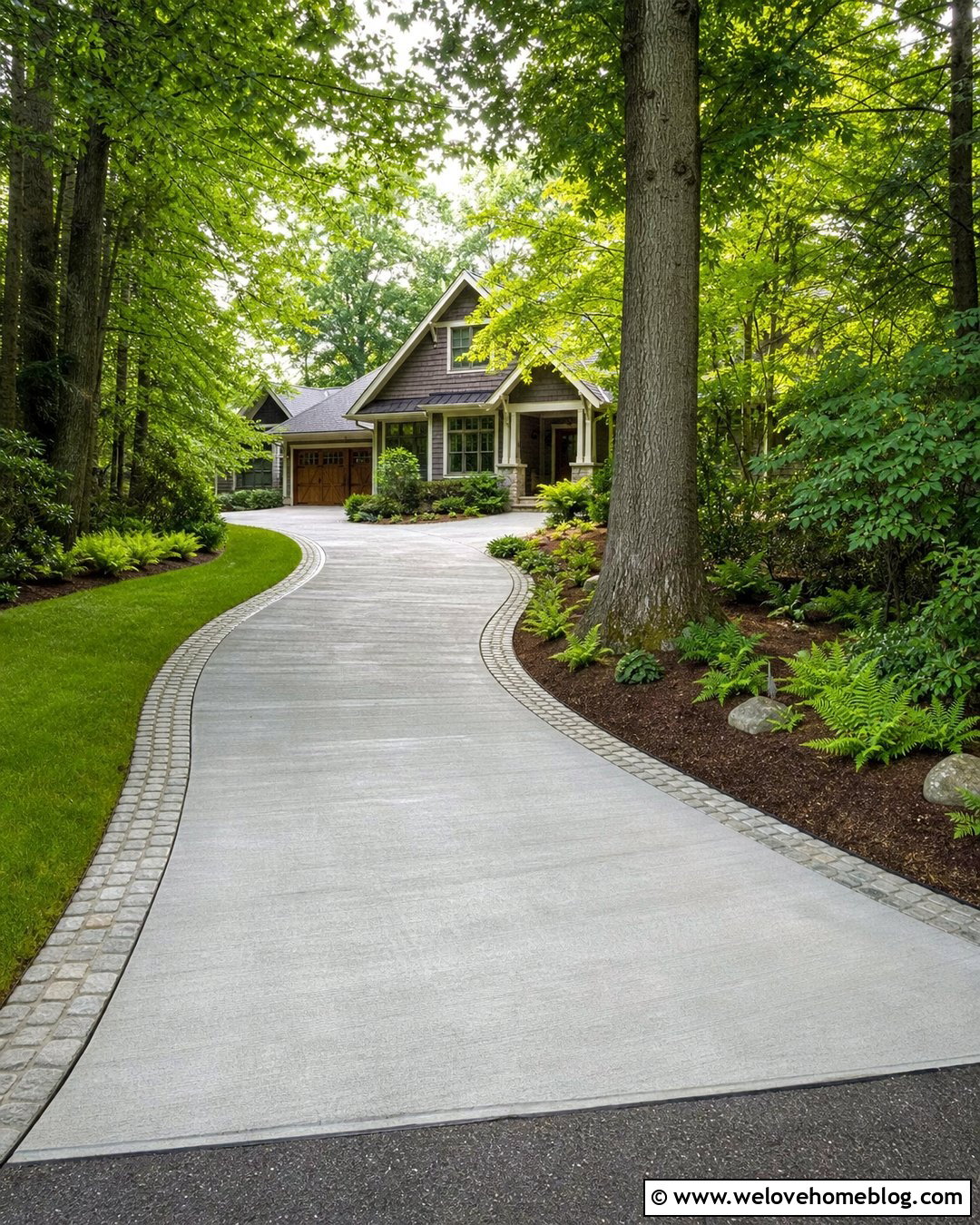
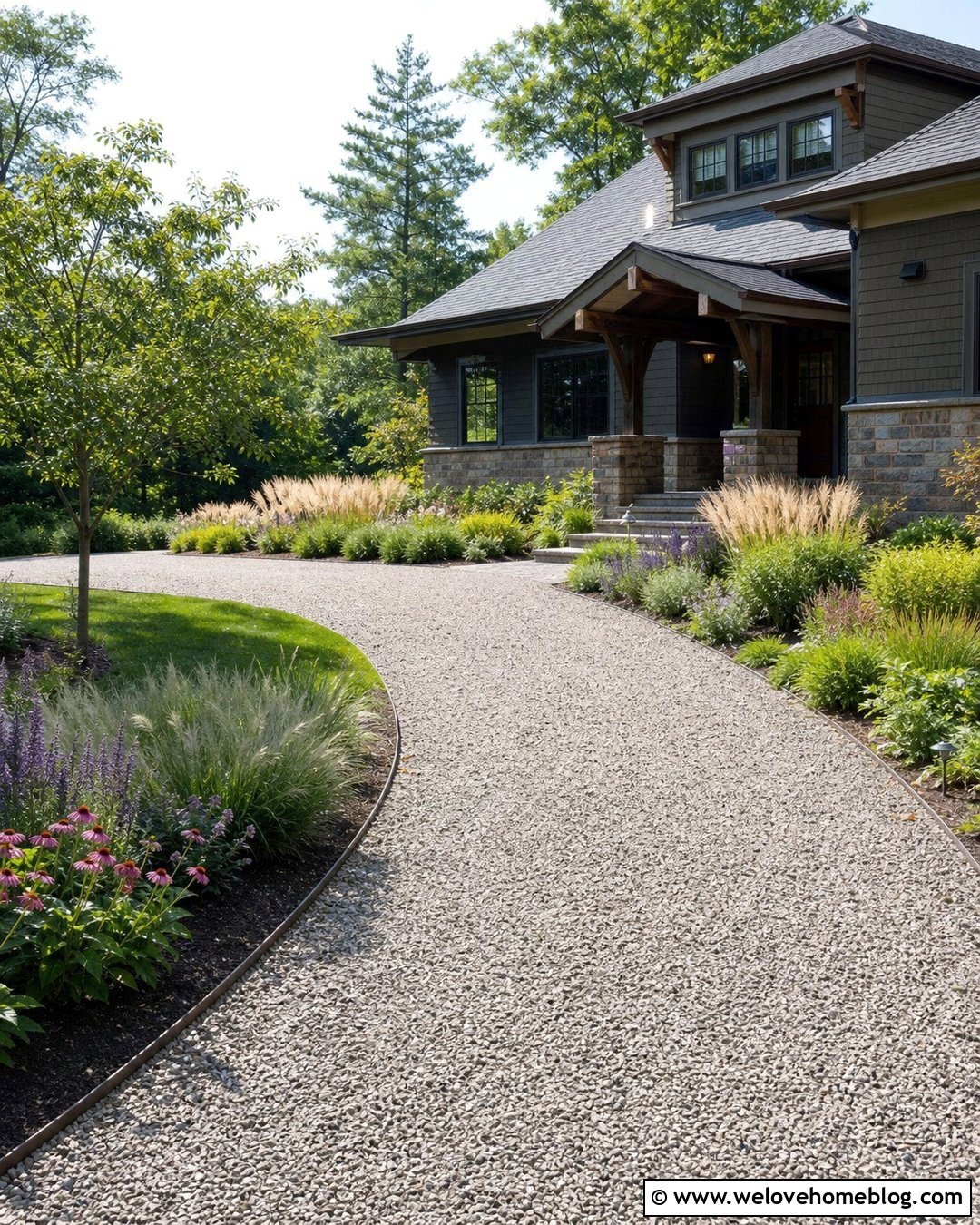
Cracks near a mature tree may indicate root pressure, soil movement, or both. Avoid cutting major roots without advice from a qualified arborist, since improper work can damage or destabilize the tree. A contractor and arborist can determine whether the driveway should be rerouted, partially replaced, or reconstructed with more separation from the root zone. A curved broom-finished concrete driveway offers a practical design response because it can move the driving path farther from the trunk. Use flexible steel edging beside a wide mulched tree bed, then add a cobblestone ribbon along the driveway’s outer curve. Shade-tolerant groundcover, ferns, and low shrubs can fill the protected area. The curved approach suits a wooded craftsman home and turns necessary root clearance into an attractive landscape feature.
18. Freeze-Damaged Concrete Driveway Repair
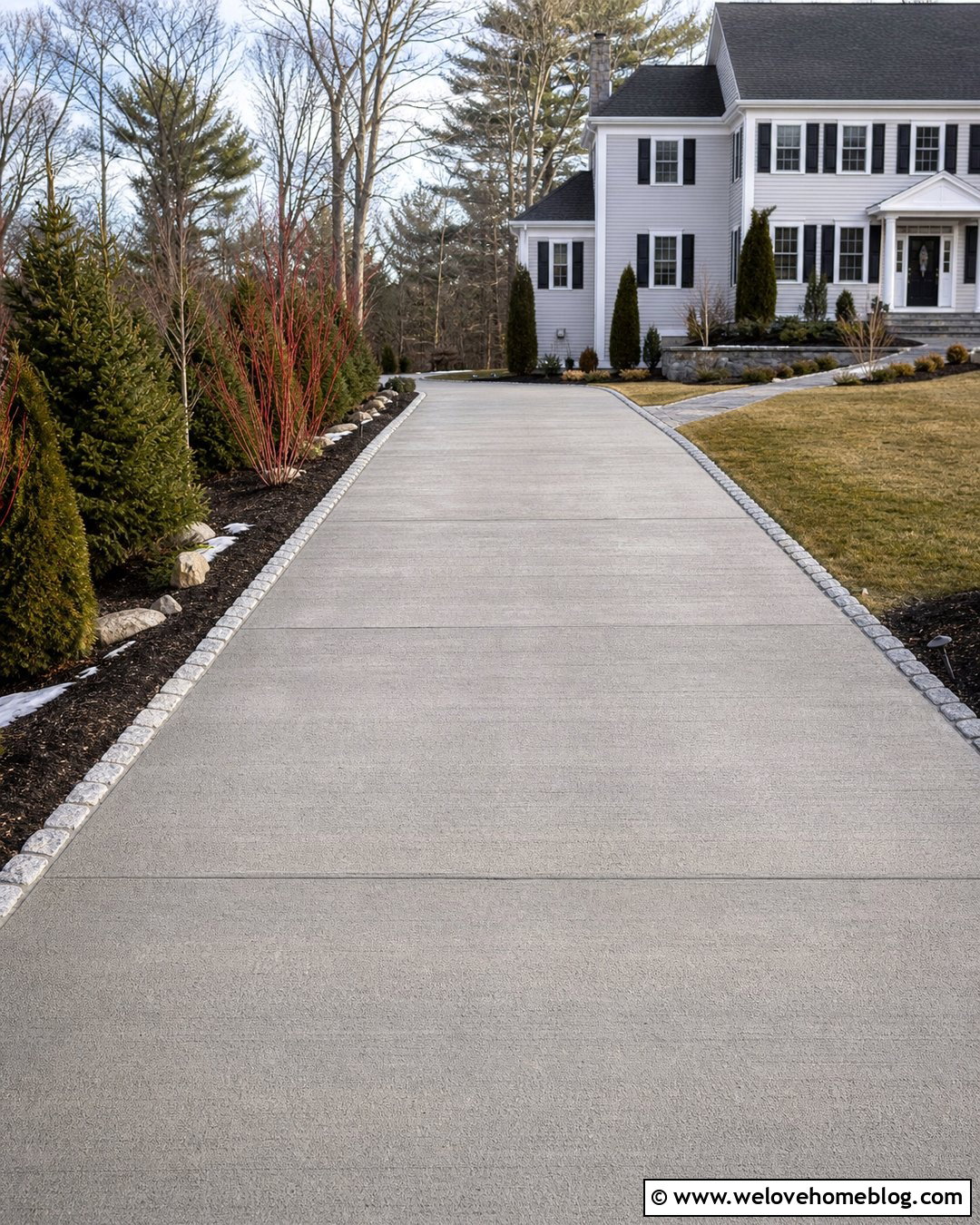
Cold-weather deterioration may appear as scaling, cracks, crumbling patches, or damaged joints. Before choosing a repair, determine whether the problem is shallow or extends through the slab. Structurally sound concrete may be resurfaced after preparation, but severely fractured panels often need replacement. Select a durable, professionally installed light-gray broom-finished concrete surface and use a compatible penetrating sealer when appropriate for the local climate and product. Design the driveway with a gentle crown or effective slope so melting snow does not remain in low areas. Granite cobblestone edging, evergreen shrubs, red-twig dogwoods, and a clear paver walkway fit a northern colonial home. Keep soil and mulch below the slab edge. The repaired concrete and winter-ready landscape create a driveway that remains tidy across changing seasons.
19. Peeling Concrete Driveway Sealer Repair
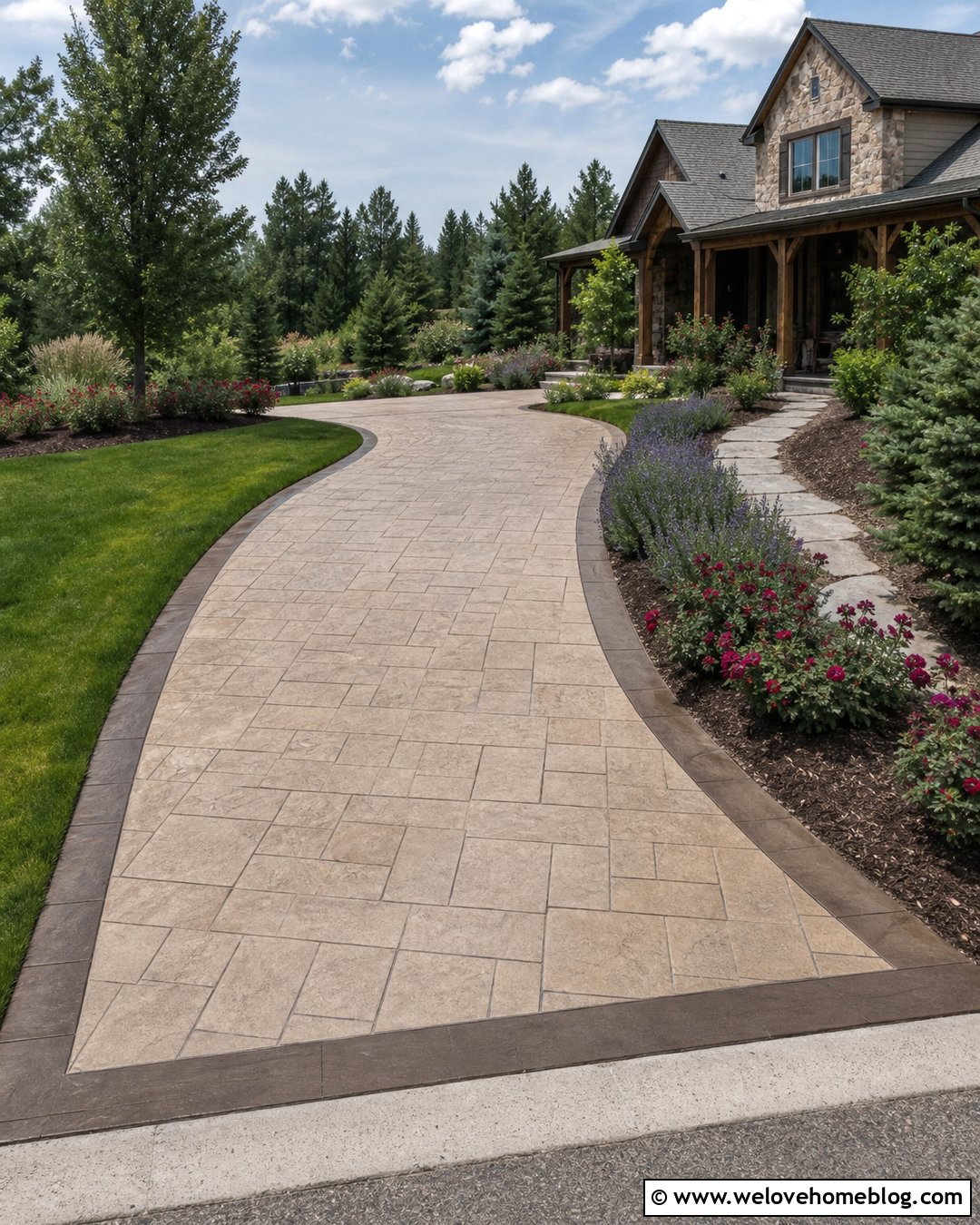
A cloudy, yellowed, or peeling coating can make good concrete look badly damaged. Confirm that the problem is limited to the sealer rather than the concrete below. The failed coating may need professional stripping or mechanical removal before the surface can be cleaned and resealed. Test the new product on a small area because color and sheen can change after application. Choose a natural matte finish instead of a heavy gloss for a more forgiving residential appearance. A tan stamped concrete driveway with an ashlar-stone pattern can lead to a country-style home. Border it with darker smooth concrete, curved lawn edges, and beds of roses, catmint, and compact evergreens. The fresh matte sealer restores the decorative color while keeping the driveway from looking overly shiny.
20. Severely Cracked Concrete Driveway Replacement
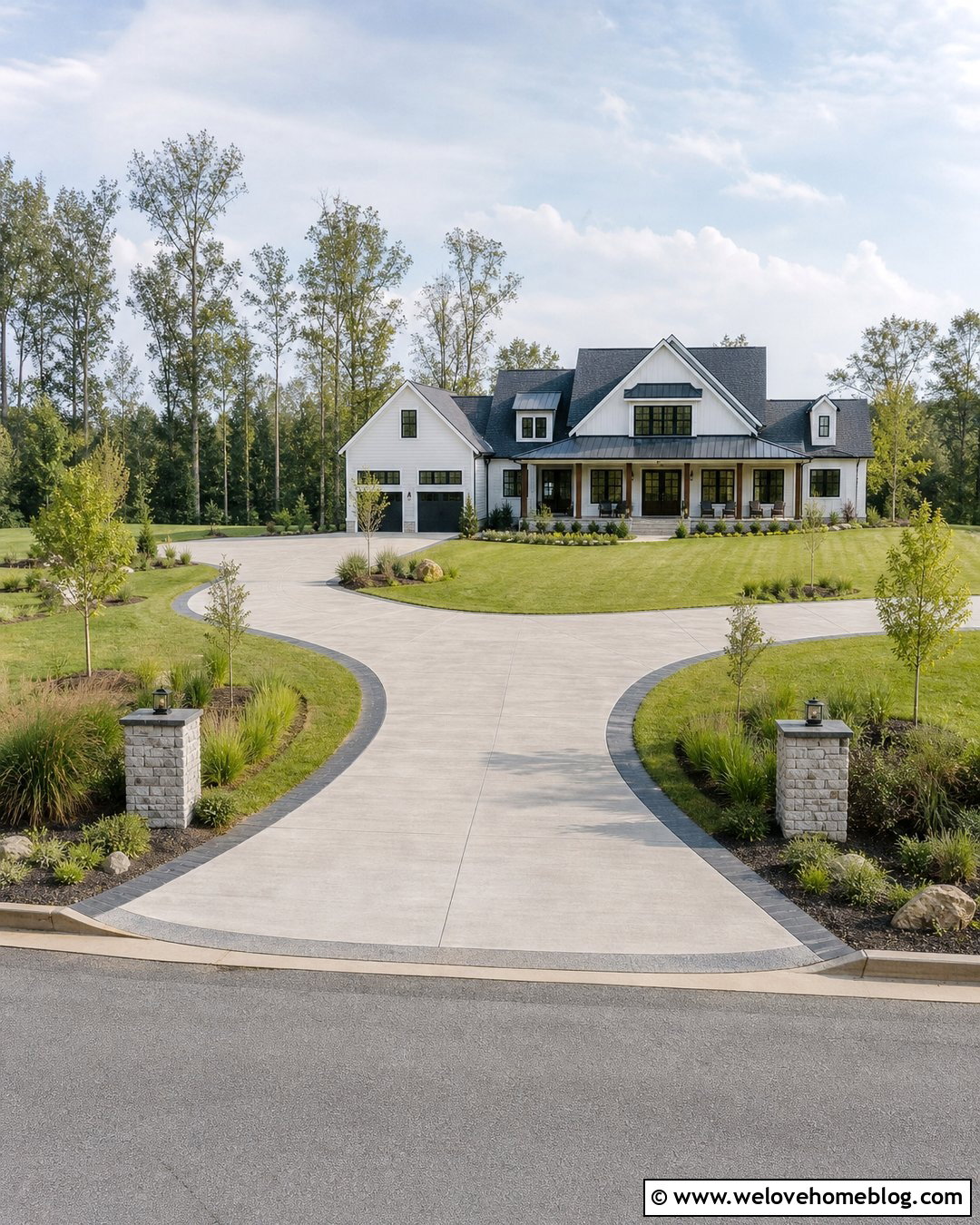
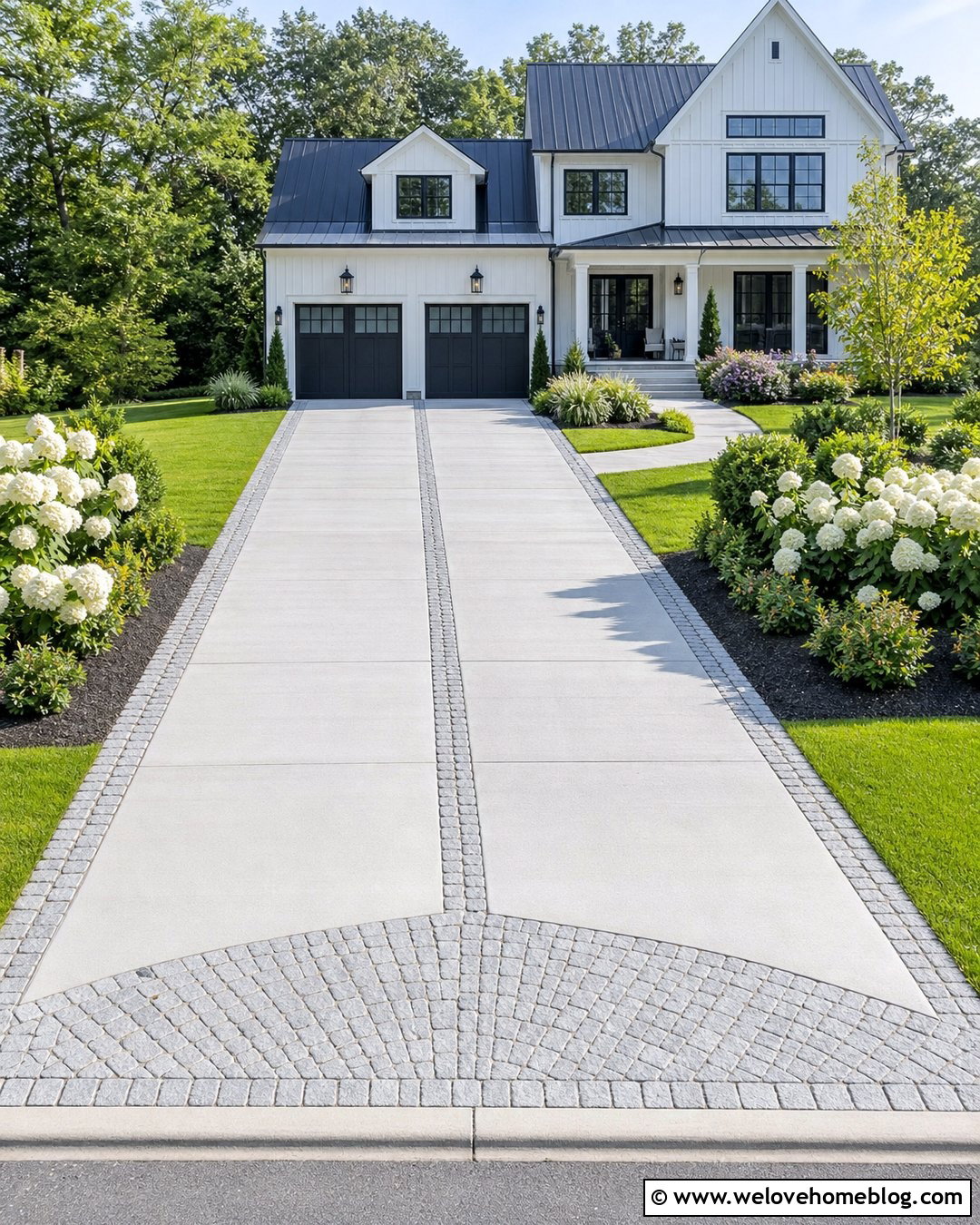
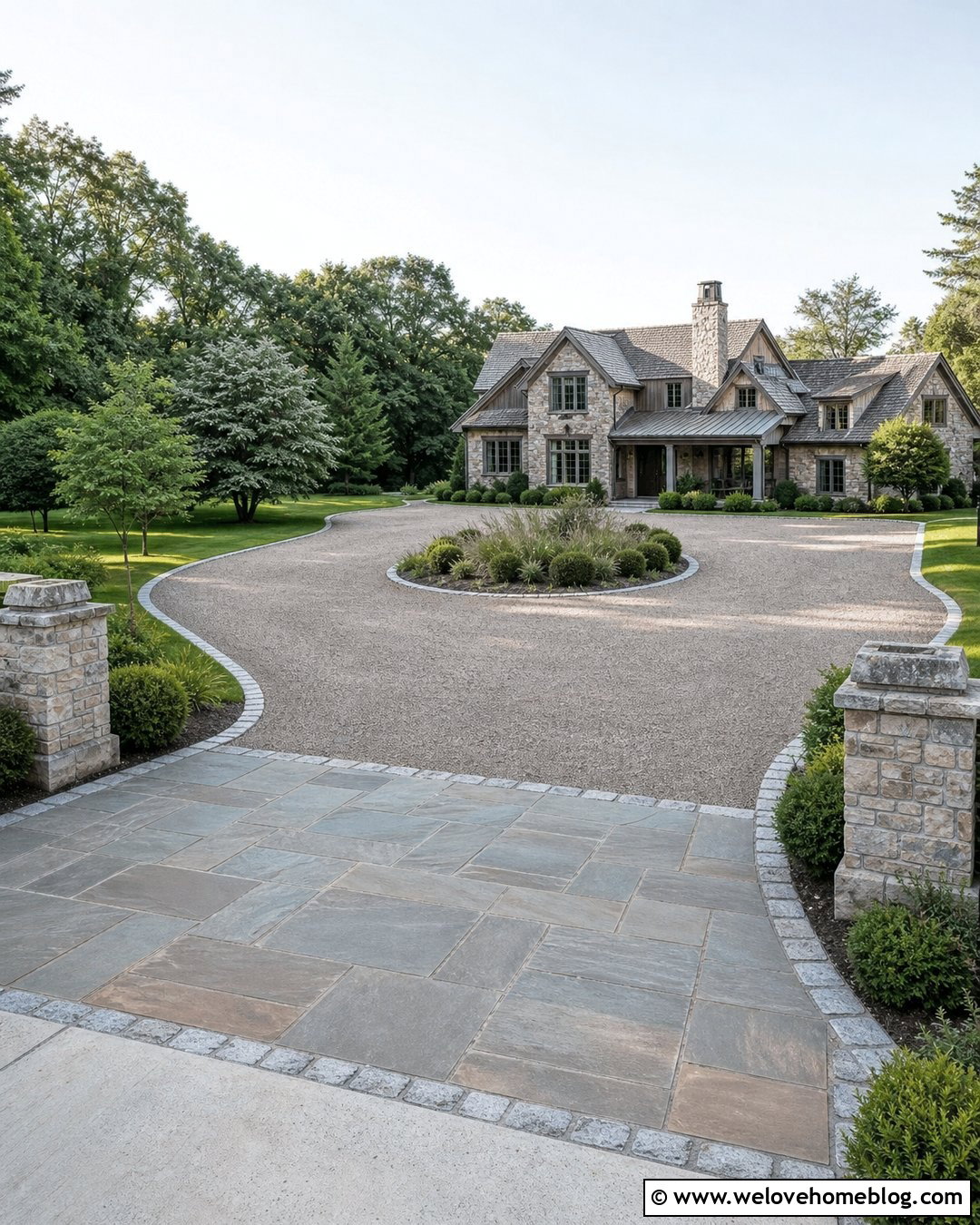
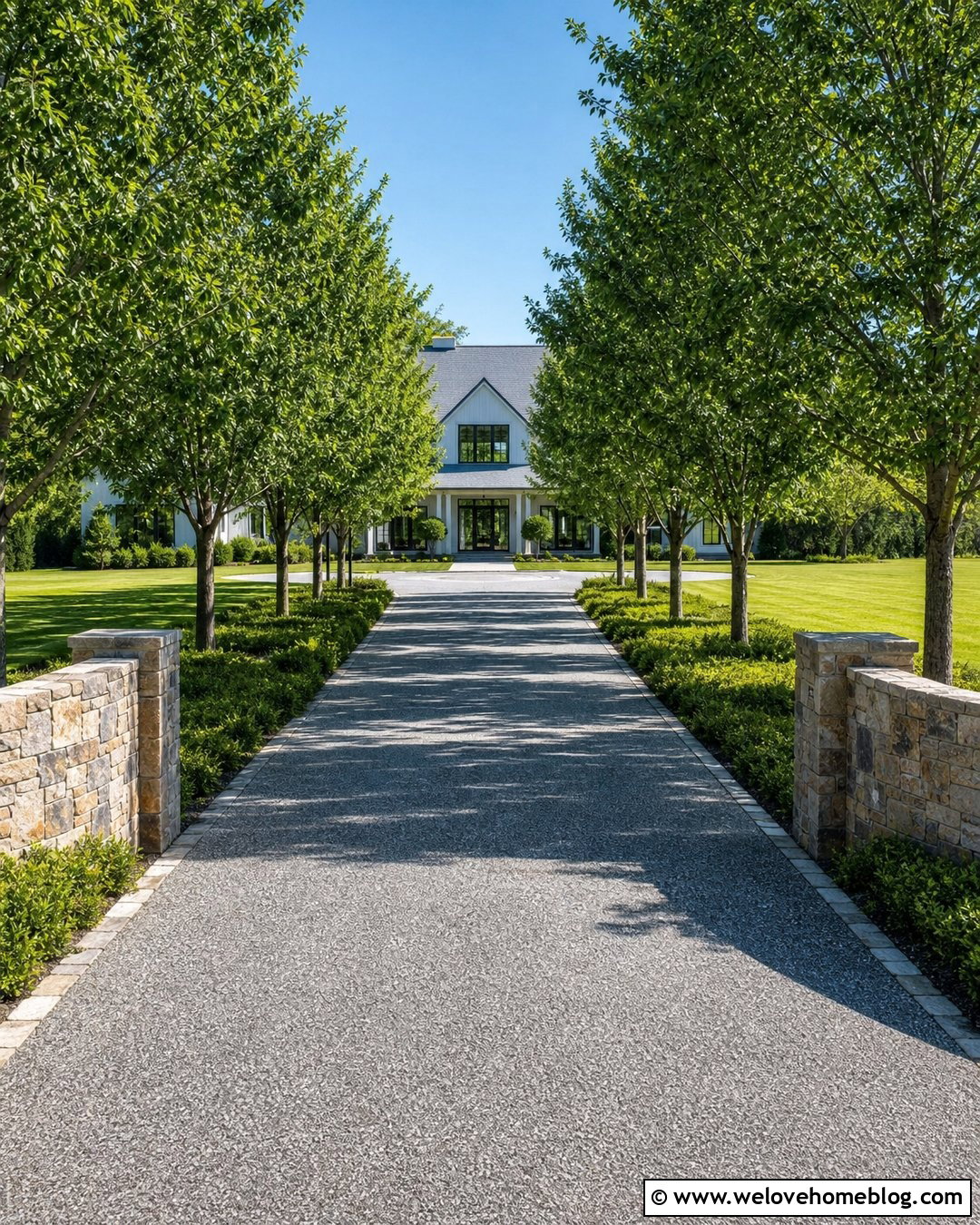
Some driveways have too much movement, settlement, heaving, or widespread fracture for patching to provide a lasting result. When deep cracks divide multiple panels or the base has failed, complete replacement allows the underlying cause to be addressed. Widespread structural damage and unstable soil are poor candidates for a simple surface overlay. () Remove the failed concrete, improve the base and drainage as needed, and install the new driveway to local requirements. Use reinforced natural-gray broom-finished concrete in a broad horseshoe layout for a large modern farmhouse. Add flush charcoal paver borders, stone entrance pillars, rain gardens, native grasses, and two clear walkway connections. Although replacement requires a larger investment, it creates the opportunity to correct the layout and build a complete entrance around long-term performance.
Conclusion:
The best repair begins with understanding why the concrete failed, not simply covering the visible damage. These 20 Fixing Concrete Driveway Ideas range from filling small cracks and restoring joints to leveling sunken slabs, correcting drainage, resurfacing stable concrete, and replacing structurally damaged sections. Just as important, every repair can support a more attractive entrance through coordinated edging, landscaping, walkways, patterns, and colors. Use simple repairs when the slab remains sound, but bring in an experienced contractor when you see movement, severe settlement, deep fractures, or widespread deterioration. A well-planned solution should improve both performance and appearance, helping the entire driveway feel like an intentional part of the home rather than a patched surface.

Related posts:
Leave a Reply