
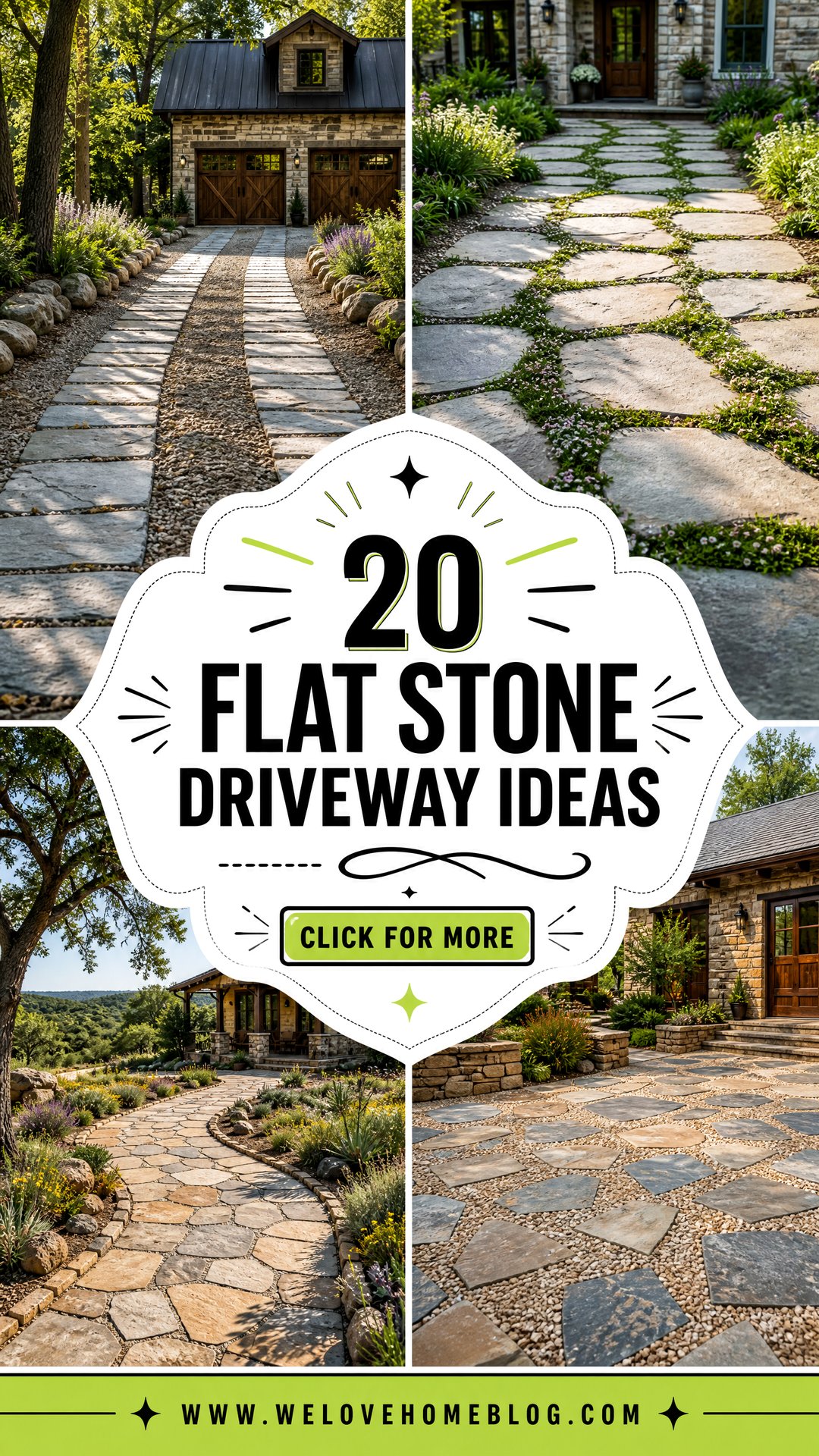
Flat stone brings natural color, texture, and lasting character to a home’s entrance. The best **20 flat stone driveway ideas** combine more than attractive paving. They consider the driveway’s shape, stone pattern, joint treatment, edging, drainage, landscaping, and connection to the house. Irregular flagstone can soften a rustic property, while rectangular bluestone or limestone creates a cleaner, more modern finish. Proper installation is equally important because vehicle-rated stone needs a stable, well-compacted base to resist movement and cracking. () You can also mix flat stone with gravel, grass, brick, or cobblestone to control costs and add visual interest. Explore these practical and distinctive 20 flat stone driveway ideas.
1. Irregular Flagstone Driveway With Gravel Joints
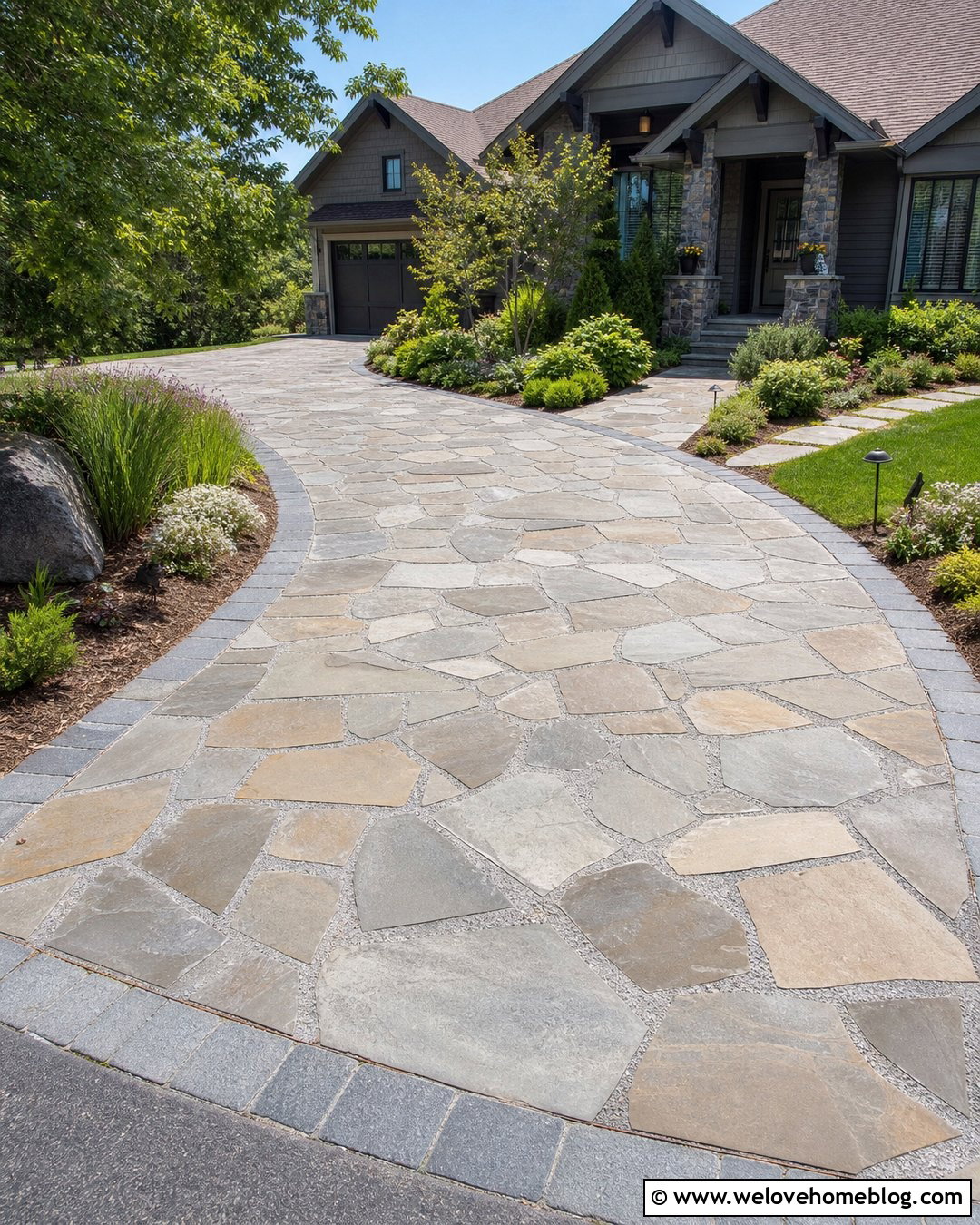
Irregular flagstone creates an organic driveway that feels settled into the landscape rather than placed on top of it. Choose large, vehicle-rated stones in mixed gray, tan, and brown tones. Install them in a gently curved layout, then fill the narrow joints with compacted stone screenings or small gravel. A low cobblestone edge keeps the joint material contained and gives the driveway a finished outline. Along both sides, use ornamental grasses, evergreen shrubs, and native perennials that complement the stone’s natural coloring. This complete look works especially well with Craftsman, ranch, and rustic homes. Keep the stones closely spaced in tire areas to create a smoother driving surface and reduce loose material under the wheels.
2. Rectangular Bluestone Driveway With Brick Border
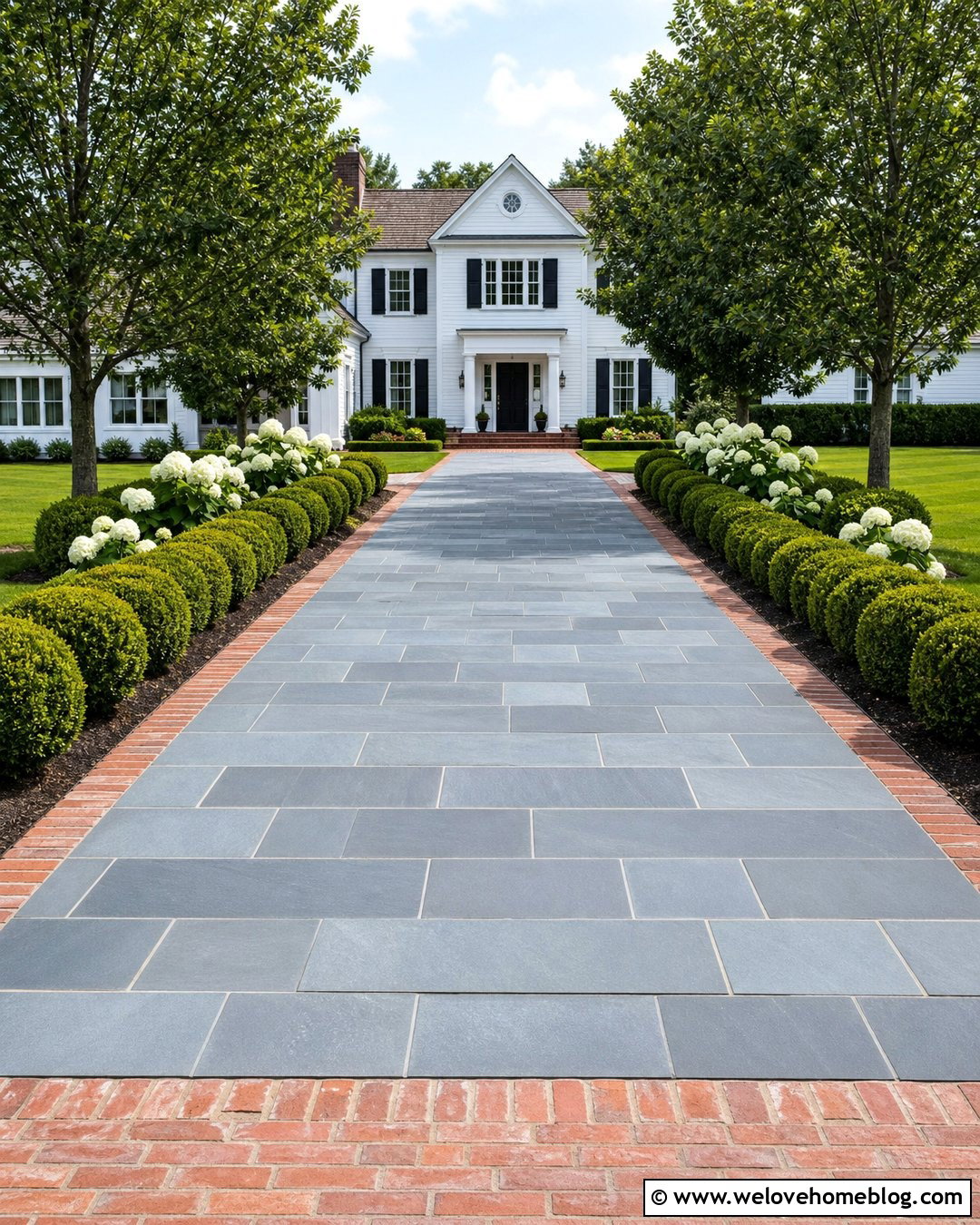
Crisp rectangular bluestone can make a traditional driveway feel organized without looking overly formal. Lay the blue-gray stones in a running bond pattern across a straight driveway, using several compatible sizes to avoid a repetitive grid. A warm red or charcoal brick border creates contrast and clearly separates the stone from the lawn. Carry the same brick into the walkway or front steps so the entrance feels connected. Neatly clipped boxwood, flowering hydrangeas, and a pair of small ornamental trees frame the driveway without hiding the paving. This flat stone driveway suits Colonial and Cape Cod homes particularly well. For a balanced appearance, match the border tone to existing brickwork, shutters, roofing, or masonry elsewhere on the house.
3. Large Limestone Driveway With Grass Joints
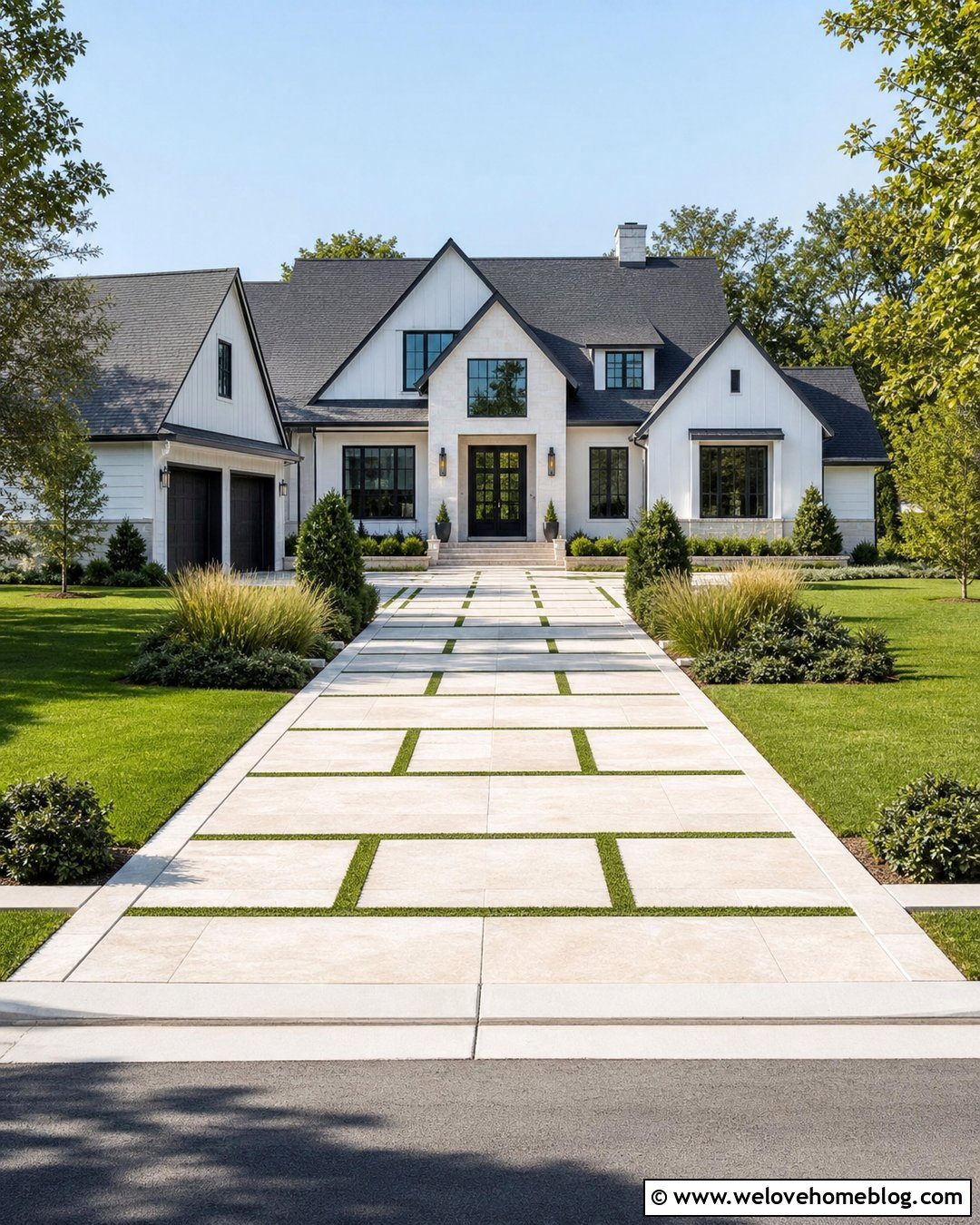
Wide limestone slabs separated by narrow green joints create a light, relaxed driveway with strong architectural lines. Choose dense, vehicle-rated limestone in cream, buff, or pale gray. Arrange the slabs in straight rows with carefully aligned joints, then plant durable, low-growing ground cover between them where the climate and traffic allow. Keep the most heavily traveled tire paths more tightly jointed for easier maintenance. A simple flush steel or limestone border maintains the clean outline. Surround the driveway with open lawn, soft ornamental grasses, and restrained foundation planting. This complete design pairs beautifully with a modern farmhouse or light-colored contemporary home. The pale stone reflects daylight and helps the entrance feel spacious, especially in a smaller front yard.
4. Sandstone Driveway With Cobblestone Edging
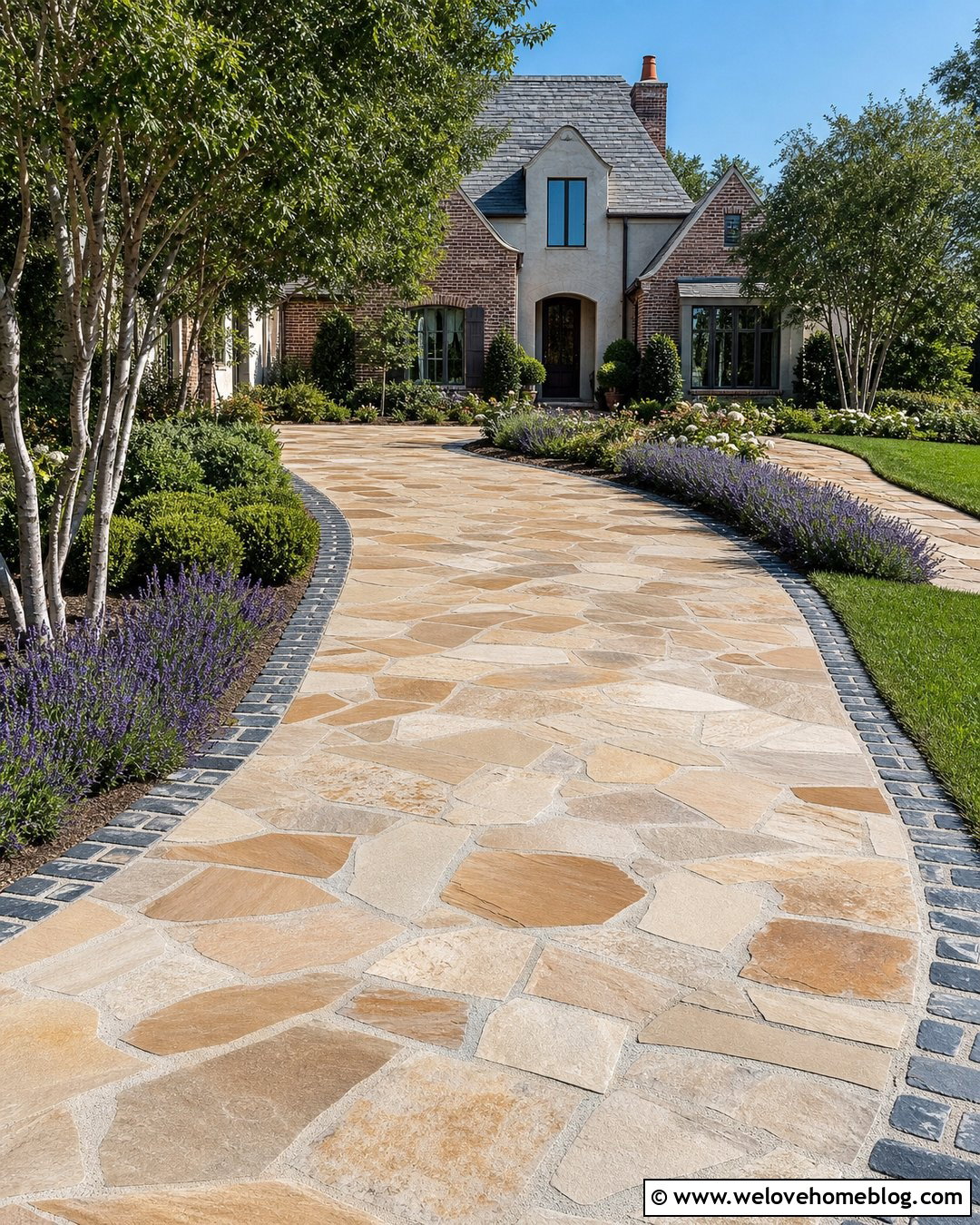
Warm sandstone brings soft gold, beige, rust, and muted brown tones to a welcoming residential entrance. Use irregular or lightly squared flat stones in a broad, gently curved driveway. Dark granite cobblestones around the perimeter provide a durable visual frame and help define the transition to planting beds. Select sandstone with an appropriate surface texture rather than an overly smooth finish, especially in rainy or freezing regions. Layer the landscaping with lavender, compact evergreen shrubs, flowering perennials, and one or two multi-stem trees. The warm palette works naturally with brick, stucco, stone veneer, and cream siding. Repeating the sandstone in the front walkway makes the driveway and house entrance appear planned as one coordinated landscape rather than separate outdoor features.
5. Modern Flat Stone Driveway With Black Gravel
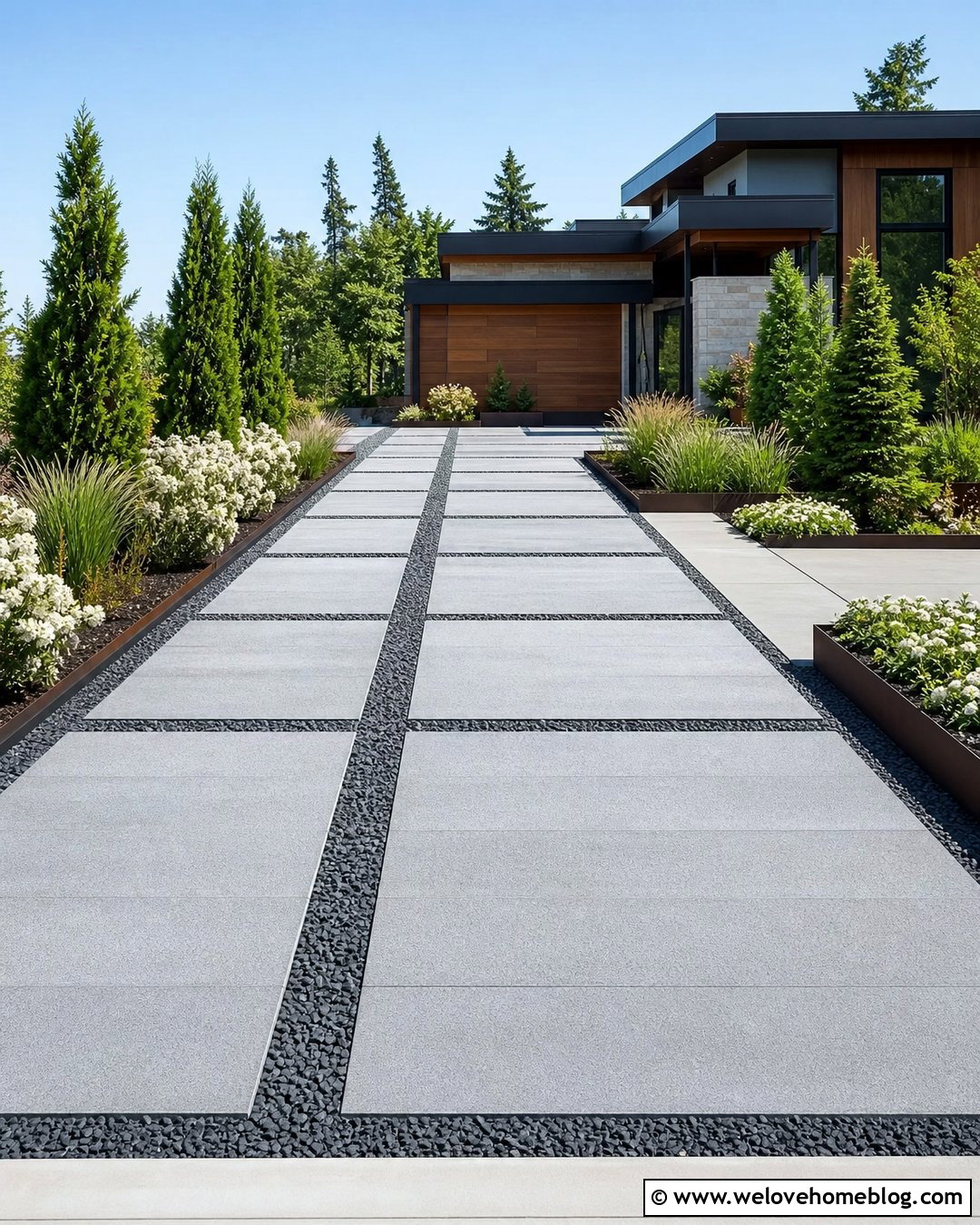
Do you prefer a sharper, more graphic entrance? Combine oversized rectangular gray flat stones with bands of black gravel. The stones can form solid driving lanes while narrow gravel strips run between the lanes and along the edges. Use dark metal edging to keep every transition straight and precise. Minimal landscaping strengthens the contemporary look. Consider sculptural evergreens, compact grasses, white flowering plants, and rectangular planting beds covered with dark mulch. The driveway should lead directly toward a modern home with simple siding, stucco, or mixed wood cladding. This design provides bold contrast without relying on complicated patterns. Keep gravel bands away from frequent turning points, where tires could scatter loose material, and use flat stone across the full parking area.
6. Circular Flagstone Driveway With Center Garden
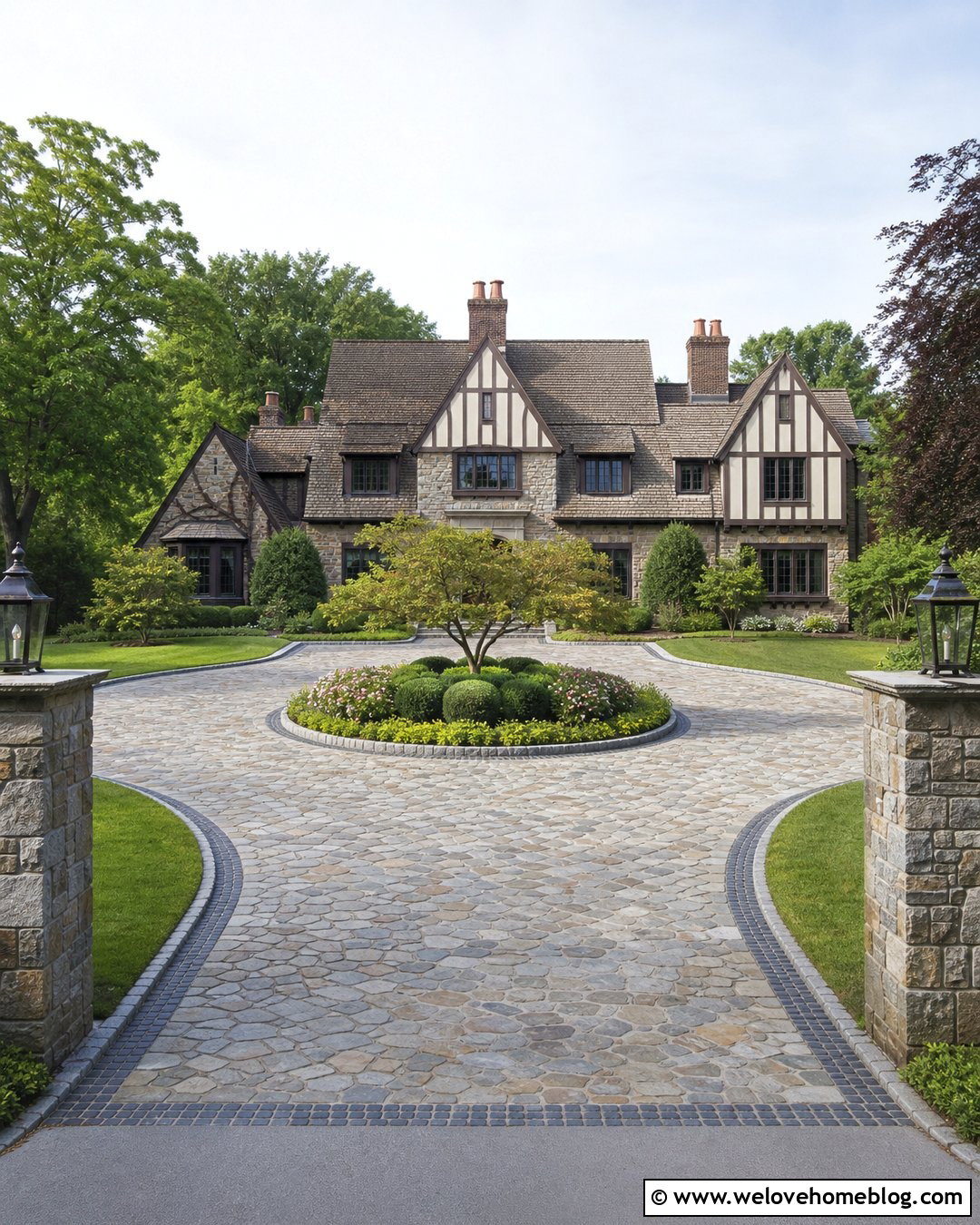
A circular flat stone driveway turns the front yard into a graceful arrival space while improving vehicle flow. Cover the full loop with large irregular flagstones in coordinated gray and brown tones. A dark cobblestone border can define both the outer edge and the central island. In the middle, plant a small ornamental tree surrounded by low shrubs, seasonal flowers, and ground cover that will not block sightlines. Matching stone pillars at the entrance make the curve easy to recognize from the street. This complete arrangement suits larger Colonial, Tudor, Mediterranean, and country homes. Give the driveway generous turning space, and avoid placing tall plants near entry and exit points. Subtle landscape lighting can highlight the island without overwhelming the stonework.
7. Flat Stone Tire Track Driveway With Gravel
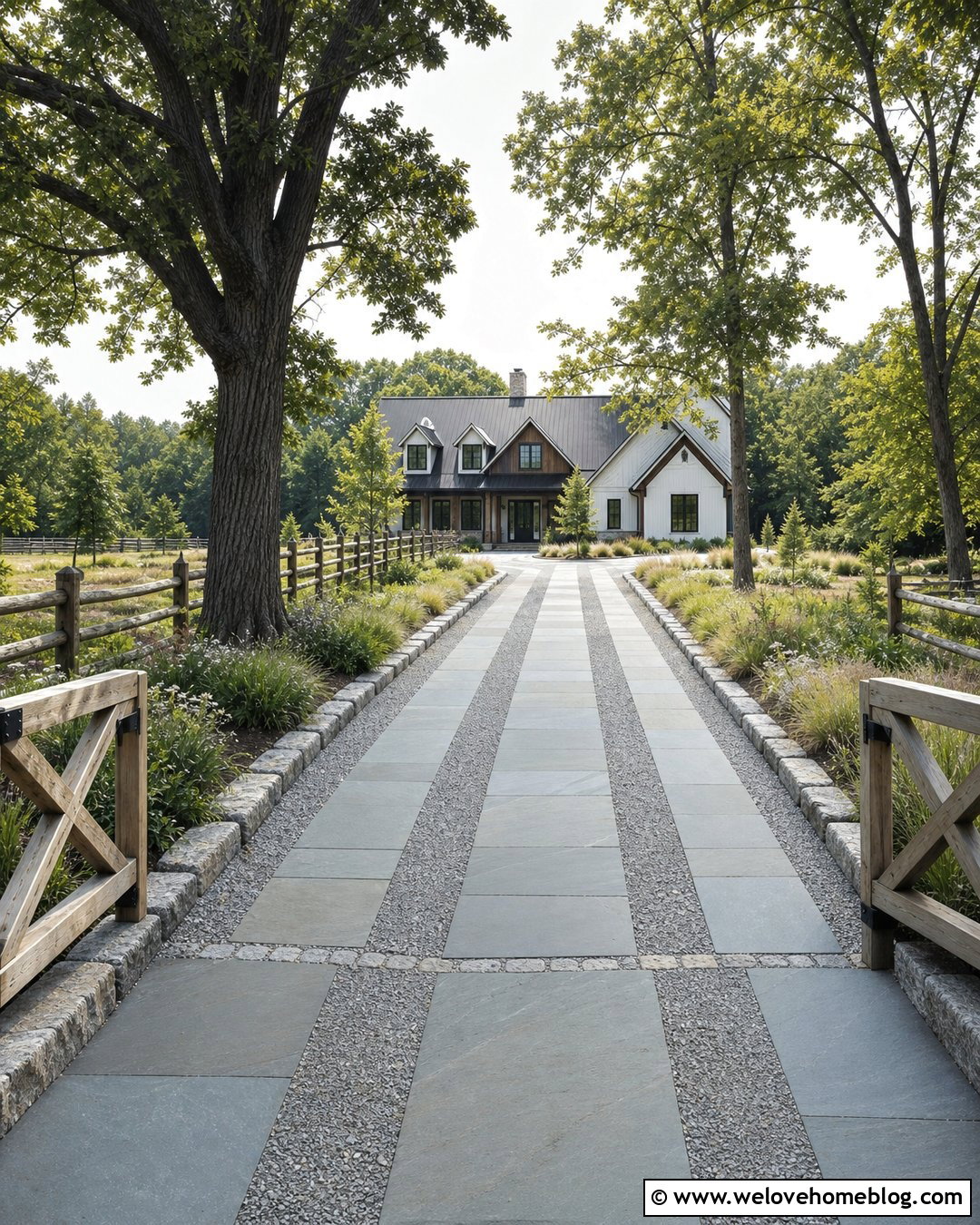
Using flat stone only beneath the vehicle tires delivers a natural appearance with less stone than a fully paved driveway. Build two continuous tracks from large rectangular granite, bluestone, or flagstone slabs. Fill the center and outer areas with compacted gray gravel that closely matches the paving. The coordinated color keeps the surface from looking divided or unfinished. Strong stone or metal edging prevents gravel from spreading into the lawn. This layout looks especially appealing on a long rural driveway leading to a farmhouse, barn-style home, or country cottage. Frame the entrance with shade trees, low meadow planting, and a simple wooden gate. Ensure the stone tracks are wide enough for normal vehicle movement and continue solid paving through turning and parking zones.
8. Gray Slate Driveway With Stone Pillars
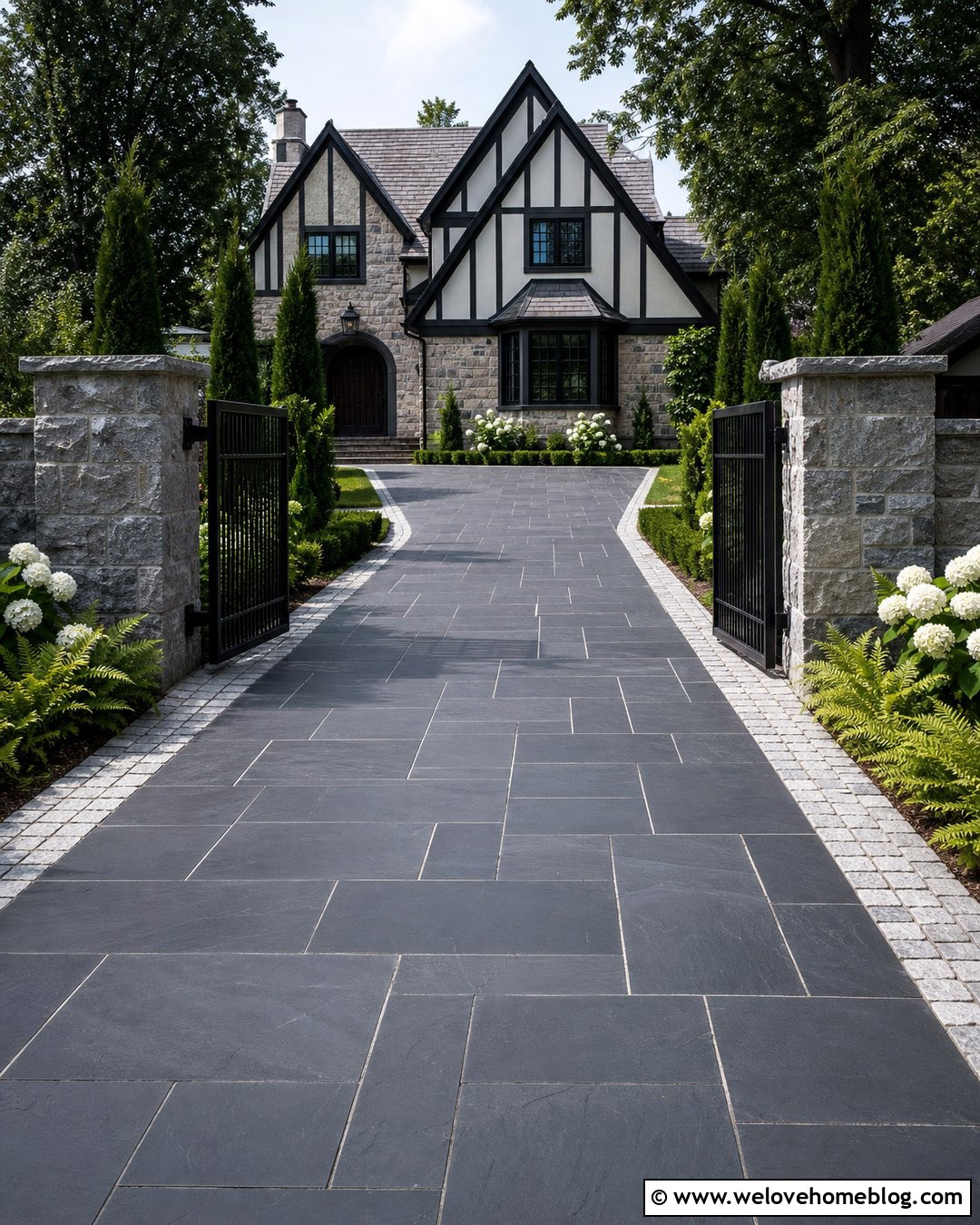
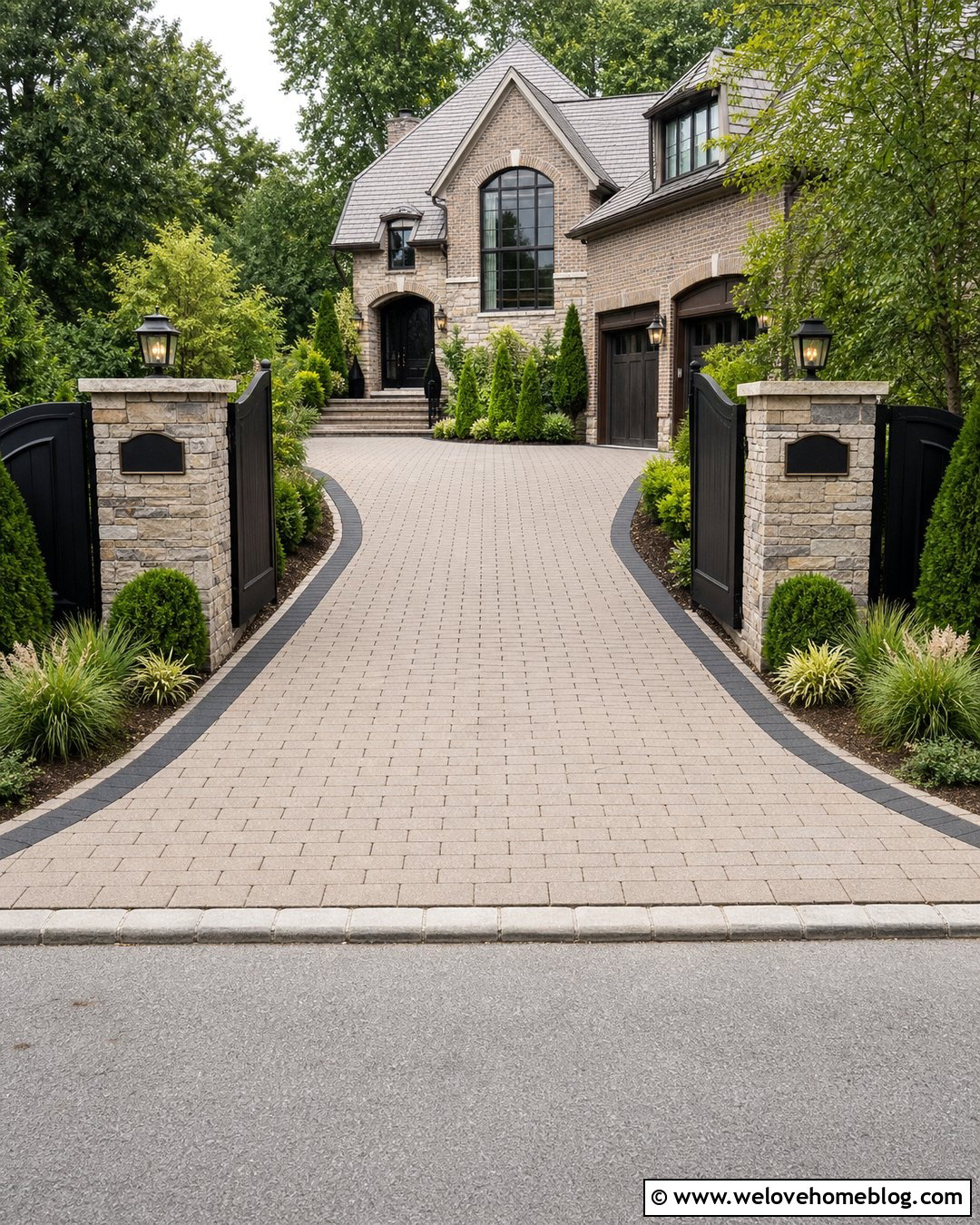
Deep gray slate can create a dramatic entrance when its layered color and natural texture are allowed to stand out. Use large, flat slate pieces in a random rectangular pattern across a straight or lightly curved driveway. Frame the surface with a narrow strip of lighter granite setts to sharpen the edges. At the street, build two substantial stone pillars using masonry that repeats colors found in the slate. Simple metal lanterns and a restrained gate can complete the entrance. Use green planting rather than too many flower colors. Boxwood, ferns, white hydrangeas, and upright evergreens provide quiet contrast. This flat stone driveway works well with Tudor, transitional, and dark contemporary homes, particularly when the roof or facade contains similar charcoal tones.
9. Flat Granite Driveway With Paver Apron
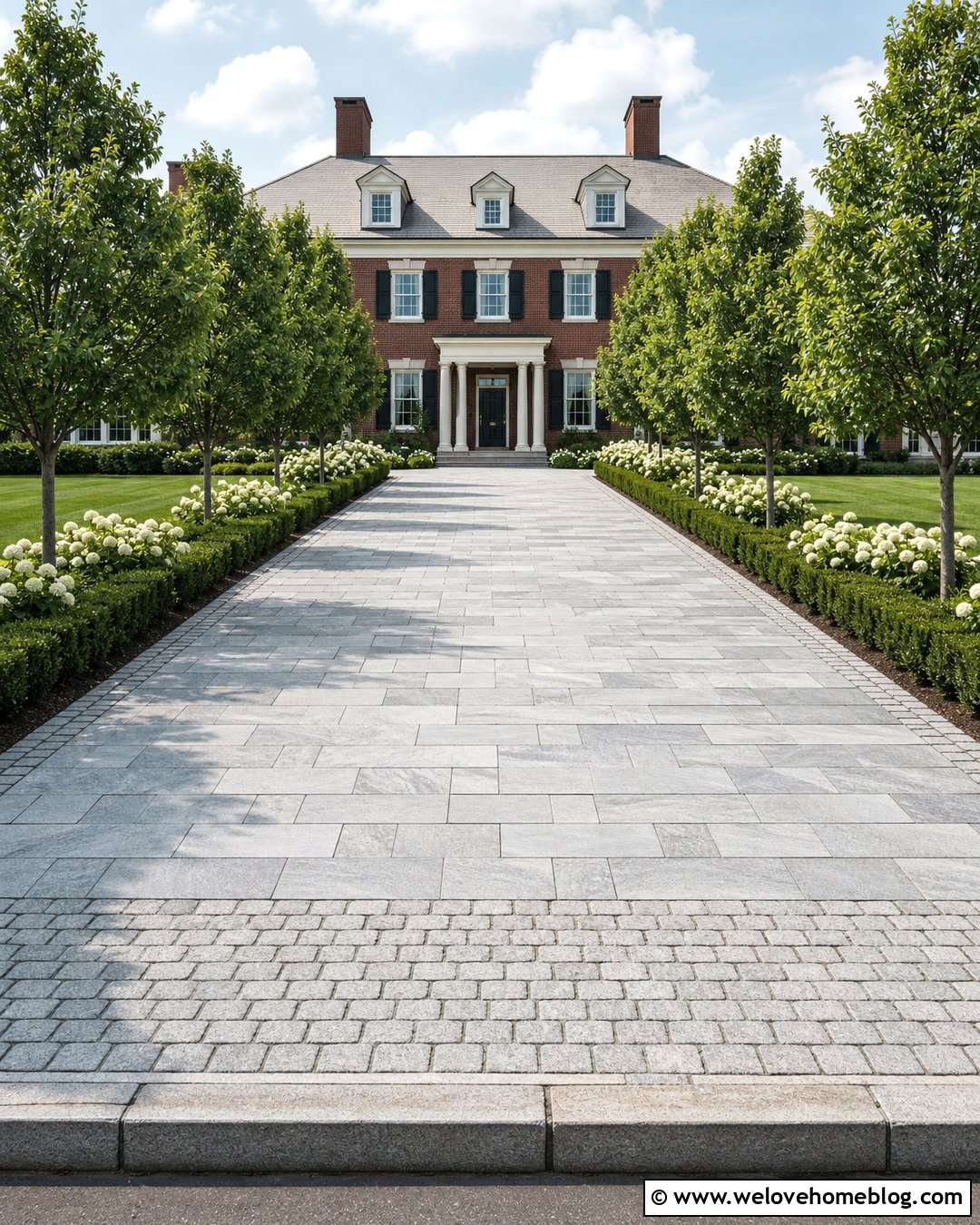
Granite is an excellent visual choice for an entrance that needs a structured, substantial appearance. Lay large, flame-textured granite slabs across the main driveway in a staggered rectangular pattern. At the street, add a wide apron made from smaller granite pavers or setts. The change in scale marks the entrance and creates a refined transition from the road. Continue a narrow paver ribbon around the driveway to tie the surfaces together. Low hedges, white flowering shrubs, and evenly spaced ornamental trees reinforce the orderly layout. This design complements formal Colonial, Georgian, and traditional brick houses. Select granite colors that pick up tones from the facade, and keep the surface pattern simple so the driveway supports the architecture instead of competing with it.
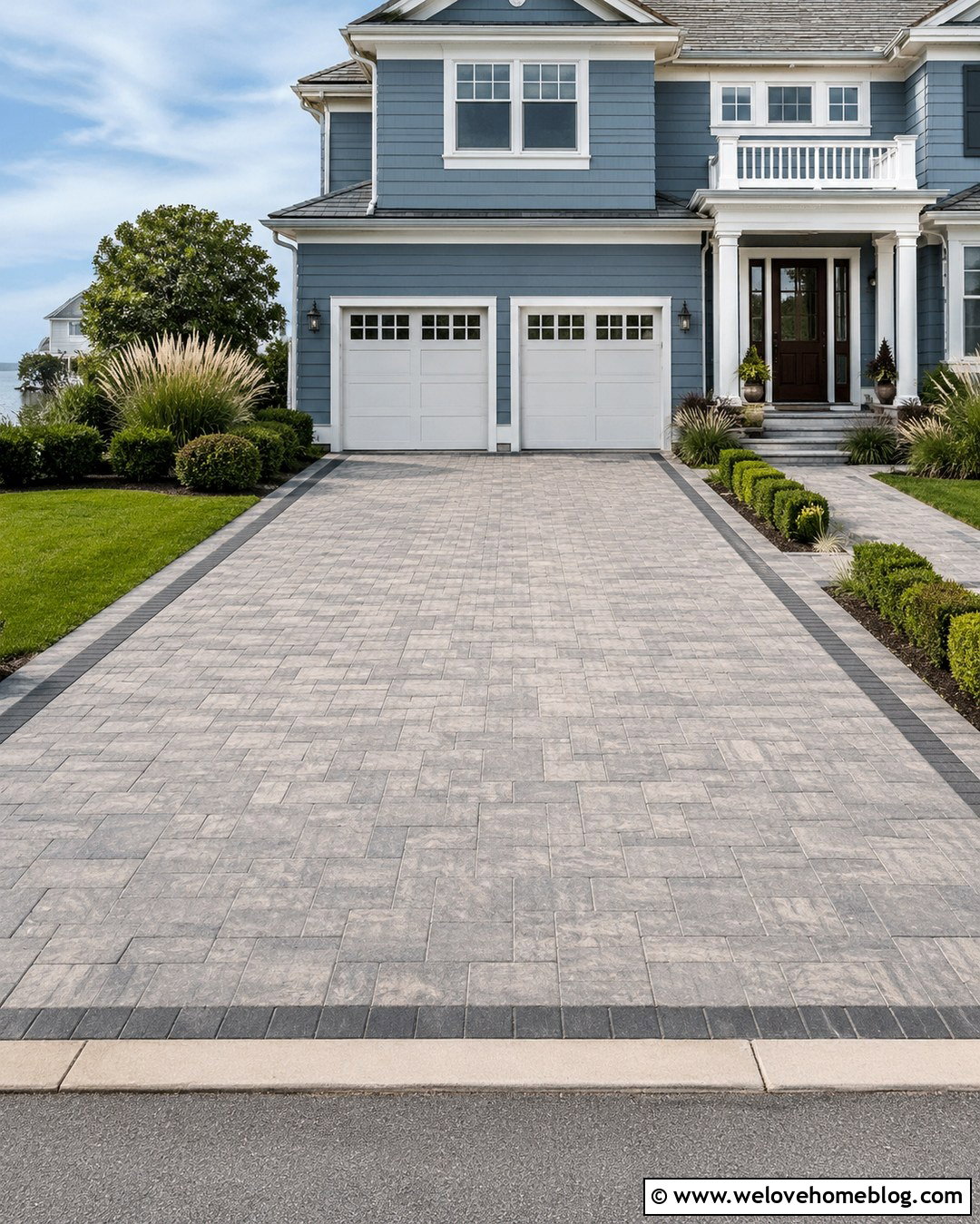
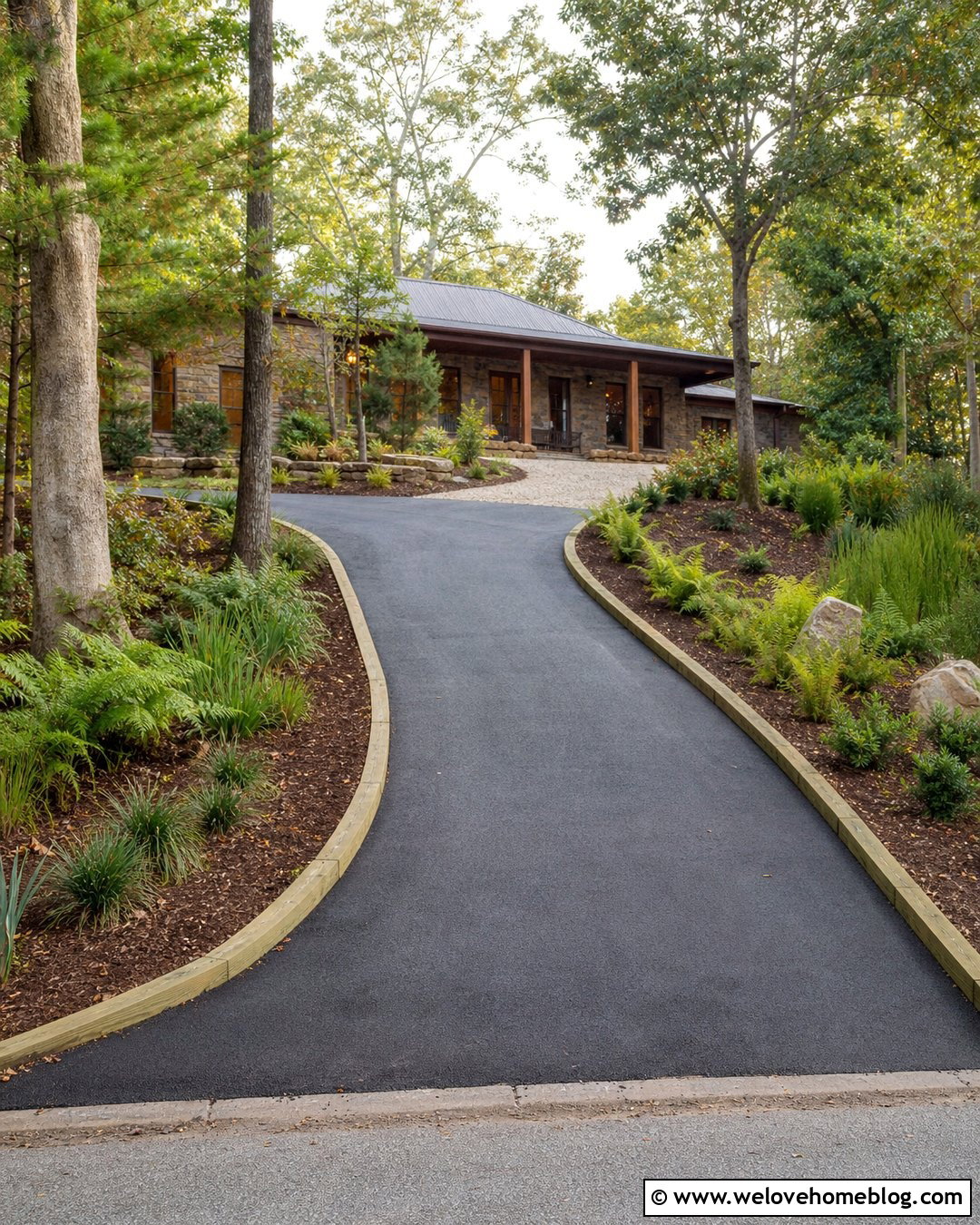
10. Flat Stone Driveway With Creeping Thyme Joints
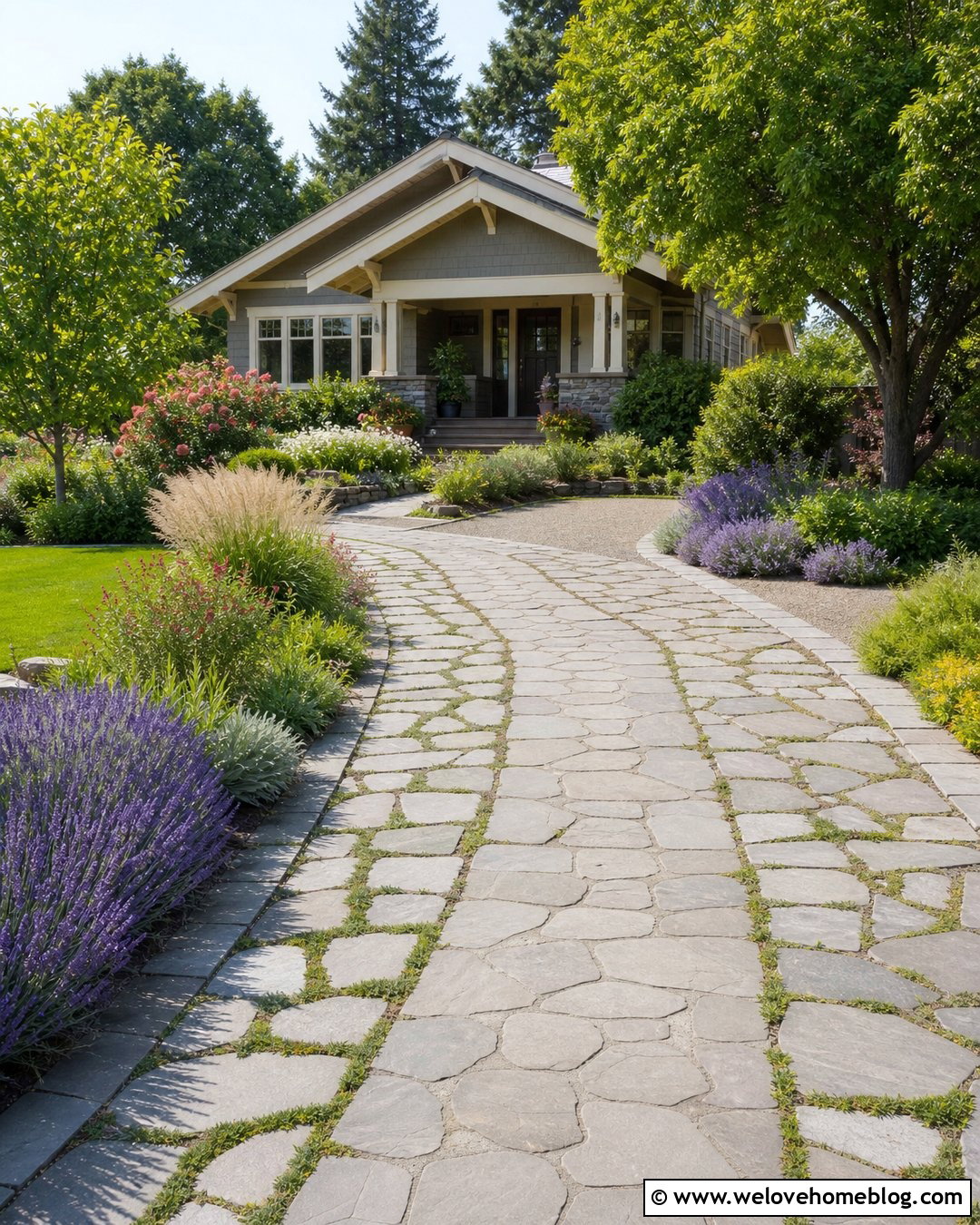
A driveway with planted joints can feel more like a garden, but the layout must match the amount of traffic it receives. Set broad, irregular flagstones closely together in the main wheel paths and allow slightly wider joints near the edges. Plant low-growing creeping thyme or another locally suitable, traffic-tolerant ground cover in the less traveled gaps. Add a flush stone border so the driveway transitions smoothly into curved planting beds. Lavender, catmint, compact grasses, and flowering shrubs can extend the soft planting theme. This look suits a cottage, bungalow, or relaxed Craftsman home. Use it most confidently on a sunny, lightly used residential driveway. In parking and turning areas, replace living joints with stable stone screenings to simplify care and protect the plants.
11. Straight Limestone Driveway With Boxwood Borders
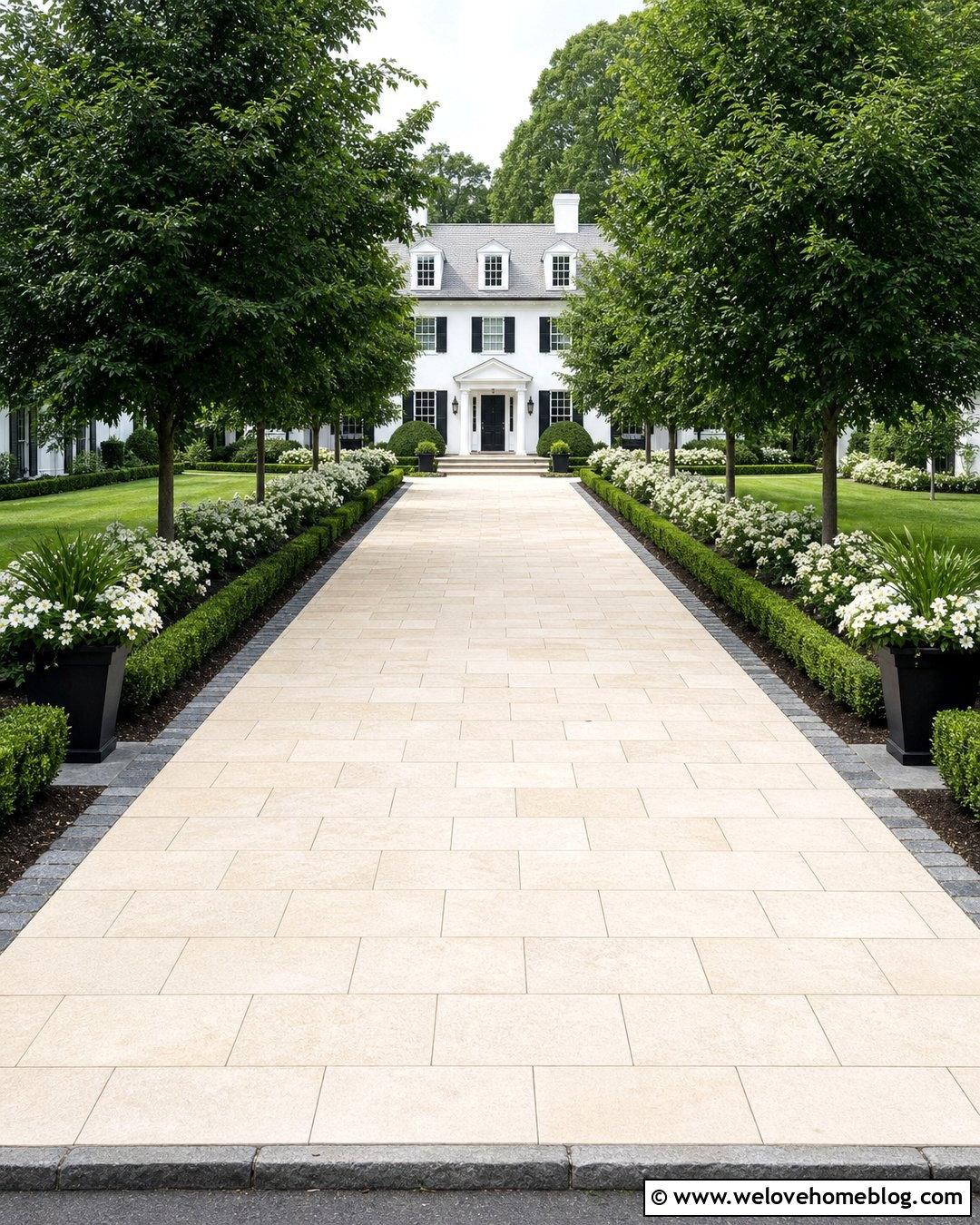
A long, straight driveway gains a sense of order when pale limestone and clipped greenery work together. Install large rectangular limestone slabs in a simple running bond pattern, using tight joints and a smooth visual rhythm. Define both sides with darker limestone setts or gray granite blocks. Beyond the edging, plant continuous low boxwood hedges with occasional breaks for a walkway, drainage outlet, or planting bed. A pair of symmetrical trees near the house draws the eye toward the front entrance. This formal composition works well with Georgian, Colonial, and French-inspired homes. Warm exterior lighting, black metal accents, and symmetrical planters can reinforce the design. Keep the hedge low enough to preserve visibility when backing into the road or approaching the driveway entrance.
12. Curved Flagstone Driveway With Native Landscaping
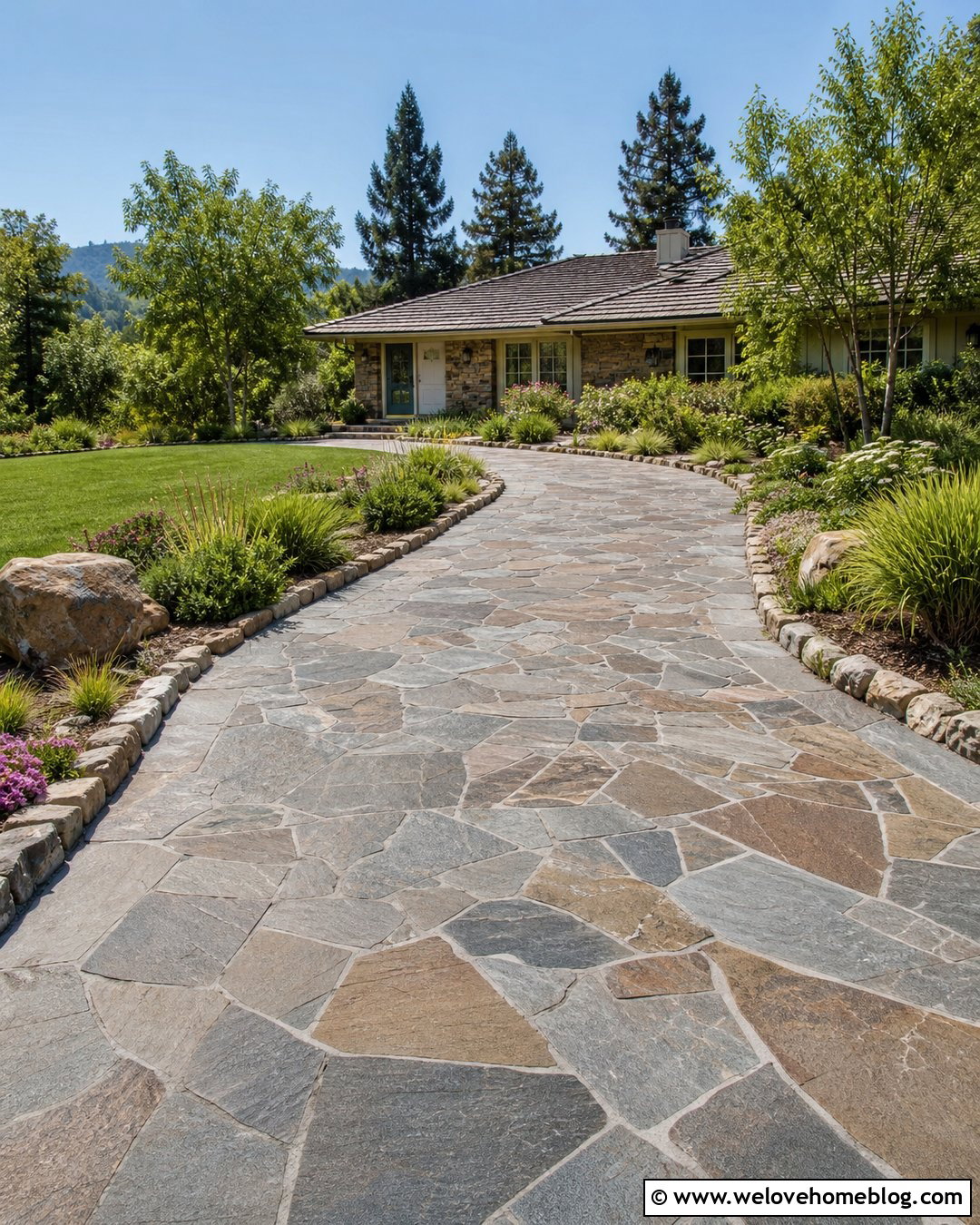
Soft curves and native planting can help a broad driveway blend into a natural front yard. Use irregular gray-brown flagstone across a sweeping layout that follows the property’s contours. Edge the paving with weathered fieldstone, keeping the border low and slightly uneven for an informal finish. Create layered beds along the outside curve with native grasses, flowering perennials, evergreen shrubs, and small trees suited to local conditions. On the inside curve, maintain lower plants so drivers have a clear view. This complete driveway design pairs well with ranch, Craftsman, mountain, and wooded homes. Repeat several stone colors from the driveway in the facade or front walkway. Gentle curves should feel intentional and spacious rather than creating tight turns that are difficult to navigate.
13. Flat Stone Driveway With Brick Ribbons
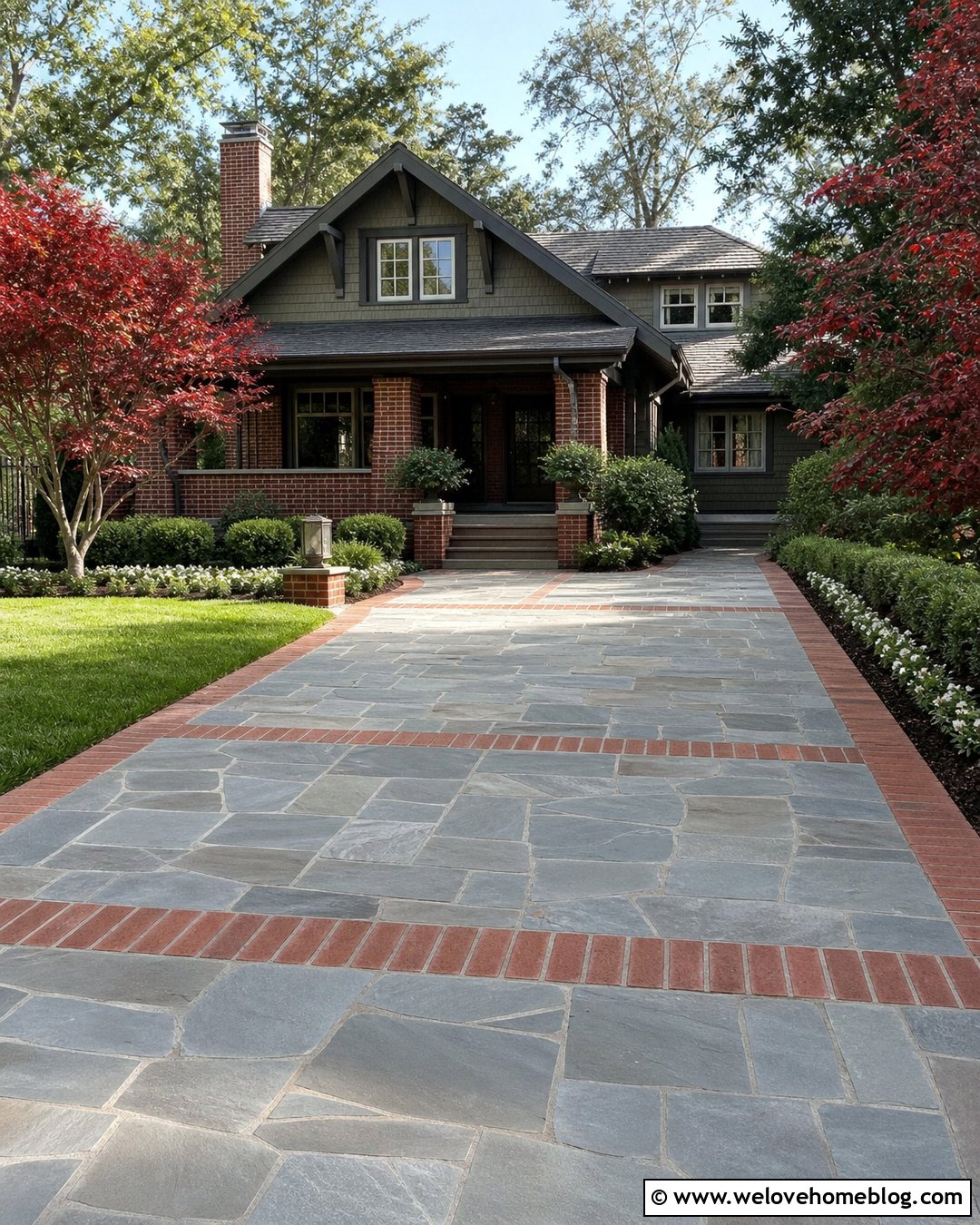
Brick ribbons add warm color and clear structure to a broad flat stone surface. Choose large gray or tan flagstones for the main paving, then insert narrow clay brick bands across the driveway at regular intervals. The brick can also outline the edges and continue into the front walkway. These repeated lines visually break up a large paved area and connect the driveway with a brick house or chimney. Use low evergreen shrubs, red-leaf ornamental trees, and simple lawn panels to support the warm palette. This design suits traditional, Craftsman, and transitional architecture. Keep the ribbons flush with the surrounding stone to create an even driving surface. A brick apron near the street can make the entrance appear wider and more deliberate.
14. Light Quartzite Driveway With Dark Stone Border
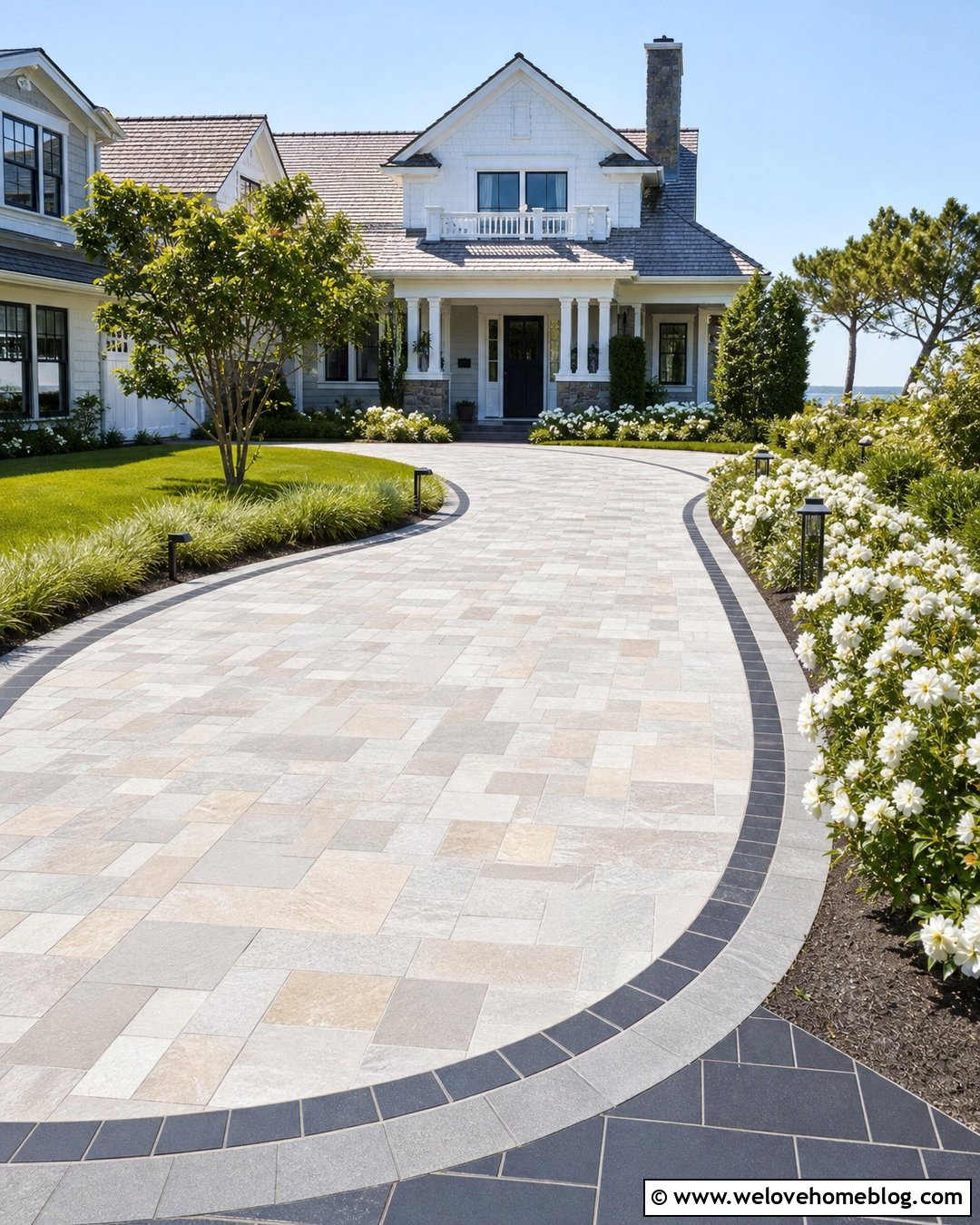
Bright quartzite can give a front entrance a clean, upscale finish while retaining the movement and variation of natural stone. Select flat slabs in pale silver, cream, and soft beige, then lay them in a random rectangular pattern. Surround the driveway with a dark charcoal granite or basalt border to create a crisp outline. Continue the dark material around planting beds or across the surface as a narrow decorative band. Green ornamental grasses, white flowering shrubs, and a manicured lawn keep the color scheme fresh. This combination looks particularly effective beside modern, transitional, or coastal-inspired homes. Because light-colored paving can reveal soil and leaf marks, avoid placing messy fruiting trees directly above it. Good drainage will also help keep the brighter surface looking consistent.
15. Rustic Flat Stone Driveway With Timber Edging
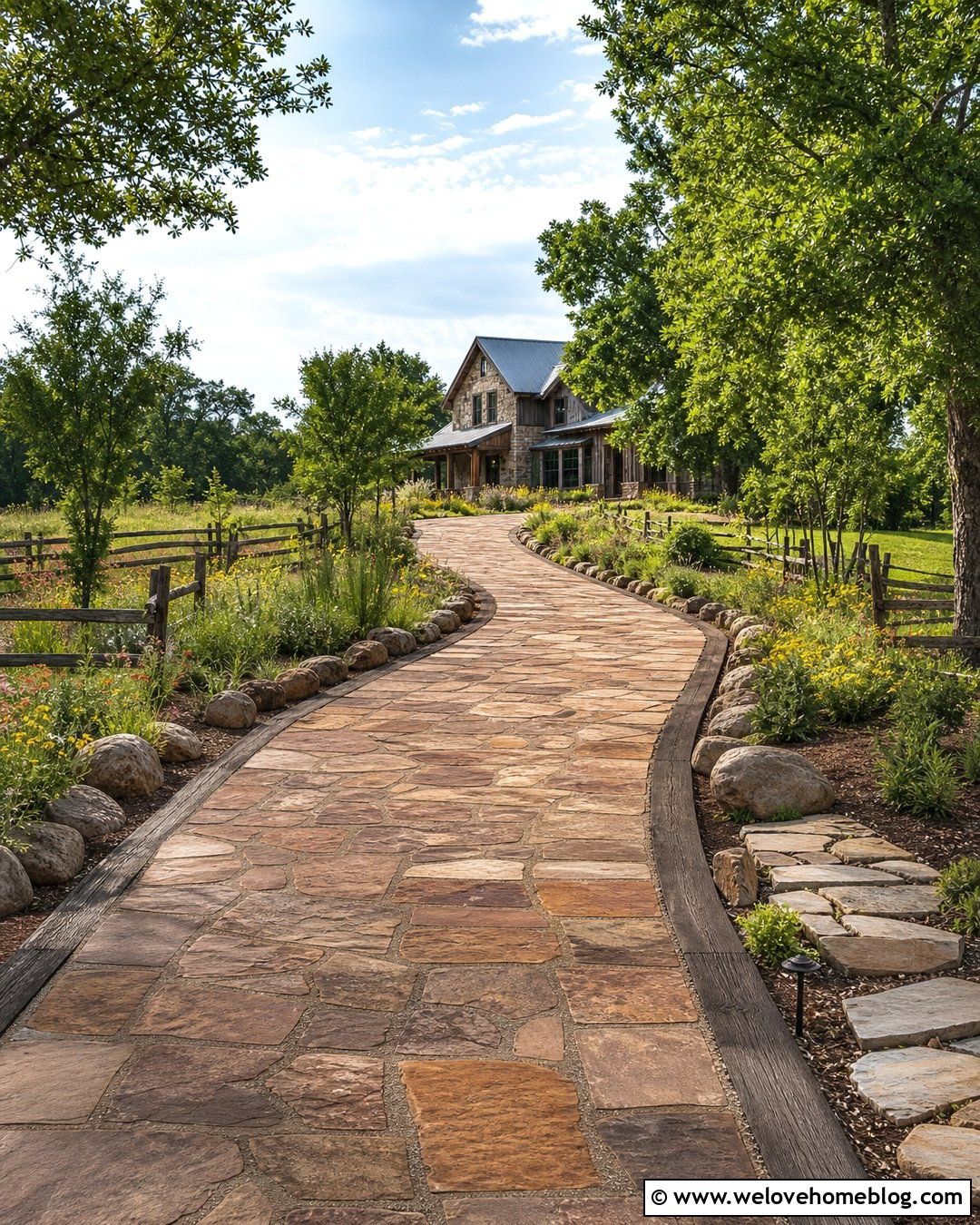
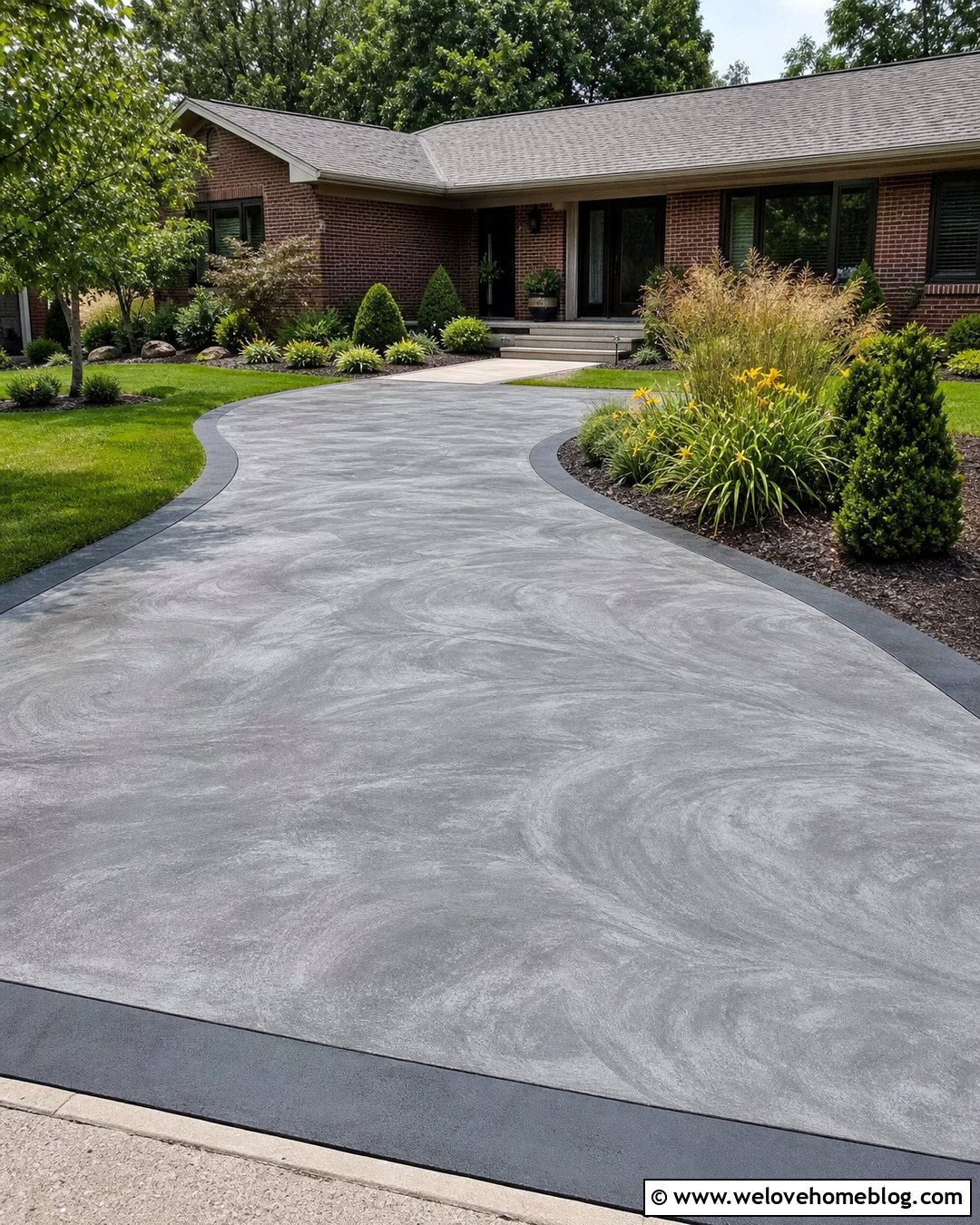
For a relaxed country entrance, combine earthy flat stone with heavy timber edging and informal planting. Use broad sandstone or brown flagstone pieces with natural edges, laying them in a random pattern across a gently winding driveway. Install pressure-rated landscape timbers along selected straight sections, while using larger fieldstones around curves where wood would be difficult to shape. Add meadow grasses, flowering perennials, split-rail fencing, and small clusters of native shrubs. This complete look fits log homes, cabins, ranch houses, and rustic farmhouses. Keep timber slightly below the finished paving surface to avoid creating a harsh raised edge. Near the garage and street apron, switch to a stronger stone border that can better handle frequent tire contact and snow-clearing equipment.
16. Flat Stone Driveway With Grass Center Strip
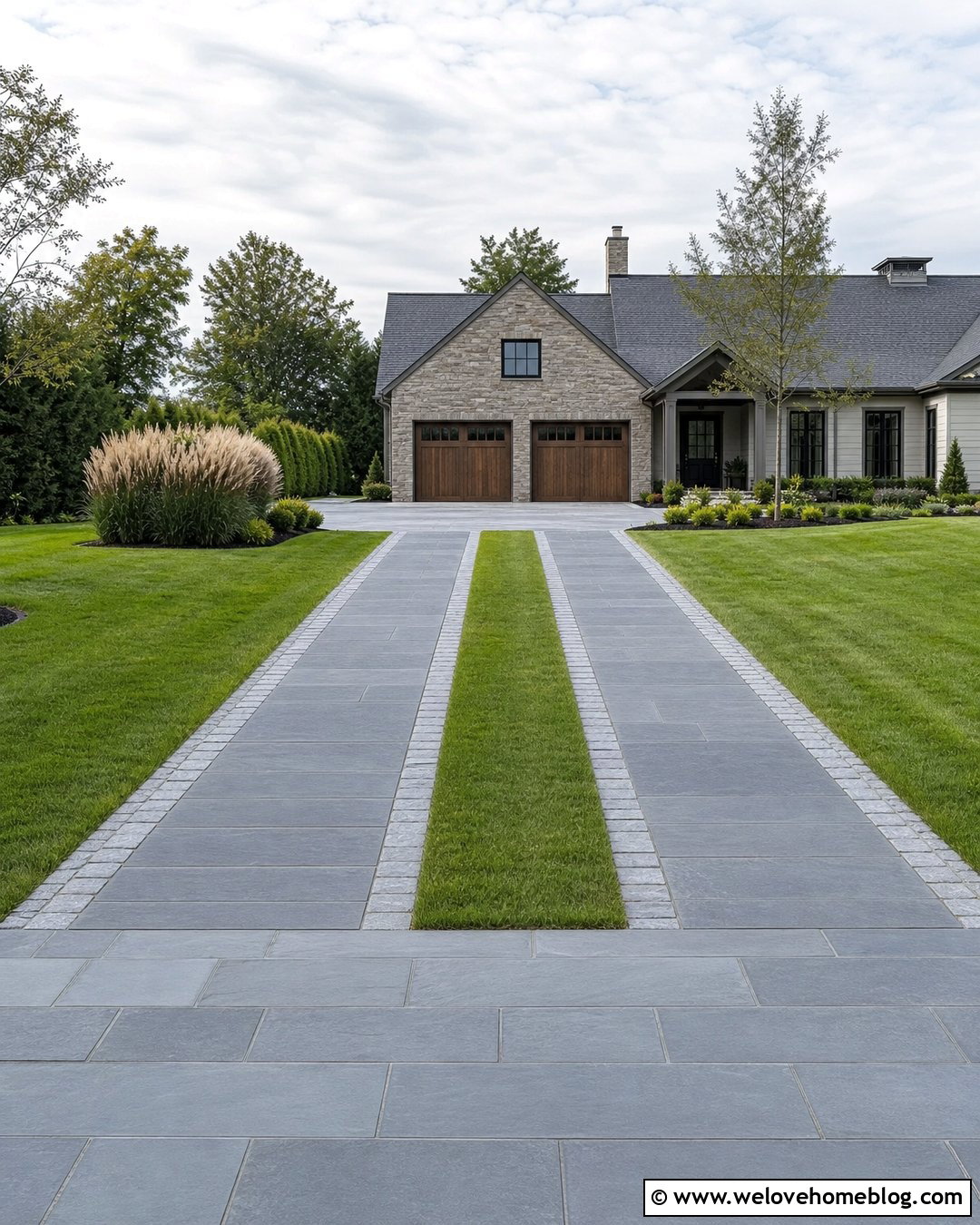
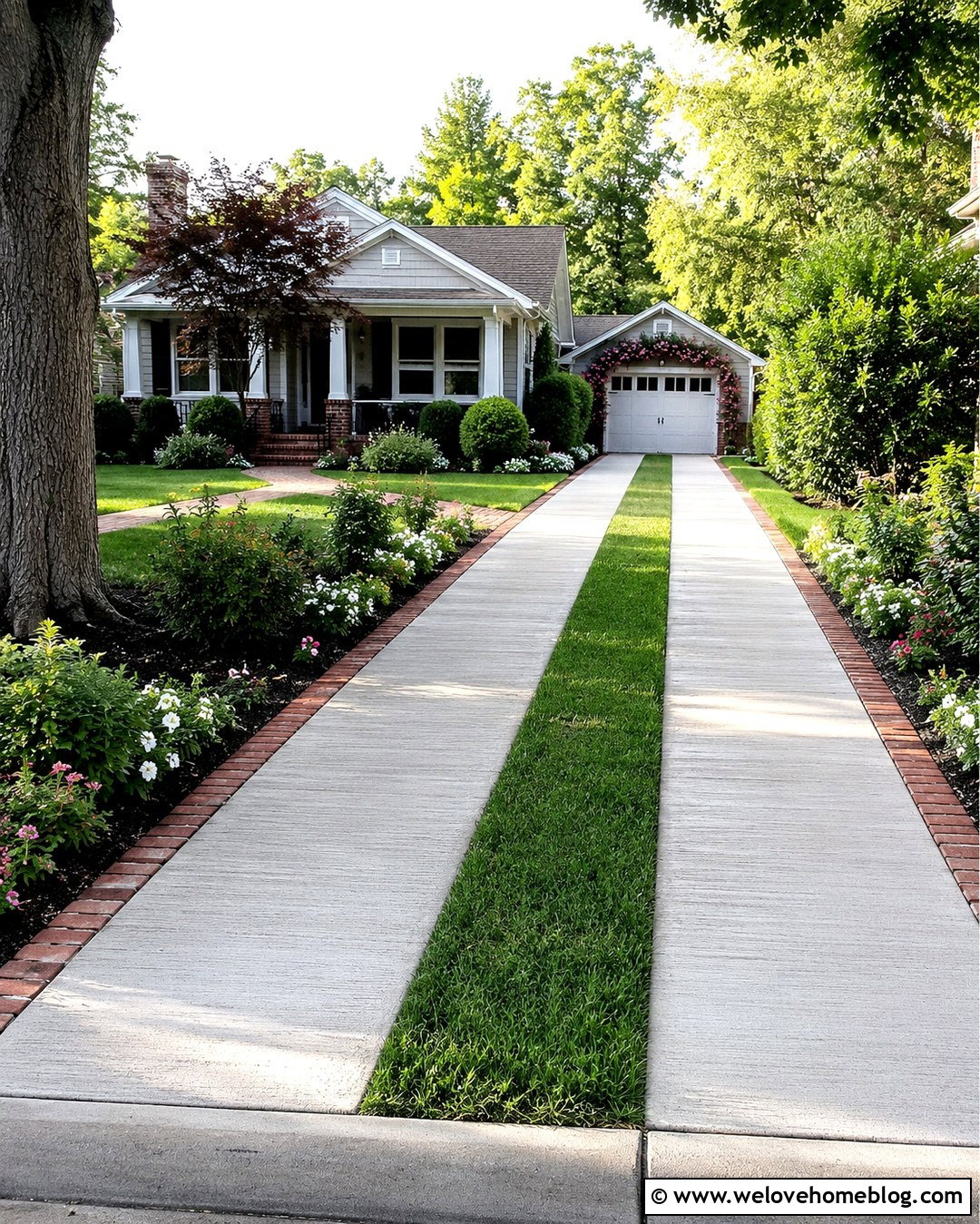
A green center strip can reduce the visual weight of a wide driveway and help it blend with the lawn. Build two broad driving lanes from rectangular bluestone, granite, or dense limestone slabs. Leave a continuous planted strip between them, sized so vehicle tires remain comfortably on the stone. Frame the outer edges with matching stone setts and connect the lanes with full-width paving at the street, garage, and turning area. Choose resilient turf or a suitable low ground cover for the center. This design works well with ranch homes, contemporary farmhouses, and properties with generous front lawns. Keep irrigation controlled so water does not constantly wash across the paving. Regular trimming will preserve the strong lines and prevent grass from creeping over the stone.
17. Flat Stone Driveway With Matching Walkway
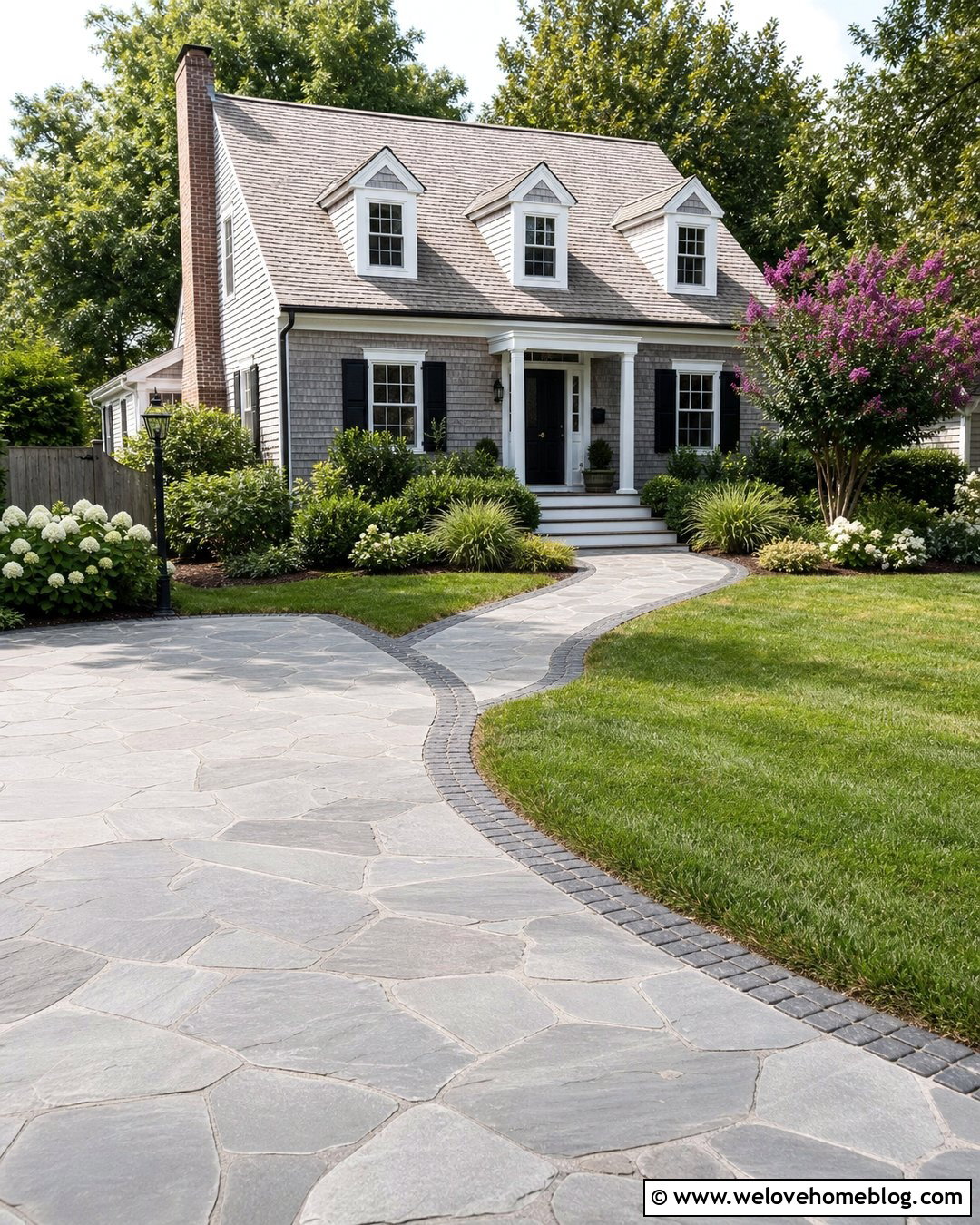
A matching walkway can make the entire front entrance look larger and more cohesive. Pave the driveway with irregular gray flagstone, then branch a gently curved path from one side toward the front door. Use the same stone type and joint color on both surfaces, but choose slightly smaller pieces for the walkway. A continuous cobblestone or brick border can outline the driveway and path while visually linking them. Fill the space between both routes with lawn, layered shrubs, ornamental grasses, and a small flowering tree. This complete arrangement works with nearly any home style because the stone selection can follow the architecture. Make the walkway entrance broad and easy to notice so guests do not automatically walk along the vehicle area.
18. Flat Stone Driveway With Drainage Channel
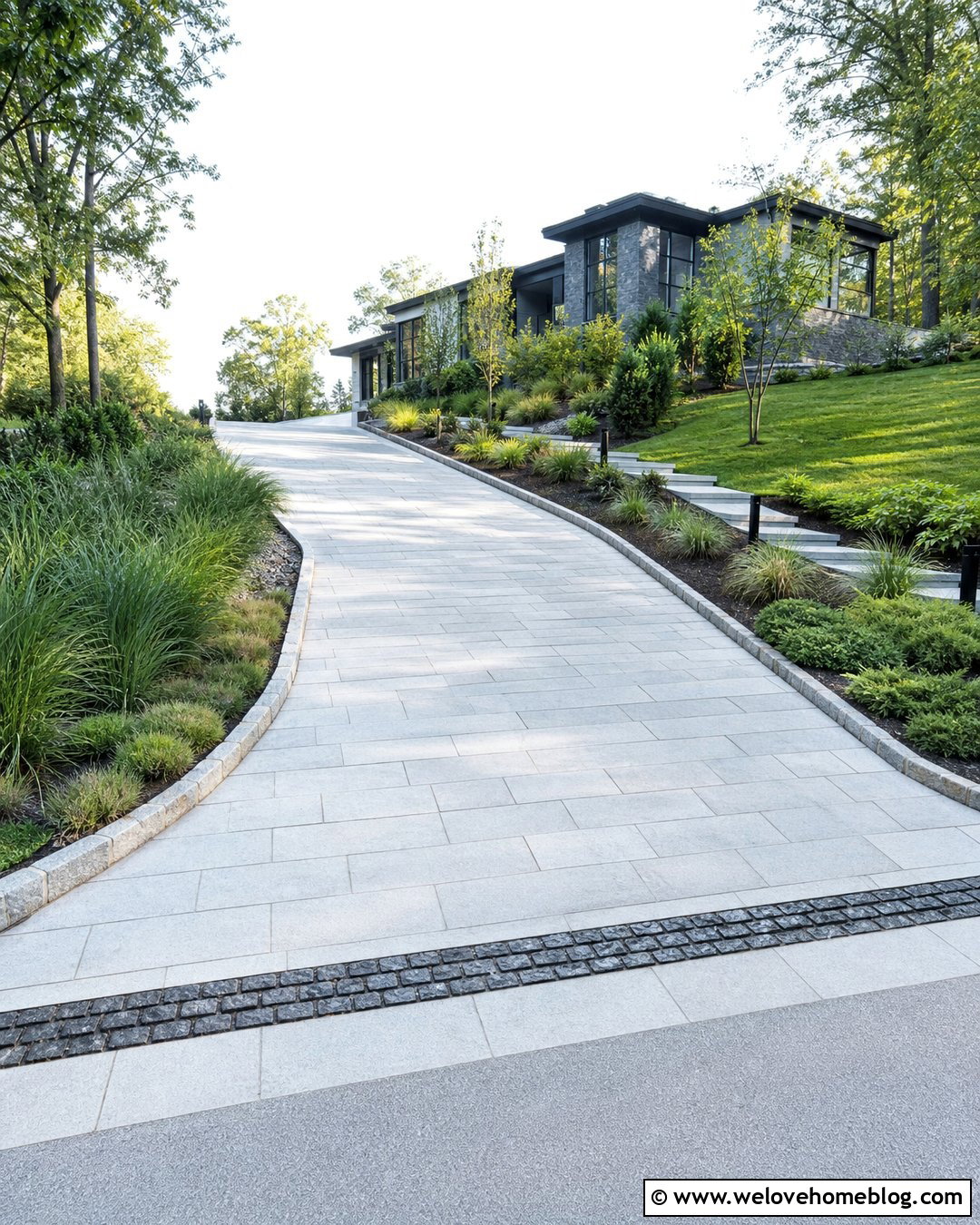
Heavy rain can become part of the design rather than an afterthought. Install large rectangular flagstones in a gently sloped driveway, then place a narrow stone-lined drainage channel along the lower edge. Dark cobblestones, granite setts, or smaller flat stones can define the channel and contrast with the main paving. Direct collected water toward an approved drain, planted swale, or other suitable drainage area. Moisture-tolerant grasses and shrubs can soften the channel without obstructing flow. This practical design suits sloped suburban lots, hillside homes, and properties with broad paved entrances. Keep the drainage feature visible enough for routine cleaning. A coordinated stone border and walkway will help the channel appear integrated rather than resembling a separate utility installation.
19. Mixed Flat Stone Driveway With Gravel Courtyard
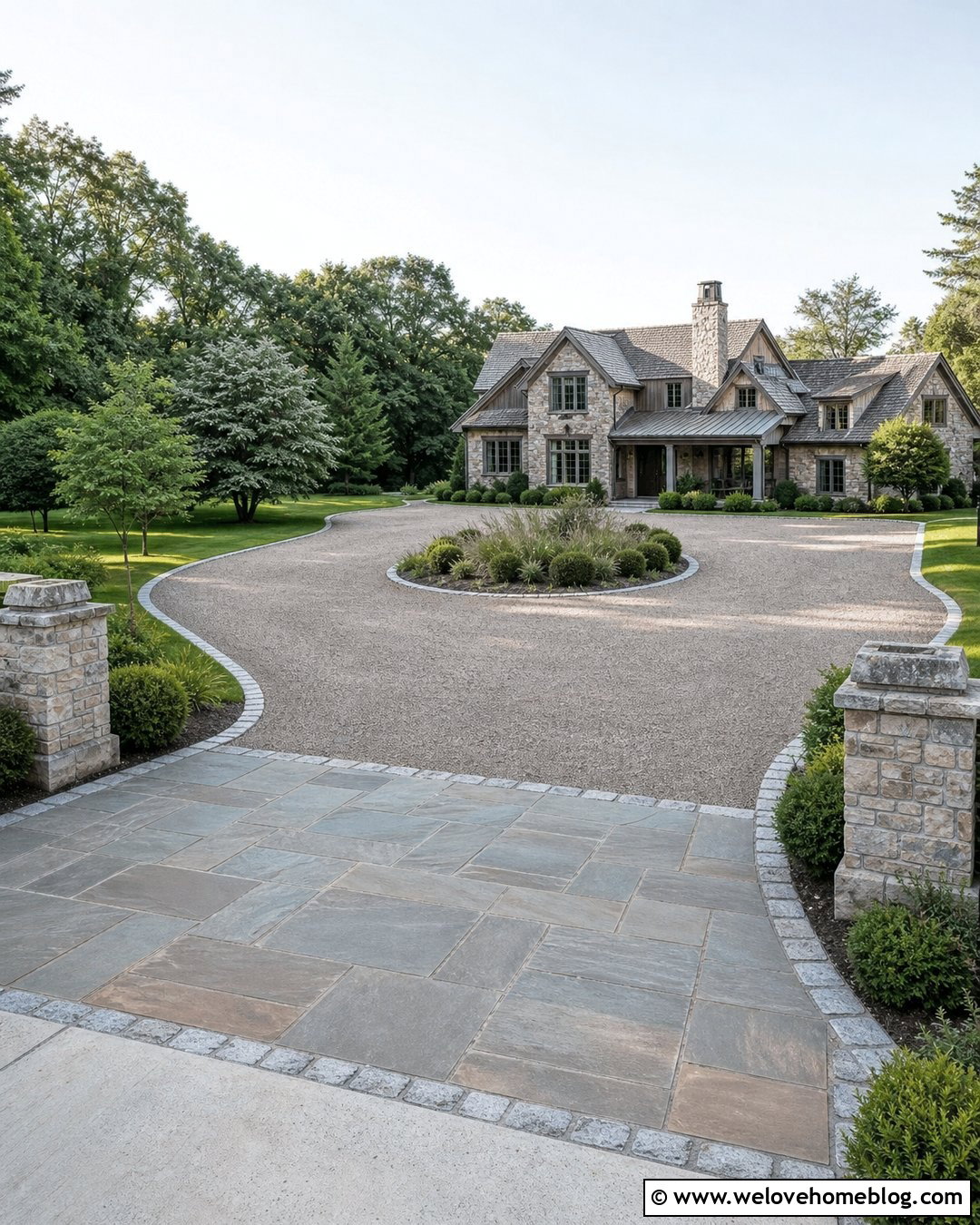
A mixed-material driveway can place premium flat stone where it has the strongest visual and practical impact. Use large flagstones for the street apron, parking pad, and walkway to the house. Cover the connecting driveway or central courtyard with compacted gravel in a closely related color. Outline every gravel section with flat stone or granite setts to prevent spreading and create smooth transitions. A small central planting bed can organize a broad courtyard while giving vehicles room to turn. This layered design is suitable for farmhouse, country, and European-inspired homes. Repeat the same stone around entry pillars or front steps for consistency. Keeping the material palette limited to two or three colors will make the combination feel intentional rather than pieced together.
20. Geometric Flat Stone Driveway With Linear Landscaping
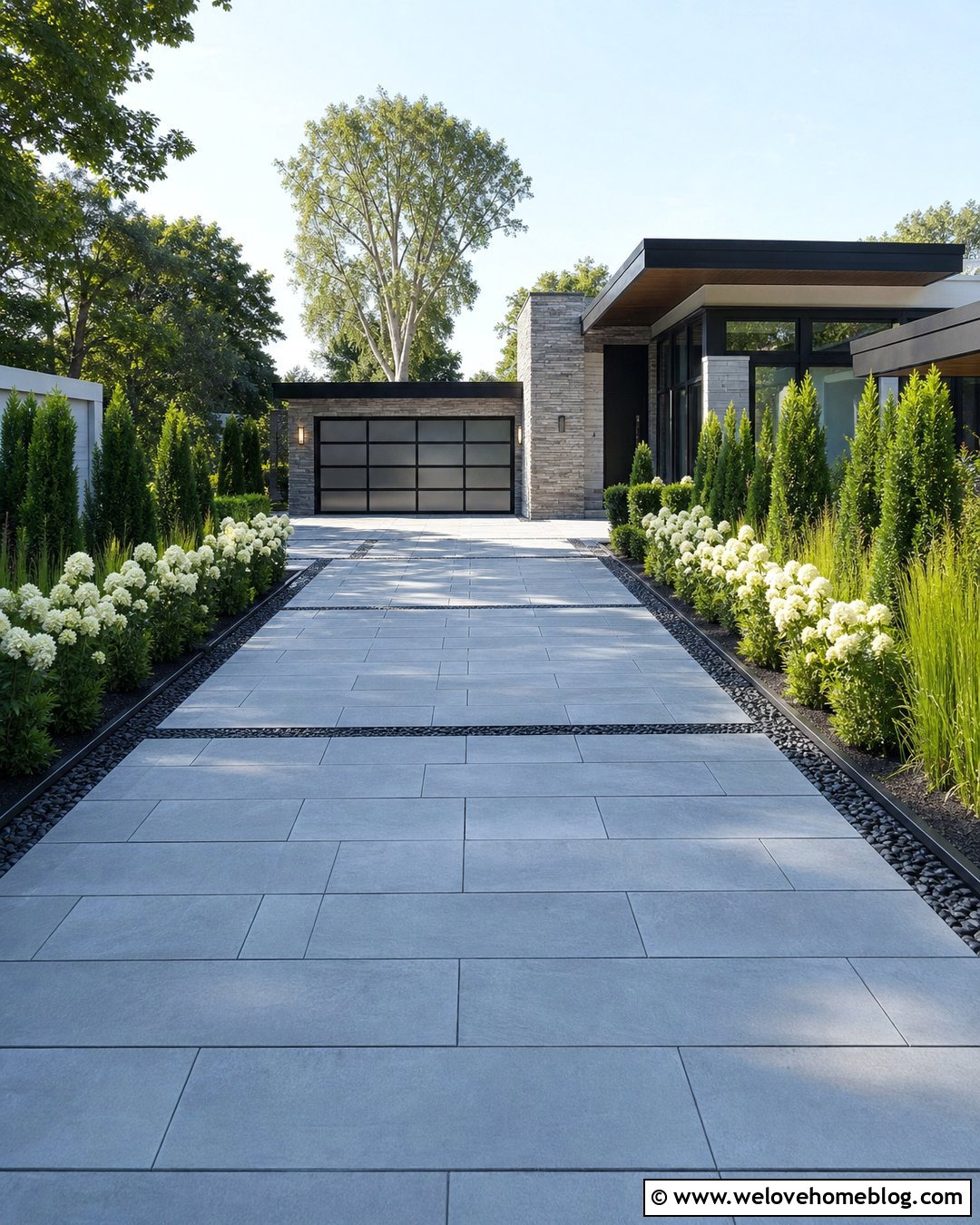
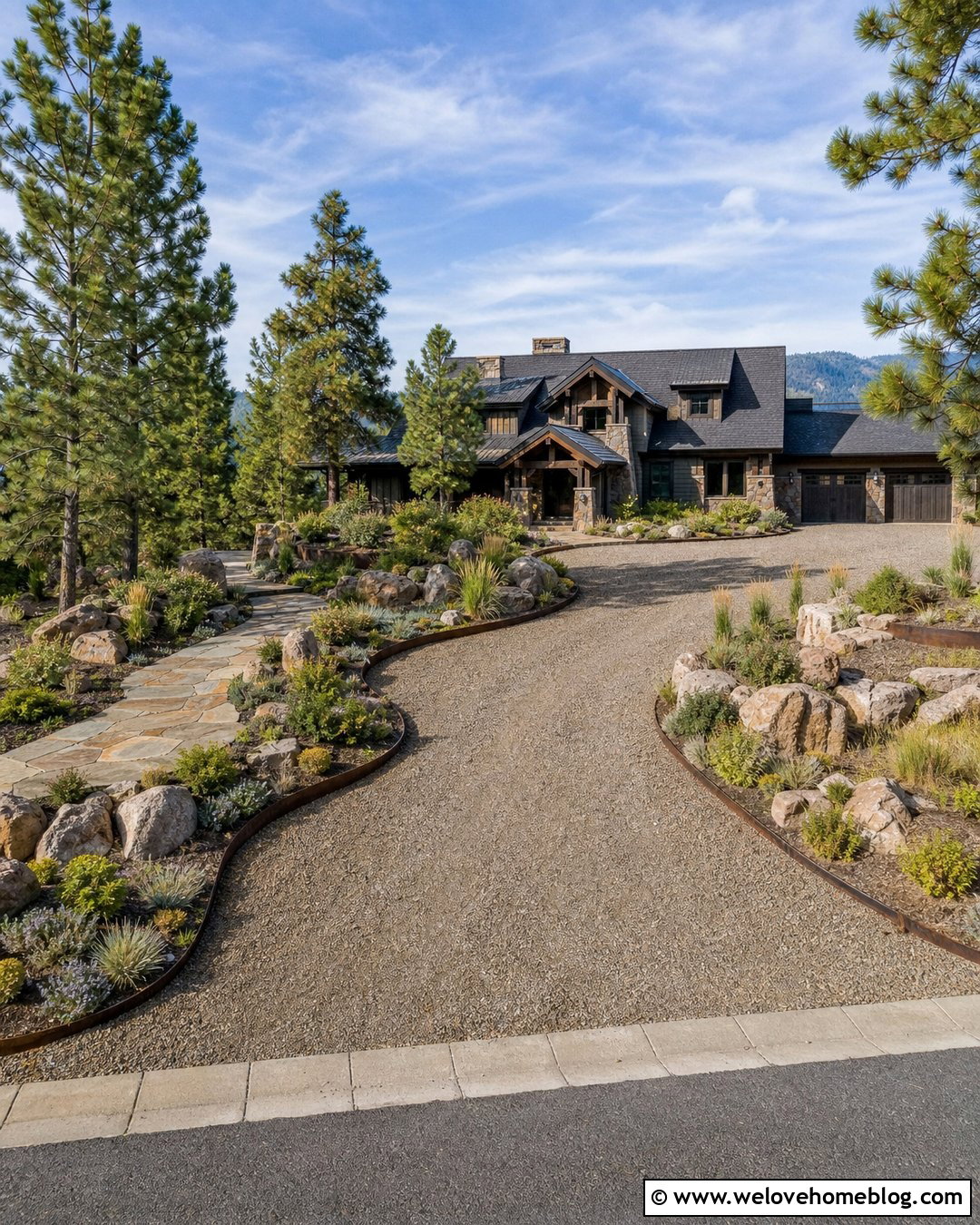
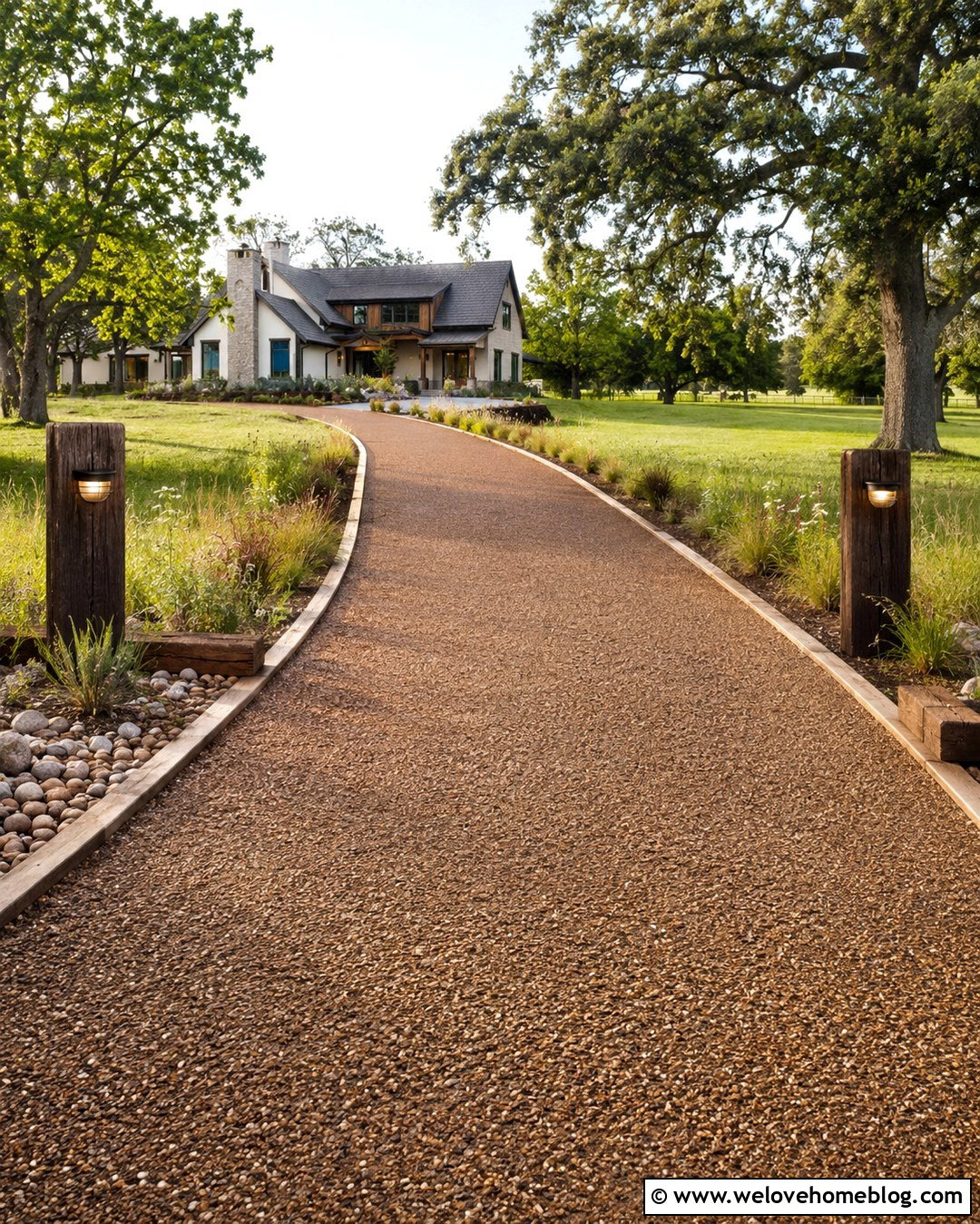
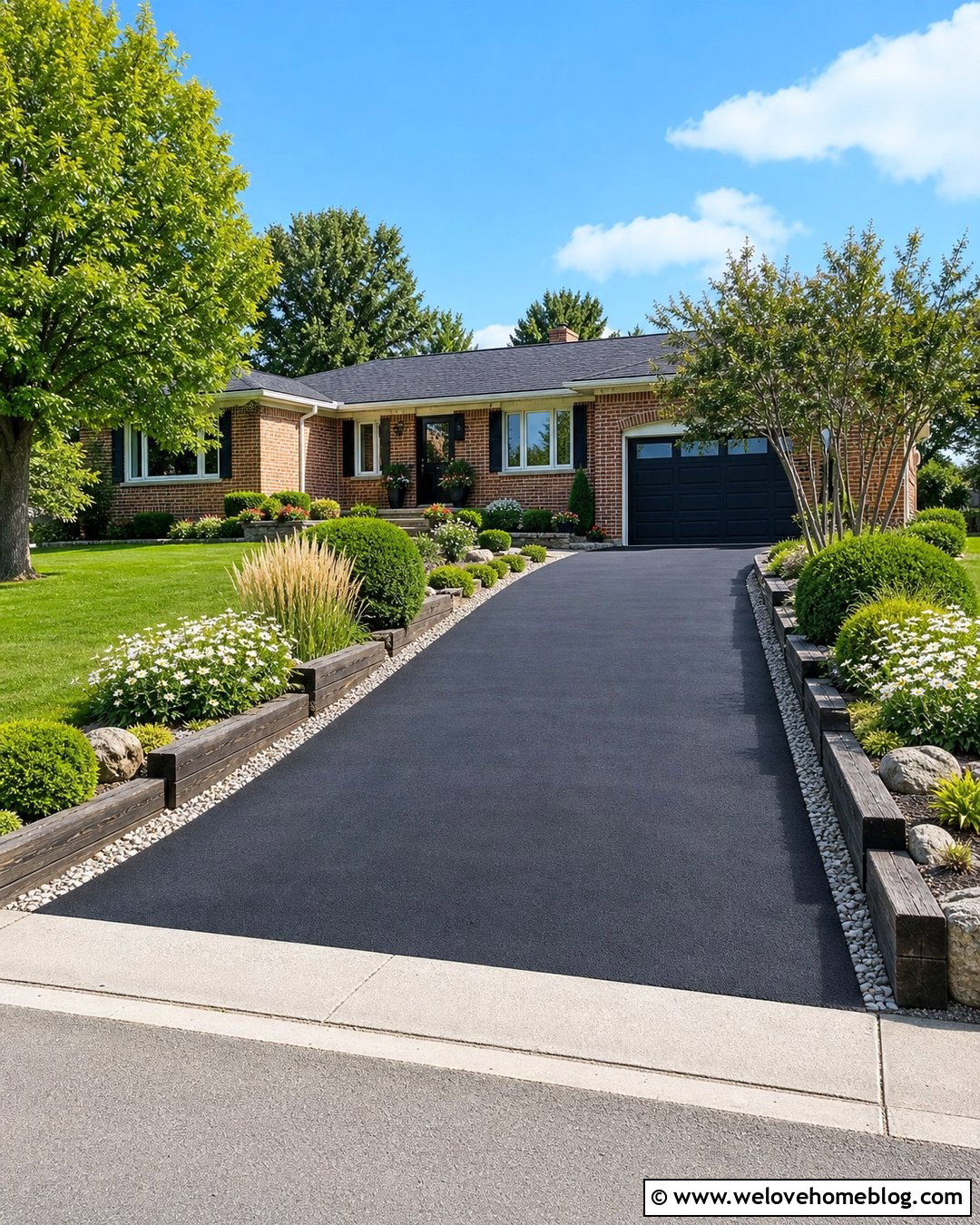
Clean geometry can transform natural stone into a distinctly modern surface. Use oversized rectangular bluestone or gray granite slabs laid in straight, aligned courses. Insert narrow bands of dark gravel, black stone setts, or low ground cover between selected rows to emphasize the linear pattern. Continue those lines into long planting beds beside the driveway. Fill the beds with upright grasses, clipped evergreens, and one repeating flowering plant. A flush metal edge maintains sharp transitions to the lawn or walkway. This complete design works especially well with flat-roofed, mid-century modern, and minimalist houses. Avoid adding too many stone sizes or decorative colors. The strongest result comes from precise spacing, a restrained palette, and landscaping that follows the direction of the driveway.
Conclusion:
The most successful **20 flat stone driveway ideas** treat the driveway as a complete part of the front landscape. Stone color should relate to the house, while the pattern, edging, plants, and entrance features should reinforce one clear look. Irregular flagstone offers a softer, more rustic effect. Rectangular bluestone, limestone, quartzite, or granite creates cleaner lines for formal and modern homes. Gravel joints, brick ribbons, planted gaps, and contrasting borders provide further ways to personalize the surface. Before choosing a design, consider vehicle traffic, drainage, local weather, maintenance, and installation requirements. Always use vehicle-appropriate stone over a professionally prepared base so the finished driveway remains attractive, stable, and practical.

Related posts:
Leave a Reply