
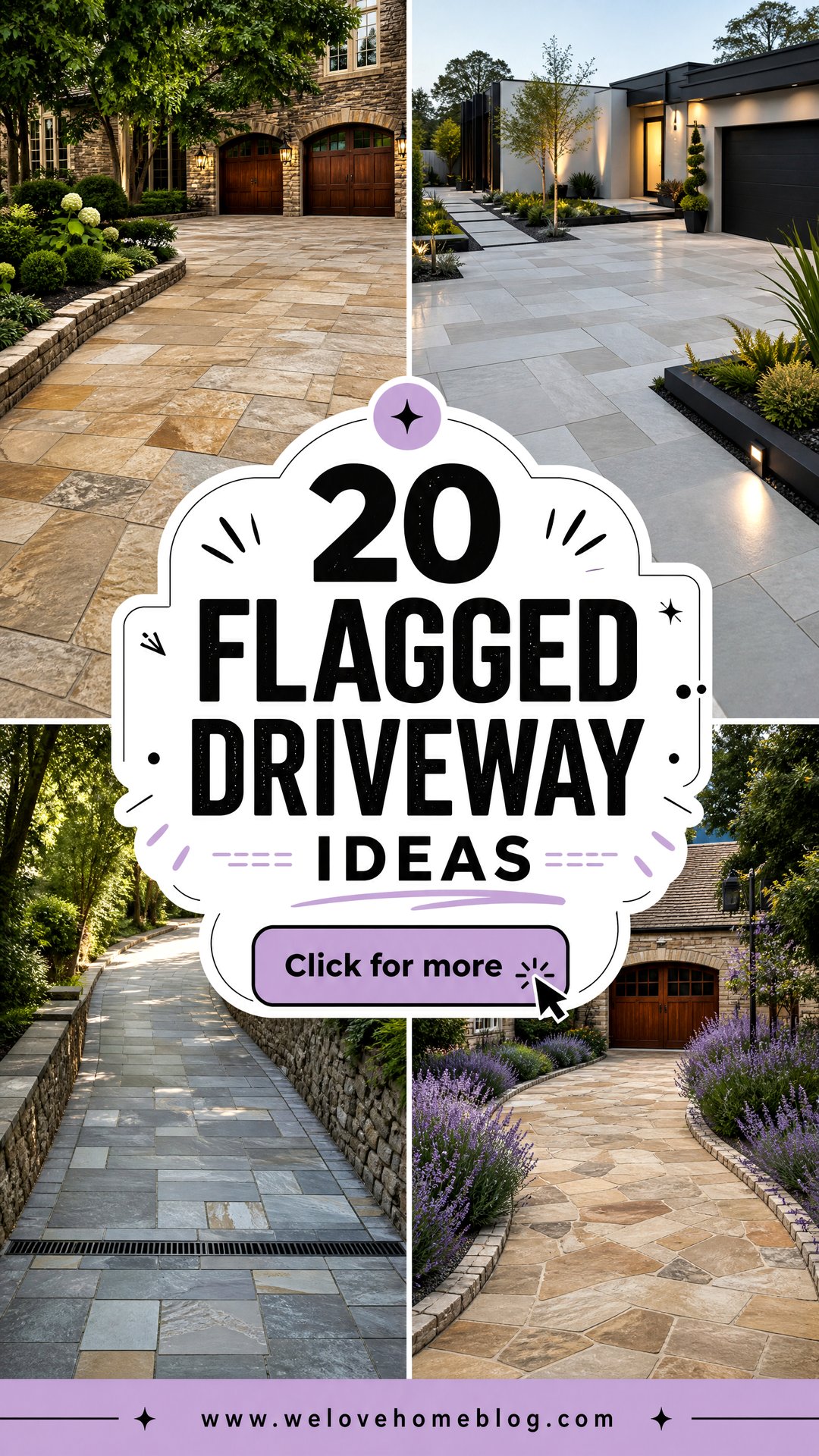
A flagged driveway uses large paving slabs or natural stone flags to create a solid, structured surface with visible joint lines. The best designs combine those flags with a suitable laying pattern, strong edging, balanced landscaping, and a clear connection to the home. Good grading, drainage, and a properly prepared base are just as important as appearance, especially where the paving will carry vehicles. Flag layouts can range from simple staggered rows to mixed-size patterns, while borders help protect the edges and add contrast. () Whether your home is modern, traditional, rural, or compact, the surface should feel like part of the entire front yard. The complete looks below turn **20 Flagged Driveway Ideas** into practical inspiration for welcoming curb appeal.
1. Sandstone Flagged Driveway With Stone Edging
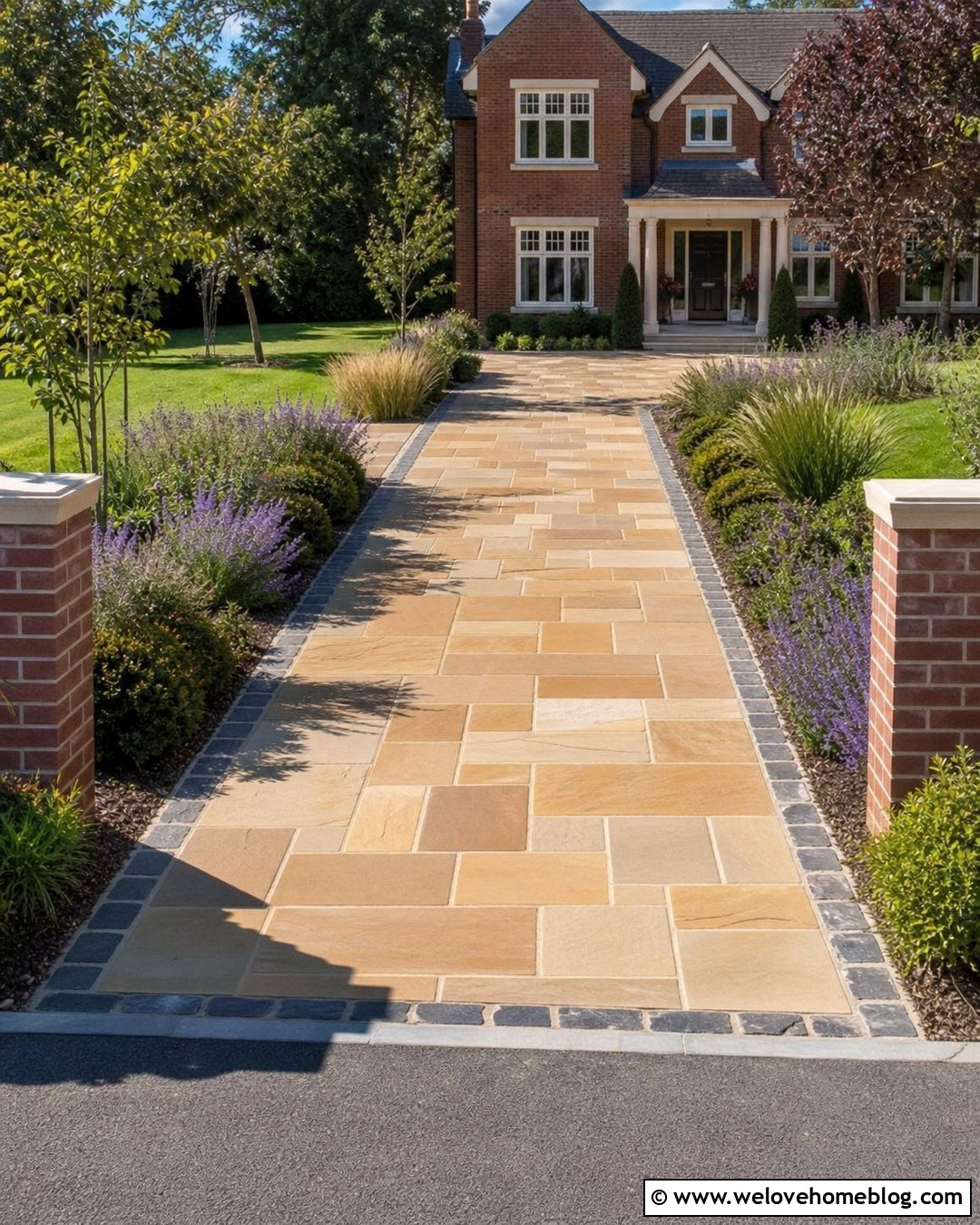
Warm sandstone flags instantly soften the appearance of a broad driveway. Choose buff, tan, and muted brown slabs in several rectangular sizes, then install them in a random staggered pattern. This keeps the surface interesting without making it feel busy. A sturdy row of granite setts along both edges contains the paving and gives tires a clearly defined boundary. Low beds planted with lavender, catmint, ornamental grasses, and evergreen shrubs can frame the approach without hiding the house. Near the garage, repeat the sandstone in a connecting walkway for a coordinated finish. This complete flagged driveway works especially well with brick homes, stone cottages, and modern farmhouses because its natural colors complement warm exterior materials.
2. Gray Concrete Flagged Driveway With Black Borders
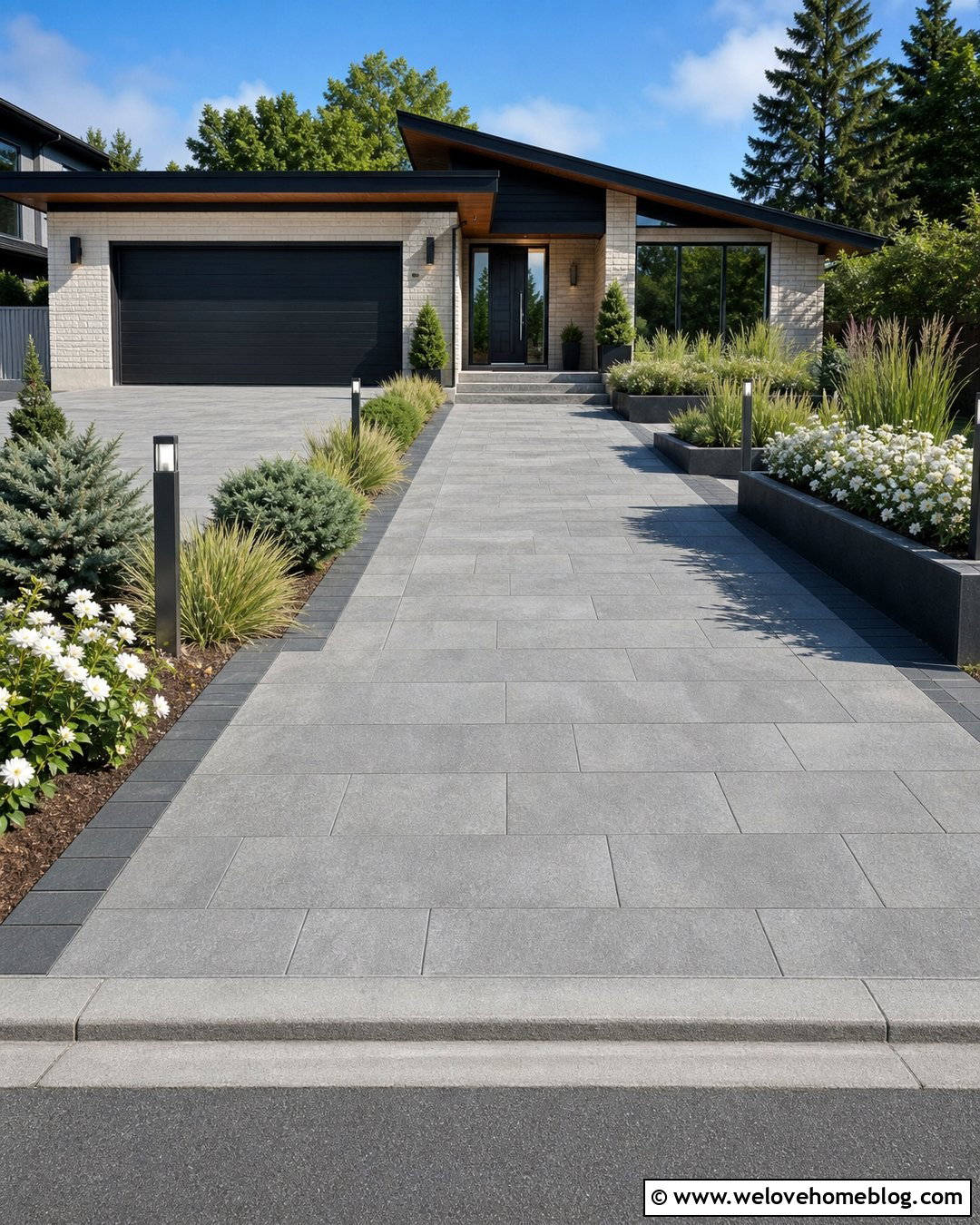
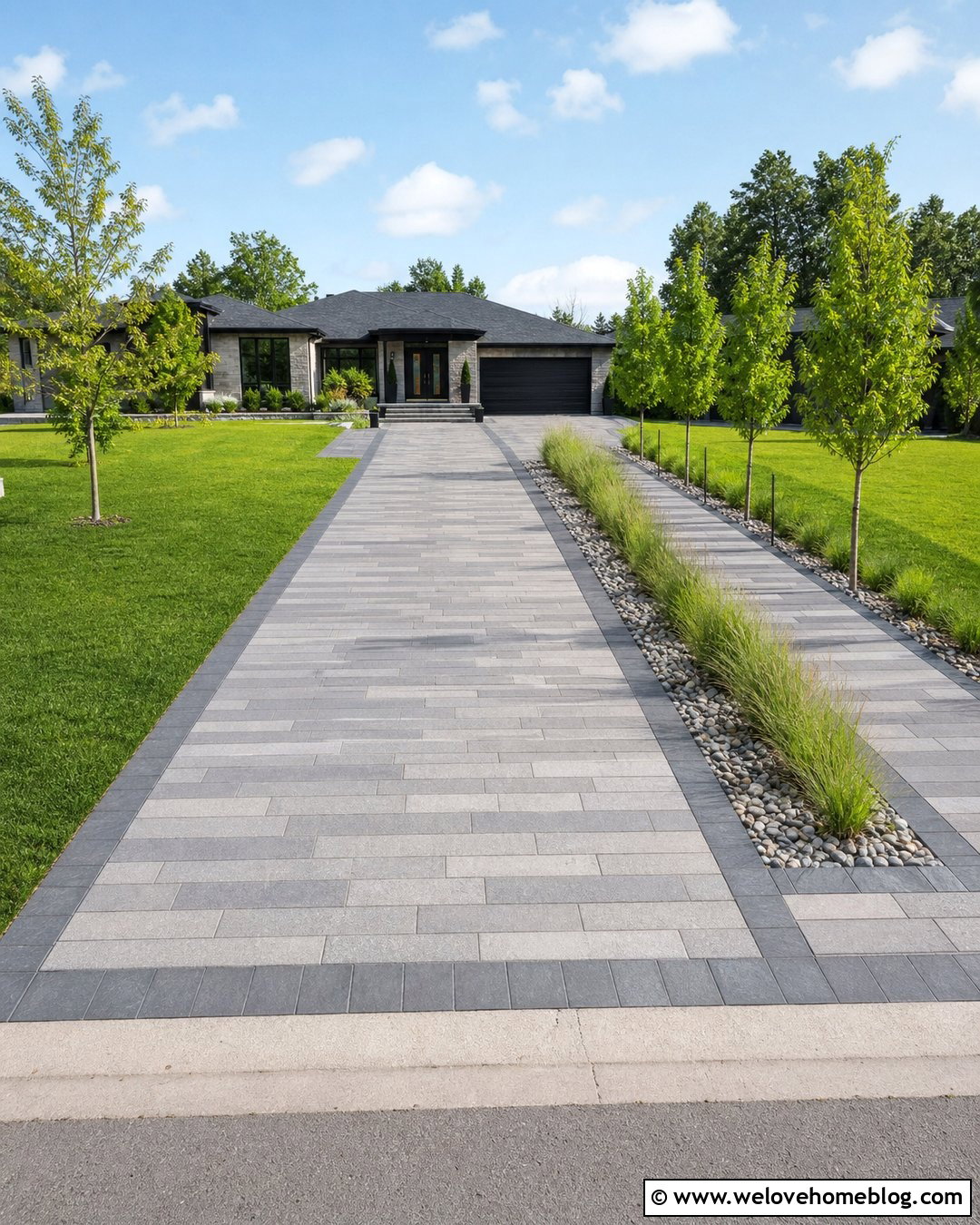
For a crisp contemporary entrance, use large gray concrete flags in a straight running-bond layout. Select vehicle-rated slabs with a lightly textured finish rather than polished paving, which may become slippery. A narrow border of charcoal concrete pavers creates a sharp outline and visually connects the driveway to dark window frames or a black garage door. Keep the surrounding landscaping equally controlled. Rectangular beds filled with clipped boxwood alternatives, feather reed grass, and white flowering perennials provide structure without distracting from the paving grid. A straight concrete walkway can branch toward the front door at a clean right angle. This flagged driveway has a simple, architectural character that suits modern and midcentury homes with uncluttered facades.
3. Irregular Bluestone Flagged Driveway With Woodland Landscaping
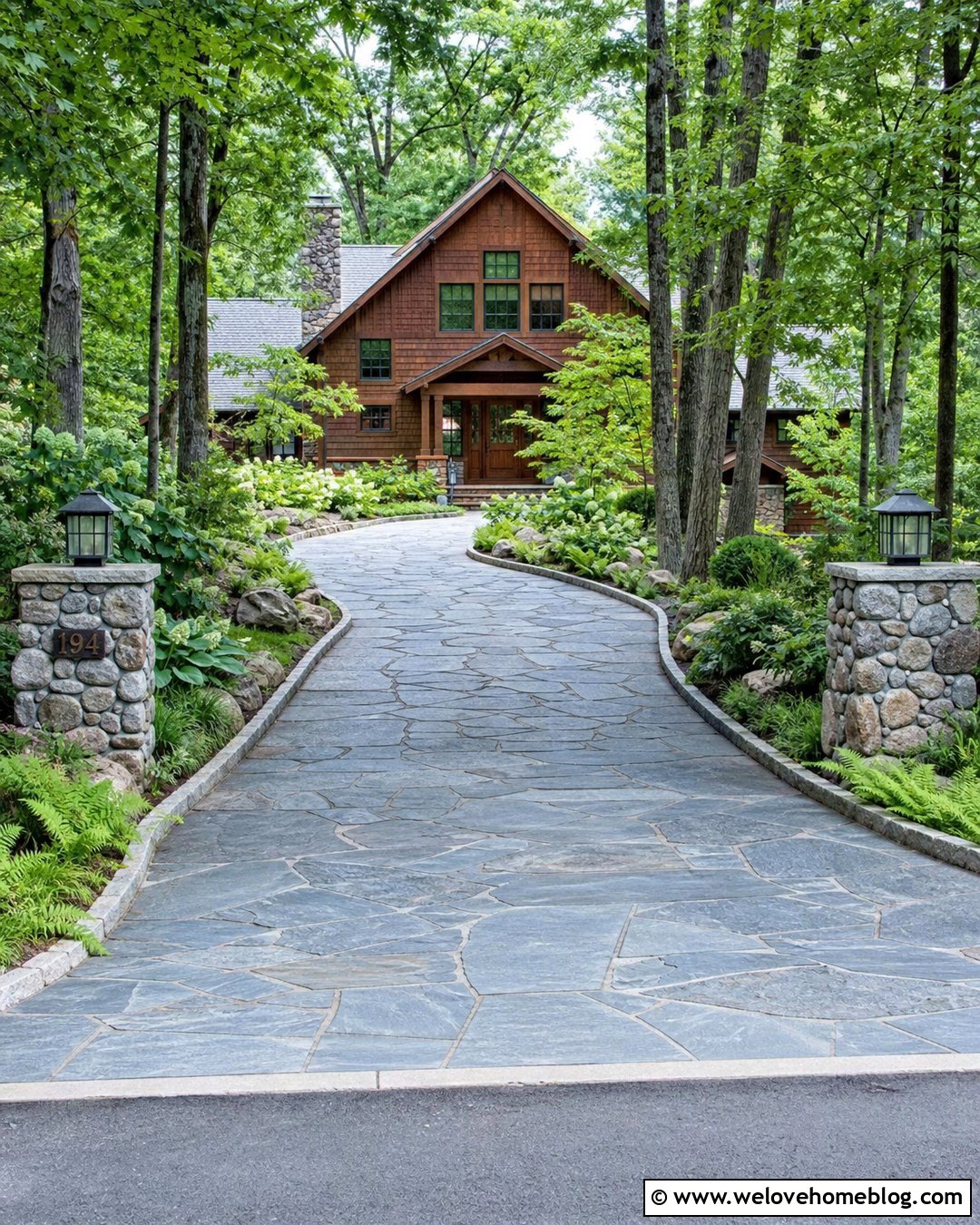
Cool blue-gray flagstone can make a driveway feel established and closely connected to the landscape. Use thick, vehicle-rated irregular bluestone pieces with carefully fitted joints over a properly engineered base. The varied shapes should form a continuous driving surface rather than widely separated stepping stones. Natural granite curbing helps stabilize the perimeter while reinforcing the rugged appearance. Surround the driveway with ferns, oakleaf hydrangeas, native sedges, and shade-tolerant ground cover beneath mature trees. A gently curved layout will feel more natural than a perfectly straight approach in this setting. Finish the entrance with two low fieldstone pillars and simple planting pockets. This design is especially effective beside Craftsman, cedar-shingled, and woodland homes.
4. Limestone Flagged Driveway With Granite Setts
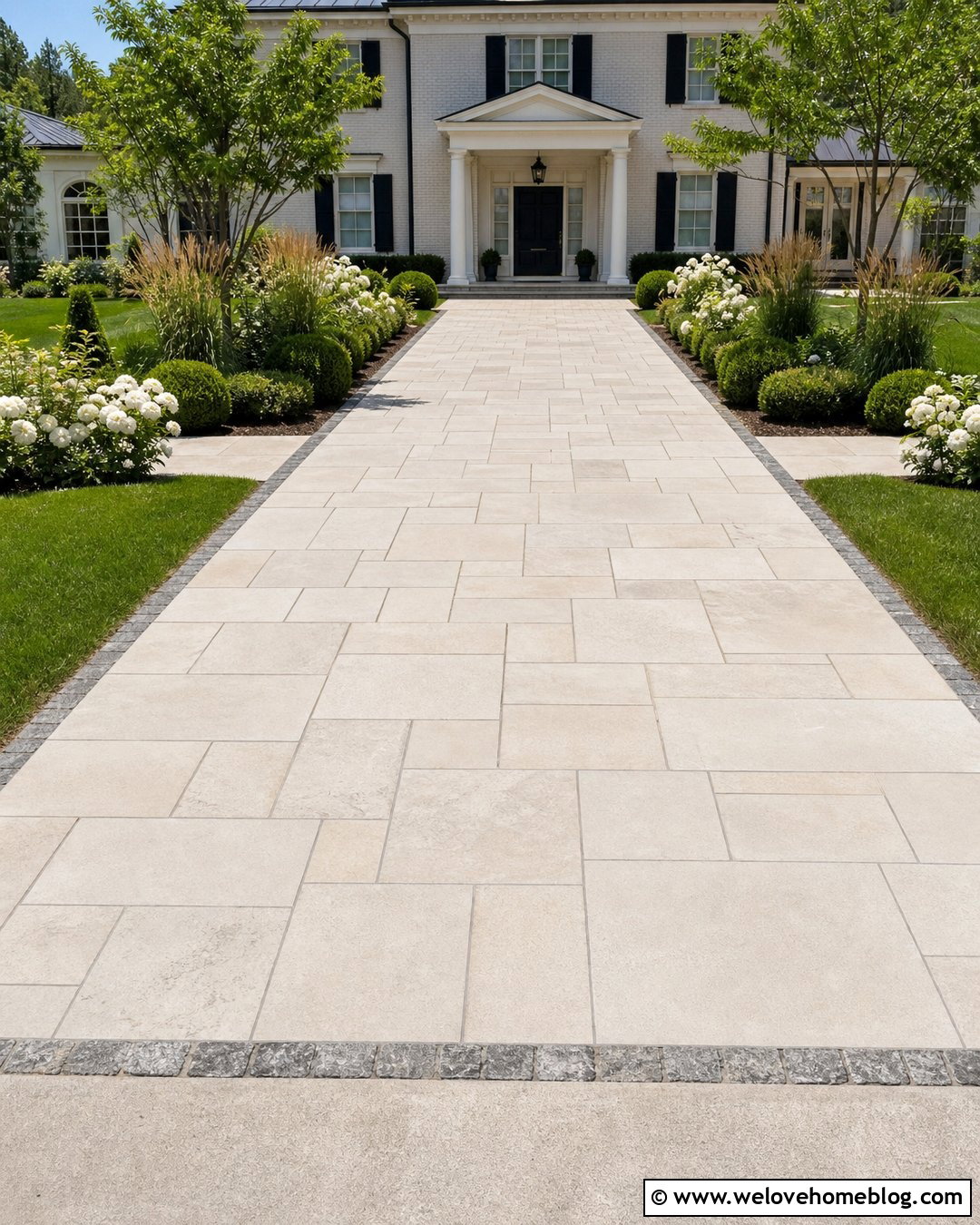
Pale limestone flags create a bright, refined surface that can make a smaller front yard feel more open. Arrange large cream and light-gray slabs in a mixed rectangular pattern, keeping the joint widths consistent throughout the driveway. Dark granite setts around the perimeter provide contrast and protect exposed slab edges from turning tires. Use the same granite to form a narrow drainage strip where the driveway meets the garage. Rounded evergreen shrubs, white roses, and soft green ornamental grasses continue the light color palette without overwhelming it. A matching limestone path can curve gently toward the front entrance. Because limestone varies in density and finish, select paving specifically rated for vehicular use and appropriate for the local climate before installation.
5. Porcelain Flagged Driveway With Modern Landscaping
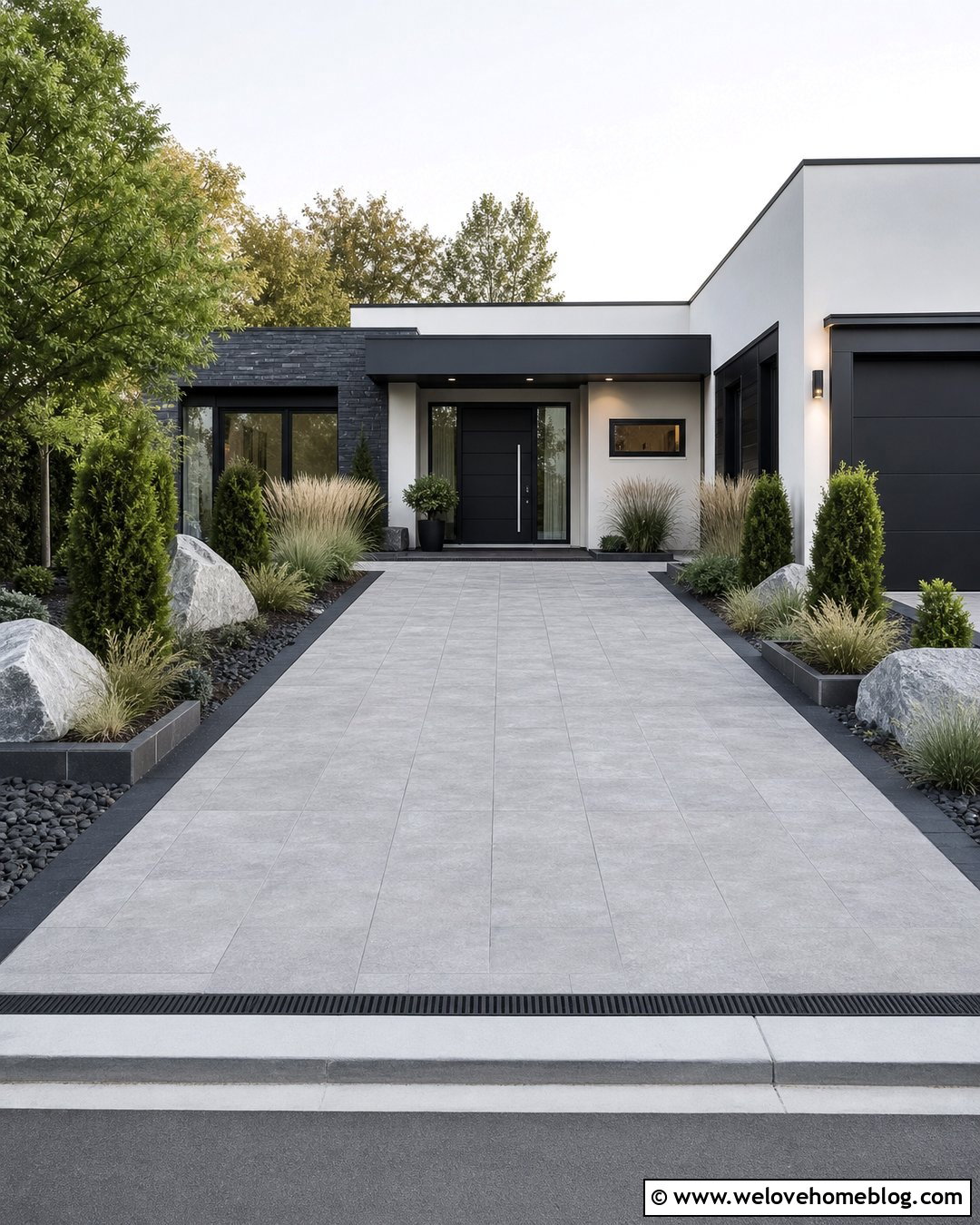
Driveway-rated porcelain flags offer a highly uniform look for contemporary properties. Choose large-format slabs in a warm gray stone effect, with enough texture and thickness for exterior vehicular applications. Lay them in straight rows that align with the garage, front steps, and major lines of the house. Slim charcoal paver borders can separate the porcelain from rectangular planting beds. Fill those beds with upright grasses, compact evergreens, and a few sculptural boulders for a restrained modern landscape. Linear trench drainage near the garage should sit neatly within the paving pattern instead of appearing like an afterthought. This complete driveway looks particularly cohesive when the porcelain tone echoes exterior wall panels, concrete planters, or a modern walkway leading to the front door.
6. Reclaimed Stone Flagged Driveway For A Farmhouse
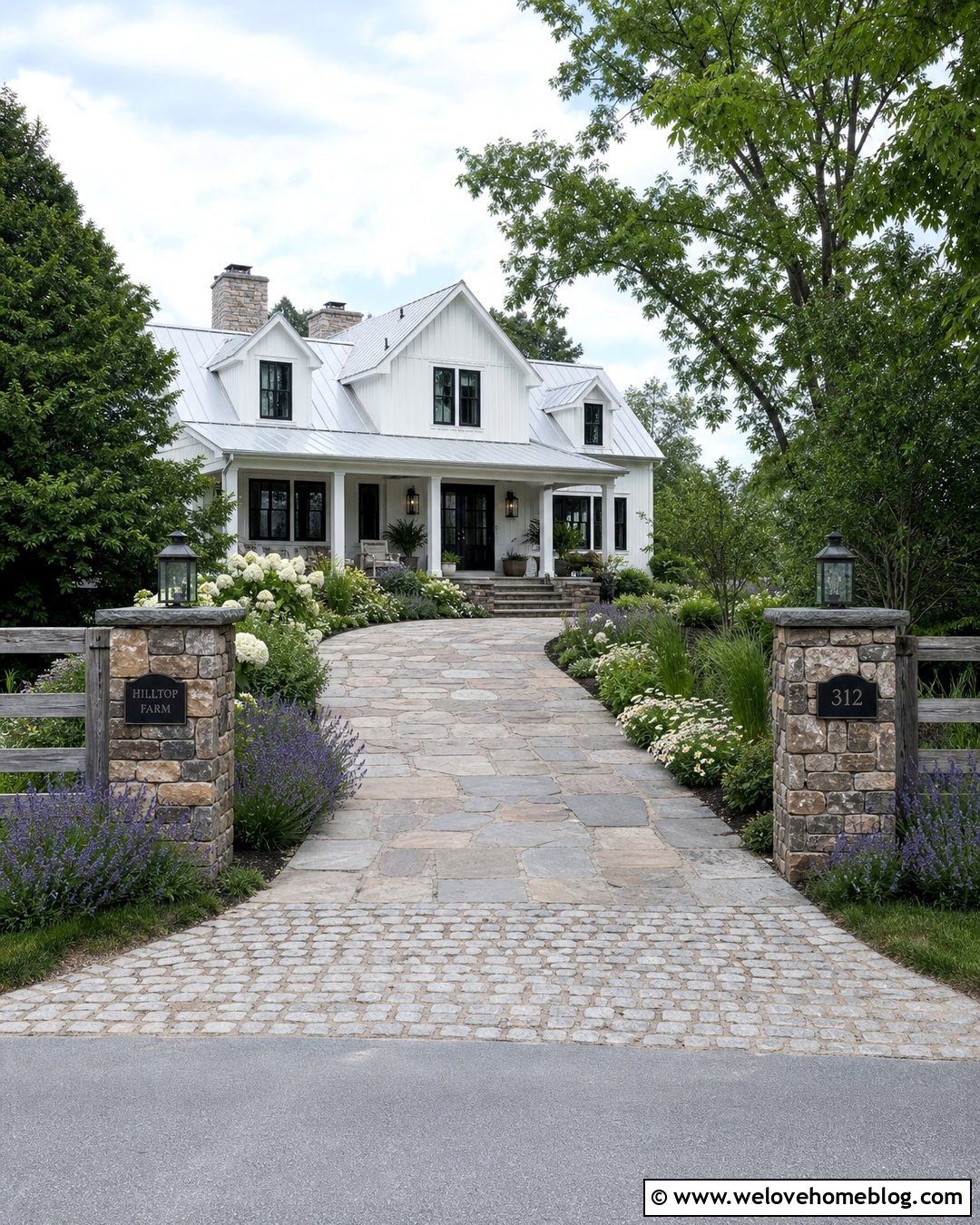
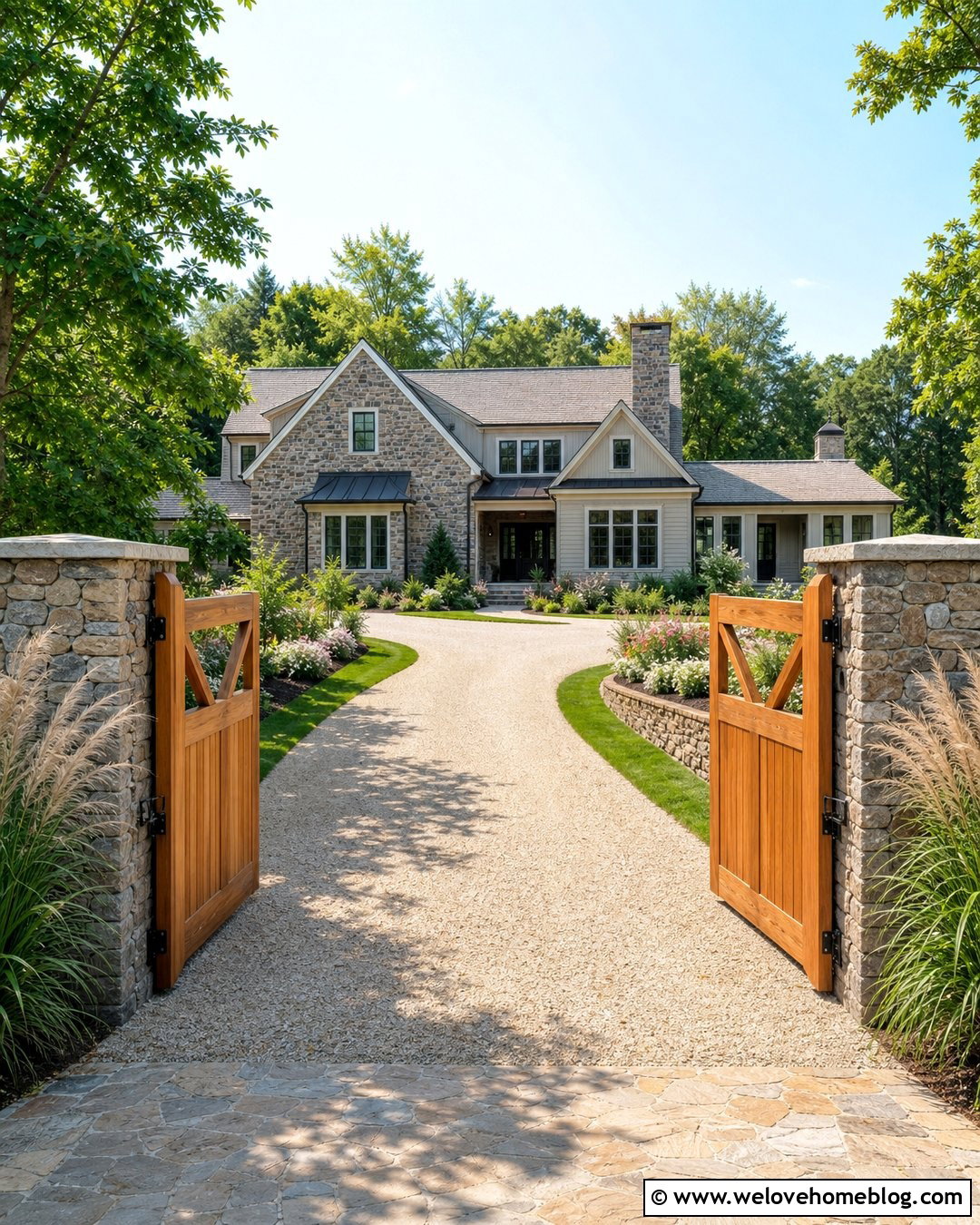
Weathered stone flags bring warmth and history to a farmhouse entrance. Select reclaimed slabs with compatible thicknesses, then arrange their varied sizes in a relaxed random-course pattern. Avoid pieces that are badly cracked, polished smooth, or too thin for vehicle traffic. A cobblestone apron at the road creates a durable transition while introducing another traditional material. On each side, informal beds of hydrangeas, salvia, daisies, and native grasses can blend the hardscape into the yard. Timber fencing and simple stone gateposts complete the rural setting without making the entrance overly formal. Continue a few reclaimed flags into the porch walkway so the driveway and house feel connected. The finished surface should look aged and welcoming while remaining level, stable, and practical.
7. Mixed-Size Concrete Flagged Driveway With Lawn Borders
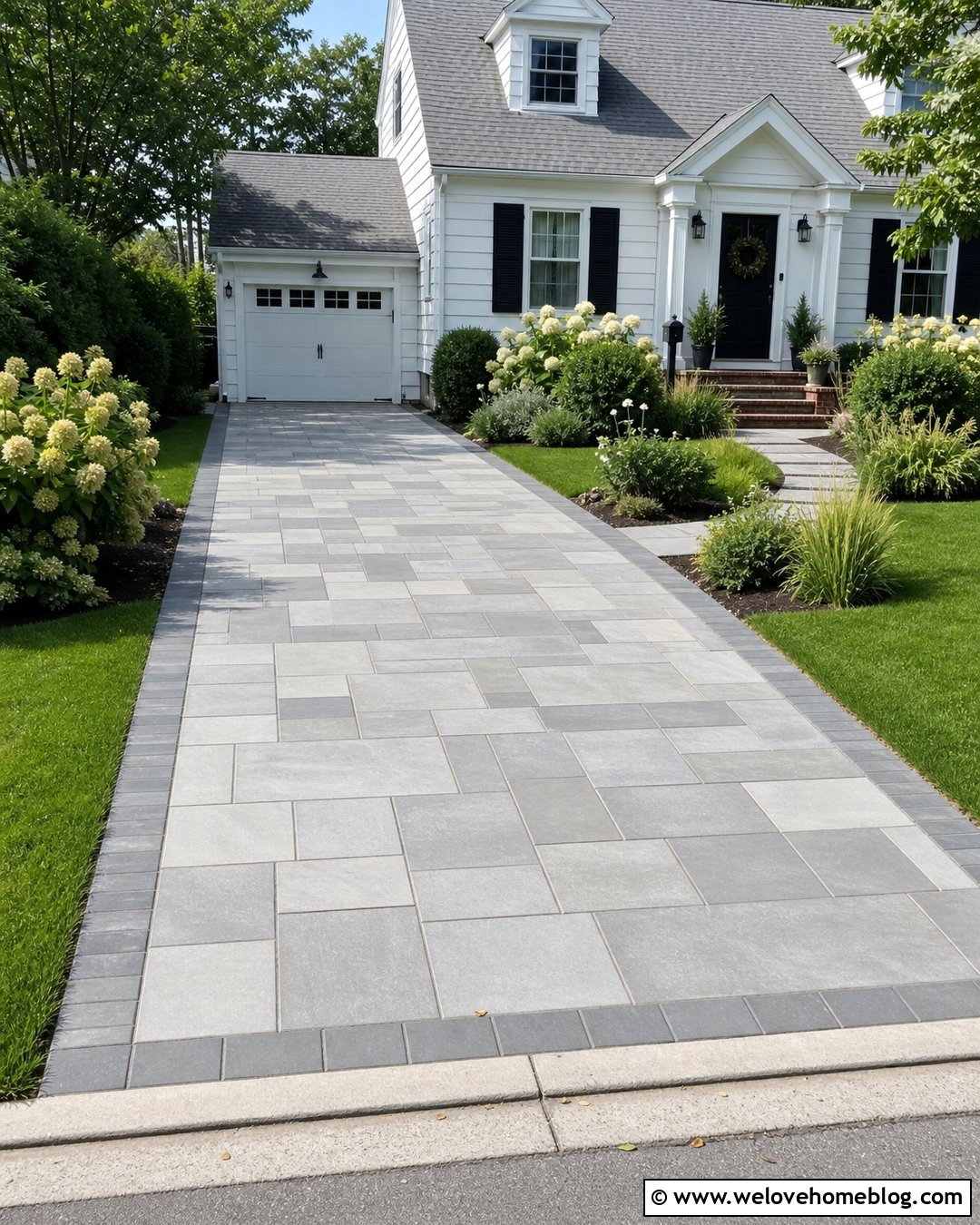
Mixed-size concrete flags can give an affordable driveway more character than a surface made from one repeated slab. Combine square and rectangular units in two or three coordinated gray tones, using a planned modular pattern rather than placing them randomly. Medium-gray edging blocks should create a firm boundary between the paving and lawn. Add generous planting beds near the house instead of lining the entire driveway with small decorative objects. Compact hollies, panicle hydrangeas, and ornamental grasses provide year-round structure while leaving sightlines open near the street. A narrow paved walkway can follow one side of the driveway and share the same modular pattern. This balanced design fits suburban ranch, split-level, and Cape Cod homes without appearing too formal or expensive.
8. Circular Sandstone Flagged Driveway With A Center Garden
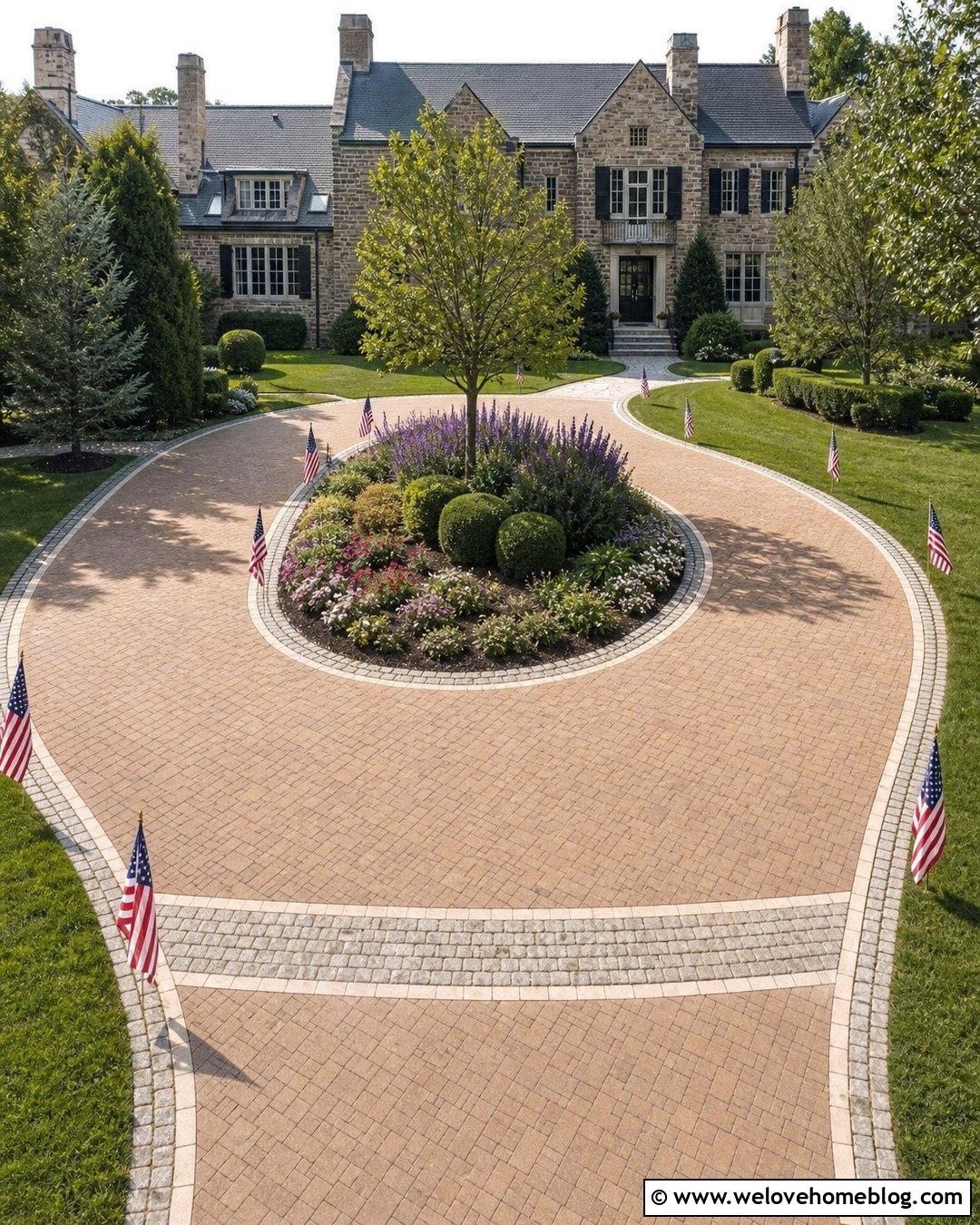
A circular flagged driveway becomes far more inviting when the central island is proportioned to the house and turning space. Use warm sandstone flags in a fan-like arrangement that follows the curve instead of forcing straight joint lines around the loop. A double row of dark stone setts can reinforce the inner and outer edges. In the center, plant one small ornamental tree with low shrubs, flowering perennials, and ground cover that will not block views across the driveway. Repeat selected plants beside the front steps for continuity. The entrance and exit should have matching stone aprons to create a symmetrical street view. This complete design works best in a broad front yard where the circle can frame the home without dominating the lawn.
9. Small Flagged Driveway With A Matching Walkway
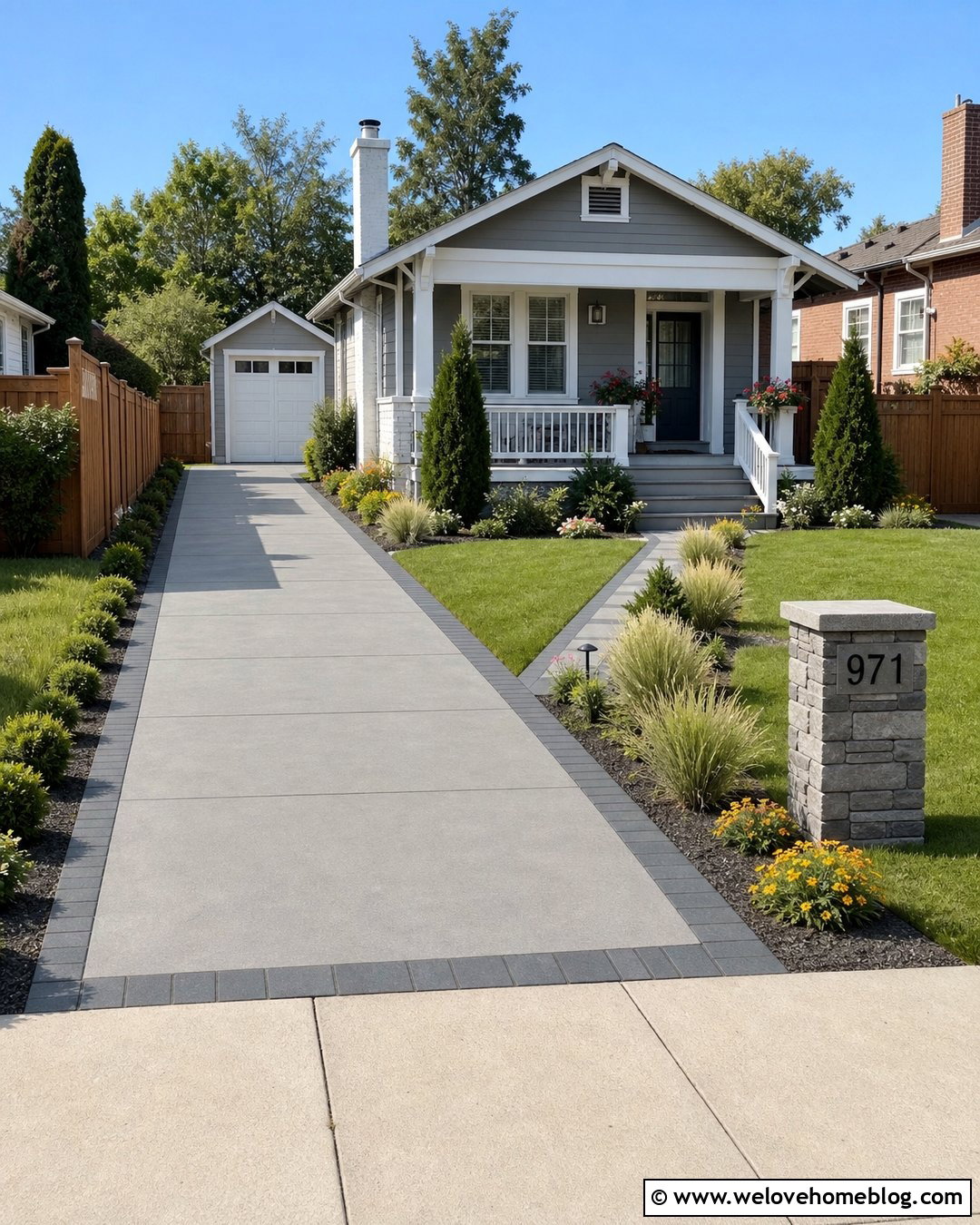
Limited space calls for a simple paving layout and carefully controlled borders. Cover a short single-car driveway with medium-size concrete or sandstone flags laid lengthwise toward the house. This orientation can make the approach appear longer and reduces unnecessary pattern changes. Use one narrow contrasting paver course around the edges rather than a wide decorative border that consumes parking room. A matching walkway should branch from the upper driveway and lead directly to the front door. Keep plants compact, choosing dwarf evergreens, low grasses, and seasonal flowers that will not spill into the driving area. A small address pillar near the curb can provide a focal point. This design gives a townhouse, bungalow, or compact ranch a tidy and welcoming entrance.
10. Long Flagged Driveway With Tree-Lined Landscaping
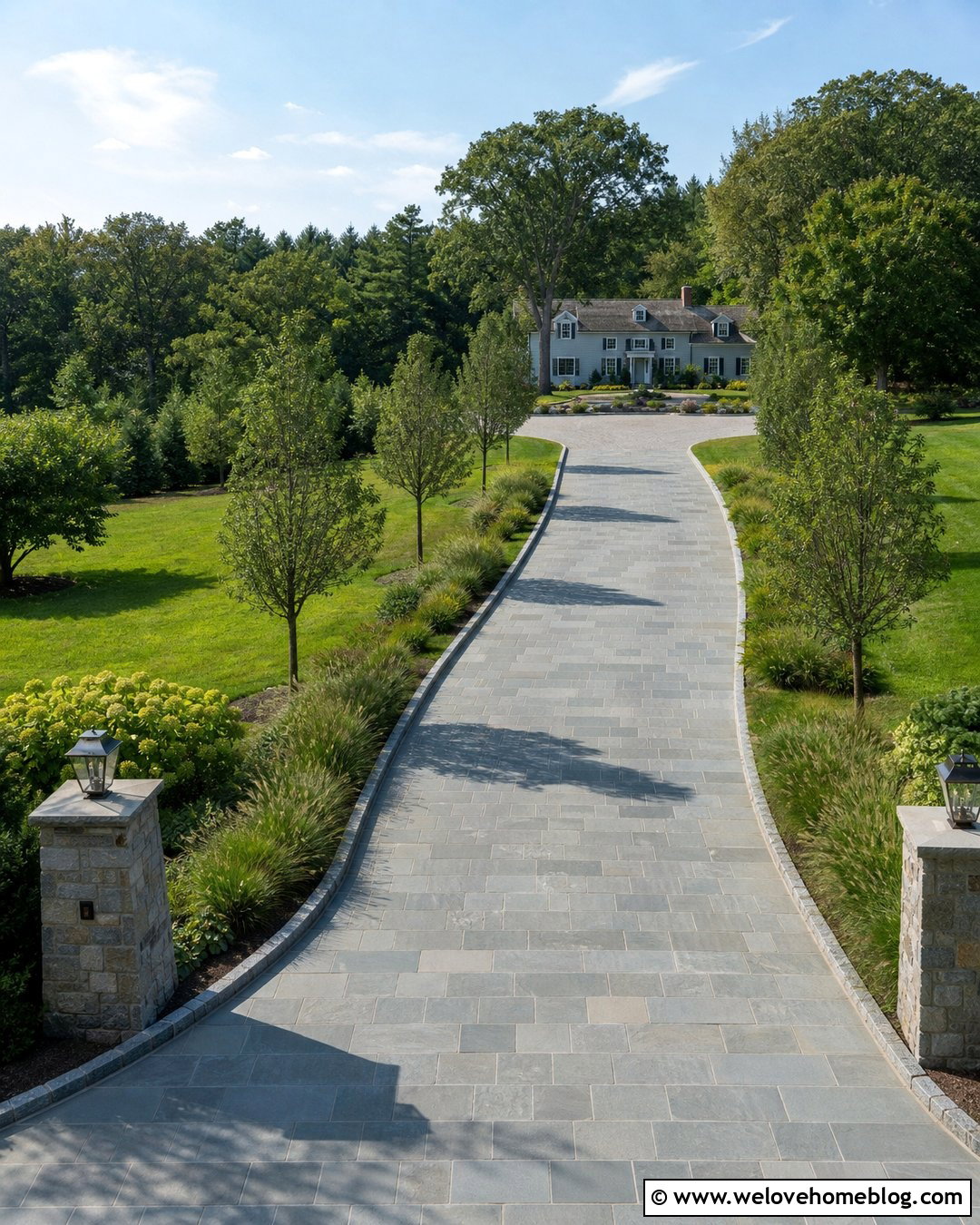
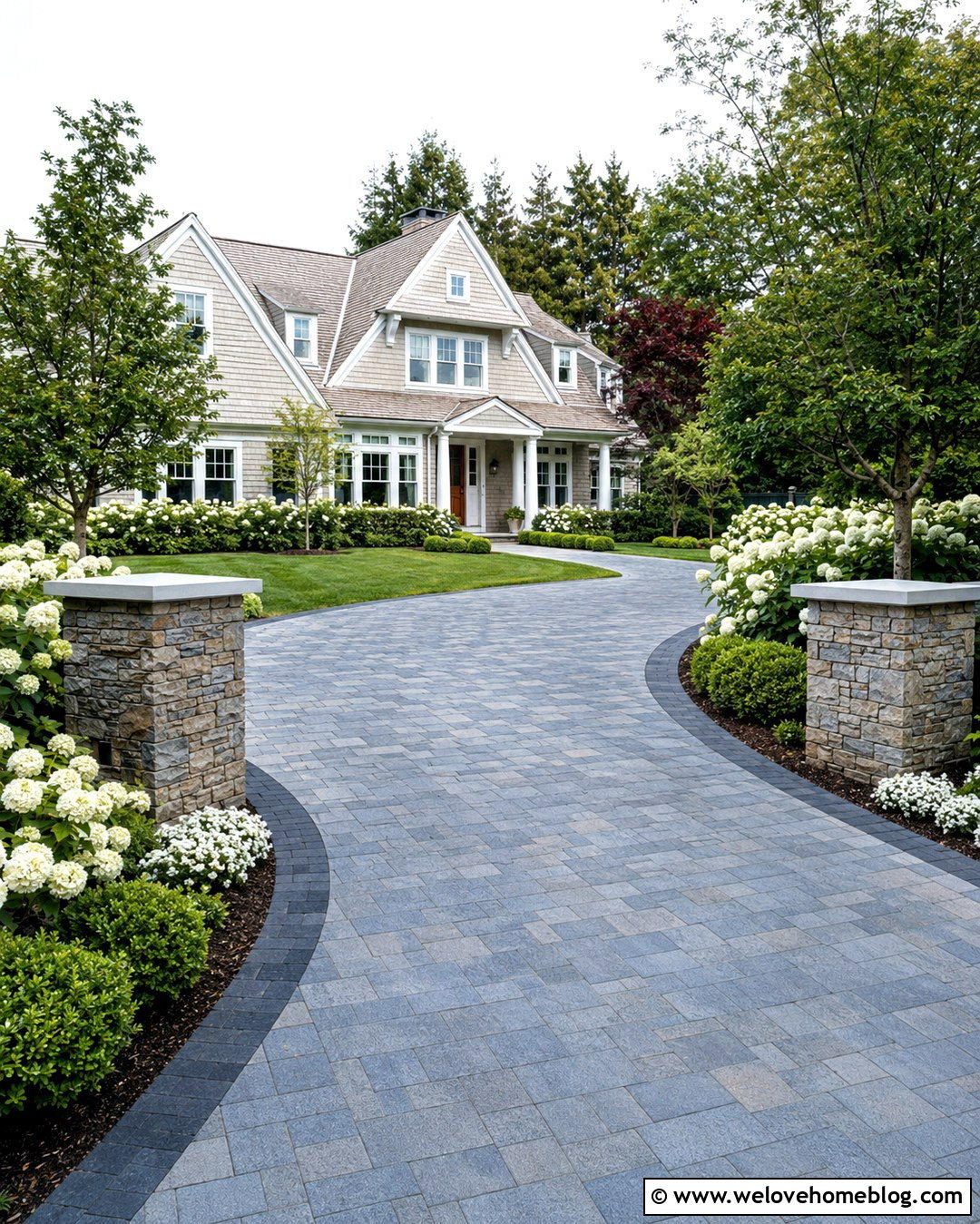
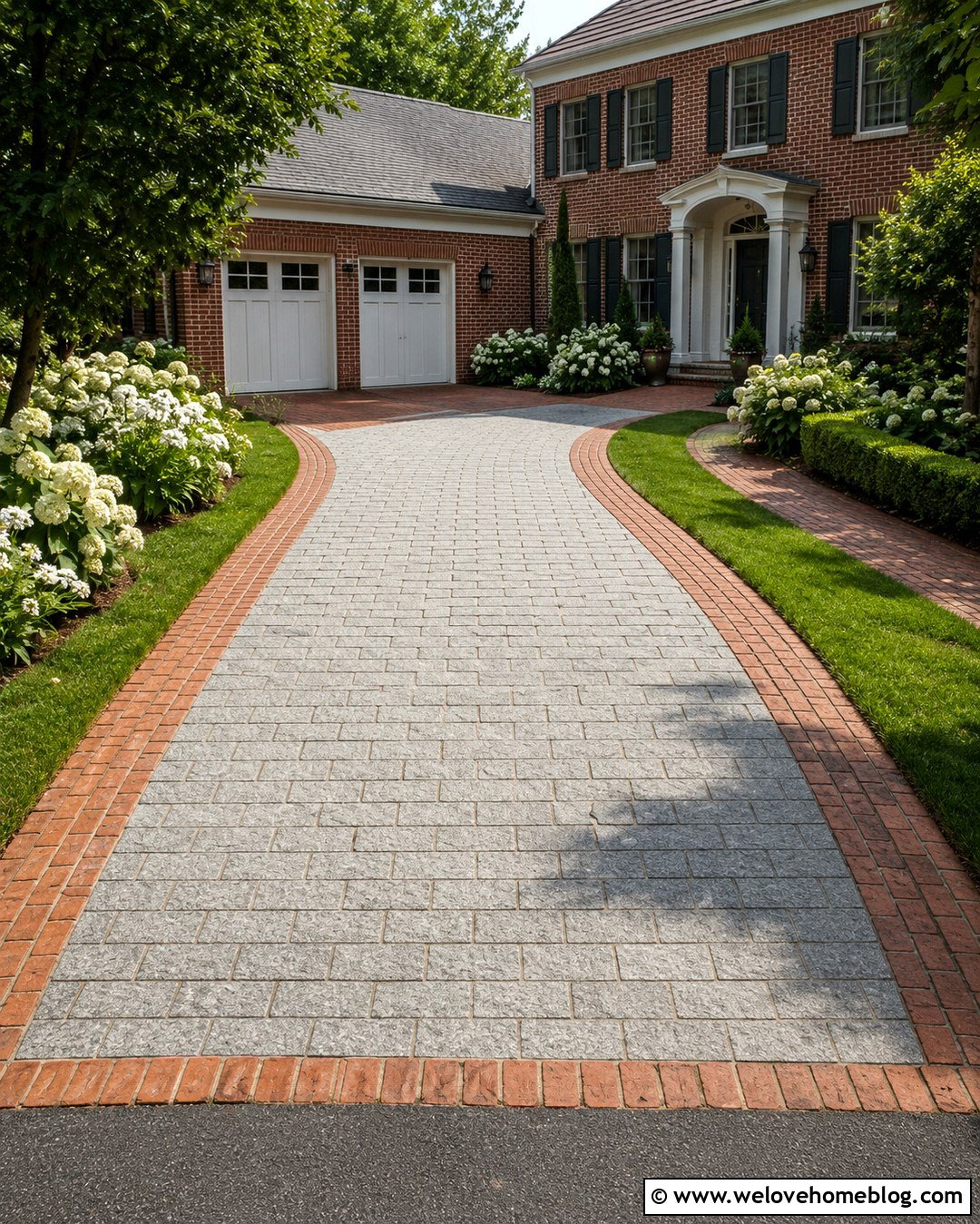
A long driveway needs visual rhythm so the journey toward the house does not feel empty. Install durable gray concrete or natural stone flags in broad staggered courses, using consistent joint lines to guide the eye forward. Low granite curbs can contain the surface without creating tall obstacles along the route. Plant evenly spaced small trees beyond the curbs, leaving suitable room for mature trunks, roots, and canopies. Between them, use sweeping bands of ornamental grass or low native shrubs rather than numerous unrelated plants. Widen the paving near the house to form a practical parking and turning court. Repeating the same flagged surface in the entry walkway will unite the entire approach, while simple stone pillars can clearly mark the driveway at the road.
11. Sloped Flagged Driveway With Drainage Channels
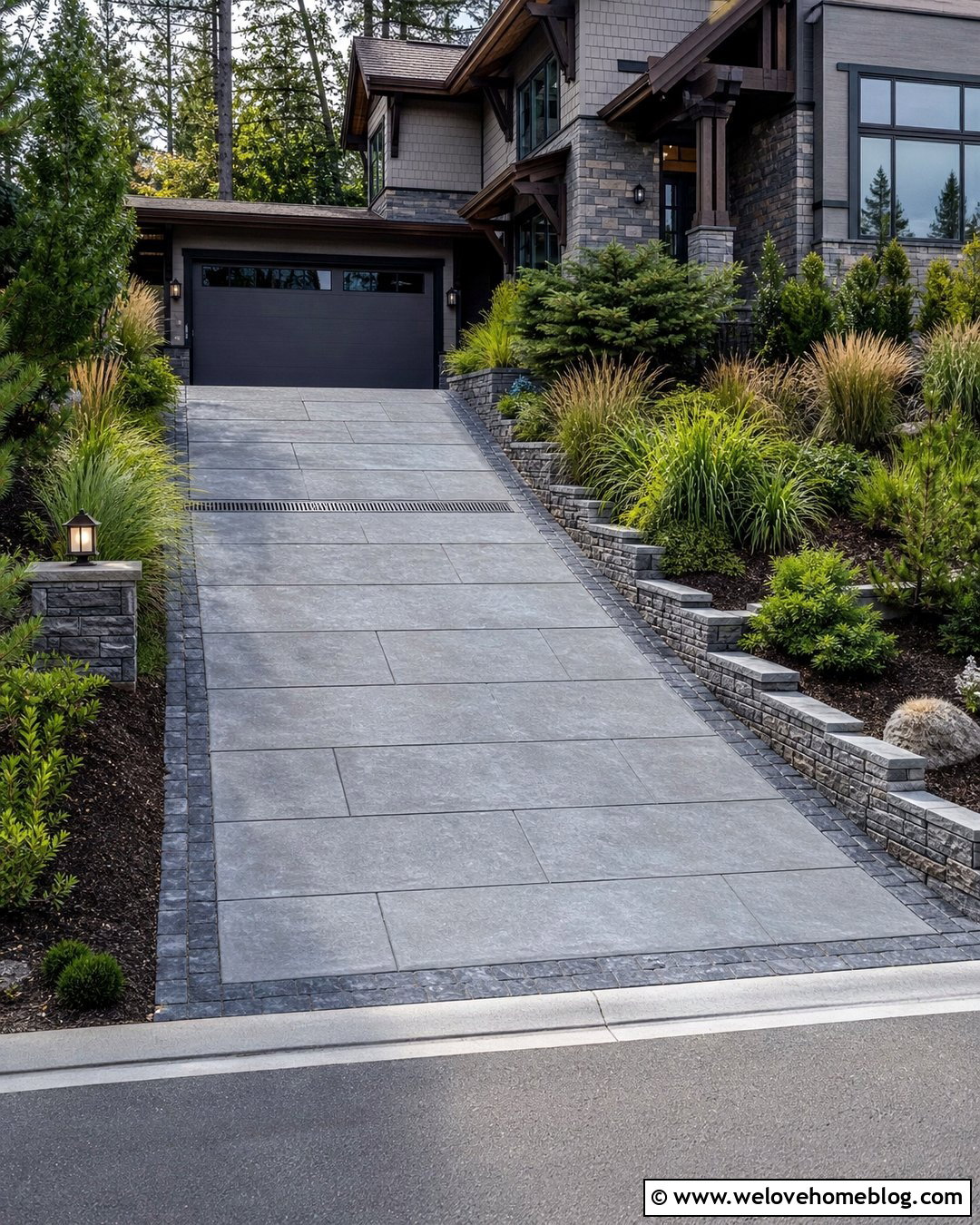
On a sloped property, the most successful flagged driveway treats water management as part of the design. Choose textured concrete flags or dense natural stone slabs that provide a confident driving surface. Lay them in transverse courses so the pattern visually crosses the slope rather than emphasizing its steepness. Dark stone borders can strengthen both sides, while a properly positioned channel drain collects runoff before it reaches the garage. Additional drainage may be required along retaining walls or lower planting beds, depending on the site. Use deep-rooted grasses, spreading shrubs, and ground cover on adjacent banks to create a finished landscape. A low stone retaining wall can follow the driveway’s grade and provide enough structure without making the approach feel narrow or enclosed.
12. Flagged Driveway With Grass Joints
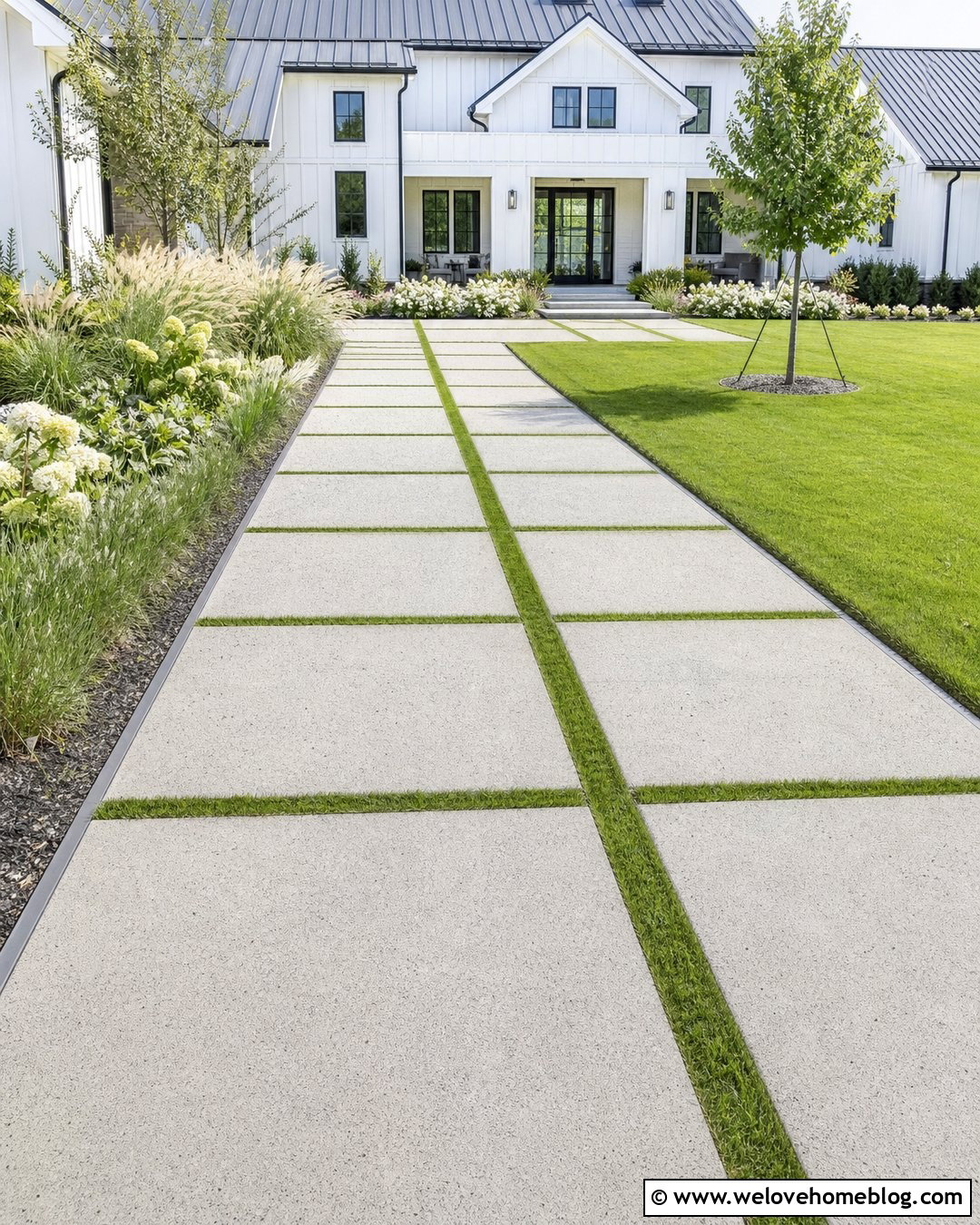
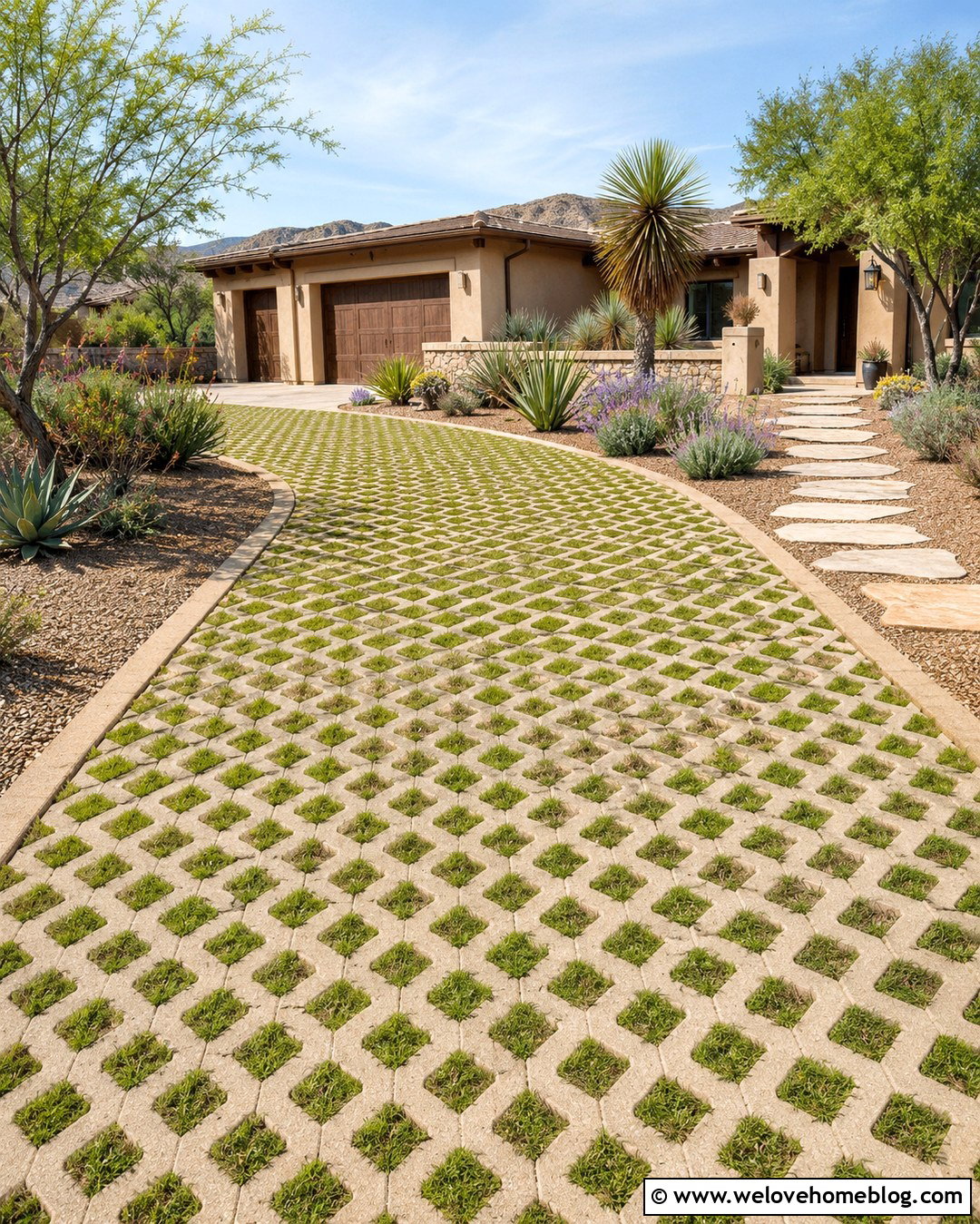
Green joints can break up a large paved surface and help the driveway blend into a garden setting. Use thick rectangular concrete or natural stone flags arranged in two reinforced driving tracks or a carefully engineered open-joint grid. The gaps should contain a durable low-growing ground cover or reinforced turf system suited to occasional compression. Keep the most heavily traveled turning areas fully paved, since delicate grass can struggle beneath frequent tire movement. Flush steel or stone edging creates a clean transition into the surrounding lawn. Add simple beds of ornamental grasses, flowering shrubs, and one small tree near the house. This flagged driveway looks especially attractive with modern farmhouse and contemporary homes where straight architectural lines benefit from a softer green counterpoint.
13. Small Concrete Flagged Driveway In A Herringbone Pattern
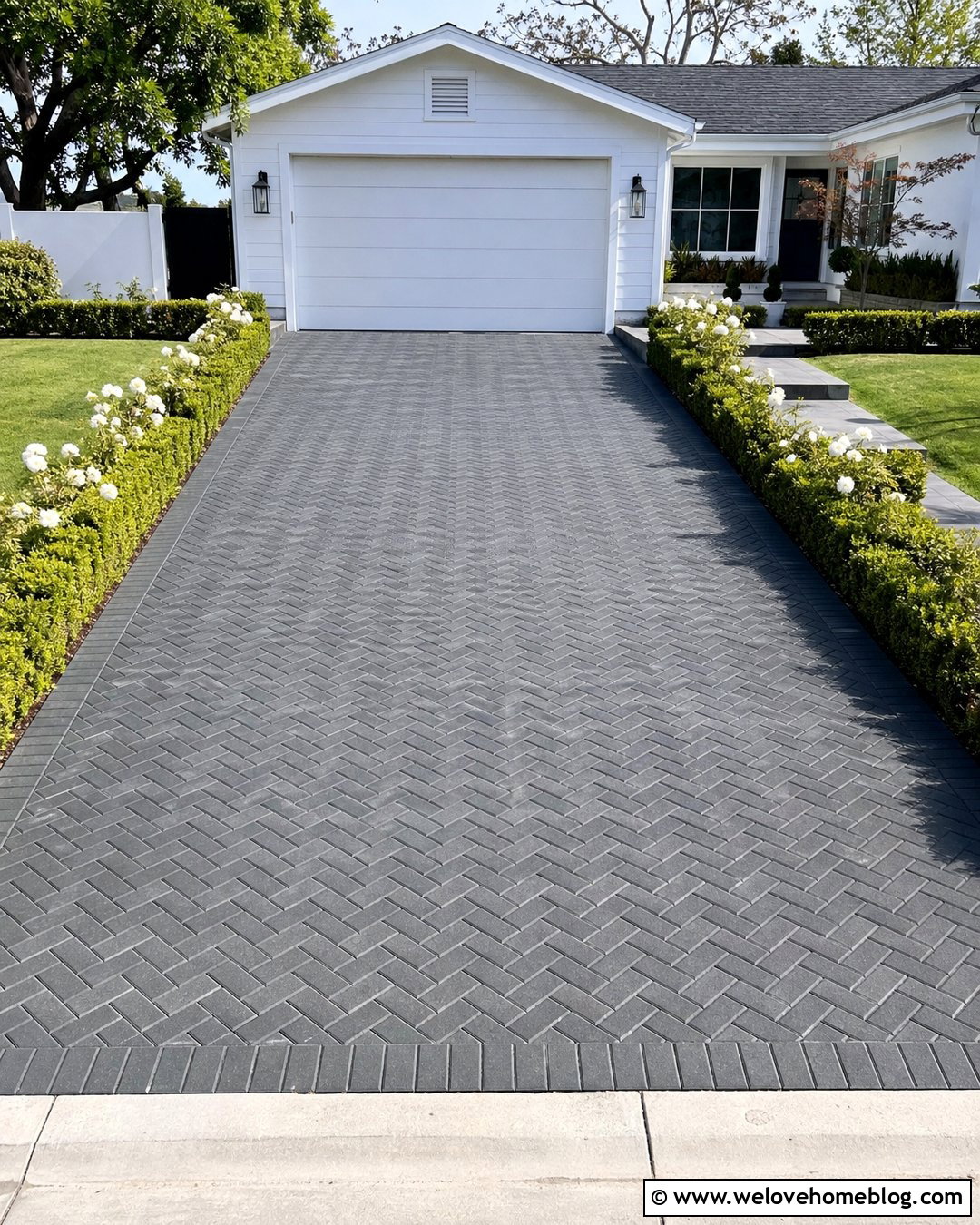
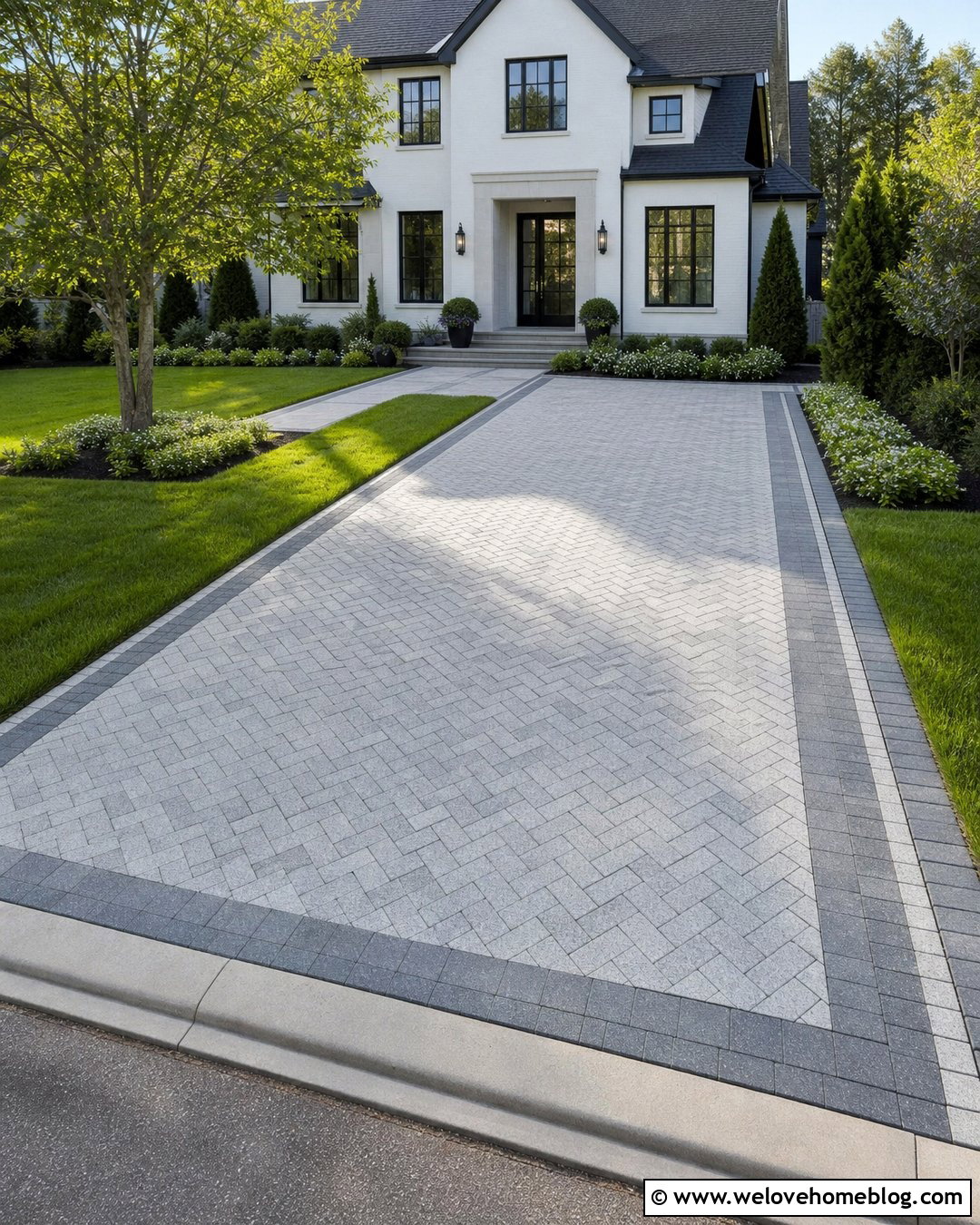
Small-format concrete paving flags can form an energetic herringbone surface while retaining the clean appearance of slab paving. Choose rectangular units rated for driveways and install them at a 45-degree angle to the garage. A straight charcoal border will contain the diagonal pattern and prevent the edges from looking unfinished. Keep surrounding details quiet so the paving remains the main feature. Low evergreen hedges, simple lawn panels, and white flowering plants provide enough softness without competing with the geometry. At the sidewalk or road, introduce a straight soldier-course apron that neatly ends the herringbone arrangement. This design brings extra movement to a short suburban driveway and can visually widen the approach when the pattern runs diagonally across the available space.
14. Two-Tone Flagged Driveway With A Geometric Layout
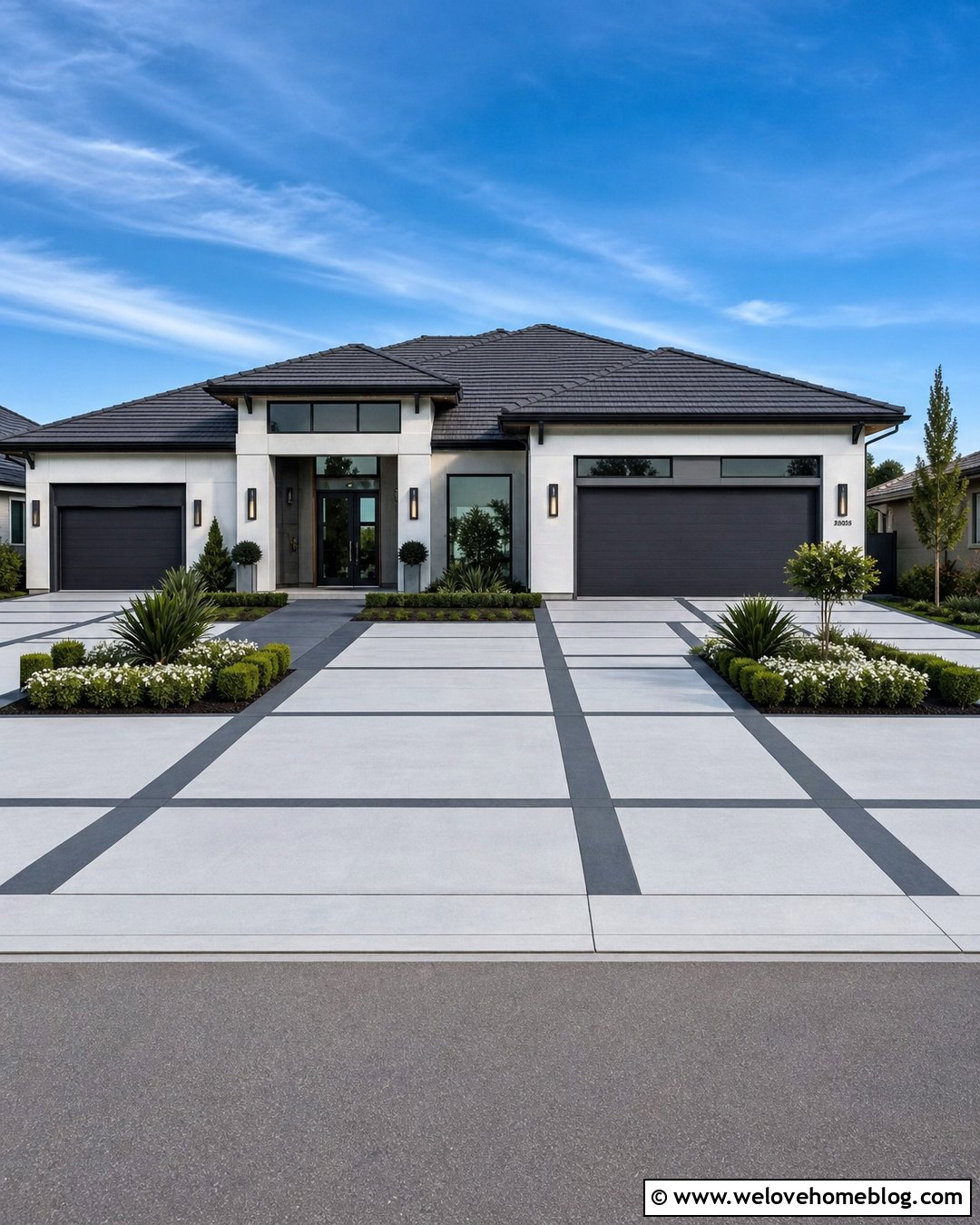
Two coordinated flag colors can define parking areas without painted lines or excessive decoration. Start with large light-gray concrete flags as the main field, then insert darker gray slabs in narrow bands around the perimeter and between parking bays. Keep the shapes and joint widths consistent so the contrast appears intentional. Rectangular planting beds can repeat the geometric arrangement along the house, filled with clipped shrubs, ornamental grasses, and low white flowers. A dark paver walkway leading to the front steps will connect the accent color with the home. For the cleanest result, limit the palette to two paving tones and a restrained group of plants. This flagged driveway suits modern suburban houses, especially those with multiple garage doors or wide front elevations.
15. Flagged Driveway With A Cobblestone Entrance Apron
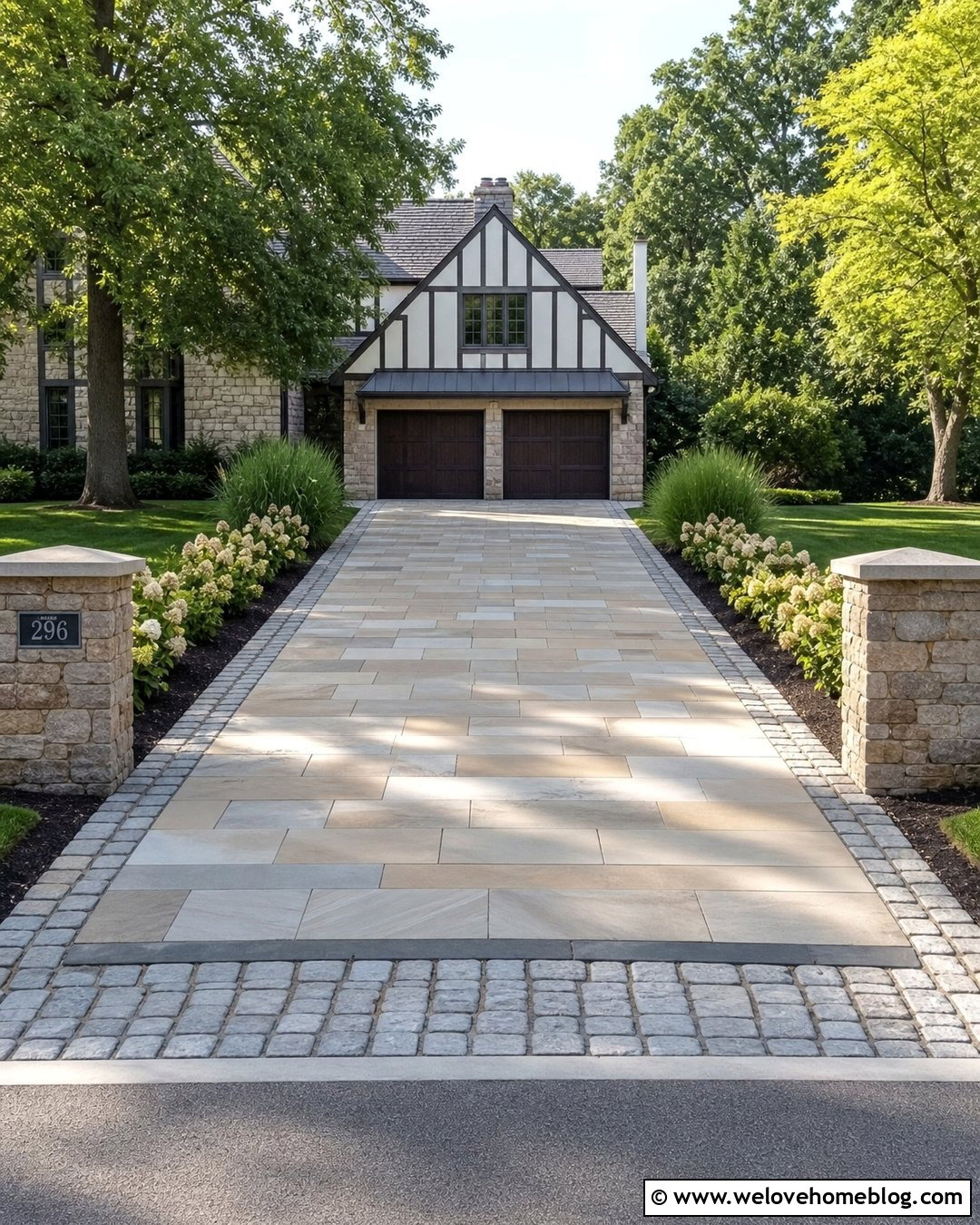
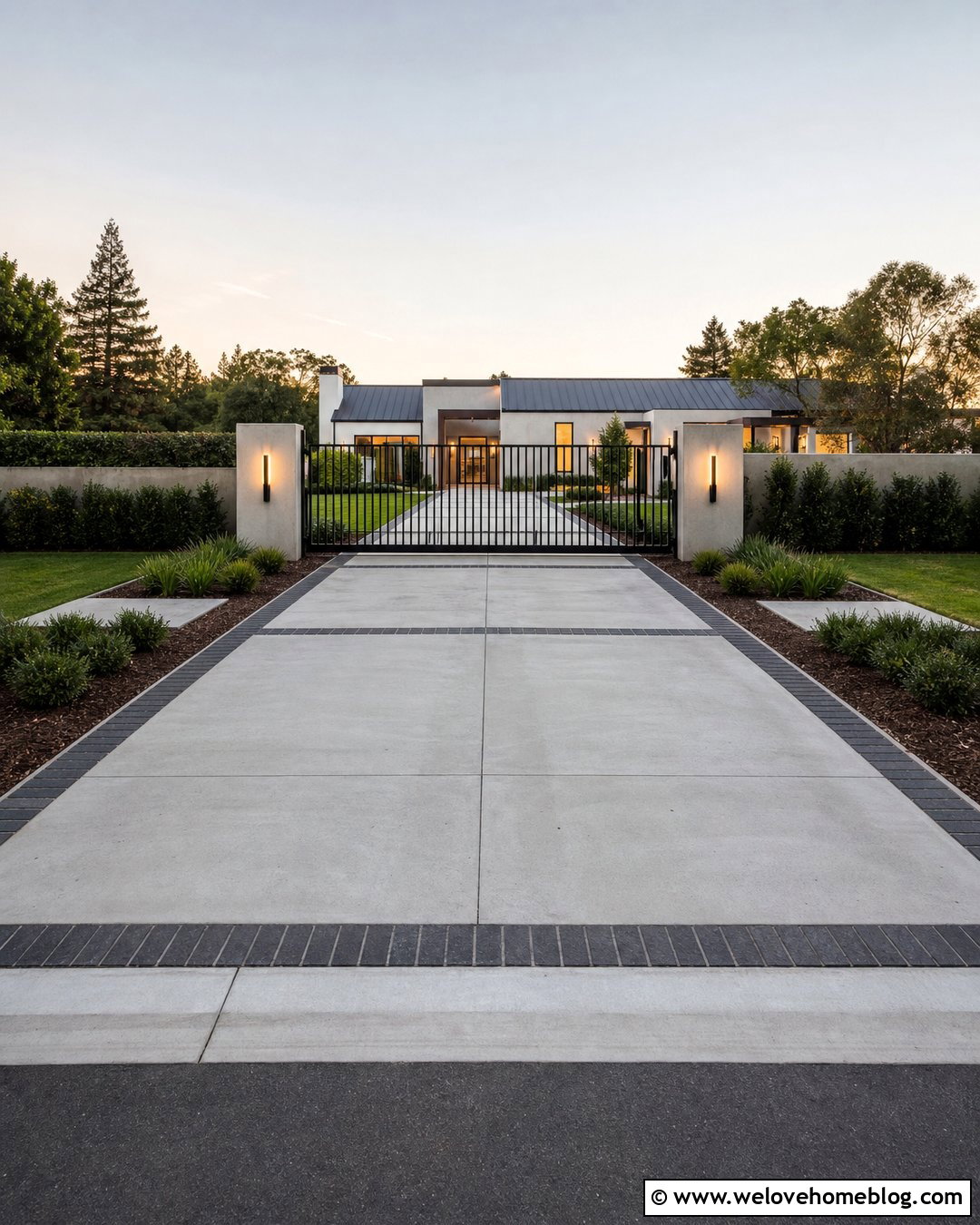
A cobblestone apron gives a flagged driveway a strong, finished entrance from the street. Use smooth rectangular sandstone or concrete flags for the main surface, then place a band of granite cobbles across the full driveway width. The cobblestones should be installed flush enough to avoid creating an awkward bump while still providing clear visual contrast. Continue a single cobblestone row along each side as protective edging. Low stone pillars, an address marker, and matching planting beds can reinforce the entrance without restricting visibility. Inside the property, frame the driveway with lawn and clusters of hydrangeas or native grasses. This combination is particularly effective for Colonial, Tudor, and traditional brick homes because the textured apron adds detail while the larger flags keep the main surface calm.
16. Flagged Driveway With Brick Ribbon Borders
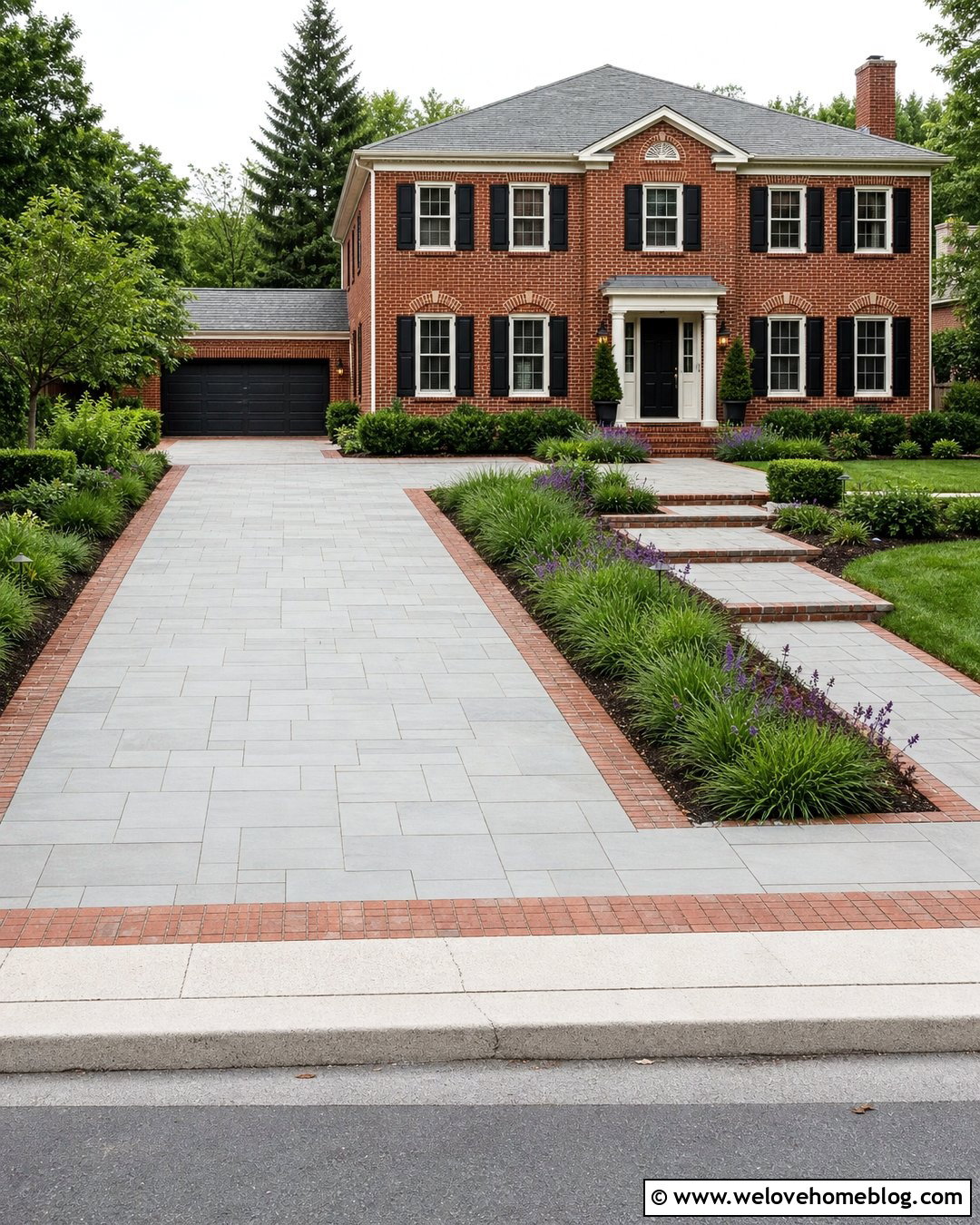
Brick ribbons bring warmth to a gray flagged driveway and can connect the paving to a red or brown brick house. Lay large gray concrete flags in a simple staggered pattern, then install clay brick pavers along both edges. Add one transverse brick band near the garage and another at the sidewalk to create a balanced frame. Choose bricks that coordinate with the facade rather than attempting an exact color match. Foundation beds filled with evergreen shrubs, salvia, and compact ornamental grasses can soften the transition between paving and walls. A brick-edged flagged walkway should lead naturally toward the front door. The finished design feels traditional but not outdated, making it a flexible choice for Colonial, Georgian, ranch, and remodeled suburban homes.
17. Sandstone Flagged Driveway With Lavender Borders
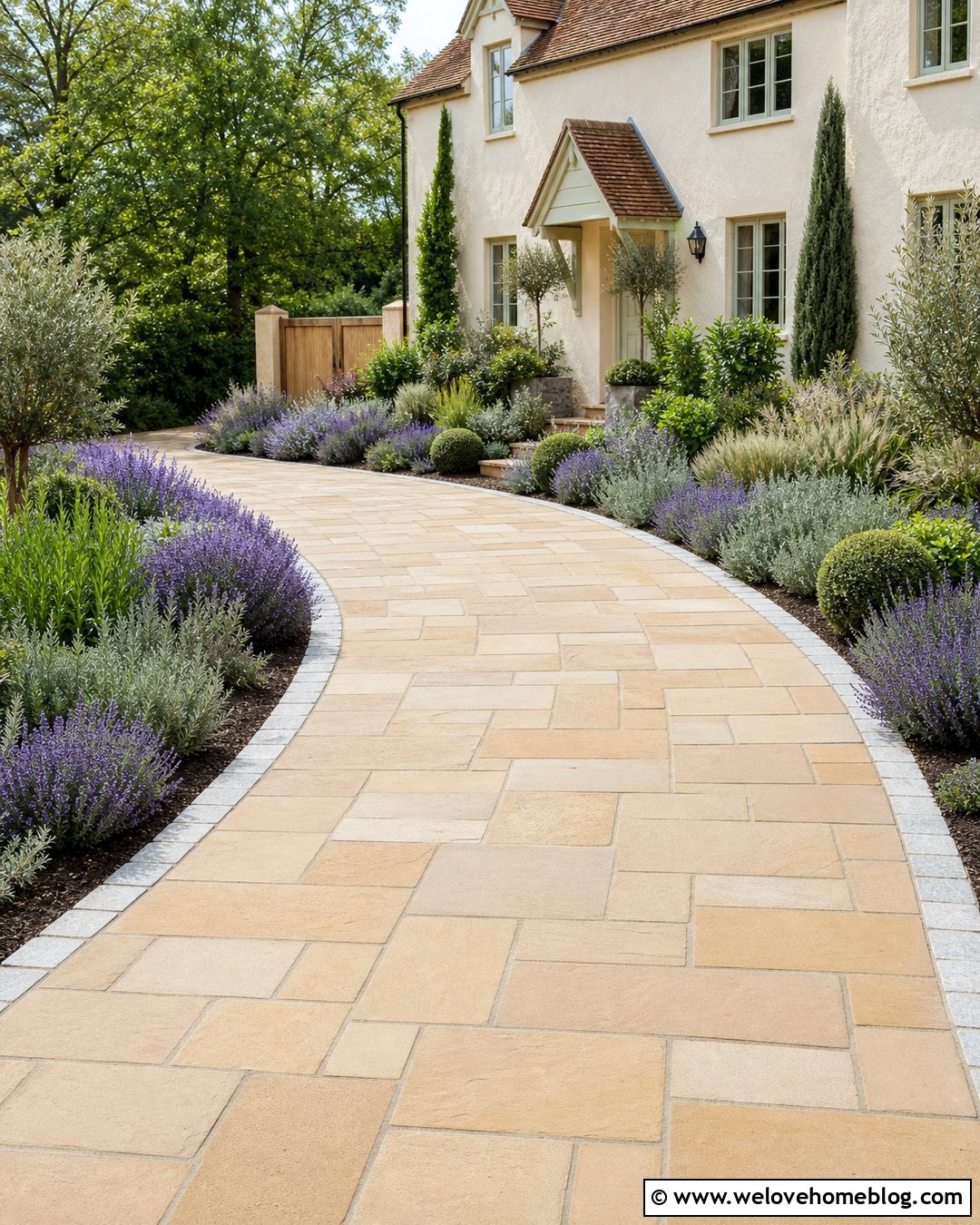
Imagine warm sandstone paving framed by swaying purple flowers and silver-green foliage. Use buff rectangular flags in an irregular staggered arrangement, allowing subtle color variation to give the driveway depth. A narrow limestone or granite curb should separate the slabs from the planting beds and prevent soil from washing onto the surface. Plant lavender in broad repeating groups, mixed with catmint, santolina, and compact ornamental grasses for a relaxed but organized border. Keep taller shrubs closer to the house so the entrance remains open and visible. A curved layout can enhance the garden atmosphere, especially when the driveway approaches a cottage, stucco home, or light-colored farmhouse. Repeat the sandstone in the front walkway to pull the entire composition together.
18. Dark Slate Flagged Driveway With Light Stone Edging
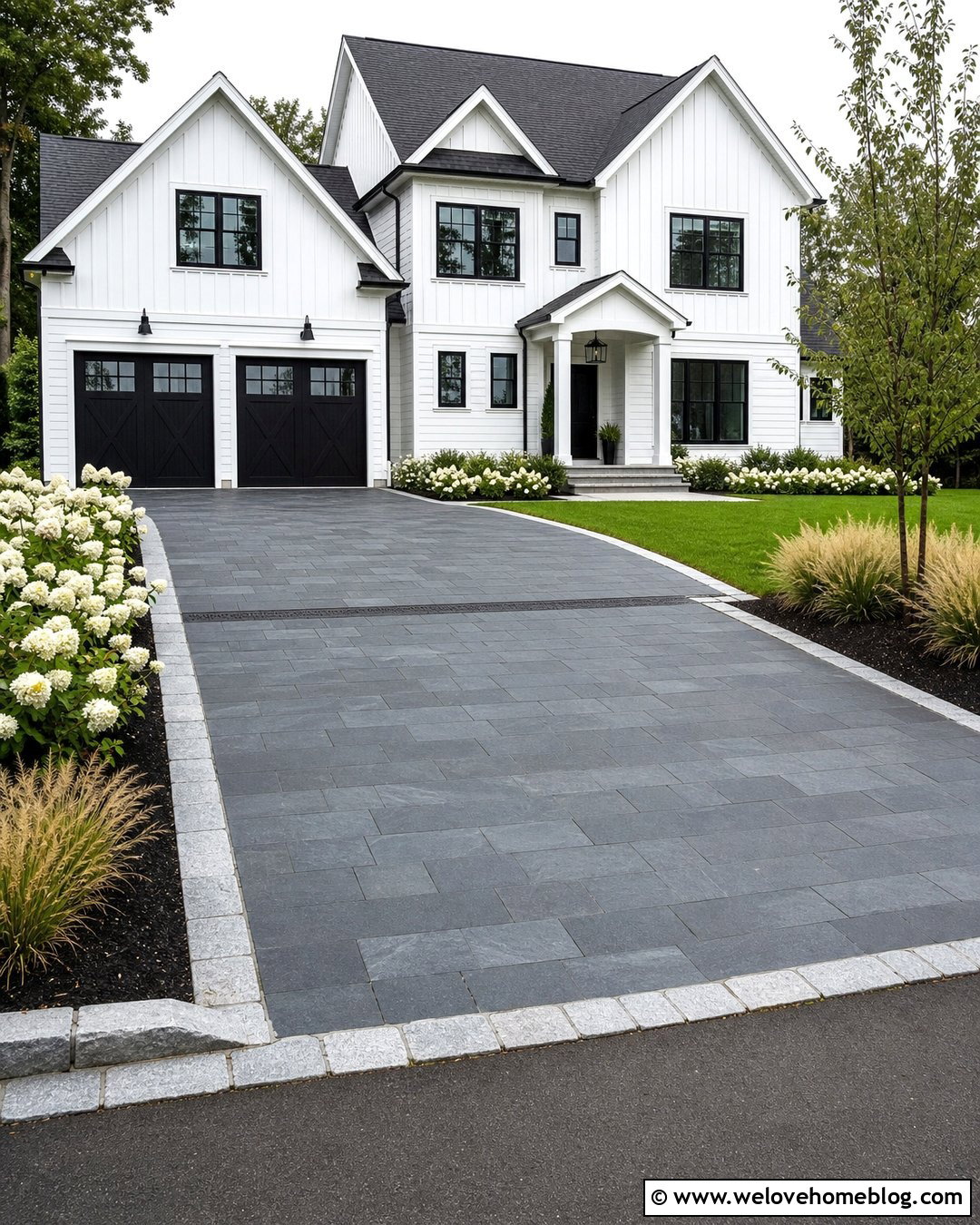
Dark slate flags create a dramatic entrance when balanced by lighter borders and a bright home exterior. Choose dense, exterior-grade slate that is suitable for vehicle loads and local freeze-thaw conditions. Arrange large charcoal slabs in straight staggered courses, allowing their subtle blue and green undertones to remain visible. Pale granite setts can outline the driveway and prevent the dark surface from visually blending into surrounding soil. Use fresh green lawn, white flowering shrubs, and light ornamental grasses to create further contrast. Near the garage, include a discreet linear drain that aligns with the joints. This complete flagged driveway complements white modern farmhouses, light stucco homes, and contemporary residences with black trim, producing a bold look without relying on complicated patterns.
19. Permeable Flagged Driveway With Gravel Joints
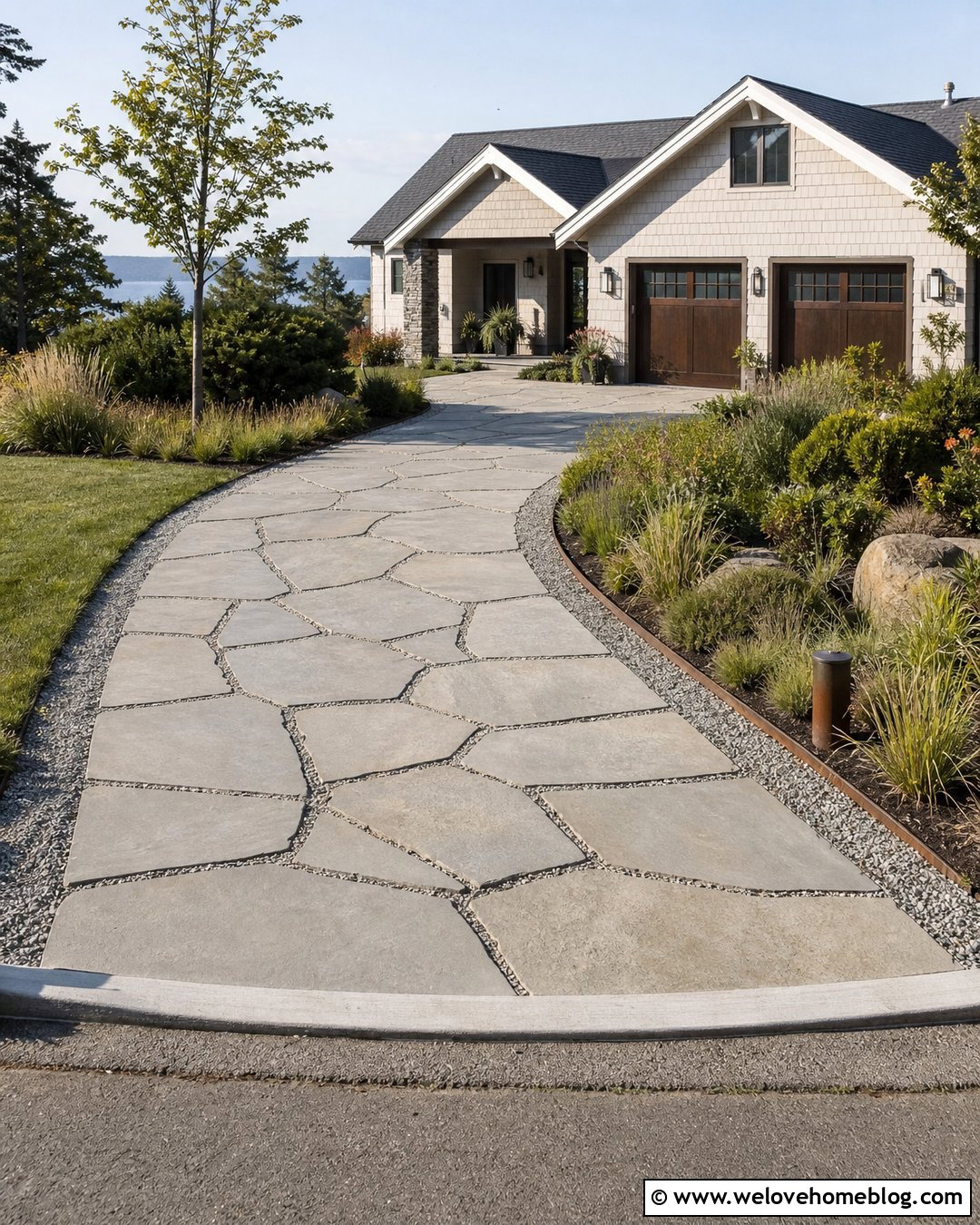
A permeable-looking flagged driveway combines substantial paving with attractive gravel-filled joints. Place thick concrete or natural stone flags over a professionally designed permeable base, leaving consistent openings only where the installation system allows. Fill the joints with clean angular aggregate that remains more stable than loose rounded pebbles. Use matching gravel in narrow side strips to connect the paving with nearby rain gardens or drought-tolerant beds. Low grasses, sedges, and spreading shrubs can soften the edges while preserving visibility. A slightly curved layout makes the alternating stone and gravel lines feel less rigid. This approach is well suited to contemporary, coastal, and environmentally focused landscapes, but the complete system must be selected and installed for the expected vehicle weight and local soil conditions.
20. Budget Concrete Flagged Driveway With Gravel Borders
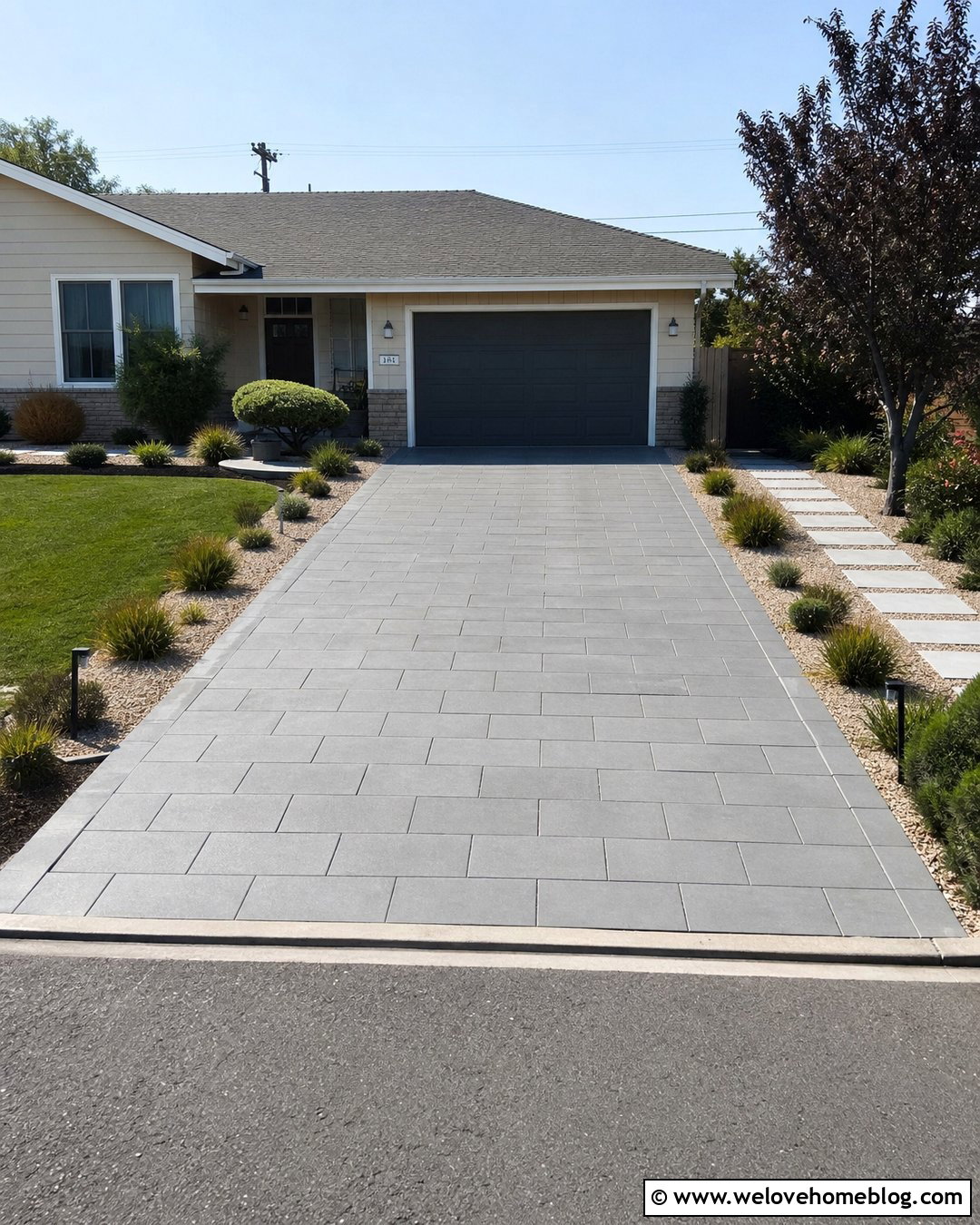
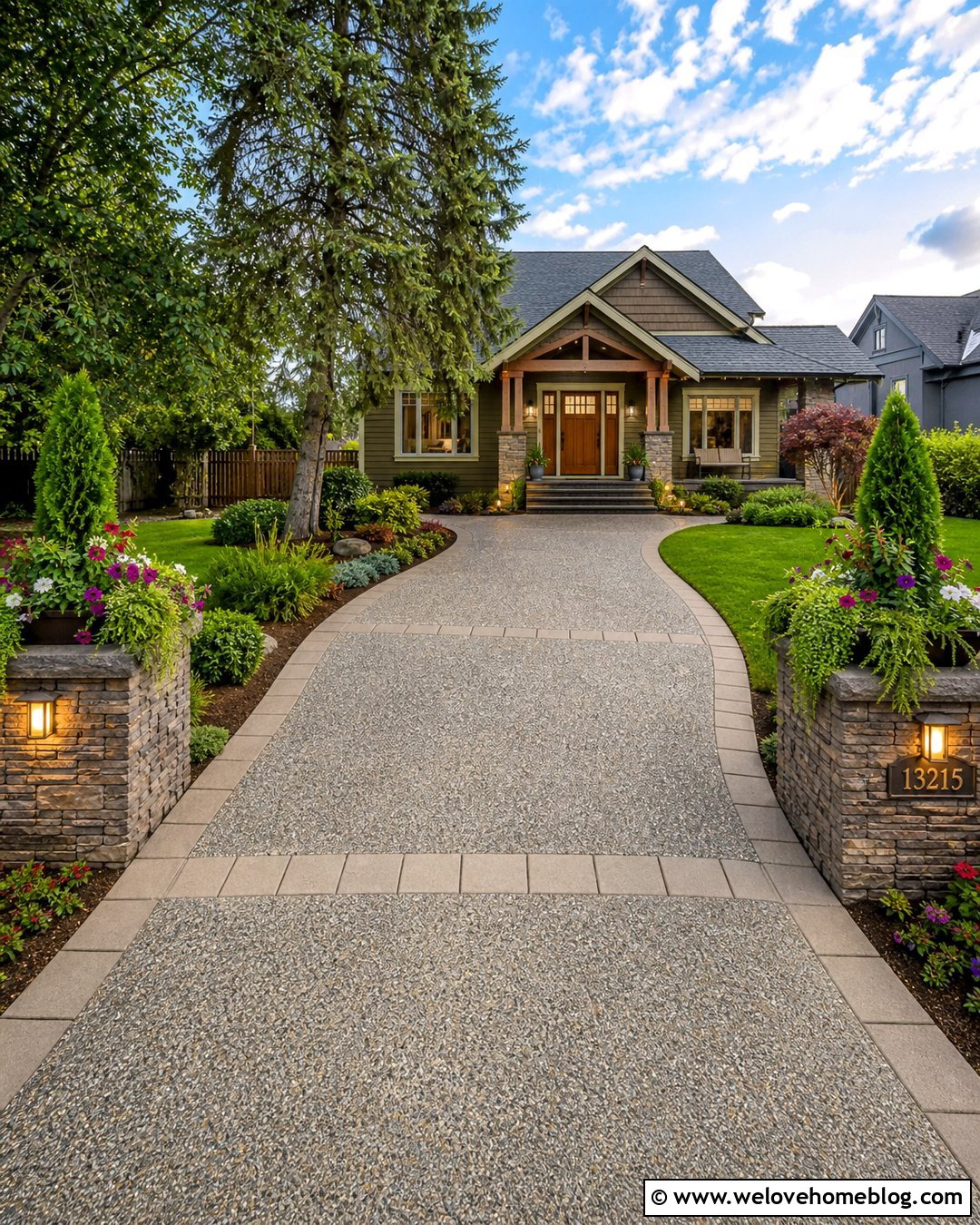
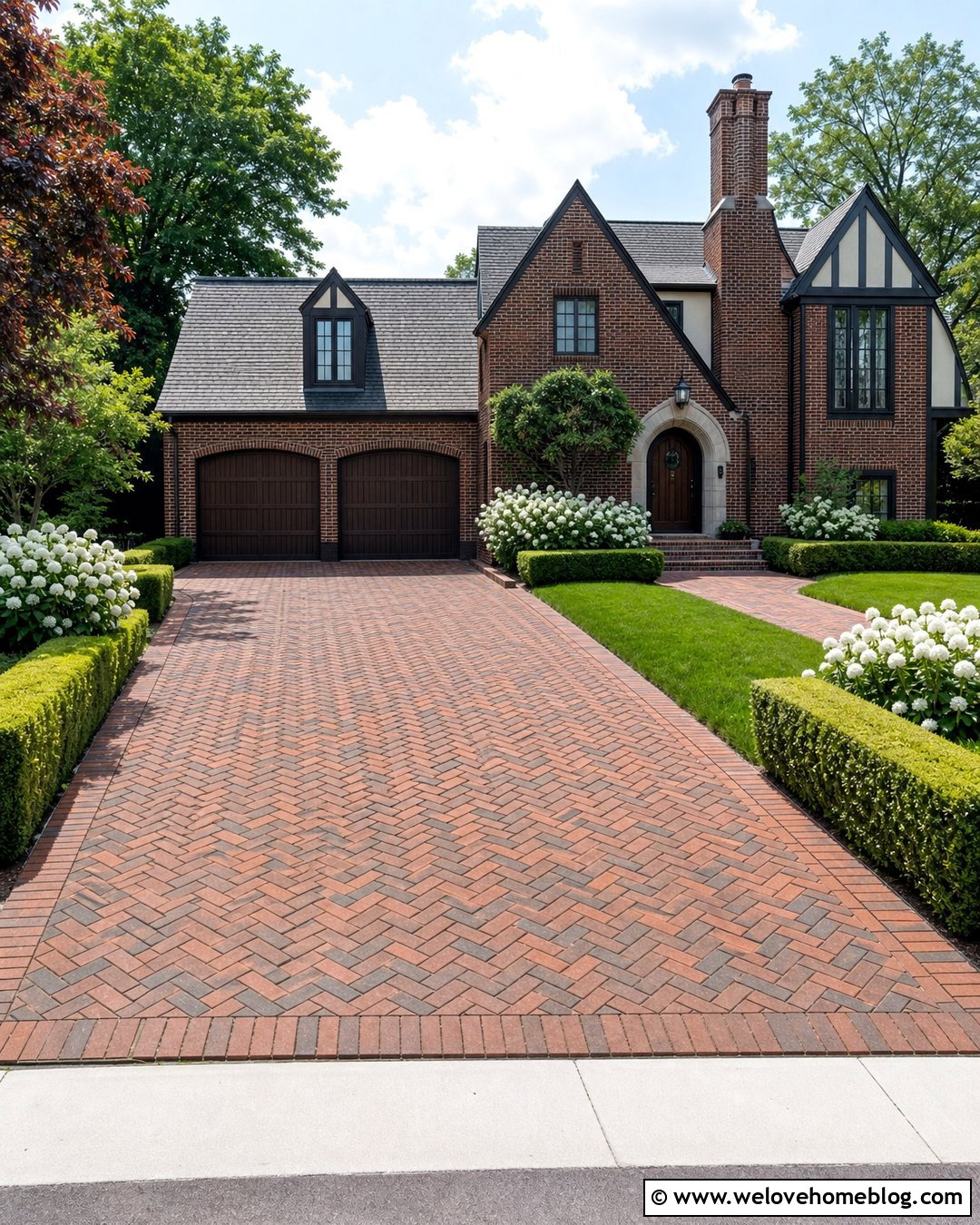
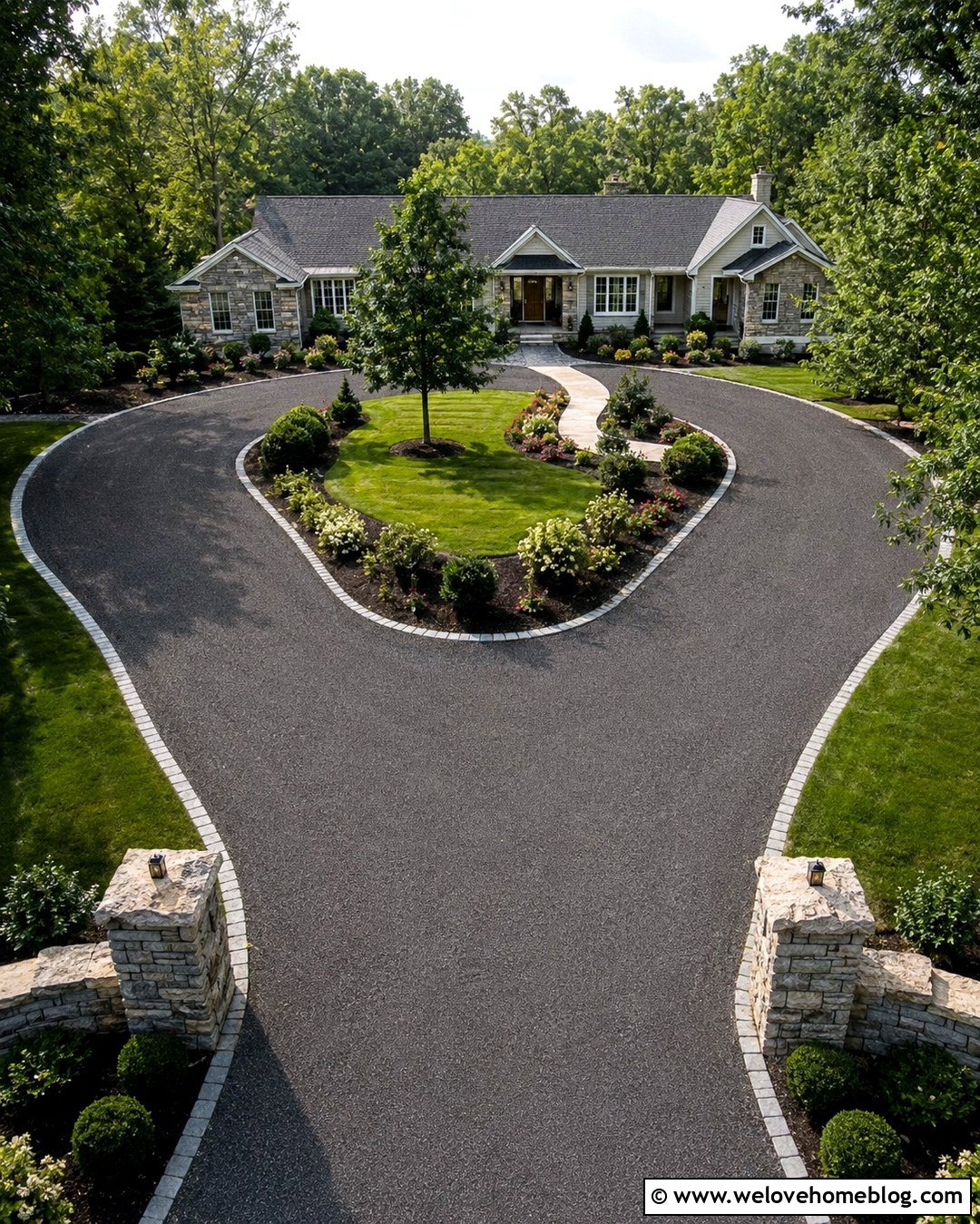
Standard concrete flags can produce a polished entrance when the layout and surrounding materials are kept simple. Select one practical slab size in a medium-gray textured finish and arrange it in an offset bond. Using fewer slab sizes can simplify the pattern while still giving the surface clear structure. Install secure concrete edging, then add narrow strips of contrasting gravel beyond the paving to improve the transition into planting beds. Drought-tolerant grasses, compact shrubs, and one ornamental tree provide curb appeal without requiring dense planting. A small gravel-and-flag walkway can connect the driveway with the porch. This affordable flagged driveway works well for ranch homes, starter properties, and straightforward renovations where clean installation matters more than expensive decorative materials.
Conclusion:
The strongest **20 Flagged Driveway Ideas** treat paving, borders, drainage, landscaping, and the home as one coordinated design. Natural sandstone and bluestone create warmth, while concrete and porcelain flags support cleaner contemporary layouts. Brick ribbons, granite setts, gravel joints, and cobblestone aprons can add contrast without overwhelming the main surface. Whatever look you prefer, choose flags rated for vehicle traffic and local weather conditions. A properly compacted base, secure edge restraints, sensible grading, and well-positioned drainage will help protect the finished driveway. Finally, repeat colors or materials in the walkway, entrance pillars, and planting beds. That simple connection can make a practical driveway feel like an intentional part of the property.

Related posts:
Leave a Reply