
A well-planned asphalt driveway can feel polished, welcoming, and closely connected to your home’s architecture. These 20 driveway asphalt ideas show how blacktop becomes more attractive when the surface, layout, borders, entrance, and landscaping are designed as one complete look. Dark asphalt creates strong contrast with green lawns, pale stone, red brick, and colorful planting beds. It can suit everything from a compact ranch home to a large colonial or modern farmhouse. Before choosing a design, consider your lot size, garage location, drainage, turning space, and the amount of yard you want to preserve. Decorative aprons, defined edging, gentle curves, and practical lighting can then personalize the finished approach. Use these complete looks to find the best fit among these **20 driveway asphalt ideas**.

1. Straight Asphalt Driveway With Brick Border
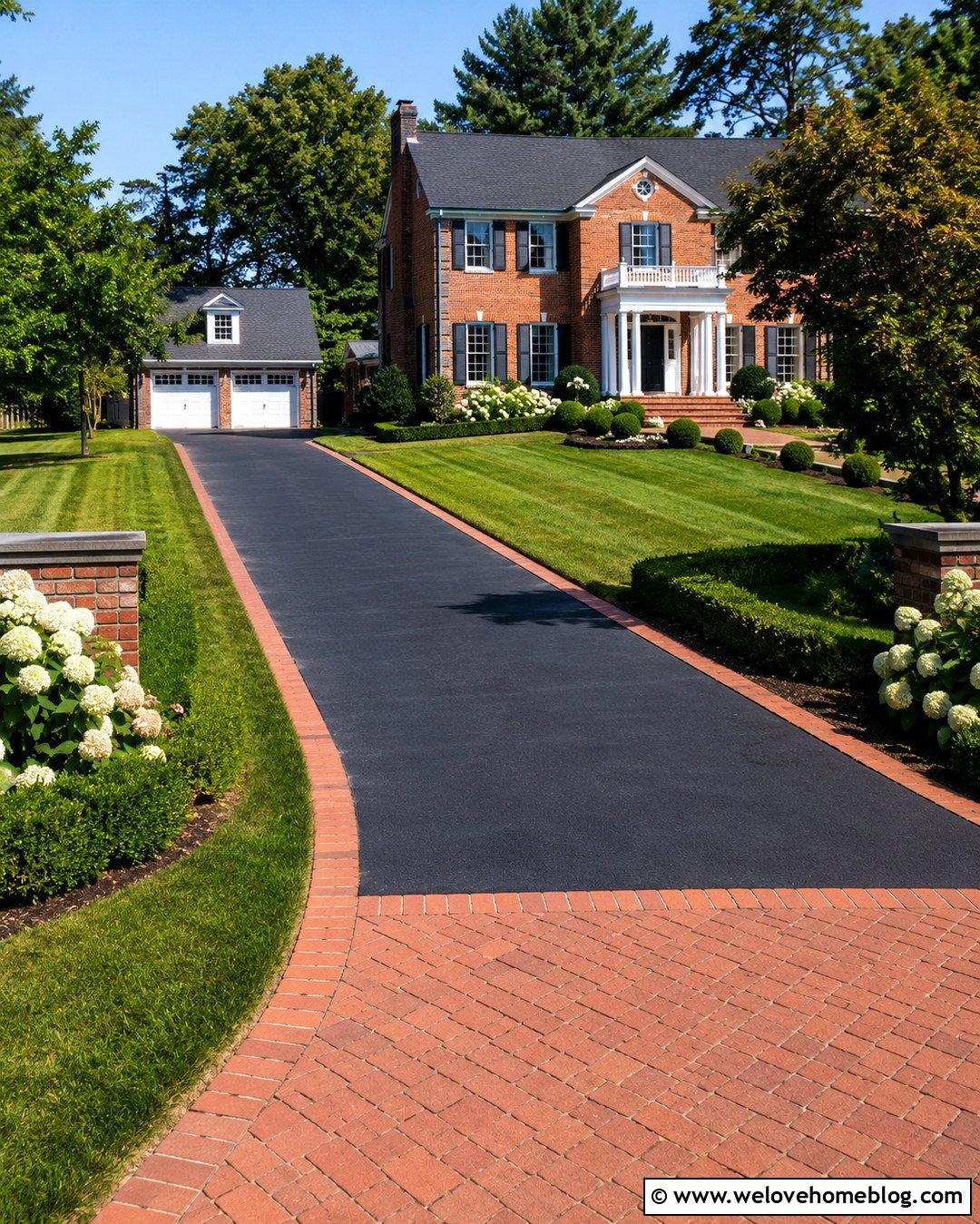
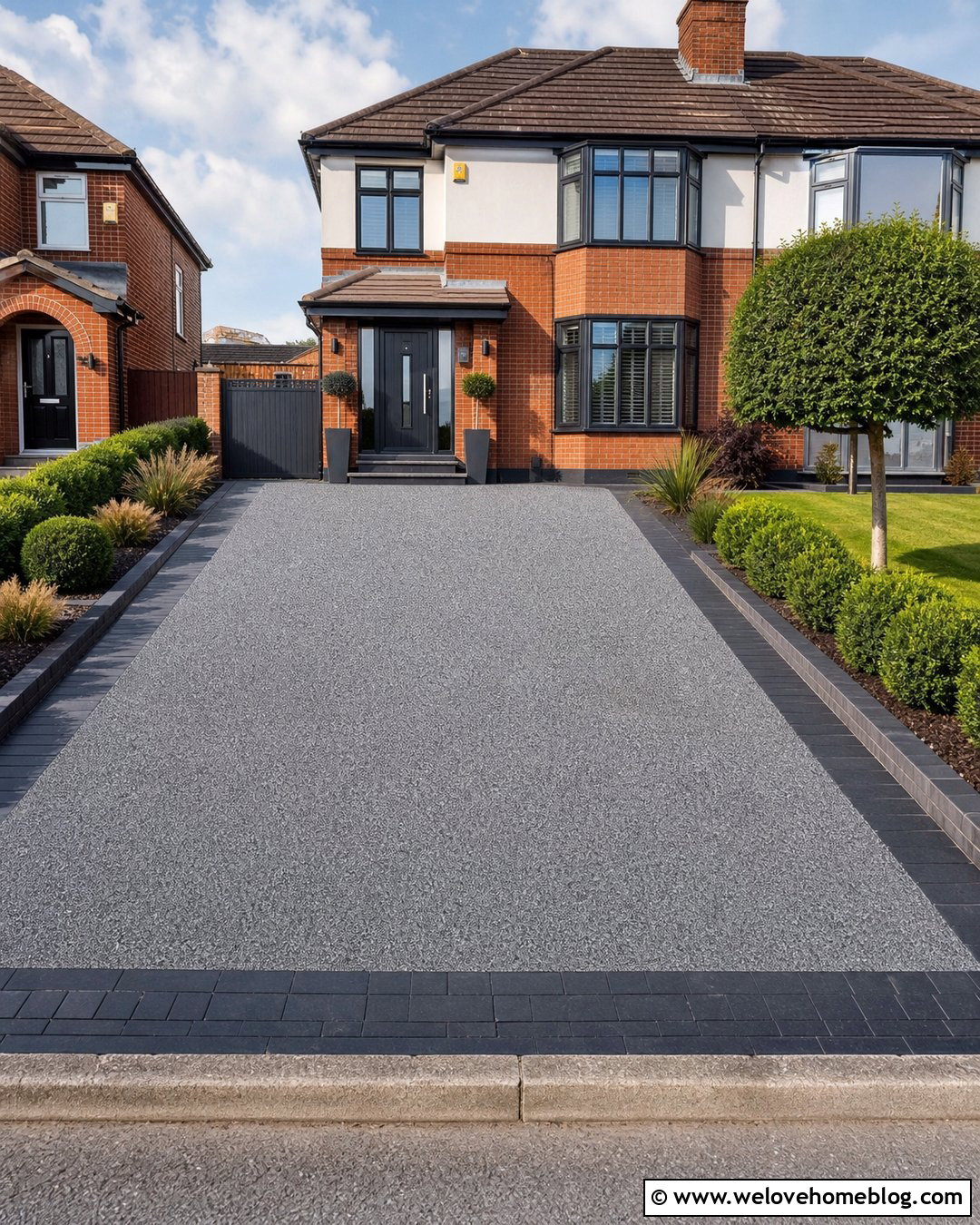
A straight black asphalt driveway framed by red brick creates a clean, traditional approach without looking overly formal. This layout works especially well on narrow suburban lots where the garage sits directly behind the street entrance. Install the bricks lengthwise along both sides to create a simple continuous outline. A matching brick apron near the curb can make the entrance feel wider and more intentional. Keep the landscaping balanced with trimmed lawn on one side and a shallow planting bed on the other. Boxwood, dwarf hydrangeas, and ornamental grasses add softness without crowding vehicles. Connect the front walkway using the same brick so every hardscape feature feels coordinated. The dark asphalt, warm brick, and green planting create an easy combination for ranch, colonial, and Cape Cod homes.
2. Curved Asphalt Driveway With Belgian Block Edging
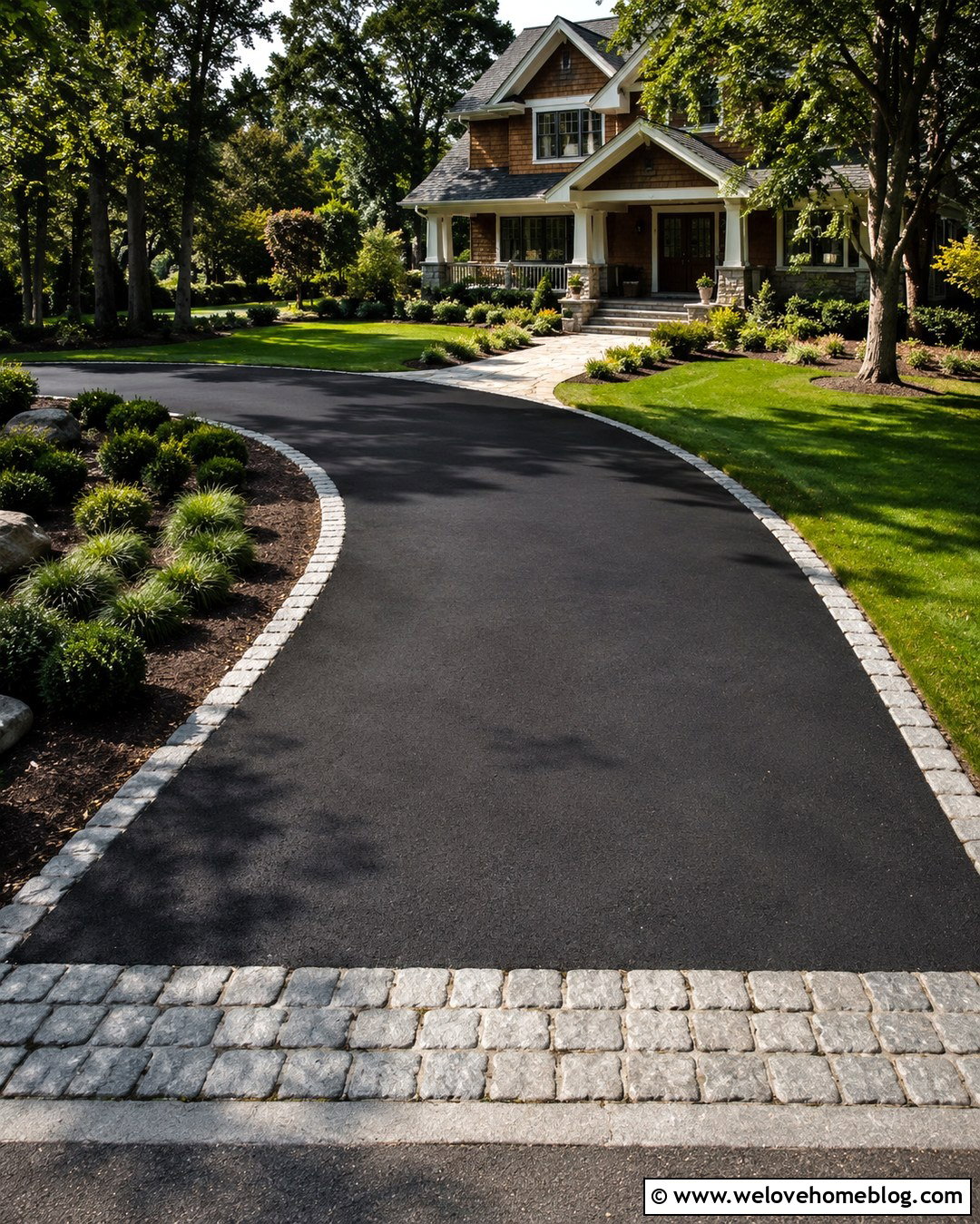
A curved asphalt driveway can make a deep front yard feel more natural and visually interesting. Belgian block edging strengthens the shape by tracing every bend with a substantial stone border. Choose gray granite blocks for a classic look or warmer tan stones to coordinate with brick and beige siding. Allow the curve to follow existing trees, garden beds, or changes in the terrain rather than forcing an unnecessary sweeping shape. Plant low shrubs along the inside curve and leave open lawn on the outside for better visual balance. Near the garage, widen the pavement slightly to create comfortable maneuvering room. A coordinating Belgian block apron at the road completes the design. This full driveway look suits colonial, craftsman, Tudor, and wooded country properties particularly well.
3. Circular Asphalt Driveway With Center Garden
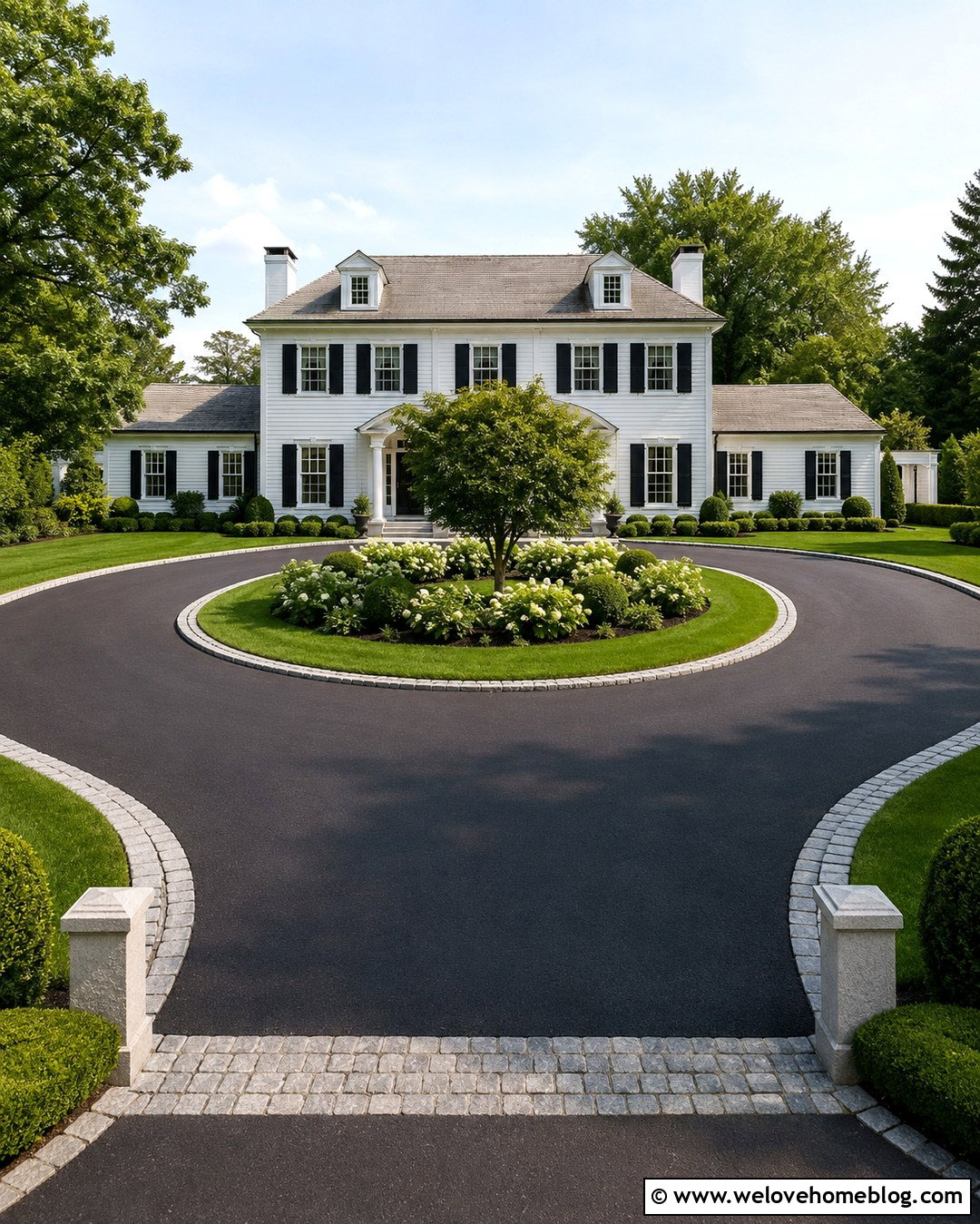
Could a large front lawn become more useful without losing its greenery? A circular black asphalt driveway with a landscaped center island creates convenient vehicle flow while giving the yard a strong focal point. Shape the island as a true circle or a softer oval that follows the home’s facade. Edge it with cobblestone, brick, or natural cut stone to separate the planting area from the asphalt. A small ornamental tree can anchor the center, while low flowering shrubs and ground cover maintain visibility across the driveway. Repeat the same plants near both entrances for a balanced street view. Keep the asphalt lanes wide enough for comfortable turns and preserve a clear walkway to the front door. This arrangement works beautifully with symmetrical colonial, Georgian, and estate-style homes.
4. Asphalt Driveway With Paver Apron
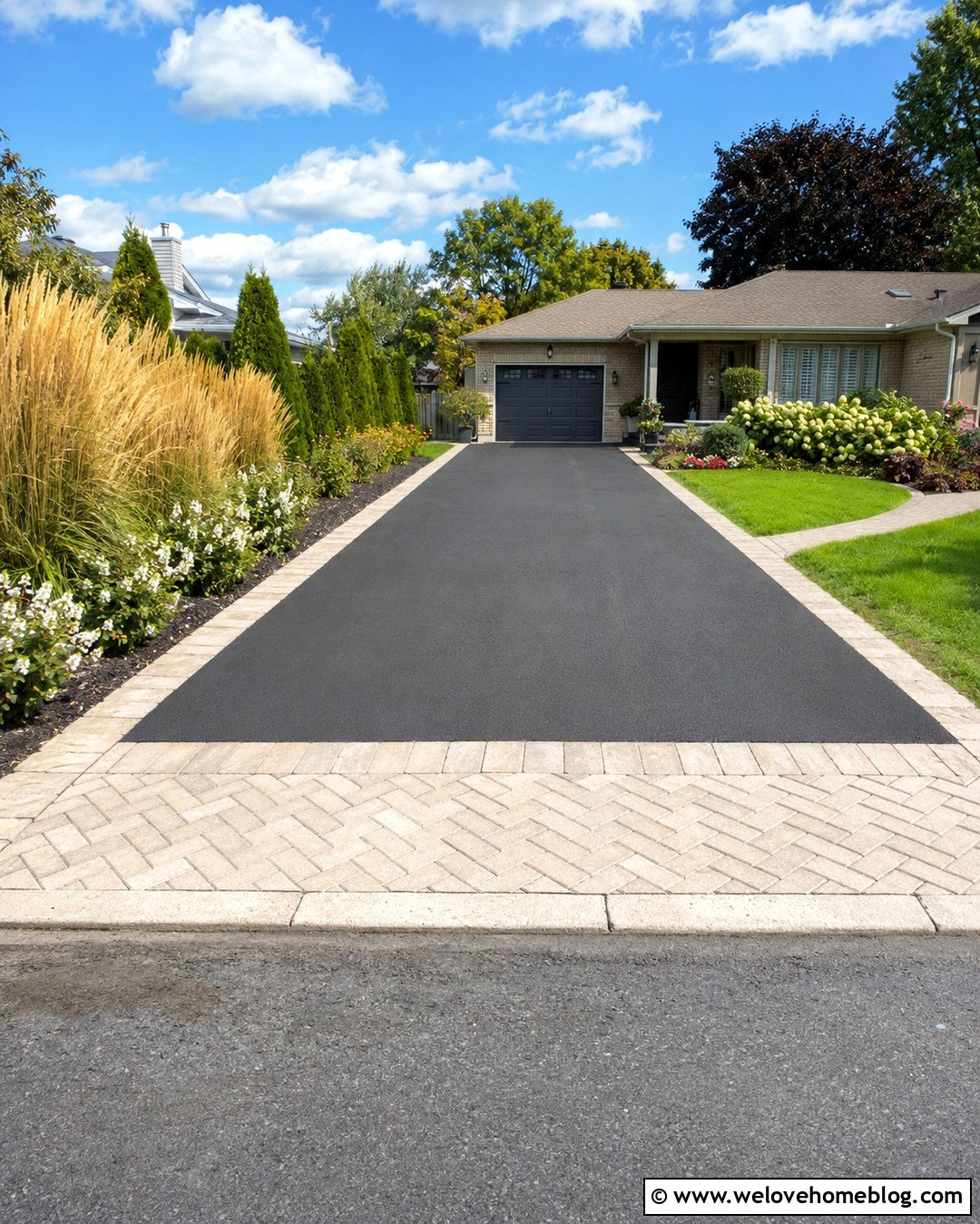
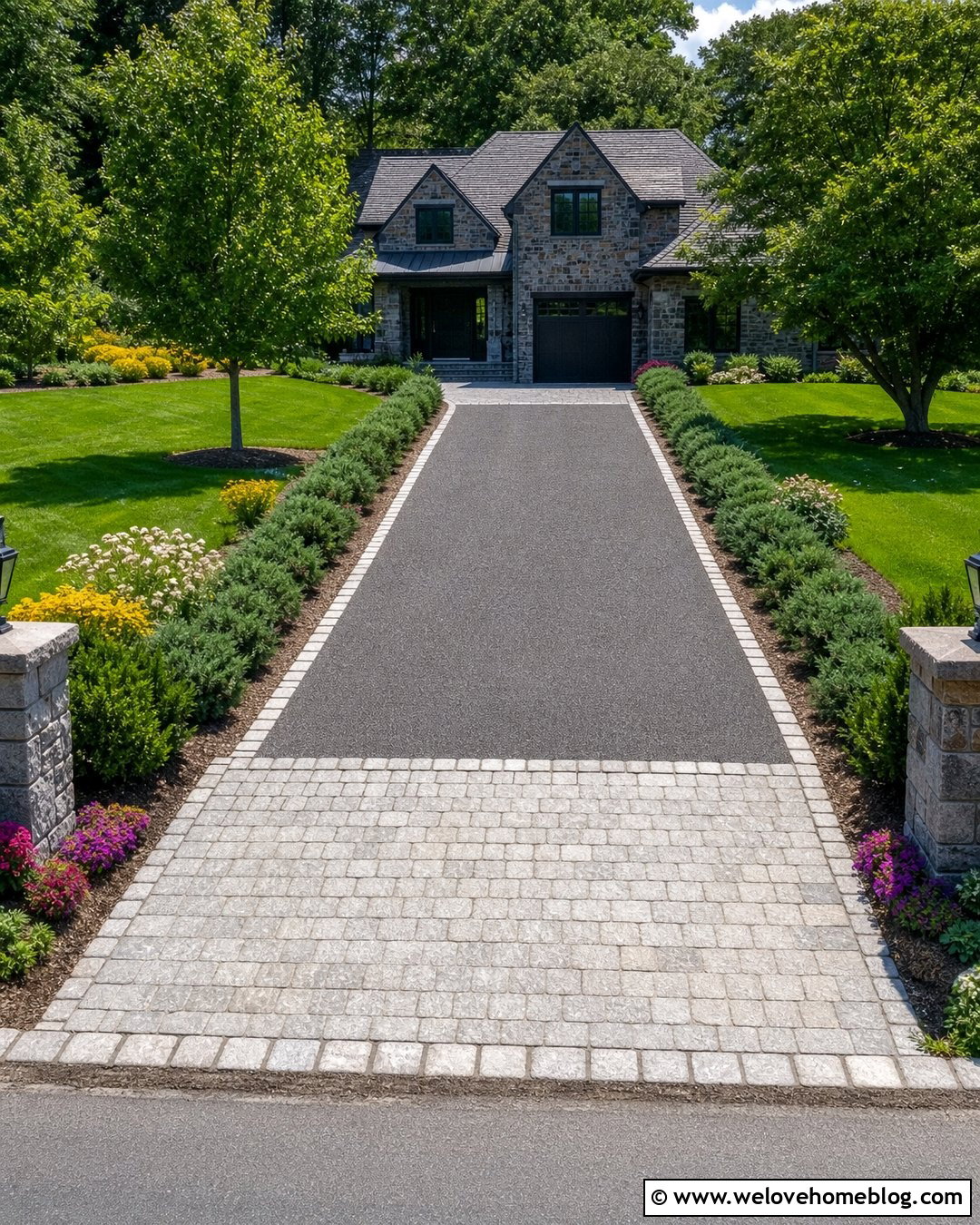
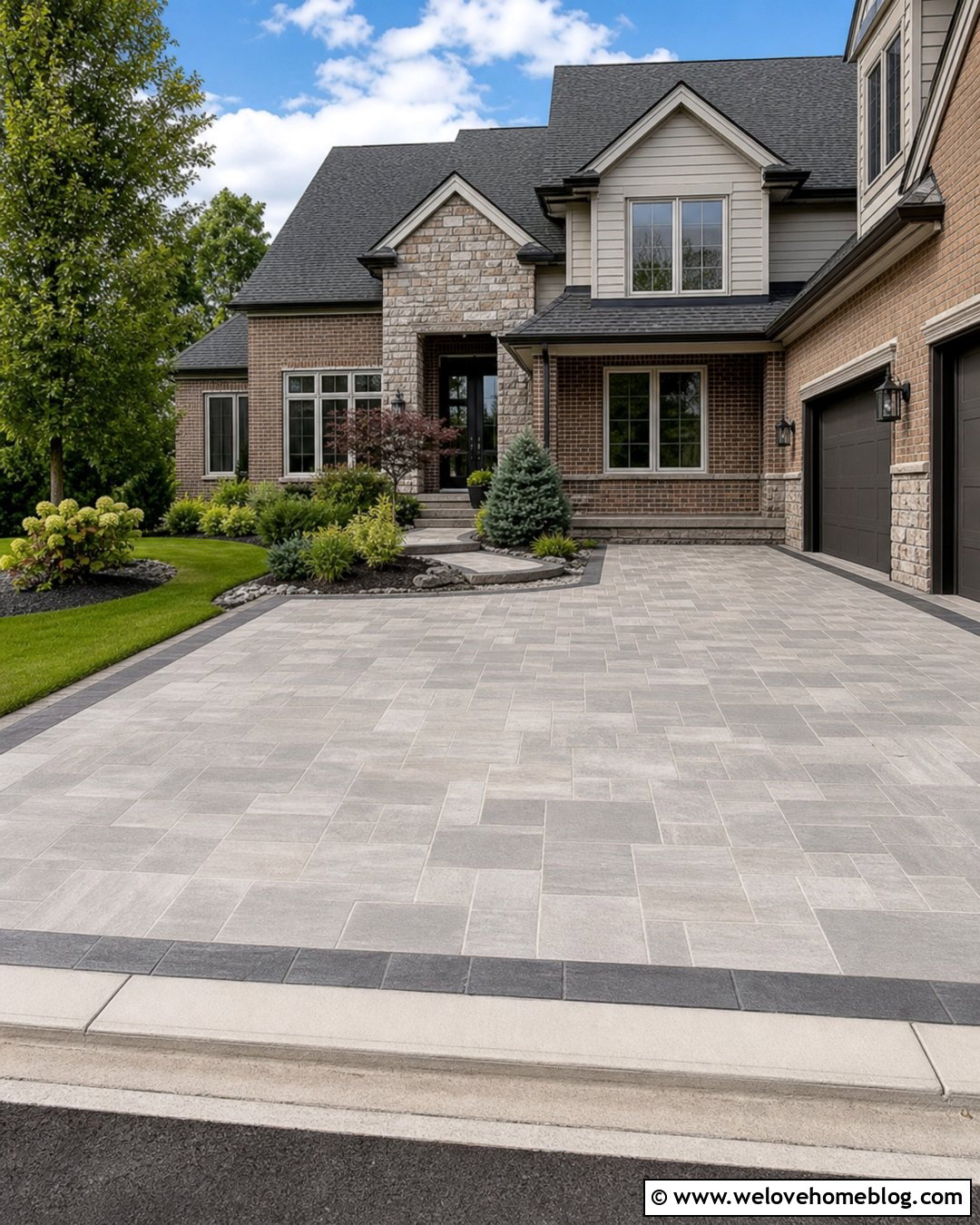
A decorative paver apron introduces texture exactly where the driveway meets the street. The primary surface remains smooth black asphalt, while the entrance receives a broad band of concrete or clay pavers. Select a paver color that appears elsewhere on the property, such as the home’s brick, foundation stone, porch floor, or walkway. A herringbone pattern adds traditional character, while large rectangular pavers create a cleaner modern entrance. Carry a narrow line of matching pavers along the asphalt edges to make the apron feel connected to the complete design. Low planting beds beside the entry can feature ornamental grasses, compact evergreens, or seasonal flowers. This approach delivers a custom appearance without covering the entire driveway in decorative masonry, making it useful for both modest and expansive front yards.
5. Modern Asphalt Driveway With Concrete Bands
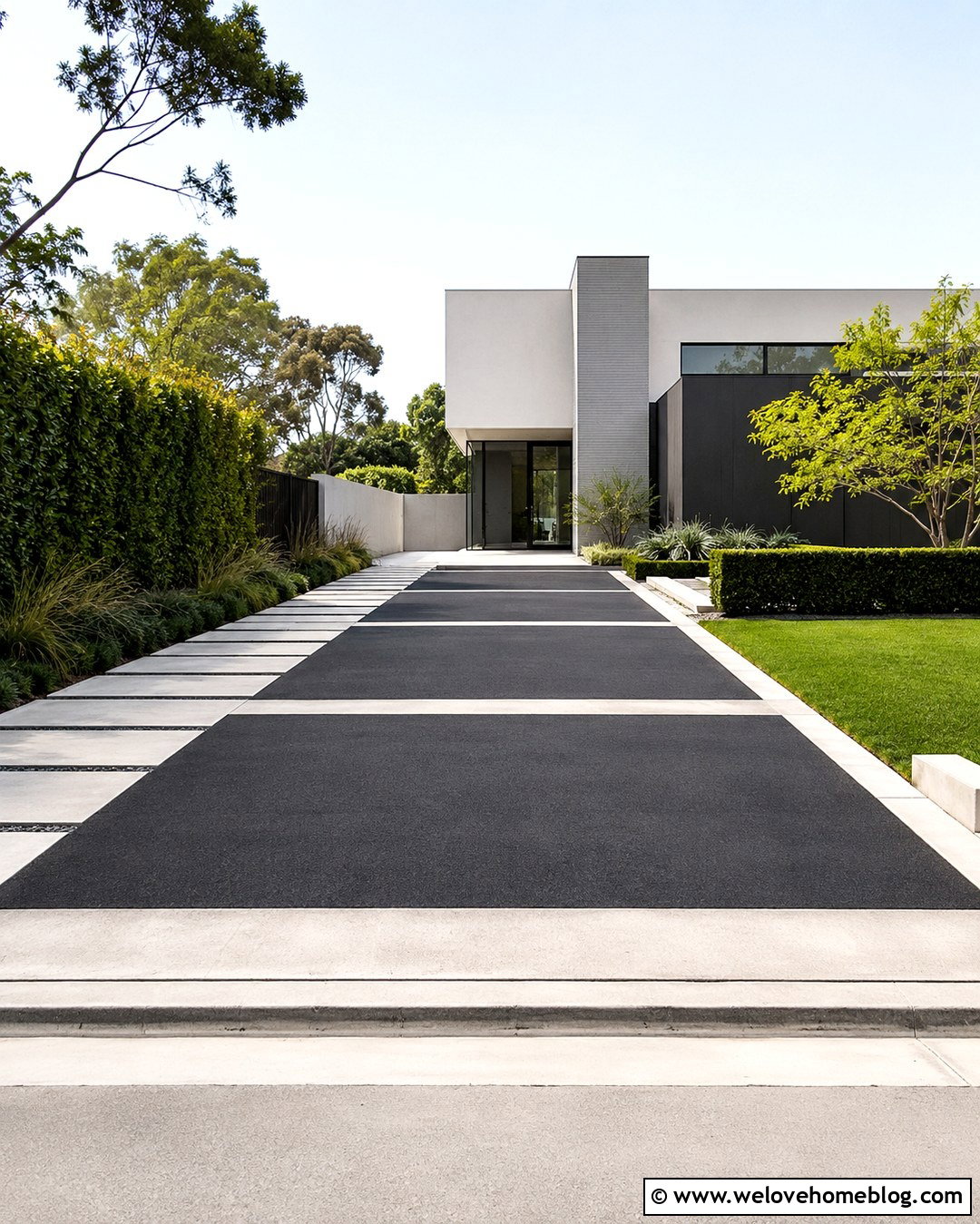
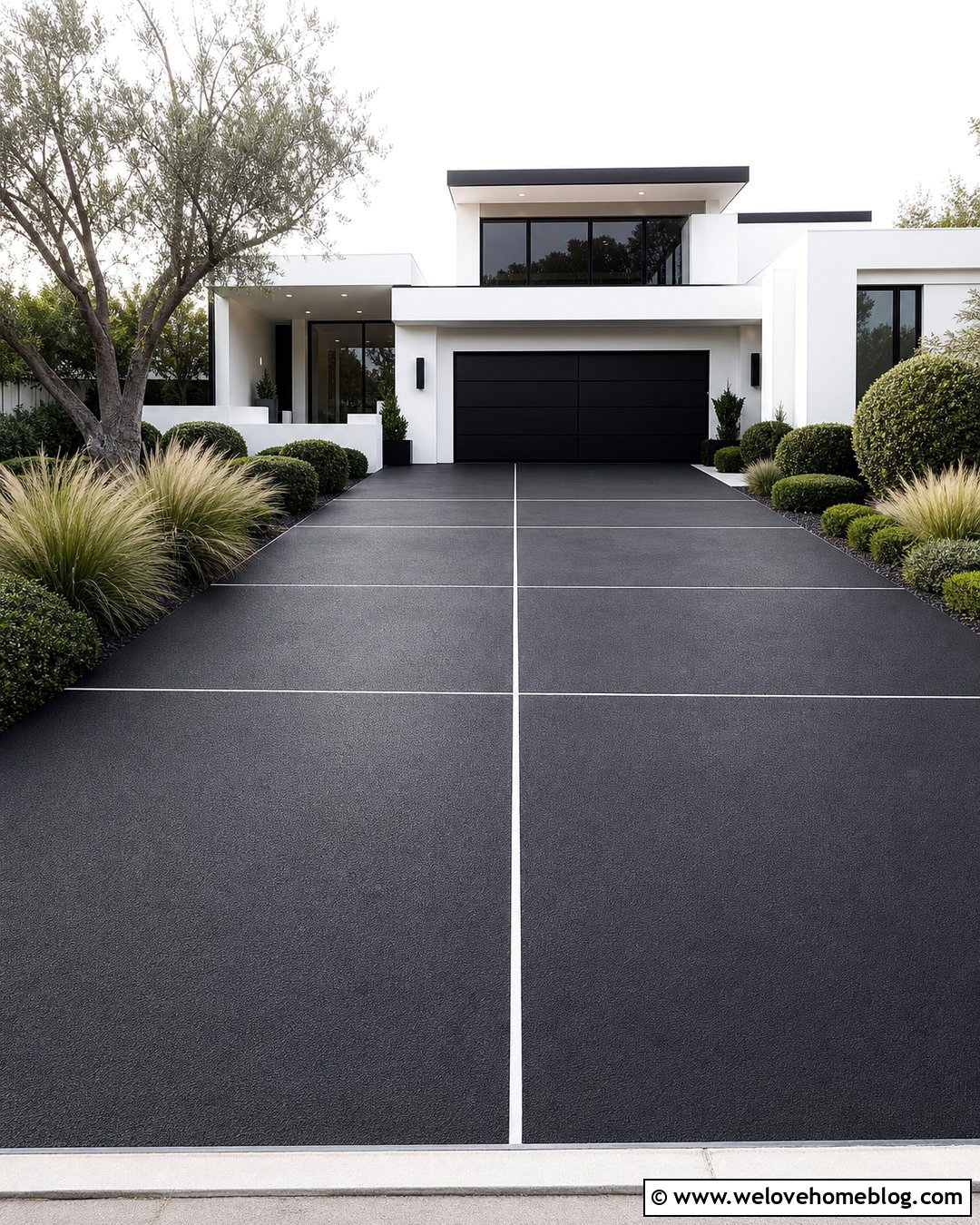
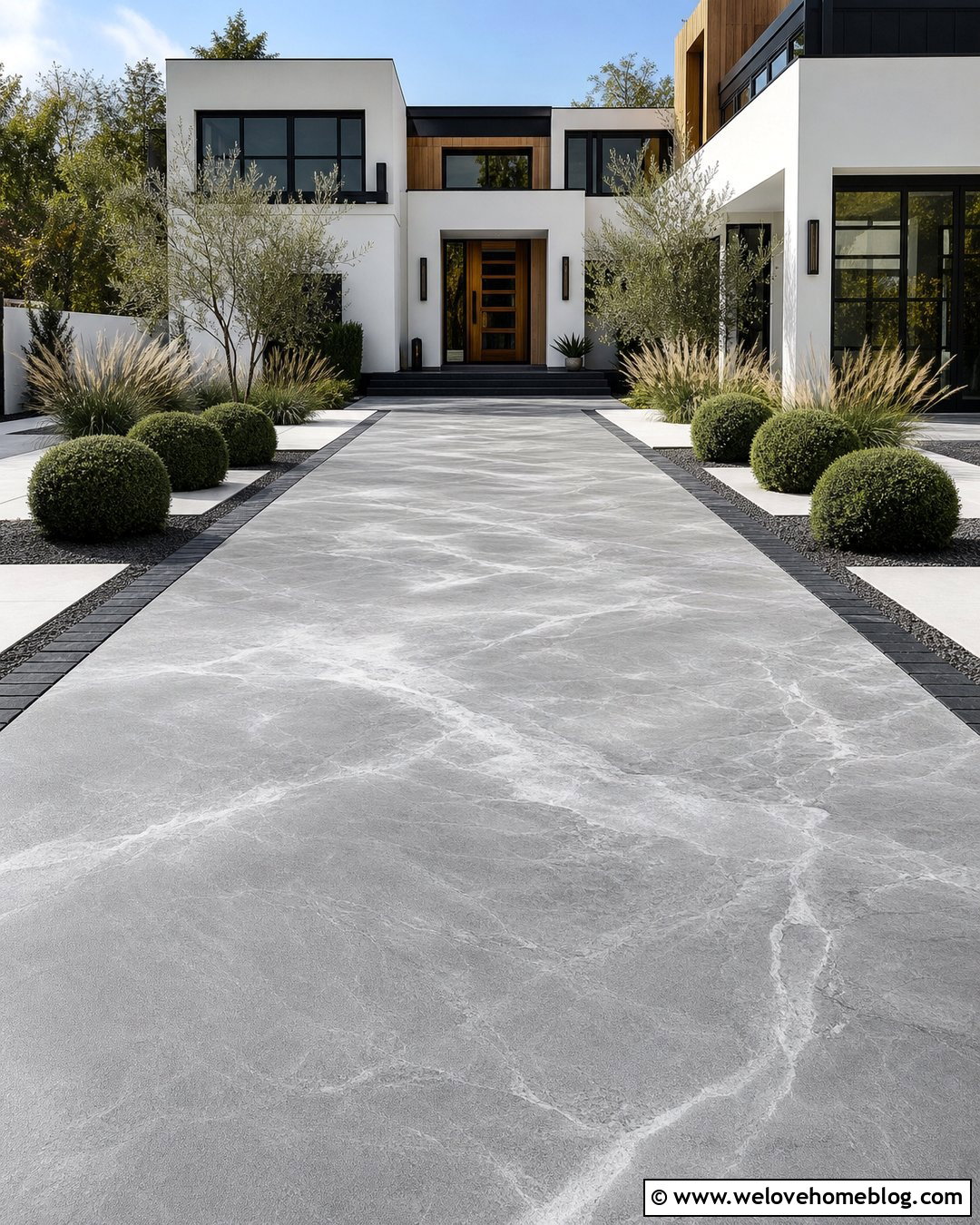
Crisp geometry transforms a basic asphalt driveway into a design that complements contemporary architecture. Begin with a smooth charcoal-black asphalt field and add pale poured-concrete bands at selected points across the pavement. Place one band at the curb, another near the walkway, and a final band before the garage to create an organized rhythm. Straight concrete curbs along both sides will sharpen the rectangular layout. Keep nearby landscaping minimal with broad grass strips, clipped evergreen forms, and blocks of ornamental grass. A linear concrete walkway can branch from one band and lead directly to the front entrance. Avoid filling the design with too many materials or decorative patterns. The bold contrast between black asphalt, light concrete, and structured greenery works particularly well with modern homes featuring flat roofs, large windows, and neutral facades.
6. Asphalt Driveway With Cobblestone Border
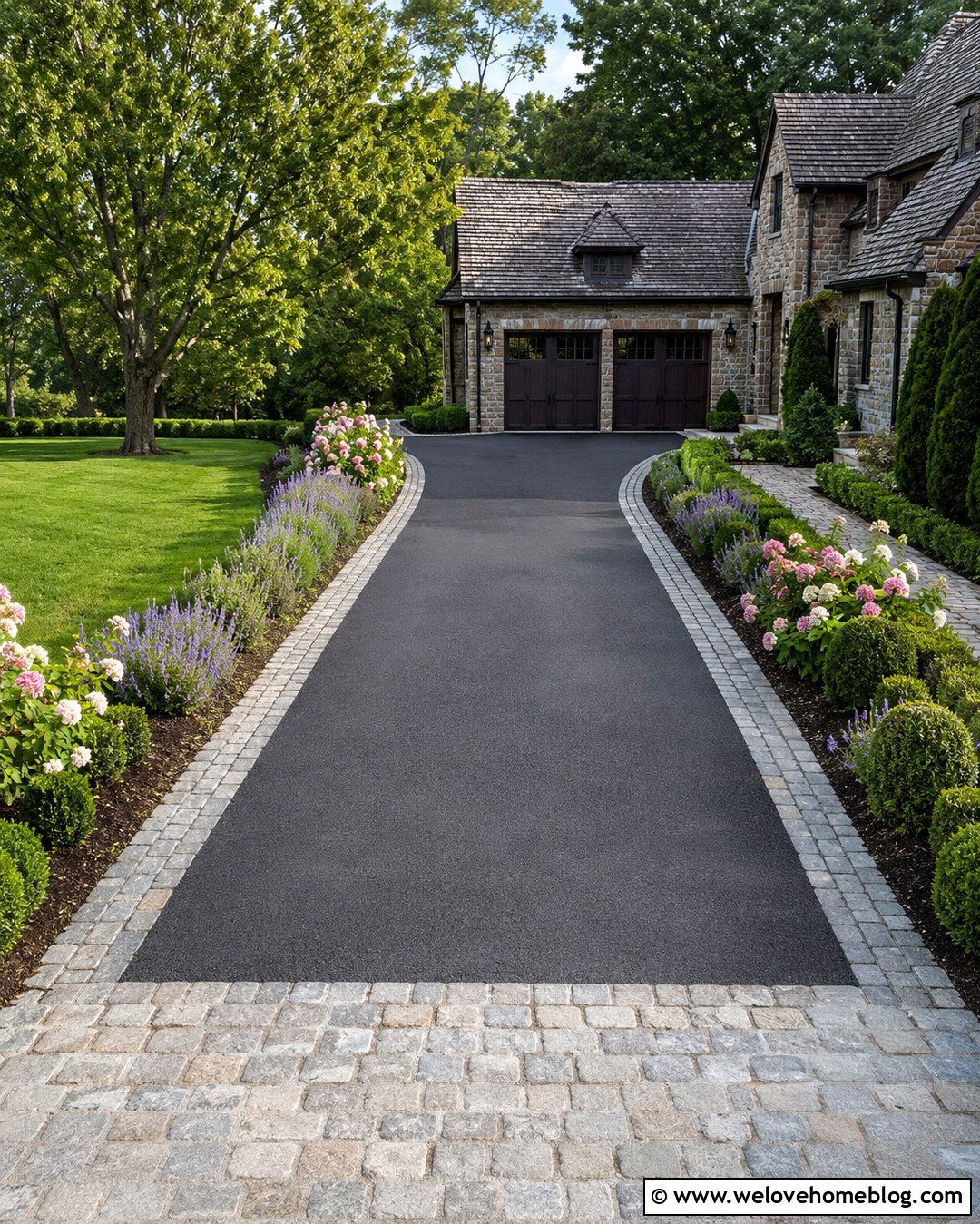
Rounded cobblestone gives a smooth asphalt driveway more texture and traditional character. Use a double row of gray or mixed-tone cobbles around the entire perimeter, including the curb entrance and garage transition. This substantial border makes the pavement feel carefully framed instead of simply poured into the yard. For a cohesive result, repeat cobblestone around nearby garden beds or along the front walkway. A gently flared entrance can make the street approach feel more welcoming, while a straight main layout keeps the driveway practical. Surround it with a green lawn and relaxed planting beds containing roses, catmint, dwarf evergreens, or flowering perennials. The combination is especially effective beside cottages, historic houses, and stone-front homes. Keep plants set back from the cobbles so the detailed border remains visible from the curb.
7. Asphalt Driveway With Gravel Side Borders
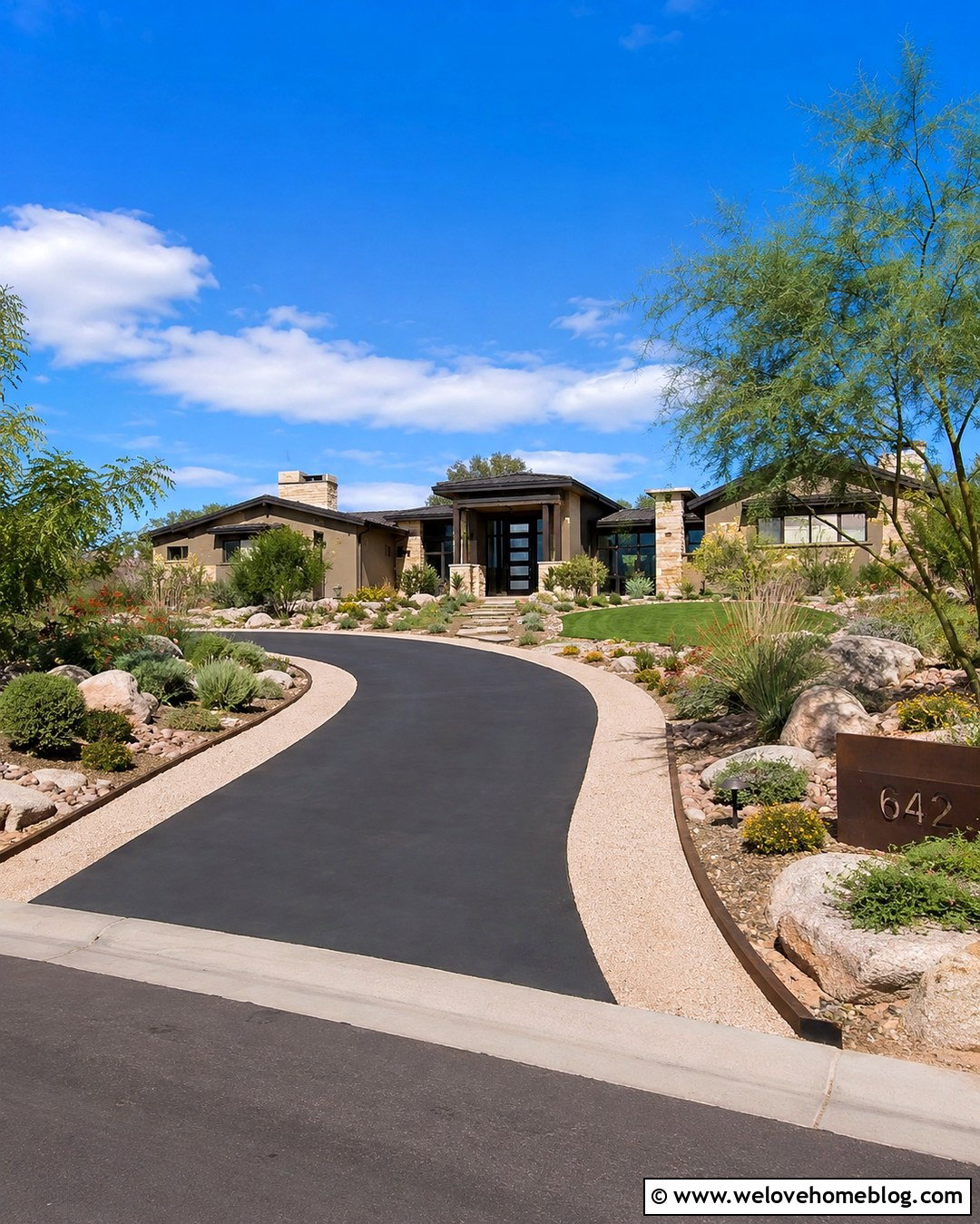
A strip of decorative gravel can create an attractive transition between dark asphalt and surrounding plants. Instead of placing loose stone directly on the driving surface, contain it in wide side borders held by steel, stone, or concrete edging. Pale crushed granite provides strong contrast, while river rock creates a softer, more natural appearance. Use the gravel strips to connect the driveway with planting beds, drainage areas, or a side walkway. Drought-tolerant grasses, low junipers, and flowering native plants can be arranged in informal groups beyond the stone. For a complete look, add a matching gravel bed around an address marker near the entrance. This design suits ranch houses, desert-inspired homes, and casual contemporary properties. It also reduces the abrupt visual change between a broad asphalt surface and a heavily landscaped yard.
8. Asphalt Driveway With Timber Landscape Edging
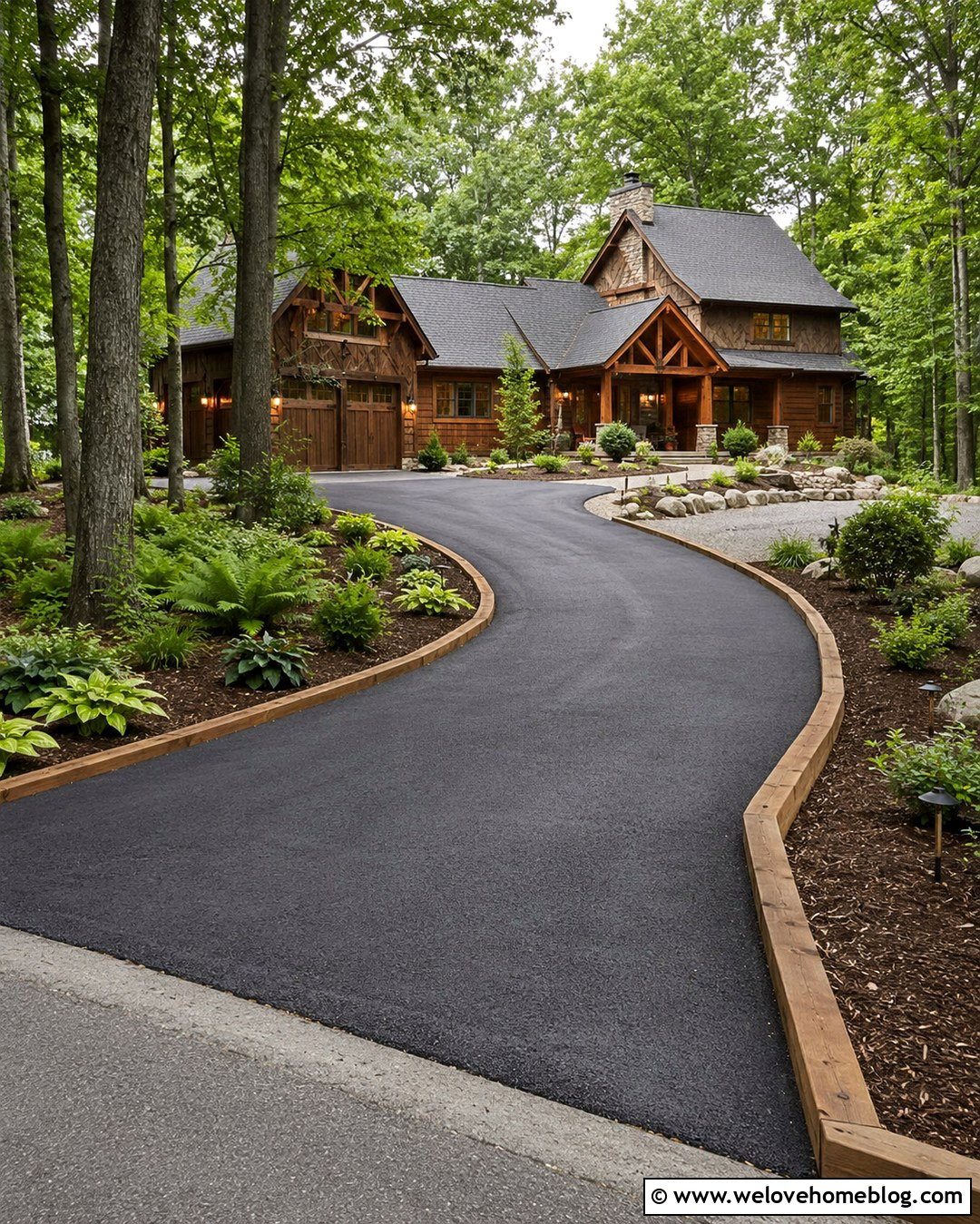
Warm timber edging can help an asphalt driveway settle naturally into a rustic or wooded property. Choose substantial pressure-treated landscape timbers rather than thin decorative strips, and position them along planting areas where they will not interfere with vehicle movement. A gently curved asphalt layout looks especially appealing when the wood border follows the surrounding terrain. Beyond the edging, use shredded bark, ferns, hostas, native shrubs, and shade-tolerant ground cover to create layered woodland beds. Near the house, transition to stone or brick around the parking area for a more finished garage entrance. Simple wooden address posts can reinforce the material palette at the road. This complete driveway look pairs well with cabins, rustic ranch houses, craftsman homes, and modern farmhouses surrounded by mature trees.
9. Asphalt Driveway With Hydrangea Borders
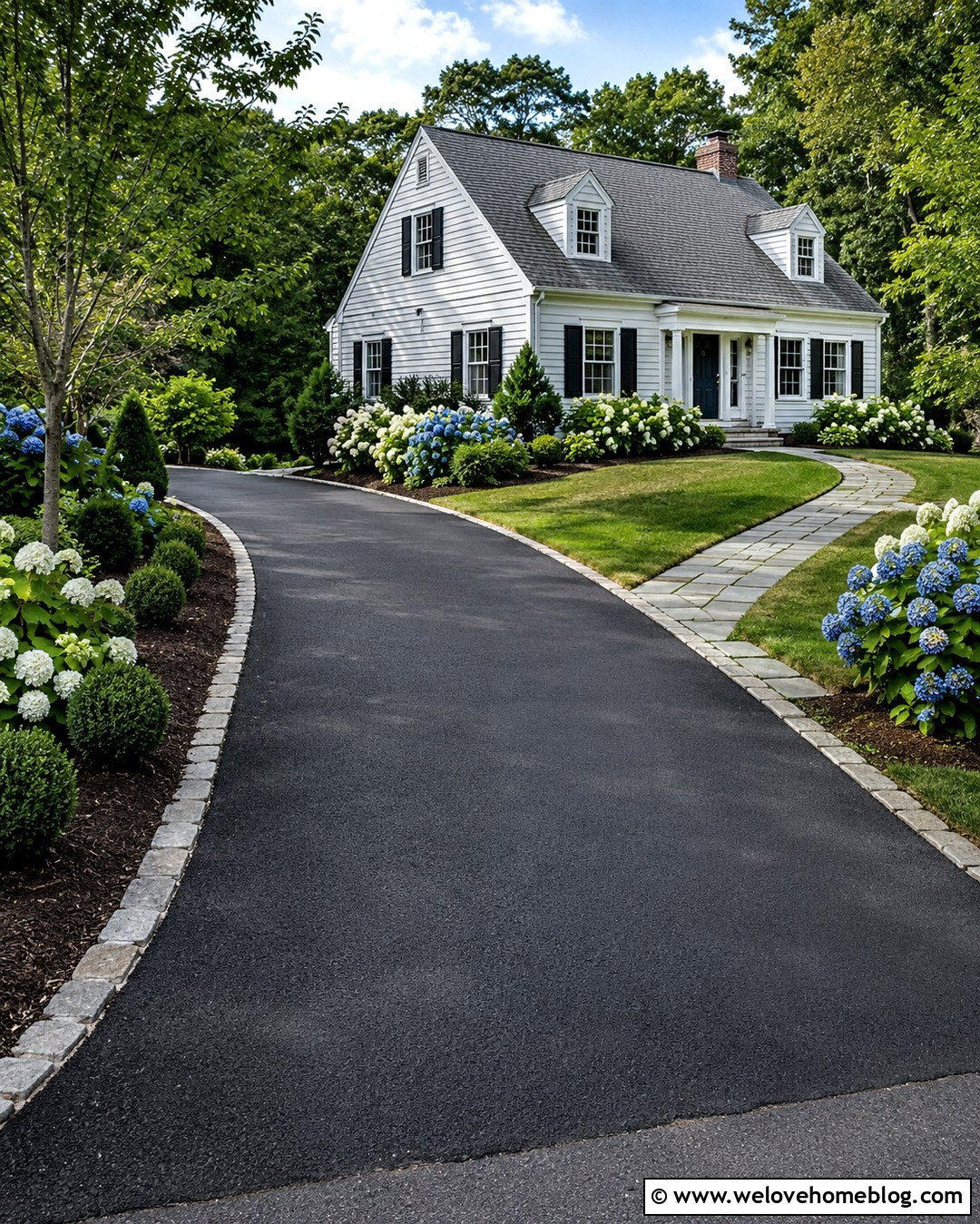
Clouds of hydrangea blooms soften the strong color and broad surface of a black asphalt driveway. This design works best when the shrubs are placed in generous planting beds rather than directly against the pavement. Frame a straight or slightly curved driveway with a defined stone edge, a narrow mulch strip, and repeated hydrangeas on one or both sides. Mix in compact evergreens to preserve structure when flowers are not at their peak. White, pale pink, or blue blooms create an inviting contrast with charcoal asphalt and green lawn. Keep the plants far enough back to prevent mature branches from narrowing the driving area. A brick or bluestone walkway can cross the bed and connect the driveway to the porch. The finished look is especially fitting for colonial, Cape Cod, cottage, and traditional suburban homes.
10. Long Asphalt Driveway With Trees
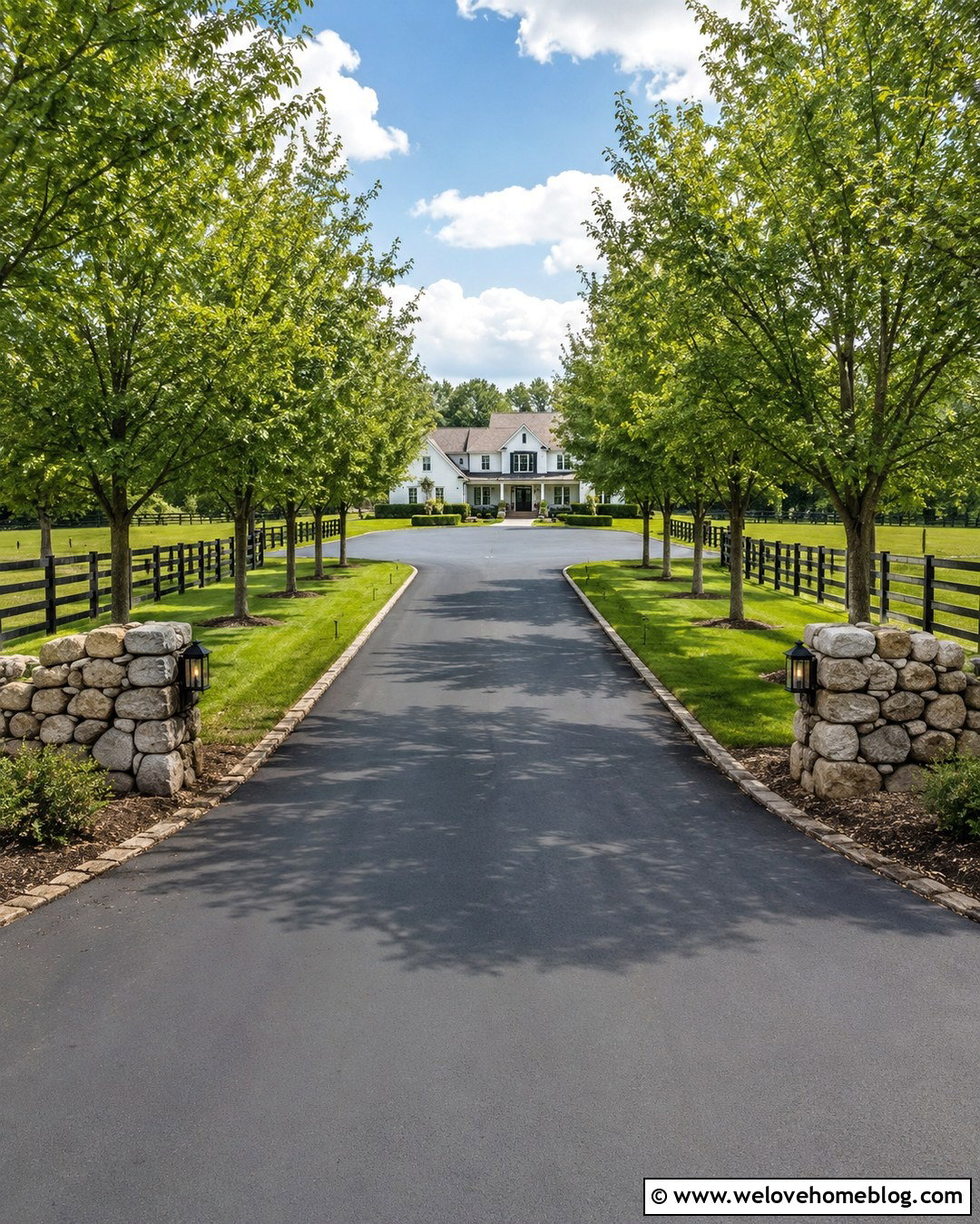
A long asphalt driveway becomes a memorable approach when trees establish rhythm along its length. Use a straight layout for a formal property or a subtle curve for a relaxed country setting. Plant matching deciduous trees at measured intervals, leaving generous clearance between mature trunks, pavement edges, and overhead branches. A narrow grass strip between the asphalt and trees keeps the route open and makes maintenance easier. Natural stone edging near the entrance can add definition without lining every foot of the drive. As the driveway reaches the house, widen it into a practical arrival court or parking area. Low landscape lighting placed between selected trees can identify the route after sunset. This complete design works well for farmhouses, country homes, colonial houses, and residences positioned far from the road.
11. Narrow Asphalt Driveway With Grass Edging
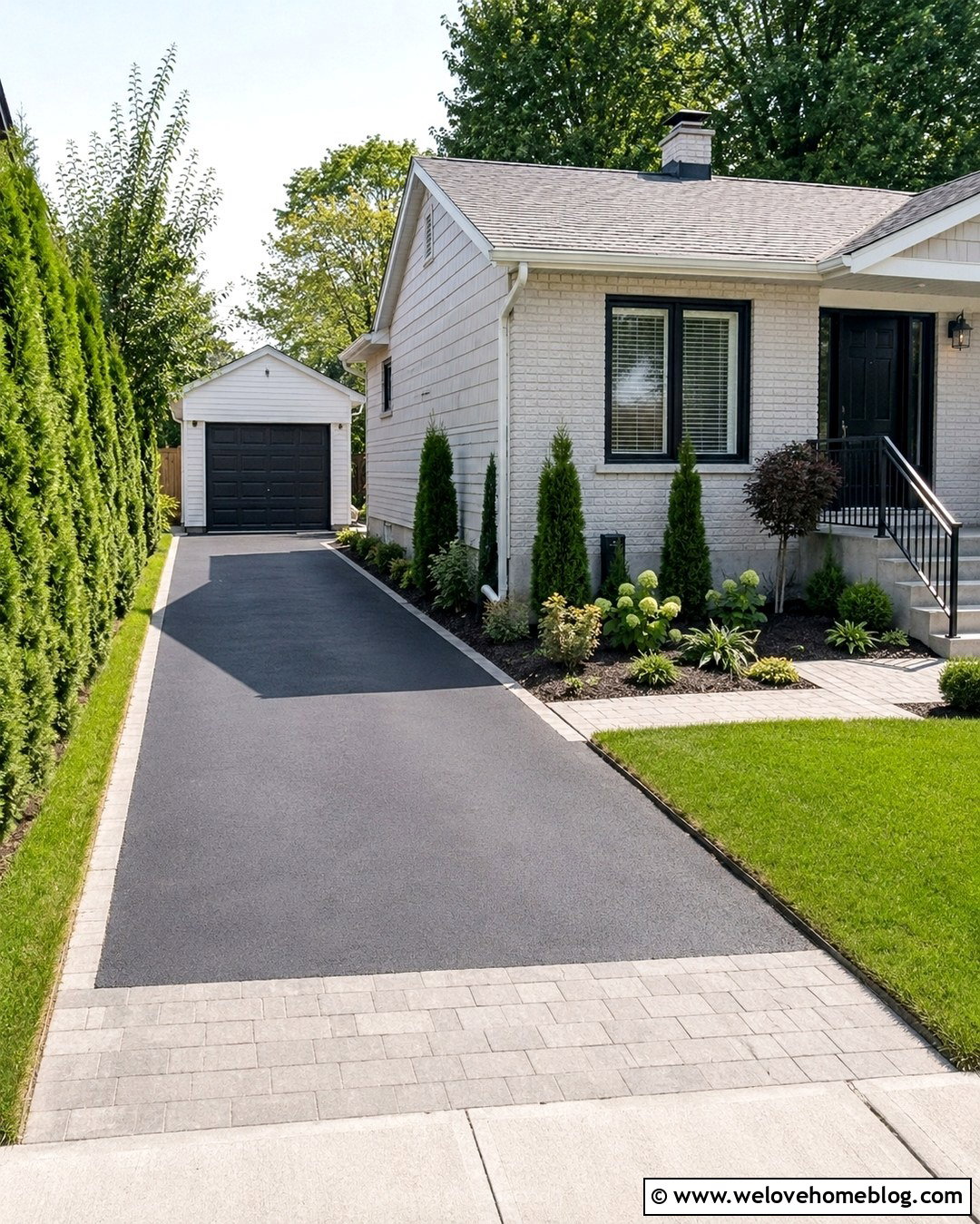
Small lots benefit from a simple asphalt driveway that uses every available foot carefully. A narrow, straight pavement layout can lead to a rear or side garage while preserving lawn and planting space near the home. Create sharp asphalt edges and frame them with level grass strips for an uncluttered appearance. Near the street, add a modest brick or concrete apron that clearly marks the entrance. A slim planting bed along the house can contain upright shrubs and compact perennials without making the driveway feel confined. Where pedestrians enter, connect a narrow paver walkway to the front porch. Avoid bulky borders, wide stone beds, or spreading plants that reduce usable width. The restrained combination of dark asphalt, fresh lawn, and simple masonry is practical for bungalows, cottages, duplexes, and compact ranch houses.
12. Sloped Asphalt Driveway With Stone Retaining Walls
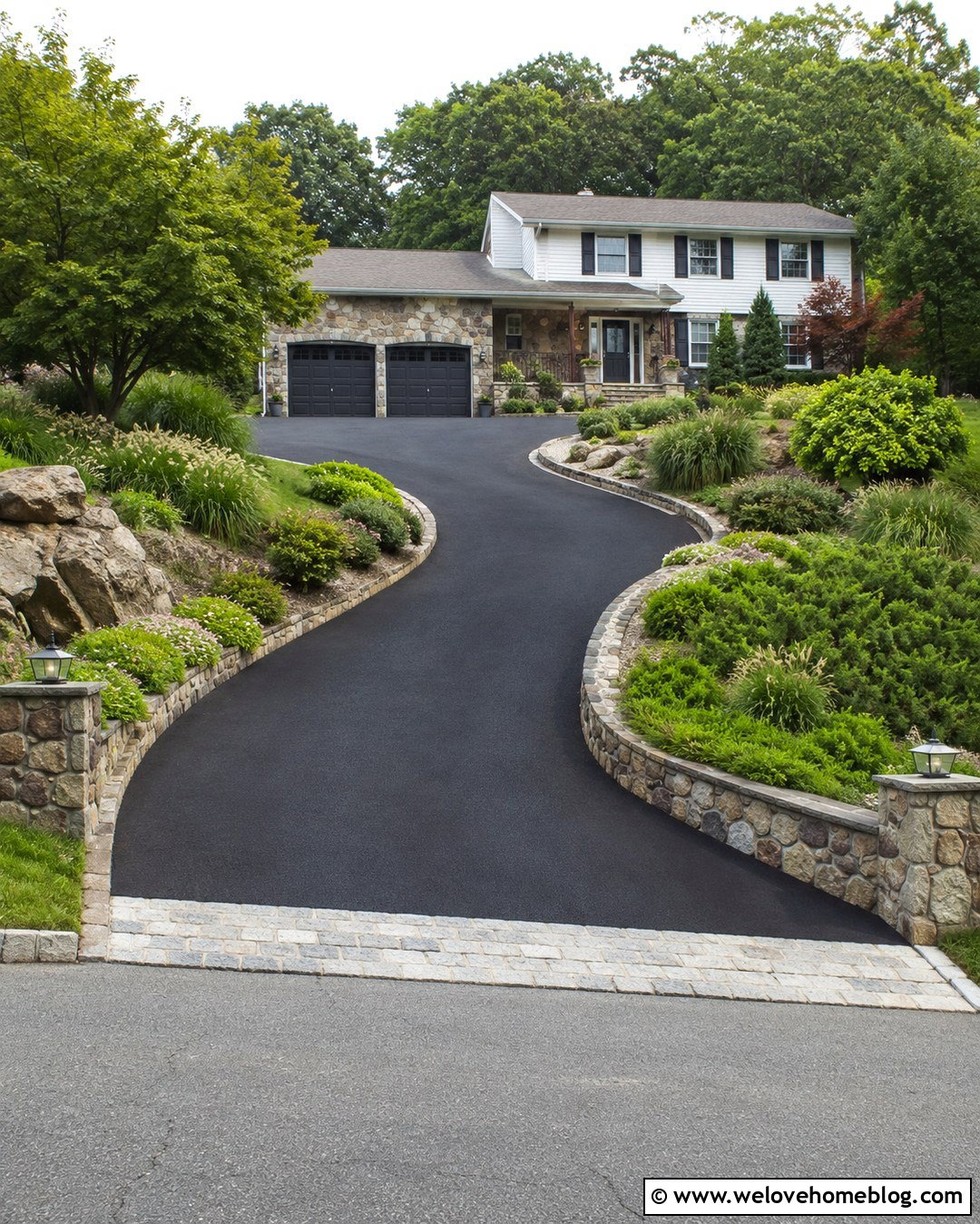
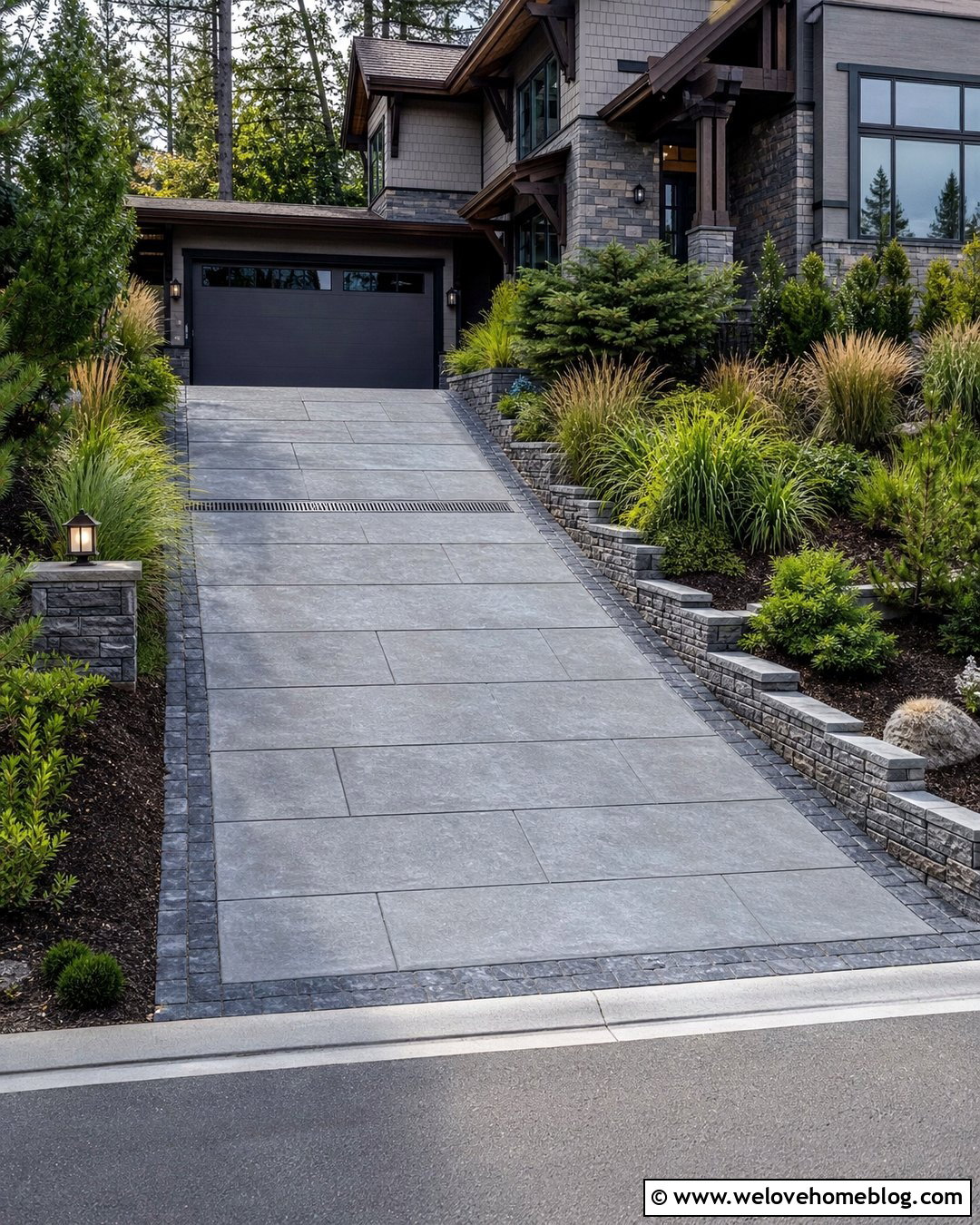
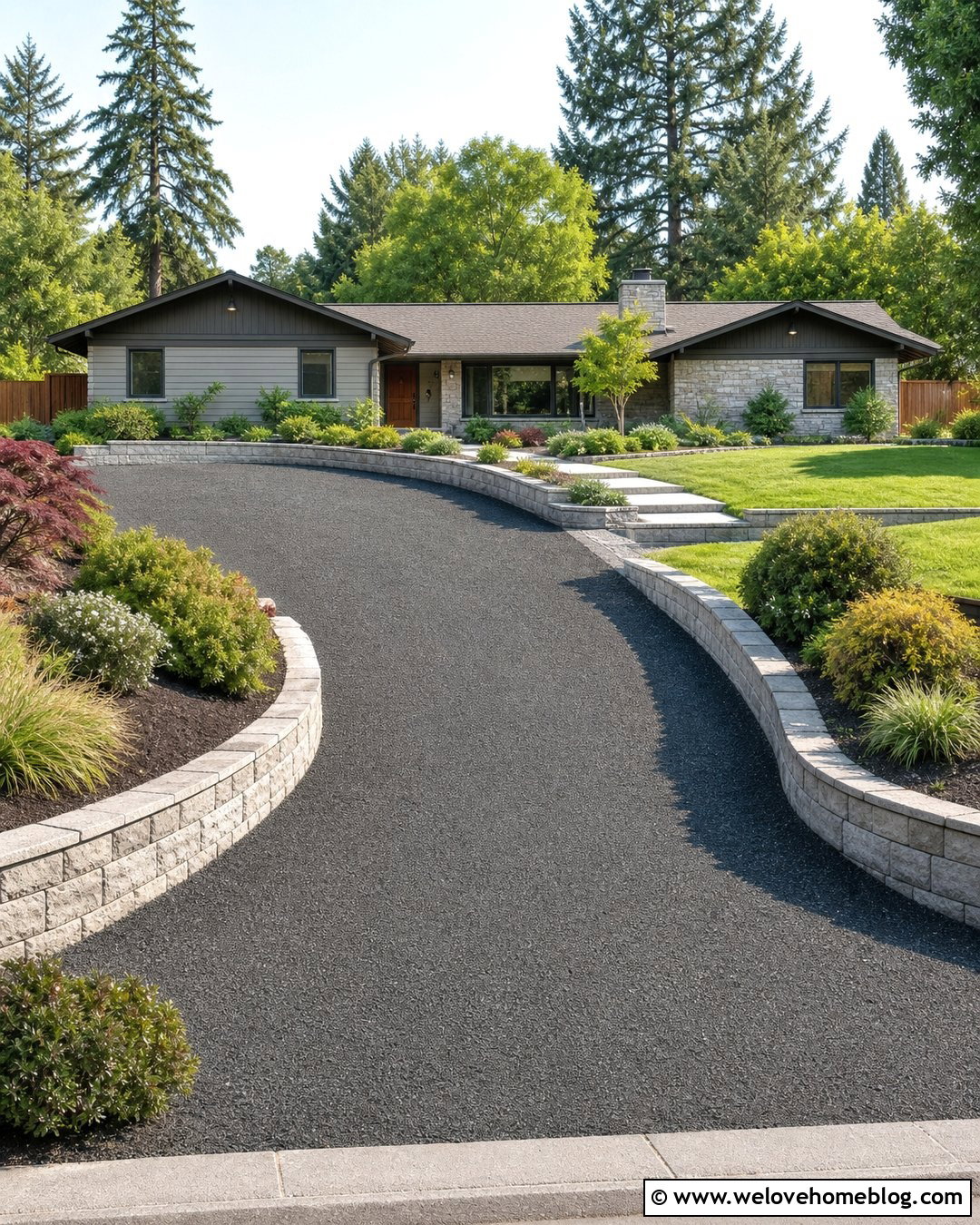
A sloped yard needs a driveway design that feels integrated with the terrain rather than imposed on it. Smooth asphalt creates a visually continuous route, while low stone retaining walls support raised planting areas beside the pavement. Match the wall stone to the home’s foundation, chimney, or front steps for a coordinated exterior. A gentle curve can reduce the harsh appearance of a direct climb and guide the eye toward the garage. Plant trailing ground covers above the walls, with compact shrubs and ornamental grasses farther back. Include a defined curb apron and a level transition near the garage so the arrival area feels finished. Drainage and grading should be planned professionally before construction. This substantial driveway look complements craftsman, mountain, split-level, and stone-front homes on uneven residential sites.
13. Asphalt Driveway With Turnaround Area
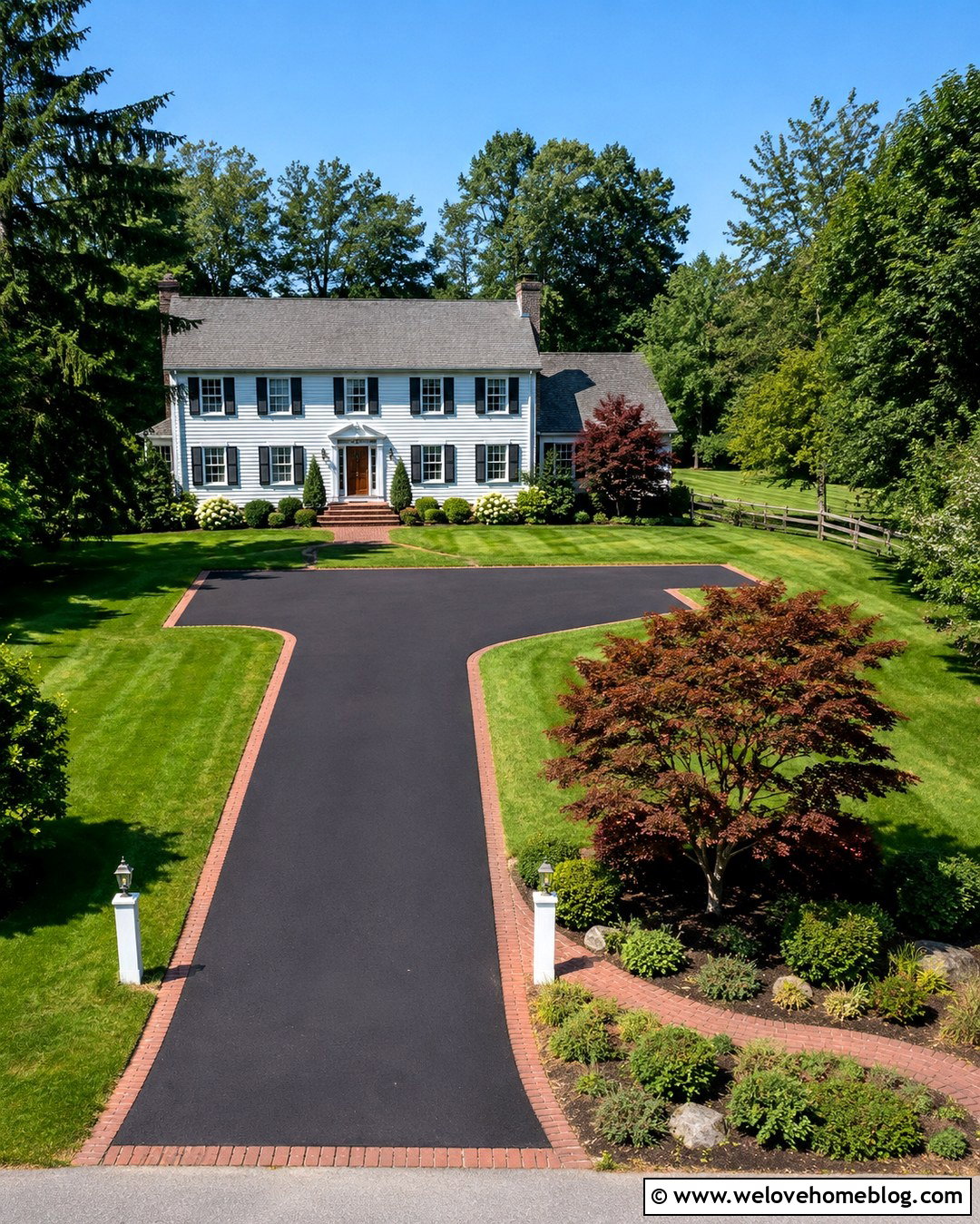
When backing directly into a busy street is inconvenient, a well-positioned turnaround can improve the driveway’s layout. Extend a straight or curved asphalt drive into a compact T-shaped or hammerhead area near the garage. The added pavement should feel like part of the design rather than an accidental side pad. Outline it with the same brick, Belgian block, or concrete edging used along the main approach. A planting bed at the outer corner can soften the extra asphalt and help define its shape. Use a small ornamental tree, low shrubs, and ground cover that will not obstruct visibility. Connect the turnaround to a side entrance or walkway when possible. This practical arrangement works for deeper suburban lots, country homes, and properties where the garage sits well back from the road.
14. Asphalt Driveway With Side Parking Pad
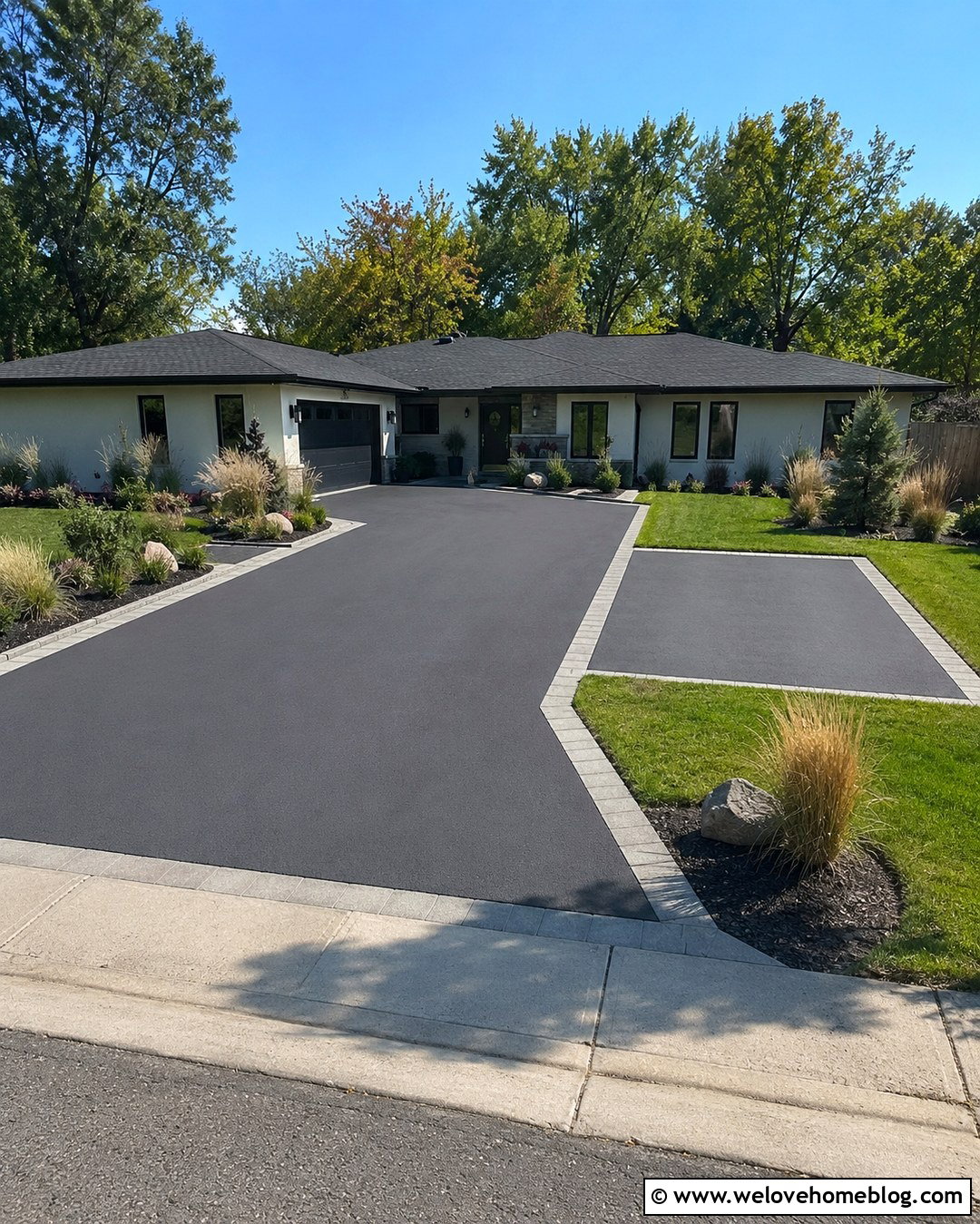
A side parking pad can add everyday flexibility while preserving a tidy street view. Begin with a straight black asphalt driveway, then widen one section near the garage to create a clearly defined extra space. Give the pad a deliberate rectangular or gently angled shape rather than an uneven extension. A paver ribbon can separate it visually from the main driving lane while keeping both surfaces connected. Place a landscape island at the far end with a small tree, ornamental grasses, and low shrubs. Continue the same border around the full driveway for consistency. If space allows, connect the parking pad to a side-door walkway for a convenient route into the house. This complete layout suits multicar households, ranch homes, split-level properties, and suburban houses with wider front or side yards.
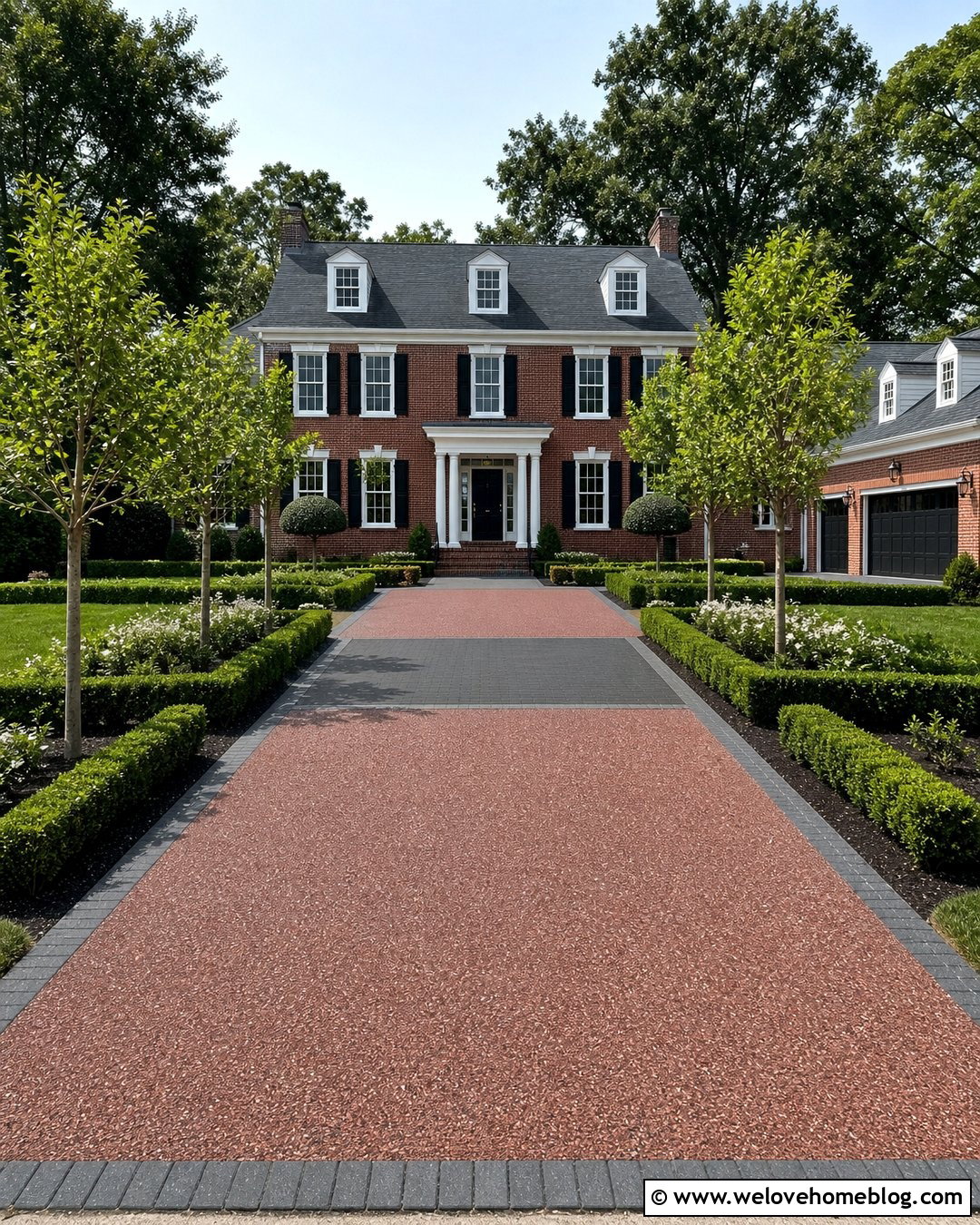
15. Stamped Asphalt Driveway With Brick Pattern
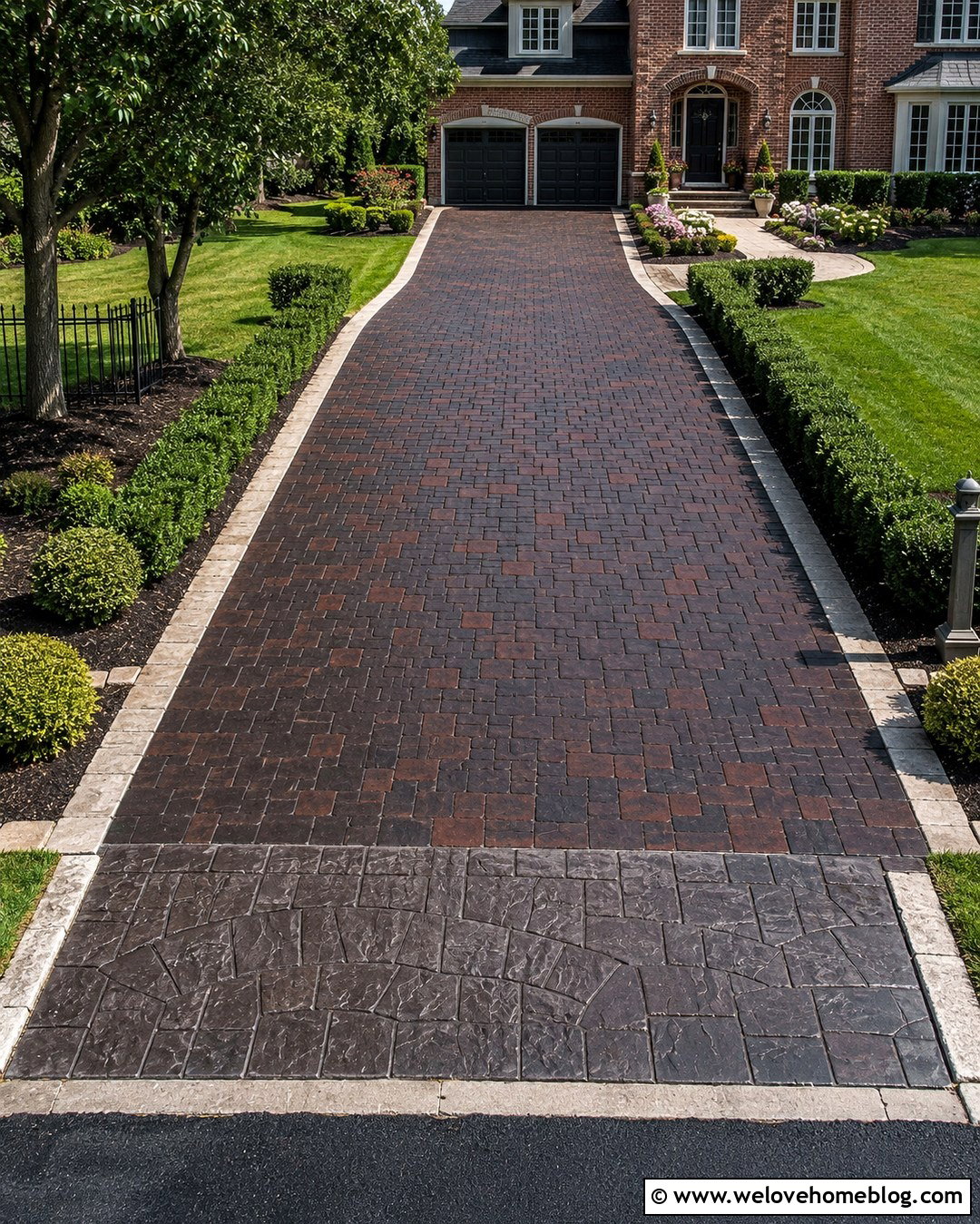
Stamped asphalt creates a patterned surface while retaining asphalt as the primary driveway material. A brick-inspired imprint can cover the entire approach or appear only in selected zones, such as the entrance apron and garage transition. Deep charcoal, muted red, or brown surface coloring can help the pattern coordinate with the home’s facade. Keep the driveway layout simple so the texture remains the main feature. A straight route with a gently flared curb entrance works for smaller homes, while a curved approach gives larger yards more movement. Edge the pavement with smooth concrete or natural stone to provide a clean contrast with the stamped pattern. Use restrained landscaping, including clipped shrubs and open lawn, so the finished area does not feel overly busy. This look suits traditional and transitional architecture.
16. Charcoal Asphalt Driveway With Light Stone Edging
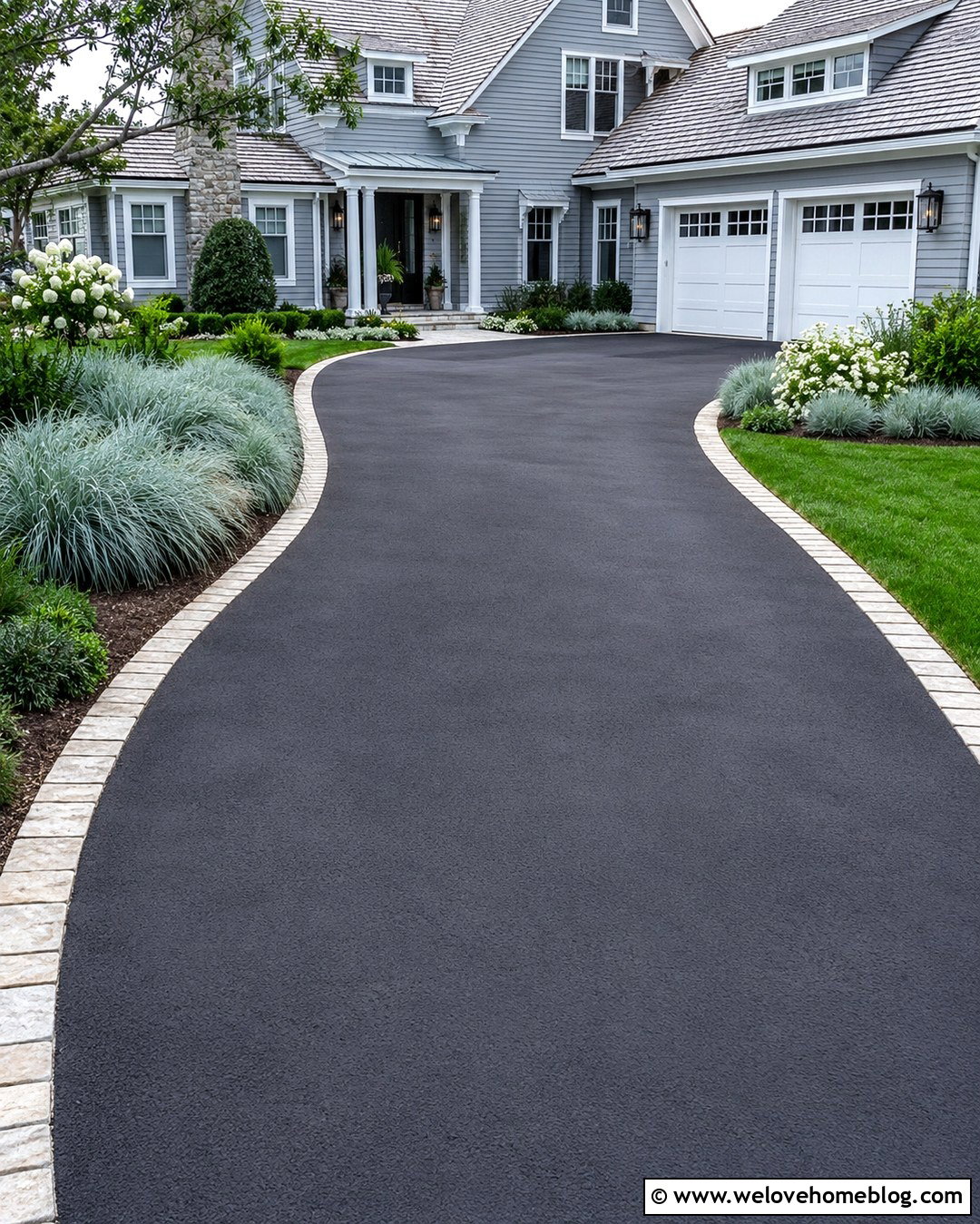
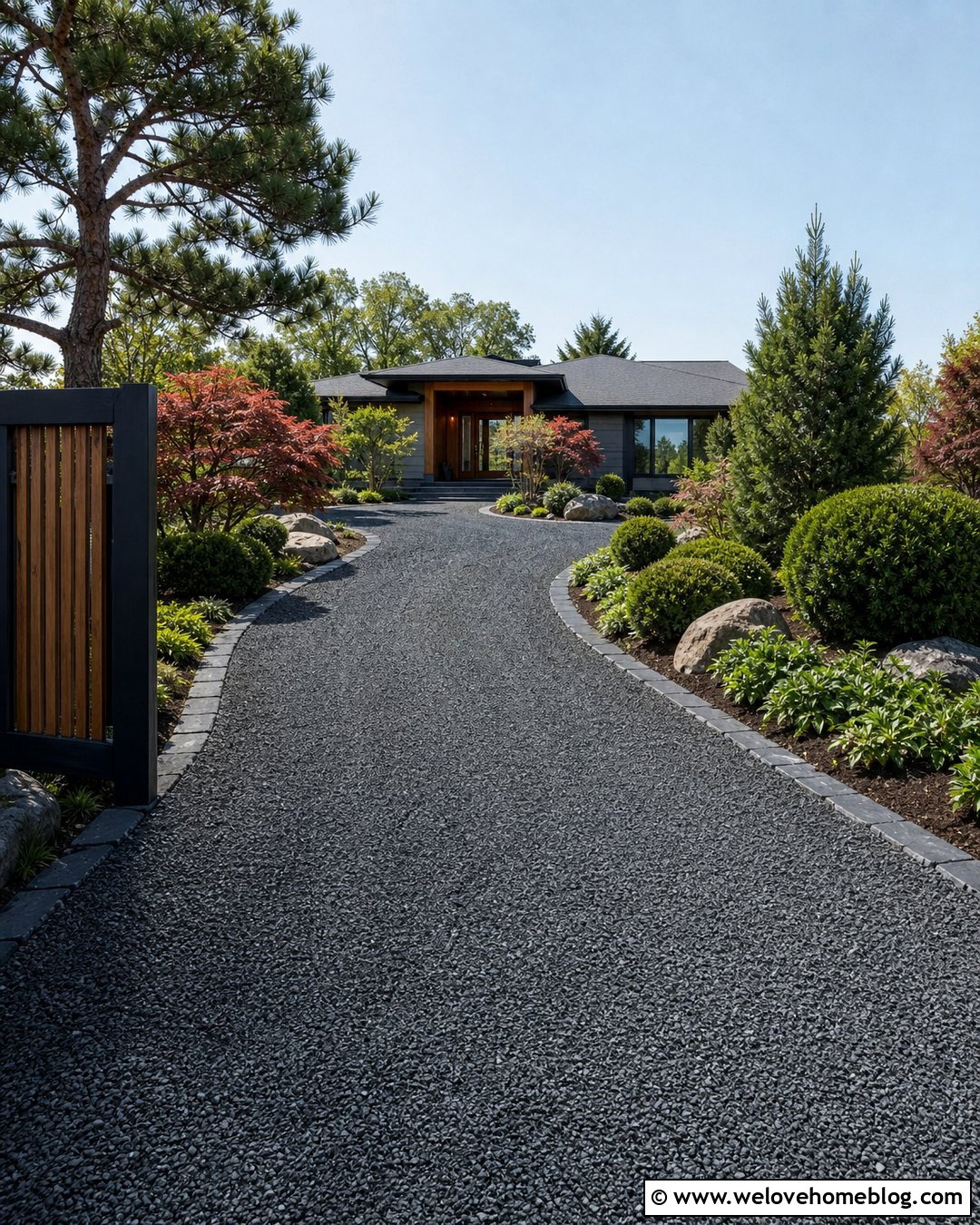
Not every asphalt driveway needs to appear jet black. A softer charcoal finish creates a more understated surface that blends easily with gray siding, natural stone, and weathered brick. Frame the pavement with light limestone or granite edging to maintain a clear outline from the street to the garage. A wide, straight layout feels modern, while a subtle curve suits a larger landscaped yard. Repeat the pale stone around foundation beds and along the front walkway to tie the property together. Use silvery grasses, green shrubs, and white flowering plants to support the cool color palette. At the entrance, widen the stone border into a simple apron or short decorative band. This coordinated driveway design is particularly attractive with contemporary ranch, transitional, coastal, and modern farmhouse exteriors.
17. Asphalt Driveway With Stone Pillars And Gate
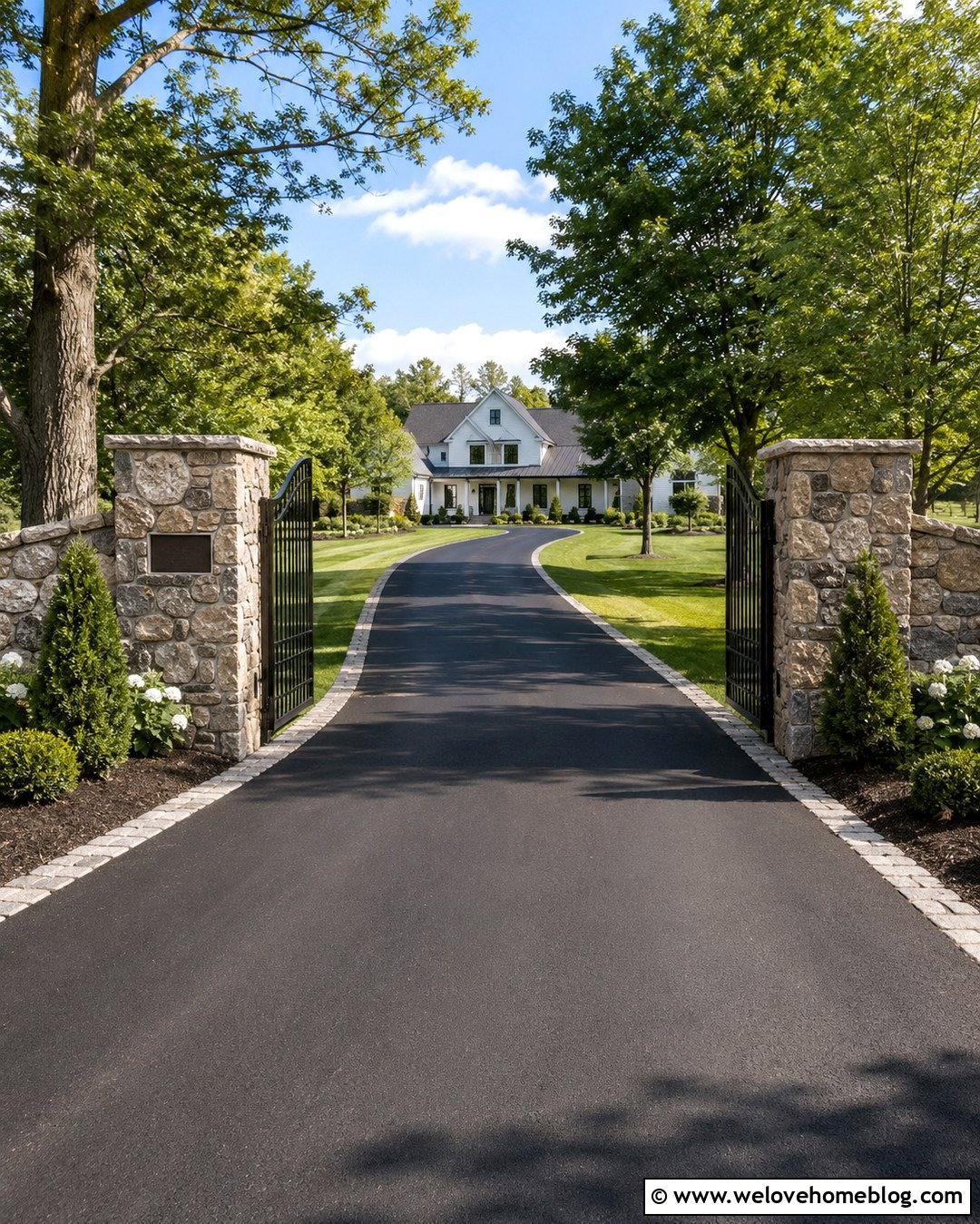
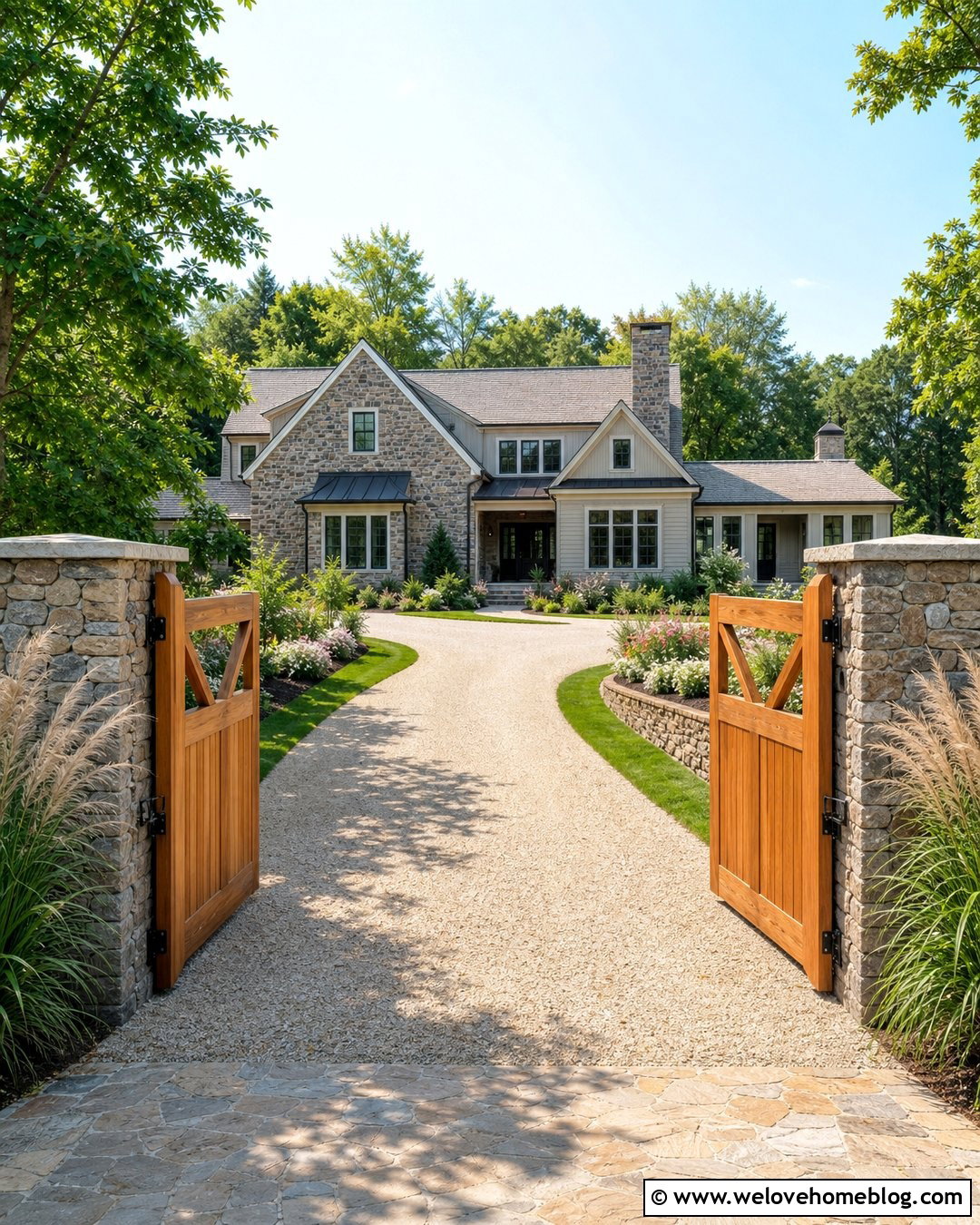
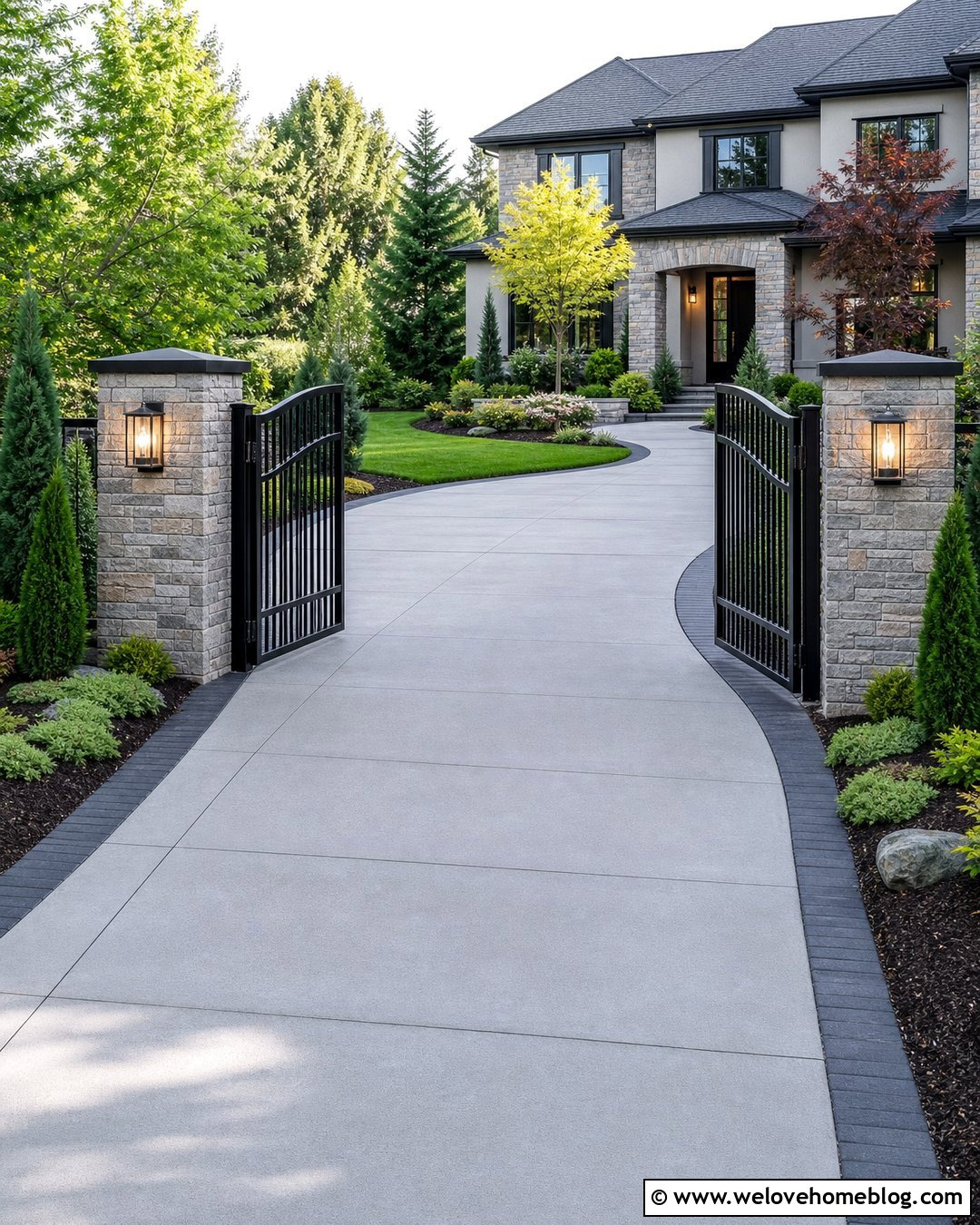
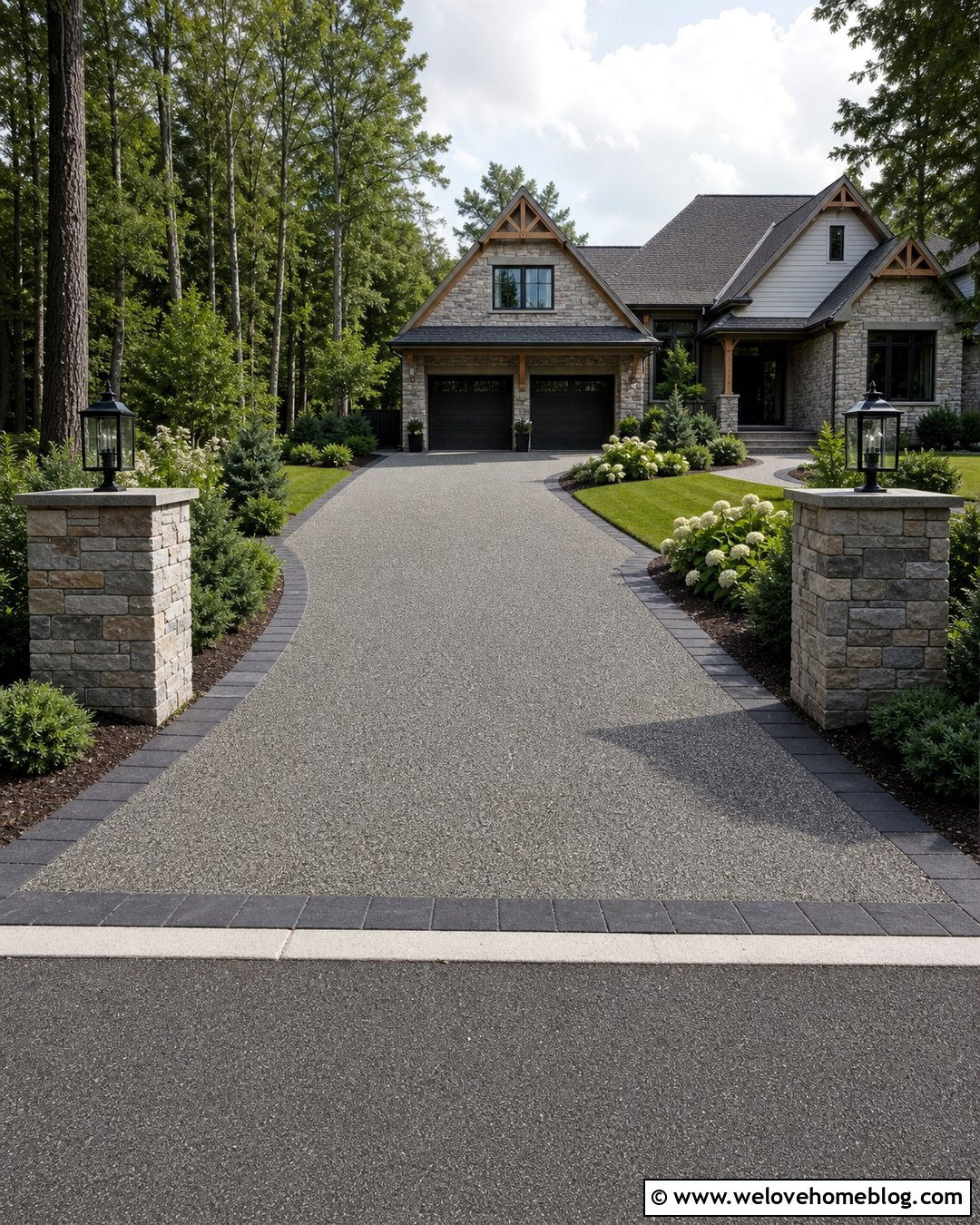
Stone pillars can turn an asphalt driveway entrance into a clear architectural feature. Place one pillar on each side of a straight or gently curved blacktop approach, leaving ample space for comfortable entry. Match the stone veneer to the home’s foundation, porch columns, or chimney. A simple wood or metal gate can sit between the pillars, while low walls may extend outward to create a broader entrance composition. Continue a narrow stone or cobblestone border along the asphalt so the gateway feels connected to the full driveway. Plant compact evergreens and low flowers around the pillar bases without hiding the masonry. An address plaque and discreet lighting can be integrated into the design. This complete look works especially well for country, craftsman, colonial, and modern farmhouse properties.
18. Asphalt Driveway With Landscape Lighting
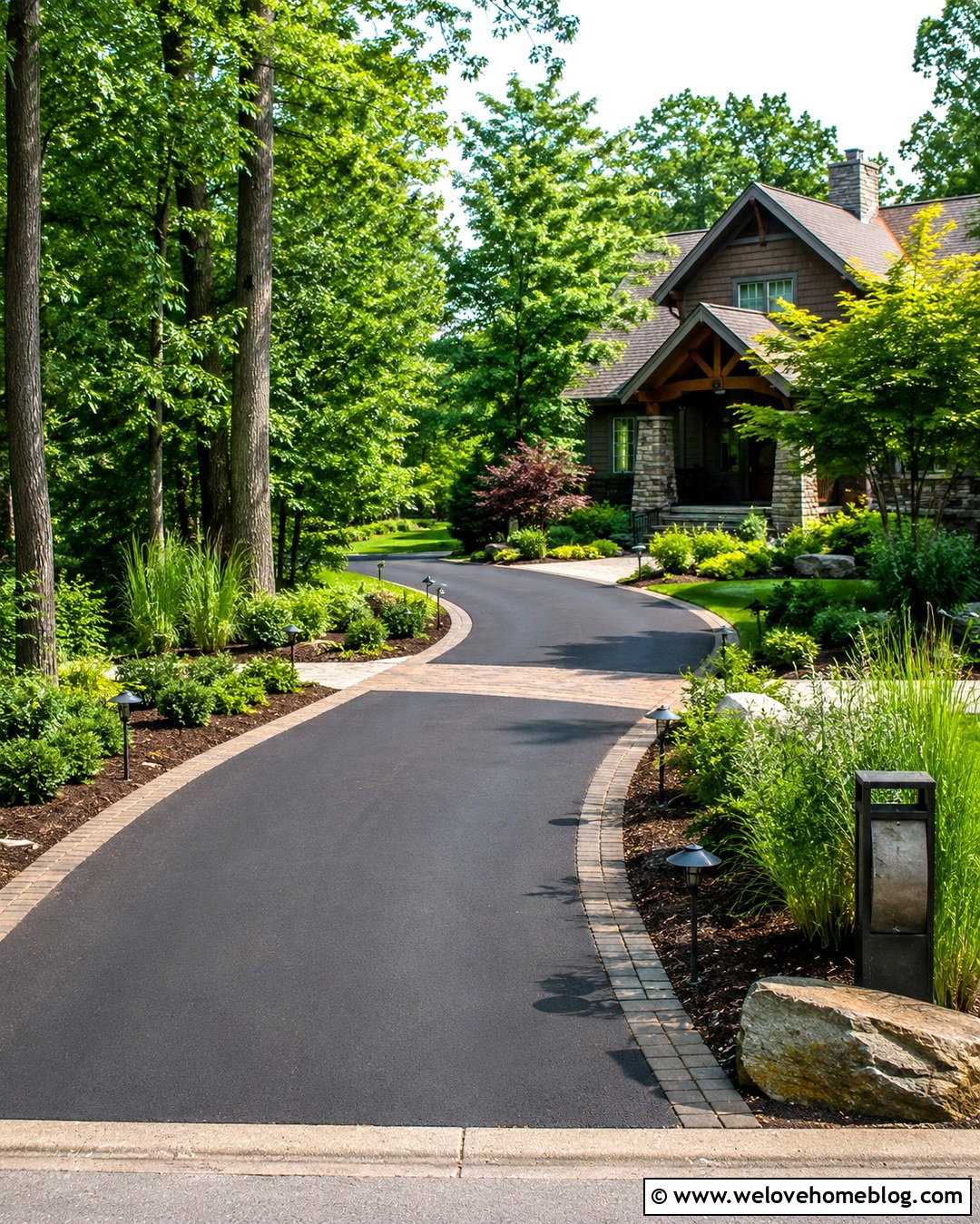
Good lighting should reveal an asphalt driveway’s shape without turning the yard into an overly bright corridor. Start with a clean black asphalt surface bordered by brick, stone, or narrow planting beds. Position low path lights at important points, including the curb entrance, curves, walkway crossing, and garage approach. Spacing them in staggered groups often feels more natural than creating two rigid rows. During the day, the fixtures should blend with ornamental grasses, compact shrubs, and ground cover. Add brighter architectural lights near the garage and front door to finish the approach. A reflective address marker can make the entrance easier to identify while remaining part of the landscape. This full design suits almost any house style and is particularly helpful on long, curved, wooded, or poorly visible residential driveways.
19. Asphalt Driveway With White Paver Border
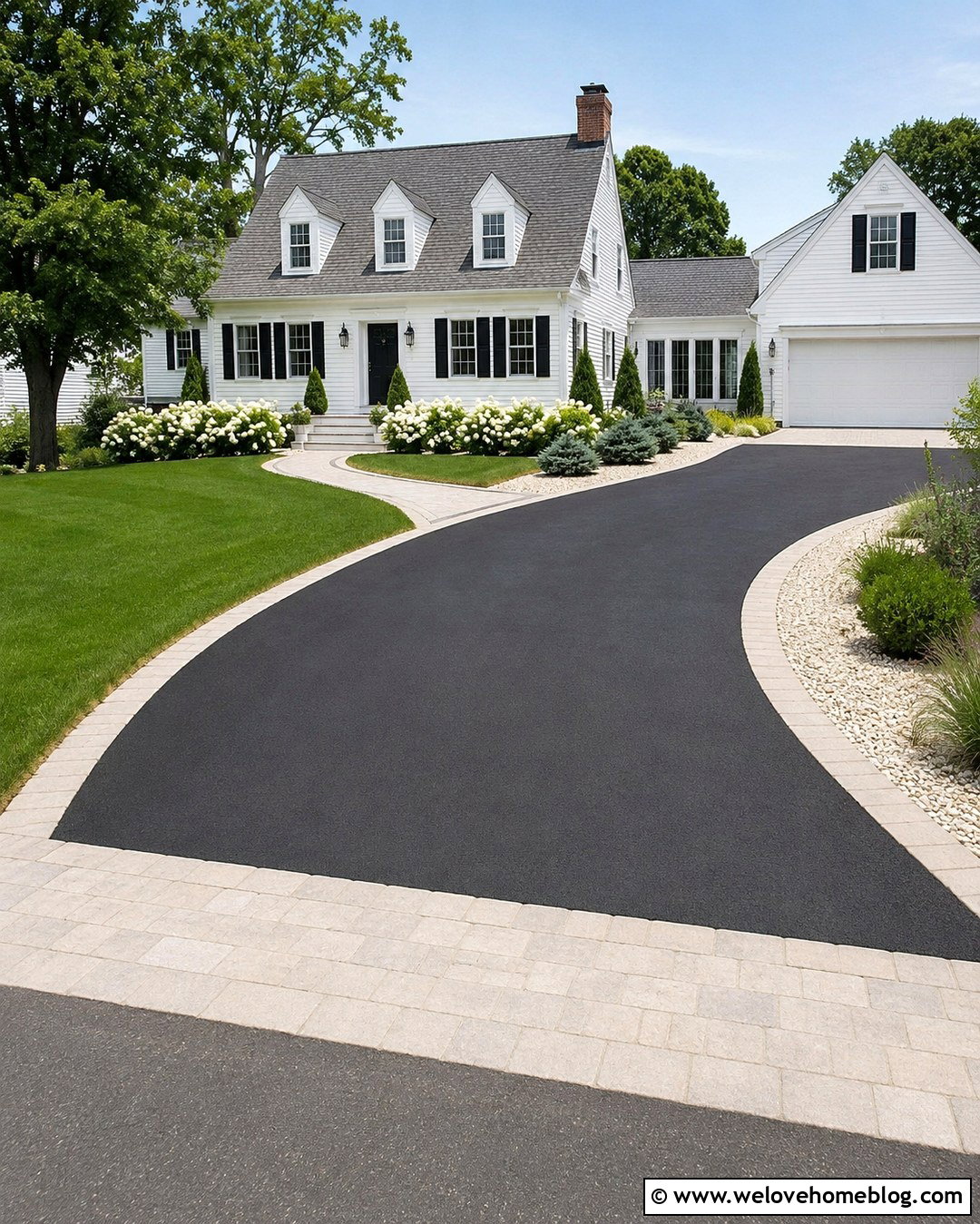
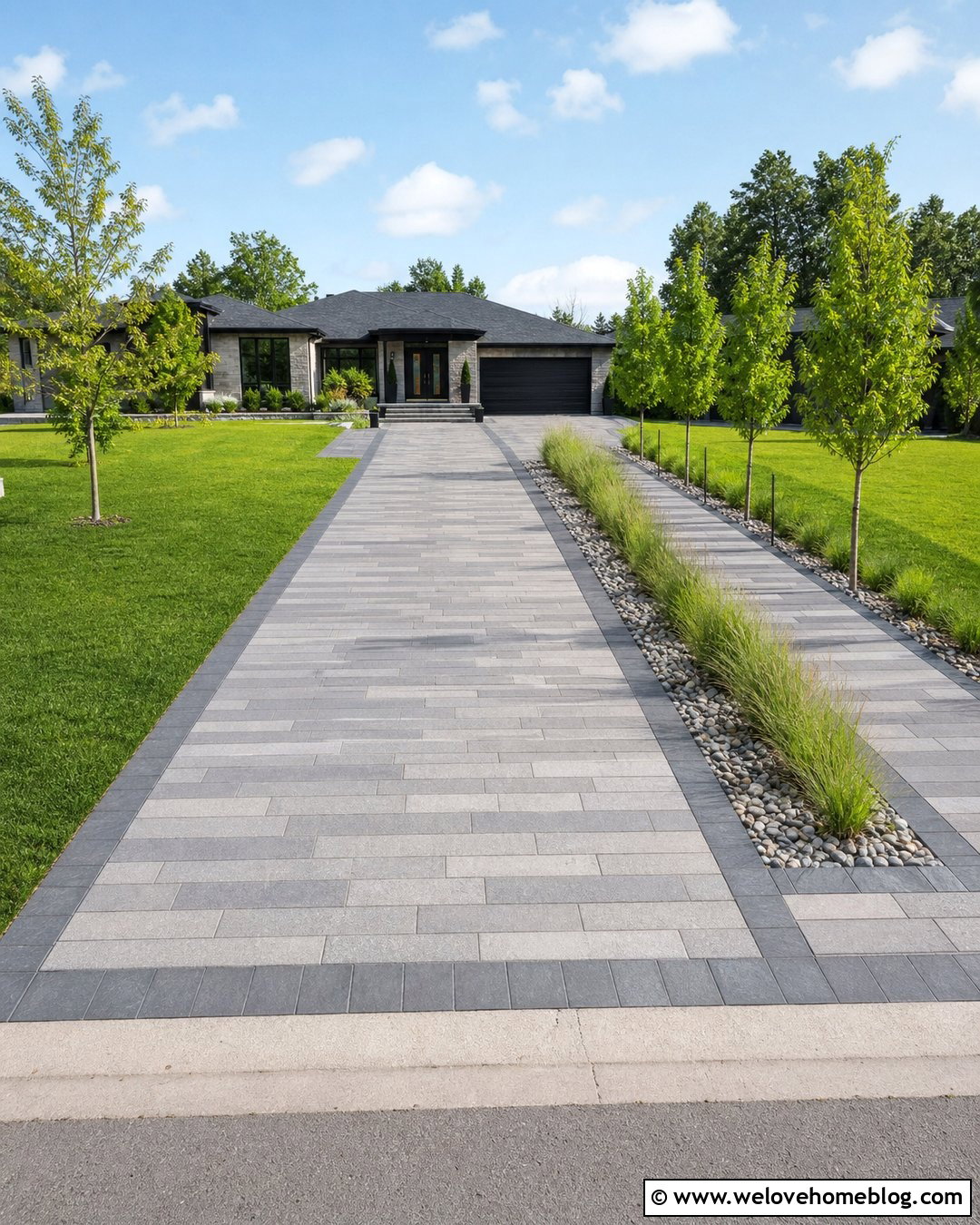
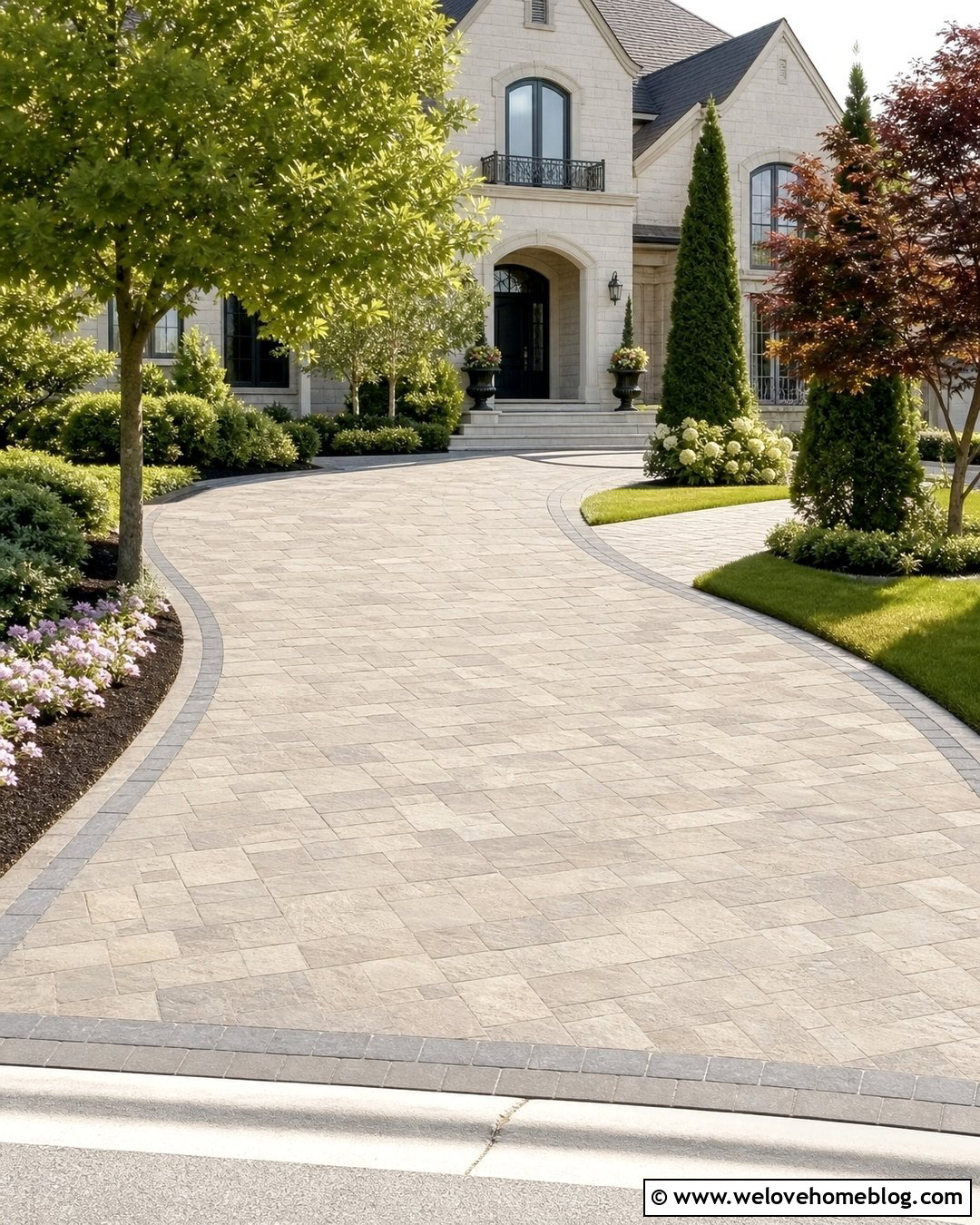
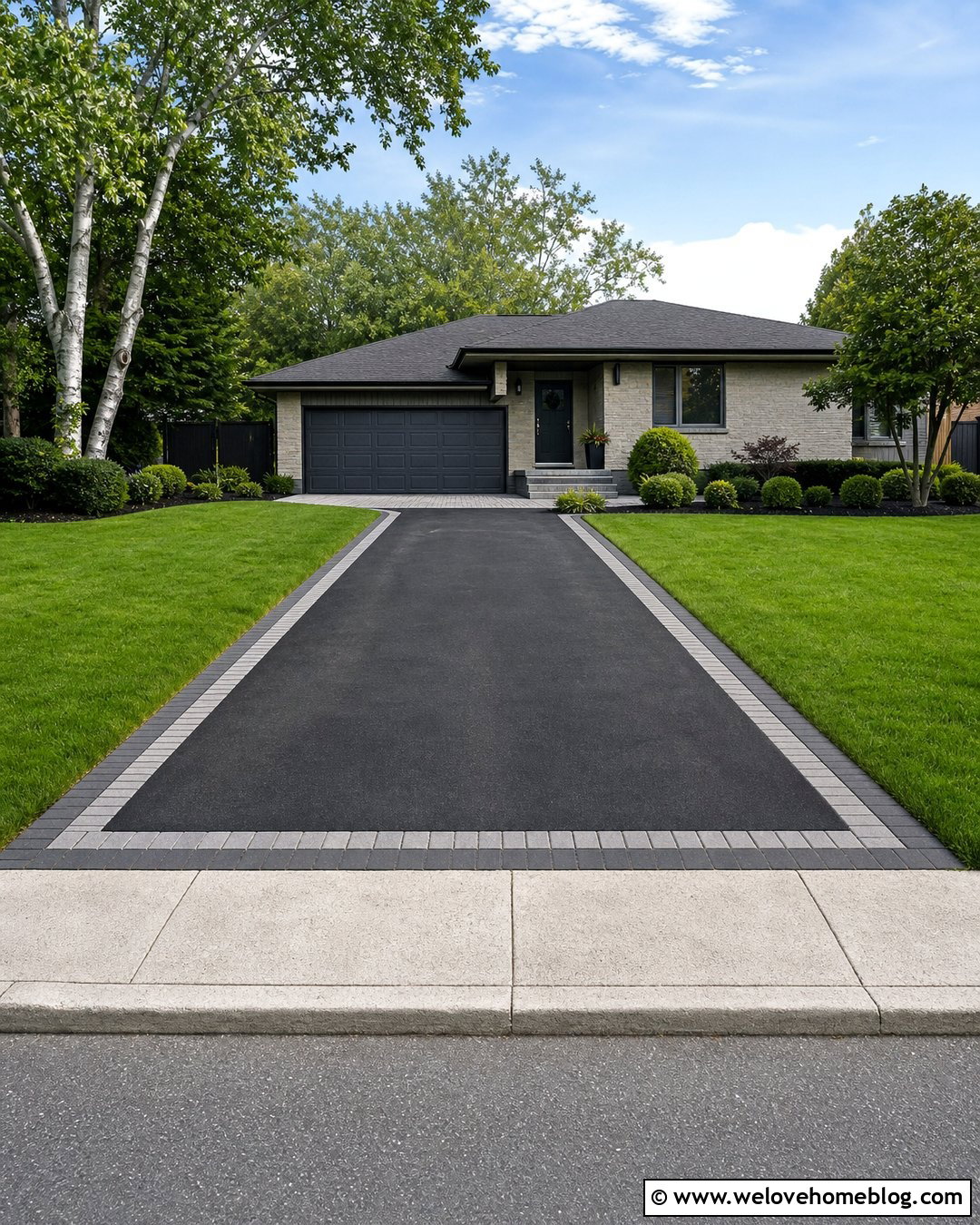
A white or pale cream paver border gives dark asphalt a fresh, high-contrast frame. The combination feels especially appropriate beside coastal, Cape Cod, and light-colored cottage homes. Use durable rectangular pavers in a single running row for a simple outline, or create a wider double row near the driveway entrance. Continue the same pavers into a walkway leading toward the porch. A straight driveway keeps the design crisp, while a soft curve can make a broad front lawn feel less rigid. Surround the edges with green turf, blue-green shrubs, white flowering perennials, and light gravel accents. Limit additional colors so the border remains visually connected to the facade. The resulting driveway feels bright and polished while still relying on asphalt for the main driving and parking surface.
20. Asphalt Driveway With Steel Edging And Native Grasses
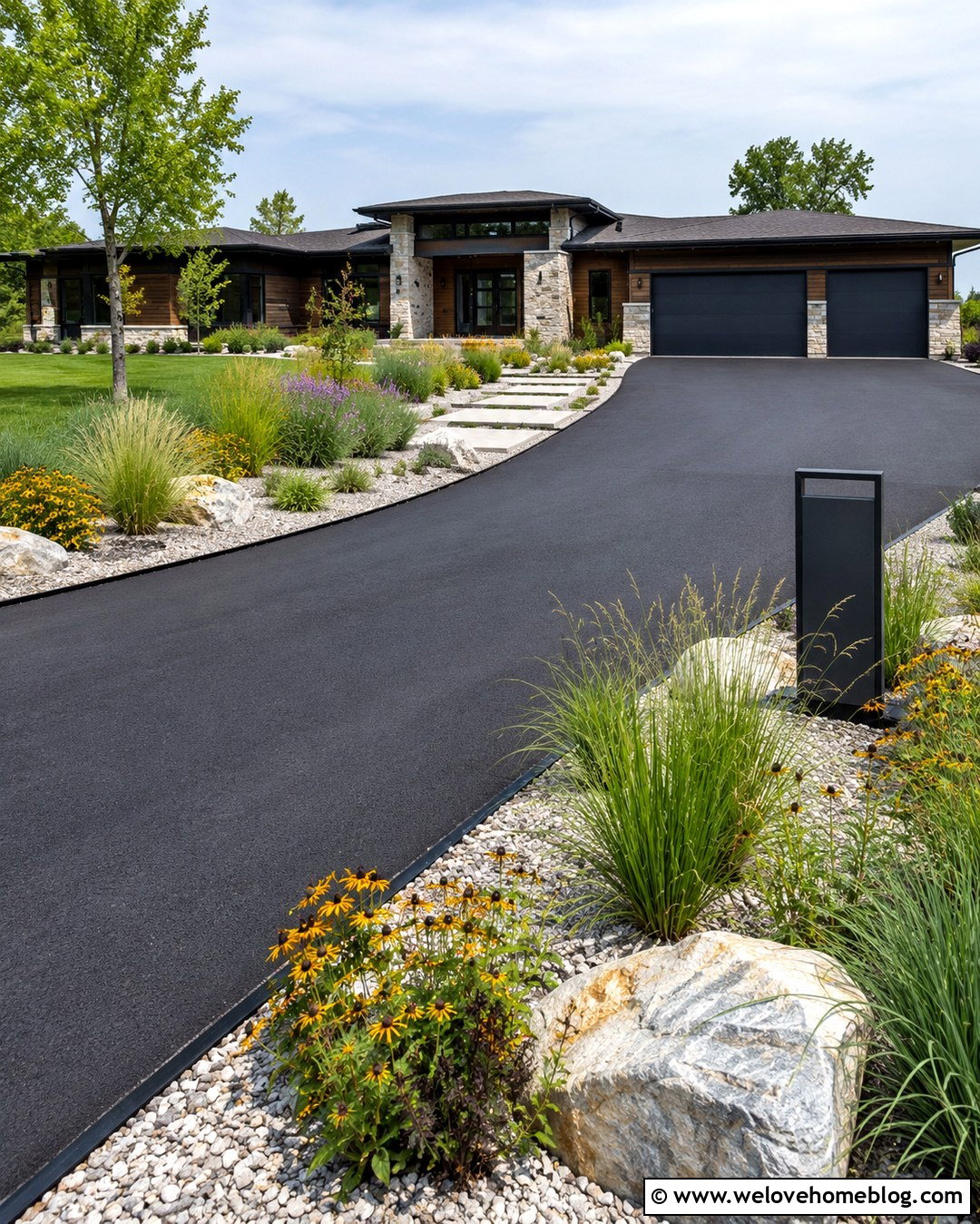
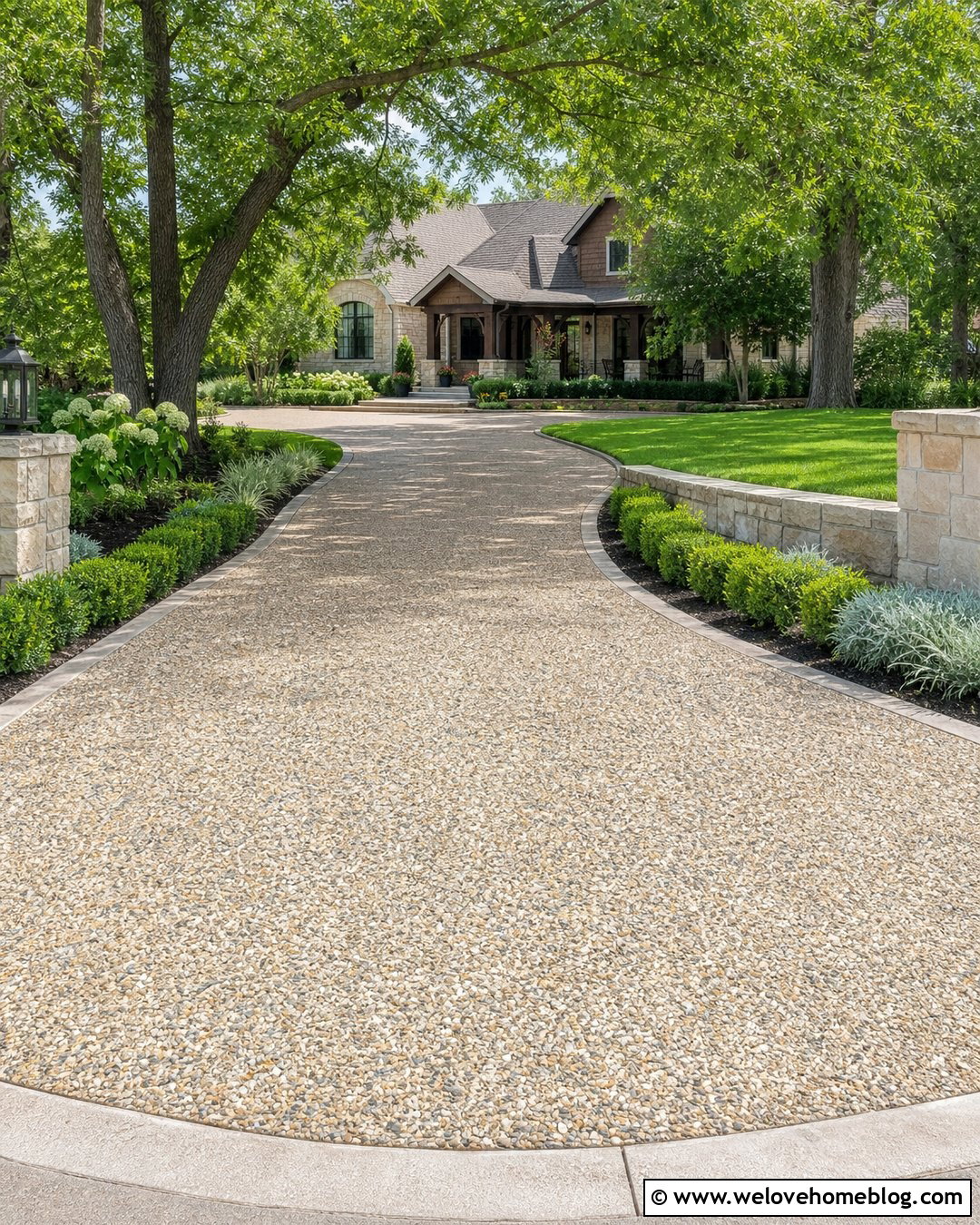
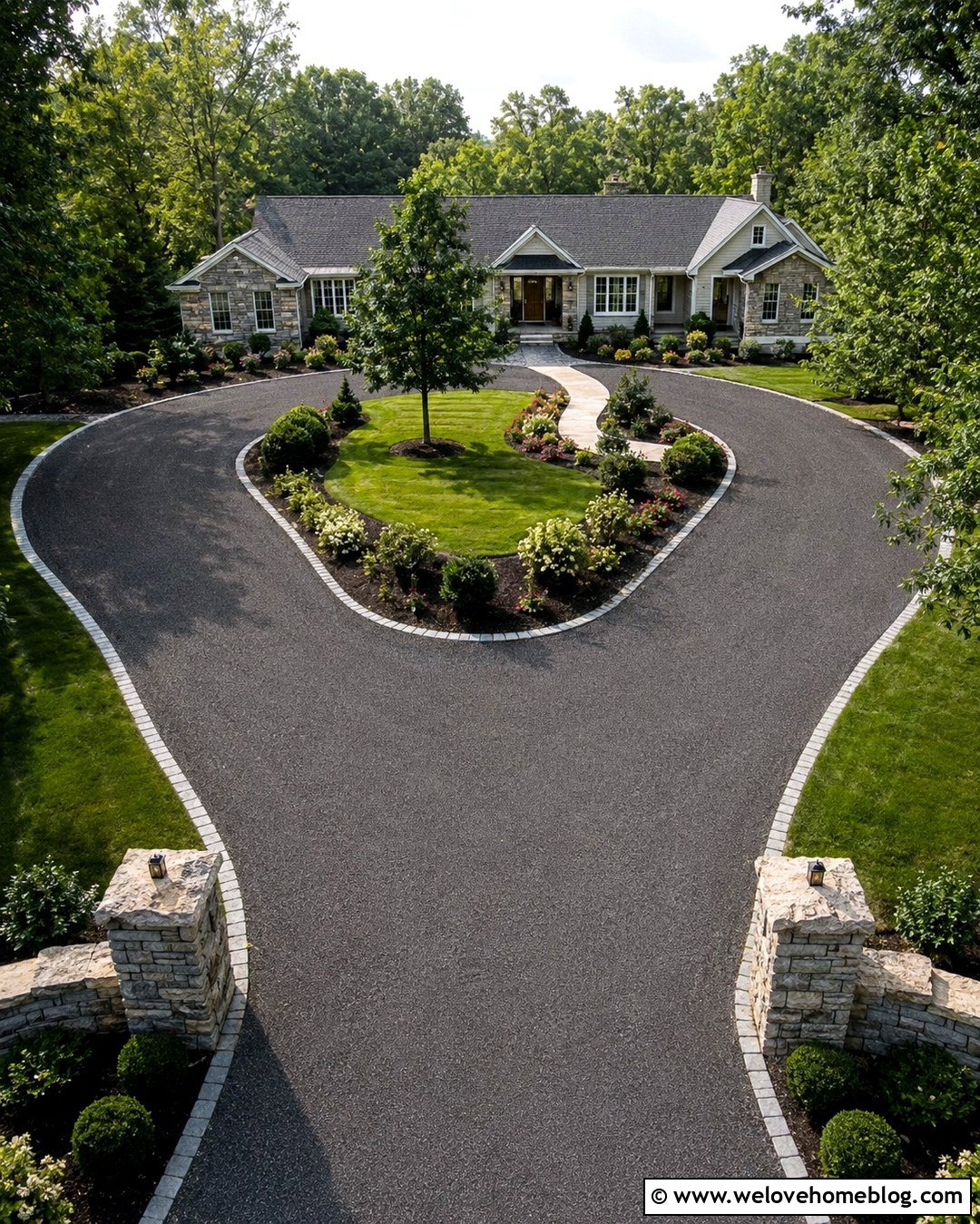
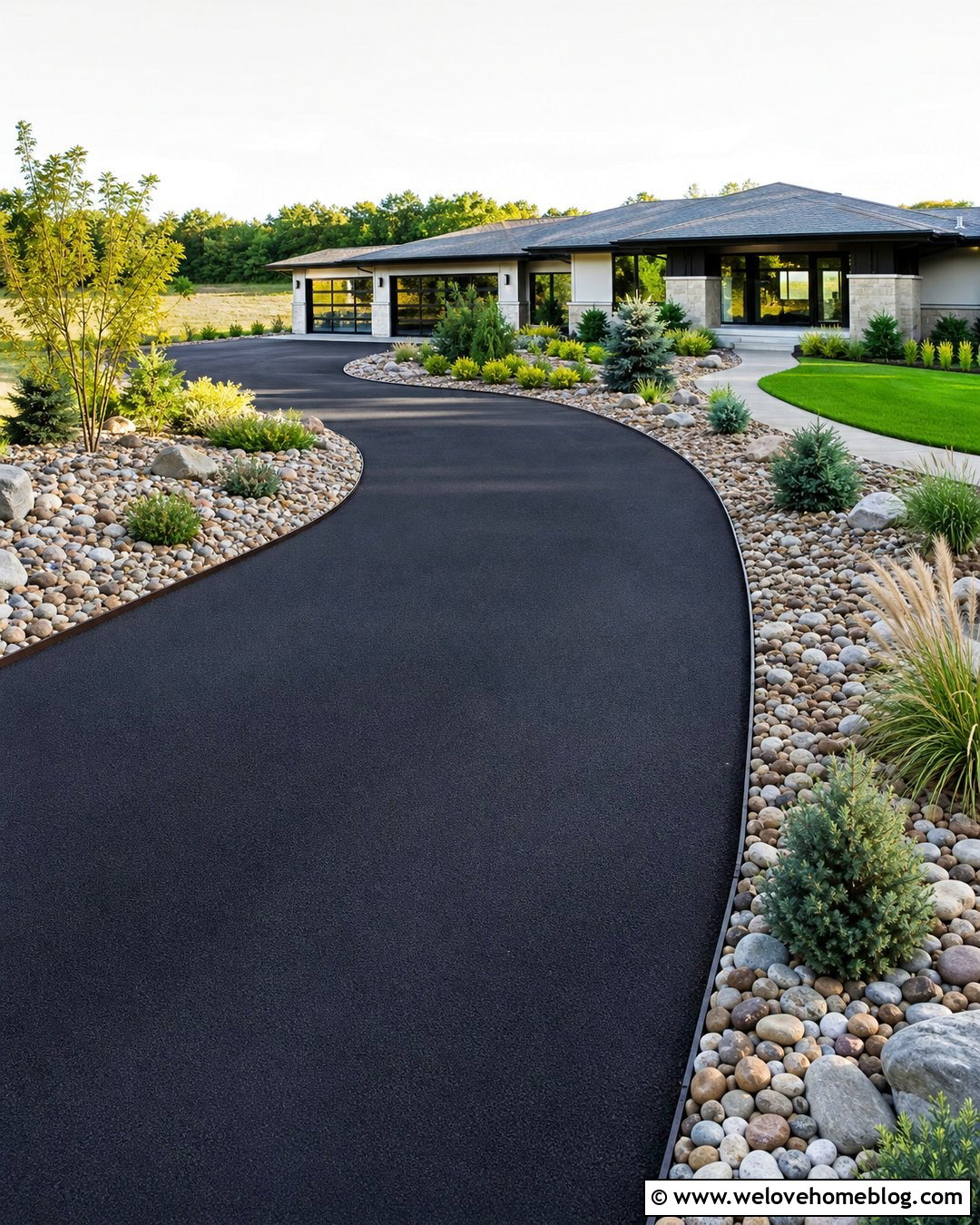
Slim steel edging creates a precise transition between an asphalt driveway and contemporary planting beds. Use it along a straight or angular blacktop layout where clean lines support the architecture of the house. Set the metal nearly flush so it defines the pavement without becoming visually dominant. Beyond the edging, arrange native grasses, flowering perennials, and low ground cover in broad repeated groups. A crushed-stone mulch can separate the plants from the asphalt and add another practical layer of texture. Near the curb, include a modern address sign within the same planting palette. Large concrete stepping pads can form a simple walkway to the front door. This low-clutter design pairs dark asphalt with natural movement, making it a strong choice for modern ranch, prairie, and minimalist suburban homes.
Conclusion:
The most effective asphalt driveway is more than a plain paved route to the garage. Its shape, entrance, border, landscaping, and connection to the house should feel intentionally planned. Brick and cobblestone can add traditional character, while concrete bands, steel edging, and structured grasses create a more modern finish. Circular layouts suit wide yards, whereas straight designs preserve space on compact lots. Practical additions such as turnaround areas, parking pads, retaining walls, and lighting can also improve how the driveway functions. Before building, confirm dimensions, grading, drainage, and local requirements with qualified professionals. Whether your property is formal, rustic, coastal, or contemporary, these **20 driveway asphalt ideas** offer adaptable ways to create a more attractive arrival.

Related posts:
Leave a Reply