
Hydrangeas can turn an ordinary driveway into a softer, more colorful entrance with impressive curb appeal. Their large flower clusters balance hard surfaces such as concrete, gravel, asphalt, brick, and pavers. They also work with many home styles, from relaxed cottages to formal Colonials and modern farmhouses. The best designs consider the complete setting: driveway material, layout, edging, mature plant size, sunlight, drainage, and visibility from the street. Choose varieties suited to your climate and available space, then position them where reflected heat, road salt, and vehicle traffic will not cause damage. Whether you prefer white flowers, changing seasonal color, or a layered woodland border, these **20 Hydrangeas Driveway Ideas** offer practical inspiration. Explore the complete driveway looks below in these **20 Hydrangeas Driveway Ideas**.
1. White Hydrangea Gravel Driveway
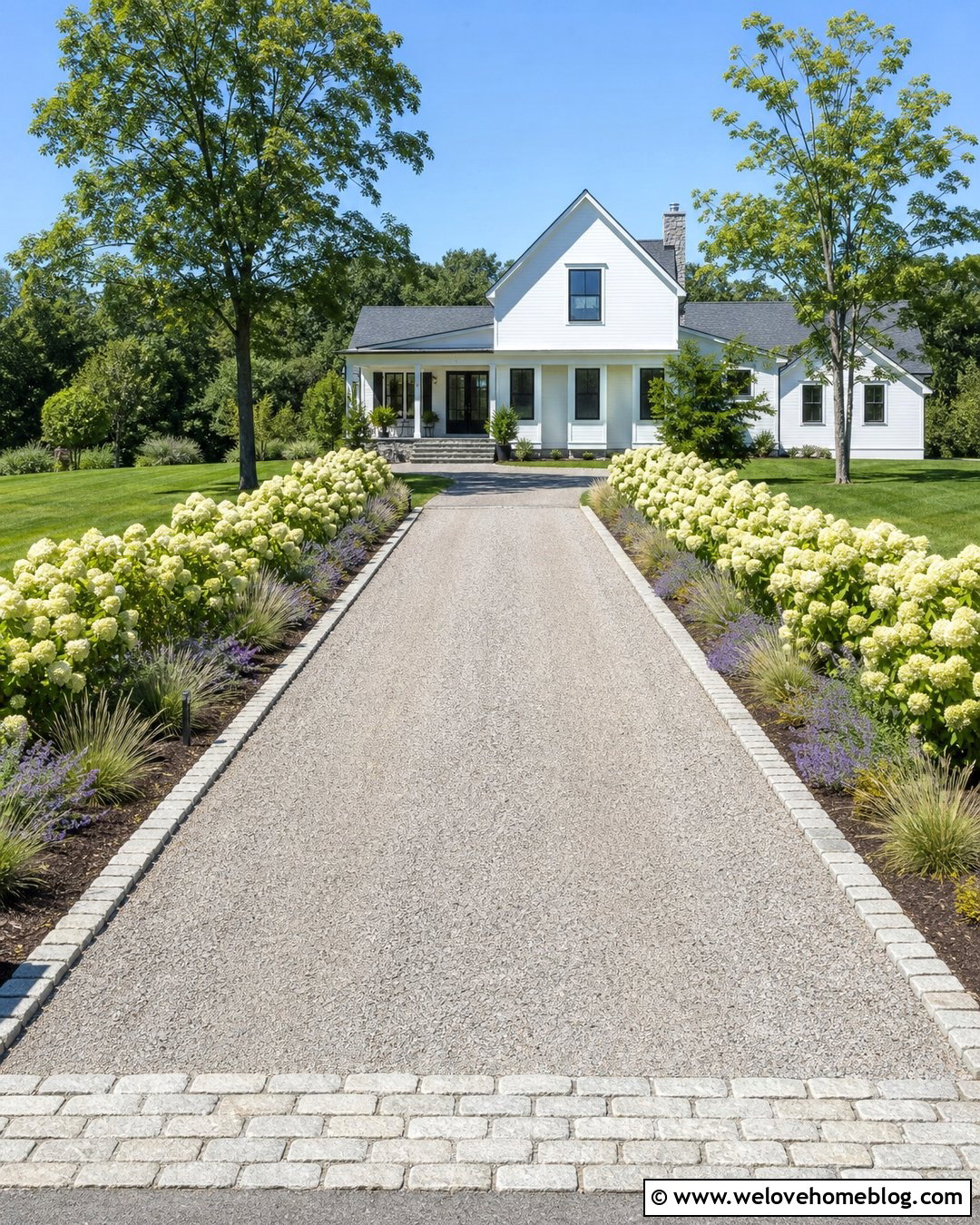
A pale gravel driveway bordered by white hydrangeas creates a bright, relaxed entrance that works especially well with farmhouse and cottage architecture. Use compacted gray or cream gravel for the driving surface, then contain it with cobblestone or steel edging. Plant white panicle hydrangeas several feet behind the edge so mature branches do not scrape vehicles. A low front layer of catmint, creeping thyme, or ornamental grass can conceal bare lower stems while keeping the border visually tidy. Repeat the hydrangeas at even intervals to guide the eye toward the house. Mulch the planting bed to retain moisture and prevent gravel from mixing with soil. This complete look feels natural, but its simple colors and repeated planting pattern keep it polished.
2. Blue Hydrangea Paver Driveway
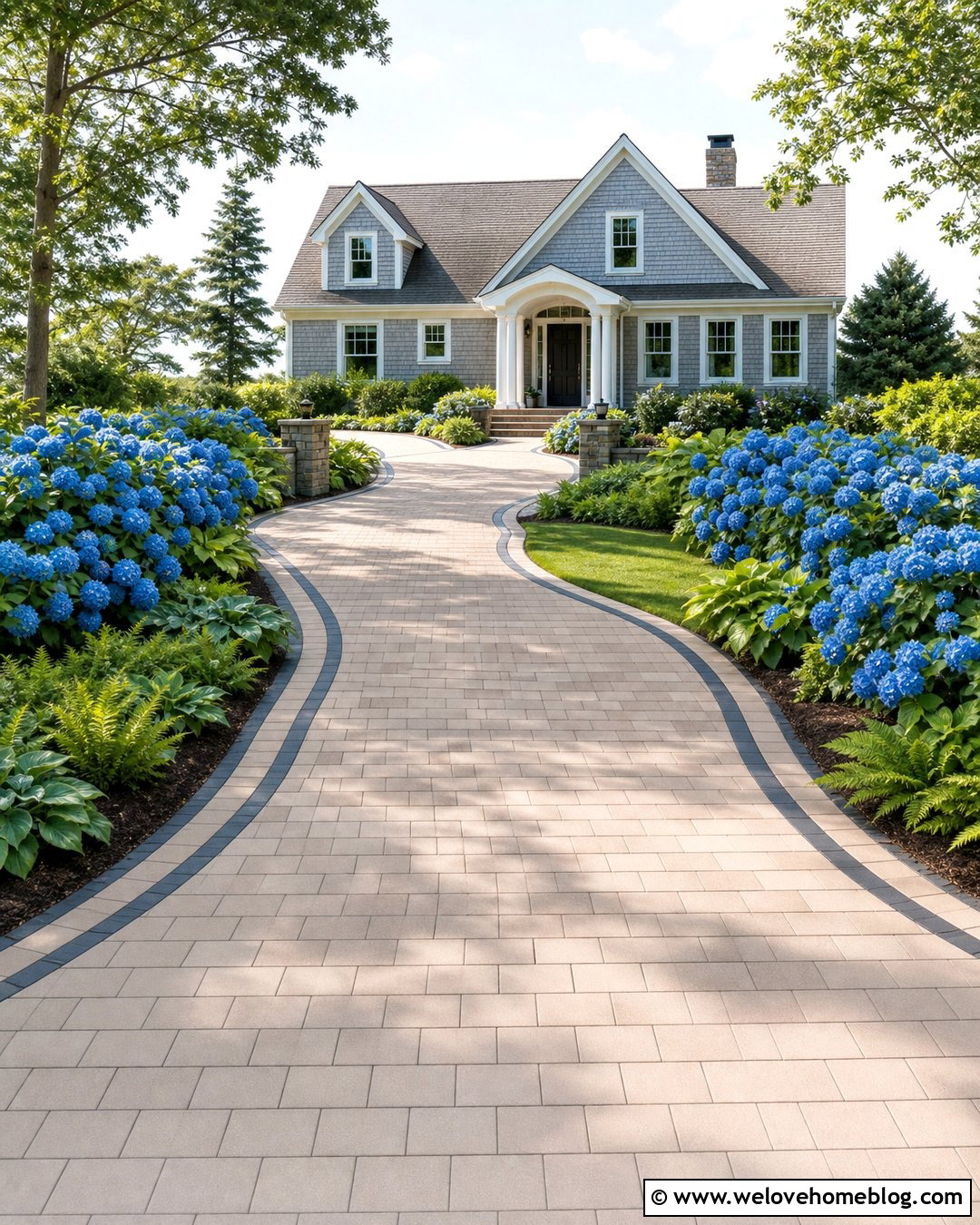
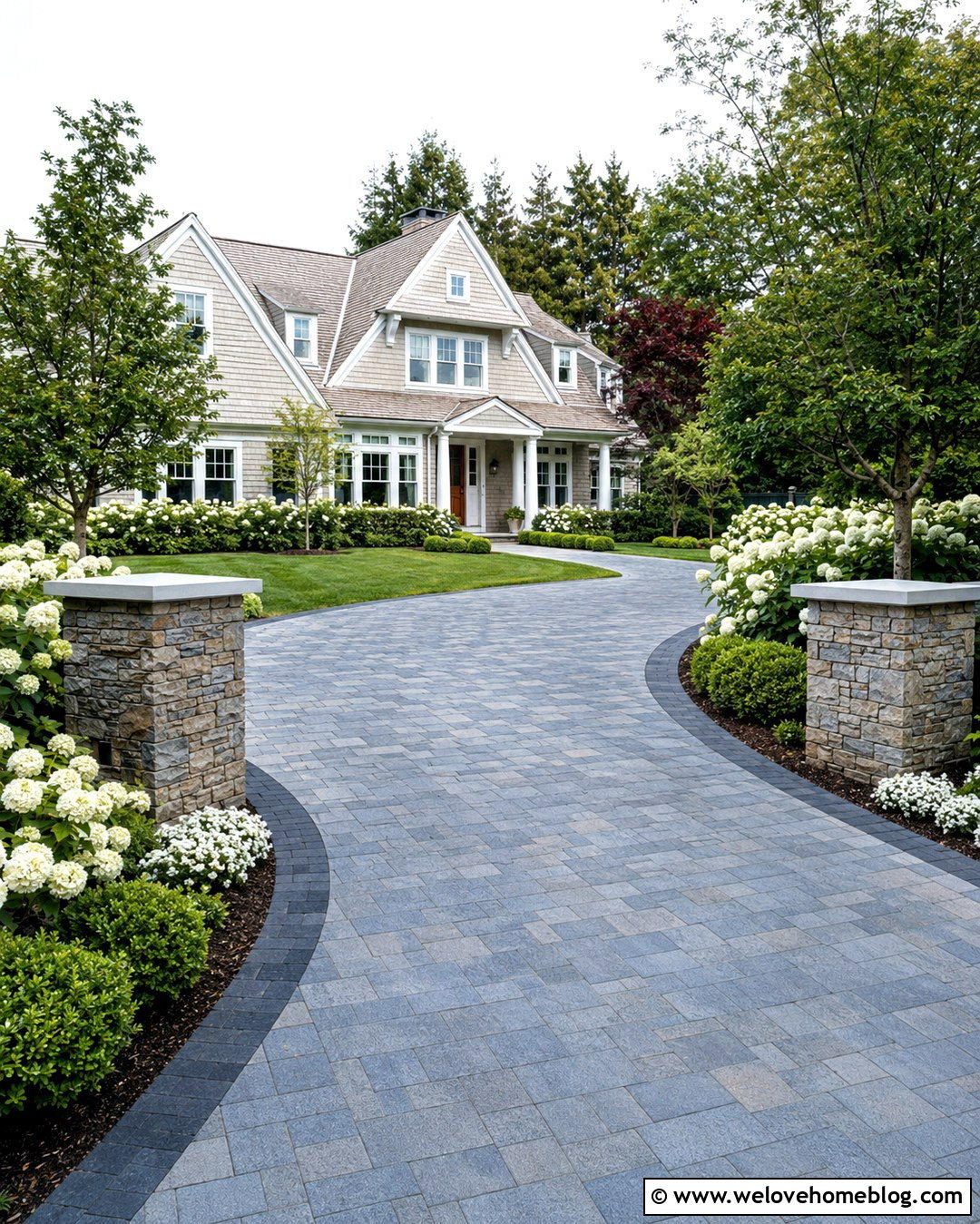
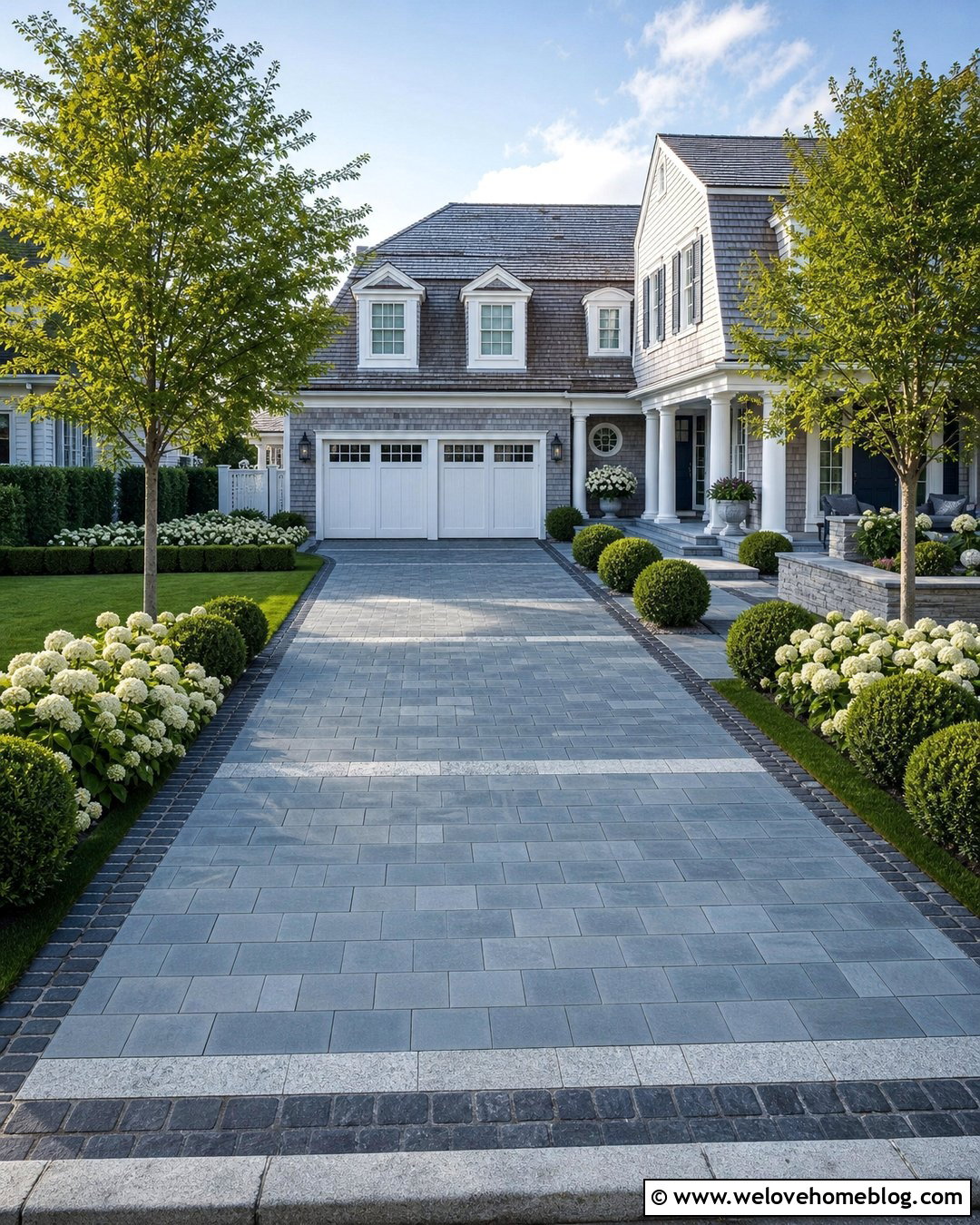
Blue hydrangeas make a warm beige paver driveway feel cooler, greener, and more inviting. This combination suits a Cape Cod, coastal cottage, or traditional shingle-style home. Choose rectangular concrete pavers in a running-bond pattern and add a darker paver ribbon along both edges. Place broad beds beside the driveway, giving each hydrangea enough room to reach its mature width without leaning over the pavement. Bigleaf hydrangeas can provide rich blue flowers where growing conditions support their color and health. Add ferns, hostas, and low evergreen shrubs beneath them for a layered border that remains attractive beyond peak bloom. A gently curved driveway makes the planting feel even more natural. Keep shrubs lower near the street entrance so drivers retain clear visibility.
3. Limelight Hydrangea Asphalt Driveway
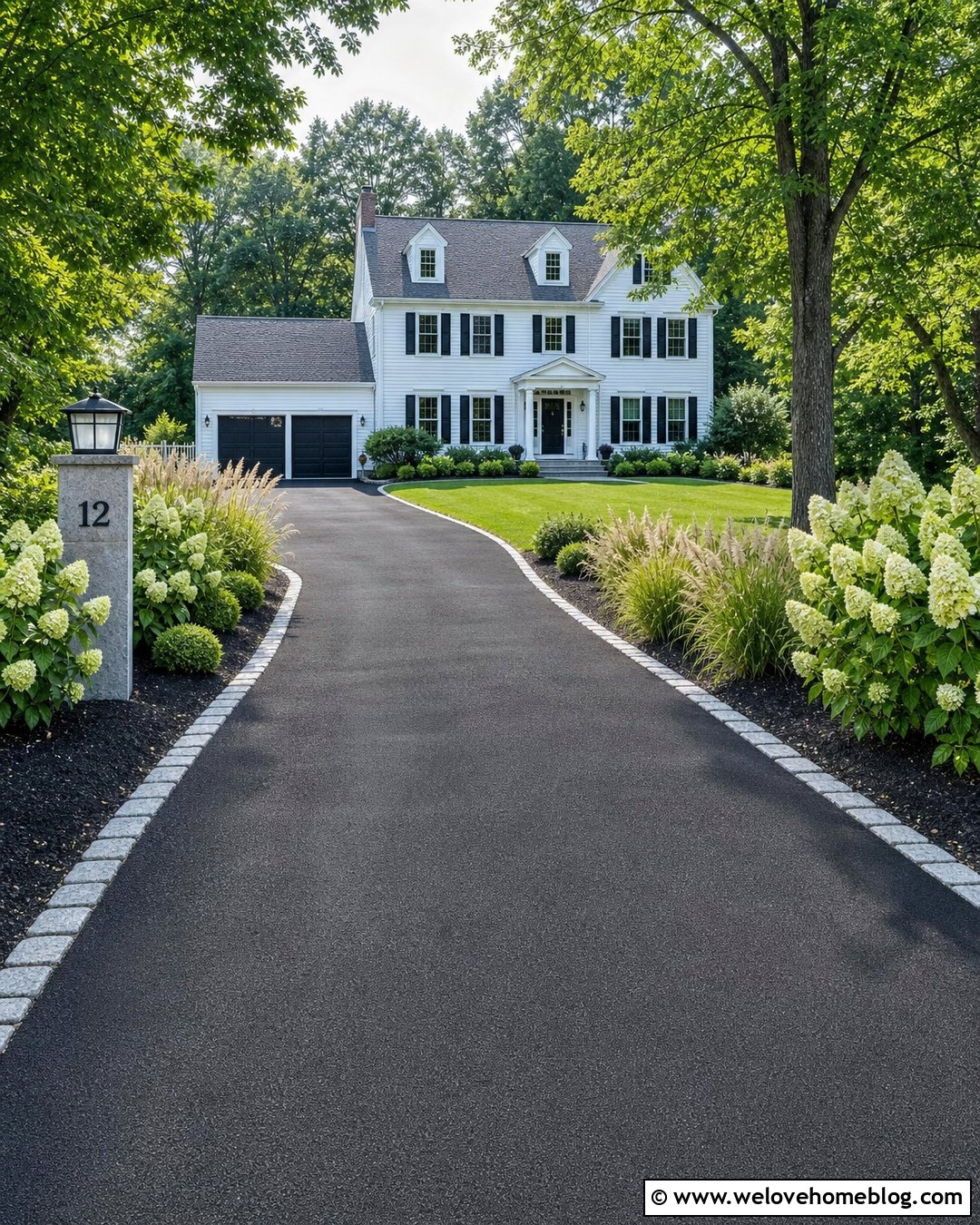
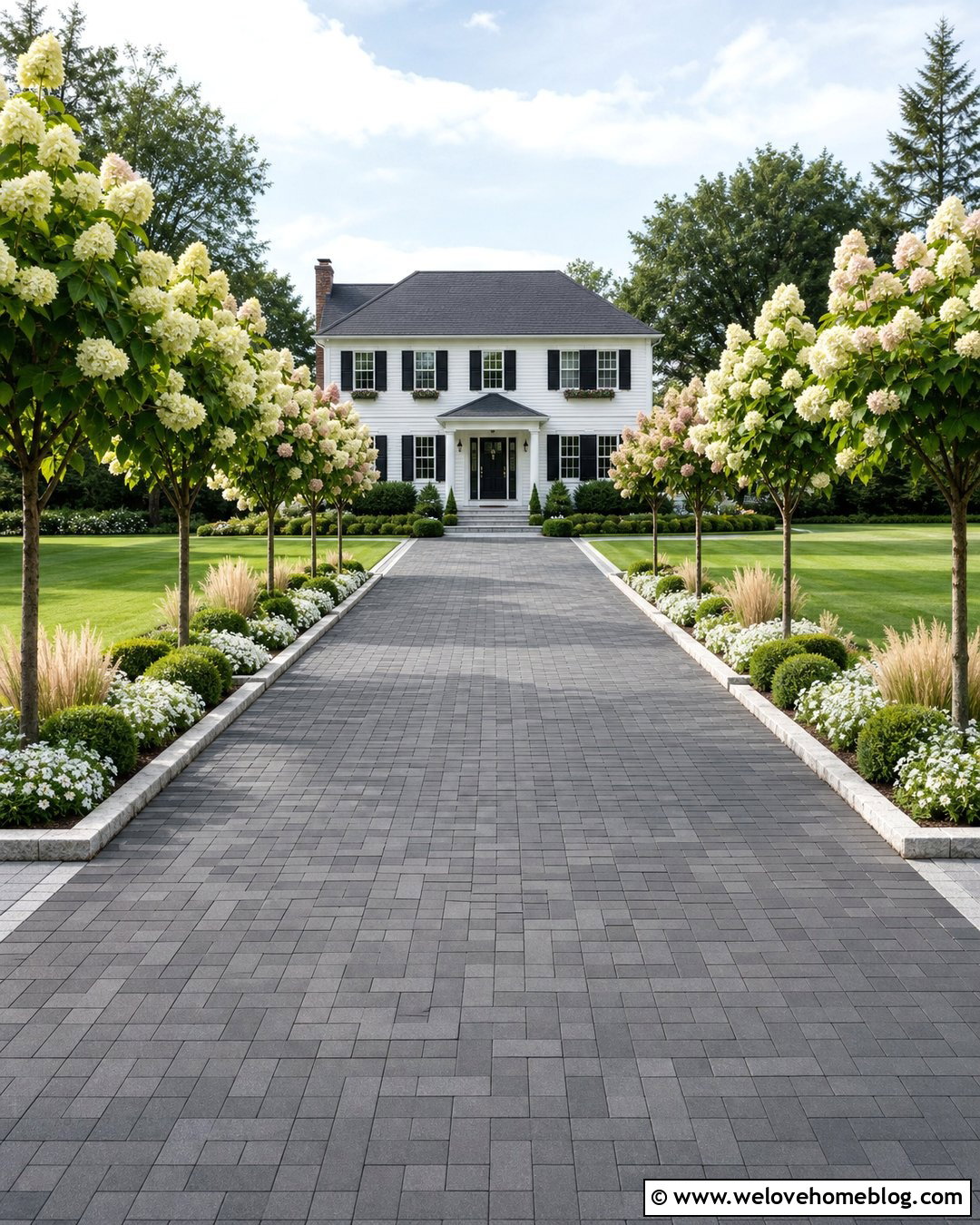
Fresh black asphalt forms a dramatic background for the pale green and white flowers of Limelight-type panicle hydrangeas. To prevent the driveway from appearing too stark, edge it with a wide band of light granite cobbles. Behind that border, arrange hydrangeas in a continuous row with enough setback to reduce exposure to reflected heat. Their upright growth is useful along a long driveway because it creates structure without requiring a very deep planting bed. Add dark green ground cover and small ornamental grasses around the shrubs to soften the soil line. This design looks especially fitting beside a white Colonial or modern farmhouse. At the driveway entrance, transition to lower plants and a simple address marker so the hydrangeas frame the approach without blocking traffic views.
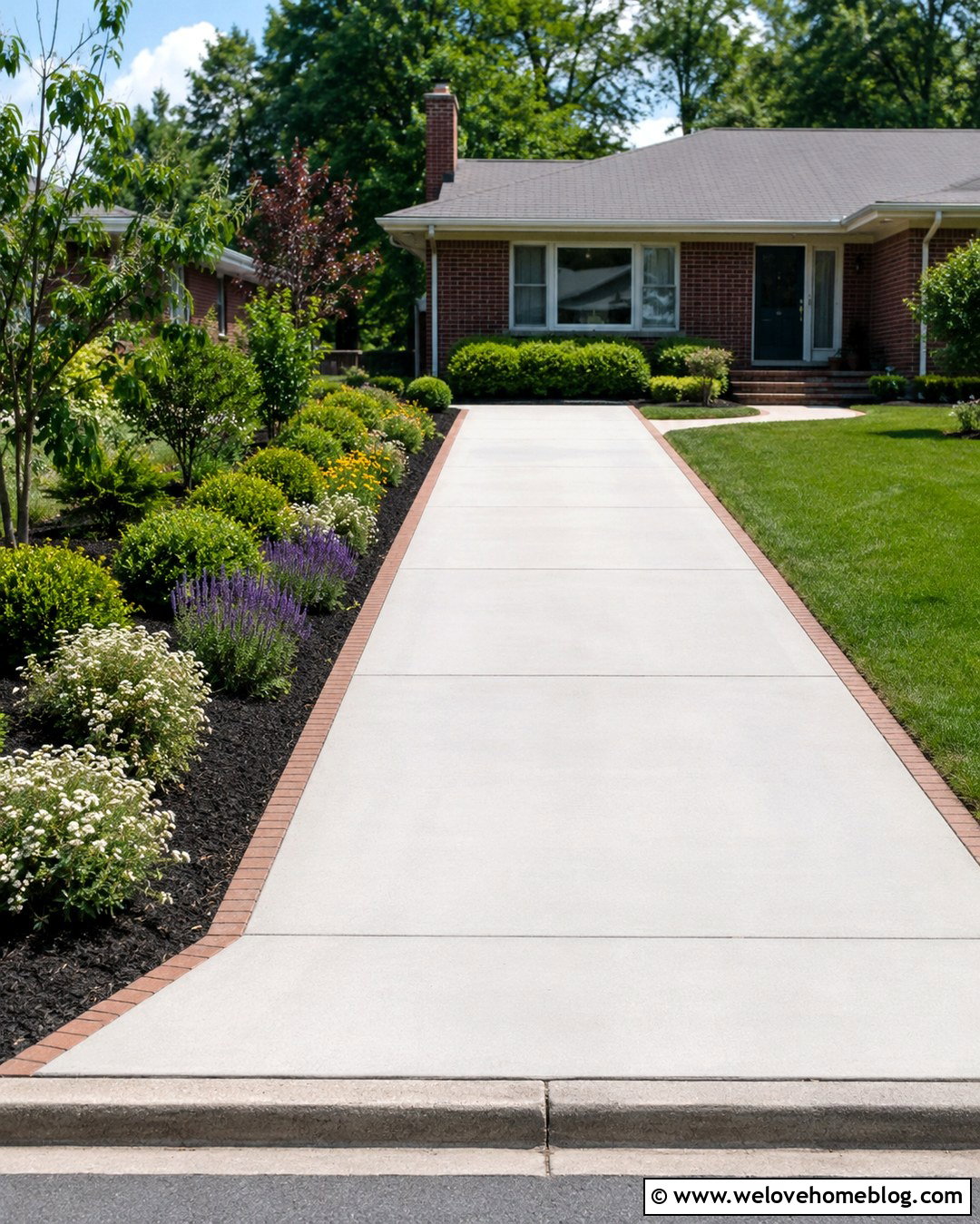
4. Hydrangea Hedge Concrete Driveway
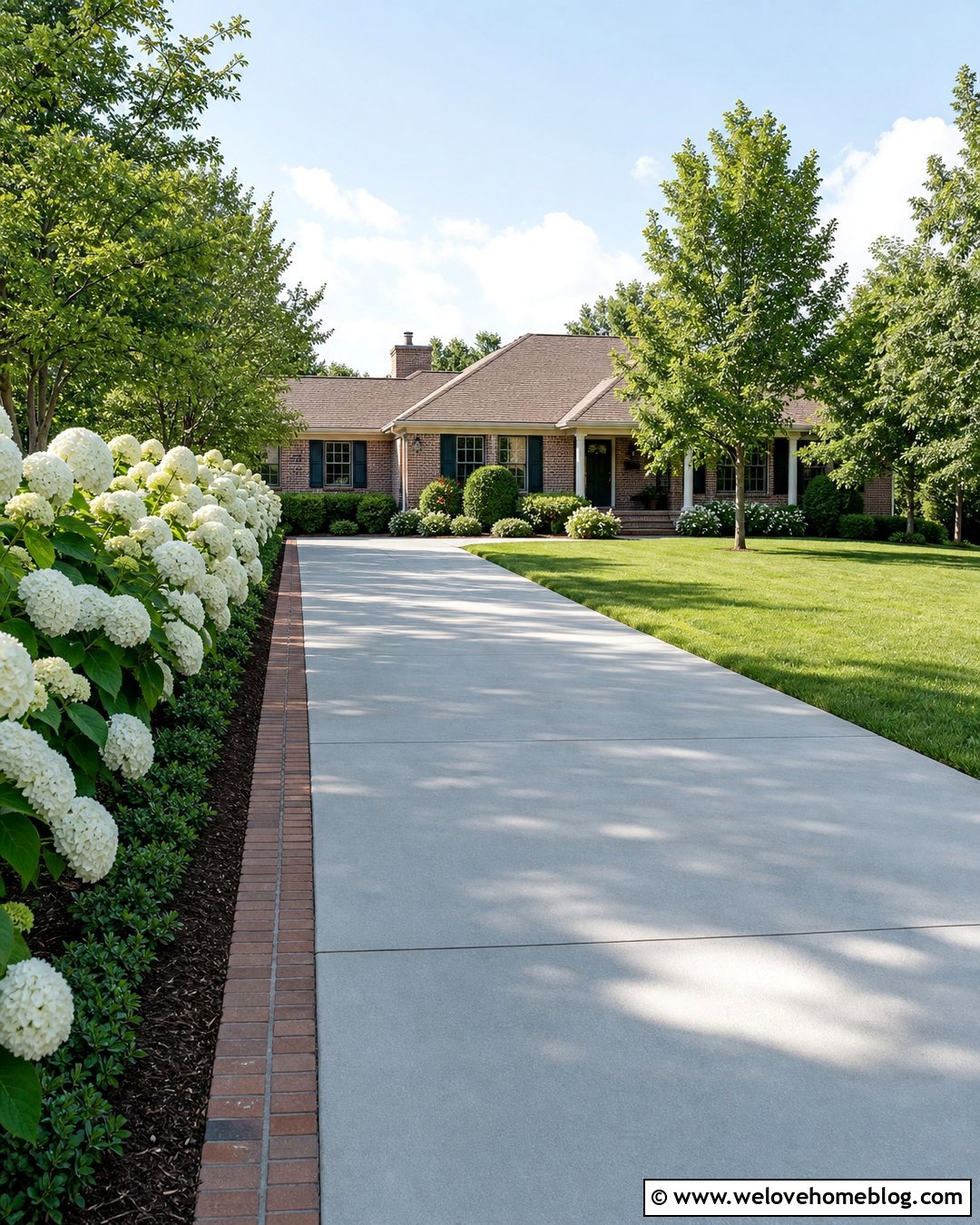
A straight poured-concrete driveway gains definition when a flowering hydrangea hedge runs along one side. Smooth hydrangeas with rounded white blooms can create a lush wall, while regularly spaced shrubs keep the arrangement from looking overcrowded. Install a narrow brick mowing strip between the concrete and planting bed for a crisp transition and easier lawn maintenance. The opposite side can remain mostly open lawn, allowing the flowering hedge to become the main feature without making the approach feel narrow. This asymmetrical layout is practical for suburban properties with limited planting space. Include drip irrigation beneath a two- to three-inch mulch layer rather than relying on water splashed from the driveway. Allow for mature width when planting, and keep the final shrubs away from garage doors and vehicle turning areas.
5. Pink Hydrangea Brick Driveway
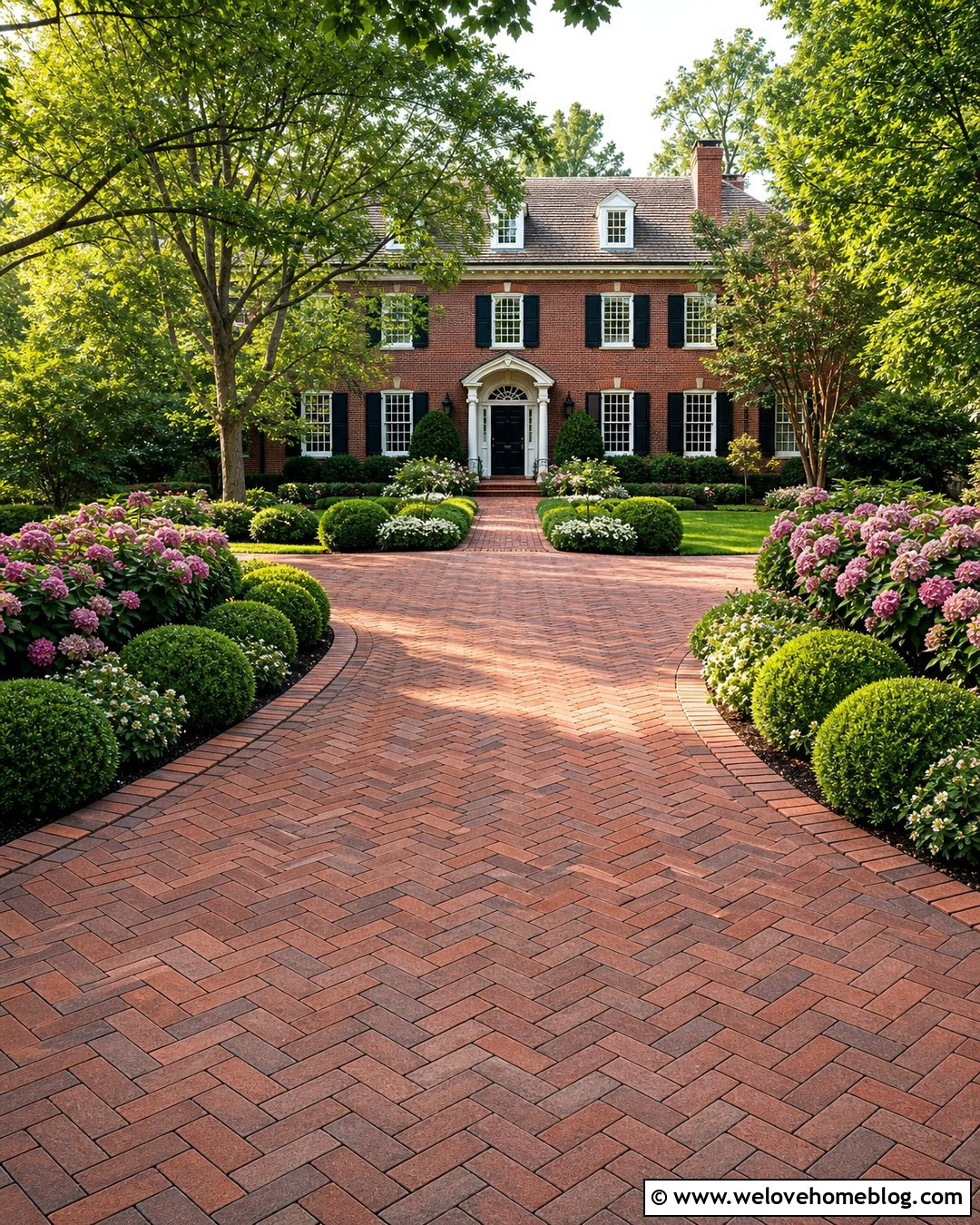
Soft pink hydrangeas complement the earthy red and brown tones of a clay brick driveway. For a traditional look, install the bricks in a herringbone pattern and finish the perimeter with a soldier-course border. Create generous curved beds on both sides, repeating pink-flowering hydrangeas with rounded boxwoods and low white perennials. The boxwoods supply dependable green structure when the hydrangeas are dormant, while the lighter flowers prevent the warm color scheme from becoming too heavy. This arrangement pairs naturally with Georgian, Colonial, and traditional brick homes. Keep the plant palette symmetrical near the entrance, then loosen the spacing closer to the house. A matching brick walkway can branch from the driveway and pass through the hydrangea beds, visually connecting the parking area to the front door.
6. Dwarf Hydrangea Small Driveway
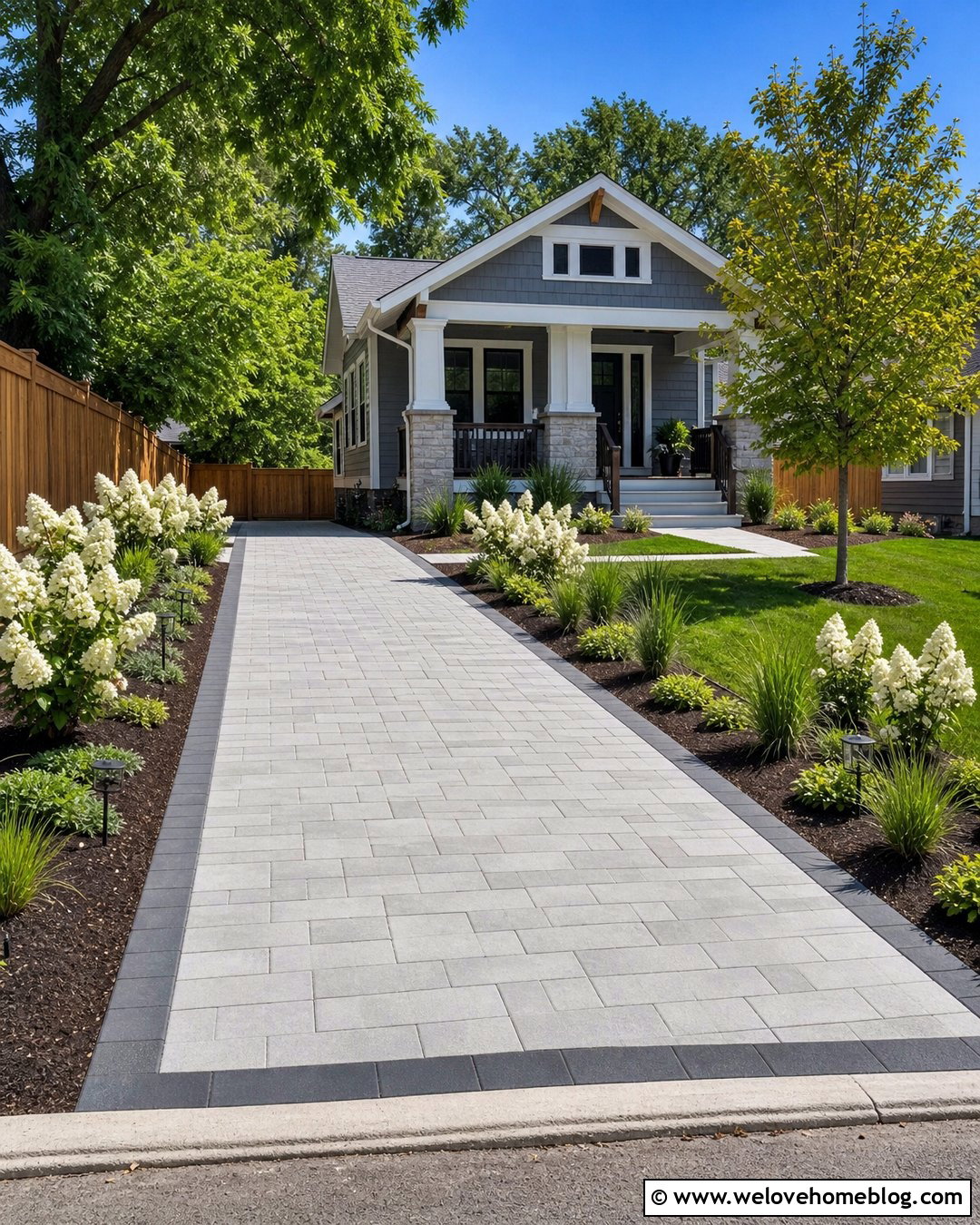
A short driveway does not need oversized shrubs to achieve a full, colorful border. Dwarf panicle hydrangeas can frame a narrow concrete or paver driveway without overwhelming the house, sidewalk, or parking space. Choose light gray concrete pavers and define the edges with charcoal blocks for a clean suburban look. Plant the hydrangeas in staggered groups rather than an unbroken hedge, leaving openings for ground cover and small upright grasses. This makes the border feel deeper while preserving useful access around vehicles. Low landscape lighting can sit between groups, where fixtures remain visible and easy to maintain. Select plants according to their mature measurements, not their nursery size. A restrained white-and-green palette will also help a compact front yard appear more open, coordinated, and uncluttered.
7. Oakleaf Hydrangea Woodland Driveway
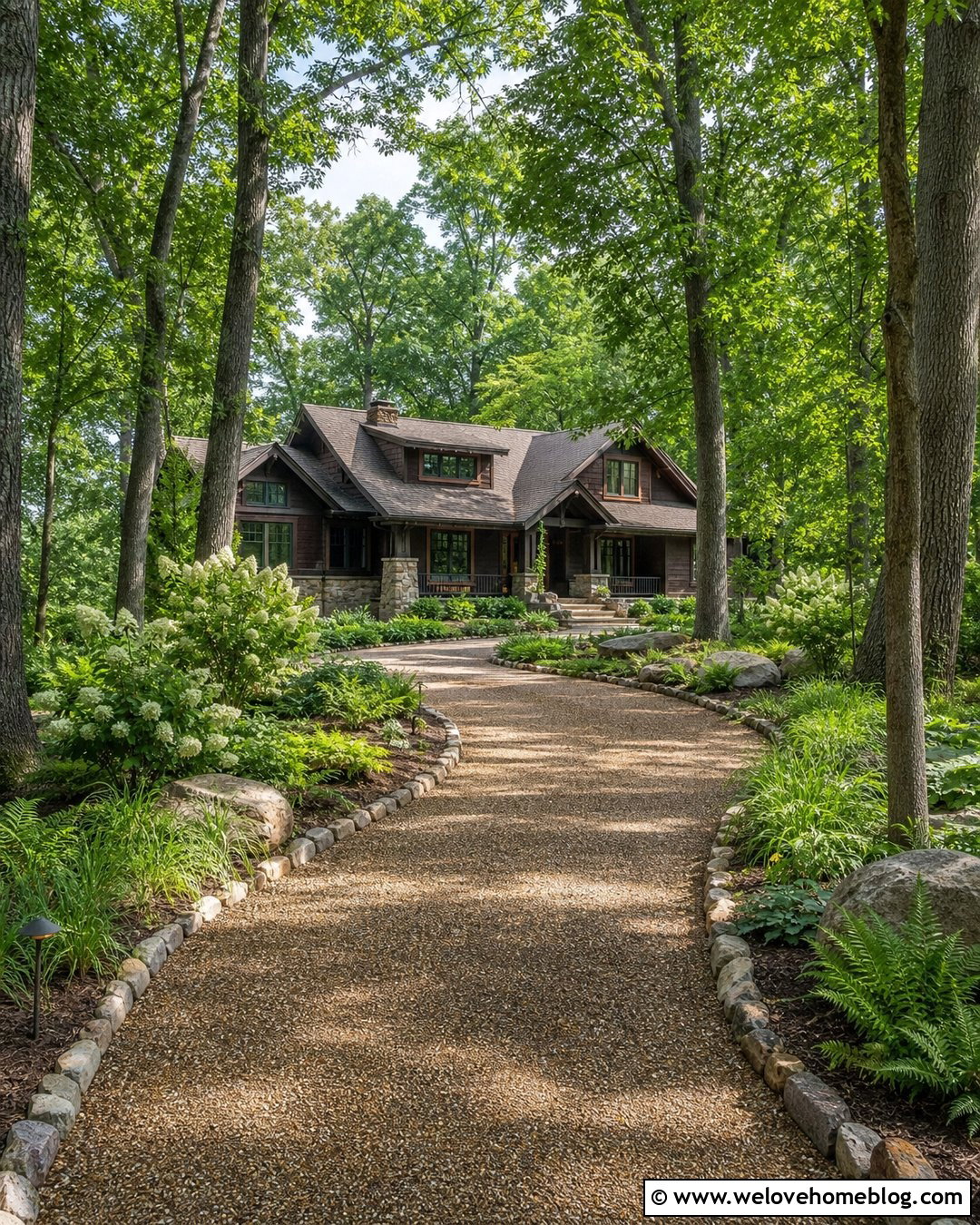
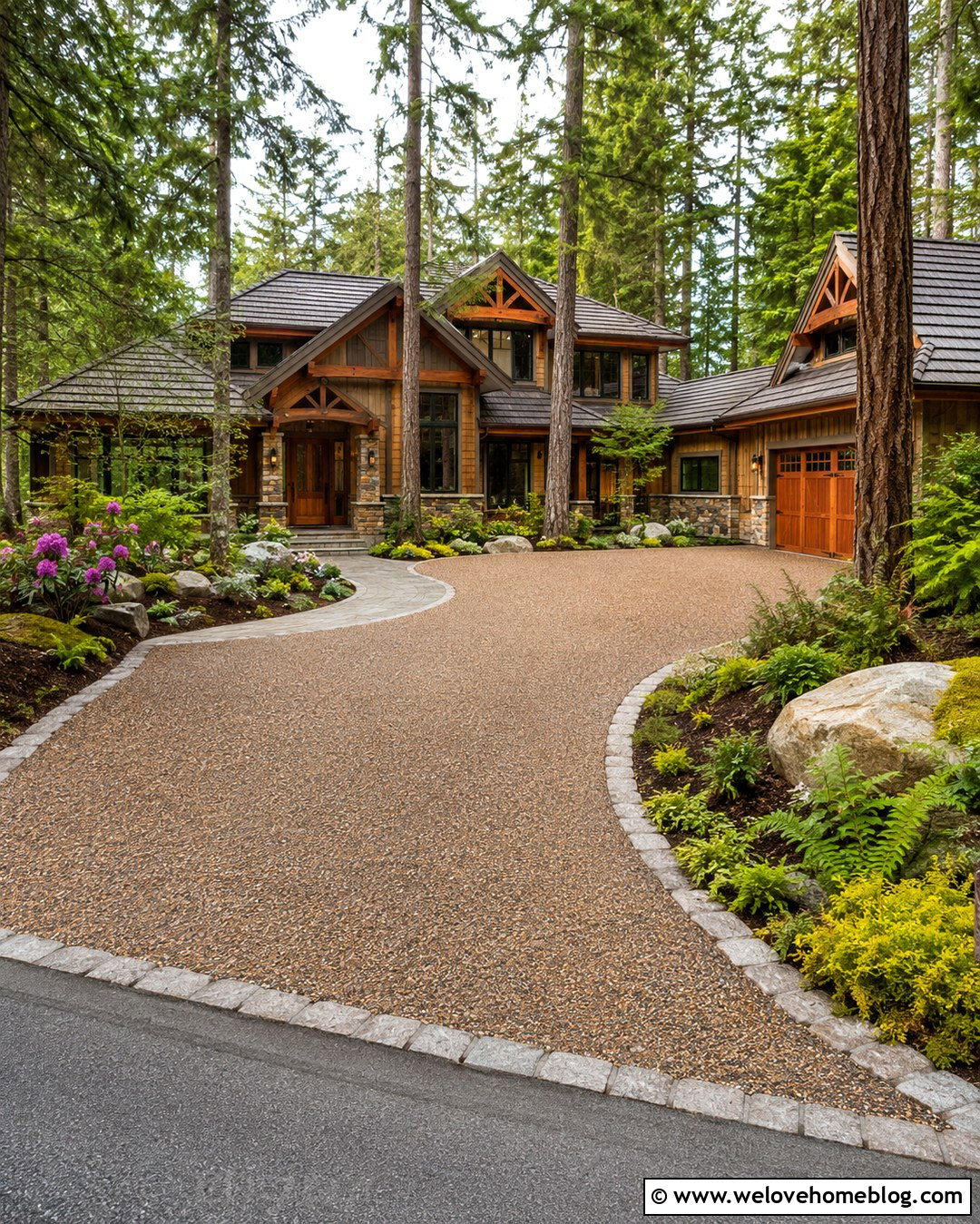
Imagine a curved driveway passing beneath mature trees, with oakleaf hydrangeas filling the shaded outer edge. A warm brown exposed-aggregate surface or stabilized gravel blends naturally with this woodland setting. Use irregular fieldstone edging to separate the driveway from deep planting beds containing oakleaf hydrangeas, ferns, sedges, and native ground covers. Their large leaves provide bold texture, while changing foliage can extend visual interest after flowering. Arrange the shrubs in loose groups instead of a rigid row so the planting follows the character of the wooded lot. Preserve open space near curves and intersections to maintain safe sightlines. This design works well with Craftsman, rustic ranch, and cabin-inspired homes. Subtle boulder accents can help manage grade changes without making the border look overly constructed.
8. Hydrangea Circular Driveway Island
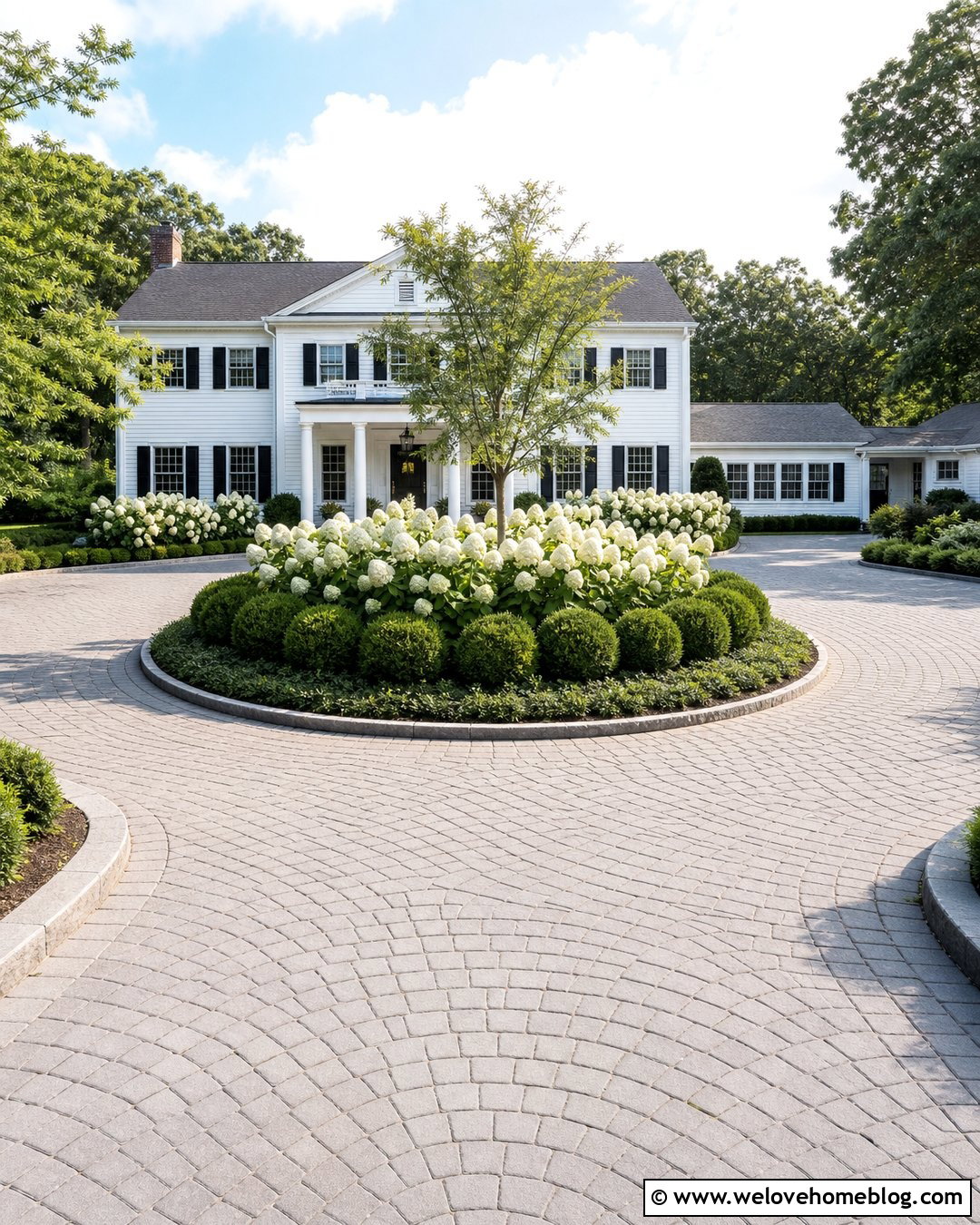
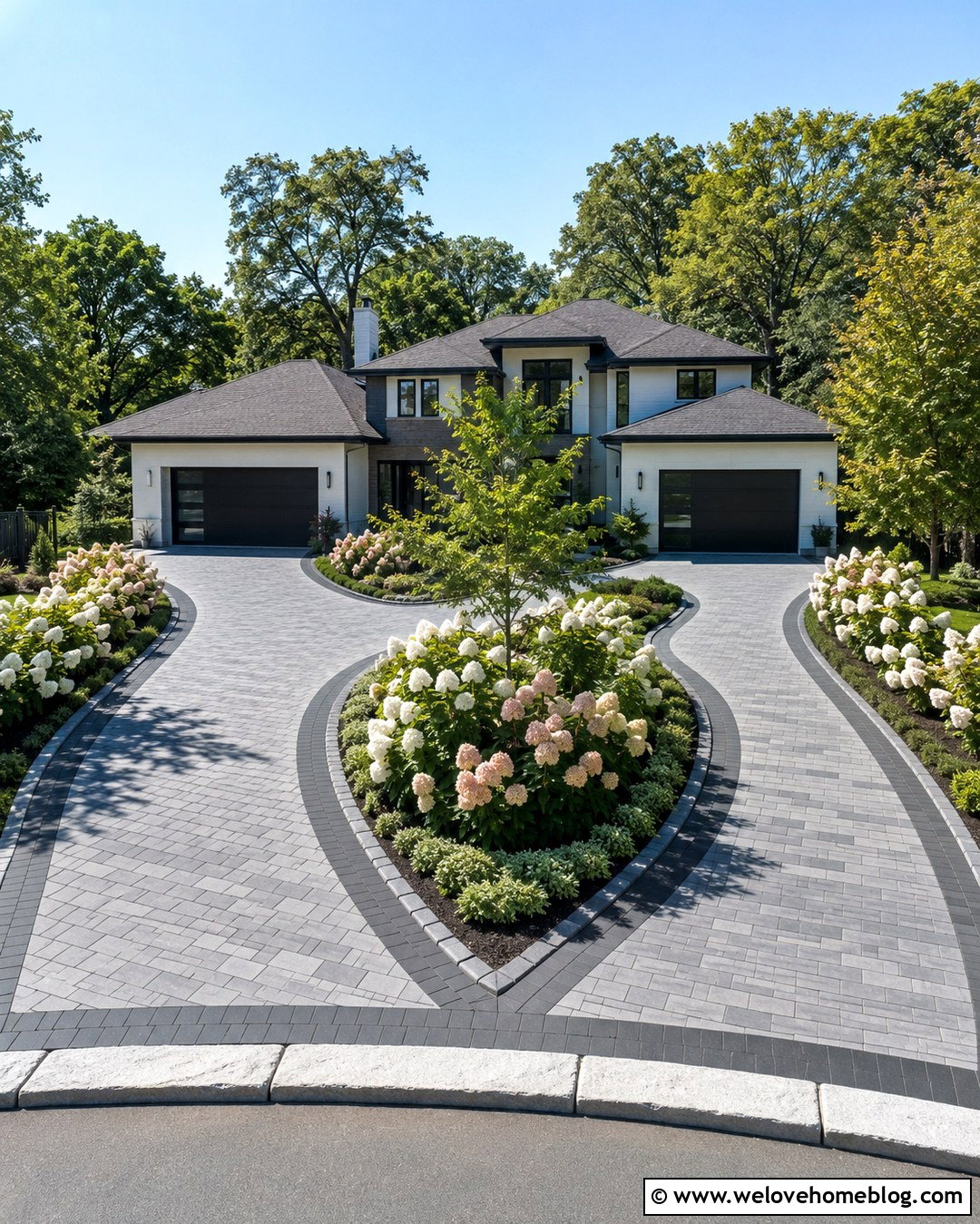
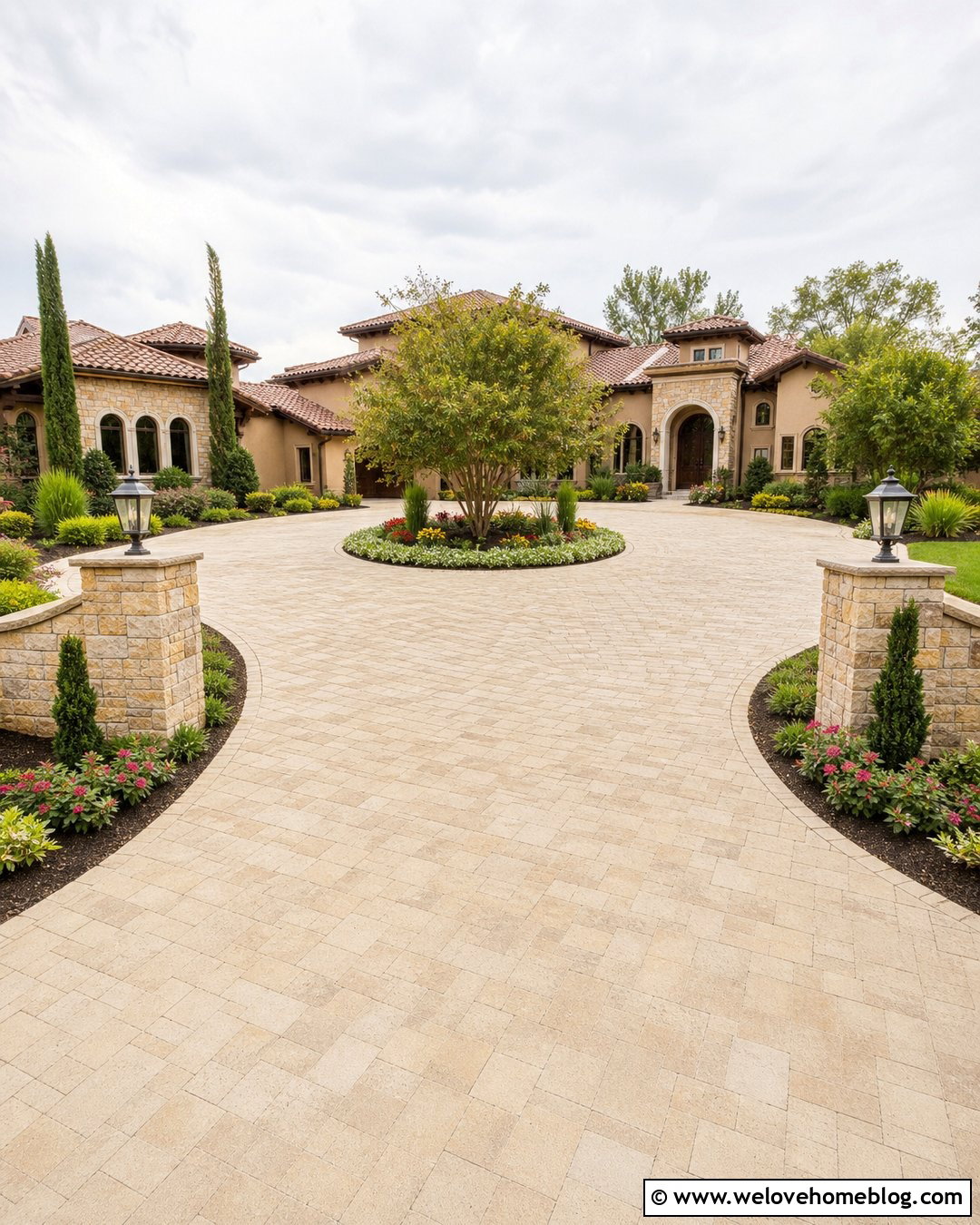
A circular driveway provides an ideal setting for hydrangeas when the center island is large enough to protect them from vehicle heat and turning movements. Use light gray concrete pavers in a fan pattern around a broad oval island. Plant a small ornamental tree near the center, then surround it with groups of white panicle hydrangeas, clipped evergreens, and low flowering ground cover. Keep the outermost plants short so drivers can see across the island while entering and leaving. A stone curb will retain soil and create a finished edge between the planting and pavers. Repeating a few hydrangeas beside the house ties the island into the larger landscape. This balanced arrangement gives Colonial, European-inspired, and upscale traditional homes a formal entrance without relying on complicated garden ornament.
9. Hydrangea Curved Gravel Driveway
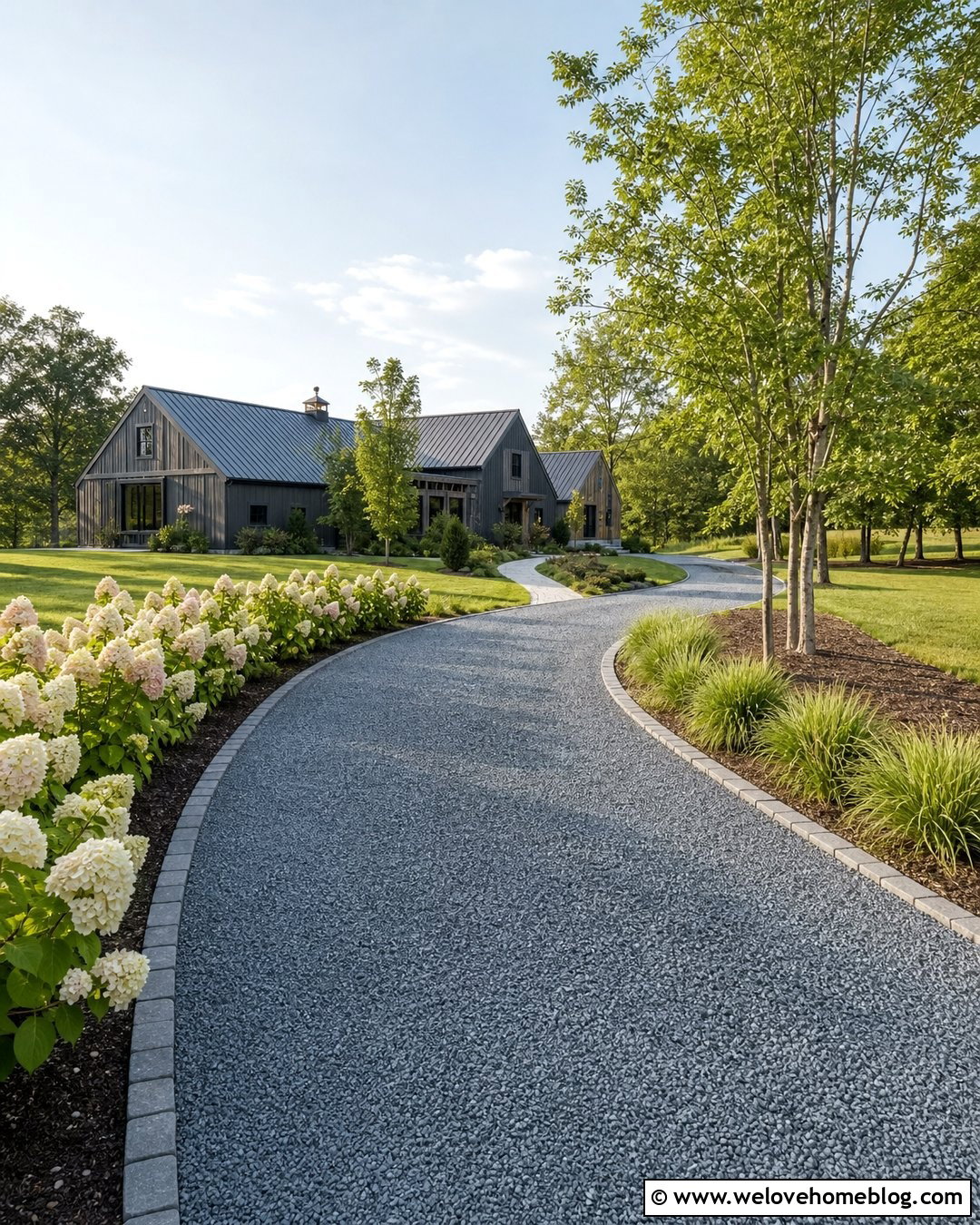
A sweeping gravel driveway becomes more graceful when hydrangeas emphasize its curves. Choose compacted blue-gray gravel and install dark granite setts along the edges to hold the material in place. On the outside curve, create a deep planting bed filled with white and blush panicle hydrangeas. On the inside curve, use lawn and lower ornamental grasses so the view toward the house remains open. This unequal planting arrangement strengthens the shape of the driveway while reducing the risk of shrubs hiding approaching vehicles. Space the hydrangeas naturally, allowing room for their mature forms instead of forcing them into a narrow line. The look pairs beautifully with country homes, renovated barns, and modern farmhouses. A few multi-stem trees behind the hydrangeas can provide height without competing with the flowers.
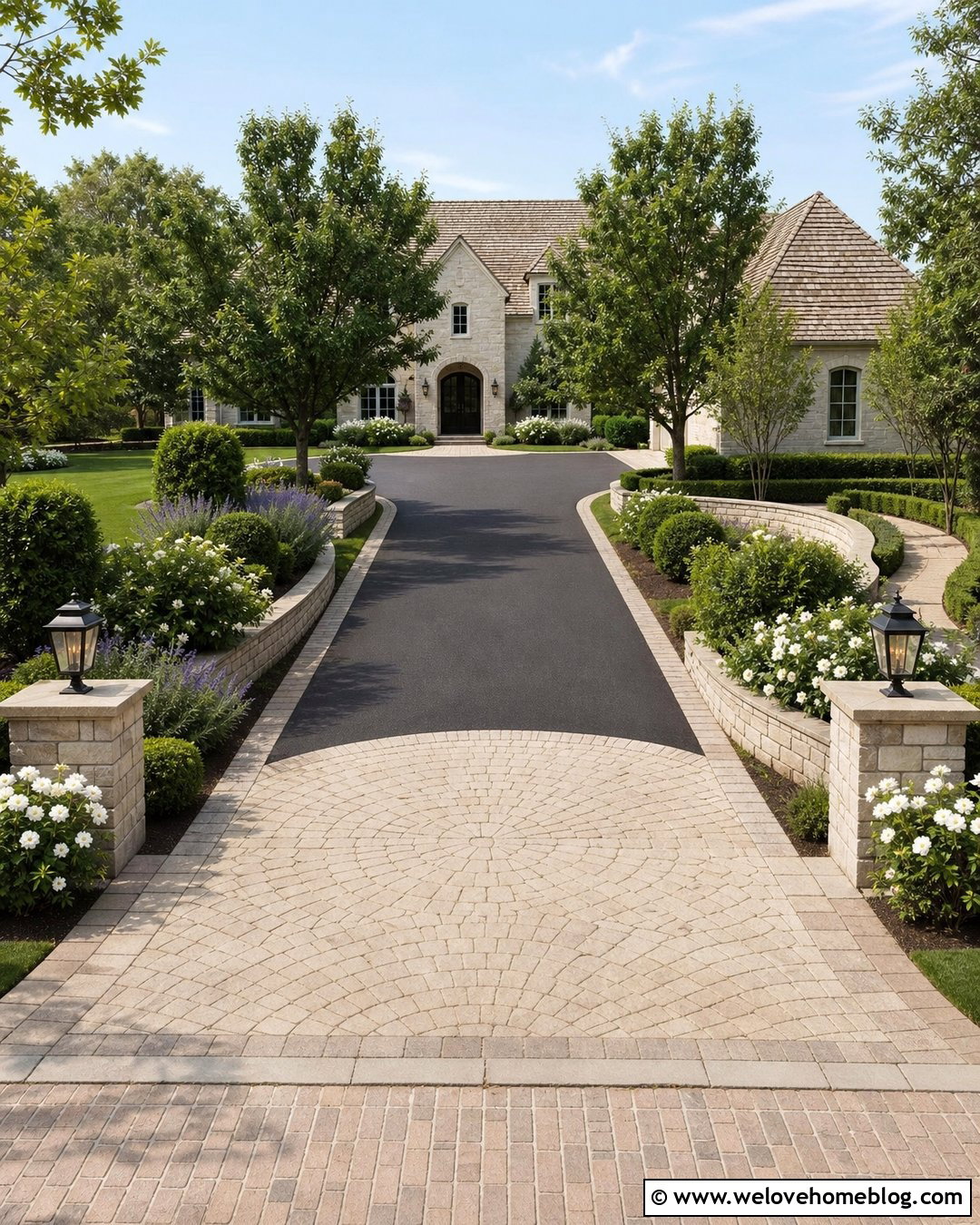
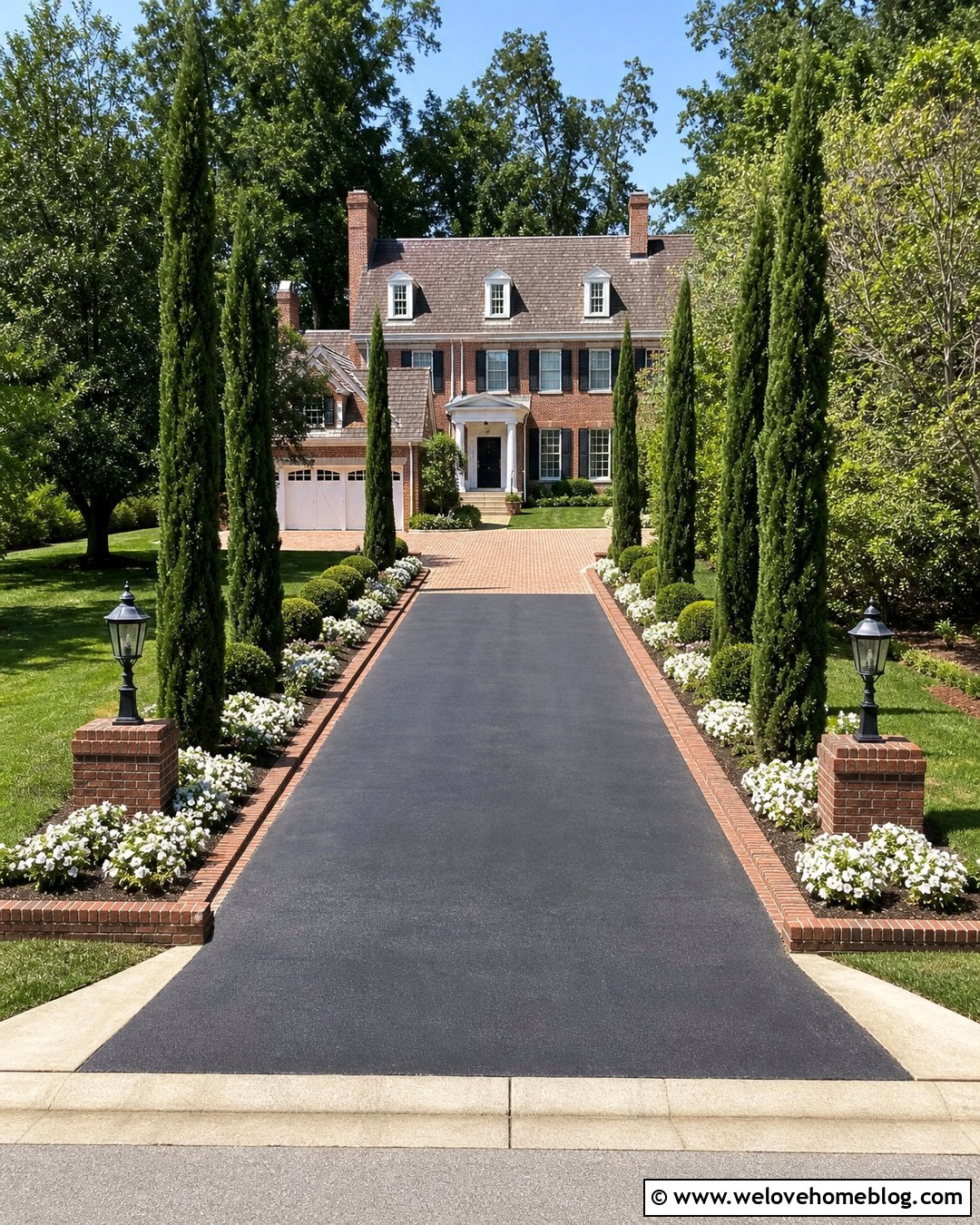
10. Hydrangea Driveway With Stone Pillars
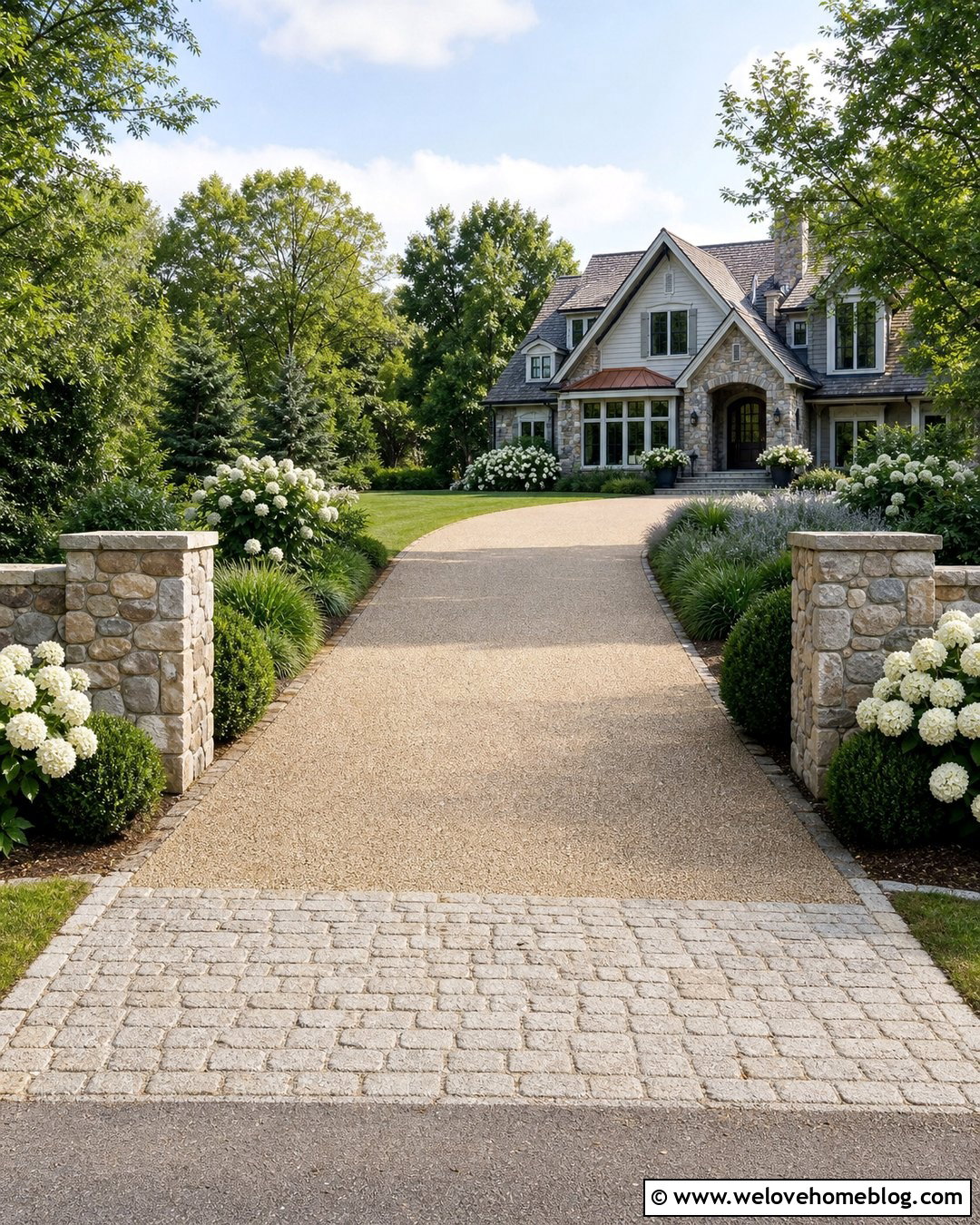
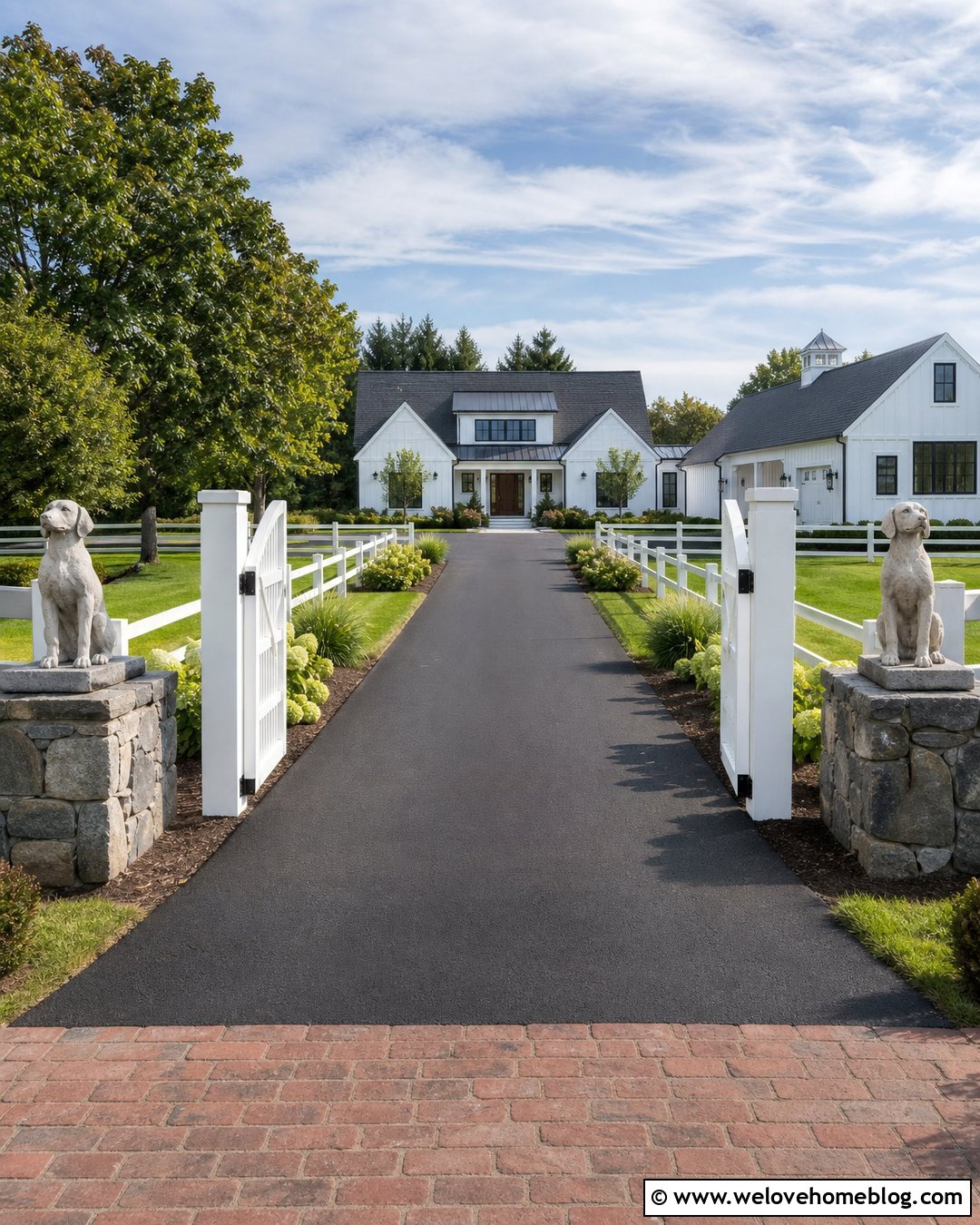
Stone entrance pillars feel less imposing when surrounded by flowering hydrangeas and layered greenery. Begin with a tan resin-bound gravel driveway that runs straight toward a stone-and-siding house. Place substantial fieldstone pillars on both sides of the entrance, leaving ample clearance for vehicles, deliveries, and snow removal equipment. Behind each pillar, plant matching groups of white hydrangeas with compact evergreen shrubs and low ornamental grasses. The hydrangeas should soften the masonry without covering address numbers, lights, or gate hardware. Continue smaller hydrangea groups farther along the driveway to connect the entrance with the front landscape. A cobblestone apron can create a durable transition from the street. This complete design delivers a strong sense of arrival while remaining welcoming, colorful, and proportionate to a residential property.
11. Hydrangea Driveway With White Fence
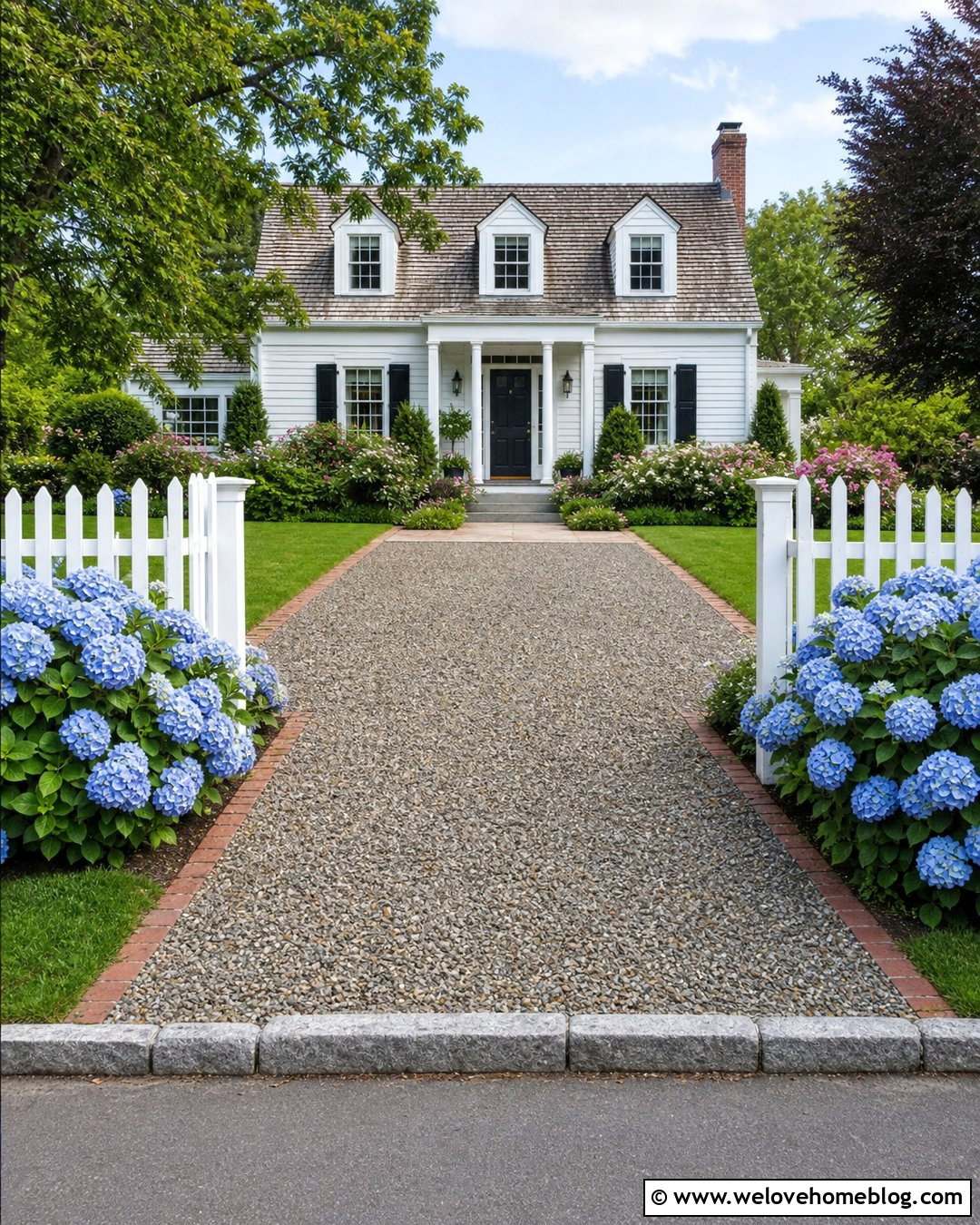
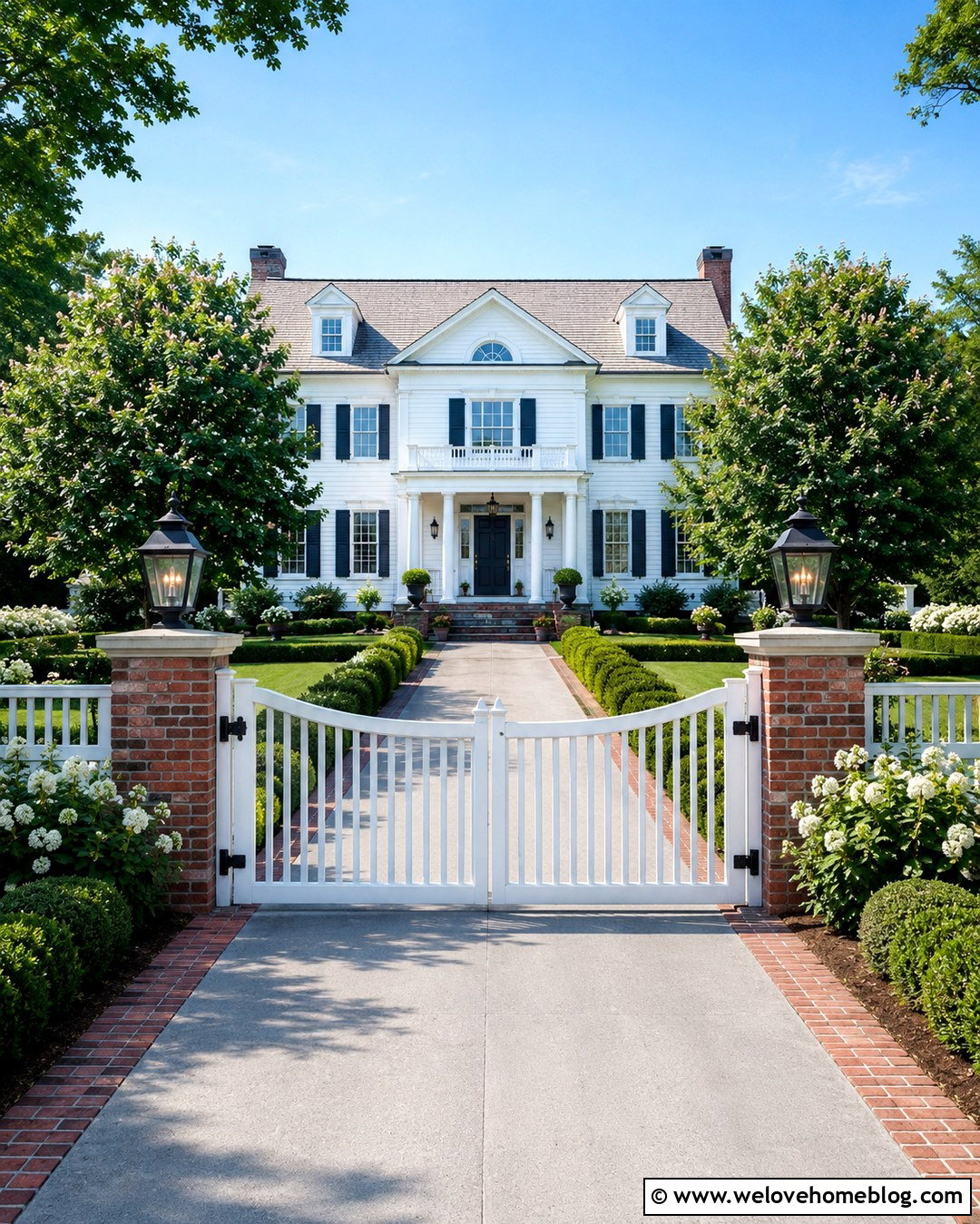
A white fence and hydrangea border create a classic driveway scene that suits Cape Cod, farmhouse, and cottage homes. Use warm gray pea gravel contained by brick edging, then position a low white picket or post-and-rail fence beyond the driving surface. Plant blue, pink, or white hydrangeas on the yard side of the fence, where the blooms can appear above or between the rails. This placement protects branches from tires while allowing the fence to remain visible. Add a narrow grass strip or low ground cover between the driveway edge and fence for easier maintenance. At the entrance, use shorter plants around the gate and mailbox to keep sightlines clear. Repeating the same hydrangeas near the porch helps the driveway landscape feel connected to the home rather than added separately.
12. Hydrangea Driveway With Boxwood Border
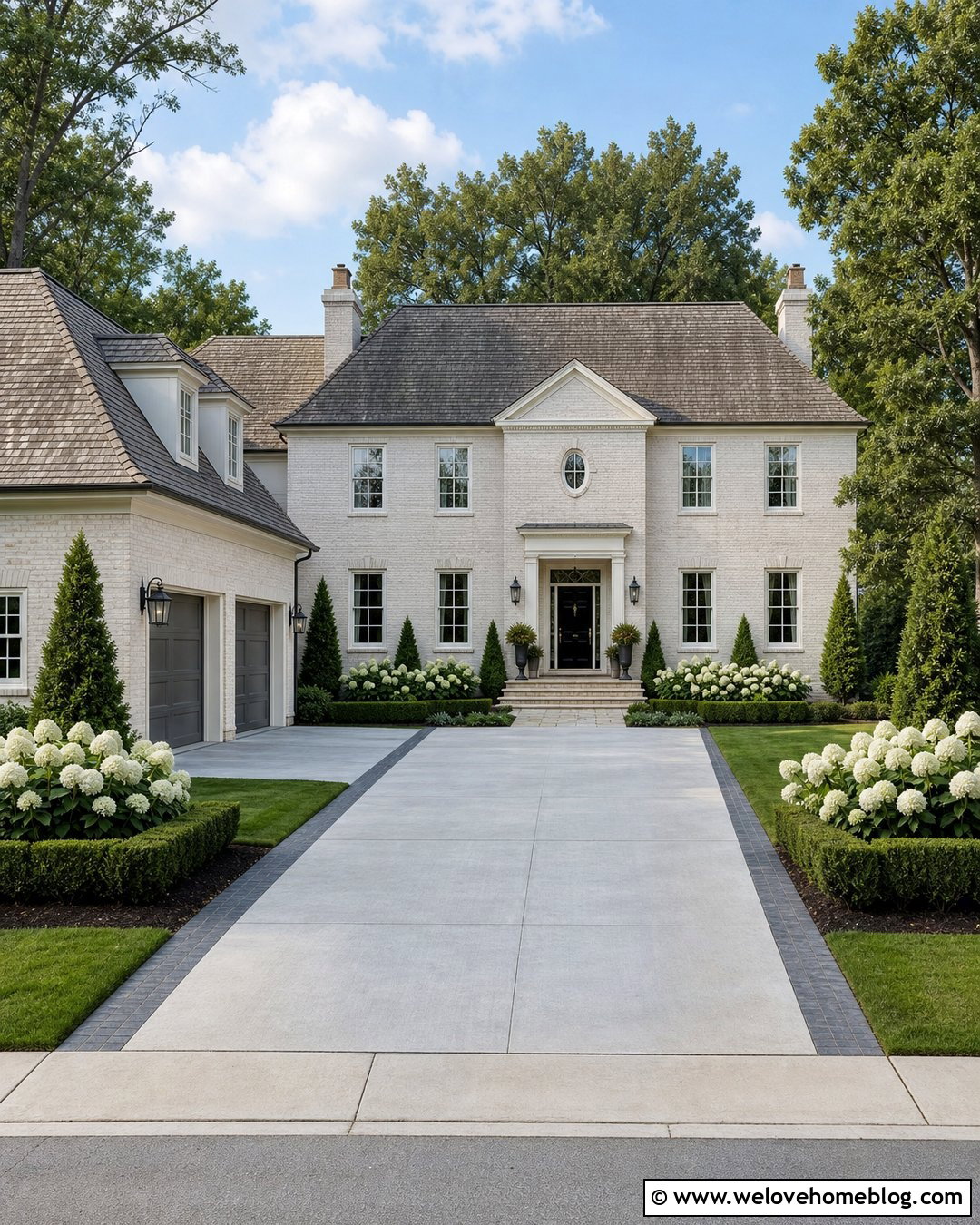
Hydrangeas and boxwoods create a useful balance between seasonal flowers and dependable green structure. Pair them with a light concrete driveway featuring a narrow charcoal paver border. Plant compact boxwoods in a low continuous line closest to the driveway, then arrange larger white hydrangeas behind them. The boxwood edge keeps spreading branches away from vehicles and visually organizes the softer hydrangea forms. This layered layout works particularly well with symmetrical Colonial, Georgian, and French-inspired facades. Use matching beds on both sides near the house, but reduce their depth closer to the street to preserve visibility. A simple stone walkway can cross one bed and connect the driveway to the front steps. Maintain enough spacing between plant layers for airflow, pruning access, and the hydrangeas’ mature growth.
13. Hydrangea Driveway With Ornamental Grasses
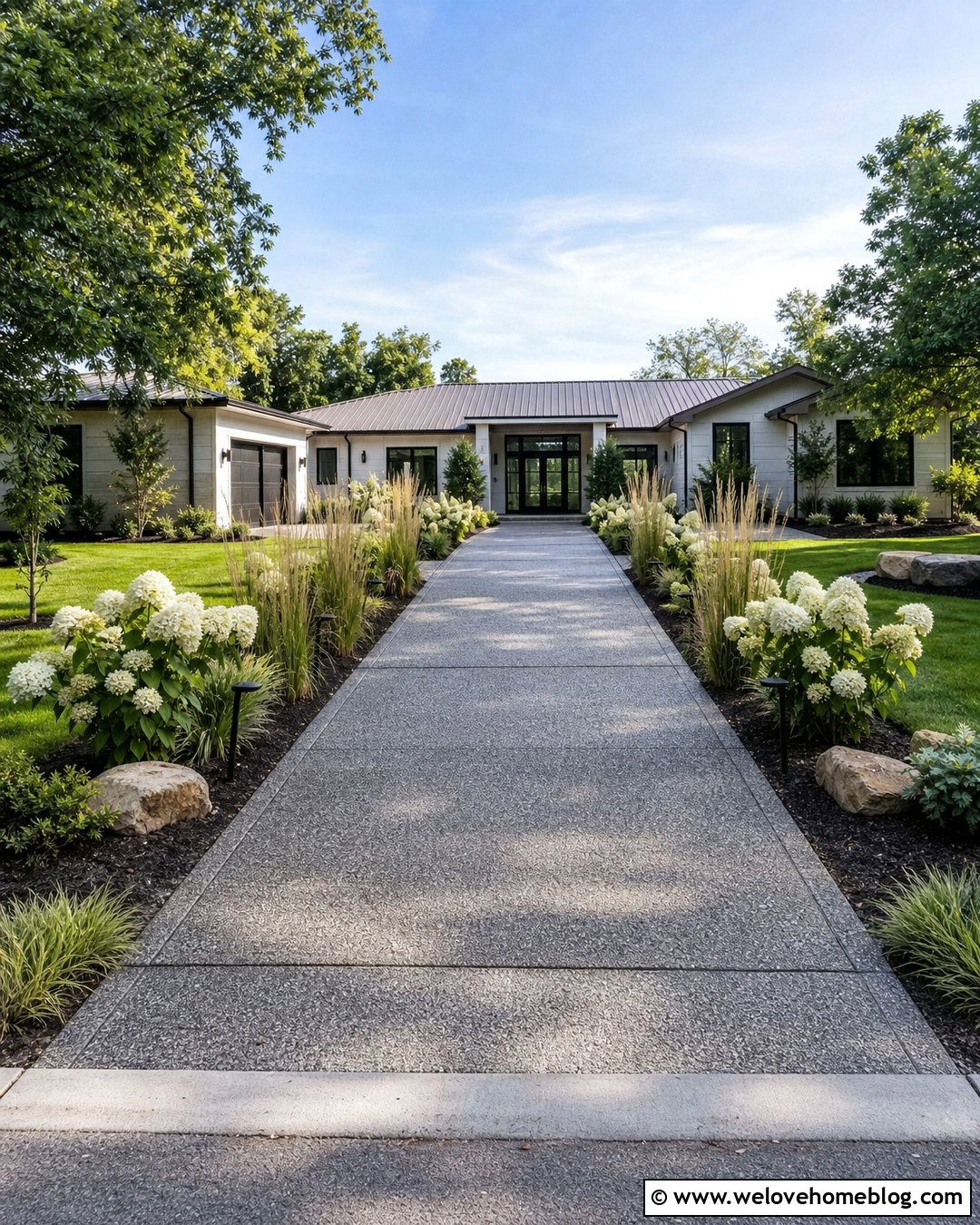
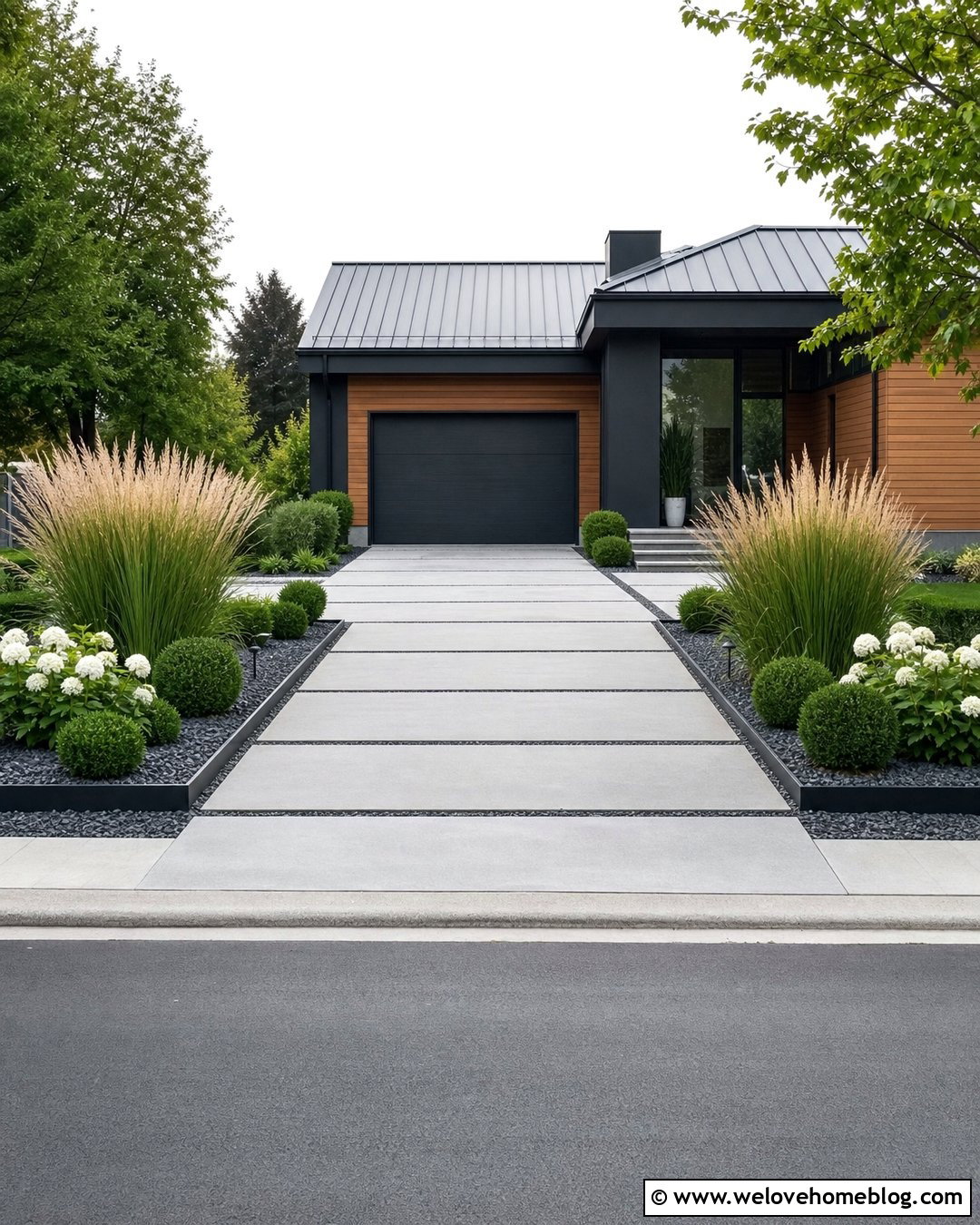
Ornamental grasses can make a hydrangea-lined driveway feel lighter and more contemporary. Start with an exposed-aggregate concrete surface in a medium gray tone and add flush steel edging for a clean boundary. Arrange white panicle hydrangeas in repeating clusters, then place upright grasses between the groups to introduce movement and fine texture. Lower grasses can fill the front edge without hiding the shrubs or spilling into the driving area. This combination works especially well beside modern ranch homes, transitional architecture, and simplified farmhouses. Keep the color palette limited to green, white, tan, and gray for a cohesive appearance. The planting beds can widen near the house and taper toward the street. Carefully placed boulders or low lights add interest, but the repeated hydrangea-and-grass rhythm should remain the dominant feature.
14. Hydrangea Driveway With Lavender Border
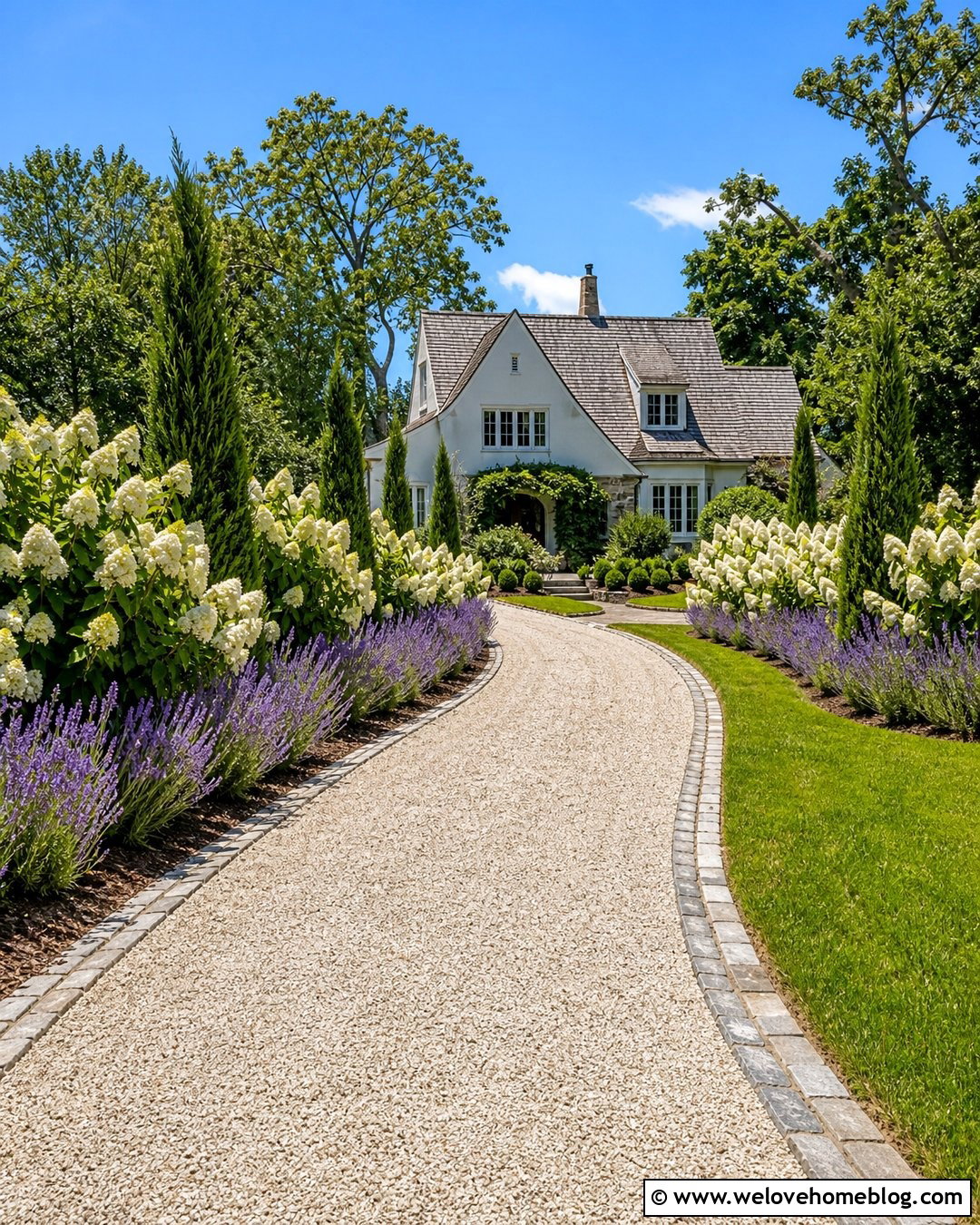
A lavender and hydrangea border gives a sunny driveway a layered cottage appearance, provided both plants are placed where their different growing preferences can be managed. Use pale limestone gravel with cobblestone edging to establish a soft neutral foundation. Position white panicle hydrangeas toward the back of a wide bed, where irrigation can reach their root zones. Place lavender along the drier, well-drained front edge, separated enough that it is not constantly watered with the hydrangeas. The low purple flowers create a colorful transition between gravel and taller shrubs. Add a few upright evergreens to maintain winter structure. This complete design suits cottages, country houses, and Mediterranean-influenced homes. A curved layout will make the planting appear informal, while repeated spacing prevents it from becoming visually messy.
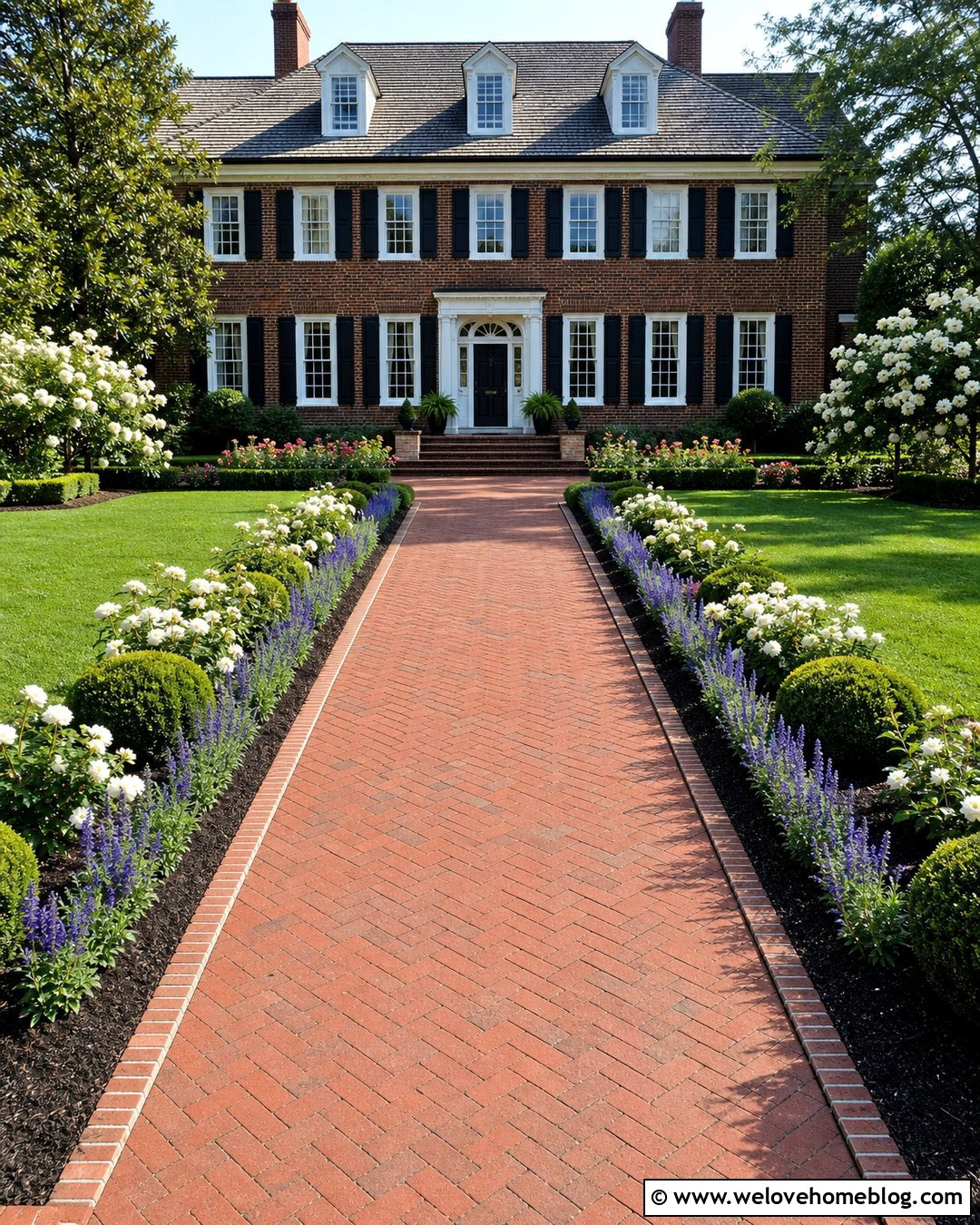
15. Hydrangea Driveway With Hostas And Ferns
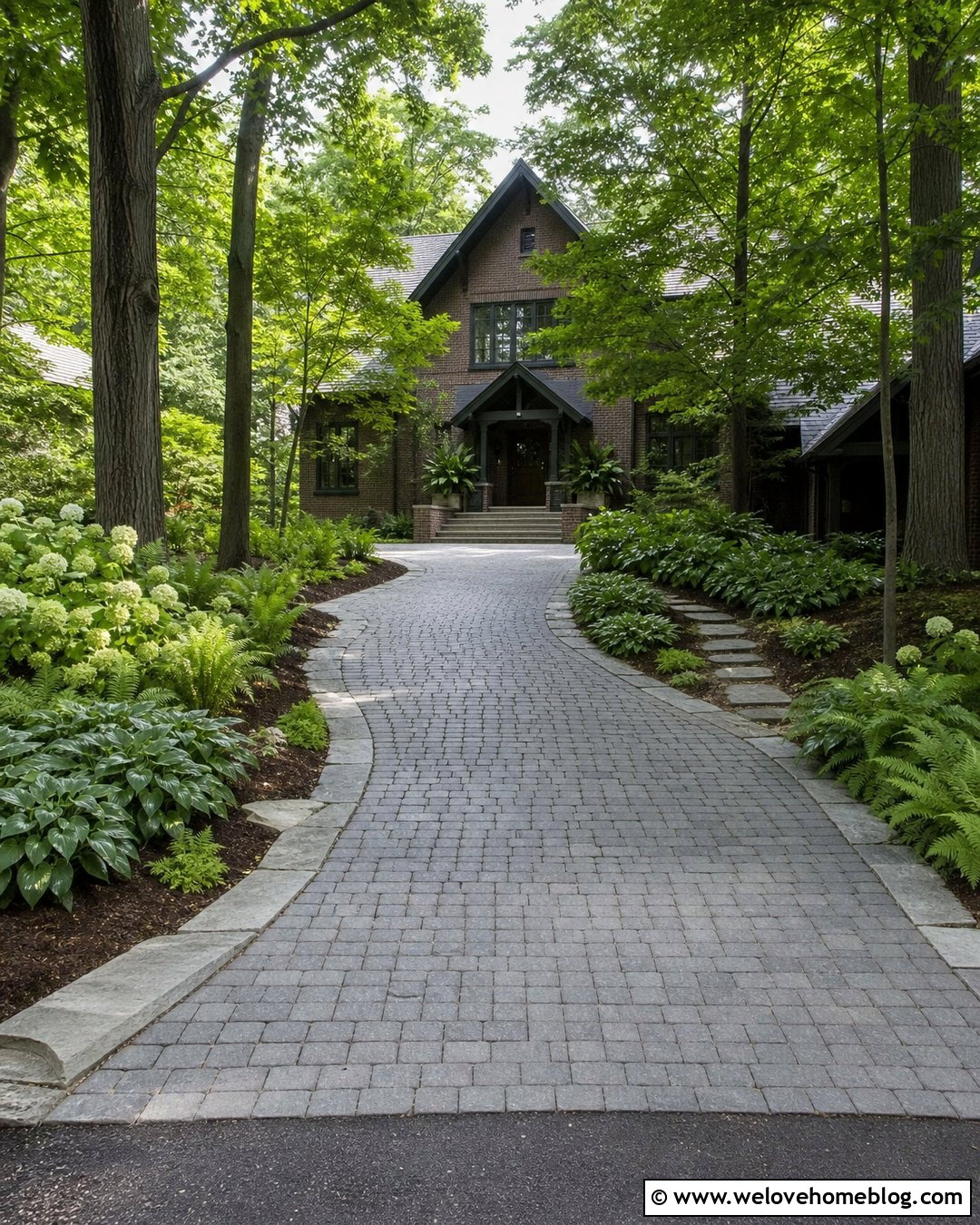
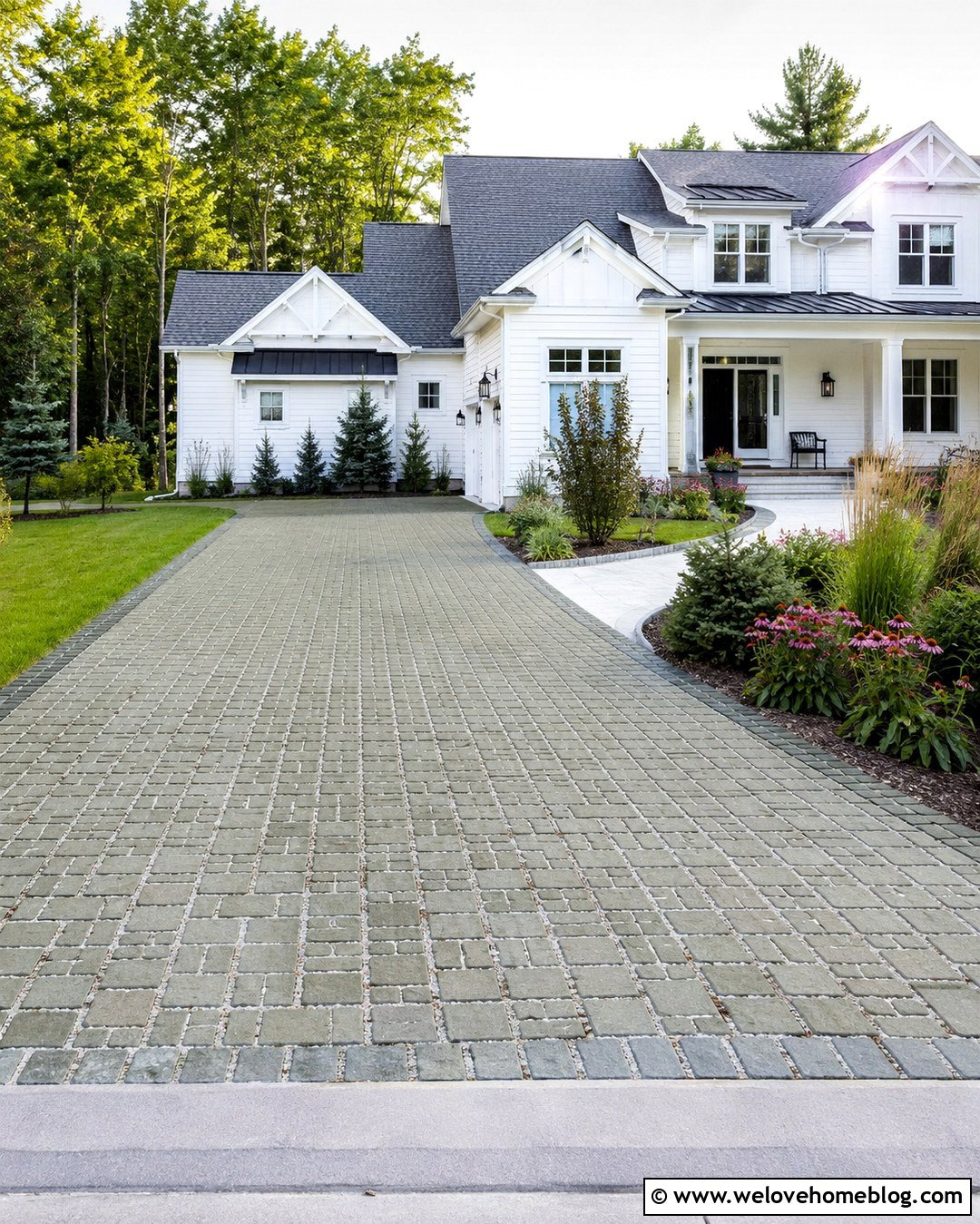
A shaded side driveway can become a rich woodland border with hydrangeas, hostas, and ferns. Choose medium-gray permeable pavers to manage the hardscape cleanly while complementing the layered green planting. Place hydrangeas at the back of a generous bed, followed by groups of broad-leaved hostas and arching ferns. Finish the driveway edge with flat bluestone or granite blocks that keep soil and mulch away from tires. Repeating plant groups creates a deliberate pattern even when the foliage has a natural appearance. This combination works beside brick ranch homes, Craftsman houses, and wooded suburban properties. Avoid packing plants directly against the pavement, where reflected heat and foot traffic can damage leaves. A stepping-stone path through the bed can provide maintenance access without disturbing roots or compacting the soil.
16. Hydrangea Driveway Entrance Garden
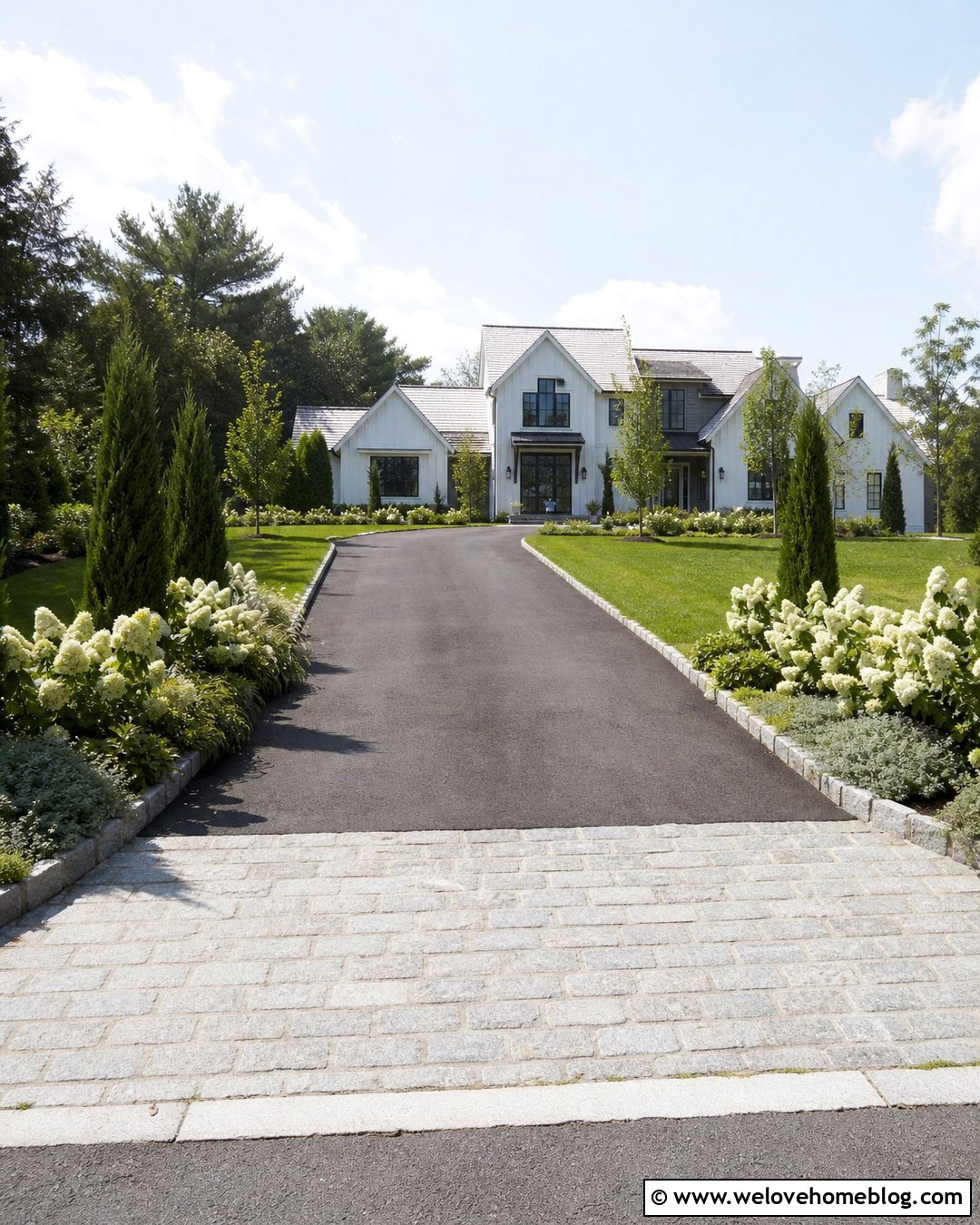
A broad entrance garden can make hydrangeas visible from the street without lining the entire driveway. Use a dark gray asphalt surface with a contrasting cobblestone apron, then build two matching planting beds on either side of the opening. Anchor each bed with a group of compact white hydrangeas, a narrow evergreen, and low spreading perennials. Curved stone edging can direct attention inward while protecting the soil from vehicle tires. Keep plants closest to the road short and position taller hydrangeas farther back so signs, pedestrians, and approaching traffic remain visible. Continue the cobblestone as a subtle border along the driveway for a unified finish. This focused design offers strong curb appeal with fewer shrubs, making it useful for homeowners who want hydrangea color without maintaining long, continuous planting beds.
17. Hydrangea Driveway Retaining Wall
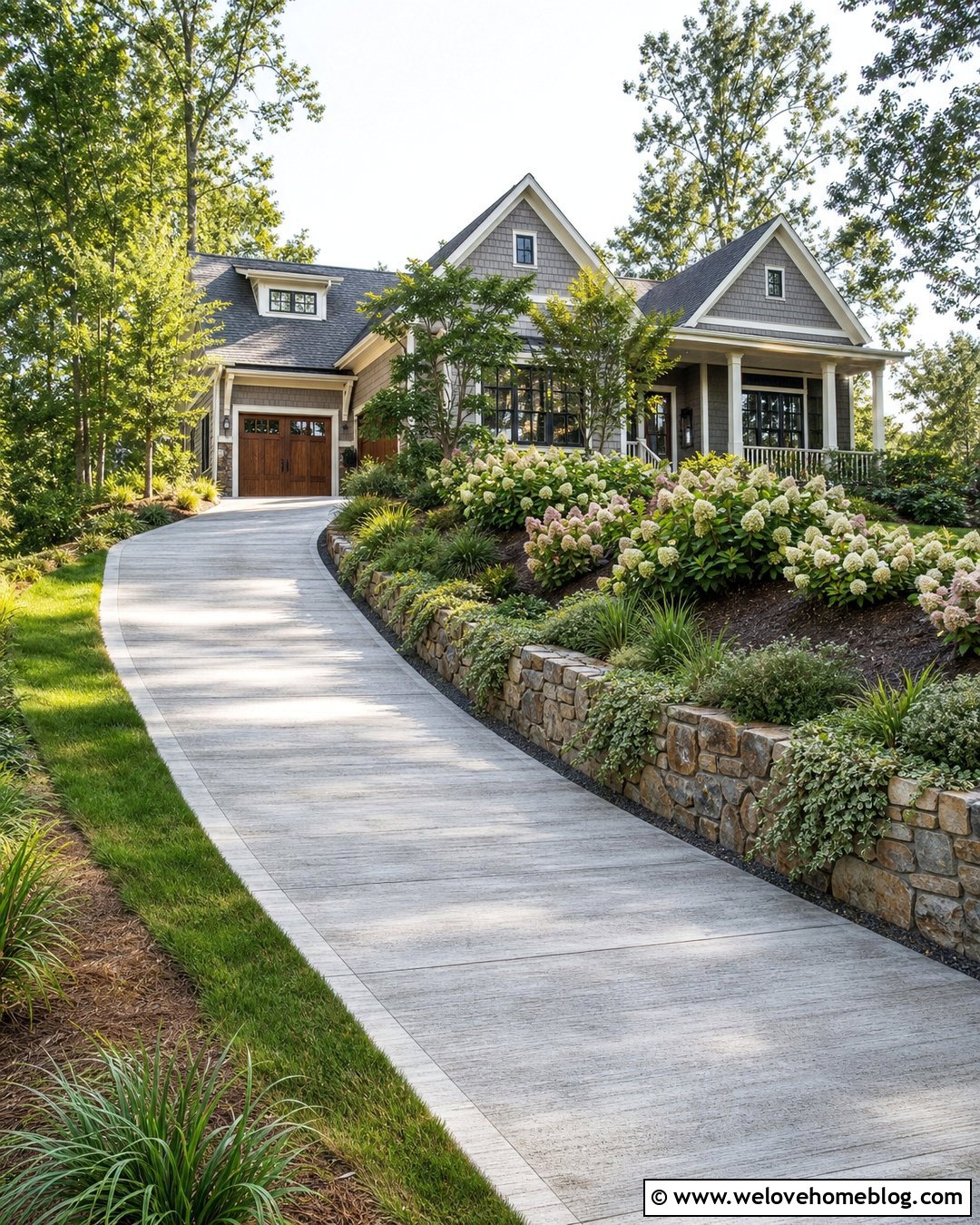
Hydrangeas can soften a sloped driveway when they are integrated above a low retaining wall. A brushed concrete driveway with a gentle incline provides a practical base, while a stacked natural-stone wall holds the raised planting bed securely. Plant white or blush panicle hydrangeas behind the wall, leaving enough distance for mature branches to stay clear of vehicles. Add trailing ground cover and compact grasses along the wall’s top to reduce the visual gap between masonry and shrubs. On the lower side of the driveway, use lawn or a simpler low border so the space does not feel enclosed. Include drainage behind the wall and direct runoff away from hydrangea roots. This structured yet soft arrangement suits hillside ranches, Craftsman homes, and properties where driveway grading creates difficult planting areas.
18. Hydrangea Driveway With Landscape Lighting
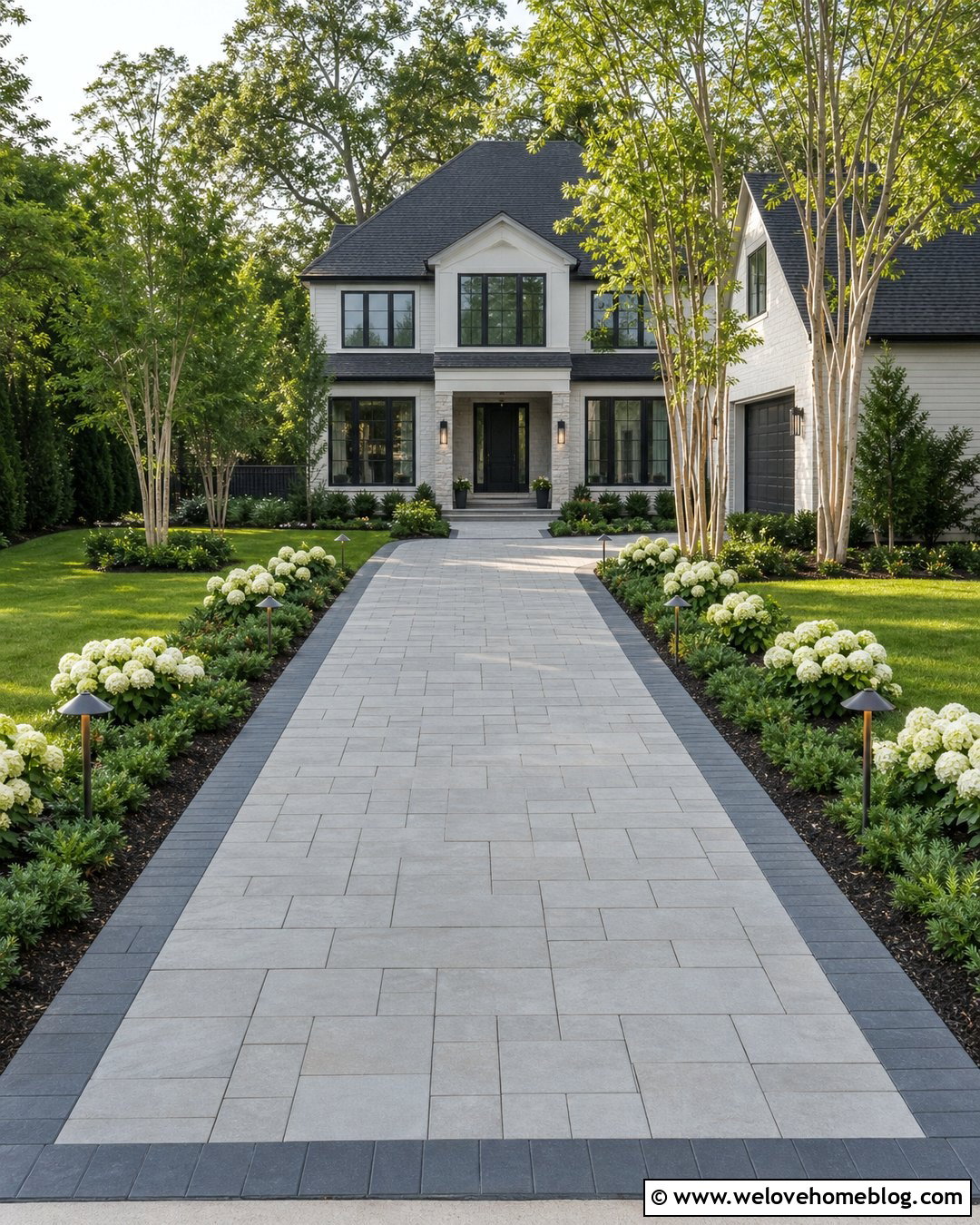
Well-positioned landscape lighting can highlight hydrangeas while also clarifying the driveway edge. Use warm gray concrete pavers in a straight layout and create wide planting beds with repeated groups of white hydrangeas and low evergreen ground cover. Install short, shielded path lights between the pavement and shrubs, spacing them evenly enough to mark the route without creating visual clutter. Small uplights can sit deeper in the beds to illuminate selected flowering groups and nearby multi-stem trees. Keep fixtures away from branches that will eventually expand and cover them. A dark brick or charcoal paver border provides daytime contrast around the driveway. This complete look works with contemporary, transitional, and modern farmhouse homes. During daylight, the planting remains the focal point; after dark, the lighting supports navigation and depth.
19. Hydrangea Driveway With Address Sign
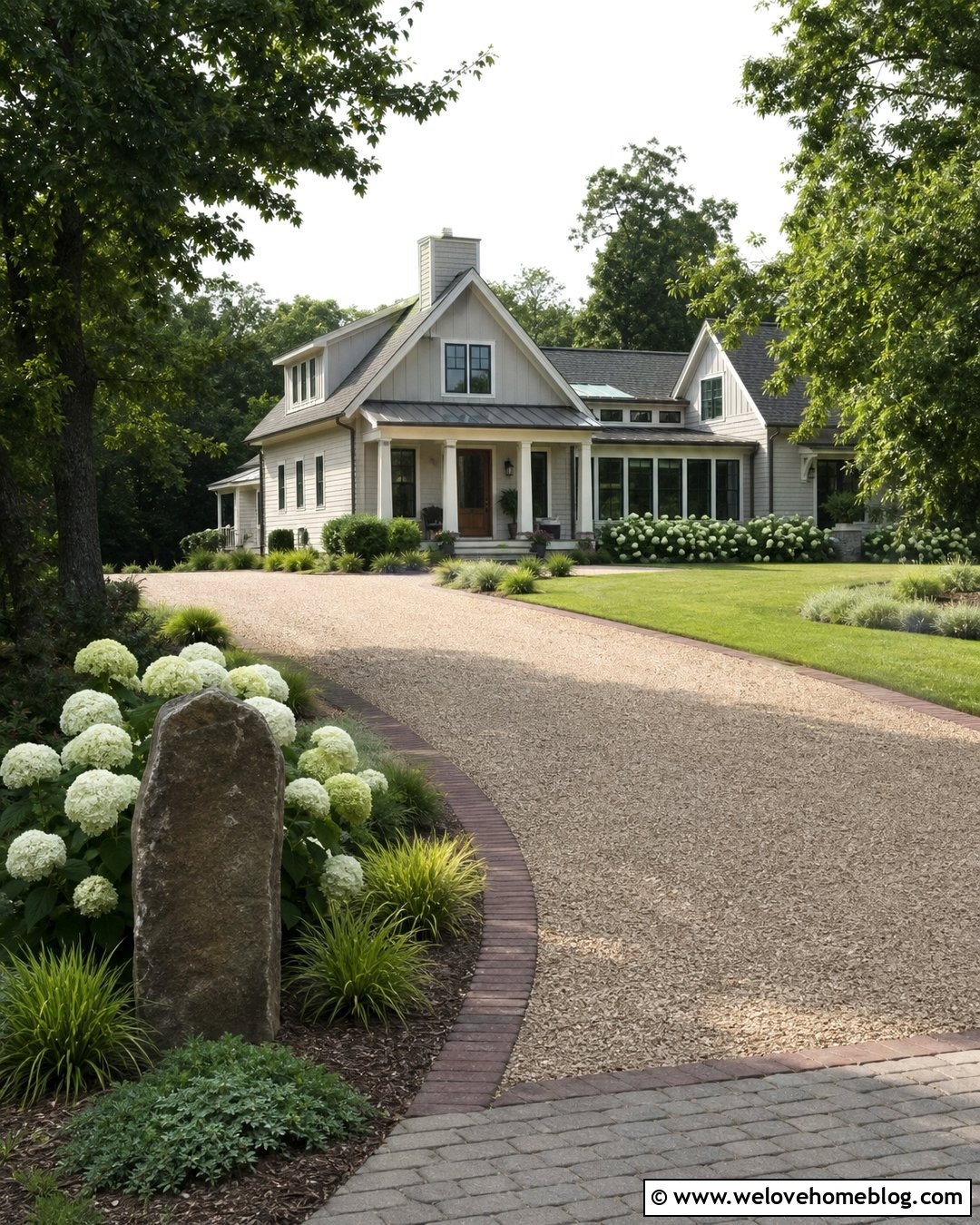
An address sign surrounded by hydrangeas can turn a practical feature into a coordinated entrance garden. Begin with a light tan crushed-stone driveway edged in dark brick. Install a simple wood, stone, or metal address marker several feet back from the road, ensuring the numbers remain easy to read. Place compact hydrangeas behind or beside the sign rather than directly in front of it. Low ornamental grasses and spreading ground cover can fill the foreground without blocking visibility. Repeat the same hydrangea variety farther up the driveway so the sign garden relates to the house landscape. A small paved apron around the entrance will reduce gravel movement and make the transition look finished. This design suits farmhouse, Craftsman, and country properties while offering color, identity, and a clear sense of arrival.
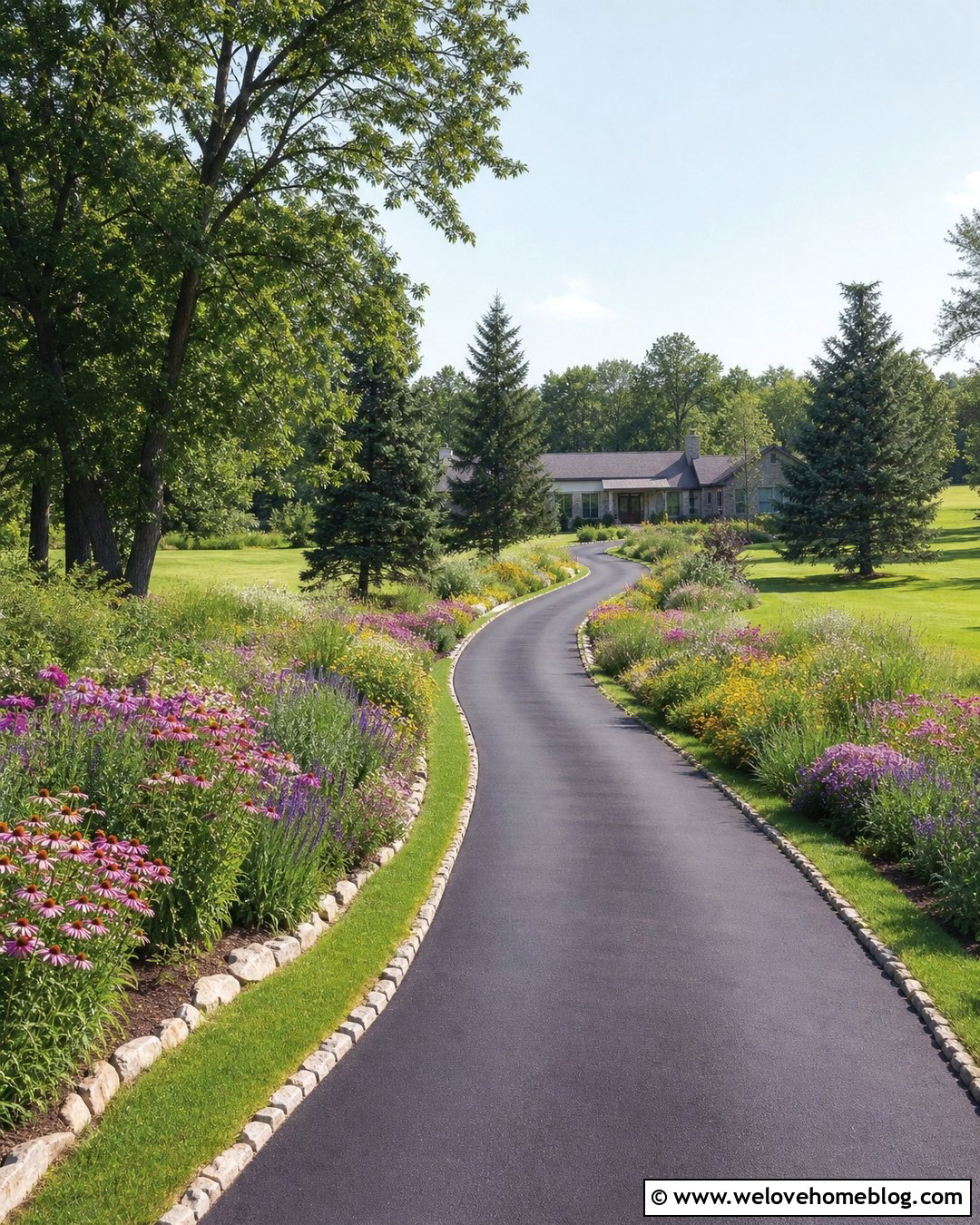
20. Mixed Hydrangea Long Driveway
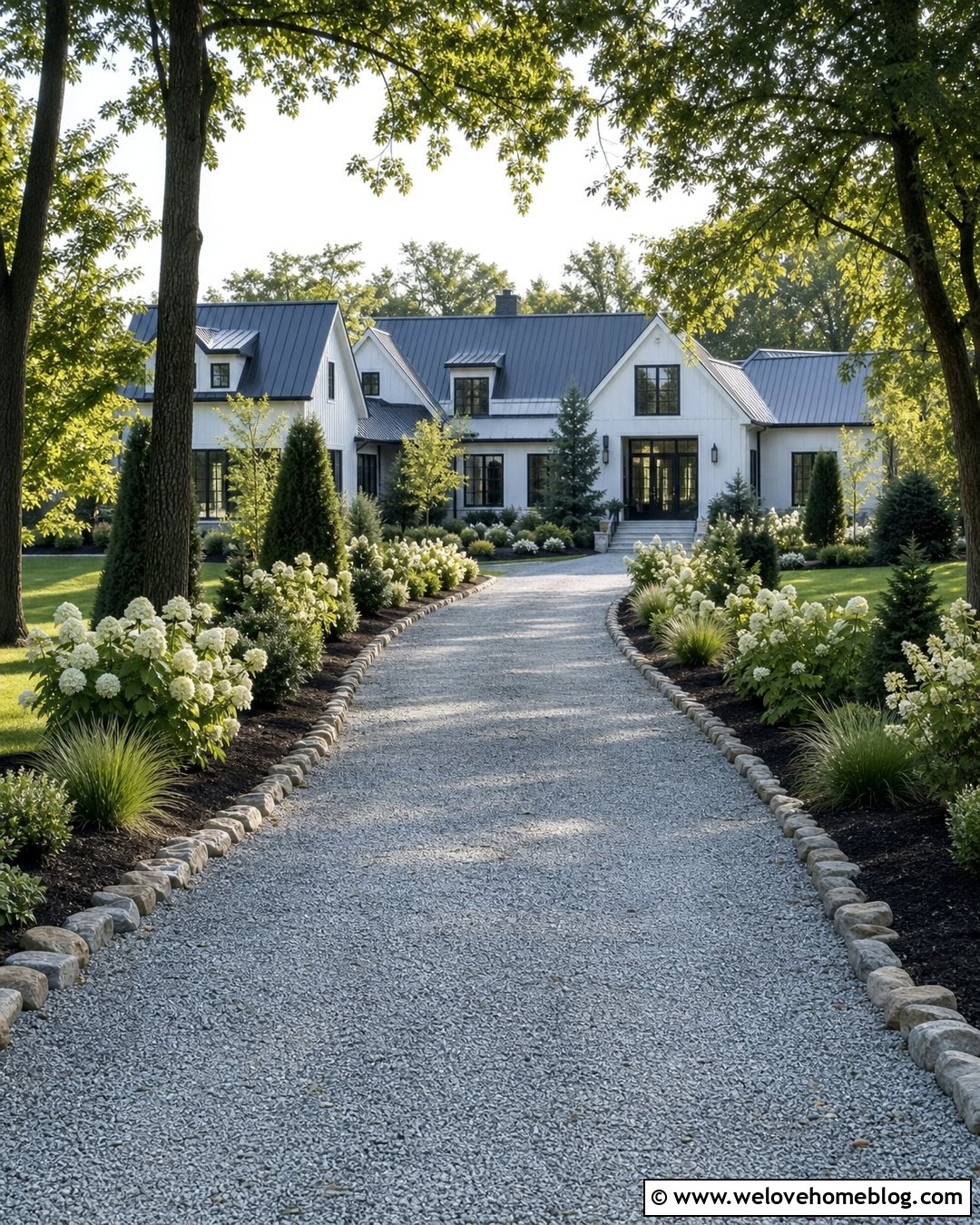
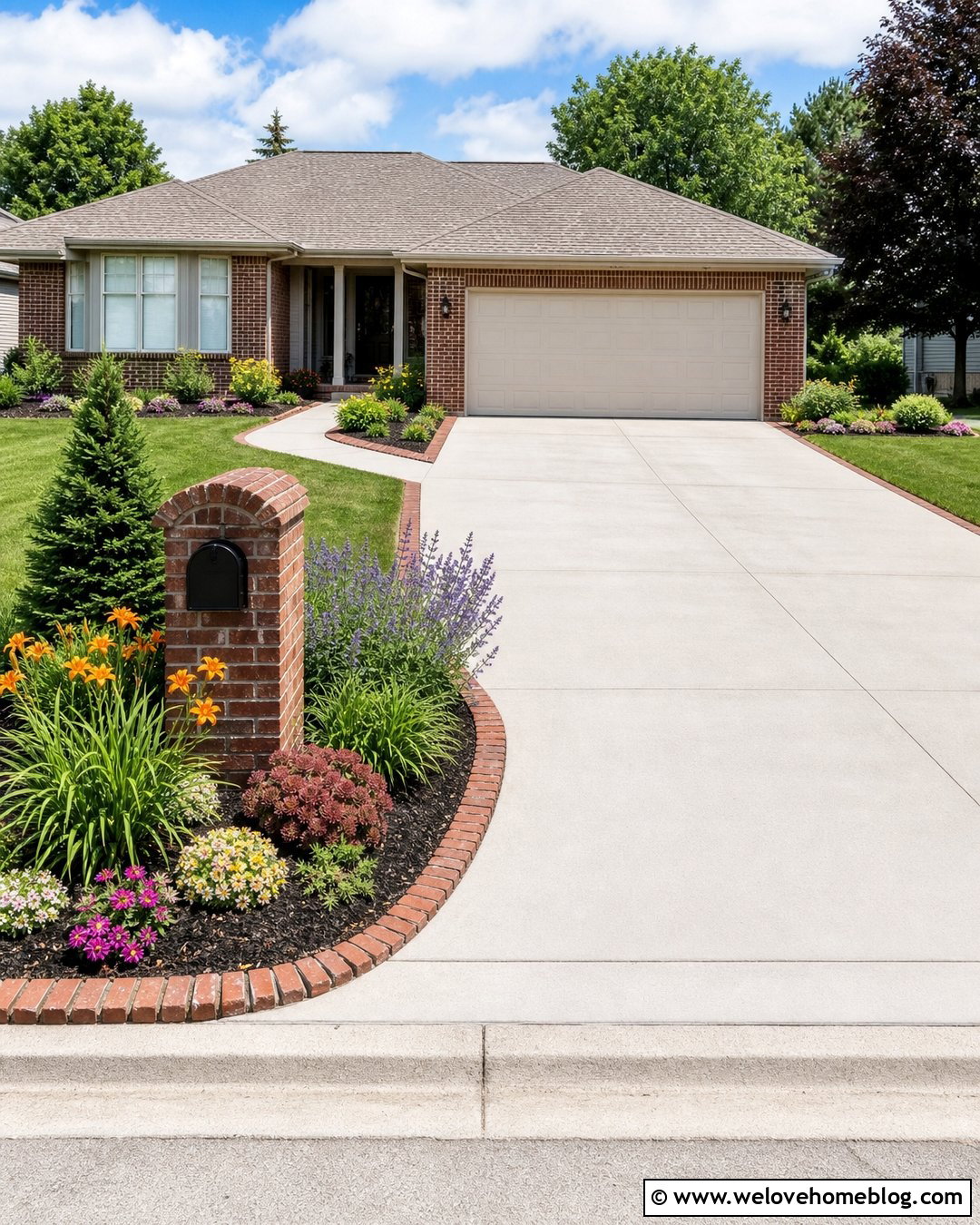
A long driveway offers enough space to create a gradual hydrangea landscape rather than one continuous flower wall. Use stabilized gray gravel with fieldstone edging and arrange hydrangeas in large repeating groups along alternating sides. White panicle varieties can occupy sunnier stretches, while oakleaf or other site-appropriate hydrangeas can fill partially shaded areas beneath trees. Separate the groups with ornamental grasses, evergreen shrubs, and open lawn to provide rhythm and seasonal structure. Near the street, keep the planting low and simple. Increase the bed depth and plant height as the driveway approaches the house. This progression makes the journey feel intentional and prevents maintenance from becoming excessive. The design complements country estates, wooded homes, and large modern farmhouses where the driveway is a major part of the property’s first impression.
Conclusion:
The most successful hydrangea driveway landscapes combine beautiful flowers with practical spacing, suitable growing conditions, and clearly defined hardscape edges. Before planting, consider sunlight, drainage, mature shrub size, winter appearance, road salt, reflected heat, and vehicle visibility. Then select a driveway surface and border that complement both the flowers and the house. Hydrangeas can form a formal hedge, soften a woodland curve, frame an address sign, or bring seasonal color to a compact suburban entrance. Layering them with evergreens, grasses, hostas, or ground covers creates a more complete landscape throughout the year. Use these **20 Hydrangeas Driveway Ideas** to plan an entrance that feels colorful, cohesive, welcoming, and practical.

Related posts:
Leave a Reply