
A long driveway offers more than a route to the garage. It can become an inviting garden journey that builds curb appeal from the street to the front door. The best design connects the driveway material, shape, borders, plants, and house into one balanced landscape. Repeated trees can create rhythm, while layered shrubs and flowers soften hard pavement. Gravel shoulders, rain gardens, lighting, and strong edging can also solve practical concerns such as runoff, visibility, and maintenance. Whether your property feels suburban, rural, modern, or cottage-inspired, choose plants suited to its sunlight, soil, climate, and available width. The complete looks below explore attractive, practical, and adaptable **long driveway garden ideas**.

1. Long Gravel Driveway With Tree-Lined Borders
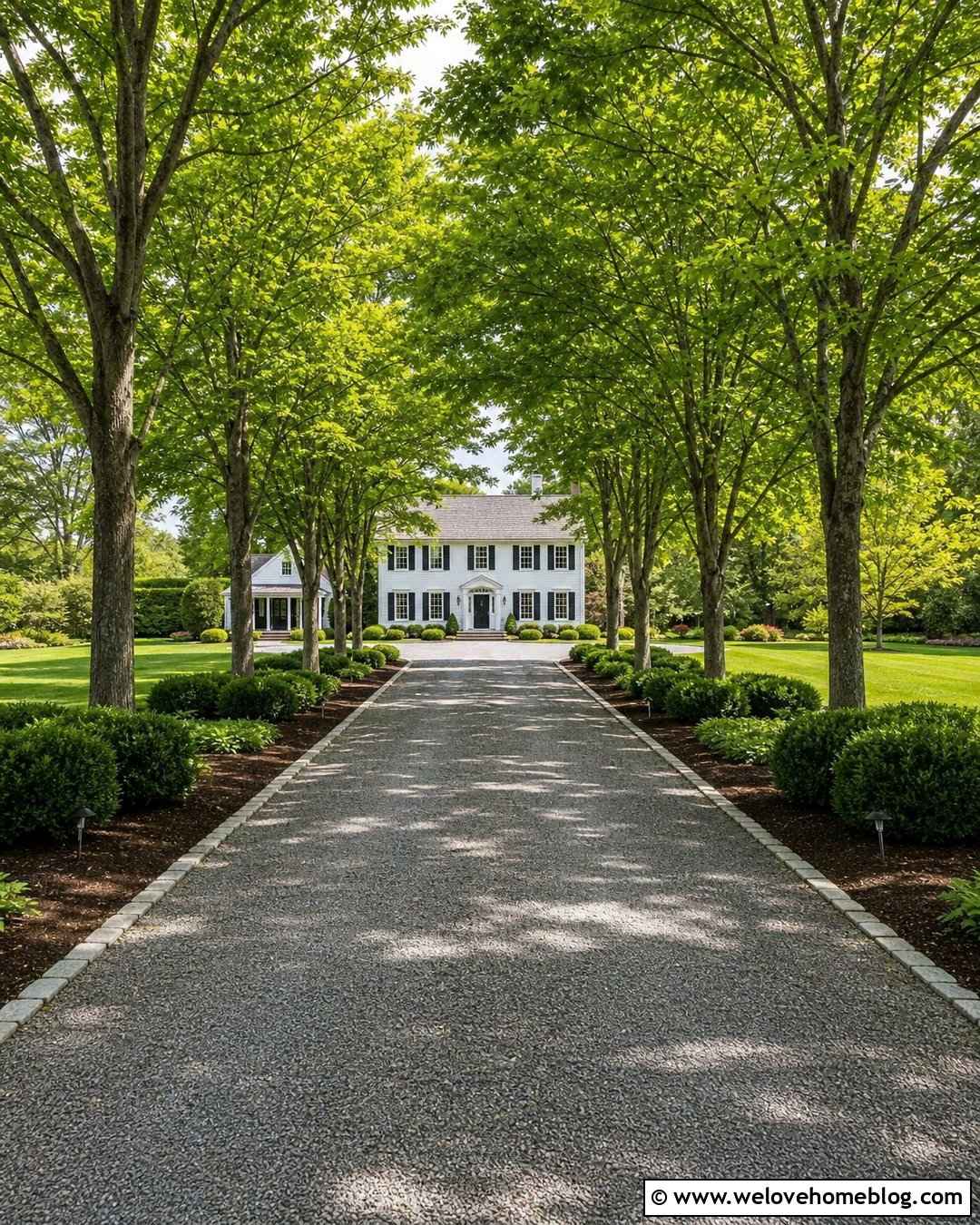
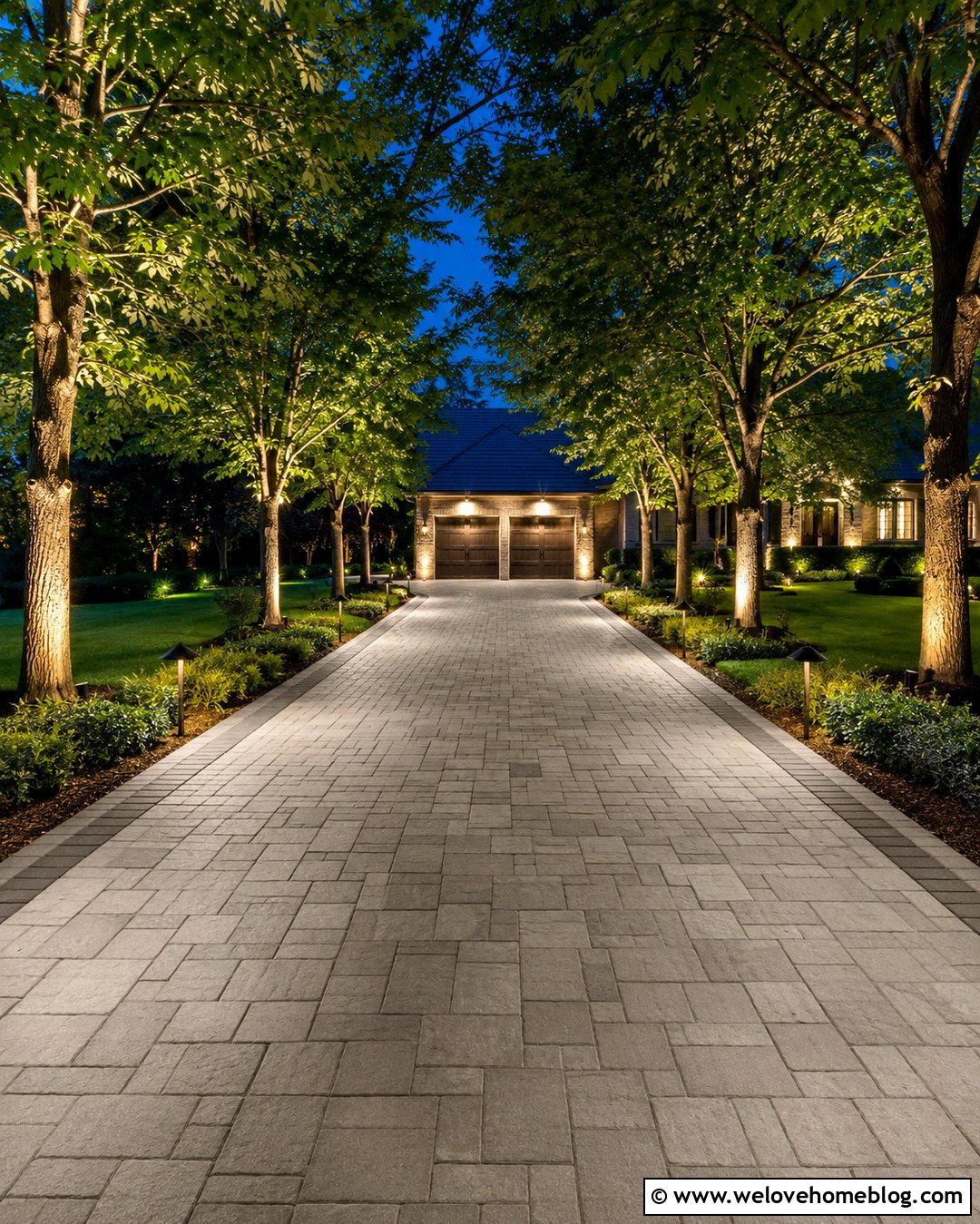
A straight gravel driveway framed by evenly spaced trees creates a calm, established approach. Use compacted gray crushed stone for a firm surface, then contain it with cobblestone or steel edging. Plant matching deciduous trees along both sides, keeping enough distance between trunks and pavement for mature root growth. Beneath them, create broad mulched beds filled with low evergreen shrubs and shade-tolerant groundcover. Repeating the same limited plant palette makes the long space feel organized instead of busy. At the entrance, slightly widen the beds and add stone pillars or larger flowering shrubs. Before planting, check overhead utilities, sightlines, and mature canopy width. Tree roots generally spread near the soil surface, so adequate planting space helps protect both trees and pavement. ()
2. Long Curved Driveway With Native Meadow Planting
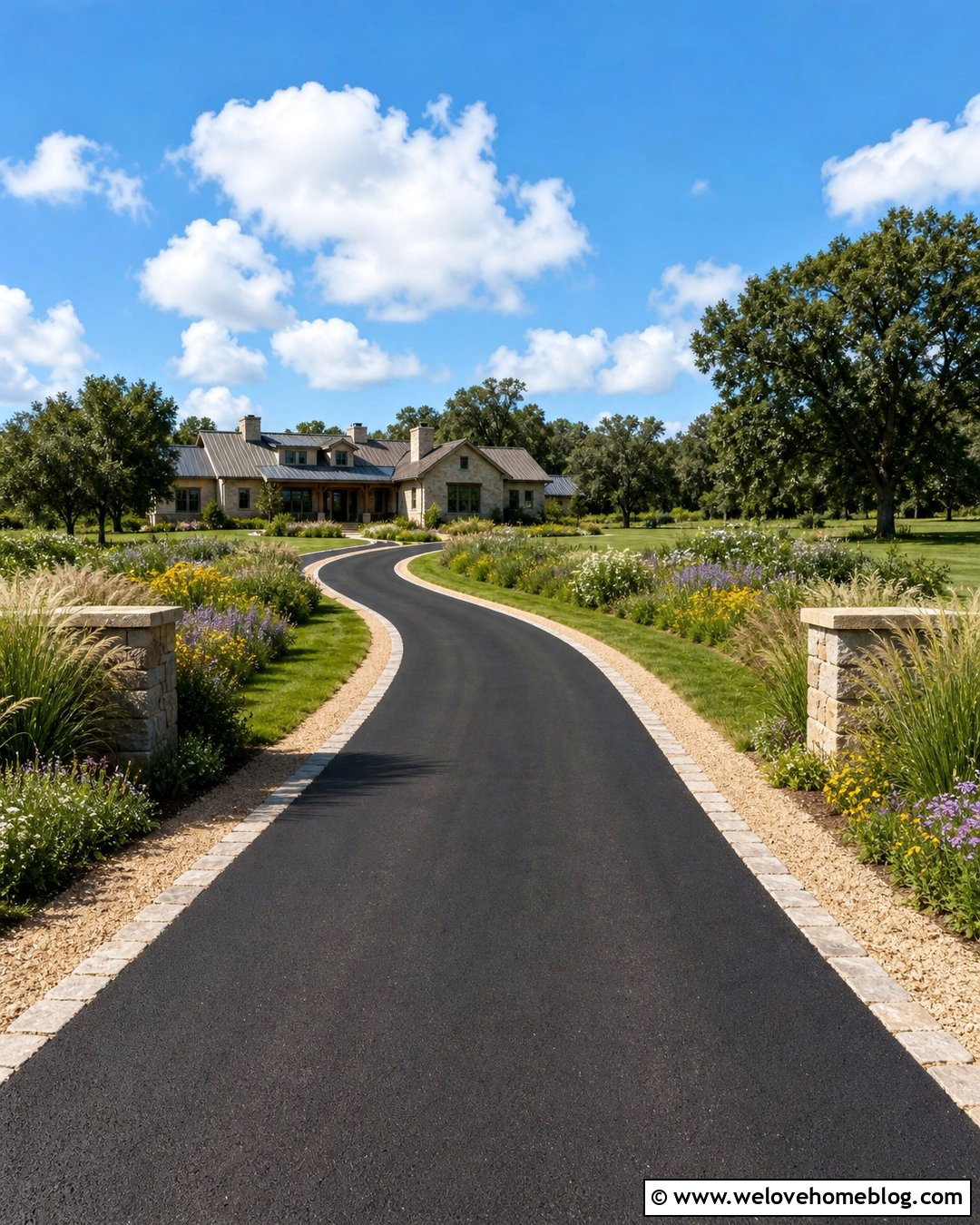
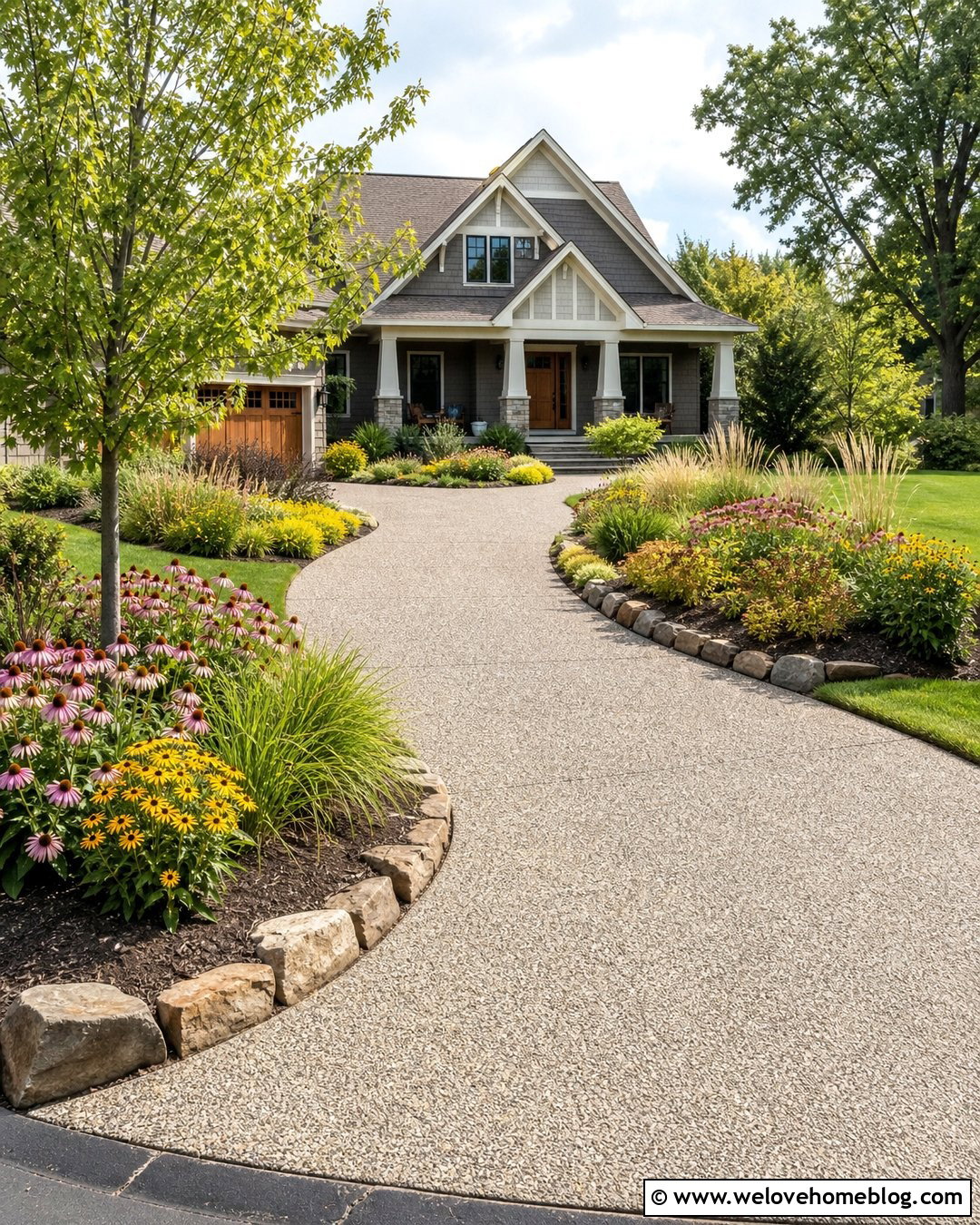
Imagine a gently curving black asphalt driveway moving through loose waves of grasses and seasonal flowers. This naturalistic layout suits a large country yard because the planting makes the driveway feel integrated into the land. Define the pavement with a narrow band of tan gravel or flush-cut stone, allowing rainwater to move toward planted areas without washing soil onto the surface. Choose regional native grasses as the foundation, then add wildflowers in broad groups rather than scattered individual plants. Keep vegetation low near the street entrance and inside curves so drivers have clear views. Farther along the route, taller grasses can create movement and privacy. Mow a clean outer edge around the meadow to show that the landscape is intentional and maintained.
3. Long Concrete Driveway With Evergreen Hedges
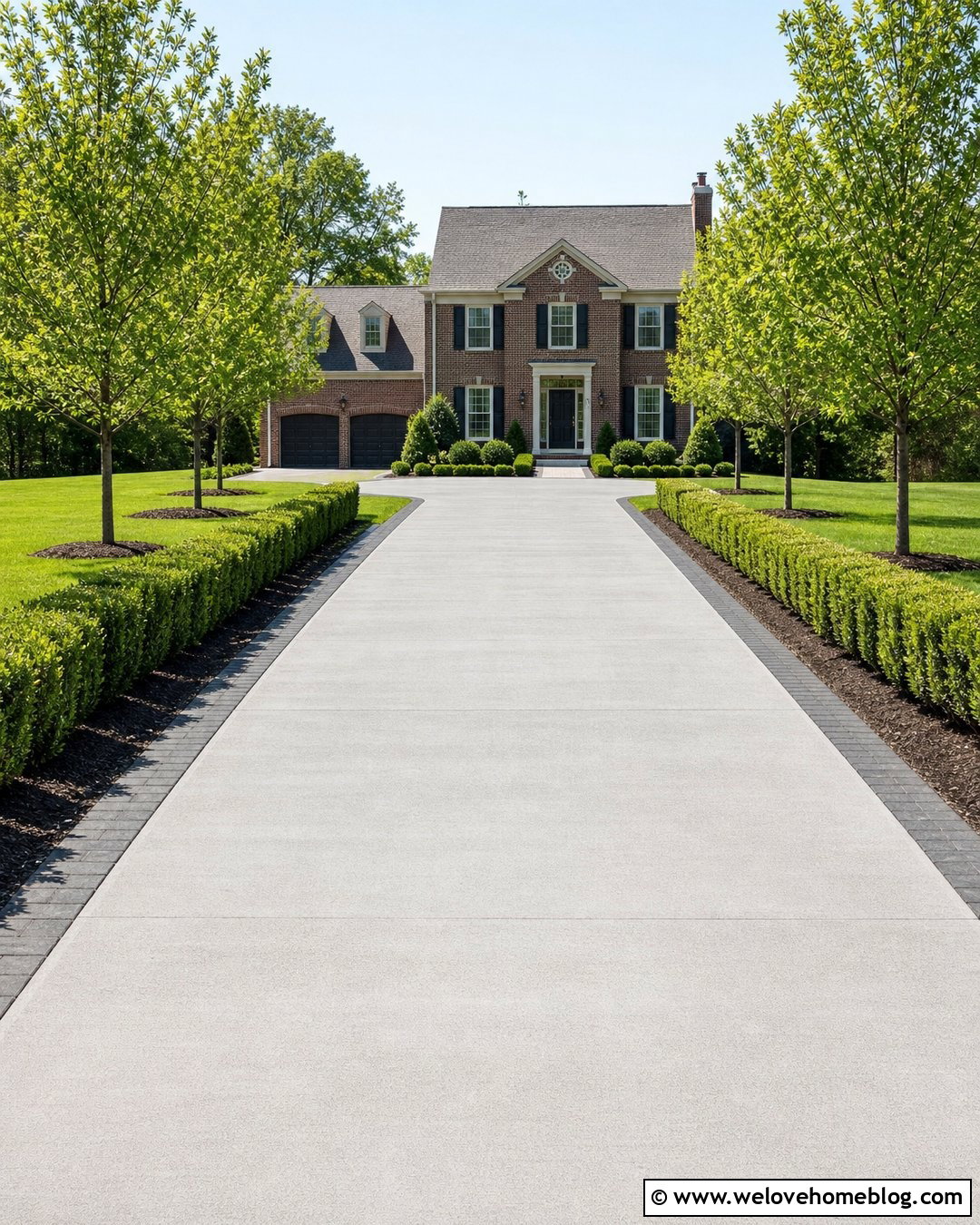
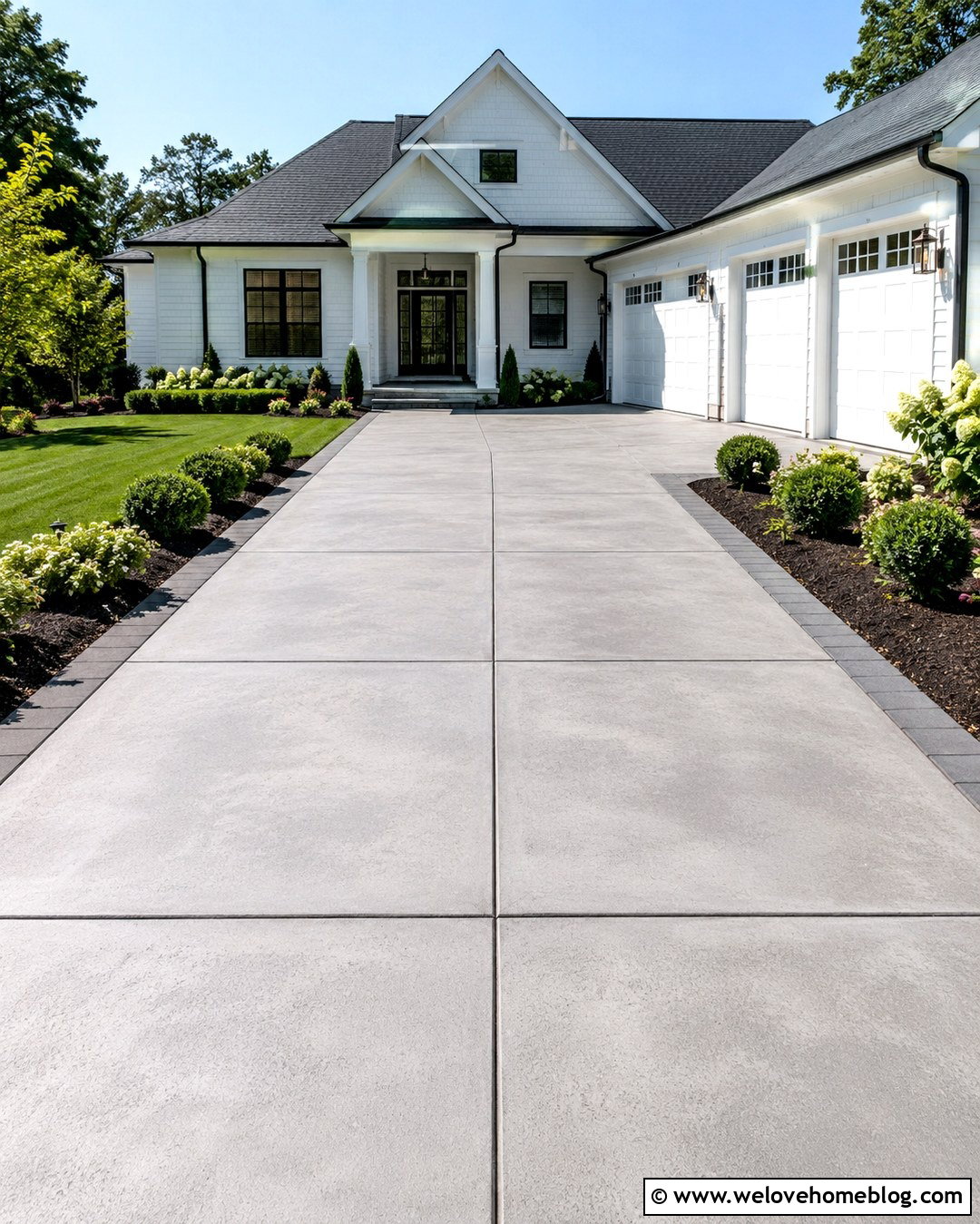
For a clean, formal entrance, pair a light-gray poured concrete driveway with clipped evergreen hedges and generous green lawn. The long straight layout naturally directs attention toward the house, while continuous hedging creates structure throughout every season. Install a dark brick or charcoal paver ribbon along both edges to give the pale concrete a crisp outline. Instead of making the hedge equally tall from road to garage, keep it lower near the entrance and gradually increase its height closer to the house. This protects visibility while adding privacy where it matters. Break the hedge at practical locations for a front walkway, utility access, and drainage. Repeating small ornamental trees behind the hedge adds height and rhythm without crowding the driving area or making the garden feel enclosed.
4. Long Brick Driveway With Cottage Garden Borders
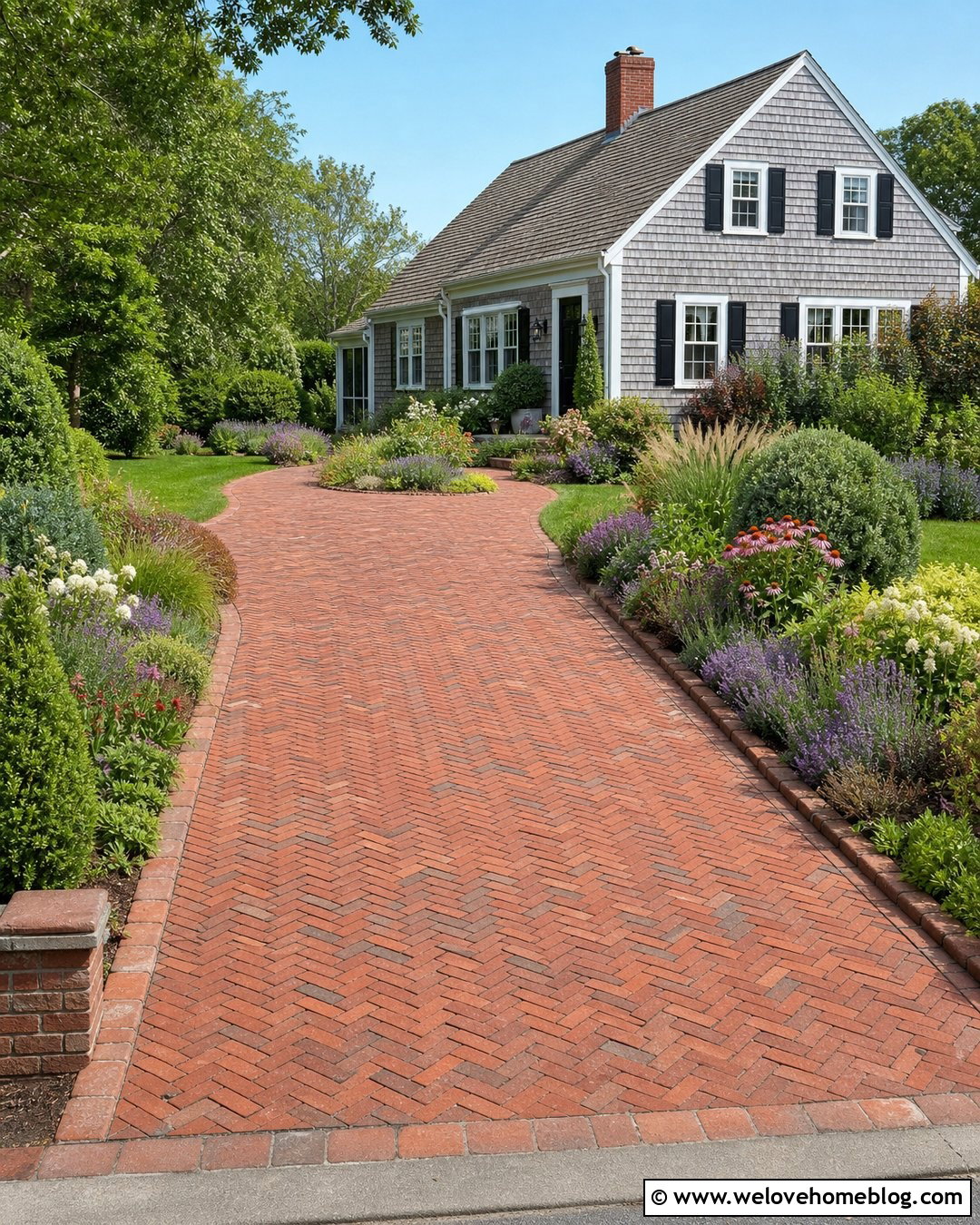
A red clay brick driveway can become the backbone of a colorful cottage garden. Lay the bricks in a herringbone pattern so the long surface gains texture and visual movement. Softly curved beds on both sides can hold roses, catmint, coneflowers, salvia, ornamental grasses, and compact flowering shrubs. Use reclaimed-looking brick edging to connect the planting beds with the driveway material. Keep taller flowers toward the back and low plants beside the pavement, preventing stems from leaning into vehicle space. Repeating several reliable plants throughout the length provides cohesion, even when different flowers bloom. Near the house, expand the beds and connect them to the front walkway. The result feels abundant and welcoming, yet the defined edges keep this relaxed garden from appearing disorderly.
5. Long Resin-Bound Driveway With Lavender Borders
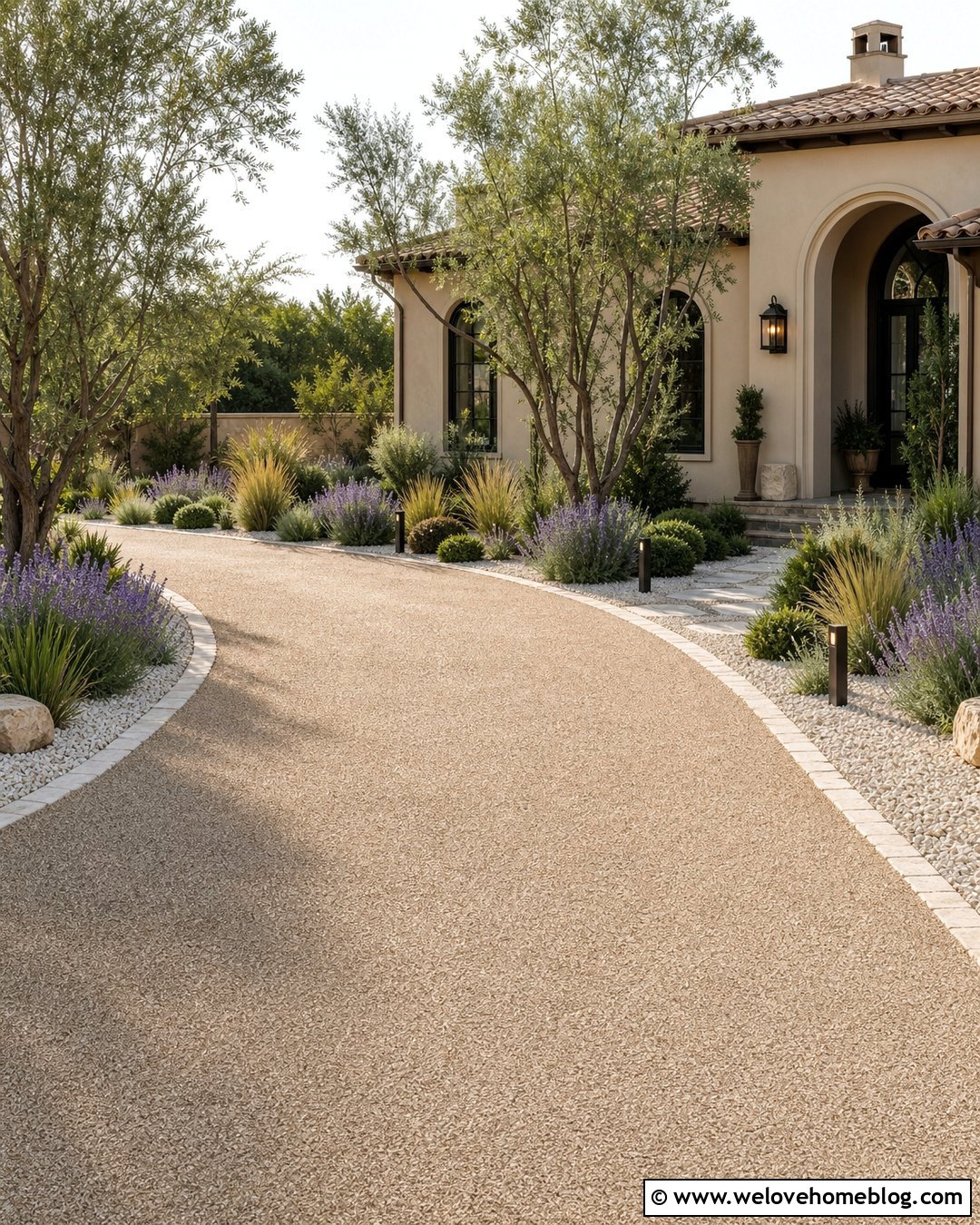
A warm beige resin-bound gravel driveway bordered by lavender creates a polished garden with Mediterranean character. Choose a straight or subtly curved layout, then add narrow limestone edging to separate the smooth surface from planting beds. Plant lavender in repeated groups rather than one uninterrupted row. Small gaps between the groups make maintenance easier and allow space for upright ornamental grasses or compact evergreen mounds. Behind the lavender, pale gravel mulch can reduce the visual weight of the beds and complement the driveway. This design works best in sunny, well-drained locations where the planting will not remain wet. Add a few multi-stem ornamental trees near the house for height. Low black bollard lights can provide practical illumination without overwhelming the simple planting pattern or refined driveway finish.
6. Long Crushed Granite Driveway With Desert Landscaping
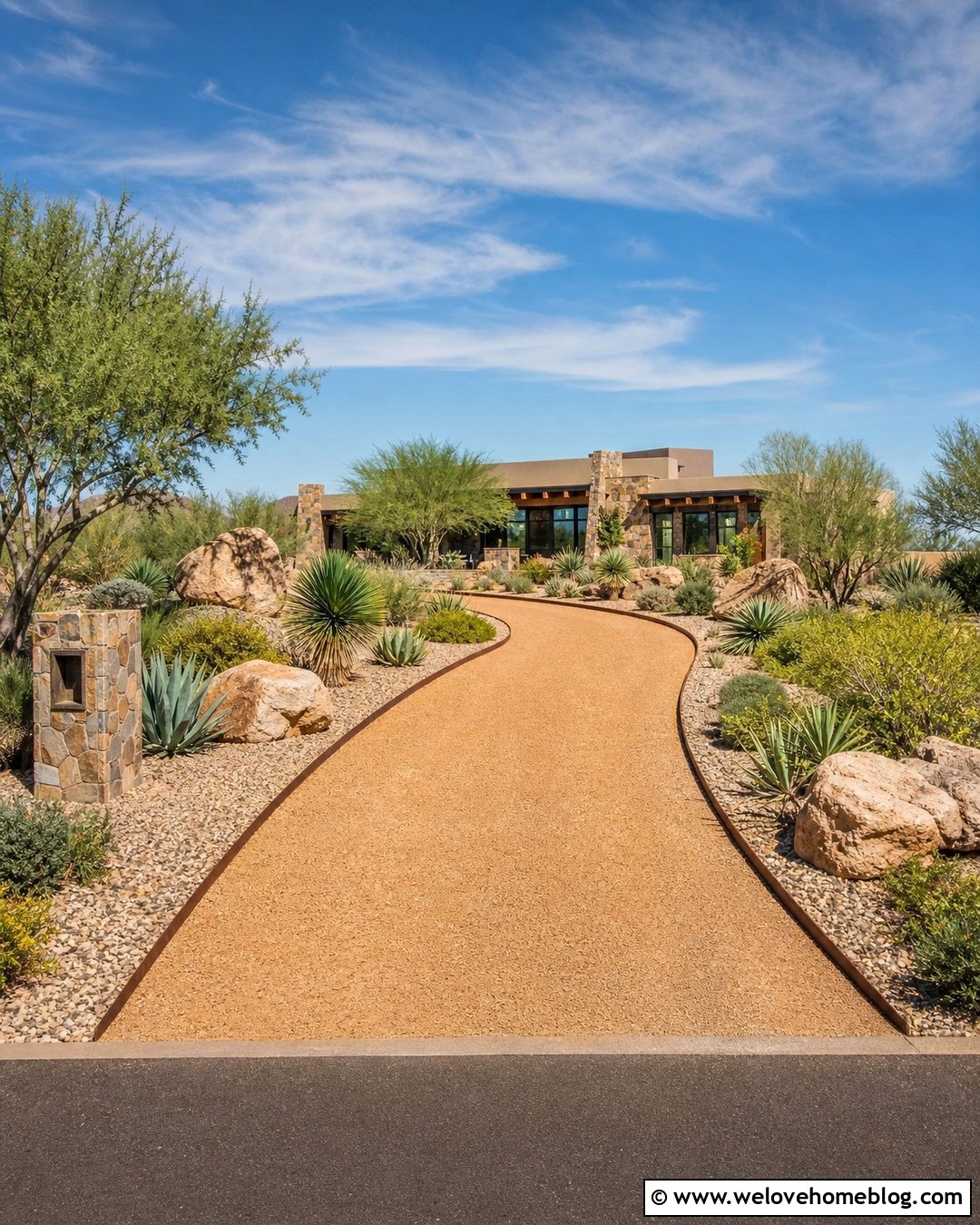
In a hot, dry yard, a compacted decomposed granite driveway can flow naturally through drought-conscious landscaping. Select a warm tan or rusty-red surface and hold it in place with weathered steel edging. Build wide beds using gravel mulch, boulders, sculptural agaves, yuccas, desert spoon, and climate-appropriate ornamental grasses. Position larger rocks in small groups instead of lining them evenly along the pavement. This creates a more believable desert landscape while still defining the route. A gently curved driveway will reveal the house gradually and provide changing views of the plants. Keep spiky or rigid specimens away from vehicle doors and pedestrian crossings. Near the entrance, use a boulder grouping and a simple address marker as the focal point, leaving enough open space for safe turning and visibility.
7. Long Cobblestone Driveway With Woodland Garden Beds
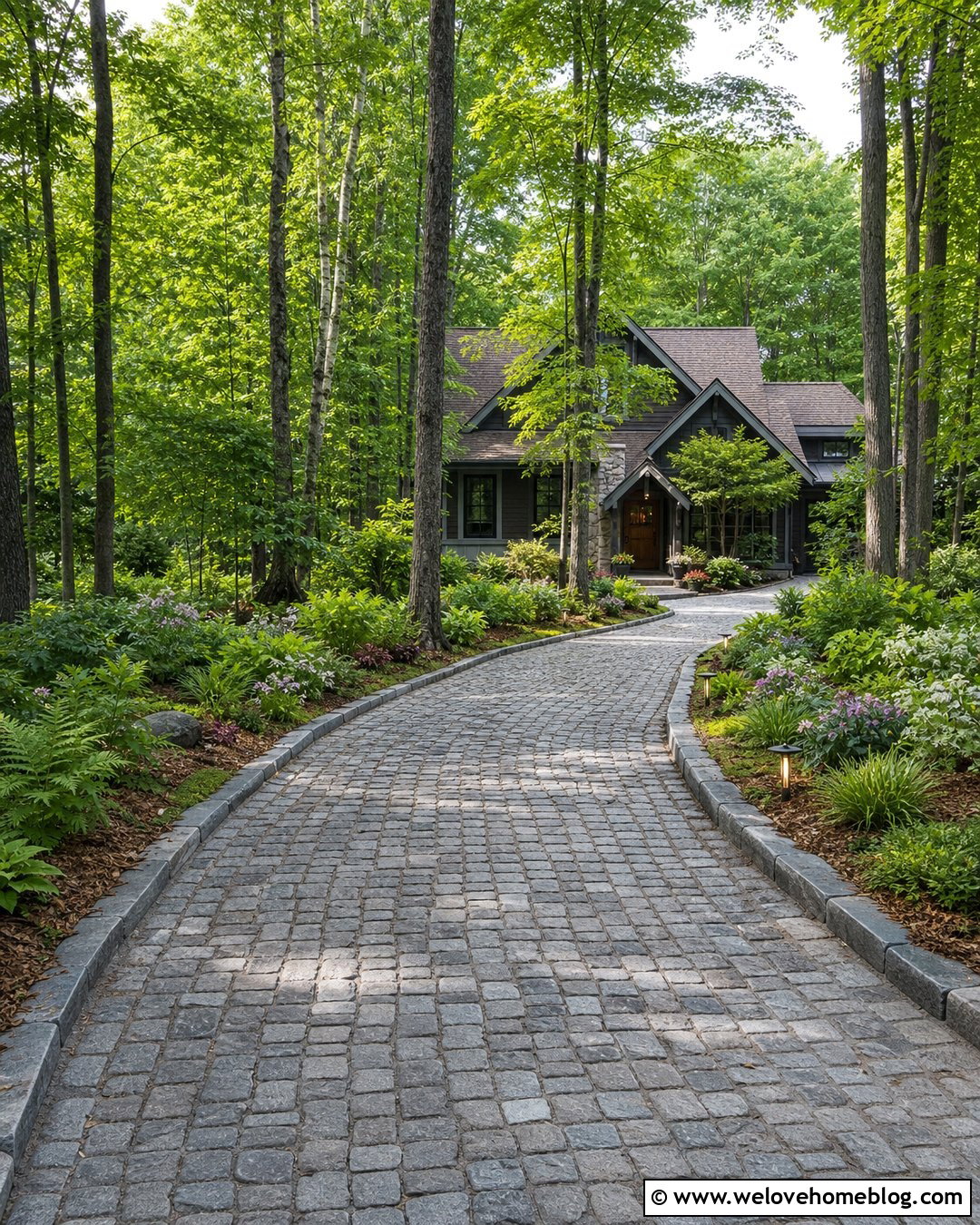
A cobblestone driveway winding beneath mature trees feels especially suited to a wooded property or traditional home. Use mixed gray granite cobbles with a subtly aged finish, then frame the route with broad woodland beds rather than formal lawn. Ferns, sedges, foamflower, woodland phlox, coral bells, and shade-tolerant shrubs can create layered greenery along the edges. Natural stone curbing keeps soil and mulch from spilling onto the uneven surface. Preserve generous open areas around established tree trunks and avoid changing soil levels over major roots. Construction and compaction can injure roots extending well beyond the canopy, so plan new edging, drainage, and lighting carefully. () Low fixtures hidden among ferns can illuminate curves, while a simple stone walkway connects the driveway to the home.
8. Long Paver Driveway With Hydrangea Borders
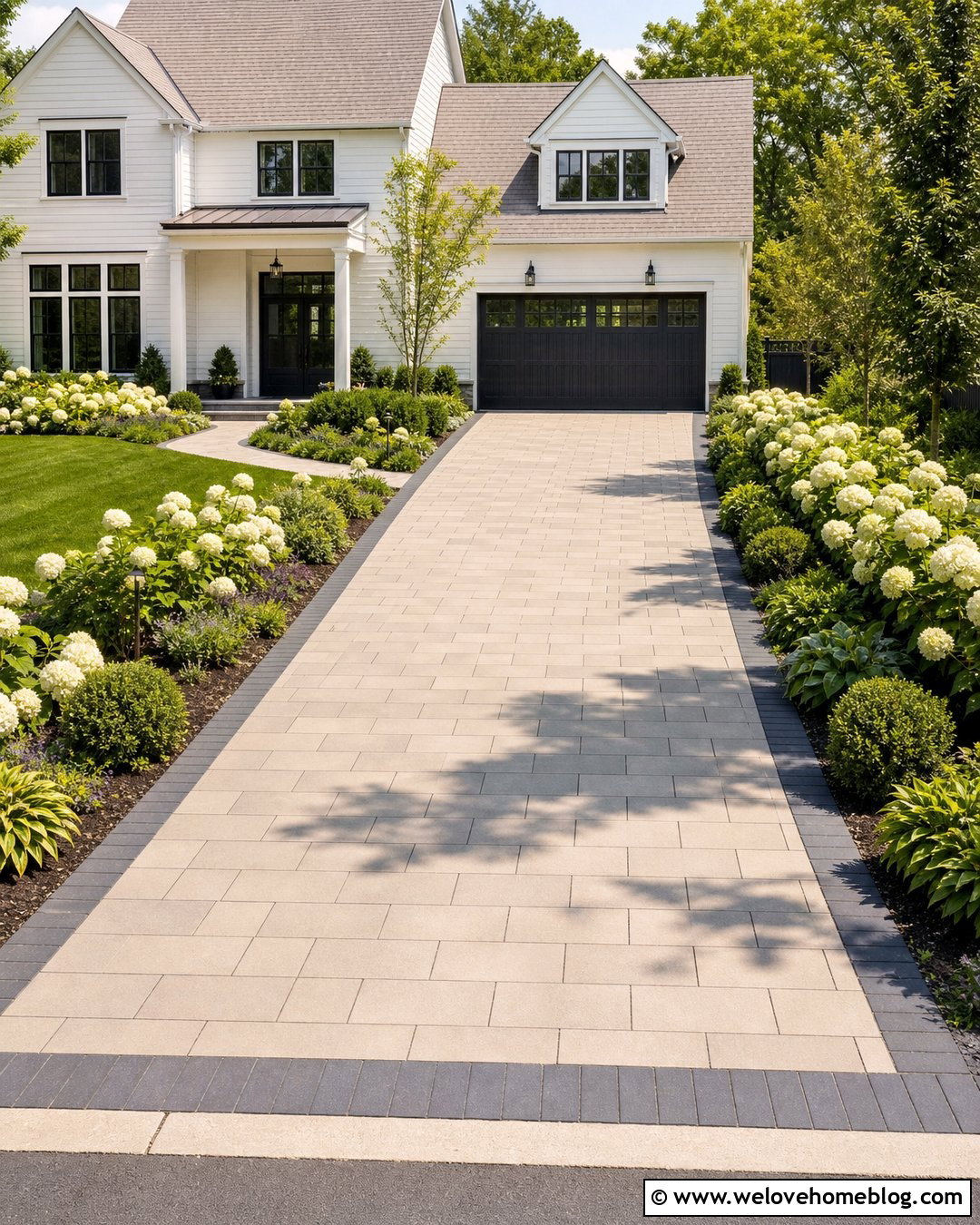
Large concrete pavers in a soft greige tone provide a quiet background for full hydrangea borders. A straight driveway suits this balanced look, particularly when rectangular pavers are laid in a running bond pattern. Add dark charcoal soldier-course edging to sharpen the sides and connect the driveway with roof or window colors. Plant hydrangeas in broad groups set behind compact evergreen shrubs, giving the garden structure when flowers are absent. A lower front layer of hostas, sedges, or hardy geraniums can conceal bare stems and soften the hard edge. Select hydrangeas for the available sunlight and regional growing conditions instead of choosing by flower color alone. Continue a smaller version of the planting beside the front walkway so the long driveway garden feels connected to the house rather than visually separate.
9. Long Permeable Paver Driveway With Rain Gardens
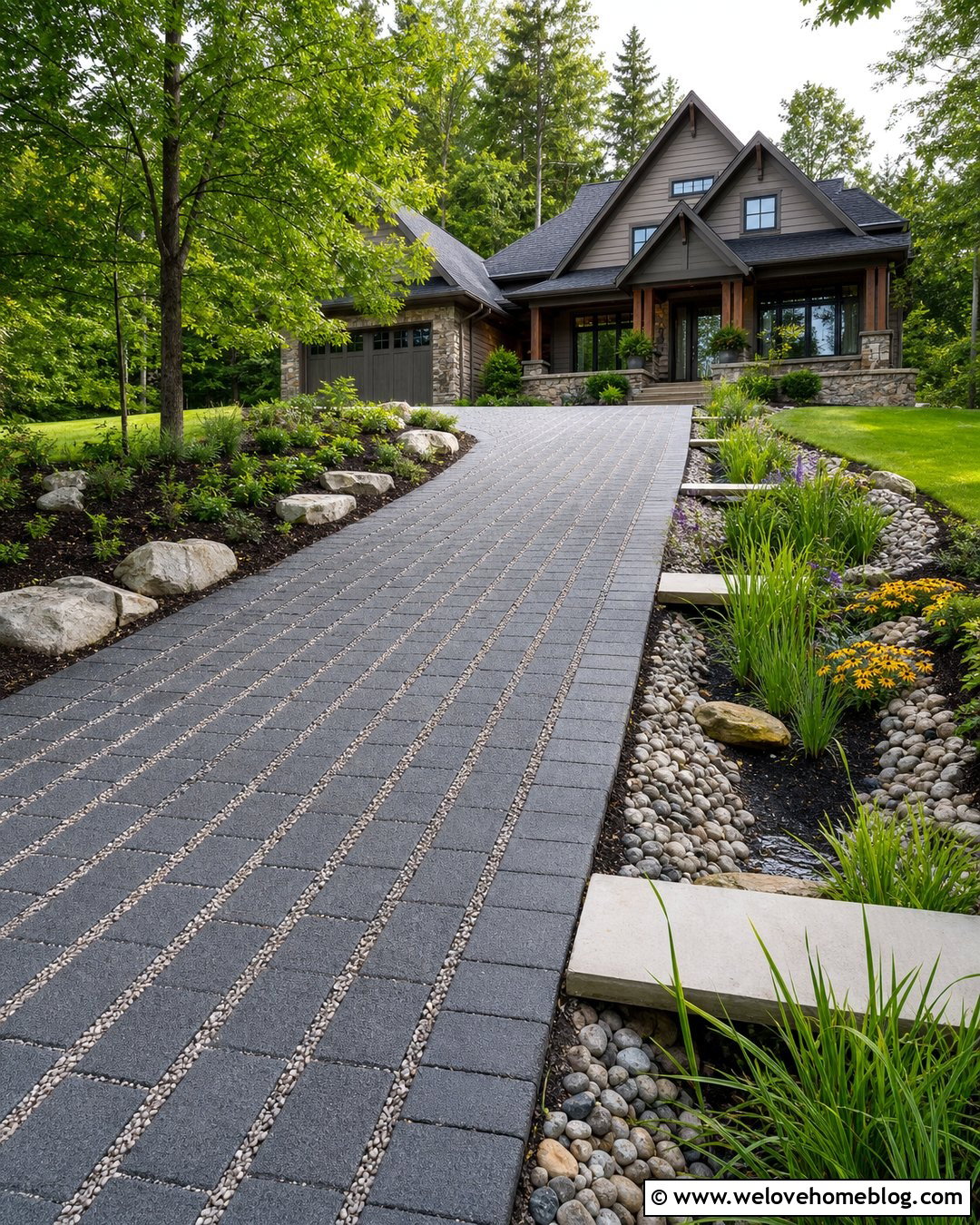
Where driveway runoff collects along the edges, permeable pavers and linear rain gardens can form one attractive system. Use charcoal permeable concrete pavers with wide aggregate-filled joints, laid along a long straight or gently sloping approach. Create shallow planted basins beside selected sections rather than excavating continuous trenches. Fill them with regionally suitable sedges, rushes, moisture-tolerant perennials, and deep-rooted native flowers. Stone check dams can slow water on a grade, while flat bridge crossings provide access to the lawn and walkway. Rain gardens are designed to collect runoff from hard surfaces and allow it to soak into the ground, but their placement and size should reflect soil, drainage area, foundations, wells, and septic systems. () Consult a local professional when site conditions are complicated.
10. Long Farmhouse Driveway With Wildflower Borders
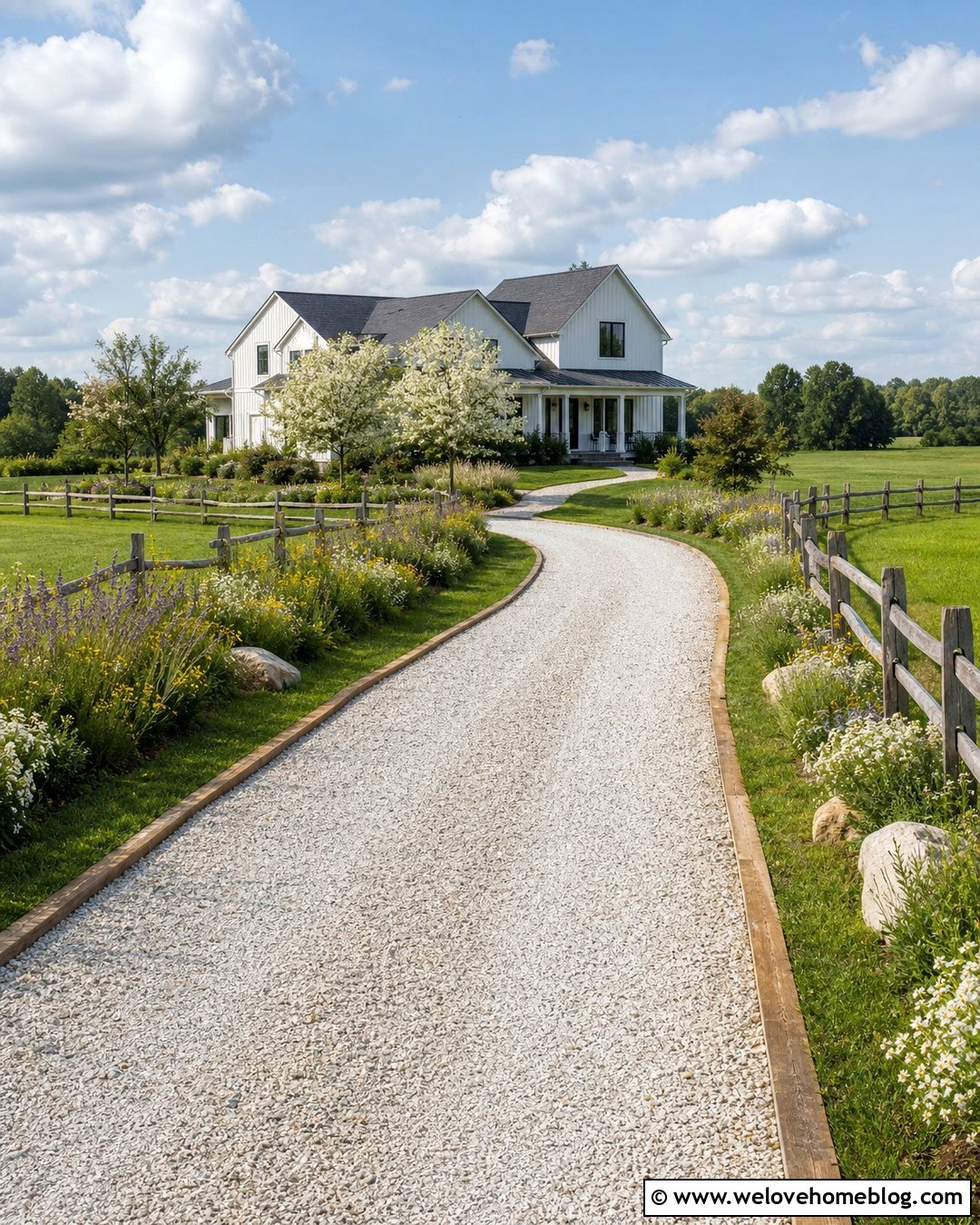
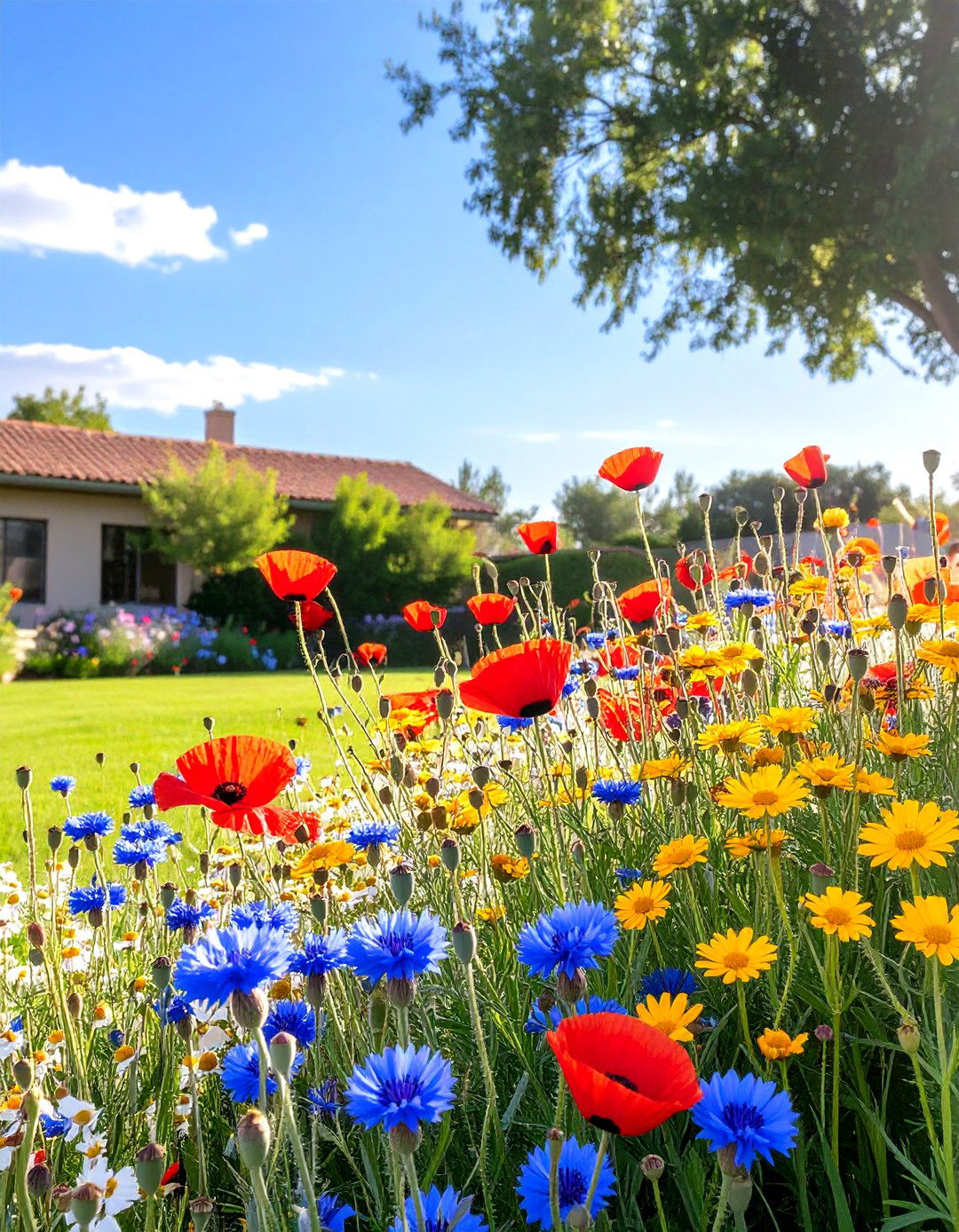
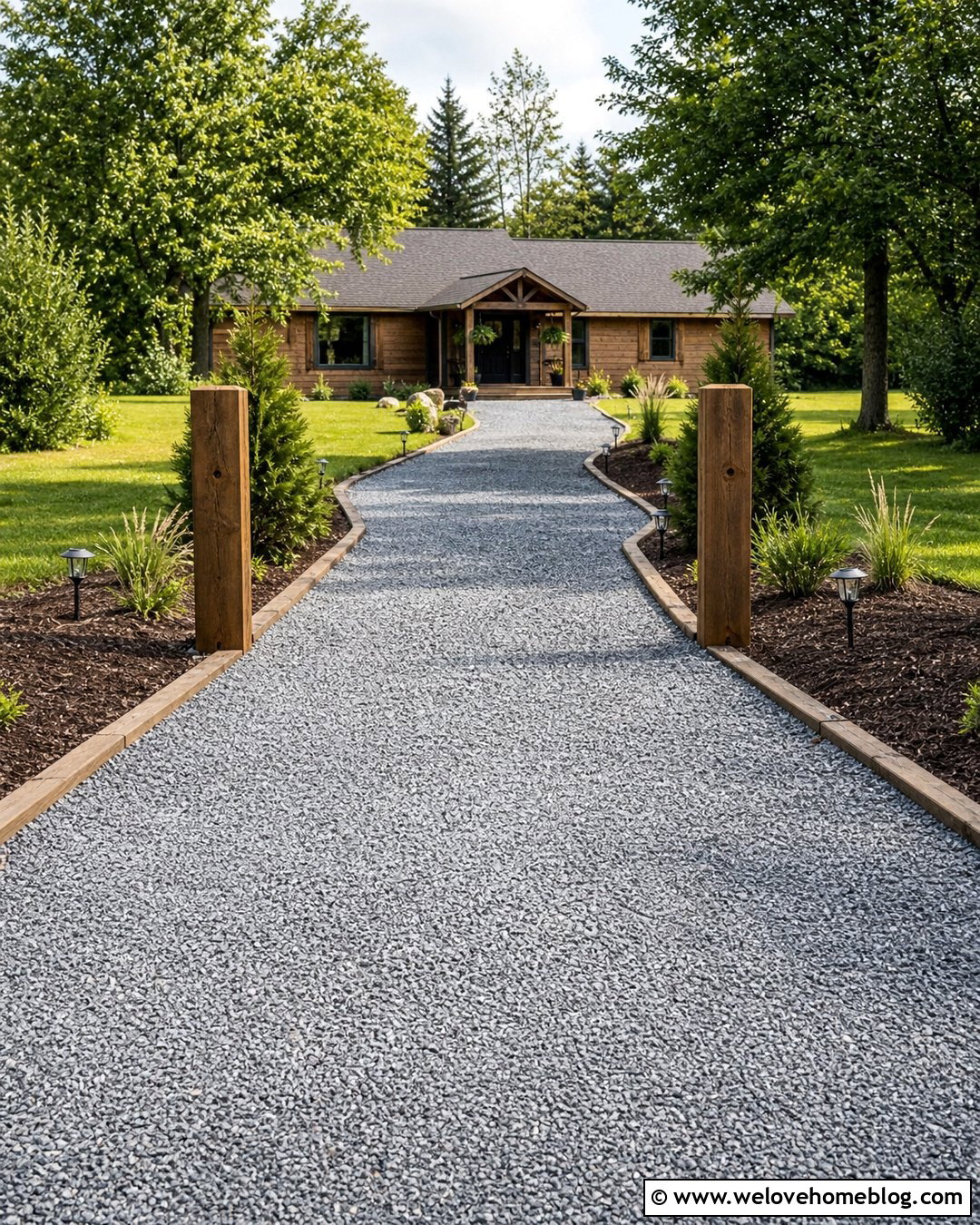
A pale crushed-limestone driveway bordered by wildflowers creates a relaxed approach to a modern farmhouse or country home. Shape the driveway with one gentle bend and use rough timber beams or large fieldstones to contain the loose material. Behind the edging, plant wide drifts of native flowers mixed with fine-textured grasses. Maintain a narrow mowed strip between the beds and surrounding field to create a neat frame. A split-rail fence can follow one side without making the driveway feel overly formal. Place flowering trees near the final approach, where they help mark the transition from open landscape to residential garden. Because loose gravel can migrate, build a properly compacted base and reinforce turning areas. The complete look should feel rural and effortless while remaining clearly planned.
11. Long Driveway With a Circular Garden Court
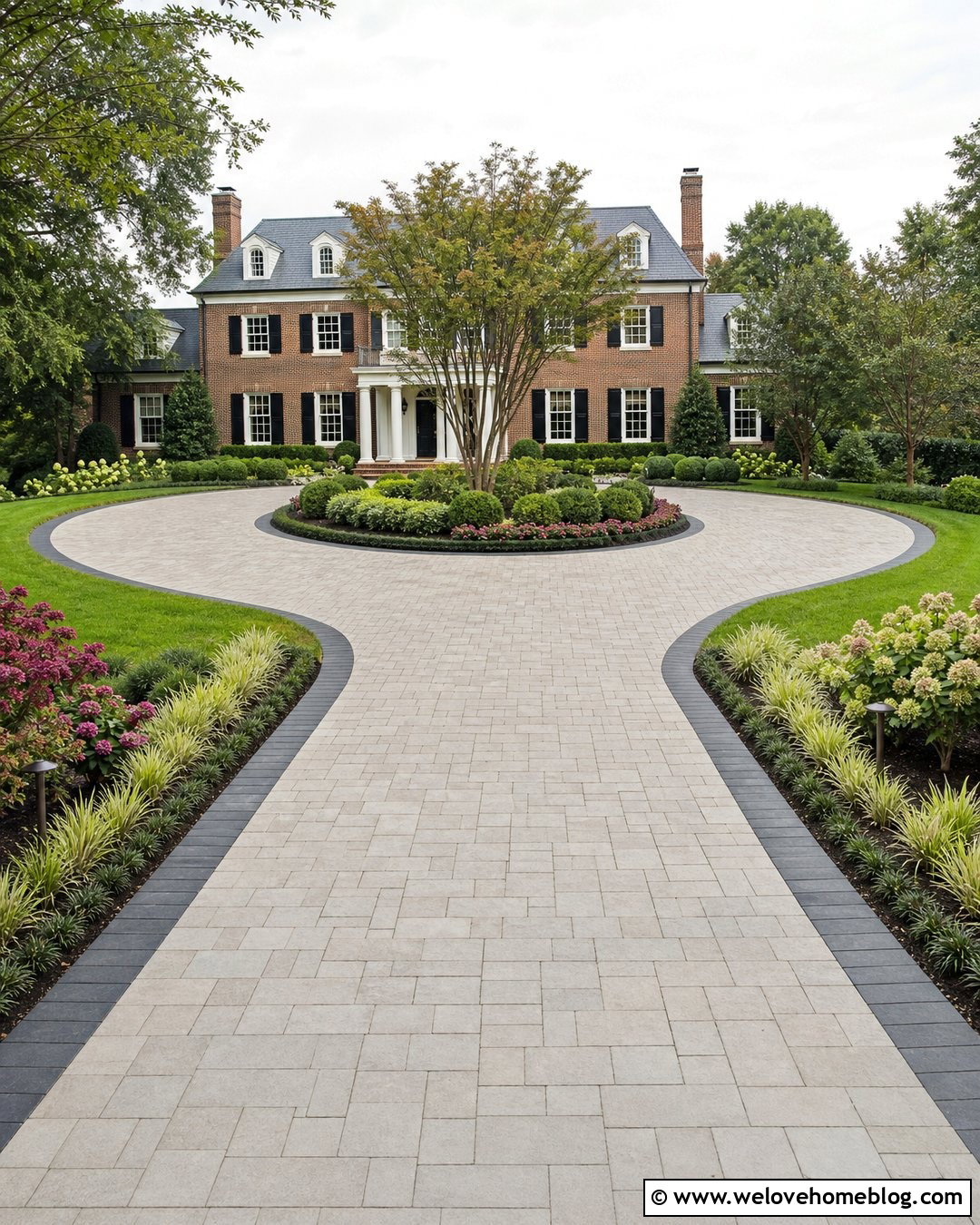
A long driveway ending in a circular court creates a practical arrival point and a strong garden centerpiece. Use warm gray concrete pavers for the main drive and circle, then outline both with a contrasting dark brick border. In the center, build a generous round planting island containing a multi-stem tree, clipped shrubs, ornamental grasses, and low seasonal flowers. Keep the planting scale substantial enough to balance the broad paved area, but avoid dense growth that blocks views across the circle. Repeat one or two island plants in narrow beds along the approach for continuity. A curved walkway can lead from the parking area to the front porch. Confirm turning dimensions, emergency access, drainage, and local requirements before construction so the ornamental centerpiece never interferes with comfortable vehicle movement.
12. Long Narrow Driveway With Columnar Trees
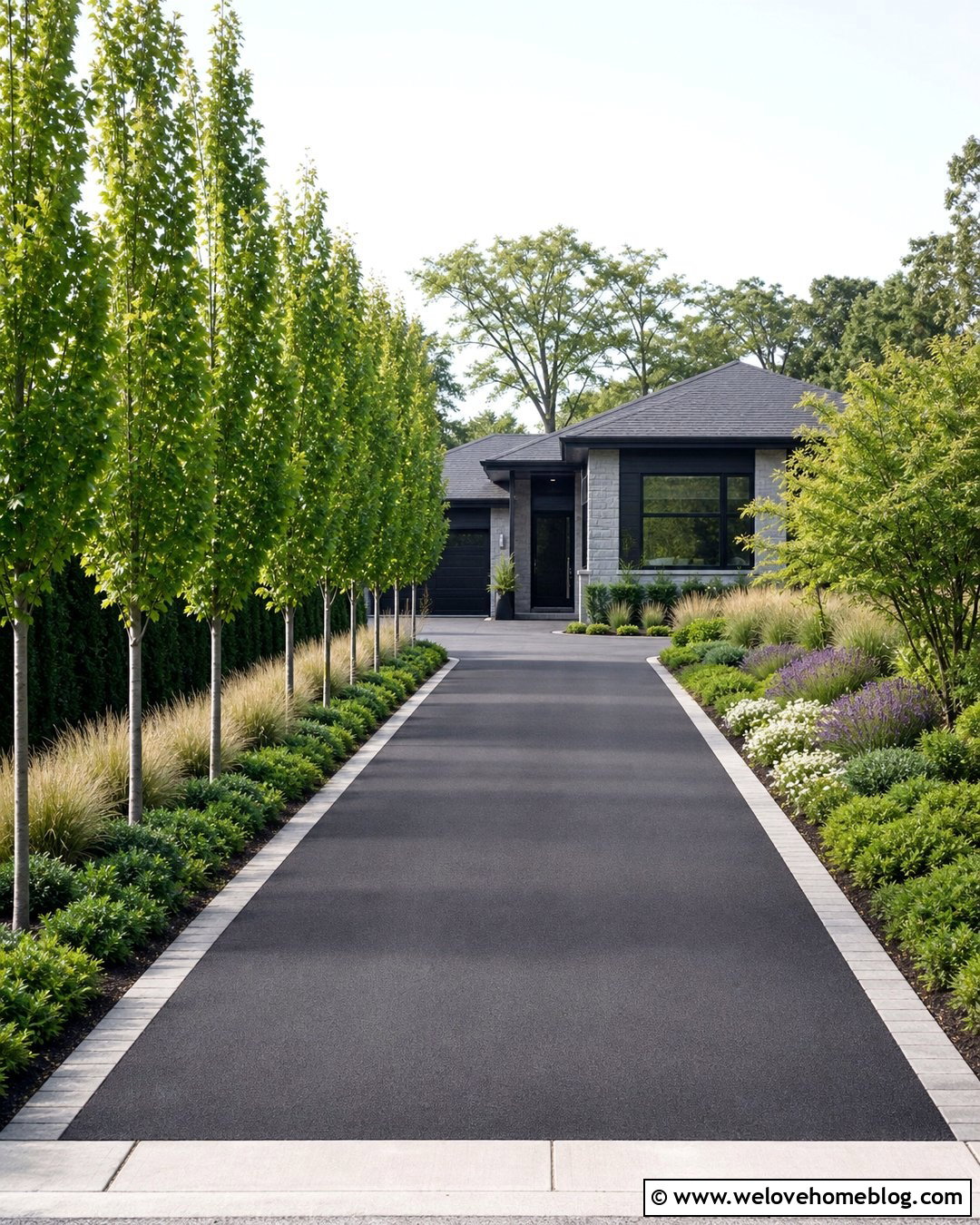
Limited side-yard space does not rule out an impressive long driveway garden. Start with a narrow charcoal asphalt driveway edged by flush gray pavers, which visually define the pavement without reducing usable width. Plant columnar trees at measured intervals on one side, where their upright form adds height without creating an immediate tunnel. On the opposite side, use a narrow bed of compact ornamental grasses, evergreen groundcover, and small flowering perennials. This asymmetrical arrangement feels more spacious than matching tall plants on both sides. Keep branches, flowers, and edging safely outside the vehicle clearance zone. At the house, widen the final bed around one ornamental tree to create a destination. Carefully check mature plant dimensions because narrow young specimens may become considerably broader as the garden develops.
13. Long Sloped Driveway With Terraced Garden Beds
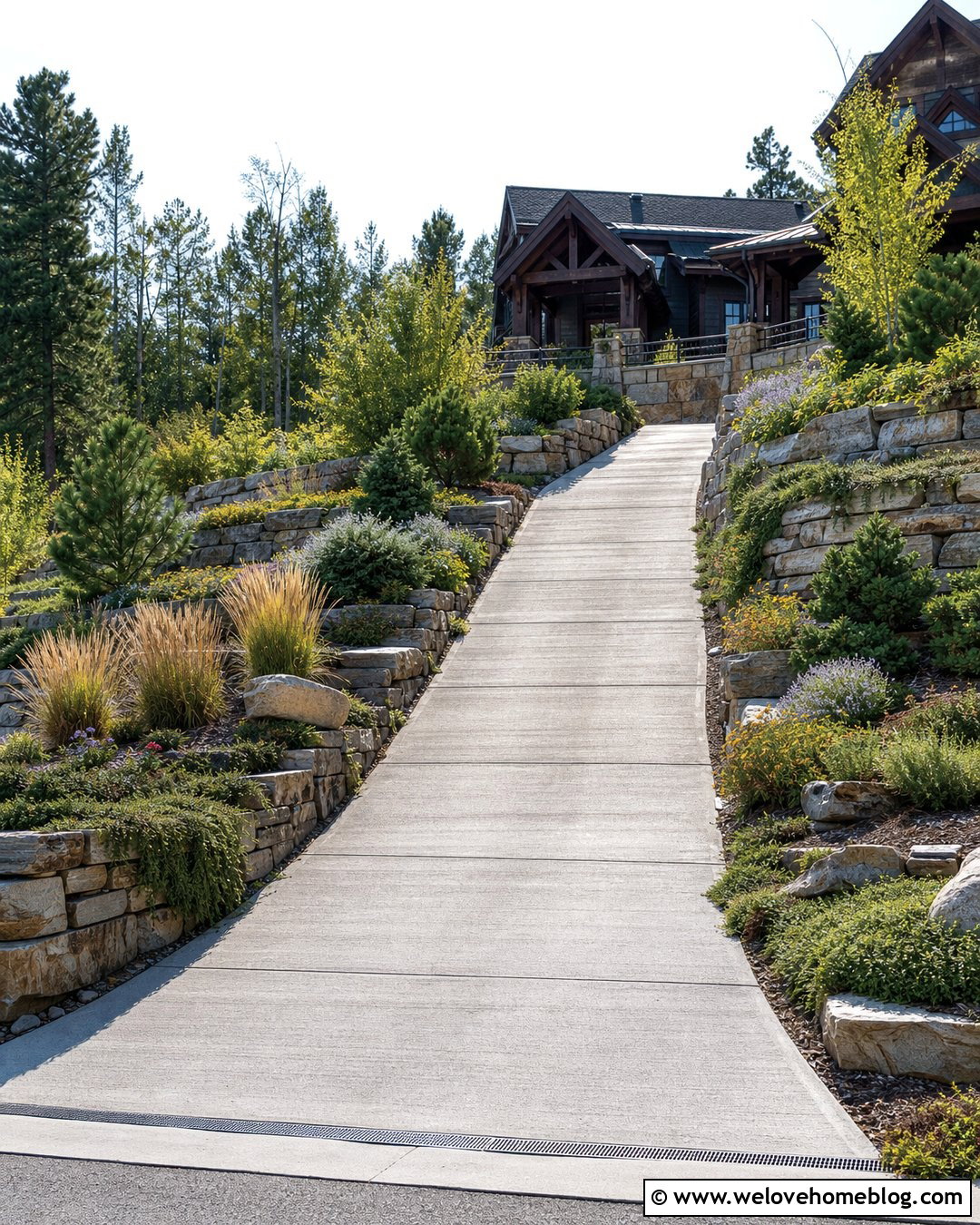
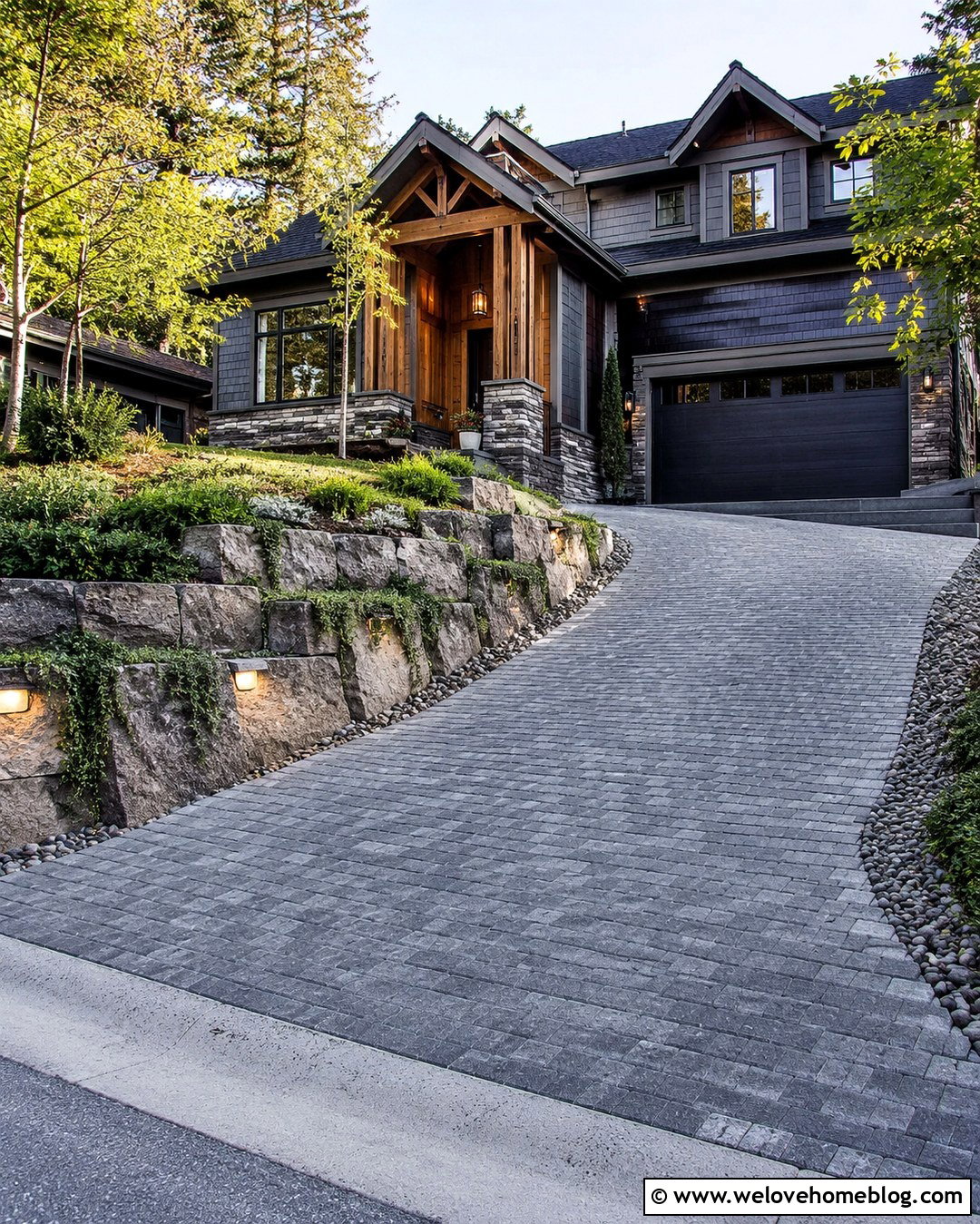
A steep driveway benefits from landscaping that follows the grade instead of fighting it. Pair broom-finished concrete with short terraced beds constructed from natural stone retaining walls. Stagger the walls along alternating sides so the route remains open and the garden appears to unfold gradually. Plant low evergreens, creeping groundcover, ornamental grasses, and erosion-resistant perennials in repeated combinations. Avoid tall shrubs on the downhill side of curves, where they could limit visibility. Install channel drains or other professionally designed drainage features where runoff crosses the pavement. The stone walls should step with the slope and include safe overflow routes rather than trapping water behind them. Add a landing garden near the house using the same materials. This creates a clear visual reward at the end of the climb.
14. Long Shaded Driveway With Fern Gardens
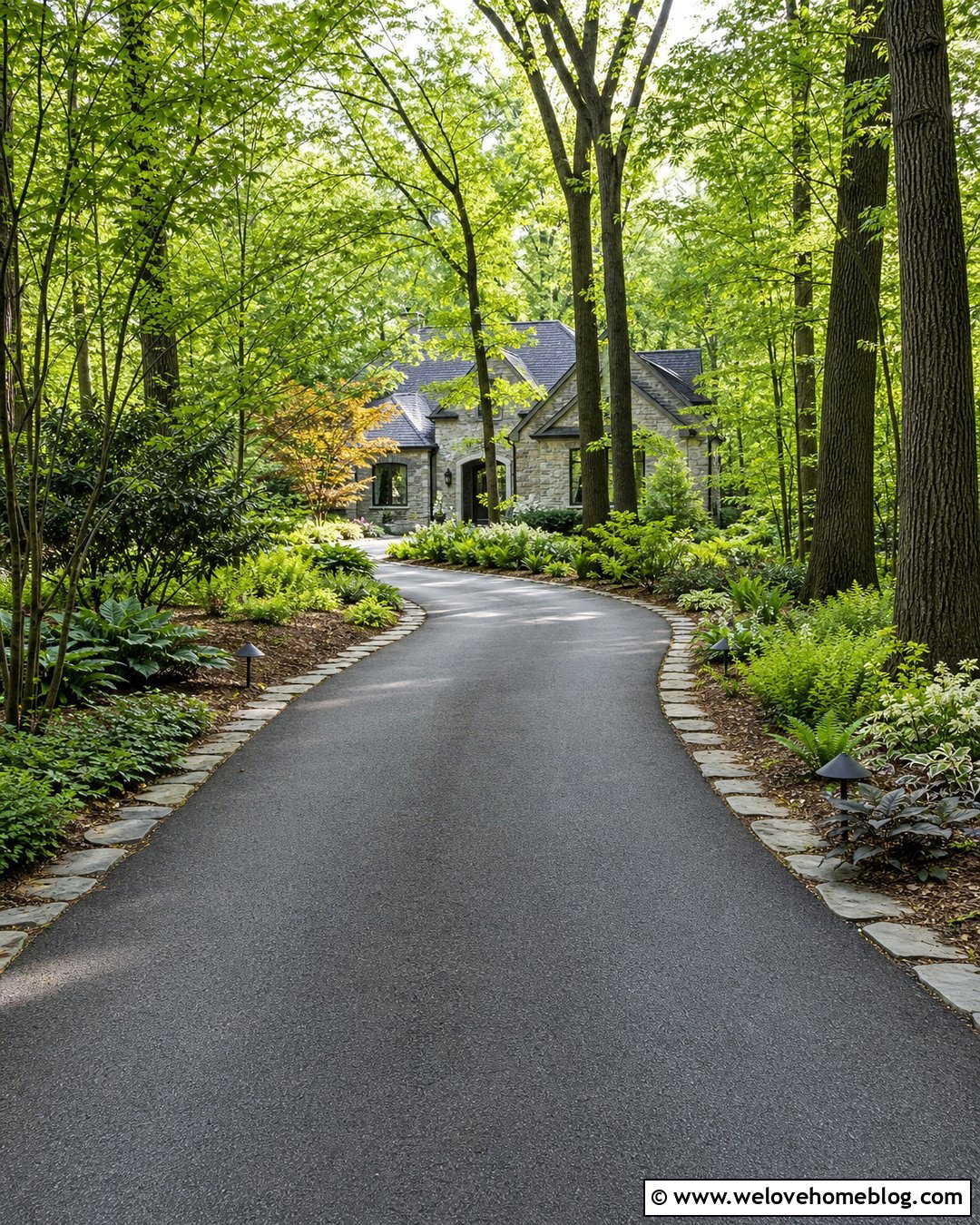
Deep shade can turn an ordinary driveway edge into a cool woodland garden. Use a curved gray asphalt driveway with a narrow border of irregular bluestone, then build layered beds beneath existing trees. Combine ferns, sedges, hostas, foamflower, hellebores, and compact shade-tolerant shrubs, selecting varieties that suit local moisture and temperature conditions. A mulch of shredded leaves or fine bark will look more natural than brightly colored wood chips. Repeat plants in loose sweeps to guide the eye toward the house. Small pockets of pale foliage can brighten darker sections without requiring flowers. Avoid raising soil over established tree roots or cutting major roots to form beds. Place low-profile lighting near curves and pedestrian crossings, aiming fixtures downward so the woodland remains peaceful rather than overly illuminated.


15. Long Shell Driveway With Coastal Grass Borders
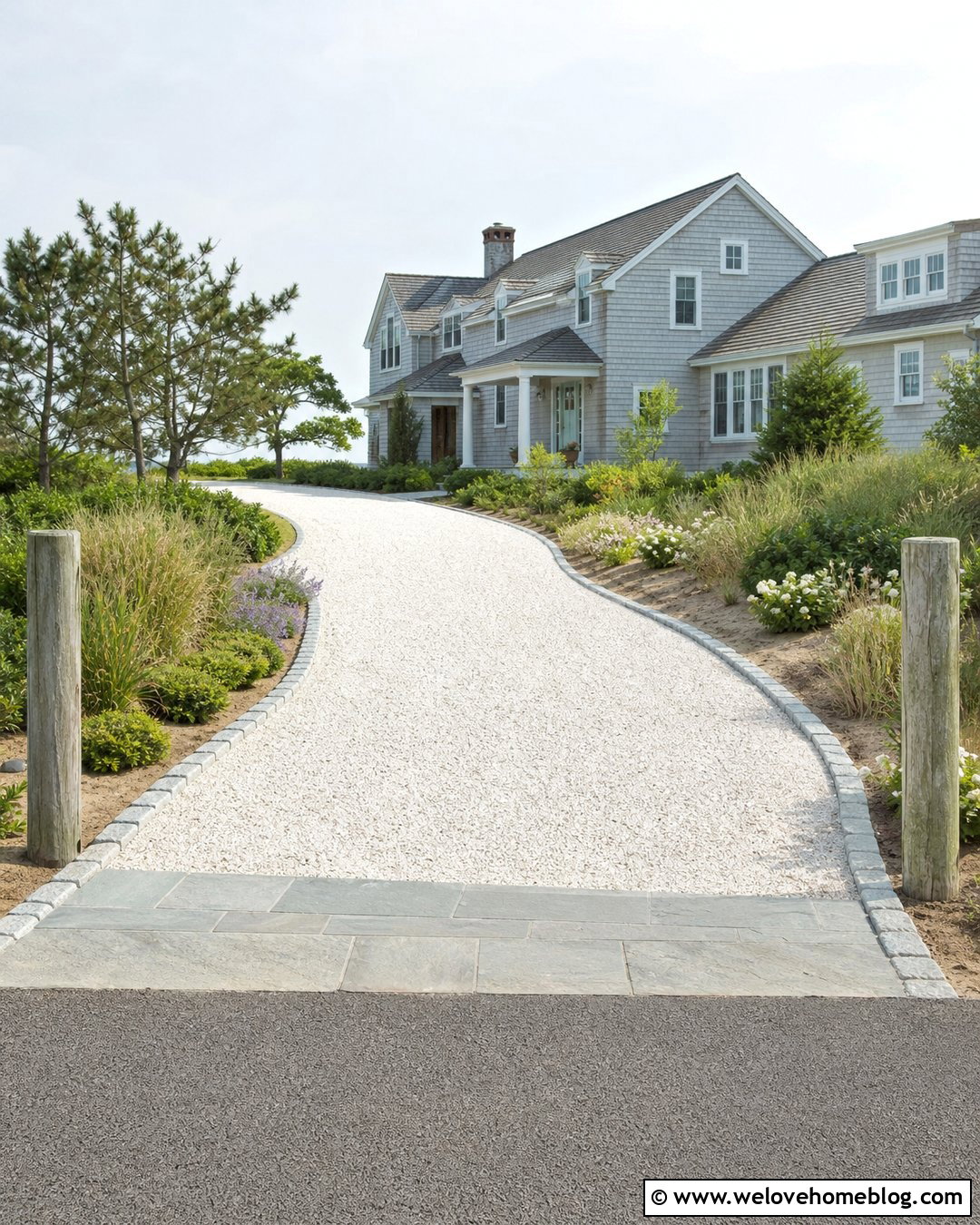
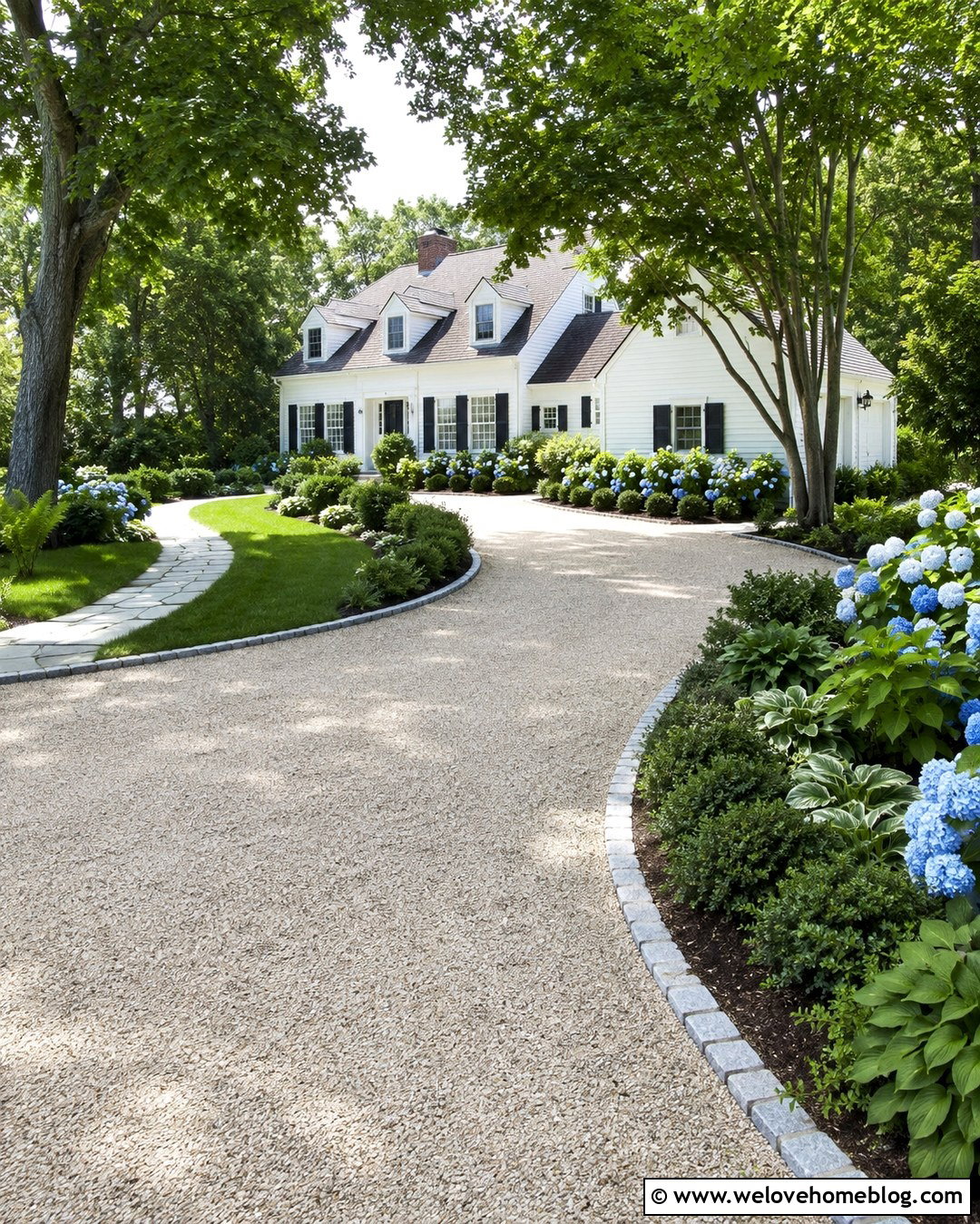
A white crushed-shell driveway looks bright and relaxed beside a coastal cottage or shingle-style home. Give it a gently curving layout and contain the shell with light-gray granite blocks that resist spreading. Along both sides, create sandy planting beds filled with regionally suitable beach grasses, low evergreen shrubs, flowering groundcovers, and wind-tolerant perennials. Vary bed depth so the planting feels natural, but keep the road entrance open and uncluttered. Weathered timber posts can mark the transition from the street without forming a heavy gate. Near the house, repeat the grasses around a shell or bluestone walkway. In areas where crushed shell is unavailable or unsuitable, pale limestone gravel can create a similar effect. Check local environmental rules, drainage conditions, and material availability before choosing the surface.
16. Long Modern Concrete Driveway With Corten Steel Beds
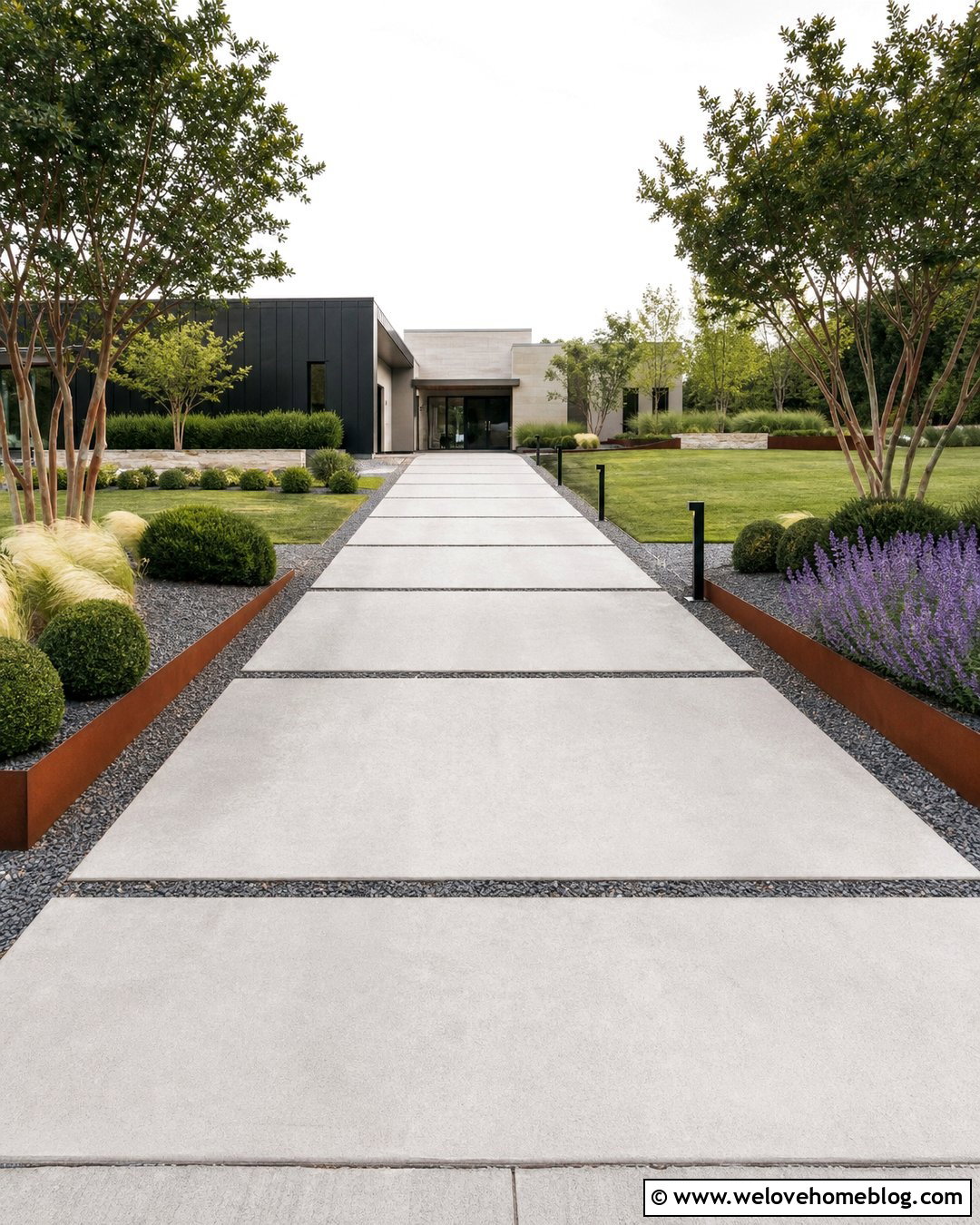
Wide concrete panels and geometric planting beds can transform a long driveway into a strong modern landscape. Use smooth light-gray poured concrete divided by narrow bands of dark gravel, then frame selected sections with low Corten steel edging. Fill the beds with sculptural grasses, clipped evergreen forms, multi-stem trees, and restrained blocks of flowering perennials. Alternate planted areas with open lawn or decorative gravel so the design has breathing room. The steel should define broad shapes rather than create many small compartments. Continue the same concrete and planting palette into the front walkway for a seamless arrival. Integrated drainage should be planned before pouring the slabs. Simple black lighting fixtures can follow the geometry, but space them selectively to avoid making the long approach resemble a commercial runway.
17. Long Asphalt Driveway With Birch Grove Planting
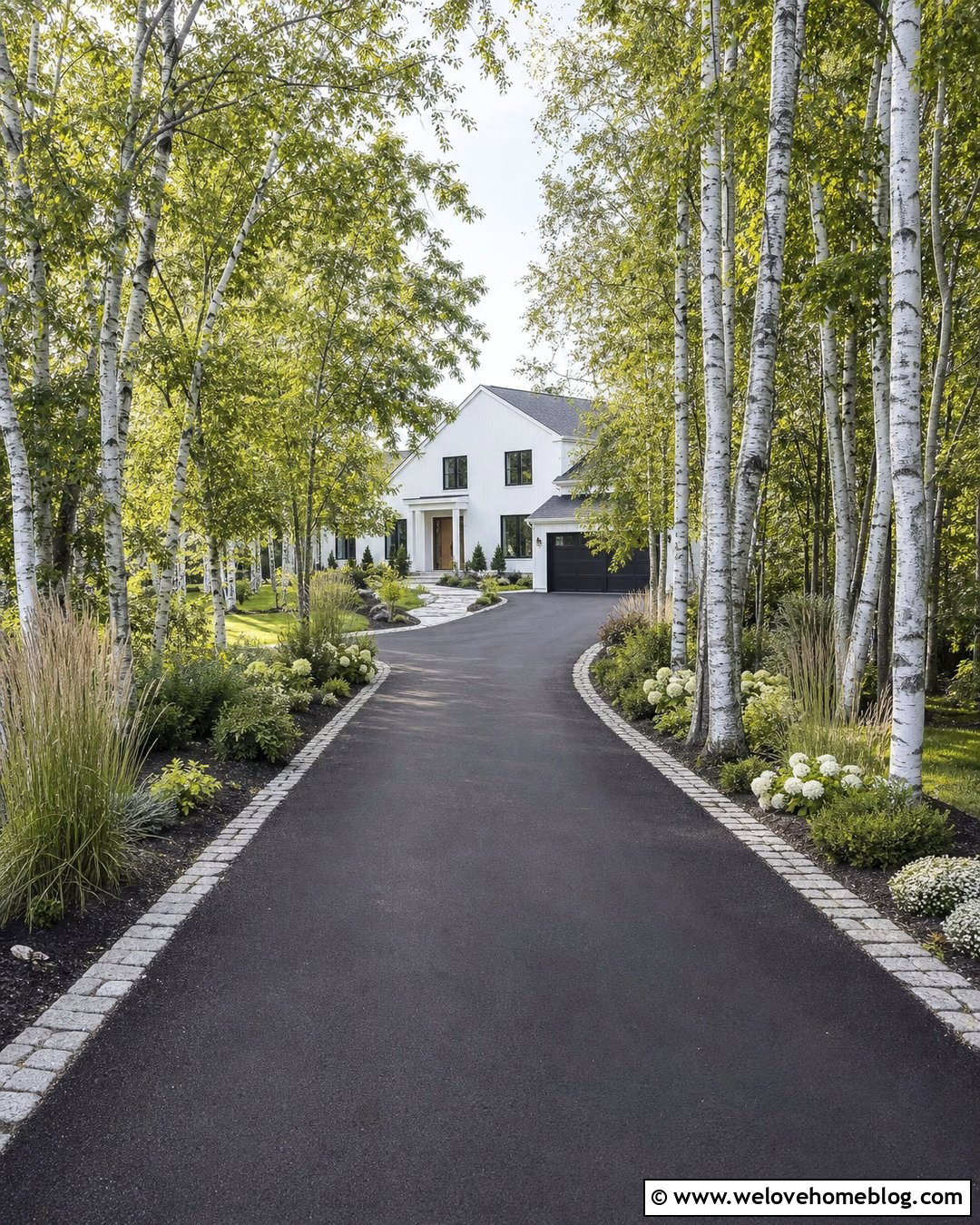
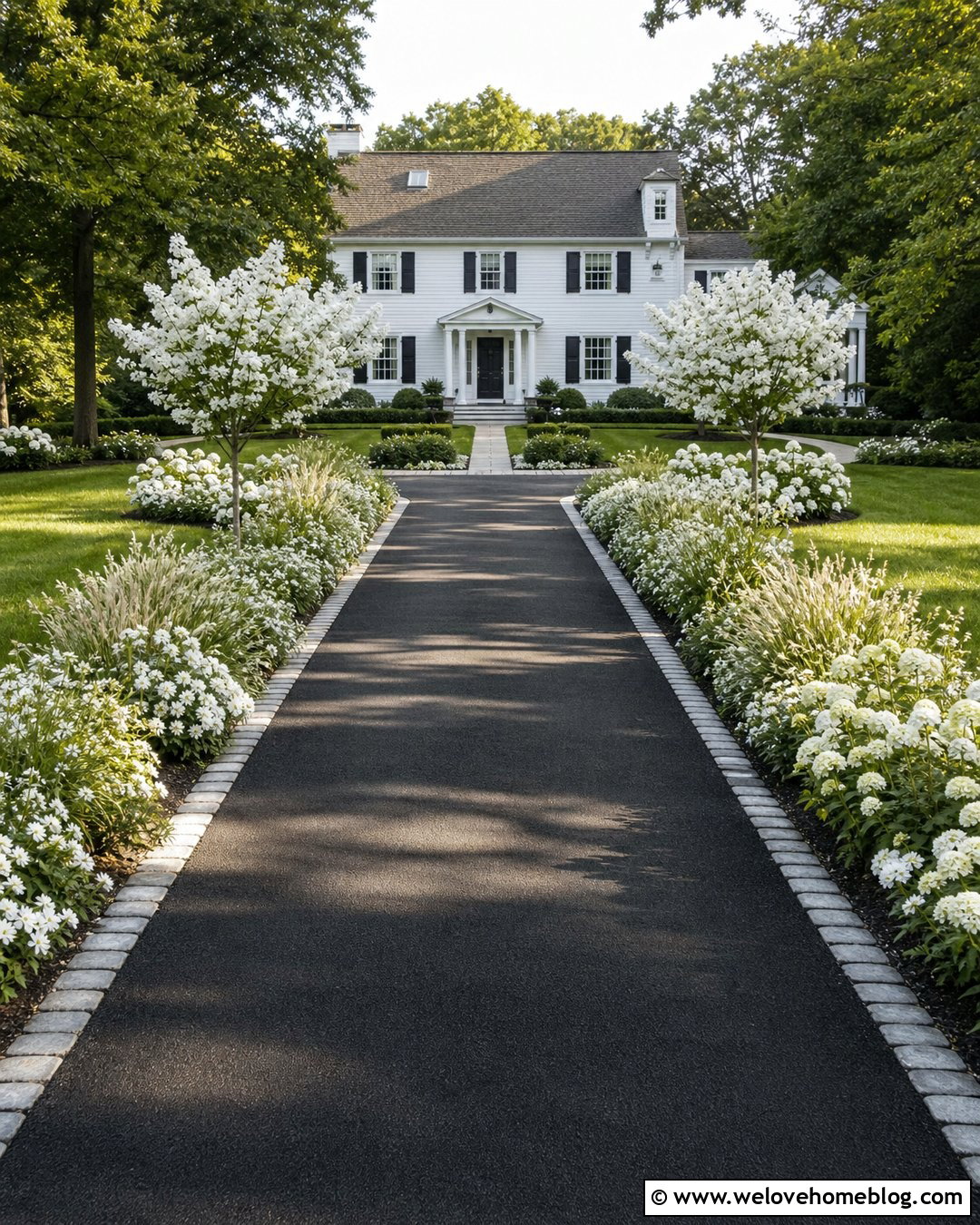
Dark asphalt becomes much softer when paired with pale-trunked trees and airy understory planting. Create a long, slightly curved driveway with a flush cobblestone edge, then establish small groves of birches or other locally appropriate light-barked trees in wide side beds. Space the trees irregularly within each group instead of forming rigid rows. Beneath them, plant fine grasses, low woodland perennials, and compact shrubs in broad sweeps. White flowers can echo the bark and stand out against the asphalt. Leave open lawn between several grove sections to prevent the driveway from feeling crowded. Because site conditions and root behavior differ among tree species, ask a local arborist or extension professional about placement. Protect adequate root zones and keep trunks well clear of snow storage, vehicle overhang, and pavement edges.
18. Long Pea Gravel Driveway With Orchard Borders
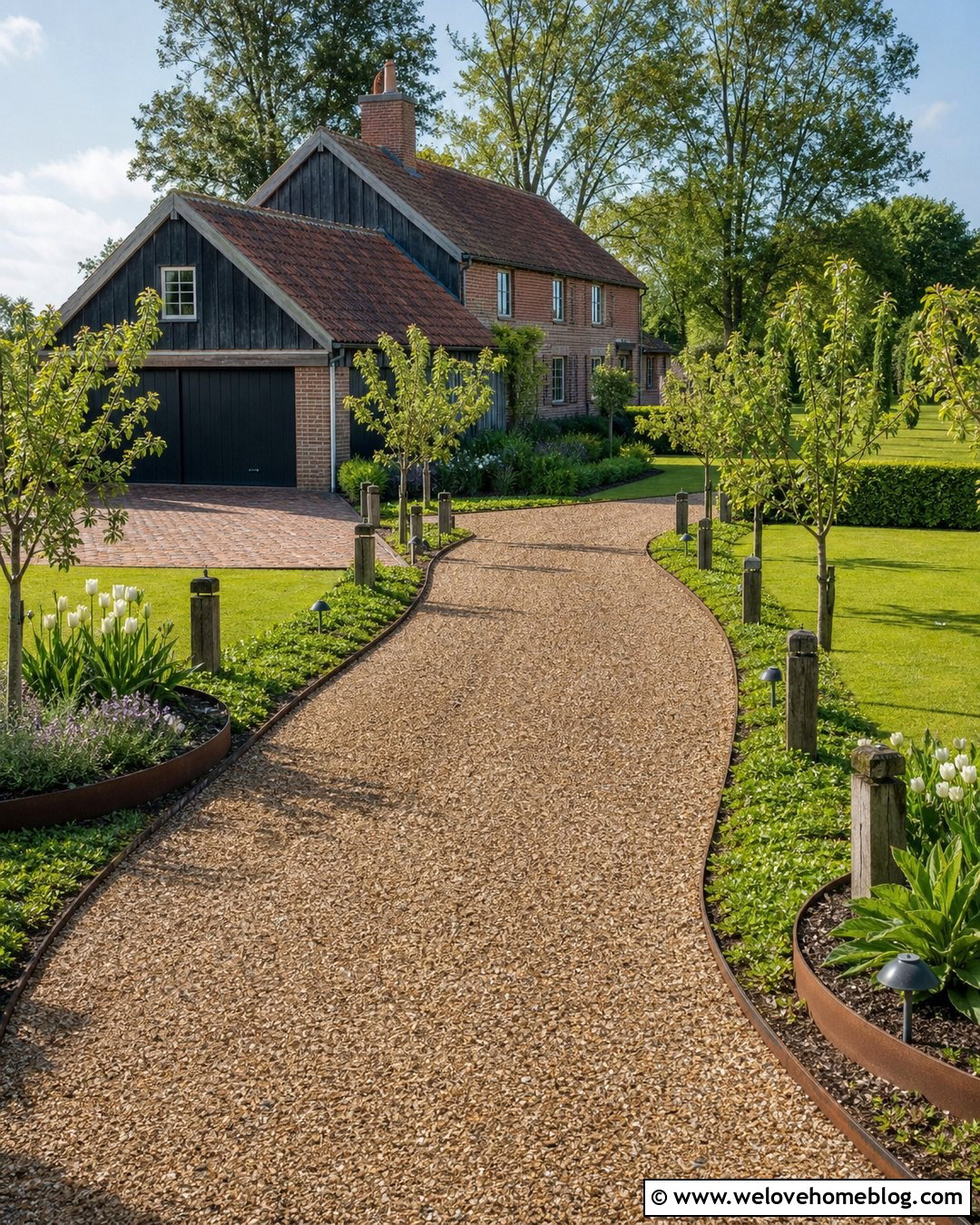
A pea gravel driveway winding between small fruit trees can feel productive, welcoming, and beautifully informal. Use warm buff pea gravel over a stable, compacted base and contain it with brick or steel edging. Plant orchard trees in broad grass or clover strips beyond the border, allowing enough room for mature canopies, harvesting, pruning, and air circulation. Beneath selected trees, create circular beds with spring bulbs and low herbs that suit the growing conditions. Repeat simple timber posts or low lights along the route to make curves easier to read. Near the house, widen the driveway into a firmer paver apron that keeps loose gravel away from the garage. This complete garden works especially well for farmhouse settings, but it requires realistic planning for fallen fruit, irrigation, wildlife, and seasonal maintenance.
19. Long Gated Driveway With Formal Garden Borders
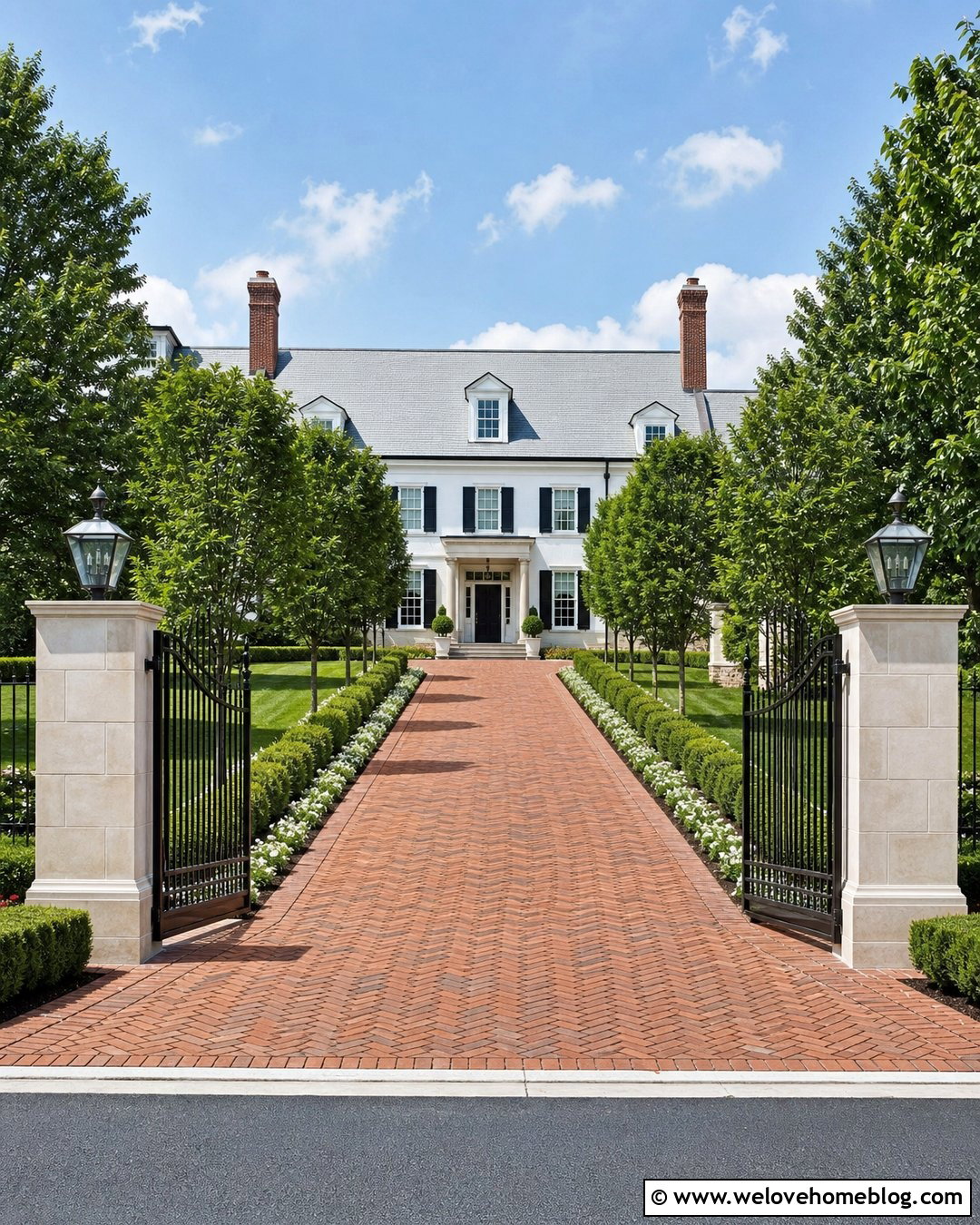
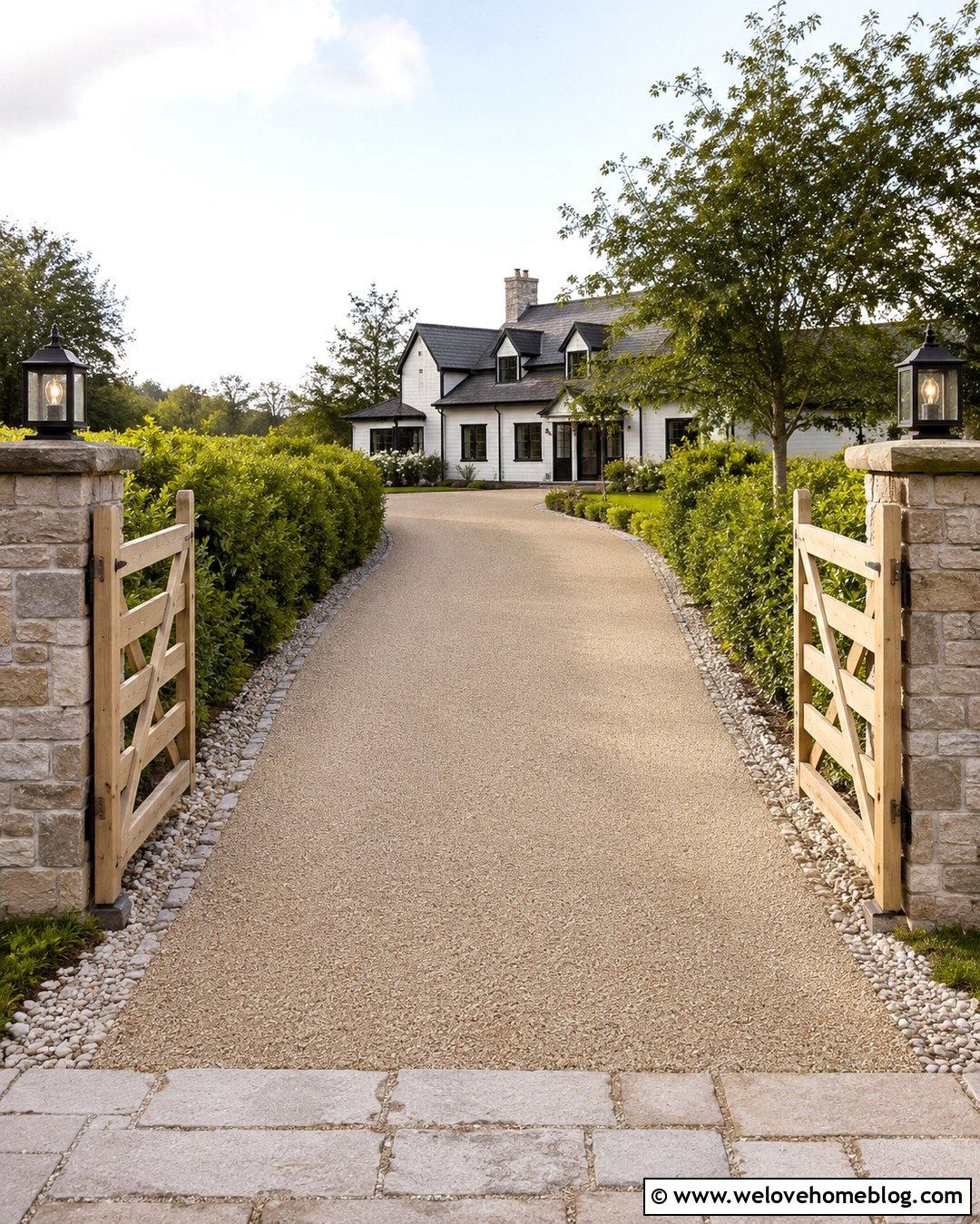
A gated entrance can establish the design language for the entire driveway. Begin with clay brick pavers laid in herringbone, then place simple stone pillars and a dark metal gate several feet inside the property line where regulations and stacking space permit. Continue the long straight drive between clipped evergreen borders, symmetrical ornamental trees, and narrow flower beds. A contrasting brick soldier course can define the edges and reinforce the formal geometry. Keep entrance plants low enough to preserve clear views of pedestrians, traffic, and the gate mechanism. Farther inside the property, taller hedges can add privacy. Repeat the pillar stone near the house in steps, low walls, or porch details. Professional planning is important for power, drainage, gate clearance, emergency access, setbacks, and any local permit requirements.
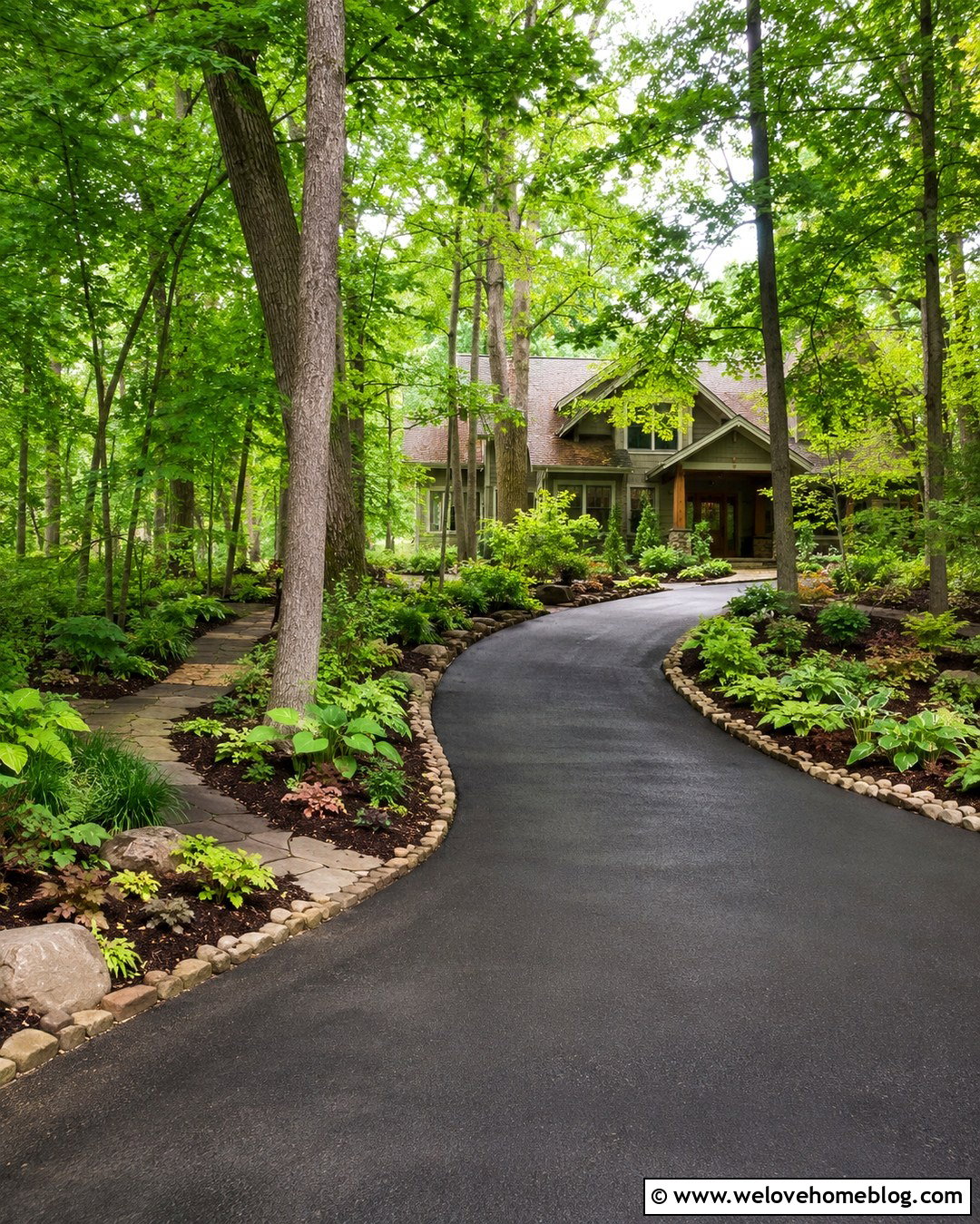
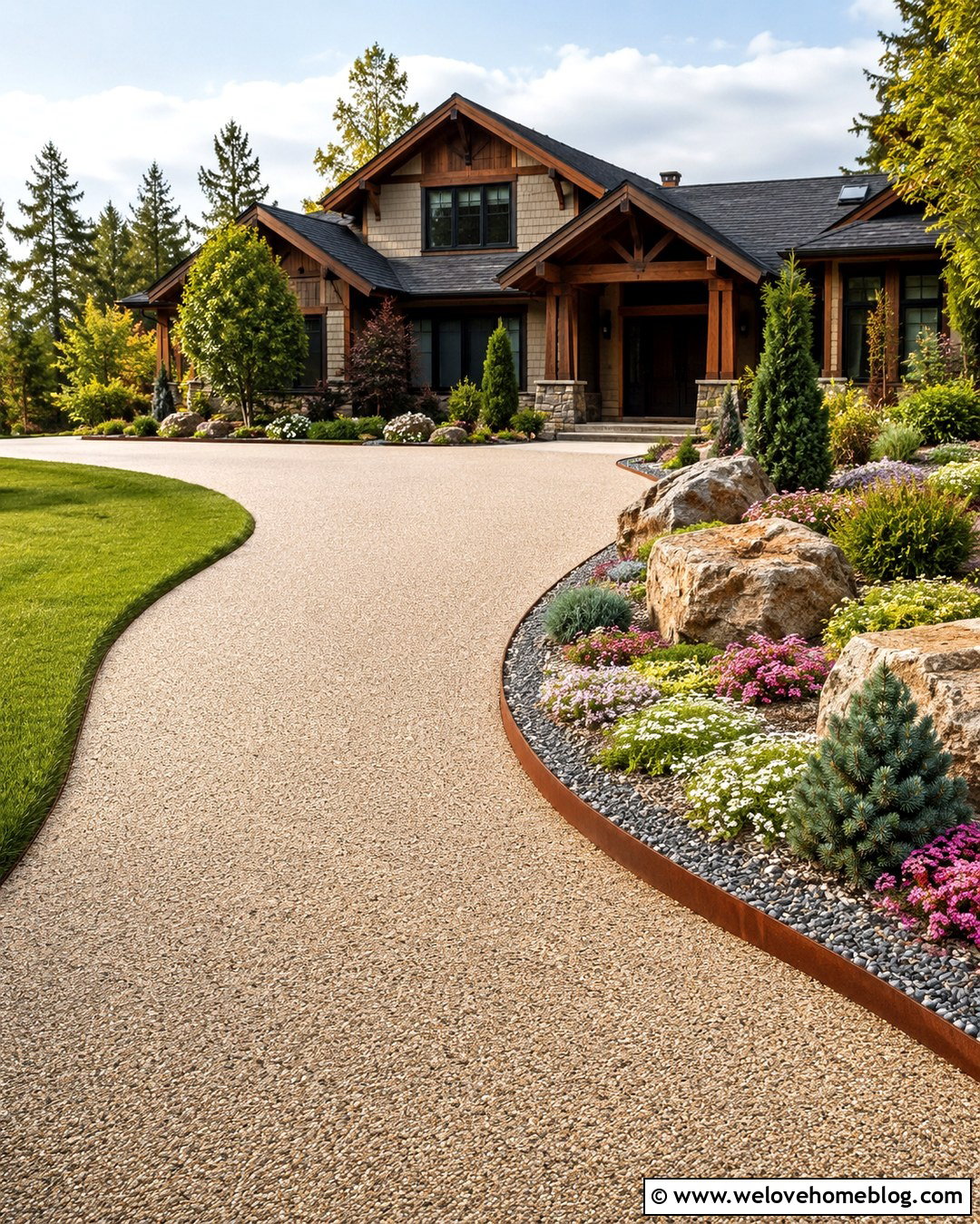

20. Long Low-Maintenance Driveway Garden With Lighting
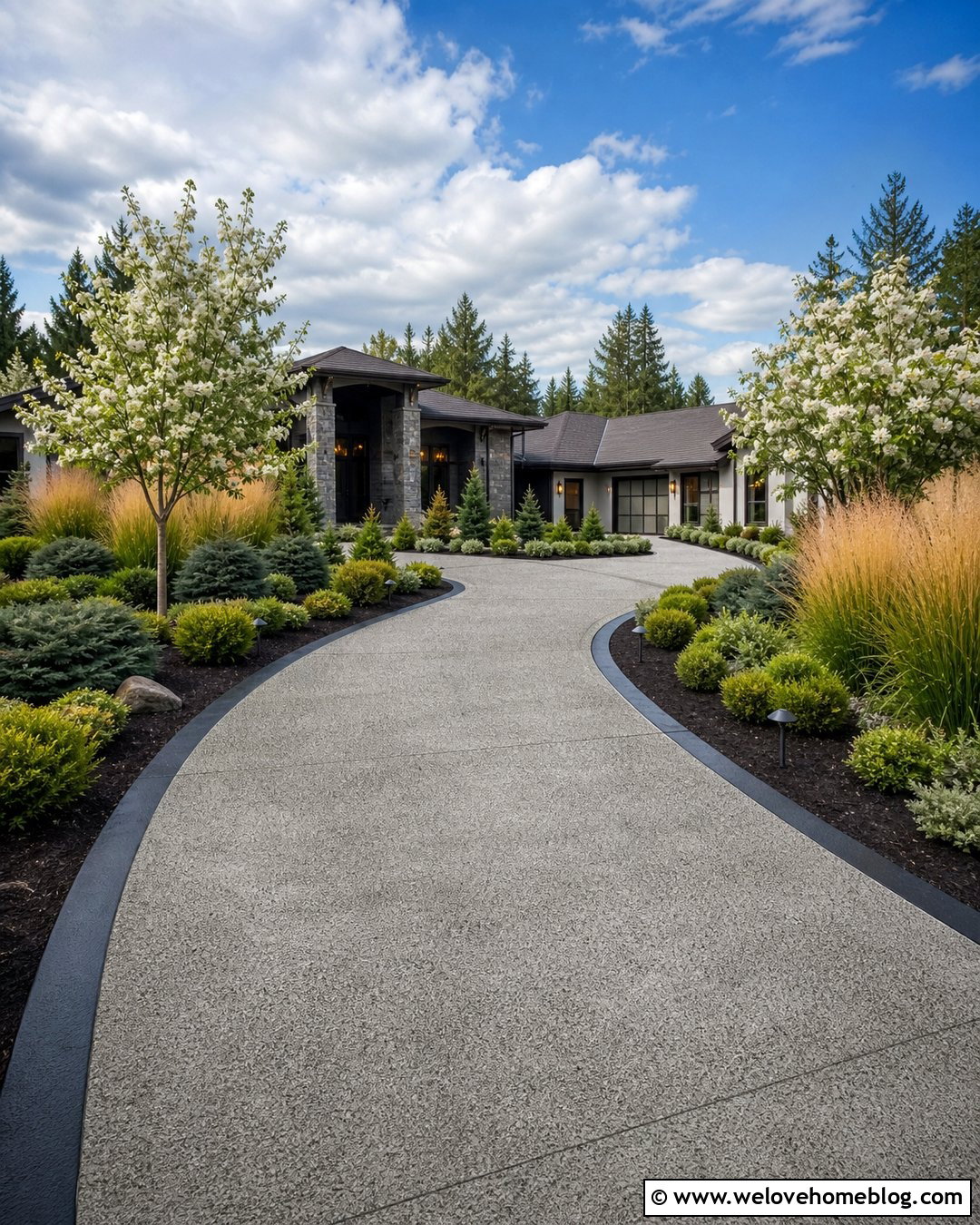
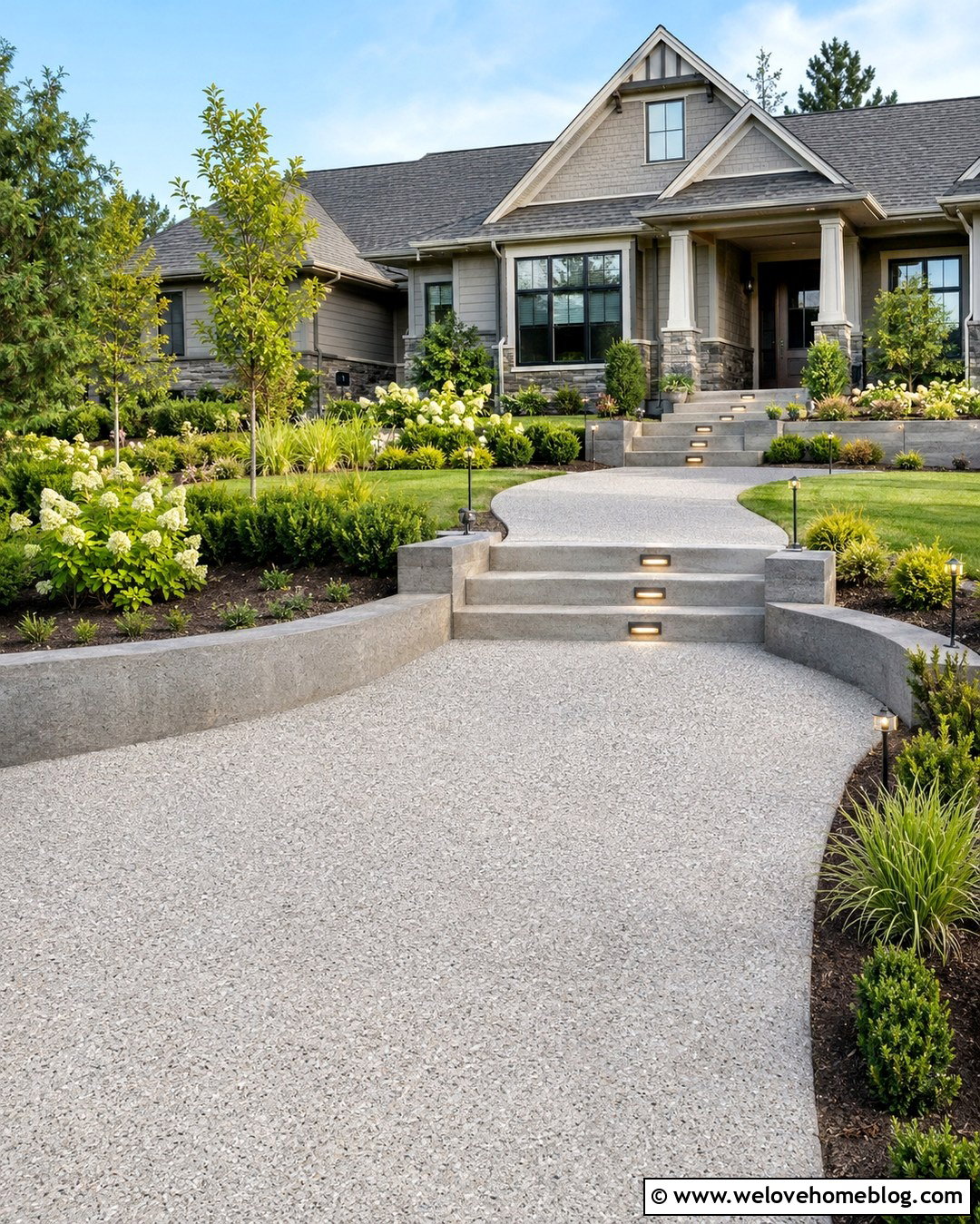
For an attractive landscape with manageable upkeep, combine a gray exposed-aggregate concrete driveway with broad beds of durable evergreens, ornamental grasses, and groundcover. Shape the beds in long, simple curves and use a dark concrete curb to keep mulch and soil off the pavement. Repeat a limited group of plants rather than installing dozens of unrelated varieties. Place one flowering tree near the entrance and another close to the house, creating two clear focal points. Drip irrigation, generous plant spacing, and regionally adapted selections can reduce routine work after establishment. Add low-voltage fixtures at curves, intersections, and walkways, plus selective uplighting for the trees. Effective outdoor lighting should support visibility without excessive glare or unnecessary upward light, so use controlled, downward-facing fixtures and timers. ()
Conclusion:
Successful **long driveway garden ideas** treat the entire approach as one connected landscape. Begin with the driveway’s material, width, slope, and shape, then choose borders and plants that support those conditions. Repeated trees create rhythm, while layered shrubs, grasses, and flowers bring softness and seasonal color. Strong edging keeps surfaces tidy, and thoughtful drainage protects both pavement and planting beds. Lighting, gates, focal trees, and widened entrance gardens can add character without creating clutter. Before major construction, verify utilities, permits, visibility, drainage, and mature plant sizes. Most importantly, select a complete look that fits your house and maintenance schedule. A well-planned driveway garden should remain practical while making every arrival feel more welcoming.

Related posts:
Leave a Reply