
A white exterior gives you a clean backdrop for building a driveway with real contrast, texture, and curb appeal. The best 20 White House Driveway Ideas go beyond choosing a surface color. They coordinate the driveway material, layout, border, walkway, landscaping, garage doors, and architectural details. Dark asphalt can sharpen a modern facade, while brick and cobblestone bring warmth to traditional homes. Current driveway designs also feature large-format slabs, permeable joints, cohesive walkways, and layered planting around the parking area. () Before selecting a look, consider your climate, maintenance expectations, drainage, property size, and the undertones in your white paint. The complete designs below offer practical inspiration through 20 White House Driveway Ideas.

1. Black Asphalt Driveway For A White House
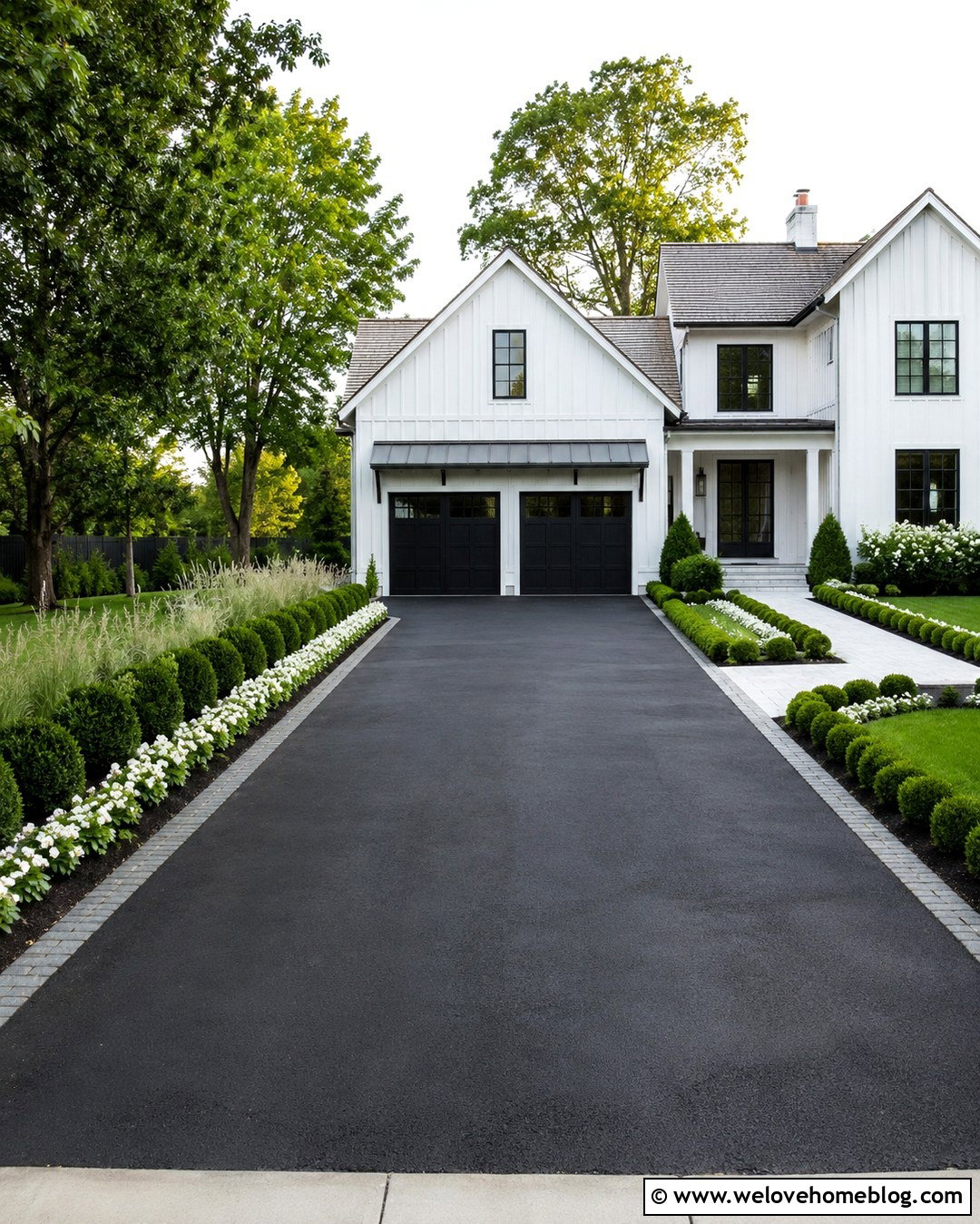
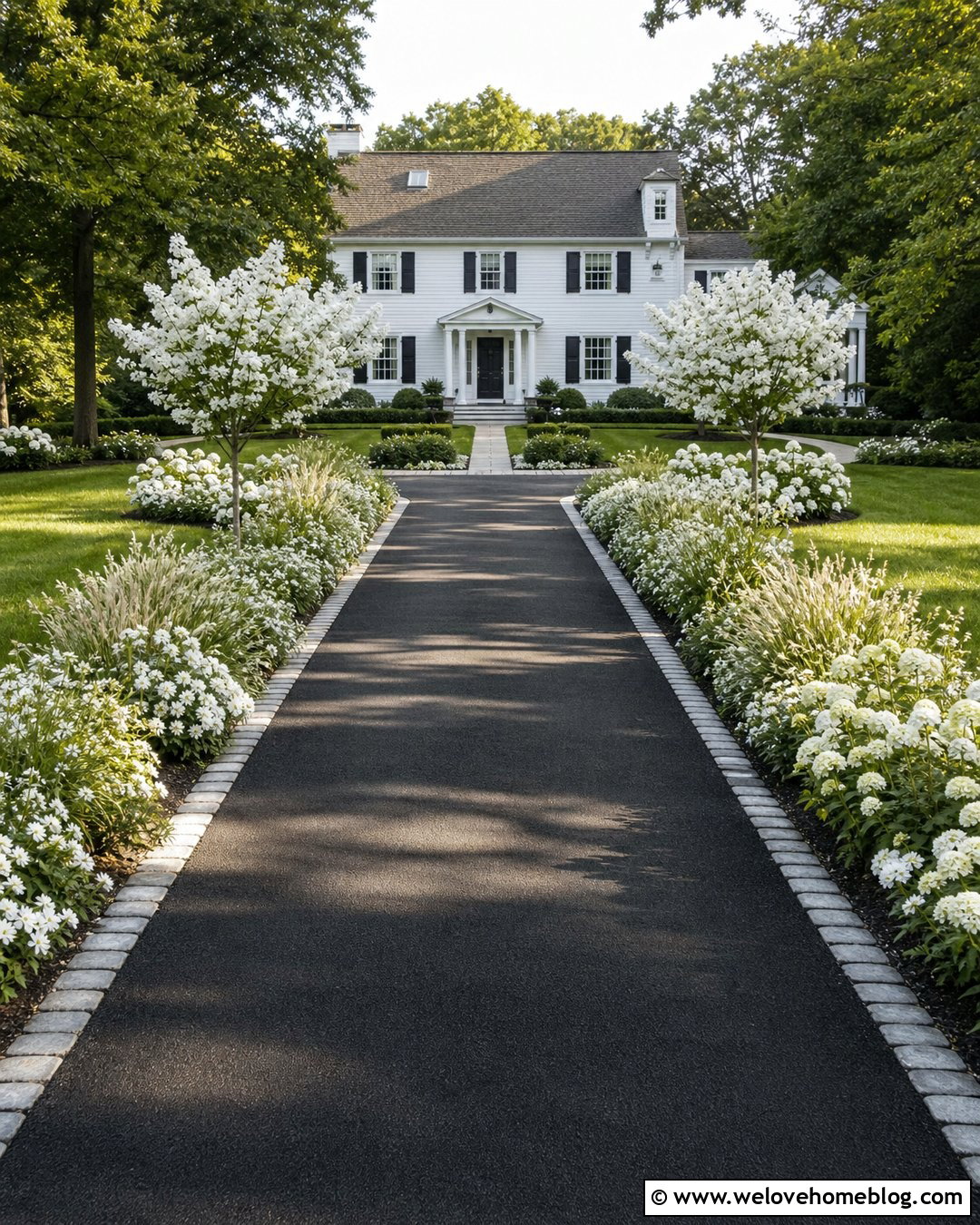
Few combinations look as crisp as a smooth black asphalt driveway leading to a bright white house. The dark surface creates strong contrast and can connect visually with black windows, gutters, shutters, or garage hardware. Keep the layout straight and uncomplicated for a modern farmhouse, ranch, or transitional home. A narrow border of charcoal cobblestones will make the asphalt feel more finished while protecting the edges from crumbling. Add clipped boxwoods, ornamental grasses, and white flowering perennials along the approach. A light gray concrete walkway can branch toward the front door without competing with the driveway. Because black pavement can dominate a small front yard, preserve generous areas of green lawn on both sides to soften the overall composition.
2. Gray Concrete Driveway For A White House
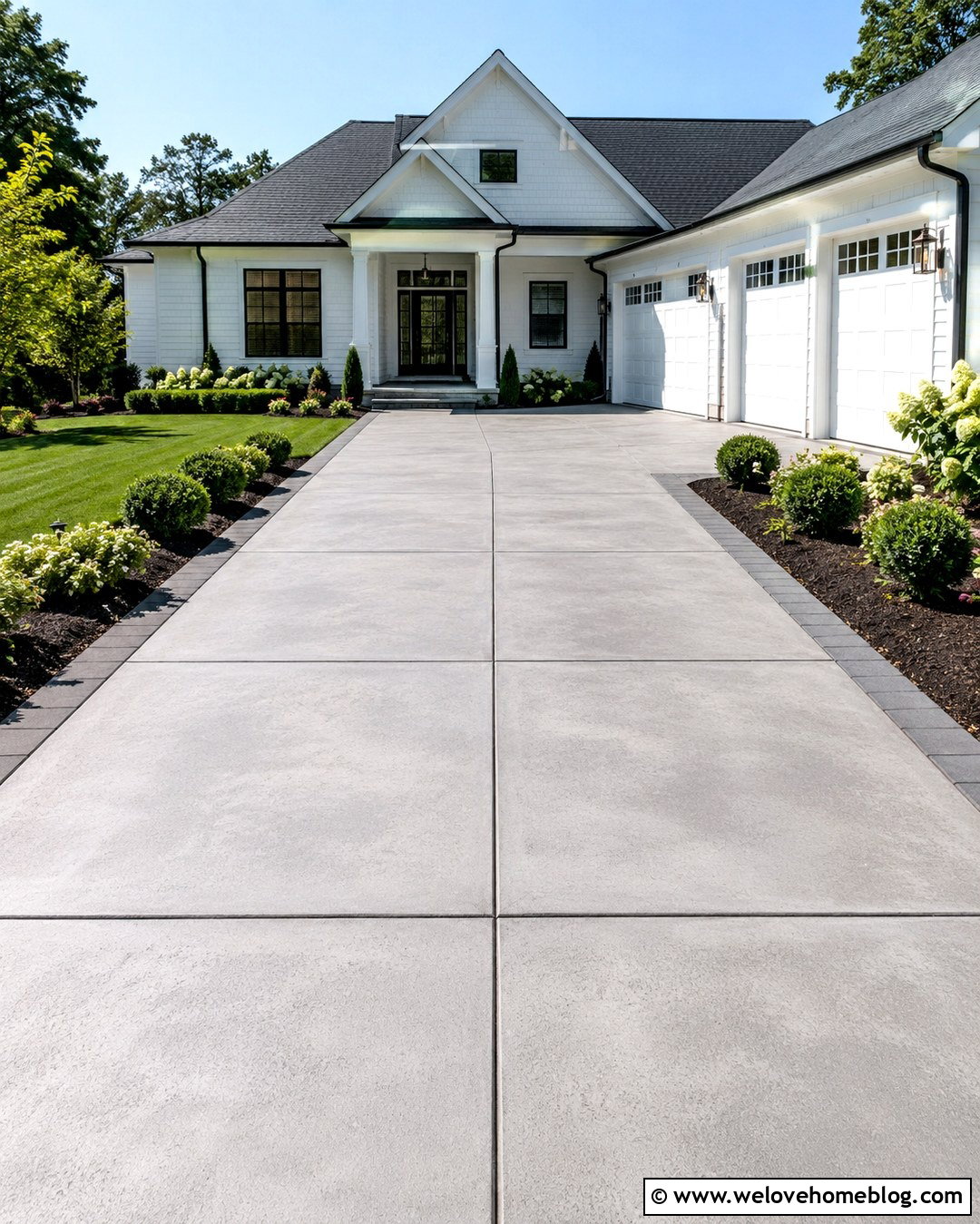
A smooth gray poured concrete driveway offers a versatile foundation for nearly any white exterior. It feels clean without creating the intense contrast of black asphalt. Choose a medium-gray tone if the home has black trim, or a warmer greige concrete if the facade includes beige stone, natural wood, or cream-colored paint. A straight driveway with evenly spaced control joints suits a suburban home and keeps the design orderly. Frame the pavement with dark mulch beds, rounded evergreen shrubs, and low seasonal flowers. Continue the same concrete into a broad front walkway to make the entrance feel connected. For extra definition, use a single soldier-course border of gray pavers. The subtle color change adds detail without making the driveway look busy or overly decorative.
3. Exposed Aggregate Driveway For A White House
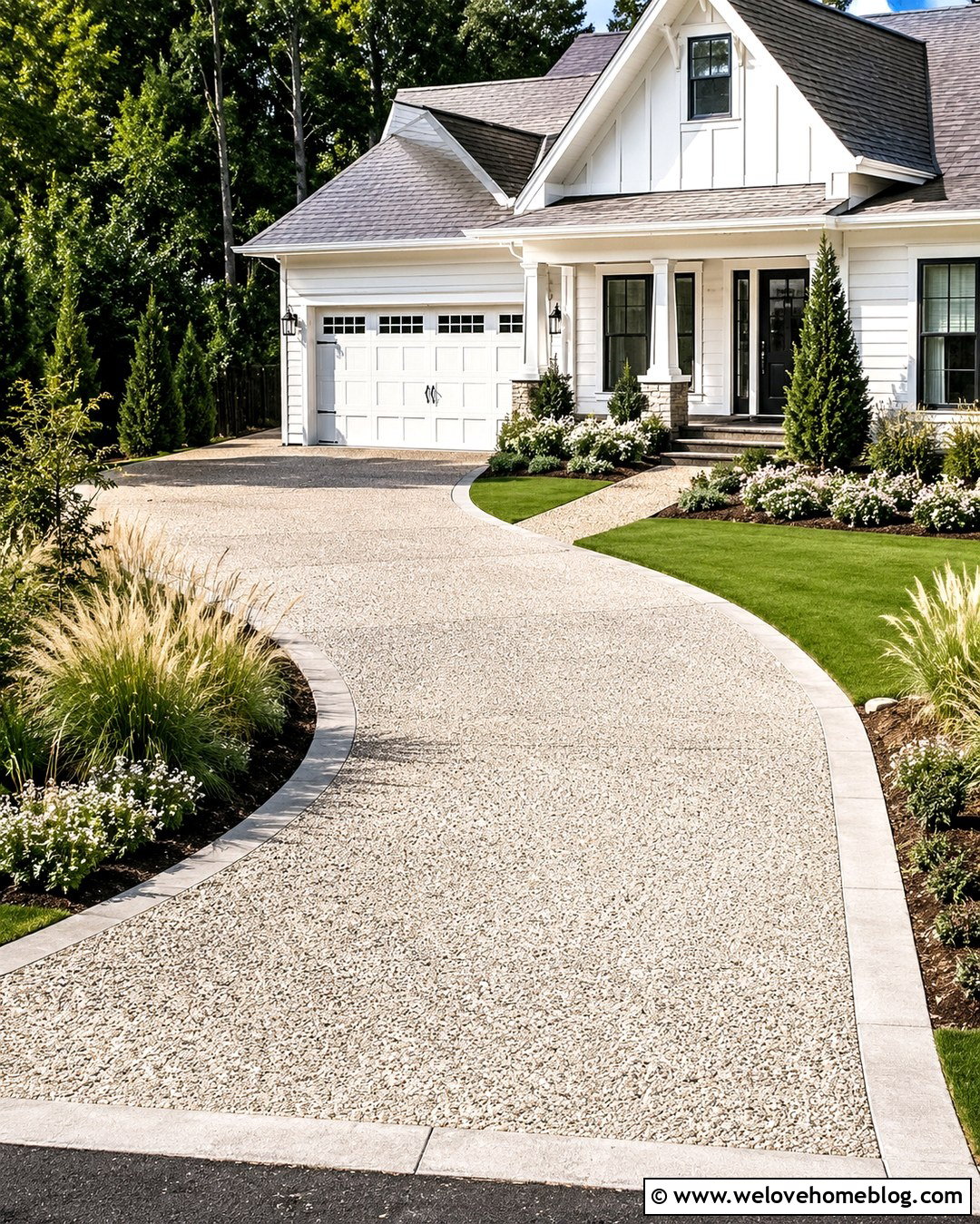
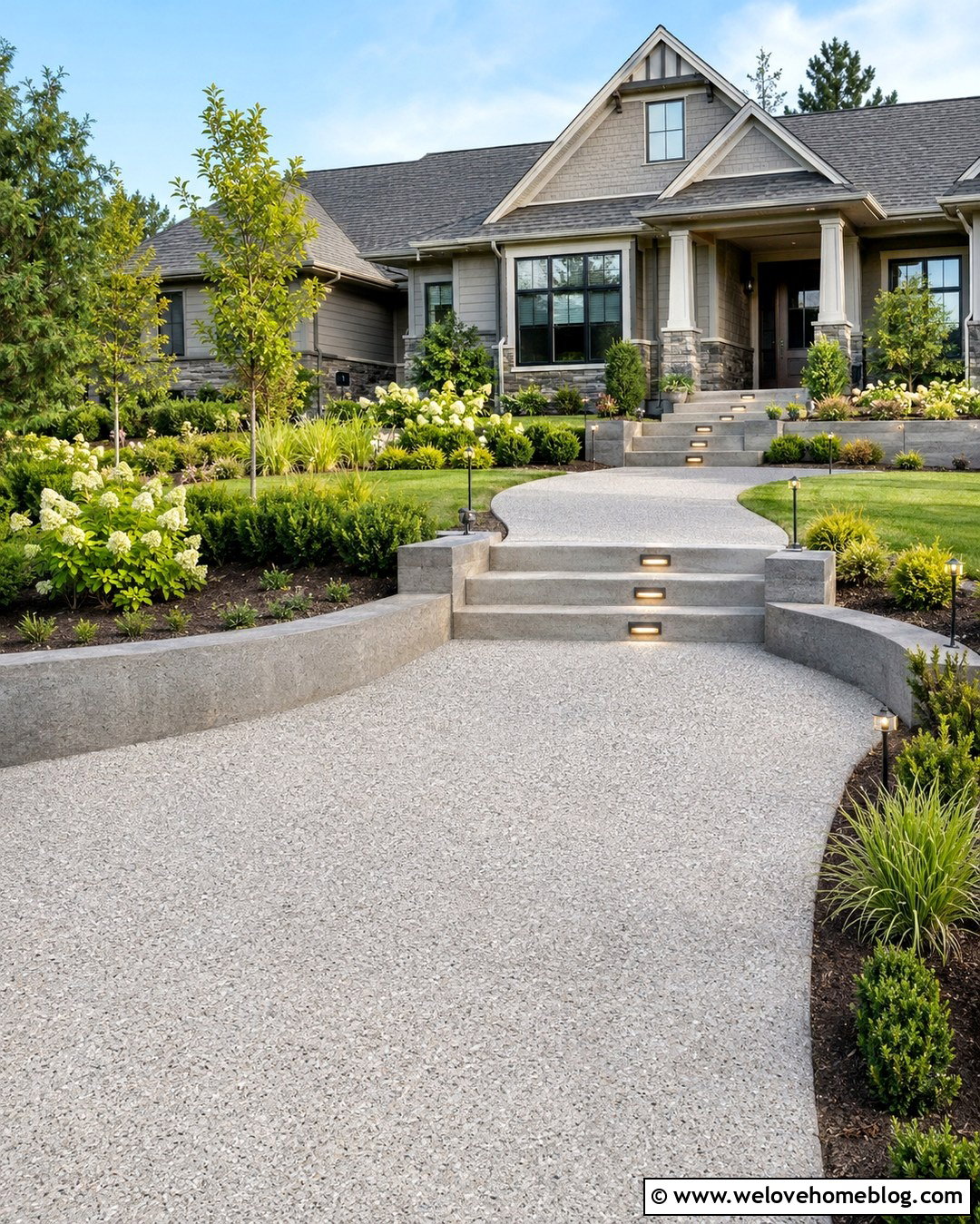
Exposed aggregate gives a white house driveway more texture while keeping the color palette understated. The surface reveals small stones within the concrete, creating a speckled finish that can hide light dirt and everyday marks better than perfectly smooth pavement. Select a mix containing gray, tan, and cream stones to complement both cool and warm white exteriors. A gently curved layout works especially well with a craftsman or updated ranch home. Define the outer edges with smooth concrete bands for a neat, tailored appearance. Around the curve, plant compact evergreens, feather reed grass, and flowering ground cover. A coordinating aggregate walkway can lead toward the porch. Keep the garage apron wide and open so the texture remains visible and the driveway still feels practical.
4. Concrete Slab Driveway With Grass Joints
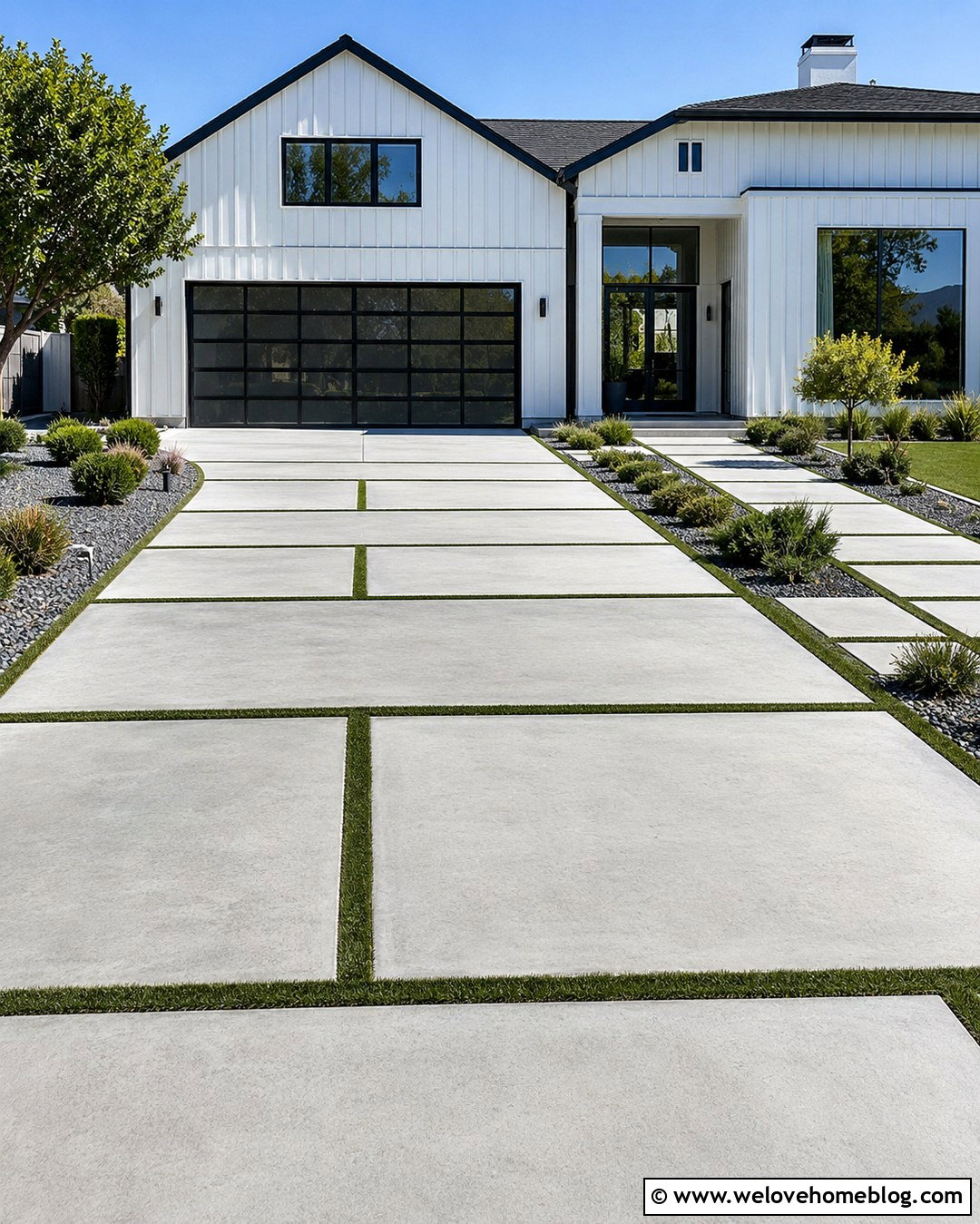
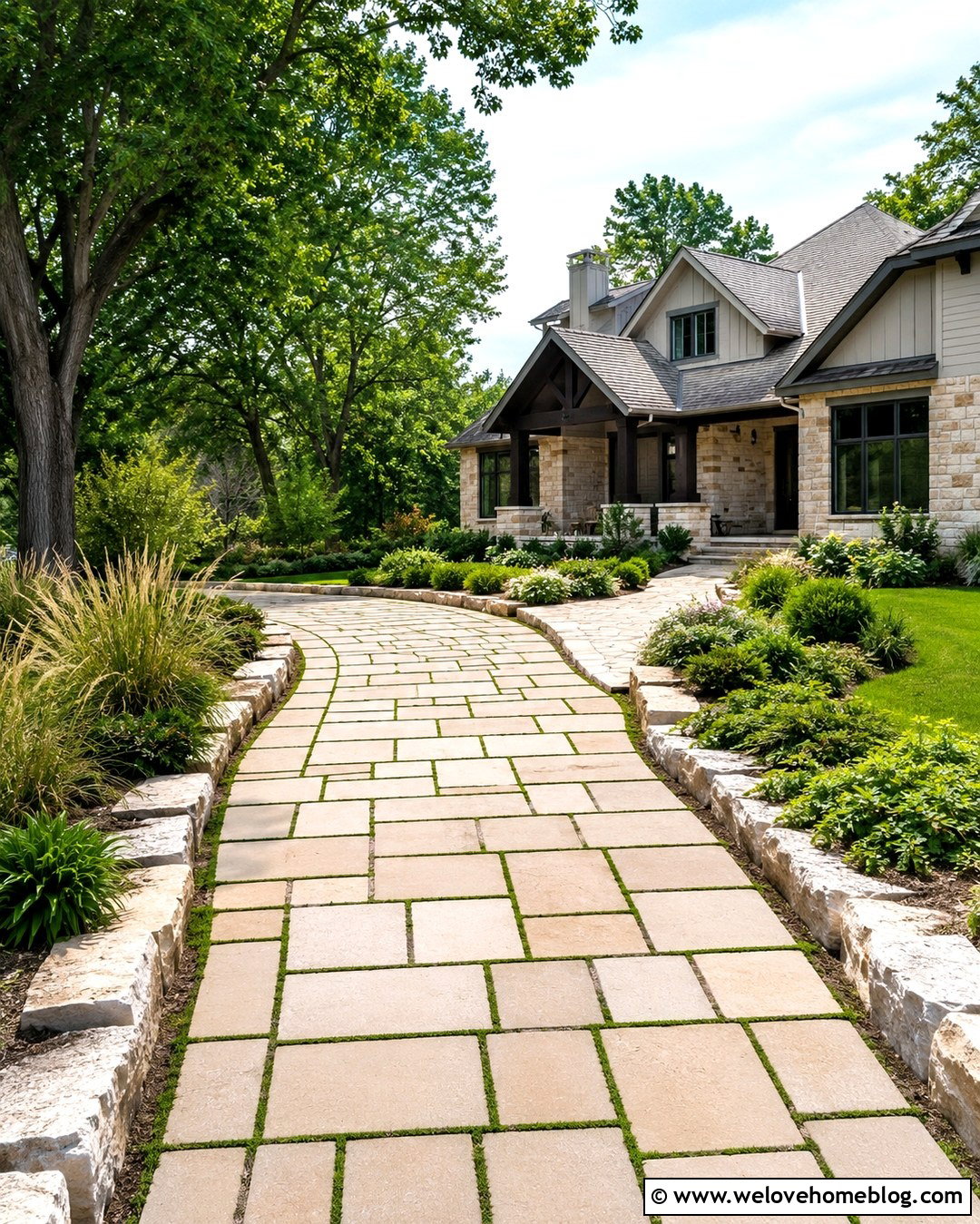
Large rectangular concrete slabs separated by narrow grass joints create a fresh, architectural look in front of a modern white house. The strong geometry works best with flat roofs, black window frames, vertical siding, and simple garage doors. Use pale gray poured concrete so the driveway remains distinct from the white facade without looking heavy. Arrange the slabs in a straight grid or a slightly staggered layout leading directly to the garage. Artificial turf can provide consistent green joints, while low-growing natural ground cover offers a softer alternative in suitable climates. Surround the driveway with ornamental grasses, sculptural shrubs, and restrained gravel beds. A matching slab walkway can branch toward the entrance, allowing the driveway and front path to read as one carefully planned hardscape.
5. Red Brick Driveway For A White Colonial House
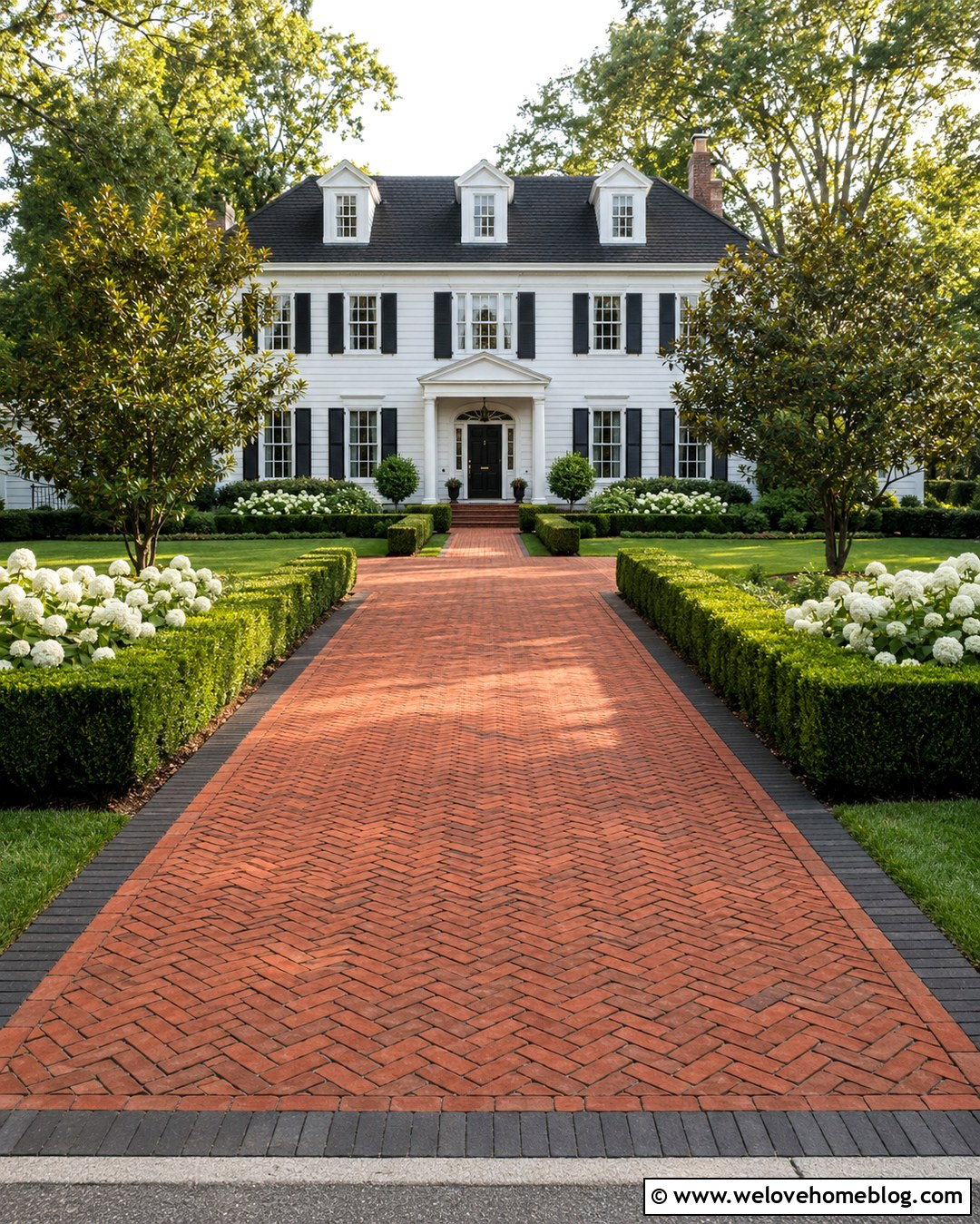
Red clay brick pavers introduce welcome warmth against a white Colonial exterior. A herringbone pattern gives the driveway visual movement and helps the broad paved area feel detailed rather than flat. Use darker brick along the edges to frame the pattern and create a polished transition to the lawn. A straight, symmetrical layout reinforces the home’s traditional architecture, especially when paired with black shutters, a centered front door, and formal planting beds. Line the approach with clipped boxwoods, hydrangeas, and small ornamental trees placed at balanced intervals. Continue the brick into the front walkway or porch steps for a unified entrance. Slight variations in red, brown, and charcoal tones will make the surface feel established and prevent the brick from looking overly uniform.
6. Gray Paver Driveway For A White Farmhouse
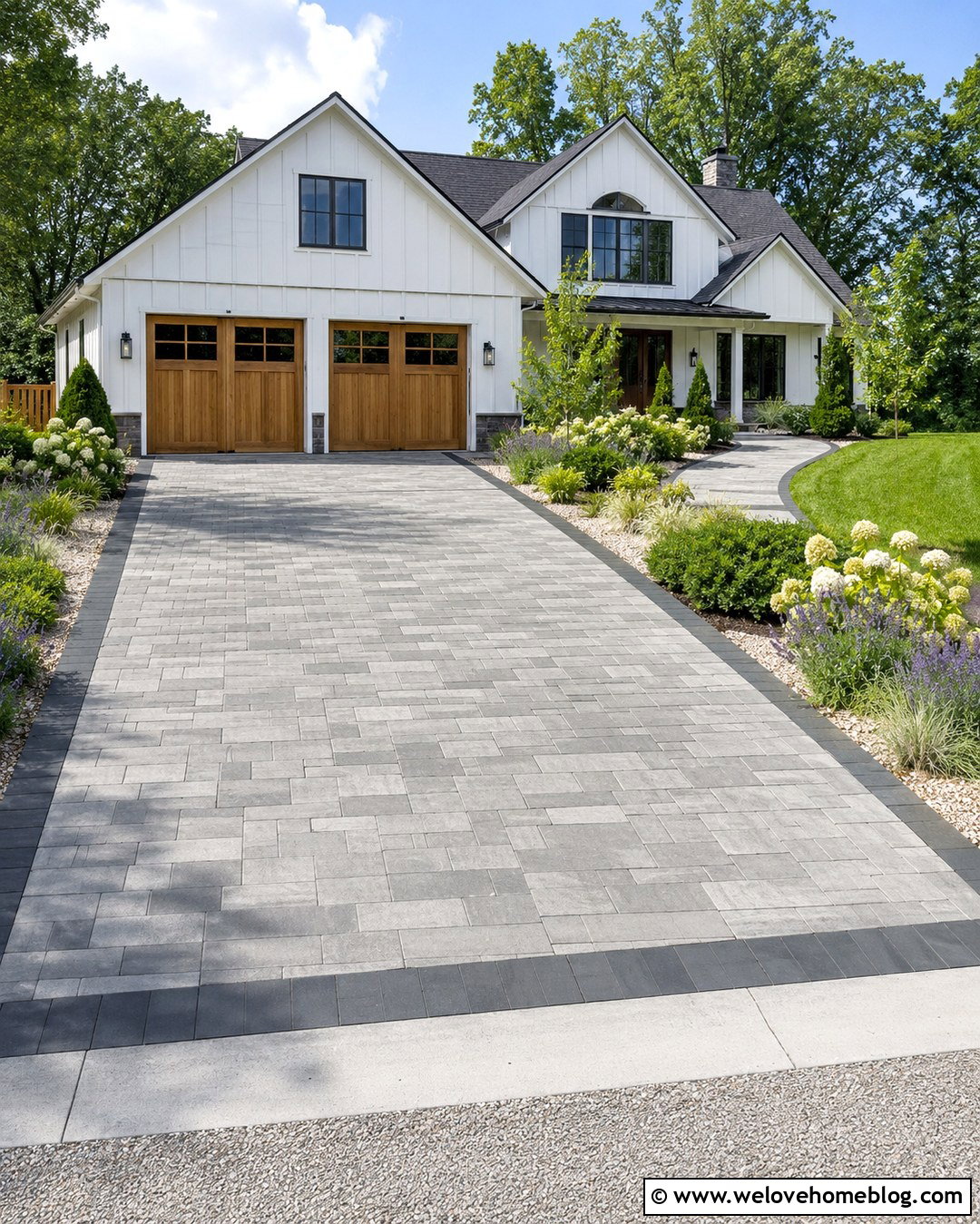
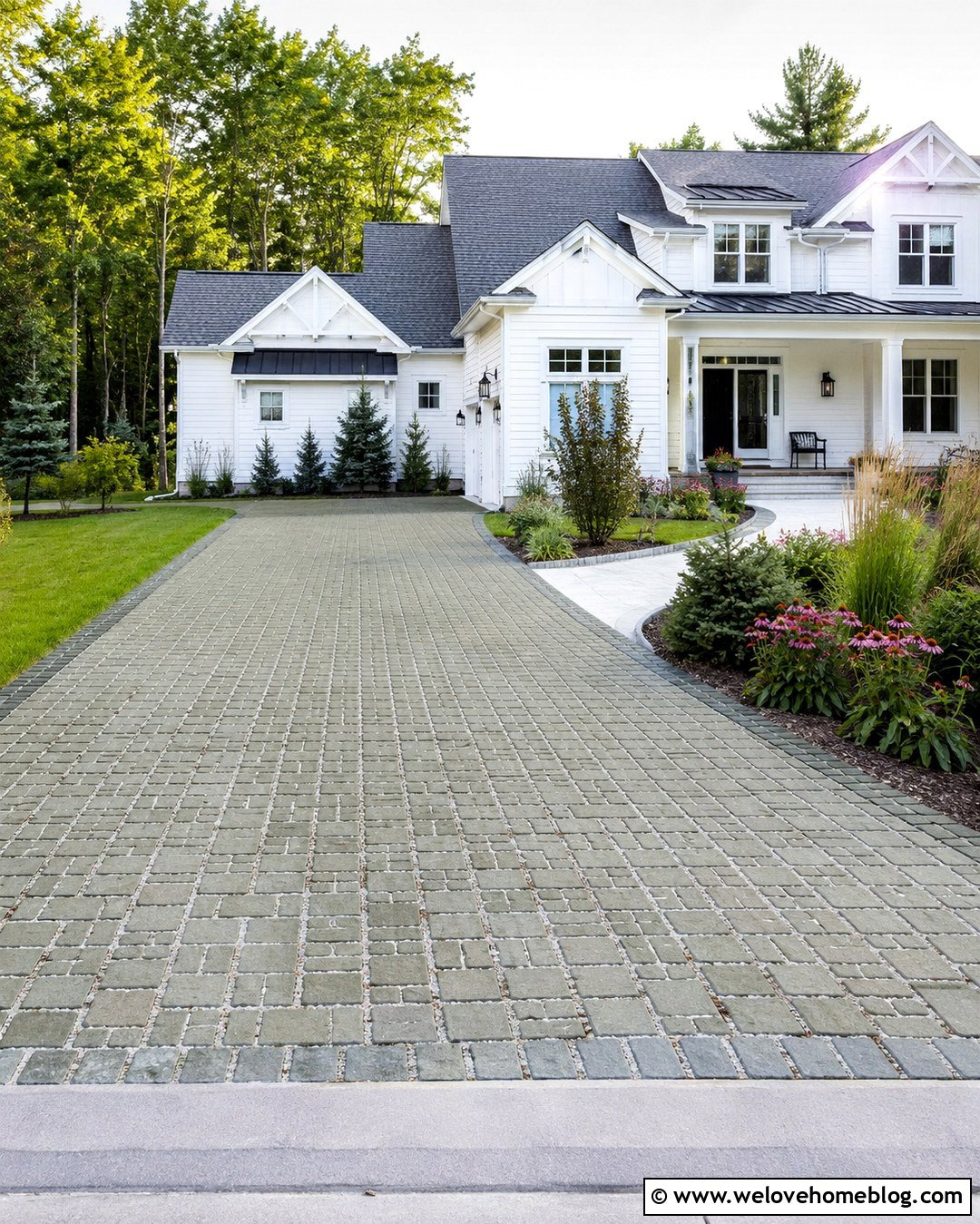
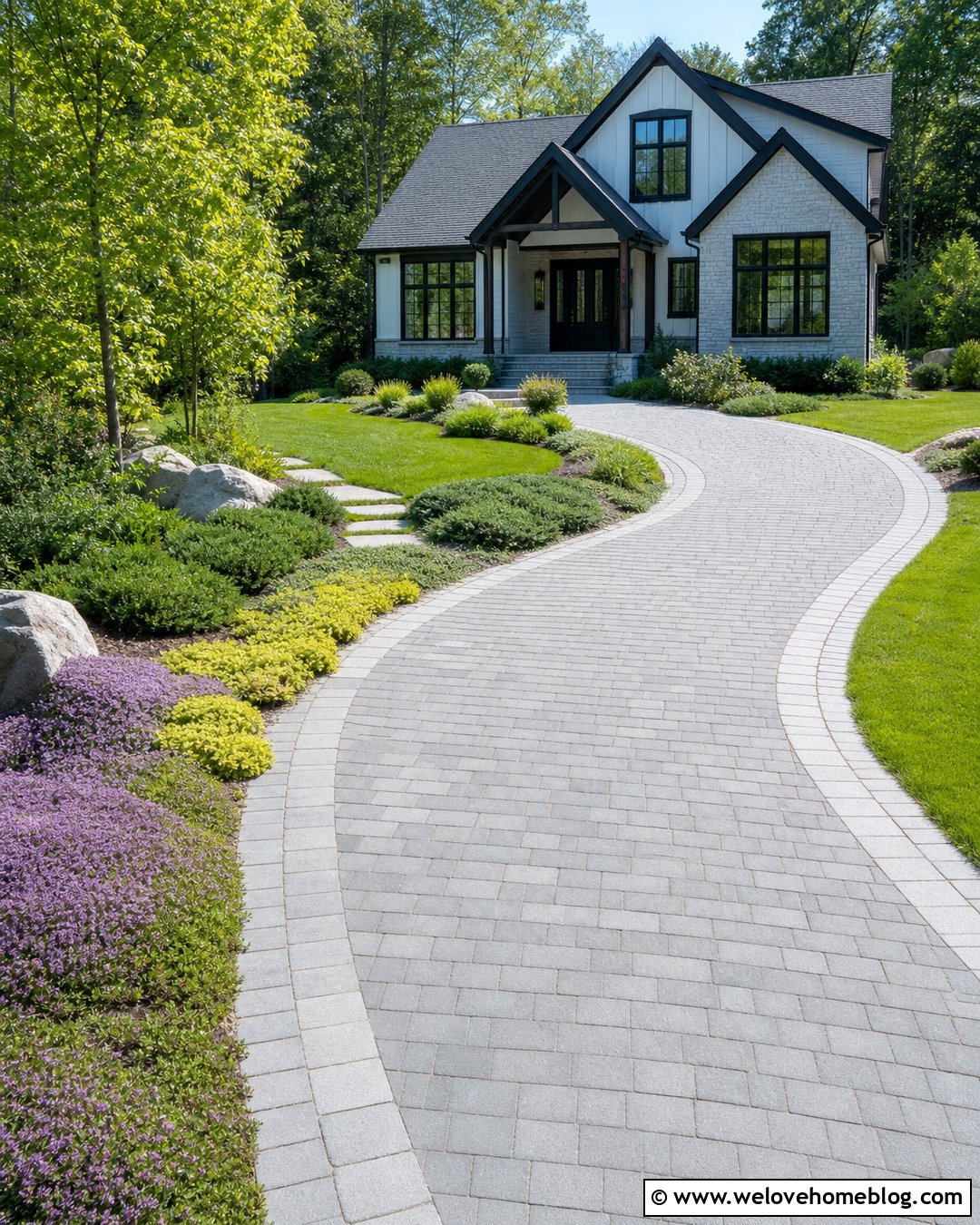
A gray concrete paver driveway balances the relaxed character of a white farmhouse with a clean, durable-looking surface. Choose rectangular pavers in two or three blended gray shades, then install them in a running bond or subtle modular pattern. A wide, straight layout works well when it leads toward natural wood or black garage doors. Border the driveway with darker charcoal pavers to sharpen the edges and echo black exterior accents. On each side, combine green lawn with loose planting beds filled with hydrangeas, catmint, ornamental grasses, and compact evergreens. A pale gravel strip can improve the transition between pavers and plants. Complete the design with a matching paver walkway curving gently toward the porch, preserving the welcoming and informal farmhouse atmosphere.
7. Cobblestone Driveway For A White Cottage
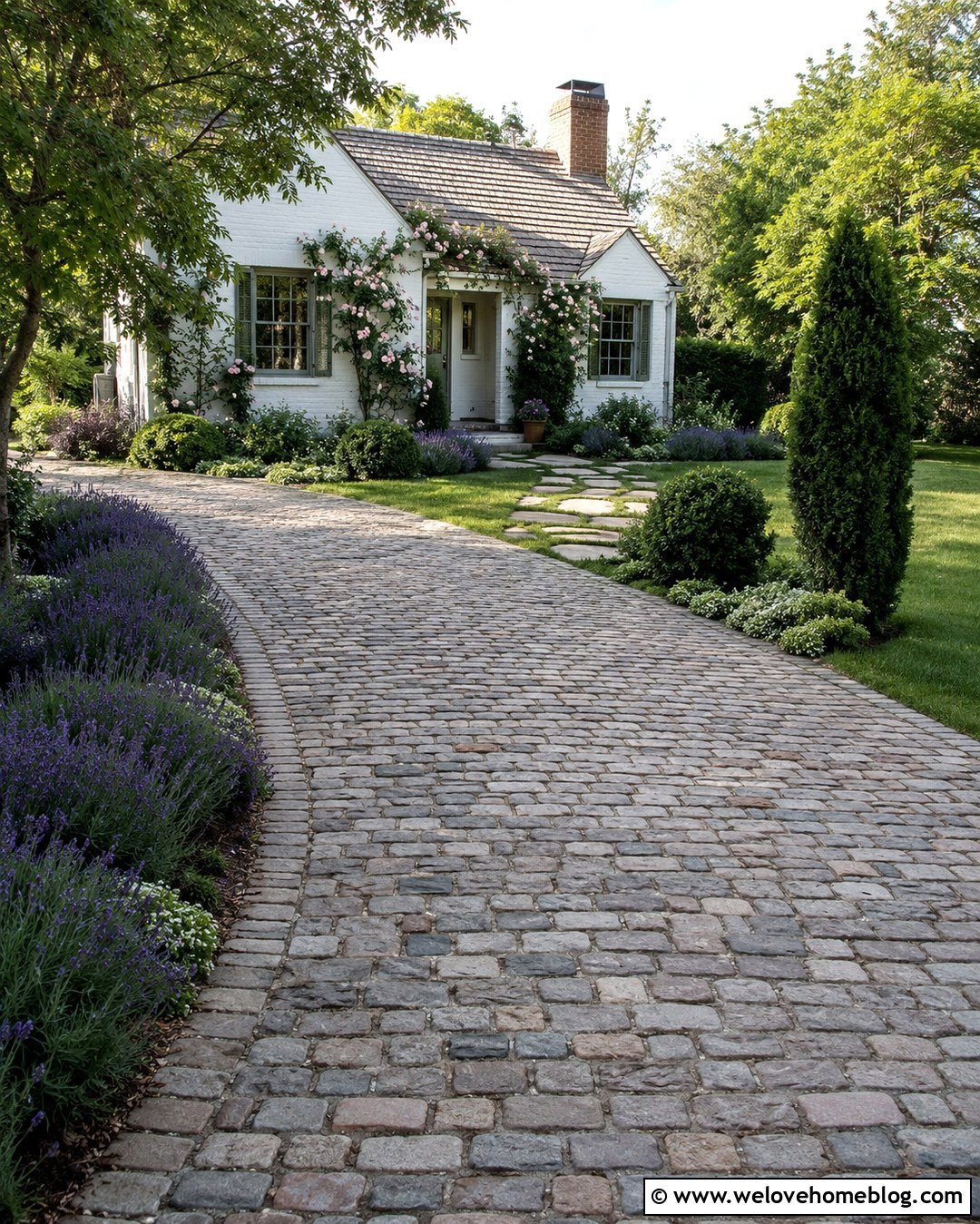
Cobblestone can make a small white cottage feel settled into its landscape rather than disconnected from it. Choose weathered gray and taupe cobbles with soft color variation, avoiding an overly dark surface that could overwhelm a modest facade. A gently winding driveway feels more natural than a rigid straight line and allows planting beds to wrap around the pavement. Use flush cobblestone edging so the border blends seamlessly with the main surface. Lavender, roses, creeping thyme, and compact evergreen shrubs can soften the sides without narrowing the driving space. Connect the driveway to the front door with a matching cobblestone path or irregular flagstone walkway. The finished look should feel textured and inviting, with enough structure to remain tidy throughout every season.
8. Pea Gravel Driveway For A White House
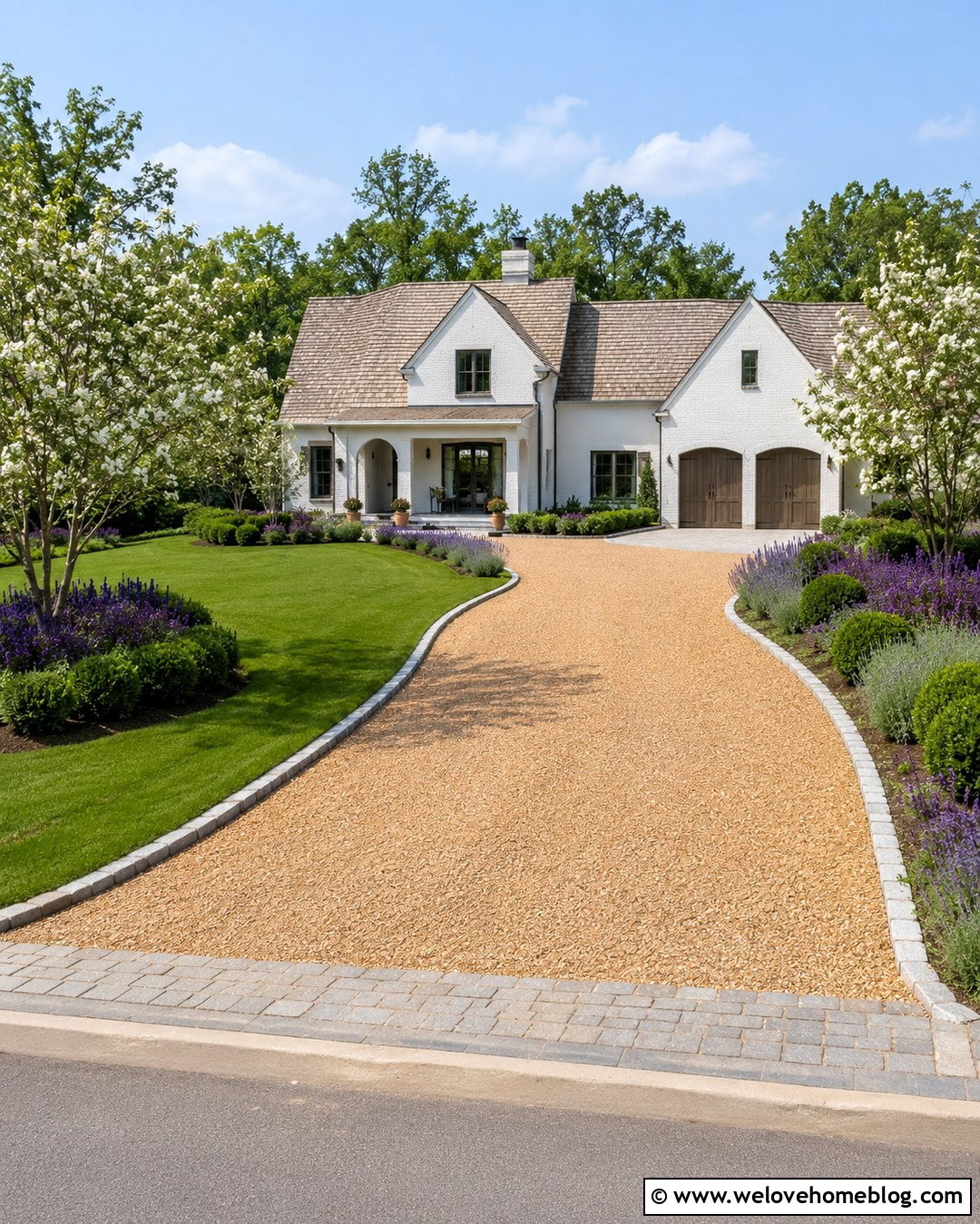
Warm beige pea gravel creates a relaxed driveway that pairs beautifully with white siding, painted brick, or limewashed masonry. Use a slightly curved layout to prevent the loose material from appearing like a basic rectangular parking pad. Solid edging is essential, so contain the gravel with steel, brick, or granite set level with the surface. A compacted base beneath the decorative layer helps maintain a more stable approach. Add wide planting beds with lavender, salvia, boxwoods, and small flowering trees along the curve. Near the garage, install a paved apron to create a cleaner transition and keep loose stones away from the doors. The combination of warm gravel, green planting, and a bright facade produces an approachable look suited to cottages and country-inspired homes.
9. Crushed Limestone Driveway For A White Country House
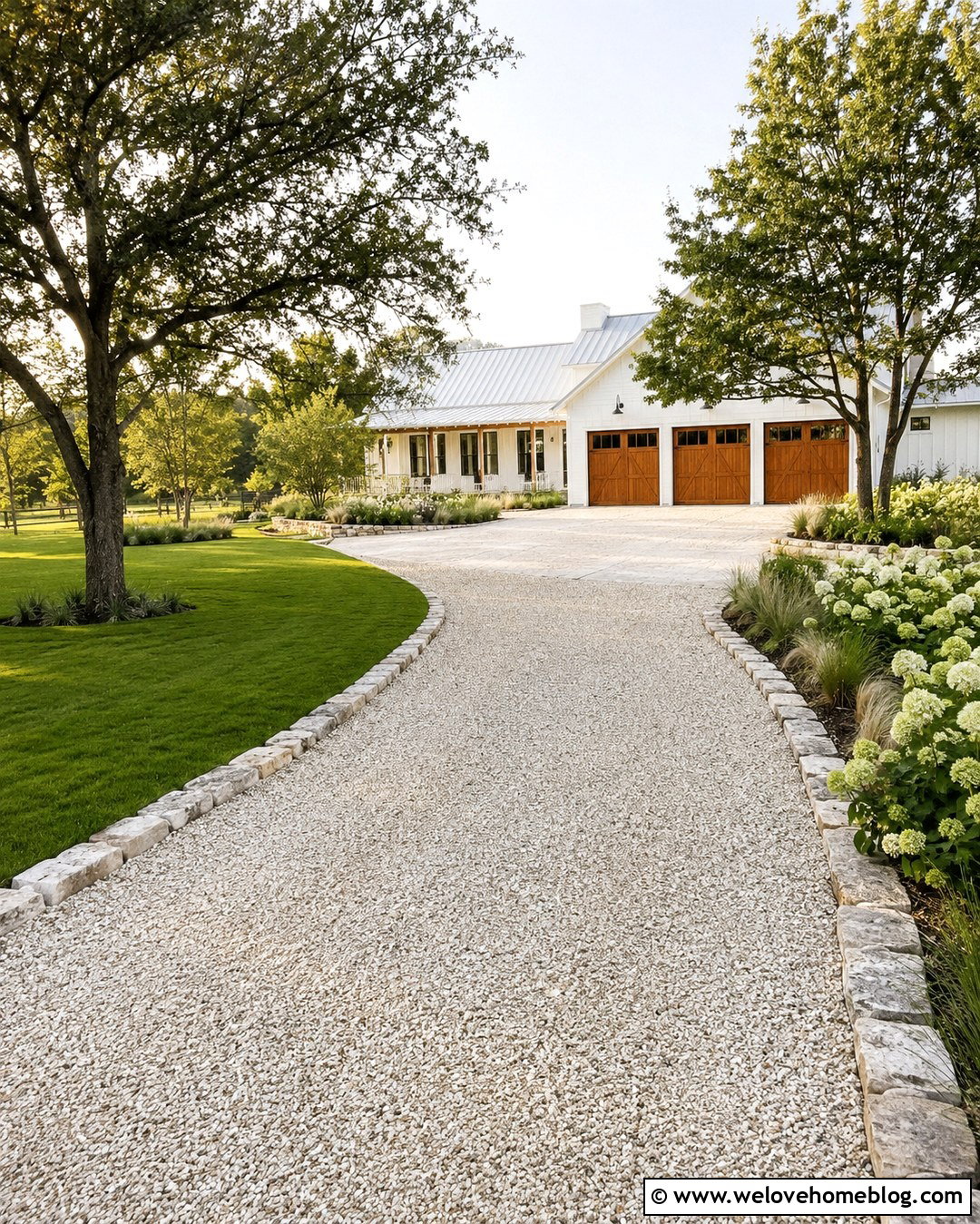
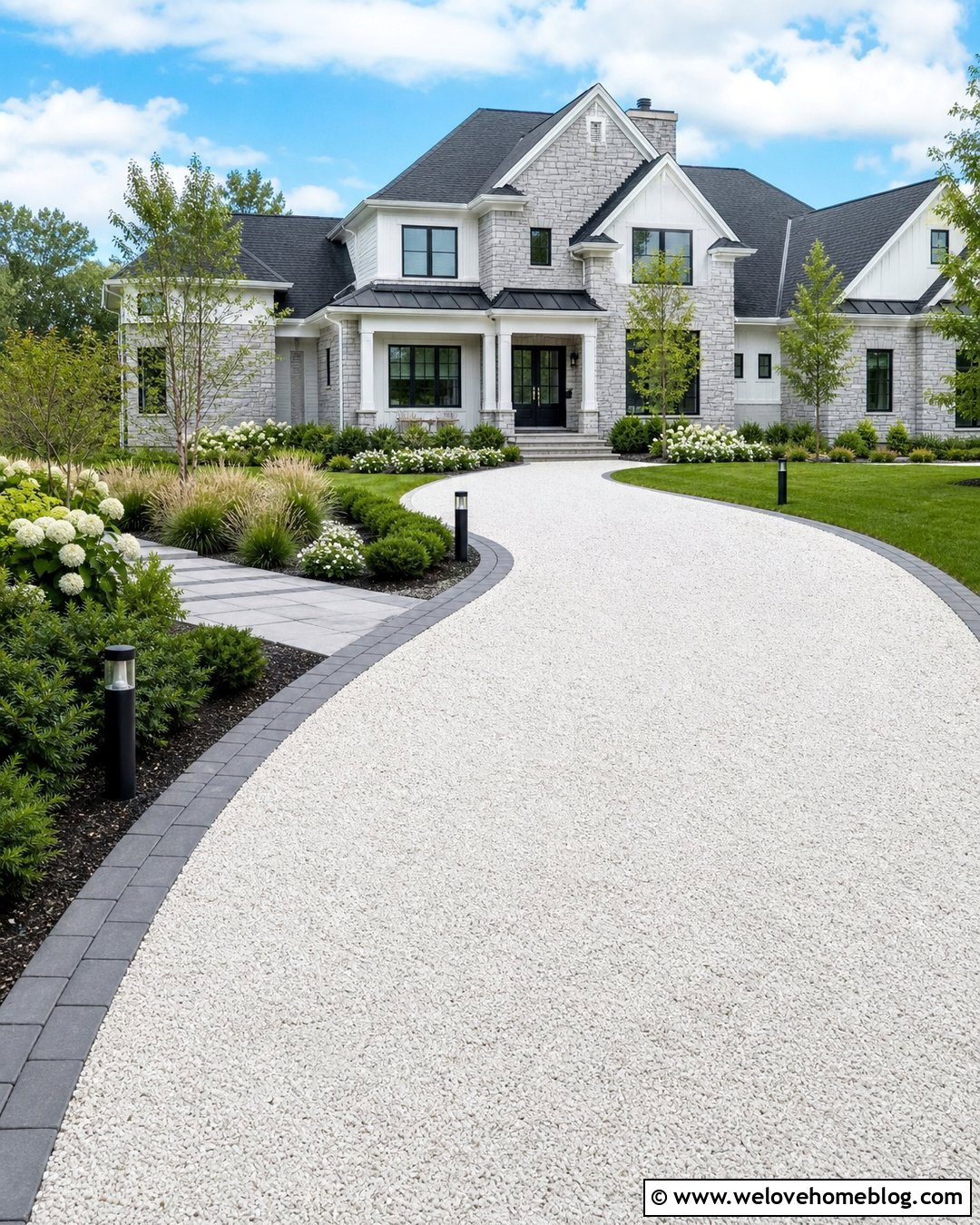
A crushed limestone driveway brings subtle texture to a white country house without introducing strong color contrast. Its pale cream and soft gray tones work especially well with warm white paint, natural timber accents, and a metal roof. Design the driveway as a long, sweeping curve that reveals the home gradually instead of running directly across the front yard. Edge the surface with larger limestone blocks or a narrow strip of darker gravel. This prevents the boundaries from disappearing into the surrounding lawn. Plant native grasses, hydrangeas, and evenly spaced shade trees along the approach. A broad stone apron near the garage can reduce displaced gravel in high-traffic areas. The overall design feels rural and graceful while still maintaining a clearly organized arrival route.
10. Crushed Shell Driveway For A White Coastal House
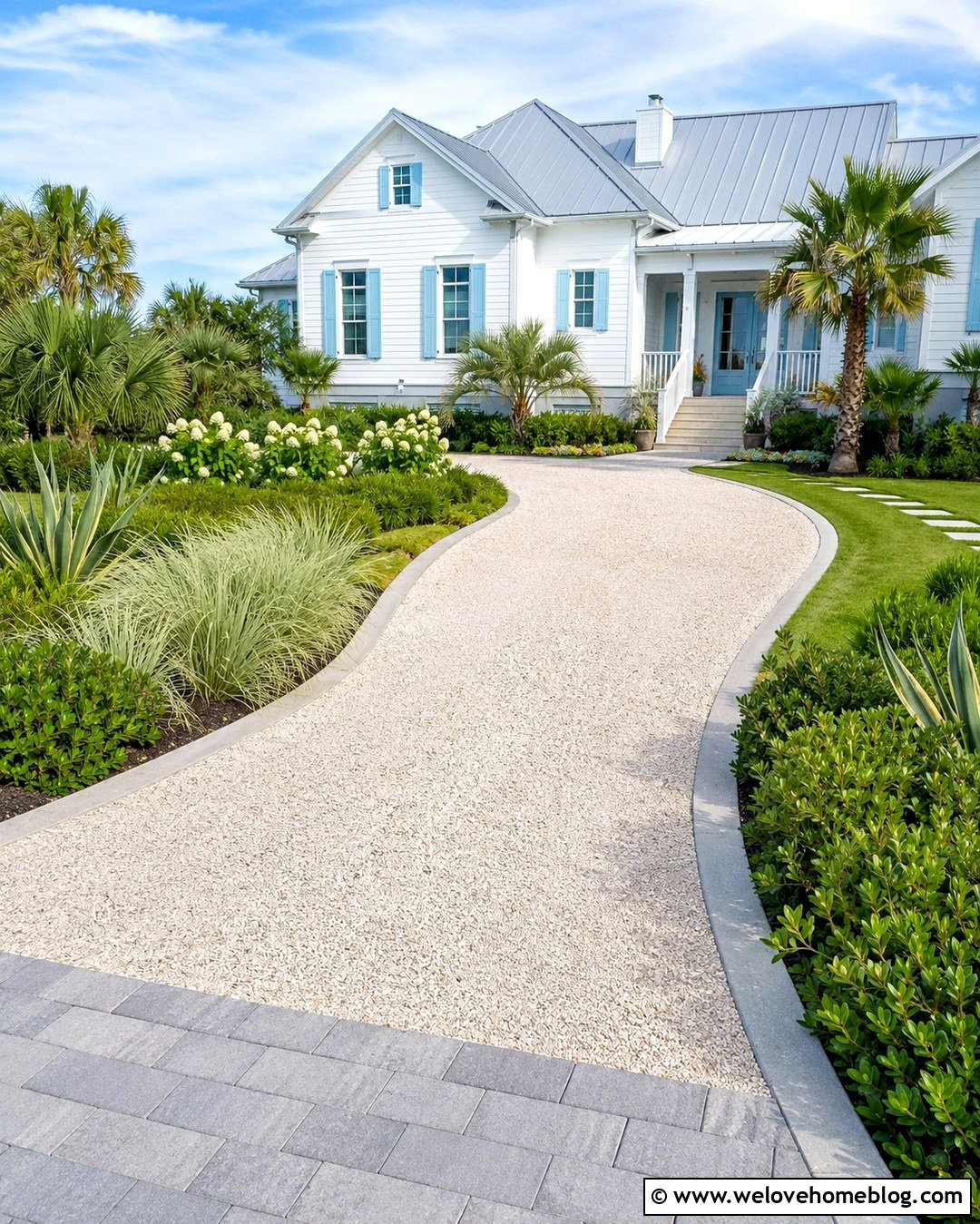
A crushed shell driveway reinforces the bright, breezy character of a white coastal home. The creamy surface looks especially natural beside pale blue shutters, weathered wood details, and soft gray roofing. Keep the driveway straight or gently curved, depending on the size of the property, and install sturdy stone or concrete edging to contain the loose material. At the street, add a light gray paver apron that creates a neat entrance and reduces shell movement. Salt-tolerant ornamental grasses, dwarf palms, hydrangeas, and low evergreen shrubs can frame the driveway without blocking coastal views. Use a simple stepping-stone walkway between the parking area and porch. Avoid excessive white decorative stone nearby, since a few green planting zones will provide needed contrast and depth.
11. Beige Resin-Bound Driveway For A White House
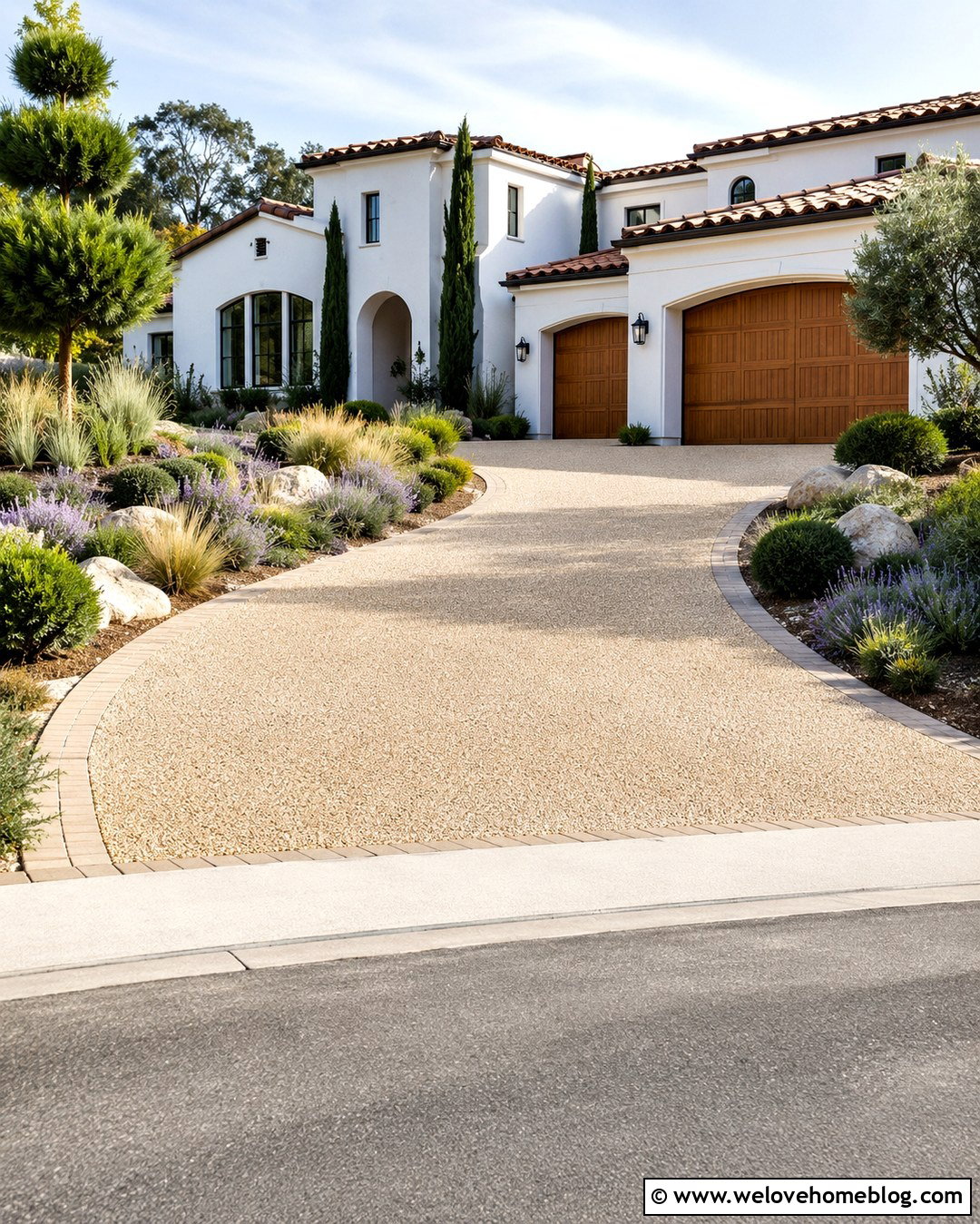
A beige resin-bound gravel driveway provides the appearance of fine natural stone with a smooth, visually consistent finish. Its warm coloring can soften a cool white facade and coordinate with wood garage doors, tan roofing, or limestone accents. A wide curved layout suits a transitional or Mediterranean-inspired house, while a straight design feels more contemporary. Frame the surface with a slim border of charcoal or taupe pavers to establish a clear outline. Place drought-tolerant planting beds around the driveway using ornamental grasses, lavender, compact shrubs, and sculptural evergreens. A matching resin-bound walkway can form a seamless connection to the front entrance. Keep contrasting materials limited to one or two tones so the refined surface remains the main feature rather than becoming part of a complicated pattern.
12. Circular Paver Driveway For A White House
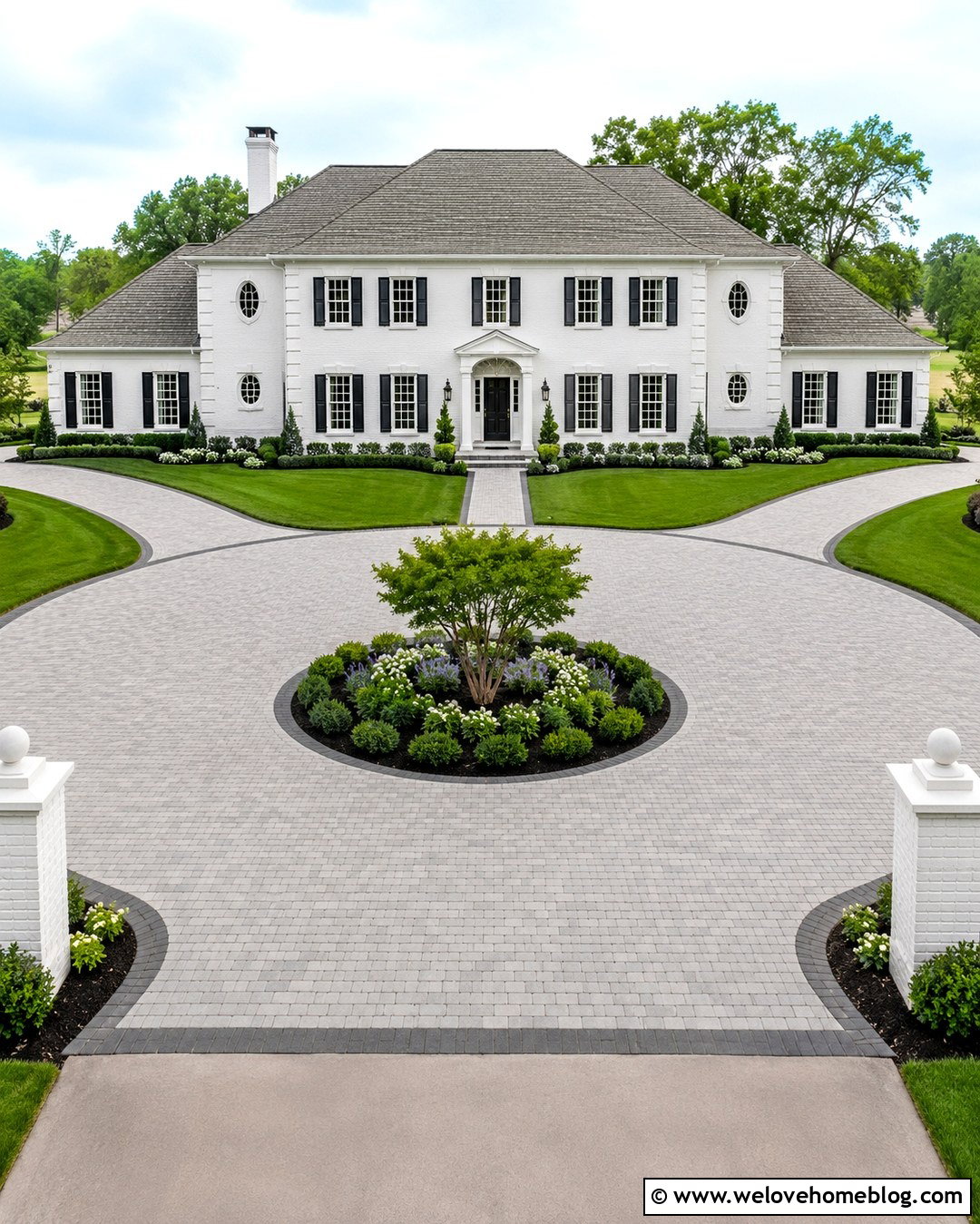
A circular driveway can create an impressive arrival while improving movement across a wide front yard. In front of a white house, use medium-gray concrete pavers to provide enough contrast without distracting from the architecture. Build the center island as a substantial landscape feature instead of leaving a small patch of lawn. One multi-stem ornamental tree surrounded by evergreen shrubs, flowering perennials, and dark mulch can anchor the circle. Define both driveway edges with charcoal paver bands, then repeat that material in the walkway to the front door. The turning area should feel open and balanced, with plantings kept low near entry and exit points. This complete layout works particularly well with symmetrical Colonial, Georgian, and large modern farmhouse exteriors.
13. Curved Gravel Driveway With Trees
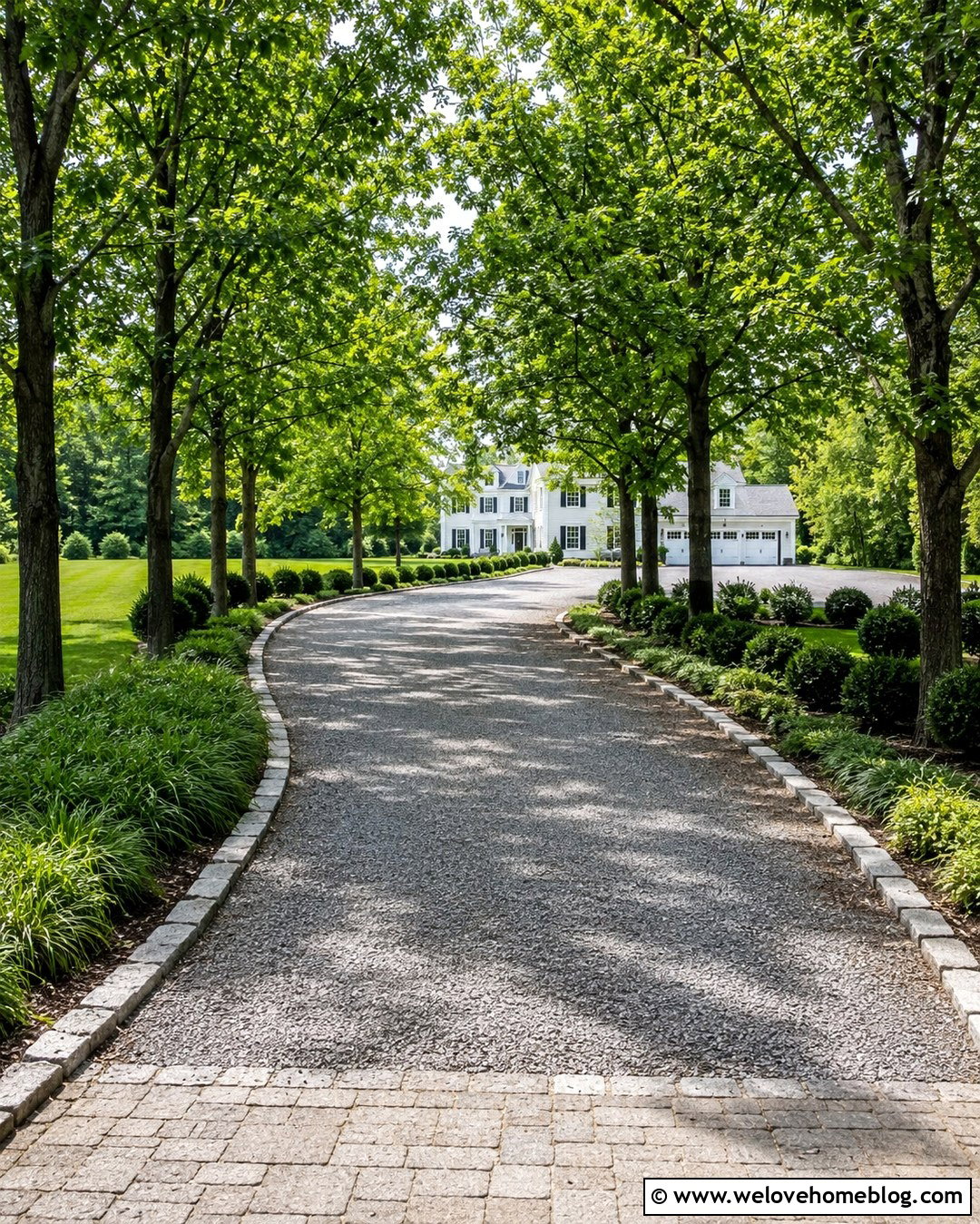
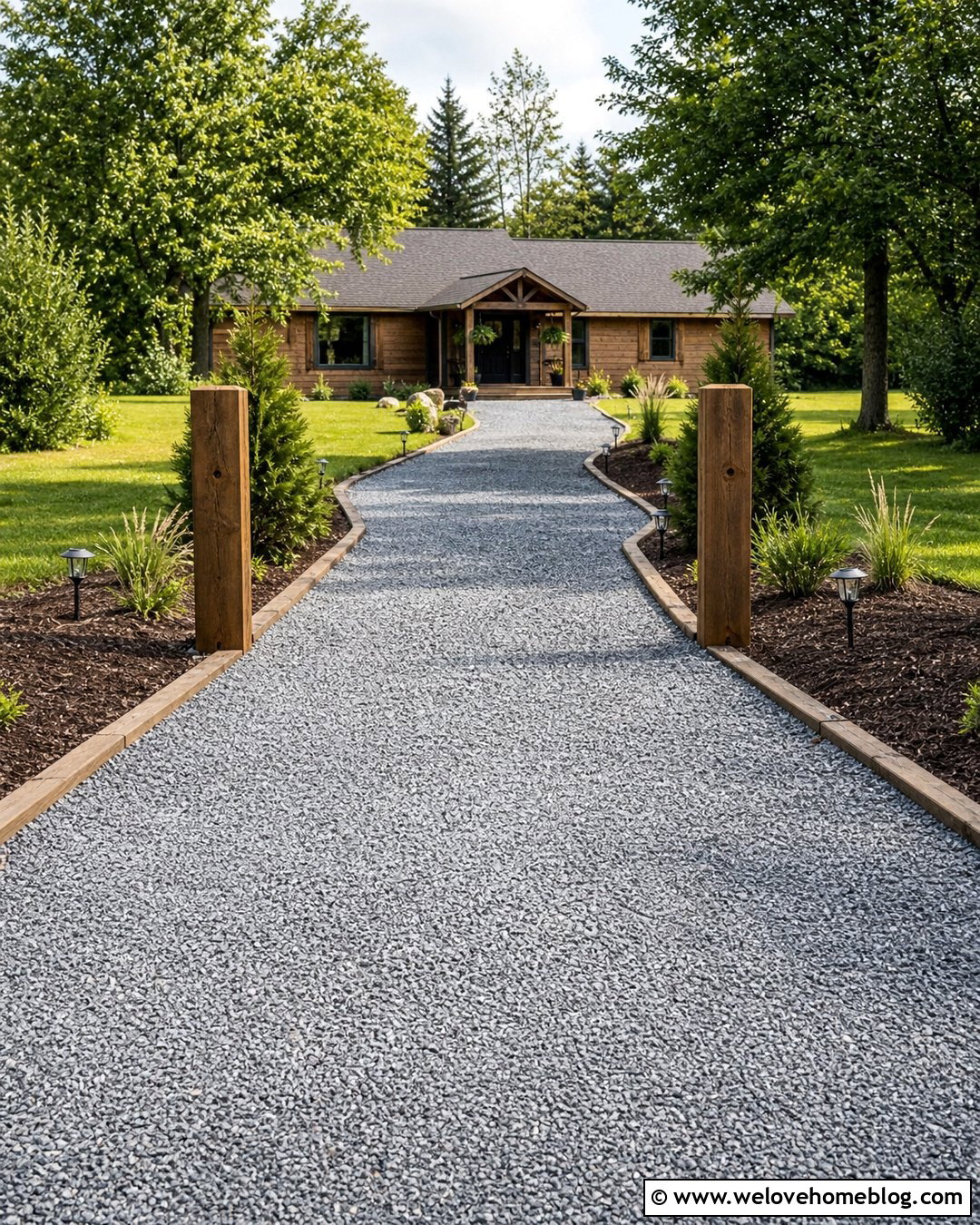
A tree-lined gravel driveway gives a white home a memorable approach without relying on elaborate paving patterns. Choose compacted gray gravel for a cool, understated contrast with the facade. Shape the driveway in a broad curve so the house appears gradually between the trees. Granite cobbles or dark steel edging can keep the loose stone contained along the lawn. Select trees that fit the property’s mature scale, leaving enough distance for roots, branches, and safe sightlines. Fill the lower planting areas with native grasses, ground cover, and repeated evergreen shrubs. Near the house, transition to a wider gravel parking court with a paved garage apron. The coordinated curve, tree spacing, borders, and parking area make the entire landscape feel intentional rather than simply rural.
14. Concrete Ribbon Driveway For A White Bungalow
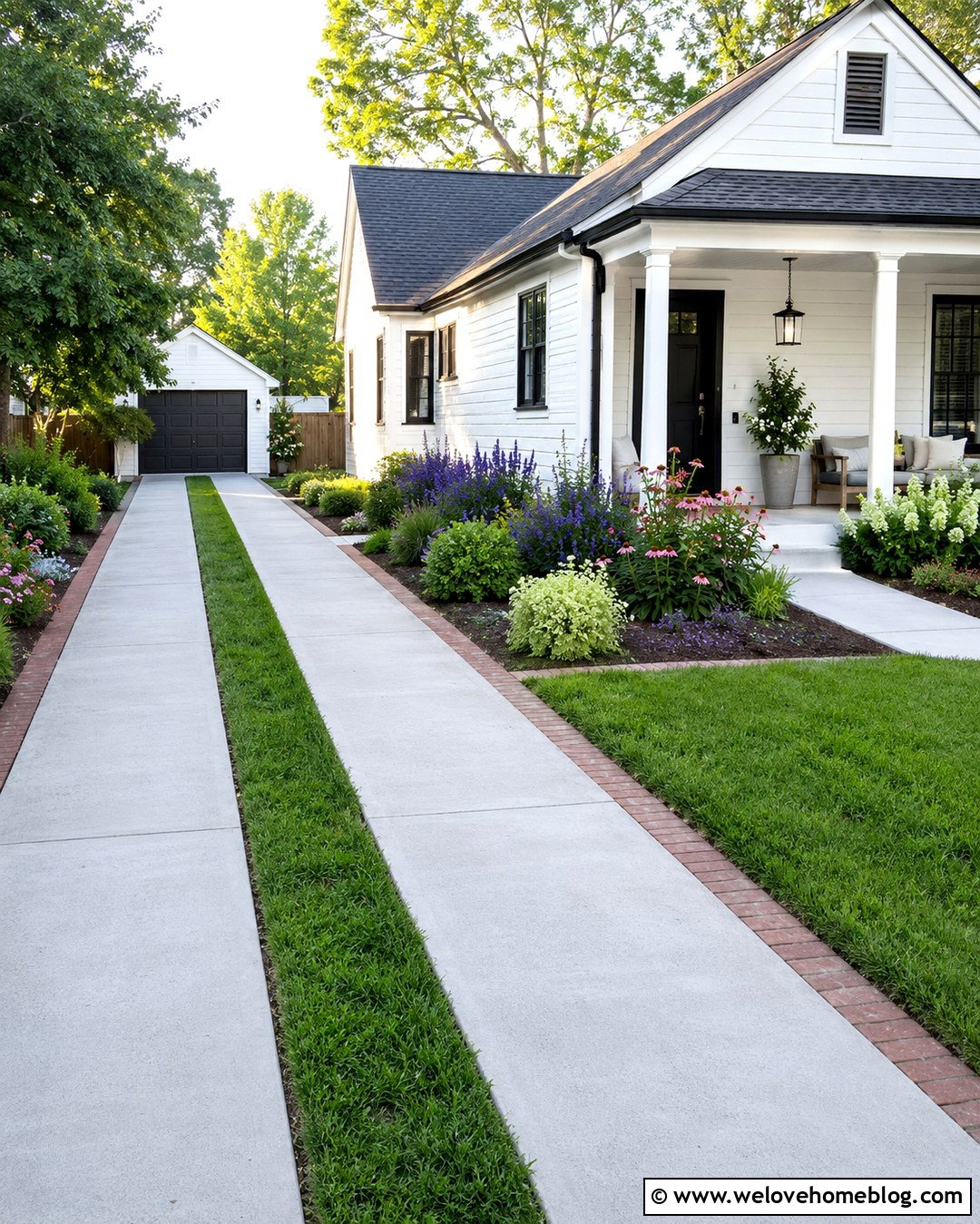
A concrete ribbon driveway uses two paved tracks with a planted strip running between them, making it an attractive option for a smaller white bungalow. The reduced amount of pavement preserves more visible greenery and helps the front yard feel less crowded. Use smooth light gray concrete tracks sized for normal vehicle tires, then fill the center with durable grass or low-growing ground cover. Brick edging can add warm contrast and connect the driveway with a brick porch or chimney. Keep the layout straight for easy navigation toward a detached garage. Along the outer edges, add cottage-style beds with salvia, coneflowers, dwarf shrubs, and ornamental grasses. A matching concrete walkway should remain separate so visitors have a clear, comfortable path to the front entrance.
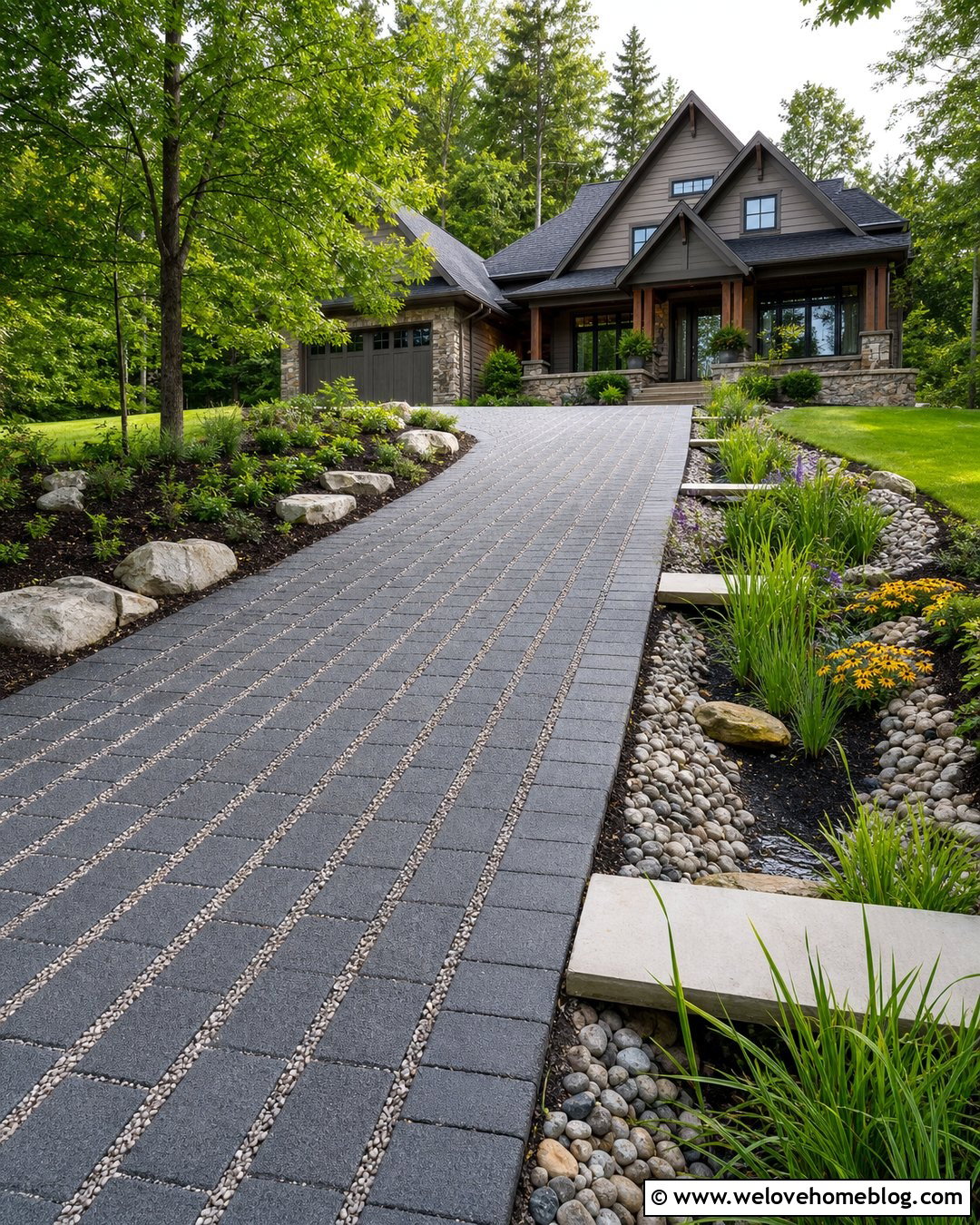
15. Permeable Paver Driveway For A White House
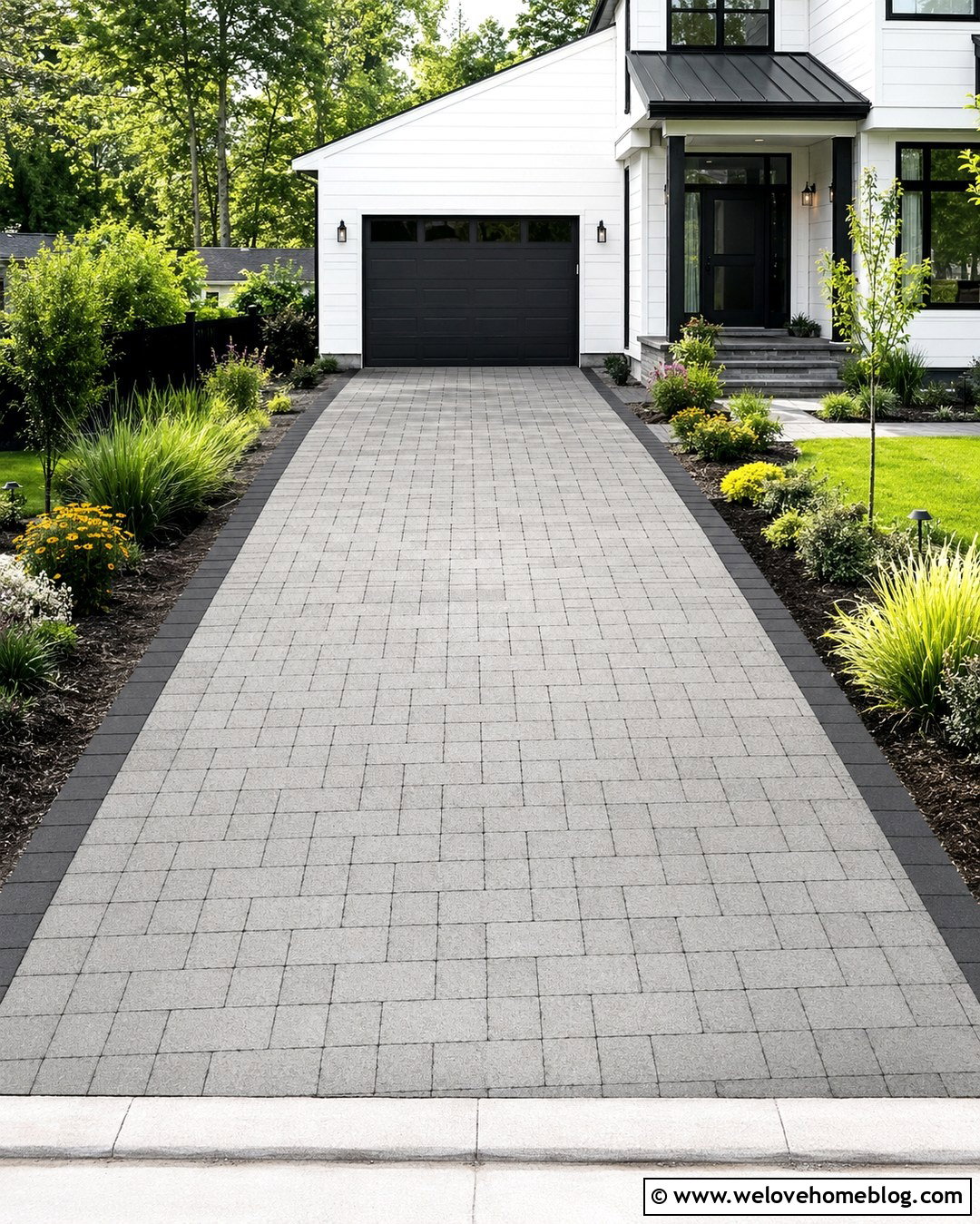
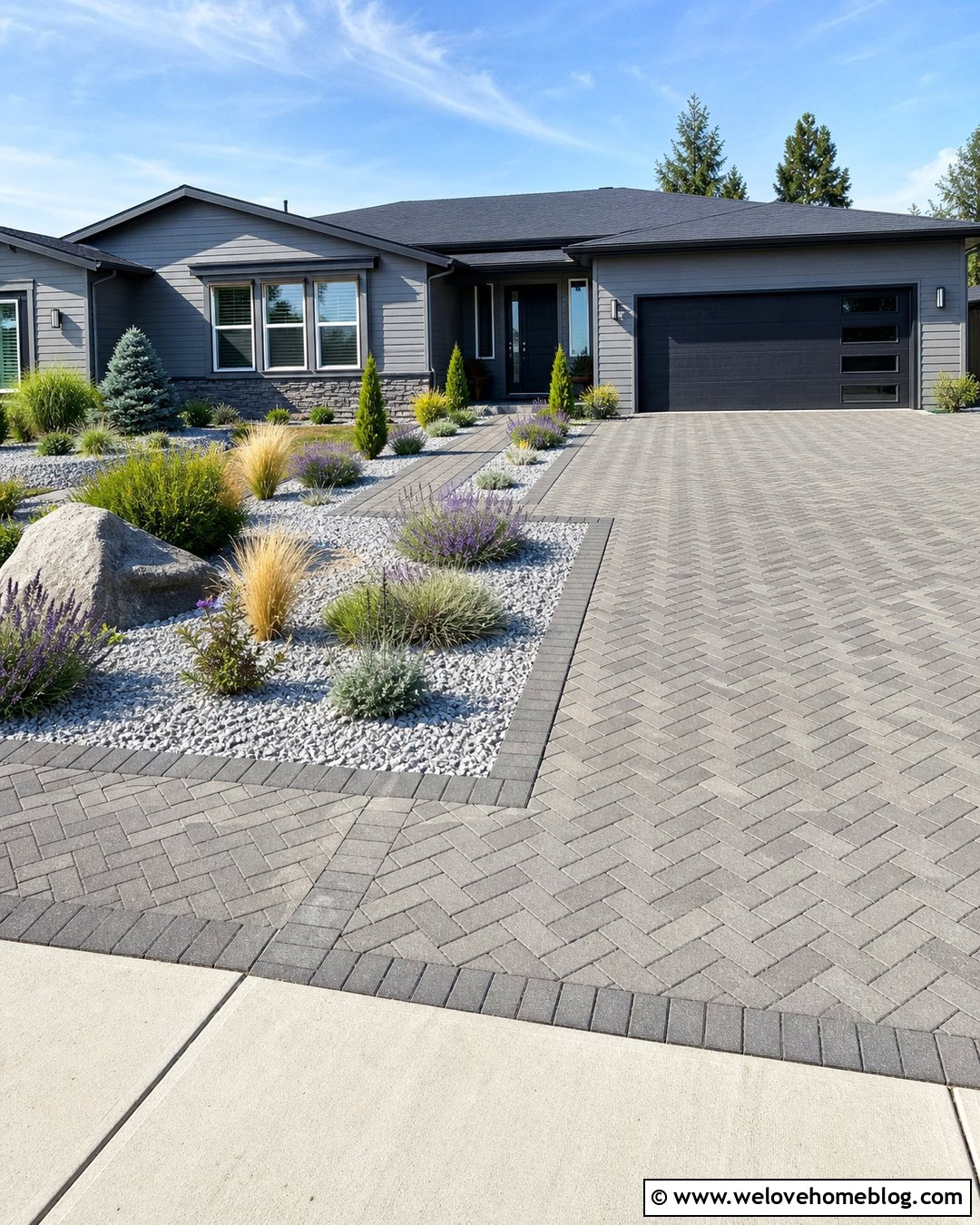
Permeable concrete pavers create a structured driveway with visible joints that give a white house exterior additional texture. Choose medium-gray pavers with charcoal aggregate filling the spaces, producing a graphic but neutral appearance. A straight driveway divided into broad rectangular fields works well with a contemporary or transitional facade. Use a darker paver border to hold the pattern together and distinguish it from the front walkway. Surround the hardscape with rain-friendly planting beds containing sedges, ornamental grasses, flowering perennials, and compact shrubs. A shallow planted drainage area can become part of the landscape rather than looking like an afterthought. Keep the garage apron and turning zones simple, allowing the repeated paver pattern, planted edges, and bright white architecture to form a balanced composition.
16. Stamped Concrete Driveway For A White House
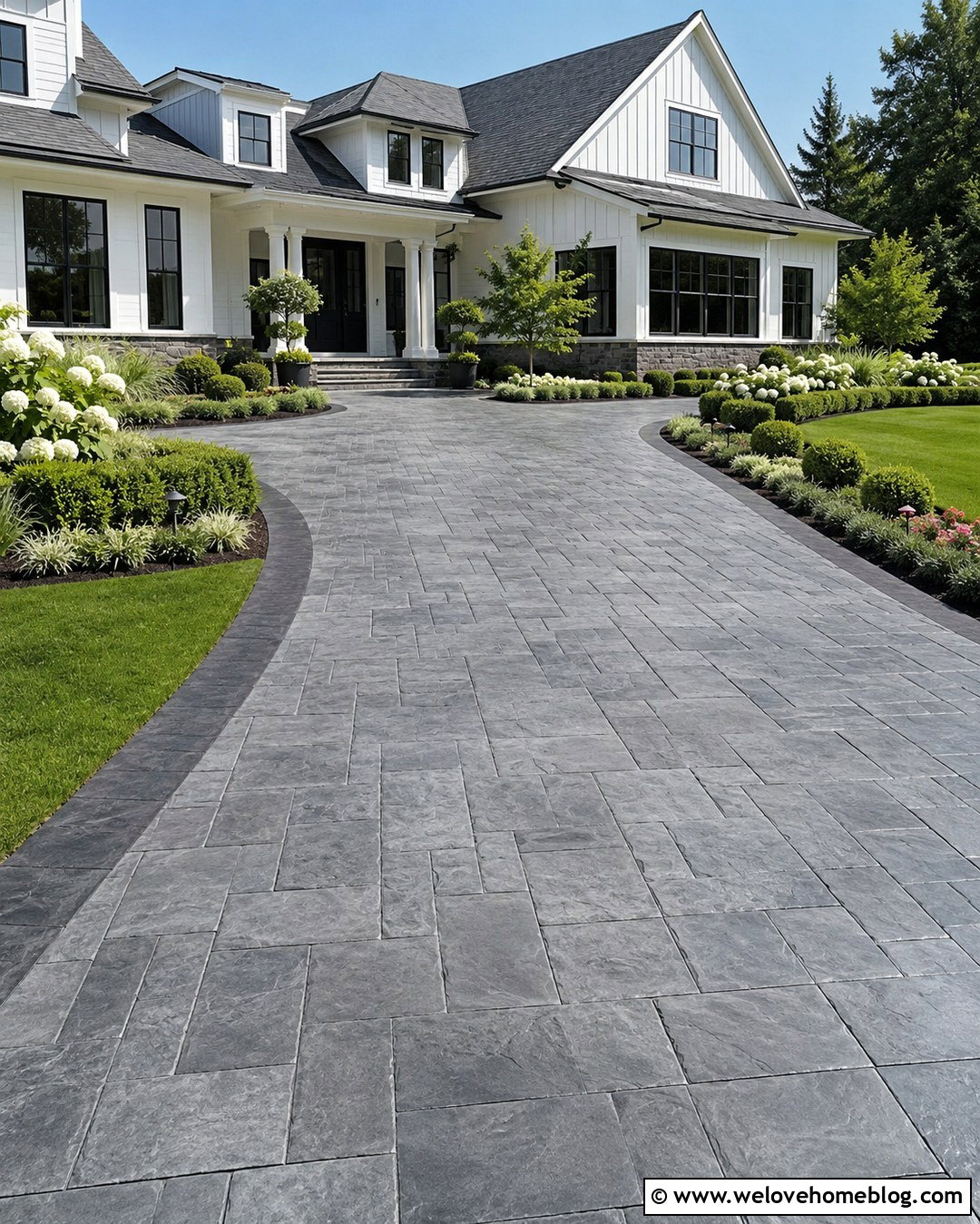
Stamped concrete can introduce the appearance of stone without covering the driveway in many separate units. For a white house, select a muted slate-gray finish with restrained tonal variation. An ashlar pattern complements traditional and transitional architecture, while larger rectangular impressions feel more modern. Apply a darker border around the driveway to define its curved or straight shape. Beside the pavement, use layered planting beds with boxwoods, hydrangeas, low grasses, and seasonal flowers. Tie the driveway to the entrance with a walkway in the same stamped finish, but change the pattern direction to make the path easy to identify. Avoid high-gloss color or strong orange undertones. A natural matte appearance will coordinate more comfortably with the home’s clean exterior and surrounding greenery.
17. Asphalt Driveway With A Brick Border
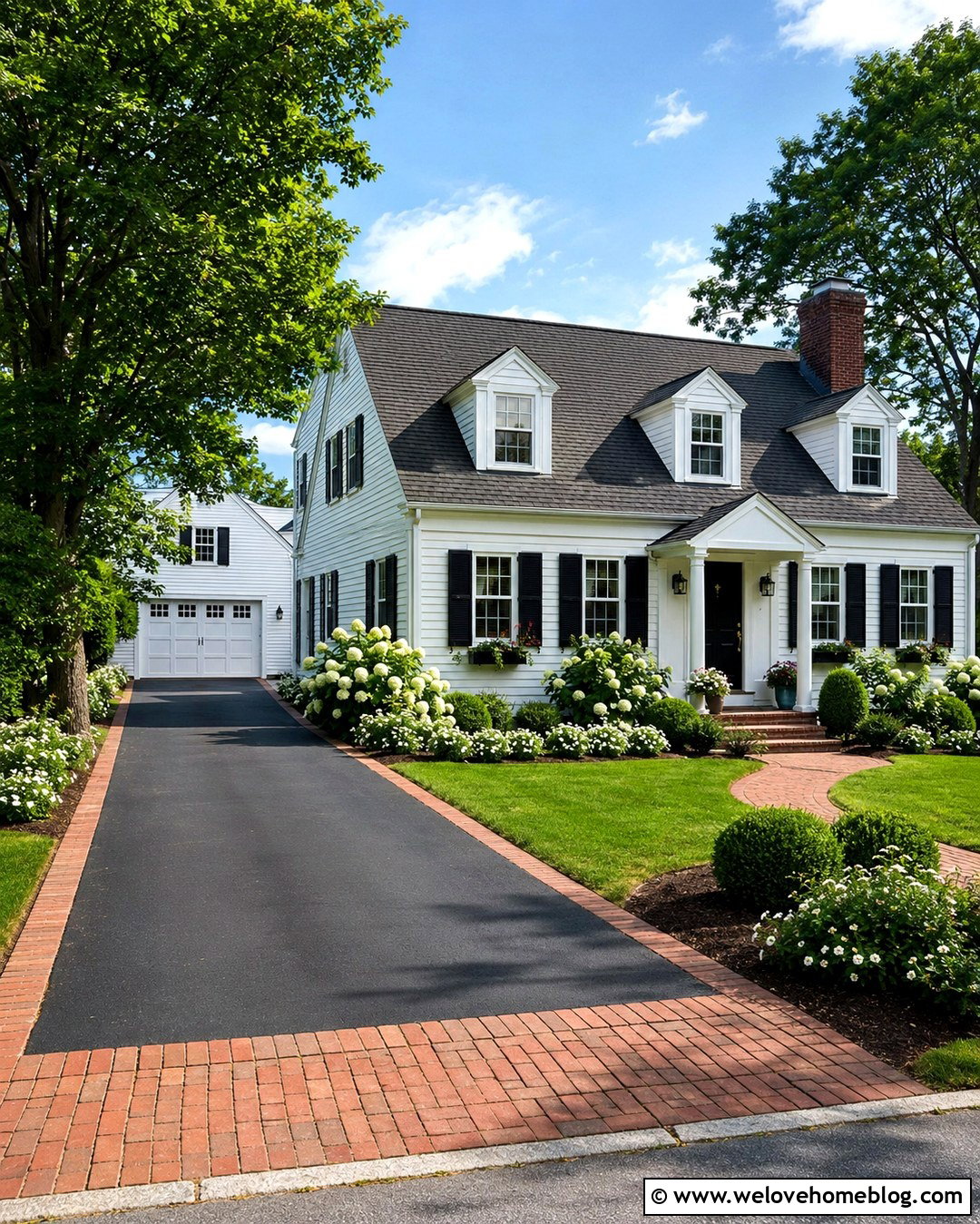
Black asphalt becomes warmer and more traditional when it is framed with a red or brown brick border. This combination works especially well for a white Cape Cod, Colonial, or brick-accented home. Keep the asphalt surface smooth and use brick pavers in a soldier-course layout along both sides. Expand the brickwork into an apron at the street and repeat it where the driveway meets the garage. Those coordinated transitions make the design appear more complete. Plant hydrangeas, boxwoods, and flowering ground cover behind the border, leaving a narrow buffer so plants do not spill onto the driving area. A brick walkway can curve toward the front steps, visually connecting the driveway to the house. Black shutters or a dark front door will reinforce the balanced color palette.
18. Concrete Driveway With A Cobblestone Apron
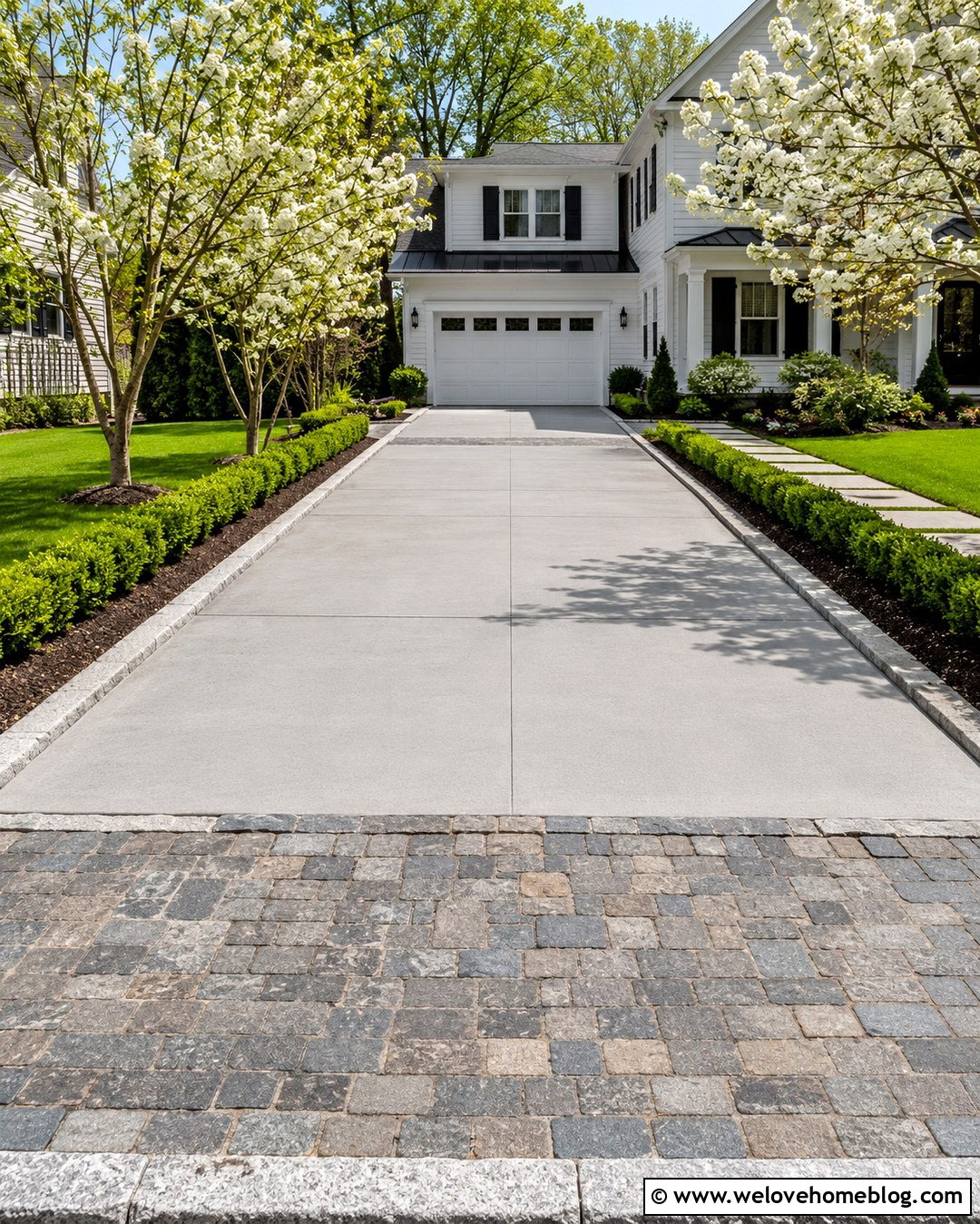
A cobblestone apron can transform a straightforward concrete driveway into a more distinctive entrance for a white house. Use smooth medium-gray poured concrete for the main surface, then place a band of gray, charcoal, and taupe cobblestones across the driveway near the street. Repeat a narrower cobblestone band before the garage to create visual continuity. Granite cobble edging along the sides will reinforce the outline and protect the concrete edges. Frame the approach with green lawn, low hedges, and flowering trees that remain clear of driver sightlines. A concrete walkway with cobblestone borders can branch toward the porch. This design delivers decorative texture where it has the most visual impact while keeping the majority of the driveway simple, comfortable, and easy to coordinate with different white exteriors.
19. Sloped Driveway With Stone Retaining Walls
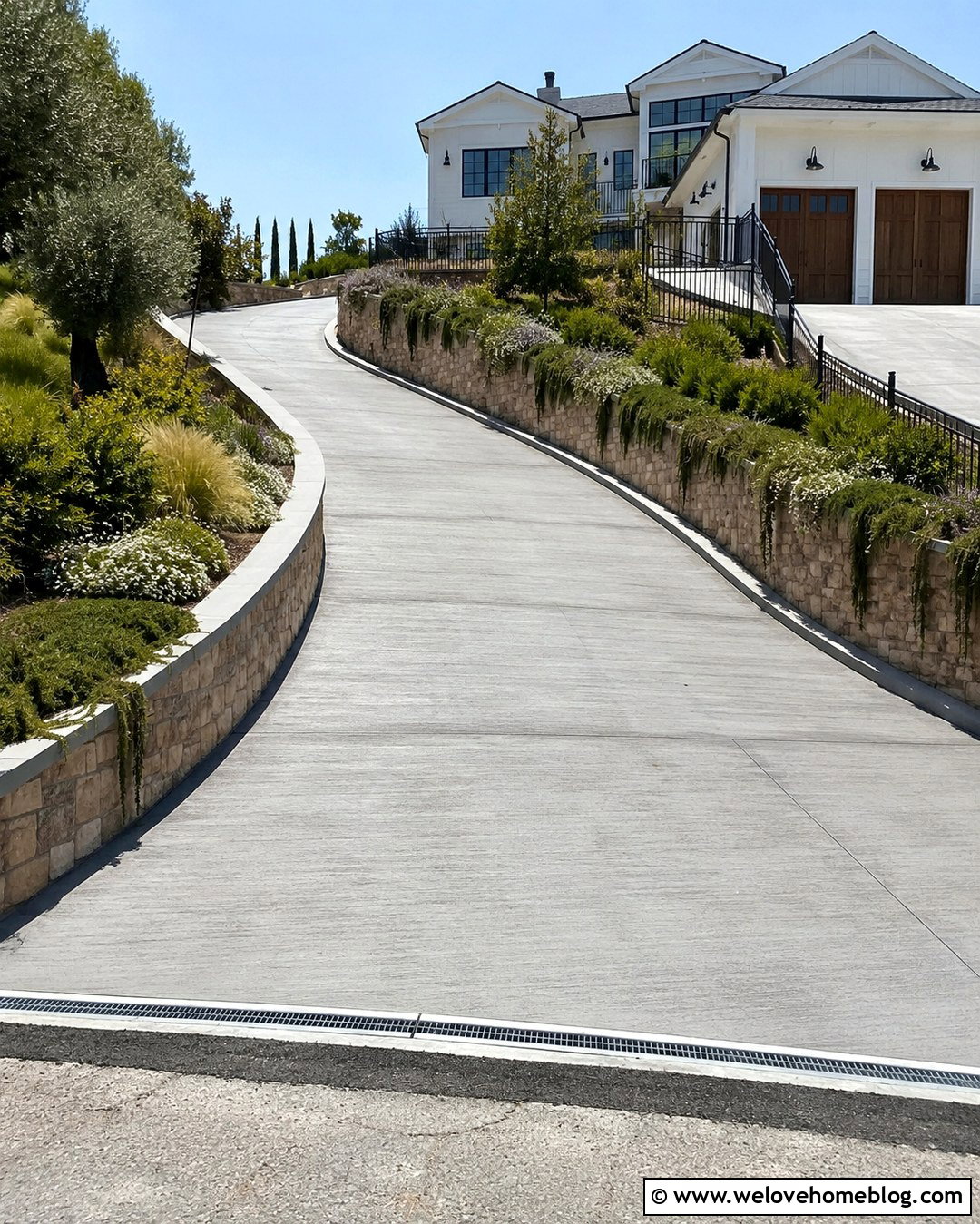
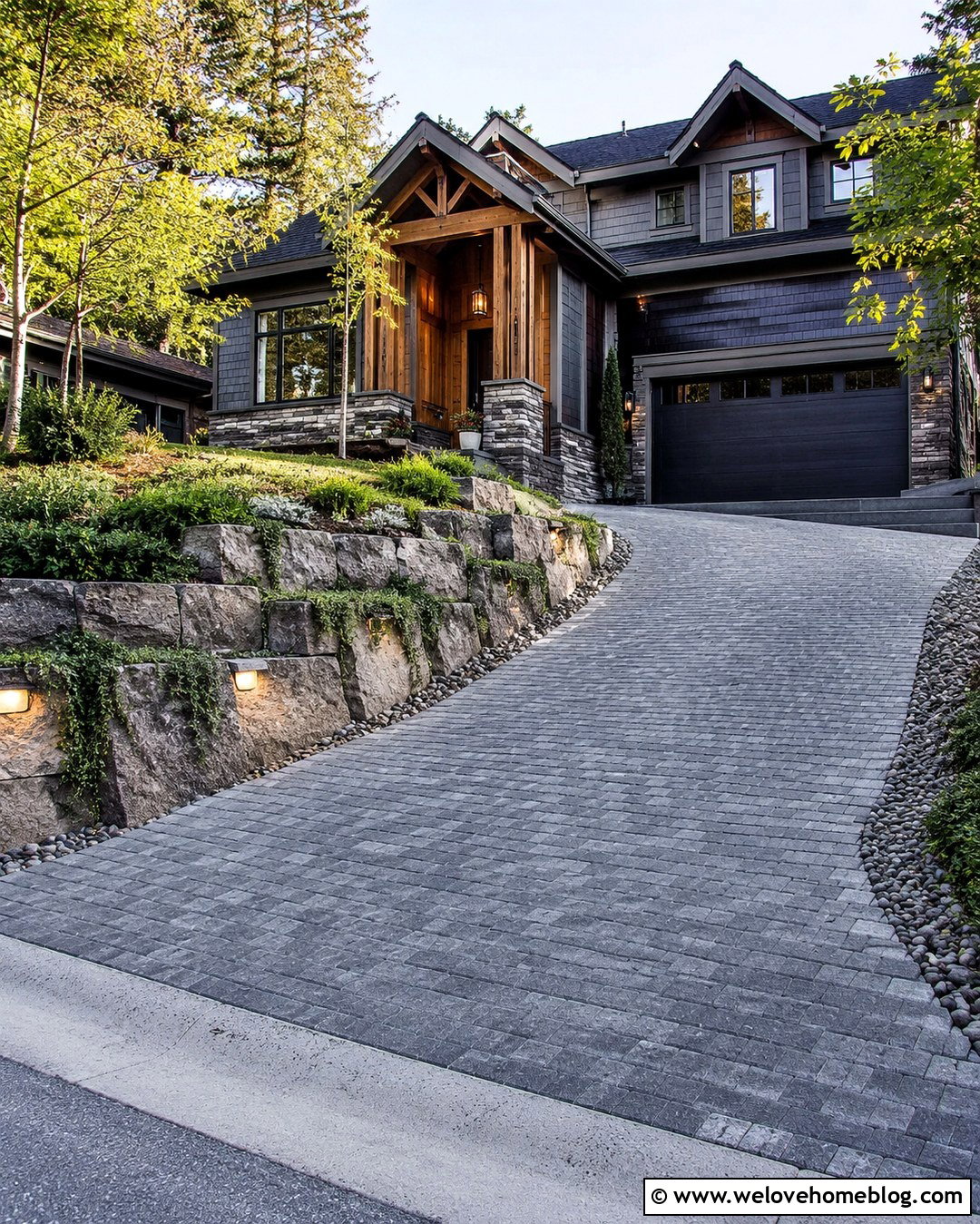
A sloped driveway needs to feel integrated with the land rather than cut awkwardly into it. Pair a broom-finished gray concrete surface with low natural stone retaining walls that follow the incline toward a white hillside home. Use broad curves where space permits, making the climb appear softer and more welcoming. Cap the walls with smooth gray stone and plant cascading ground cover, ornamental grasses, and compact shrubs above them. Add a defined drainage channel along the uphill edge as part of the paved design. At the top, widen the driveway into a level parking court in front of the garage. Black metal railings, dark windows, or wood garage doors can tie the home to the gray pavement and earthy stone, creating a balanced transition from street to entrance.


20. Gated Driveway With White Brick Pillars
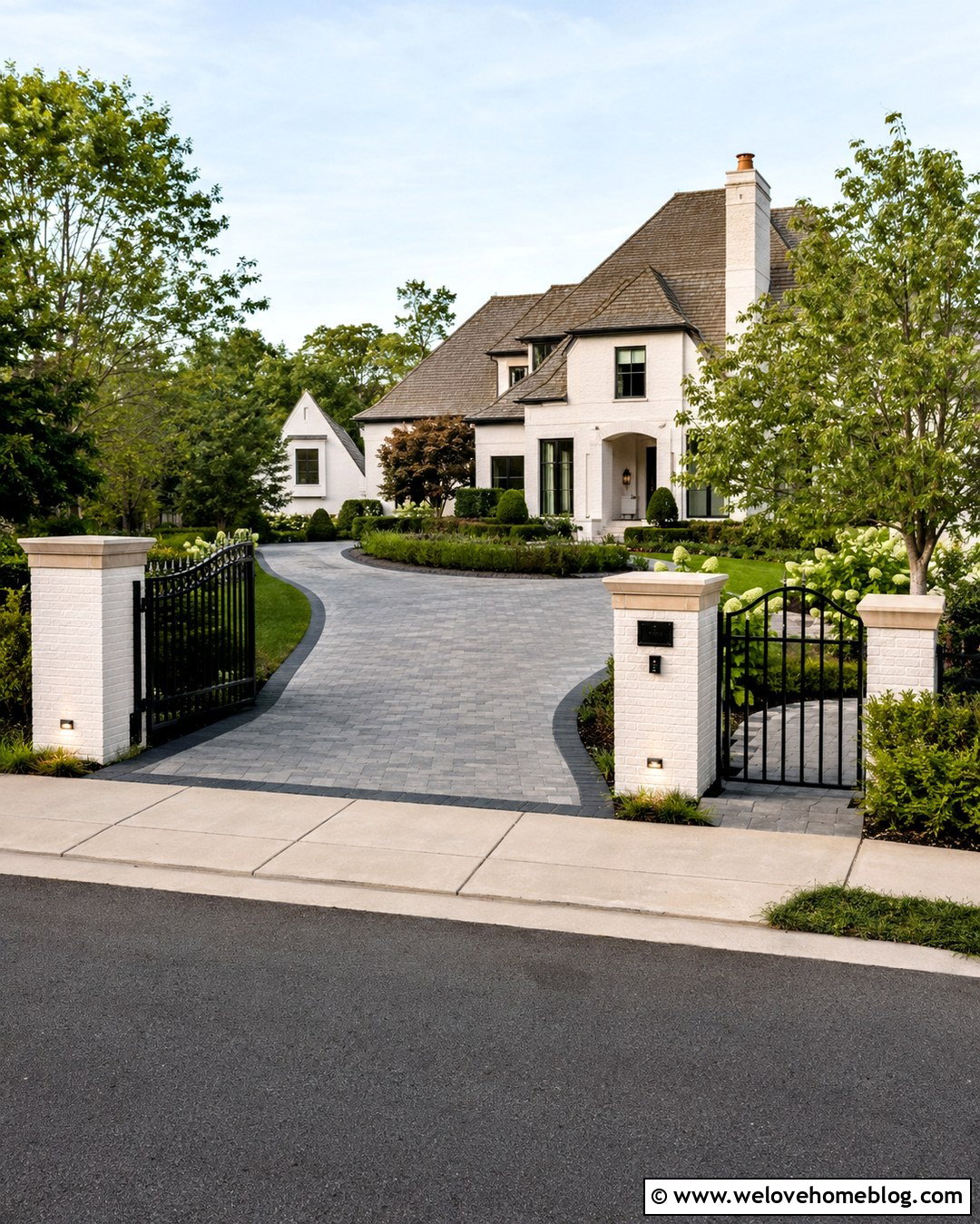
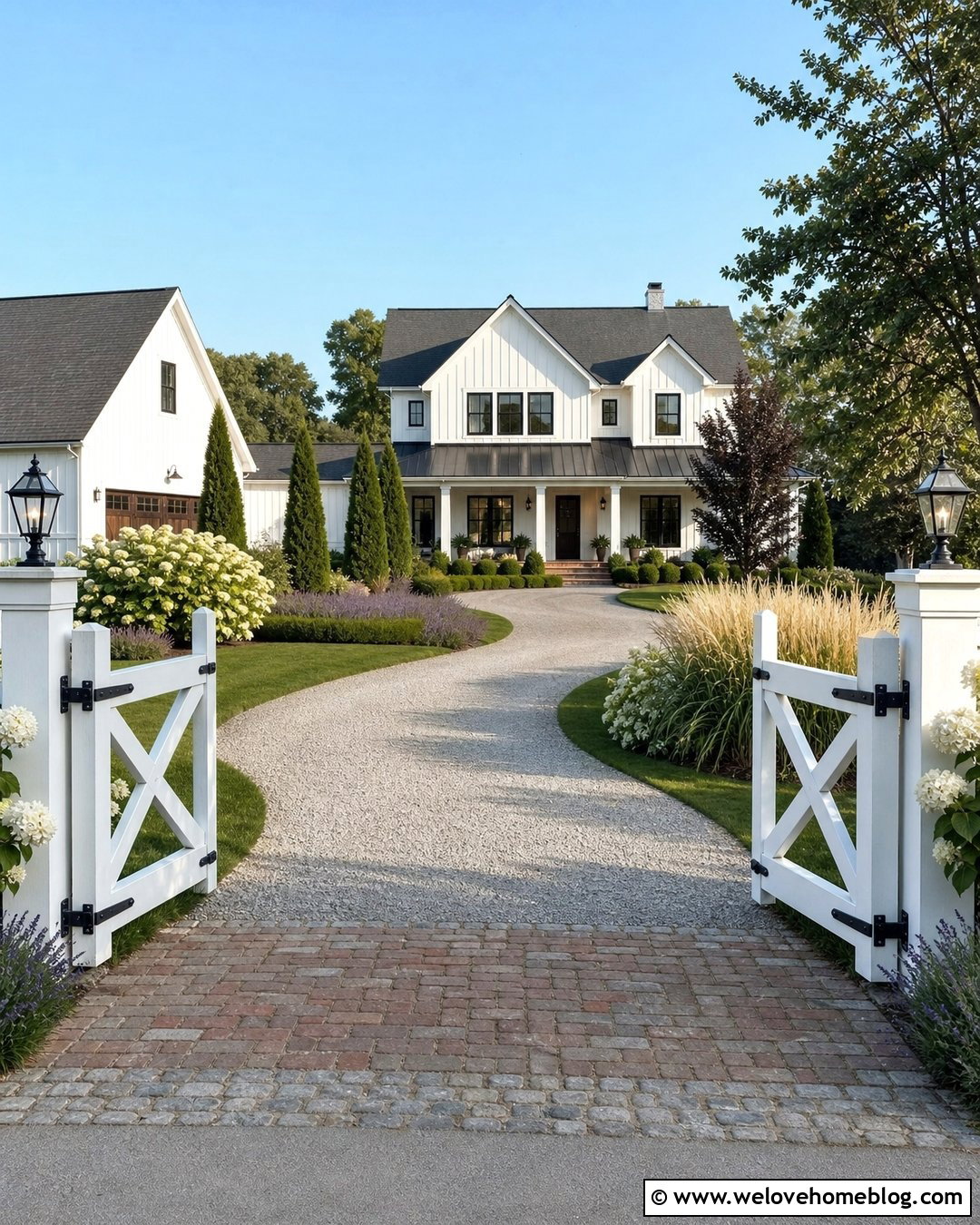
A gated driveway can complement a white home without making the entrance feel imposing. Start with a medium-gray paver driveway in a gentle curve, then frame the street entrance with white painted brick pillars that echo the facade. Cap the pillars with pale limestone and install a simple black metal gate for clean contrast. Continue charcoal paver edging from the gate to the garage so the entrance belongs to the larger driveway design. Low boxwood hedges, ornamental grasses, and flowering shrubs can soften the masonry while preserving visibility. Add a coordinating pedestrian gate and walkway on one side rather than forcing visitors onto the driveway. Recessed pillar lighting and a discreet address plaque complete the practical entrance while maintaining a bright, orderly, and welcoming appearance.
Conclusion:
The most successful 20 White House Driveway Ideas treat the driveway, home, and front yard as one connected exterior. Begin with a material that complements the undertone and architectural character of the facade. Then shape the route around the property’s size, slope, garage position, and daily parking needs. Borders, walkways, planting beds, drainage details, and entrance features should repeat a small selection of coordinated colors and materials. Dark asphalt creates bold contrast, while gravel, brick, concrete, pavers, and cobblestone offer different levels of warmth and texture. Whichever design you prefer, prioritize a stable base, clear edges, safe visibility, and landscaping that will remain suitable as it matures.

Related posts:
Leave a Reply