
Thoughtful paving can turn a practical parking area into a polished entrance that feels connected to the home. These 20 Driveway Front Garden Block Paving Ideas explore complete layouts rather than isolated paving details. Each design combines block color, laying pattern, driveway shape, borders, planting, drainage, and pedestrian access. Current driveway inspiration favors material contrast, integrated greenery, and layouts that balance parking with an attractive front garden. () Whether you have a narrow urban plot, a sloping approach, or space for several vehicles, the right arrangement can improve function without making the garden feel entirely paved. Use the following 20 Driveway Front Garden Block Paving Ideas to find a complete look that suits your property.
1. Charcoal Herringbone Block Paving Driveway
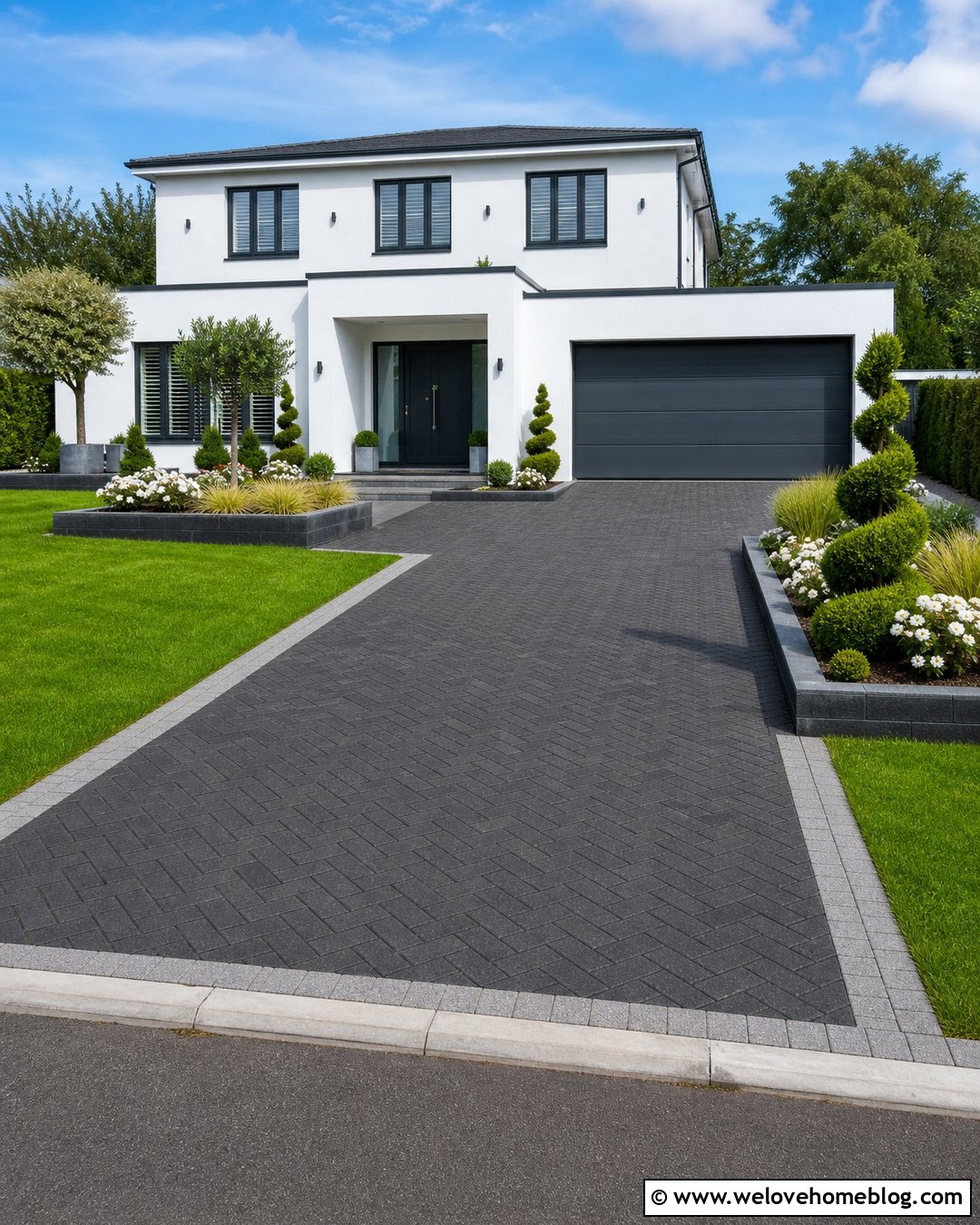
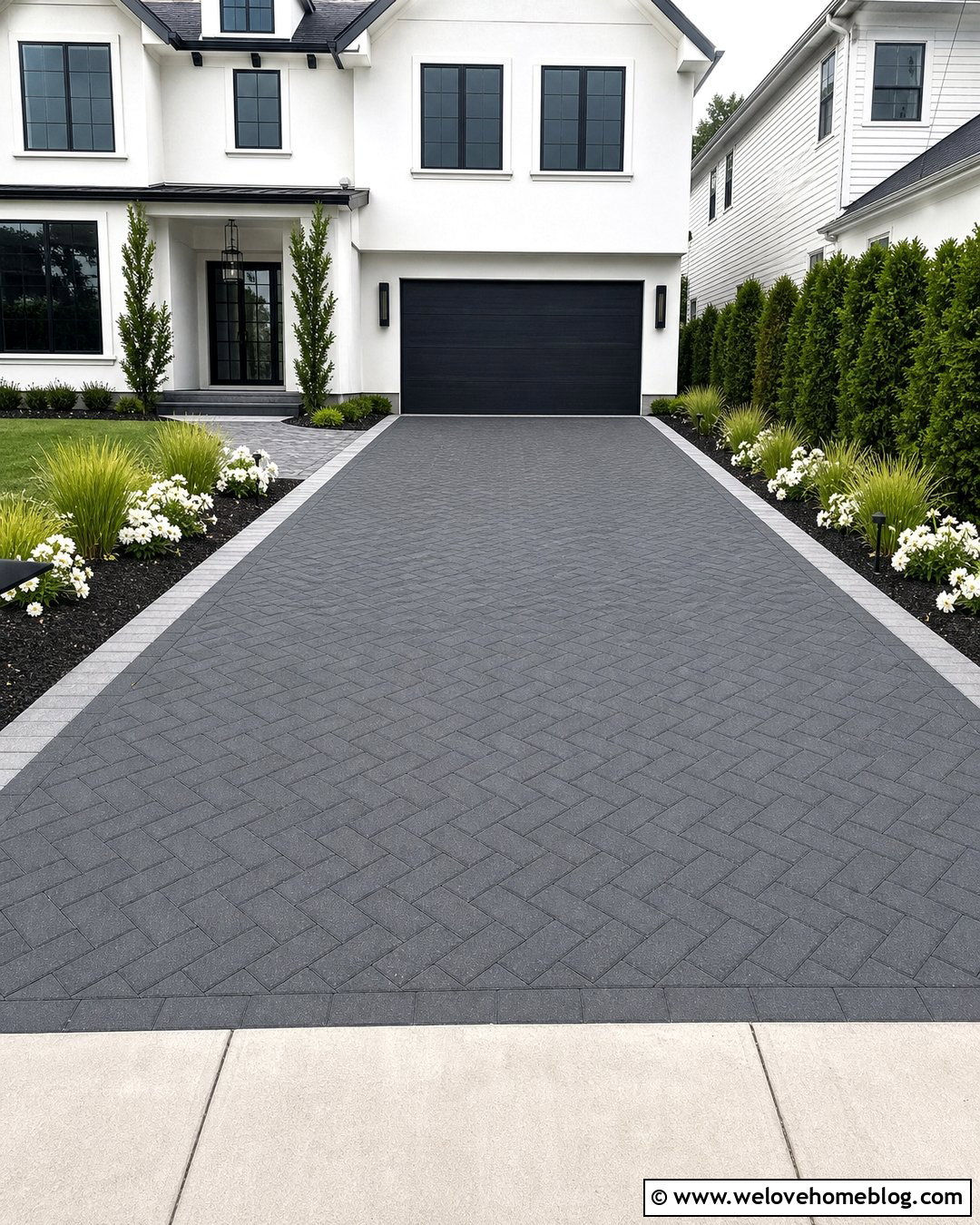
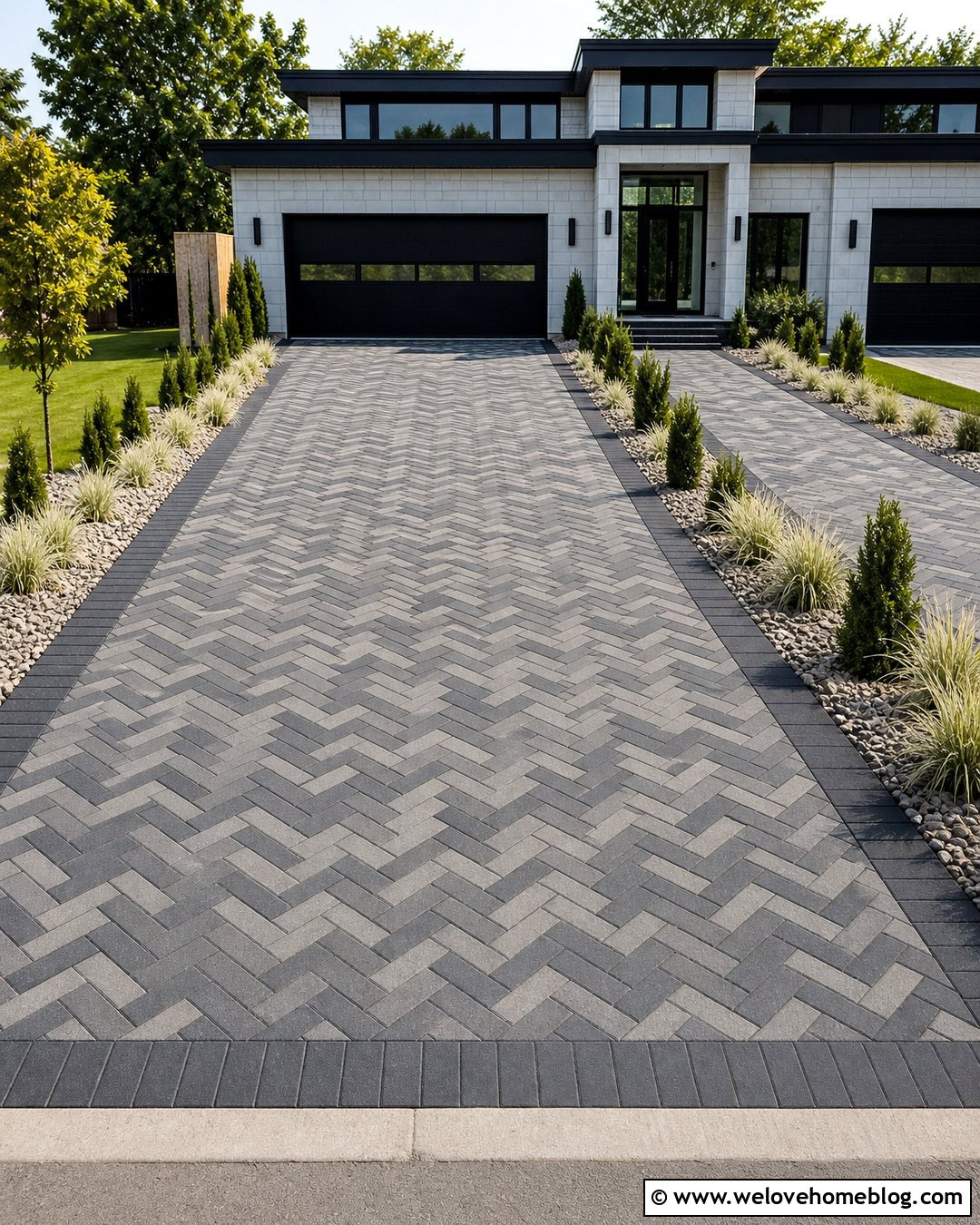
Charcoal block paving laid in a 45-degree herringbone pattern creates a crisp, hard-wearing entrance for a modern or recently renovated house. Frame the main parking area with a straight border of light gray blocks to make the darker surface feel structured rather than heavy. Along one side, retain a narrow planting bed filled with clipped evergreens, white flowering perennials, and ornamental grasses. A matching block-paved path can branch toward the front door without interrupting the parking layout. If the driveway meets a light rendered facade, repeat charcoal tones on the garage door, planters, or window frames. This complete scheme works particularly well in compact front gardens because the consistent pattern makes the area look organized, while the pale border visually defines every edge.
2. Sandstone Block Paving With Cottage Borders
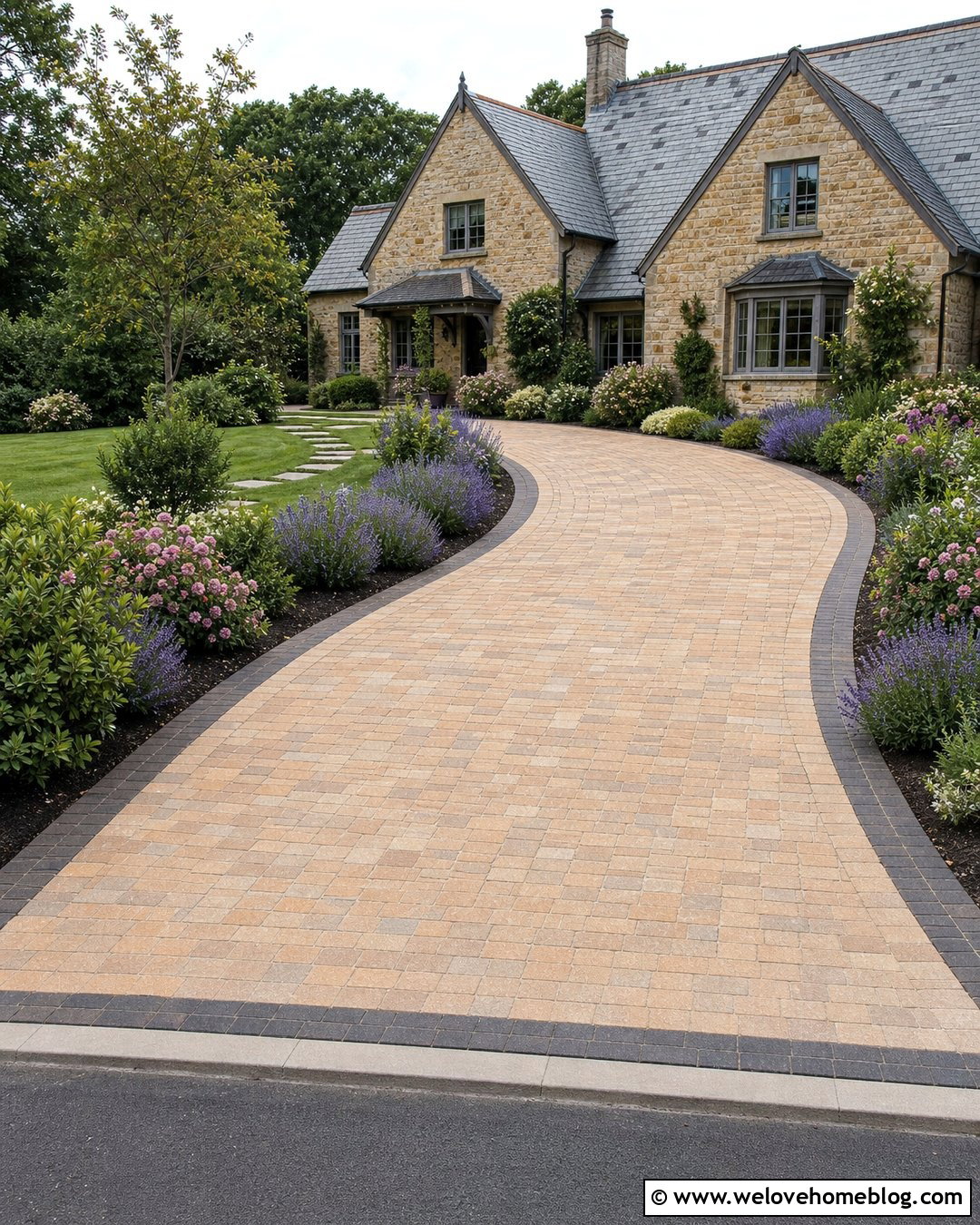
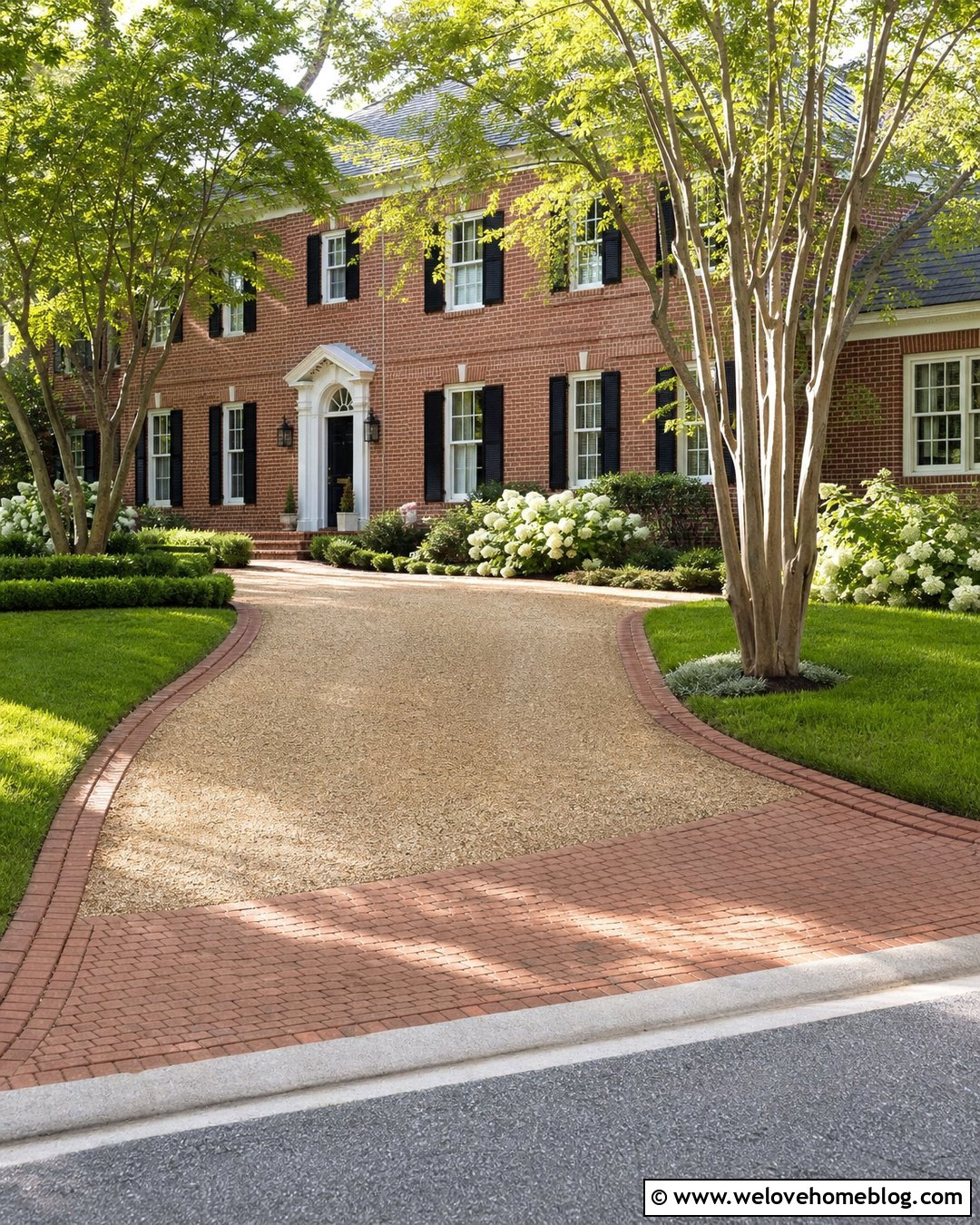
Warm sandstone-colored block paving can soften the appearance of a traditional cottage, Cape Cod, or brick-fronted house. Choose tumbled concrete blocks in several beige, buff, and muted brown tones to produce a gently aged finish. A curved driveway layout will complement the informal character better than rigid straight lines. Edge the paving with darker brown blocks, then add deep cottage-style borders containing lavender, catmint, compact roses, and evergreen shrubs. Keep plants slightly back from parking spaces so doors can open without damaging flowers. A simple stepping-stone path through one border can connect the driveway to the entrance. The mix of warm paving, curved edges, and layered planting gives the entire front garden a welcoming appearance while leaving a clear, practical surface for daily parking.
3. Gray Block Paving Driveway With Lawn Strips
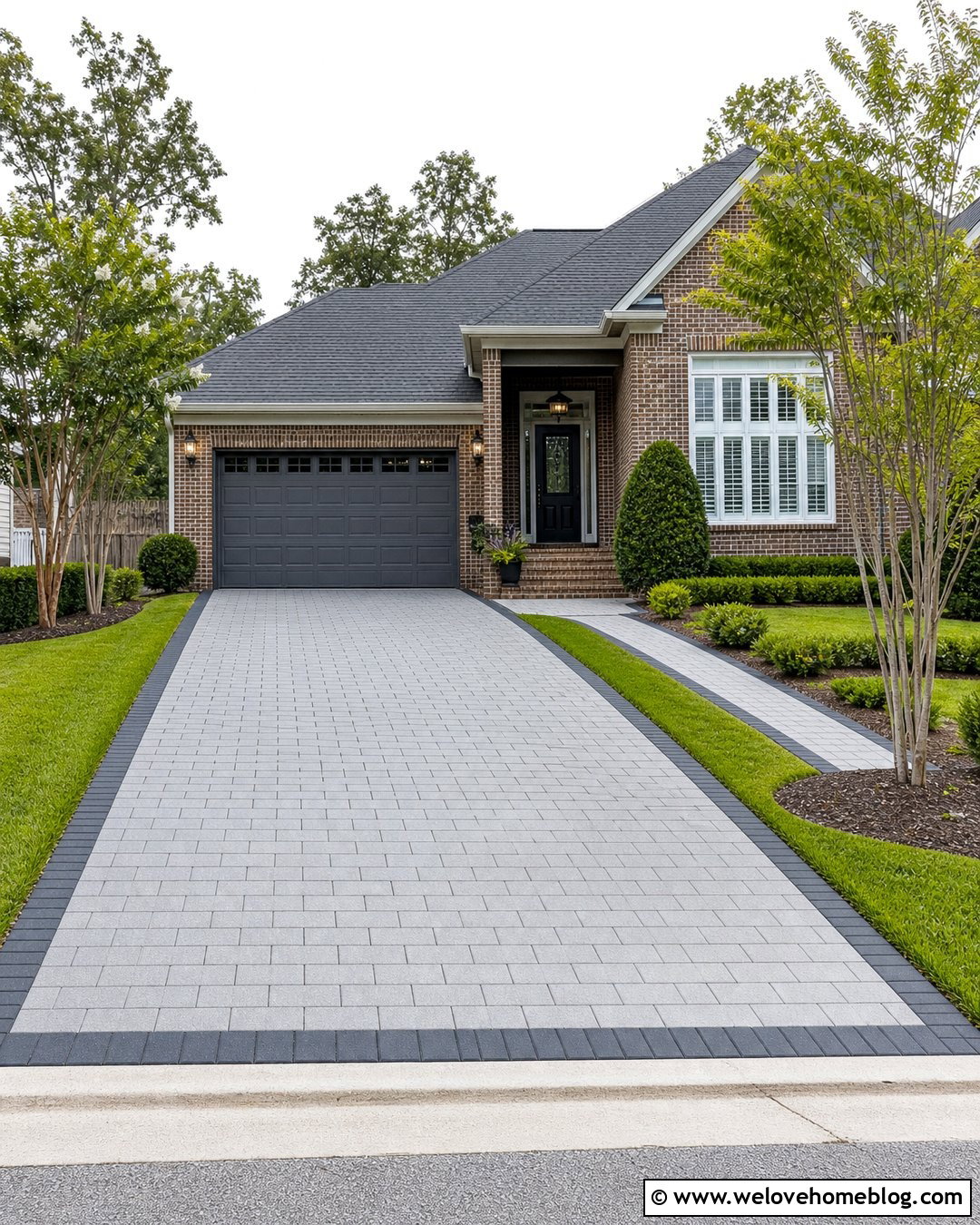
A mid-gray block paving driveway can feel lighter and greener when narrow lawn strips are built into the overall layout. Use rectangular concrete blocks in a running bond or stretcher bond pattern, surrounded by a charcoal soldier-course border. Position grass strips along both sides rather than between vehicle tracks, where frequent turning could cause wear. The green edges can visually separate the driveway from neighboring boundaries and provide breathing space around the hardscape. Add small multi-stem trees at the far corners, with low shrubs beneath them to preserve visibility. A straight paved walkway leading to the front door keeps foot traffic away from parked vehicles. This balanced design suits suburban homes where owners need generous parking but still want the front garden to look planted, fresh, and residential.
4. Permeable Block Paving With A Rain Garden
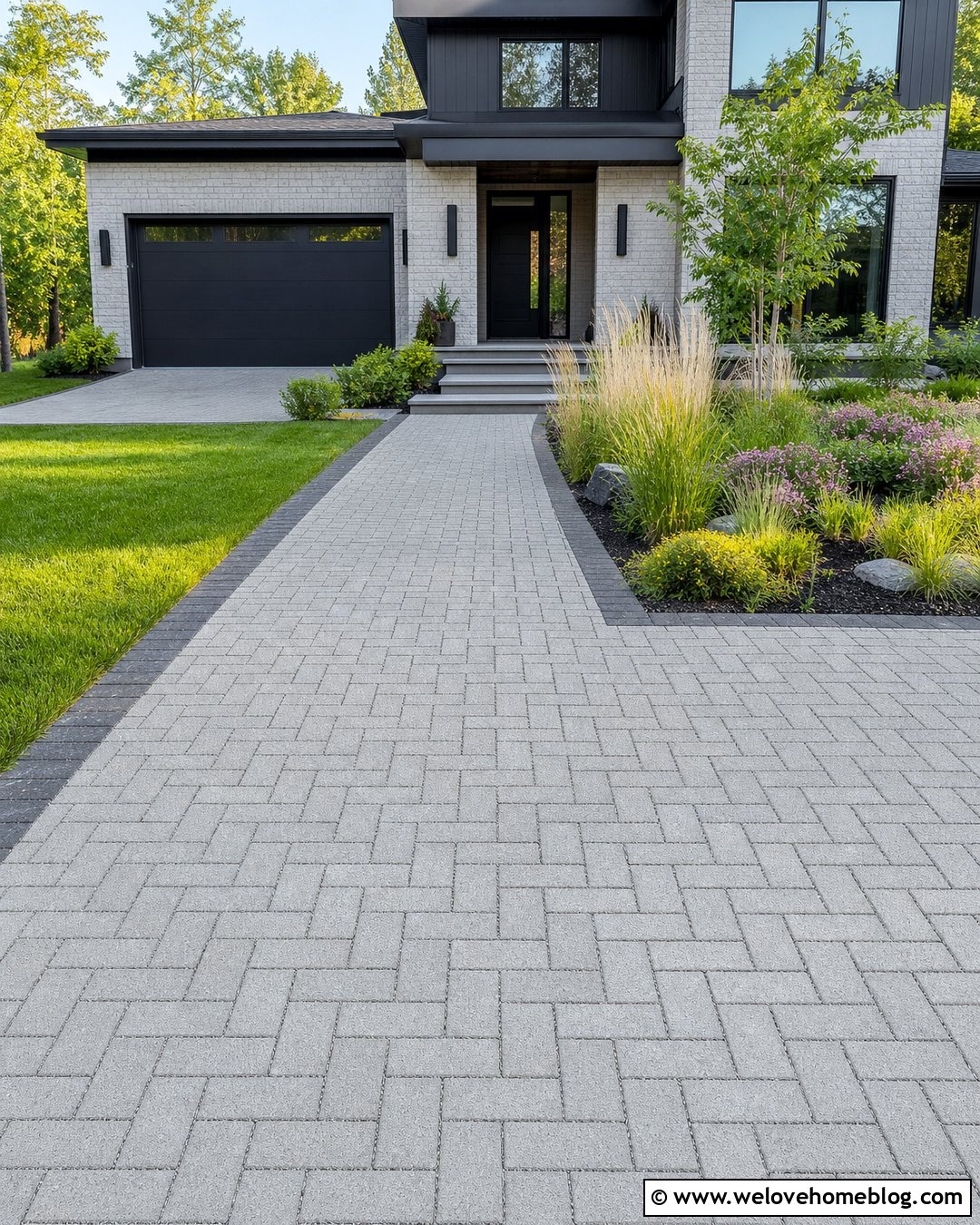
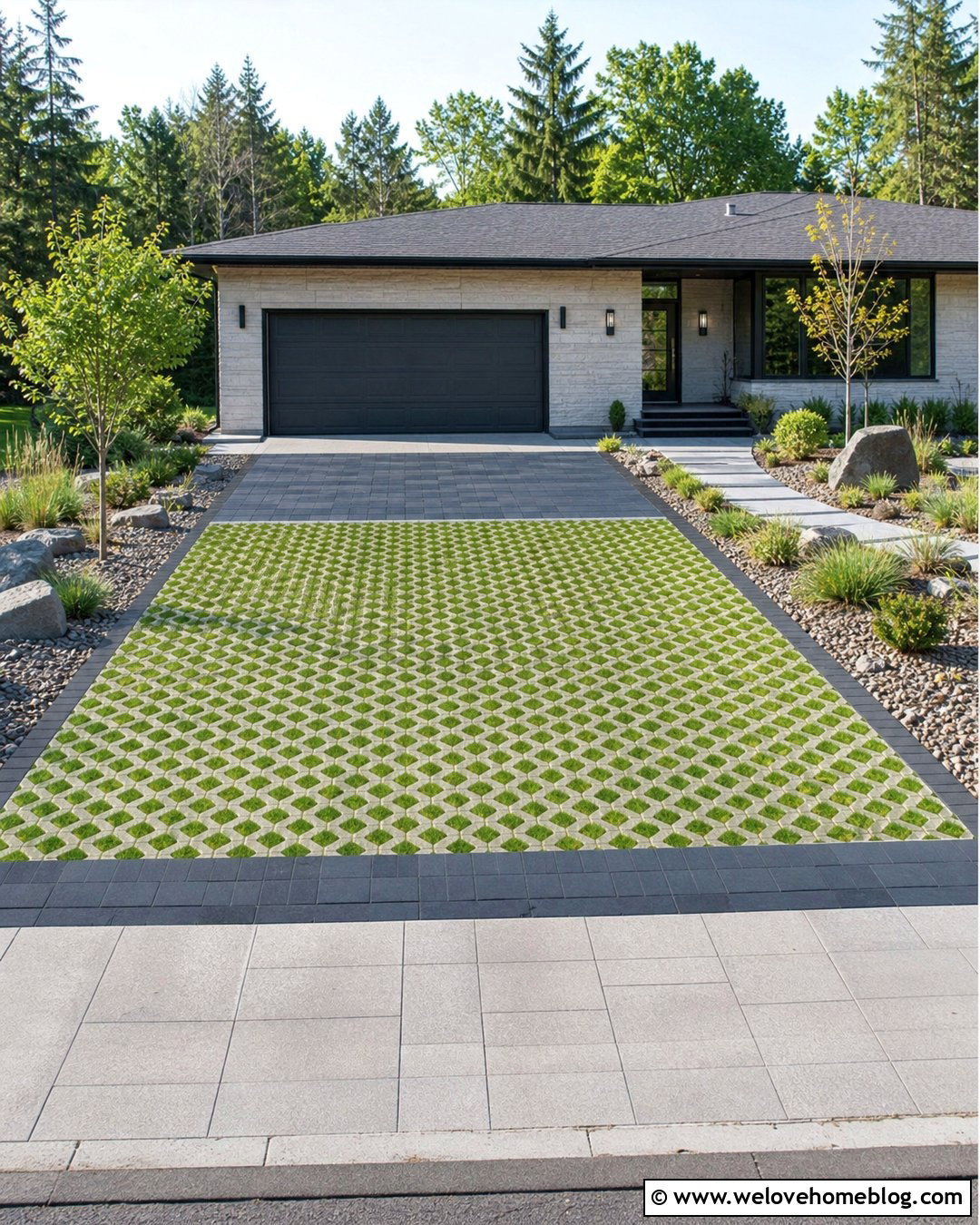
Permeable block paving pairs practical parking with a front garden designed to manage rainfall more naturally. Select purpose-made concrete blocks with wider joints that allow water to pass into a correctly prepared permeable base. Lay them in a simple gray herringbone pattern and direct the visual flow toward a shallow rain garden beside the driveway. Fill that planted depression with moisture-tolerant grasses, flowering perennials, and small shrubs suited to local conditions. A stone or dark block border can prevent soil from spilling onto the parking surface. Keep the front-door path slightly raised and clearly defined. Permeable paving and planted drainage areas can help reduce surface runoff when properly designed for the site, although ground conditions and local requirements should always be checked first. ()
5. Curved Block Paving Driveway With Sweeping Beds
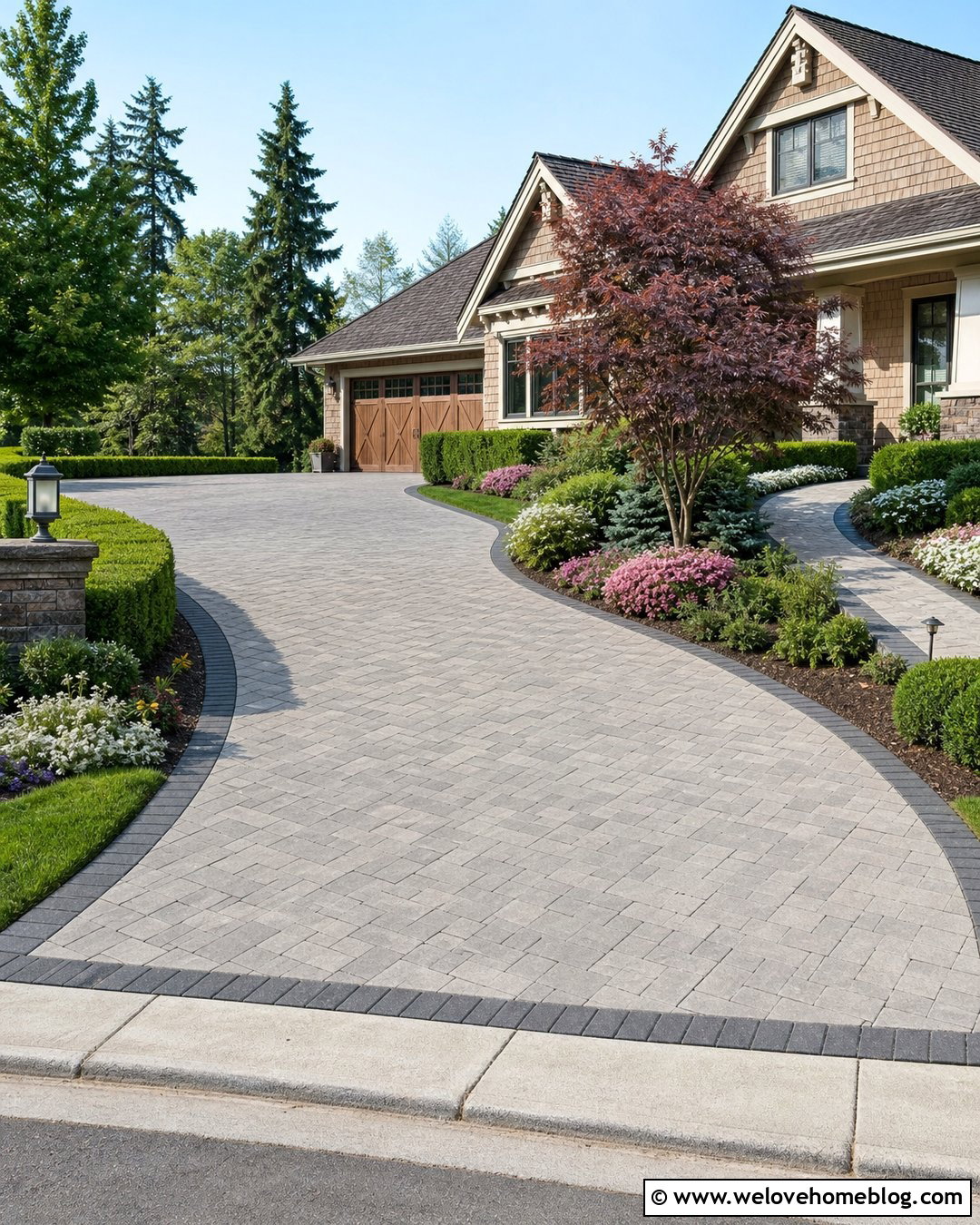
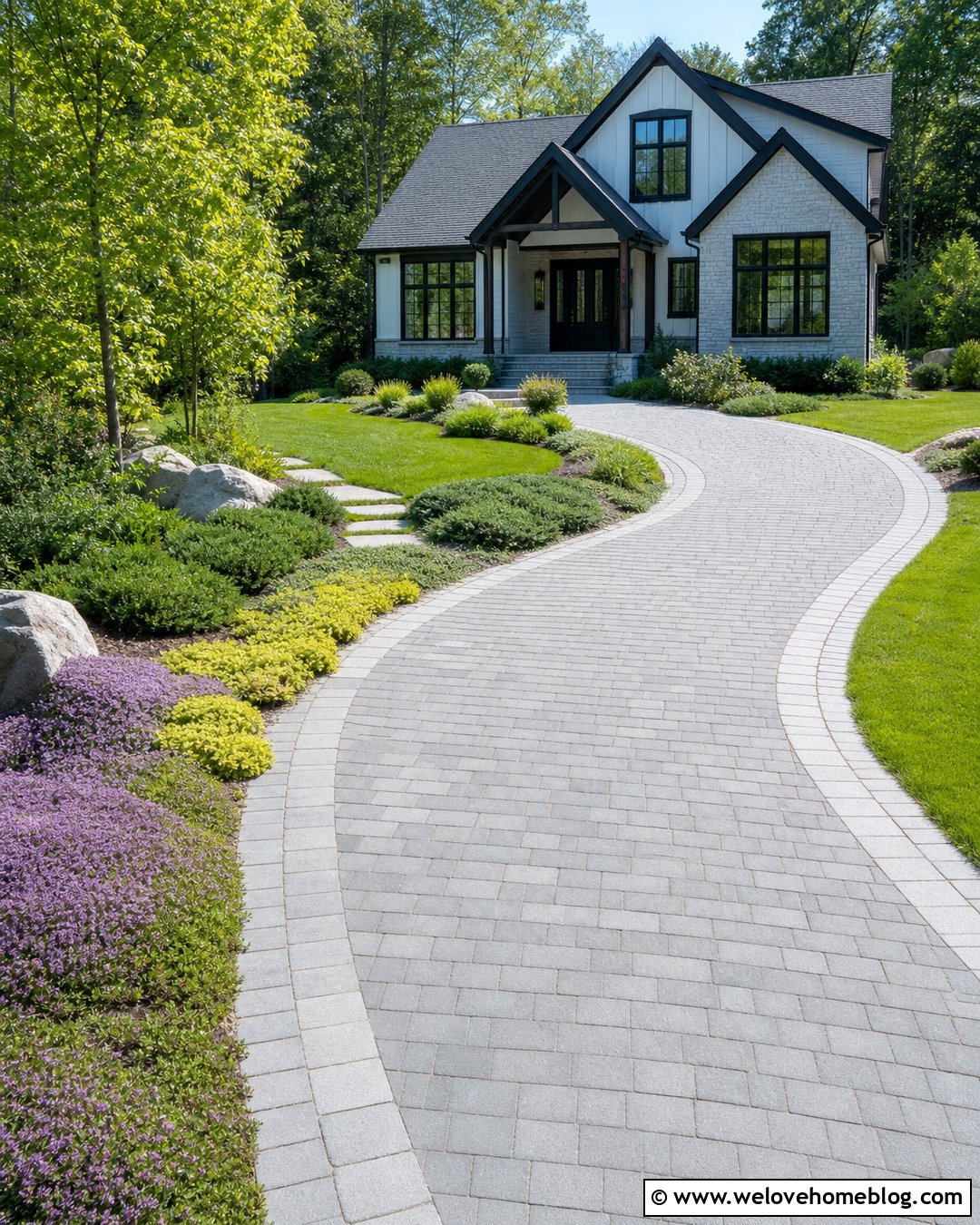
Gentle curves can make a short front garden feel deeper by slowing the visual journey from the curb to the house. Lay warm gray block paving in a herringbone pattern, following a broad curve toward the garage or main parking bay. Use a darker charcoal block along the edge to keep the shape clearly defined. On the wider side of the curve, create a sweeping planting bed with layered evergreens, flowering ground cover, and one small ornamental tree. The opposite side can contain a narrower bed or clipped hedge to maintain comfortable vehicle access. Repeat the driveway’s curve in the front-door path for a connected appearance. This complete layout brings movement to a rectangular plot and prevents a large paved surface from looking like a plain parking pad.
6. Small Front Garden Block Paving Driveway
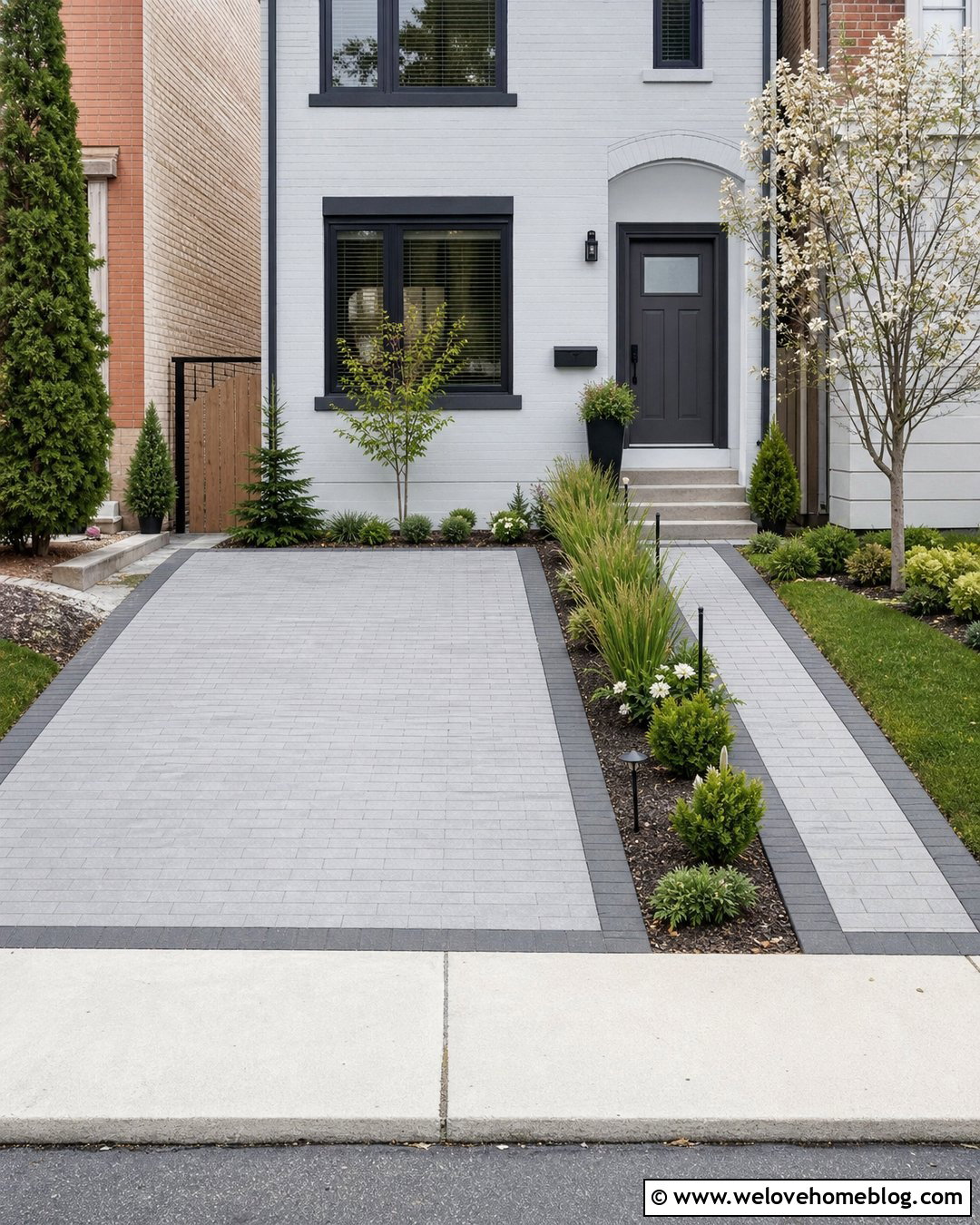
A small front garden needs a disciplined layout that provides parking without losing safe access to the house. Use light gray rectangular blocks laid in a simple stretcher bond to make the compact area feel wider. A charcoal border around the parking bay will define its limits and protect the lighter design from appearing unfinished. Reserve one side for a direct walkway, using the same blocks in a different laying direction to create separation without adding another material. Fit a slim planting bed against the boundary with upright grasses, dwarf evergreens, and a compact flowering tree. Wall-mounted or recessed lighting will save ground space. Keeping the paving palette limited, the path obvious, and the planting vertical produces a tidy entrance that remains useful even when a vehicle occupies most of the driveway.
7. Circular Block Paving Driveway With A Center Tree
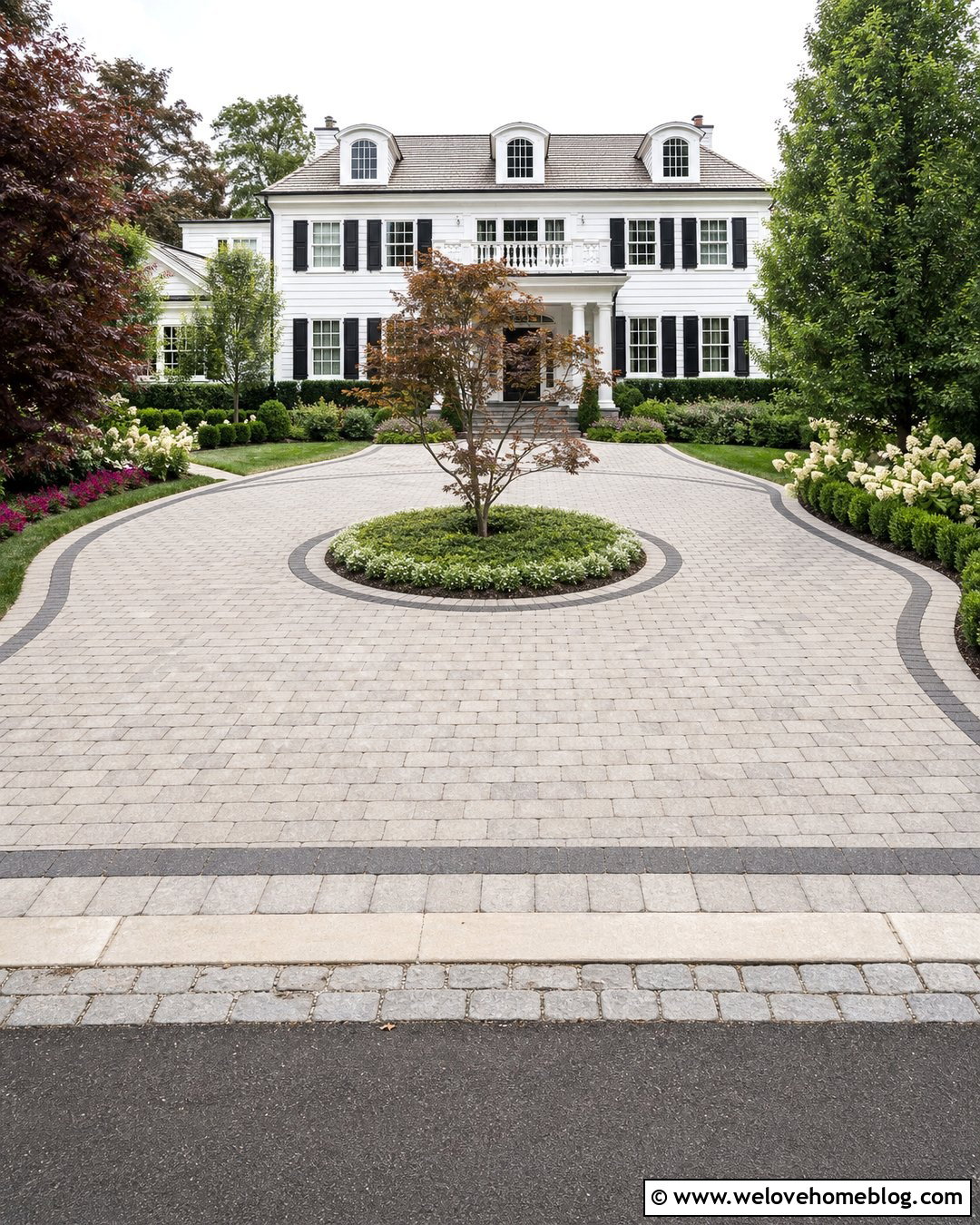
When space allows, a circular block paving driveway creates an impressive arrival while simplifying vehicle movement. Use medium-gray tumbled blocks around a generous central island, with darker blocks forming a neat inner and outer border. Plant the island with one well-proportioned ornamental tree surrounded by low ground cover that will not obstruct sightlines. The driveway should feel open enough for comfortable turning rather than forcing vehicles close to the planting. Repeat the circular shape with curved beds near the house, using clipped shrubs and seasonal flowers for a coordinated front garden. A contrasting path can cross from the circle to the entrance. This arrangement suits larger colonial, country, and traditional homes because it gives the facade a strong focal point while preserving greenery in the center of the paved area.
8. Red Block Paving Driveway With Cottage Planting
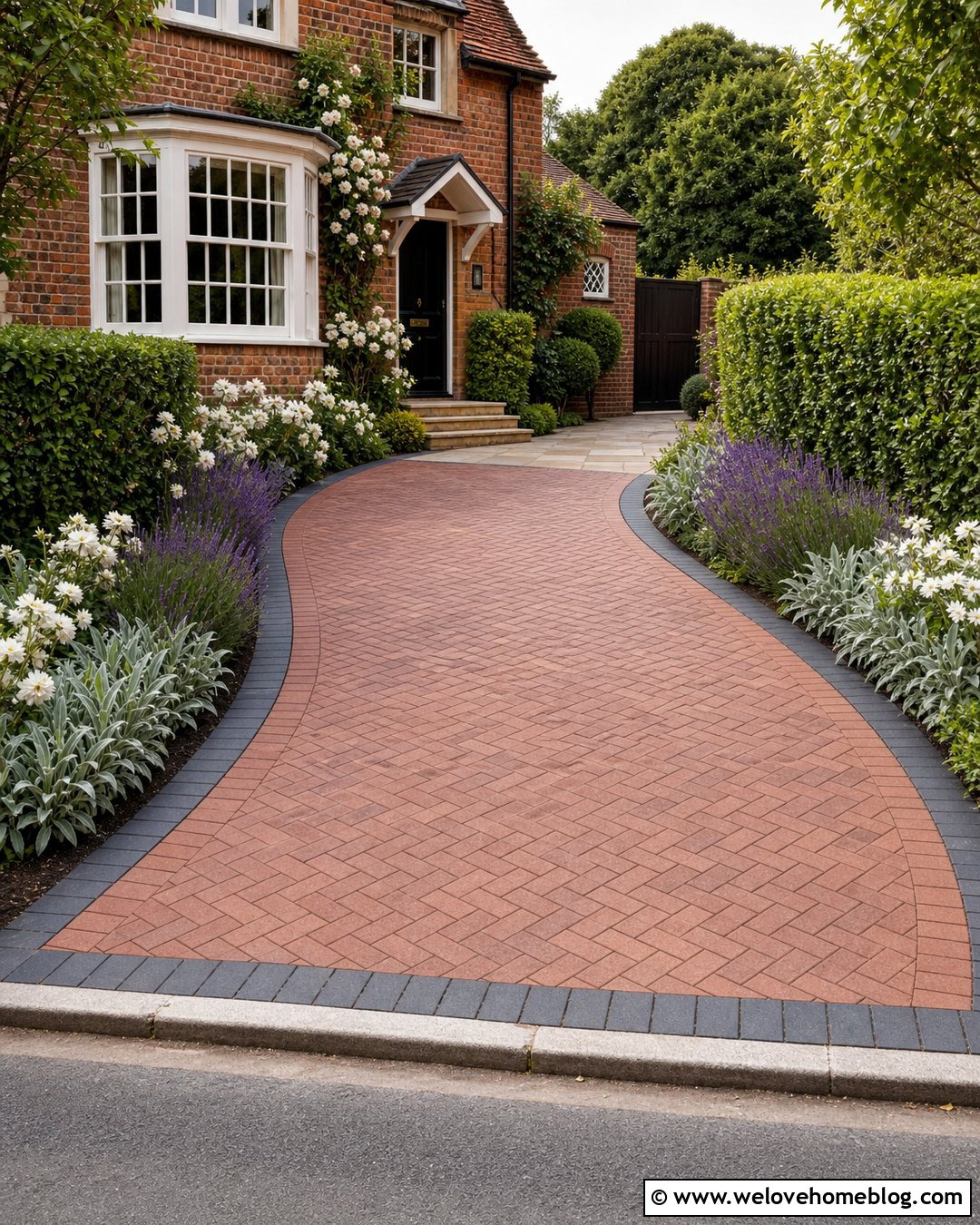
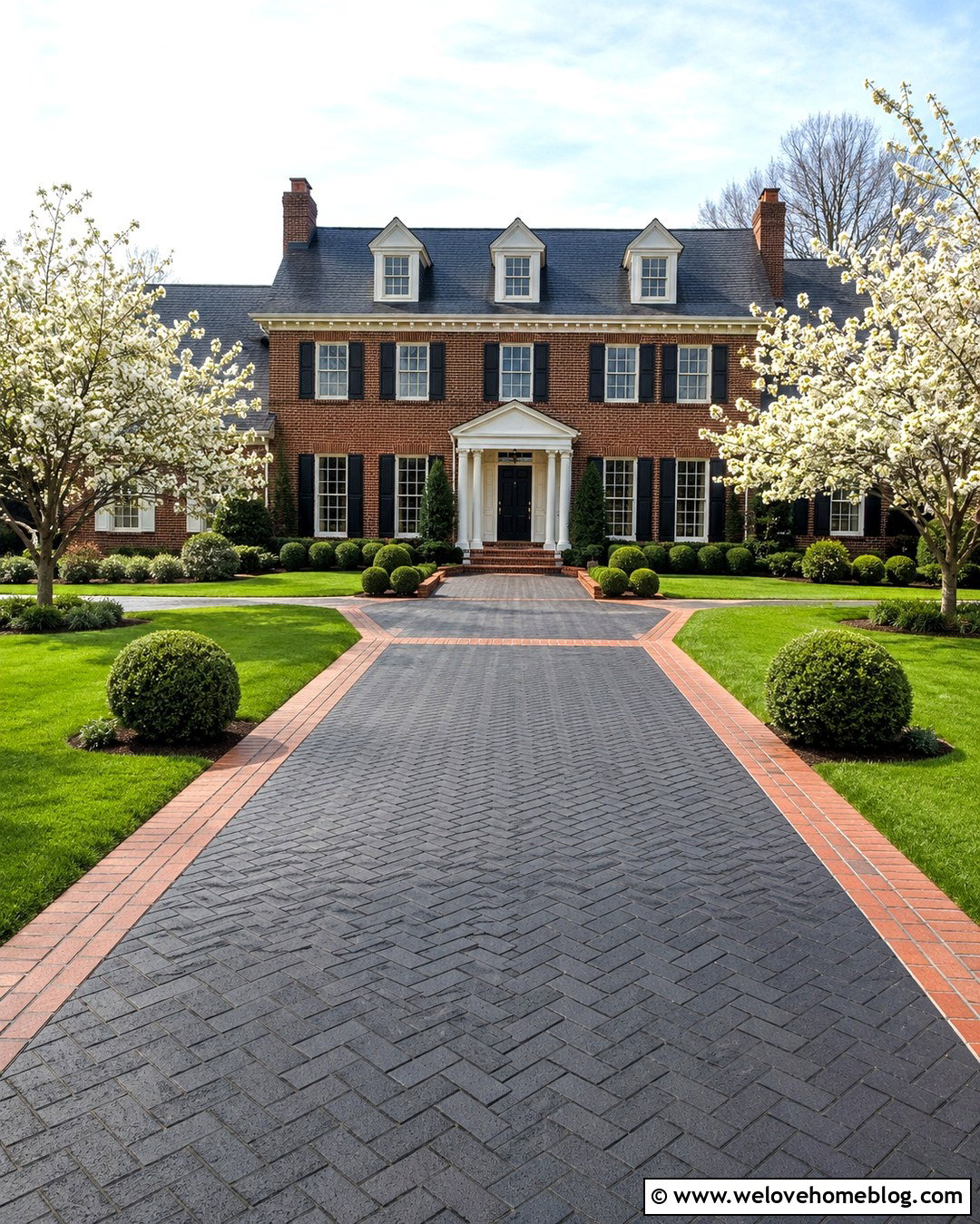
Red clay-toned concrete blocks bring warmth to an older brick house and create an entrance with familiar traditional character. Lay the blocks in a 90-degree herringbone pattern for a strong visual structure, then surround them with a dark charcoal border. Choose a straight or gently curved driveway based on the position of the entrance and garage. Soft planting is essential because red paving can appear visually busy beside red brick walls. Use green hedging, white flowers, lavender, and silver-leaved plants to provide calmer contrast. A simple sandstone step and matching path can distinguish the pedestrian route. Avoid introducing too many additional colors in fences or planters. The finished front garden should feel cohesive, with the driveway echoing the house while the planting prevents the red tones from dominating the entire view.
9. Large Format Block Paving With Ornamental Grasses
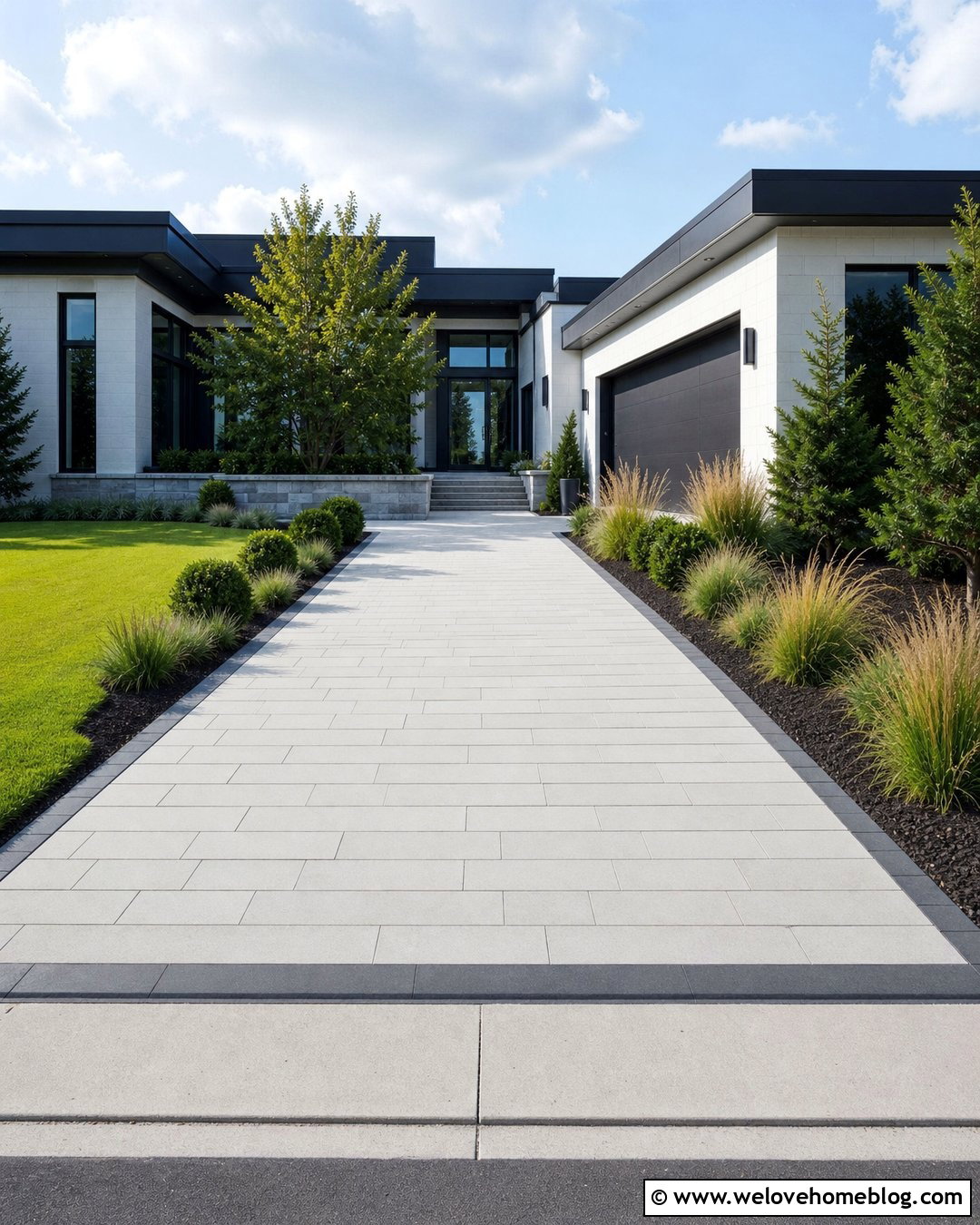
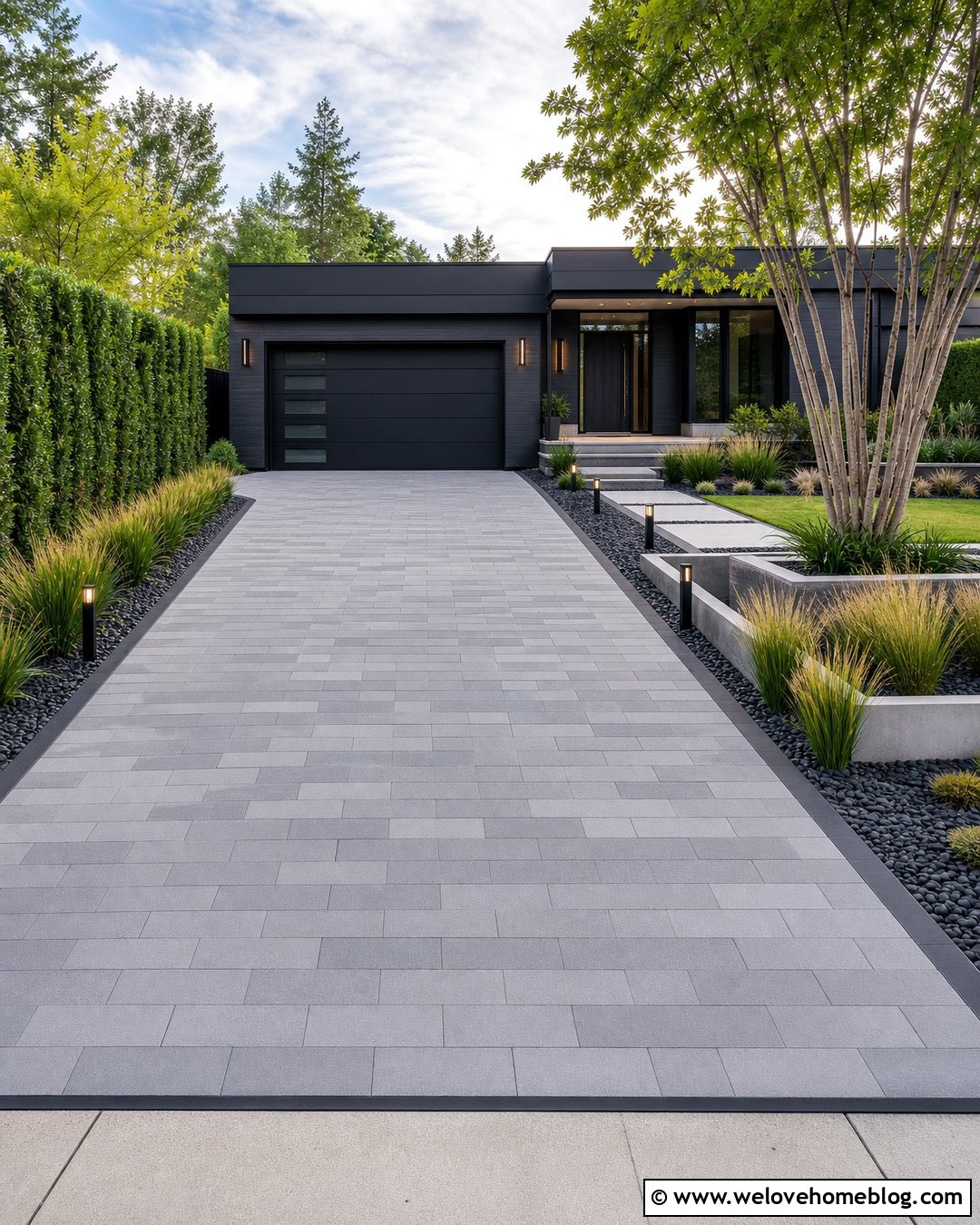
Large-format concrete block paving creates a streamlined driveway for a modern home with clean architectural lines. Select smooth rectangular blocks in pale gray or soft greige and install them in an offset linear pattern. Use a flush charcoal border rather than a raised curb to preserve the minimalist appearance. Long planting beds filled with ornamental grasses can run parallel to the driveway and reinforce its direction toward the house. Add a few sculptural evergreen shrubs for year-round structure, but leave generous open space between plant groups. A wide path made from the same blocks can merge neatly with the parking surface near the entrance. This look depends on precise installation and controlled planting. When the joints, borders, lawn, and facade lines align, the whole front garden feels larger, calmer, and intentionally planned.
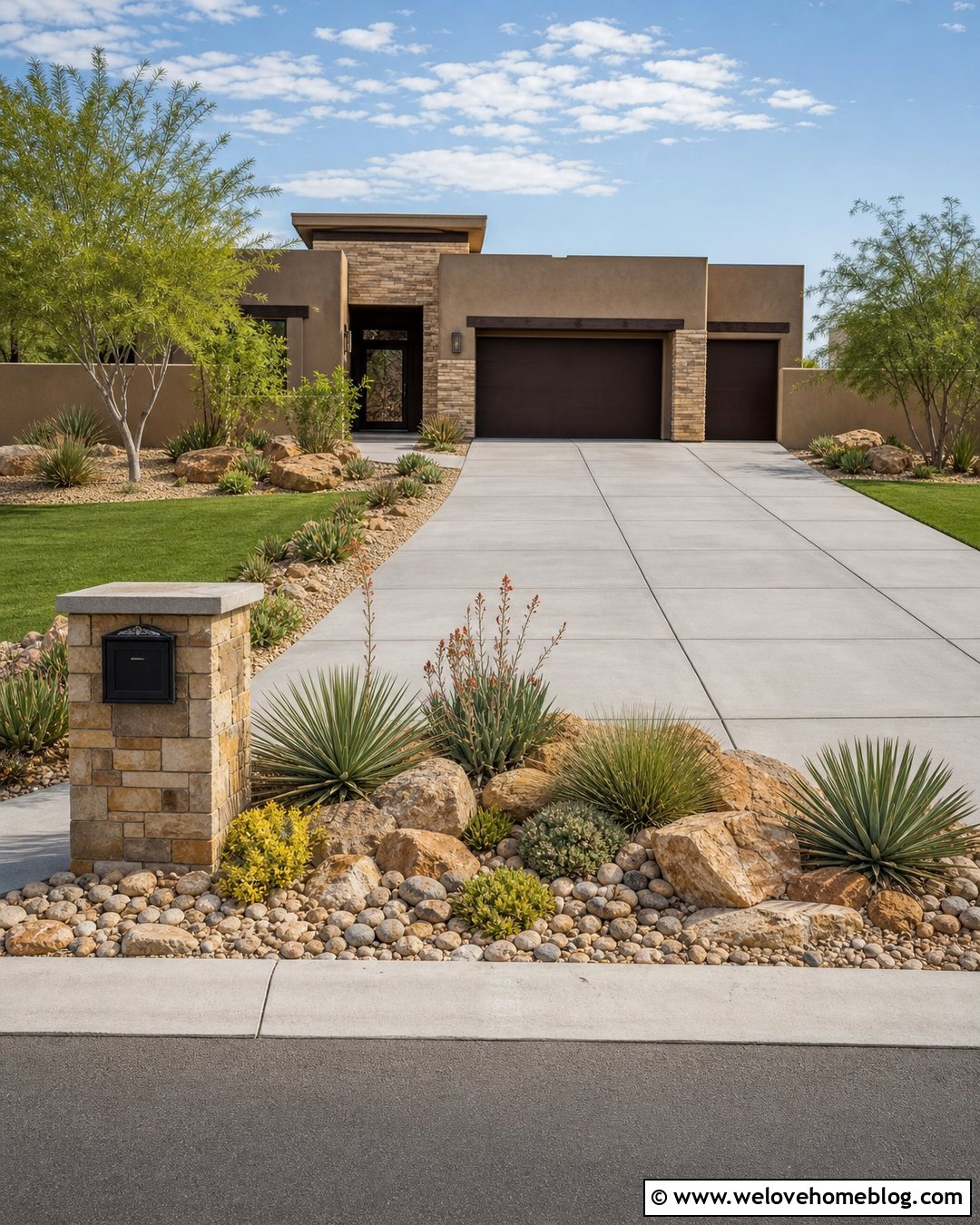
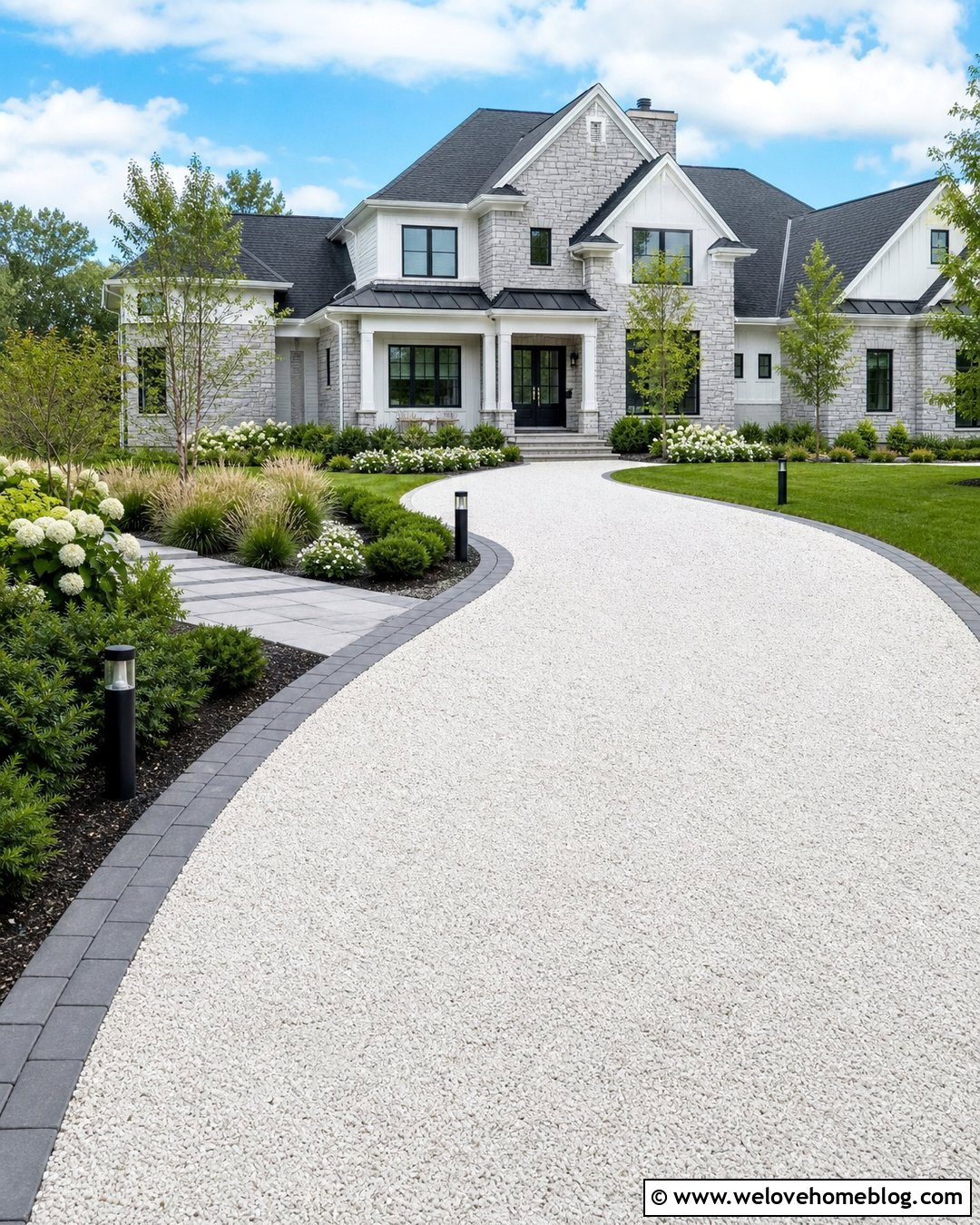
10. Tumbled Block Paving Driveway With Stone Walls
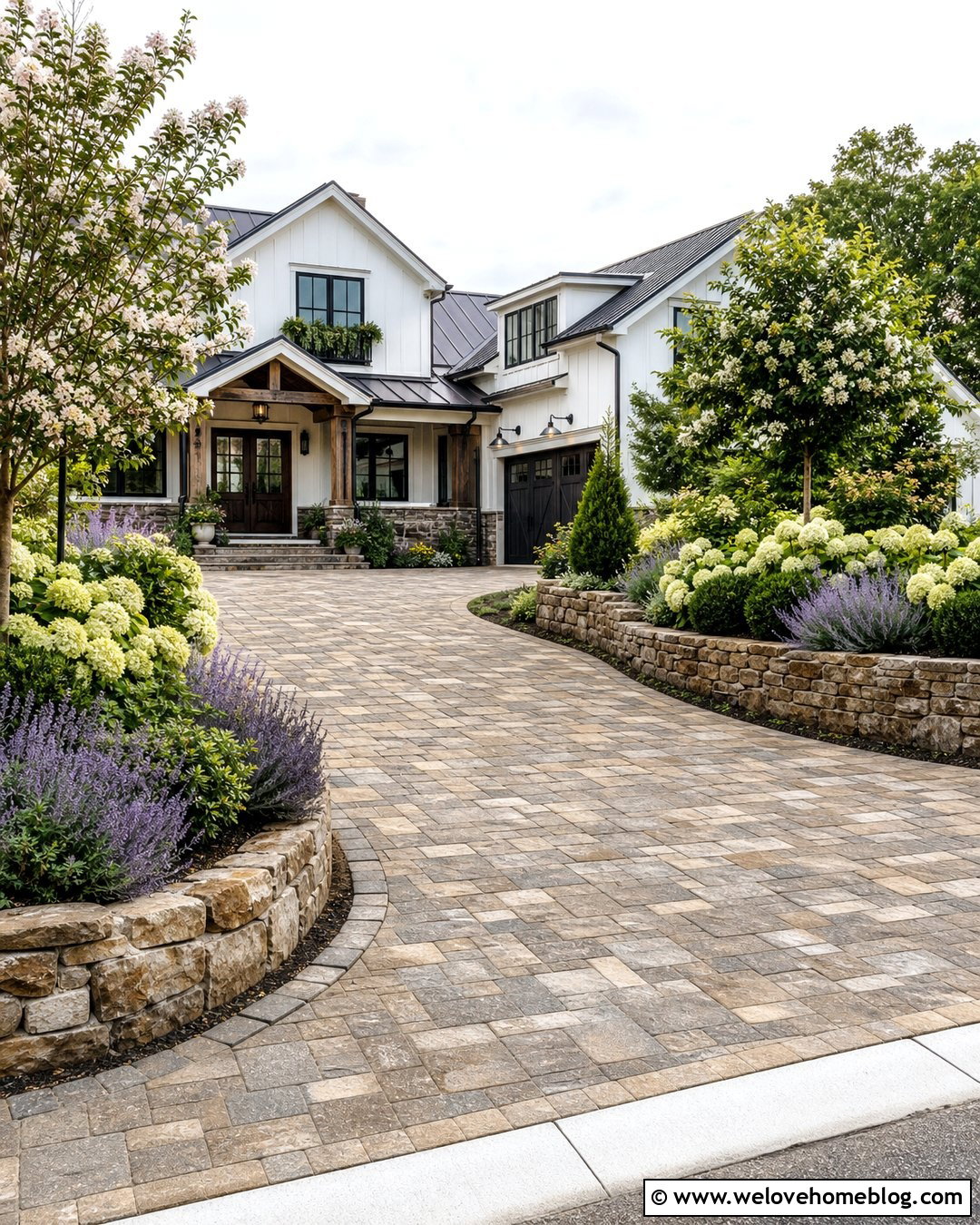
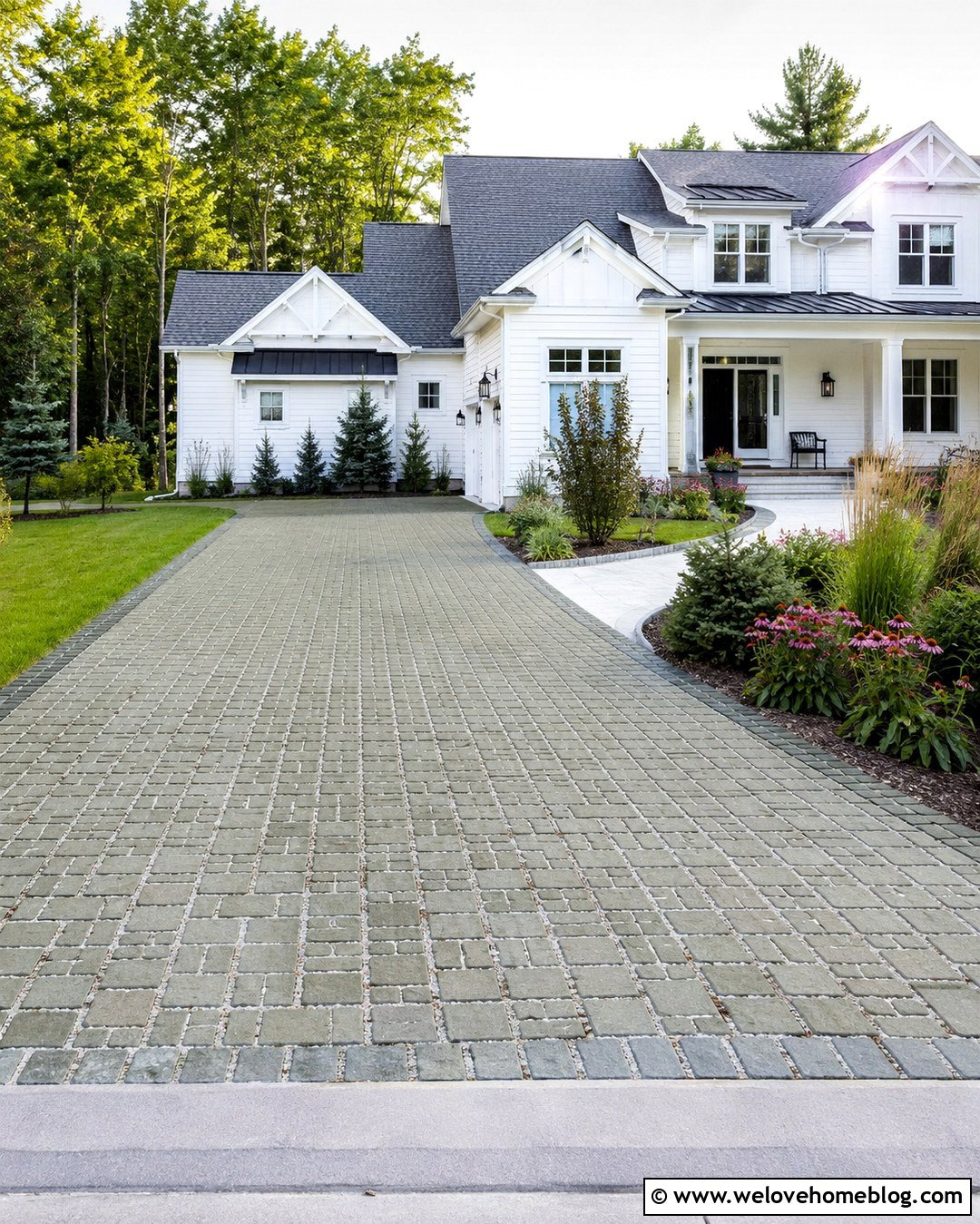
Tumbled block paving and low natural-stone walls form a convincing entrance for a farmhouse, country home, or rustic suburban property. Choose mixed-size concrete blocks in weathered brown, gray, and sandy tones, arranged in a random-looking modular pattern. Follow the driveway with low stone retaining walls or raised beds, using their curves to guide visitors toward the house. Plant the beds with hydrangeas, lavender, evergreen mounds, and small flowering trees. Keep the walls low near the curb so drivers retain clear views when leaving the property. A natural-stone doorstep or stepping path will connect the driveway palette to the entrance. The slightly irregular blocks, substantial edging, and relaxed planting work together to create an established appearance, even when the driveway and front garden have been newly constructed.
11. Two Tone Block Paving Driveway Pattern
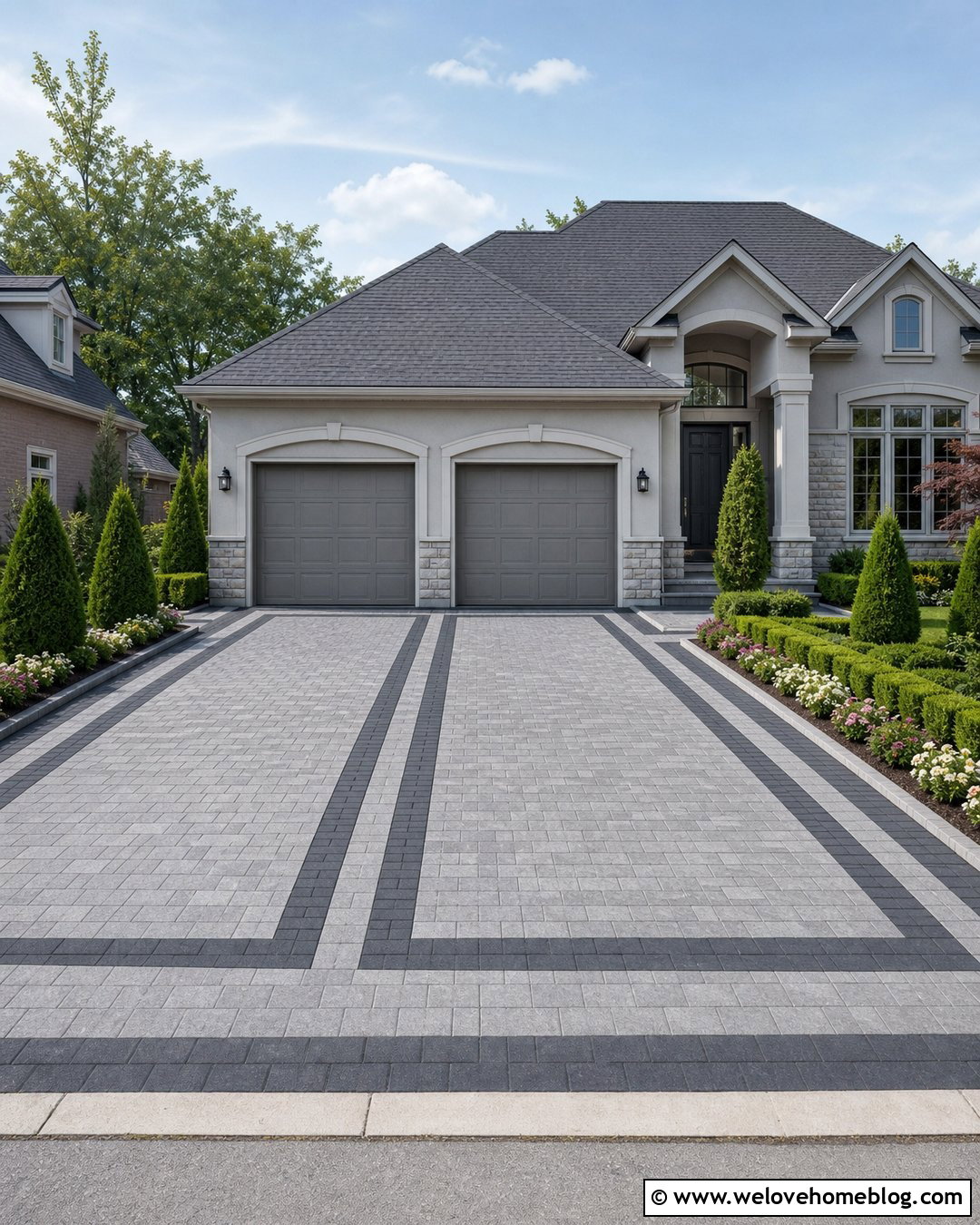
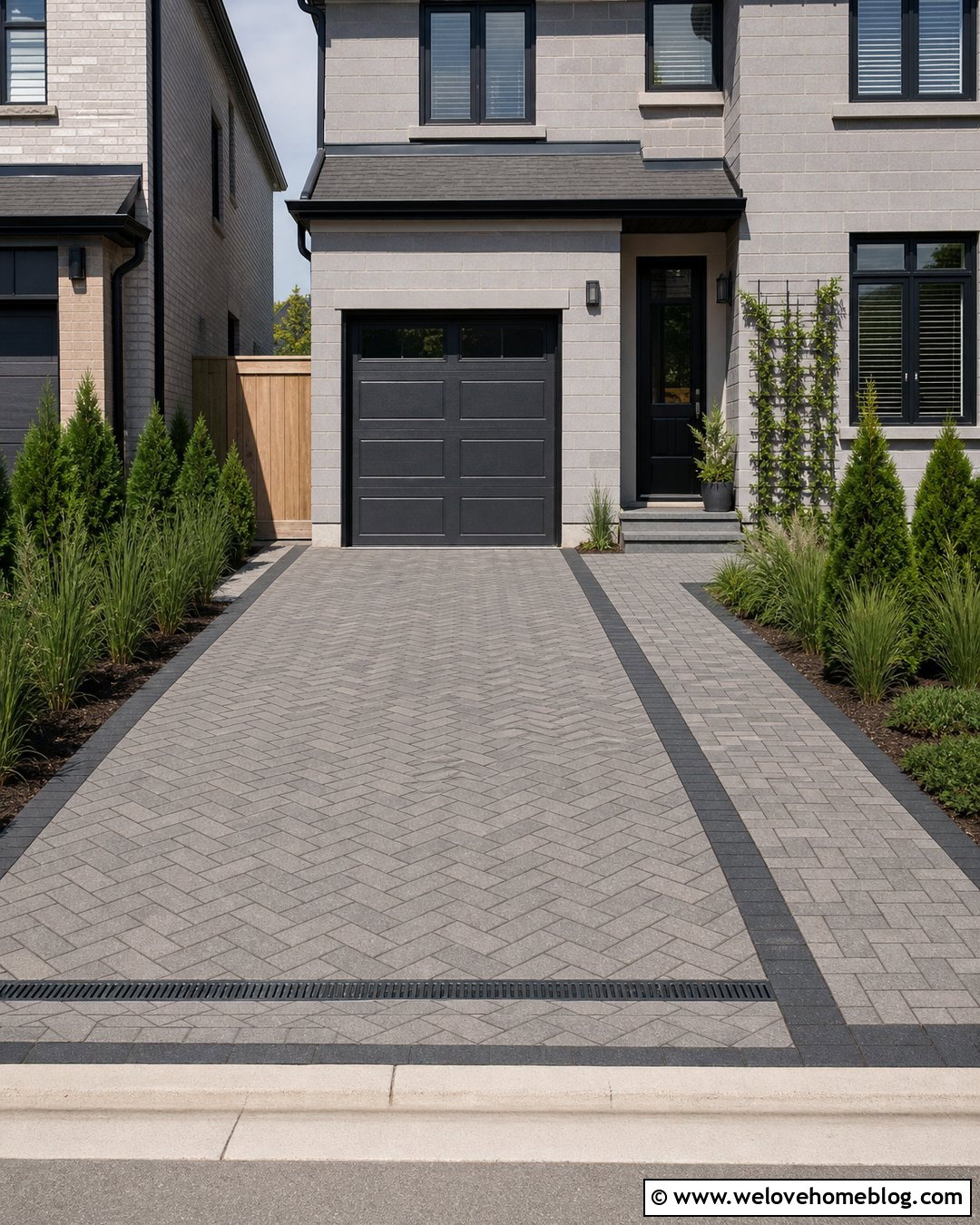
Two-tone block paving can divide a wide driveway into attractive zones without using raised barriers. Cover the main surface with medium-gray rectangular blocks, then add charcoal bands around parking spaces, turning areas, and the front-door path. A broad border can also frame the complete driveway, giving the design a clear beginning and end. Keep the internal pattern simple so the contrasting lines remain easy to read from the curb. Beside the paving, use symmetrical beds with clipped evergreens and small flowering plants that echo the orderly geometry. This layout works well in front of double garages because the darker bands can visually align with each garage door. The finished scheme offers practical guidance for parking while making a large expanse of paving feel carefully composed rather than monotonous.
12. Block Paving Driveway With Gravel Sections
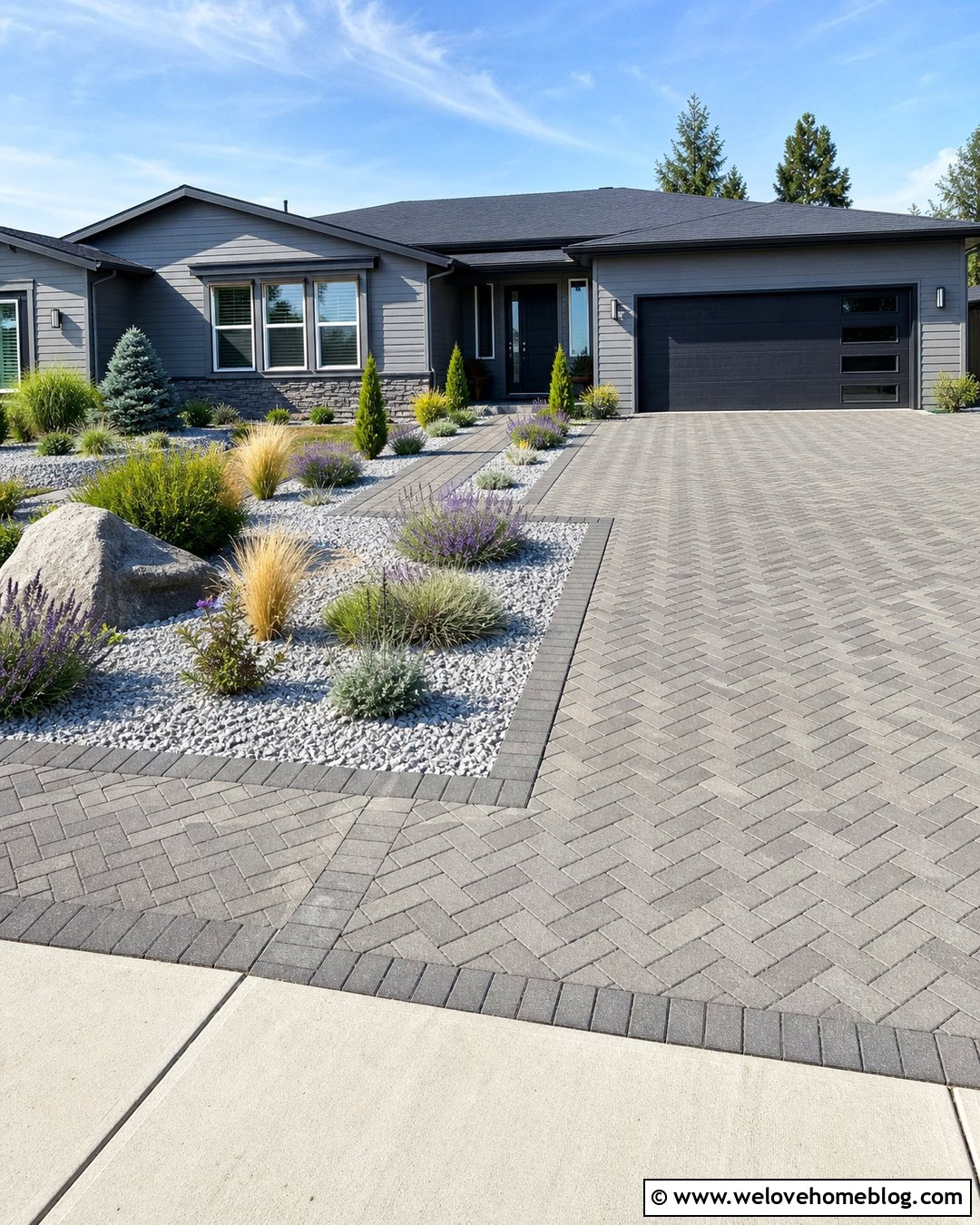
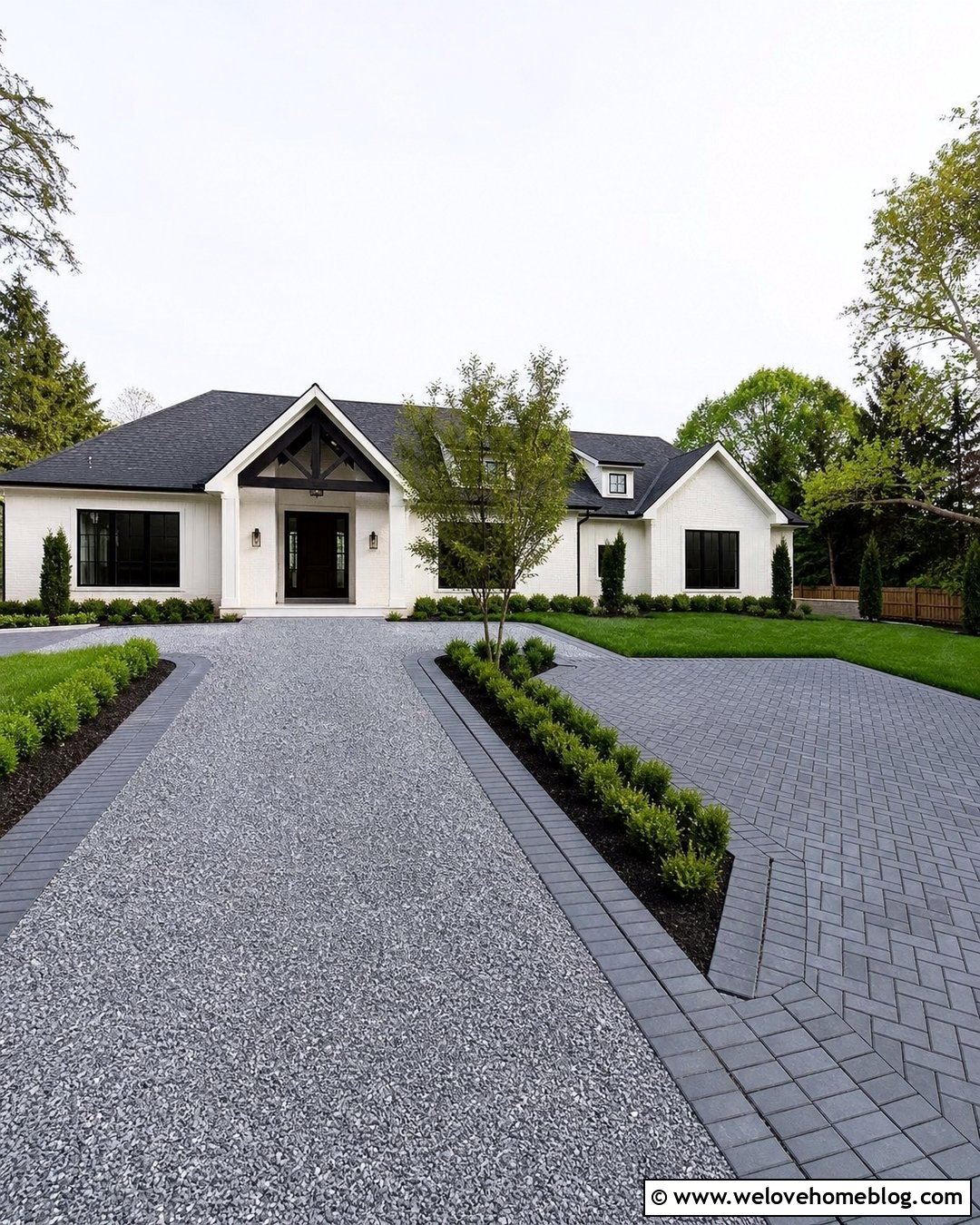
Combining block paving with decorative gravel can reduce the visual weight of a fully paved front garden. Use warm gray block paving for the main vehicle tracks, turning points, and walkway. Fill non-traffic sections with pale gravel contained by sturdy block edging. A central gravel bed, narrow side strips, or a small corner garden can introduce texture without compromising parking access. Add drought-tolerant grasses, lavender, compact conifers, and a feature boulder to the gravel areas for a low-maintenance landscape. The block color should contrast gently with the stones rather than creating a harsh divide. This mixed-material layout is especially useful for wide front gardens because it breaks the surface into smaller areas. It also gives planting a deliberate place, preventing greenery from feeling like an afterthought beside the driveway.
13. Block Paving Driveway With A Planted Center Strip
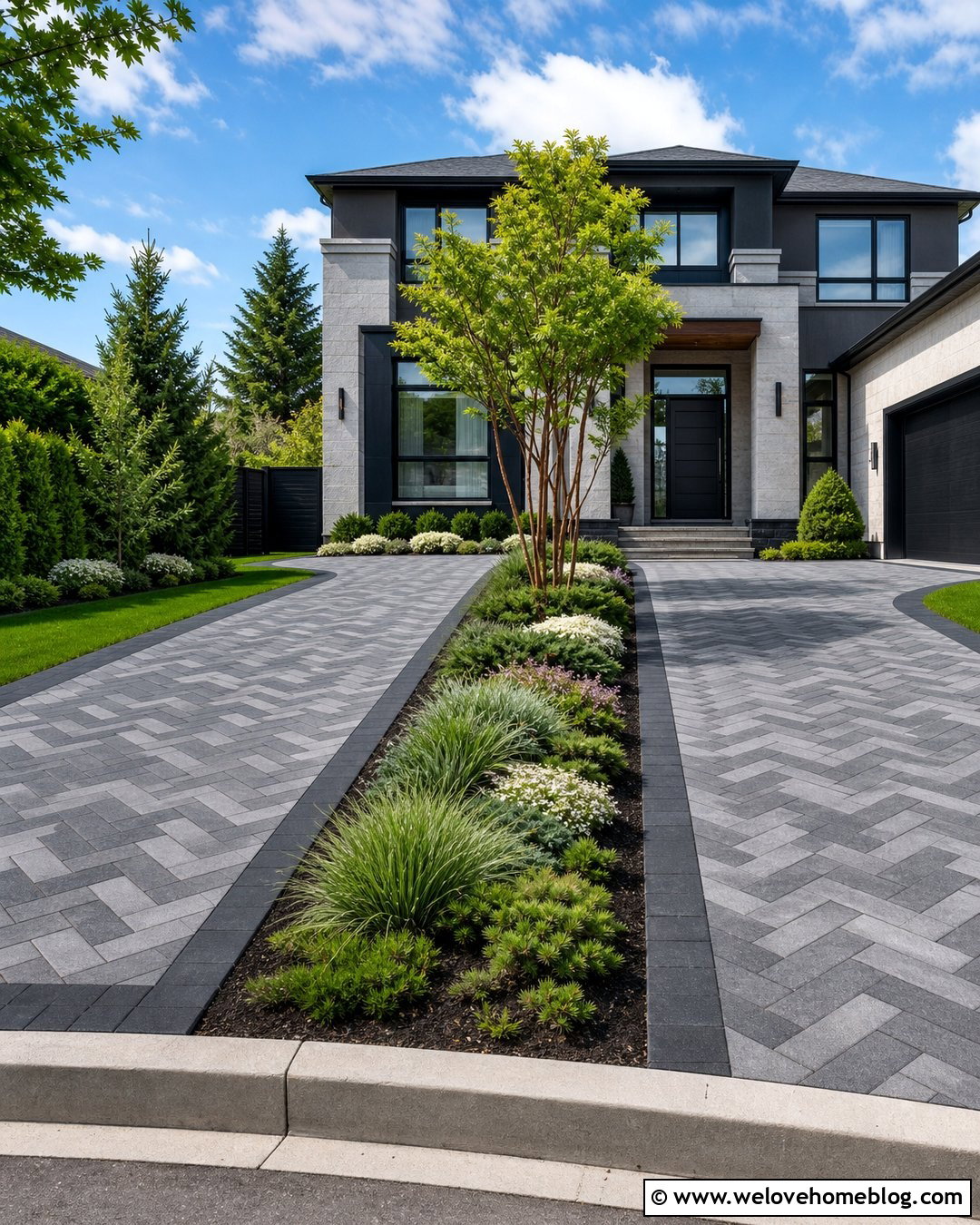
A planted center strip can transform a broad or split driveway into a greener, more garden-focused entrance. Lay charcoal and mid-gray block paving on either side of a long central bed, using a herringbone pattern for the vehicle areas. Edge the planting strip with flush blocks that can tolerate occasional tire contact better than delicate garden edging. Choose compact ornamental grasses, low evergreen shrubs, and ground-covering flowers that remain below driver sightlines. A small multi-stem tree may be added near the house where the driveway widens. Continue one paving lane into a clearly marked front-door walkway. This layout works best where there is enough width for two comfortable parking tracks. The central greenery separates vehicles visually, softens the paving, and draws the eye naturally toward the home’s entrance.
14. Sloped Block Paving Driveway With Raised Beds
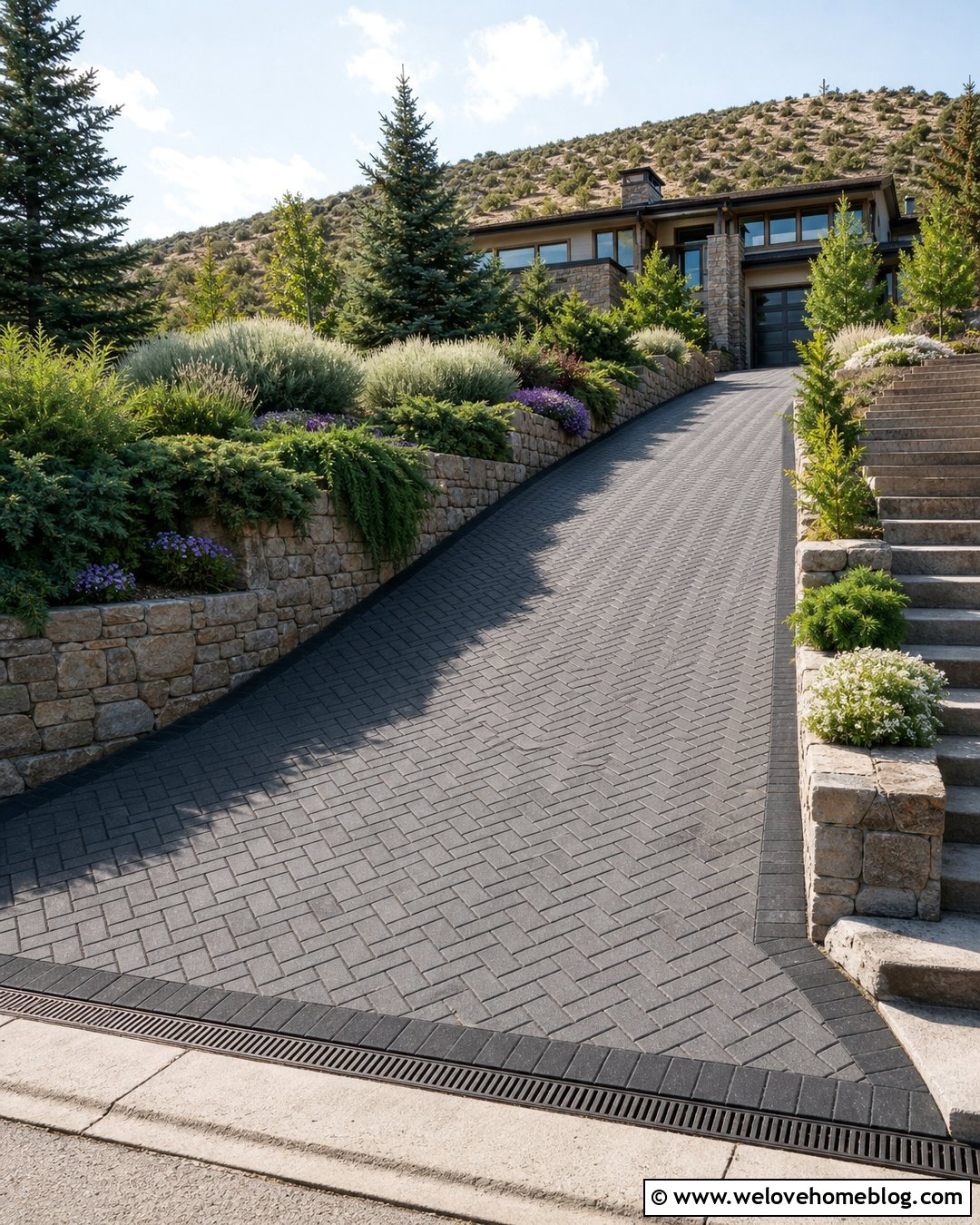
A sloping driveway can become a strong landscape feature when the paving, drainage, steps, and retaining beds are planned together. Use textured charcoal-gray block paving in a herringbone pattern to provide a visually secure surface. Create raised planting beds along the higher side using matching concrete blocks or natural stone. On the lower edge, install a clearly defined border and an appropriate drainage channel where the site design requires one. Broad steps can rise beside the driveway, providing a safer and more direct pedestrian route to the front door. Plant retaining beds with spreading evergreens, grasses, and cascading flowers that soften the changes in level. Repeating the same materials in the driveway border, steps, and walls will make a complicated slope feel orderly, connected, and intentional.
15. Block Paving Driveway With Gates And Brick Pillars
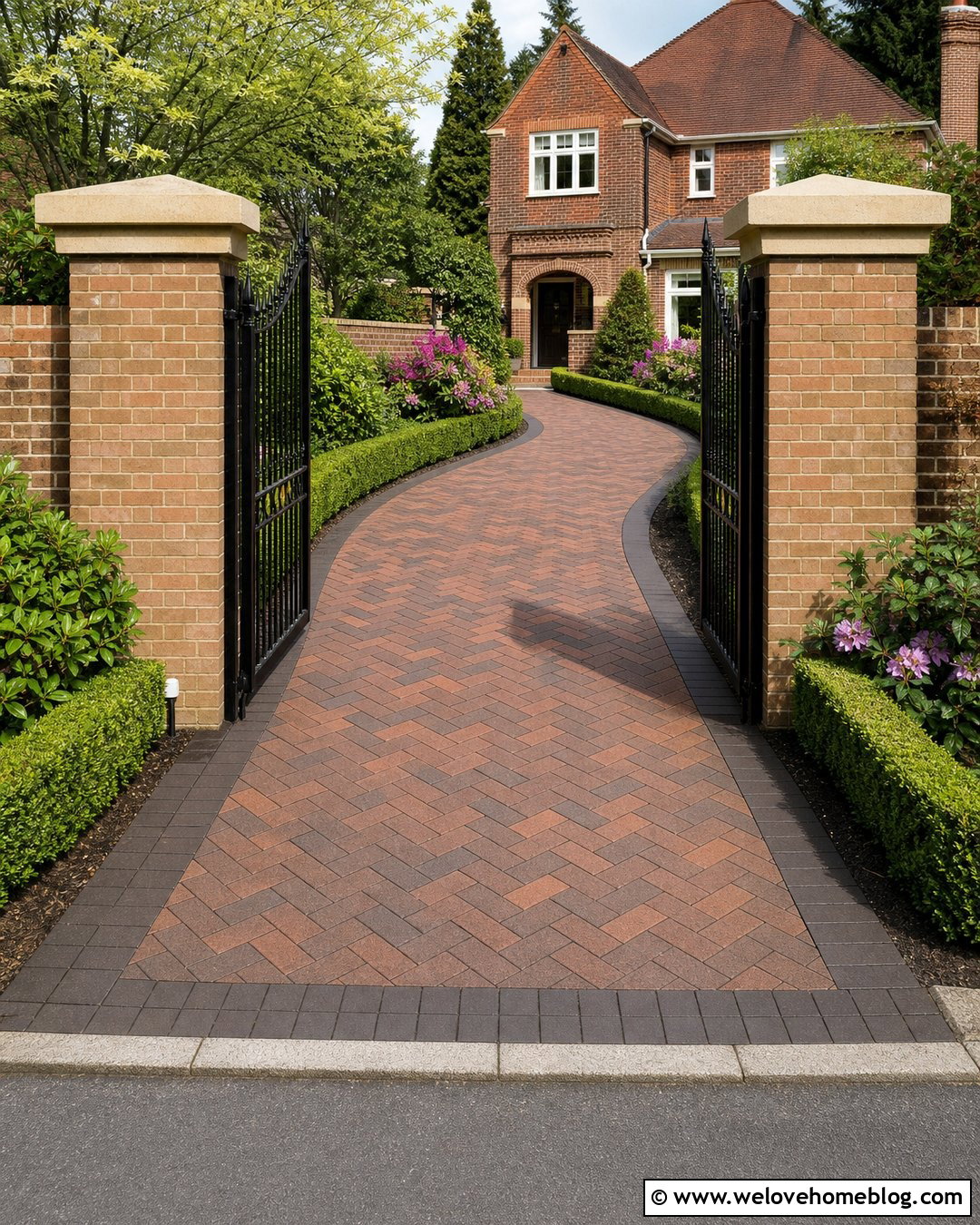
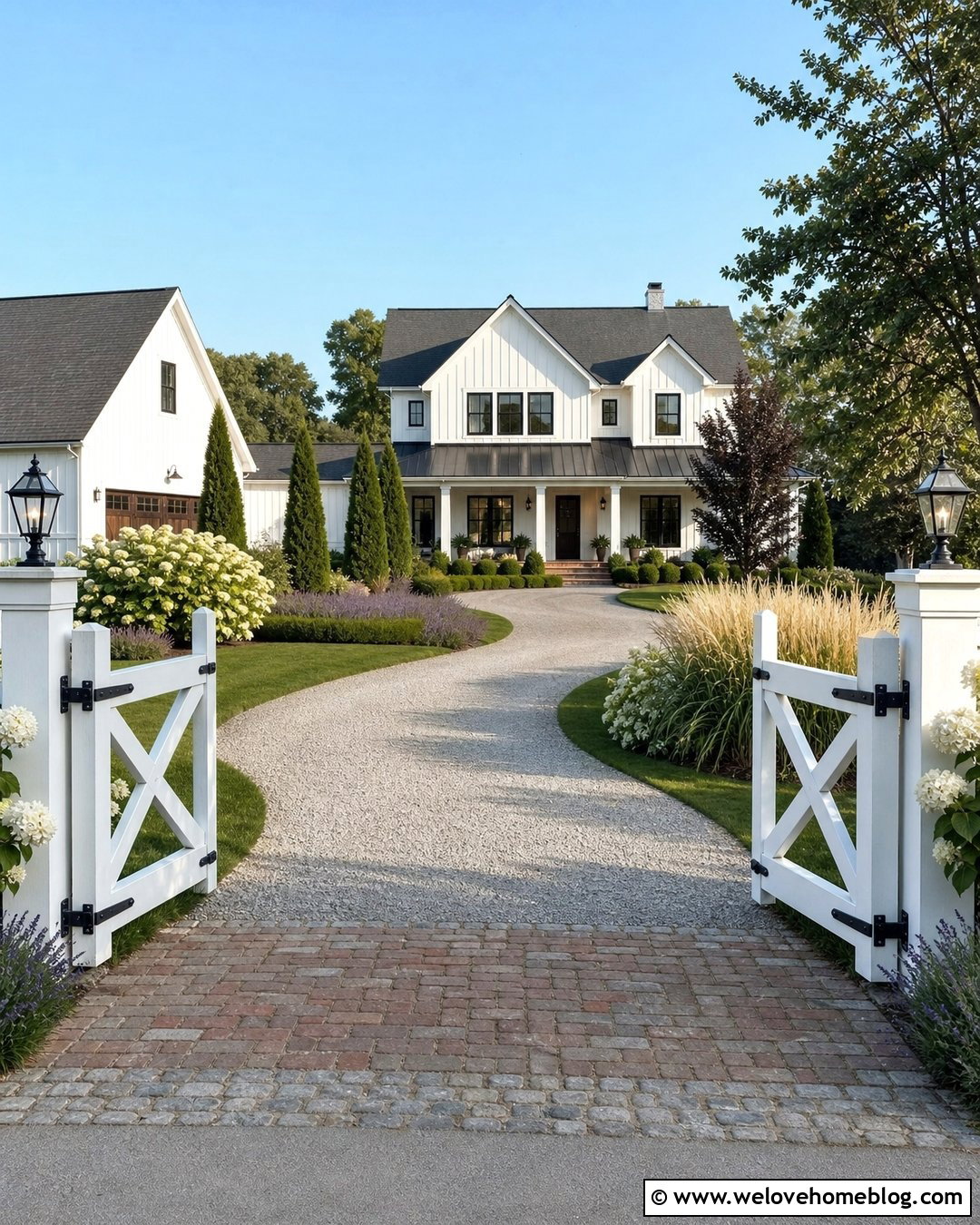
A gated driveway should feel like one complete entrance rather than separate paving, gate, and wall projects. Choose traditional brindle block paving in blended red and brown tones, laid in a 45-degree herringbone pattern. Frame the entrance with substantial brick pillars that match or complement the house facade. The driveway border can use dark brown blocks to connect visually with a black metal or stained timber gate. Set the gate far enough inside the property to create a practical entrance area where the site allows. Behind the pillars, plant low hedging and flowering shrubs that soften the boundary without hiding the structure. Continue the blocks toward the house in a gentle curve. Coordinated masonry, paving colors, landscaping, and gate proportions will give the property a secure but welcoming presence.
16. Block Paving Driveway With Recessed Lighting
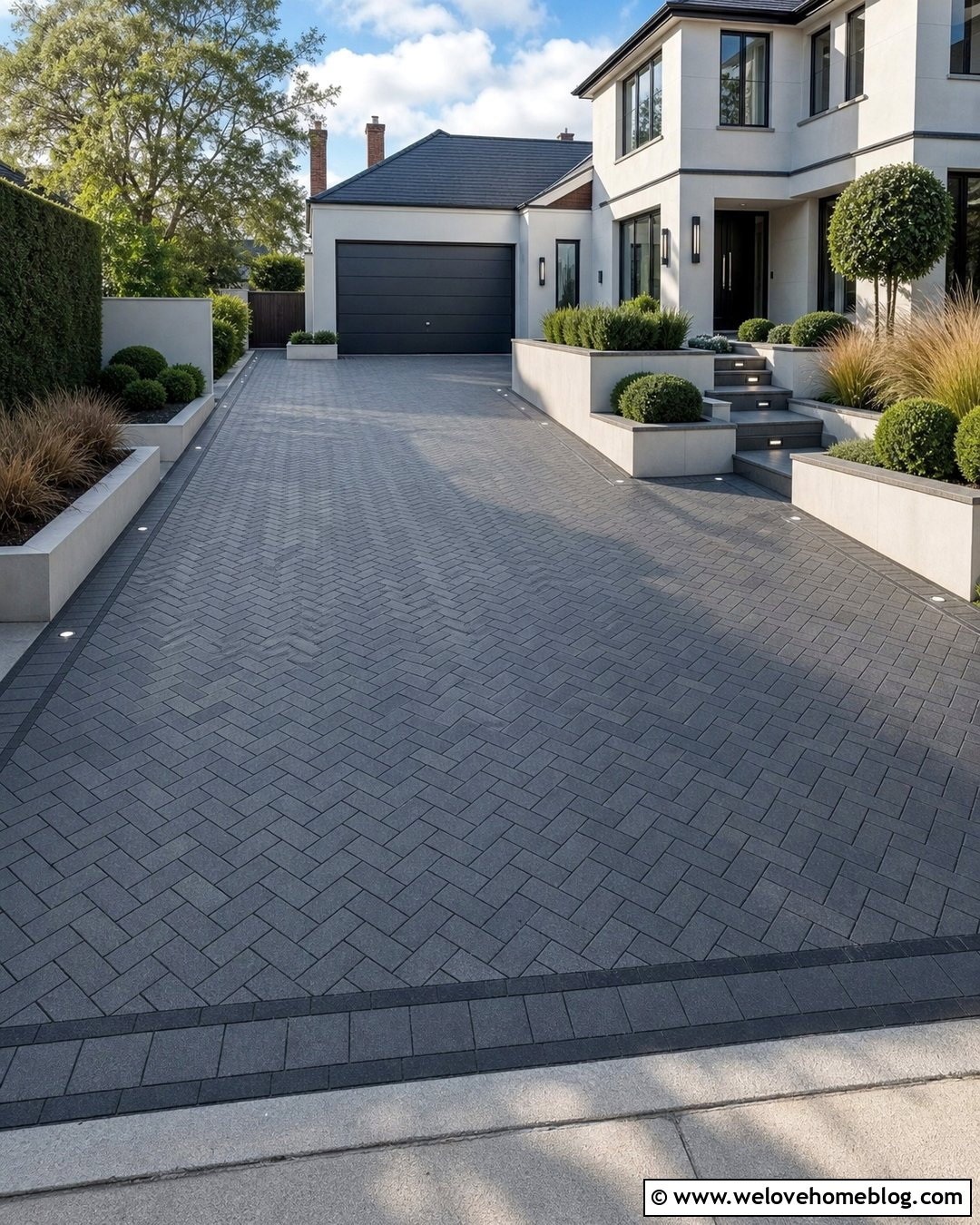
Integrated lighting can improve the appearance and nighttime usability of a block paving driveway without filling the garden with visible fixtures. Start with smooth dark gray concrete blocks arranged in a straight herringbone layout. Position recessed lights along the outer borders, walkway, and any steps rather than through the middle of parking spaces. During daylight, the fixtures should sit flush and remain visually discreet. Pair the driveway with pale raised planters, clipped evergreen shrubs, and ornamental grasses that catch the light after sunset. Keep the overall planting design simple so the illuminated edges clearly guide movement toward the front door. The house facade can include matching wall lights for continuity. By day, the driveway looks clean and contemporary; after dark, the carefully positioned lighting defines the complete approach without cluttering the paving.
17. Block Paving Driveway With Evergreen Landscaping
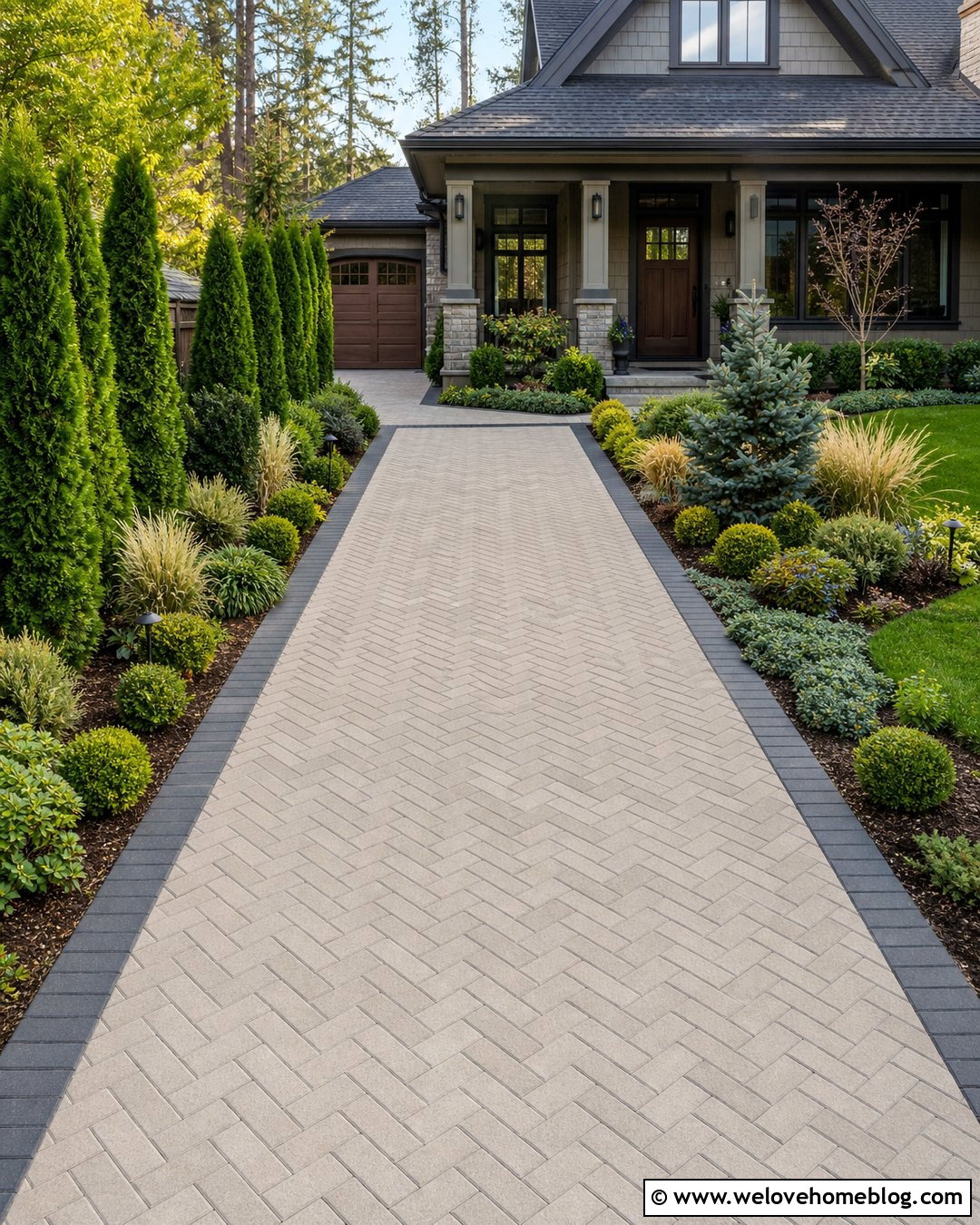
Evergreen landscaping keeps a block-paved front garden structured throughout the year and reduces reliance on seasonal flowers. Use neutral greige paving blocks in a 90-degree herringbone pattern, finished with a charcoal edge course. Create beds on both sides with a mix of clipped shrubs, upright conifers, low ground cover, and a few ornamental grasses. Varying plant heights will prevent the borders from looking flat while preserving visibility near the curb. A small evergreen tree can anchor the wider corner closest to the house. Include one direct walkway that uses the same blocks in a running bond pattern. This coordinated surface and planting plan suits busy households that want a neat entrance with manageable upkeep. The restrained colors also allow brick, stone, siding, or rendered house facades to remain the main architectural focus.
18. Block Paving Driveway With Flower Borders
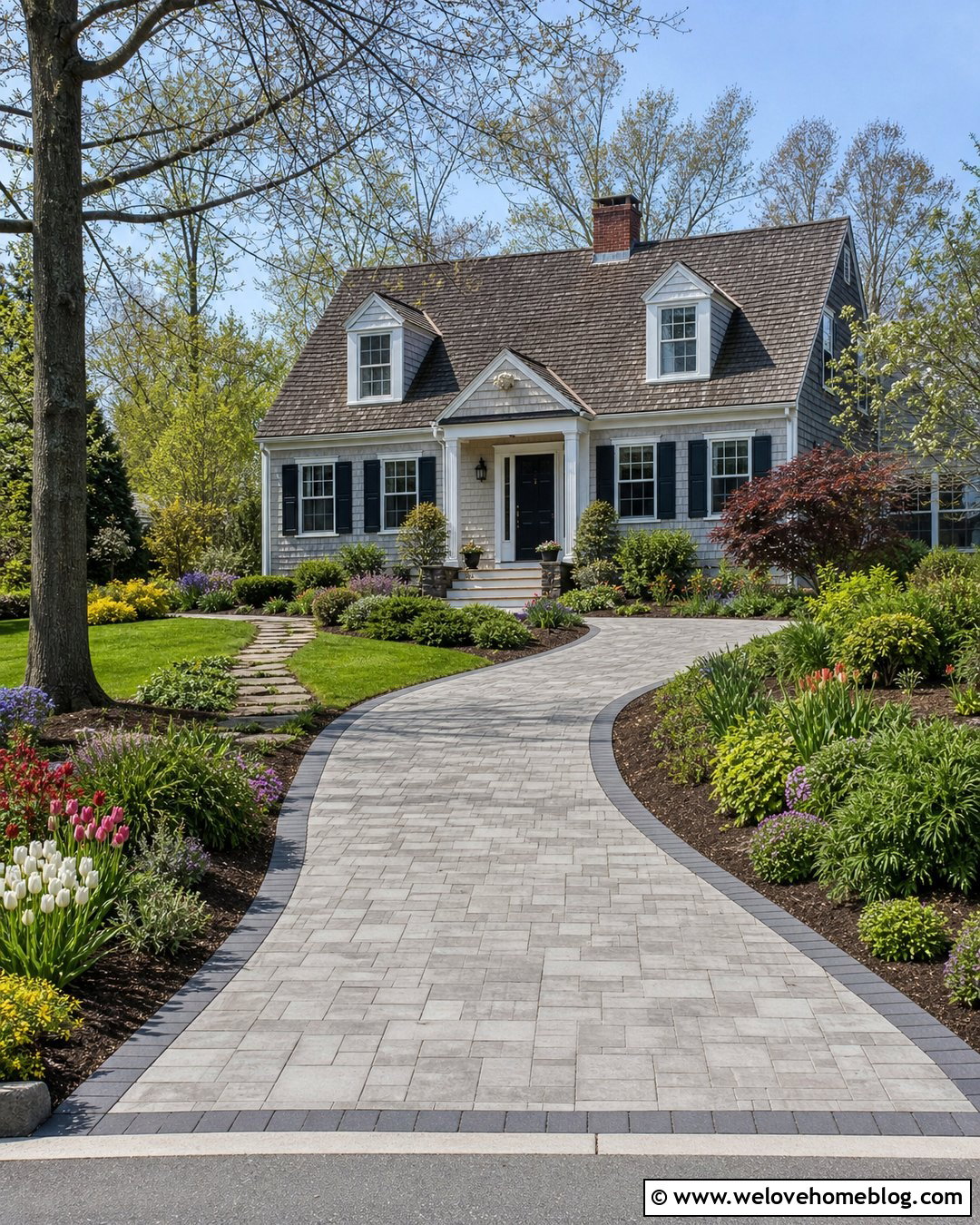
Colorful flower borders can make a practical block paving driveway feel like part of a real garden. Select soft gray tumbled blocks that provide a quiet background for brighter planting. Use a gently curved layout with a charcoal soldier-course edge, then form generous beds along both sides. Combine long-flowering perennials, compact shrubs, ornamental grasses, and spring bulbs to create changing color and texture. Keep taller plants closer to walls or fences and use lower varieties beside parking areas. A stepping path through one border can link the driveway to a side entrance or garden gate. Repeating a limited group of plants will produce a more organized result than adding many unrelated varieties. The muted paving, clean borders, and layered flowers create a welcoming approach without reducing the driveway’s everyday usefulness.
19. Black Block Paving Driveway With Minimal Planting
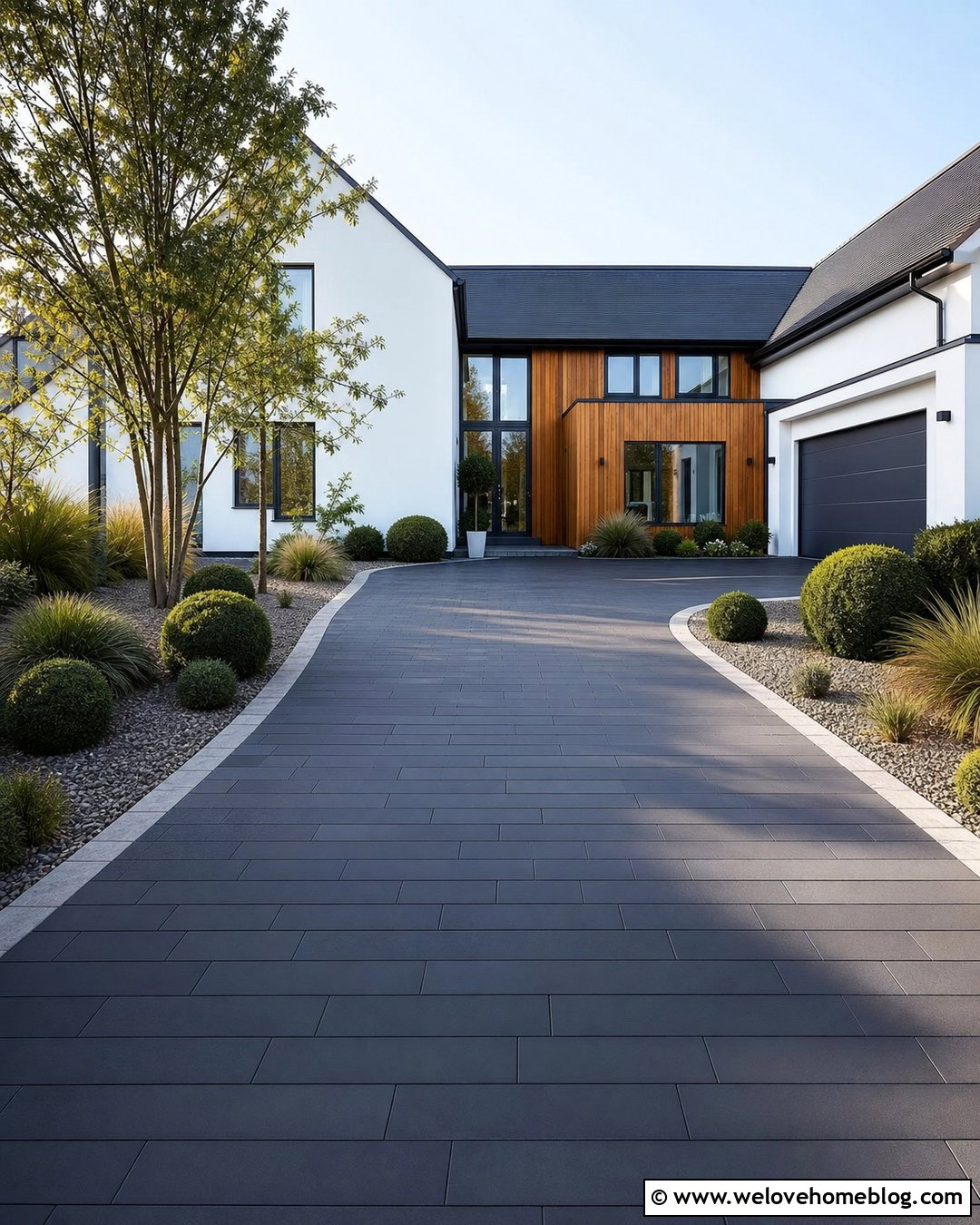
Black or near-black block paving creates a bold foreground for a white, gray, or timber-clad modern house. Choose smooth charcoal concrete blocks and lay them in a linear stack-bond or offset pattern that follows the architecture. A narrow pale-gray block border can outline the driveway and prevent the dark surface from visually merging with fences or walls. Keep planting minimal but substantial, using groups of architectural grasses, clipped spheres, and one multi-stem tree in a gravel-mulched bed. A wide path should run directly toward the entrance, with its laying direction changed to distinguish it from the parking area. This dramatic design needs open green or planted space around the edges. The contrast between dark paving, light walls, and restrained greenery produces a clean entrance that feels sharp rather than bleak.
20. Weathered Block Paving Driveway With Traditional Planting

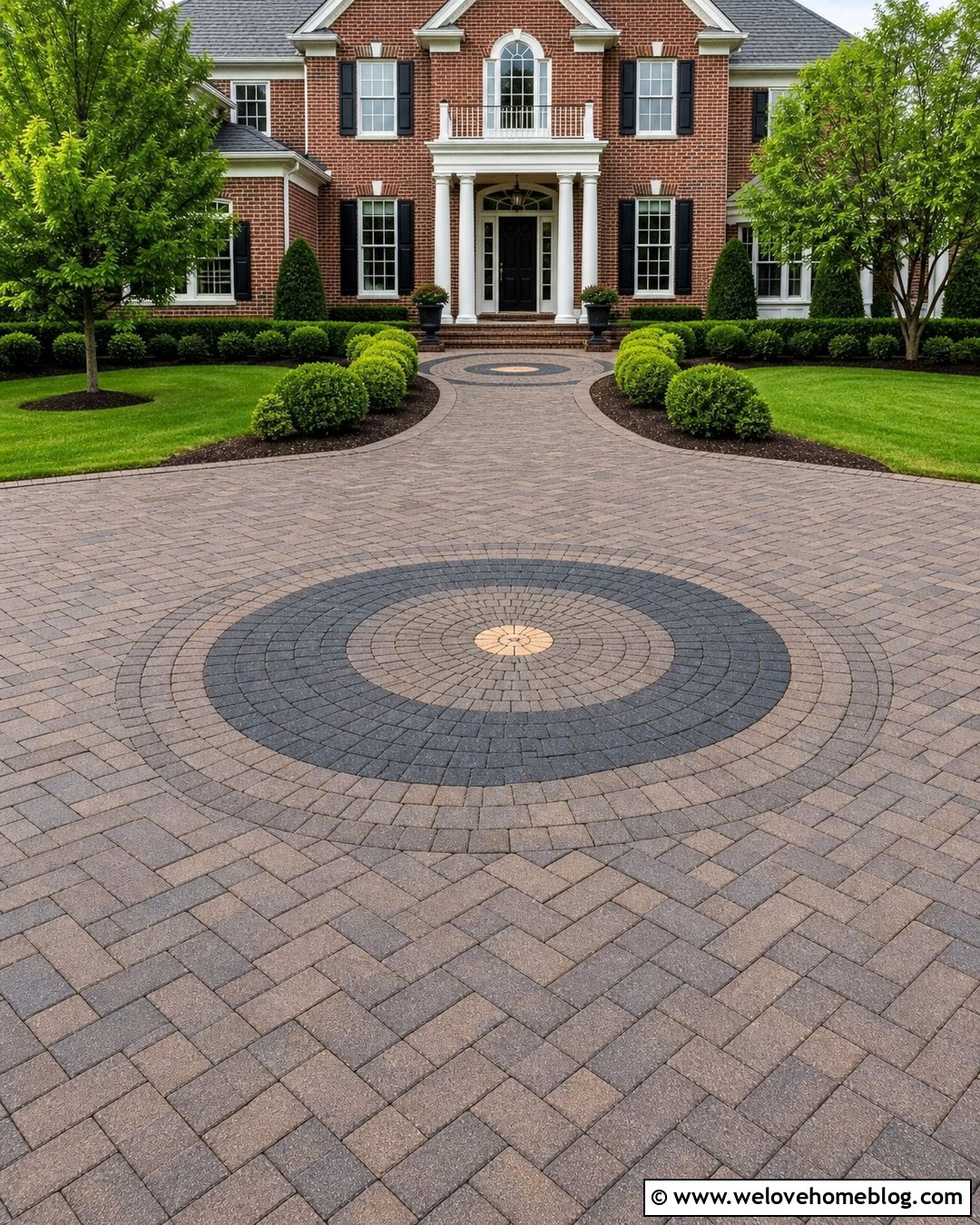
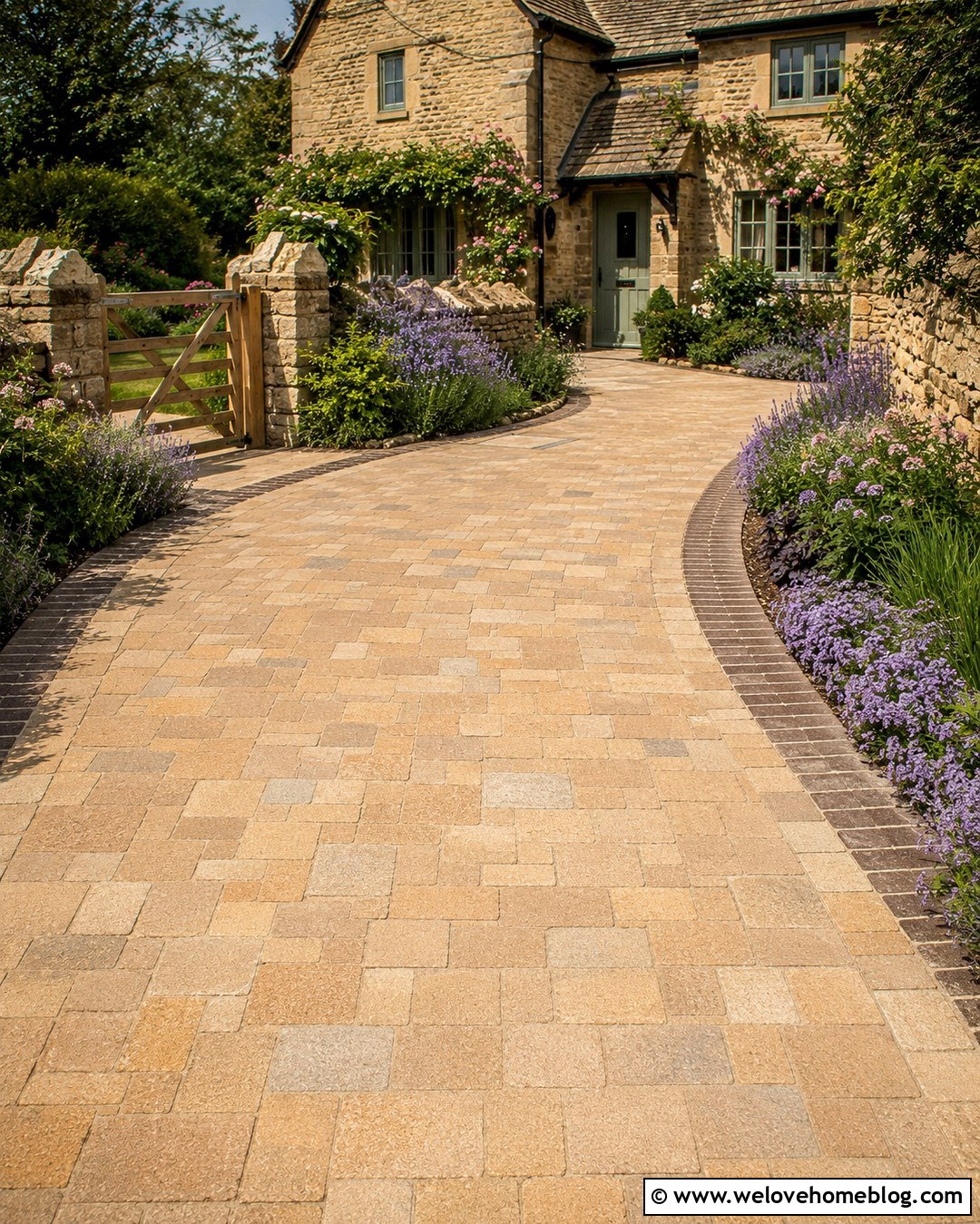
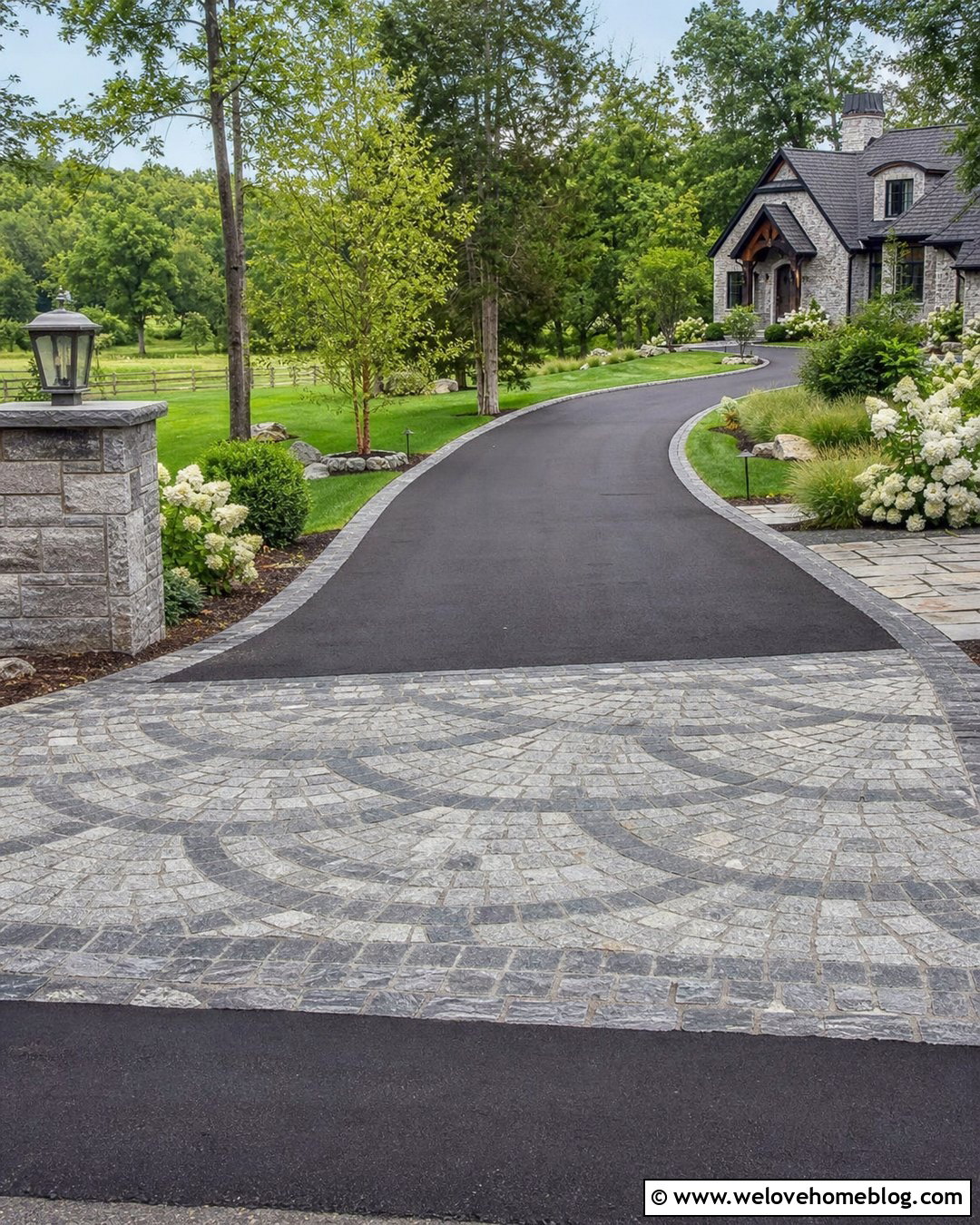
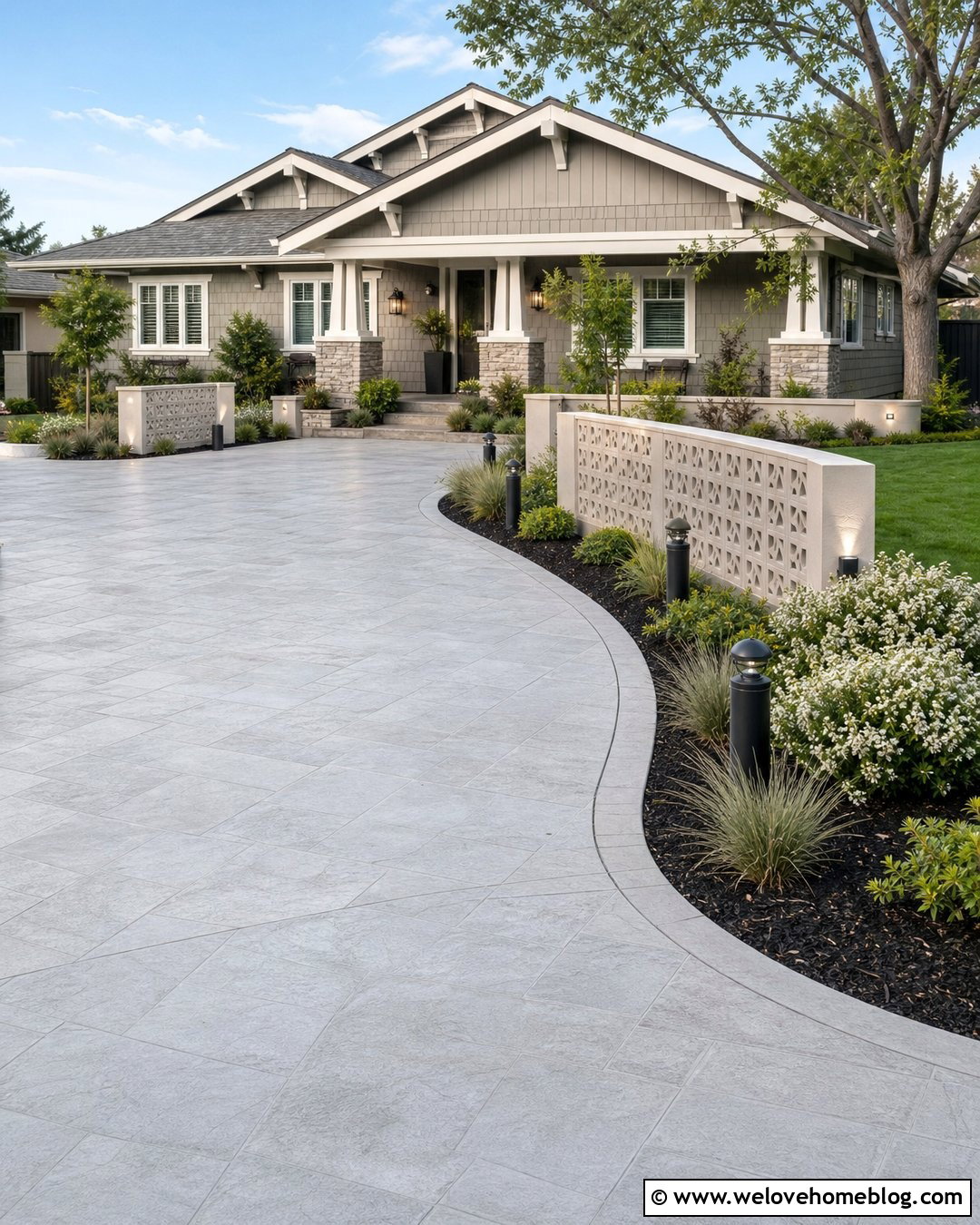
Weathered or antiqued block paving gives a traditional front garden the character of an established entrance. Use tumbled concrete blocks in blended gray, brown, and muted red tones, arranged in a varied-size pattern. Shape the driveway with a soft curve and define the perimeter with darker reclaimed-look blocks. Low brick walls, mature hedging, and overflowing planting beds can frame the approach without making it feel overly formal. Include hydrangeas, clipped evergreens, small roses, and a flowering tree for layered seasonal interest. A matching block path can branch toward a covered porch or painted front door. The key is controlled variation: the paving should look gently aged, not randomly colored. When the blocks, walls, house materials, and traditional planting share similar undertones, the entire property gains a convincing sense of permanence.
Conclusion:
The best 20 Driveway Front Garden Block Paving Ideas balance parking, pedestrian access, drainage, planting, and the architecture of the house. Begin by deciding how much space vehicles genuinely require, then use the remaining area for borders, trees, paths, or rain-friendly landscaping. Block color should connect with the facade, while contrasting edge courses can sharpen the layout and protect its shape. Herringbone patterns suit busy vehicle areas, whereas linear patterns create a calmer contemporary appearance. Whether you prefer cottage flowers, minimalist grasses, evergreen structure, or formal gates, treat every element as part of one design. A well-planned block paving driveway should remain practical while making the front garden feel greener, more welcoming, and visually complete.

Related posts:
Leave a Reply