
Grey block paving creates a smart, durable entrance that can suit everything from a compact cottage to a sleek contemporary home. The neutral color works especially well because it connects easily with brick, render, stone, timber, and modern cladding. Yet the finished look depends on much more than color. Block size, laying pattern, border choice, driveway shape, drainage, and landscaping all influence the result. Light silver blocks can brighten a small frontage, while charcoal paving gives a larger drive a stronger presence. Mixed gray tones add texture without becoming visually busy. The following **25 Grey Block Paving Driveways Ideas** explore complete designs that bring the surface, borders, planting, and house together naturally.
1. Light Grey Herringbone Block Paving Driveway
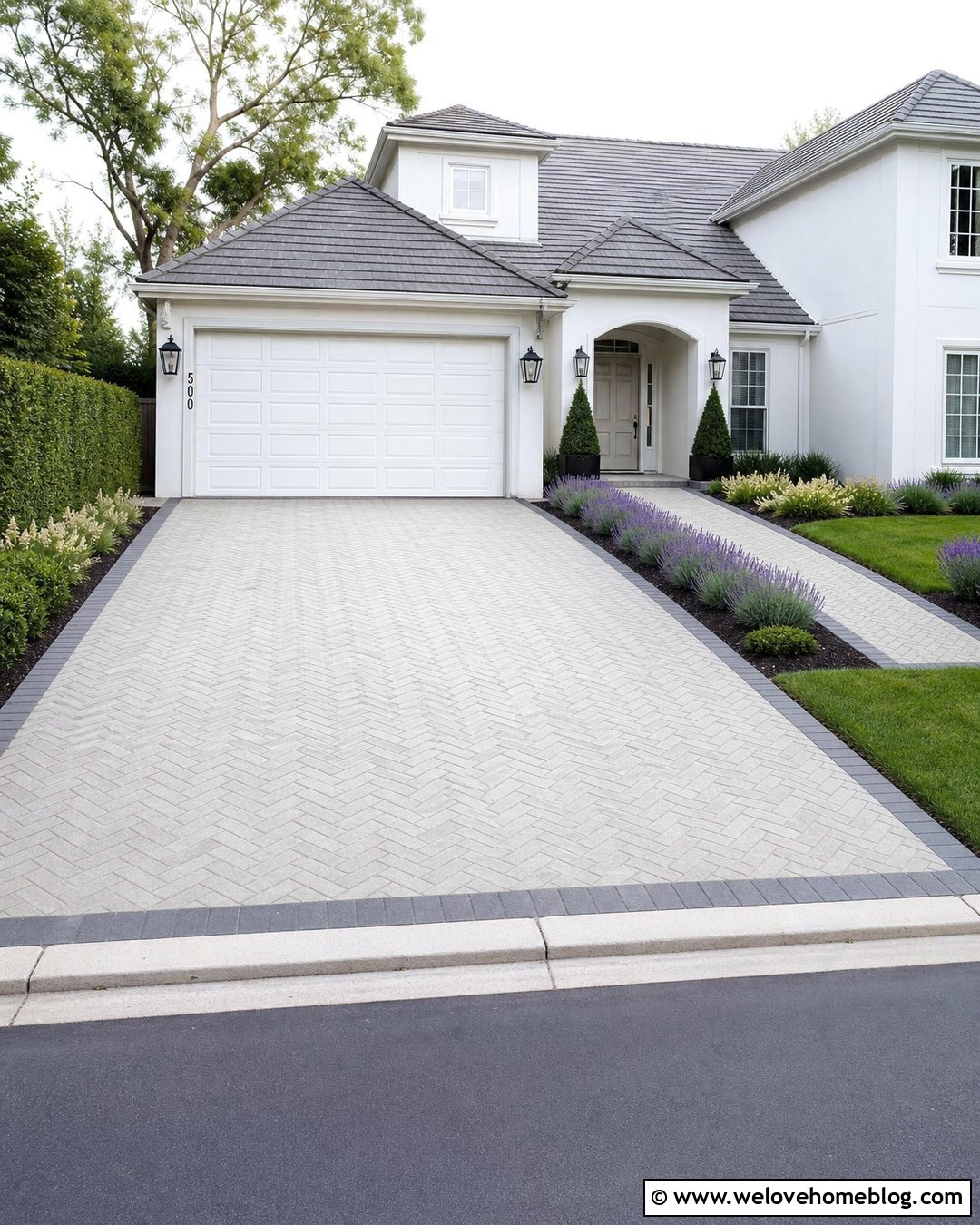
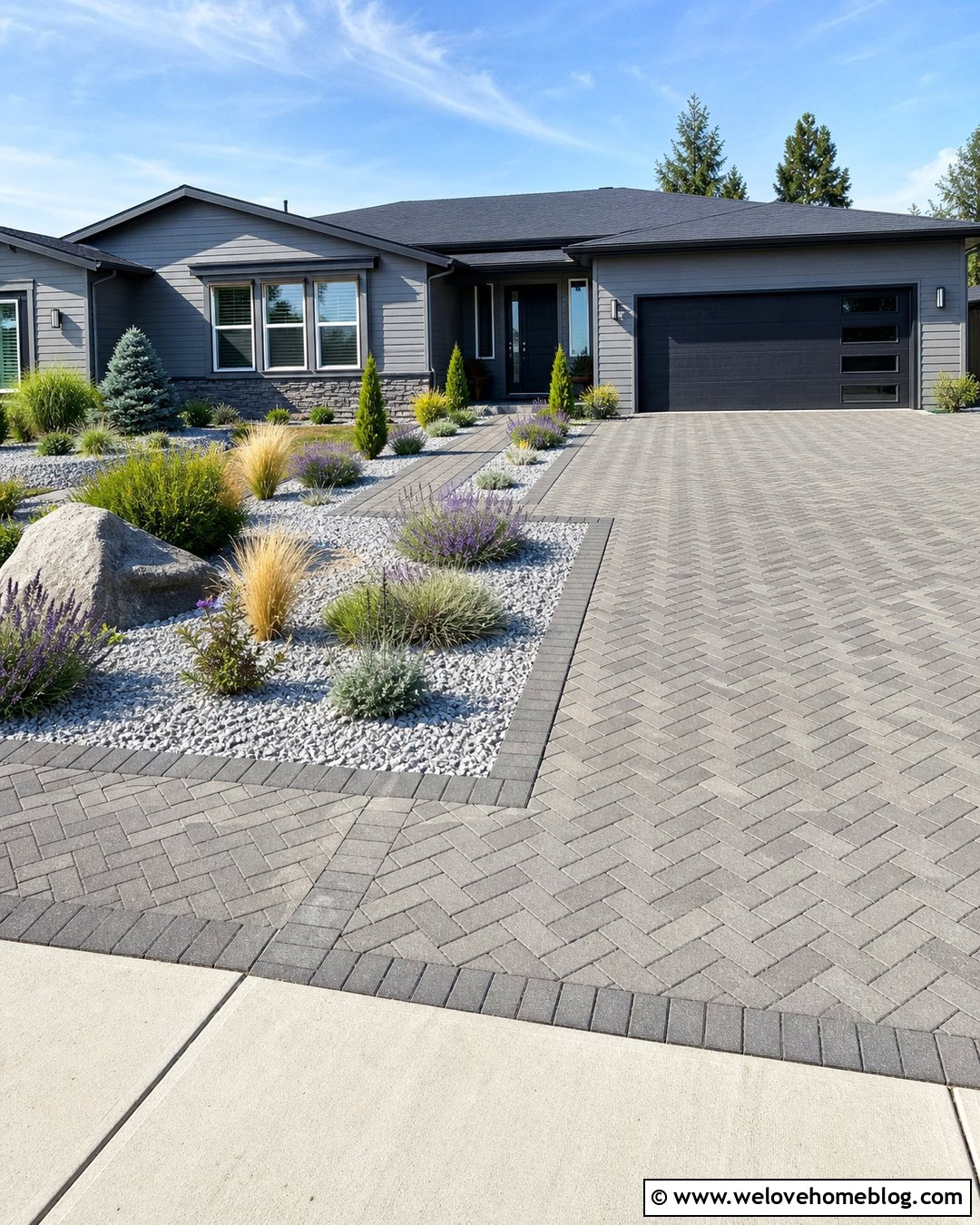
Light gray concrete blocks laid in a 45-degree herringbone pattern create a bright driveway with plenty of visual movement. This arrangement works particularly well on a straight, medium-width drive because the diagonal lines make the entrance appear broader. Frame the main paving with charcoal soldier-course blocks to define the edges and protect adjoining planting beds. Low evergreen shrubs, ornamental grasses, and a narrow paved walkway can soften the hard surface without reducing parking space. For a clean transition at the sidewalk, continue the dark border across the driveway apron. The combination is practical, balanced, and easy to coordinate with white render, pale brick, or gray window frames. Keep the jointing sand close to the block color for a smooth finish.
2. Charcoal Grey Block Paving Driveway With Light Border
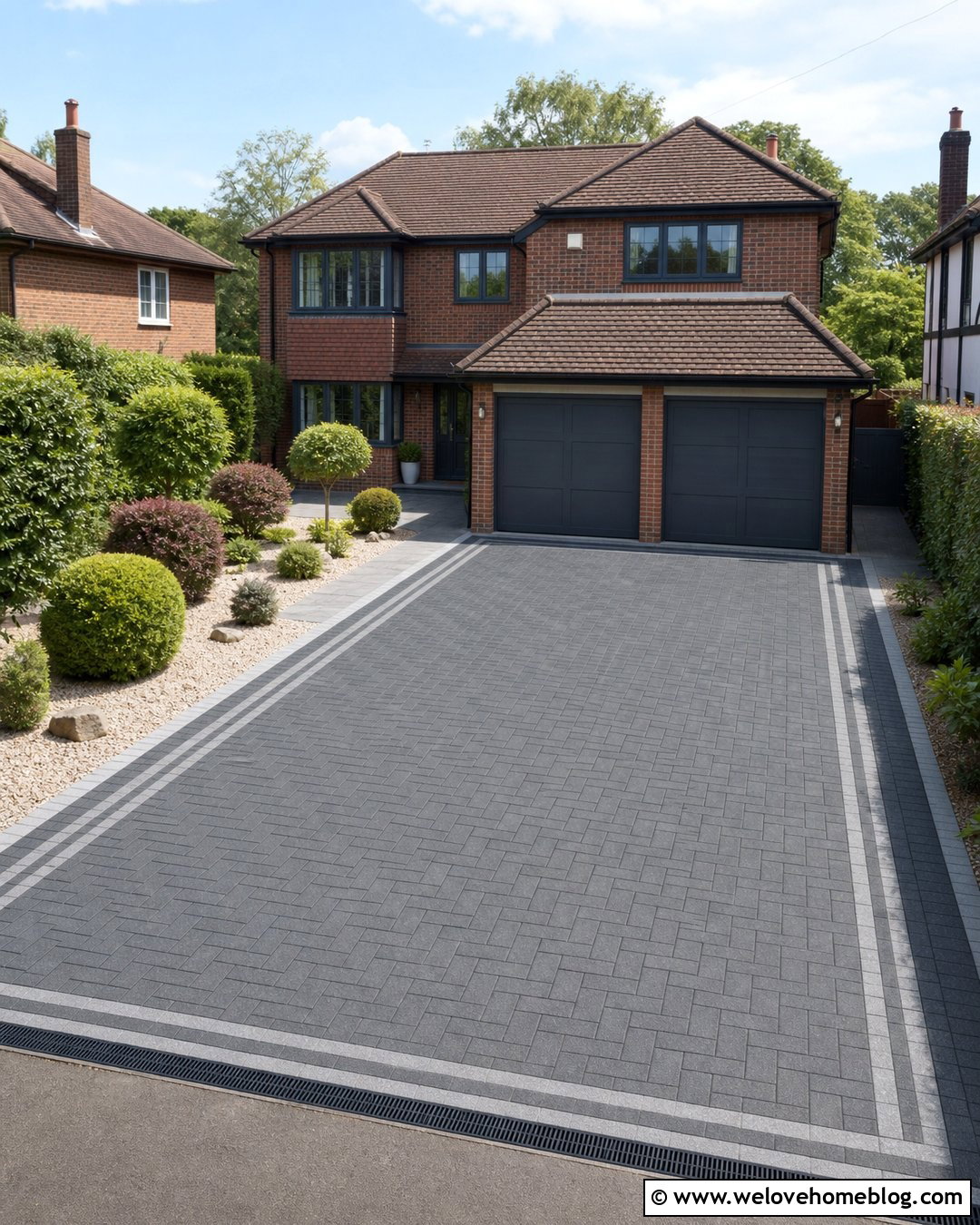
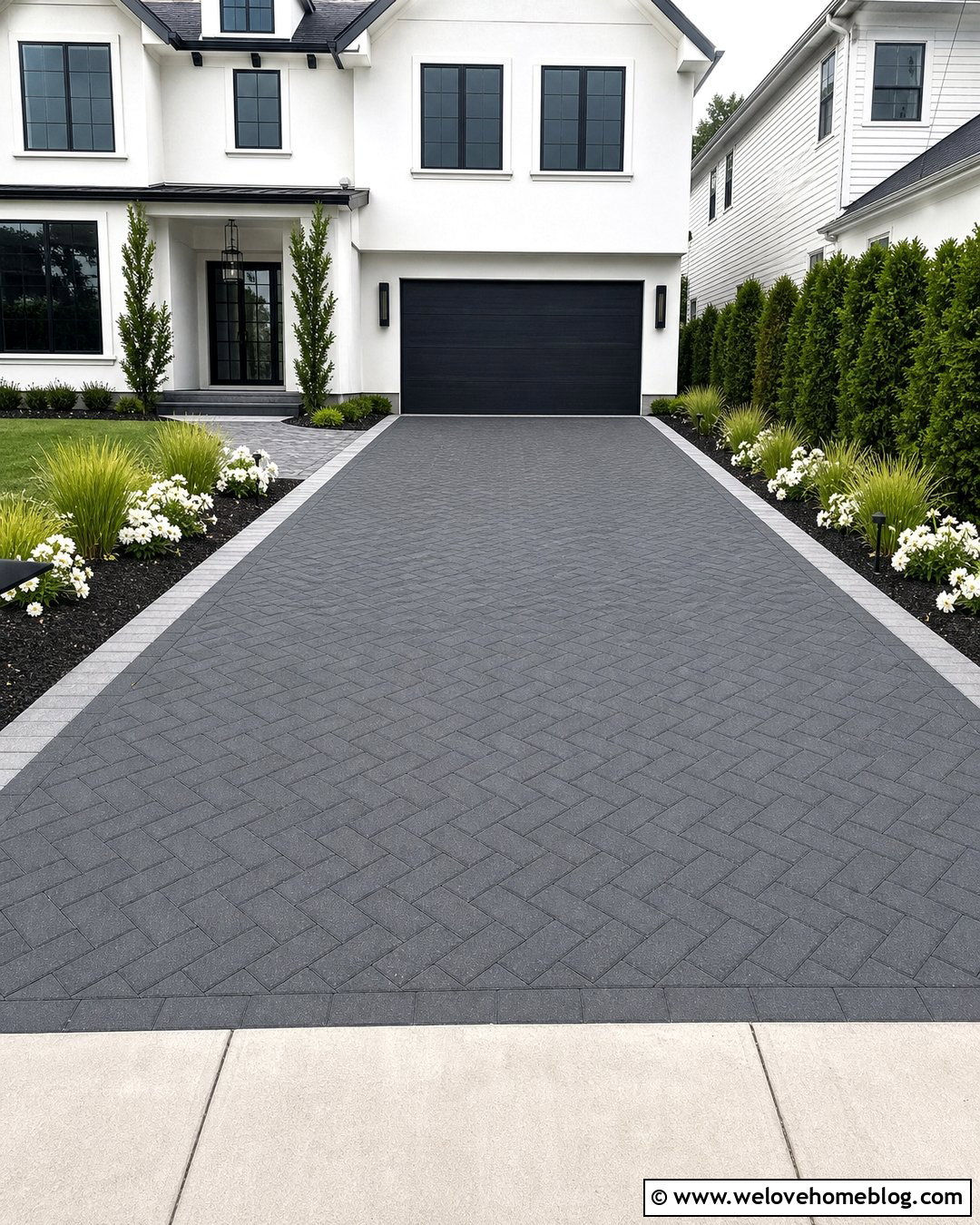
Deep charcoal block paving gives a driveway a bold, contemporary appearance, especially when surrounded by a lighter silver-gray border. Use a 90-degree herringbone layout across the main parking area to create orderly lines that lead toward the garage. A double border can make a wide driveway feel more structured, while a single light course is usually enough for smaller front yards. Introduce clipped evergreen shrubs and pale gravel planting beds to keep the overall scheme from feeling too dark. A matching block-paved walkway can branch toward the front door, helping the entire entrance feel connected. This design looks especially sharp beside red brick, white render, or timber cladding. Add a discreet drainage channel where the paving meets the sidewalk or garage threshold.
3. Mixed Grey Block Paving Driveway
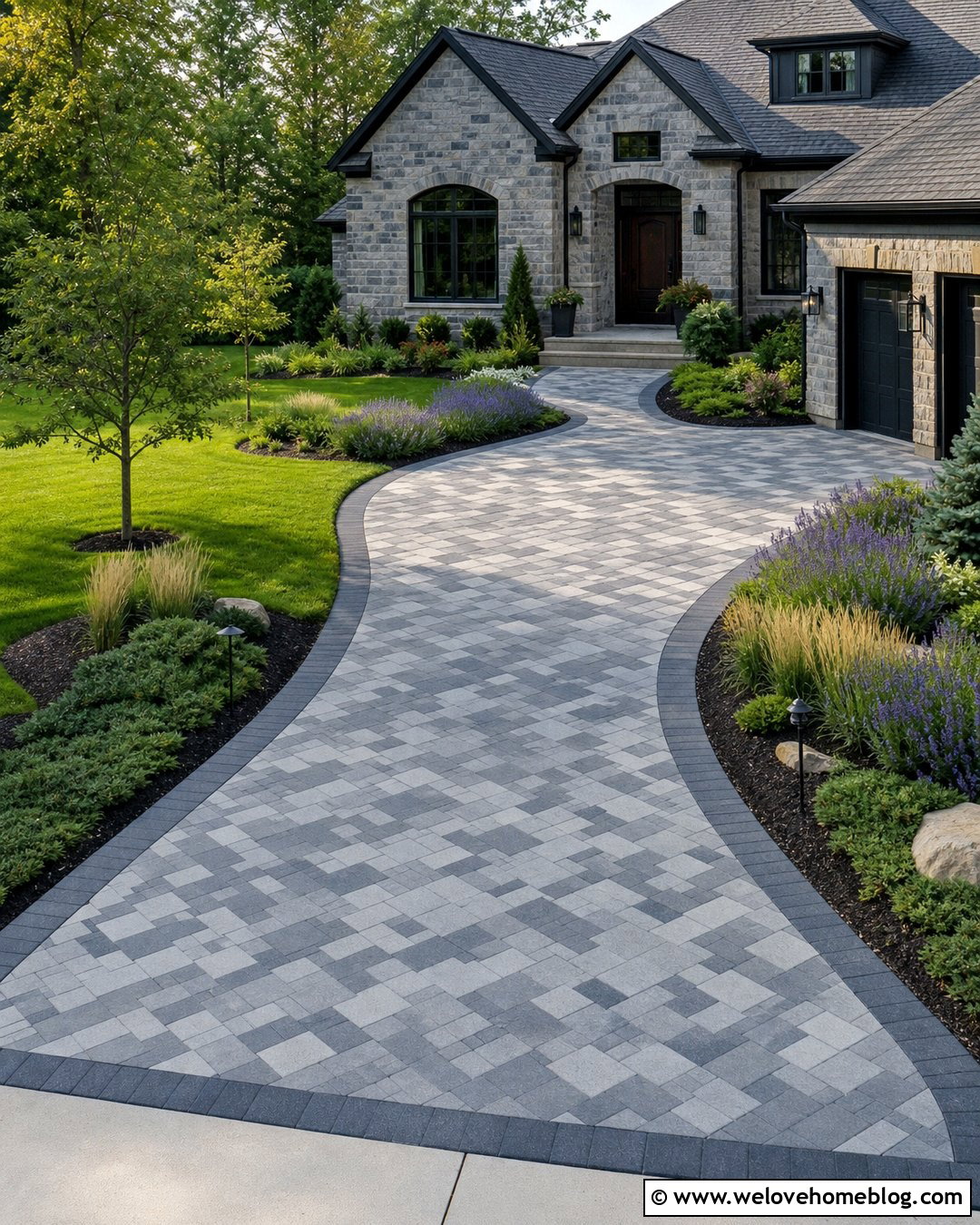
A mixture of light gray, mid-gray, and charcoal blocks gives the driveway depth while disguising everyday dust and minor marks. Choose a coordinated multi-tone concrete block rather than combining unrelated colors, as this produces a more natural and consistent finish. A three-size random pattern suits a broad driveway and reduces the repetitive appearance often created by standard rectangular blocks. Surround the surface with a plain charcoal border so the color variation remains controlled. Curved planting beds filled with lavender, compact grasses, and evergreen ground cover can add softness along the outer edges. This complete look works beautifully with stone-fronted, brick, and modern rendered houses. Repeating one of the gray tones in the walkway or entrance steps will make the frontage feel thoughtfully planned.
4. Grey 45 Degree Herringbone Block Paving Driveway
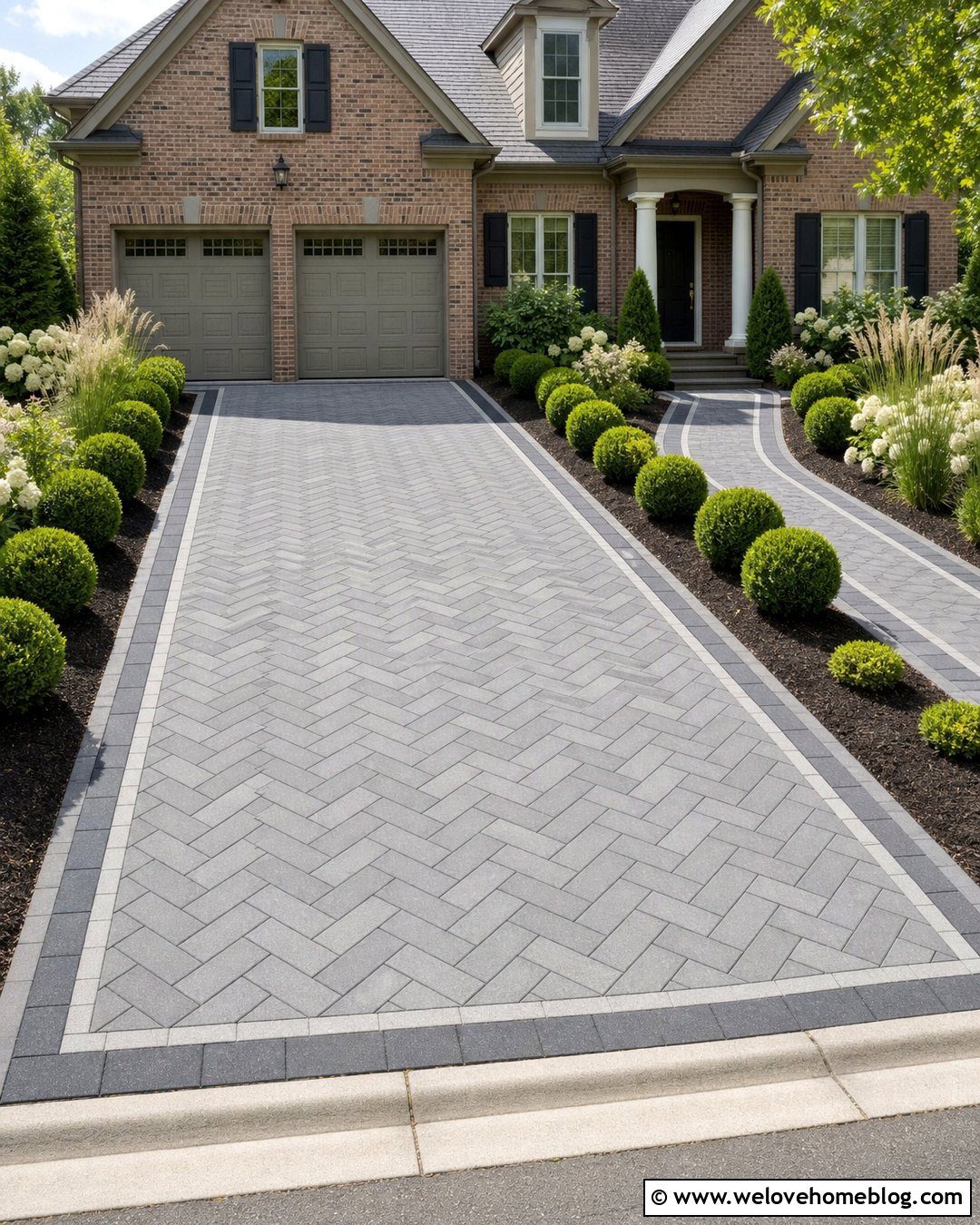
A 45-degree herringbone layout creates strong diagonal lines that immediately add energy to a gray block paving driveway. It is particularly effective across a wide entrance where the pattern can be viewed clearly from the curb. Select mid-gray concrete blocks for the central field, then install charcoal edge restraints and a narrow light-gray inner ribbon. This layered border gives the design a polished frame without introducing another material. Position symmetrical planting beds near the house, using rounded shrubs and upright grasses to balance the angular paving. A straight walkway in matching blocks can lead directly to the front door. The pattern complements both traditional brick homes and newer properties, while the tonal border helps separate the driveway from lawns, walls, and neighboring surfaces.
5. Grey 90 Degree Herringbone Block Paving Driveway
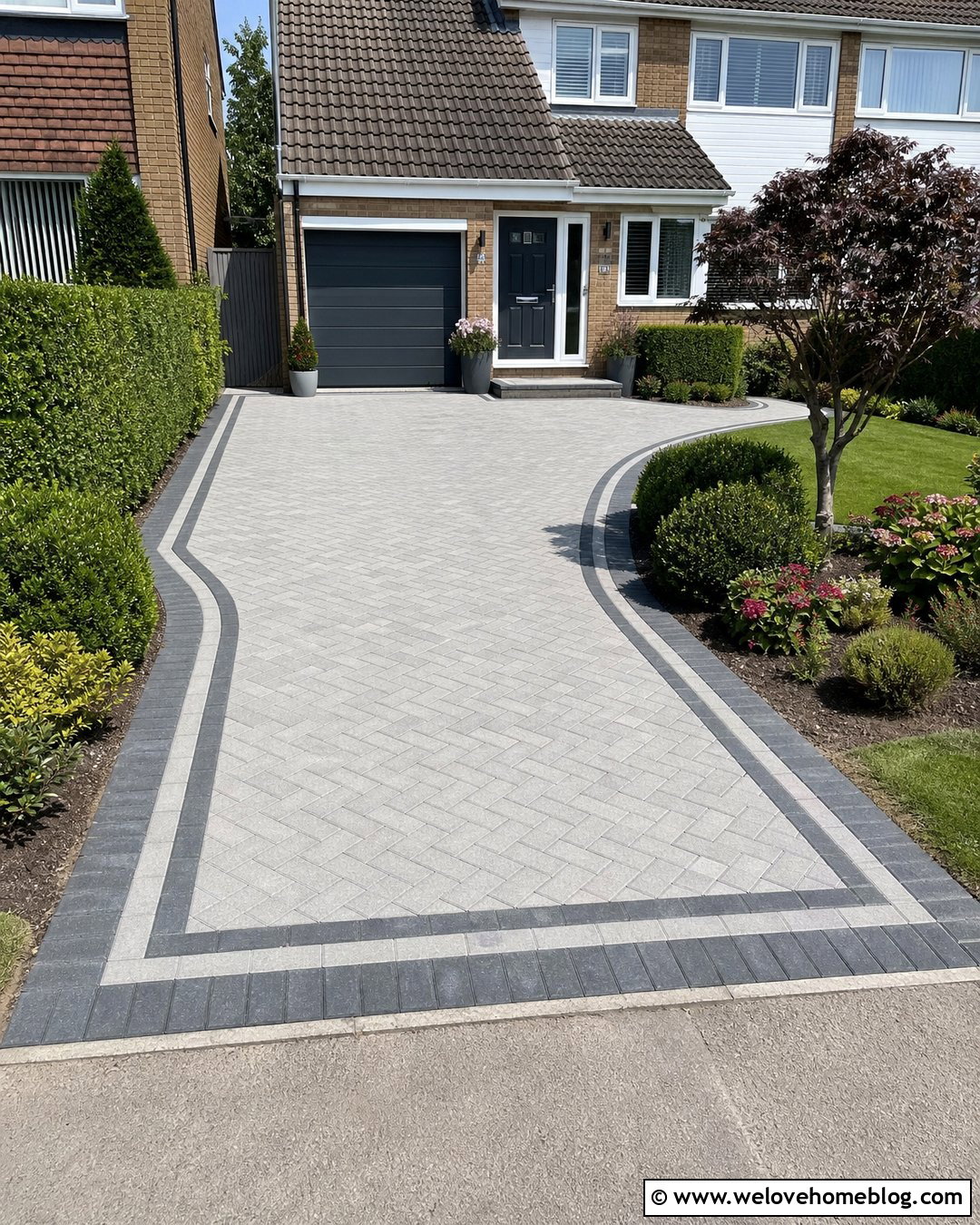
For a neat, highly organized entrance, consider gray blocks arranged in a 90-degree herringbone pattern. The straight alignment works naturally with rectangular garages, boundary walls, and formal front elevations. Use a soft silver-gray block across the main surface and frame it with a double charcoal border. Running the darker border around planting beds as well as the driveway creates a unified layout. Keep the landscaping simple with clipped hedges, compact flowering shrubs, and one small ornamental tree positioned away from vehicle doors. This driveway design is especially suitable for a suburban semi-detached or detached house with limited frontage. A level block-paved path can continue beside the parking area, giving pedestrians a clear route that does not interfere with arriving or parked vehicles.
6. Grey Basketweave Block Paving Driveway
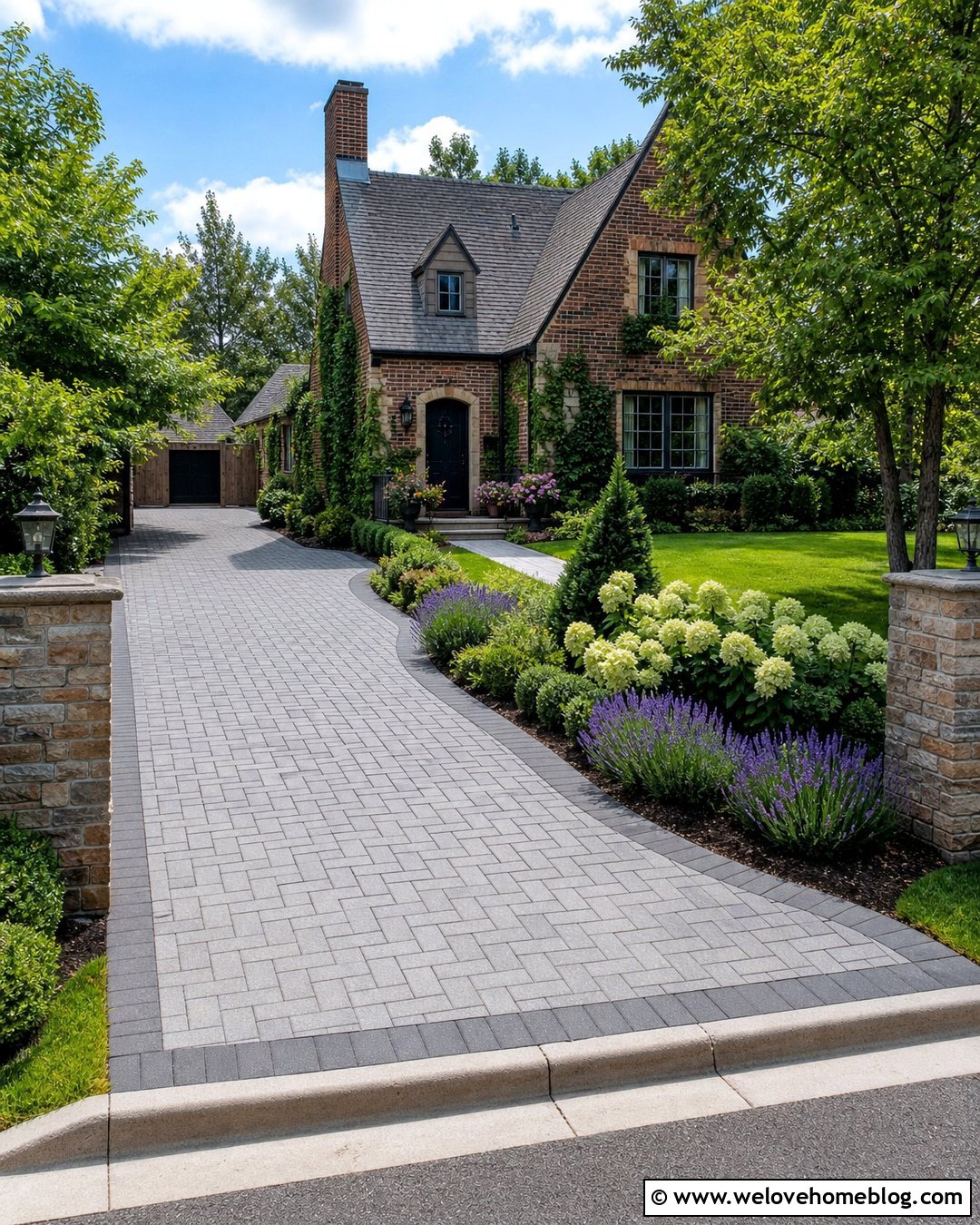
Basketweave paving brings subtle traditional character to a gray driveway without relying on warm red or brown blocks. Pairs of rectangular mid-gray concrete pavers are turned in alternating directions, forming a geometric pattern that looks particularly attractive in front of a cottage or period brick house. A charcoal soldier-course border keeps the layout contained and adds a crisp contemporary edge. Use the same darker blocks around a gently curved planting bed filled with hydrangeas, lavender, and compact evergreen shrubs. Because basketweave can appear busy over a very large area, it is best suited to a small or medium driveway with a simple shape. Finish the entrance with understated stone gateposts or a low brick wall that relates directly to the home’s facade.
7. Grey Stretcher Bond Block Paving Driveway
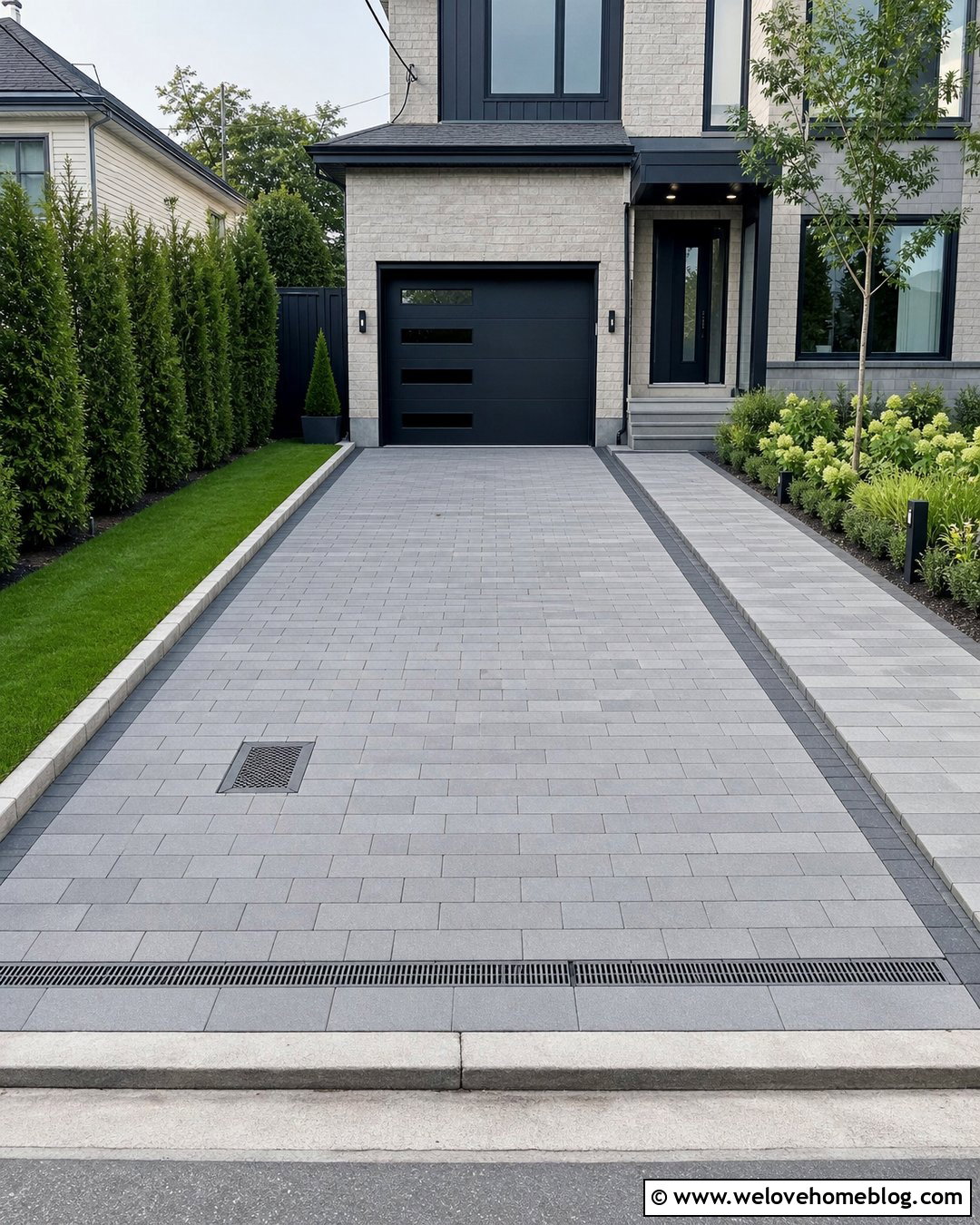
Long, narrow driveways benefit from a stretcher bond pattern because the continuous rows visually guide the eye toward the house. Lay smooth mid-gray concrete blocks lengthwise along the drive, staggering each row like traditional brickwork. A slim charcoal border provides contrast while preserving as much usable width as possible. On one side, include a narrow planting strip with upright grasses and low evergreen ground cover. A matching paved walkway can sit on the opposite side, separated from the parking surface by one dark block course. This uncomplicated layout suits modern townhouses, attached garages, and homes with restricted side access. The clean pattern also makes changes in level easier to read. Use recessed drain covers and a coordinated linear channel to avoid interrupting the streamlined appearance.
8. Grey Three Size Block Paving Driveway
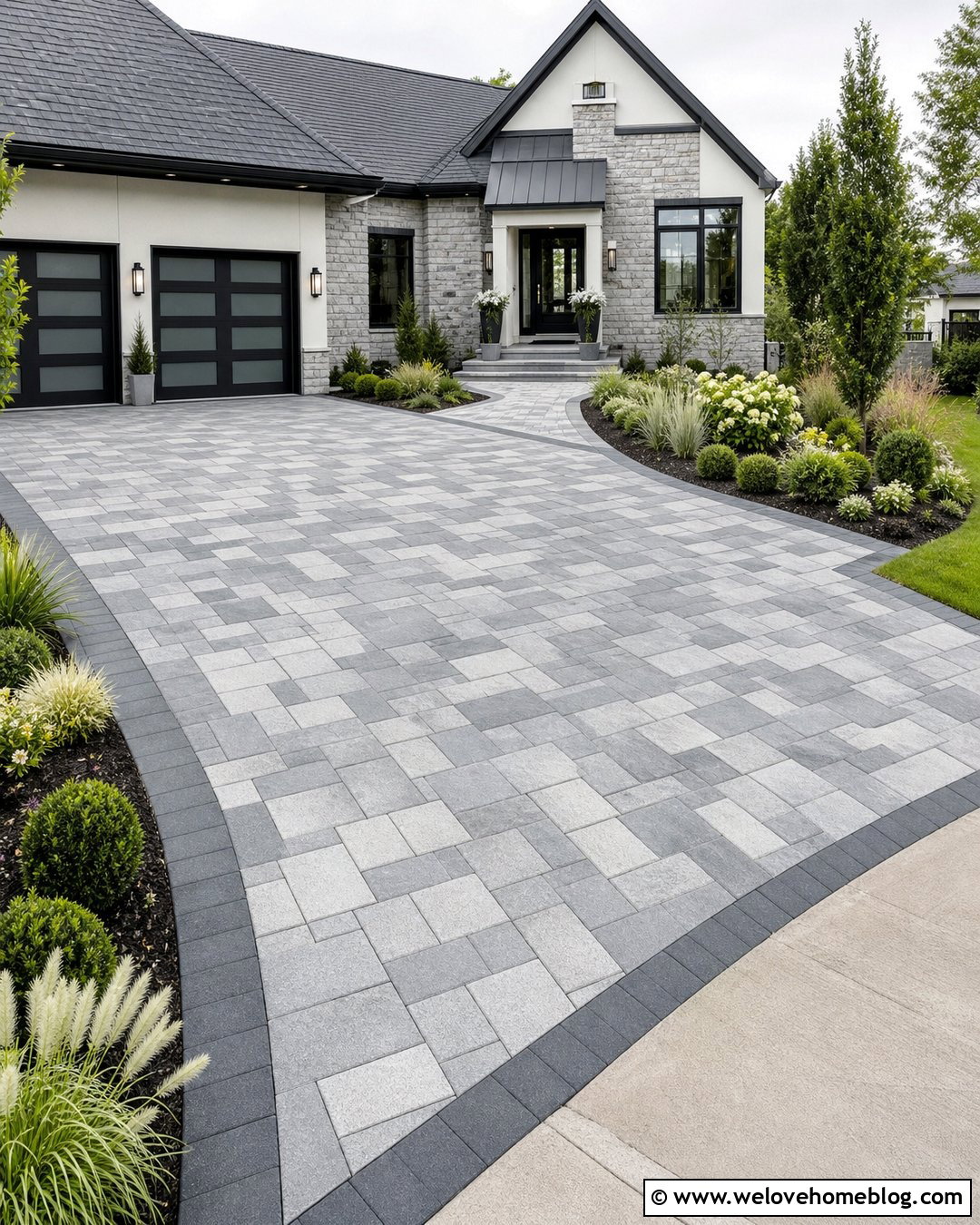
Three-size gray block paving creates a natural, varied surface that feels less rigid than a standard rectangular pattern. Combine small, medium, and large concrete blocks supplied as one coordinated system, using blended silver and slate tones throughout the driveway. The different proportions work especially well on broad or irregularly shaped areas because they reduce long, repetitive joint lines. Add a plain charcoal perimeter course to give the mixed layout a strong visual boundary. Wide planting beds with structural grasses, rounded shrubs, and seasonal flowers can frame the parking area while softening its scale. This complete driveway look pairs well with natural stone, rendered, or contemporary mixed-material homes. Continue the same paving onto the entrance walkway, but use a single block size there to distinguish pedestrian movement.
9. Grey Block Paving Driveway With Circular Feature
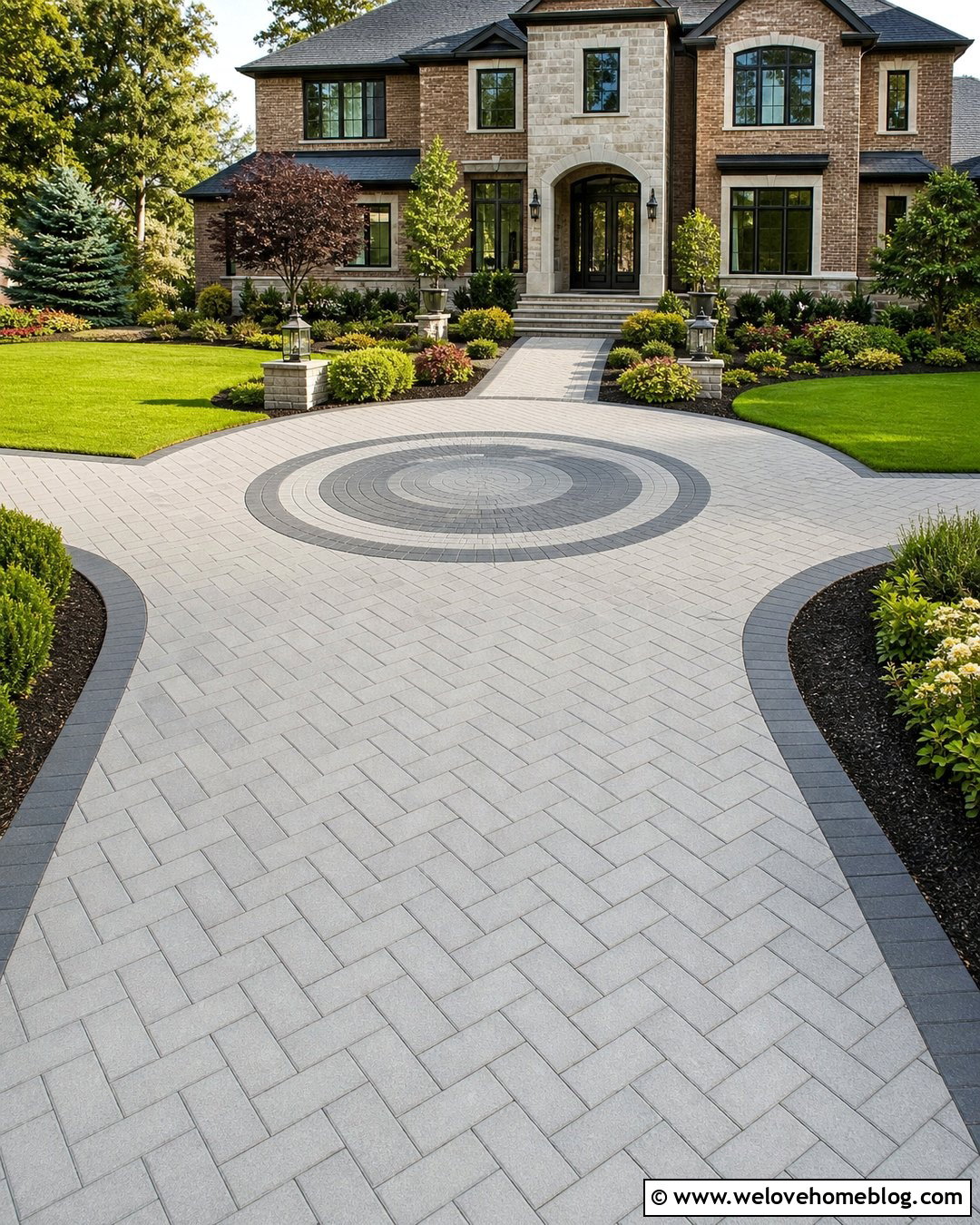
A circular paving feature can become an attractive focal point on a large gray block driveway. Keep the main surface in light or mid-gray herringbone blocks, then form the center circle with concentric rings of charcoal and silver pavers. Position the detail where it can remain visible between parking spaces rather than underneath a vehicle. A matching charcoal perimeter border will connect the circle to the rest of the design. Surround the driveway with simple lawn sections and curved planting beds so the geometry feels intentional instead of overly decorative. This arrangement suits a substantial detached house with a broad front elevation. Limit the palette to two or three related gray tones, allowing the circular pattern, driveway proportions, and balanced landscaping to provide the visual interest.
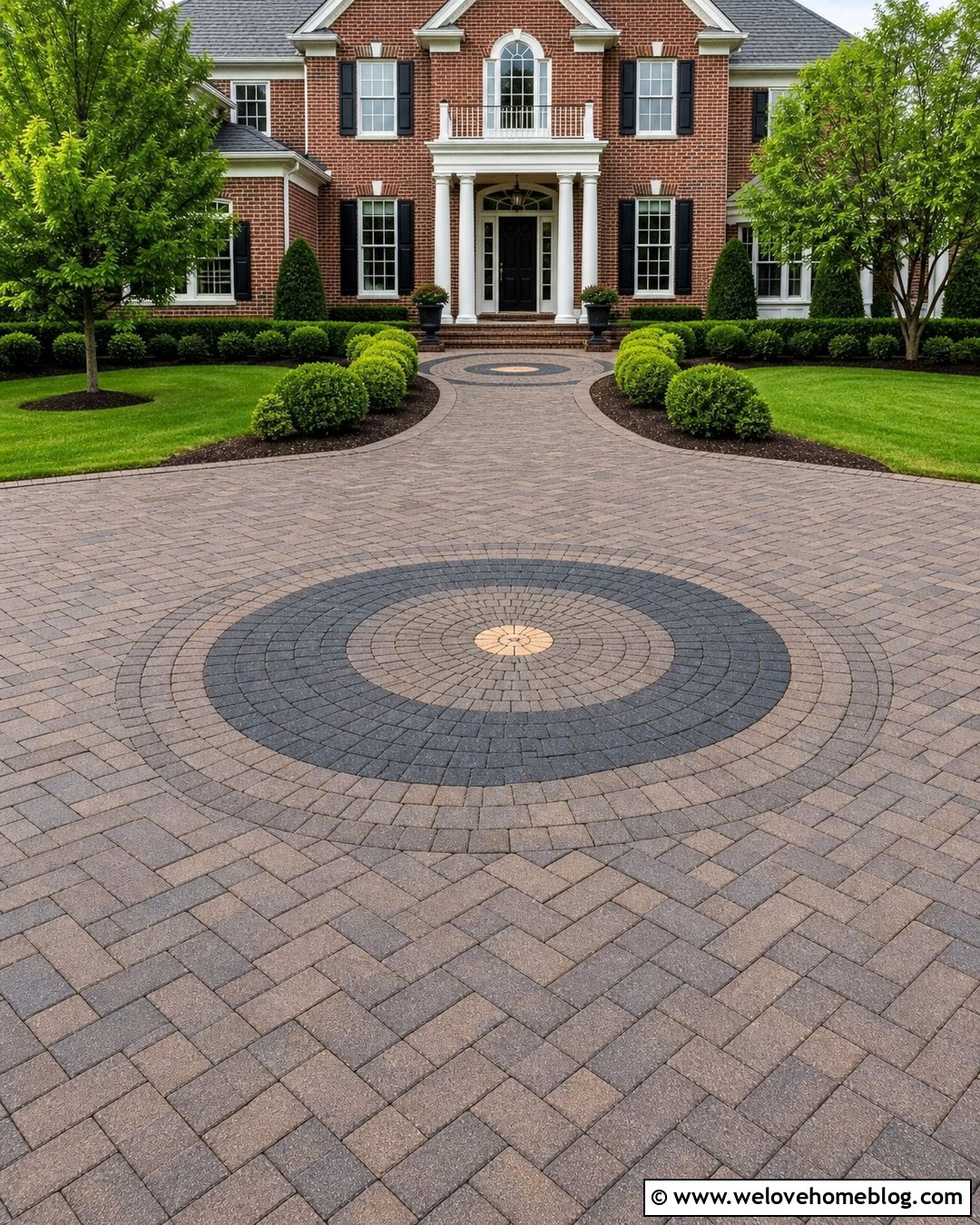
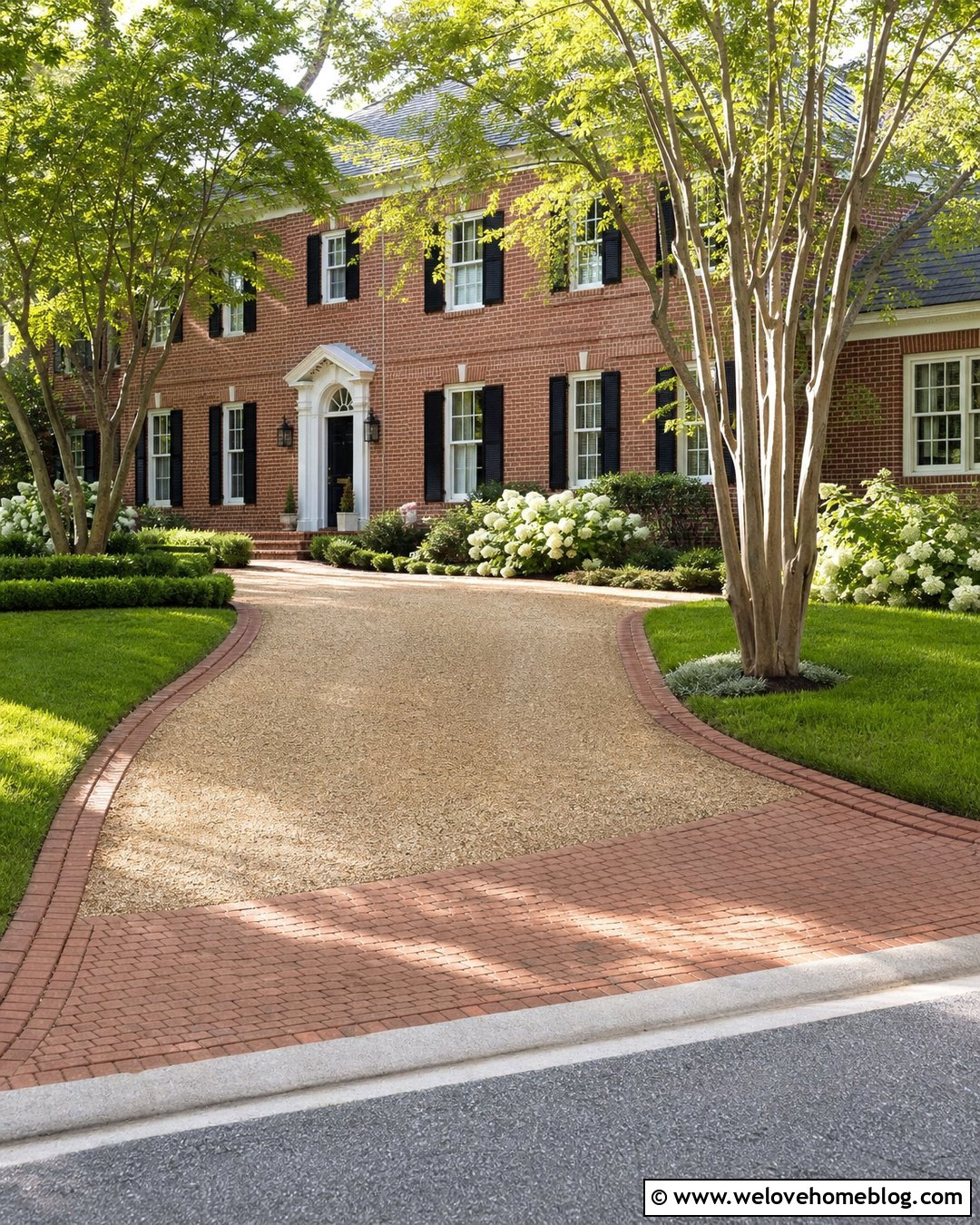
10. Curved Grey Block Paving Driveway
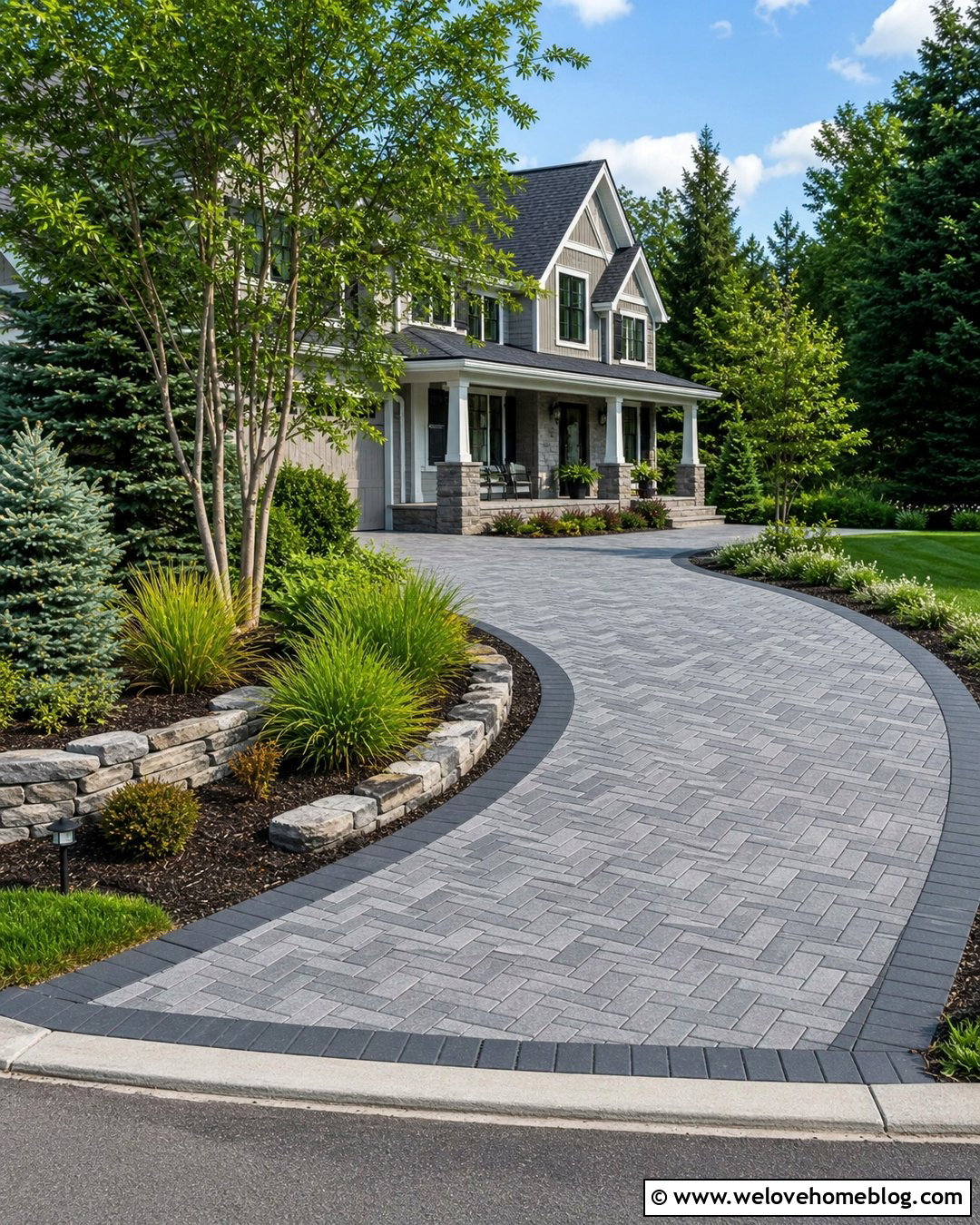
A curved gray block paving driveway creates a softer approach and can guide vehicles around lawns, trees, or established planting. Use multi-tone gray concrete blocks in a 45-degree herringbone pattern, which adapts well to gentle changes in direction. Dark charcoal edge blocks should follow both curves continuously, giving the driveway a clear, flowing outline. On the wider outer bend, create a layered planting bed with ornamental grasses, evergreen shrubs, and one feature tree. Keep planting lower along the inside curve to maintain clear visibility toward the street. The design feels especially welcoming beside a country home, cottage, or traditional detached property. Carefully planned tapered cuts and consistent border widths are important because uneven detailing becomes more visible along a sweeping curved entrance.
11. Small Grey Block Paving Driveway
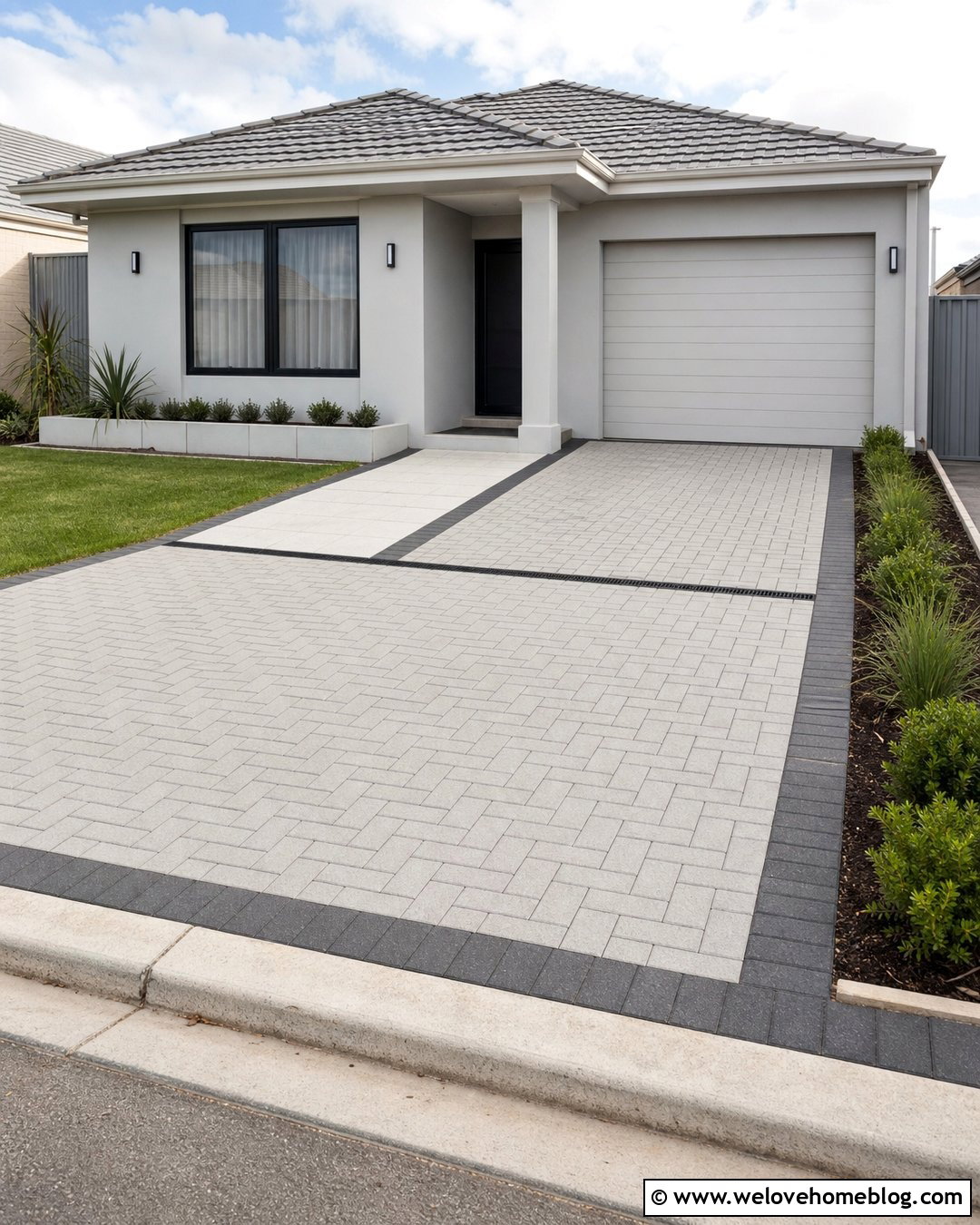
A compact front yard needs a simple gray paving layout that maximizes parking without making the property feel completely covered. Choose light gray rectangular concrete blocks in a 90-degree herringbone pattern to brighten the area and create clean, efficient lines. Define the edges with one charcoal soldier course rather than an elaborate double border. Preserve a narrow planting bed beside the house for evergreen shrubs, grasses, or a small multi-stem tree. A flush walkway can be identified with a single dark paving ribbon instead of using a separate surface. This keeps the frontage flexible while creating a safer route to the door. Coordinate the block colors with the home’s roof, trim, or window frames, and use a slim drainage channel across the entrance to manage surface runoff neatly.
12. Wide Grey Block Paving Driveway
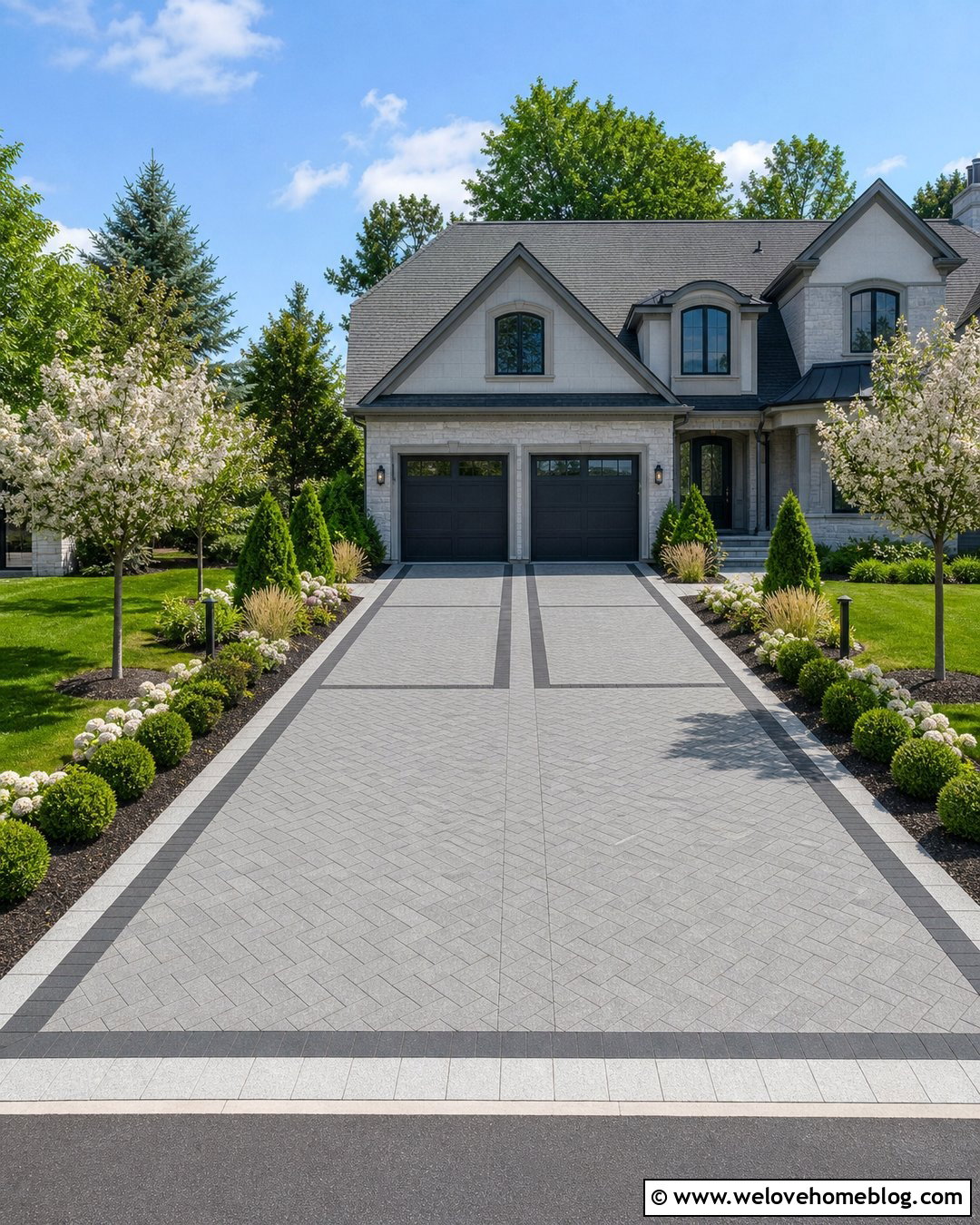
A wide driveway can look empty unless its paving, borders, and landscaping divide the space into clear visual zones. Cover the main area with mid-gray blocks in a 45-degree herringbone pattern, then use charcoal ribbons to outline two parking bays and a central approach. Wide light-gray perimeter blocks can soften the transition to the sidewalk and front walkway. At each side, install generous planting beds with clipped evergreens, ornamental grasses, and small flowering trees. These green areas prevent the block paving from dominating the entire frontage. The design works well for a large detached home with a double garage. Rather than adding several decorative patterns, repeat the same two gray tones throughout. Consistency allows the driveway’s generous scale and carefully planned symmetry to make the strongest impression.
13. Long Grey Block Paving Driveway
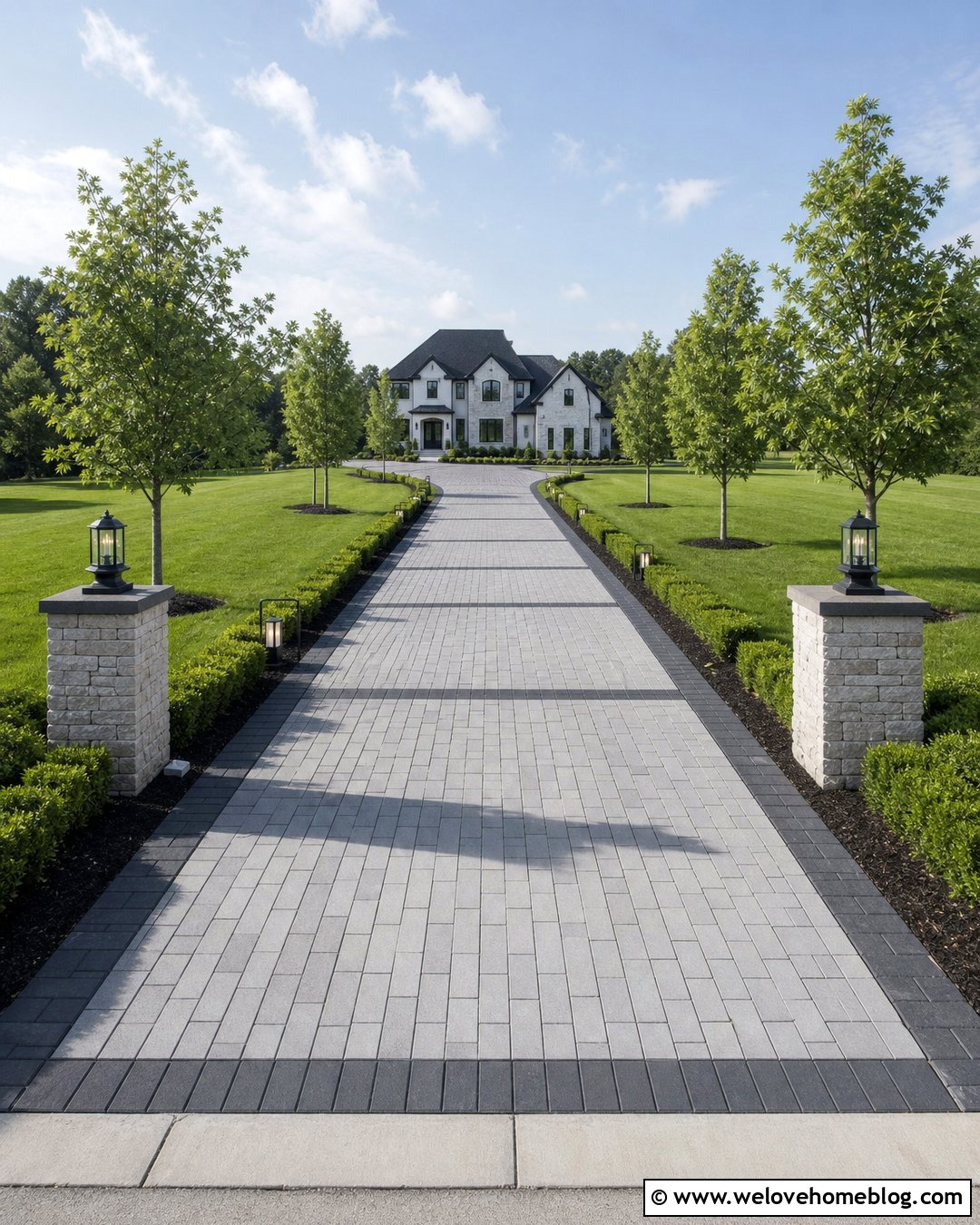
A long gray block paving driveway should draw attention toward the house while remaining visually interesting from the street. Lay elongated silver-gray blocks in a staggered running bond that follows the direction of travel. Frame the route with narrow charcoal edges, then add a darker transverse band at intervals to break up the length. Low hedging, grasses, and evenly spaced trees can reinforce the linear approach without narrowing the usable surface. Near the house, widen the paving into a practical turning or parking area using the same materials in a herringbone pattern. This subtle pattern change helps identify the different zones. The completed look suits country properties and homes set far back from the road. Simple pillar lights can mark the entrance while leaving the driveway surface open and uncluttered.
14. Grey Block Paving Driveway With Brick Border
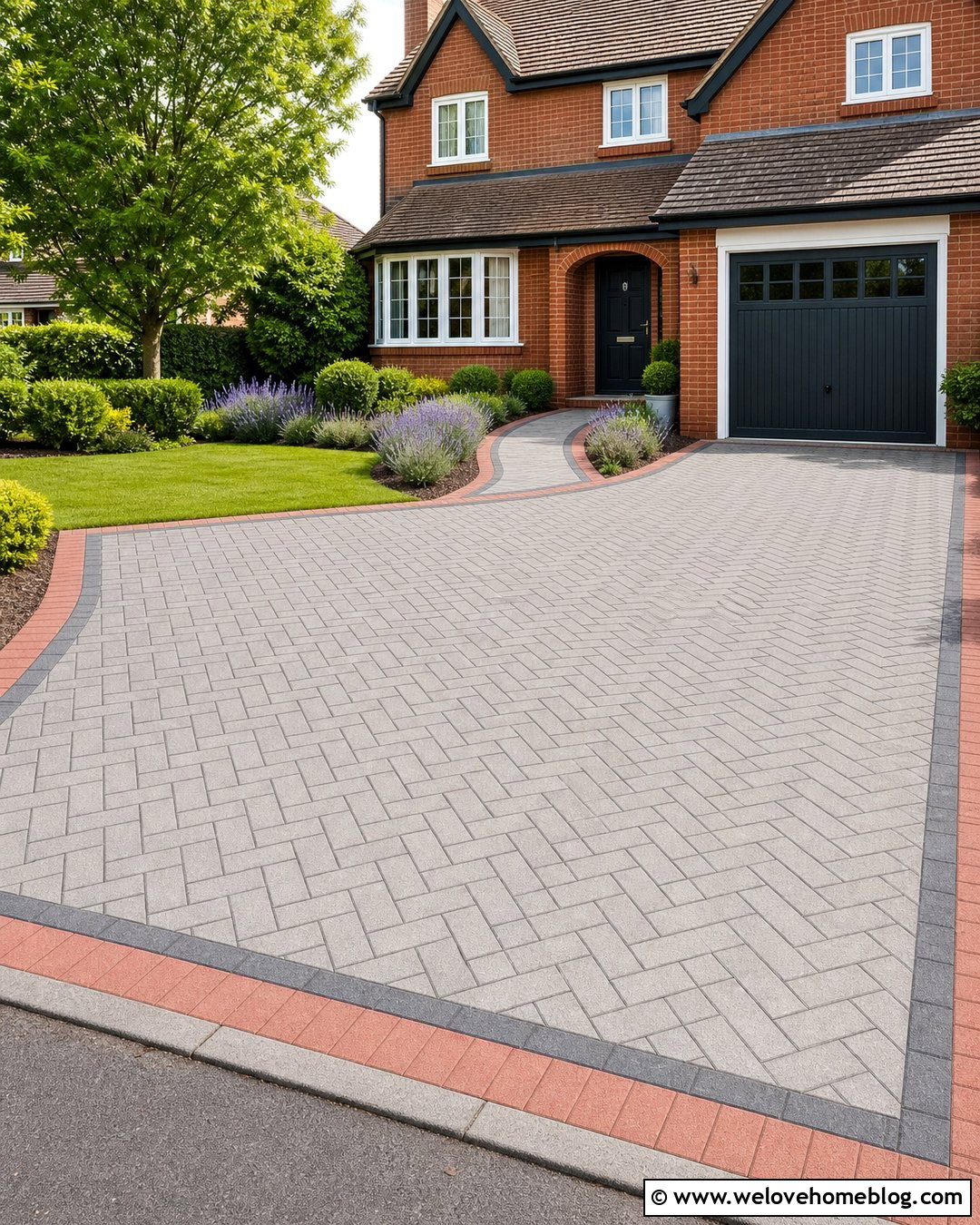
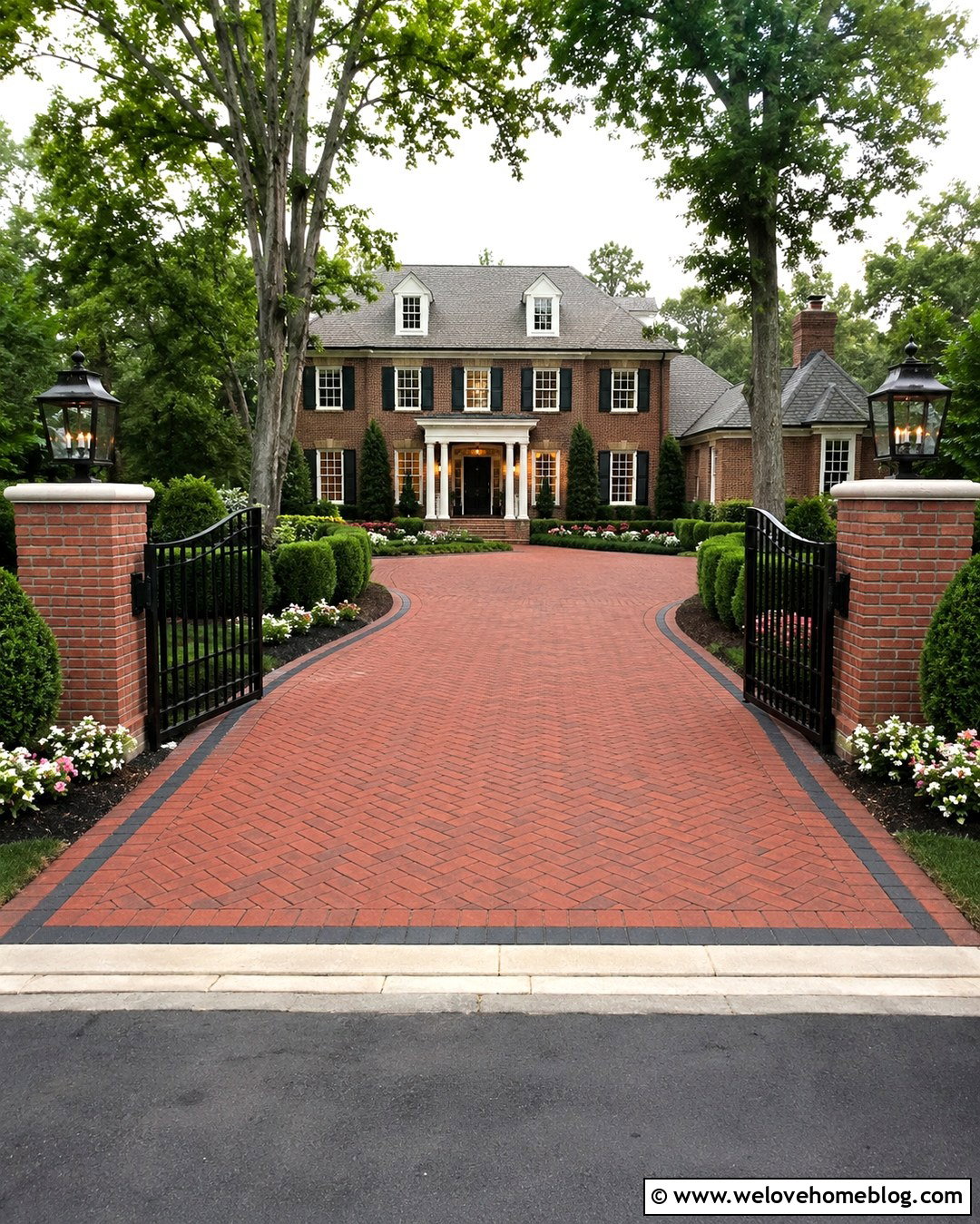
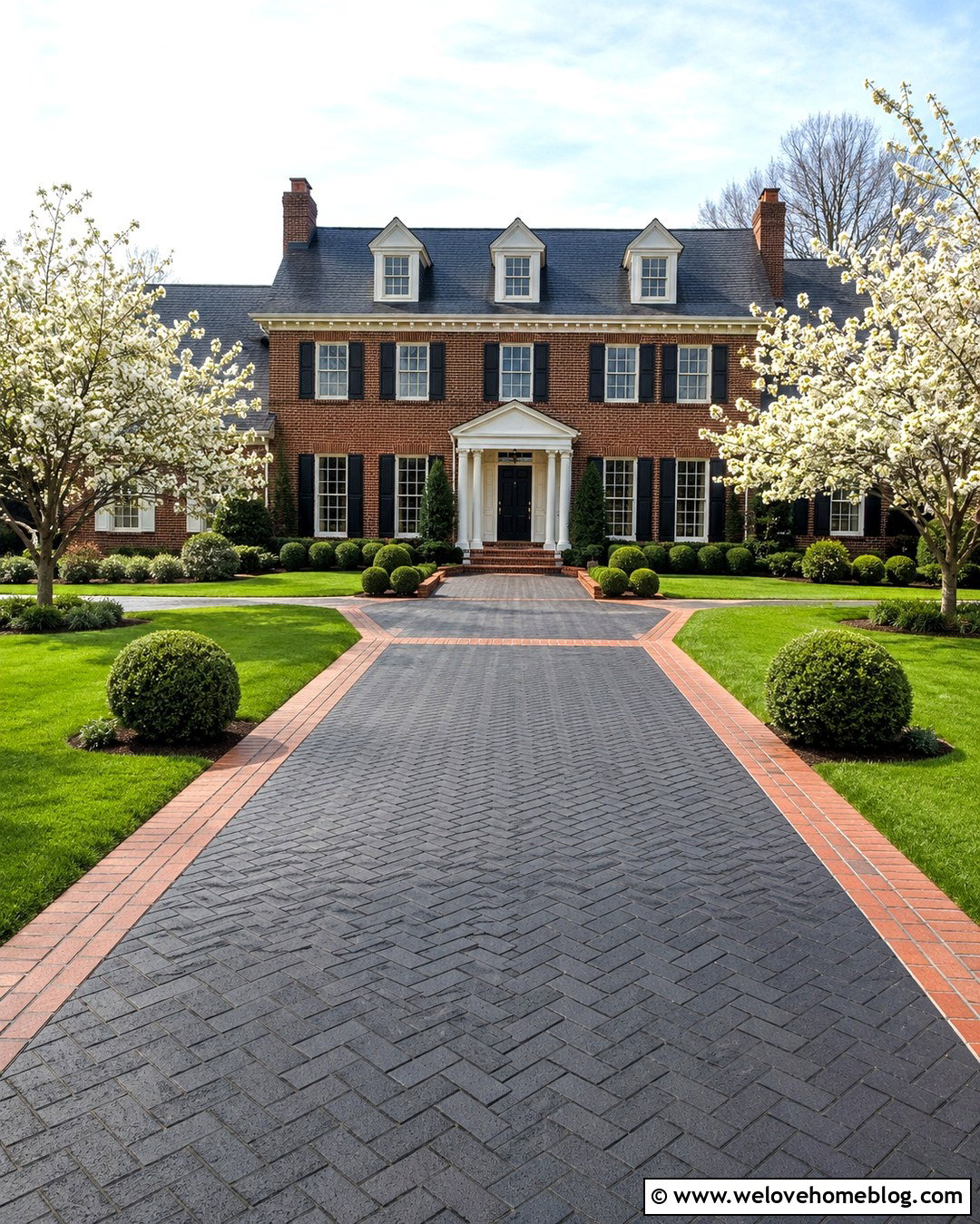
Gray block paving can connect naturally with a red brick house when the driveway includes a restrained brick-colored border. Use medium-gray concrete blocks in a herringbone layout for the main surface, then install one course of red or brindle blocks around the perimeter. The warmer edge picks up the home’s masonry without overwhelming the neutral driveway. A narrow charcoal inner ribbon can provide additional separation if the frontage is large enough. Complete the design with deep green shrubs, lavender, and a neat lawn edge, allowing the planting to bridge the cool paving and warm brickwork. Continue the red border beside the walkway and around any entrance steps. This coordinated approach feels established and welcoming, making it particularly suitable for traditional suburban homes, cottages, and renovated period properties.

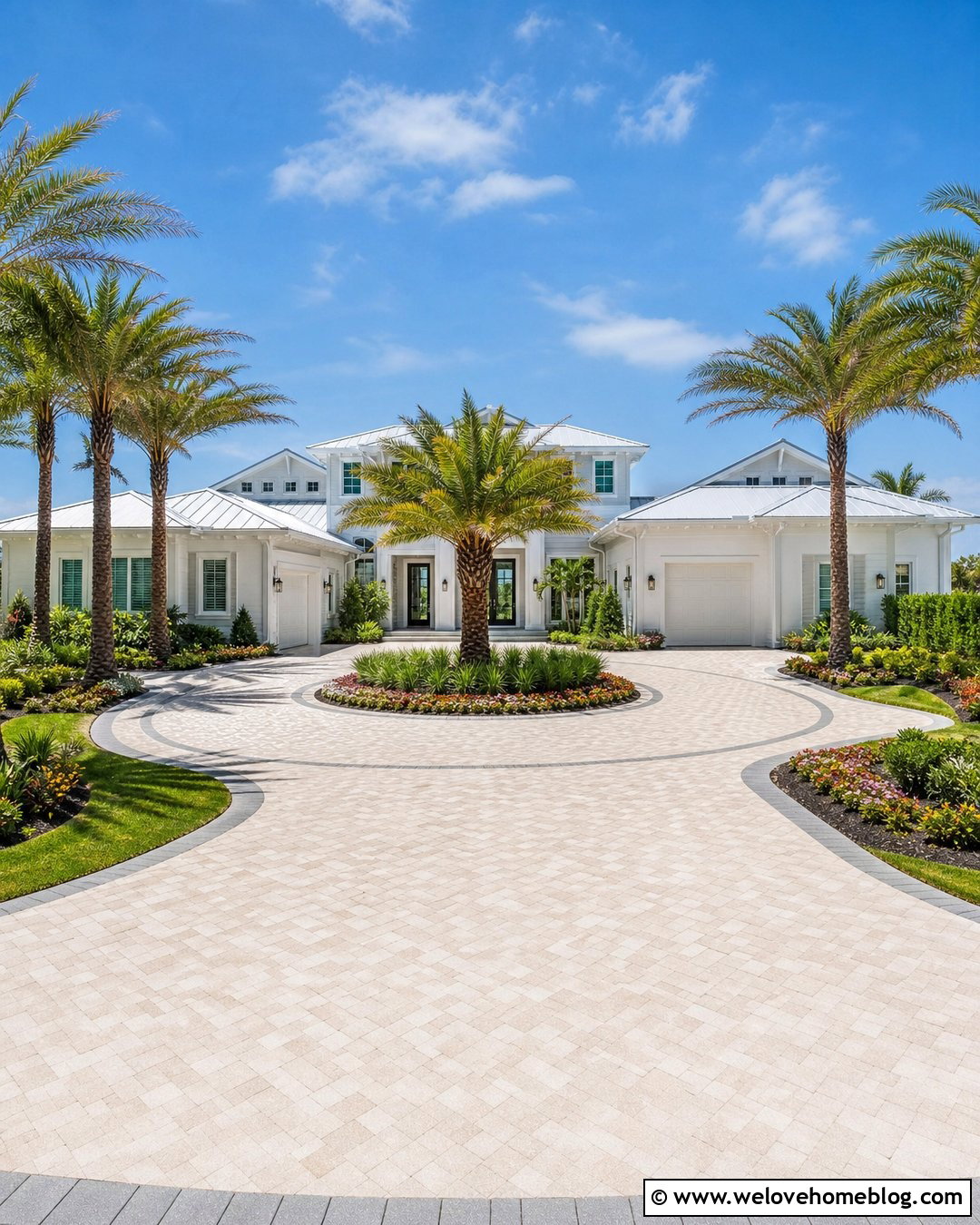
15. Grey Block Paving Driveway With Stone Border
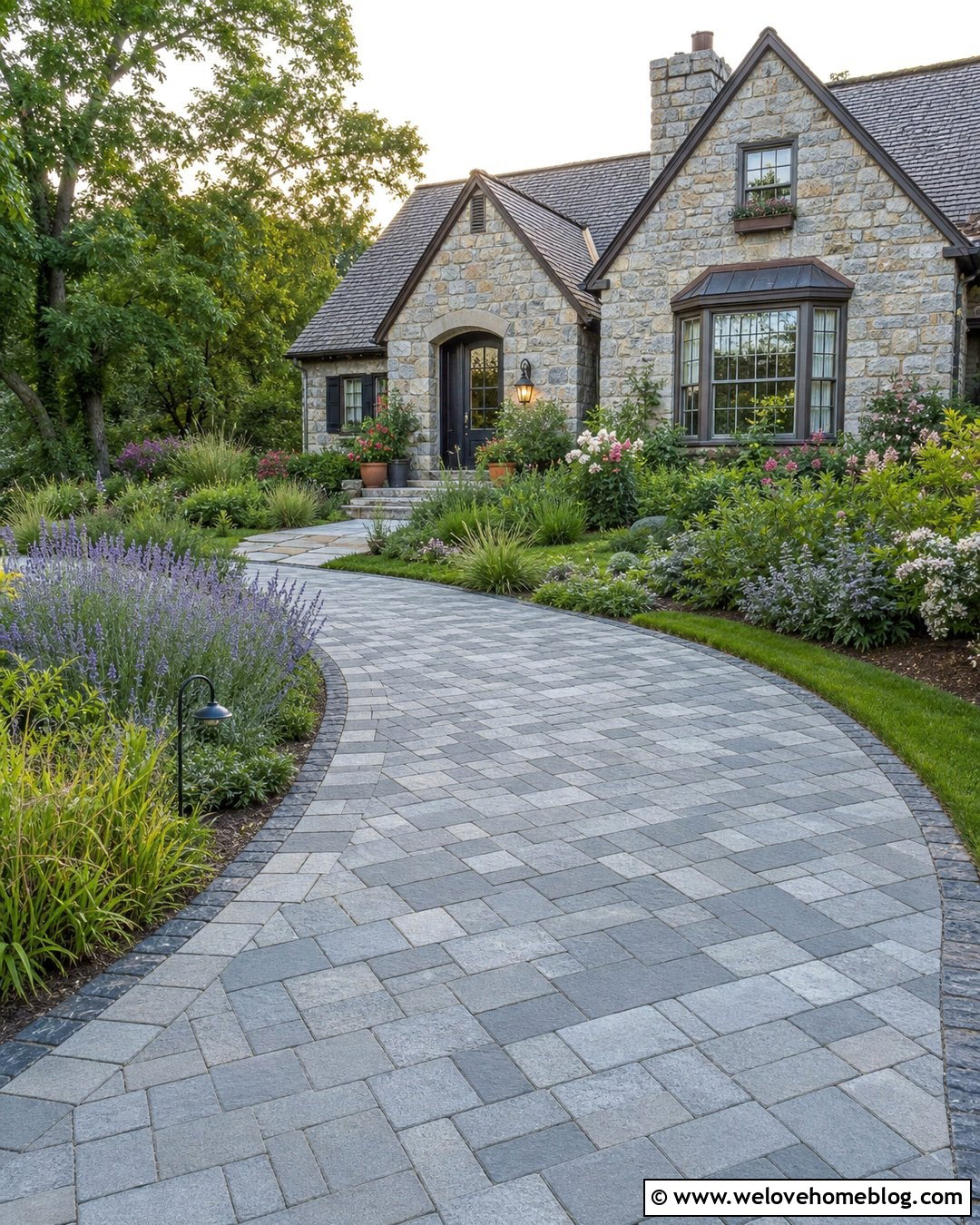
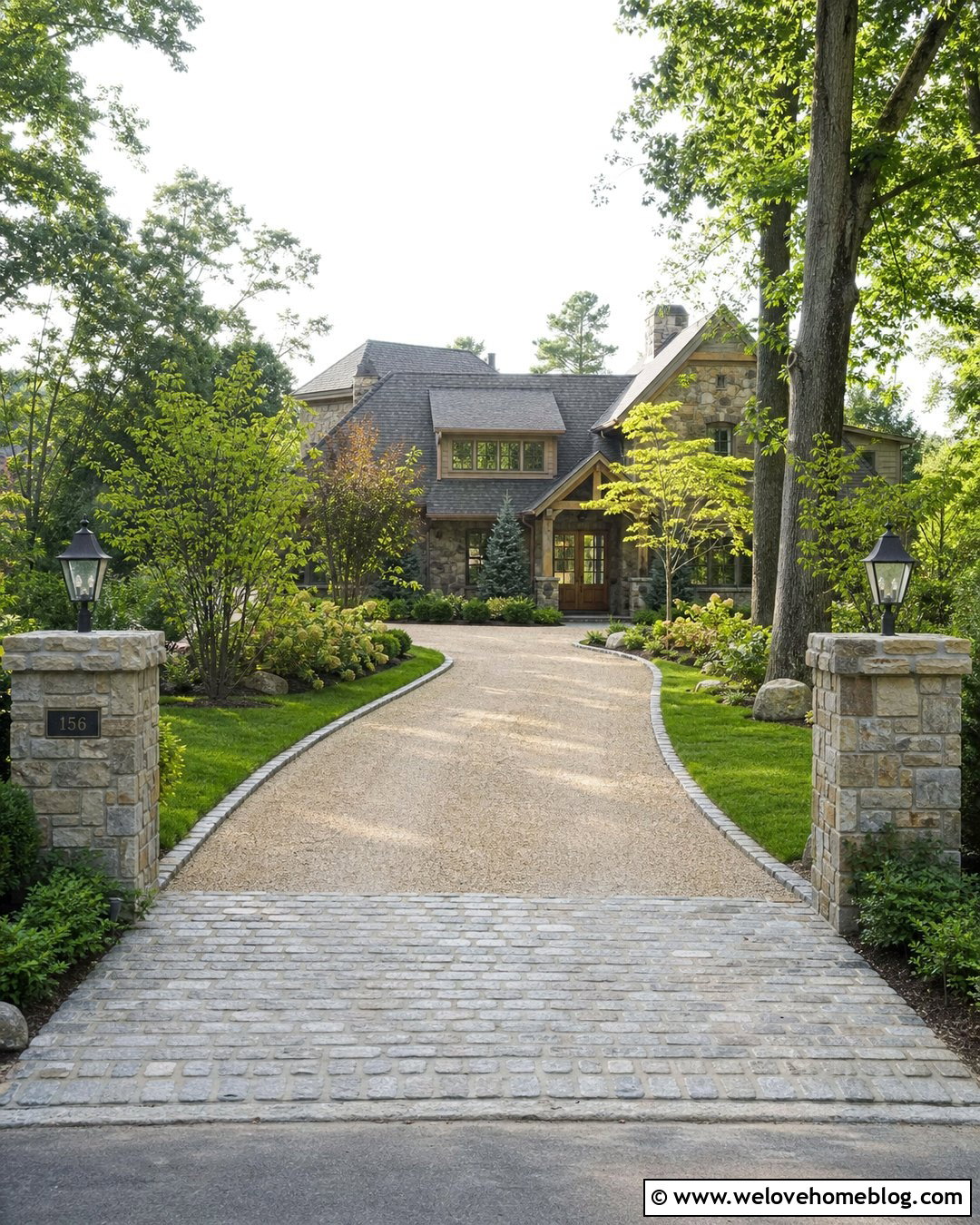
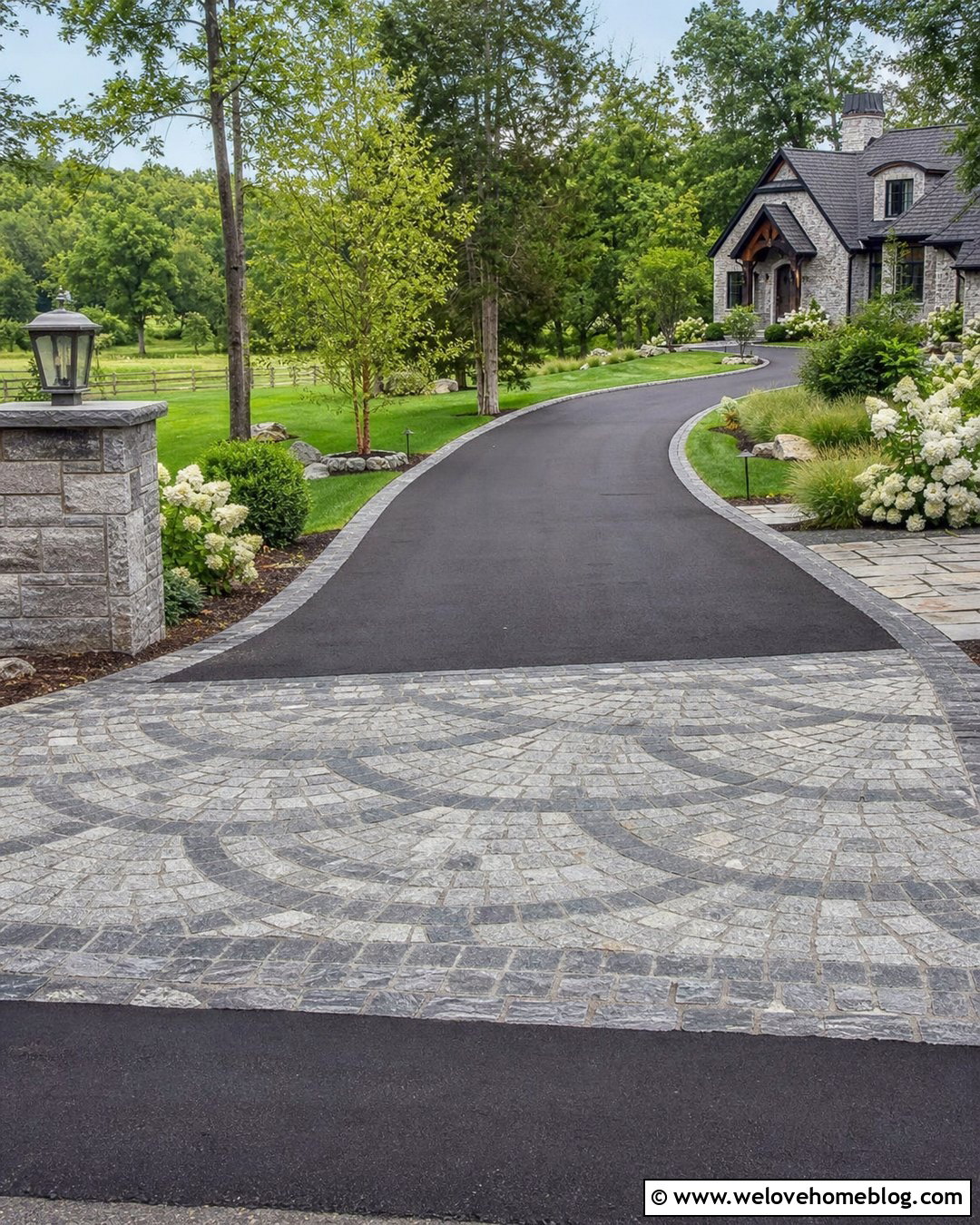
Natural stone edging gives gray block paving extra texture and helps the driveway settle into a landscaped setting. Select tumbled mid-gray concrete blocks for the main driveway, using a mixed-size pattern that has a slightly weathered appearance. Frame the surface with granite setts or dark natural stone cubes, following the driveway’s straight or gently curved outline. The irregular stone texture contrasts attractively with the more uniform central blocks. Create informal planting beds beside the edging with lavender, ferns, grasses, and compact flowering shrubs. A stone walkway or matching entrance step can repeat the border material near the house. This complete design complements country cottages, stone-fronted homes, and modern houses with natural cladding. Keep the stone border relatively narrow so it supports the paving rather than competing with it.
16. Grey Block Paving Driveway For White House
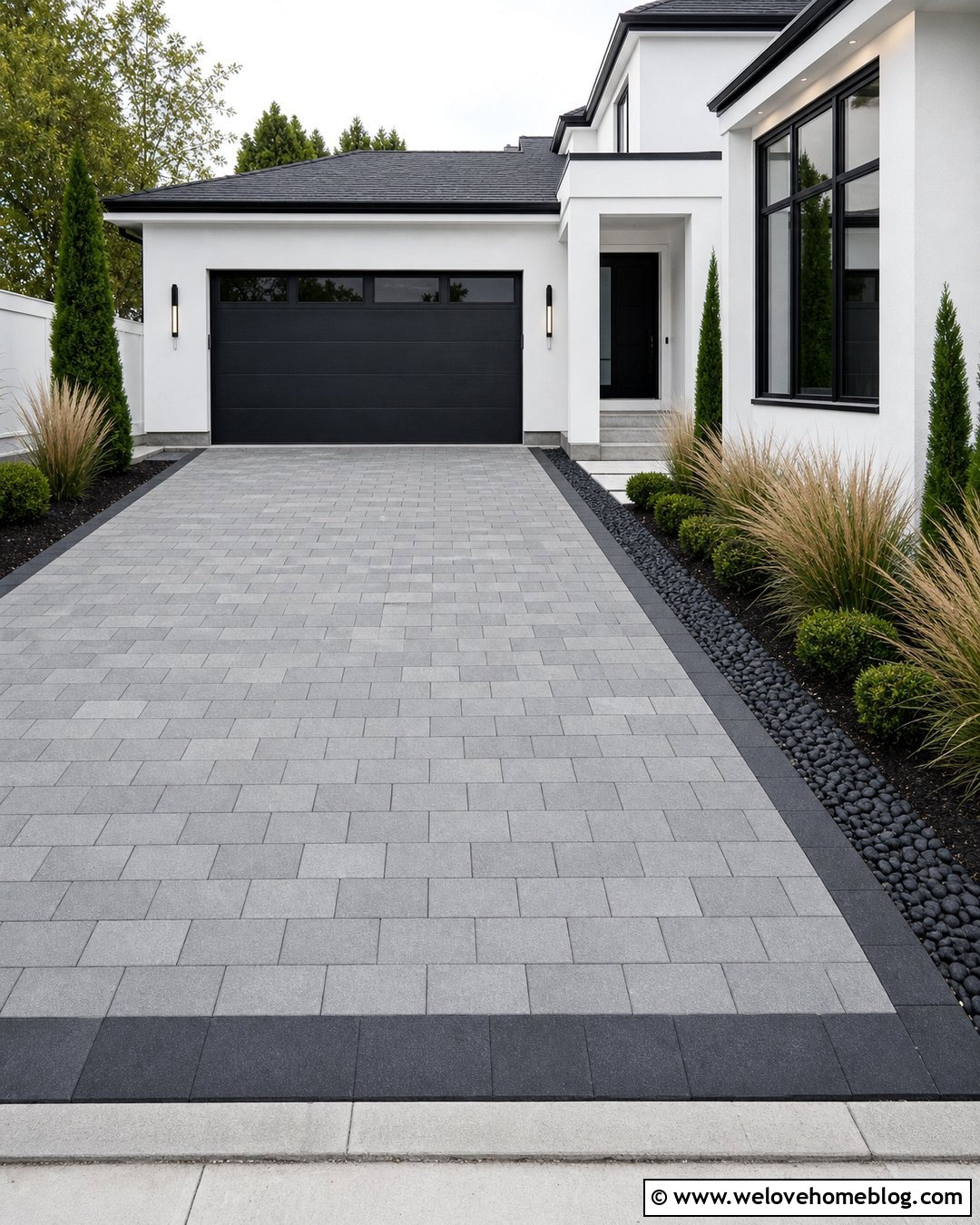
Cool gray block paving provides a clean foundation for a white rendered house, but a little contrast is needed to prevent the frontage from looking washed out. Use mid-gray smooth concrete blocks in a linear staggered pattern, framed with a broad charcoal border. Repeat charcoal in the garage door, window frames, gate, or planters to connect the driveway with the building. Soft green ornamental grasses and clipped evergreen shrubs will introduce natural color without disrupting the monochrome palette. A pale stone walkway can branch from the driveway and lead toward the front entrance. For additional definition, place a narrow strip of dark decorative gravel between the paving and the rendered wall. The result feels bright and contemporary while remaining practical enough for an everyday family driveway.
17. Grey Block Paving Driveway For Red Brick House
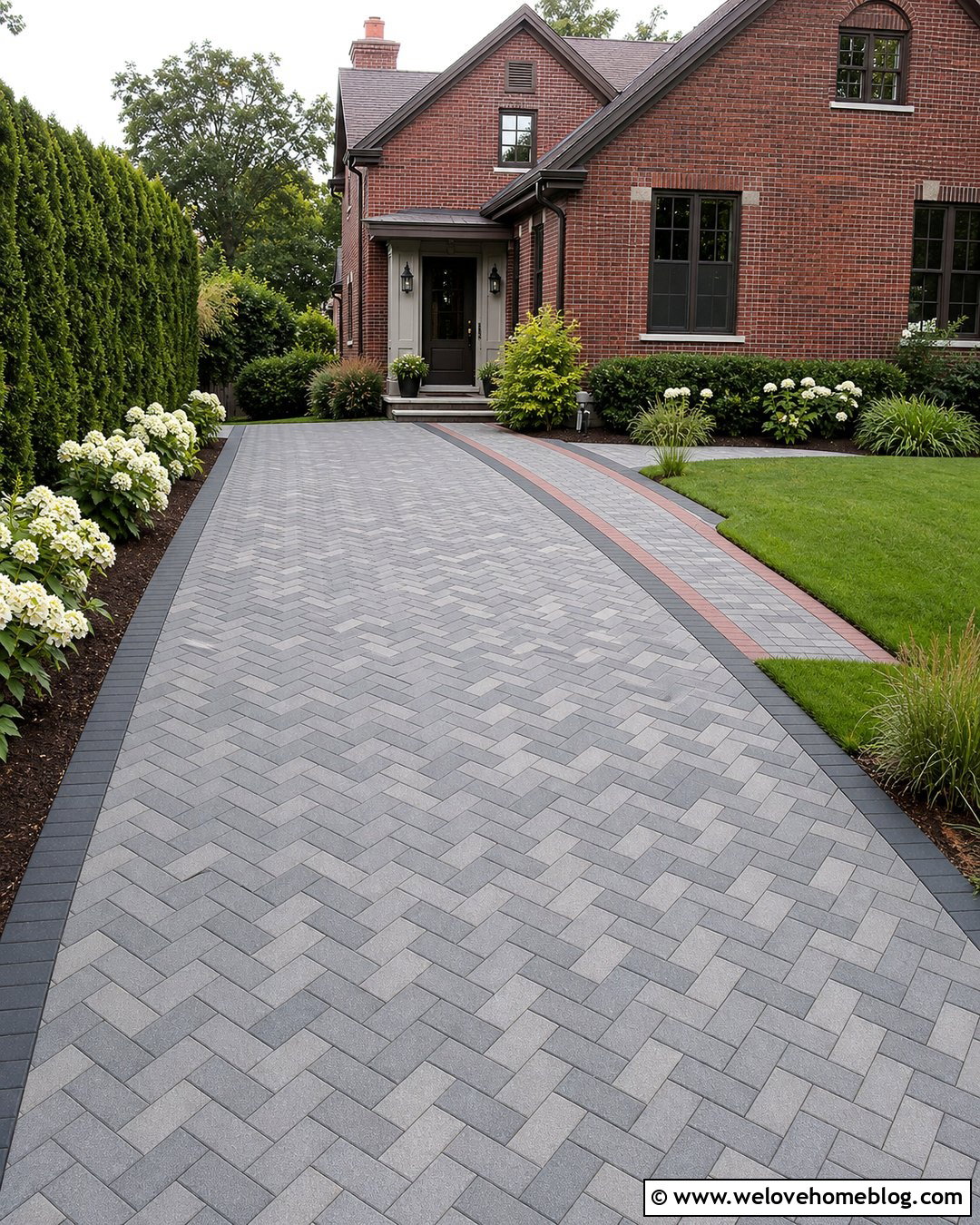
A red brick house gains a calmer, more updated entrance when paired with neutral gray block paving. Choose a blended mid-gray and charcoal concrete block that balances the warm facade without creating harsh contrast. A 45-degree herringbone pattern gives the driveway strength and movement, while a simple dark border creates a tidy finish around lawns and planting beds. Use the same paving for the front walkway, adding one brick-colored ribbon near the door to reference the house subtly. Deep green hedges, white flowering shrubs, and ornamental grasses create a fresh transition between gray paving and red masonry. This complete look suits both traditional and contemporary brick properties. Avoid combining too many gray, red, and buff shades, as a limited palette usually produces a more coordinated frontage.
18. Modern Grey Block Paving Driveway
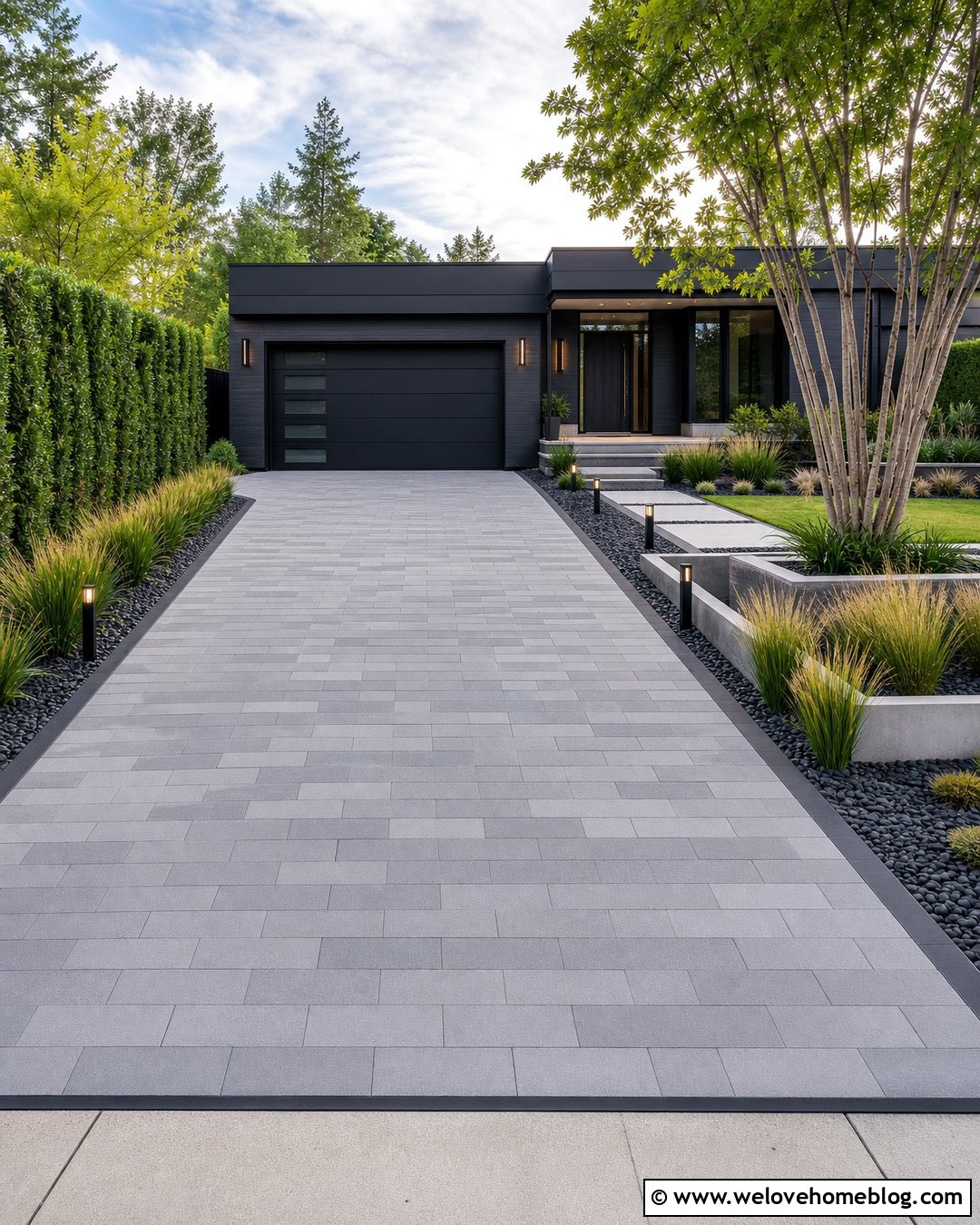
Smooth, large-format gray concrete blocks create a streamlined driveway for a modern home. Arrange the blocks in a linear running bond, using two closely related gray tones to introduce quiet variation. A flush charcoal border can frame the surface without interrupting the clean geometry. Along one side, add a paved pedestrian path separated by a narrow strip of black pebbles or low ground cover. Rectangular planting beds with architectural grasses, compact evergreens, and multi-stem trees will echo the home’s straight lines. Integrate minimalist bollard lights along the walkway rather than scattering fixtures across the driveway. This look works best when the garage door, window frames, and entrance details repeat the charcoal accents. Precise cuts, narrow joints, concealed drainage, and uncluttered landscaping are essential to the finished contemporary appearance.
19. Cottage Grey Block Paving Driveway
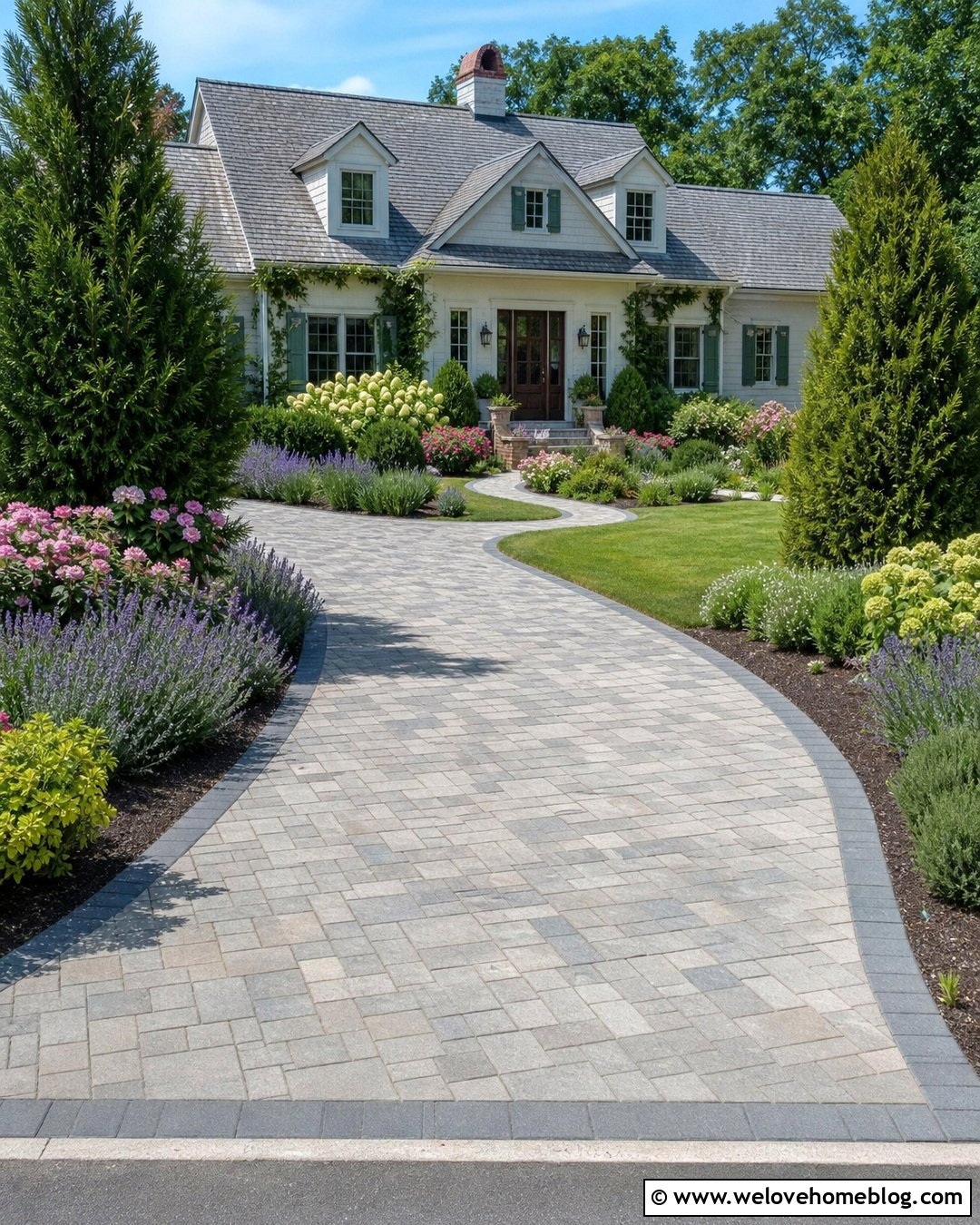
Tumbled gray block paving can give a cottage driveway an established appearance while offering a practical, even parking surface. Select softly weathered blocks in mixed gray shades and lay them in a three-size random pattern. Granite setts or darker tumbled pavers make an appropriate border for a gently curved entrance. Allow generous planting beds to follow the driveway edges, filling them with lavender, hydrangeas, small roses, herbs, and evergreen shrubs. A narrow matching path can wind toward the front door rather than following a perfectly straight line. Keep the driveway shape simple enough for comfortable vehicle access, even when the landscaping feels informal. This complete design works especially well with brick, stone, or painted cottages, combining traditional texture with a subdued gray palette that does not distract from the house.
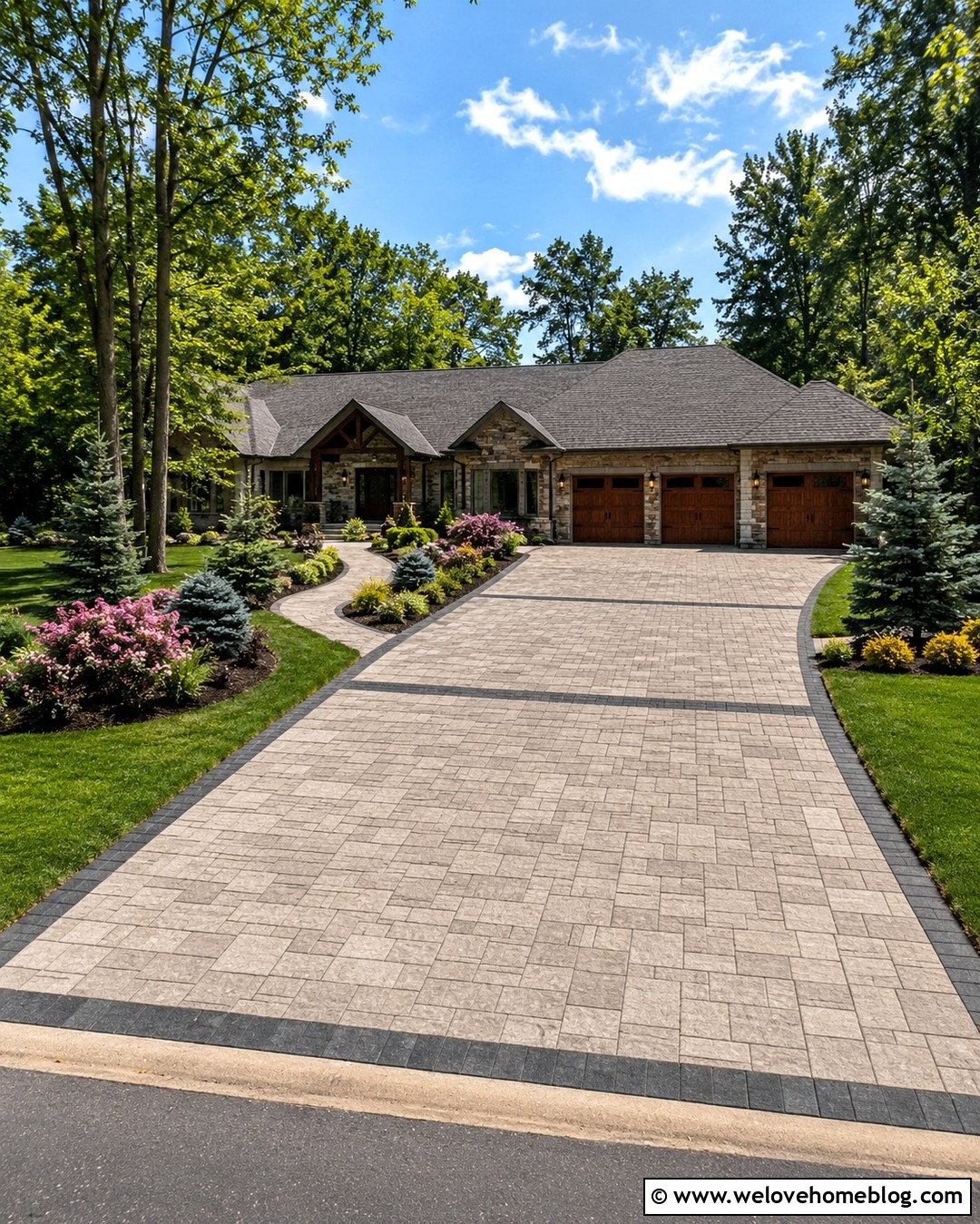
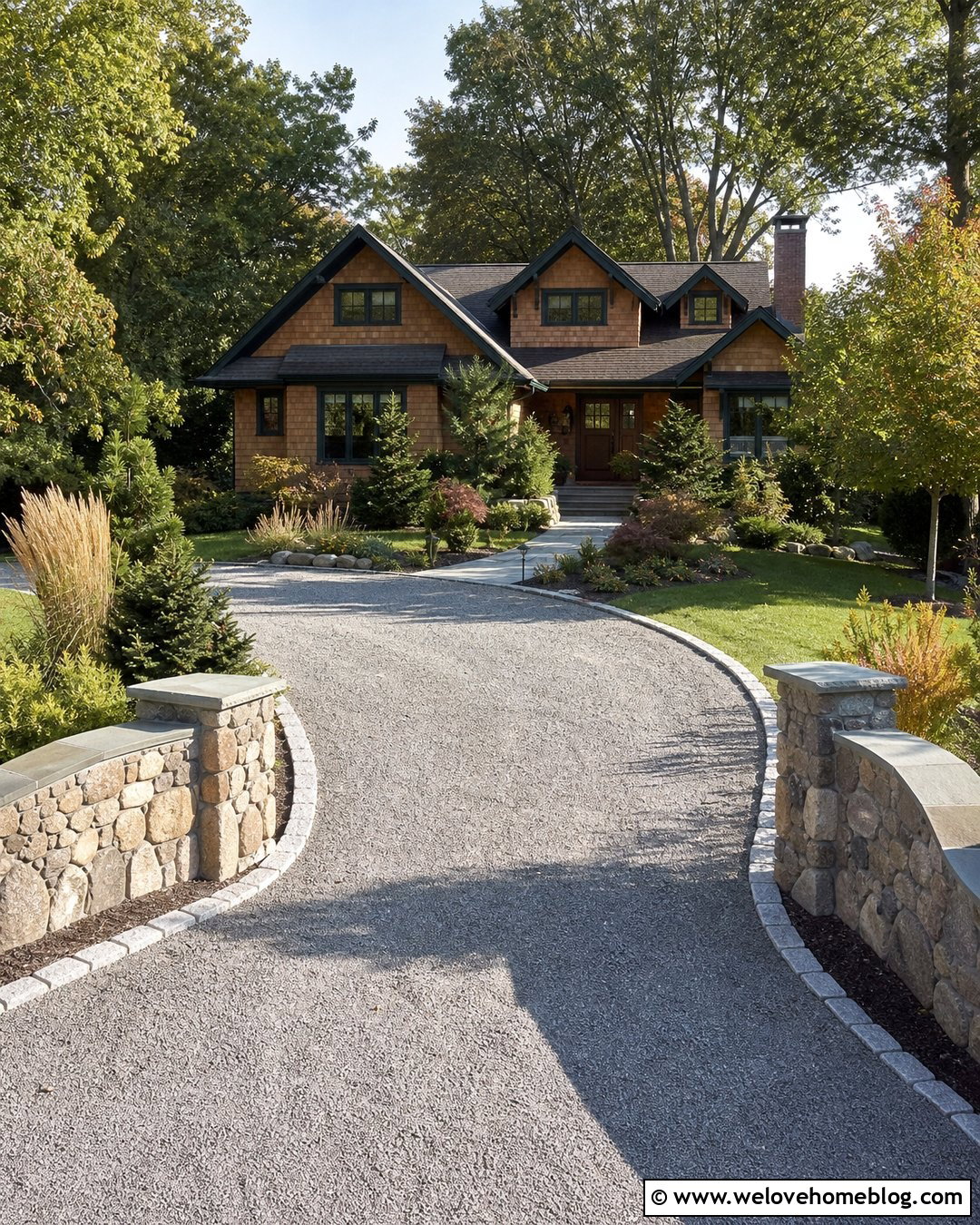
20. Grey Block Paving Driveway With Planting Beds
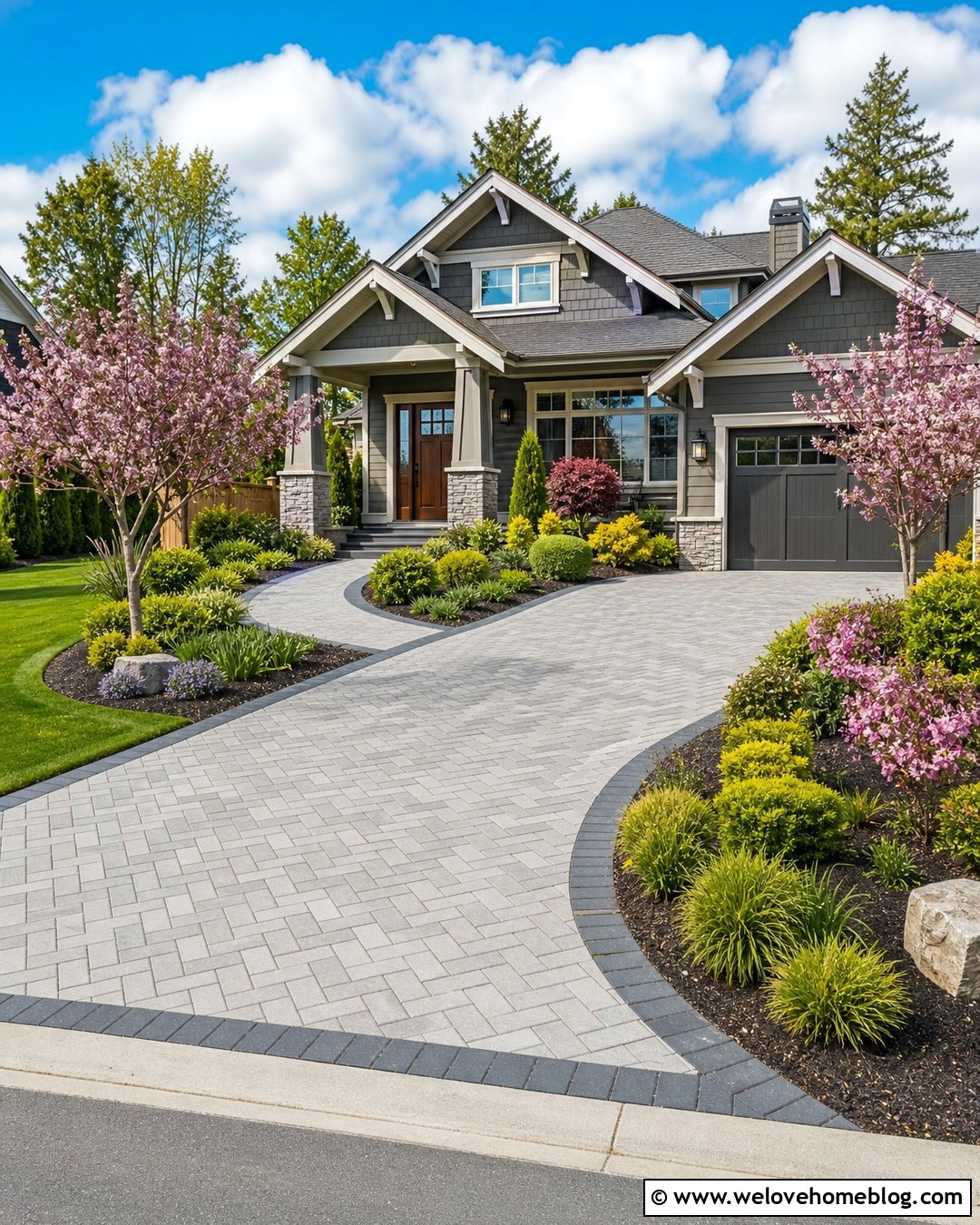
Built-in planting beds can prevent a large gray block paved frontage from feeling hard or overly uniform. Use light and mid-gray concrete blocks in a 45-degree herringbone pattern, then shape broad curved beds into the outer corners of the driveway. A charcoal soldier-course border should follow each curve, holding the paving securely and giving the landscaping a defined outline. Fill the beds with layered planting: low ground cover near the paving, rounded shrubs in the middle, and compact ornamental trees toward the back. Keep plants clear of doors, sightlines, and vehicle turning areas. A matching walkway can pass between the beds on its way to the front door. Repeating the same border around the driveway, path, and planting areas will make the entire frontage feel connected and professionally organized.
21. Grey Block Paving Driveway With Grass Strips
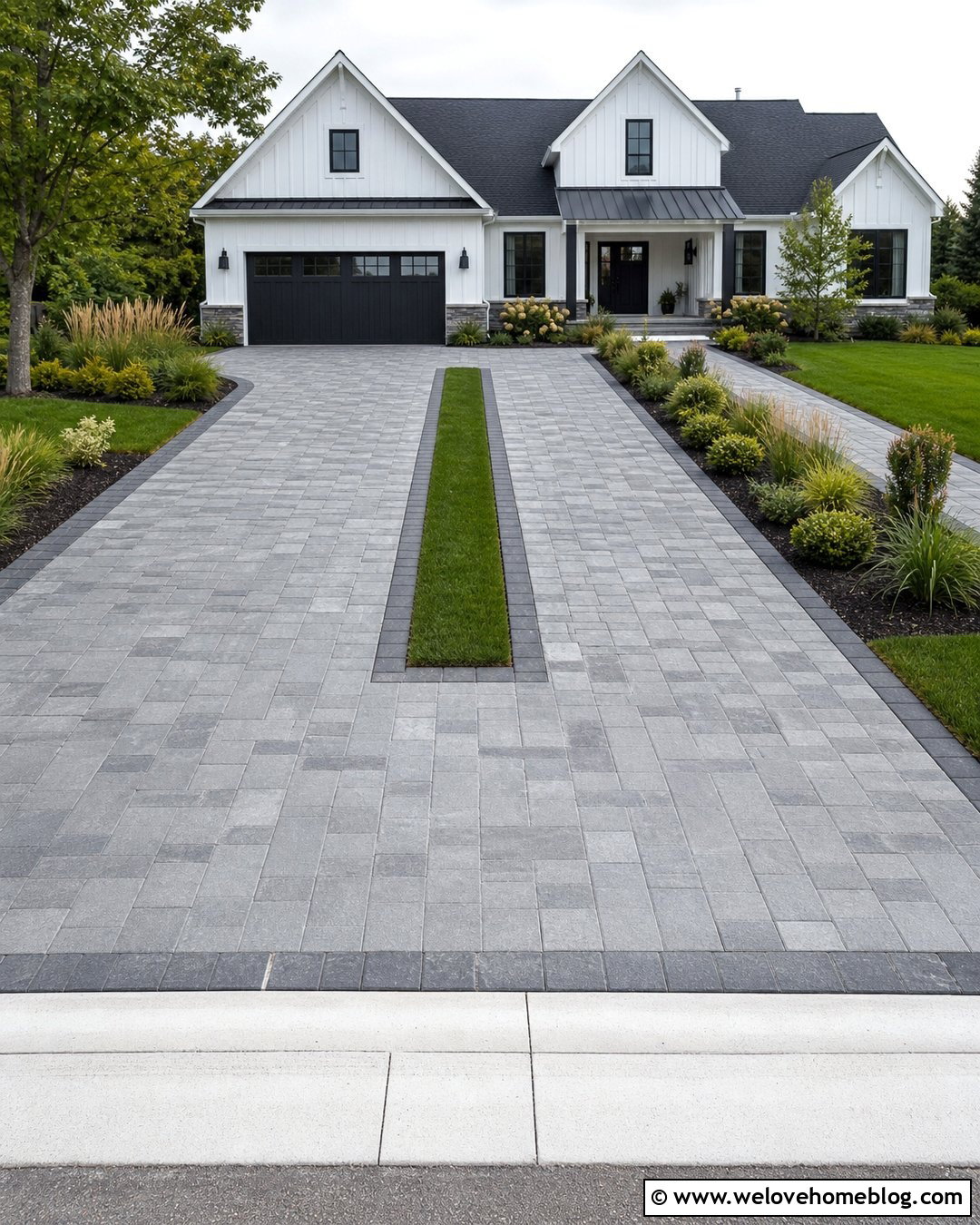
Narrow grass strips can break up an expansive gray driveway and help the frontage feel greener. Lay smooth mid-gray rectangular blocks in two clear parking lanes, leaving a carefully edged strip of lawn between them. Use charcoal blocks around every grass edge to create a durable boundary and prevent the layout from looking unfinished. The arrangement works best on a straight driveway where vehicle wheel paths are predictable. Continue the gray blocks across the entrance apron and near the garage, where a fully paved surface is more practical for turning. Add simple planting beds along the sides with low shrubs and grasses that repeat the central greenery. This design pairs naturally with modern farmhouse, contemporary, and suburban homes, creating a structured driveway that balances hard paving with living landscape.
22. Grey Block Paving Driveway With Raised Planters
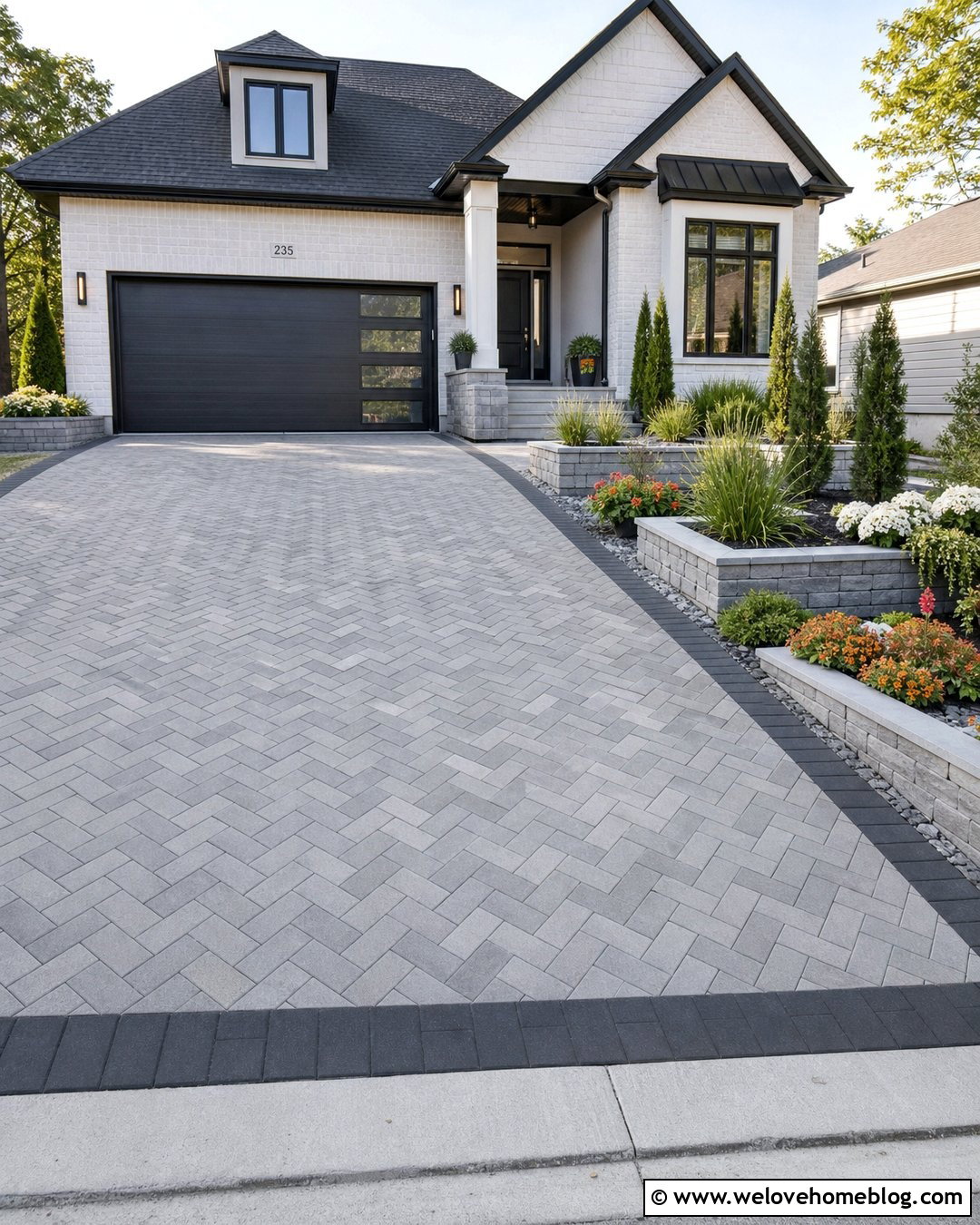
Raised planters bring height and definition to a gray block paved driveway, especially where ground-level beds are difficult to maintain. Use silver-gray concrete blocks in a neat herringbone layout, bordered with charcoal pavers around the full parking area. Position low rendered or stone-faced planters beside the house and at the outer corners, leaving generous clearance for vehicle doors. Fill them with upright grasses, compact evergreens, trailing plants, and seasonal flowers. Match the planter coping to the lightest paving tone for a coordinated result. A clear paved walkway should connect the sidewalk, driveway, and front entrance without passing through parking spaces. This complete look works particularly well for modern houses and renovated suburban homes. Keep planter walls low near the street so drivers retain open, safe sightlines.
23. Grey Block Paving Driveway With Lighting
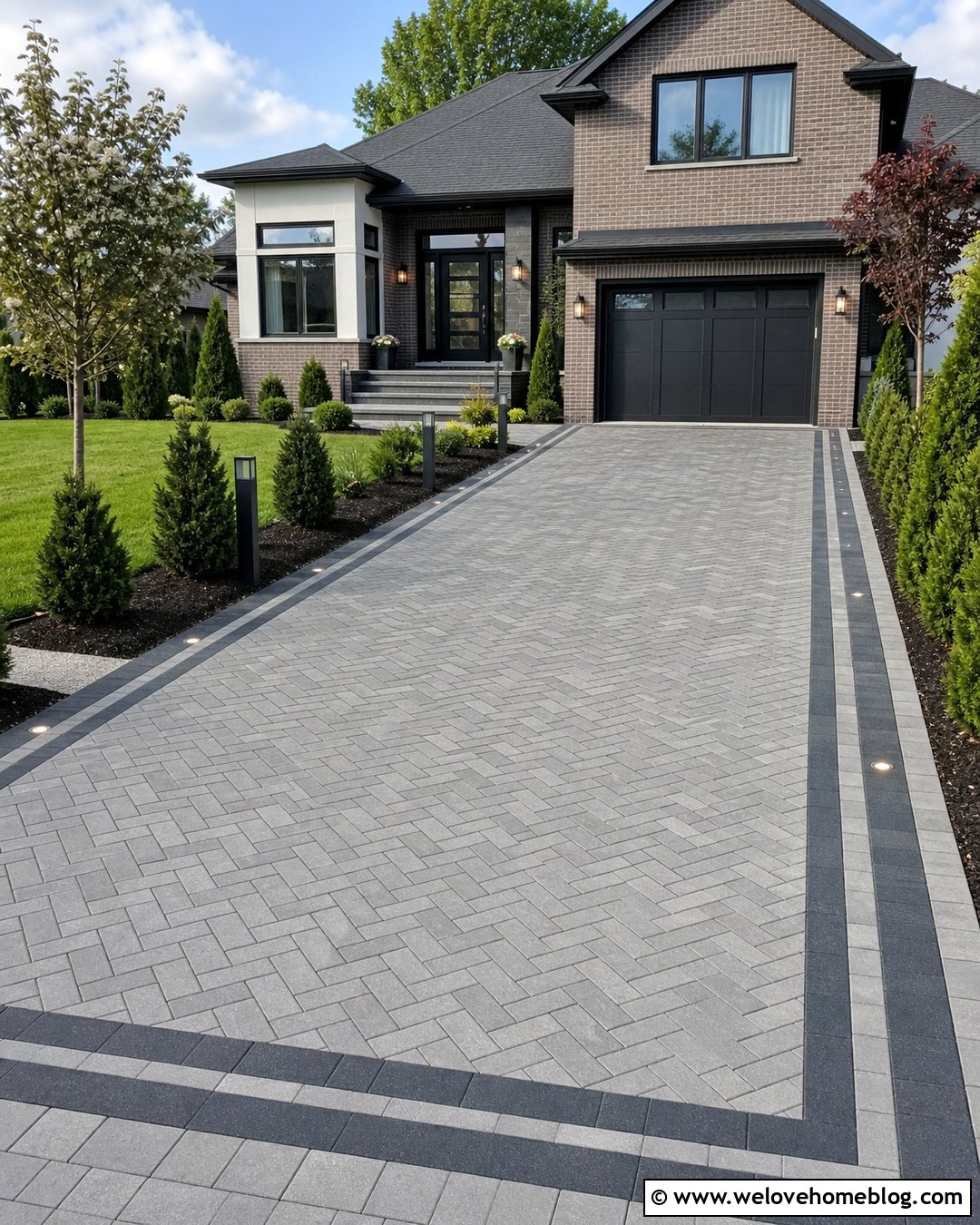
Integrated lighting can make a gray block paving driveway easier to navigate while also emphasizing its pattern and borders. Start with mid-gray herringbone paving framed by a double charcoal edge. Place small recessed lights within the outer border or use short, simple bollards beside the walkway and planting beds. The fixtures should define the route rather than create a runway effect. During daylight, black or stainless steel housings can coordinate with gates, window frames, and garage hardware. Add low evergreen planting and one or two ornamental trees to create a layered setting around the driveway. Keep the block surface uninterrupted through the main parking and turning zones. Thoughtful fixture spacing, a consistent gray palette, and clear pedestrian routes will produce an entrance that remains attractive, practical, and uncluttered.
24. Grey Block Paving Driveway With Drainage Channel
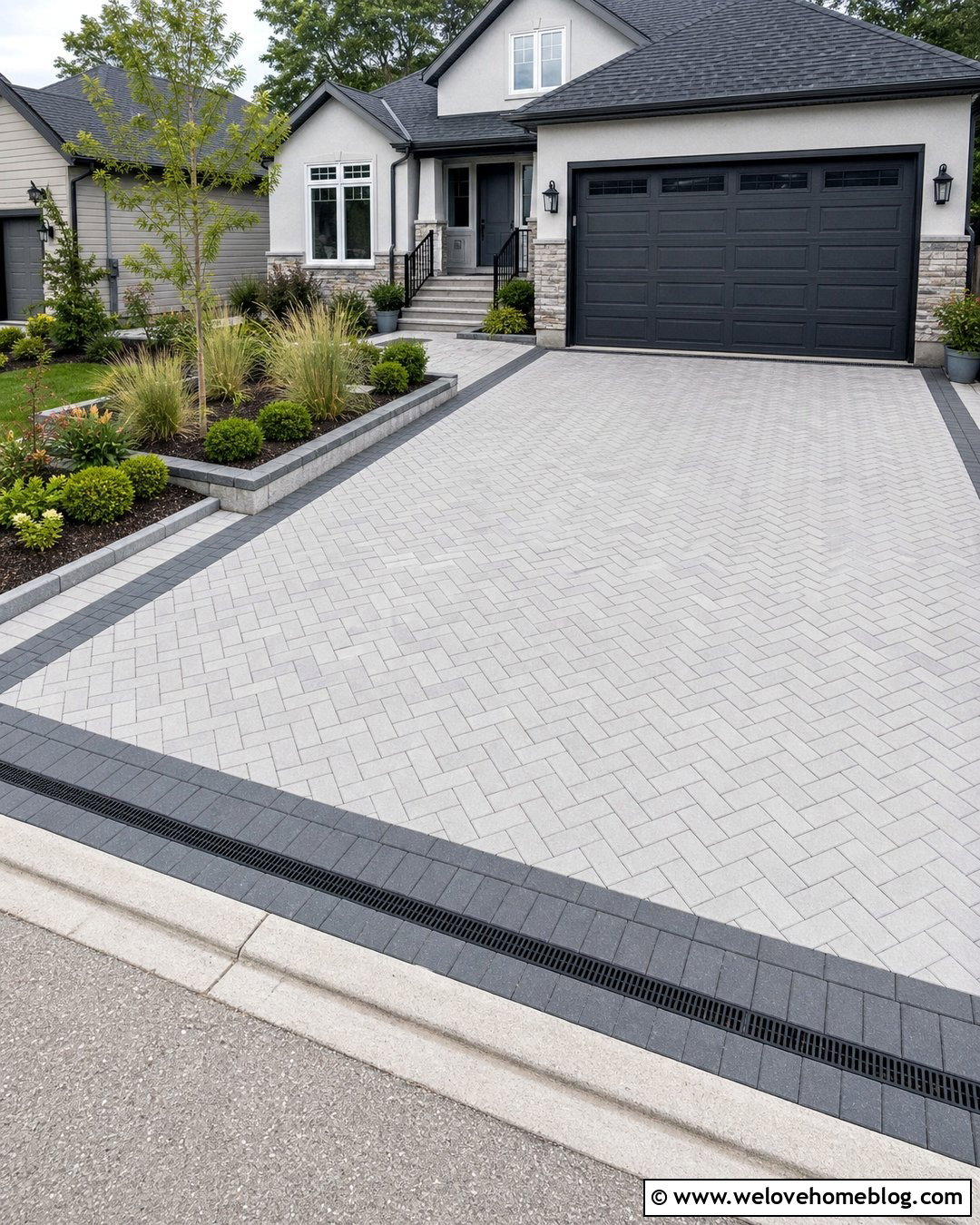
A visible drainage channel can become a tidy design feature when it is carefully integrated into gray block paving. Use light gray concrete blocks in a 90-degree herringbone pattern across a straight driveway, with charcoal blocks forming a strong perimeter. Install a slim linear channel across the entrance or in front of the garage, aligning it precisely with the paving joints. A dark grate will coordinate naturally with the border and make the drainage detail appear intentional. Slightly raised planting beds at the sides can contain soil and direct water away from the paved area. Include a separate block-paved walkway with a gentle, accessible slope toward the house. The completed driveway should combine appropriate surface falls, secure edging, and clean transitions, creating an entrance that looks polished while handling rainfall effectively.
25. Grey Block Paving Driveway With Gated Entrance
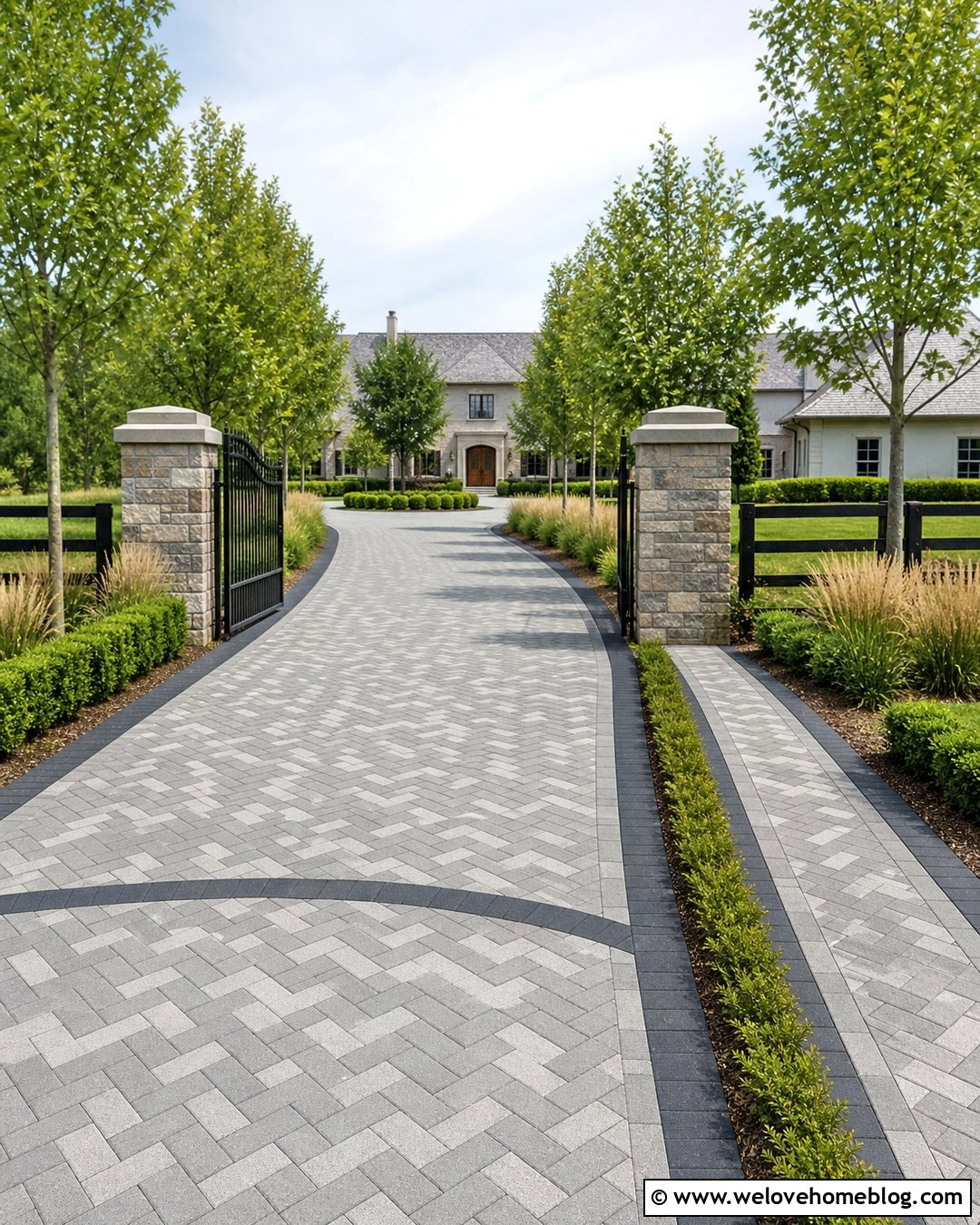
A gated entrance gives a gray block paving driveway a strong sense of arrival and works particularly well on a long or substantial frontage. Lay blended silver and mid-gray concrete blocks in a sweeping herringbone pattern from the street toward the house. At the entrance, use a charcoal paving band between stone or brick pillars to mark the gate line. Continue the dark border along both driveway edges for a visually connected approach. Low hedging, ornamental grasses, and evenly spaced trees can frame the route without obscuring visibility. Choose a simple timber or black metal gate that coordinates with the home’s windows and garage doors. A separate pedestrian gate and matching block-paved path will improve access while making the entire entrance feel balanced, purposeful, and carefully planned.
Conclusion:
The most successful gray paved entrances combine attractive blocks with a layout that responds to the house, available space, and everyday parking needs. Herringbone patterns offer classic structure, while running bond and mixed-size arrangements create cleaner or more natural results. Borders, planting beds, paths, drainage, and lighting should feel like parts of one coordinated plan rather than later additions. Before selecting blocks, compare samples beside the home in natural daylight and consider how each shade will look when wet. Proper foundations and edge restraints are equally important for lasting performance. Use these **25 Grey Block Paving Driveways Ideas** to shape a practical entrance with balanced color, useful landscaping, and strong curb appeal.

Related posts:
Leave a Reply