
An awkward strip between neighboring driveways can become one of the most attractive parts of a front yard. These 20 landscape between driveways ideas combine practical planting, durable edging, drainage, and coordinated driveway materials to create complete curb-appeal looks. Because pavement reflects heat and limits growing space, plants should have compact habits, resilient roots, and mature widths that stay clear of car doors and tires. Low-maintenance ground covers, narrow shrubs, ornamental grasses, stone beds, and rain gardens can all work when matched to the site. Before planting, confirm property lines, underground utilities, sunlight, runoff, and winter salt exposure. The complete designs below offer adaptable solutions for different homes, budgets, climates, and strip widths with 20 landscape between driveways ideas. ()

1. Low Evergreen Hedge Landscape Between Driveways
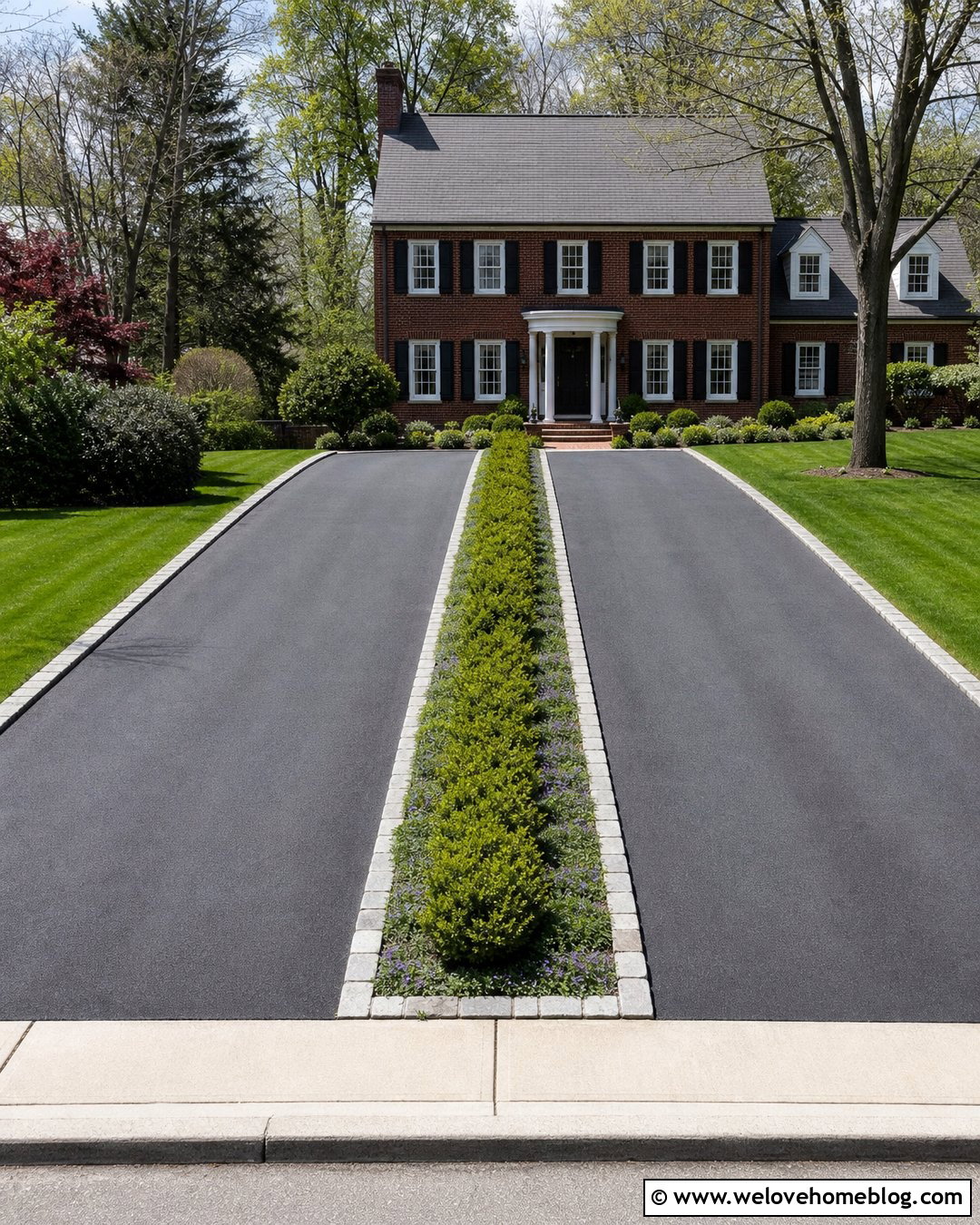
A low evergreen hedge gives two parallel driveways a clean sense of separation without creating a tall wall. Pair black asphalt driveways with a three- to five-foot planting strip edged in charcoal concrete curbing. Compact boxwood, inkberry holly, or another locally suitable evergreen can form the main structure. Keep the mature height around two to three feet where street visibility matters. Add creeping thyme or sedum below the shrubs to cover exposed soil and soften the formal line. A simple hedge complements a brick colonial or traditional ranch especially well. Space every plant according to its mature width rather than its nursery size, and keep branches far enough back to prevent scratches when vehicle doors open.
2. Ornamental Grass Landscape Between Driveways
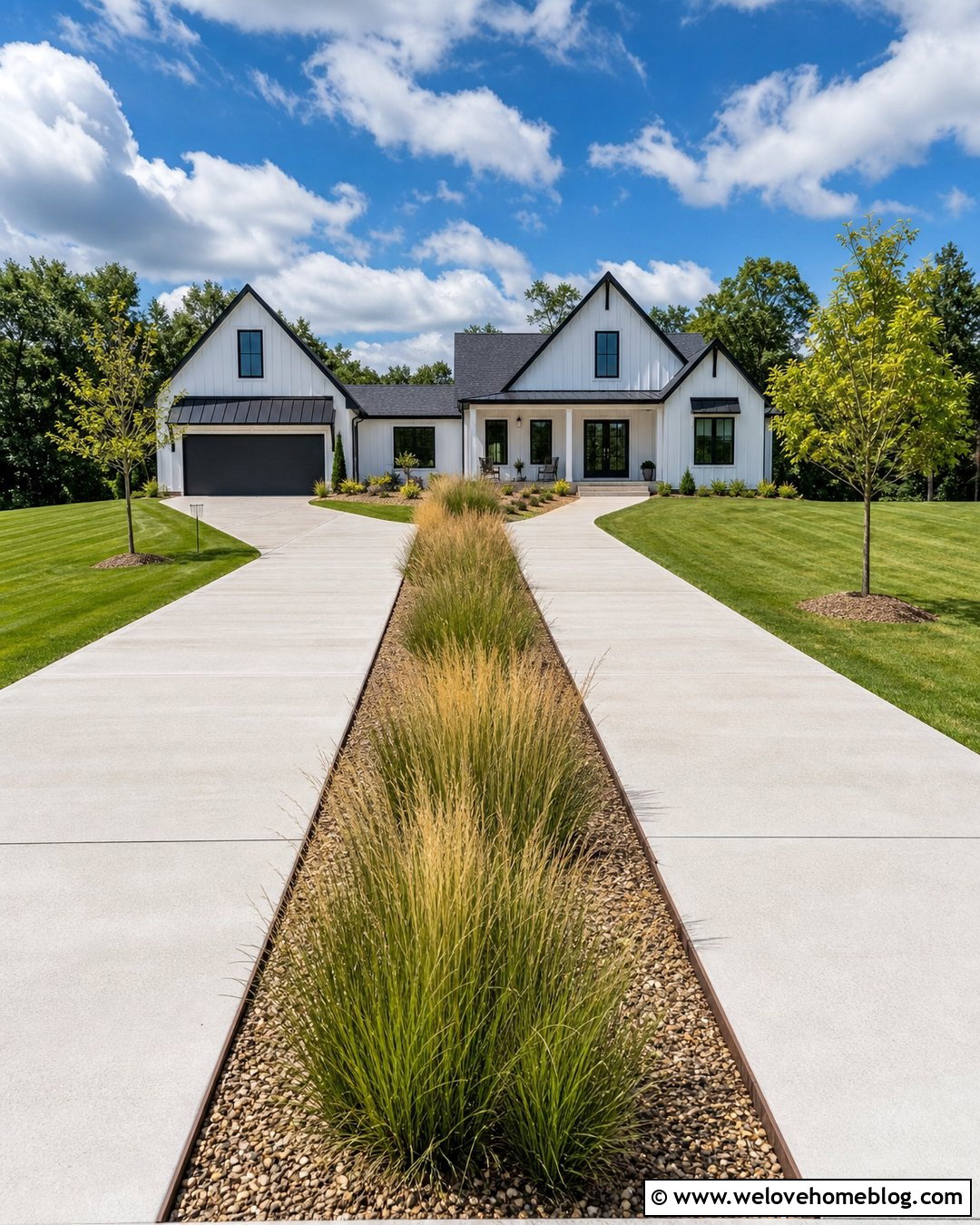
Soft, moving grasses can make a narrow space between concrete driveways feel wider and less rigid. Use repeating clusters of compact ornamental grass instead of one continuous row. Little bluestem, prairie dropseed, blue fescue, or a regionally appropriate sedge can provide texture without developing heavy surface roots. Surround the grasses with tan gravel mulch and install dark steel edging beside both driveways. The warm planting strip creates a natural contrast with light gray poured concrete and suits a modern farmhouse or contemporary ranch. Select varieties that remain upright at maturity so blades do not flop onto parked vehicles. Repetition keeps the landscape calm, while seasonal color changes make the strip interesting without relying on demanding annual flowers.
3. River Rock Landscape Between Driveways
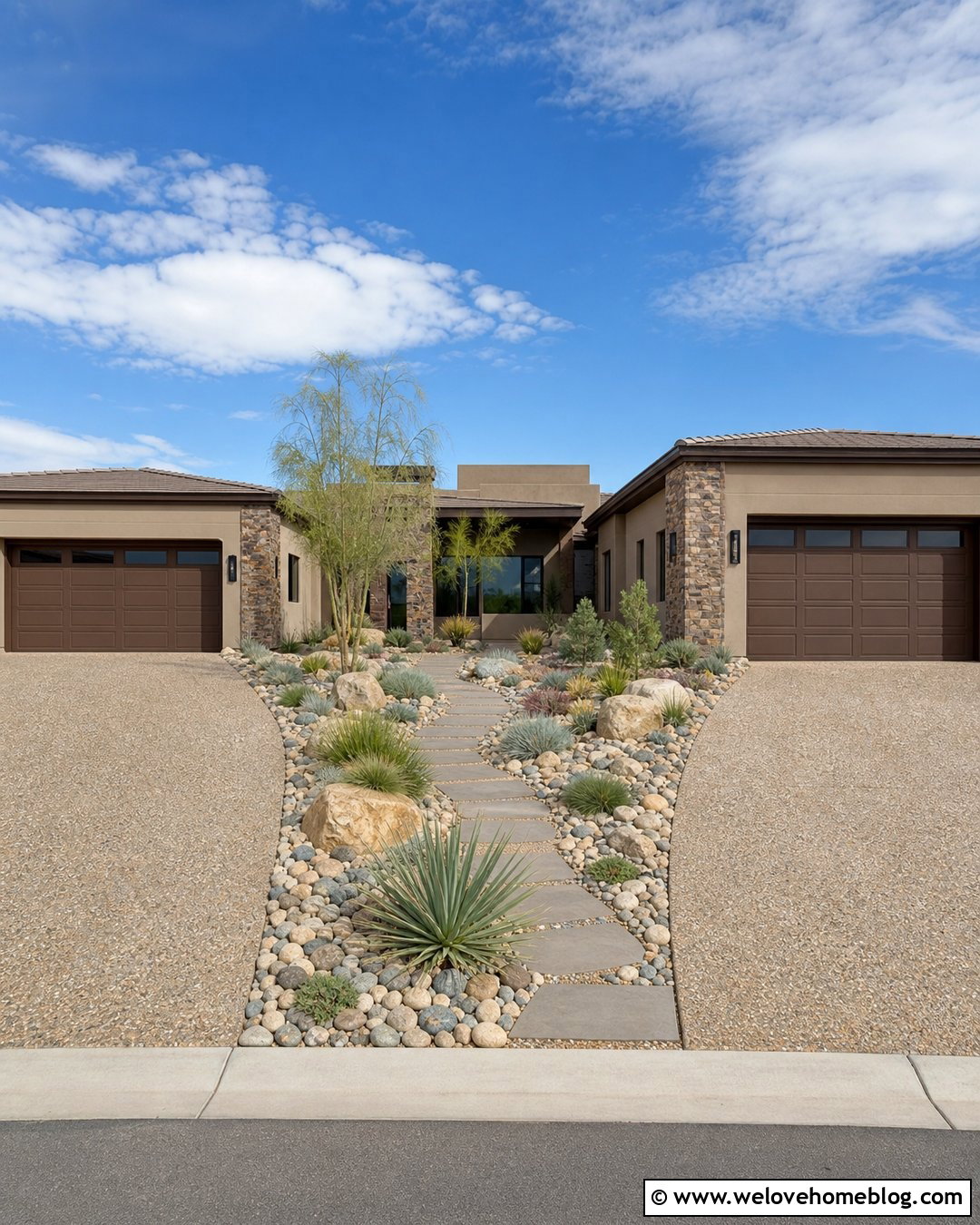
Does grass constantly turn brown in the hot space between your driveways? Replace it with a river rock bed that looks intentional throughout the year. Medium gray and buff stones work beautifully between exposed aggregate driveways, particularly when larger boulders create several natural focal points. Add small groups of drought-tolerant plants such as yucca, sedum, blue fescue, or compact juniper where the climate allows. A slightly raised center can help direct surface water away from the pavement edges, but runoff should still lead toward an approved drainage area. Use sturdy metal edging to contain loose stones. This low-growing arrangement preserves visibility, reduces mowing in a difficult strip, and gives a Southwestern or contemporary home a polished, cohesive entrance.
4. Flower Border Landscape Between Driveways
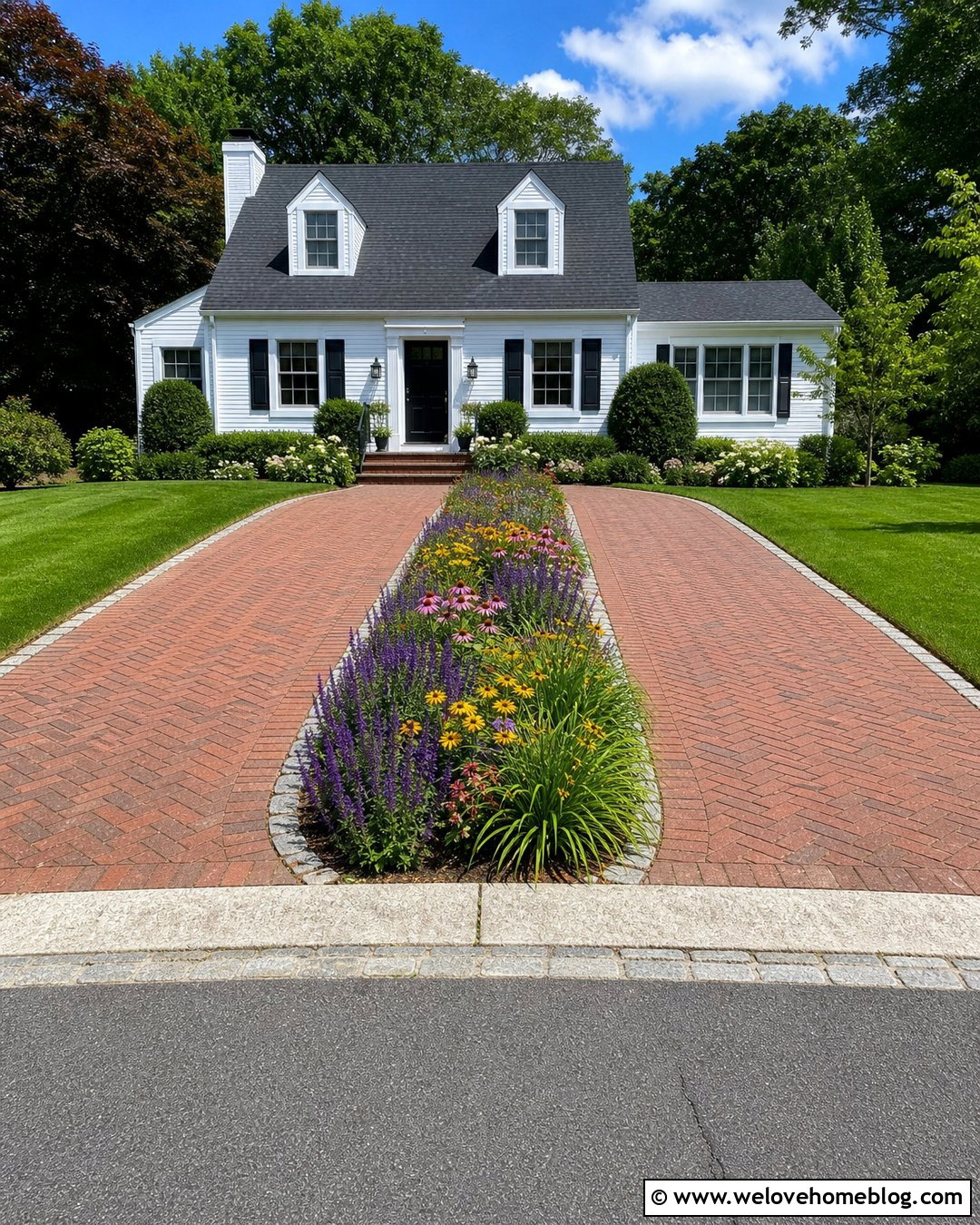
A colorful flower border can connect two brick driveways while keeping the shared space cheerful and welcoming. Start with a narrow cobblestone edge that matches the brick tones, then plant flowers in broad repeating groups rather than scattered singles. Salvia, coreopsis, catmint, coneflower, and compact daylilies are possible choices for sunny locations, depending on the local climate. Place the shortest plants beside the pavement and slightly taller blooms through the center. This arrangement prevents foliage from interfering with tires and car doors. A flowering strip works especially well in front of a cottage, Cape Cod, or craftsman house. Include a simple drip line under mulch so plants receive steady moisture without spraying vehicles or wasting water on the driveway.
5. Creeping Thyme Landscape Between Driveways
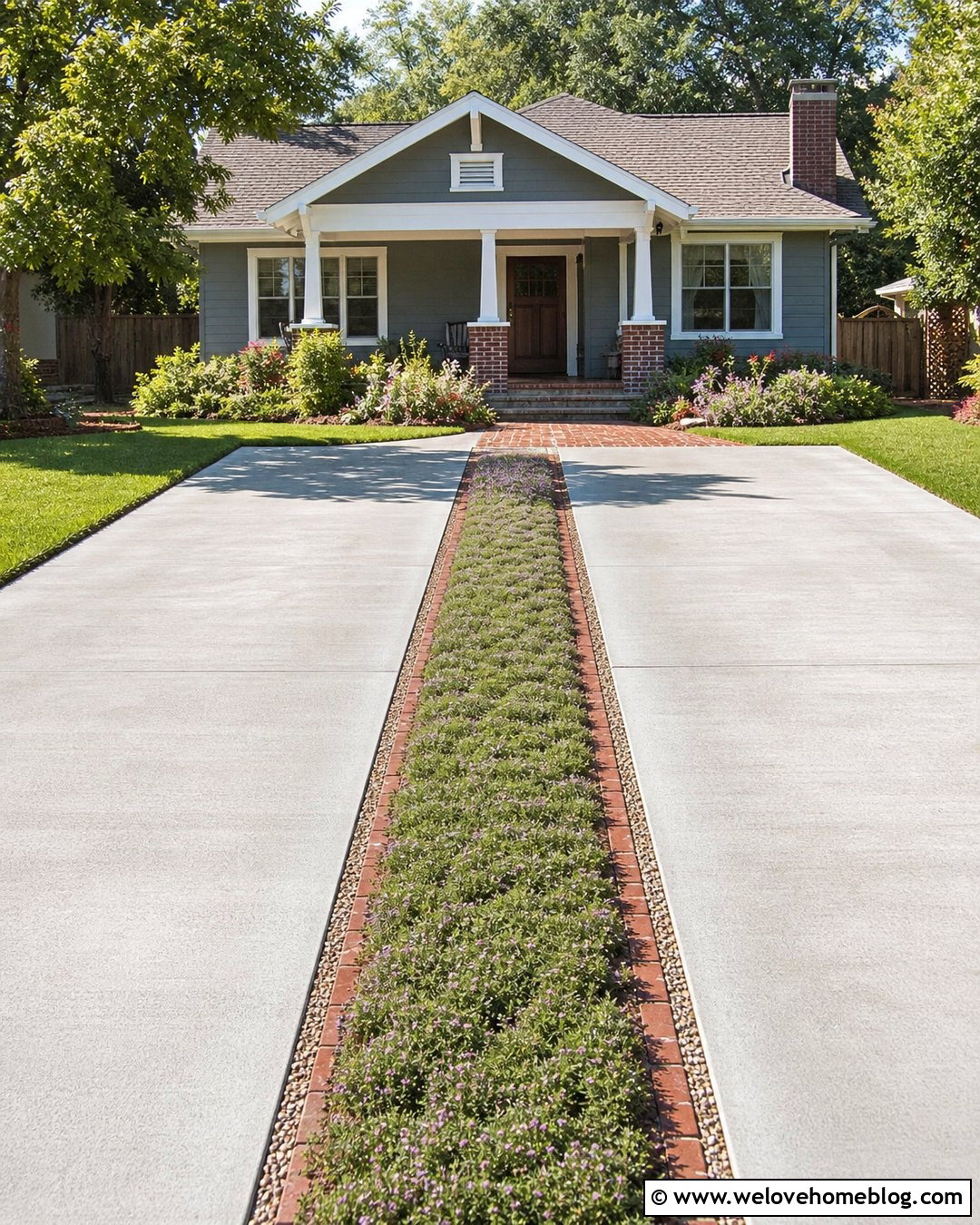
A low carpet of creeping thyme creates a soft transition between two pale concrete driveways. Its spreading growth can visually fill a slim strip without producing the bulk of conventional shrubs. Define the bed with narrow clay brick ribbons, prepare free-draining soil, and plant small plugs closely enough to form a unified pattern over time. The tiny leaves and seasonal flowers suit a cottage or bungalow, while the brick edging keeps the look structured. Use thyme only where the sunlight, drainage, and local growing conditions are appropriate. Leave a gravel maintenance strip beside each driveway if tires frequently cross the edge. The result is a simple, low-profile landscape that stays open, colorful, and easy to view from the street.
6. Native Plant Landscape Between Driveways
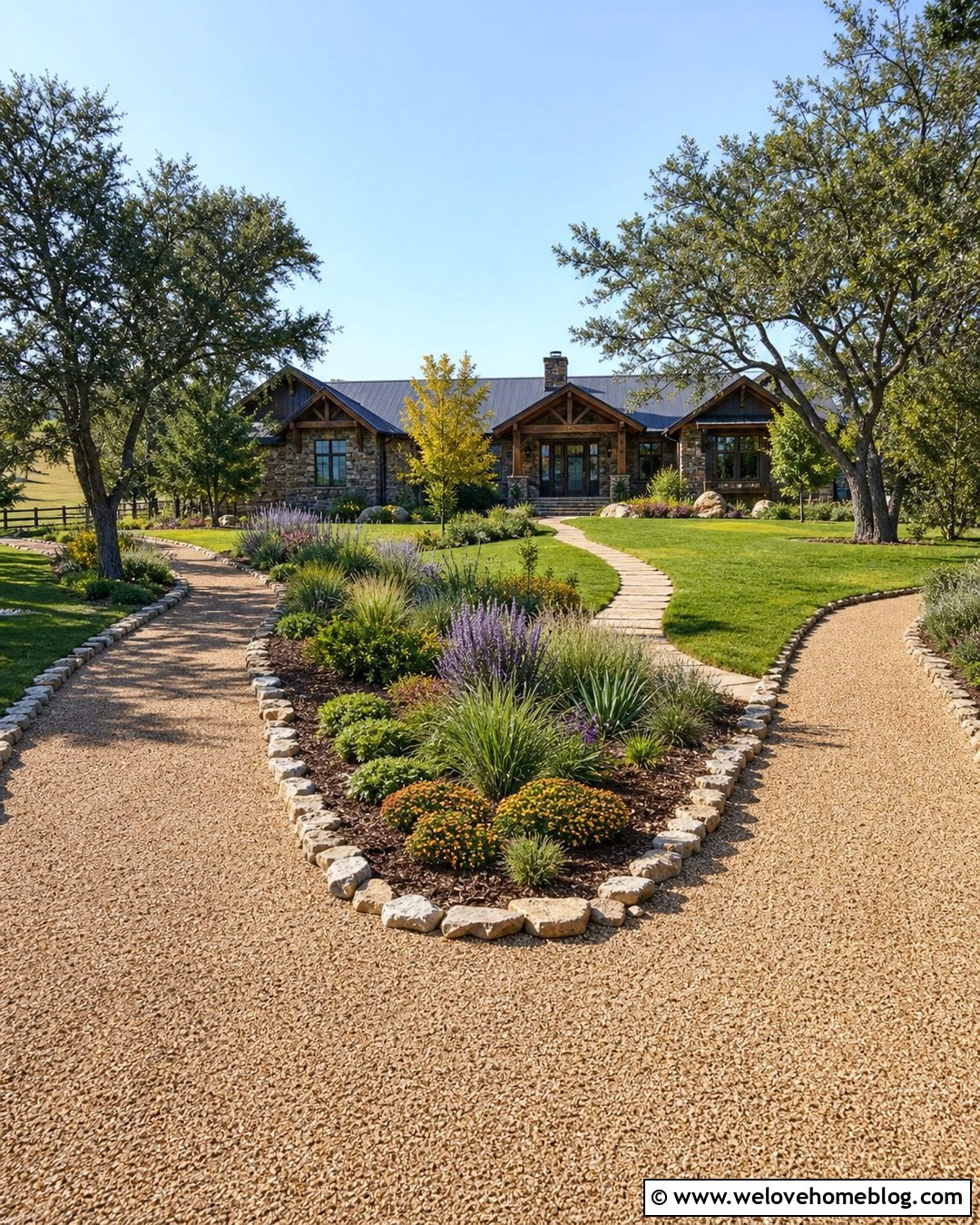
Native plants can turn the strip between two gravel driveways into a small habitat that still feels orderly. Choose a limited palette of locally adapted grasses, flowering perennials, and one compact shrub, arranging them in repeating drifts. A steel or stone border helps keep driveway gravel from migrating into the planting bed. Place low plants at both edges and reserve taller selections for the wider center or the end nearest the house. This layered plan gives a craftsman or rustic ranch a natural appearance without looking neglected. Avoid aggressive spreaders and species that become wider than the available area. A thin layer of fine mulch and targeted drip irrigation will support new plants while they establish, after which maintenance may become more manageable.
7. Raised Planter Landscape Between Driveways

When soil is compacted or the strip is extremely narrow, a raised planter can provide a clear design solution. Build a long, low bed from smooth concrete block between two dark asphalt driveways, keeping the structure well inside the property boundaries. Fill it with quality soil and use compact grasses, low evergreens, or seasonal flowers. A planter height of roughly 12 to 18 inches adds definition without creating an imposing barrier, though dimensions should suit vehicle clearance and local requirements. Integrate drainage openings so water cannot collect inside the bed or spill across the pavement. This crisp arrangement works particularly well with a midcentury or contemporary house. Matching the planter color to the home’s trim makes the entire frontage feel coordinated.
8. Mulch Bed Landscape Between Driveways
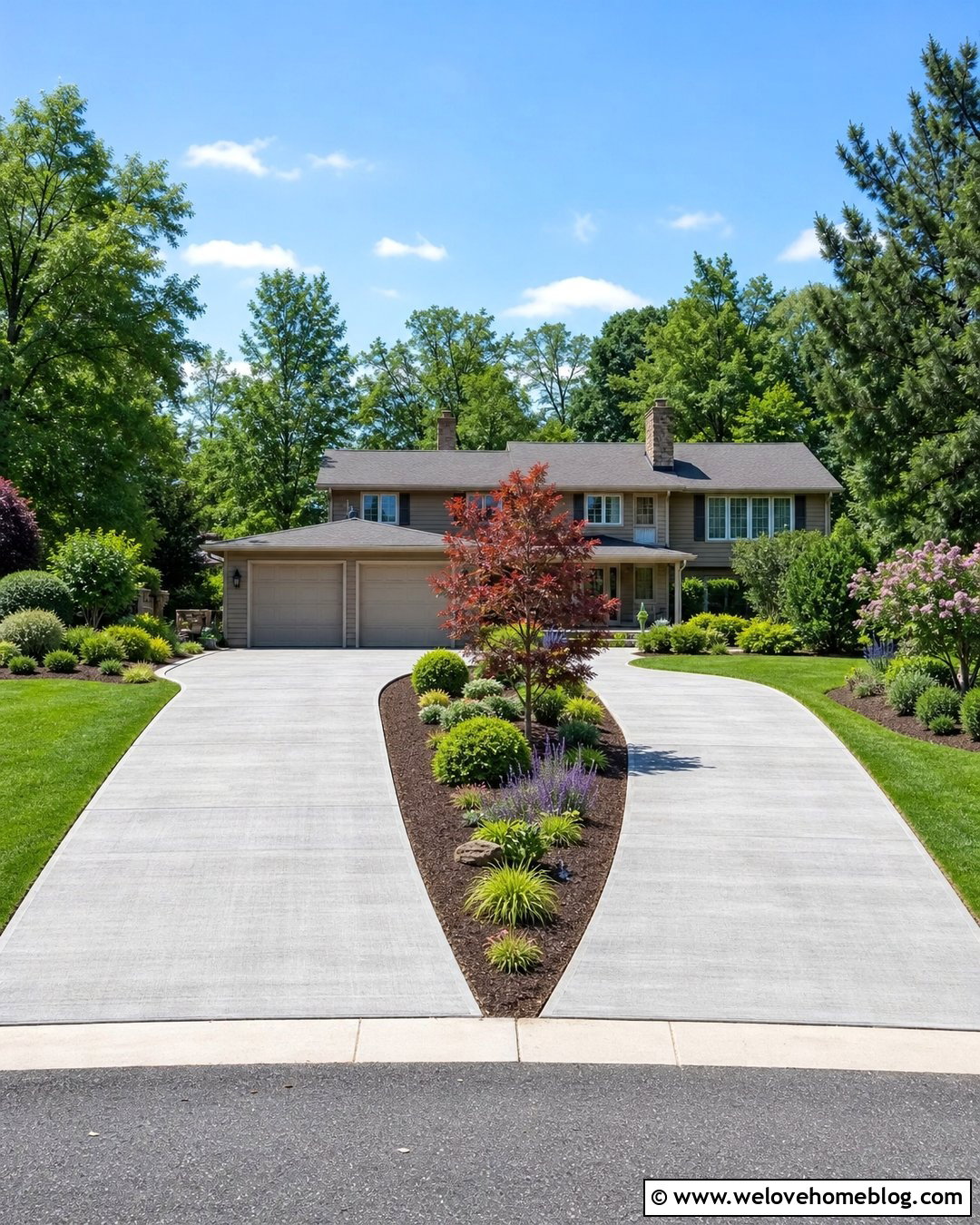
Warm brown mulch offers an affordable way to transform a tired grass strip between two brushed concrete driveways. Give the bed a gentle curved outline, even if the driveways are straight, to soften the large paved surfaces. Plant a compact ornamental tree only where the strip is wide enough, then layer dwarf shrubs, flowering perennials, and a low ground cover around it. On a narrow site, skip the tree and repeat three or four small plant varieties instead. Flush concrete or metal edging will hold the mulch without creating a tripping hazard. This approachable design fits many suburban ranch and split-level homes. Refresh mulch as needed, but avoid piling it against plant stems or allowing it to wash onto either driveway.
9. Dry Creek Landscape Between Driveways
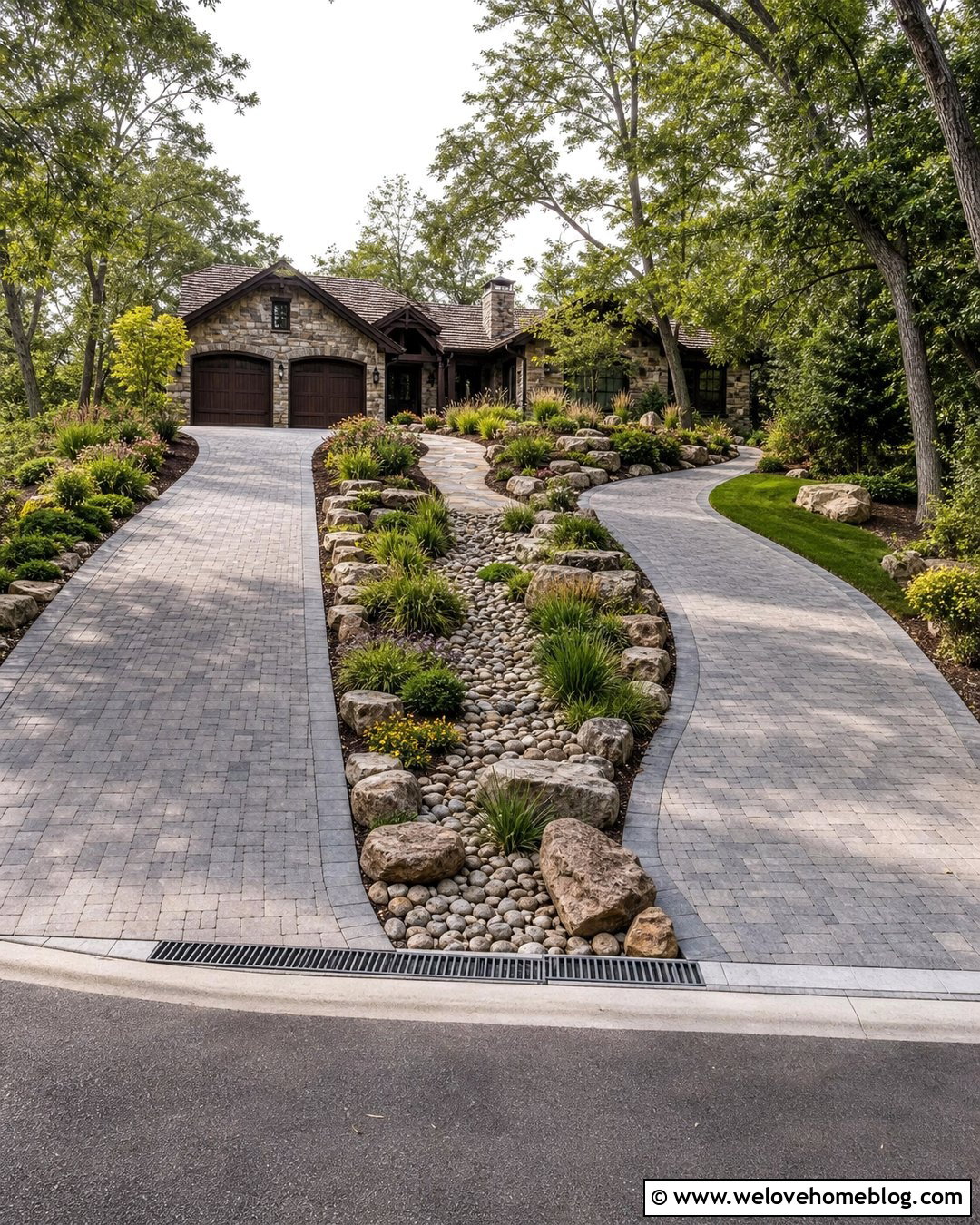
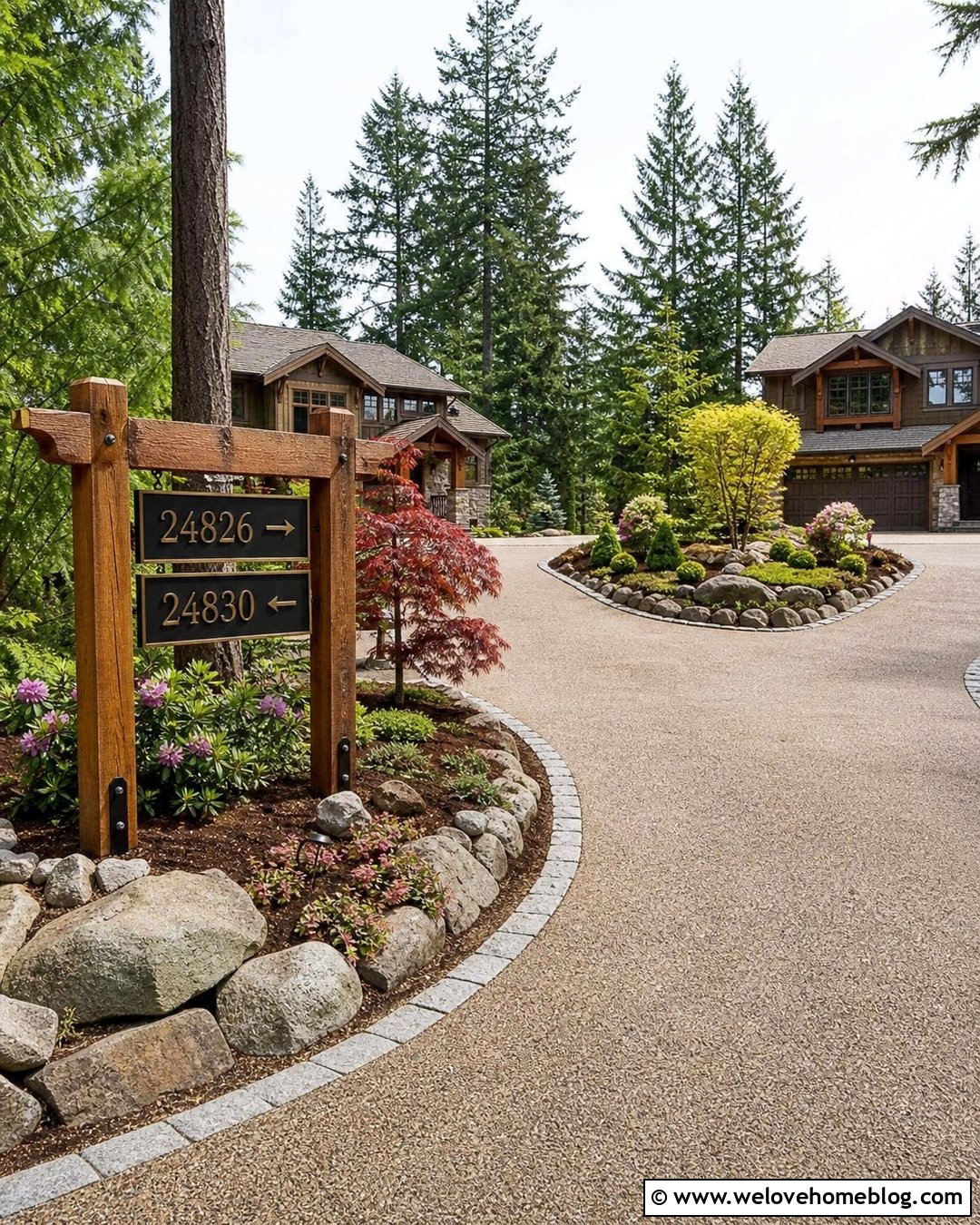
A dry creek bed brings movement and drainage character to the landscape between sloped driveways. Shape a shallow, winding channel through the center of the strip using rounded river stones in several sizes. Frame the channel with flat boulders, compact grasses, sedges, and moisture-tolerant plants selected for local conditions. The bed can complement gray paver driveways and a craftsman house by repeating natural colors found in the facade. It should not simply trap runoff between two paved surfaces. Grade the feature toward a safe outlet, rain garden, or approved drainage point, and consult a professional when water flow is significant. Keep taller vegetation near the house so the street end remains open for safe visibility and easier snow removal.
10. Modern Gravel Landscape Between Driveways
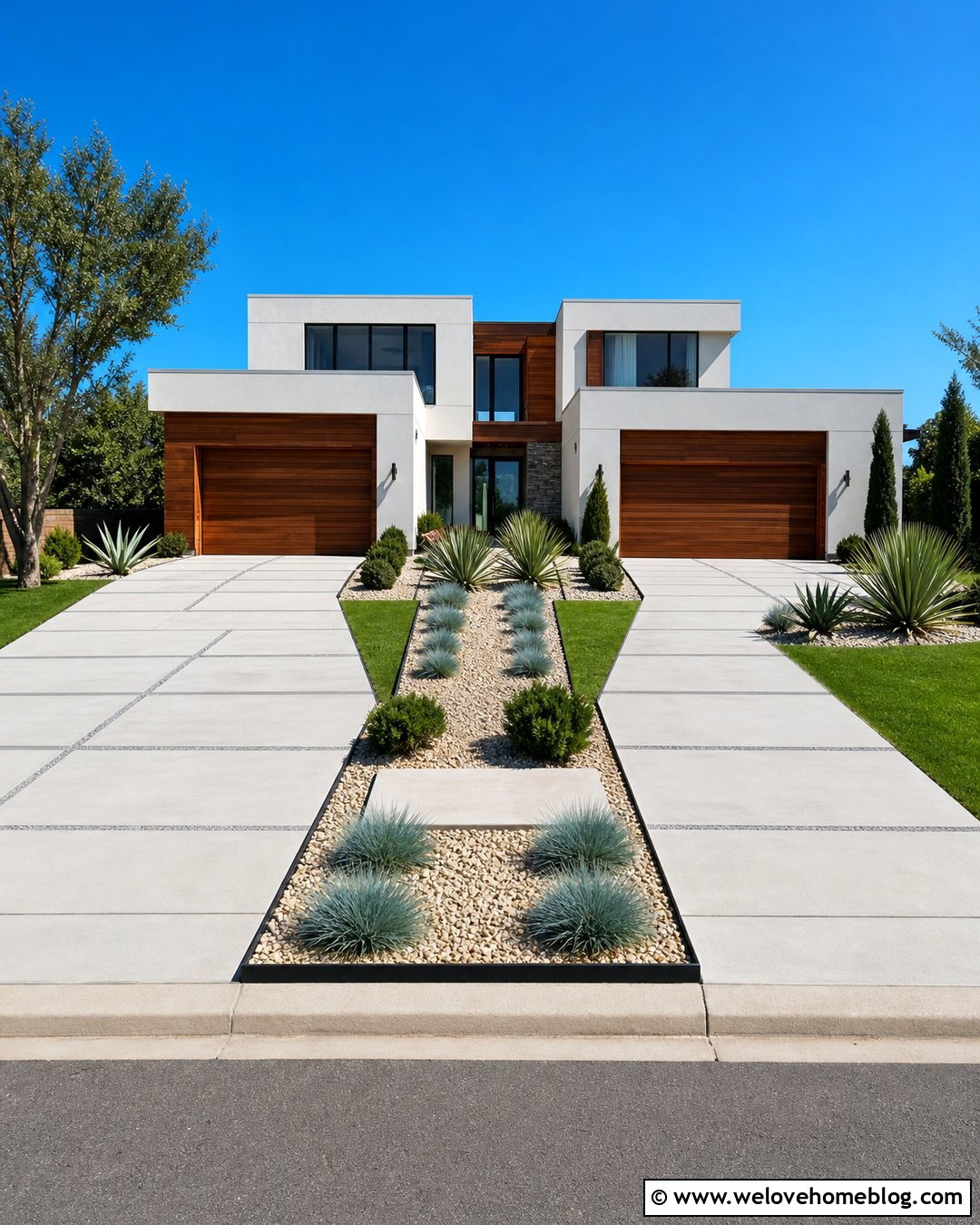
Clean lines and restrained materials can make a small divider look surprisingly sophisticated. Place pale crushed granite between two large-format concrete paver driveways, then organize sculptural plants in evenly spaced clusters. Compact agave in suitable warm regions, blue fescue, yucca, dwarf pine, or architectural sedges can create the desired shape without overcrowding the bed. Black steel edging provides a sharp transition between gravel and paving. Use no more than a few plant varieties so the narrow space feels calm rather than busy. This design pairs naturally with a modern house featuring white stucco, dark siding, or mixed wood accents. A single rectangular path slab can cross the bed where residents need a convenient route between the two properties or parking areas.
11. Small Tree Landscape Between Driveways
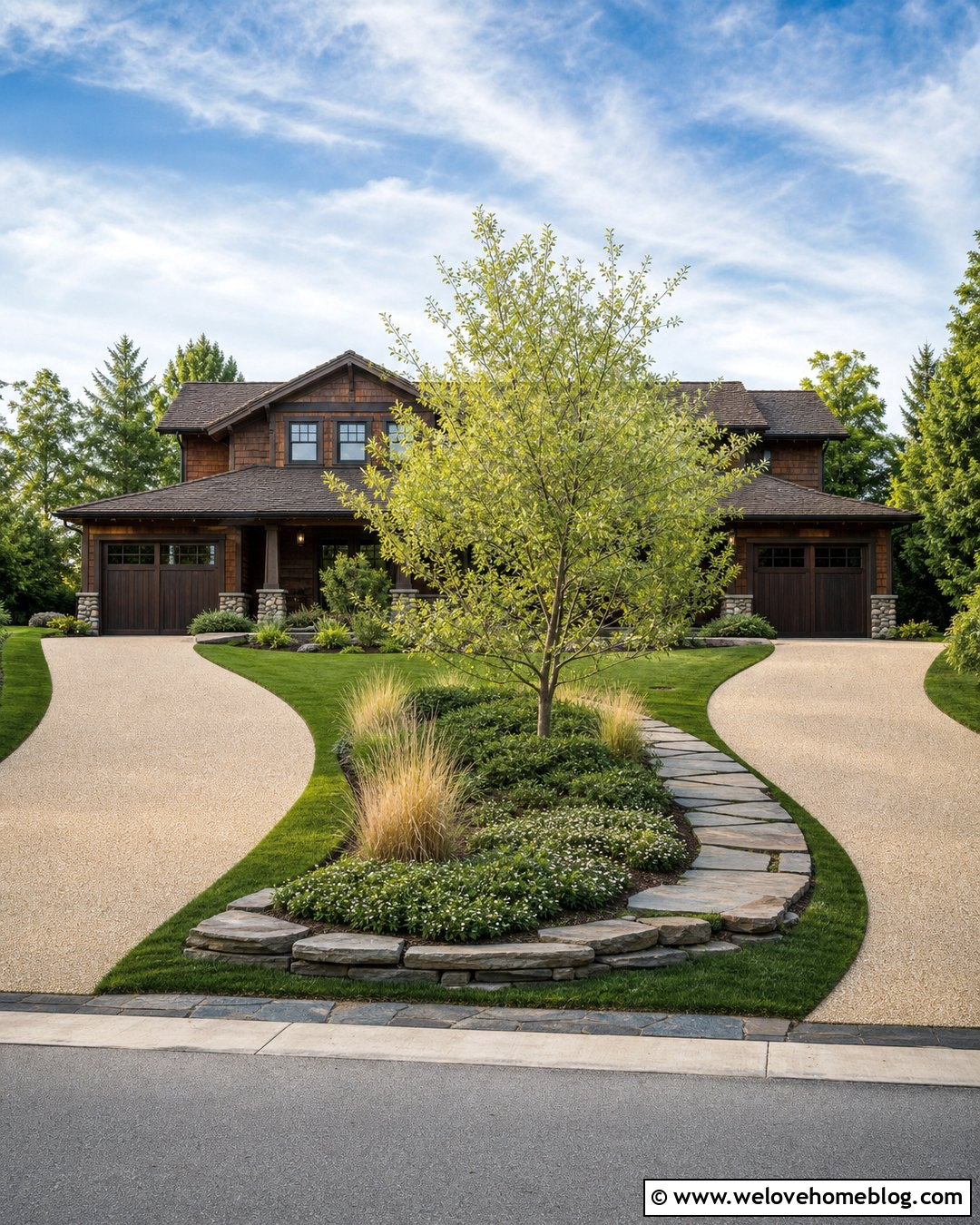
One well-positioned ornamental tree can anchor a wider landscape strip between two curved driveways. Select a compact species with roots and a mature canopy suitable for the available space, local climate, and nearby pavement. Serviceberry, redbud, or another regionally appropriate small tree may work where sufficient clearance exists. Surround it with a broad ring of low ground cover and flat stone edging rather than planting lawn beneath it. Light-colored resin-bound gravel driveways will help the green canopy stand out, while a craftsman or traditional home provides a balanced background. Position the trunk away from vehicle paths and preserve visibility at the street. Before digging, verify utilities and consider how falling fruit, leaves, or seedpods could affect parked cars and ongoing maintenance.
12. Columnar Evergreen Landscape Between Driveways
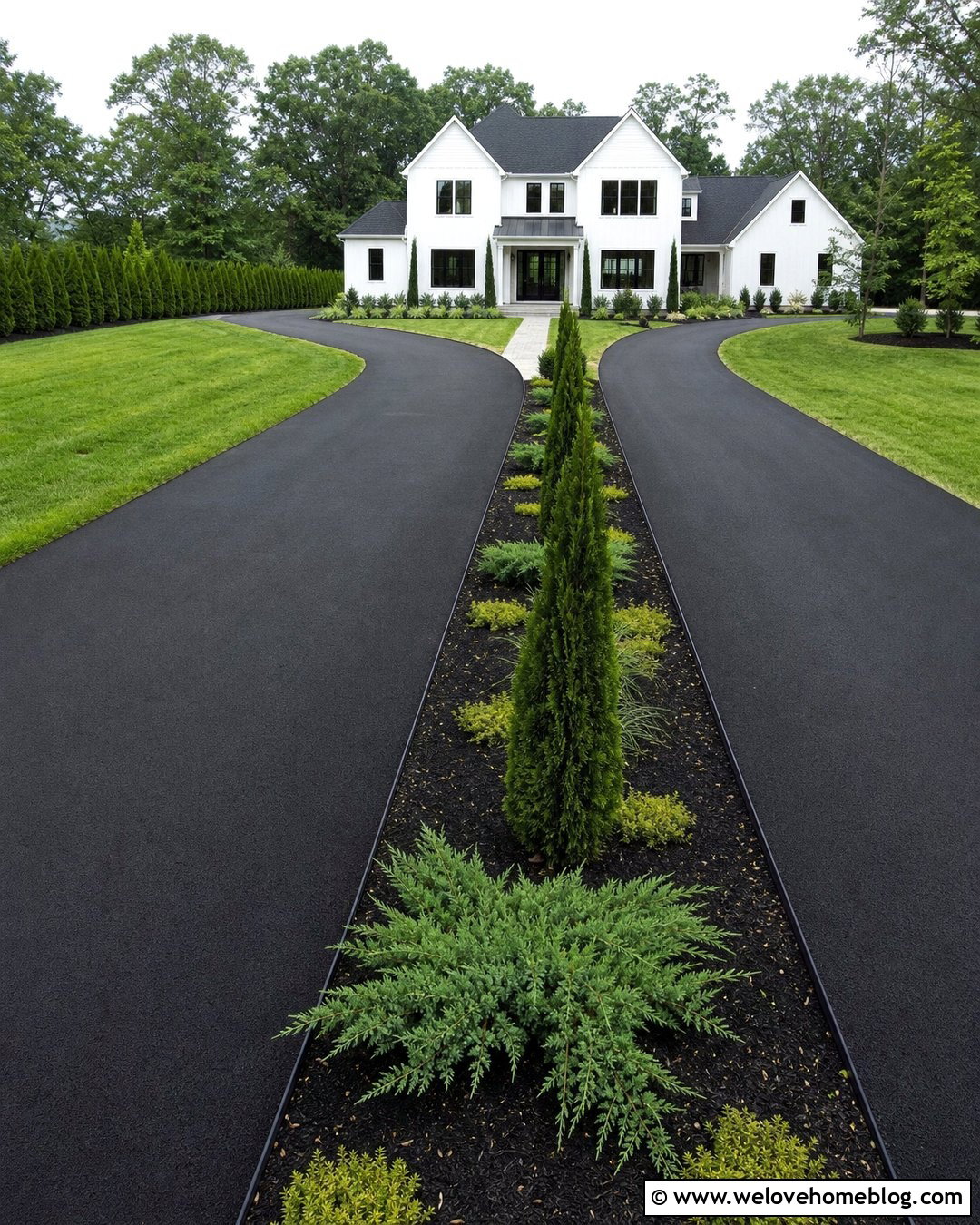
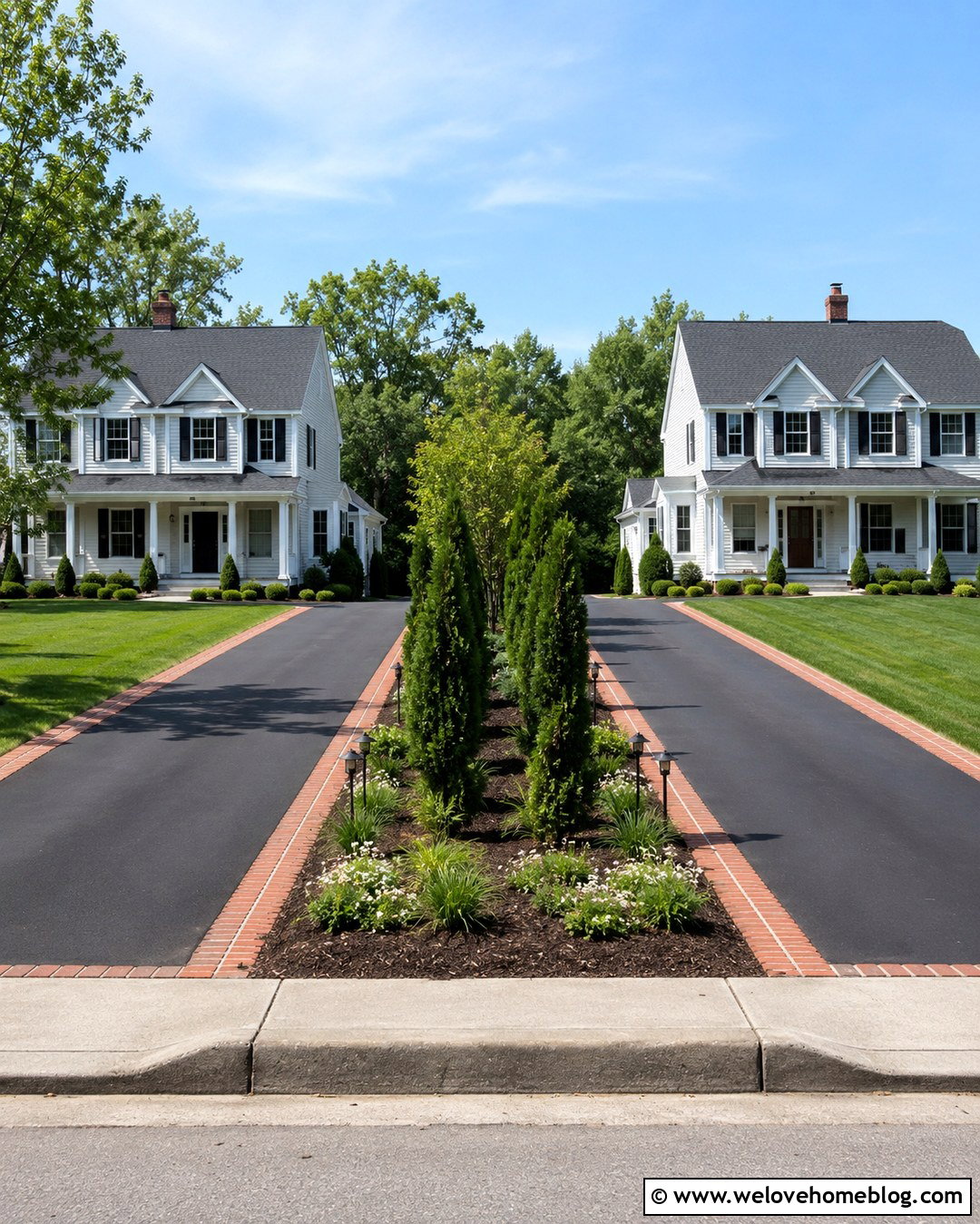
A row of narrow evergreens can provide privacy where neighboring driveways sit uncomfortably close together. Columnar juniper, upright holly, or another climate-appropriate evergreen offers vertical screening while using less width than a broad hedge. Plant the screen in a mulched strip between two black asphalt driveways and add low sedum or creeping juniper around the base. Staggering the plants slightly can produce a softer look than a rigid line, provided every trunk remains safely inside the bed. This arrangement suits a country home or modern farmhouse with a long driveway approach. Confirm mature width, snow load tolerance, deer pressure, and salt sensitivity before selecting plants. Keep the screen shorter near the road so drivers retain a clear view of pedestrians and traffic.
13. Rain Garden Landscape Between Driveways
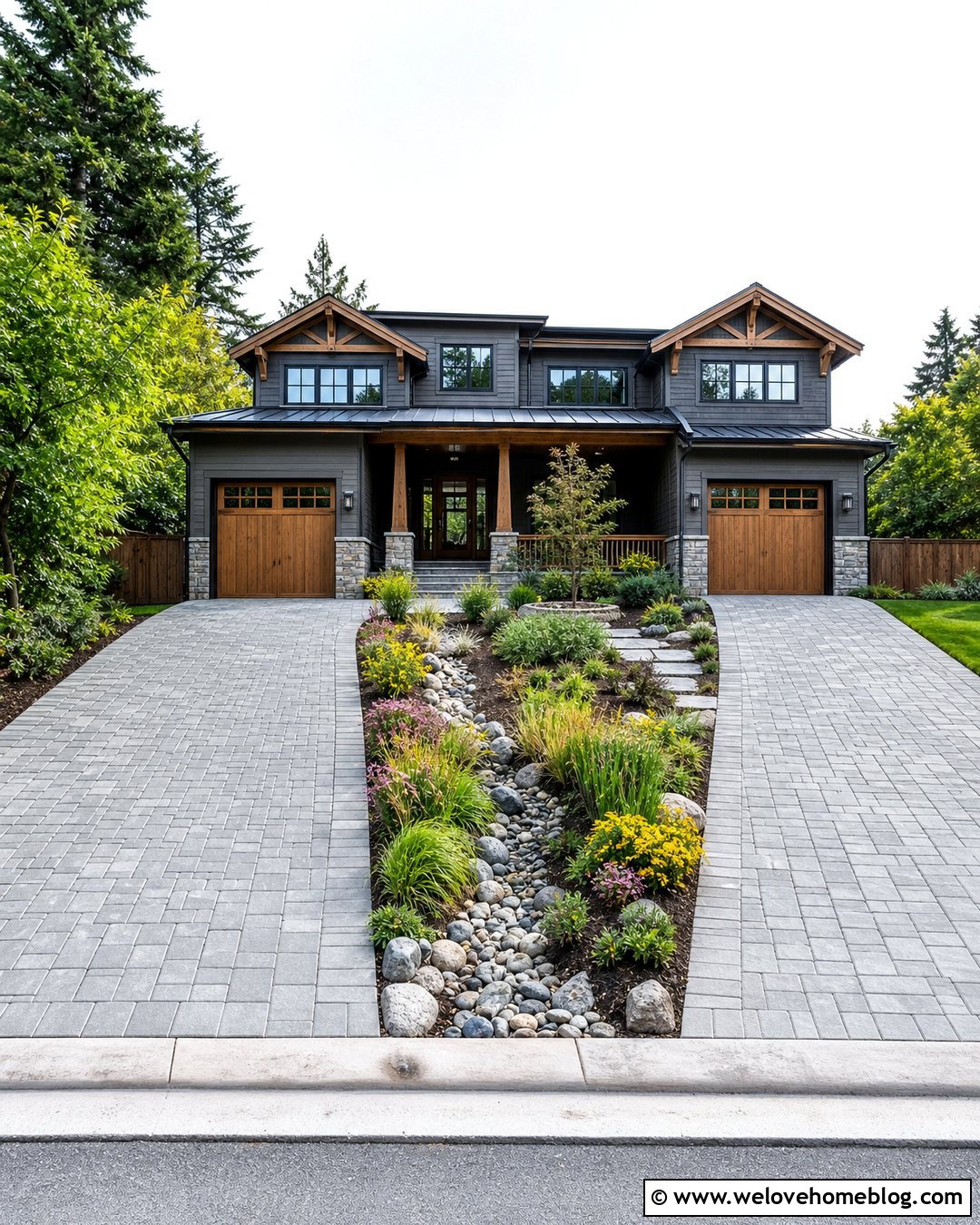
After a heavy shower, the area between two driveways often becomes the natural destination for runoff. A shallow rain garden can make that water pattern part of the design when site conditions and local regulations allow. Create a gently depressed bed between permeable paver driveways, then plant moisture-tolerant native sedges, rushes, compact shrubs, and flowering perennials. Use decorative stone at the inflow points to limit erosion. The center should temporarily hold water while allowing it to soak into suitable soil, not remain permanently soggy or threaten nearby foundations. This ecologically focused landscape looks attractive beside a contemporary craftsman home. A rain garden requires careful grading and may need professional planning if utilities, septic systems, steep slopes, or difficult clay soil are present.
14. Boulder Garden Landscape Between Driveways
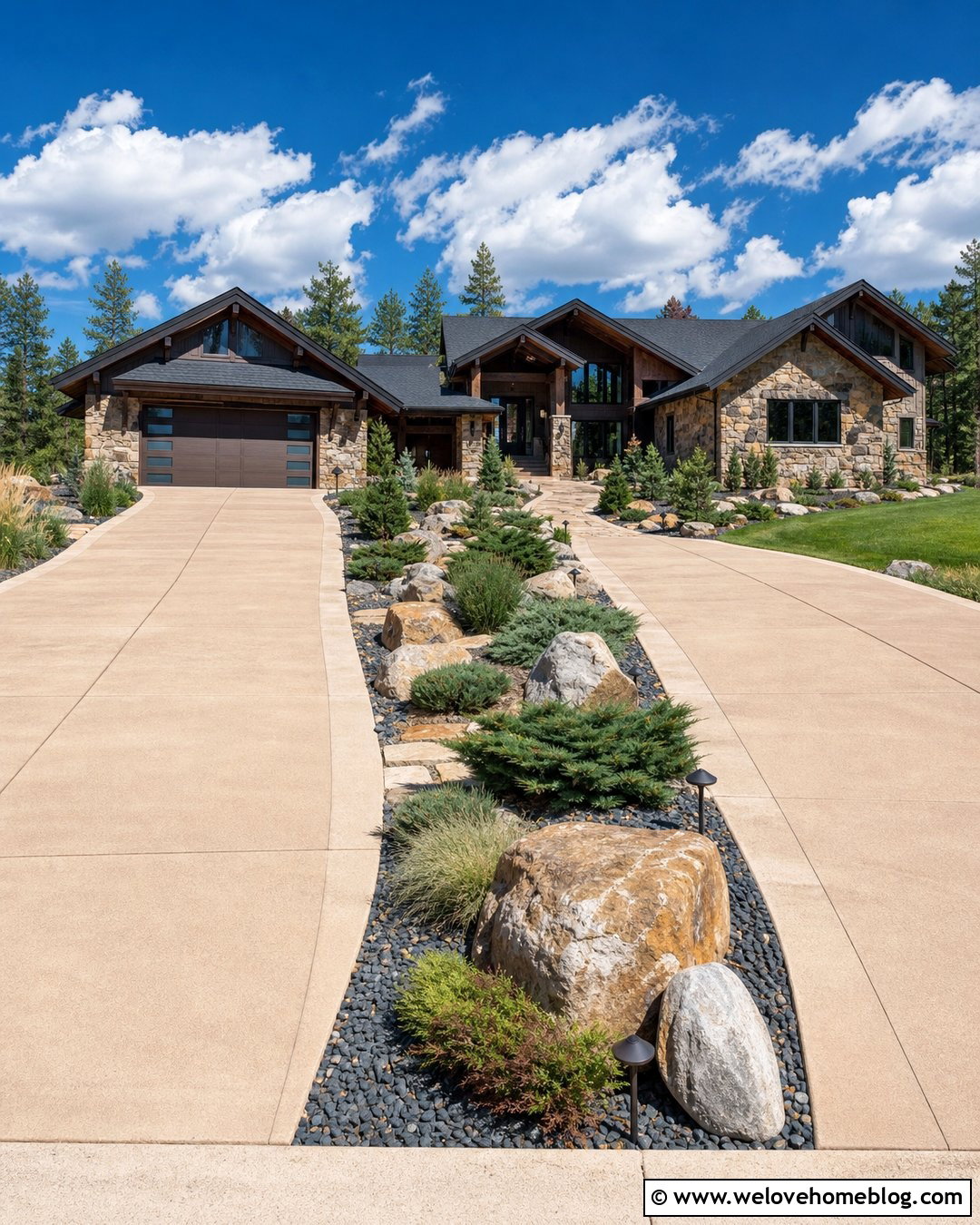
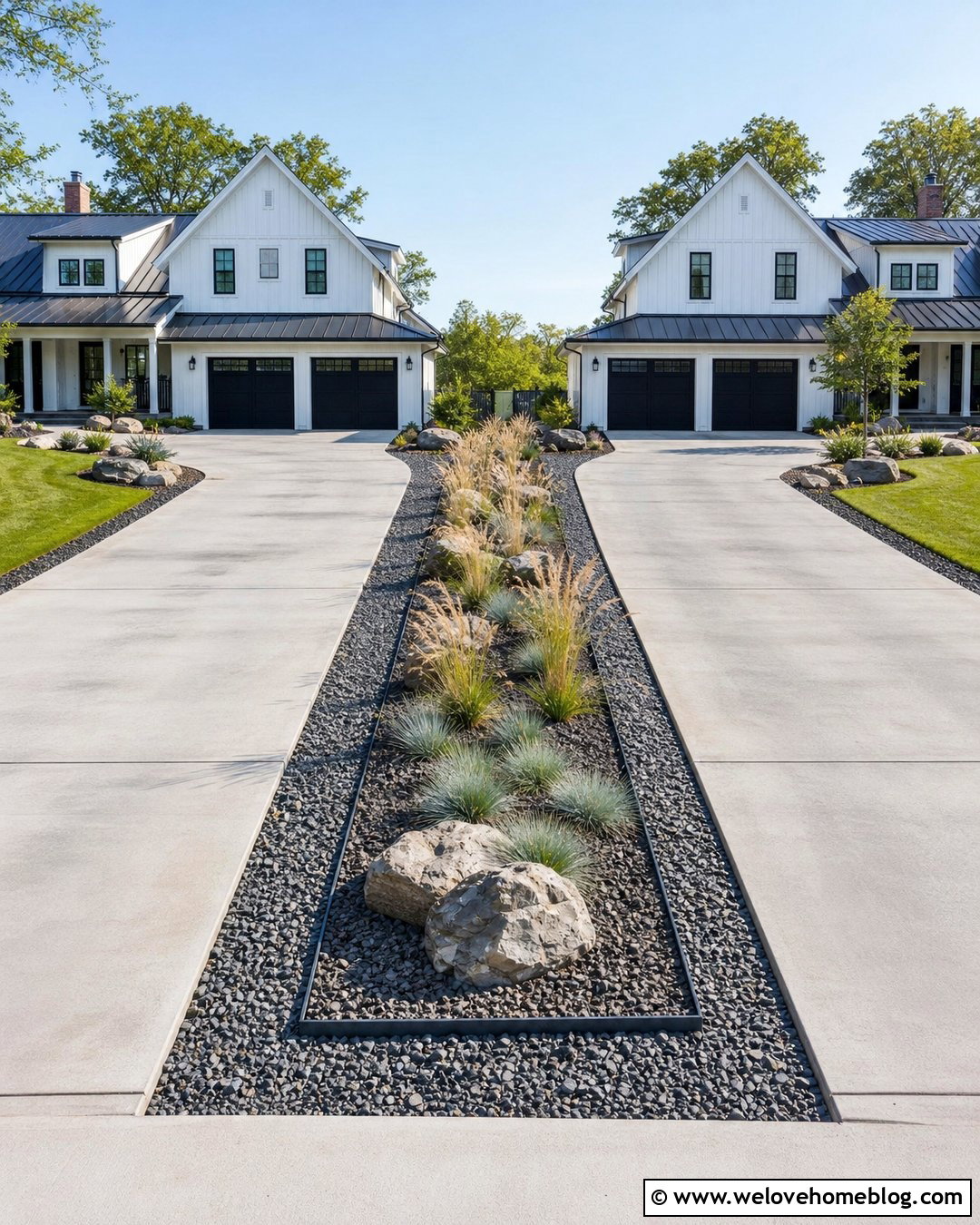
Large stones can give a broad divider lasting structure without demanding constant care. Arrange three or five weathered boulders through a bed of dark gravel between two tan concrete driveways. Partially bury each boulder so it appears naturally settled rather than placed on top of the ground. Add compact junipers, native grasses, sedum, and low flowering plants around the stones, leaving open gravel near vehicle doors. The rugged textures complement a mountain ranch, rustic craftsman, or contemporary home with stone siding. Vary the boulder sizes while maintaining one consistent stone color. Avoid placing large rocks close to the street, driveway turning zones, or areas where a vehicle could make contact. Low-profile lighting can highlight the composition while preserving a clear, uncluttered daytime view.
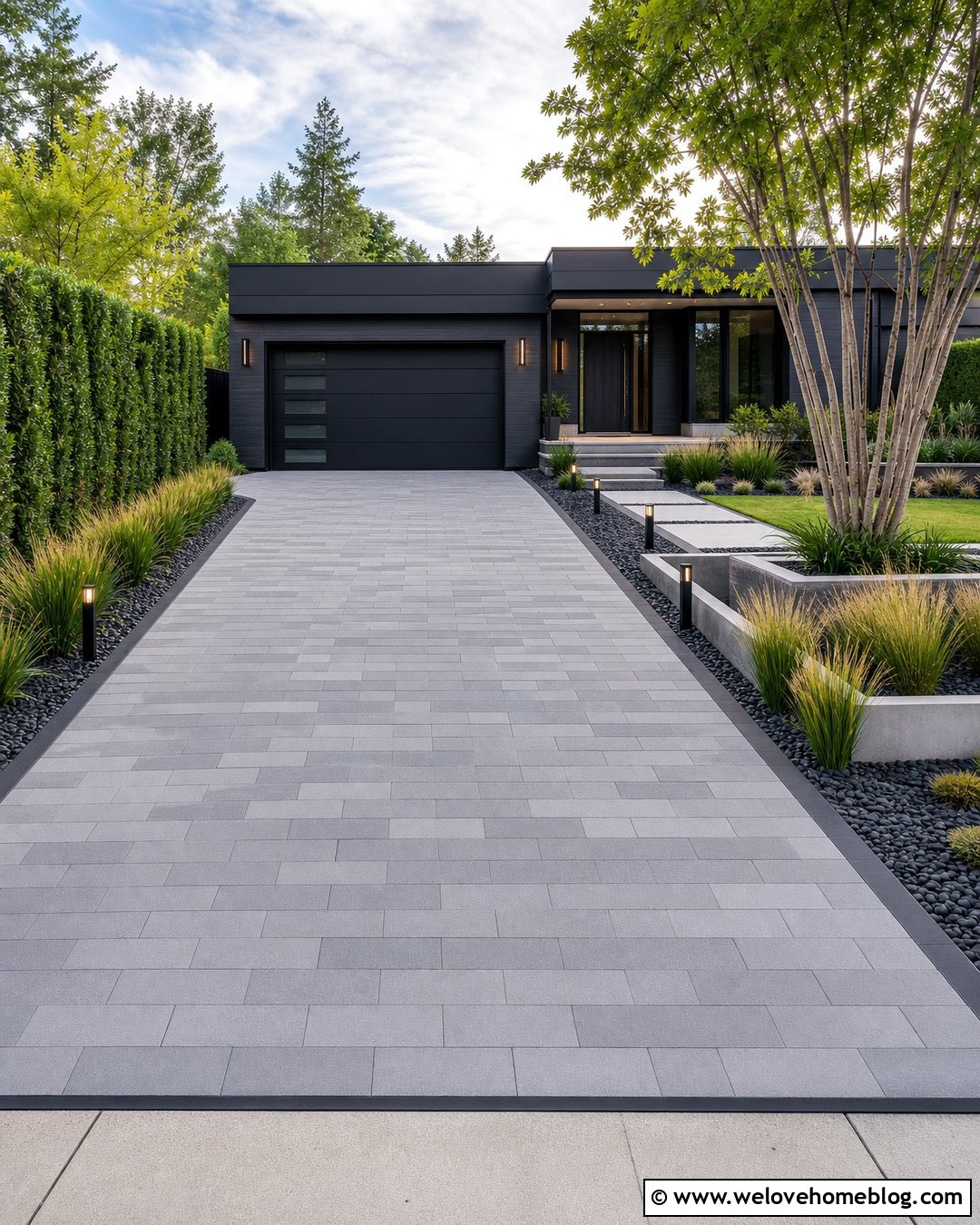
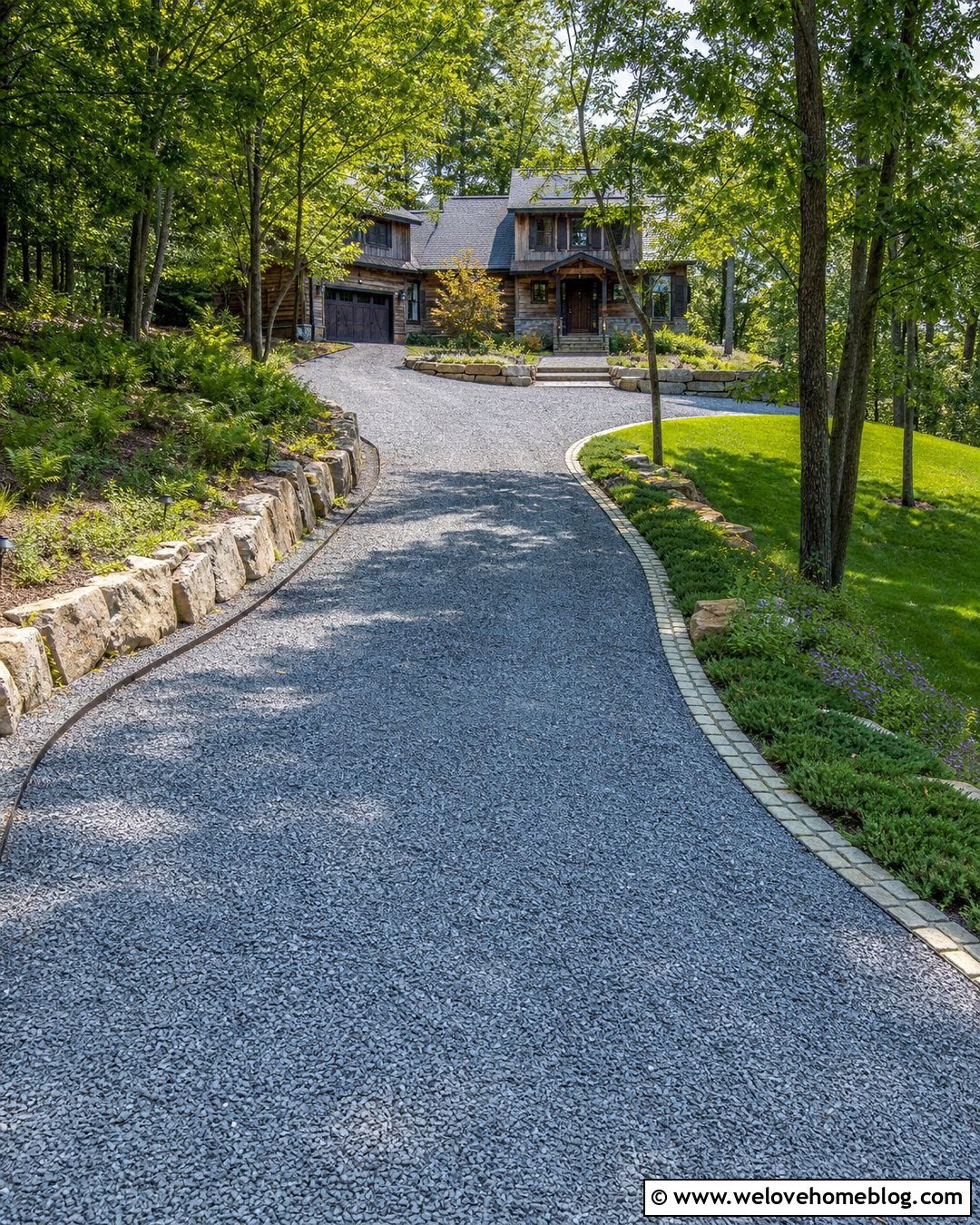
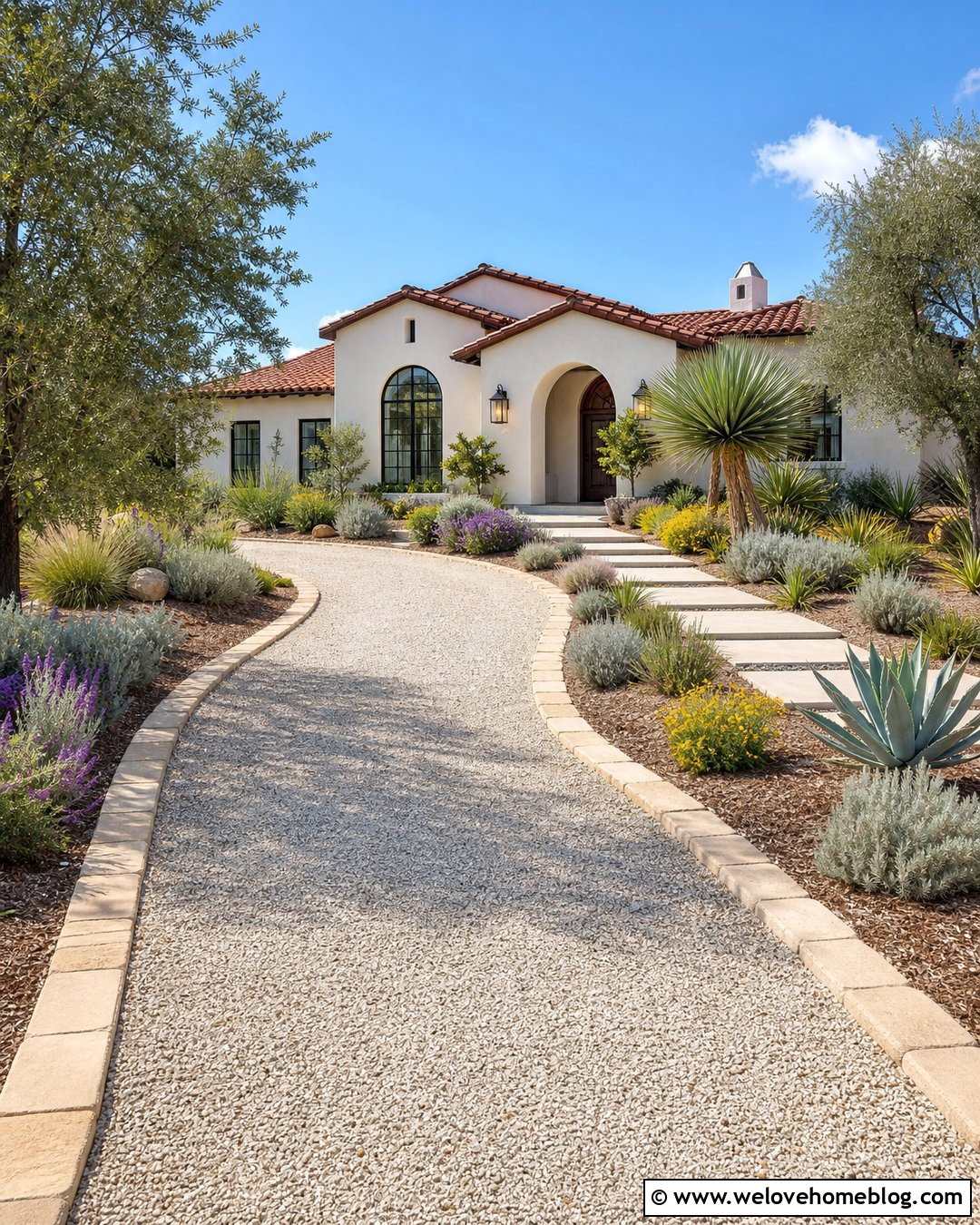
15. Brick Walkway Landscape Between Driveways
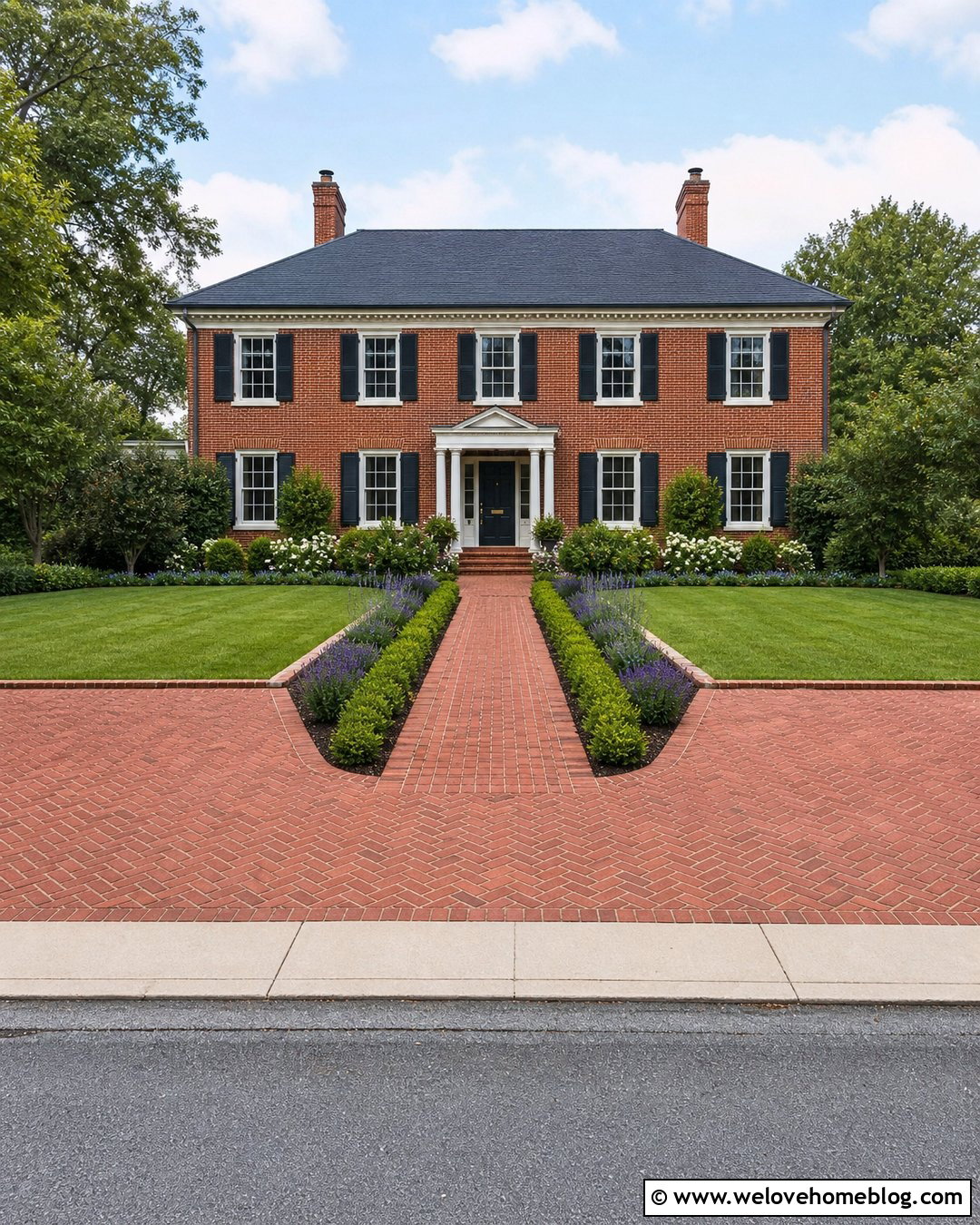
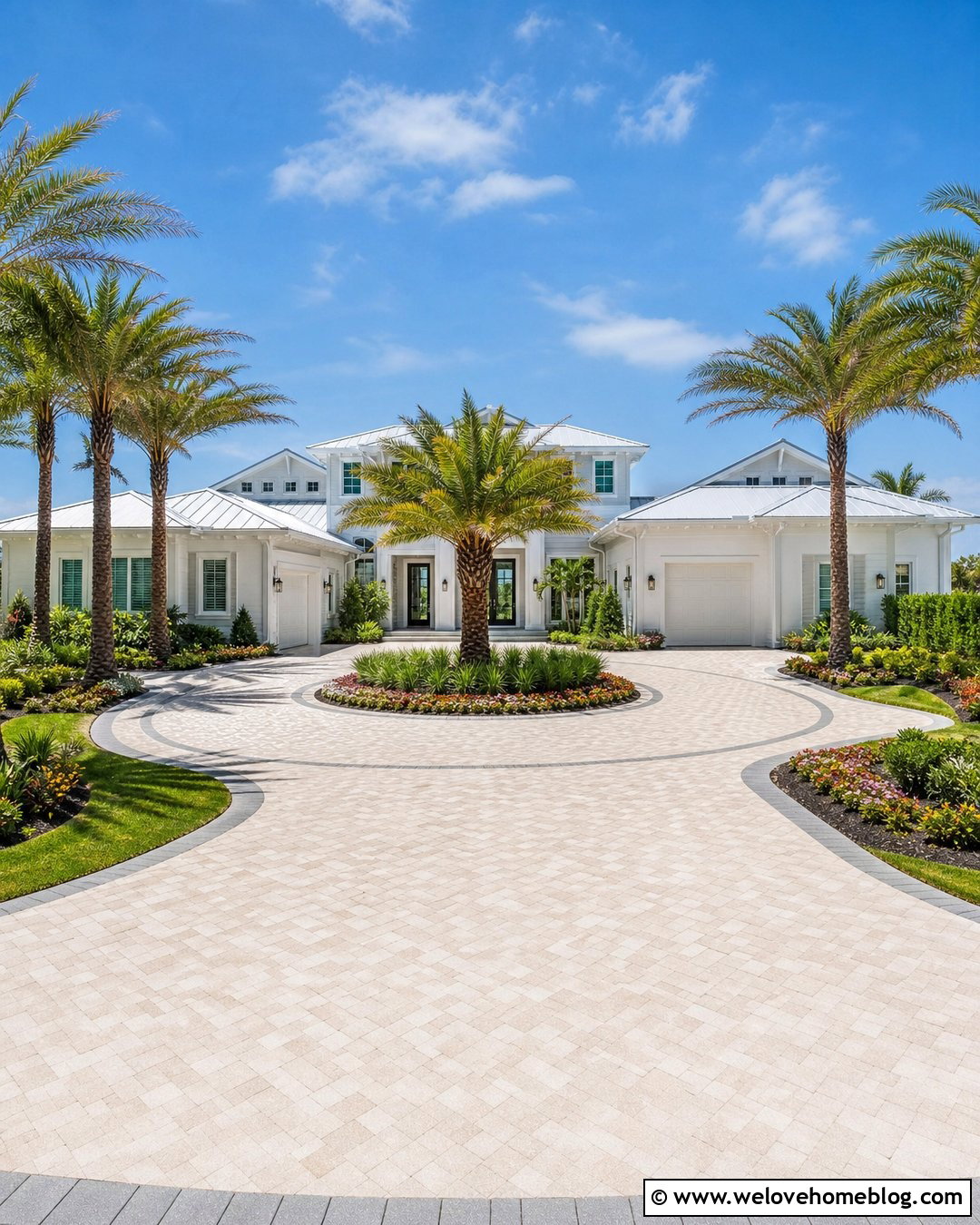
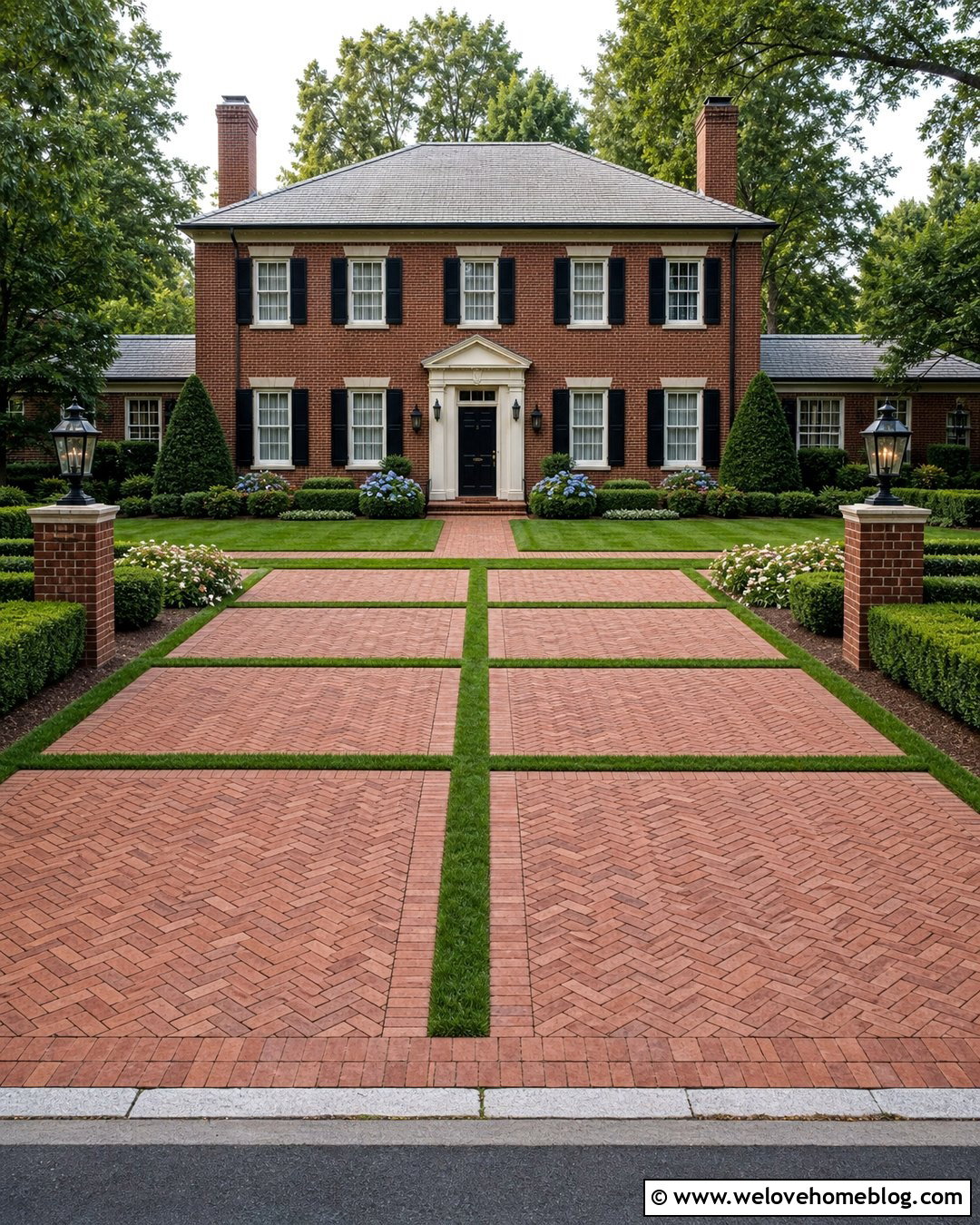
A central walkway can make the strip between two driveways useful as well as attractive. Install clay brick pavers in a straight running-bond pattern, connecting the sidewalk to the front entrance or a side gate. Narrow planting beds on both sides can hold boxwood, lavender, salvia, or low ornamental grasses, depending on the climate and sunlight. Pair the walkway with matching herringbone brick driveways for a unified traditional look, or use it as a warm contrast beside poured concrete. Keep the path comfortably wide and avoid thorny plants where people will pass. Flush edging reduces tripping risks and gives vehicle doors more clearance. This symmetrical layout works especially well with colonial, Georgian, and traditional two-story houses where strong lines already shape the facade.
16. Cottage Garden Landscape Between Driveways
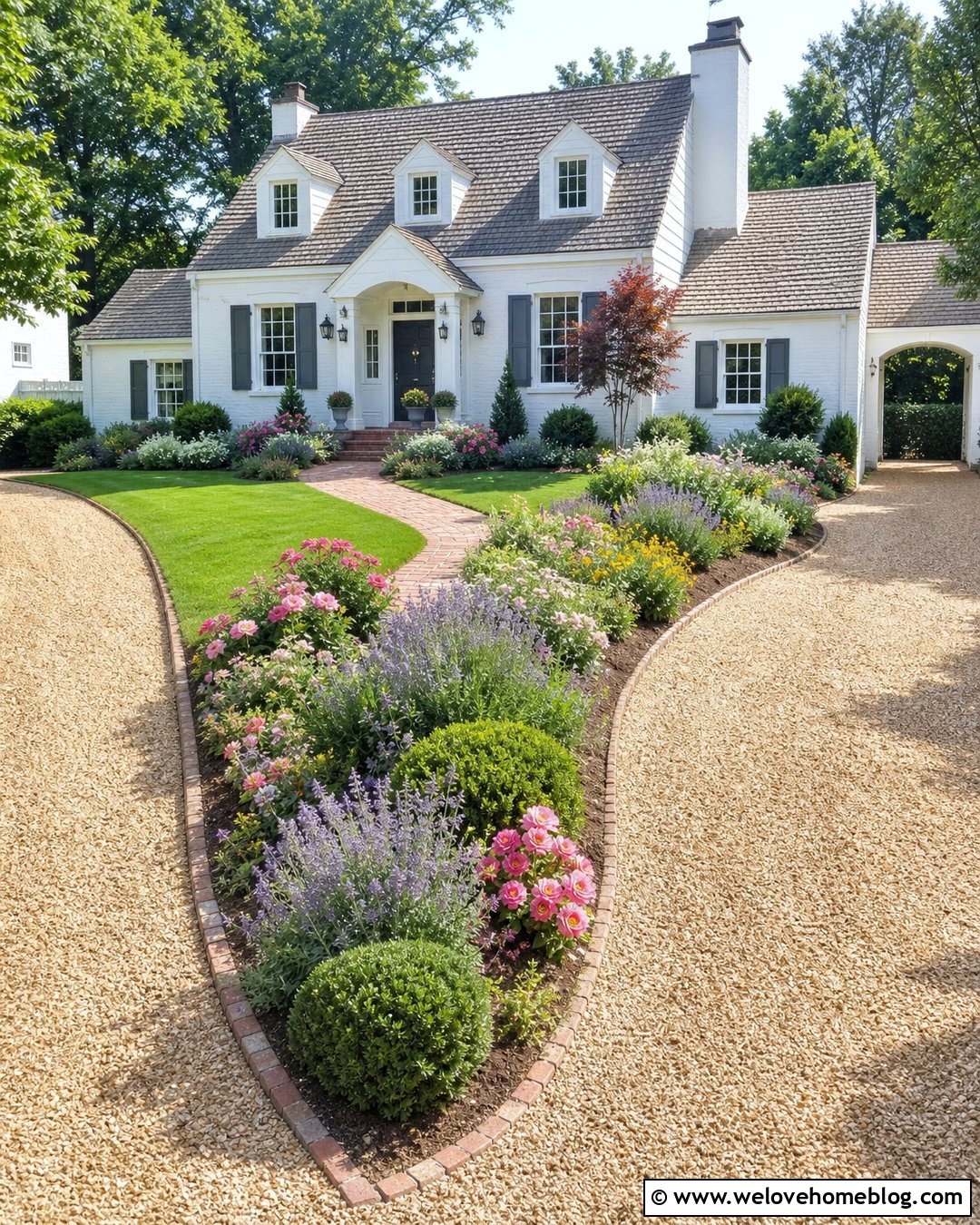
A cottage garden can soften two utilitarian driveways without sacrificing the practical space needed for parking. Frame a gently curved bed with aged brick, then combine compact roses, catmint, salvia, coreopsis, and neat evergreen mounds. Use the tallest flowers near the house and shorter plants toward the sidewalk. Light pea gravel driveways provide an informal surface that fits the relaxed planting, while sturdy brick edging stops gravel from spreading into the soil. Repeating colors on both sides of the bed keeps the abundant flowers from appearing chaotic. Choose thornless or low-thorn plants beside vehicle doors. A white Cape Cod or cottage-style house completes the scene, especially when the front walkway repeats the same brick used around the central landscape strip.
17. Succulent Landscape Between Driveways
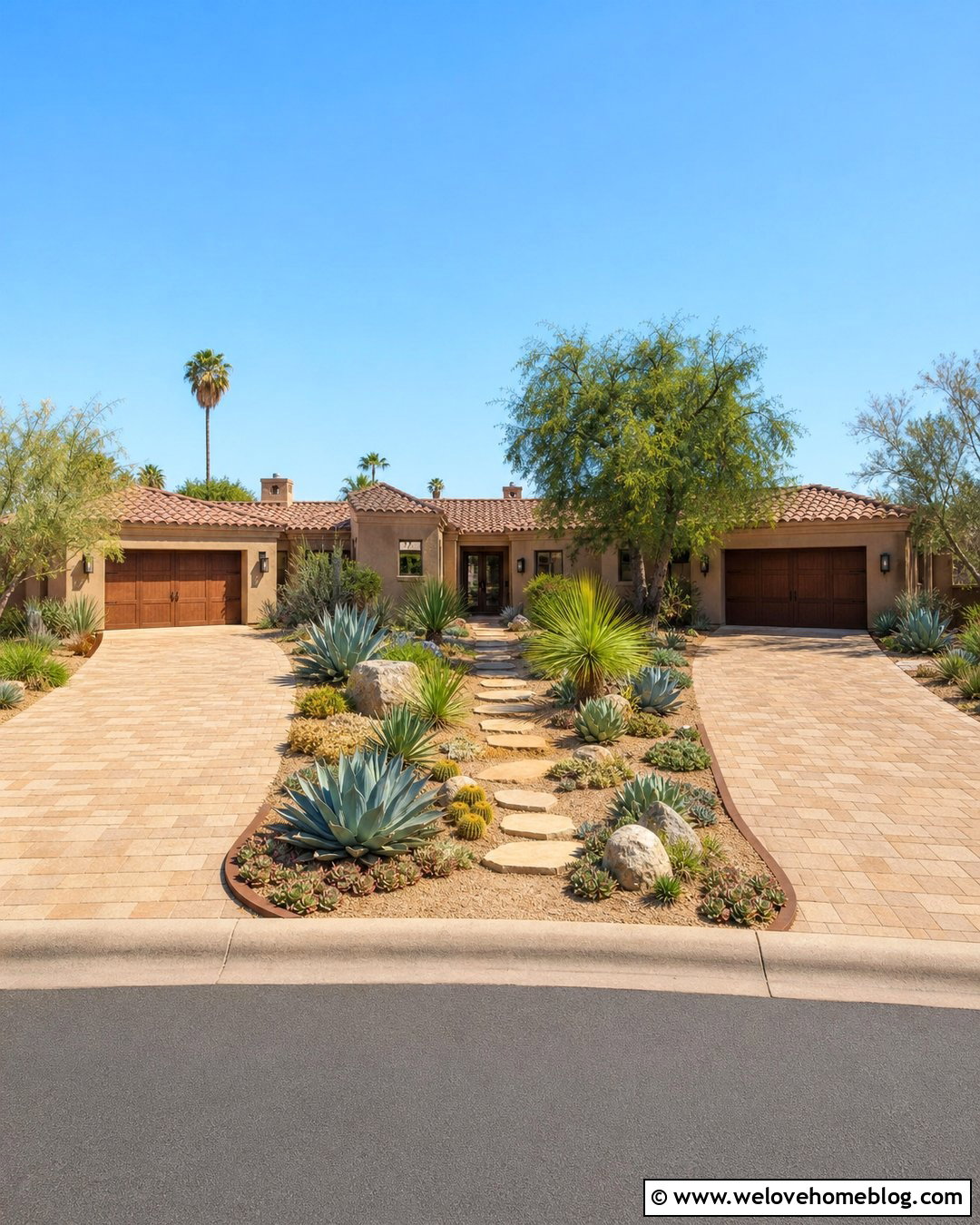
In a hot, dry climate, succulents and gravel can create a striking divider between driveways with minimal visual clutter. Begin with warm decomposed granite between two sand-colored concrete paver drives. Arrange drought-tolerant plants in small groups, using agave, aloe, yucca, barrel cactus, or softer sedum only where each species is locally suitable. Place sharp or spiny plants toward the center and keep friendlier ground covers along vehicle edges. Several smooth accent boulders will connect the planting to a stucco ranch or Southwestern home. Ensure the soil drains quickly and route roof or driveway runoff away from plants that dislike prolonged moisture. A rusted steel border can contain the gravel while adding a clean, earthy line to the complete entrance.
18. Shade Garden Landscape Between Driveways
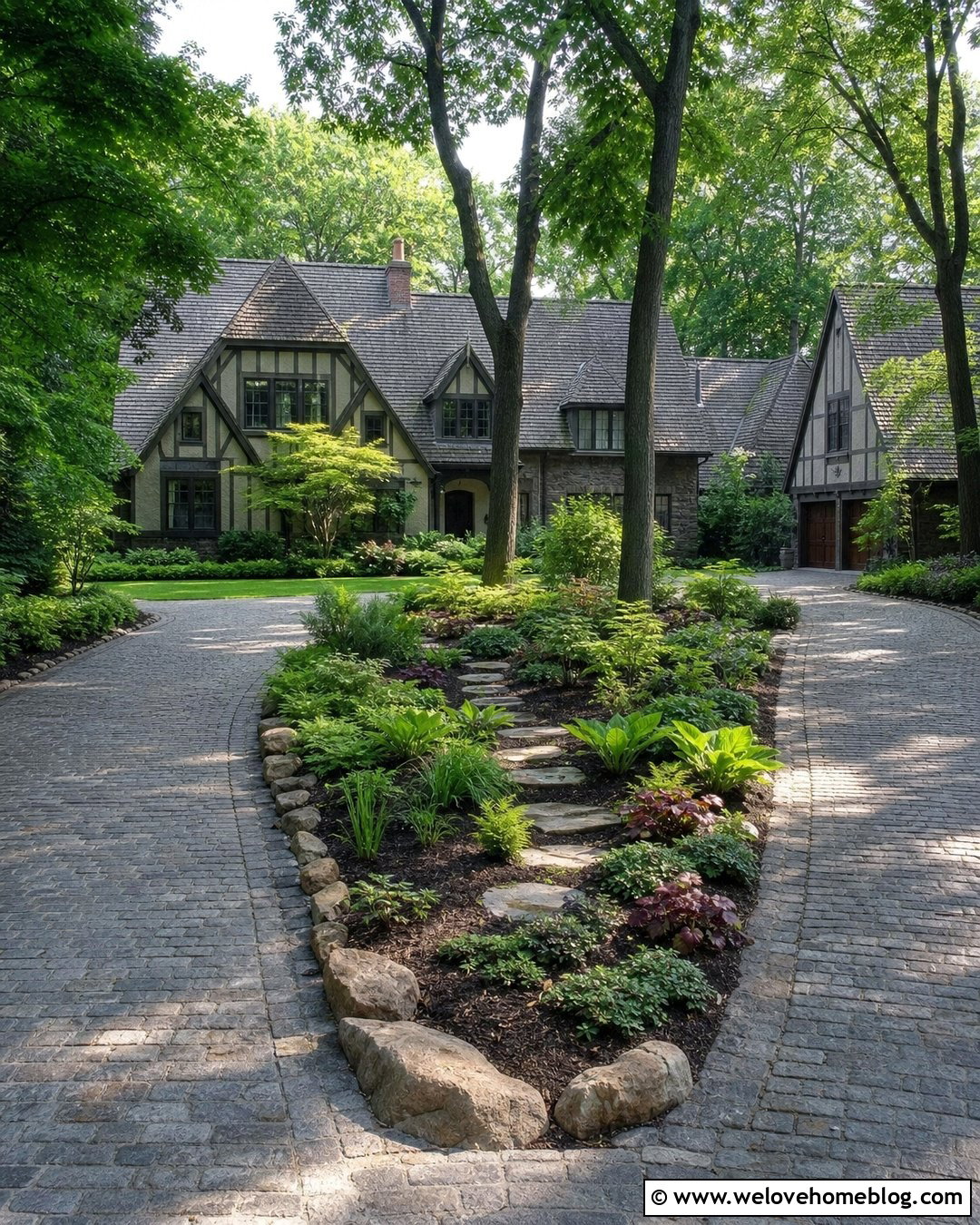
Two mature trees or closely spaced houses can leave the area between driveways in deep shade. Turn that limitation into a layered woodland bed beside gray cobblestone driveways. Combine compact ferns, coral bells, hostas, sedges, and low evergreen ground covers selected for the local climate. A dark bark mulch will reduce visual clutter and make colorful foliage more noticeable. Natural stone edging connects the garden to a craftsman or Tudor-style facade. Arrange plants by mature size, with low varieties beside the pavement and fuller foliage through the center. Where falling leaves are heavy, choose a simple layout that is easy to clean. Add a narrow stepping-stone crossing if residents regularly move between the drives, and keep lighting low and directed toward the path.
19. Low Fence Landscape Between Driveways
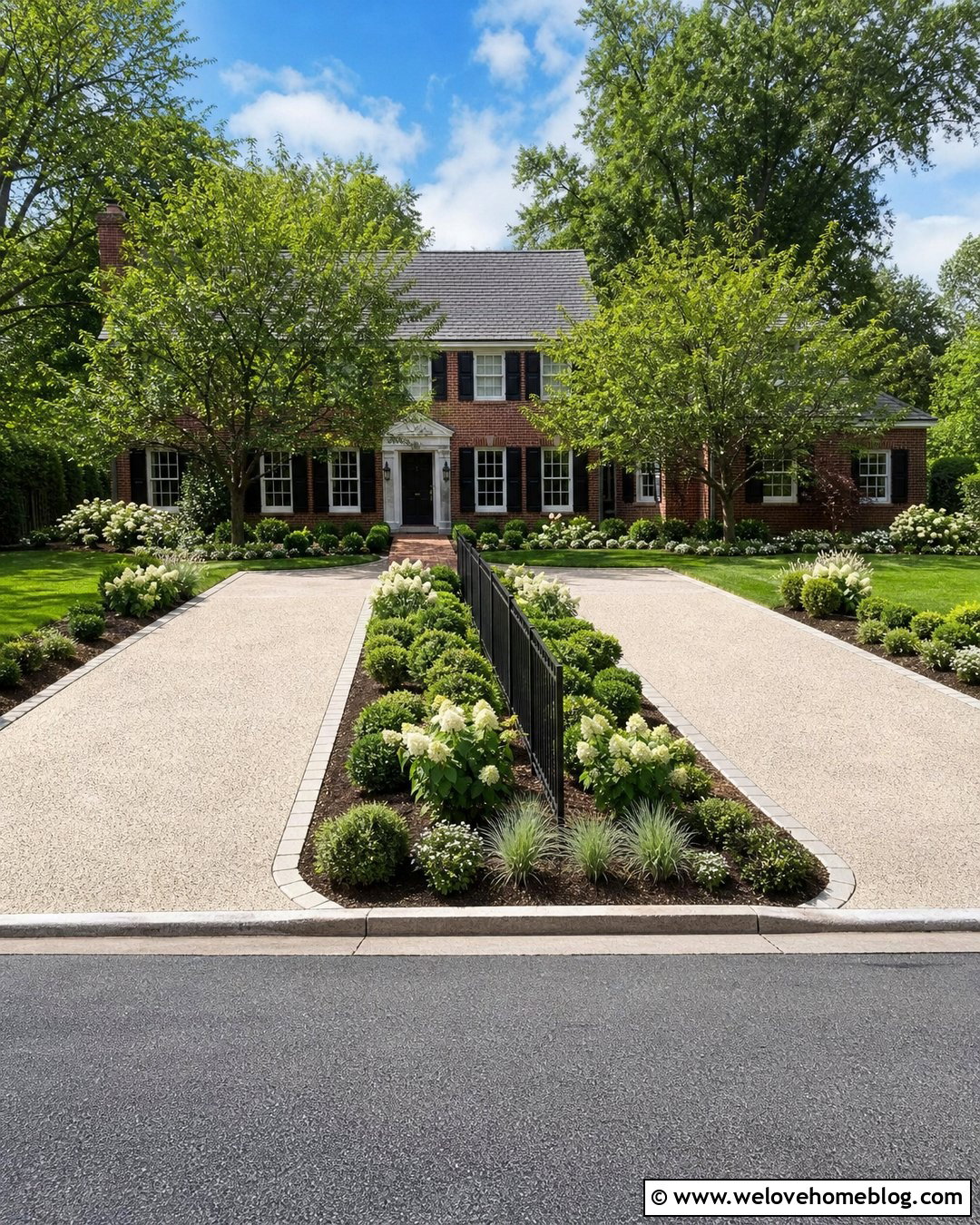
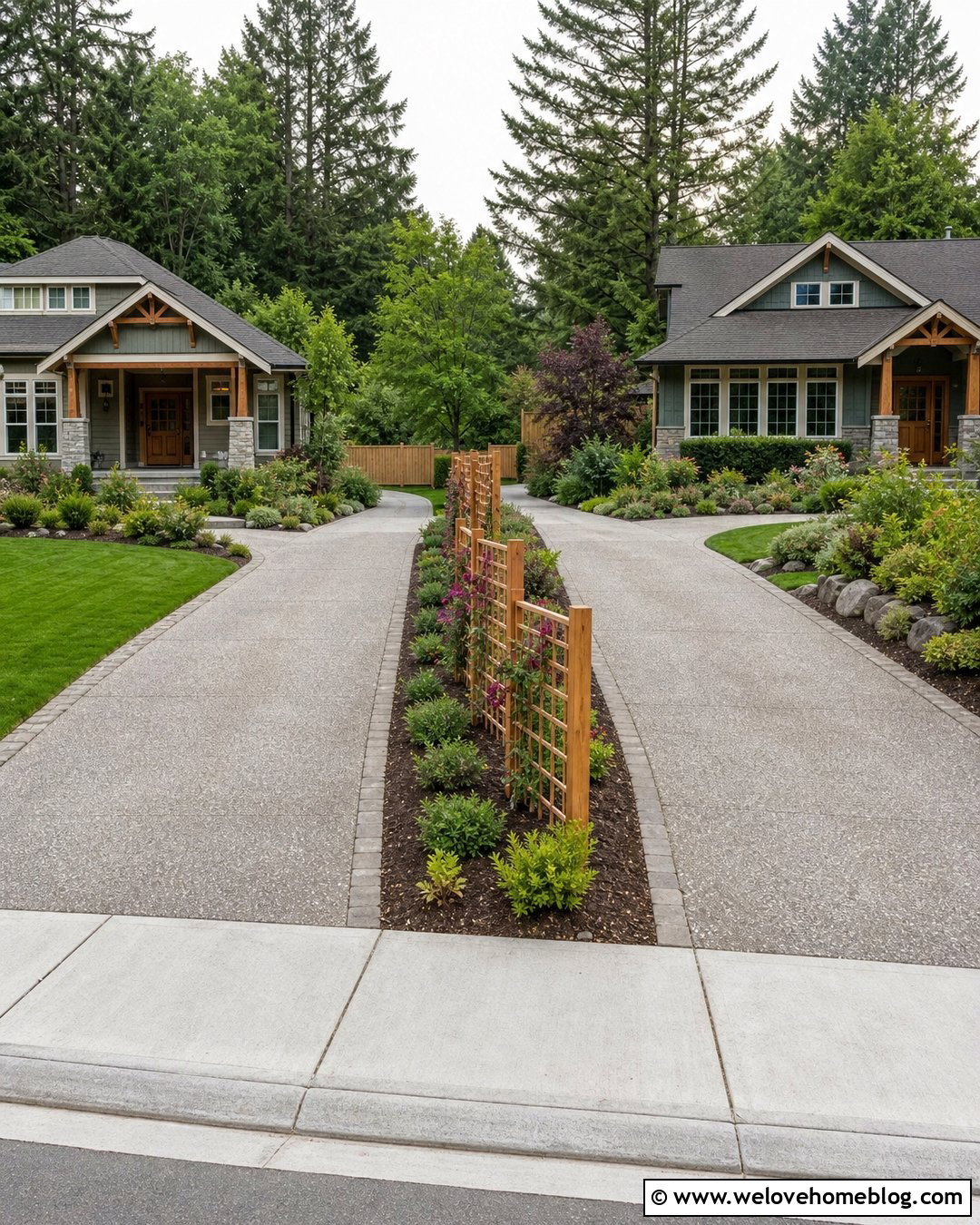
A low fence provides clear separation between neighboring driveways while allowing the surrounding landscape to remain open. Install a short black metal fence through the center of a wide planting strip bordered by light gray concrete. Repeat compact hydrangeas, dwarf hollies, ornamental grasses, or flowering perennials on both sides so neither property faces the unfinished back of the design. Two straight exposed aggregate driveways create a neutral frame, while the fence relates well to a brick colonial or classic suburban home. Keep gates and panels away from vehicle swing paths. Confirm property ownership and local fence rules before installation, especially near the sidewalk. A planting plan shared by both neighbors can simplify maintenance and create a more balanced result than dividing a narrow strip into mismatched halves.
20. Mixed Stone Landscape Between Driveways
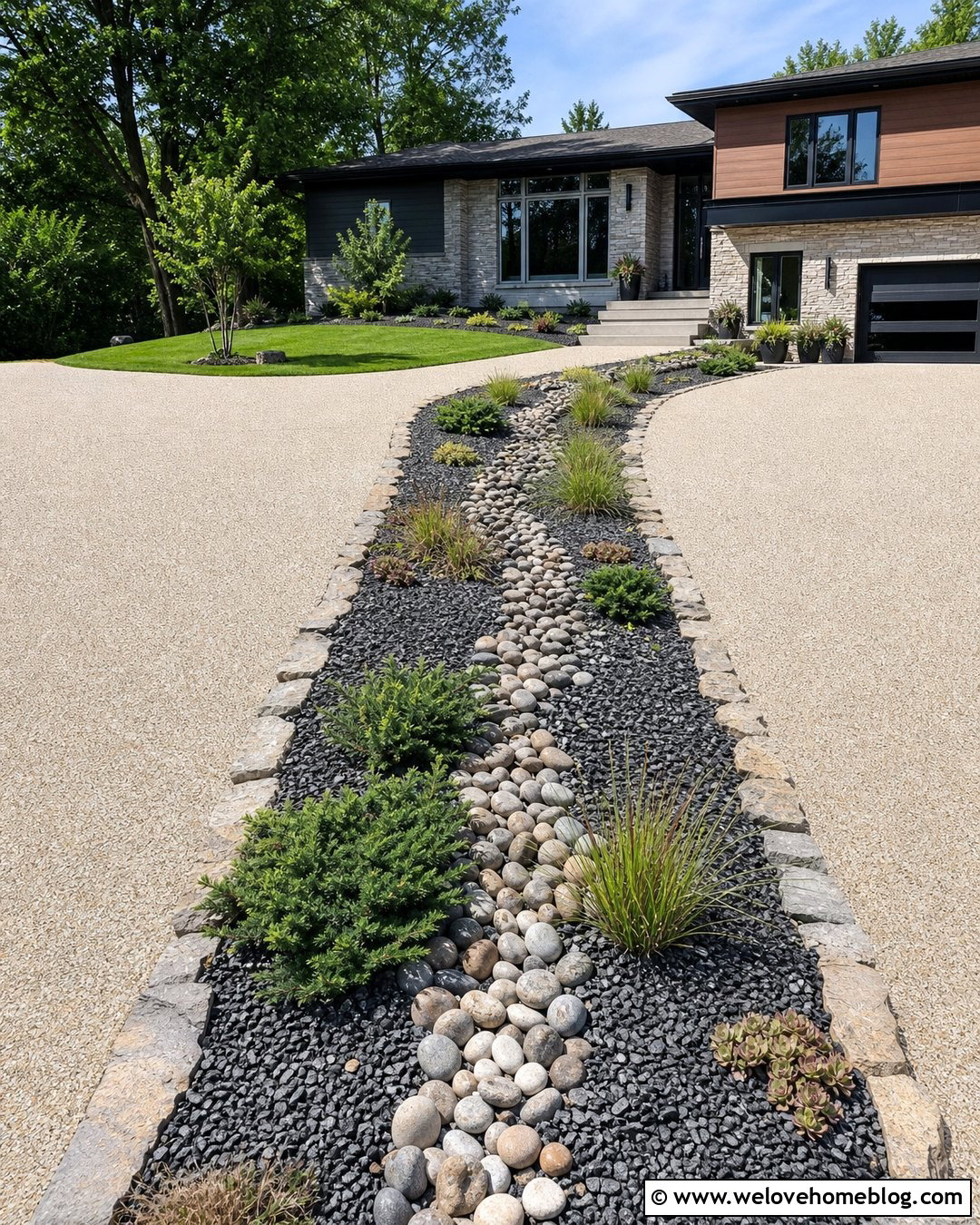
Combining stone sizes can create a finished, low-maintenance strip when there is little room for conventional planting. Lay a base of small charcoal gravel between two light resin-bound gravel driveways, then add a narrow ribbon of larger river rock through the center. Repeat a few compact grasses, creeping junipers, and sedum pockets to break up the hardscape. Flat natural stone edging will separate the materials and reduce migration onto the driving surfaces. This textural design works with a contemporary ranch or updated split-level home because it feels structured without becoming formal. Keep the color palette limited to two or three related tones. Landscape fabric may help separate stone from soil, but correct excavation, edging, drainage, and gravel depth are essential for a durable result.
Conclusion:
The best landscape between two driveways should look attractive without making parking, walking, drainage, or maintenance more difficult. Begin by measuring the strip and confirming sunlight, property boundaries, utilities, and vehicle clearance. Then select a complete design that connects the driveway surfaces with the house. Low hedges bring structure, grasses add movement, and ground covers soften narrow spaces. Gravel, boulders, raised beds, and brick paths offer practical alternatives where ordinary lawn struggles. Plants should always be chosen for local conditions and their mature size. Whether the goal is privacy, color, drainage, or easier upkeep, these 20 landscape between driveways ideas can turn overlooked ground into a coordinated part of your home’s curb appeal.

Related posts:



Leave a Reply