
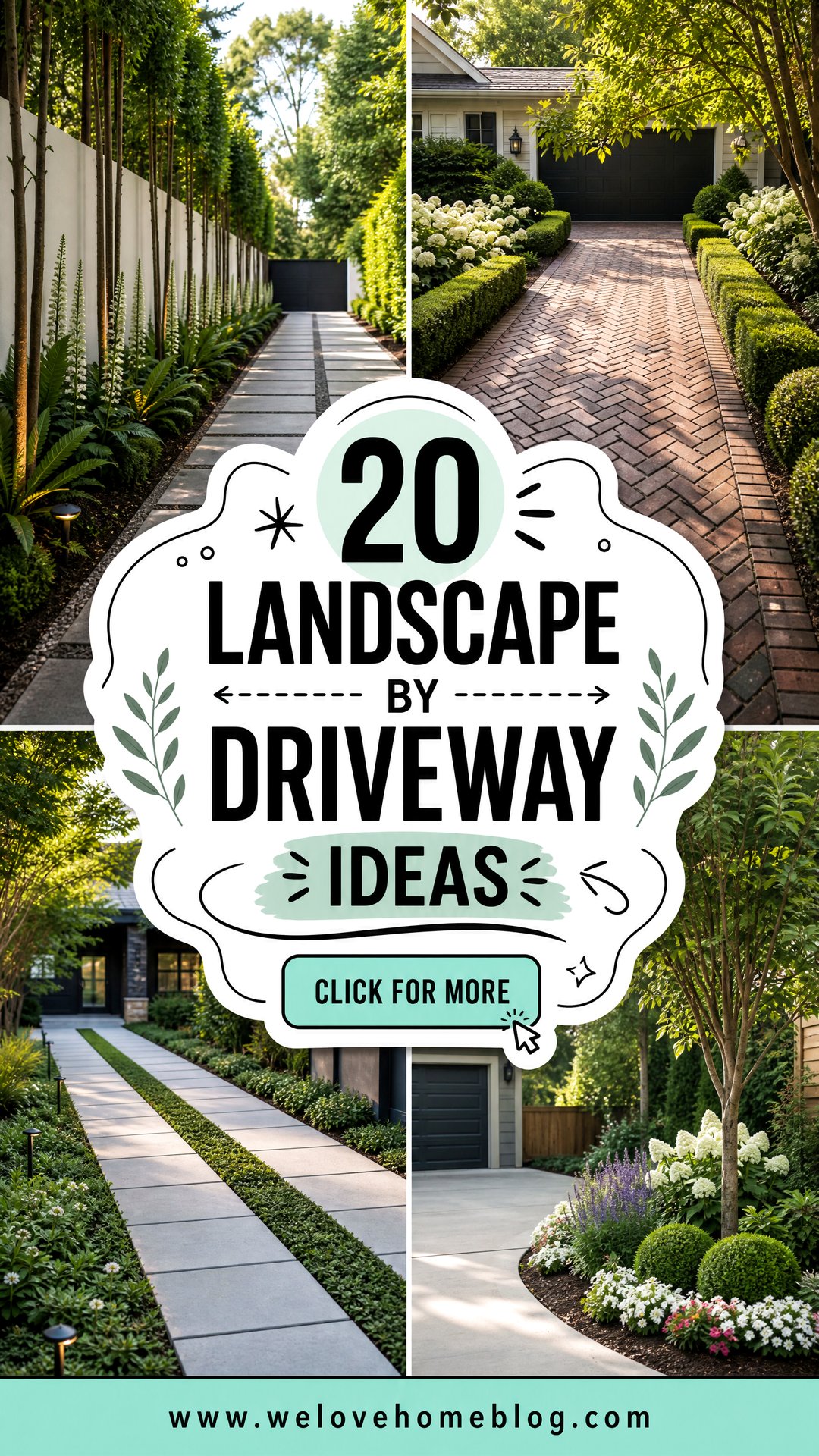
The best landscape by driveway ideas treat the driveway, planting beds, borders, walkways, and home as one connected design. Instead of placing a few random shrubs beside the pavement, build a complete look around the driveway’s material and shape. Curved beds can soften concrete, structured hedges can refine brick, and native grasses can make gravel feel naturally settled into the yard. Lighting, edging, and entrance features add another layer of polish while making the route toward the house easier to follow. Current driveway design guidance also emphasizes coordinating paving with planting, decorative stone, lighting, and other landscape features for a more cohesive result. () The following complete designs offer practical ways to turn landscape by driveway ideas into memorable curb appeal.
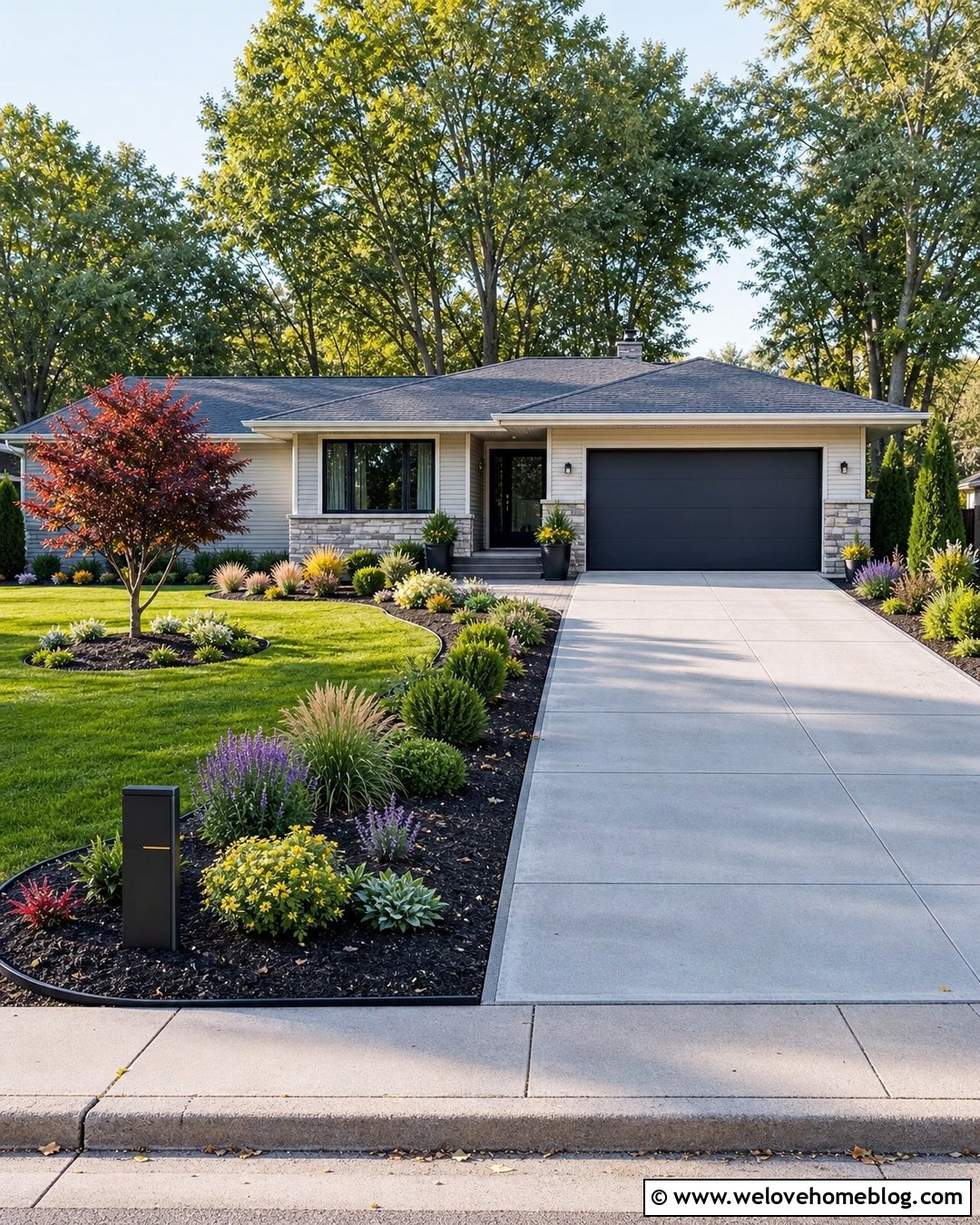
1. Curved Concrete Driveway With Layered Flower Beds
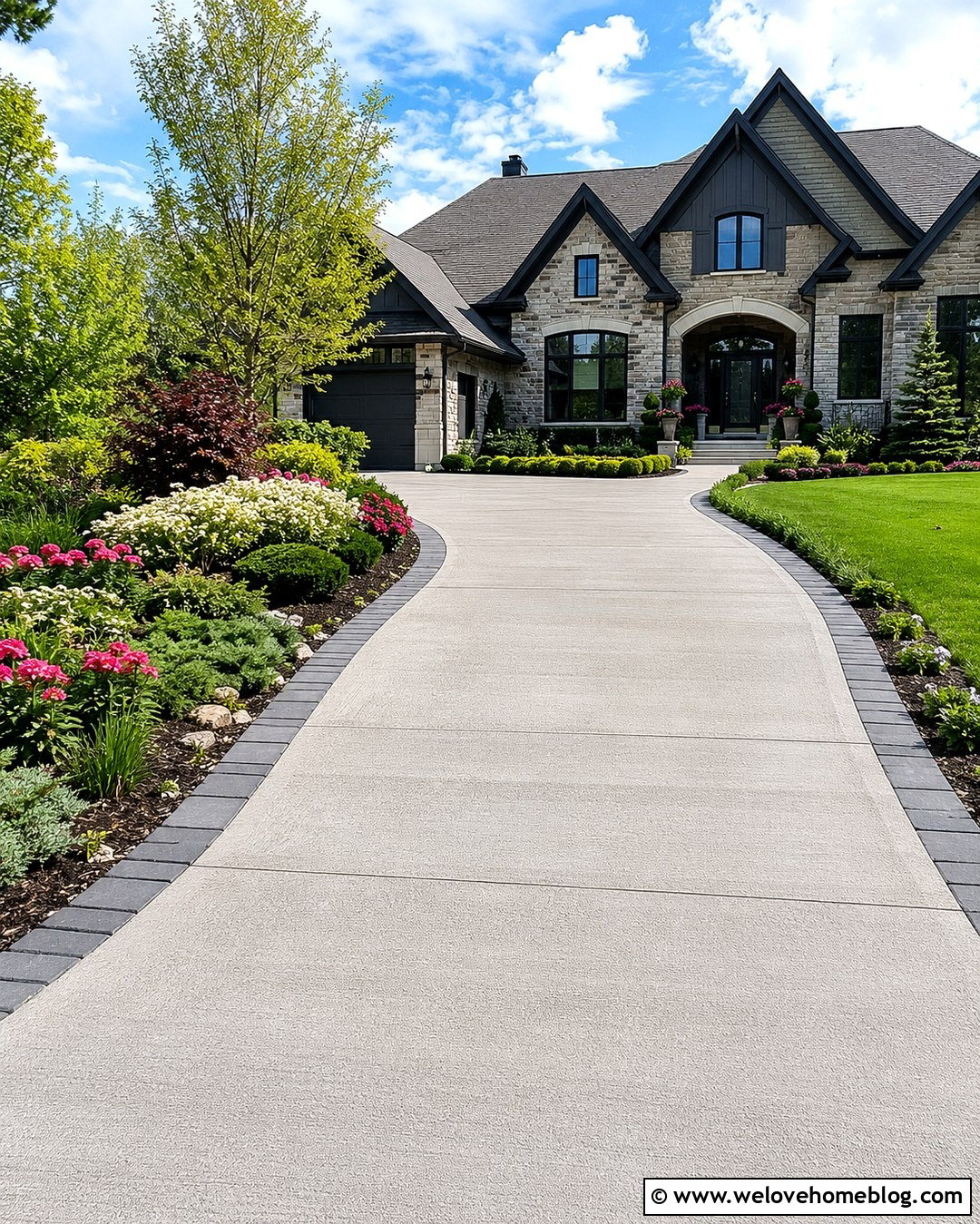
A curved concrete driveway feels much softer when broad planting beds follow its sweeping shape. Choose light gray poured concrete with a smooth or lightly broomed finish, then frame it with a narrow charcoal paver border. Along the outside curve, arrange plants in layers rather than isolated rows. Low groundcover belongs near the pavement, flowering perennials fill the middle, and compact shrubs create height behind them. A small ornamental tree can anchor the widest section without crowding the driving area. Repeat several plants near the garage to connect the driveway with the house. Dark mulch provides a clean background, while a curved walkway branching toward the front porch makes the whole landscape feel naturally planned.
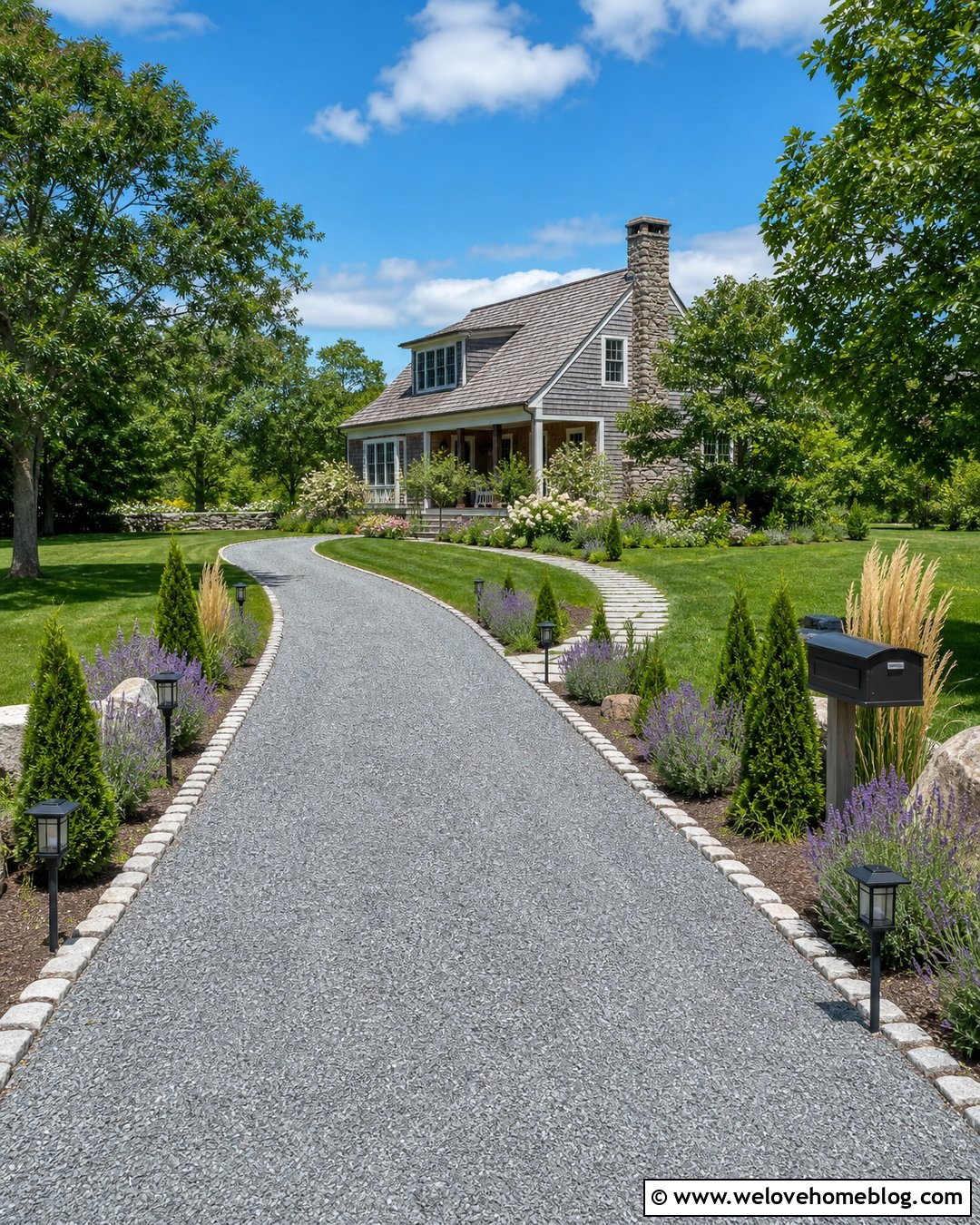
2. Gravel Driveway With Lavender Borders
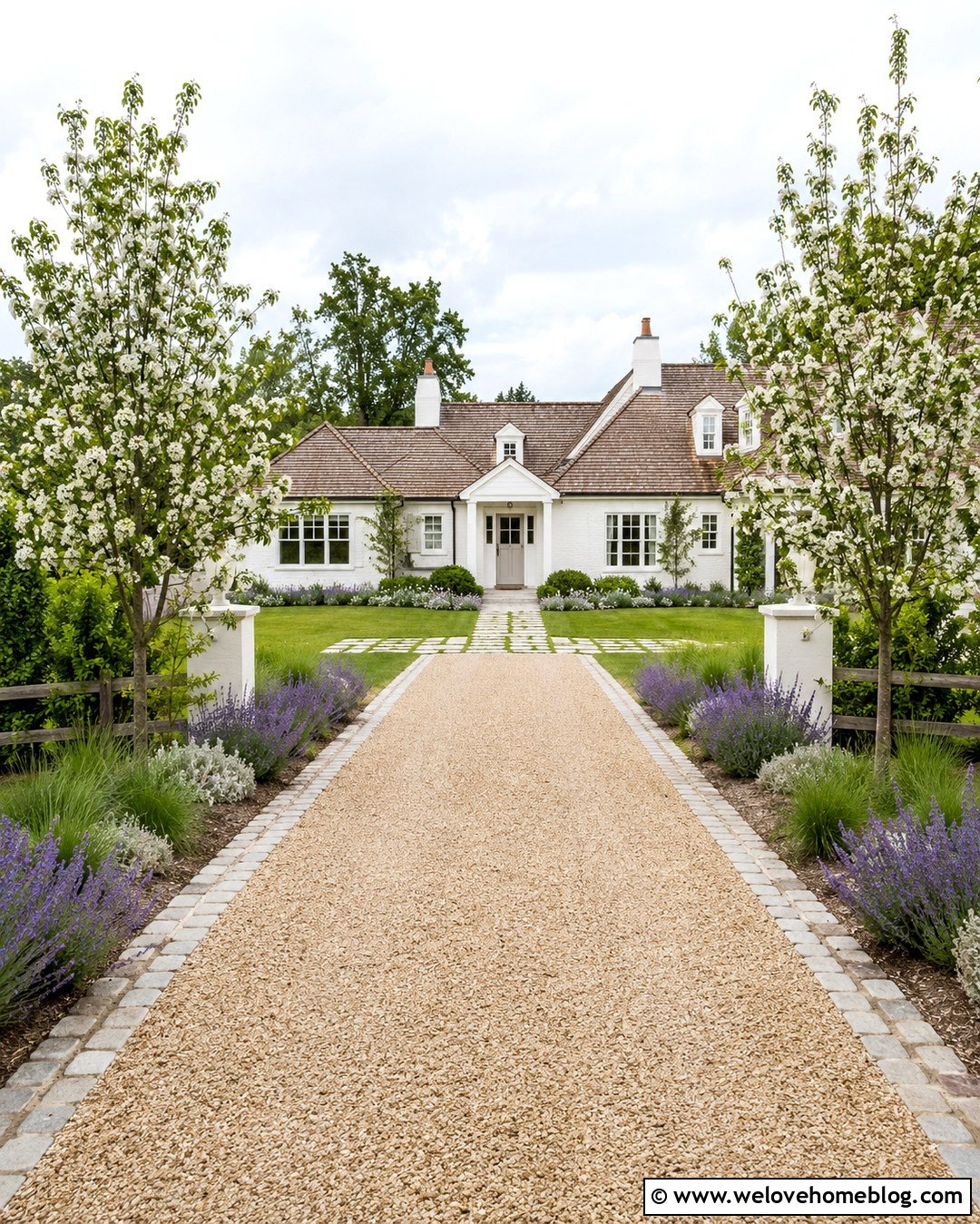
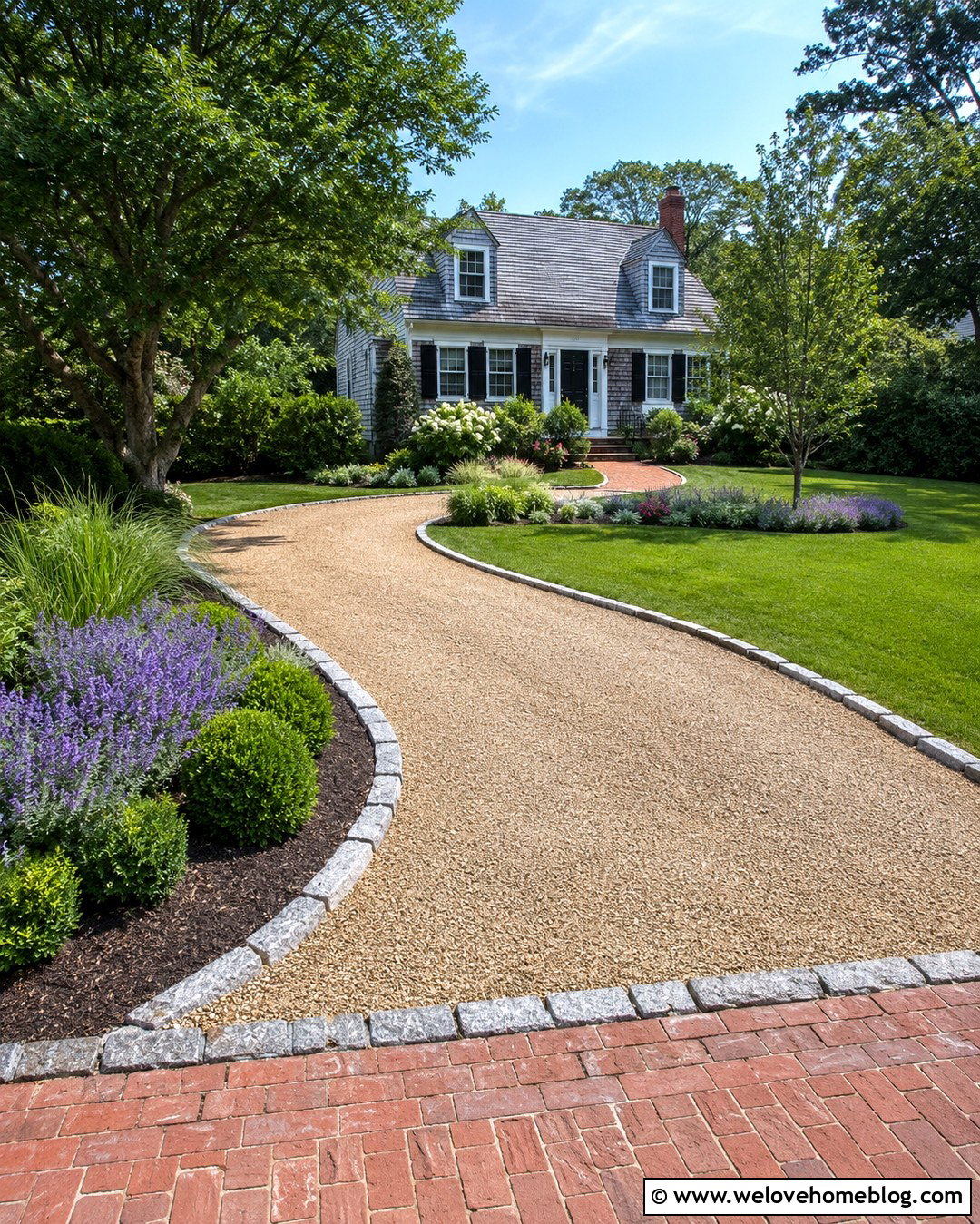
Loose gravel and fragrant planting create a relaxed entrance that works especially well with cottages, farmhouses, and country homes. Use warm beige pea gravel or compacted golden gravel for a straight driveway, containing it with cobblestone edging set slightly above the surface. Plant repeated drifts of lavender along both sides, leaving enough distance for mature growth and vehicle clearance. Silver-leaved groundcover and small ornamental grasses can fill occasional gaps without making the border look busy. At the street, widen the beds around two small flowering trees to establish a welcoming entrance. A simple flagstone walkway can cross the planting and connect the driveway to the porch. The result feels informal, colorful, and carefully organized rather than overgrown.
3. Asphalt Driveway With Brick Edging And Shrubs
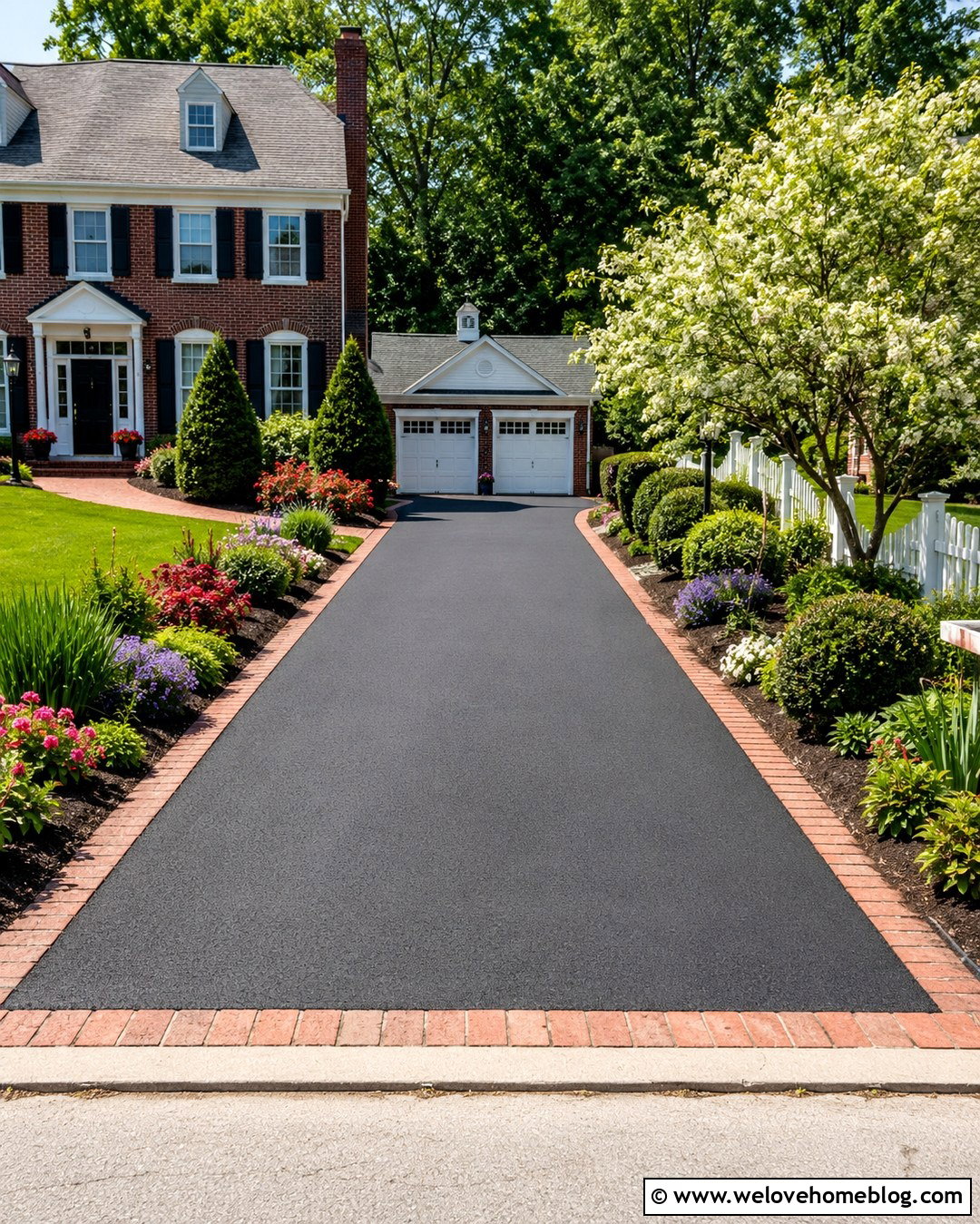
Black asphalt becomes more attractive when a warm brick edge separates it from the surrounding lawn and planting beds. Choose red or weathered clay bricks installed in a soldier-course border along a straight driveway. The contrast gives the pavement a sharper, more finished outline. On one side, create a continuous mulched bed with rounded evergreen shrubs, seasonal flowers, and one compact flowering tree near the house. Keep the opposite side simpler with lawn and a few repeated shrubs so the entrance does not feel enclosed. Carry the brick into a walkway or garage apron to make the design feel connected. This balanced combination suits a traditional colonial, ranch, or Cape Cod home and works well in an established suburban yard.
4. Paver Driveway With Ornamental Grass Borders
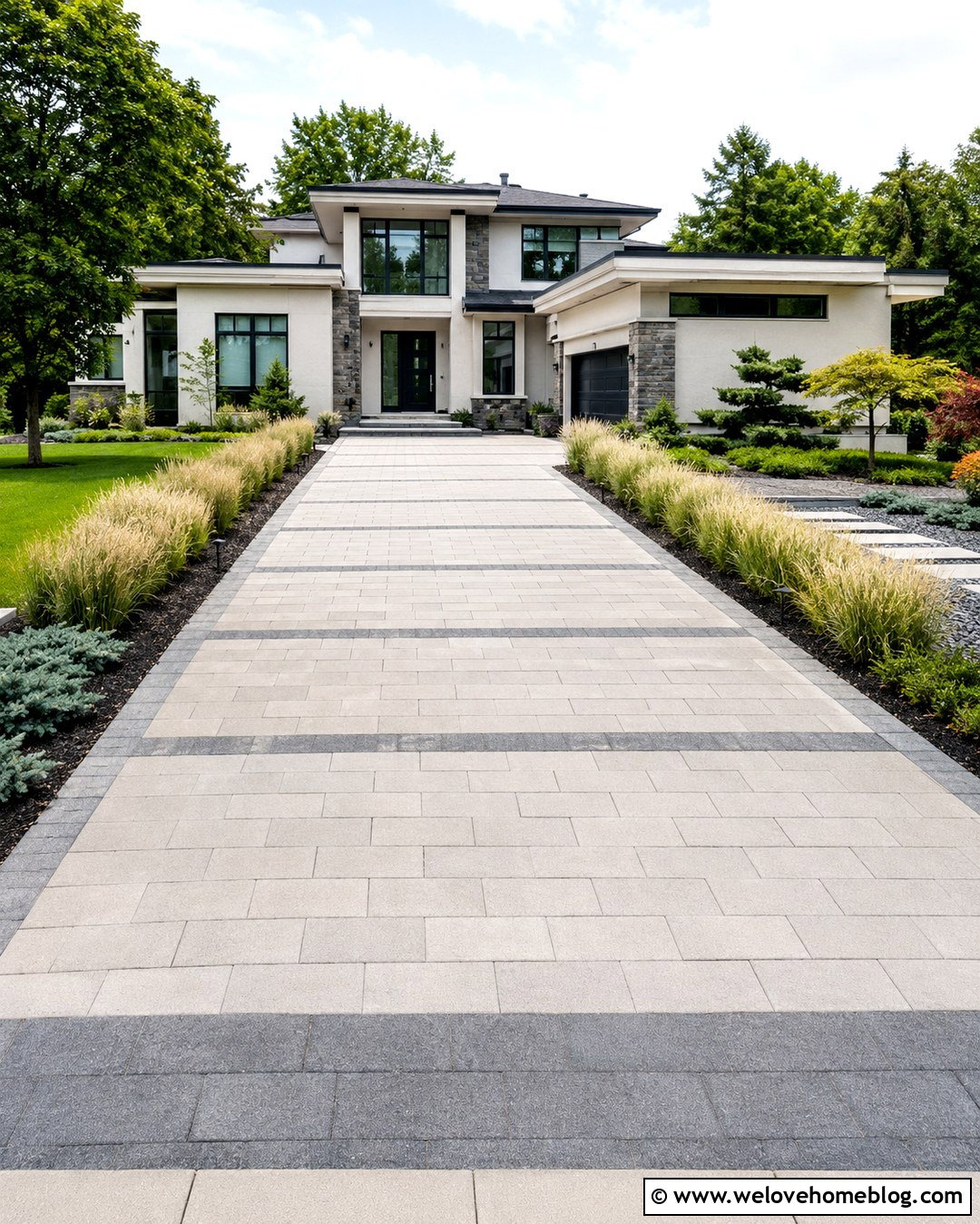
Do you want a planted driveway that looks modern without feeling bare? Start with large-format concrete pavers in soft gray, arranged in a clean running-bond pattern. Frame the straight or slightly angled driveway with dark stone accent bands. Beyond those bands, use broad groups of ornamental grasses rather than mixing many unrelated plants. Their upright shapes soften the hard paving while preserving a streamlined appearance. Add low evergreen groundcover underneath and place two sculptural shrubs near the garage. Rectangular stepping stones can form a matching route to the front door. Keep the lawn edges crisp and the planting palette restrained. This complete design works beautifully with contemporary homes because the grasses add movement while the pavers maintain strong visual structure.
5. Circular Driveway With A Landscaped Center Island
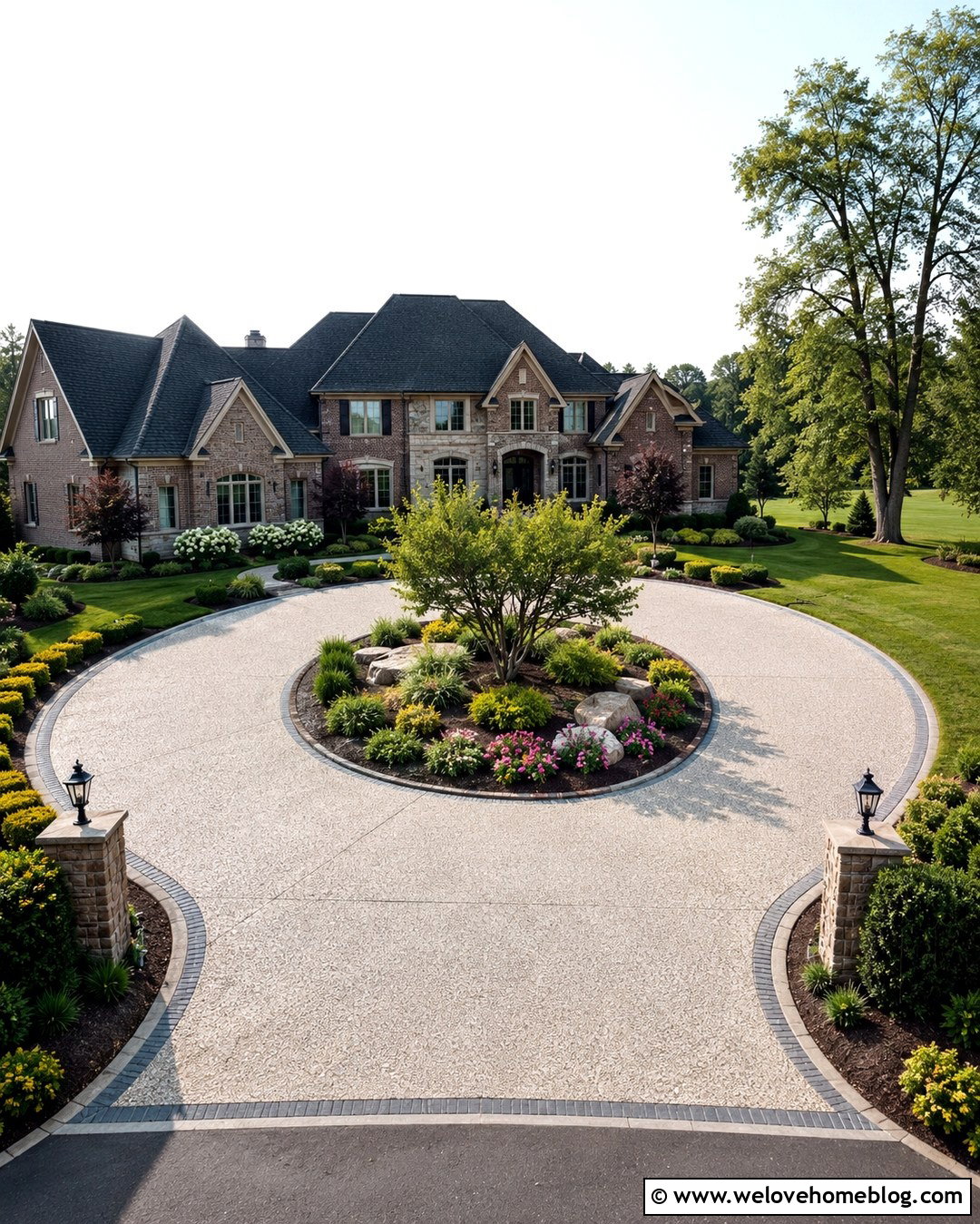
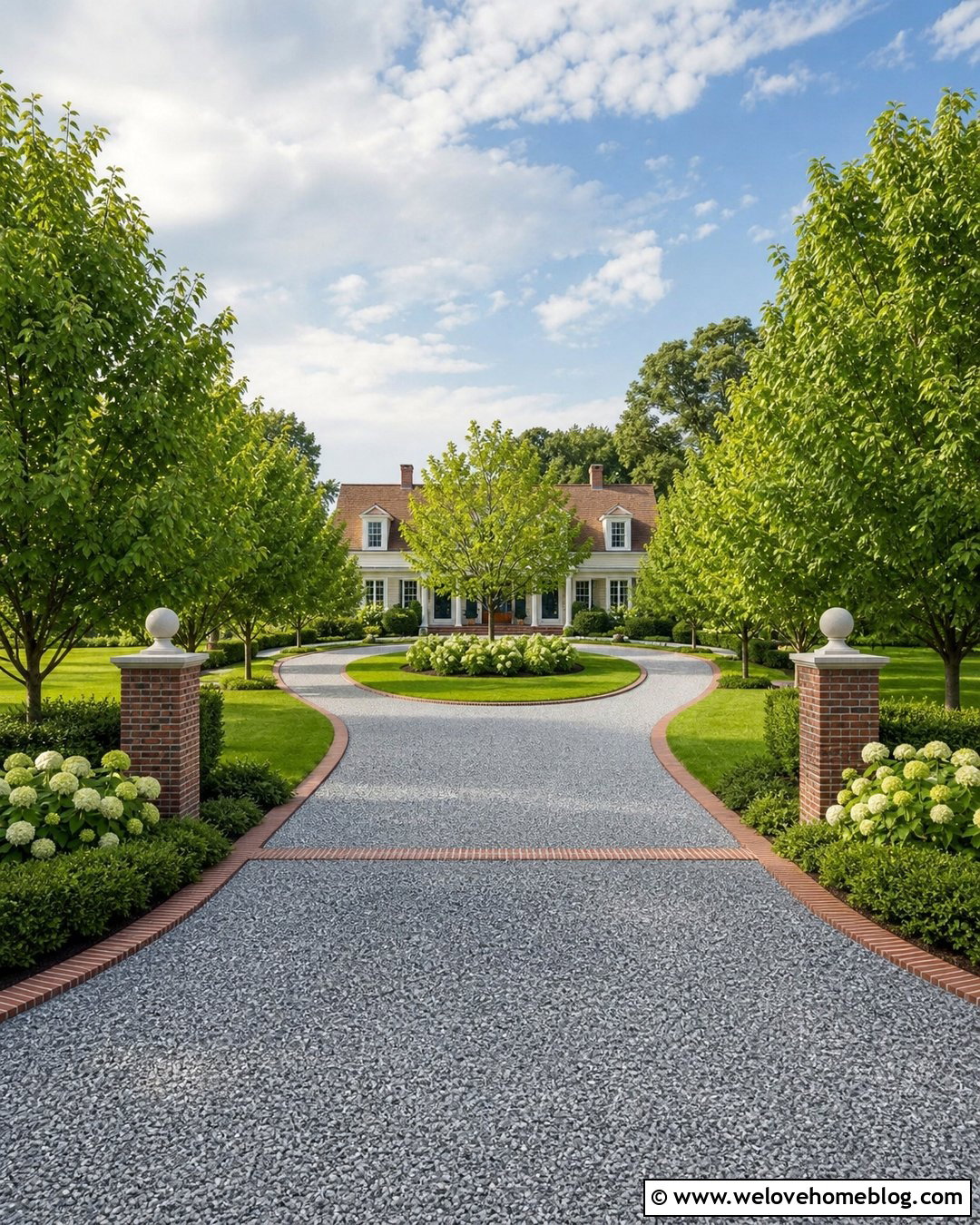
A circular driveway offers a natural place for a prominent center garden. Build the driving surface with light exposed-aggregate concrete and define both edges with dark cobblestone bands. In the island, place one multi-stem ornamental tree slightly off center, then surround it with compact evergreen shrubs, long-blooming perennials, and a tidy groundcover border. The planting should remain low enough near driveway junctions to preserve open views across the entrance. Echo the same plants beside the house and front walkway so the island does not look disconnected. A few decorative boulders can add texture without dominating the bed. This arrangement turns a large paved area into a composed front landscape while creating a graceful arrival sequence for a traditional or transitional home.
6. Narrow Driveway With Vertical Planting
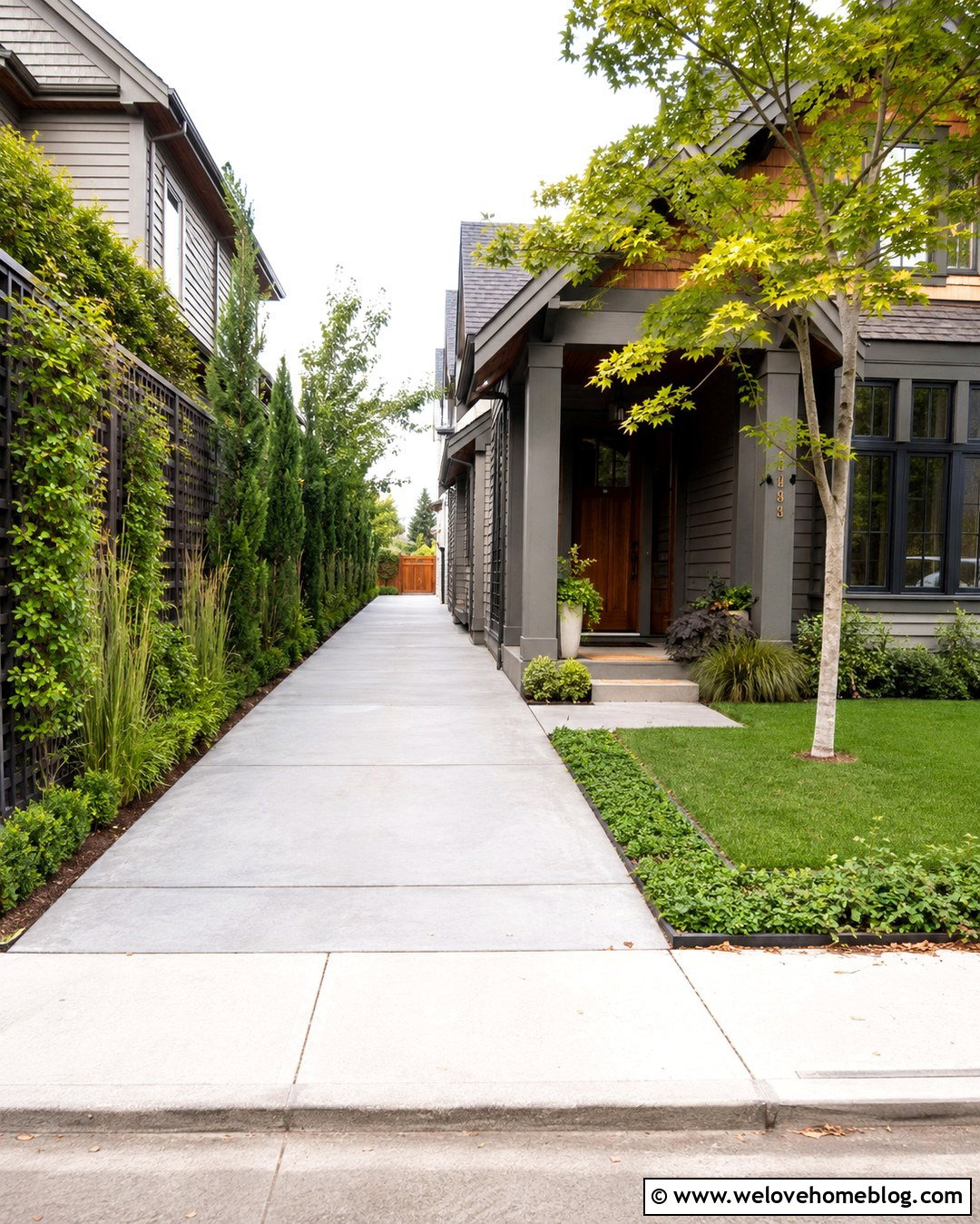
Limited side-yard space does not require an empty driveway border. A narrow poured-concrete driveway can feel lush when the landscape grows upward instead of spreading into the driving lane. Install slim steel edging beside the pavement, followed by a narrow bed of columnar evergreens, upright grasses, or trellised vines. Keep low groundcover near the front edge to prevent branches from brushing vehicles. On the opposite side, use a simple grass strip or a low hedge to maintain visual breathing room. A small tree near the street can mark the entrance without reducing usable width farther inside. Continue the same materials into a compact walkway leading to the porch. This solution brings greenery to a tight urban or suburban lot while keeping the driveway open and practical.
7. Long Driveway With Tree-Lined Borders
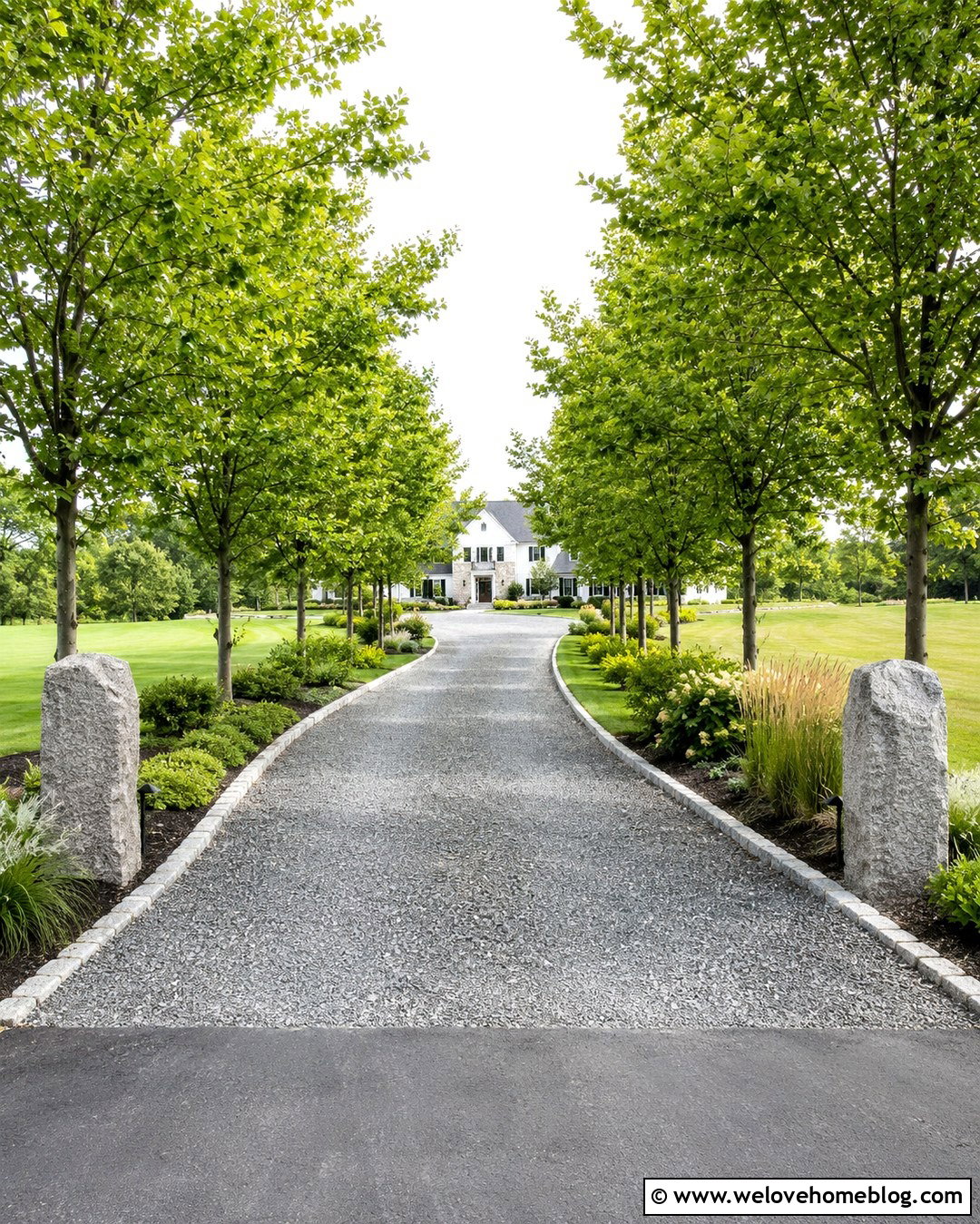
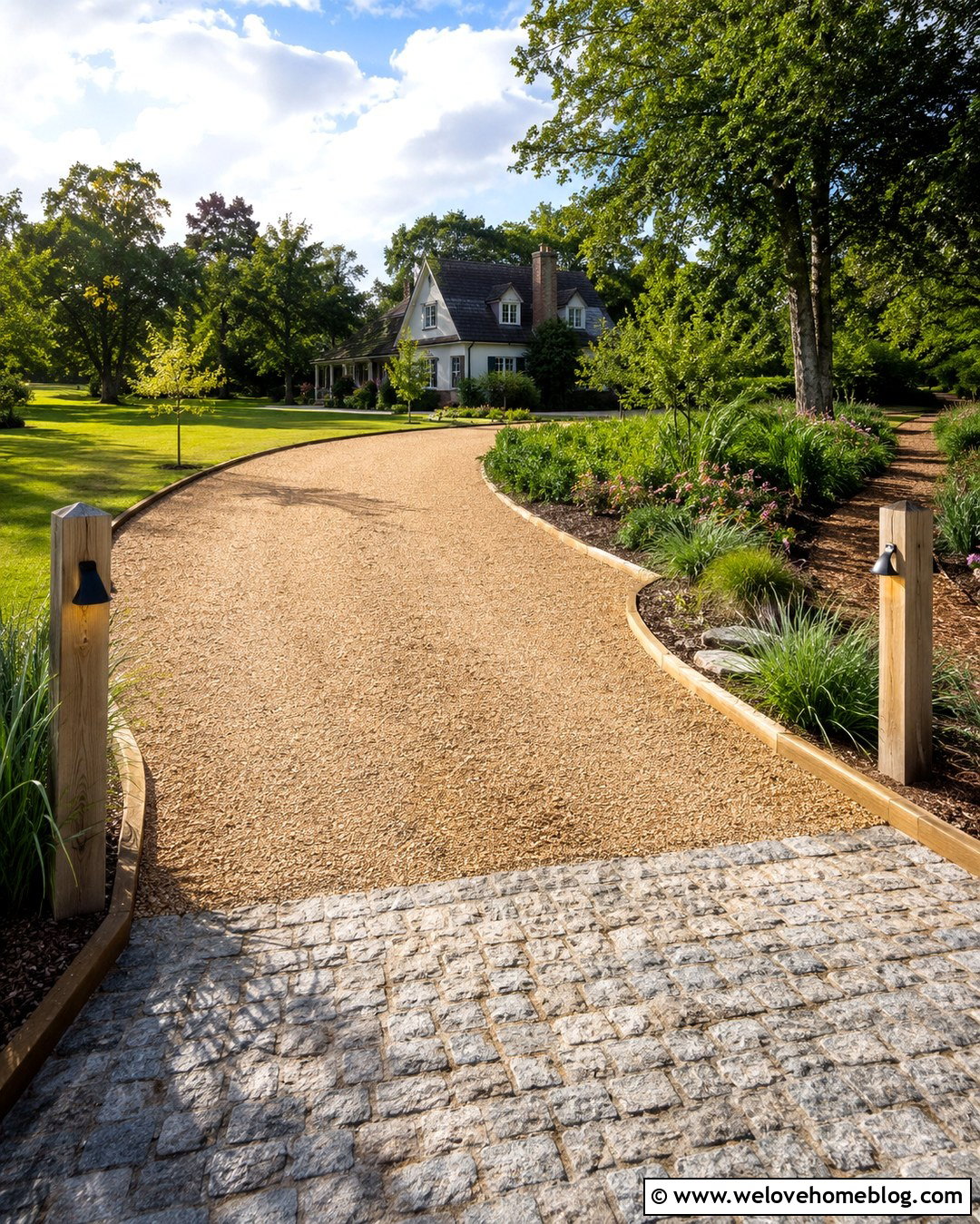
A long driveway can become a scenic approach when trees and lower planting create a measured rhythm from the street to the house. Use compacted gray gravel for a gently curved route, contained by sturdy steel or granite edging. Plant evenly spaced deciduous trees beyond the driveway shoulder, leaving appropriate room for their mature trunks and canopies. Beneath them, use sweeps of native grass, low shrubs, and seasonal perennials instead of continuous formal hedges. Place stone entrance markers at the road and repeat the same stone in small planting-bed accents near the house. The final section of the drive can widen into a paver motor court. This transition helps the landscape feel more detailed as visitors move closer to the front entrance.
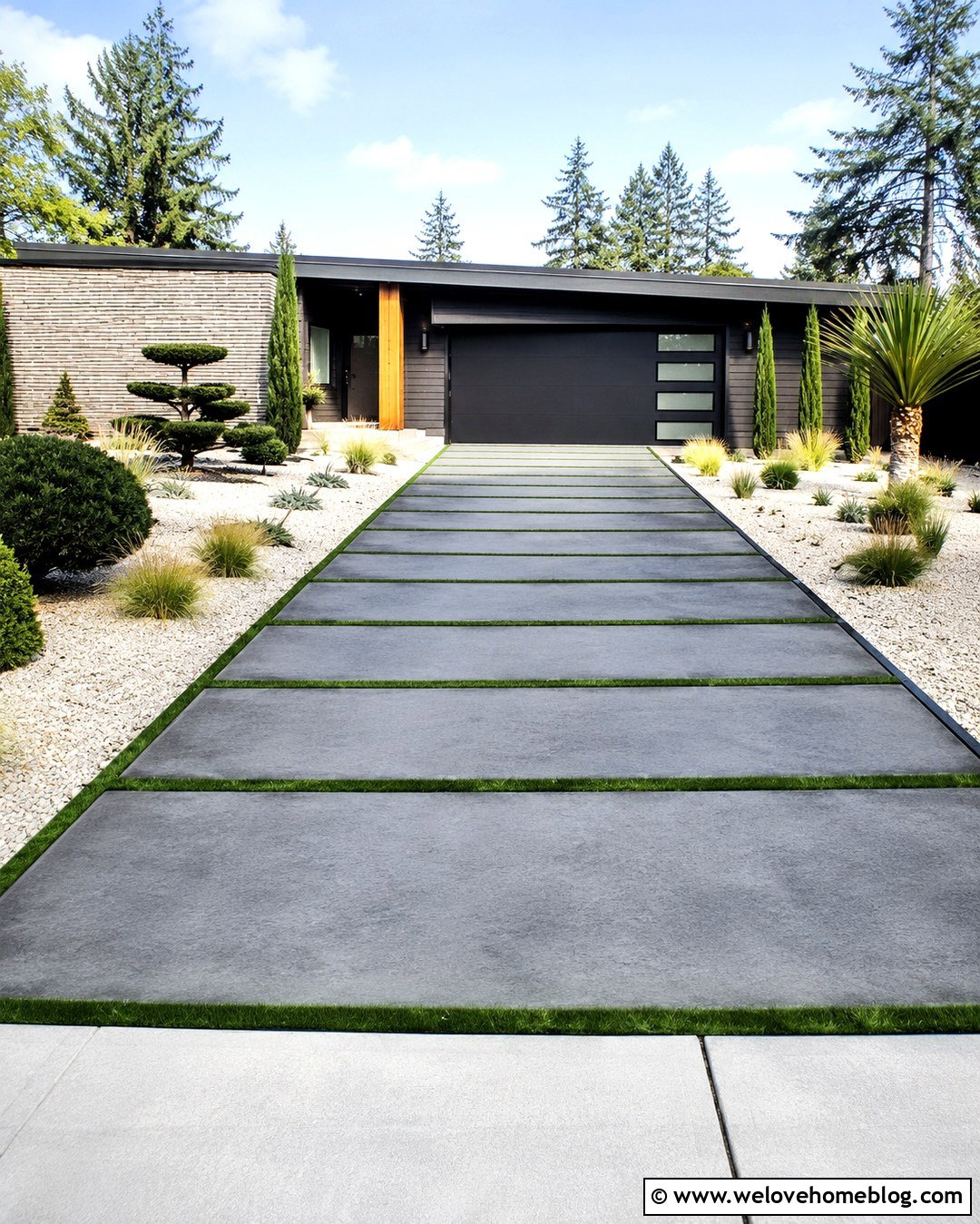
8. Modern Concrete Driveway With Gravel Beds
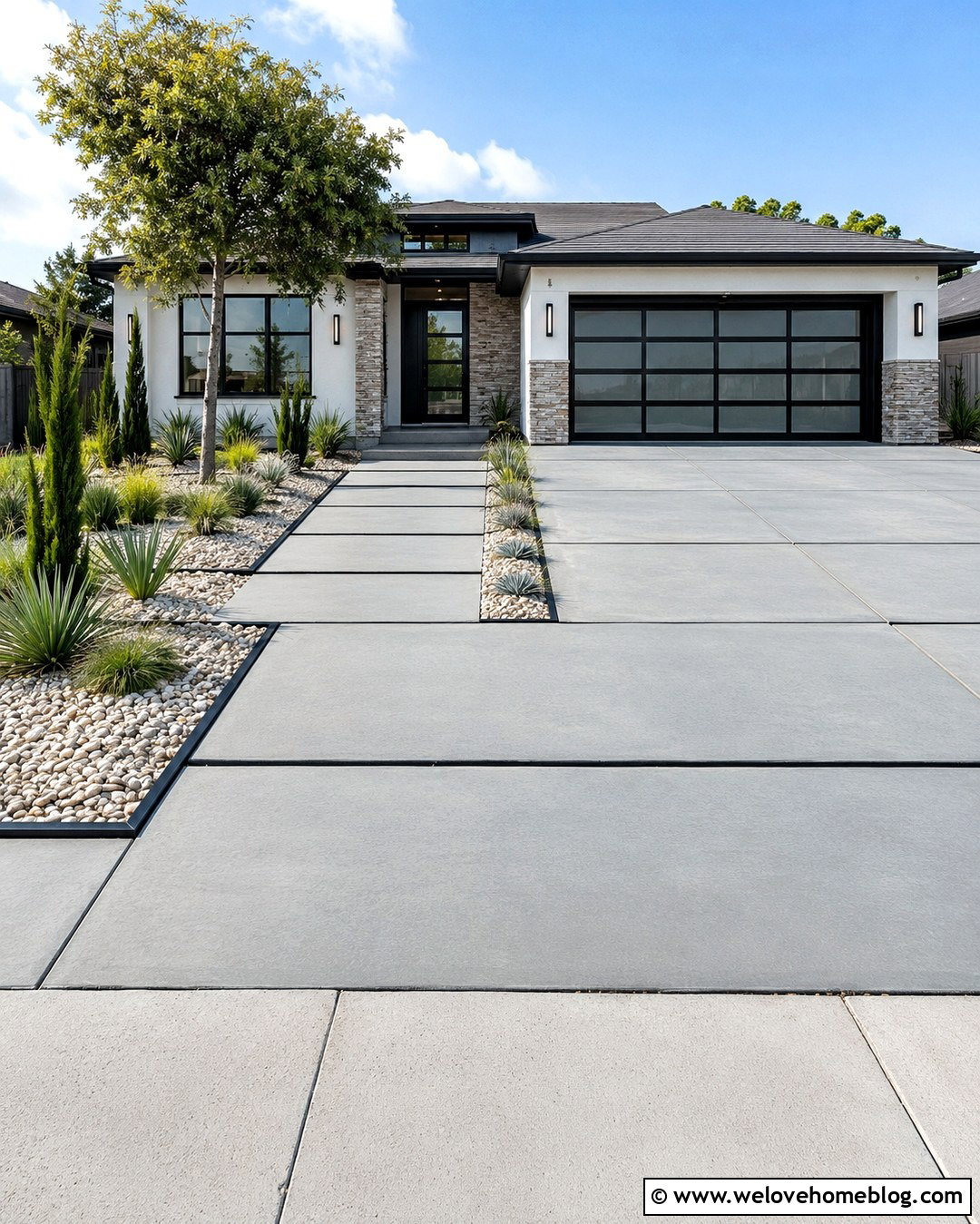
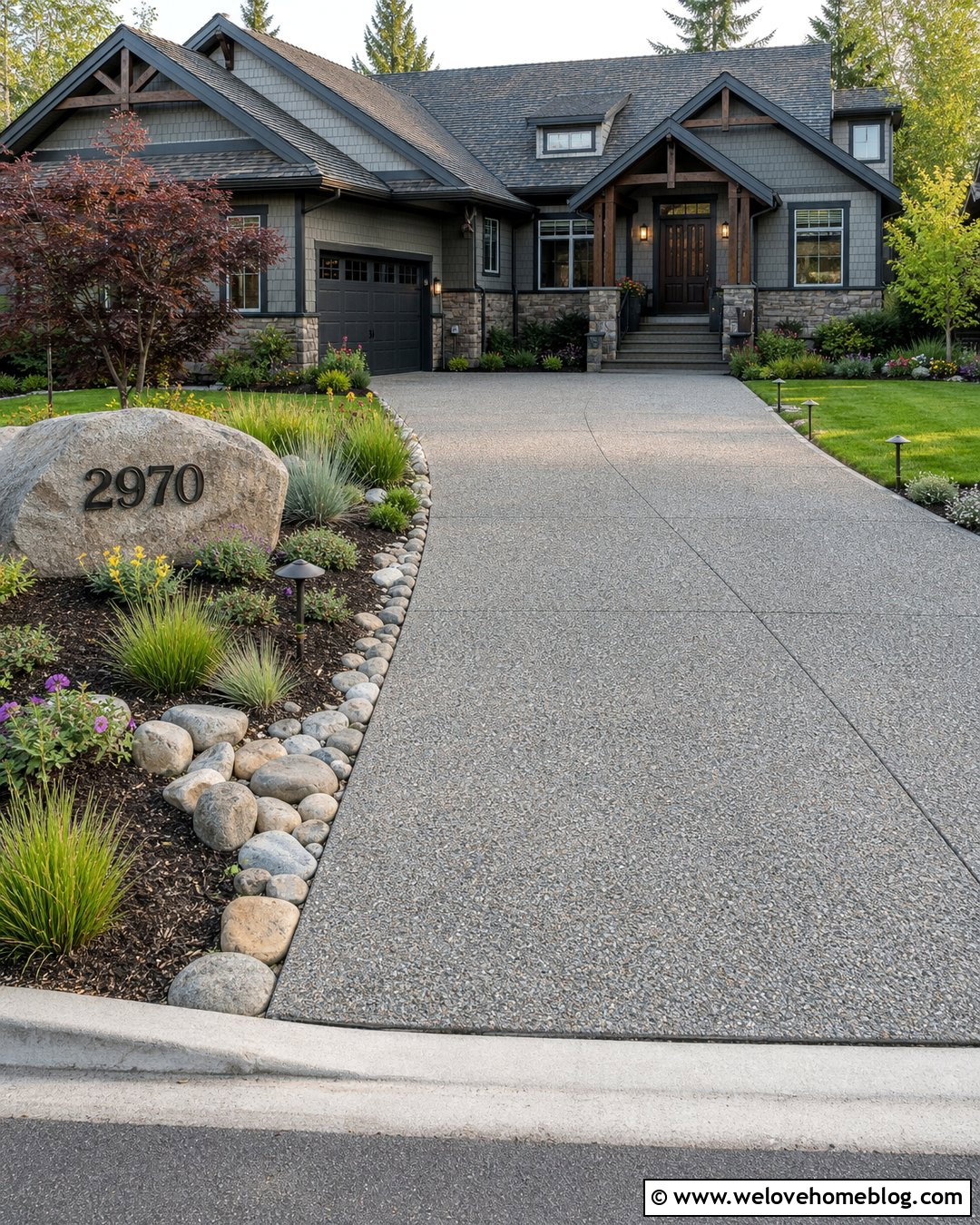
Crisp geometry can make driveway landscaping feel calm, spacious, and deliberately modern. Select medium-gray poured concrete divided into large rectangular slabs with narrow control joints. Along the sides, build linear beds filled with pale river rock or dark crushed stone. Place sculptural evergreen shrubs, yucca-like plants, and upright ornamental grasses at irregular but balanced intervals. Black metal edging keeps gravel away from the pavement and reinforces the clean lines. Include a wide concrete walkway that aligns with the driveway joints and leads directly toward the entrance. One small architectural tree can add height near the house without disrupting the minimalist layout. Against a modern facade, the restrained planting and contrasting textures create a strong composition that remains welcoming rather than stark.
9. Farmhouse Driveway With Native Planting
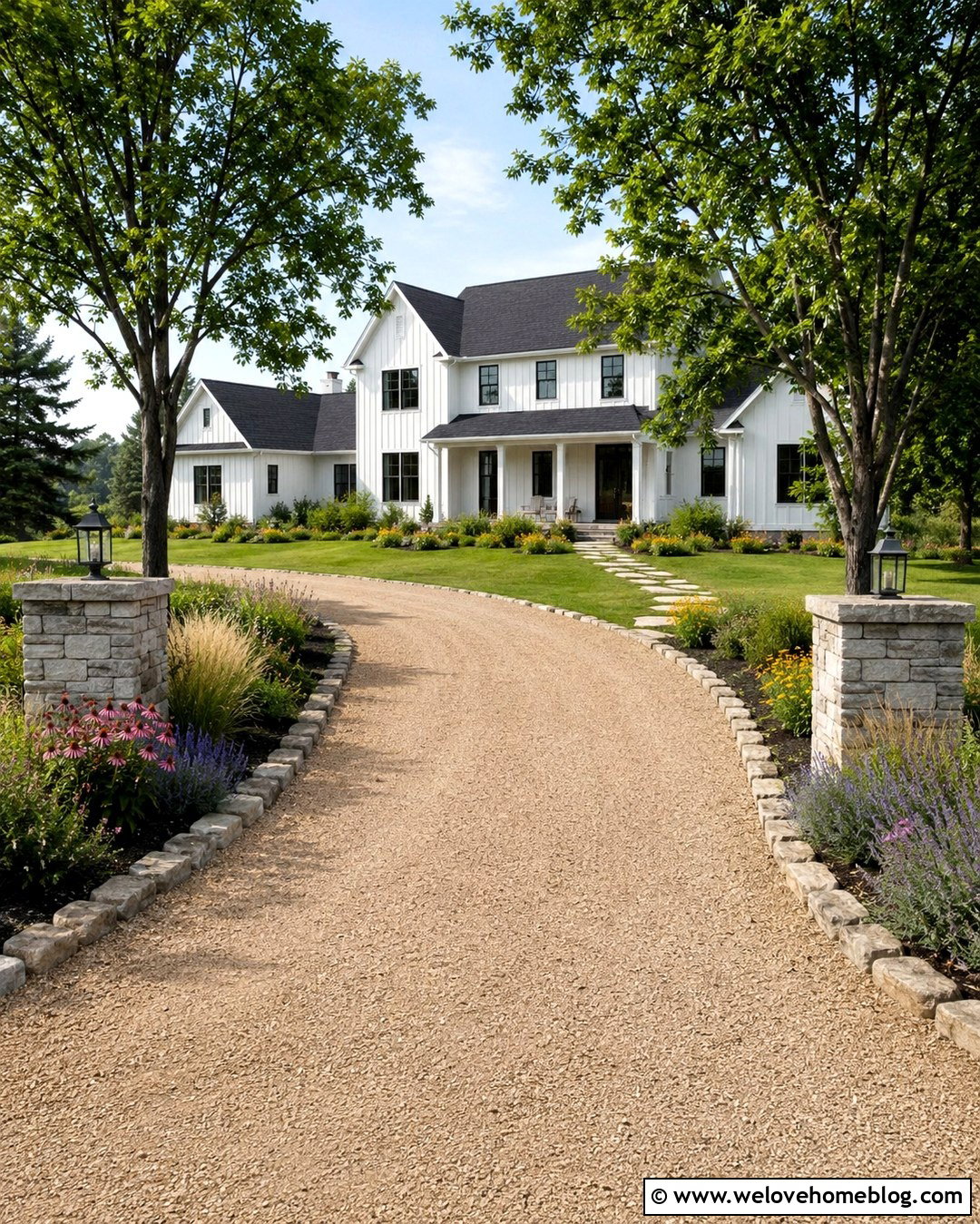
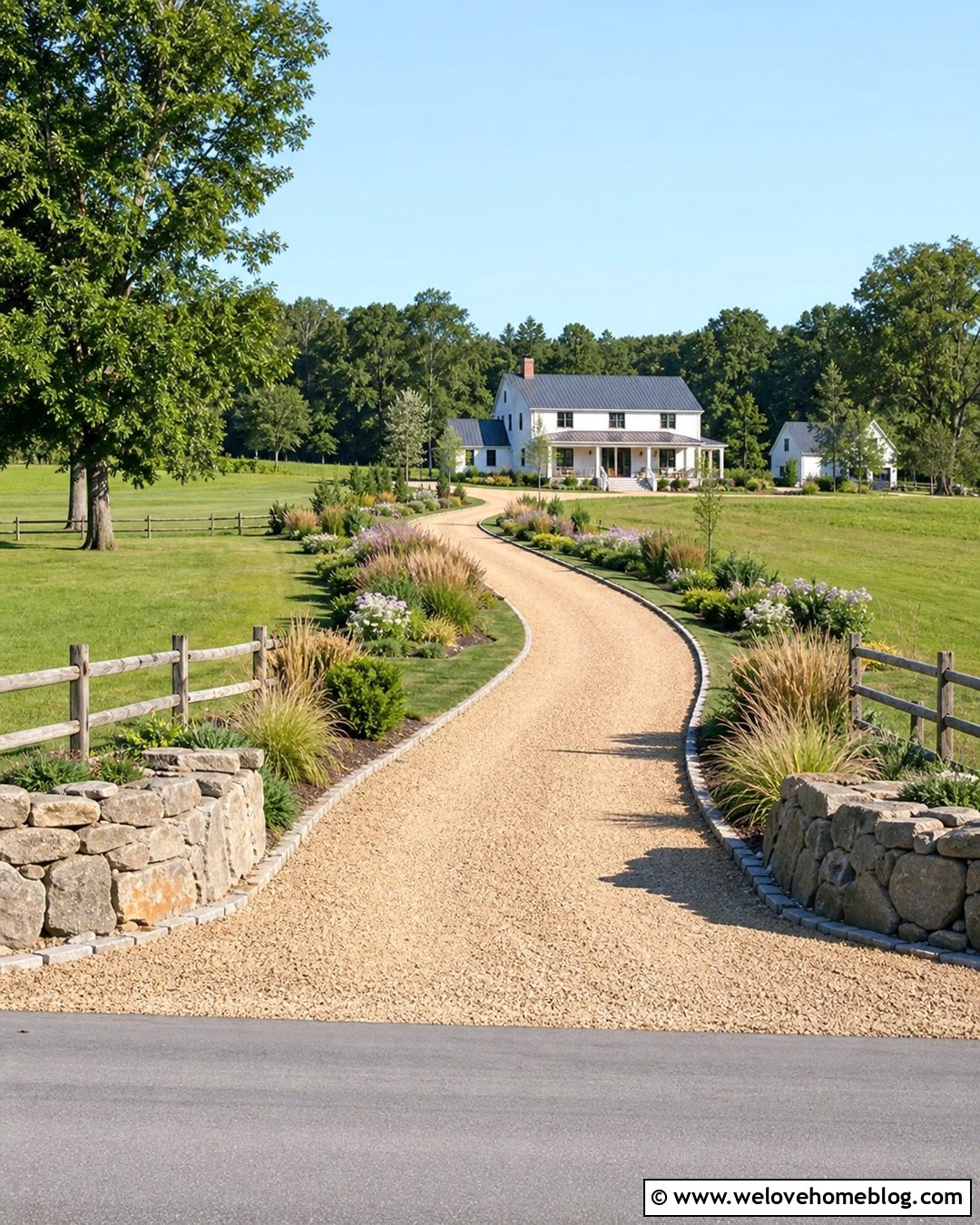
A farmhouse driveway should feel connected to the surrounding land rather than separated from it by rigid landscaping. Use tan crushed gravel for a broad, gently curving driveway bordered with weathered stone or heavy timber. Create generous planting beds containing native grasses, flowering perennials, and loose groups of shrubs suited to the local conditions. Leave sections of lawn between the larger beds so the approach stays open and relaxed. At the entrance, plant two small native trees near simple stone pillars, then repeat those trees closer to the house. A flagstone path can branch from the parking area toward a covered porch. The natural materials, flowing shapes, and layered planting provide structure while preserving the casual character associated with a modern farmhouse setting.


10. Sloped Driveway With Retaining Wall Landscaping
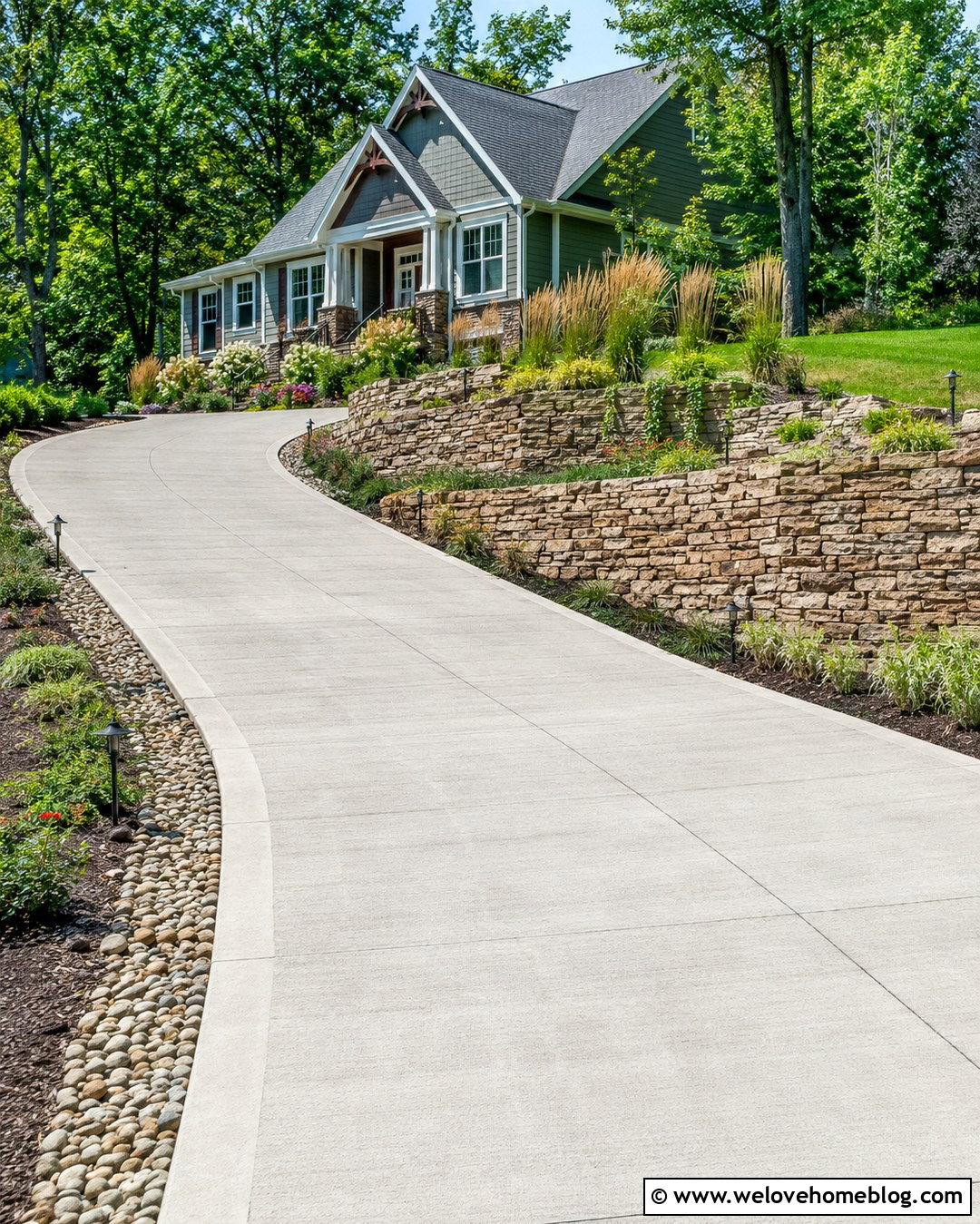
Sloping ground becomes part of the design when the driveway, retaining wall, and planting beds share complementary materials. Choose a broom-finished concrete driveway that curves gradually uphill. Along the higher side, install a low retaining wall made from natural stacked stone. Build tiered planting beds above it with spreading groundcover, flowering shrubs, and deeply rooted ornamental grasses. On the lower side, use a narrower bed with matching plants and a flush stone border. Add drainage-friendly decorative gravel behind the wall and around downspout outlets where appropriate. Low path lights can be positioned inside the beds rather than directly on the pavement. The layered landscape visually supports the slope while creating an attractive transition from the street to a craftsman or hillside home.
11. Brick Driveway With Boxwood Borders
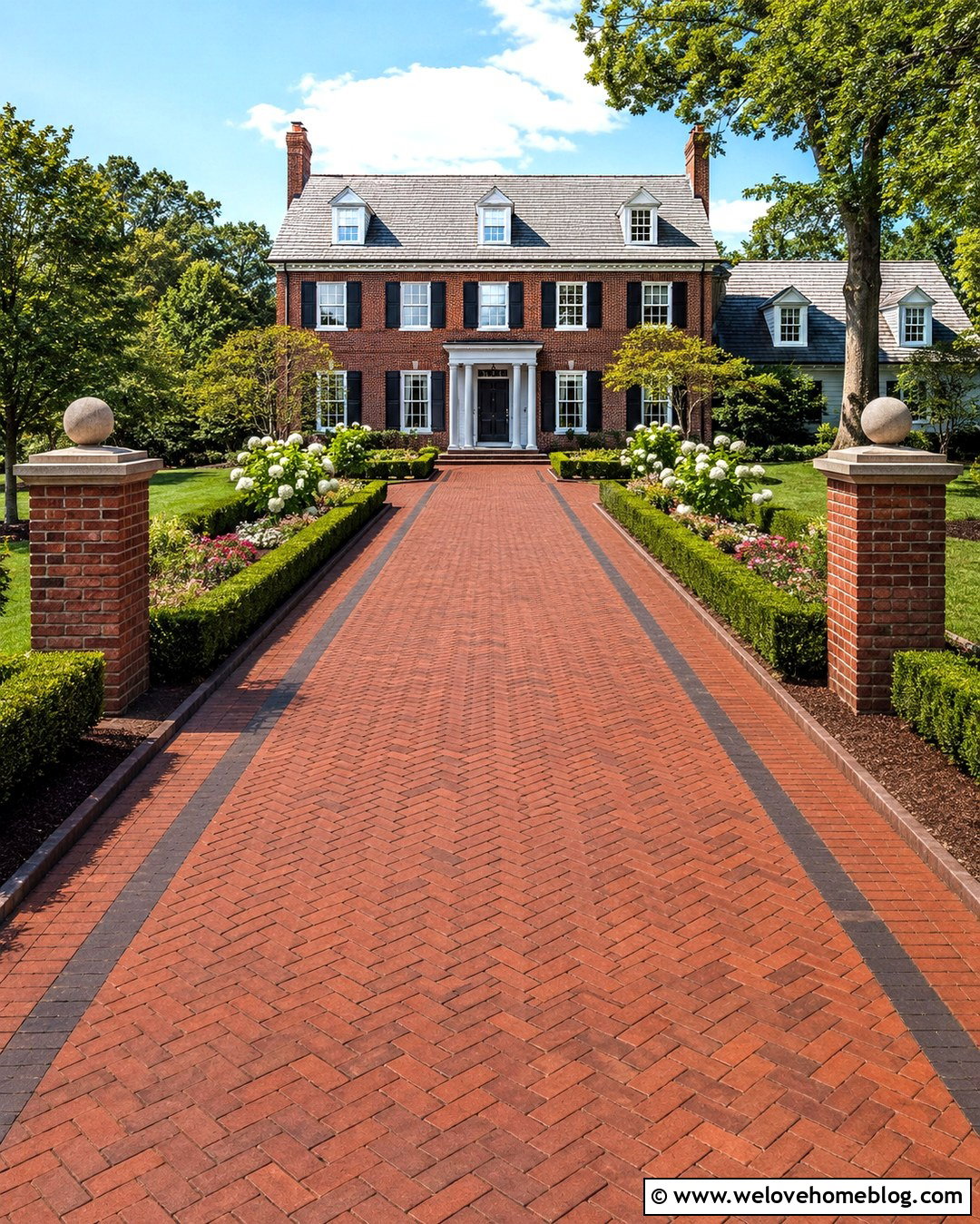
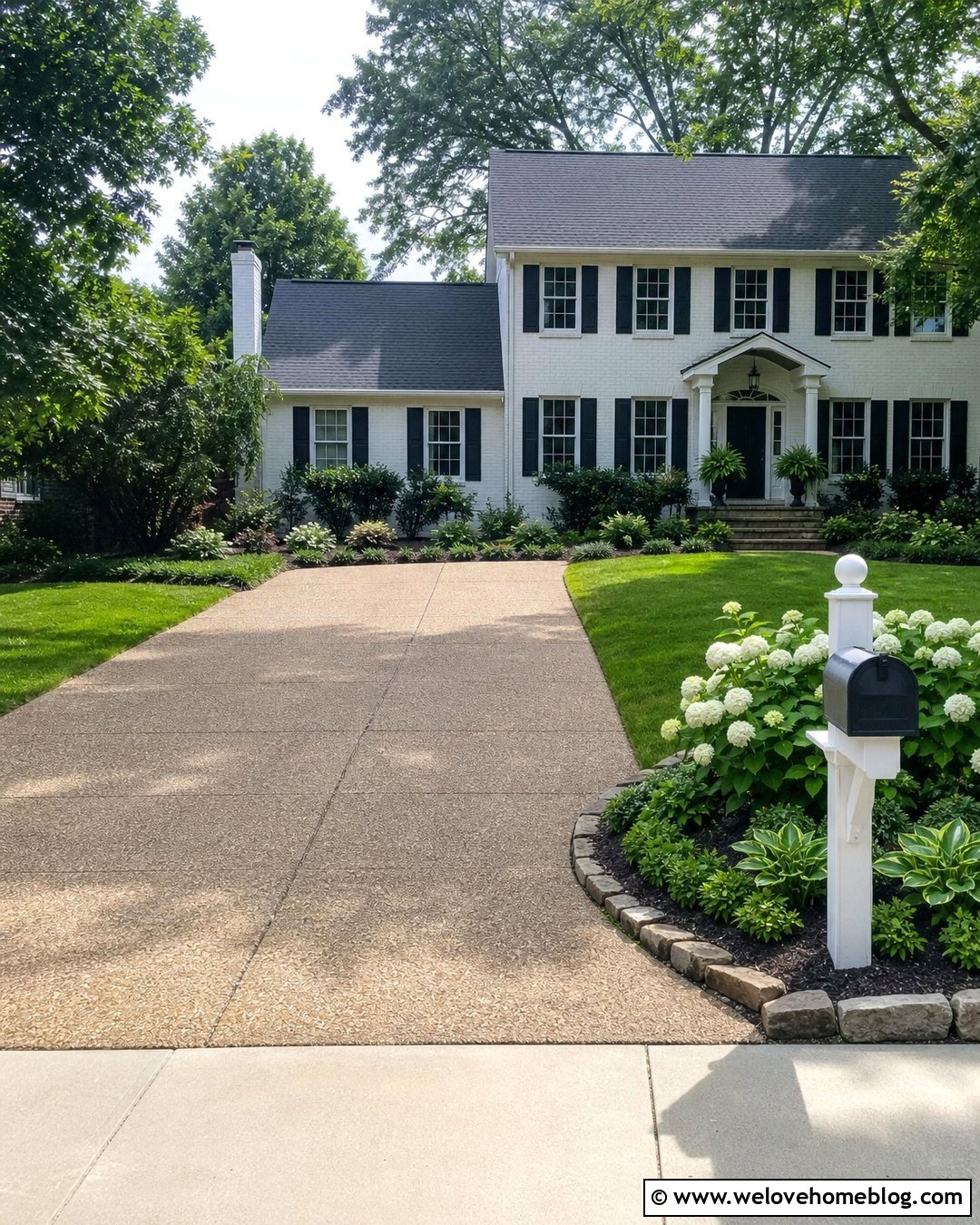
Clay brick pavers bring instant warmth to a formal front yard, especially when paired with carefully shaped evergreen borders. Lay deep red brick in a herringbone pattern and add a darker brick ribbon around a straight driveway. Plant low boxwood hedges beyond the paved edge, leaving occasional openings for walkways and access to the lawn. Behind the hedges, arrange white flowering shrubs, small ornamental trees, and seasonal flowers in symmetrical beds. A matching brick walkway should lead from the driveway to the front steps. At the street, simple brick pillars can repeat the driveway material without requiring a large gate. This complete landscape works particularly well with colonial and Georgian-inspired homes because the repeated lines, balanced planting, and classic materials create a composed entrance.
12. Resin Driveway With Cottage Garden Beds
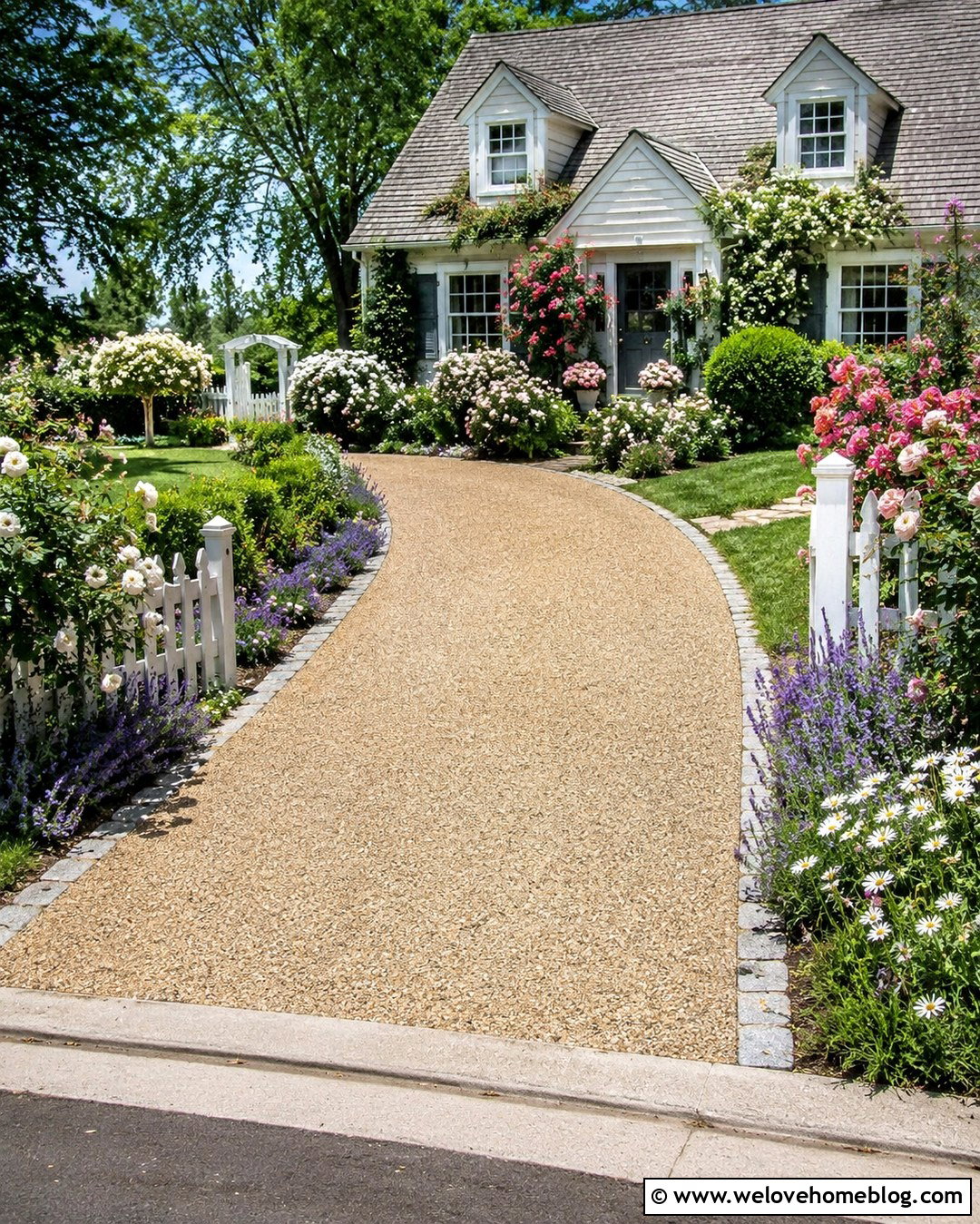
A resin-bound gravel driveway provides a smooth, uniform background for softer cottage planting. Choose a warm honey-colored resin-bound aggregate and shape the driveway with a gentle curve toward a cottage or Cape Cod home. Use tumbled stone setts along the edges to create a durable visual boundary. Fill the neighboring beds with roses, salvia, catmint, daisies, and compact flowering shrubs arranged in repeating clusters. Allow a few low plants to soften the border, but keep taller growth away from vehicle doors and turning areas. Add a small picket gate beside the driveway where the walkway enters the front garden. The contrast between the neat driveway surface and abundant flowers creates a charming, welcoming landscape without making the arrival area feel disorderly.
13. Cobblestone Driveway With Evergreen Landscaping
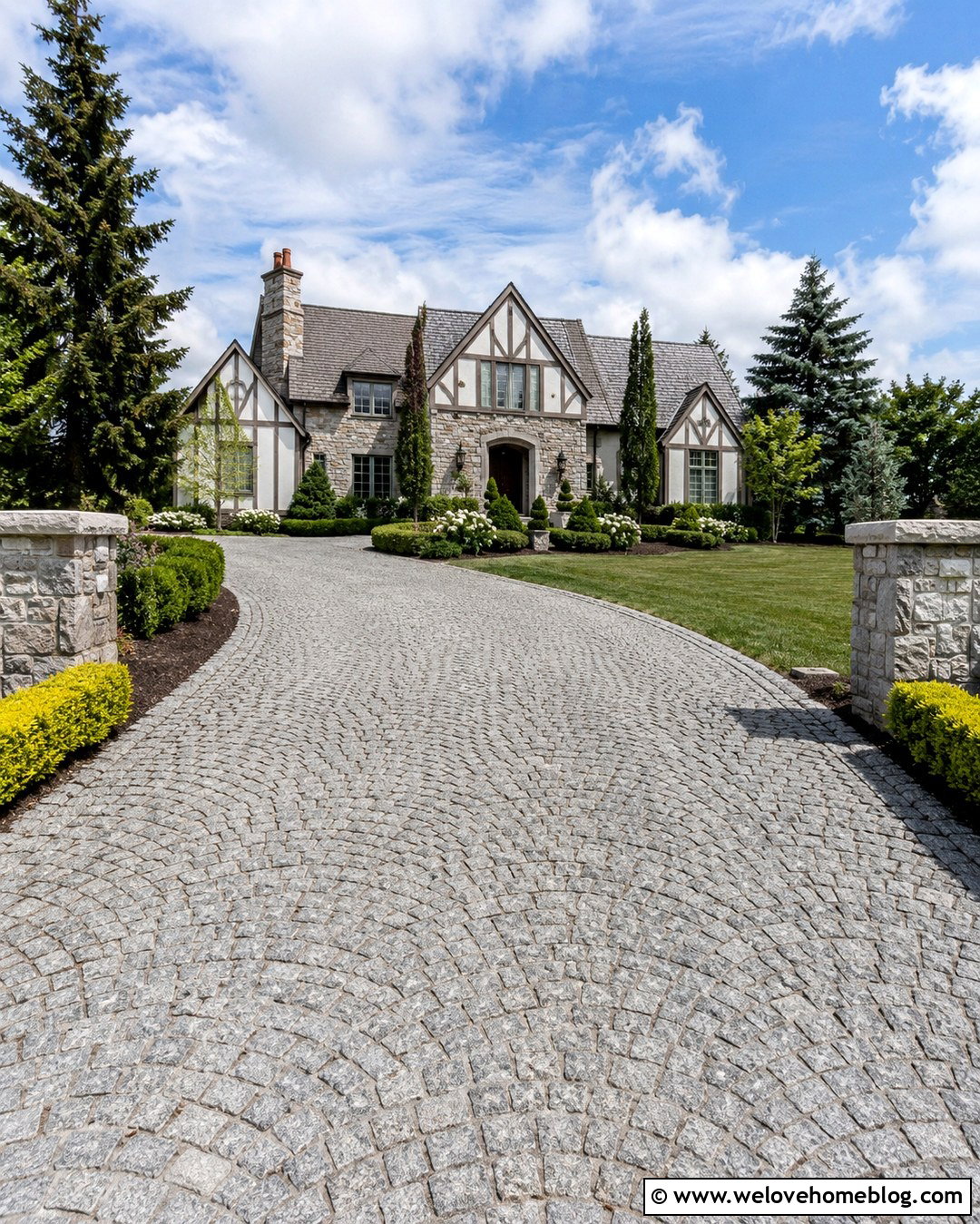
A cobblestone driveway already carries strong texture, so the surrounding landscape should provide calm structure rather than excessive detail. Use gray granite cobblestones in a fan or running pattern for a slightly curved driveway. Frame the route with low evergreen hedges, broad mulched beds, and several taller conifers placed near the property corners. White flowering shrubs can brighten the composition, while simple groundcover fills the space between larger plants. Continue the cobblestone into a front walkway and use matching granite caps on entrance pillars. Keep the center of the yard open with a well-defined lawn. This balanced layout allows the stonework to remain the main feature while the evergreen planting provides a polished year-round frame for a Tudor, traditional, or European-inspired house.
14. Concrete Ribbon Driveway With Groundcover
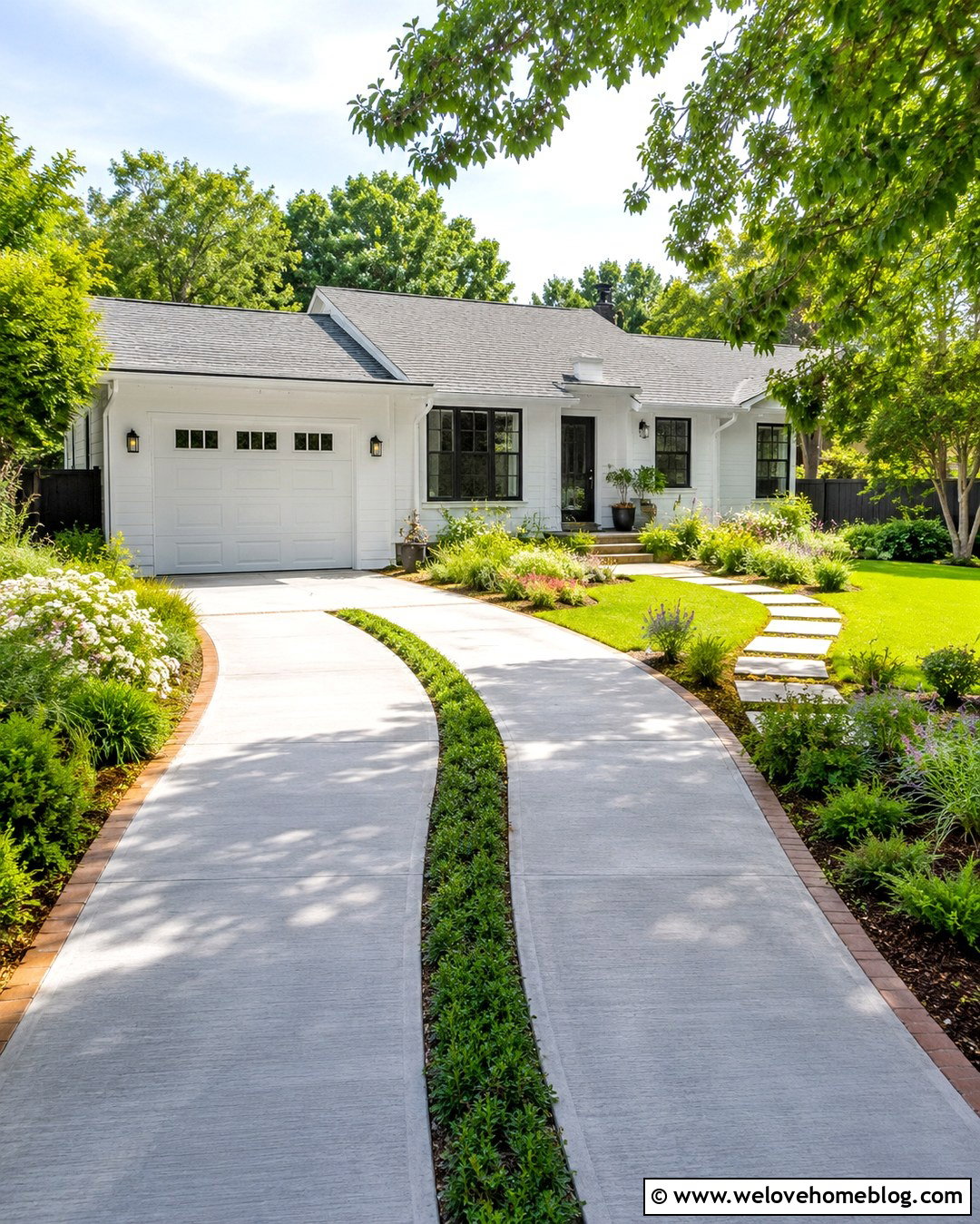
A concrete ribbon driveway reduces the appearance of continuous paving by separating two wheel tracks with a planted center strip. Use light gray broom-finished concrete ribbons in a straight or gently curving layout. Fill the middle with durable low groundcover or neatly maintained grass, depending on the local growing conditions and expected traffic. Edge the outer sides with flush brick or steel, then add relaxed planting beds containing small shrubs, flowering perennials, and ornamental grasses. Near the garage, transition the ribbons into a full concrete apron for easier turning and parking. A matching stepping-stone walkway can lead toward the porch. This integrated design is particularly appealing beside a bungalow, cottage, or updated ranch where a softer, garden-centered entrance suits the home’s scale.
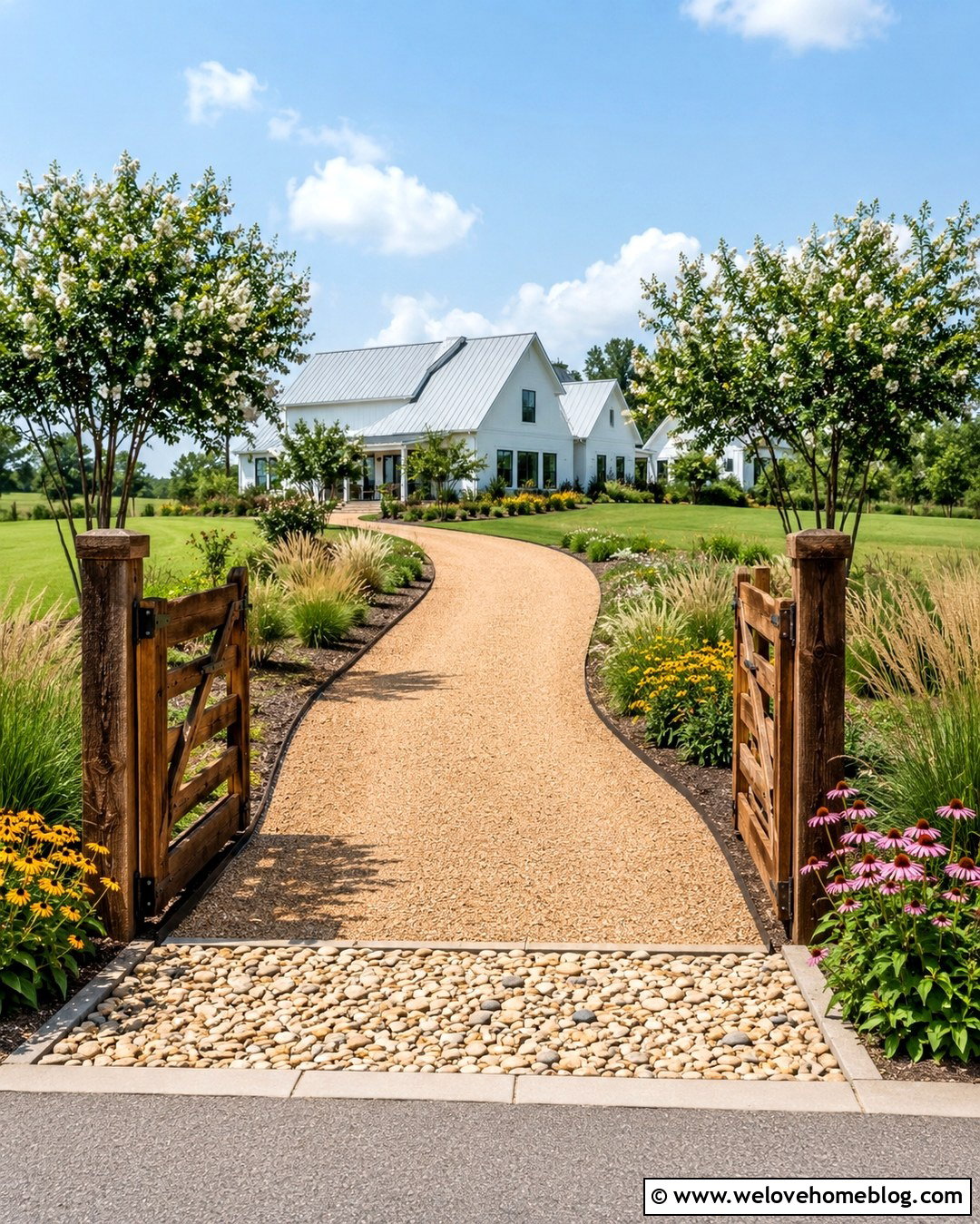
15. Small Driveway With Corner Planting Beds
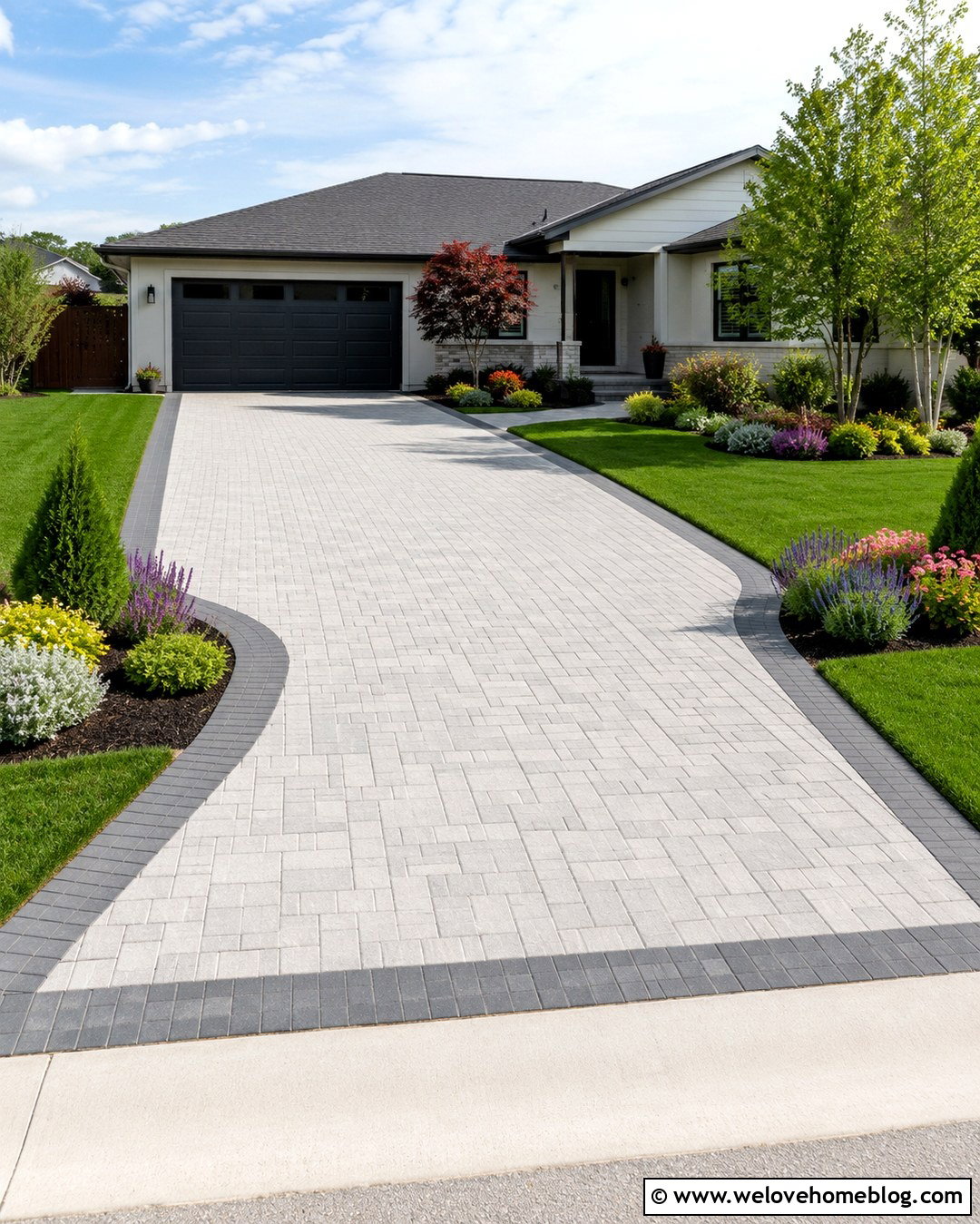
When a short driveway occupies most of a compact front yard, the corners become valuable landscaping space. Use light concrete pavers in a simple basketweave pattern to keep the surface visually interesting. Frame the driveway with a narrow charcoal paver border, then create curved beds at the street corners and beside the garage. Plant one compact ornamental tree in the largest bed, supported by low shrubs, groundcover, and a limited selection of colorful perennials. Keep plants short near the sidewalk and driveway entrance. A slim walkway can run beside the driveway before turning toward the porch. Repeating the same plants in all three beds makes the small landscape feel connected. The arrangement delivers color and depth without reducing essential parking or maneuvering space.
16. Driveway Entrance With Stone Pillars And Trees
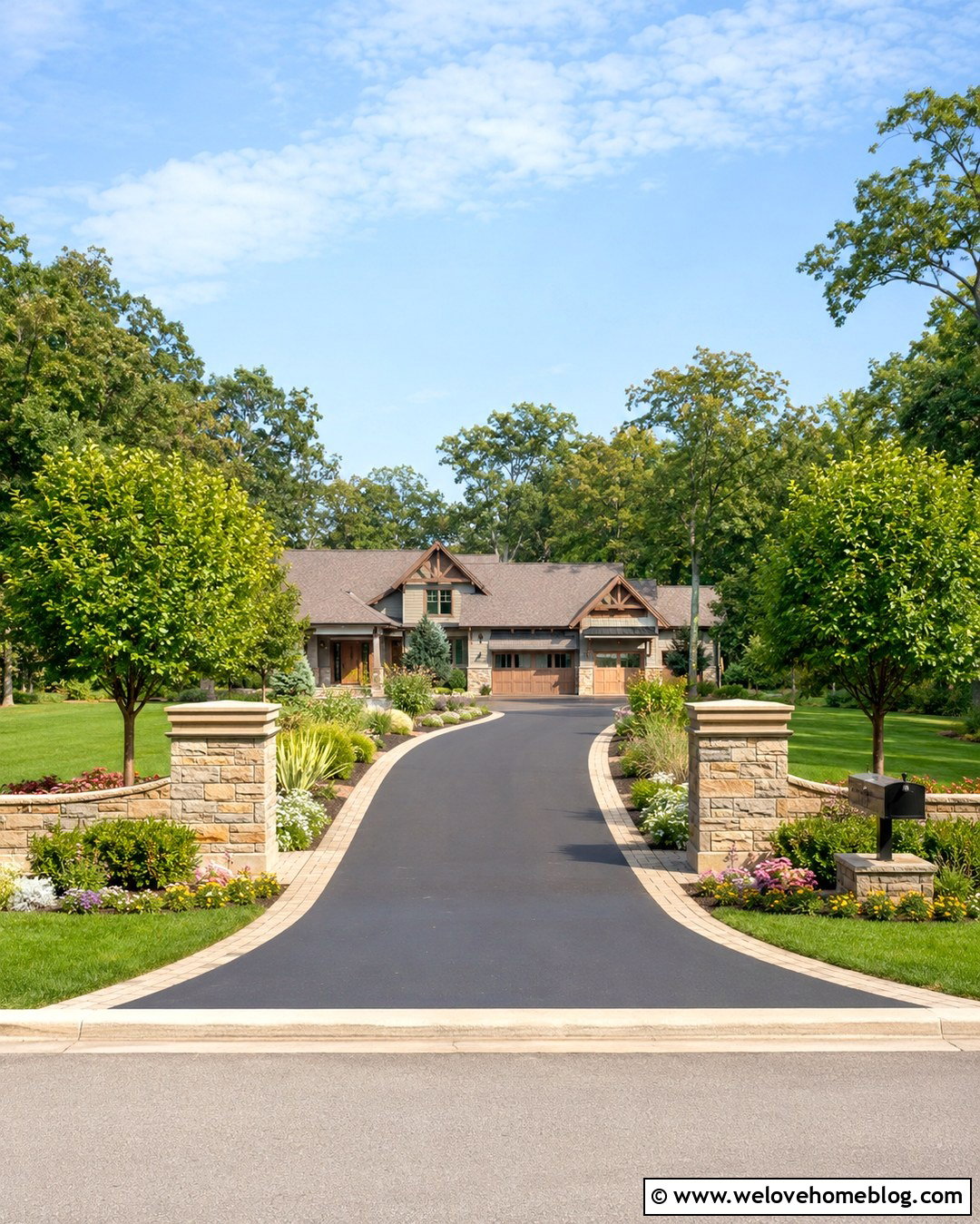
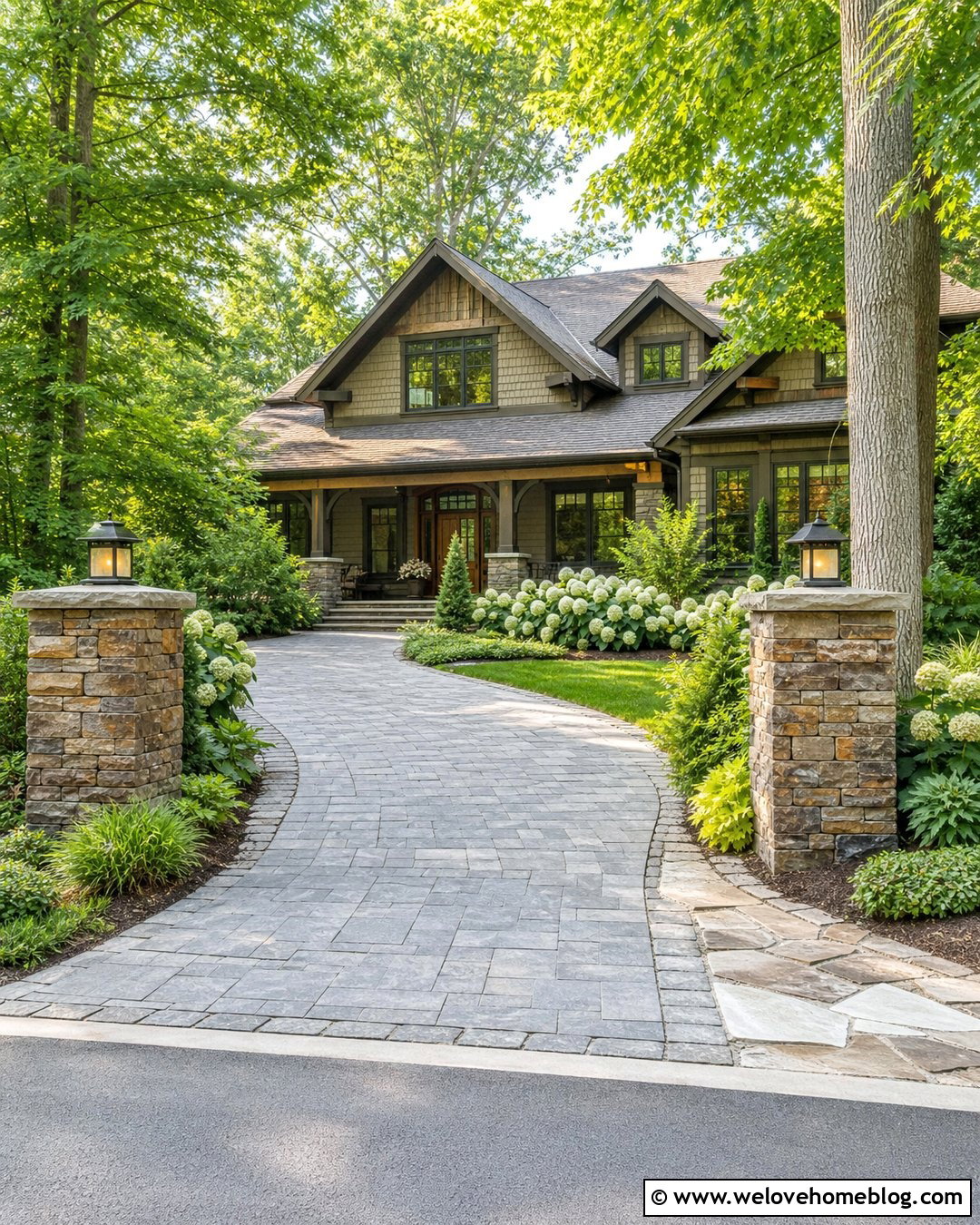
The street-facing entrance sets the tone for everything beyond it. Create a straight black asphalt driveway with a wide apron and a double border of tan stone pavers. Position natural stone pillars on both sides, set well outside the necessary driving clearance. Behind each pillar, plant a matching ornamental tree surrounded by low evergreen shrubs and seasonal flowers. Continue the beds inward with a relaxed mix of grasses and groundcover so the entrance blends into the larger yard. A low stone wall can extend briefly from each pillar without making the property feel closed. Repeat the pillar stone around the mailbox or front steps. This complete look gives a ranch, craftsman, or country home a recognizable entrance while maintaining an open and approachable character.
17. Driveway With A Rain Garden Border
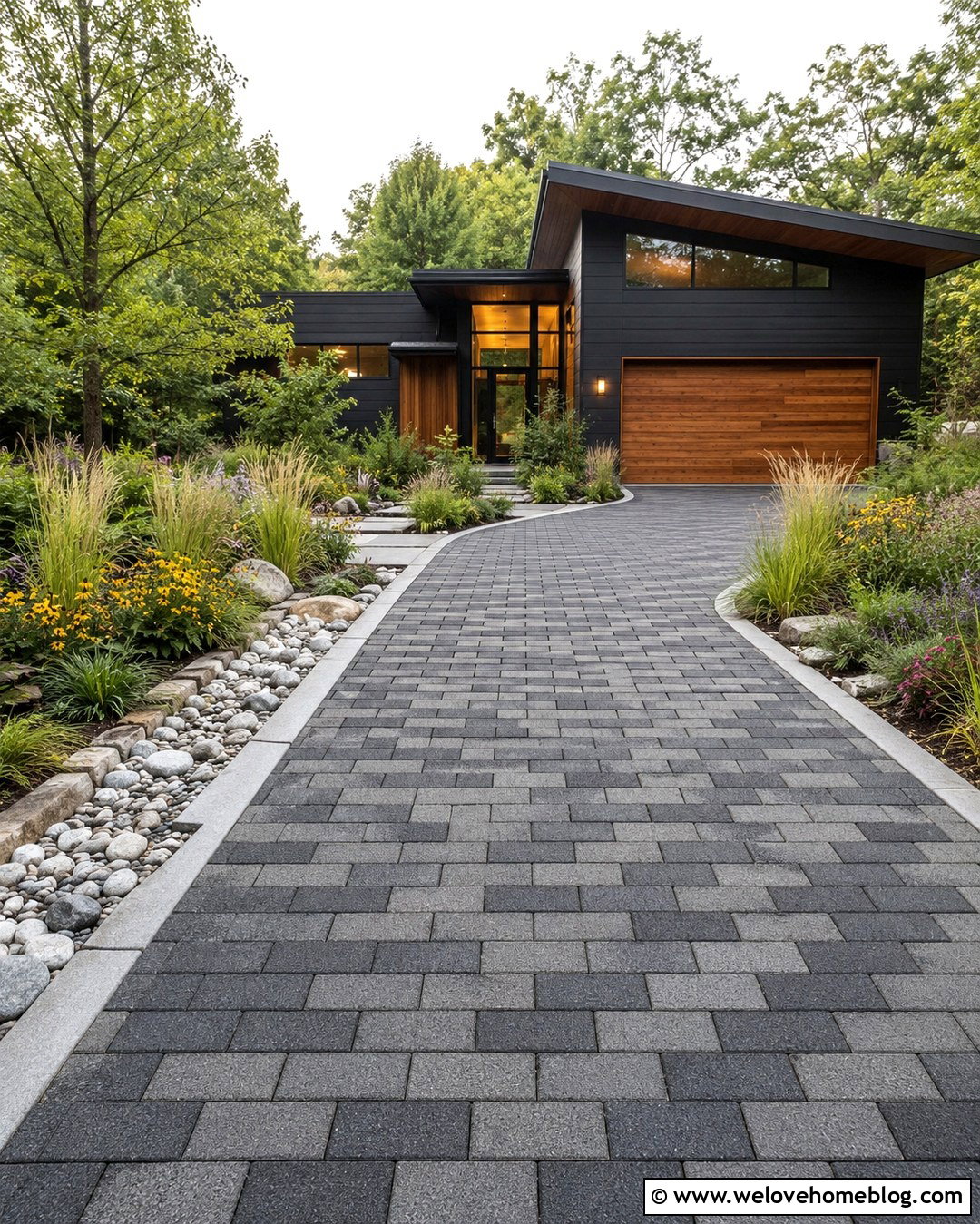
Water-conscious landscaping can become a beautiful feature rather than a hidden utility area. Pair a permeable concrete paver driveway with a shallow rain garden along its lower side. Use charcoal and gray pavers in a running pattern, bordered by a flush stone curb that allows water to enter at planned openings. Shape the garden as a broad, gently depressed bed containing moisture-tolerant grasses, flowering perennials, and compact shrubs appropriate for the site. Add smooth river stones through the lowest section to create a dry-creek appearance. On the opposite side, repeat several plants in a standard mulched bed. A small footbridge-style walkway or large stepping stones can cross the planting near the house, connecting function with an attractive naturalistic landscape.
18. Desert Driveway With Drought-Tolerant Landscaping
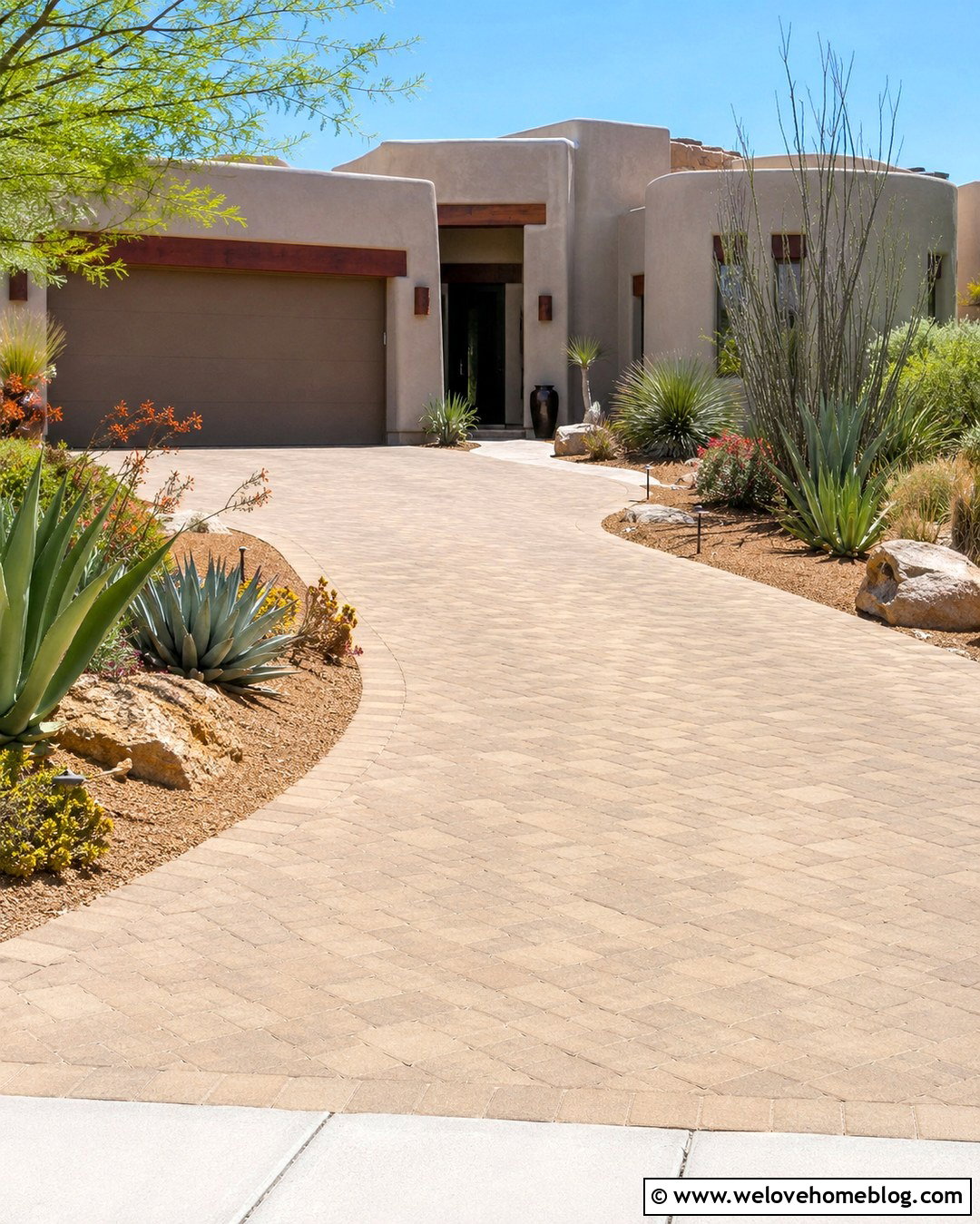
Bright stone, sculptural plants, and open spacing create a driveway landscape that feels appropriate for a hot, dry setting. Choose sand-colored concrete pavers for a wide curved driveway, outlined with a darker rust-toned accent band. Replace traditional lawn borders with decomposed granite beds containing agave, desert spoon, flowering desert shrubs, and small groups of ornamental grass. Arrange several boulders near the entrance and repeat their color beside the house. Maintain generous open space between plants so each form remains visible. A smooth concrete walkway can cross the gravel bed toward a stucco home, while low-profile lighting sits discreetly among the rocks. The complete design feels colorful and intentional without relying on dense planting or a large expanse of turf.
19. Shaded Driveway With Woodland Planting
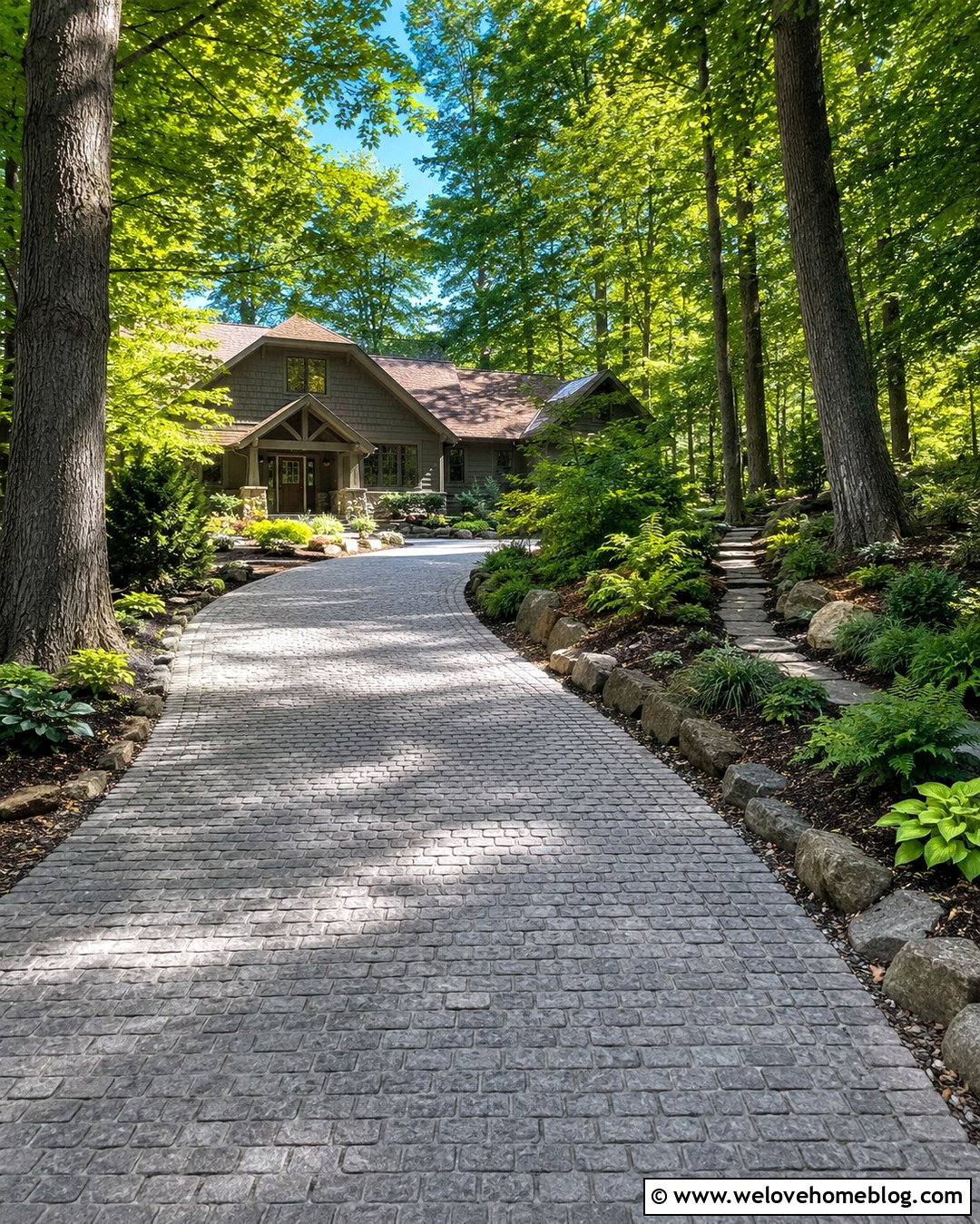
A driveway beneath mature trees can feel inviting when the planting reflects its cooler, shaded surroundings. Use gray cobblestone-look concrete pavers for a curved driveway leading to a craftsman or woodland home. Add natural fieldstone edging along broad beds filled with ferns, hostas, sedges, coral bells, and shade-tolerant shrubs. Layer the lowest plants near the pavement and place taller shrubs farther back among the tree trunks. Brown leaf mulch or fine bark helps the beds blend naturally into the setting. At the house, continue the stone into a short walkway and front-step border. Avoid forcing bright, formal flower rows into the scene. A limited palette of textured foliage gives the driveway a peaceful garden character that complements the existing canopy.
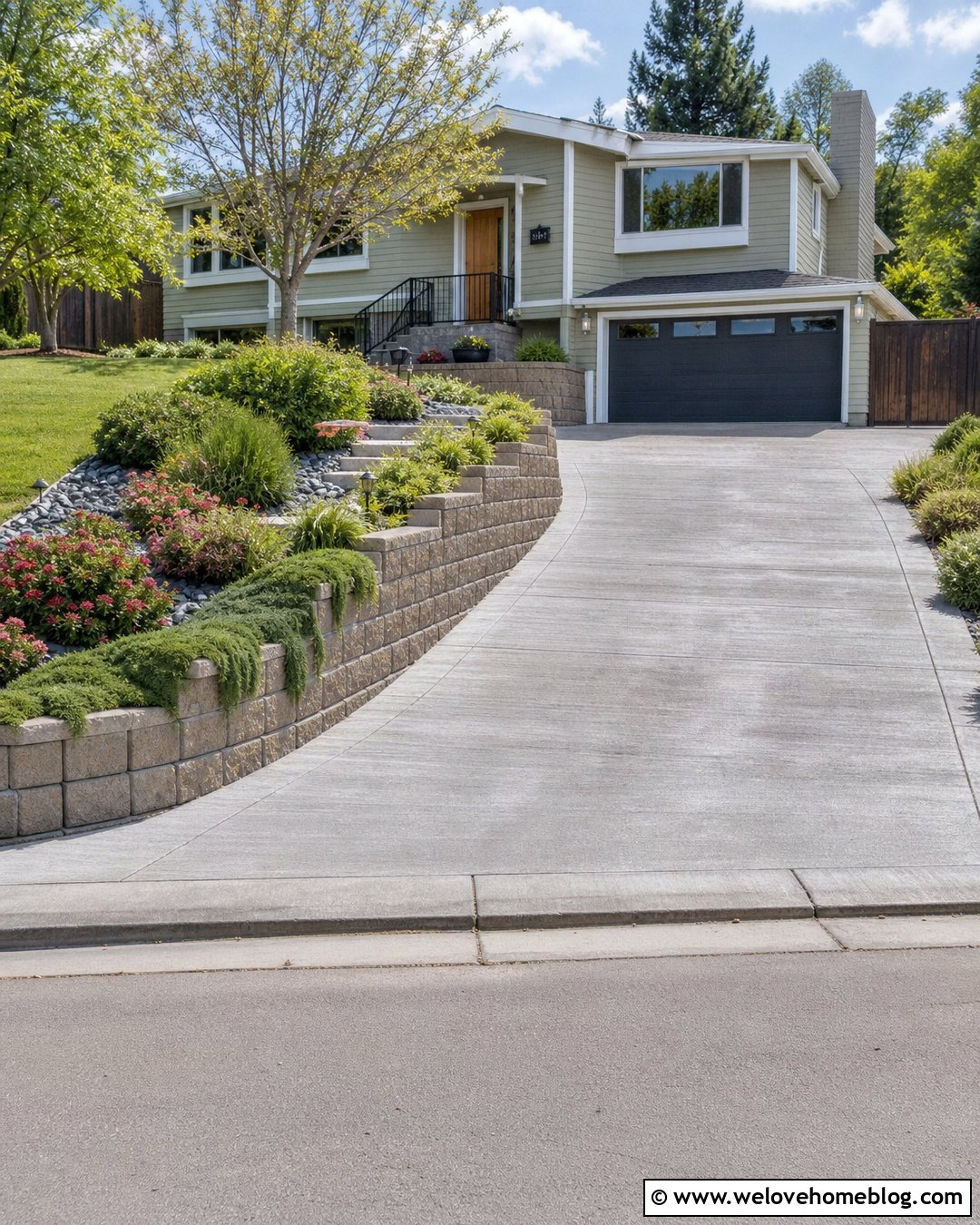

20. Driveway With Low-Voltage Landscape Lighting
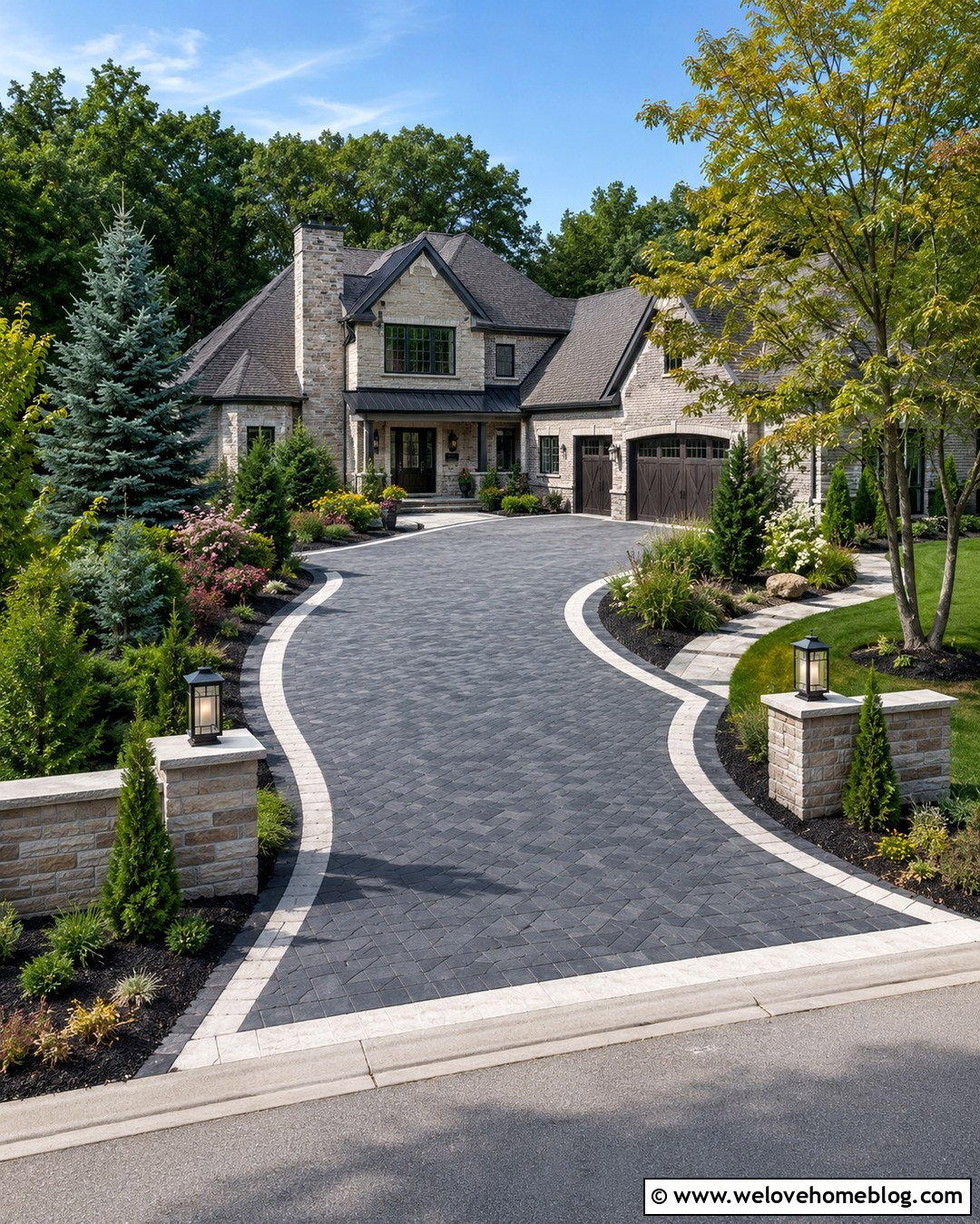
Good driveway lighting should belong to the landscape during the day as well as after sunset. Begin with a dark gray interlocking paver driveway in a broad curved layout, edged with a lighter stone ribbon. Build layered beds containing evergreen shrubs, ornamental grasses, flowering perennials, and two small accent trees. Place discreet low-voltage fixtures inside the planting rather than lining the pavement like a runway. Use downlights near trees, low path lights at walkway intersections, and focused fixtures beside entrance pillars. During daylight, dark bronze housings disappear among mulch and foliage. The driveway material, curved borders, and repeated planting still provide the main visual structure. This approach creates a polished landscape that supports a welcoming arrival without allowing lighting equipment to dominate the design.
Conclusion:
Successful landscape by driveway ideas begin with the complete view from the curb, not with one isolated plant or decorative border. Consider how the driveway material, layout, edging, beds, entrance, walkway, and house will appear together. Curved concrete can support flowing flower beds, gravel can blend into native planting, and formal brick can pair with structured evergreens. Small yards benefit from compact corner beds, while long or circular driveways provide room for trees and larger planting groups. Whatever design you choose, preserve vehicle clearance and keep entrance views open. Repeating a few materials and plants throughout the property will help the finished driveway landscape look connected, practical, and intentionally designed.

Related posts:

Leave a Reply