
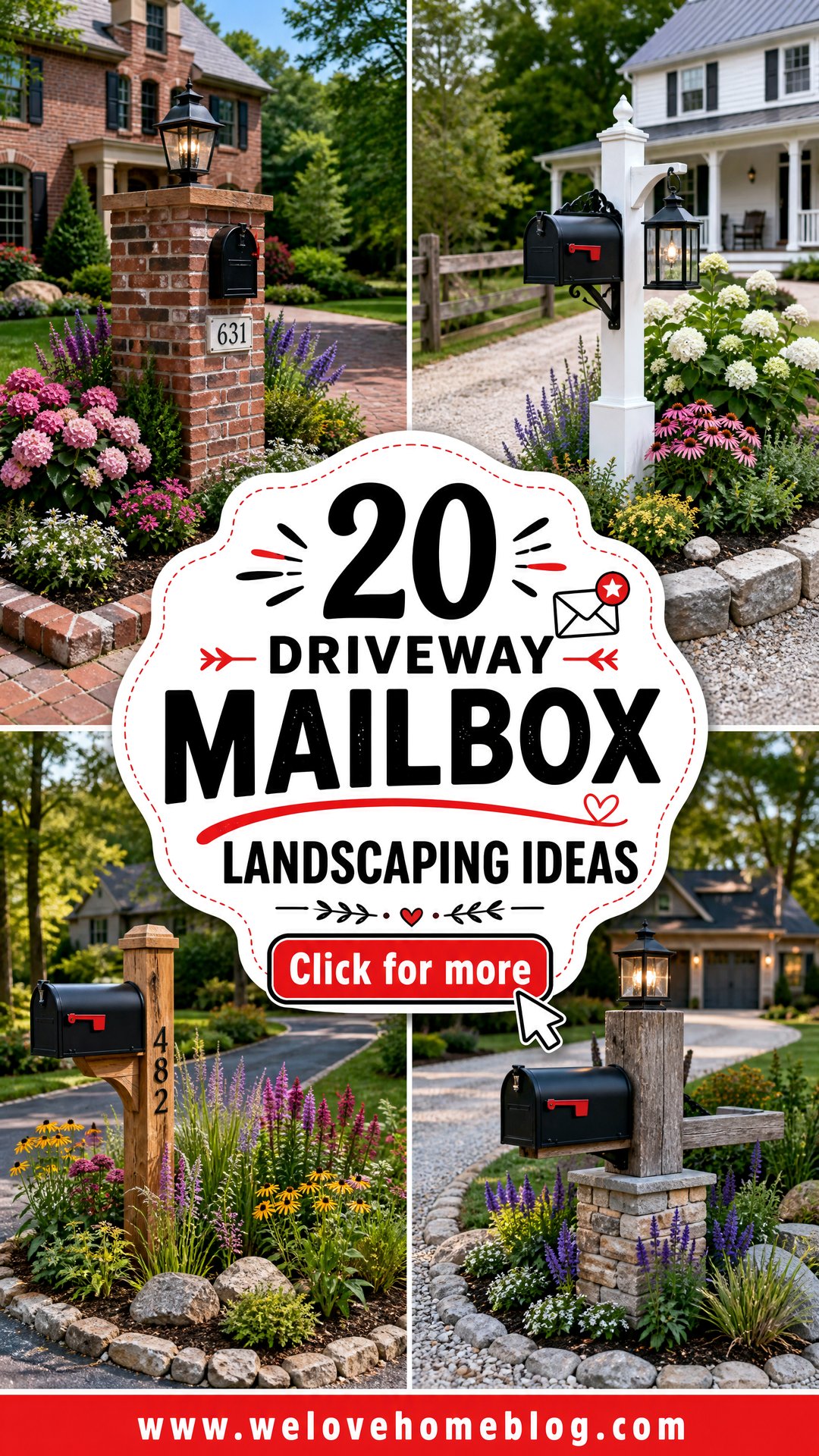
The right mailbox garden can turn the end of an ordinary driveway into a polished, welcoming entrance. These 20 driveway mailbox landscaping ideas combine the mailbox, driveway surface, edging, planting bed, and surrounding yard into one cohesive look. Before digging, confirm underground utility locations, sightlines, drainage, and local rules. USPS generally places curbside mailboxes 41 to 45 inches above the road surface and 6 to 8 inches behind the curb, though homeowners should verify placement with their local post office. () Choose durable plants that tolerate reflected heat, road spray, and occasional foot traffic without hiding the mailbox door or address. From colorful cottage beds to clean modern stone gardens, use these 20 driveway mailbox landscaping ideas to create stronger curb appeal.
1. Small Driveway Mailbox Flower Bed
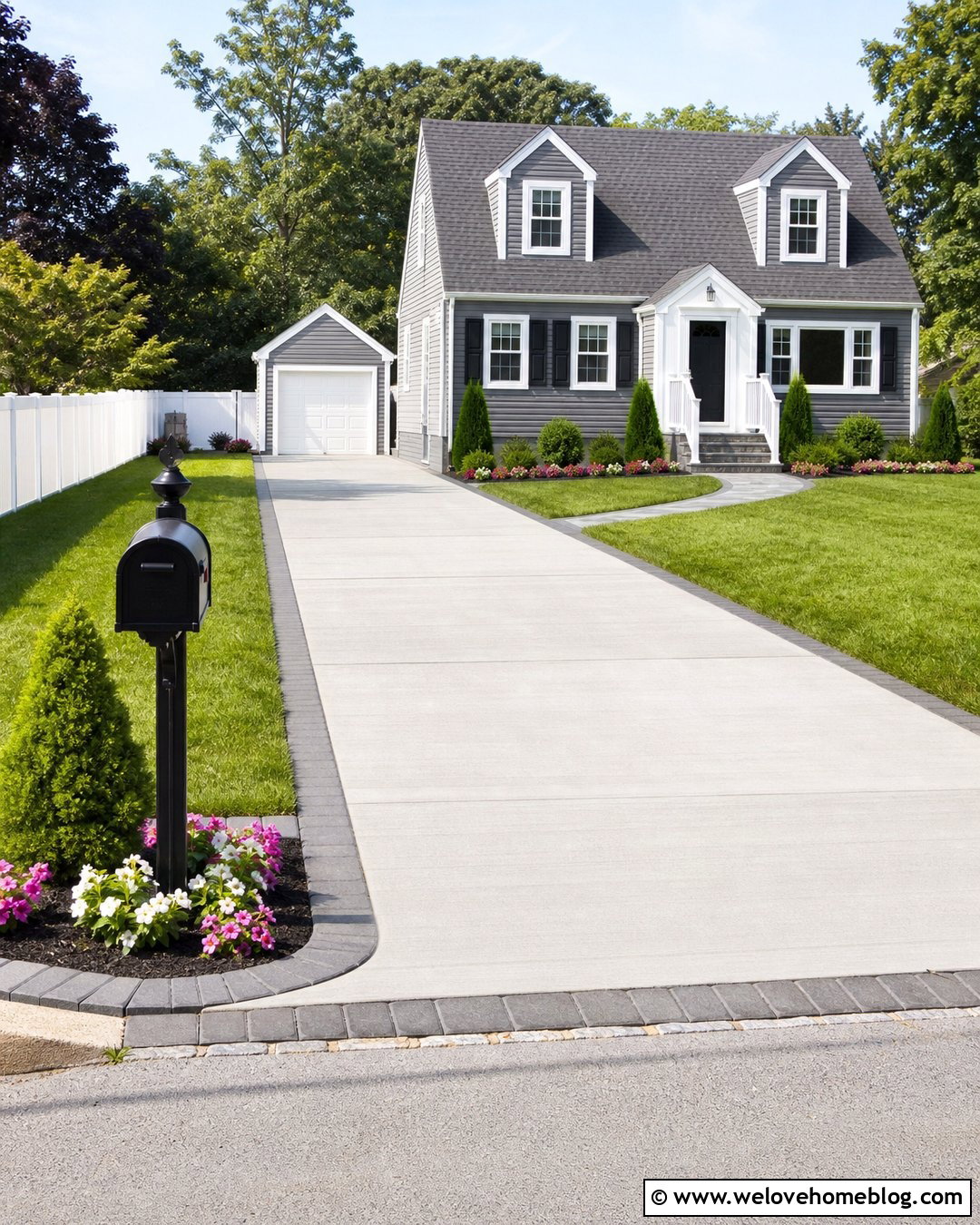
A compact flower bed can make a narrow driveway entrance feel finished without taking over the lawn. Pair a straight gray poured-concrete driveway with a simple black post mailbox and a small oval bed that follows the curb. Edge the garden with charcoal concrete pavers to connect visually with the driveway surface. Plant low-growing annuals near the street, then add compact perennials and one small evergreen behind them for year-round structure. Keep taller growth away from the mailbox door and house numbers. Dark mulch provides a clean background for colorful flowers while helping the bed retain moisture. Repeat one or two flower colors near the front walkway or porch so the mailbox garden feels connected to the house rather than like an isolated decoration.
2. Driveway Mailbox Landscaping With River Rock
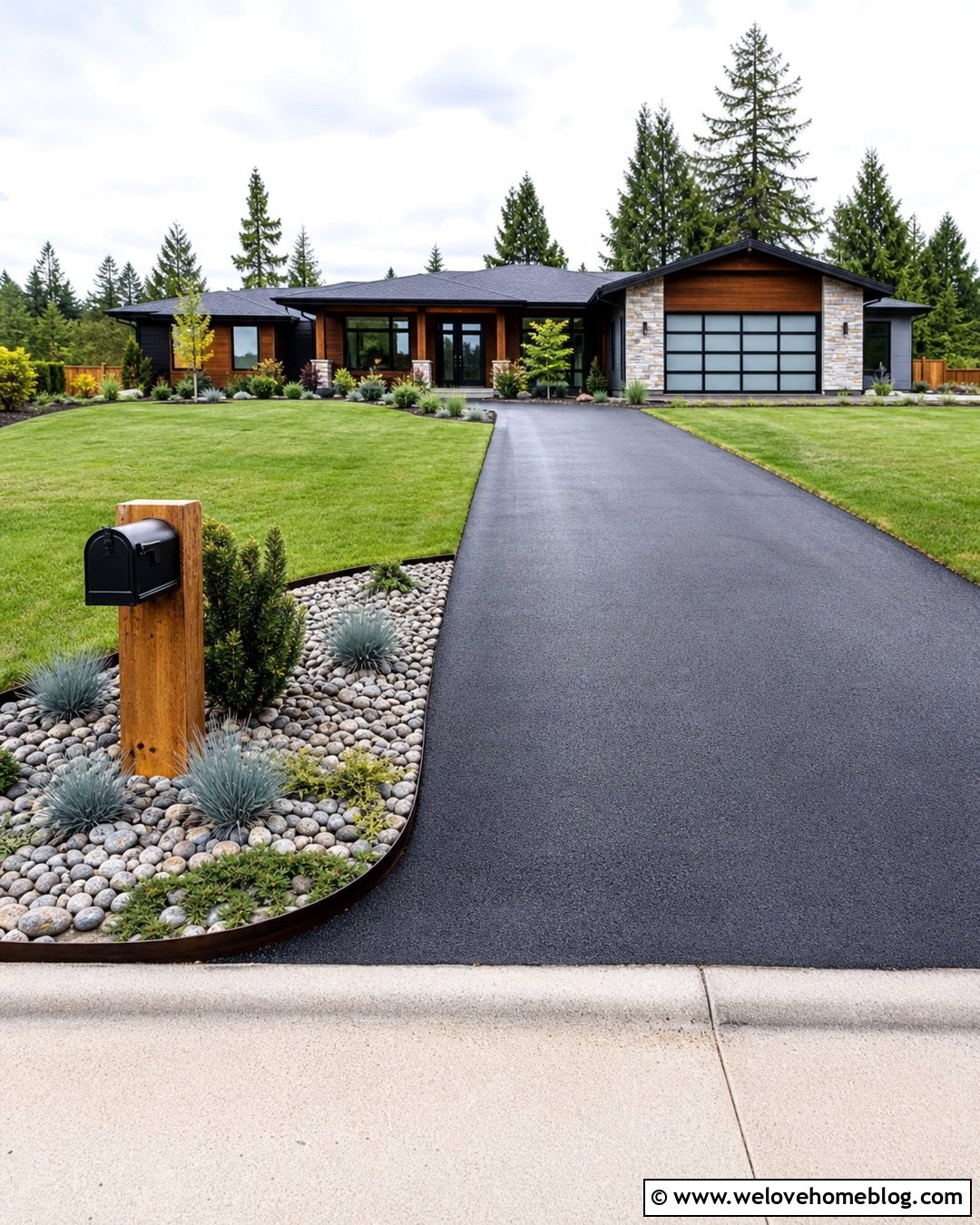
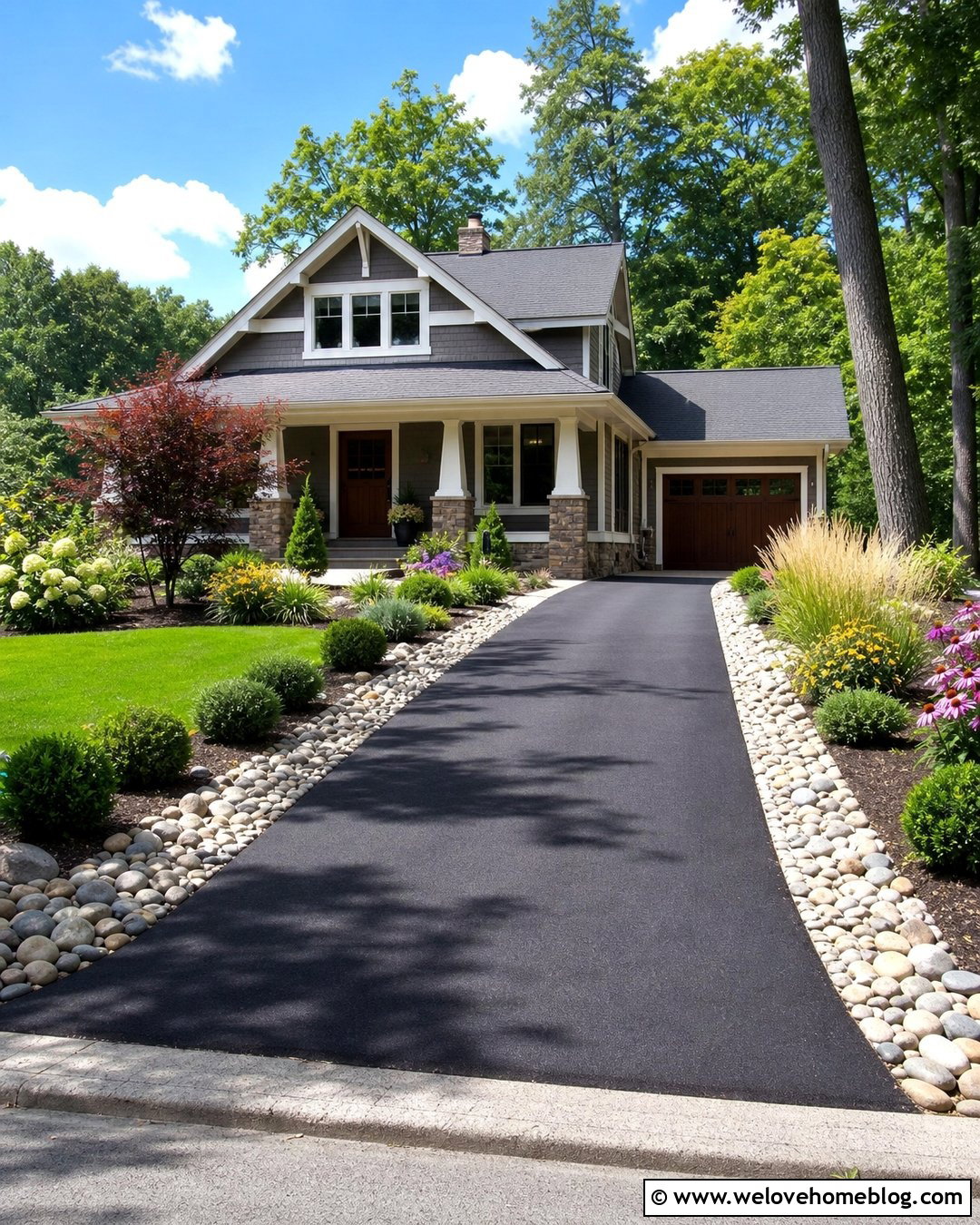
River rock creates a tidy mailbox garden that works especially well beside a black asphalt driveway. Shape the bed as a gentle crescent wrapping around the mailbox post and the outer driveway corner. Use smooth gray and tan river stones over a properly prepared base, then define the perimeter with dark metal edging. Add a few widely spaced dwarf evergreens, blue fescue, and creeping ground cover to soften the stone without creating a crowded appearance. A cedar mailbox post introduces warmth and looks natural against the cool-colored rocks. Leave a clear strip beside the mailbox door so delivery remains easy. This complete design handles a sunny curb with minimal visual clutter while connecting the dark driveway, warm wood post, green planting, and neutral stone into a balanced entrance.
3. Brick Driveway Mailbox Landscaping

A brick mailbox can become a strong architectural anchor when its colors relate to the driveway and house. Place a red-and-brown brick mailbox column beside a clay brick paver driveway laid in a herringbone pattern. Create a rounded planting bed that extends from the column along the driveway entrance, using matching soldier-course bricks as edging. Fill the bed with compact boxwoods, white flowering perennials, and seasonal annuals in restrained colors. The evergreen shrubs provide structure, while lighter blooms prevent the brickwork from feeling too heavy. Add brown hardwood mulch and keep the front of the mailbox unobstructed. This coordinated approach suits Colonial, Georgian, and traditional brick homes because the mailbox, driveway pattern, garden border, and facade share materials while the soft planting keeps the overall curb view inviting.
4. Modern Driveway Mailbox Landscaping
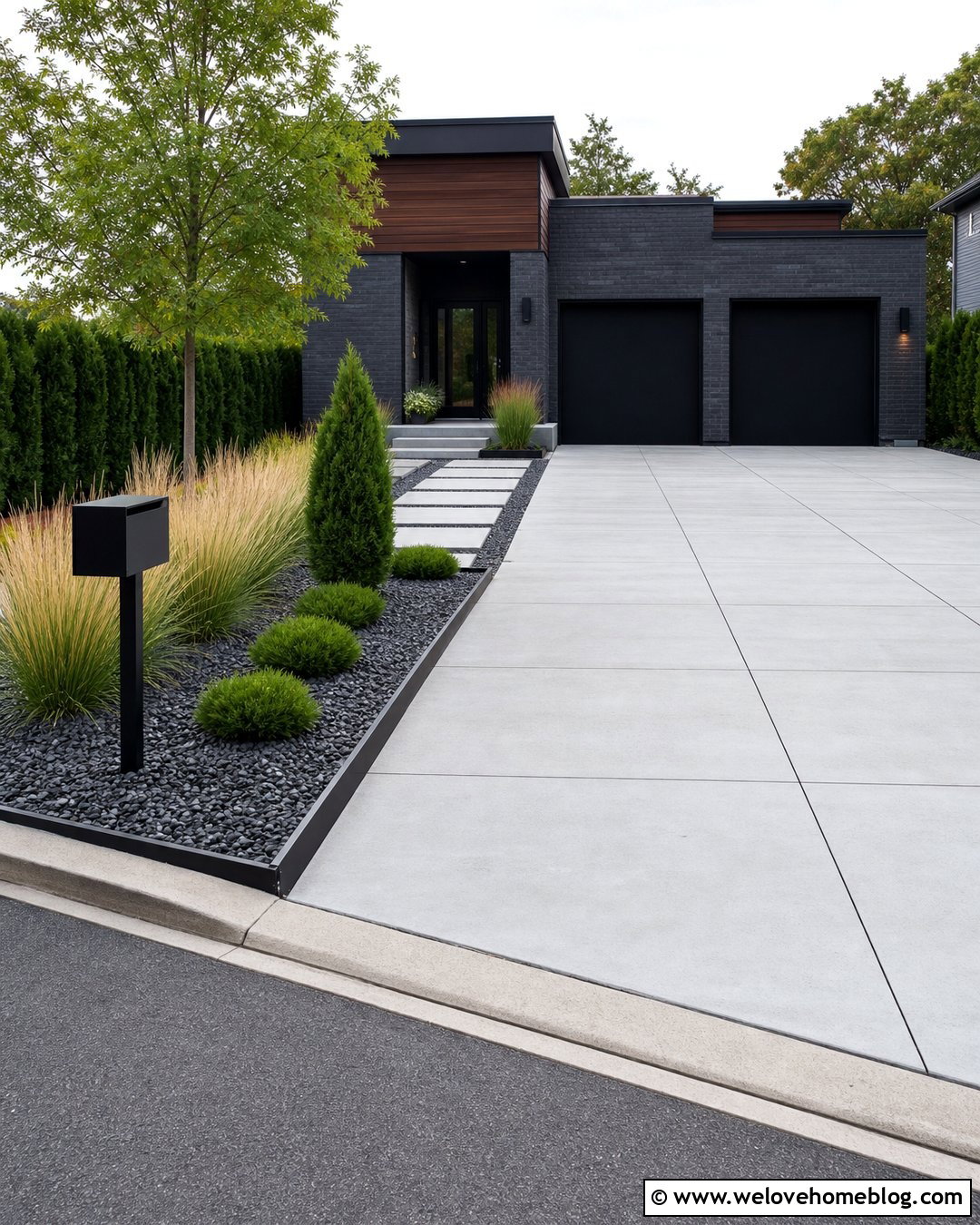
Clean lines and a limited planting palette give a contemporary driveway entrance a sharper appearance. Start with a wide light-gray poured-concrete driveway featuring narrow control joints in a simple grid. Install a slim matte-black mailbox on a rectangular post near one corner, then surround it with a geometric bed of dark basalt gravel. Use black steel edging to form a crisp rectangle aligned with the driveway. Plant three or five sculptural grasses, low evergreen mounds, and a single compact upright shrub. Repetition matters more than variety in this design. A line of rectangular concrete stepping pads can connect the mailbox area to the front walkway if space allows. The pale driveway, black mailbox, dark gravel, and restrained greenery create a cohesive entrance that complements a modern home without becoming cold or bare.
5. Farmhouse Driveway Mailbox Landscaping
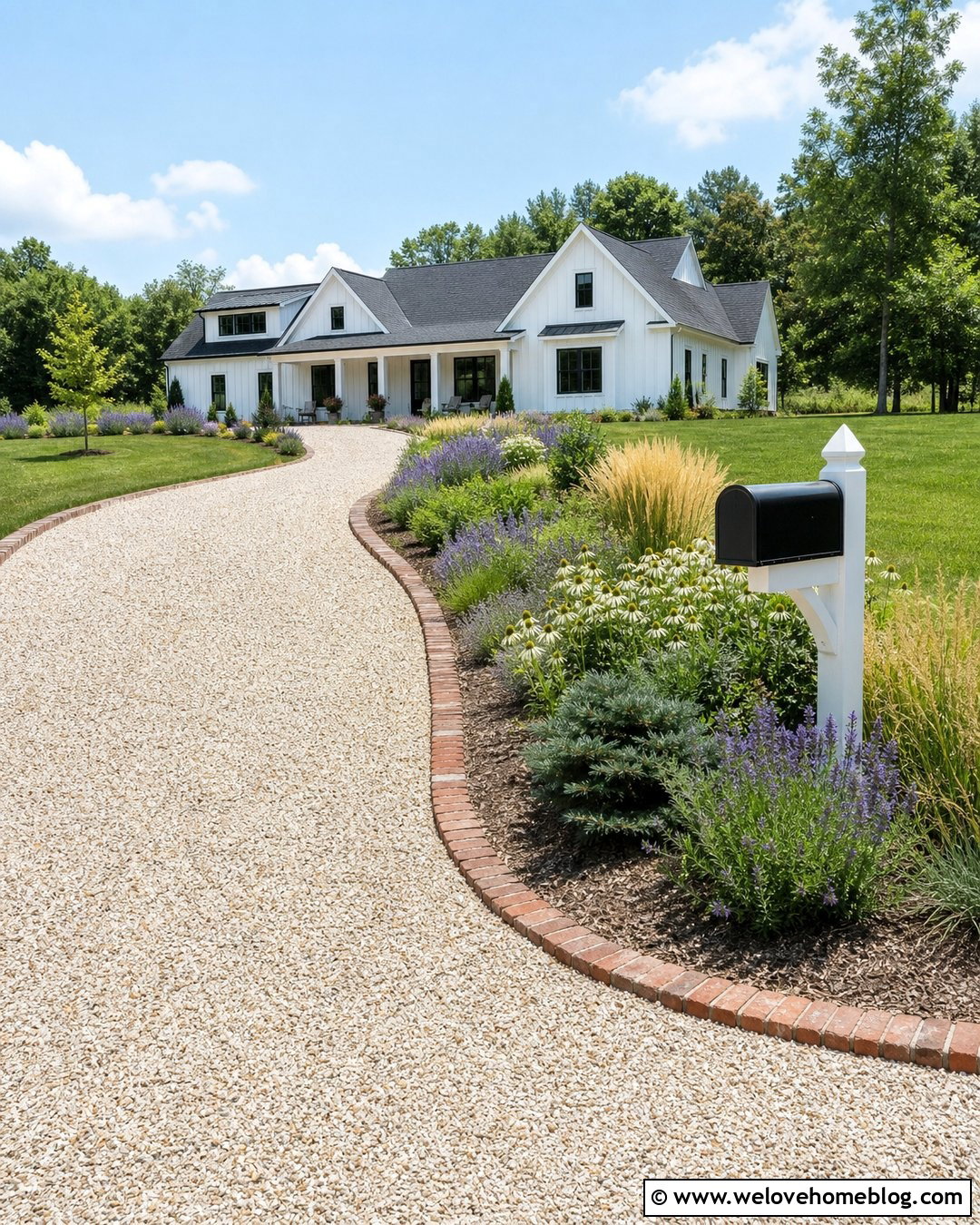
Imagine a white farmhouse appearing beyond a gently curved pea gravel driveway framed by relaxed, colorful planting. A white wooden mailbox post with a black metal box sets the tone near the entrance. Surround it with a broad kidney-shaped bed edged in reclaimed brick or weathered cobblestone. Plant lavender, catmint, white coneflowers, and compact ornamental grasses in loose groups rather than rigid rows. Add one low evergreen shrub for winter structure and use natural brown mulch between plants. The soft purple and white flowers complement the pale gravel, while the aged edging adds character. Continue a few of the same plants along the driveway curve or front fence. This repetition makes the mailbox landscape feel like the beginning of the property’s overall farmhouse garden instead of a separate roadside flower patch.
6. Driveway Mailbox Landscaping With Hydrangeas
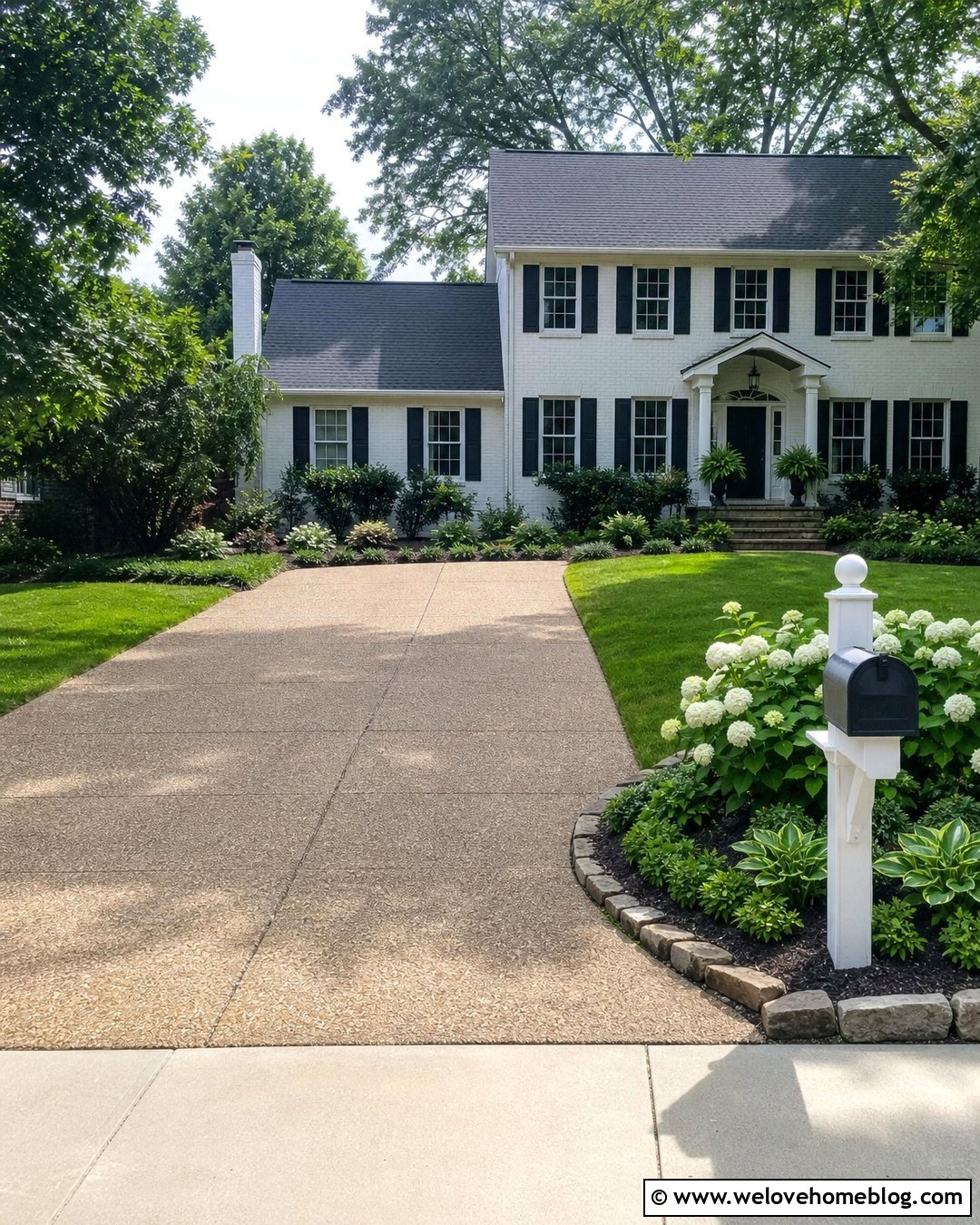
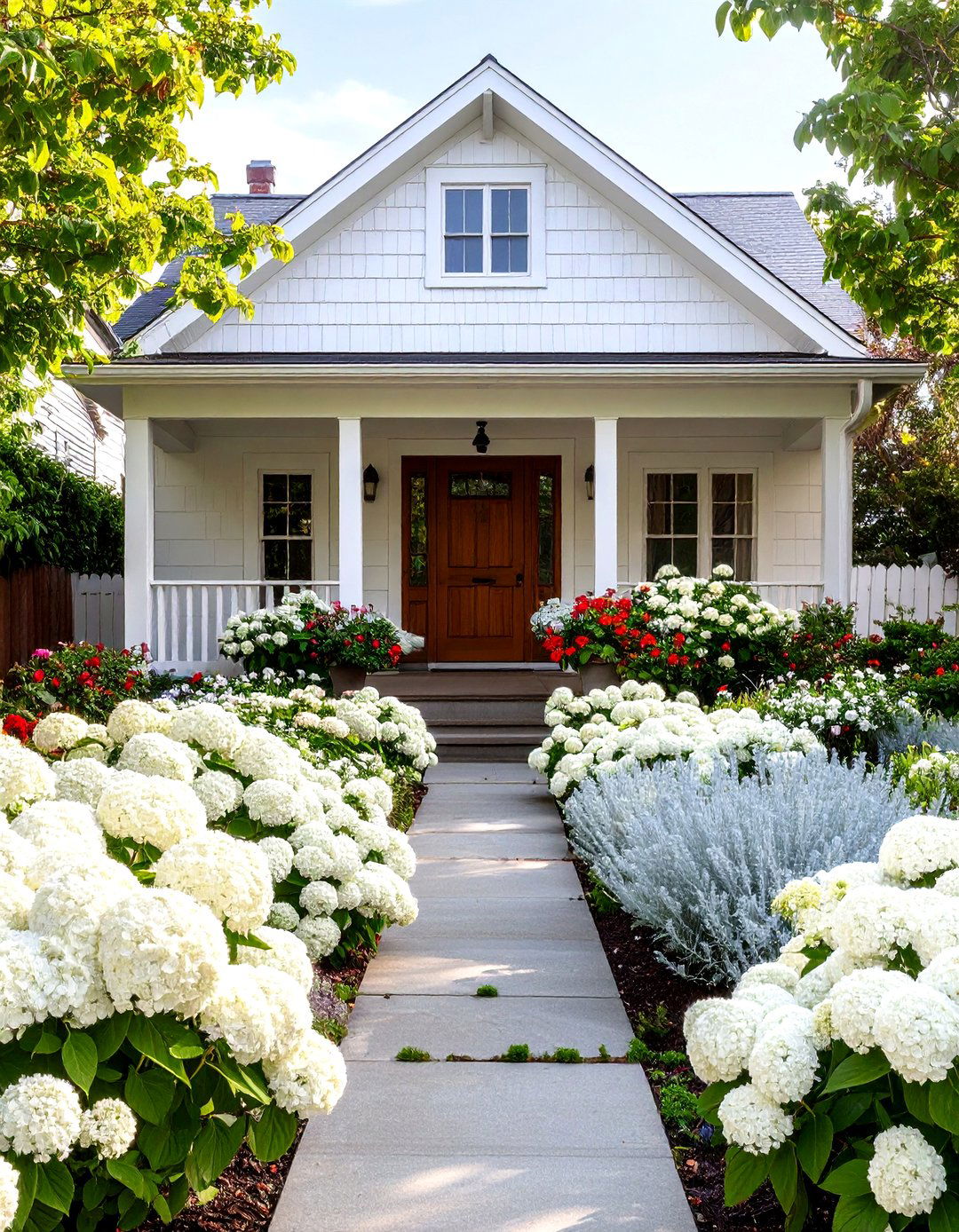
Hydrangeas can create a lush entrance, but compact varieties and careful placement are essential near a working mailbox. Pair a straight exposed-aggregate concrete driveway with a white mailbox post and a generously curved planting bed. Position one compact hydrangea behind or to the house side of the post, where mature branches will not block the door, flag, address, or driver visibility. Add low hostas or shade-tolerant ground cover beneath it if the location receives afternoon shade. Define the bed with smooth natural stone that picks up the tan aggregate in the driveway. Dark mulch makes pale hydrangea flowers stand out and gives the garden a finished appearance. Repeat another hydrangea near the porch to link the curbside planting with the house and create a cohesive traditional front-yard landscape.
7. Low-Maintenance Driveway Mailbox Landscaping
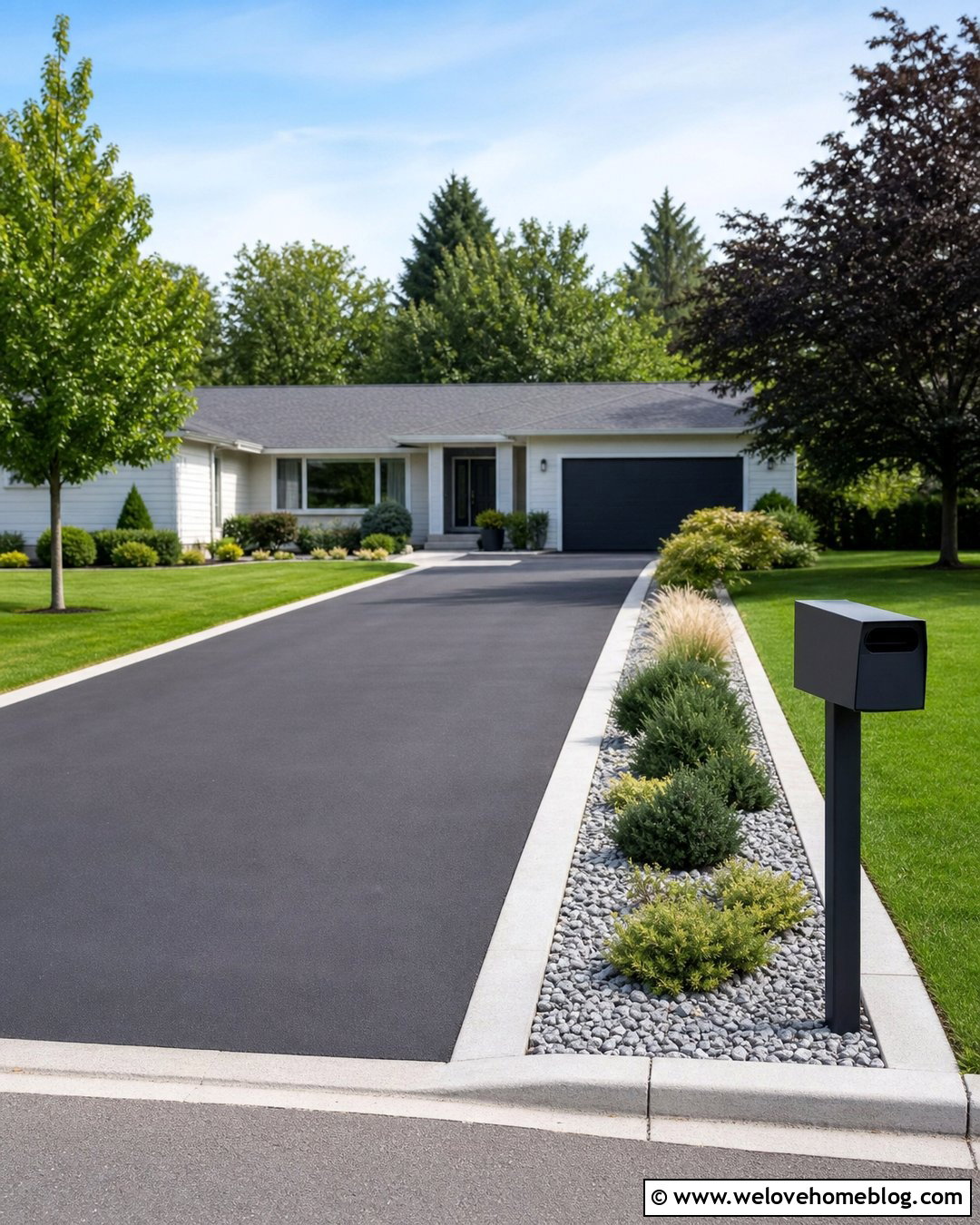
For an entrance that stays neat with limited upkeep, combine durable hardscaping with a short list of reliable plants. Use a straight black asphalt driveway, a charcoal metal mailbox, and an elongated bed filled with light-gray crushed stone. Edge the bed with flush concrete curbing so lawn equipment can pass easily and gravel remains contained. Plant compact junipers, dwarf ornamental grasses, and spreading ground cover in evenly spaced groups. Their varied forms add interest without relying on constant seasonal color. Install drip irrigation beneath the stone if the curb receives intense sun and dries quickly. Avoid placing landscape fabric directly around plants without allowing room for growth and water penetration. The contrast between dark asphalt, pale stone, evergreen foliage, and a simple mailbox produces an orderly entrance suited to ranch and contemporary suburban homes.
8. Driveway Mailbox Landscaping With Ornamental Grass
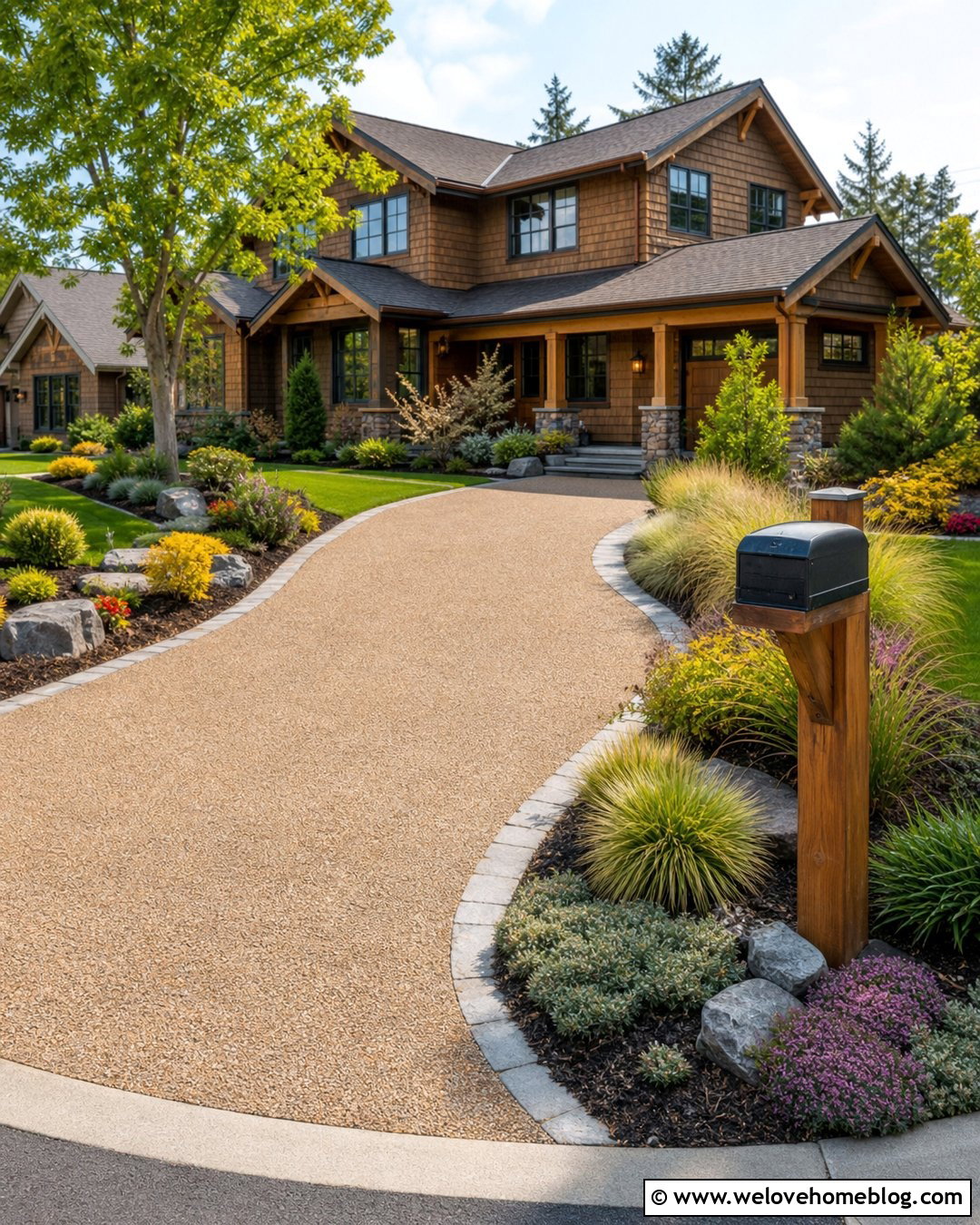
Ornamental grasses bring movement and texture to a mailbox garden, especially beside a long driveway with an open front lawn. Match a curved tan resin-bound gravel driveway with a dark bronze mailbox mounted on a cedar post. Form a sweeping bed that echoes the driveway curve, then edge it with a narrow band of cobblestone. Use compact fountain grass or another locally appropriate clumping grass behind the mailbox, keeping its mature height and width away from the door. Add low sedum, creeping thyme, and small evergreen shrubs closer to the street. The combination provides layered texture without hiding the entrance. Cut back deciduous grasses at the appropriate seasonal time and divide crowded clumps as needed. This design suits Craftsman and prairie-influenced homes because its natural shapes balance structured hardscape.
9. Driveway Mailbox Landscaping With Native Plants
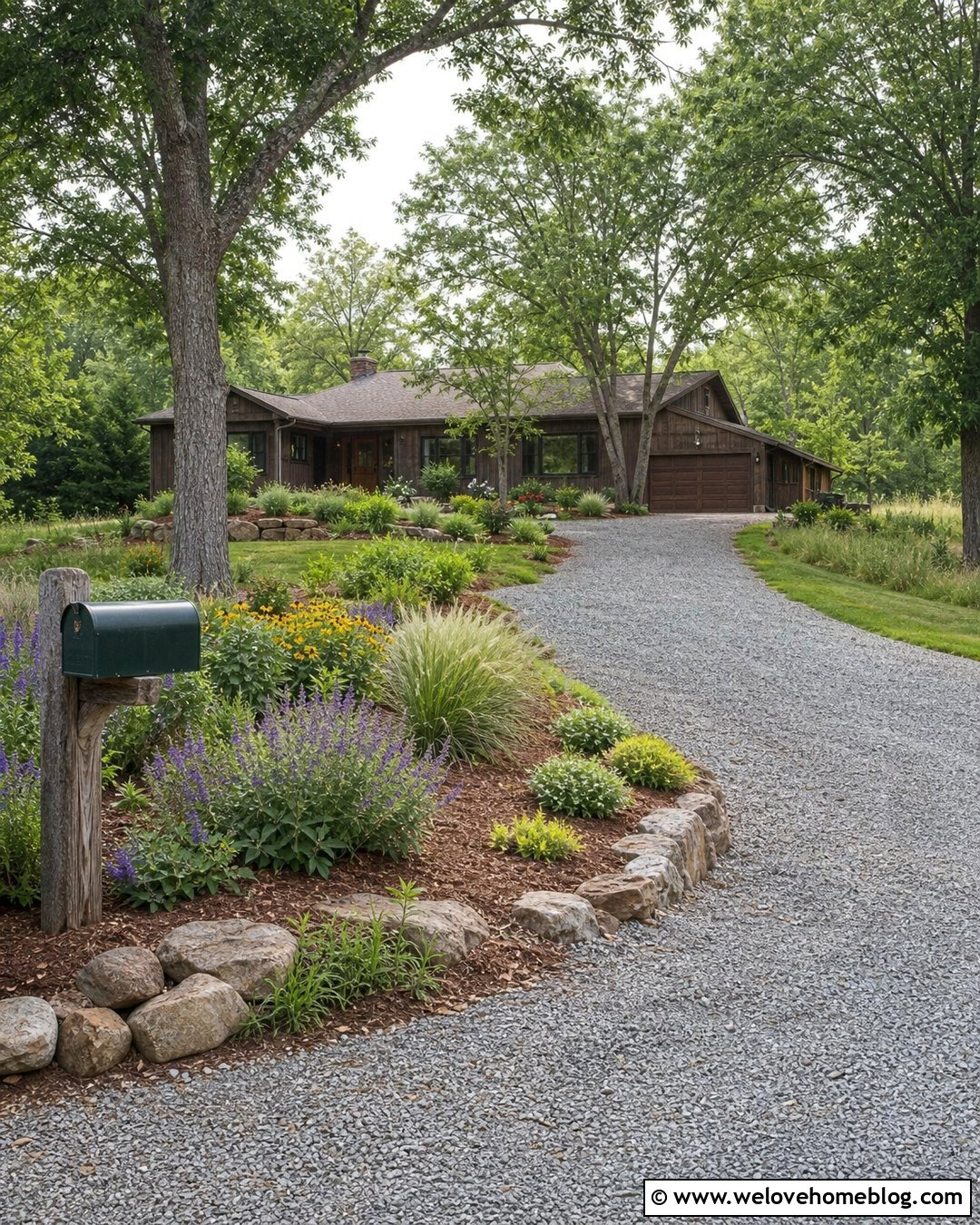
Native planting can make the mailbox area feel connected to the surrounding region rather than overly formal. Beside a warm-gray gravel driveway, create an informal crescent bed edged with locally sourced fieldstone. Install a simple weathered-wood post and dark green mailbox that blends into the landscape. Choose compact native grasses, flowering perennials, and ground covers suited to the site’s sunlight, soil, rainfall, and winter conditions. Arrange them in broad groups so the design appears intentional from the street. Keep the lowest plants near the mailbox door and preserve an open access zone for the carrier. A thin layer of shredded mulch helps unify the young planting while it fills in. Repeating selected native plants farther along the driveway creates continuity and gives the entire entrance a relaxed, regionally appropriate character.

10. Curved Driveway Mailbox Landscaping
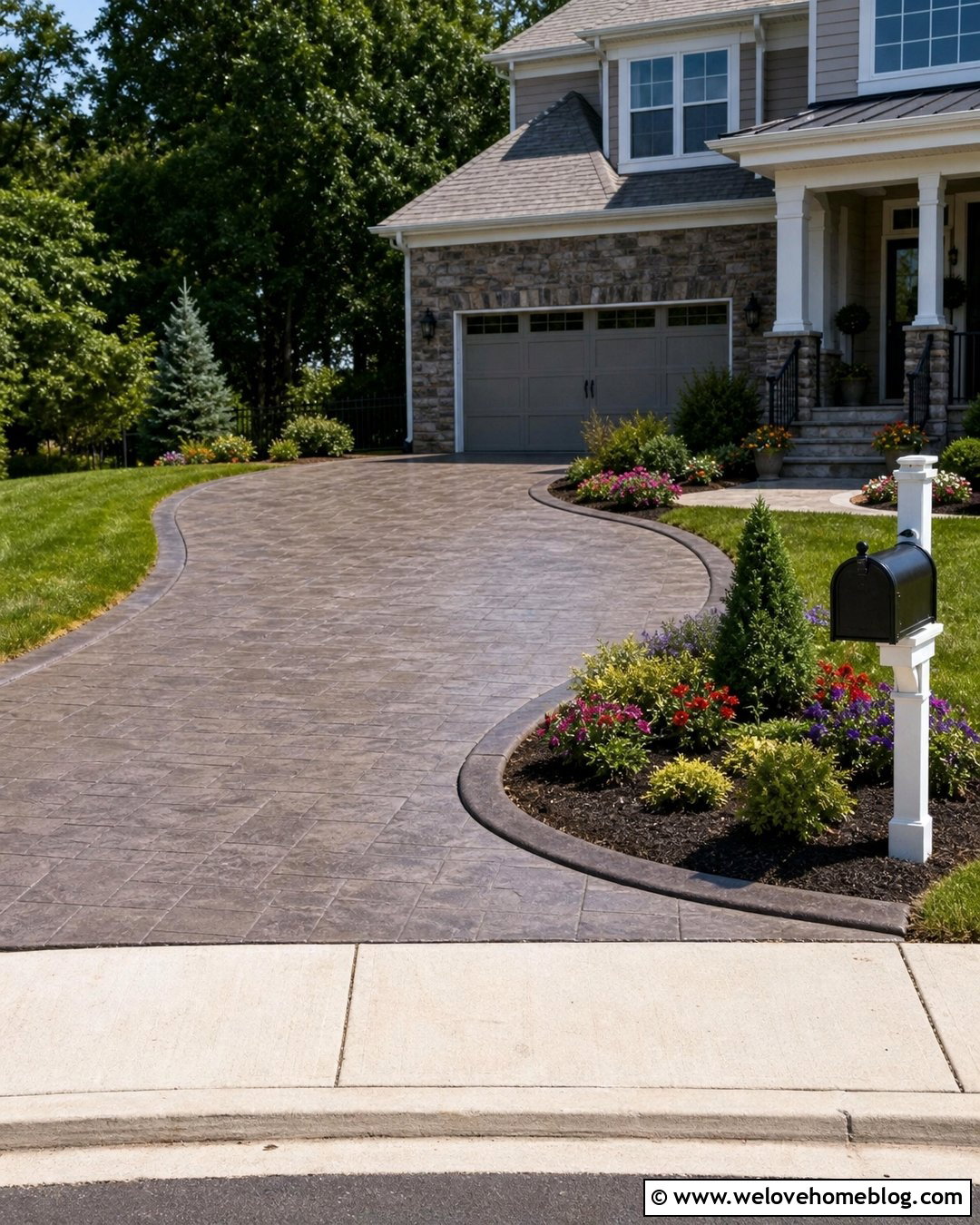
A curved planting bed can soften the hard meeting point between the road, driveway, and lawn. Begin with a gently curved stamped-concrete driveway in a warm slate finish. Position a traditional black mailbox on a white post just beyond the driving path, then outline a broad teardrop-shaped garden with matching concrete edging. Place a compact evergreen at the widest end, medium-height flowering perennials in the middle, and low annuals near the curb. The layered arrangement directs attention toward the mailbox while preserving clear visibility for anyone entering or leaving the property. Continue the bed a short distance along the driveway rather than forming a tiny circle around the post. That extended shape makes the landscaping feel proportional to the driveway and gives the entrance a smoother, more generous appearance from the street.
11. Driveway Mailbox Landscaping With Paver Edging
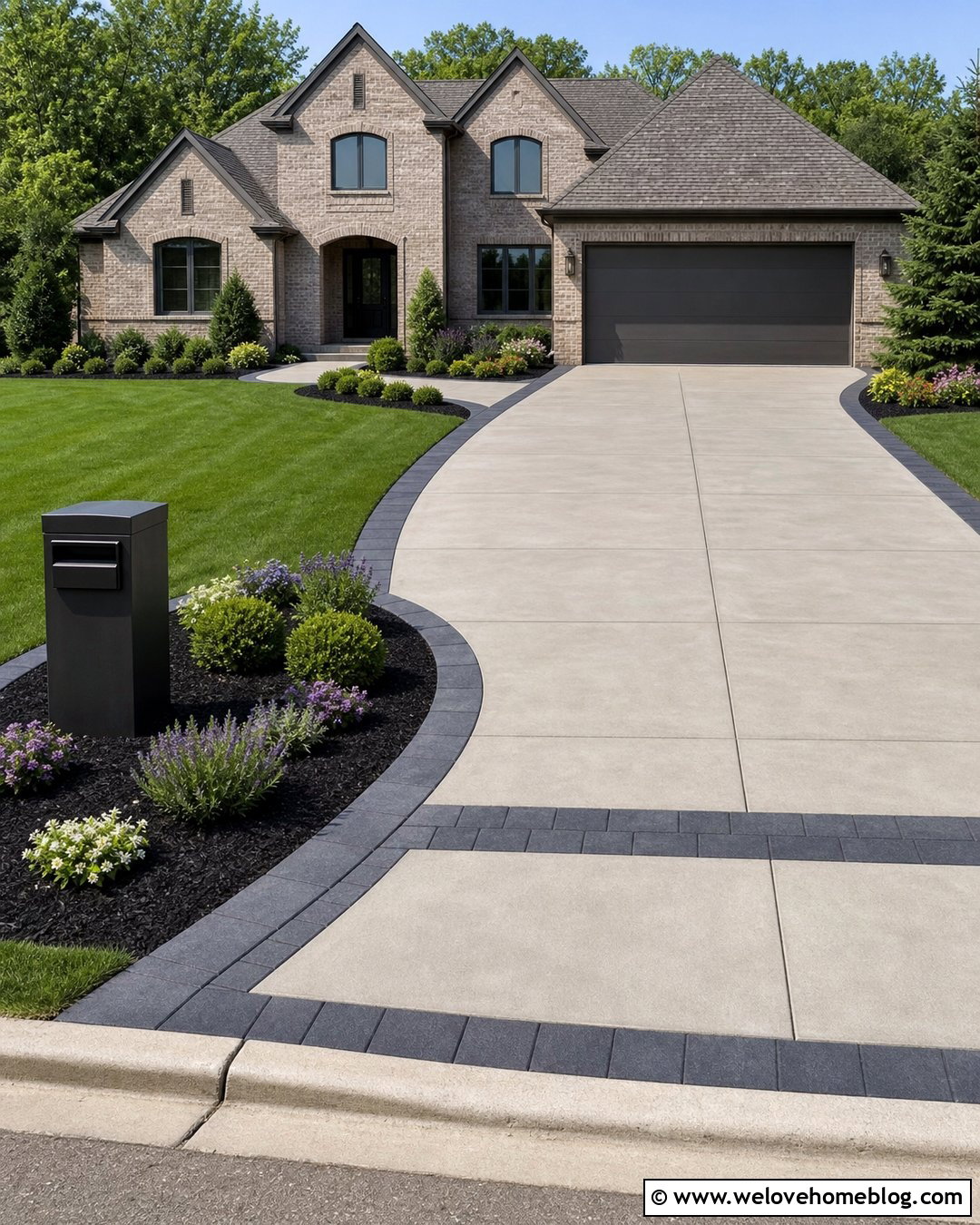
Paver edging gives a mailbox bed definition while creating a visual connection to the driveway. Pair a broom-finished light-gray concrete driveway with a rectangular black mailbox and a bed edged in charcoal interlocking pavers. Run the same pavers as a narrow ribbon across the driveway entrance or along its outer sides for a coordinated finish. Inside the garden, combine clipped dwarf shrubs, low flowering perennials, and dark shredded mulch. Shape the bed as an elongated oval so it frames both the mailbox and the driveway corner without interfering with vehicle movement. Set the edging close to lawn level to simplify mowing and reduce trimming. This polished arrangement works with many suburban homes because it adds architectural order while allowing enough softness and color to make the street-facing entrance feel welcoming.
12. Driveway Mailbox Landscaping With Ground Cover
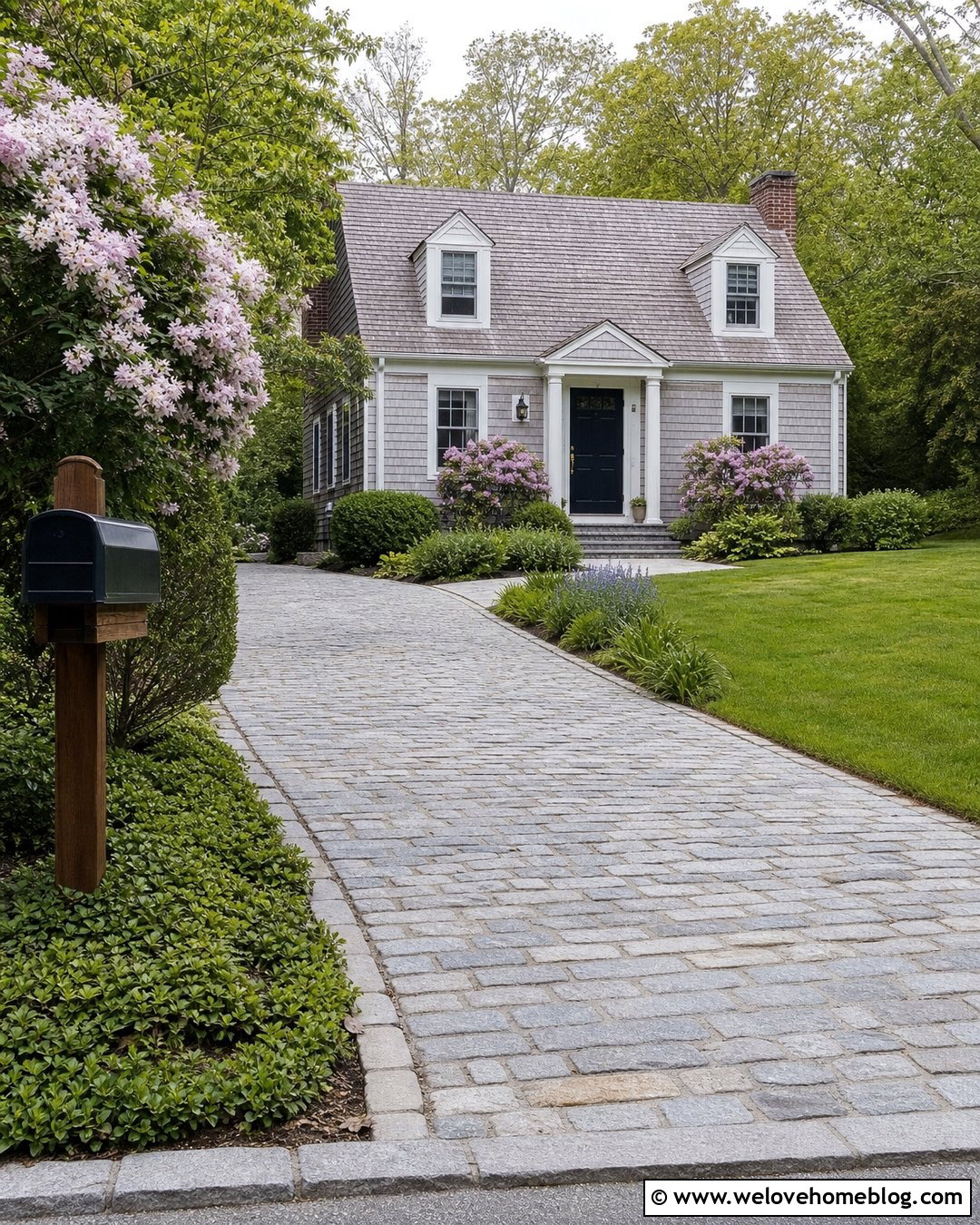
A living ground-cover bed can replace patchy grass around a mailbox and soften a hard driveway edge. Next to a narrow cobblestone driveway, install a classic dark mailbox on a stained wood post and form a low, flowing garden around it. Use stone edging that matches the cobblestone, then plant a site-appropriate spreading ground cover in generous drifts. Add two compact flowering shrubs behind the mailbox and a few upright perennials for seasonal height. Keep the ground cover from spreading into the curb, driveway joints, or mailbox access zone by trimming it regularly. The low planting creates a smooth transition between the lawn and textured paving without producing a visual barrier. This layered yet restrained look complements Cape Cod, cottage, and Craftsman homes, particularly when the plant colors repeat those near the front entry.
13. Driveway Mailbox Landscaping With Roses
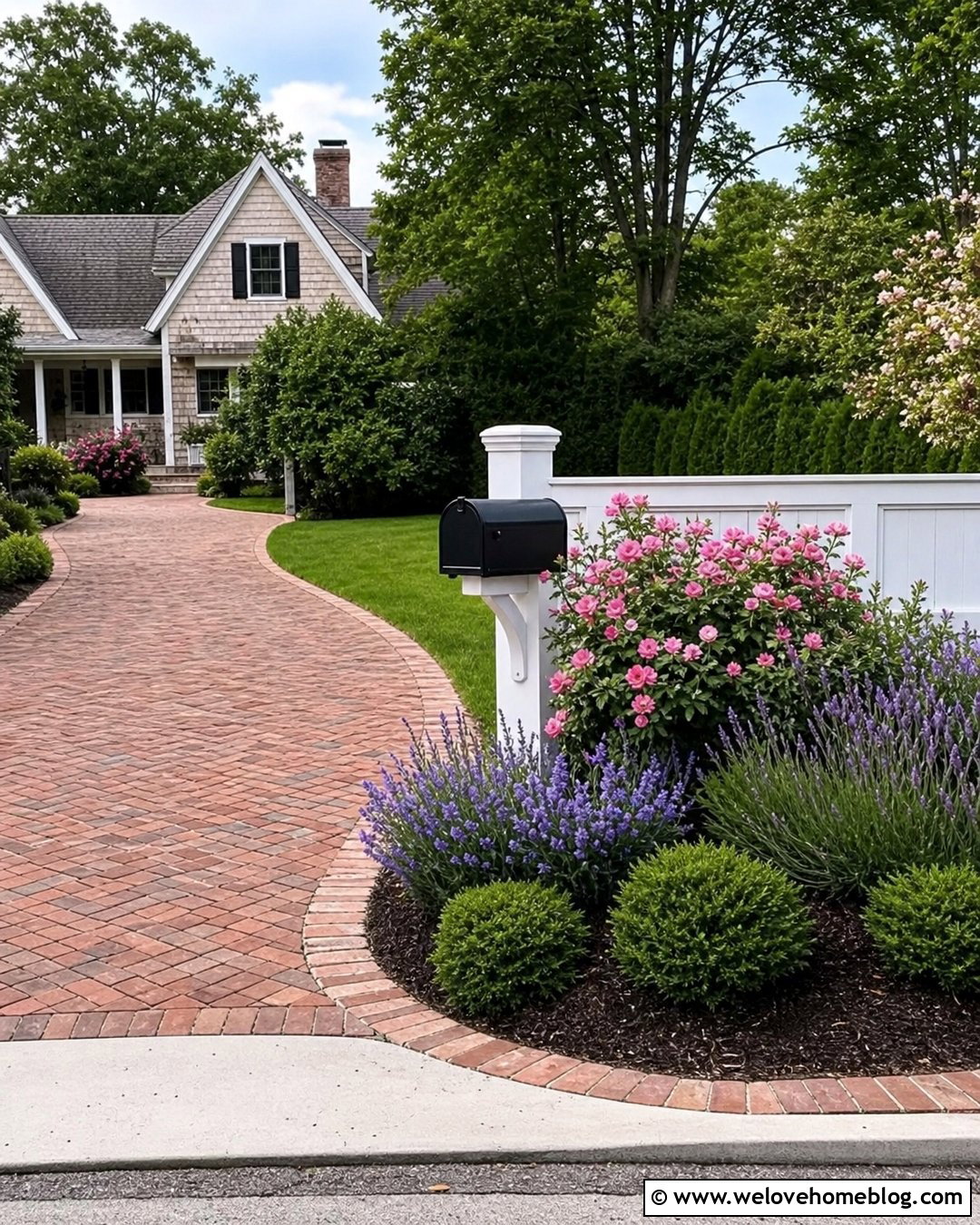
Roses can create a romantic driveway entrance when their thorns and mature growth are kept away from drivers, pedestrians, and mail delivery. Pair a soft-red clay brick driveway with a white wooden mailbox post and a curved bed edged in matching brick. Place one compact shrub rose on the lawn side of the post rather than directly beneath the mailbox door. Surround it with low lavender, catmint, or small evergreen mounds that cover bare stems and extend the flowering season. Use dark mulch for contrast and leave a generous maintenance path around the box. A simple white fence panel behind the bed can reinforce a cottage look without blocking visibility. Together, the brick paving, white mailbox, layered flowers, and curved border create an inviting entrance suitable for traditional or cottage-style homes.
14. Driveway Mailbox Landscaping With a Small Tree
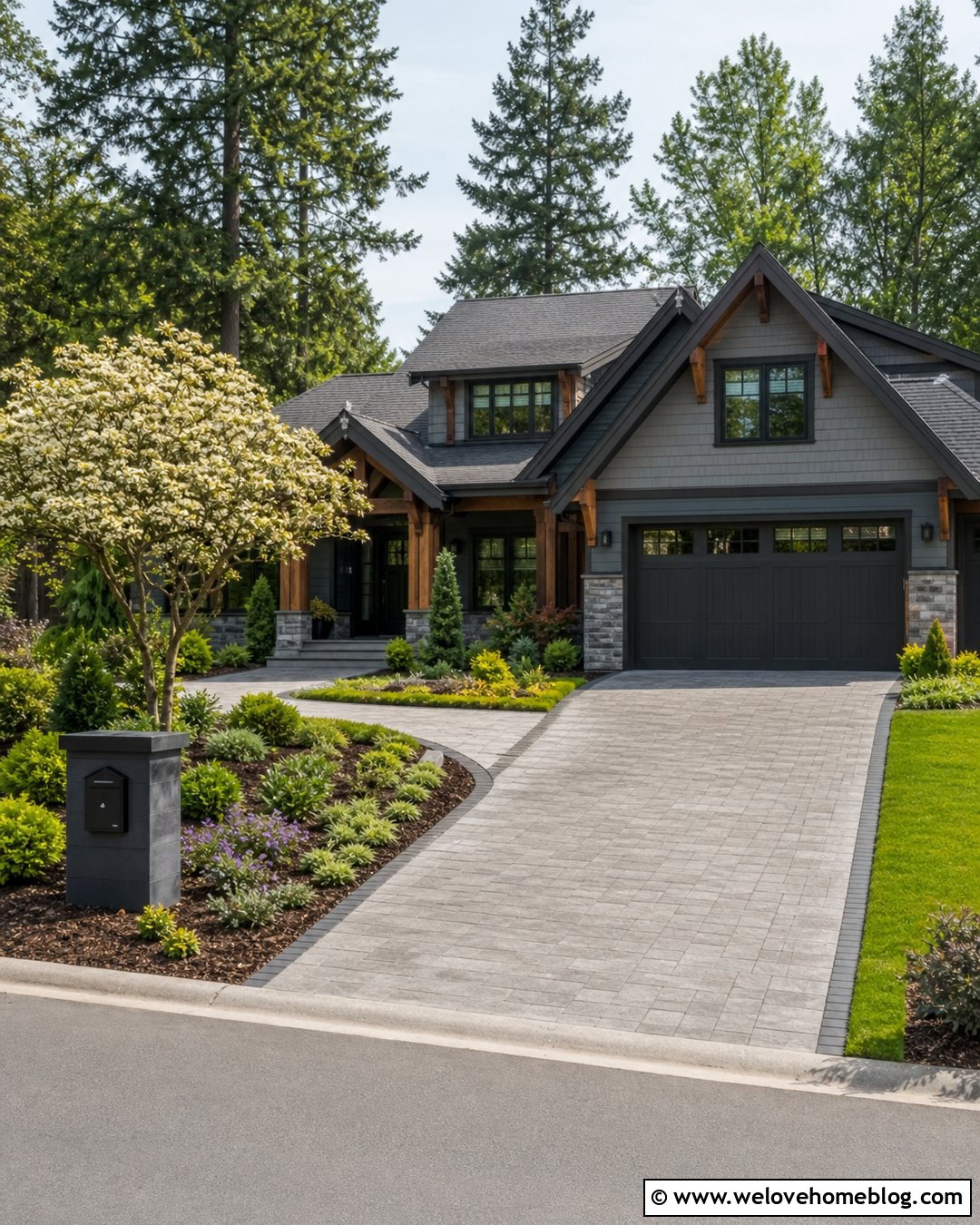
A small ornamental tree can frame the driveway entrance while giving the mailbox garden height and seasonal presence. Use a wide gray concrete paver driveway with a charcoal mailbox column and a large asymmetrical planting bed at one side. Position the tree several feet behind and away from the mailbox, selecting its location according to mature canopy and root size. Underplant it with low evergreen shrubs, shade-tolerant perennials, and a continuous layer of mulch. Edge the bed with a contrasting dark paver course that mirrors the mailbox color. Keep branches pruned away from the road and preserve clear views for vehicles entering the street. When repeated with a matching tree or large shrub on the opposite driveway side, this arrangement can produce a balanced gateway without requiring formal pillars or a heavy entrance structure.

15. Driveway Mailbox Landscaping With Solar Lights
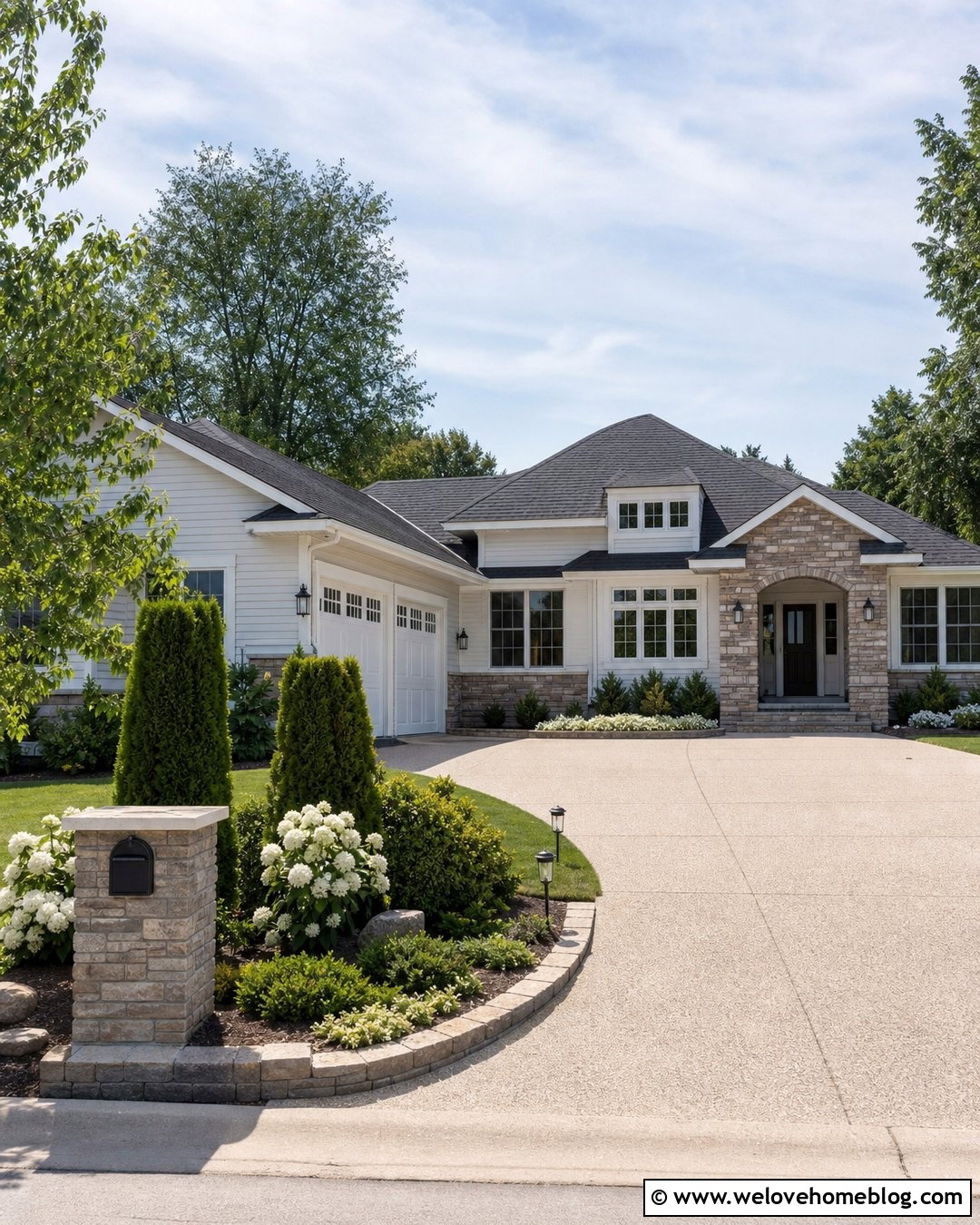
Lighting can make a mailbox easier to locate while also emphasizing the driveway entrance after sunset. During the day, the design should still look complete. Combine a pale exposed-aggregate driveway with a black mailbox mounted on a low stacked-stone base. Wrap the base with a semicircular bed edged in coordinating stone and planted with compact evergreens, white flowers, and low ground cover. Add two small solar path lights along the garden’s rear edge, aiming them toward the planting and address area rather than into the road. Choose fixtures with simple black or bronze finishes that match the mailbox hardware. Keep wires, panels, and lights away from mower paths. The stone, restrained planting, and evenly spaced fixtures create a polished entrance that complements Craftsman, ranch, and transitional homes without making the curb feel overdecorated.
16. Gravel Driveway Mailbox Landscaping
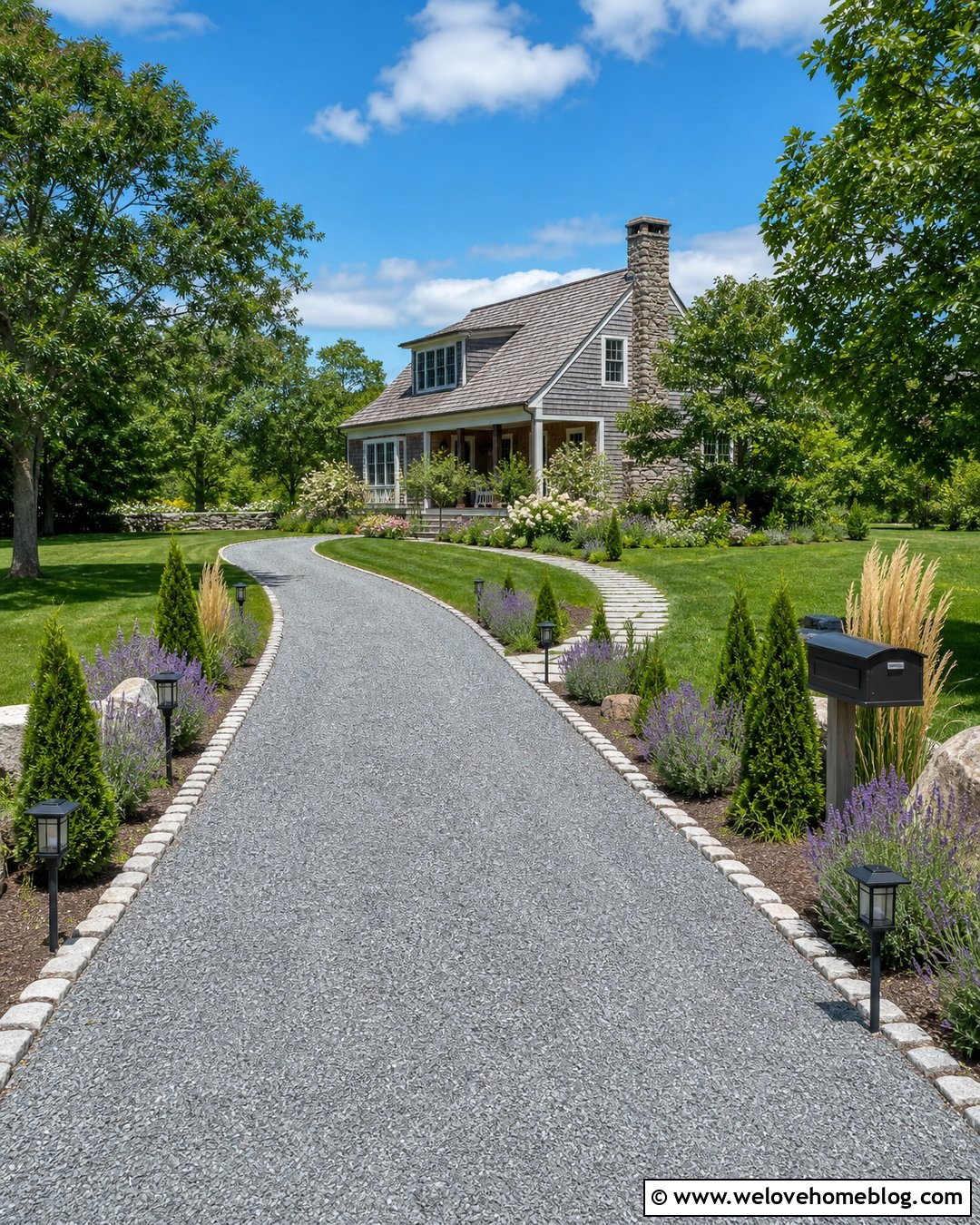
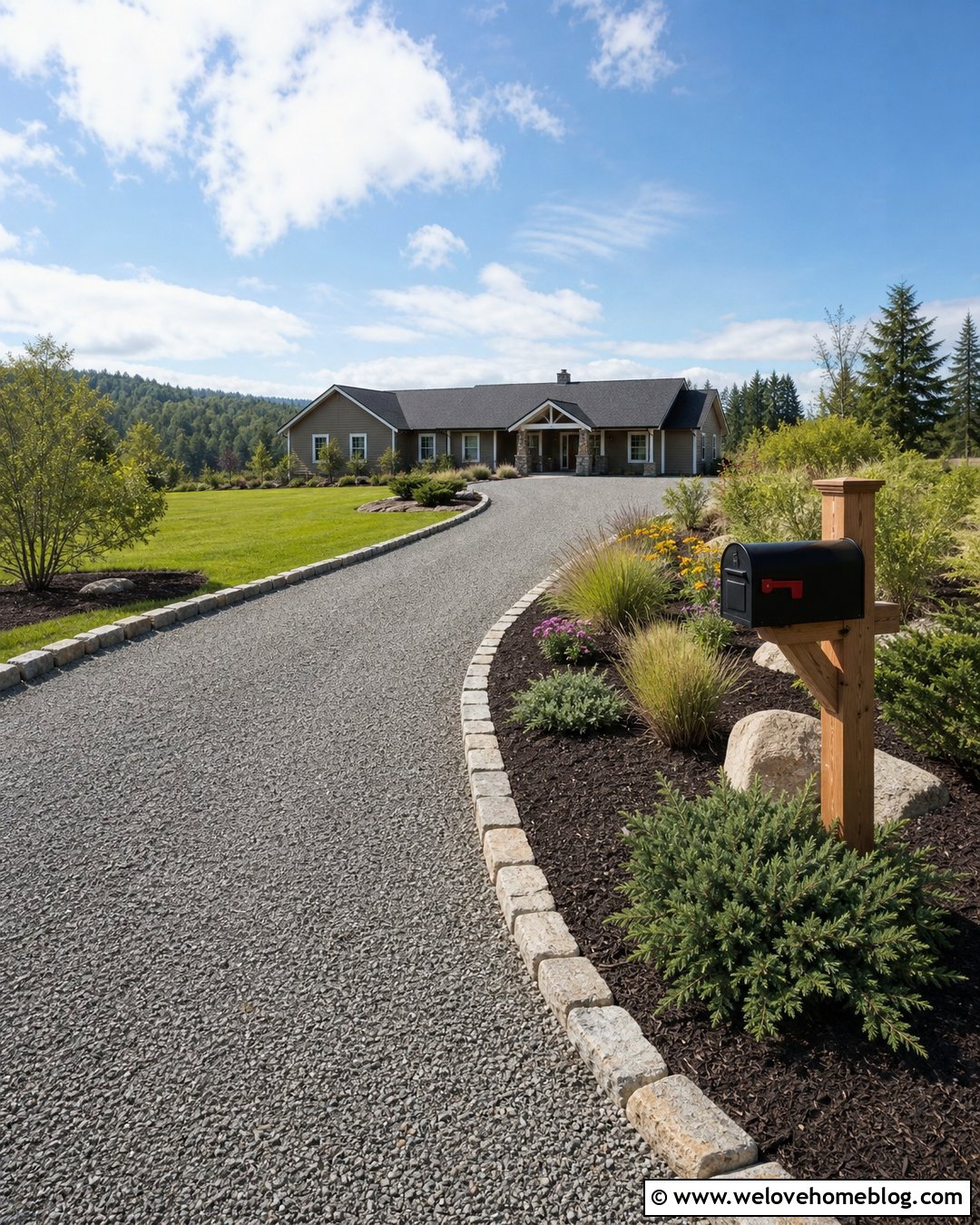
Gravel driveways benefit from a strongly defined mailbox bed because loose stone can otherwise blend into the surrounding landscape. Use medium-gray crushed gravel for a straight driveway leading to a country-style ranch house. Install a black mailbox on a sturdy natural-wood post, then form a wide crescent garden edged with chunky granite cobbles. The raised edge helps separate driveway gravel from dark mulch and planting soil. Fill the bed with drought-tolerant flowering perennials, low junipers, and several ornamental grass clumps. Leave enough open ground near the mailbox for comfortable access and snow clearing where needed. Extend the cobblestone border a few feet down the driveway to create a deliberate transition. This complete treatment gives an affordable gravel entrance clearer structure while preserving its relaxed, rural character.
17. Concrete Driveway Mailbox Landscaping
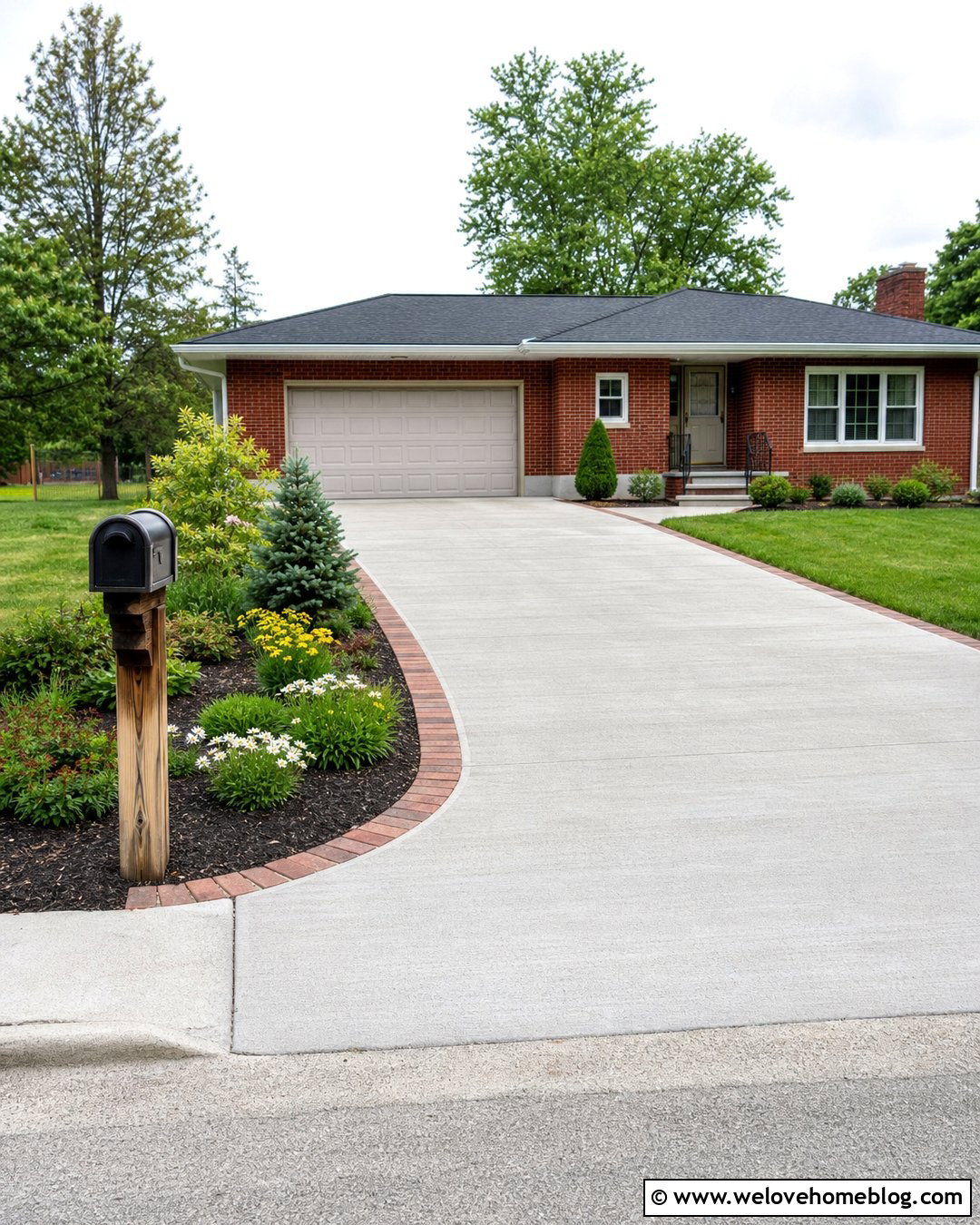
A plain concrete driveway can look more intentional when the mailbox garden introduces shape, color, and texture at the curb. Begin with a straight broom-finished gray poured-concrete driveway leading to a brick ranch home. Place a black mailbox on a simple stained-wood post beside a rounded bed with warm red brick edging. Plant one dwarf evergreen, groups of yellow and white perennials, and low green ground cover across the front. The warm border connects with the house facade, while the dark mailbox adds contrast against the pale driveway. Continue a narrow brick ribbon along the first section of the concrete for a more integrated entrance. Keep plants low around the driveway corner so vehicles have a clear view of the street. This practical design refreshes basic concrete without requiring complete driveway replacement.
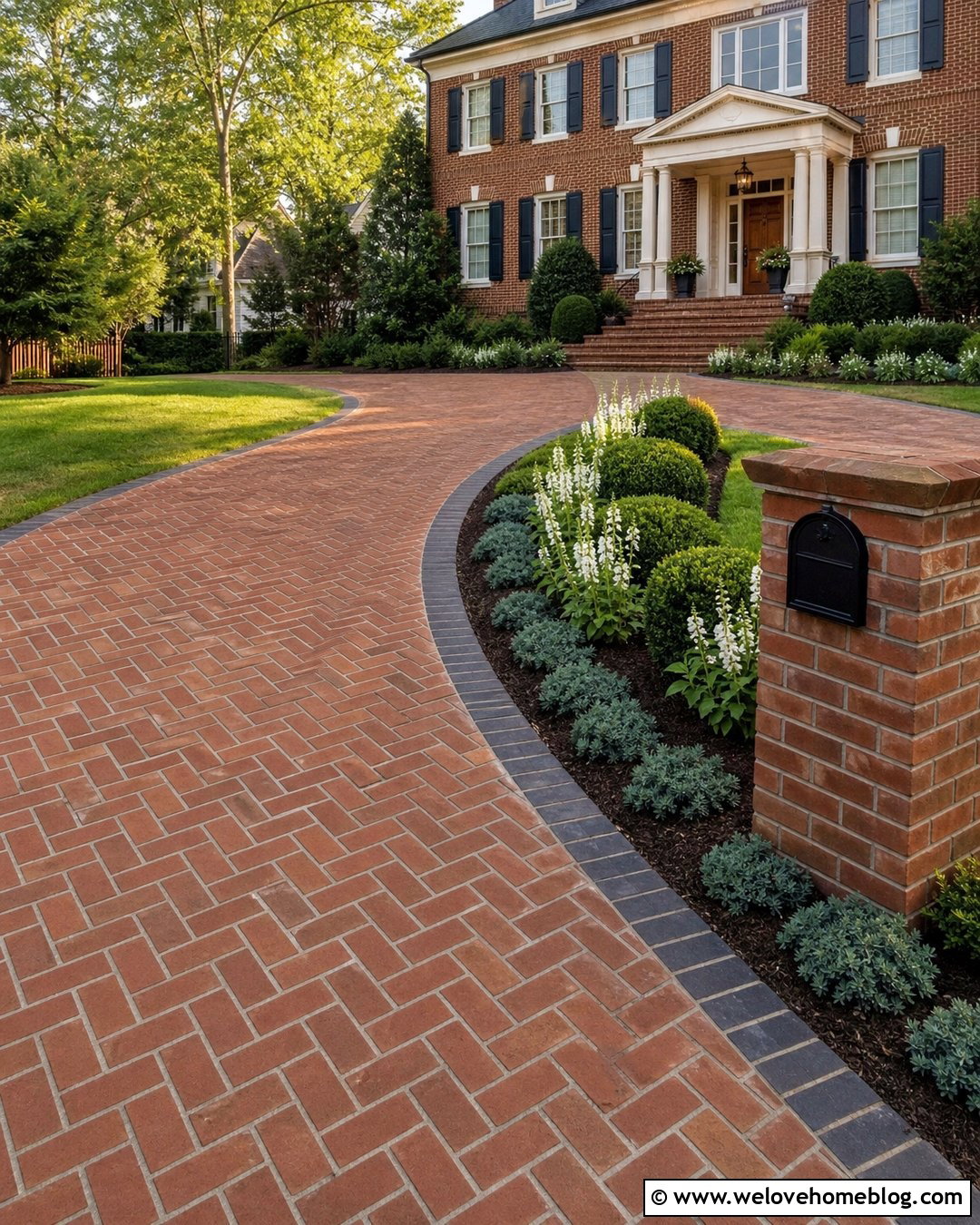
18. Brick Driveway Mailbox Landscaping
The rich color and pattern of brick paving call for mailbox landscaping that feels detailed but not busy. Use a curved clay brick driveway laid in herringbone, bordered with a dark soldier course. Add a simple black metal mailbox on a brick pier built from the same tones as the paving. Create a long, shallow bed extending behind the pier and along the driveway curve. Fill it with clipped boxwoods, white salvia, and low blue-green ground cover. Brown mulch keeps the planting quiet enough to let the brick pattern remain prominent. Repeat the white flowers near the porch or front steps to connect the curb with the home. This complete entrance works particularly well with Colonial and Tudor-inspired facades, where traditional masonry, symmetrical shrubs, and restrained flower colors support the architecture.
19. Sloped Driveway Mailbox Landscaping
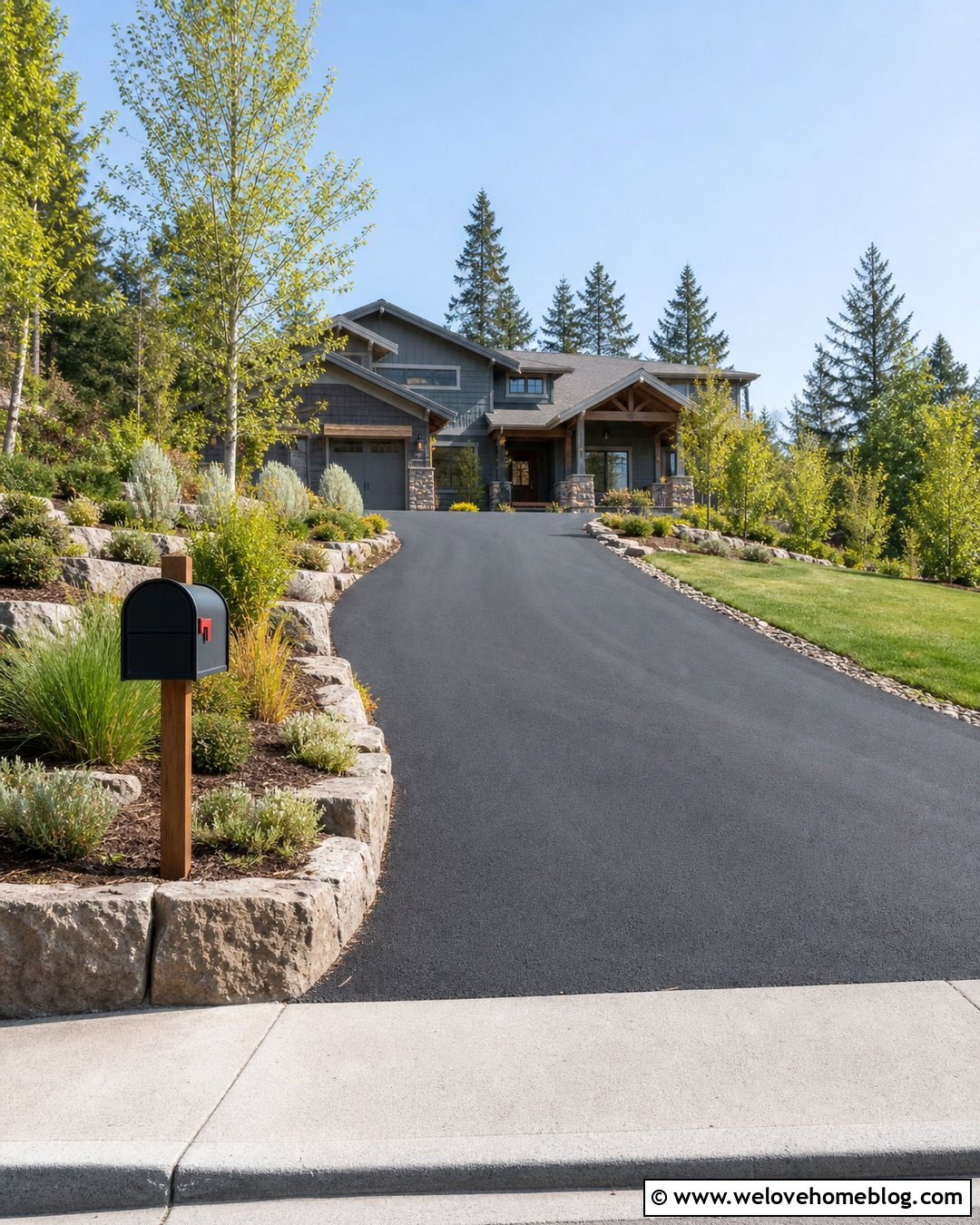
A mailbox beside a sloped driveway needs landscaping that manages grade changes without looking improvised. Pair an uphill black asphalt driveway with a dark mailbox on a cedar post and a small terraced bed on the higher side. Build one or two low retaining tiers from rough-cut natural stone, keeping the structure outside the road right-of-way and clear of vehicle movement. Plant spreading ground cover along the front, compact shrubs in the middle, and erosion-resistant ornamental grasses toward the rear. Direct runoff away from the mailbox footing and avoid creating a basin that collects water around the post. Roadside deicing salt can damage plants through spray and soil buildup, so cold-climate gardens should favor locally suitable, more tolerant selections. () The finished entrance will feel stable, layered, and connected to the slope.
20. Driveway Mailbox Landscaping With Seasonal Color
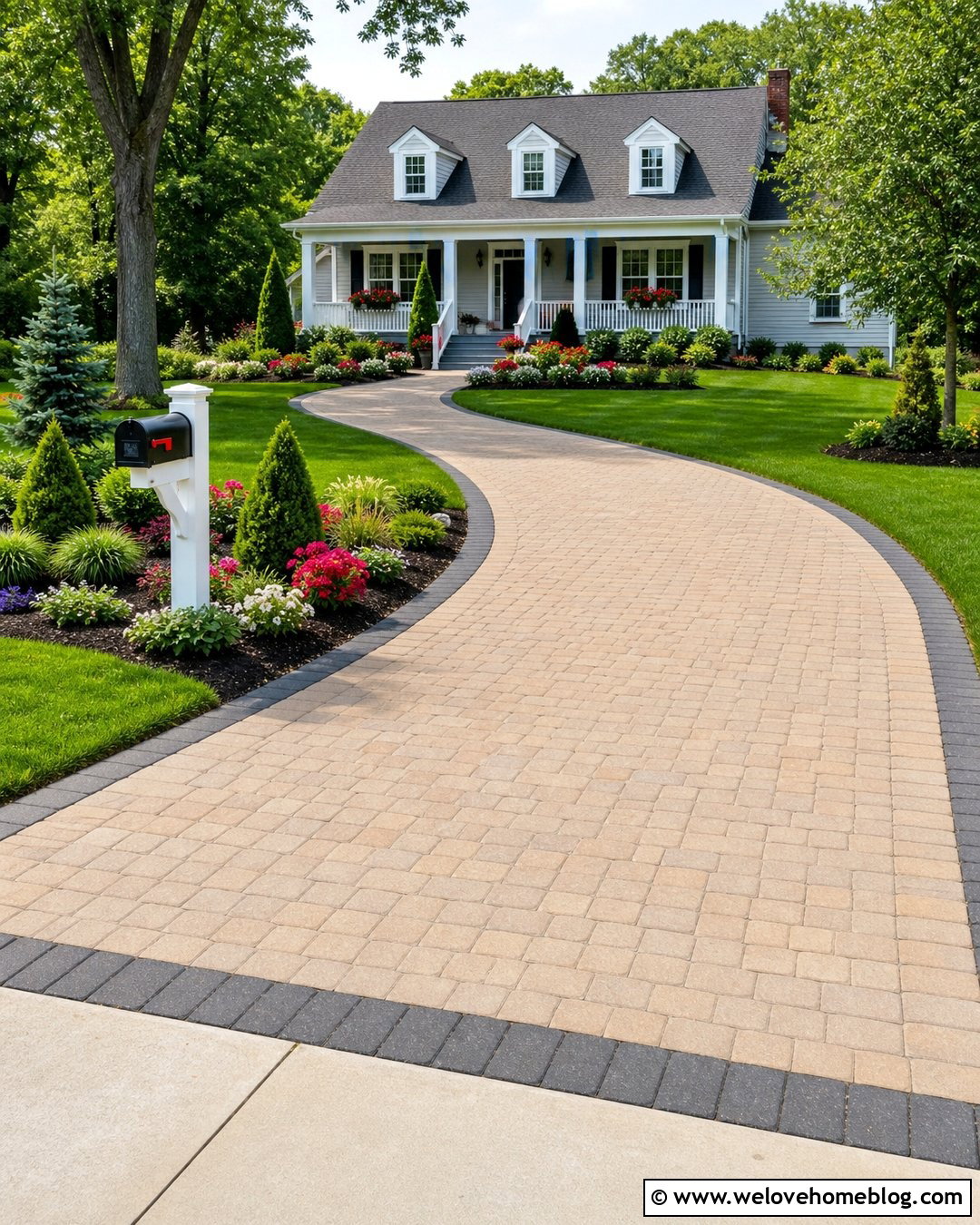
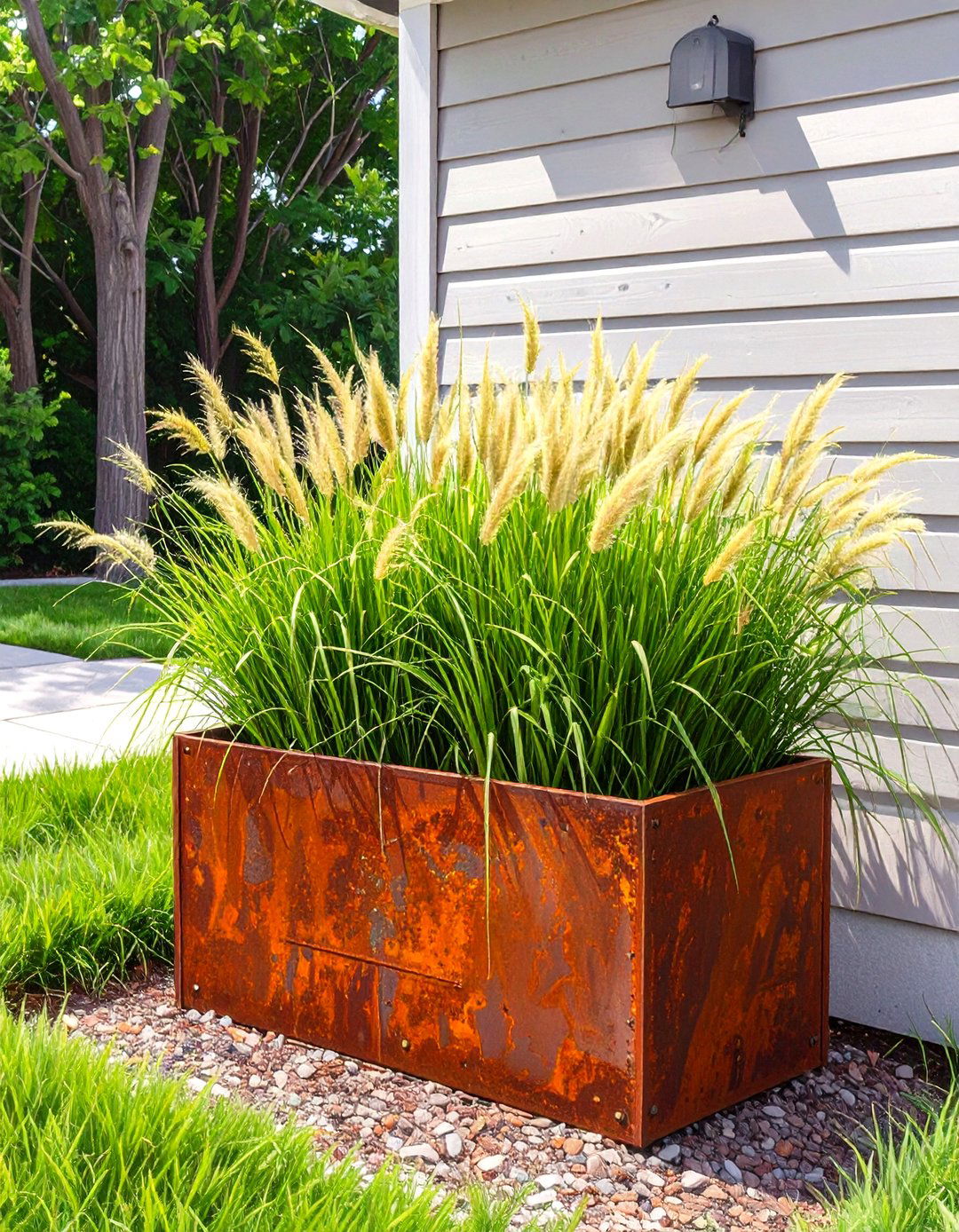
Seasonal flowers bring energy to the driveway entrance and allow the curbside palette to change throughout the year. Use a warm beige concrete paver driveway with a white mailbox post and a broad oval bed edged in charcoal pavers. Establish a permanent framework of dwarf evergreens and low ornamental grasses, then reserve open pockets for rotating annuals. Spring bulbs, summer flowers, and cool-season color can occupy the same spaces without requiring the entire garden to be replanted. Repeat selected colors in porch containers or foundation beds to create continuity from the street to the house. Add fine-textured mulch and maintain a clear edge against the lawn. Because the structural plants remain in place, the mailbox bed looks intentional even between flowering periods and continues to complement the driveway throughout the year.
Conclusion:
Effective driveway mailbox landscaping treats the curb as the true beginning of the home. The best design combines a suitable driveway surface, readable mailbox, defined border, layered plants, and clear access instead of concentrating on one decorative feature. Match materials and colors to the house, but keep roadside conditions in mind when selecting plants. Low growth near the curb supports visibility, while shrubs, grasses, or small trees farther back provide structure. Before changing the mailbox position, confirm USPS, local, utility, and neighborhood requirements. Whether you prefer a colorful flower bed, modern gravel garden, native planting, or formal brick entrance, these 20 driveway mailbox landscaping ideas can help create a practical, cohesive, and memorable first impression.

Related posts:

Leave a Reply