
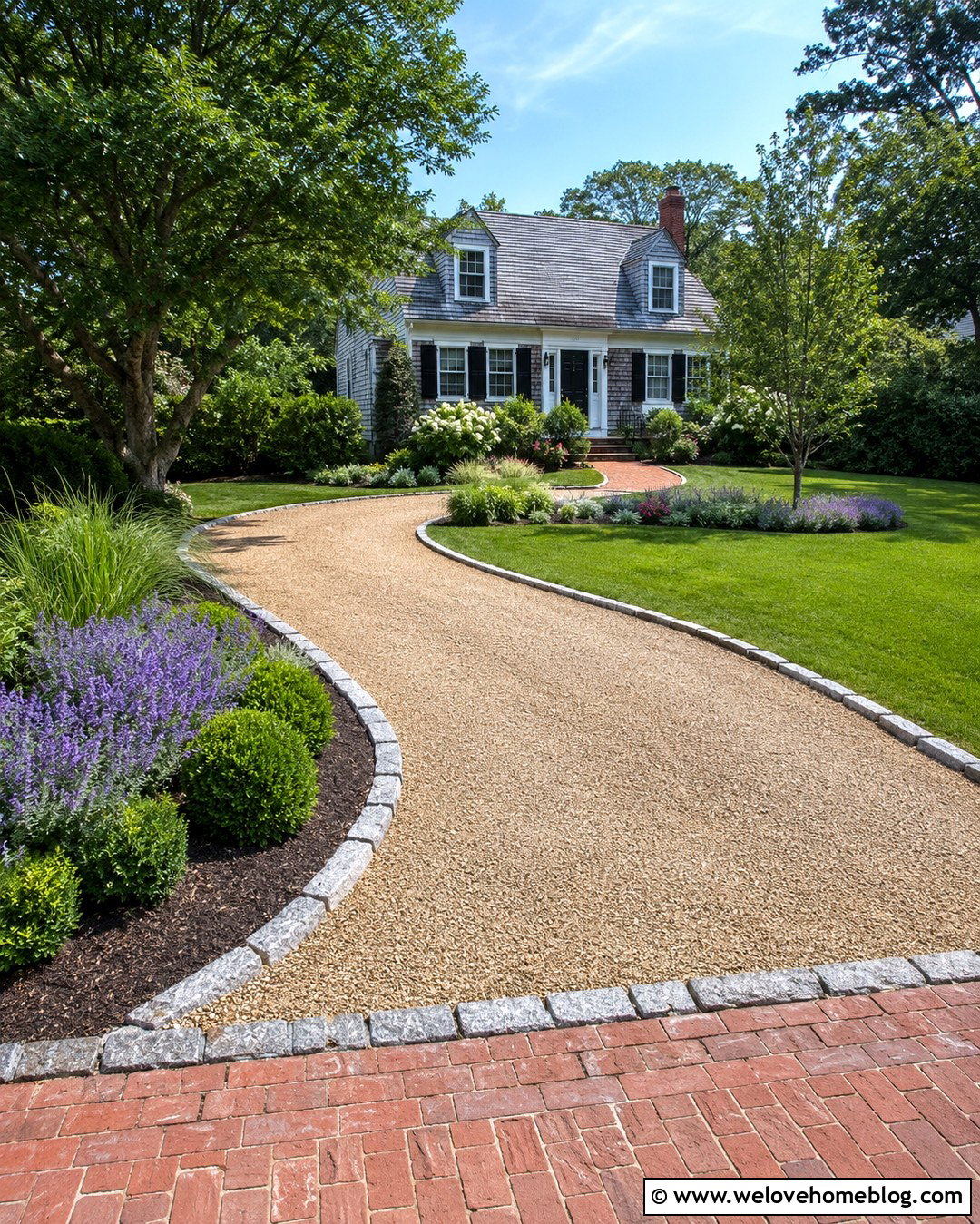
The edge of a driveway can do much more than separate pavement from the lawn. It can improve curb appeal, guide arriving vehicles, frame planting beds, and connect the driveway with the home’s architecture. The best **20 edge of driveway landscaping ideas** combine a suitable surface with practical borders, layered plants, drainage, and a clearly defined layout. Materials such as brick, stone, steel, timber, and concrete help keep nearby soil and gravel contained. Plants then soften those hard edges and bring seasonal color to the front yard. A successful design should also leave enough clearance for doors, tires, snow removal, and safe visibility near the street. Explore the complete driveway looks below with these **20 edge of driveway landscaping ideas**.

1. Asphalt Driveway With River Rock Border
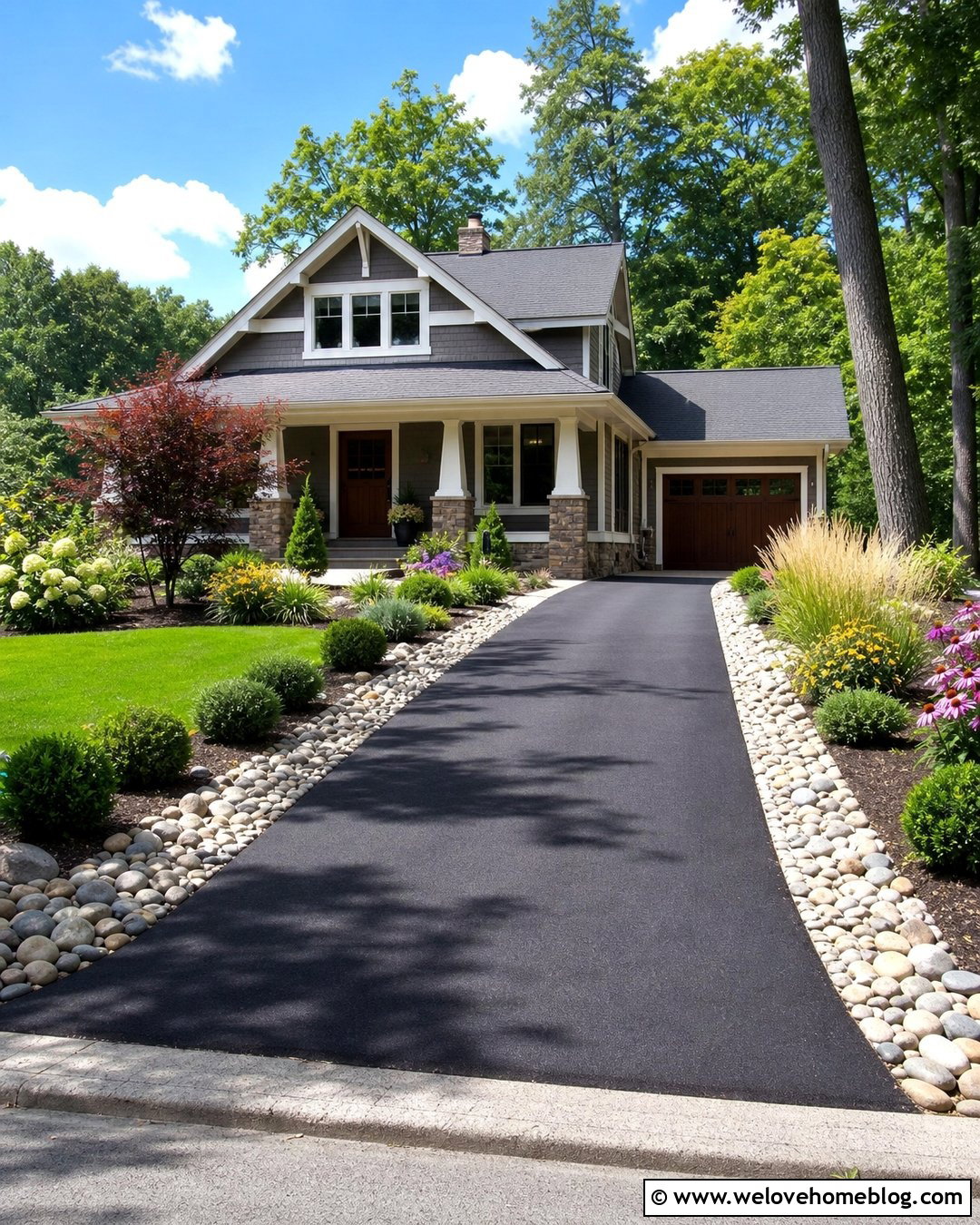
A black asphalt driveway gains a softer, more natural appearance when it is framed by a wide river rock border. Use smooth stones in mixed gray, tan, and cream tones to create contrast against the dark pavement. A concealed steel strip can keep the rocks from spreading while maintaining a clean line. Beyond the stone, add compact evergreen shrubs, ornamental grasses, and a few flowering perennials suited to your climate. This layered arrangement works especially well beside ranch and Craftsman homes. Keep plants set back from the driving surface so mature growth does not brush vehicles. River rock also suits low areas where water regularly collects, but the underlying grade should still direct runoff toward an approved drainage point rather than neighboring property.
2. Concrete Driveway With Lavender Beds
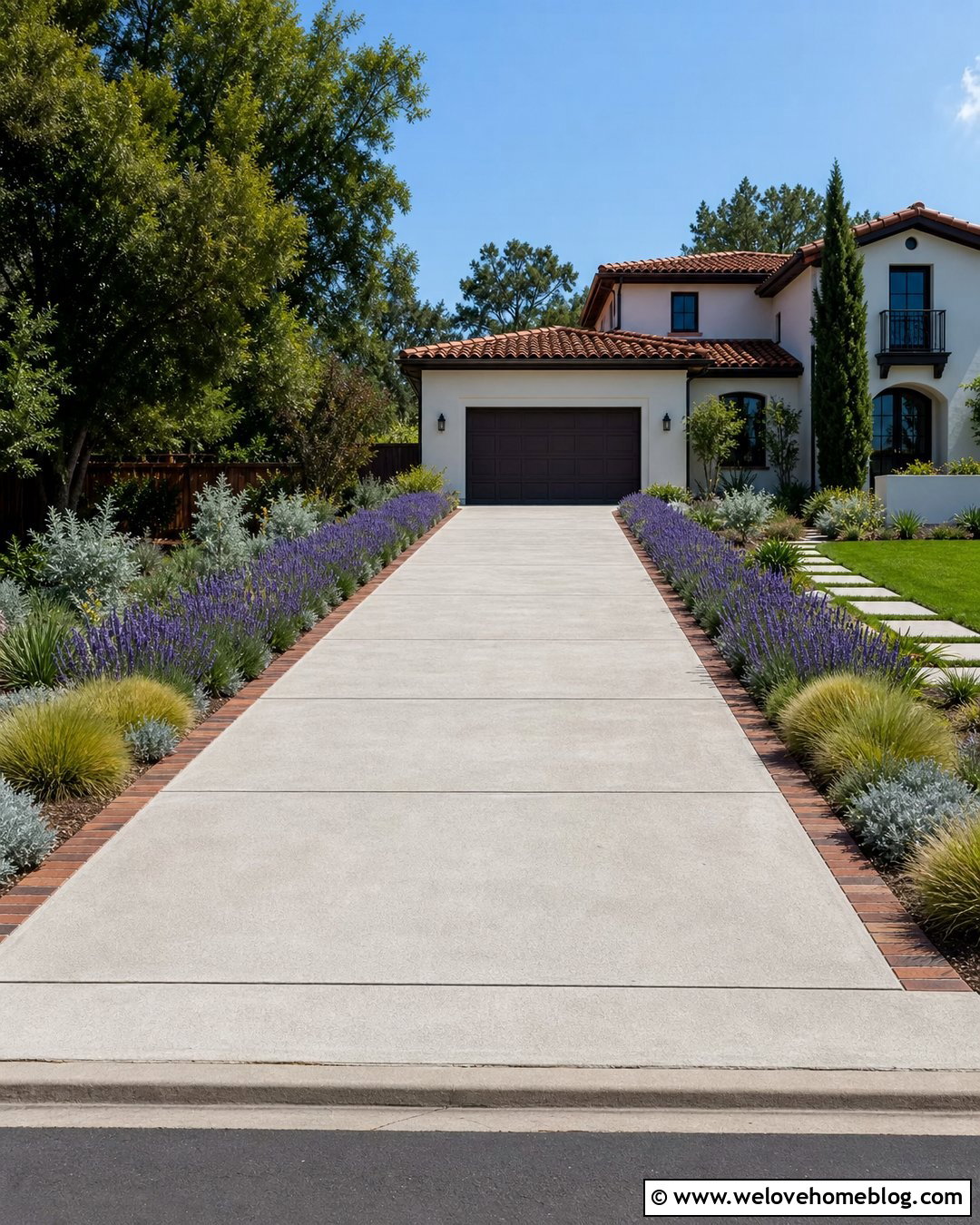
Imagine a pale concrete driveway bordered by long, fragrant planting beds that gently move in the breeze. Lavender creates a tidy edge while softening the rigid lines of a straight driveway. Install a narrow brick or stone mowing strip between the concrete and soil to prevent plants from sprawling onto the driving area. Repeating lavender in generous groups gives the border a more unified appearance than scattering individual plants. Add compact ornamental grasses or silvery foliage plants for texture between bloom periods. This complete look complements Mediterranean, cottage, and light-colored stucco homes. Lavender needs abundant sunlight and fast-draining soil, so choose another compact flowering perennial if the site remains damp. Leave extra clearance near the street to preserve an open view of pedestrians and traffic.
3. Gravel Driveway With Steel Edging And Grasses
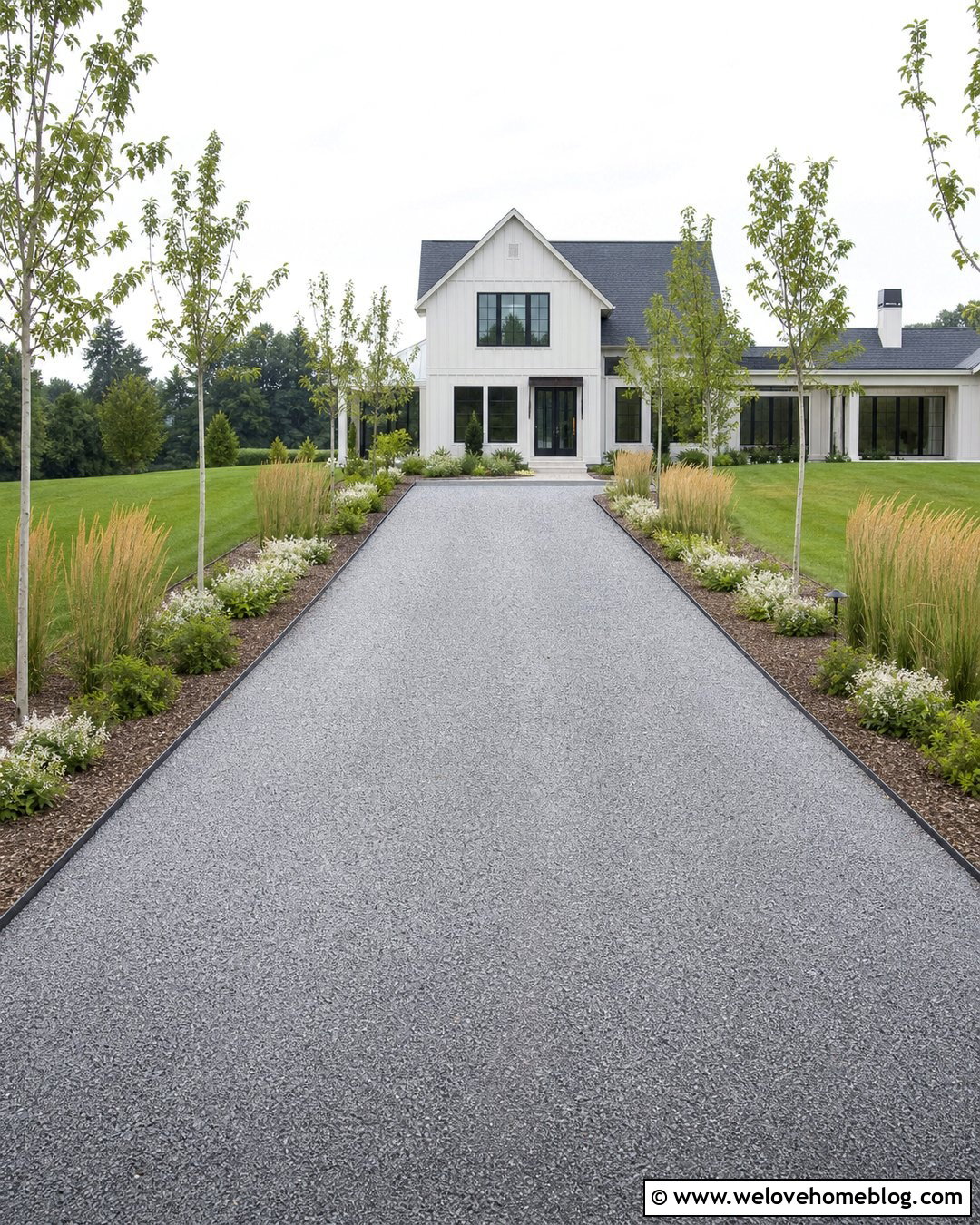
Loose gravel can look polished rather than rustic when crisp steel edging defines both sides. Choose compacted gray crushed gravel for the driveway and install dark steel strips nearly flush with the surface. The metal creates a controlled transition into beds filled with upright ornamental grasses, low groundcovers, and evenly spaced flowering plants. Use grasses with sturdy growth that will not collapse across the driving lane after rain. The straight lines suit a modern farmhouse or contemporary suburban home, while the moving foliage keeps the overall design from feeling severe. A properly prepared gravel base and stabilization grid can reduce shifting and rutting. Extend the steel border around the planting beds as well, creating one coordinated edge that separates gravel, mulch, and lawn without adding visual clutter.
4. Paver Driveway With Boxwood Borders
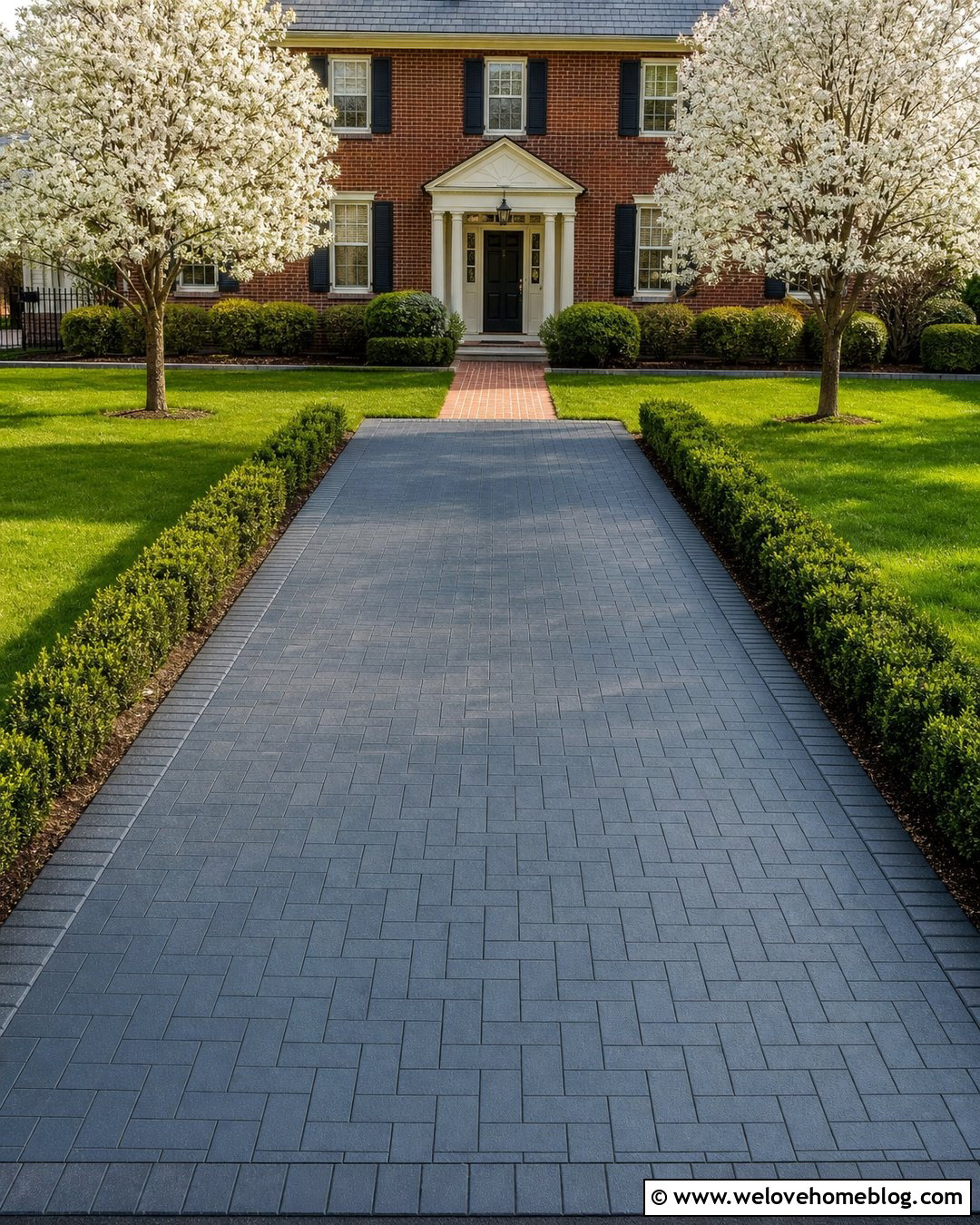
Would a formal, symmetrical border fit the architecture of your home? A driveway made from charcoal concrete pavers can be paired with low boxwood hedges for a structured entrance. Lay the pavers in a running bond or herringbone pattern, then add a contrasting soldier-course border along each edge. Behind it, plant clipped boxwoods in continuous rows or evenly spaced mounds. Small flowering trees near the garage can add height without interrupting the symmetry. This arrangement feels especially appropriate beside Colonial, Georgian, and traditional brick homes. Select a boxwood variety suited to local conditions and allow room for its mature width. Regular light pruning will maintain the shape. At the street, taper the hedges down or stop them early so they do not obstruct driveway visibility.
5. Curved Concrete Driveway With Native Flowers
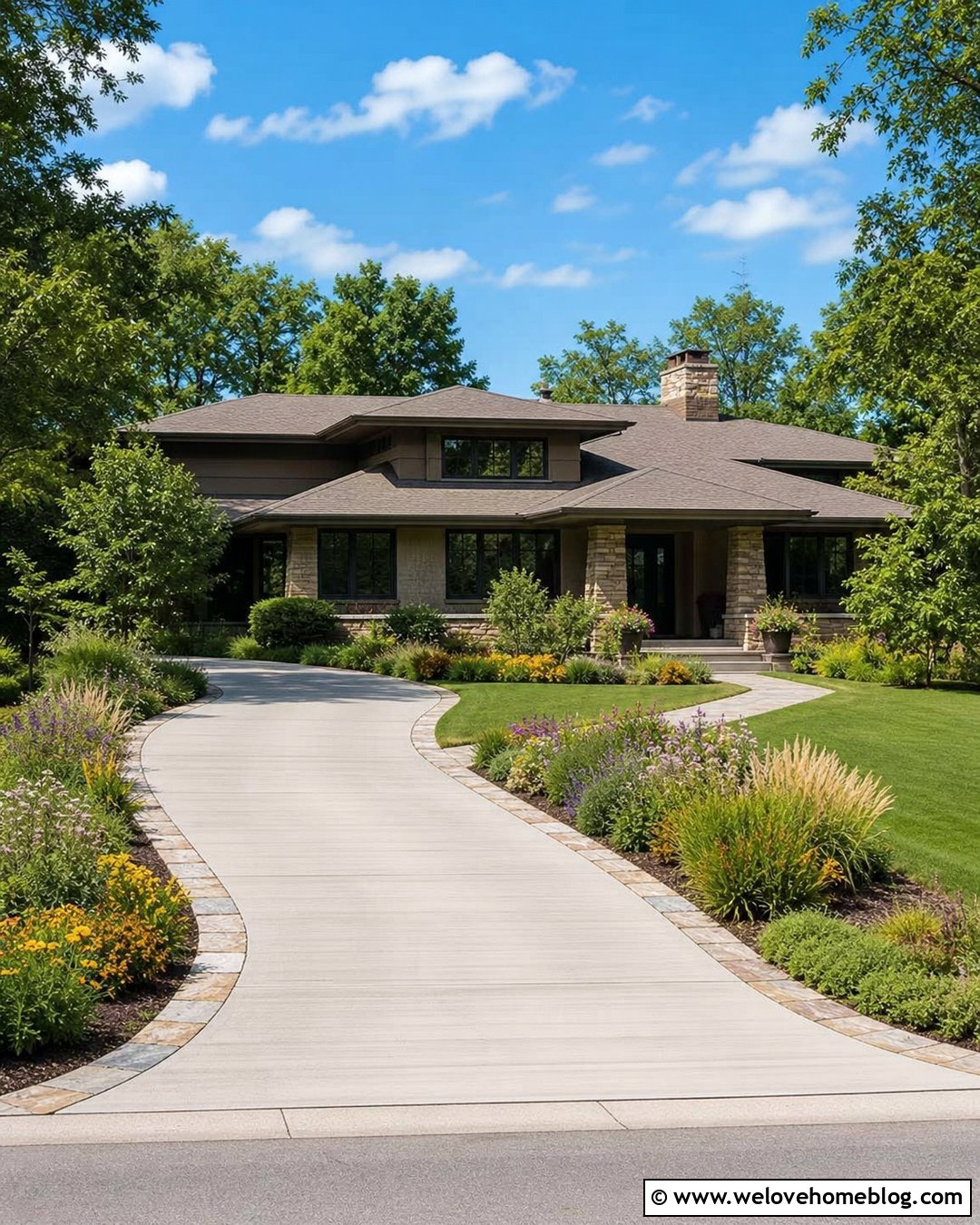
A gently curved concrete driveway becomes part of the garden when broad native flower beds follow its shape. Broom-finished concrete provides a simple background, while a flush natural-stone border gives the curve a finished edge. Fill the beds with regionally appropriate grasses and flowering perennials arranged in repeating drifts. Low plants belong nearest the driveway, with medium grasses and taller flowers placed farther back. This approach creates color and movement without producing a disorganized roadside meadow. Native planting can be adapted to local soil, sunlight, and rainfall, making thoughtful plant selection more important than copying one universal list. Include open mulch or stone areas beside garage doors and passenger unloading zones. The result works beautifully with Craftsman, prairie, and relaxed contemporary homes.
6. Brick Driveway With Hydrangea Borders
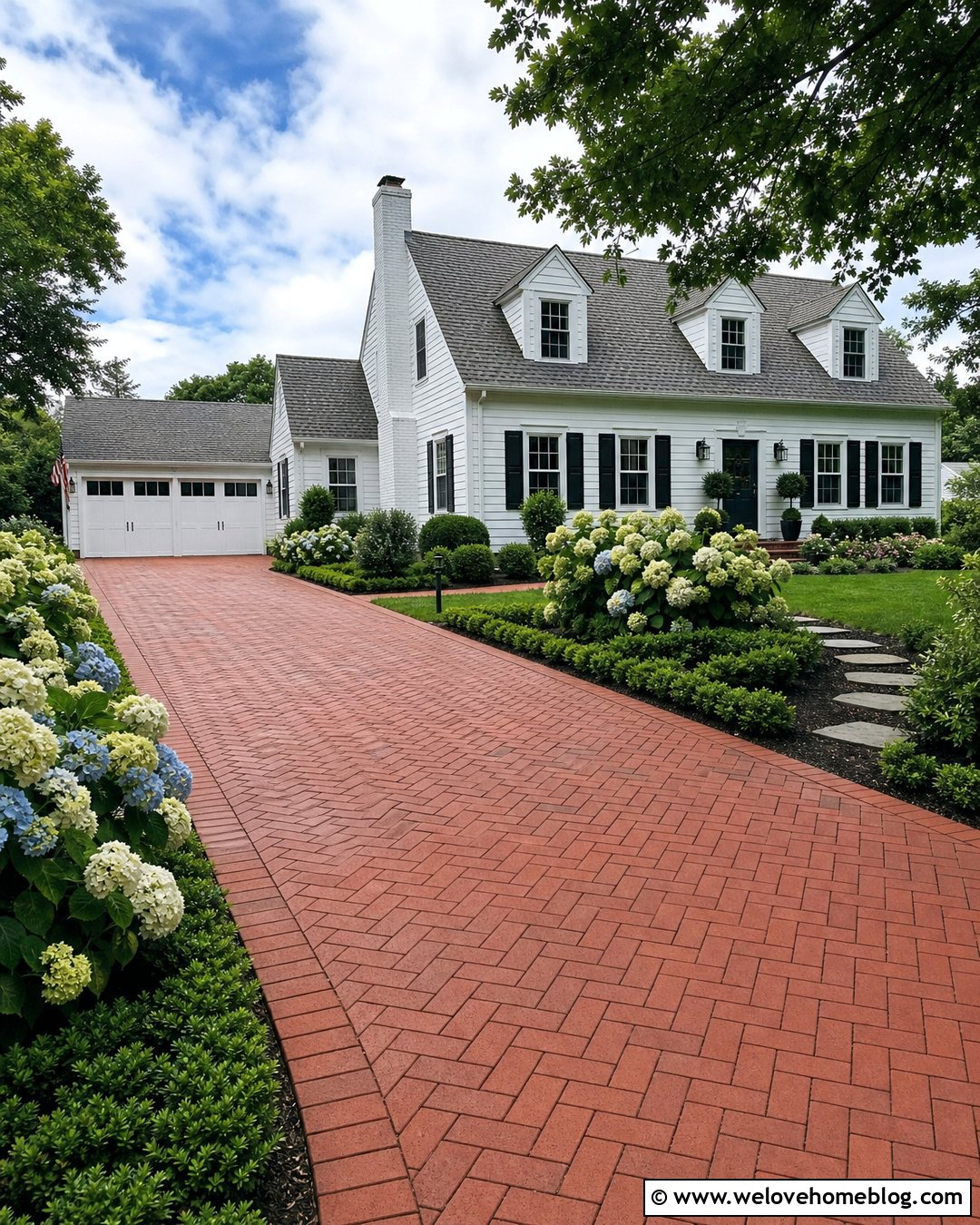
Rich clay brick paving looks inviting beside deep beds filled with hydrangeas, evergreen foundation shrubs, and dark mulch. Use herringbone brick pavers across the driveway and a straight soldier-course brick edge to reinforce the boundary. Position compact hydrangeas behind a low row of evergreen groundcover so bare stems are less noticeable outside the flowering season. This combination complements Cape Cod, cottage, and traditional white homes. Choose hydrangeas according to the available sunlight because different types tolerate very different conditions. Keep blooms and branches well away from car doors by planning for mature plant width. A simple stepping-stone path through one border can connect the driveway to the front walkway. The matching brick surface and edge make the entire arrival area feel intentional and established.
7. Resin-Bound Driveway With Modern Grass Beds
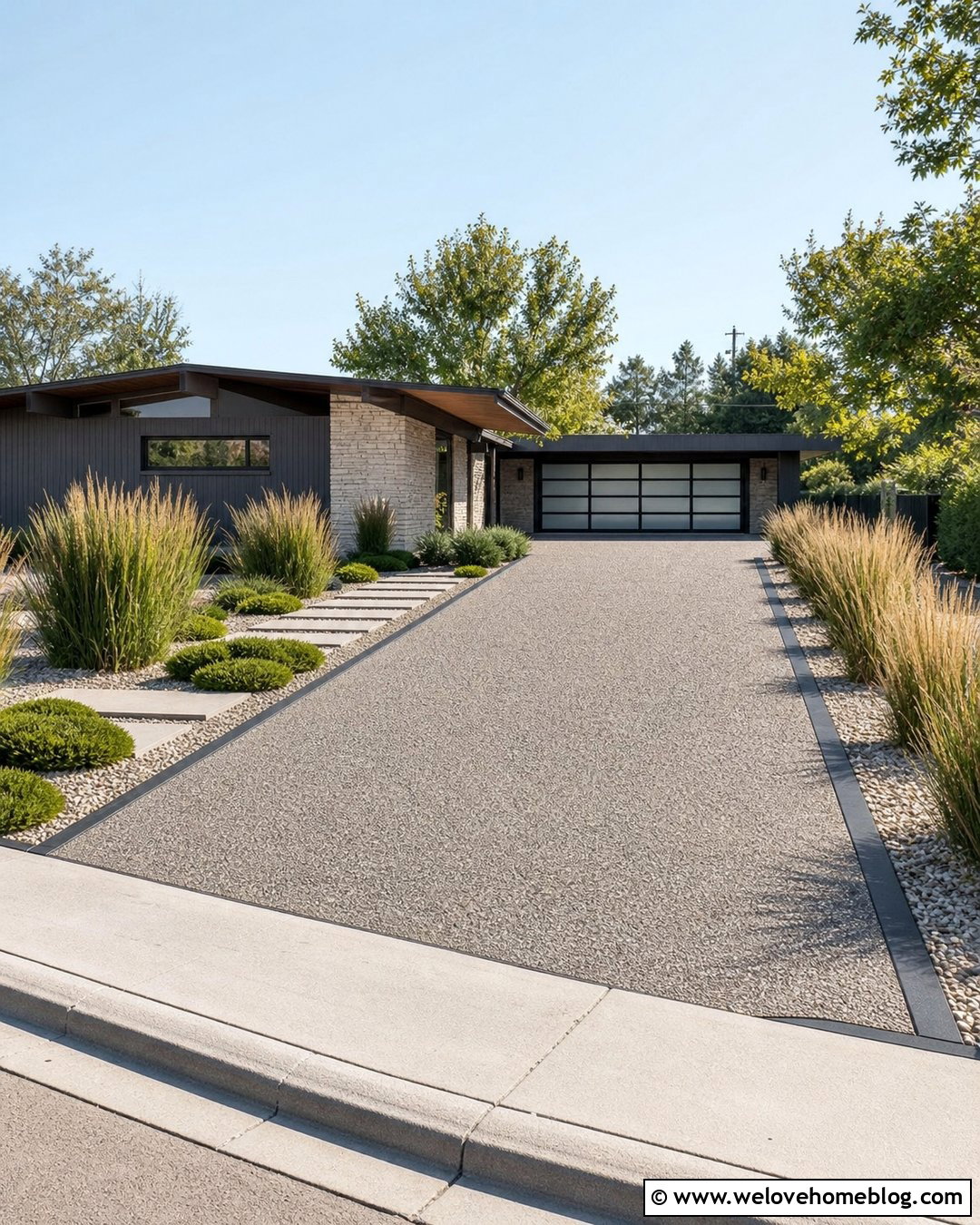
For a streamlined front yard, pair a warm gray resin-bound gravel driveway with narrow beds of architectural grasses. The smooth-looking permeable surface creates a quiet foundation, while black steel edging forms precise boundaries around each planting strip. Repeat one or two grass varieties instead of mixing numerous plants. Add low evergreen mounds and pale decorative gravel beneath them for a clean, drought-conscious finish. Rectangular concrete stepping pads can connect the driveway with the front entrance. This landscaping works best with a modern or midcentury home featuring simple geometry. Keep the plants below windows and away from vehicle mirrors. The grasses should have upright habits and manageable mature widths. Consistent spacing, limited materials, and generous negative space are what make this complete driveway edge look modern rather than unfinished.
8. Exposed Aggregate Driveway With Boulder Edging
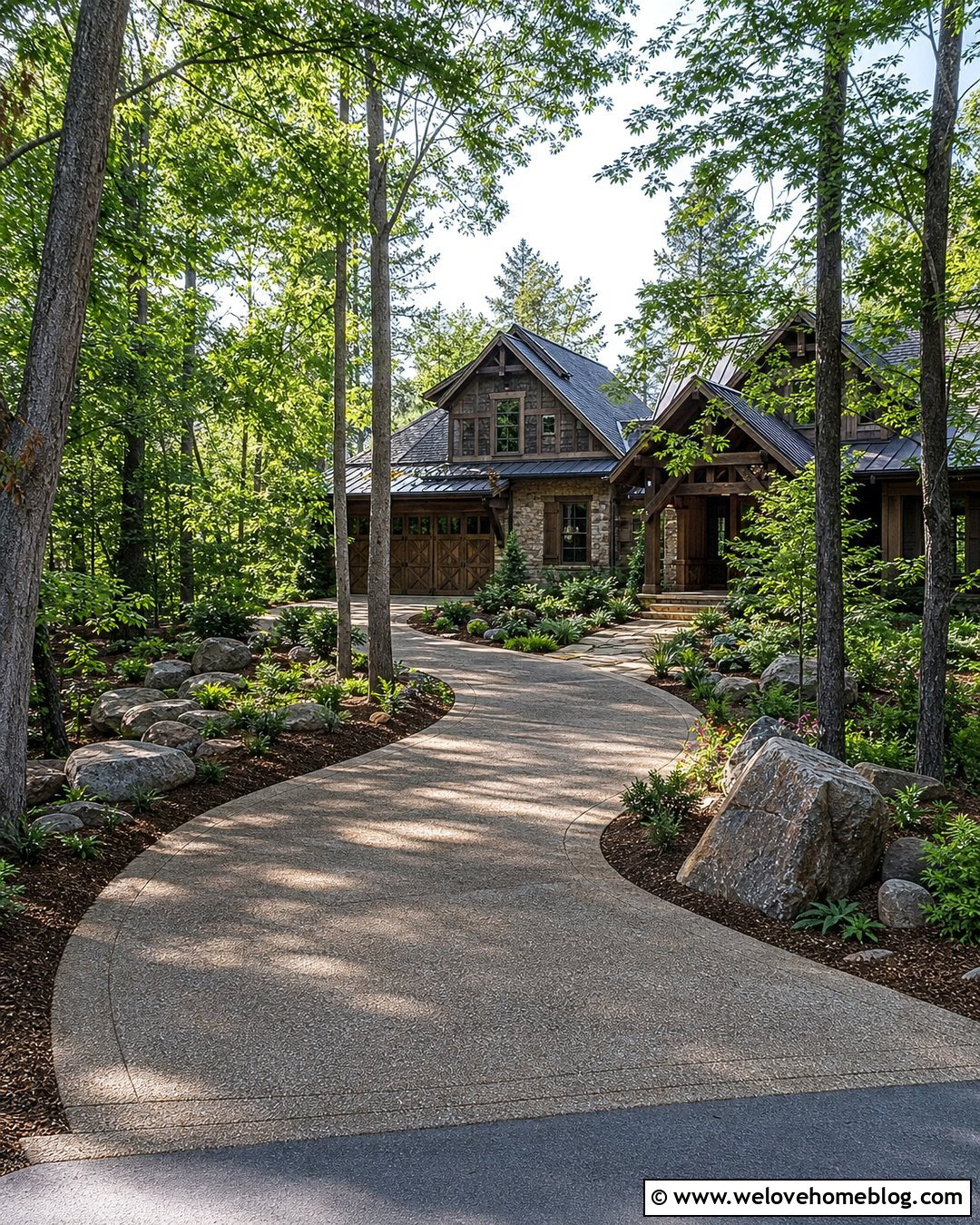
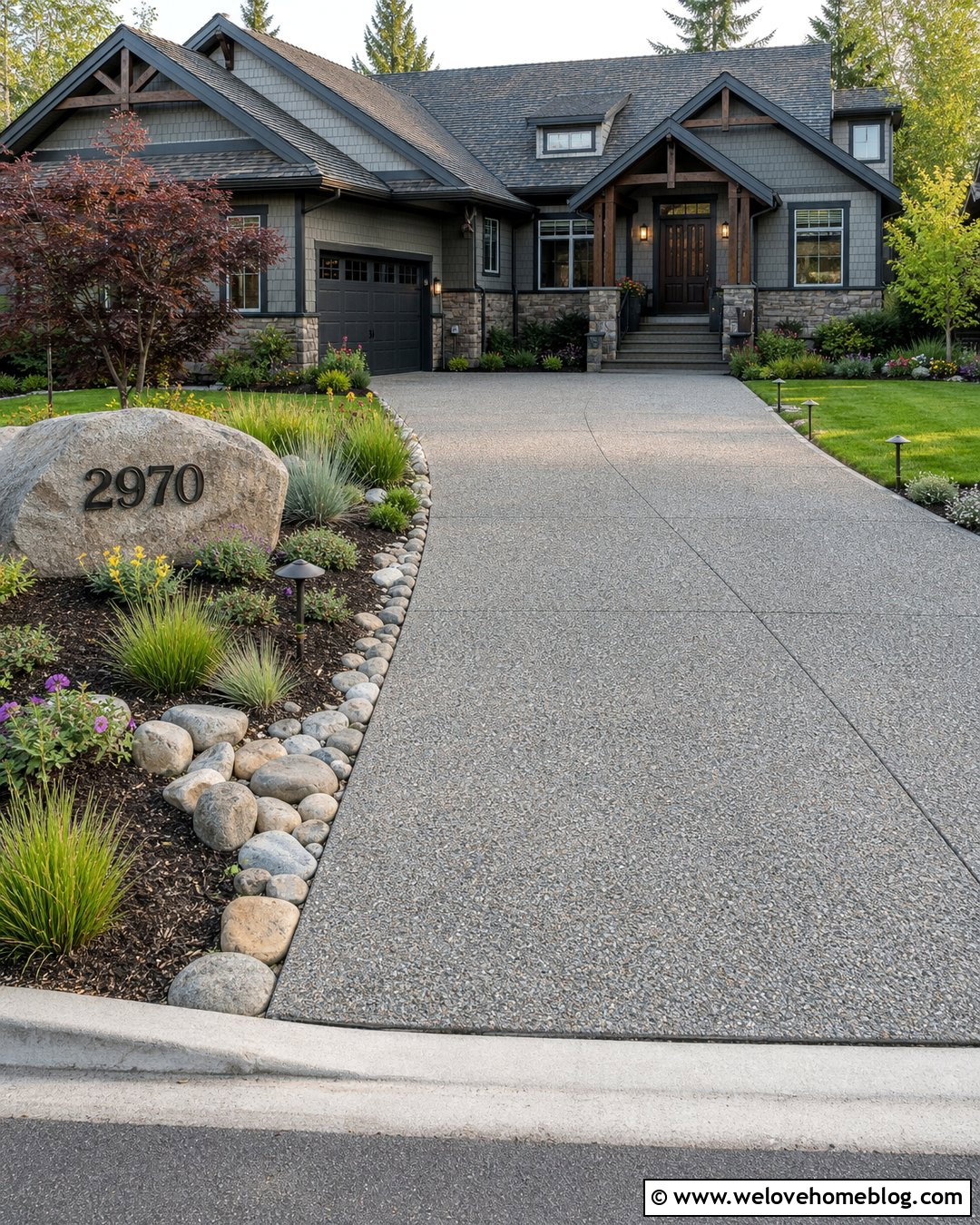
Exposed aggregate concrete has a textured, earthy finish that pairs naturally with irregular boulders and woodland-style planting. Place locally sourced boulders in occasional groups along the driveway rather than creating an unbroken stone wall. Connect those groups with low groundcovers, ferns, small shrubs, and mulch beds. A subtle steel edge behind the rocks can stop soil from washing onto the concrete. Vary the boulder sizes, but keep them low near the street and garage to protect sightlines and usable clearance. This complete look suits mountain homes, rustic ranches, and wooded suburban properties. Match the aggregate colors to the stone for a more cohesive result. Before placing heavy boulders, confirm underground utility locations and prepare stable bases so the rocks do not shift into the driveway over time.
9. Pea Gravel Driveway With Timber Borders
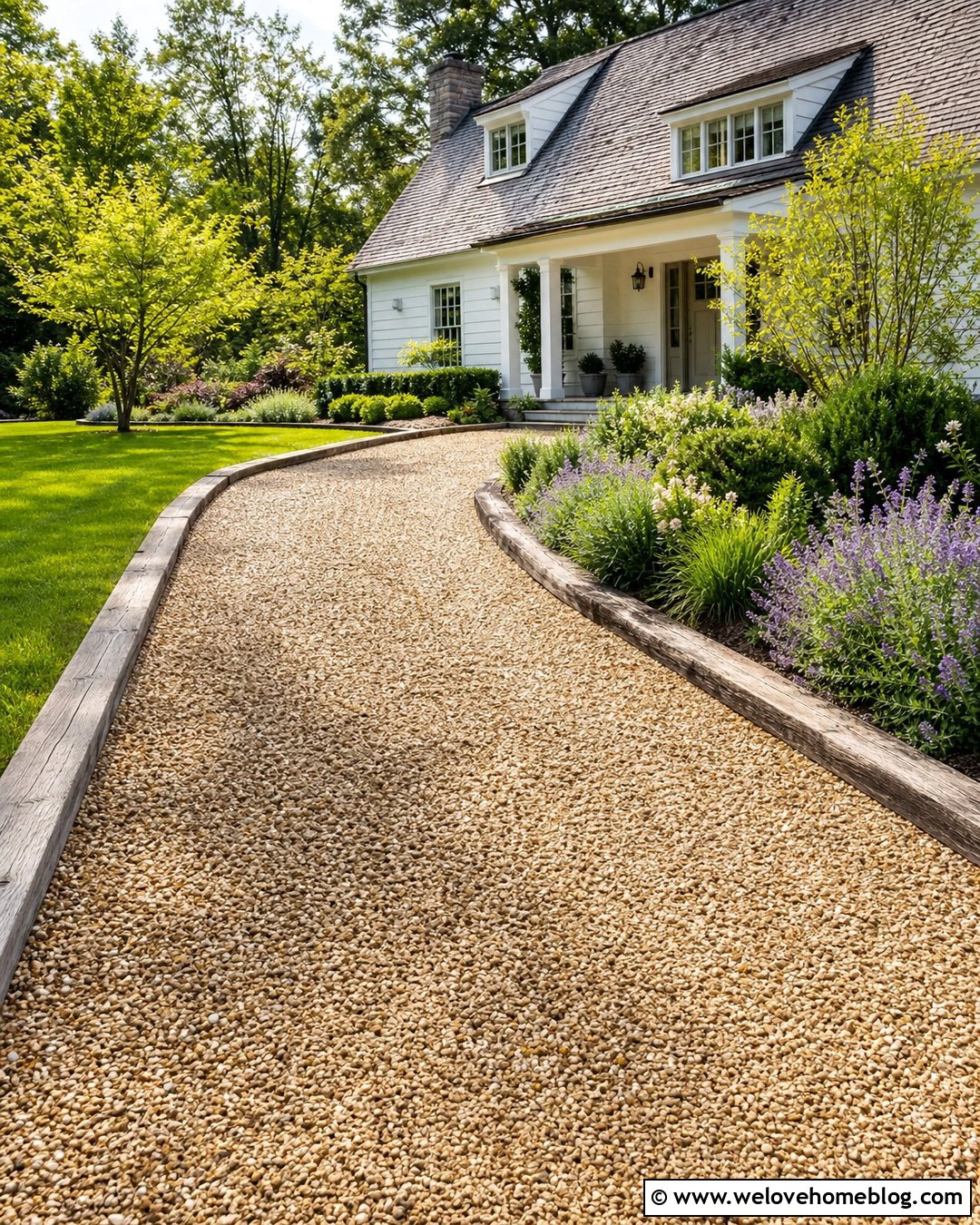
A pea gravel driveway framed by heavy timber edging brings warmth to a cottage or country property. Use honey-toned pea gravel over a compacted base, then secure pressure-treated or naturally durable timbers along both sides. Behind the timber, create informal beds with flowering shrubs, catmint, hardy geraniums, and small ornamental trees. Allow selected plants to soften the border without covering the driving surface. A gravel stabilization system can help keep the rounded material in place, particularly on frequently used sections. Because timber eventually weathers, plan for inspection and replacement rather than treating it as a permanent edge. Repeat the same wood around a nearby walkway or mailbox bed. This creates a connected landscape where the driveway, garden border, and entrance feel like parts of one welcoming design.

10. Black Asphalt Driveway With Cobblestone Edging
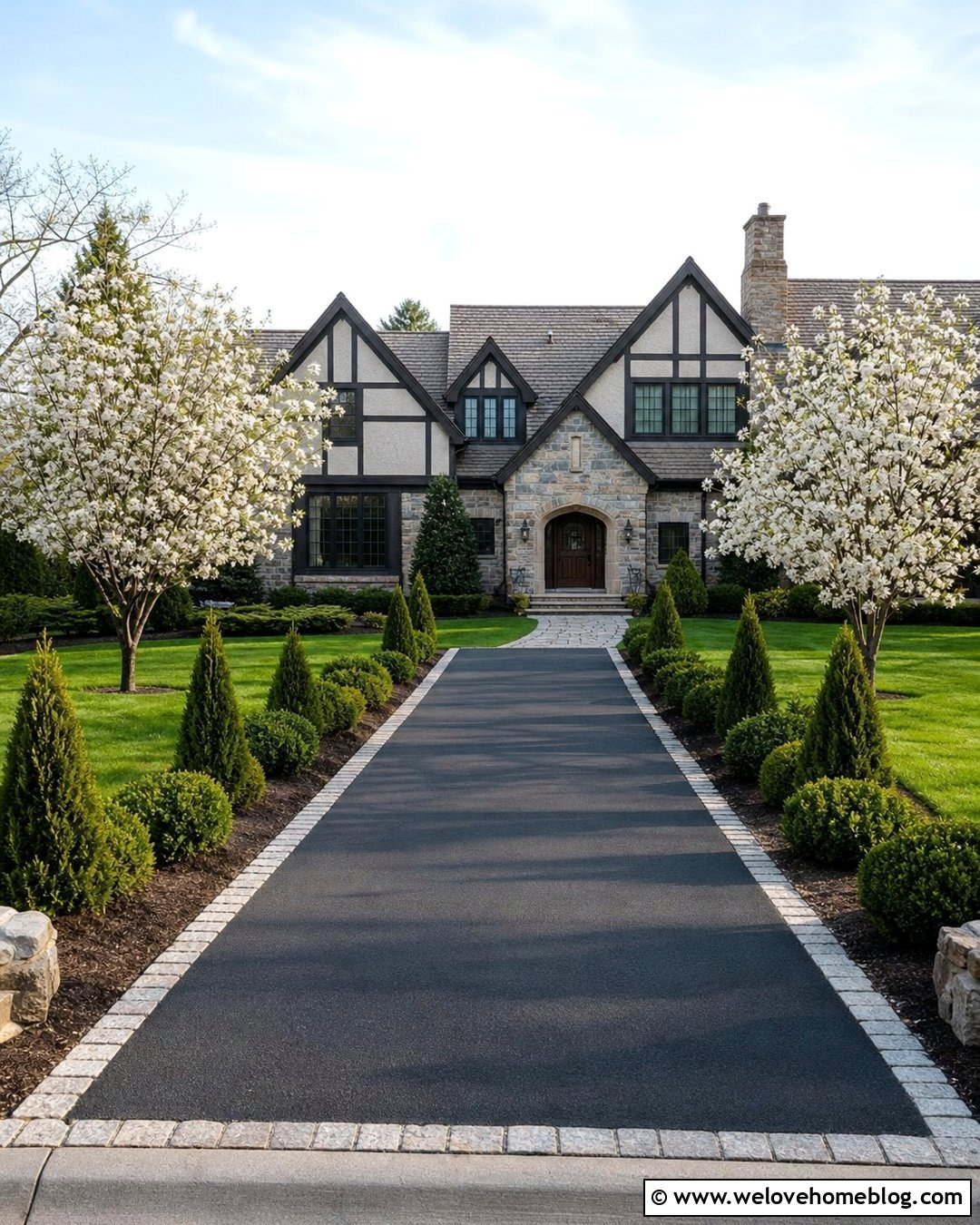
Dark asphalt looks substantially more refined when a ribbon of granite cobblestones runs along each side. Choose gray or charcoal cobbles and set them in a stable base so their tops remain close to the asphalt height. The stone line protects the softer landscape edge while creating a classic transition into lawn and evergreen planting beds. Add compact yews, dwarf conifers, or rounded hollies in a simple repeating rhythm. Near the entrance, widen the beds and include one small flowering tree on each side. Granite cobbles are commonly used as substantial, durable landscape borders with a traditional appearance. () This combination works with Tudor, Colonial, and stone-faced houses. Keep the cobblestone ribbon level enough for comfortable walking, mowing, and occasional vehicle contact.
11. Concrete Driveway With Dry Creek Border
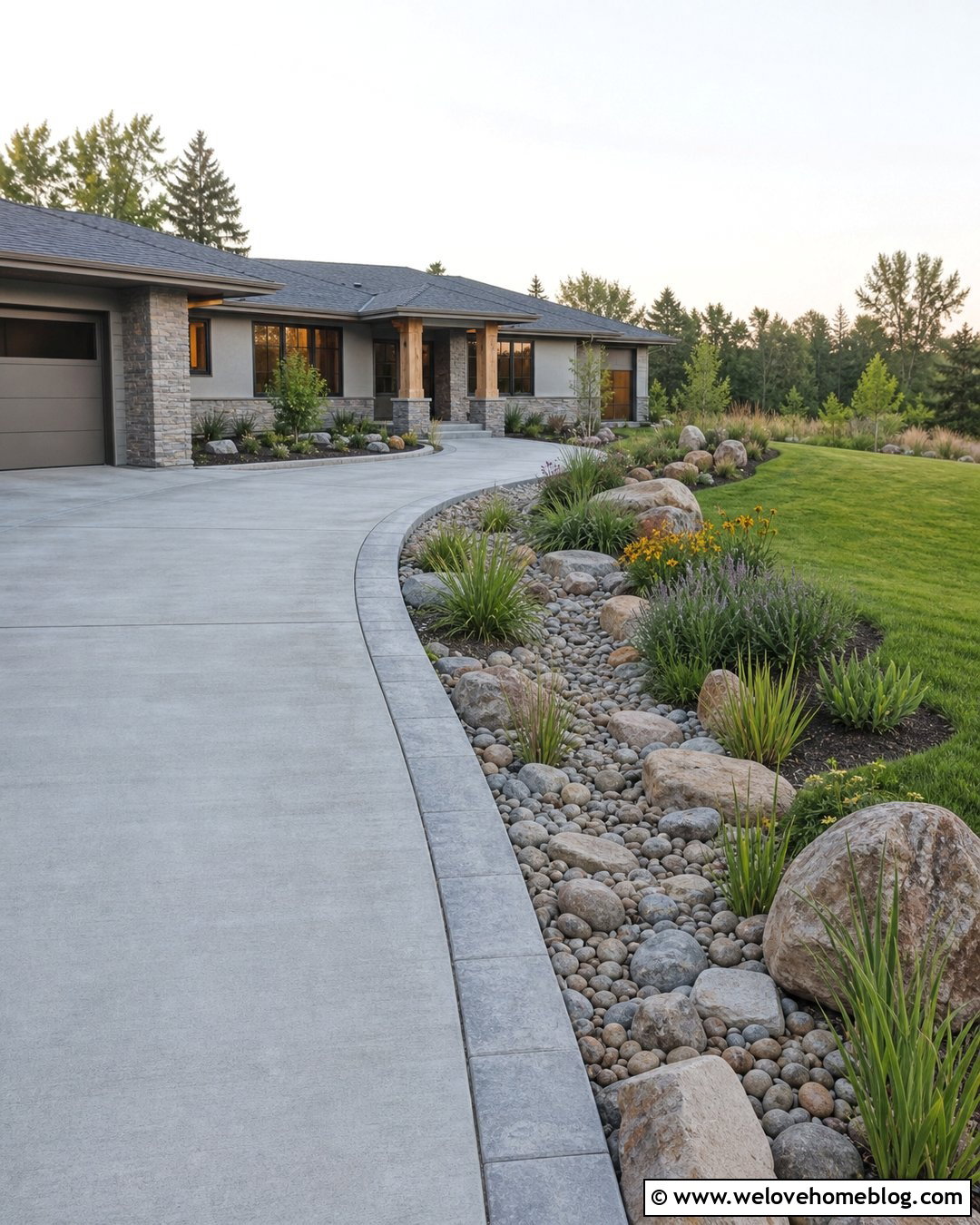
If runoff moves along one side of the driveway, turn that problem area into a landscaped dry creek. Pair a light broom-finished concrete driveway with a curving channel of mixed river stones, larger anchor rocks, and water-tolerant plants. The creek should follow the natural grade and lead water toward an approved outlet or rain garden. Add sedges, compact shrubs, and flowering perennials around the outer bank, keeping the immediate channel relatively open. A flush concrete or stone curb can separate the driveway from the drainage feature. This look works particularly well beside contemporary ranch and Craftsman homes. Because drainage changes can affect foundations, sidewalks, and neighboring lots, complicated sites may require professional grading advice. The finished border should look like deliberate landscaping while still providing a clear, functional route for stormwater.
12. Circular Paver Driveway With Landscaped Edges
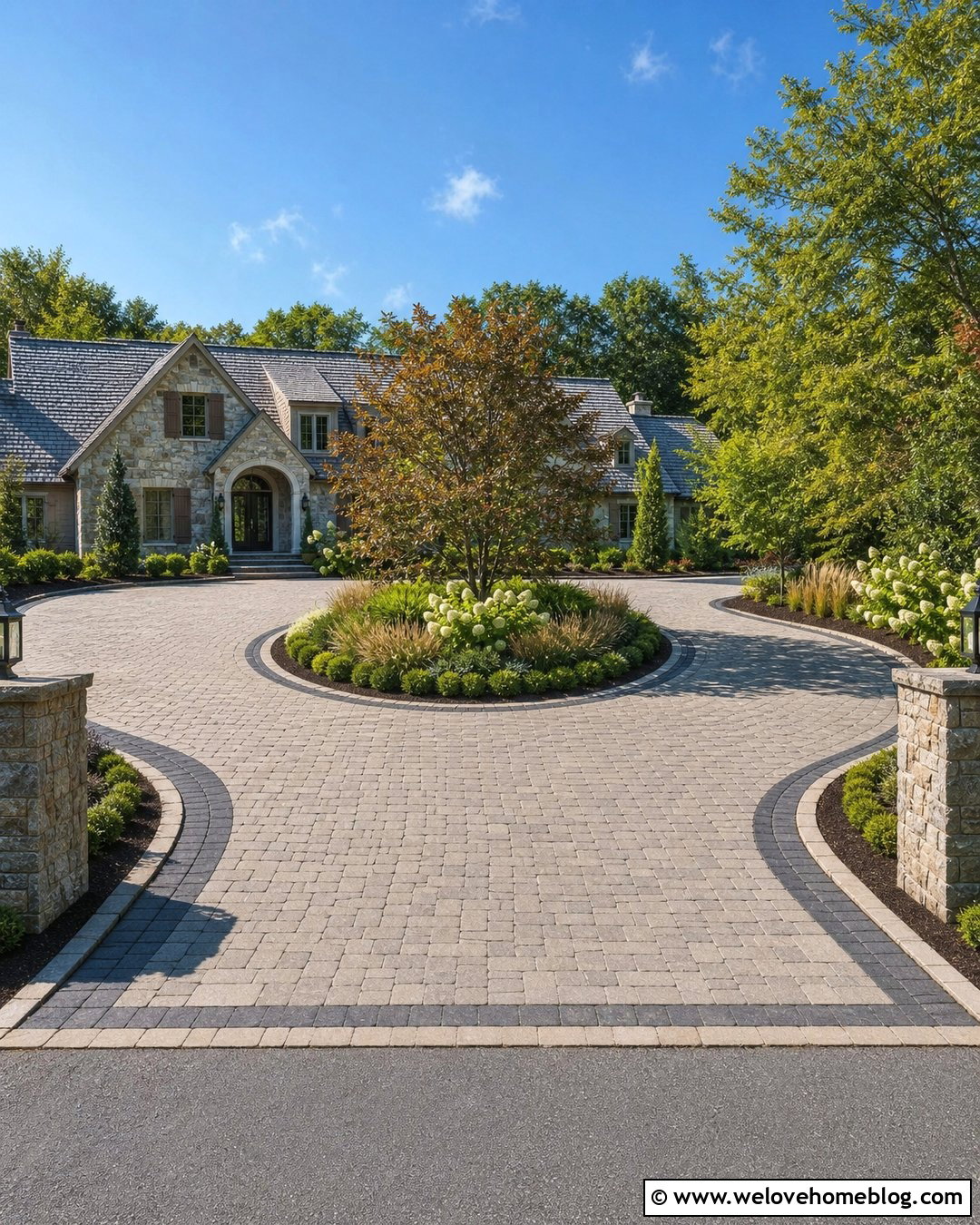
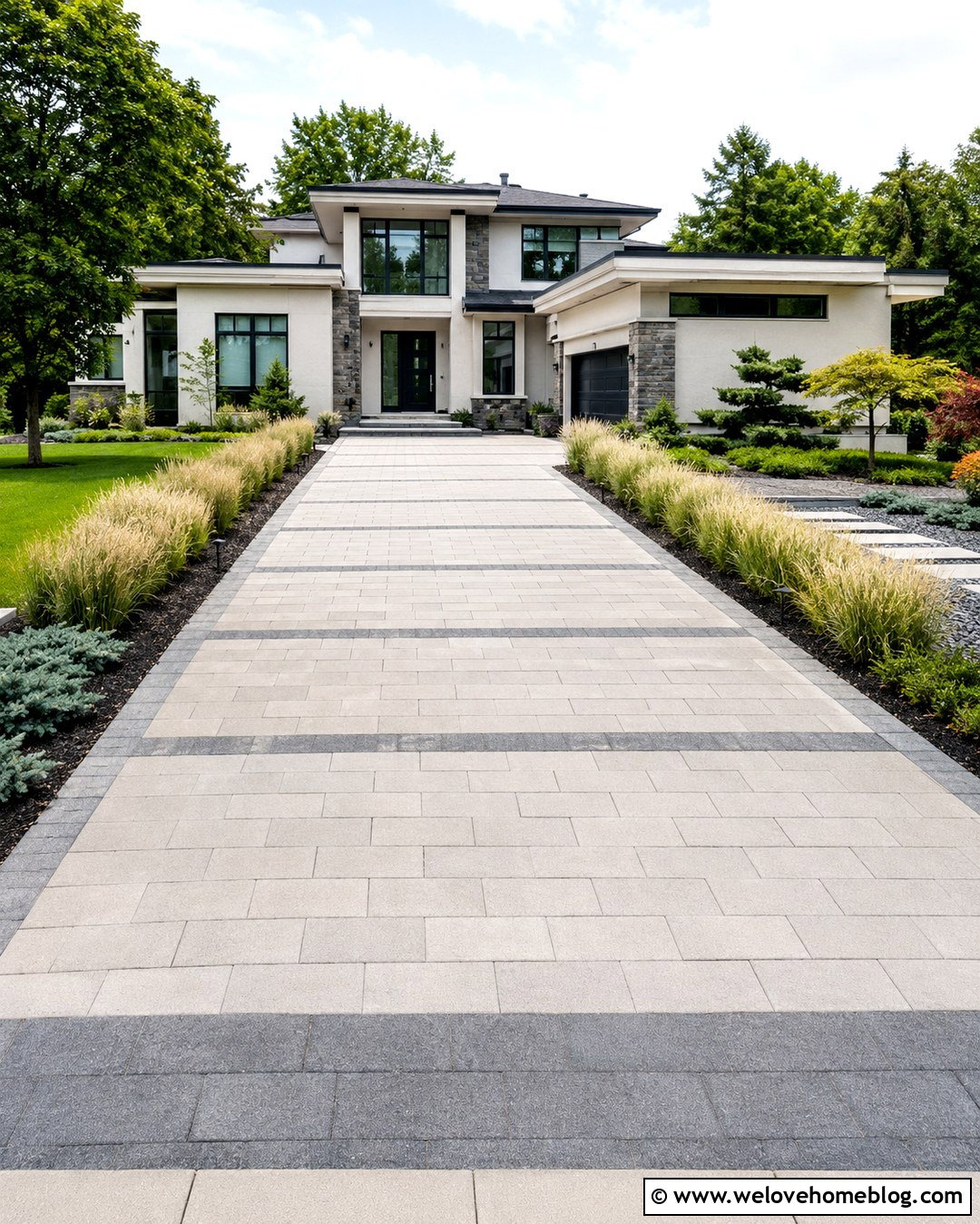
A circular driveway offers two major landscaping opportunities: the outside border and the central island. Use tumbled concrete pavers in warm gray tones to define the loop, with a charcoal paver ribbon following both curves. Plant the outer edge with low shrubs and ornamental grasses, then make the island a stronger focal point with a small ornamental tree. Surround the tree with groundcover, seasonal flowers, and a clean stone or brick mowing edge. Keep plants low near both street connections so drivers can enter and exit safely. Repeating materials between the island and perimeter ties the large layout together. This balanced design works for Colonial, French country, and spacious modern farmhouse homes. Avoid overcrowding the island, since one well-scaled tree often creates more impact than several competing features.
13. Narrow Driveway With Trellis Planting
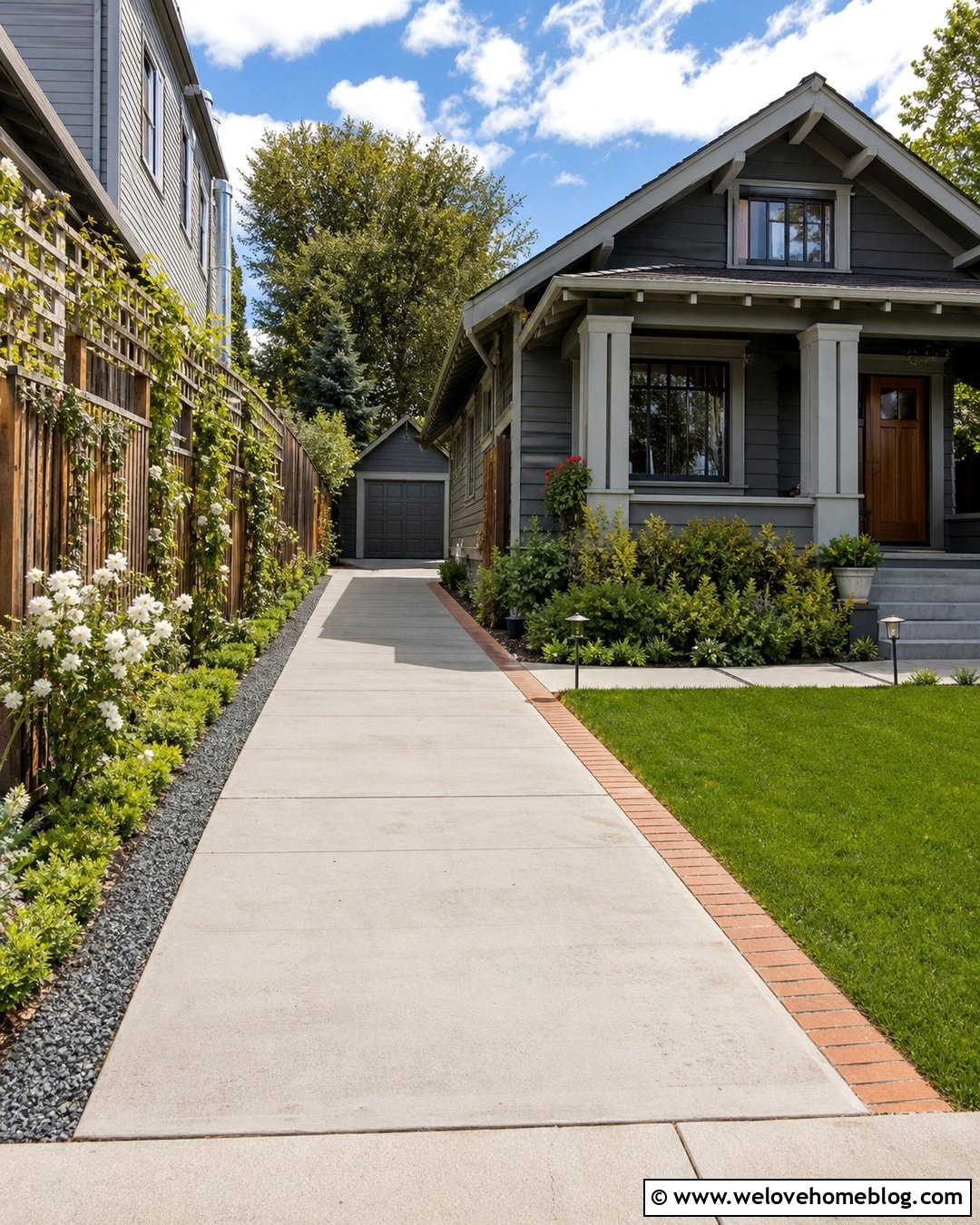
Limited side space does not mean the driveway has to feel bare. A narrow poured concrete driveway can be bordered with a slim gravel strip and a vertical wood trellis along one side. Train nonaggressive vines on the trellis, then place compact evergreen groundcovers and small flowering perennials at its base. On the opposite edge, use a flush brick mowing strip beside the lawn to preserve as much driving width as possible. This design adds greenery without relying on broad shrubs that interfere with doors or mirrors. It is practical beside urban cottages, townhomes, and narrow-lot Craftsman houses. Select vines that suit the climate and will not damage nearby siding or gutters. Maintain an open gap between the trellis and driveway so pruning, cleaning, and surface repairs remain manageable.
14. Sloped Driveway With Retaining Wall Beds
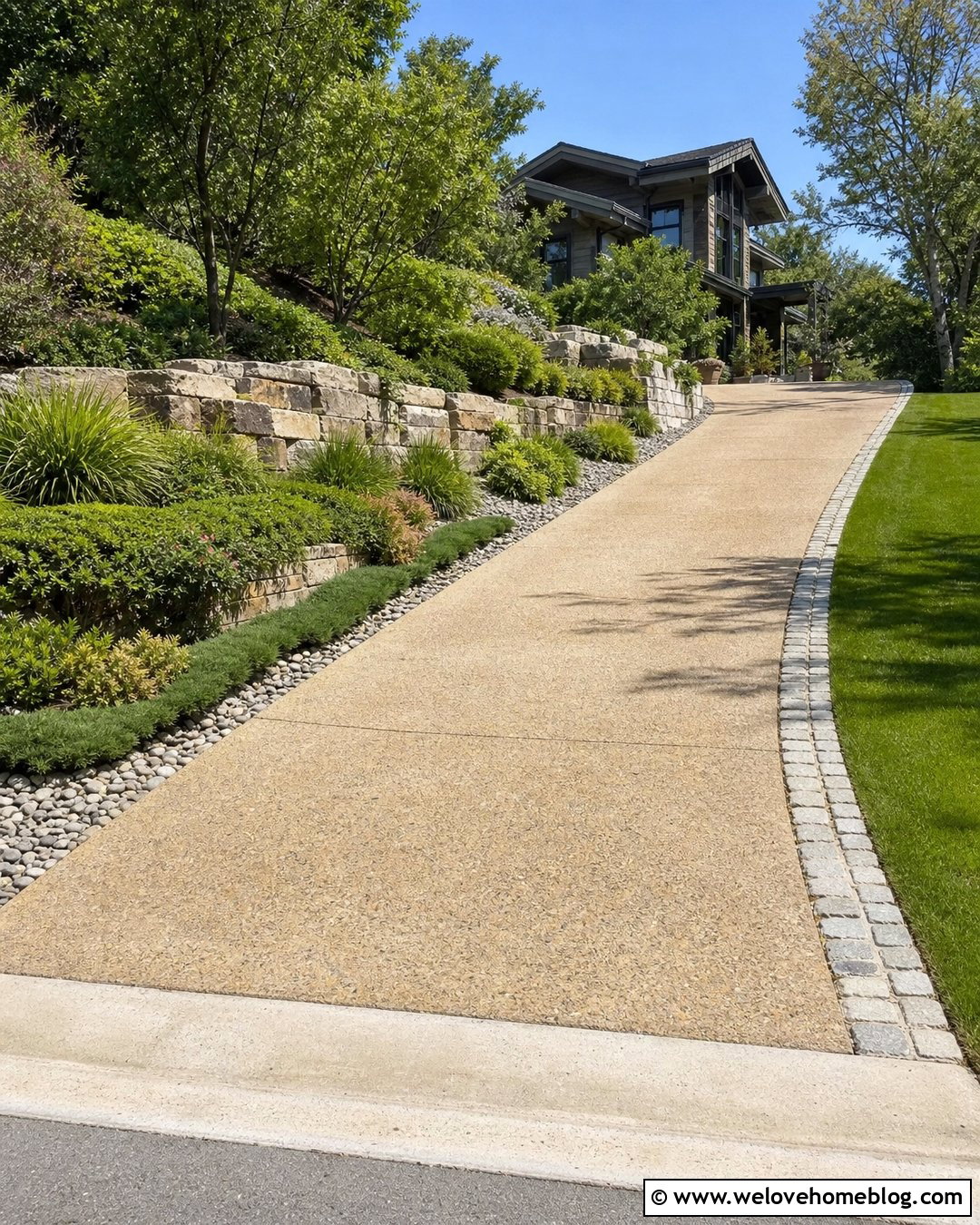
A sloped driveway often needs stronger edge definition than a level one. Pair an exposed aggregate concrete surface with a low segmental stone retaining wall on the uphill side. The wall can hold back soil while creating a raised planting bed for spreading junipers, compact grasses, and cascading perennials. On the downhill edge, use a flush cobblestone ribbon and low groundcover so the view remains open. Include drainage stone and an appropriate outlet behind the retaining wall to reduce water pressure. Complex retaining walls and drainage corrections benefit from professional design because poor construction can lead to movement or erosion. () Choose wall colors that echo the driveway aggregate and house facade. The completed landscape should stabilize the grade while making the climb toward the home feel welcoming.


15. Farmhouse Gravel Driveway With Wildflowers
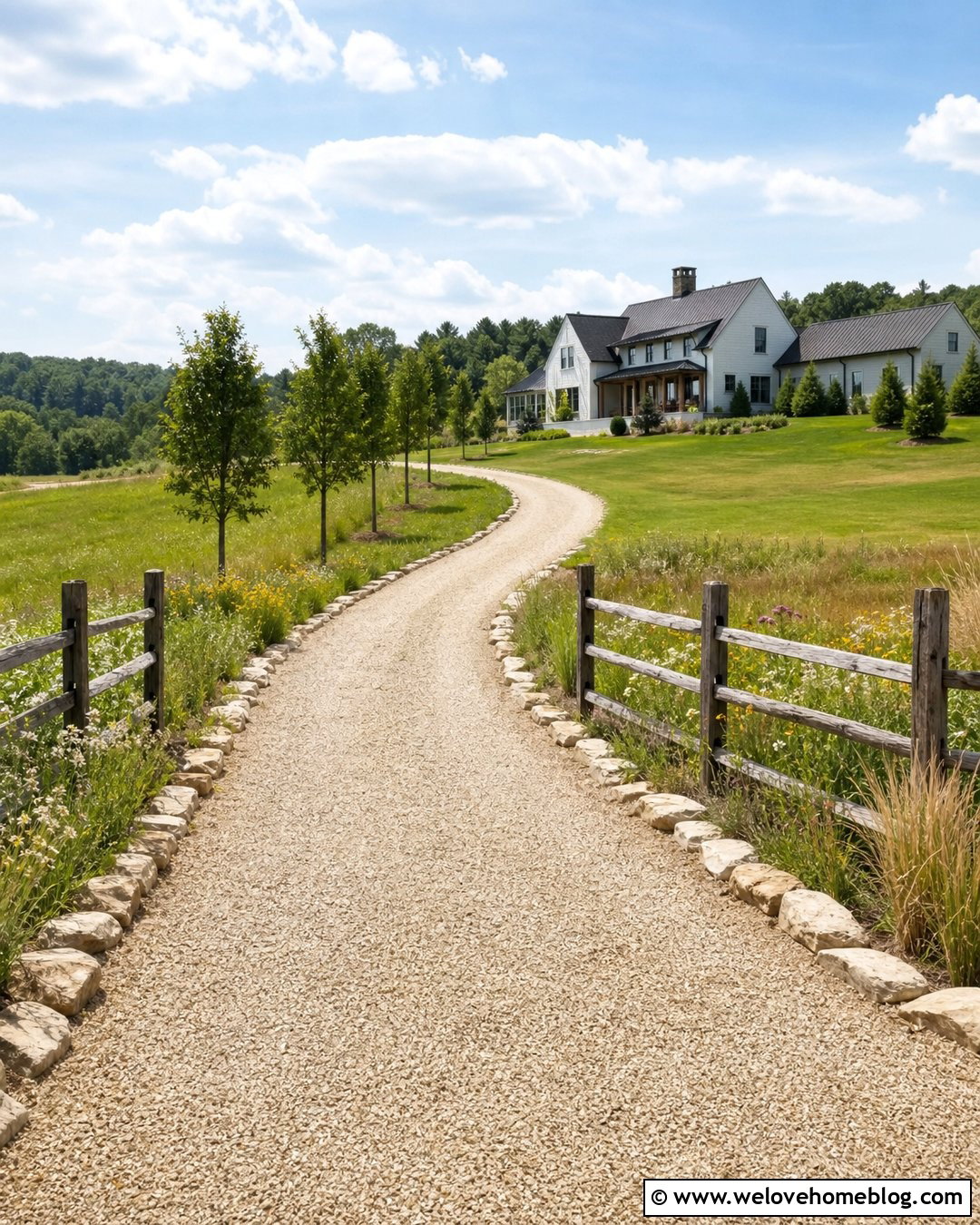
The crunch of pale gravel and the movement of wildflowers can create a relaxed farmhouse entrance. Build a wide driveway from compacted beige crushed stone, then frame it with weathered timber or rough fieldstone. Set a split-rail fence several feet beyond one side and fill the space between with native grasses and long-blooming flowers. On the opposite side, use mown lawn with a simple row of small deciduous trees. This asymmetrical layout feels natural while still providing a clearly defined driving lane. Select plants that remain upright and do not produce dense growth over the gravel. Near the house, transition into clipped shrubs and cleaner beds for a more finished arrival. The result suits barns, country homes, and modern farmhouses without making the property appear overly formal.
16. Modern Concrete Driveway With Succulent Beds
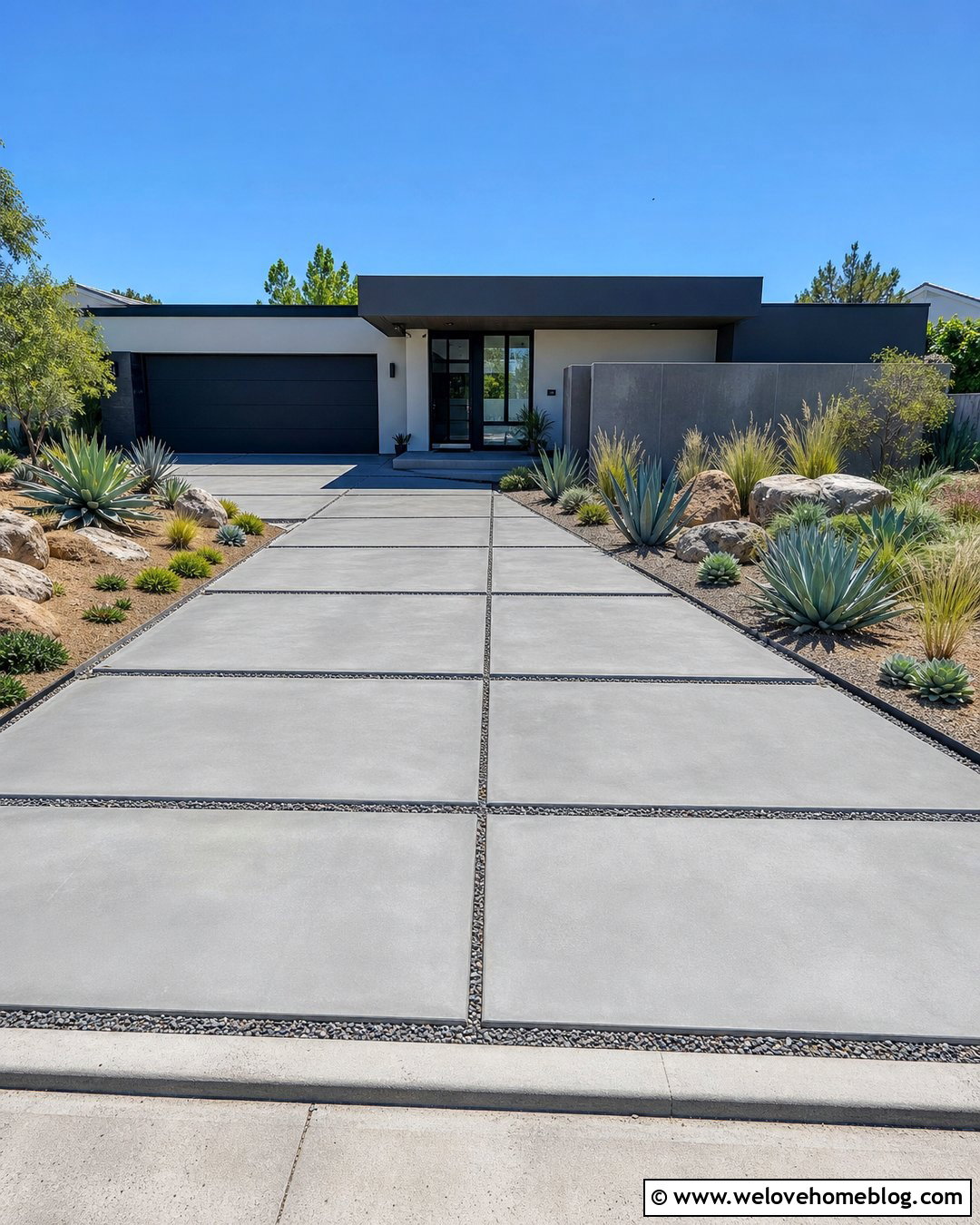
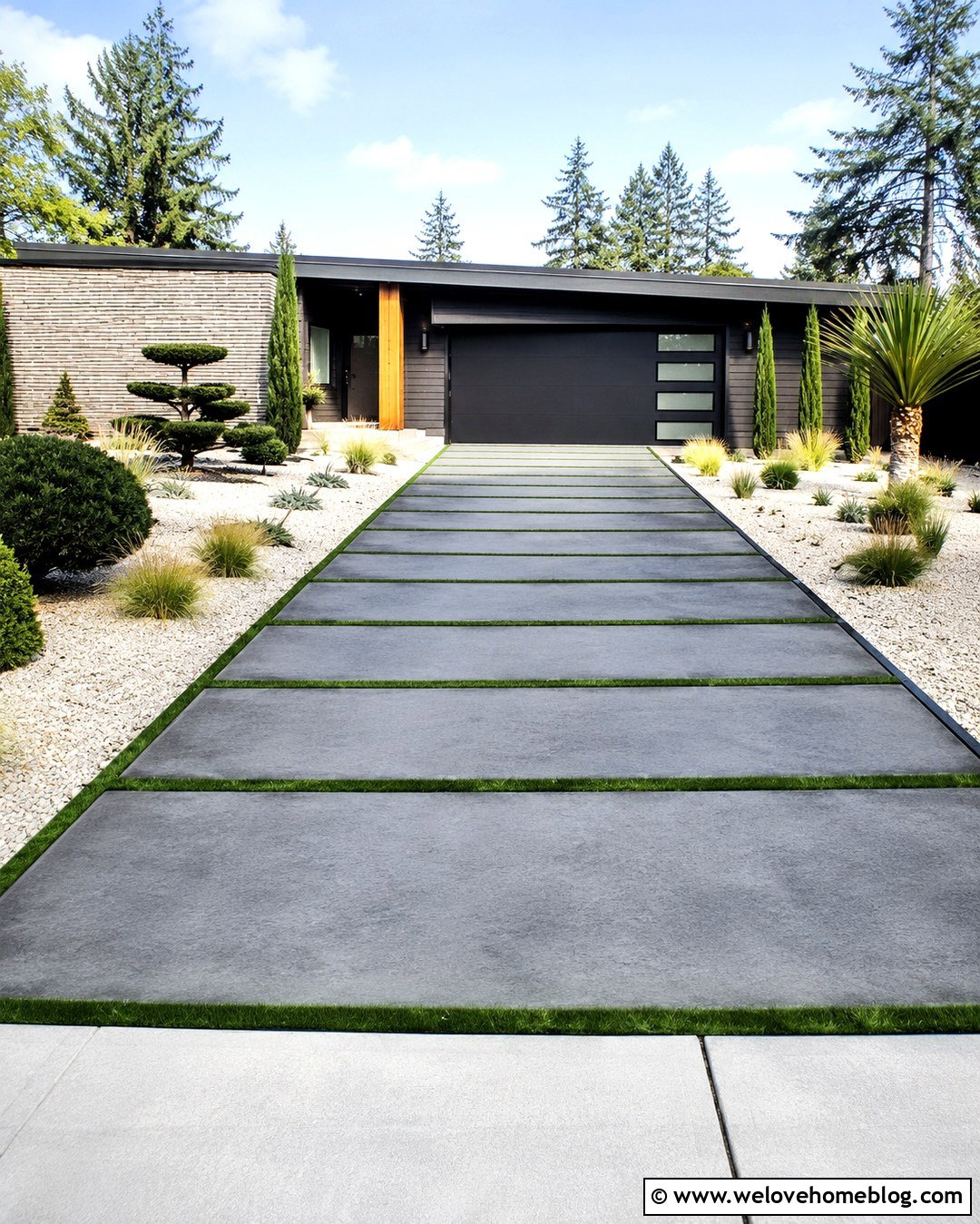
Large-format gray concrete slabs create a strong geometric base for drought-tolerant edge landscaping. Separate the slabs with narrow gravel joints, then install black steel edging around beds filled with agave-like plants, compact succulents, ornamental grasses, and sculptural rocks appropriate for the local climate. Use decomposed granite or crushed stone instead of bark mulch to reinforce the dry, modern appearance. Plant sizes should repeat in a controlled pattern, leaving visible space between specimens. This complete look complements flat-roofed contemporary houses and desert-inspired ranch homes. Confirm that selected plants can tolerate winter temperatures in your area, and avoid sharp foliage next to passenger doors or walkways. Low-voltage fixtures can be placed within the beds, but the design should still look attractive and clearly organized in daylight.
17. Shaded Driveway With Fern And Hosta Borders
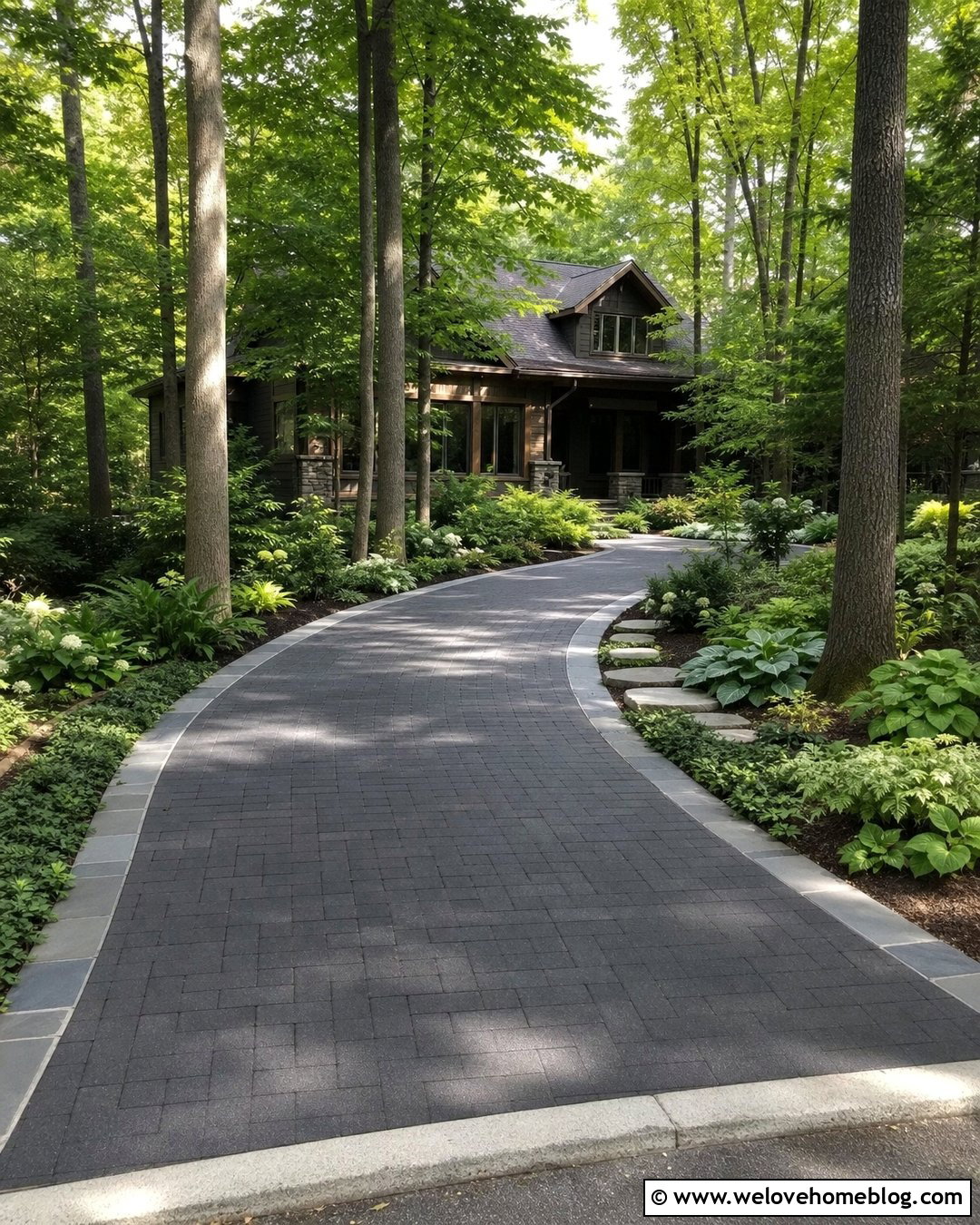
A driveway beneath mature trees can feel lush instead of gloomy when shade-tolerant plants form layered edges. Use charcoal concrete pavers for the driveway and a smooth bluestone border to define broad, curving beds. Plant low groundcovers nearest the pavement, followed by hostas, ferns, and compact woodland shrubs. Repeat foliage colors and leaf shapes so the border feels calm rather than crowded. A few pale flowering plants can brighten darker corners. This arrangement suits wooded Craftsman, cottage, and traditional homes. Tree roots require careful treatment, so avoid deep excavation or major grade changes around established trunks. Apply mulch lightly and keep it away from tree bases. Where passengers regularly step out, replace plants with flat stepping stones or a wider paved landing to prevent damage and provide secure footing.
18. Low-Maintenance Driveway With Rock Mulch
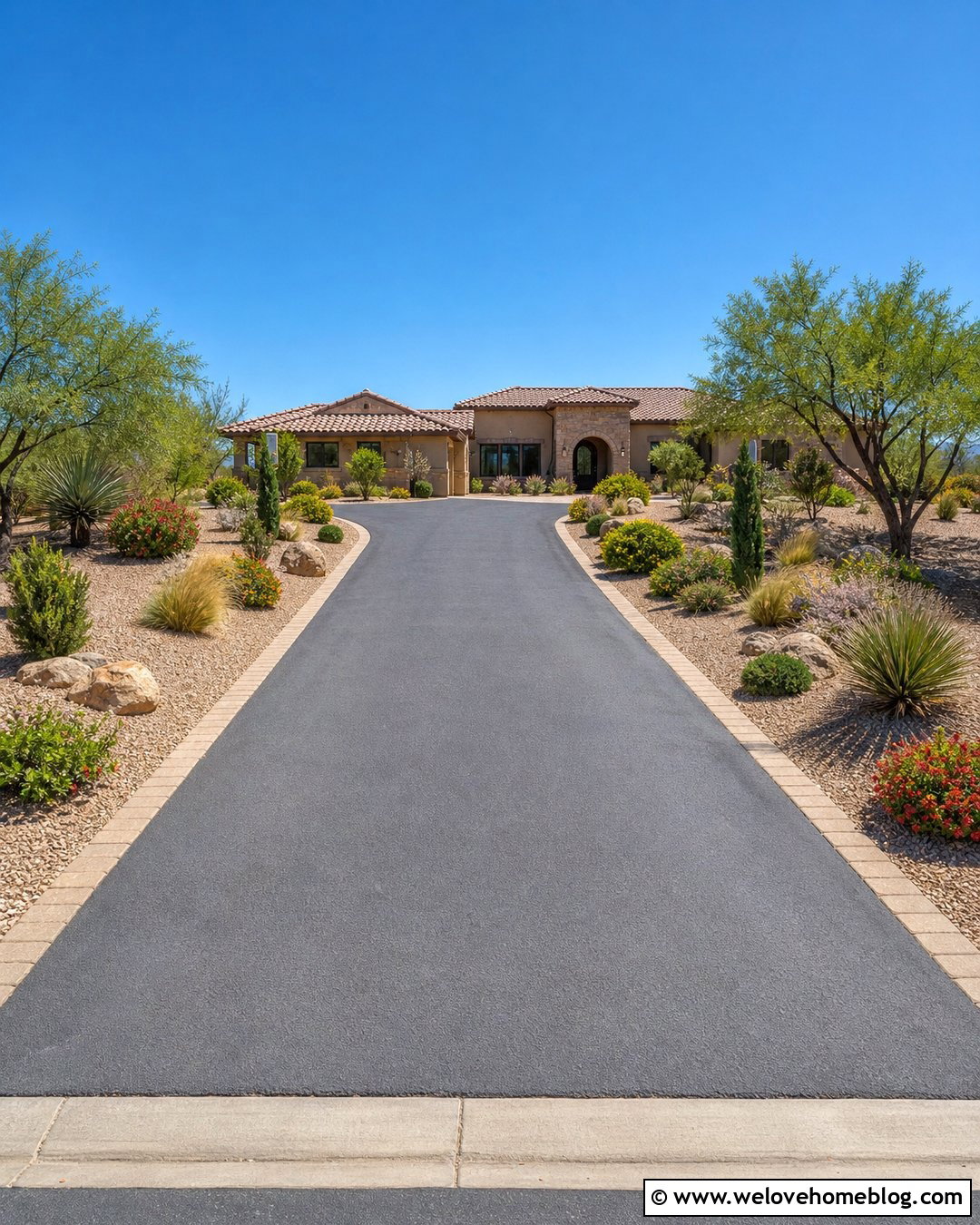
Busy homeowners can frame a driveway without creating another demanding garden. Start with a medium-gray asphalt driveway and a flush tan paver border. Beyond it, spread angular rock mulch through wide planting beds containing dwarf evergreens, compact ornamental grasses, and a limited number of flowering shrubs. Use plants in repeating groups rather than filling every open space. The rock surface keeps the design crisp, while the paver line provides a clear transition from asphalt to landscaping. Rock-based borders can be a durable, relatively low-effort option for hot or dry settings. () However, they still need occasional leaf removal and weed control. Include drip irrigation beneath the rock where appropriate. This practical arrangement fits ranch, Southwestern, and contemporary suburban homes while maintaining year-round structure.
19. Driveway Entrance With Pillars And Layered Beds
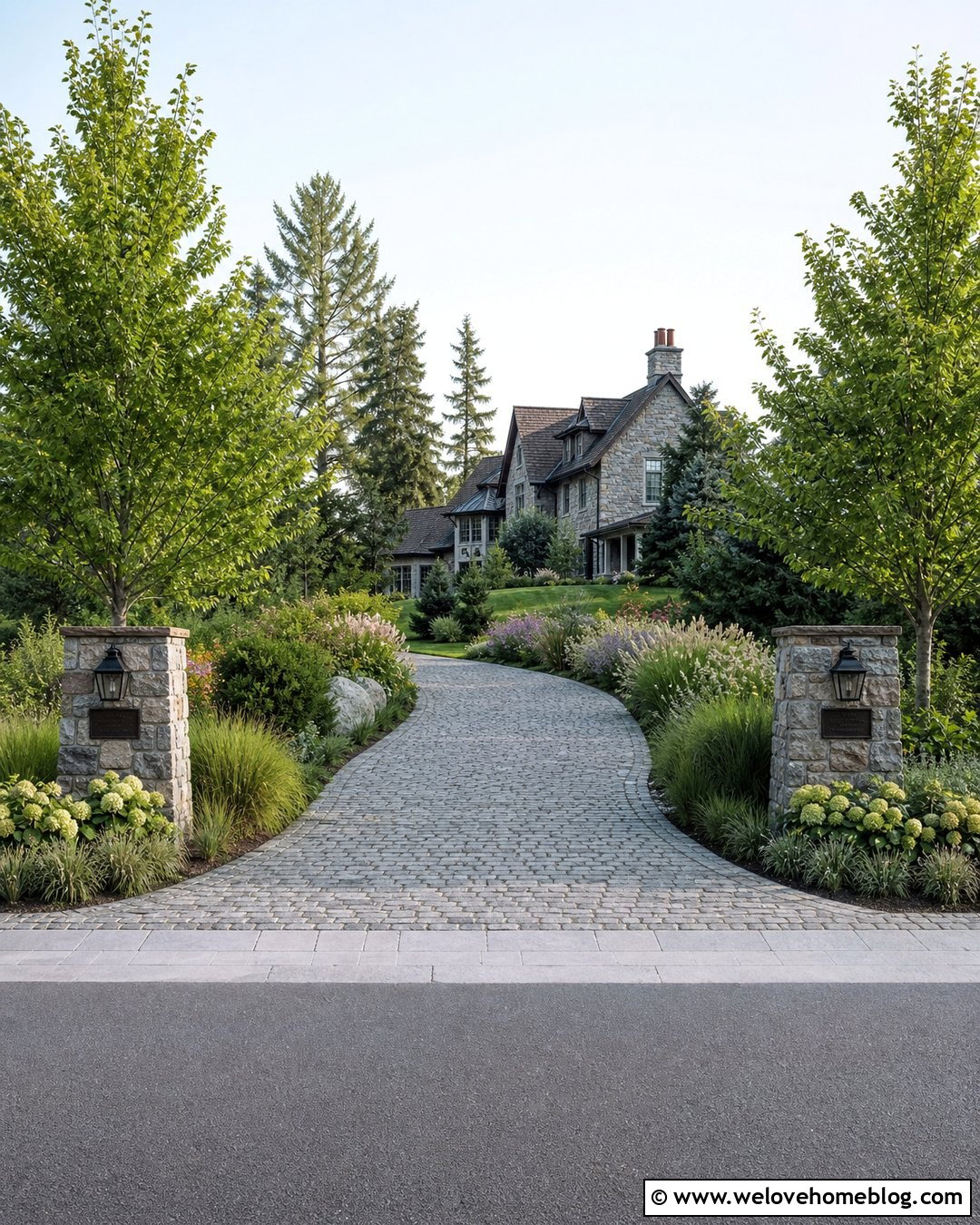
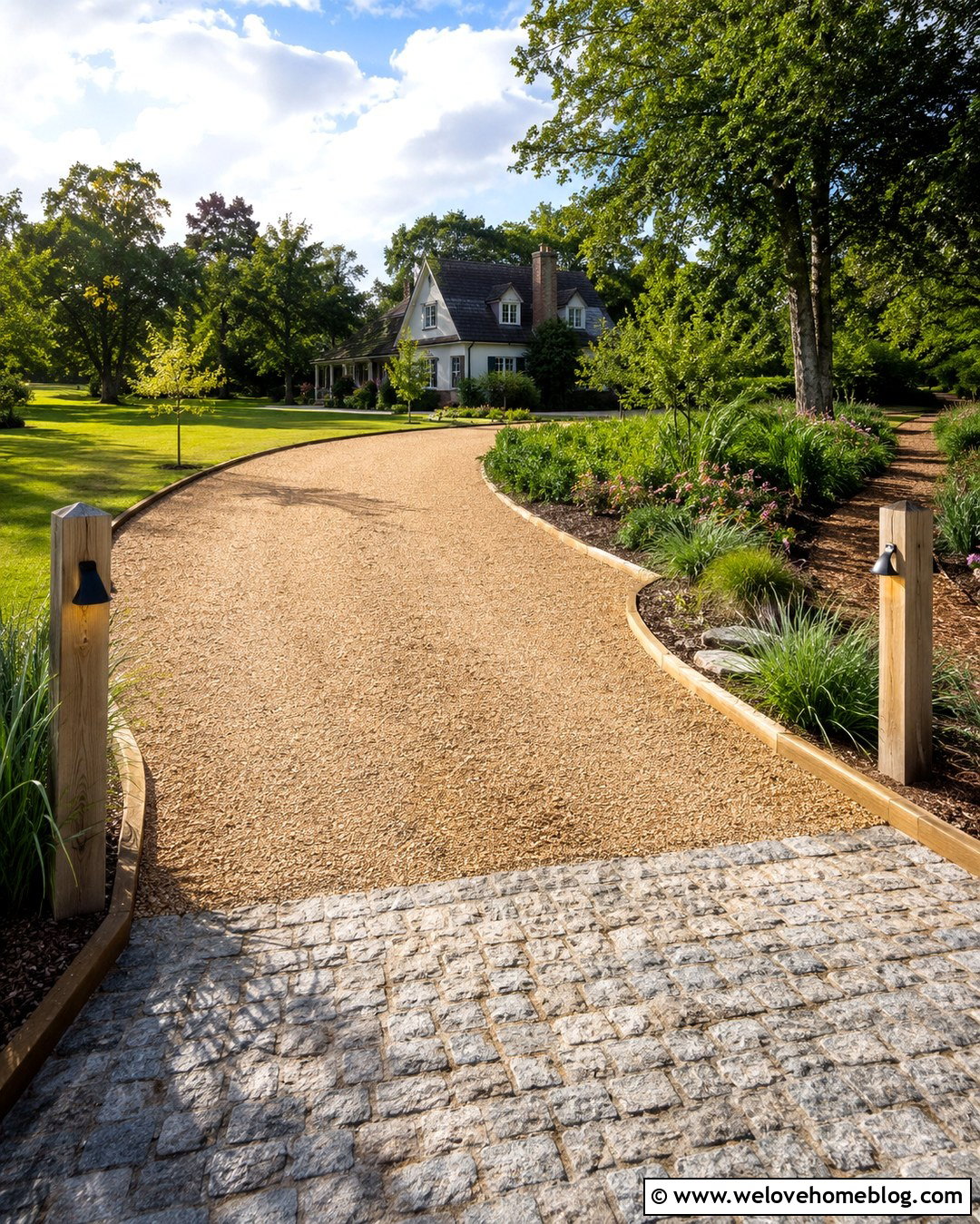
The driveway entrance sets expectations before the house is fully visible. Pair a curved cobblestone driveway with two low stone pillars positioned well outside the vehicle clearance zone. Build sweeping beds around the pillars using evergreen shrubs, ornamental grasses, flowering perennials, and one small tree on each side. Keep the planting closest to the road low, then increase height farther into the property. A matching cobblestone apron can visually connect the pillars and driveway surface. Add subtle address plaques and downward-facing landscape lights without overloading the entrance with decoration. This complete design suits estate, country, and traditional homes. Before construction, confirm local setback, visibility, utility, and right-of-way requirements. The pillars, beds, and driveway curve should work together as one balanced composition rather than separate focal points.


20. Reclaimed Brick Driveway Edge With Groundcover
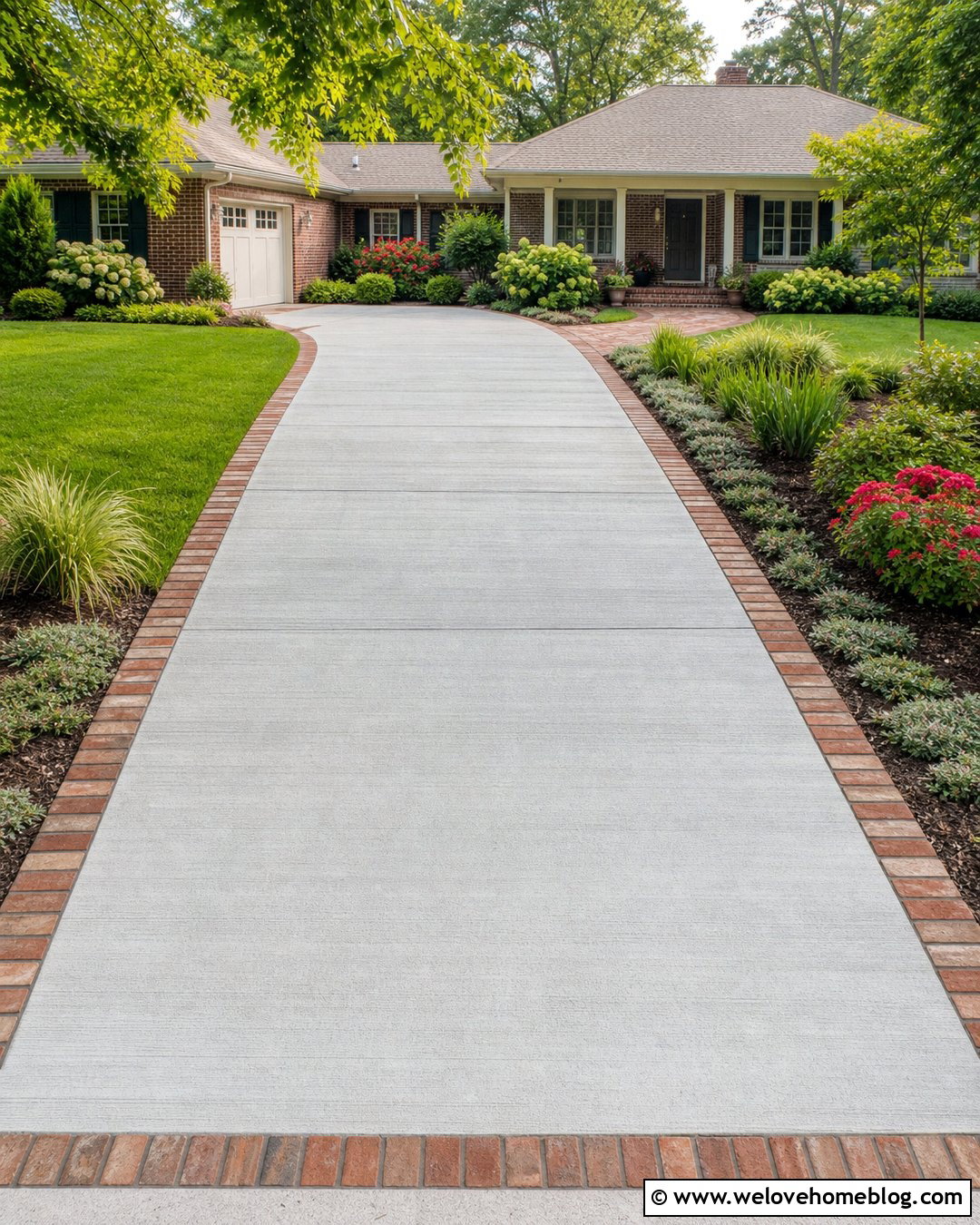
For an affordable border with established character, line a light gray concrete driveway with reclaimed clay bricks. Set the bricks flush in a single soldier course so lawn equipment and tires can pass over them safely. Outside the brick line, create narrow mulch beds planted with creeping thyme, sedum, compact ornamental grasses, or another locally suitable groundcover. At the driveway entrance, widen the beds and add two small flowering shrubs for emphasis. The aged red and brown bricks introduce warmth beside plain concrete and coordinate naturally with traditional facades. Clean and sort reclaimed pieces before installation, rejecting badly cracked bricks. A firm compacted base will help limit movement. This approachable design fits bungalows, cottages, and brick ranch homes while delivering a finished appearance without extensive hardscaping.
Conclusion:
Thoughtful driveway edges can transform plain pavement into a welcoming part of the front yard. The strongest designs coordinate the driveway material, border, planting beds, drainage, and architecture instead of treating each feature separately. When comparing these **20 edge of driveway landscaping ideas**, consider your available width, sunlight, climate, maintenance schedule, and vehicle clearance. Low borders and restrained planting are generally best near the street, while taller shrubs and trees can add depth closer to the house. Choose durable materials that suit your budget and repeat them elsewhere in the landscape for continuity. With careful planning, even a simple brick ribbon or planted gravel strip can create a cleaner edge and noticeably stronger curb appeal.

Related posts:
Leave a Reply