
Driveway trim can turn a basic parking surface into a polished part of your front yard. It creates a clear transition between pavement, lawn, planting beds, and walkways while helping loose materials stay contained. The best trim also reflects the home’s architecture. Brick complements traditional facades, steel suits modern homes, and irregular stone feels natural beside cottages or wooded properties. Practical details matter too. Border height, drainage, tire clearance, maintenance, and installation depth can affect how well the finished design performs. Current driveway guidance commonly recommends brick, stone pavers, stamped concrete, decorative gravel, and planted edges for adding definition and curb appeal. () The complete looks below offer 20 Driveway Trim Ideas for different surfaces, house types, yard sizes, and budgets.

1. Brick Driveway Trim
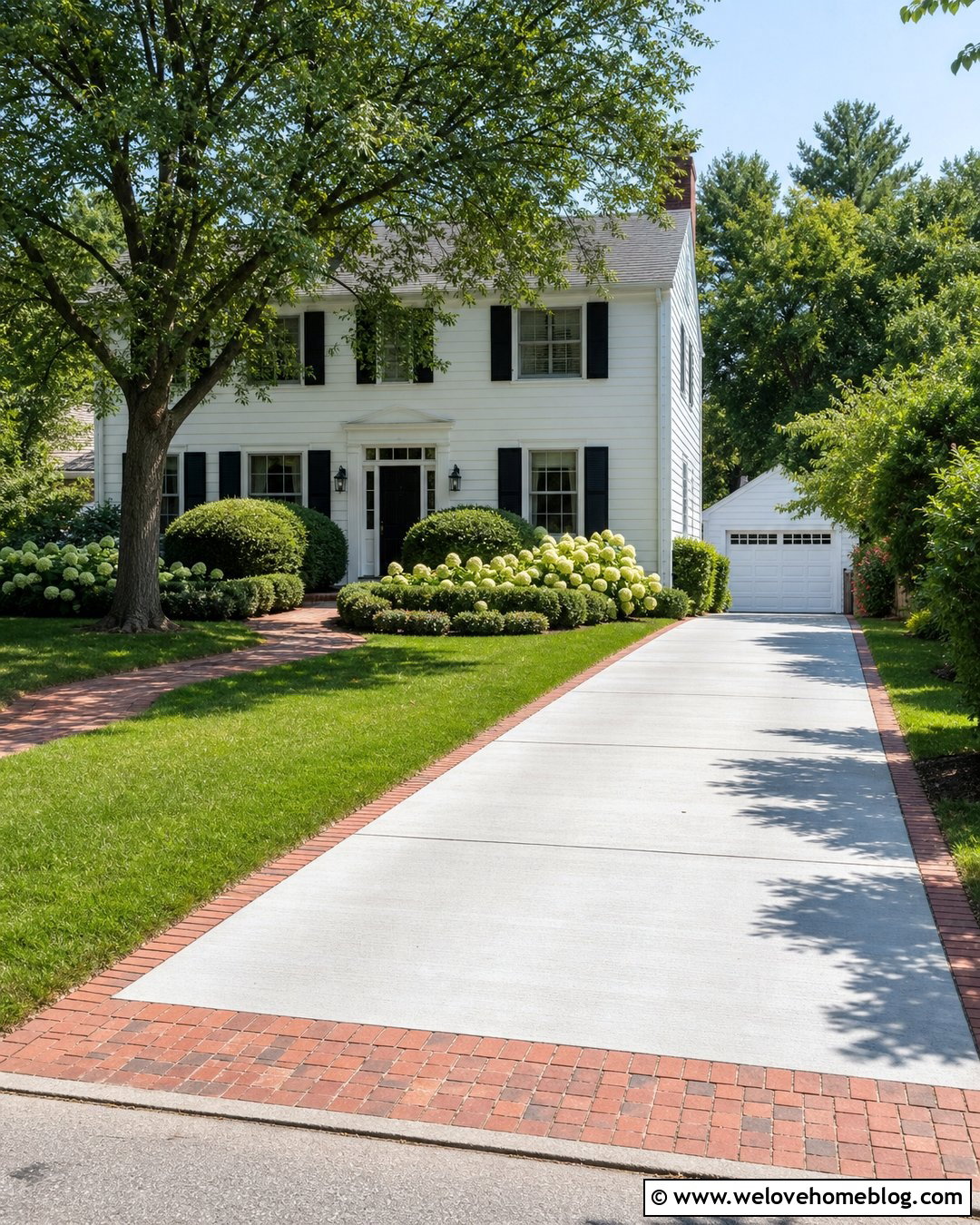
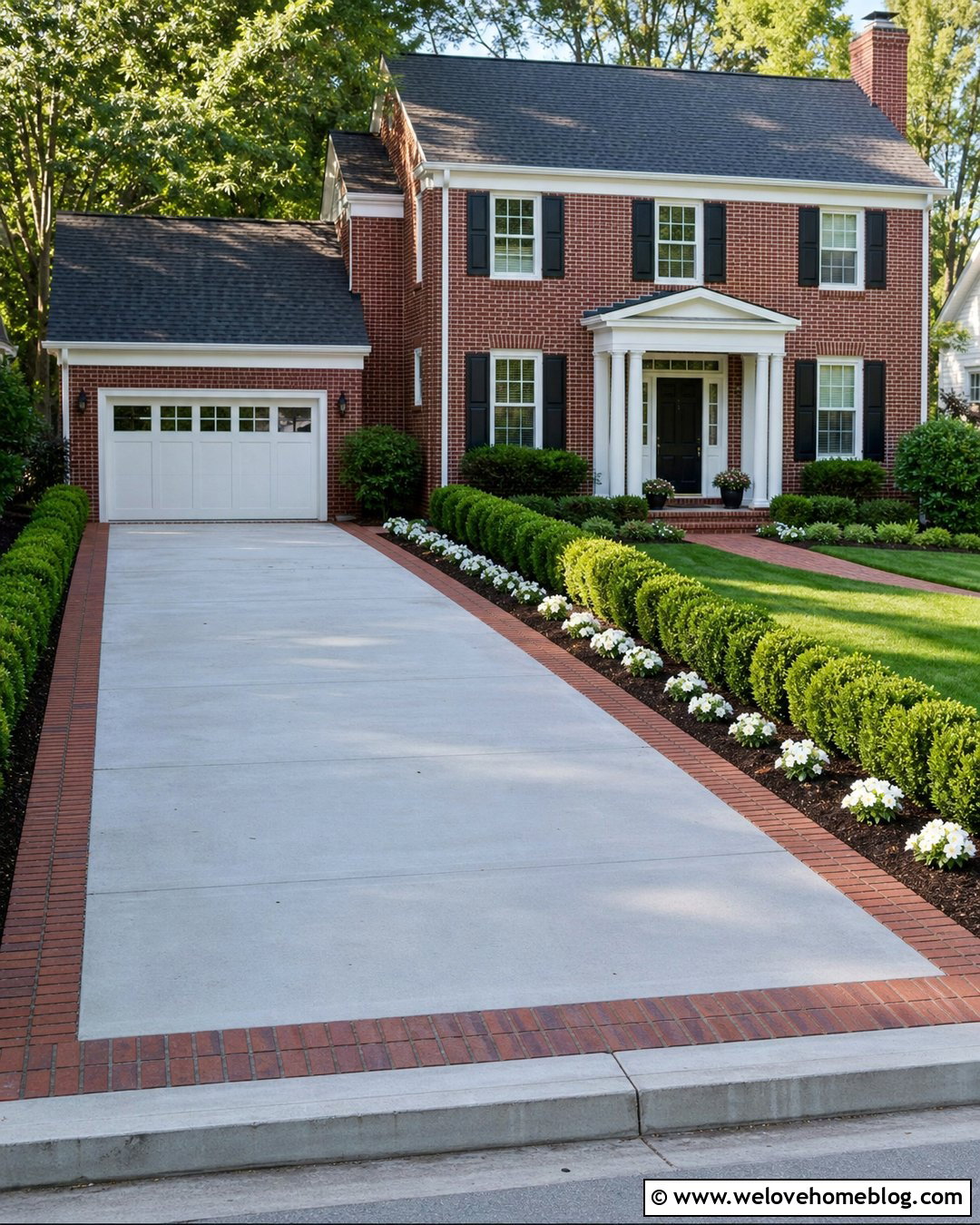
Warm red or brown brick creates a familiar border that works especially well with gray concrete and black asphalt. Install the bricks in a straight soldier course for a formal appearance, or follow a curved driveway with a softer running pattern. A flush installation makes mowing easier and reduces the risk of tires catching the edge. Repeat the brick around the driveway apron or nearby front walkway so the exterior feels connected. Along the lawn, keep the planting simple with clipped shrubs, hydrangeas, or low ornamental grasses. Brick trim is particularly effective beside Colonial, Cape Cod, and traditional ranch homes. Choose colors that relate to the facade without matching it exactly, giving the complete driveway enough contrast to remain clearly defined.
2. Belgian Block Driveway Trim
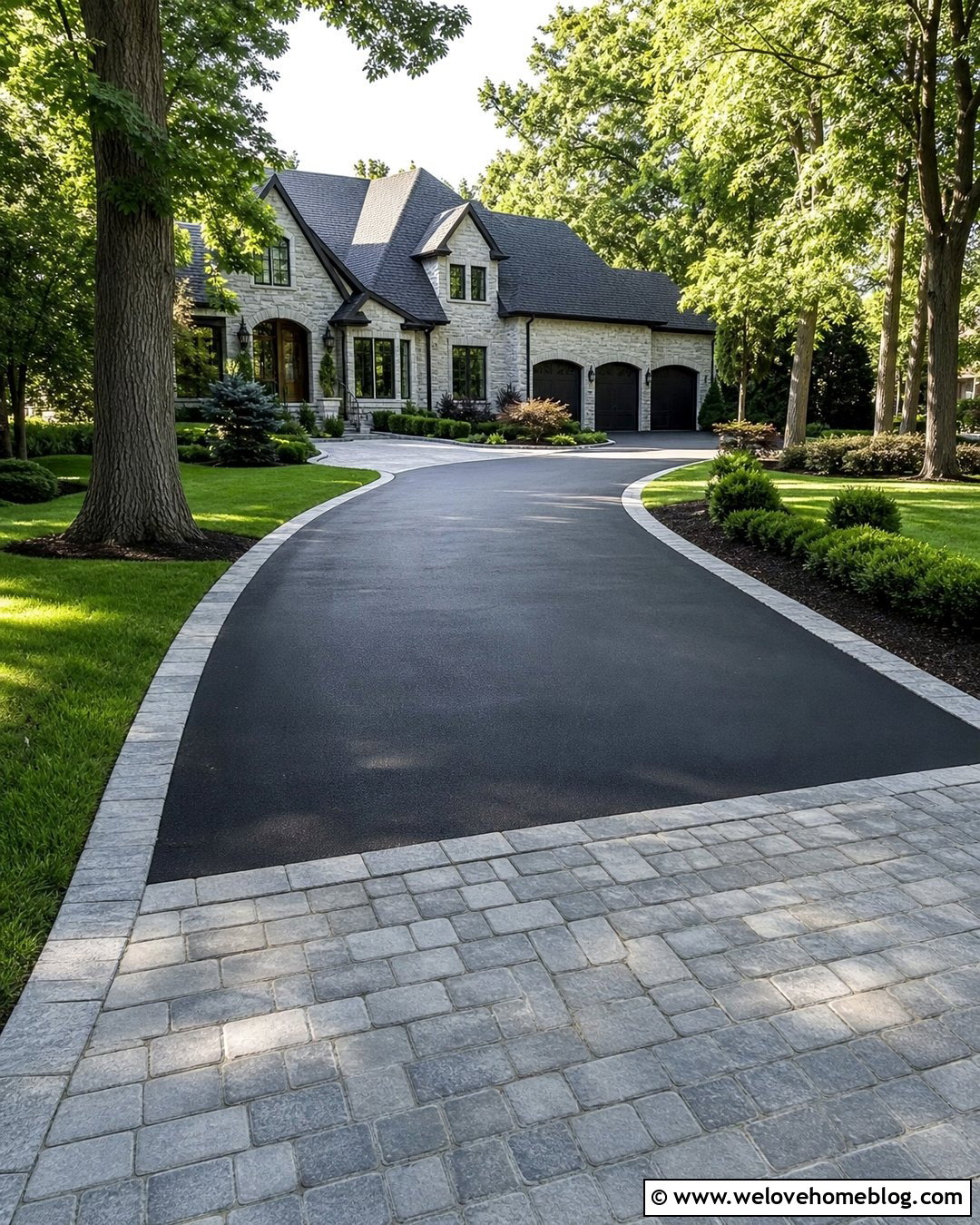
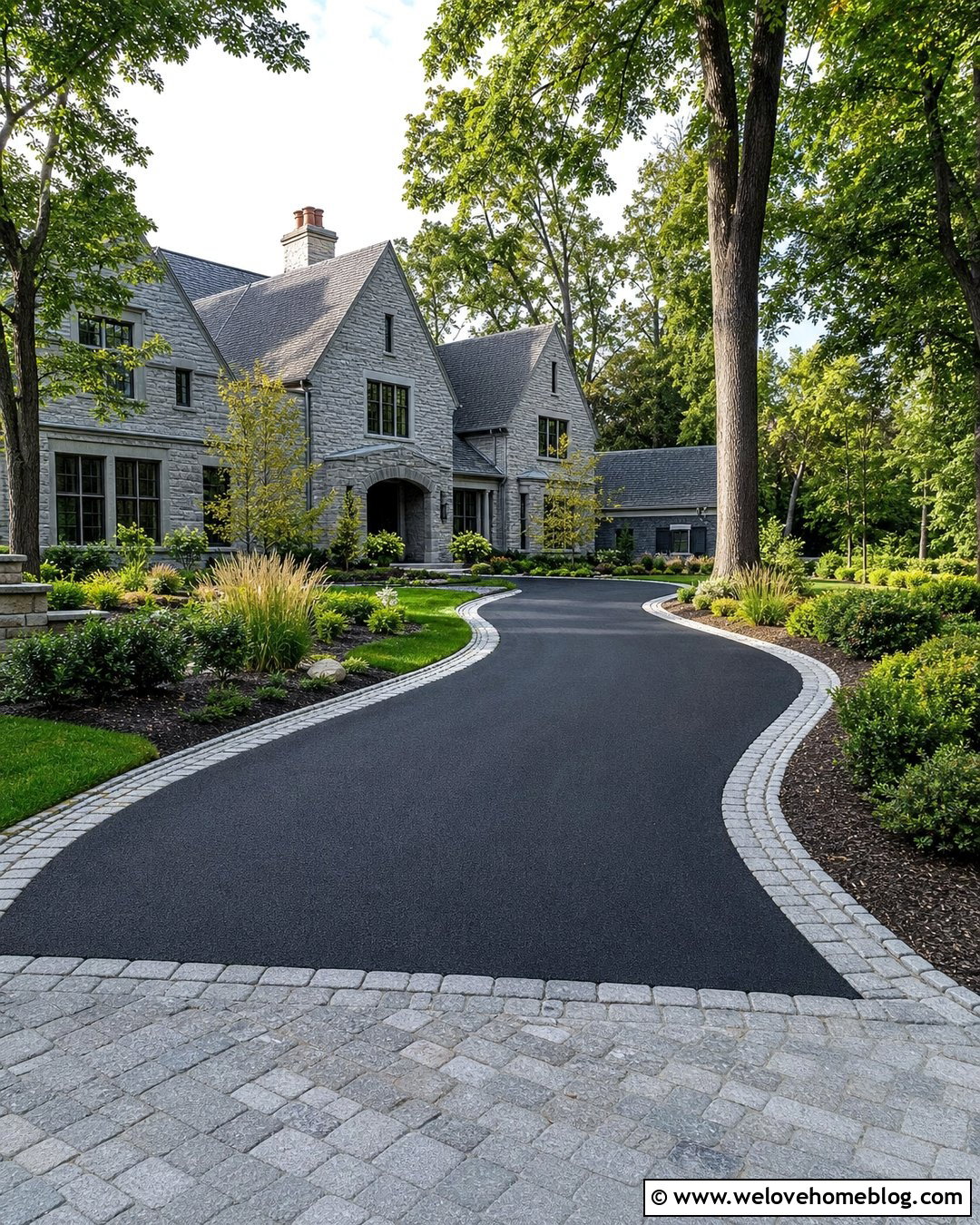
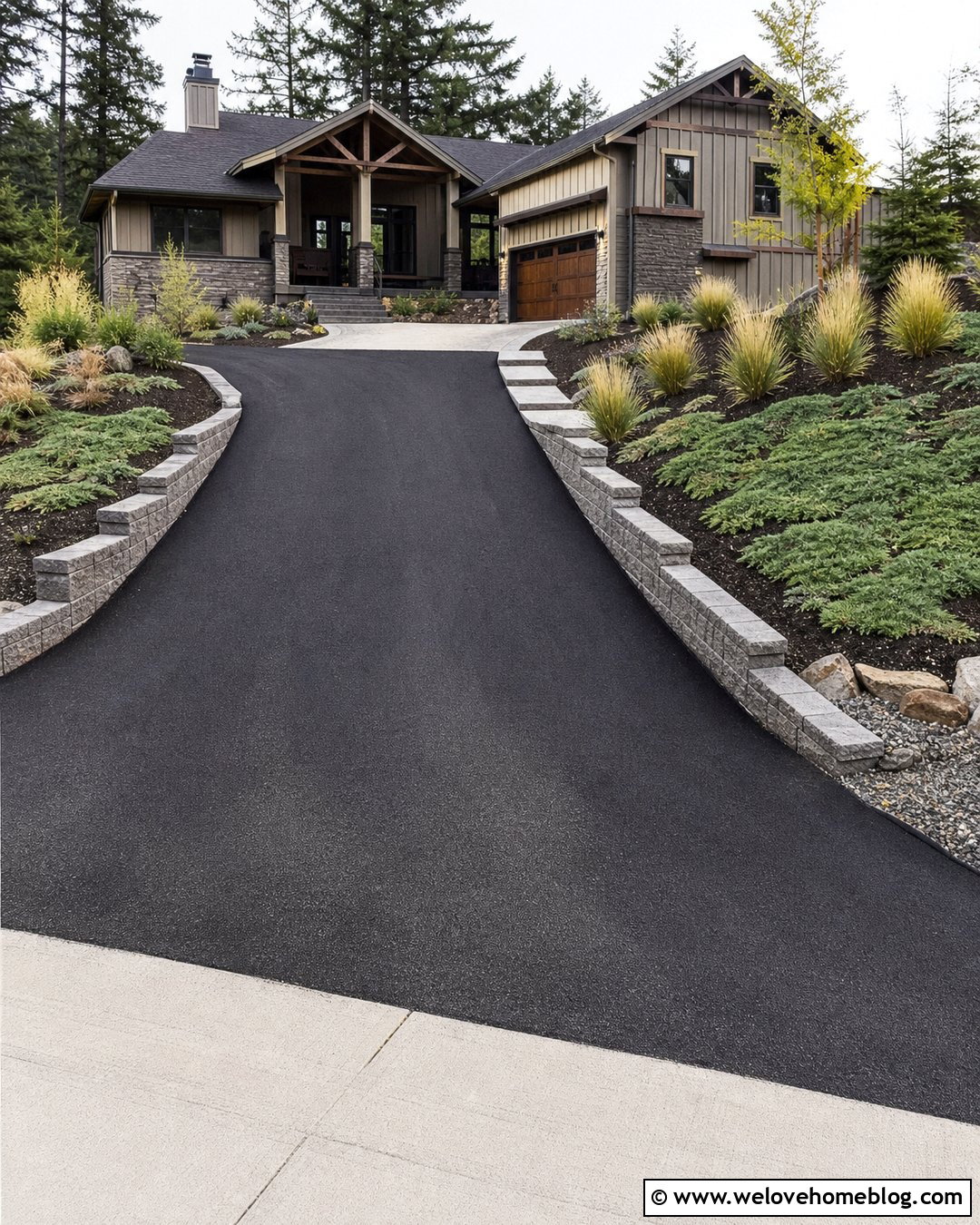
Belgian block gives an asphalt driveway a strong, substantial frame. The chunky stone units provide visible texture while creating a classic transition into the surrounding lawn. Gray blocks feel understated, while mixed charcoal and tan tones can connect the driveway to stone veneer on the house. For a long straight layout, use one continuous row along each side and widen the trim near the street to form a welcoming apron. Set the blocks close to pavement level where car doors open, then pair them with broad grass strips or restrained planting beds. Properly installed stone edging creates a durable boundary with a timeless appearance, making it suitable for everything from traditional suburban homes to larger estate-style properties. ()
3. Concrete Curb Driveway Trim
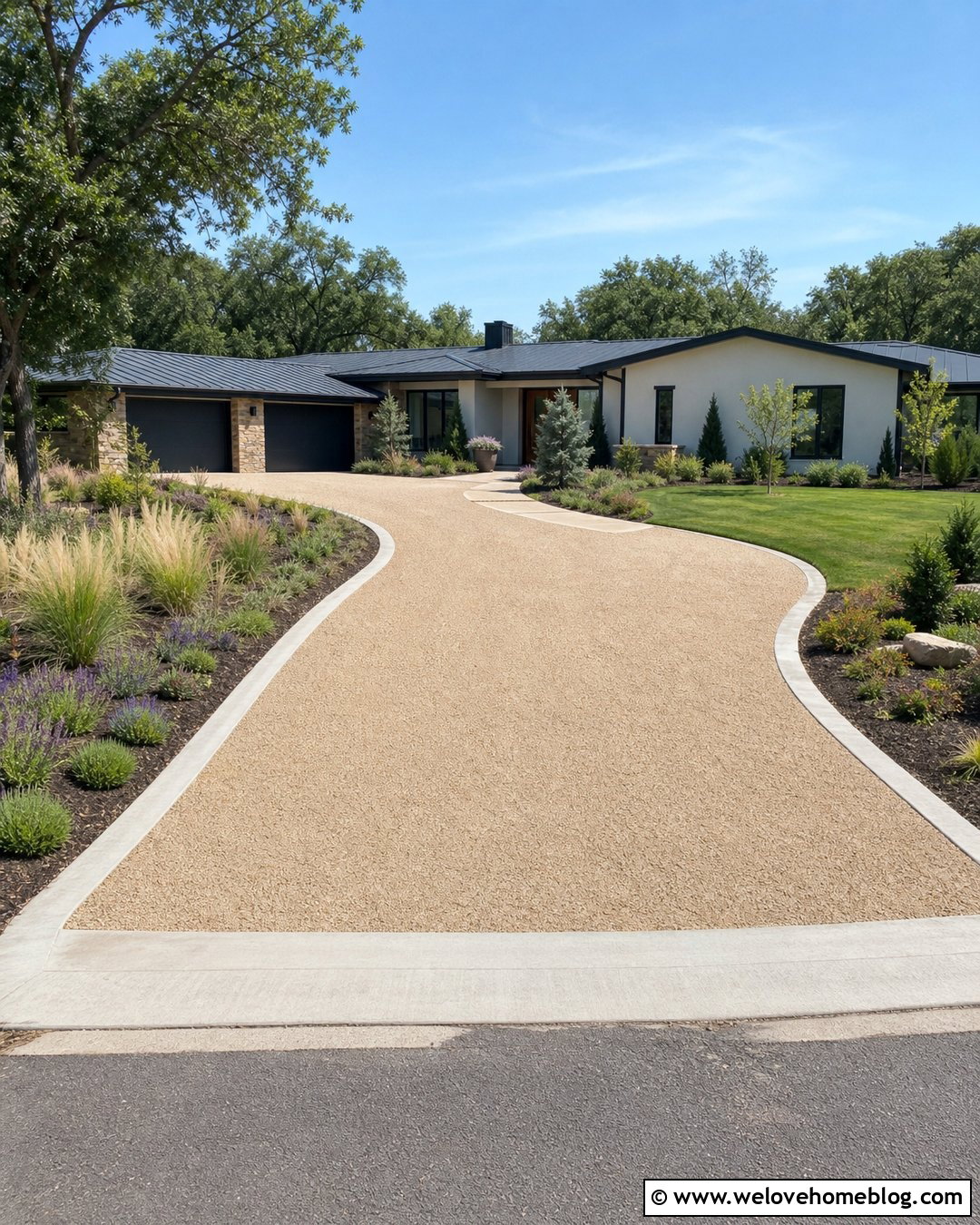
A poured concrete curb gives loose gravel a clean boundary and helps the driveway read as an intentional feature rather than an informal path. Use a low, smooth curb in a warm gray or sandy tone that complements the gravel. On a curved driveway, the continuous edge highlights the sweeping layout without creating distracting joints. Keep the curb nearly flush at the entrance and garage transition, where vehicles need a comfortable approach. Plant drought-tolerant grasses, compact evergreens, and flowering perennials beyond the concrete to soften its solid appearance. This trim works particularly well with contemporary ranch houses and modern homes. For a unified result, match the curb color to the front walkway, porch steps, or other concrete details already visible on the property.
4. Paver Ribbon Driveway Trim
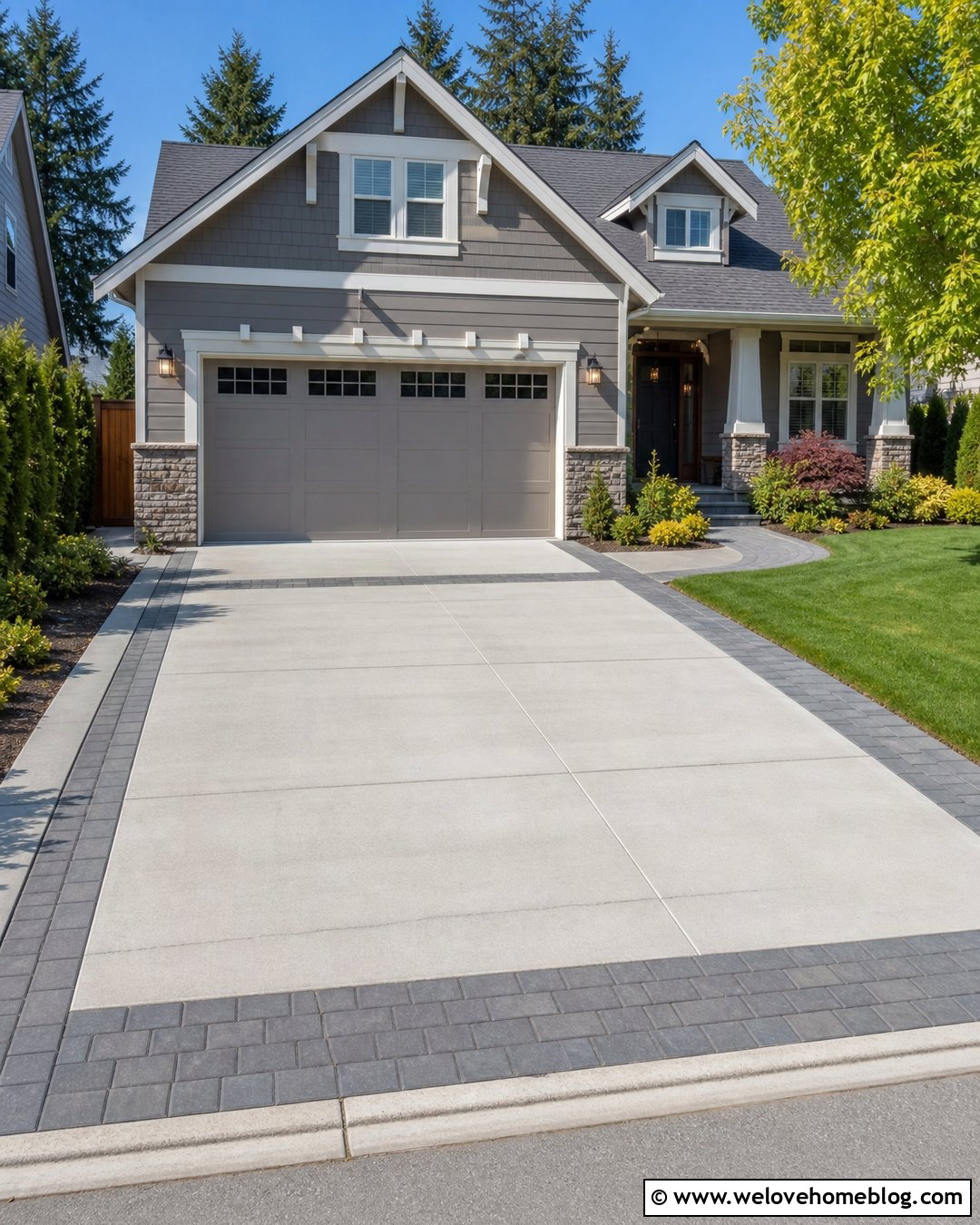
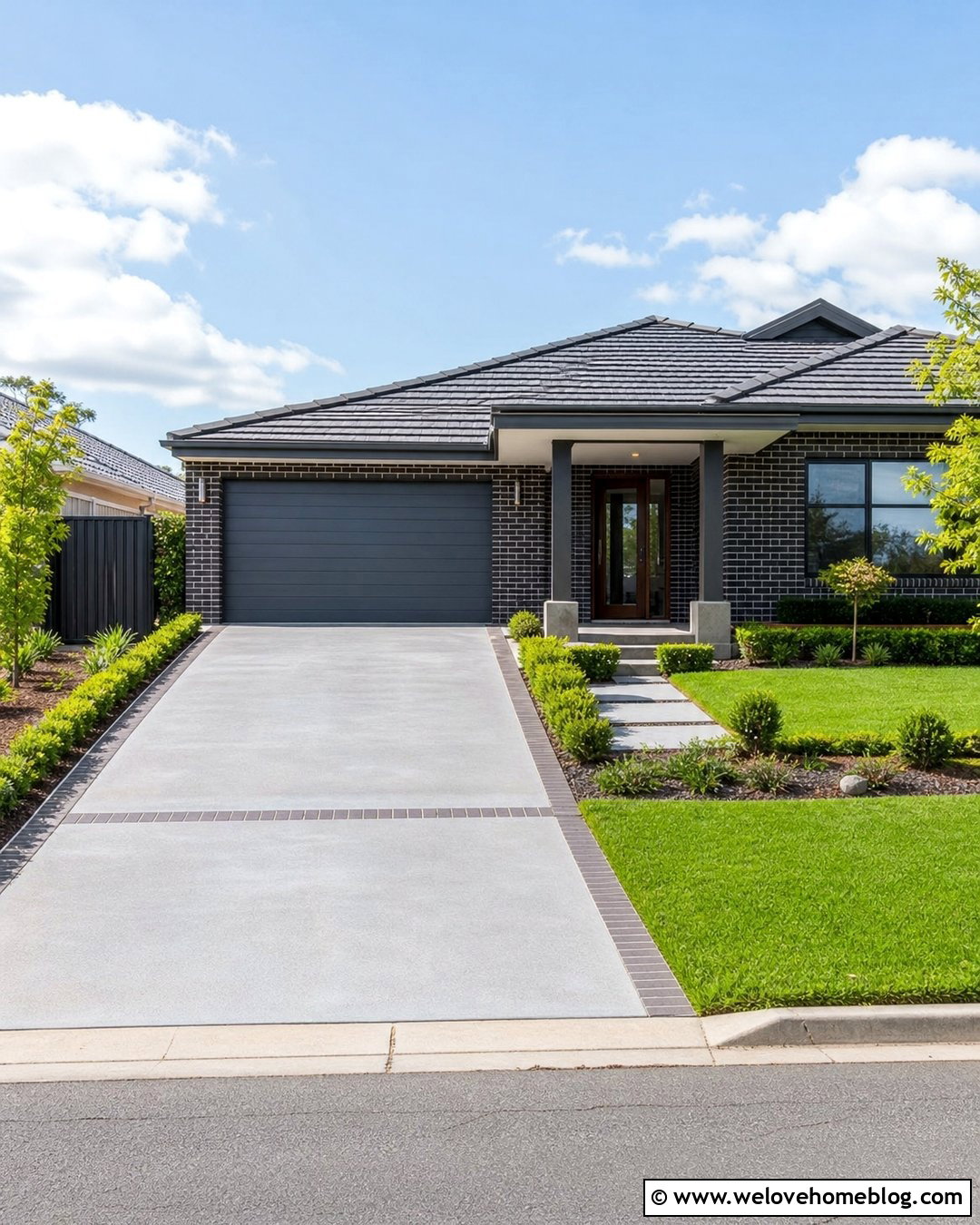
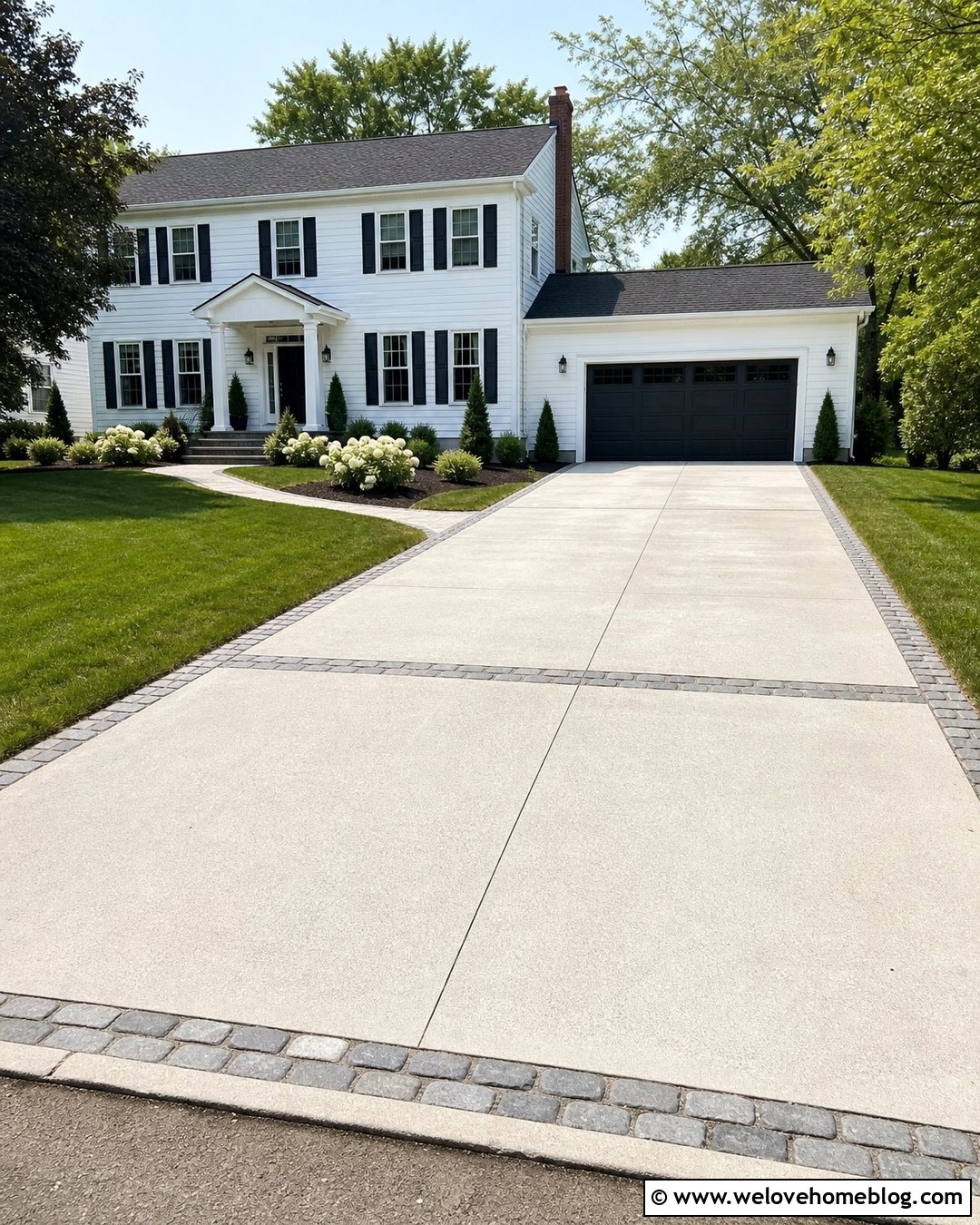
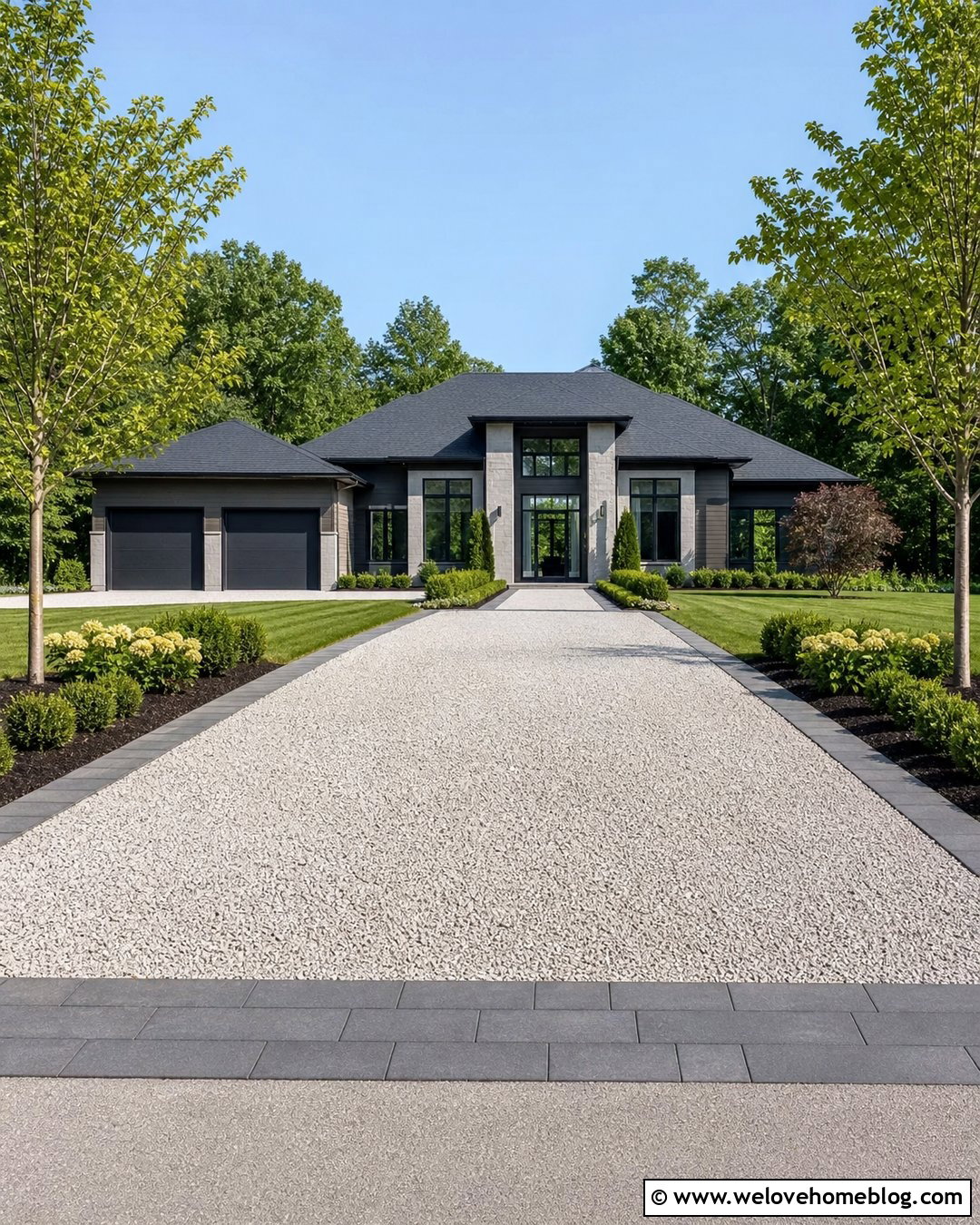
A narrow paver ribbon adds pattern without the cost of covering the entire driveway in pavers. Frame a broom-finished concrete surface with charcoal, tan, or red concrete pavers, selecting a tone that contrasts with the main slab. The ribbon can run along both sides, cross the driveway near the garage, and outline the apron for a coordinated finish. A single row feels clean and economical, while a double row creates more visual weight around a wide driveway. Complete the look with neat lawn edges, foundation shrubs, and a matching paver walkway. This approach fits Craftsman, transitional, and suburban homes because it combines practical concrete with a decorative detail that can echo the roof, masonry, shutters, or front door.
5. Natural Stone Driveway Trim
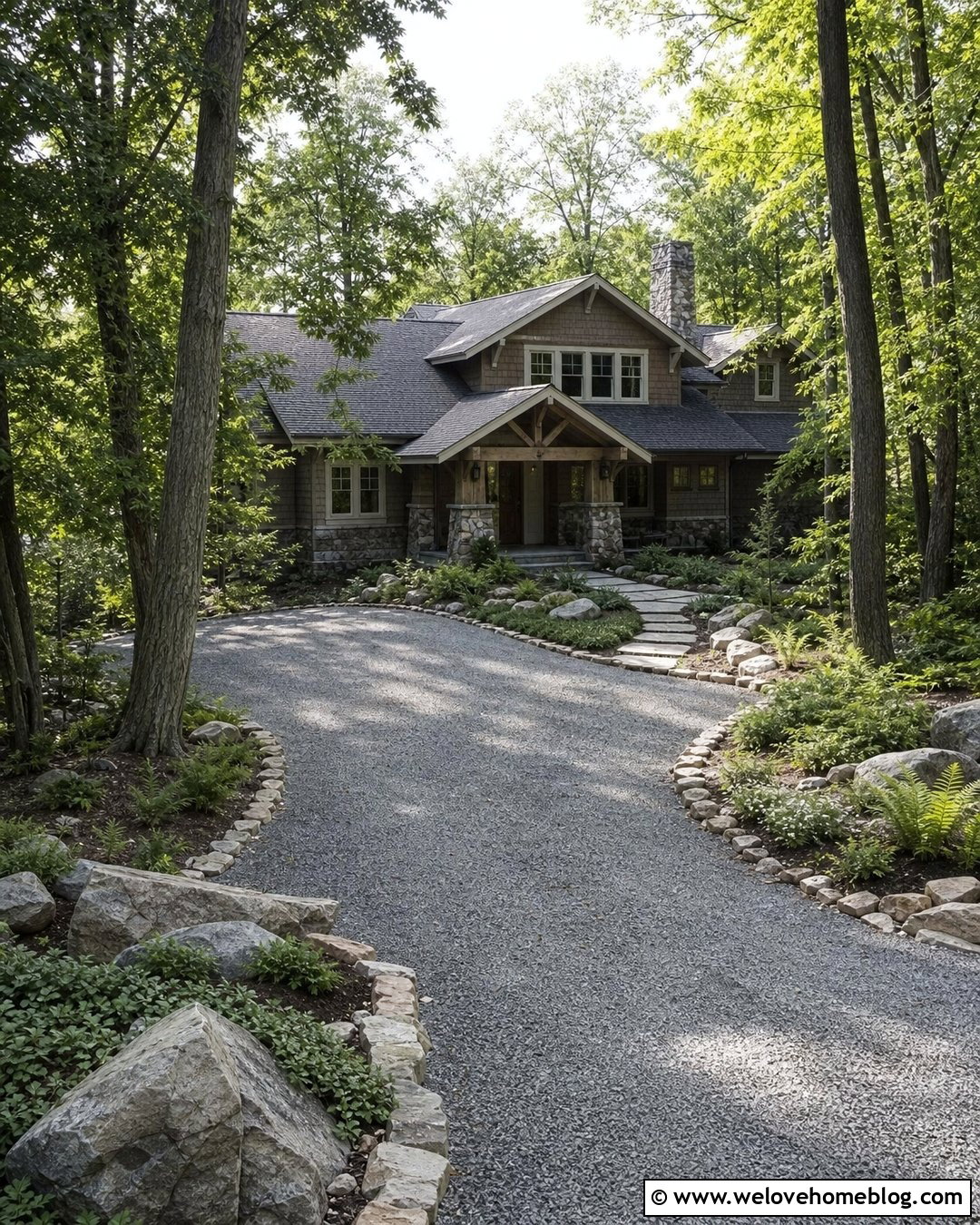
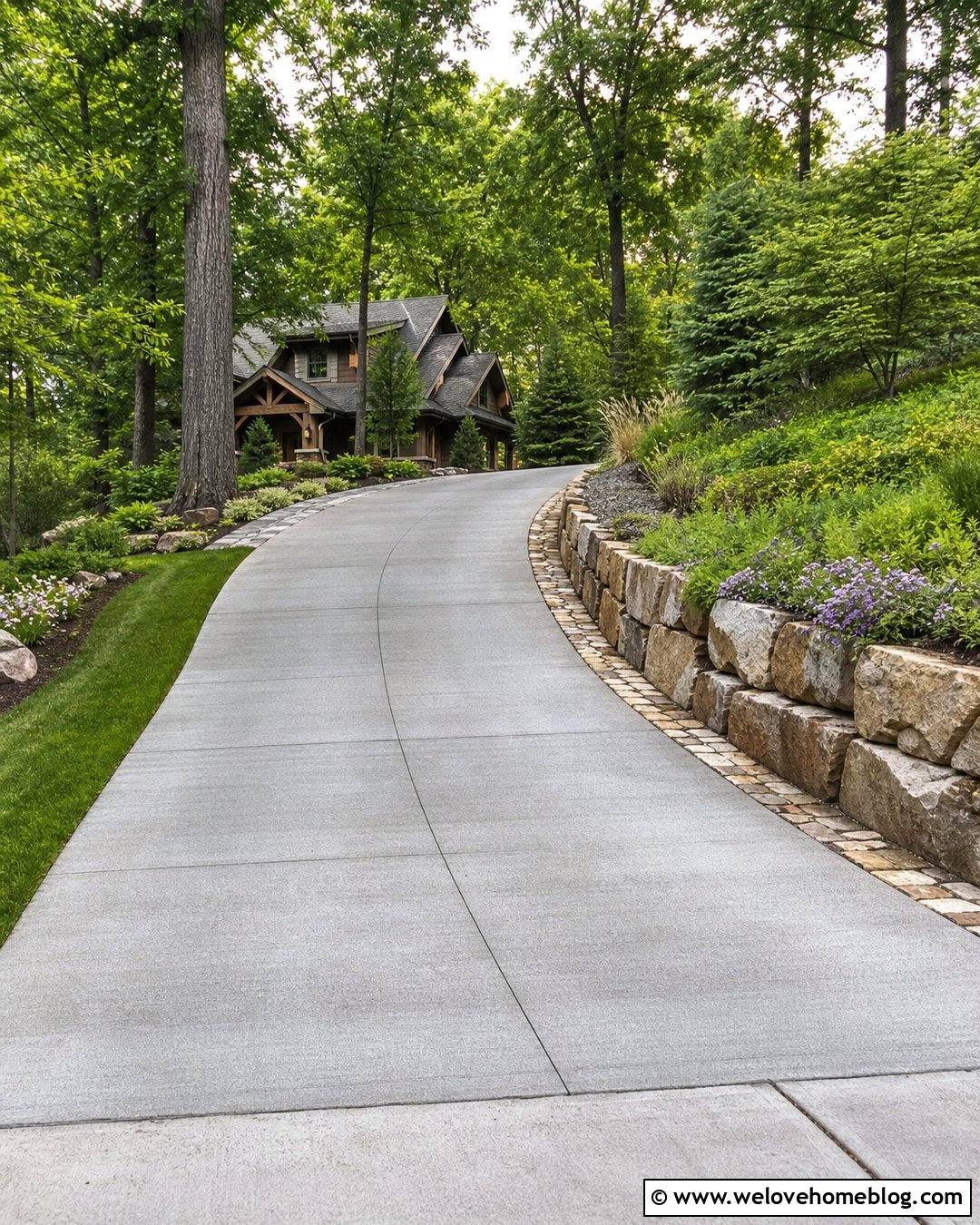
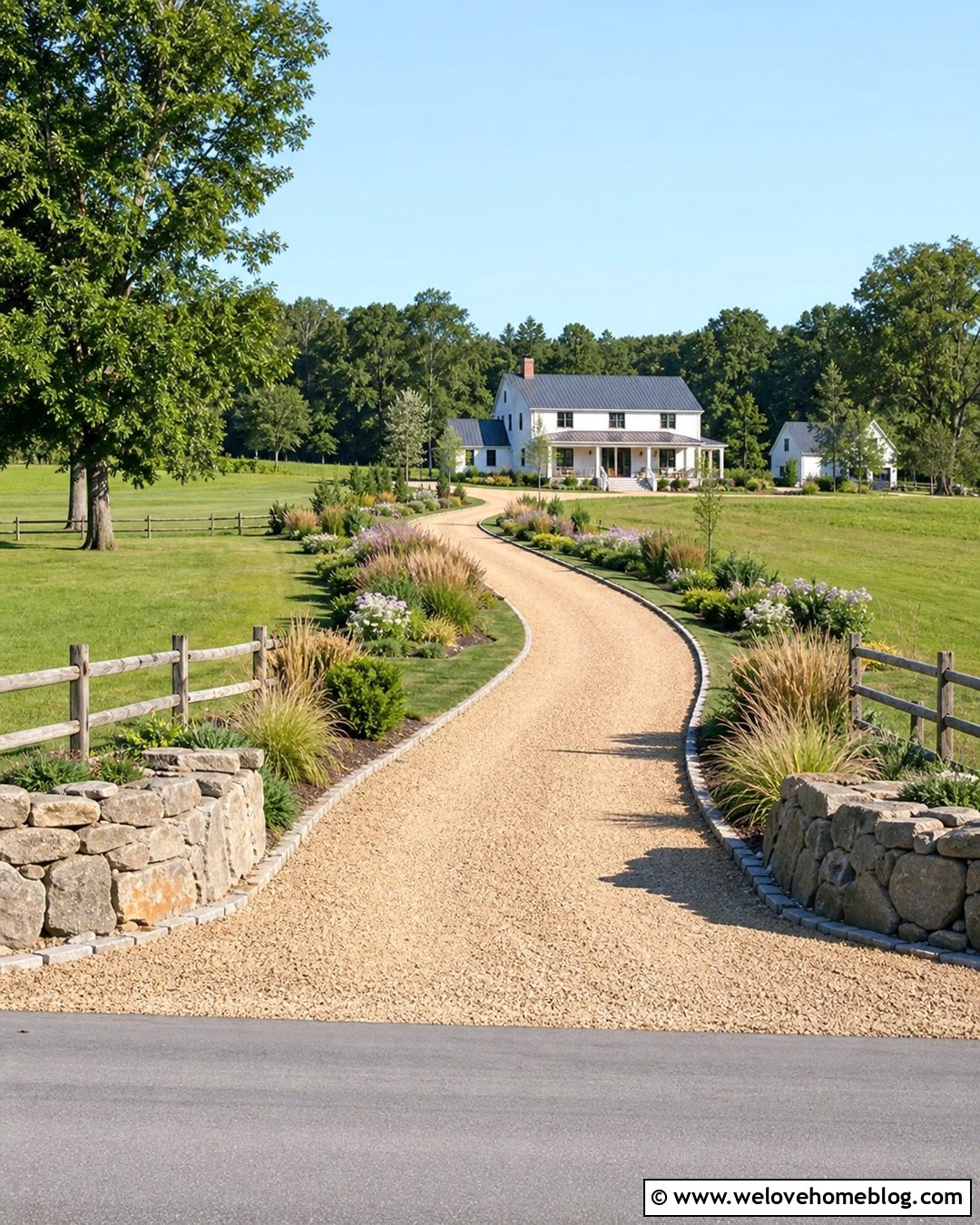
Irregular natural stone introduces an organic edge that feels at home in wooded or informal landscapes. Pair a light gravel driveway with locally appropriate fieldstone, granite, or limestone set along gentle curves. Keep the flattest faces toward the driving surface so the border looks tidy and does not interfere with tires. The stones can sit slightly raised beside planting beds but should transition smoothly at pedestrian crossing points. Add ferns, low junipers, native grasses, and flowering ground covers to blend the hardscape into the yard. A curved approach leading to a rustic Craftsman or country home makes the arrangement especially convincing. Natural variation is part of the appeal, but maintaining a consistent border width prevents the complete driveway from looking uneven or unfinished.
6. Steel Driveway Trim
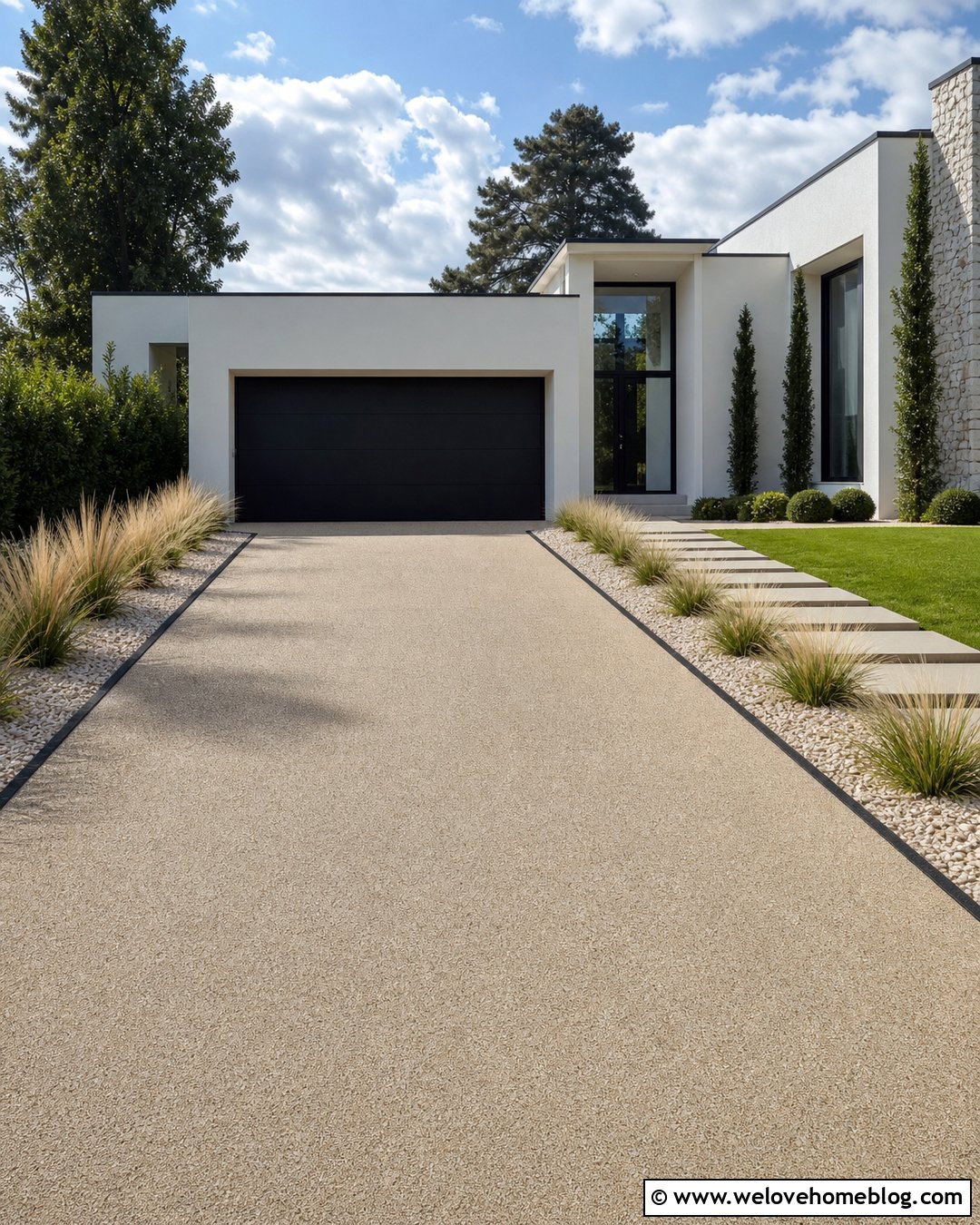
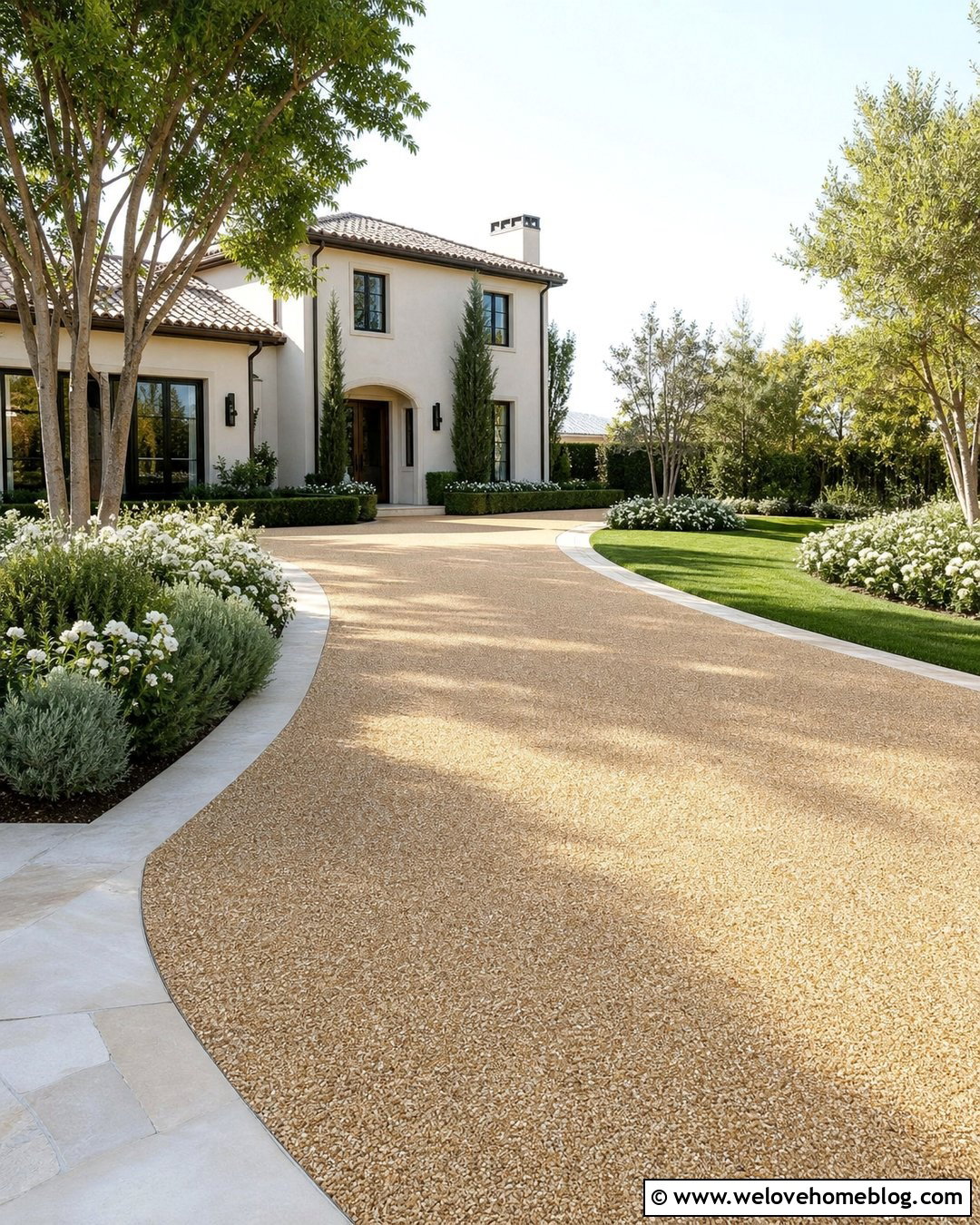
Thin steel edging is a useful choice when the goal is a crisp border with minimal visual bulk. Place dark powder-coated steel between a light resin-bound gravel driveway and beds filled with ornamental grasses. The contrasting line emphasizes a straight or gently angled layout while allowing the surface and landscaping to remain the main features. Steel can also follow curves more easily than many rigid masonry materials. Set the top close to grade, especially beside lawns and areas where passengers may step out. Matte black feels sharp beside a modern home, while weathering steel introduces a warmer rust-colored accent. Contemporary landscape guidance often pairs metal edging with gravel, mulch, and soft planting because the precise boundary creates an appealing contrast with natural textures. ()
7. Timber Driveway Trim
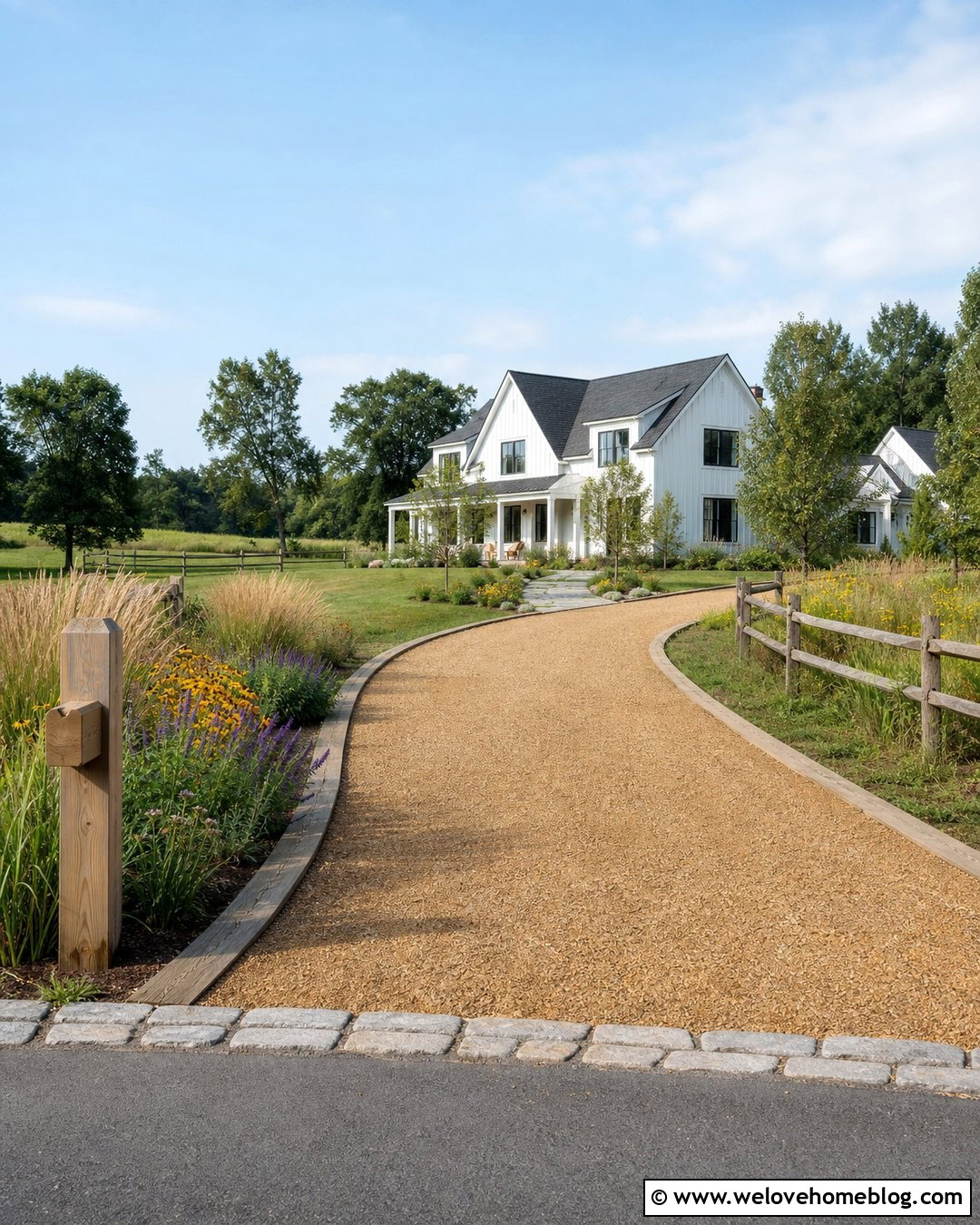
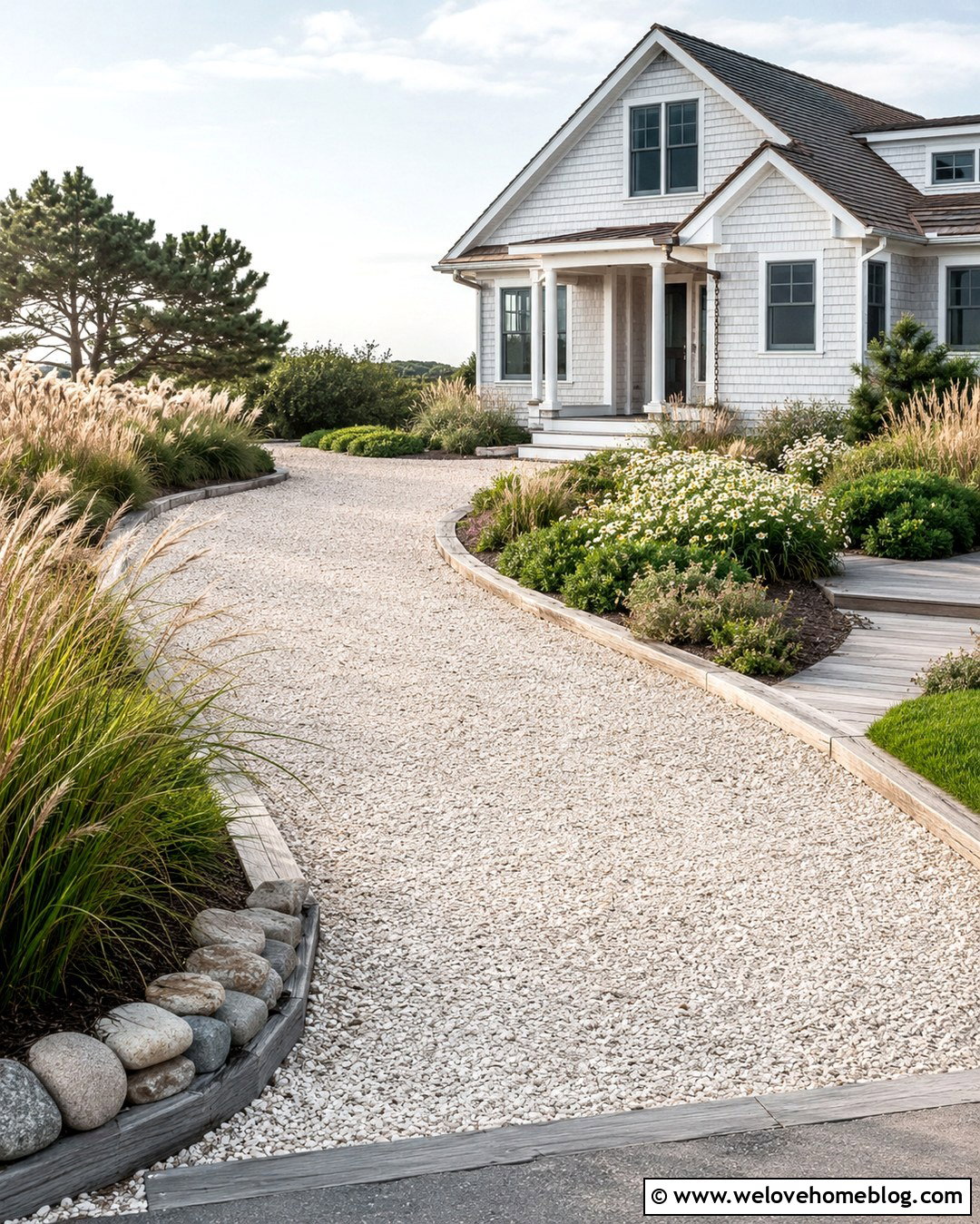
Timber creates a relaxed frame for a gravel driveway leading to a farmhouse, cabin, or simple country home. Use substantial pressure-treated boards or landscape timbers rather than thin garden edging that may shift under the weight of loose aggregate. A straight driveway looks orderly with long continuous lines, while a gently curved drive can use shorter joined sections. Set the timber low enough to reduce tripping and mowing problems but high enough to contain the gravel. Beyond the trim, plant meadow grasses, black-eyed Susans, salvia, or low shrubs for a casual landscape. Repeating the same wood tone in a mailbox post, fence, or porch detail helps the design feel planned. Ensure runoff has a clear route so water does not collect against the timber.
8. Cobblestone Driveway Trim
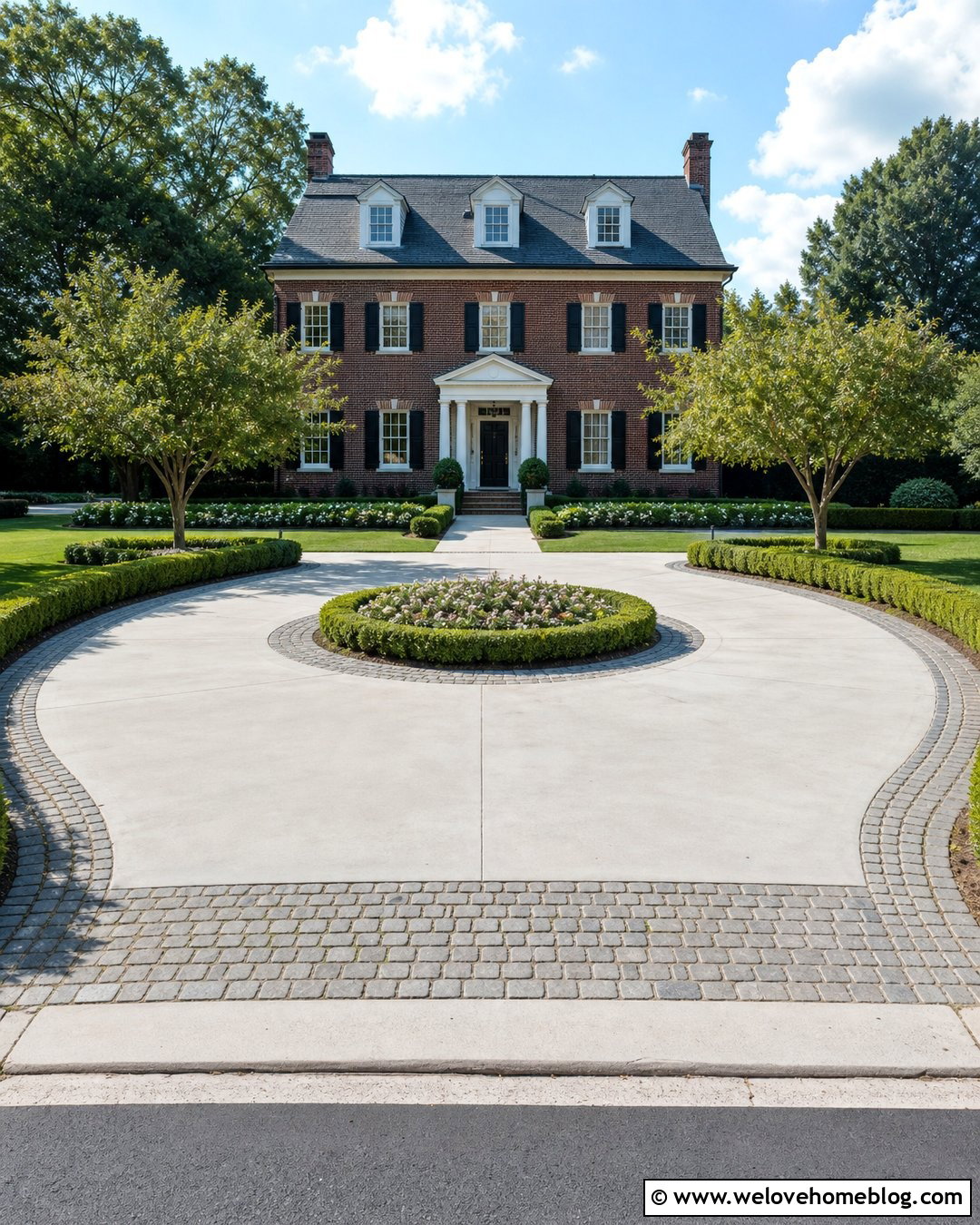
Cobblestone trim adds rich texture to a smooth concrete driveway and creates an attractive link to traditional architecture. A single row offers subtle definition, while two or three rows can form a wider border for a circular or horseshoe layout. Use gray cobbles beside cool-toned homes or choose mixed tan and brown stones near brick and warm siding. Continue the cobblestone across the entrance as an apron, then repeat it around a central planting island for a cohesive composition. Low hedges, symmetrical trees, and restrained flower beds support the formal character without hiding the stone. Because cobblestones have naturally varied surfaces, careful alignment and a stable base are important. The final border should feel textured and handcrafted, not irregular enough to become difficult to walk across.
9. River Rock Driveway Trim
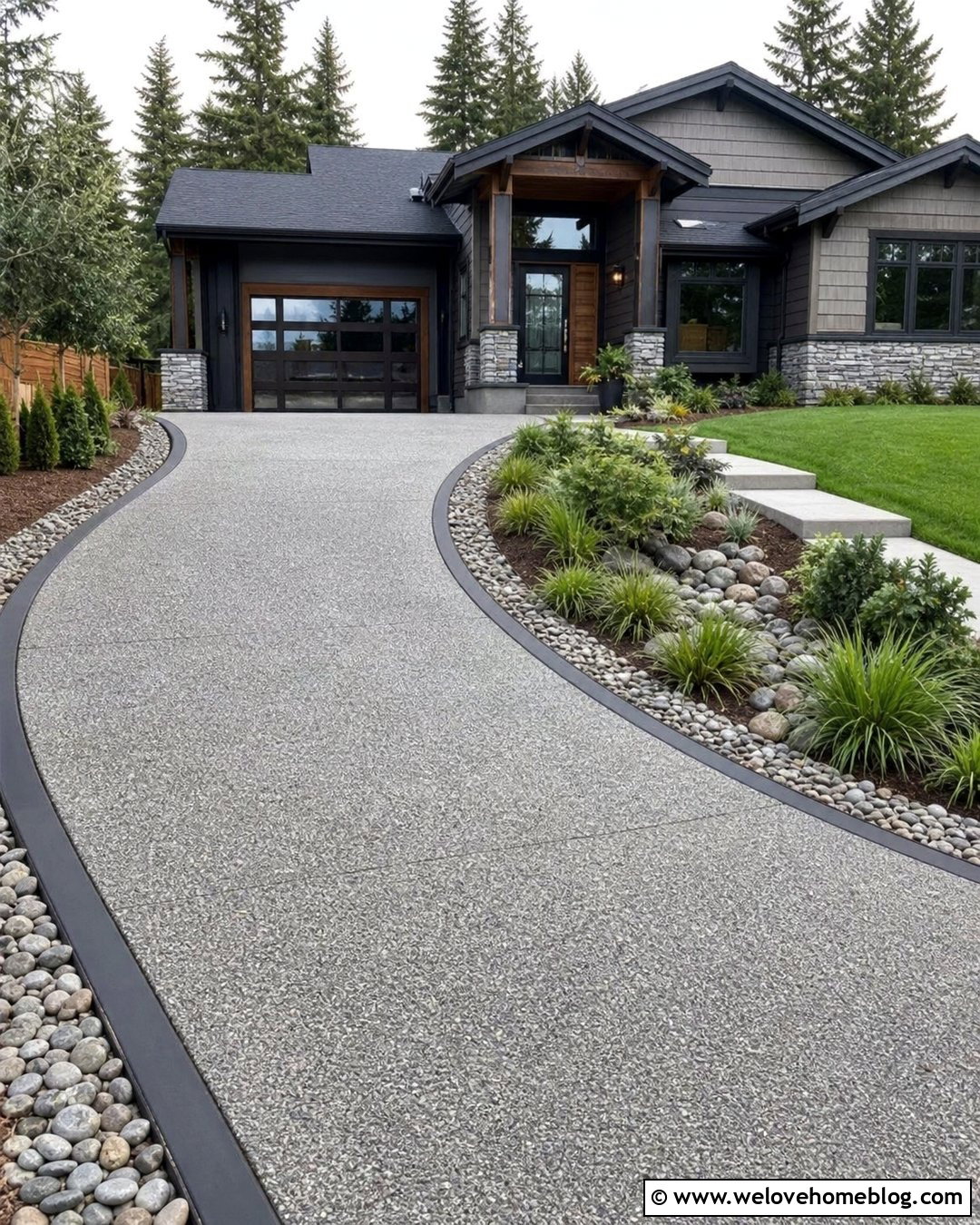
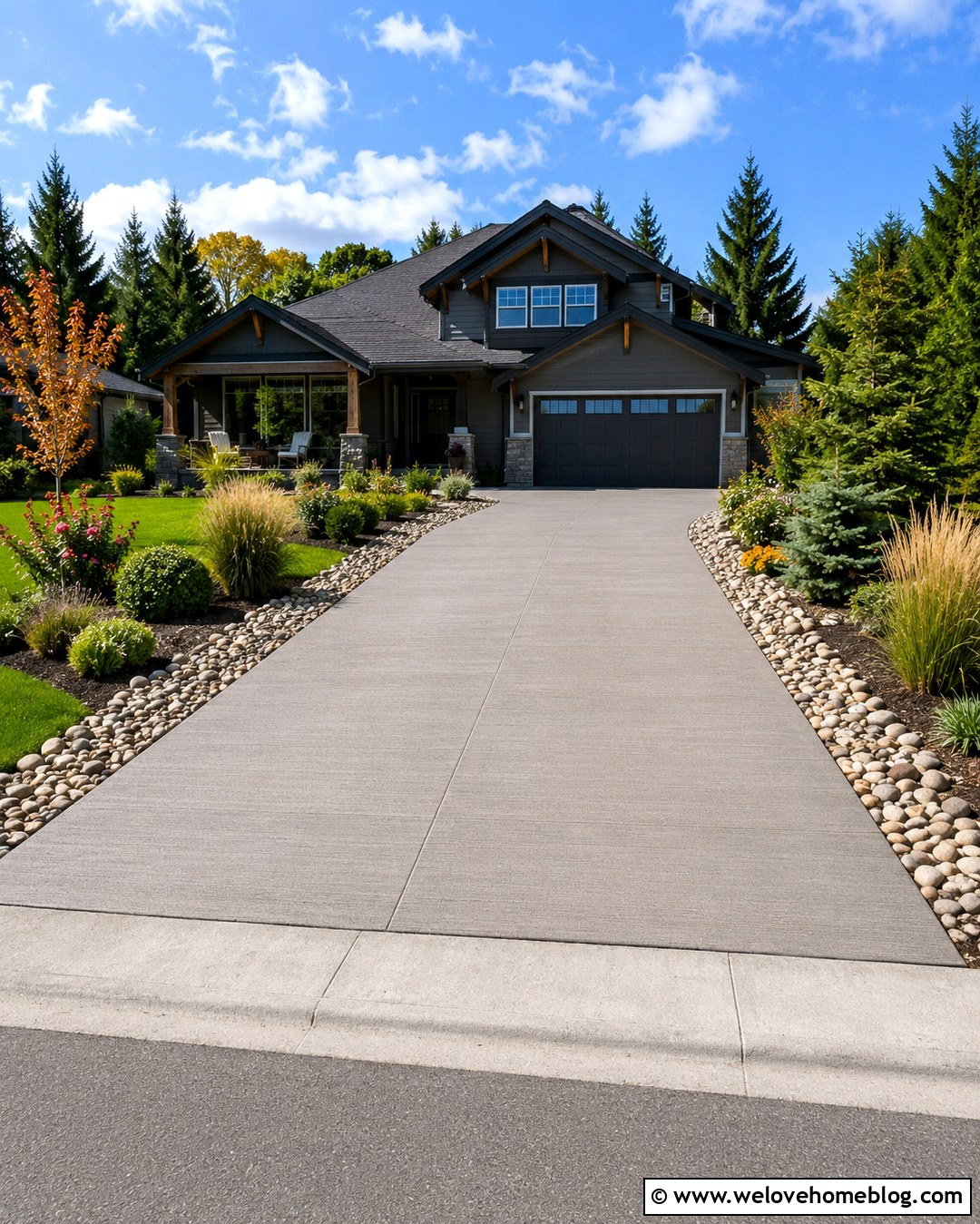
A river rock band brings natural color and drainage-friendly texture to the edge of a concrete or asphalt driveway. Instead of placing loose stones directly against the lawn, contain them between the driveway and a low metal or stone landscape edge. Use medium-sized rounded rock in gray, cream, and muted brown tones. A gently curved band can guide runoff toward a planted rain garden while visually softening a broad paved surface. Pair it with moisture-tolerant grasses, sedges, and compact shrubs where site conditions permit. Near a modern ranch or contemporary Craftsman home, keep the bed width consistent and avoid overly colorful stone mixes. The complete design should appear calm and functional, with the driveway, rock channel, plantings, and walkway forming one organized front-yard layout.
10. Pea Gravel Driveway Trim
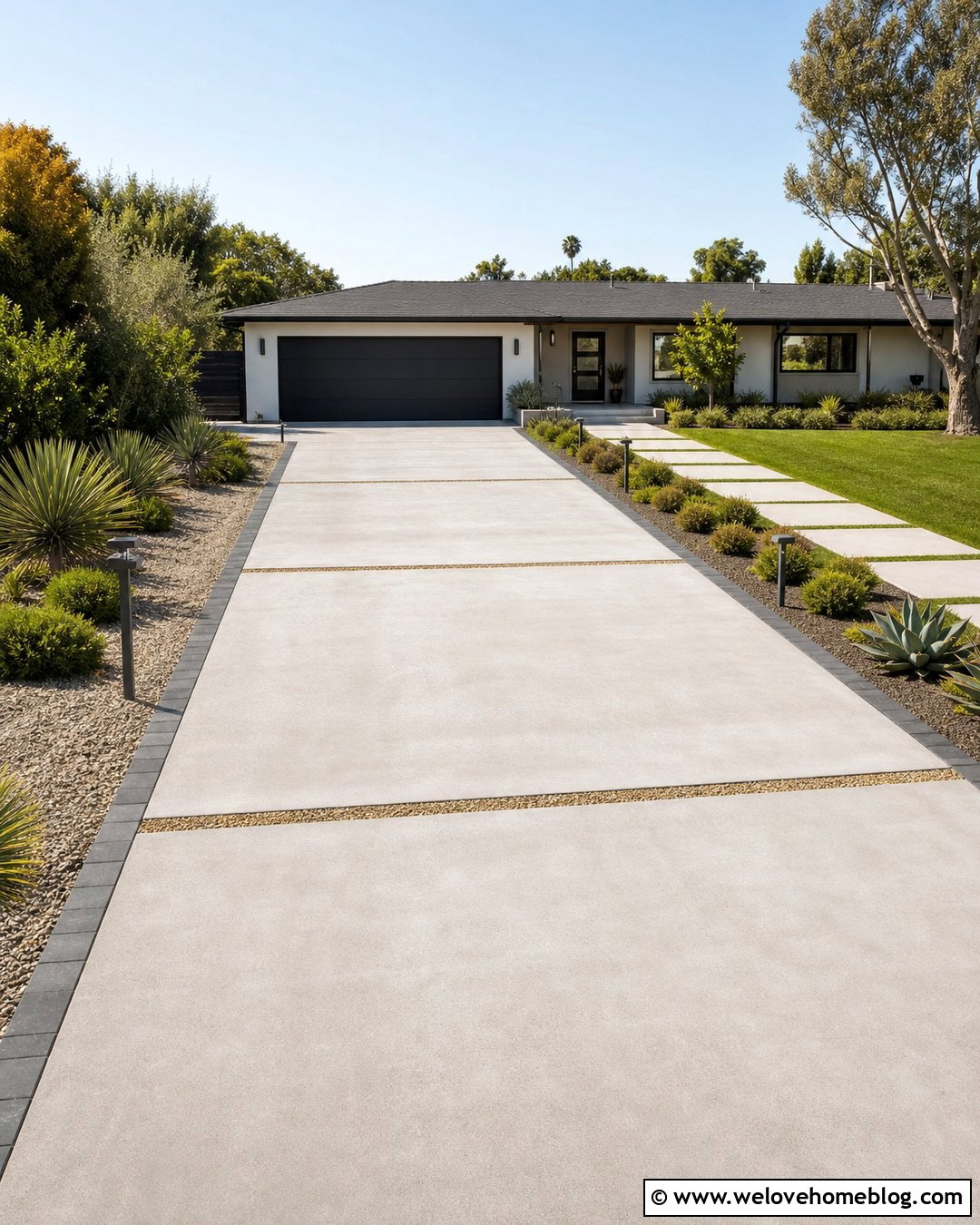
A pea gravel trim band can soften a wide poured concrete driveway without making the design feel busy. Place warm beige or gray pea gravel in a narrow recessed strip along both sides, then contain it with steel edging or a flush paver border. The contrasting texture breaks up the hard surface and provides space for occasional low plantings or simple bollard lights. For a straight driveway, maintain an even band from the curb to the garage. Around curves, slightly widen the strip near planting beds to create a more natural transition. This treatment works well with midcentury ranch homes, modern farmhouses, and low-maintenance landscapes. Select gravel that relates to the house facade, and use compacted base materials so the decorative stones do not disappear into soft soil.
11. Grass Strip Driveway Trim
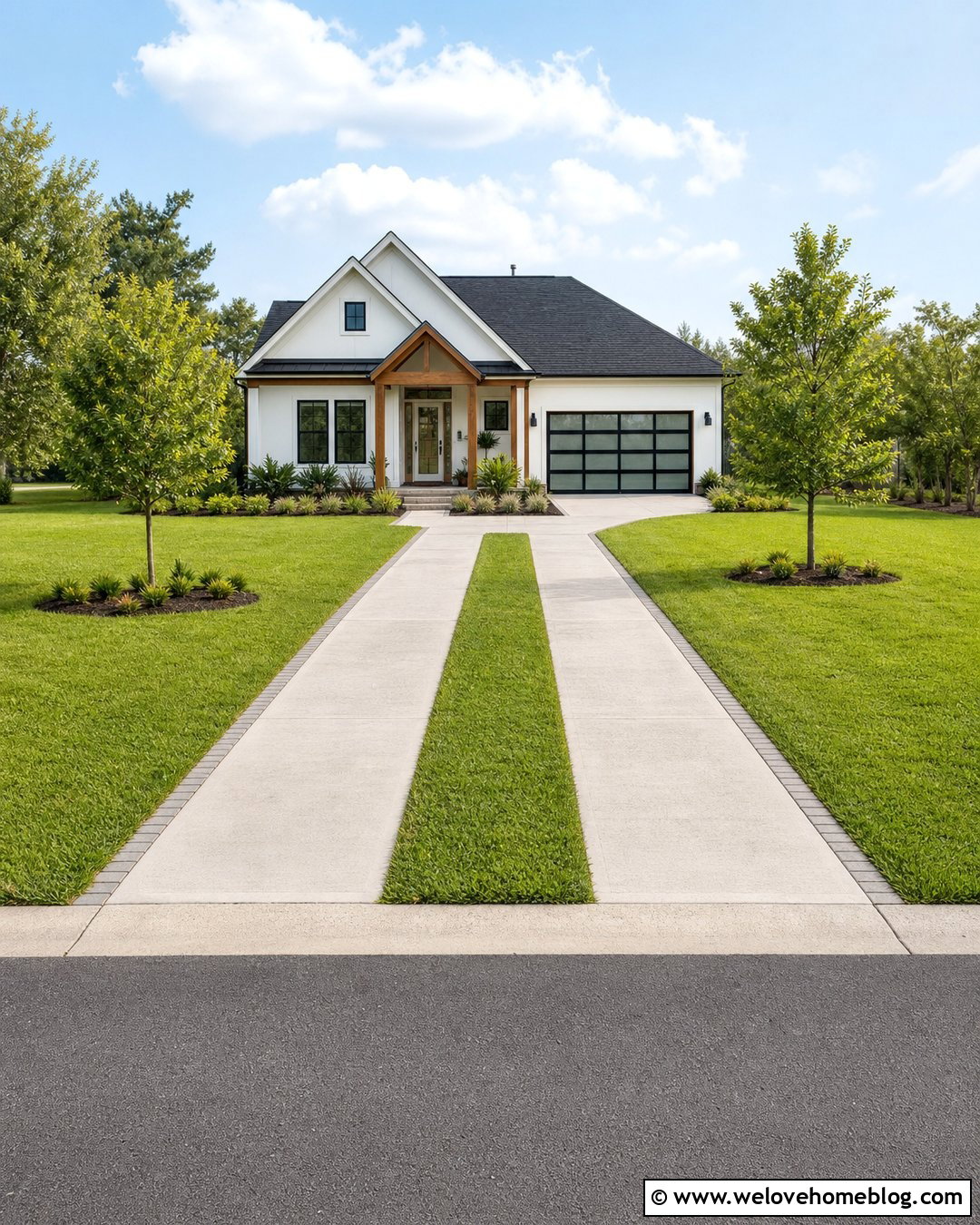
A narrow grass strip creates a fresh, understated border around concrete pavers or a ribbon driveway. This look works best where the lawn is healthy and there is enough space to maintain a clean edge. Use flush-set pavers beside the grass so mower wheels can pass over the transition without damaging either material. On a straight driveway, long green bands reinforce the geometry and make the paved area feel less dominant. A central grass strip can also be added between two concrete tire tracks for a lighter, garden-focused layout. Surround the approach with simple trees and planting beds rather than excessive ornament. The combination is especially appealing beside compact ranch houses, cottages, and contemporary homes where open lawn already forms an important part of the front-yard design.
12. Stamped Concrete Driveway Trim
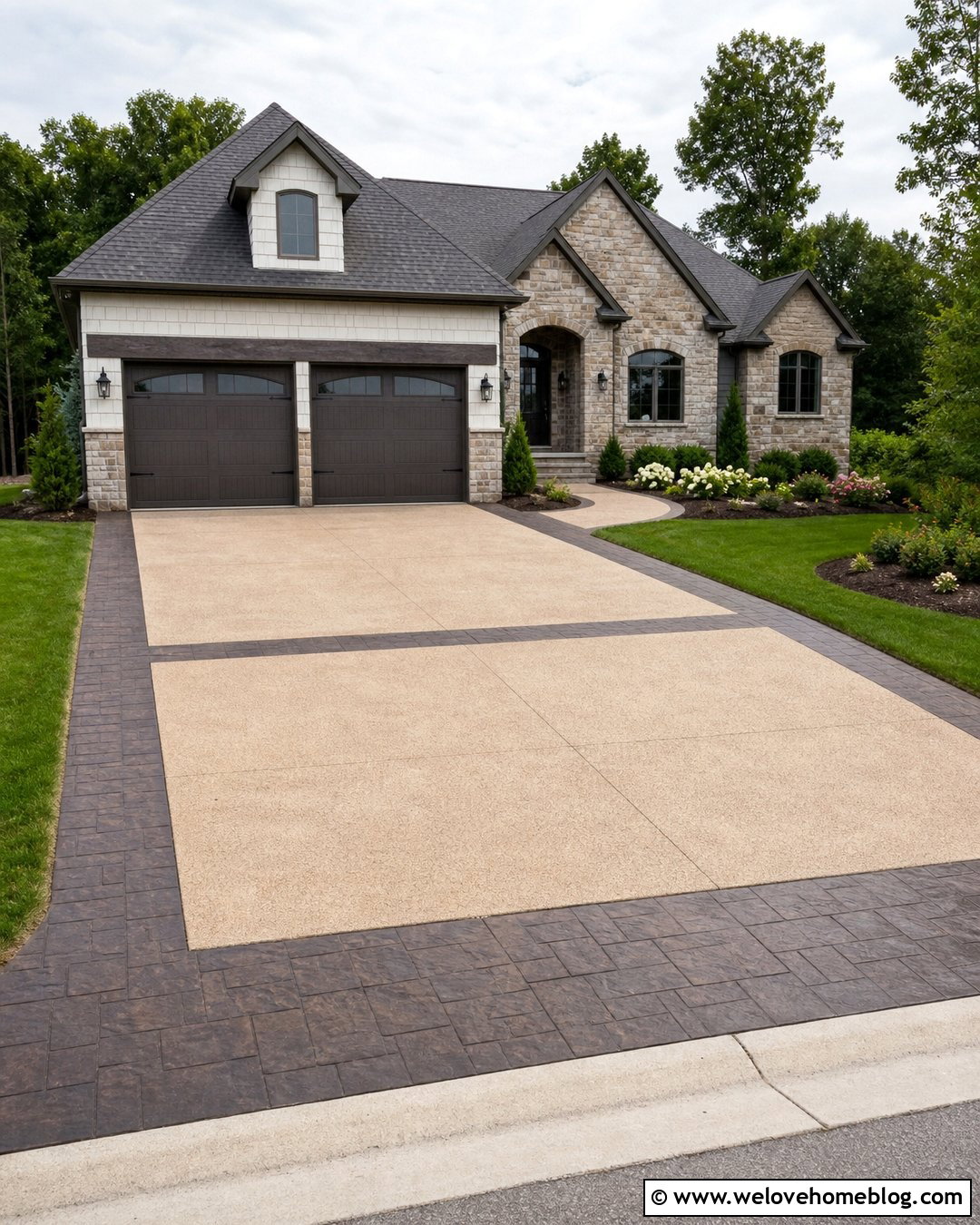
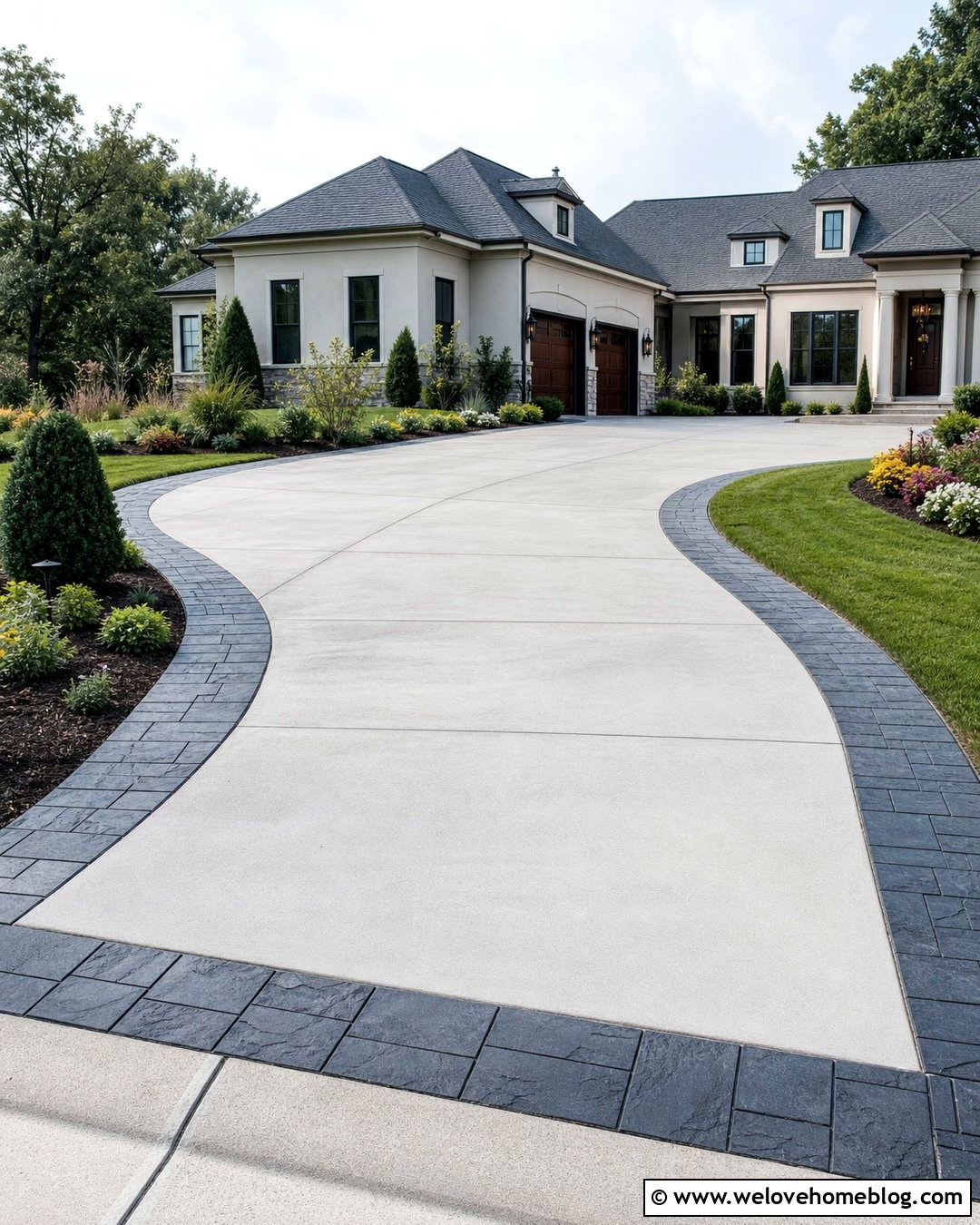
Stamped concrete creates a decorative trim that resembles brick, slate, or cut stone while remaining part of a coordinated concrete installation. Border a light broom-finished driveway with a darker stamped band, using a restrained pattern that complements the house. Ashlar slate works well with transitional architecture, while a brick pattern can suit traditional facades. Extend the trim across the apron and garage threshold to visually frame the complete surface. The color contrast should be noticeable but not harsh; charcoal against medium gray or brown against warm beige usually feels balanced. Add low evergreen shrubs and a clear walkway connection to support the formal outline. Stamped borders are among the decorative treatments recommended for giving plain asphalt or concrete more visual interest. ()
13. Flush Mower Edge Driveway Trim
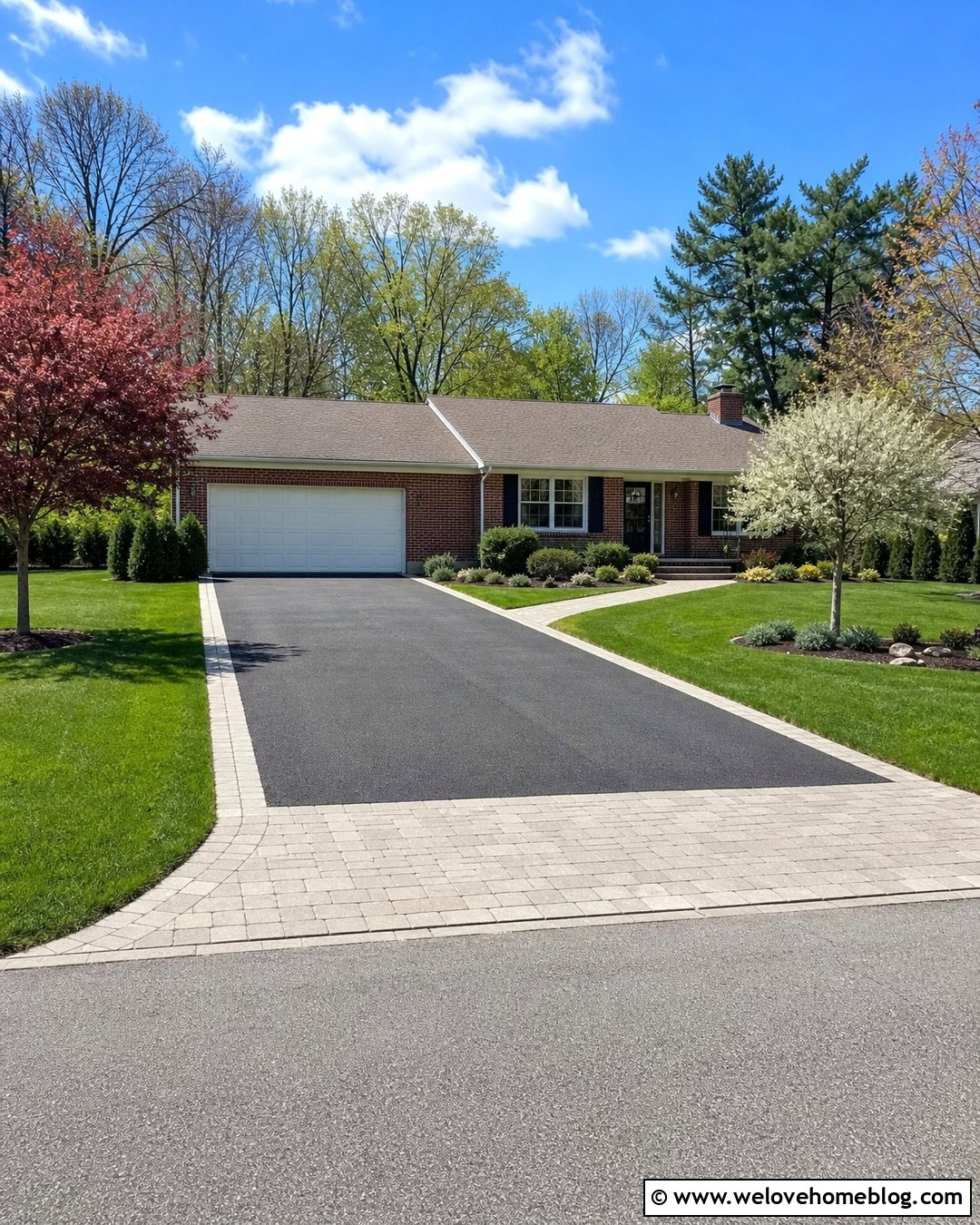
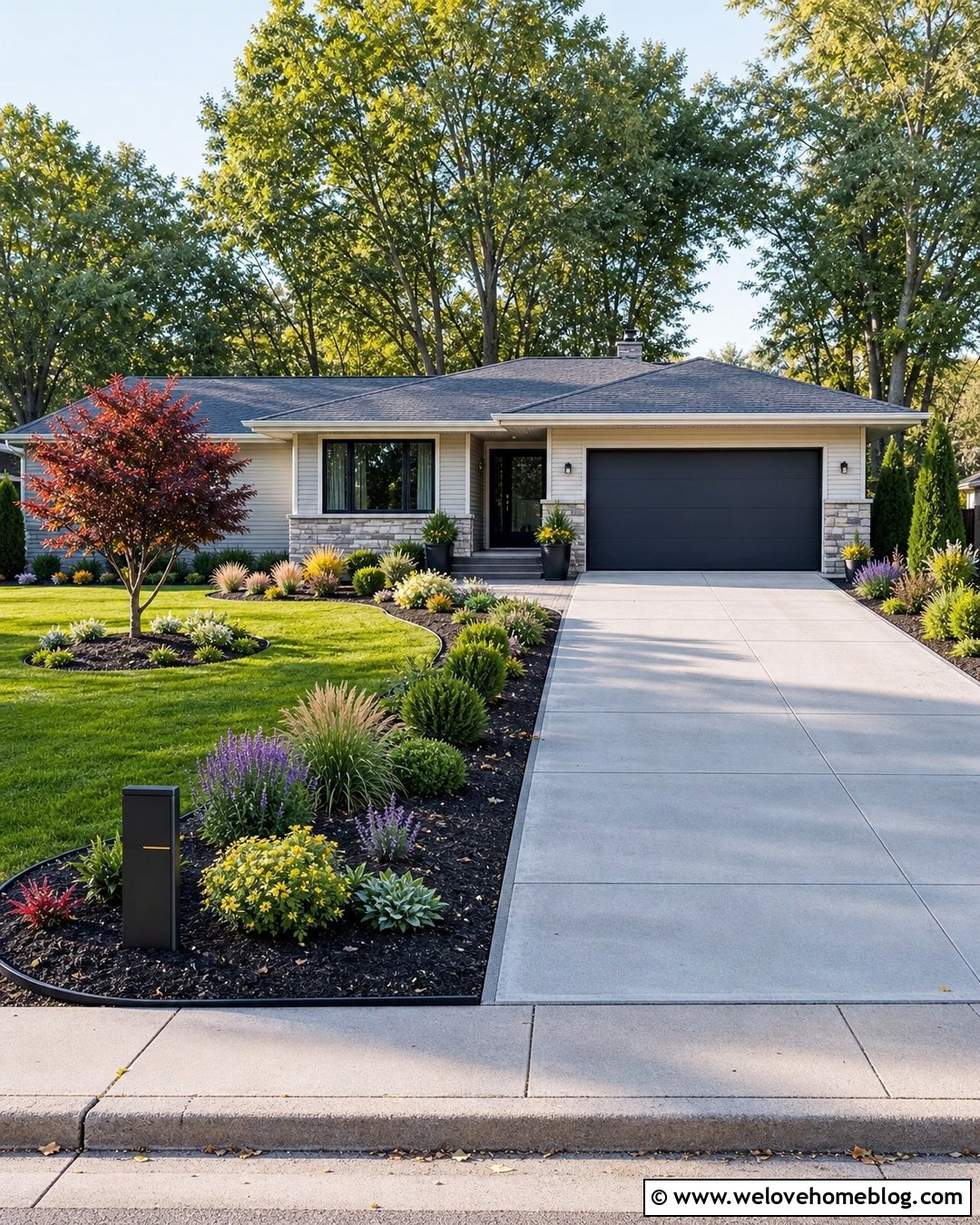
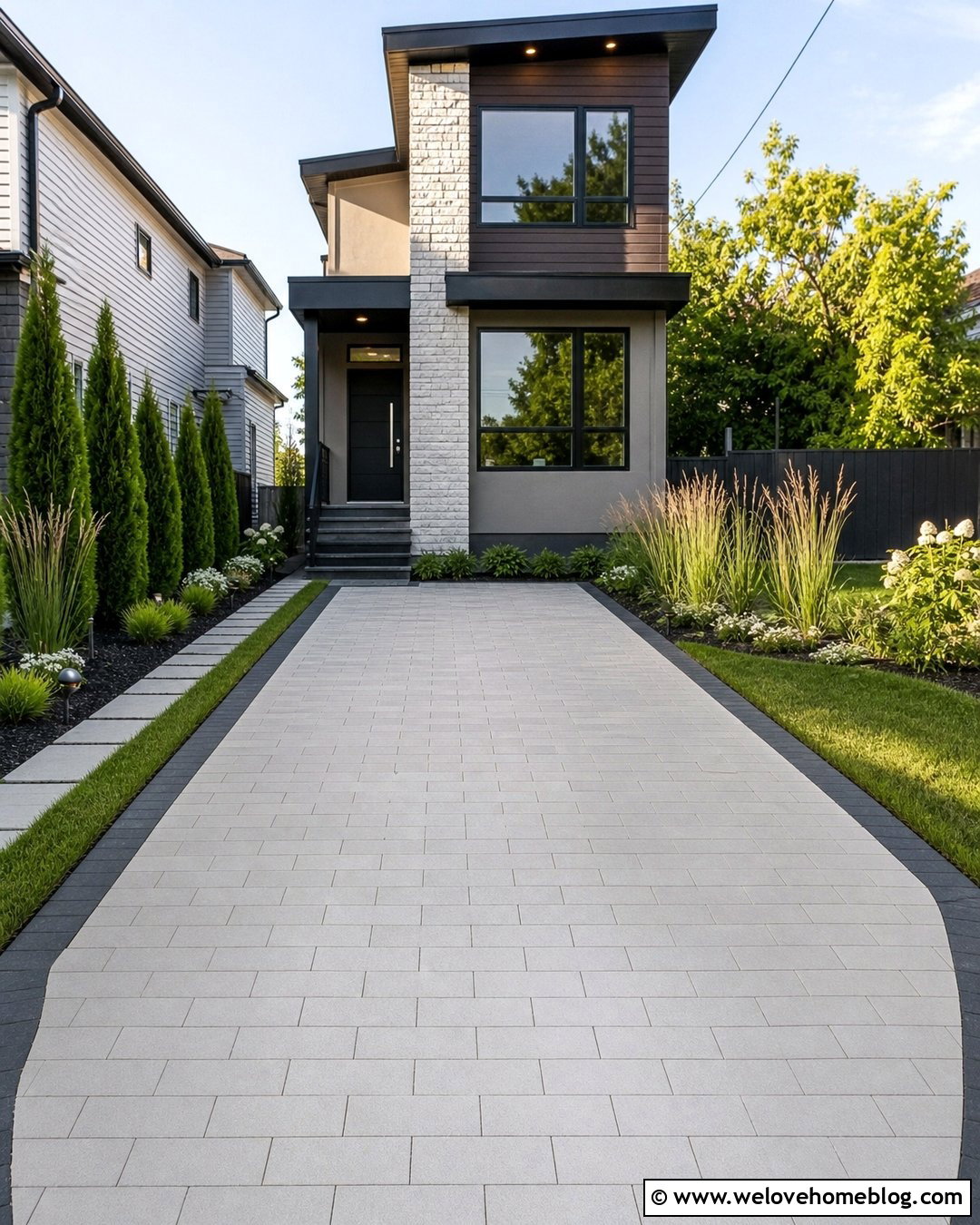
A flush mower edge is ideal for homeowners who want sharp definition with easy lawn care. Install a narrow row of concrete or stone pavers level with the driveway and surrounding grass. The mower can travel over the border, reducing the need for frequent string trimming. This detail looks particularly neat beside a straight black asphalt driveway, where pale gray pavers create a clear but uncomplicated outline. Widen the edge at the curb to form a modest apron, and connect it to a matching front walk near the house. Keep adjacent landscaping organized with open lawn, a few foundation shrubs, and one or two ornamental trees. Although the design is simple, accurate grading and consistent spacing are essential because every uneven joint will remain visible along the clean linear border.
14. Low Hedge Driveway Trim
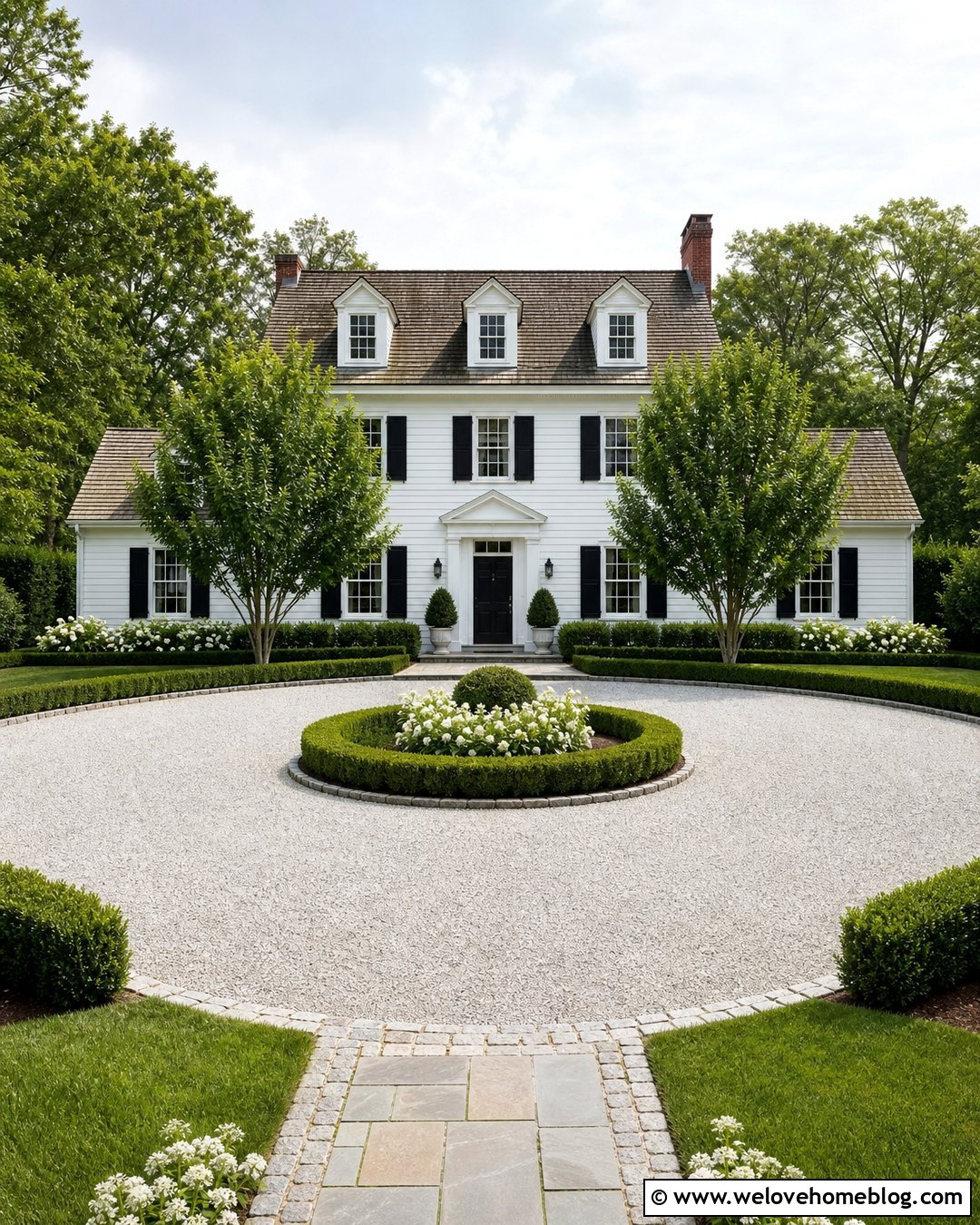
A clipped hedge can act as living driveway trim while softening the transition from pavement to garden. Set the hedge behind a flush masonry edge so soil and mulch do not spill onto the driving surface. Boxwood alternatives, compact hollies, or other regionally suitable shrubs can create a low continuous line without blocking visibility. On a circular gravel driveway, use the hedge to outline the outer curve and repeat it around the central island. Leave breaks where passengers step out and where the walkway crosses the border. Formal hedging suits Colonial, Georgian, and symmetrical brick homes, especially when paired with matching entrance trees. Keep mature plant size in mind so the greenery does not narrow the driveway or require constant pruning to stay clear of vehicles.
15. Ornamental Grass Driveway Trim
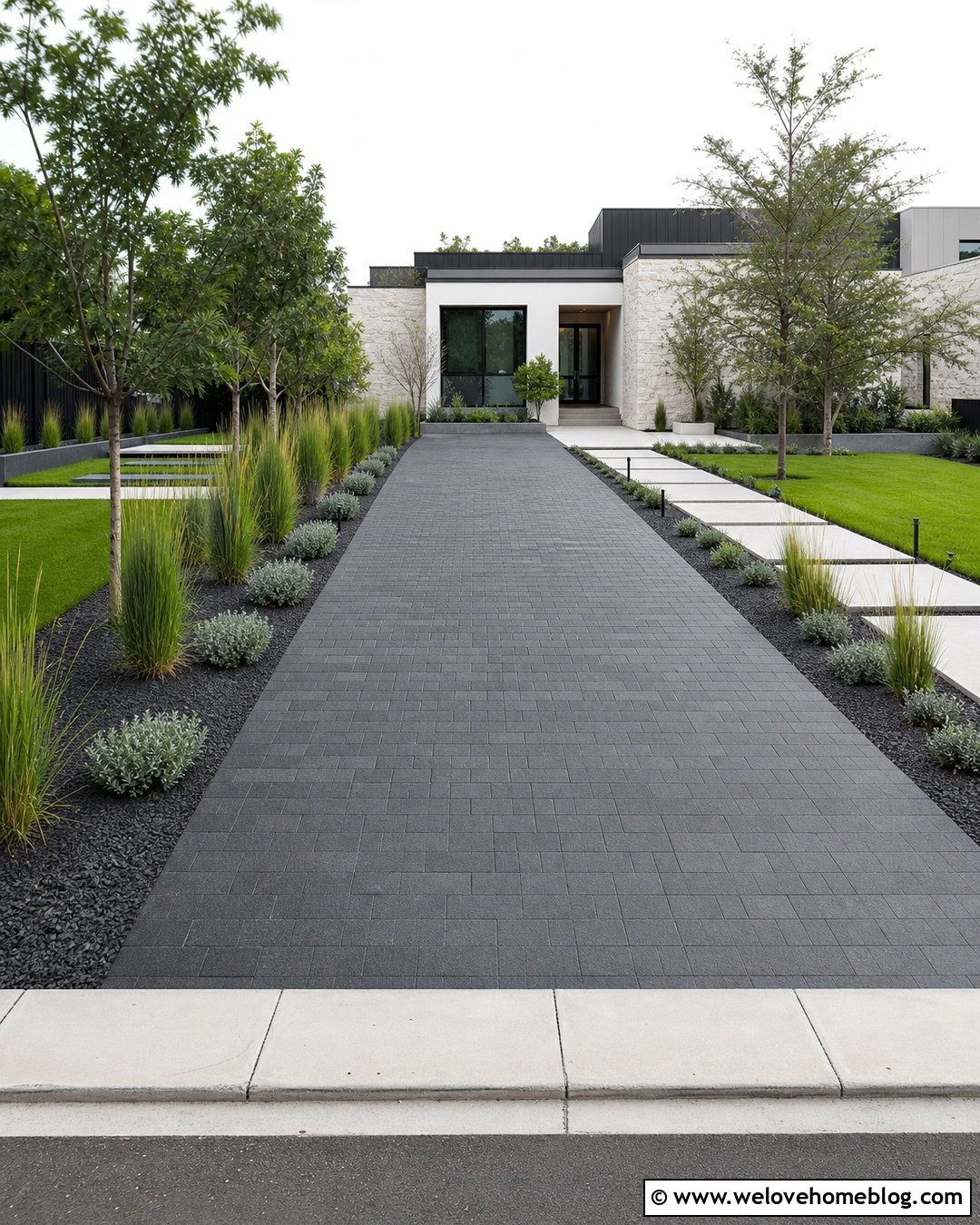
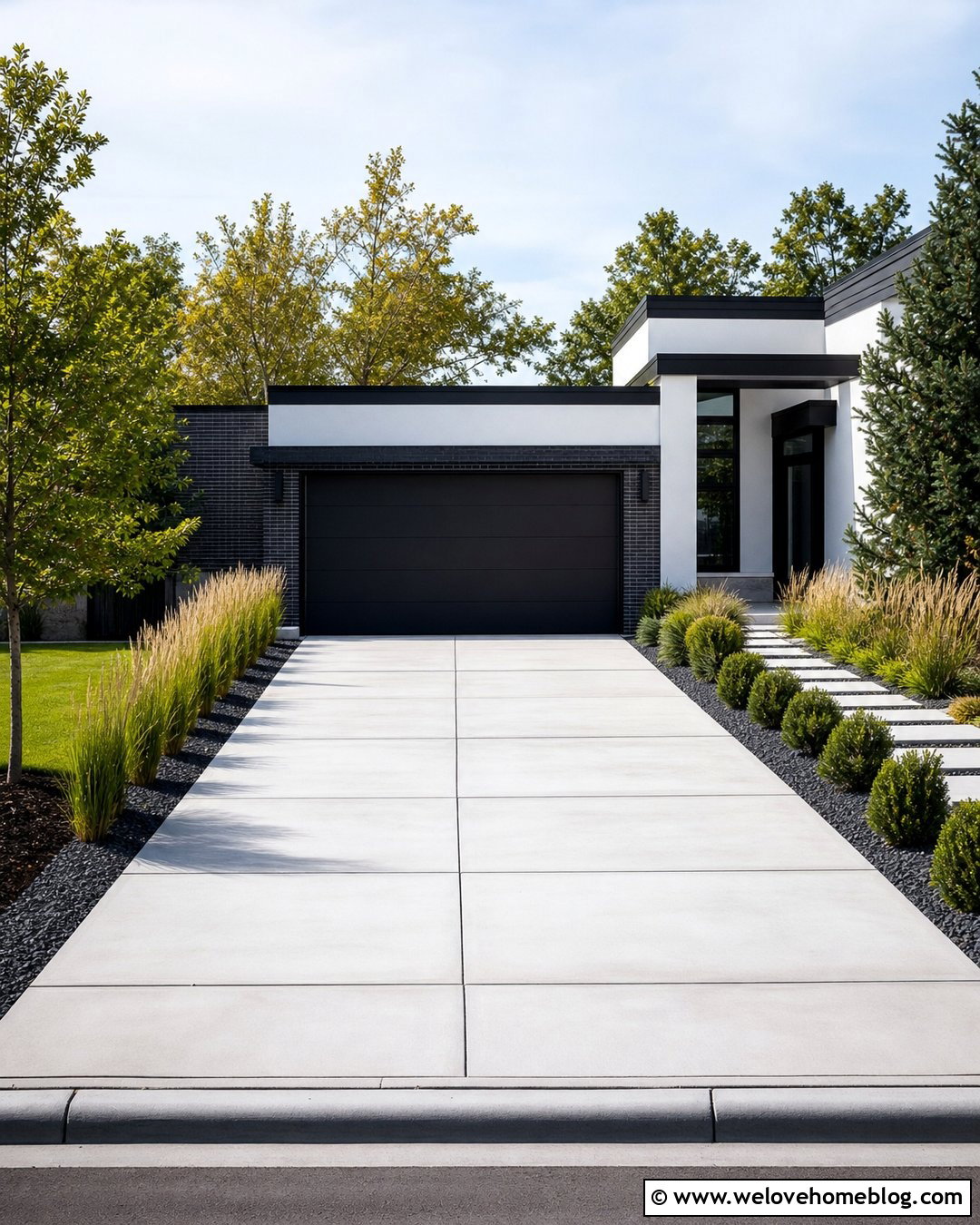
Ornamental grasses bring movement and softness to a rigid driveway edge. Pair a dark asphalt or charcoal paver driveway with a wide border of upright grasses contained by slim steel edging. Use one primary grass variety in repeated groups rather than mixing many unrelated plants. This creates rhythm along a long driveway and keeps the view organized from the street. Position taller grasses away from the entrance and inside curves, where clear sightlines are important. Add low ground covers or gravel mulch between plants for a clean finish. The flowing foliage provides an effective contrast with straight pavement and modern architecture. It also turns the entire approach into a landscape feature, especially when the planting continues toward the front walkway and foundation beds instead of ending abruptly near the garage.
16. Flower Bed Driveway Trim
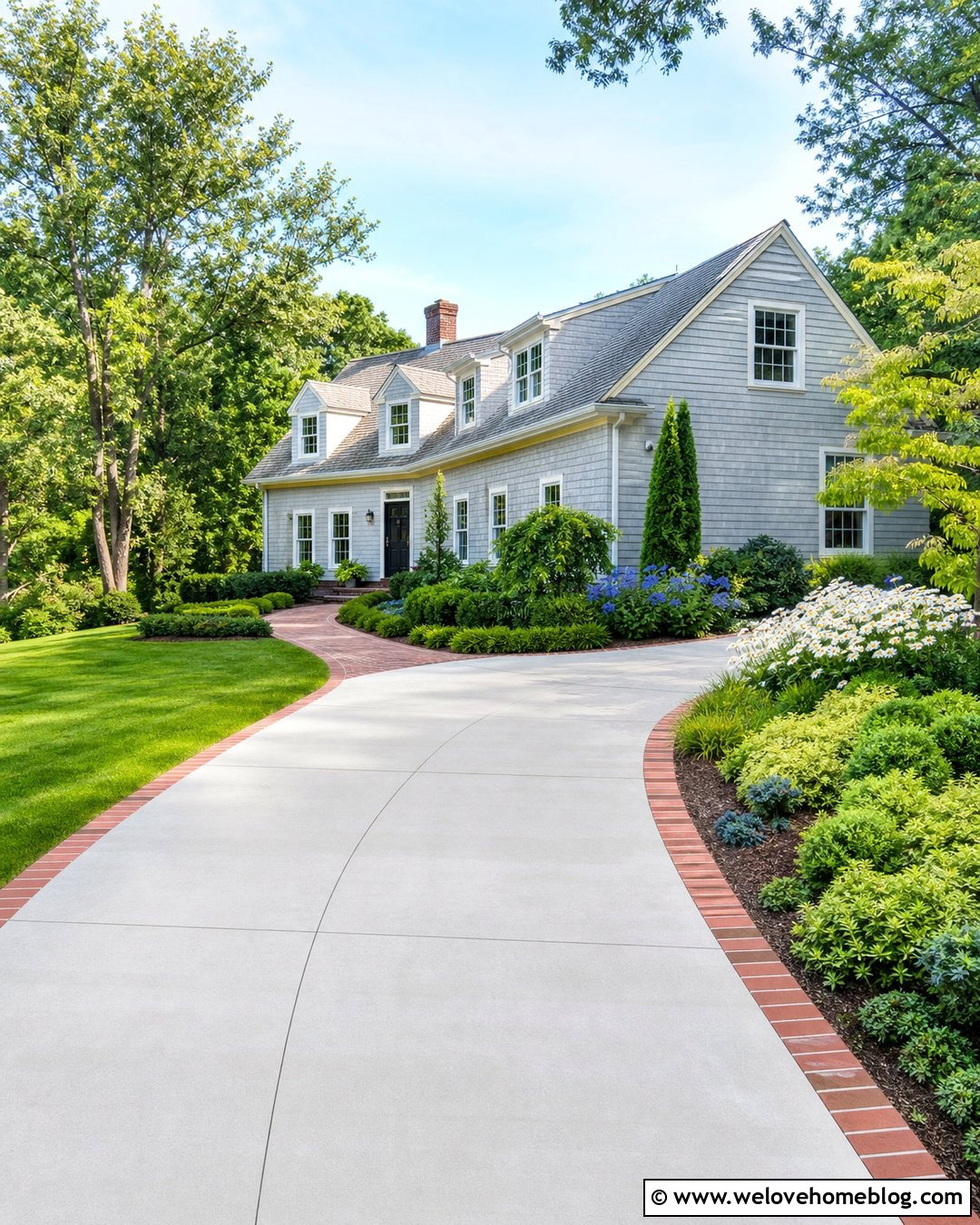
A flower bed can frame the driveway with seasonal color while still looking polished throughout the year. Begin with a strong hard edge, such as clay brick or smooth concrete curbing, then layer compact evergreen shrubs, flowering perennials, and low ground covers behind it. Along a curved concrete driveway, follow the same sweeping line with the planting bed. Keep flowers shorter near the street and garage so visibility remains open. Choose a limited color palette that relates to the house, such as white and blue blooms beside a gray Cape Cod or warm yellow flowers near red brick. Mulch should sit below the hard border to reduce washout. This complete design works best when the driveway bed connects visually with the front walkway and existing foundation landscaping.
17. Drainage Channel Driveway Trim
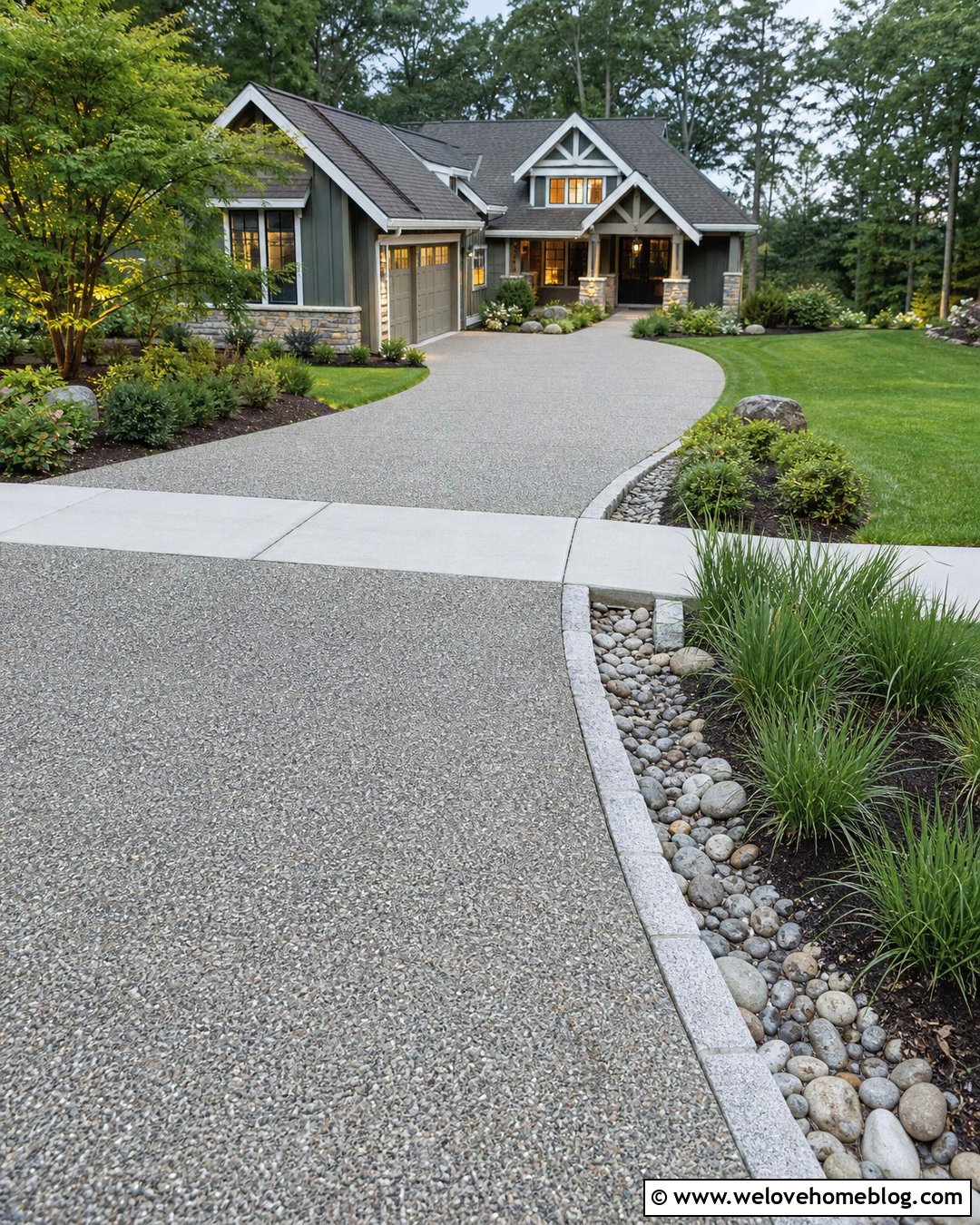
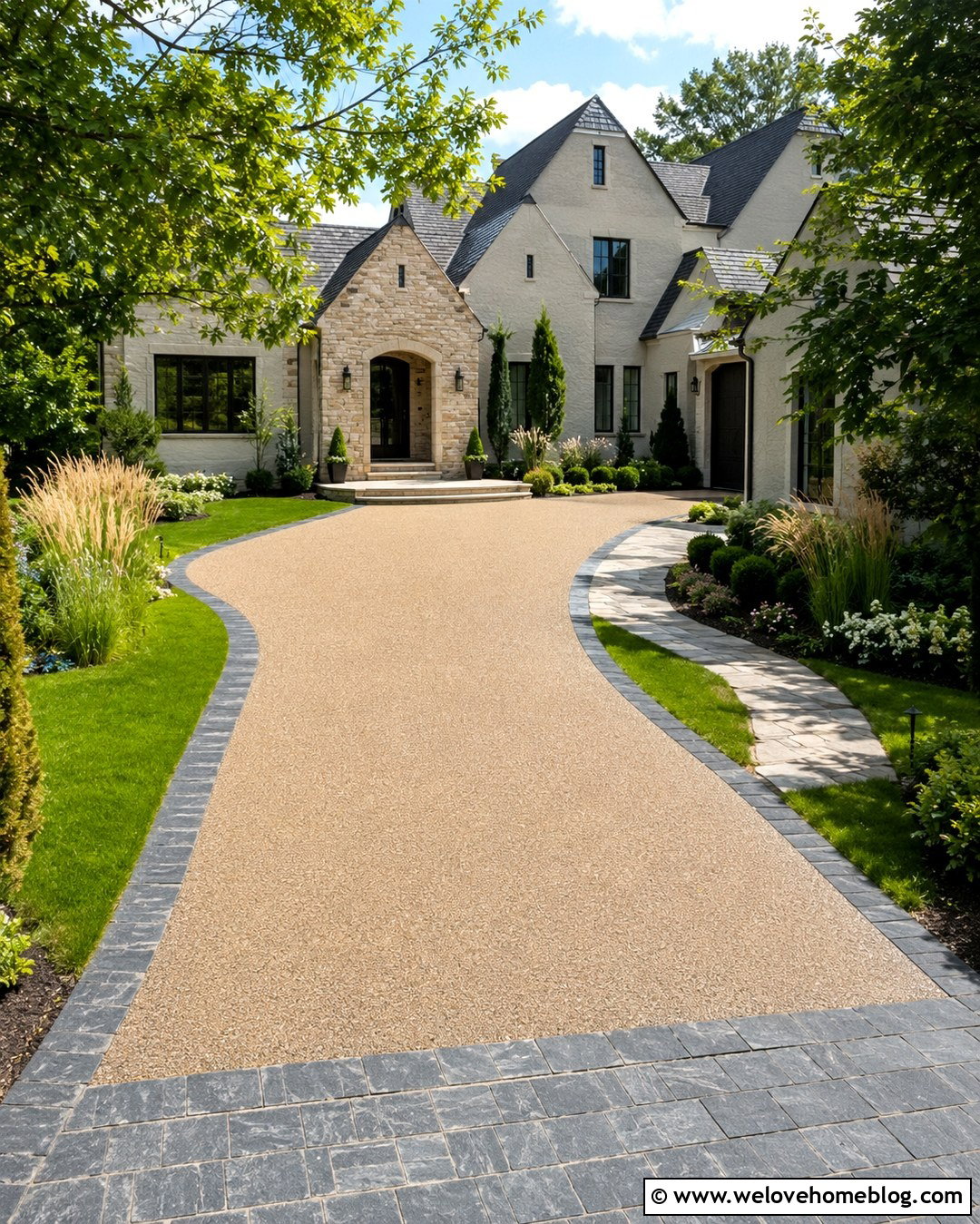
Where runoff is a concern, driveway trim can become part of a practical water-management design. Place a linear channel drain or shallow stone-lined swale along the lower side of a sloped driveway. A surface of exposed aggregate concrete pairs naturally with gray river rock, granite edging, and moisture-tolerant planting. Keep the channel clear of dense shrubs that could drop debris into the drainage path. On a curved approach, shape the planted edge to follow the driveway while directing water toward an appropriate collection or infiltration area. The result should look like intentional landscaping rather than a utility trench. Site slope, soil, rainfall, and local rules can affect the correct solution, so significant drainage work may require professional planning before decorative stone and plants are installed.
18. Lighted Driveway Trim
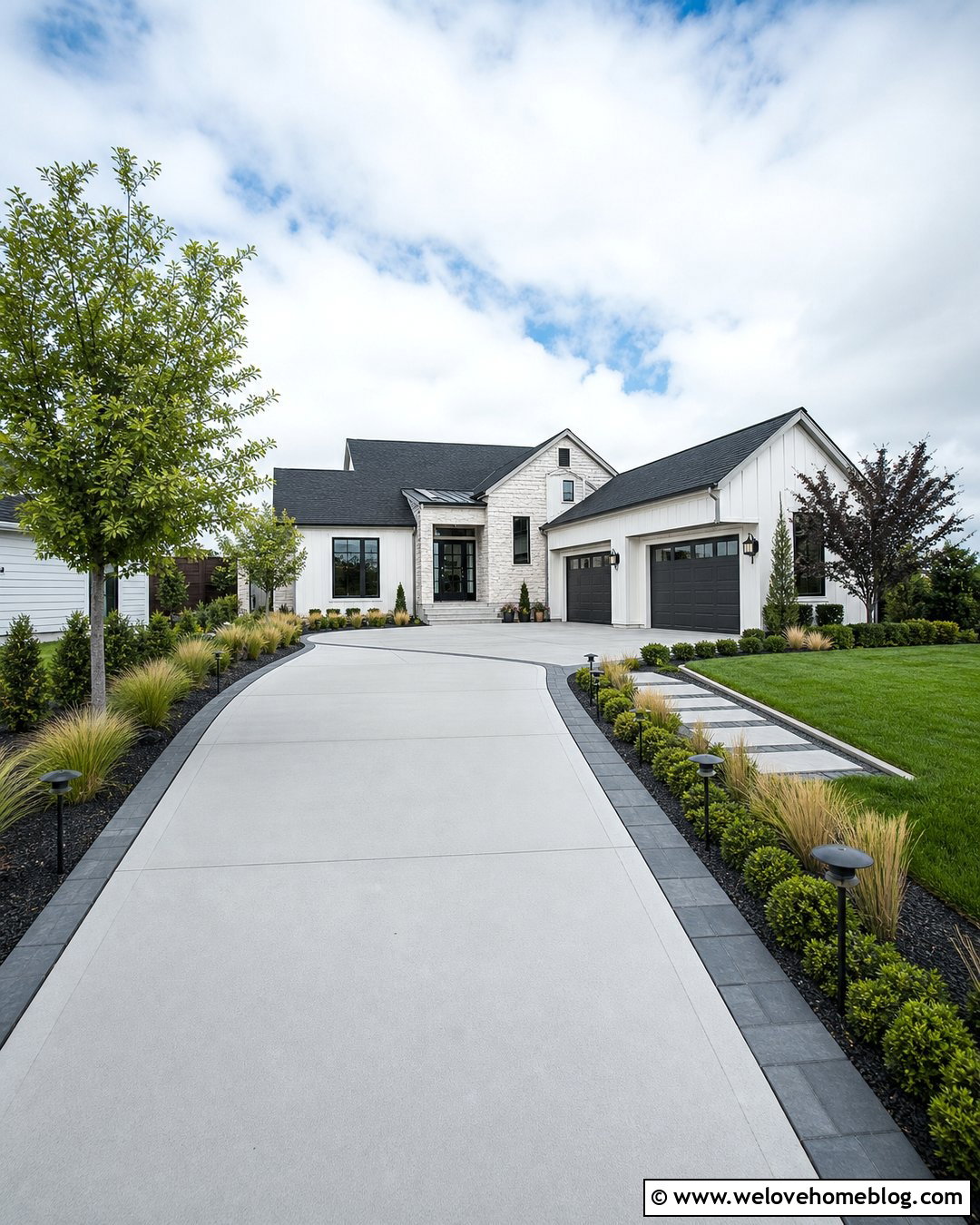
Integrated lighting makes a driveway border easier to read while adding a refined architectural detail. During the day, the complete design can feature a light concrete driveway framed by charcoal pavers and evenly spaced low-profile fixtures. Place lights along the outside edges, at changes in direction, and near the garage or walkway connection. Avoid creating a continuous runway effect; wider spacing usually feels more residential. Conceal wiring and fixture bases within the border or adjacent planting bed. Low shrubs, ornamental grasses, and simple lawn panels keep the lighting layout visible without clutter. For the strongest curb appeal, coordinate fixture finishes with the home’s exterior lights and hardware. The border must still look attractive in bright daylight, with lighting treated as a supporting element rather than the only decorative feature.
19. Reclaimed Brick Driveway Trim
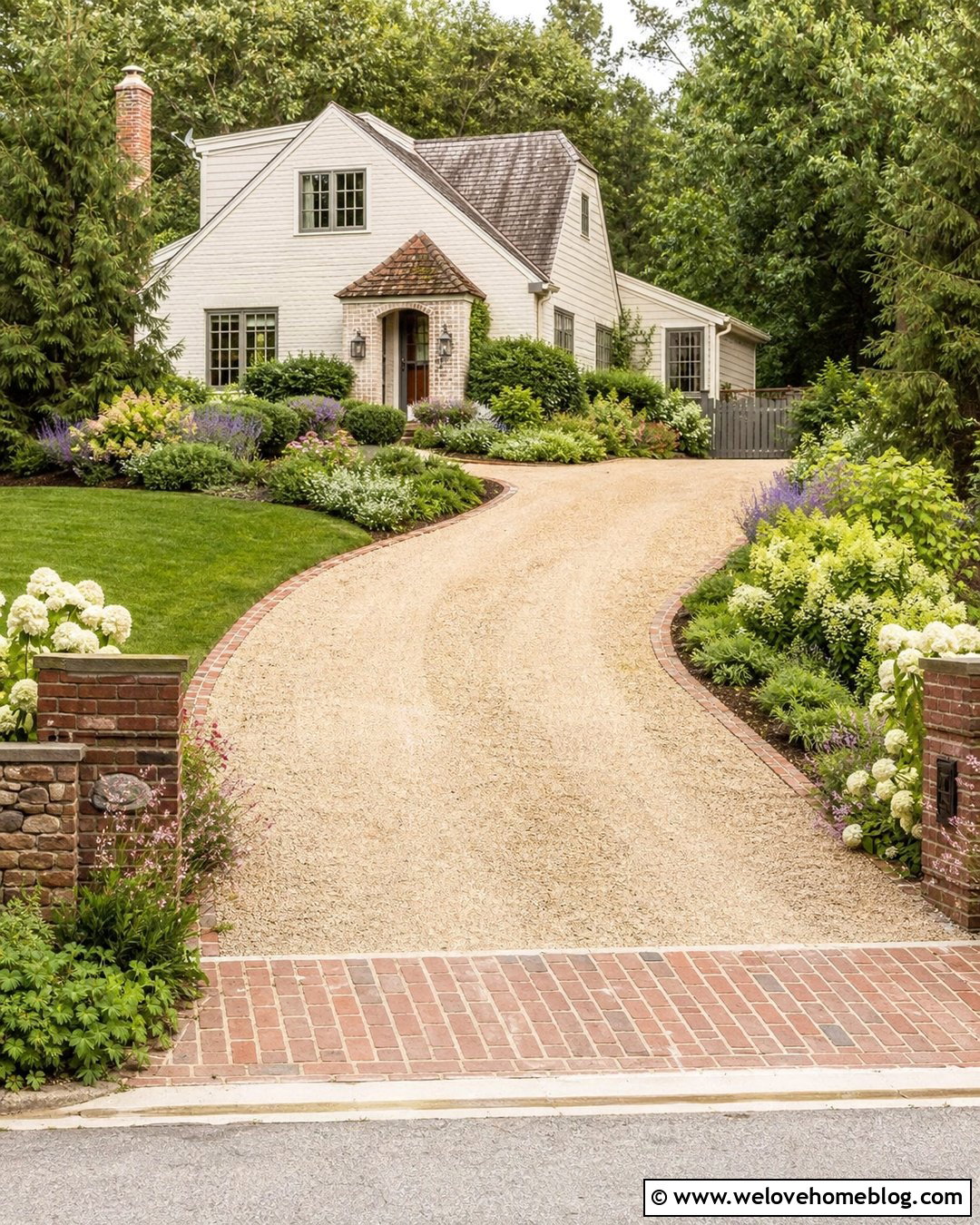
Reclaimed brick gives driveway trim a weathered character that works beautifully with older homes and cottage landscapes. Frame a pale gravel or aged concrete driveway with mixed red and brown bricks set in a consistent row. Small color variations add interest, but bricks of similar dimensions will create a cleaner, safer edge. A curved driveway can use the reclaimed border to lead toward a porch, detached garage, or garden gate. Add lavender, catmint, hydrangeas, and soft ground covers behind the brick for a relaxed planting scheme. Repeat a few bricks in the walkway or entrance apron to connect the different surfaces. Before installation, discard badly cracked units and create a stable base, since decorative age is appealing but loose, rocking, or severely uneven trim is not.
20. Mixed Material Driveway Trim
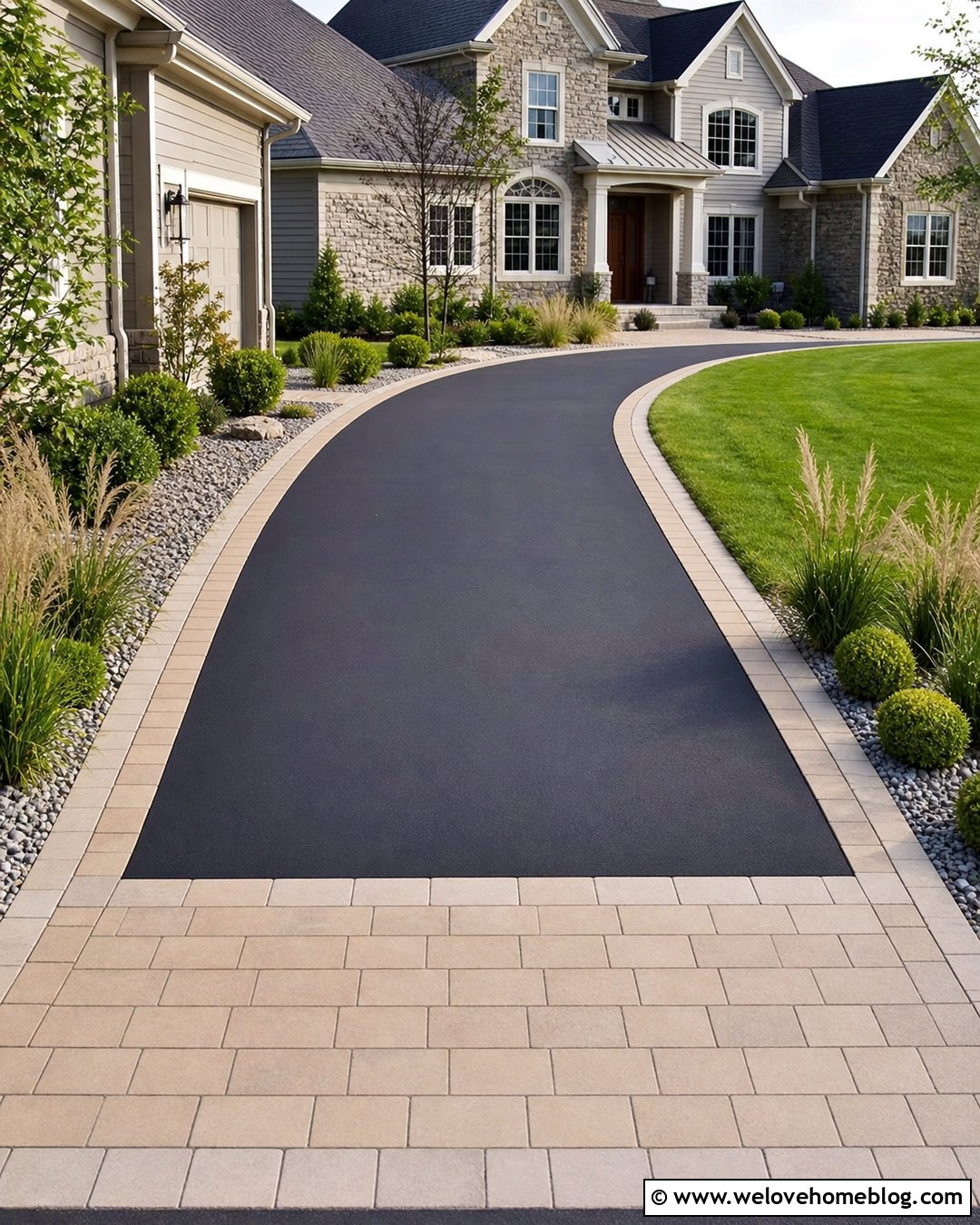
Mixed material trim works when every component has a clear purpose. Start with a black asphalt driveway, add a flush tan paver ribbon, and place a narrow gravel planting strip beyond it. The pavers create the structural edge, while the gravel provides drainage-friendly texture and separates pavement from shrubs. At the street, widen the pavers into a defined apron. Near the house, connect them to the front walkway and garage threshold. Limit the palette to two or three coordinated colors so the design does not appear fragmented. This layered approach suits transitional homes and properties where the driveway needs to connect several exterior materials. The key is repetition: use the same paver, gravel, and planting combinations at important points rather than introducing a different trim treatment along every section.
Conclusion:
The right border can make an ordinary driveway look more organized, attractive, and connected to the home. Brick and cobblestone bring traditional character, while steel, concrete curbs, and slim paver ribbons create cleaner modern lines. Planted edges soften broad paved areas, and gravel or river rock bands can add useful texture near drainage zones. Before choosing a finish, consider the driveway surface, vehicle clearance, lawn maintenance, runoff, house materials, and long-term upkeep. Keep the border consistent from the curb to the garage, then repeat it around the apron or walkway where possible. These 20 Driveway Trim Ideas show how practical edging, thoughtful landscaping, and coordinated materials can work together to create stronger curb appeal.

Related posts:
Leave a Reply