
Driveway curbs do more than create a tidy edge. They can hold loose materials in place, protect nearby planting beds, guide rainwater, and connect the driveway visually with the home. The best 20 Driveway Curbs Ideas combine the curb with the surface, layout, entrance, and landscaping rather than treating it as an isolated detail. Choose a curb that fits your climate, vehicle traffic, maintenance preferences, and exterior materials. Raised stone suits formal properties, while flush brick makes everyday access easier. Concrete, steel, cobblestone, and pavers offer additional options for different budgets. Structural edging is also becoming a popular way to produce cleaner lines and protect driveway edges. () Explore these complete looks from our collection of 20 Driveway Curbs Ideas.

1. Concrete Driveway Curb With Brick Border
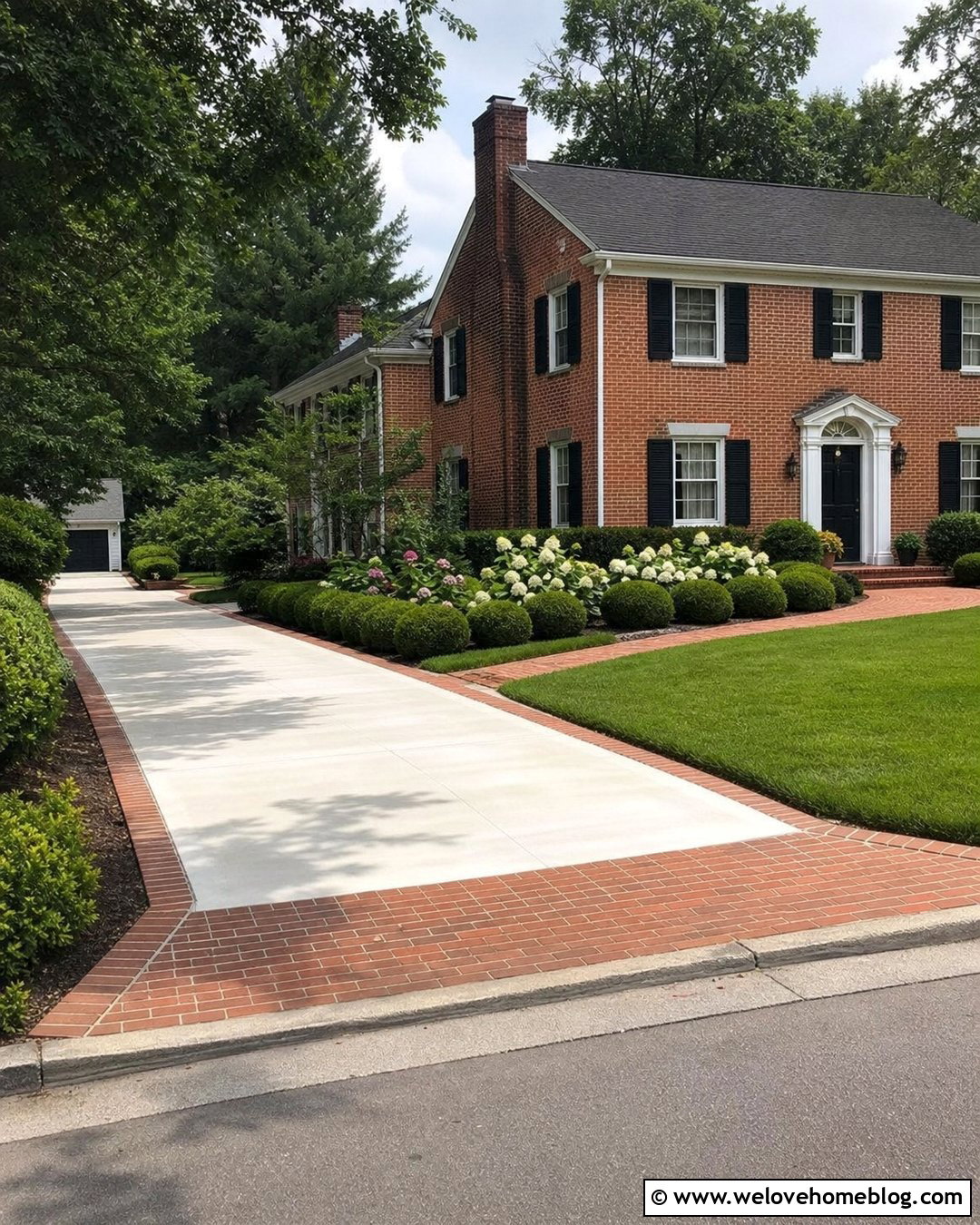
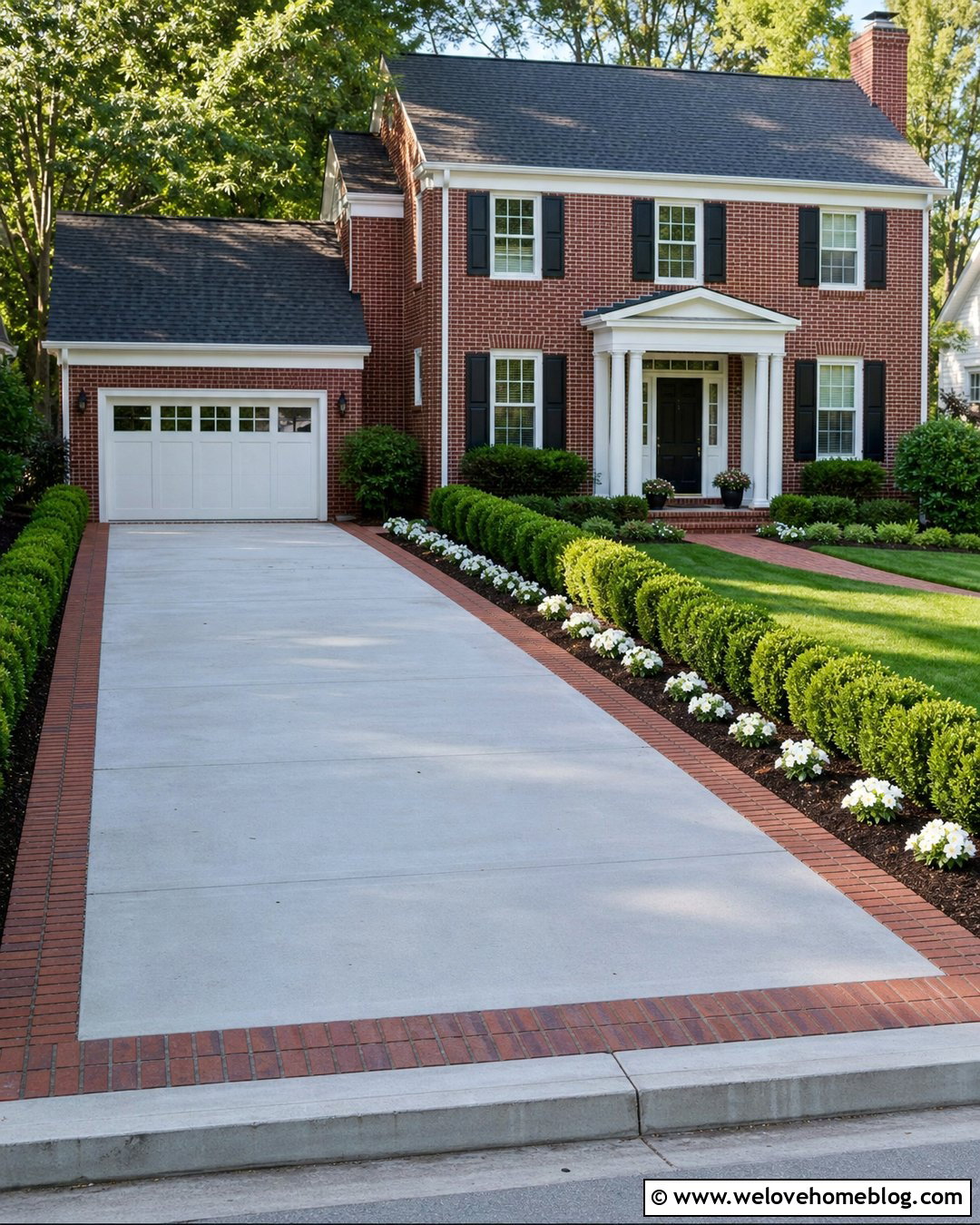
A light-gray poured concrete driveway gains warmth when framed by a red or brown brick curb. Choose a straight driveway layout and install the bricks in a soldier-course pattern along both sides. Setting the bricks slightly above the concrete helps separate the driving surface from planting beds without creating an overly tall obstacle. Repeat the same brick around the front walkway or porch steps to make the exterior feel coordinated. Green lawn, clipped shrubs, and small flowering perennials soften the structured border. At the street, lower the curb gradually so vehicles can enter smoothly. This complete driveway look works especially well with traditional ranch, colonial, and Cape Cod homes because the contrasting materials create definition without making the front yard appear busy.
2. Asphalt Driveway Curb With Cobblestone Edging
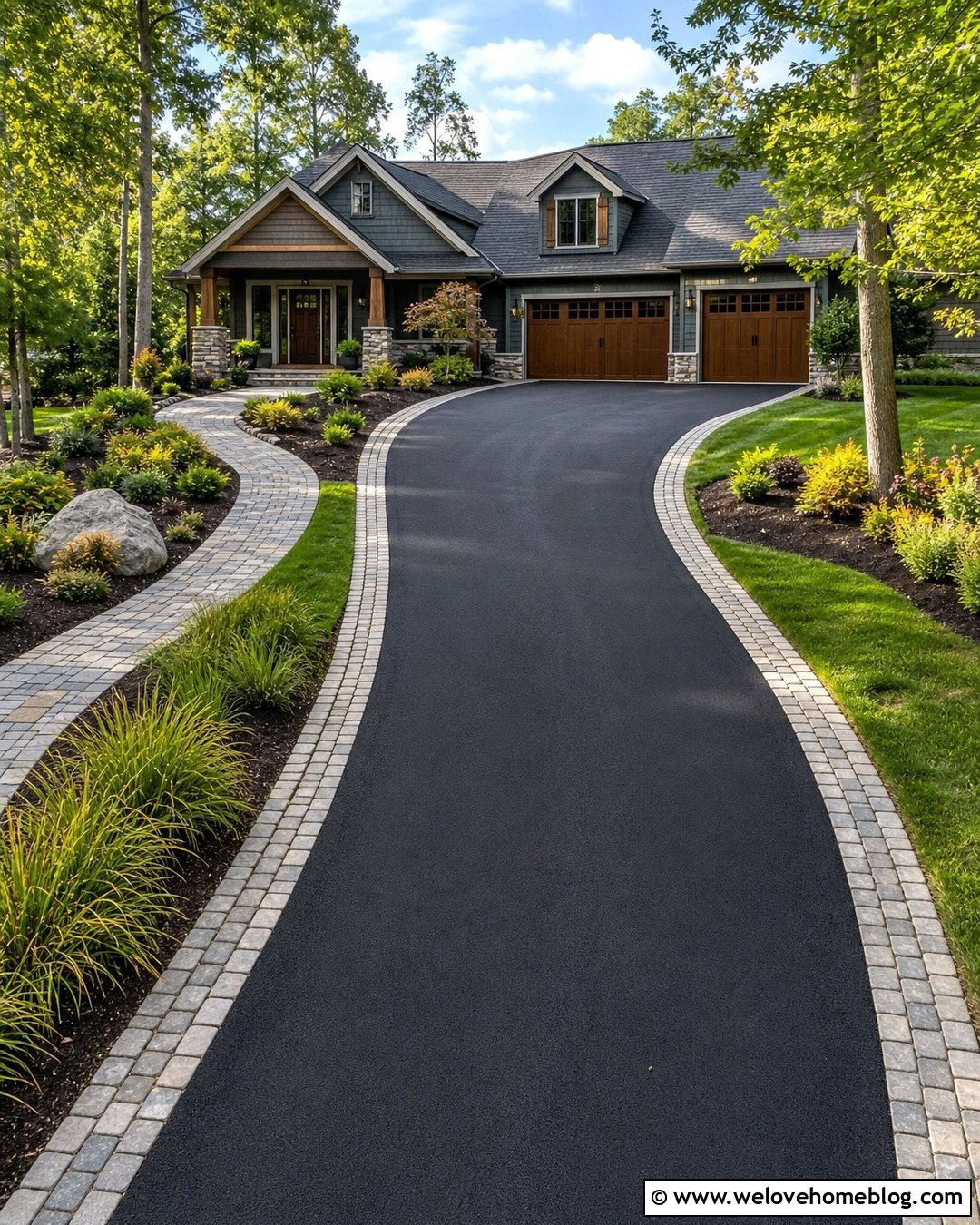
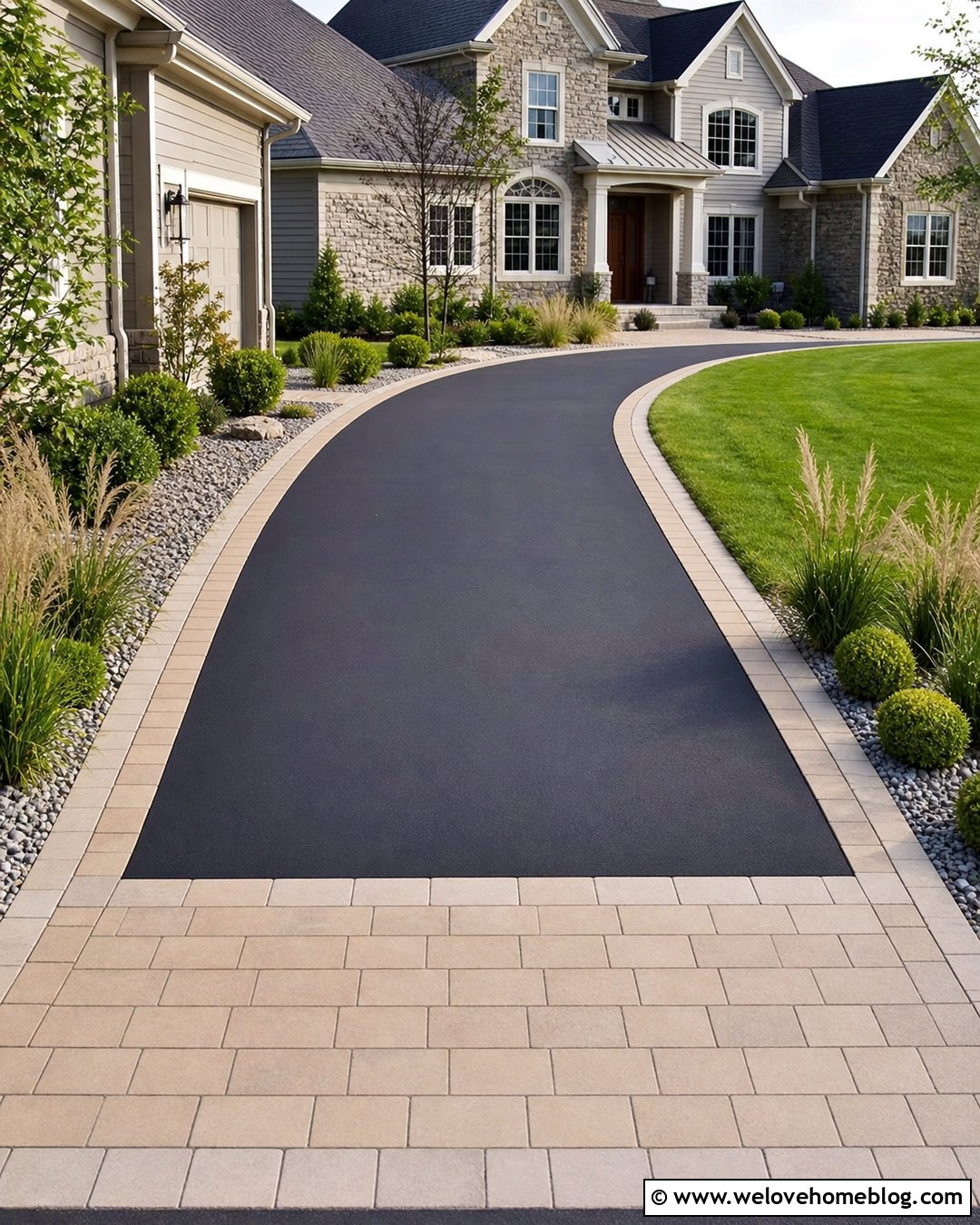
Deep-black asphalt looks more refined when paired with a cobblestone curb in mixed gray tones. The stones can follow a straight driveway or sweep neatly around a gentle curve, giving the surface a durable-looking frame. Install them in a compact single row for a subtle border or use two rows where the driveway meets wider planting beds. A flush or lightly raised profile reduces the chance of tires catching the edge. Add low evergreen shrubs, ornamental grasses, and a matching cobblestone walkway near the house. The varied stone texture balances asphalt’s smooth finish and creates an attractive transition into the landscape. Edging can also help protect vulnerable asphalt margins and maintain a cleaner visual line over time. ()
3. Gravel Driveway Curb With Granite Blocks
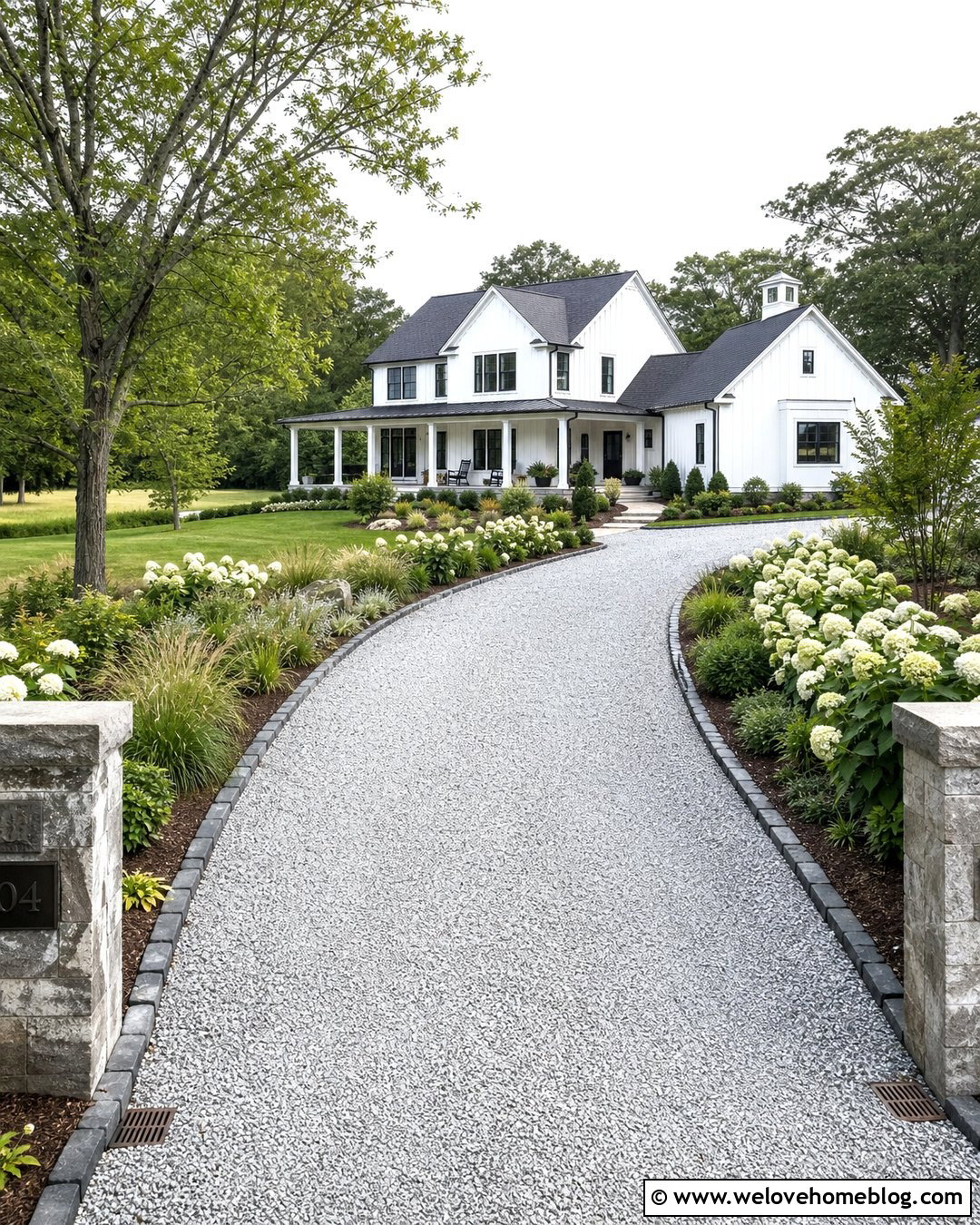
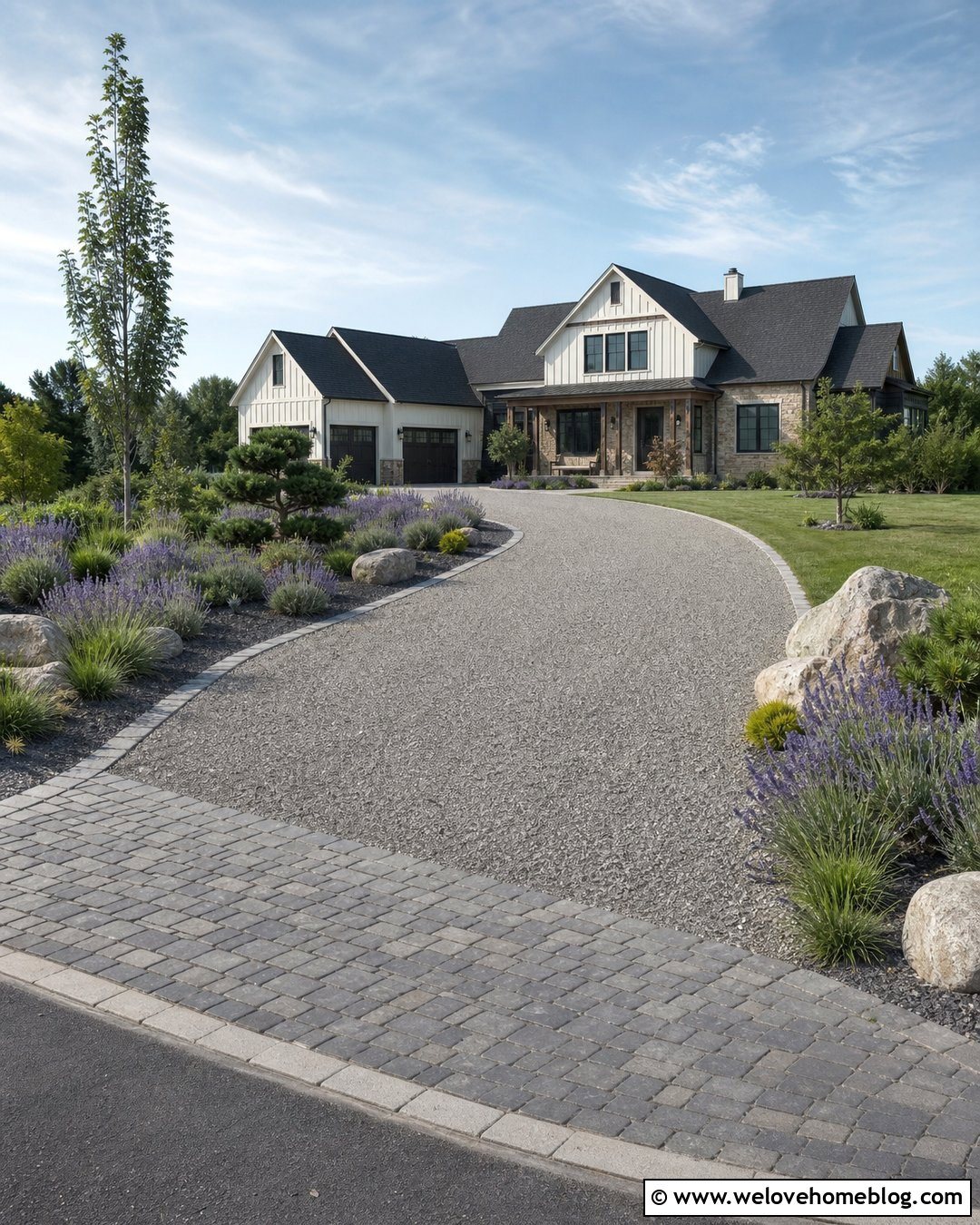
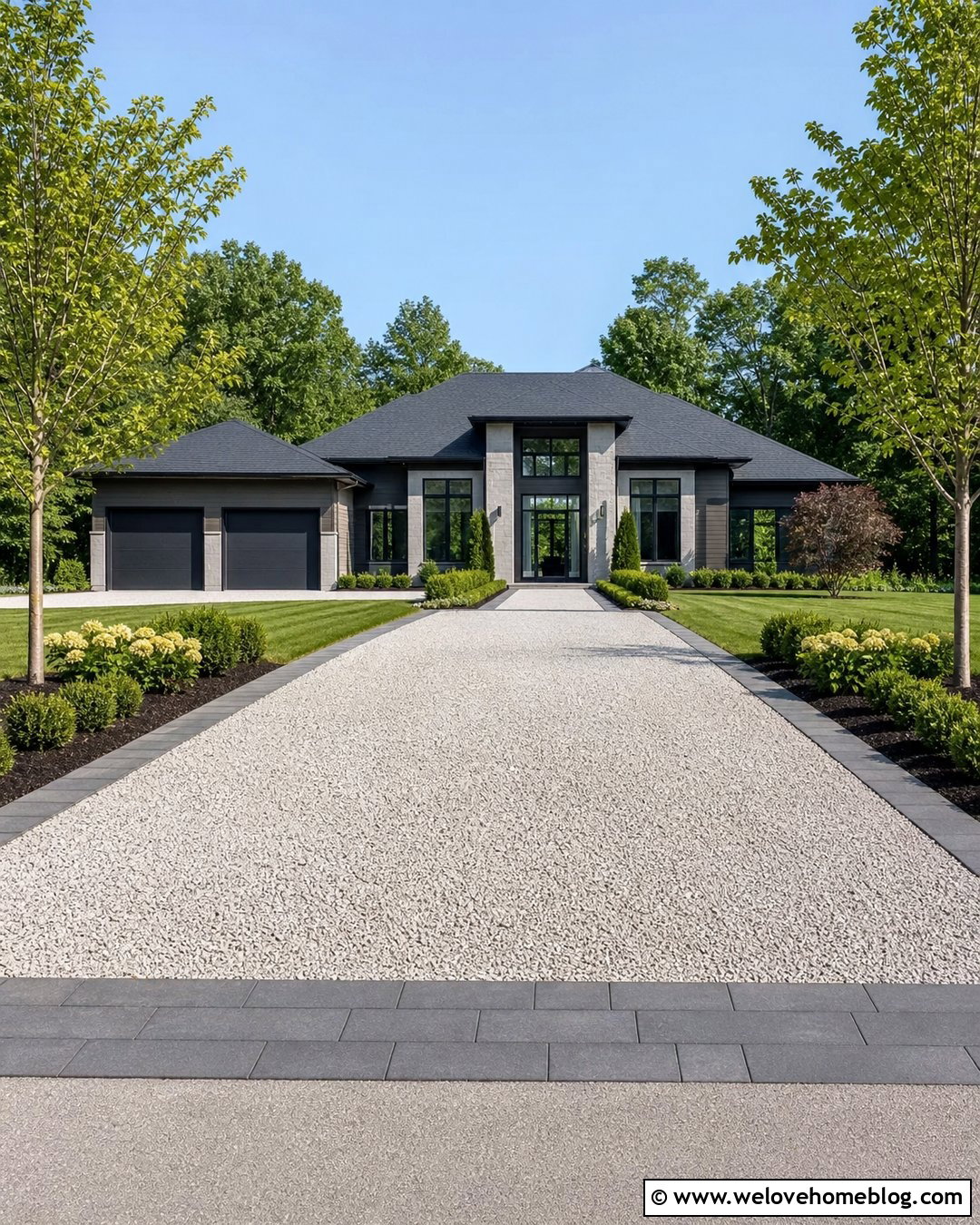
Loose gravel needs a strong border, and rectangular granite blocks provide both weight and timeless character. Use pale gray crushed gravel on a gently curved driveway, then place dark granite blocks along the edges at a consistent height. The contrast makes the driveway shape easy to see while keeping stones away from the lawn and garden beds. For a comfortable entrance, lower the blocks near the street and any connecting walkway. Native grasses, hydrangeas, and mature shade trees can frame the approach without hiding the curb. This combination feels especially natural beside a country home, stone cottage, or modern farmhouse. A compacted base beneath both the gravel and curb is important because a well-supported edge is less likely to shift under regular vehicle traffic.
4. Modern Driveway Curb With Steel Edging
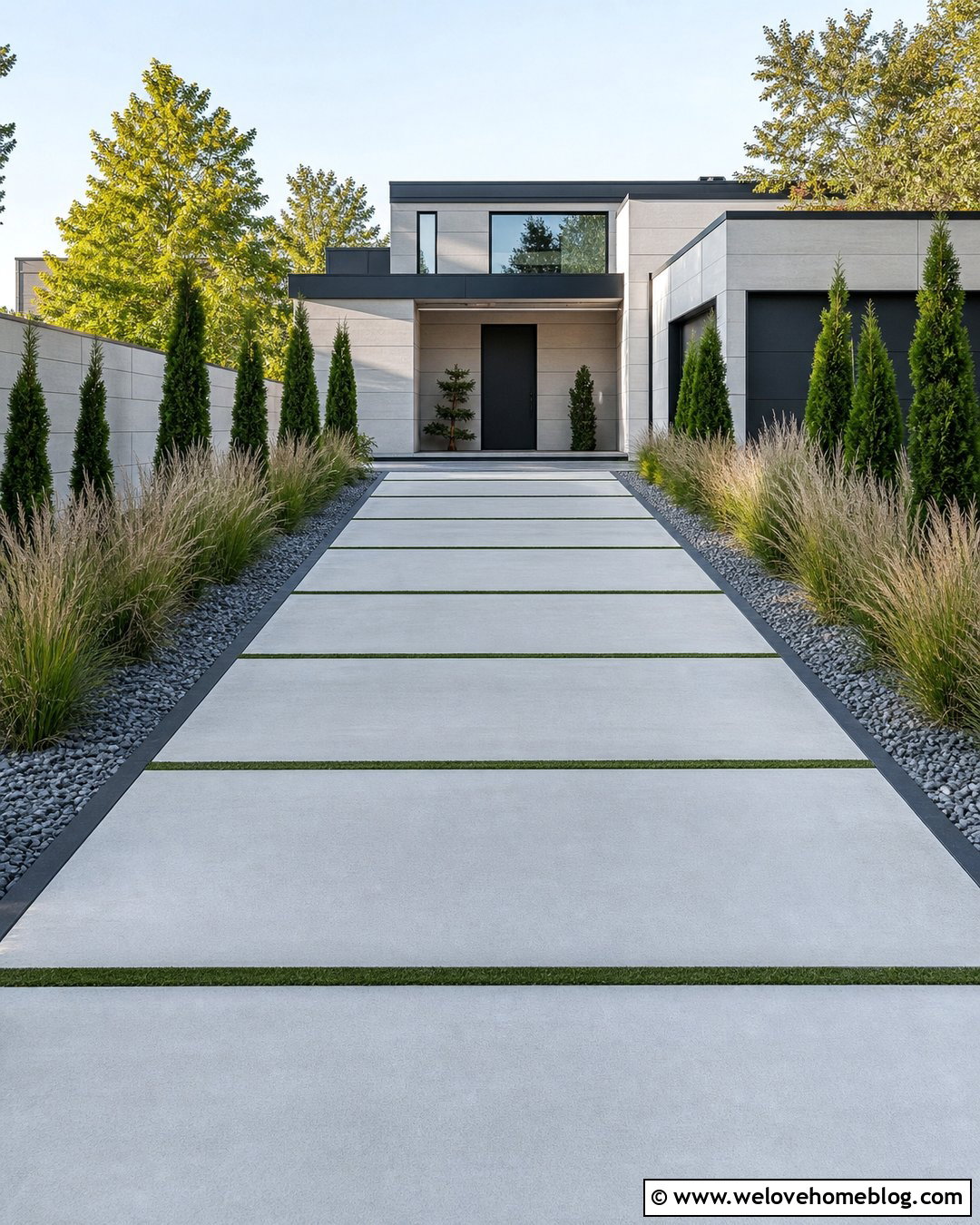
For a clean contemporary exterior, pair large-format concrete pavers with a narrow black steel curb. A straight or slightly offset driveway reinforces the modern geometry, while the thin edging creates separation without dominating the design. Keep the steel nearly flush beside parking areas and raise it slightly where it borders gravel or planting beds. Add linear beds filled with ornamental grasses, compact evergreens, and dark decorative stone. Wide grass joints between selected paver rows can soften the hardscape and improve the connection with the yard. Black steel also coordinates naturally with modern window frames, garage doors, and exterior lighting. This streamlined treatment is most successful when installation lines remain precise and the landscape uses a restrained plant palette rather than many competing colors or shapes.
5. Raised Driveway Curb With Flower Beds
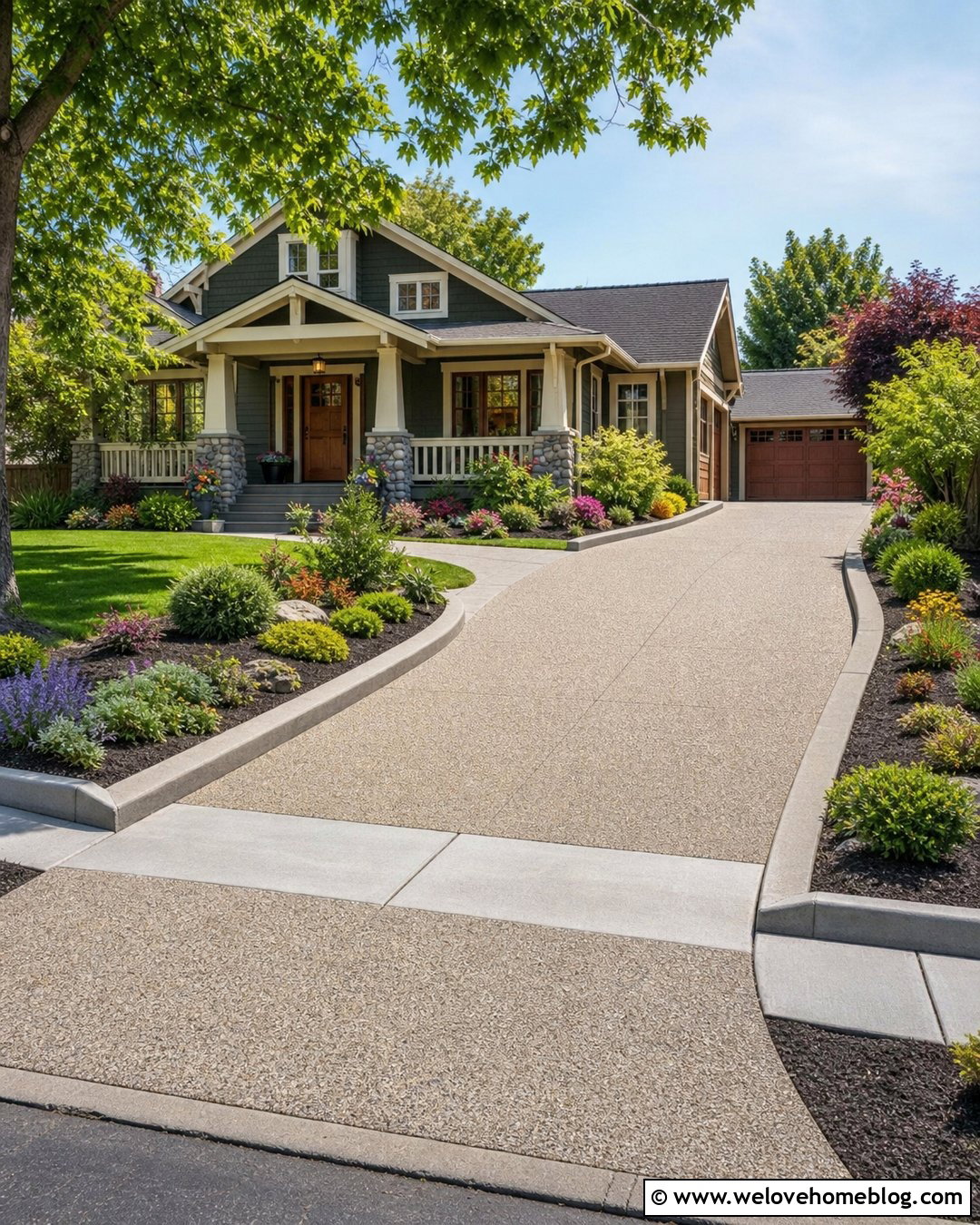
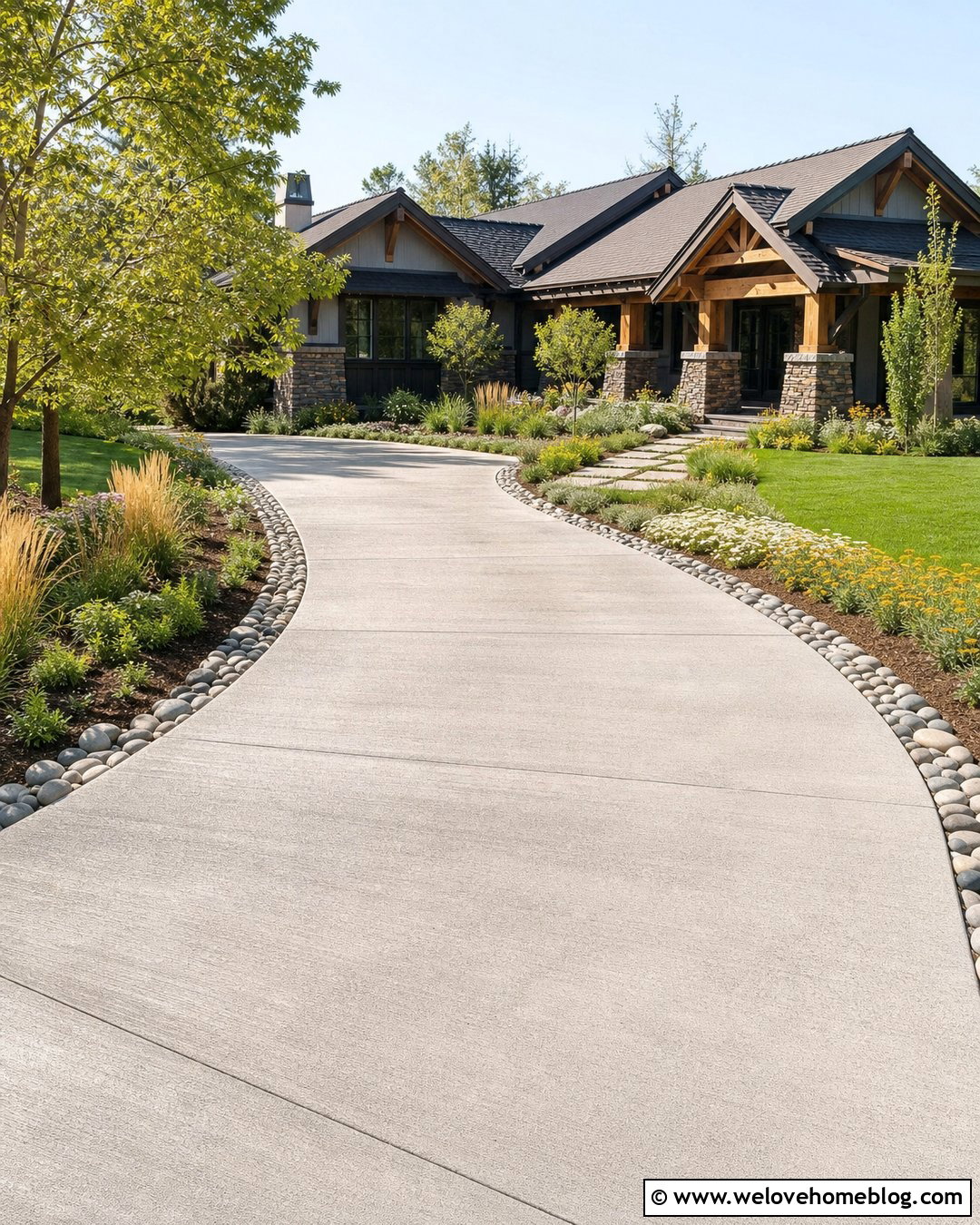
A raised concrete curb can turn an ordinary driveway into a clearly framed garden approach. Use warm exposed-aggregate concrete for the driveway and form a smooth, gently curved curb around generous flower beds. Keep the curb low enough to preserve visibility while giving mulch and soil a defined boundary. Layer the planting with compact shrubs at the back, long-blooming perennials in the middle, and low ground cover beside the curb. Repeating a limited selection of plants creates a calmer result than filling the border with unrelated varieties. Include breaks where the walkway crosses the curb so the route to the front door feels natural. This complete design works beautifully with craftsman homes, where textured concrete, curved lines, and colorful landscaping support the architecture’s welcoming character.
6. Flush Driveway Curb With Paver Ribbon
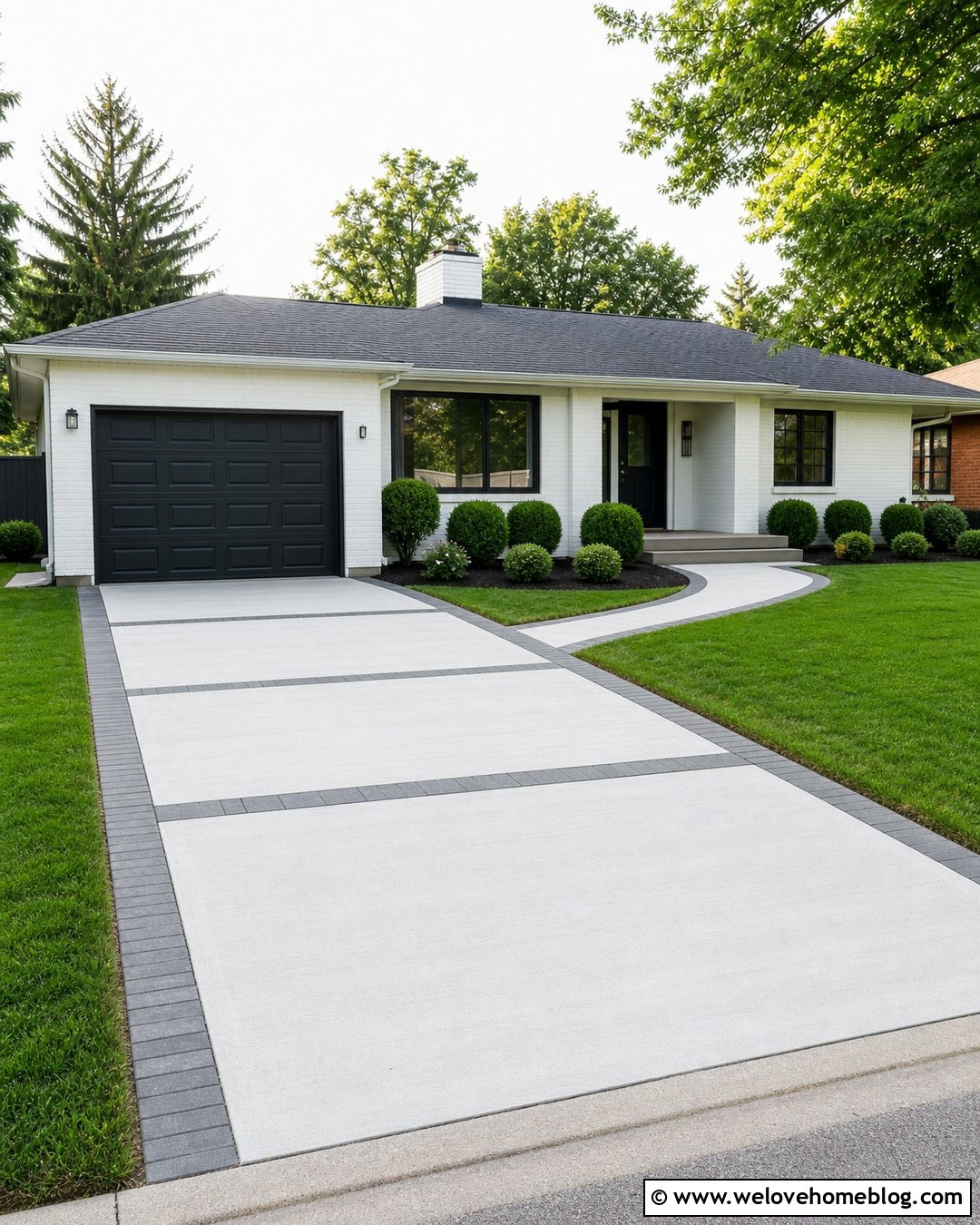
Would you prefer a border that defines the driveway without creating a raised edge? A flush paver curb offers an easy transition for tires, bicycles, lawn equipment, and pedestrians. Frame a brushed concrete driveway with charcoal concrete pavers installed as a narrow ribbon. Continue the pavers across the driveway near the garage to create a coordinated banding detail. Straight borders support a modern look, while a gently curved ribbon can soften a conventional suburban yard. Beside the driveway, use simple lawn panels and foundation beds with rounded shrubs. Because the curb sits level with the surface, accurate grading is important to keep water moving in the intended direction. The finished design feels neat and tailored while remaining practical for a busy household with multiple vehicles and frequent driveway use.
7. Curved Driveway Curb With Natural Stone
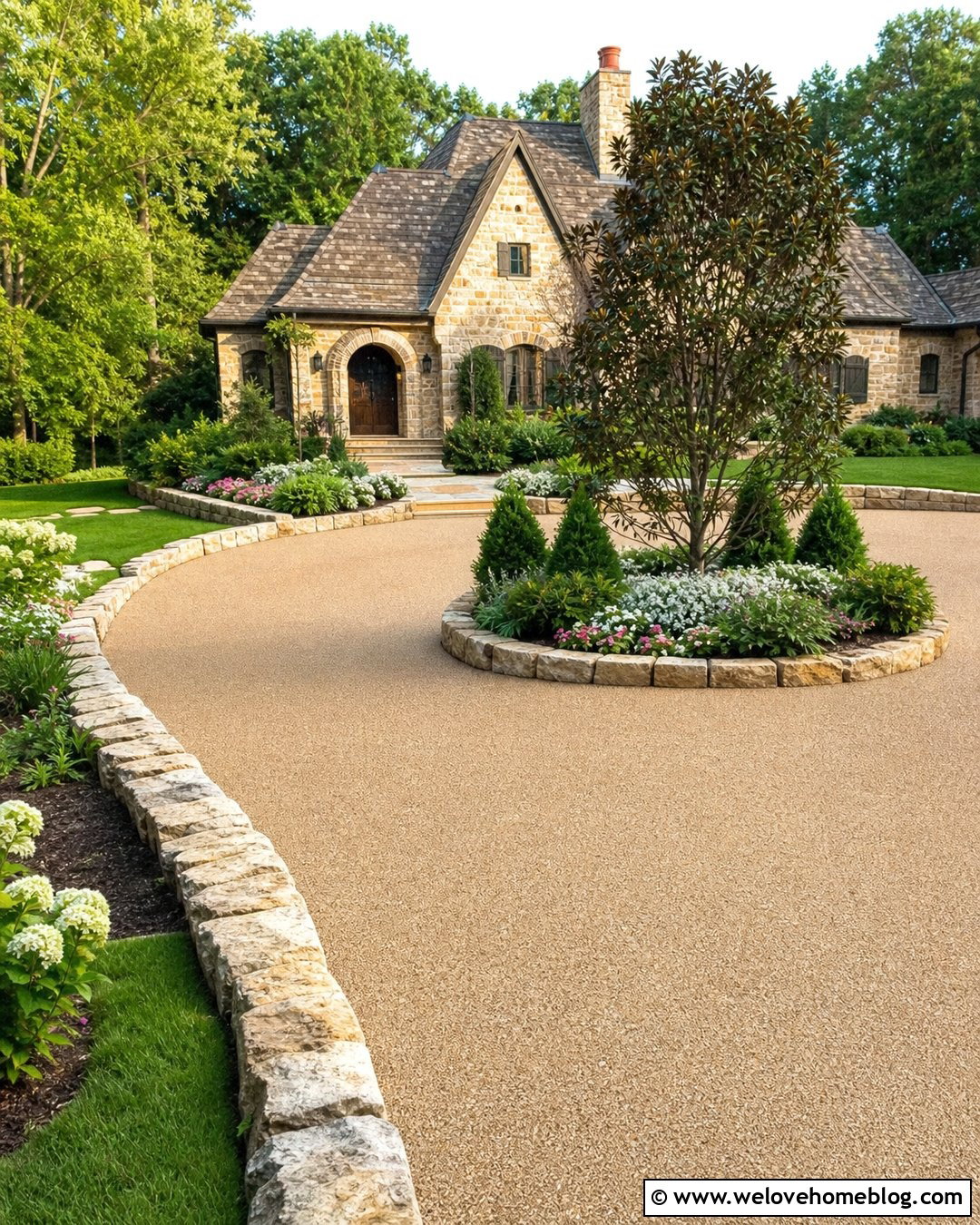
A sweeping driveway feels more intentional when its border follows every curve smoothly. Choose tan resin-bound gravel for the surface and use irregular-cut limestone as a low curb along the outside edge. On the inner curve, continue the same stone around a broad landscape island filled with a small ornamental tree, evergreen shrubs, and seasonal flowers. The warm materials complement a stone-front home and help the driveway blend naturally into the yard. Avoid abrupt curb height changes that could surprise drivers as they turn. Instead, use a gradual, consistent profile with wider clearance near tighter bends. This complete approach creates a graceful arrival sequence rather than simply adding decoration. It is particularly effective on spacious properties where the driveway remains visible from the road and forms a major part of the front landscape.
8. Circular Driveway Curb With Limestone Blocks
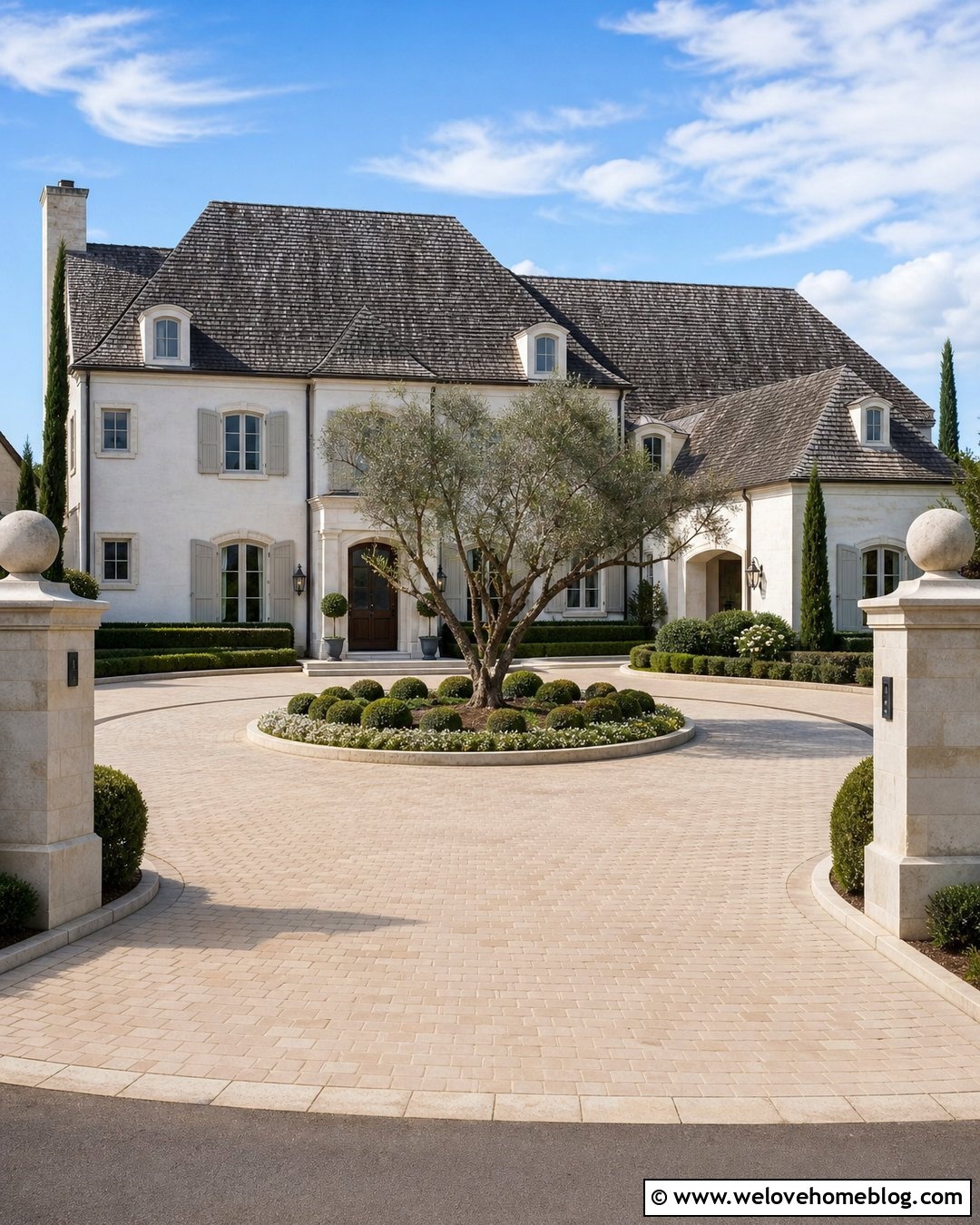
A circular driveway needs a clear inner boundary that protects its central landscape feature. Use beige concrete pavers in a running-bond pattern, then form the center curb with smooth limestone blocks. The pale color palette feels cohesive while subtle texture changes distinguish the driveway from the planting area. Fill the island with one sculptural tree, clipped evergreen shrubs, and low ground cover so drivers retain clear sightlines. Matching limestone pillars at the entrance can visually connect the curb with the street. Along the outer edge, use a flush paver ribbon beside the lawn to avoid making the layout feel enclosed. This complete design suits Mediterranean, French country, and upscale transitional homes. Careful measurements are essential so the driving lane remains comfortable around the entire circle.
9. Driveway Curb With River Rock Drainage Border
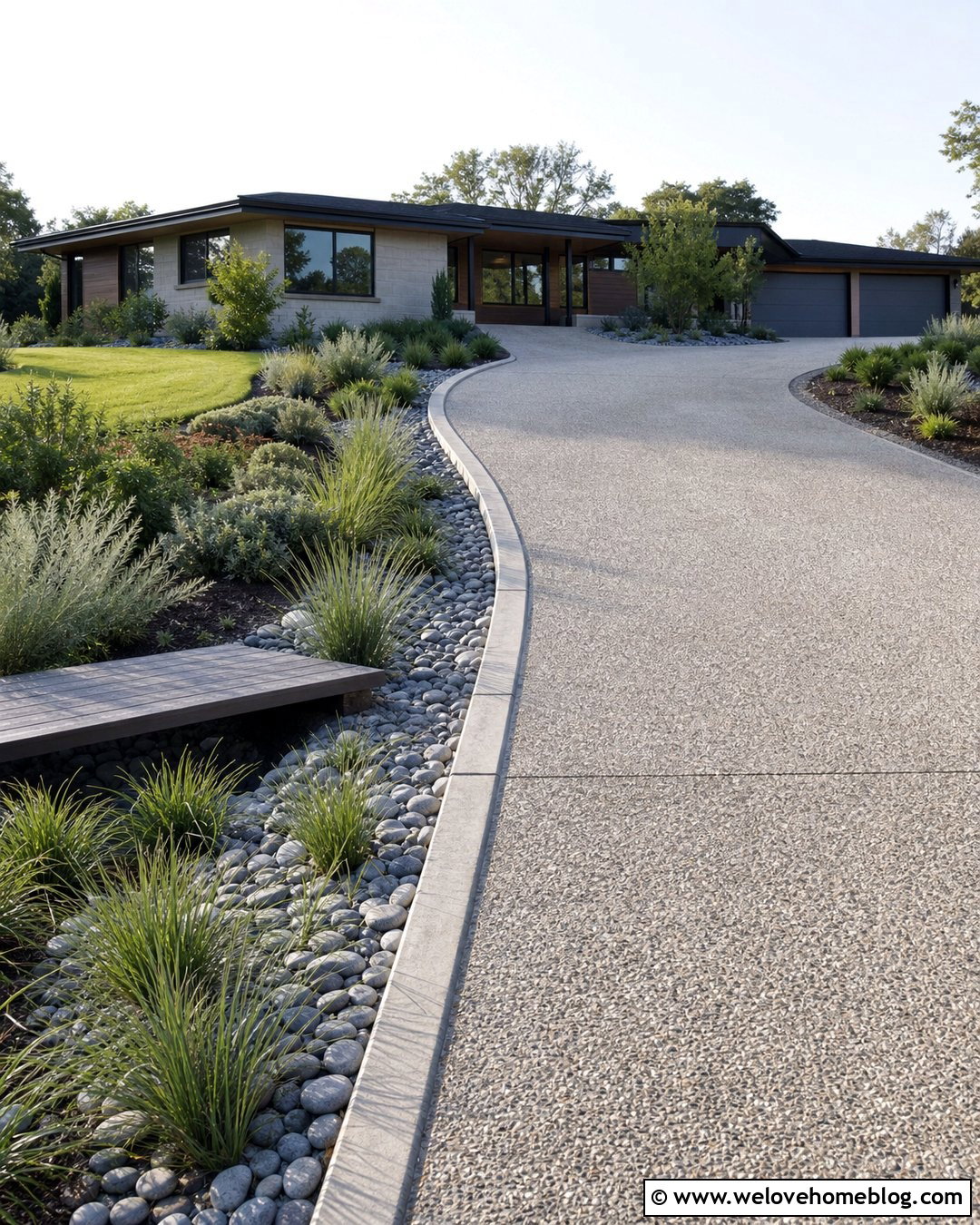
Heavy runoff can be incorporated into the landscape instead of treated as an afterthought. Start with a sloped exposed-aggregate driveway, then add a low precast concrete curb beside a river rock drainage channel. The curb separates the driving surface from the stones, while the channel creates a deliberate transition into rain-tolerant planting. Use mixed gray river rock, ornamental grasses, sedges, and low native shrubs for a natural appearance. A small bridge-style walkway can cross the channel on the route to the front door. Keep loose stones below the curb’s top so they are less likely to scatter onto the driveway. This practical look works well with contemporary ranch homes and wooded properties, combining a visually finished driveway edge with a landscape area designed around the site’s water movement.
10. Driveway Curb With Low Landscape Lighting
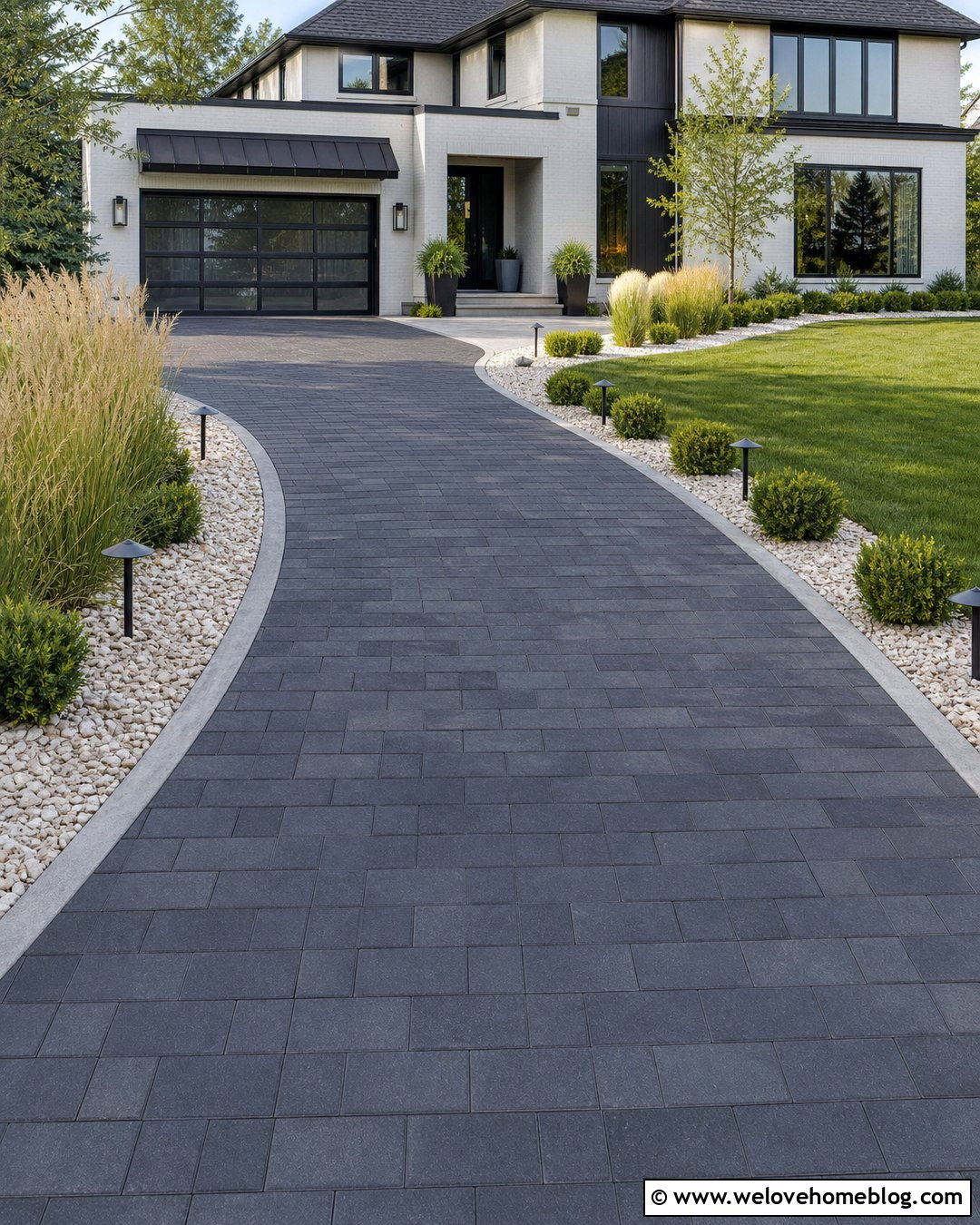
Subtle lighting can make a driveway curb easier to recognize while strengthening the overall entrance design. Pair a dark charcoal paver driveway with a low poured-concrete curb that follows a gentle curve toward the garage. Install compact, shielded fixtures at measured intervals within the adjacent planting bed rather than placing bulky lights directly in the driving zone. The fixtures should direct light downward across the curb and pavers. During daylight, boxwood, feather reed grass, and pale decorative gravel maintain a modern, uncluttered appearance. Use the same fixture finish near the walkway and porch for consistency. Integrated driveway lighting is increasingly used to support navigation and nighttime curb appeal. () Always coordinate electrical work, drainage openings, and curb construction before installation to avoid disruptive changes later.
11. Brick Driveway Curb With Cottage Landscaping
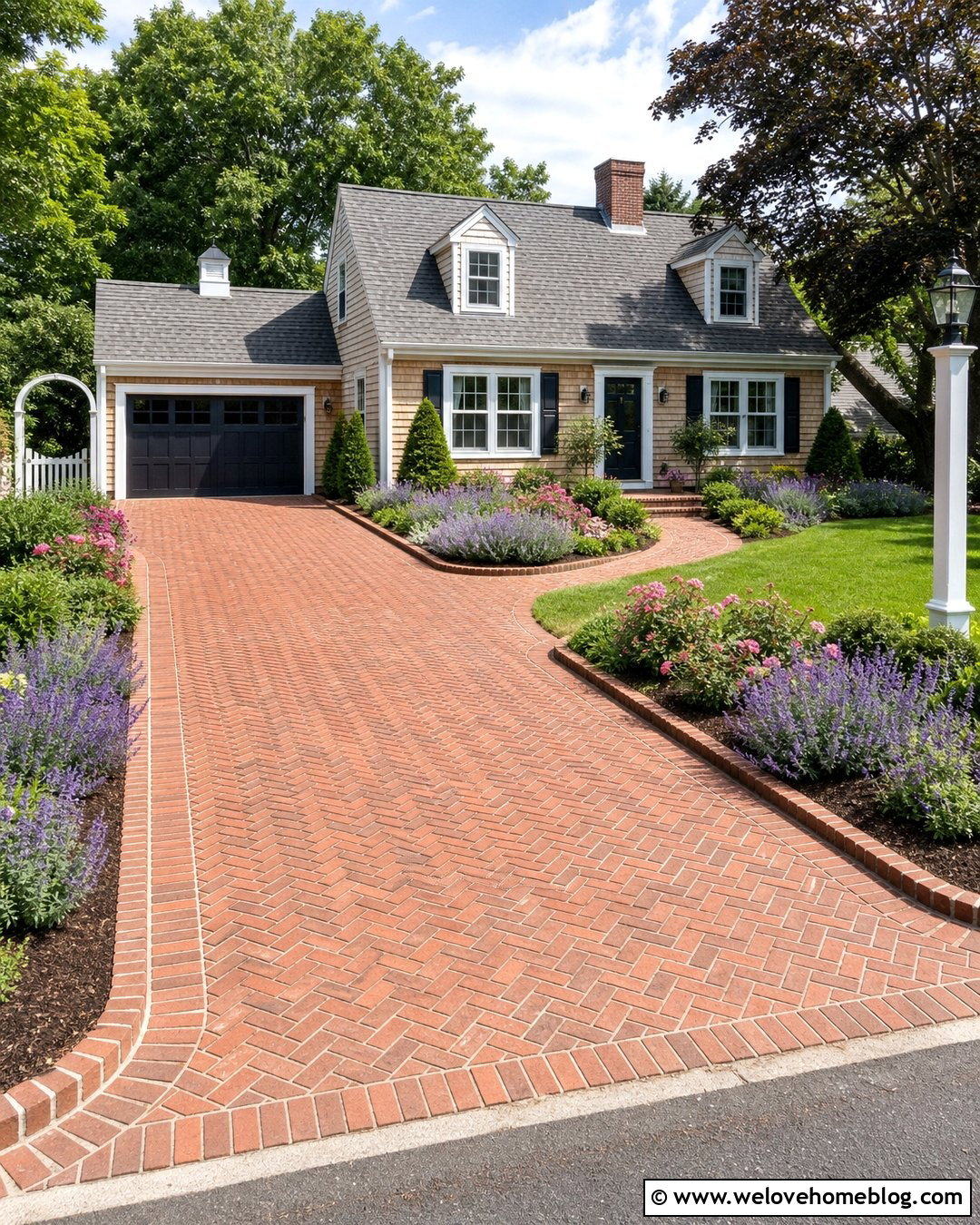
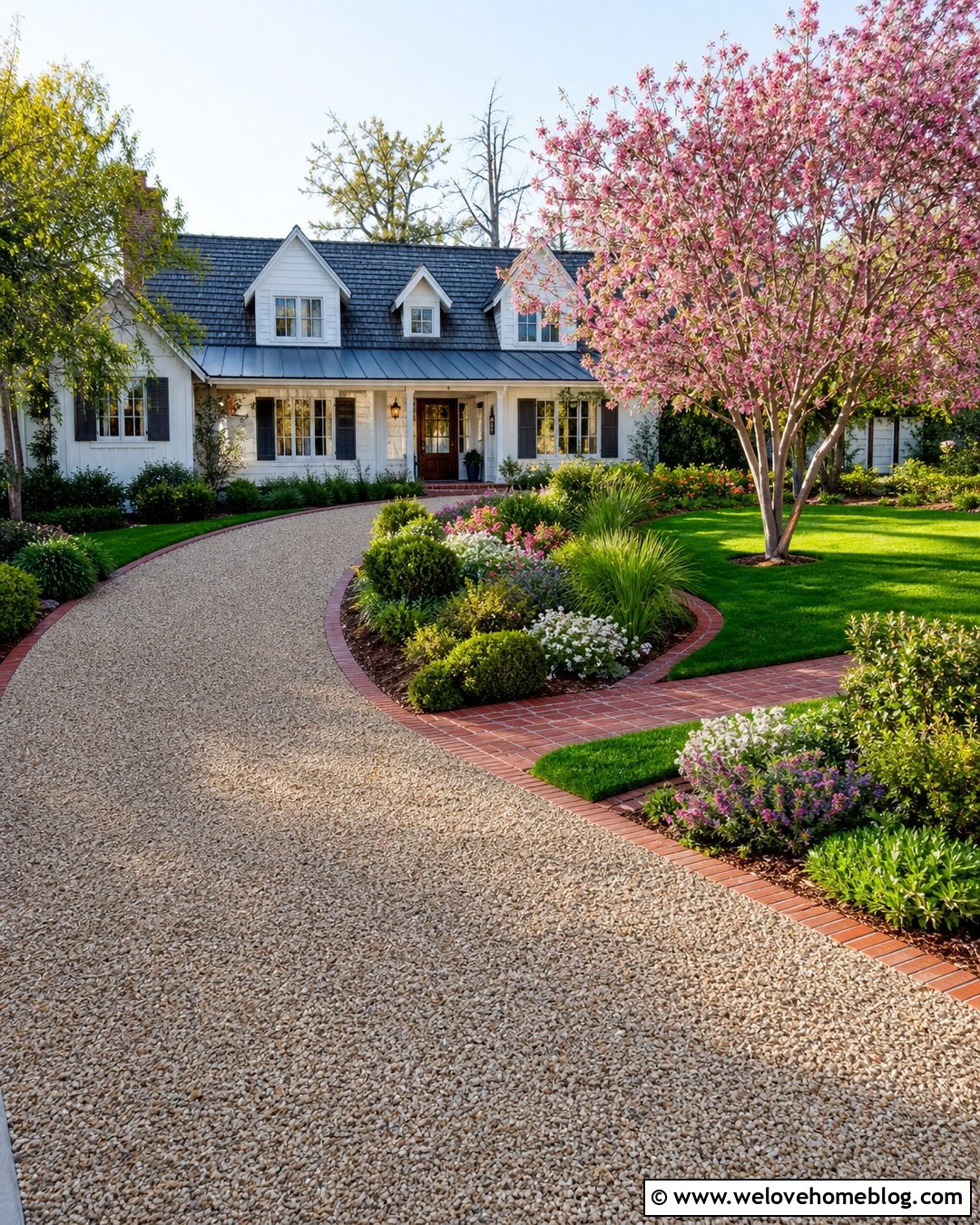
Clay brick pavers create a welcoming foundation for a soft cottage-style driveway. Lay the main surface in a herringbone pattern and turn the outer bricks into a raised soldier-course curb. This pattern change makes the edge visible without introducing an unrelated material. Allow planting beds to follow a relaxed curve alongside the driveway, but keep stems and foliage from spilling into the vehicle path. Lavender, catmint, compact roses, and small evergreen shrubs provide layers of color and texture. A brick walkway branching toward the porch completes the coordinated hardscape. Near the street, widen and lower the curb to form a comfortable entrance apron. This complete look is ideal for Cape Cod, Tudor, and cottage homes because the structured brickwork prevents the abundant landscaping from appearing untidy.
12. Sloped Driveway Curb With Retaining Wall
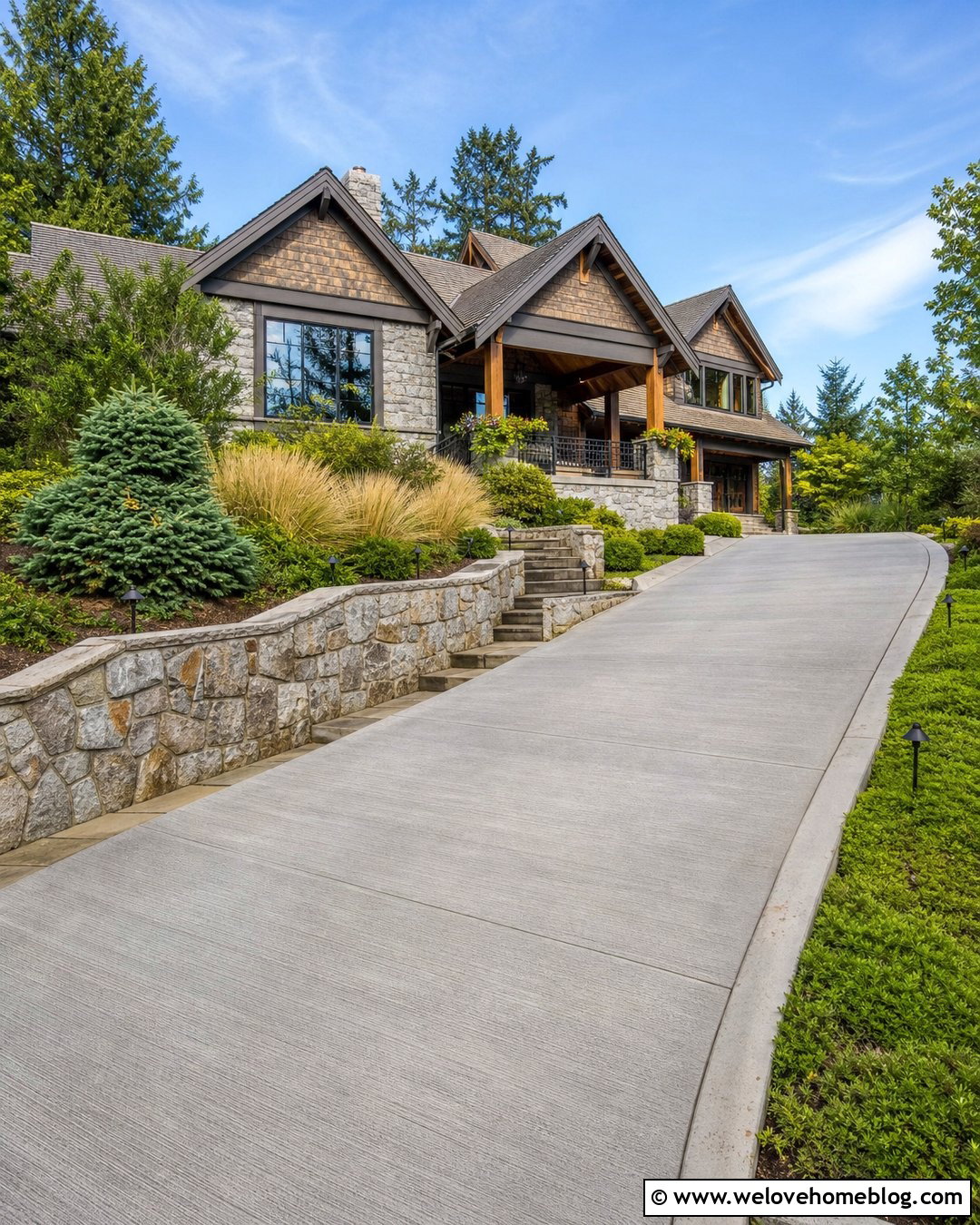
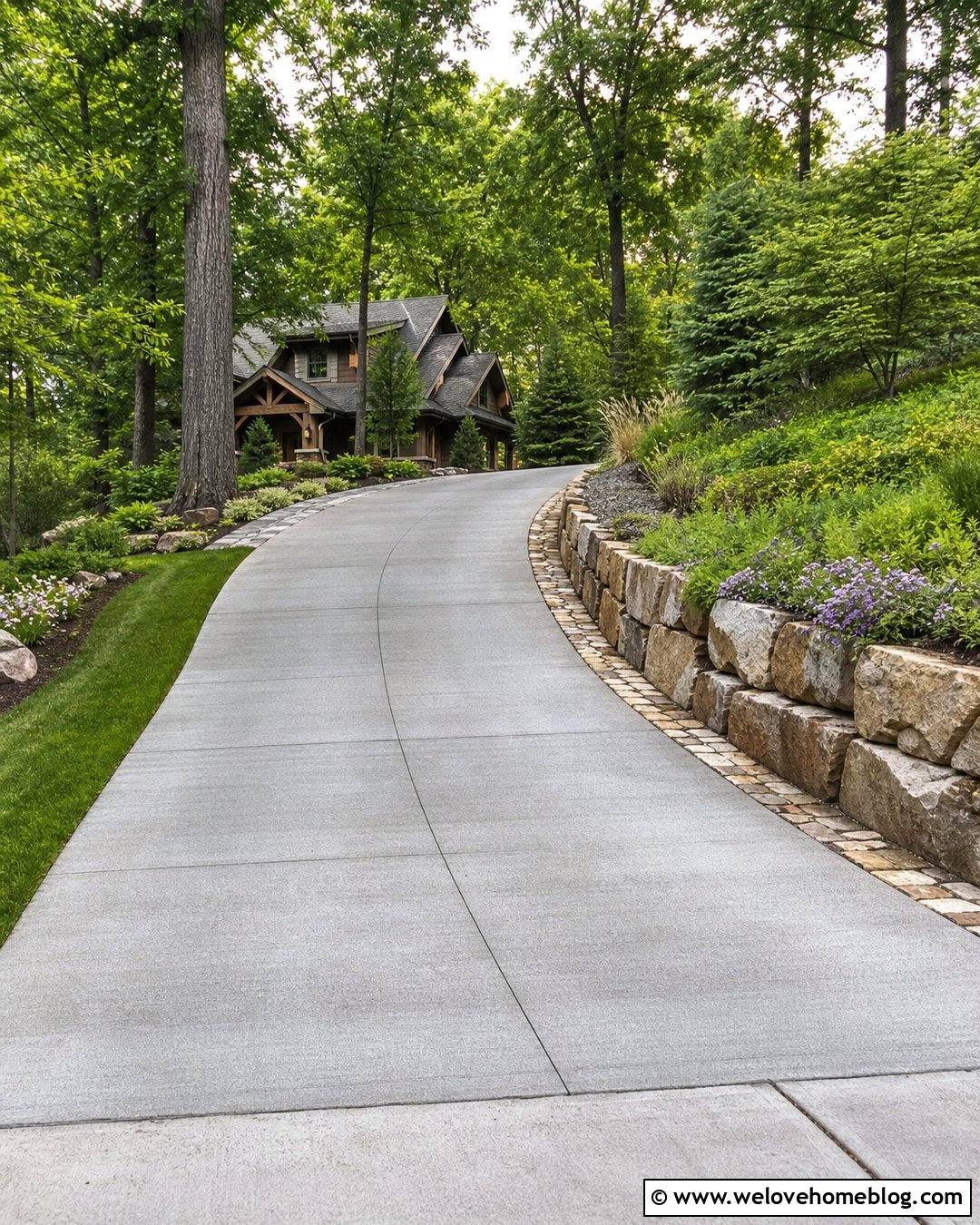
A sloped front yard may need a border that performs more than one job. Use broom-finished concrete for the driveway and construct a reinforced curb that transitions into a low retaining wall on the uphill side. Facing the wall with split limestone or manufactured stone helps it coordinate with the home’s facade. On the downhill edge, use a lower flush curb to preserve openness and support drainage. Plant the raised bed with spreading evergreens, ornamental grasses, and erosion-conscious ground cover that will not obstruct visibility. Add a stepped walkway beside the wall rather than forcing pedestrians to share the steep vehicle route. Because soil pressure, runoff, and vehicle loads can affect this design, professional engineering and local approval may be necessary. The finished driveway should look integrated, not heavily fortified.
13. Driveway Curb With Black Brick Pavers
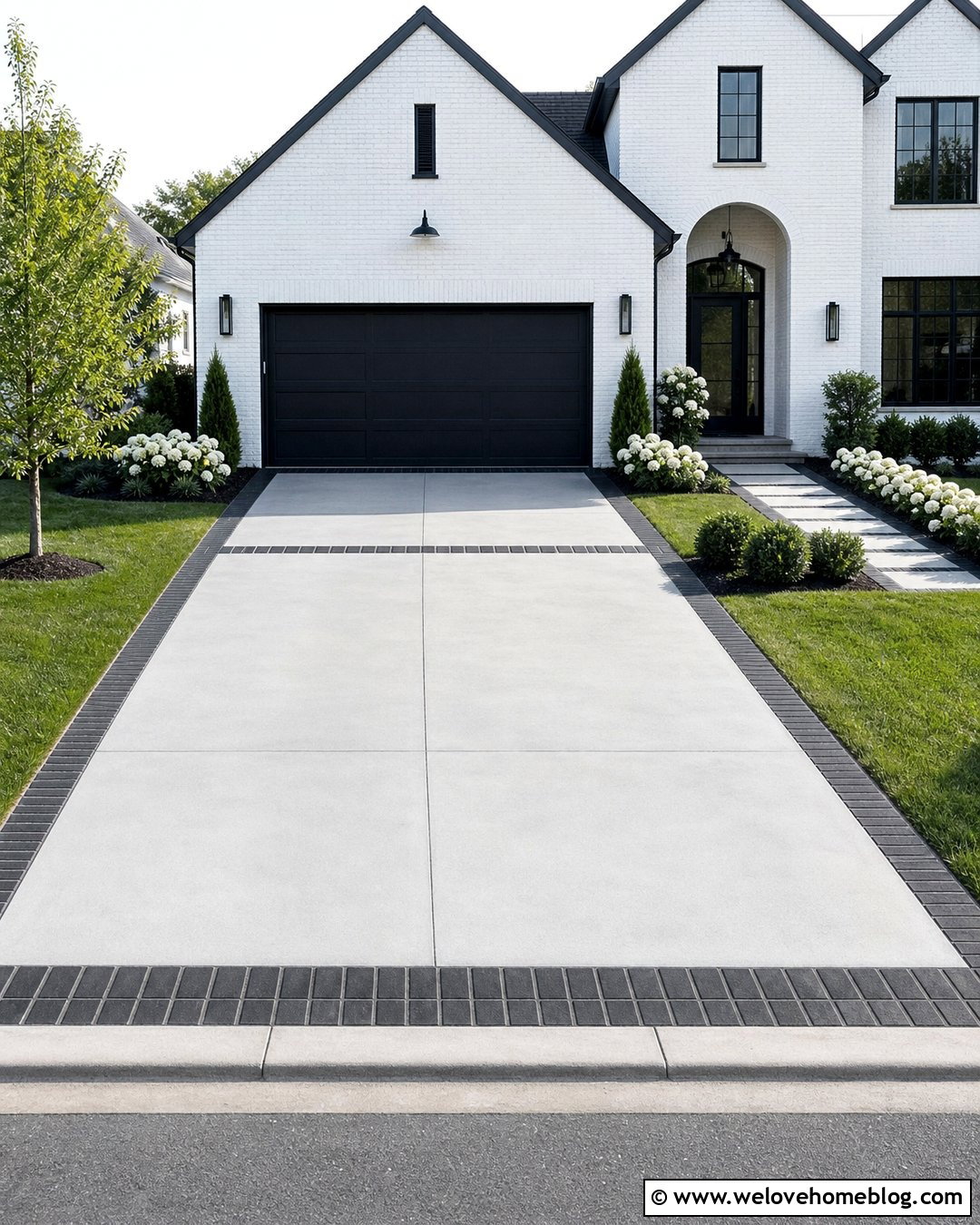
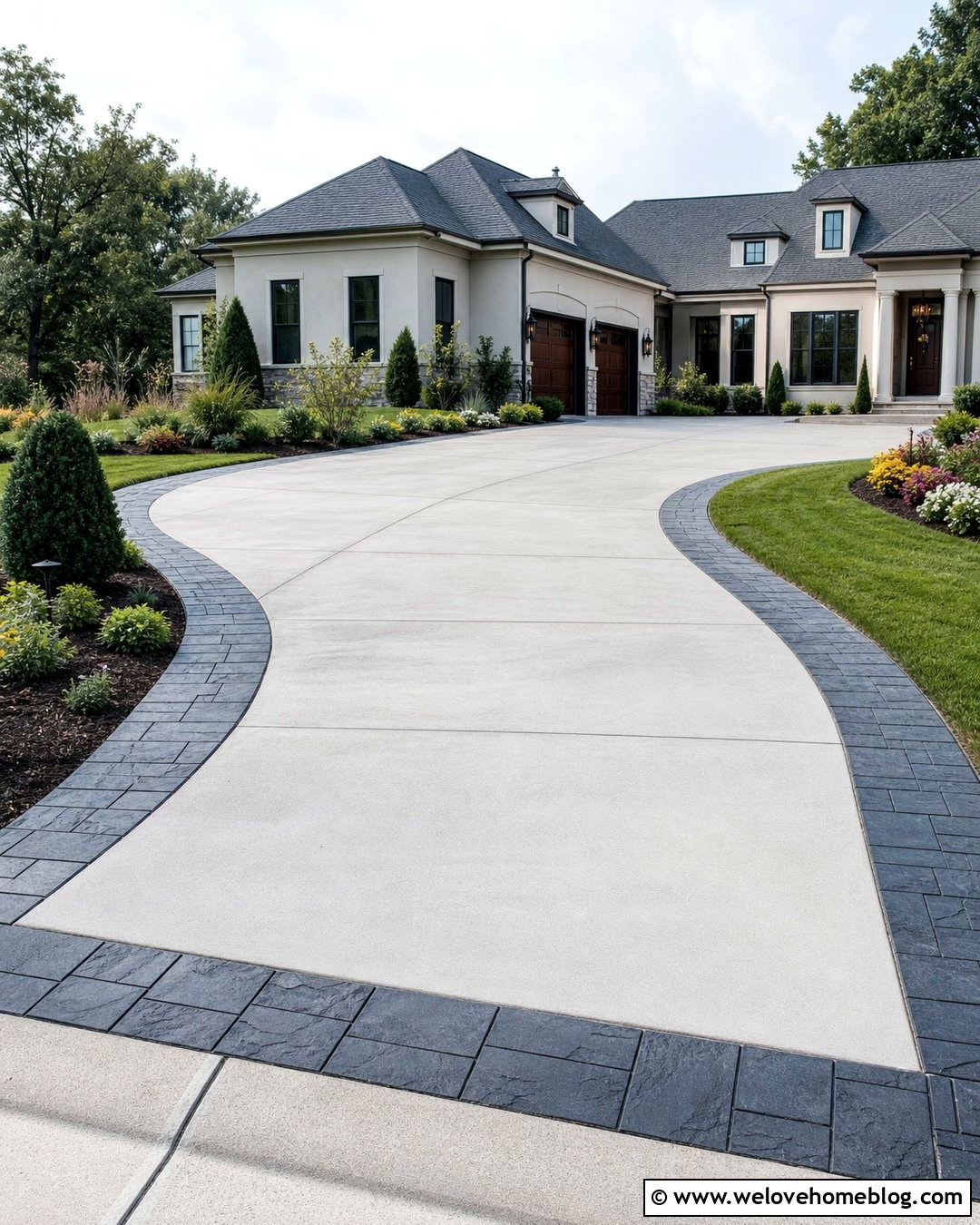
Black brick pavers create a bold curb around a pale driveway without requiring an elaborate layout. Frame a straight white or light-gray concrete driveway with one or two rows of charcoal clay pavers. Carry the dark border across the entrance and near the garage to visually anchor both ends. A flush installation keeps the design sleek, while a slightly raised outer row can contain adjacent mulch. Pair the curb with rectangular planting beds, white flowering shrubs, and a carefully maintained lawn. Repeating black accents on the garage door, house numbers, and exterior lights builds a unified modern palette. This approach works well with white-painted brick homes and minimalist new builds. Use pavers rated for exterior ground contact and choose a surface texture that will not become excessively slick when wet.
14. Driveway Curb With Timber Edging
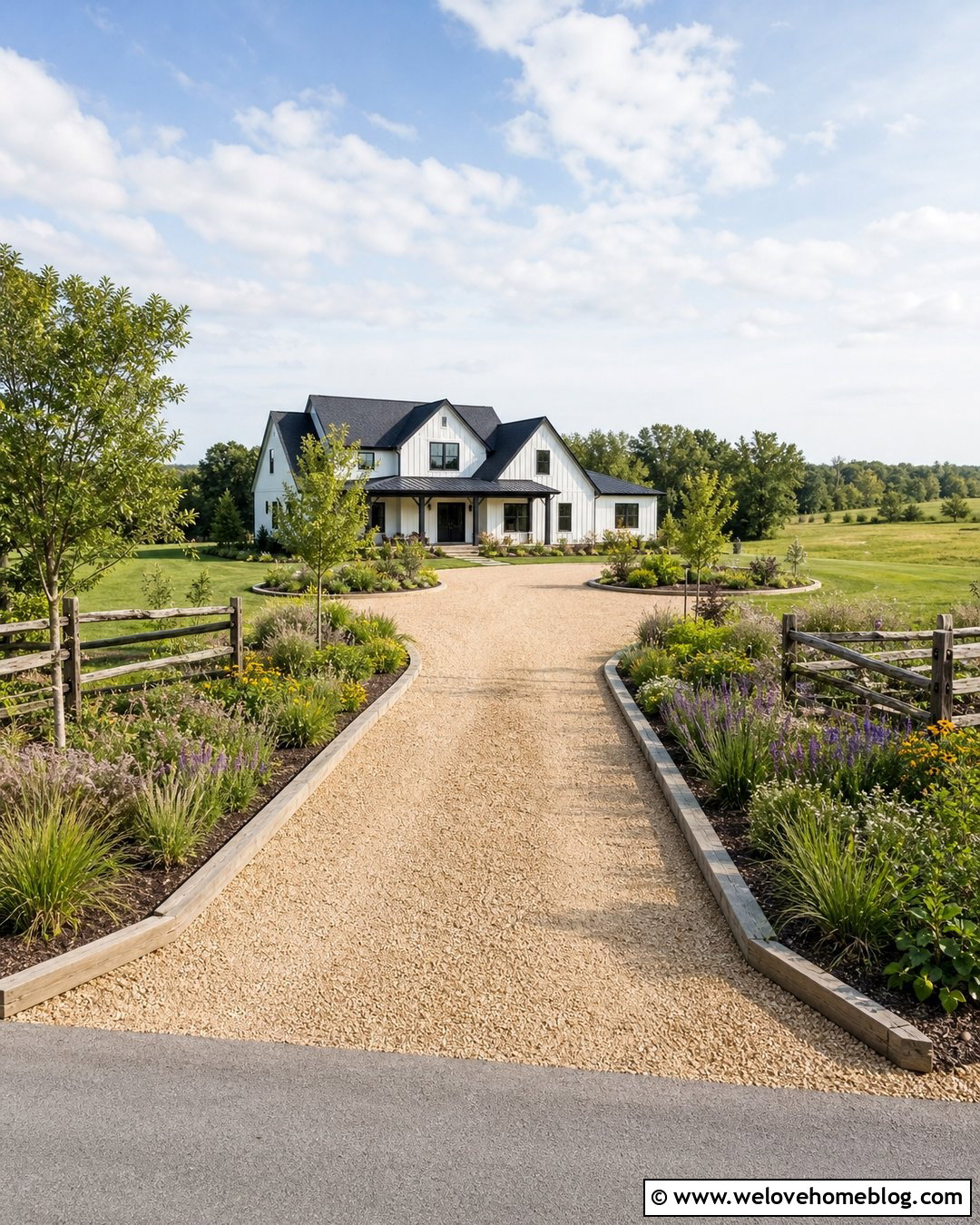
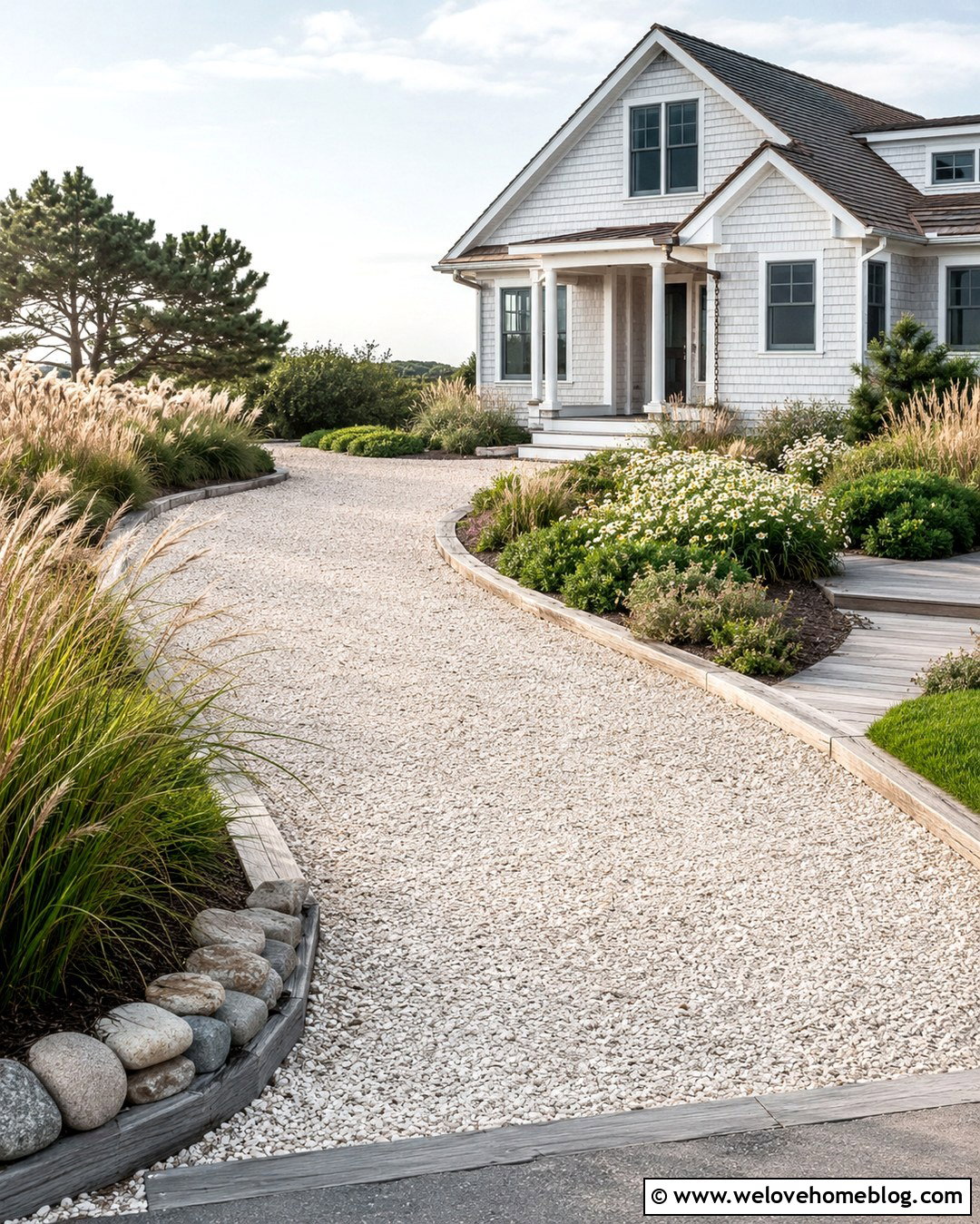
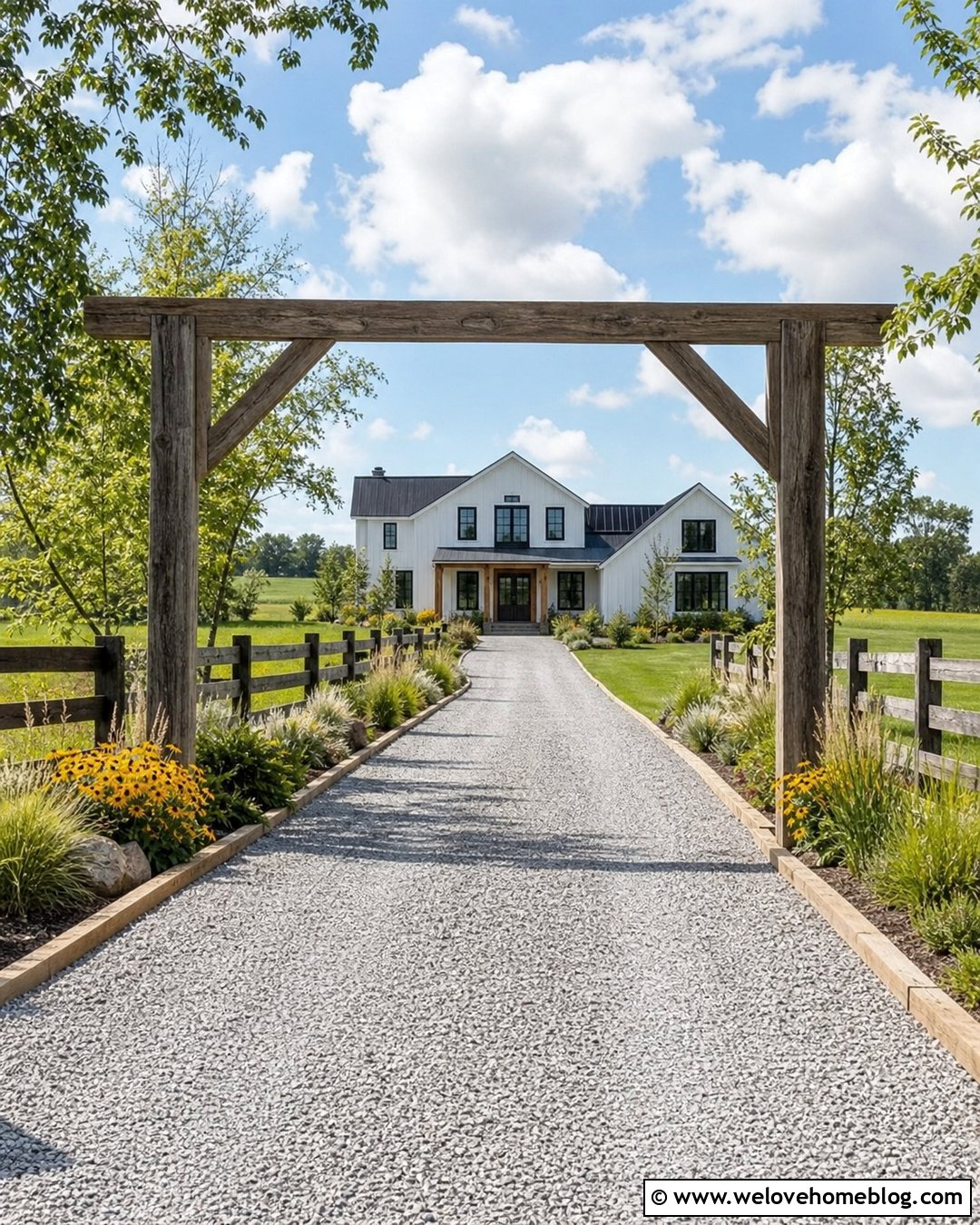
Timber curbing creates a warm, relaxed frame for a rural or budget-conscious driveway. Pair compacted tan crushed stone with pressure-treated landscape timbers installed along a straight driveway leading to a modern farmhouse. The timbers should be firmly anchored and positioned at a consistent height to contain gravel without creating a harsh barrier. At the entrance and walkway crossing, taper or recess the edge for smoother access. Surround the driveway with meadow-style grasses, simple mulched beds, and a few native flowering plants. A wider gravel apron near the garage provides space for turning while preserving the same border treatment. Timber works best when homeowners accept that it may require periodic inspection and eventual replacement. Its natural color and simple form give informal properties a finished edge without making the landscape feel overly formal.

15. Driveway Curb With Decorative Gravel Strip
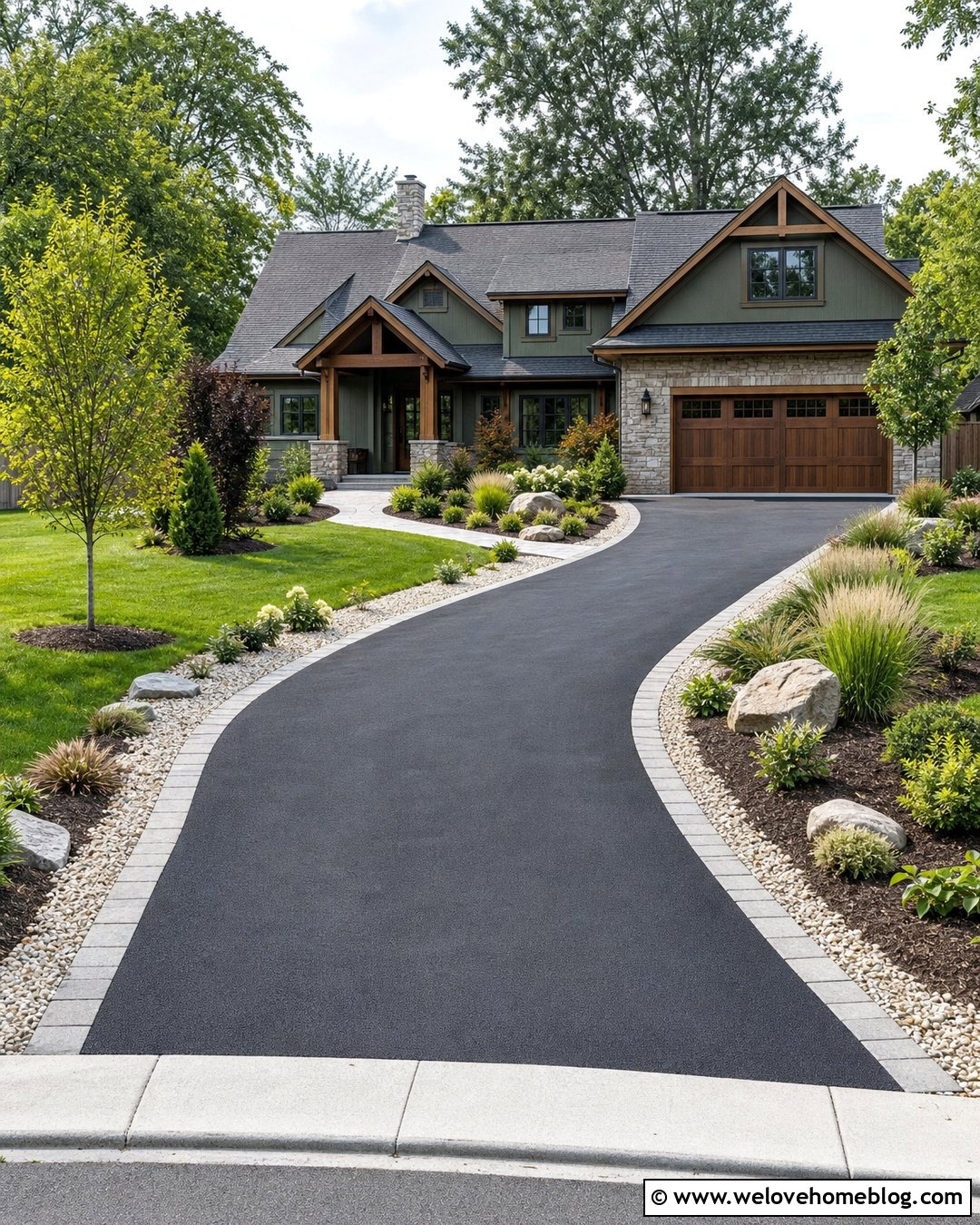
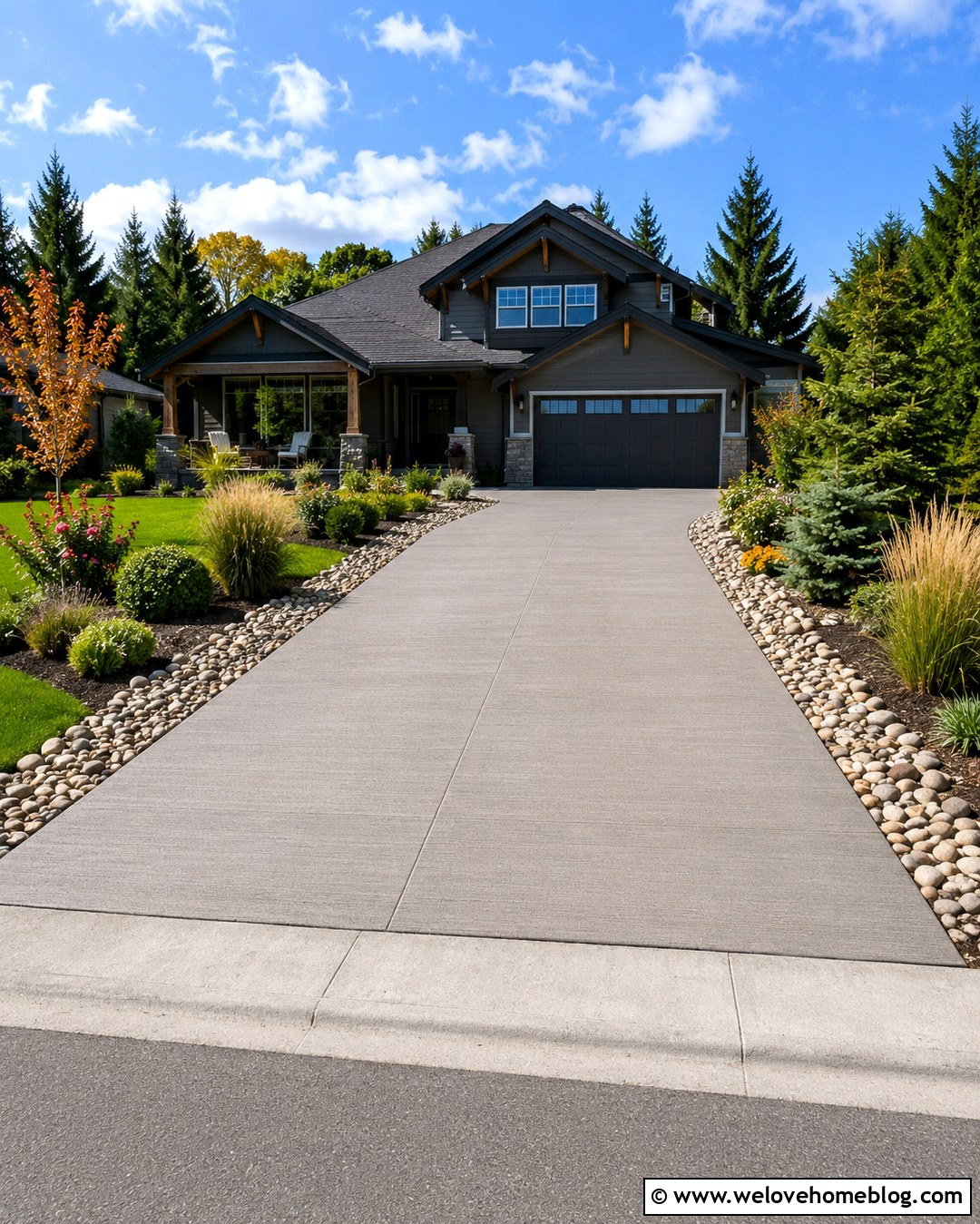
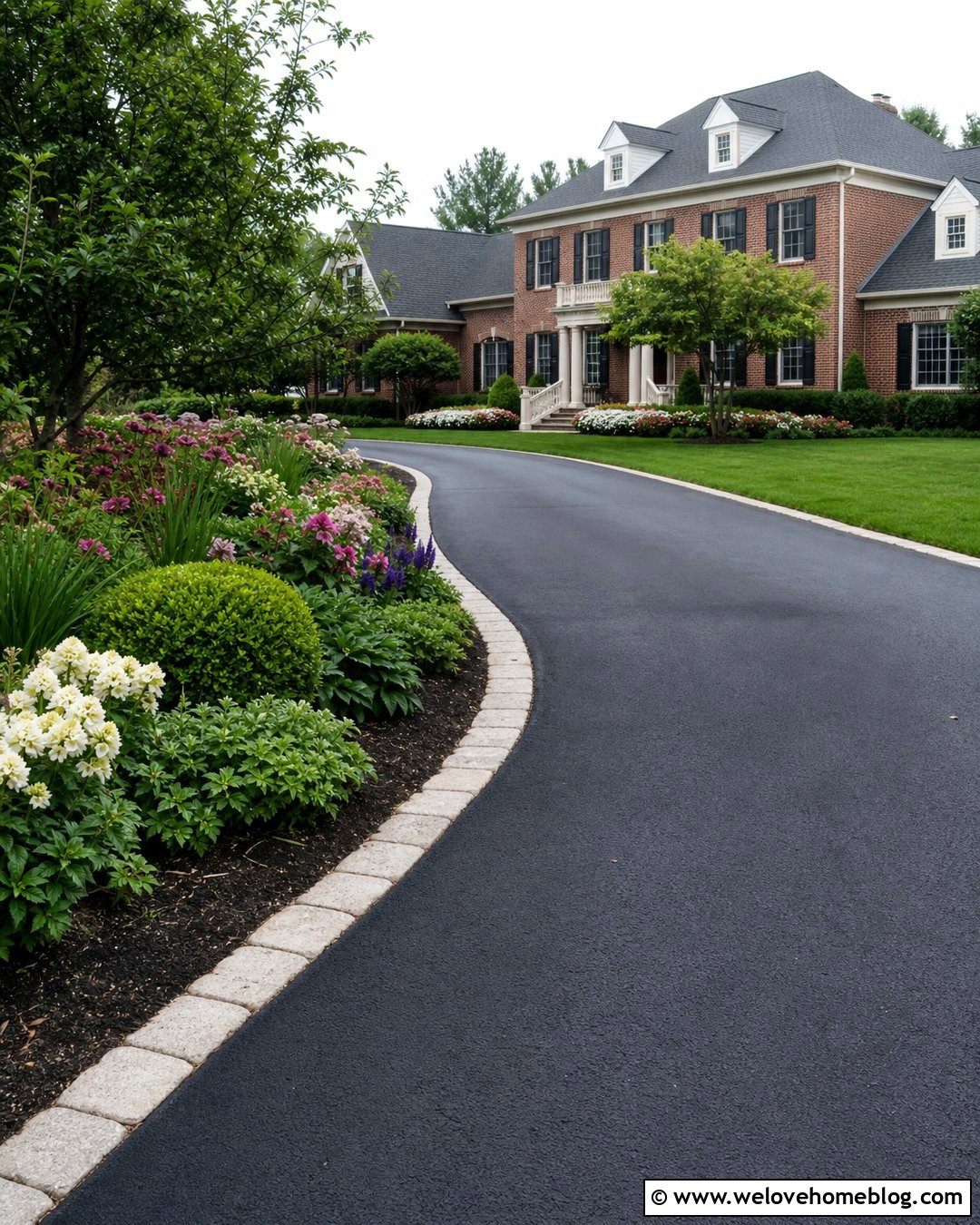
A decorative gravel strip can make a curb feel lighter and help bridge the visual gap between paving and plants. Use black asphalt for the main driveway, add a flush concrete paver curb, and place a narrow band of pale pea gravel beyond it. The curb keeps the two loose and solid surfaces separate, while the gravel band provides breathing room beside shrubs and ornamental grasses. Follow a gentle curve to soften the dark asphalt and lead attention toward a craftsman-style house. Small boulders placed well outside the vehicle clearance area can repeat the gravel’s natural character. Install landscape fabric only where appropriate for the chosen planting plan, and keep the gravel level below the curb. This layered border produces more depth than a single edging material while maintaining a tidy suburban appearance.
16. Driveway Curb With Grass Strip Border
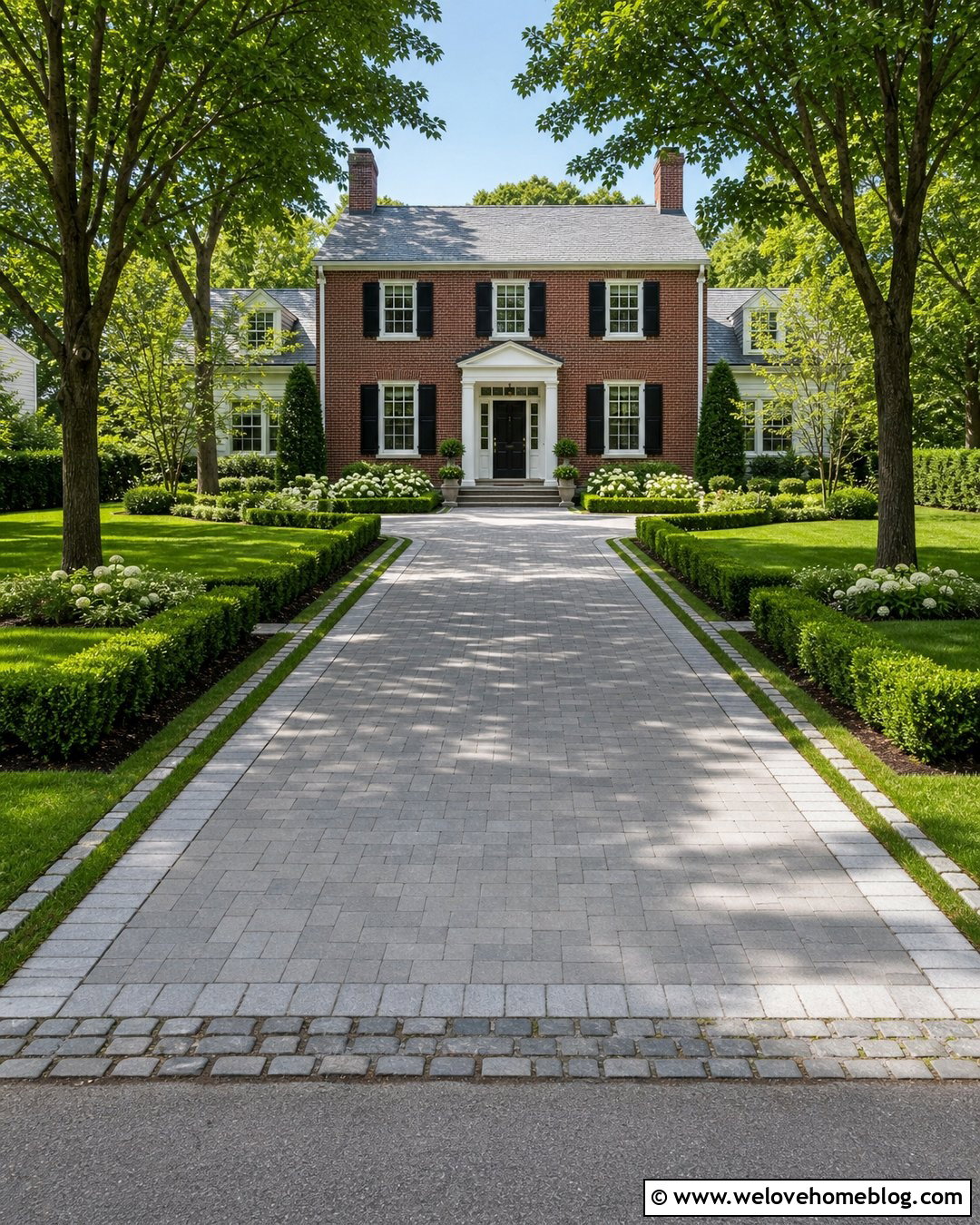
Green strips can soften a large paved area while the curb keeps every surface neatly separated. Create a wide driveway from medium-gray concrete pavers and frame it with a flush cobblestone curb. Beyond the curb, install narrow lawn strips before the main planting beds begin. The layered transition makes the driveway feel less dominant in a broad front yard. Use a straight layout for a Georgian or colonial house, and align the curb with formal hedges or symmetrical trees. The grass strips need enough width for practical mowing and should not become awkward slivers. Where the front walkway intersects the border, continue the cobblestone across the lawn as a coordinated transition. This complete design combines an orderly driveway shape with fresh greenery, making it especially effective for homes with balanced facades and traditional landscaping.
17. Driveway Curb With Drought-Tolerant Landscaping
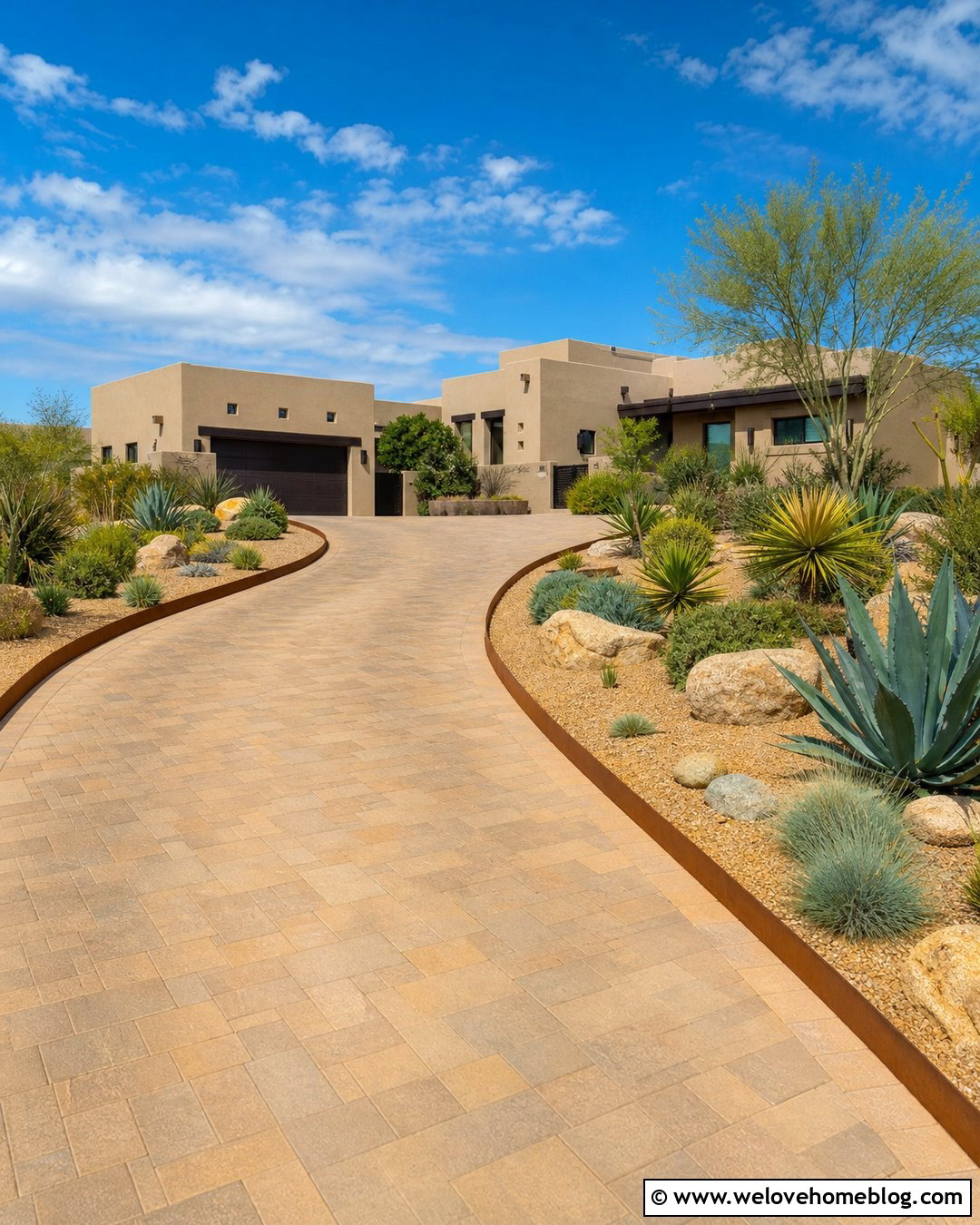
In a dry-climate yard, driveway curbs can separate vehicle paving from water-conscious planting without creating a stark divide. Use warm sand-colored concrete pavers on a gently curved driveway, bordered by a low weathered-steel curb. Fill the surrounding beds with decomposed granite, agave, yucca, blue fescue, and compact native shrubs suited to the region. Leave generous spacing between plants so their mature forms remain visible and do not crowd the driveway. A few larger accent rocks can connect the landscape colors with the paver surface. Xeriscaping and clearly defined borders can help the driveway blend into a lower-water yard. () This complete look complements Southwestern, desert modern, and contemporary stucco homes while keeping the approach crisp, practical, and visually balanced.
18. Driveway Curb With Concrete Planters
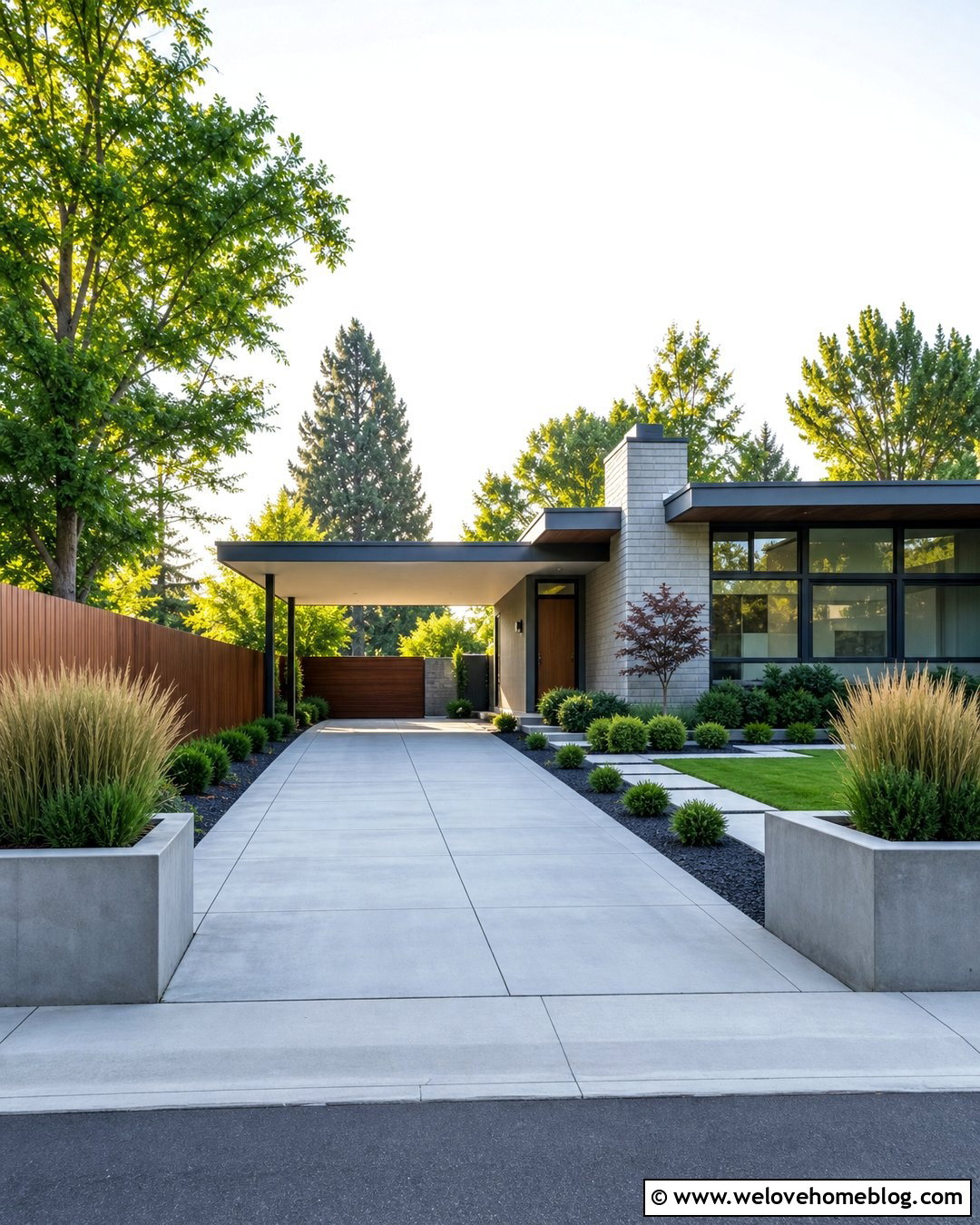
Concrete planters can extend a driveway curb into a stronger architectural entrance. Begin with a smooth gray poured-concrete driveway and create low curbs that widen into rectangular planters near the street. Keep the planters outside required sight triangles and far enough from the driving lane to prevent accidental contact. Fill them with upright grasses, compact evergreen shrubs, or sculptural plants that match the home’s climate and architecture. Continue a thinner curb toward the garage so the entrance elements do not look disconnected. Dark mulch or polished stone provides contrast against the pale concrete. This design is particularly effective for midcentury and contemporary homes with horizontal lines. Adding a simple address plaque to one planter can complete the entrance, provided the numbers remain clearly visible and comply with local requirements.
19. Driveway Curb With Stone Entrance Pillars
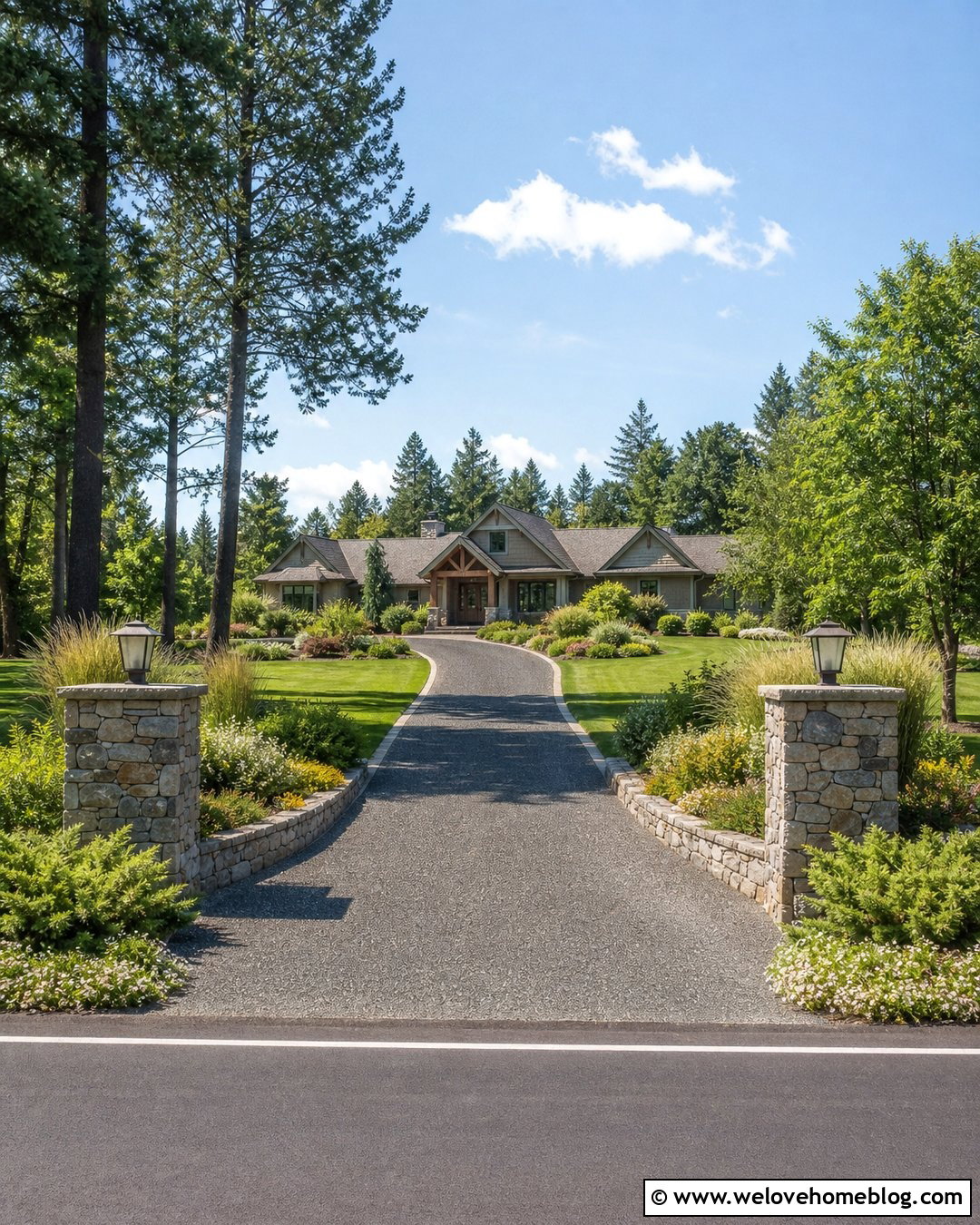
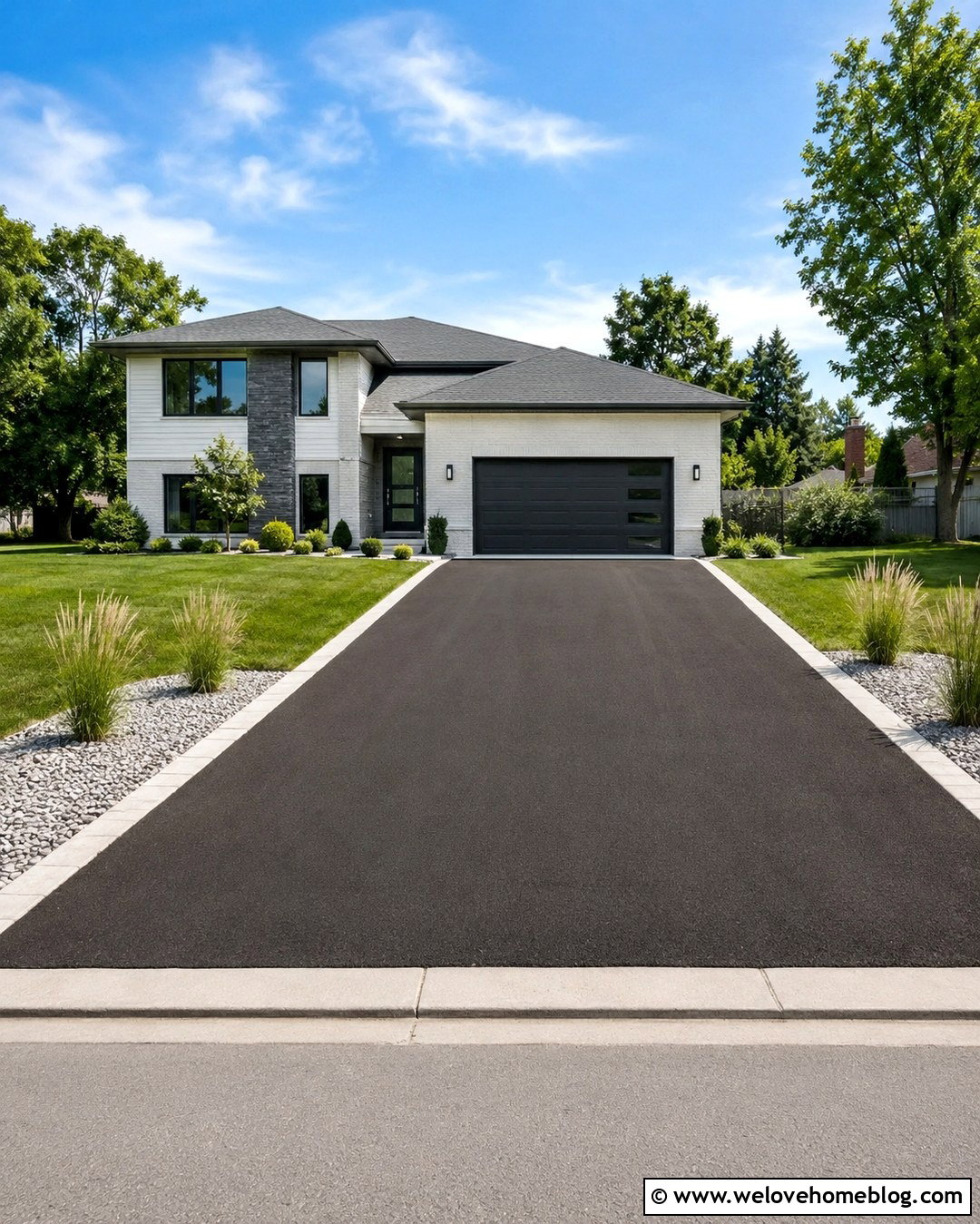
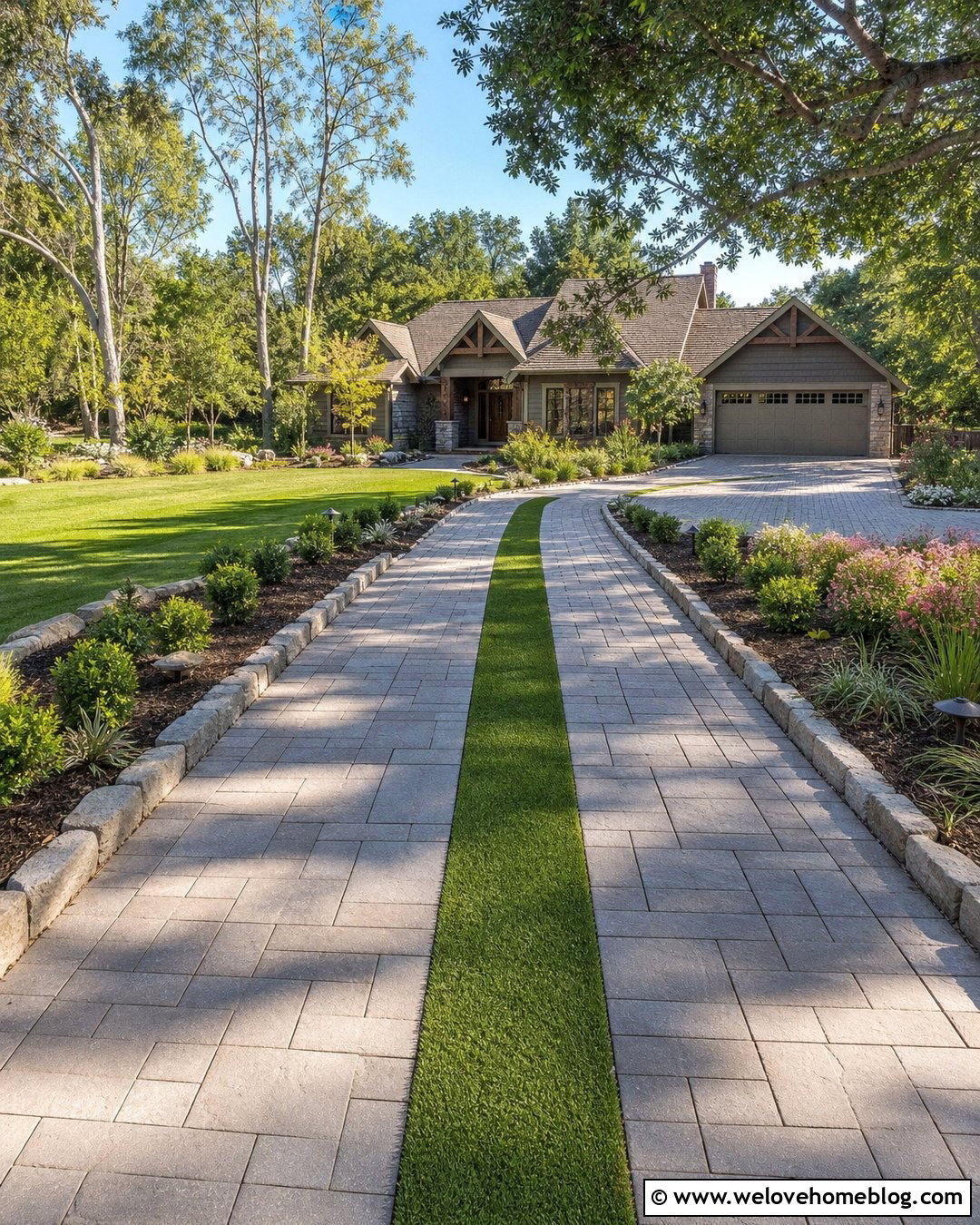
Stone pillars and matching curbs can give a long driveway a clear beginning without relying on a gate. Use dark-gray chip-seal or asphalt for the surface and edge it with low fieldstone curbs that extend inward from two substantial entrance pillars. After several feet, transition the raised stone to a flush border so the rest of the driveway feels open. Set the pillars well beyond normal vehicle clearance and maintain clear views of road traffic. Plant low junipers, ornamental grasses, and flowering ground cover around their bases rather than tall shrubs. The stonework can match a chimney or lower facade on a country, ranch, or craftsman home. This complete arrangement creates a strong sense of arrival while keeping the materials consistent from the street entrance to the house.
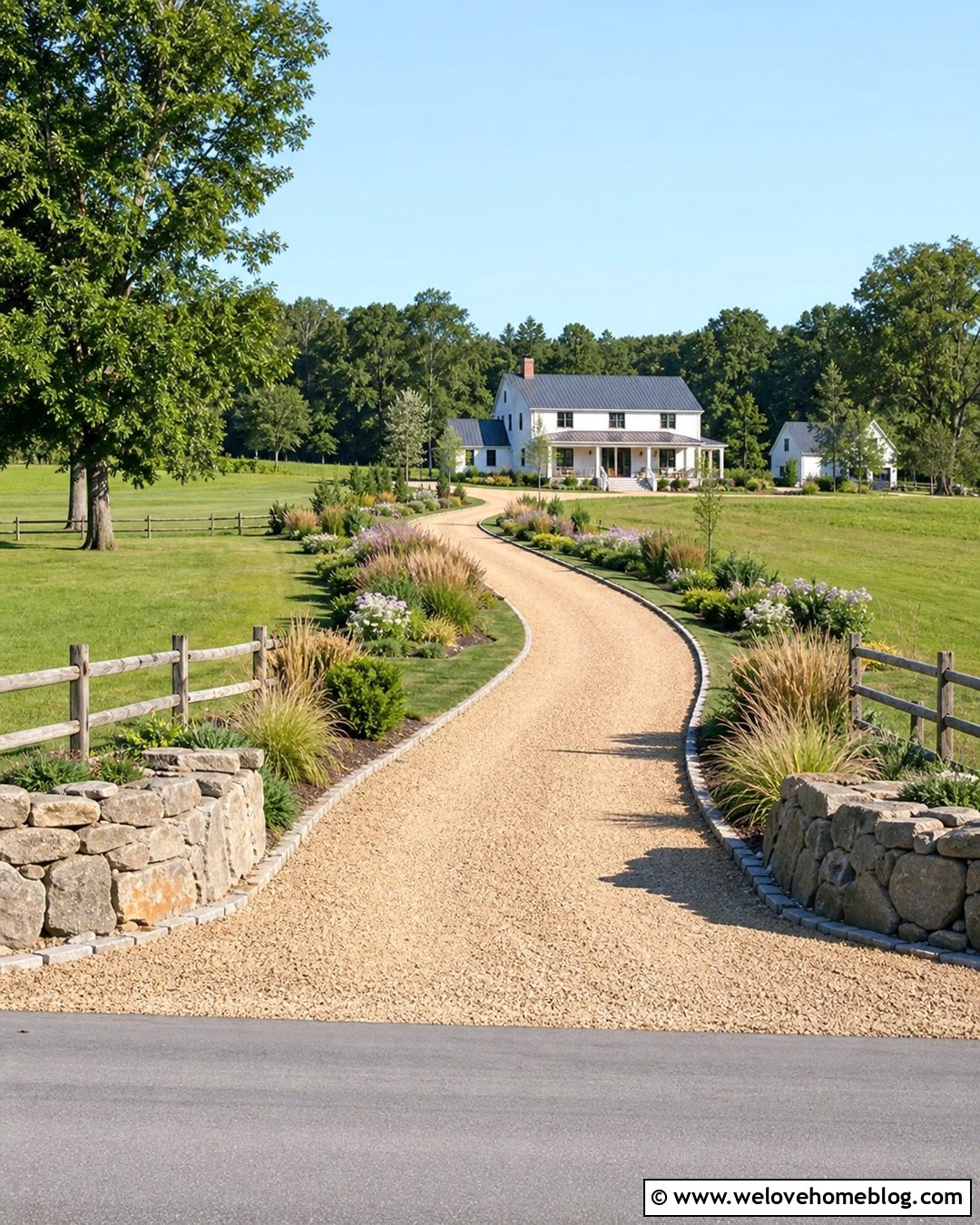
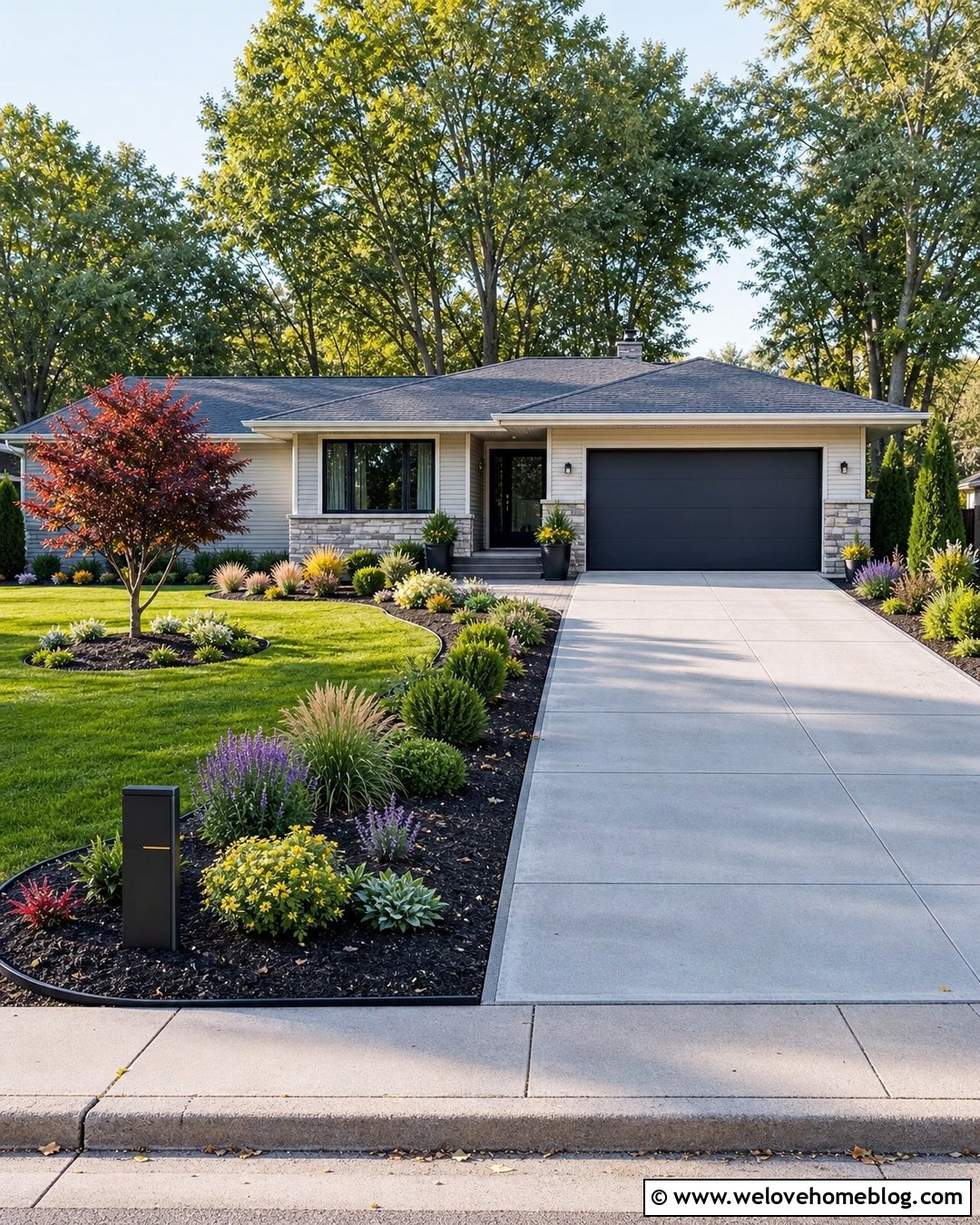
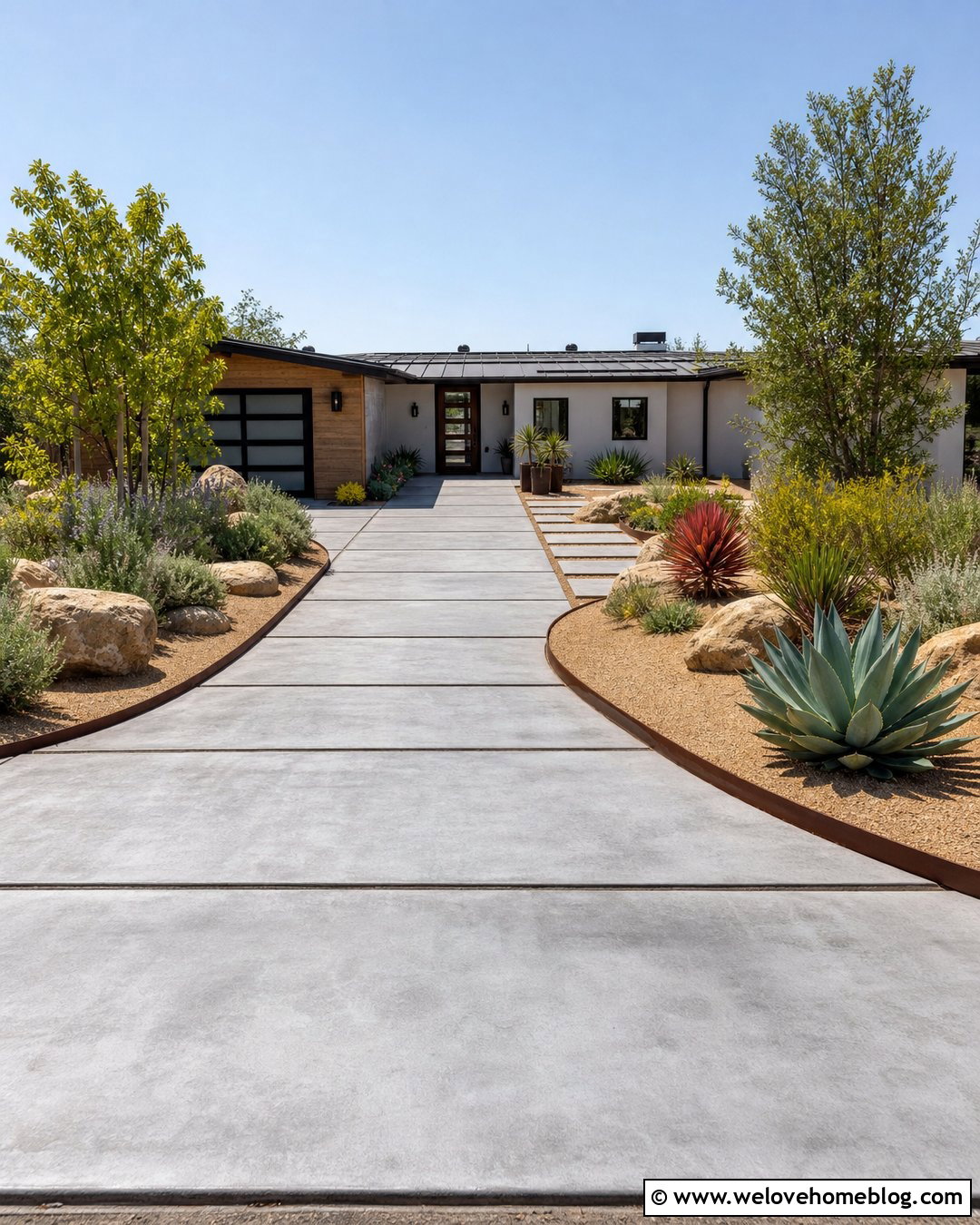
20. Driveway Curb With Permeable Pavers
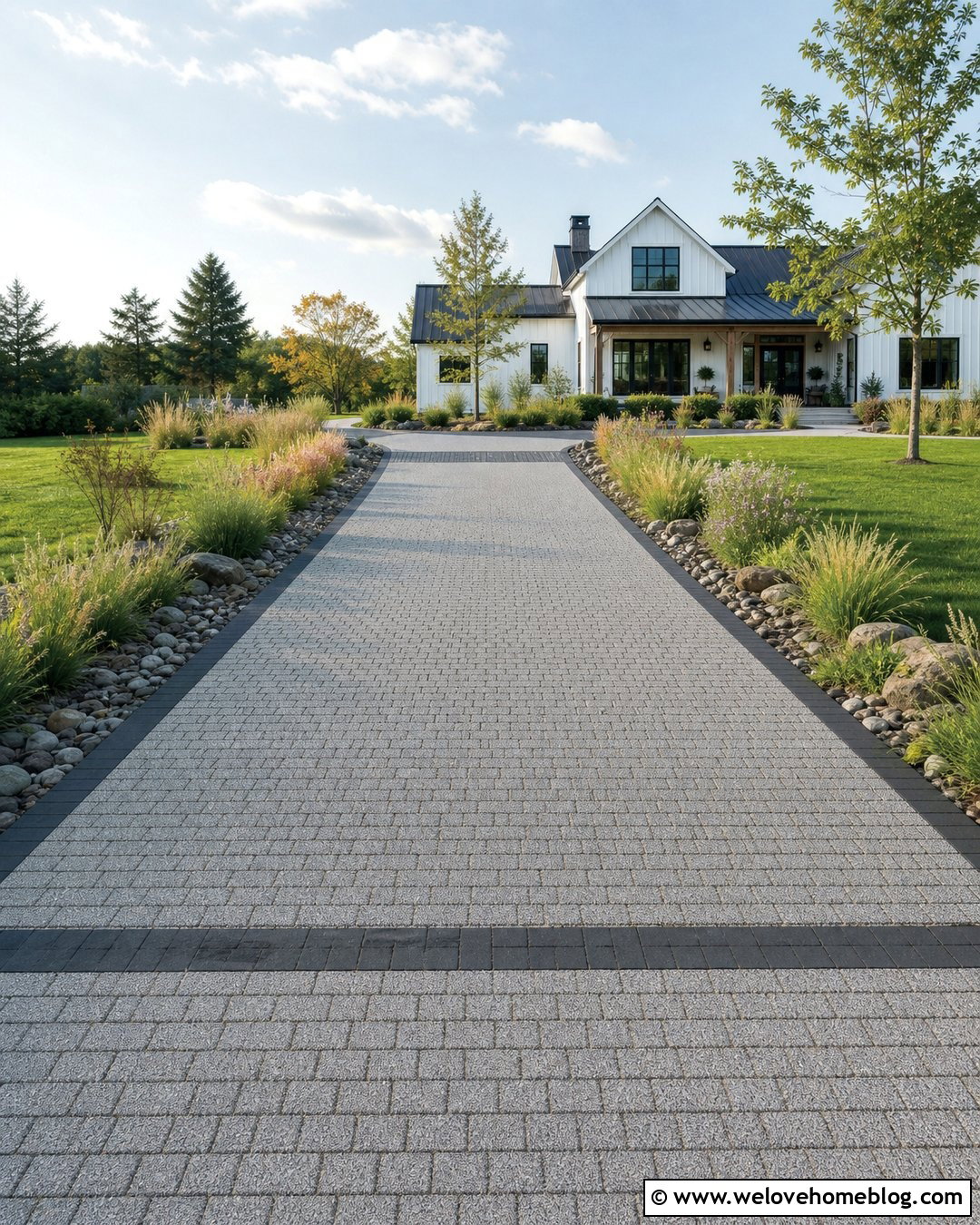
A permeable paver driveway can have a defined curb without losing its textured, landscape-friendly appearance. Choose gray permeable concrete pavers with small aggregate-filled joints and frame them with solid charcoal pavers installed as a structural border. On a straight driveway, the darker curb creates crisp parallel lines leading toward a contemporary farmhouse. Add shallow planted areas with native grasses and rain-tolerant perennials along the lower side of the property. Keep soil and mulch from washing over the curb and clogging the paver joints. At the garage and street, use wider solid-paver bands to make the material transitions look intentional. The complete design combines visible structure, varied texture, and restrained planting. Proper base preparation remains essential, so installation should follow the paver manufacturer’s specifications and applicable local drainage requirements.
Conclusion:
The right driveway curb makes the entire front yard look more deliberate. It can contain gravel, strengthen visual boundaries, protect planting areas, and connect the driveway with the home’s architecture. Before choosing a design, consider the surface material, driveway slope, turning space, drainage pattern, climate, and maintenance needs. Flush paver ribbons support easy access, while raised granite, brick, concrete, and stone curbs provide stronger definition. Landscaping, lighting, pillars, and coordinated walkways can then complete the approach. Always check underground utilities and local rules before making structural or drainage changes. Whether your property is modern, traditional, rural, or compact, these 20 Driveway Curbs Ideas offer practical ways to create a safer, cleaner, and more attractive entrance.

Related posts:

Leave a Reply