
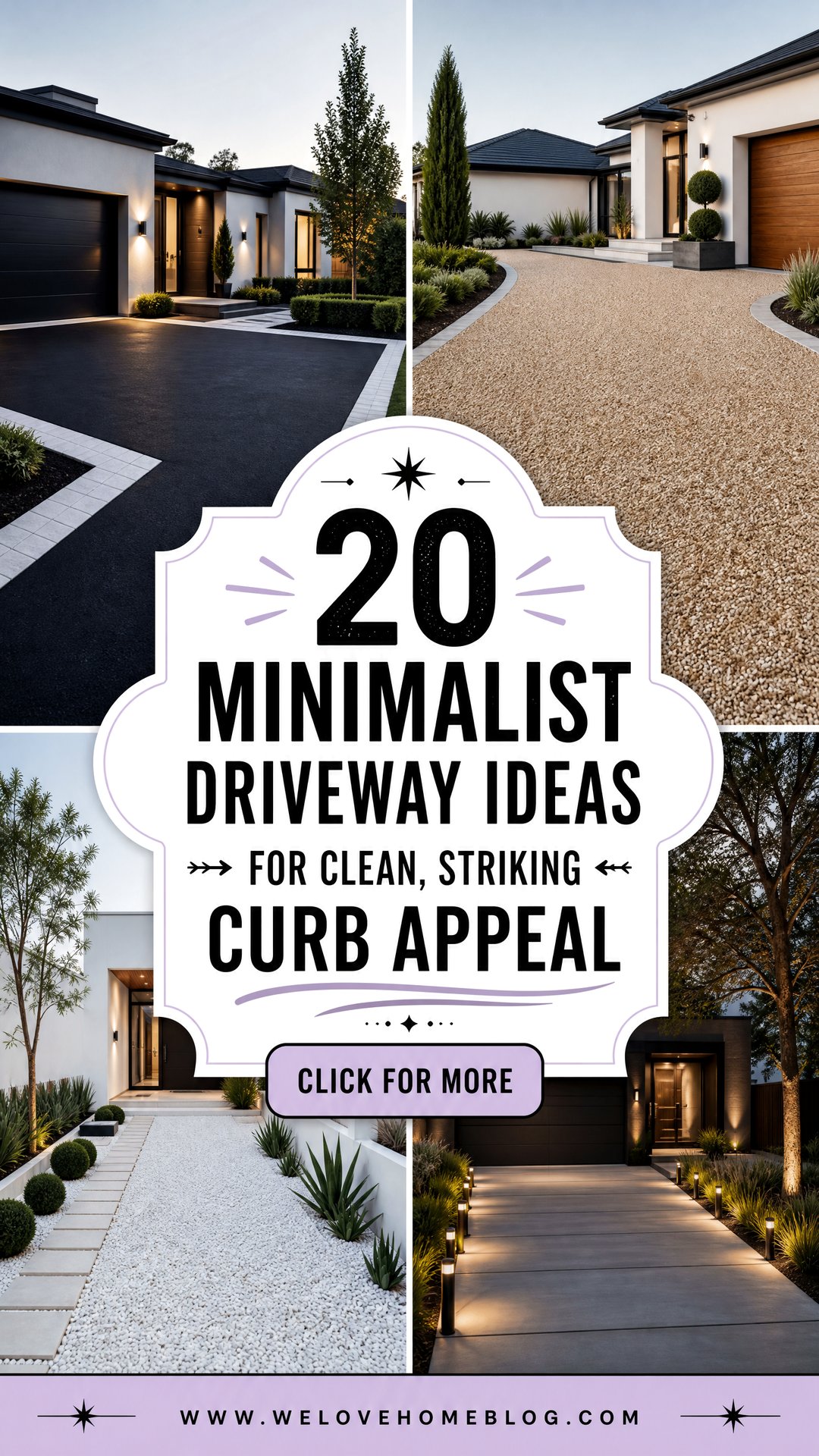
Minimalist driveways use clean lines, restrained colors, and carefully chosen materials to create a calm, uncluttered entrance. The best designs are simple without looking unfinished. They connect the driveway surface, borders, landscaping, walkway, and home exterior into one cohesive view. Large concrete slabs, smooth pavers, compact gravel, permeable grids, and subtle planting can all support this look. Shape matters too. A straight driveway feels orderly, while a gentle curve can soften modern architecture without adding visual noise. Practical details such as drainage, tire-friendly surfaces, and defined edges should guide every choice. Whether your property is compact, suburban, or spacious, the following **20 Minimalist Driveway Ideas** offer complete looks that balance everyday function with polished curb appeal.
1. Large Concrete Slab Driveway
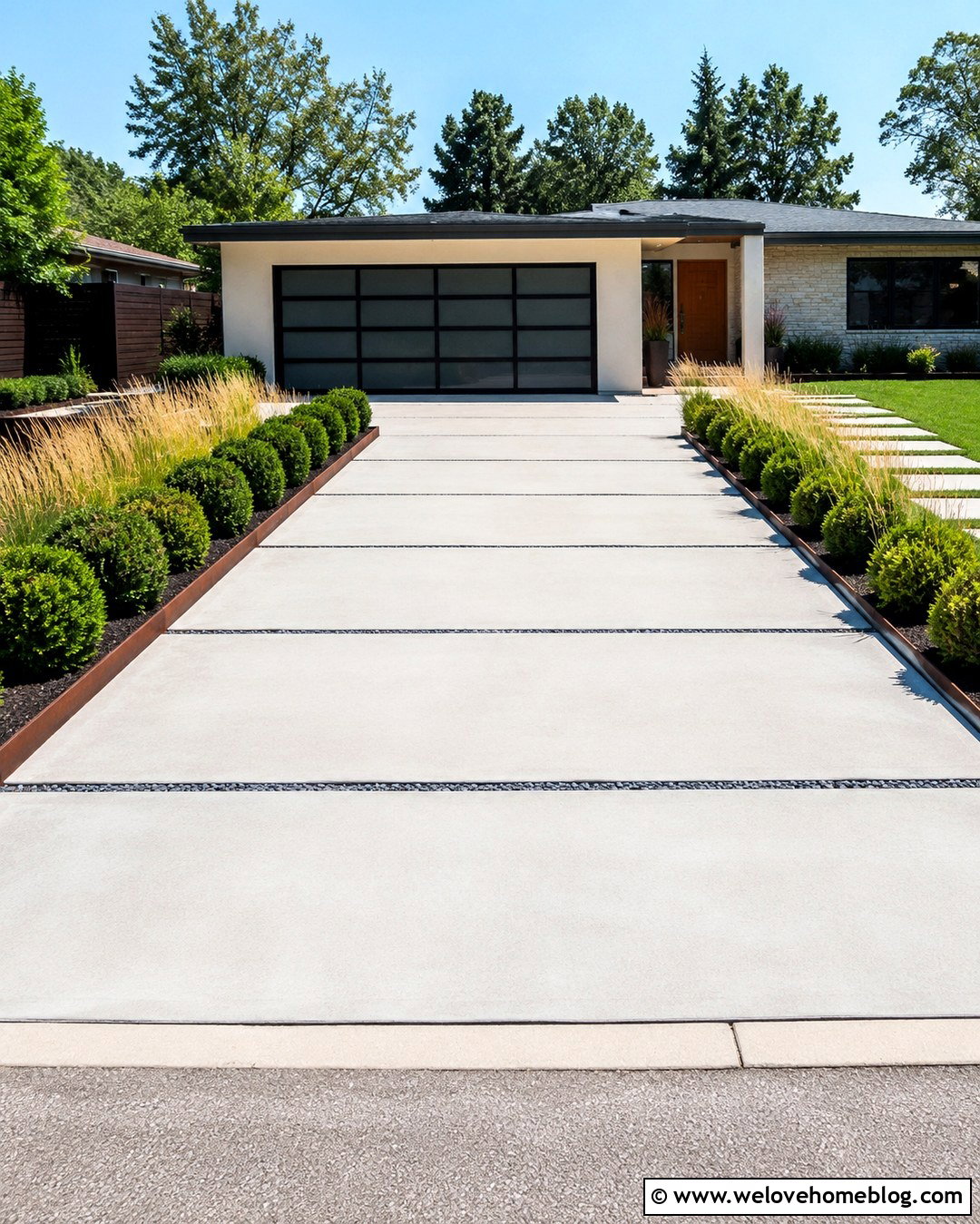
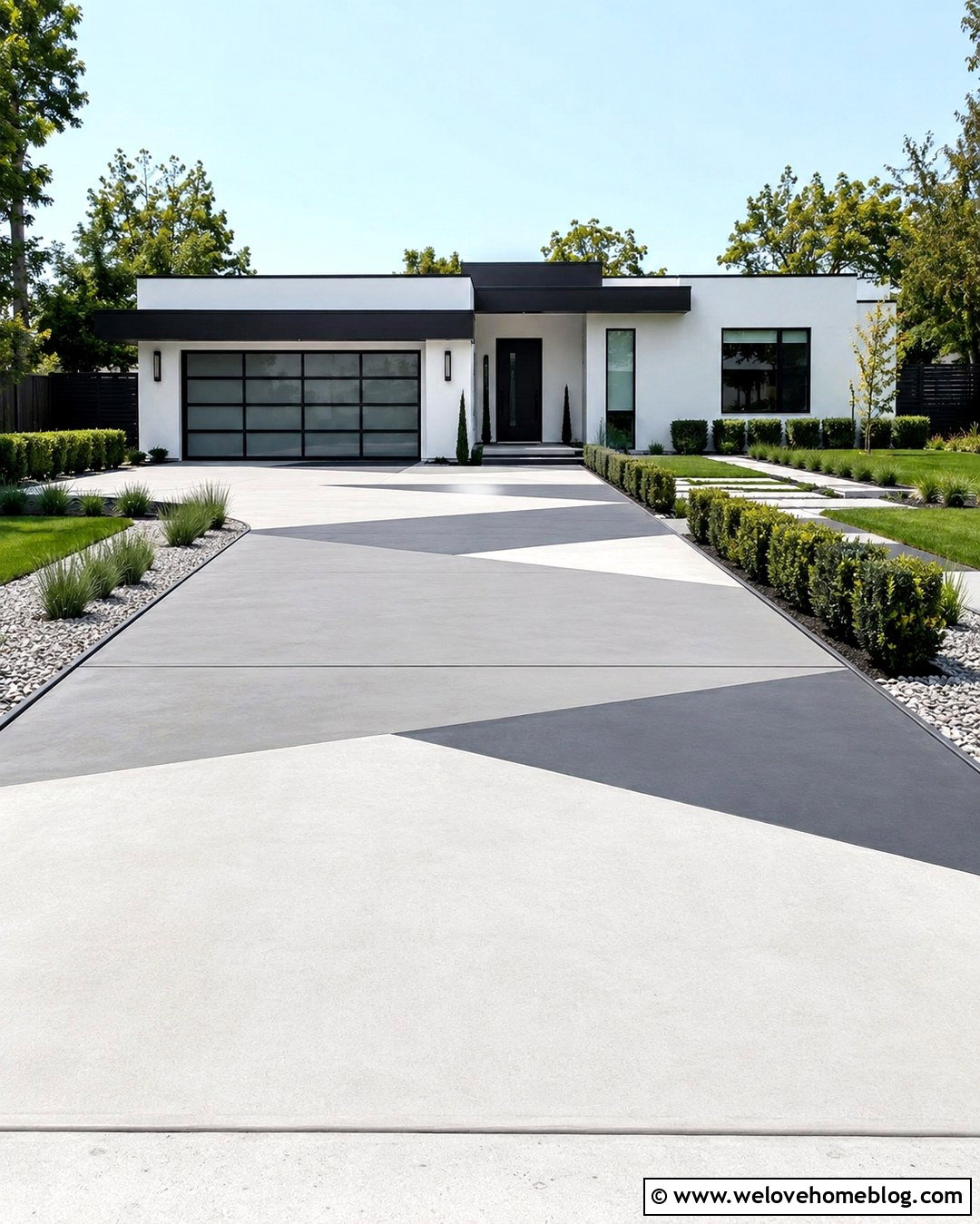
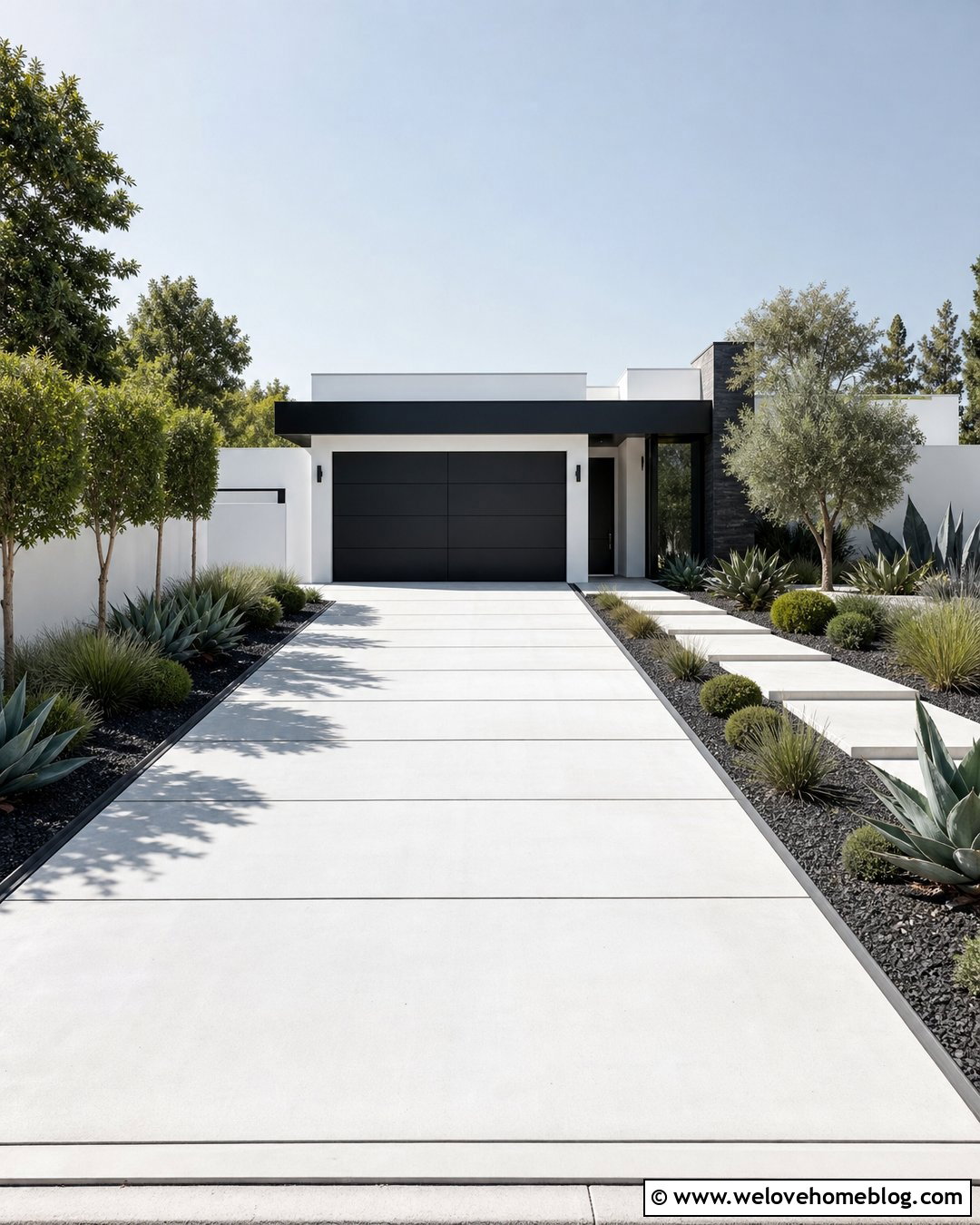
Large rectangular concrete slabs create a strong minimalist driveway with fewer visible joints and a spacious appearance. Choose pale gray poured concrete with a smooth or lightly broomed finish for subtle texture and dependable traction. A straight layout works especially well with modern, mid-century, and contemporary ranch homes. Keep the borders narrow by using black gravel, steel edging, or a low strip of groundcover. Instead of filling the yard with many plant varieties, repeat one or two forms, such as clipped shrubs and upright ornamental grasses. Align the driveway joints with garage doors, windows, or architectural panels whenever possible. This visual connection makes the entire frontage feel intentional. Oversized slabs and restrained gray tones are widely used to give contemporary driveways a clean geometric character. ()
2. Concrete Driveway With Gravel Joints
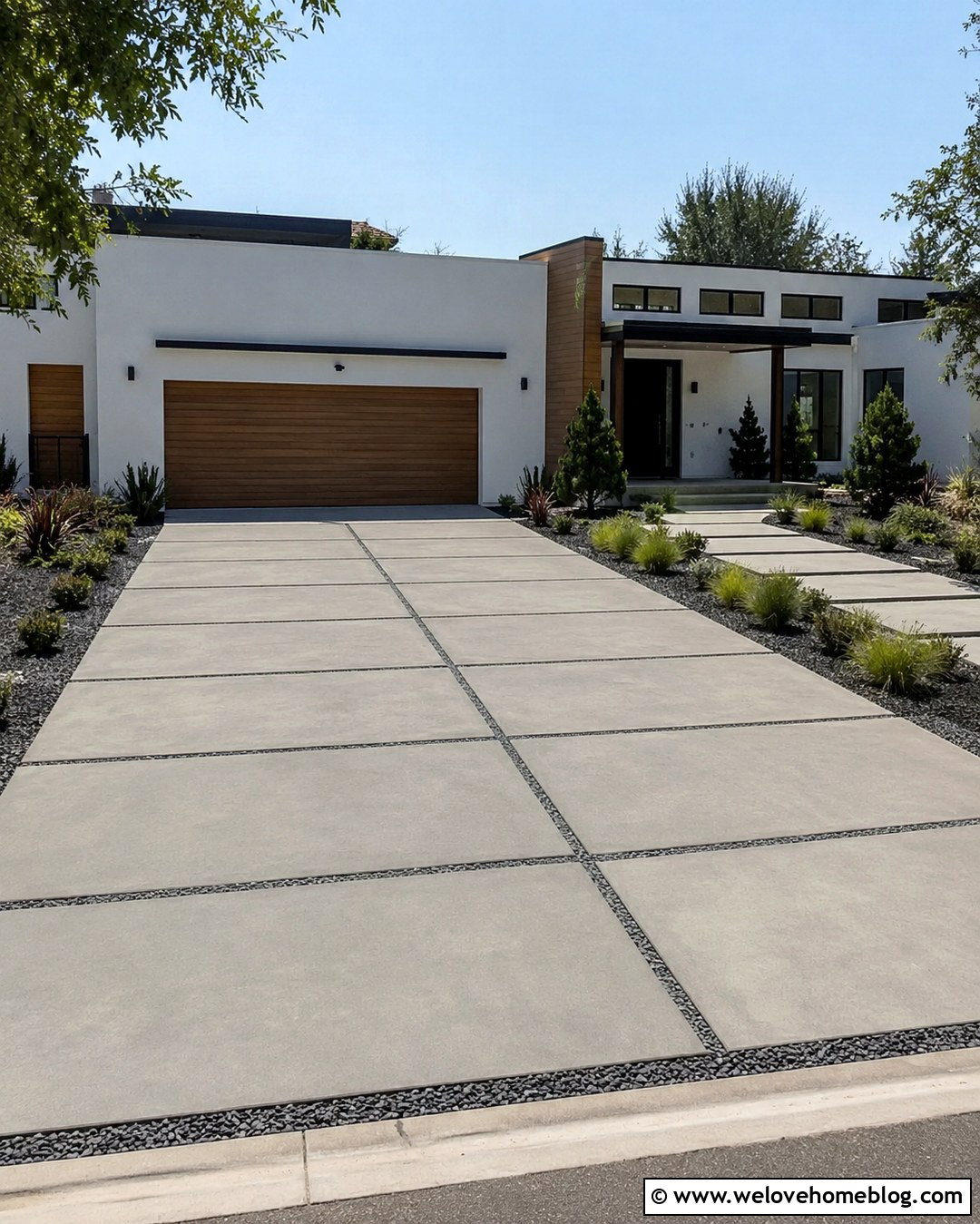
Concrete panels separated by gravel joints offer a softer alternative to one continuous slab. Use warm gray poured concrete rectangles with narrow channels of charcoal crushed stone between them. The gravel highlights the geometry while helping the surface feel connected to nearby planting beds. Keep each channel consistent in width to avoid a busy or improvised appearance. Strong edging and a stable base are important because loose stones can migrate onto the driving surface. Frame the driveway with low mounds of ornamental grass, compact evergreens, and a simple concrete walkway leading toward the front door. This complete look suits a white stucco, wood-clad, or dark contemporary home. Mixed surfaces work best when their colors repeat tones already present on the facade, roof, retaining walls, or entry steps.
3. Concrete Driveway With Grass Strips
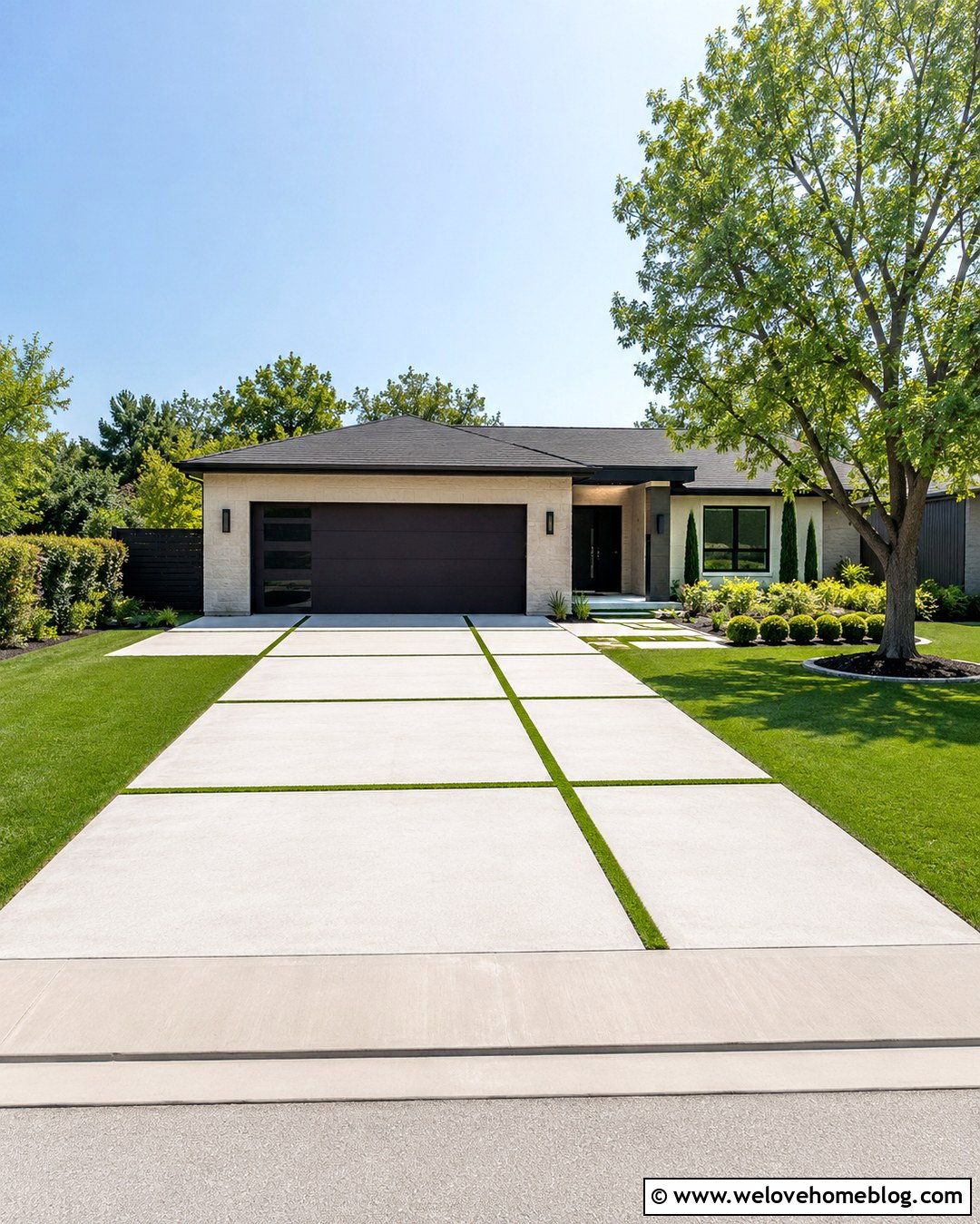
Would you like a driveway that feels greener without losing its crisp structure? Large light gray concrete pads divided by narrow grass strips create a clean, open layout. The greenery breaks up the hard surface and can make a wide driveway appear less dominant. Choose durable turf suited to your climate and provide practical irrigation access. Grass bands require regular trimming, so keep the pattern simple rather than creating numerous small sections. A straight two-track arrangement can work for a compact property, while broad rectangular panels suit a wider approach. Continue the same lawn tone along both sides and add only a few sculptural shrubs near the house. Concrete-and-grass combinations are especially effective when the panel dimensions echo the home’s windows, siding lines, or garage door sections. ()
4. Exposed Aggregate Driveway
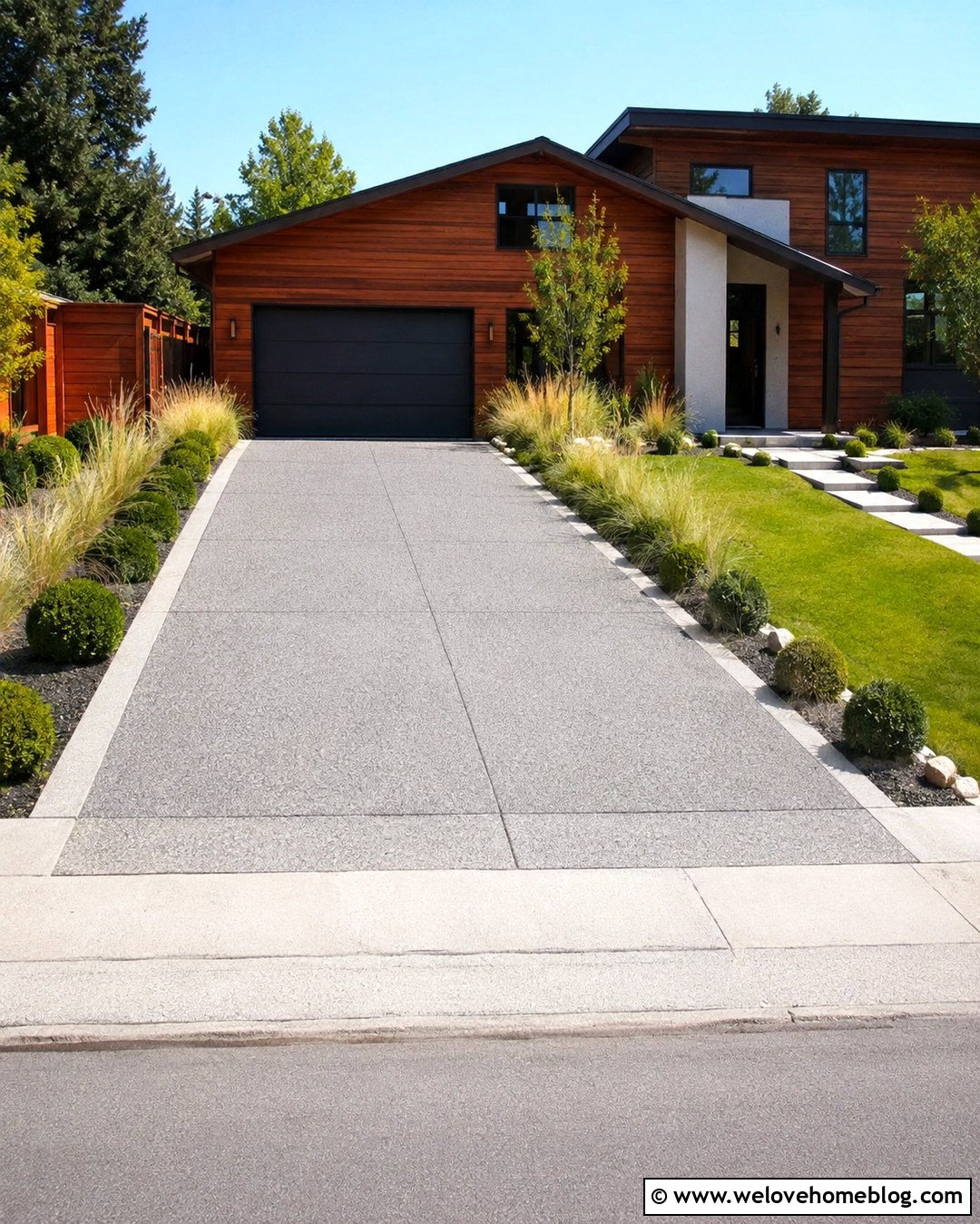
Exposed aggregate gives a minimalist driveway useful texture without relying on decorative patterns or several competing colors. Select a fine aggregate blend in soft gray, tan, or muted charcoal, depending on the house facade. A straight driveway with a narrow poured-concrete border will keep the pebble-like finish neatly contained. The border can also create a smoother transition at the garage and public sidewalk. For landscaping, repeat rounded shrubs or low grasses in evenly spaced groups rather than filling every open area. The textured surface looks particularly balanced beside smooth stucco, vertical wood siding, or simple brickwork. Ask to view a finished sample before selecting the mix because aggregate size and color can strongly influence the final appearance. A consistent finish allows the driveway, architecture, and restrained planting to work together. ()
5. Light Gray Paver Driveway
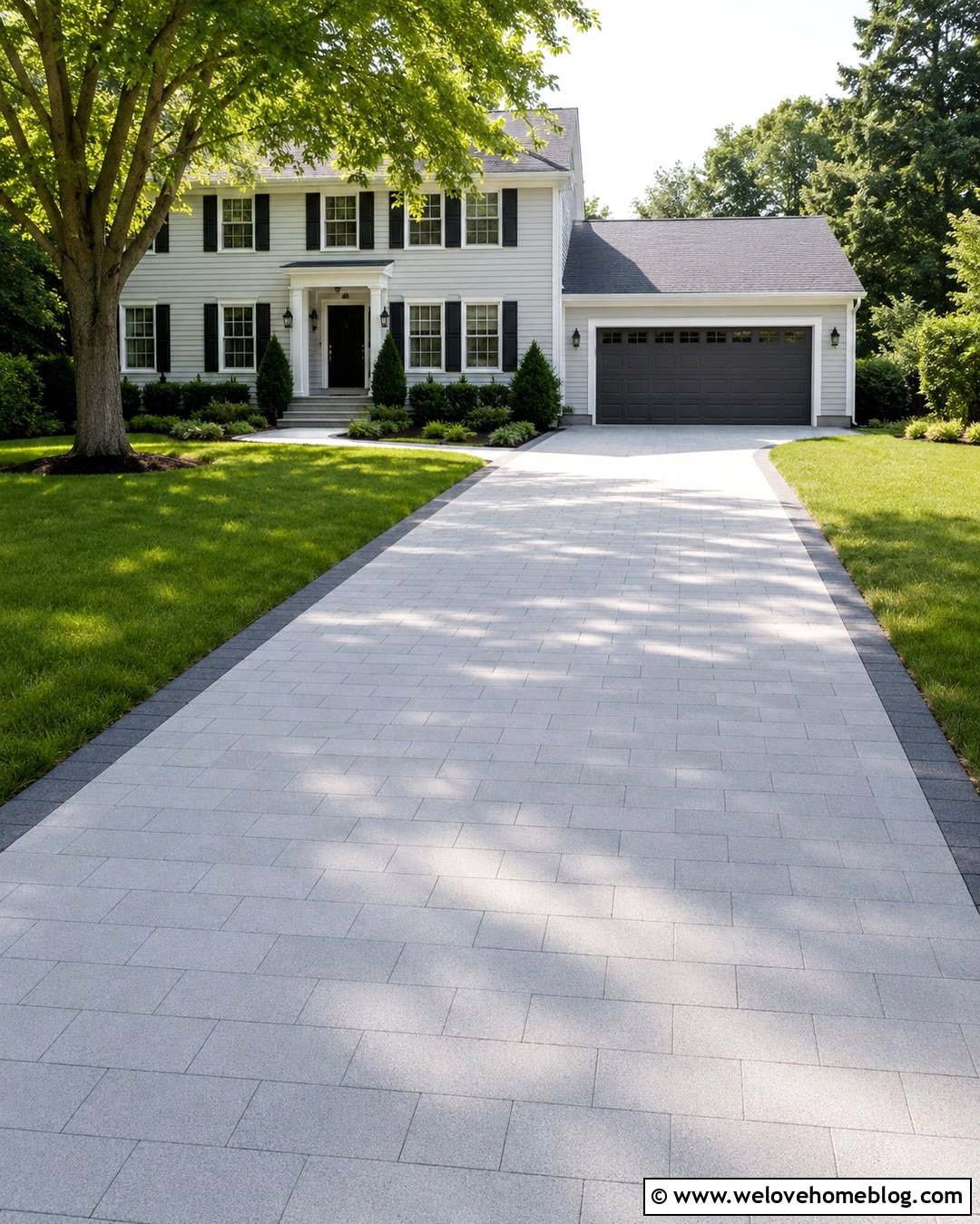
Soft gray concrete pavers can create a refined driveway that still feels welcoming. Choose large rectangular units with tight joints and install them in a simple running bond or stacked pattern. Avoid mixing several paver sizes if you want the most streamlined result. A thin charcoal border can define the perimeter without looking ornamental. Continue one of the driveway pavers into the front walkway to visually connect parking and pedestrian areas. Beside the surface, use broad lawn panels, low evergreen shrubs, and one well-positioned shade tree. This combination suits a contemporary colonial, updated ranch, or modern farmhouse with pale siding. Keep the paver color slightly different from the facade so the entrance does not appear washed out. Clean geometry, careful alignment, and limited color variation make this design feel calm rather than plain.
6. Charcoal Paver Driveway
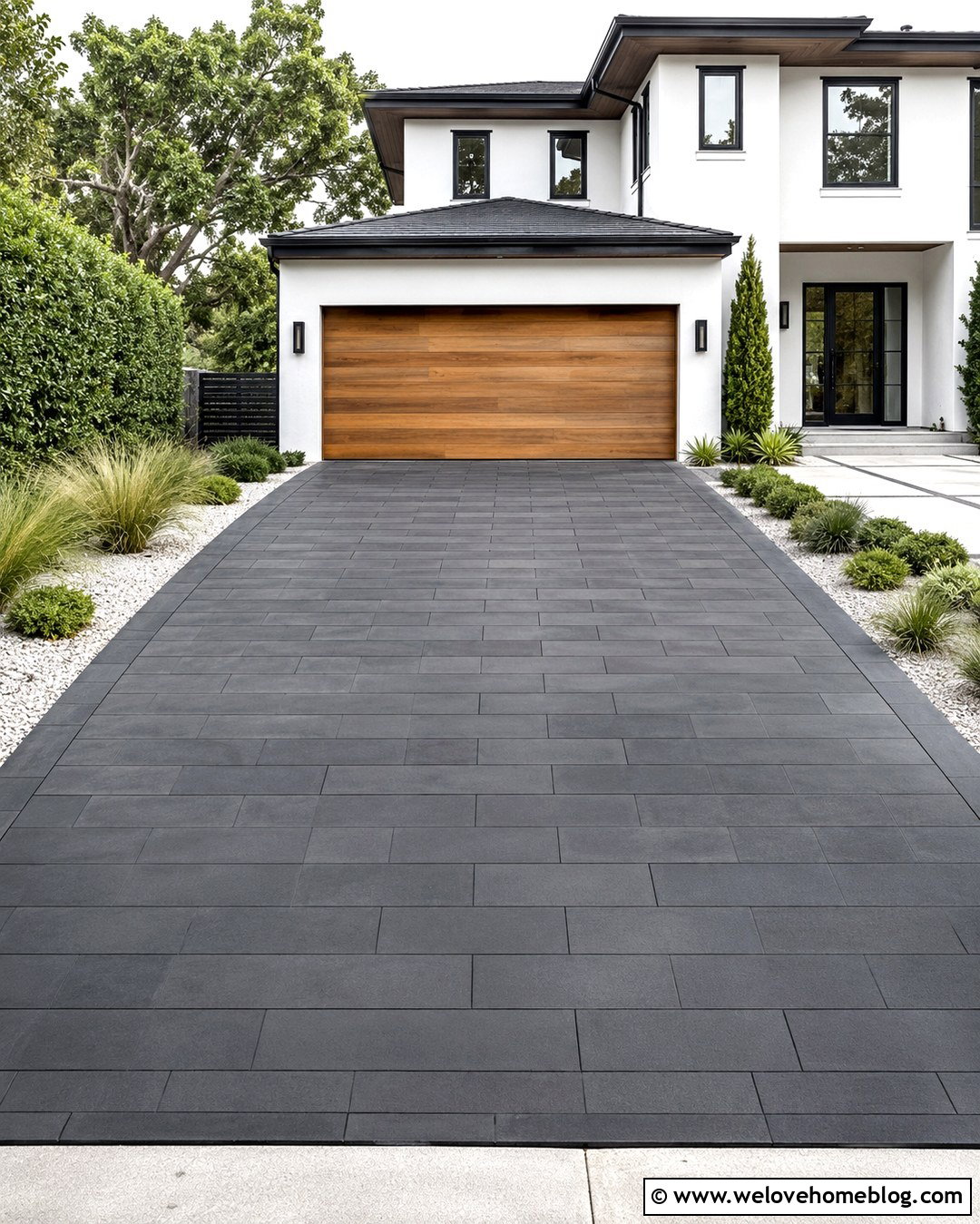
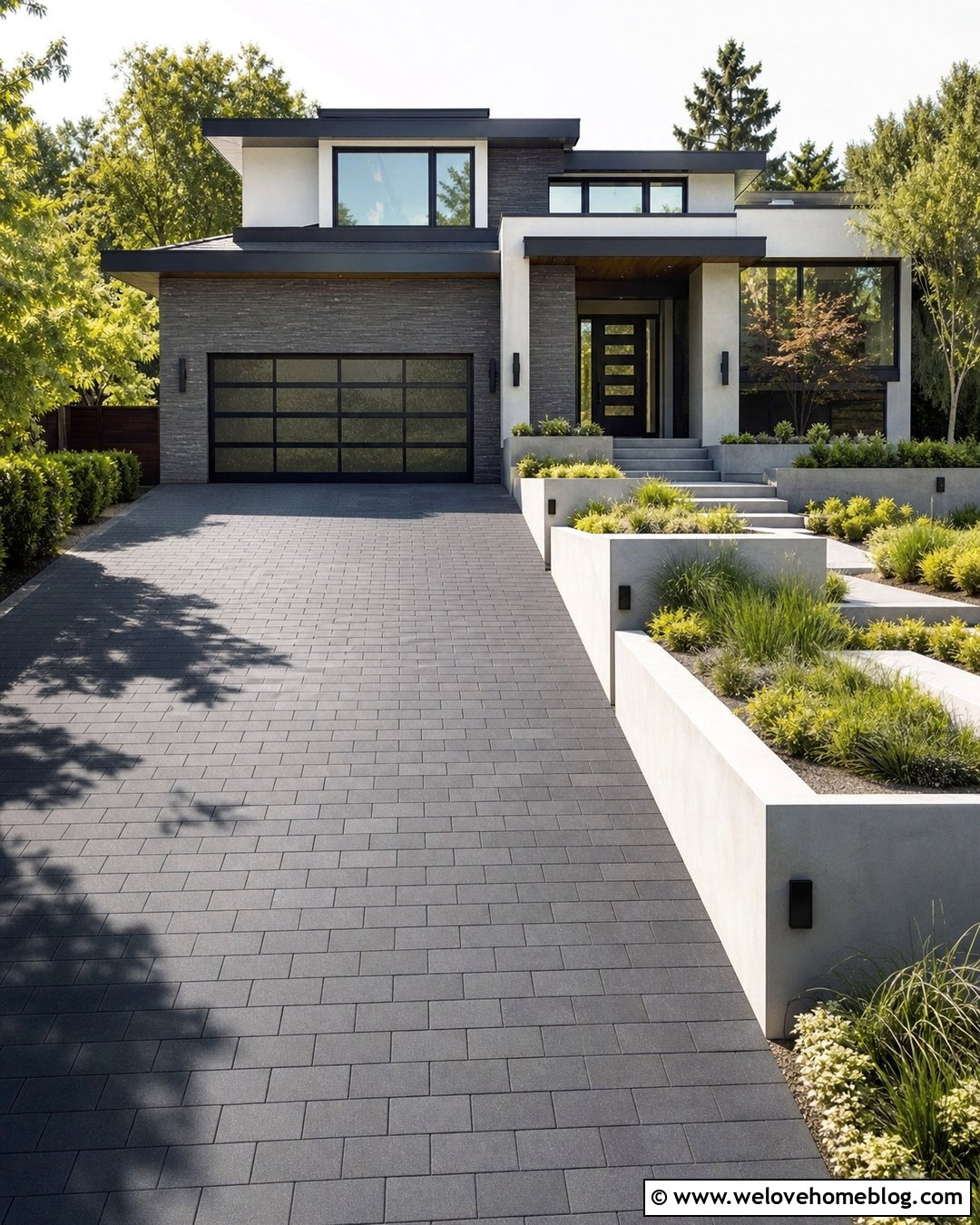
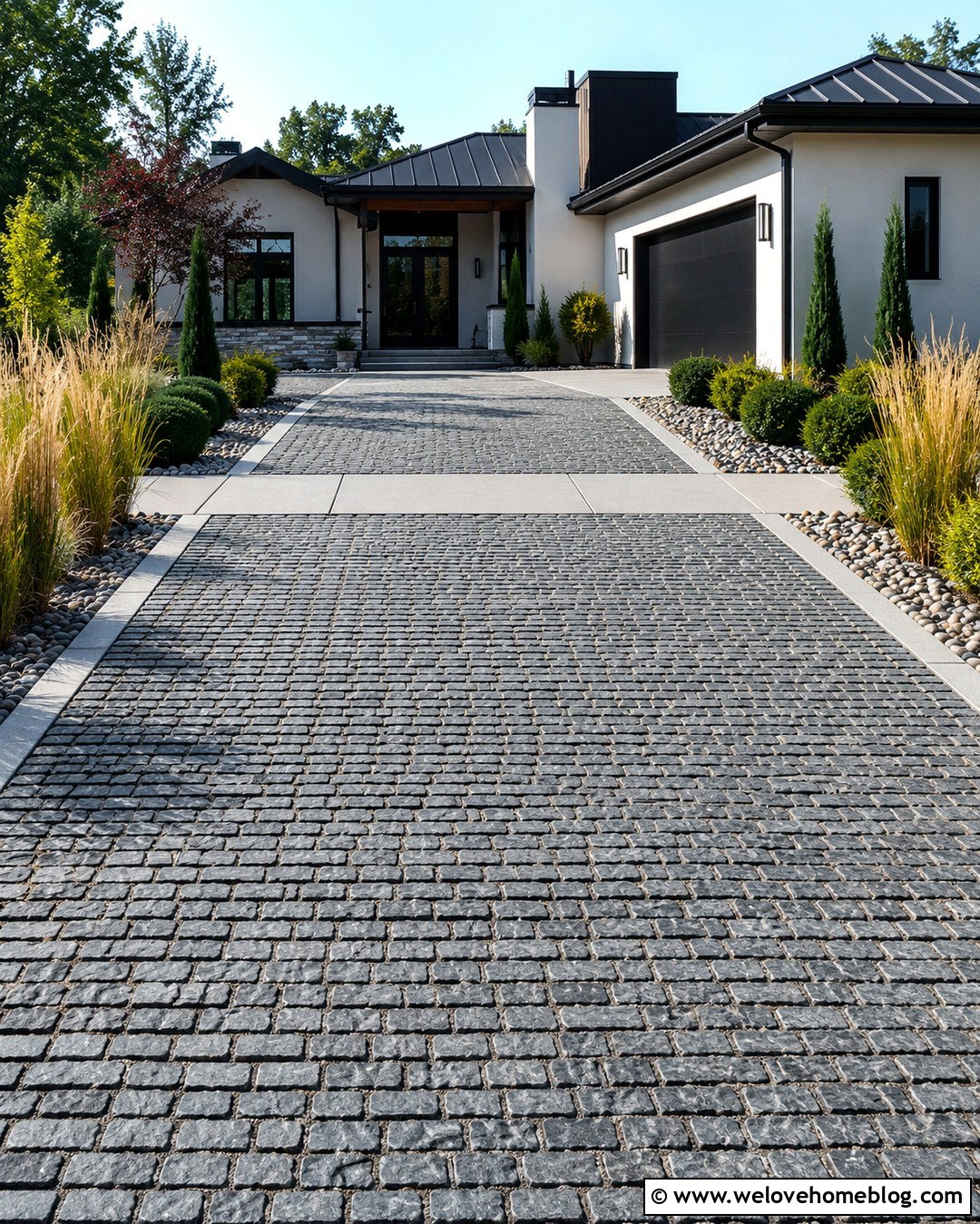
A charcoal paver driveway adds contrast to a light-colored house while maintaining a simple material palette. Select smooth rectangular concrete pavers in one deep gray tone, then arrange them in a linear pattern that points toward the garage. This directional layout can make a short driveway feel longer and more orderly. Use matching charcoal edging instead of a contrasting decorative border. To prevent the frontage from becoming visually heavy, surround the dark surface with bright green lawn, pale gravel beds, and airy grasses. A concrete walkway or light stone entry step can provide a balanced transition to the house. Charcoal pavers look especially sharp with white siding, pale brick, or natural cedar accents. Before committing, compare dry and wet samples because dark paving may show noticeable changes in color after rain.
7. Permeable Grid Driveway
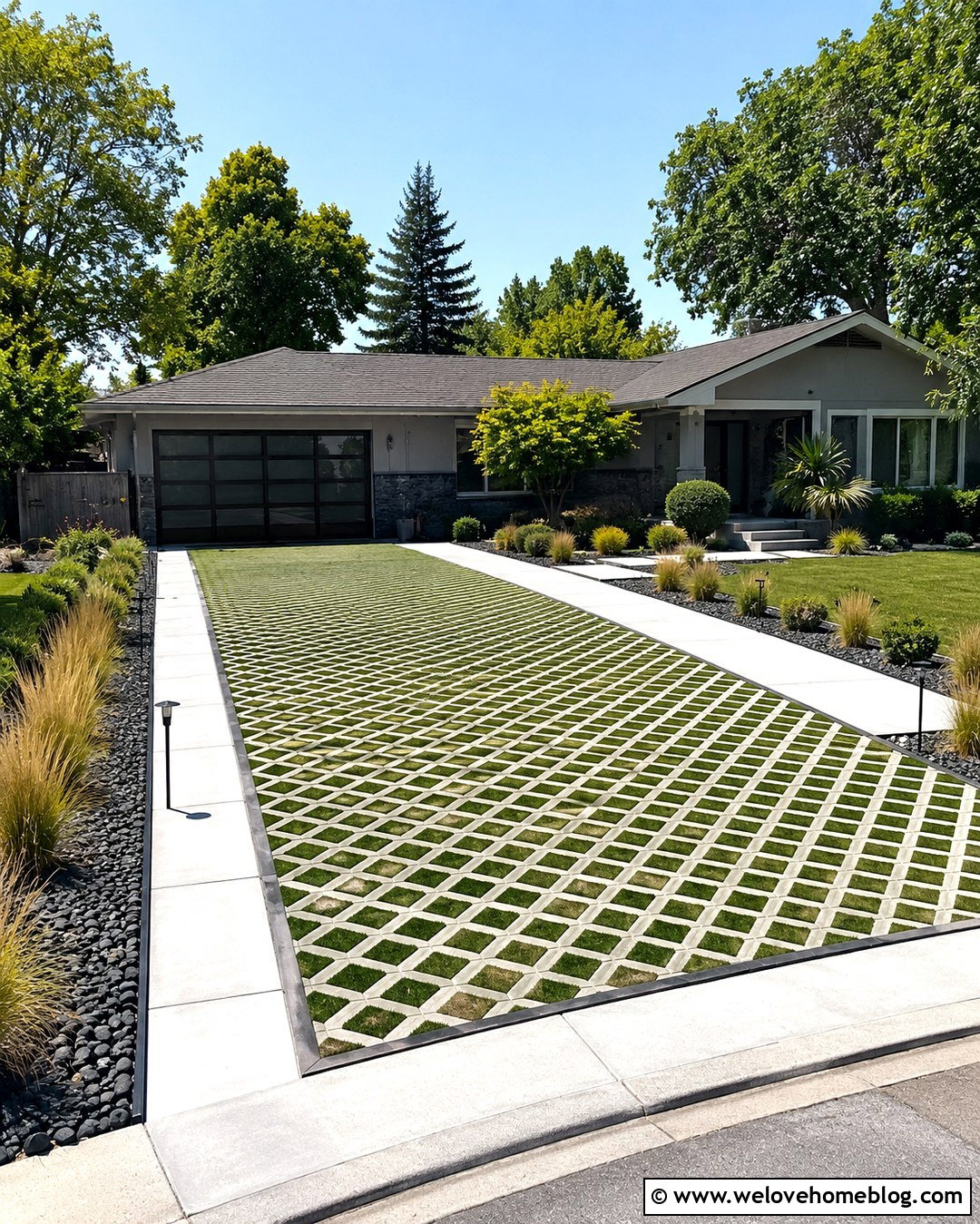
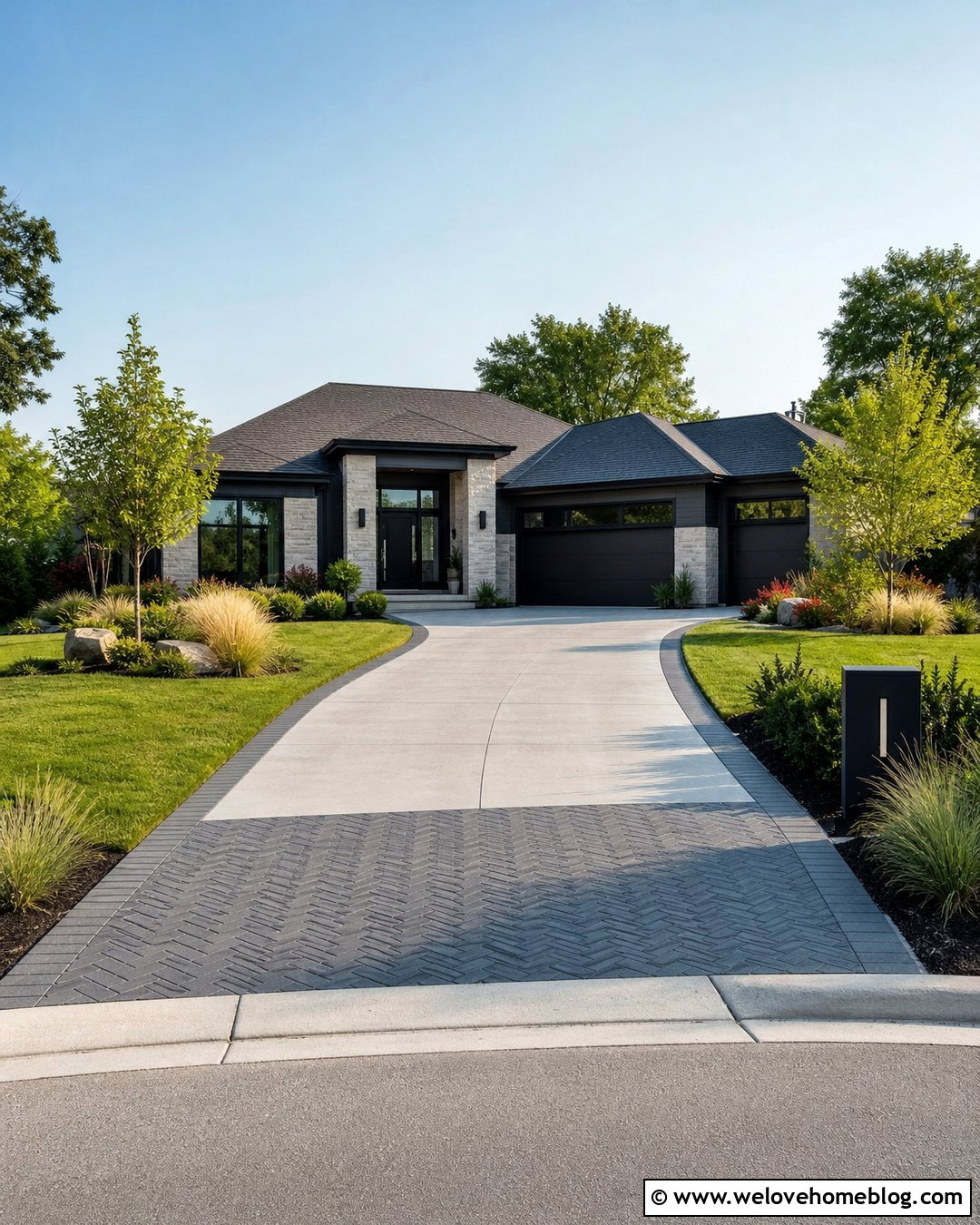
A concrete grid driveway combines visible greenery with a structured, minimalist pattern. The open cells can be filled with turf or clean angular gravel, creating a surface that appears lighter than solid paving. Use the grid across the full driveway or place it in broad parking zones framed by smooth concrete ribbons. Keep the cell filler consistent throughout the design. Mixing grass, several gravel colors, and decorative stones would weaken the streamlined effect. Low steel edging can define adjacent planting beds filled with repeated grasses and compact shrubs. This layout works well beside a low-profile ranch or modern home surrounded by a generous front lawn. Permeable grid systems can support water infiltration, but the correct base, product strength, slope, and local installation requirements should be reviewed before construction. ()
8. Pea Gravel Driveway With Steel Edging
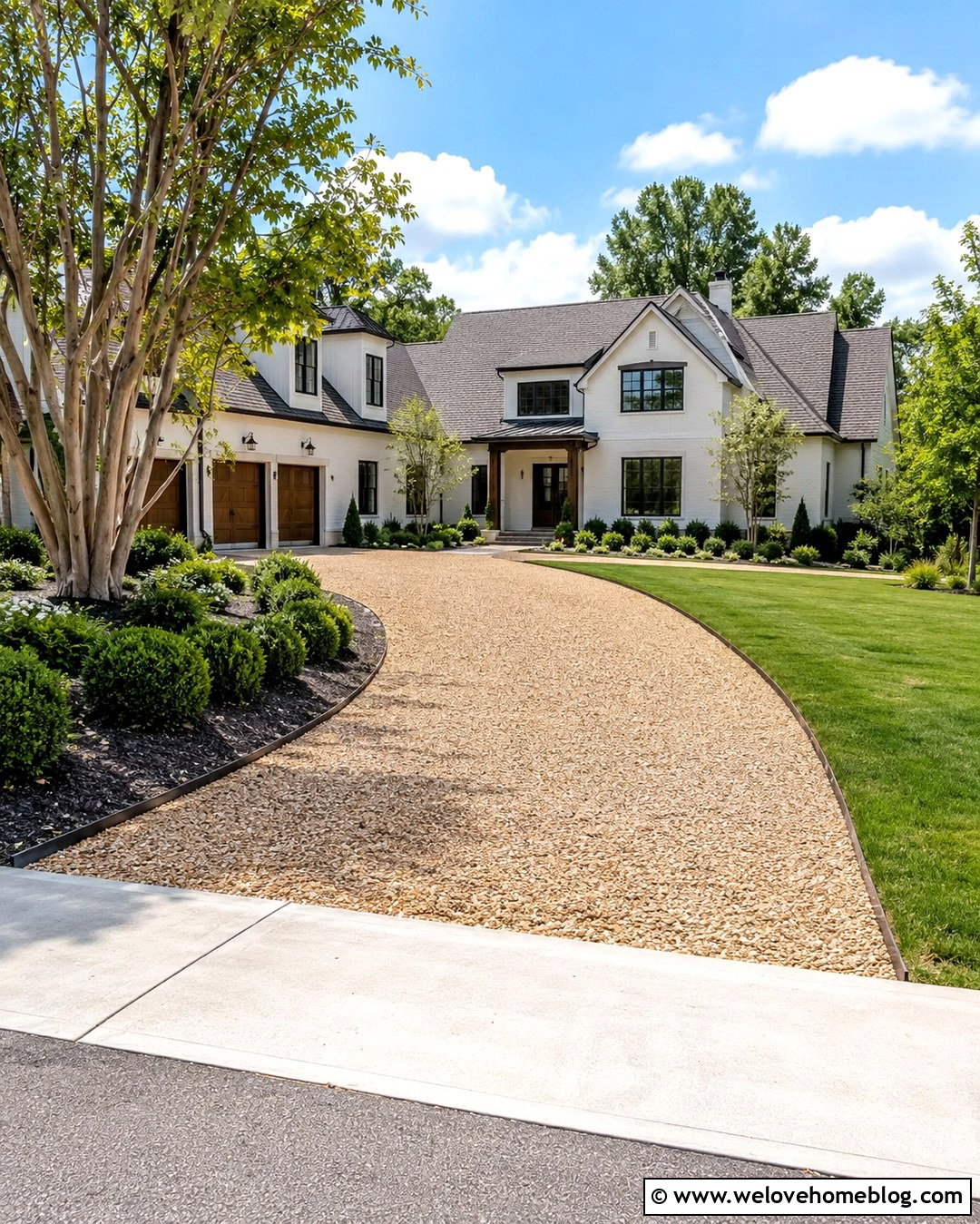
The soft crunch and warm color of pea gravel can give a minimalist driveway a relaxed residential character. Choose a consistent blend of beige, gray, or muted brown stones rather than a highly varied mix. A straight or gently curved layout should be held firmly by dark steel edging and a properly prepared base. Add a paved apron at the street and garage to reduce loose gravel movement at key transitions. Keep the planting equally controlled, using clipped evergreens, a few multi-stem trees, and broad areas of mulch or lawn. This design complements modern farmhouse, Cape Cod, and simple country homes. For a more contemporary finish, pair the gravel with a wide concrete walkway and black architectural lighting. The strong border and limited planting palette prevent the informal surface from appearing untidy.
9. Gray Gravel Driveway With Paver Border
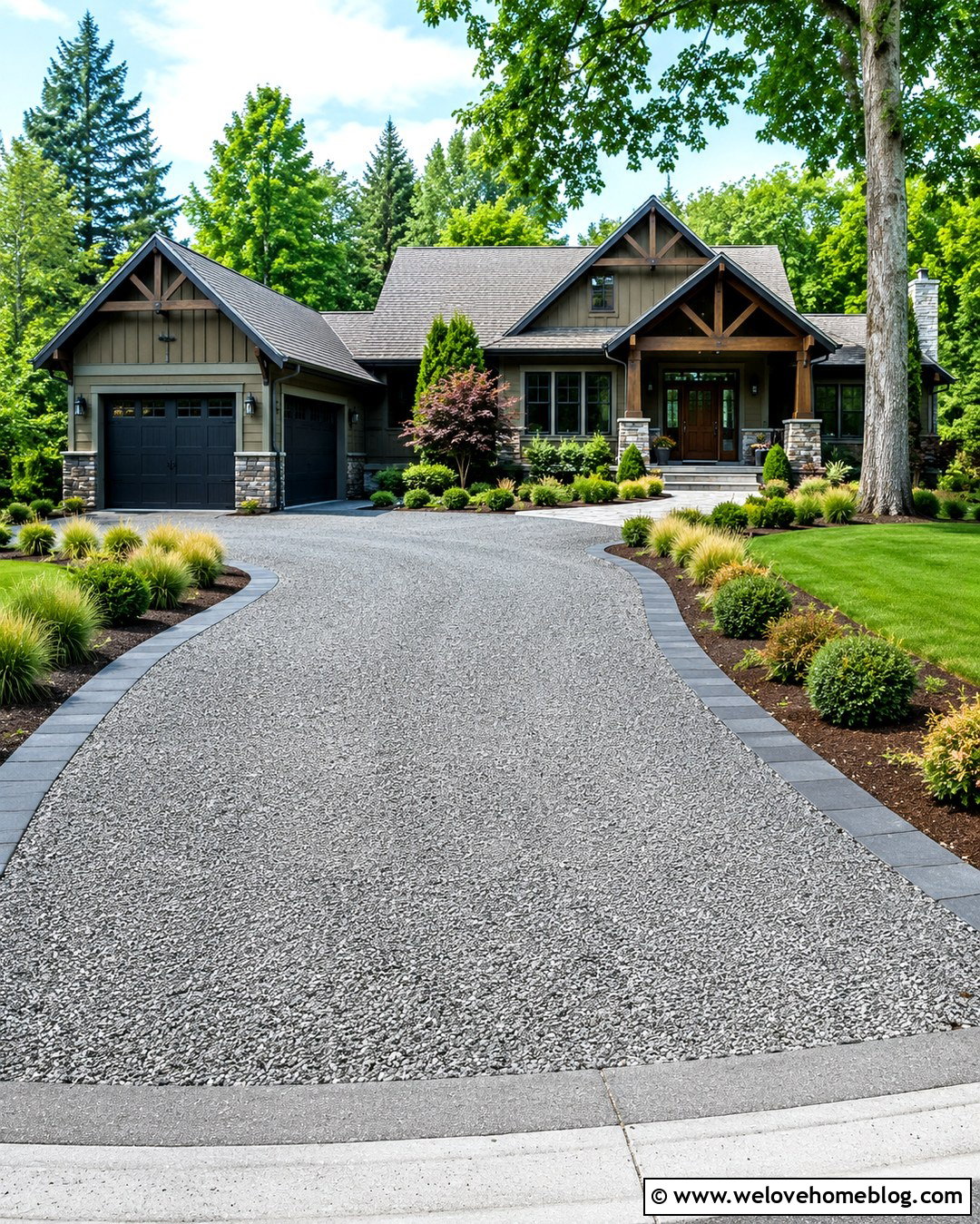
Fine gray gravel becomes much more polished when framed by a straight concrete paver border. Use angular crushed gravel that can compact into a stable driving surface, then select large smooth pavers in a slightly darker tone for the perimeter. The border clearly defines the driveway shape and creates a durable edge beside lawn or planting beds. A subtle curve can soften the approach to a craftsman or contemporary home, but avoid unnecessary bends. Repeat the same pavers around the front walkway or porch steps for a connected exterior. Plant low grasses and rounded shrubs in generous groups, leaving open gravel or mulch between them. This restrained combination offers texture without complicated patterns. It also allows the house, mature trees, and front entrance to remain the primary visual features of the property.
10. Black Asphalt Driveway With Concrete Border
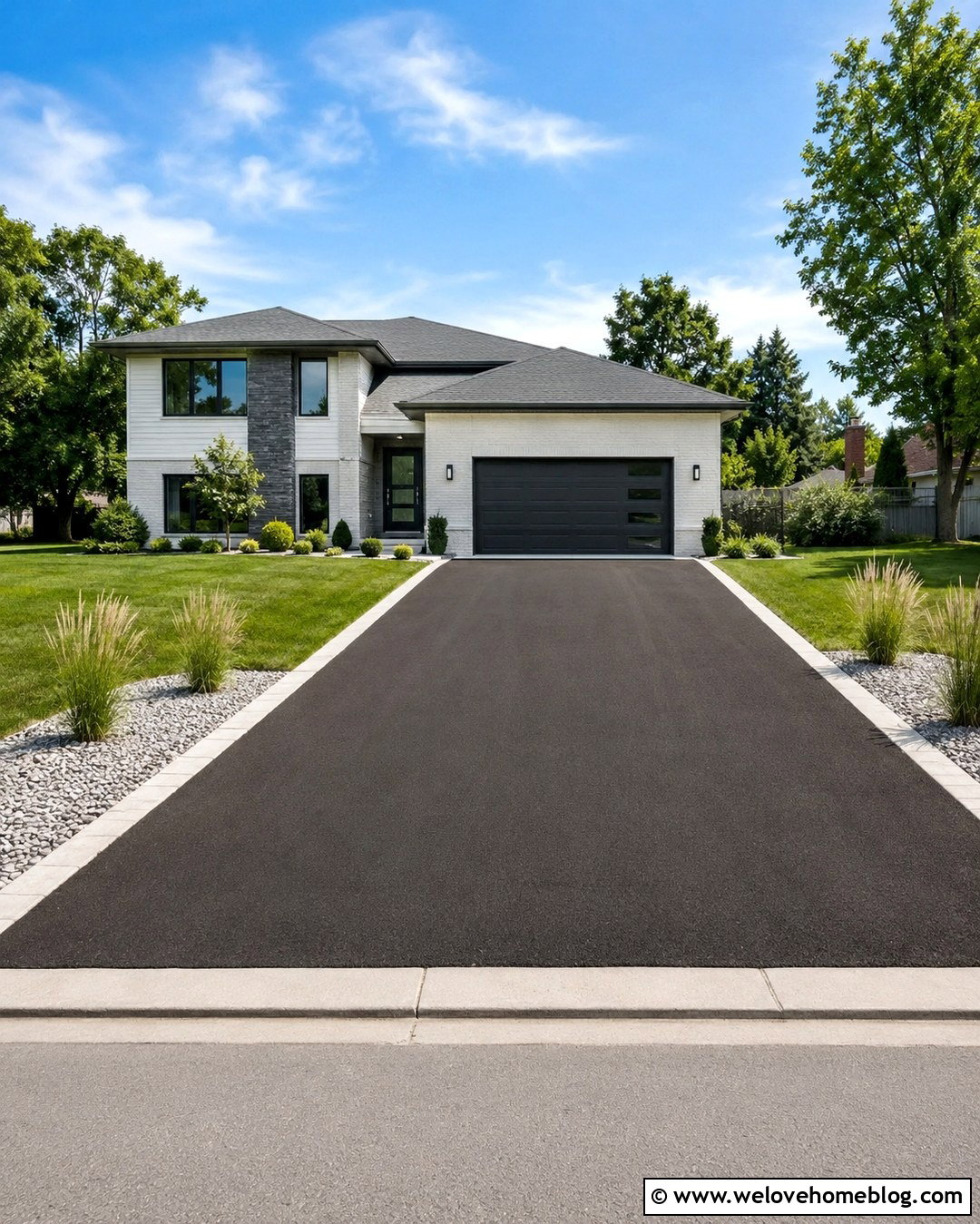
Fresh black asphalt creates a smooth visual plane that can look surprisingly minimalist when its edges are carefully designed. Add straight light gray concrete borders along both sides to sharpen the outline and connect the driveway with the sidewalk or garage apron. A simple rectangular layout suits a modern ranch, split-level, or suburban home with dark window frames. Avoid decorative stamped borders, multiple accent bands, or ornate curves. Instead, balance the black surface with pale gravel planting beds, clipped shrubs, and one repeated ornamental grass. A matching concrete walkway can branch from the driveway near the house without interrupting the main approach. Asphalt’s dark tone may feel dominant on a large frontage, so generous lawn areas and light-colored architecture help create contrast. Crisp transitions are what make this affordable material look intentional and refined.
11. Resin-Bound Gravel Driveway
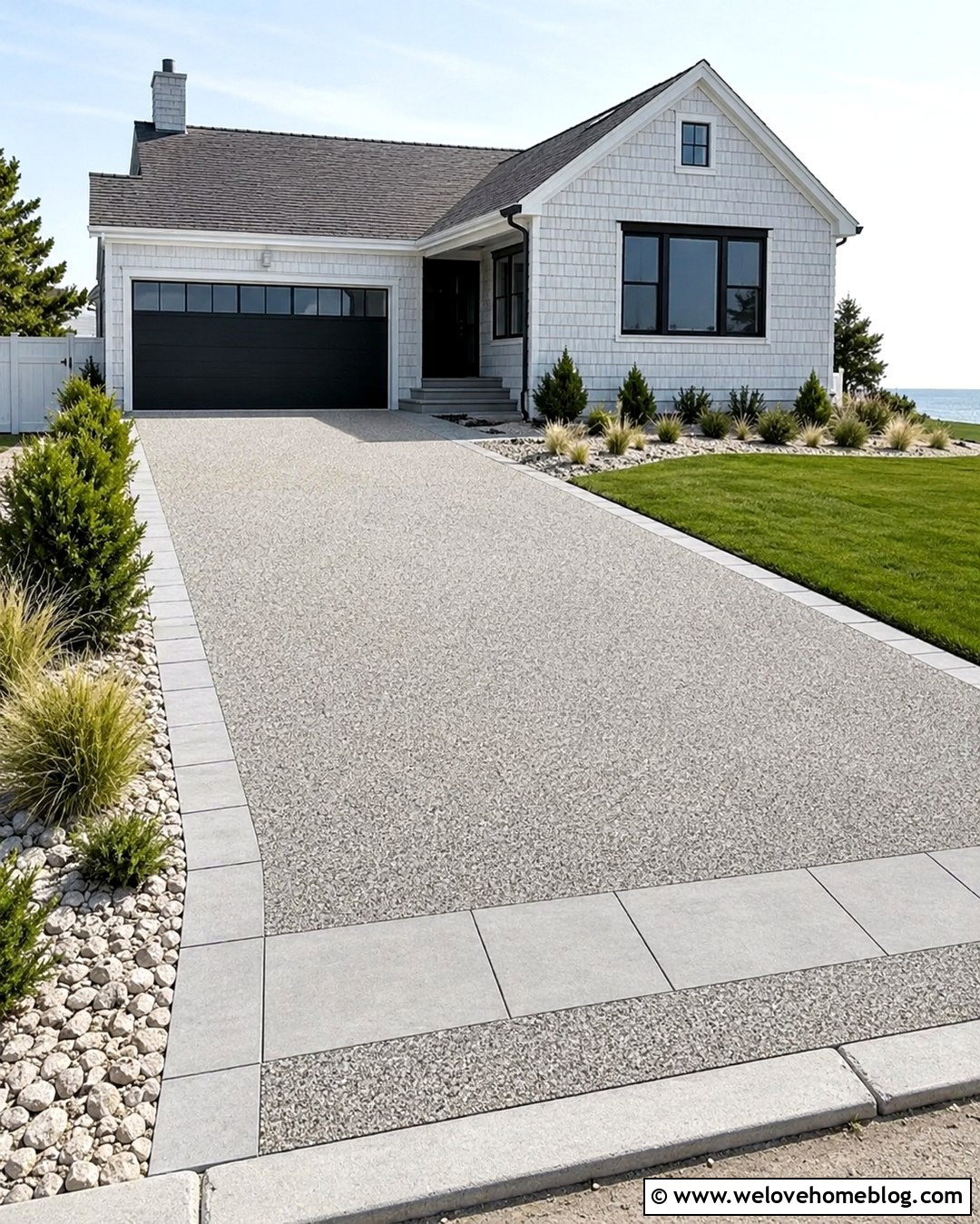
Resin-bound gravel provides the textured appearance of small stones in a neat, visually continuous surface. Choose a fine aggregate blend in warm beige, silver gray, or soft taupe, and keep the driveway shape straightforward. A flush steel or concrete edge will contain the material while supporting the clean outline. Pair the surface with large-format entry pavers, low grasses, and a few evergreen forms that repeat across both sides. The seamless look suits contemporary cottages, coastal homes, and modern suburban facades. Use one aggregate color rather than creating several bands or emblems. Drainage, weather conditions, preparation, and installation methods can affect performance, so discuss the complete system with an experienced local contractor. When properly planned, the driveway reads as one calm textural field that leads naturally from the curb to the garage and front entrance.
12. White Stone Driveway With Modern Landscaping
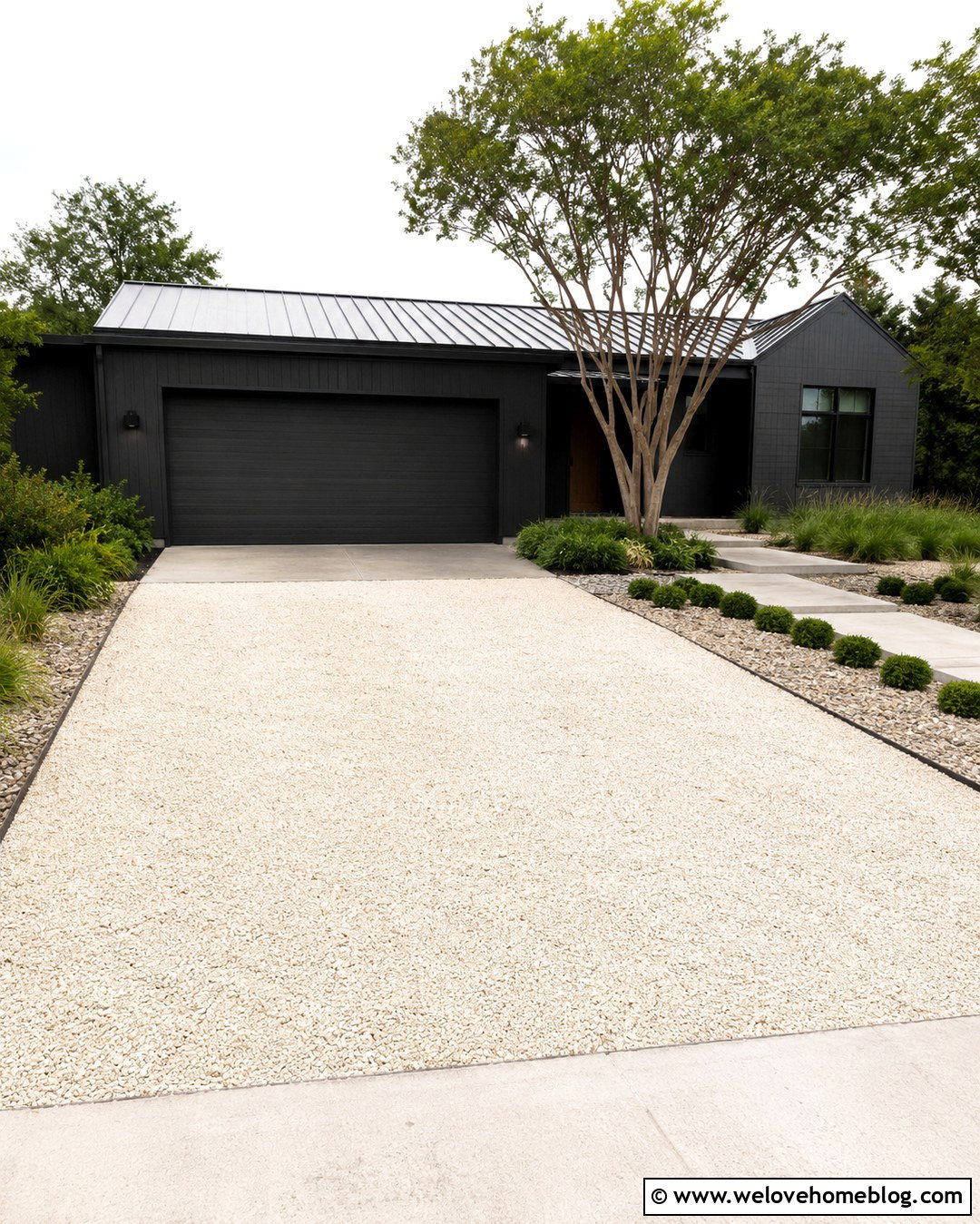
A pale crushed-stone driveway can brighten a shaded frontage and create a clean contrast with dark siding or dense greenery. Choose off-white limestone or light granite chips rather than brilliant decorative pebbles, which may appear harsh and show debris quickly. Keep the driveway straight and define it with slim gray pavers or dark metal edging. Near the entrance, add a smooth concrete apron for a tidy transition and easier stone containment. Modern landscaping should stay restrained. Consider clipped green shrubs, upright grasses, and one sculptural tree in a broad bed of matching stone. Avoid scattering many small plants around the perimeter. This complete design works especially well with charcoal contemporary homes and updated cottages. The pale driveway becomes a quiet foreground, allowing the architecture and carefully placed greenery to provide depth and contrast.
13. Narrow Minimalist Driveway
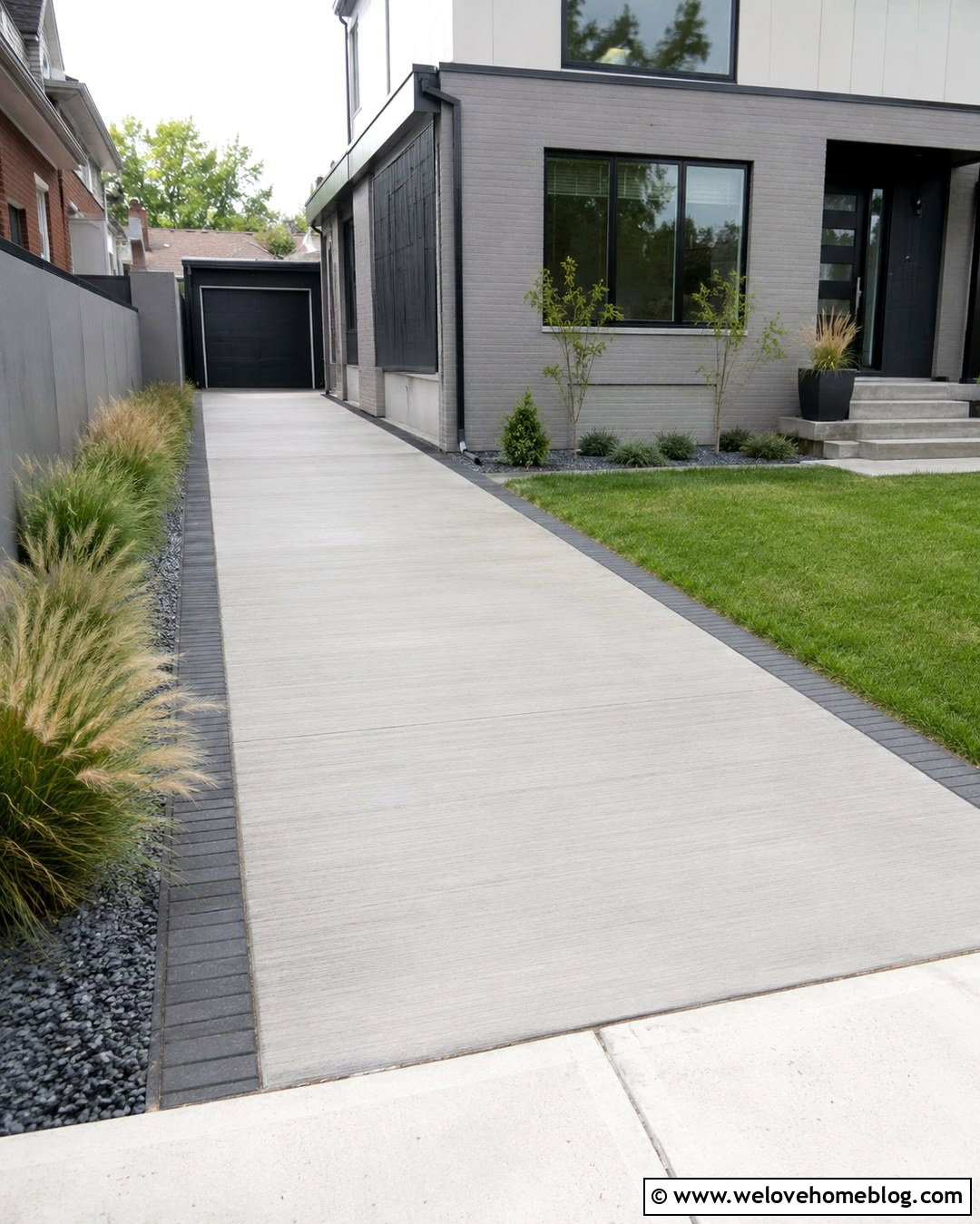
A narrow driveway benefits from long, uninterrupted lines that make the approach feel orderly rather than cramped. Use light gray poured concrete with a fine broom finish and create only the control joints needed for the installation. A slim charcoal paver ribbon along each side can strengthen the length without taking up much visual space. Keep planting low near the curb and driveway edge so the entrance feels open. Narrow beds of fountain grass, compact shrubs, or simple groundcover can soften fences and walls without crowding vehicles. If a walkway is necessary, separate it with a small gravel strip instead of adding another bold material. At the garage, repeat the driveway color on the steps or landing. This design is practical for urban homes, small ranch properties, and closely spaced suburban lots where every inch matters.
14. Curved Minimalist Driveway
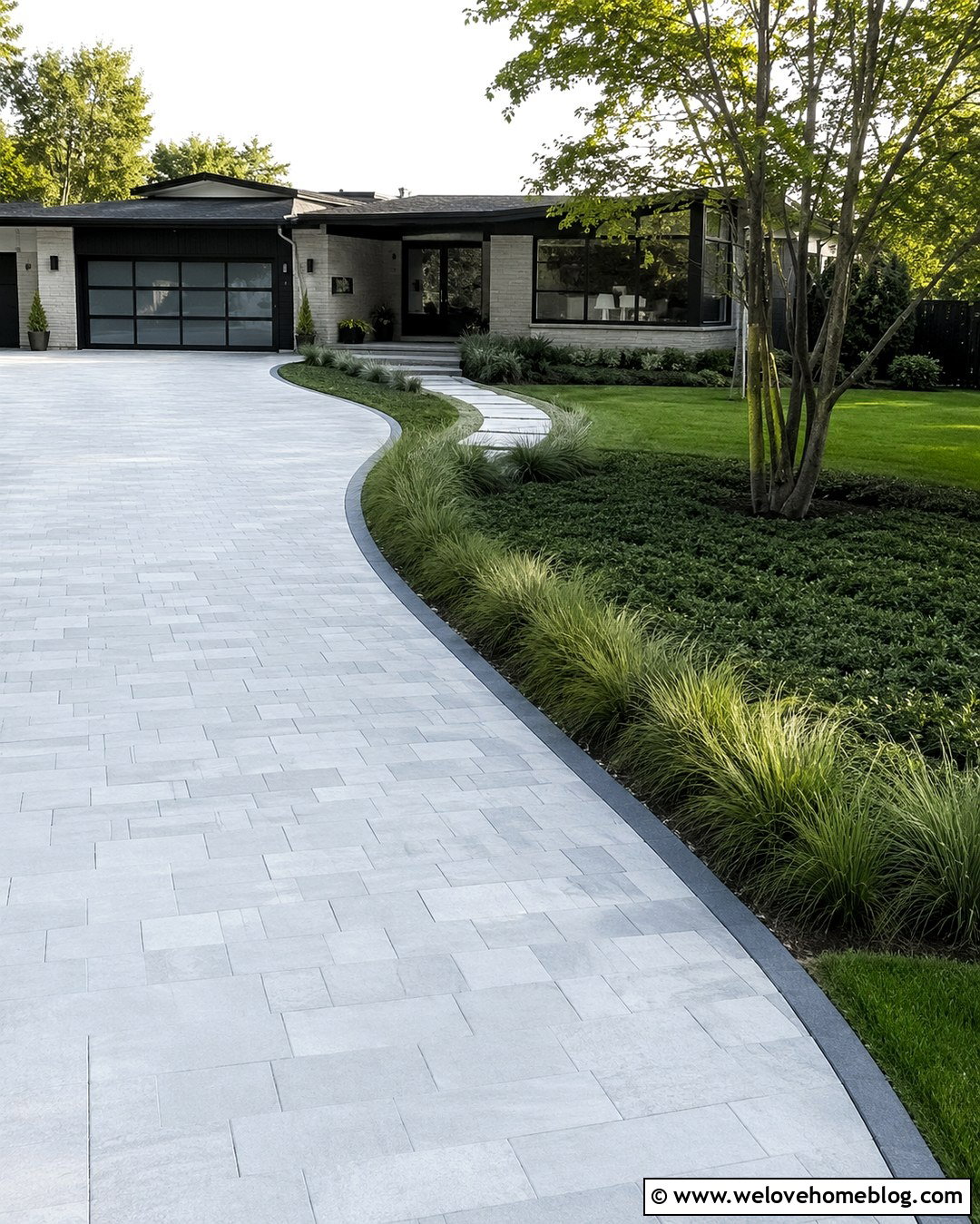
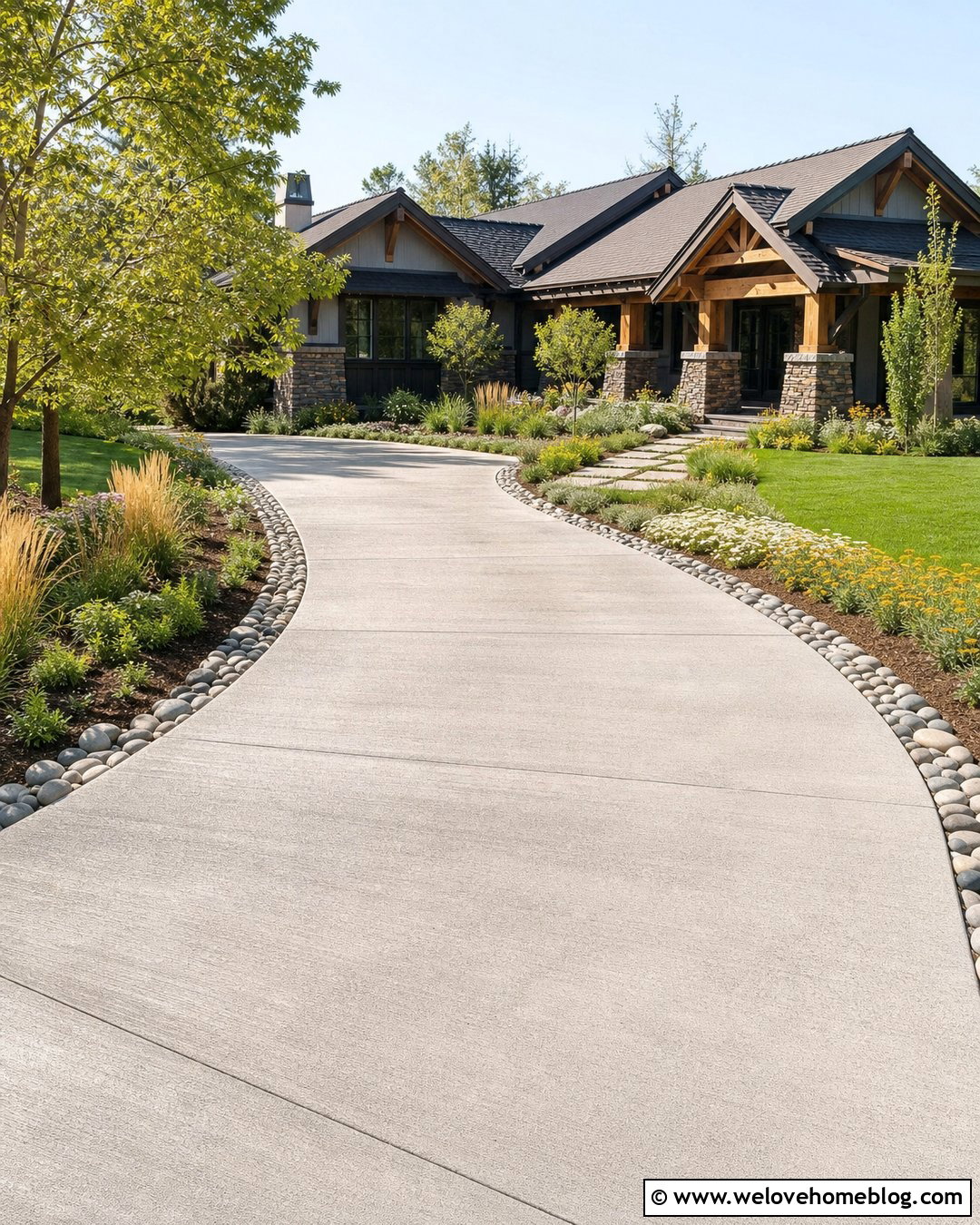
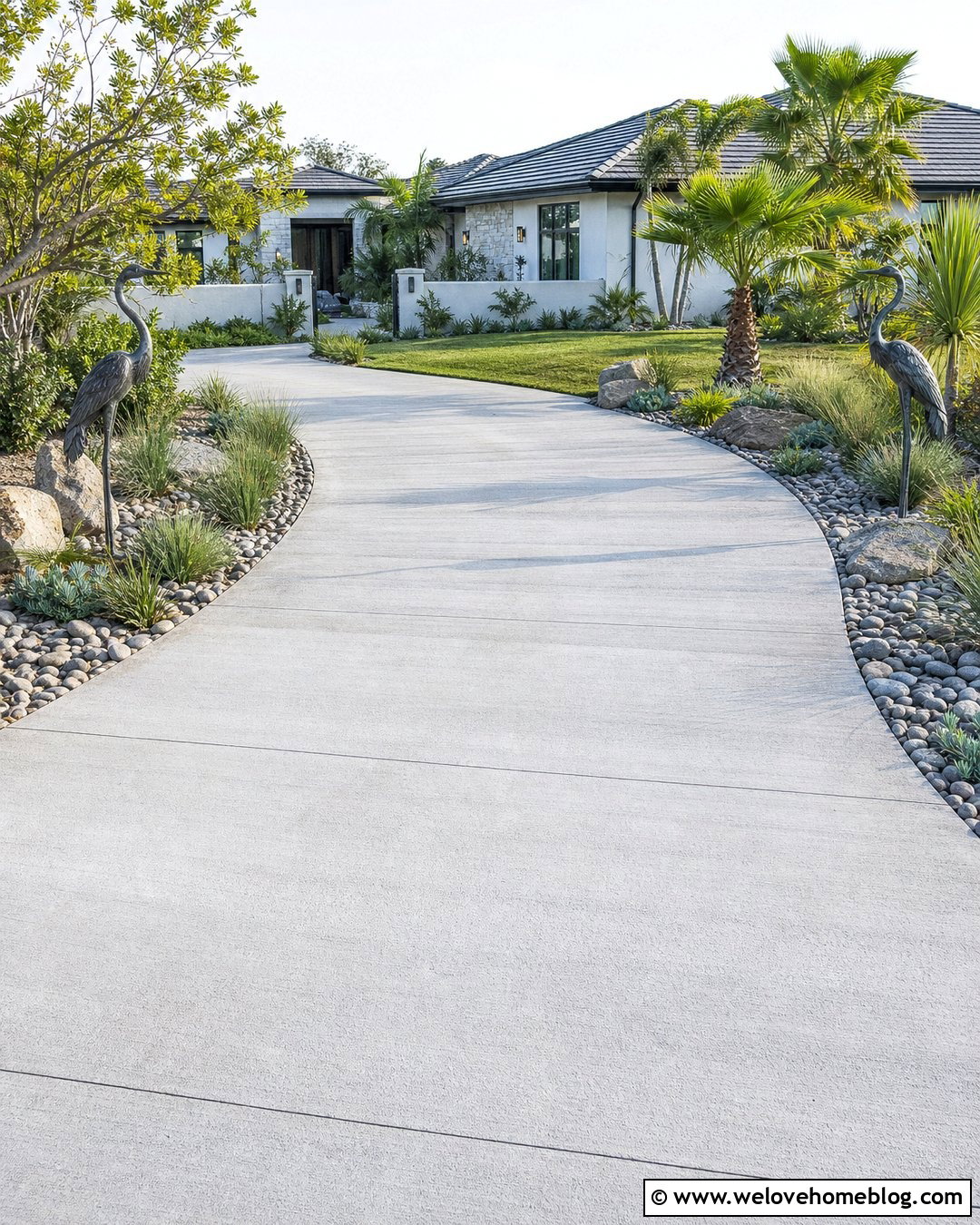
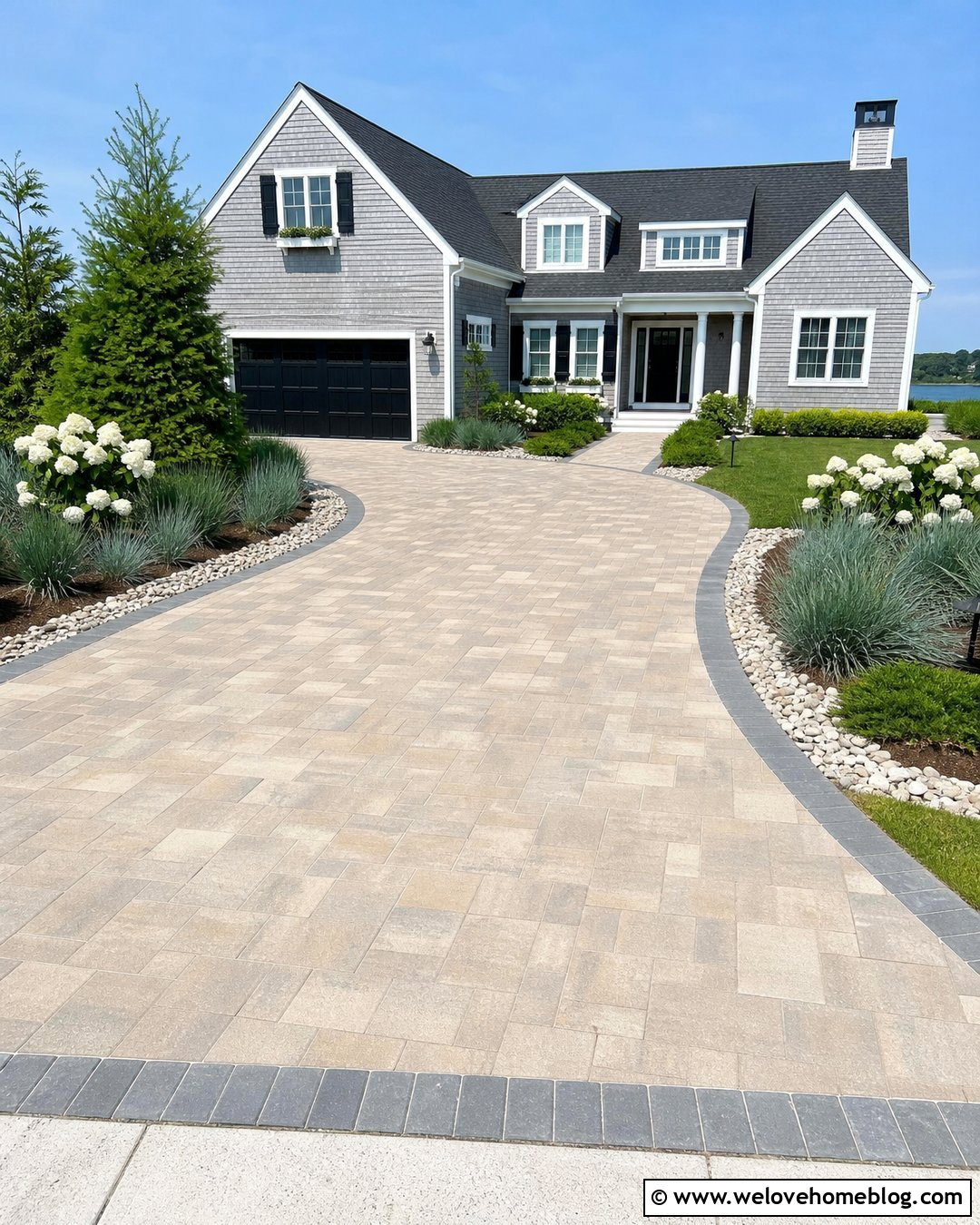
A gentle curve can guide the eye toward the house while maintaining a minimalist appearance. The key is using one clear arc instead of several tight bends. Choose smooth light gray concrete pavers or fine charcoal gravel, then outline the curve with a narrow steel, stone, or matching paver edge. Plant the inside of the bend with one broad sweep of ornamental grass or low evergreen groundcover. On the outside, preserve an open lawn area to keep the approach balanced. A single multi-stem tree can mark the curve without blocking the house. Repeat the driveway material in the front walkway so the layout feels connected. This look works with contemporary, mid-century, and low country homes. Simple geometry allows the curve, material, planting, and architecture to read as one controlled composition.
15. Circular Minimalist Driveway
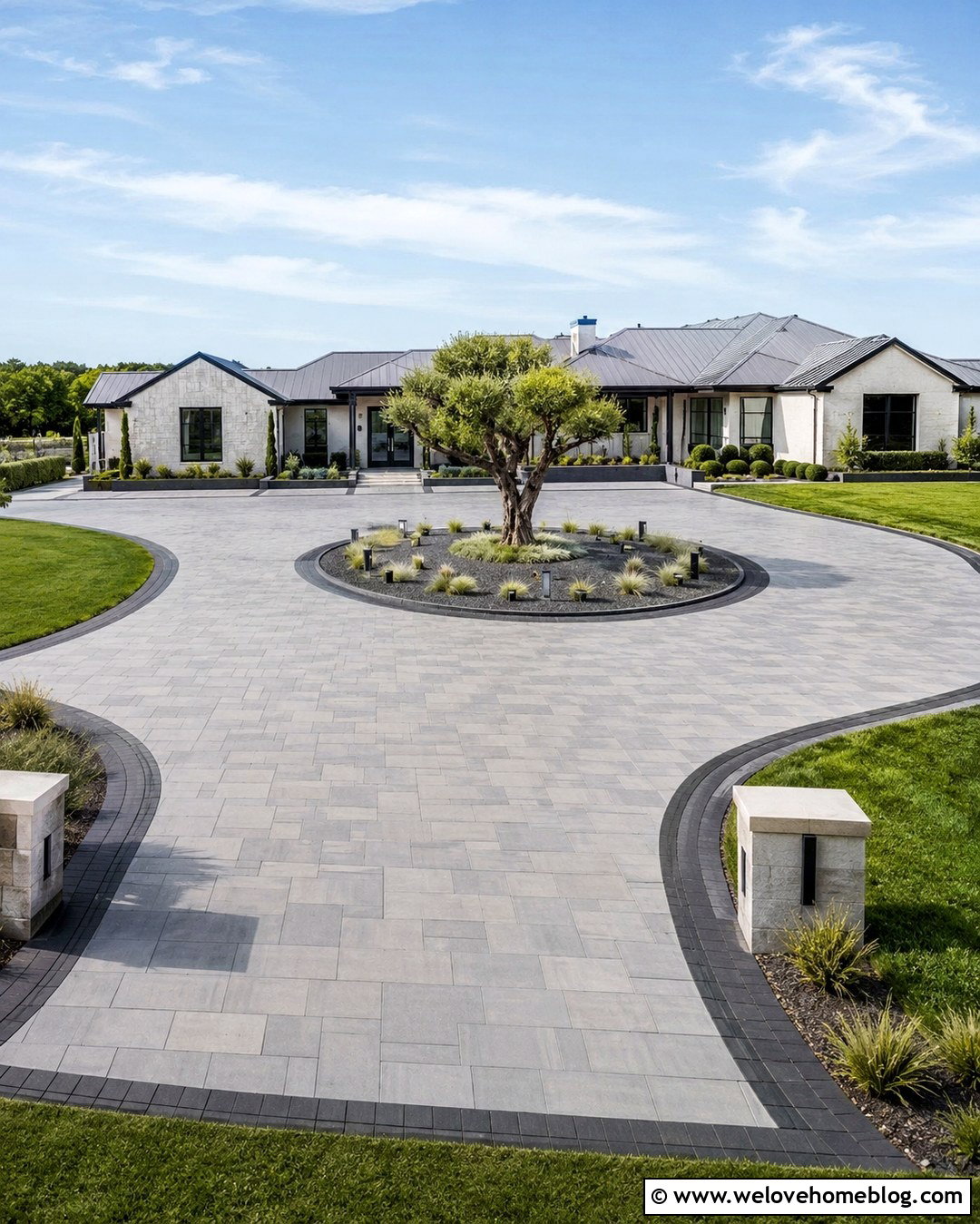
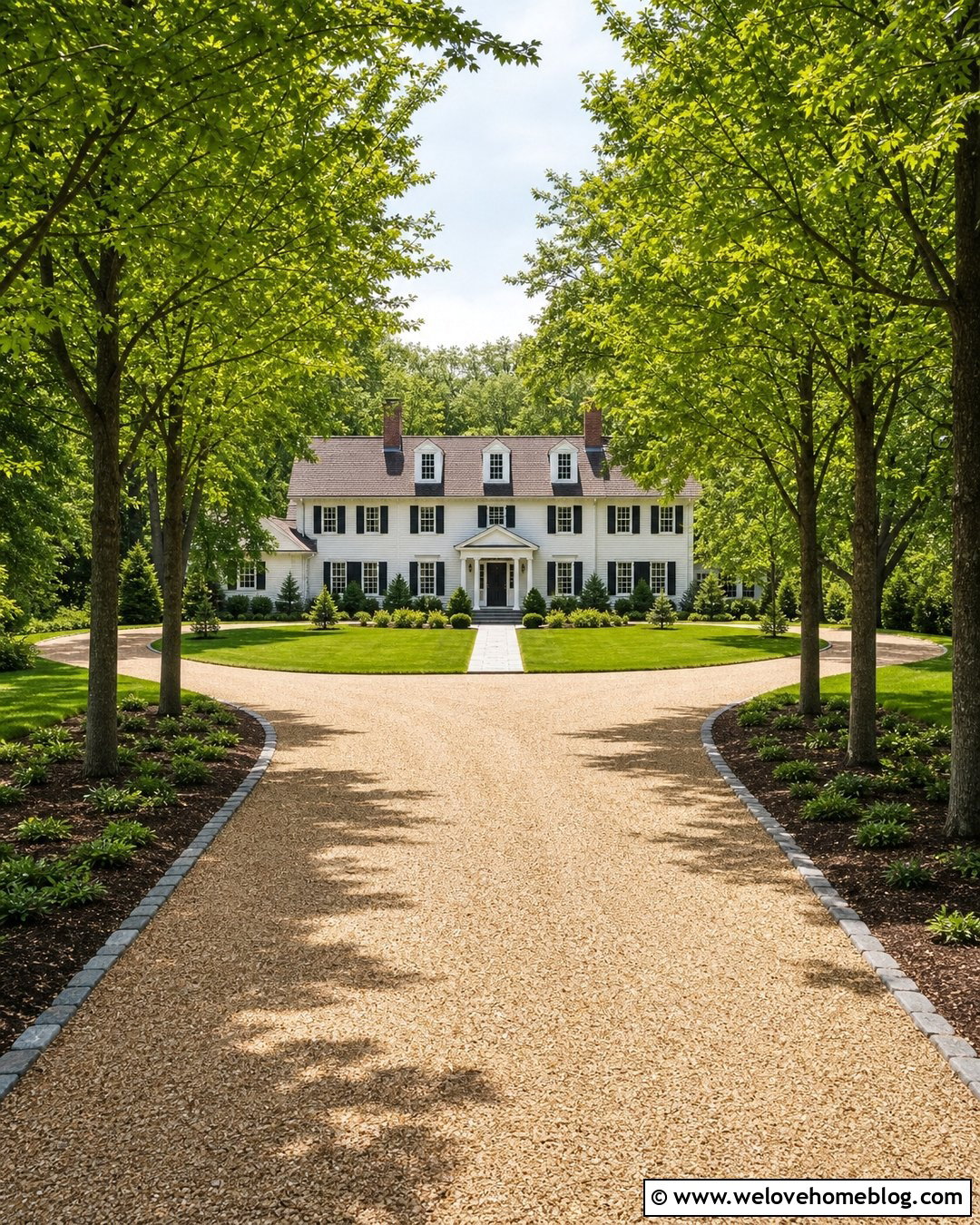
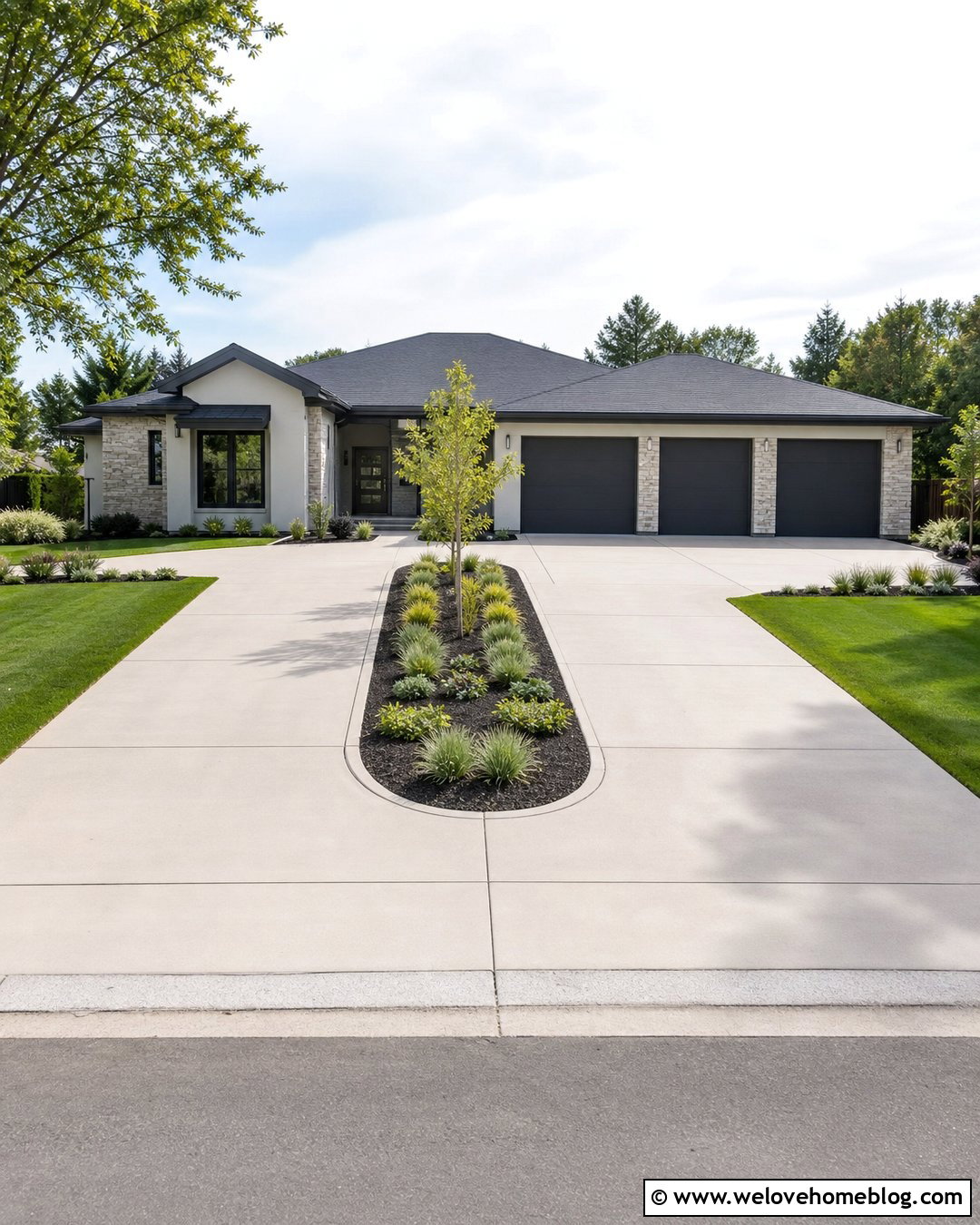
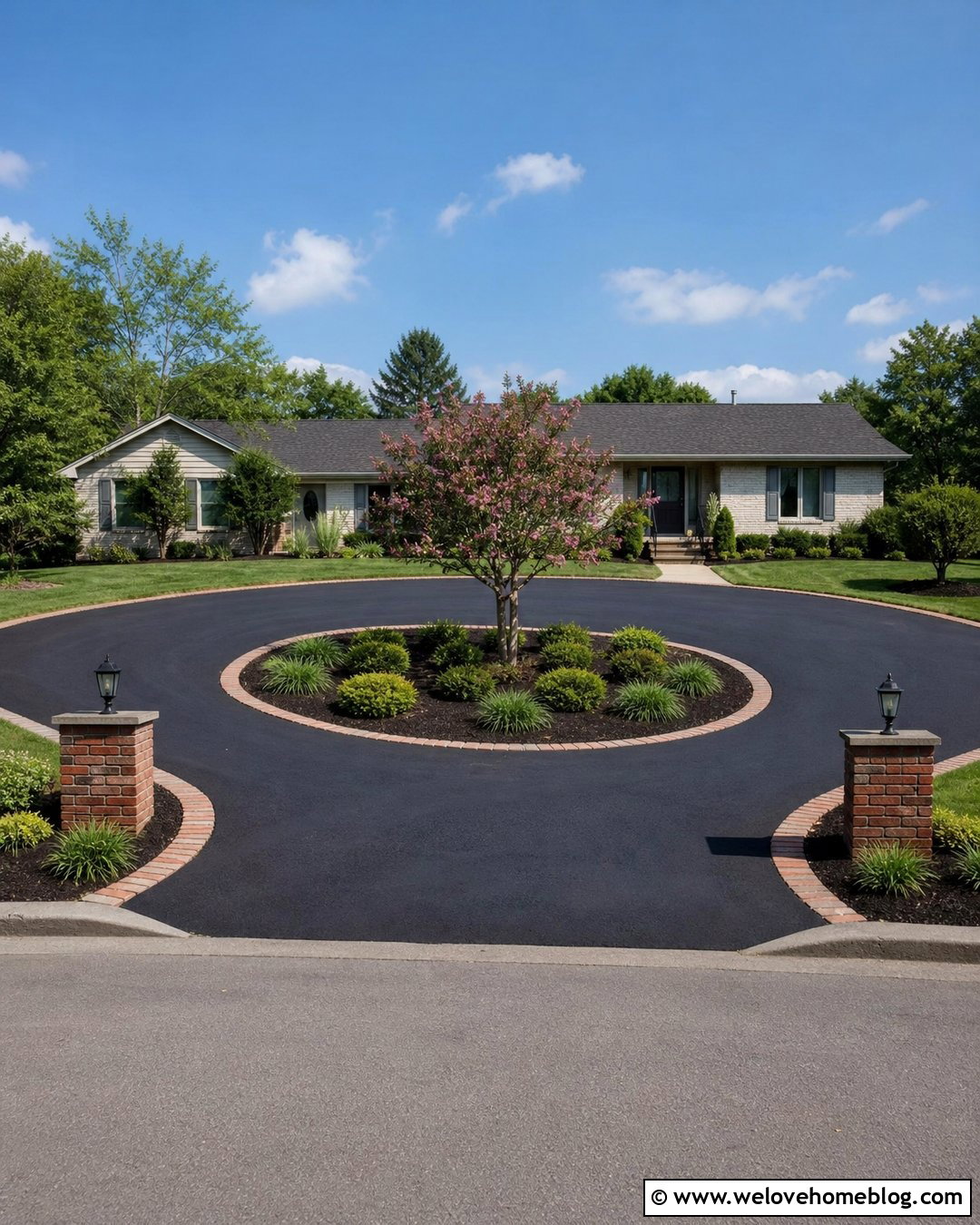
Circular driveways can feel formal, but a restrained material palette gives the layout a cleaner modern character. Use large-format gray concrete pavers across a simple horseshoe or full-circle approach. Create a central island with low ornamental grasses, one sculptural tree, and a flat bed of dark gravel. Avoid filling the island with numerous flowers, statues, or layered hedges. A narrow charcoal paver border can reinforce the curve while connecting both entrances visually. Keep gateposts, lighting, and address markers rectangular and understated. This complete look requires enough turning space, so confirm dimensions and vehicle movement before finalizing the plan. It is particularly effective in front of wide ranch homes, contemporary estates, and modern farmhouses. The open center and repeated materials create impact through scale and proportion rather than decoration.
16. Minimalist Driveway With Drought-Tolerant Landscaping
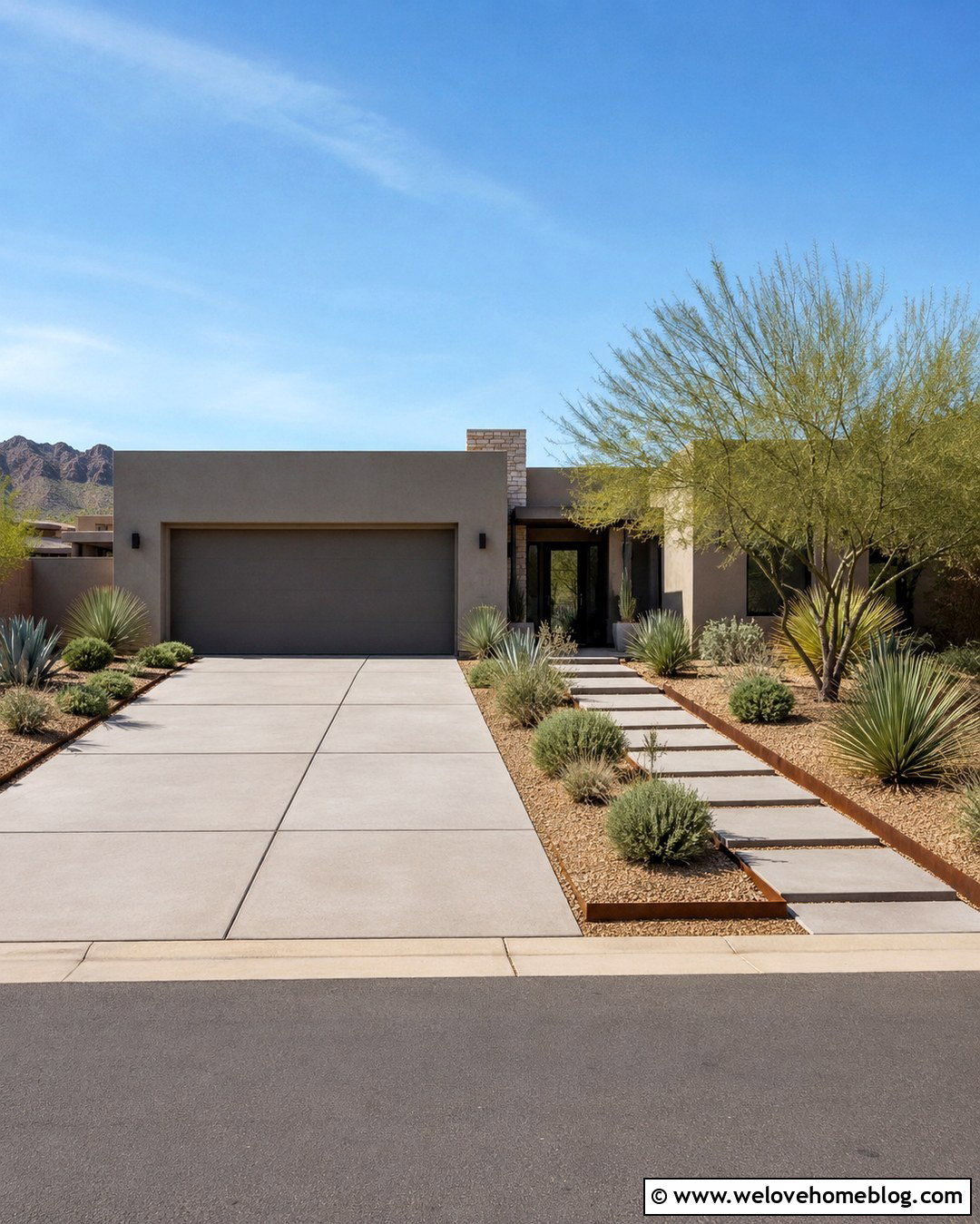
In a hot or dry setting, a minimalist driveway can blend hardscape with low-water planting in a natural, uncluttered way. Start with warm gray poured concrete panels or tan concrete pavers in a straight geometric layout. Frame them with broad gravel beds containing agave, yucca, compact sage, and a limited selection of ornamental grasses suited to the local climate. Space plants generously so their individual shapes remain visible. Rusted steel edging can create a thin, warm line between the driveway and gravel without adding a heavy border. Add one desert tree near the entry walkway for height and filtered shade. Repeating a small plant palette supports the restrained look commonly associated with modern minimalist landscapes. Always select species for local conditions, mature size, and safe clearance from vehicles. ()
17. Minimalist Driveway With Ornamental Grasses
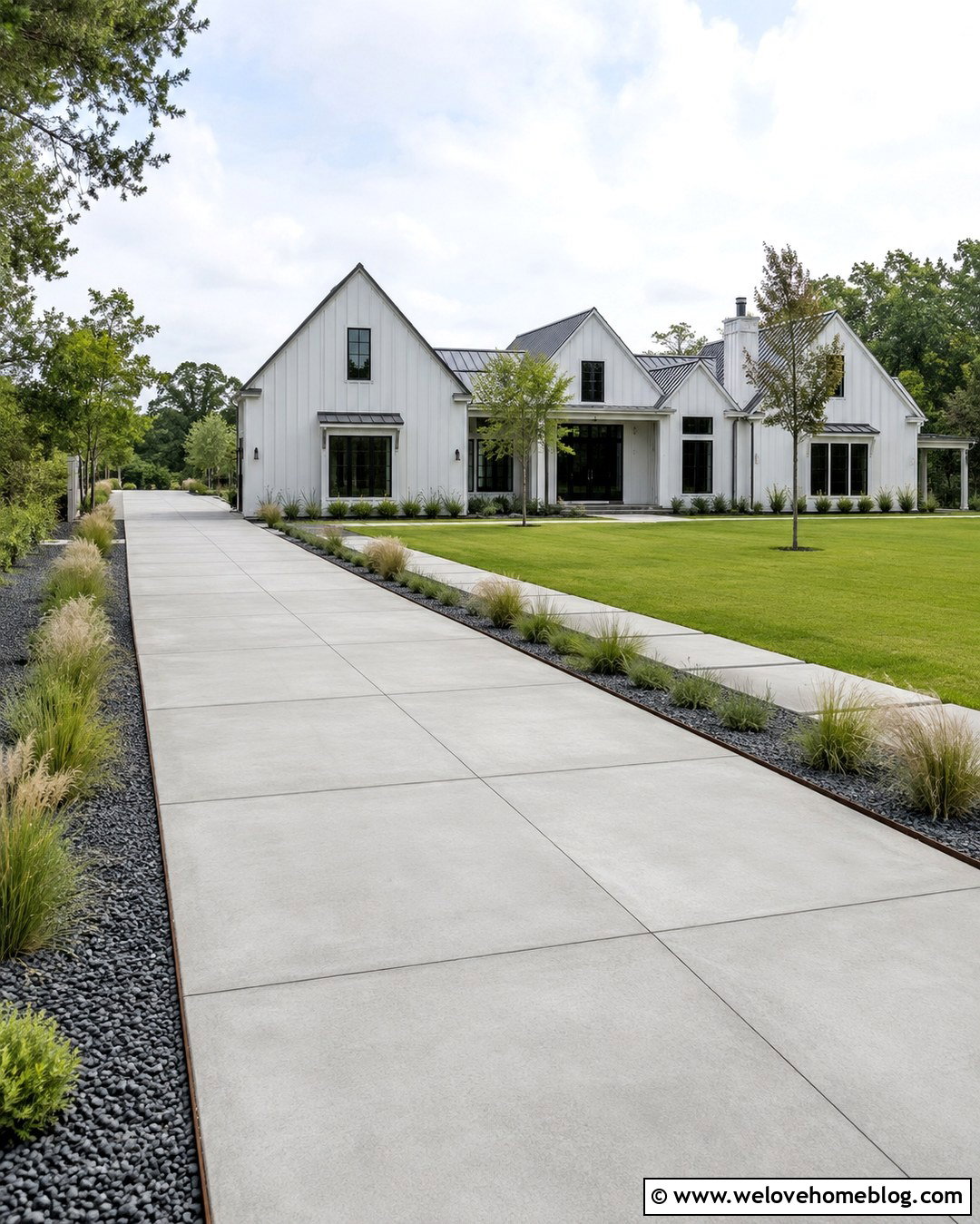
Ornamental grasses bring movement and softness to a driveway built from crisp, geometric materials. Pair large pale concrete slabs with long planting beds containing repeated rows or drifts of one grass variety. Choose a mature height that will not obstruct visibility near the street or interfere with car doors. Dark gravel mulch and steel edging can give the beds a defined shape while contrasting with the light driveway. Keep the layout asymmetrical but balanced. For example, use a wider grass bed on one side and a narrow lawn strip on the other. Continue a few grasses beside the front walkway to connect the driveway with the entrance. This look complements modern farmhouses, cedar-clad homes, and simple stucco architecture. The limited planting palette keeps maintenance and visual clutter under control while adding texture throughout the seasons.
18. Minimalist Driveway With Low Lighting
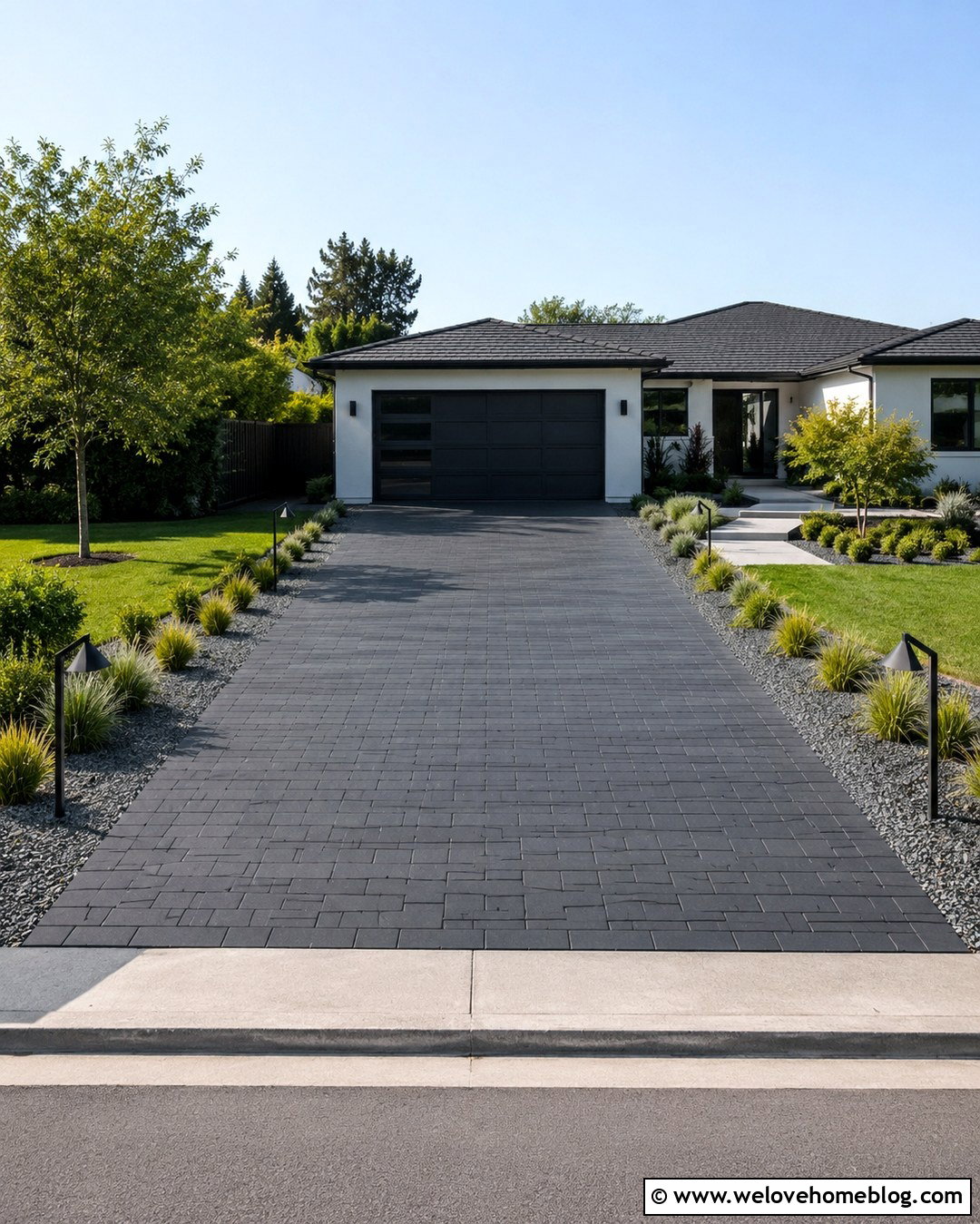
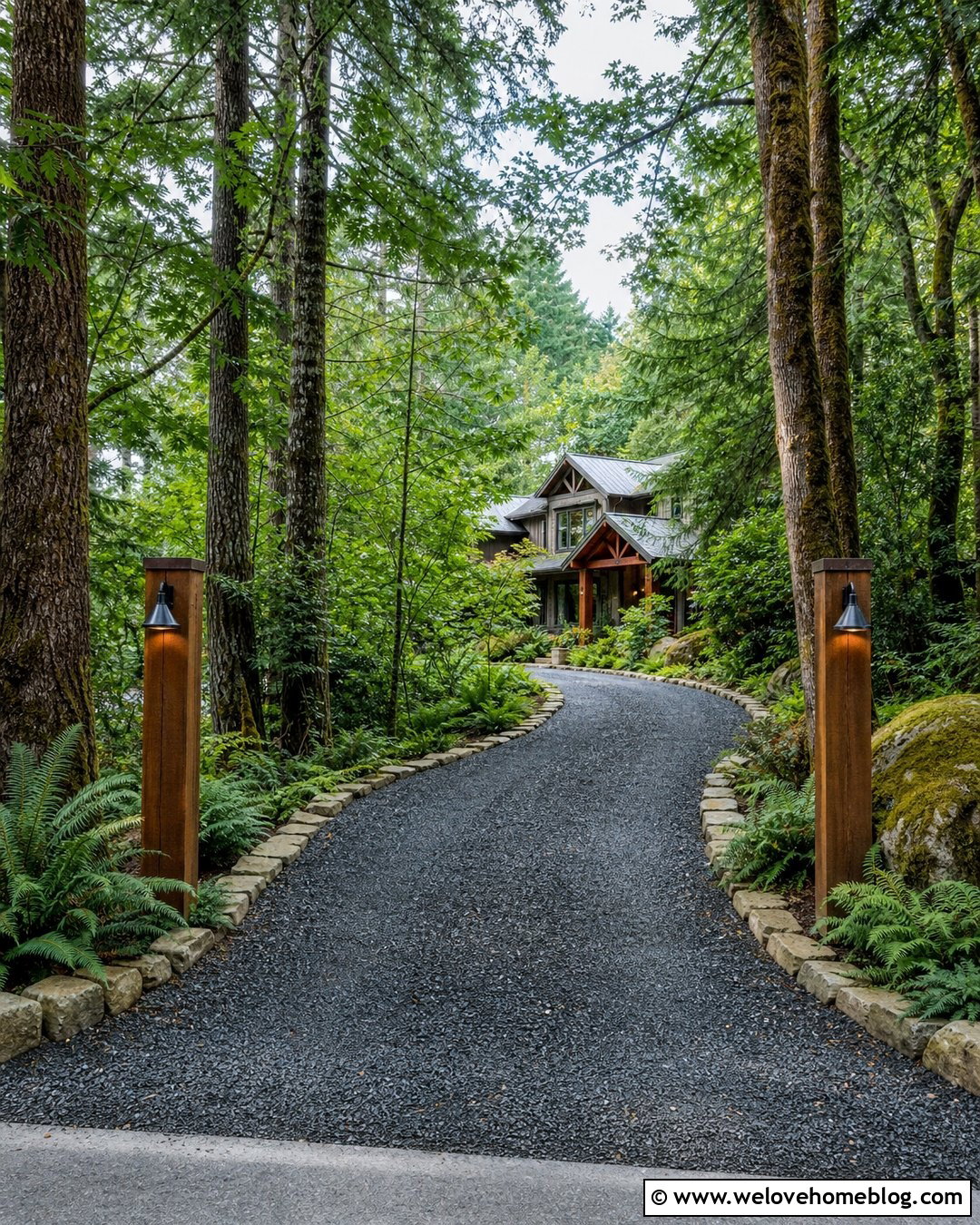
Subtle lighting can support a minimalist driveway without turning the entrance into a runway. Begin with a straight charcoal paver or smooth gray concrete surface bordered by low grasses and narrow gravel beds. Install a small number of short, simple fixtures at important points, such as the curb entrance, walkway connection, curve, or garage apron. Space them according to the lighting plan rather than placing a fixture beside every paver. Shielded downward illumination helps define edges and movement routes while keeping the fixtures visually quiet during the day. Coordinate black or bronze finishes with the home’s windows, door hardware, and address sign. The driveway should still look complete in daylight, with lighting serving as a supporting element. A licensed professional can plan safe wiring, suitable fixtures, and appropriate placement for the property.
19. Minimalist Driveway With Wood Gate
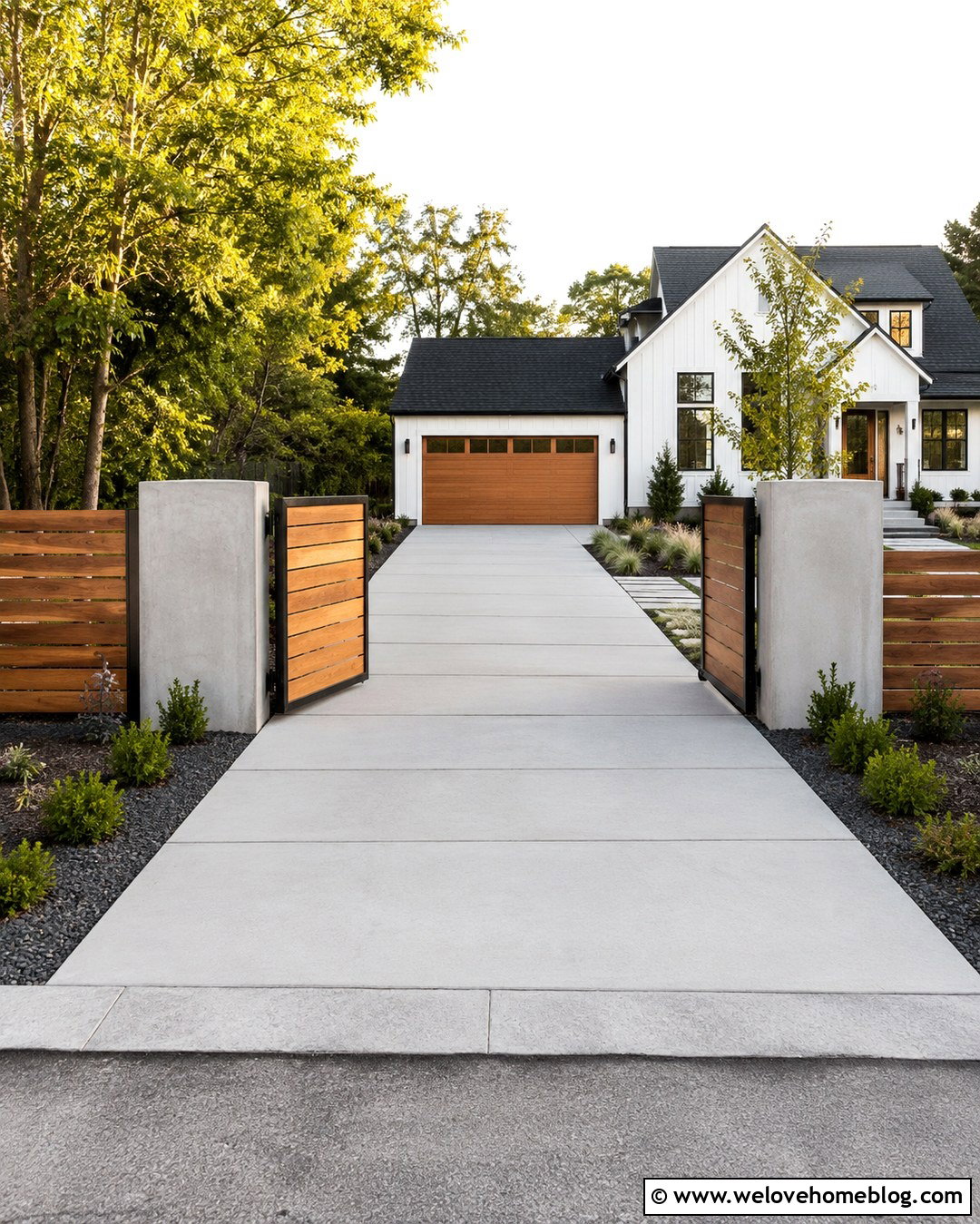
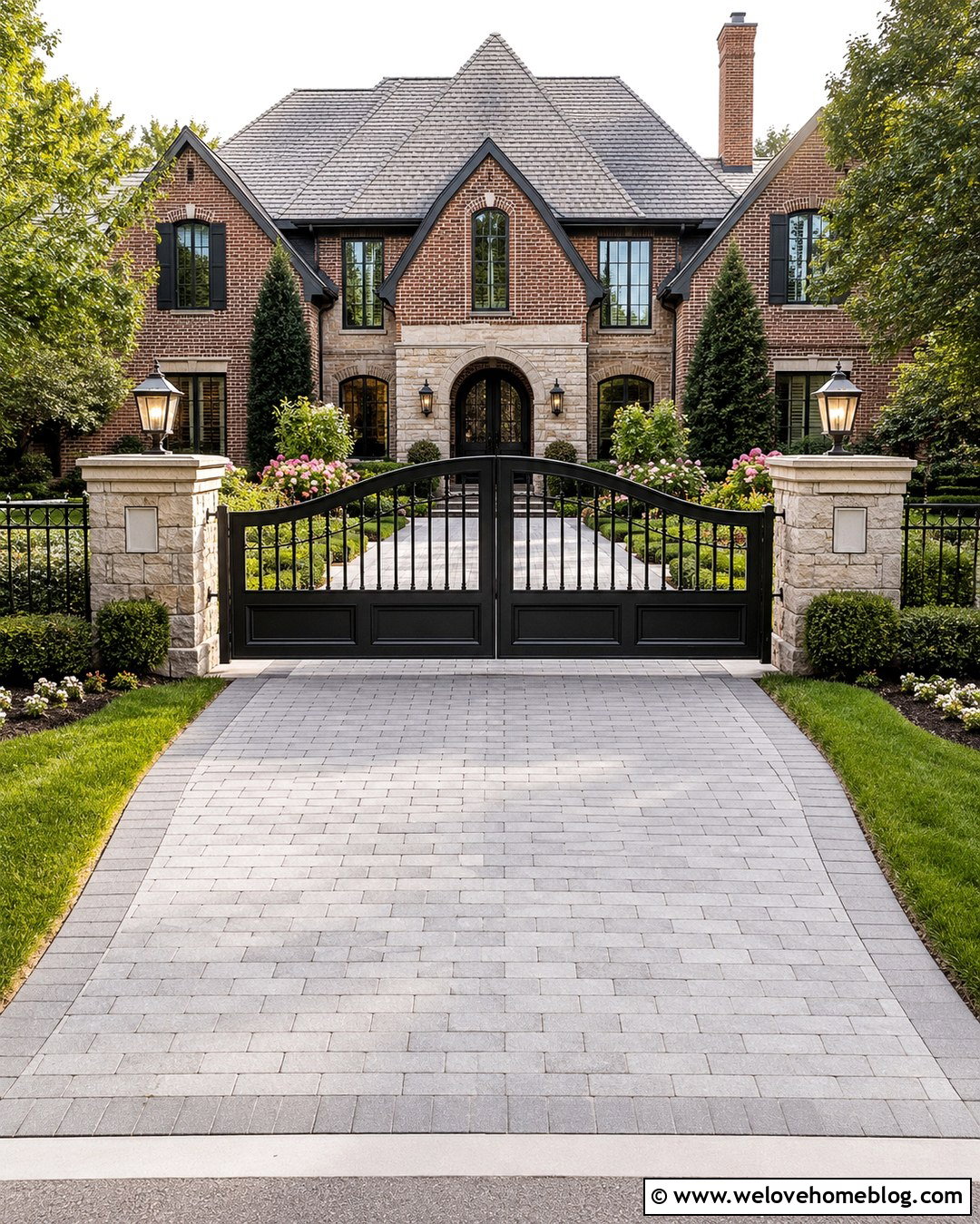
A streamlined wood gate adds warmth to a minimalist driveway dominated by concrete, gravel, or stone. Use horizontal cedar boards within a slim black metal frame, and keep the gate height and proportions compatible with the house. A straight light gray concrete driveway provides a calm backdrop, while charcoal gravel beds and low evergreen shrubs frame the entrance. Continue the gate’s wood tone on the garage door, front door, or a small address panel to create cohesion. Simple rectangular concrete posts can support the gate without introducing ornate caps or masonry patterns. Leave enough clear space for operation, visibility, and vehicle access. This design works especially well with modern farmhouses, contemporary ranch homes, and wood-accented stucco facades. The result feels private and defined, yet still approachable from the street.
20. Minimalist Driveway With Concrete Pillars
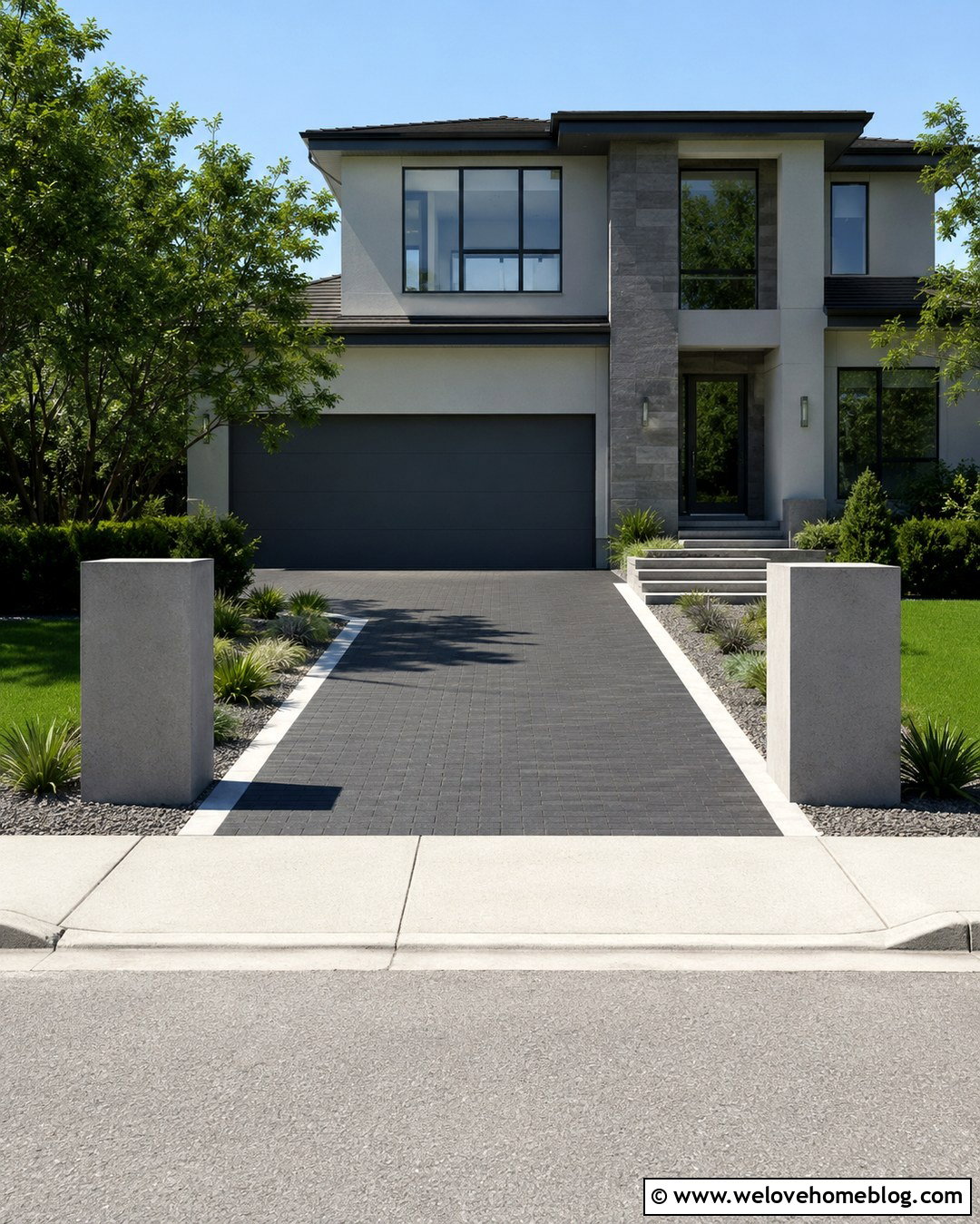
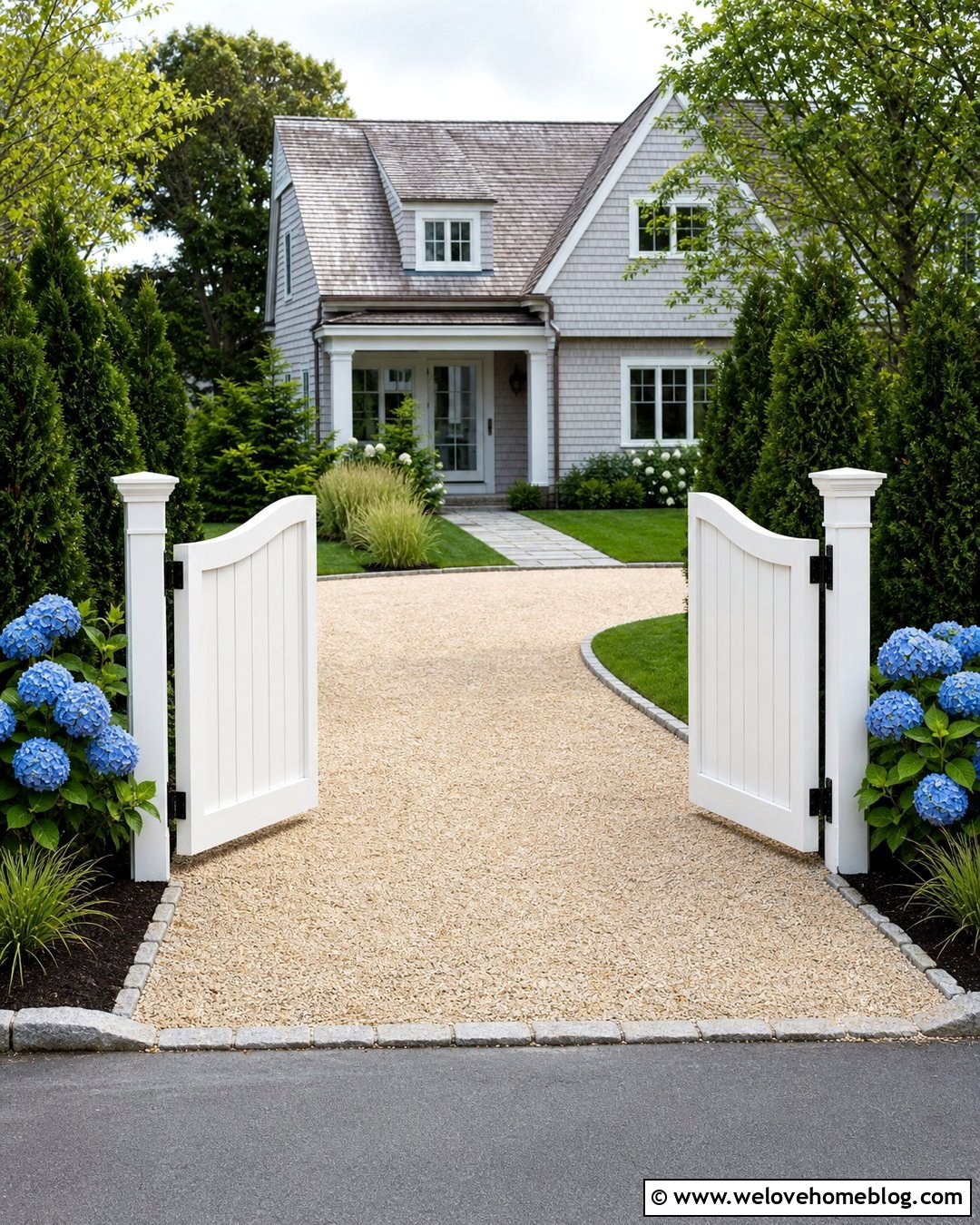
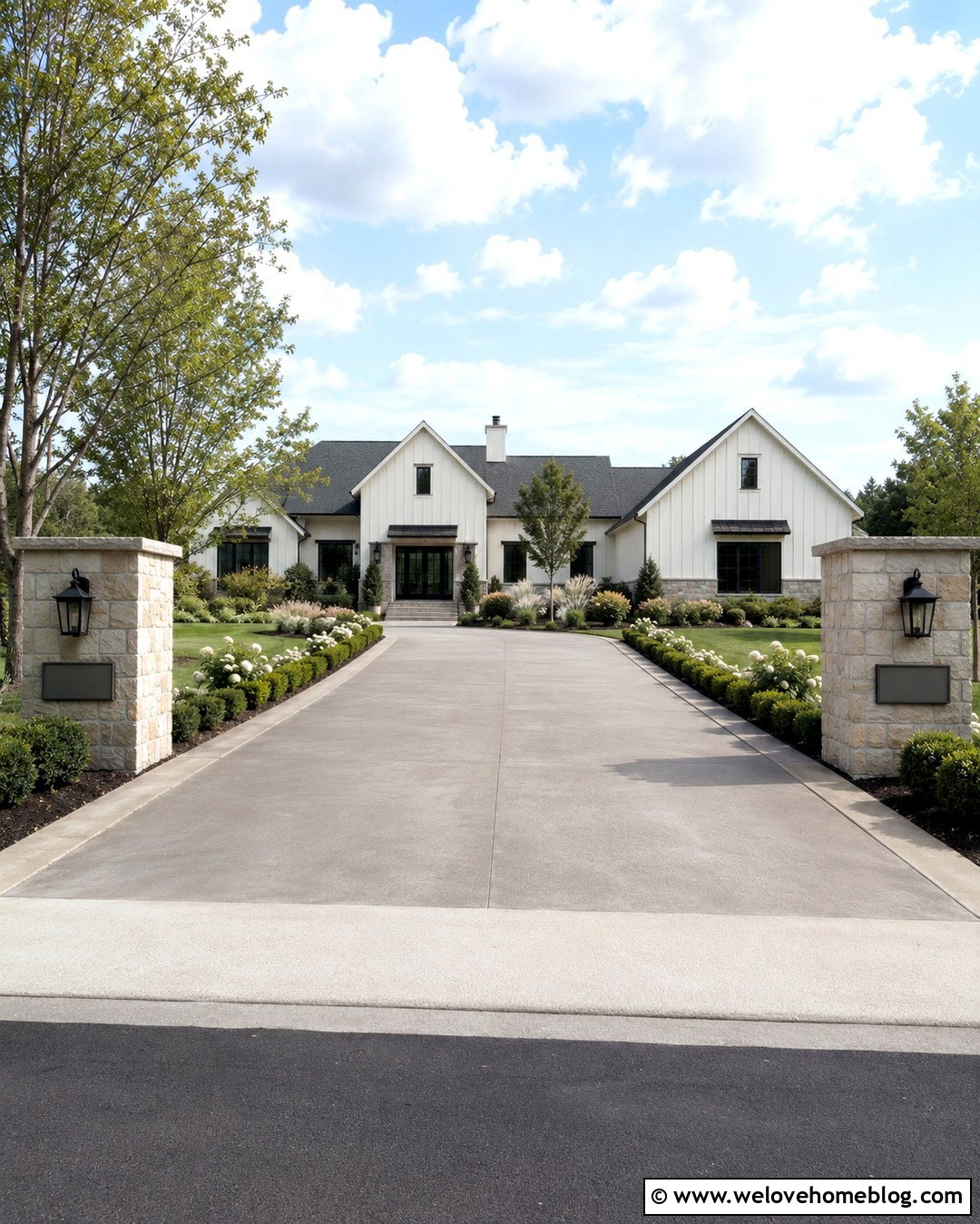
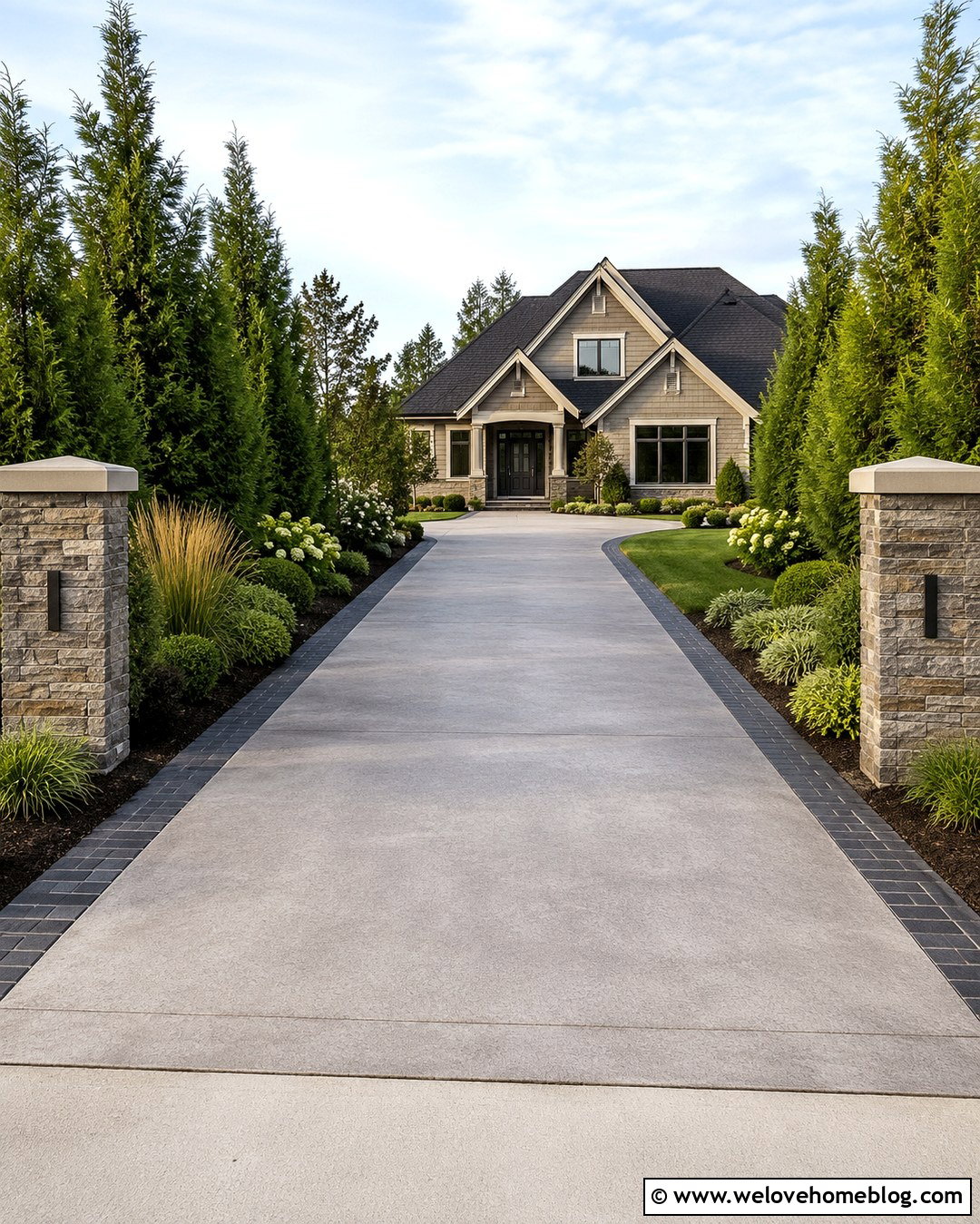
Concrete entrance pillars can give a minimalist driveway a clear starting point without appearing overly grand. Choose smooth poured concrete or large concrete masonry units in a color that matches the home’s facade. Keep each pillar rectangular, unadorned, and proportionate to the driveway width. Between them, use a straight exposed-aggregate or charcoal paver driveway with crisp concrete edging. Low grasses, flat gravel beds, and compact shrubs can soften the bases while leaving the entrance open. Add a small metal address plaque to one pillar and avoid extra decorative signs. If lighting is needed, use concealed or simple integrated fixtures. Repeat the concrete finish at the front steps, retaining wall, or mailbox. This creates a complete entrance where the pillars, driveway surface, landscaping, and architecture share the same restrained visual language.
Conclusion:
The most successful **20 Minimalist Driveway Ideas** prove that simplicity depends on thoughtful coordination, not a lack of detail. Choose one primary driveway material, one restrained border, and a limited planting palette. Then connect those choices to the home’s colors, lines, and architecture. Large concrete slabs create bold geometry, while gravel and aggregate introduce quieter texture. Pavers offer controlled patterns, and grass or permeable grids can visually soften wide parking areas. Whatever design you prefer, prioritize safe vehicle movement, drainage, durable installation, and easy maintenance. Review physical material samples outdoors before deciding, and work with qualified local professionals when grading, structural preparation, electrical work, or access requirements are involved.

Related posts:
Leave a Reply