
A spacious driveway should feel like part of the home, not a blank stretch of pavement. These **20 Large Concrete Driveway Ideas** show how thoughtful finishes, borders, layouts, and landscaping can turn a practical parking area into a polished front-yard feature. Concrete offers plenty of design flexibility, from clean broom finishes and exposed aggregate to stamped patterns, colored surfaces, and modern slab layouts. Decorative borders and mixed finishes can also divide broad paved areas into more attractive sections. () The best design will complement your house, handle daily traffic, and guide rainwater toward suitable drainage points. Whether you have a three-car garage, long approach, circular layout, or country property, explore these 20 Large Concrete Driveway Ideas for complete looks that balance function and curb appeal.

1. Wide Broom Finish Concrete Driveway With Brick Border
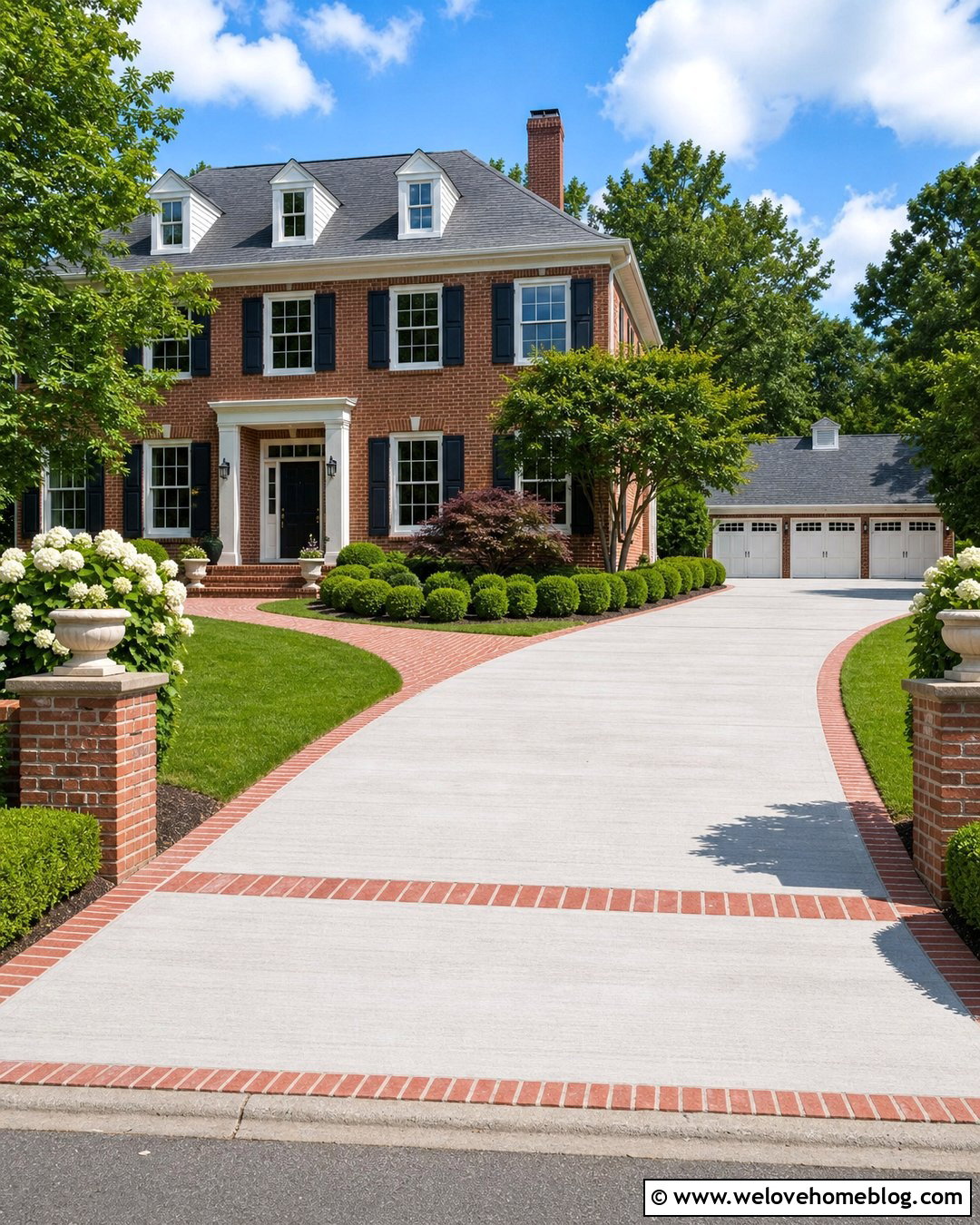
A wide broom finish concrete driveway is a practical choice for a traditional home with a two-car or three-car garage. The fine surface lines add subtle texture without making the large area feel busy. Frame the light gray concrete with a red or charcoal brick border to create definition against the lawn. Continue the brick across the driveway apron for a complete, connected look. Broad planting beds filled with boxwoods, hydrangeas, and small ornamental trees can soften both sides. Use gentle curves in the beds to balance the straight driveway shape. Near the house, connect the border to a matching brick walkway. This design works especially well with Colonial and Georgian facades because it combines a simple concrete surface with warm architectural detail.
2. Large Concrete Slab Driveway With Gravel Joints
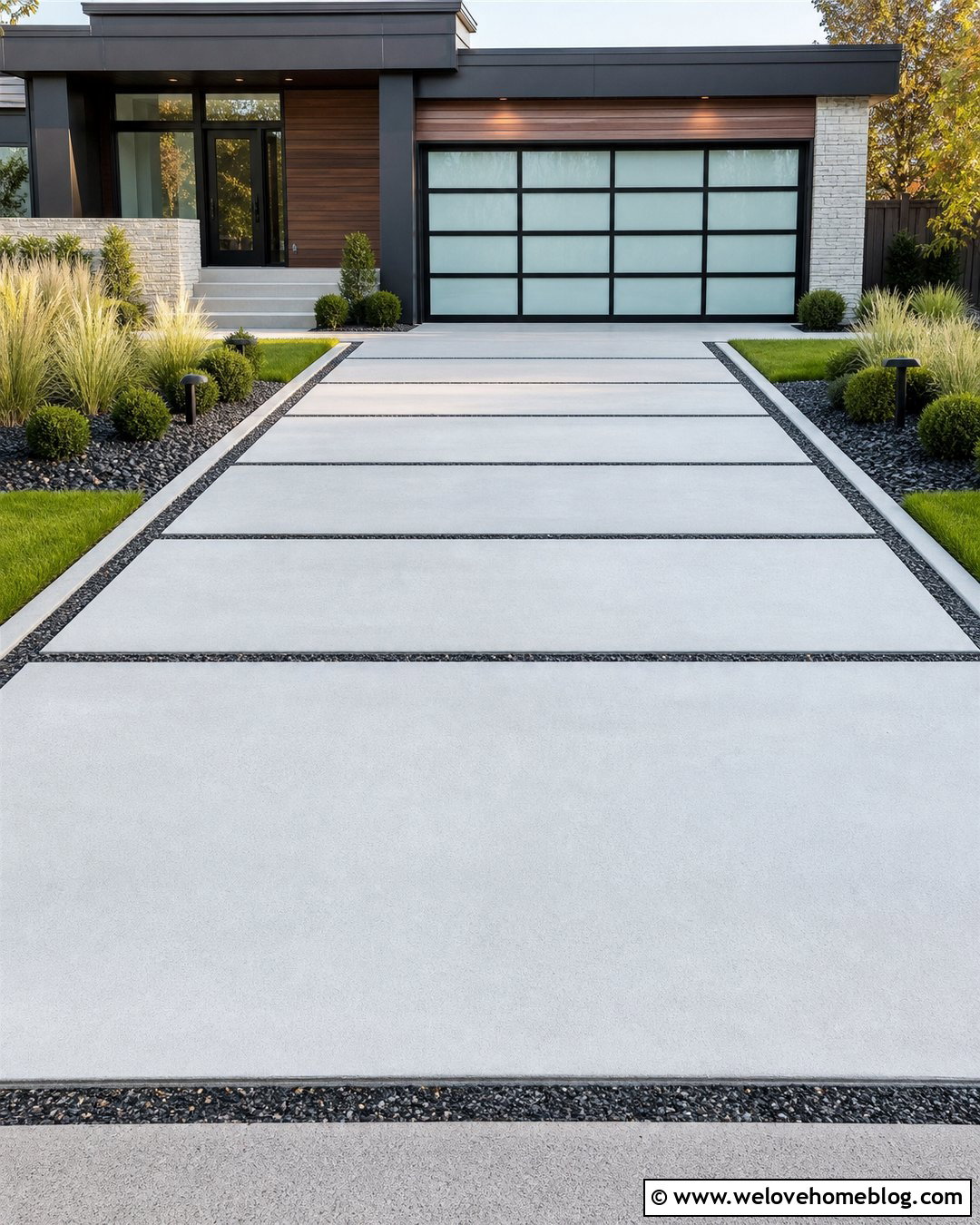
Large rectangular concrete slabs create a crisp, modern driveway without relying on decorative stamping. Choose smooth light gray poured concrete and separate the slabs with narrow joints filled with black gravel or dark river rock. These strong lines help break up a wide parking area and visually guide the eye toward the garage. Keep the driveway straight and symmetrical for the cleanest appearance. Along the edges, use low concrete curbs, clipped ornamental grasses, and rectangular planting beds. A matching slab walkway can branch toward the front entrance. This complete look pairs naturally with a contemporary house featuring flat rooflines, large windows, and neutral siding. Plan the slab pattern carefully so joints, garage doors, walkways, and landscape beds appear intentionally aligned rather than randomly divided.
3. Curved Exposed Aggregate Concrete Driveway
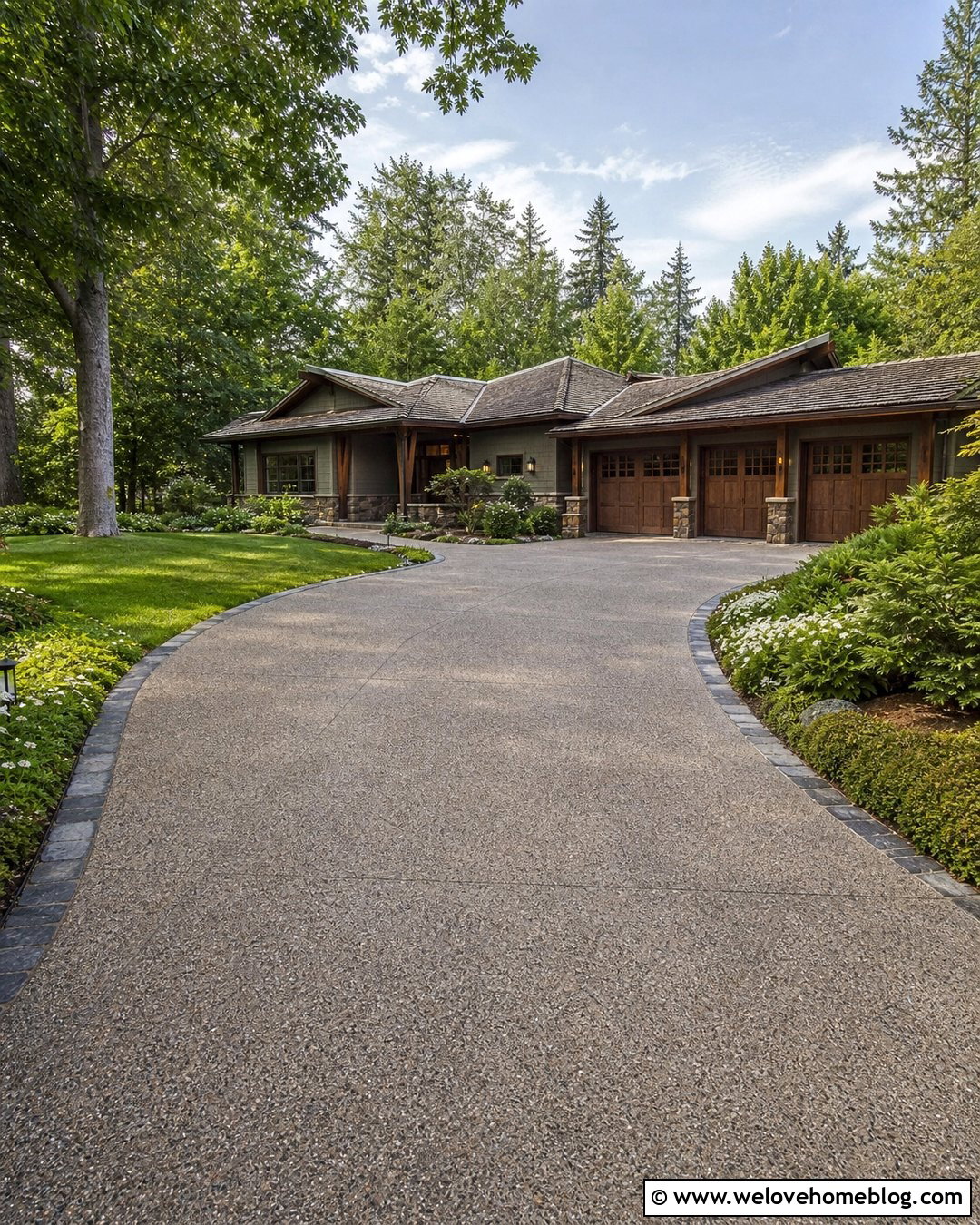
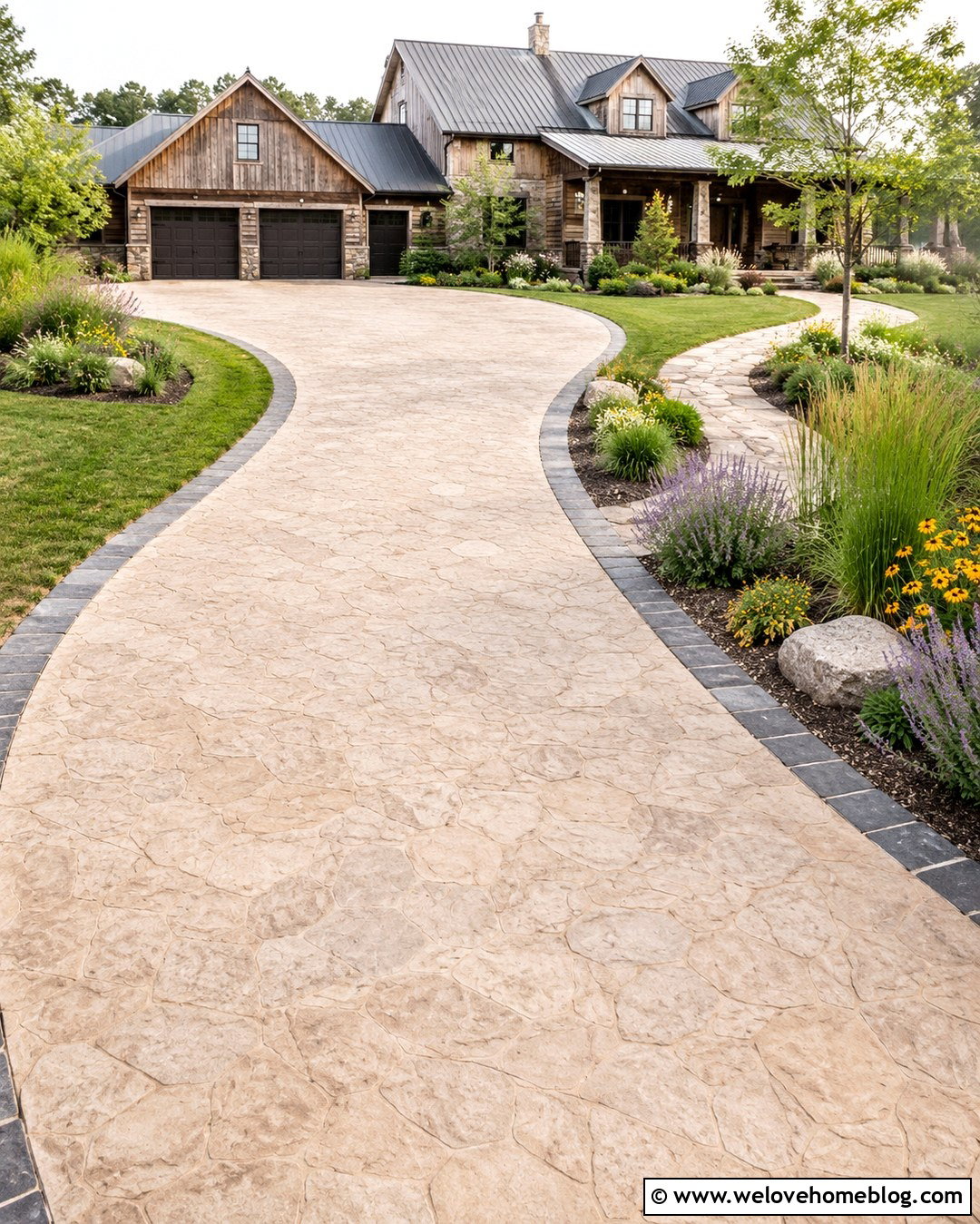
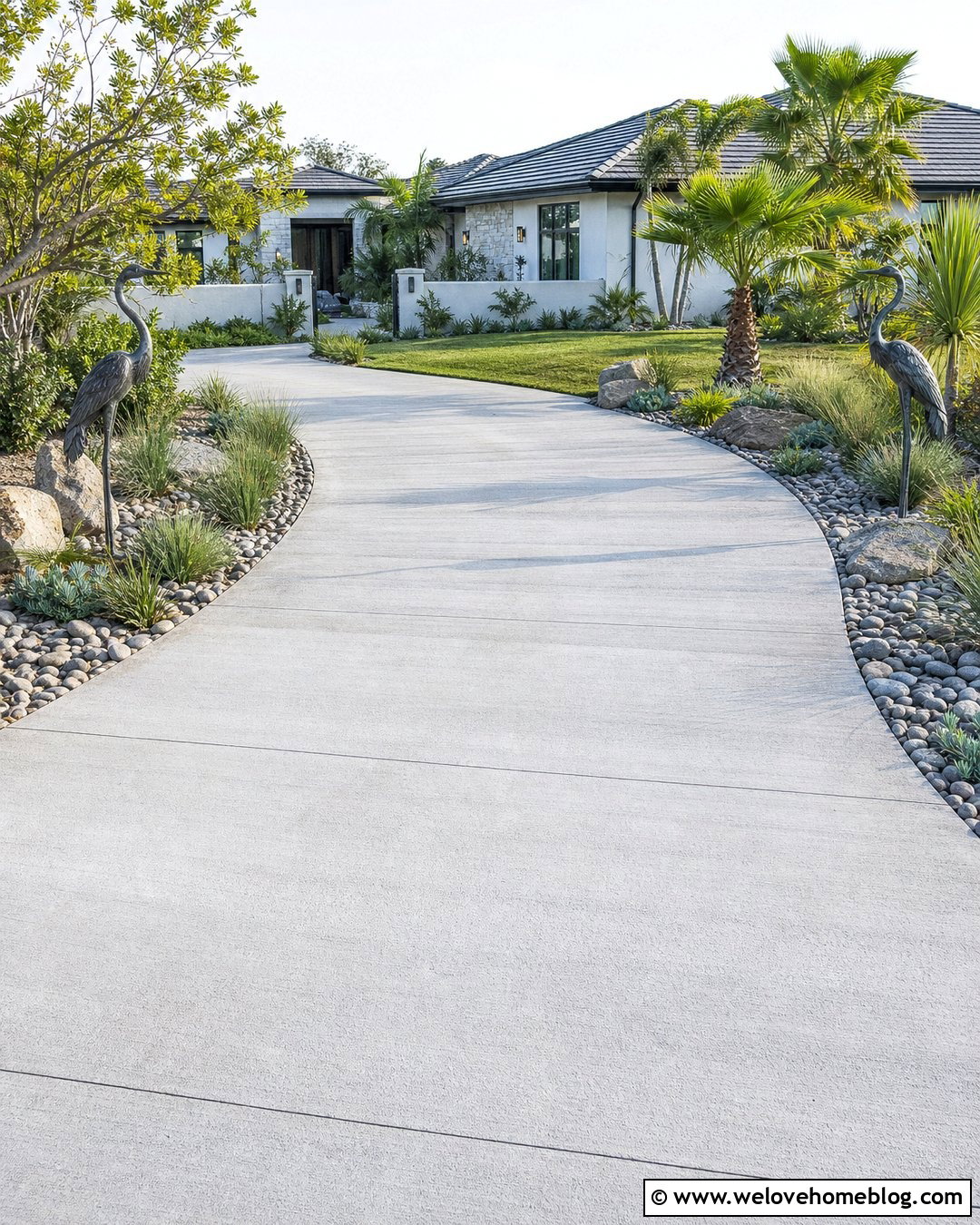
Exposed aggregate gives a curved concrete driveway more texture and natural color. Small stones visible at the surface help a large paved area blend with lawns, mature trees, and informal planting beds. Select warm tan, gray, and brown aggregate that complements the home’s stonework or roof. Define the sweeping driveway edges with dark concrete bands or granite cobbles. On the outside curve, create a deep landscape bed with flowering shrubs, ground cover, and layered evergreens. Keep plants low near the street so drivers have a clear view when entering or leaving. The driveway can gradually widen near a ranch or Craftsman-style home, providing extra maneuvering space without looking like a parking lot. A curved walkway following the driveway’s shape will make the entire front yard feel coordinated.
4. Stamped Concrete Circular Driveway With Center Garden
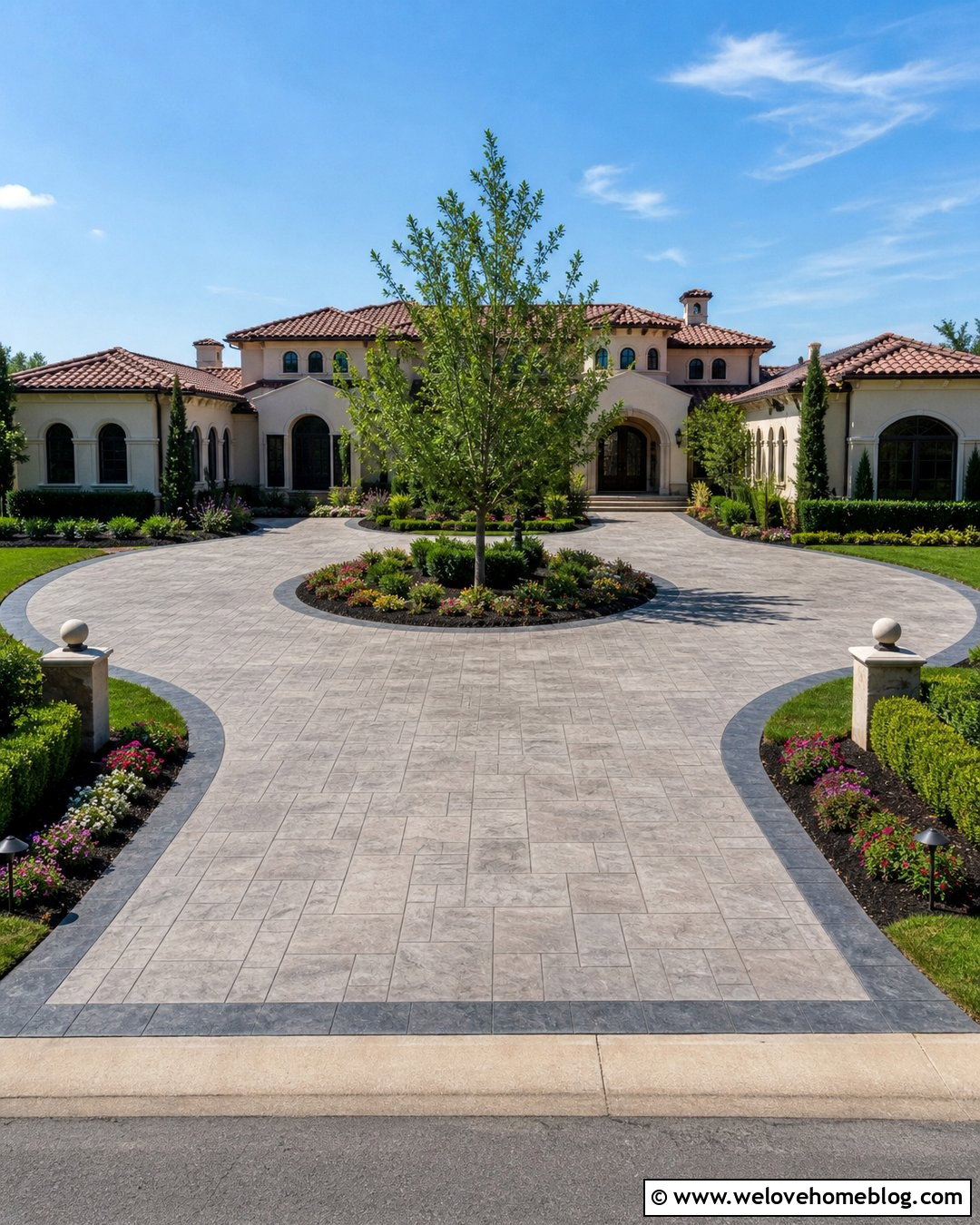
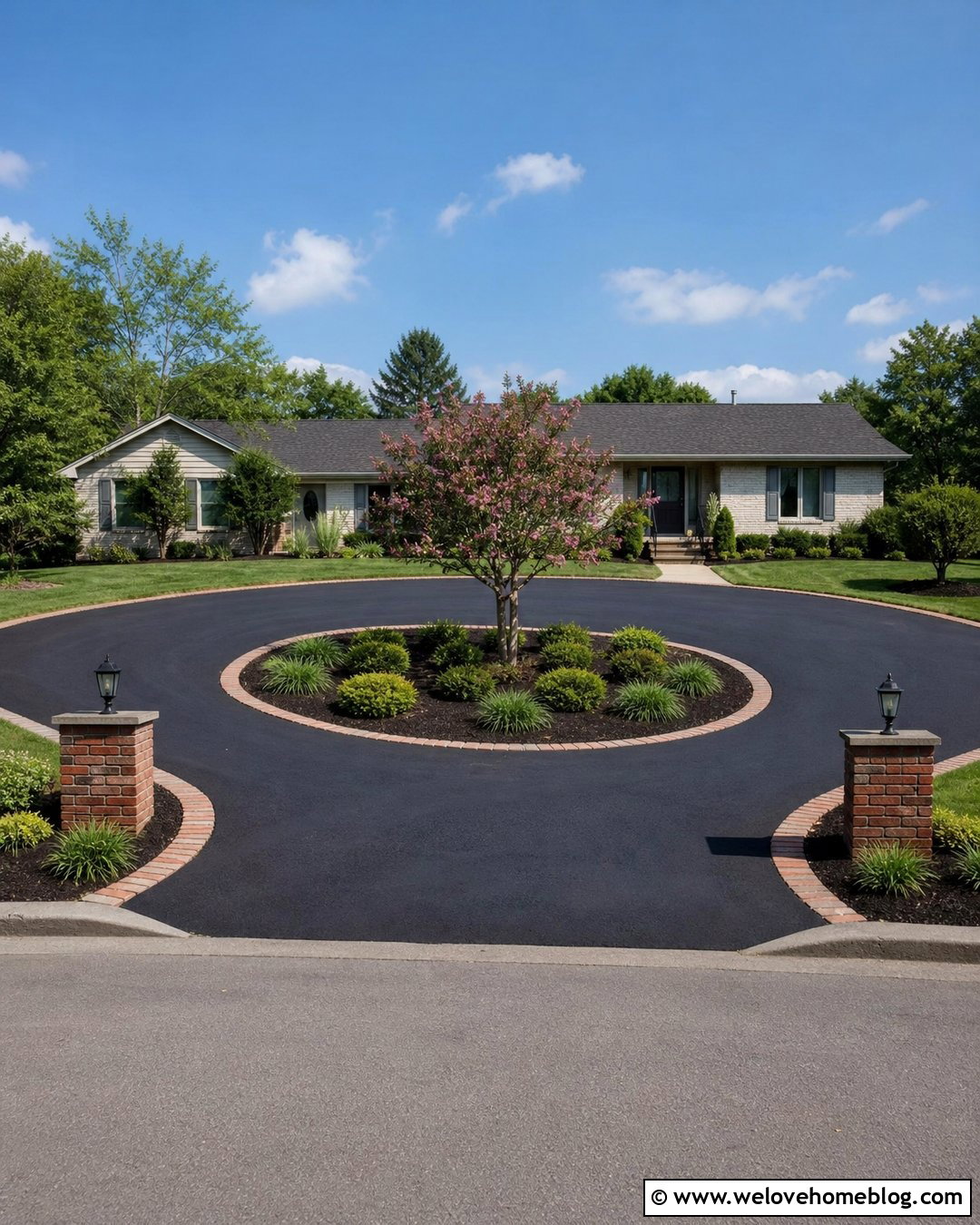
A stamped concrete circular driveway creates an impressive approach while supporting convenient vehicle movement. Choose an ashlar slate pattern in a warm gray or sandstone color, then add a darker stamped border around the outer edge and center island. Inside the circle, use one ornamental tree surrounded by layered shrubs, perennial flowers, and tidy ground cover. The landscaping should remain open enough to preserve views of the house and front entrance. Circular layouts are especially effective when the central planting area, driveway surface, and home are treated as one coordinated composition. () Install a matching walkway that crosses the island or connects from the inner curve to the porch. This layout suits a large traditional, Mediterranean, or European-inspired home with a centered entry.
5. Sand Finish Concrete Driveway With Cobblestone Grid
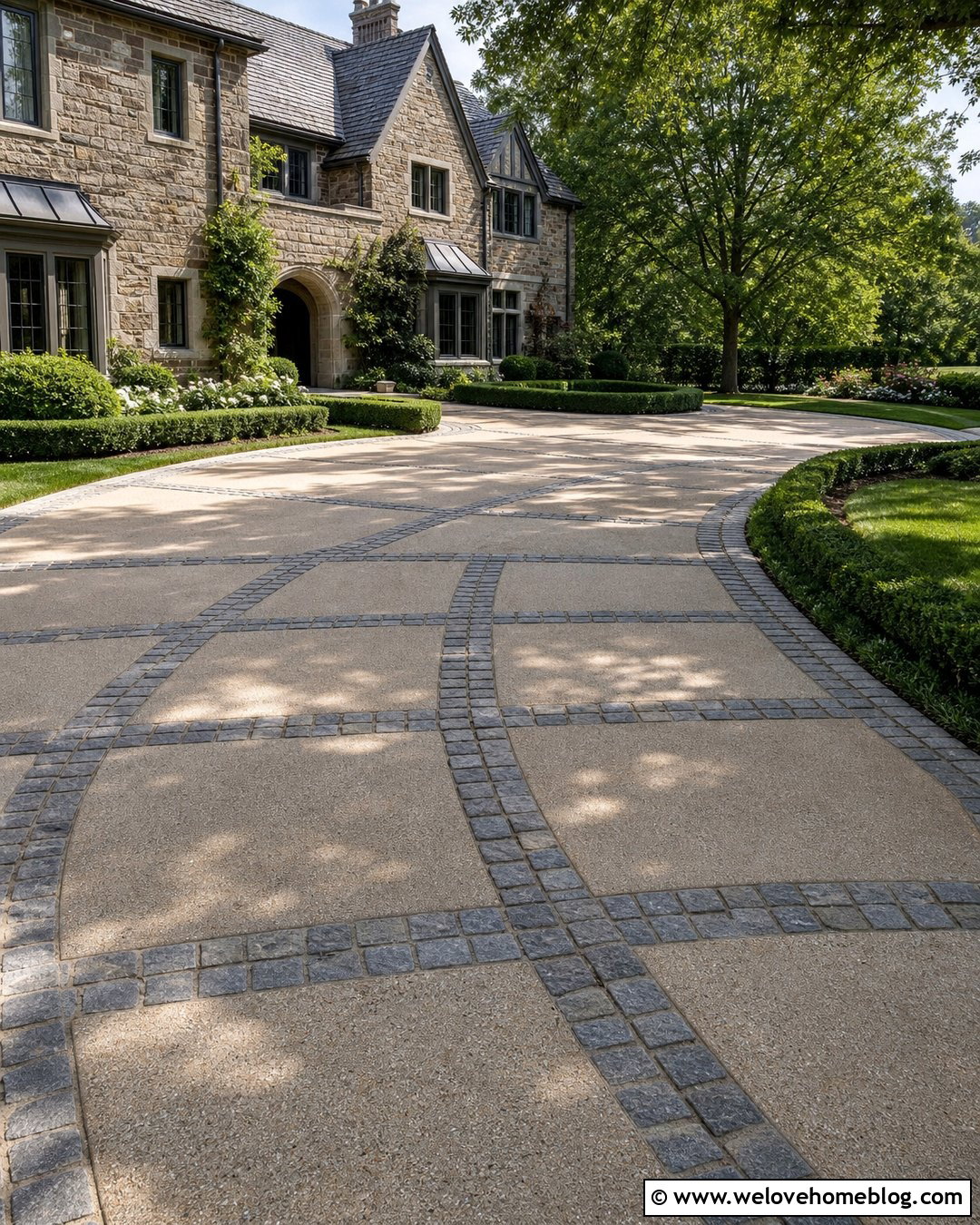
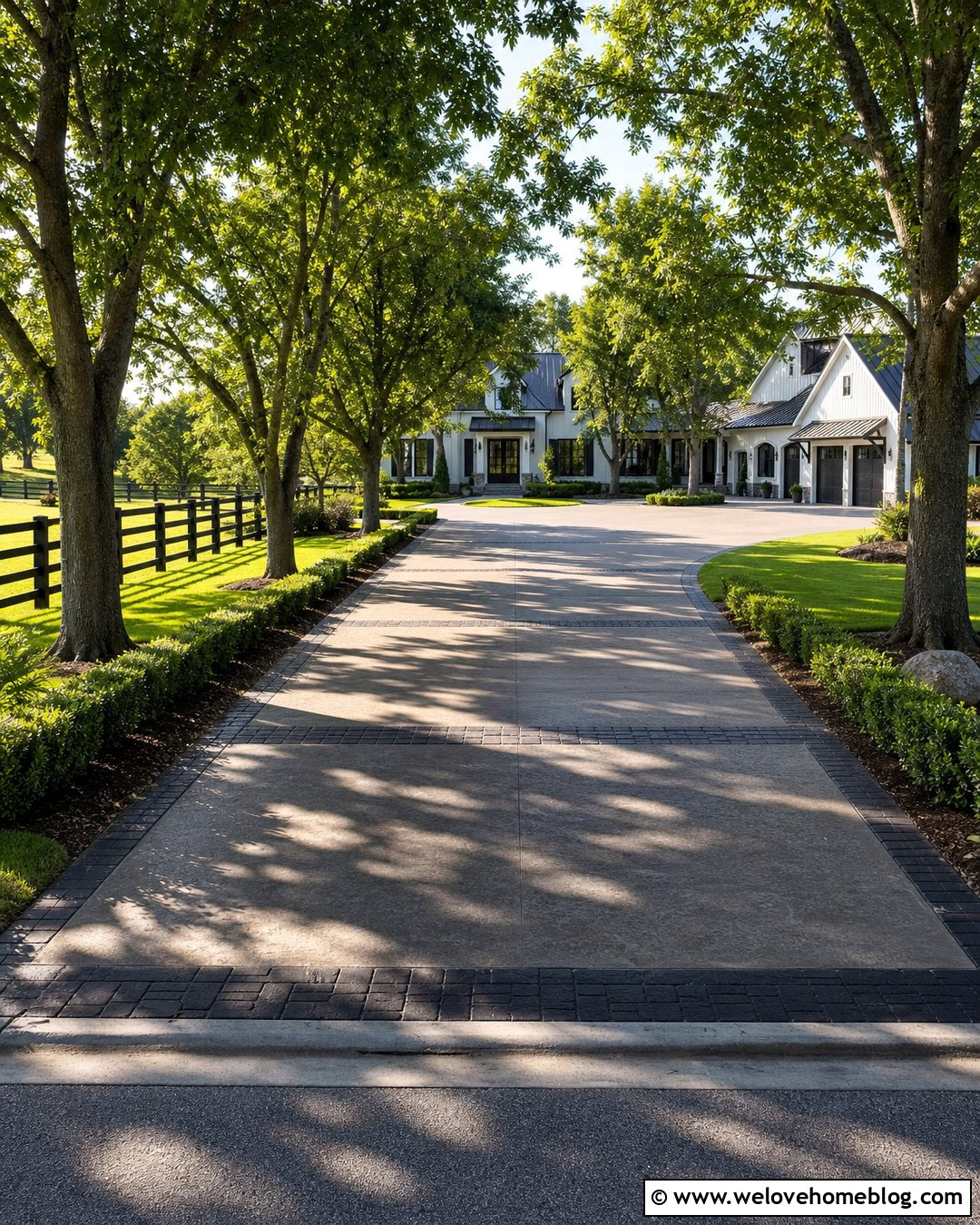
Warm sand finish concrete feels softer and more refined than a standard gray slab. On a large driveway, inlaid cobblestone bands can form a wide grid that visually divides the surface into balanced sections. Run cobblestone along the perimeter, across expansion areas, and around the parking court. This treatment creates the character of a stone driveway while keeping most of the surface concrete. A similar combination has been used to add intricate definition to gracefully curved residential driveways. () Choose gray and brown cobbles that echo the home’s masonry. Frame the approach with clipped hedges, shade trees, and simple lawn panels. The finished driveway works beautifully with a Tudor, French country, or stone-clad house because the textured border connects the broad concrete surface to traditional architecture.
6. Two Tone Concrete Driveway With Geometric Bands
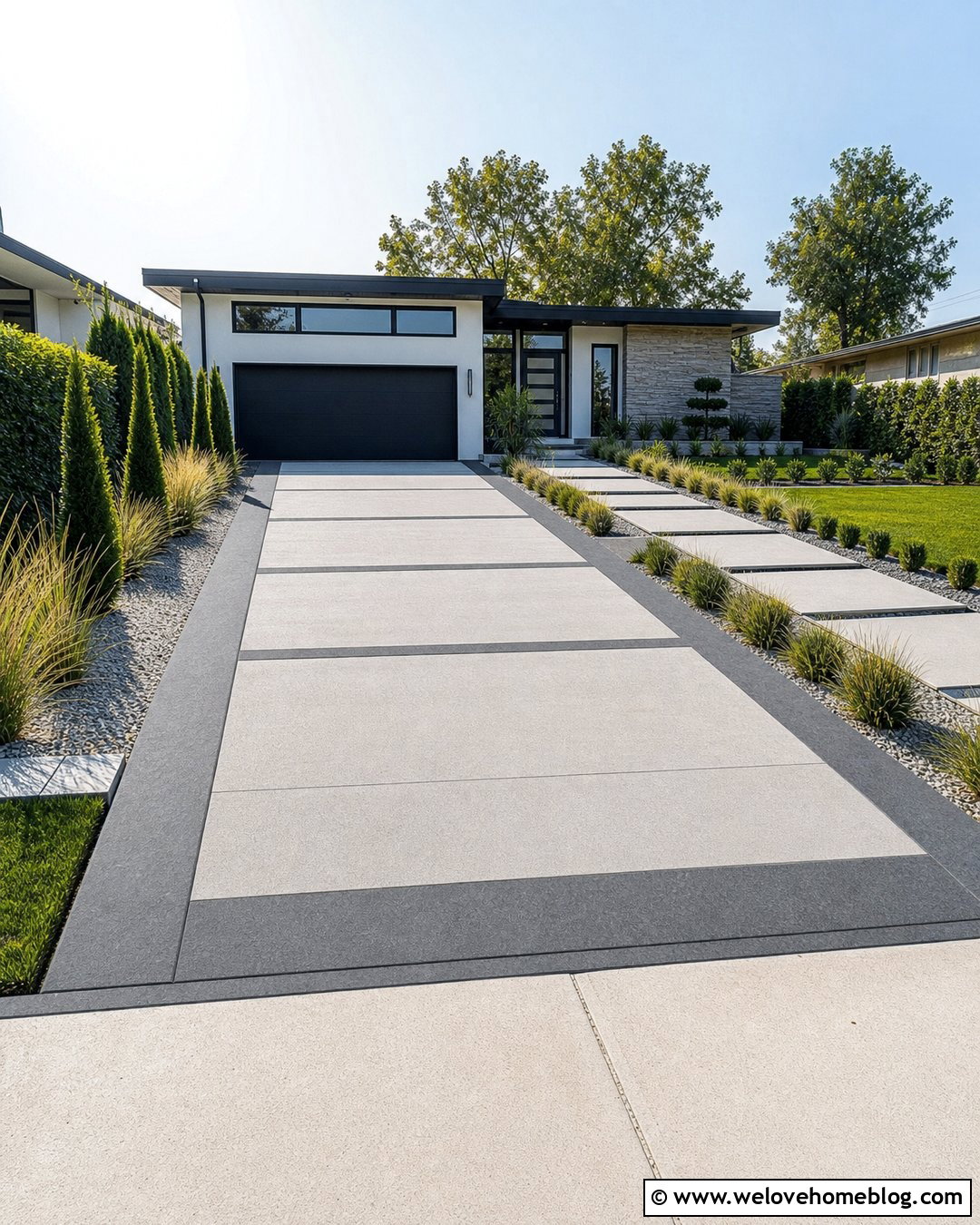
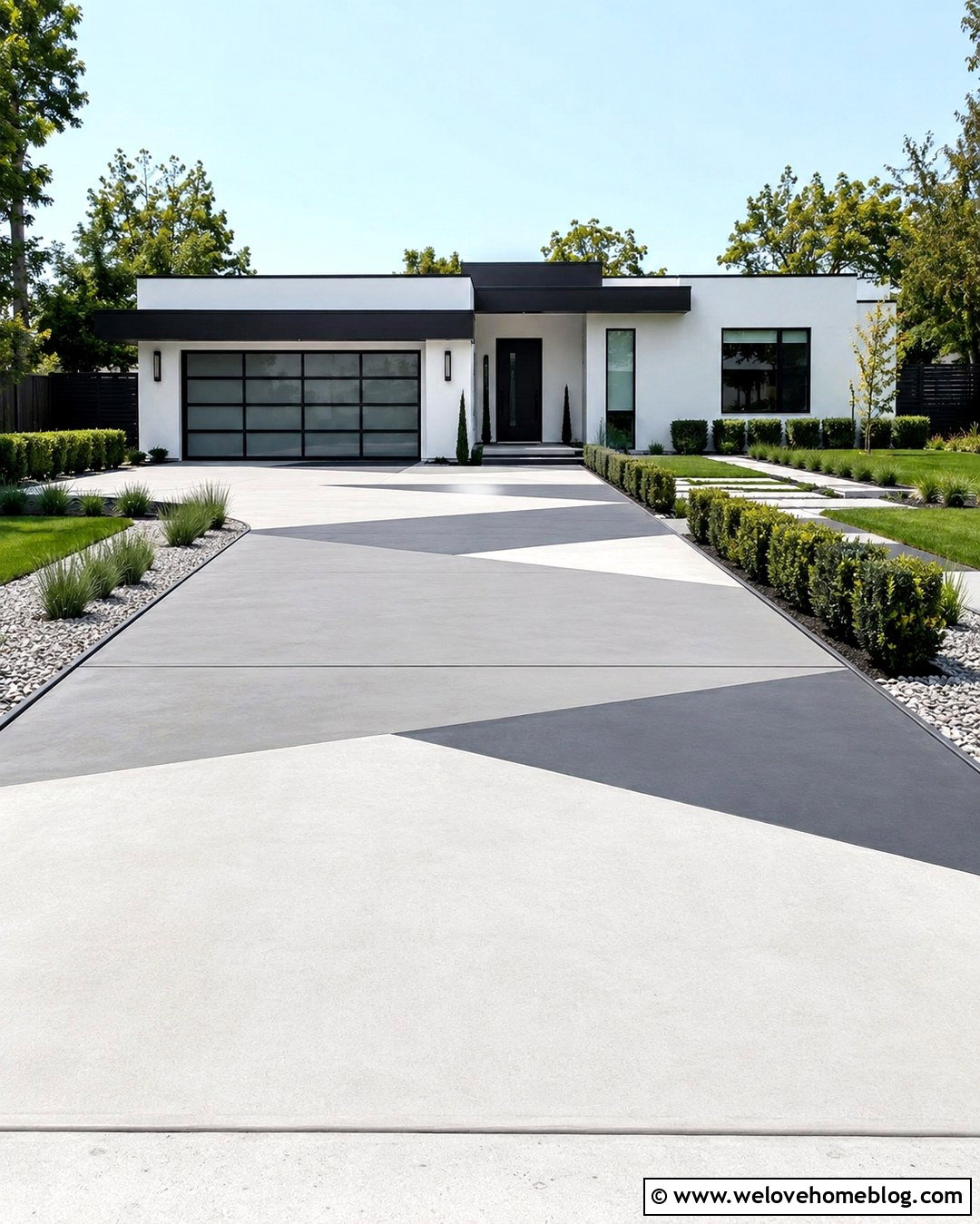
Two concrete colors can transform a broad driveway into an organized geometric feature. Use medium gray concrete for the main parking areas and charcoal concrete bands to outline large rectangles. Align the bands with garage doors, the front walkway, and the center of the house. A straight driveway works best because its symmetry reinforces the graphic layout. Continue the darker concrete around the perimeter as a clean border between pavement and landscaping. On both sides, use linear beds with ornamental grasses, compact evergreens, and pale gravel mulch. Repeating one plant variety in groups will keep the landscaping calm beside the patterned surface. This large concrete driveway is particularly suited to a contemporary or midcentury home. Limit the palette to two concrete tones so the result remains sharp, spacious, and visually controlled.
7. Horseshoe Concrete Driveway With Landscaped Island
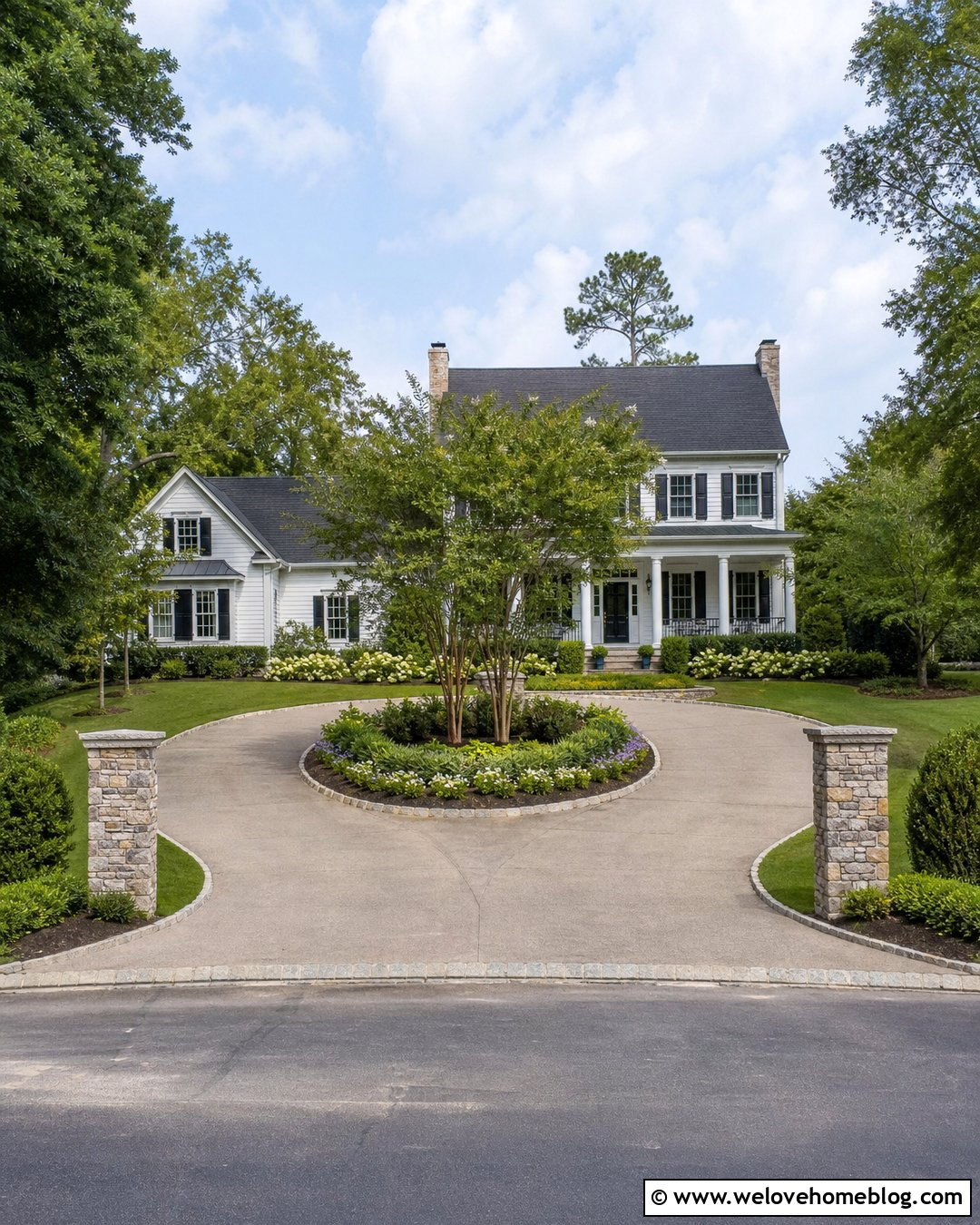
A horseshoe concrete driveway provides separate entry and exit points while creating an attractive front-yard centerpiece. Use lightly textured broom finish concrete in a warm gray tone, with a curved brick or natural stone border following both sides. The central island can feature a multi-stem tree, low evergreen shrubs, flowering perennials, and a simple path leading toward the front door. Repeat some of these plants along the outer driveway edge for continuity. Keep the entrance openings clearly defined with stone pillars, low walls, or matching mailbox columns. The concrete should widen near the house to create a comfortable drop-off zone without overwhelming the landscaping. This layout complements large Colonial, Southern, and country homes. Balanced planting and consistent edging make the entire horseshoe shape easy to understand from the curb.
8. Three Car Concrete Driveway With Paver Apron
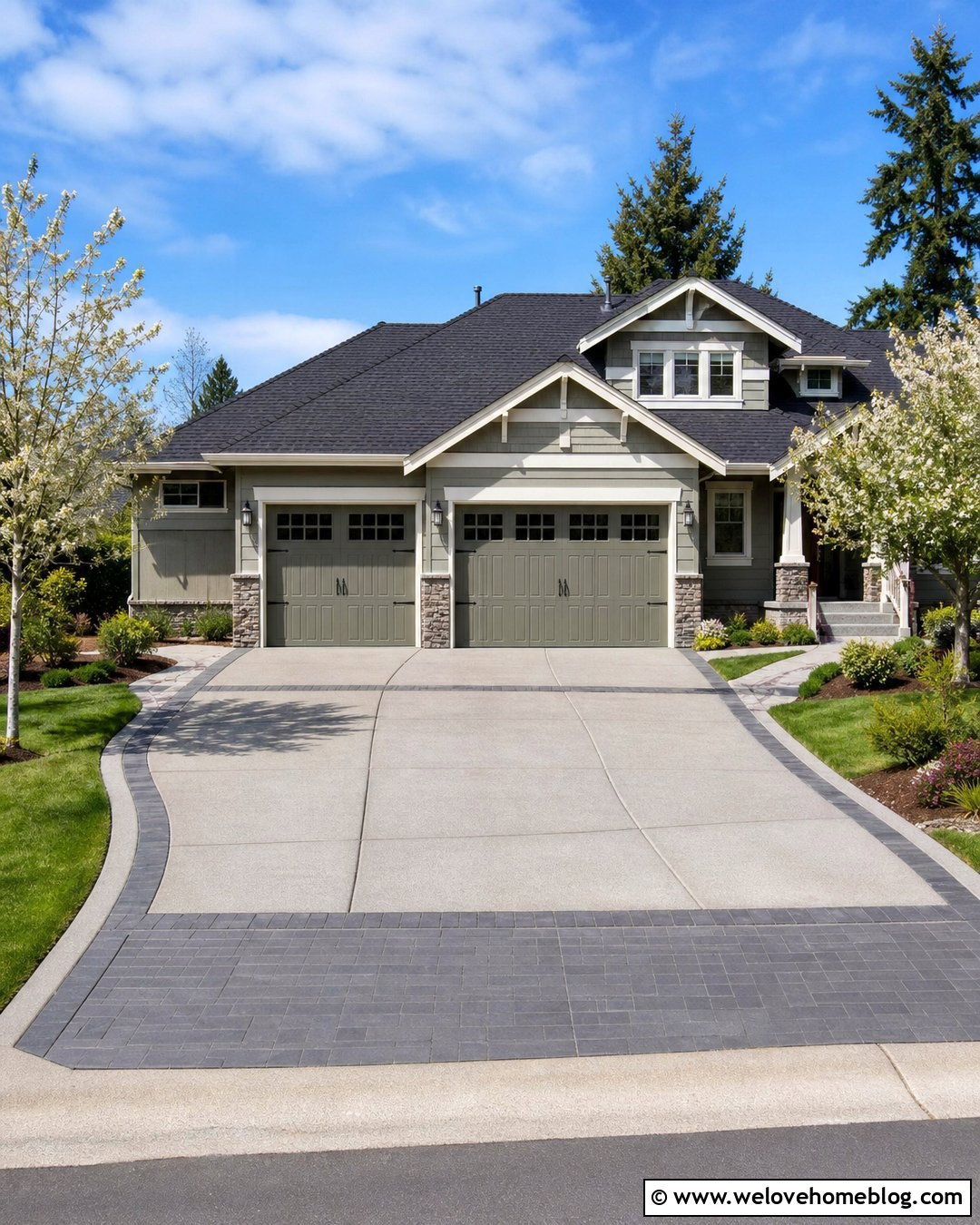
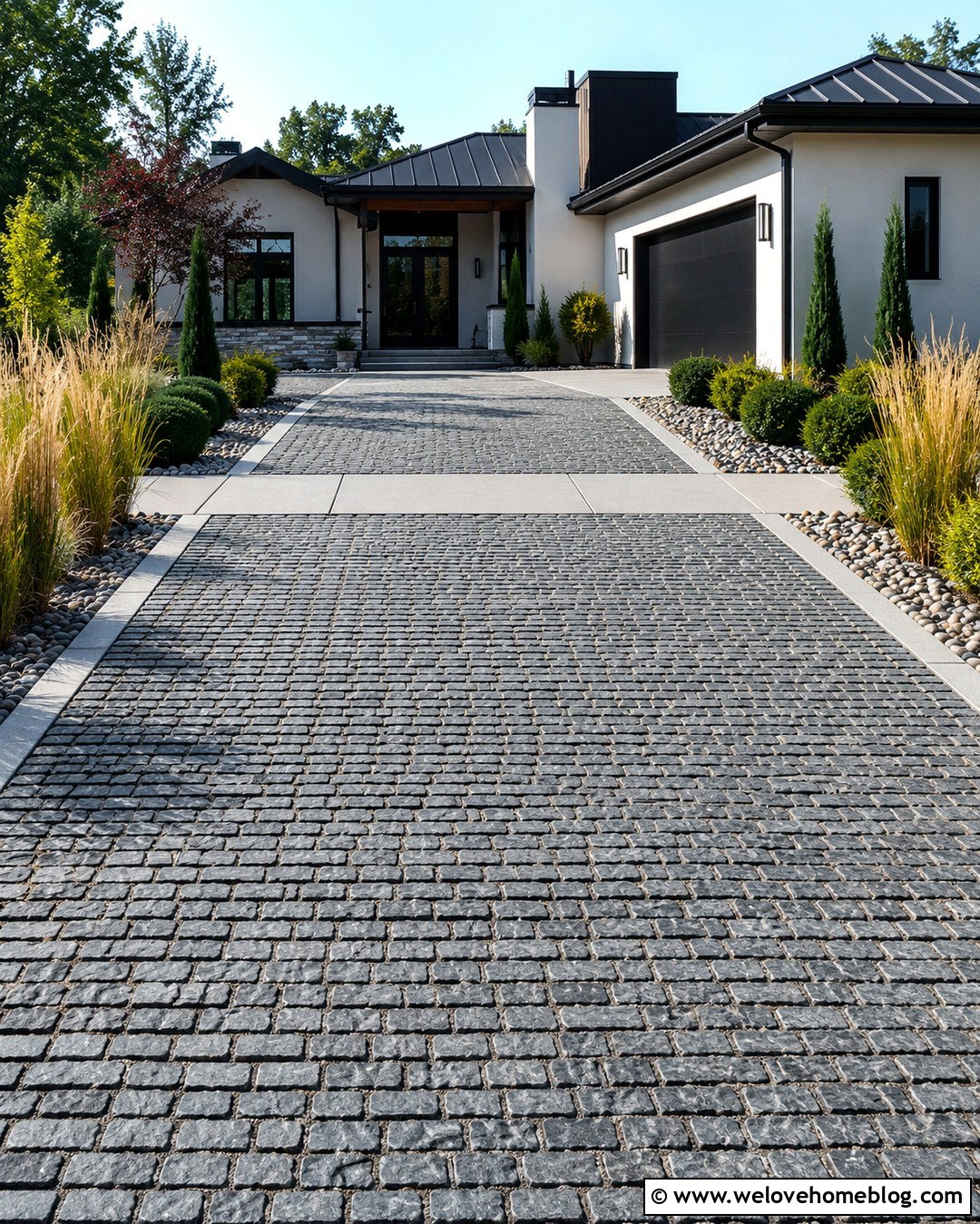
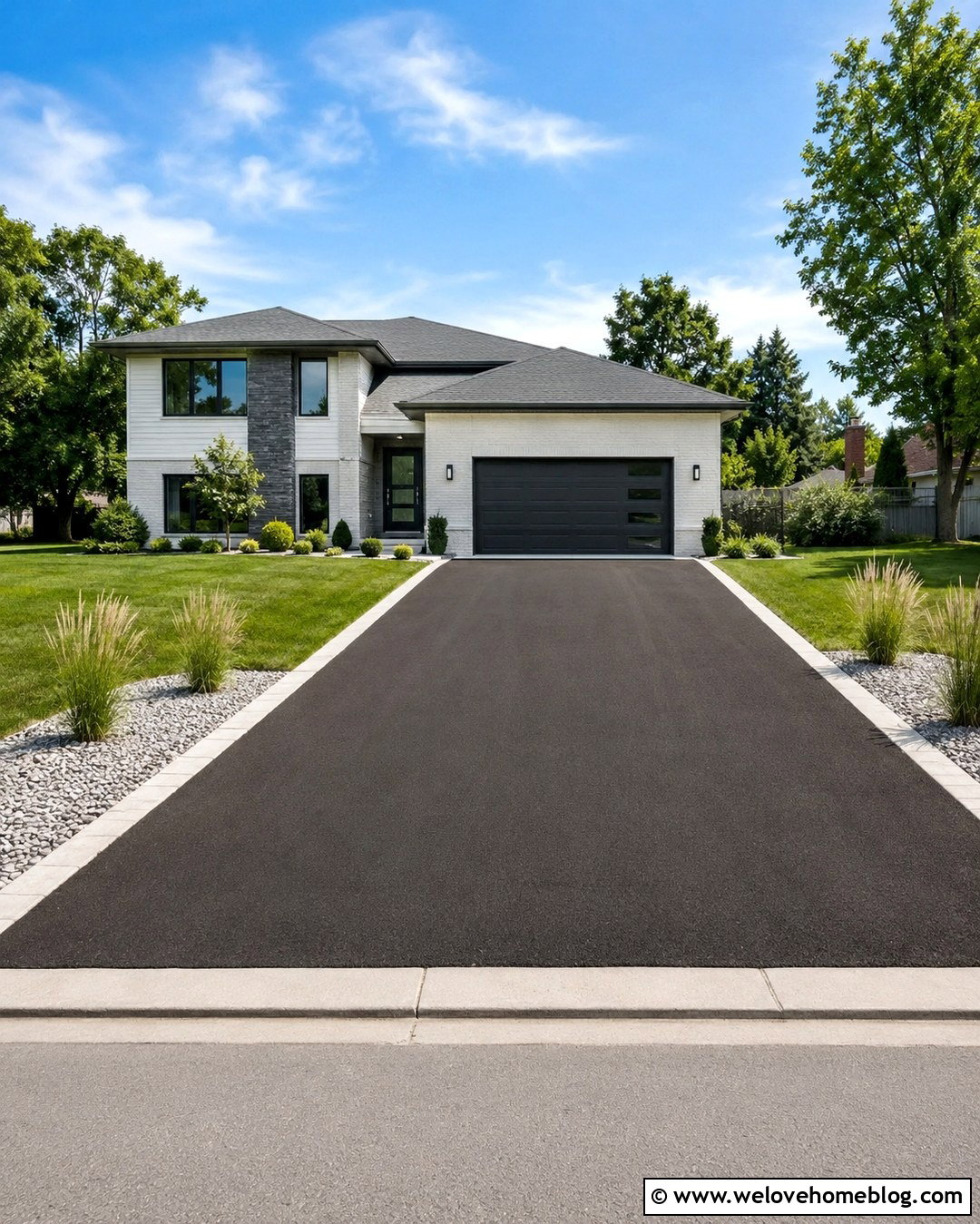
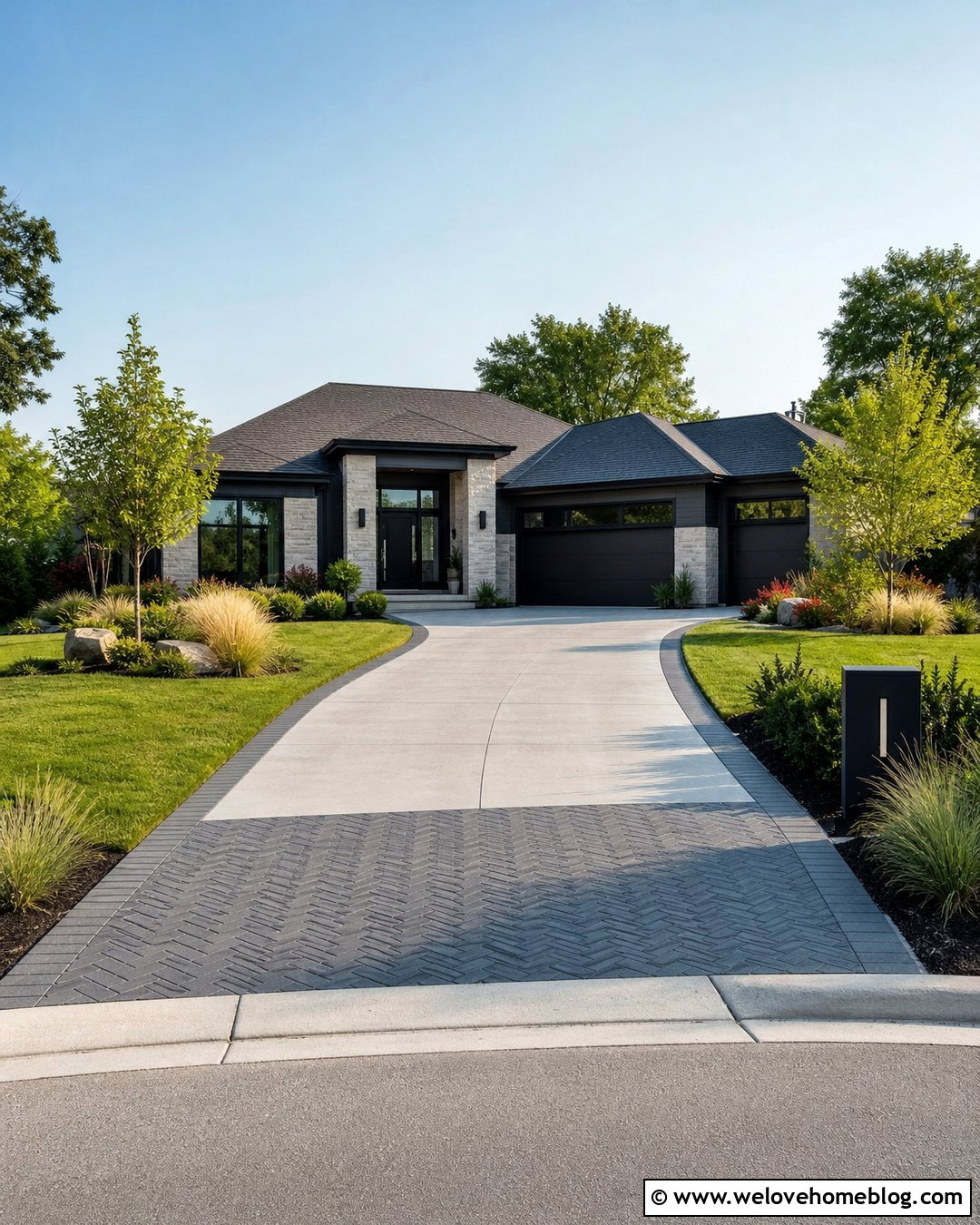
A large three-car driveway needs visual structure to prevent the surface from looking oversized. Start with durable light gray broom finish concrete, then install a broad charcoal concrete paver apron where the driveway meets the street. Repeat the pavers in narrow bands near the garage doors and along the edges. These details divide the long surface and connect it to the home’s exterior materials. Use a straight central approach that gradually widens into the garage court. Plant medium-height shrubs near the outer garage corners to soften the building, but avoid crowding the turning area. A separate paver walkway can lead guests toward the front porch. This design suits a large suburban Craftsman or transitional house, especially when the paver color matches the roof, shutters, or stone veneer.
9. White Concrete Driveway With Black Gravel Borders
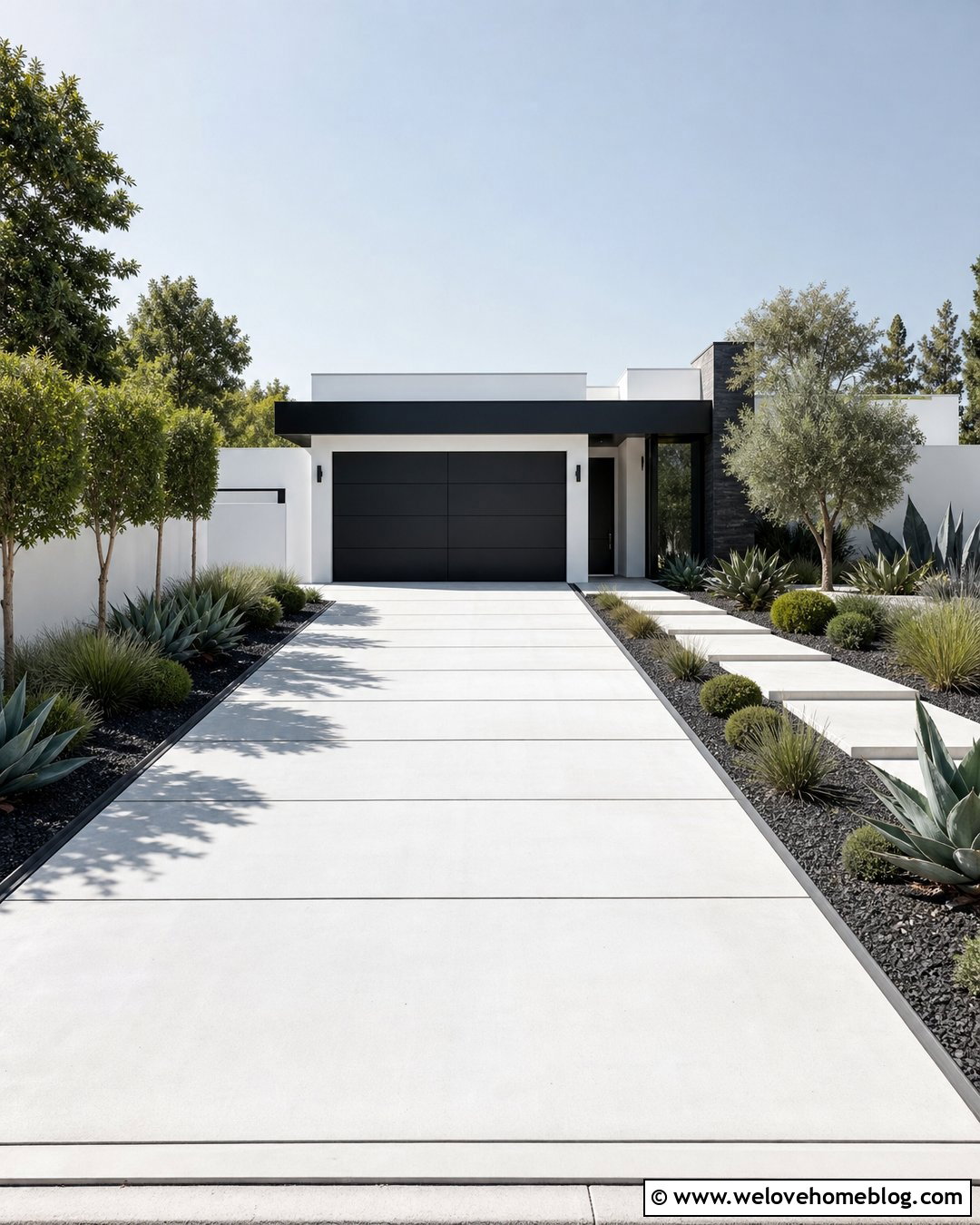
Bright white concrete creates a striking entrance for a modern home, particularly when contrasted with black gravel borders. Divide the wide driveway into oversized rectangular panels with precise saw-cut lines. Along each side, add narrow strips of dark gravel held in place by steel or flush concrete edging. Drought-tolerant grasses, sculptural agaves, and compact shrubs can rise from the gravel without hiding the driveway’s clean geometry. Continue the same concrete to the front walkway for a seamless transition. A straight layout leading to a dark garage facade produces strong visual contrast, while a slight slope can emphasize the architecture. Because very light surfaces show marks more readily, consider the local environment and maintenance expectations before selecting the final color. The complete look feels bright, minimalist, and carefully planned.
10. Charcoal Concrete Driveway With Light Stone Edging
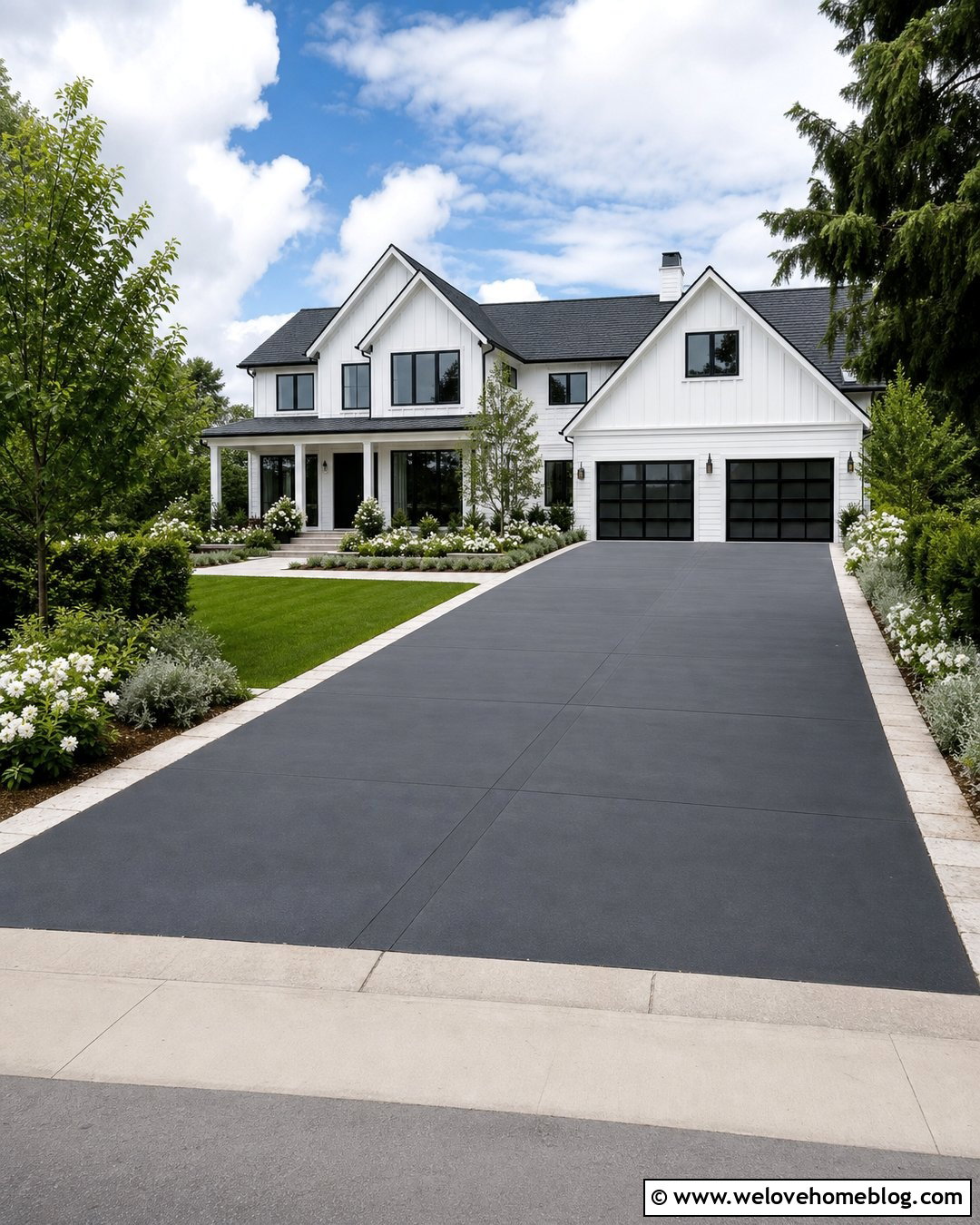
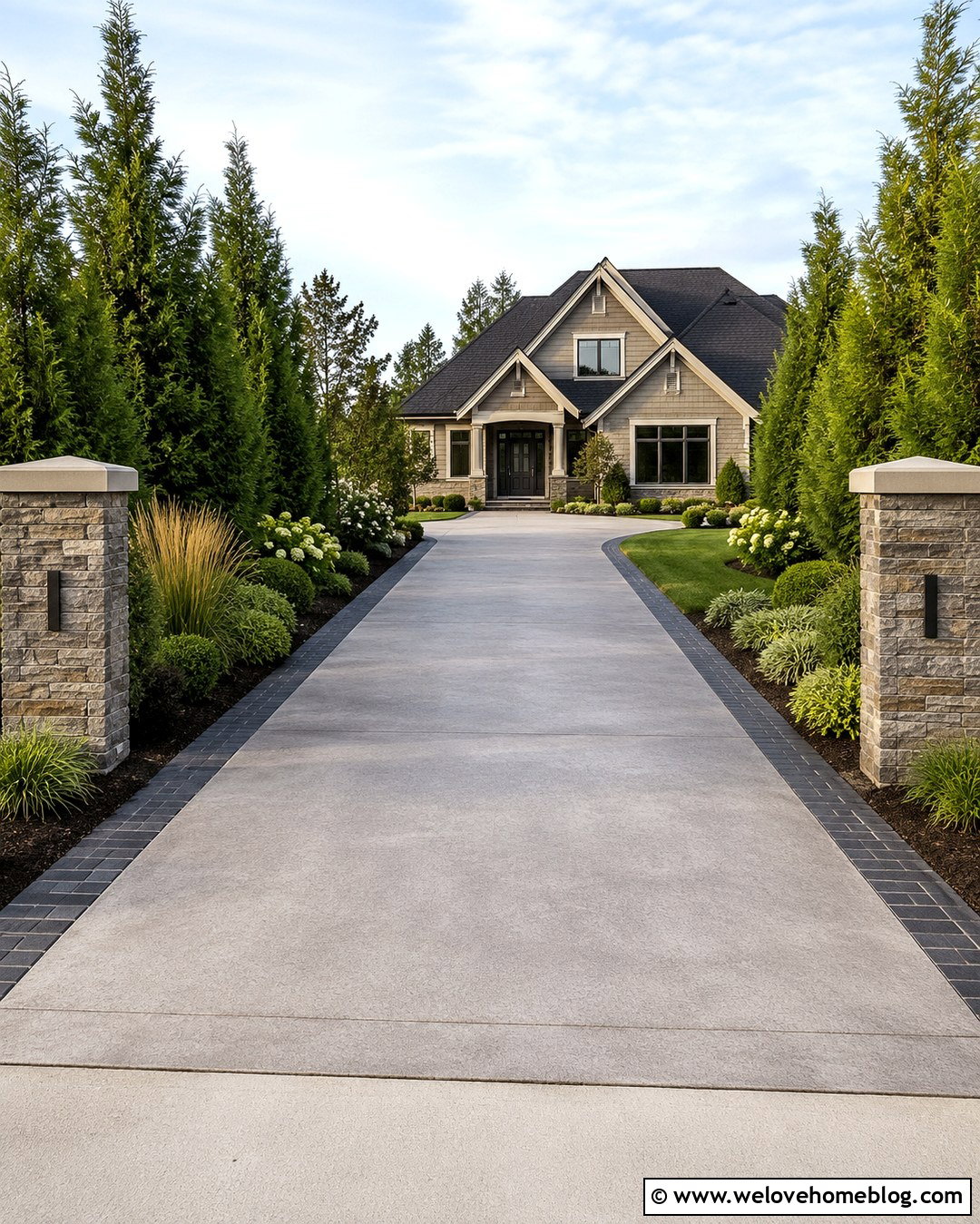
Dark charcoal concrete can make a large driveway feel sophisticated and grounded. Balance the deep surface color with pale limestone, travertine, or light concrete pavers installed around the perimeter. A wide straight layout works well, especially when the border continues across the street apron and in front of the garage. Use broad scoring lines to create large rectangular sections rather than small decorative patterns. On either side, plant white flowering shrubs, silvery foliage, and deep green evergreens for clear contrast. The driveway can connect to a light stone walkway leading toward a covered entry. This combination looks especially cohesive with a modern farmhouse featuring white siding, black windows, and natural stone accents. Test the chosen concrete color outdoors first because sunlight, surrounding materials, and finishing methods can affect its final appearance.
11. Salt Finish Concrete Driveway With Coastal Landscaping
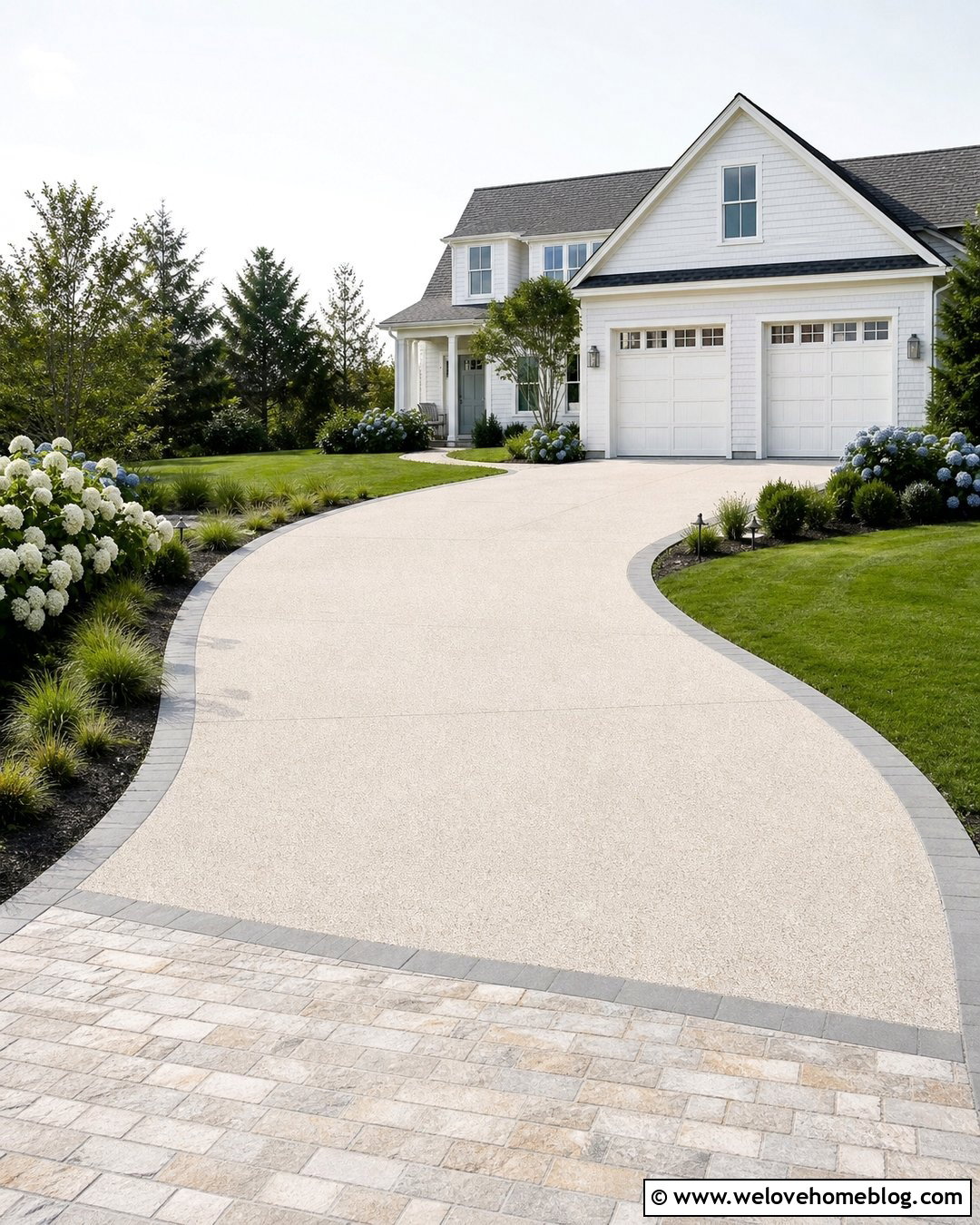
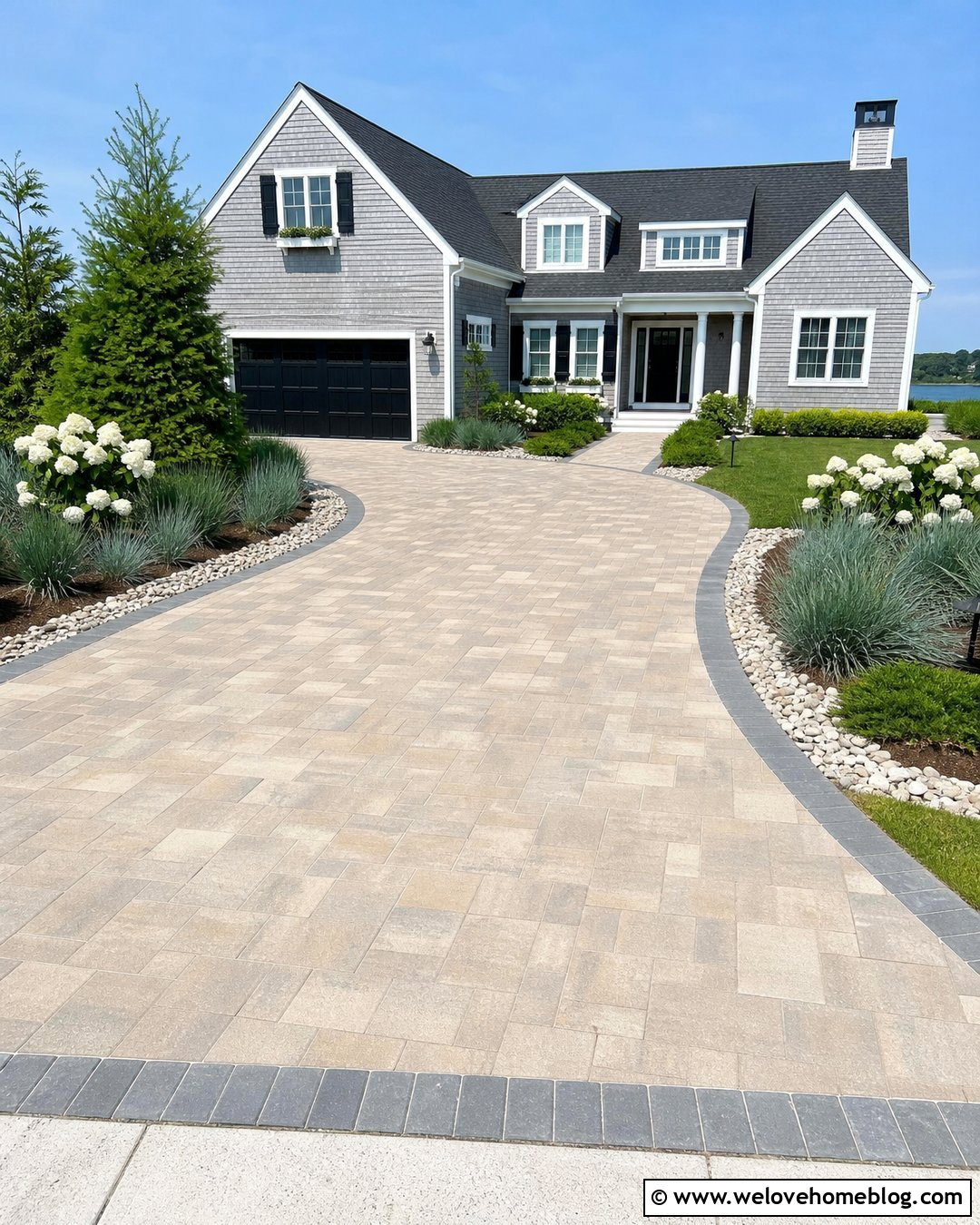
A salt finish gives concrete a lightly pitted texture that looks relaxed without appearing unfinished. Choose pale beige or soft gray concrete for a large curved driveway leading to a coastal, Cape Cod, or low-country home. Frame the surface with a narrow band of smooth concrete in a slightly darker tone. Around the driveway, use wind-tolerant ornamental grasses, compact hydrangeas, native shrubs, and clean lawn areas. A shell-colored paver apron can create a gentle transition from the street while reinforcing the coastal palette. Allow the driveway to widen naturally near the garage instead of forming a harsh rectangular parking pad. Low landscape lighting can follow the outer curve without interrupting the daytime view. The restrained finish, flowing shape, and airy planting scheme make the wide paved area feel welcoming and connected to its setting.
12. Concrete Strip Driveway With Grass Center
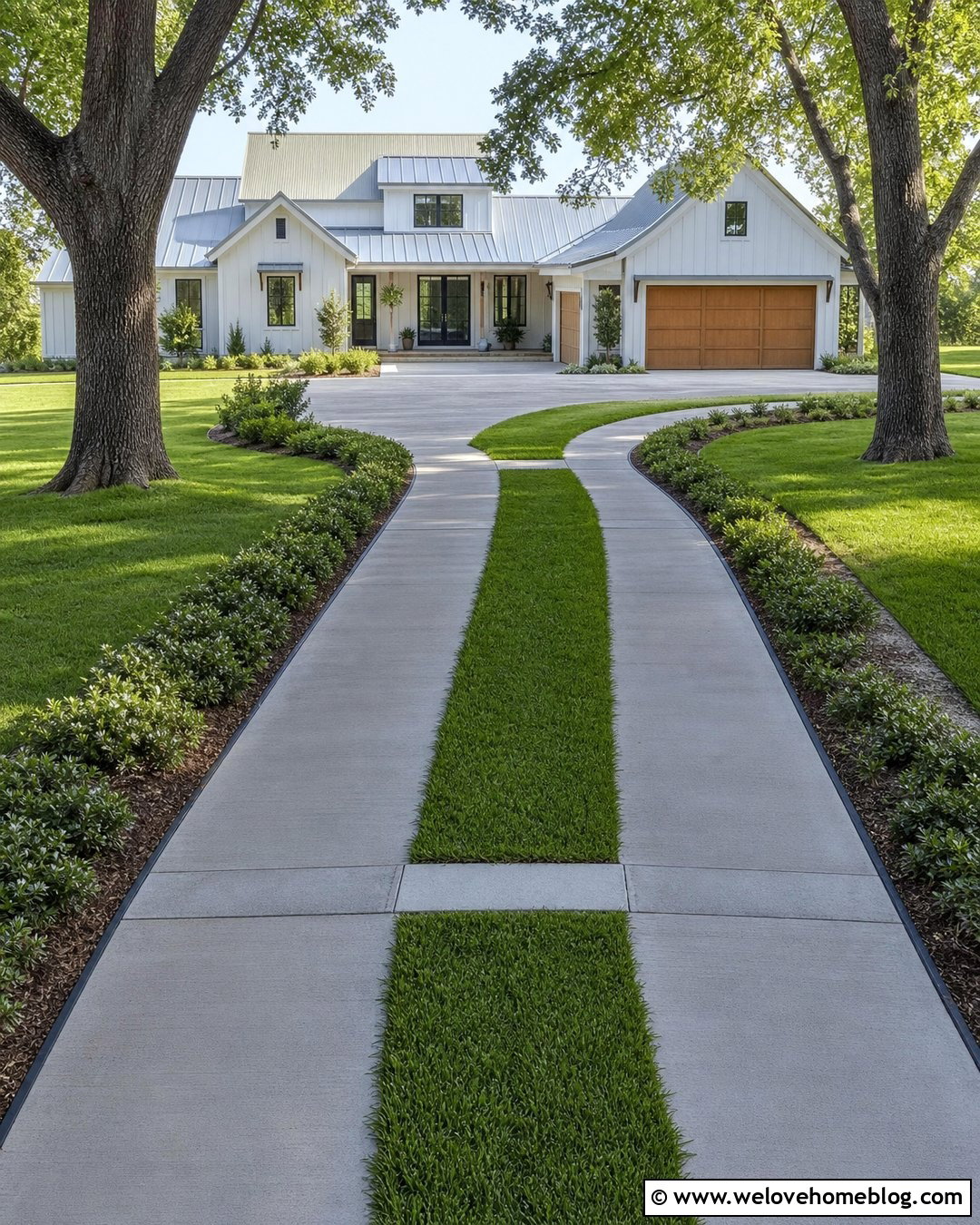
Parallel concrete strips can reduce the visual weight of a large driveway while preserving clear driving paths. Use smooth or lightly broomed gray concrete for the wheel tracks and plant a broad grass strip through the center. A wider concrete parking court near the garage provides space for turning and daily use. Frame the outer edges with flush steel edging, low ground cover, or neatly trimmed lawn. For a more structured design, add thin concrete crossbands at regular intervals. This layout works best on a straight or gently curved approach to a modern farmhouse, ranch, or country home. The surrounding landscaping can include shade trees and informal native planting beds. Because successful grass depends on sunlight, irrigation, soil, and traffic levels, evaluate the site carefully before choosing a planted center for the complete driveway.
13. Saw Cut Concrete Driveway With Diamond Pattern
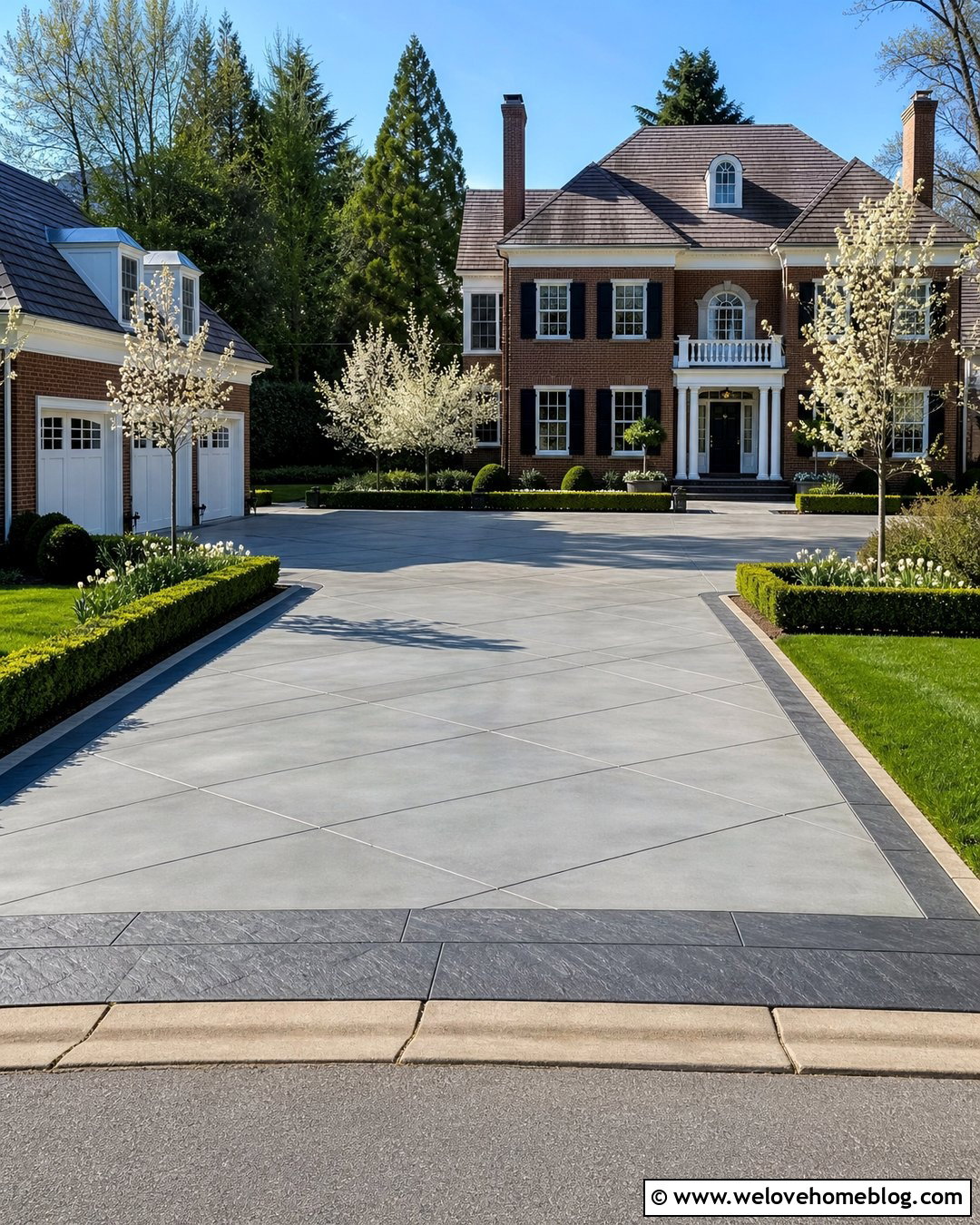
A diamond saw-cut pattern adds interest to a large concrete driveway without changing the entire surface material. Begin with medium gray poured concrete and use evenly spaced diagonal cuts to form oversized diamonds across the parking court. Keep the pattern larger near the broad center and align its edges with a straight border around the perimeter. A charcoal concrete apron can mark the street entrance and repeat near the garage. Surround the driveway with symmetrical lawn panels, clipped hedges, and small flowering trees. This formal landscaping prevents the pattern from feeling too casual. The look works well with brick Colonial, Georgian, or traditional suburban architecture. Carefully planned markings can break up a broad concrete expanse and create focal points without covering the driveway in heavy texture. ()
14. Concrete Driveway With Stamped Cobblestone Border
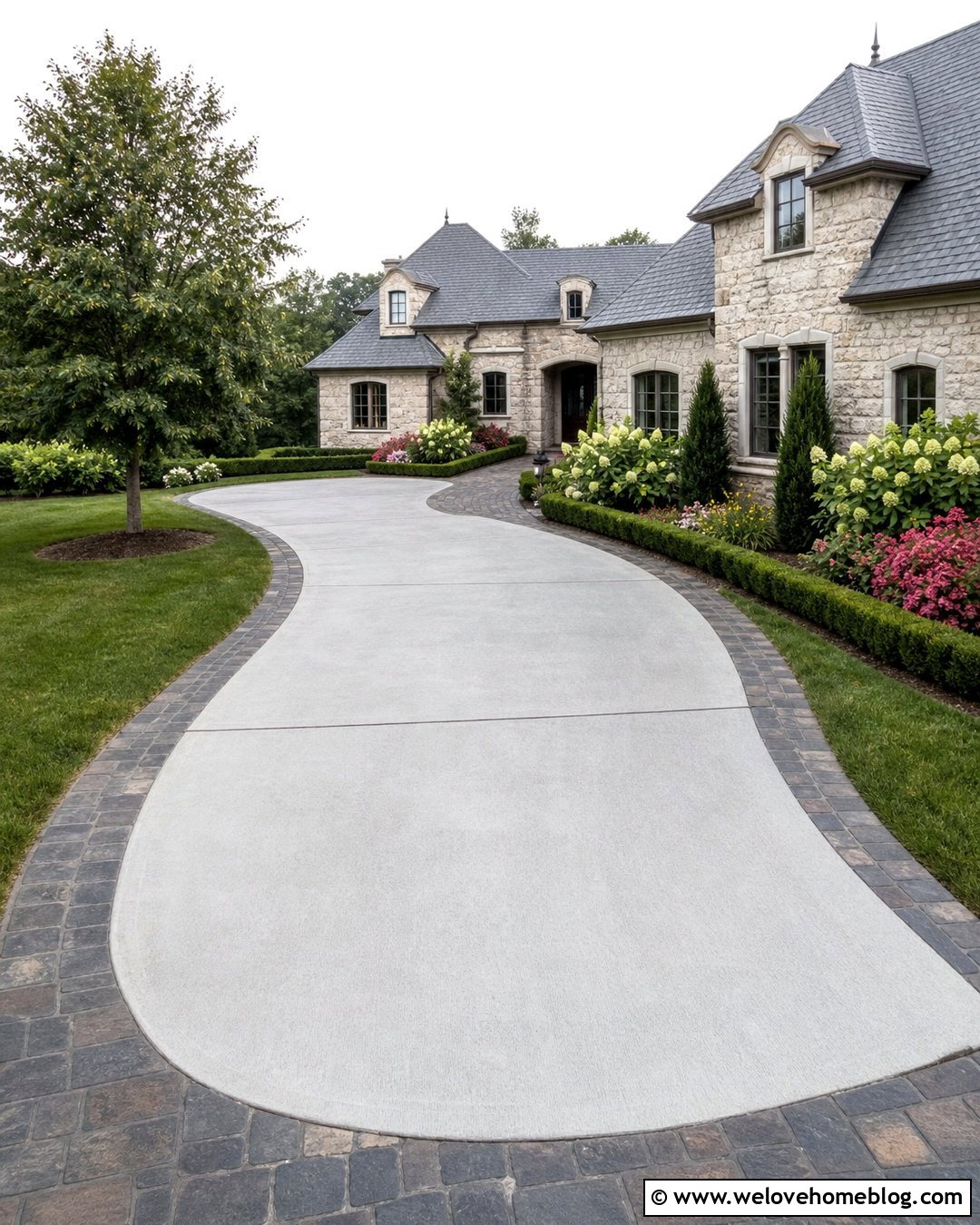
A stamped cobblestone border offers traditional character while preserving a smooth, easy-to-read concrete center. Use light gray broom finish concrete across the main driveway, then frame it with a wide stamped band colored in mixed charcoal and brown tones. Carry the border across the entrance apron and around a curved parking court near the house. Add neatly shaped planting beds with boxwoods, roses, hydrangeas, and an ornamental tree. A matching stamped walkway can connect the driveway to the porch without introducing another material. This complete design pairs well with a brick, stone, or traditional stucco home. Border treatments are particularly useful for giving large concrete areas a finished edge and creating a clearer transition to the lawn. () Keep the stamp pattern consistent for a polished result.
15. Tan Concrete Driveway With Farmhouse Landscaping
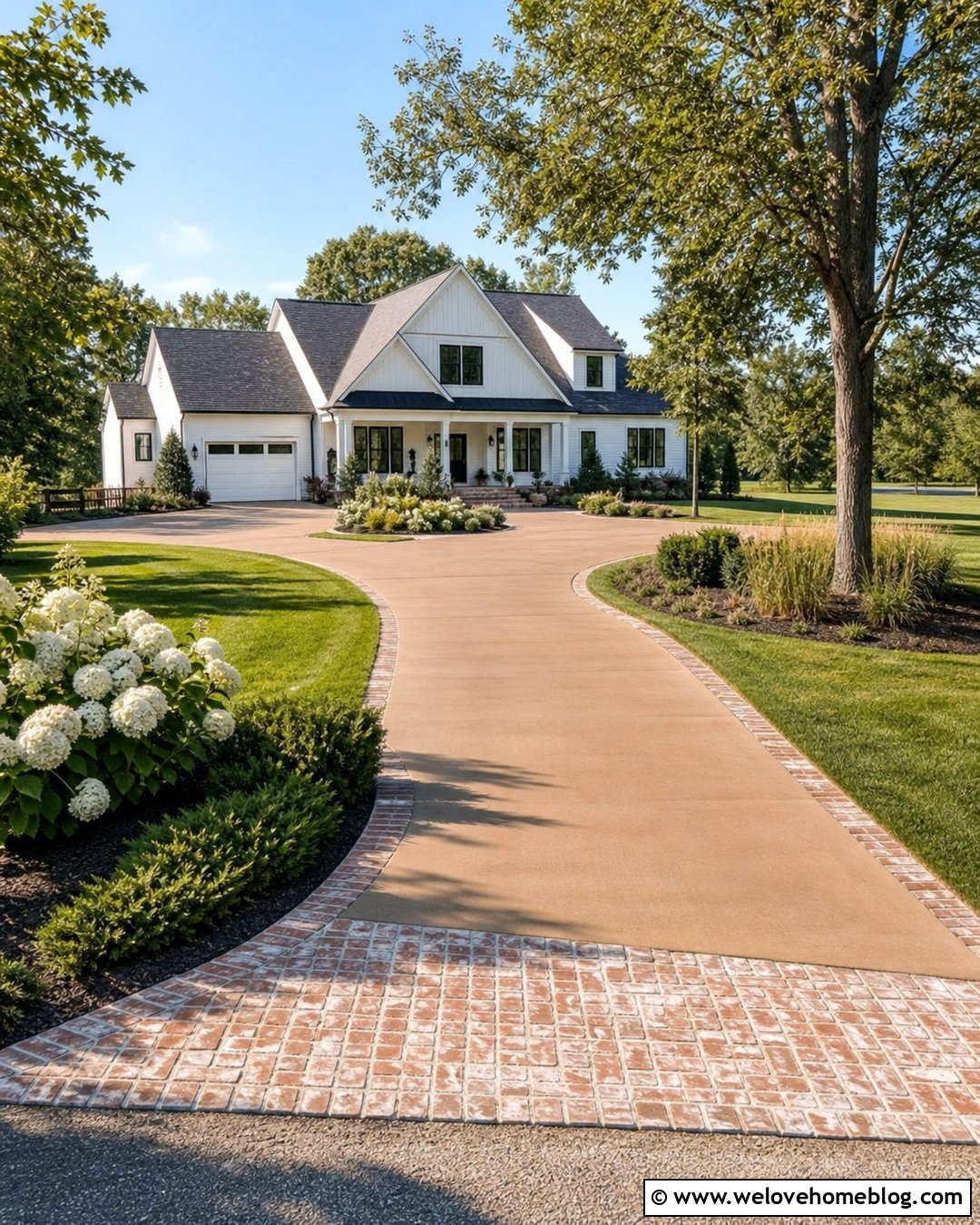
Warm tan concrete feels more natural beside a farmhouse than a cool blue-gray surface. Choose integrally colored concrete with a soft broom finish and divide the large driveway into simple rectangular sections. Add a border of weathered brick or warm gray cobblestone to connect the pavement with the home’s porch columns and foundation. A gently curved approach can pass between open lawn areas, shade trees, and broad beds filled with ornamental grasses, white hydrangeas, and evergreen shrubs. Near the garage, widen the driveway into a practical parking court. Use the same border material around the walkway and planting beds to unify the front yard. The final design should feel relaxed but orderly, with enough landscaping to soften the concrete while preserving the open character associated with a modern American farmhouse.
16. Hillside Concrete Driveway With Retaining Walls
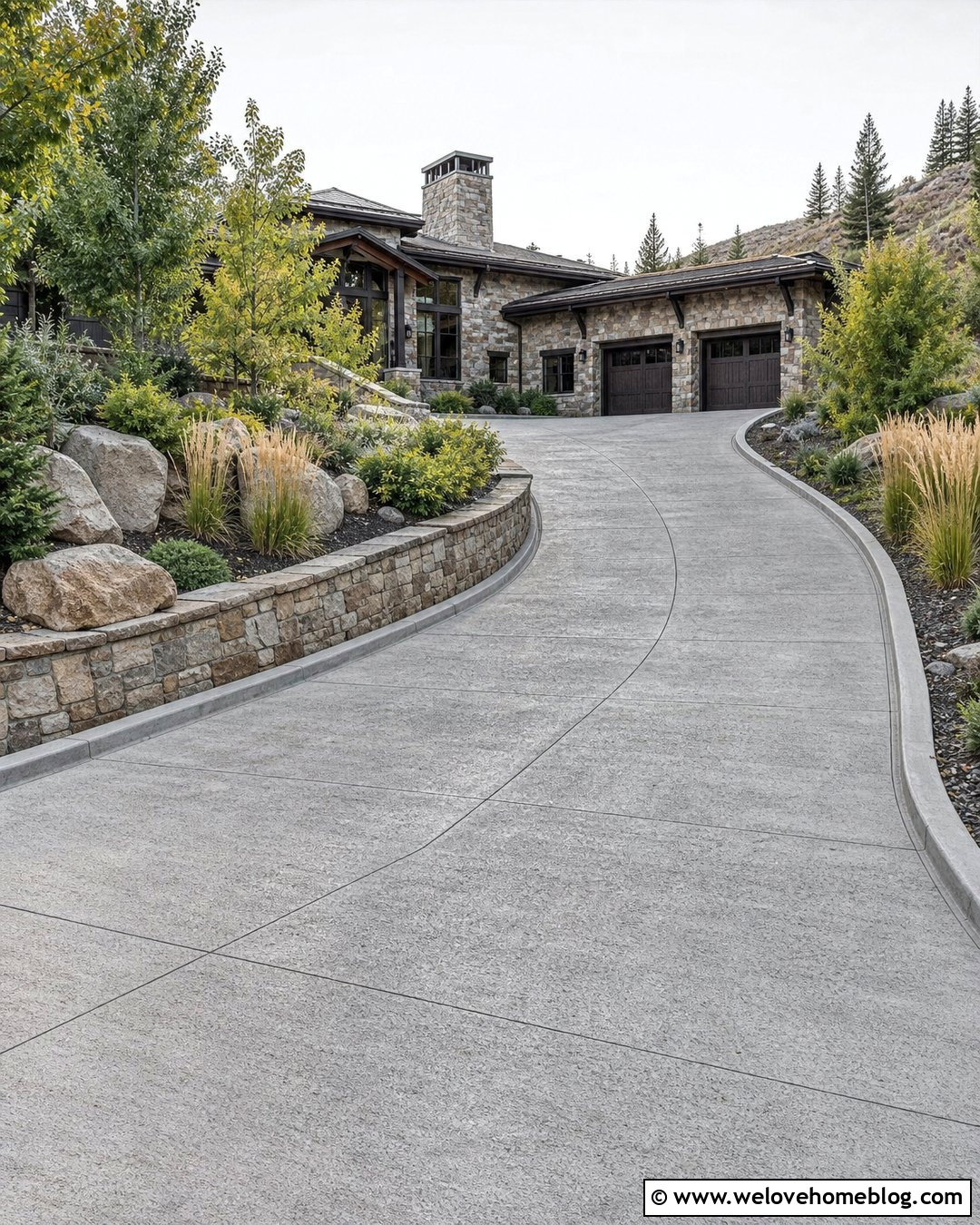
A sloped property can still have a visually balanced large concrete driveway. Use textured gray poured concrete in a gently curving layout that follows the land rather than cutting across it abruptly. Low natural stone or board-formed concrete retaining walls can support planting beds along the higher side. On the lower edge, use a simple concrete curb and layered shrubs to define the drop without creating visual clutter. Add broad scoring lines across the driveway to break up its length. Plant spreading ground cover, ornamental grasses, and deep-rooted shrubs around the retaining walls to soften the grade. A stone-clad contemporary or mountain-style house provides an appropriate backdrop. Drainage, base preparation, slope, wall engineering, and winter conditions require site-specific professional planning, so the decorative concept should follow the property’s practical requirements.
17. Gated Concrete Driveway With Stone Pillars
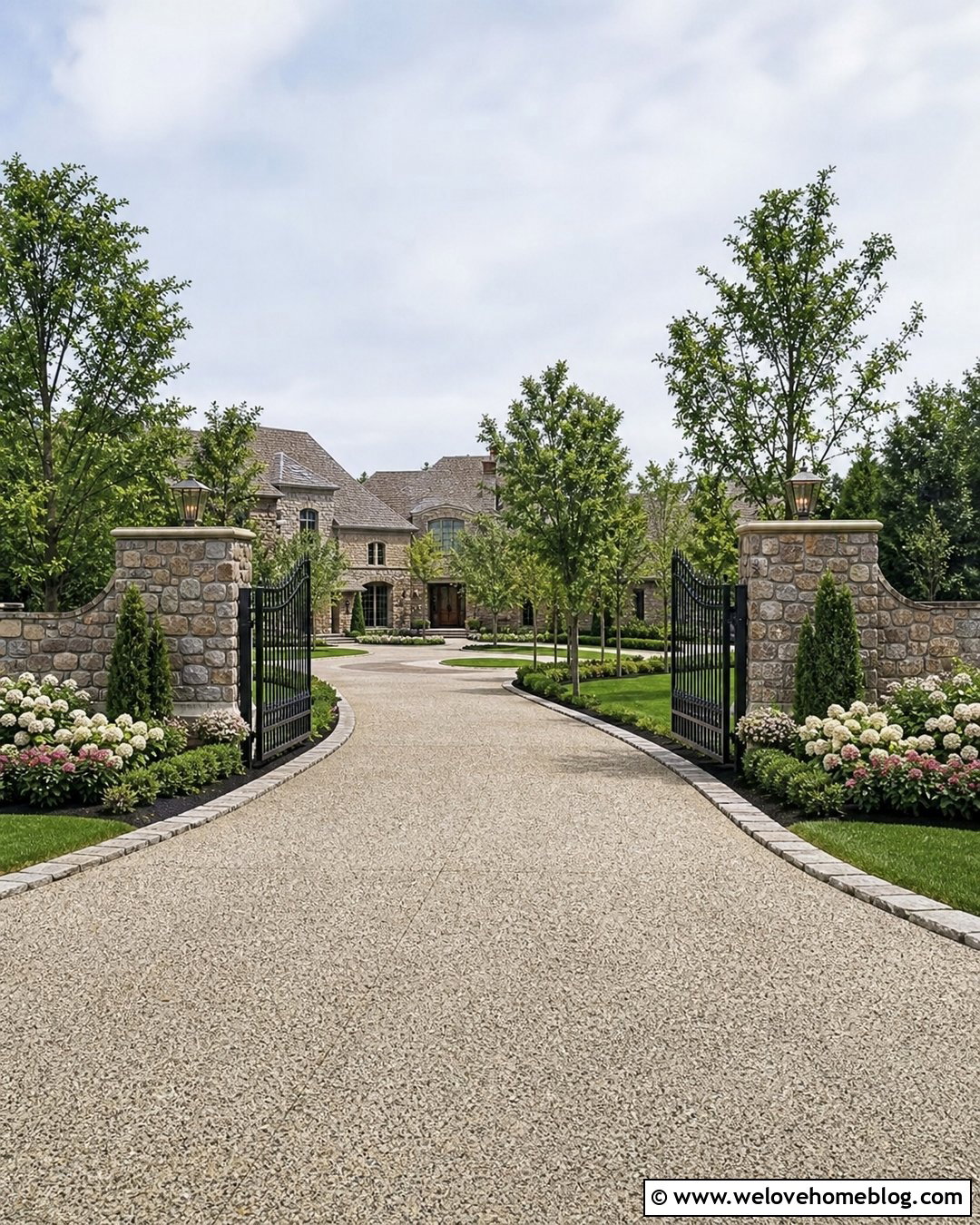
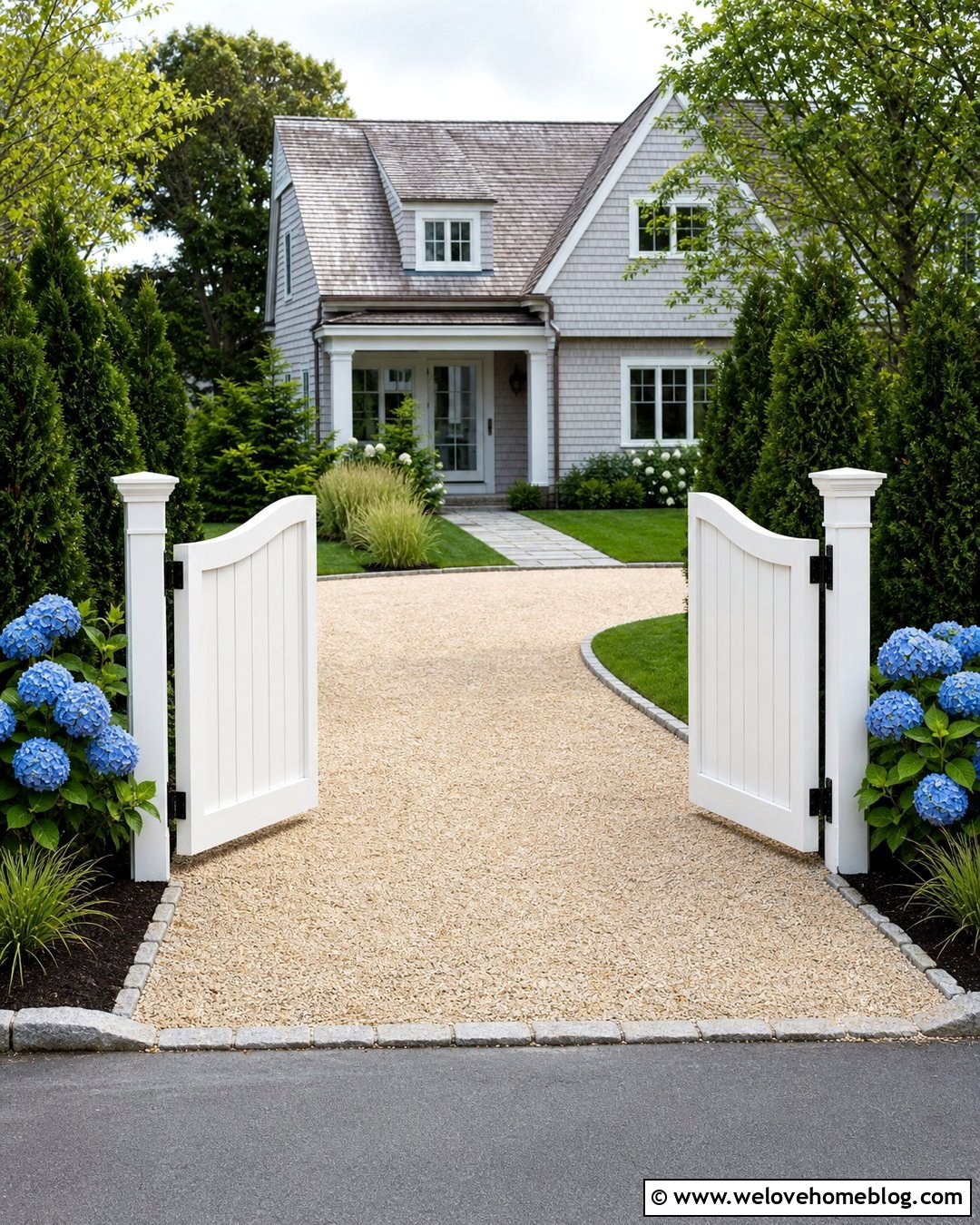
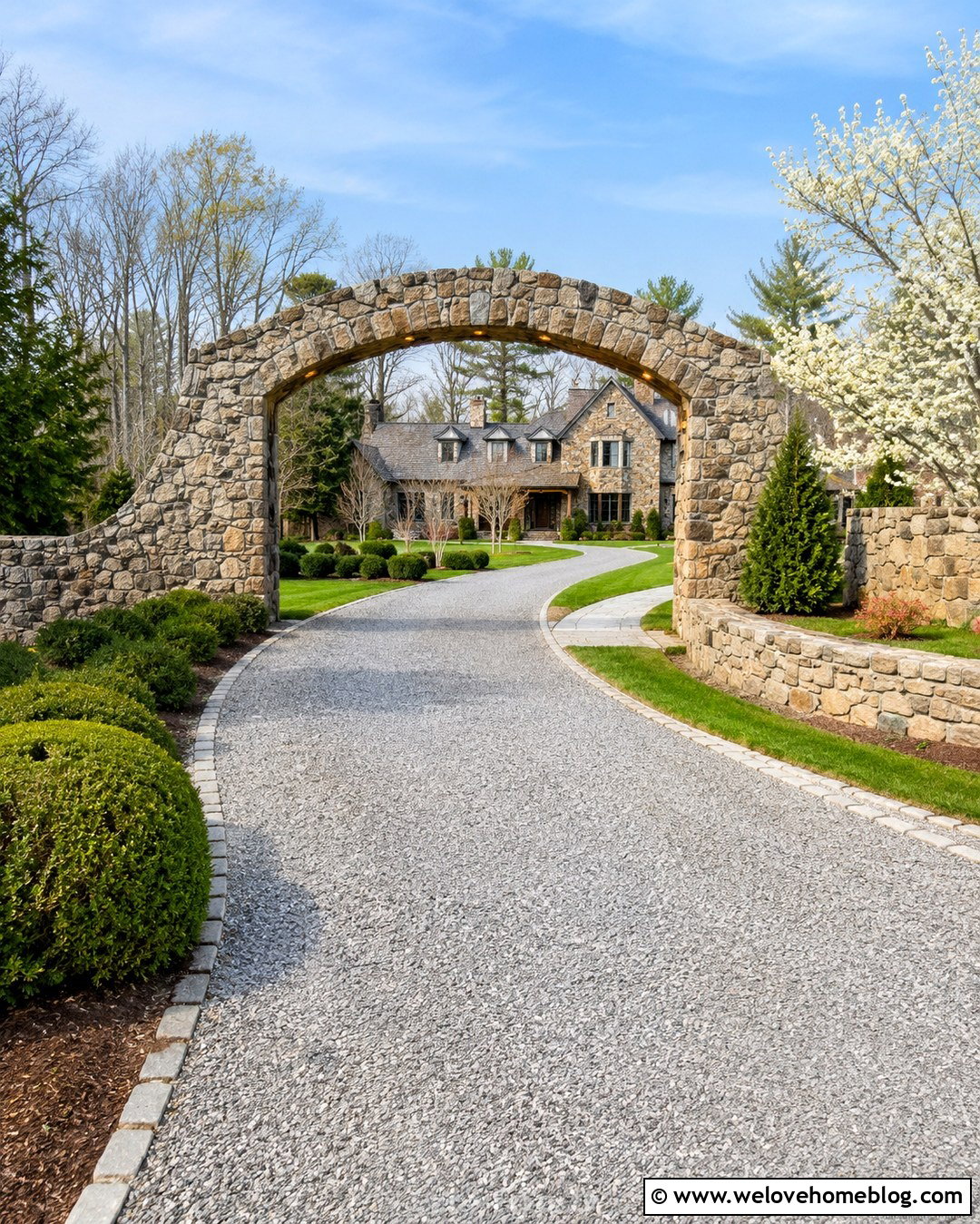
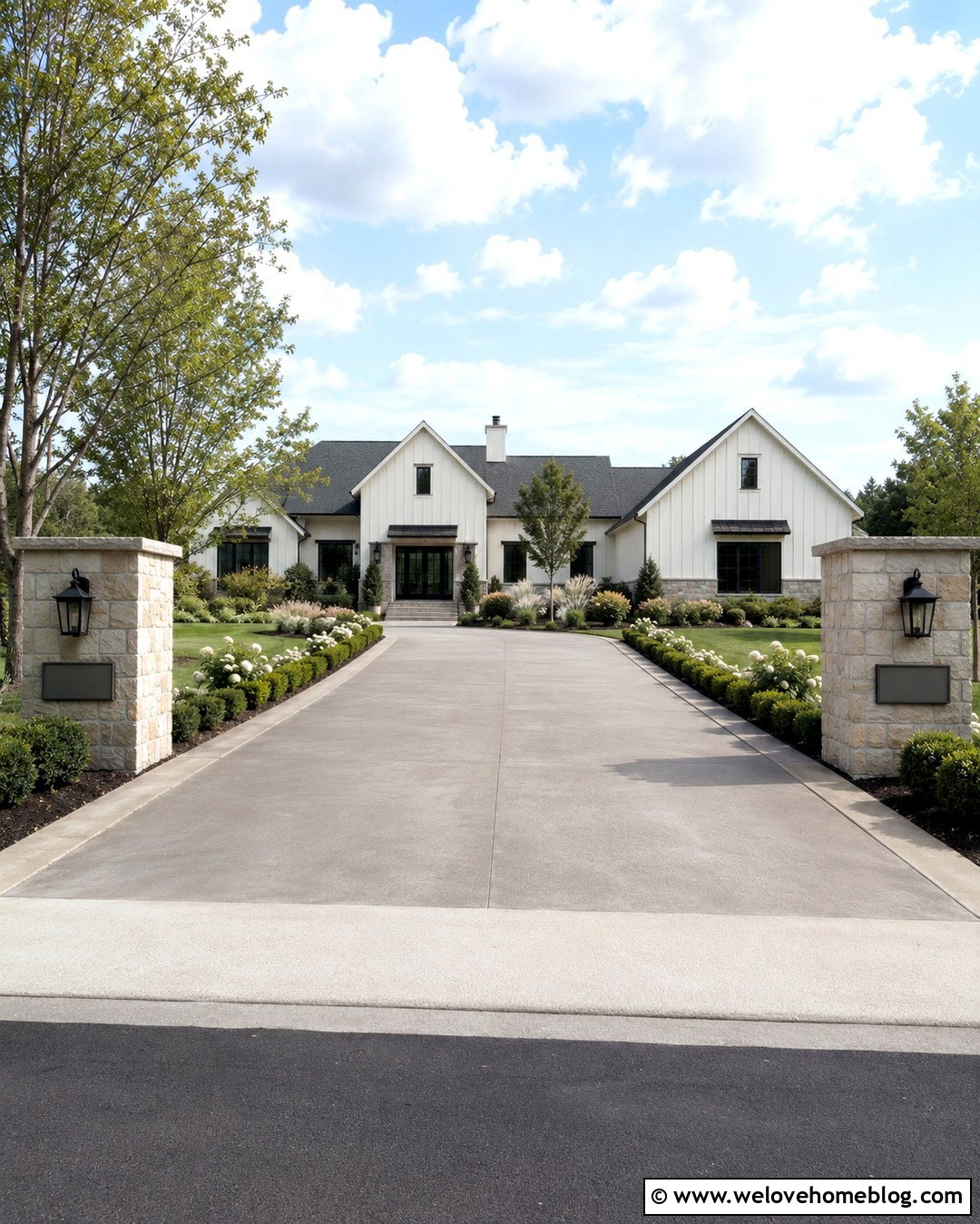
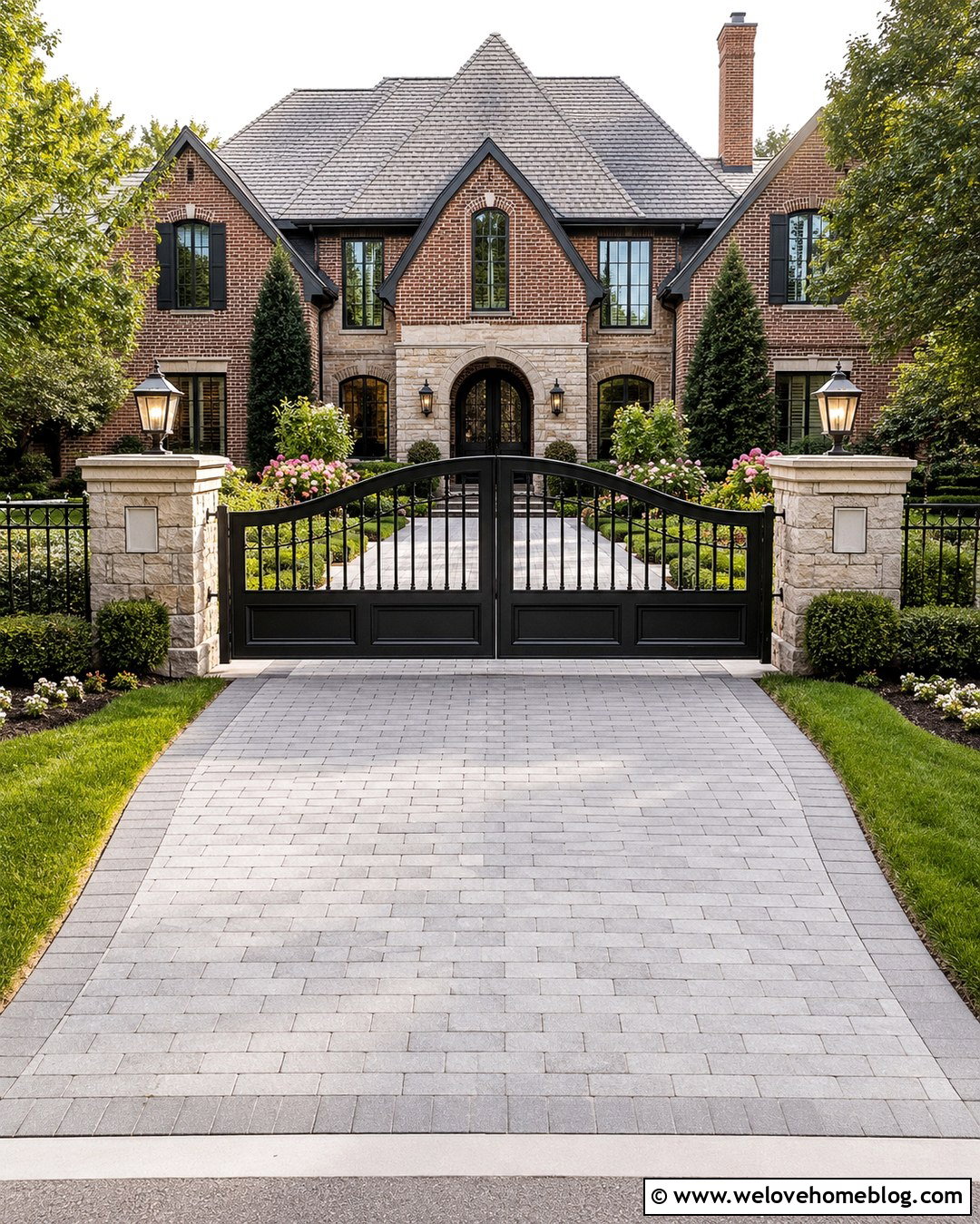
A gated entrance gives a large concrete driveway a clear beginning and creates a strong connection to the property’s architecture. Use warm gray exposed aggregate concrete in a long, gently curved layout. At the street, place a dark metal gate between substantial stone pillars, leaving enough open space for safe vehicle access. Continue matching stone as low edging around nearby planting beds. Rows of compact evergreens, flowering shrubs, and evenly spaced trees can guide the view toward the house without forming a solid wall. Add a widened concrete area inside the gate so the entrance does not feel cramped. Near the home, finish the approach with a circular turning court or broad garage apron. The gate, pillars, driveway finish, landscaping, and house masonry should share a coordinated color palette for a cohesive estate-style appearance.
18. Long Concrete Driveway With Tree Lined Approach
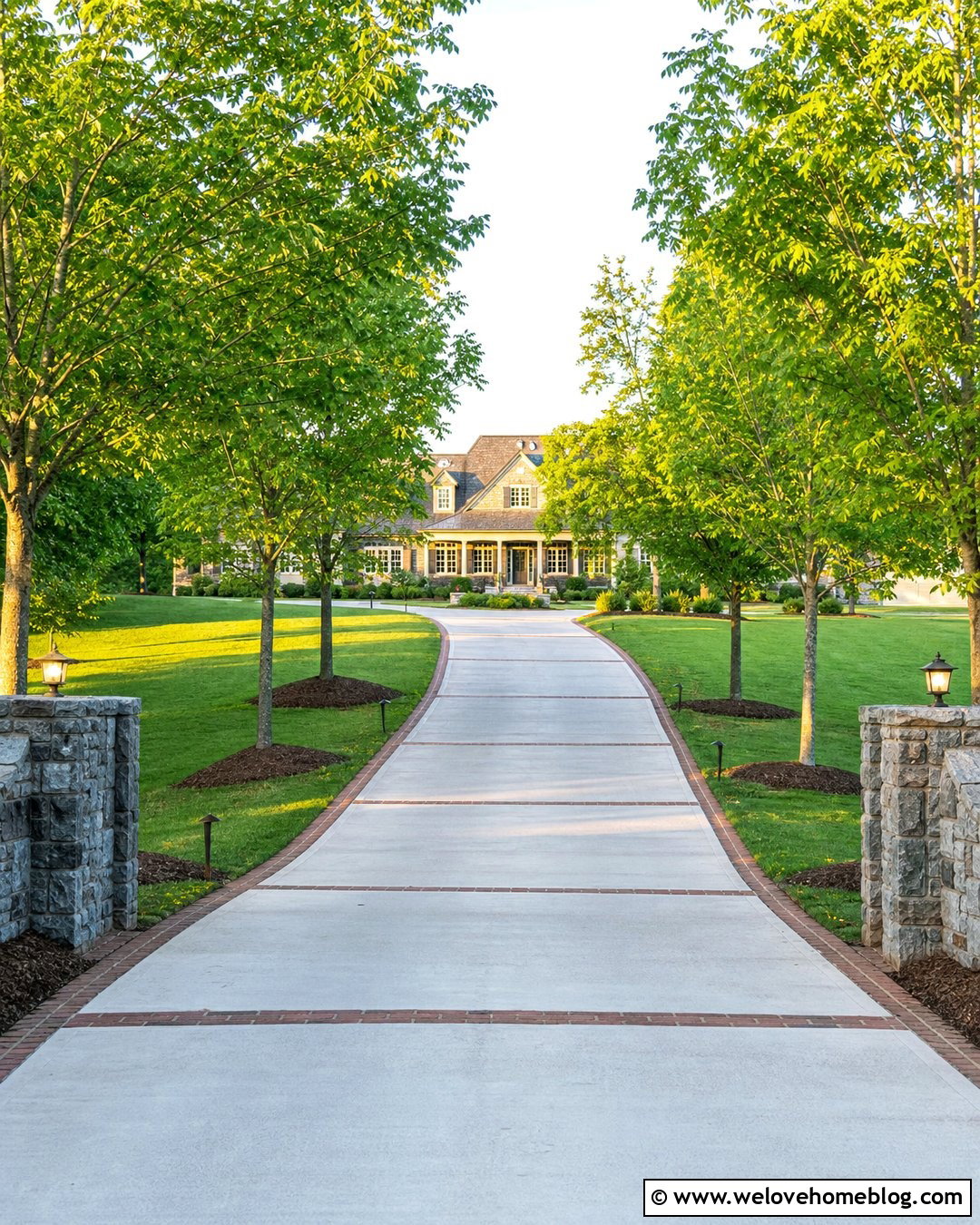
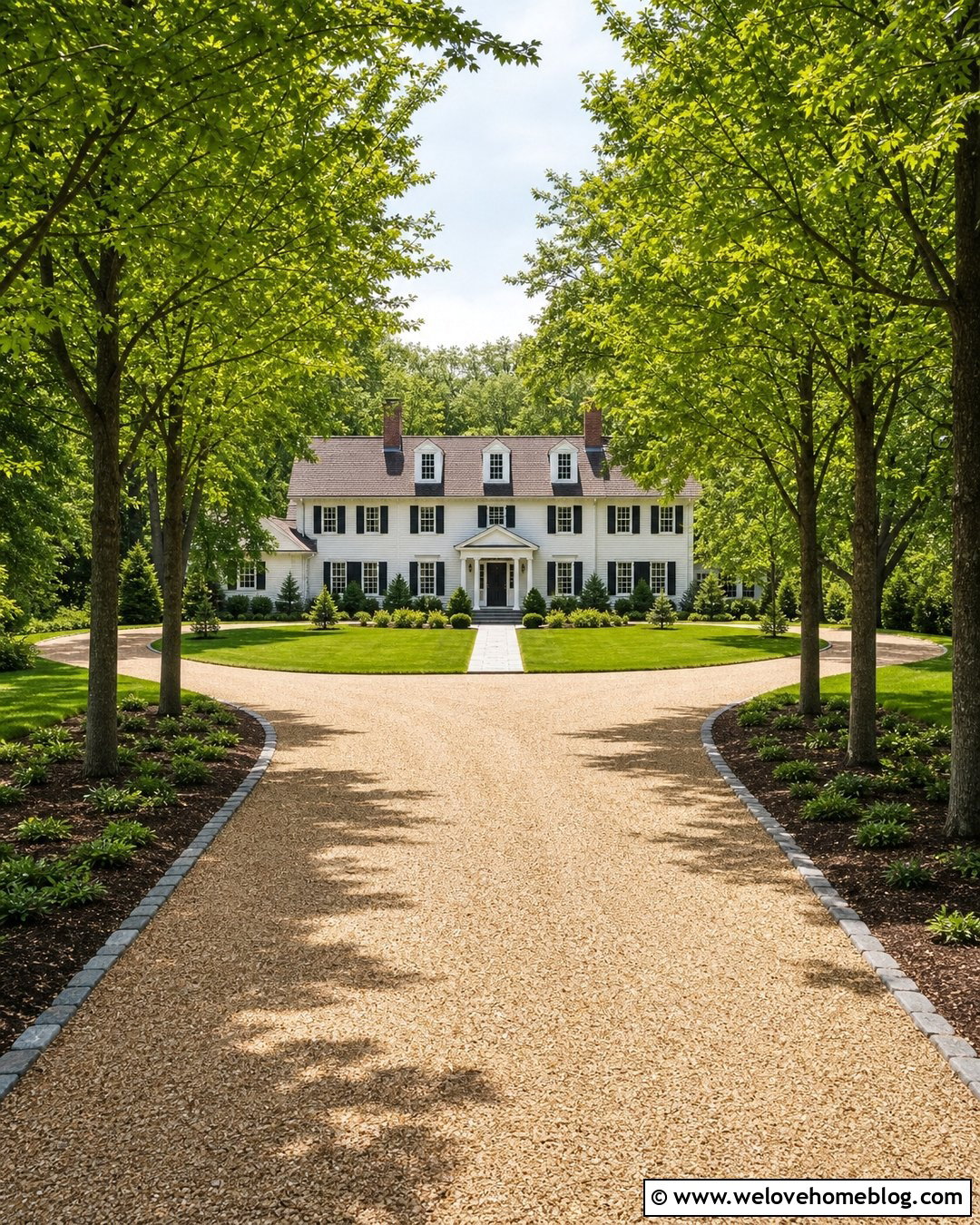
A long concrete driveway becomes more inviting when the landscape creates rhythm along the route. Select a light gray broom finish for the main surface and use narrow brick ribbons at intervals to break up the distance. A gently curved layout will reveal the home gradually and feel more natural than a rigid straight line. Plant evenly spaced deciduous trees beyond the driveway edges, leaving room for mature trunks and canopies. Beneath them, use lawn or broad beds of simple ground cover rather than dense mixed planting. Low stone markers or understated landscape lights can define the entrance and curves. Near the house, the driveway can widen into a parking court bordered by matching brick. This composed approach works with country, traditional, and estate homes while making the entire journey from street to garage feel intentional.
19. Concrete Courtyard Driveway With Central Tree
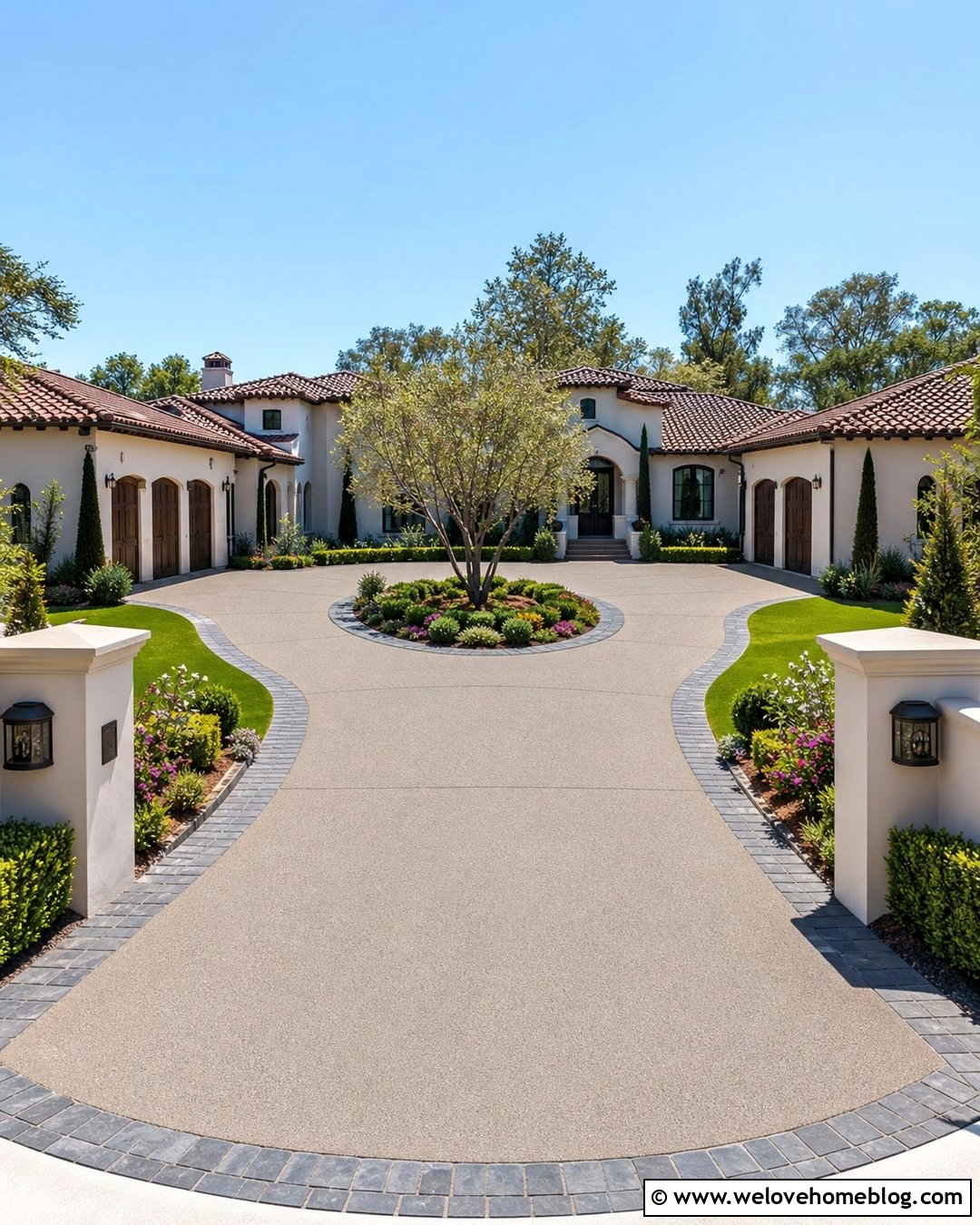
A courtyard layout is ideal when a large home needs generous turning, guest parking, and access to several garage bays. Use warm gray concrete with a subtle sand finish, arranged around a circular or oval center bed. Outline the island and outer courtyard with dark brick or granite cobblestone. A single mature ornamental tree can anchor the center, surrounded by low shrubs and seasonal perennials that will not block sightlines. Continue the concrete into a narrower entrance drive so the courtyard feels like a destination rather than one enormous slab. Add symmetrical walkways leading to the front door and side entrances. This layout complements Mediterranean, Spanish Colonial, and European-inspired homes. Repeating the home’s stone, brick, or stucco colors in the border helps the broad concrete area belong naturally within the architecture.
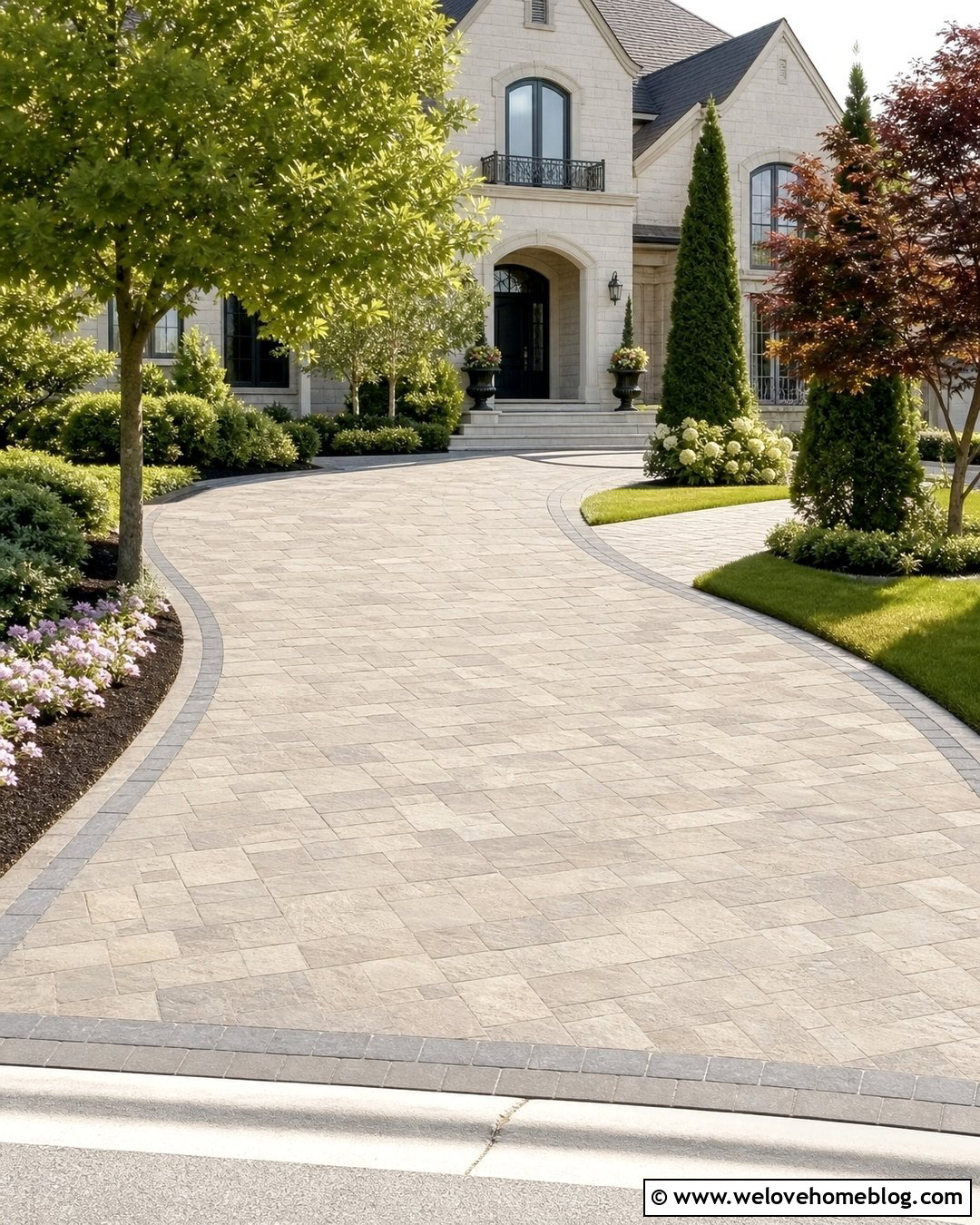
20. Resurfaced Concrete Driveway With Decorative Overlay
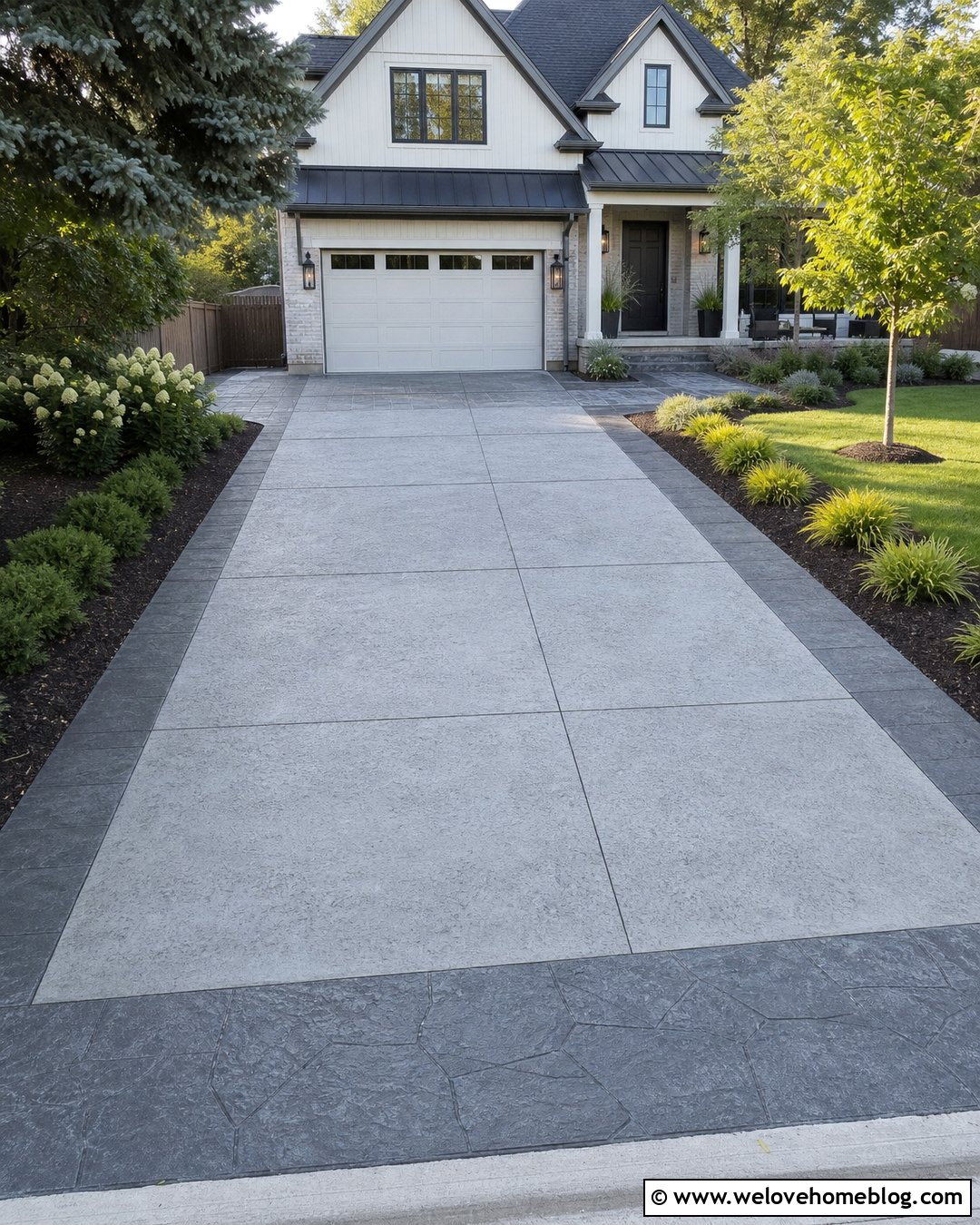
An existing large concrete driveway may gain a completely new appearance through a professionally installed decorative overlay, provided the underlying surface is suitable. Choose a medium gray textured overlay with large rectangular scoring and a darker border around the perimeter. Add a stamped stone pattern only at the entrance apron and in front of the garage to create focal points without making the entire driveway overly detailed. Refresh adjacent landscape beds with compact shrubs, ornamental grasses, and fresh mulch. A new walkway in a coordinating finish can connect the driveway to the porch. This approach works with many suburban home styles because the pattern and colors can be tailored to existing brick, siding, or stone. Have cracks, drainage problems, movement, and surface condition evaluated before treating resurfacing as a purely cosmetic project.
Conclusion:
The most successful large driveway combines a practical layout with details that relate to the house and front yard. Concrete can look traditional, rustic, coastal, or sharply modern depending on its color, finish, scoring, and borders. Landscaping is equally important because trees, shrubs, lawn panels, and planting islands soften broad paved surfaces. When comparing these **20 Large Concrete Driveway Ideas**, consider vehicle movement, garage access, drainage, maintenance, climate, and visibility from the street. Choose a few coordinated materials rather than adding every decorative option at once. Finally, work with qualified local professionals to plan the base, thickness, reinforcement, joints, slope, and finish. Careful planning will produce a driveway that feels attractive, organized, and suited to everyday use.

Related posts:
Leave a Reply