
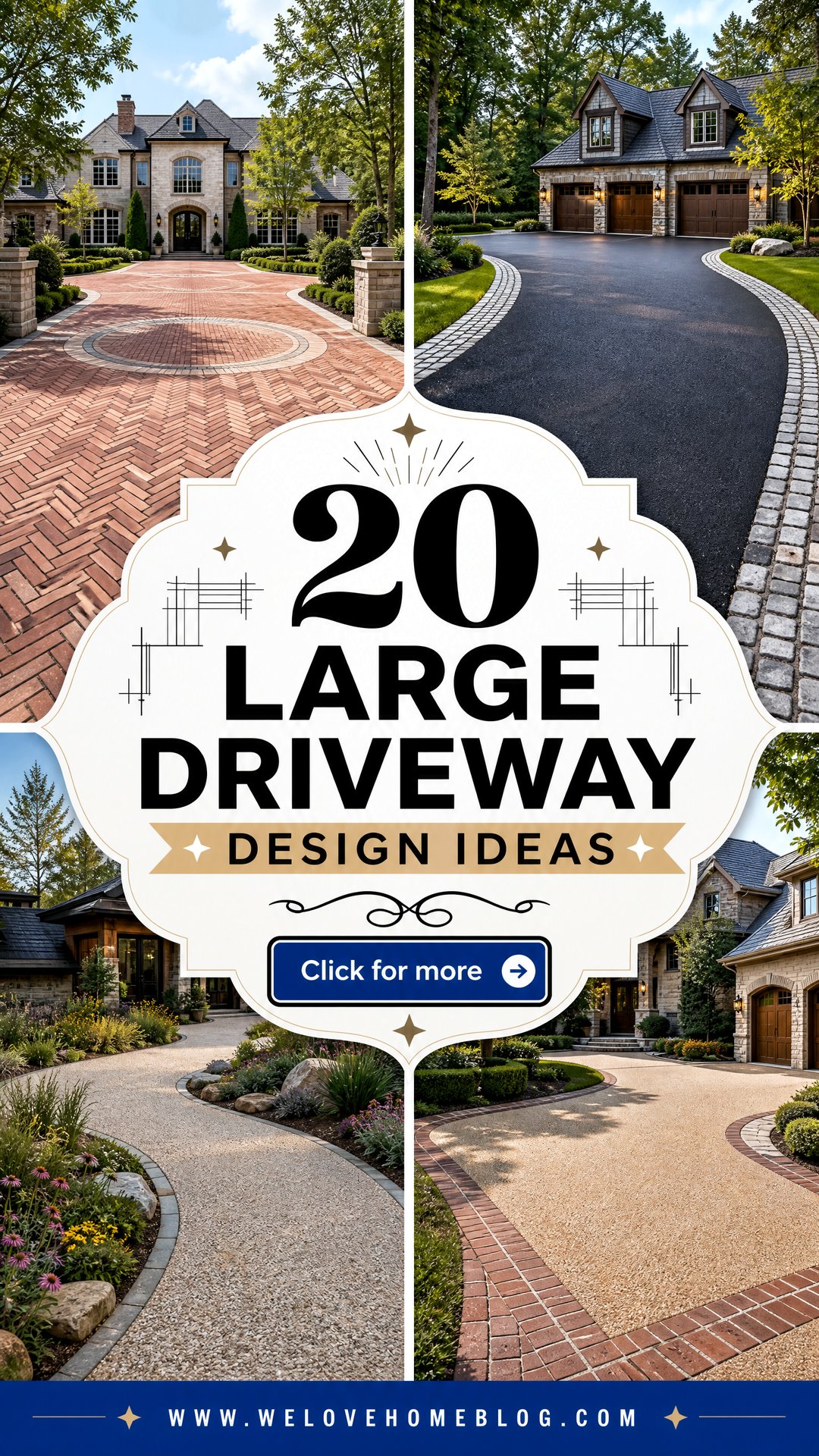
A generous front yard creates room for more than a basic path to the garage. The best 20 large driveway design ideas combine an attractive surface with an efficient layout, defined borders, balanced landscaping, and safe vehicle movement. Circular drives add an elegant arrival experience, while wide straight layouts suit multiple garages and busy households. Gravel, concrete, brick, asphalt, natural stone, resin, and permeable pavers can all work beautifully when they complement the home’s architecture. Drainage, turning space, lighting, maintenance, and clear pedestrian routes should also shape the final plan. Large driveways look especially polished when planting beds and material changes break up broad paved areas. Use these complete 20 large driveway design ideas to plan a practical entrance with memorable curb appeal. ()
1. Circular Paver Driveway With a Garden Island
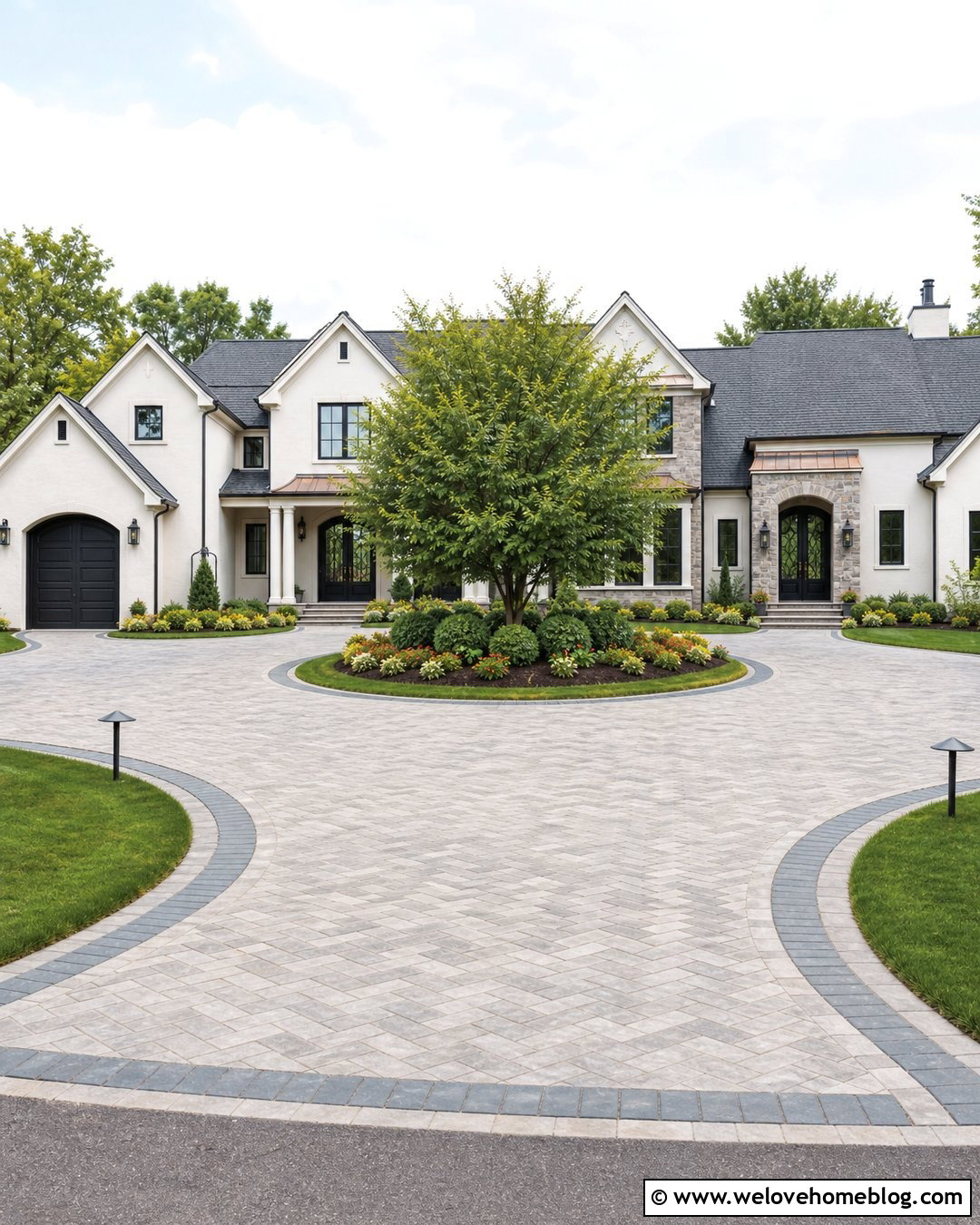
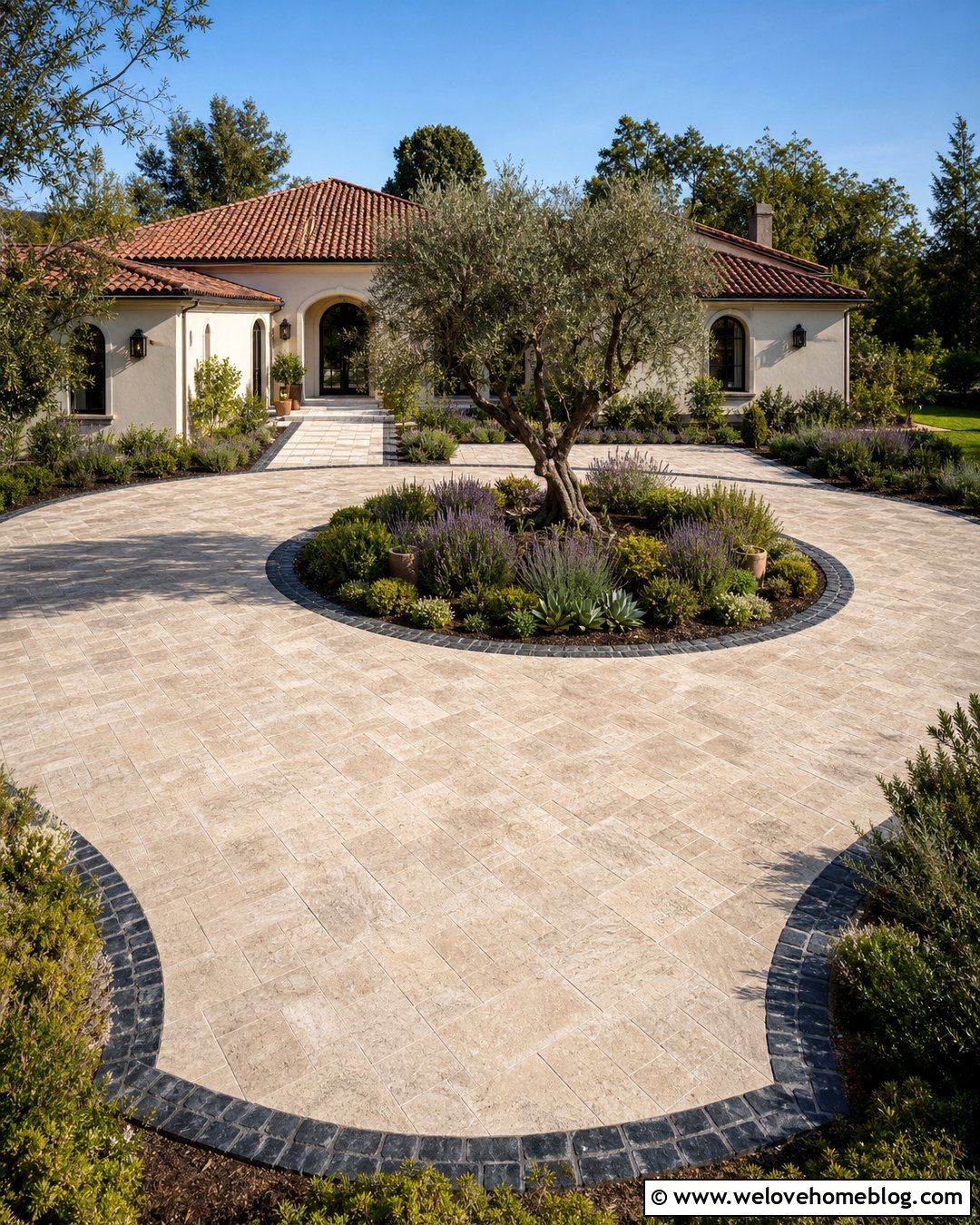
A circular paver driveway gives a large front yard a graceful flow while making arrivals and departures easier. Choose warm gray concrete pavers arranged in curved bands to emphasize the round shape. In the center, create a wide garden island with one ornamental tree, low evergreen shrubs, and seasonal flowers. Keep taller plants away from the road entrances so drivers have a clear view of traffic. A contrasting charcoal paver border can define the driving surface and coordinate with a dark roof or window trim. Connect the inner curve to the front door with a broad walkway made from matching pavers. Low landscape lights around the island finish the design without crowding the open, polished appearance. ()
2. Horseshoe Gravel Driveway With Stone Edging
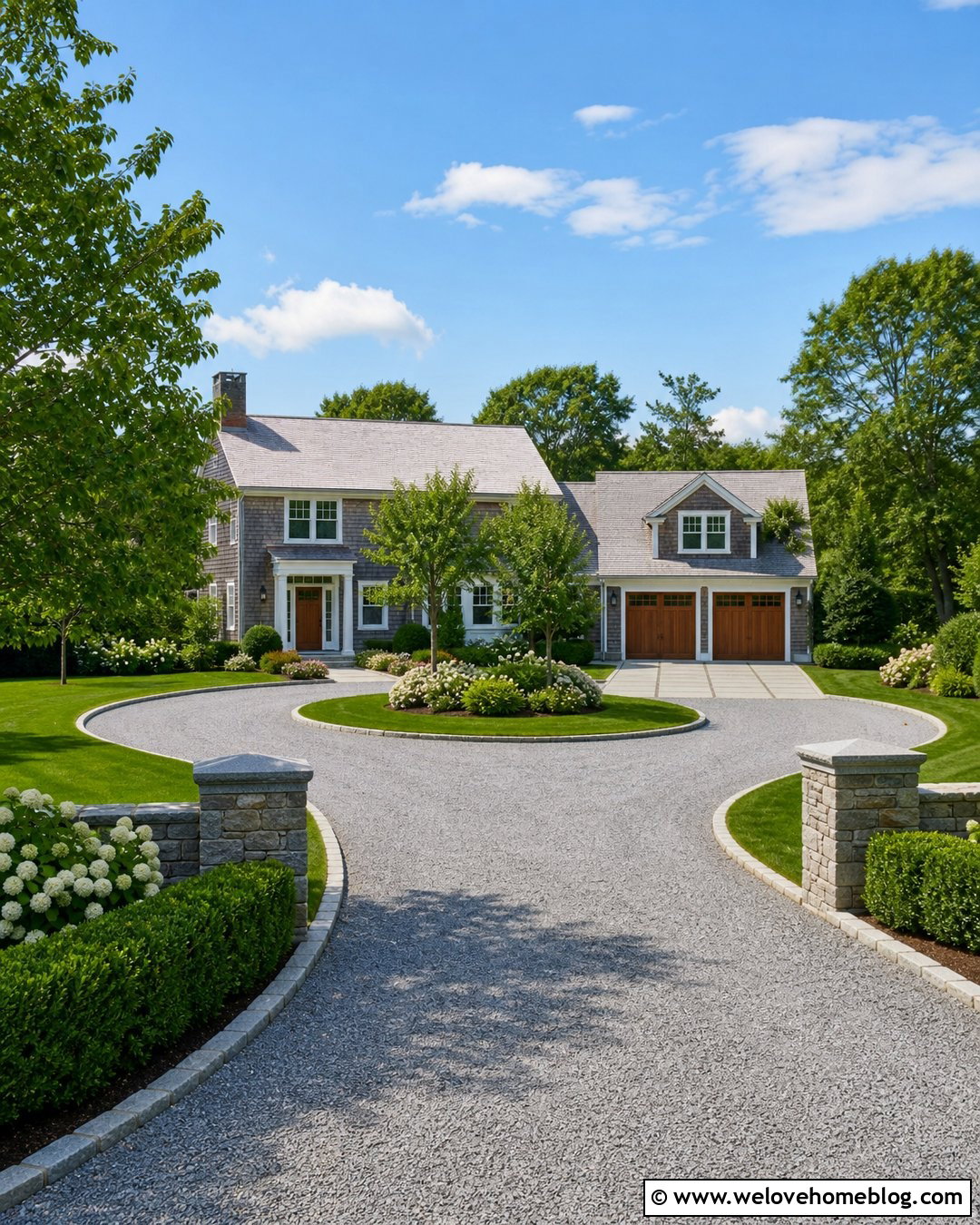
Can a large gravel driveway feel refined instead of overly rural? A horseshoe layout with compacted gray gravel and continuous stone edging creates an orderly, welcoming entrance. Use substantial granite or cobblestone blocks to hold the loose material in place along both curves. Matching stone entrance pillars can visually anchor the two access points. Frame the outer edges with clipped hedges, flowering shrubs, and wide lawn panels. Near the house, transition to a rectangular paver parking court for a cleaner surface beside the garage and front walkway. The gravel provides natural texture, while the hard borders make the overall shape easy to read. This complete look suits traditional homes, country properties, and updated ranch houses with spacious front yards.
3. Modern Concrete Slab Driveway With Gravel Joints
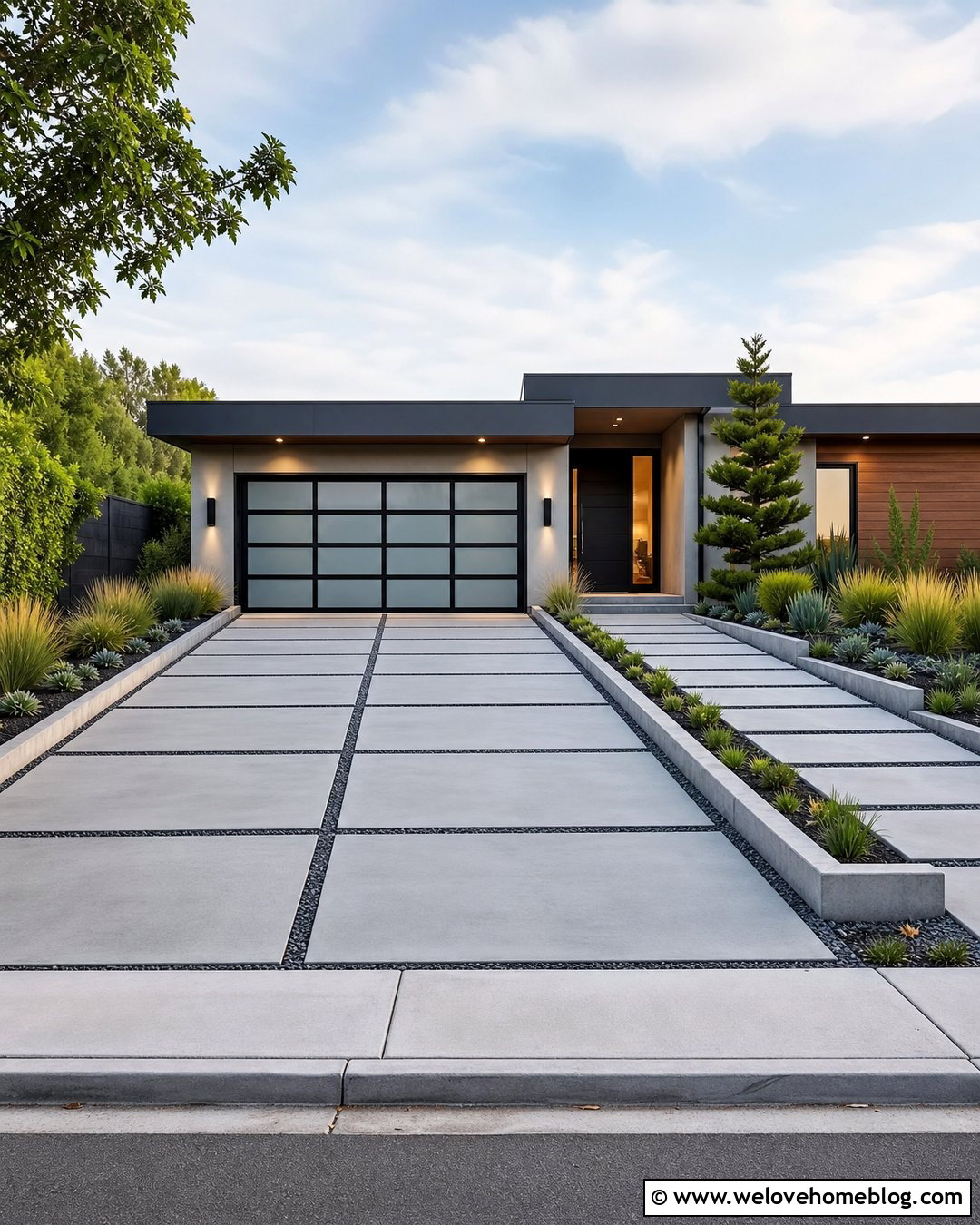
Crisp geometry can make a broad driveway feel intentional rather than empty. Use large, light gray poured concrete slabs separated by narrow bands of dark gravel. A straight layout works especially well when it aligns with a modern home’s garage, windows, and front entrance. Continue the same grid into the walkway to connect the entire exterior. Along one side, add rectangular planting beds filled with ornamental grasses, compact evergreens, and sculptural drought-tolerant plants. A low concrete curb keeps gravel joints and garden material separated. For visual balance, allow a wider landscaped strip between the driveway and front path. The limited color palette creates a calm, contemporary appearance, while the gravel bands soften the scale of the expansive concrete surface.
4. Brick Driveway With a Herringbone Motor Court
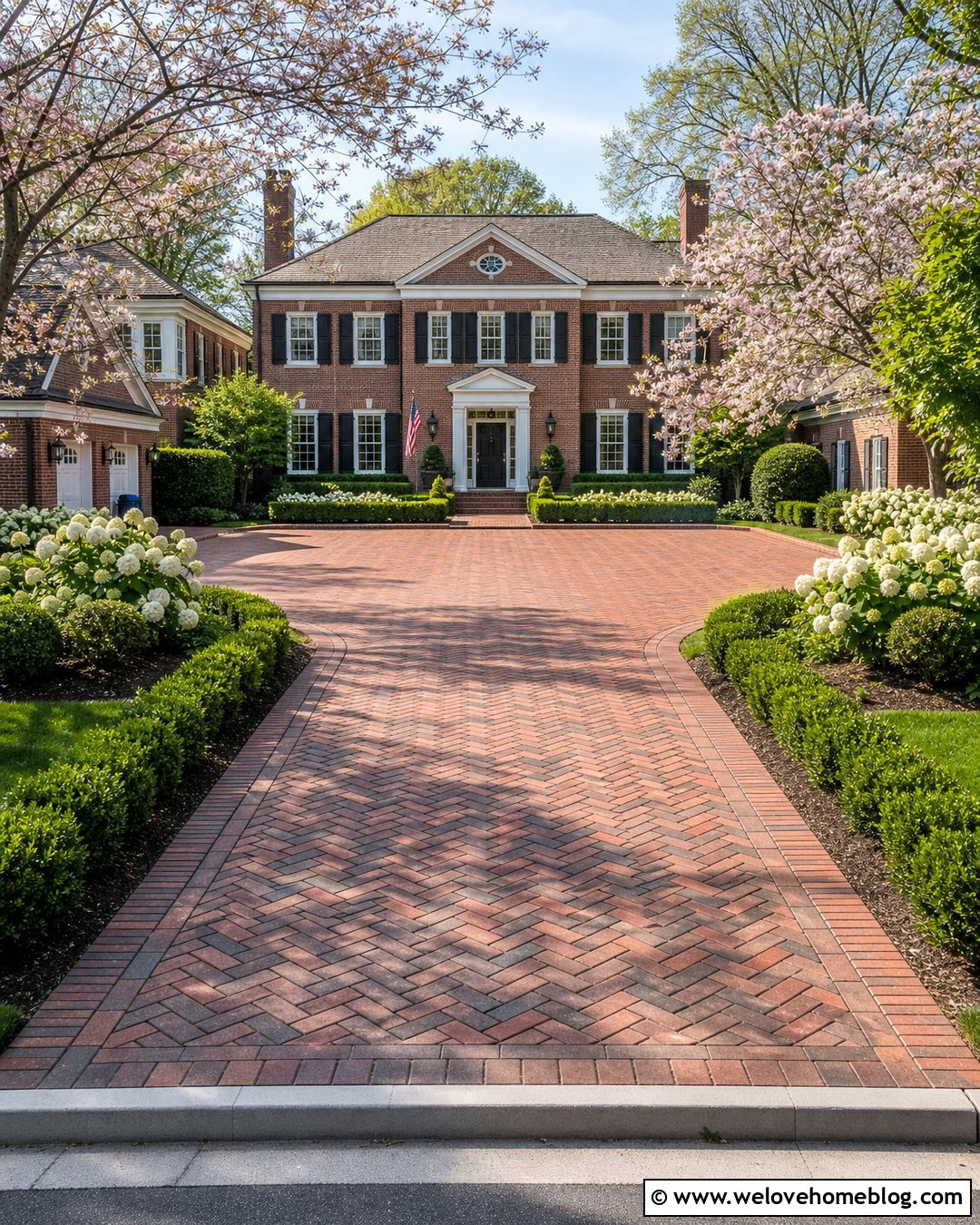
Warm clay brick pavers bring character to a large driveway and pair naturally with colonial, Georgian, and traditional brick homes. Lay the main driving lanes in a herringbone pattern because the angled arrangement creates visual movement across a broad surface. At the house, widen the driveway into a rectangular motor court with enough open space for turning and short-term guest parking. Use a soldier-course brick border to establish a neat outer edge. Deep planting beds filled with boxwood, hydrangeas, and small flowering trees can soften the large paved area. A straight brick walkway should lead clearly from the motor court to the front door. Repeating brick colors from the facade helps the driveway feel like an original architectural feature rather than a later addition.
5. Asphalt Driveway With Cobblestone Borders
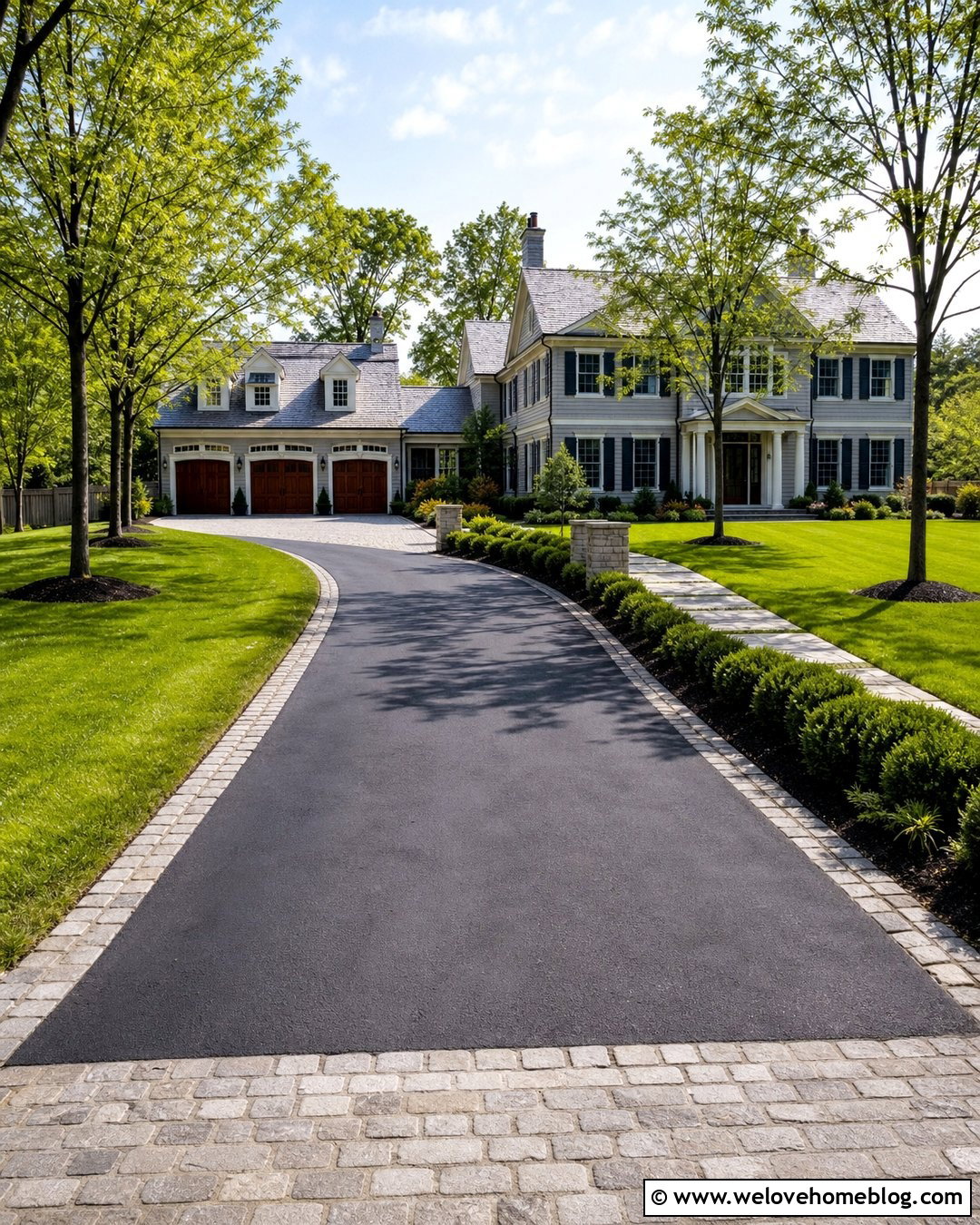
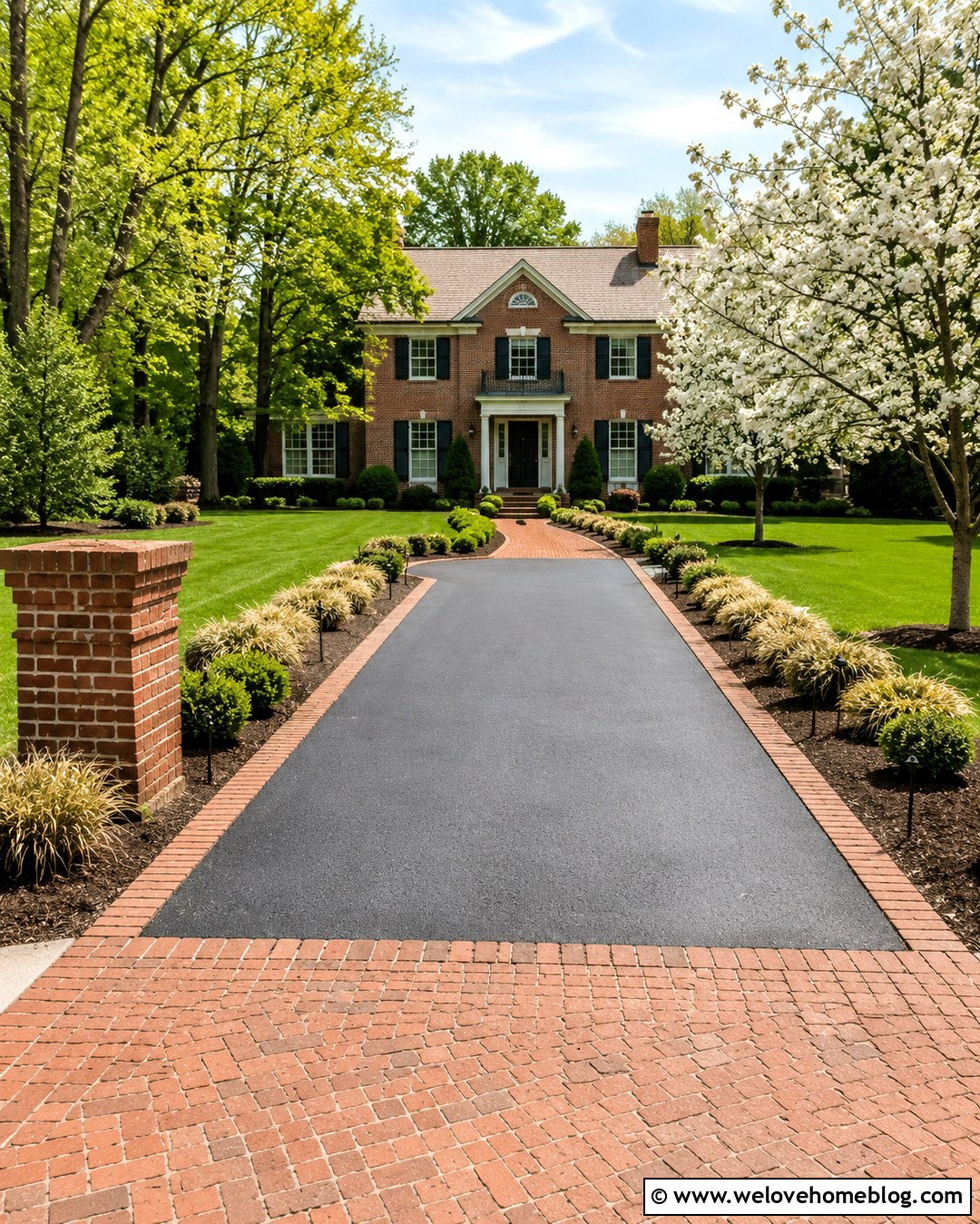
Fresh black asphalt offers a simple backdrop for a large home, especially when strong borders and structured landscaping are included. Install a continuous cobblestone edge in charcoal, tan, or mixed gray tones to prevent the surface from appearing unfinished. A gently curved layout can soften a long approach and reveal the house gradually. Near the garage, add a cobblestone apron that creates an attractive transition and protects the most visible portion of the driveway. Broad lawn areas, evenly spaced shade trees, and low shrub beds maintain a clean estate-like setting. If the asphalt expanse feels too dark, introduce a light stone walkway beside it. The contrast between smooth asphalt and textured cobblestone delivers a practical driveway with a polished, traditional appearance.
6. Cobblestone Driveway With Formal Landscaping
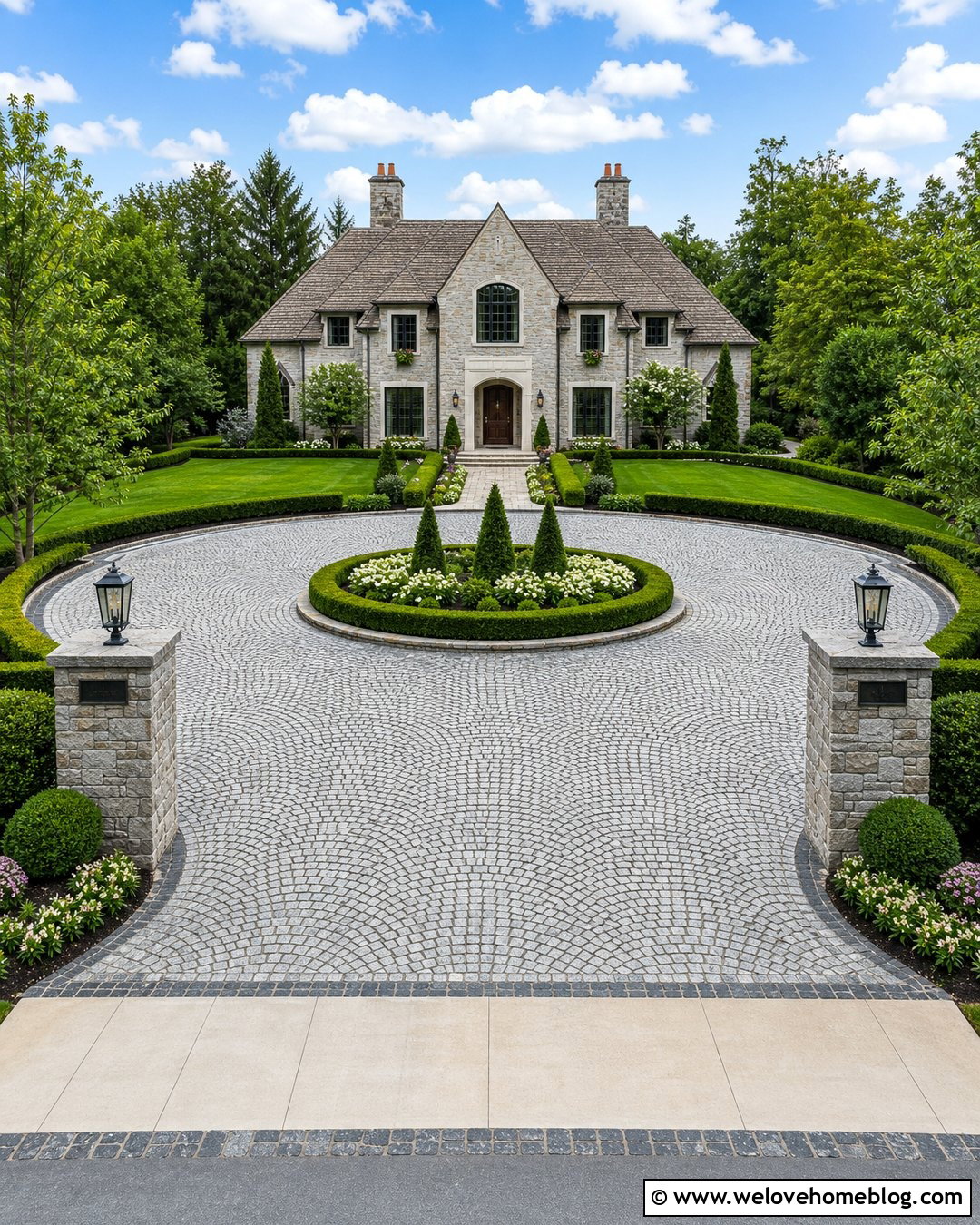
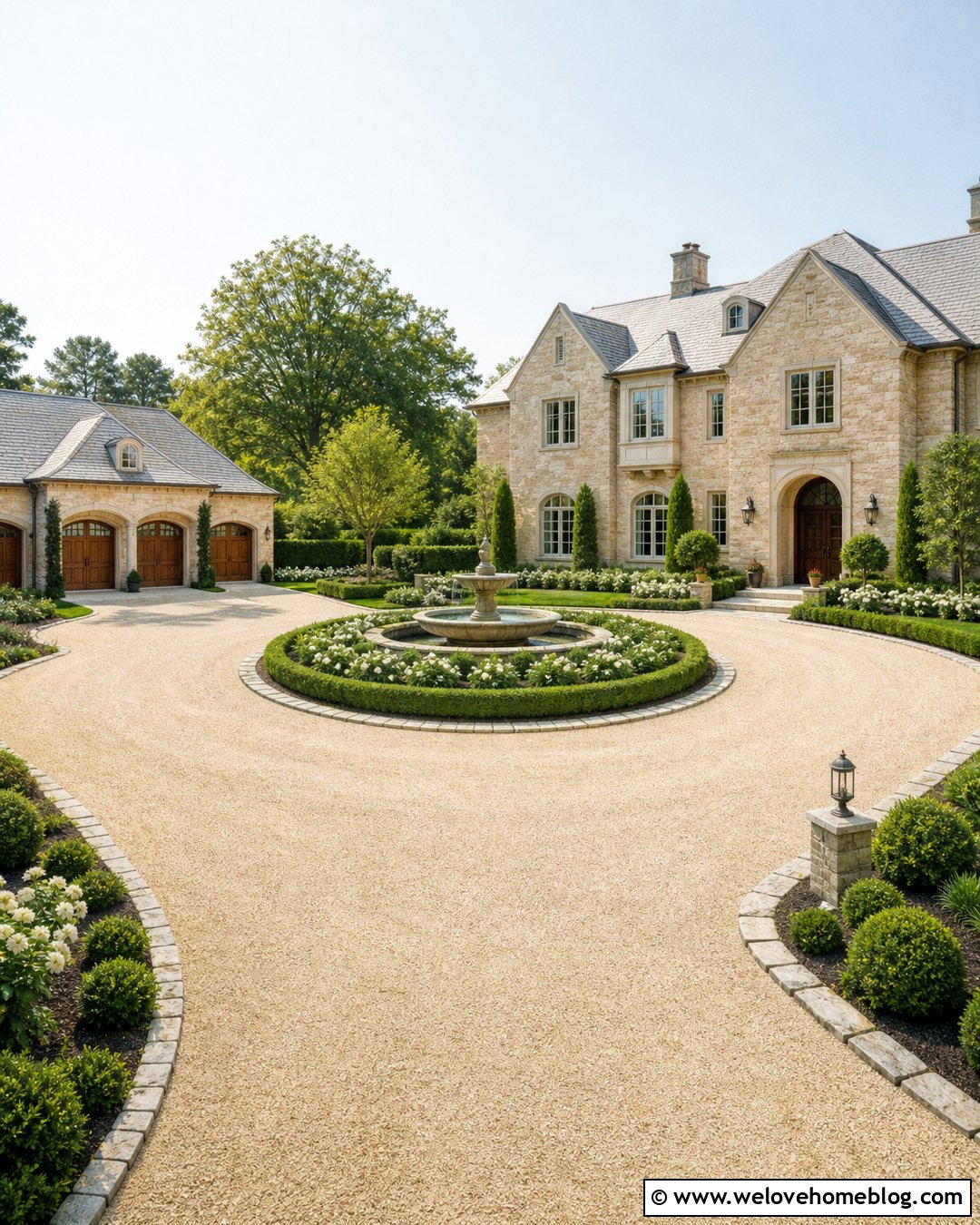
The rich texture of cobblestone can transform an expansive driveway into a prominent part of the landscape. Choose gray granite cobbles with subtle variations in color and install them in sweeping fan patterns across a circular or curved layout. Formal hedges can follow the outer edges, while symmetrical planting beds frame the approach to the house. Place matching stone pillars at the entrance and repeat the material around the front steps. A central island with a clipped evergreen, simple lawn, or understated fountain can provide a strong focal point without making turning difficult. Because cobblestone already has considerable visual detail, keep the surrounding plant palette controlled. This combination feels especially appropriate beside stone estates, European-inspired homes, and substantial traditional residences.
7. Curved Exposed Aggregate Driveway With Native Plants
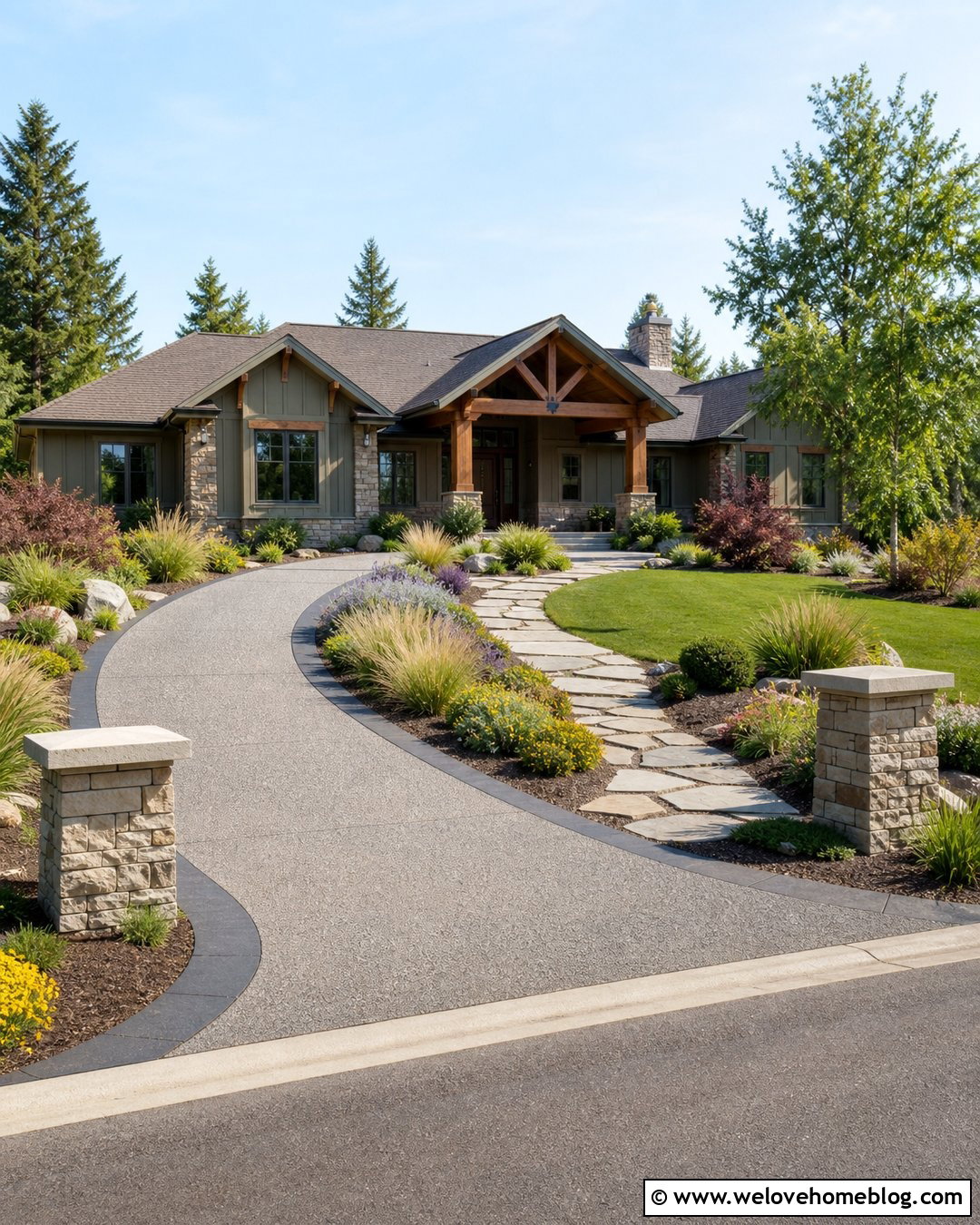
A curved exposed aggregate driveway combines a durable-looking surface with softer, natural landscaping. Select a warm gray or sandy finish that reveals small stones without creating excessive color variation. Follow the existing contours of the yard instead of forcing a rigid straight route. This helps the driveway sit more comfortably within a large landscape. Border the curves with dark concrete edging, then add broad beds of native grasses, flowering perennials, and low shrubs. Groups of plants will look more cohesive than scattered individual specimens. A flagstone walkway can branch from the driveway and lead toward the front porch. Finish the entrance with simple stone columns and a low address marker. The overall effect is relaxed, practical, and well suited to craftsman or contemporary ranch homes.
8. Permeable Paver Driveway With Rain Gardens
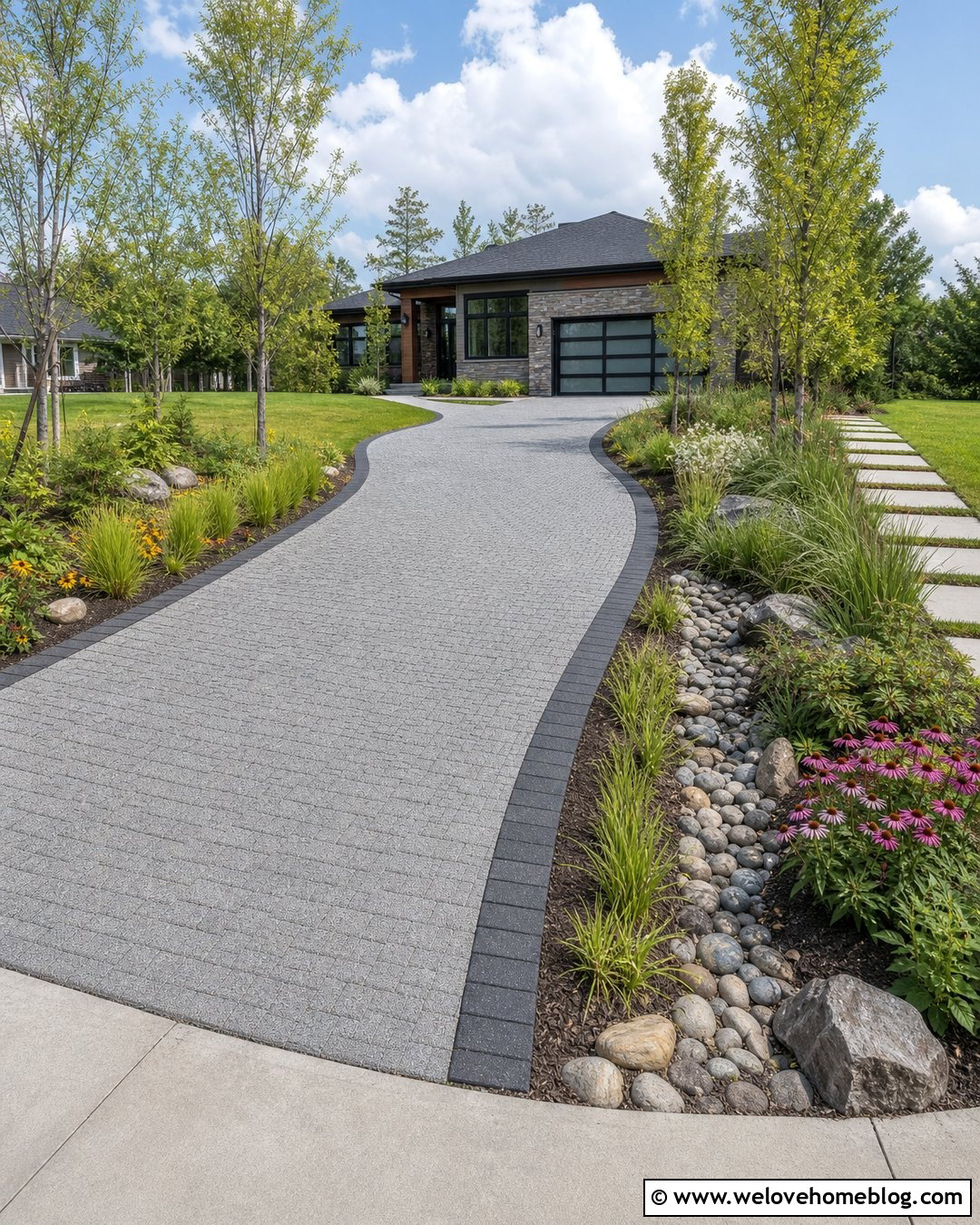
Large paved areas need a drainage plan that works with the property rather than sending water toward the street or foundation. Permeable concrete pavers can create a handsome driveway while allowing water to move through properly designed joints and base layers. Use medium gray pavers in a straight or gently curved layout, then define the edges with darker solid pavers. Place shallow rain gardens along the lower side of the driveway, filling them with regionally suitable grasses, flowering plants, and moisture-tolerant shrubs. A narrow stone channel can guide runoff toward these planted areas. Keep the central driving route open and visually simple. This coordinated design suits modern and transitional homes while making stormwater management part of the landscape instead of treating it as an afterthought. ()
9. Resin-Bound Driveway With Brick Borders
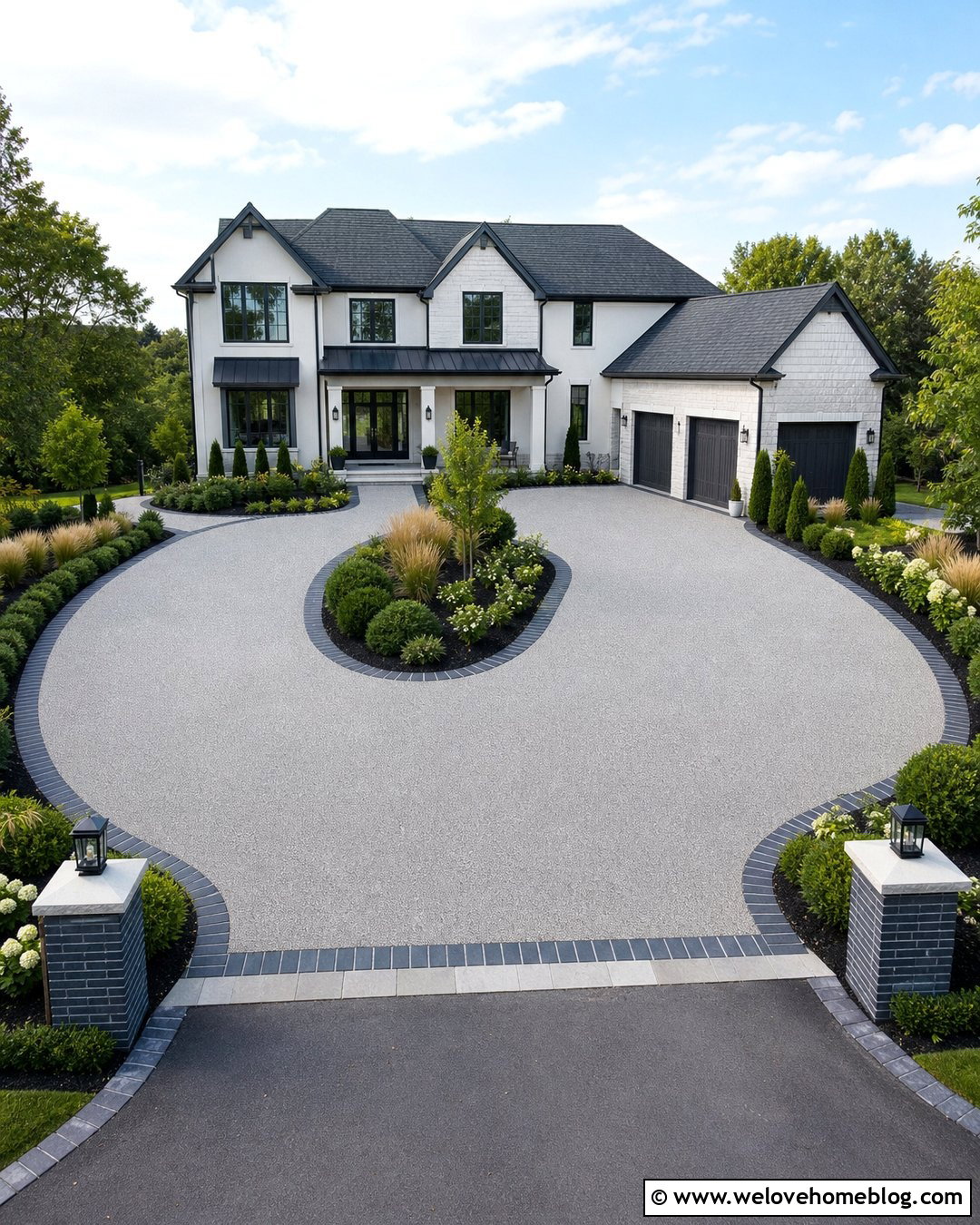
For a smooth and visually consistent finish, consider a resin-bound gravel driveway in a warm beige or silver-gray tone. The uniform surface can cover a broad area without the loose appearance of traditional gravel. A sweeping horseshoe shape works well for a large front yard, while red or charcoal brick borders give the curves sharper definition. Repeat the same brick around planting beds and along the front walkway. Structured evergreen shrubs near the entrance can transition into looser ornamental grasses closer to the house. Add a generous parking bay beside the garage so stationary vehicles do not interrupt the main route. The combination of fine aggregate texture, clean edging, and layered greenery creates an elegant but approachable driveway for traditional or contemporary homes.
10. Long Gravel Driveway With Tree-Lined Borders
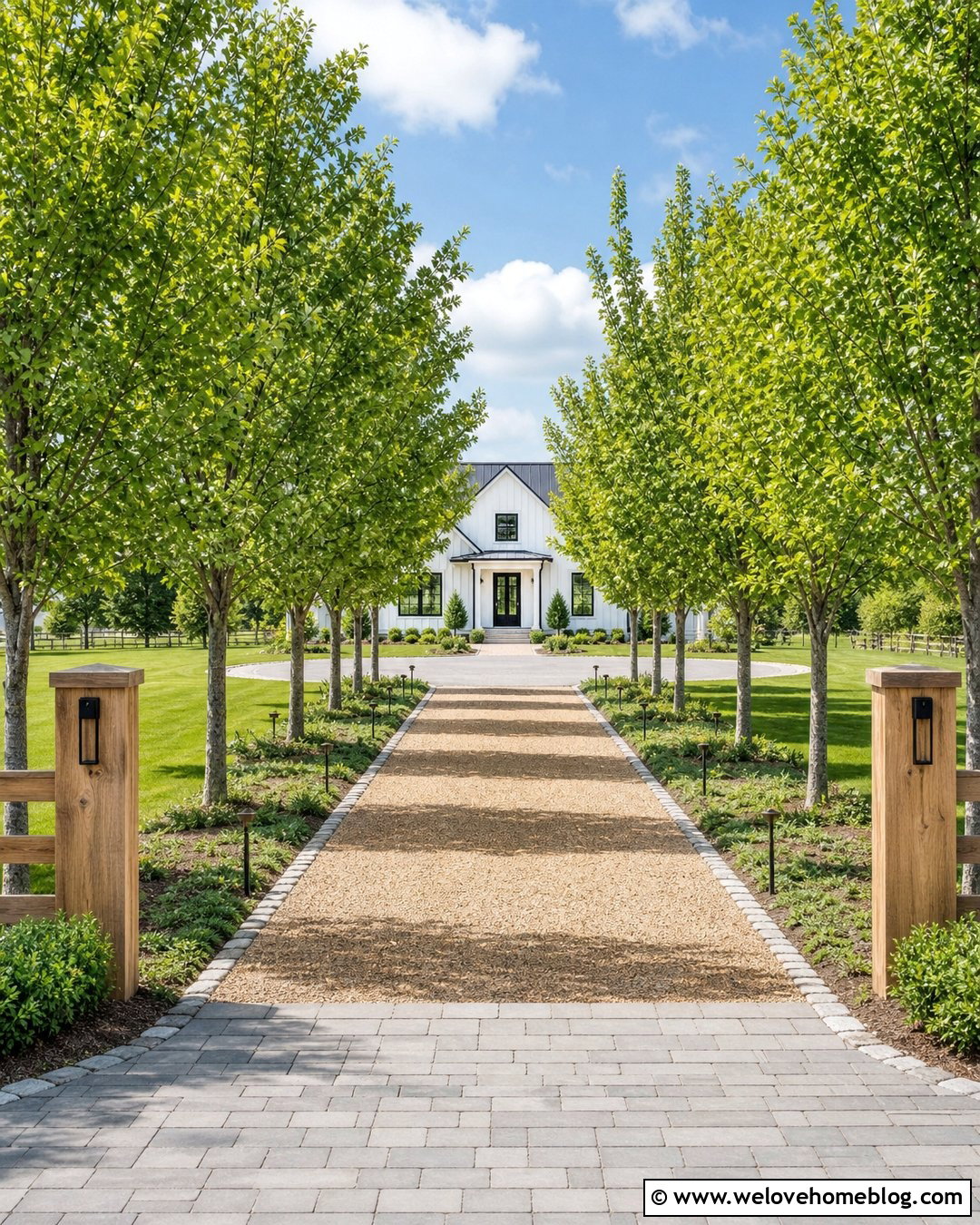
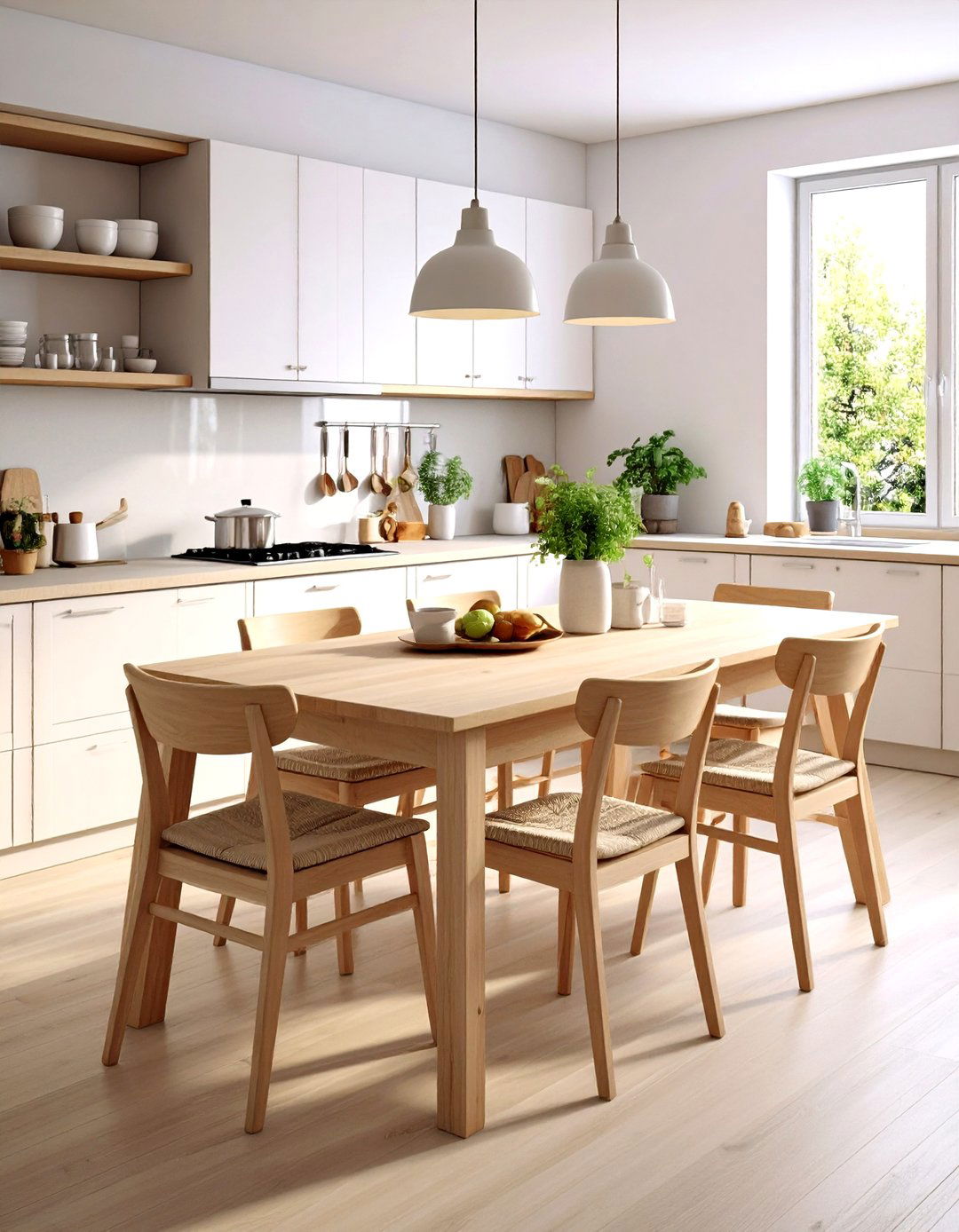
Imagine approaching a home beneath two balanced rows of mature trees. A long gravel driveway uses the scale of a large property to create a memorable sense of arrival. Choose compacted angular gravel in a gray, buff, or soft brown color that suits the house exterior. Add steel, stone, or flush concrete edging to keep the route crisp. Trees should be spaced consistently and positioned far enough from the driving surface to allow for healthy growth and clear vehicle access. Underplant them with lawn, low ground cover, or broad drifts of spring bulbs. At the end of the drive, use a paver turnaround court to distinguish the destination. Simple entrance posts and understated lighting complete this classic country or farmhouse landscape.
11. Split Driveway With Central Landscaping
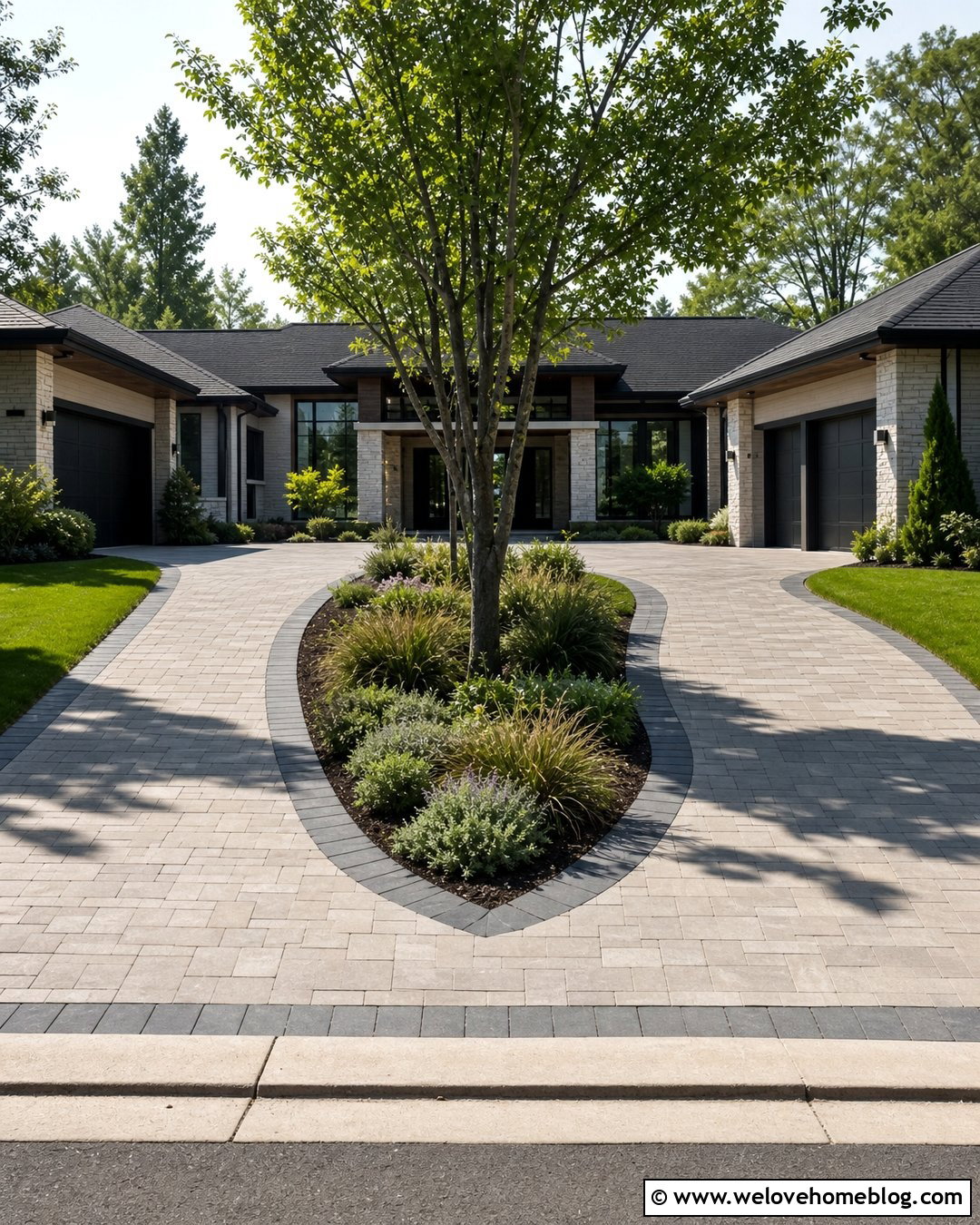
A split driveway can organize vehicle movement while reducing the appearance of one oversized paved rectangle. Begin with a single wide entrance, then divide the route around a long landscaped island before reconnecting near the garage. Use warm gray concrete pavers for the driving lanes and a darker border to emphasize the shape. Fill the center with a small multi-stem tree, layered shrubs, ornamental grasses, and low ground cover. Avoid dense plants near the split and merging points so visibility remains open. A walkway can cross the island or branch from the parking area, depending on the front door’s location. This plan works particularly well for wide properties with multiple garage bays. The central garden also brings greenery closer to the house and visually reduces the amount of hardscape.
12. Concrete Driveway With Grass Strips
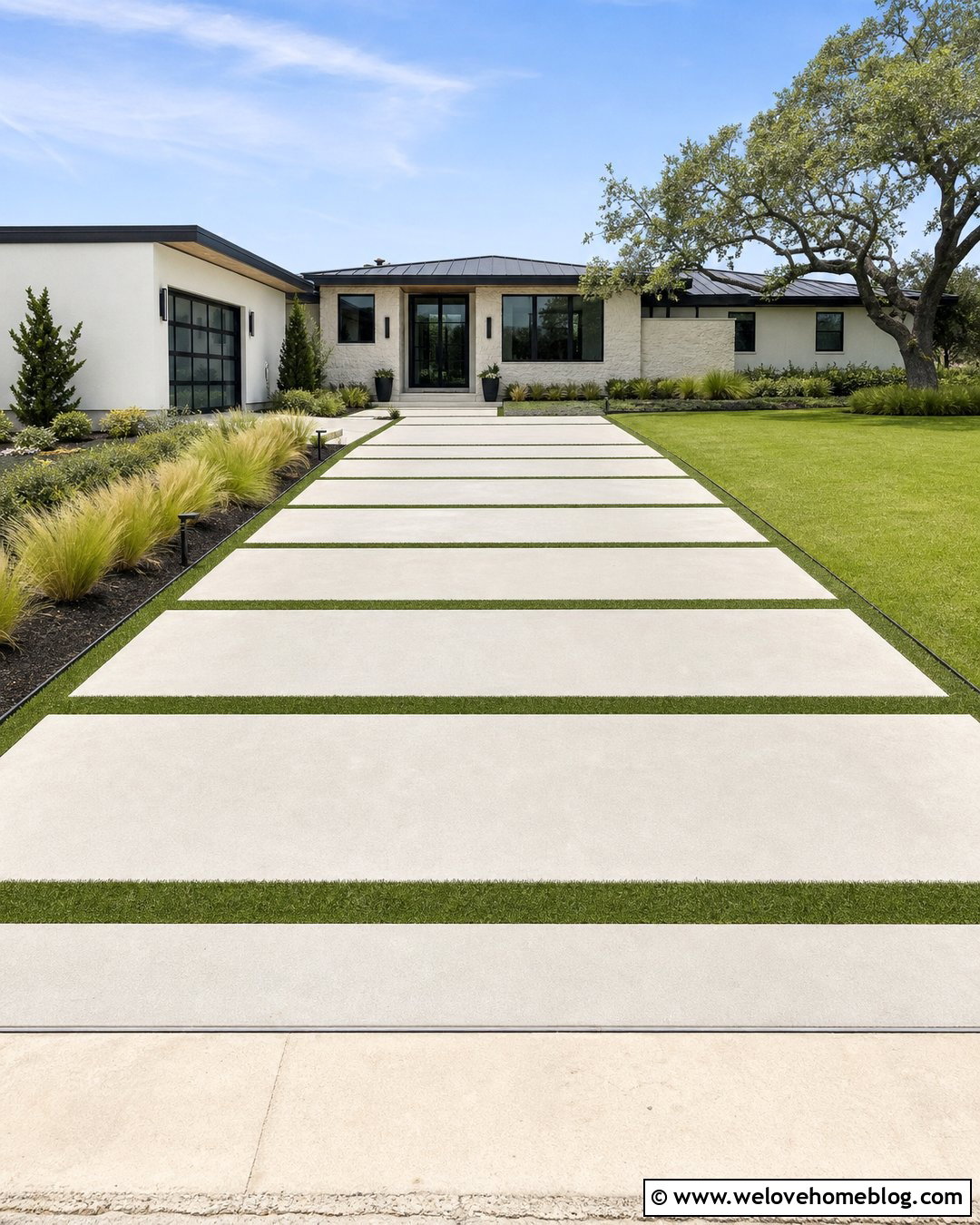
Wide concrete driveways often benefit from clean divisions that break the surface into smaller sections. One option is a series of poured concrete driving panels separated by broad grass strips. The green lines add color and help connect the driveway to the surrounding lawn. Use a straight layout for a modern ranch or minimalist home, keeping the panel widths consistent from the curb to the garage. Where frequent turning could damage natural grass, use reinforced turf or narrow gravel joints instead. Add rectangular beds of ornamental grasses and low shrubs beside the walkway. Dark metal edging keeps planted areas neat against the pale concrete. The complete design feels open and contemporary, yet the integrated greenery prevents the large driveway from dominating the entire front yard.
13. Stamped Concrete Driveway With Stone Accents
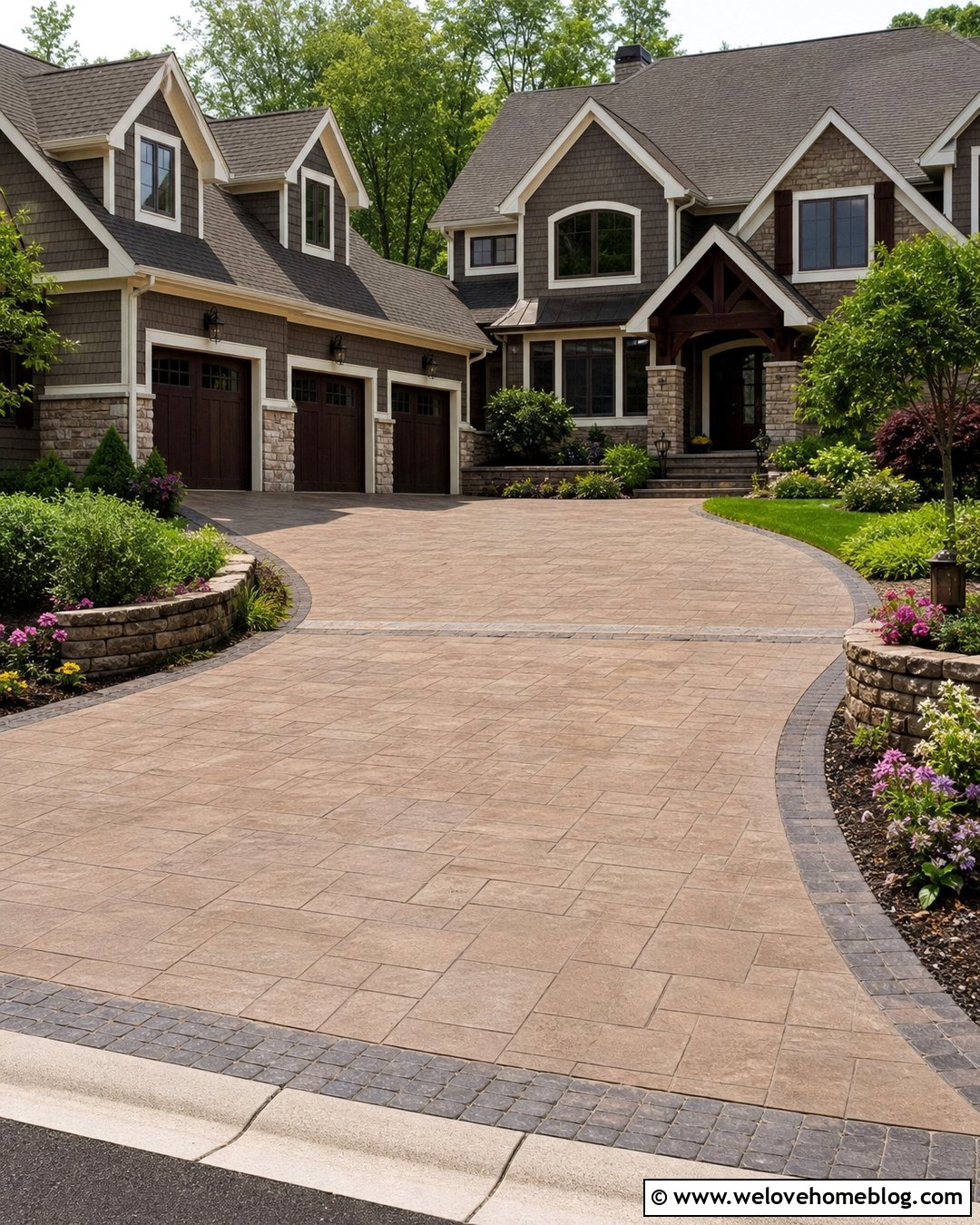
Stamped concrete can give a large driveway more detail without covering the whole space in individual masonry units. Select a subtle slate or ashlar pattern in warm gray, taupe, or muted brown. Strongly contrasting colors can become overwhelming across a broad surface, so keep the main finish close to natural stone. Create a curved driveway leading to a wide parking court, then add real stone bands at the entrance and garage apron. Stone retaining edges can continue into raised planting beds filled with compact shrubs and flowering perennials. Use matching steps for the front walkway to create a unified palette. This approach suits Mediterranean, craftsman, and traditional homes where a completely plain concrete driveway might look too basic for the scale of the architecture.
14. Limestone Gravel Driveway With Farmhouse Landscaping
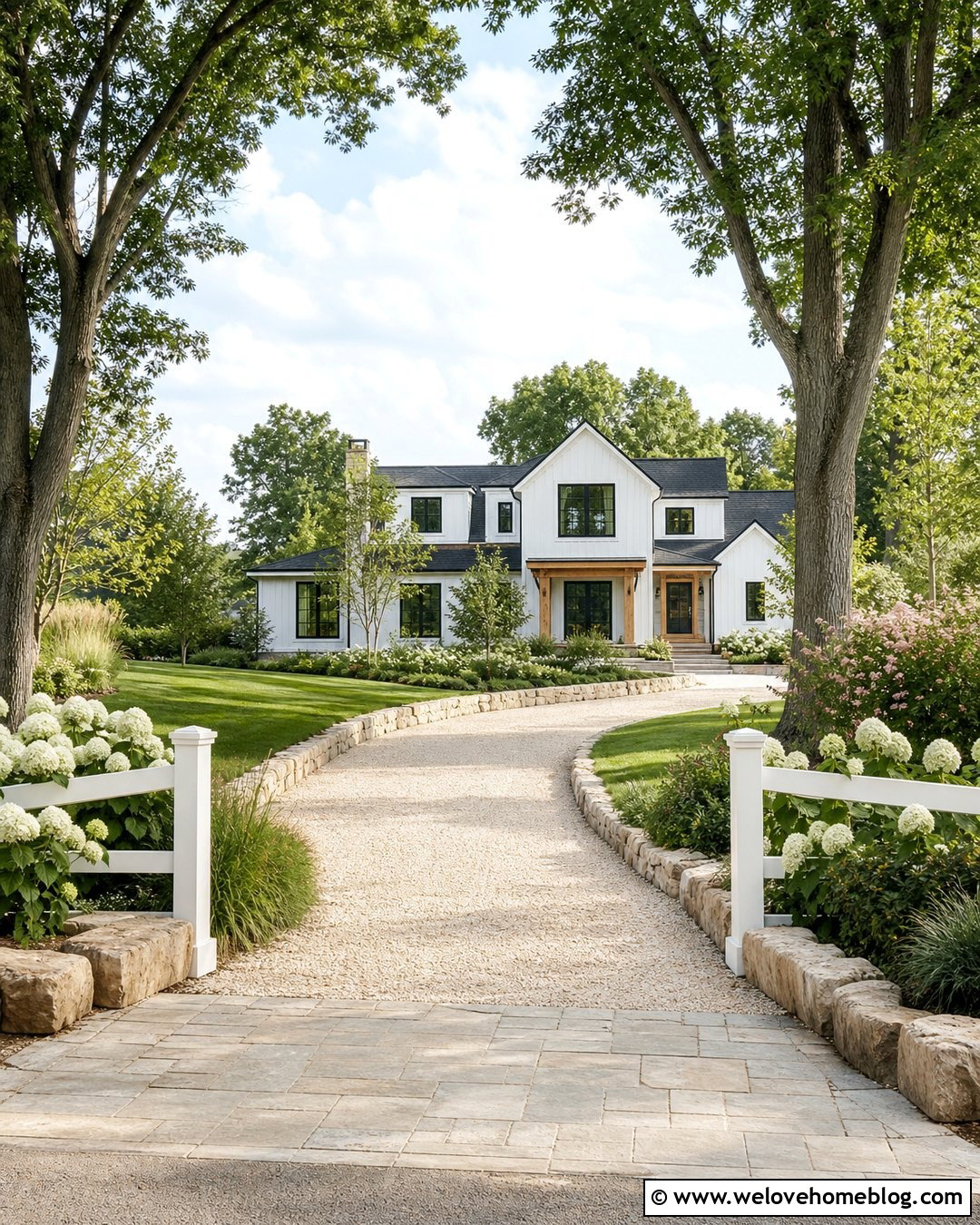
Pale limestone gravel immediately brightens a wide farmhouse driveway and creates a relaxed connection to rural surroundings. Shape the drive into a broad curve that passes a simple lawn or meadow-style planting bed before reaching the house. Use reclaimed timber or chunky natural stone along the edges to contain the gravel. Near the garage and porch, add larger limestone pavers to form a stable arrival court and front walkway. Plant hydrangeas, native grasses, flowering shrubs, and a few shade trees in generous groups. White fence sections can define the entrance without enclosing the entire yard. The light driveway surface pairs particularly well with white siding, black windows, and natural wood details. Keep the layout broad and uncluttered so the farmhouse remains the main focal point.



15. Dark Paver Driveway With Minimal Landscaping
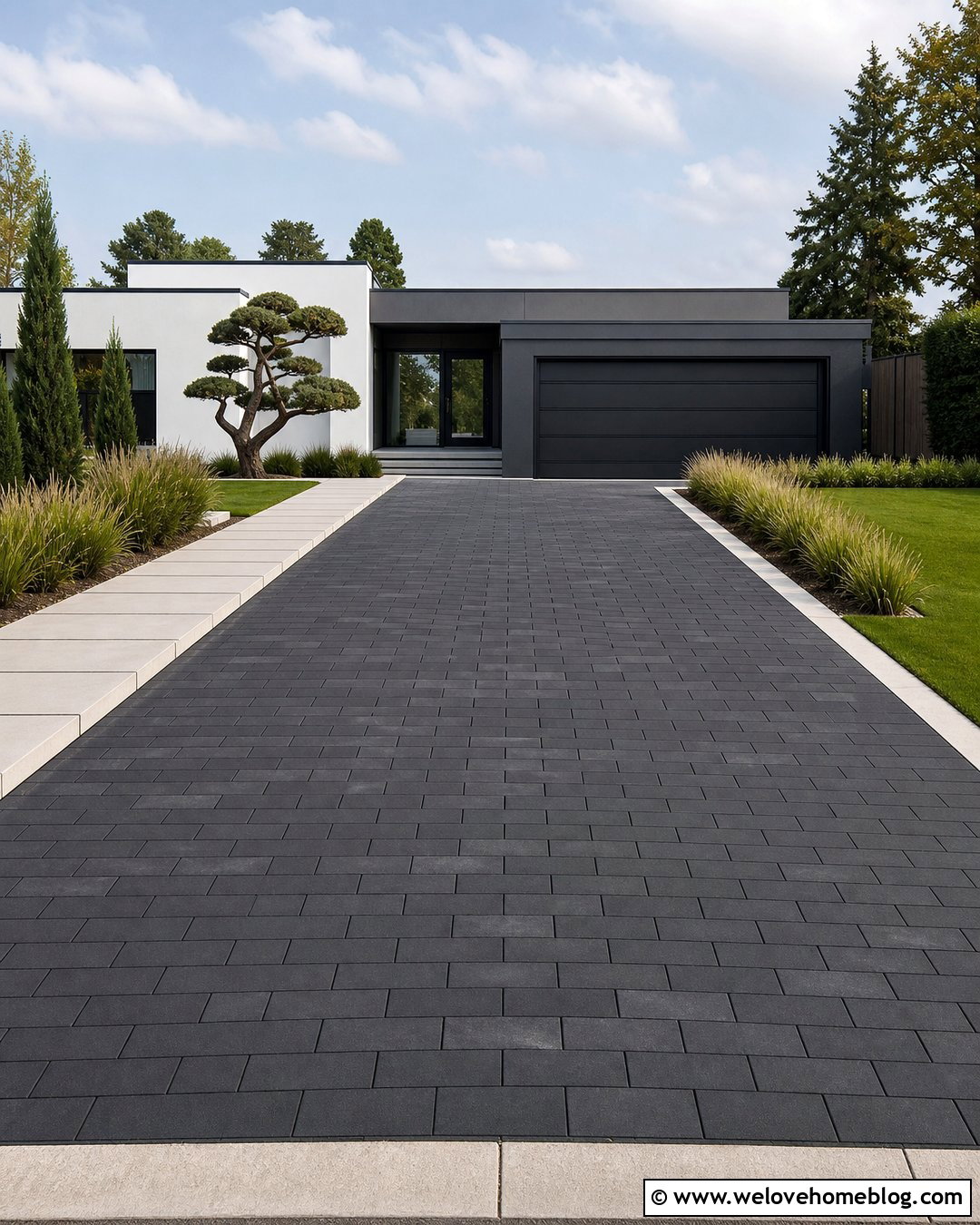
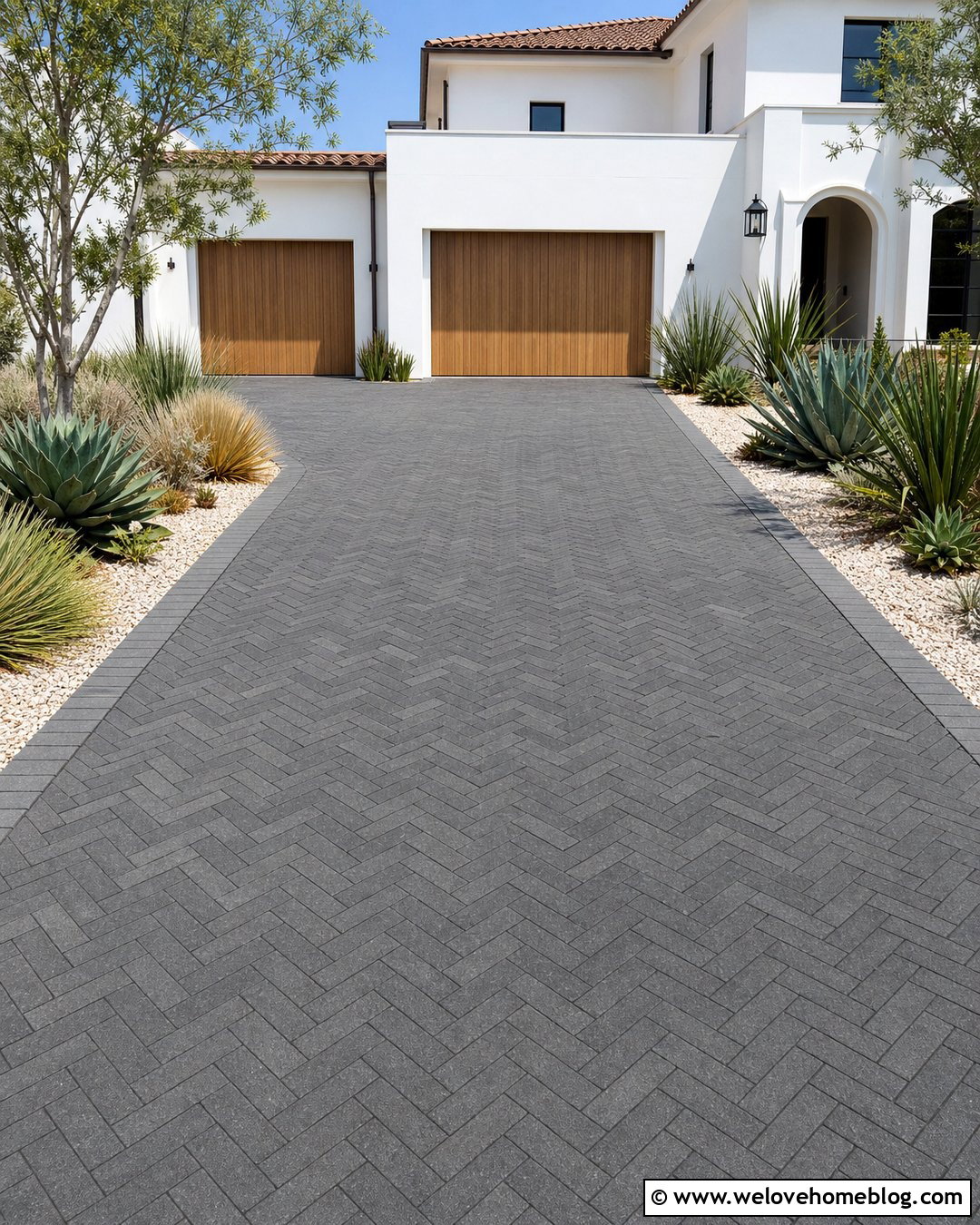
Dark charcoal concrete pavers create a striking base for a large modern driveway. Use long rectangular units in a running bond or linear pattern, directing the eye toward the garage and front entrance. A straight drive can widen into a clean parking court without decorative curves or complex inlays. Frame the dark paving with light concrete curbs for sharp contrast. Planting should be simple but substantial: think broad sweeps of ornamental grass, clipped evergreen forms, and one sculptural tree. A pale concrete walkway can cross the driveway or run beside it, providing a clearly visible pedestrian route. The house should repeat some of the driveway’s charcoal tones through its roof, doors, or metal details. This restrained palette creates confident curb appeal without unnecessary decoration.
16. Wide Concrete Driveway for a Three-Car Garage
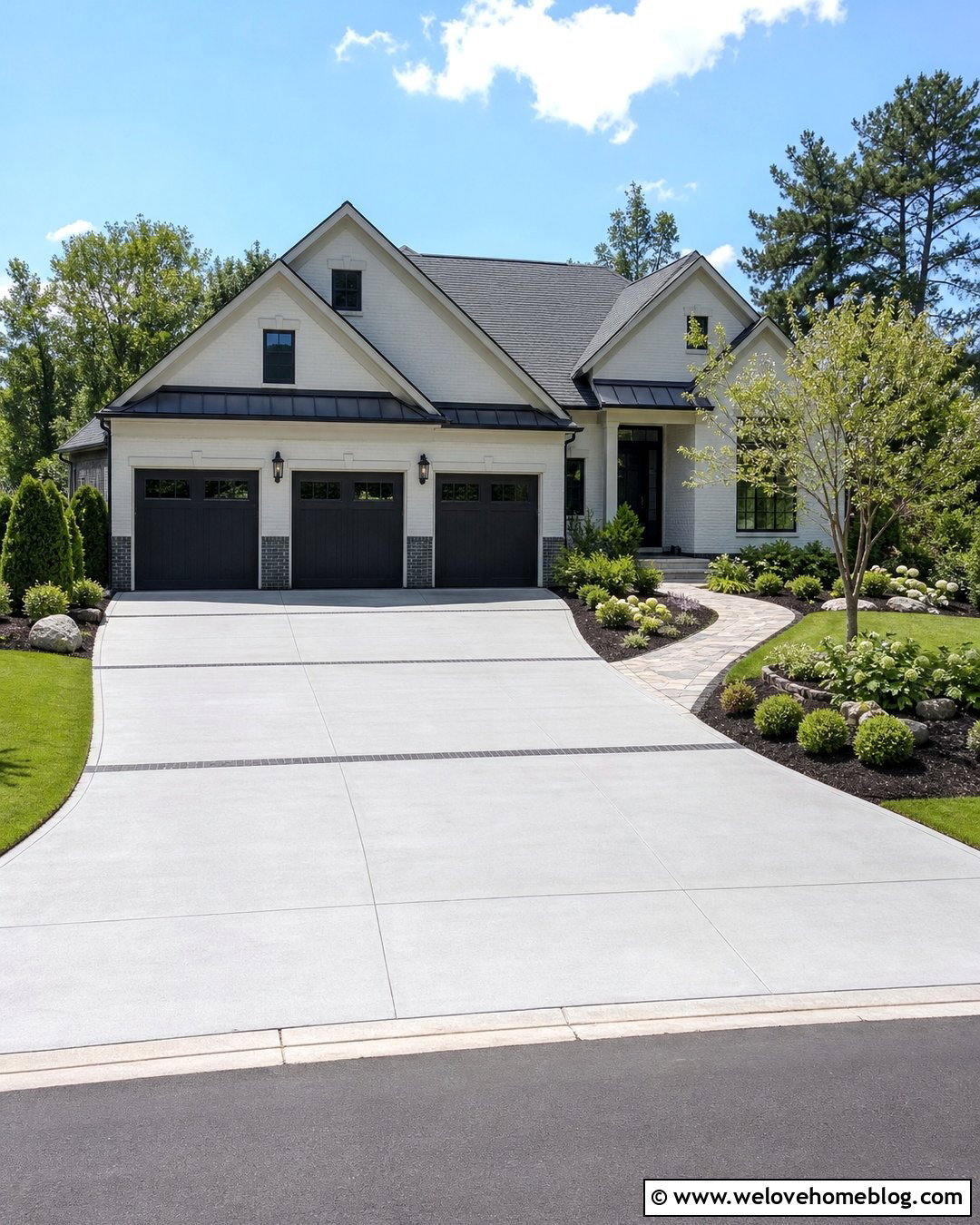
A three-car garage requires a generous approach, but the driveway does not need to resemble an uninterrupted concrete parking lot. Divide a wide, light gray poured concrete surface with thin brick or paver bands aligned between the garage doors. These lines organize the pavement into smaller visual zones. Add a curved outer edge beside a deep planting bed to soften the rectangular garage apron. A separate walkway should lead from the parking area to the front door, ideally using a contrasting paver or natural stone. Place a medium-size ornamental tree between the driveway and entry where space permits. Low shrubs near the garage prevent the landscaping from blocking doors or sightlines. The result supports everyday parking while keeping the home’s entrance attractive and easy to identify.
17. Sloped Driveway With Stone Retaining Walls
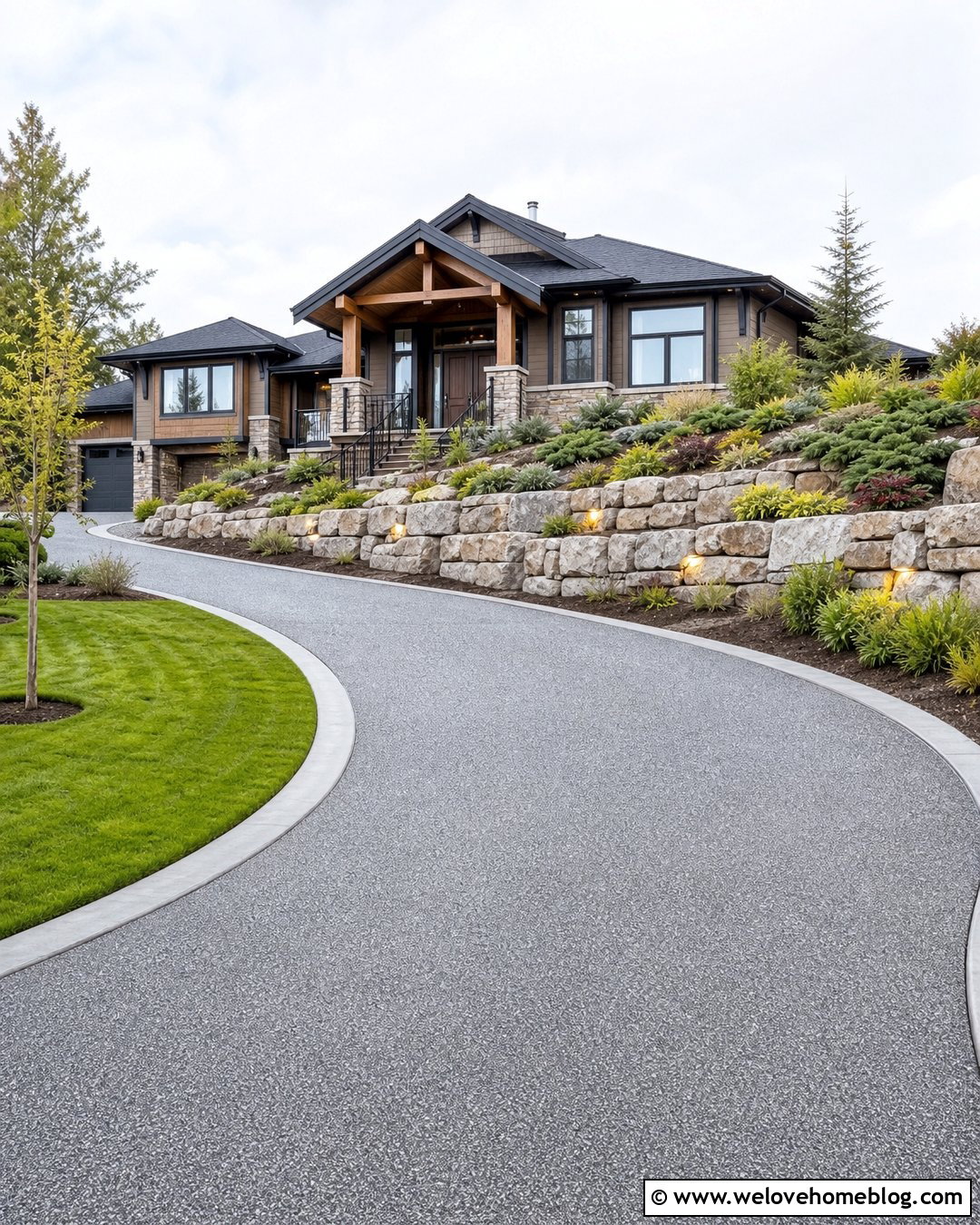
A sloped large driveway feels more comfortable when the grade, walls, and planting beds appear carefully coordinated. Use textured concrete pavers or exposed aggregate in a gently curving layout that follows the land. Along the uphill side, build tiered retaining walls from natural stone that complements the house facade. The terraces can hold low shrubs, ornamental grasses, and ground covers with controlled growth. On the downhill edge, install a defined curb and open lawn or low planting to preserve visibility. Drainage channels should be integrated discreetly across or beside the surface where needed. Add simple wall lights and low path fixtures for clearer boundaries. By treating the slope as a landscape feature, the driveway gains depth and character instead of appearing like a steep paved ramp.
18. Gated Driveway With Stone Pillars
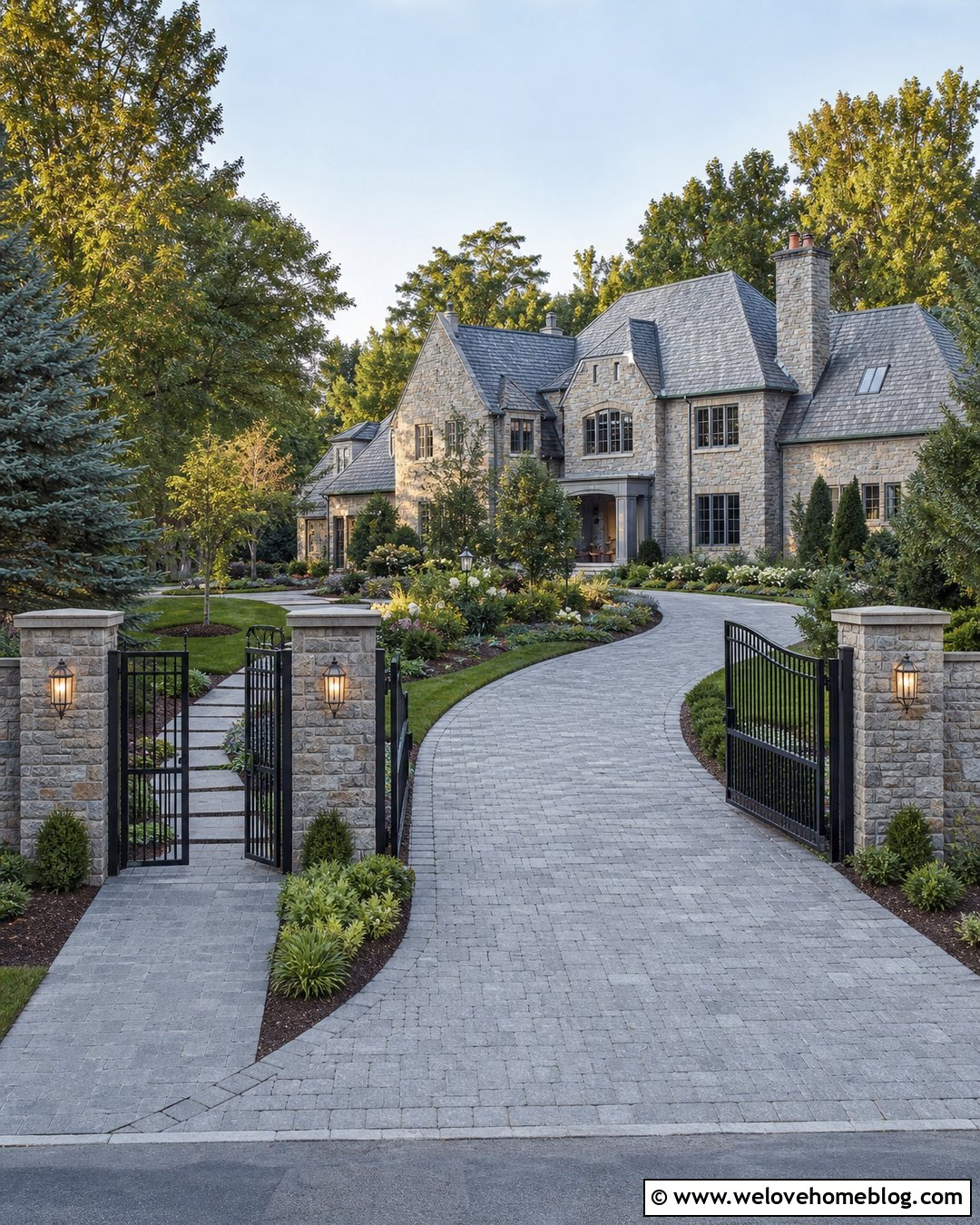
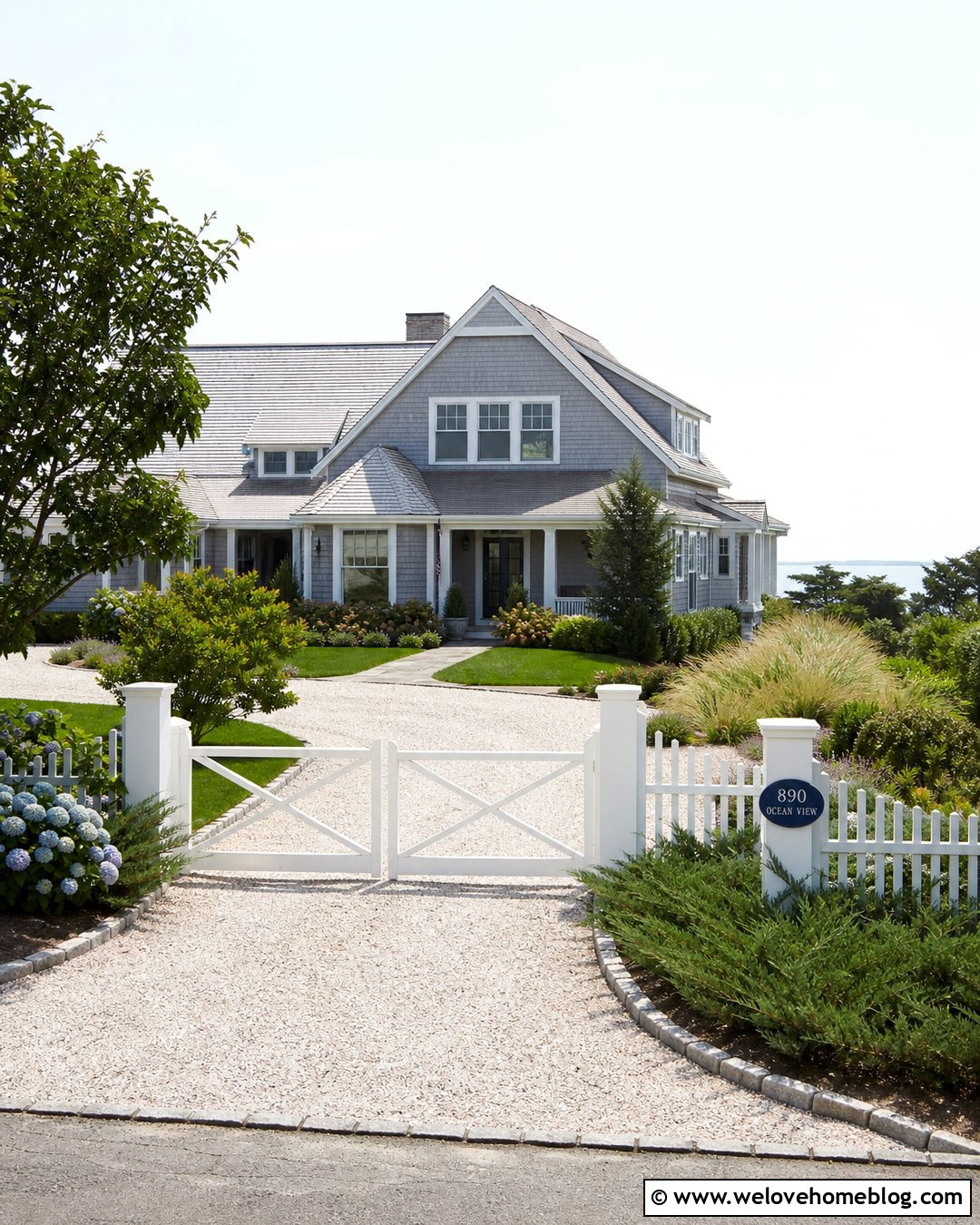
A gated driveway entrance should introduce the materials and proportions used throughout the property. Start with substantial stone pillars positioned around a wide opening, then use a simple black metal gate that allows views into the landscape. Beyond it, a curved asphalt or concrete paver driveway can lead through lawn and layered planting beds toward the house. Continue the pillar stone as driveway edging, low garden walls, or an apron at the curb. Keep trees and tall shrubs set back from the gate so approaching vehicles have adequate space and visibility. Include a separate pedestrian gate and walkway where practical. Discreet lighting on the pillars highlights the entrance structure. The coordinated materials make the gate feel connected to the complete driveway rather than added as an isolated security feature.
19. Large Driveway With a Guest Parking Court
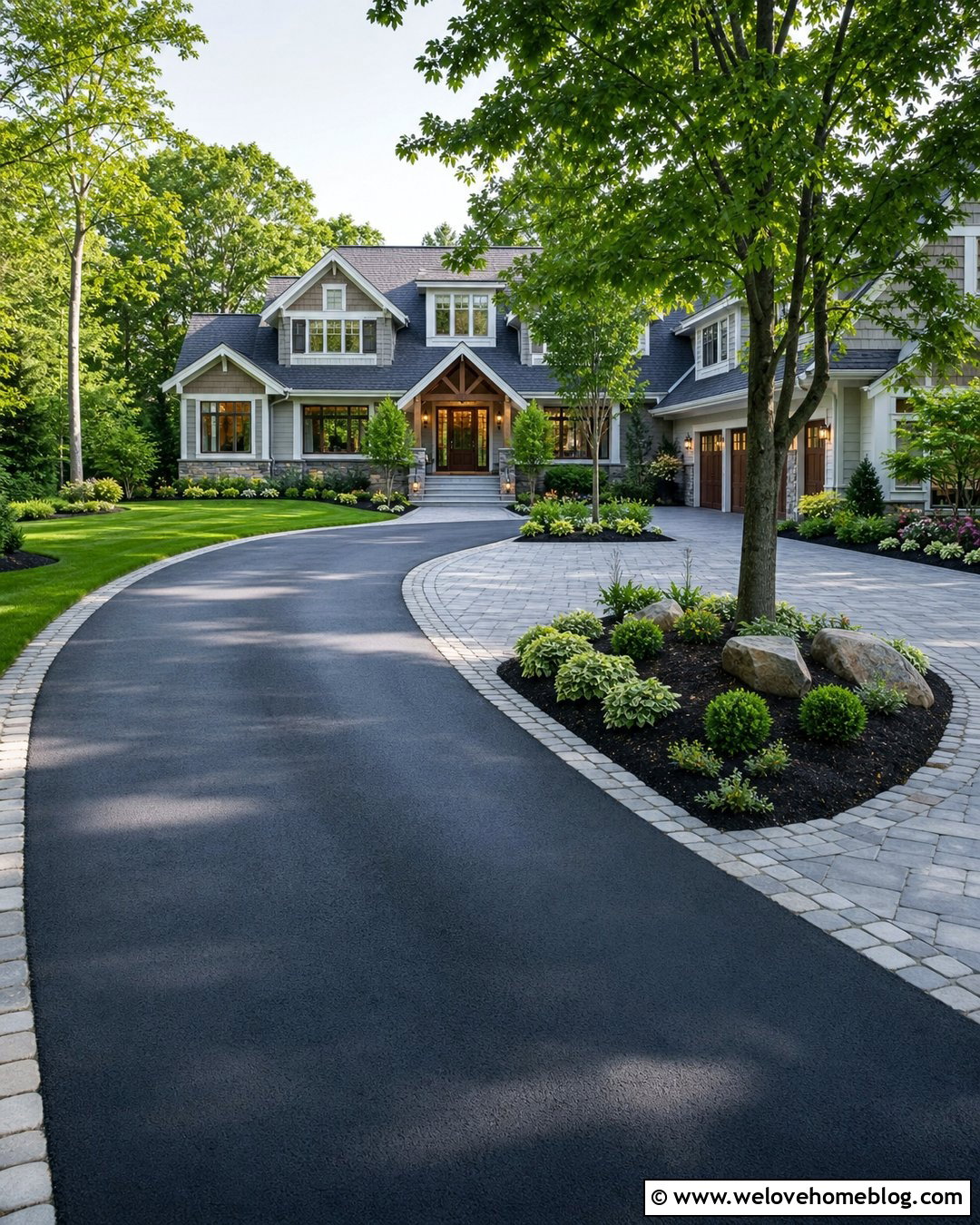
Frequent visitors can quickly crowd a main driveway, so a dedicated parking court may be a smart addition. Use a long, straight asphalt driveway for the approach, then branch into a gravel or paver guest area before reaching the garage. Define the parking court with cobblestone edging and a planted island so its purpose is clear. Trees along the outer edge can provide shade without hiding the entrance to the house. Connect the court to the front door with a wide, well-lit walkway. The primary driving lane should remain open for garage access and turning. Repeating materials between the court, walkway, and driveway apron creates visual unity. This design adds practical capacity while avoiding the cluttered appearance of vehicles parked along both sides of the main approach.




20. Mixed Material Driveway With a Paver Apron
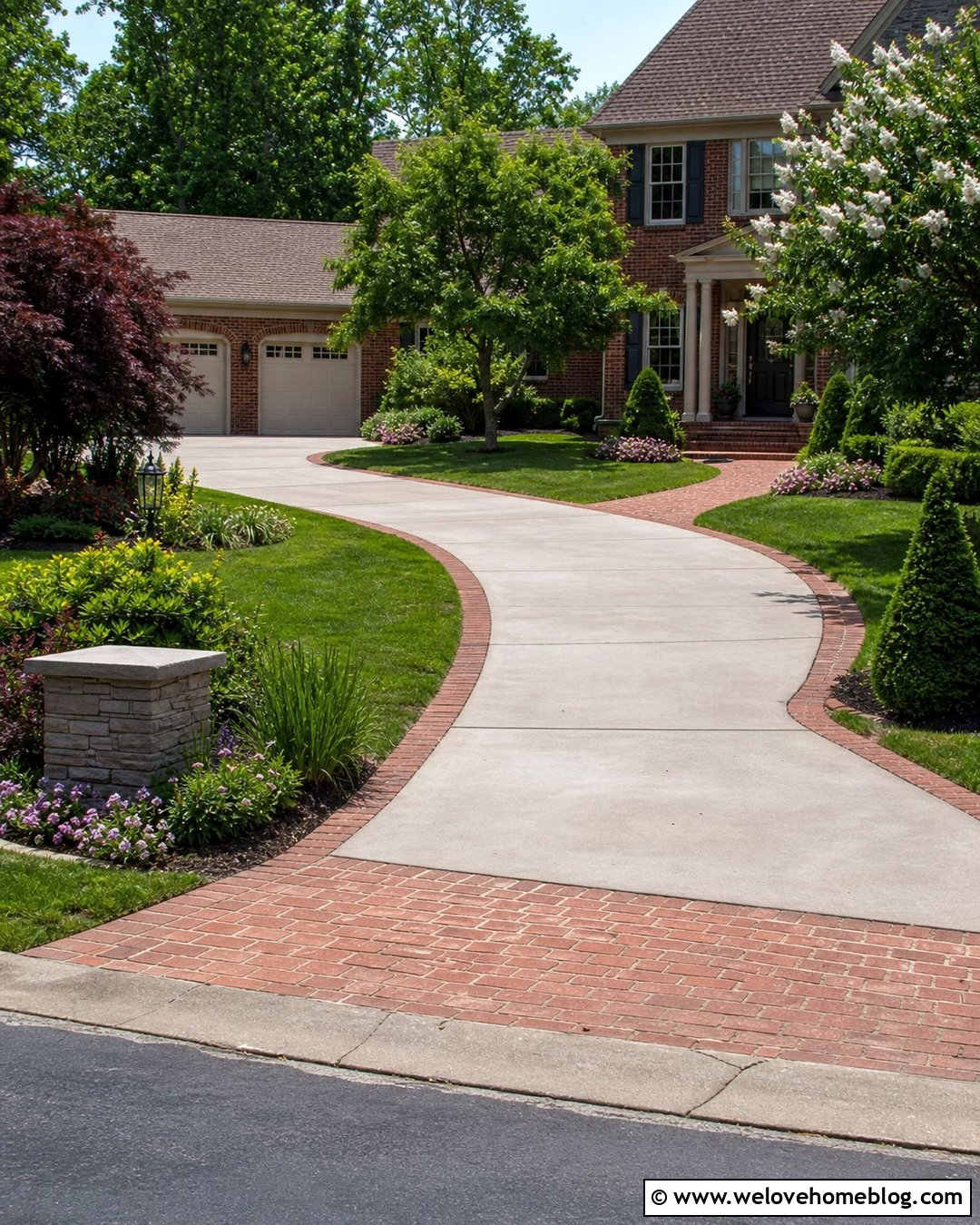
Mixing materials is an effective way to control the scale and cost of an expansive driveway. Use smooth gray concrete for the primary driving surface, then install clay brick or charcoal pavers at the curb, around the outer border, and across the garage apron. The accent sections draw attention to important transition points without making every square foot visually busy. A gentle curve can follow the landscape, while wide beds of evergreen shrubs, flowering perennials, and ornamental trees soften both sides. Repeat the accent pavers in the front walkway and around a small address monument. Limit the palette to two primary hardscape materials and colors that appear on the house. This creates a layered, custom look while preserving the clean function of a large residential driveway.
Conclusion:
The strongest 20 large driveway design ideas balance appearance, vehicle access, drainage, landscaping, and long-term maintenance. Begin with a layout that fits the property, whether that means a circular drive, a direct three-car approach, a horseshoe route, or a separate parking court. Then choose surface and border materials that relate naturally to the house. Planting beds, trees, walkways, lighting, gates, and entrance pillars should support the complete design rather than compete for attention. Most importantly, avoid leaving a broad driveway as one undefined expanse. Curves, material bands, landscaped islands, and strong edges can give it structure. With careful planning, a large driveway becomes a practical extension of the home’s architecture and landscape.

Related posts:



Leave a Reply