
A modern driveway can do far more than provide a place to park. It can strengthen the architecture, organize the front yard, improve drainage, and create a polished first impression from the street. Today’s best designs combine clean layouts with large-format pavers, permeable surfaces, restrained planting, decorative gravel, and carefully planned lighting. These features make the driveway feel connected to the house instead of looking like a plain slab. () Whether you have a compact urban lot, a wide suburban frontage, or a long country approach, the right combination of material, shape, border, and landscaping can transform the entire property. Explore these practical and visually distinct 35 Modern Driveway Design Ideas.

1. Large Concrete Slab Driveway
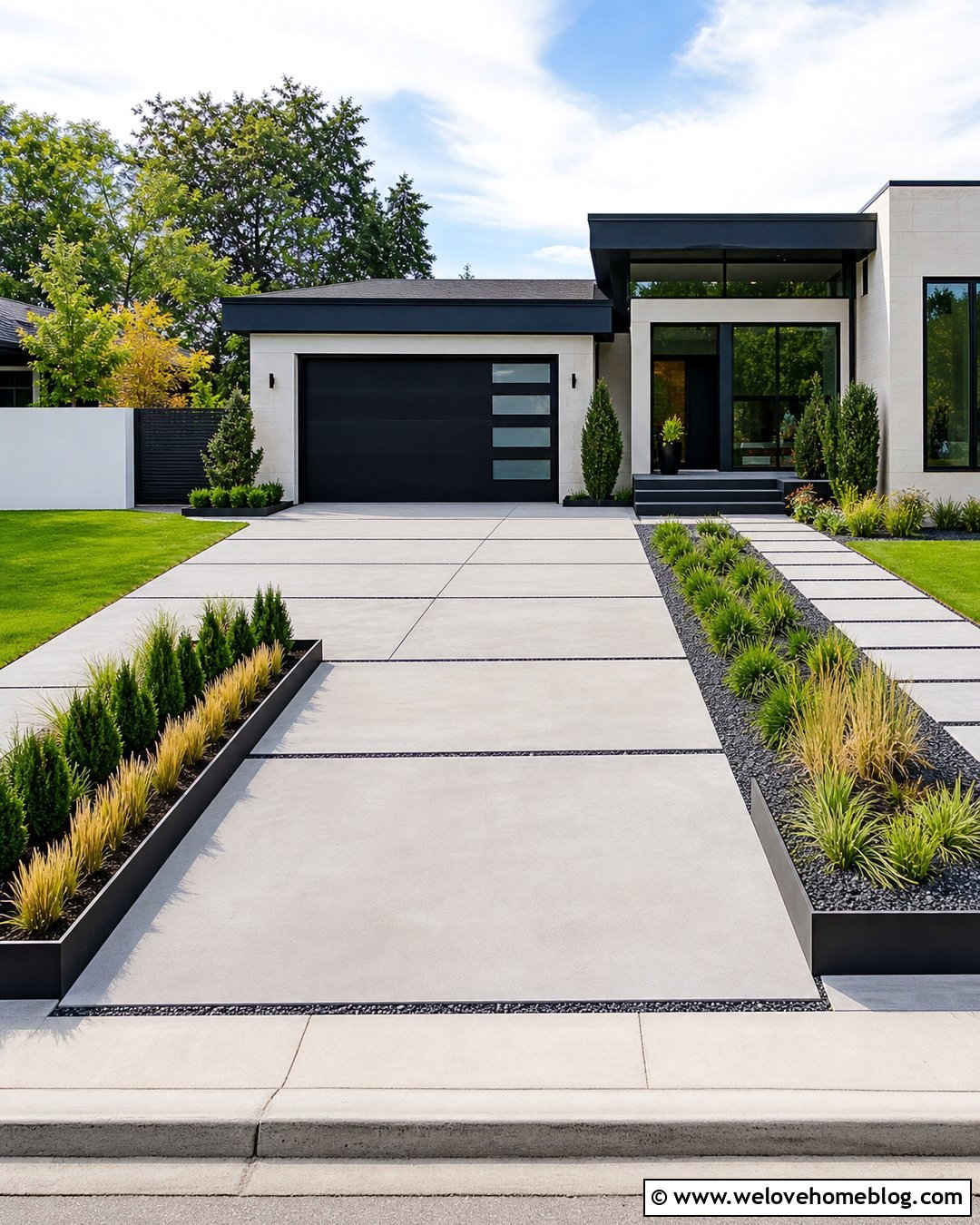
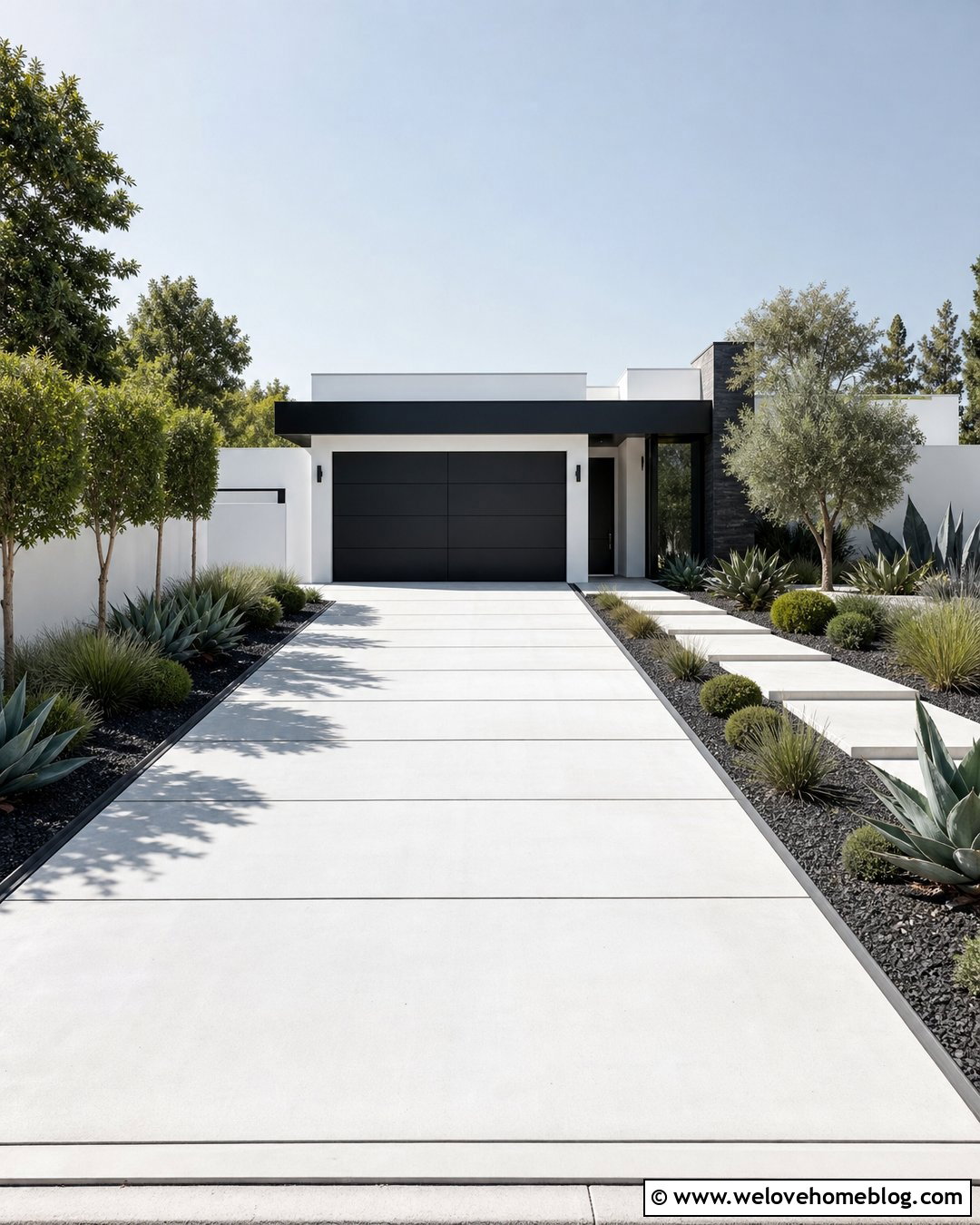
Large gray concrete slabs create a crisp foundation for a modern home. Their generous scale reduces visual clutter and makes a compact front yard appear wider. Separate the slabs with narrow strips of black gravel, river rock, or low ground cover to emphasize the geometric layout. A straight driveway works especially well with flat-roofed architecture and a simple two-car garage. Continue one slab line toward the front entrance to connect parking and pedestrian areas. Along the edges, use rectangular planting beds filled with ornamental grasses, compact evergreens, and pale decorative stone. Keep the concrete finish lightly textured rather than glossy, since outdoor traction matters. Repeating the home’s charcoal, white, or natural wood colors completes the coordinated look.
2. Concrete Driveway With Grass Strips
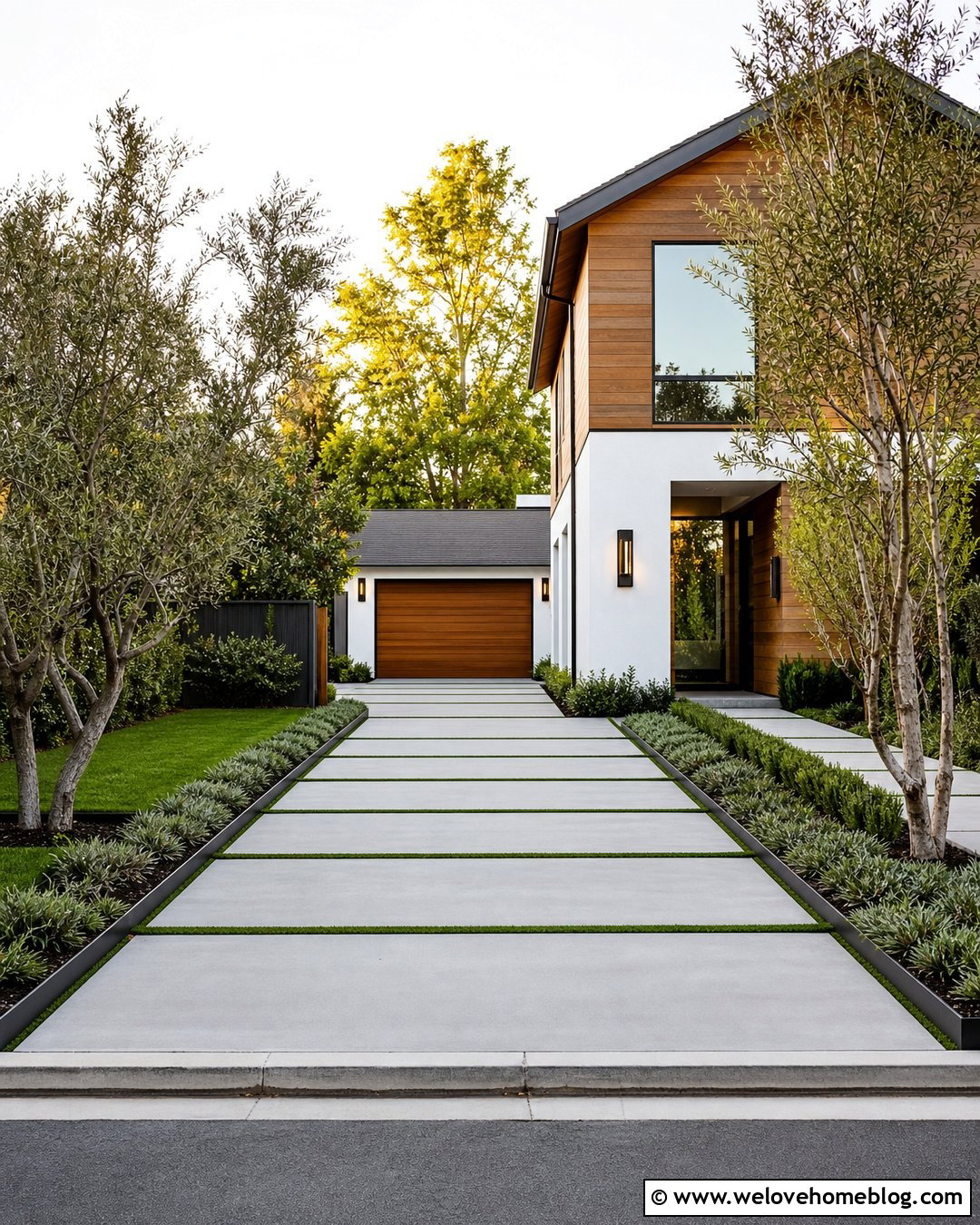
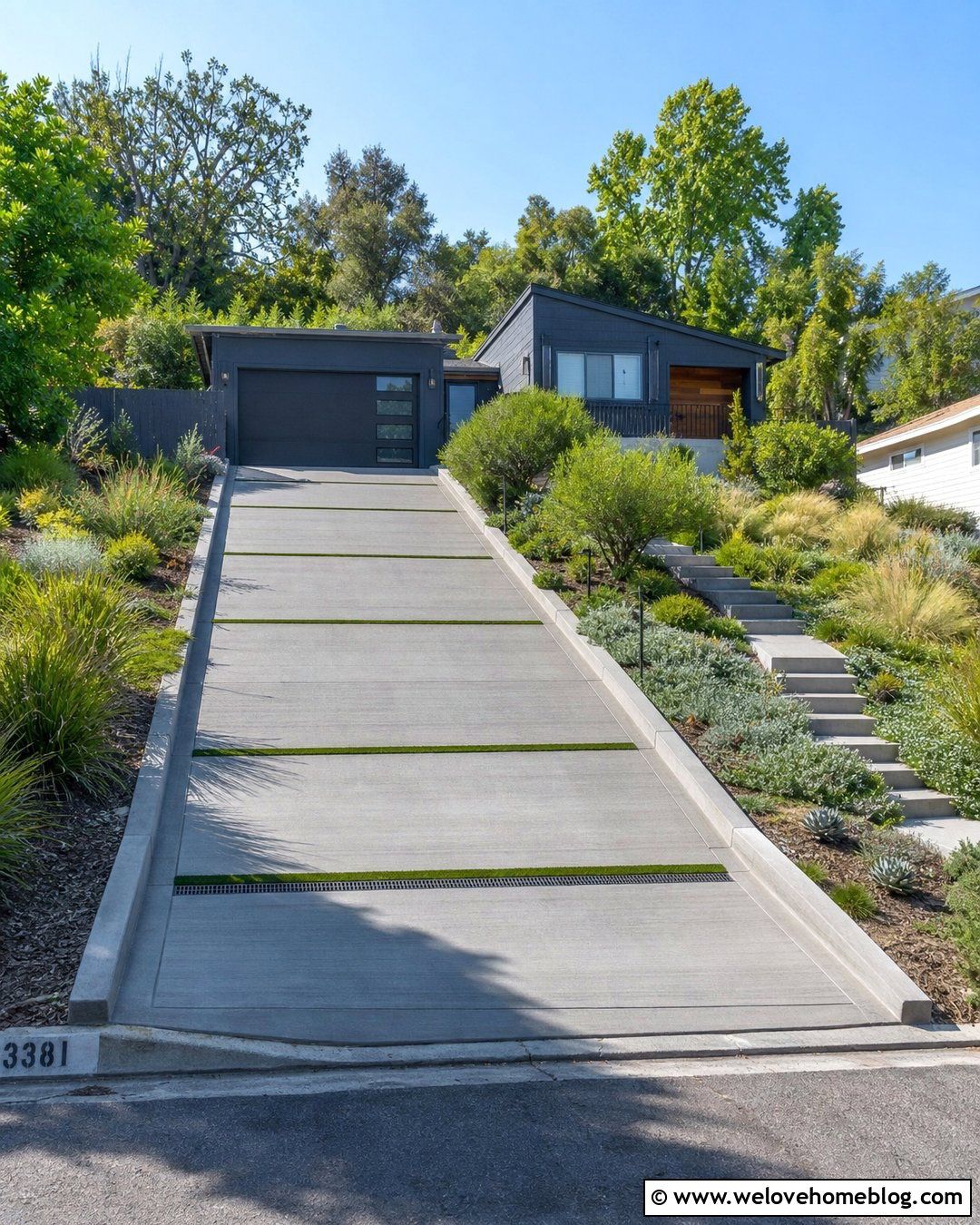
Concrete tire tracks divided by grass create a lighter, greener alternative to a fully paved driveway. The layout works best on a straight or gently curved approach where the vehicle path can be planned accurately. Use poured concrete ribbons or long rectangular slabs, leaving evenly sized planting strips between and beside them. Tough turf is a familiar choice, but low-growing ground cover may suit warm climates and lower-maintenance yards. Steel edging keeps the green sections crisp and prevents roots from spreading over the concrete. Frame the driveway with simple shrubs and one or two sculptural trees rather than crowded flower beds. The finished design balances hard surfaces with living texture, helping the approach feel integrated with a clean modern landscape.
3. Black Asphalt Driveway With Paver Border
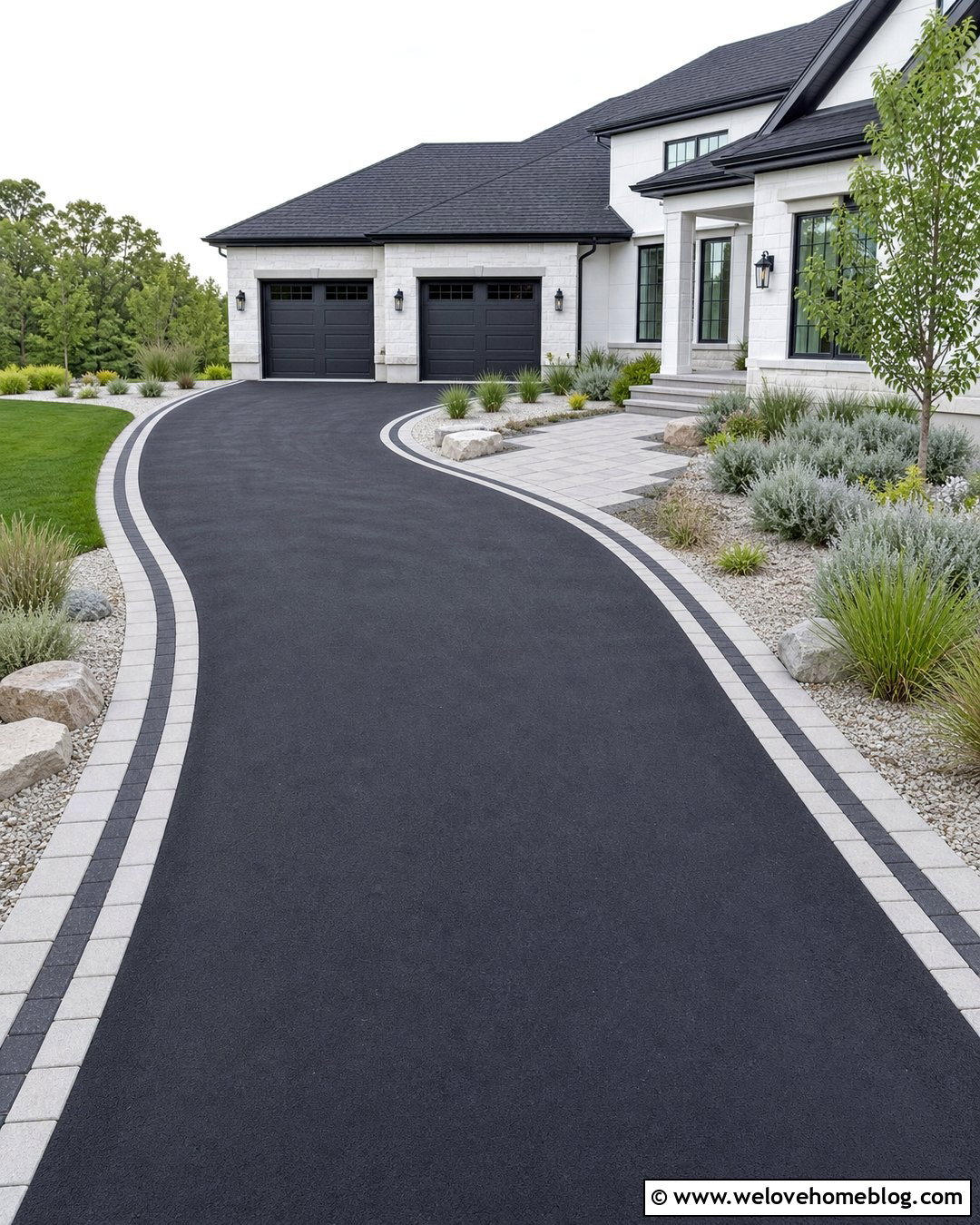
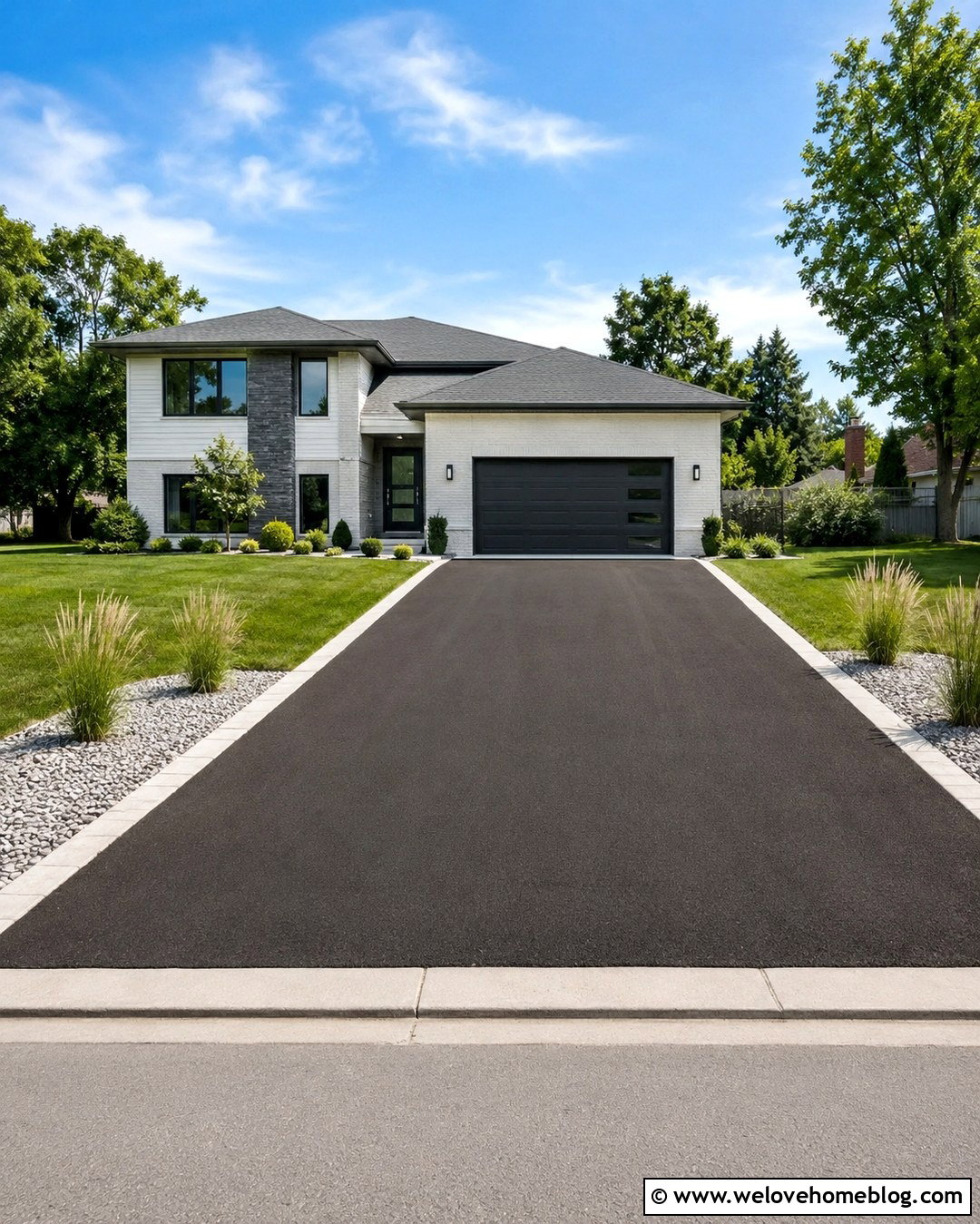
Smooth black asphalt becomes far more distinctive when framed by a contrasting paver border. Choose charcoal concrete pavers for subtle definition or light gray pavers for a sharper outline. A double border can make a wide driveway feel especially finished while strengthening the transition to the lawn. Use the same pavers for the driveway apron and front walkway so the exterior has a consistent material palette. Straight edges complement a minimalist house, while a gentle curve can soften a broad front yard. Add upright grasses, rounded evergreen shrubs, and pale gravel beds along the perimeter. Because dark asphalt creates a strong visual field, keep nearby planting simple and bright. White flowers and silvery foliage can provide balanced contrast without making the entrance feel busy.
4. Permeable Paver Driveway
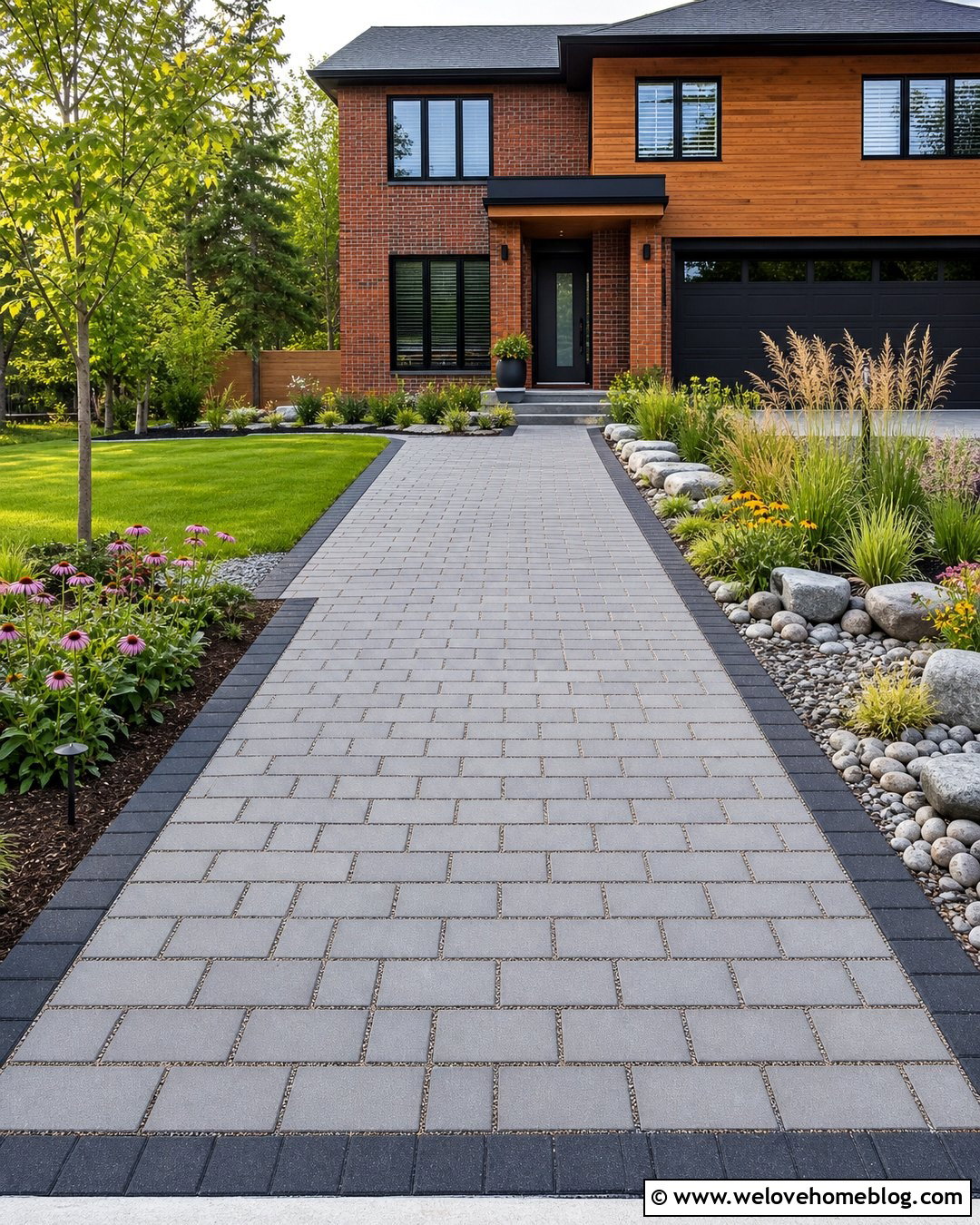
A permeable paver driveway combines modern curb appeal with a surface designed to let water move through its joints. These systems are available in clean linear layouts that suit contemporary homes and coordinated landscapes. () Select rectangular concrete pavers in soft gray, taupe, or charcoal, then fill the wider joints with small aggregate recommended for the system. A stacked or running-bond pattern keeps the appearance orderly. Border the driveway with darker pavers to visually contain the field and define turning areas. Rain gardens, ornamental grasses, and stone-filled drainage beds can reinforce the water-conscious design. Proper excavation, base preparation, slope, and edge restraint remain essential, so follow local requirements and manufacturer specifications. The result is practical, polished, and less visually heavy than one uninterrupted paved surface.
5. Modern Gravel Driveway With Steel Edging
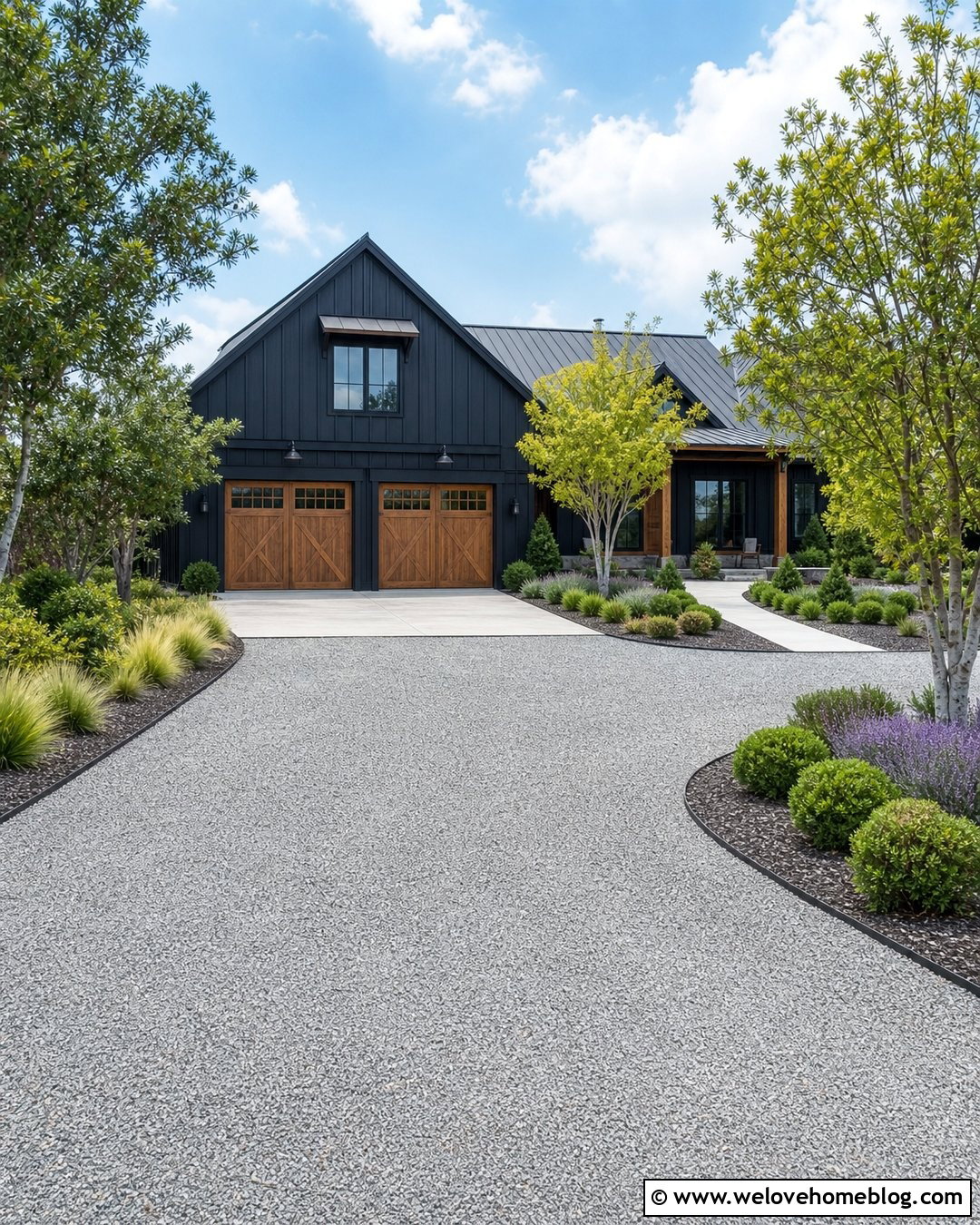
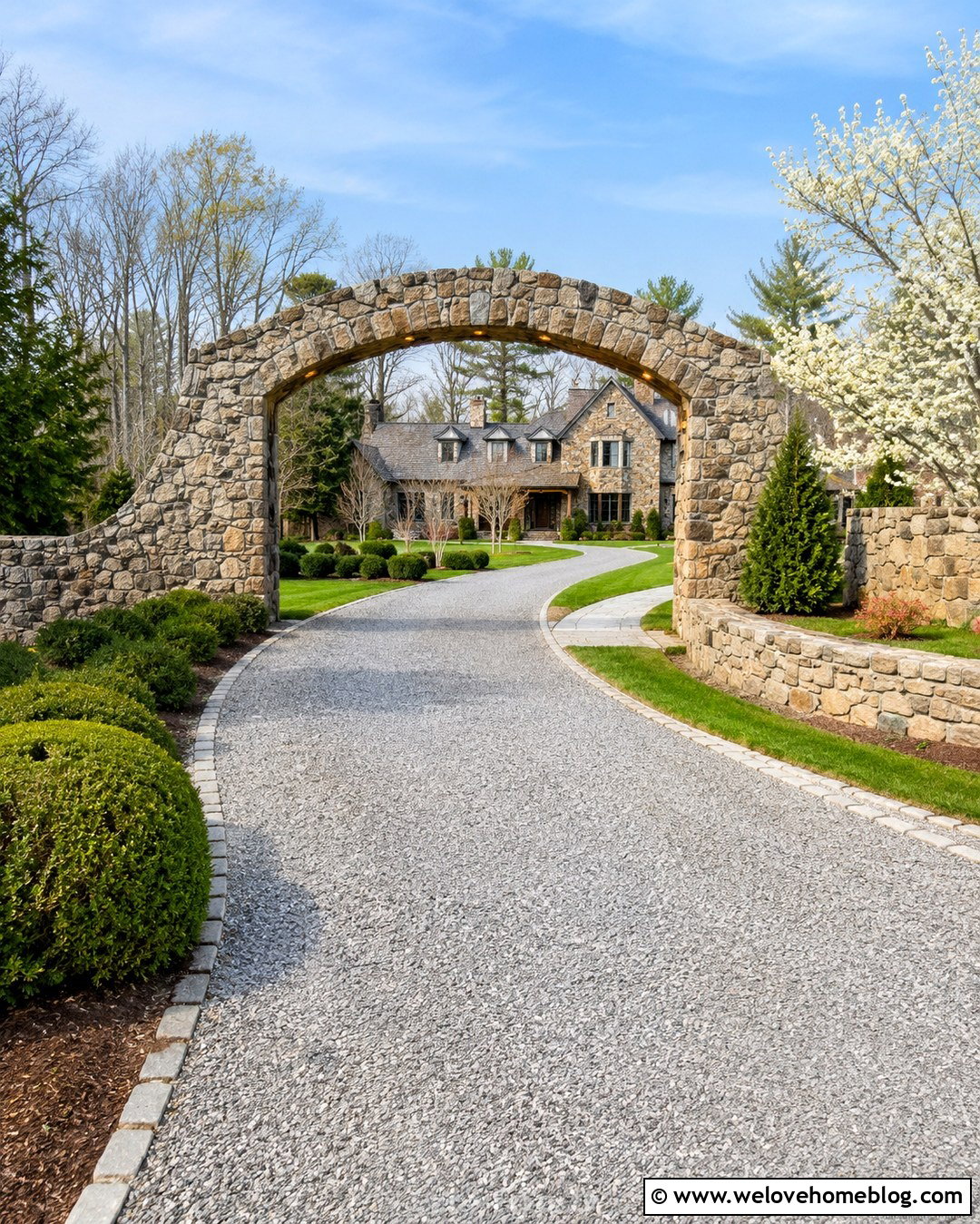
Angular gray gravel paired with slim steel edging creates a clean driveway that feels relaxed but intentionally designed. Unlike loose rounded stones, well-graded angular aggregate can interlock more effectively when installed over a properly prepared and compacted base. Use a straight layout for a narrow property or introduce a broad curve around a central planting bed. Dark steel edging provides a crisp transition between the gravel, lawn, and landscaping. At the garage, add a concrete or paver apron to create a stable threshold and reduce scattered stone near the doors. Drought-tolerant grasses, low mounded shrubs, and multi-stem trees soften the hard lines. Repeat the gravel in nearby garden beds or the front walkway so the driveway belongs to one coordinated modern landscape.
6. White Gravel Driveway With Concrete Borders
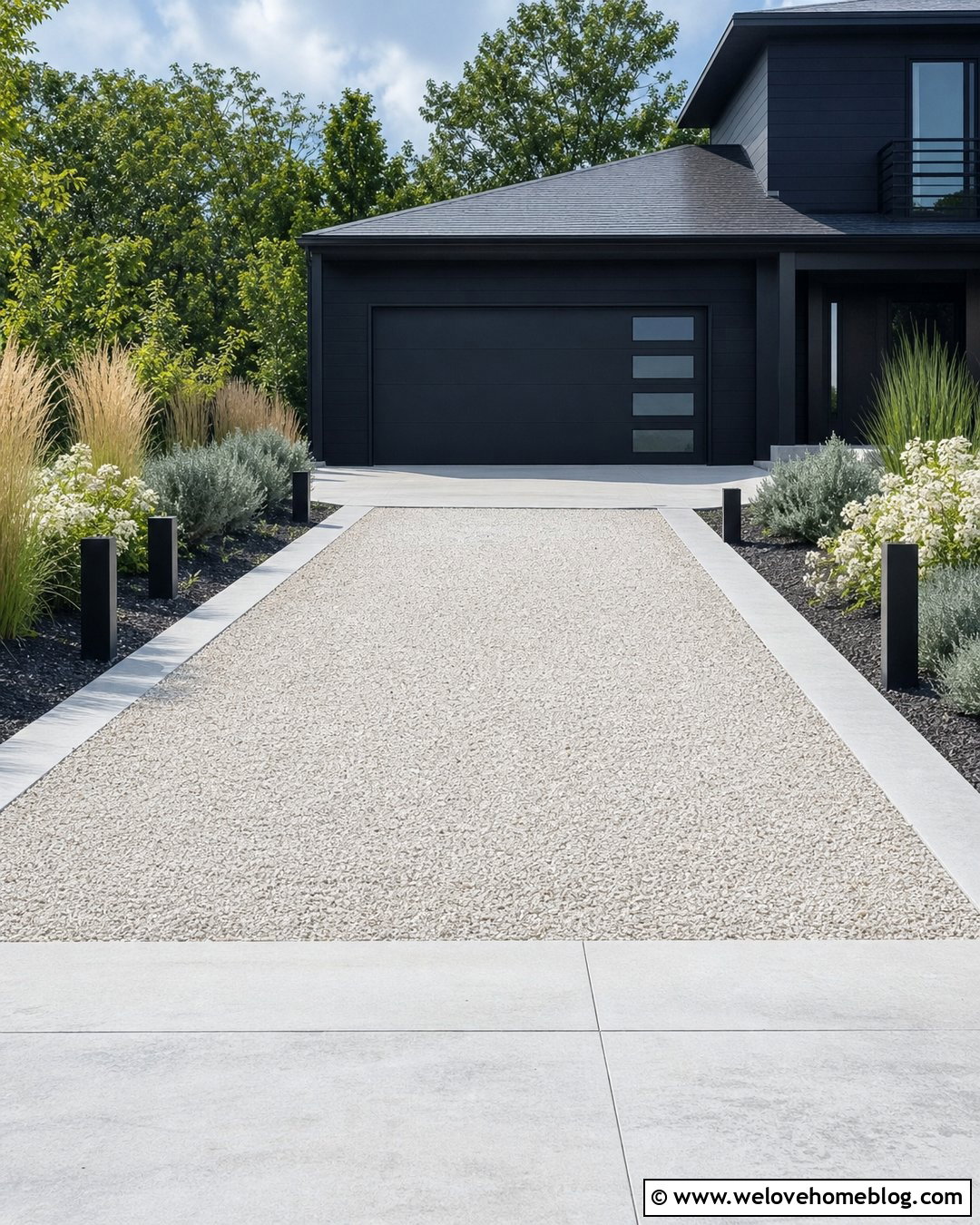
Bright white or pale limestone gravel gives a modern driveway an airy appearance, especially beside dark siding or charcoal brick. Contain the aggregate with wide poured-concrete borders that clearly define the parking surface and prevent the edges from looking unfinished. A rectangular driveway with a matching concrete apron creates the strongest contemporary effect. Consider using stabilized gravel or a cellular retention system where appropriate to reduce movement and rutting. Keep surrounding beds simple, using clipped shrubs, silver-green foliage, and a few upright ornamental grasses. Black metal lighting can provide contrast without overwhelming the pale surface. Because light gravel may show leaves, soil, and tire marks more readily, this design suits homeowners comfortable with occasional raking and surface refreshing.
7. Herringbone Paver Driveway
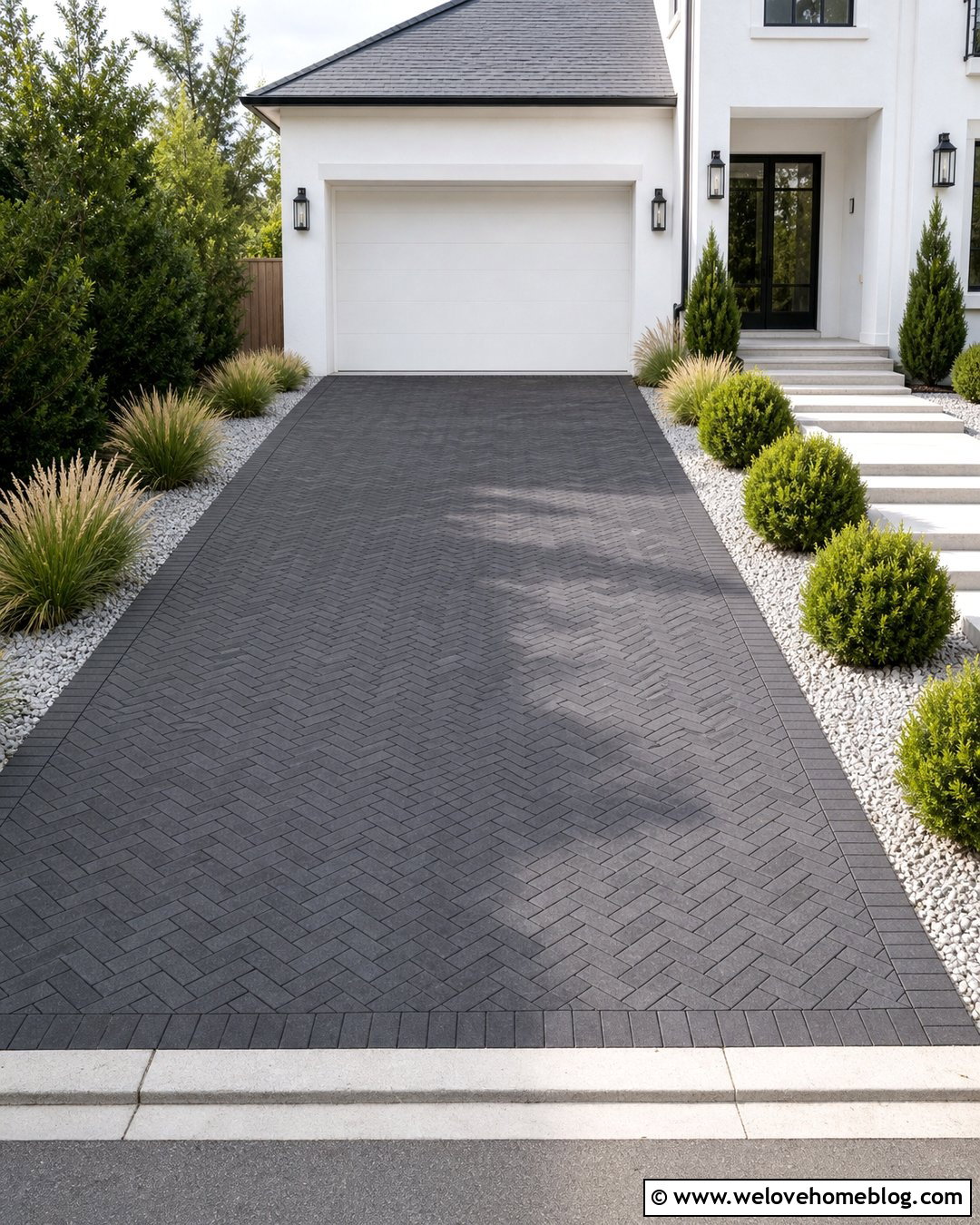
A herringbone pattern adds movement and texture while maintaining the disciplined geometry associated with modern exterior design. Choose elongated concrete or clay pavers in a restrained palette, such as charcoal, greige, or muted red-brown. Surround the patterned field with a straight soldier-course border to create a clean frame. Herringbone paving can work on a compact driveway, a broad motor court, or a gently curved approach. Contemporary driveway collections commonly include herringbone and linear arrangements, allowing the paving pattern to complement the architecture. () Pair the surface with simple concrete steps and rectangular planting beds. Use limited plant varieties, repeating the same grasses and evergreens along both sides. This prevents the detailed paving from competing with overly complex landscaping.
8. Linear Paver Driveway
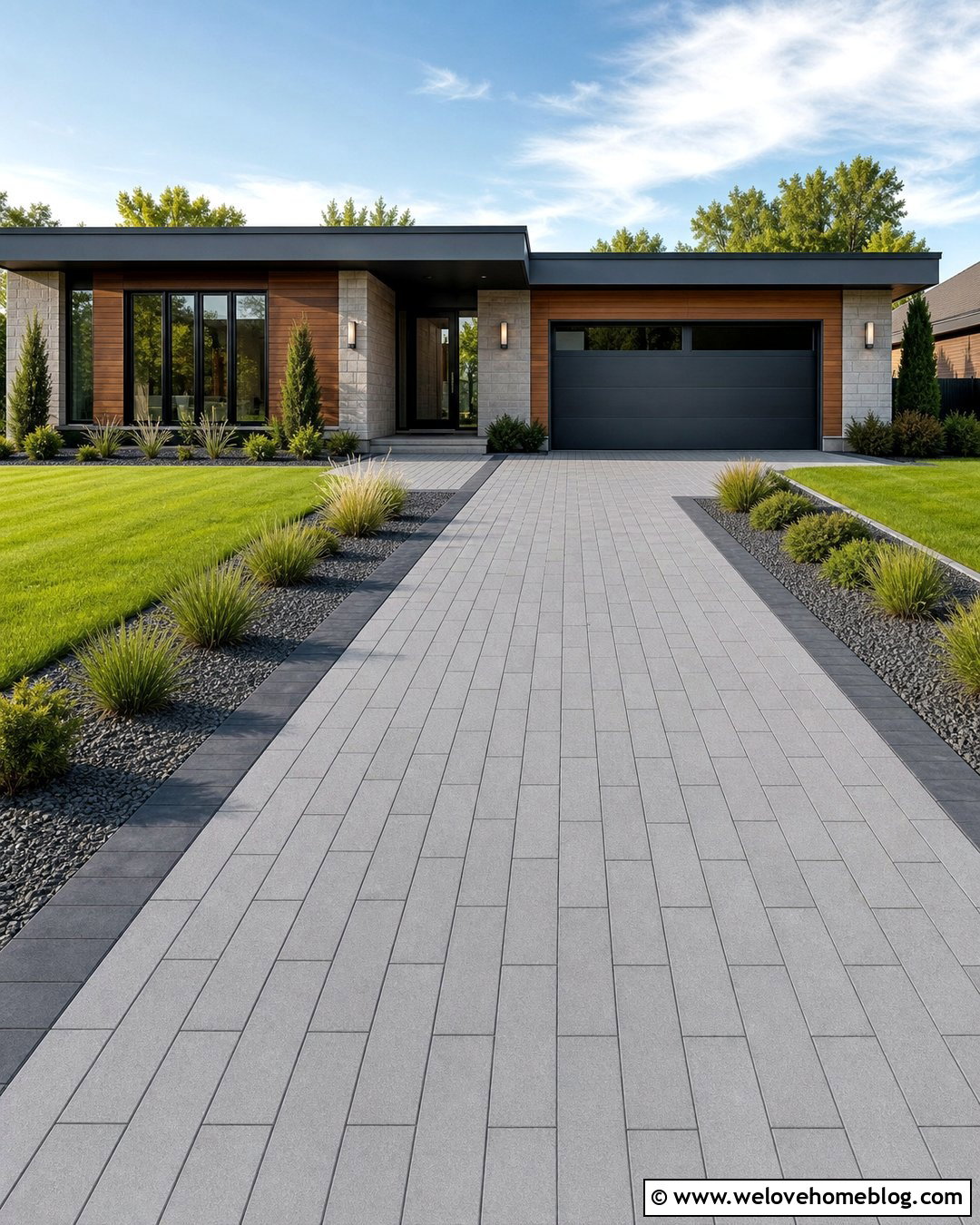
Long rectangular pavers laid in a linear pattern can visually lengthen a short driveway or reinforce the width of a broad garage frontage. The direction of the paving should respond to the property. Run pavers toward the house to emphasize depth, or place them across the driveway to make the entrance feel wider. Mix two closely related gray tones rather than several contrasting colors. A charcoal perimeter course adds definition and helps the paving field look organized. Continue the same linear pavers into the walkway, but change their direction to distinguish the pedestrian route. Add narrow gravel beds with architectural grasses and compact shrubs. The straightforward pattern supports a modern facade without becoming the dominant feature, making it particularly effective for streamlined suburban homes.
9. Modern Driveway With Porcelain Pavers
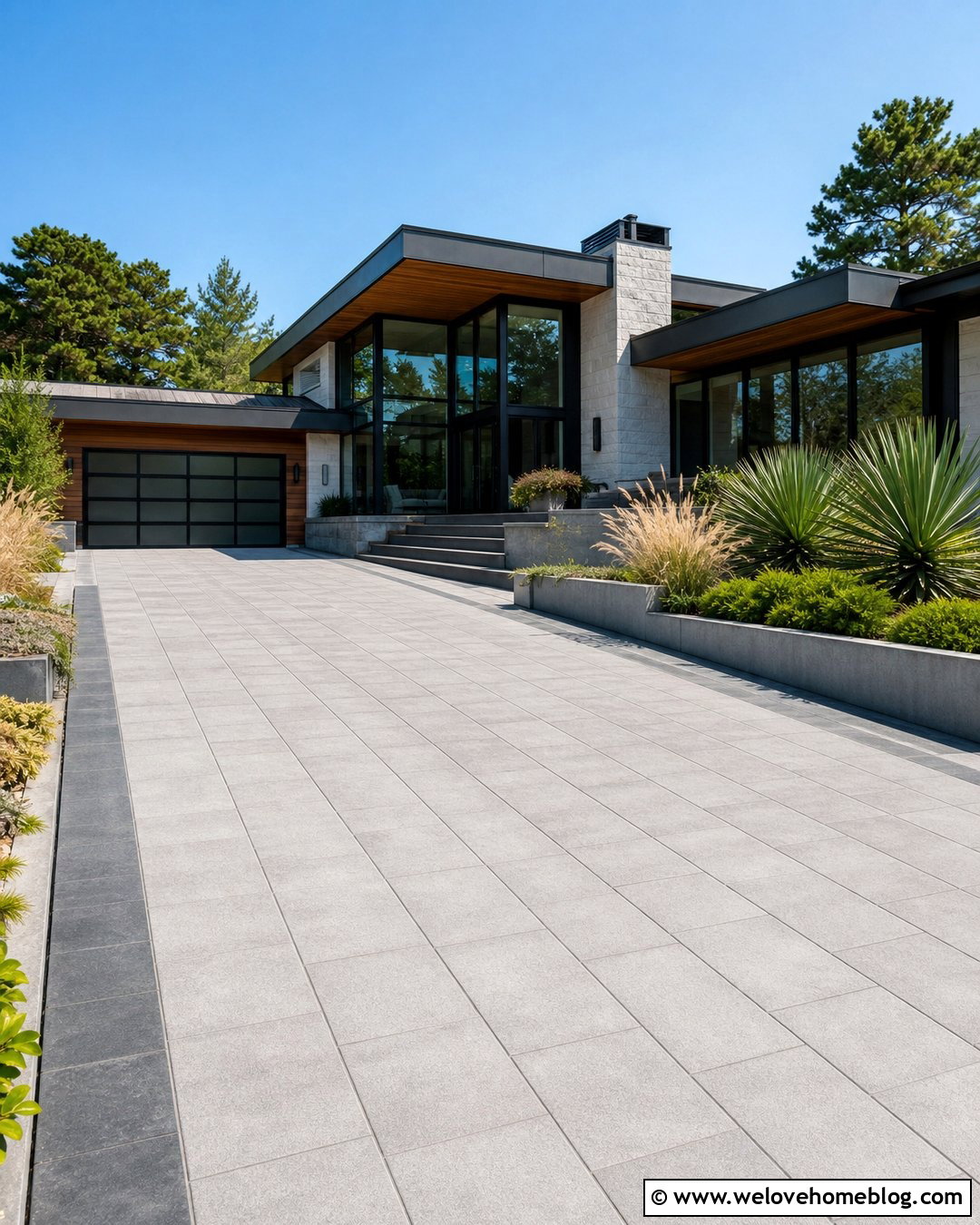
Outdoor porcelain pavers bring a smooth, refined appearance to a contemporary driveway when products specifically rated for vehicular use are selected. Large rectangular units with a stone-look or concrete-look finish can coordinate beautifully with modern cladding and oversized entry steps. Choose a light gray surface for an open, bright effect or a deeper graphite tone for dramatic contrast. Keep the layout simple, using stacked rows and narrow joints rather than an elaborate pattern. A darker paver border can frame the vehicle area and mark the entrance apron. Add raised concrete planters filled with grasses, yucca, or compact evergreens. Installation requirements differ from ordinary patio applications, so suitable product thickness, base construction, drainage, and professional installation should be confirmed before committing to this premium surface.
10. Exposed Aggregate Concrete Driveway
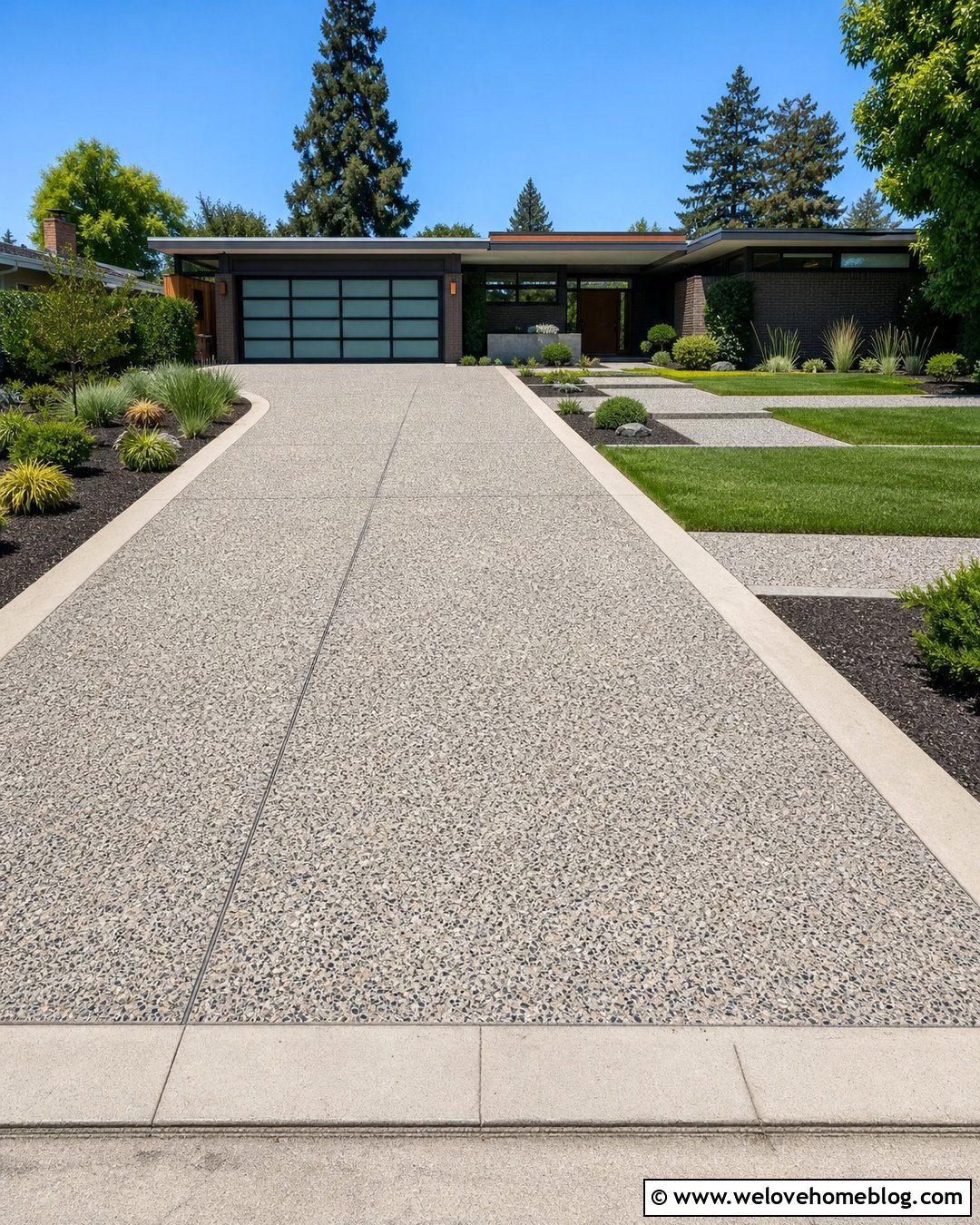
Exposed aggregate concrete provides more texture and color variation than plain poured concrete while preserving a clean, continuous appearance. Choose a blend of gray, cream, and charcoal stone that complements the home’s facade. Divide the driveway into large geometric panels with neatly positioned control joints. Smooth concrete bands along the edges can create a subtle frame and provide contrast against the pebbled finish. For a wide frontage, connect the driveway to a matching aggregate walkway with a single rectangular landing. Surrounding landscaping should remain controlled. Try low hedges, soft grasses, and dark mulch or decorative stone. The naturally varied surface can disguise minor marks better than a completely uniform finish, while its understated texture brings visual interest to minimalist architecture.
11. Broom Finish Concrete Driveway
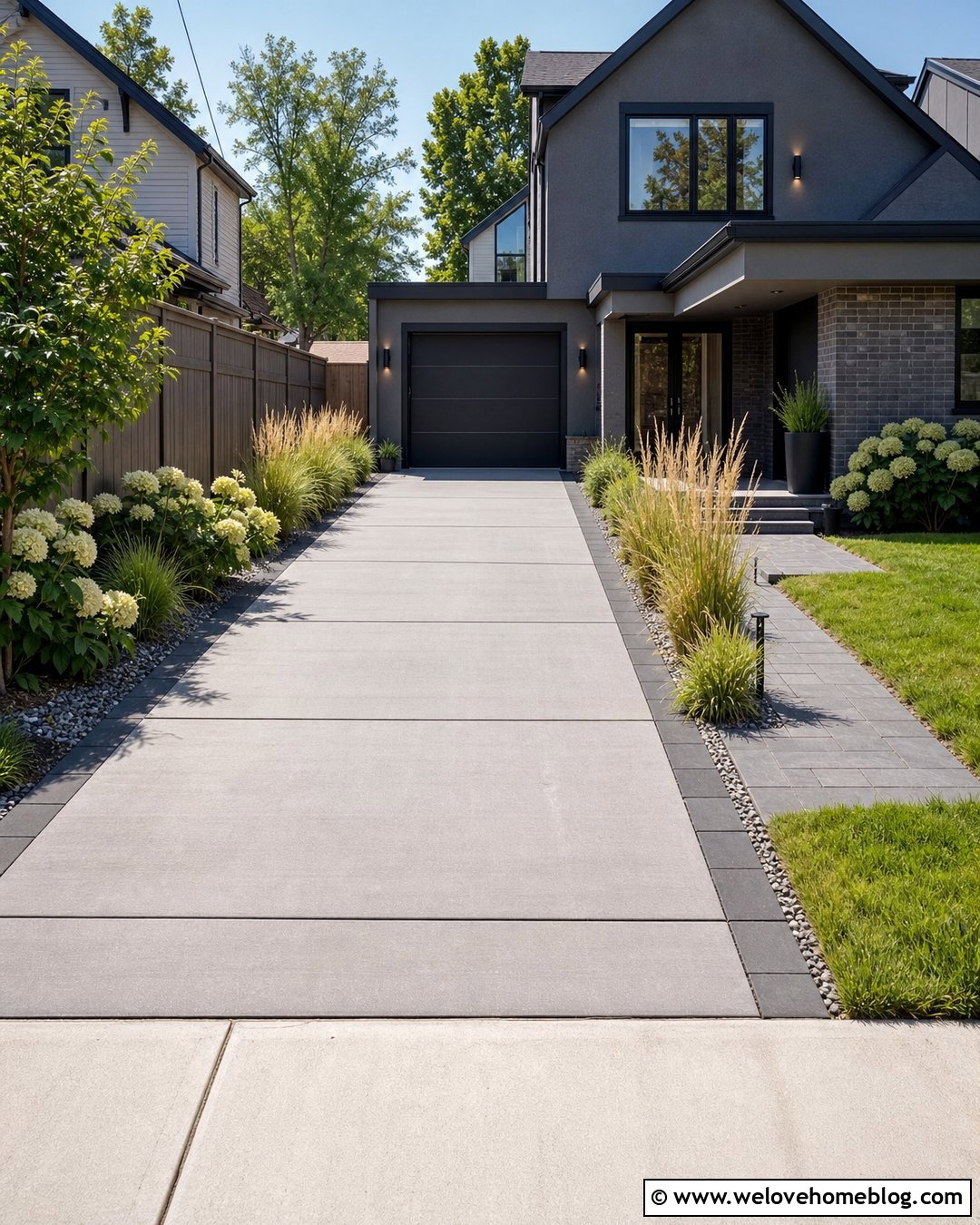
A broom finish gives poured concrete fine linear texture without adding a decorative pattern that might compete with a modern house. Use light or medium gray concrete divided into broad rectangular panels. Align the joints with garage doors, windows, columns, or facade seams to create a deliberate architectural rhythm. A charcoal paver border can sharpen the perimeter, while a matching paver walkway introduces a second texture. On narrow lots, keep the driveway straight and place planting beds along only one side to preserve useful width. Choose low plants that will not spill onto the driving surface. A row of ornamental grasses, compact hydrangeas, or sculptural succulents can soften the concrete. The finished look is simple, practical, and easy to coordinate with many contemporary exterior palettes.
12. Stamped Concrete Driveway With Modern Pattern
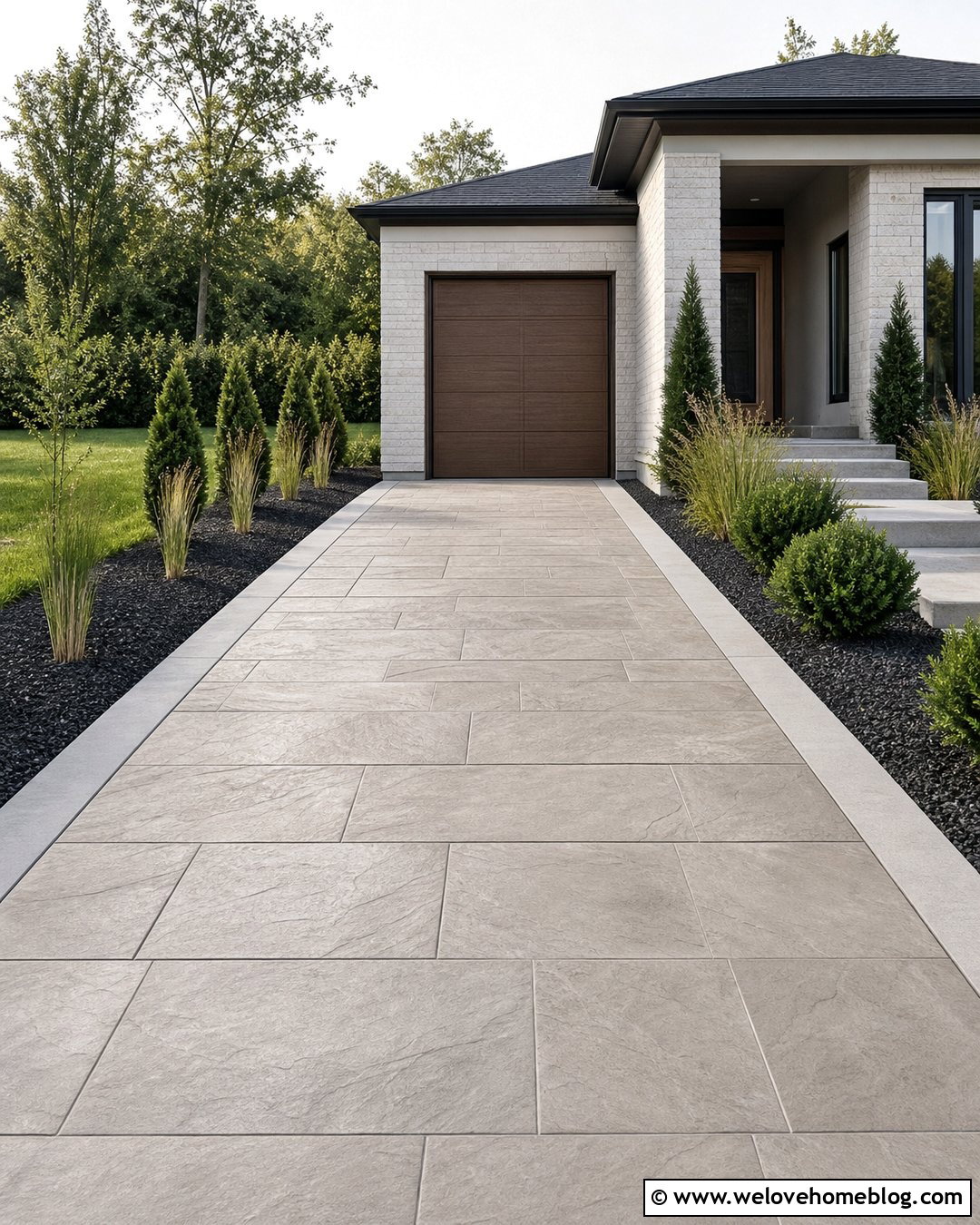
Stamped concrete can suit modern architecture when the pattern is restrained and the coloring remains subtle. Instead of highly detailed imitation cobblestone, consider large slate rectangles, oversized tile forms, or clean linear impressions. Use one main gray or taupe color with gentle tonal variation. Wide saw-cut borders can frame the field without introducing another material. A straight driveway leading to a simple garage keeps the stamped surface from feeling overly decorative. Pair it with rectangular beds of dark gravel, upright grasses, and clipped evergreen shrubs. Avoid combining a strong stamped pattern with multiple border colors or elaborate landscaping. The goal is to create controlled texture that reads clearly from the curb while allowing the home’s architecture to remain the primary feature.
13. Concrete Driveway With Gravel Joints
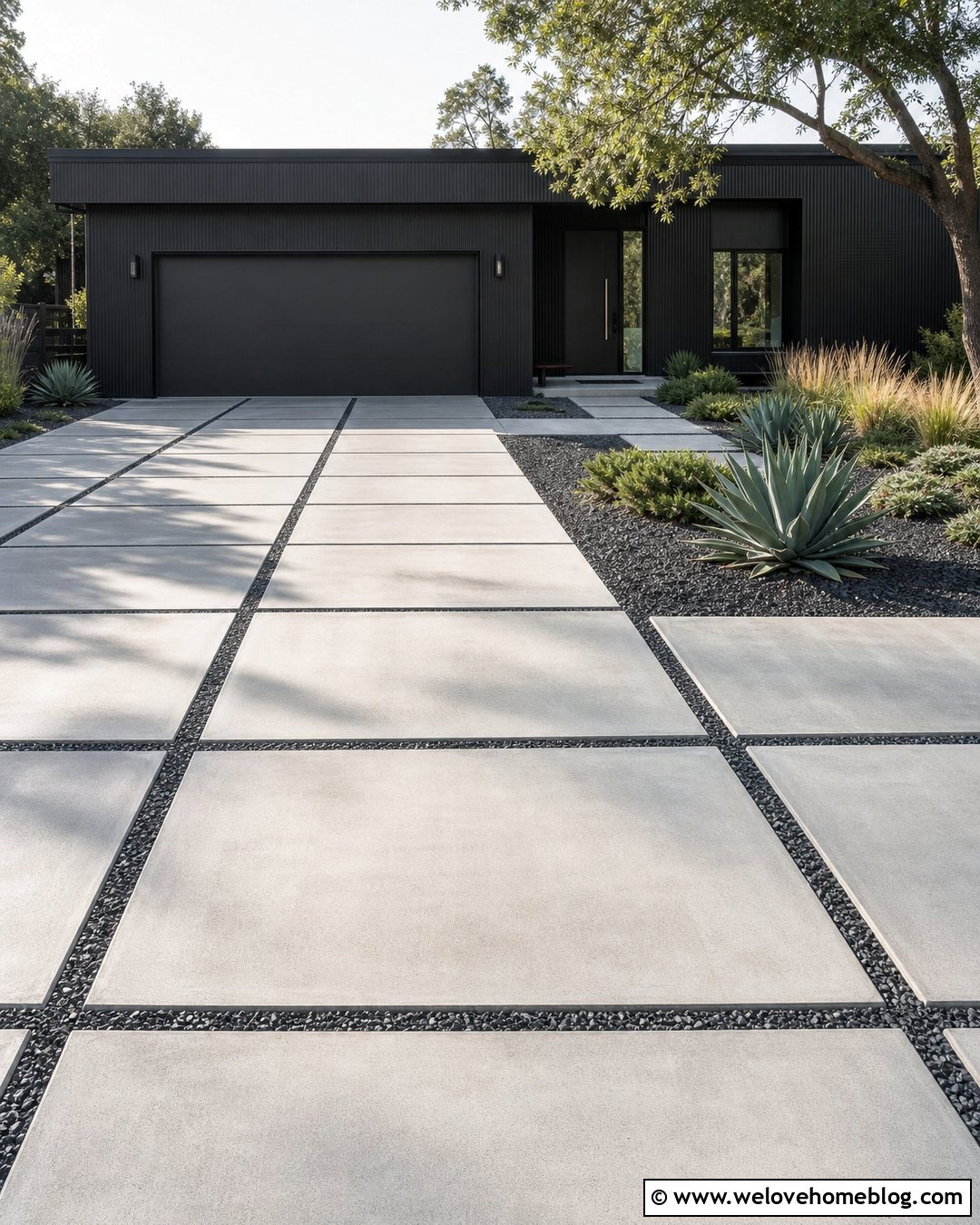
Large poured-concrete pads separated by gravel joints produce one of the most recognizable modern driveway layouts. Dark gravel creates strong graphic lines between pale gray slabs, while warm tan aggregate gives the design a softer character. Keep the gaps narrow enough to maintain a practical driving surface yet wide enough to make the grid visible. Metal or concealed restraints can help contain loose aggregate. Align the slab pattern with the garage and front walkway for a unified composition. Place simple planting beds beside the driveway using the same gravel as mulch. Ornamental grasses, agave, low juniper, or compact boxwood can provide structure without hiding the layout. Good drainage planning is essential so the joints and surrounding beds handle runoff without washing material onto the concrete.
14. Concrete Driveway With Pebble Bands
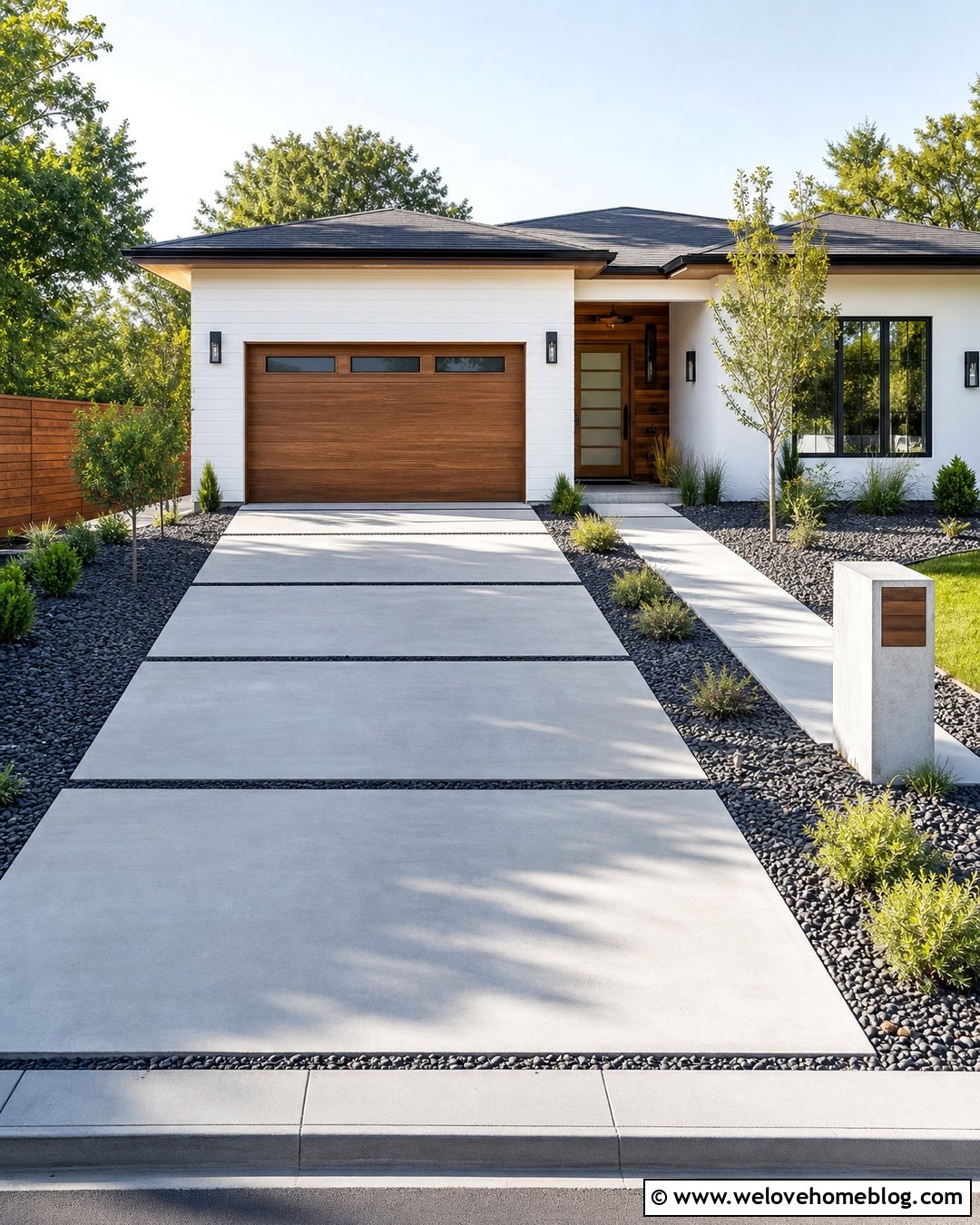
Narrow pebble bands can divide an ordinary concrete driveway into elegant, oversized sections. Choose smooth black pebbles for bold contrast, mixed gray river rock for a softer transition, or pale stone for a warm minimalist palette. The bands may cross the driveway at regular intervals or run lengthwise beside the vehicle paths. Keep the arrangement symmetrical and connected to lines already present on the house. A concrete walkway can branch from one band, making the transition appear intentional. Use matching pebbles in the foundation beds and around modern address signage. Compact shrubs and airy grasses provide enough softness without covering the stone details. Where tires cross the bands, secure installation and appropriate containment are important to prevent movement and uneven settling.
15. Modern Brick Driveway
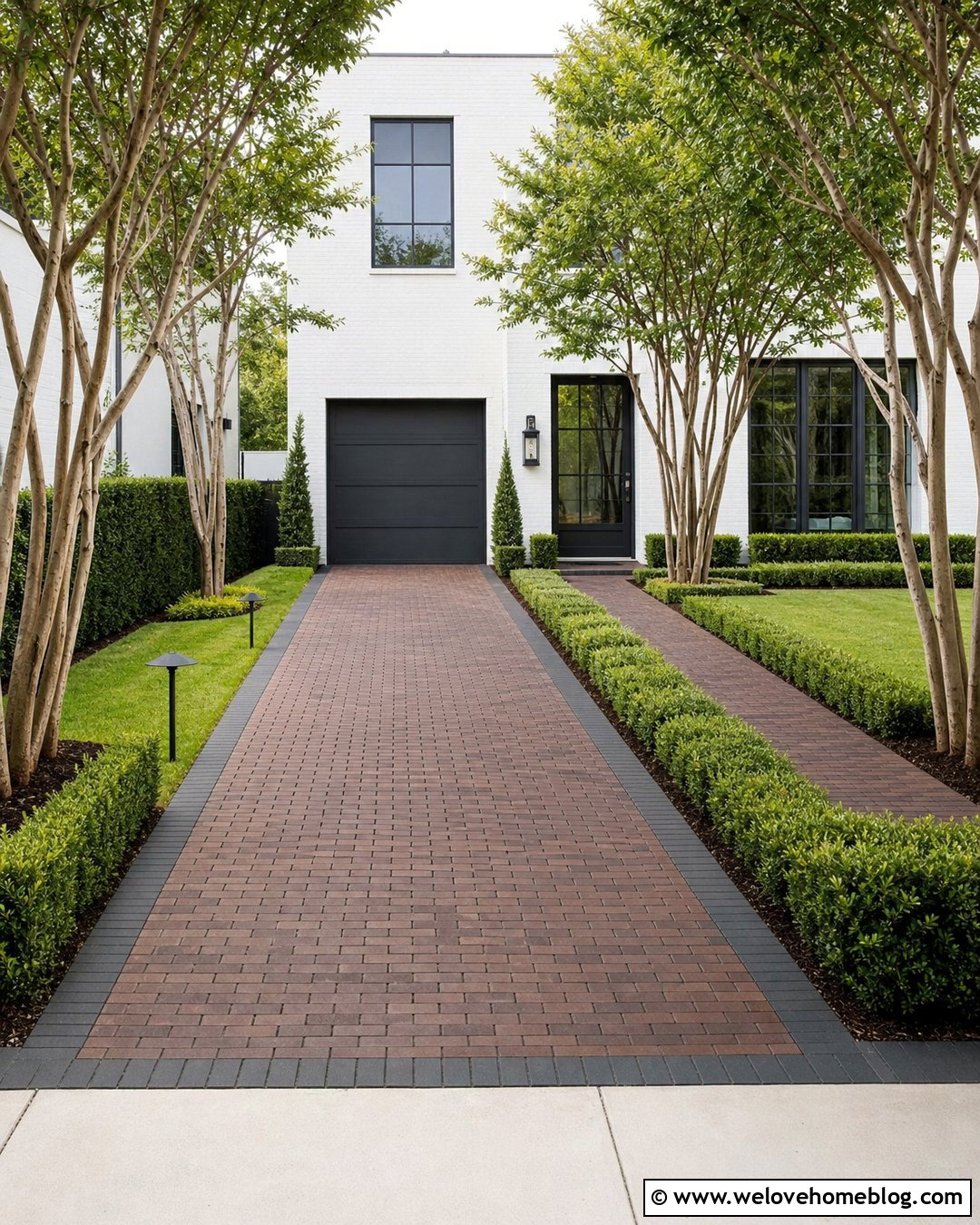
Brick can feel surprisingly modern when the layout, color palette, and surrounding landscape are simplified. Select smooth clay brick pavers in charcoal, deep brown, muted red, or a carefully blended neutral tone. A running-bond or stacked-bond pattern appears cleaner than an elaborate circular arrangement. Use a contrasting charcoal border to define the driveway and create a neat garage apron. Pair the warm brick with a white, black, or natural wood facade for balanced contrast. Landscaping should be architectural rather than traditional. Try rectangular lawn panels, straight hedges, multi-stem trees, and black metal lighting. Brick also works well on a narrow urban driveway because its smaller scale adds texture without requiring a large decorative feature. Keep transitions to sidewalks and walkways simple and level.
16. Charcoal Paver Driveway With Light Border
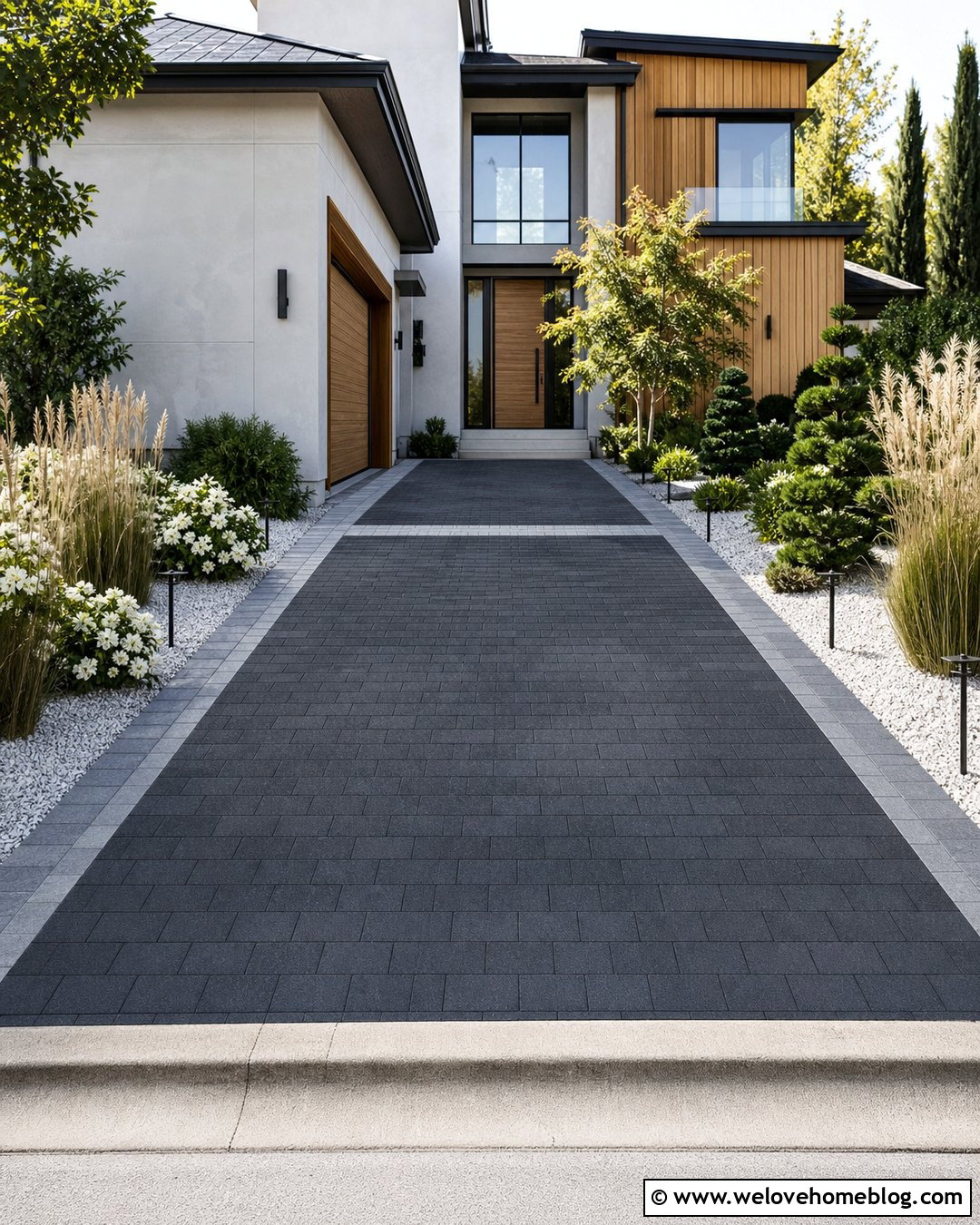
Deep charcoal pavers establish a dramatic entrance, while a narrow light gray border prevents the driveway from blending into dark landscaping or siding. This high-contrast combination works especially well with white stucco, pale brick, or warm wood cladding. Lay the main pavers in a straightforward running bond and reserve the lighter color for the outer frame and walkway connection. If the driveway is wide, add one light crossband near the garage to break up the dark surface. Use pale decorative gravel in adjacent beds to repeat the border color. Wispy grasses, low evergreens, and white flowering plants can brighten the edges. Adequate outdoor lighting and an uncluttered planting plan keep the dark paving sophisticated rather than visually heavy.
17. Light Gray Paver Driveway With Dark Ribbon
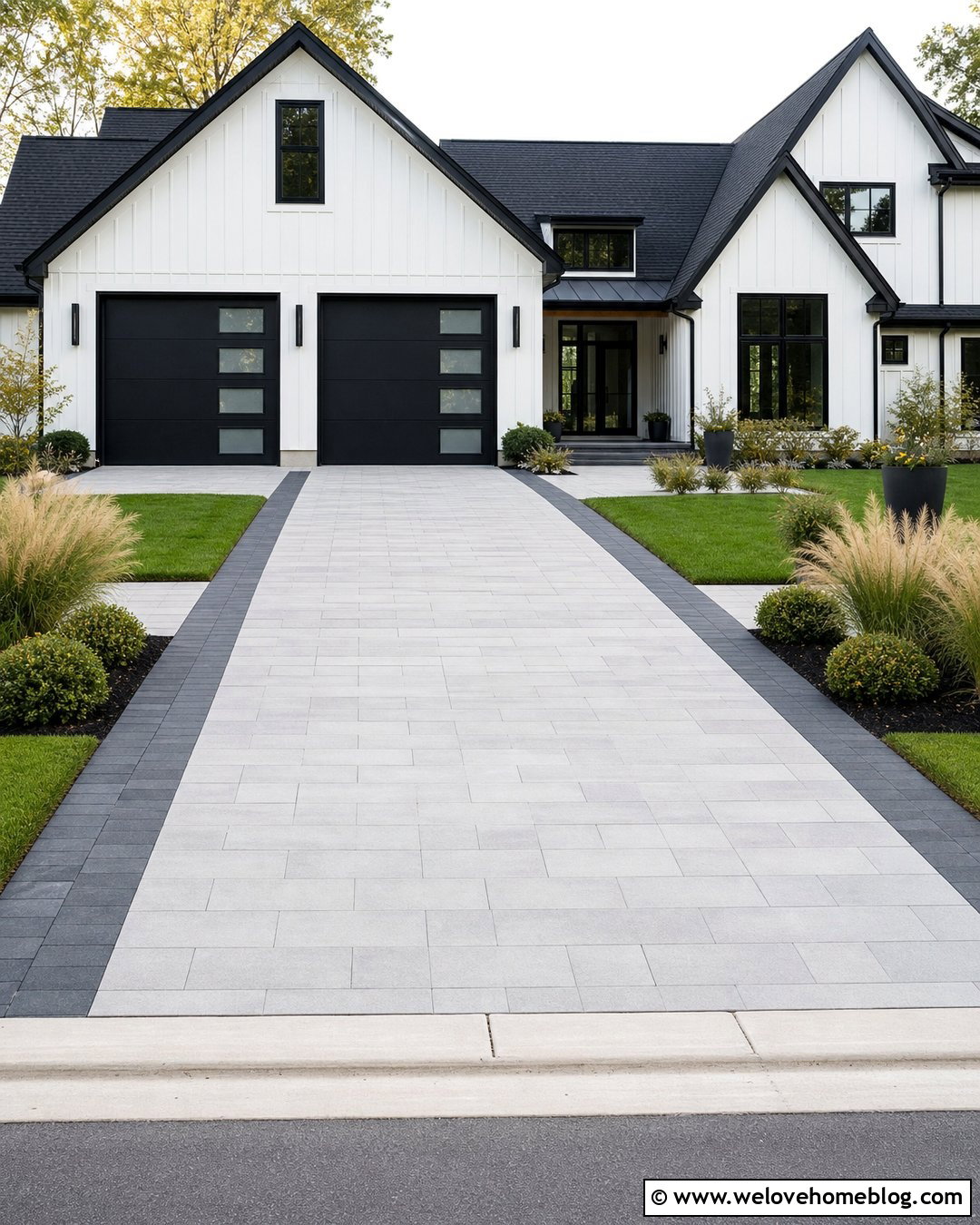
A dark paver ribbon can organize a broad field of light gray paving without surrounding the entire driveway in a heavy border. Run one charcoal band along each side, create a single center line, or place a crossband between the parking area and garage apron. Match its position to the home’s columns, doors, or window frames for an architectural effect. Large rectangular concrete pavers maintain a calm modern surface, while the slim ribbon introduces just enough detail. Continue charcoal accents through planters, house numbers, and low landscape lights. Green lawn panels and softly textured grasses balance the hardscape. This combination is particularly useful when homeowners want visual interest but prefer a quieter design than multicolored paving or complicated patterns.
18. Modern Cobblestone Driveway
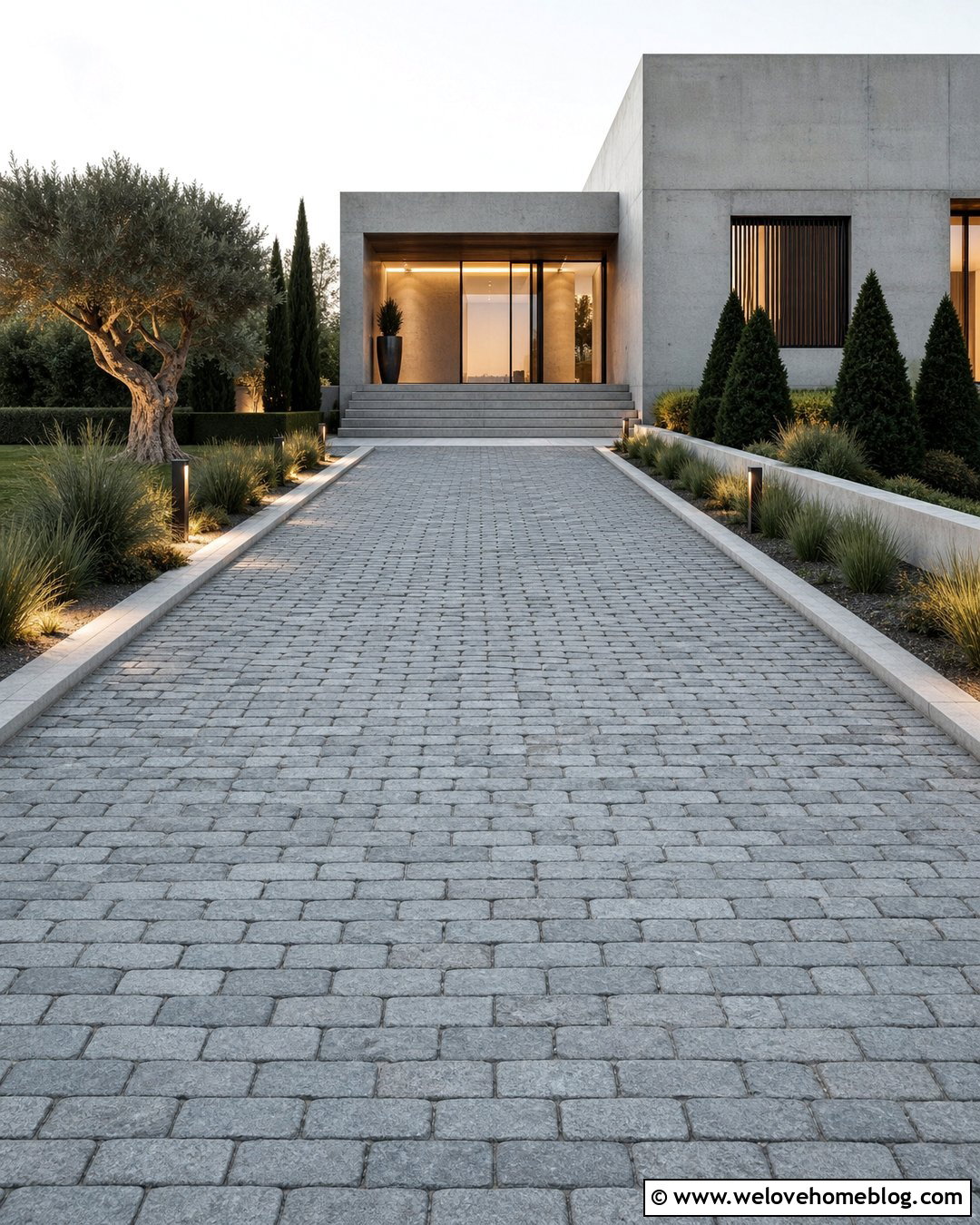
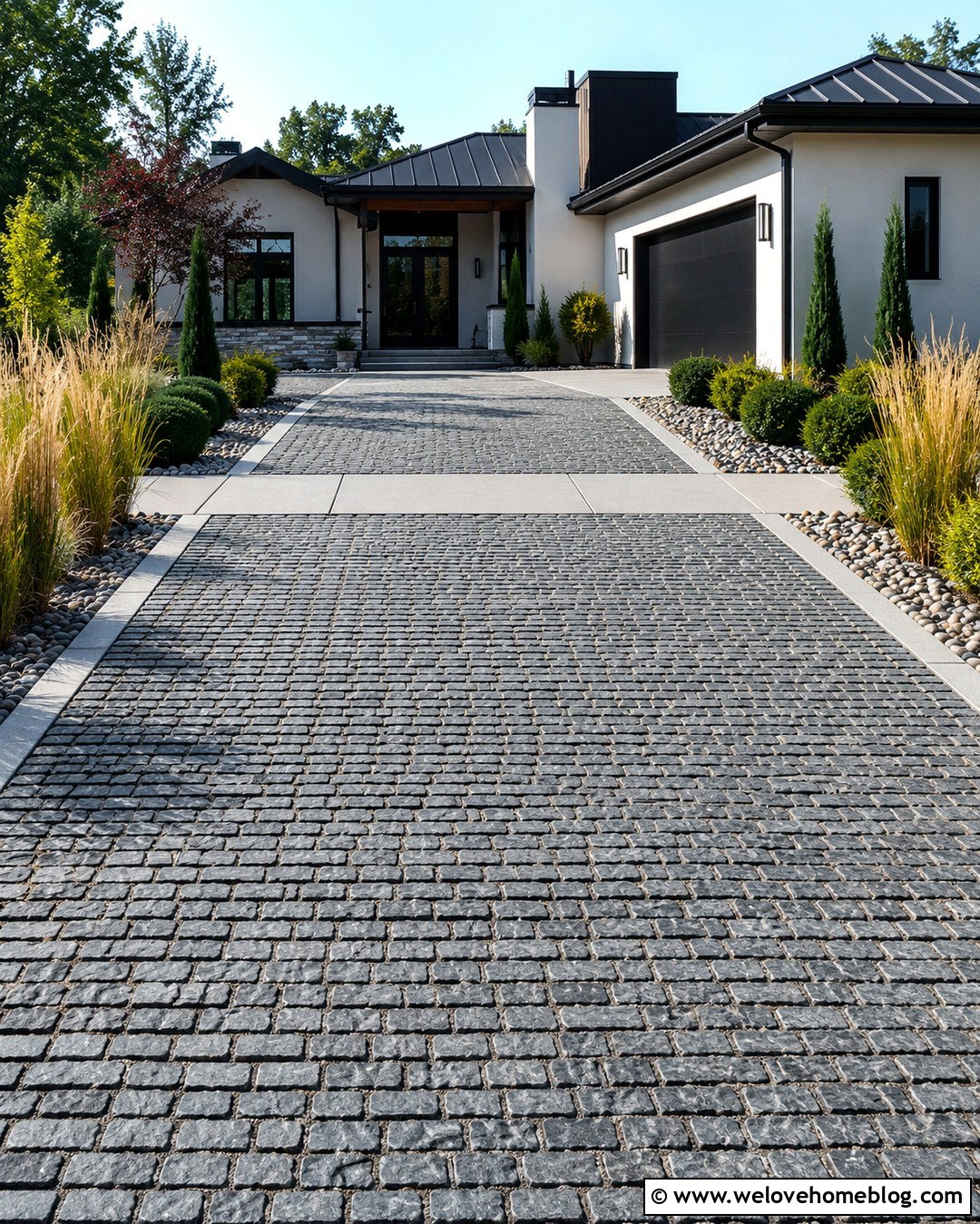
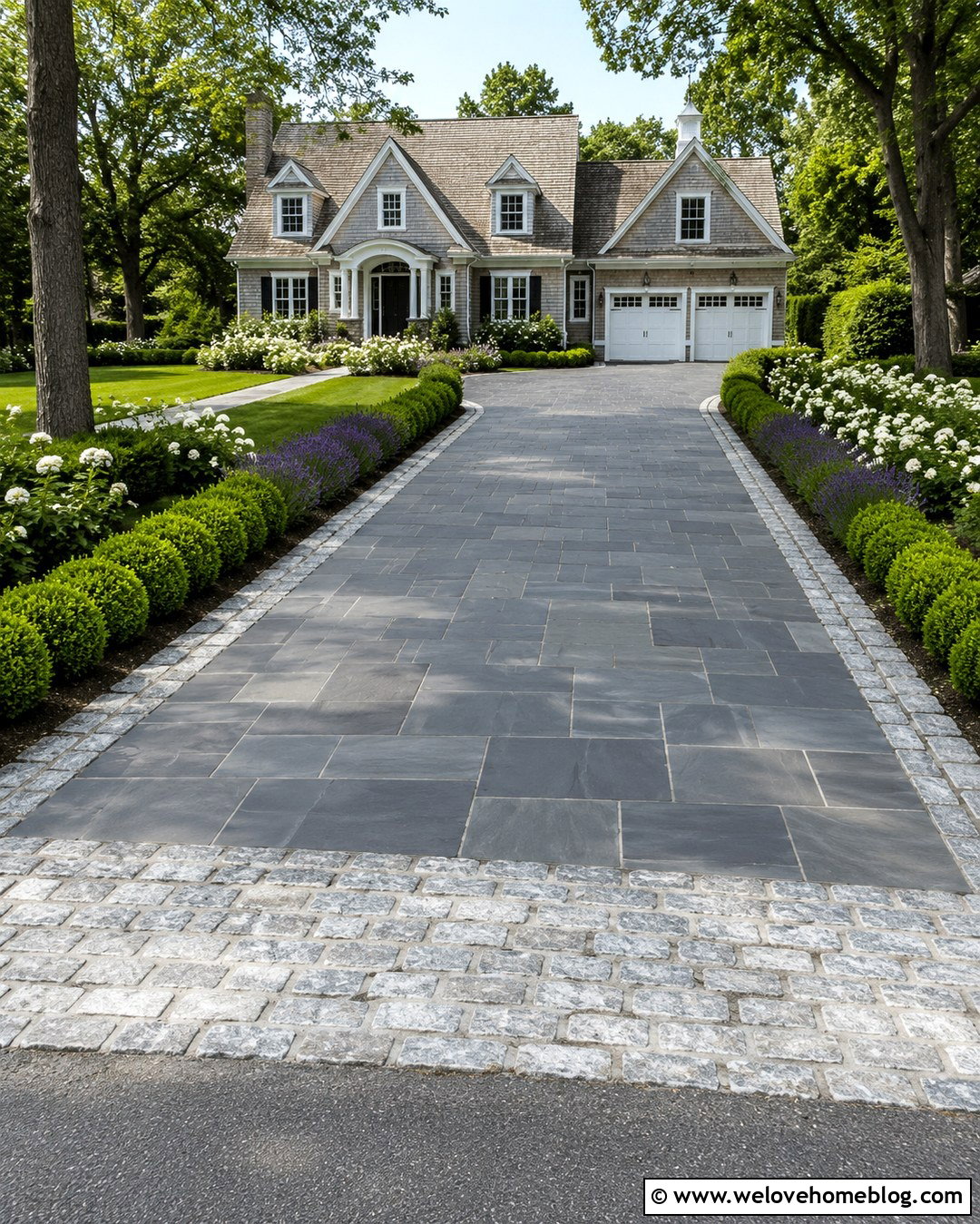
Cobblestone can bridge old-world material and modern form when used in a clean, limited composition. Choose uniformly cut granite setts in gray or charcoal rather than a highly varied mix. Lay them in straight rows or a restrained fan pattern, then frame the surface with smooth concrete curbs. A compact rectangular driveway keeps the richly textured stone from overpowering the property. For larger homes, use cobblestone only in the entrance apron and central motor court, pairing it with matching gray pavers elsewhere. Minimal landscaping provides the best balance. Plant low grasses, clipped evergreens, and one sculptural tree in a rectangular bed. Contemporary black lighting and simple concrete steps help the traditional stone relate naturally to a modern facade.
19. Resin Bound Gravel Driveway
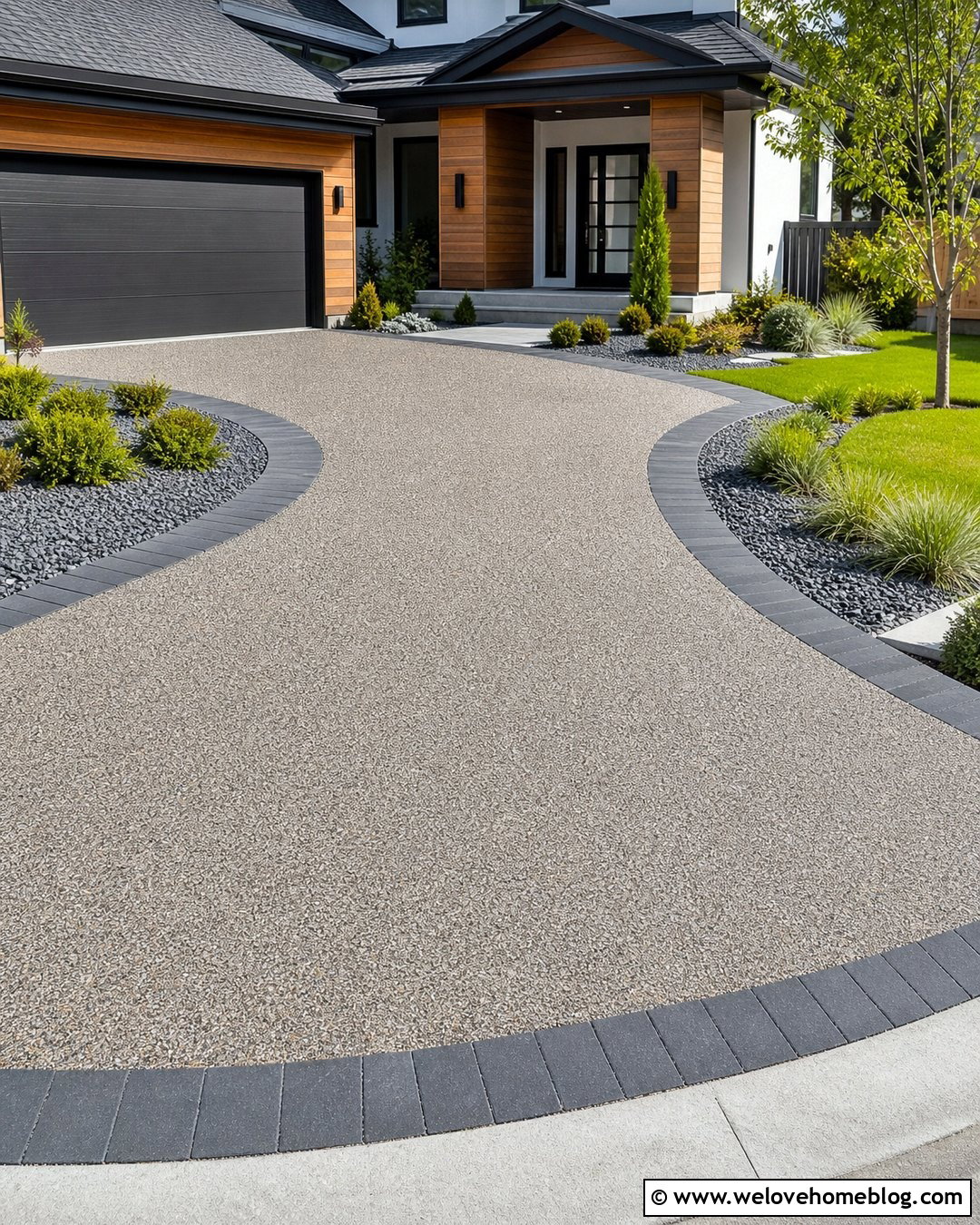
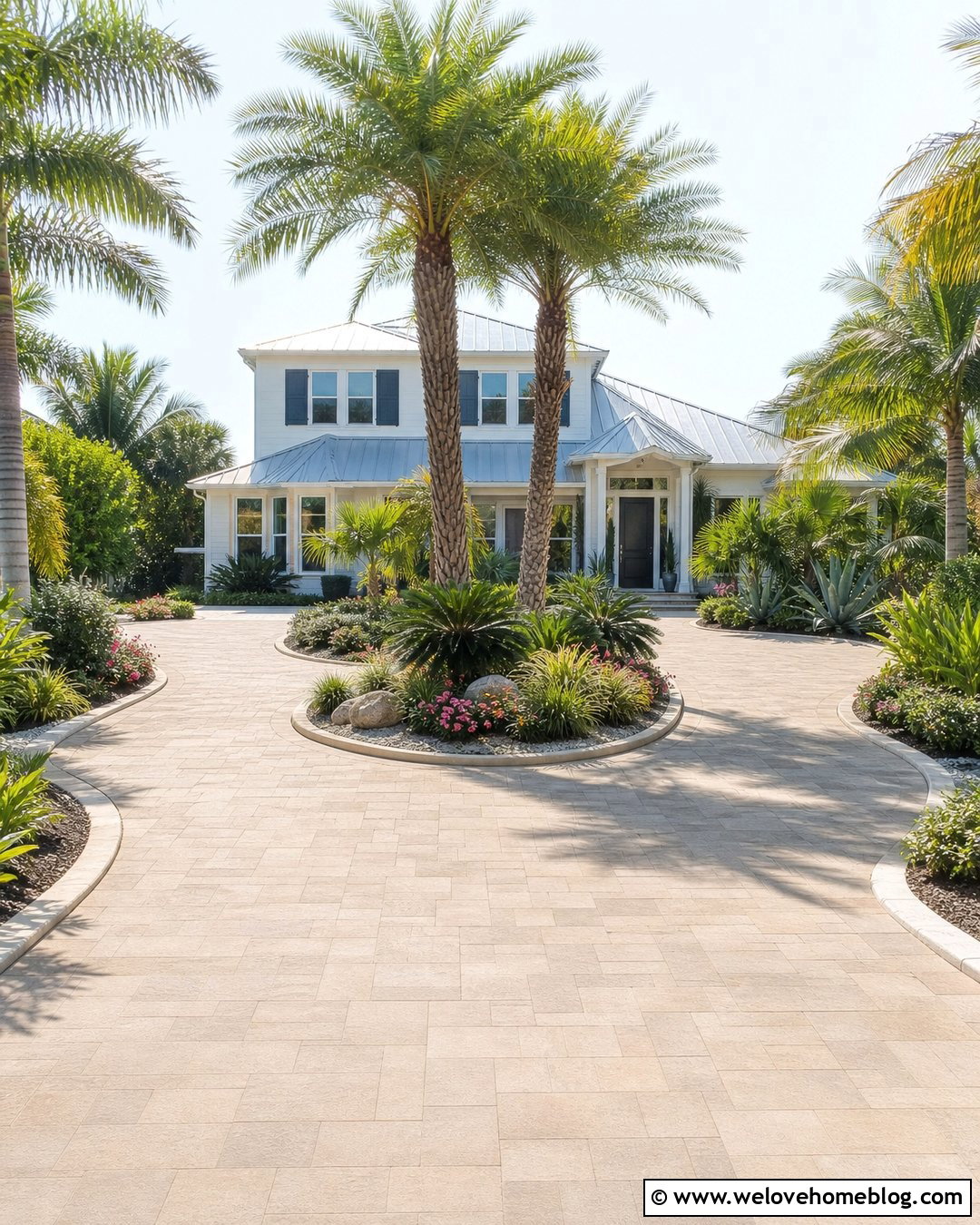
Resin-bound gravel creates the visual warmth of aggregate with a more uniform, finished surface. Fine natural stone is combined with clear resin to form a smooth-looking layer, available in gray, beige, brown, and mixed tones. A warm gray blend complements many contemporary homes without appearing too pale or too dark. Outline the driveway with charcoal pavers and use the same pavers to form a straight front walkway. Resin-bound and resin-bonded systems are not identical, so discuss permeability, base requirements, climate suitability, and maintenance with a qualified installer. Complete the look with simple gravel planting beds, low shrubs, and narrow lawn panels. The seamless appearance works especially well on curved driveways where large individual paving units might create numerous cuts.
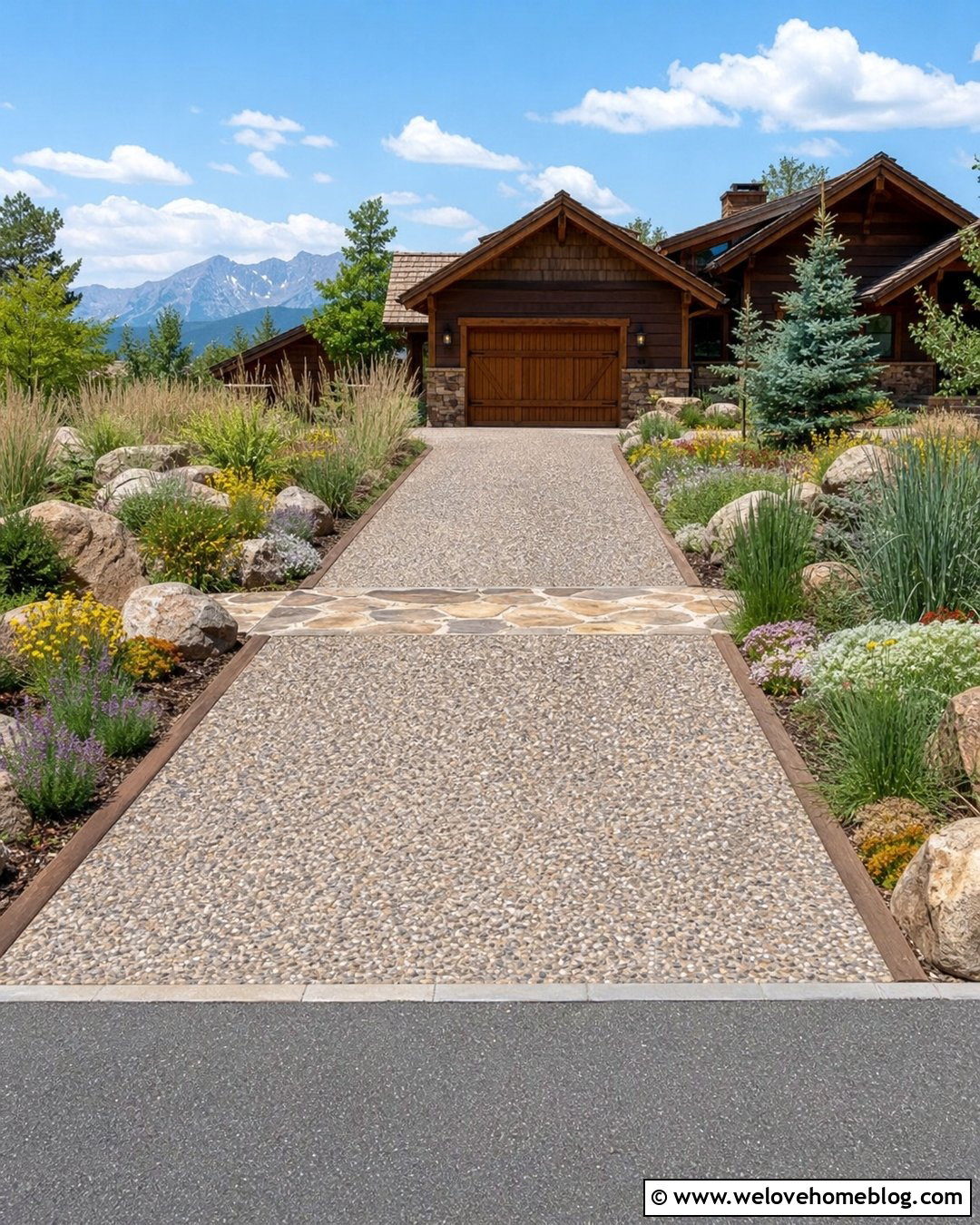
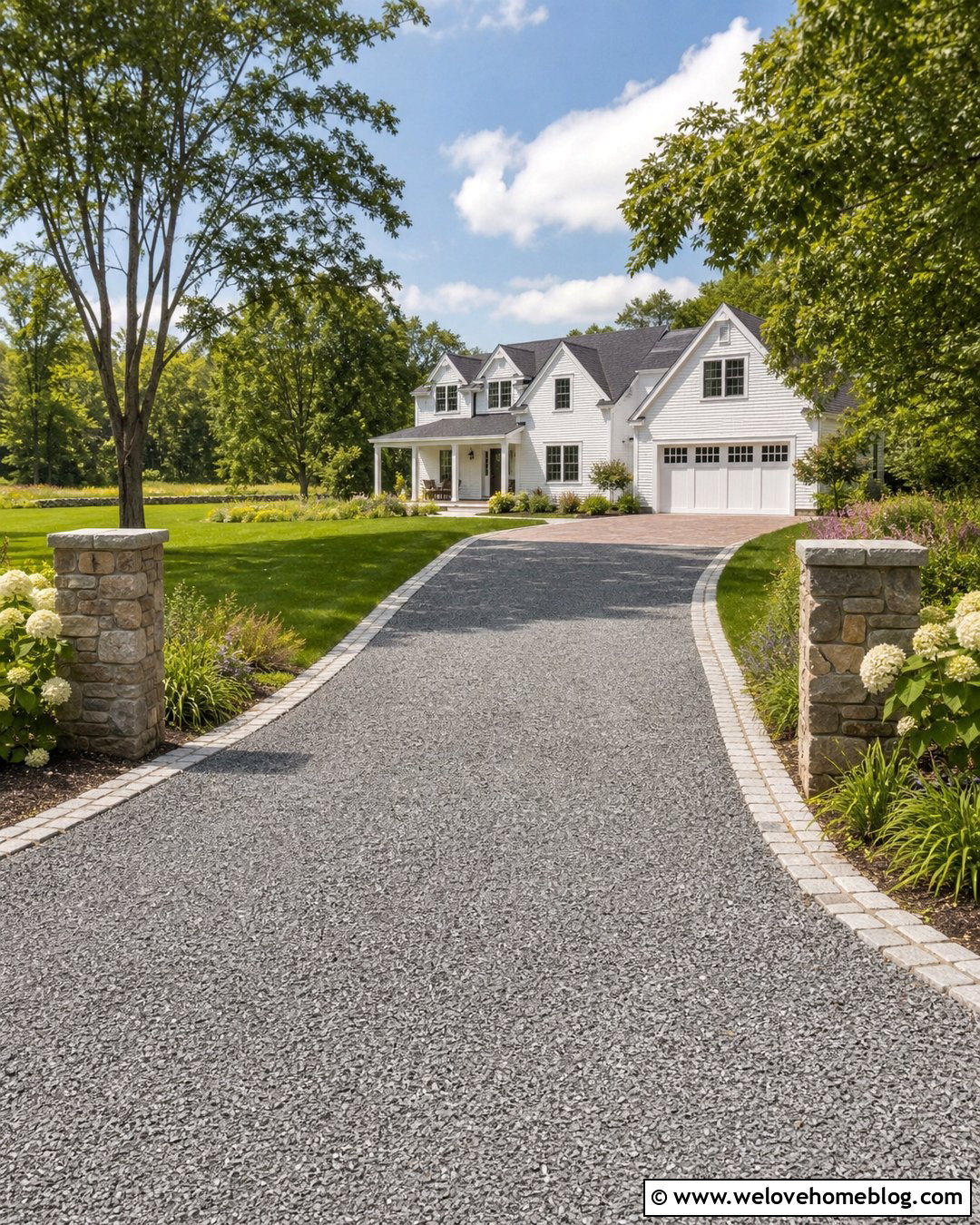
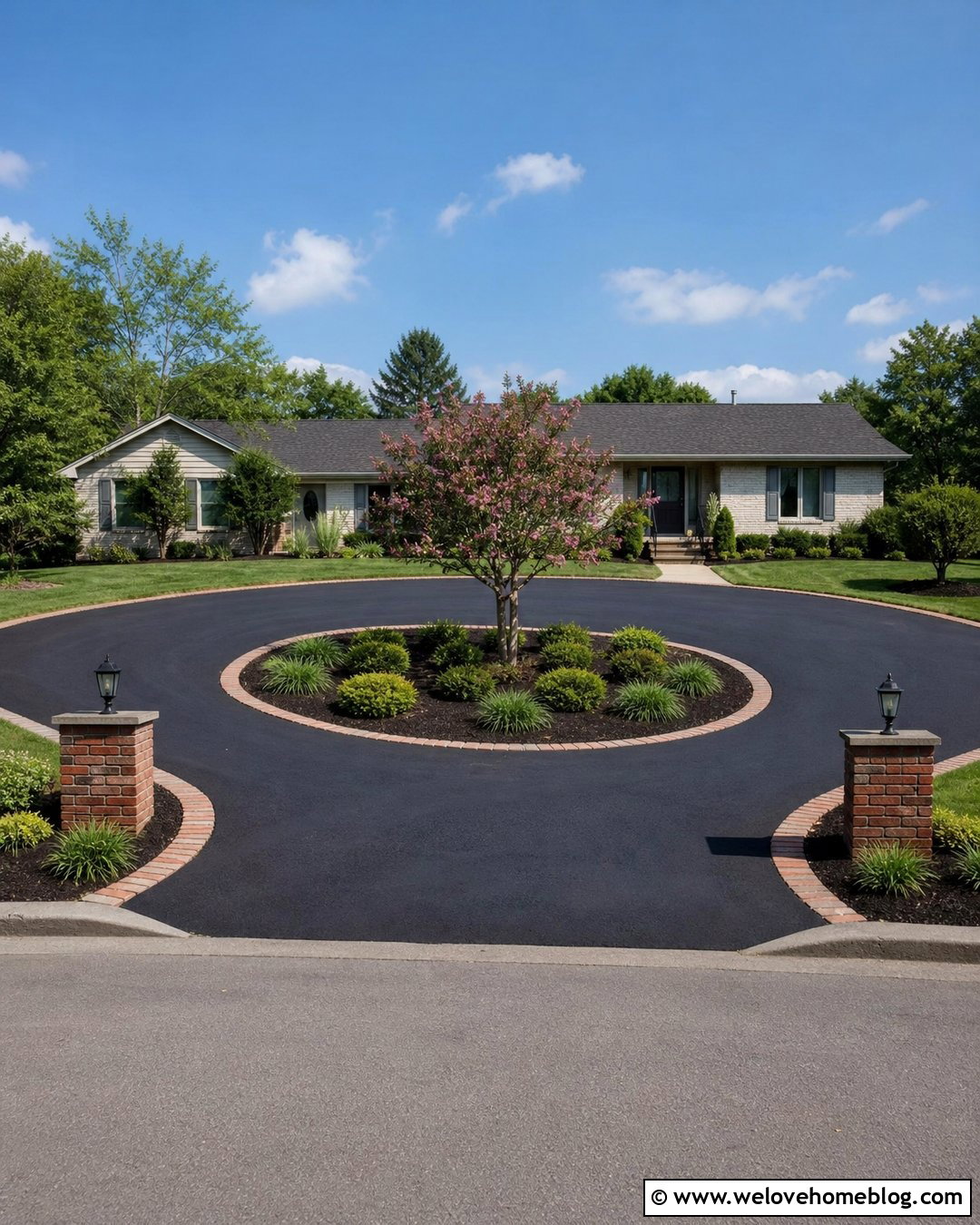
20. Modern Circular Driveway
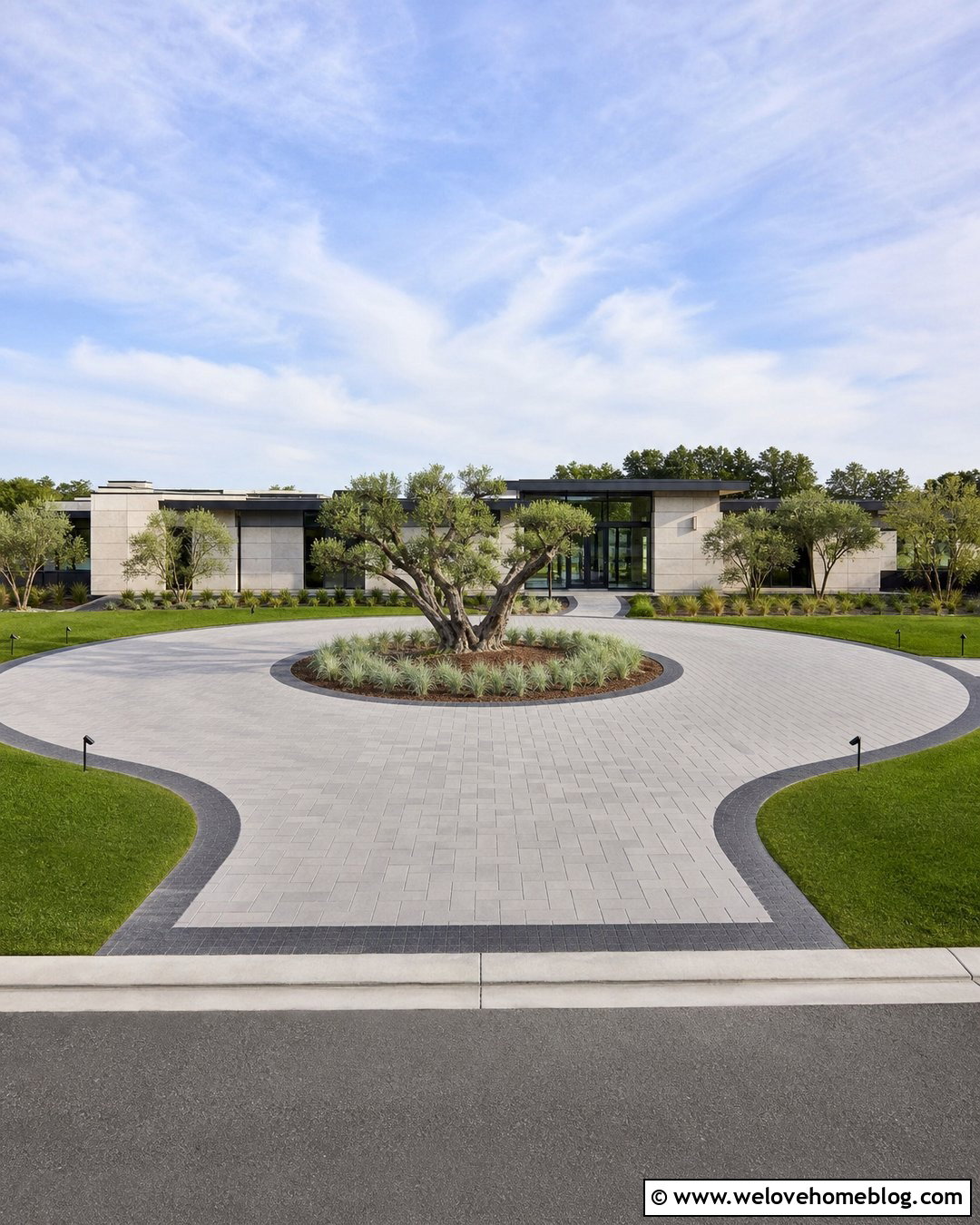
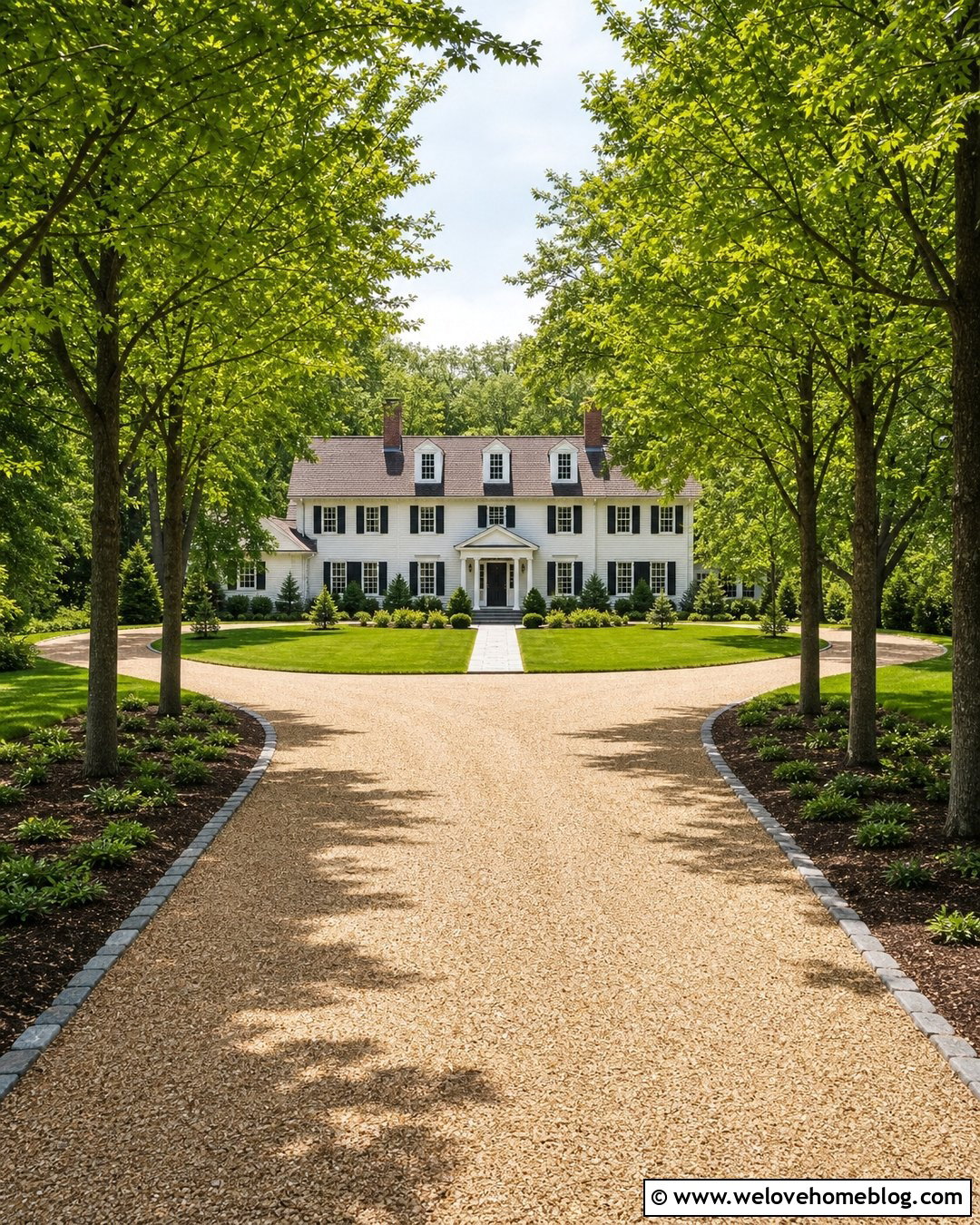
A circular driveway can feel modern when the central island and paving pattern are kept simple. Use large gray concrete pavers, smooth poured concrete, or dark asphalt with a precise stone border. Instead of filling the island with many small plants, select one sculptural tree surrounded by ornamental grass or pale gravel. A clean entry and exit create an efficient visual flow across a wide front yard. Match the circle’s geometry with a curved walkway or a rounded front step, but keep other landscape lines straight for balance. Low lighting can trace the island without cluttering it. This design needs generous space and careful turning dimensions, so plan it around vehicle movement, drainage, property boundaries, and the location of the front entrance.
21. Modern Horseshoe Driveway
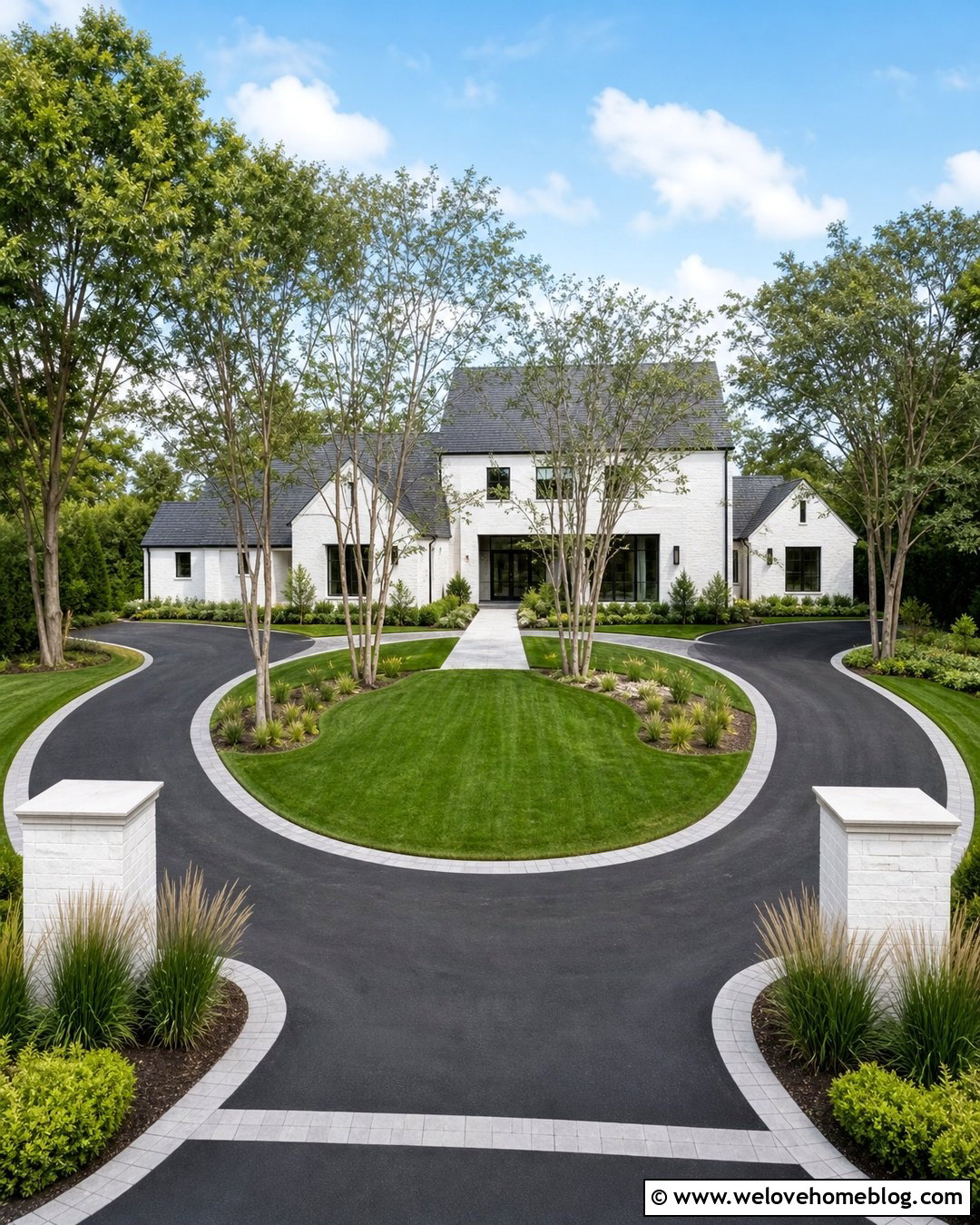
A horseshoe driveway provides two street connections while creating a broad, welcoming approach. To maintain a contemporary appearance, use one consistent material such as charcoal pavers, exposed aggregate concrete, or smooth black asphalt. Frame the curved edges with a restrained light gray border. The center lawn should have a simple shape that follows the driveway and directs attention toward the house. A small group of multi-stem trees, low grasses, and ground cover usually looks cleaner than a densely planted island. Mark each entrance with matching concrete pillars, modern lights, or minimal address signs. The two openings should feel balanced, even if the property is not perfectly symmetrical. Confirm local access, curb-cut, setback, and drainage requirements before developing this layout.
22. Curved Concrete Driveway
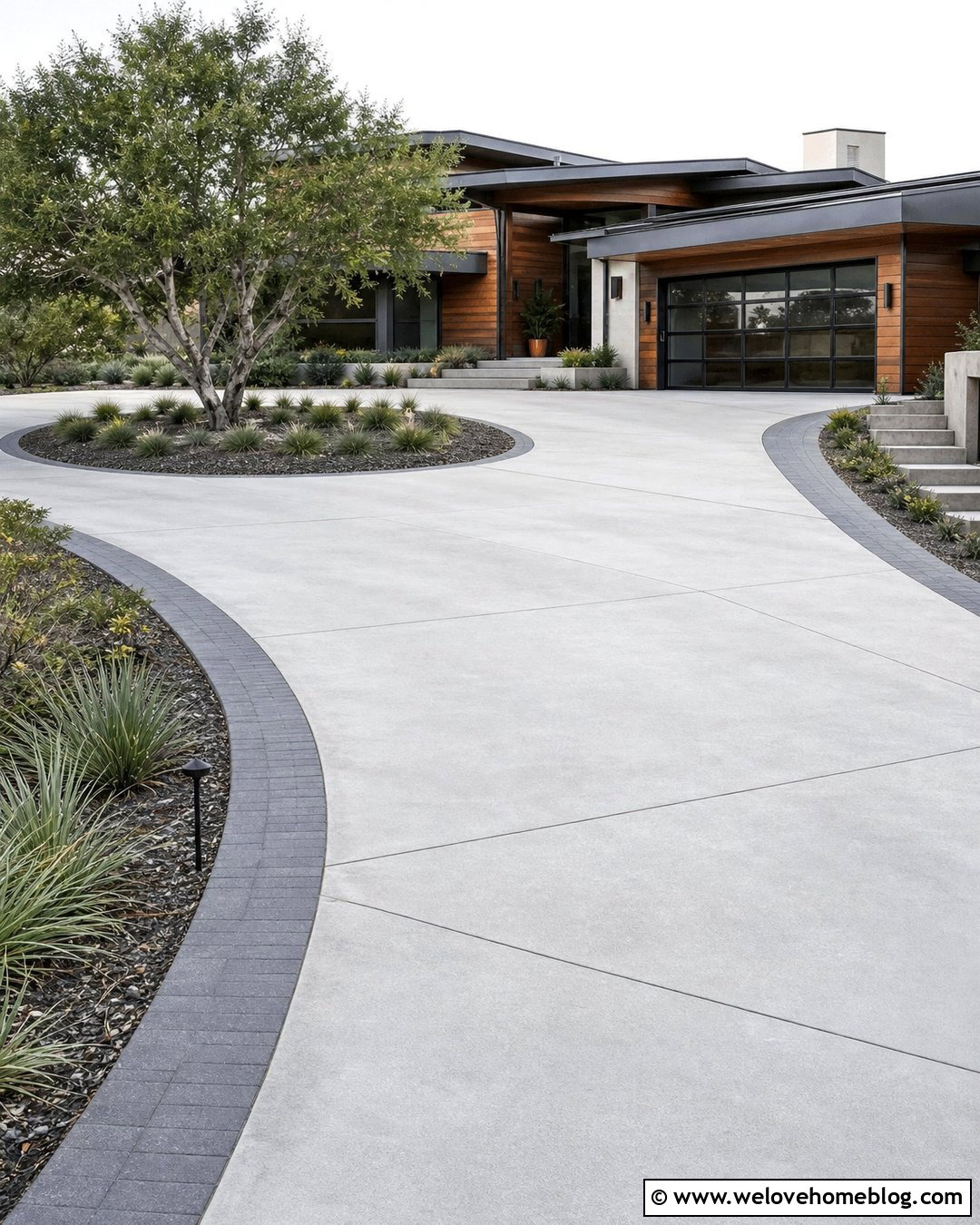
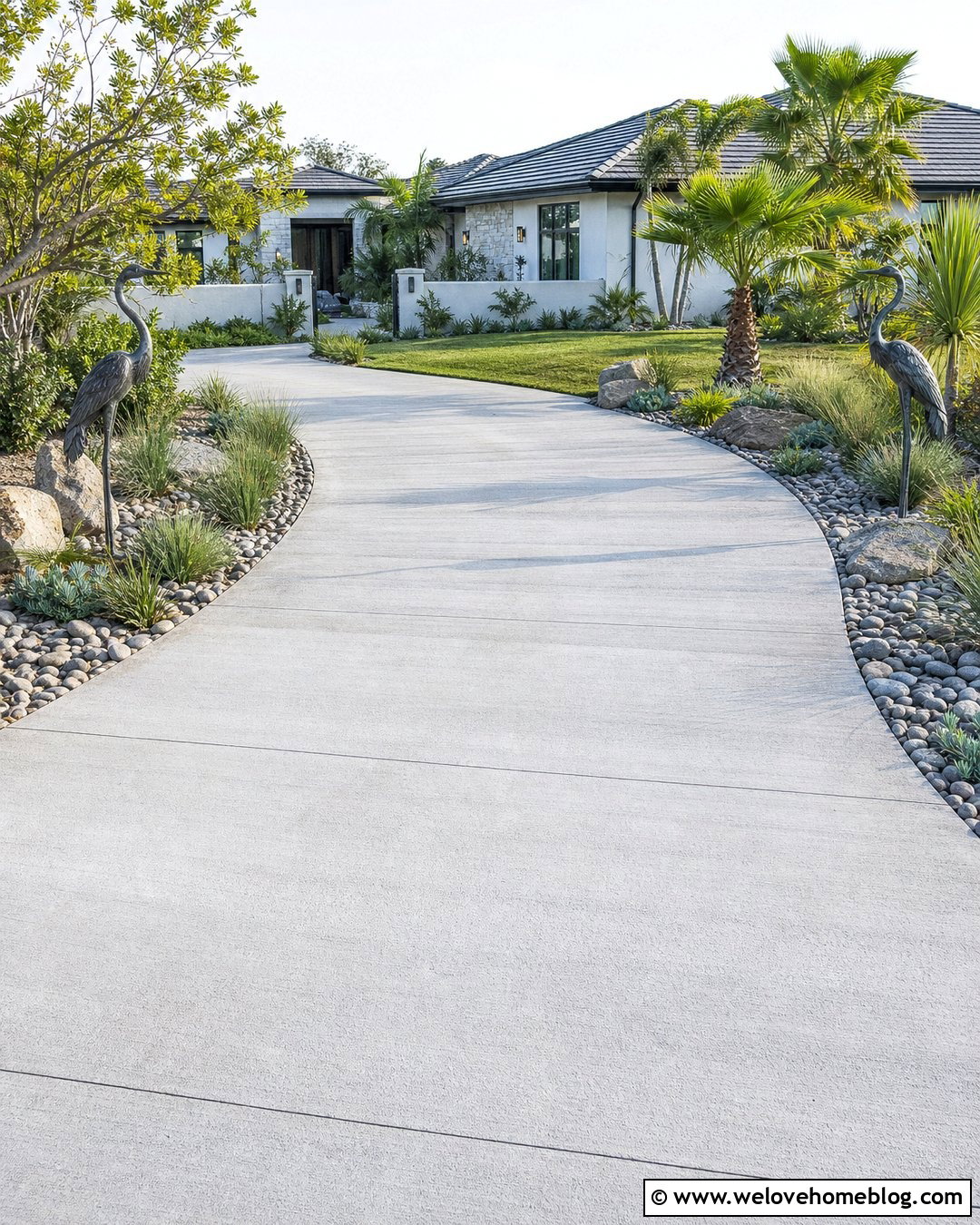
A sweeping concrete driveway can soften the rigid lines of a contemporary house and make a long approach feel more natural. Use broad, gentle curves rather than several tight bends. Divide the poured surface into large panels that follow the direction of travel, and outline the edges with charcoal pavers or dark gravel. Place a planting bed inside the main curve to create a deliberate focal point. A sculptural tree with low grasses beneath it can guide the eye toward the entry without blocking the view. On the outside edge, keep planting lower to preserve visibility when vehicles approach the street. Repeating concrete in the front steps and walkway ties the curved layout to the architecture and prevents it from feeling disconnected.
23. Narrow Modern Driveway
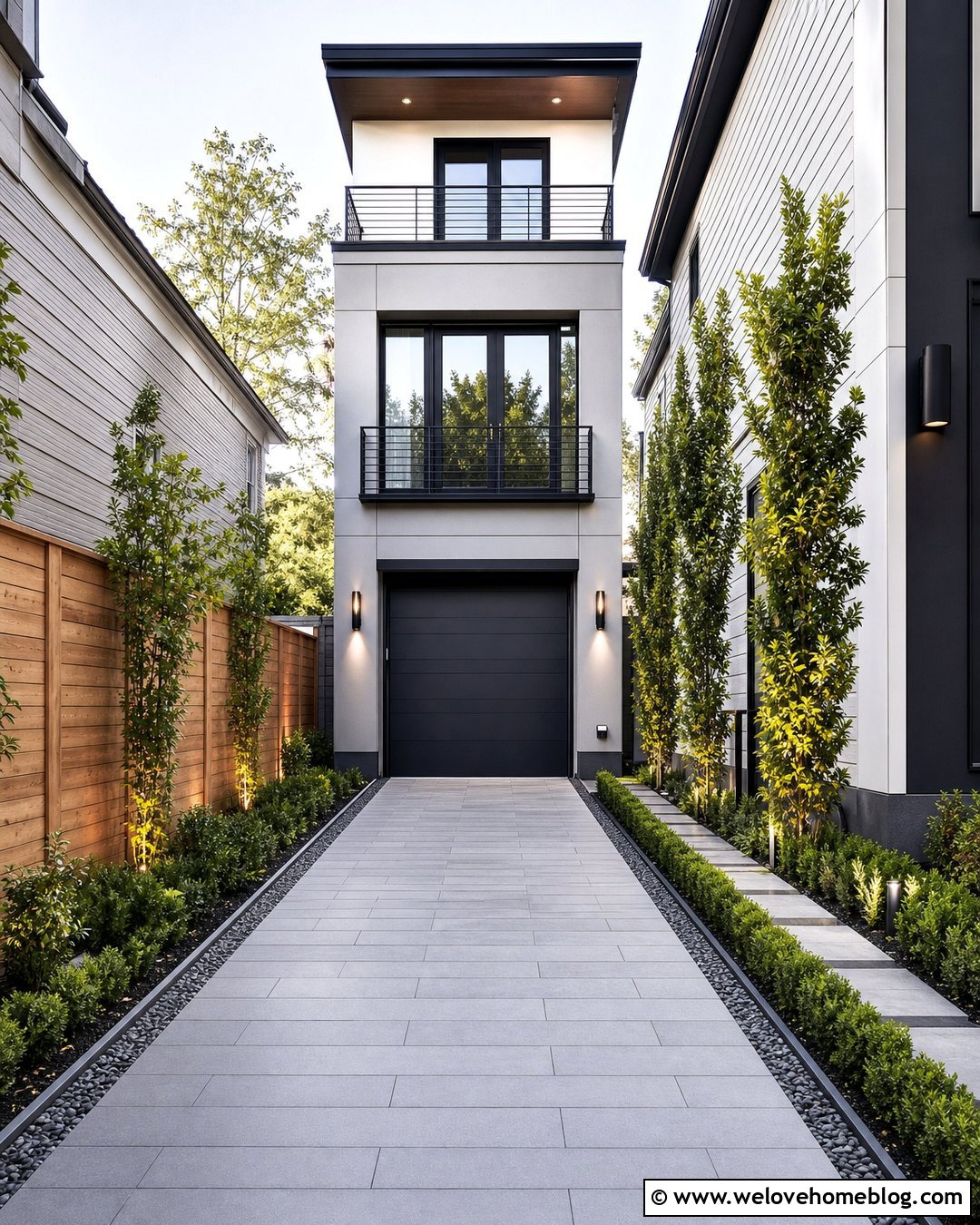
A narrow driveway needs clear boundaries and a simple surface that avoids visual crowding. Long concrete slabs or rectangular pavers laid toward the garage can make the space appear deeper. Use slim steel edging instead of wide decorative borders, preserving as much usable width as possible. If the driveway sits close to the house, install a narrow gravel drainage strip and choose foundation plants with upright growth. On the opposite side, a low hedge or grass bed can provide softness without brushing against vehicles. Connect the front door with a distinct walkway in the same material but a different laying direction. Wall-mounted lighting and a vertical address plaque add detail without consuming ground space. Keep trash storage and utility equipment screened to protect the clean curb view.
24. Wide Modern Driveway With Parking Court
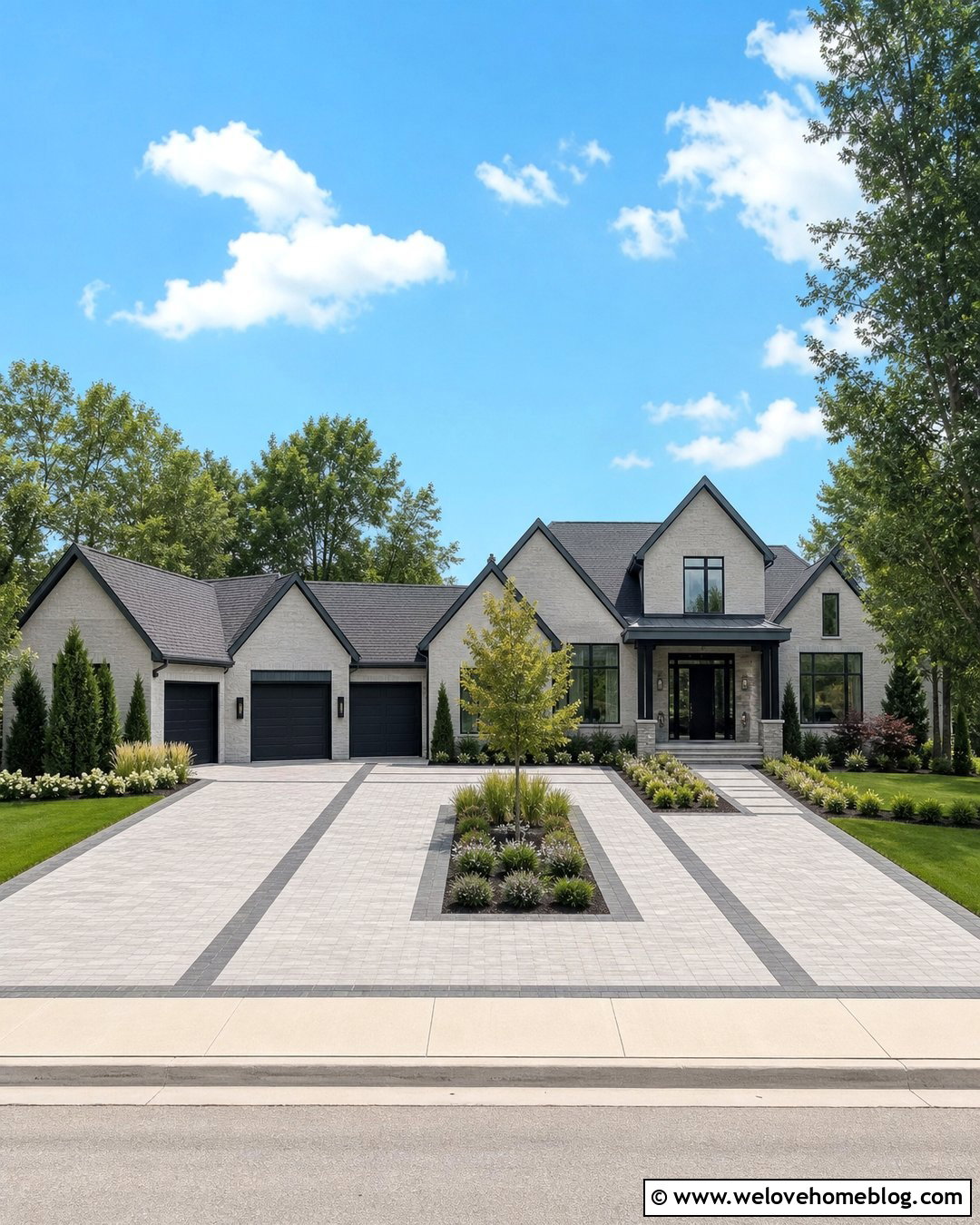
A wide driveway can easily look like an oversized parking lot unless the surface is visually divided. Create a central travel lane with two defined parking bays using paver ribbons, changes in paving direction, or contrasting concrete panels. Large-format gray pavers provide a consistent base, while charcoal borders organize the edges. Add a separate walkway that leads directly to the front door so guests do not have to cross parked areas unpredictably. Rectangular planting islands can break up excessive paving if turning space allows. Use low shrubs and grasses that will not obstruct sightlines. Matching garage doors, planters, and exterior lights create a strong architectural backdrop. The final layout should prioritize comfortable vehicle movement while preserving green space and a welcoming pedestrian entrance.
25. Modern Driveway With Central Grass Strip
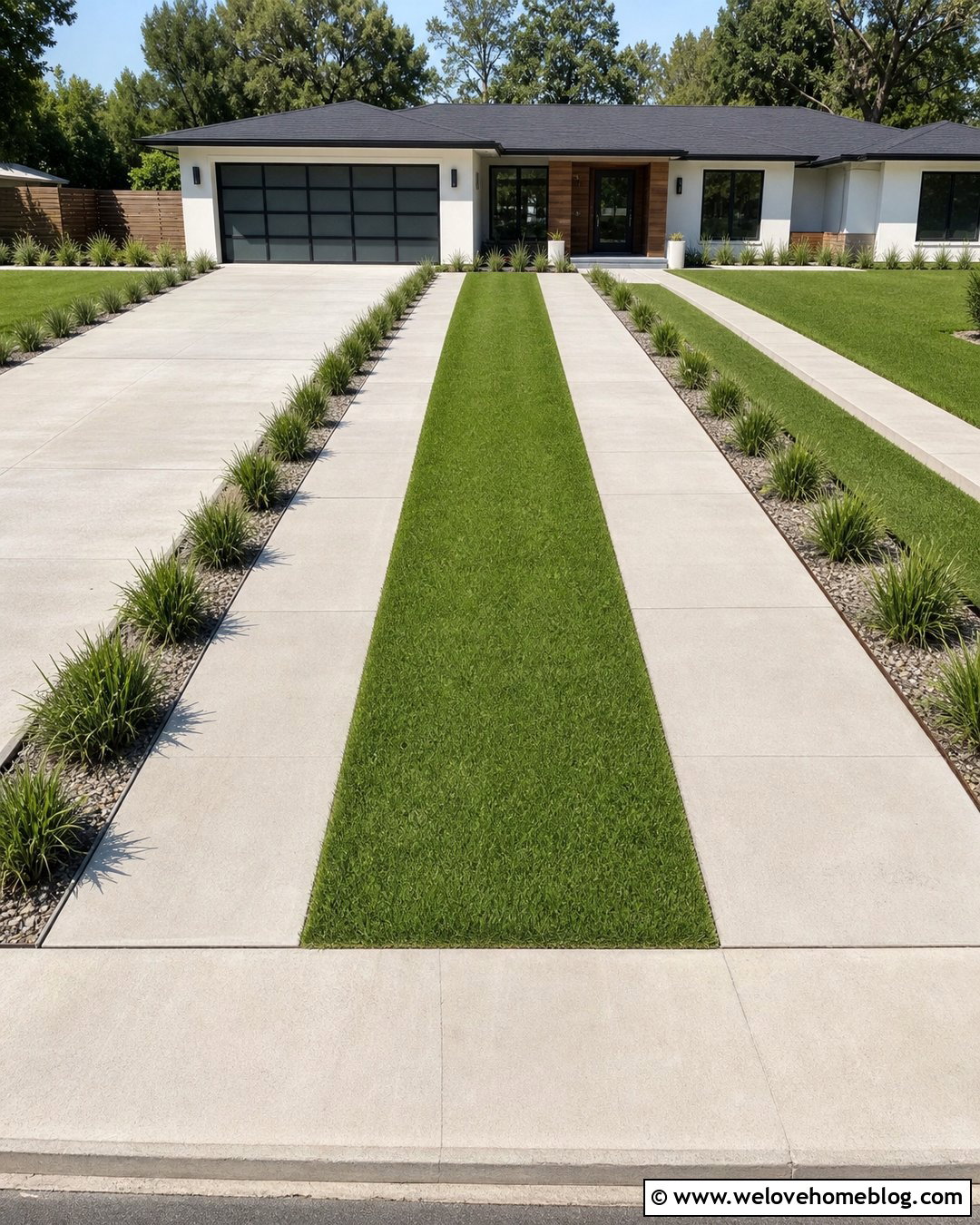
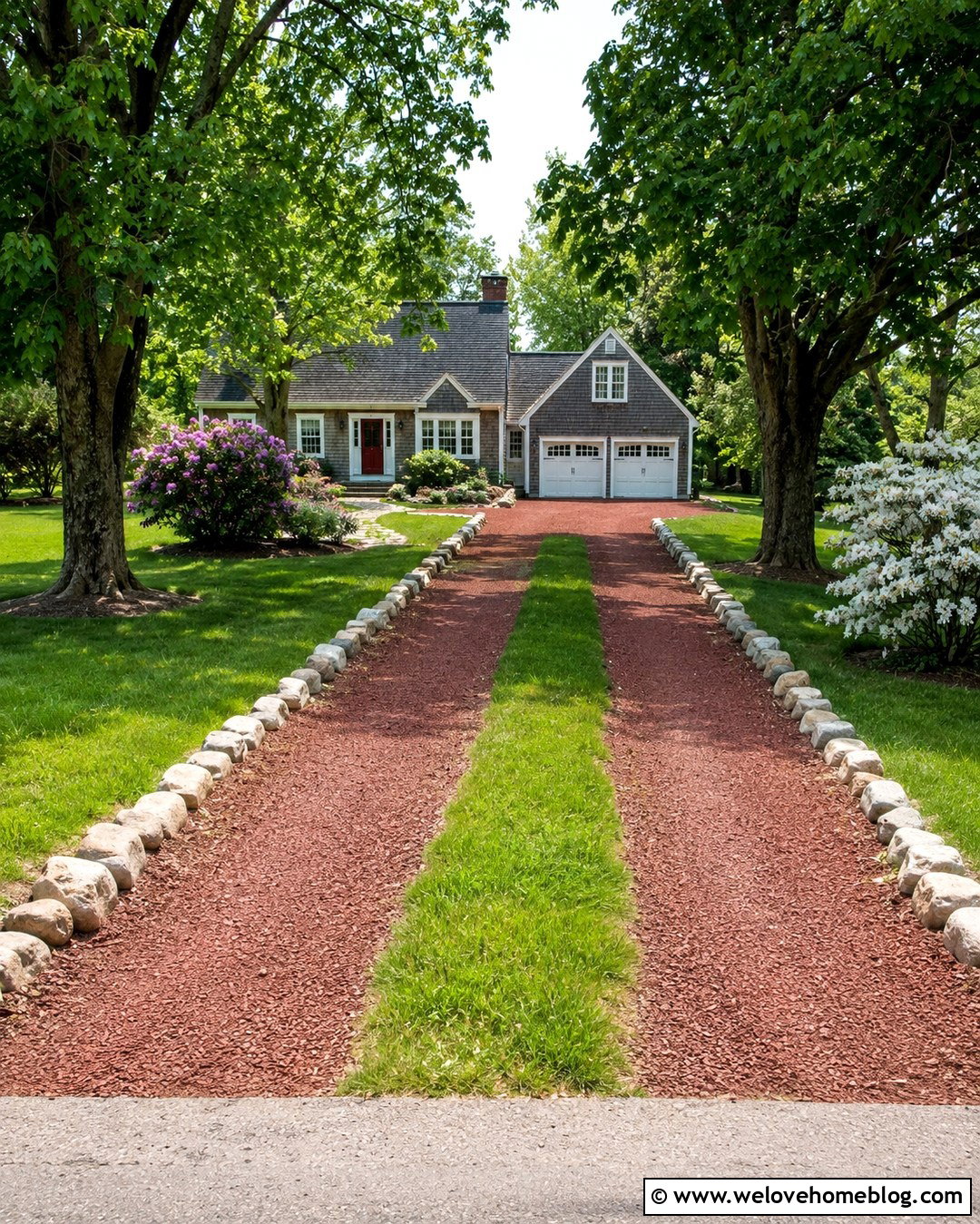
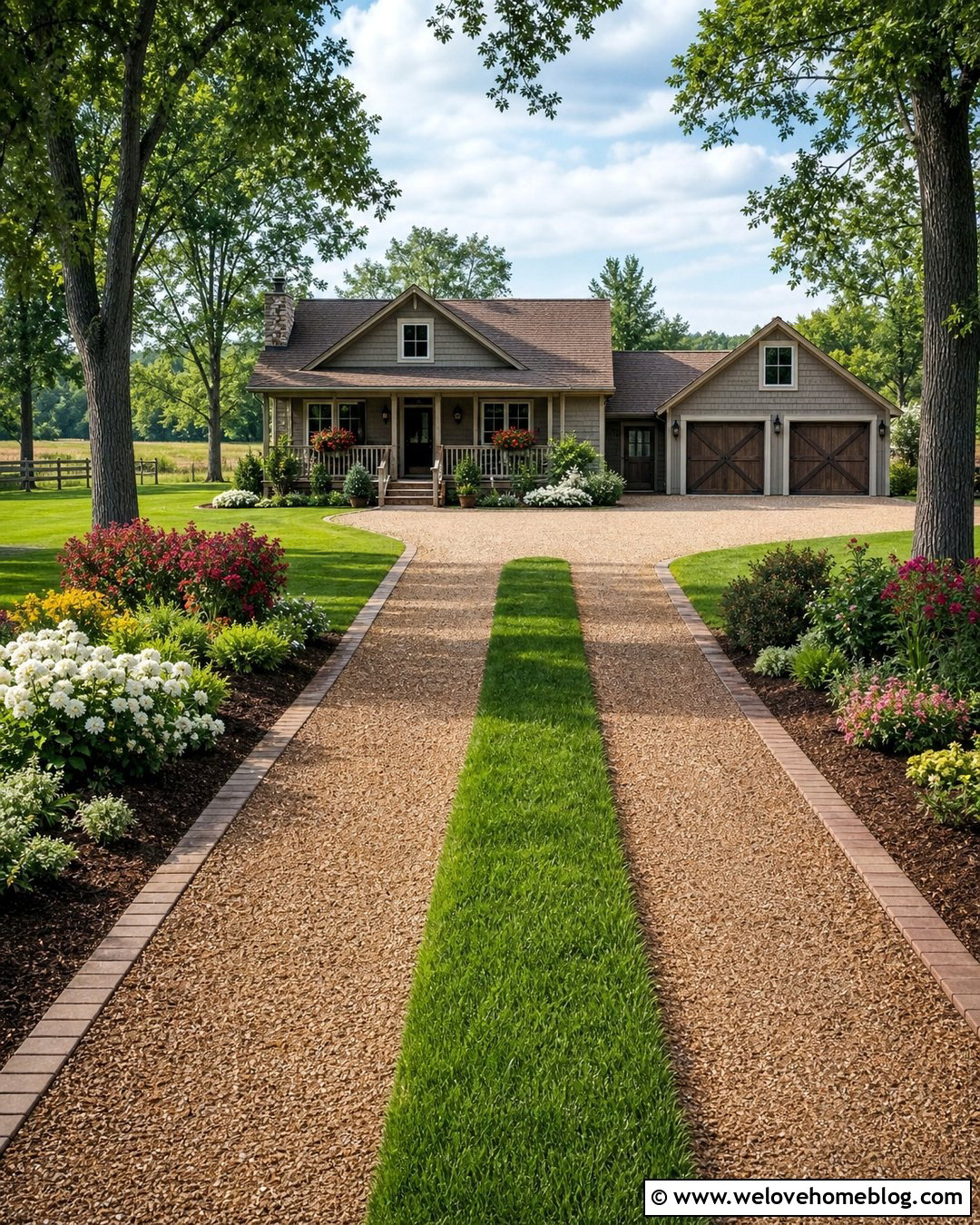
A central grass strip can reduce the visual weight of a straight driveway and create a distinctive green axis toward the house. Build paved tire lanes from poured concrete, concrete pavers, or natural stone rated for vehicles. Keep the central strip wide enough to appear intentional and easy to maintain. Repeat the same planting material along both outer edges for a balanced composition. Traditional lawn produces a crisp appearance, while low ground cover may reduce mowing in suitable climates. At the garage and street apron, transition to full-width paving for easier turning and a cleaner threshold. Add a parallel walkway if the tire lanes are uncomfortable for pedestrians. Straight lines, limited materials, and restrained planting allow the green strip to look modern rather than rustic.
26. Driveway With Modern Landscape Islands
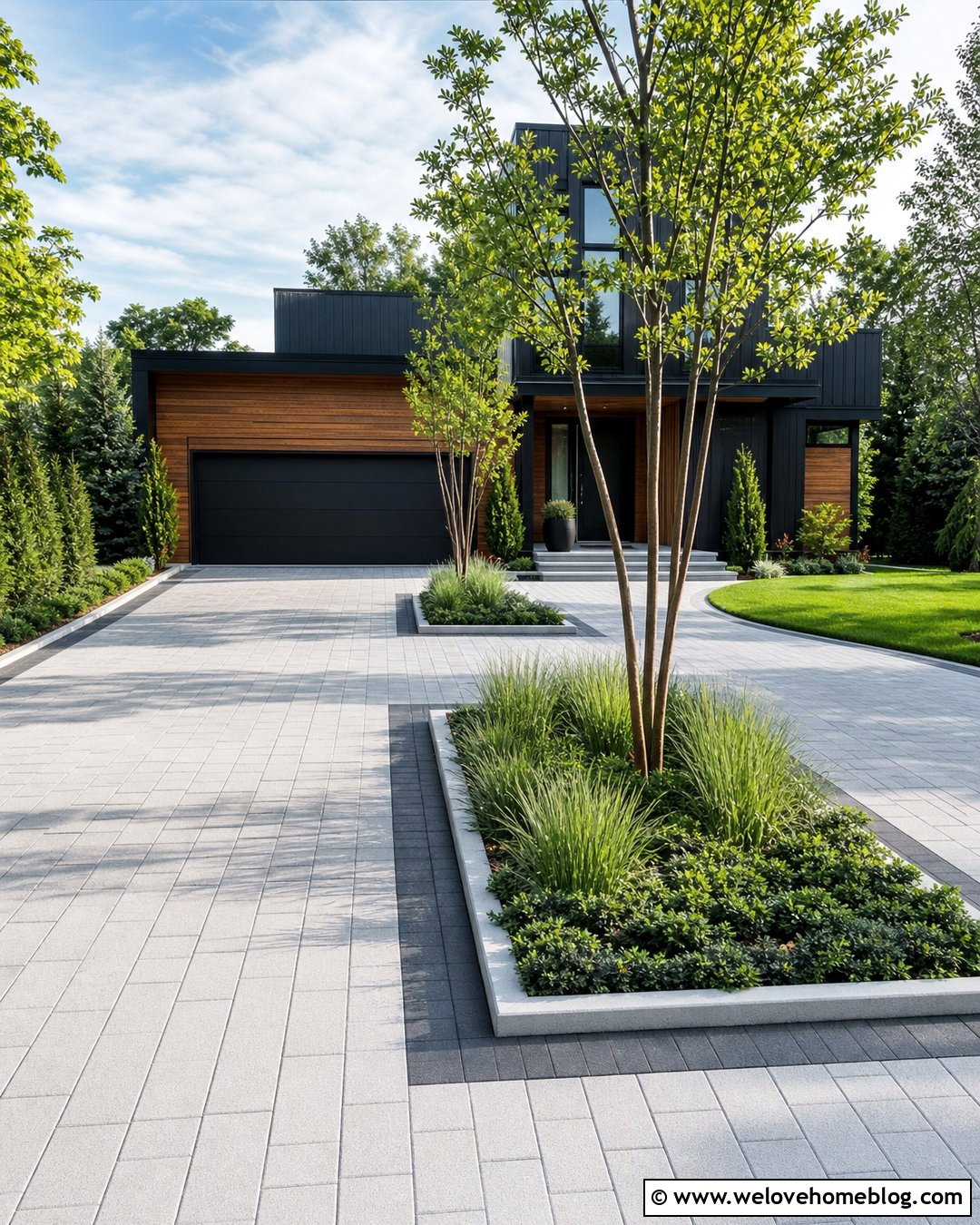
Landscape islands can divide a large driveway, guide traffic, and introduce greenery close to the house. Use geometric islands rather than irregular beds for a clearly modern effect. Rectangular forms suit straight paver driveways, while elongated oval islands complement curved concrete approaches. Fill each bed with a limited plant palette, such as one multi-stem tree, repeated ornamental grasses, and low evergreen ground cover. A narrow concrete or steel curb protects the planting from tires and contains mulch or decorative stone. Repeat the driveway’s border material around the islands to connect the entire design. Before adding them, test turning paths and maintain clear sightlines. Properly positioned islands should make navigation easier while reducing the impression of one large, uninterrupted hard surface.
27. Modern Driveway With Drought Tolerant Landscaping
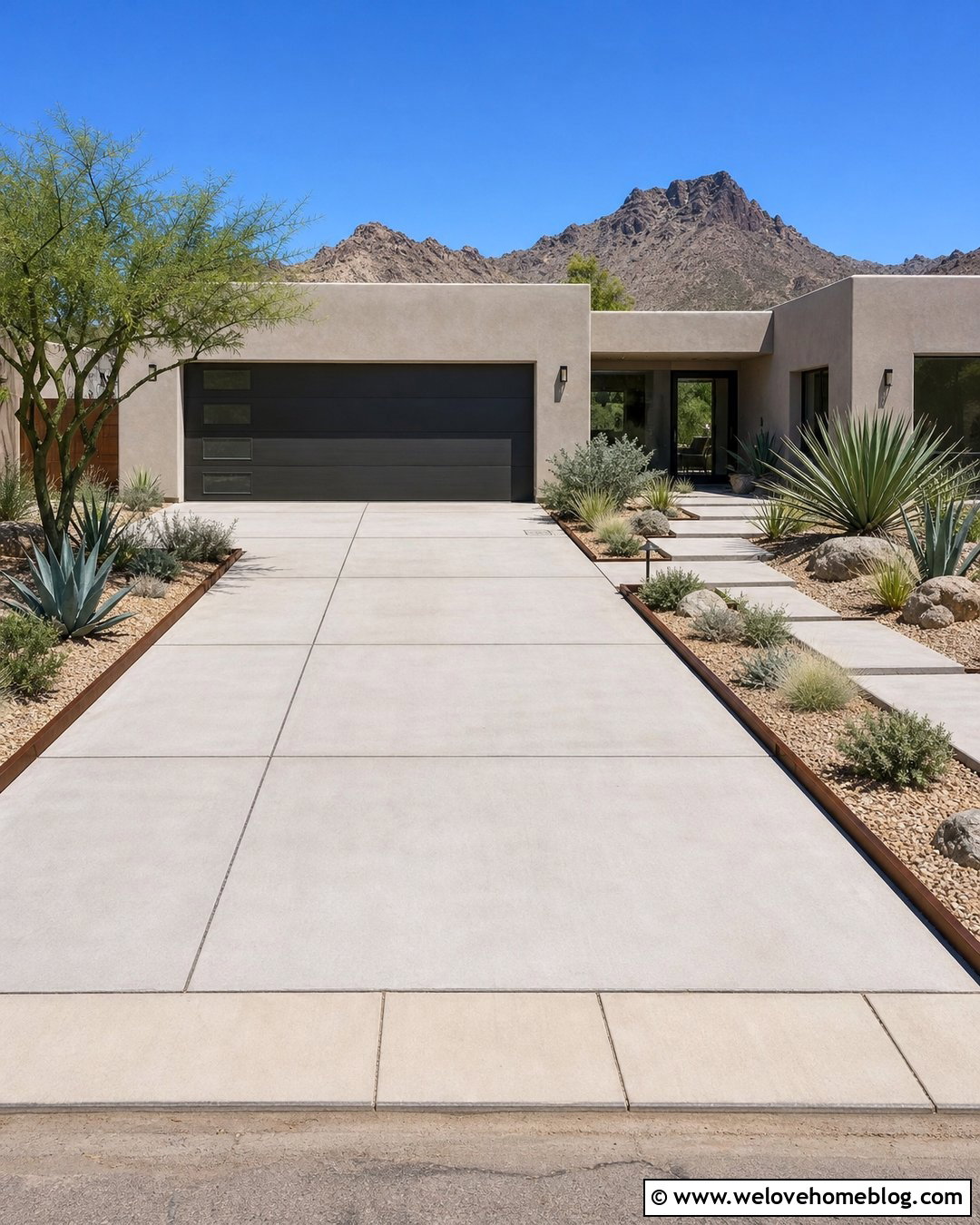
A water-conscious driveway landscape can still feel lush when plants are layered carefully. Pair light gray concrete slabs or permeable pavers with beds of decorative gravel, agave, yucca, sage, and airy ornamental grasses suited to the local climate. Use a curved planting bed to soften a straight driveway or rectangular beds to reinforce minimalist architecture. Corten steel or dark metal edging creates a crisp boundary and warm color contrast. Group plants in repeated clusters rather than placing many isolated specimens. Include open gravel areas so mature plants have room to spread. A small tree near the entrance can add height and shade without hiding the house. Confirm mature plant size, sun exposure, cold tolerance, and irrigation needs before selecting the final planting palette.
28. Modern Driveway With Ornamental Grass Borders
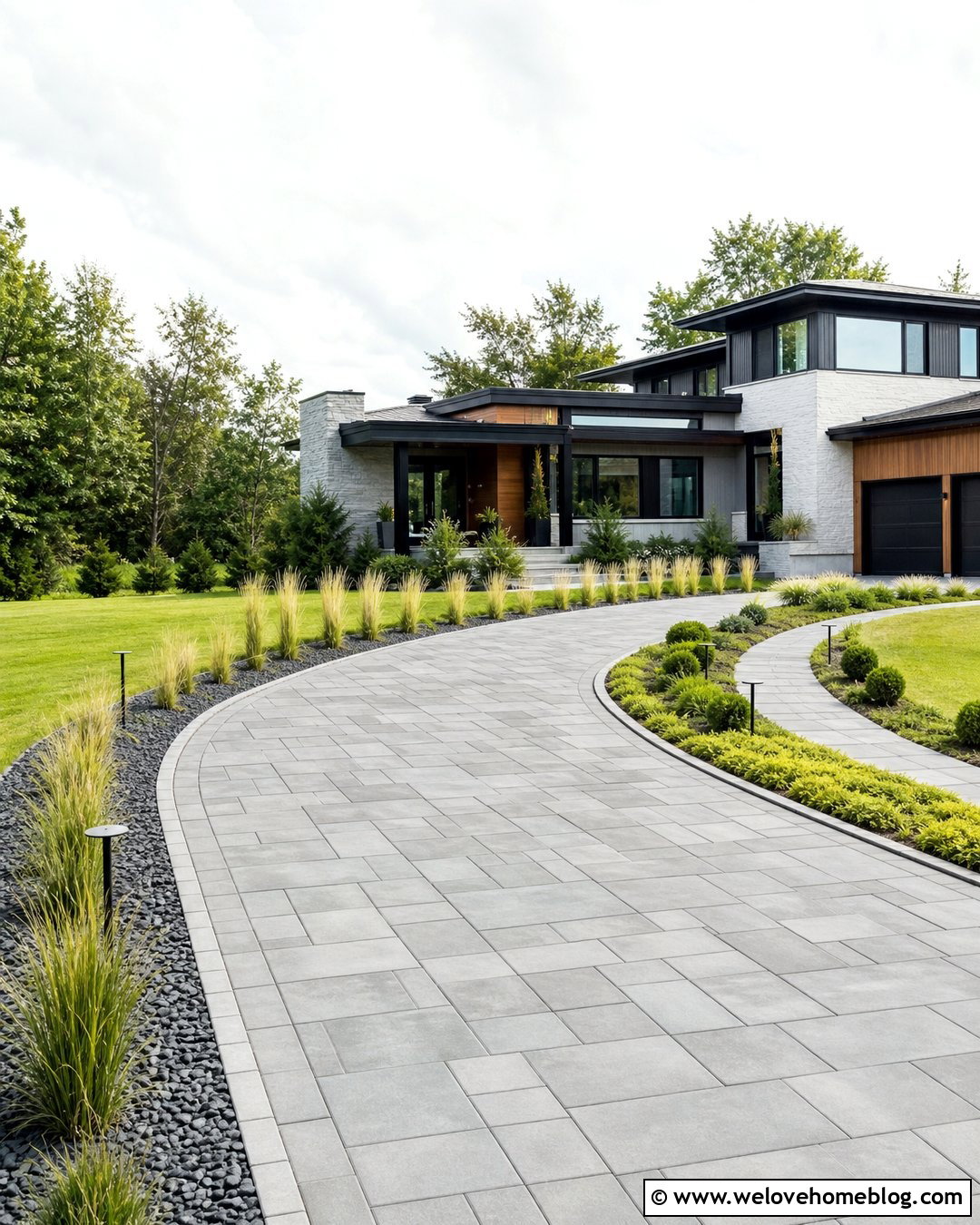
Ornamental grasses introduce movement and softness beside hard concrete or paver surfaces. Choose one or two varieties with upright habits so the planting looks organized and does not spill excessively into vehicle space. A straight large-format concrete driveway can be framed with repeated grass clusters set in dark gravel beds. For a curved paver driveway, follow the outer radius with grasses and use low ground cover along the inside edge. Leave enough clearance for mature growth, snow storage, door opening, and safe visibility near the street. Low black lights placed between selected groups can reinforce the rhythm without creating a crowded border. Pair the grasses with compact evergreens to provide year-round structure where seasonal dormancy leaves gaps in the planting.
29. Modern Driveway With Raised Planters
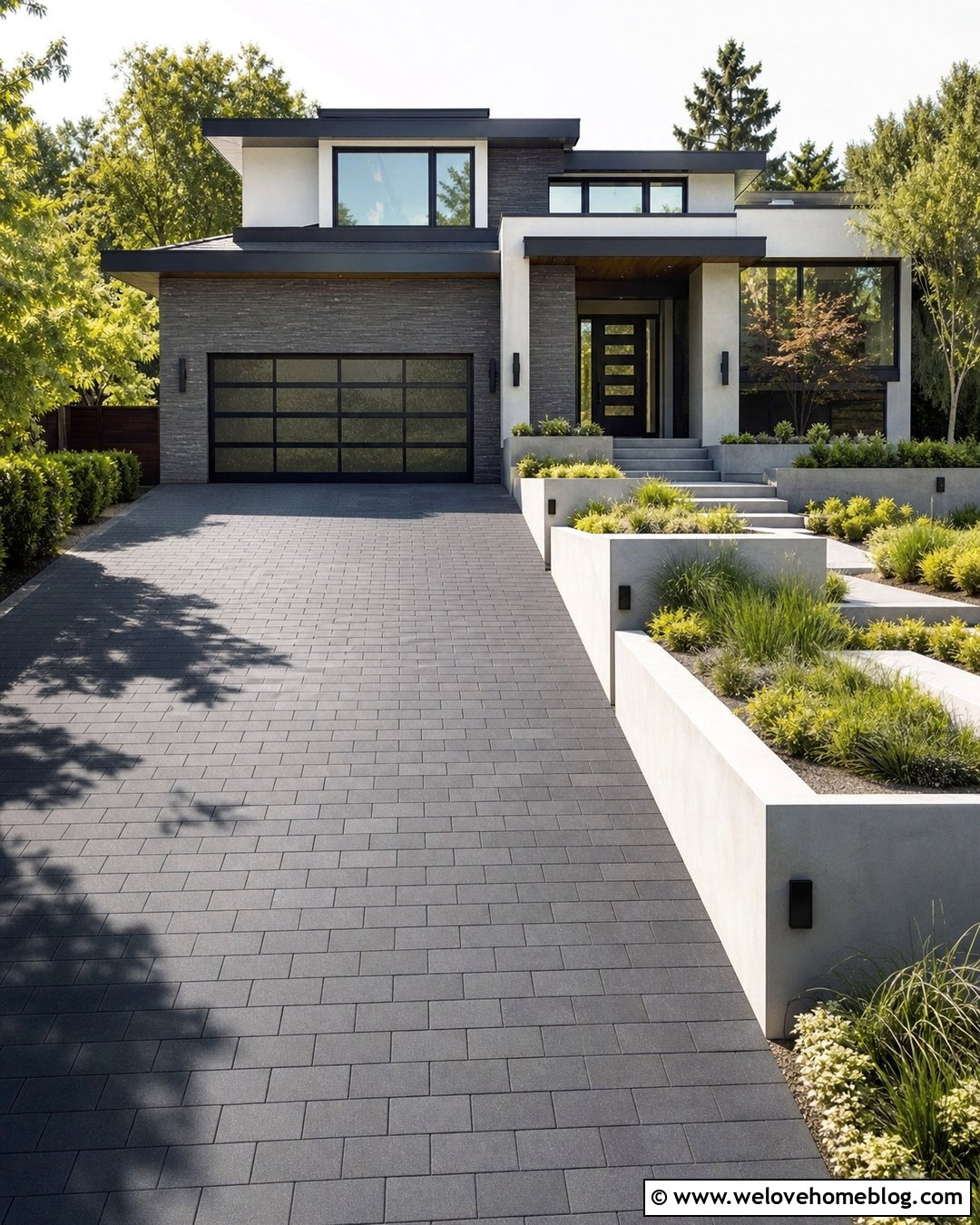
Raised planters can turn a plain driveway edge into an architectural feature. Build long, low forms from smooth concrete, dark brick, or stone veneer that repeats materials used on the house. Position them where they will not reduce door clearance, turning space, or street visibility. A charcoal paver driveway paired with pale concrete planters creates a striking contrast. Fill the beds with layered but restrained planting, placing taller grasses or shrubs at the back and low ground cover near the edge. Integrated steps can connect the driveway to an elevated front entrance. Keep planter walls low enough that they do not create a closed-in feeling. Consistent wall heights, straight alignments, and repeated plant groups make the entire approach look carefully planned.
30. Modern Driveway With Concrete Retaining Walls
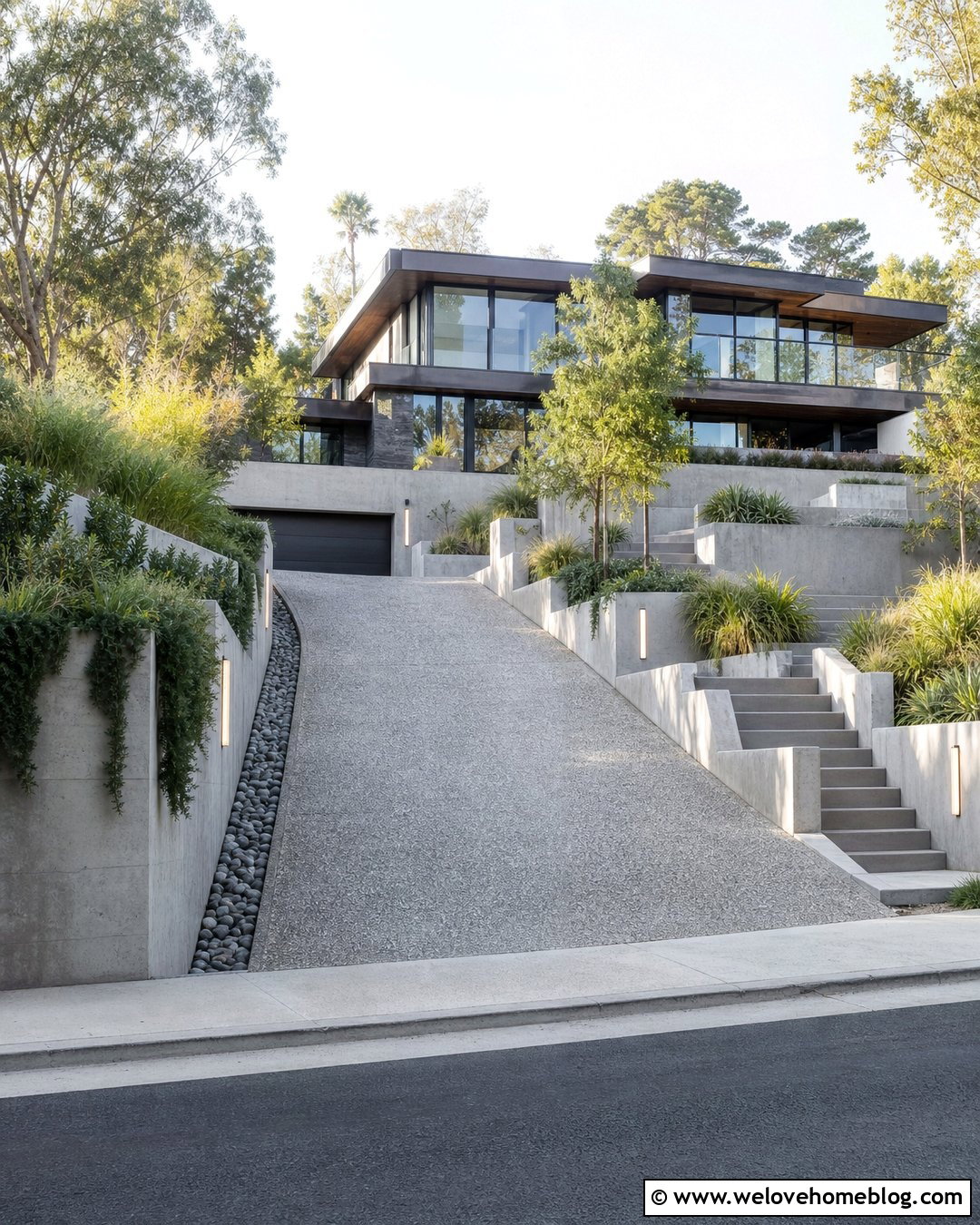
Sloped properties often need retaining walls, but these structural features can also strengthen the driveway design. Smooth poured-concrete walls pair naturally with a modern paver or exposed aggregate driveway. Keep the wall profile simple and step it gradually with the grade rather than creating one unnecessarily tall mass. A recessed planting strip above the wall can hold trailing ground cover, grasses, and compact shrubs. At the lower edge, install a narrow gravel band to provide a neat visual transition and support the planned drainage system. Wall-mounted linear lights can improve visibility without adding posts. Retaining walls require suitable engineering, foundations, drainage, and code compliance, especially near driveways. Professional planning helps ensure the finished structure is attractive and capable of handling soil pressure safely.
31. Modern Driveway With Sliding Gate
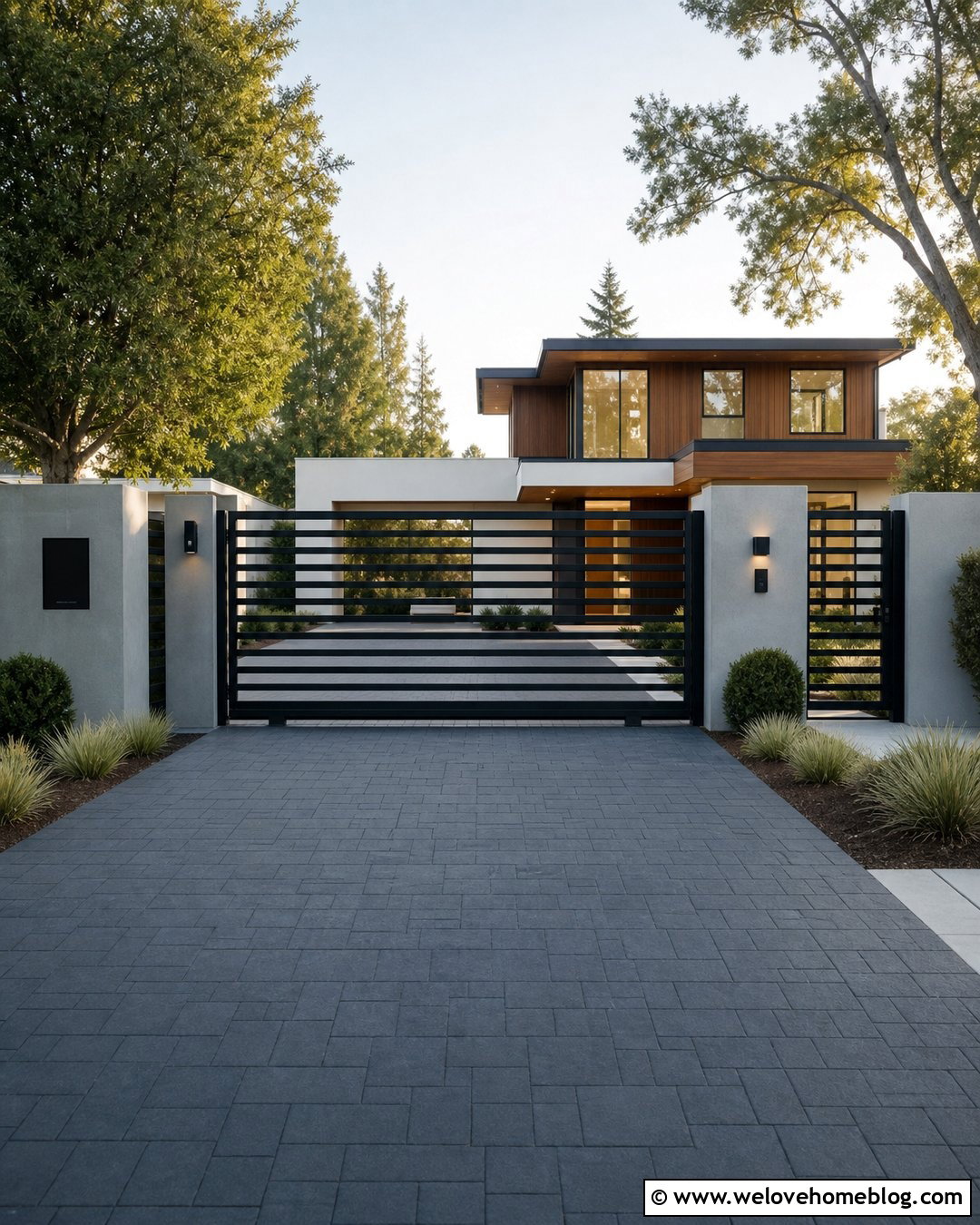
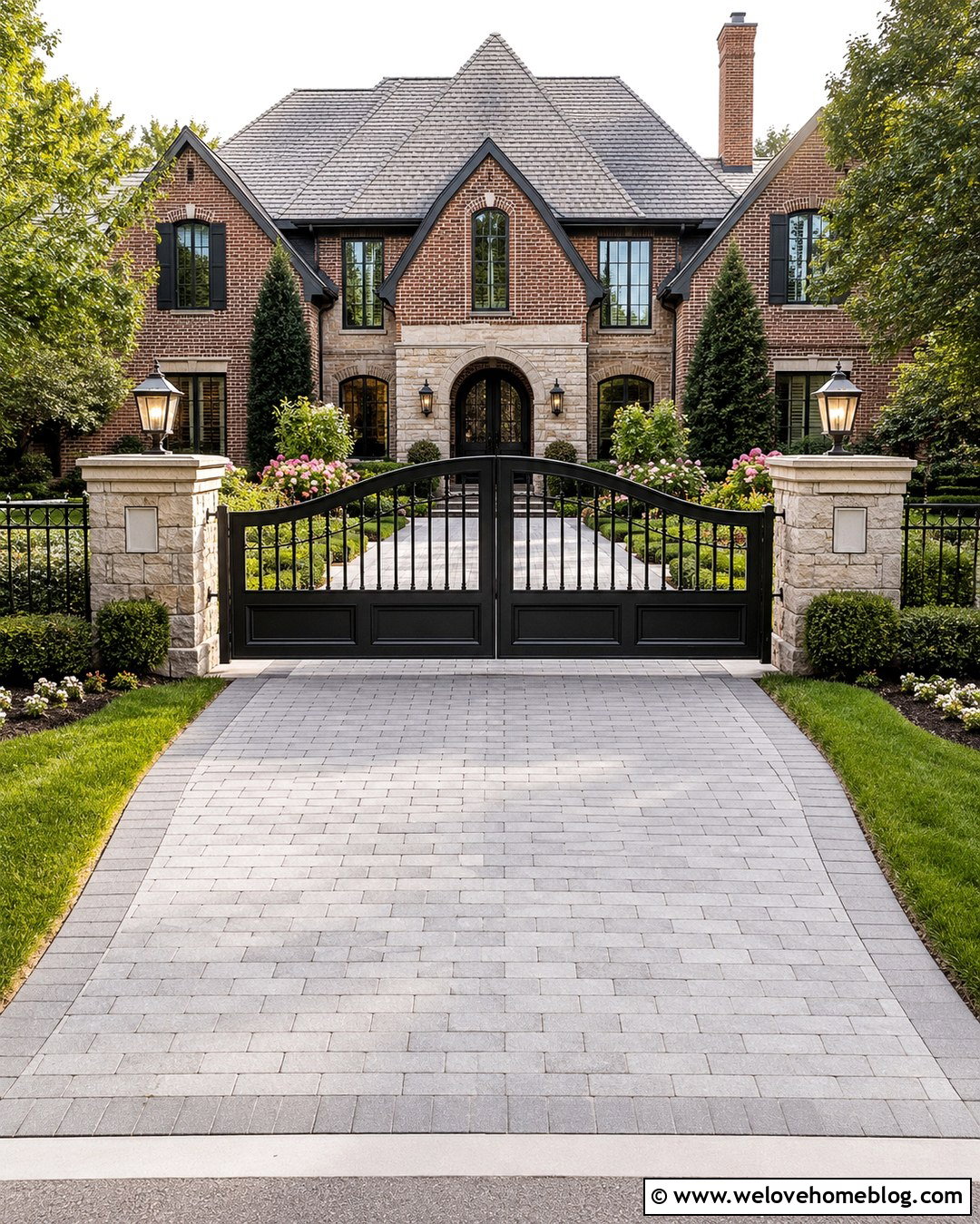
A streamlined sliding gate provides security while supporting a clean contemporary entrance. Choose horizontal aluminum slats, black steel framing, or a combination of metal and warm wood. Pair the gate with a straight charcoal paver driveway so its horizontal lines feel connected to the ground pattern. Simple concrete pillars can contain controls and lighting without looking ornamental. Leave a clear setback where vehicles can wait safely and provide sufficient side space for the gate to open. Low grasses and clipped shrubs soften the entrance while preserving visibility. Repeat the gate material in the pedestrian gate, address sign, or front-door details. Automation, emergency access, safety sensors, drainage, and local setback rules should be integrated early rather than added after the landscaping is complete.
32. Modern Driveway With Concrete Pillars
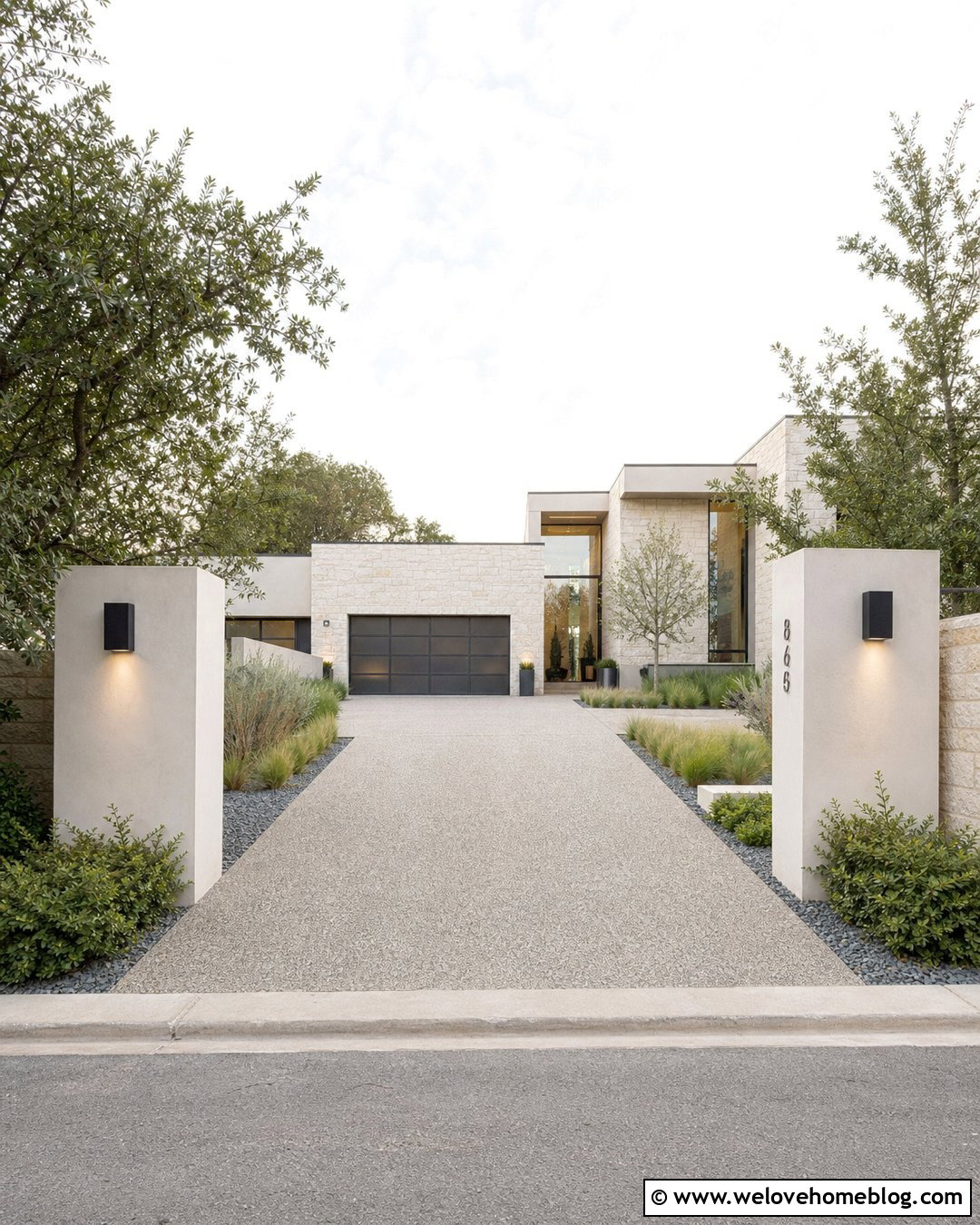
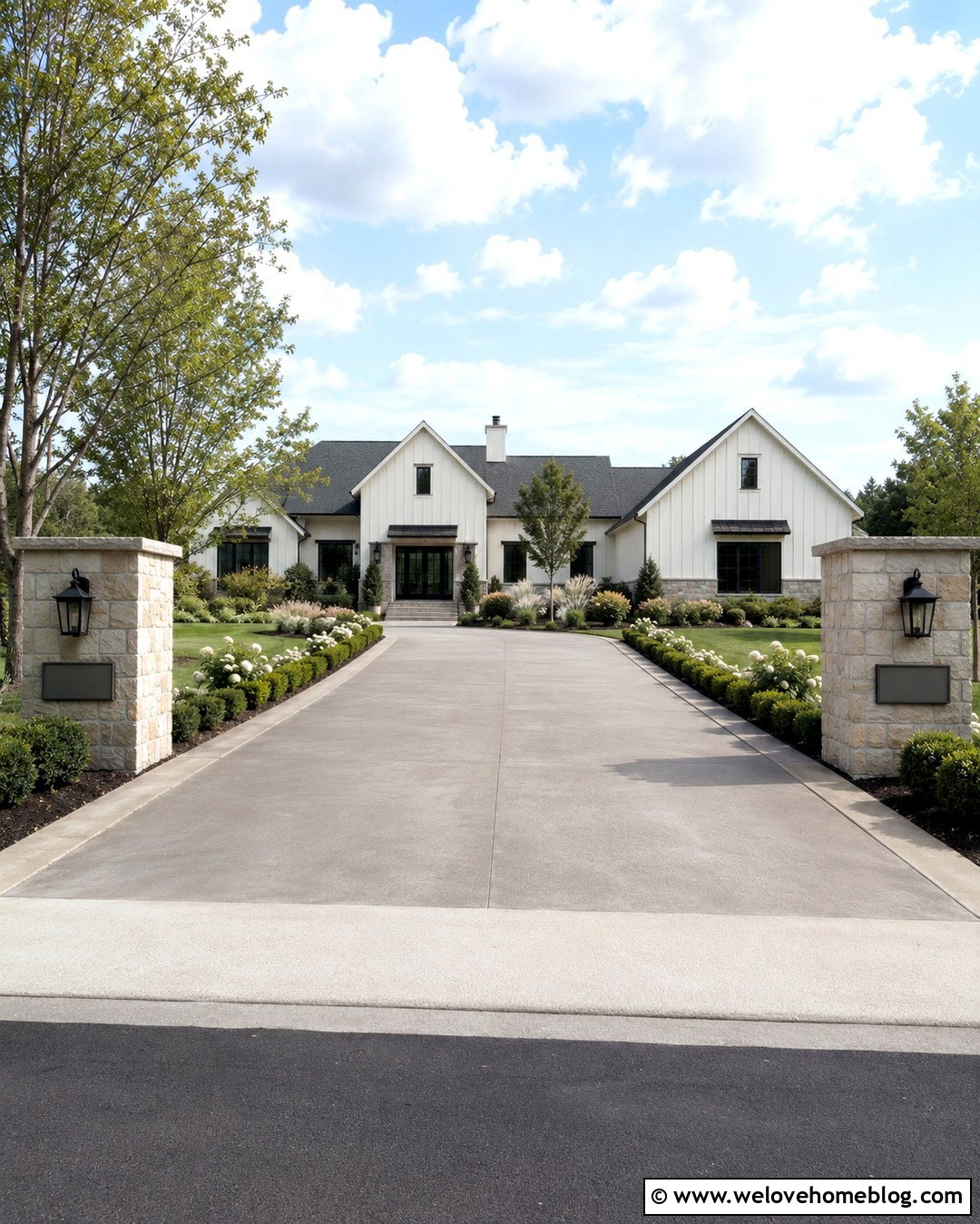
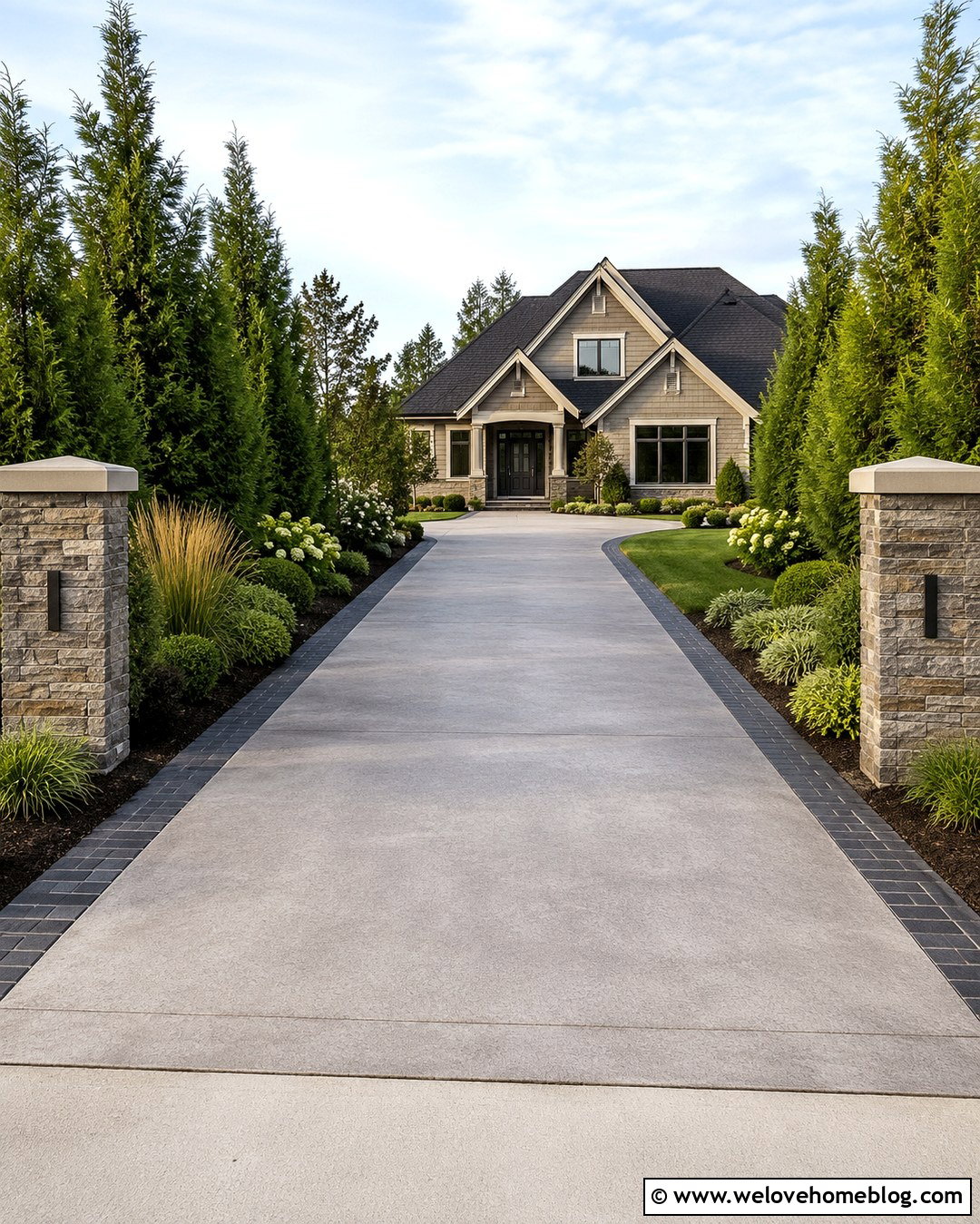
Concrete pillars create a strong entrance when their proportions match the scale of the driveway and house. Use smooth rectangular columns without decorative caps for a minimalist appearance. A warm gray resin-bound gravel or dark paver driveway can provide subtle contrast against pale concrete. Place modern address numbers on one pillar and a shielded light on the other to balance function and appearance. Low planting beds should wrap around the bases without hiding them. Try ornamental grasses, ground cover, and small evergreen shrubs set in gray gravel. If a future gate is possible, plan foundations, wiring, and clearances from the beginning. The pillars should frame the driveway rather than narrow it, so allow comfortable space for deliveries, guests, and larger vehicles.
33. Modern Driveway With Integrated Lighting
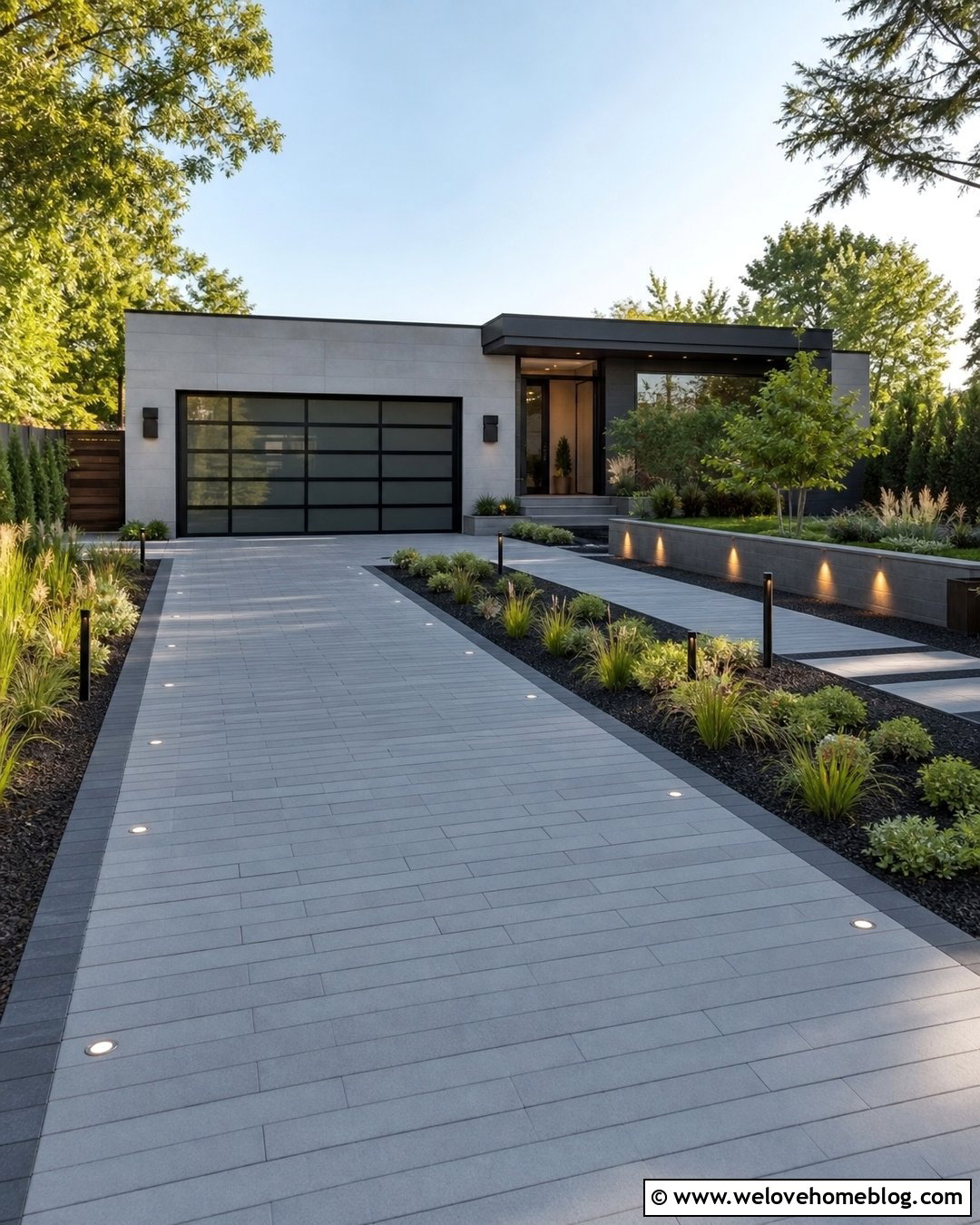
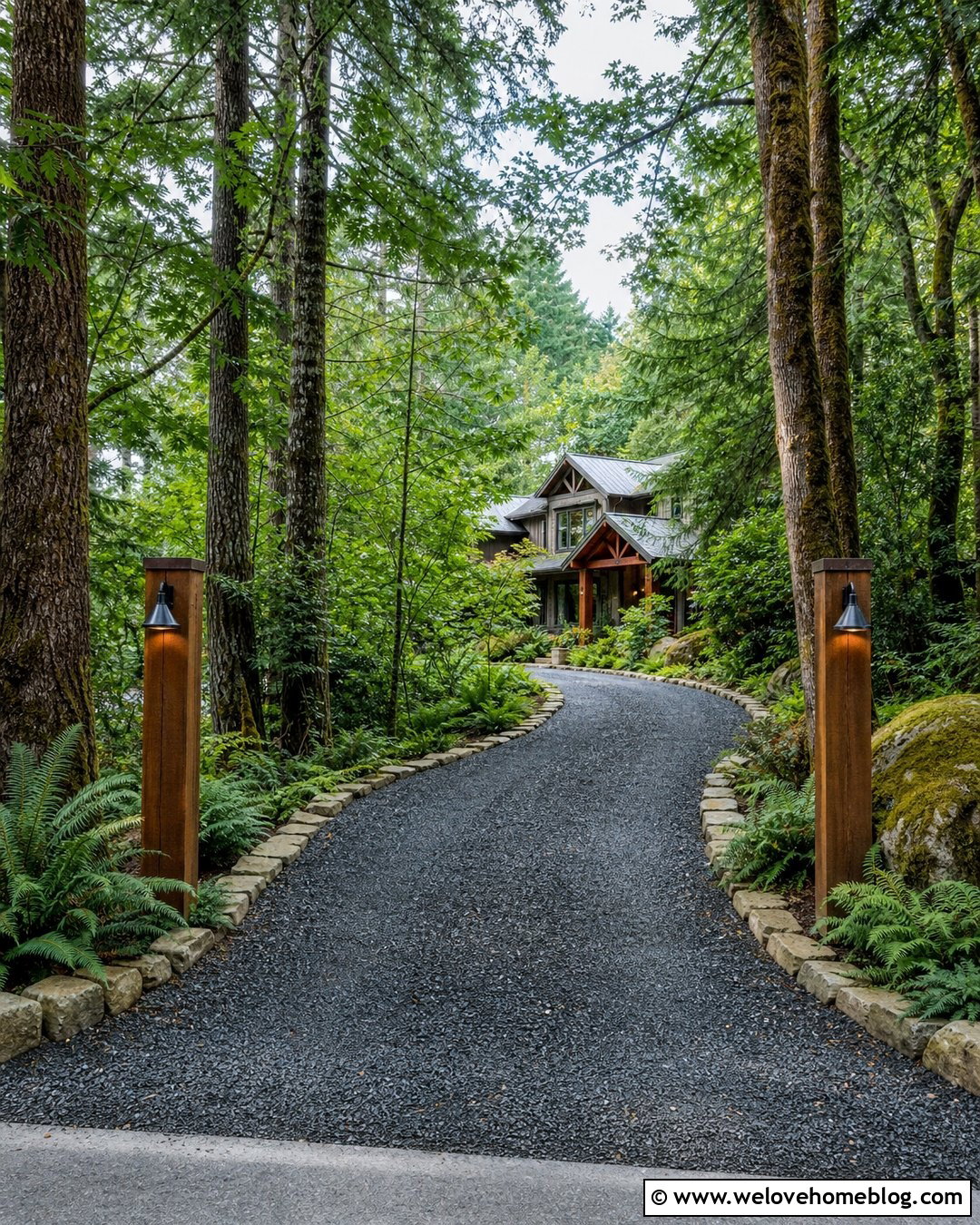
Good lighting should clarify the driveway’s shape while remaining discreet during the day. Use recessed paver lights along a concrete border, low bollards beside planting beds, or small fixtures integrated into retaining walls. A linear paver driveway offers natural alignment points, making it easier to create an even rhythm. Focus light at changes in direction, steps, gates, and pedestrian crossings rather than illuminating every edge. Warm-neutral fixtures can highlight landscaping, but the overall arrangement should avoid glare toward drivers, neighbors, and the street. Black or charcoal housings usually disappear neatly against modern hardscape. Coordinate the driveway lights with entry and garage fixtures for a consistent exterior. Have wiring, transformers, drainage, and fixture placement planned before paving to minimize later disruption.
34. Modern Driveway With Address Sign
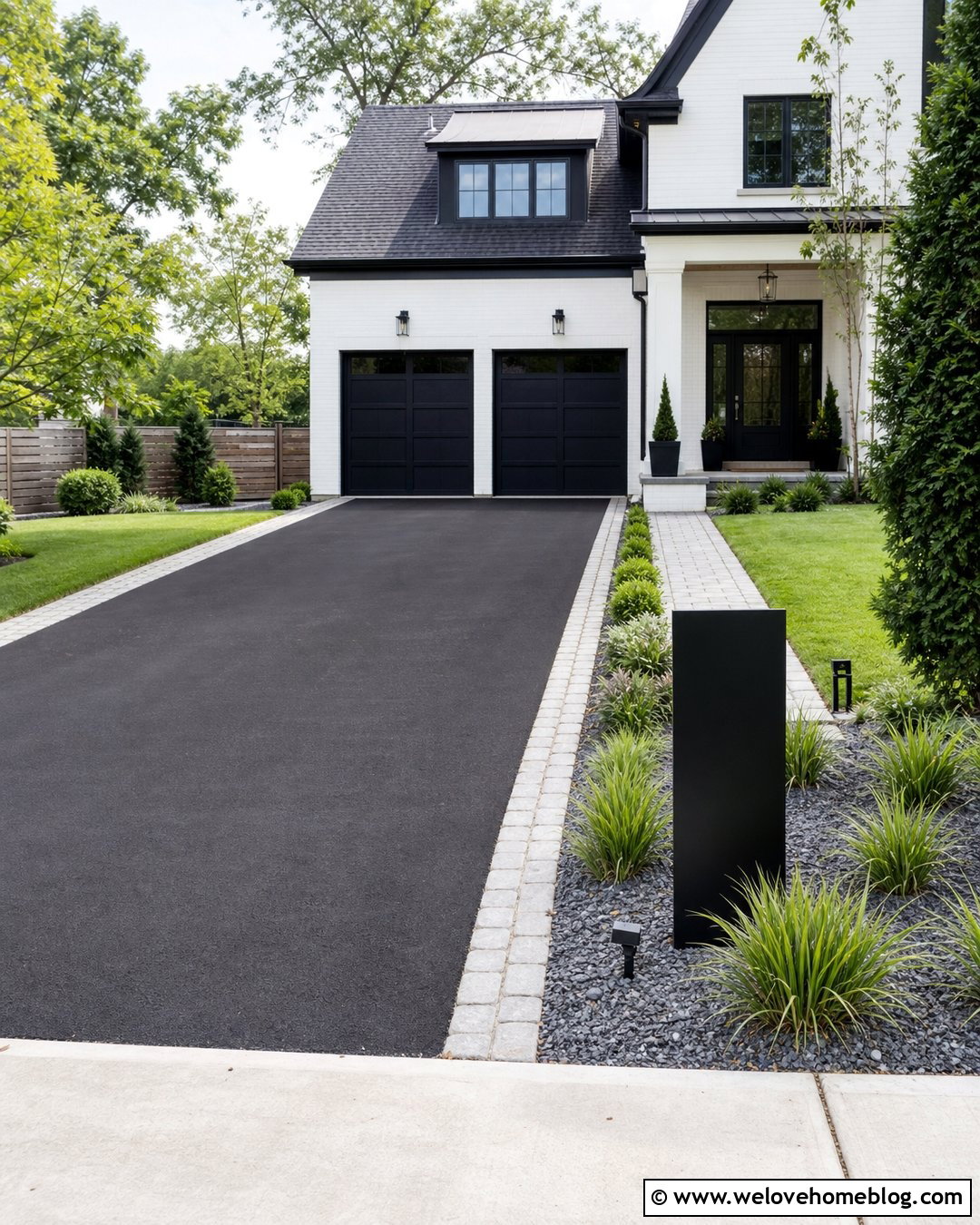
A well-positioned address sign can become the focal point of a modern driveway entrance. Mount large, simple numbers on a concrete monument, black metal panel, stone wall, or wood-and-steel post. Pair the sign with a clean asphalt driveway edged in gray pavers, or use matching pavers around its planting bed. Keep surrounding vegetation low so the numbers remain visible from both directions. Decorative gravel and a small group of grasses provide texture without obscuring the display. Add subtle dedicated lighting where permitted, ensuring the sign remains readable without creating glare. The material and color should repeat something already present on the home, such as the garage door, facade cladding, or entry hardware. Confirm local placement and addressing requirements before installation.
35. Mixed Material Modern Driveway
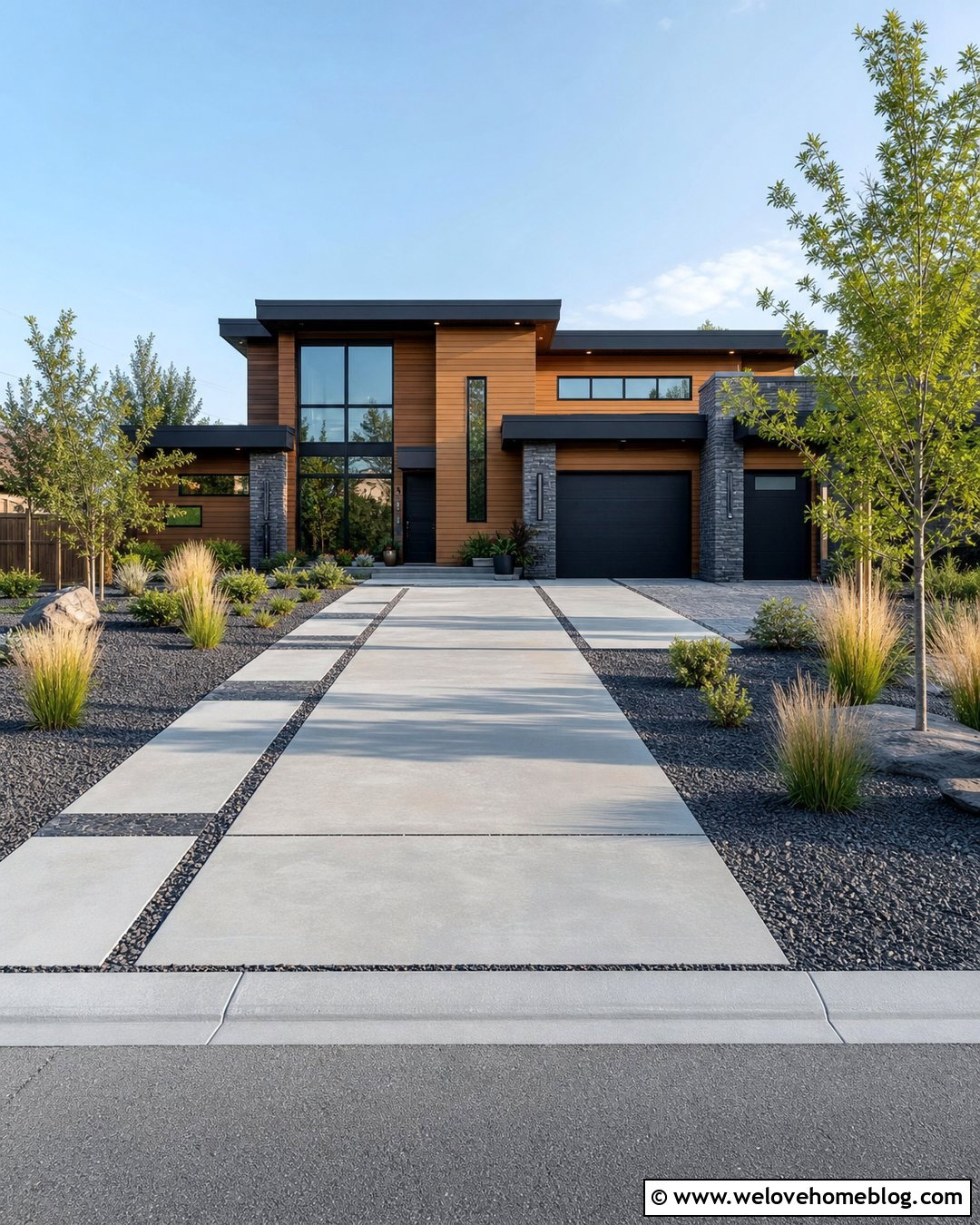
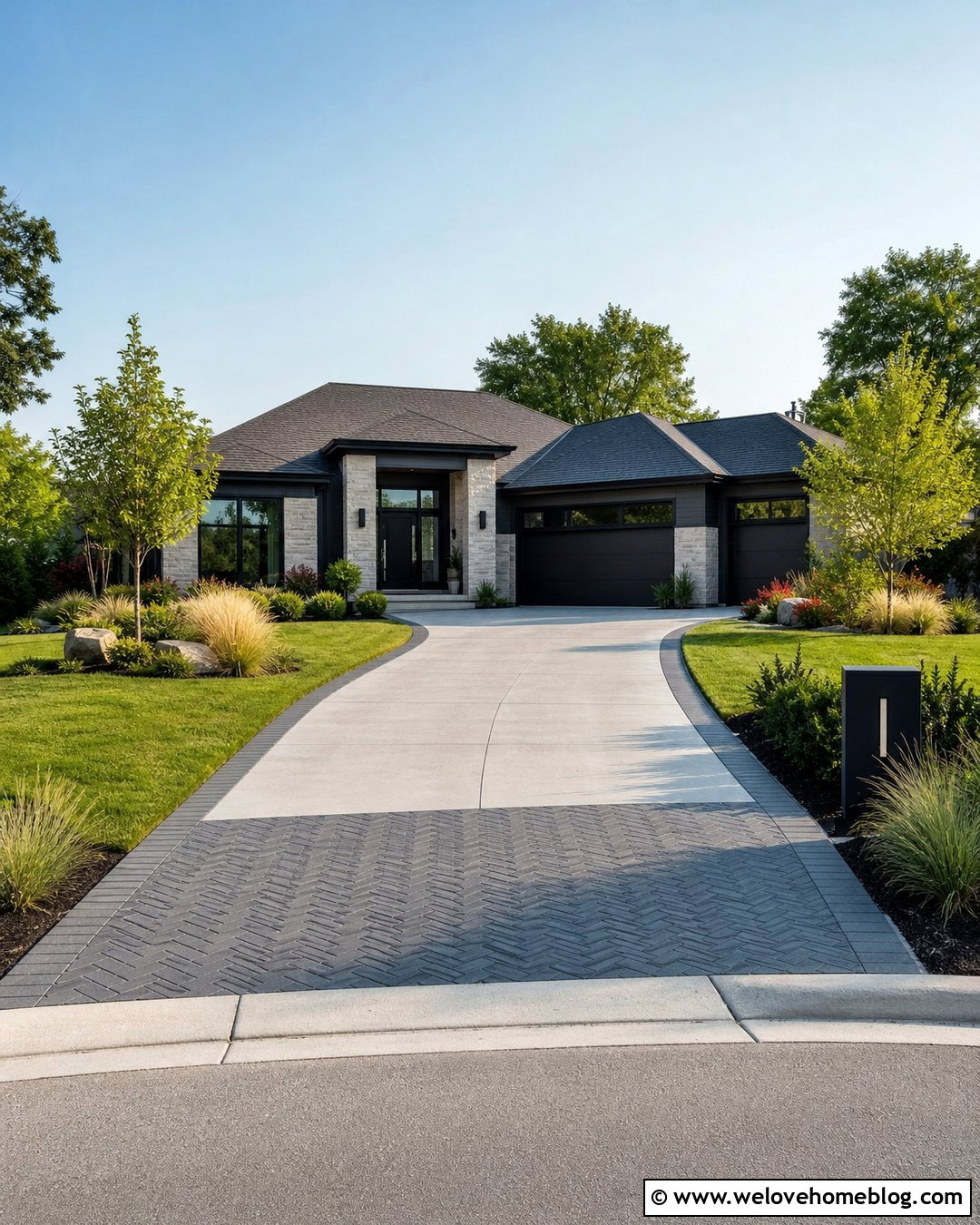
A mixed-material driveway can look refined when each surface has a clear purpose. Use smooth poured concrete for the main vehicle lanes, charcoal pavers for borders and parking bays, and decorative gravel in non-driving gaps. Limit the palette to two or three coordinated colors so the design remains calm. Align every material transition with a garage door, walkway, landscape bed, or structural line on the house. This prevents the surface from looking randomly patched together. Add repeated grasses and low shrubs along the perimeter, using the same gravel from the driveway joints as garden mulch. A darker entrance apron can mark the transition from the street. Successful mixed-material designs rely on careful base preparation, compatible construction details, drainage planning, and durable edge restraints.
Conclusion:
The strongest modern driveways balance appearance, daily use, maintenance, drainage, and the architecture of the home. Large concrete slabs deliver crisp geometry, while pavers, brick, gravel, asphalt, cobblestone, and resin-bound surfaces offer different textures and budgets. Borders, lighting, gates, planting beds, and carefully chosen trees can make any material feel more intentional. Before construction, evaluate vehicle movement, local regulations, surface runoff, winter conditions, and long-term upkeep. Obtain suitable samples and view them outdoors beside the facade before choosing final colors. With thoughtful planning, these 35 Modern Driveway Design Ideas can help you create an entrance that feels organized, welcoming, durable, and connected to the entire front landscape.

Related posts:
Leave a Reply