
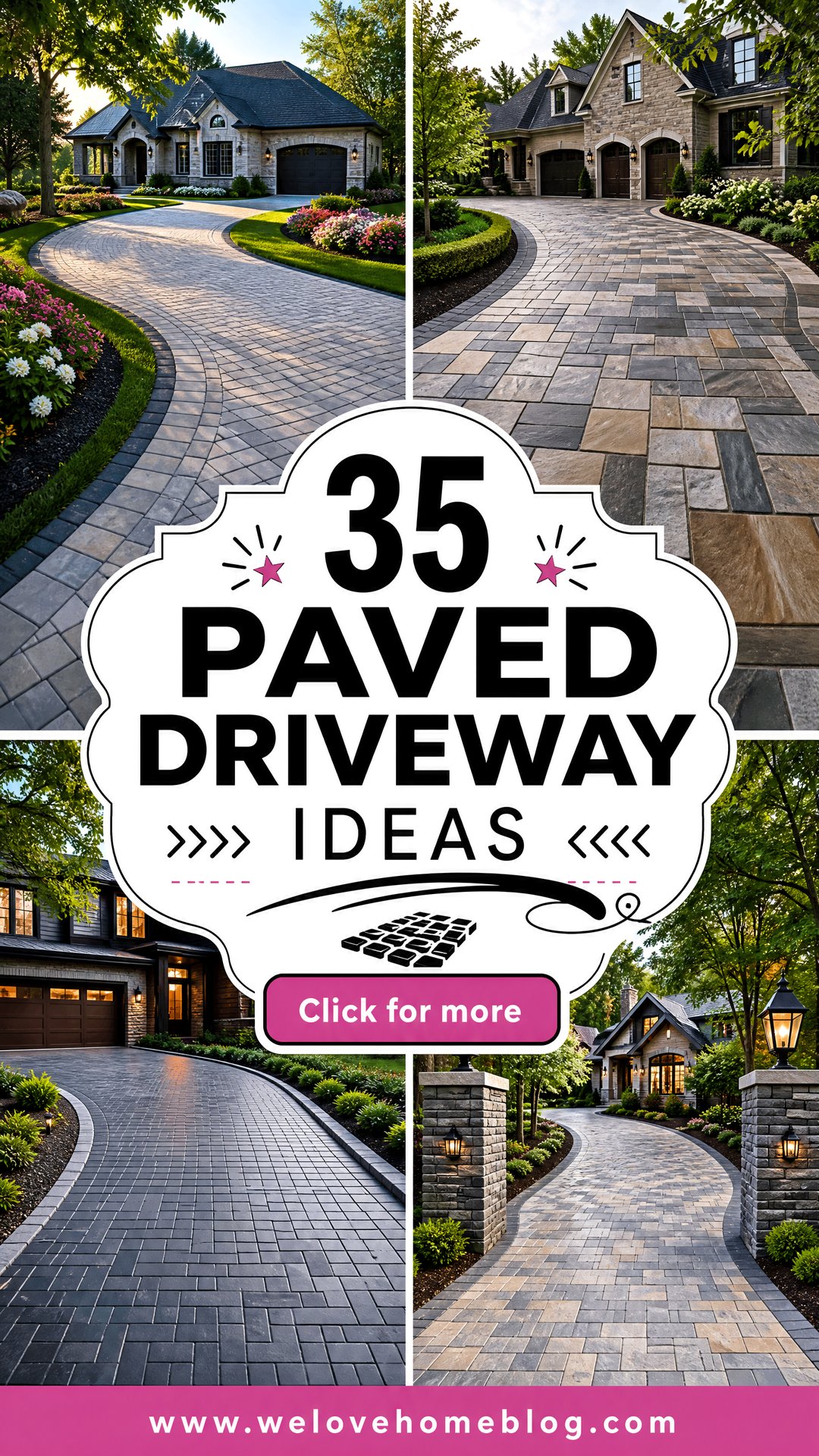
A well-designed paved driveway can make the entire front of a home feel more polished, welcoming, and intentional. The best layouts balance everyday parking needs with the home’s architecture, available yard space, drainage, and landscaping. Material also matters. Brick, concrete pavers, cobblestone, natural stone, and permeable paving each create a different look and maintenance routine. Pattern, color, borders, and driveway shape can then personalize the surface without making it feel disconnected from the house. Current driveway designs often coordinate the paving with walkways, planting beds, entrances, and architectural finishes to create one complete approach. () Whether you are replacing an aging surface or planning a new entrance, explore these 35 paved driveway ideas.
1. Herringbone Brick Paved Driveway
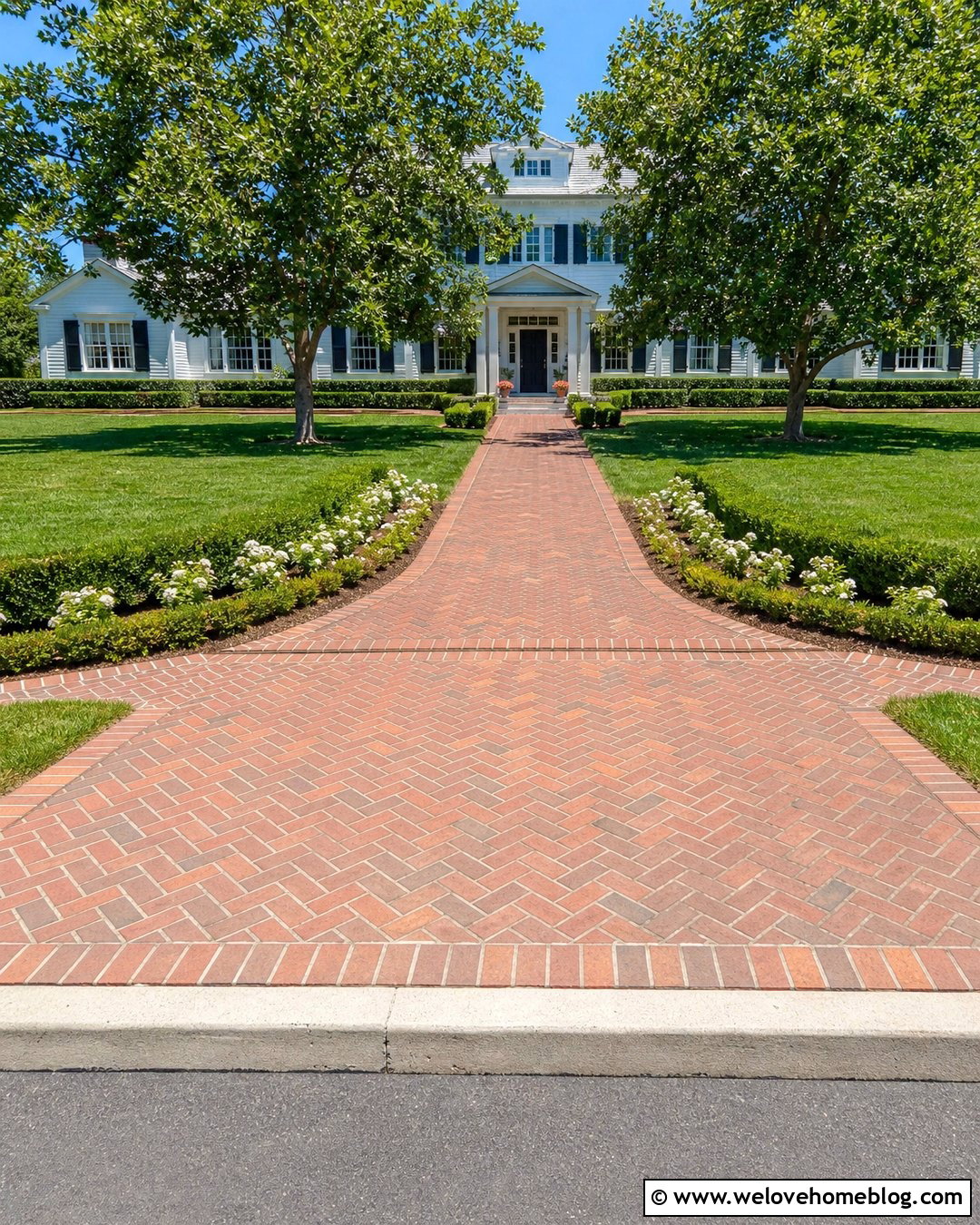
A herringbone brick paved driveway brings movement and traditional character to the front yard. Because the bricks change direction throughout the pattern, the surface looks detailed even when the driveway has a simple rectangular shape. Choose warm red and brown clay bricks for a colonial or Cape Cod home. For a softer appearance, use weathered taupe brick with muted mortar-colored joints. A soldier-course brick border creates a clean frame and keeps the pattern visually organized. Complete the driveway with symmetrical planting beds, clipped boxwoods, and a straight walkway leading to the front door. Before installation, compare several brick blends outdoors so the final color complements the roof, siding, garage doors, and existing masonry.
2. Gray Concrete Paver Driveway
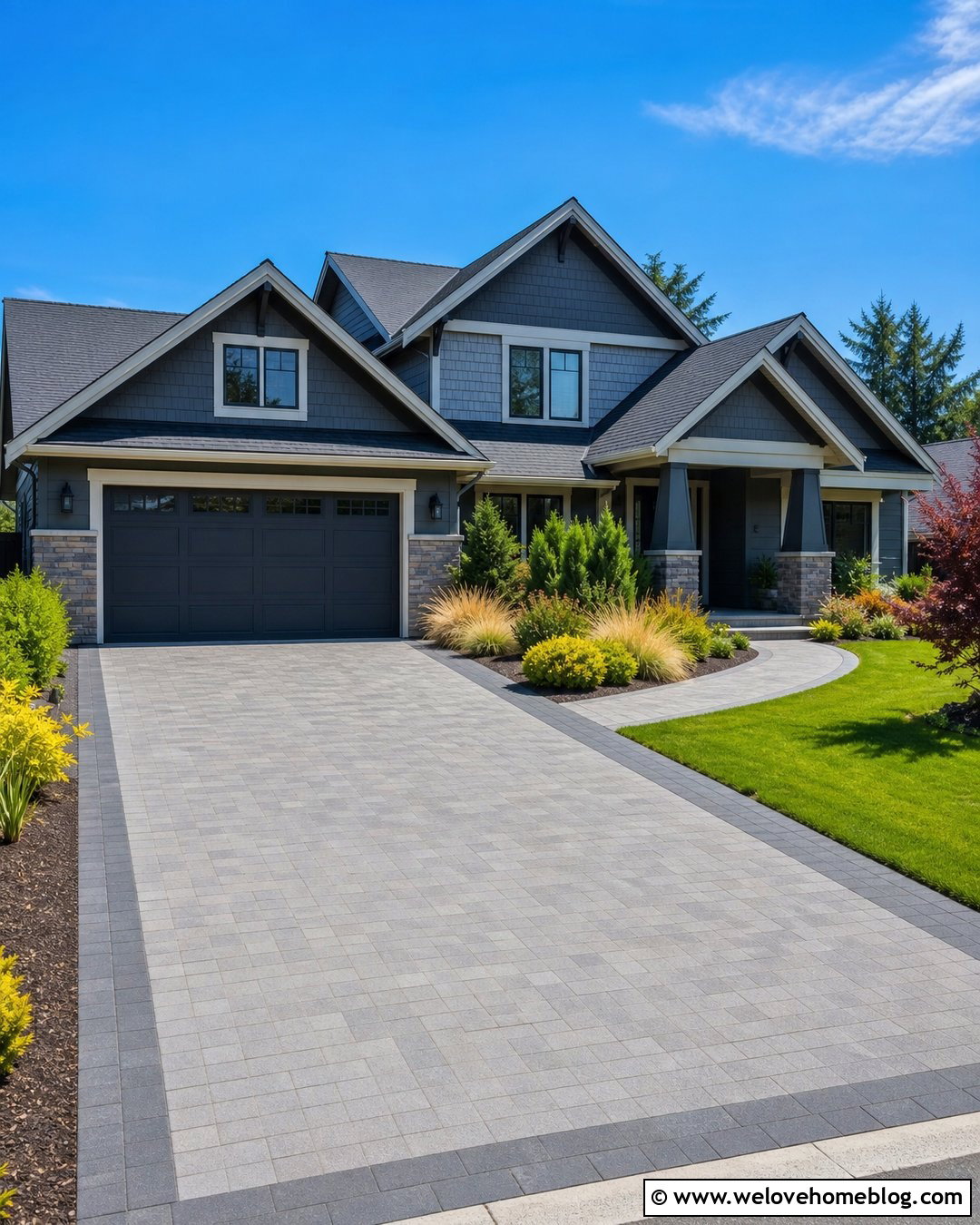
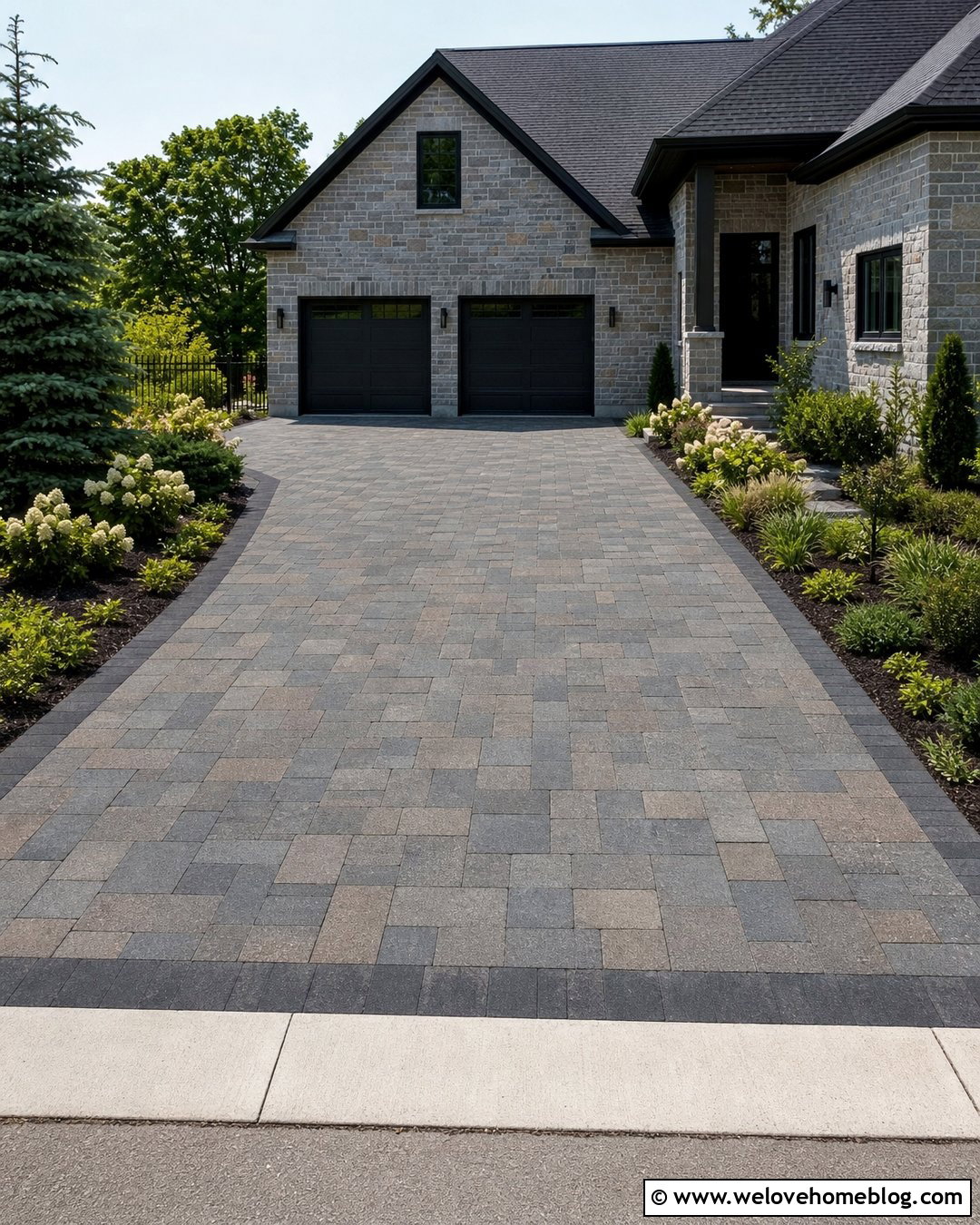
Clean gray concrete pavers work especially well with contemporary homes, renovated ranch houses, and modern farmhouses. Large rectangular units create a calm surface with fewer visible joints, while smaller pavers produce more texture and suit traditional architecture. Consider medium gray paving with a darker charcoal border to define the parking area without introducing another material. A straight layout provides an uncluttered approach to the garage, and narrow planting beds can soften both sides. Use ornamental grasses, compact evergreen shrubs, and one sculptural tree for balanced greenery. If the facade includes cool stone or black trim, repeat those tones in the border. Ask the installer for full-size samples because paver colors can look noticeably different in direct sunlight.
3. Cobblestone Paved Driveway
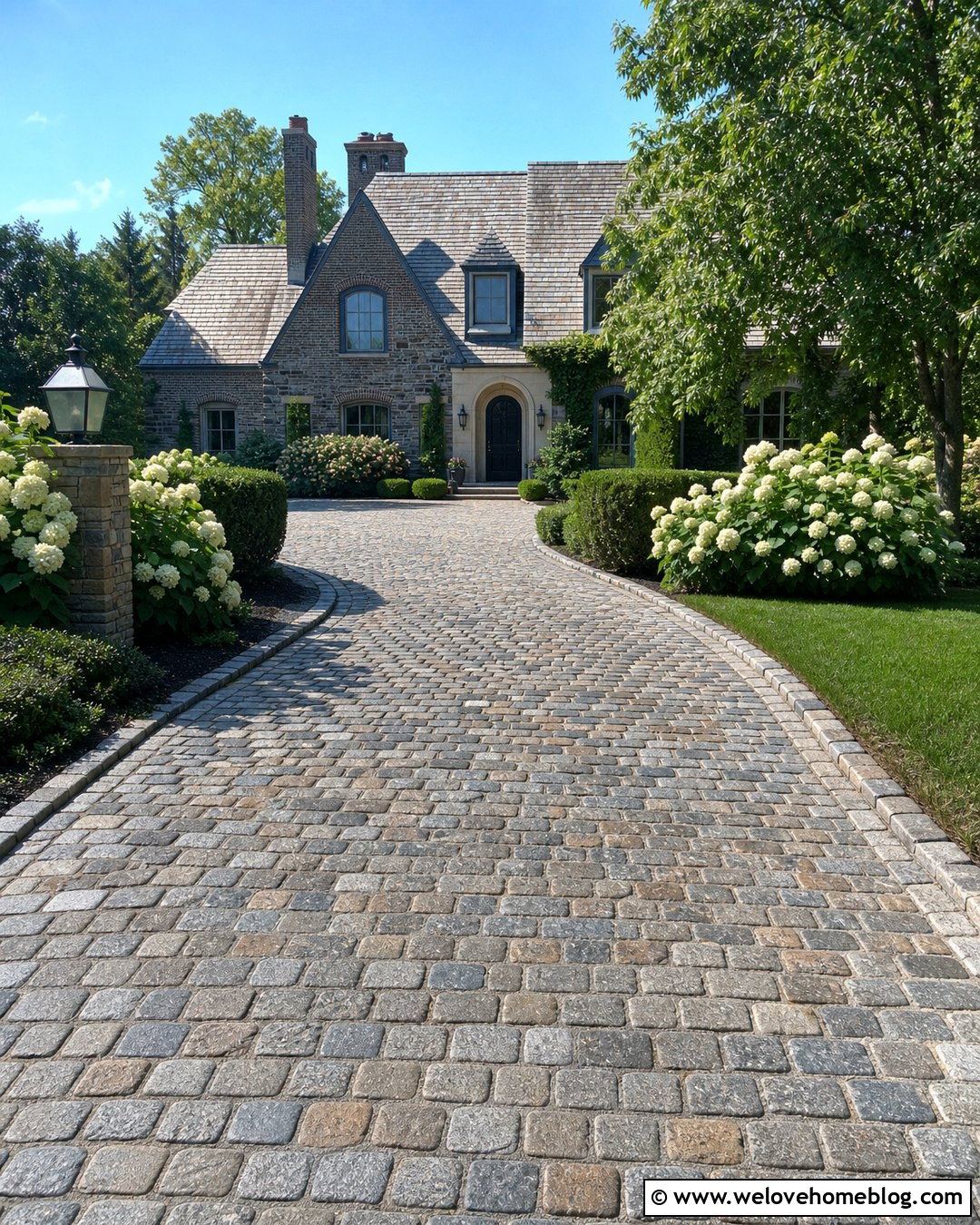
Rounded texture and subtle color variation give a cobblestone paved driveway an established, old-world appearance. It looks particularly natural beside Tudor, European, stone cottage, and traditional brick homes. A gently curved layout emphasizes the handcrafted character of the surface and creates a more graceful arrival than a rigid straight drive. Mix gray, charcoal, and warm brown cobblestones for depth without making the pattern overly busy. Along the edges, use low evergreen hedges or broad planting beds filled with hydrangeas and ground cover. A matching cobblestone walkway can connect the parking area to the entrance. Since an uneven surface may affect walking and snow removal, select properly graded stones and discuss joint width and installation finish with an experienced contractor.
4. Permeable Paver Driveway
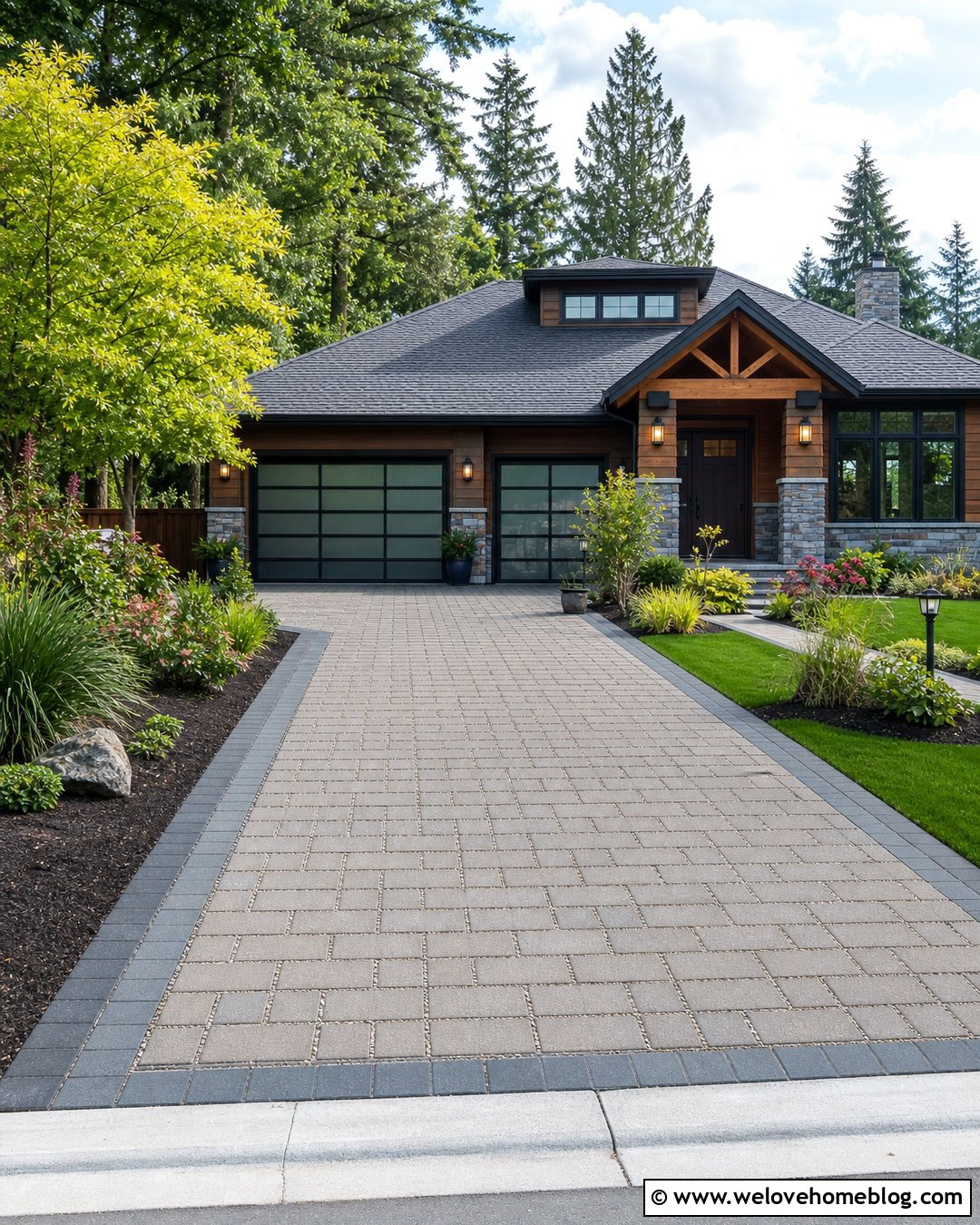
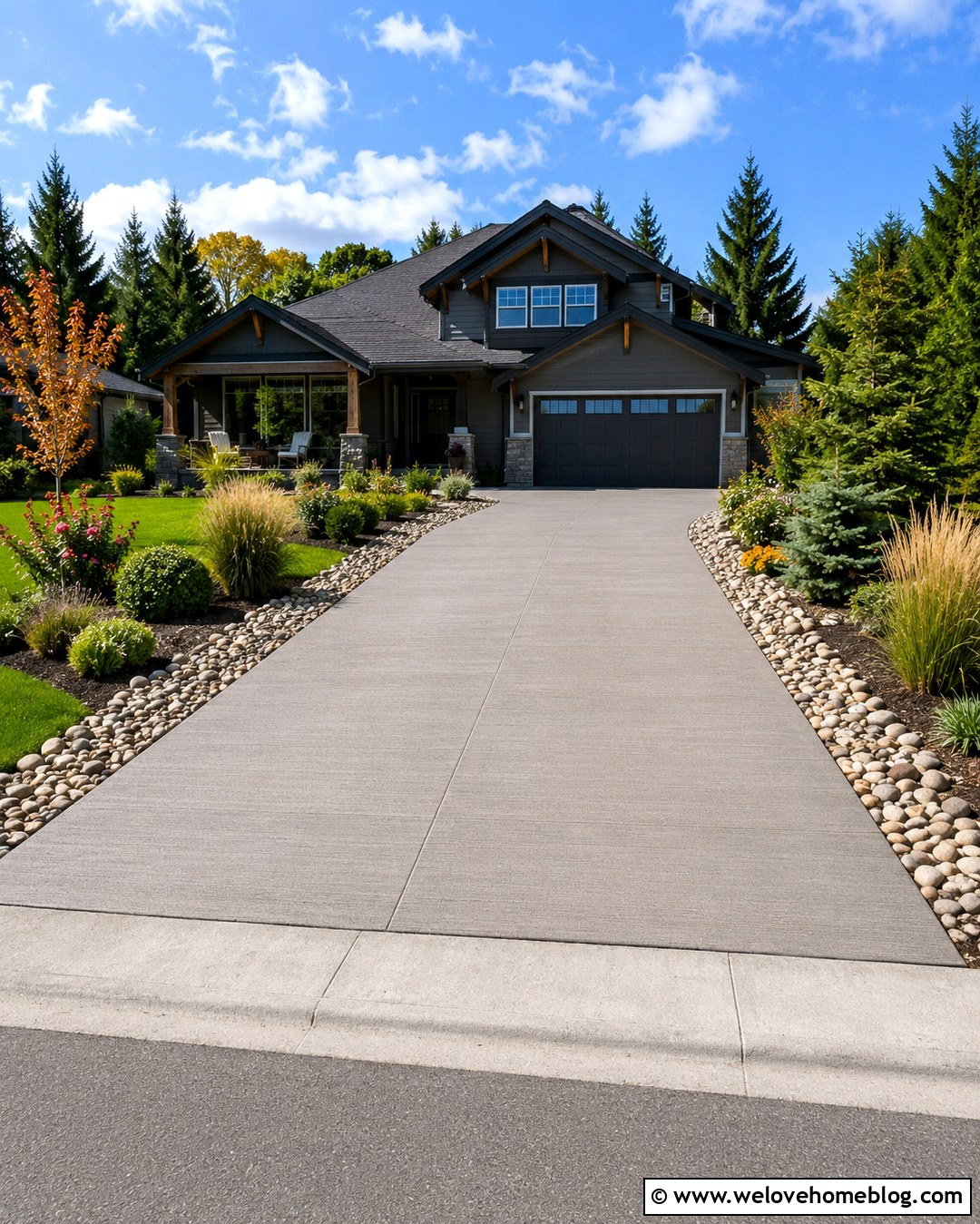
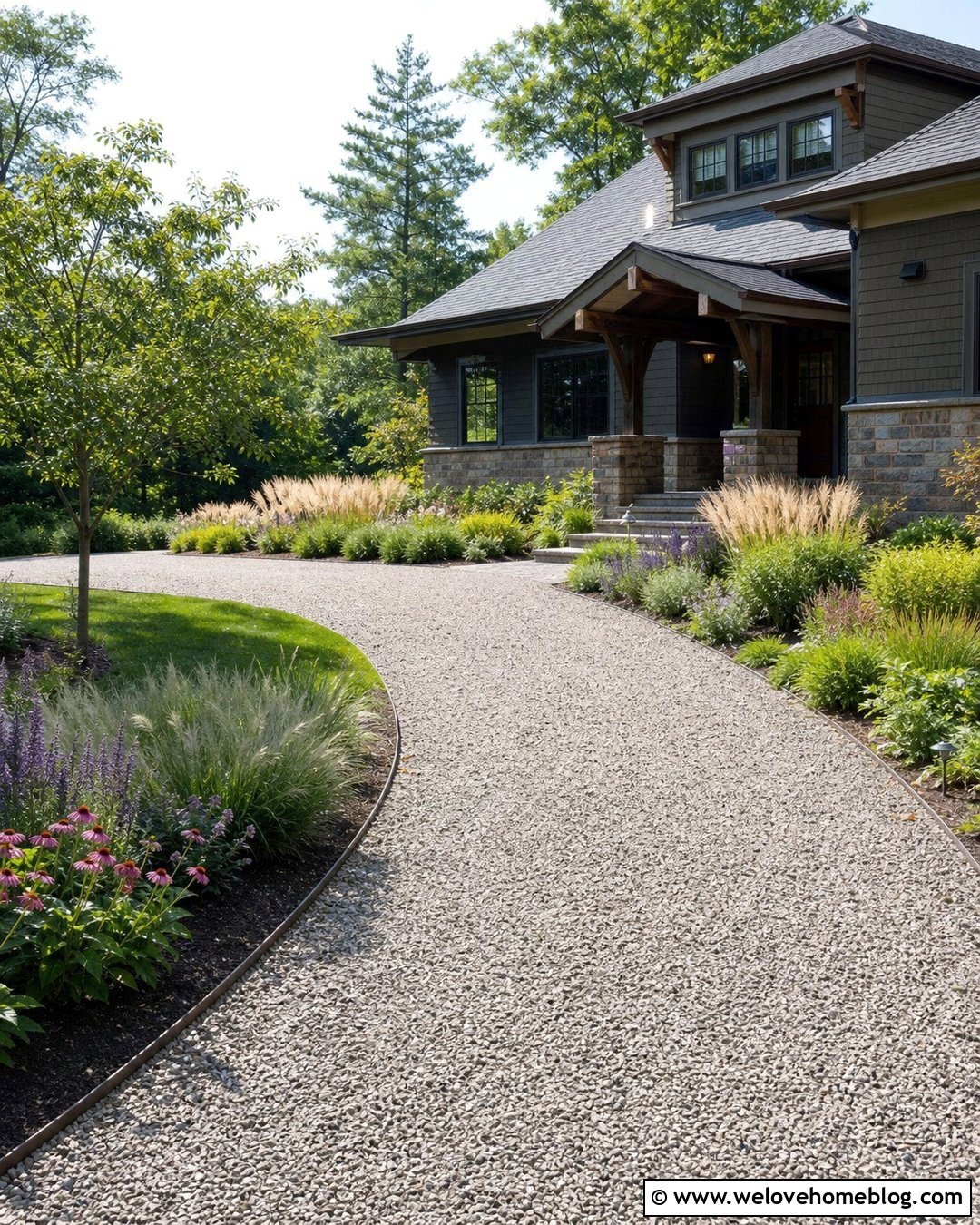
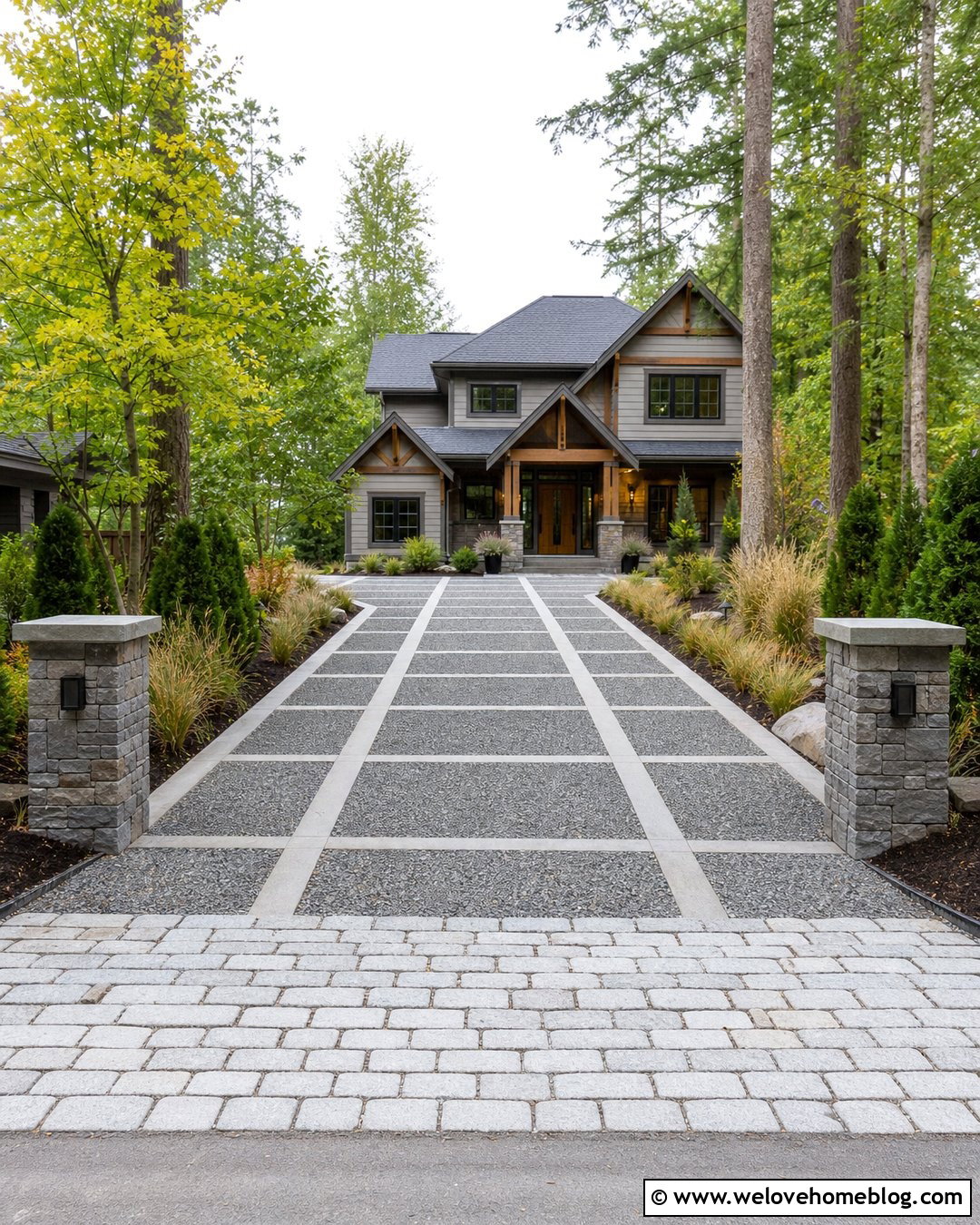
A permeable paver driveway can combine a structured paved appearance with joints designed to accept water. The openings are typically filled with small aggregate, creating visible lines that become part of the design. Use warm gray permeable concrete pavers in a straight running-bond layout for a practical suburban entrance. A darker paver border can frame the surface, while rain-tolerant planting beds reinforce the landscape-focused approach. This look pairs well with craftsman homes, contemporary cottages, and properties where a large solid surface would feel visually heavy. Successful performance depends on the complete installation system, including the base and drainage plan, rather than the surface pavers alone. Local site conditions and regulations should guide the final specification. ()
5. Circular Paved Driveway
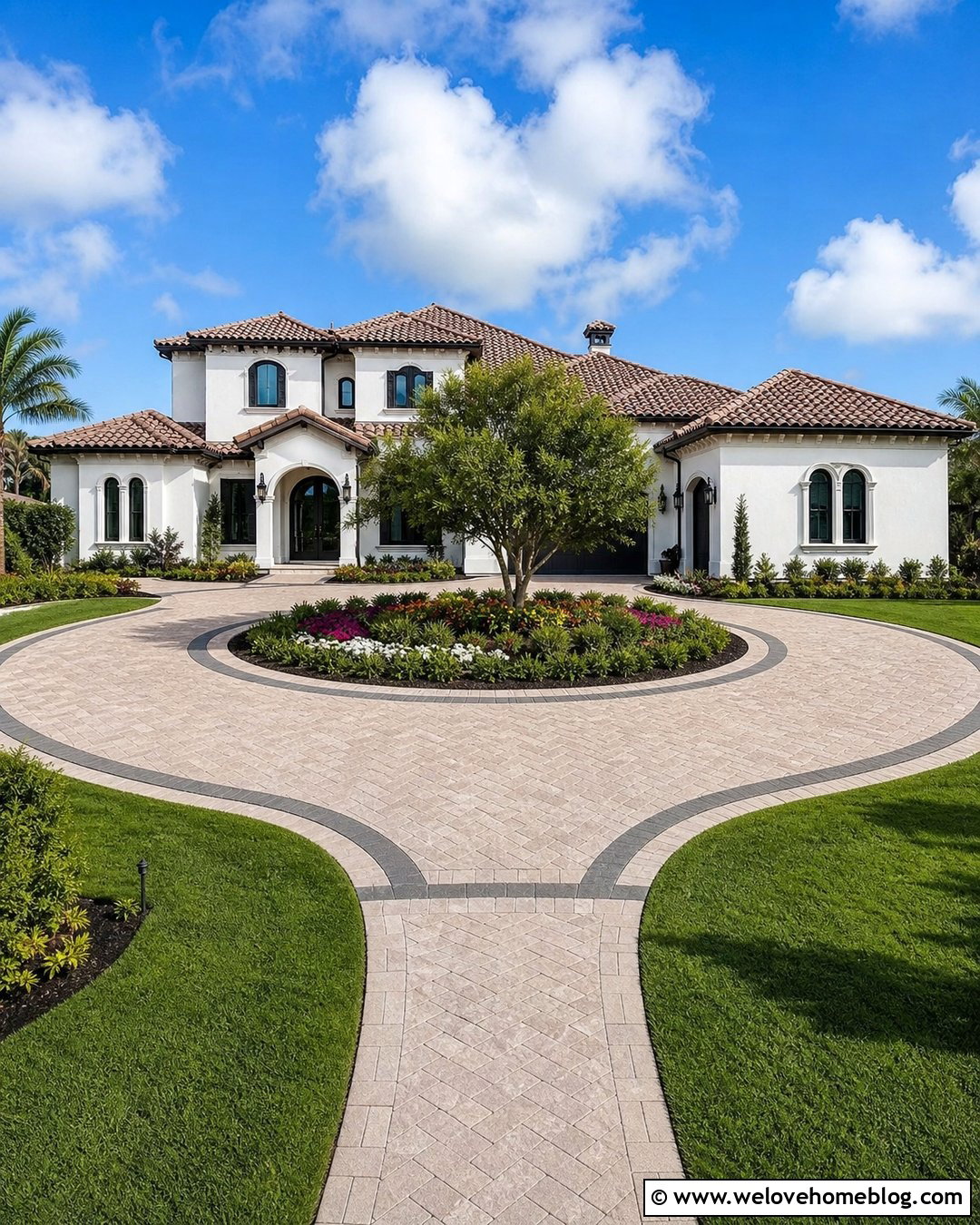
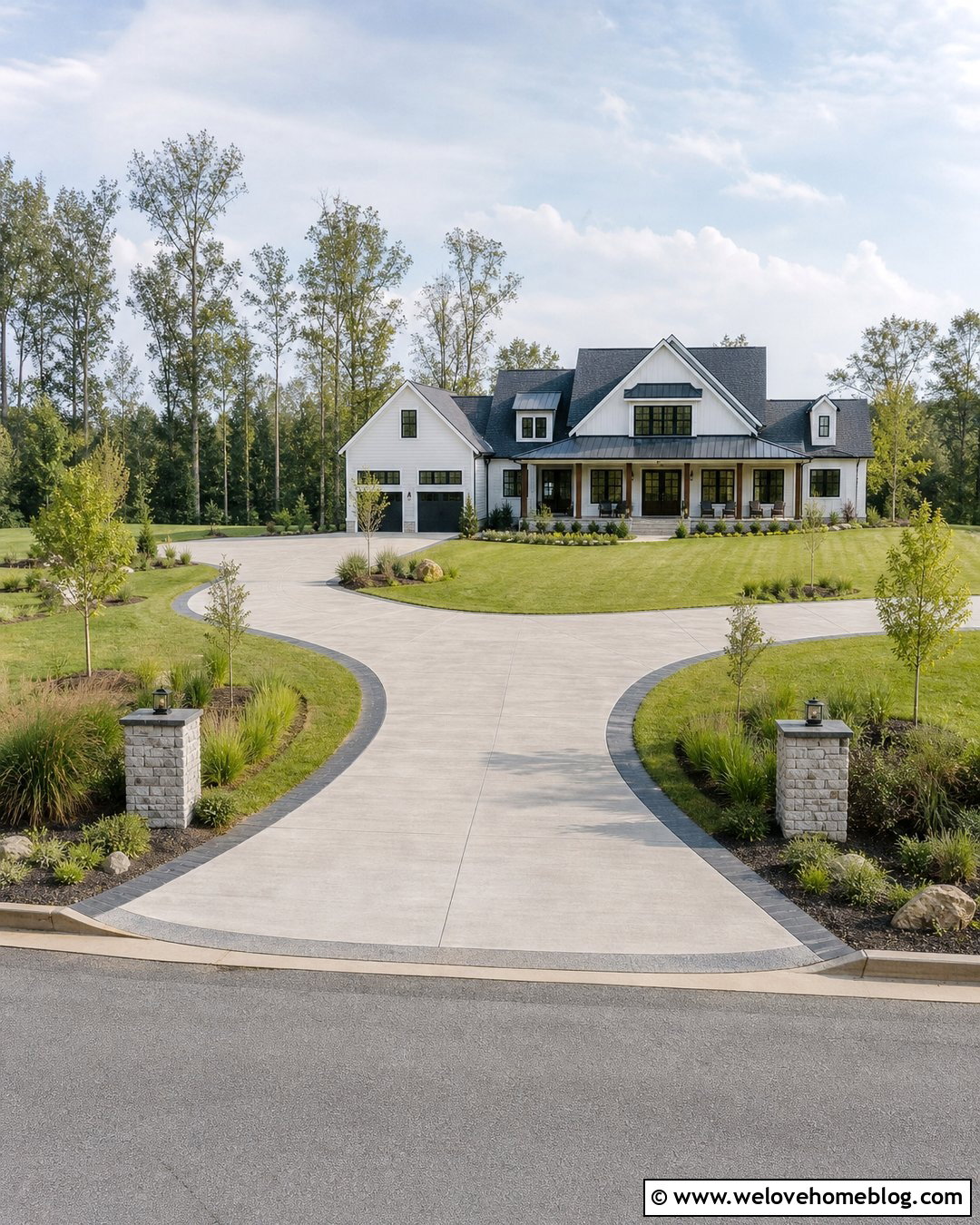
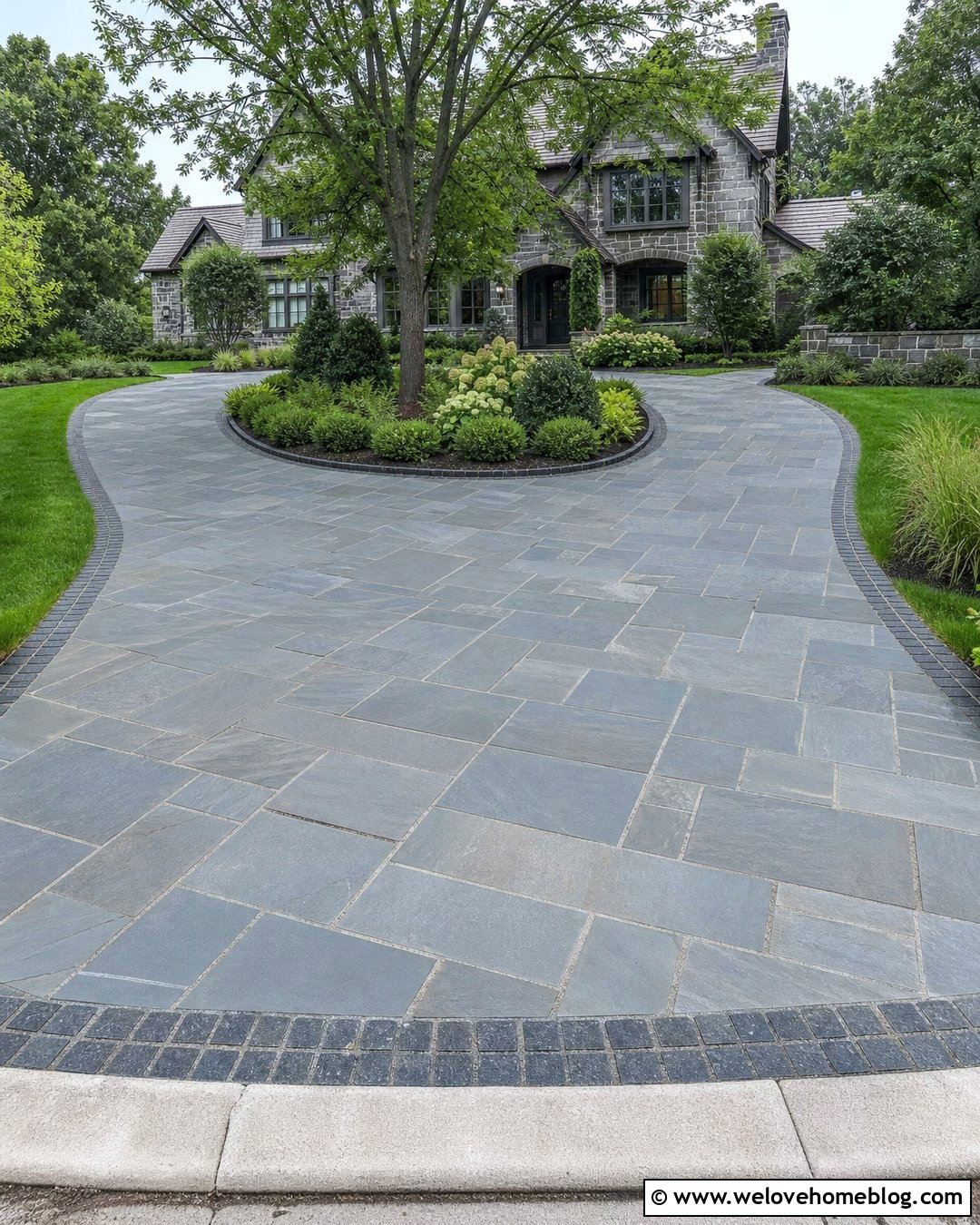
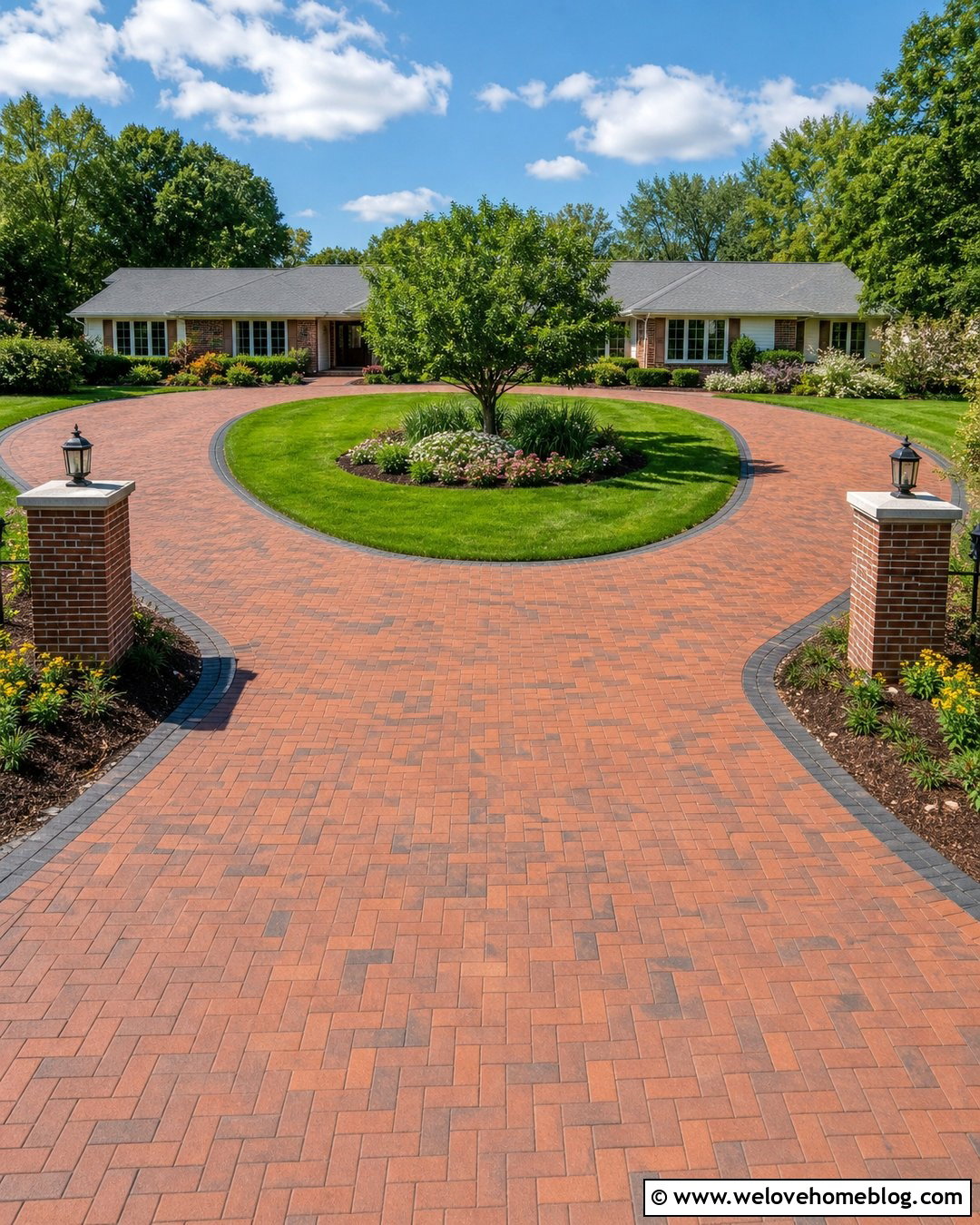
A circular paved driveway creates an impressive entrance while allowing vehicles to move through the property without using the same path for entry and exit. Use blended beige concrete pavers to keep the large surface warm and inviting. A contrasting charcoal ribbon can follow the outer curve and define the circular shape. In the center, create a landscaped island with one ornamental tree, low shrubs, and seasonal flowers that will not block views across the drive. This arrangement looks balanced in front of colonial, Mediterranean, and large modern farmhouse homes. Keep the paving pattern relatively quiet so it does not compete with the island. The driveway should feel spacious, but its proportions must still leave enough lawn and planting around the house.
6. Curved Paved Driveway
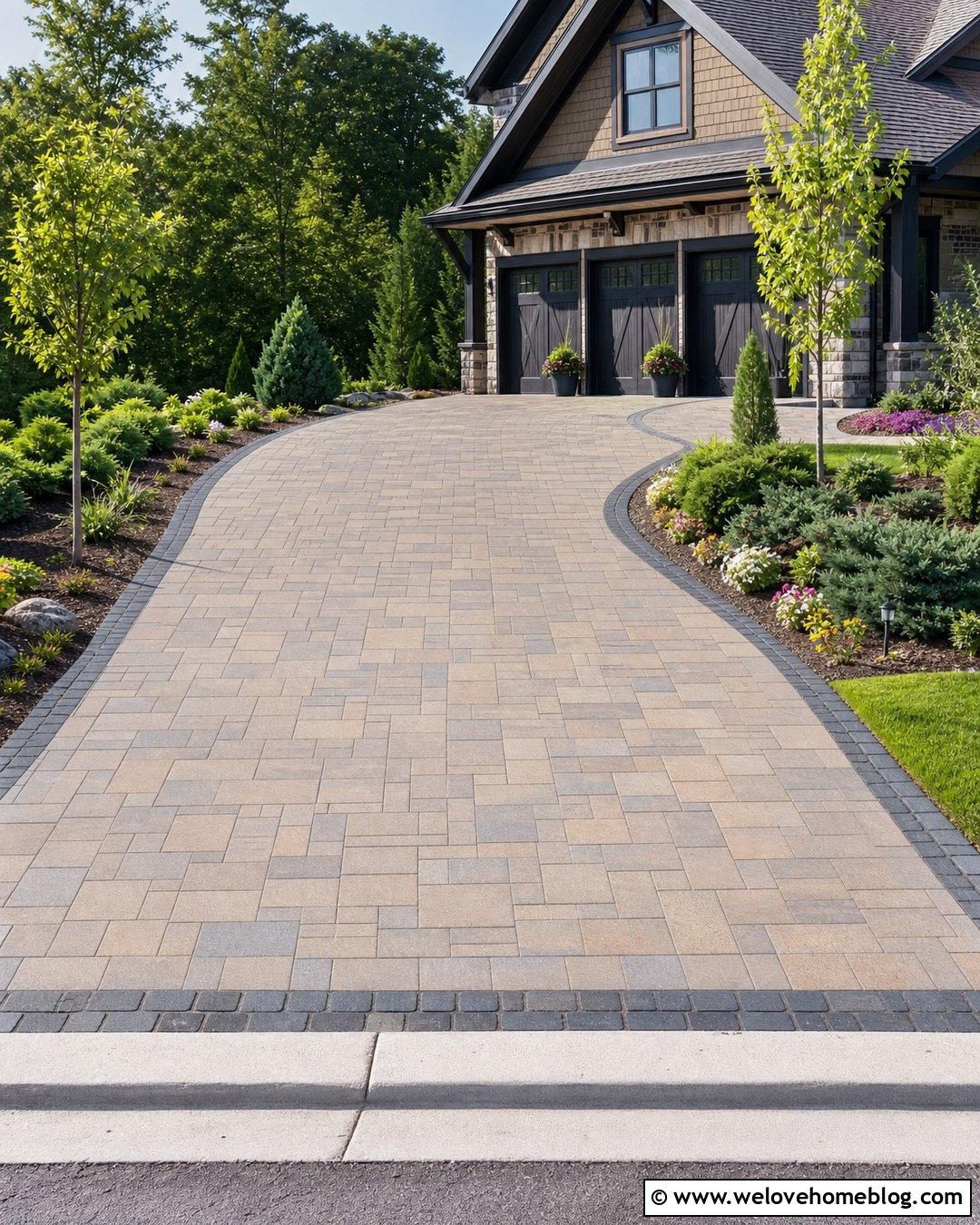
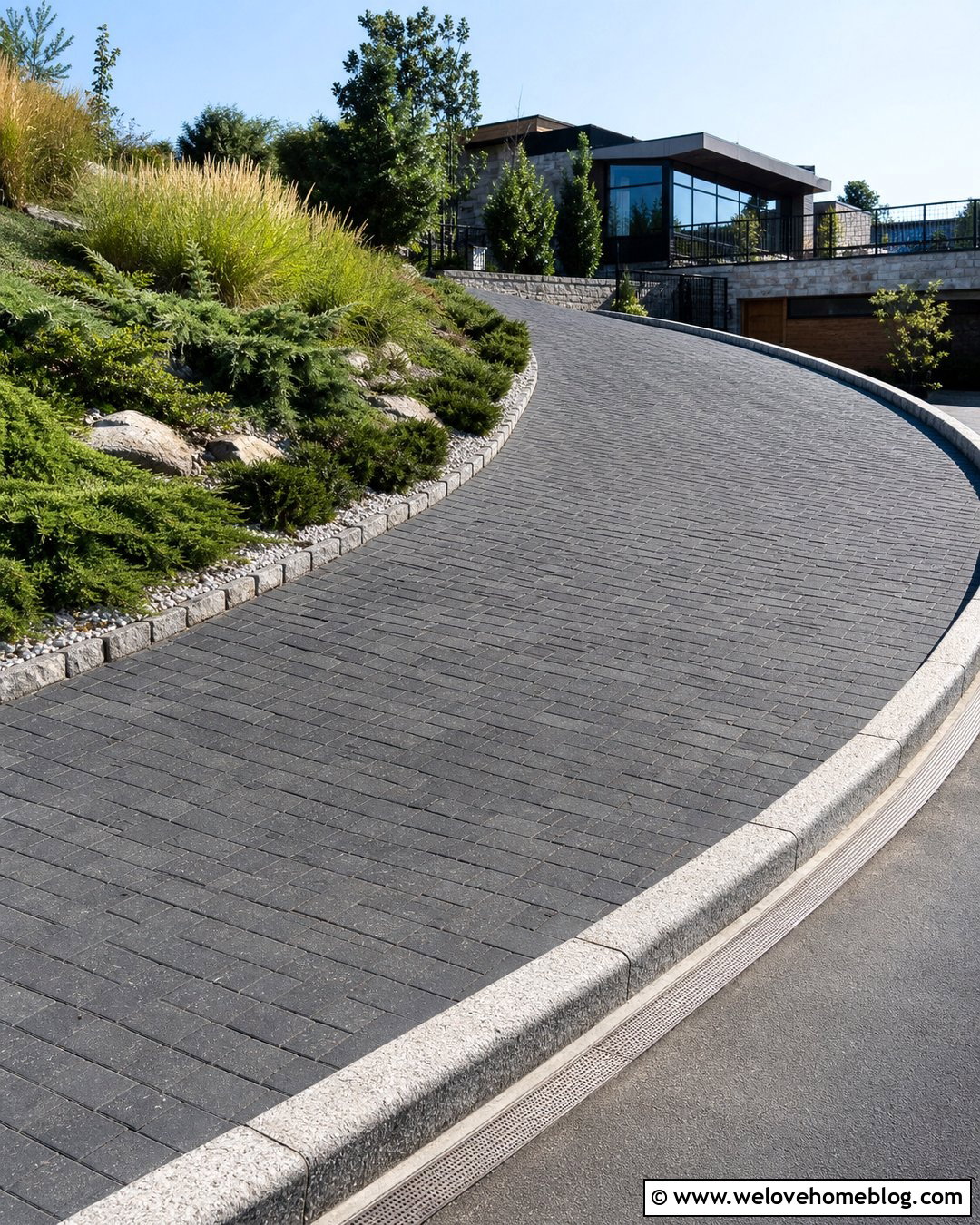
A curved paved driveway can make a deep front yard feel more natural and reveal the house gradually from the street. Medium-sized concrete pavers laid in a flexible running pattern will follow the bend without creating awkward cuts. Choose tan, gray, or lightly blended pavers that relate to the home’s exterior stone. A dark cobblestone edge will sharpen the curves and protect nearby planting beds from vehicle tires. On the wider side of the bend, add layered landscaping with small trees, evergreen shrubs, and low flowering plants. Keep vegetation lower near the street entrance for clear visibility. This design works especially well for craftsman houses, wooded properties, and homes with garages positioned to one side rather than directly facing the road.
7. Small Front Yard Paved Driveway
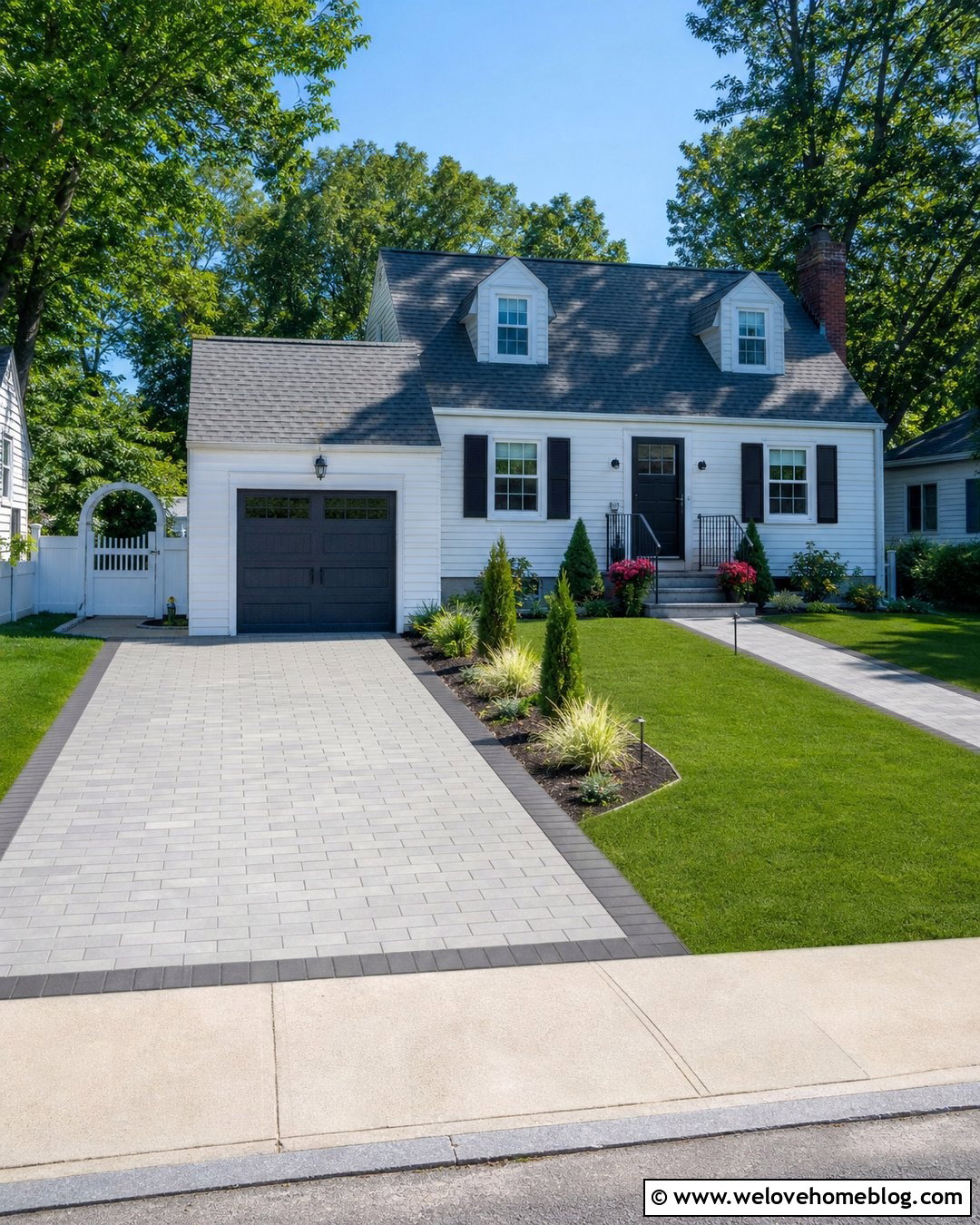
Limited space calls for a paved driveway that feels orderly rather than crowded. Light gray concrete pavers can brighten a small front yard and create a clean connection between the curb and a single-car garage. Use a simple stacked or running-bond pattern to avoid excessive visual movement. A narrow charcoal border defines the driving area without sacrificing useful width. Instead of placing large planting beds along both sides, reserve one edge for a slim garden containing upright shrubs and compact ornamental grasses. Connect the other side to a matching paved walkway with a subtle change in paver direction. Light-colored garage doors, restrained landscaping, and an uncluttered entrance will help the paved area blend into the property rather than dominate it.
8. Modern Large Format Paver Driveway
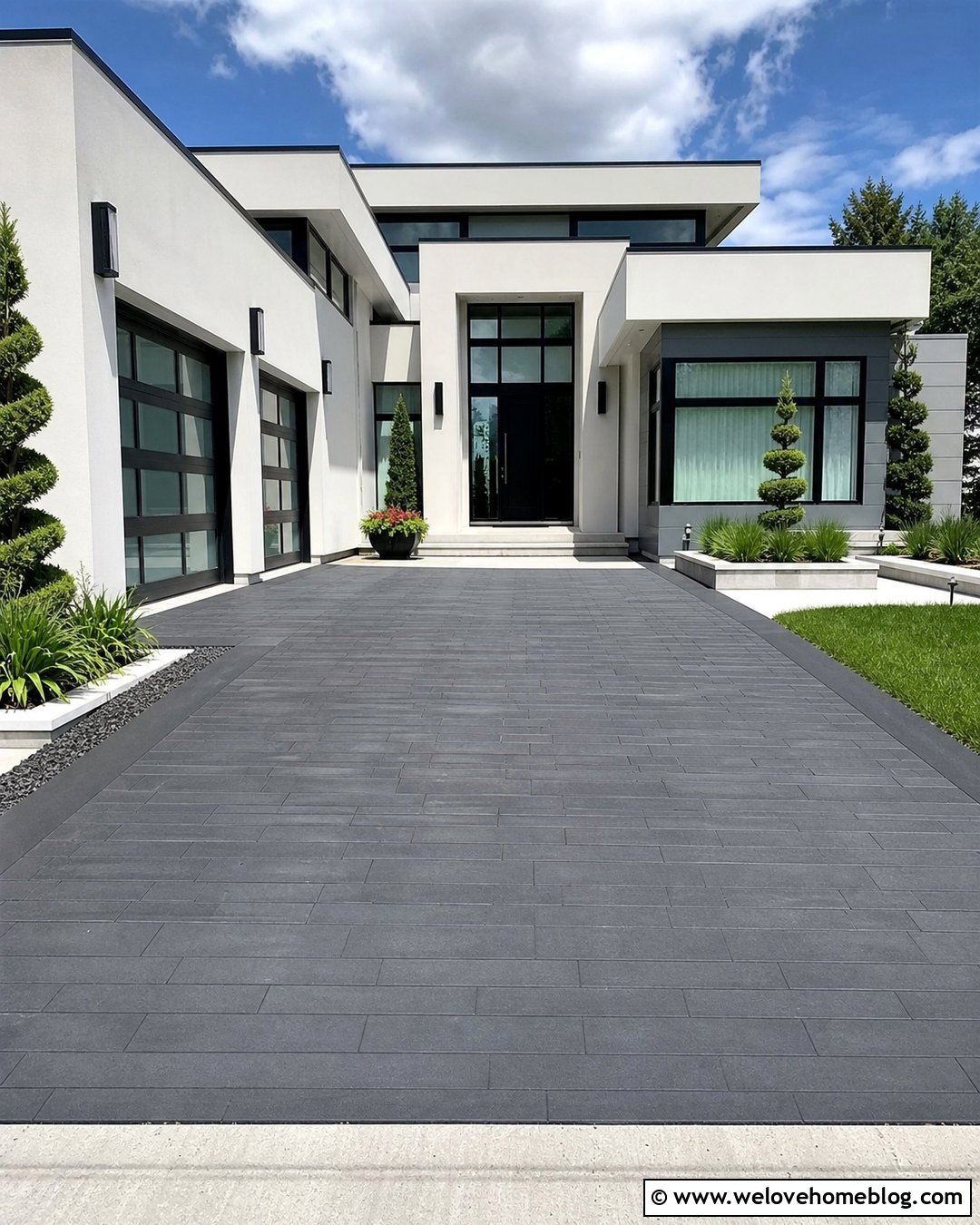
Large-format concrete pavers give a driveway the bold geometry associated with modern residential architecture. Select smooth charcoal or mid-gray slabs and arrange them in long staggered rows that emphasize the approach to the garage. Narrow joints create a crisp appearance, while a flush black paver border gives the layout a precise finish. Pair the driveway with rectangular planting beds, linear grasses, sculpted evergreen shrubs, and a concrete walkway that repeats the same proportions. This complete look suits flat-roof homes, contemporary facades, and houses with black-framed windows or horizontal wood cladding. Large pavers require careful base preparation and placement, so the simplicity of the finished surface should be supported by detailed installation planning beneath it.
9. Paved Driveway With Grass Strips
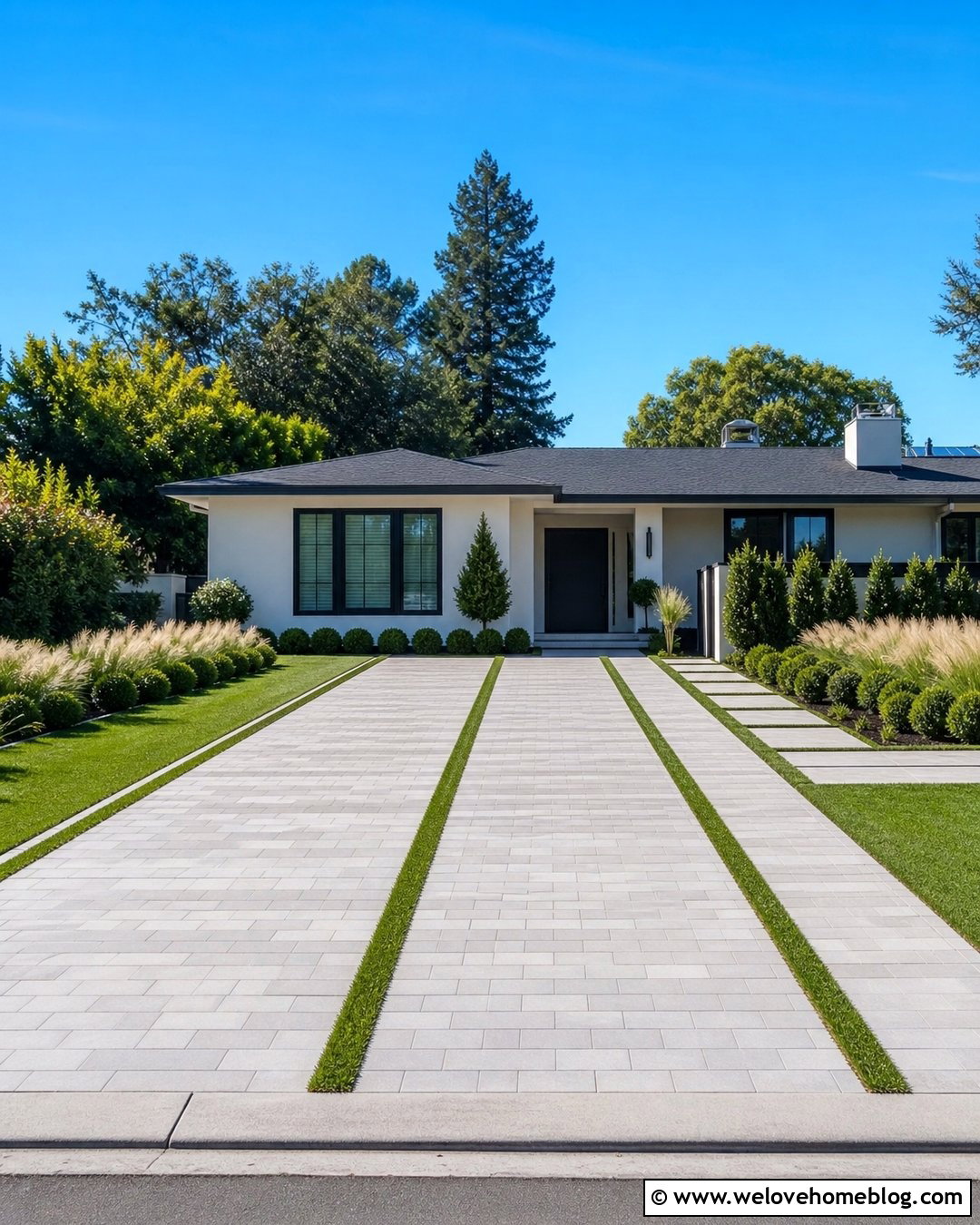
Grass strips can break up a broad paved driveway and make the front yard feel greener. Build the driving lanes with light gray concrete pavers, then place narrow lawn channels between selected rows or along the center. The spacing should follow actual tire paths and parking needs rather than functioning as decoration alone. A straight driveway creates the clearest geometry, especially in front of a modern ranch or minimalist cottage. Continue the green theme with simple lawn panels, low ornamental grasses, and a few rounded shrubs near the house. Flush transitions are essential for comfortable driving and easier lawn care. In dry regions, a durable low-growing ground cover may be more practical than conventional turf, depending on local conditions.
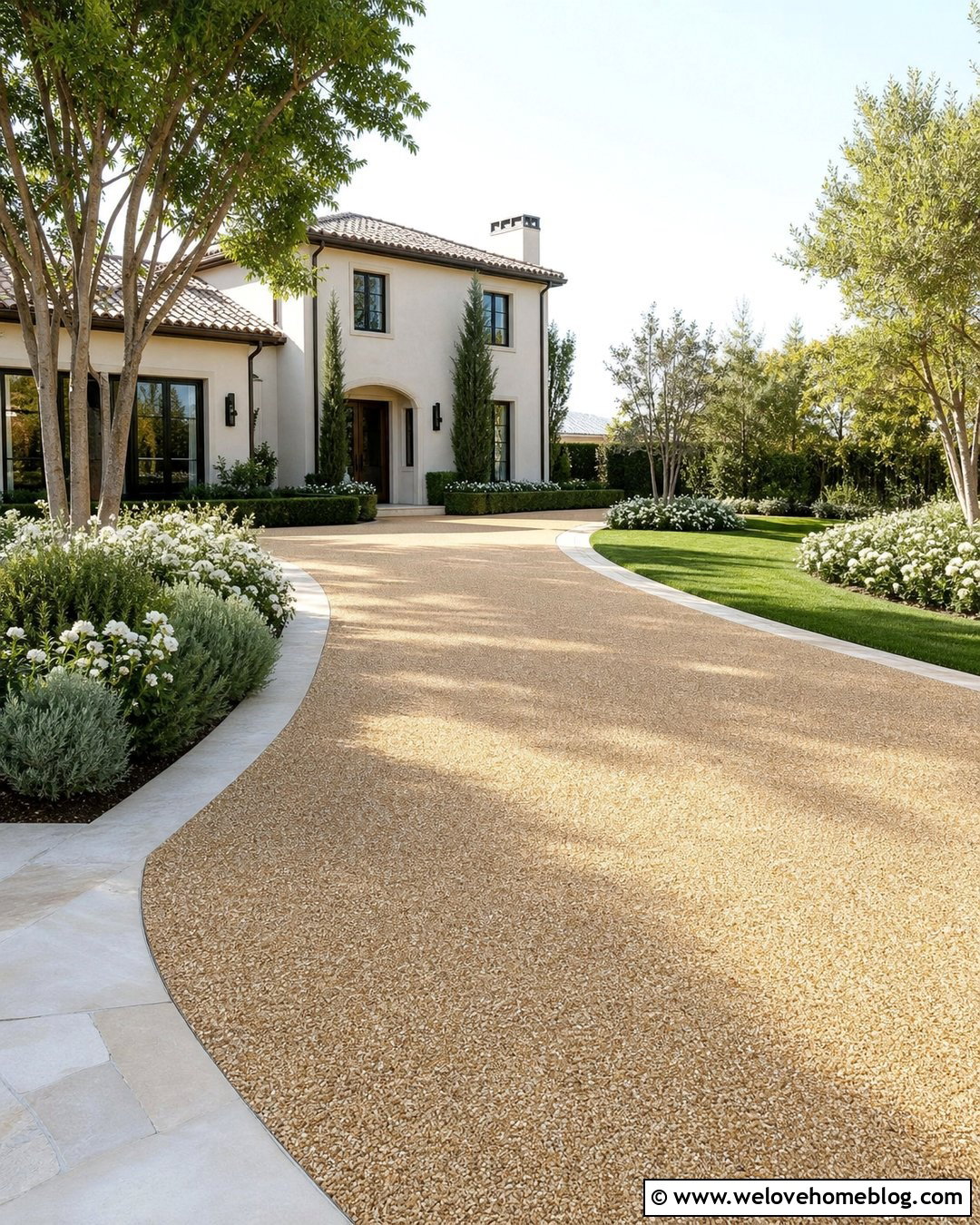
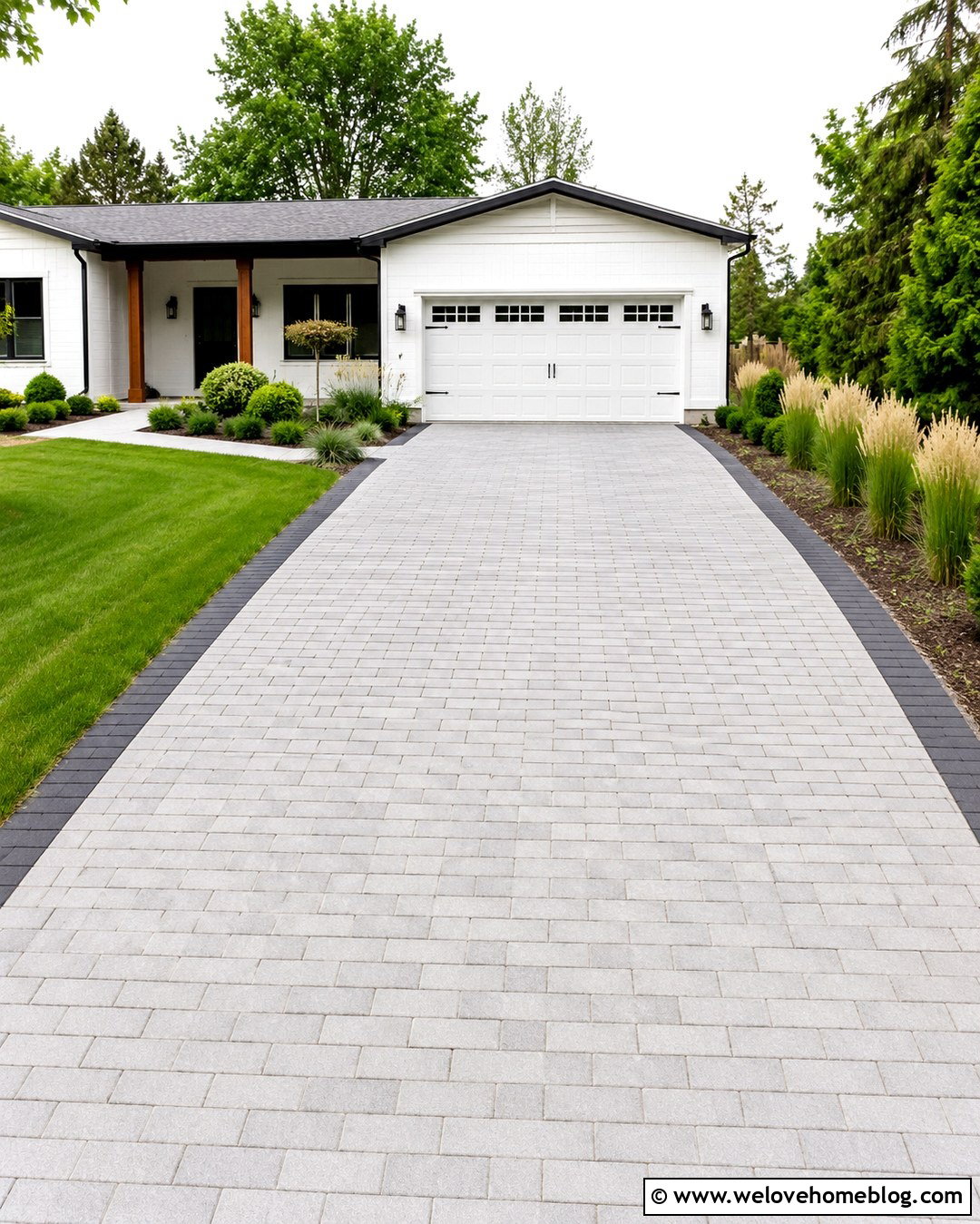
10. Paved Driveway With Cobblestone Border
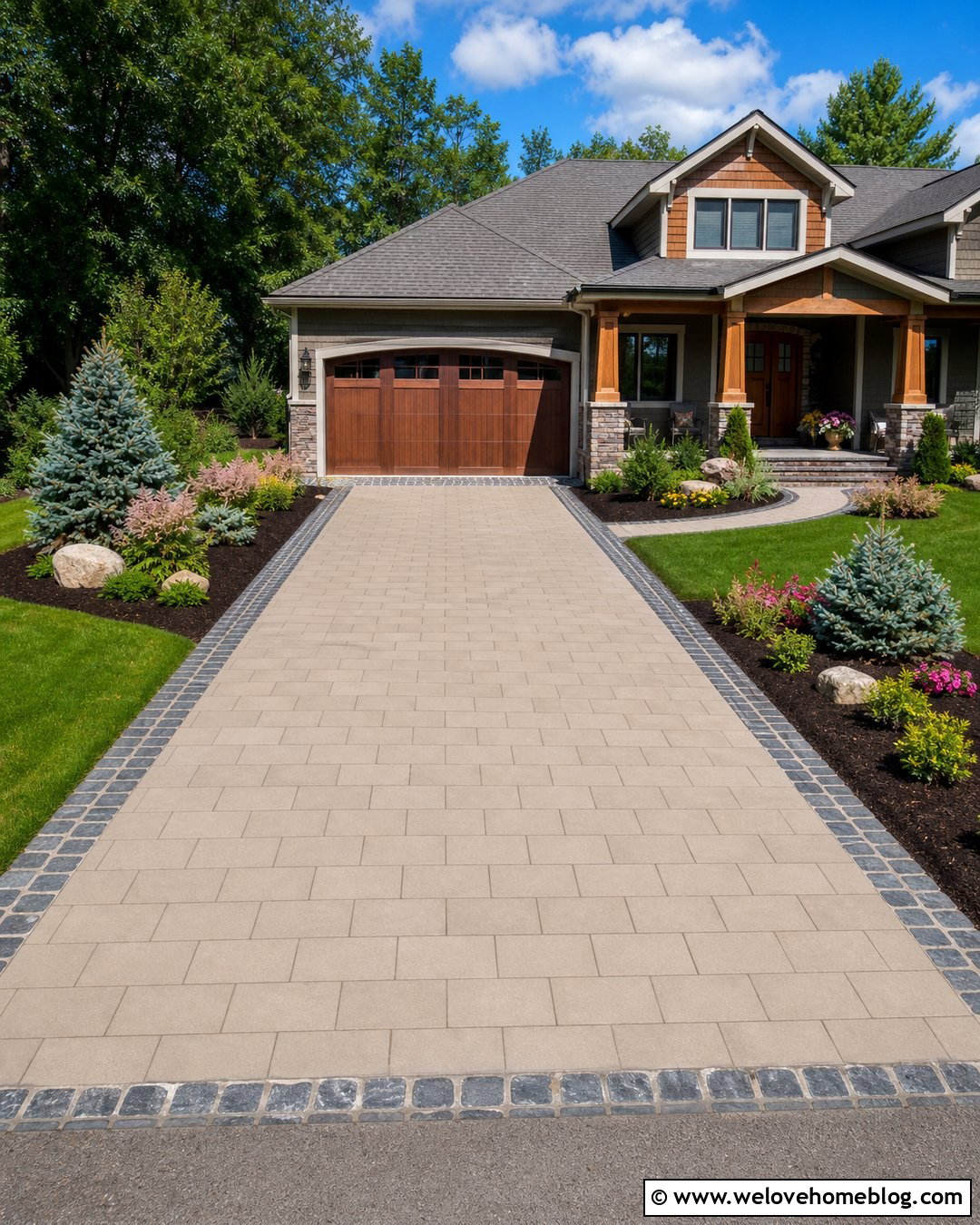
A cobblestone border gives a concrete paver driveway a stronger outline and a touch of traditional texture. Start with rectangular taupe or light gray pavers in a straight running-bond layout. Add two rows of dark granite cobblestones along each side and across the garage threshold. The contrast makes the paved area feel tailored and helps separate it from the surrounding lawn. For a cohesive craftsman-style exterior, repeat the dark stone around the walkway or at the base of porch columns. Complete the scene with broad mulch beds, compact evergreens, and flowering perennials placed behind the border. Keep the cobblestones nearly flush with the main surface so the transition looks intentional and does not create an unnecessary obstacle.
11. Paved Driveway With Brick Border
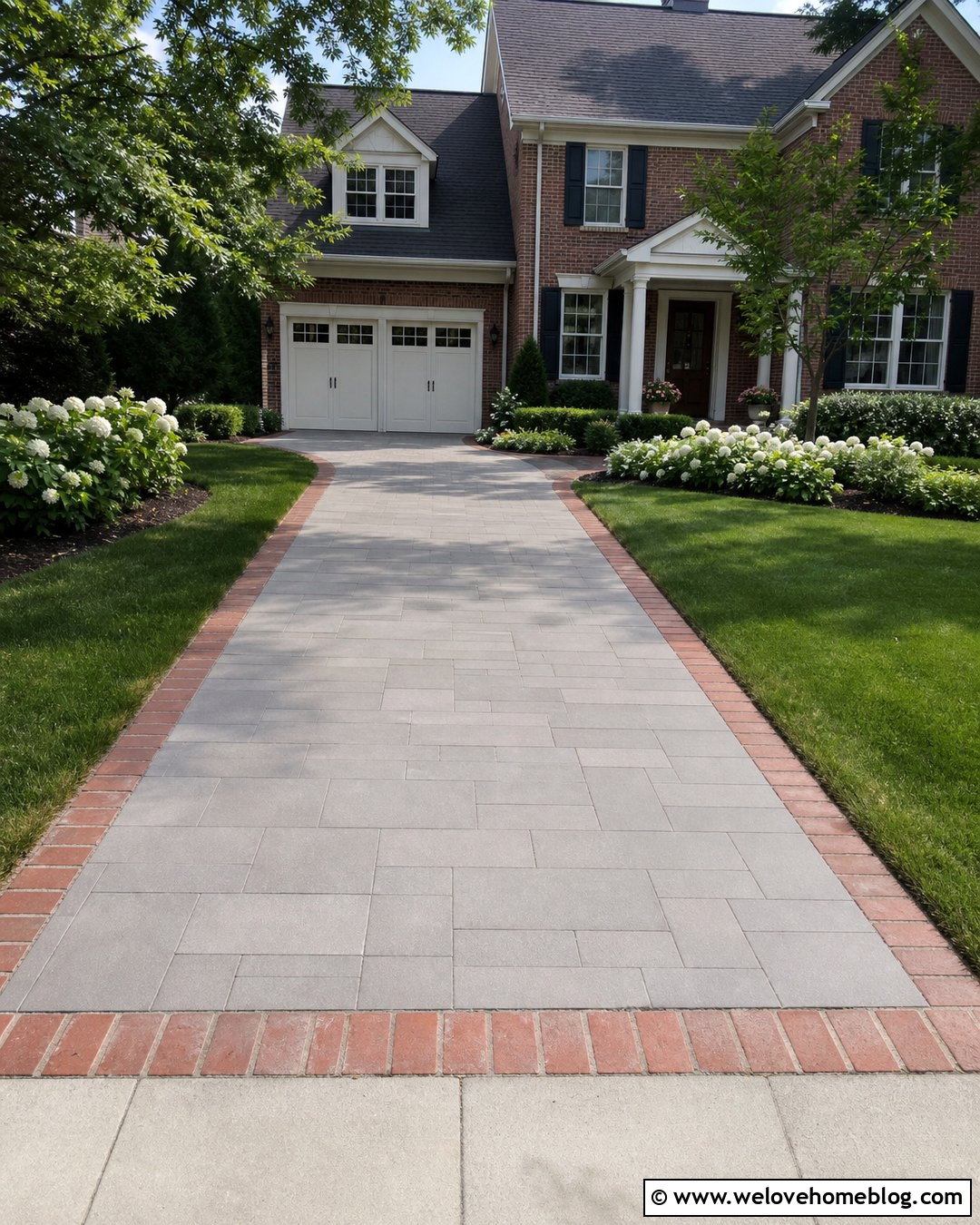
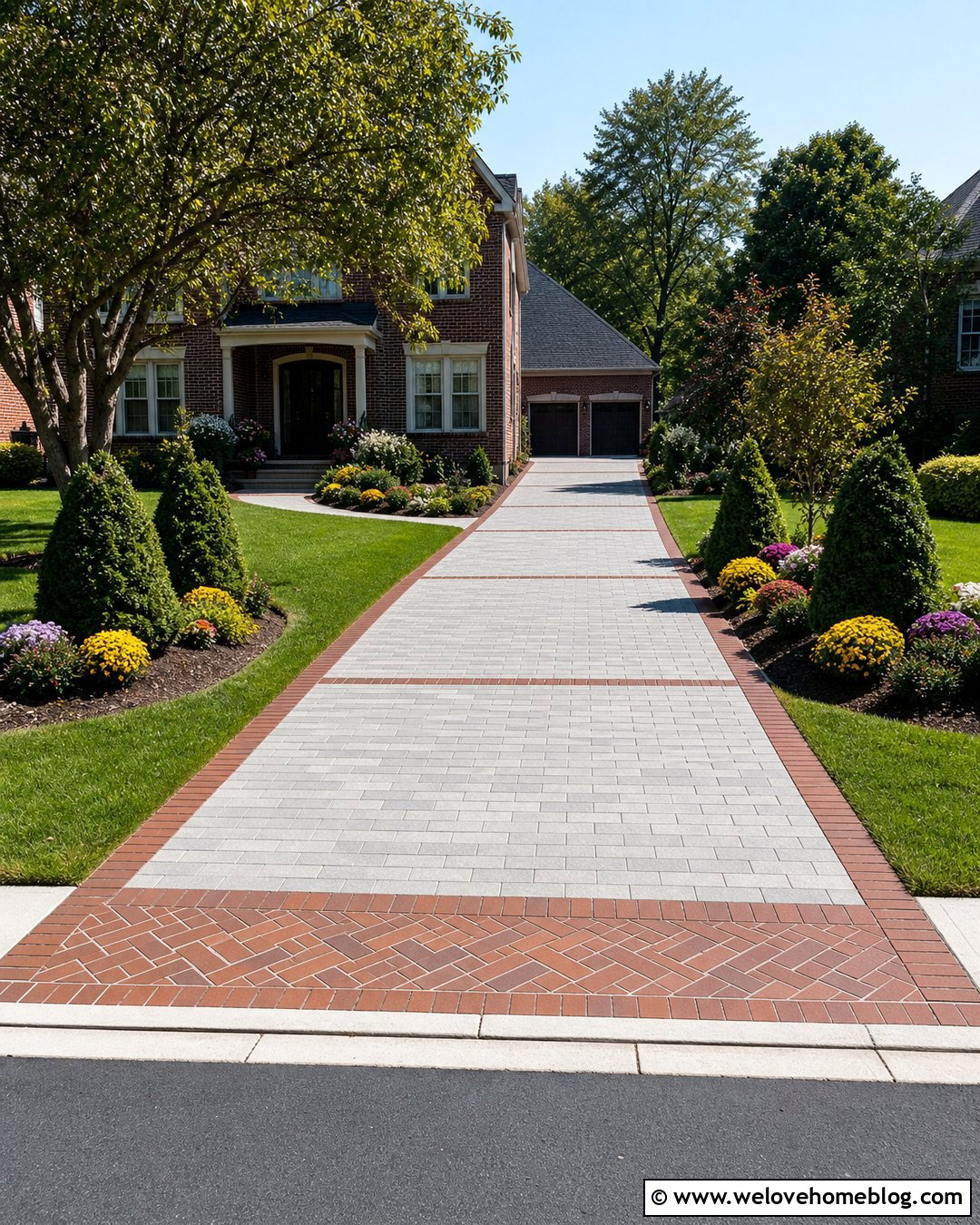
A brick border can connect a neutral paved driveway to a red brick house without covering the entire surface in one strong color. Use warm gray concrete pavers through the center and frame them with a double row of red clay bricks. The border can follow a straight driveway or gently widen near the garage to emphasize the entrance. Repeat the same brick around a matching front walkway for a coordinated exterior. Traditional foundation shrubs, white flowering plants, and a neatly edged lawn will support the classic palette. Select brick that relates to the facade but does not need to match it exactly. Slight variation often looks more natural, especially when the existing house masonry has aged or contains several tones.
12. Paved Driveway With Contrasting Apron
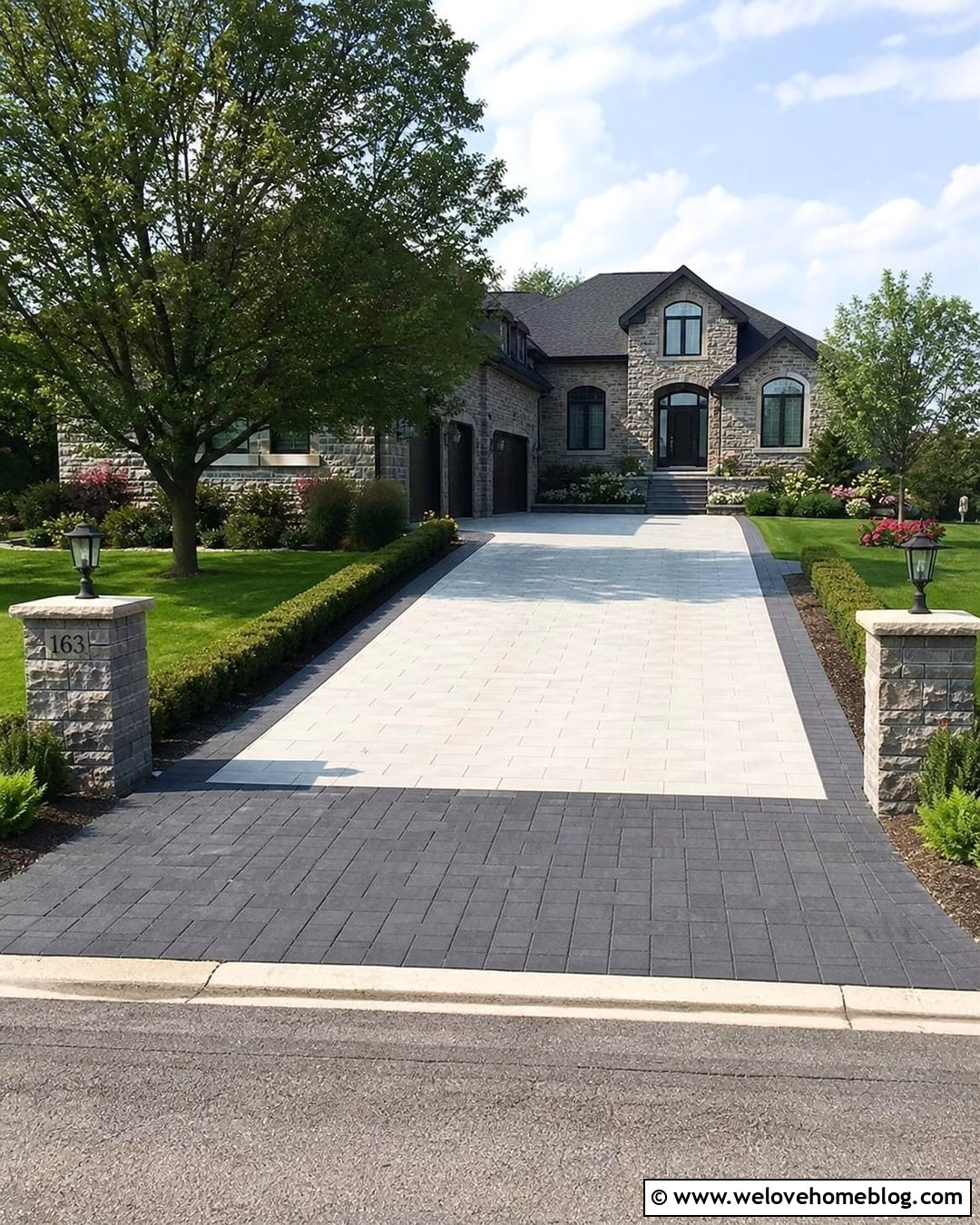
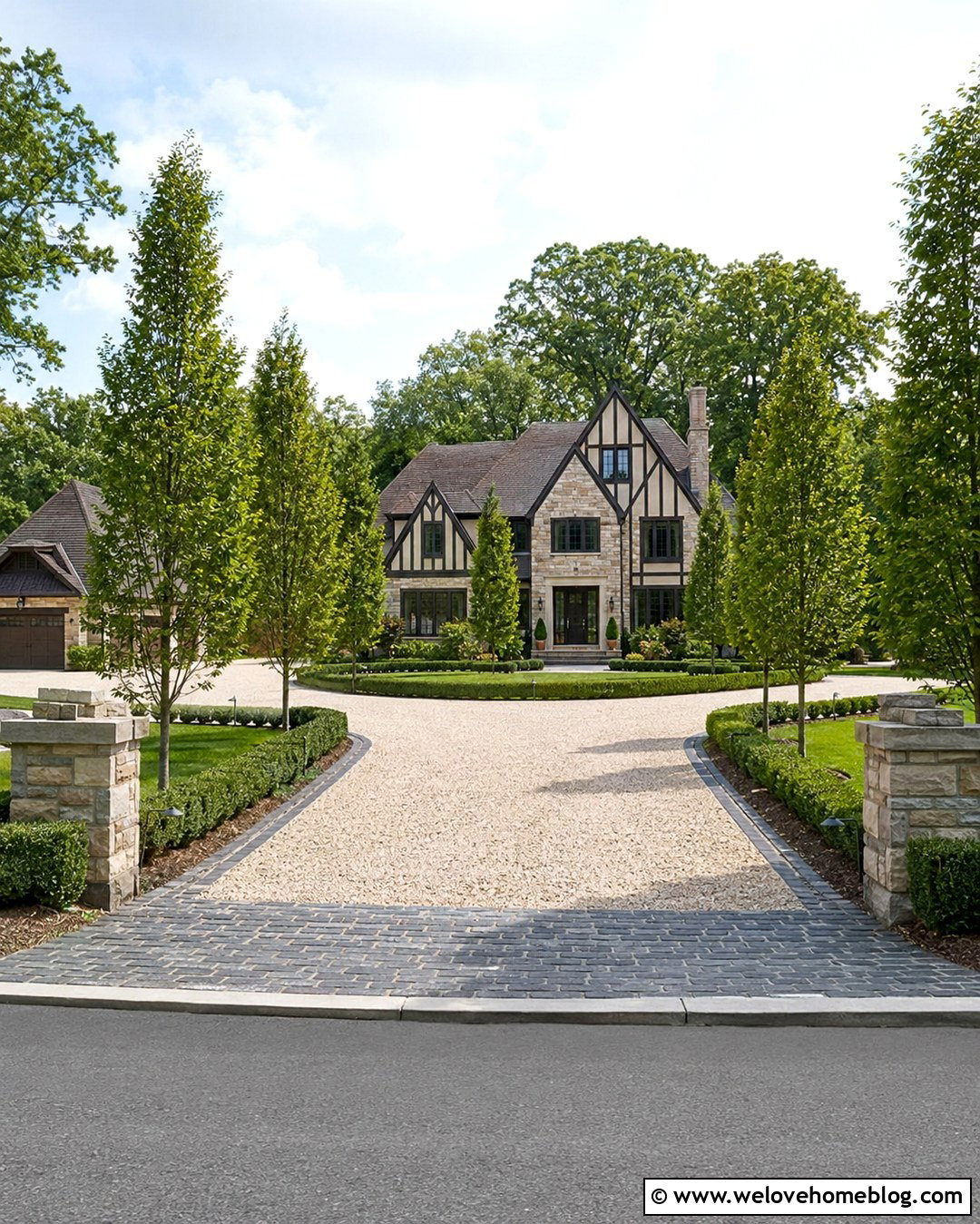
A contrasting apron creates a clear transition between the street and the main driveway. Use smooth gray concrete pavers for the primary surface, then install a wide band of charcoal cobblestone or dark tumbled pavers at the curb. The apron can be straight for a formal home or gently flared to create a more generous entrance. Echo the darker material around the driveway perimeter so the feature feels connected to the overall design. Stone entry posts, low hedges, and evenly placed shrubs can further define the approach. This treatment is useful when you want a decorative accent without introducing a complex pattern across the entire driveway. Confirm that the apron dimensions and curb connection satisfy applicable local requirements before construction begins.
13. Paved Driveway With Central Pattern
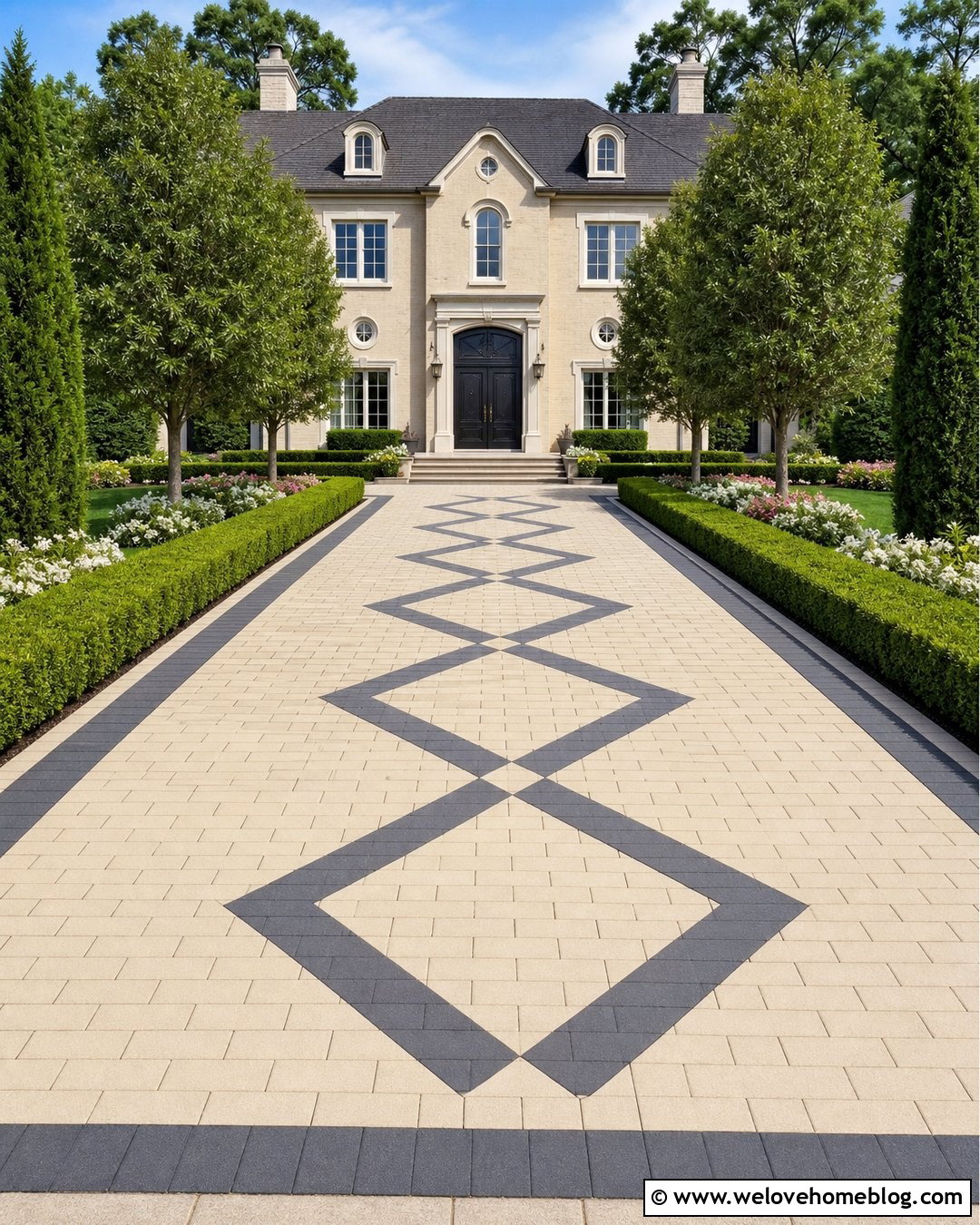
A central pattern turns a wide paved driveway into a carefully composed feature. Begin with beige concrete pavers in a simple running bond, then add a long charcoal diamond or rectangular motif through the middle. The decorative section should align with the garage, front entrance, or central axis of the house. Avoid using too many colors; two coordinated tones are usually enough to make the pattern visible. A darker perimeter border can complete the frame. This formal arrangement complements symmetrical colonial, Georgian, and Mediterranean homes. Keep the surrounding landscaping balanced with matching beds, paired ornamental trees, and low evergreen hedges. The pattern should be visible from the curb while remaining large enough to avoid a fragmented, overly decorative appearance.
14. Paved Driveway With Geometric Pattern
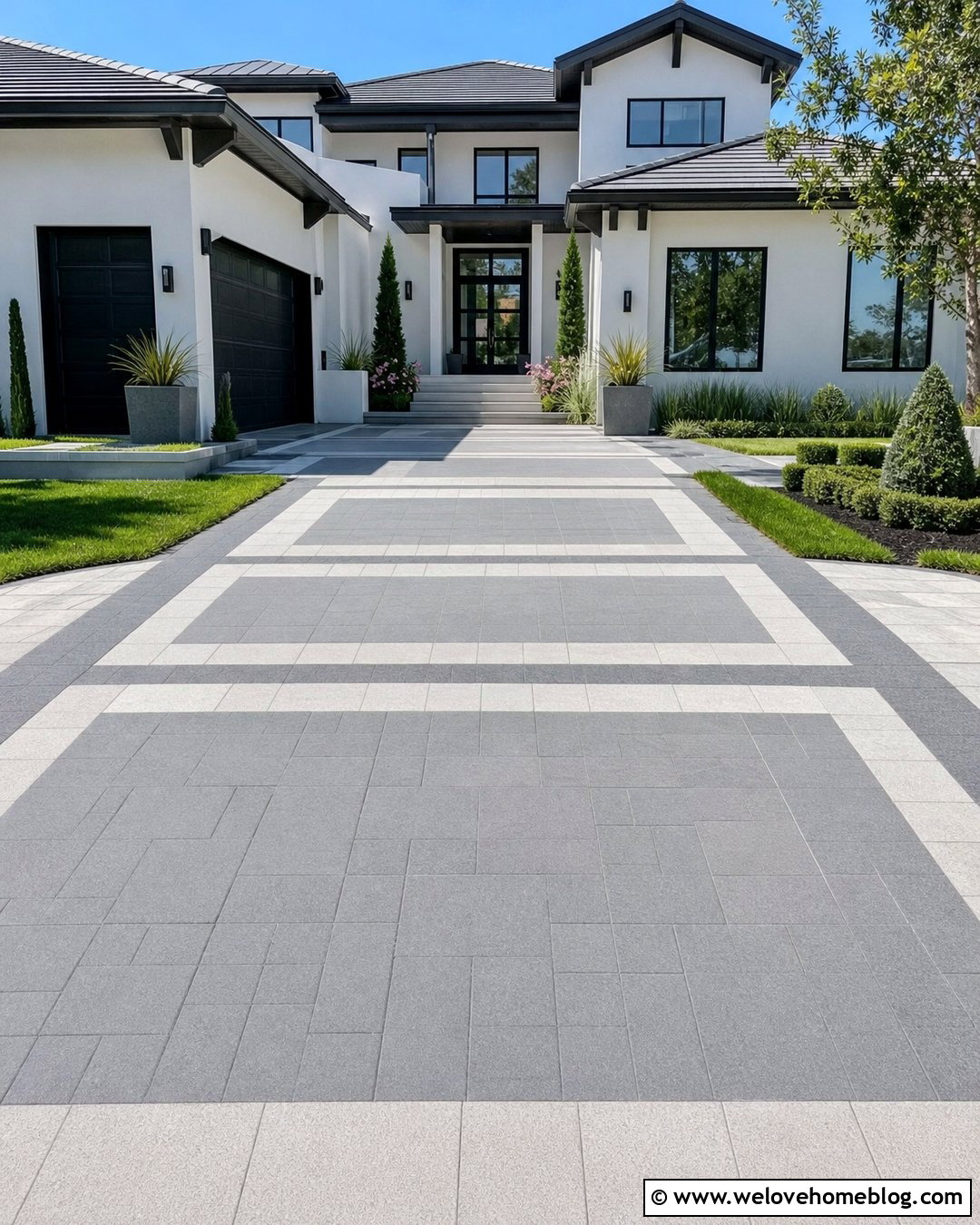
Geometric paving can bring energy to a modern driveway without relying on bright color. Combine light and dark gray concrete pavers in broad offset rectangles, angular bands, or a restrained grid. The strongest lines should reinforce the driveway’s direction and connect visually with the garage doors. A straight or slightly angled layout works best because it allows the pattern to remain easy to read. Surround the paving with square lawn panels, architectural grasses, and concrete planters that repeat the geometry. A modern house with flat rooflines, white stucco, and natural wood accents provides an ideal backdrop. Plan the entire pattern before installation so narrow cuts do not accumulate at the edges or make the finished driveway look improvised.
15. Running Bond Paved Driveway
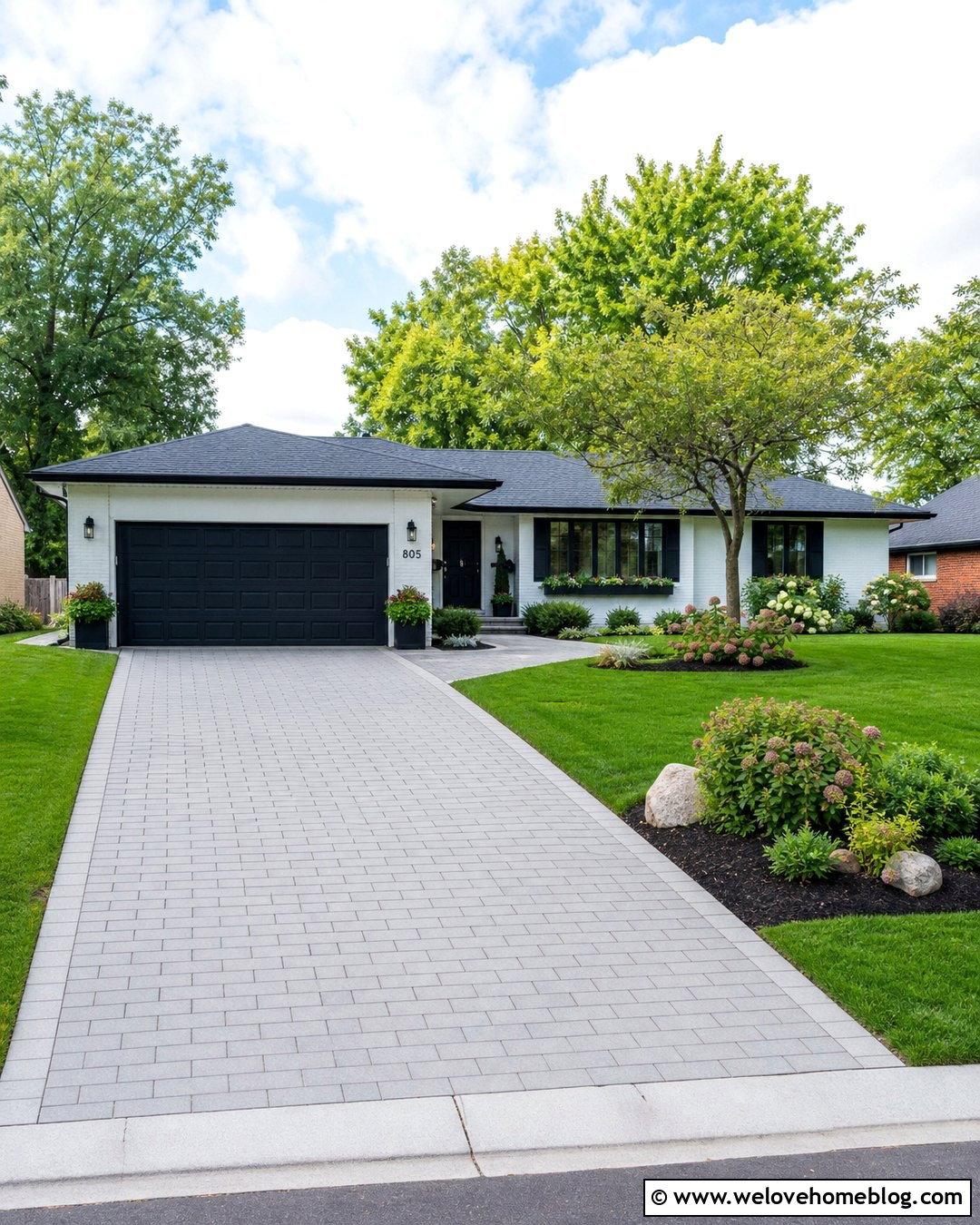
Running-bond paving offers a clean, familiar pattern that works with almost every house style. Rectangular pavers are offset from one row to the next, producing subtle movement without creating an elaborate design. Choose medium-gray concrete pavers for a renovated ranch home or warm beige units for a traditional suburban exterior. Position the rows across the driveway to make a narrow space feel wider, or run them toward the garage to emphasize length. A simple soldier-course border provides a finished edge. Complete the driveway with a matching walkway, tidy lawn, and layered planting beds near the house. This pattern is especially effective when the facade already contains several materials because the understated surface helps the exterior feel balanced rather than visually crowded.
16. Basketweave Brick Paved Driveway
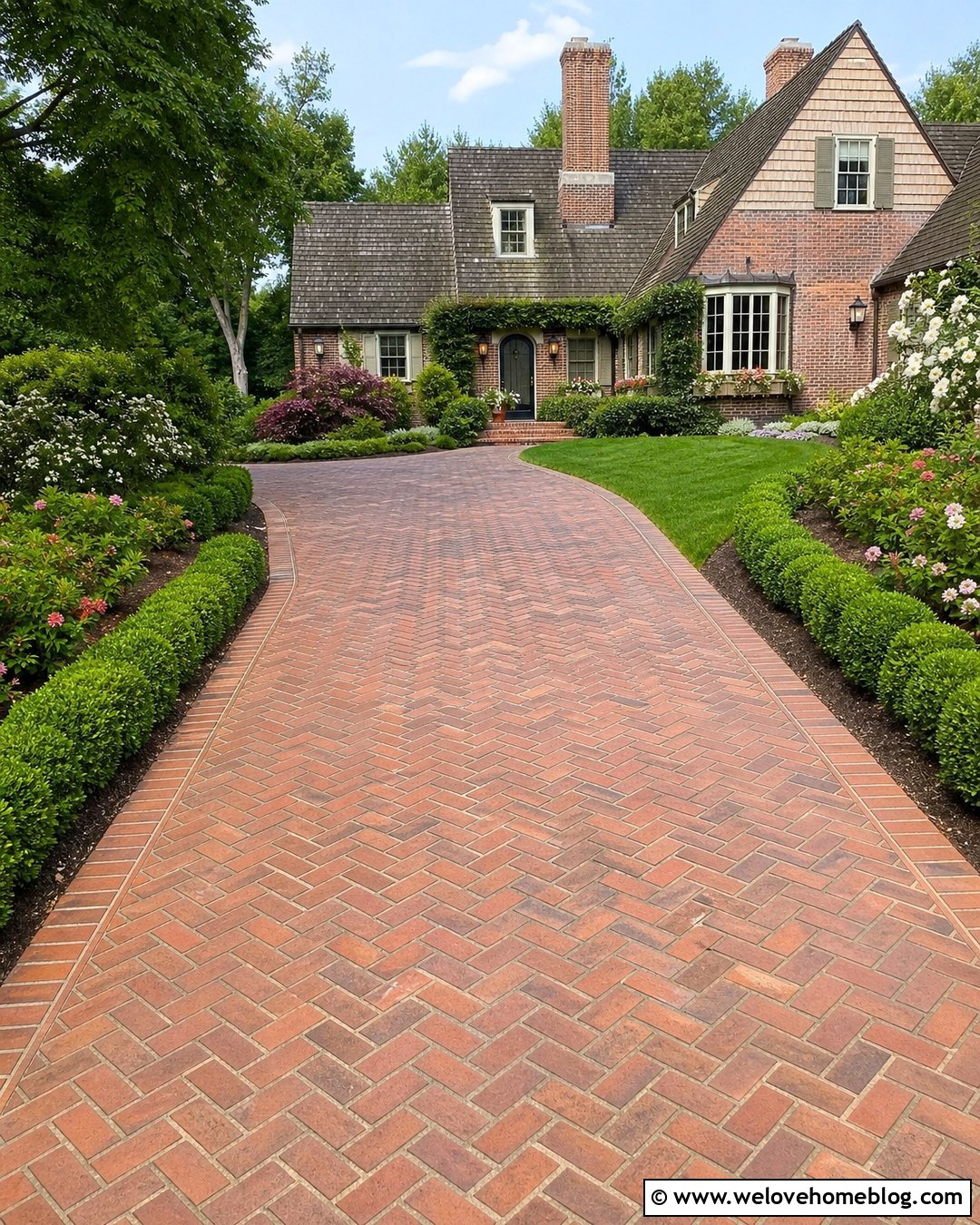
Basketweave brick paving has a traditional pattern that pairs grouped horizontal and vertical bricks. The result feels detailed but orderly, making it suitable for cottage, colonial, and English-inspired homes. Use weathered red and brown clay bricks to create natural color variation. Frame the main pattern with a straight soldier-course border, and consider a slightly flared entrance to make the driveway more welcoming from the street. Soft landscaping complements the structured paving. Try boxwood edging, flowering shrubs, and a curved walkway leading toward the front porch. Because basketweave contains frequent directional changes, keep other hardscape patterns simple. A plain brick walkway or stone stepping path will support the driveway without competing with its distinctive arrangement.
17. Mixed Size Stone Paved Driveway
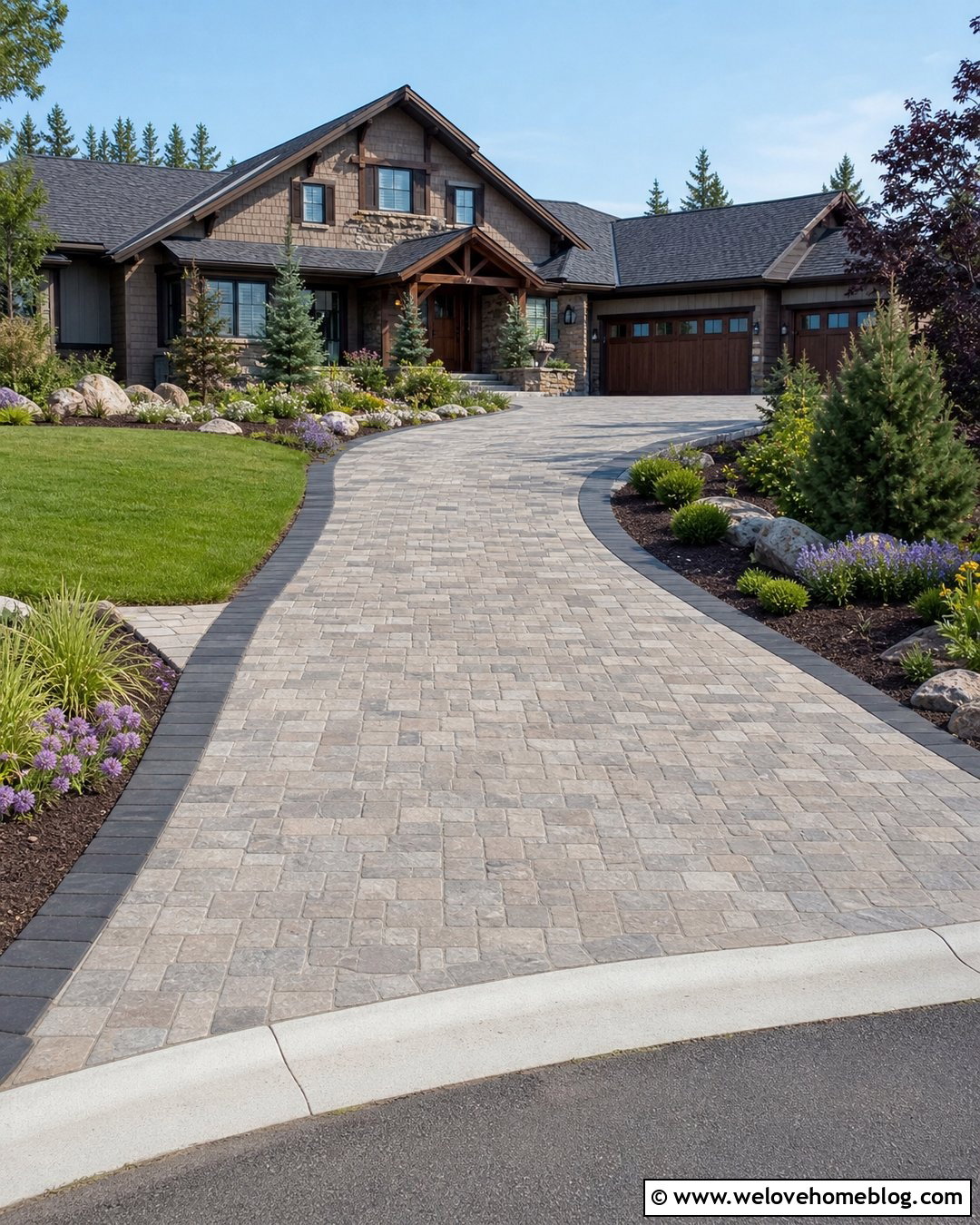
Mixed-size stone pavers create a relaxed surface that feels less repetitive than uniform blocks. Combine rectangular and square concrete-cast stone pavers in related beige, taupe, and soft gray tones. A gently curved driveway will enhance the informal layout and suit a craftsman, rustic ranch, or stone-front home. Use a single-color border to contain the varied pattern and prevent the design from appearing random. Around the edges, add natural planting beds with evergreen shrubs, ornamental grasses, and groups of flowering perennials. A flagstone-inspired walkway can connect the drive to the porch, but its colors should remain close to the driveway palette. Lay out several pattern sections in advance to distribute sizes and tones evenly across the complete surface.
18. Limestone Paved Driveway
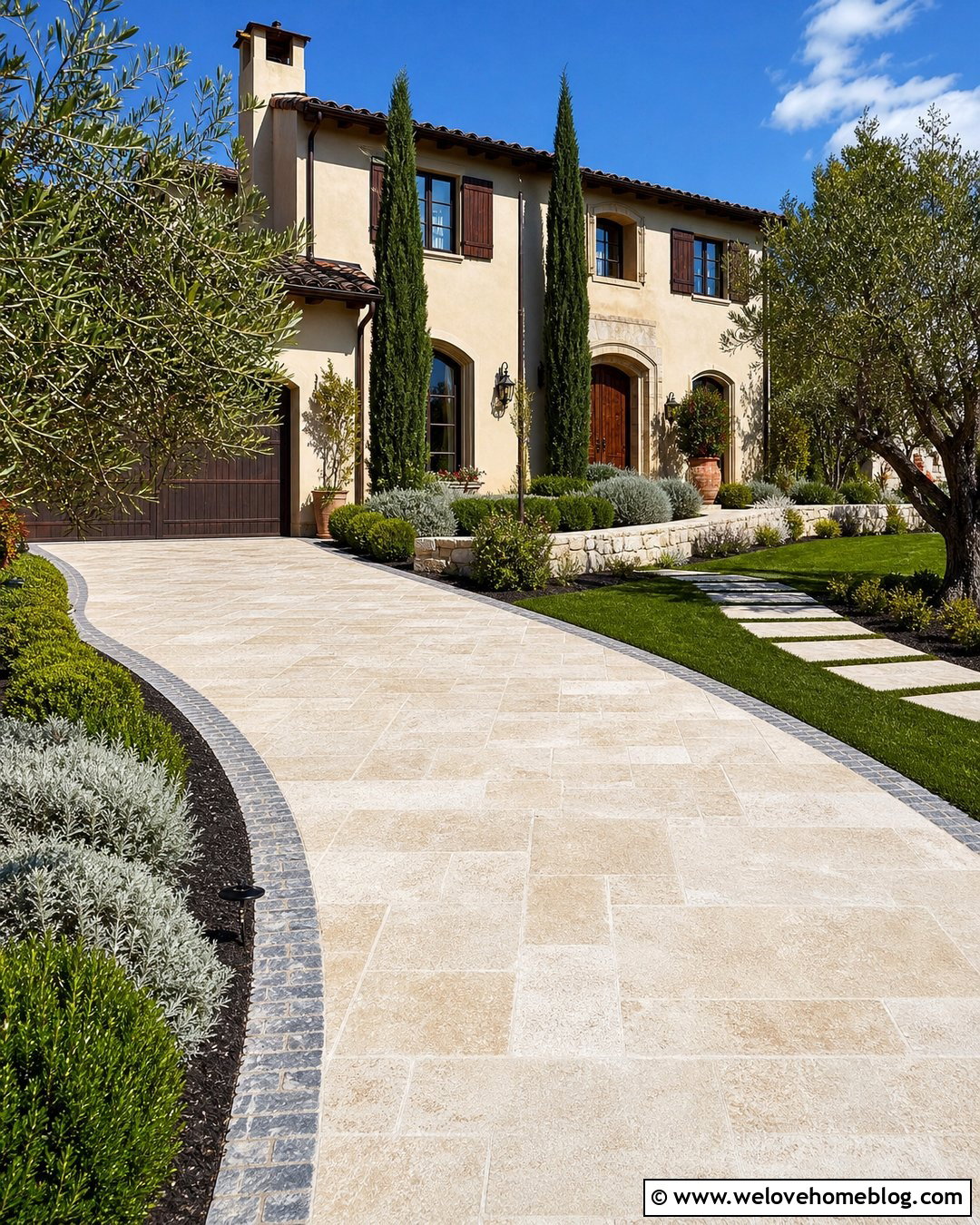
Pale limestone paving gives a driveway a refined, sunlit appearance. Cream, buff, and light beige tones look especially attractive beside stucco, painted brick, and warm stone facades. Large rectangular limestone pavers can be laid in staggered courses along a straight or gently curved approach. A narrow charcoal stone border adds definition and reduces the chance that the light surface will blend into adjacent concrete sidewalks. Use drought-conscious planting, clipped shrubs, and silvery foliage to support the warm neutral palette. Limestone characteristics vary by product and region, so choose paving specifically rated for driveway use and local weather exposure. Ask to view sealed and unsealed samples outdoors before deciding which finish best suits the desired color and maintenance routine.
19. Bluestone Paved Driveway
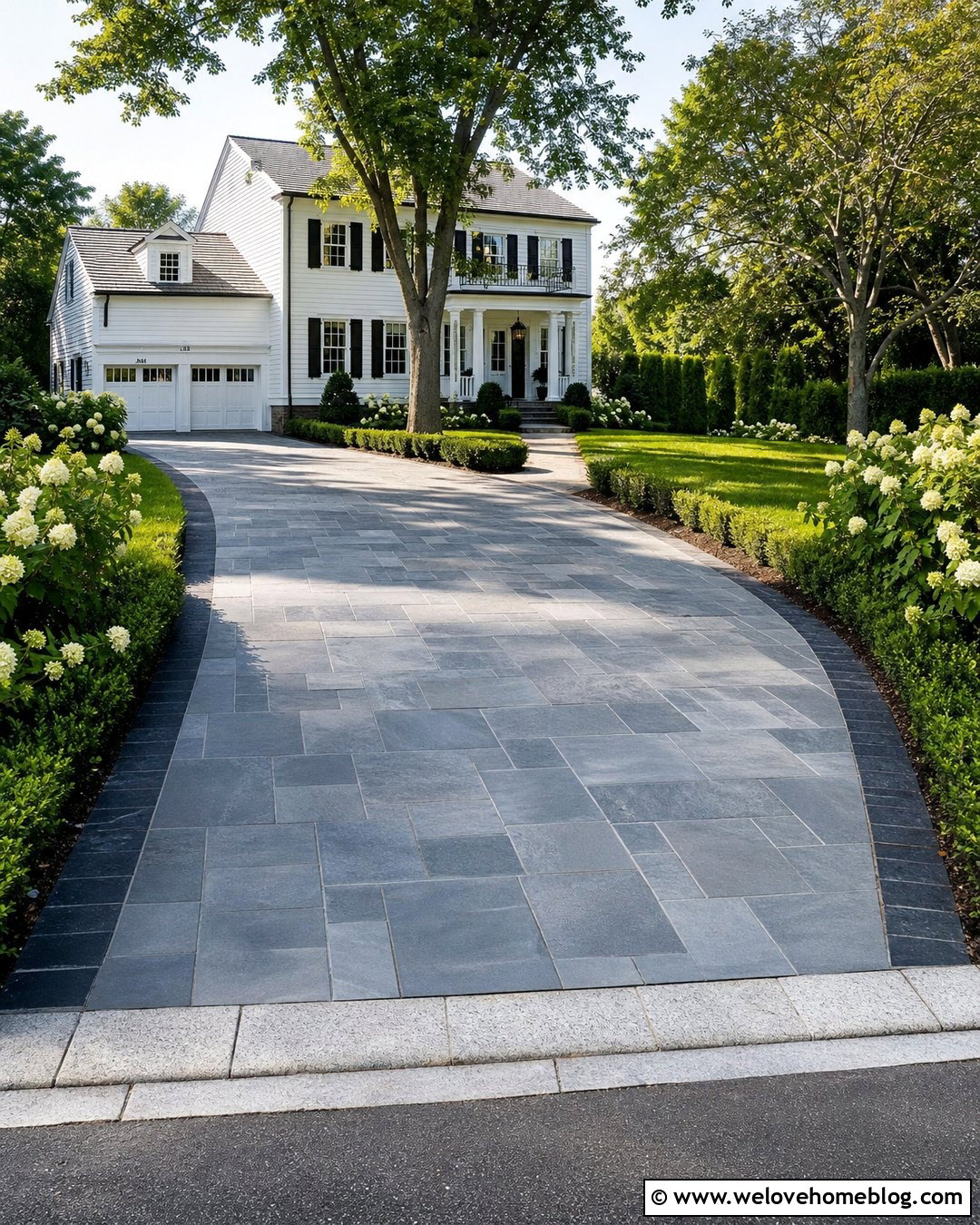
Bluestone paving introduces deep blue-gray color that can ground a light-colored house. Use rectangular bluestone pavers with a natural cleft or textured finish, arranged in staggered rows across a broad straight driveway. A matching dark border creates a seamless frame, while a light stone apron can provide contrast near the curb. This surface looks striking with white colonial houses, gray craftsman exteriors, and contemporary homes featuring natural wood. Surround it with green lawn, white hydrangeas, and evergreen foundation plants to keep the palette fresh. Because natural stone can vary significantly, blend material from multiple pallets during installation. That approach distributes tonal differences instead of creating obvious patches of darker or lighter paving across the finished driveway.
20. Sandstone Paved Driveway
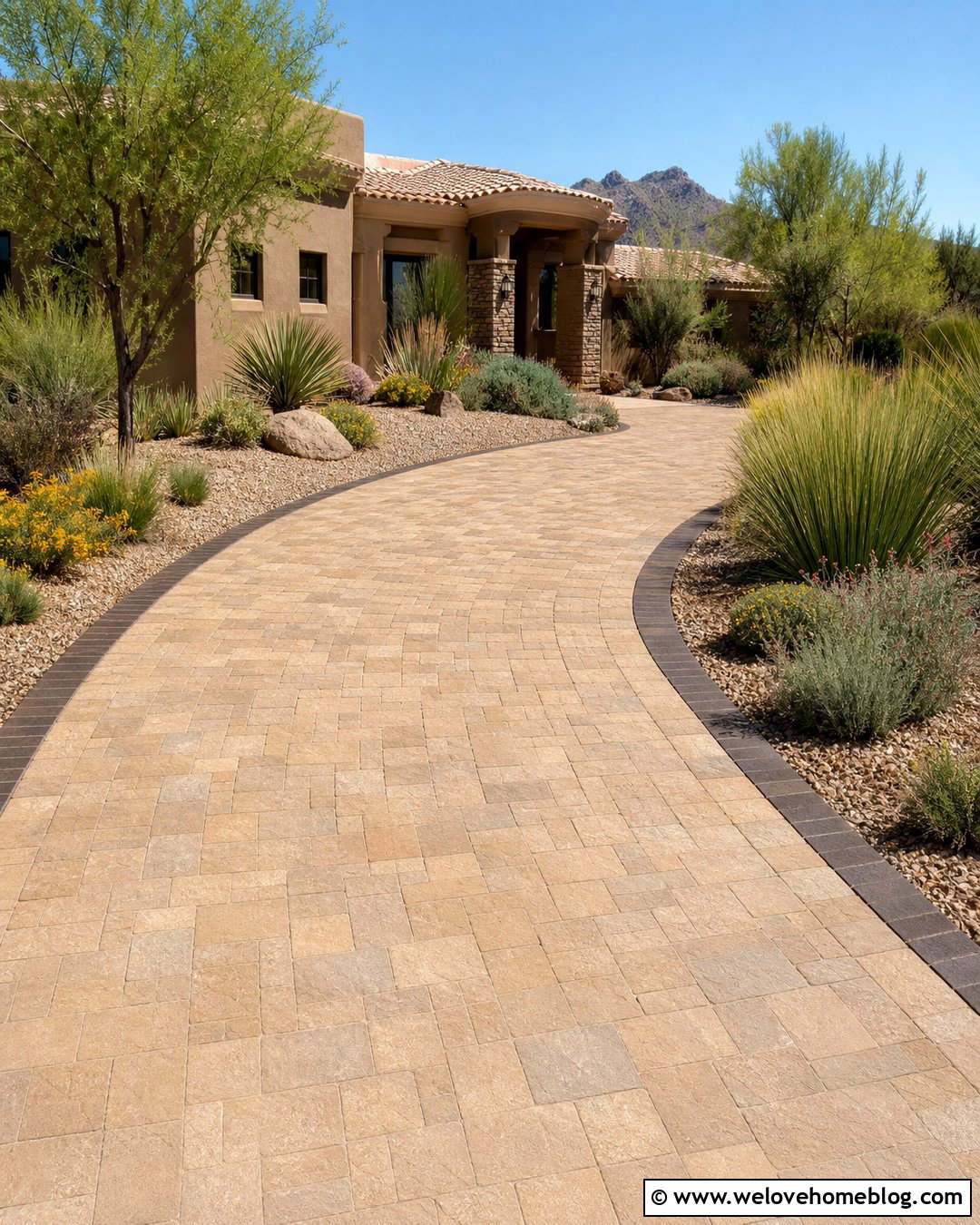
Warm sandstone paving can make a driveway feel inviting and closely connected to the landscape. Choose textured pavers blending buff, tan, muted gold, and soft brown. A curved layout suits the natural variation, especially when leading to a southwestern, Mediterranean, or rustic stone home. Define the edges with darker brown stone set nearly flush with the surface. Planting beds filled with ornamental grasses, sage-colored shrubs, and drought-tolerant perennials will reinforce the earthy palette. A broad sandstone walkway can branch from the driveway toward an arched entrance or covered porch. Select stone intended for vehicle traffic and appropriate for the local climate. Samples should be viewed when dry and wet because moisture may temporarily deepen the material’s color.
21. Porcelain Paver Driveway
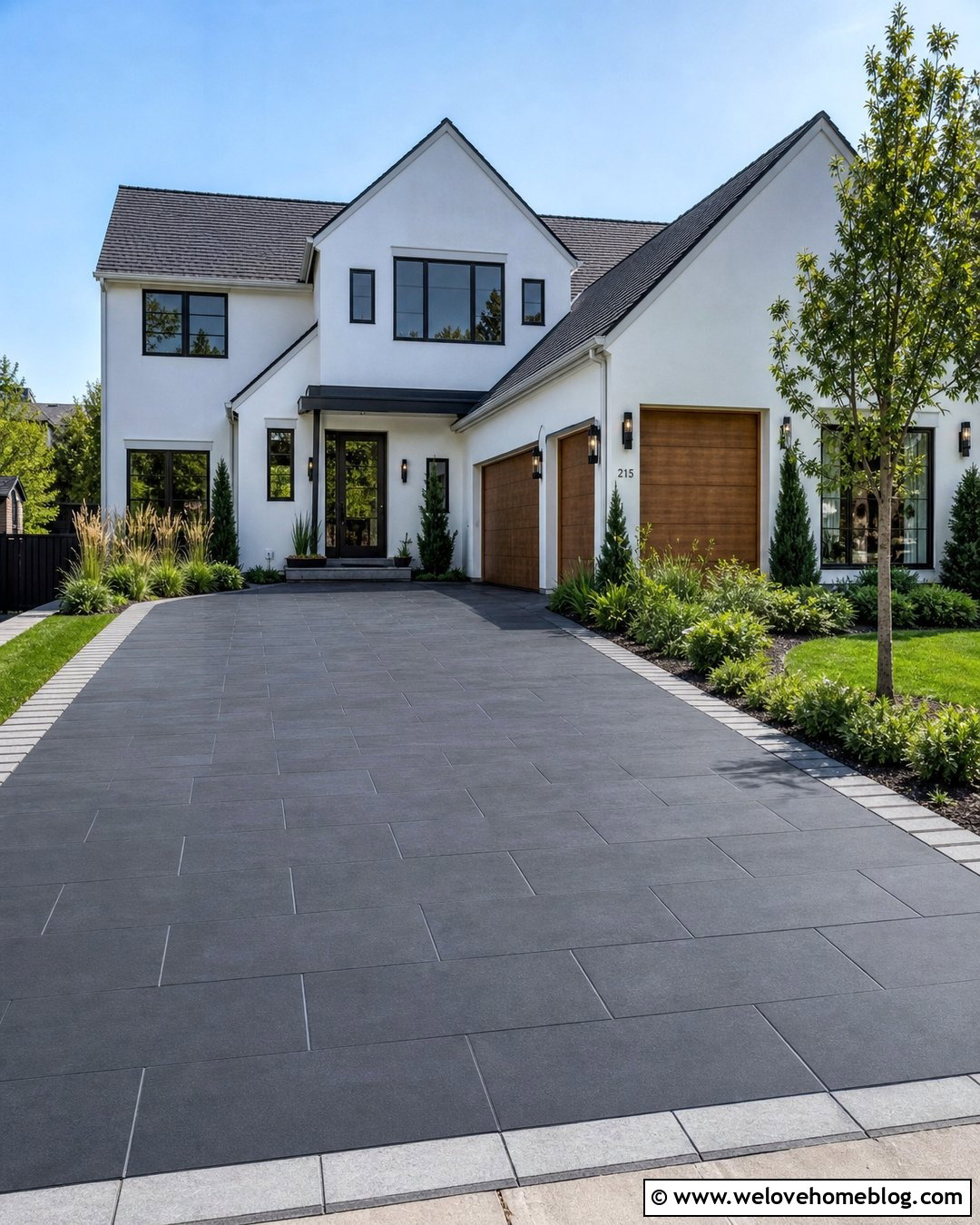
Porcelain pavers can create a crisp, contemporary driveway when the selected product is specifically engineered for vehicular applications. Use large charcoal slabs with a lightly textured finish and narrow joints for a streamlined approach to a modern house. A straight driveway will highlight the precise edges, while a pale gray border can gently separate the dark paving from planting beds. Pair the surface with white stucco, black-framed windows, warm wood garage doors, and structured evergreen landscaping. Keep pathways and entrance steps within the same color family to avoid a disconnected appearance. Product thickness, substrate, and installation method are critical, so confirm the complete system with the manufacturer and installer rather than selecting pavers based only on their surface appearance.
22. Tumbled Concrete Paver Driveway
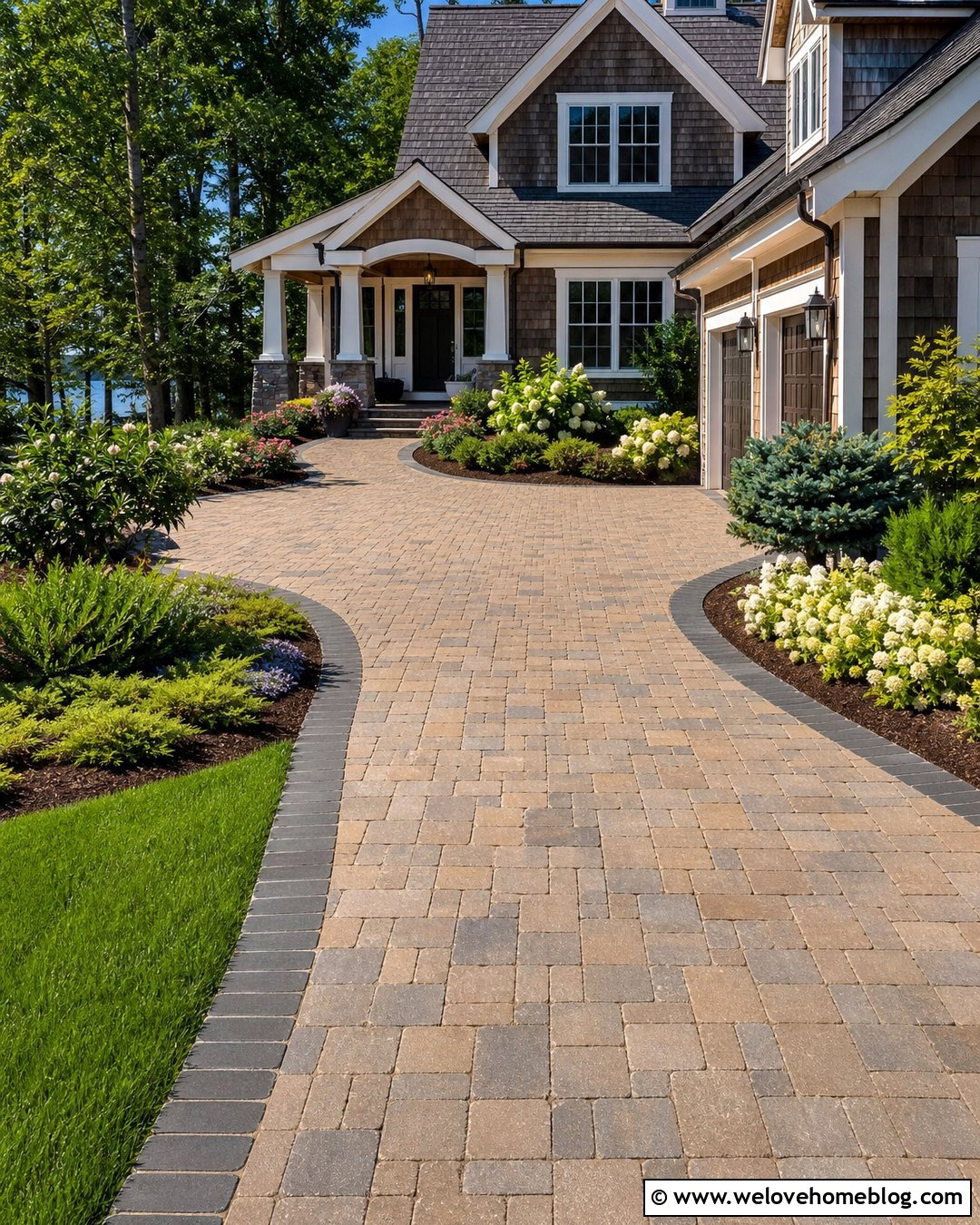
Tumbled concrete pavers offer softened edges and a weathered character without requiring a fully formal brick or cobblestone surface. Choose a blend of taupe, sand, and muted brown pavers for a welcoming driveway beside a craftsman or traditional suburban home. A fan, random ashlar, or simple running pattern can suit the aged finish. Add a darker tumbled border to strengthen the outline, especially where the driveway meets lawn. Layered beds of hydrangeas, low junipers, and flowering ground cover will soften the paved area further. Continue one of the paver colors into the walkway or porch steps. Avoid combining too many rustic finishes, since the driveway’s varied texture already provides plenty of visual detail.
23. Red Brick Paved Driveway
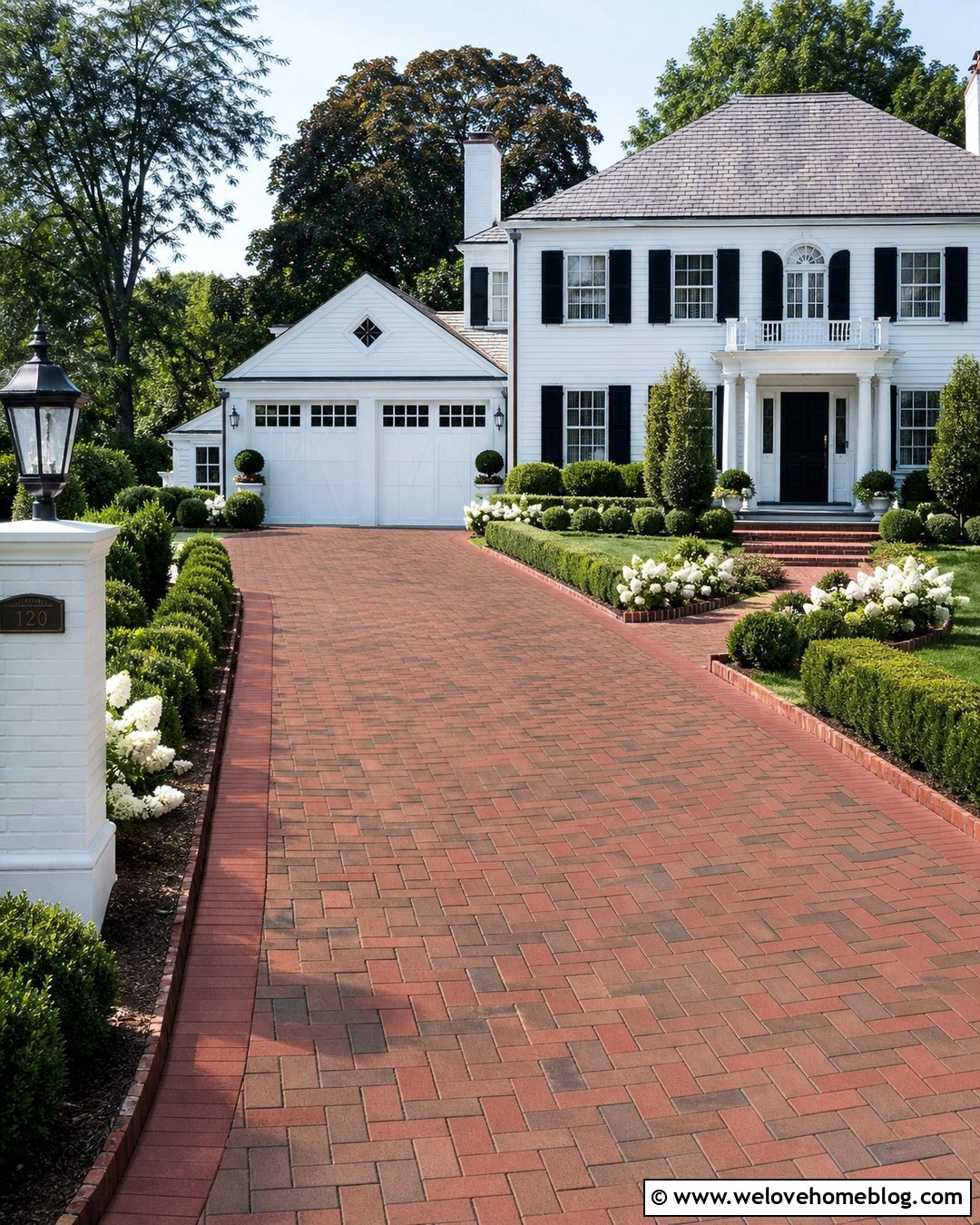
A full red brick paved driveway gives a home rich color and unmistakable traditional character. Use genuine clay brick pavers in a herringbone pattern for the main driving area, then add a darker red soldier-course border. A straight layout feels formal, while a modest curve creates a softer cottage-like approach. This look is especially cohesive with white colonial houses, painted brick homes, and facades featuring black shutters. Green boxwoods, white flowers, and a simple lawn provide crisp contrast without introducing competing colors. If the house is also red brick, choose driveway bricks with slightly darker or more varied tones. That distinction keeps the paving from visually merging with the facade and creates a more layered exterior composition.
24. Charcoal Paved Driveway
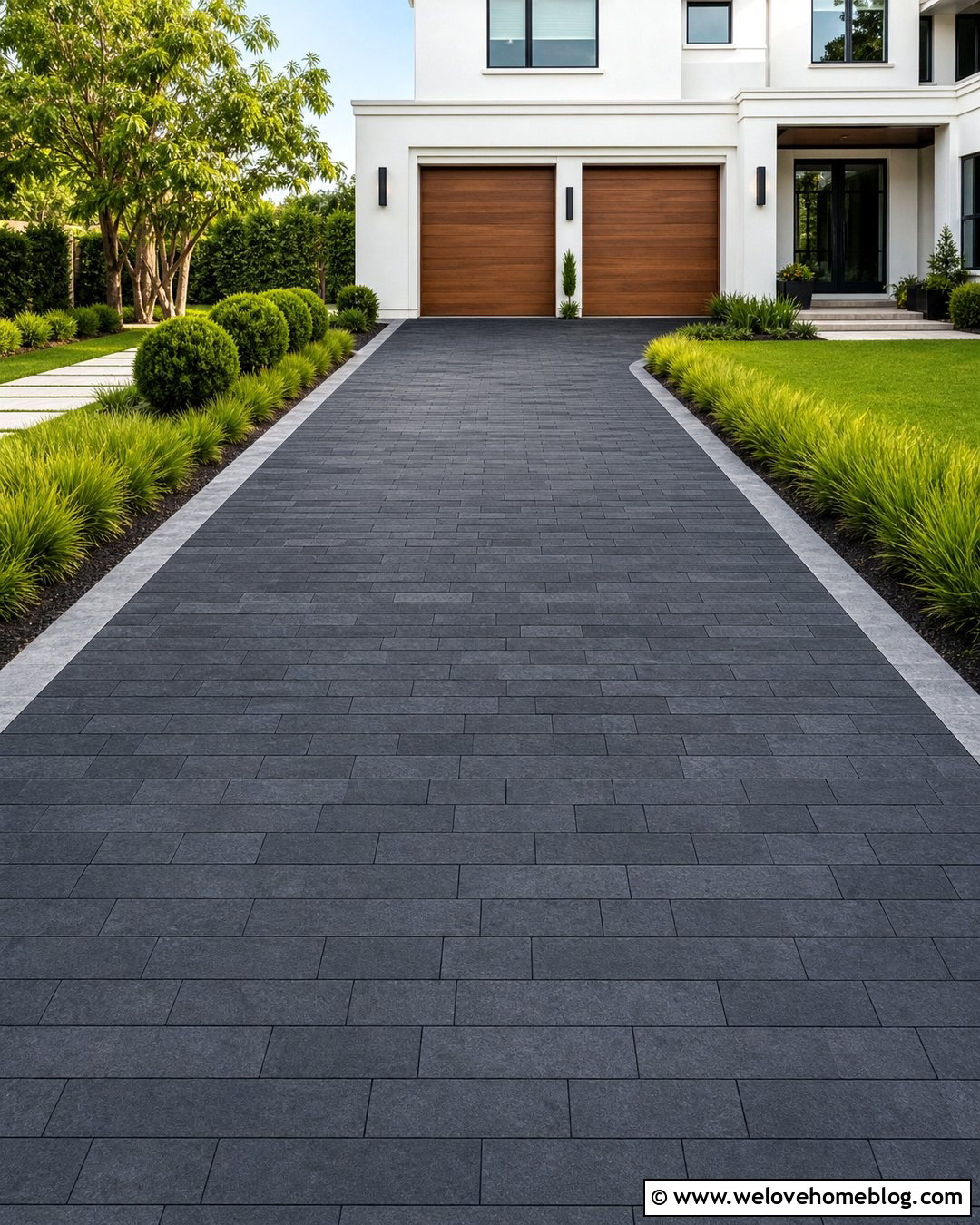
A charcoal paved driveway makes a strong backdrop for light facades and contemporary landscaping. Select dark gray concrete pavers with subtle tonal variation rather than a completely uniform black surface. Lay them in long horizontal rows to widen the visual impression of a narrow driveway. A medium-gray border can define the edges while preventing the design from feeling too heavy. White stucco, pale siding, cedar accents, and black-framed windows work naturally with this palette. Add bright green grasses, rounded evergreens, and a light concrete walkway for contrast. Dark paving becomes a major visual feature, so generous lawn or planting areas can provide balance. View samples in full sun to understand how dark the finished installation will actually appear.
25. Beige Paved Driveway
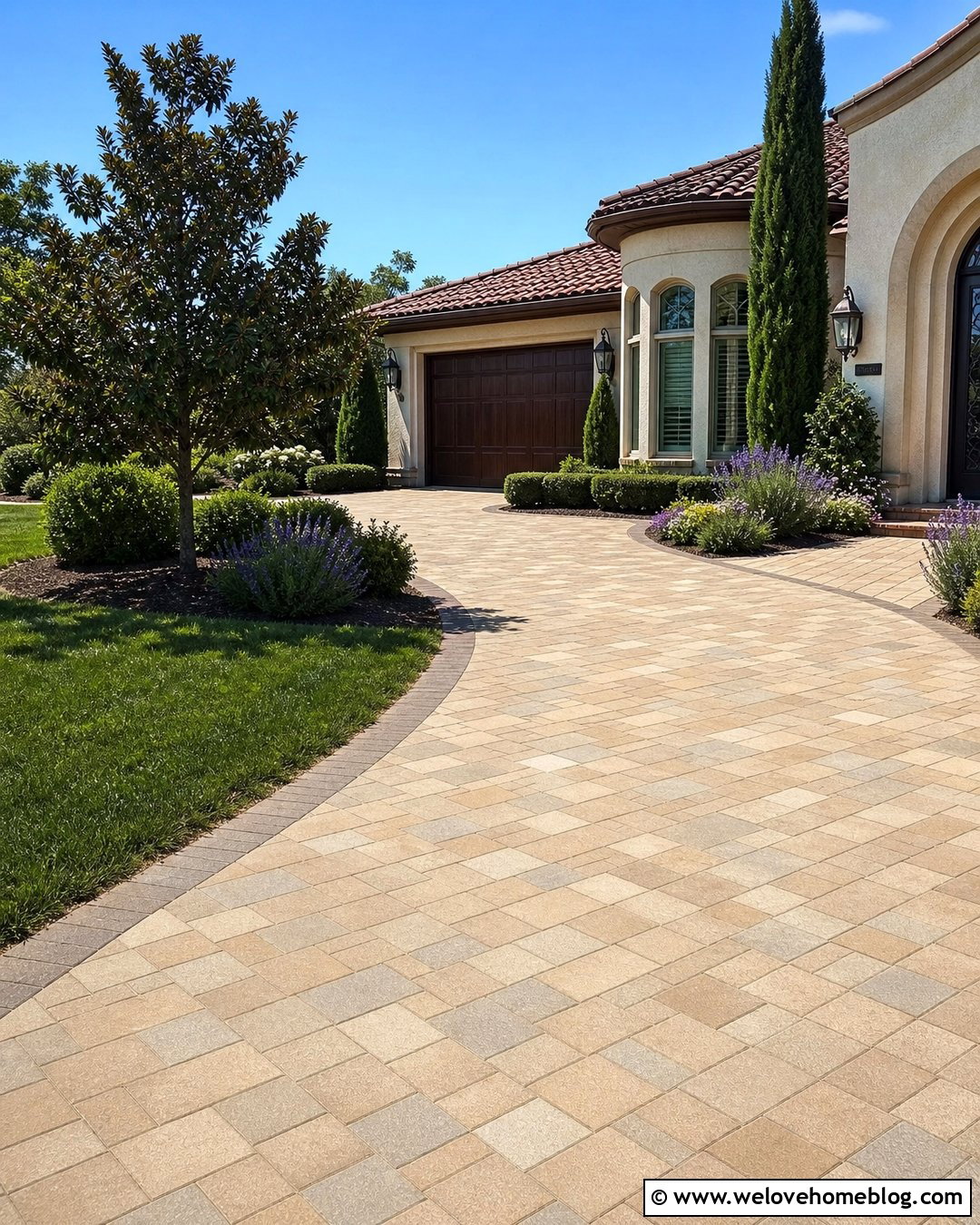
Beige concrete pavers create a warm, flexible foundation for many residential exteriors. They complement cream stucco, brown roofs, natural stone, red brick, and warm wood garage doors. Use rectangular pavers in a simple running bond for the main driveway, then add a slightly darker tan border. A gentle curve can soften a large front yard, while a straight layout gives a smaller property a more organized appearance. Plant lavender-colored flowers, deep green shrubs, and one ornamental tree to provide contrast against the light paving. Avoid choosing a blend with too many yellow or orange tones unless those colors already appear on the house. A restrained mix of cream, taupe, and sand usually produces a calmer, more lasting result.
26. Two Tone Paved Driveway
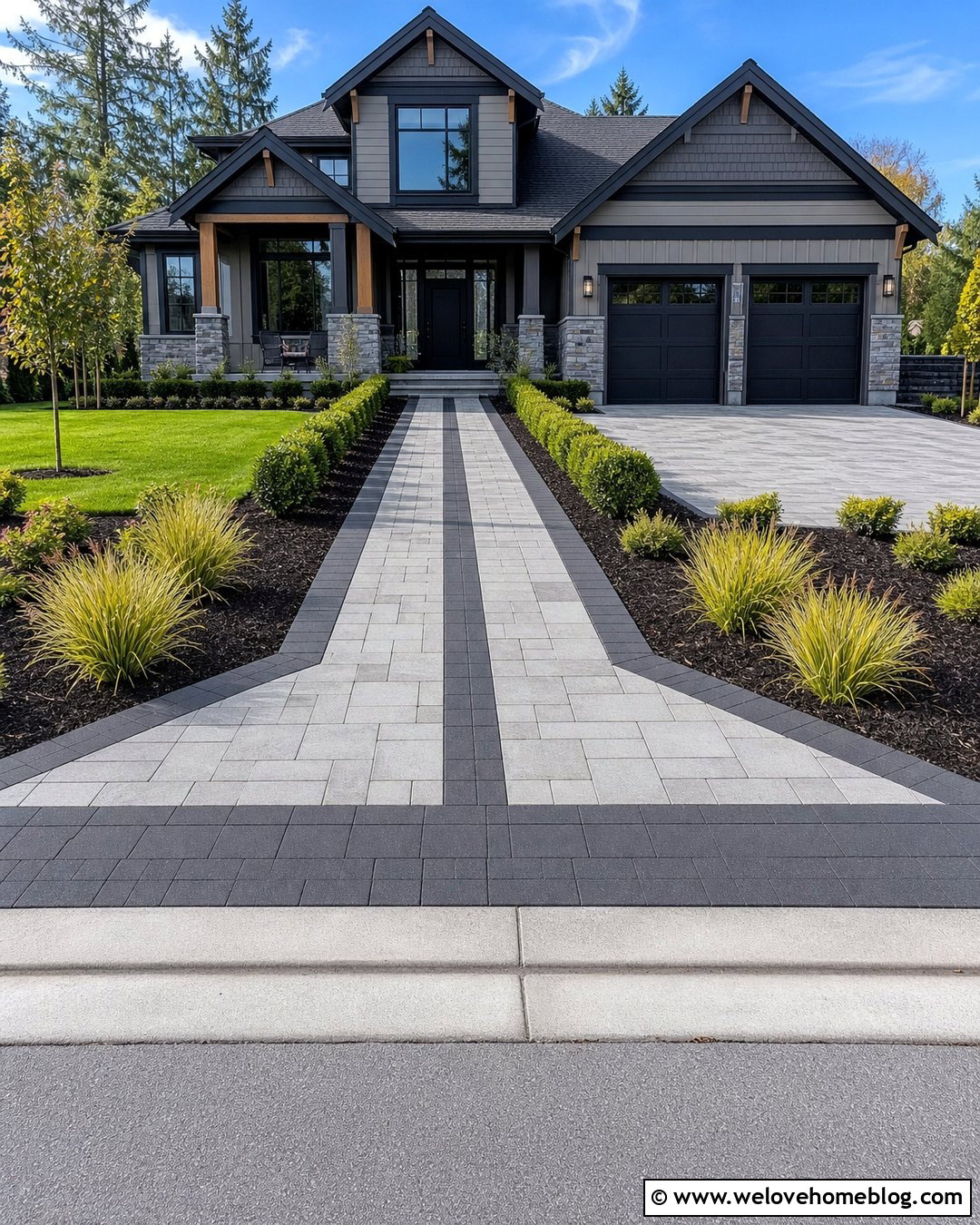
Two-tone paving makes it possible to define a driveway without introducing another material. Use light gray concrete pavers across most of the surface and reserve charcoal pavers for the perimeter, apron, and a narrow central band. The darker details should clarify the layout rather than divide it into too many small sections. This treatment works on straight, curved, and circular driveways, but it looks particularly sharp in front of a contemporary craftsman home. Repeat both colors in the front walkway so the hardscape feels planned as a whole. Low hedges, ornamental grasses, and dark mulch can reinforce the palette. Before installation, map every color transition to ensure the border remains consistent around curves, garage openings, and walkway connections.
27. Paved Driveway With Stone Pillars
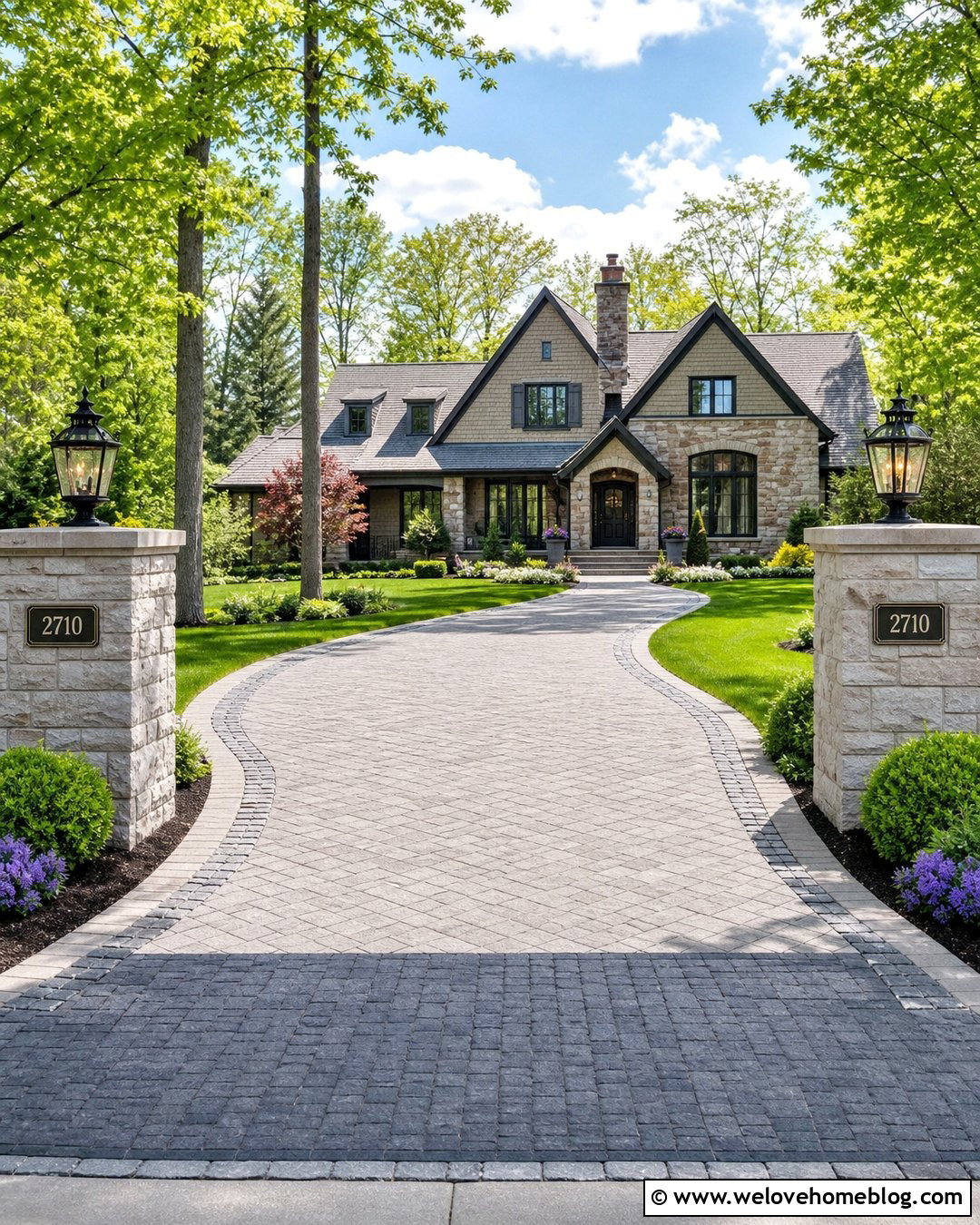
Stone pillars can turn a paved driveway entrance into a defined architectural feature. Use warm gray concrete pavers in a gently curved layout, then place substantial fieldstone or limestone pillars on both sides of the curb opening. Match the pillar stone to the house foundation, porch, or facade for continuity. A darker paver apron can span between the columns and visually mark the entrance. Low planting beds should surround the pillars without hiding them or restricting visibility. Choose compact shrubs, ground cover, and seasonal flowers rather than large spreading plants. Down the driveway, a cobblestone border and evenly spaced trees can carry the entrance materials toward the house. Keep pillar proportions appropriate for the driveway width and overall scale of the property.
28. Paved Driveway With Metal Gate
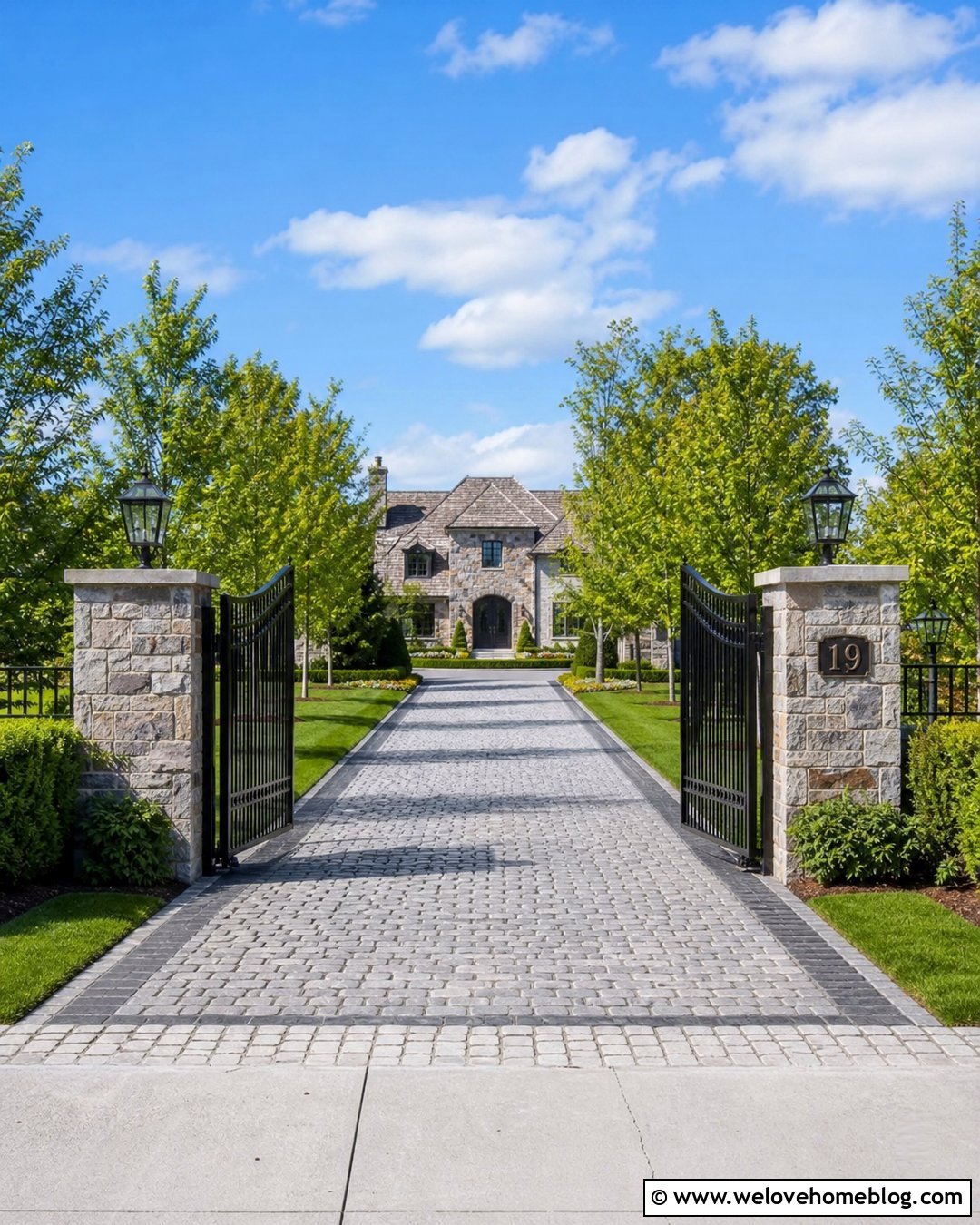
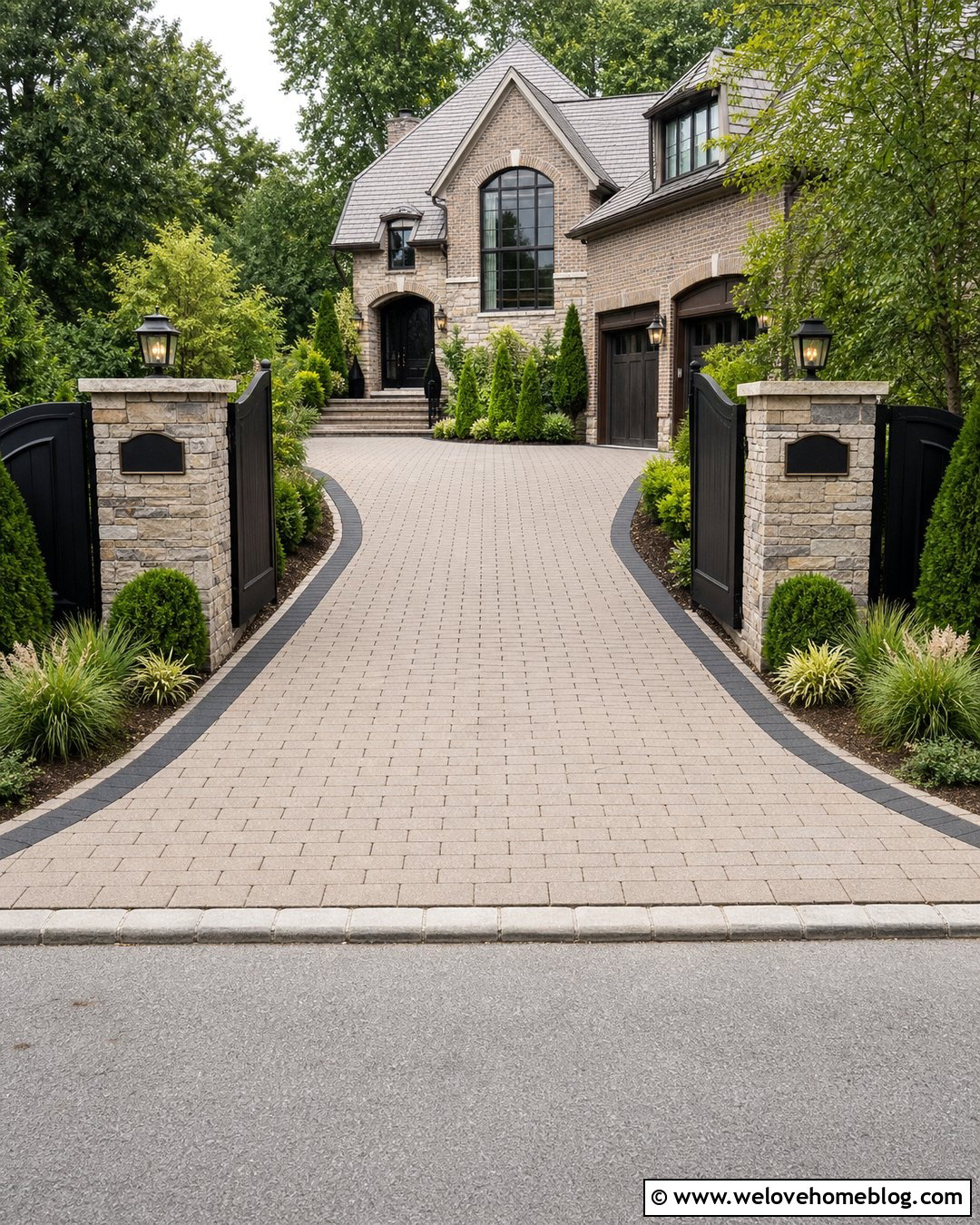
A metal gate looks most convincing when it is integrated with the entire driveway rather than added as a separate ornament. Pair a black steel swing gate with gray cobblestone or textured concrete pavers in a straight, formal layout. Stone columns can anchor the gate and repeat masonry used on the house. Continue a dark paver border from the street entrance to the garage so the black metal feels connected to the hardscape. On both sides, use low evergreen hedges and symmetrical trees to frame the approach. Leave sufficient functional space around the gate based on its operation and the driveway configuration. Lighting, access controls, drainage, setbacks, and local requirements should all be planned before the pillars and paving are installed.
29. Paved Driveway With Landscape Lighting
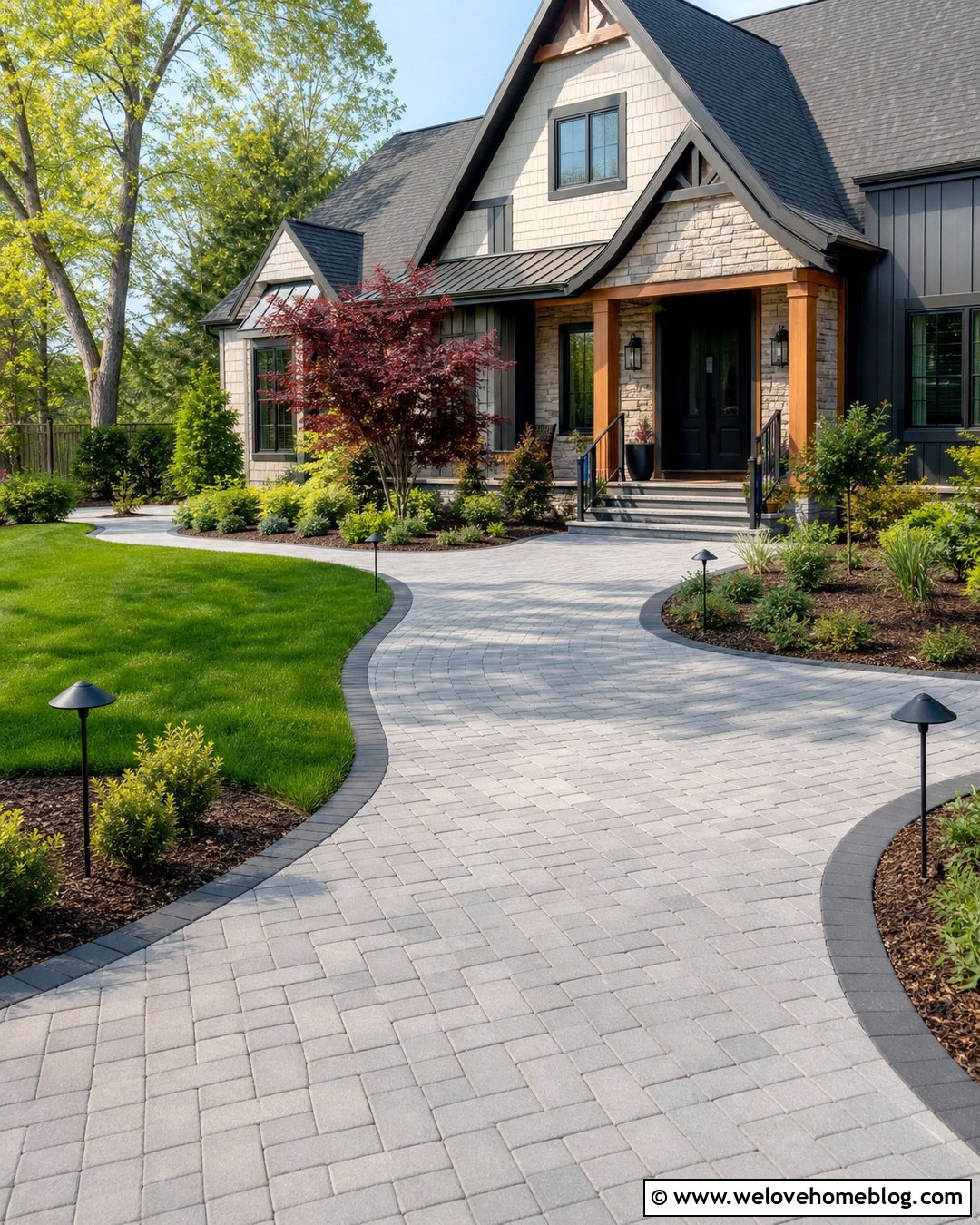
Landscape lighting should complement a paved driveway without turning it into an airport runway. During daylight, the fixtures need to look discreet and coordinated with the home. Use medium-gray concrete pavers on a curved approach, framed by a charcoal border and wide planting beds. Place low fixtures at important transitions, such as the street entrance, bends, walkway connection, and garage area, rather than spacing them mechanically along every edge. Small trees and layered shrubs will give the lighting useful landscape features to illuminate after dark. For the daytime design, black or bronze fixtures blend well with mulch and foliage. Integrate electrical planning before paving begins so visible conduit, patchwork, and unnecessary surface cuts do not disrupt the finished driveway.
30. Tree Lined Paved Driveway
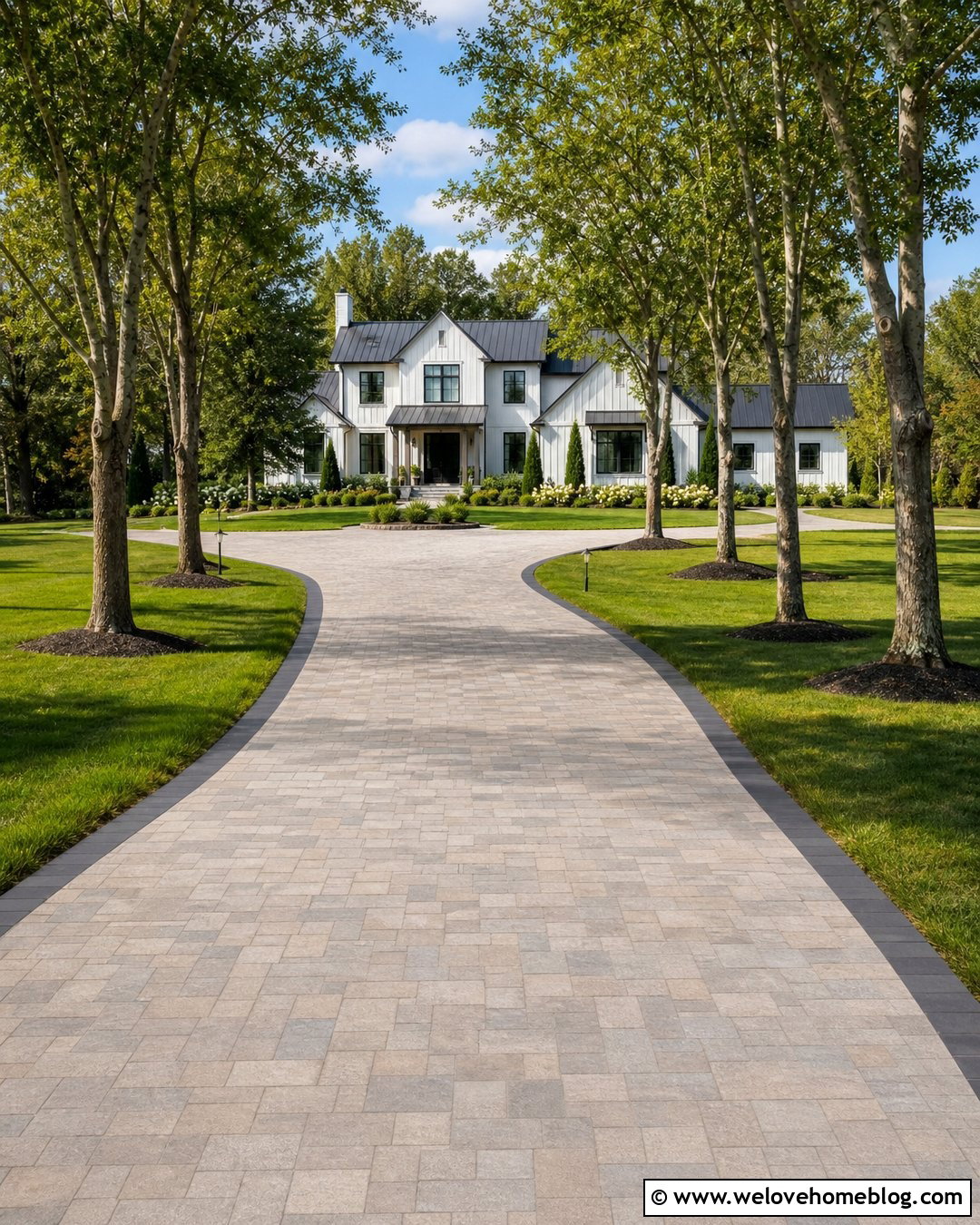
A tree-lined paved driveway creates a memorable approach on a larger property. Choose softly blended gray and tan concrete pavers for a long, gently curved route toward a farmhouse, colonial home, or country residence. A dark stone border will keep the expansive surface defined. Plant trees at generous, consistent intervals beyond the driveway edge, leaving room for mature trunks, roots, and canopies. Underplant them with lawn or broad beds of low shrubs to create a unified corridor. Near the house, widen the paving into a parking court or turnaround so the long approach remains practical. Tree selection and placement should reflect local growing conditions, underground utilities, visibility, and available root space. The final design should feel spacious rather than tightly enclosed.
31. Paved Driveway With Low Maintenance Landscaping
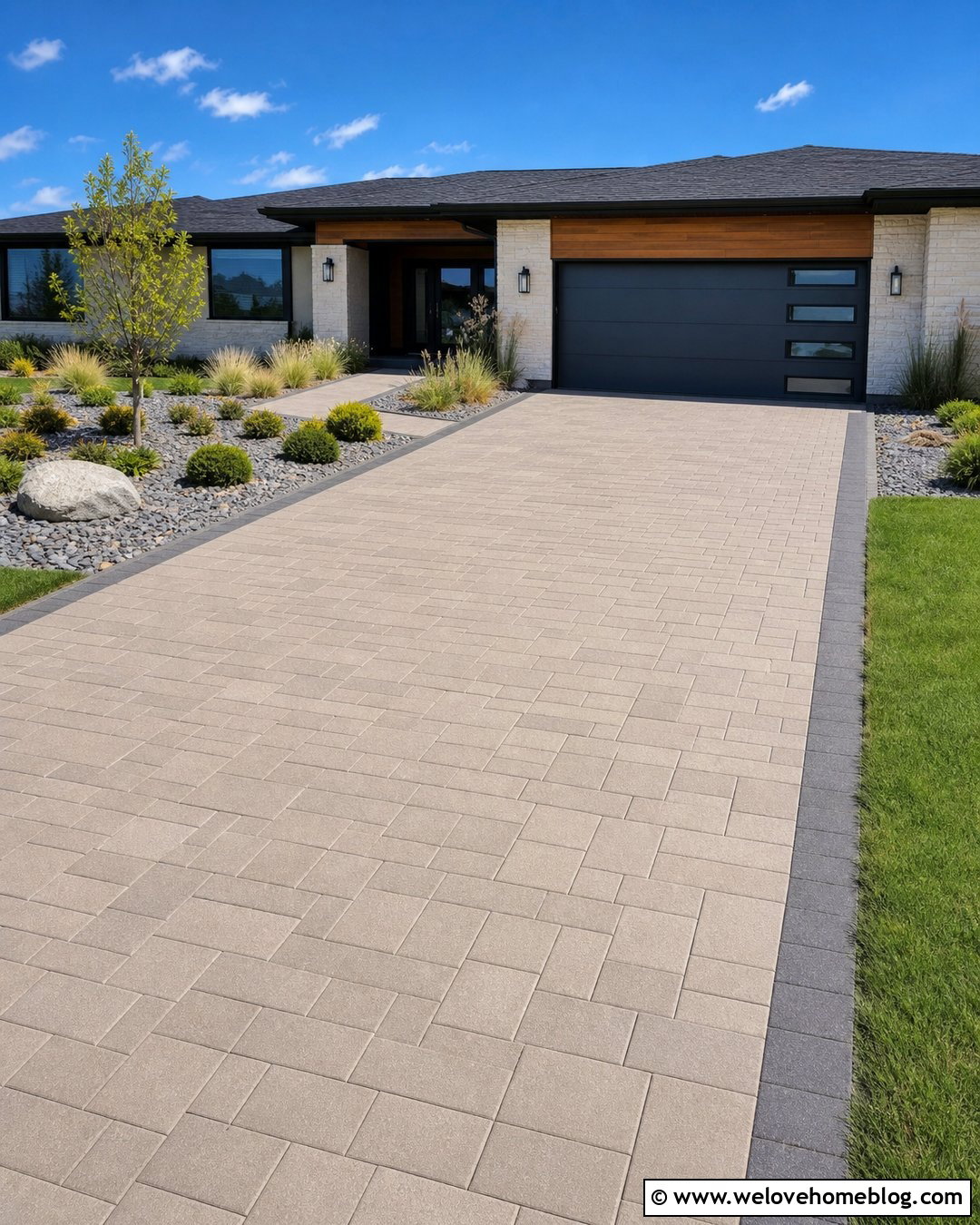
A paved driveway can feel green and welcoming without requiring complicated garden care. Begin with taupe concrete pavers in a straight layout and add a charcoal border for definition. Along each side, use broad mulch or stone beds containing compact evergreen shrubs, ornamental grasses, and resilient ground cover suited to the local climate. Repeat a limited group of plants instead of filling the borders with many unrelated varieties. This creates a calmer look and makes upkeep more predictable. A ranch or modern farmhouse provides an easy backdrop for the simple palette. Include a matching paved walkway and one small ornamental tree near the entrance. Keep plants far enough from vehicle doors and sightlines so mature growth does not interfere with everyday driveway use.
32. Paved Driveway With Flower Borders
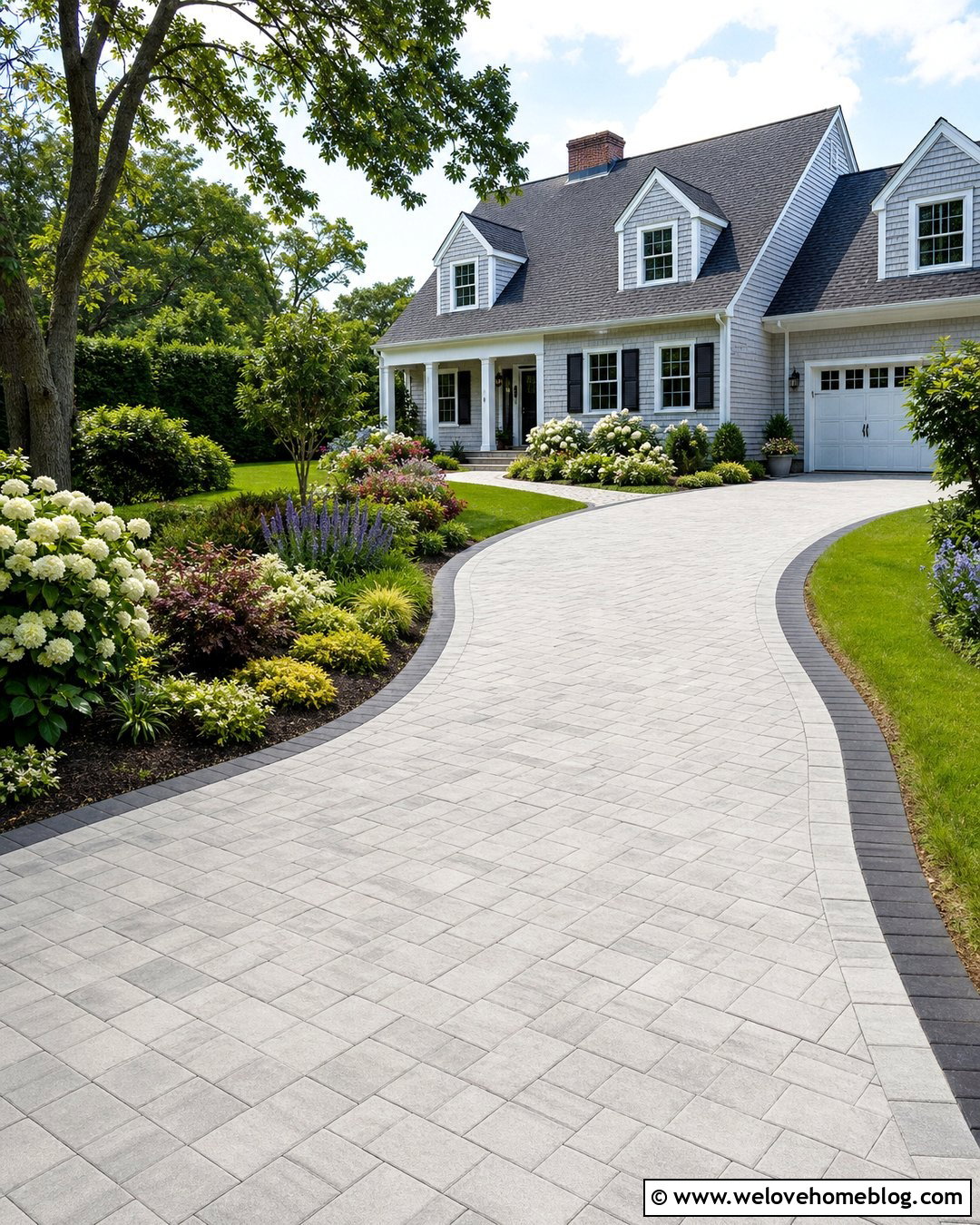
Flower borders can soften a large paved driveway and bring seasonal color closer to the curb. Use pale gray or warm beige concrete pavers in a gently curved layout, edged with a narrow row of dark brick. Create planting beds that widen near the house and taper toward the street. Combine flowering shrubs, long-blooming perennials, ornamental grasses, and evergreen structure so the border remains attractive beyond one short season. Repeat colors found on the front door, shutters, or porch for a coordinated exterior. A cottage, Cape Cod, or craftsman home works particularly well with this layered approach. Leave a small buffer between delicate plants and the paving to reduce damage from tires, foot traffic, piled snow, or maintenance equipment.
33. Paved Driveway With Turnaround
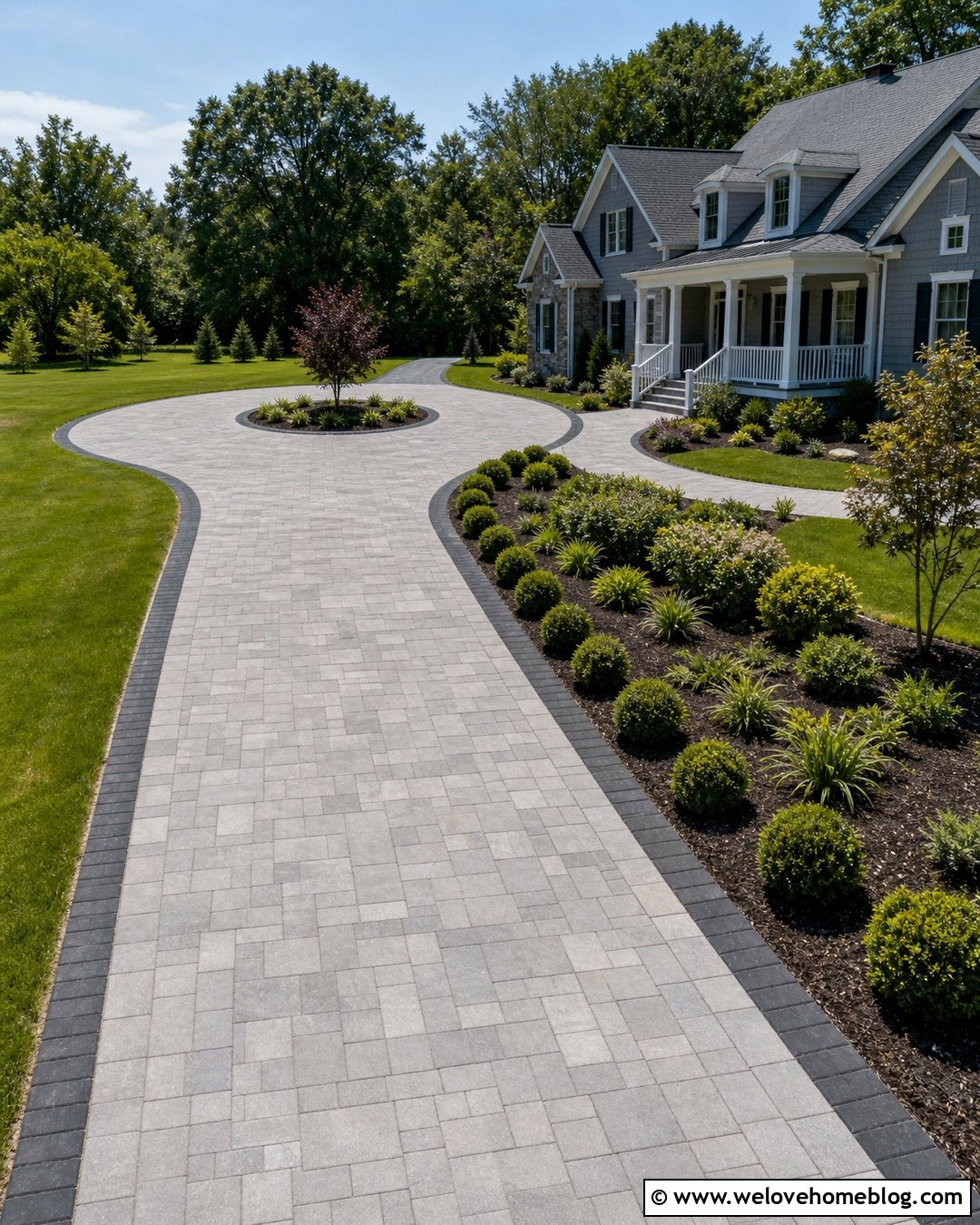
A paved turnaround can make a long driveway easier to navigate while creating a purposeful arrival area near the house. Use mixed-size gray concrete pavers for the main straight drive, then widen the surface into a circular or hammerhead-shaped turning zone. A charcoal soldier-course border should follow the complete outline and distinguish the turnaround from nearby walkways. Add a small central planting island only if the available space supports comfortable vehicle movement. Otherwise, use perimeter beds with compact shrubs and one ornamental tree. This layout suits country homes, side-entry garages, and houses positioned far from the street. Plan the dimensions around expected vehicles and parking habits. The paved area should provide useful maneuvering space without overwhelming the front lawn.
34. Sloped Paved Driveway
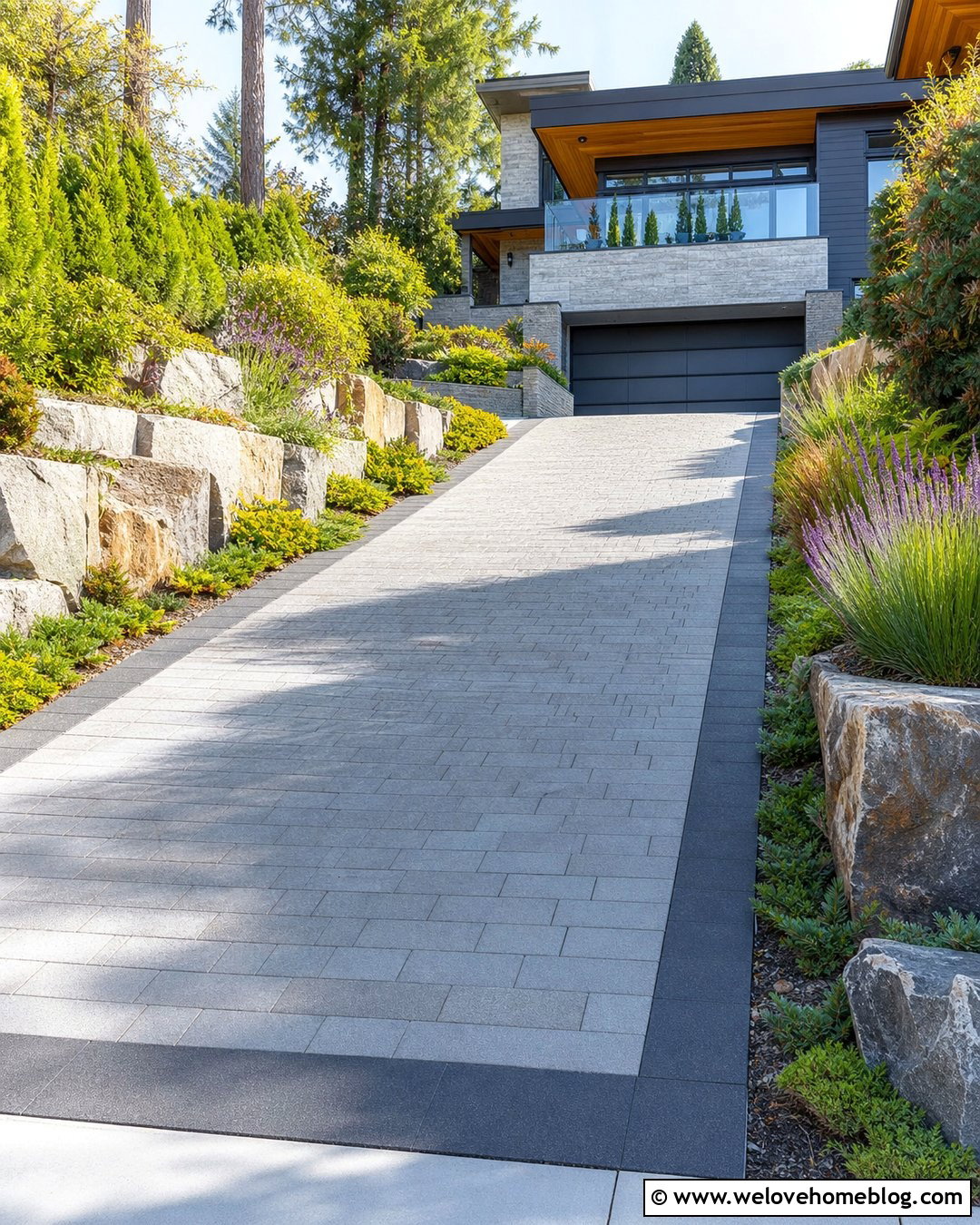
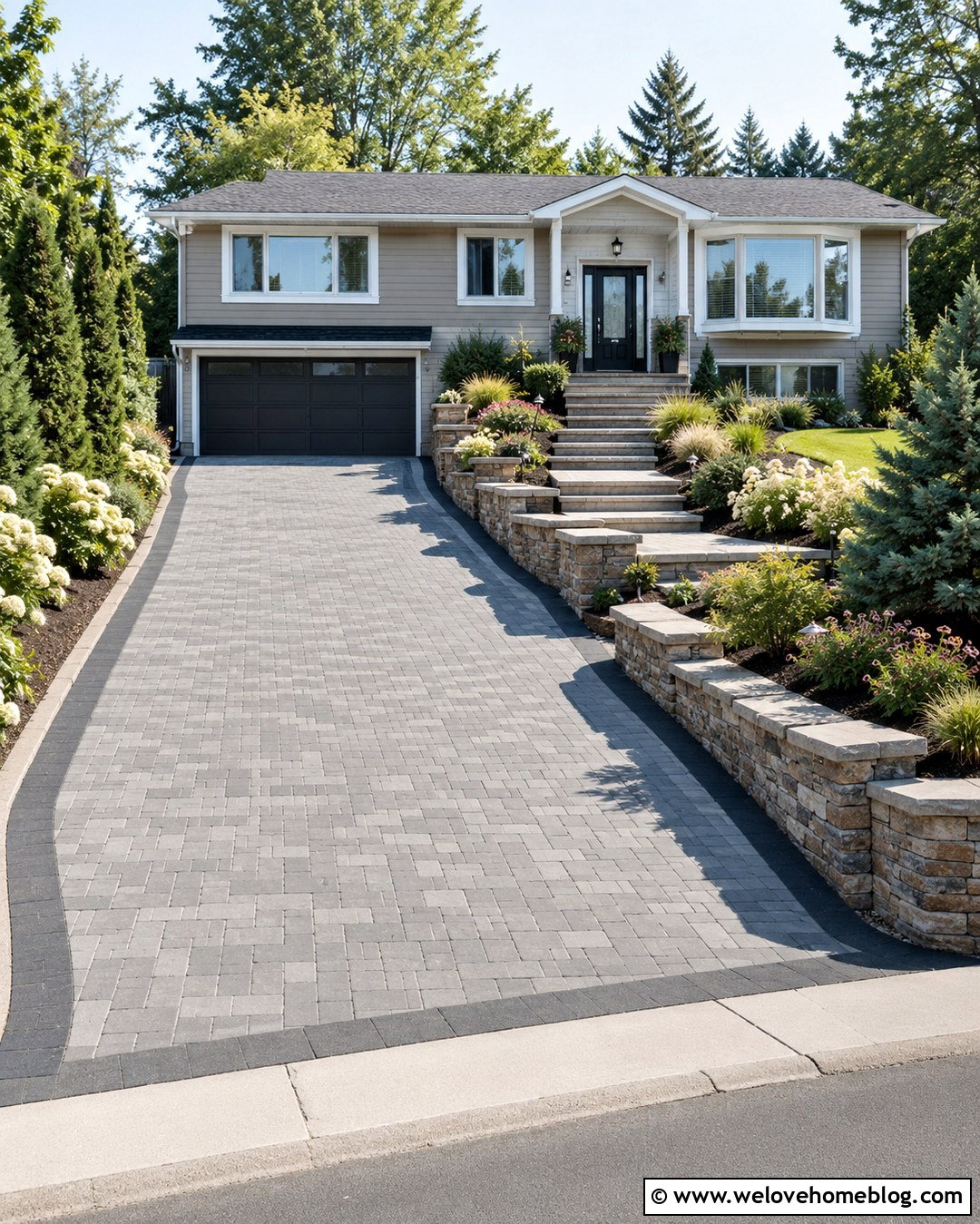
A sloped paved driveway needs a design that looks attractive while responding to grading, drainage, and surface traction. Textured concrete pavers in a medium-gray blend can create a practical, visually grounded approach to a hillside home. Lay the pavers in a pattern that clearly follows the driveway, then frame them with dark granite borders. Low retaining walls may help organize planting beds where the surrounding grade changes. Use deeply rooted shrubs, ornamental grasses, and ground cover to soften those walls and stabilize the overall appearance. Keep the garage transition smooth and avoid abrupt decorative bands in critical driving areas. Because every sloped site behaves differently, drainage direction, base construction, edge restraint, and winter conditions should be evaluated by qualified local professionals.
35. Paved Driveway With Matching Walkway
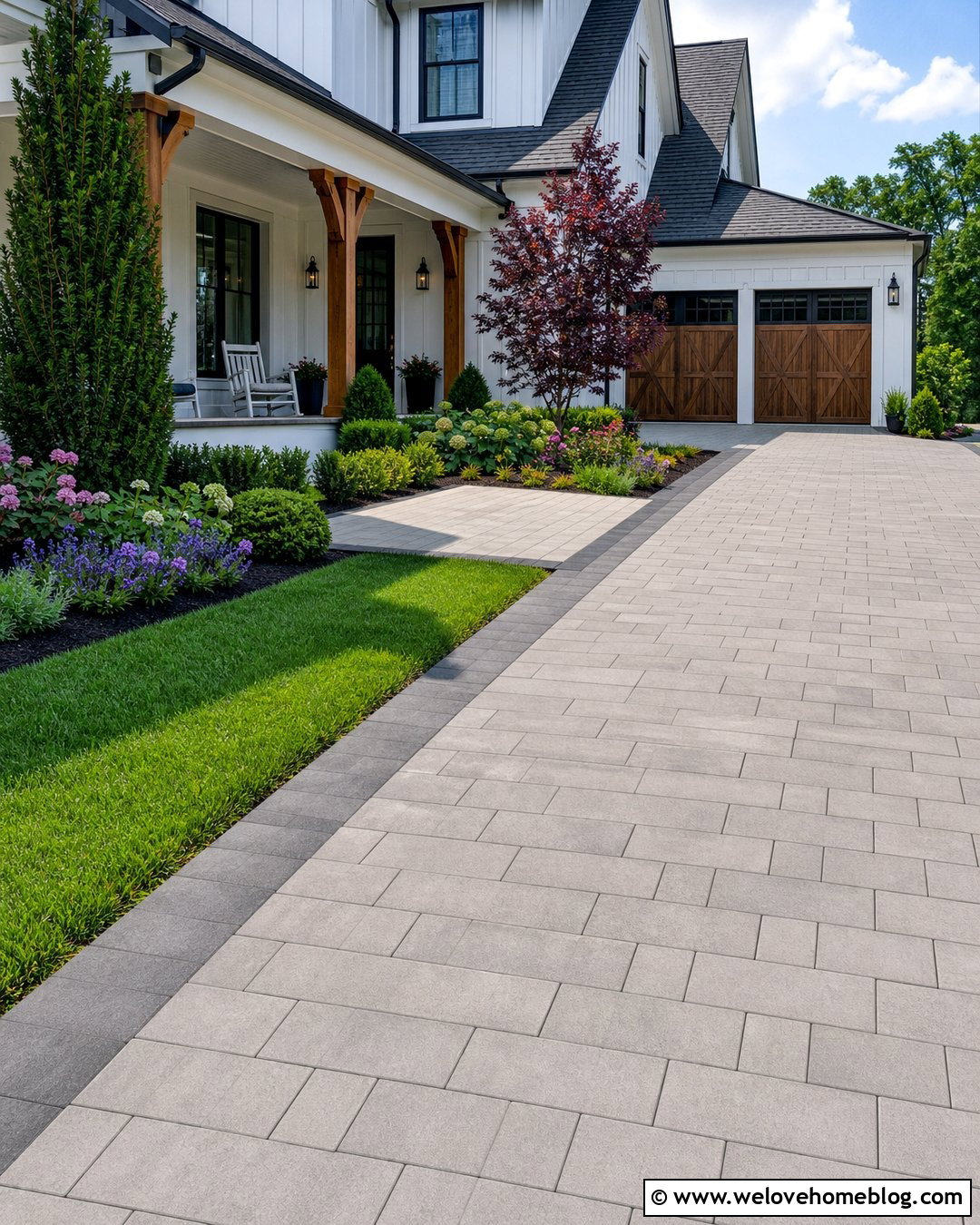
Matching the driveway and walkway creates one of the most cohesive front-yard designs. Use warm gray concrete pavers across a straight driveway and continue the same material toward the porch. Change the paver direction or add a dark border where the walkway branches away so visitors can recognize the pedestrian route immediately. A wider landing near the front steps will make the entrance feel more generous. Frame both surfaces with shared planting beds containing evergreen shrubs, flowering perennials, and one small accent tree. This approach works with almost any house, from a modest ranch to a modern farmhouse. Repeating material does not mean every surface must look identical; subtle pattern changes can provide hierarchy while maintaining a consistent color and finish.
Conclusion:
The most successful paved driveway feels like a natural extension of the home, not a separate slab placed in the front yard. Consider the architecture, parking needs, property size, climate, drainage, and desired maintenance level before selecting a surface. Paver color and pattern can establish the main character, while borders, aprons, walkways, gates, lighting, and landscaping bring the full design together. Even a simple rectangular driveway can look distinctive when its proportions and surrounding details are carefully planned. Use these 35 paved driveway ideas as starting points, then adapt the materials and layout to your property. Professional base preparation and installation will help the finished entrance remain attractive, stable, and practical.

Related posts:
Leave a Reply