
A well-defined edge can turn loose stone into a polished, intentional entrance. These 20 Edging Gravel Driveway Ideas explore complete driveway designs where the gravel color, layout, border, landscaping, and home exterior work together. You will find traditional brick, natural stone, timber, concrete, metal, and planting-based borders suited to different budgets and house styles. Beyond improving curb appeal, properly installed edging helps contain loose aggregate and separates the driveway from lawns and planting beds. It should also complement the driveway’s grading and drainage rather than obstruct water movement. () Whether you prefer a formal entrance or a relaxed country approach, use these practical 20 Edging Gravel Driveway Ideas to create a more attractive and manageable front yard.

1. Gravel Driveway With Brick Edging
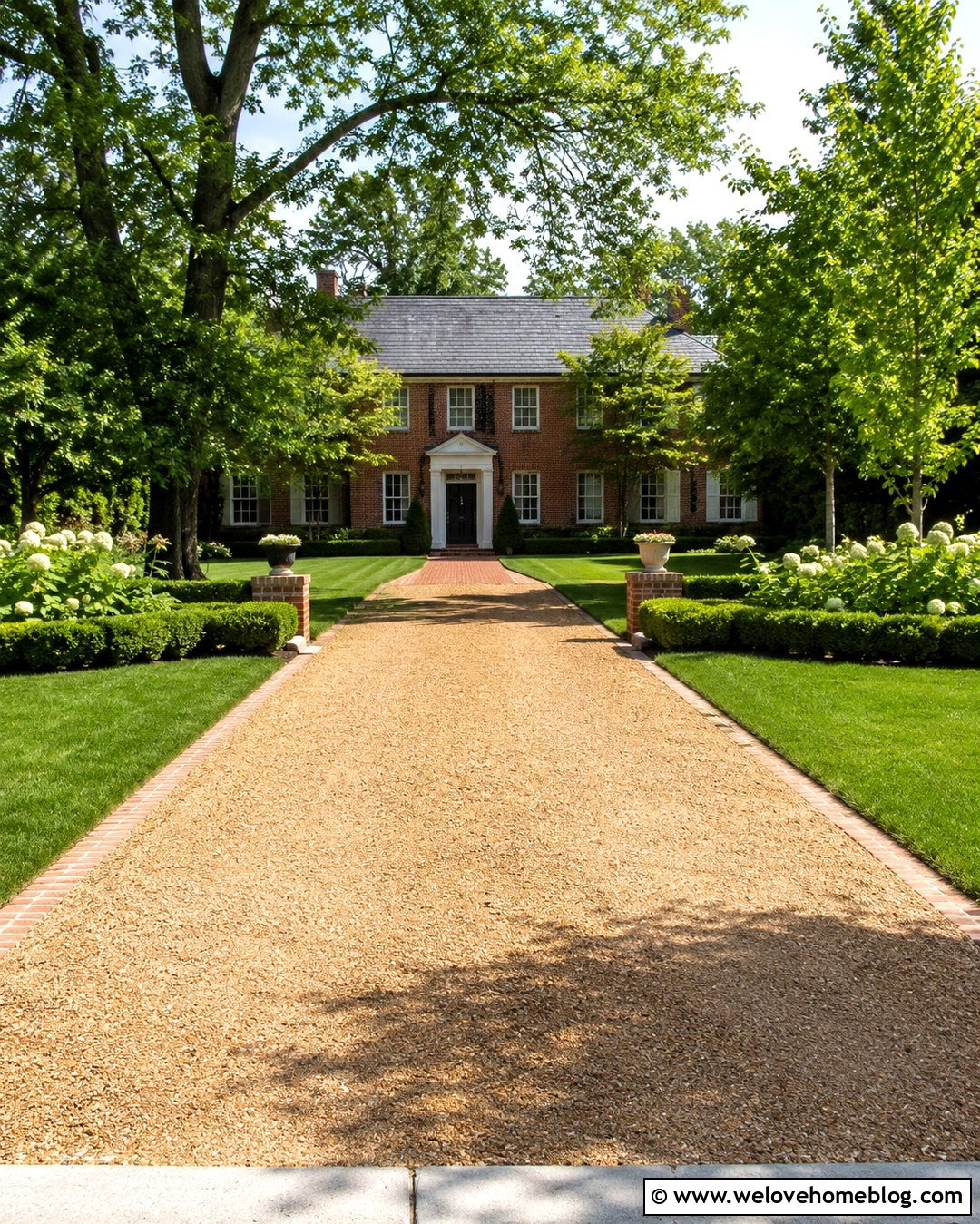
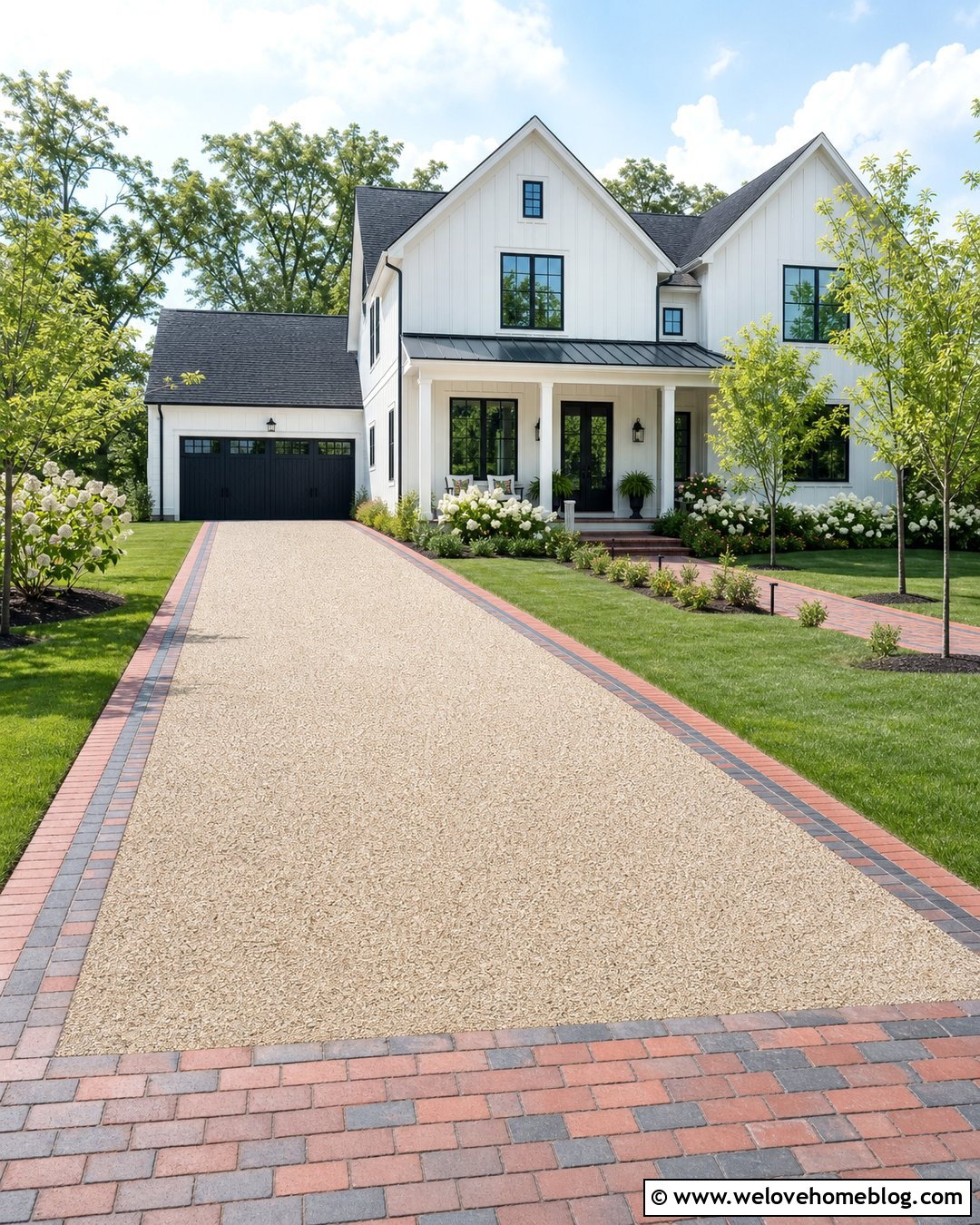
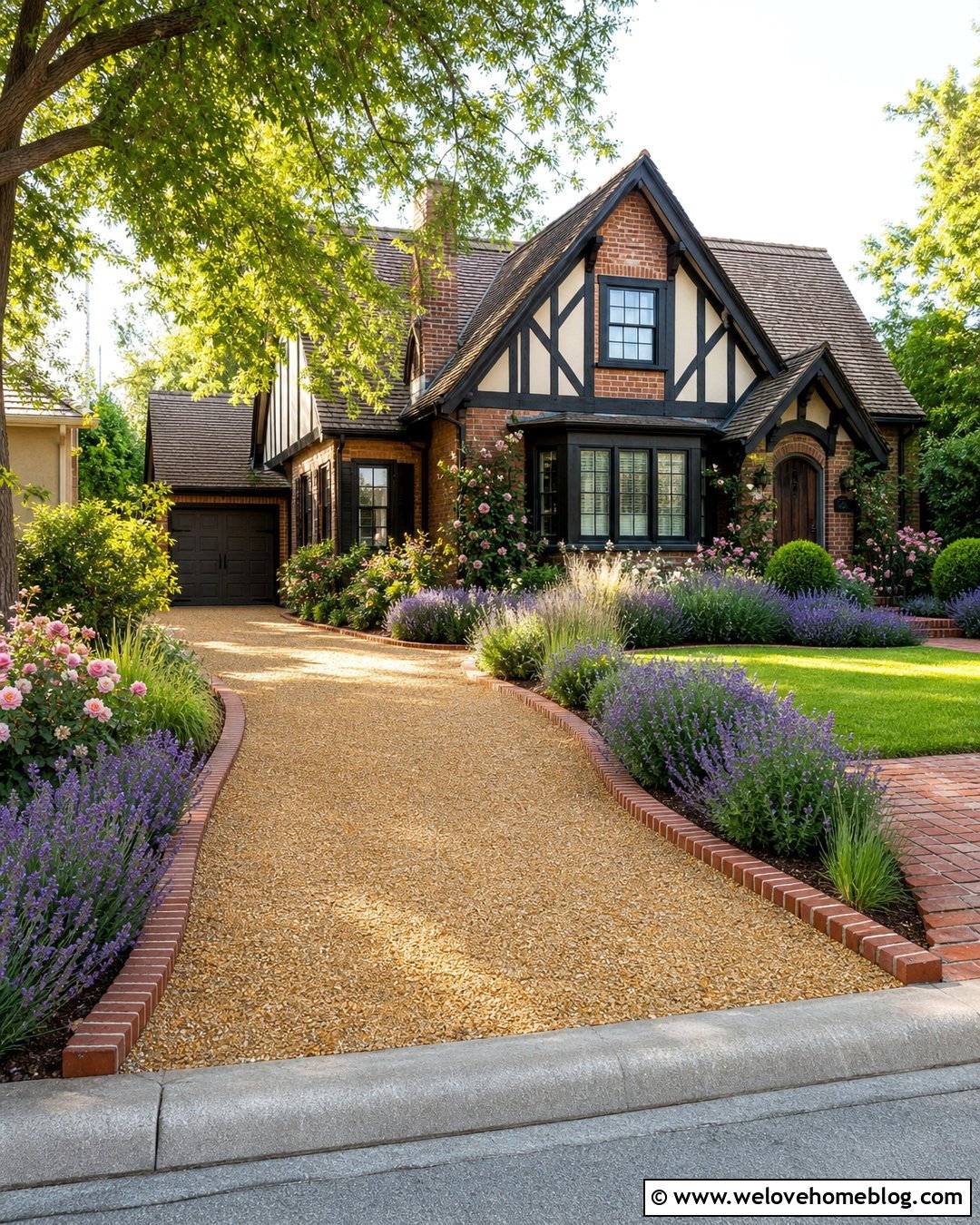
Warm brick edging gives a gravel driveway a familiar, welcoming appearance that works especially well with colonial, Cape Cod, and traditional homes. Choose buff or light gray crushed gravel to create a clear contrast against red clay bricks. For a straight driveway, install the bricks lengthwise along both sides to emphasize the approach to the garage. A curved layout can use closely spaced bricks that follow each bend without leaving awkward gaps. Set the border on a properly prepared base so it remains level under regular vehicle traffic. Brick edging can provide substantial containment when its foundation and restraint are designed for driveway conditions. () Finish the look with trimmed lawn, compact boxwood shrubs, and a brick walkway that visually connects the driveway to the front door.
2. Gravel Driveway With Cobblestone Edging
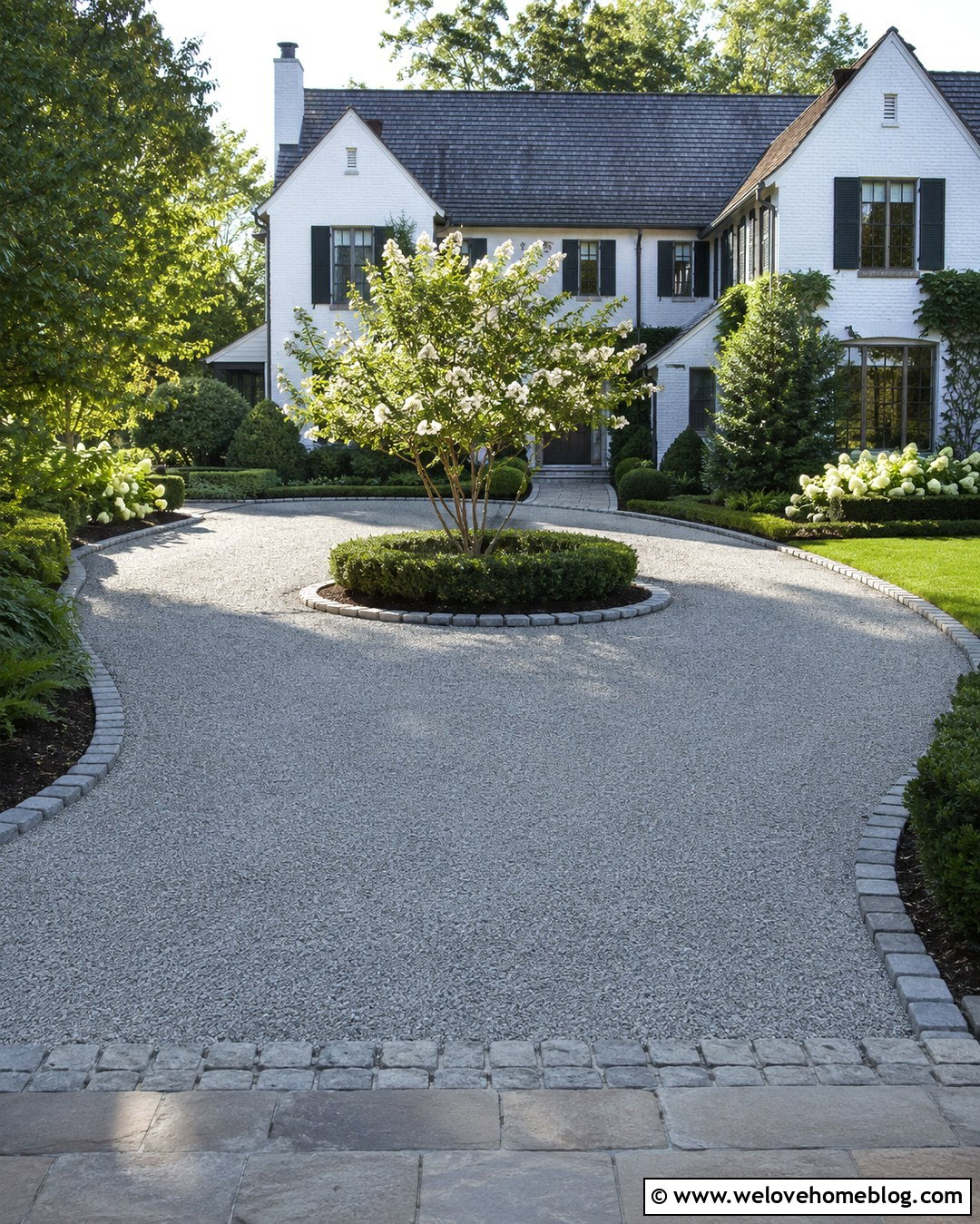
Cobblestone edging creates a substantial border that can handle the visual scale of a wide or circular gravel driveway. It pairs beautifully with gray crushed stone, especially when the house has stone siding, painted brick, or traditional architectural details. Use one neat row for a restrained finish or two staggered rows for a wider frame. On a circular driveway, continue the cobblestones around the central planting island to unify the entire layout. The irregular texture softens formal lines without making the entrance look unfinished. Choose cobbles with relatively even top surfaces near parking and walking areas. Deeply set stones are less likely to move when tires approach the edge. Add hydrangeas, clipped evergreens, and ornamental trees to create a balanced landscape with year-round structure.
3. Gravel Driveway With Steel Edging
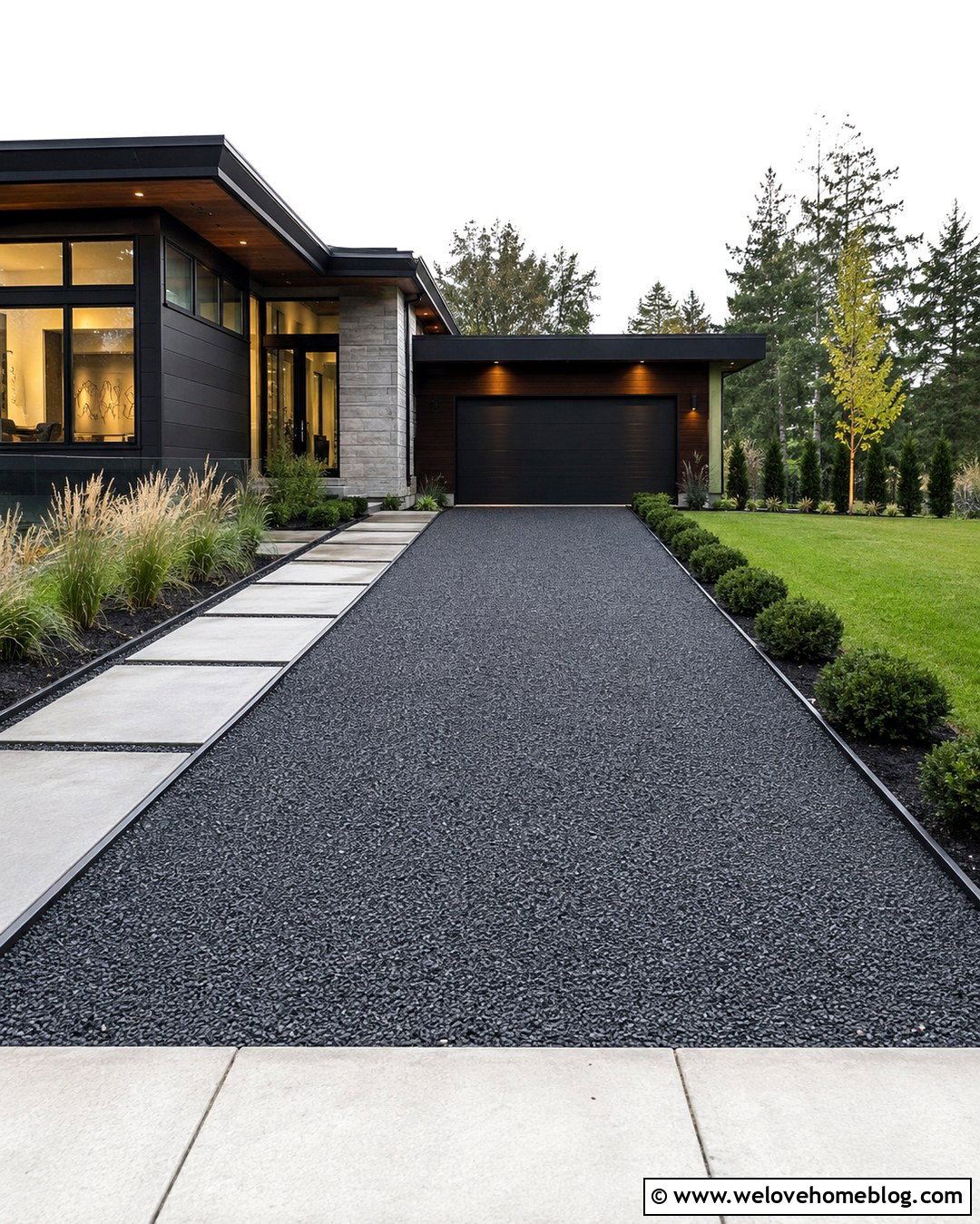
Slim steel edging is a practical choice when you want the gravel surface to appear crisp without seeing a heavy border. Pair dark charcoal crushed gravel with black powder-coated steel for a sleek modern driveway, or use galvanized steel beside pale granite chips for a lighter finish. The narrow profile works particularly well along straight driveways and geometric parking areas. It can also follow gentle curves when professionally shaped and securely anchored. Steel edging should be substantial enough for the intended application because lightweight decorative garden products may not withstand driveway pressure. () Keep the surrounding landscape simple with rectangular planting beds, ornamental grasses, and large concrete walkway slabs. The result is clean and contemporary, while the driveway still retains the softer texture and permeability associated with gravel.
4. Gravel Driveway With Corten Steel Edging

Would you like a modern border that becomes more interesting as it weathers? Corten steel edging develops a rust-toned surface that looks striking beside gray granite gravel or pale limestone chips. Use it along a gently curved driveway leading to a modern farmhouse or contemporary home with wood accents. The warm metal color can connect visually with cedar siding, bronze light fixtures, or a natural wood garage door. Keep the edging low enough to preserve a streamlined profile while still containing the surface aggregate. Install it with strong stakes and smooth transitions near sidewalks and parking spaces. Complete the design with feather reed grass, blue fescue, Russian sage, and gravel-filled planting beds. The repeated earthy tones make the driveway, border, and landscaping feel like one thoughtfully planned composition.
5. Gravel Driveway With Concrete Curb Edging
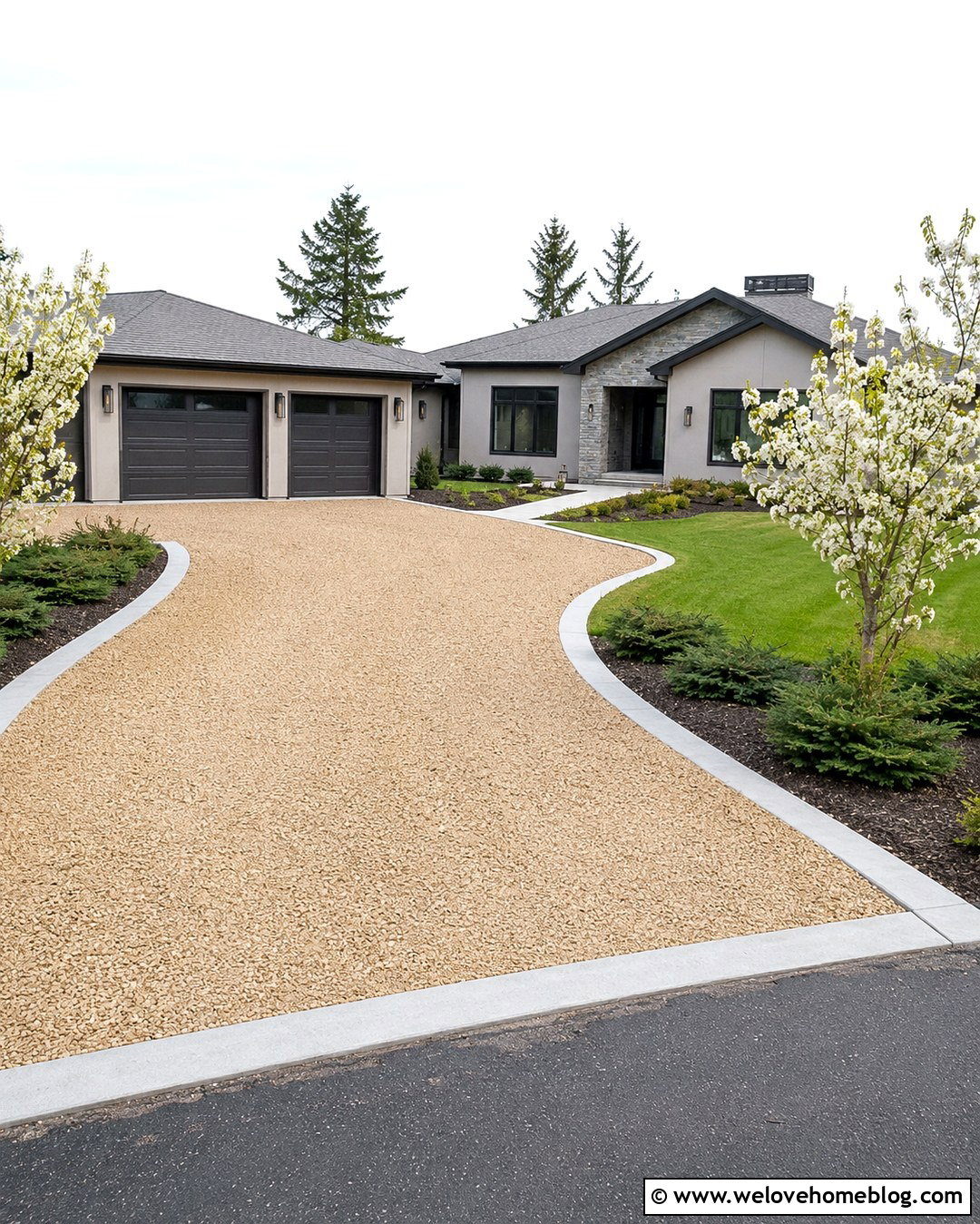
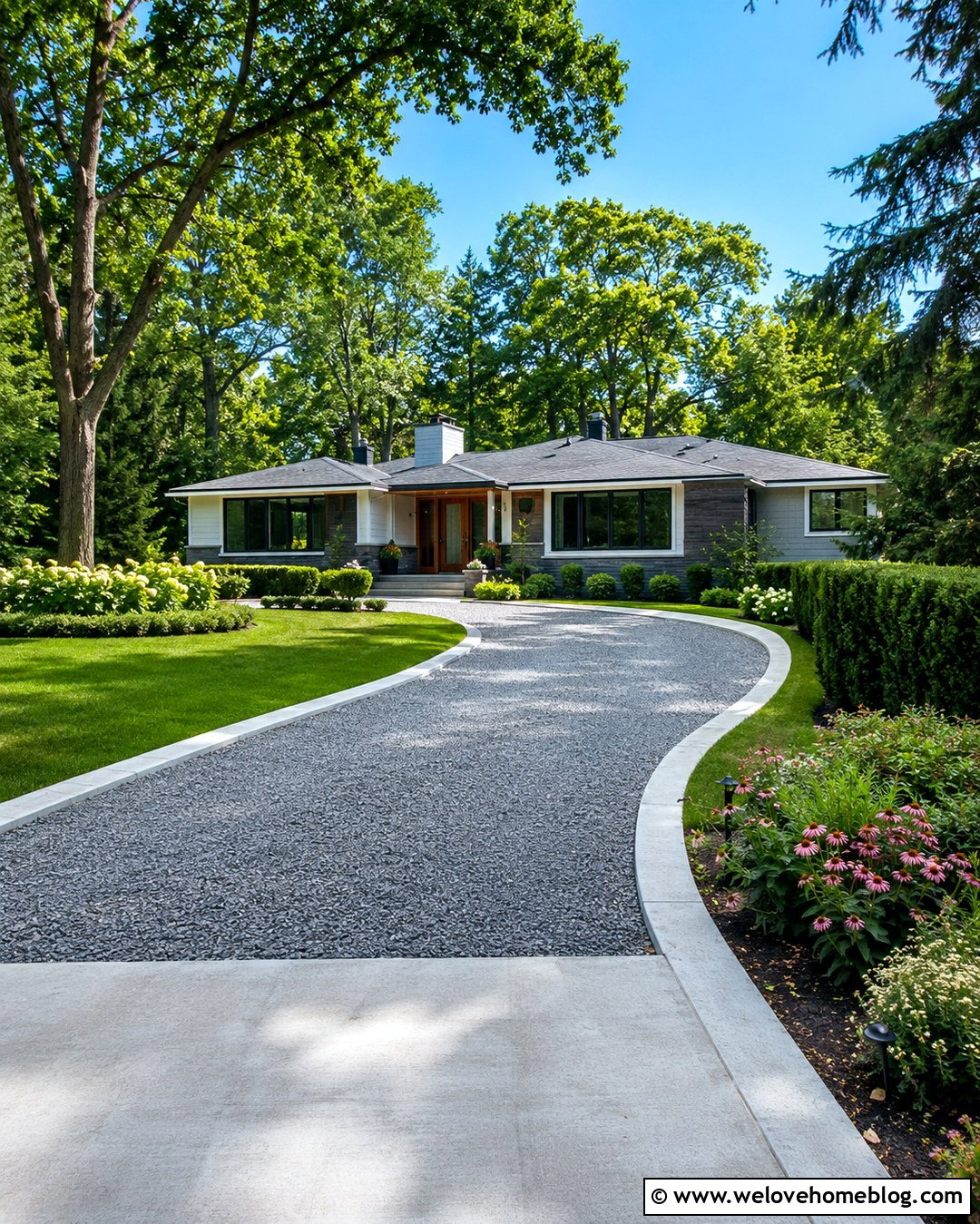
A poured concrete curb creates one of the most defined edges for a frequently used gravel driveway. Its solid appearance suits suburban ranch homes, contemporary houses, and properties with wide garage entrances. Combine a medium-gray concrete curb with tan crushed gravel for contrast, or match it with gray gravel for a quieter, more uniform look. The curb can follow straight sides, broad curves, or a circular turnaround. A flush or slightly raised profile makes the edge easier to navigate than a tall barrier. Concrete edging should be planned around drainage, slopes, roots, and nearby walking routes rather than treated as decoration alone. () Frame the driveway with mulched beds, low junipers, and small flowering trees. A matching concrete walkway can help tie the driveway into the home’s architecture.
6. Gravel Driveway With Paver Edging
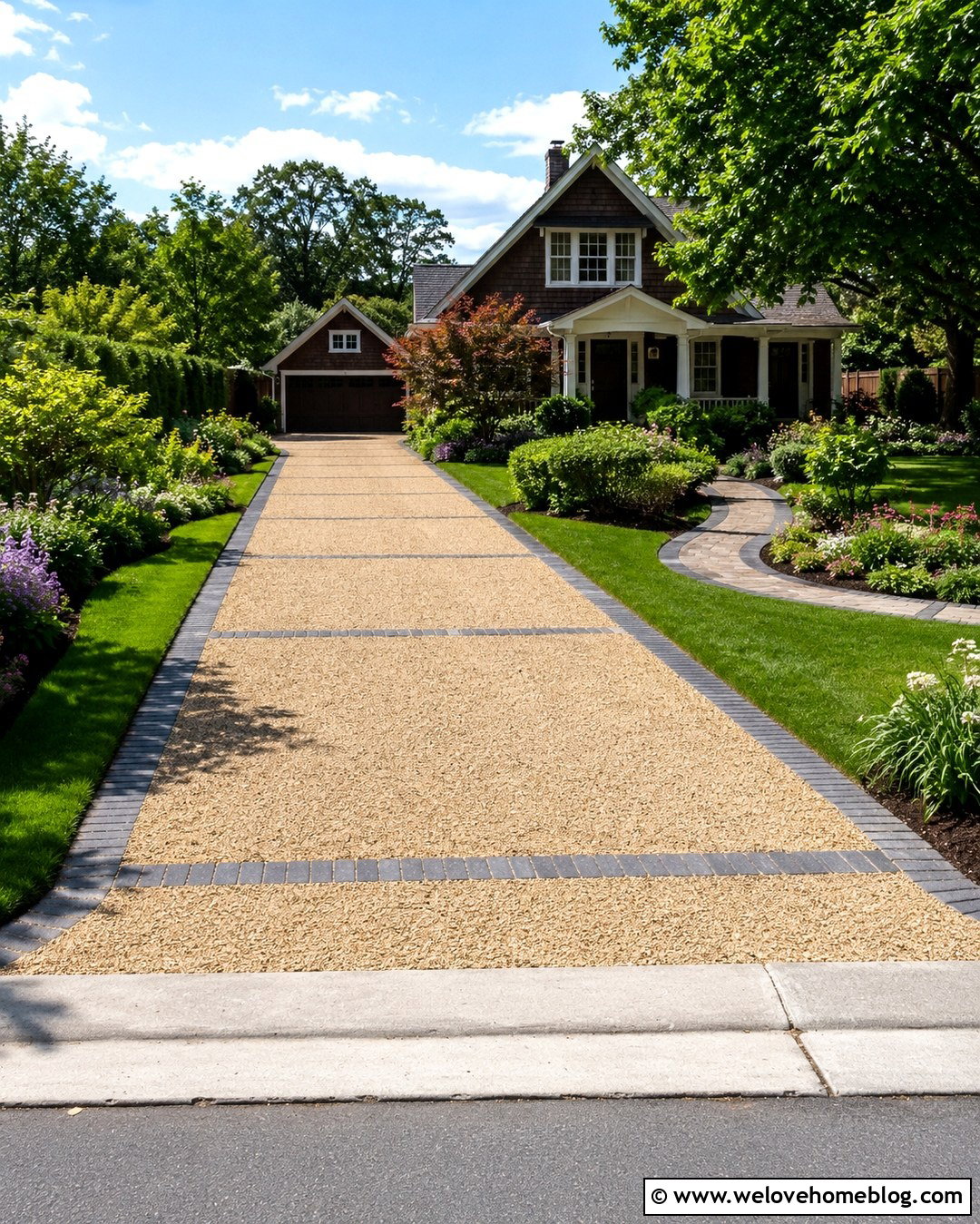
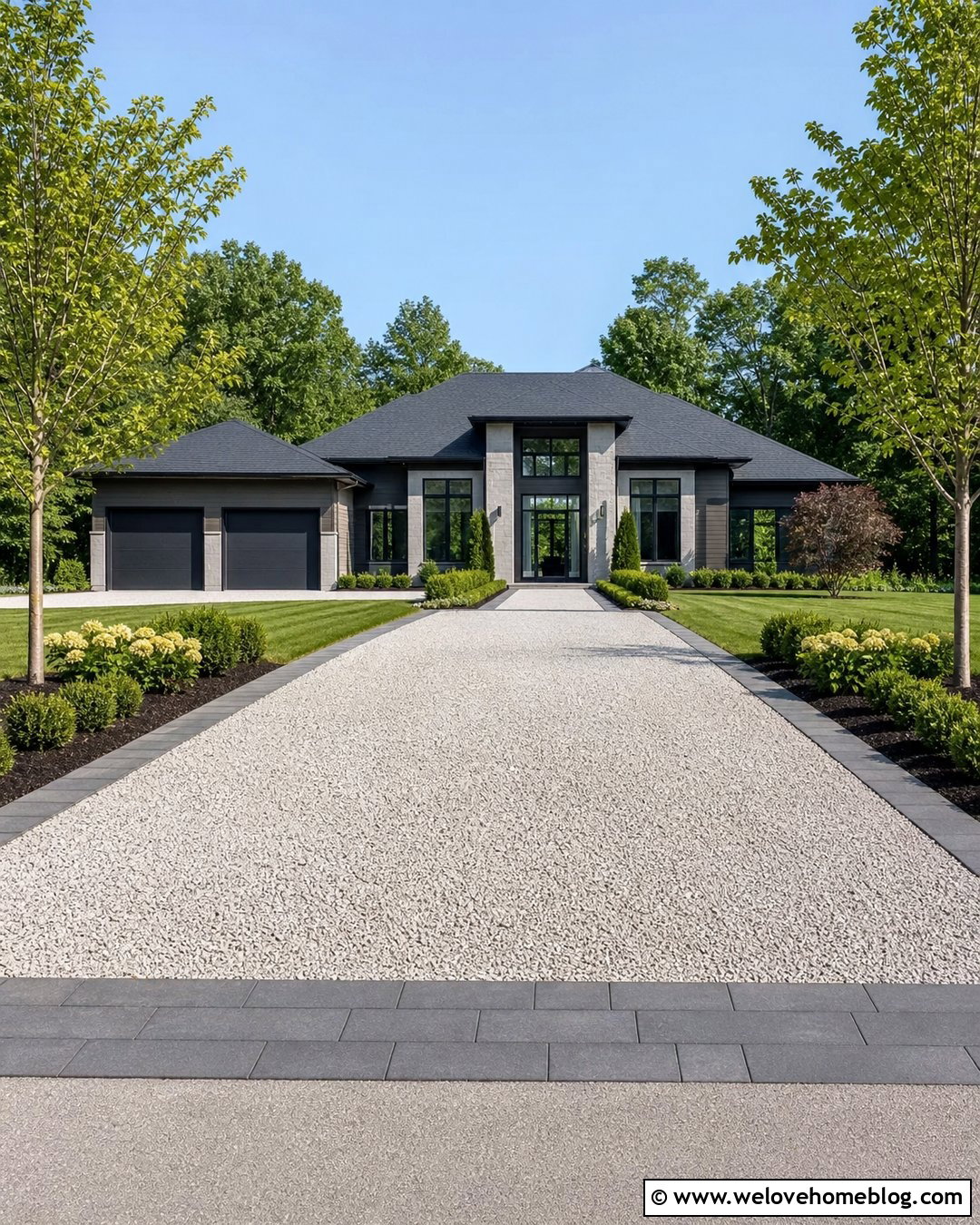
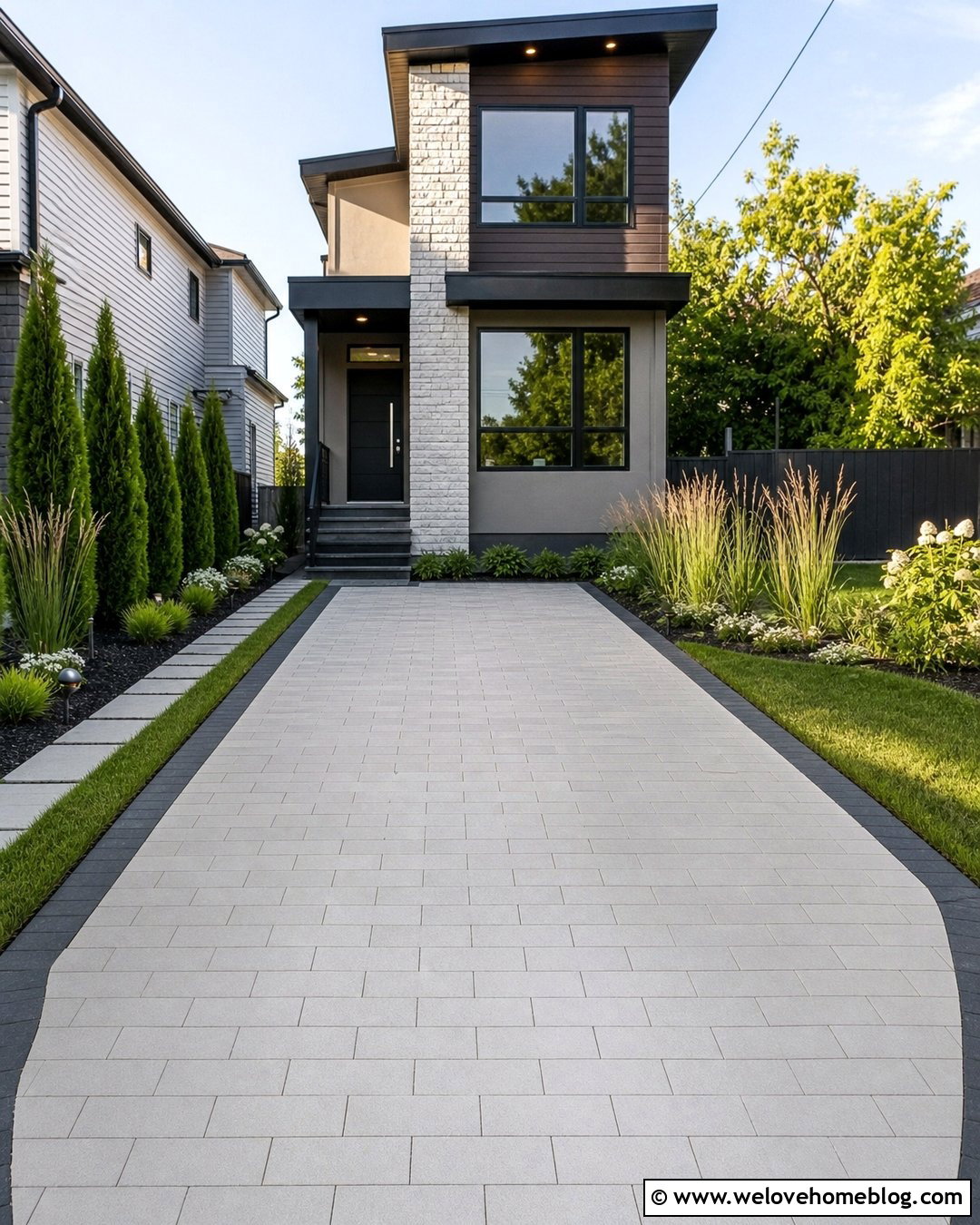
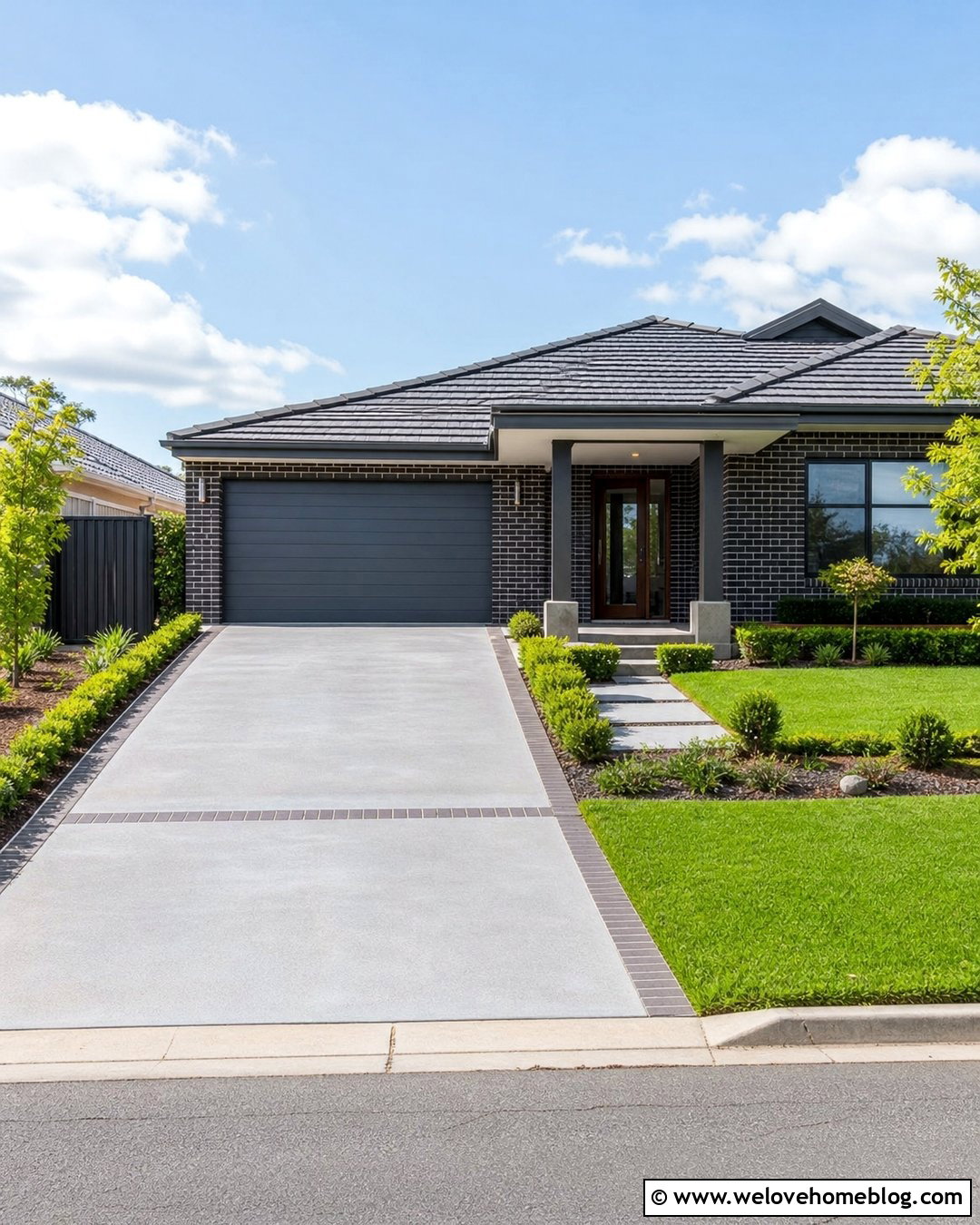
Concrete paver edging offers numerous colors and dimensions without requiring the entire driveway to be paved. For an updated craftsman home, combine warm beige crushed gravel with charcoal rectangular pavers laid in a single soldier course. Repeat the same pavers across the driveway as narrow bands to divide a long surface into visually manageable sections. On curved driveways, use smaller units that can follow the shape more smoothly. The pavers need a stable base and suitable edge restraint so tires do not push them outward. A broad paver border can also provide a cleaner place for passengers to step out of a vehicle. Surround the design with layered shrubs, flowering perennials, and a curved walkway. Matching the border to porch columns or exterior masonry makes the driveway feel integrated with the house.
7. Gravel Driveway With Belgian Block Edging
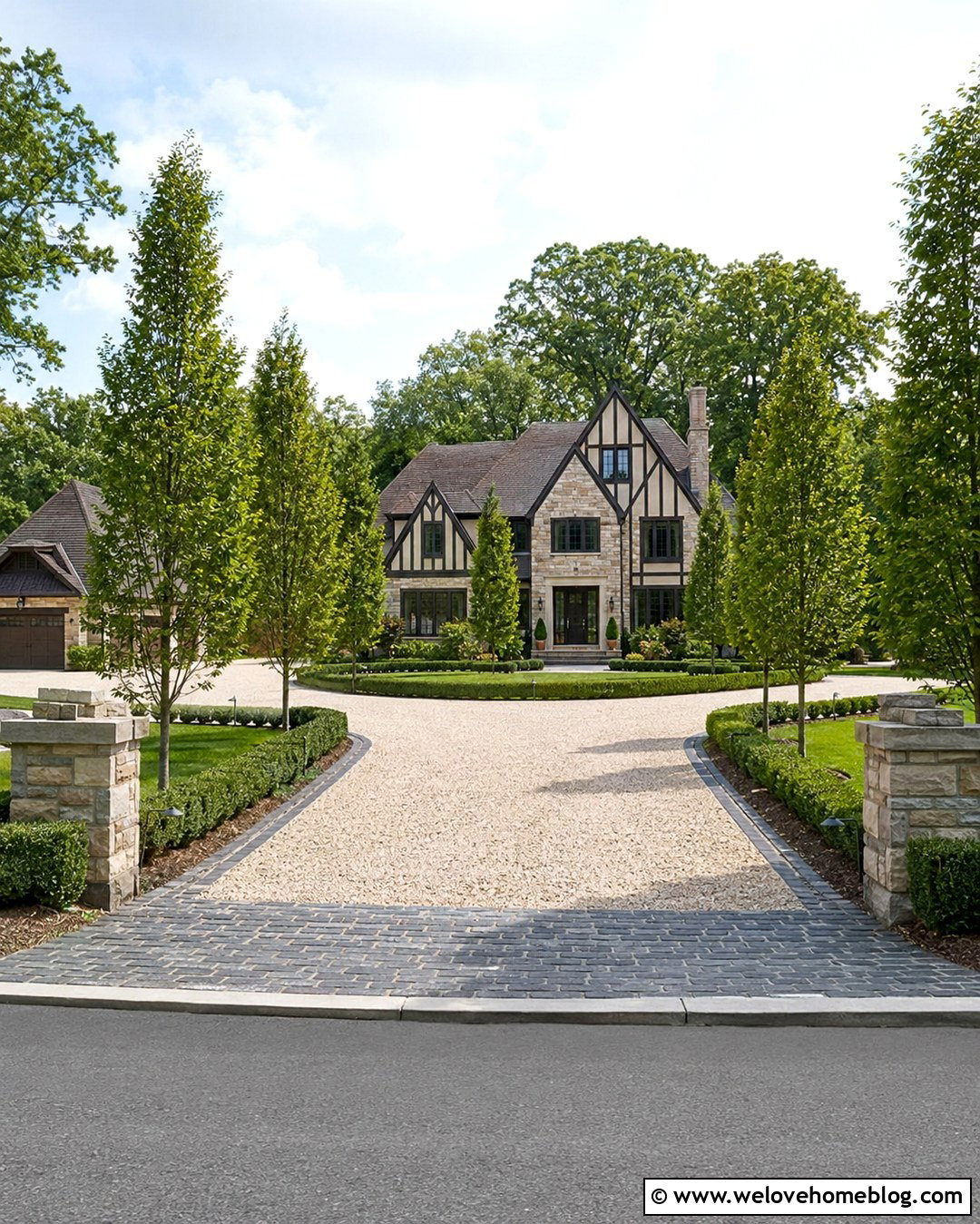
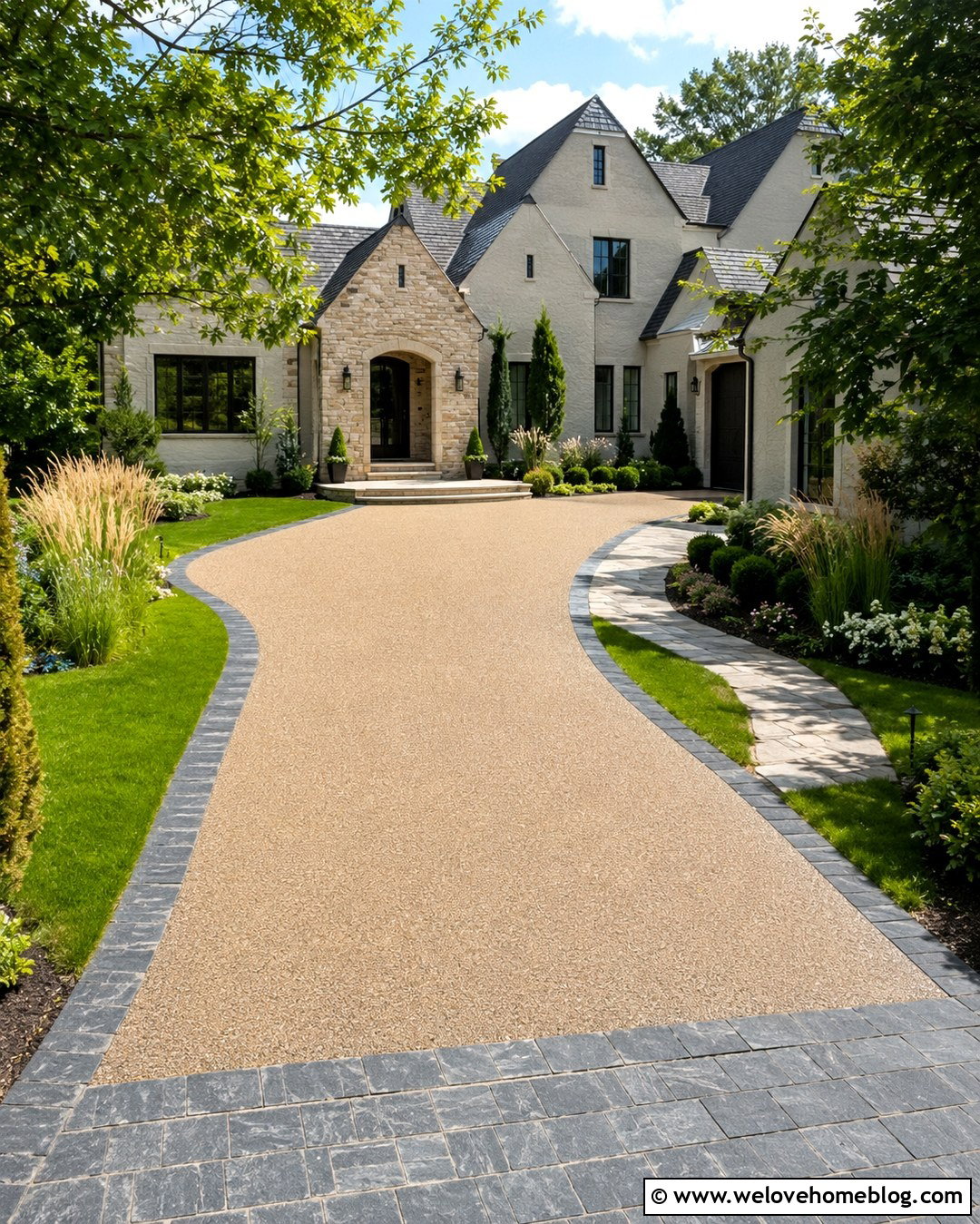
Belgian block gives a gravel driveway the weight and texture of traditional stonework. Its rectangular shape creates a more orderly border than highly irregular fieldstone, making it suitable for colonial, Tudor, and brick homes. Place charcoal or gray blocks beside light beige gravel to produce a strong outline. A single upright row provides a pronounced curb, while blocks installed closer to grade create a smoother transition beside parking areas. Continue the Belgian block around a curved entrance and across the driveway apron for a cohesive finish. The substantial stones should be supported by a properly prepared foundation, particularly where vehicles may cross the border. Add clipped hedges, symmetrical entry trees, and understated path lighting. This complete look feels formal without relying on an overly elaborate planting plan or decorative gate.
8. Gravel Driveway With Timber Edging
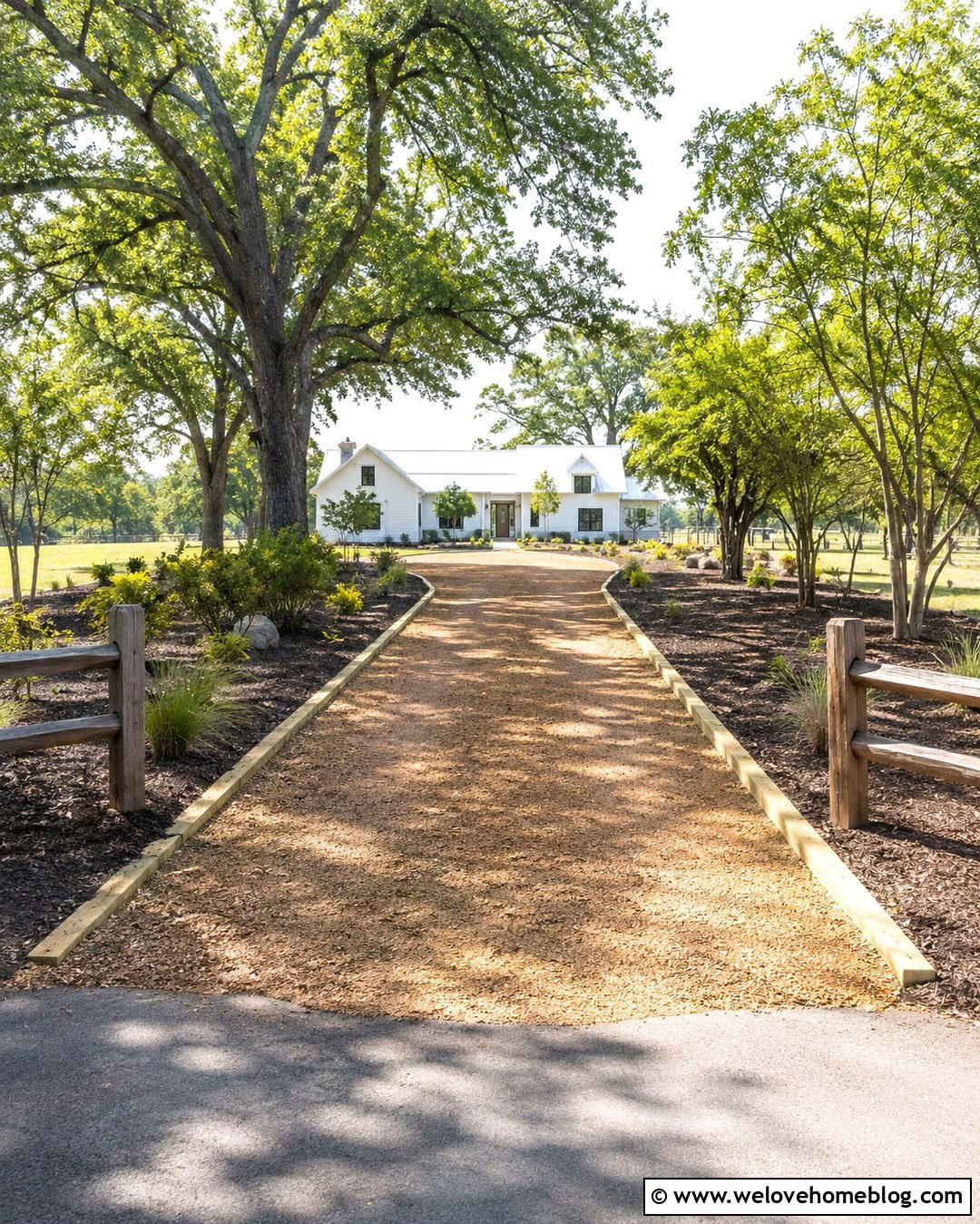
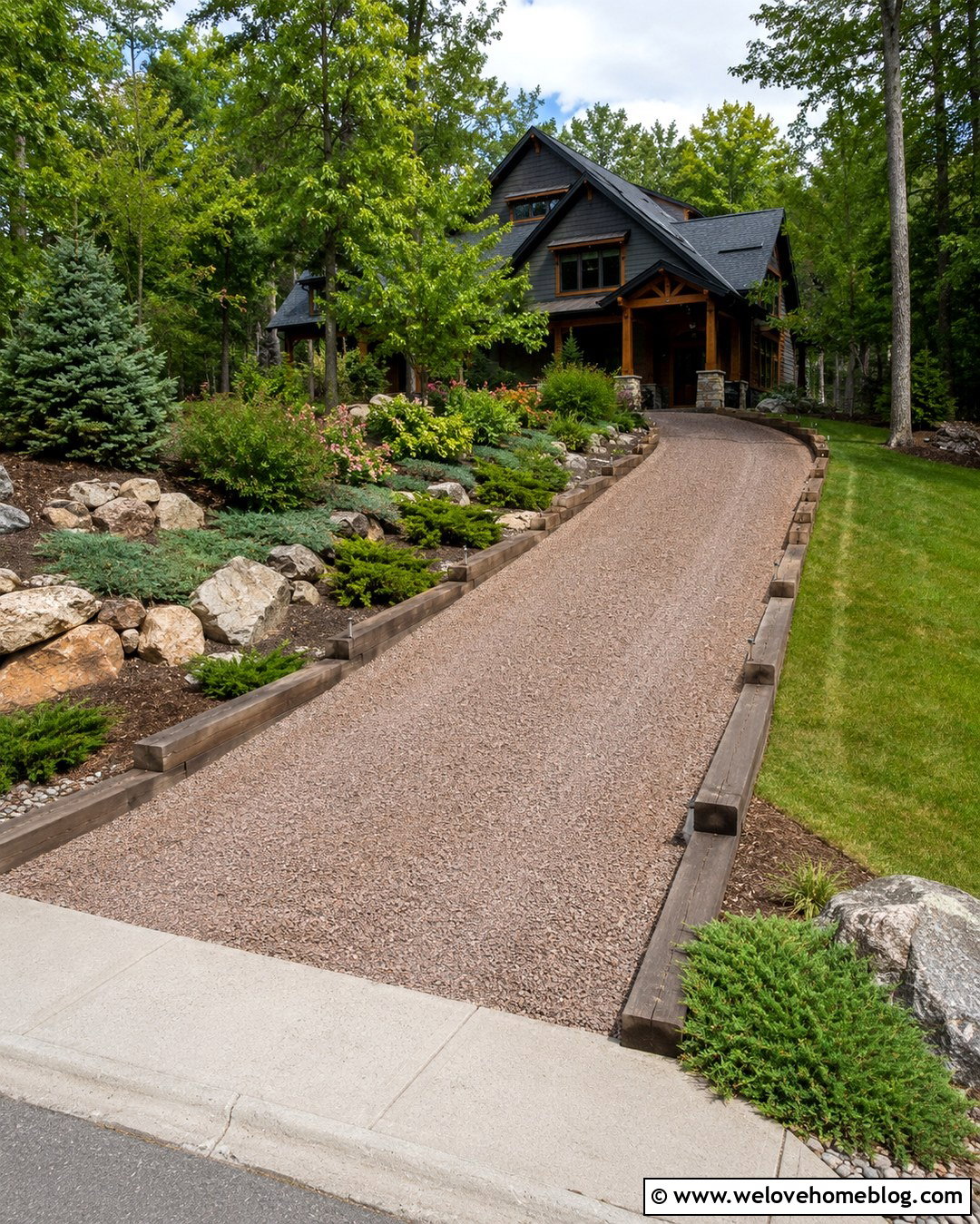
Timber edging brings warmth and structure to a relaxed gravel driveway. It works naturally beside a country home, cabin, ranch, or modern farmhouse surrounded by informal planting. Use pressure-treated landscape timbers or another exterior-rated product rather than thin decorative boards. Pair the wood with brown, honey, or mixed-color crushed gravel to maintain an earthy palette. A straight driveway can feature continuous timber edges, while a gently curved approach may require shorter sections and careful joining. Secure the timbers firmly so they resist movement under pressure from the gravel. Timber is often approachable for DIY installation, but appropriate treatment and drainage remain important in damp locations. () Complete the setting with native grasses, oak trees, split-rail fencing, and broad mulched beds that soften the long driveway lines.
9. Gravel Driveway With Railroad Tie Edging
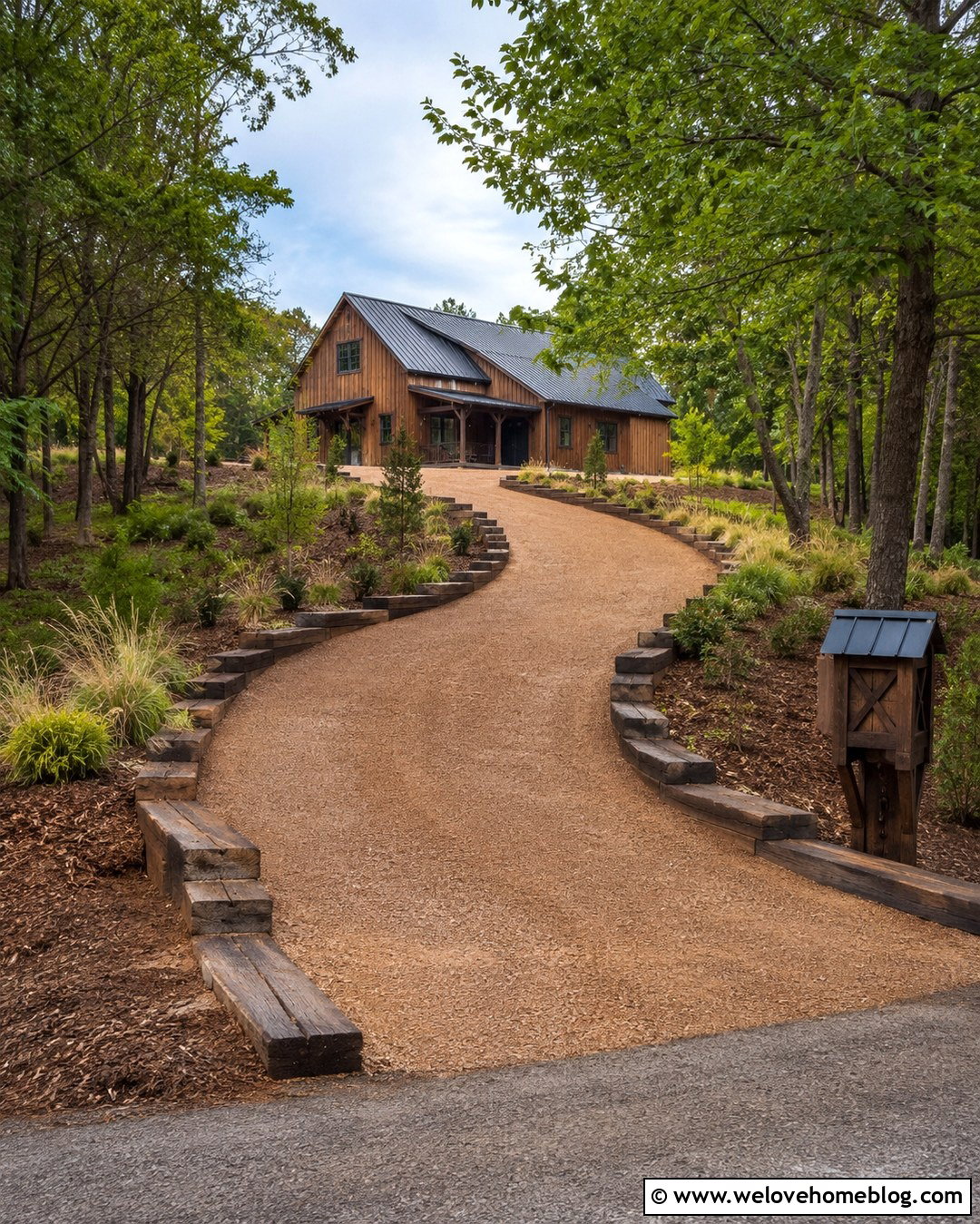
Heavy wood ties can visually anchor a long gravel driveway on a spacious rural property. Their broad scale suits a farmhouse, barn-style garage, wooded residence, or mountain home better than a small formal front yard. Choose reclaimed-looking landscape timbers intended for residential landscaping rather than unknown salvaged materials. Set them beside compacted crushed granite or brown road gravel to create a rugged, practical entrance. On sloping ground, stepped tie sections can help define the driveway while adjoining planting beds follow the grade. The border should not function as a substitute for proper drainage or structural slope stabilization. Design water movement before placing any large edging material. Add clusters of native shrubs, meadow grasses, and canopy trees. A matching timber mailbox surround can repeat the material near the road without overwhelming the landscape.
10. Gravel Driveway With Natural Stone Edging
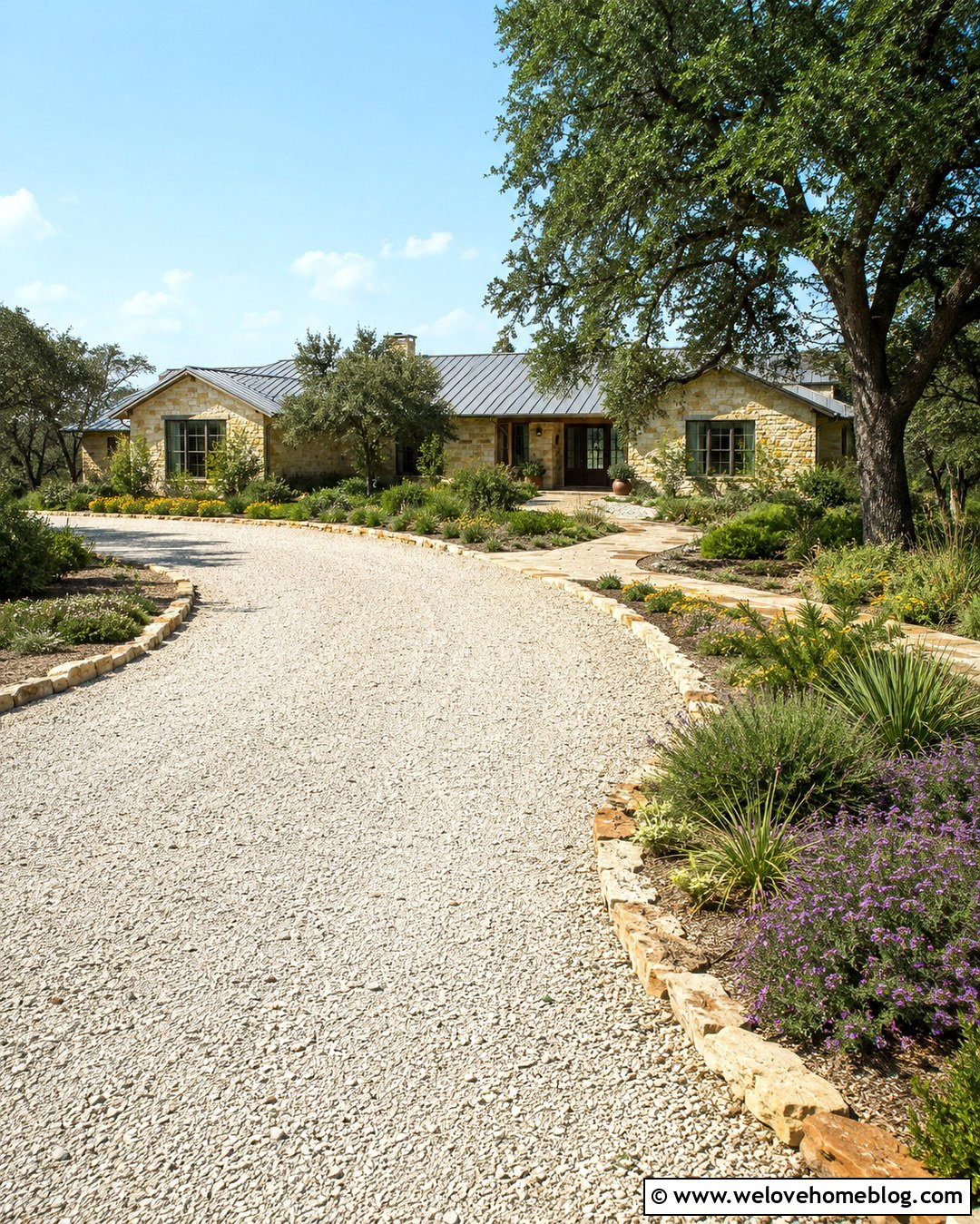
Natural stone edging makes a gravel driveway feel connected to the surrounding landscape rather than placed on top of it. Select local stone whenever possible so the border relates naturally to nearby walls, house masonry, and regional colors. Pale crushed limestone looks attractive with warm sandstone, while gray granite gravel works with darker ledgestone. Use stones of similar scale along the driveway, reserving larger pieces for the entrance and planting-bed corners. A broad curved layout will make the irregular border easier to appreciate from the street. Set the stones securely and avoid sharp projections where doors open or people walk. Finish the design with sweeping ground covers, native flowering plants, and layered evergreen shrubs. Repeating the same stone in the front walkway or porch steps creates a cohesive, established appearance.
11. Gravel Driveway With Fieldstone Edging
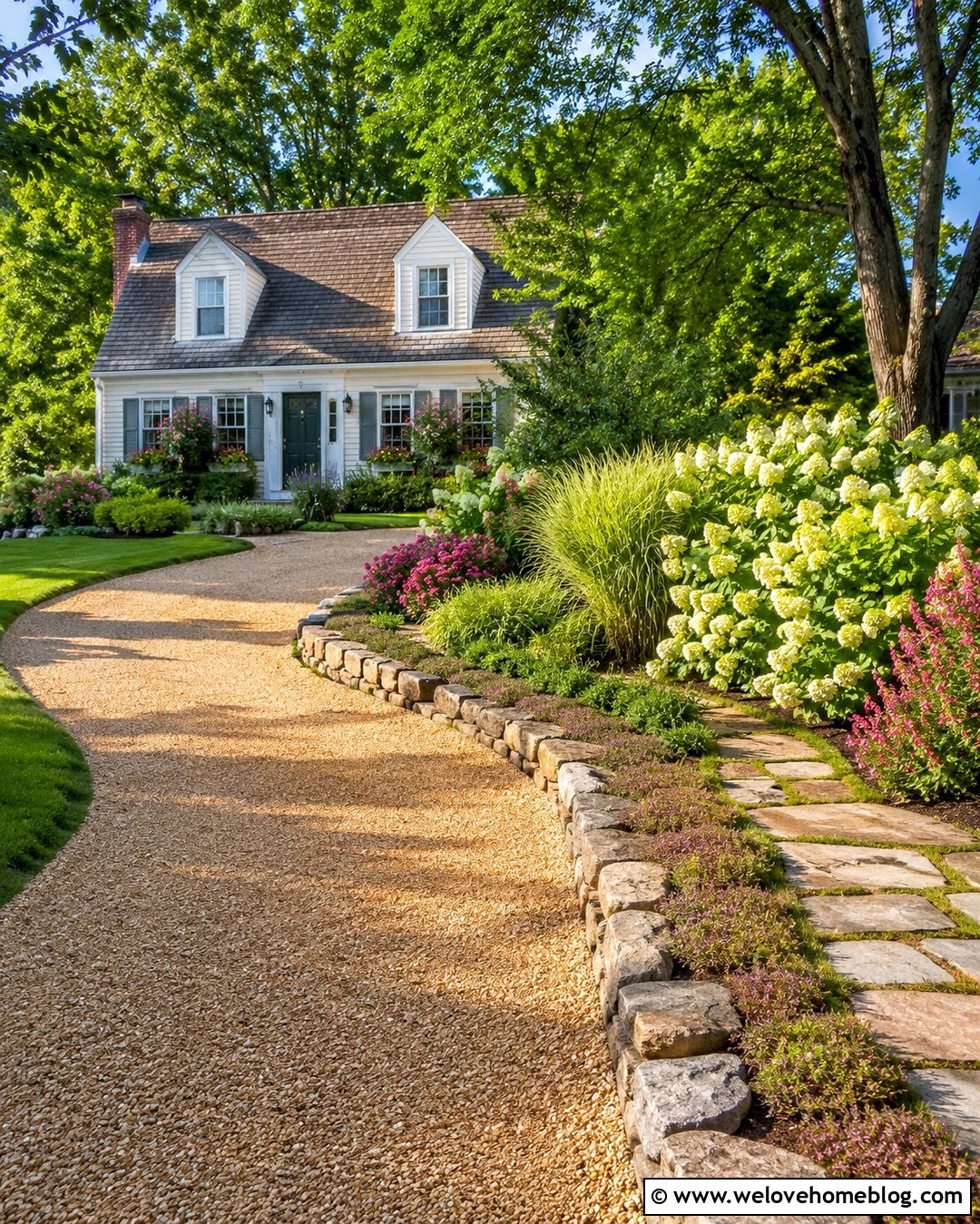
Soft curves and irregular fieldstone are a natural match for a cottage-style gravel driveway. Begin with warm tan or gray crushed gravel and shape the driveway into a gently winding approach rather than a rigid straight strip. Use fieldstones with varied colors but similar heights to create an informal border that still looks intentional. Allow thyme, sedum, or another suitable low-growing plant to soften selected gaps on the landscape side without spreading into the driving surface. Behind the stones, build generous beds containing hydrangeas, ornamental grasses, flowering shrubs, and small deciduous trees. Keep plants far enough from the driving lane to protect visibility and vehicle clearance. The finished driveway should feel garden-oriented yet practical. A fieldstone walkway and matching foundation details on the house will help the edging look original to the property.
12. Gravel Driveway With Granite Sett Edging
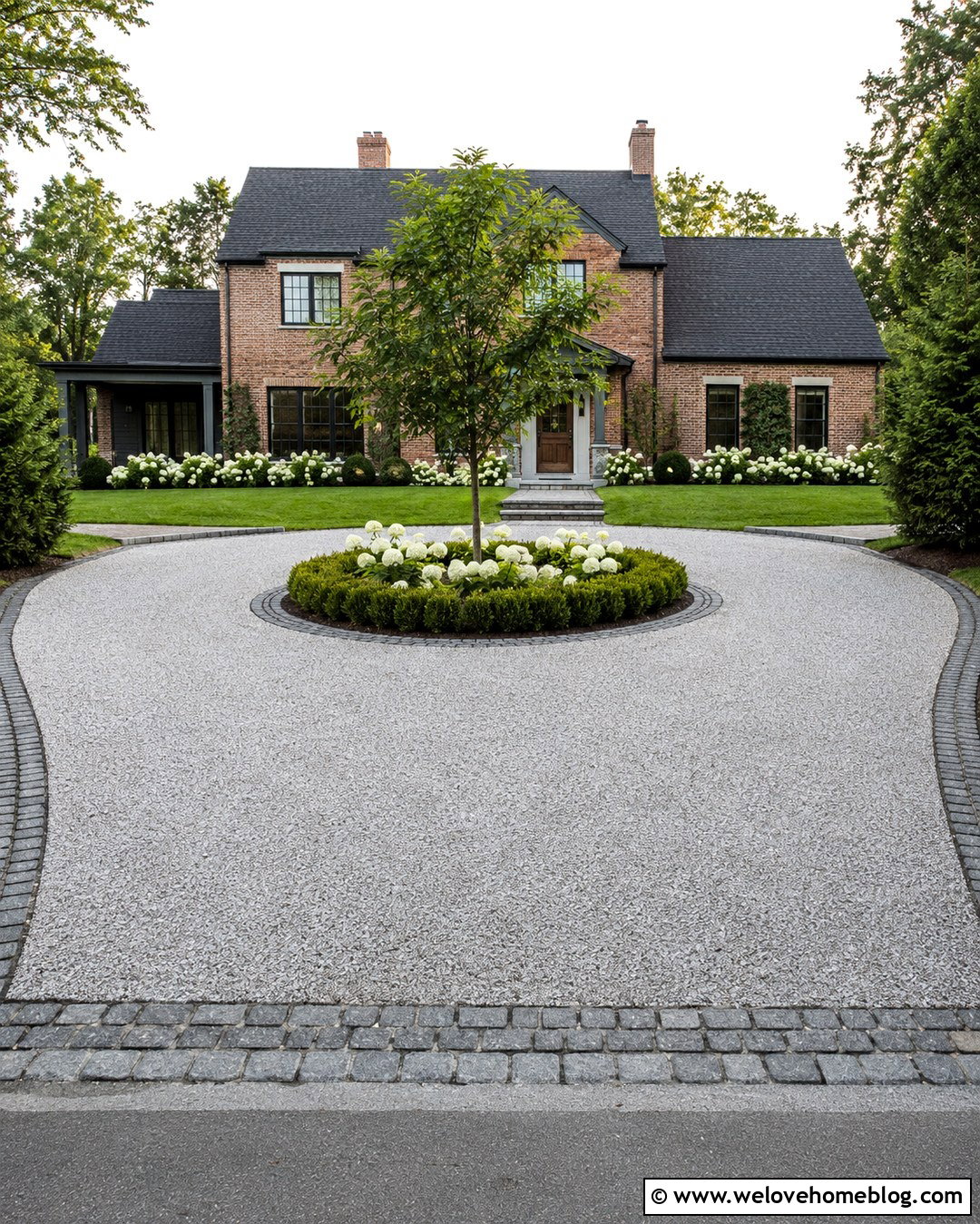
Granite setts create a durable-looking edge with a refined, historic character. Their compact rectangular form works well beside traditional homes, converted farmhouses, and updated brick residences. Combine silver-gray granite gravel with darker granite setts for subtle definition, or place charcoal setts beside pale gravel for a bolder outline. A single row can trace a curved driveway, while a double row creates a wider visual ribbon at the entrance. Repeat the setts around a central island if the layout is circular or horseshoe-shaped. Careful base preparation helps maintain an even line and reduces rocking under occasional tire contact. Complete the scheme with clipped yew, white flowering shrubs, and a simple stone path. Granite’s restrained color allows the planting and house facade to remain the main visual features.
13. Gravel Driveway With Limestone Block Edging
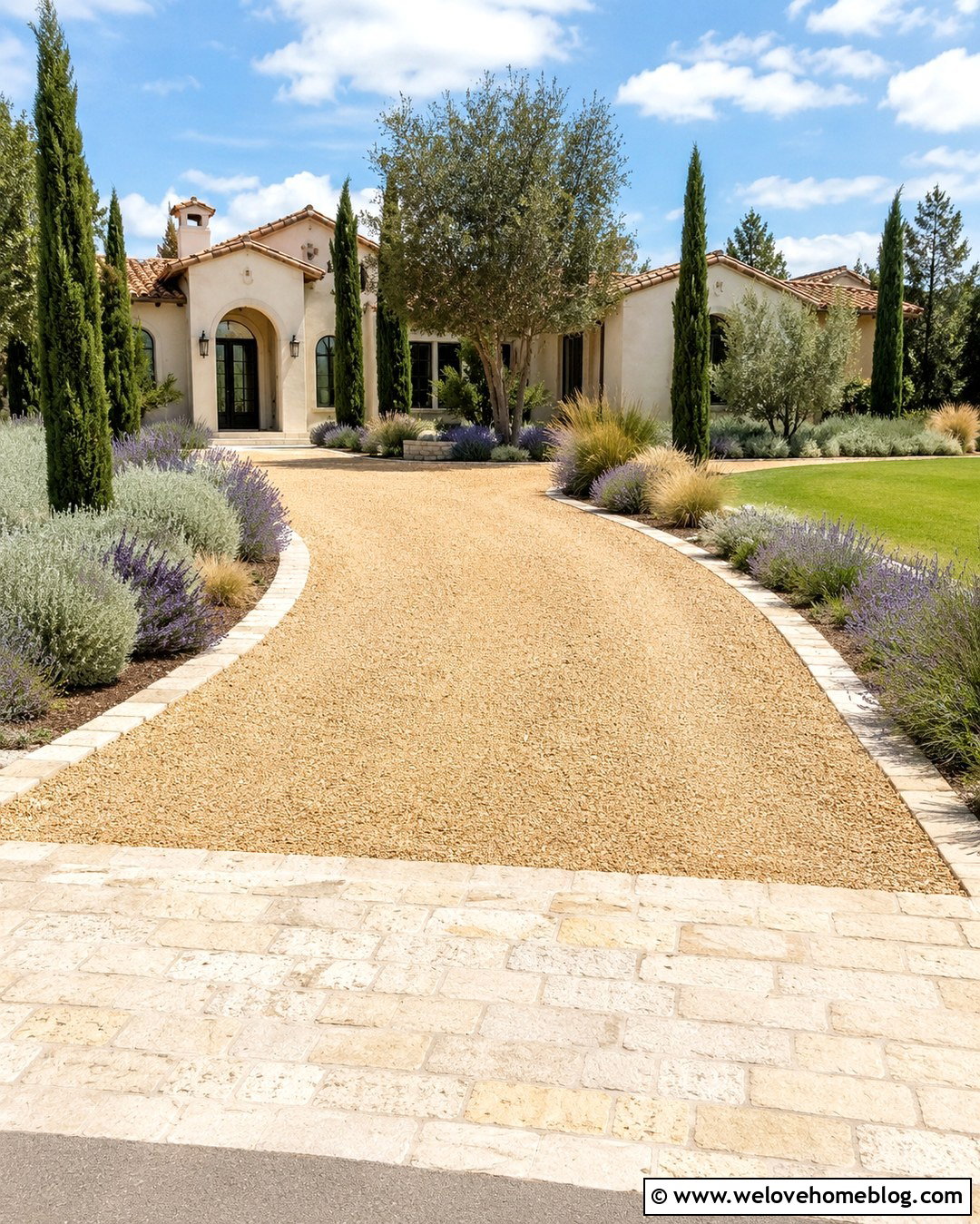
Cream-colored limestone blocks give a gravel driveway a bright, tailored border. They are especially attractive around Mediterranean-inspired houses, pale stucco homes, and light brick exteriors. Use honey-toned gravel to create a warm, unified surface, or select gray gravel for a sharper contrast. A curved driveway with broad planting beds prevents the light stone from looking too rigid. Keep the blocks consistent in height and place them on a stable foundation appropriate for local soil and weather conditions. Near the street, widen the limestone border into a small apron that announces the entrance. Surround the driveway with lavender, silvery foliage, upright evergreens, and drought-tolerant ornamental grasses suited to the climate. A coordinating limestone walkway can link the parking area to the front steps while preserving a consistent material palette.
14. Gravel Driveway With River Rock Border
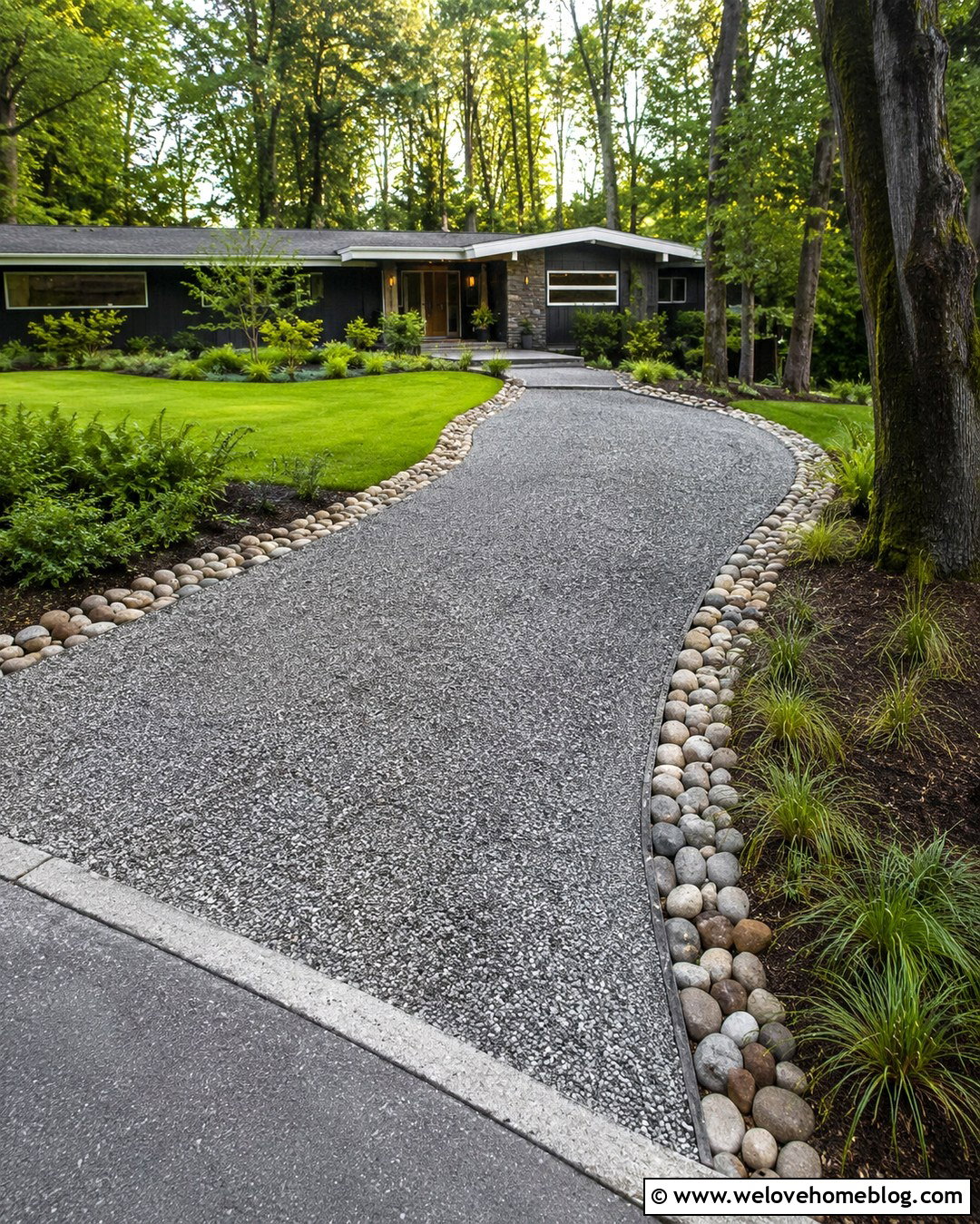
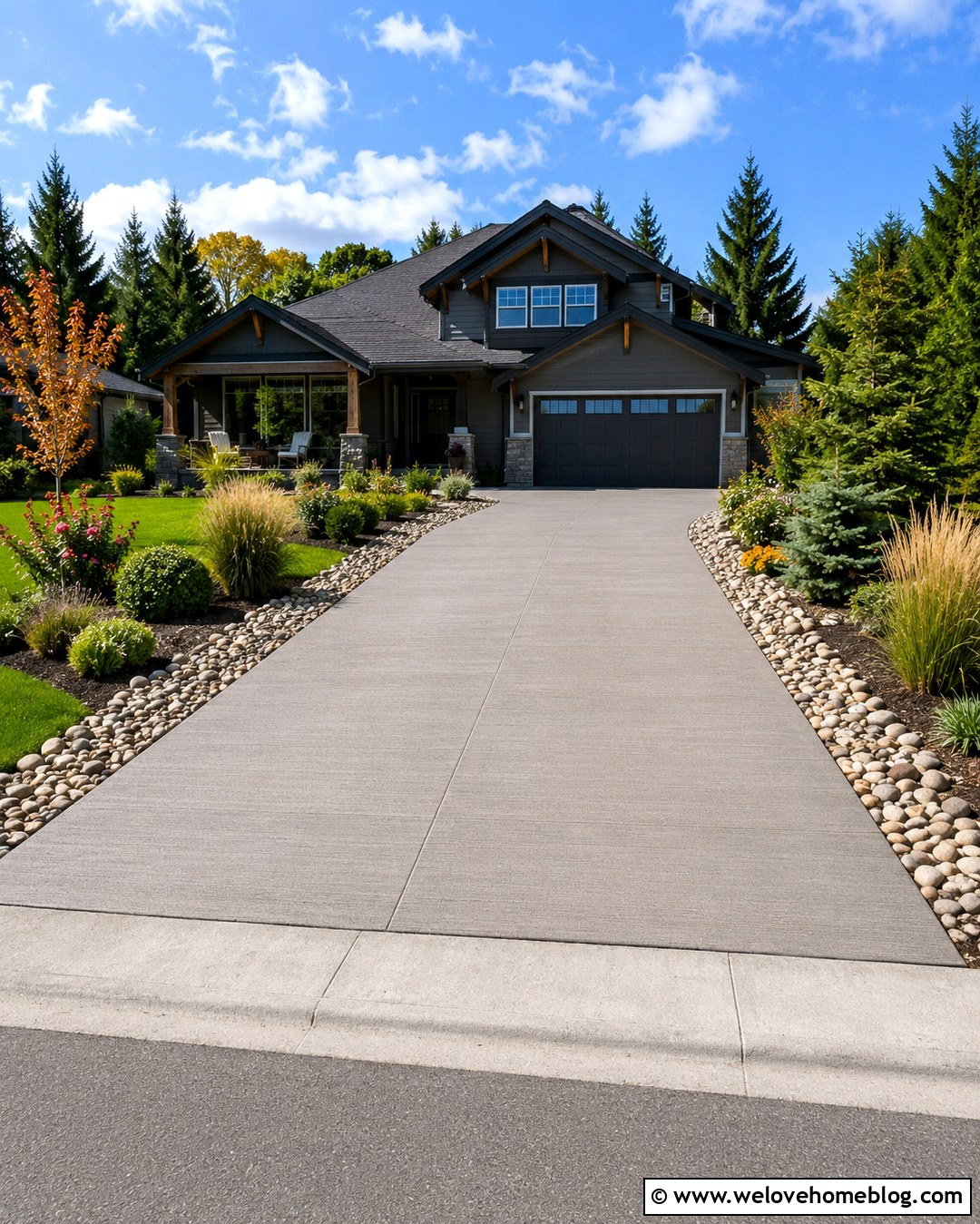
Smooth river rock can create a visually rich border when it is used as part of a layered edging system. Because rounded stones can move, place them in a prepared landscape trench outside a hidden rigid restraint rather than relying on them alone to contain driveway gravel. This approach works well with compacted gray crushed stone, which contrasts with larger multicolored river rocks. Follow a curved driveway leading to a contemporary ranch or wooded midcentury home. Add moisture-tolerant grasses, ferns, and low shrubs where the border also receives runoff, but do not assume decorative stone will solve a serious drainage problem. Gravel driveways still require intentional grading and water management. () The varied rock sizes, natural planting, and simple house facade produce a relaxed but organized curb view.
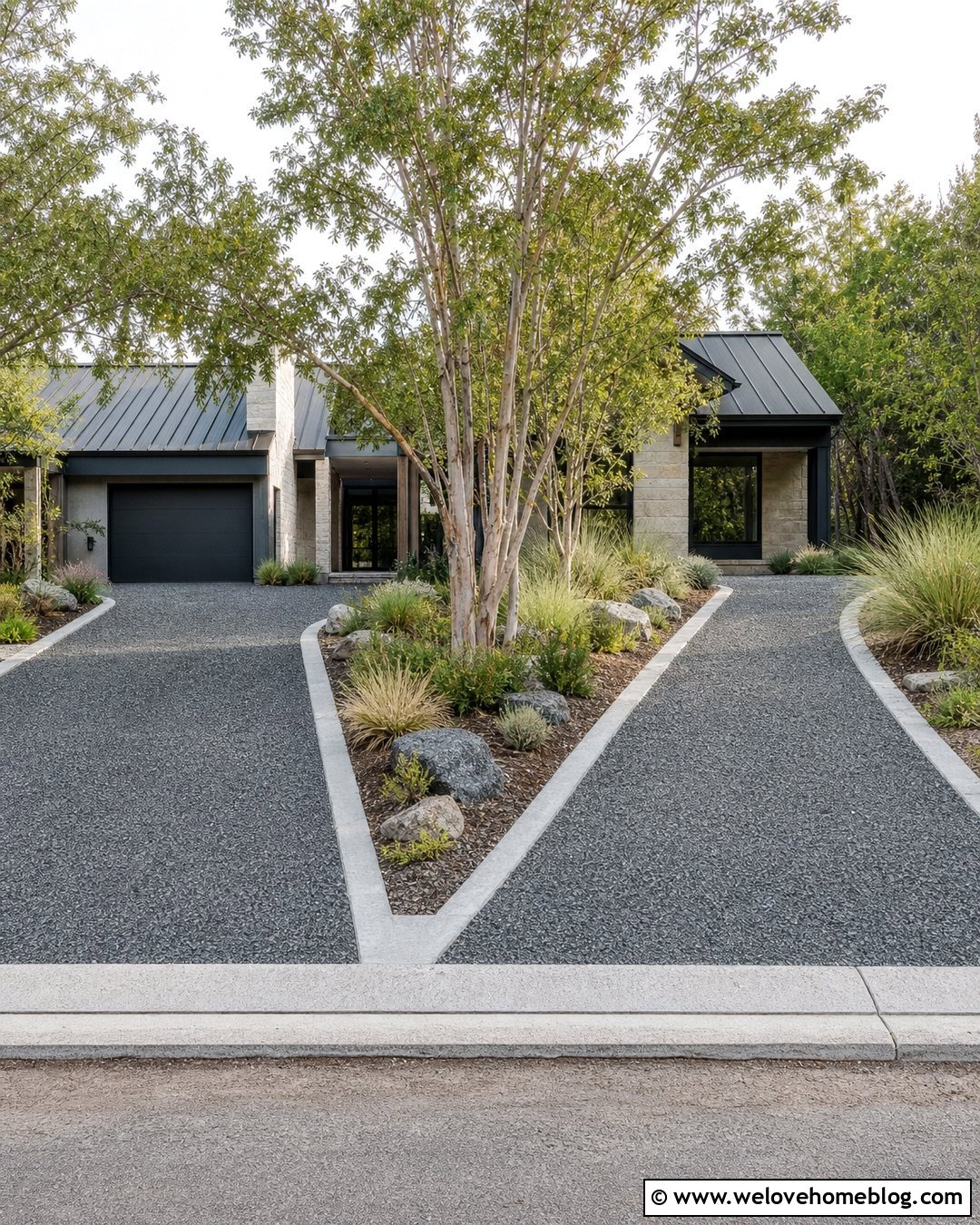
15. Gravel Driveway With Grass And Paver Edging
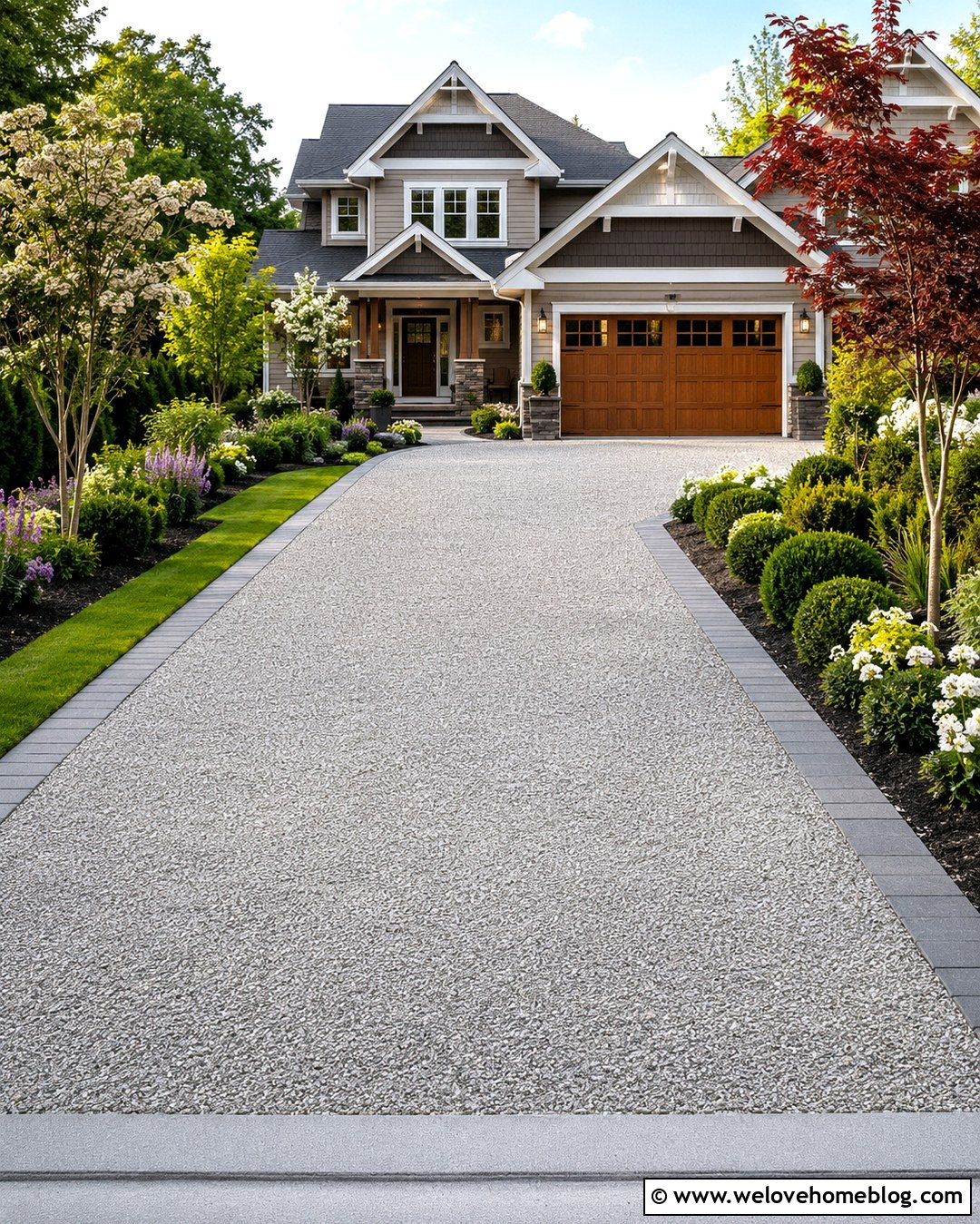
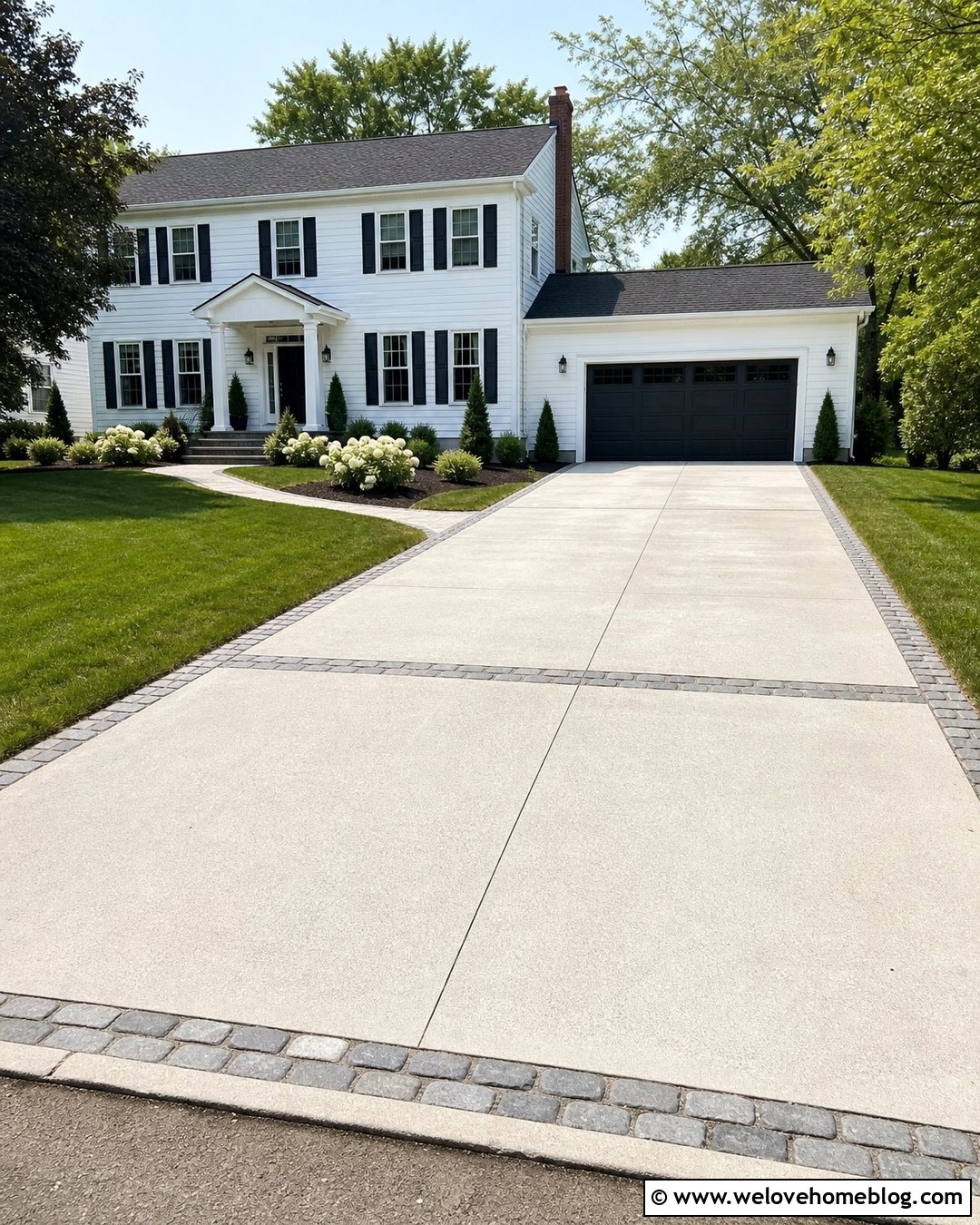
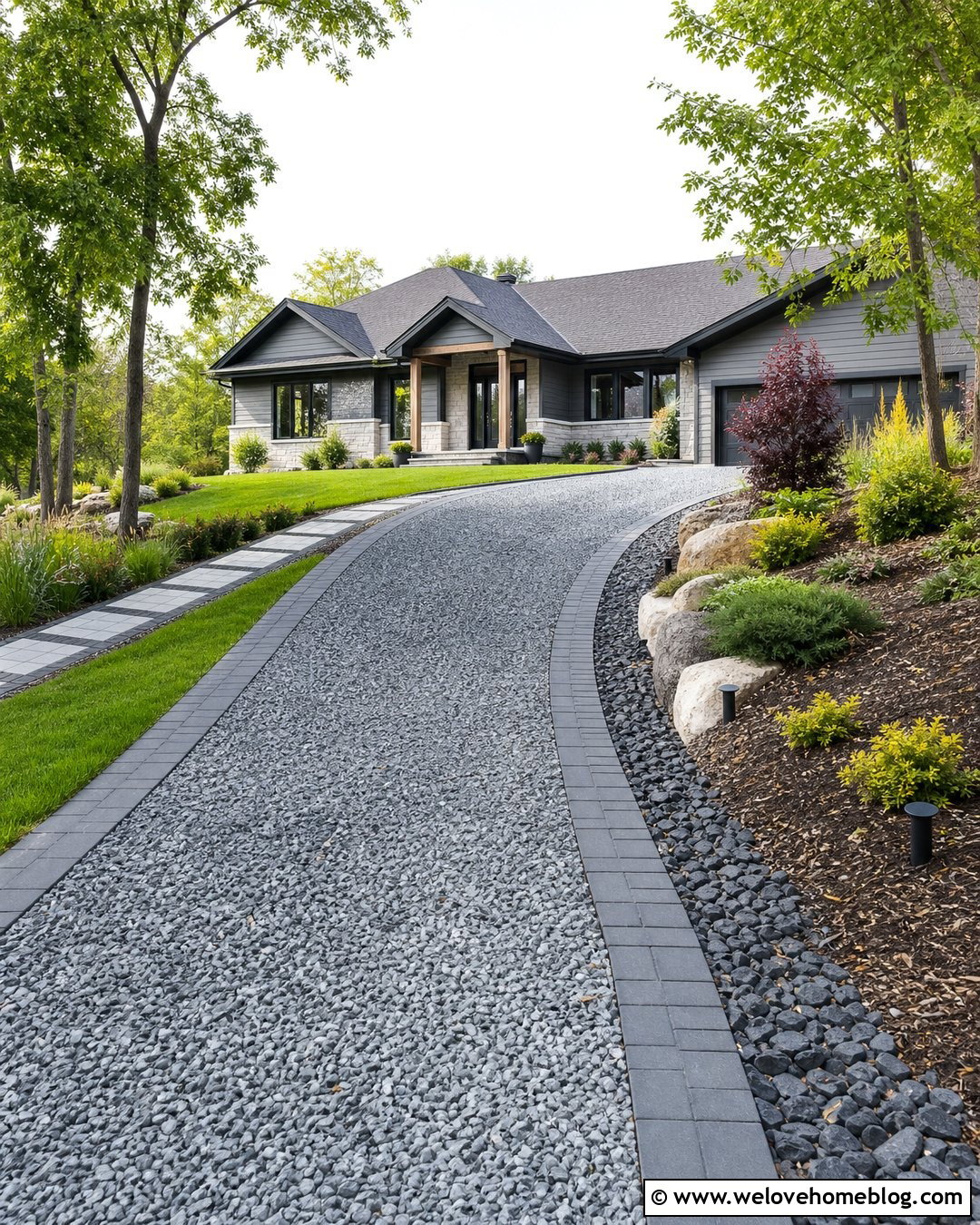
A narrow grass strip paired with a paver border can soften a large gravel driveway without sacrificing definition. Use compacted light gray gravel for the driving surface, then install charcoal pavers along both edges. Beyond the pavers, add a slim band of lawn that separates the driveway from deeper planting beds. This layered arrangement suits craftsman, suburban, and transitional homes with generous front yards. Keep the grass strip wide enough for straightforward mowing and ensure the paver level does not catch mower blades or create an uncomfortable walking edge. The pavers provide visual structure, while the lawn adds color and breathing room. Finish the complete look with rounded shrubs, ornamental trees, and a walkway using the same charcoal pavers. Repetition creates unity without making every hardscape surface identical.
16. Gravel Driveway With Raised Stone Bed Edging
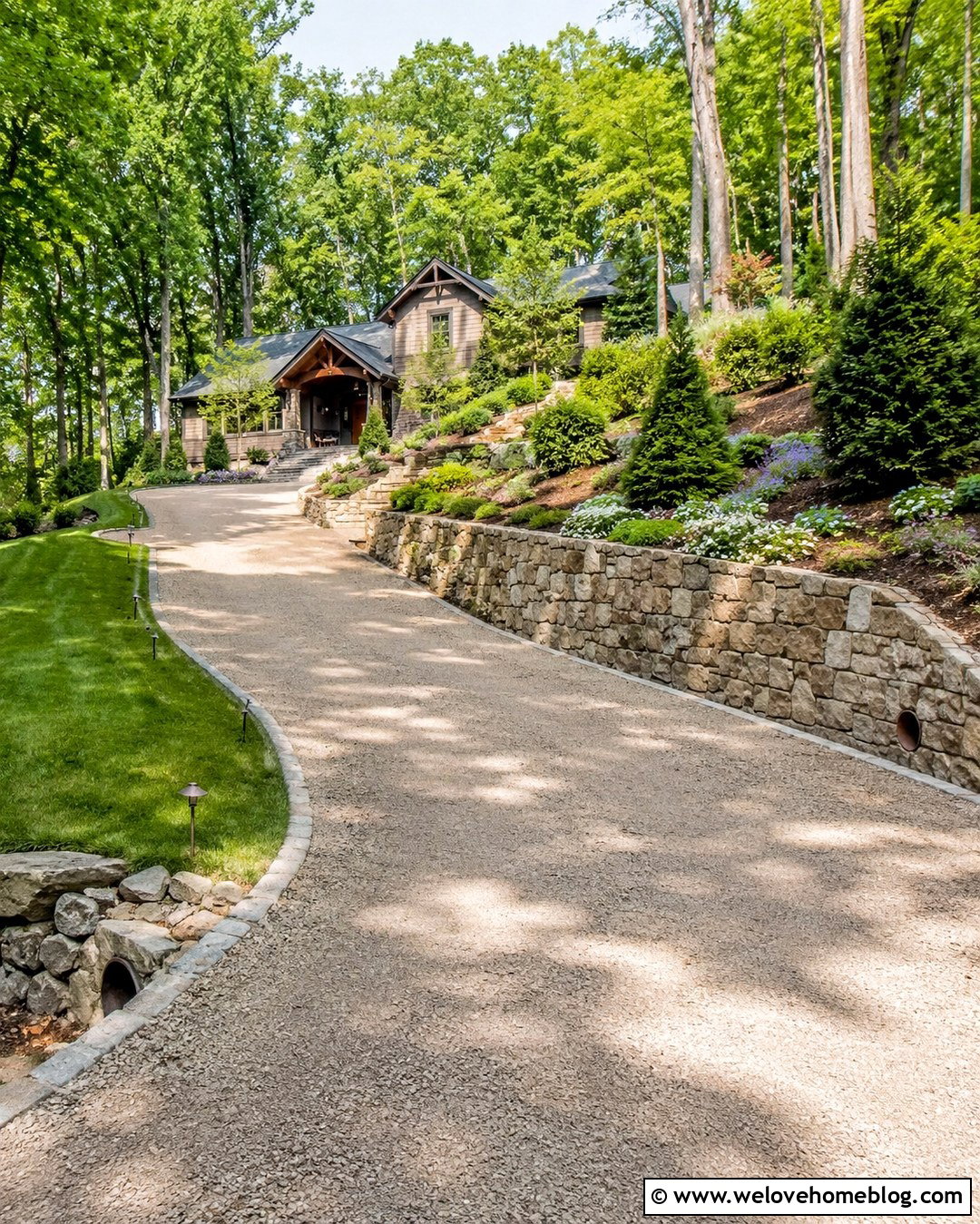
When a driveway sits below the surrounding yard, a low raised stone bed can provide a strong and attractive boundary. Pair compacted crushed granite with a short mortared or carefully constructed dry-stacked wall, depending on the site conditions and required soil retention. The driveway can curve gently toward a craftsman or hillside home while the wall follows the higher side of the grade. Fill the raised bed with layered evergreens, spreading ground covers, and flowering perennials that will not obstruct sightlines. Include appropriate outlets or drainage details so water does not collect behind the wall or flow across the gravel. On the lower side, use simpler flush stone edging to maintain balance. The varied elevations make the driveway feel integrated into the slope rather than carved awkwardly through the front yard.
17. Gravel Driveway With Low Hedge Edging
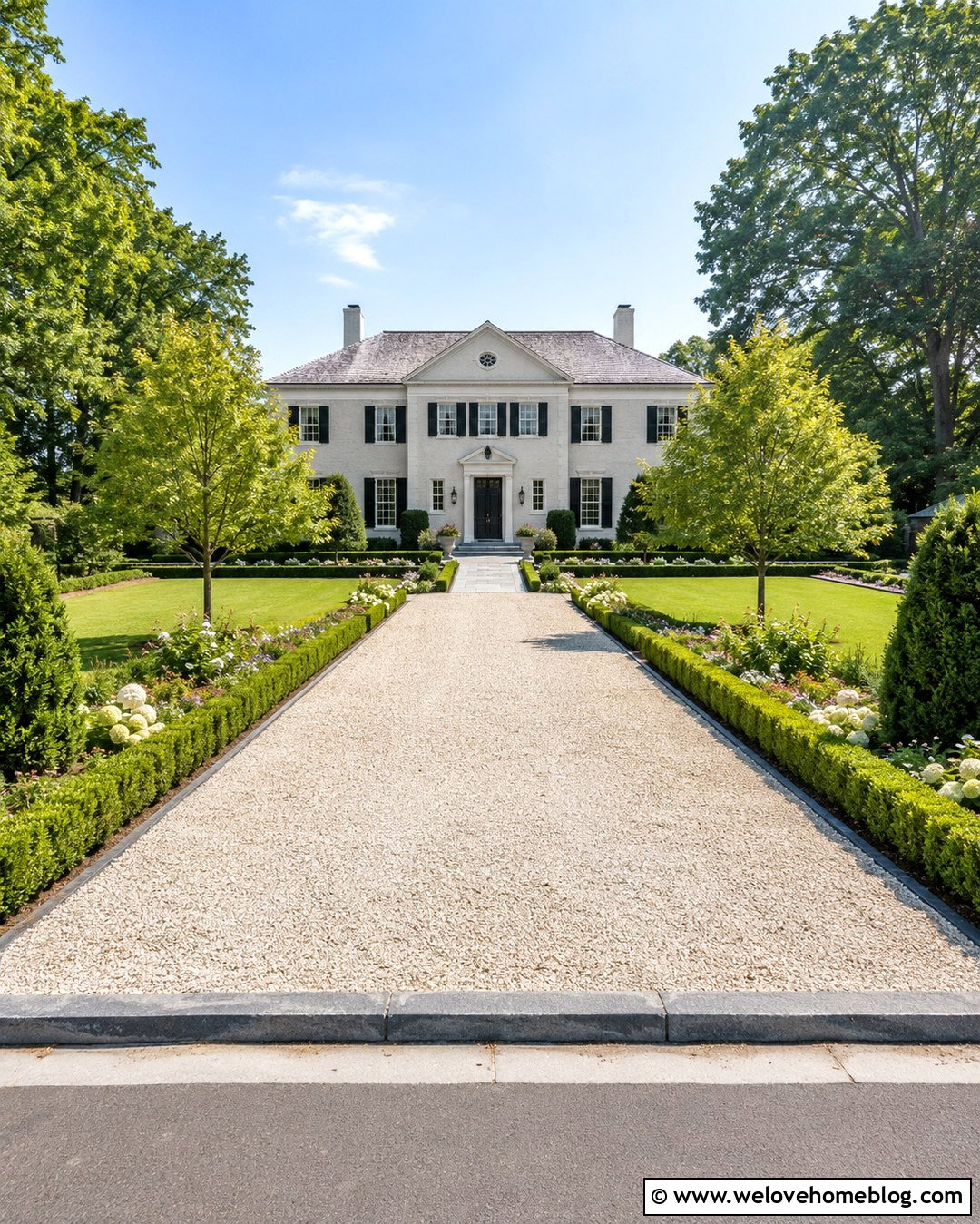
A clipped hedge can function as the green outer layer of a properly contained gravel driveway. Start with pale crushed limestone or gray granite gravel held by a discreet metal or paver restraint. Plant low boxwood, inkberry, dwarf yaupon holly, or another regionally appropriate evergreen beyond that structural edge. This combination gives the appearance of living edging while preventing roots and branches from interfering with the driving surface. It is particularly effective along a straight driveway leading to a Georgian, colonial, or symmetrical traditional home. Keep the hedge comfortably back from the road entrance so drivers can see pedestrians and traffic. Use matching hedges around the front walkway or foundation beds to extend the formal geometry. Seasonal flowers can be added behind the evergreen line without weakening the driveway’s clean, year-round structure.
18. Gravel Driveway With Drainage Channel Edging
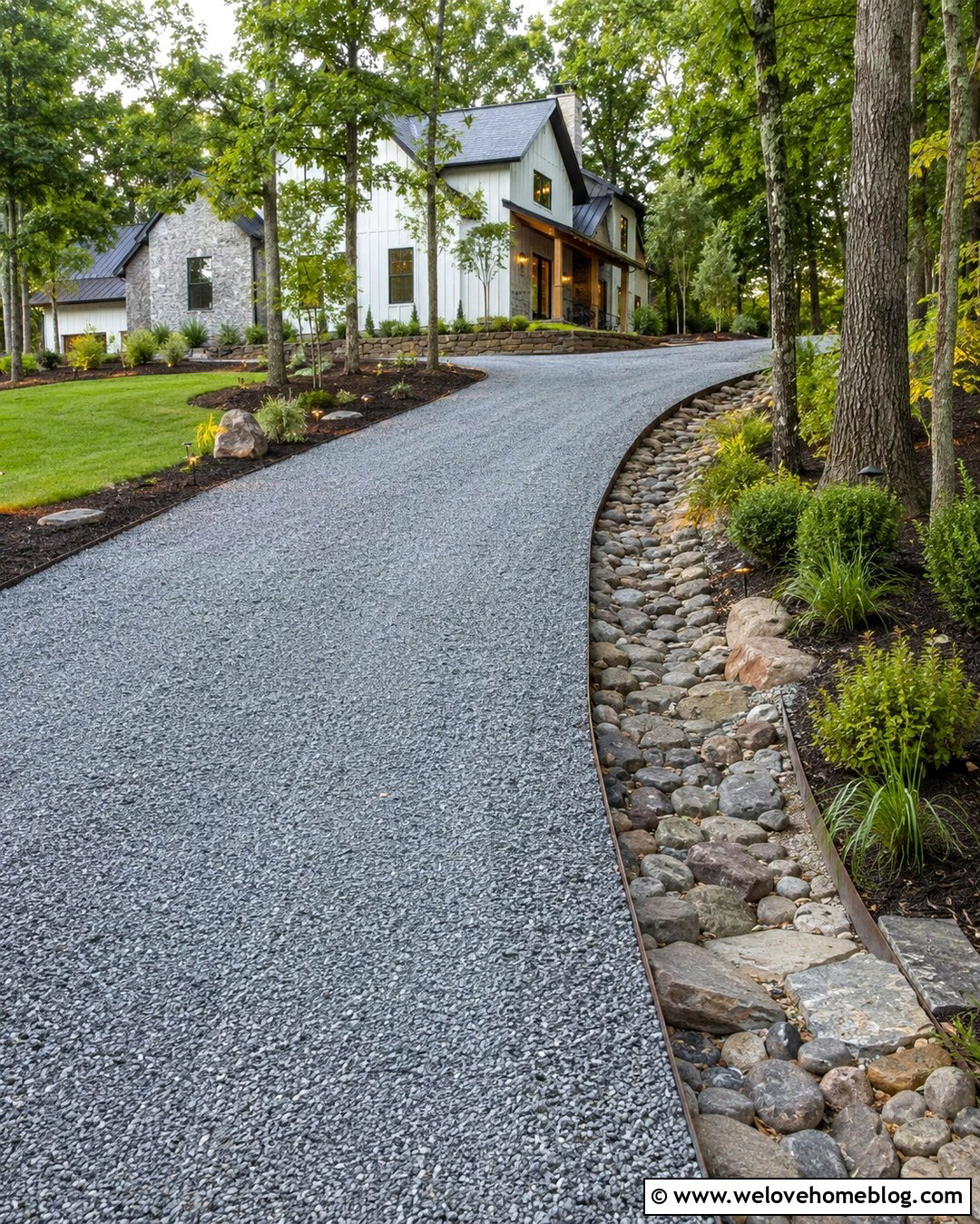
Rainwater moving along a gravel driveway needs a planned route, especially on a slope. A stone-lined swale or channel installed beside one edge can become part of the landscape instead of looking like an afterthought. Use angular gray gravel for the driveway, restrained with heavy-duty steel or granite setts. Beyond the edge, shape a shallow channel filled with larger drainage stone and planted margins where site conditions allow. The driveway should have an appropriate crown or cross-slope that directs runoff safely without washing loose material into the street or yard. Edge restraints are important, but they do not replace correct grading and drainage design. () Add native grasses and moisture-tolerant shrubs around the channel to create an attractive transition toward a modern farmhouse or woodland home.
19. Gravel Driveway With Brick Apron Edging
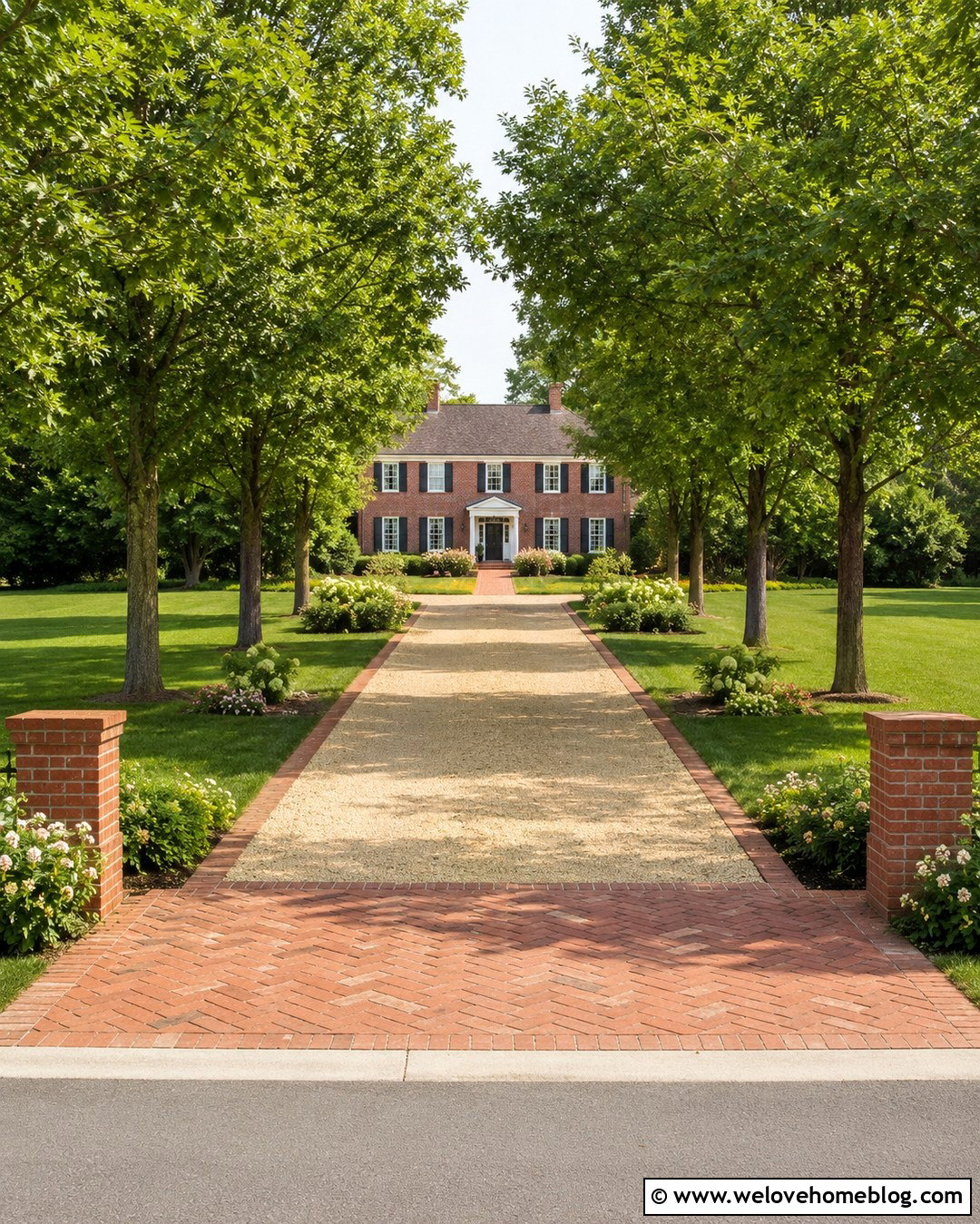
A brick apron gives the entrance of a gravel driveway a more finished transition from the street. Lay clay brick pavers across the first section in a herringbone or running-bond pattern, then continue a single brick edging row along the full driveway. Warm beige crushed gravel creates a natural contrast with red or brown brick. This design works particularly well with traditional brick houses, colonial homes, and craftsman exteriors. The apron should be built for vehicle loading and supported by the correct base and edge restraints rather than installed like a garden path. Continue the brick around curved planting beds near the entrance for a coordinated curb view. Add masonry mailbox pillars, low flowering shrubs, and evenly spaced canopy trees. The stronger entrance detail helps a simple gravel surface feel more permanent and architecturally connected.
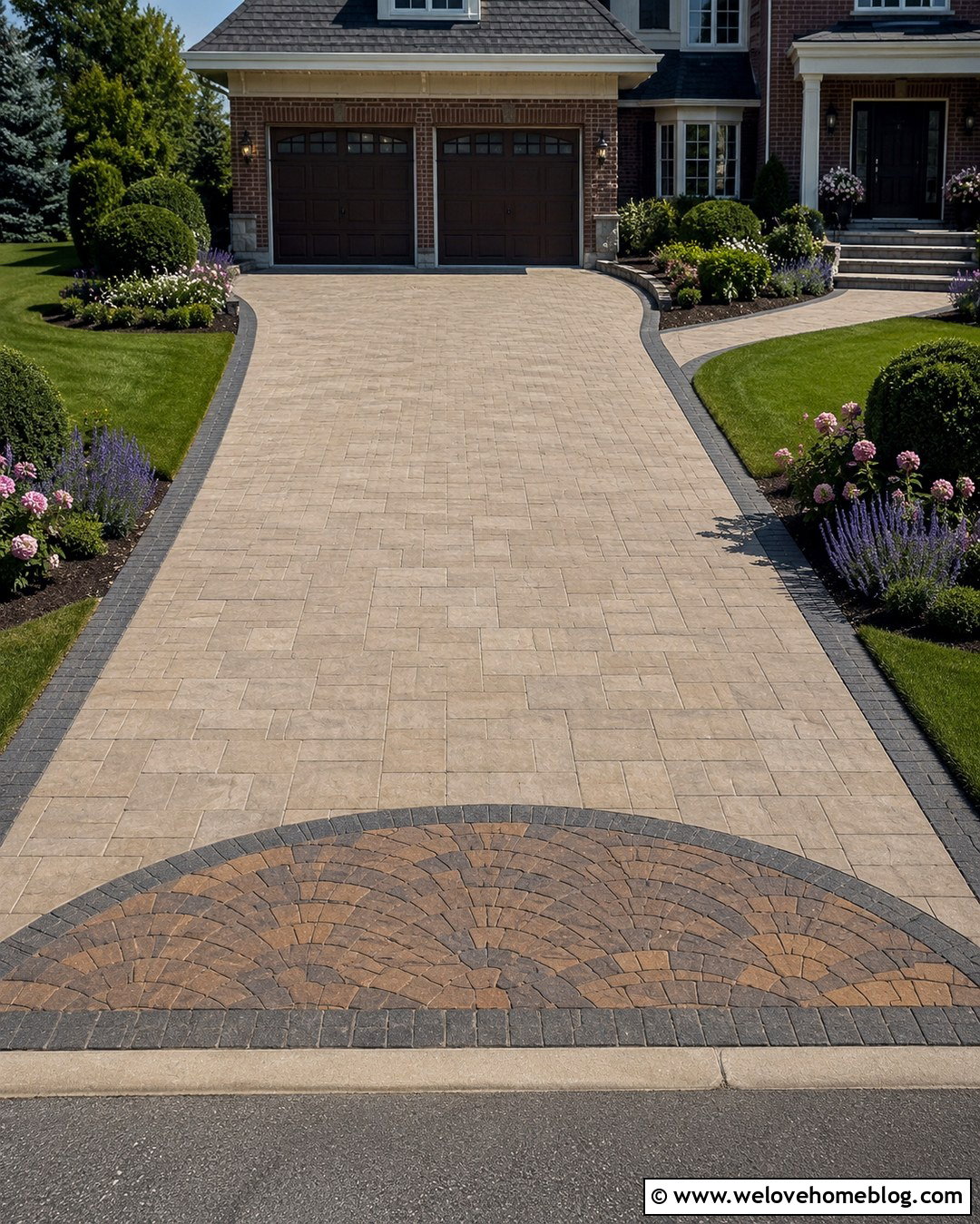
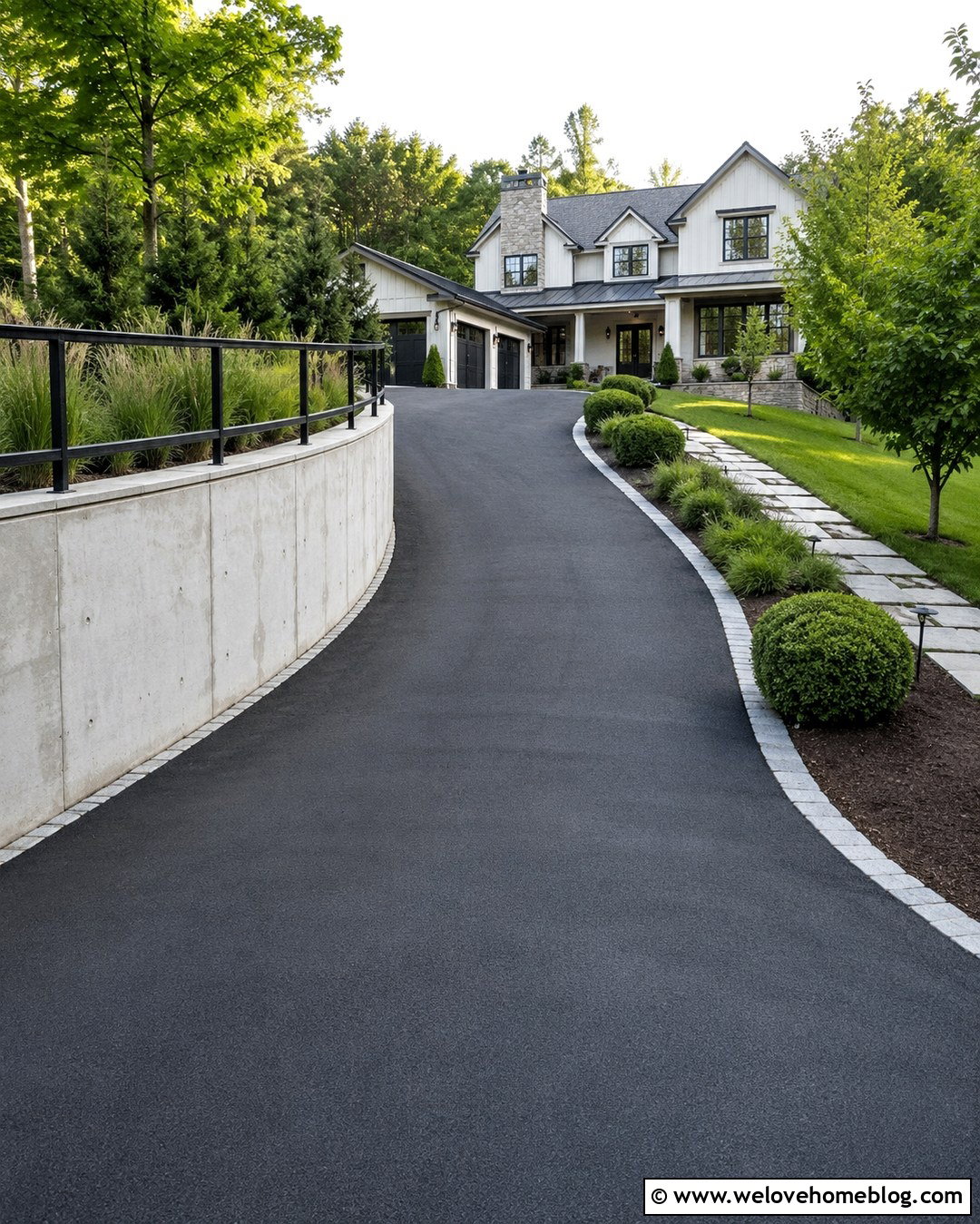
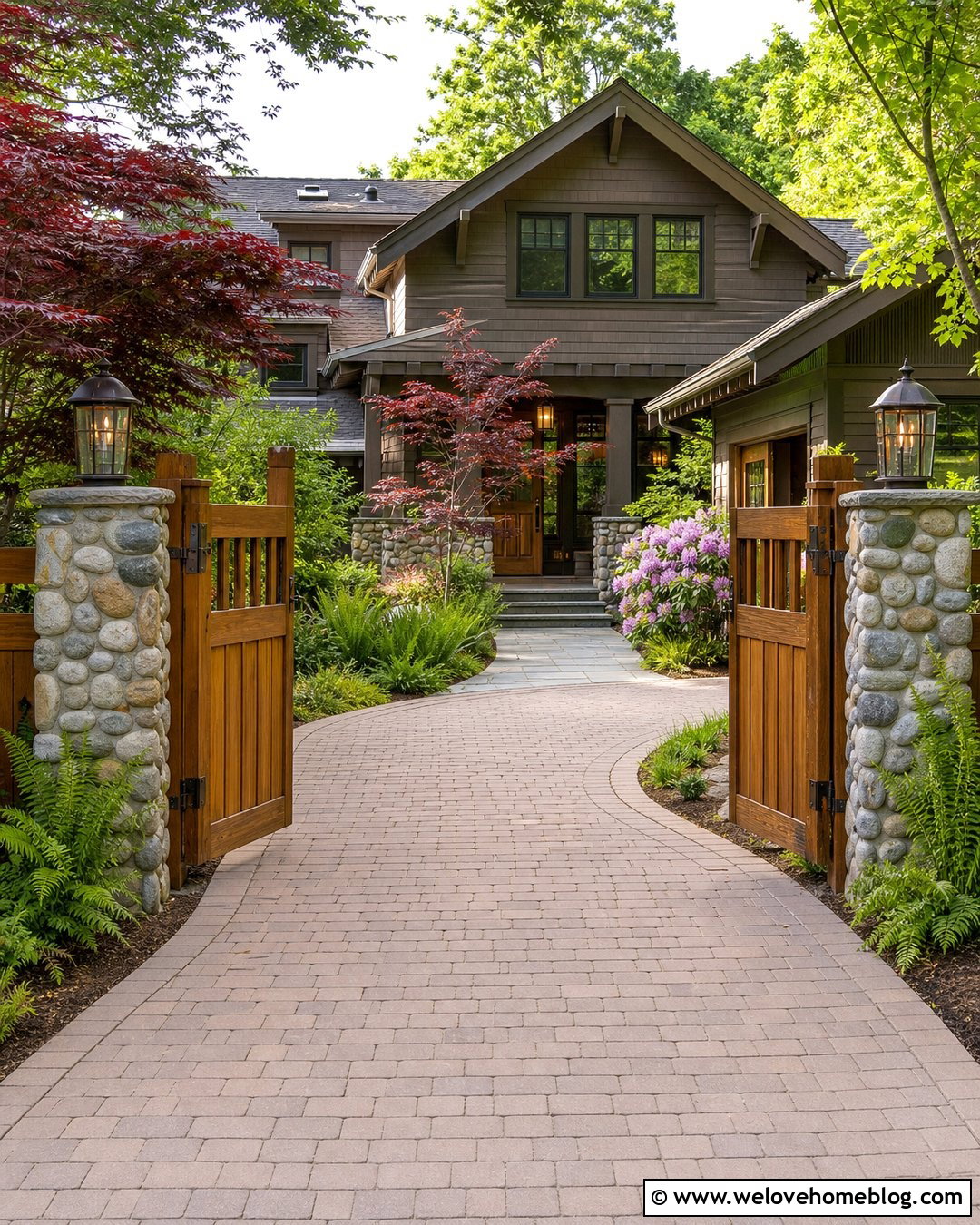
20. Gravel Driveway With Mixed Stone And Metal Edging
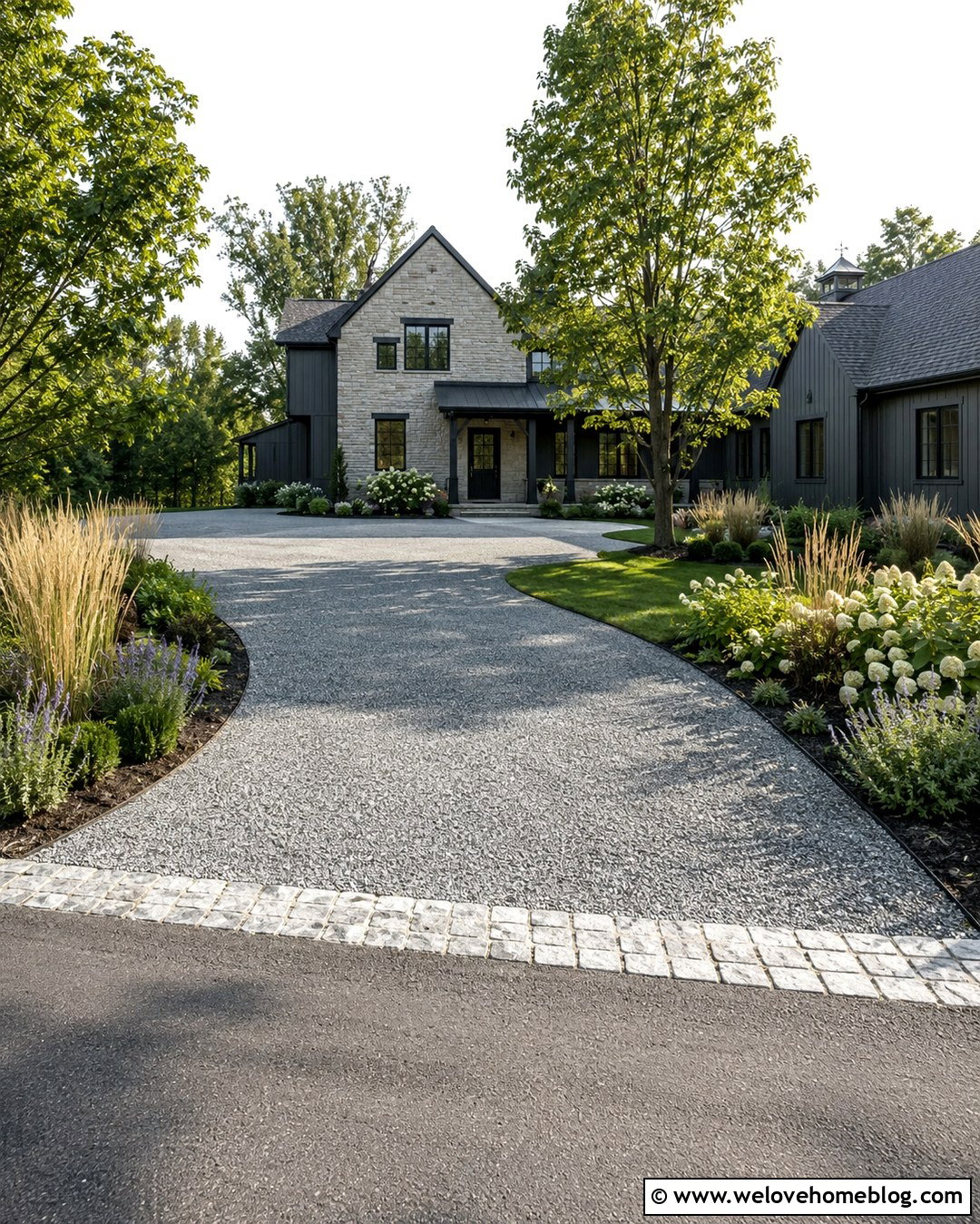
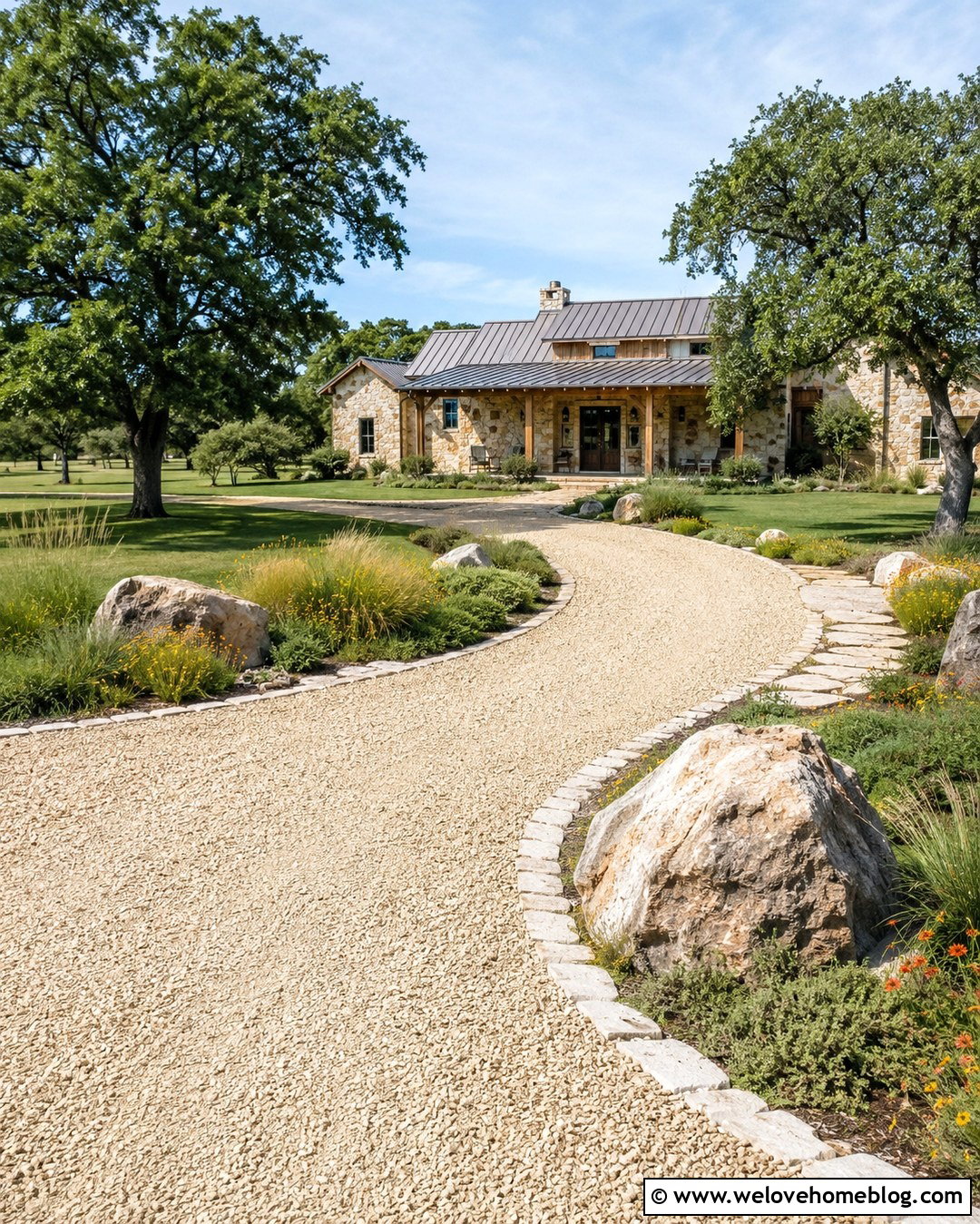
Combining two edging materials can control costs while giving the most visible areas extra character. Use substantial cobblestone or granite blocks around the street entrance, parking court, and walkway transition. Continue slimmer steel edging along the less prominent length of the driveway. Pair these borders with compacted gray crushed granite in a broad curved layout leading to a contemporary country home. Keep the stone and metal in related neutral tones so the change appears deliberate rather than patched together. Plant ornamental grasses and flowering shrubs near the stone entrance, then use simpler lawn and tree borders along the steel-edged sections. This strategy concentrates texture where it has the greatest visual impact. Consistent gravel, repeated planting colors, and smooth material transitions will make the entire driveway read as one complete design.
Conclusion:
The most successful 20 Edging Gravel Driveway Ideas do more than create a decorative outline. They combine a suitable gravel surface, secure containment, thoughtful drainage, practical vehicle clearance, and landscaping that complements the home. Brick and cobblestone bring traditional character, while steel and concrete create cleaner contemporary lines. Timber suits relaxed rural settings, and layered stone borders connect naturally with garden-focused yards. Before selecting an edge, consider the driveway’s slope, traffic, soil, maintenance needs, and water flow. Use stronger materials at entrances and turning areas where extra support may be needed. With careful planning, edging can make an affordable gravel driveway feel polished, purposeful, and fully integrated into the surrounding landscape.

Related posts:
Leave a Reply