
Railroad ties give gravel driveways a strong, rustic border while helping define the driving surface, planting beds, and nearby lawn. The best designs treat the gravel, timber edging, driveway shape, drainage, and landscaping as one coordinated look. Before using reclaimed ties, confirm their treatment, condition, and suitability for your property. Creosote is an outdoor wood preservative commonly associated with railroad ties, while new residential-rated landscape timbers and wood-alternative products offer cleaner-looking options. Old treated ties should never be burned. () Whether you have a compact parking area, a sloped country entrance, or a long farmhouse approach, these complete designs combine practical containment with inviting curb appeal. Explore these 20 Gravel Driveway Edging Railroad Ties Ideas.
1. Straight Gravel Driveway With Railroad Tie Edging
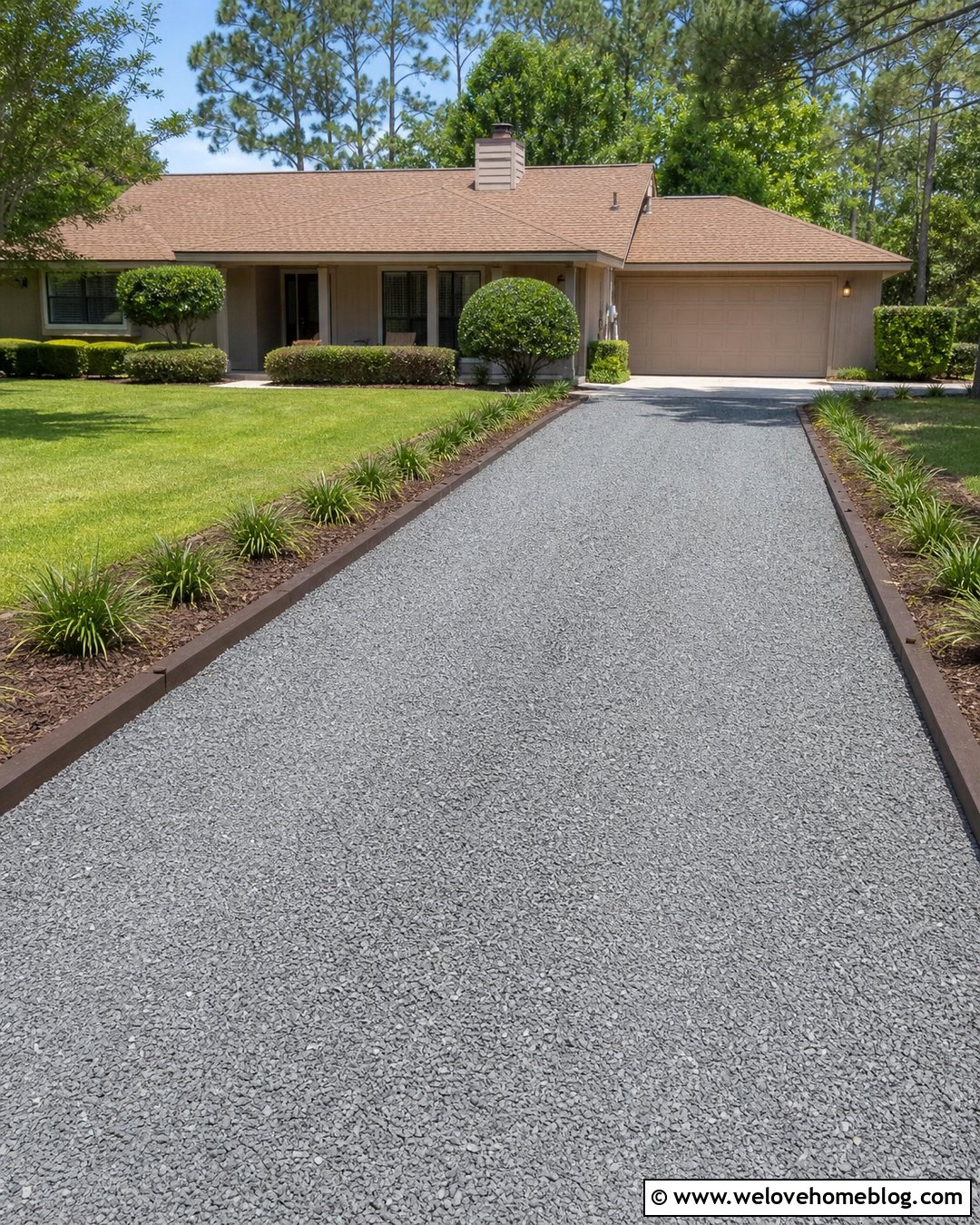
A straight gravel driveway gains clean definition when railroad ties run continuously along both sides. Use compacted gray crushed stone for a firm, understated surface that contrasts naturally with dark brown timbers. Set the ties slightly above the finished gravel level so they contain loose stones without creating an awkward visual barrier. A narrow strip of low ornamental grass can soften the outside edge, while a simple concrete walkway connects the driveway to the front door. This layout works particularly well with ranch homes and compact suburban yards because the strong parallel lines make the property appear longer. Keep the timber height consistent, anchor each section securely, and leave planned drainage openings where runoff naturally exits the driveway.
2. Curved Gravel Driveway With Staggered Railroad Ties
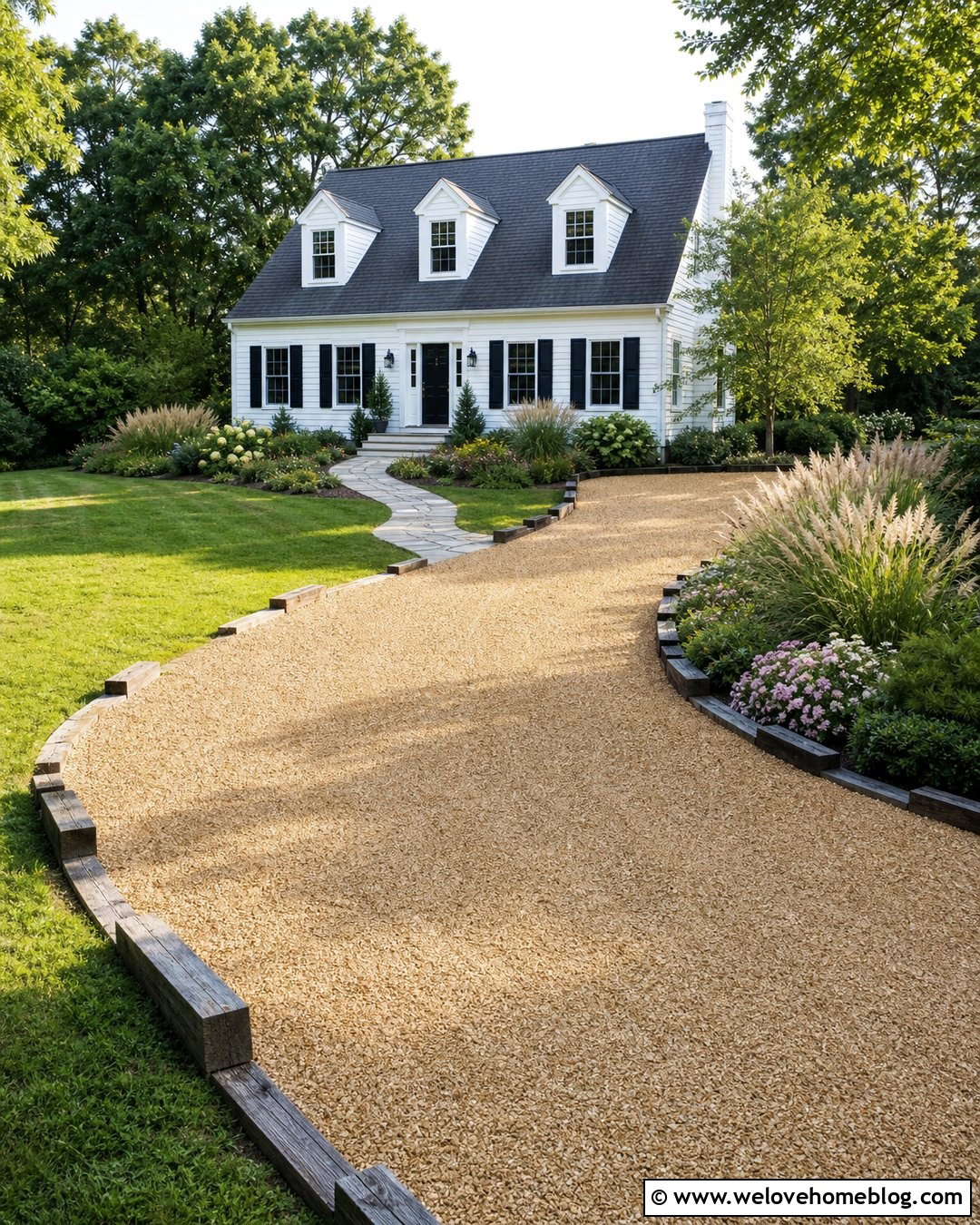
Could a rigid timber border work beside a curved driveway? Yes, when shorter railroad tie sections are staggered carefully along the bend. Pair warm tan crushed gravel with weathered brown ties to create a relaxed country appearance. Slightly angled joints allow the edging to follow the curve more naturally than long, unbroken timbers. Plant sweeping beds of fountain grass, compact juniper, and flowering perennials outside the ties to reinforce the driveway’s movement. This complete look suits a cottage, Cape Cod, or country home surrounded by an open lawn. Keep the inner curve broad enough for comfortable vehicle movement. The outer edge should also remain visible from the driver’s seat, especially near tight turns and landscaped entrance beds.
3. Pea Gravel Driveway With Flush Railroad Tie Edging
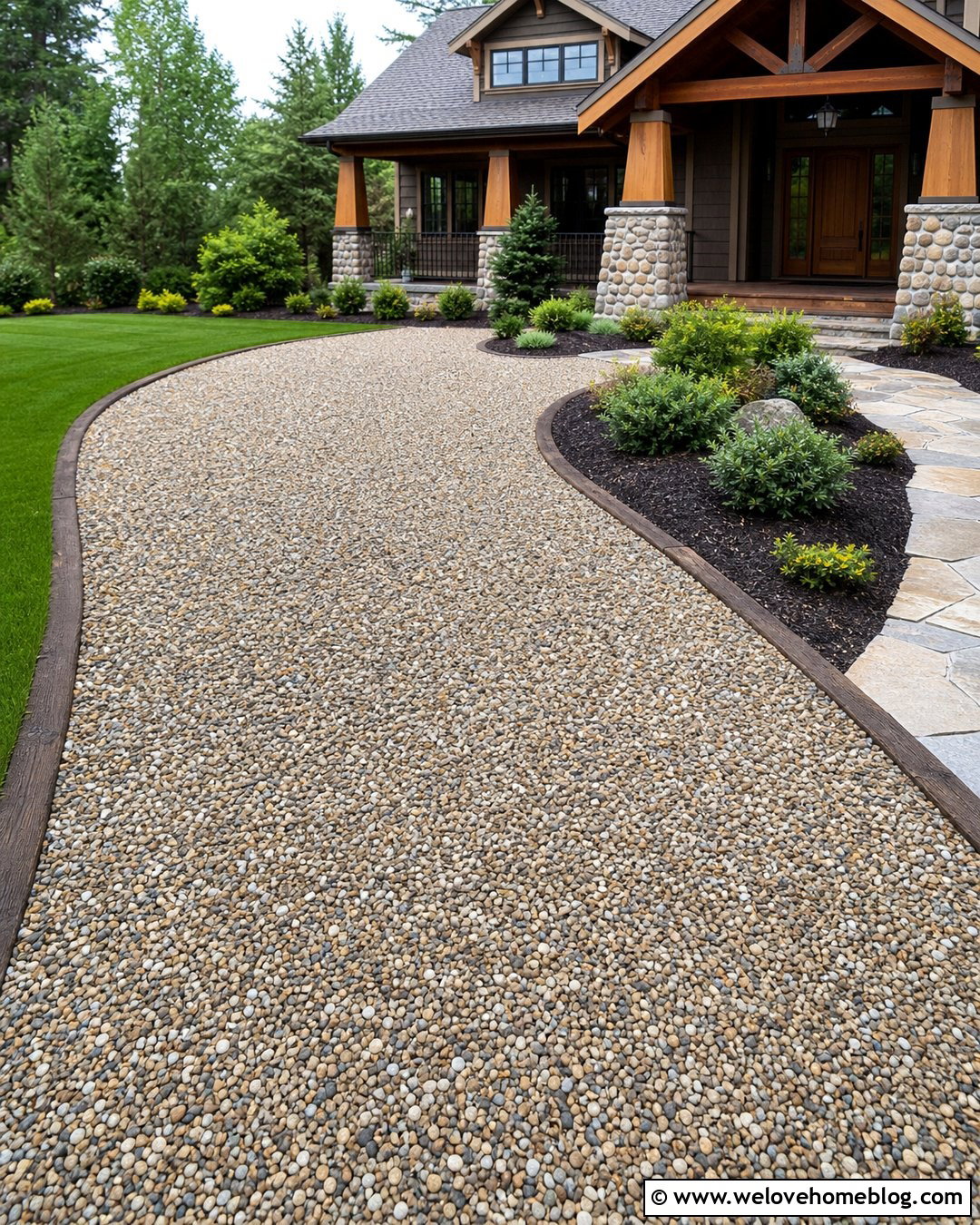
Smooth pea gravel creates a softer surface, but its rounded pieces can travel into lawns and garden beds. Flush railroad tie edging provides a clear boundary without making the driveway feel boxed in. Choose buff, brown, and gray pea gravel, then install level timber borders along a straight or gently curved approach. The top of each tie should sit close to the gravel surface, creating an easy transition to an adjoining walkway or lawn. This restrained treatment complements a craftsman home with natural stone columns and warm siding. Add clipped evergreen shrubs and broad planting beds beyond the edging. Since pea gravel moves more readily than angular aggregate, use a properly prepared base and plan for occasional raking near turns and parking areas.
4. White Gravel Driveway With Dark Railroad Ties
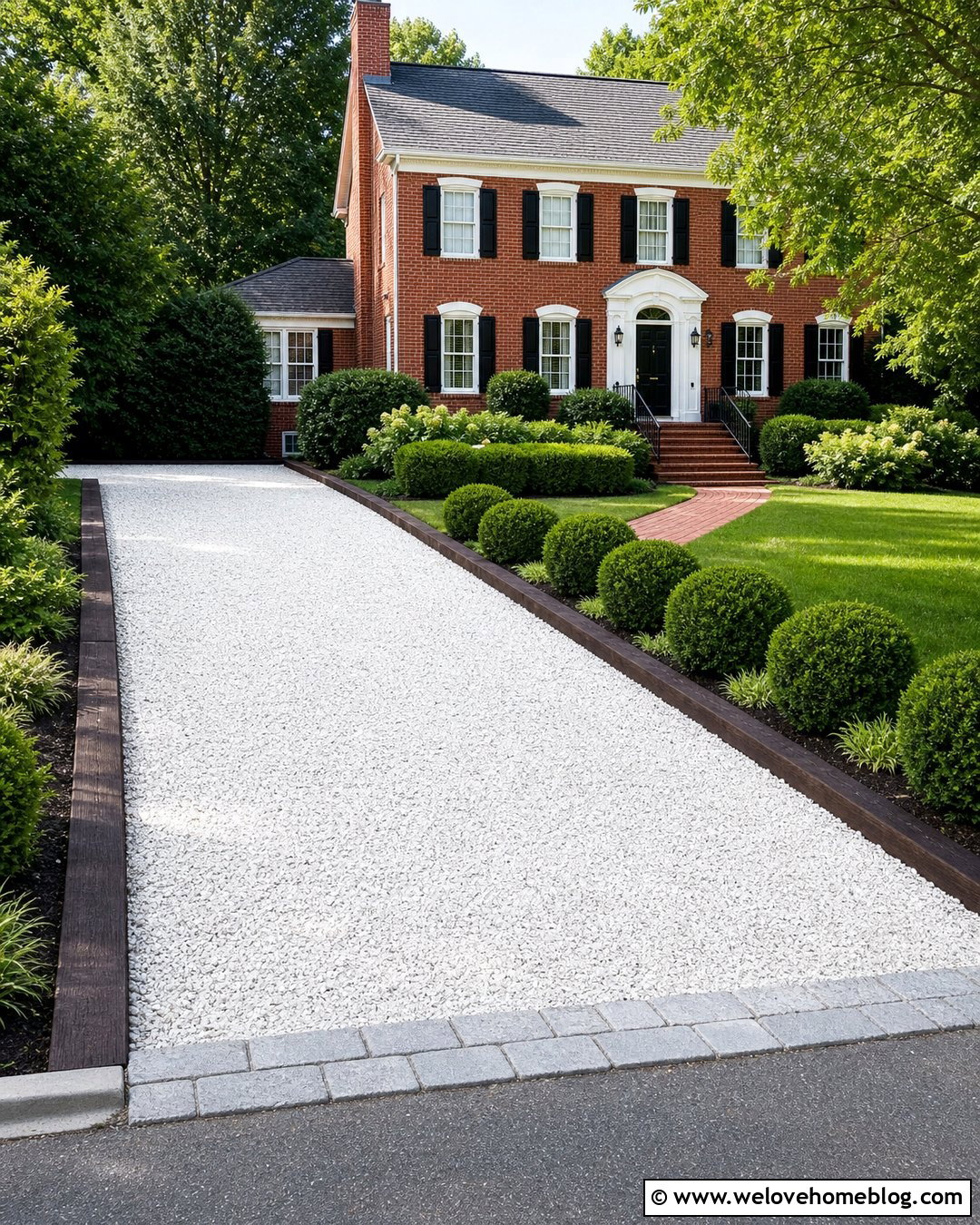
Bright white gravel and dark railroad ties create one of the strongest color contrasts in this collection. Use crushed marble, pale limestone, or another locally suitable white aggregate across a broad straight driveway. Deep brown timber edging frames the light surface and connects visually with a dark garage door, roof, or wood porch. To prevent the design from looking stark, surround it with green lawn, rounded boxwoods, and layered foundation planting. A red brick colonial or white-painted farmhouse makes an attractive backdrop. This design looks best when the gravel is kept evenly graded and free from soil spilling out of nearby beds. Include a paved or tightly compacted apron at the street to reduce gravel migration and produce a more finished entrance.
5. Farmhouse Gravel Driveway With Railroad Tie Borders
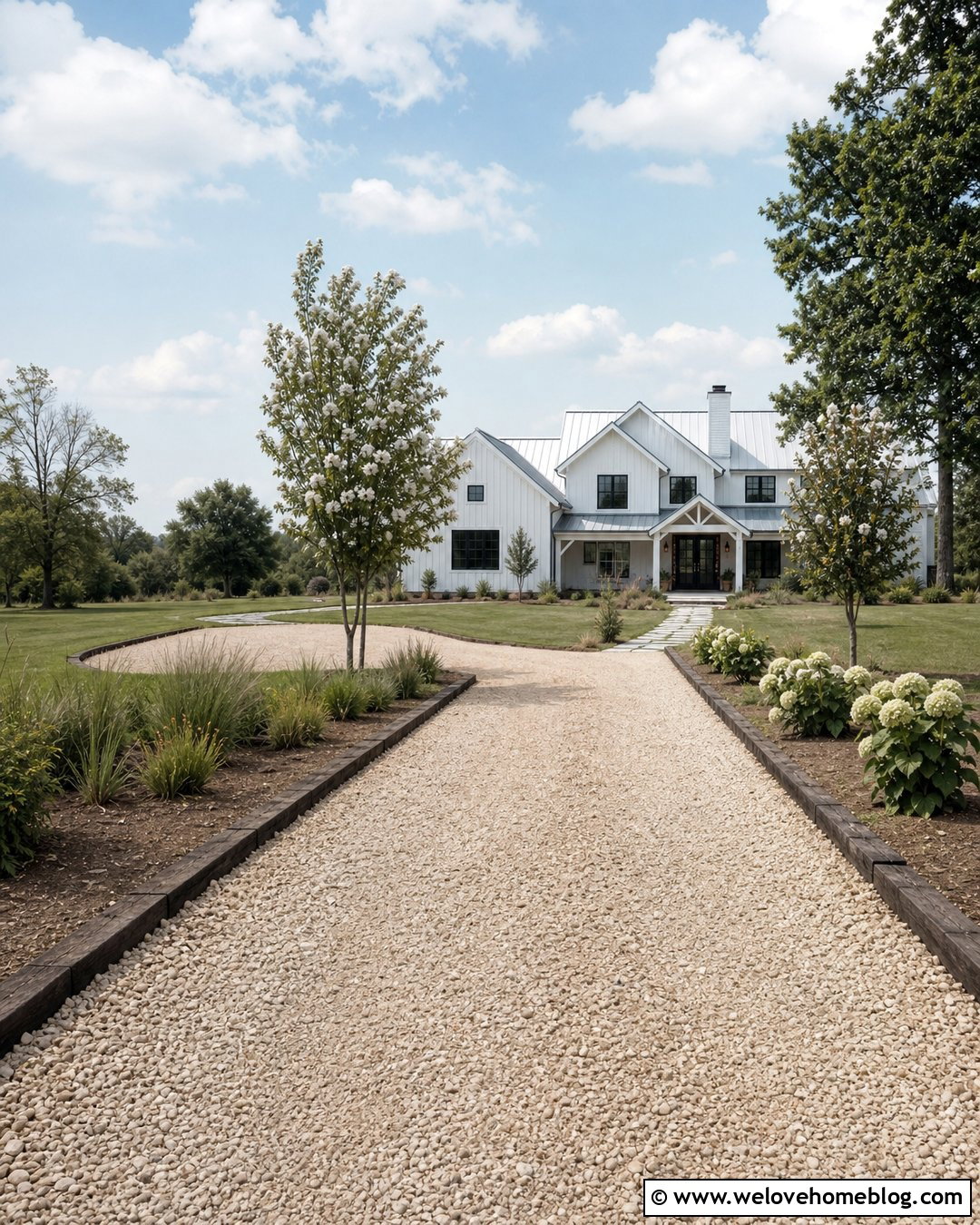
A long farmhouse driveway feels especially welcoming when rustic railroad tie borders lead the eye toward the house. Cover the surface with compacted beige crushed limestone and use continuous timber edging along the main approach. At the entrance, widen the landscaping with simple native grasses, hydrangeas, and two small flowering trees. The ties can continue around a side parking pad, creating one unified outline rather than several disconnected borders. Add a separate flagstone walkway between the parking area and porch so guests do not have to cross loose gravel. This complete design works with white siding, black windows, and a metal roof. Keep the planting informal, but trim anything that blocks visibility where the driveway meets the public road.
6. Sloped Gravel Driveway With Railroad Tie Retaining Edges
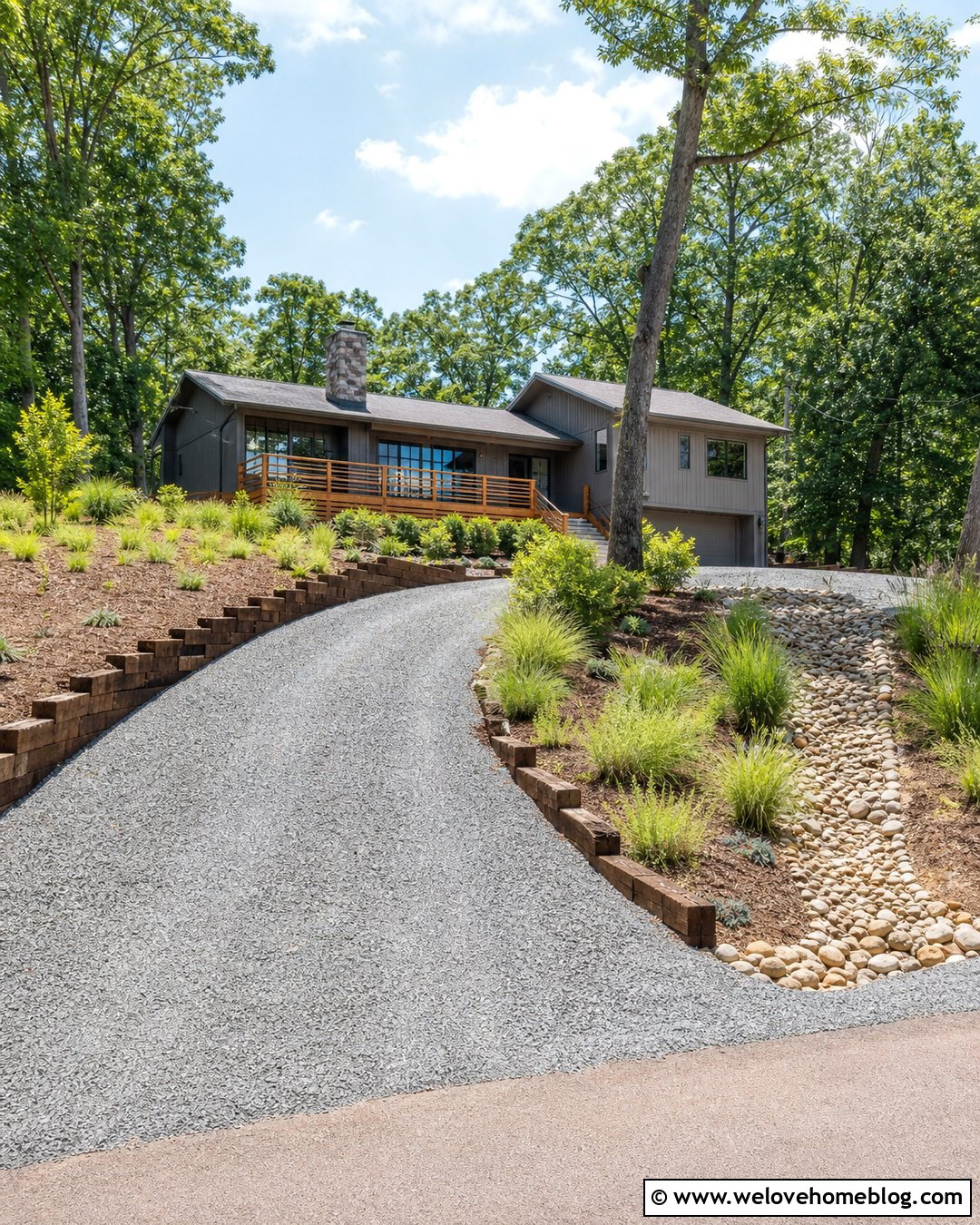
Sloped driveways require more than a decorative line of timber. Use angular crushed granite or dense-grade aggregate that compacts firmly, then place railroad ties along the lower side as a modest retaining edge. On steeper sections, a professional should evaluate anchoring, soil pressure, erosion, and drainage rather than treating the ties like ordinary surface edging. The uphill side can feature a shallow drainage swale filled with river rock and low, erosion-resistant plants. This complete arrangement suits a woodland home, mountain cabin, or raised ranch. Break up the long incline with subtle gravel color variation and a level parking area near the garage. Avoid creating a solid timber dam across established runoff paths, since water needs a controlled route away from the driving surface.
7. Circular Gravel Driveway With Railroad Tie Edging
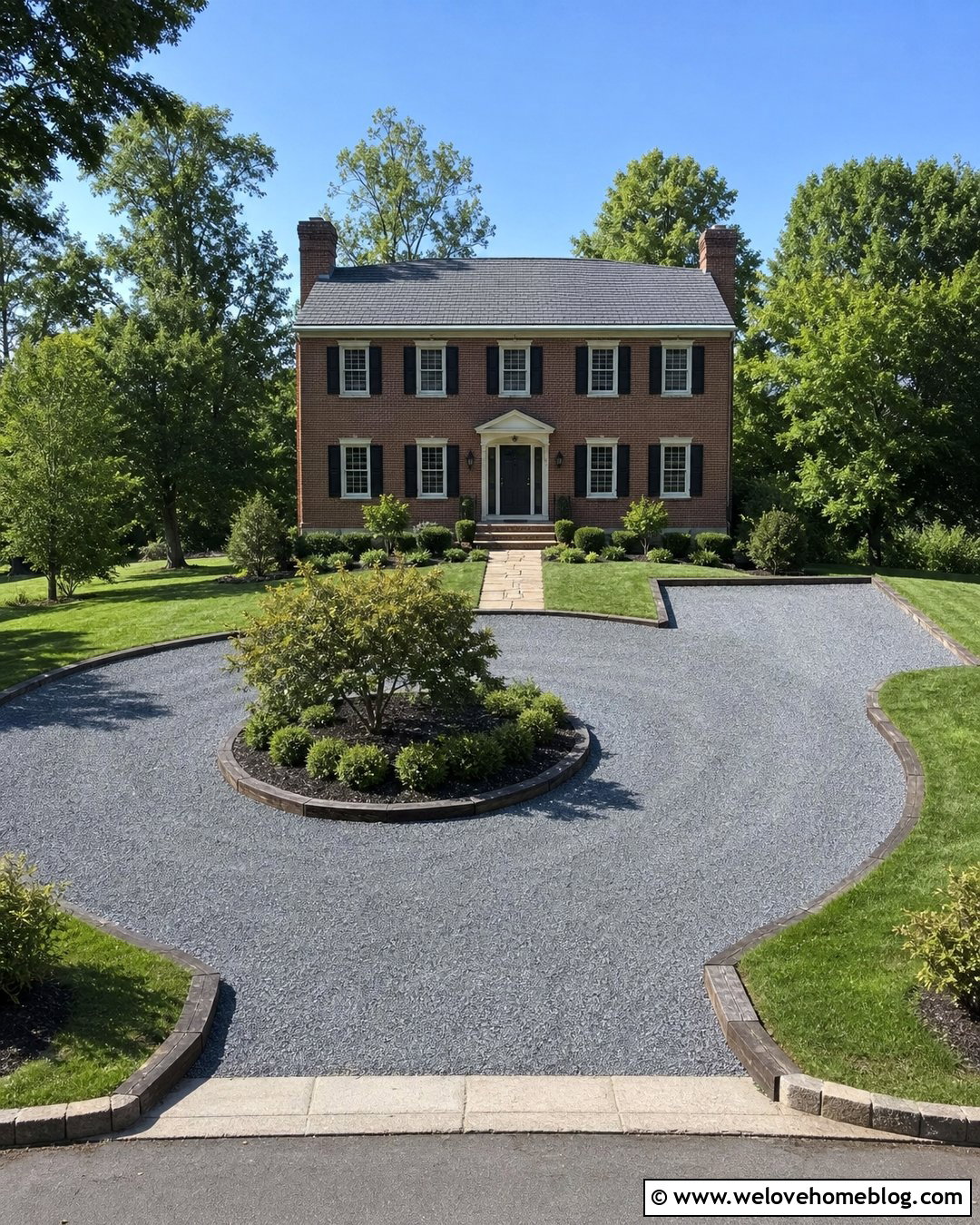
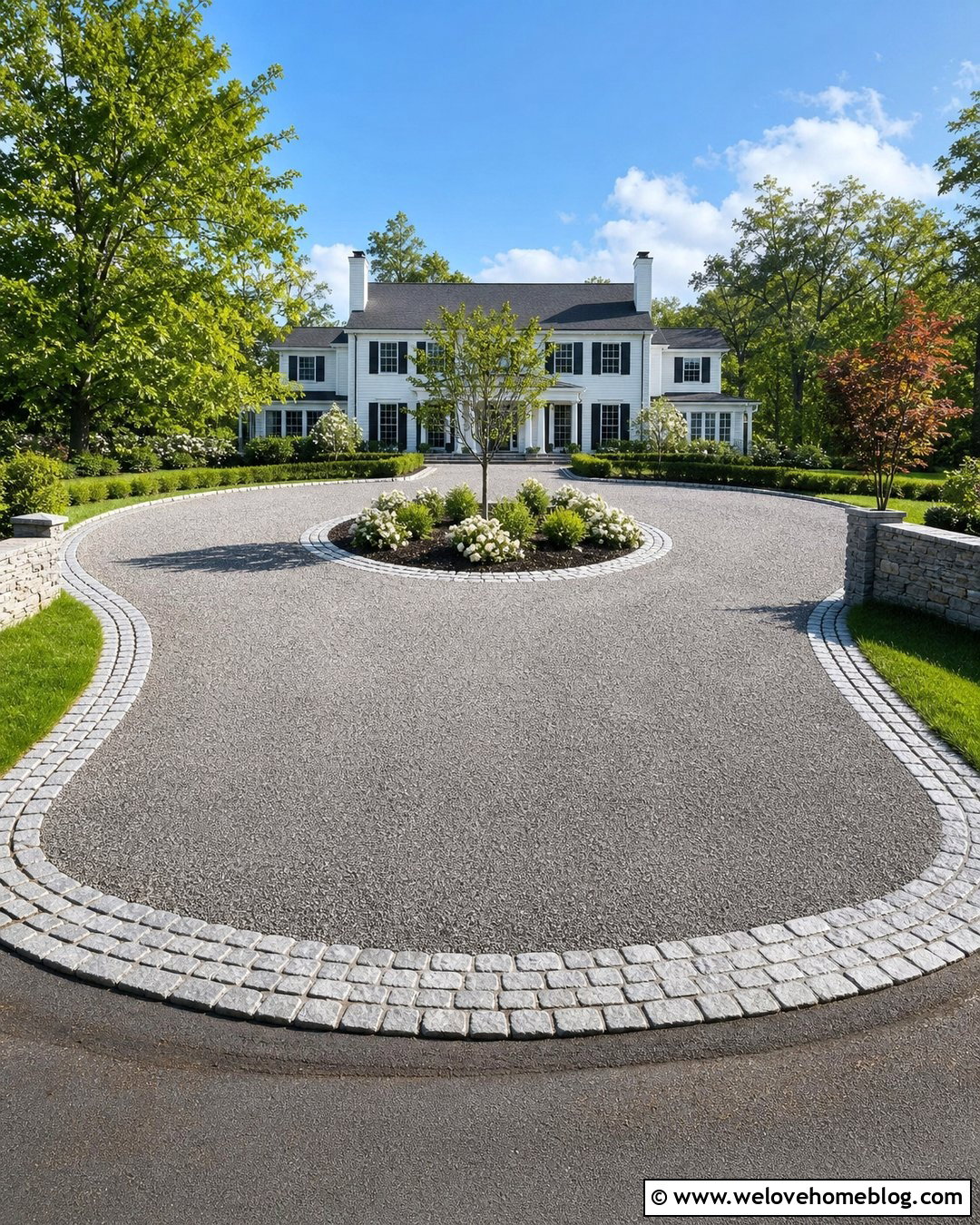
A circular gravel driveway becomes easier to read when railroad ties define both the outer edge and center island. Choose medium-gray crushed gravel for the driving lane and arrange shorter timber sections around each curve. In the island, use a small ornamental tree surrounded by low evergreen shrubs and decorative stone mulch. Keeping plants low near the entrance preserves visibility while giving the circle an intentional focal point. This layout pairs beautifully with a symmetrical colonial, Georgian, or traditional brick home. Continue the railroad tie border around a short guest parking bay so it feels connected to the circle. A stone walkway can cross the island or lead directly from the driveway to the front steps, creating a comfortable pedestrian route through the complete design.
8. Horseshoe Gravel Driveway With Railroad Tie Edging
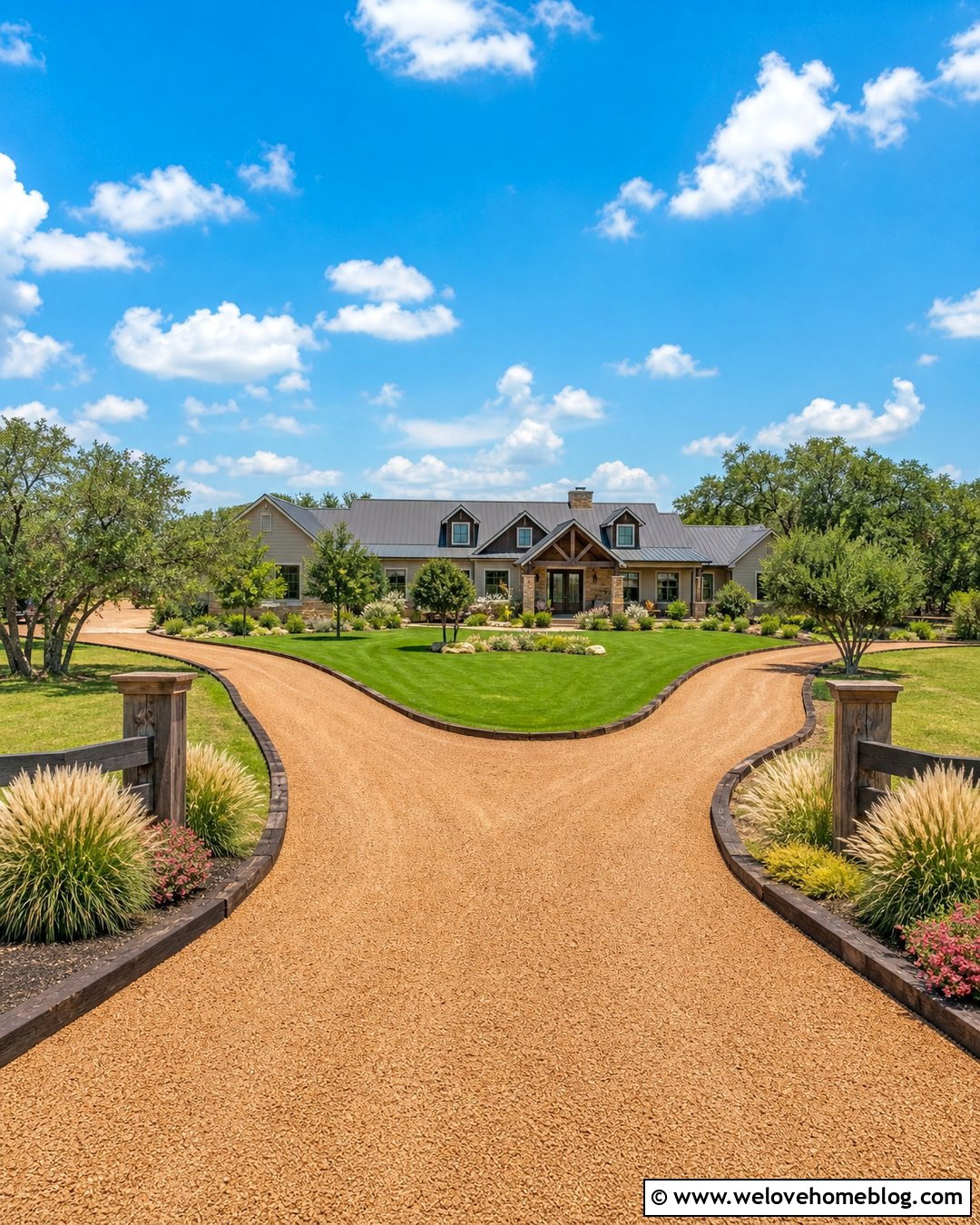
Two defined entrances make a horseshoe driveway practical and visually balanced. Use warm brown crushed gravel throughout the curved lane, then border both sides with dark, low-set railroad ties. At each street opening, end the ties cleanly beside matching timber address posts or natural stone markers. Layer ornamental grasses and compact flowering shrubs along the outer curve while keeping the inner lawn simple. The result works well in front of a wide ranch or traditional country home. Make both openings generous enough for easy turns, and avoid placing tall plants where they could limit sightlines. The railroad ties should follow the driveway continuously, helping drivers understand the route while preventing gravel from spreading into the central lawn and perimeter planting beds.
9. Gravel Parking Pad With Railroad Tie Border
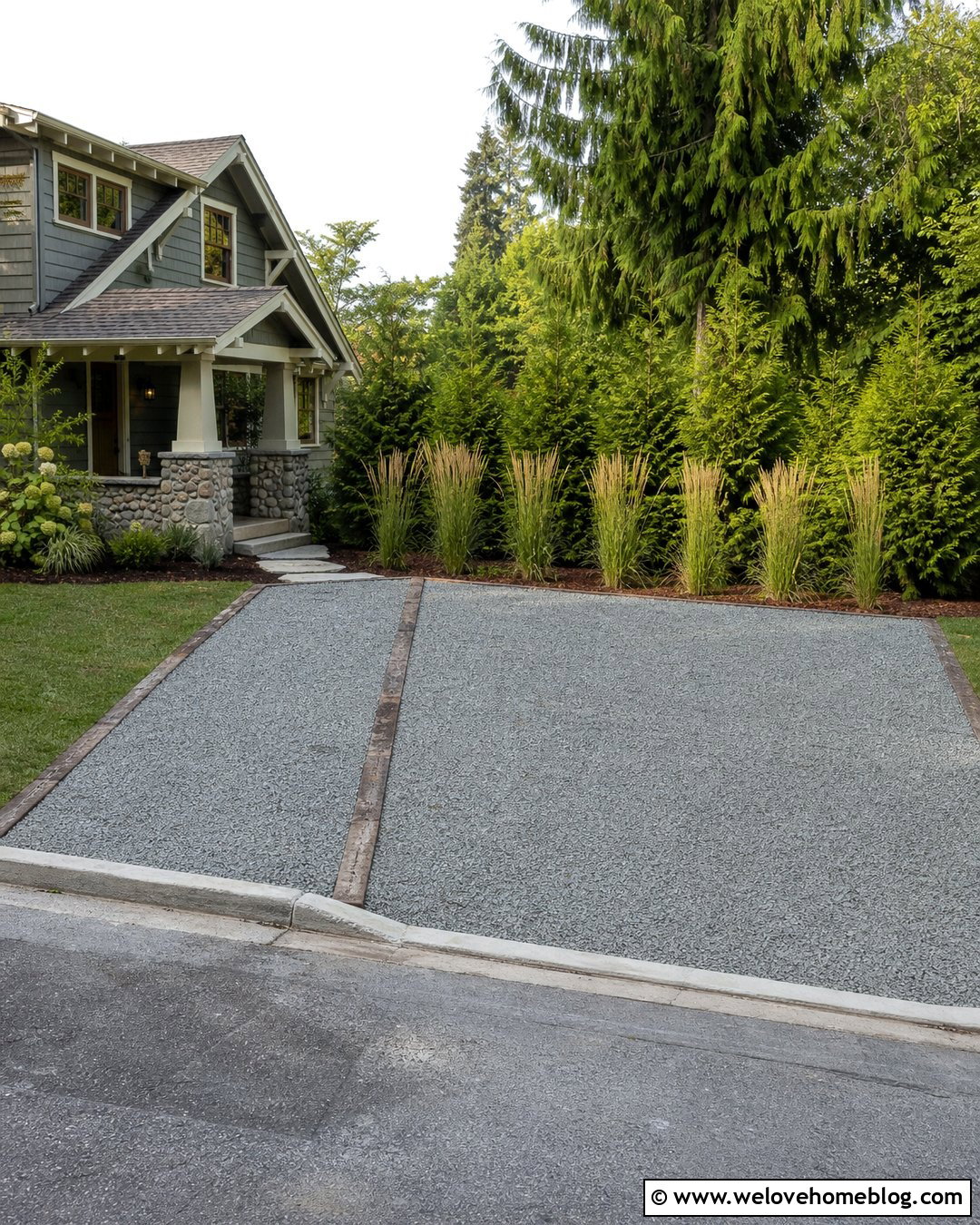
A small gravel parking pad can look planned rather than temporary when railroad ties frame its complete perimeter. Use compacted gray crushed stone and position the timbers in a simple rectangular layout beside the main driveway. Leave the vehicle entrance open or create a flush timber threshold that does not produce an uncomfortable bump. Along the back edge, add a narrow planting bed with upright grasses and a few evergreen shrubs to screen the parked area. This design fits a bungalow, ranch home, or narrow suburban lot where additional parking is needed. Connect the pad to the house with a stepping-stone path set outside the vehicle zone. Clearly defined corners make maintenance easier and help prevent the parking surface from slowly expanding into the surrounding lawn.
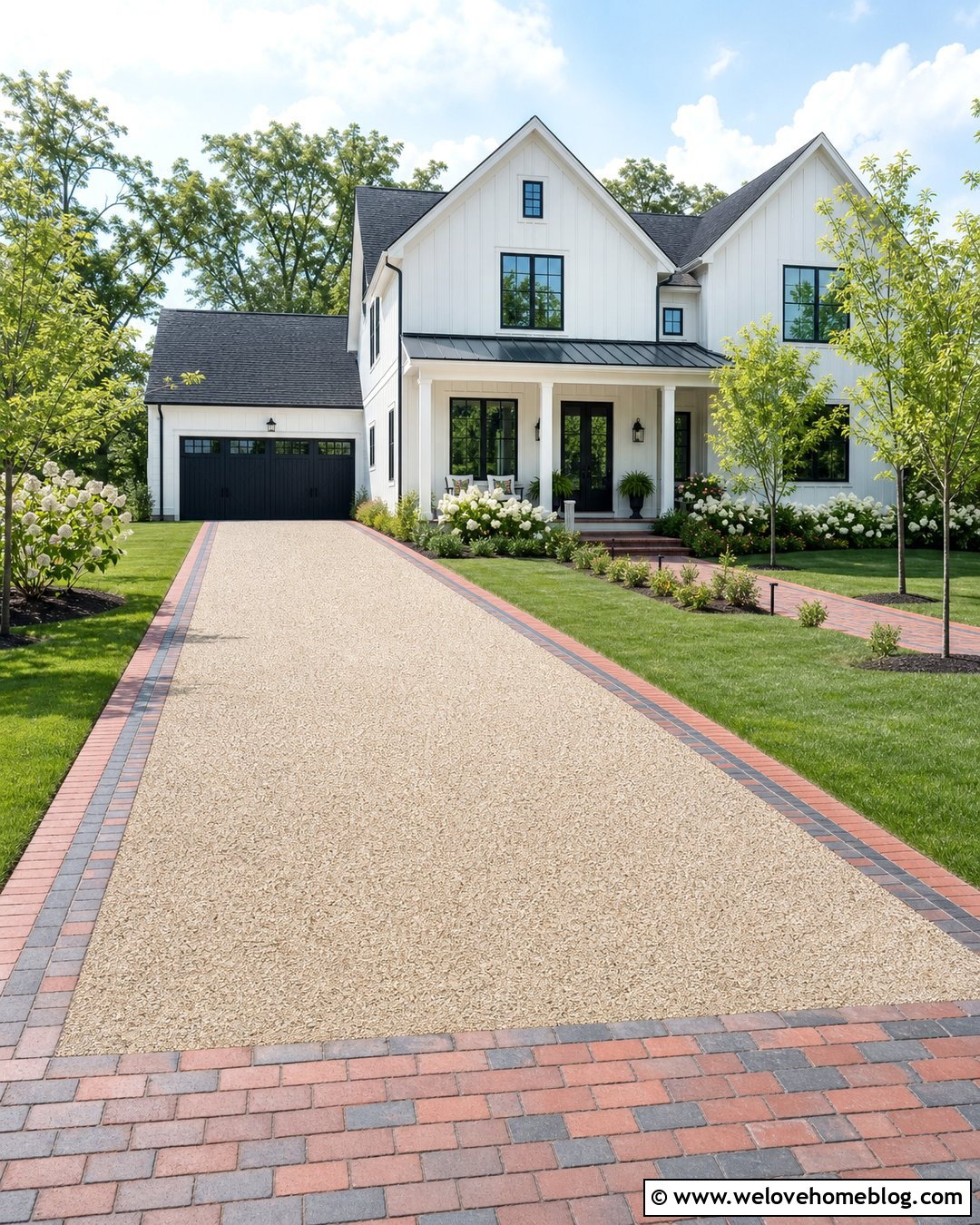
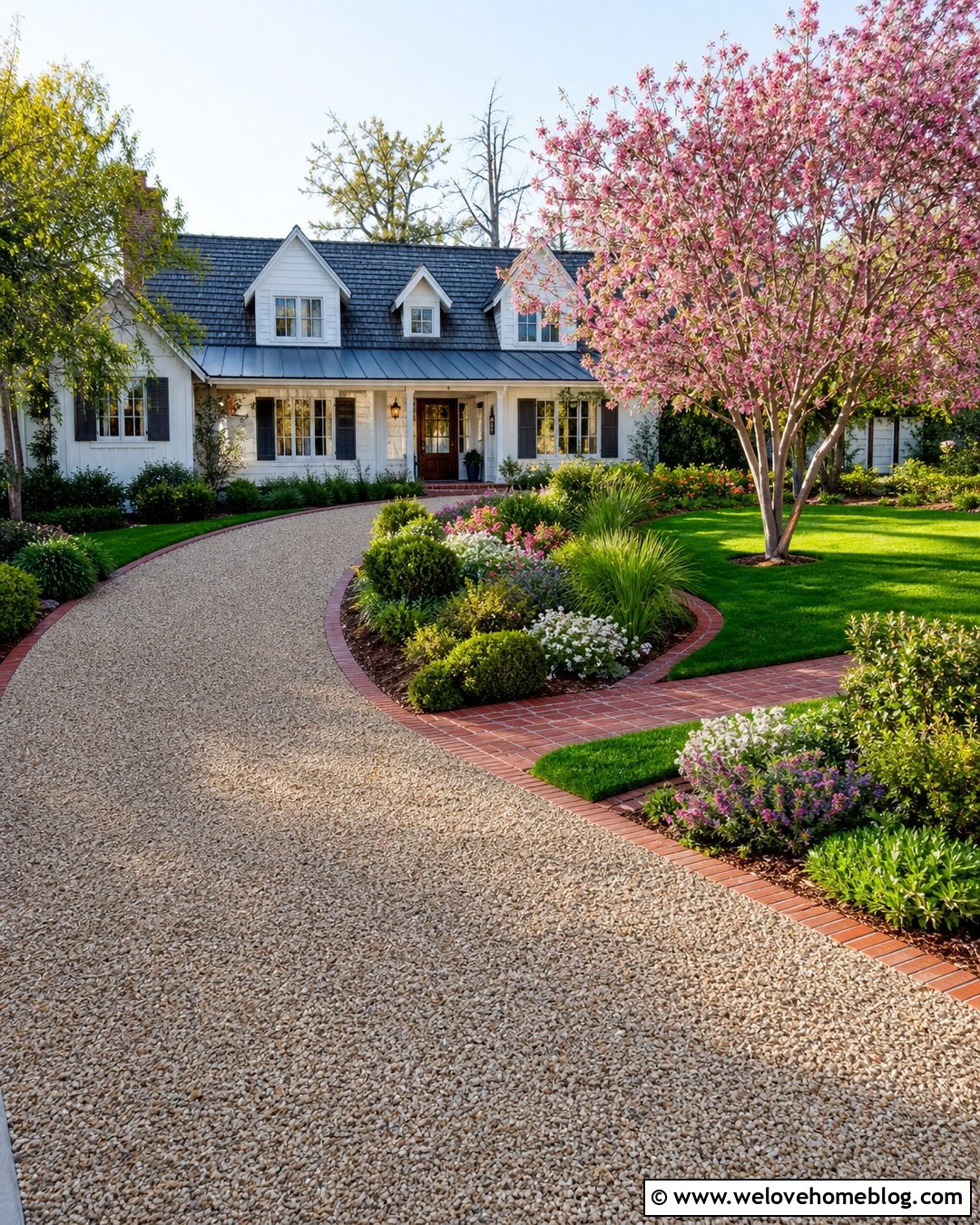
10. Gravel Driveway With Railroad Tie Raised Beds
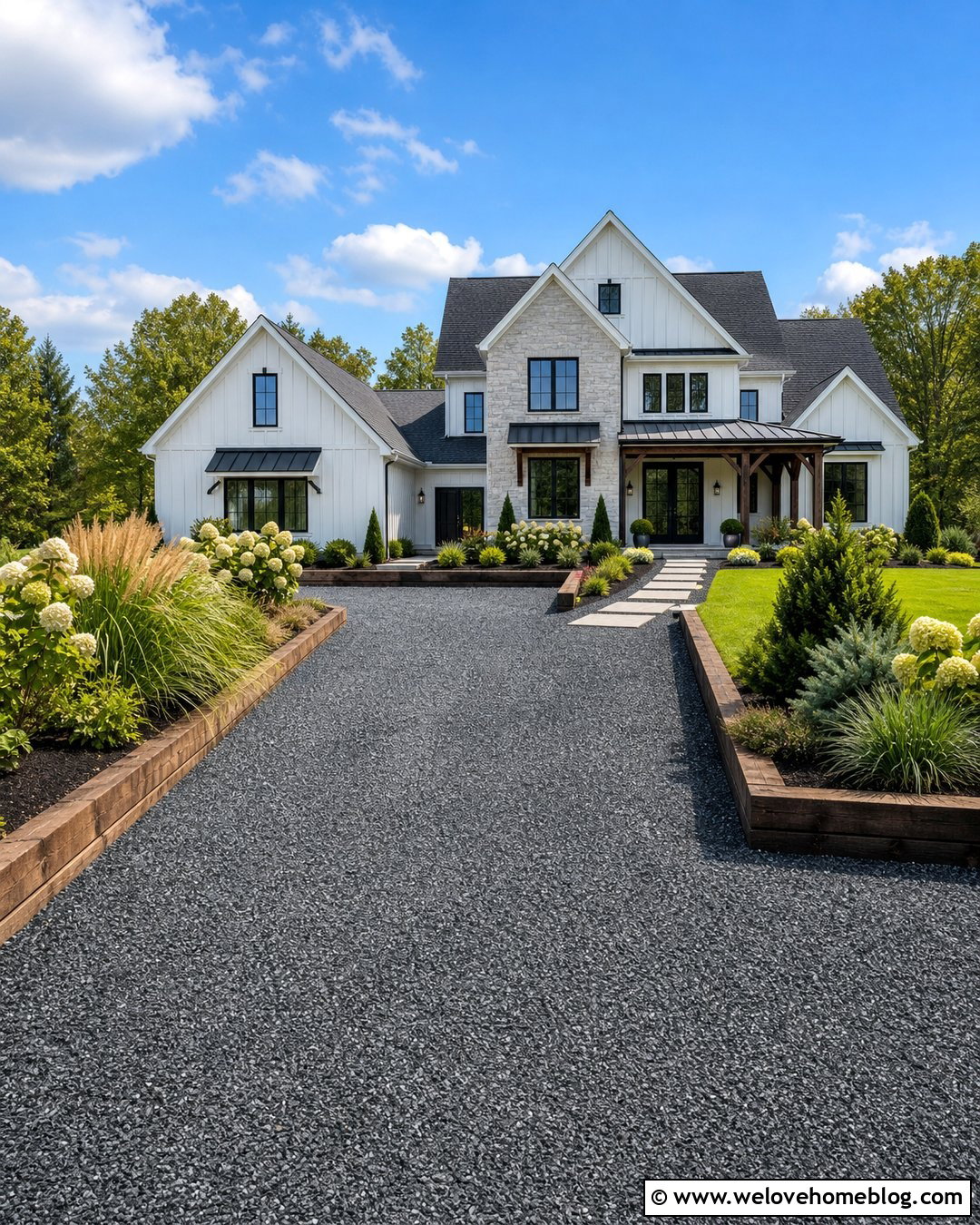
Railroad ties can separate a gravel driveway from raised ornamental beds, creating both edging and visible height. Use charcoal crushed gravel for the driveway and stack new residential-rated timber products one or two courses high along selected sections. Fill the beds with decorative shrubs, grasses, and seasonal flowers rather than edible plants, especially when the treatment history of reclaimed wood is uncertain. A modern farmhouse or craftsman facade provides a fitting background for the dark gravel and warm timber combination. Keep the raised sections away from vehicle doors and turning zones so passengers have room to step out. Include drainage behind the timbers and avoid building tall retaining structures without appropriate design. The finished look should feel layered, stable, and integrated with the home.
11. Gravel Driveway With Railroad Tie Entrance Posts
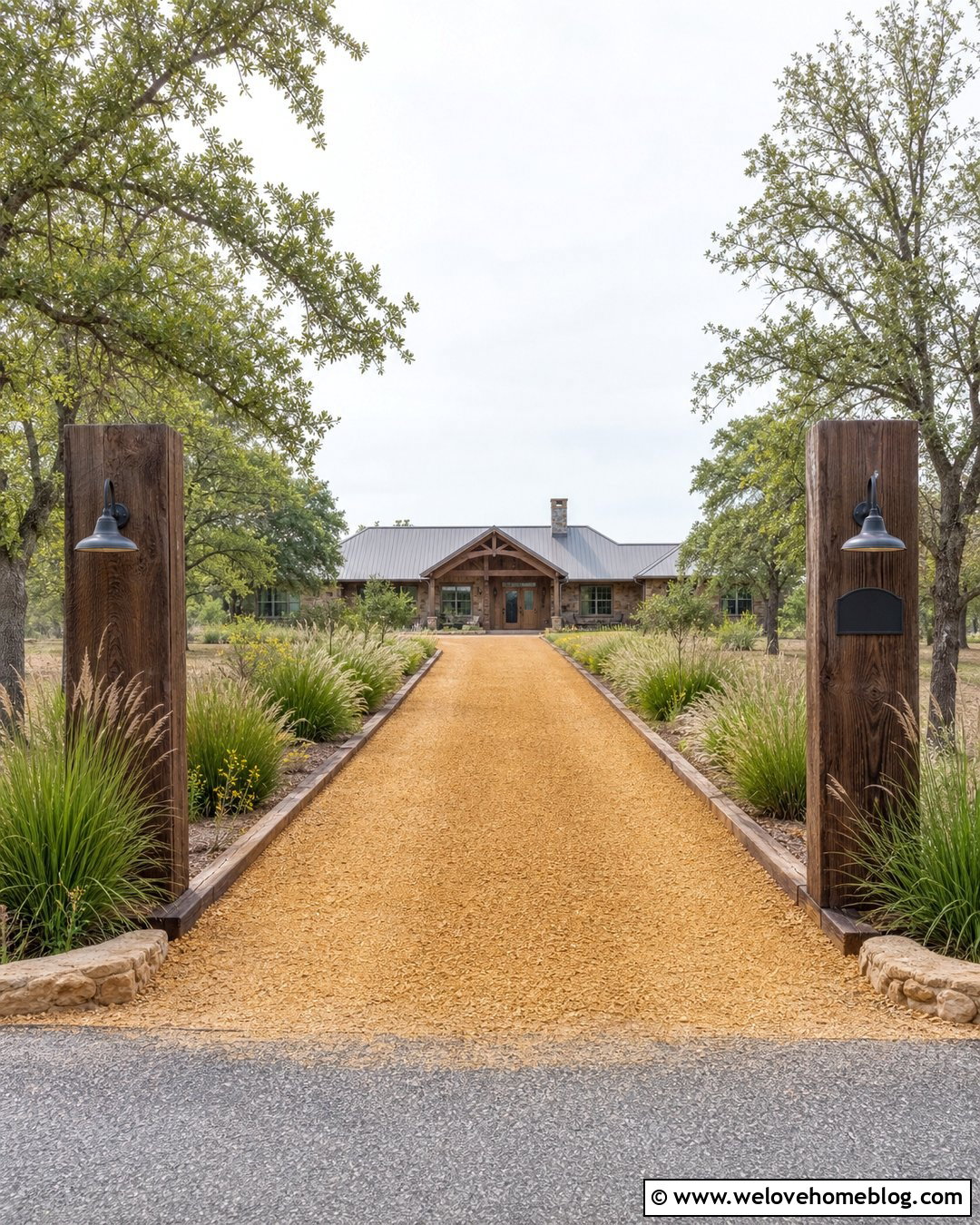
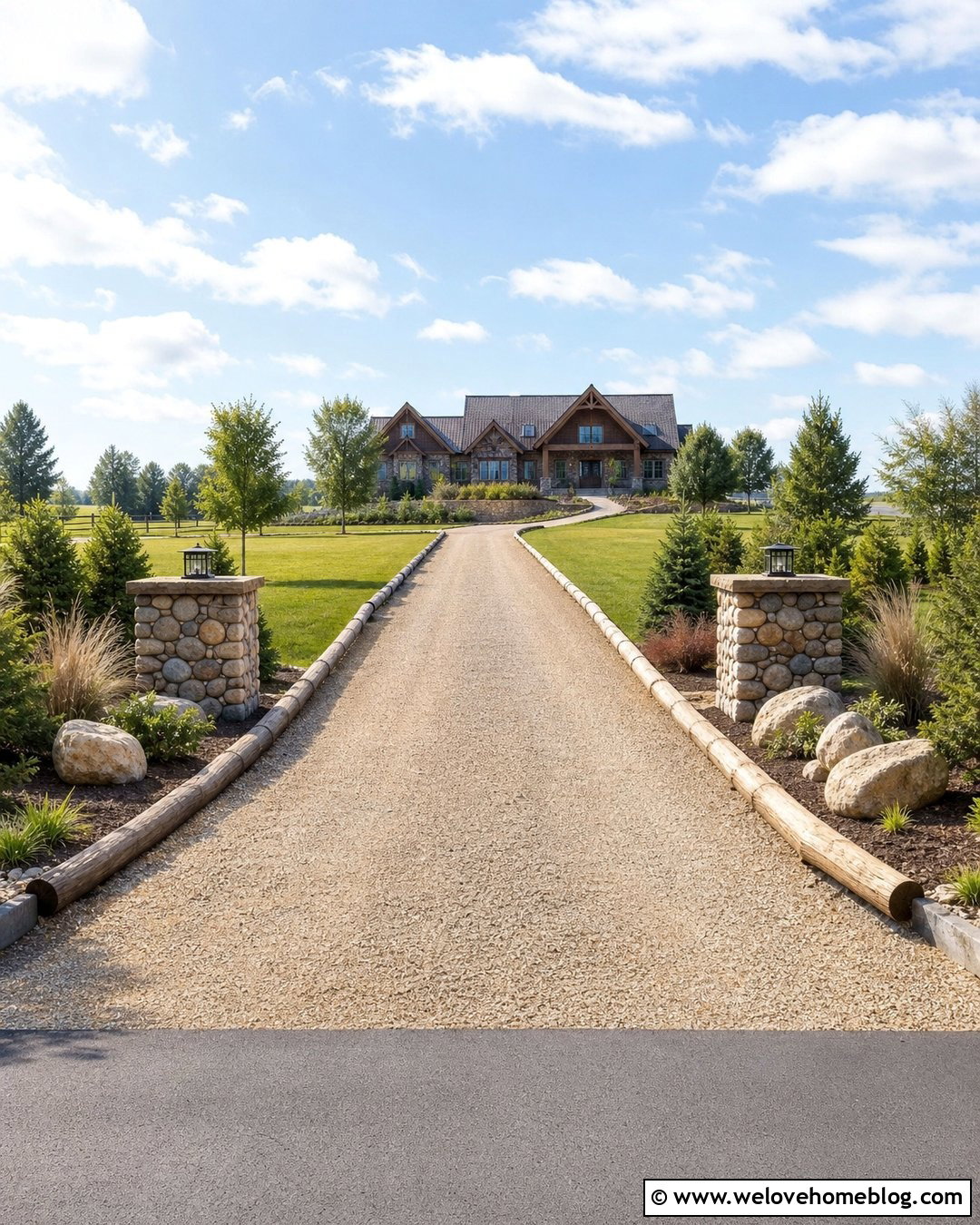
Matching timber entrance posts make railroad tie edging feel like part of a complete arrival sequence. Begin with a straight driveway surfaced in golden crushed gravel. Run low railroad tie borders from the road toward a pair of substantial wood posts positioned outside the driving clearance. Add a simple metal address plaque, downcast landscape lighting, and symmetrical beds of native grasses around the posts. Continue the edging beyond the entrance so the feature does not appear disconnected from the driveway. This rustic composition complements a country ranch, cabin-inspired home, or modern farmhouse. Keep signs easy to read without making them oversized. Posts should be placed far enough from the road and driveway to avoid interfering with vehicles, snow removal, drainage, or necessary sightlines.
12. Gravel Driveway With Railroad Ties And River Rock
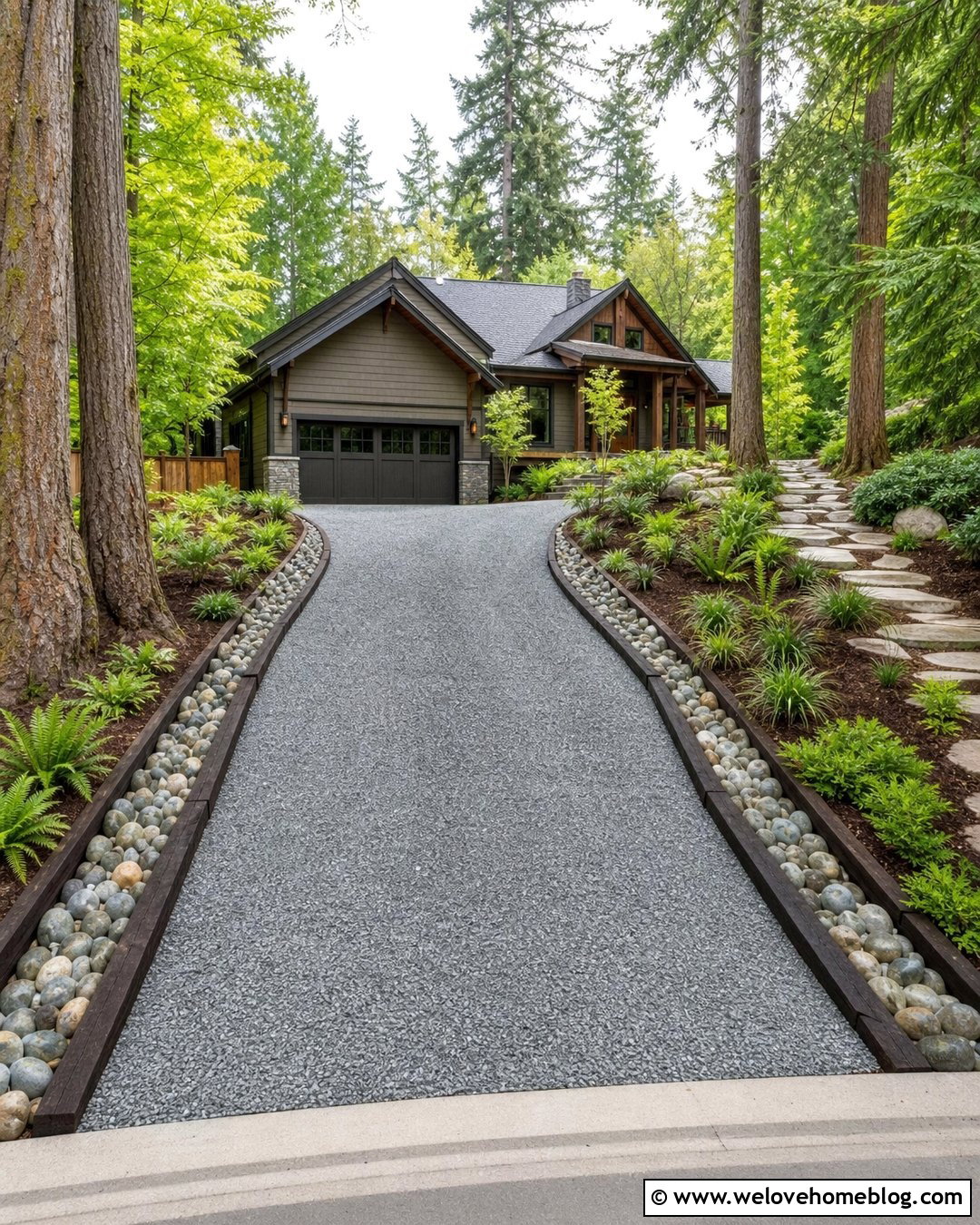
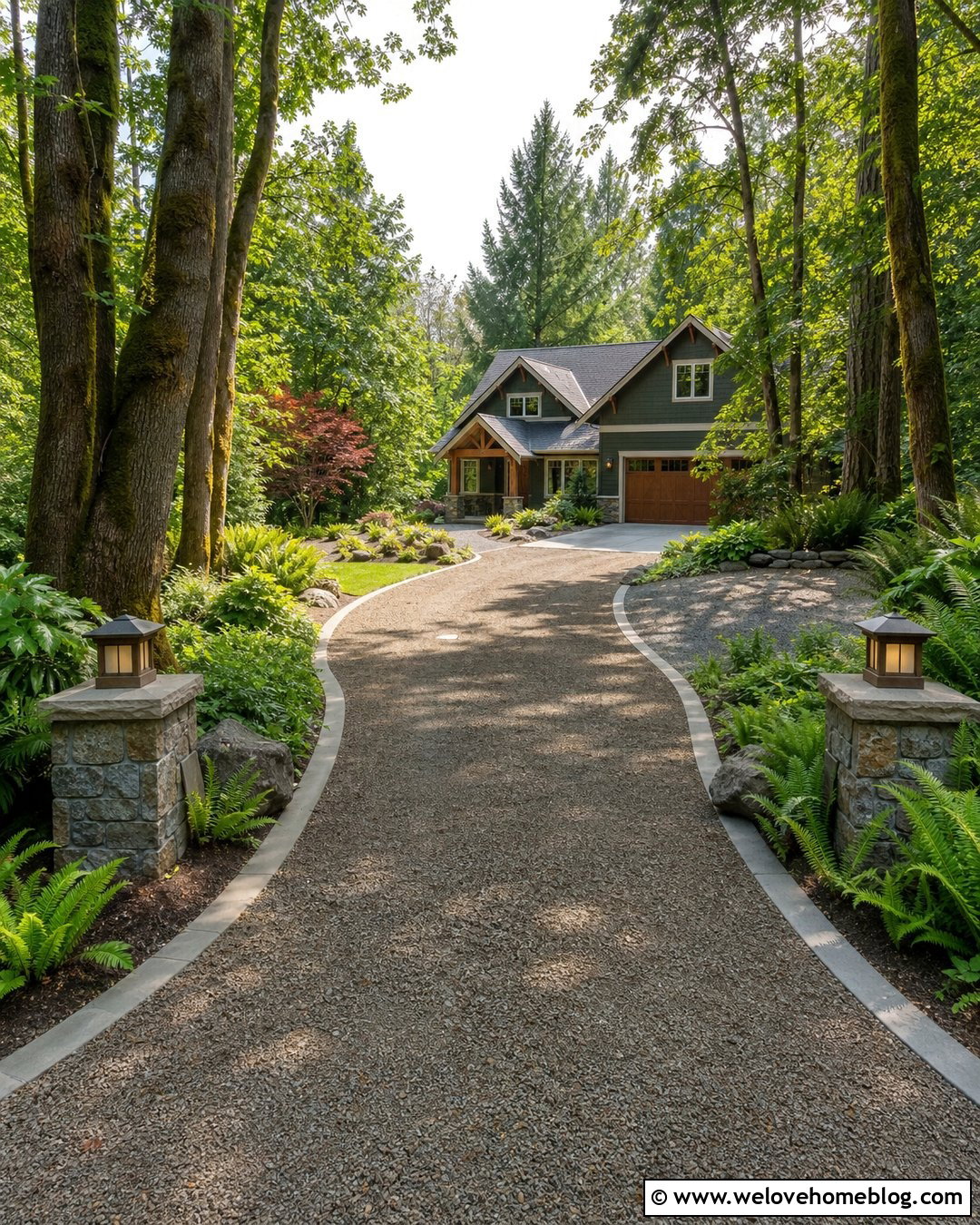
Mixing gravel with river rock adds useful texture when each material has a clear purpose. Surface the driveway with compactable gray crushed gravel, then install railroad tie edging along both sides. Outside the timbers, create shallow river-rock drainage strips that collect and direct runoff without blending into the driving surface. Use rounded gray and tan stones that coordinate with the gravel while remaining visibly larger. Ferns, sedges, and moisture-tolerant shrubs can frame the drainage areas in a woodland setting. This complete look works especially well beside a craftsman home or contemporary cabin. Keep loose river stones out of vehicle paths, and provide defined outlets for collected water. The dark wood border creates a crisp separation between the functional driveway and softer drainage landscaping.
13. Gravel Driveway With Railroad Ties And Grass Strips
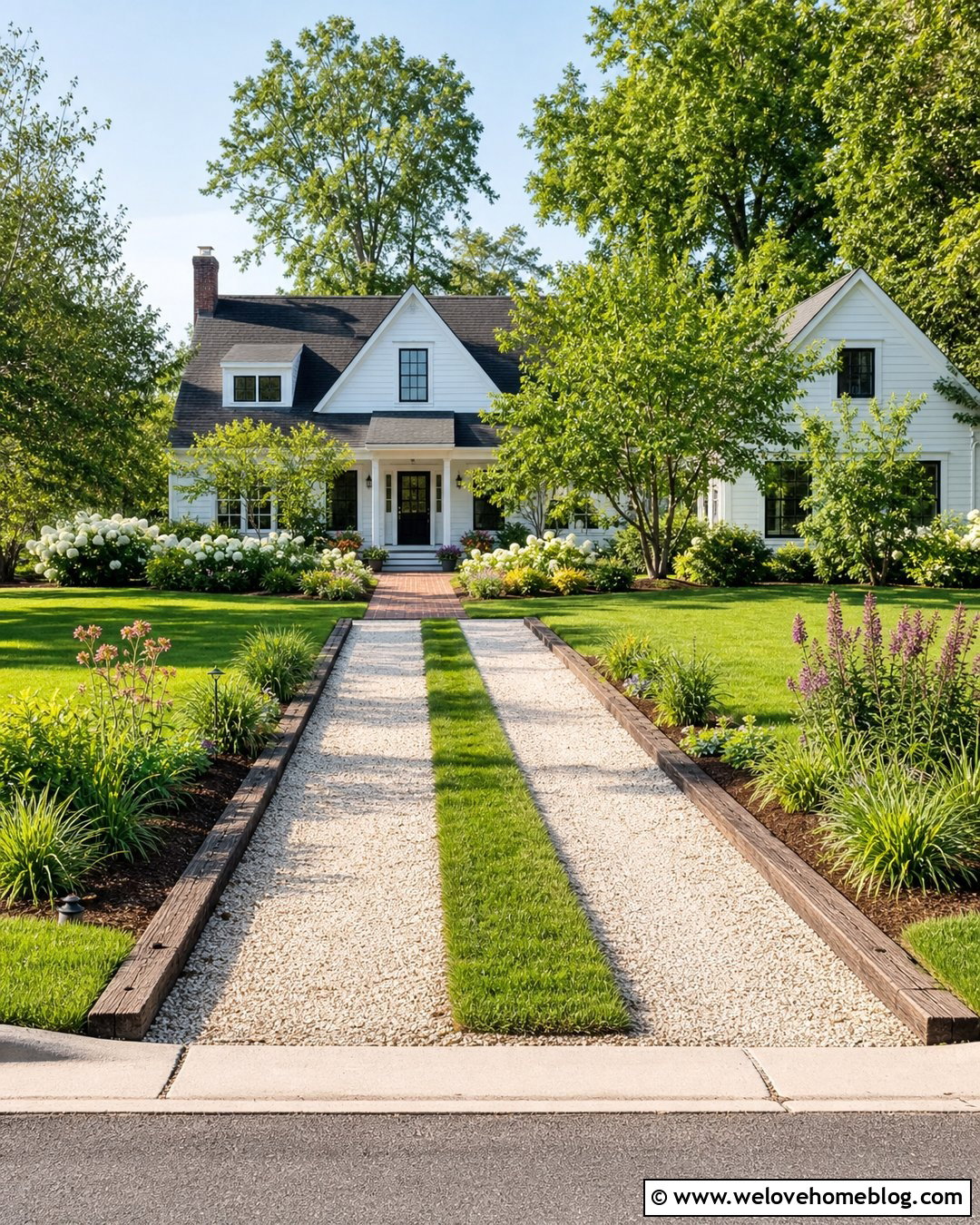
Grass strips can soften a broad gravel driveway while railroad ties maintain a durable visual boundary. Choose pale crushed limestone for a straight two-track driveway, leaving a maintained green strip through the center. Place railroad ties along the outer edges rather than beside the central grass, allowing the design to remain open and easy to mow. A white cottage or modest farmhouse suits this simple rural layout. Add informal perennial beds near the house and keep the entrance landscaping low. The center strip works best on relatively level, lightly used residential approaches where turning movements are limited. Use a stable gravel base beneath the wheel paths, define their width carefully, and consider how irrigation, mowing, winter weather, and routine vehicle traffic will affect the grass over time.
14. Black Gravel Driveway With Natural Railroad Ties
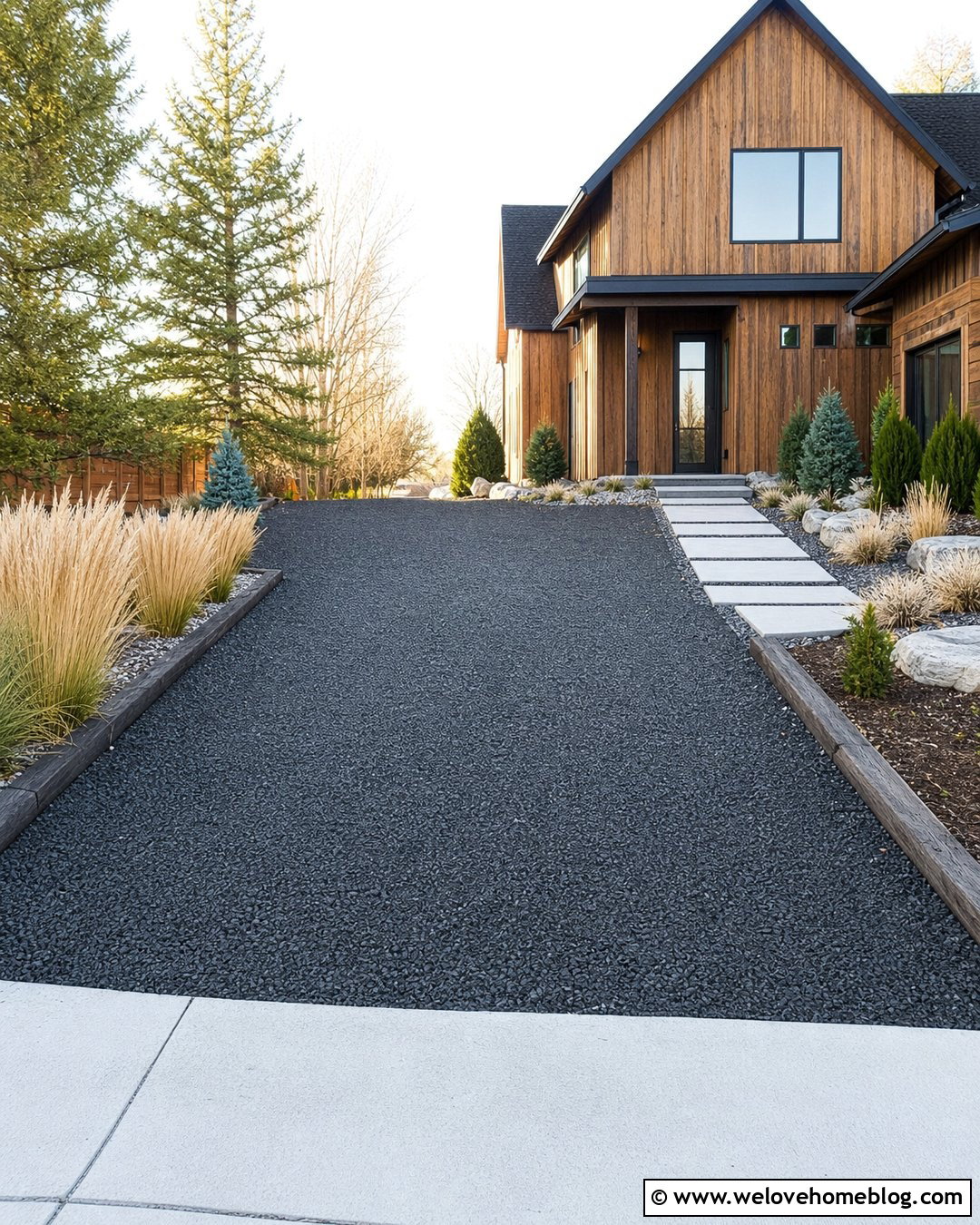
Dark gravel gives rustic railroad ties a more modern character. Cover a wide driveway with black basalt chips or dark crushed granite, then line the edges with naturally weathered brown timbers. A straight layout with a widened parking court works well in front of a contemporary home with wood siding, black metal details, and large windows. Use simple planting masses rather than busy flower borders. Feather reed grass, compact evergreens, and light-colored decorative stone can brighten the dark surface. Keep the railroad ties low and precisely aligned to create a cleaner appearance. This palette is bold, so repeat the wood tone in the garage door, entry canopy, or fence. Adequate edging and routine surface grading will help the dark aggregate maintain its sharp, even outline.

15. Woodland Gravel Driveway With Railroad Tie Edging
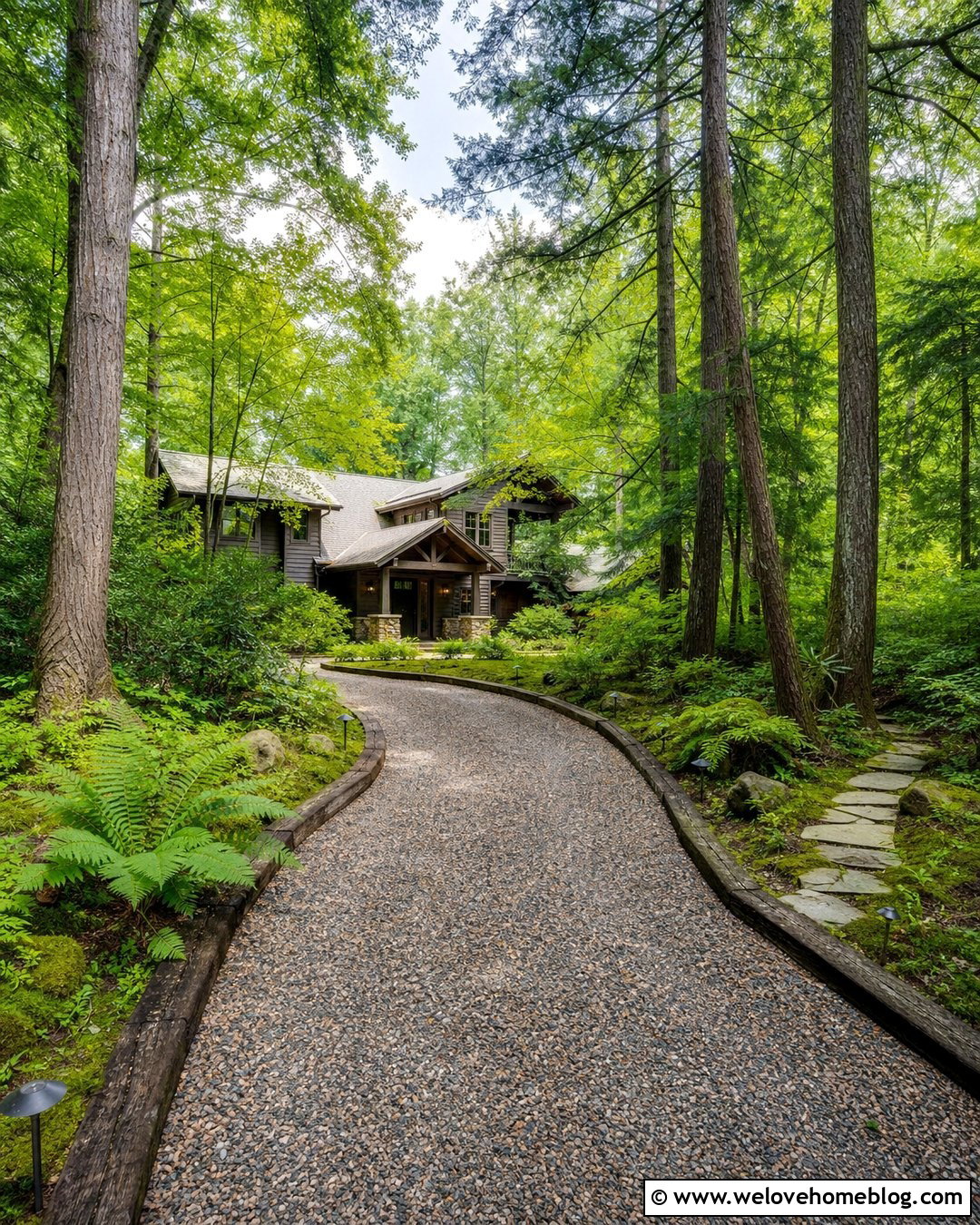
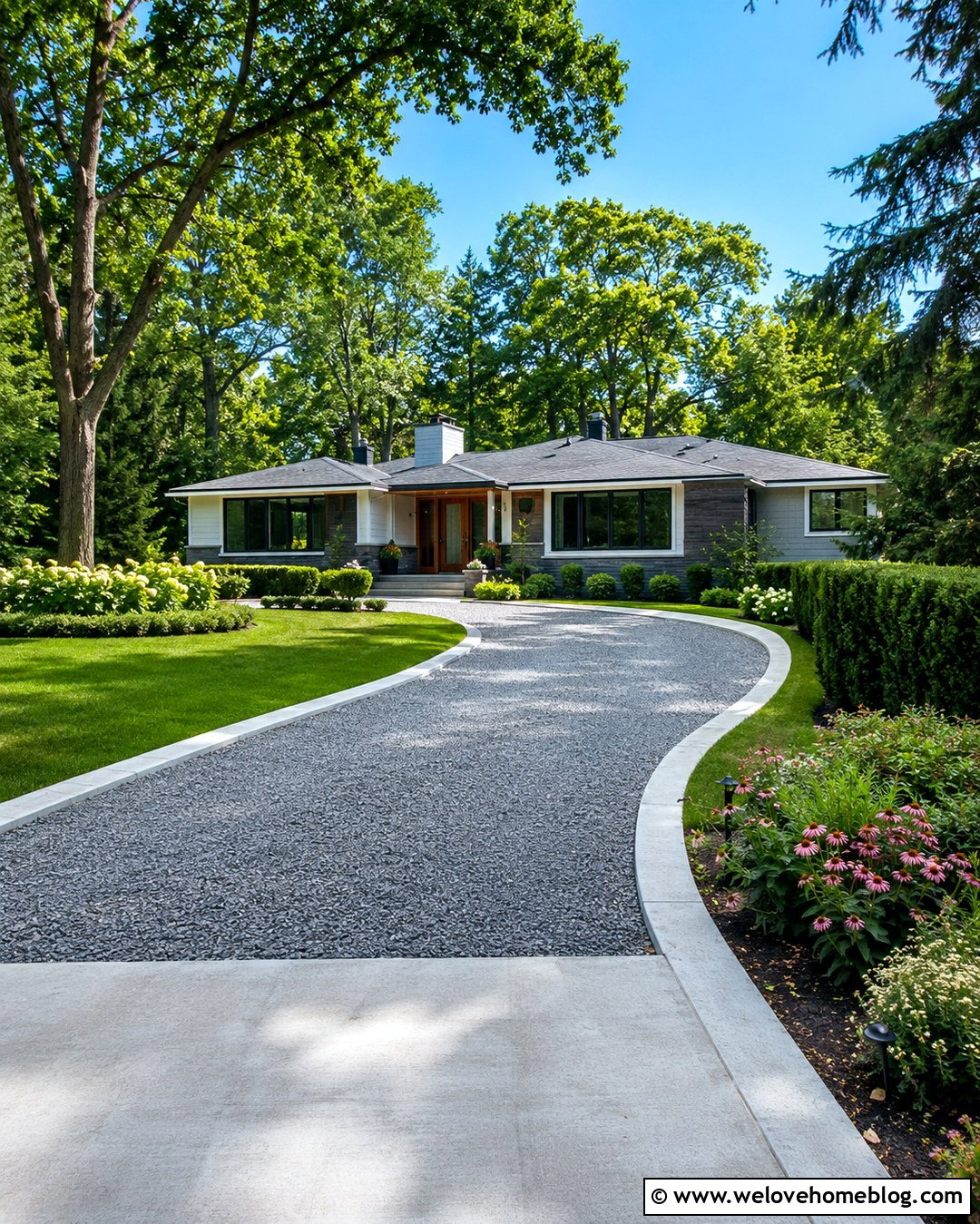
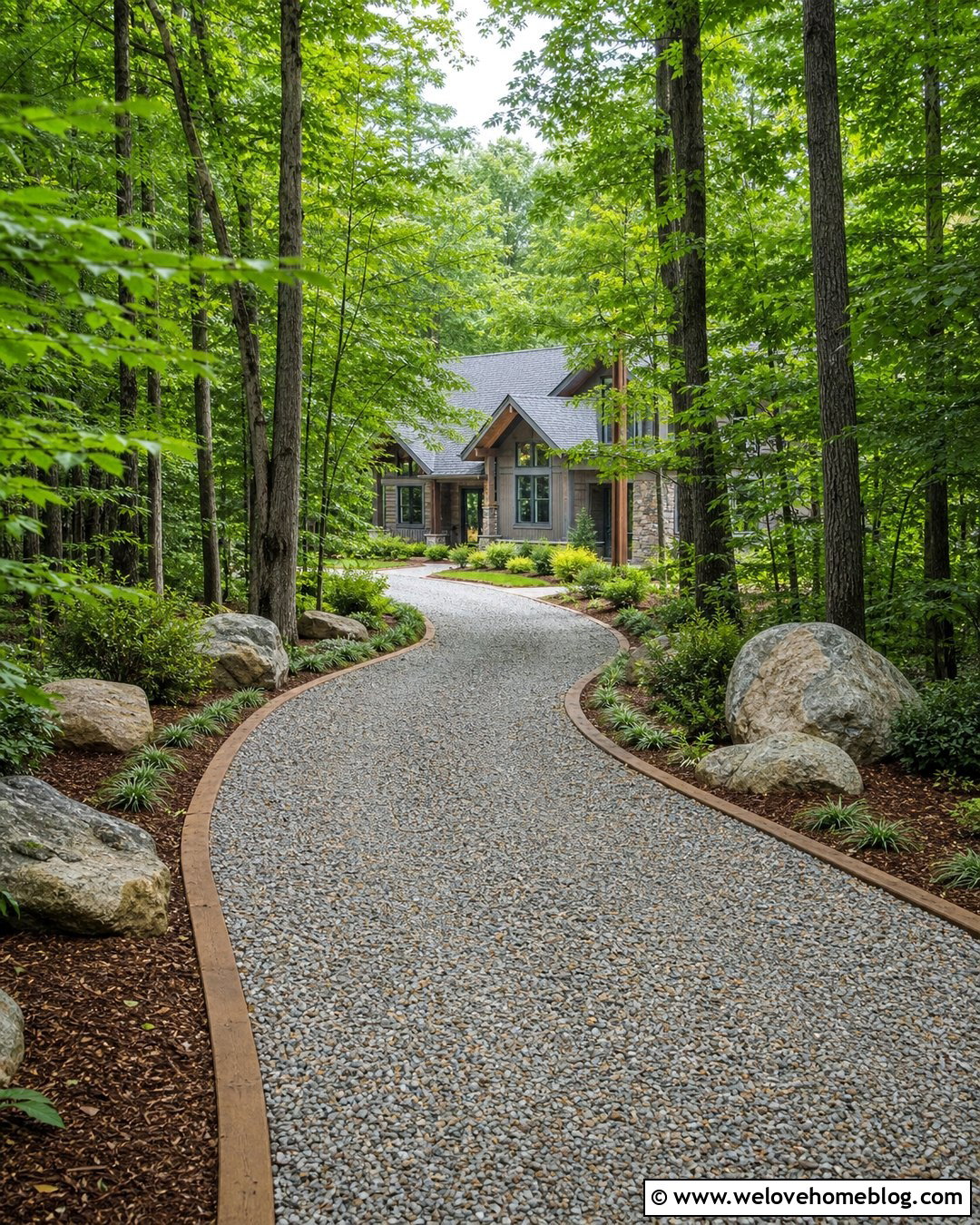
Filtered sunlight, mature trees, and a winding gravel lane create a peaceful woodland entrance. Use mixed gray and brown crushed stone so leaves and natural debris are less noticeable between cleanings. Weathered railroad ties can edge the curves and separate the driveway from fern beds, native shrubs, and mossy groundcover. Avoid raising the ties so high that they resemble a heavy barrier through the landscape. A craftsman, rustic contemporary, or cabin-style house fits naturally at the end of the approach. Preserve generous space around established tree trunks and avoid changing soil depth over major roots. Low path lights may be placed beyond the timber edge for visibility. The completed driveway should appear settled into the woodland while maintaining a clearly defined and comfortably navigable route.
16. Desert Gravel Driveway With Railroad Tie Borders
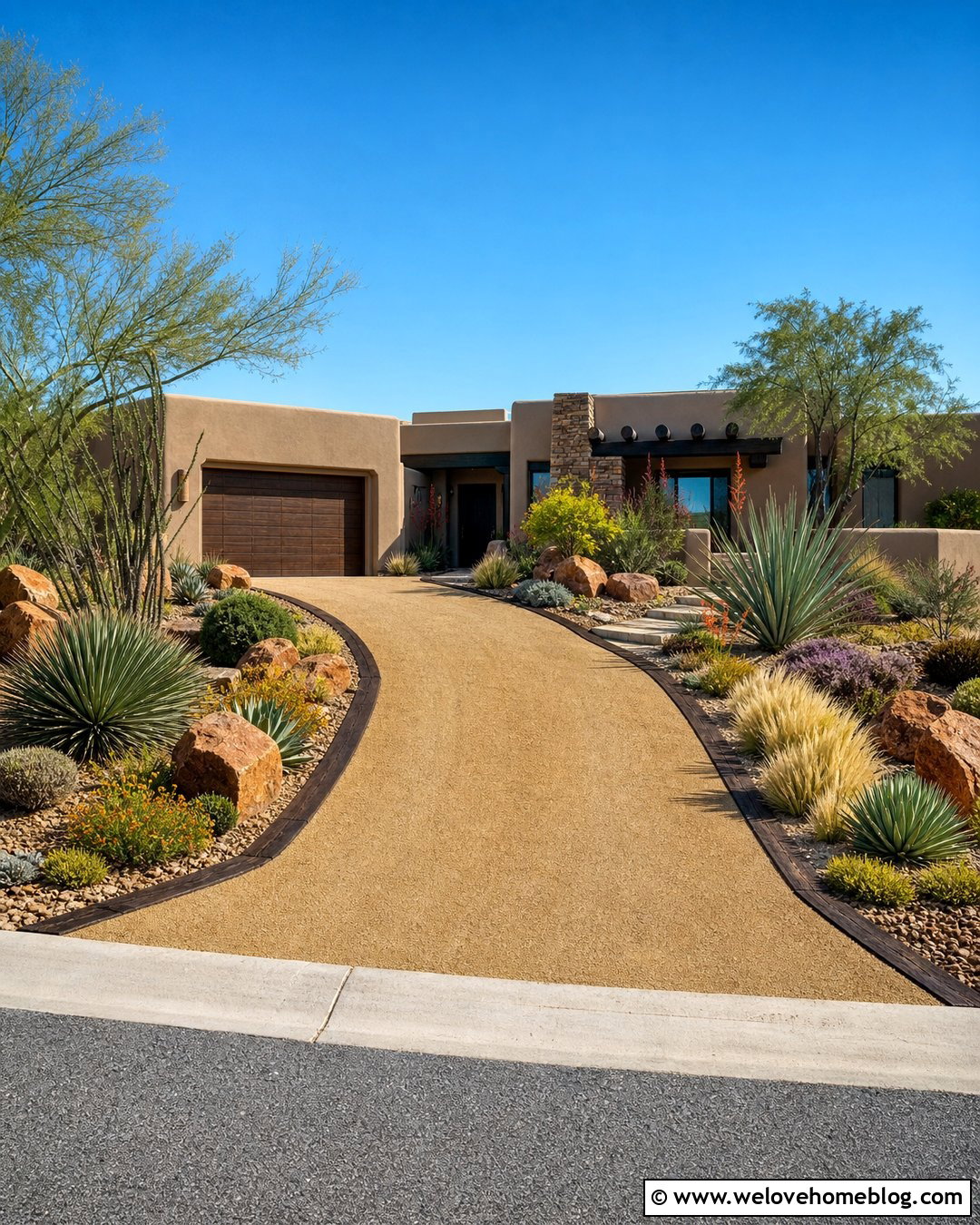
In a dry landscape, railroad tie borders introduce warmth against pale gravel and sculptural planting. Use compacted tan decomposed granite or small angular desert gravel across a gently curved driveway. Frame the surface with dark timber edging, then add broad beds of agave, yucca, ornamental grass, and regionally appropriate drought-tolerant shrubs. Rust-colored boulders can mark the entrance without crowding the driving lane. This complete design complements an adobe-inspired, Southwestern, or low-profile contemporary home. Keep thorny plants and rigid leaves well away from passenger doors and walking routes. The border should guide the gravel while allowing planned stormwater movement during heavy rain. Repeating the timber color in a gate, porch beam, or address marker gives the property a coordinated desert character.
17. Cottage Gravel Driveway With Railroad Tie Edging
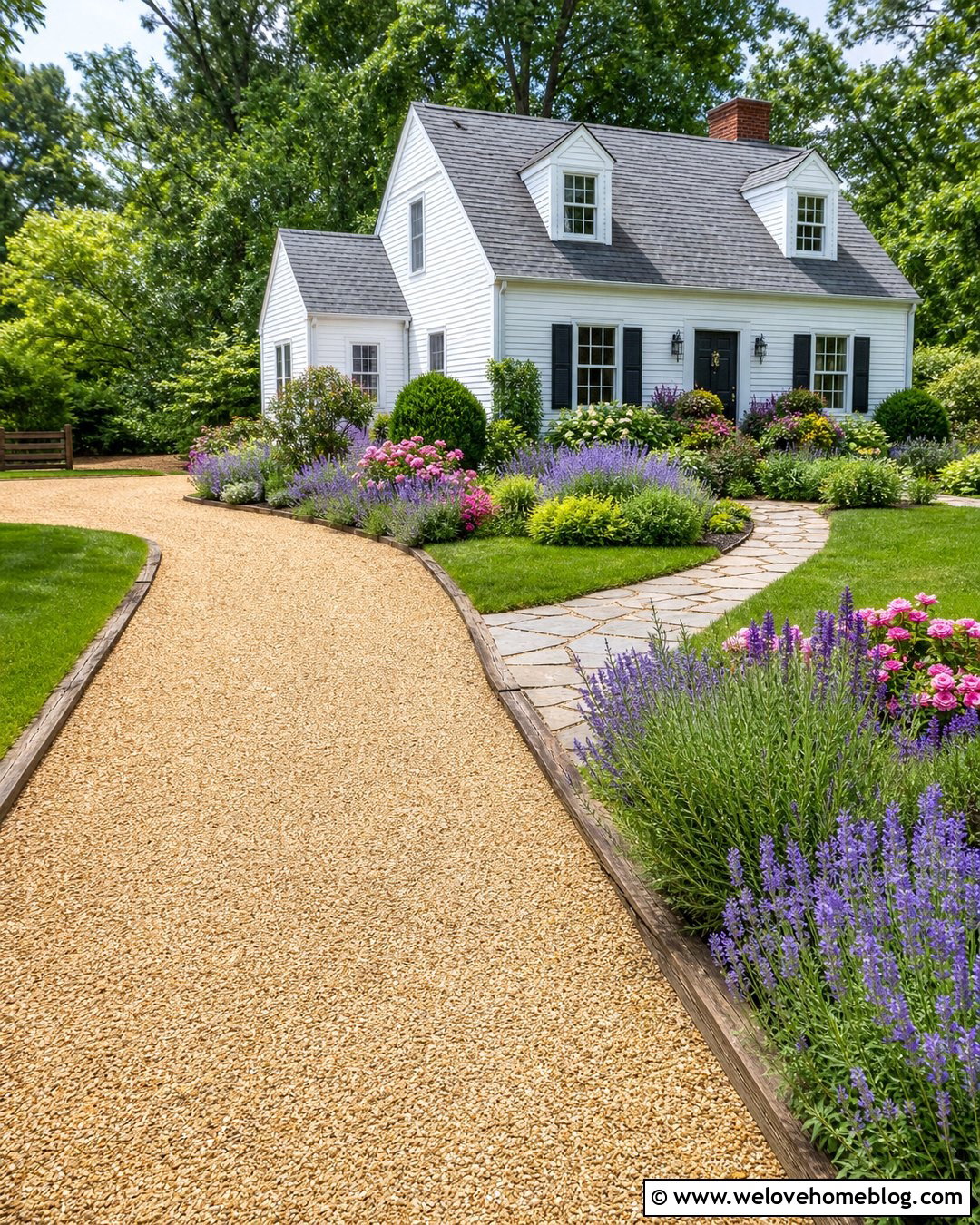
A cottage driveway benefits from soft planting, but it still needs a strong, readable edge. Use honey-colored pea gravel or fine crushed gravel on a narrow curved approach. Border it with low railroad ties, then arrange layered beds of lavender, salvia, catmint, compact roses, and evergreen shrubs beyond the wood. The timber prevents the planting from spilling directly into the driving area while adding a relaxed, slightly rustic frame. A Cape Cod, English-inspired cottage, or painted bungalow completes the scene. Include a brick or flagstone walkway that branches toward the porch near the parking area. Maintain enough open width for vehicles, guests, and deliveries. Regular trimming around the ties keeps the abundant landscaping charming without allowing it to conceal the driveway’s shape.
18. Modern Gravel Driveway With Straight Railroad Ties
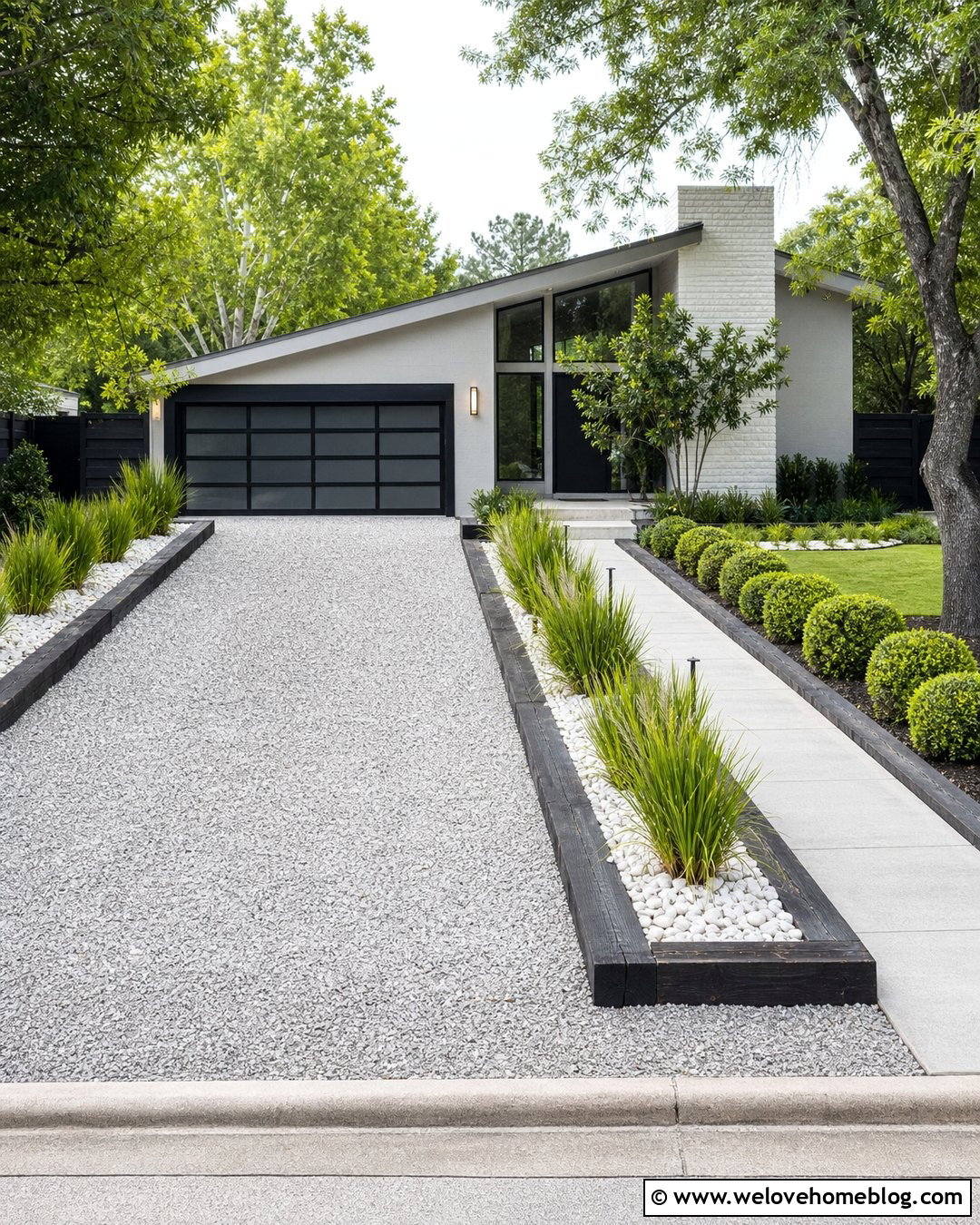
Railroad ties are not limited to rustic properties. New square-edged landscape timbers with a railroad-tie profile can frame a modern gravel driveway when installed in crisp, uninterrupted lines. Select light gray crushed granite for a straight driveway divided by a narrow concrete walkway or a restrained planting strip. Use dark-stained timbers along the outer edges, paired with geometric beds of ornamental grass, clipped shrubs, and smooth landscape stone. A flat-roofed or midcentury modern home makes the clean contrast especially effective. Keep joints aligned and avoid excessively distressed wood, uneven stacks, or decorative clutter. The gravel, timber, and planting palette should repeat tones found on the facade. This produces a complete contemporary look while retaining the practical containment associated with substantial wood edging.
19. Gravel Driveway Turnaround With Railroad Tie Edging
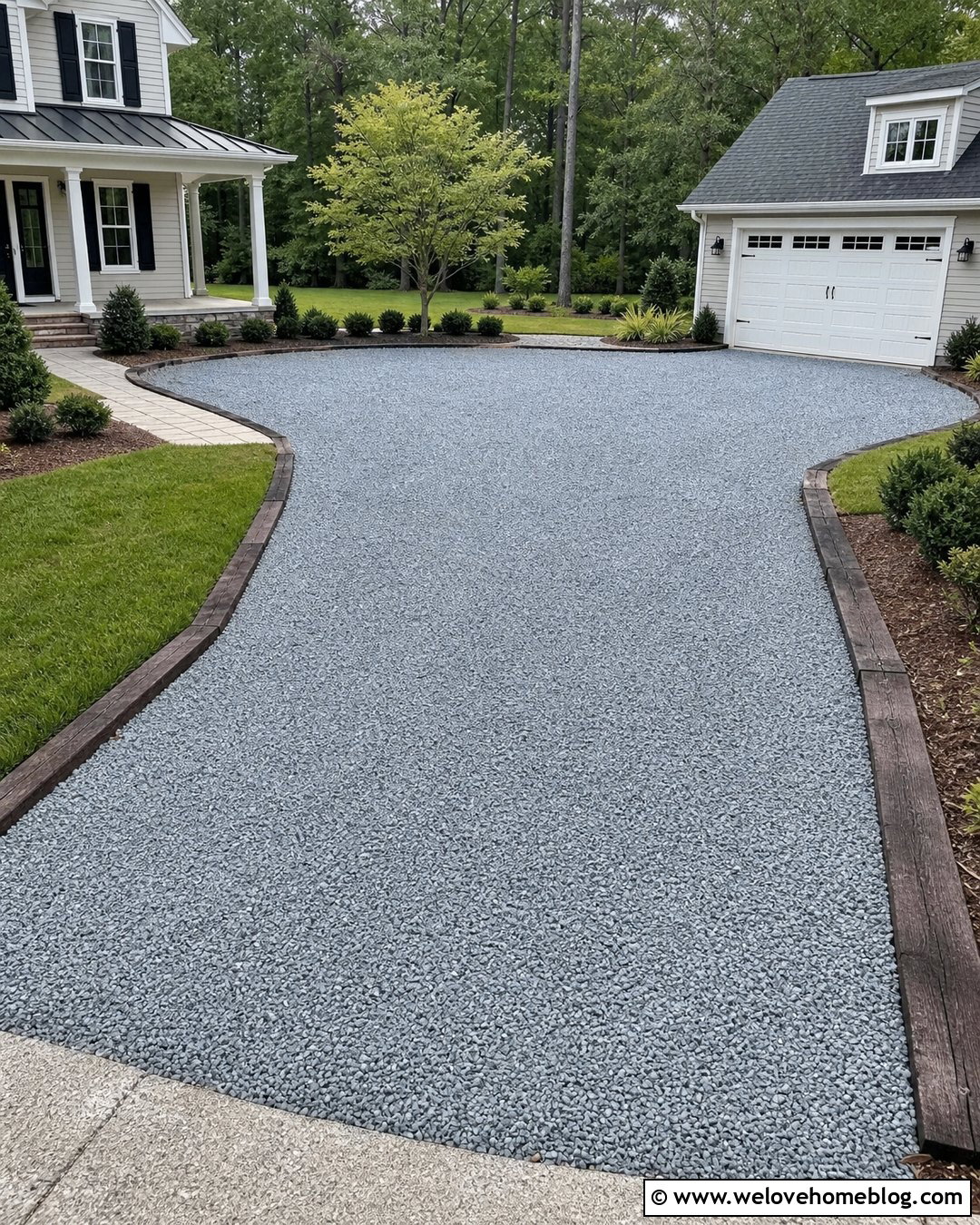
A turnaround needs to look connected to the main driveway rather than like an accidental gravel patch. Use compacted blue-gray crushed stone for a straight approach that opens into a broad hammerhead or rounded turning area. Continue the railroad tie edging around the entire perimeter, using carefully planned joints at corners and curves. A central planting bed is unnecessary in a compact space; instead, frame the outside with lawn, low shrubs, and one small ornamental tree. This layout works behind a suburban home, beside a detached garage, or near a country house with limited backing space. Keep decorative features outside the required turning path. Clearly visible timber boundaries help define where gravel ends, but the final dimensions should reflect the vehicles that regularly use the property.
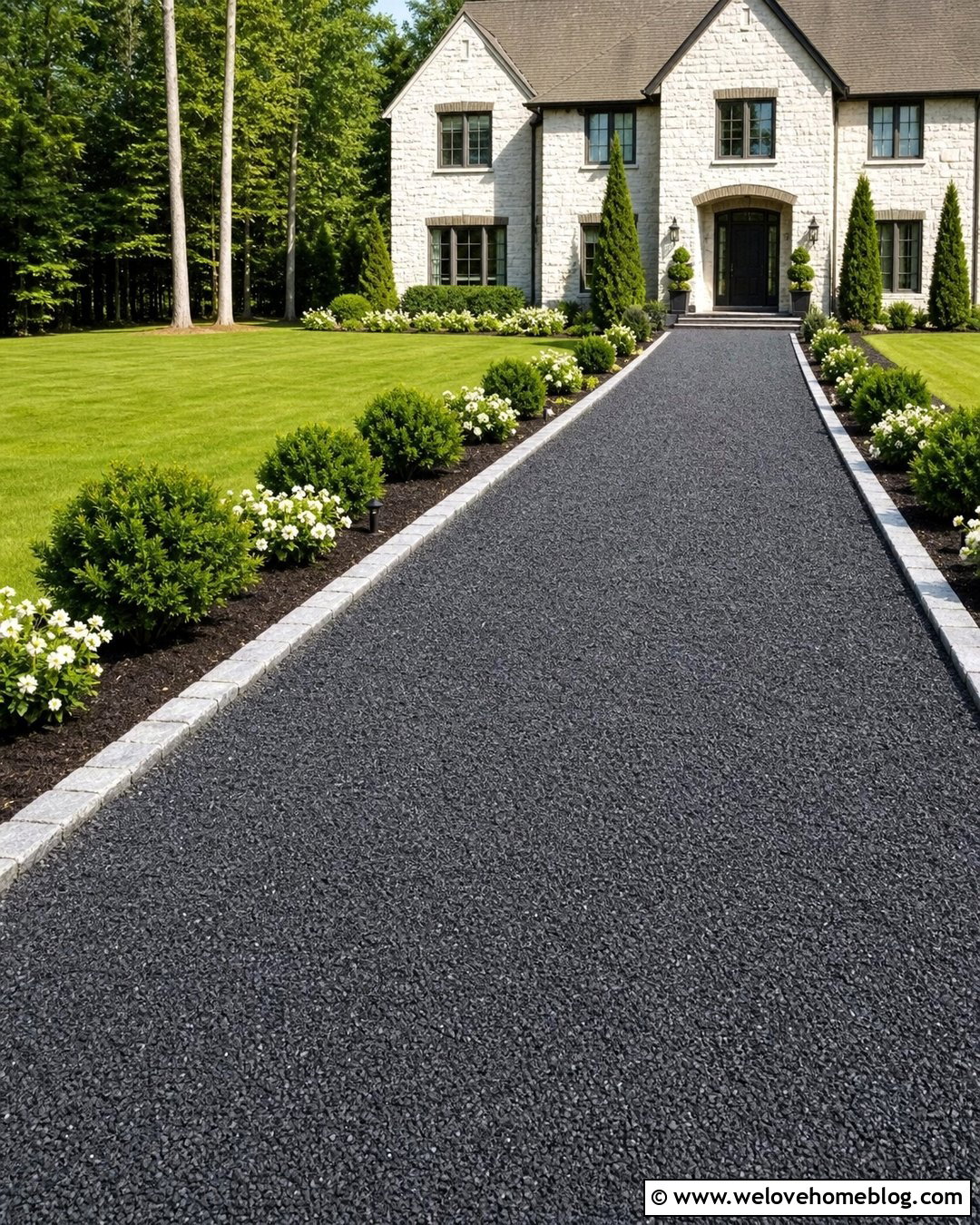
20. Gravel Driveway With Railroad Tie And Stone Entrance
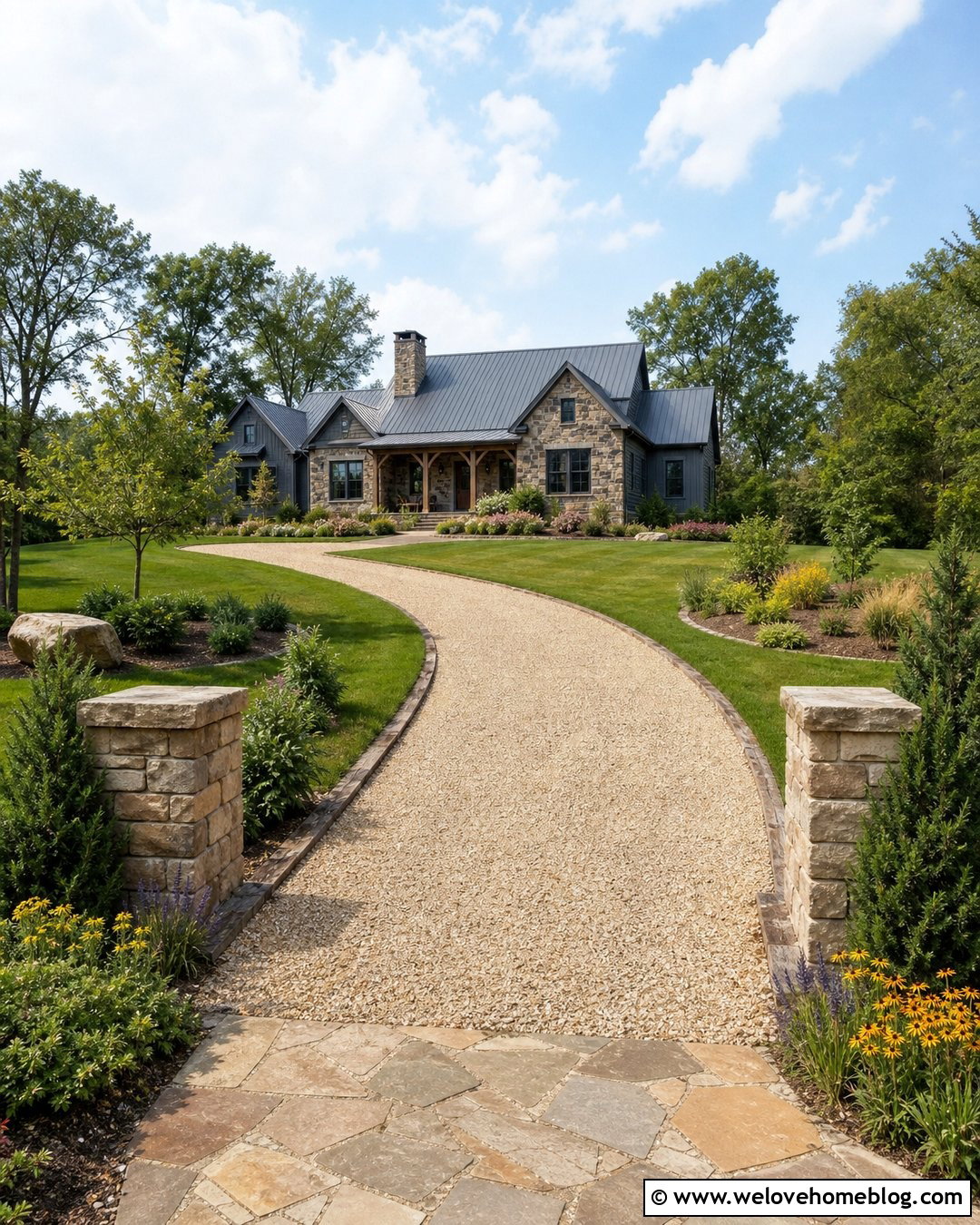
Combining timber with stone gives a gravel entrance more visual weight without losing its rustic character. Begin with buff crushed limestone on a gently curved driveway bordered by continuous railroad ties. At the street, terminate the wood beside two low natural-stone pillars topped with simple caps. Repeat matching stone in a nearby walkway or foundation detail so the entrance relates to the house. Plant low junipers, ornamental grasses, and seasonal flowers around the pillars while maintaining clear visibility. This finished look complements a craftsman, lodge-inspired, or traditional country home. Keep the pillars outside comfortable vehicle clearance and position lighting downward to illuminate the driveway surface. The railroad ties then create a strong visual connection from the formal stone entrance to the more relaxed gravel approach.
Conclusion:
The best railroad tie edging does more than hold gravel in place. It coordinates the driveway surface, shape, drainage, planting, entrance, and architecture into one complete design. Straight timber lines suit modern and suburban homes, while staggered ties complement curved country approaches. Raised borders can manage small grade changes, and flush edging creates easier transitions to lawns and walkways. Before installation, inspect reclaimed wood carefully and consider new residential-rated landscape timbers when treatment history is unclear. Plan drainage, turning space, anchoring, and future replacement before setting the border. With those practical details resolved, these 20 Gravel Driveway Edging Railroad Ties Ideas can inspire a driveway that feels organized, durable, and naturally connected to its surroundings.

Related posts:
Leave a Reply