
A gravel driveway gains a more finished, durable appearance when loose stone is framed by a strong cobblestone border. The contrast adds texture, defines the driving area, and helps connect the driveway with the home and surrounding landscape. These 20 gravel driveway cobblestone edging ideas cover straight, curved, circular, narrow, wide, sloped, traditional, and modern layouts. You will find practical combinations using pea gravel, crushed granite, limestone, river gravel, and other attractive aggregates. Each design also considers cobblestone color, installation pattern, drainage, planting, and architectural style. Whether you want an affordable update or a formal entrance, the complete looks below offer useful inspiration. Explore these 20 gravel driveway cobblestone edging ideas to find a combination that suits your home.

1. Pea Gravel Driveway With Single Cobblestone Edging

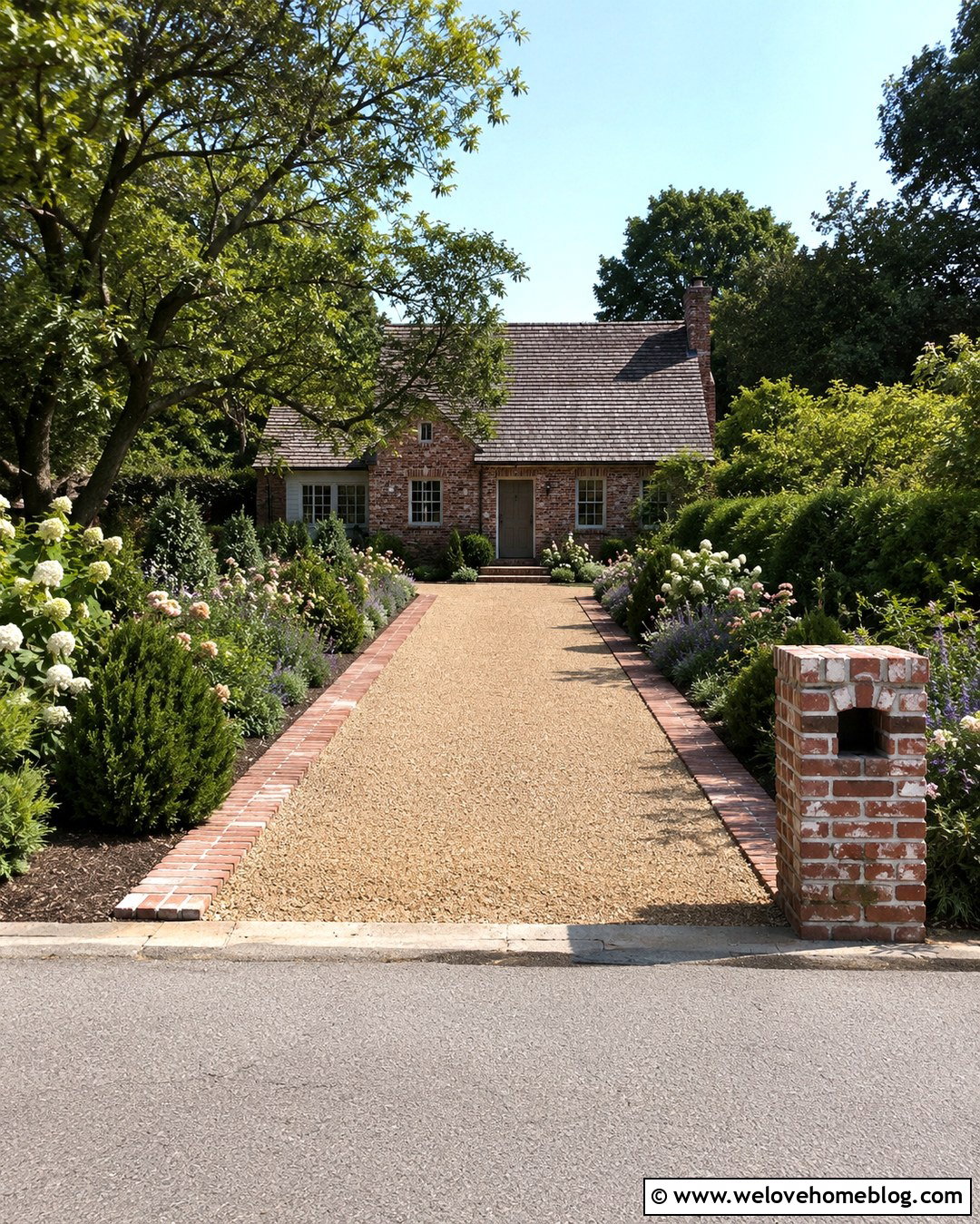
Smooth pea gravel creates a relaxed driveway surface that feels especially appropriate beside a cottage, Cape Cod, or traditional ranch home. Define both sides with one neat row of gray granite cobblestones set nearly flush with the gravel. This low profile contains loose stones without creating an awkward step near the lawn. Choose tan or buff pea gravel if you want a warmer appearance, or use gray gravel for a quieter, more unified palette. Narrow planting beds filled with hydrangeas, boxwoods, and low ground cover can soften the stone border. A straight driveway keeps the installation simple and makes the single-row edging look crisp. For better stability, set the cobblestones over a compacted base and align their tops carefully.
2. White Gravel Driveway With Dark Cobblestone Edging
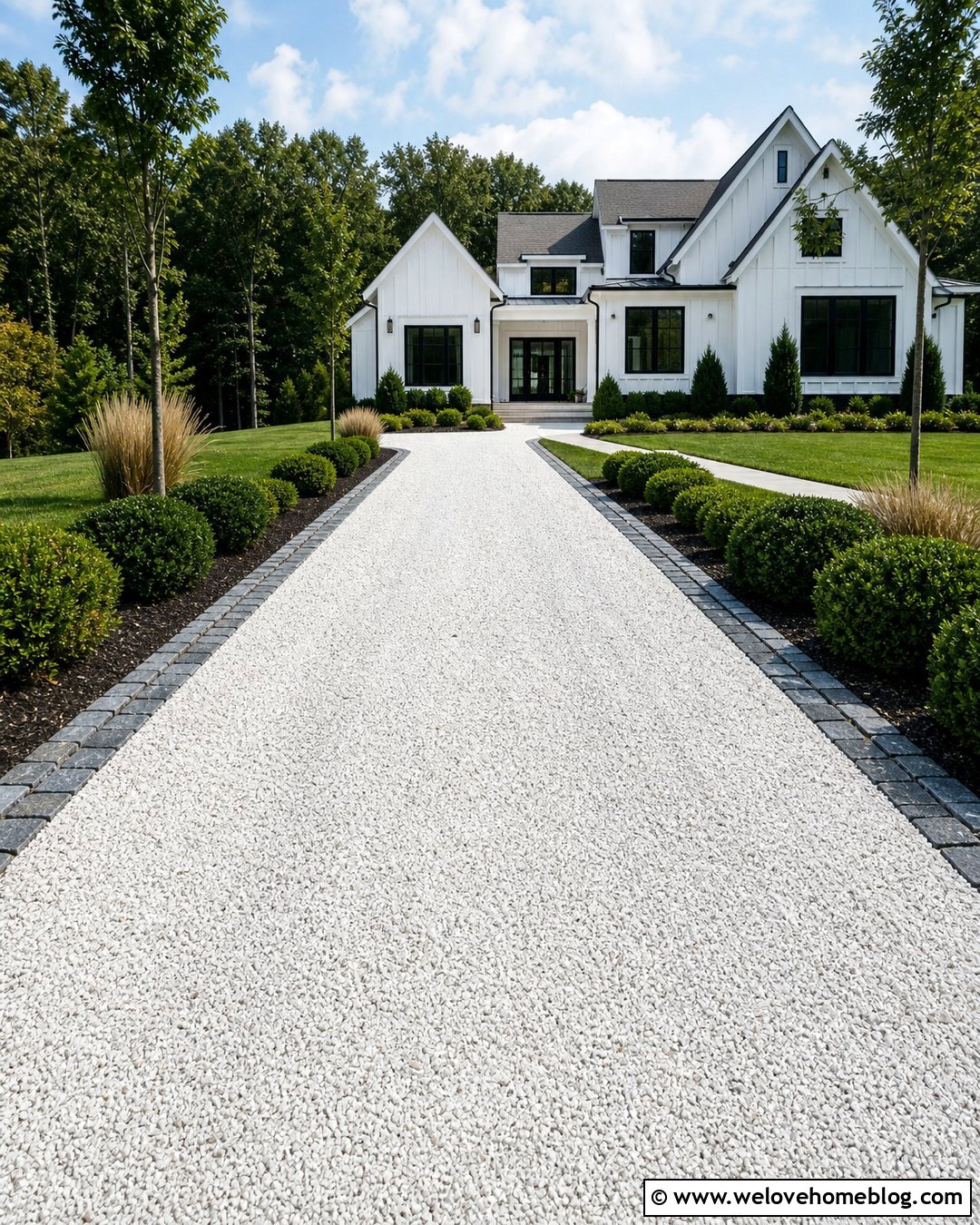
Bright white gravel paired with charcoal cobblestones gives a driveway strong contrast and a clean, contemporary character. This combination works well with a white modern farmhouse, black window frames, and simple foundation planting. Use two rows of dark granite cobblestones to make the edge substantial enough to balance the pale driveway surface. Setting the stones in a running pattern creates an orderly transition between the gravel and lawn. Keep nearby landscaping restrained with clipped evergreens, ornamental grasses, and a few multi-stem trees. White gravel can show leaves and soil more easily, so it is best for properties where regular raking is practical. A slightly crowned driveway surface will also encourage rainwater to move toward the edges instead of collecting in the center.
3. Crushed Granite Driveway With Raised Cobblestone Edging
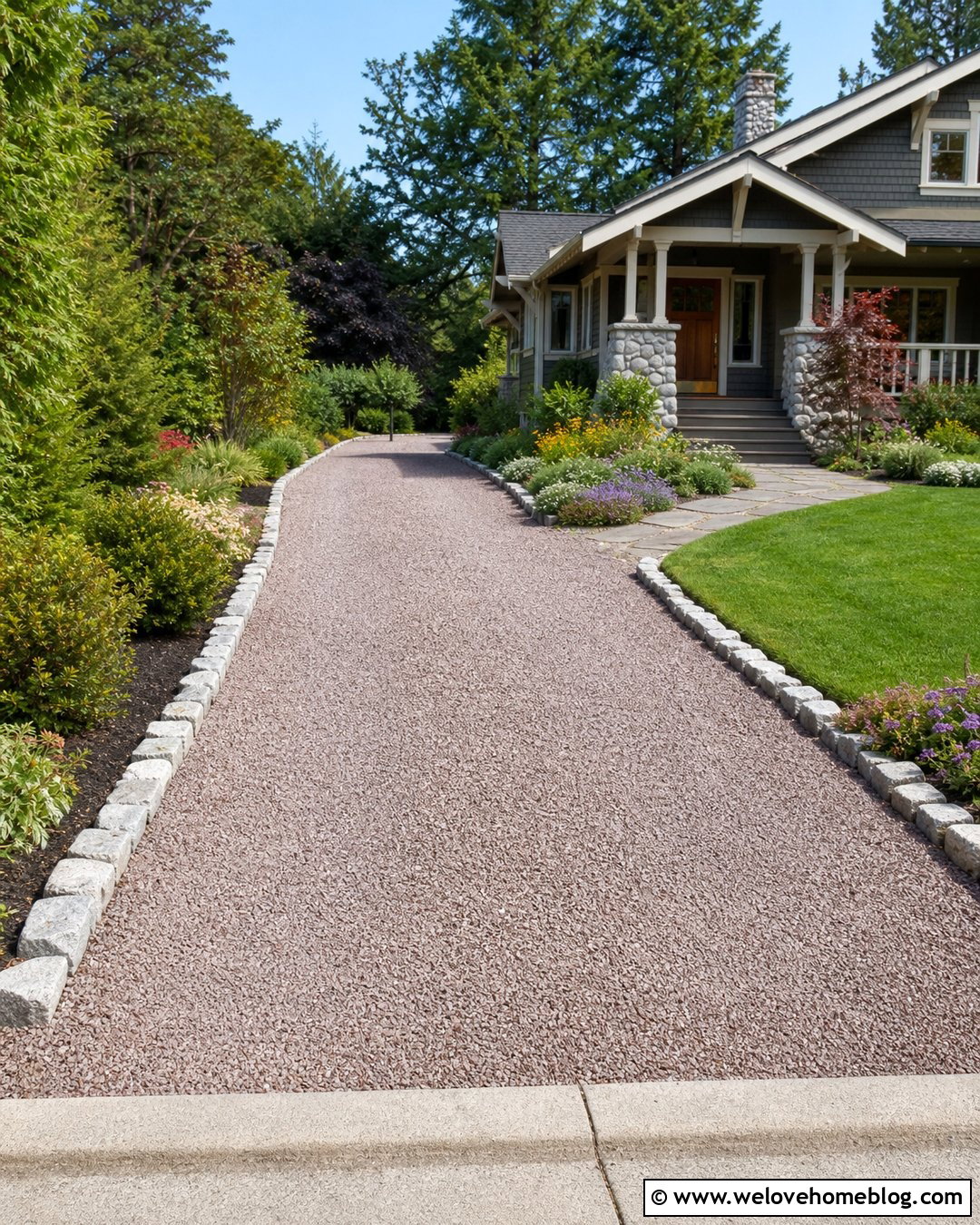
Crushed granite forms a firm, textured surface that suits an everyday residential driveway while maintaining a natural look. Slightly raised cobblestone edging can provide extra containment where gravel tends to migrate into planting beds. Select chunky gray granite cobbles and leave only a modest portion visible above the finished driveway. An excessively high border can become a tire obstacle, so maintain a practical, consistent height. This design looks particularly attractive along a Craftsman home with stone columns and deep rooflines. Add broad beds of native shrubs, flowering perennials, and bark mulch outside the edging. The compacted reddish-gray granite and rugged stones will feel coordinated rather than overly formal. Use a solid foundation beneath the cobbles, especially near curves and frequently driven areas.
4. Curved Gravel Driveway With Tumbled Cobblestone Edging
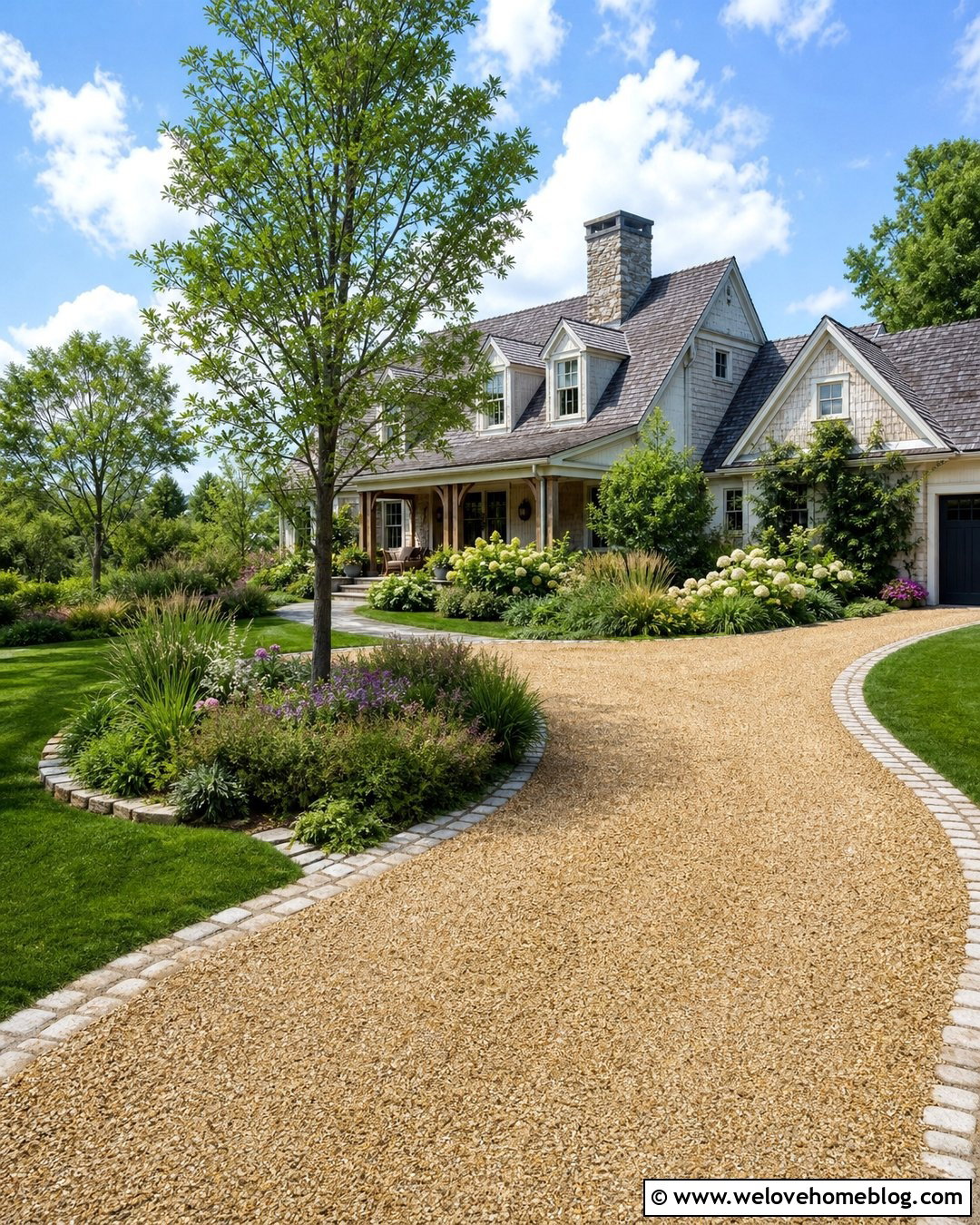
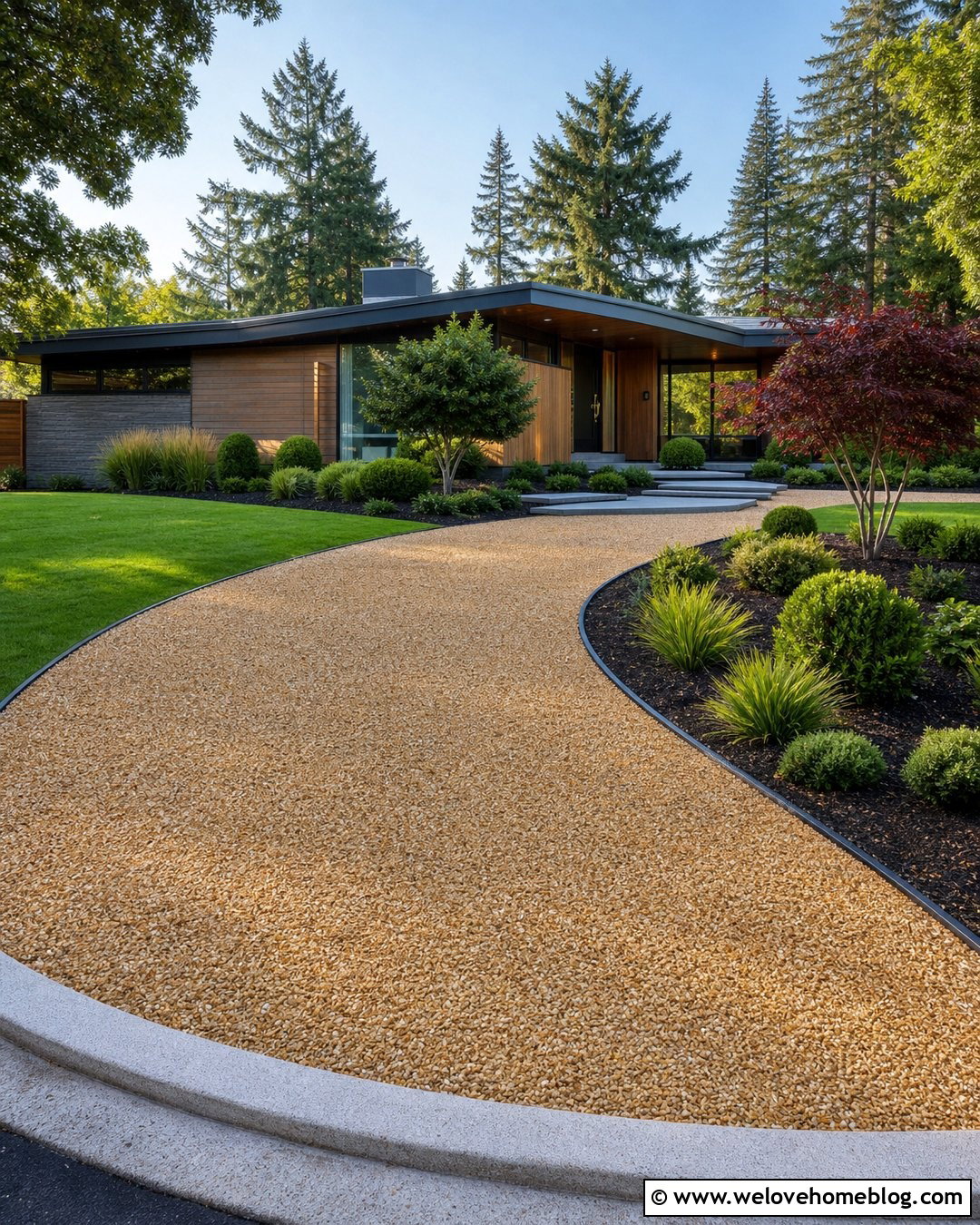
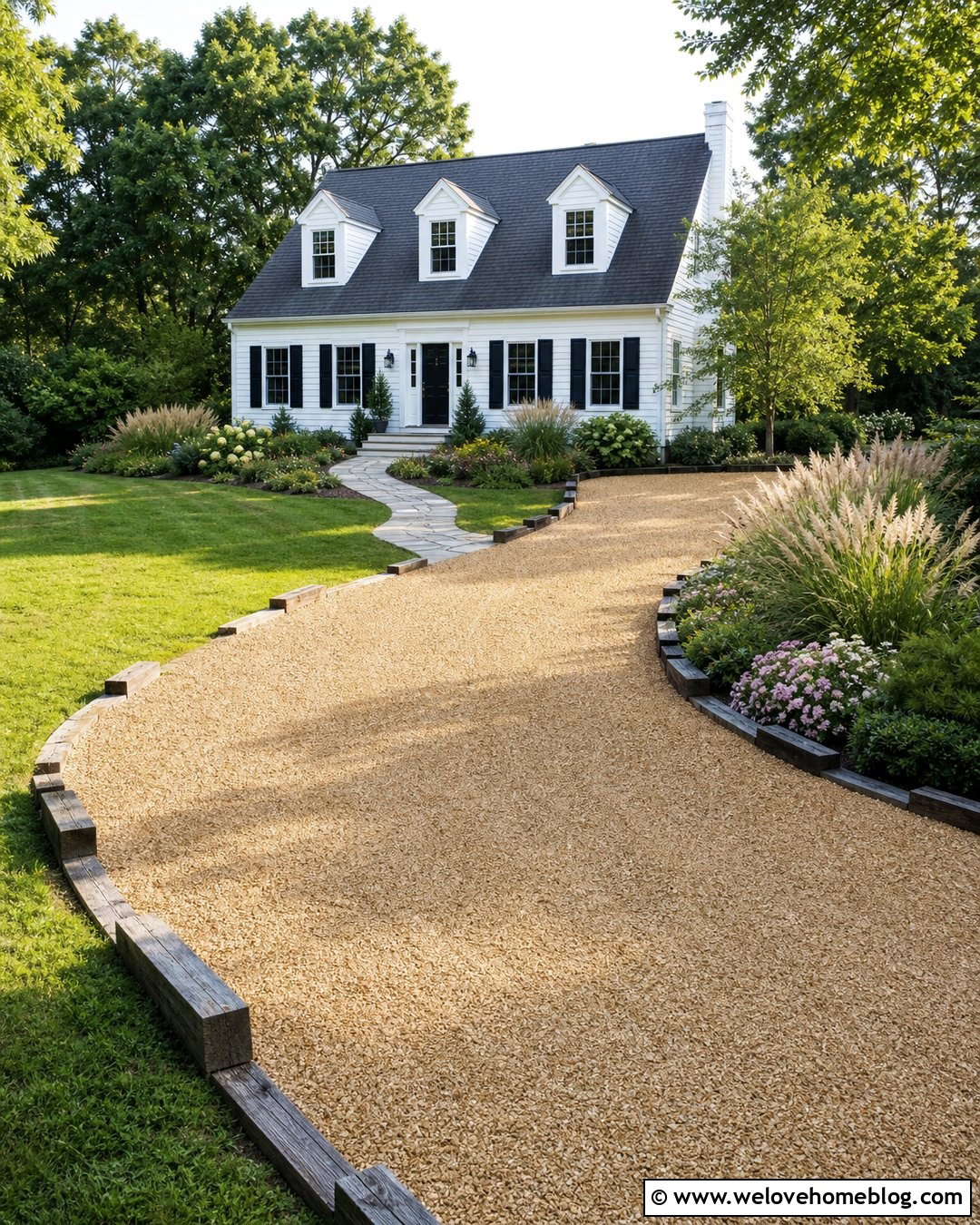
A gently curved driveway can make the approach to a home feel more natural while reducing a direct view of the garage. Warm golden gravel and weathered, tumbled cobblestones enhance that relaxed layout. Follow the curve with a continuous single or double row instead of forcing the edging into straight segments. Smaller cobbles are generally easier to arrange around tighter bends, while larger stones suit broad curves. Frame the outside edge with layered landscaping, placing low plants near the driveway and taller shrubs farther back. A specimen tree positioned inside the bend can create an attractive focal point without blocking visibility. This complete look works beautifully with country homes, cottages, and wooded properties. Keep the inside driving width consistent throughout the curve for comfortable vehicle movement.
5. Circular Gravel Driveway With Cobblestone Ring Edging
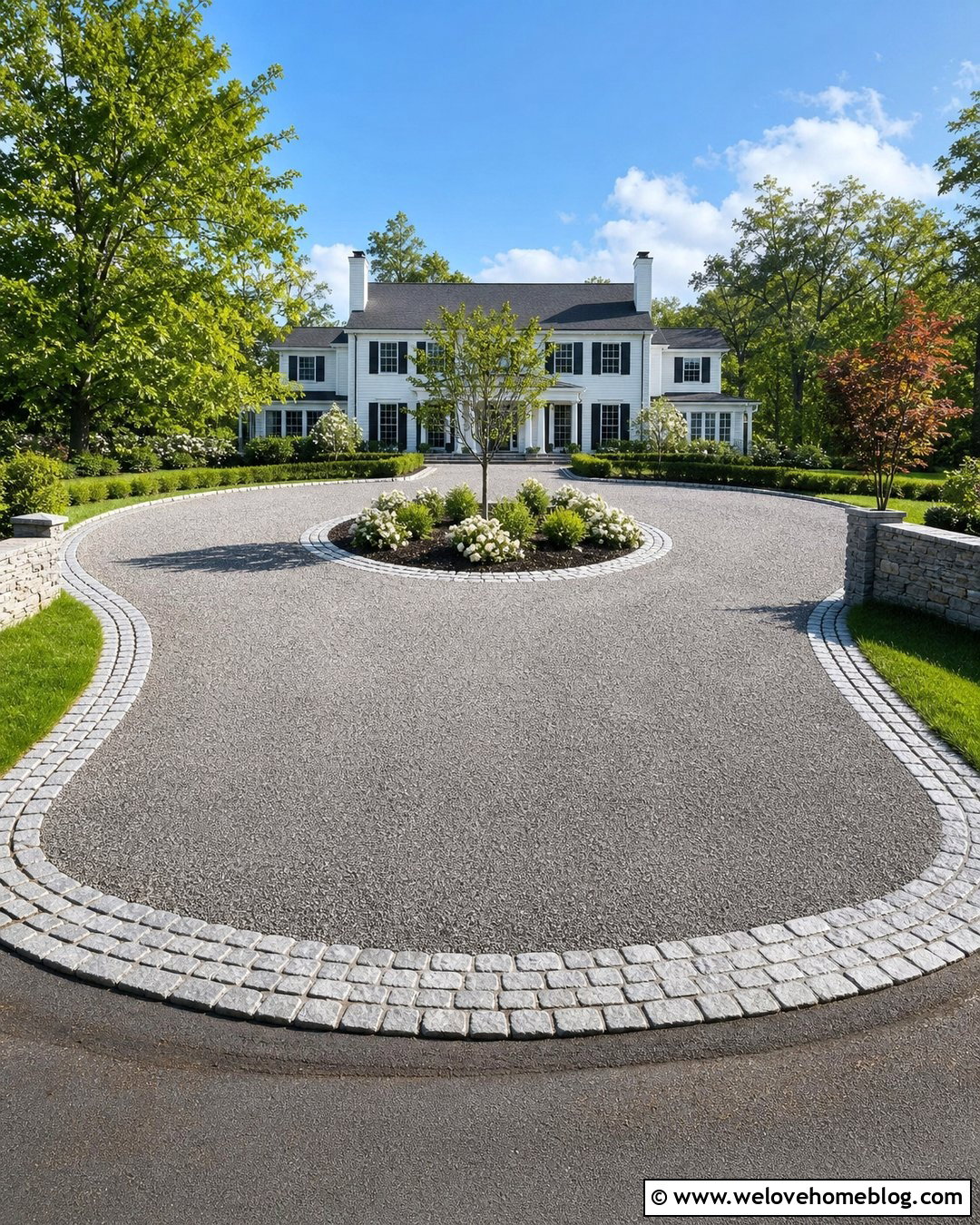
A circular gravel driveway becomes more visually organized when cobblestones outline both the outer perimeter and the center island. Use compacted gray gravel for the driving surface and medium-gray granite cobbles for a coordinated finish. A double row along the outer curve can handle the visual scale, while a single row around the island keeps the planting area defined. Fill the center with a small ornamental tree, low evergreens, and seasonal flowers that will not obstruct sightlines. The island should be large enough to look intentional but not so wide that turning becomes difficult. This layout complements Colonial, Georgian, and larger traditional homes. Repeating cobblestone around the entrance walkway will tie the driveway to the front door and make the entire approach feel carefully planned.
6. Long Gravel Driveway With Rustic Cobblestone Edging
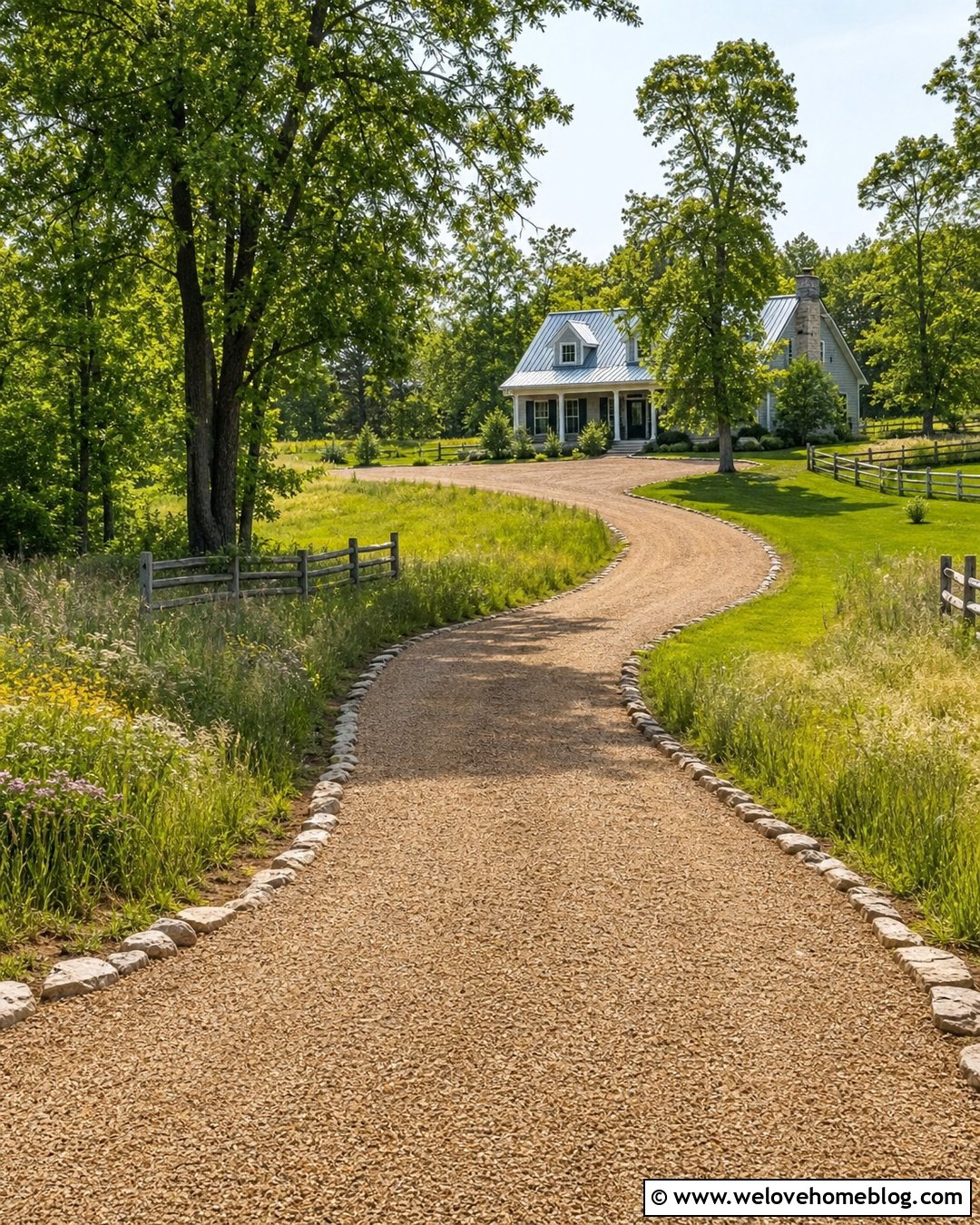
Long rural driveways benefit from edging that looks substantial without appearing too polished for the setting. Pair compacted brown gravel with irregular, reclaimed granite cobblestones that have softly worn surfaces. Run the edging along the most visible stretches, especially near the road, curves, drainage areas, and house. On very long approaches, using cobblestone only at key sections can control costs while preserving a cohesive appearance. Native grasses, split-rail fencing, meadow planting, and mature deciduous trees create a natural frame beyond the stones. A slightly irregular cobblestone line can suit the landscape, but the driving edge should remain smooth and clearly defined. At the house, widen the gravel into a practical parking court and continue the same edging to make the transition look deliberate.
7. Charcoal Gravel Driveway With Black Cobblestone Edging
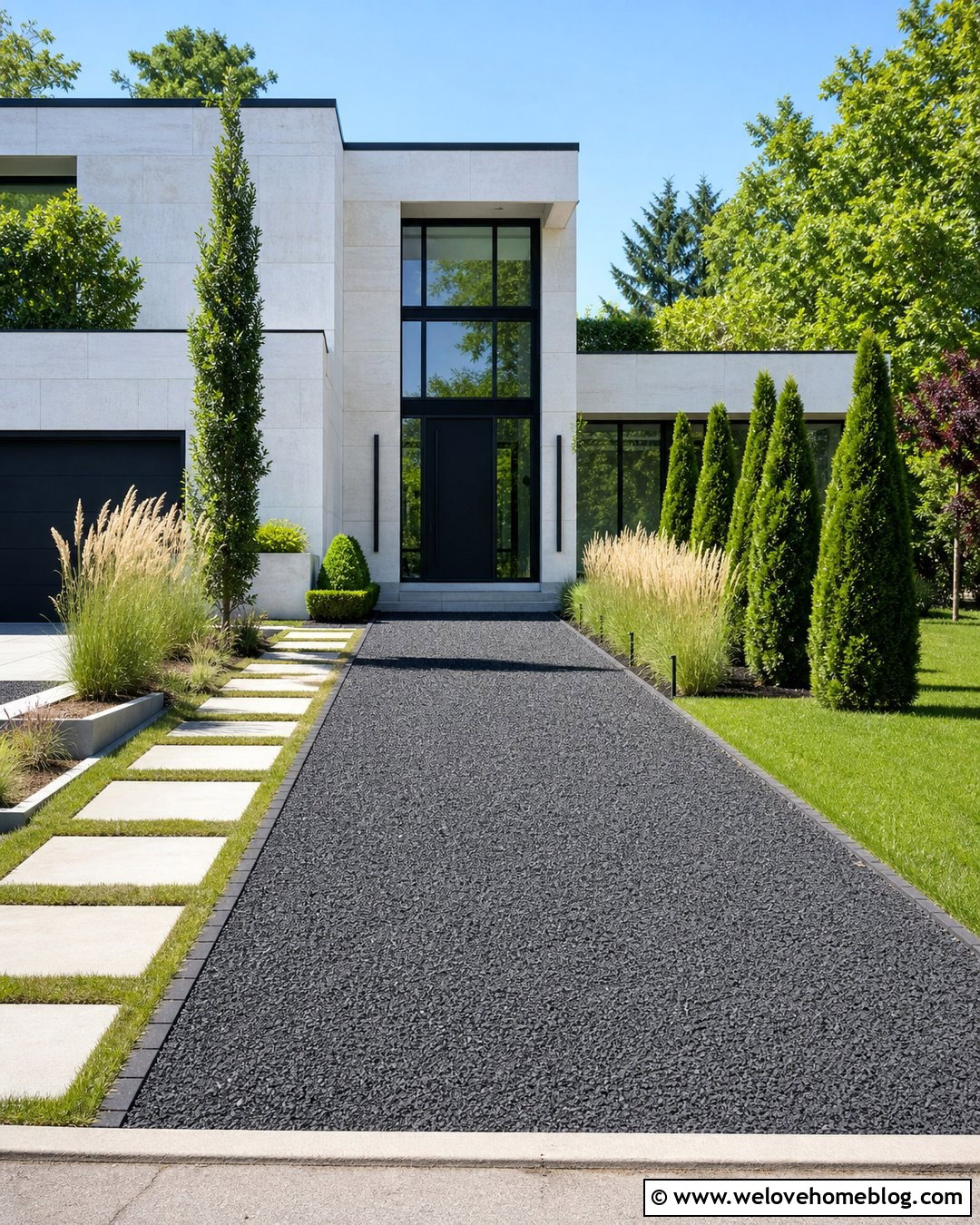
Dark charcoal gravel can create a sleek driveway that complements modern architecture and simple landscaping. Edge the surface with nearly black granite cobblestones installed flush in one precise row. The subtle color difference adds texture without creating a busy border. A straight driveway divided by narrow grass or planting strips can reinforce the clean geometry of a contemporary home. Use sculptural evergreens, feather reed grass, and rectangular concrete stepping pads alongside the gravel. Because dark aggregate can become visually heavy, balance it with a light exterior, pale walkway, and generous green lawn. Keep the cobblestone joints narrow and the edge alignment consistent. A concealed metal restraint behind the cobbles can provide additional support while preserving the minimal appearance of this gravel driveway and cobblestone combination.
8. Farmhouse Gravel Driveway With Reclaimed Cobblestone Edging
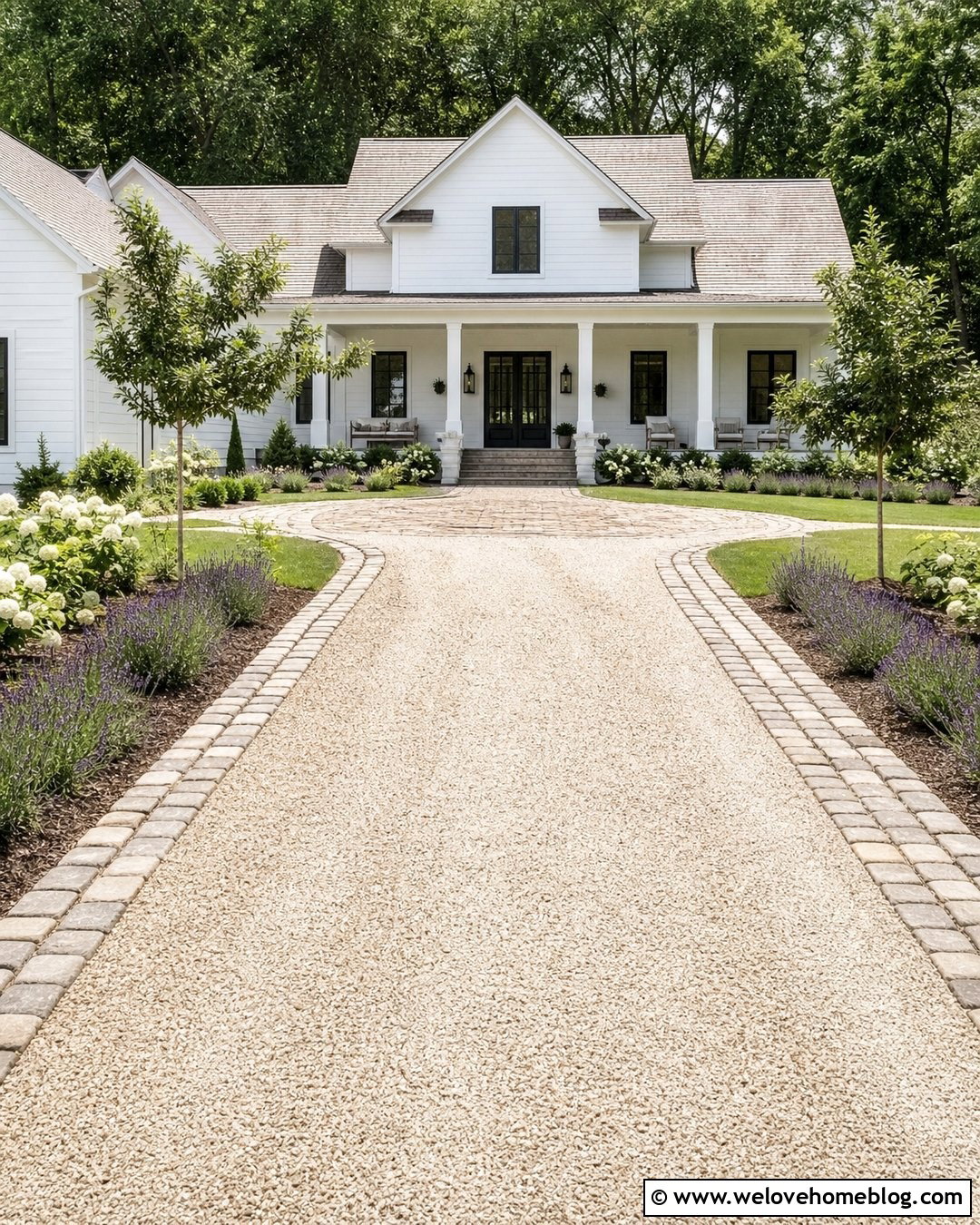
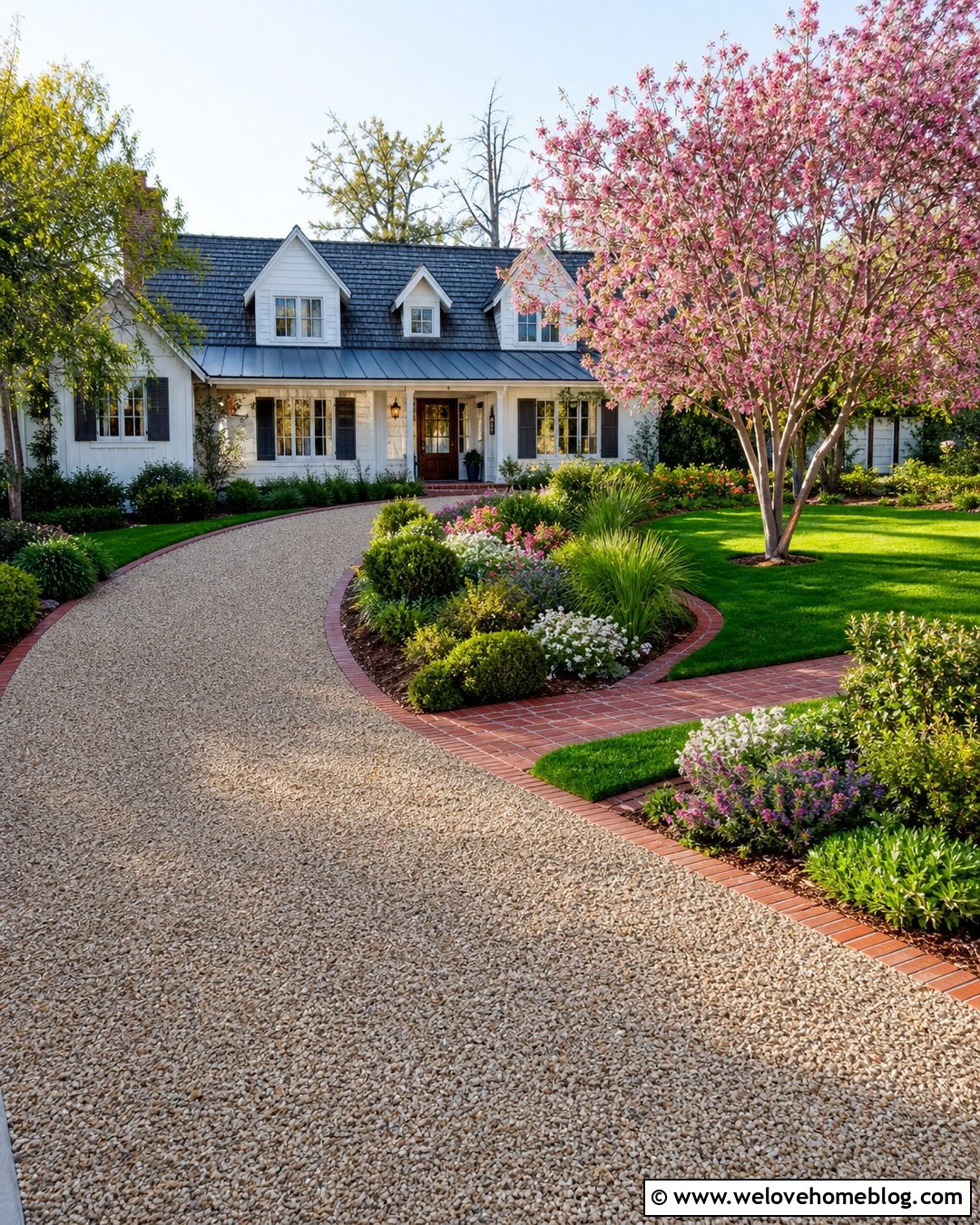
Reclaimed cobblestones bring age and character to a farmhouse driveway, particularly when paired with warm cream or beige gravel. Their uneven coloring can echo stone foundations, brick chimneys, weathered wood, and traditional porch details. Install the cobbles in a single informal row along the main driveway, then widen them into a two-row border near the house. This gradual change gives the arrival area more visual importance. Surround the driveway with lawn, white flowering shrubs, lavender, and small ornamental trees for a welcoming country setting. Reclaimed stones may vary in size, so sort them before installation and reserve the largest pieces for corners or high-traffic sections. A well-compacted base will prevent individual cobbles from sinking and help the intentionally rustic edge remain stable over time.
9. Sloped Gravel Driveway With Reinforced Cobblestone Edging
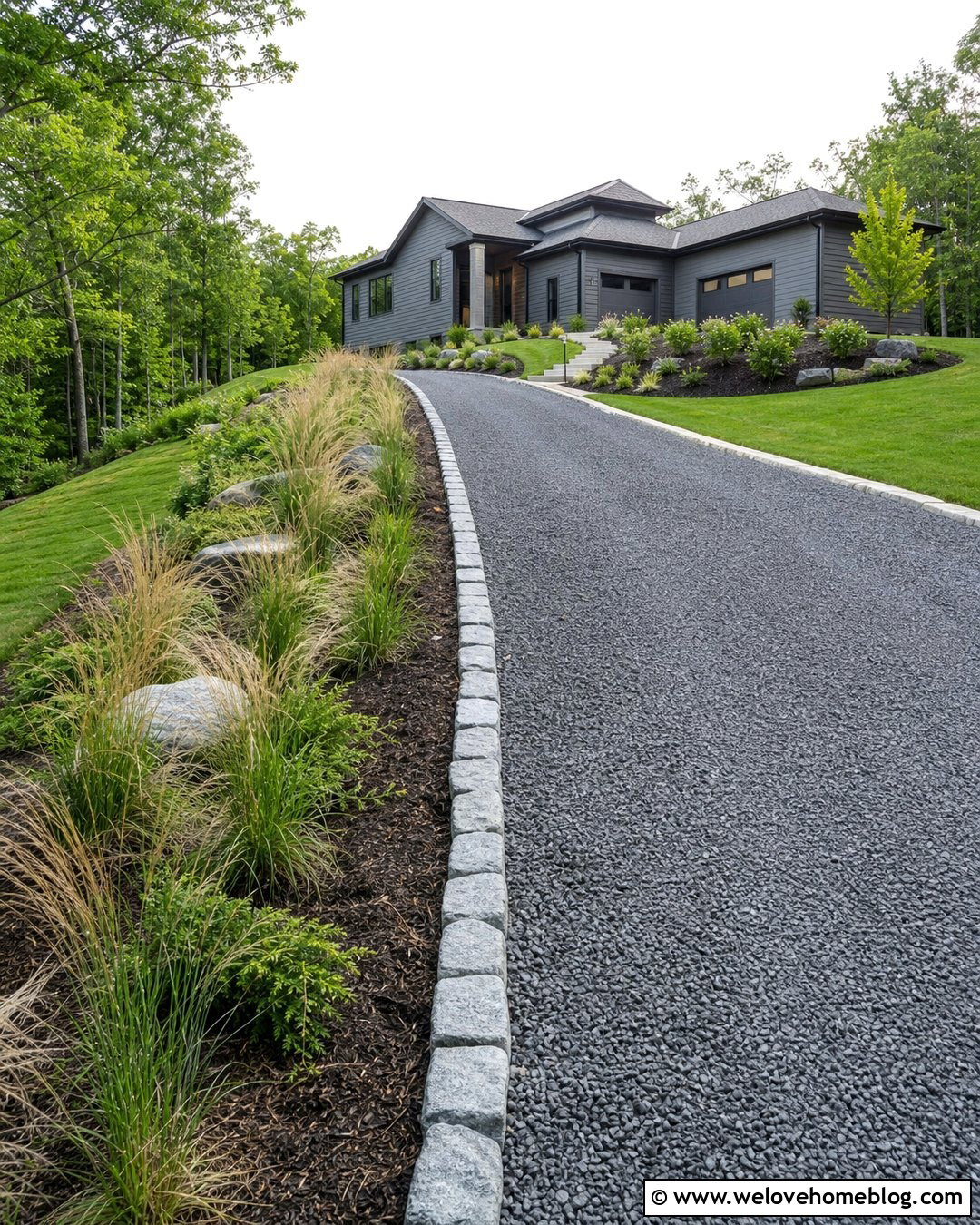
Water movement and loose gravel deserve extra attention on a sloped driveway. Use angular crushed stone that compacts more securely than rounded gravel, then contain it with robust cobblestones set into a reinforced base. Position the stones upright along vulnerable downhill edges, leaving enough exposed height to catch migrating aggregate without creating a miniature wall. The cobblestone line should follow the natural grade smoothly rather than stepping up and down unnecessarily. Add shallow planted swales or drainage areas beyond the edging where runoff can be managed safely. Deep-rooted grasses and low shrubs can stabilize surrounding soil while softening the hardscape. This practical design fits hillside ranch homes, woodland houses, and mountain-inspired architecture. Inspect the lowest sections periodically because that is where displaced gravel and sediment commonly collect.
10. Narrow Gravel Driveway With Flush Cobblestone Edging
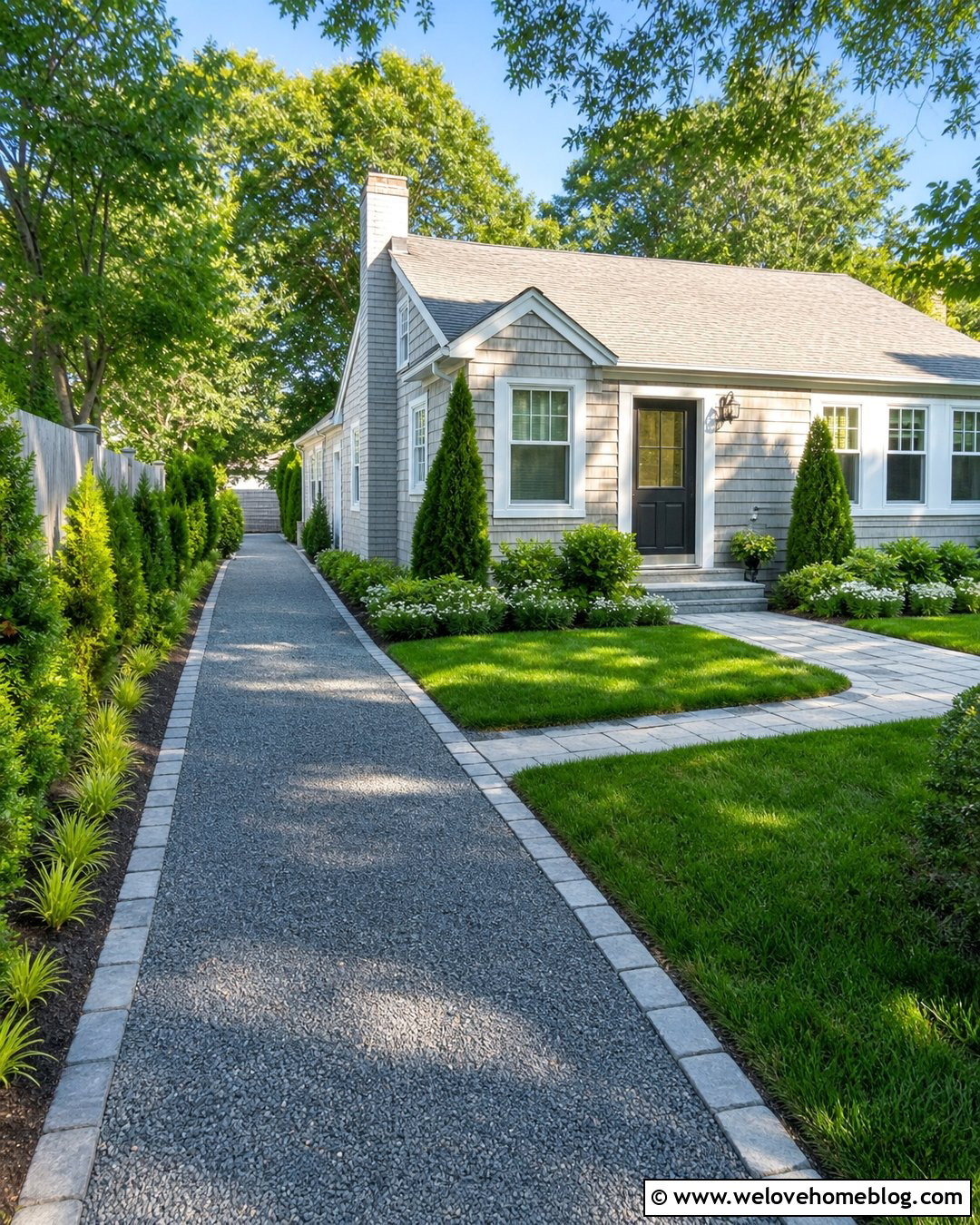
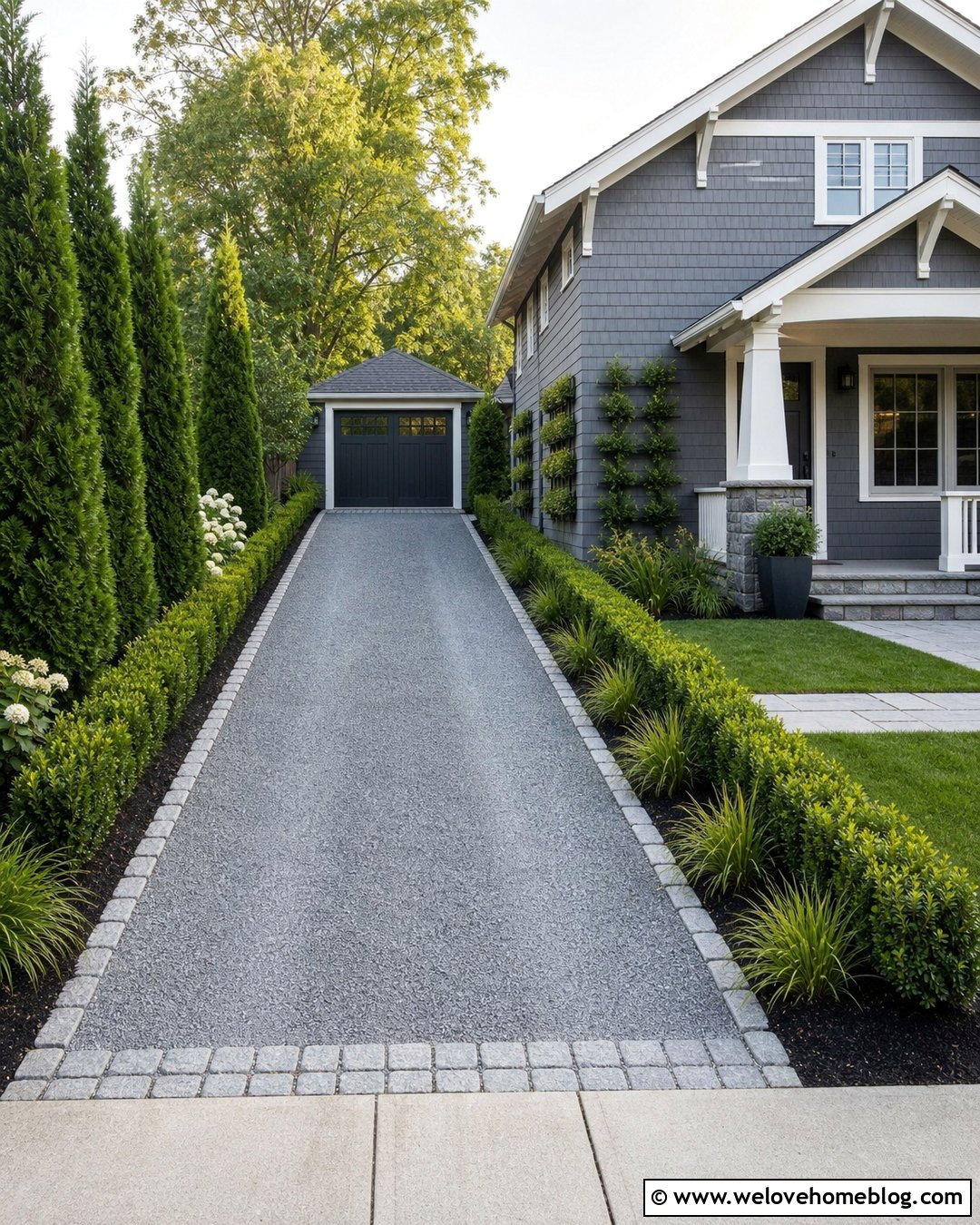
A narrow driveway needs an edge that clearly marks the surface without reducing usable width. Choose compacted fine gravel and install one row of cobblestones flush with the driveway and adjacent lawn. The level transition allows tires to cross the border occasionally and makes mowing easier. Pale gray gravel with medium-gray cobbles creates gentle contrast without making the space feel confined. Keep planting simple by using low ground cover, narrow ornamental grasses, and columnar shrubs that will not spread into the driving lane. Where the driveway meets a walkway, continue the cobblestone line through the transition for a unified appearance. This approach is suitable for small suburban lots, side-yard driveways, and compact cottages. Precise grading is essential because standing water will be noticeable in a restricted space.
11. Wide Gravel Driveway With Triple Cobblestone Edging
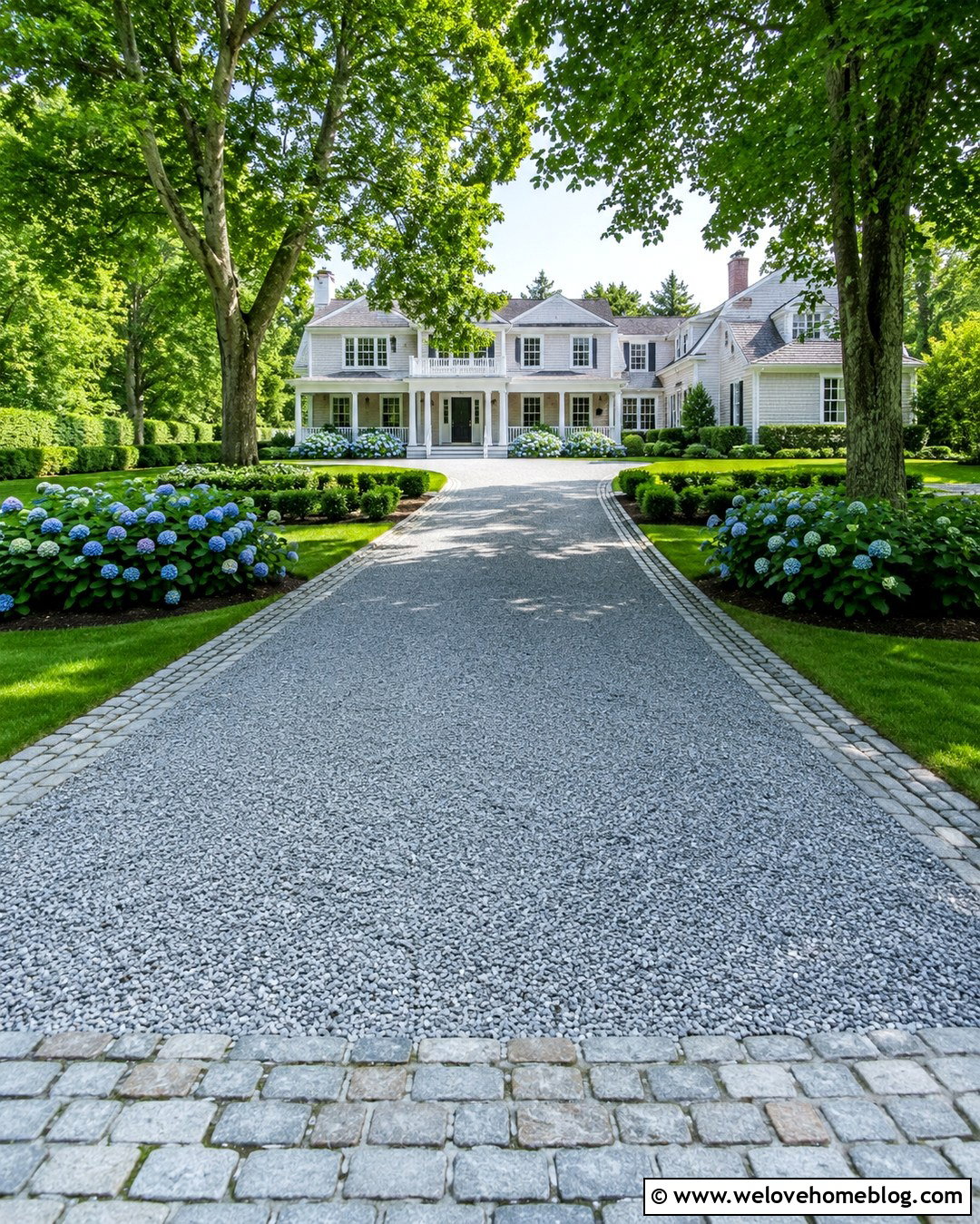
A broad driveway can visually overpower the front yard unless its edges have enough weight and definition. Three rows of cobblestones create a generous border that suits a wide gravel surface and a larger home. Pair silvery crushed gravel with mixed gray granite stones arranged in a simple running pattern. Set the inner row flush for comfortable driving, then use the outer rows as a gradual transition toward lawn and planting beds. This border can also function as a stable walking strip when the cobbles have relatively flat tops. Large hydrangea groups, evergreen hedges, and mature shade trees will balance the scale of the driveway. At the road, widen the cobblestone band into an apron so the entrance looks clearly defined and loose gravel is better contained near the pavement.
12. Gravel Driveway With Cobblestone Entrance Apron
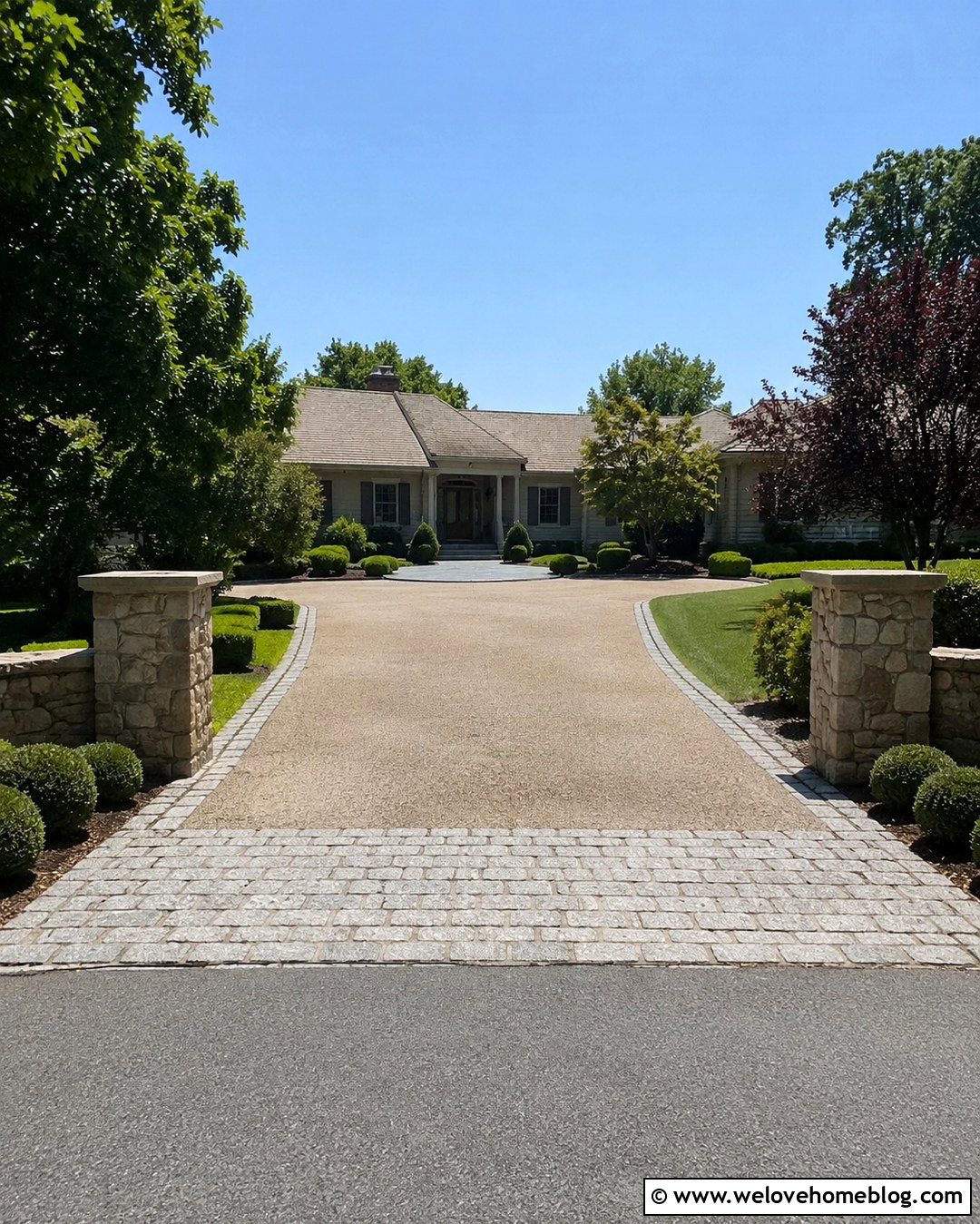
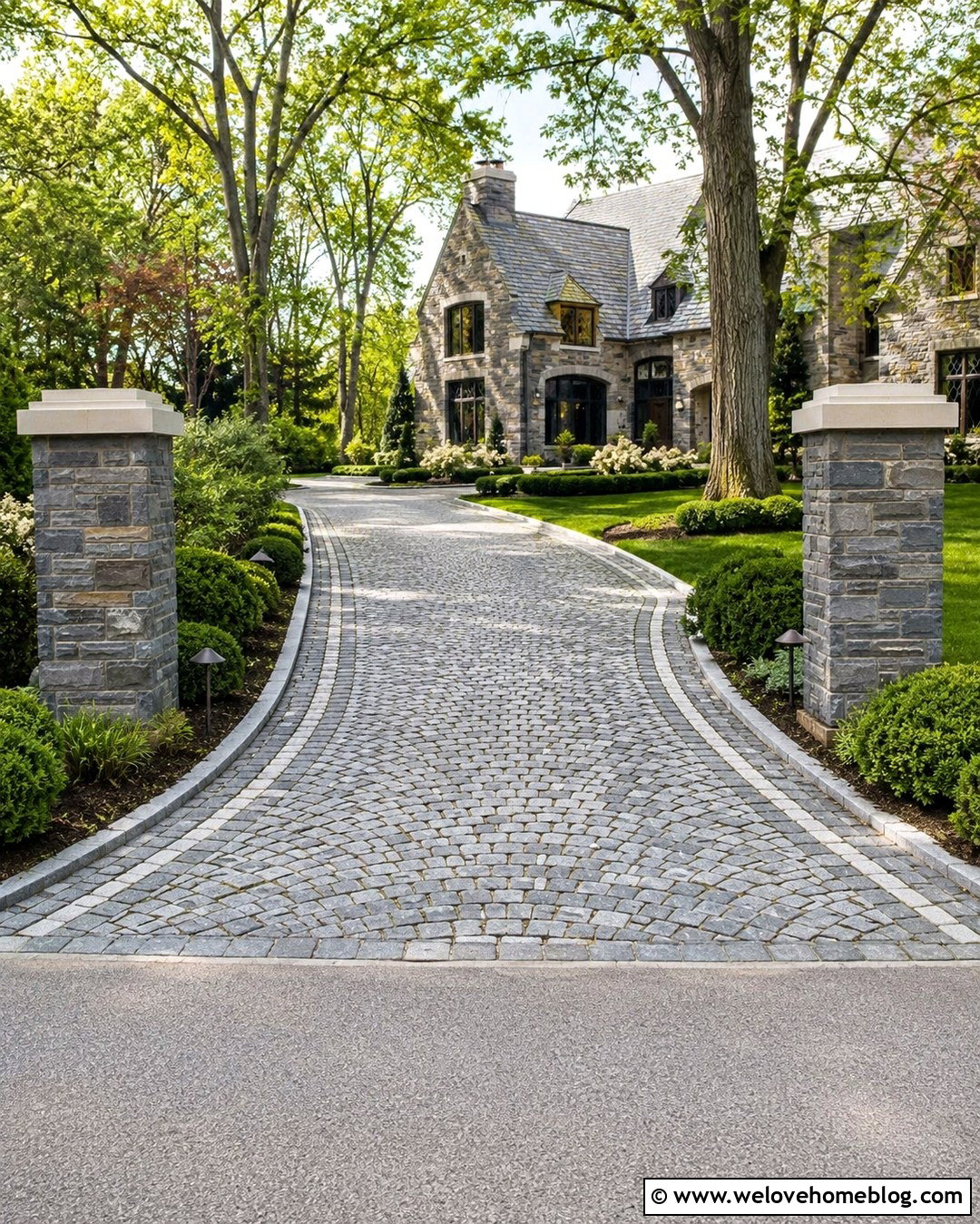
The point where gravel meets the street often experiences the most movement, making it an ideal location for a cobblestone apron. Use compacted tan gravel for the driveway and create a broad band of gray cobblestones across the full entrance. Continue matching cobblestone edging along both sides so the apron feels connected to the overall design. A gently flared opening allows vehicles to enter comfortably and gives the entrance a more substantial presence. Low stone pillars, clipped shrubs, and an understated address marker can complete the curb view. The apron should have a strong load-bearing base because vehicles will brake, turn, and accelerate over it repeatedly. This combination works with nearly any house style, from traditional Colonial homes to casual ranch properties, while adding a practical transition at the roadway.
13. Gravel Driveway With Cobblestone Drainage Channel
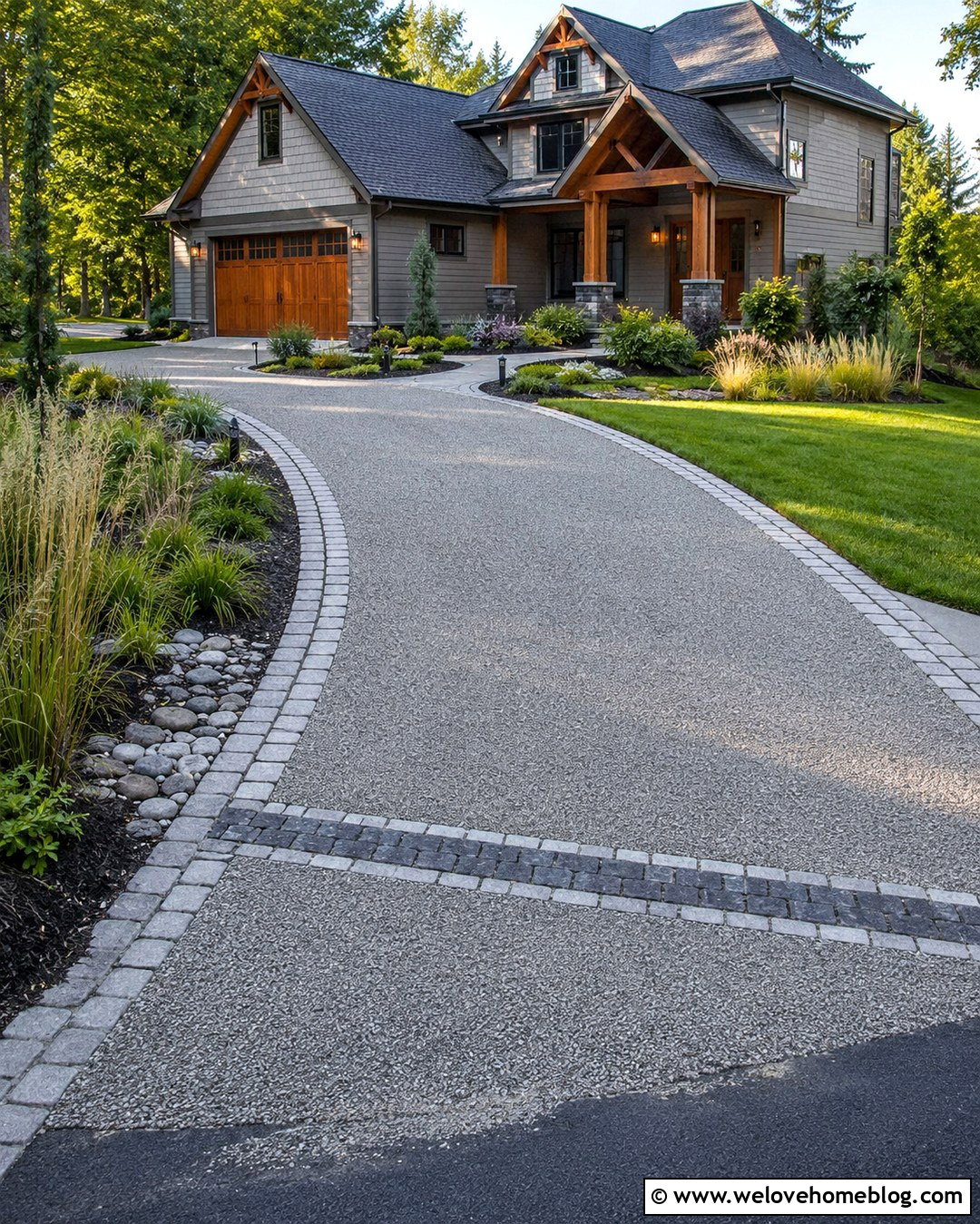
A cobblestone drainage channel can become an attractive design feature rather than a purely functional strip. Start with a compacted gray gravel driveway and install a shallow cobblestone channel across or along the surface where water naturally travels. Continue matching cobblestone edging around the perimeter to create visual consistency. The channel should have a gentle, deliberate slope toward a suitable lawn or planted drainage area. Darker cobbles can make the feature easy to see, while stones matching the gravel produce a more understated effect. Surrounding rain-tolerant grasses, sedges, and shrubs can help the drainage zone blend into the landscape. This complete look is useful for sloped or curved driveways where runoff needs guidance. Keep stone tops even enough that vehicles can cross the channel comfortably.
14. Red Gravel Driveway With Gray Cobblestone Edging
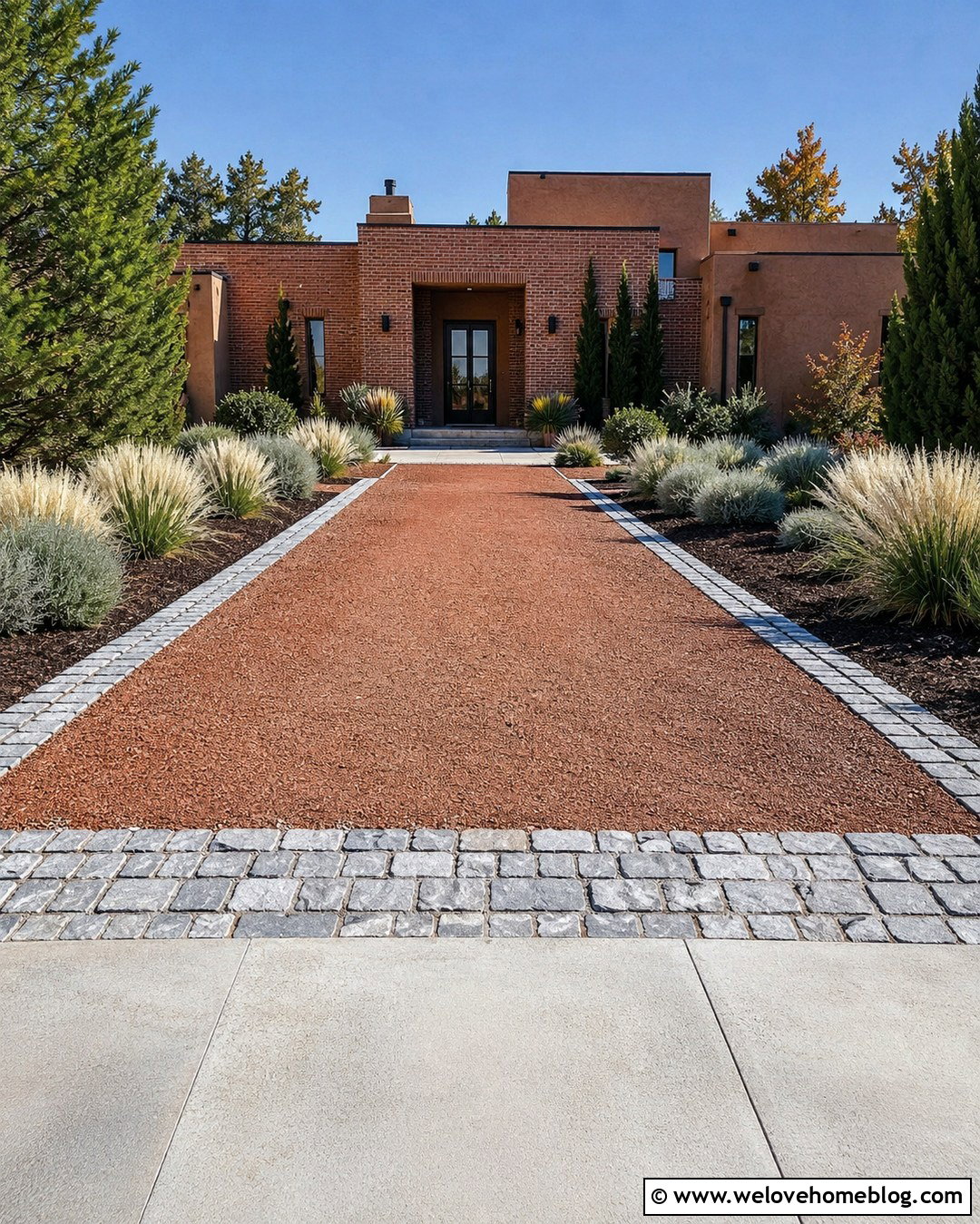
Red or rust-colored gravel gives a driveway an earthy appearance that works well with brick homes, Southwestern architecture, and warm natural landscapes. Cool gray cobblestone edging prevents the design from becoming overly red and provides a clear boundary against lawn or mulch. Use a double row near the entrance and garage, then reduce it to one row along quieter sections. Repeat the gray stone in a front walkway or low garden wall to make the contrast feel intentional. Planting can include silvery grasses, sage-green shrubs, and dark evergreen accents that balance the warm aggregate. Select angular red gravel when a more compact driving surface is needed. Because color differences make displaced stones easy to notice, maintain a clear separation between the driveway, cobblestones, and surrounding beds.
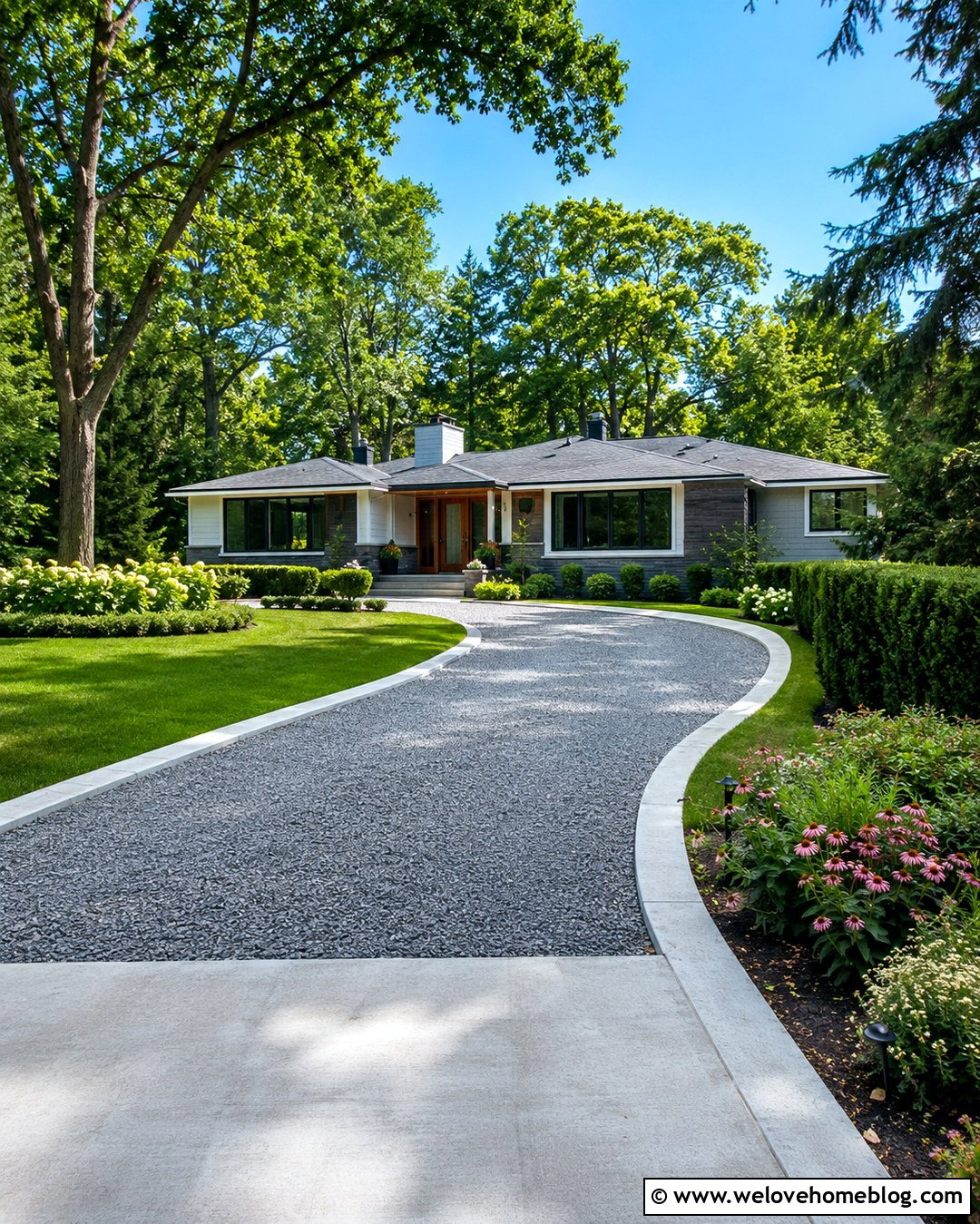

15. Mixed Gravel Driveway With Alternating Cobblestone Edging
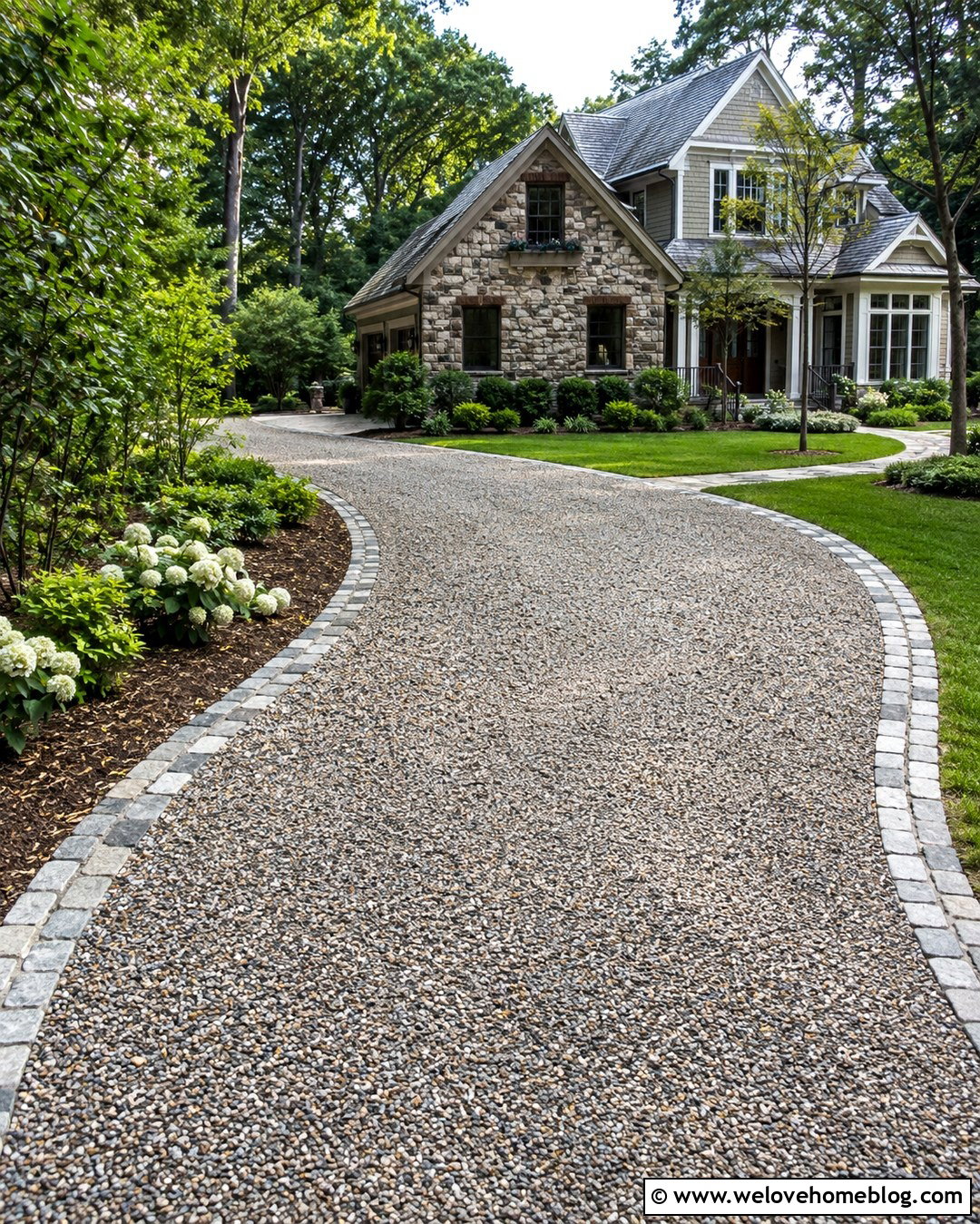
A mixed gravel blend containing gray, tan, brown, and cream tones creates an adaptable surface for homes with several exterior materials. Bring those colors into the edging by alternating light and dark cobblestones in a restrained sequence. Avoid a checkerboard effect; a loosely repeated color rhythm feels more natural. The design is especially effective beside a stone-and-siding Craftsman or transitional home. Use a gently curved driveway so the varied edge can guide the eye toward the entrance. Plant beds with green shrubs, white flowers, and natural mulch will provide a calm background for the multicolored hardscape. Sort the cobbles by size before setting them, keeping their exposed tops reasonably even. The finished border should look varied in color but consistent in width, height, and overall construction.
16. Tree-Lined Gravel Driveway With Weathered Cobblestone Edging
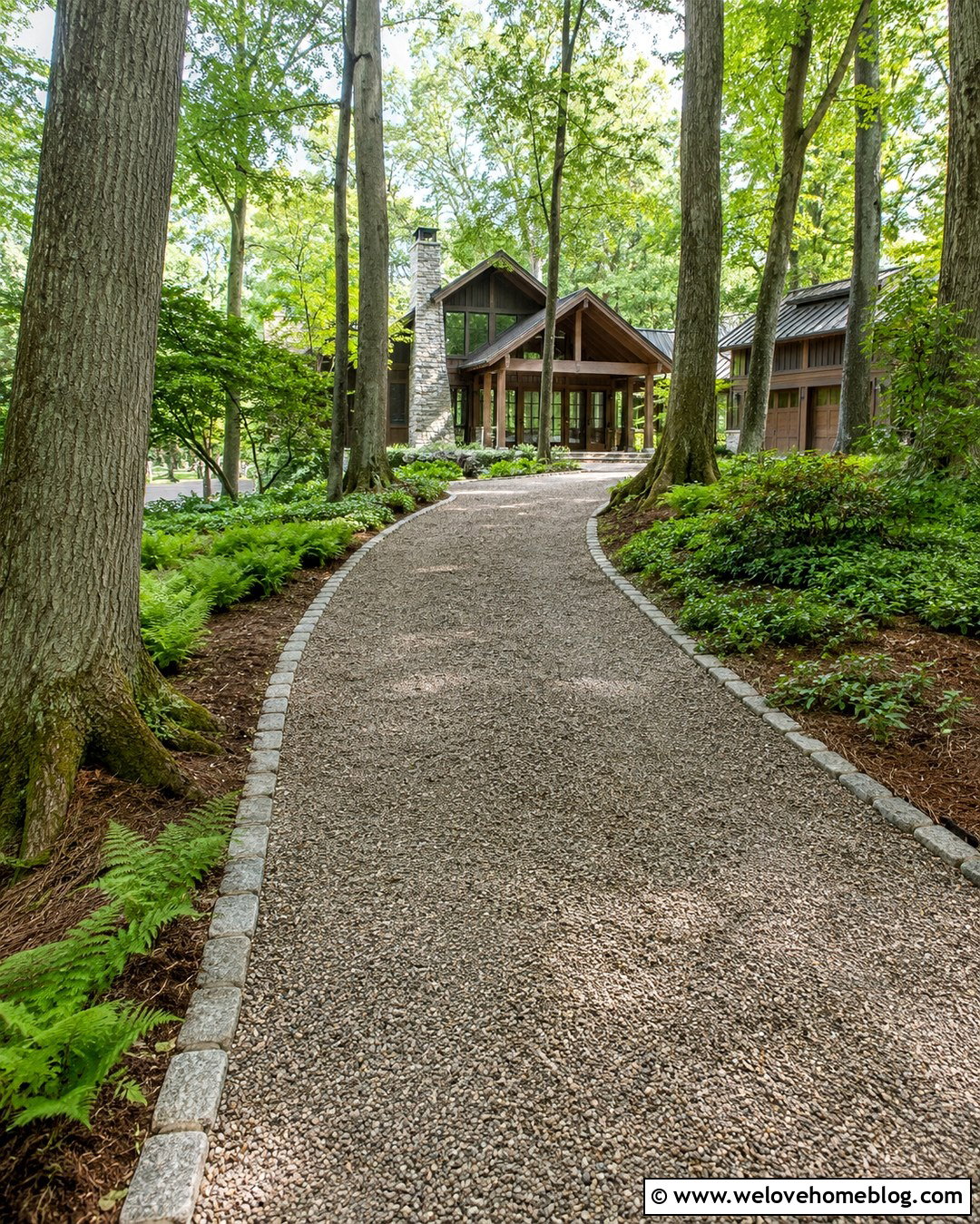
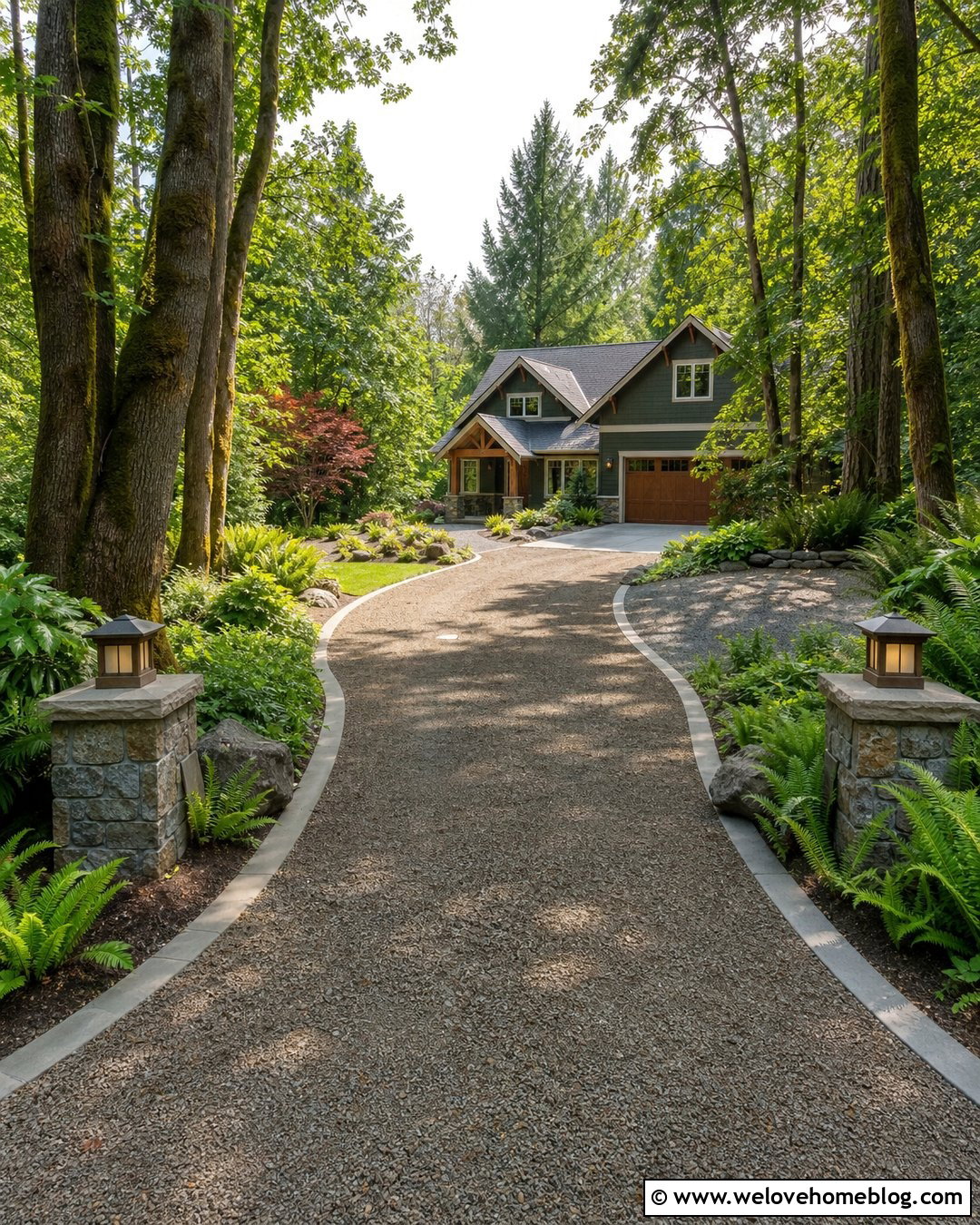
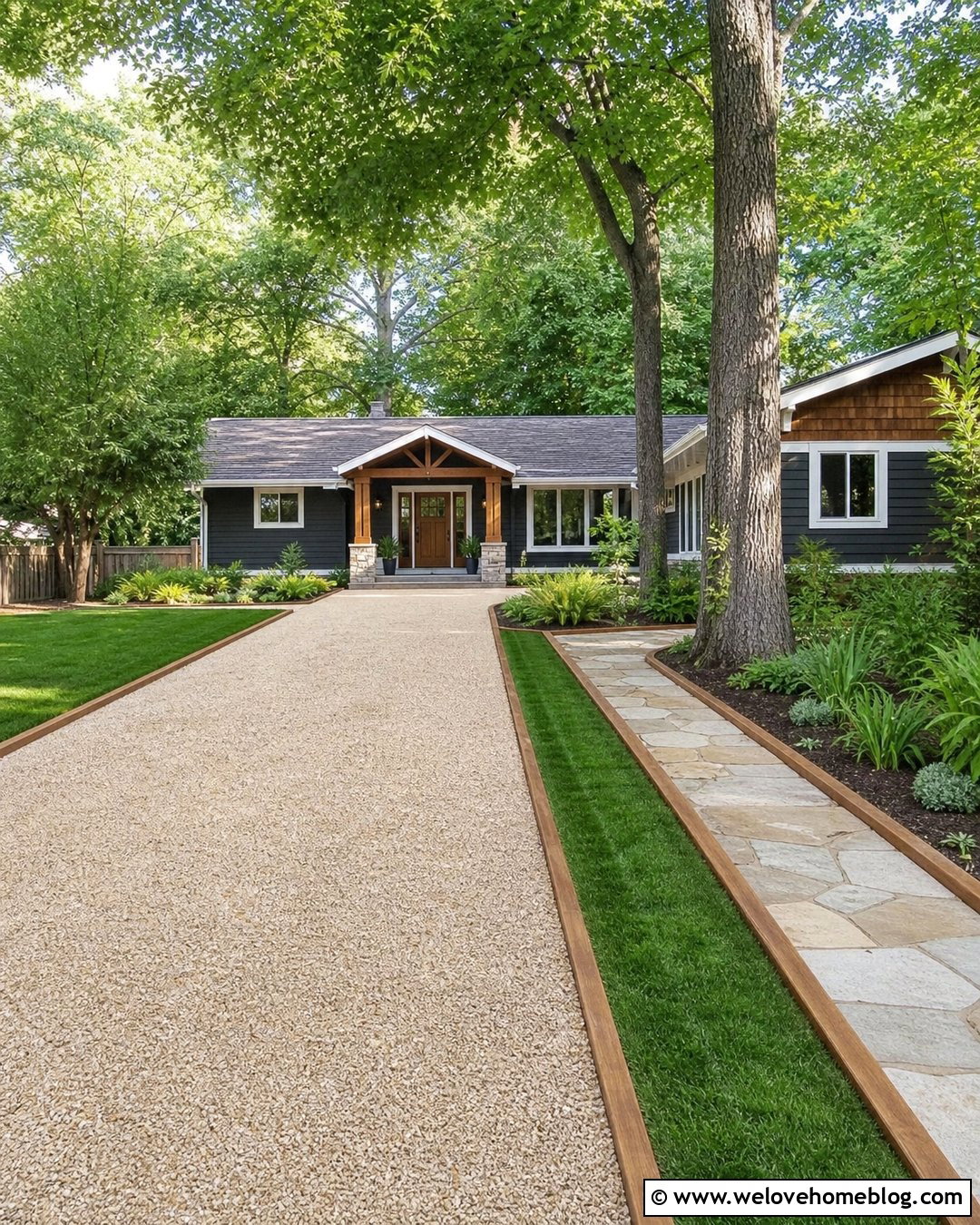
Mature trees create a memorable approach, and weathered cobblestones can connect the driveway naturally to the wooded setting. Choose muted brown-gray gravel that will not compete with bark, foliage, and changing seasonal colors. Line the driveway with aged granite cobbles set in one continuous row, leaving generous space between the edging and tree trunks. Avoid raising soil or stone around established root flares. Shade-tolerant ground cover, ferns, and woodland shrubs can fill planting areas beyond the cobblestones. A subtle curve will reveal the house gradually while preserving important trees. This design looks at home beside rustic contemporary houses, traditional cottages, and country retreats. Plan for regular leaf removal so organic material does not accumulate in the gravel or encourage weeds along the stone joints.
17. Gravel Driveway With Cobblestone And Lavender Borders
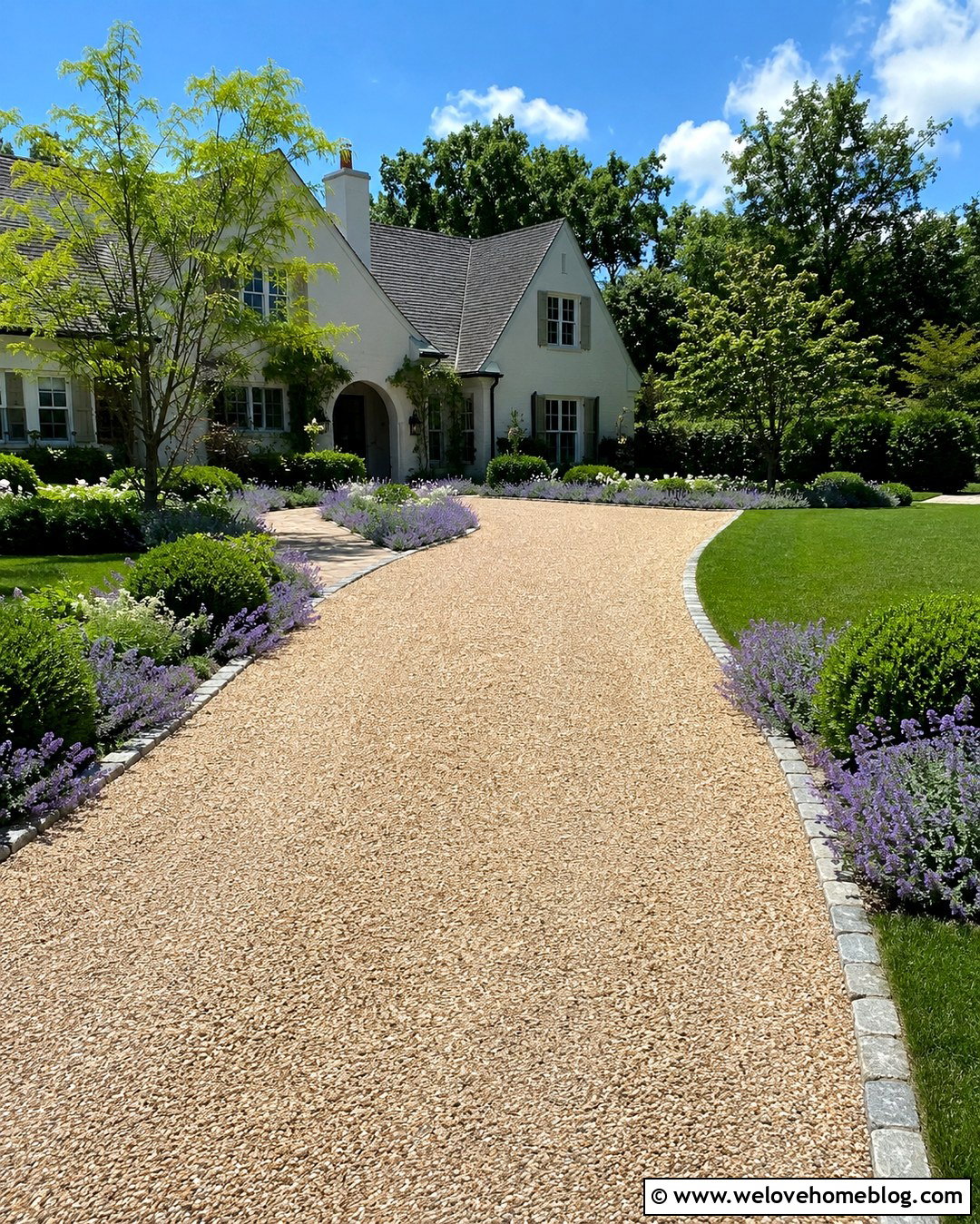
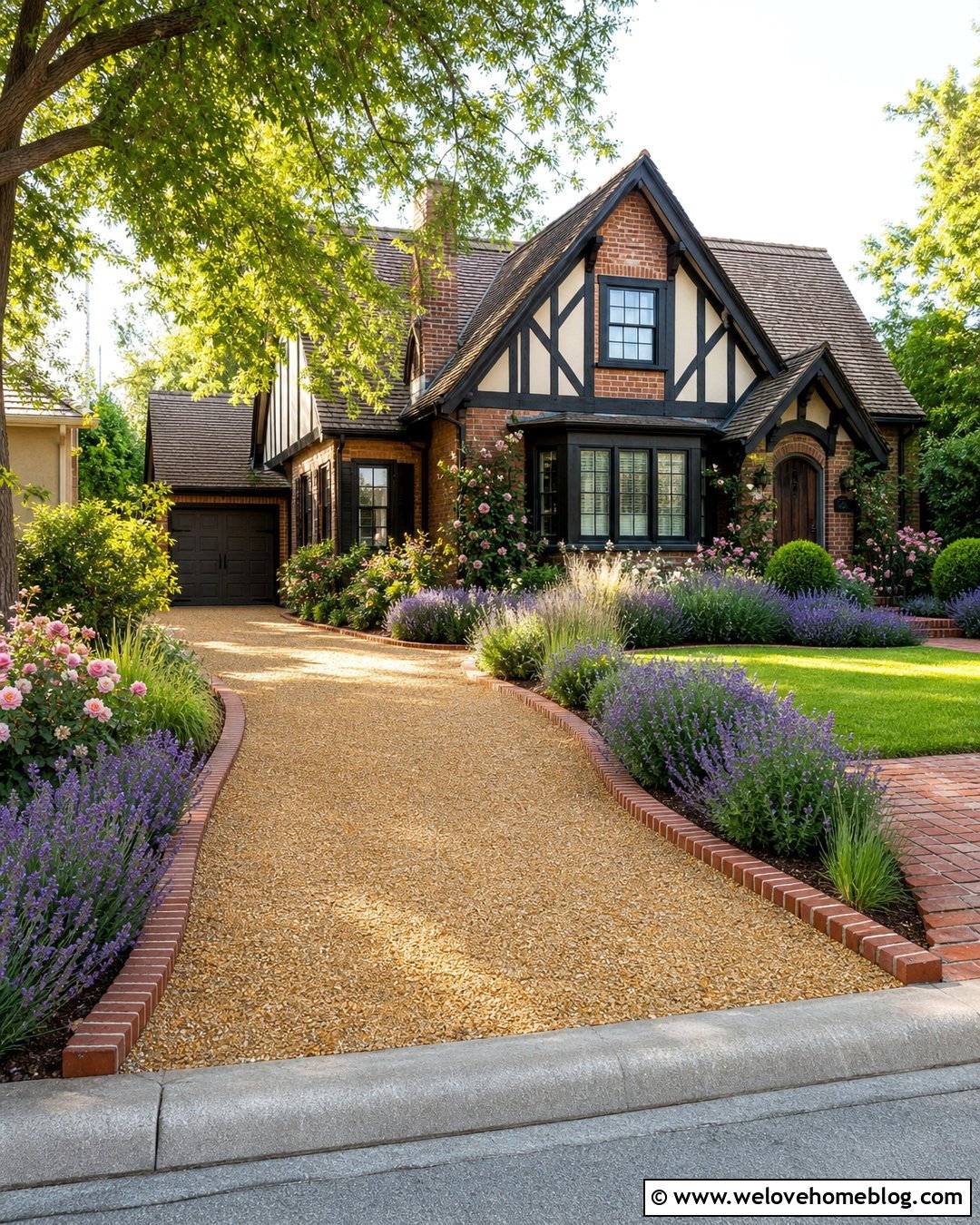
Soft lavender planting can turn a simple gravel driveway into a structured garden approach. Begin with warm beige pea gravel and edge it with one row of tumbled gray cobblestones. Outside the stones, create narrow planting beds filled with repeated lavender groups, low catmint, or another compact flowering perennial suited to local conditions. The cobblestones separate plant soil from the gravel and make the repeated border easier to maintain. A straight or gently curved driveway works equally well, although curved lines produce a softer cottage effect. Pair the design with a light-colored stucco home, cottage, or modern farmhouse. Leave sufficient planting distance so mature foliage does not cover the driving edge. Drip irrigation can reduce overspray and help prevent water from washing soil onto the pale gravel surface.
18. Gated Gravel Driveway With Cobblestone Edging
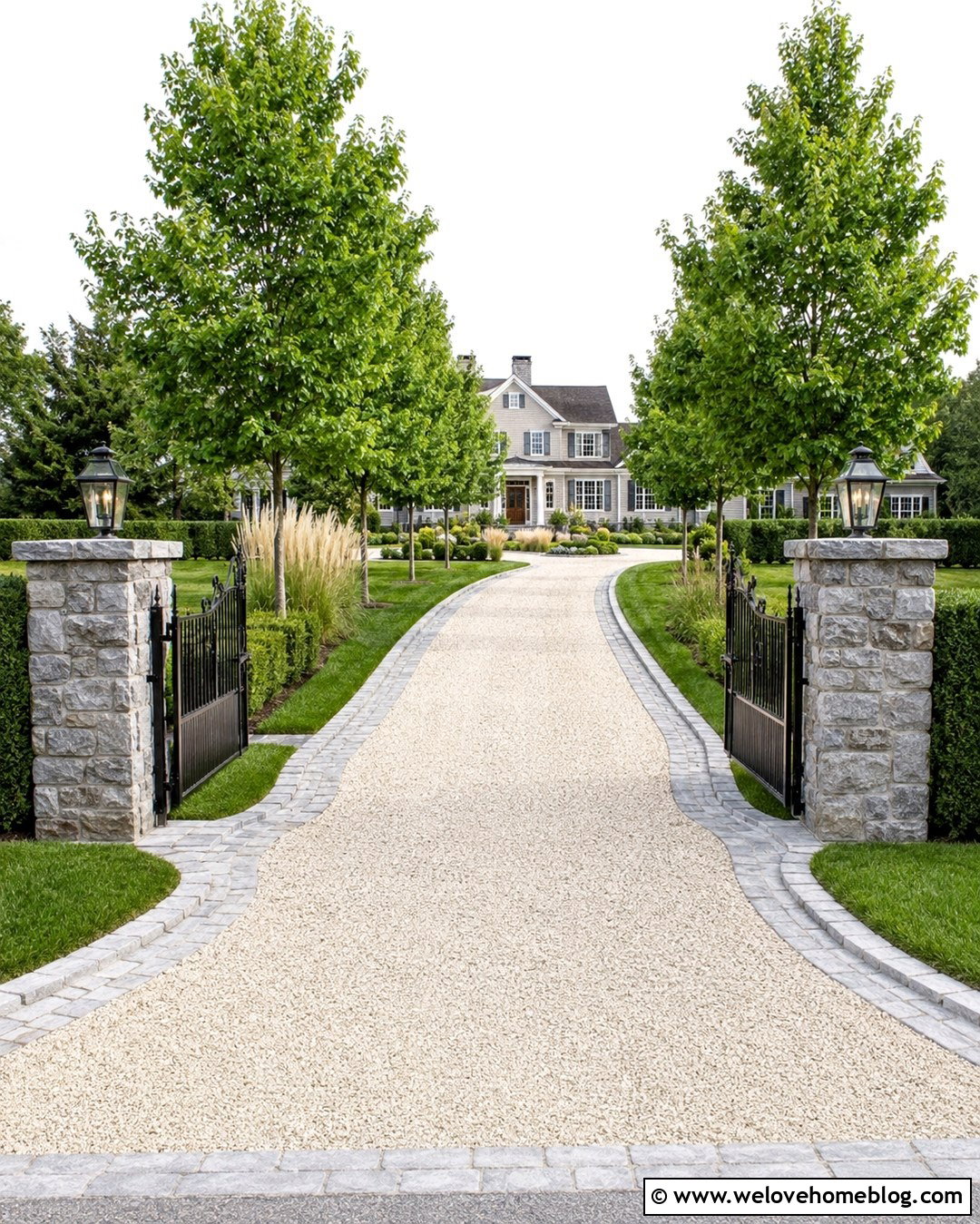
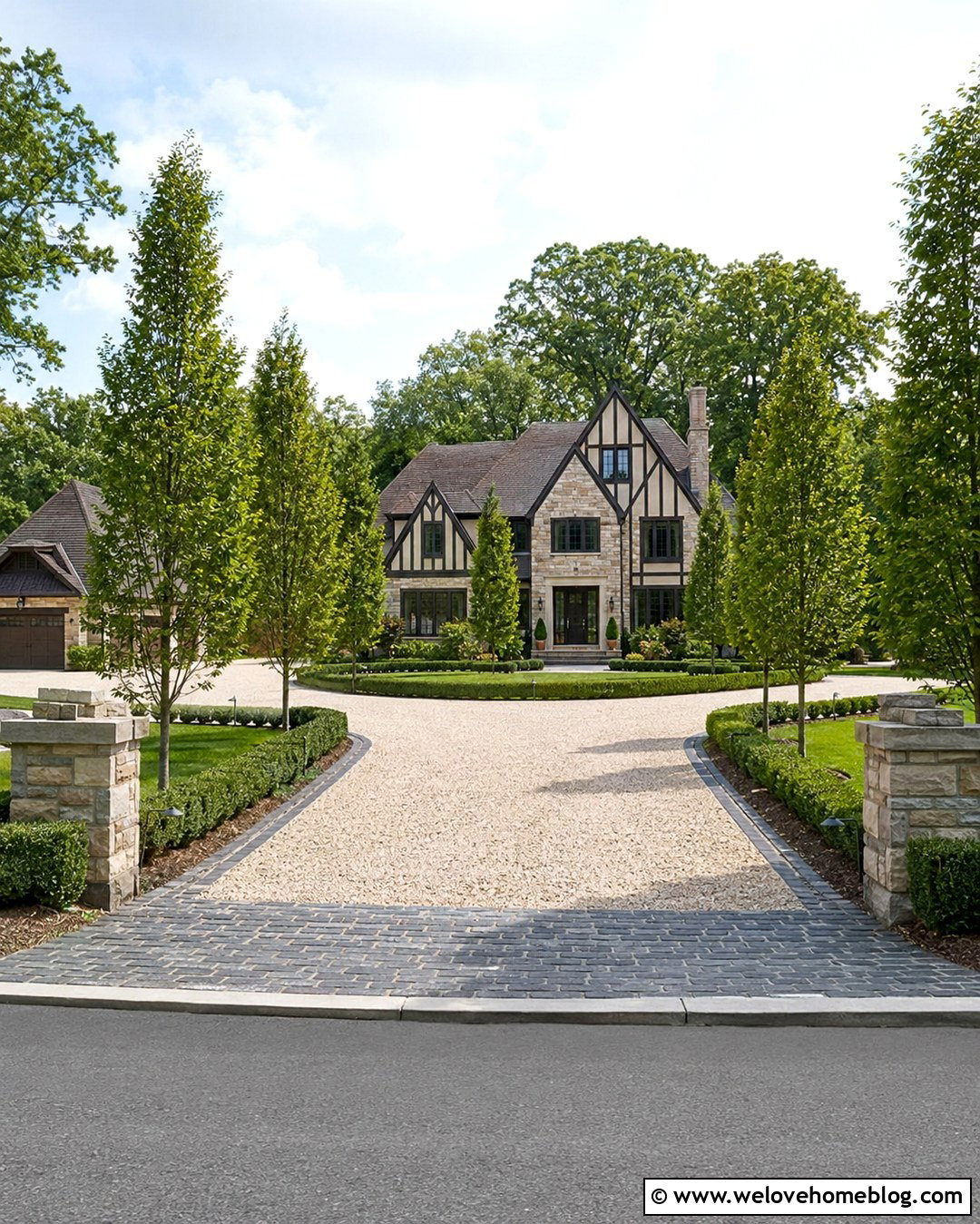
A gated entrance looks more cohesive when the driveway edging connects directly with the gate pillars. Use pale crushed limestone gravel bordered by substantial gray cobblestones, then widen the stonework near the entrance. Matching stone pillars can anchor a simple black metal gate without making the approach feel overly ornate. Curve the cobblestone edges outward toward the road to form practical entry flares and improve the turning angle. Beyond the gate, continue the border along a straight or gently winding driveway leading to the house. Use clipped hedges, low grasses, and symmetrical trees to frame the entrance while keeping sightlines open. The cobblestones nearest the gate should be installed on a particularly stable base because tires frequently track across this area during entry and exit.
19. Coastal Gravel Driveway With Light Cobblestone Edging
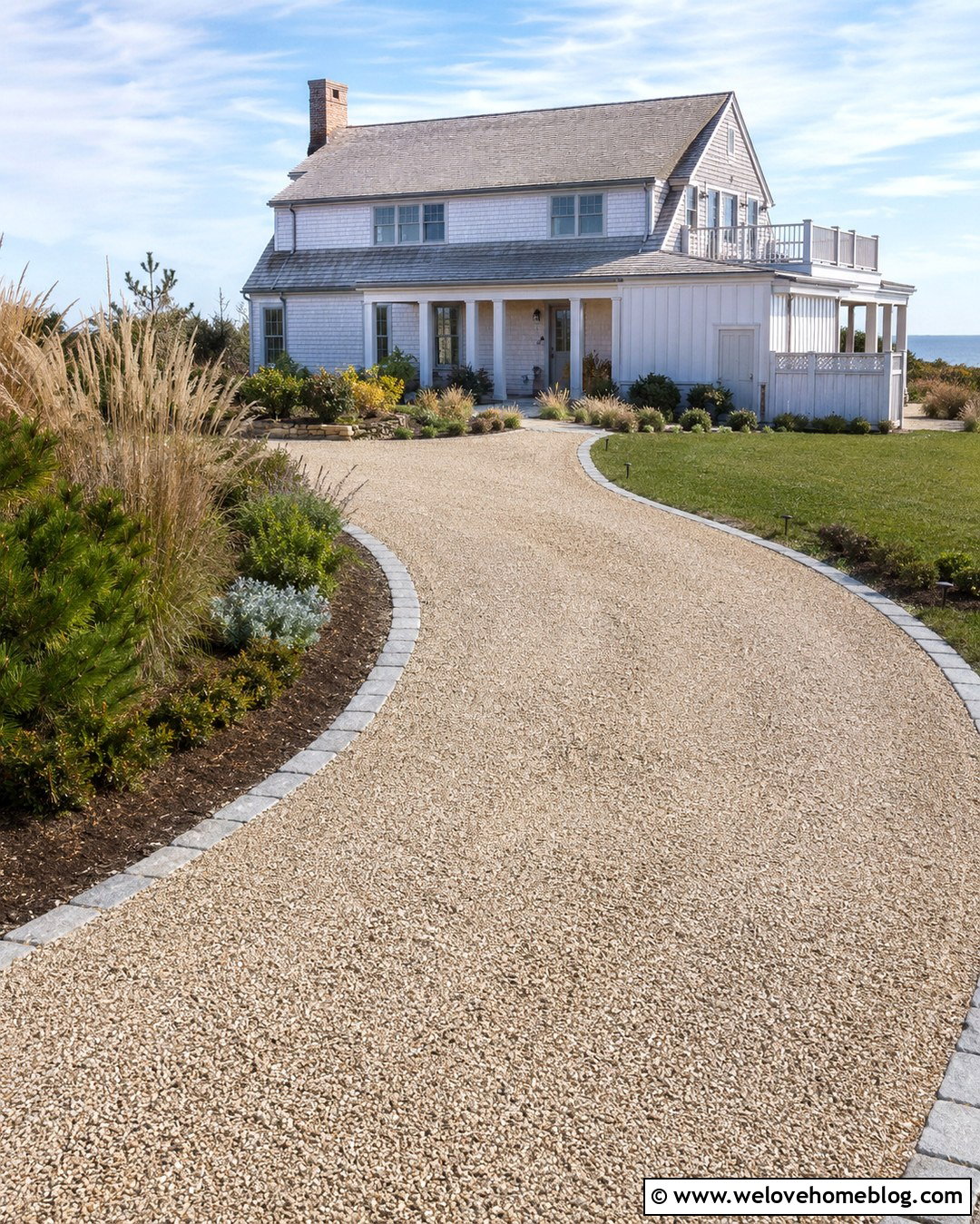
A coastal-inspired driveway feels bright and casual when pale gravel is paired with light gray cobblestone edging. Choose crushed oyster-toned limestone or cream gravel rather than stark white aggregate, which can create excessive glare. Set broad, softly weathered cobbles in a single flush row along a curved driveway. Surround the edge with salt-tolerant ornamental grasses, low evergreen shrubs, and open lawn for a breezy, uncluttered appearance. A cedar-shingle, coastal cottage, or pale clapboard home provides an appropriate backdrop. Keep plantings low near the road and inside curves to maintain clear visibility. Cobblestones with subtle blue-gray tones can echo the exterior without becoming decorative or themed. The complete palette should remain natural, using sand, stone, soft green, and weathered wood colors throughout the approach.


20. Budget Gravel Driveway With One-Row Cobblestone Edging
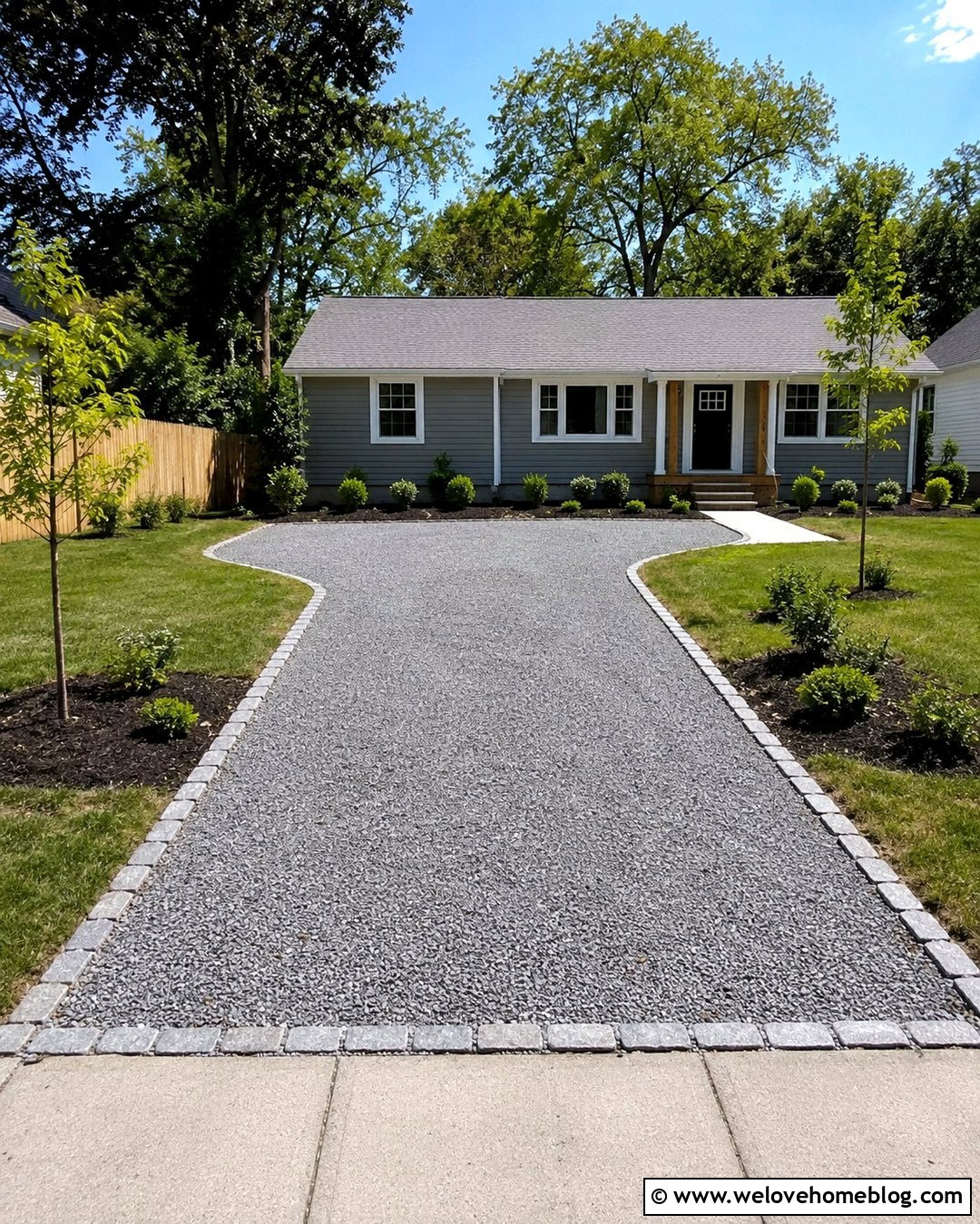
A limited budget does not prevent you from creating a polished gravel driveway. Concentrate the cobblestone border where it will have the most impact, such as the street entrance, front curve, parking area, and section nearest the house. Use locally available crushed gravel and one row of standard-size granite cobbles to reduce material and transportation costs. Keep the layout straight and the border pattern simple, since complicated curves require more cutting and labor. Existing lawn can frame the driveway, while a few repeated shrubs near the entrance provide an affordable landscape finish. If the project must be completed in stages, establish the full driveway line first and add cobblestones one section at a time. Consistent stone height and careful compaction will make this economical design look intentional rather than unfinished.
Conclusion:
The best gravel and cobblestone combination should improve both the appearance and everyday performance of your driveway. Consider the home’s architecture, driveway width, slope, drainage, gravel color, and surrounding landscape before selecting a design. Flush cobbles provide an easy transition, while raised or reinforced borders offer stronger containment in problem areas. Single rows suit compact or budget-friendly projects, and wider bands create enough visual weight for formal entrances and large properties. You can also connect the edging with an apron, walkway, drainage channel, gate, or planted border. Use these 20 gravel driveway cobblestone edging ideas to plan a complete approach that feels attractive, practical, durable, and naturally connected to your home.

Related posts:
Leave a Reply